Seismic Performance and Damage Controllability of Prefabricated Roof–Sidewall Composite Joints for Underground Structures Based on Cogging Connections

 , , , and
Abstract
1. Introduction
2. Experimental Projects
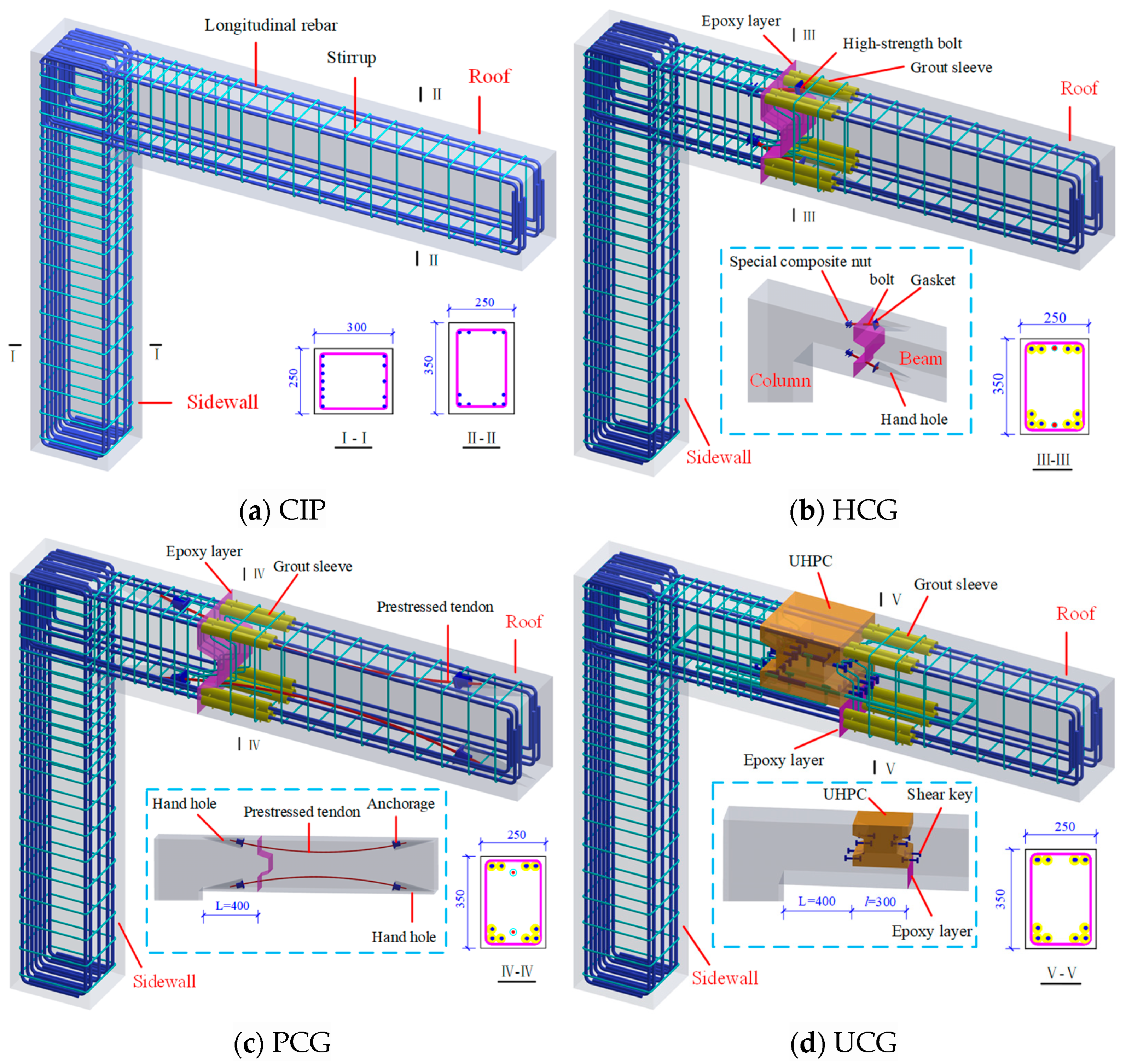
2.1. Specimen Description
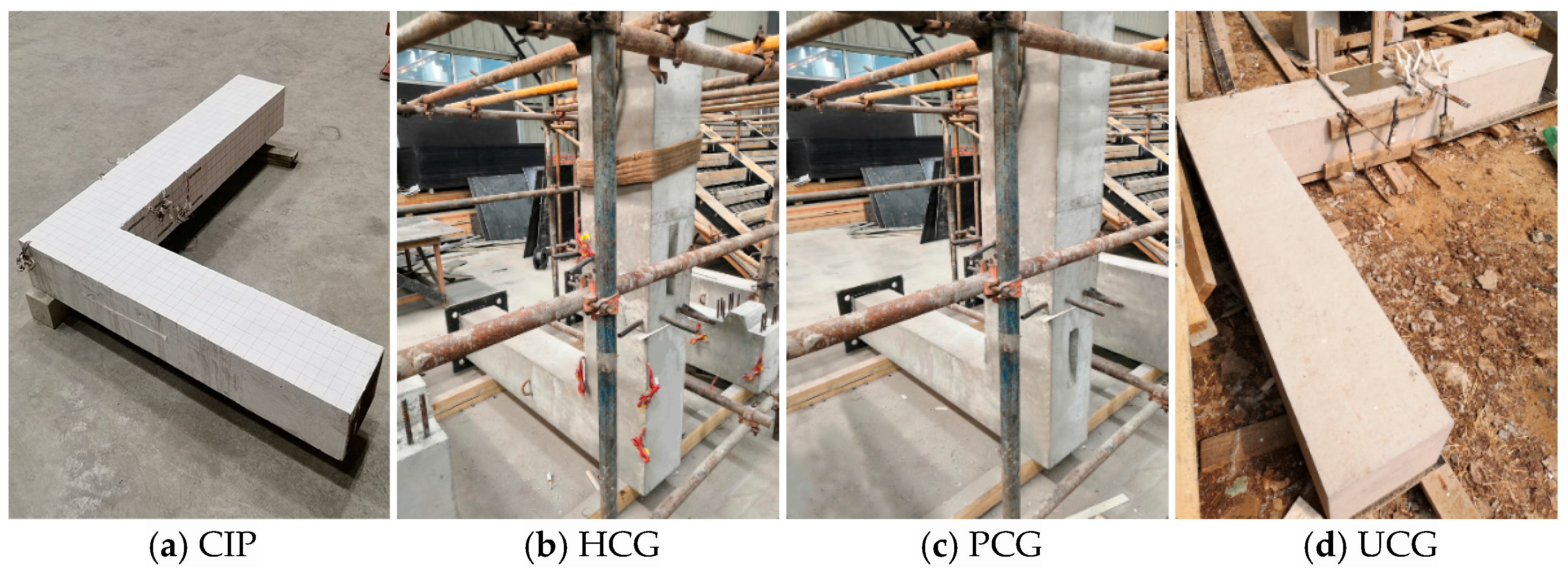
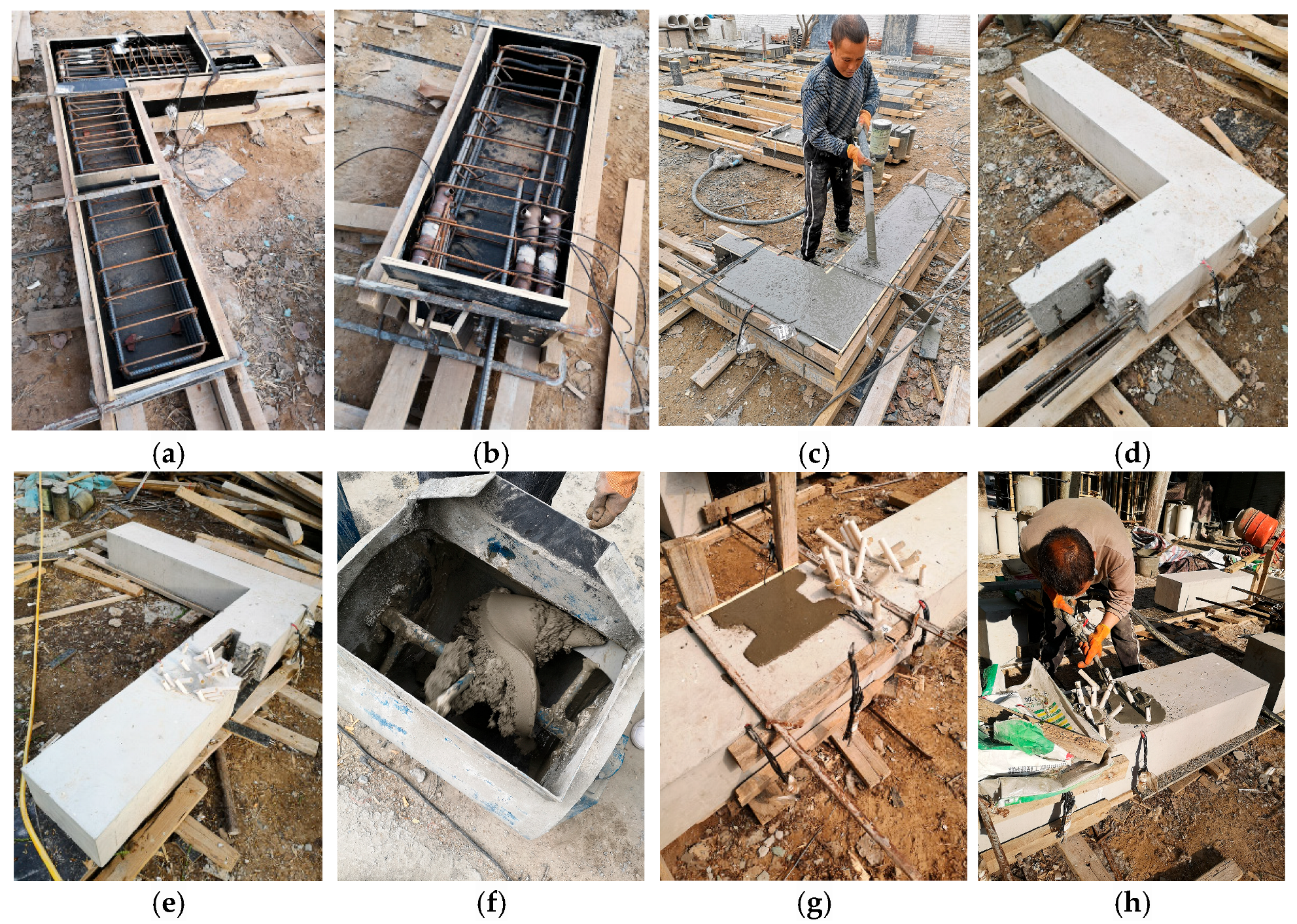
2.2. Fabrication and Construction
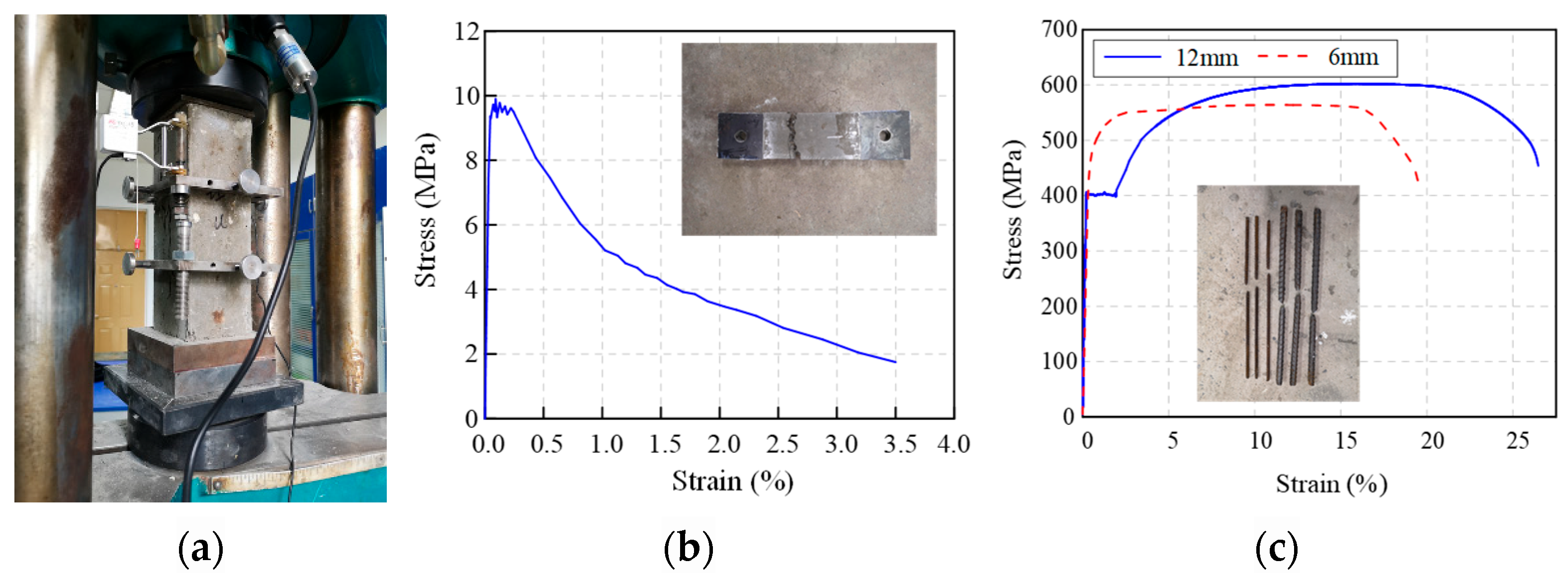
2.3. Material Properties
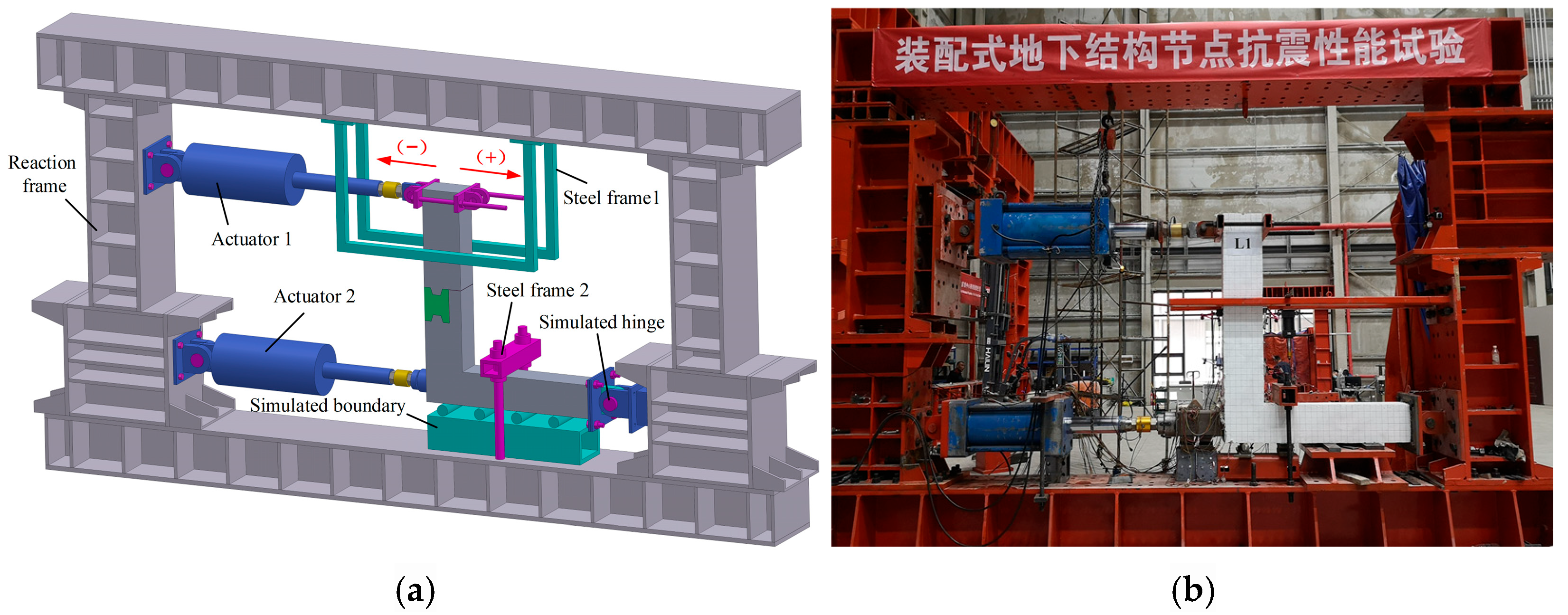
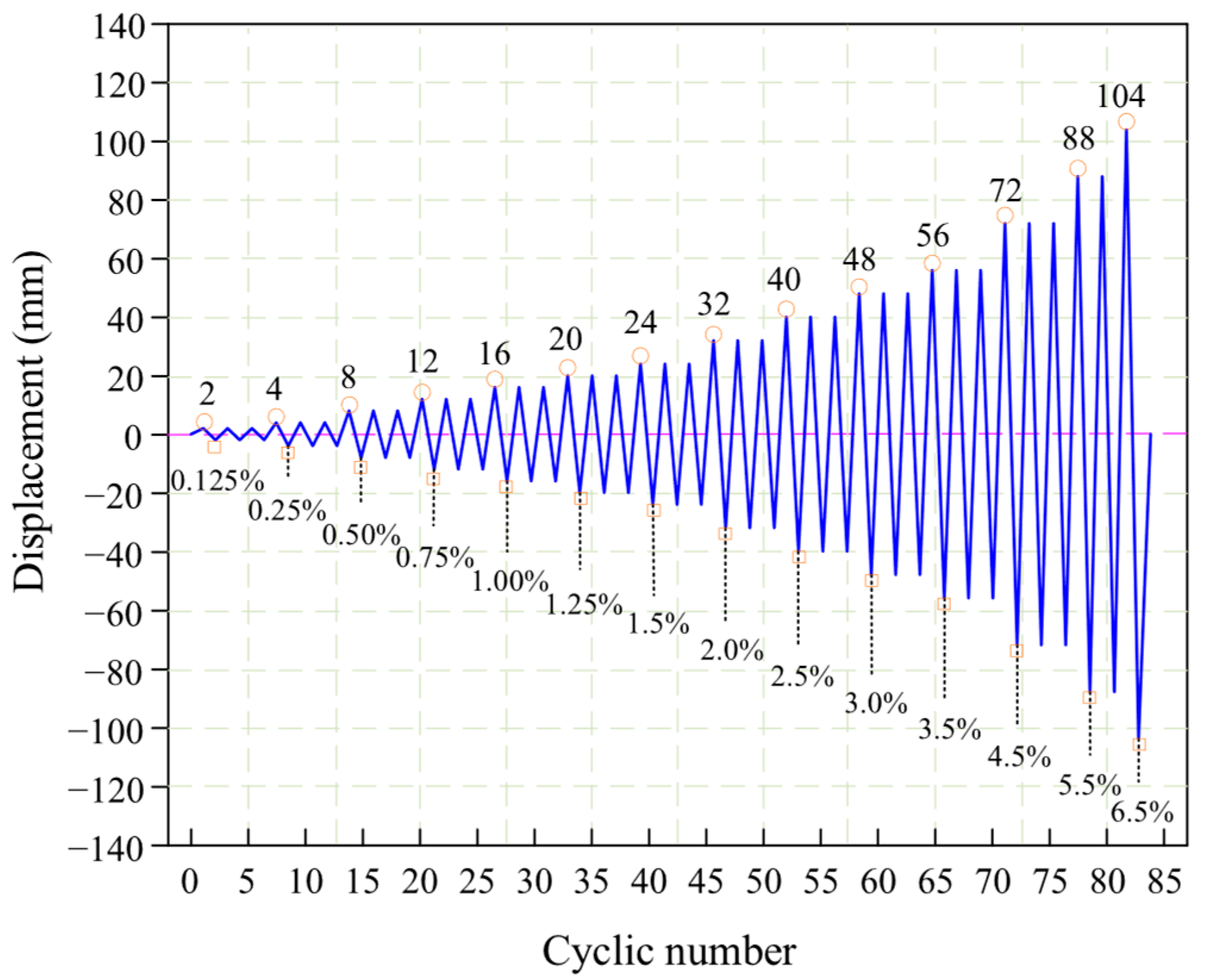
2.4. Loading Protocol
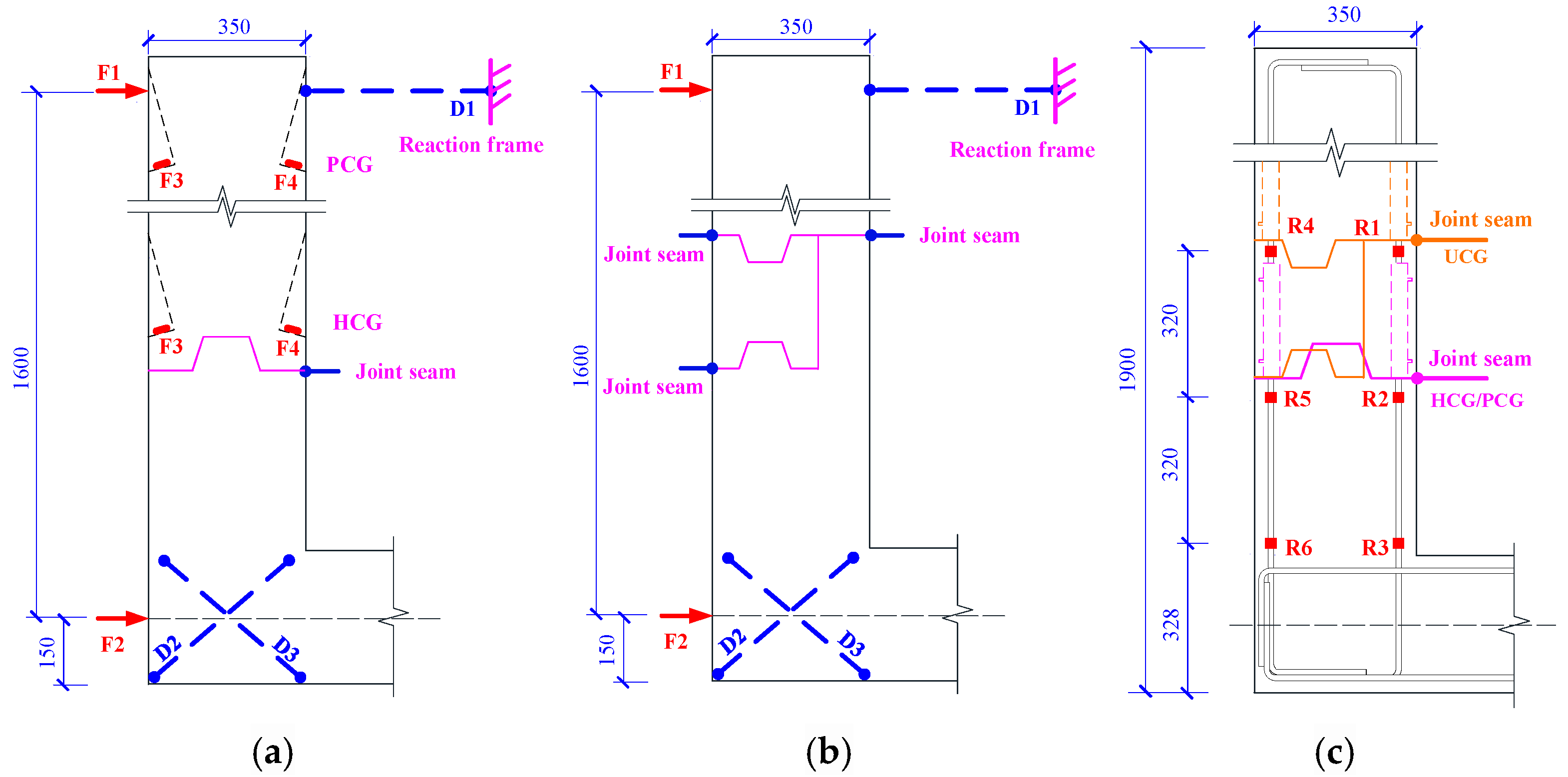
2.5. Measuring Point Arrangement
3. Experimental Results and Analysis
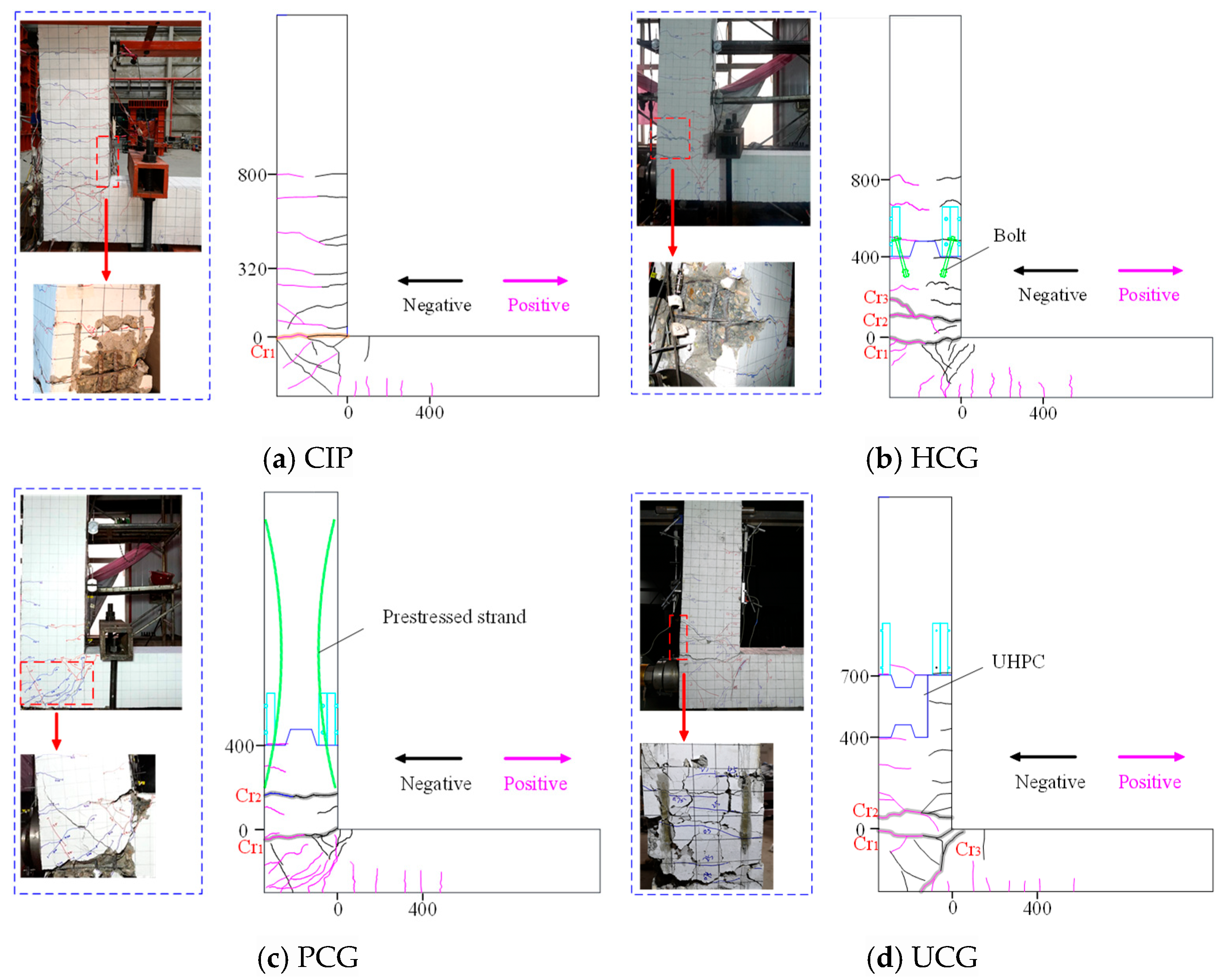
3.1. Failure Phenomena
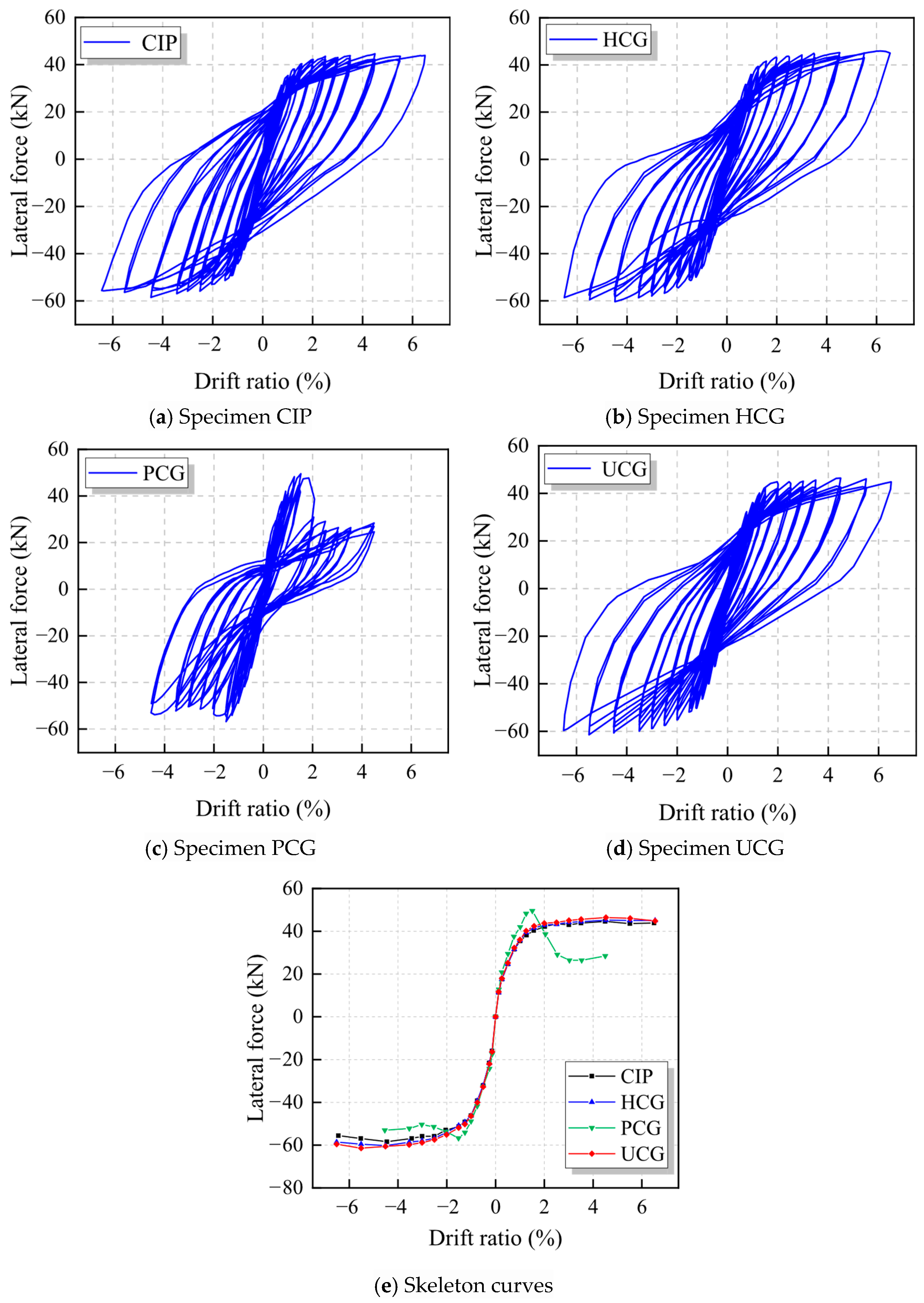
3.2. Hysteretic Behavior and Skeleton Curves
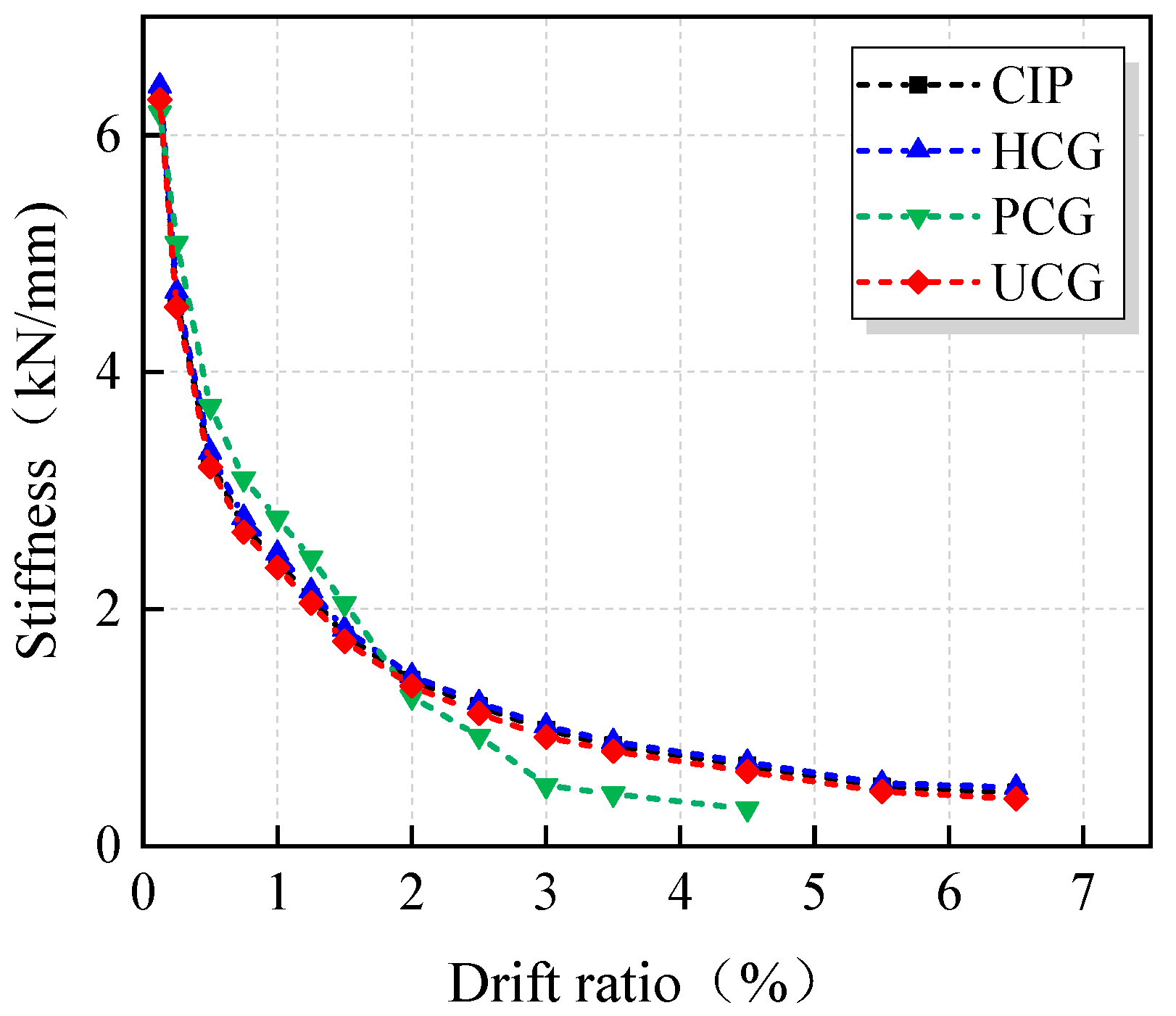
3.3. Stiffness Degradation
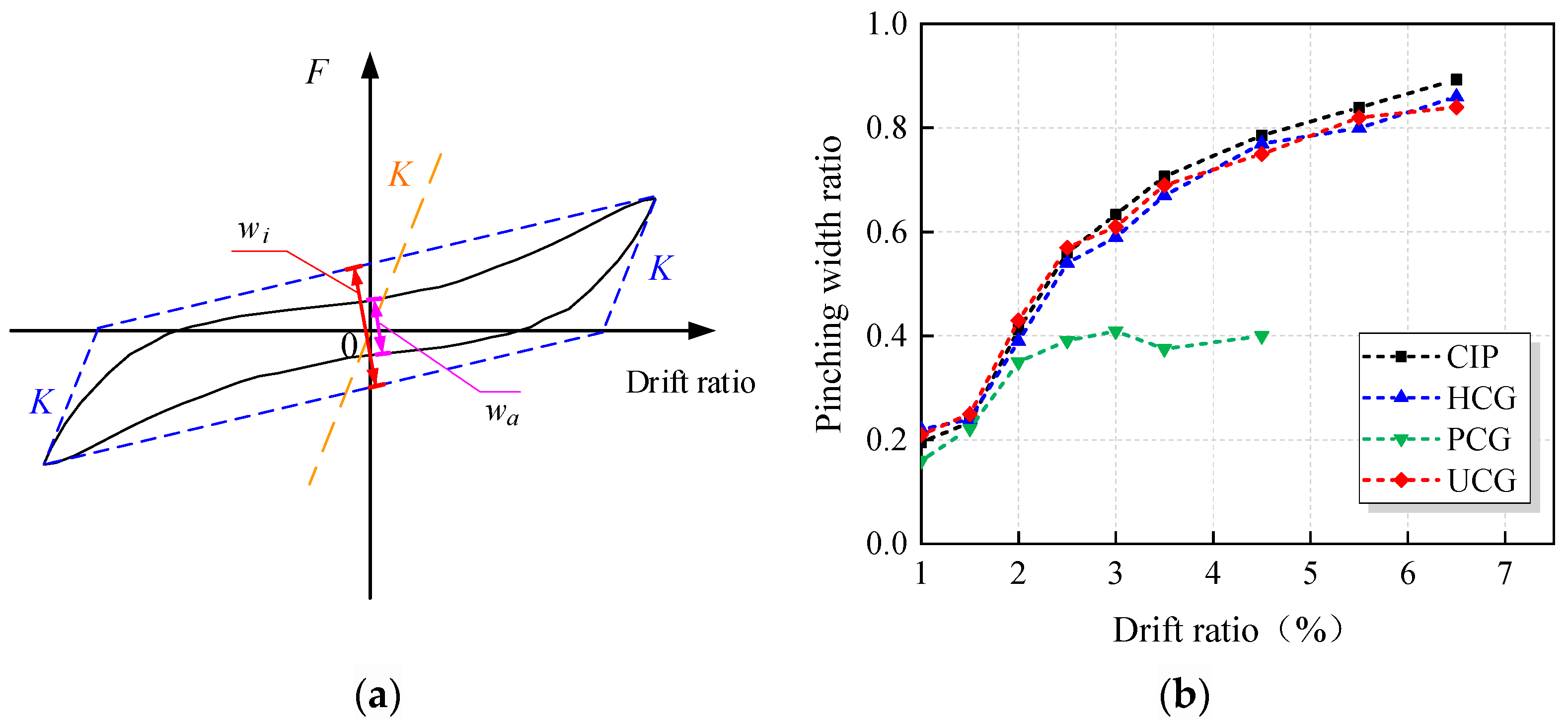
3.4. Pinching Width Ratio
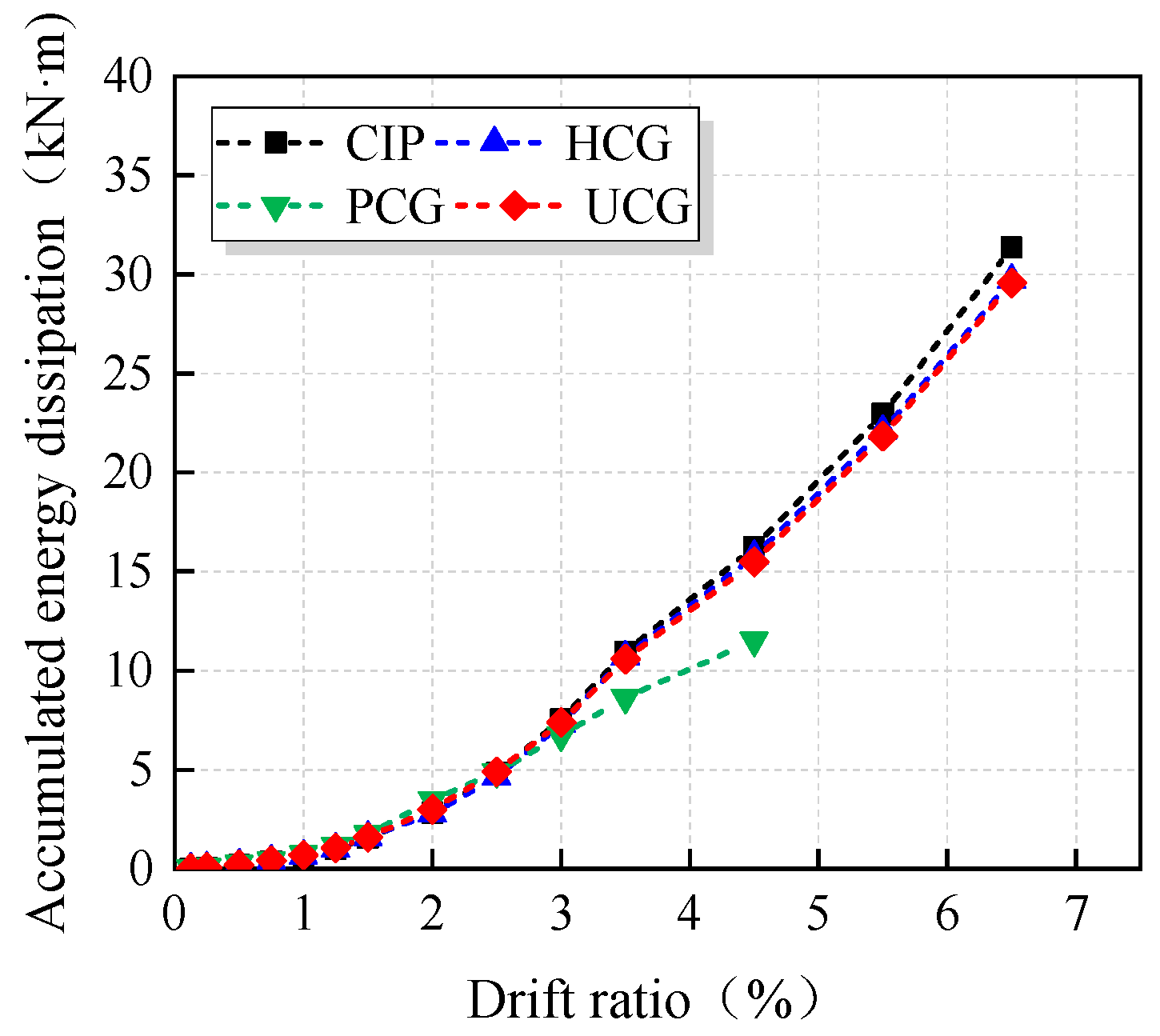
3.5. Energy Dissipation
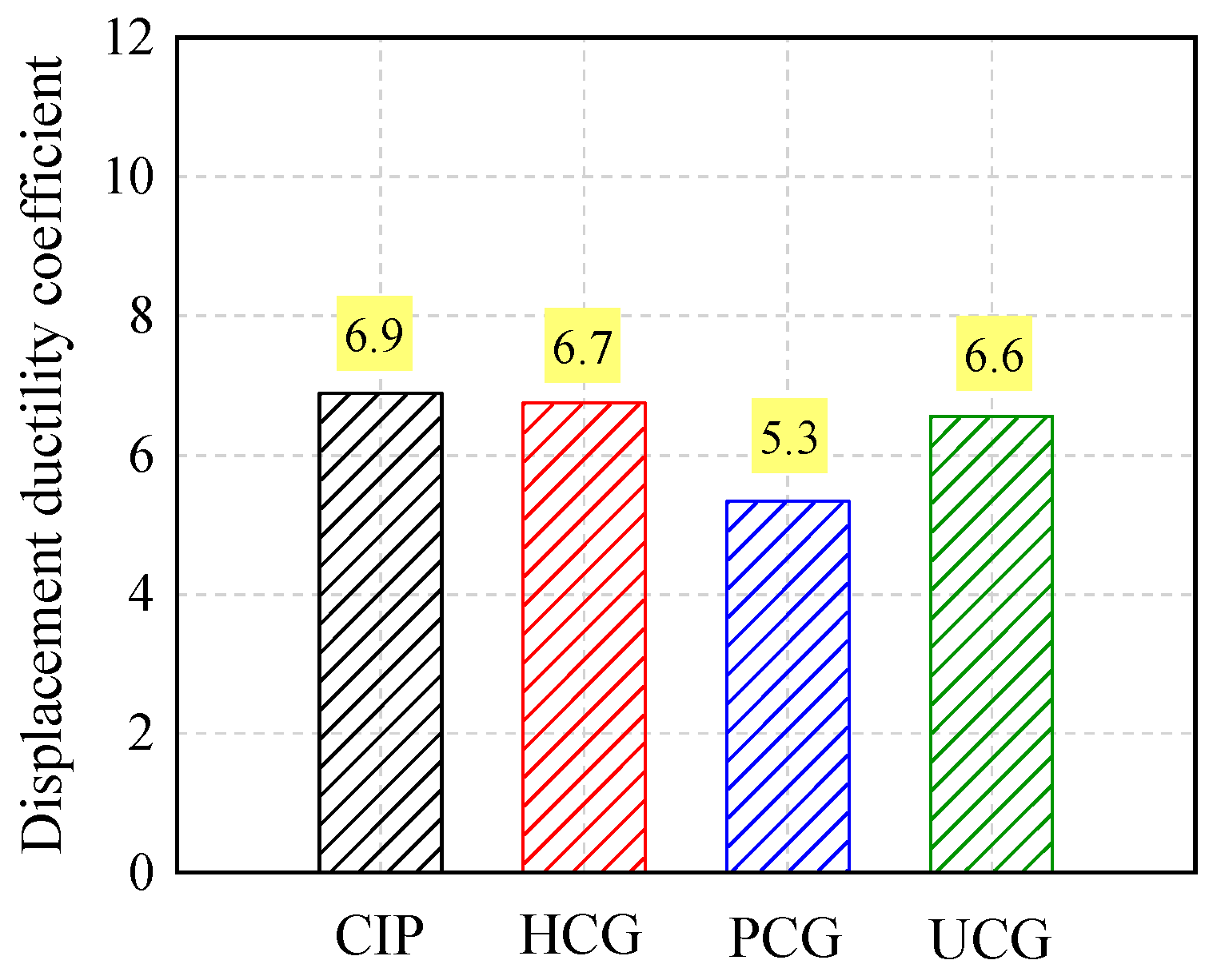
3.6. Displacement Ductility
3.7. Shear Deformation in the RSC
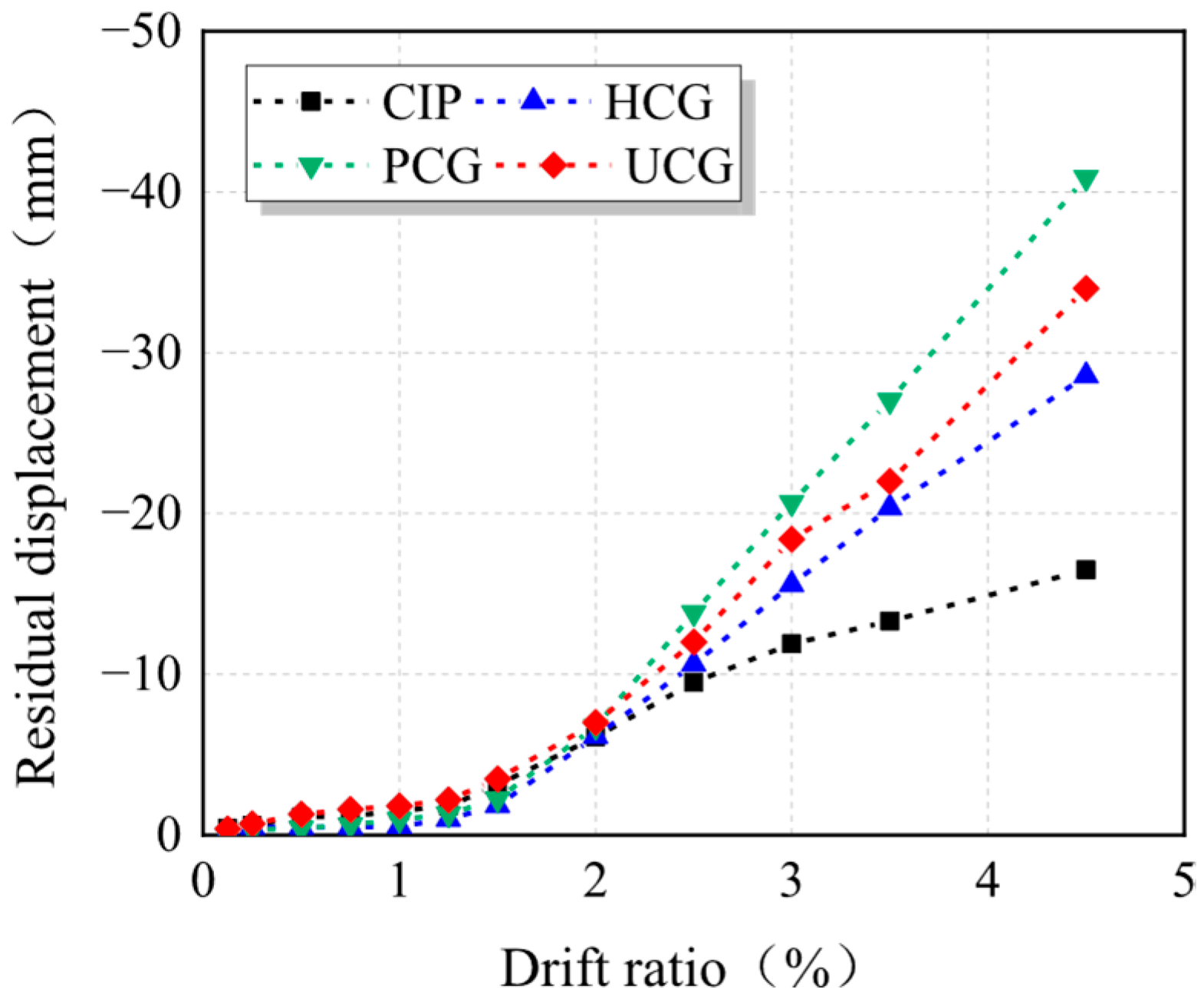
3.8. Residual Deformation
3.9. Stress Distribution in Rebars
4. Numerical Simulation Analysis
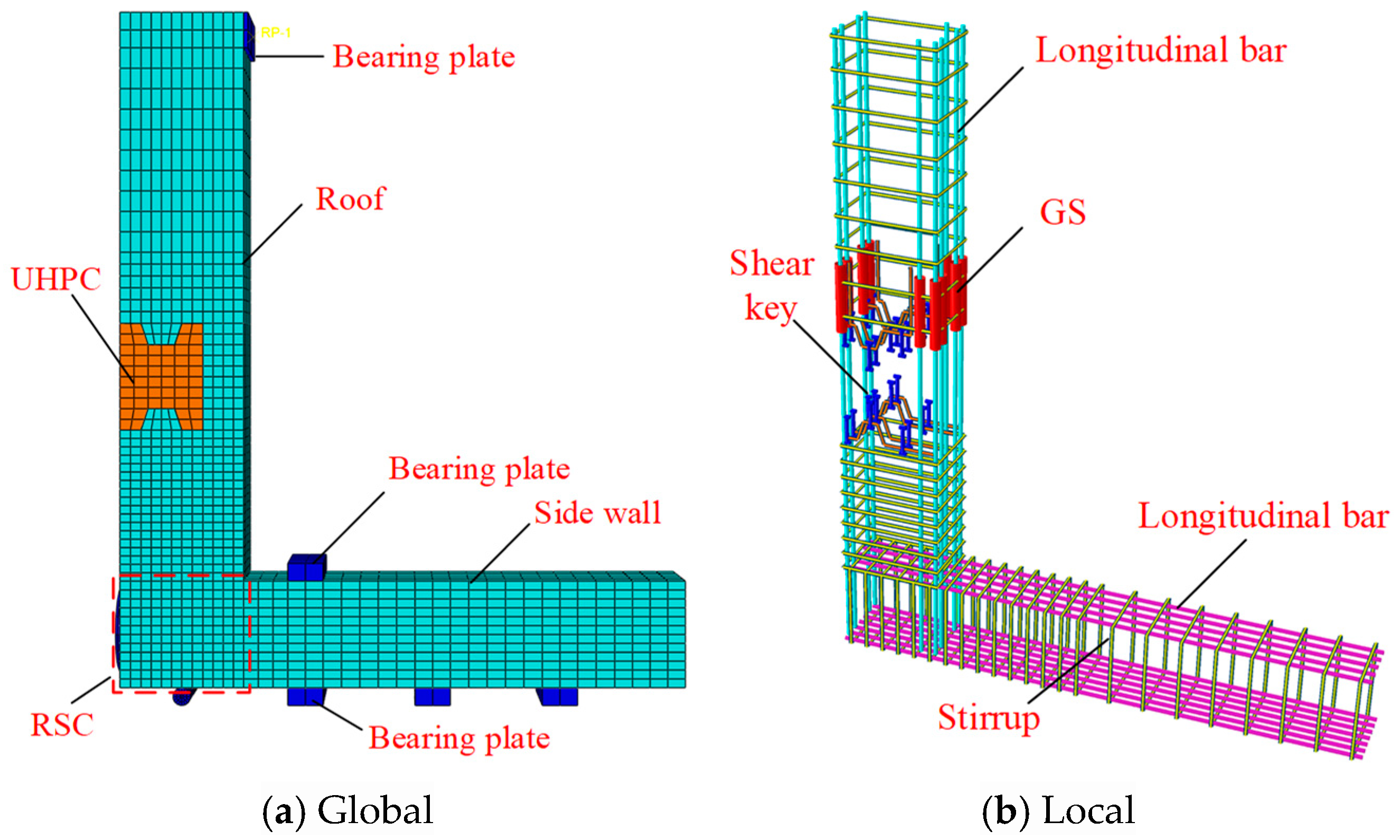
4.1. Finite Element Model
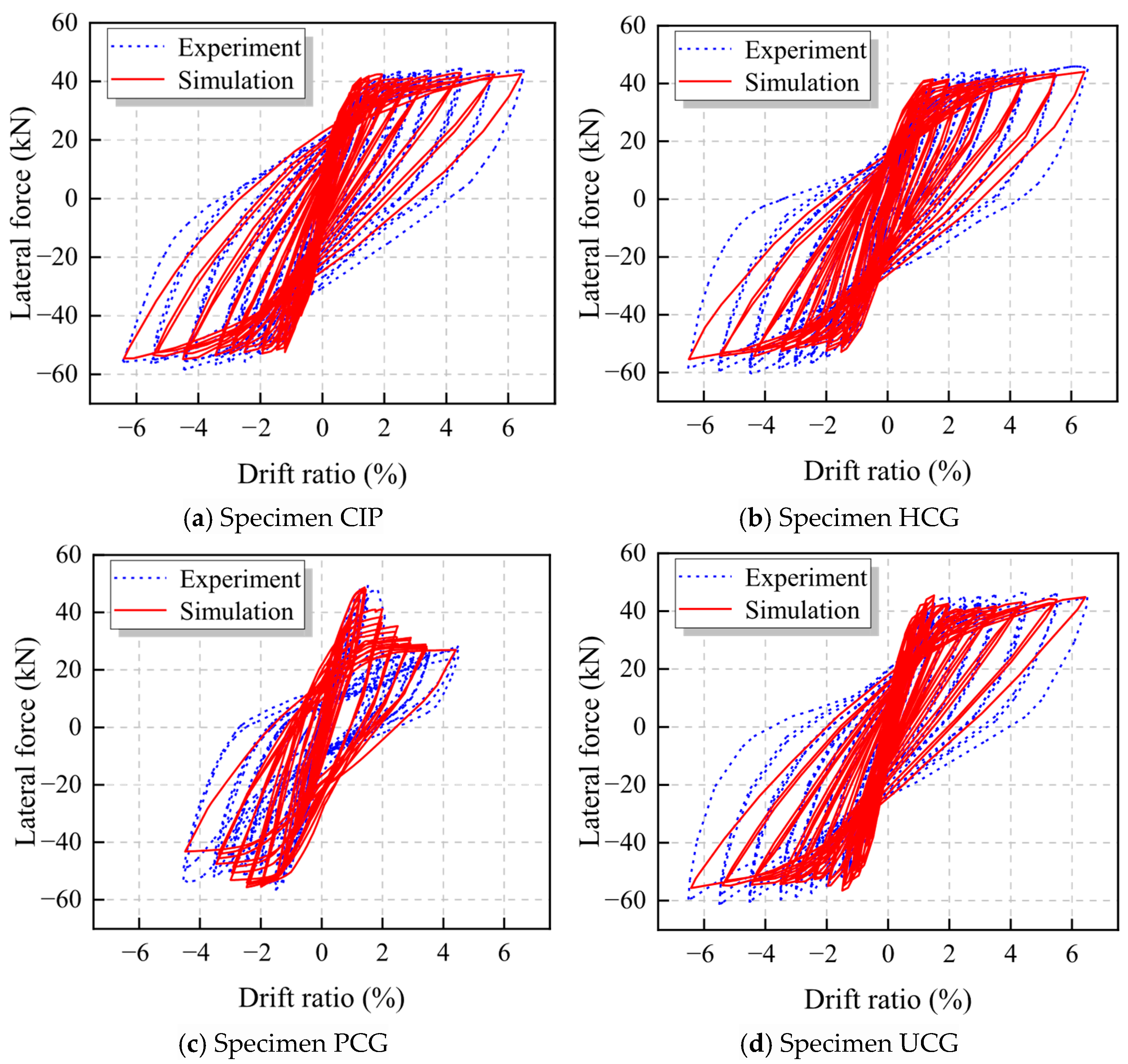
4.2. Comparison of Numerical and Experimental Results
5. Conclusions
- (1)
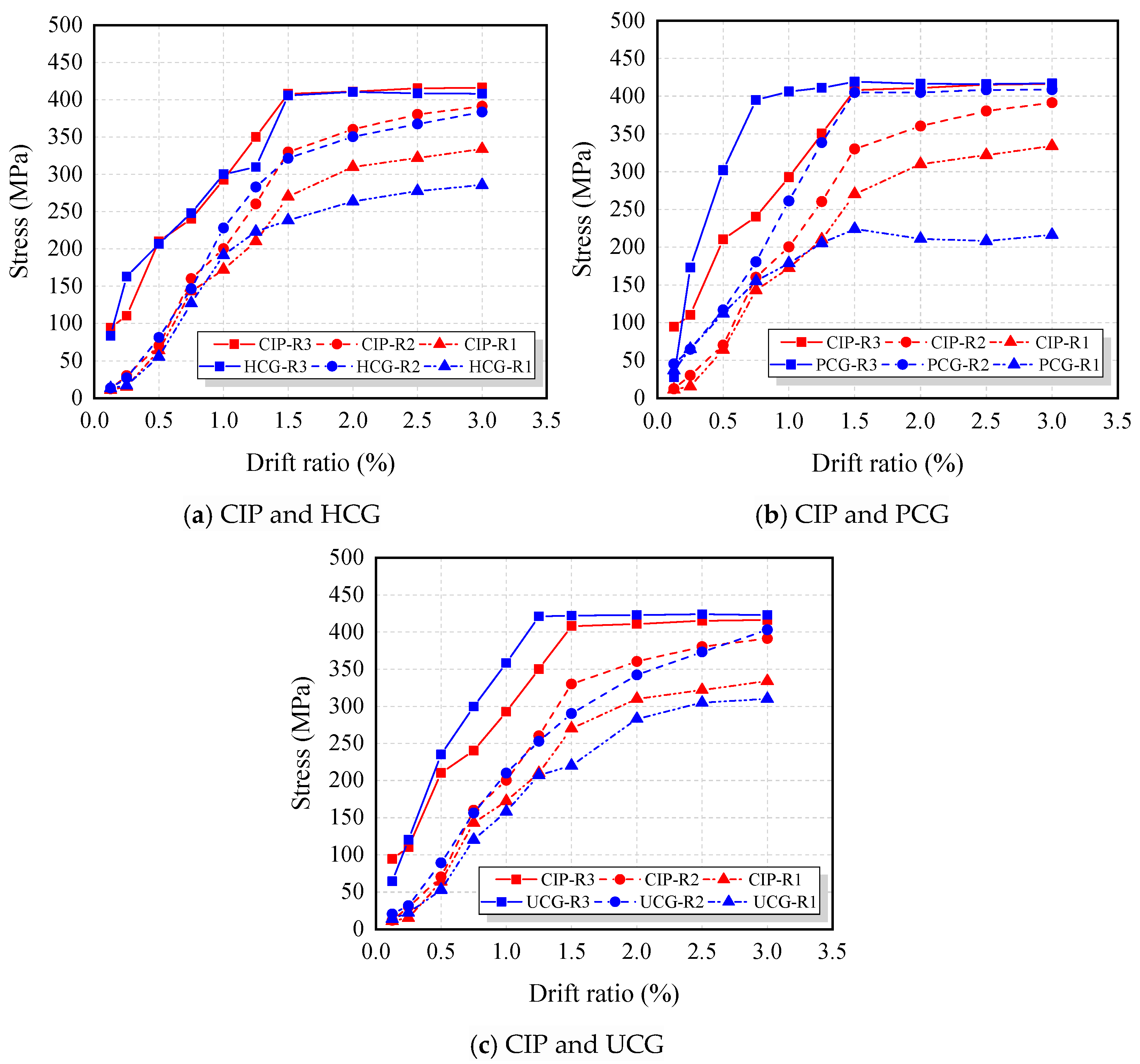
- UHPC and a reasonable application of prestressing effectively inhibit crack initiation and damage propagation at joint seams. None of the precast specimens exhibited through cracks wider than 0.10 mm at the seams. The cogging structure limits crack development and enhances shear capacity, while GSs improve stiffness and integrity. When placed outside the plastic hinge zone, all three composite joints provide reliable load transfer paths for rebars, ensuring overall structural integrity.
- (2)
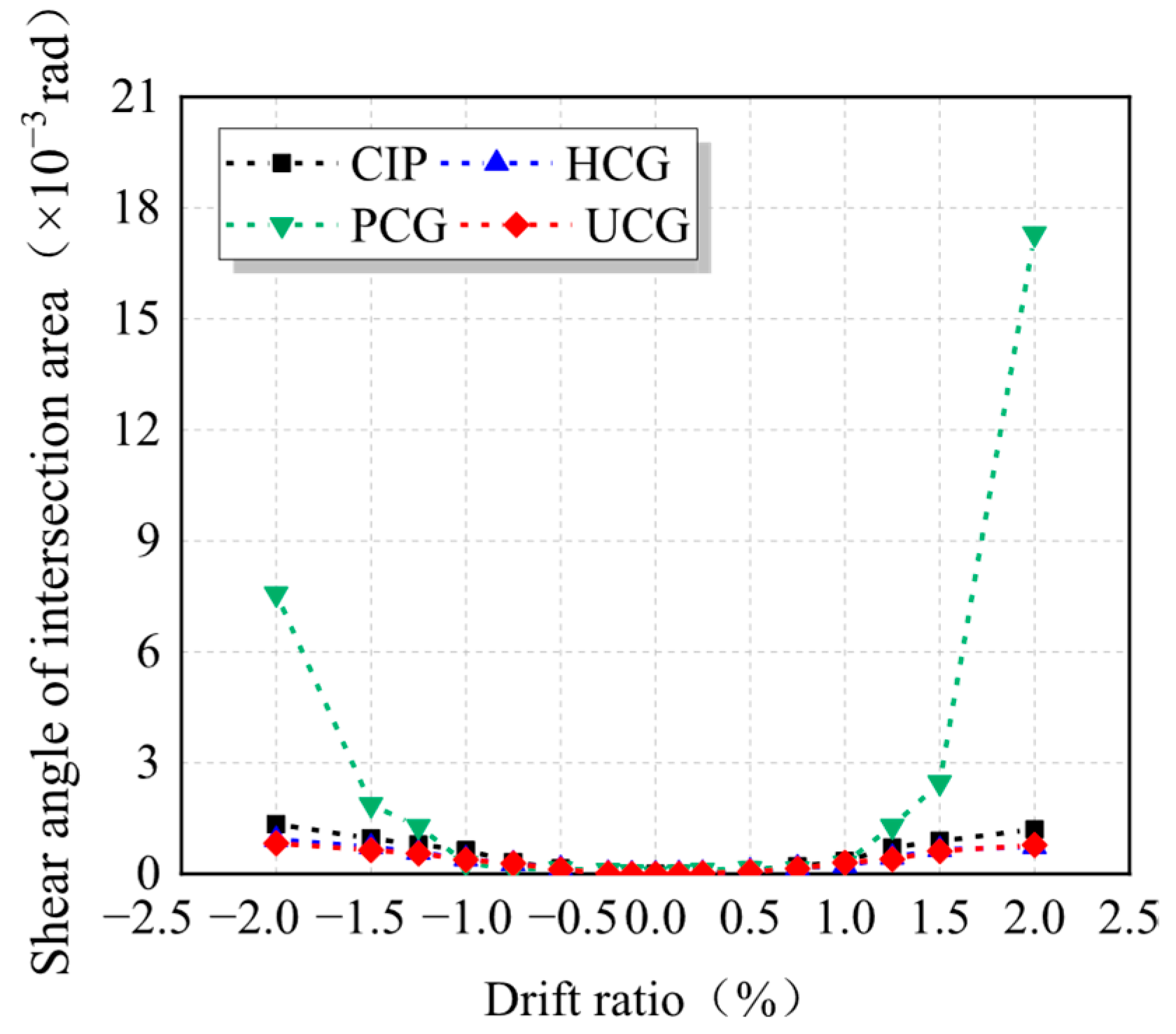
- The HCG and UCG joints significantly enhanced seismic performance, achieving the “equivalent to CIP” design goal. Compared with the CIP specimen, the average peak load increased by approximately 3.3% for HCG and 6.0% for UCG. Their displacement ductility coefficients reached 6.7 and 6.6, respectively, comparable to the CIP value of 6.9. Energy dissipation capacities were also close to that of CIP. Damage concentrated in the designated roof plastic hinge zone, and at a displacement of 32 mm, the shear angles in the RSC of HCG and UCG were approximately 70% and 60% of that of CIP, respectively. Thus, shear damage in the RSC was effectively mitigated.
- (3)
- Although the PCG joint improved initial stiffness and delayed crack propagation in the prestressed zone, it had a significantly adverse impact on seismic performance. Its positive peak load increased by 11.1% compared to CIP, but its negative peak load decreased by about 2.7%. Its ductility and energy dissipation were significantly lower than those of the other specimens. More critically, it induced excessive damage transfer to the RSC. At a loading displacement of 32 mm, its RSC shear angle reached 5.7 times that of CIP, leading to premature shear failure at a drift ratio of 4.5%. This indicates that the compatibility between prestressing form and placement location is crucial.
- (4)
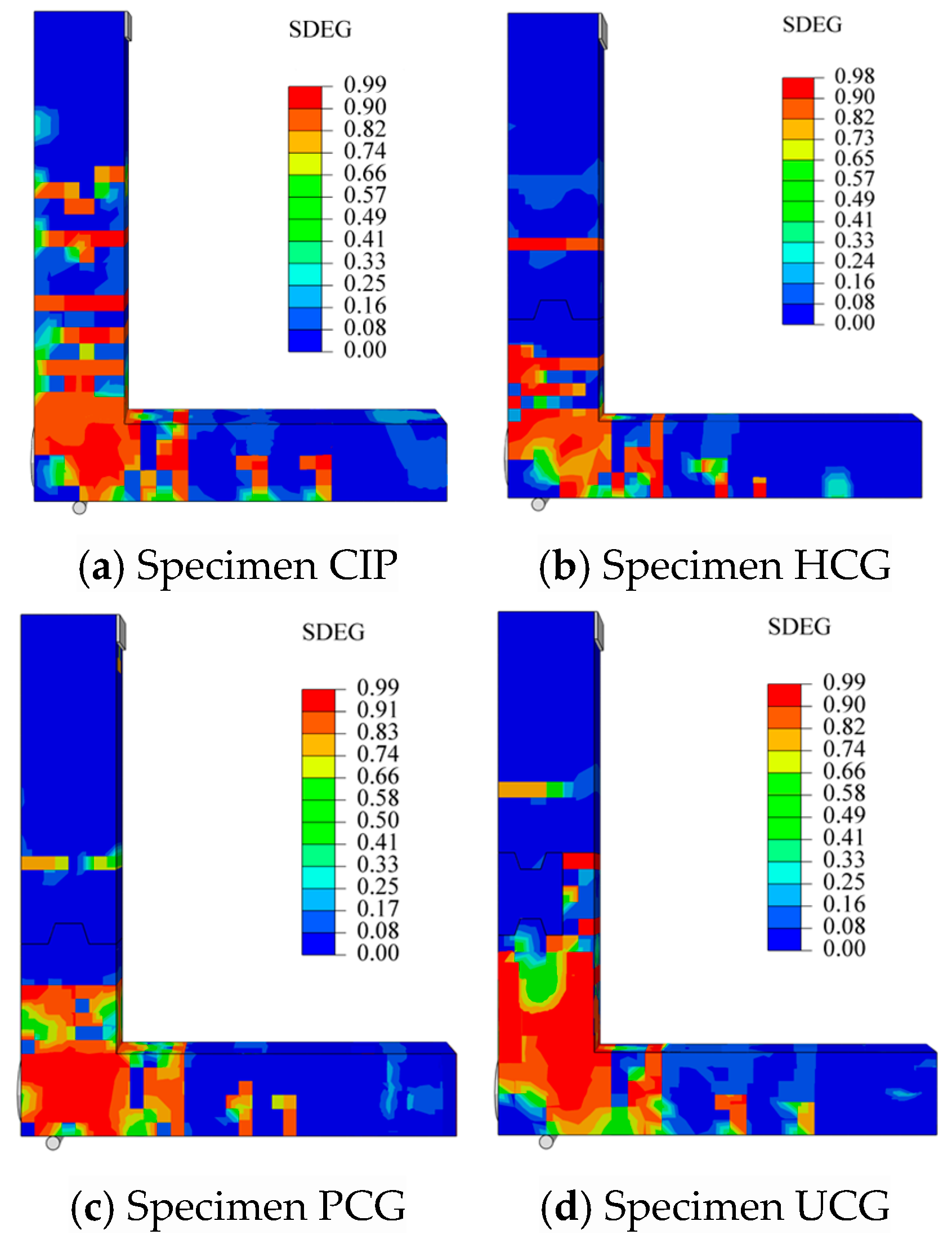
- The location of joint placement decisively influences damage distribution. When placed outside the roof plastic hinge zone, the HCG and UCG joints successfully confined damage within the designated energy dissipation zone, whereas the PCG joint altered the load transfer path and caused damage spillover. The stiffness degradation patterns from numerical simulations showed good agreement with experimental crack distributions, further validating the regulatory effect of different joints on damage patterns.
- (5)
- Practical design recommendations: The HCG and UCG joints are suitable for prefabricated underground structures. Placing joints outside the roof plastic hinge zone achieves the “strong joint, weak component” goal. The UCG joint is recommended for harsh environments due to UHPC durability. The PCG joint should be avoided when high ductility is required; if prestressing is needed, the HCG joint is a better alternative. Future research should investigate cogging geometry, prestress levels, and connection materials.
- (6)
- Study limitations: This study was limited to a single specimen geometry (1/4-scale), one axial compression ratio (0.06), one prestressing level (65 kN), and simplified boundary conditions. Therefore, the conclusions should be interpreted within these limitations. Future studies should explore a wider range of geometries, axial compression ratios, prestress levels, and more realistic soil–structure interaction models.
Author Contributions
Funding
Data Availability Statement
Conflicts of Interest
References
- Fan, Y.; Zhuang, H.; Yun, L.; Wang, D.; Xu, Z. Evaluation method for seismic resilience of underground structures and its verification. Soil Dyn. Earthq. Eng. 2026, 200, 109826. [Google Scholar] [CrossRef]
- Zhao, G.; Xie, K.; Wang, S.; Xie, K. Numerical study on seismic performance of a prefabricated subway station considering the influence of construction process. Structures 2024, 69, 107218. [Google Scholar] [CrossRef]
- Lee, J.; Kim, D.; Park, D.; Cho, J.-Y. Flexural behavior of curved-bolt jointed tunnel segments under combined axial force and bending moments. Int. J. Concr. Struct. Mater. 2025, 19, 115. [Google Scholar] [CrossRef]
- Yang, X.; Lin, F. Prefabrication technology for underground metro station structure. Tunn. Undergr. Space Technol. 2021, 108, 103717. [Google Scholar] [CrossRef]
- Liu, H.; Yan, Q.; Du, X. Seismic performance comparison between precast beam joints and cast-in-place beam joints. Adv. Struct. Eng. 2017, 20, 1299–1314. [Google Scholar] [CrossRef]
- Ding, Y.; Xu, W.; Chen, Y.; Wang, J.; Yan, W. Experimental research on seismic performance of precast cogging high-strength bolt composite joint and influence of its arrangement location. Eng. Struct. 2020, 225, 111294. [Google Scholar] [CrossRef]
- Lee, H.; Chen, H.; Syu, J. Seismic performance of emulative precast concrete beam–column connections with alternative reinforcing details. Adv. Struct. Eng. 2017, 20, 1793–1806. [Google Scholar] [CrossRef]
- Wang, Z.; Qu, H.; Li, T.; Wei, H.; Wang, H.; Duan, H.; Jiang, H. Quasi-static cyclic tests of precast bridge columns with different connection details for high seismic zones. Eng. Struct. 2018, 158, 13–27. [Google Scholar] [CrossRef]
- Lago, B.D.; Negro, P.; Lago, A.D. Seismic design and performance of dry-assembled precast structures with adaptable joints. Soil Dyn. Earthq. Eng. 2018, 106, 182–195. [Google Scholar] [CrossRef]
- Liu, Y.L.; Zhao, Z.D.; Cheng, X.W.; Diao, M.; Sun, H. Experimental and numerical investigation of the progressive collapse of precast reinforced concrete frame substructures with wet connections. Eng. Struct. 2022, 256, 114010. [Google Scholar] [CrossRef]
- Wang, H.; Liu, X.G.; Yue, Q.R.; Zheng, M.-Z. Shear resistance of a novel wet connection for prefabricated composite beams under shear-bending coupling loading. J. Build. Eng. 2022, 45, 103636. [Google Scholar] [CrossRef]
- Ou, Y.C.; Wang, P.H.; Tsai, M.S.; Chang, K.-C.; Lee, G.C. Large-scale experimental study of precast segmental unbonded posttensioned concrete bridge columns for seismic regions. J. Struct. Eng. ASCE 2010, 136, 255–264. [Google Scholar] [CrossRef]
- Bu, Z.Y.; Jian, G.; Zheng, R.Y.; Song, J.; Lee, G.C. Cyclic performance and simplified pushover analyses of precast segmental concrete bridge columns with circular section. Earthq. Eng. Eng. Vib. 2016, 15, 297–312. [Google Scholar] [CrossRef]
- Saibabu, S.; Srinivas, V.; Sasmal, S.; Lakshmanan, N.; Iyer, N.R. Performance evaluation of dry and epoxy jointed segmental prestressed box girders under monotonic and cyclic loading. Constr. Build. Mater. 2013, 38, 931–940. [Google Scholar] [CrossRef]
- Yang, X.R.; Shi, Z.H.; Lin, F. Influence of geometrical parameters on performance of grouted mortise and tenon joints for application in prefabricated underground structures. Adv. Civ. Eng. 2019, 2019, 1–14. [Google Scholar] [CrossRef]
- Zhang, P.; Su, Y.L.; Fan, J.J.; Feng, H.; Shao, J.; Guo, H.; Gao, D.-Y.; Sheikh, S.A. Experimental research on the mechanical behavior of grouted sleeves with fiber-reinforced grouting material under cyclic loading. Structures 2021, 34, 2189–2204. [Google Scholar] [CrossRef]
- Liu, H.; Li, Z.; Pei, J. Influence of joint position and rigidity on precast box structural internal force. J. Traffic Transp. Eng. 2003, 3, 18–21. [Google Scholar]
- Avcil, F. Investigation of Precast Reinforced Concrete Structures during the 6 February 2023 Turkiye Earthquakes. Sustainability 2023, 15, 14846. [Google Scholar] [CrossRef]
- Isik, E.; Avcil, F.; Hadzima-Nyarko, M.; İzol, R.; Büyüksaraç, A.; Arkan, E.; Radu, D.; Özcan, Z. Seismic Performance and Failure Mechanisms of Reinforced Concrete Structures Subject to the Earthquakes in Türkiye. Sustainability 2024, 16, 6473. [Google Scholar] [CrossRef]
- Ou, Y.C.; Oktavianus, Y.; Tsai, M.S. An emulative precast segmental concrete bridge column for seismic regions. Earthq. Spectra 2013, 29, 1441–1457. [Google Scholar] [CrossRef]
- Ding, M.; Xu, W.; Wang, J.; Chen, Y.; Du, X.; Fang, R. Seismic performance of prefabricated concrete columns with grouted sleeve connections, and a deformation-capacity estimation method. J. Build. Eng. 2022, 55, 104722. [Google Scholar] [CrossRef]
- Twigden, K.M.; Henry, R.S. Shake table testing of unbonded post-tensioned concrete walls with and without additional energy dissipation. Soil Dyn. Earthq. Eng. 2019, 119, 375–389. [Google Scholar] [CrossRef]
- Korkmaz, H.H.; Tankut, T. Performance of a precast concrete beam-to-beam connection subject to reversed cyclic loading. Eng. Struct. 2005, 27, 1392–1407. [Google Scholar] [CrossRef]
- Haber, Z.B.; Mackie, K.R.; Al-Jelawy, H.M. Testing and analysis of precast columns with grouted sleeve connections and shifted plastic hinging. J. Bridge Eng. 2017, 22, 4017078. [Google Scholar] [CrossRef]
- Ding, M.; Xu, W.; Wang, J.; Chen, Y.; Fang, R. Analytical study on seismic performance of ECC shell-RC column and its plastic hinge forming mechanism. Structures 2023, 58, 105489. [Google Scholar] [CrossRef]
- Farzad, M.; Shafieifar, M.; Azizinamini, A. Experimental and numerical study on bond strength between conventional concrete and ultra high-performance concrete (UHPC). Eng. Struct. 2019, 186, 297–305. [Google Scholar] [CrossRef]
- Tayeh, B.A.; Abu Bakar, B.H.; Johari, M.A.M.; Voo, Y.L. Mechanical and permeability properties of the interface between normal concrete substrate and ultra high performance fiber concrete overlay. Constr. Build. Mater. 2012, 36, 538–548. [Google Scholar] [CrossRef]
- Pekgokgoz, R.K.; Avcil, F. Effect of steel fibres on reinforced concrete beam-column joints under reversed cyclic loading. Gradevinar 2021, 73, 1185–1194. [Google Scholar]
- Hu, M.; Jia, Z.; Han, Q.; Xu, L.; Jiao, C.; Long, P. Experimental Investigation of Precast Bridge Deck Panels with Novel High-Performance Connections under Fatigue Loading. J. Bridge Eng. 2023, 28, 04023074. [Google Scholar] [CrossRef]
- Zhang, G.; Han, Q.; Xu, K.; Du, X.; He, W. Experimental investigation of seismic behavior of UHPC-filled socket precast bridge column-foundation connection with shear keys. Eng. Struct. 2021, 228, 111527. [Google Scholar] [CrossRef]
- Kong, X.; Ju, Y.; Li, X.; Wang, D.; Zhang, X. Seismic performance of precast interior joints with UHPC composite beams and HSC columns. Structures 2025, 75, 108741. [Google Scholar] [CrossRef]
- Ding, J.H.; Jin, X.L.; Guo, Y.Z.; Li, G.-G. Numerical simulation for large-scale seismic response analysis of immersed tunnel. Eng. Struct. 2006, 28, 1367–1377. [Google Scholar] [CrossRef]
- Wang, T. Civil Engineering Structural Test; Wuhan University Press: Wuhan, China, 2014. [Google Scholar]
- Tang, J. Seismic Resistance of Joints in Reinforced Concrete Frames; Southeast University Press: Nanjing, China, 1989; pp. 215–220. [Google Scholar]
- Li, C.; Hao, H.; Bi, K. Numerical study on the seismic performance of precast segmental concrete columns under cyclic loading. Eng. Struct. 2017, 148, 373–386. [Google Scholar] [CrossRef]
- Shen, B.; Xu, W.; Wang, J.; Zhou, D.; Chen, Y.; Hou, L.; Sun, Y.; Yang, Z.; Ding, Y. Experimental investigation of the seismic performance of an L-shaped roof-sidewall joint with a cogging composite connection. Soil Dyn. Earthq. Eng. 2024, 177, 108410. [Google Scholar] [CrossRef]
- BS EN 1994-2; Eurocode 4: Design of Composite Steel and Concrete Structure, Part 1-1: General Rules and Rules for Buildings. European Committee for Standardization: Brussels, Belgium, 2004.
- Liu, H.; Wang, Z.; Xu, C.; Du, X. Influence of axial compression ratio on the seismic performance of precast columns with grouted sleeve connections. J. Struct. Eng. 2021, 147, 4021194. [Google Scholar] [CrossRef]
- Xin, G.; Xu, W.; Wang, J.; Yan, X.; Chen, Y.; Yan, W.; Li, J. Seismic performance of fabricated concrete piers with grouted sleeve joints and bearing-capacity estimation method. Structures 2021, 33, 169–186. [Google Scholar] [CrossRef]
- Nikbakht, E.; Rashid, K.; Hejazi, F.; Osman, S.A. A numerical study on seismic response of self-centring precast segmental columns at different post-tensioning forces. Lat. Am. J. Solids Struct. 2014, 11, 864–883. [Google Scholar] [CrossRef]
- Shi, Y.; Yuan, G.; Zhu, H. Effect of Axial Compression Ratio on Seismic and Self-Centering Performance of Unbonded Prestressed Concrete Columns. Adv. Civ. Eng. 2022, 2022, 7346620. [Google Scholar] [CrossRef]
- Semendary, A.A.; Hamid, W.K.; Steinberg, E.P.; Khoury, I. Shear friction performance between high strength concrete (HSC) and ultra high performance concrete (UHPC) for bridge connection applications. Eng. Struct. 2020, 205, 110121–110122. [Google Scholar] [CrossRef]
- Zhang, Z.; Chen, X.; Su, C.; Li, L. Prediction of long-term bonding behavior of UHPC-NC interface under combined effects of fatigue load and salt freeze-thaw cycles. Constr. Build. Mater. 2025, 500, 144240. [Google Scholar] [CrossRef]
- Kang, W.; Mei, K.; Liu, W.; Sun, S. Study on Chloride Diffusion Performance and Structural Durability Design of UHPC Under Chloride Salt Erosion. Buildings 2025, 15, 3569. [Google Scholar] [CrossRef]
- GB 50728-2011; Technical Code for Safety Appraisal of Engineering Structural Strengthening Materials. China Architecture & Building Press: Beijing, China, 2011.
- GB/T 50081-2019; Standard for Test Methods of Concrete Physical and Mechanical Properties. China Architecture & Building Press: Beijing, China, 2019.
- ASTM A370-12A; Standard Test Methods and Definitions for Mechanical Testing of Steel Products. American Society for Test and Materials (ASTM): West Conshohocken, PA, USA, 2012.
- JGJ/T 101-2015; Specification for Seismic Test of Buildings. China Architecture & Building Press: Beijing, China, 2015.
- Park, R. Evaluation of ductility of structures and structural assemblages from laboratory testing. Bull. N. Z. Natl. Soc. Earthq. Eng. 1989, 22, 155–166. [Google Scholar] [CrossRef]
- Mostofinejad, D.; Akhlaghi, A. Experimental investigation of the efficacy of EBROG method in seismic rehabilitation of deficient reinforced concrete beam–column joints using CFRP sheets. J. Compos. Constr. 2017, 21, 4017009. [Google Scholar] [CrossRef]
- GB 50011-2010; Code for Seismic Design of Buildings. China Architecture & Building Press: Beijing, China, 2010.
- Hussein, H.H.; Walsh, K.K.; Sargand, S.M.; Al Rikabi, F.T.; Steinberg, E.P. Modeling the Shear Connection in Adjacent Box-Beam Bridges with Ultrahigh-Performance Concrete Joints. I: Model Calibration and Validation. J. Bridge Eng. 2017, 22, 4017043. [Google Scholar] [CrossRef]










| Specimen | Connection Form | Component | Diameter of Rebar/mm (Longitudinal Rebar/Stirrup) | Interval of Stirrups/mm (Concentrated Area/Standard Area) | ρs/% | ρv/% (Concentrated Area/Standard Area) |
|---|---|---|---|---|---|---|
| CIP | CIP | Roof | 12/6 | 50/100 | 0.8 + 0.5 | 0.45/0.23 |
| Sidewall | 12/6 | 50/100 | 1.0 + 0.8 | 0.45/0.23 | ||
| HCG | HSB–Cogging–GS | Roof | 12/6 | 50/100 | 0.8 + 0.5 | 0.45/0.23 |
| Sidewall | 12/6 | 50/100 | 1.0 + 0.8 | 0.45/0.23 | ||
| PCG | PS–Cogging–GS | Roof | 12/6 | 50/100 | 0.8 + 0.5 | 0.45/0.23 |
| Sidewall | 12/6 | 50/100 | 1.0 + 0.8 | 0.45/0.23 | ||
| UCG | UHPC–Cogging–GS | Roof | 12/6 | 50/100 | 0.8 + 0.5 | 0.45/0.23 |
| Sidewall | 12/6 | 50/100 | 1.0 + 0.8 | 0.45/0.23 |
| Materials | Key Property | Measured Value (Mean) | Materials | Key Property | Measured Value (Mean) |
|---|---|---|---|---|---|
| C40 | compressive strength fc (MPa) | 53.7 | HPB400 (6 mm) | yield strength fy (MPa) | 403 |
| Grouting material | compressive strength fc (MPa) | 97.5 | ultimate strength fu (MPa) | 561 | |
| UHPC | compressive strength fc (MPa) | 130.2 | elongation δ (%) | 17.8 | |
| tensile strength ft (MPa) | 9.8 | HRB400 (12 mm) | yield strength fy (MPa) | 406 | |
| peak strain εp (%) | 0.093 | ultimate strength fu (MPa) | 602 | ||
| elastic modulus E (GPa) | 55.8 | elongation δ (%) | 22.6 |
| Specimen | Drift Ratio | Failure Modes and Crack Distributions | ||
|---|---|---|---|---|
| Roof | Sidewall | RSC and Seam | ||
| CIP | 0.25% | A minor transverse crack Cr1 appeared at the roof–sidewall interface (RSI) | / | / |
| 0.75% | Multiple transverse cracks appeared approximately 500 mm–800 mm above the RSI | Within 50 mm–200 mm from the RSI, four vertical cracks appeared. All crack widths were 0.05 mm | One diagonal crack and one vertical crack appeared in the RSC | |
| 1.00% | The cracks (500 mm and 700 mm above the RSI) developed into through cracks. Width of Cr1 reached 0.2 mm | Two vertical cracks appeared, located 270 mm and 420 mm from the RSI | Three diagonal cracks appeared in the RSC | |
| 2.00% | Maximum width of Cr1 reached 2.5 mm | / | Two diagonal cracks appeared in the RSC. Maximum crack width was 0.15 mm | |
| 6.50% | Concrete at the inner edge of the plastic hinge cracked and spalled | / | Maximum width of the diagonal cracks in the RSC reached 0.30 mm | |
| HCG | 0.50% | Transverse through cracks Cr1 and Cr2 appeared at the RSI and 100 mm above it | One vertical crack appeared at 50 mm and 150 mm from the RSI | Transverse cracks with a width of 0.06 mm appeared at the joint seam |
| 0.75% | Widths of Cr1 and Cr2 reached 0.30 mm | / | Two diagonal cracks appeared in the RSC | |
| 1.25% | Four transverse cracks appeared above the upper edge of the GSs. Width of Cr2 reached 0.50 mm | Within 250 mm–500 mm from the RSI, four vertical cracks appeared. All crack widths were less than 0.10 mm | Multiple diagonal cracks appeared in the RSC | |
| 1.50% | Diagonal crack Cr3 appeared 160 mm above the RSI. Width of Cr1 reached 2.00 mm | / | Diagonal cracks appeared in the upper left of the RSC | |
| 6.50% | Concrete between Cr2 and Cr3 crushed and spalled. The rebars yielded | / | Maximum width of diagonal cracks in the RSC reached 0.30 mm | |
| PCG | 0.50% | Transverse cracks Cr1 (through, width reached 0.30 mm) and Cr2 appeared at the RSI and 160 mm above it | Two vertical cracks appeared at 50 mm and 150 mm from the RSI | Minor transverse cracks appeared at the joint seam |
| 0.75% | Maximum width of Cr1 reached 0.50 mm. Cr2 became through with a width of 0.20 mm | / | Diagonal cracks appeared in the lower right of the RSC | |
| 1.50% | Three transverse cracks appeared 100 mm and 290 mm above the RSI. Widths of Cr1 and Cr2 reached 9.00 mm and 0.50 mm, respectively | Within 300 mm–500 mm from the RSI, three vertical cracks appeared. All crack widths were less than 0.10 mm | Two diagonal cracks (width reached 0.40 mm) appeared in the RSC. Diagonal cracks gradually increased in the lower left of the RSC | |
| 4.50% | Concrete on the right side of Cr1 crushed | / | Concrete on the lower side of the RSC crushed and spalled | |
| UCG | 0.5% | Transverse cracks (Cr1 and Cr2) appeared at the RSI and 60 mm above it | / | / |
| 0.75% | Cr1 and Cr2 became through. Two transverse cracks appeared within 160 mm–300 mm above the RSI | Within 100 mm–260 mm from the RSI, three vertical cracks appeared | A minor diagonal crack Cr3 appeared in the RSC | |
| 1.25% | Within 360 mm–550 mm above the RSI, three transverse cracks appeared | Within 300 mm–550 mm from the RSI, three vertical cracks appeared. All widths were less than 0.10 mm | Minor transverse cracks appeared at the joint seams. Two diagonal cracks appeared in the RSC | |
| 2.5% | Two diagonal cracks appeared 100 mm and 150 mm above the RSI. Widths of Cr1 and Cr2 reached 1.8 mm and 1.0 mm, respectively | / | Cr3 became through with a width of 0.5 mm. Four diagonal cracks appeared in the RSC | |
| 6.50% | Concrete of the roof plastic hinge crushed and spalled. The rebars yielded | / | Width of Cr3 reached 1.5 mm, with a residual width of 1.00 mm after unloading | |
| Specimens | Loading | Yield Load, Fy (kN) | Yield Displacement, Δy (mm) | Peak Load, Fp (kN) | Peak Displacement, Δp (mm) | Ultimate Load, Fu (kN) | Ultimate Displacement, Δu (mm) |
|---|---|---|---|---|---|---|---|
| CIP | Positive | 33.14 | 14.15 | 43.58 | 71.91 | 37.04 | >104.29 |
| Negative | −43.78 | −15.11 | −58.11 | −71.28 | −49.65 | <−104.17 | |
| HCG | Positive | 34.14 | 14.71 | 45.18 | 72.42 | 38.40 | >104.81 |
| Negative | −45.08 | −15.49 | −60.09 | −71.19 | −51.08 | <−104.51 | |
| PCG | Positive | 36.21 | 13.22 | 49.27 | 24.16 | 41.88 | 29.13 |
| Negative | −42.47 | −13.65 | −56.52 | −24.31 | −48.04 | −72.87 | |
| UCG | Positive | 35.09 | 15.23 | 46.37 | 72.42 | 39.41 | >104.11 |
| Negative | −46.11 | −15.81 | −61.42 | −88.23 | −52.21 | <−103.65 |
| Specimens | Loading | Yield Load (kN) | Yield Displacement (mm) | Peak Load (kN) | |||
|---|---|---|---|---|---|---|---|
| Simulation | Deviation | Simulation | Deviation | Simulation | Deviation | ||
| CIP | Positive | 35.64 | 7.54% | 13.11 | 7.31% | 42.82 | 1.74% |
| Negative | −46.85 | 7.01% | −14.37 | 4.91% | −54.91 | 5.51% | |
| HCG | Positive | 31.63 | 7.36% | 13.85 | 5.87% | 43.49 | 3.73% |
| Negative | −42.25 | 6.28% | −14.45 | 6.71% | −54.73 | 8.92% | |
| PCG | Positive | 37.73 | 4.21% | 12.84 | 2.81% | 48.21 | 2.15% |
| Negative | −44.01 | 3.62% | −13.13 | 3.83% | −55.64 | 1.56% | |
| UCG | Positive | 37.48 | 6.81% | 14.24 | 6.50% | 45.48 | 1.92% |
| Negative | −47.67 | 3.38% | −14.51 | 8.22% | −56.54 | 7.95% | |
Disclaimer/Publisher’s Note: The statements, opinions and data contained in all publications are solely those of the individual author(s) and contributor(s) and not of MDPI and/or the editor(s). MDPI and/or the editor(s) disclaim responsibility for any injury to people or property resulting from any ideas, methods, instructions or products referred to in the content. |
© 2026 by the authors. Licensee MDPI, Basel, Switzerland. This article is an open access article distributed under the terms and conditions of the Creative Commons Attribution (CC BY) license.
Share and Cite
Shen, B.; Xu, W.; Deng, T.; Lan, X.; Yang, D.; Zhu, L.; Chen, Y. Seismic Performance and Damage Controllability of Prefabricated Roof–Sidewall Composite Joints for Underground Structures Based on Cogging Connections. Buildings 2026, 16, 1771. https://doi.org/10.3390/buildings16091771
Shen B, Xu W, Deng T, Lan X, Yang D, Zhu L, Chen Y. Seismic Performance and Damage Controllability of Prefabricated Roof–Sidewall Composite Joints for Underground Structures Based on Cogging Connections. Buildings. 2026; 16(9):1771. https://doi.org/10.3390/buildings16091771
Chicago/Turabian StyleShen, Botan, Weibing Xu, Tongfa Deng, Xiongdong Lan, Daoxue Yang, Longji Zhu, and Yanjiang Chen. 2026. "Seismic Performance and Damage Controllability of Prefabricated Roof–Sidewall Composite Joints for Underground Structures Based on Cogging Connections" Buildings 16, no. 9: 1771. https://doi.org/10.3390/buildings16091771
APA StyleShen, B., Xu, W., Deng, T., Lan, X., Yang, D., Zhu, L., & Chen, Y. (2026). Seismic Performance and Damage Controllability of Prefabricated Roof–Sidewall Composite Joints for Underground Structures Based on Cogging Connections. Buildings, 16(9), 1771. https://doi.org/10.3390/buildings16091771