Navigating the Trade-Off Between Decarbonization and Thermal Comfort: A Simulation-Driven Optimization for Office Buildings Under Health Constraints




Abstract
1. Introduction
2. Materials and Methods
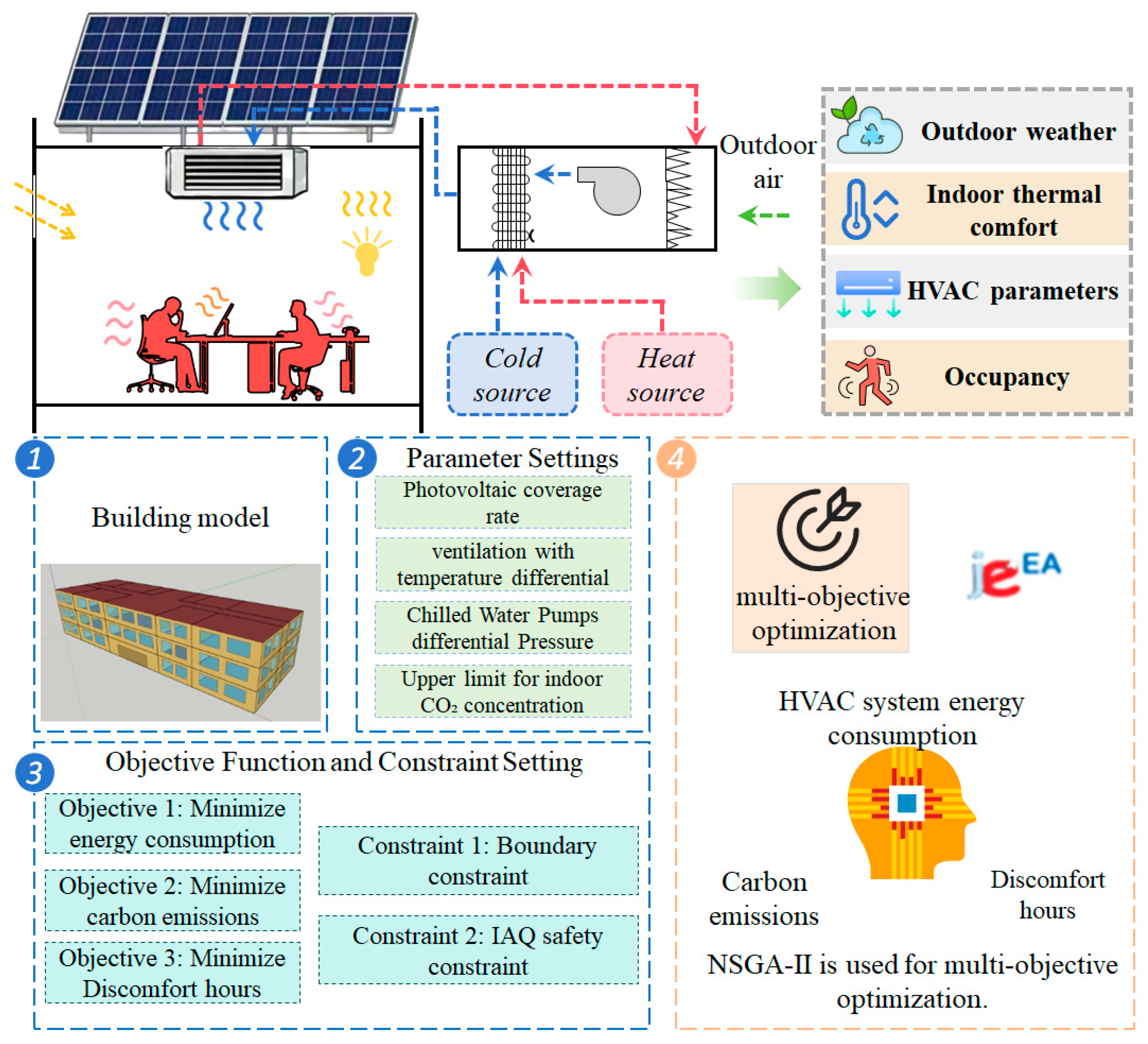
2.1. Research Framework
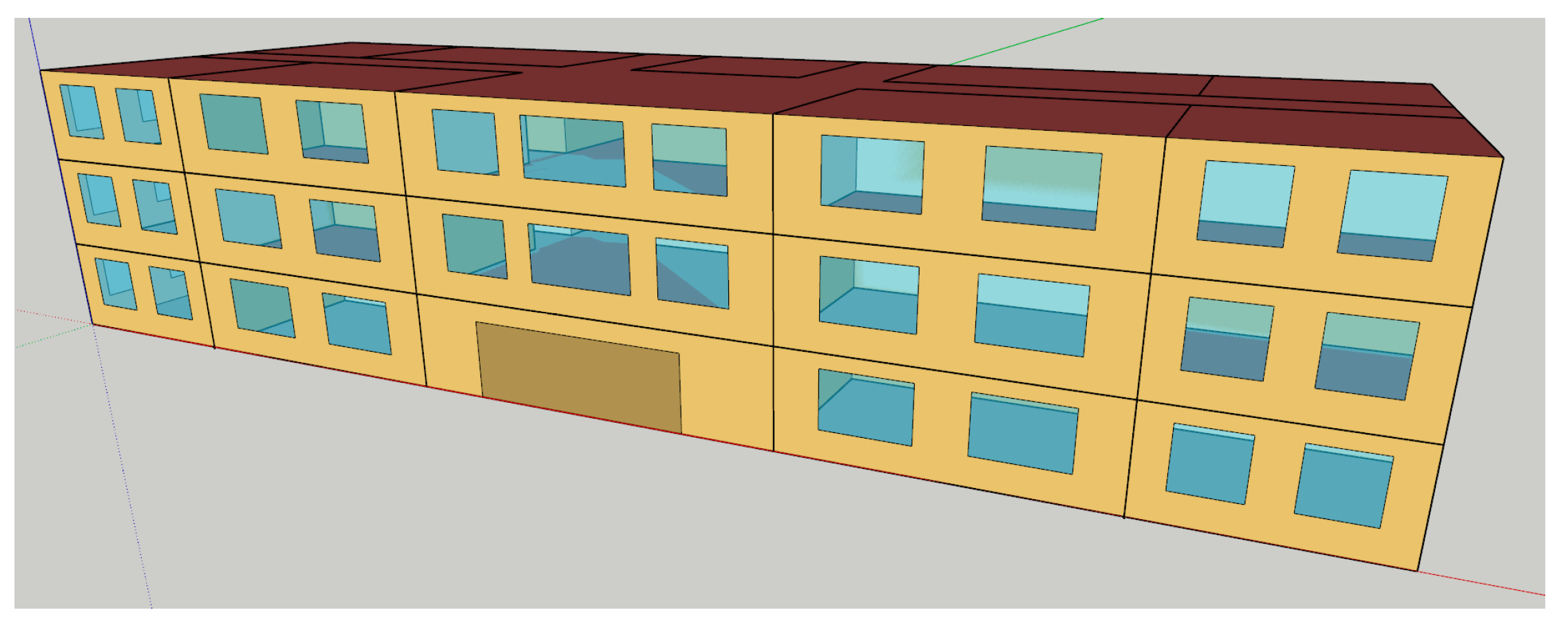
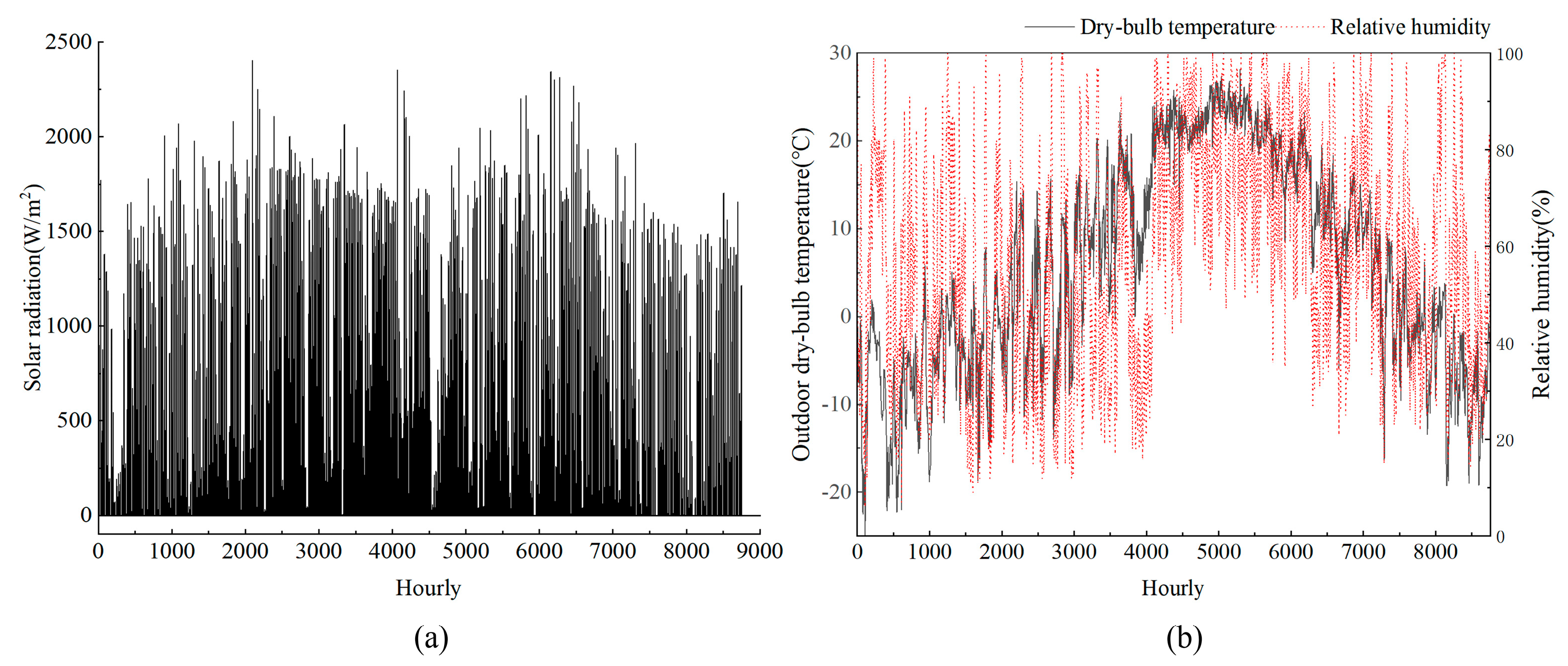
2.2. Building Model
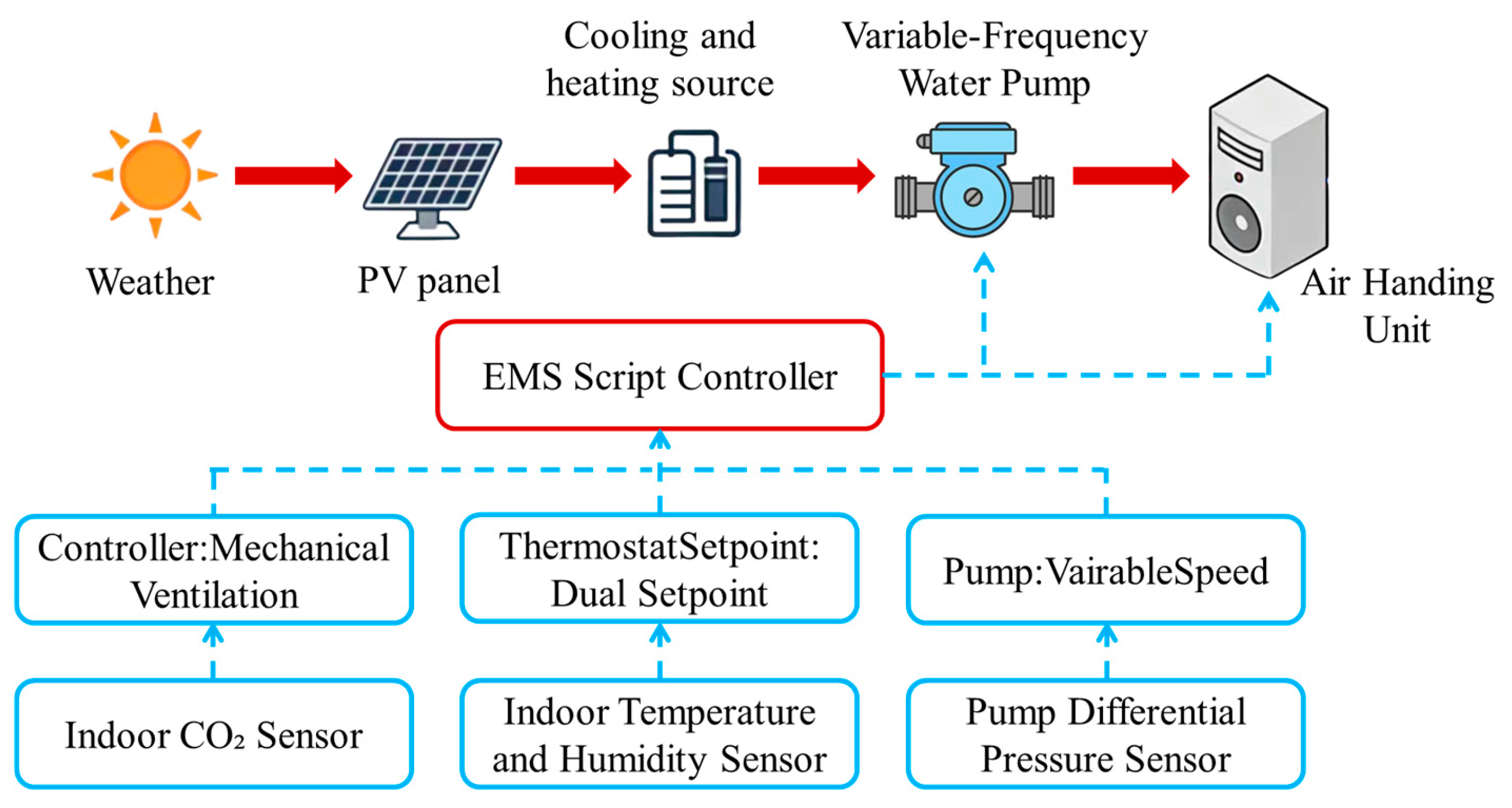
2.3. A Physics-Driven Co-Simulation Platform for Parametric Optimization
2.4. Formulation and Solution of Multi-Objective Optimization Problems
2.4.1. Decision Variables
2.4.2. Objective Function
- Minimization of operational carbon emissions
- Minimization of dissatisfied hours of the indoor environment
2.4.3. Constraints
- (1)
- Boundary constraints
- (2)
- Logical deadband constraints
- (3)
- IQA safety hard constraints
2.4.4. Optimization Algorithms and Configuration
2.4.5. Optimal Solution Selection Method from the Pareto Front
3. Optimization Results Analysis
3.1. Sensitivity of Key Parameters and the Distribution of Optimal Solutions
3.1.1. Sensitivity Analysis of Decision Variables
3.1.2. Parametric Characteristics of the Set of Pareto-Optimal Solutions
3.2. Multi-Objective Pareto Fronts and Solution Selection
3.2.1. Evolution of the Pareto Front and the Boundary of Cooperative Optimization
3.2.2. Robustness Assessment of Typical Control Schemes
3.3. Dynamic Thermodynamic Response of Core Passive Strategies
3.3.1. Dynamic Characteristics of Indoor Thermal Environment in a Typical Week
3.3.2. Statistical Validation of Operational Performance
4. Discussion
5. Conclusions
- (1)
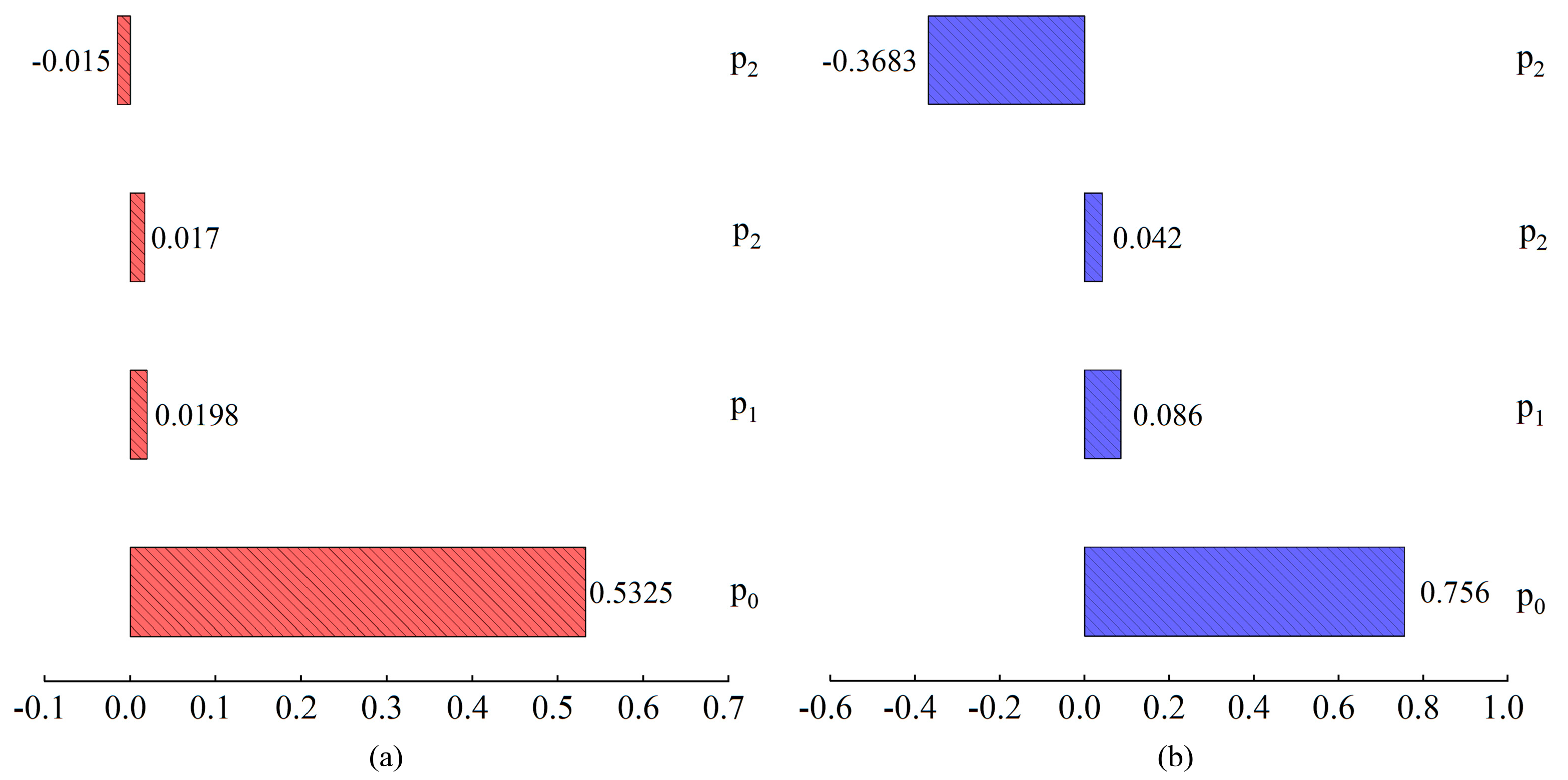
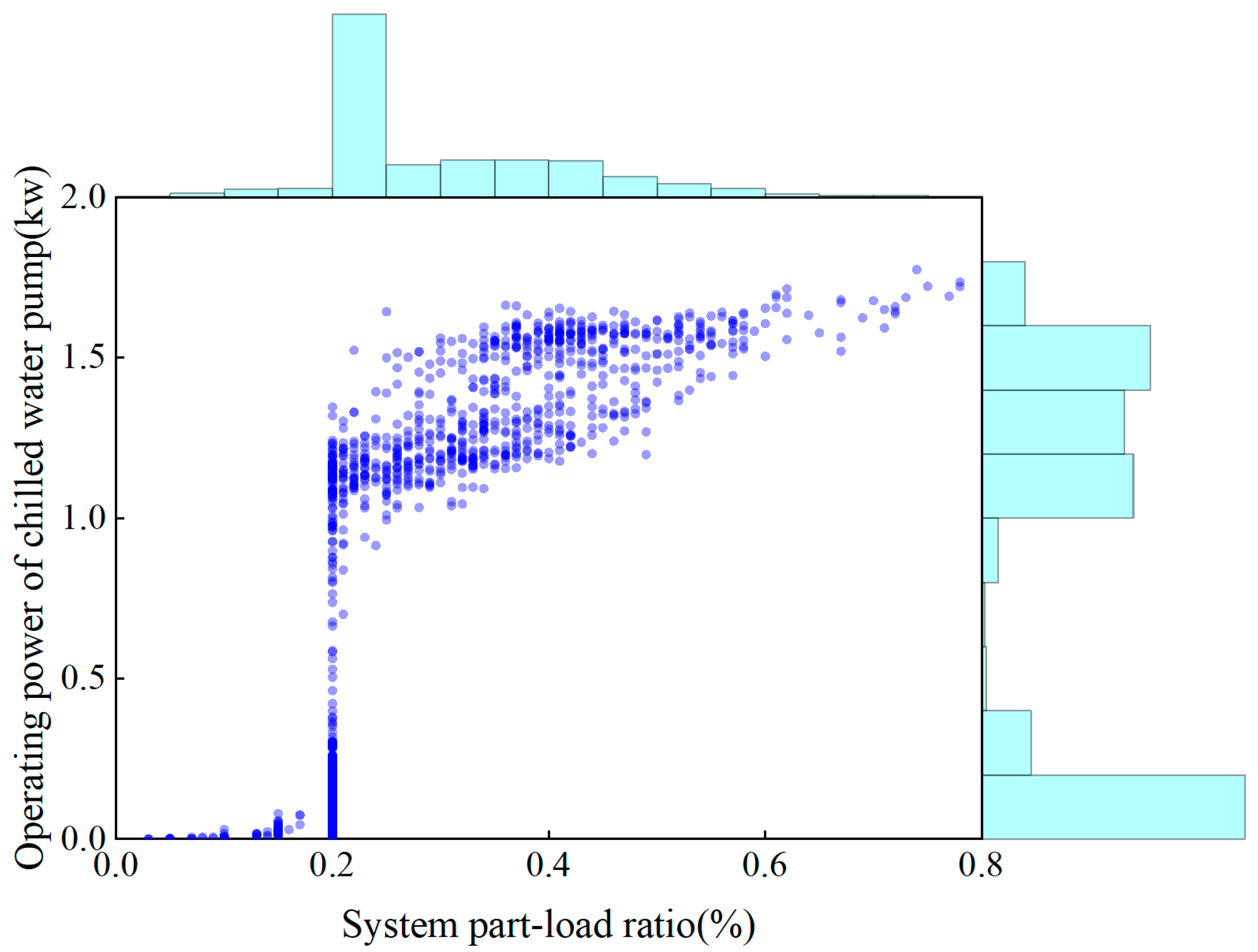
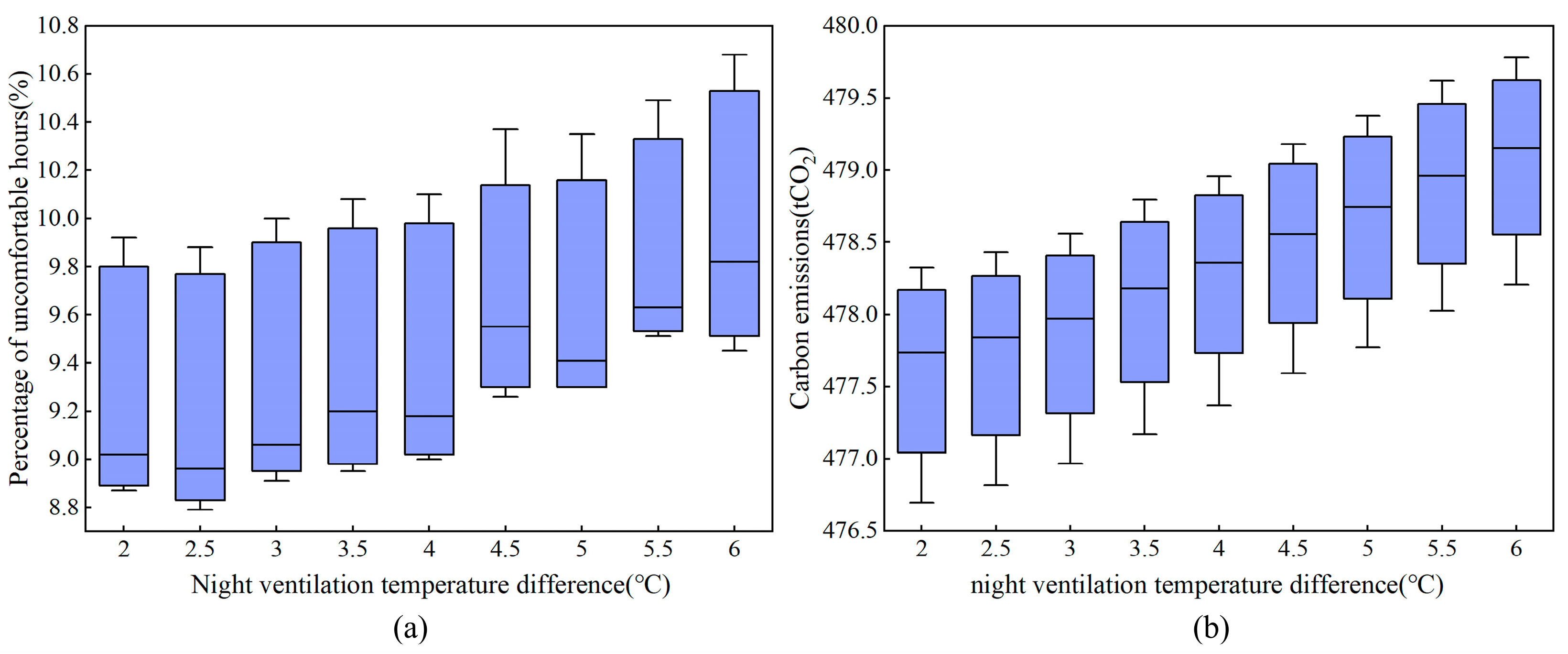
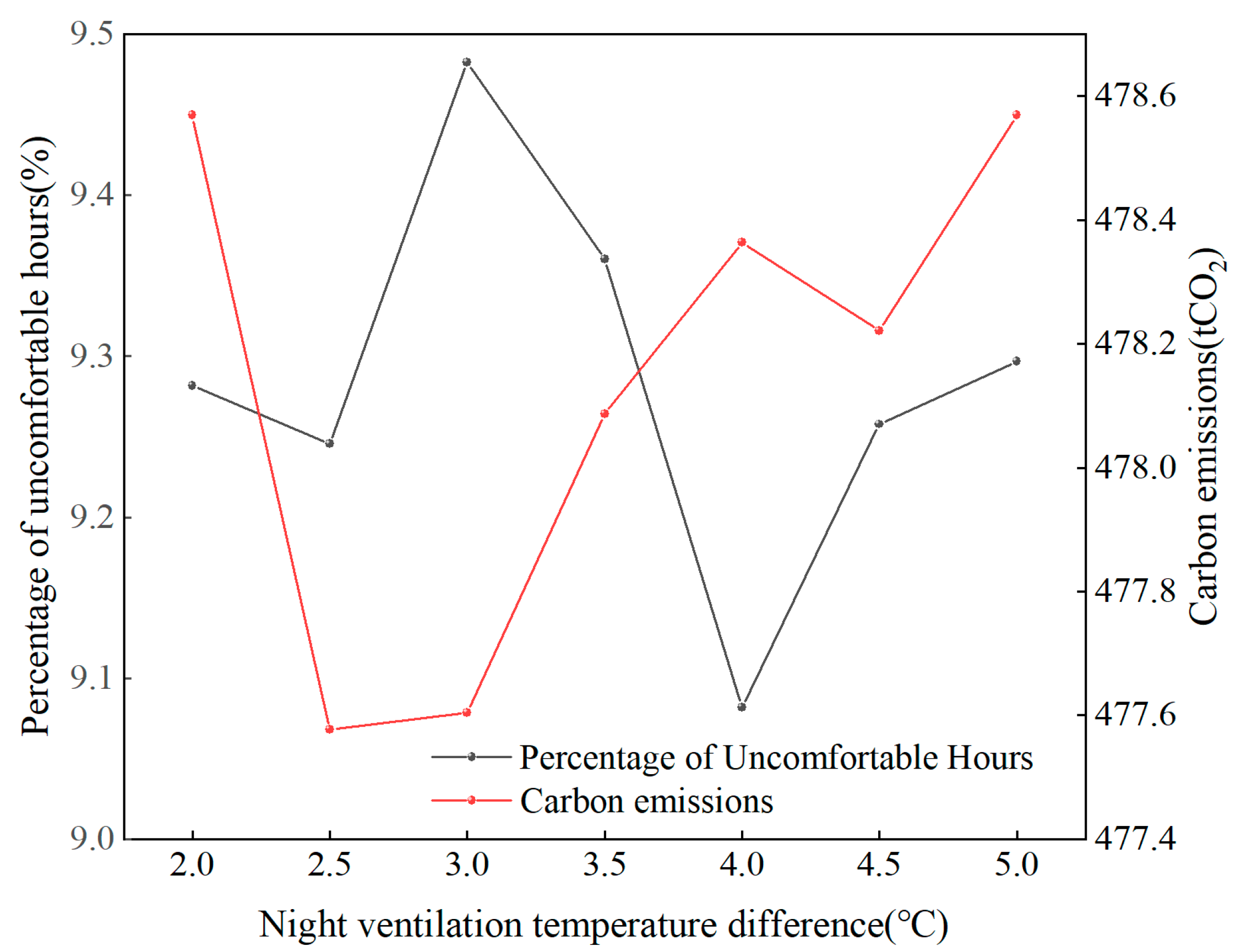
- Night ventilation activation temperature is the most dominant variable, yielding SRC values of 0.7456 for carbon emissions and 0.5325 for discomfort hours. Conversely, chilled water pump pressure settings show minimal sensitivity but allow the pump to operate independently at ultra-low power (0–1.3 kW) during extreme low-load conditions (PLR = 0.2).
- (2)
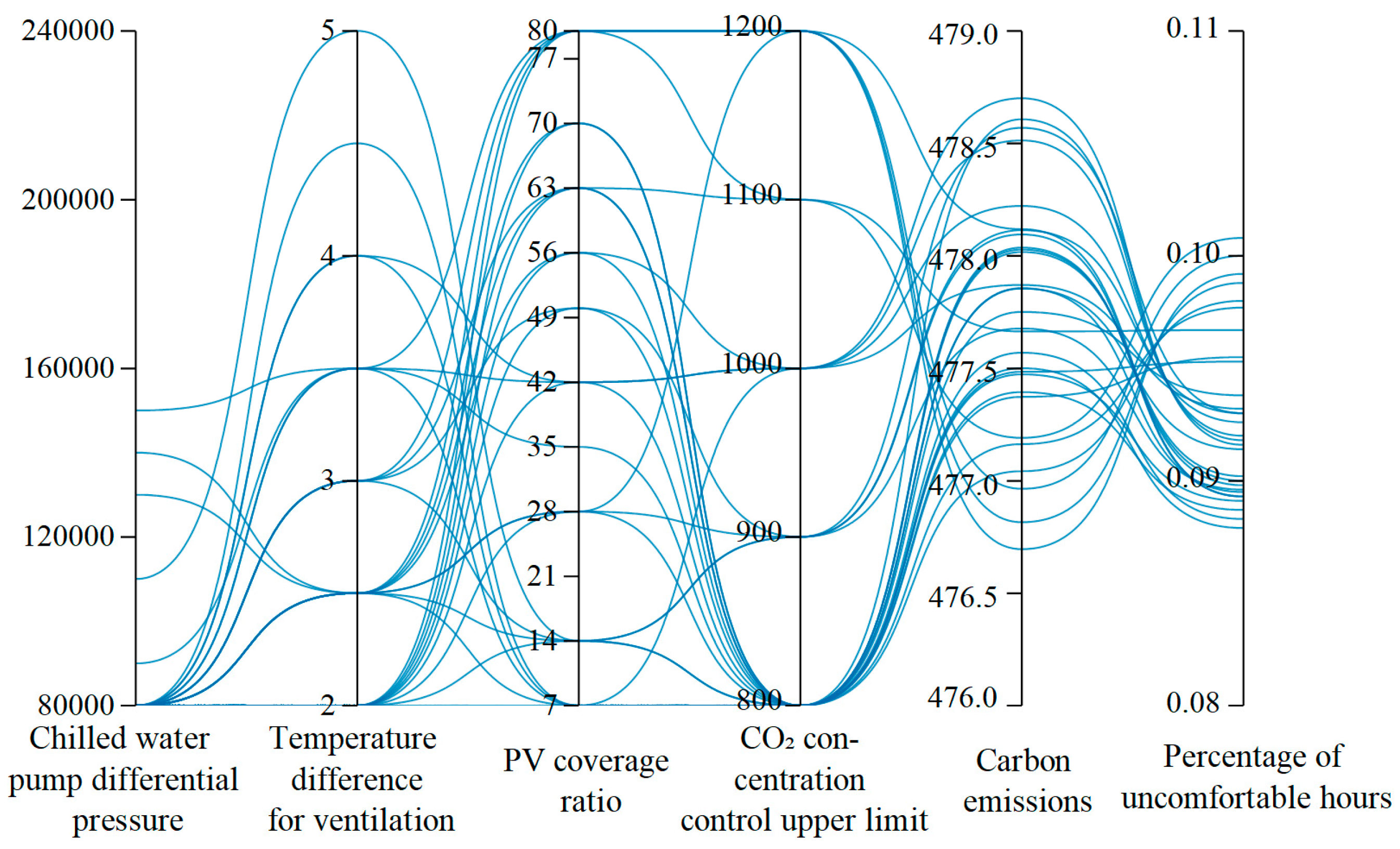
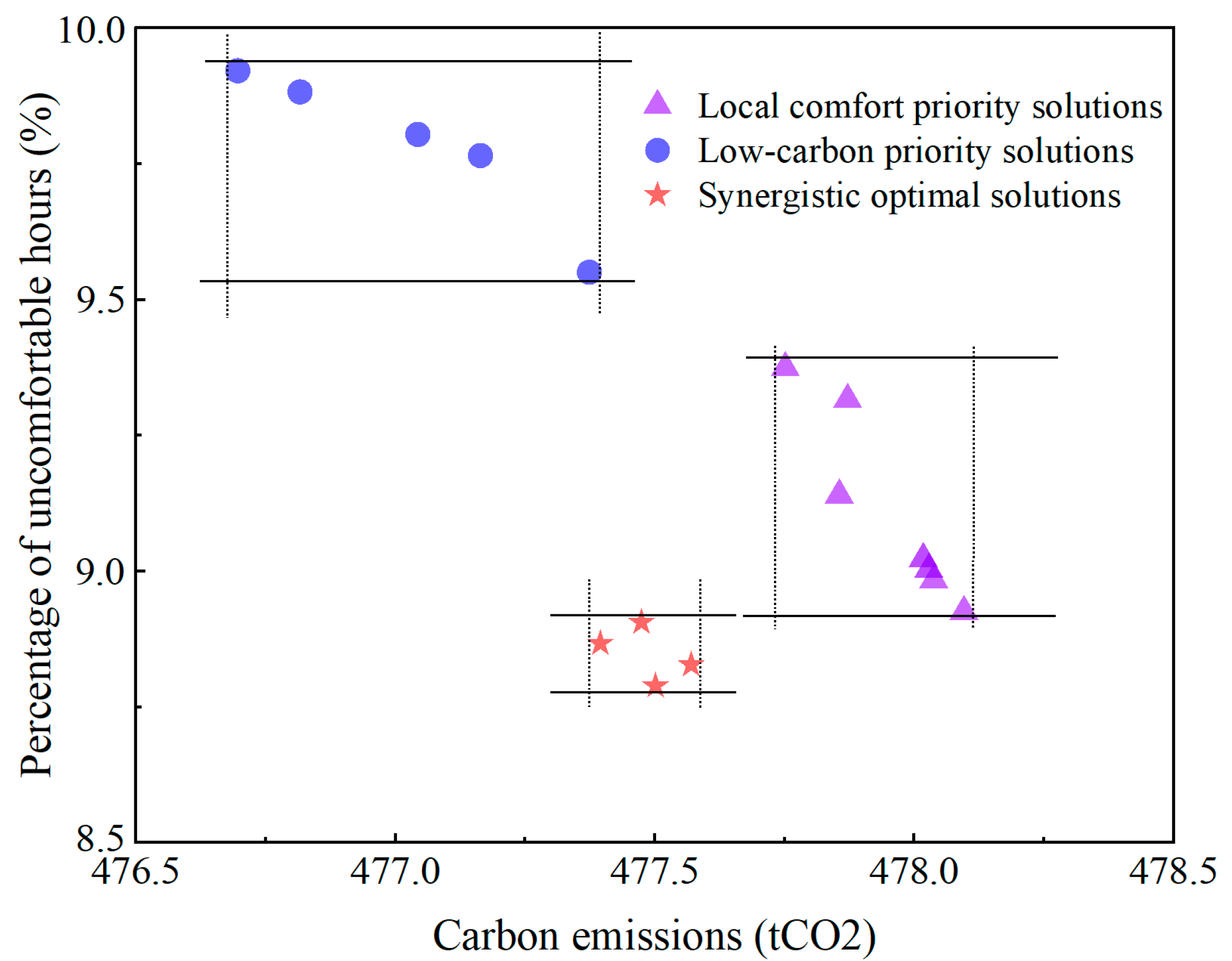
- A clear trade-off exists between operational carbon emissions and indoor thermal comfort. When the proportion of time spent in discomfort was reduced from 11% to 8%, carbon emissions rose to 479 tCO2. Compared with a single conventional control strategy, the globally optimal equilibrium solution on the Pareto front obtained through multi-objective cooperative optimization limited carbon emissions to 477.5 tCO2 whilst maintaining the proportion of time spent in discomfort at 8.8%.
- (3)
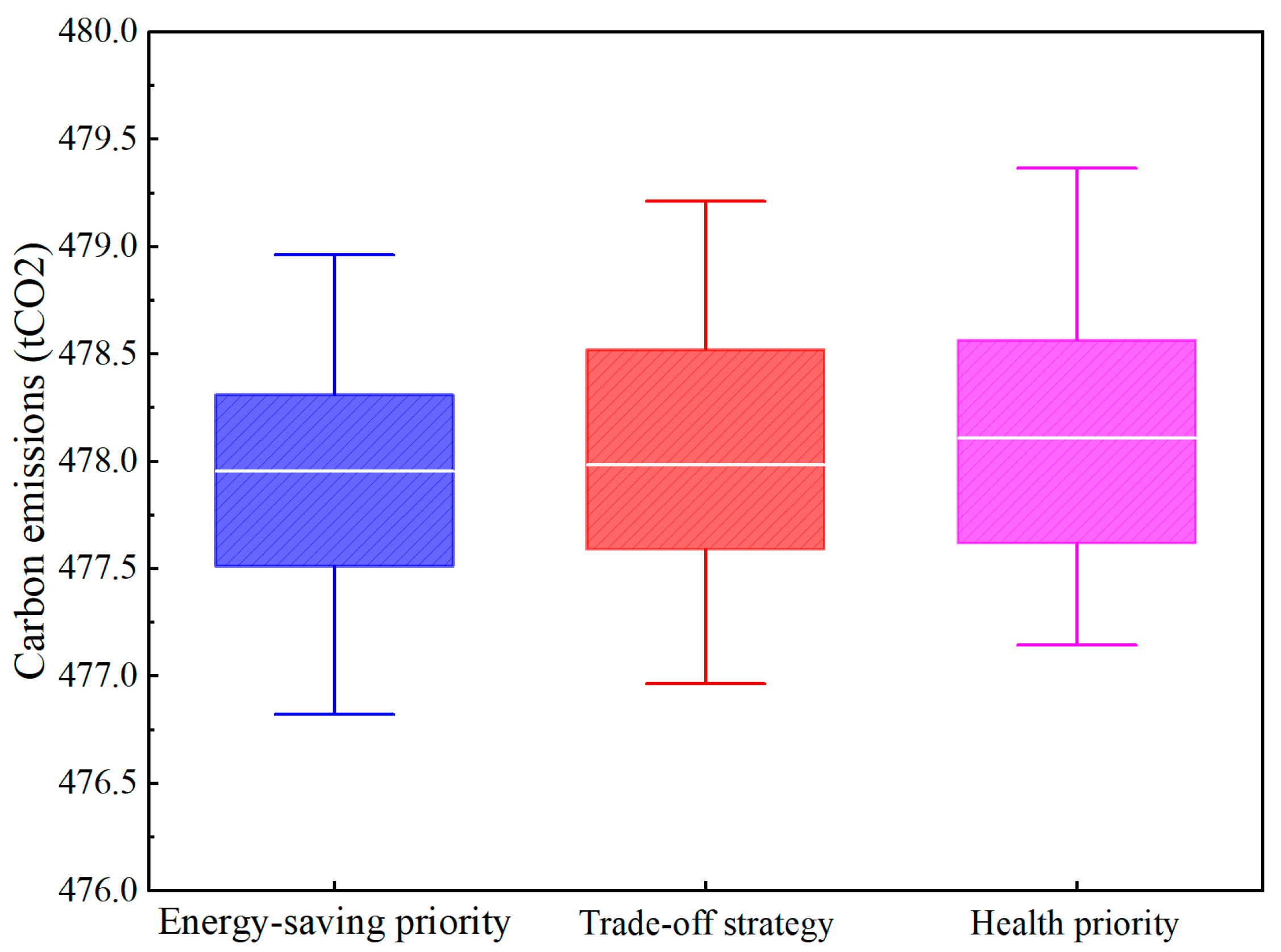
- Decision-making modes exhibit distinct statistical robustness. The energy-priority mode offers the most stable carbon emission control against disturbances. The health priority mode is highly sensitive to external fluctuations, whereas the balanced mode provides the optimal compromise between energy extremes and environmental variance.
- (4)
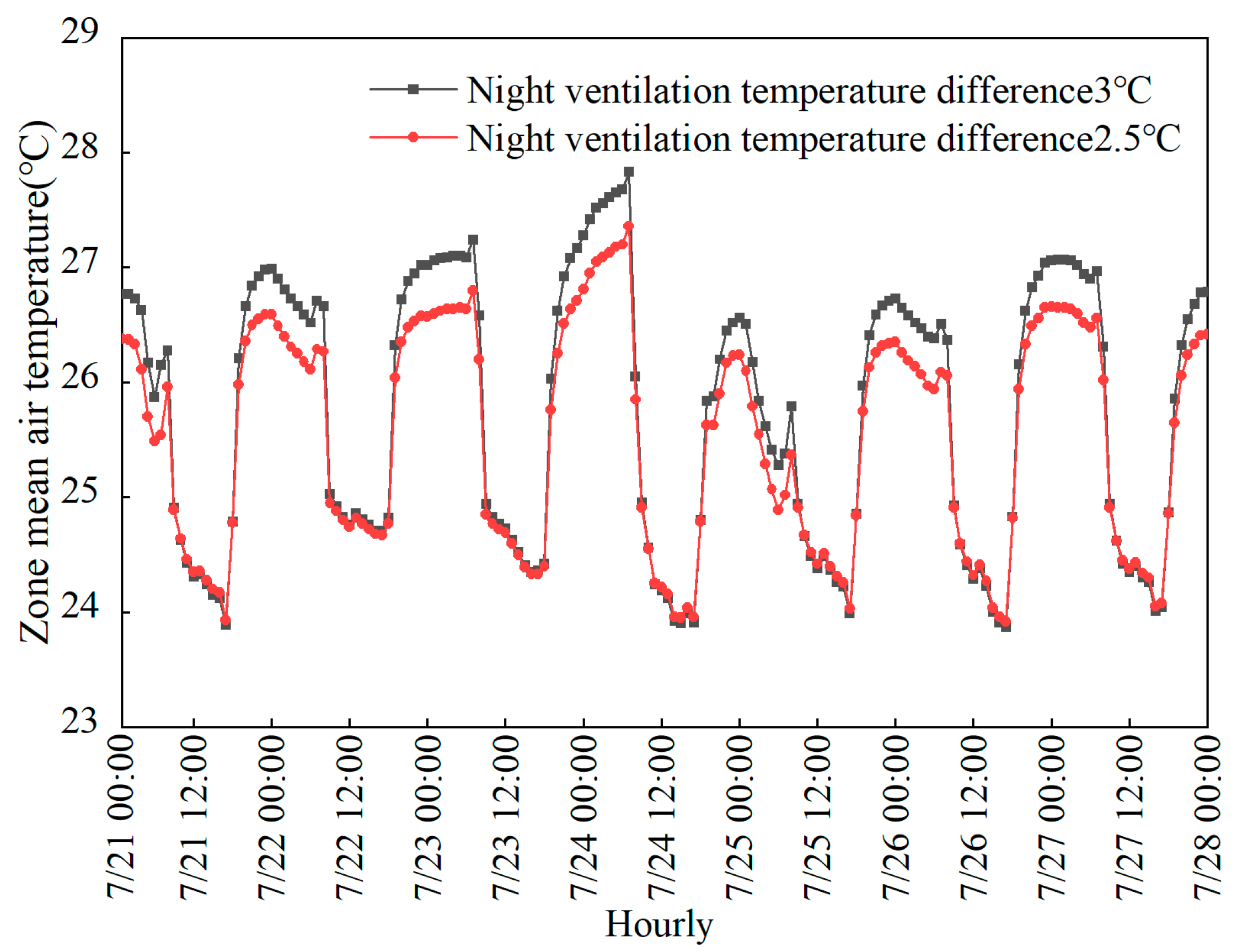
- Setting the night ventilation threshold to 2.5 °C is the optimal synergistic control point. It allows outdoor air to sufficiently pre-cool the envelope, ultimately reducing the following day’s peak indoor temperatures by 0.5–0.8 °C. This fundamentally reduces the demand for mechanical cooling.
Author Contributions
Funding
Data Availability Statement
Acknowledgments
Conflicts of Interest
References
- Chen, D.; Chen, S.; Xiong, X.; Li, X. Embodied carbon emissions from the materialization of office buildings in China: A systematic review of range, characteristics and impact factors. J. Build. Eng. 2025, 113, 114065. [Google Scholar] [CrossRef]
- Delgarm, N.; Sajadi, B.; Delgarm, S.; Kowsary, F. A novel approach for the simulation-based optimization of the buildings energy consumption using NSGA-II: Case study in Iran. Energy Build. 2016, 127, 552–560. [Google Scholar] [CrossRef]
- Persily, A.; Wang, L.L.; Justo Alonso, M.; Shu, C. Indoor carbon dioxide–Ventilation, indoor air quality and human health. Indoor Environ. 2026, 3, 100152. [Google Scholar] [CrossRef]
- Santamouris, M.; Vasilakopoulou, K. Present and future energy consumption of buildings: Challenges and opportunities towards decarbonisation. e-Prime-Adv. Electr. Eng. Electron. Energy 2021, 1, 100002. [Google Scholar] [CrossRef]
- Ma, Z.; Wang, S. Energy efficient control of variable speed pumps in complex building central air-conditioning systems. Energy Build. 2009, 41, 197–205. [Google Scholar] [CrossRef]
- Ryu, D.; Yoo, W. Ventilation-dominated energy savings in large commercial buildings: Multi-measure assessment revealing HVAC optimization priorities for hot-humid climates. Case Stud. Therm. Eng. 2025, 74, 107034. [Google Scholar] [CrossRef]
- Maiques, M.; Tarragona, J.; Gangolells, M.; Casals, M. Energy implications of meeting indoor air quality and thermal comfort standards in Mediterranean schools using natural and mechanical ventilation strategies. Energy Build. 2025, 328, 115076. [Google Scholar] [CrossRef]
- Anyaegbuna, B.E.; Onokwai, A.O.; Anyaegbuna, N.T.; Iweriolor, S.; Anyaegbuna, I.D.; Adegun, I.K.; Fayomi, O.S.; Ighravwe, D.E.; Onifade, M.K. Numerical analysis on mechanical ventilation impact on indoor air quality in a basement. Sci. Afr. 2024, 25, e02310. [Google Scholar] [CrossRef]
- Li, G.; He, Q.; Lin, B.; Wang, M.; Ju, X.; Xu, S. Accelerated inverse urban design: A multi-objective optimization method to photovoltaic power generation potential, environmental performance and economic performance in urban blocks. Sust. Cities Soc. 2025, 120, 106135. [Google Scholar] [CrossRef]
- Du, J.; Yang, D.; Guo, X.; Wei, H. Experimental evaluation of cooling effects and energy efficiency of summer night ventilation induced by EAHE coupled with internal thermal mass. Appl. Therm. Eng. 2026, 294, 130596. [Google Scholar] [CrossRef]
- Amaripadath, D.; Paolini, R.; Sailor, D.J.; Attia, S. Comparative assessment of night ventilation performance in a nearly zero-energy office building during heat waves in Brussels. J. Build. Eng. 2023, 78, 107611. [Google Scholar] [CrossRef]
- Villano, F.; Ascione, F.; Cholewa, T.; De Masi, R.F.; Mauro, G.M.; Ruggiero, S. Climate change impact on envelope retrofit effectiveness: Energy and carbon performance of Italian residential and office buildings today vs. 2050. Energy Build. 2026, 357, 117145. [Google Scholar] [CrossRef]
- Tamer, T.; Gürsel Dino, I.; Baker, D.K.; Meral Akgül, C. Coupling PCM wallboard utilization with night Ventilation: Energy efficiency and overheating risk in office buildings under climate change impact. Energy Build. 2023, 298, 113482. [Google Scholar] [CrossRef]
- Ahmed, B.; Ahmed, A.; Mujeeb, A.; Zhang, H.-N.; Li, X.-B.; Qu, K.-Y.; Li, F.-C. Dynamic occupancy-aware HVAC control in large office building using enhanced soft actor-critic with PV and thermal energy storage integration. Appl. Therm. Eng. 2026, 289, 129937. [Google Scholar] [CrossRef]
- Zhao, J.; Du, Y. Multi-objective optimization design for windows and shading configuration considering energy consumption and thermal comfort: A case study for office building in different climatic regions of China. Sol. Energy 2020, 206, 997–1017. [Google Scholar] [CrossRef]
- Ouanes, S.; Sriti, L. Regression-based sensitivity analysis and multi-objective optimisation of energy performance and thermal comfort: Building envelope design in hot arid urban context. Build. Environ. 2024, 248, 111099. [Google Scholar] [CrossRef]
- Awada, M.; Becerik-Gerber, B.; Liu, R.; Seyedrezaei, M.; Lu, Z.; Xenakis, M.; Lucas, G.; Roll, S.C.; Narayanan, S. Ten questions concerning the impact of environmental stress on office workers. Build. Environ. 2023, 229, 109964. [Google Scholar] [CrossRef]
- Jiang, J.; Huang, J.; Jung, N.; Boor, B.E. Spatiotemporal variations in ozone and carbon dioxide concentrations in an HVAC system of a LEED-certified office building. Build. Environ. 2025, 274, 112651. [Google Scholar] [CrossRef]
- Xu, Y.; Huotari, M.; Karhula, N.; Mikala, J.; Ketomäki, J.; Ihasalo, H. Investigating the impact of ventilation primary frequency control on indoor climate and cognitive performance in office settings. Build. Environ. 2026, 287, 113730. [Google Scholar] [CrossRef]
- Elhami, M.; Goodarzi, S.S.; Maleki, S.; Sajadi, B. Three-objective optimization of the HVAC system control strategy in an educational building to reduce energy consumption and enhance indoor environmental quality (IEQ) using machine learning techniques. J. Build. Eng. 2025, 105, 112444. [Google Scholar] [CrossRef]
- Justo Alonso, M.; Dols, W.S.; Mathisen, H.M. Using Co-simulation between EnergyPlus and CONTAM to evaluate recirculation-based, demand-controlled ventilation strategies in an office building. Build. Environ. 2022, 211, 108737. [Google Scholar] [CrossRef]
- Bavarsad, F.S.; Mohajerani, M.; Tywoniak, J.; Yuan, J. Multi-objective optimization framework to achieve near-zero energy building in the Czech Republic for future climatic conditions. Sustain. Futures 2026, 11, 101599. [Google Scholar] [CrossRef]
- Ghaderian, M.; Veysi, F. Multi-objective optimization of energy efficiency and thermal comfort in an existing office building using NSGA-II with fitness approximation: A case study. J. Build. Eng. 2021, 41, 102440. [Google Scholar] [CrossRef]
- ANSI/ASHRAE/IES 90.1-2019; Energy Standard for Buildings Except Low-Rise Residential Buildings. ANSI: Washington, DC, USA, 2019. Available online: https://webstore.ansi.org/standards/ashrae/ansiashraeies902019 (accessed on 11 April 2026).
- ANSI/ASHRAE Standard 55-2020; Thermal Environmental Conditions for Human Occupancy. ANSI: Washington, DC, USA, 2020. Available online: https://www.ndls.org.cn/standard/detail/68a1e3e21d96d7948bd103949dc21711 (accessed on 11 April 2026).
- Pandey, B.; Banerjee, R.; Sharma, A. Coupled EnergyPlus and CFD analysis of PCM for thermal management of buildings. Energy Build. 2021, 231, 110598. [Google Scholar] [CrossRef]
- Gbekou, F.K.; Belloum, R.; Chennouf, N.; Agoudjil, B.; Boudenne, A.; Benzarti, K. Thermal performance of a building envelope including microencapsulated phase change materials (PCMs): A multiscale experimental and numerical investigation. Build. Environ. 2024, 253, 111294. [Google Scholar] [CrossRef]
- Chen, Y.; Sun, Y.; Yang, J.; Tan, J.; Liu, Y.; Gao, D.-c. Demand response with PCM-based pipe-embedded wall in commercial buildings: Combined passive and active energy storage in envelopes. Energy 2024, 308, 132980. [Google Scholar] [CrossRef]
- Chenari, B.; Lamas, F.B.; Gaspar, A.R.; da Silva, M.G. Simulation of Occupancy and CO2-based Demand-controlled Mechanical Ventilation Strategies in an Office Room Using EnergyPlus. Energy Procedia 2017, 113, 51–57. [Google Scholar] [CrossRef]
- Xu, P.; Xu, X. Uncertainty analysis and performance optimization of ultra-low energy operation in bamboo buildings: A scenario simulation study in Nanjing, China. Energy 2025, 332, 137158. [Google Scholar] [CrossRef]
- Gao, B.; Zhu, X.; Ren, J.; Ran, J.; Kim, M.K.; Liu, J. Multi-objective optimization of energy-saving measures and operation parameters for a newly retrofitted building in future climate conditions: A case study of an office building in Chengdu. Energy Rep. 2023, 9, 2269–2285. [Google Scholar] [CrossRef]
- Zahra Benaddi, F.; Boukhattem, L.; Cesar Tabares-Velasco, P. Multi-objective optimization of building envelope components based on economic, environmental, and thermal comfort criteria. Energy Build. 2024, 305, 113909. [Google Scholar] [CrossRef]
- Guo, R.; Heiselberg, P.; Hu, Y.; Zhang, C.; Vasilevskis, S. Optimization of night ventilation performance in office buildings in a cold climate. Energy Build. 2020, 225, 110319. [Google Scholar] [CrossRef]
- Wan, H.; Liu, Y.; Zhou, X.; Gao, B.; Liu, J. The Hydrogen Trade-Off: Optimizing Decarbonization Pathways for Urban Integrated Energy Systems. Buildings 2025, 15, 3014. [Google Scholar] [CrossRef]
- Zhou, X.; Zhou, X.; Zhu, X.; Liu, J.; Zhou, S. Investigating Factors Impacting Power Generation Efficiency in Photovoltaic Double-Skin Facade Curtain Walls. Buildings 2024, 14, 2632. [Google Scholar] [CrossRef]





| Parameters | Design Value | Unit |
|---|---|---|
| People load | 10 | m2/People |
| Lighting load | 6.8 | W/m2 |
| Equipment load | 10 | W/m2 |
| Occupant metabolic rate | 66.67 | W/m2 |
| Summer clothing insulation | 0.58 | Clo |
| Categories | Parameters | Variable Types | Range Values | Step Size | Unit |
|---|---|---|---|---|---|
| Night ventilation turn-on temperature difference | P0 | discrete variable | [2, 6] | 7 | °C |
| Chilled-water variable-frequency pump pressure difference set point | P1 | discrete variable | [80, 150] | 10 | Kpa |
| Indoor CO2 concentration control upper limit | P2 | discrete variable | [700, 1200] | 100 | Ppm |
| Roof photovoltaic coverage ratio | P3 | discrete variable | [0, 80] | 7 | % |
| Parameters | Value |
|---|---|
| Population size | 30 |
| Crossover | 0.9 |
| Mutation | 0.2 |
| Maximum generations | 100 |
| Total simulations | 3000 |
Disclaimer/Publisher’s Note: The statements, opinions and data contained in all publications are solely those of the individual author(s) and contributor(s) and not of MDPI and/or the editor(s). MDPI and/or the editor(s) disclaim responsibility for any injury to people or property resulting from any ideas, methods, instructions or products referred to in the content. |
© 2026 by the authors. Licensee MDPI, Basel, Switzerland. This article is an open access article distributed under the terms and conditions of the Creative Commons Attribution (CC BY) license.
Share and Cite
Li, N.; Yang, X.; Zhao, Y.; Sun, Y.; Du, Y.; Liu, J. Navigating the Trade-Off Between Decarbonization and Thermal Comfort: A Simulation-Driven Optimization for Office Buildings Under Health Constraints. Buildings 2026, 16, 1626. https://doi.org/10.3390/buildings16081626
Li N, Yang X, Zhao Y, Sun Y, Du Y, Liu J. Navigating the Trade-Off Between Decarbonization and Thermal Comfort: A Simulation-Driven Optimization for Office Buildings Under Health Constraints. Buildings. 2026; 16(8):1626. https://doi.org/10.3390/buildings16081626
Chicago/Turabian StyleLi, Ningning, Xin Yang, Yuxuan Zhao, Yuexia Sun, Yanqiu Du, and Jiying Liu. 2026. "Navigating the Trade-Off Between Decarbonization and Thermal Comfort: A Simulation-Driven Optimization for Office Buildings Under Health Constraints" Buildings 16, no. 8: 1626. https://doi.org/10.3390/buildings16081626
APA StyleLi, N., Yang, X., Zhao, Y., Sun, Y., Du, Y., & Liu, J. (2026). Navigating the Trade-Off Between Decarbonization and Thermal Comfort: A Simulation-Driven Optimization for Office Buildings Under Health Constraints. Buildings, 16(8), 1626. https://doi.org/10.3390/buildings16081626