


Abstract
Maintenance is crucial for the durability of the existing building stock and should be perceived as an opportunity to improve the built environment. The implementation of thermal retrofitting measures to the building’s envelope enhances global energy performance, which is economically and environmentally beneficial. Building-related energy consumption during the operation phase is key to tackling carbon neutrality and climate change. Introducing thermal retrofitting within the context of maintenance planning can be cost-optimizing, as it reveals the technical–economic synergy between building pathology and energy efficiency. Maintenance activities and energy demand throughout the building’s service life influence life-cycle costs (LCCs). Decision-making based on LCC awareness is an advantage for owners. This study discusses the impact of implementing an optimal retrofitting solution (ORS), according to different maintenance strategies, on the LCC of an existing single-family home. The ORS comprises the following measures: adding an external thermal insulation composite system (ETICS) to external walls, extruded polystyrene (XPS) panels to the roof, and replacing the existing windows with others with improved thermal performance. The three maintenance strategies involve different complexity levels, concerning the type, number and timing of activities. Moving beyond isolated assessments, this study develops an integrated framework that bridges based on two existing background methodologies, involving optimal thermal retrofitting and condition-based maintenance planning, which, combined with new research, enable the assessment of maintenance, energy and global LCC for a time horizon of 100 years. The evaluation of energy-related LCC is based on simulations. The results indicate that these costs represent the majority of the global LCC. The ORS has a considerable positive impact on energy and global LCC. Adopting a maintenance strategy characterized by fewer planned activities and an earlier schedule of replacement interventions, which determines the implementation of the retrofitting measures, is better in terms of LCC savings.
1. Introduction
Maintenance and rehabilitation actions are of great importance for the future of the existing building stock. Existing buildings will probably continue in use for the next 25 years [1] and, in Europe, around 40% of residential buildings are already older than 50 years. Further maintenance will be required and should be perceived as an opportunity to improve the building stock and meet environmental goals [2]. Buildings are a cornerstone to reach carbon neutrality by 2050, in Europe [1], and tackle climate change [3]; climate policies thus stress the need for a significant decrease in energy consumption [4]. In fact, more than 36% of energy consumption and 40% of greenhouse gas emissions are related to buildings in Europe and North America [5,6,7,8]. Around 70% of building-related energy use is attributed to residential buildings alone [3], especially for domestic heating and cooling purposes [9].
The building’s envelope is critical in the prevention of indoor energy loss, and its appropriate design can lead to energy savings of 20–50% [10]. Its thermal retrofitting is beneficial for the decrease in energy use and CO2 emissions [11]. Thermal retrofitting generally consists of improving the building’s envelope performance through the replacement of windows and energy systems, and application of insulation in external walls and roof [12]. Whenever these envelope elements require intervention beyond current maintenance, the opportunity presents itself for enhancing the building’s thermal performance (e.g., with insulation panels and double glazing), optimizing costs and rationalizing the retrofit process [13]. Growing concerns about environmental impact consolidated the importance of accounting for overall costs during service life through life-cycle methodologies implemented to buildings’ design, construction and maintenance [14]. A decision-making process based on life-cycle cost (LCC) awareness is an advantage for stakeholders [15].
The objective of the present study is to support the decision-making process regarding the thermal retrofitting of an existing single residential building through the analysis of global LCC. The costs considered include maintenance and energy consumption-related expenses, throughout an extended period of analysis. The methodology is developed in two main stages. The first stage encompasses two existing background methodologies: one involves optimal thermal retrofitting [16] and the other condition-based maintenance planning [17]. This previous research enables the second stage of the methodology, which focuses on the assessment of LCC concerning the energy necessary to fulfil thermal comfort needs of the building, including heating and cooling demands.
The evaluation of energy-related LCC begins with energy simulations, according to a baseline scenario and an optimal retrofitting solution [16]. This solution covers the thermal improvement of the building’s envelope elements—external walls, windows and roof. The energy consumption outcomes given by the simulations, for a 100-year time horizon, are necessary to assess the respective LCC. The global LCCs are then calculated by summing the energy and maintenance expenses, resulting from the application of the existing condition-based maintenance planning methodology [17] to the same scenarios and time horizon.
The current study allows to quantify the impact of optimal thermal retrofitting on global LCC, considering maintenance and energy. The output of results for three different maintenance strategies, for both baseline and improved scenarios, also enables conclusions about the best timing to retrofit the envelope’s elements. The replacement of existing solutions with better ones, in the context of maintenance planning, is considered an opportunity to enhance the building’s thermal performance and energy efficiency.
This paper is organized according to the following structure: framework of the research based on literature review, in Section 2; research methodology, including characterization of the case study, materials, scenarios, background and current methods, in Section 3; results and discussion of (i) the favourable moment to implement thermal retrofitting measures and (ii) LCC related to maintenance, energy and global, in Section 4; and main conclusions in Section 5.
2. Maintenance, Energy and Life-Cycle Costs: Framework Based on Literature Review
Maintenance actions are vital to the sustainability of the existing building stock and can effectively contribute to reducing energy consumption and CO2 emissions during the operation phase, which is the most impactful regarding the sector’s carbon footprint [18]. The trend of energy use in residential buildings is positive and expected to continually increase [19], in the absence of effective measures to curb consumption. Maintenance activities implemented throughout the service life of buildings are opportune circumstances to also enhance energy efficiency [20]. Research about the relationship between sustainable maintenance and environmental challenges is still necessary [18].
The LCC associated with the operation phase can represent around 80% of the total costs and tends to rise significantly without strategic maintenance [18]. Life-cycle assessment is particularly relevant for the sustainability of constructions and respective environmental, economic and social optimization. Buildings’ life-cycles have become more interesting to researchers and stakeholders in the context of decision-making processes based on long-term performance evaluation [21]. Despite its increasing integration in building certification [15] and highly recognized relevance, LCC analysis has not often been applied [22] and still faces practical limitations and implementation challenges [23,24].
Building maintenance, energy efficiency and LCC are linked subjects. Maintenance and energy costs are considered in LCC analysis, which covers the expenses associated with the building’s design, construction, operation, and end of service life [24]. Maintenance planning and energy efficiency affect the LCC directly. This is one of the reasons why LCC analysis is used to justify the economic feasibility of environmentally friendly buildings, whose cost–benefit of energy-efficient solutions is best evaluated based on a long-term perspective [24]. Thermal retrofitting for energy efficiency can be part of maintenance activities, and the latter can be optimized to promote the longevity of the energy efficiency implemented measures, on which some authors recommend further research [25]. Notwithstanding all the identified scientific gaps, research has been developed over time concerning each of the subjects addressed in the current paper and their relationships.
Several thermal retrofitting measures applied to the building’s envelope to reduce energy consumption in existing constructions are explored in the literature. Literature review papers cover many envelope elements (e.g., walls, roof and windows) and equipment [26], or focus on façades [27,28]. Adding insulation to the building’s envelope and replacing windows are commonly pointed out as successful thermal retrofitting strategies. A review study about thermal retrofitting of the existing building stock [1] reveals the prevalence of research centred on the retrofit of the building’s envelope with cost-viable measures. It also states the predominance of studies originating from Europe and about the residential typology. A literature review paper focusing on the residential building stock in Poland [29] is an example of research intended to raise the awareness of stakeholders about the importance of energy efficiency, by identifying critical opportunities and challenges. It stresses that economic tools to analyze the cost impact of improving energy performance should be made available for stakeholders.
Costs, along with environmental and social factors, affect the decision-making on thermal improvement strategies regarding depth and scope. The relevance of cost–benefit and multi-criteria analysis as decision-making supporting tools, for owners looking forward to retrofitting their residential buildings, is highlighted in the literature [2]. The need for instruments to help define intervention priorities based on a comprehensive approach is stressed as well. Concerning the evaluation of buildings’ thermal performance, a comprehensive review paper addresses methods based on energy simulations [30], where EnergyPlus is identified as the most chosen software. LCC analysis is used to evaluate the long-term economic results of adopting energy efficiency measures, from the owner’s point of view [31]. Combined with building’s energy simulation, which enables testing the effect of several energy-related parameters, LCC analysis can lead to optimized solutions [32]. These LCC-focused research uses real residential buildings as case studies. LCC analysis is also taken into consideration and integrated in methodologies applied to other building typologies [33,34,35,36] and to macro-scale interventions [37], with the objective of assessing the economic outcomes of energy improvement measures and finding optimal solutions.
A literature review paper about the use of LCC analysis in the construction sector covers multiple studies concerning the implementation of this technique specifically to assess the building’s envelope performance and energy efficiency [17,38,39]. It highlights the (i) importance of supporting decision-makers in making a balanced choice between energy efficiency and life-cycle benefits, (ii) effective reduction in energy consumption costs over the operation phase as a consequence of an improved building’s envelope, (iii) positive impact of thermal insulation on energy use, LCC and global warming, (iv) significant weight of operation costs on the LCC, and (v) necessary joint contribution of different expertise areas, from physics to economy of constructions, and techniques to achieve optimized solutions.
The resilience and sustainability of constructions are influenced by maintenance actions [39]. Maintenance is crucial to meet environment-related policies, like the Sustainable Development Goals, and to adapt to climate change [40]. It contributes to extending buildings’ service life by enhancing the durability of elements [41]. Nevertheless, maintenance continues to demand proper attention, since its practical implementation has long suffered from the absence of robust guidelines and regulations [42]. Maintenance can be unplanned or planned, and within the latter, fit the following types: preventive, corrective and improvement. Preventive maintenance can be condition-based, among other possibilities, which means that its planning depends on condition criteria, such as the degradation level of the building’s element. Condition-based maintenance relies on inspections, carried out regularly onsite to evaluate the condition level and provide evidence to support the planning of subsequent maintenance activities [39].
Research efforts have been put into (i) optimizing the processes of inspection, diagnosis and repair [43], (ii) modelling and evaluating the physical degradation of different buildings’ elements in real service conditions [44], and (iii) exploring their condition-based maintenance in terms of planning and operation costs optimization [45,46]. The use of maintenance planning as a strategy to achieve an expected building’s environmental performance with optimized LCC, considering climate goals, is also explored in the literature [47]. The objective is to support the building managers’ decision-making process on maintenance action priorities, involving performance, risk, and schedule, thus bridging the scientific gap concerning the joint assessment of these aspects. Another study recalls the advantages of combining energy efficiency measures with necessary maintenance actions, based on planning and the assessment of alternatives that can simultaneously fulfil energy performance and economic expectations [48]. Again, the aim is to assist the owners of residential buildings in the management of their assets, under time and cost constraints. A short-sighted vision of maintenance planning, where necessary actions are often not seen as cost–benefit opportunities, is identified as the root of maintenance’s usual lack of strategic character.
Research on the implementation of condition-based maintenance to improve a building’s energy performance, using a residential case study, is found in the literature [49]. Different scenarios involving thermal retrofitting—such as adding insulation and replacing windows—were analyzed through simulations to assess their impact on costs, considering specific implementation timings for each case. The study demonstrates how condition-based maintenance can contribute to optimizing maintenance planning while improving energy efficiency. Nevertheless, the conclusions emphasize that, despite the support of technological tools, maintenance outcomes remain strongly dependent on human judgement and assumptions. This highlights the inherent complexity of decision-making in this field. Therefore, research that integrates multiple dimensions influencing stakeholders’ decisions—such as determining the optimal timing for interventions and evaluating long-term energy and cost benefits under real conditions—remains a promising avenue for further study.
3. Methodology
3.1. Characterization of the Case Study
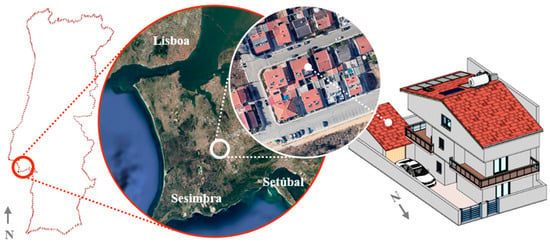
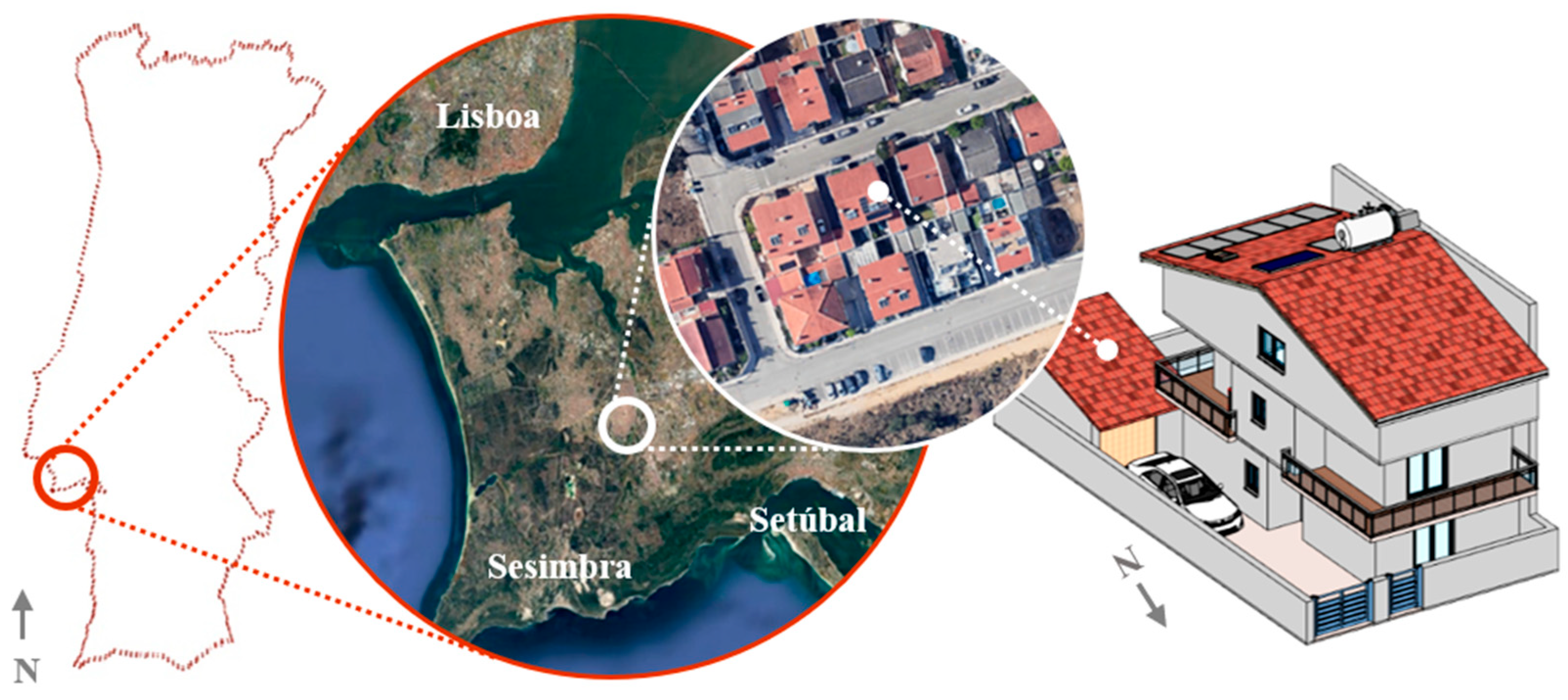
The present research is based on a practical case study, corresponding to a single-family house located in a neighbourhood in Sesimbra, Portugal (Figure 1). The region’s climate is classified as warm temperate with dry, hot summers (Csa), according to the Köppen–Geiger classification [50]. The mean annual temperature ranges between 16 °C and 17 °C, and the accumulated annual precipitation varies between 601 mm and 800 mm [51]. Average temperatures range from 8 °C to 15 °C in winter and from 20 °C to 30 °C in summer. The cold season is relatively mild due to the moderating influence of the nearby Atlantic Ocean, while summer temperatures can exceed 35 °C during heatwaves [52]. This building was specifically selected due to its extensive ten-year monitoring period, during which sensors captured granular data on energy consumption, indoor temperature, and humidity, providing a robust empirical baseline for validating the life-cycle assessments. Furthermore, the integration of these monitored attributes allows for a comparative analysis between generalized retrofitting solutions and tailored, condition-based decisions specifically adapted to this unique architectural and climatic context [16].
Figure 1.
Location of the case study and axonometric view.
The orientations of the main façade, where the entrance of the house is located, and the access to the plot are northeast and northwest, respectively. A secondary construction, which functions as a garage, is also built in the southeast corner of the plot. This three-storey, semi-detached house connects with the neighbouring construction on the southwest side. The social spaces (kitchen and living room) are accommodated on the ground floor and the private areas (bedrooms and office) on the upper levels. The case study is characterized by current construction systems, which consist mainly of (i) a column–beam structure and slabs in concrete, (ii) walls built with hollow bricks and mortar, (iii) external claddings in painted render, (iv) ceramic roof tiles, and (v) aluminum-framed windows. The house’s only source of energy is electricity.
3.2. Overview of the Methodology
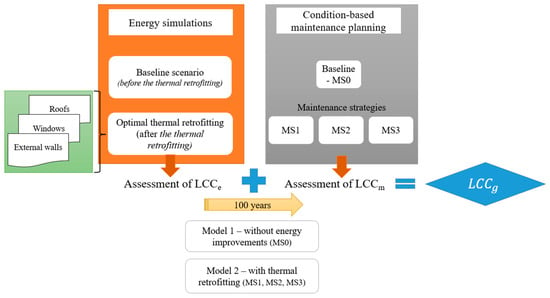
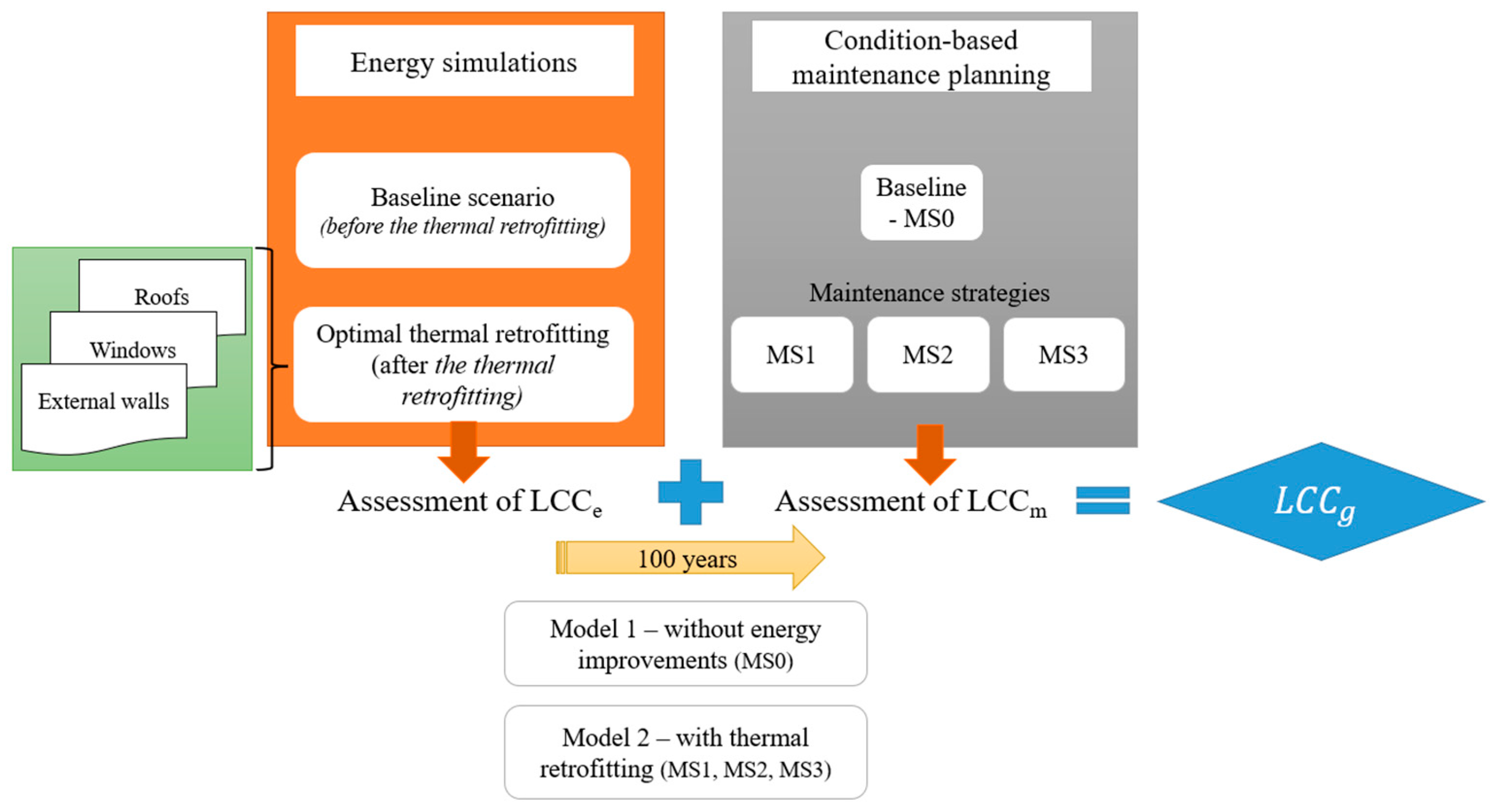
The methodological framework adopted in this study integrates two complementary approaches to assess the global life-cycle costs (LCCg) of a residential building: (i) energy simulations, and (ii) condition-based maintenance planning. The energy simulations allow the estimation of the energy life-cycle costs (LCCe) associated with the building’s operation, considering both the baseline scenario (before thermal retrofitting) and the optimal retrofitting solution (after thermal retrofitting). The condition-based maintenance methodology enables the evaluation of the maintenance life-cycle costs (LCCm), according to different maintenance strategies (MS1, MS2, and MS3) defined for the building envelope elements.
The combination of these two approaches supports a comprehensive analysis of the building’s performance and long-term economic outcomes. The integration of LCCe and LCCm provides the global life-cycle costs (LCCg), which represent the total economic impact over a 100-year time horizon. Figure 2 illustrates the overall methodological process, showing the relationship between the energy and maintenance analyses, and the resulting assessment of LCCg.
Figure 2.
Overview of the methodological framework integrating energy simulations and condition-based maintenance planning for the assessment of global life-cycle costs (LCCg).
3.3. Optimal Retrofitting Solution for Energy Efficiency: Before and After Scenarios
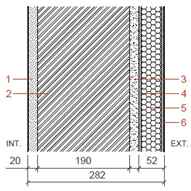
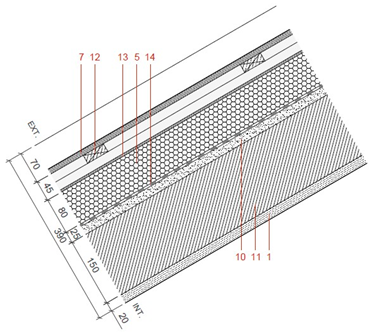
The background methodology concerning energy efficiency [16] enables the definition of an optimal retrofitting solution (ORS) to improve the performance of the case study, based on the following criteria: energy efficiency, retrofitting cost, durability and sustainability. The ORS consists of the combined thermal retrofit of the main building’s envelope elements by (i) adding external thermal insulation composite system (ETICS) with 40 mm rock wool panels to the external walls, for a total wall area of 185.33 m2, (ii) adding 80 mm extruded polystyrene (XPS) panels above the roof slab, for a total area of 100.15 m2, and (iii) replacing the existing window frames and glazing by others with better performance, for a total window area of 20.82 m2.
The new aluminum windows are provided with thermal break frames and double-glazing, including 8 mm thick tempered glass, 16 mm air gap, and two 6 mm thick annealed glass sheets with a polyvinyl butyral (PVB) interlayer, from the exterior to the interior. The windows’ typology is tilt and turn, with two leaves. The colour of the finishing materials is white, both for the ETICS’s mortar and the window frame’s powder coating.
The ORS is analyzed in opposition to the baseline scenario (BS), which reflects the case study’s lowest performance in terms of energy efficiency, given the absence of any thermal measures (e.g., thermal insulation). The BS and ORS correspond to the building’s condition, regarding the constitution of its main envelope’s elements, before and after the thermal retrofit, respectively. These elements, defined with detail for the energy simulations in the background methodology, are presented in Table 1. The BS and the ORS are the two main scenarios analyzed in the current study.
Table 1.
Layers of the building’s envelope elements, according to the BS and ORS.
3.4. Condition-Based Maintenance: Planning and Life-Cycle Costs
The background methodology [17] assesses the effect of maintenance actions on the service life of building envelope elements. The impact of maintenance on durability is assessed by quantifying how much the maintenance actions improve the overall physical degradation condition of the elements, through the severity of degradation index Sw (Equation (1)) [53]. The methodology is based on condition-based maintenance strategies, whose actions are scheduled according to the condition of the elements, over a determined period. It consists of a probabilistic approach using a stochastic maintenance model, based on Petri Nets.
Sw is the severity of degradation, in percentage;
An is the area affected by anomaly n, in m2;
kn is the multiplication factor for the anomaly n, as a function of their degradation condition within the range K = {0, 1, 2, 3, 4};
ka,n is the weighting coefficient according to the relative weight of anomaly n, according to their severity, repair cost, influence on the overall degradation of the component, propensity to cause other anomalies, and risk to the owners’ and users’ safety;
A is the total area of the component, in m2;
k is the multiplying factor corresponding to the highest degradation condition of the component with area A.
The maintenance strategies’ impact on the durability of the building’s envelope elements is analyzed according to the following parameters: number of interventions, service life, efficiency index, and life-cycle costs (LCCm). All of these parameters can be estimated through the condition-based maintenance methodology [39]. Nevertheless, the most relevant in the context of the present study is the LCCm (Equation (2)). The LCCm corresponds to the sum of all the expenses necessary for the element to continue in operation, by the end of the determined time frame, under a specific maintenance strategy. It represents the costs concerning construction, inspections, and maintenance activities for that period.
LCCm is the implementation and maintenance life-cycle costs, in Euros;
Cinitial is the construction cost, in Euros;
Cinspection is the annual inspection cost, in Euros;
Cmaintenance is the annual maintenance cost, in Euros;
t is the time frame (100 years, in the current study), in years.
Existing databases of Sw values, based on onsite visual inspections of case studies in real service conditions, enabled the implementation of the methodology to several claddings or construction elements, such as renders in façades (RF), ceramic claddings in pitched roofs (CCPR), ETICS, and aluminum window frames (AWF) [39]. These previous studies provide evidence for the current analysis, namely the reference age at which the cladding or element reaches the degradation condition threshold for the implementation of the actions within each maintenance strategy (Table 2). The maintenance strategies considered in the methodology are the following: MS1, a total replacement (TR); MS2, a combination of two minor interventions (MI) and a total replacement; and MS3, a combination of three cleaning operations (CO) interspersed with two minor interventions, and a total replacement.
Table 2.
Reference age at which the building’s envelope elements reach the degradation condition required for the implementation of the actions within each maintenance strategy.
The current study covers the implementation of the maintenance strategies MS1, MS2 and MS3 on external walls, roof and windows, according to two models, for a set maximum period of 100 years. Model 1 consists essentially of the BS (Table 1), in which the total replacements do not imply thermal improvements. Model 2 comprises both BS and ORS (Table 1). In this case, the initial construction corresponds to the BS, and the thermal retrofitting concerning the ORS is implemented in the context of the first TR. This solution is substituted by a similar one in the following total replacements. The ORS is introduced in the maintenance planning at different ages of the building’s envelope element, depending on the element and maintenance strategy (Table 2).
The reference costs used to calculate the LCCm, in the current study, are presented in Table 3, based on the database of construction and renovation costs for Portugal Gerador de Preços (https://geradordeprecos.info/, accessed on 10 October 2024).
Table 3.
Reference costs used to calculate the LCCm.
The reference costs are multiplied by the respective area for each building element and annual occurrence of the action, according to each maintenance strategy (Table 2). The annual costs associated with the maintenance activities are then summed, considering the 100-year period of analysis (Equation (2)), encompassing the results of external walls, roof and windows.
3.5. Energy Simulations: Energy Consumption and Life-Cycle Costs
The new part of the methodology, developed for the present study, is based on global energy simulations of the case study to assess the life-cycle costs allocated to energy (LCCe) for the determined time horizon. The method for the energy simulations is the one used in the background methodology [16], applied to the same architectural model and Building Energy Model (BEM) [54]. The plug-in ‘Euclid’ is used to translate visual information from the BEM directly into the simulation software EnergyPlus as descriptive data. Subsequently, additional data are input into EnergyPlus [55], such as the parameters in Table 4. The recorded climate data used from 2009 to 2023.
Table 4.
Data input into EnergyPlus to perform the simulations.
The LCCe corresponds to the sum of all the owner’s expenses, during the building’s service life, necessary to heat and cool the interior spaces, based on thermal comfort requirements, and to guarantee the functioning of equipment and artificial lighting. Annual energy consumption values are necessary to calculate the LCCe. The sum of the monthly output given by the energy simulations for a one-year period results in the whole year consumption, which, multiplied by the reference market value from the Portuguese electricity supplier EDP (0.15 €/kWh approximately), leads to the base annual energy consumption value (AEC) (Equation (3)).
AEC is the base annual energy cost, in Euros;
Eheating is the energy consumption for heating, in kWh;
Ecooling is the energy consumption for cooling, in kWh;
Eequipment is the energy consumption for equipment functioning, in kWh;
Elighting is the energy consumption for artificial lighting, in kWh;
m is the number of months comprised in one year, in months;
Cenergy is the cost of energy, in €/kWh.
As referred to above, the LCCe study is done for a 100-year time horizon and covers both models (1 and 2) and maintenance strategies (MS1, MS2 and MS3) analyzed in the case of LCCm. In the case of Model 2, the LCCe for the whole period of analysis is composed of different AEC, as the building’s energy consumption depends on the thermal performance of the envelope’s elements. This is influenced by the thermal improvements in the context of maintenance, which coincide with the TR actions concerning external walls, windows and roof (Table 5). Therefore, the following four energy simulations are performed to obtain all the necessary annual energy consumption reference values: (i) no improvement scenario (AE1), (ii) including the first projected TR, which involves external walls (AE2), (iii) including the first and second projected TR, which encompass external walls and windows (AE3), and (iv) including the first, second and third projected TR, which encompass external walls, windows and roof (AE4). In the LCCe assessment of Model 1, the AE1 is the only reference value needed because thermal improvements are not considered. The AEC can correspond to four different values, as the Eheating, Ecooling, Eequipment and Elighting (Equation (3)) sum corresponds to the annual energy consumption, which varies based on AE1, AE2, AE3 and AE4.
Table 5.
AEC based on the different annual energy consumption reference values.
The periods during which each thermal improvement is in operation in MS1, MS2 or MS3, considering the time horizon of 100 years, are presented in Table 6. These periods are essential to calculate the LCCe of Model 2 (Equation (4)). As for Model 1, they are not necessary, since the TR actions do not imply thermal improvements. The LCCe of Model 1 remains constant regardless of the maintenance strategy. The AEC is subjected to an inflation rate throughout the period of analysis, according to data sourced from the Energy Services Regulatory Authority (ERSE). The rate applied to each year’s AEC results from the mean of the previous ten years’ inflation rate values, which corresponded to 2.5% in 2025.
LCCe is the energy life-cycle costs, in Euros;
AEC1 is the annual energy cost without thermal improvements, in kWh;
AEC2 is the annual energy cost with thermal improvements of external walls, in kWh;
AEC3 is the annual energy cost with thermal improvements of external walls and windows, in kWh;
AEC4 is the annual energy cost with thermal improvements of external walls, windows and roof, in kWh;
it is the inflation rate of the year t, in percentage;
t is the time frame (100 years, in the current study), in years.
Table 6.
Period in operation of each thermal improvement implemented through a TR action, according to the maintenance strategies MS1, MS2 and MS3, for the 100-year time horizon.
3.6. Global Life-Cycle Costs
The final stage of the methodology concerns the estimation of global life-cycle costs (LCCg) (Equation (5)), which encompasses both LCCm and LCCe, for the same time horizon of 100 years [52]. The LCCg are calculated for Models 1 and 2, considering the maintenance strategies MS1, MS2 and MS3.
LCCg is the global life-cycle costs, in Euros;
LCCm is the implementation and maintenance life-cycle costs, in Euros;
LCCe is the energy life-cycle costs, in Euros.
Also, the impact of introducing the optimal retrofitting solution in the maintenance planning in terms of life-cycle costing is quantified by assessing the differences between (i) both models’ results, considering each maintenance strategy, and (ii) the results of the three maintenance strategies, considering each model.
4. Results and Discussion
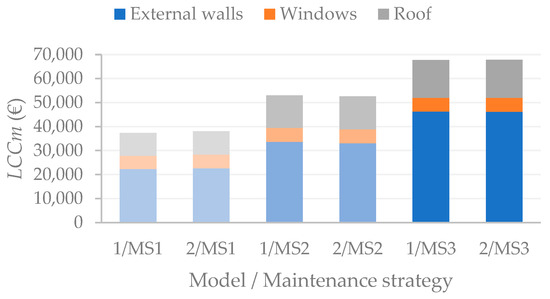
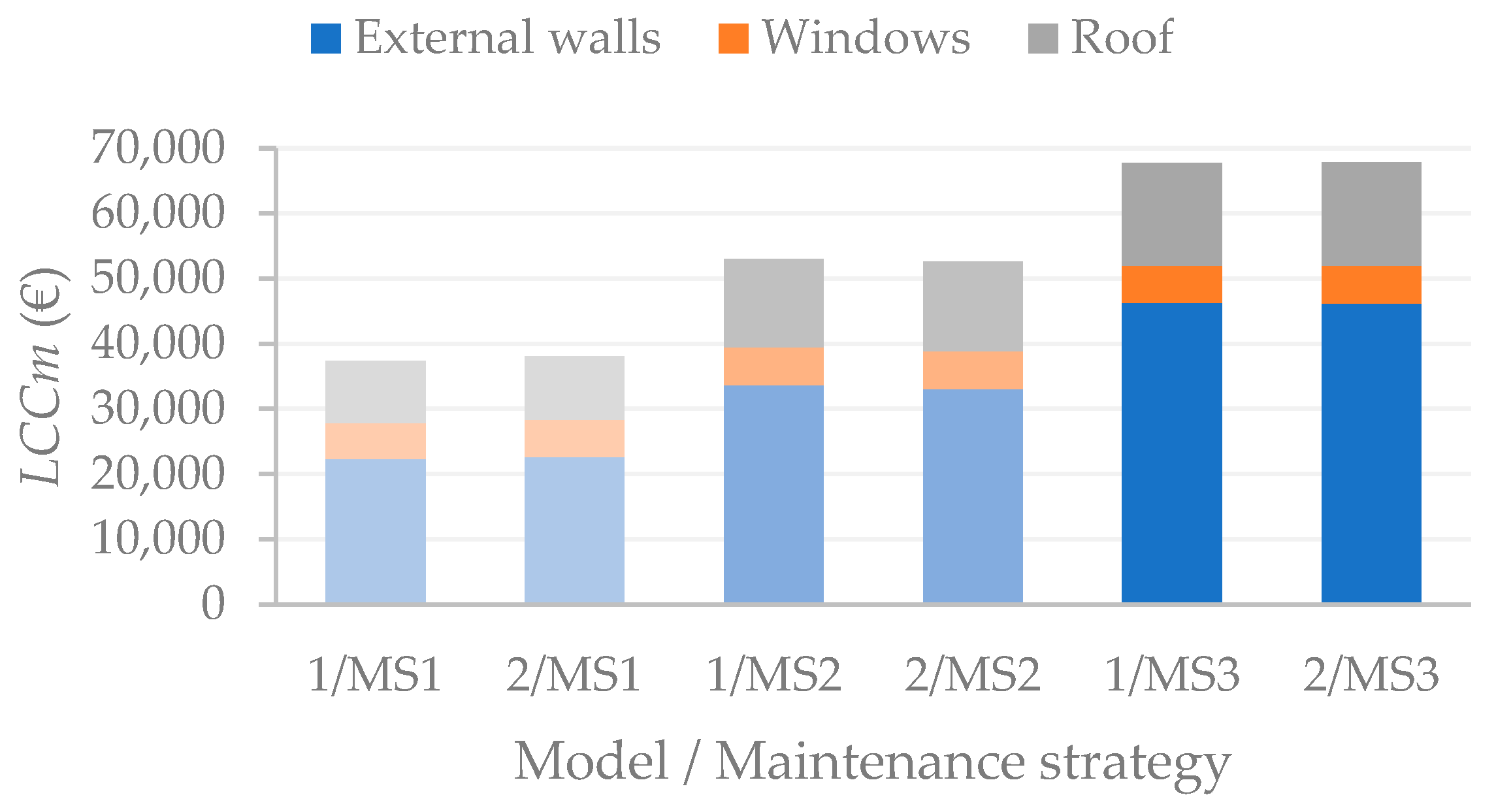
The LCCm results show that, regardless of Models 1 or 2, the costs are the lowest for MS1 and the highest for MS3 (Table 7). This suggests that the LCCm increases with the complexity of the maintenance strategy, which is progressively higher from MS1 to MS3, considering the number of planned actions (Table 2). Maintenance according to strategy MS3 is 45% more expensive than MS1 in the case of no thermal retrofitting, by the end of the time horizon. This percentage falls to 44% when improvement measures are implemented. Upgrading the building in terms of energy efficiency, through the ORS, leads to higher maintenance costs (Table 7). Nevertheless, the difference in LCCm between Models 2 and 1, by the end of the 100 years, is not significant regardless of the maintenance strategy (Figure 3), ranging between 1.02 € and 7.13 € per year.
Table 7.
LCCm for Models 1 and 2, according to the maintenance strategies MS1, MS2 and MS3, and costs comparison, for the 100-year period of analysis.
Figure 3.
LCCm for Models 1 and 2, according to the maintenance strategies MS1, MS2 and MS3, for the 100-year period of analysis, with the identification of costs per type of element.
The LCCm difference between both models is more accentuated in the case of MS1, probably due to shorter TR cycles, which imply more maintenance actions over the whole-time span, comparatively with MS2 and MS3. The cost of a TR is considerably higher than the expenses concerning CO or MI, especially for windows and roof, which, combined with its higher frequency, can be impactful on the LCCm comparison value between models for MS1. The values corresponding to MS2 and MS3 can be affected by the CO and MI timing differences between renders and ETICS in façades (Table 2). While for windows and roof the timings of these maintenance operations are the same for Models 1 and 2, this does not apply to external walls, because the thermal improvement implies a change in the type of cladding. External walls represent 59–63% of the total LCCm value, while both windows and roof represent the remaining percentage (Figure 3).
The LCCm difference between Models 1 and 2 is mainly due to (i) the costs of replacing the existing solutions for the ORS with one with better thermal performance, concerning all the intervened elements, and (ii) the costs and timings of the other maintenance actions in external walls. The cost of CO and MI on windows and roof is identical in both models, because the implementation of these maintenance operations concerns the ceramic claddings and external surface of the aluminum frames, according to the background methodology [17]. These components are the same even in the case of the thermal retrofitting comprised in Model 2, as well as the respective maintenance actions’ schedule and costs. As for external renders and ETICS in façades, the expenses and timings associated with the several types of maintenance activities are different.
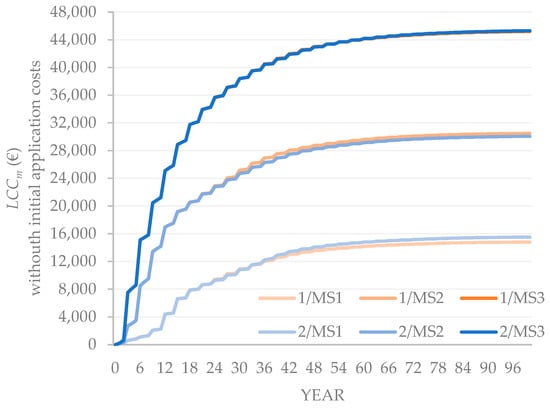
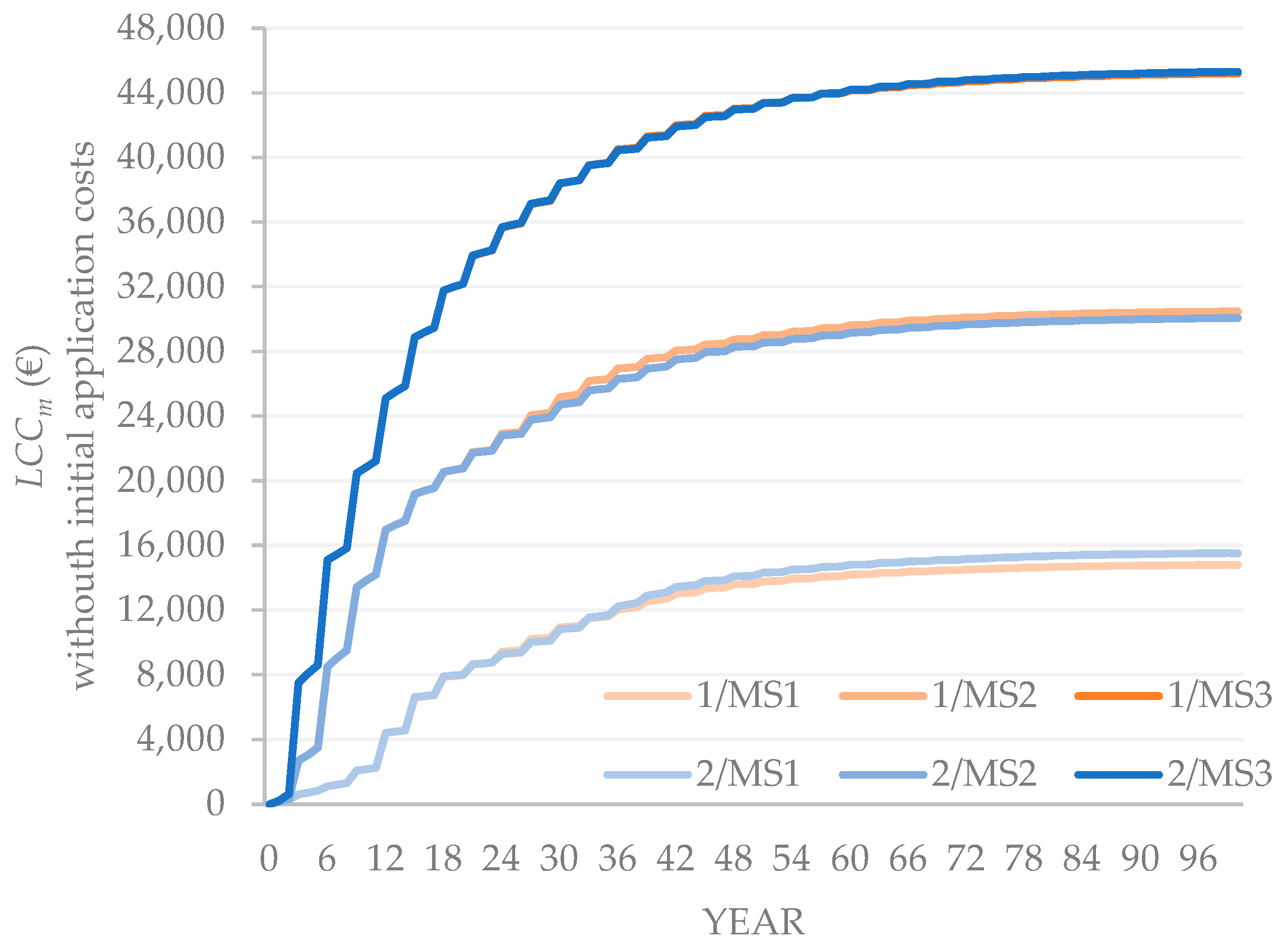
The results in Table 7 indicate that a less sophisticated maintenance strategy, such as MS1, based only on the total replacement of building’s elements by the end of service life, is the least expensive option in terms of LCCm (Figure 4). However, it is important to bear in mind that maintenance is crucial for extending the service lives of buildings and for the sustainability of constructions, considering environmental concerns [56]. The end of service life depends on defined performance requirements. Obsolescence is reached when the condition of the building or its elements does not meet these requirements. The concept of obsolescence is comprehensive and can involve social, aesthetic, regulatory and environmental aspects [57]. The end of service life can be due to objective factors (e.g., safety and functionality) and subjective ones (e.g., aesthetic and social), which tend to vary depending on the stakeholder and on period values [58]. This means that a non-compromising level of physical degradation, regarding the building’s operation, might not be acceptable to the owner, considering its several demands. In this context, opting for a maintenance strategy that includes minor operations, such as MS2, can be a balanced choice in compliance with higher standards, which would cost just more 156.80 € per year than MS1 (Table 7). Also, choosing maintenance over letting the envelope’s elements fully degrade can prevent escalating damage and overall degradation. This is associated with external claddings and windows for being the first protection layer, thus considerably exposed, susceptible to degradation agents, and prone to defects that can affect the whole building’s performance [43,59].
Figure 4.
LCCm without initial application costs for Models 1 and 2, according to the maintenance strategies MS1, MS2 and MS3, for the 100-year period of analysis.
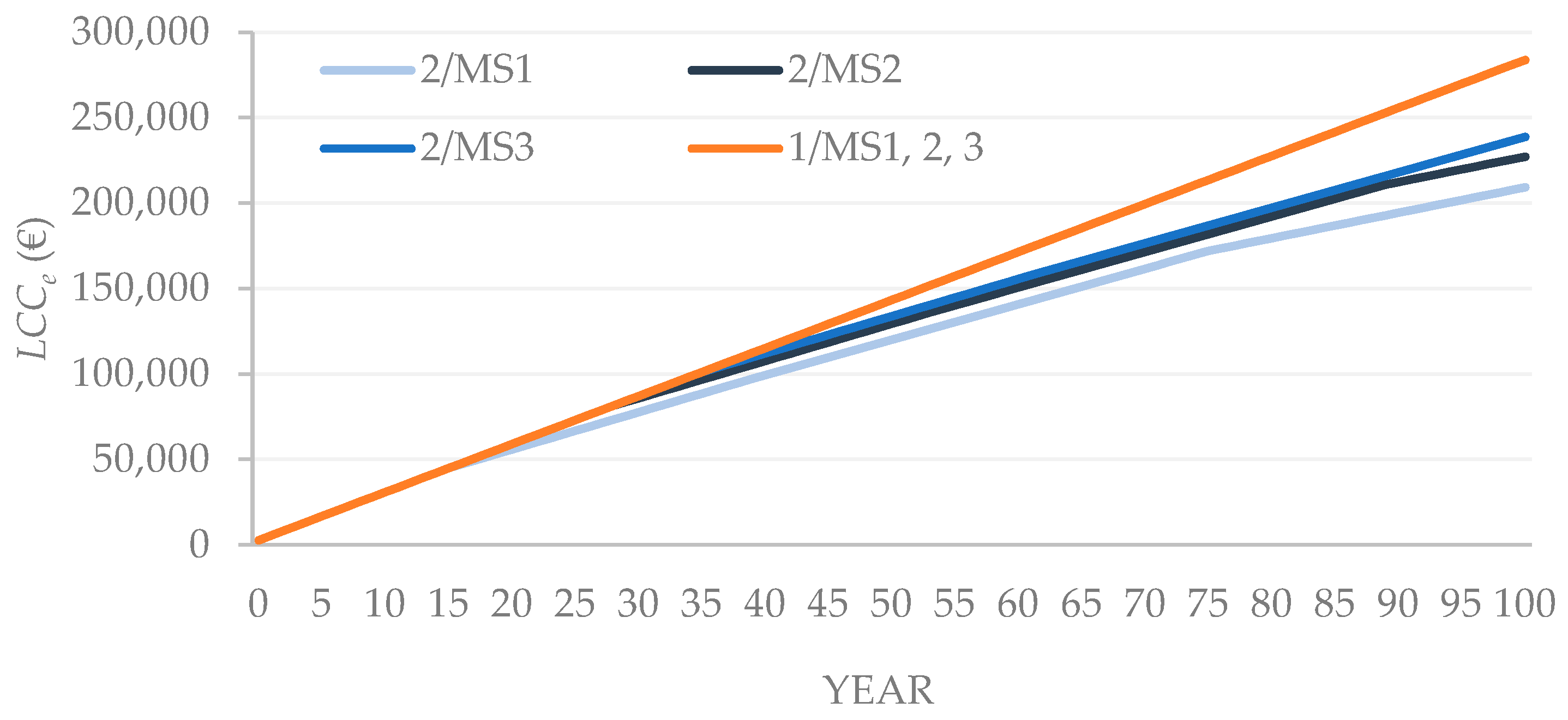
The LCCe outcomes reveal that annual energy-related costs are lower for Model 2, regardless of the maintenance strategy (Table 8; Figure 5). The savings in energy consumption by implementing thermal improvements through the ORS, within the context of maintenance planning, range between 45,024.85 € and 74,561.70 €, depending on the maintenance strategy. Model 1 represents the highest possible energy expenses, because it does not include thermal insulation measures. In this case, the LCCe is the same for all the maintenance strategies (Table 8), since no thermal retrofitting is involved in TR and the energy consumption is not altered by the planned activities. The comparison of maintenance costs—LCCm (Table 7)—indicates that a relatively small additional investment in thermal retrofitting can result in substantial annual energy savings over the analysis period. Specifically, an extra 7.13 € spent annually on maintenance corresponds to an average annual energy saving of 745.62 €, assuming the cost comparison values for MS1 are evenly distributed throughout the 100-year period.
Table 8.
LCCe for Models 1 and 2, according to the maintenance strategies MS1, MS2 and MS3, and costs comparison, for the 100-year period of analysis.
Figure 5.
LCCe for Models 1 and 2, according to the maintenance strategies MS1, MS2 and MS3, for the 100-year period of analysis.
The results for Model 2 show that the decrease in energy demand is more significant in the case of MS1 (Table 8; Figure 5), mainly because the first TR actions are scheduled earlier than in MS2 and MS3 (Table 2). TR are expected to happen 13–15 and 20–26 years later in the case of MS2 and MS3, respectively, depending on the building’s element, compared to MS1. The first TR consists of an opportunity for thermal retrofitting, in Model 2, and the respective timing affects the LCCe. The sooner the benefits in terms of energy efficiency become effective, the lower the energy budget by the end of 100 years. The schedule of the first TR actions planned in MS1 leads to 8% and 12% lower LCCe than the LCCe of MS2 and MS3, respectively.
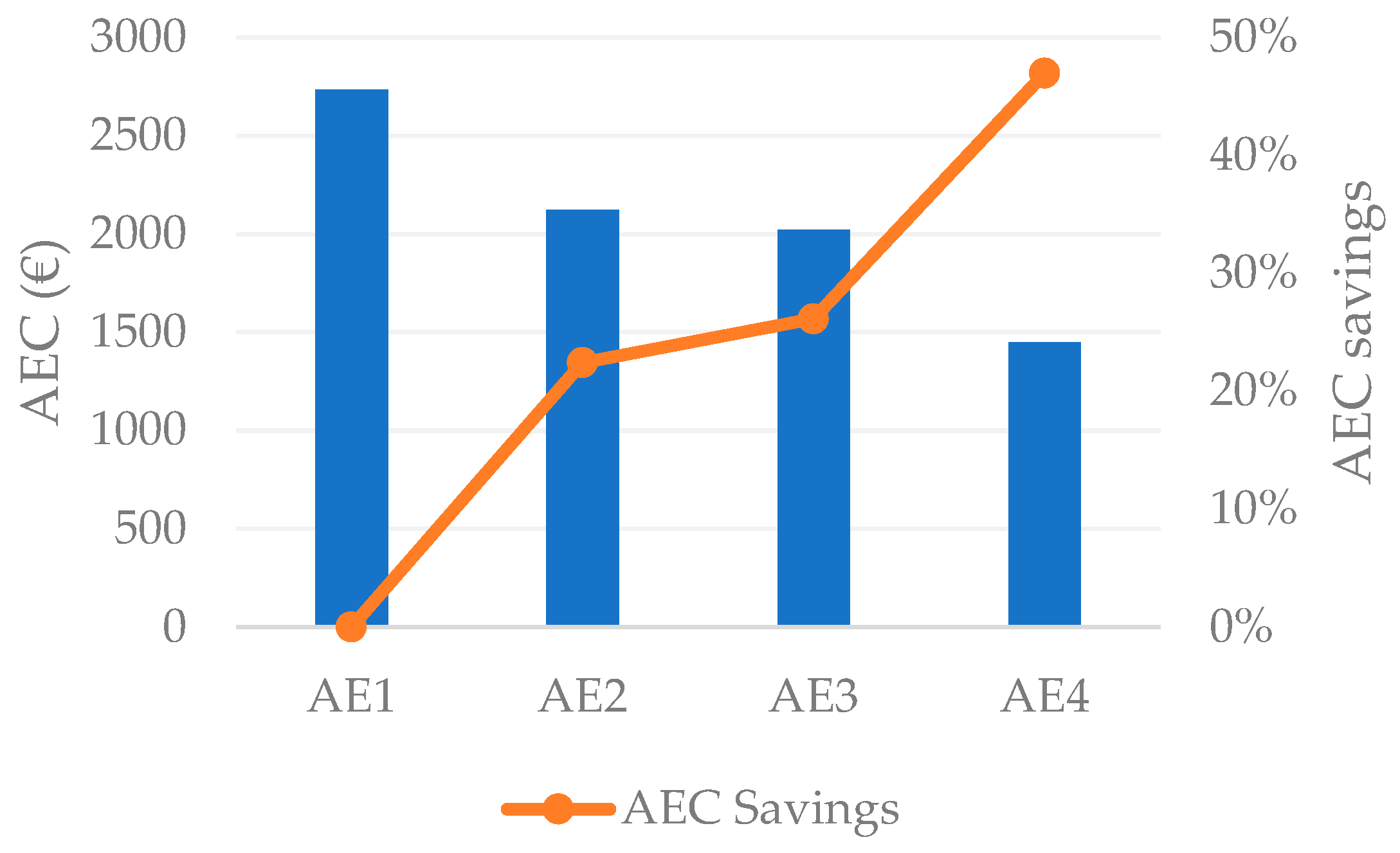
MS1 is also the maintenance strategy where all the considered building elements are simultaneously retrofitted sooner. The AEC (Table 5), which depends on the annual energy consumption reference values (AE1, AE2, AE3 and AE4), varies according to the elements that are already retrofitted. The first type of element to be subjected to a TR corresponds to the external walls, based on the planning of maintenance activities in MS1, MS2 and MS3 (Table 2). The second and third ones are the windows and roof, respectively. In Model 2, the energy efficiency level reaches its peak (AE4) once the planned maintenance activities have encompassed the TR of the three types of elements, improving their thermal performance. This is expected to occur first for MS1, followed by MS2 and MS3, in this order. The annual energy cost (AEC) decreases as the number of retrofitted building elements increases, from AE1 to AE4, leading to higher reductions in energy costs (Figure 6 and Table 5). The AEC becomes 22% lower if the external walls are thermally improved with ETICS compared to the original cladding solution before maintenance. The savings in AEC increase to 47% if the thermal improvement comprises the windows and roof, in addition to the external walls.
Figure 6.
AEC and respective savings, according to annual energy consumption reference values AE1, AE2, AE3 and AE4, which reflect the number of thermally improved building elements based on the planning of maintenance activities in MS1, MS2 and MS3.
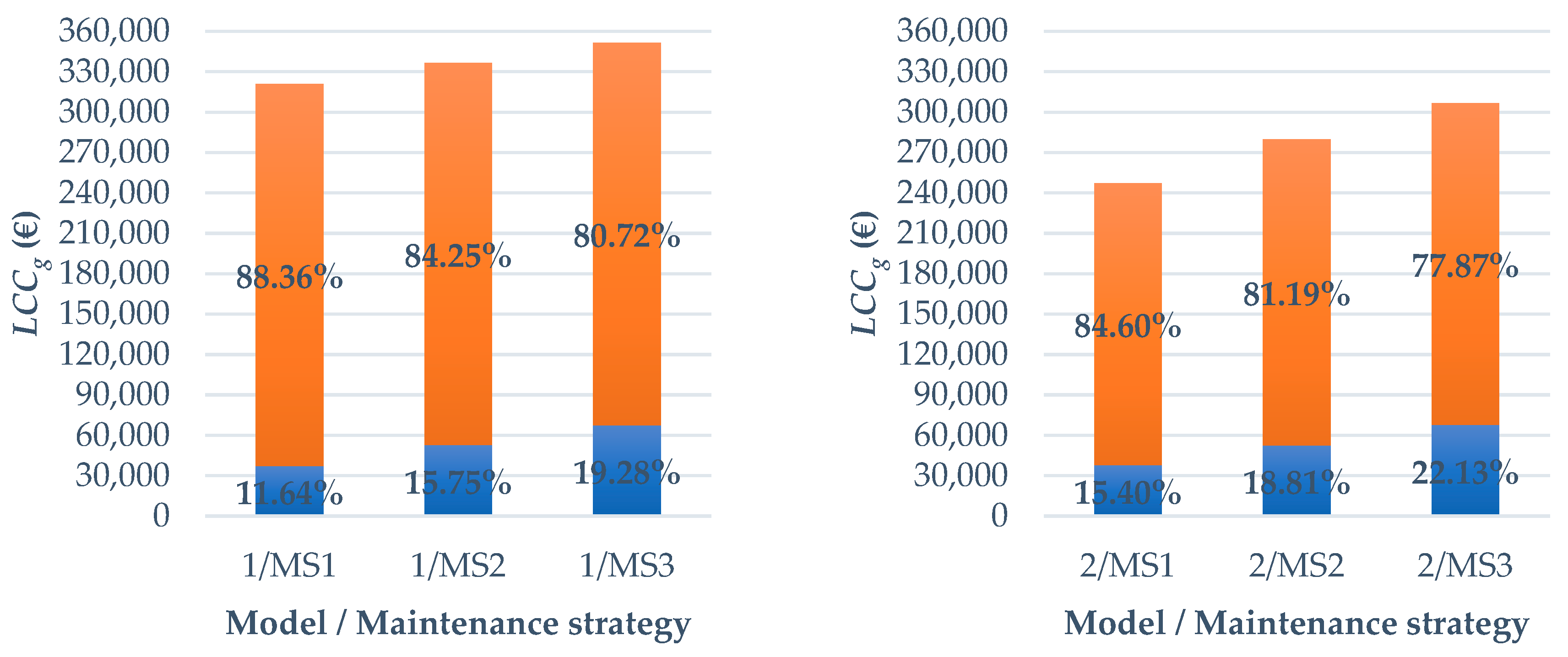
The LCCg results reflect the preponderance of the LCCe on global costs (Table 9). LCCe represents 81–88% and 78–85% of LCCg of Models 1 and 2, respectively, depending on the maintenance strategy (Figure 7). Model 2 is associated with significantly lower global costs, as in the case of LCCe (Table 8), below the LCCg of Model 1 in 23%, 17% and 13% for MS1, MS2 and MS3, respectively. MS1 is the maintenance strategy leading to the lowest LCCg, like in the previous results (Table 7 and Table 8), whose value is 19% less than that of MS3.
Table 9.
LCCg for Models 1 and 2, according to the maintenance strategies MS1, MS2 and MS3, and costs comparison, for the 100-year period of analysis.
Figure 7.
LCCg for Models 1 (left) and 2 (right), according to the maintenance strategies MS1, MS2 and MS3, for the 100-year period of analysis, with the identification of LCCm (in blue) and LCCe (in orange).
The decision for the implementation of maintenance according to Model 2 and strategy MS1 stands out as the best, in terms of LCCg, considering the 100-year time horizon. This is mainly due to the alignment of planned maintenance activities with the opportunity for thermal improvements as well as their earlier implementation, compared to other strategies. However, opting for strategy MS2 in Model 2 would still lead to LCCg savings while improving the building’s durability and physical degradation conditions, based on proper maintenance care. The latter scenario would have an annual additional cost of just 325.11 €, considering that the result of the cost comparison between MS1 and MS2 is evenly distributed over the whole time span.
The outcomes of the LCC analysis reveal that the benefits in terms of energy savings compensate for the investment in the thermal retrofitting of the envelope’s elements, according to the ORS, in the long term. The implementation of maintenance with the goal of enhancing the building’s energy efficiency and reducing the respective costs, through the improvement of thermal performance, is advantageous regardless of the maintenance strategy. The LCCg savings from choosing the least expensive maintenance strategy, MS1, based on the replacement of elements once they have reached the end of service life, are not significant compared to MS2, corresponding to 12% for Model 2.
5. Conclusions
In the present research, the energy LCCe, maintenance LCCm, and global LCCg of a real-world case study are analyzed, based on simulations for different models and maintenance strategies. Model 1 corresponds to a baseline scenario, lacking thermal improvement measures; Model 2 corresponds to a scenario where the ORS is implemented. The ORS includes the thermal retrofitting of external walls, windows and roof, which take place within the context of the following three possible maintenance strategies: MS1, based on the replacement of elements when they reach the end of service life; MS2, additionally includes prior minor interventions; and MS3, that considers cleaning operations as well before the maintenance activities already considered in MS1 and MS2. The maintenance activities extend the service life of the building’s elements; thus, the respective schedule varies according to the maintenance strategy. The study enables the quantification of the ORS impact on the LCCg and estimates the best timing to intervene or which maintenance strategy to adopt.
The outcomes of the study indicate that the number of planned maintenance activities and the respective schedule, according to the different maintenance strategies, influence the LCC results. MS1 leads to the lowest LCCm. However, MS2 could be a balanced choice in terms of cost–benefit, considering that the additional cost of minor operations enables the building to meet stakeholders’ higher standards. As for LCCe, MS1 also leads to the highest savings. This is mainly due to the earlier scheduling of the thermal retrofitting of the building’s elements compared to MS2 and MS3. In the case of MS1, the service life of the elements is not extended through CO and MI, so their replacement needs to occur sooner. This is advantageous for improving energy efficiency and reducing consumption, which has a direct positive impact on LCCe. The LCCe are preponderant to the LCCg, representing a strong majority of the costs. The implementation of thermal improvement measures, through the ORS, represented by Model 2, is clearly beneficial in terms of LCCe and LCCg. It contributes to increasing the LCCm, comparatively with Model 1, although not significantly. The slight rise in the maintenance costs compensates for the subsequent considerable savings in energy consumption.
The economic viability of the optimal retrofitting solution (ORS) was further evaluated through a payback period analysis, considering the incremental investment required for the building’s envelope elements—totalling €12,012.52 based on the specific intervention areas (185.33 m2 of walls, 100.15 m2 of roof, and 20.82 m2 of windows). The results indicate that the payback period is intrinsically linked to the adopted maintenance strategy: 16.3 years for MS1, 21.1 years for MS2, and 26.7 years for MS3. Although LCC analysis remains the primary tool for long-term decision-making over a 100-year horizon, these payback figures provide a practical metric for stakeholders.
The results of the study confirm that maintenance can be an opportunity to enhance building energy efficiency. The simultaneous improvement of the building’s physical degradation condition and energy performance, through maintenance activities, is advantageous to the stakeholder, who benefits from long-term cost optimization and concurrent benefits.
Although LCC analysis is crucial for supporting decision-making, it remains a complex process that involves multiple interrelated criteria. Investments in maintenance can generate additional benefits that were not directly quantified in the present study, such as increases in the building’s asset value. Effective maintenance management not only prevents neglect and physical degradation but also contributes positively to users’ comfort and well-being. Future research that incorporates quantifiable indicators of these broader benefits would further support the decision-making process. Moreover, including payback time assessments in the analysis of LCC savings could provide valuable insights for evaluating long-term economic viability.
Author Contributions
Conceptualization, M.P.M. and A.S.; Methodology, W.V.d.C., C.F. and J.B.; Validation, P.L.G., M.P.M. and A.S.; Formal analysis, W.V.d.C., C.F., J.B., P.L.G., M.P.M. and A.S.; Investigation, W.V.d.C., C.F., J.B., P.L.G. and A.S.; Data curation, W.V.d.C. and J.B.; Writing—original draft, W.V.d.C. and J.B.; Writing—review and editing, P.L.G., M.P.M. and A.S.; Visualization, M.P.M.; Supervision, A.S.; Funding acquisition, A.S. All authors have read and agreed to the published version of the manuscript.
Funding
The authors acknowledge the Portuguese Foundation for Science and Technology (FCT) for the funding of the project CITIESTWINS: a digital framework to merge durability data, maintenance models and energy retrofitting decisions (2022.15504.MIT). Wilamy Castro acknowledges the funding received through the Conselho Nacional de Desenvolvimento Científico e Tecnológico (CNPq) and the Postgraduate Programme in Structures and Civil Construction (PECC) of the University of Brasilia. Maria Paula Mendes acknowledges the Portuguese Foundation for Science and Technology (FCT) for strategic funding of CERENA (UIDB/04028/2020) and through the individual project 2023.08653.CEECIND. Ana Silva acknowledges the Portuguese Foundation for Science and Technology (FCT) for funding received through the individual project CEECIND/01337/2017.
Data Availability Statement
The data presented in this study are available on request from the corresponding author.
Acknowledgments
The authors acknowledge the support of the research unit CERIS (UIDB/04625/2020) and the support of CERENA (UIDB/04028/2025).
Conflicts of Interest
The authors declare no conflicts of interest.
References
- Bjelland, D.; Brozovsky, J.; Hrynyszyn, B.D. Systematic review: Upscaling energy retrofitting to the multi-building level. Renew. Sustain. Energy Rev. 2024, 198, 114402. [Google Scholar] [CrossRef] [Scilit]
- Serrano-Jiménez, A.; Femenías, P.; Thuvander, L.; Barrios-Padura, Á. A multi-criteria decision support method towards selecting feasible and sustainable housing renovation strategies. J. Clean. Prod. 2021, 278, 123588. [Google Scholar] [CrossRef] [Scilit]
- International Energy Agency (IEA). Towards a zero-emission, efficient, and resilient buildings and construction sector. In Global Status Report 2018; United Nations Environment Programme; Global Alliance for Buildings and Construction (GlobalABC): Paris, France, 2018. [Google Scholar]
- Santamouris, M.; Vasilakopoulou, K. Present and future energy consumption of buildings: Challenges and opportunities towards decarbonisation. E-Prime-Adv. Electr. Eng. Electron. Energy 2021, 1, 100002. [Google Scholar] [CrossRef] [Scilit]
- Ang, Y.Q.; Berzolla, Z.M.; Letellier-Duchesne, S.; Jusiega, V.; Reinhart, C. UBEM. io: A web-based framework to rapidly generate urban building energy models for carbon reduction technology pathways. Sustain. Cities Soc. 2022, 77, 103534. [Google Scholar] [CrossRef] [Scilit]
- European Commission. Factsheet: Energy Performance in Buildings Directive; European Commission: Brussels, Belgium, 2019. [Google Scholar]
- Foucquier, A.; Robert, S.; Suard, F.; Stéphan, L.; Jay, A. State of the art in building modelling and energy performances prediction: A review. Renew. Sustain. Energy Rev. 2013, 23, 272–288. [Google Scholar] [CrossRef] [Scilit]
- Gunay, H.B.; Bursill, J.; Huchuk, B.; O’Brien, W.; Beausoleil-Morrison, I. Shortest-prediction-horizon model-based predictive control for individual offices. Build. Environ. 2014, 82, 408–419. [Google Scholar] [CrossRef] [Scilit]
- Vallati, A.; Fiorini, C.V.; Grignaffini, S.; Ocłoń, P.; Di Matteo, M.; Kobylarczyk, J. Energy retrofit optimization for social building in temperate climate zone. Energy Build. 2023, 282, 112771. [Google Scholar] [CrossRef] [Scilit]
- Luo, Y.; Zhang, L.; Bozlar, M.; Liu, Z.; Guo, H.; Meggers, F. Active building envelope systems toward renewable and sustainable energy. Renew. Sustain. Energy Rev. 2019, 104, 470–491. [Google Scholar] [CrossRef] [Scilit]
- Piccardo, C.; Dodoo, A.; Gustavsson, L. Retrofitting a building to passive house level: A life cycle carbon balance. Energy Build. 2020, 223, 110135. [Google Scholar] [CrossRef] [Scilit]
- Thrampoulidis, E.; Hug, G.; Orehounig, K. Approximating optimal building retrofit solutions for large-scale retrofit analysis. Appl. Energy 2023, 333, 120566. [Google Scholar] [CrossRef] [Scilit]
- Galvin, R.; Sunikka-Blank, M. Ten questions concerning sustainable domestic thermal retrofit policy research. Build. Environ. 2017, 118, 377–388. [Google Scholar] [CrossRef] [Scilit]
- Oduyemi, O.; Okoroh, M.I.; Fajana, O.S.; Arowosafe, O. The need for economic performance measures for life cycle costing of sustainable commercial office buildings. J. Facil. Manag. 2018, 16, 54–64. [Google Scholar] [CrossRef] [Scilit]
- König, H.; De Cristofaro, M.L. Benchmarks for life cycle costs and life cycle assessment of residential buildings. Build. Res. Inf. 2012, 40, 558–580. [Google Scholar] [CrossRef] [Scilit]
- Castro, W.; Barrelas, J.; Mendes, M.P.; Reinhart, C.; Silva, A. Towards optimal energy efficiency: Analysing generalized and tailored retrofitting decisions. Discov. Appl. Sci. 2025, 7, 773. [Google Scholar] [CrossRef] [Scilit]
- Ferreira, C.; Silva, A.; De Brito, J.; Dias, I.; Flores-Colen, I. The impact of imperfect maintenance actions on the degradation of buildings’ envelope components. J. Build. Eng. 2021, 33, 101571. [Google Scholar] [CrossRef] [Scilit]
- Hauashdh, A.; Jailani, J.; Rahman, I.A. Strategic approaches towards achieving sustainable and effective building maintenance practices in maintenance-managed buildings: A combination of expert interviews and a literature review. J. Build. Eng. 2022, 45, 103490. [Google Scholar] [CrossRef] [Scilit]
- Eli, L.G.; Krelling, A.F.; Olinger, M.S.; Melo, A.P.; Lamberts, R. Thermal performance of residential building with mixed-mode and passive cooling strategies: The Brazilian context. Energy Build. 2021, 244, 111047. [Google Scholar] [CrossRef] [Scilit]
- Kim, J.U.; Hadadi, O.A.; Kim, H.; Kim, J. Development of A BIM-based maintenance decision-making framework for the optimization between energy efficiency and investment costs. Sustainability 2018, 10, 2480. [Google Scholar] [CrossRef] [Scilit]
- Goh, B.H.; Sun, Y. The development of life-cycle costing for buildings. Build. Res. Inf. 2016, 44, 319–333. [Google Scholar]
- Heralova, R.S. Life Cycle Cost optimization within decision making on alternative designs of public buildings. Procedia Eng. 2014, 85, 454–463. [Google Scholar] [CrossRef] [Scilit]
- Dwaikat, L.N.; Ali, K.N. Green buildings life cycle cost analysis and life cycle budget development: Practical applications. J. Build. Eng. 2018, 18, 303–311. [Google Scholar] [CrossRef] [Scilit]
- Pernetti, R.; Garzia, F.; Oberegger, U.F. Sensitivity analysis as support for reliable life cycle cost evaluation applied to eleven nearly zero-energy buildings in Europe. Sustain. Cities Soc. 2021, 74, 103139. [Google Scholar] [CrossRef] [Scilit]
- Wang, B.; Xia, X. Optimal maintenance planning for building energy efficiency retrofitting from optimization and control system perspectives. Energy Build. 2015, 96, 299–308. [Google Scholar] [CrossRef] [Scilit]
- Carratt, A.; Kokogiannakis, G.; Daly, D. A critical review of methods for the performance evaluation of passive thermal retrofits in residential buildings. J. Clean. Prod. 2020, 263, 121408. [Google Scholar] [CrossRef] [Scilit]
- Omrany, H.; Ghaffarianhoseini, A.; Ghaffarianhoseini, A.; Raahemifar, K.; Tookey, J. Application of passive wall systems for improving the energy efficiency in buildings: A comprehensive review. Renew. Sustain. Energy Rev. 2016, 62, 1252–1269. [Google Scholar] [CrossRef] [Scilit]
- Sarihi, S.; Saradj, F.M.; Faizi, M. A critical review of façade retrofit measures for minimizing heating and cooling demand in existing buildings. Sustain. Cities Soc. 2021, 64, 102525. [Google Scholar] [CrossRef] [Scilit]
- Attia, S.; Kosiński, P.; Wójcik, R.; Węglarz, A.; Koc, D.; Laurent, O. Energy efficiency in the polish residential building stock: A literature review. J. Build. Eng. 2022, 45, 103461. [Google Scholar] [CrossRef] [Scilit]
- Mendes, V.F.; Cruz, A.S.; Gomes, A.P.; Mendes, J.C. A systematic review of methods for evaluating the thermal performance of buildings through energy simulations. Renew. Sustain. Energy Rev. 2024, 189, 113875. [Google Scholar] [CrossRef] [Scilit]
- Marszal, A.J.; Heiselberg, P. Life cycle cost analysis of a multi-storey residential Net Zero Energy Building in Denmark. Energy 2011, 36, 5600–5609. [Google Scholar] [CrossRef] [Scilit]
- Tokarik, M.S.; Richman, R.C. Life cycle cost optimization of passive energy efficiency improvements in a Toronto house. Energy Build. 2016, 118, 160–169. [Google Scholar] [CrossRef] [Scilit]
- Bleyl, J.W.; Bareit, M.; Casas, M.A.; Chatterjee, S.; Coolen, J.; Hulshoff, A.; Lohse, R.; Mitchell, S.; Robertson, M.; Ürge-Vorsatz, D. Office building deep energy retrofit: Life cycle cost benefit analyses using cash flow analysis and multiple benefits on project level. Energy Effic. 2019, 12, 261–279. [Google Scholar] [CrossRef] [Scilit]
- Bull, J.; Gupta, A.; Mumovic, D.; Kimpian, J. Life cycle cost and carbon footprint of energy efficient refurbishments to 20th century UK school buildings. Int. J. Sustain. Built Environ. 2014, 3, 1–17. [Google Scholar] [CrossRef] [Scilit]
- Sharif, S.A.; Hammad, A. Simulation-based multi-objective optimization of institutional building renovation considering energy consumption, life-cycle cost and life-cycle assessment. J. Build. Eng. 2019, 21, 429–445. [Google Scholar] [CrossRef] [Scilit]
- Wang, B.; Xia, X.; Zhang, J. A multi-objective optimization model for the life-cycle cost analysis and retrofitting planning of buildings. Energy Build. 2014, 77, 227–235. [Google Scholar] [CrossRef] [Scilit]
- Hong, Y.; Ezeh, C.I.; Deng, W.; Hong, S.H.; Ma, Y.; Tang, Y.; Jin, Y. Coordinated energy-environmental-economic optimisation of building retrofits for optimal energy performance on a macro-scale: A life-cycle cost-based evaluation. Energy Convers. Manag. 2021, 243, 114327. [Google Scholar] [CrossRef] [Scilit]
- Altaf, M.; Alaloul, W.S.; Musarat, M.A.; Qureshi, A.H. Life cycle cost analysis (LCCA) of construction projects: Sustainability perspective. Environ. Dev. Sustain. 2023, 25, 12071–12118. [Google Scholar] [CrossRef] [Scilit]
- Ferreira, C.; Silva, A.; De Brito, J.; Flores-Colen, I. Maintainability of Building Envelope Elements: Optimizing Predictive Condition-Based Maintenance Decisions; Springer: Cham, Switzerland, 2023. [Google Scholar]
- Barrelas, J.; Ren, Q.; Pereira, C. Implications of climate change in the implementation of maintenance planning and use of building inspection systems. J. Build. Eng. 2021, 40, 102777. [Google Scholar] [CrossRef] [Scilit]
- Ferraz, G.T.; De Brito, J.; De Freitas, V.P.; Silvestre, J.D. State-of-the-art review of building inspection systems. J. Perform. Constr. Facil. 2016, 30, 04016018. [Google Scholar] [CrossRef] [Scilit]
- Falorca, J.F. Main functions for building maintenance management: An outline application. Int. J. Build. Pathol. Adapt. 2019, 37, 490–509. [Google Scholar] [CrossRef] [Scilit]
- De Brito, J.; Pereira, C.; Silvestre, J.D.; Flores-Colen, I. Expert Knowledge-Based Inspection Systems—Inspection, Diagnosis and Repair of the Building Envelope; Springer International Publishing: Zurich, Switzerland, 2020. [Google Scholar]
- Silva, A.; De Brito, J.; Gaspar, P.L. Methodologies for Service Life Prediction of Buildings: With a Focus on Façade Claddings; Springer International Publishing: Zurich, Switzerland, 2016. [Google Scholar]
- González-Domínguez, J.; Sánchez-Barroso, G.; García-Sanz-Calcedo, J.; Sokol, M. Condition-based maintenance of ceramic curved tiles roof in Primary Healthcare buildings using Markov chains. J. Build. Eng. 2021, 43, 102517. [Google Scholar] [CrossRef] [Scilit]
- Madureira, S.; Flores-Colen, I.; de Brito, J.; Pereira, C. Maintenance planning of facades in current buildings. Constr. Build. Mater. 2017, 147, 790–802. [Google Scholar] [CrossRef] [Scilit]
- Ruparathna, R.; Hewage, K.; Sadiq, R. Multi-period maintenance planning for public buildings: A risk based approach for climate conscious operation. J. Clean. Prod. 2018, 170, 1338–1353. [Google Scholar] [CrossRef] [Scilit]
- Farahani, A.; Wallbaum, H.; Dalenbäck, J.O. The importance of life-cycle based planning in maintenance and energy renovation of multifamily buildings. Sustain. Cities Soc. 2019, 44, 715–725. [Google Scholar] [CrossRef] [Scilit]
- Margaritopoulos, E.; Xenidis, Y. Condition-Based Maintenance Using BIM: A Case Study of Energy Modeling for a Residential Building. J. Eng. Proj. Prod. Manag. 2023, 13, 0024. [Google Scholar]
- Beck, H.E.; Zimmermann, N.E.; McVicar, T.R.; Vergopolan, N.; Berg, A.; Wood, E.F. Present and future Köppen-Geiger climate classification maps at 1-km resolution. Sci. Data 2018, 5, 180214. [Google Scholar] [CrossRef] [Scilit]
- IPMA. Área Educativa—Clima de Portugal Continental; IPMA: Lisbon, Portugal, 2024. [Google Scholar]
- Silva, A.; Mendes, M.P.; Gaspar, P.L.; Reinhart, C. A Decade of Energy Consumption in a Single-Family House: The Impact of Microgeneration. In Multiphysics and Multiscale Building Physics; Berardi, U., Ed.; IABP 2024; Lecture Notes in Civil Engineering; Springer: Singapore, 2025; Volume 554. [Google Scholar]
- Gaspar, P.L.; De Brito, J. Service life estimation of cement-rendered facades. Build. Res. Inf. 2008, 36, 44–55. [Google Scholar] [CrossRef] [Scilit]
- Bastos Porsani, G.; Del Valle de Lersundi, K.; Sánchez-Ostiz Gutiérrez, A.; Fernández Bandera, C. Interoperability between building information modelling (BIM) and building energy model (BEM). Appl. Sci. 2021, 11, 2167. [Google Scholar] [CrossRef] [Scilit]
- U.S. Department of Energy. EnergyPlus™ Version 24.2.0 Documentation: Input Output Reference; U.S. Department of Energy: Washington, DC, USA, 2024.
- Adegoriola, M.I.; Lai, J.H.; Chan, E.H.; Darko, A. Heritage building maintenance management (HBMM): A bibliometric-qualitative analysis of literature. J. Build. Eng. 2021, 42, 102416. [Google Scholar] [CrossRef] [Scilit]
- Iselin, D.G.; Lemer, A.C. (Eds.) The Fourth Dimension in Building: Strategies for Minimizing Obsolescence; National Research Council, Building Research Board, National Academy Press: Washington, DC, USA, 1993; 59p + Appendix 42p. [Google Scholar]
- Silva, A.; De Brito, J.; Thomsen, A.; Straub, A.; Prieto, A.J.; Lacasse, M.A. Causal effects between criteria that establish the end of service life of buildings and components. Buildings 2022, 12, 88. [Google Scholar] [CrossRef] [Scilit]
- Silva, A.; De Brito, J. Service life of building envelopes: A critical literature review. J. Build. Eng. 2021, 44, 102646. [Google Scholar] [CrossRef] [Scilit]

Disclaimer/Publisher’s Note: The statements, opinions and data contained in all publications are solely those of the individual author(s) and contributor(s) and not of MDPI and/or the editor(s). MDPI and/or the editor(s) disclaim responsibility for any injury to people or property resulting from any ideas, methods, instructions or products referred to in the content. |
© 2026 by the authors. Licensee MDPI, Basel, Switzerland. This article is an open access article distributed under the terms and conditions of the Creative Commons Attribution (CC BY) license.