Identifying and Evaluating Cultural Genes in the Historic Centre of Macao: A Multi-Stakeholder Perspective




Abstract
1. Introduction
Research Gaps and Questions
2. Literature Review
2.1. Evolution of Historic District Research
2.2. From Design Patterns to Cultural Genes
2.3. Multidisciplinary Approaches to Heritage Conservation
2.4. Cultural Identity and Multi-Stakeholder Perspectives
3. Theoretical Foundations of Cultural Genes
4. Methodology
4.1. Overview of the Study Area
4.2. Data Sources
- Documentary materials. These include information on the architectural inventory of the Archives of Macau, Major Historical and Cultural Sites Protected at the National Level, and the Intangible Cultural Heritage Unit of the Cultural Affairs Bureau. Textual data were related to the Historic Centre of Macao, including historical documents such as clan genealogies, family precepts, and local gazetteers, as well as publicly available conservation plan texts from local authorities.
- Geospatial data. Building coordinates were obtained using Baidu’s coordinate selection tool, while satellite imagery and parcel data were collected via BIGEMAP map download software. Foundational geographic data are primarily sourced from the National Geomatics Information Website.
- Field Research. Through two surveys conducted between February 2024 and October 2025, fifty buildings within the study area were visited on-site. Over 2000 photographs were captured on-site, alongside the survey of more than 100 architectural drawings. Field research also included participatory observation of folk customs, documenting 62 segments of ritual footage. Field research data were ultimately compiled into an informational dossier comprising approximately 160,000 words and over 140 charts and diagrams. Between May and September 2025, 860 questionnaires were distributed to tourists, residents, and third-party representatives, with 832 returned—a response rate of approximately 96.7%. This comprised 291 tourist responses, 348 resident responses, and 193 third-party representative responses.
4.3. Research Methodology and Process
4.3.1. Cultural Gene Identification Framework for the Historic Centre of Macao
4.3.2. Evaluation System of Cultural Identity in the Historic Centre of Macao
- Establishing Evaluation Indicators
- 2.
- Constructing the Evaluation Matrix and Determining Weights
- 3.
- Establishing the Comment Set
- 4.
- Collection of Evaluation Data
- 5.
- Multi-level Fuzzy Integration
5. Cultural Gene Identification Results
5.1. Identification of Architectural Cultural Genes
5.1.1. Architectural Function Genes
5.1.2. Architectural Structure Genes
5.1.3. Architectural Ornamentation Genes
5.2. Identification Results of Intangible Cultural Genes
5.2.1. Indigenous Religion Gene
5.2.2. Vernacular Art Genes
5.2.3. Vernacular Traditions Genes
6. Evaluation Results
7. Discussion
7.1. Influencing Factors and Future Development Strategies
- Functional alienation is prevalent in the development of commercial and military buildings, where the original functions of some historic structures have been appropriated for new purposes unrelated to their historical context. This blurs or even severs the cultural identity of the buildings. For instance, the military defensive function of Macau’s St. Tiago da Barra Fortress has been entirely replaced by commercial accommodation. As Aldo Rossi observed in The Architecture of the City, urban artifacts carry meaning through the continuity of function and form, yet functions may transform over time while the artifact retains its identity [94]. This resonates with our finding: the fortress’s original defensive function—now replaced—exhibits diminished cultural recognition (tourist score: 69.77). Such functional alienation severs the building’s connection to its historical narrative, supporting Rossi’s thesis that the persistence of urban artifacts requires a careful negotiation between original purpose and contemporary use. Furthermore, while residential and political buildings retain their original functions, their excessive obsolescence prevents effective alignment with contemporary societal needs. This misalignment in functional positioning severs the buildings’ connection to their historical narratives, making it difficult for visitors to perceive their original cultural value. Residents, meanwhile, experience diminished identification due to the disconnect between the buildings’ functions and modern lifestyles.
- Macau’s historic buildings face structural preservation challenges. On one hand, damage to original structures is particularly pronounced in timber-framed buildings, manifesting as aged timber beams, insect infestation, and moisture-induced structural weakening. For instance, St. Augustine’s Church suffered a partial roof collapse due to aged timber beams and prolonged torrential rainfall. On the other hand, while human-induced damage is partially regulated by legislation, incidents persist. For instance, the Lou Kau Mansion sustained minor damage when its exterior wall collapsed during the demolition of an adjacent old building. Such structural harm not only compromises building safety but also undermines the integrity of the architectural heritage, diminishing public recognition.
- Material degradation and visual integrity issues significantly diminish the buildings’ most visible character, weakening their cultural appeal to all groups, particularly visitors who rely on visual experience. For instance, the blue bricks on the exterior walls of buildings like the Lou Kau Mansion and Mandarin’s House exhibit powdering, salt efflorescence, and surface flaking. Furthermore, some structures have been improperly treated during repairs with modern materials such as cement mortar render or plastic windows, disrupting the visual continuity of the facades. The vibrantly coloured architectural paintings and wall coatings have faded and lost their lustre due to climatic and temporal influences, with details becoming indistinct. Furthermore, decorative elements such as brick carvings, wood carvings, and Western-style stone mouldings and glazed bricks on façades have suffered from mould, insect infestation, and damage, severely impairing the buildings’ artistic expressiveness and capacity for cultural narration.
- Intangible heritage transmission challenges face Macau’s intangible cultural heritage in the modernisation process, including simplified transmission rituals, lost skills, and weakened identity. This directly undermines residents’ foundational sense of cultural belonging as active participants and hinders visitors’ ability to experience living cultural atmospheres. Firstly, indigenous religion systems face the predicament of ritual simplification due to spatial compression. Taking the Belief and Customs of Chu Tai Sin as an example, its traditional sacrificial sites have seen diminished functionality due to urban development, while the faith community has become increasingly dispersed through population migration. The younger generation’s identification with traditional beliefs continues to decline. Concurrently, the frequency of related sacrificial rituals has sharply decreased, and their procedures have been simplified, leading to a continuous weakening of the cultural expression of the faith and community cohesion. Secondly, the vernacular art gene faces the crisis of skill extinction due to generational gaps in transmission. Traditional crafts such as the dragon dance techniques of the Festival of the Drunken Dragon confront the stark realities of ageing practitioners and insufficient youth participation. Thirdly, the vernacular traditions genes suffer from weak identification stemming from formalistic traditions. While certain traditional festivals persist, their outdated formats fail to resonate with contemporary aesthetics and lifestyles, resulting in low engagement among younger generations.
- Activation Strategy for Strengths Genes: For high-identity elements (scores > 70), such as distinctive cuisine, technique, and architectural ornamentation genes, establish multi-stakeholder collaboration mechanisms to drive cultural-tourism integration and value transformation. Transform tangible cultural elements into immersive experiences by creating intangible cultural heritage culinary routes, artisan workshop spaces, and themed trails using augmented reality (AR) technology, thereby significantly enhancing visitor engagement. Concurrently, establish incentive mechanisms for inheritors to encourage local residents—particularly artisans—to participate in cultural product development, achieving mutual benefits in cultural preservation and economic returns. Expert teams shall oversee cultural content excavation and technical standard formulation to ensure professional and authentic revitalisation processes.
- General Heritage Cultivation Strategy: For heritage elements with moderate recognition scores (50–70), such as architectural function genes, local belief genes, and folk festivals, adopt a dual approach of functional revitalisation and cultural reconstruction. Establish community deliberation platforms to guide residents in updating the functions of historic buildings and introducing new uses, such as converting commercial structures into community spaces like cultural markets. Innovate festival event formats by creating annual cultural calendars and incorporating interactive experiences to enhance appeal among younger demographics. Expert teams must ensure revitalisation adheres to heritage conservation standards, striking a balance between traditional continuity and contemporary expression.
- Endangered Genes Rescue Strategy: For low-identity heritage elements such as architectural ornamentation genes (scores < 50), implement measures combining technical conservation with systematic dissemination. Professional teams shall establish digital archives using technologies such as 3D laser scanning to provide data support for subsequent restoration. Visualisation tools—including structural analysis animations and craftsmanship documentaries—shall translate specialised knowledge into accessible public content. Concurrently, establish resident-participatory routine monitoring mechanisms to form a long-term conservation system integrating professional preservation with community stewardship.
7.2. Innovation Points
7.3. Limitations
8. Conclusions
Author Contributions
Funding
Data Availability Statement
Conflicts of Interest
Abbreviations
| AHP | Analytic Hierarchy Process |
| UNESCO | United Nations Educational, Scientific and Cultural Organization |
| NSGA-II | Non-dominated Sorting Genetic Algorithm II |
| AHP-FCE | Analytic Hierarchy Process—Fuzzy Comprehensive Evaluation Method |
| GIS | Geographic Information System |
| 4D | Four Dimensions |
| FCE | Fuzzy Comprehensive Evaluation Method |
| AR | Augmented Reality |
| 3D | Three Dimensions |
References
- Bandarin, F. Urban conservation and sustainable development. Hist. Environ. Policy Pract. 2020, 11, 444–453. [Google Scholar] [CrossRef]
- Lyu, Y.; Abd Malek, M.I.; JaaFar, N.H.; Sima, Y.; Han, Z.; Liu, Z. Unveiling the potential of space syntax approach for revitalising historic urban areas: A case study of Yushan Historic District, China. Front. Archit. Res. 2023, 12, 1144–1156. [Google Scholar] [CrossRef]
- Gruber, S. Convention concerning the protection of the world cultural and natural heritage 1972. In Convention Concerning the Protection of the World Cultural and Natural Heritage; Gruber, S., Ed.; UNESCO: Paris, France, 1972; pp. 60–66. [Google Scholar]
- Chen, K.; Tan, X. Does the preservation policy of historical and cultural heritage promote economic growth? Evidence from China. J. Cult. Herit. 2025, 74, 157–165. [Google Scholar] [CrossRef]
- Kovacs, J.F.; Galvin, K.J.; Shipley, R. Assessing the success of heritage conservation districts: Insights from Ontario, Canada. Cities 2015, 45, 123–132. [Google Scholar] [CrossRef]
- Giordano, S. Agrarian landscapes: From marginal areas to cultural landscapes—Paths to sustainable tourism in small villages—The case of Vico Del Gargano in the club of the Borghi più belli d’Italia. Qual. Quant. 2020, 54, 1725–1744. [Google Scholar] [CrossRef]
- Zhao, P.; Ali, Z.M.; Hashim, N.H.N.; Ahmad, Y.; Wang, H. Evaluating social sustainability of urban regeneration in historic urban areas in China: The case of Xi’an. J. Environ. Manag. 2024, 370, 122520. [Google Scholar] [CrossRef]
- Zhang, L. Influence of cultural heritage protection on high-quality economic development. Financ. Res. Lett. 2025, 76, 106932. [Google Scholar] [CrossRef]
- Van Lanen, R.J.; Van Beek, R.; Kosian, M.C. A different view on (world) heritage. The need for multi-perspective data analyses in historical landscape studies: The example of Schokland (NL). J. Cult. Herit. 2022, 53, 190–205. [Google Scholar] [CrossRef]
- Lu, L.; Chi, C.G.; Liu, Y. Authenticity, involvement, and image: Evaluating tourist experiences at historic districts. Tour. Manag. 2015, 50, 85–96. [Google Scholar] [CrossRef]
- Shi, K.; Zhang, Y.; Liu, Y. Study on Tourists’ Perception of the Grand Canal Cultural Heritage Based on Network Travels. In Proceedings of the 2019 IEEE Fifth International Conference on Big Data Computing Service and Applications (BigDataService), Newark, DE, USA, 4–9 April 2019. [Google Scholar]
- Miao, L.; Liu, S.; Li, B.; Wang, S. Research on Vitality Improvement Strategy for the Historic District of Taiyanggou in Lushun. In Proceedings of the IOP Conference Series: Materials Science and Engineering, Prague, Czech Republic, 14–18 June 2021. [Google Scholar]
- Luo, H.; Chiou, B.S. Framing the Hierarchy of Cultural Tourism Attractiveness of Chinese Historic Districts Under the Premise of Landscape Conservation. Land 2021, 10, 216. [Google Scholar] [CrossRef]
- Xu, Y. Living Heritage Conservation: From Commodity-Oriented Renewal to Culture-Oriented and People-Centred Revival. Int. Plan. Hist. Soc. Proc. Beijing 2018, 18, 279–287. [Google Scholar]
- Tang, X.; Zeng, L. Analysis of the government’s function of stabilising order in villagers’ spontaneous protection and development of traditional villages—Taking Conghua District, Guangzhou as an example. Small Town Constr. 2018, 106–112. [Google Scholar] [CrossRef]
- Ruskin, J. The Seven Lamps of Architecture; John B. Alden: New York, NY, USA, 1885. [Google Scholar]
- Garcia, G.; Vandesande, A.; Van Balen, K. Place attachment and challenges of historic cities: A qualitative empirical study on heritage values in Cuenca, Ecuador. J. Cult. Herit. Manag. Sustain. Dev. 2018, 8, 387–399. [Google Scholar] [CrossRef]
- Jacobs, J. The Death and Life of Great American Cities; Random House: New York, NY, USA, 1961. [Google Scholar]
- Rudofsky, B. Streets for People: A primer for Americans; Doubleday & Company: New York, NY, USA, 1969. [Google Scholar]
- Lynch, K. The Image of the City; The MIT Press: Cambridge, MA, USA, 1960; p. 194. [Google Scholar]
- Simpson, J. Street DNA: The who, where and what of visual engagement with the urban street. J. Landsc. Archit. 2018, 13, 50–57. [Google Scholar] [CrossRef]
- Wang, X.Q. A Comprehensive Research on Morphological Characteristics of the Architectural Heritage in the Old City of Yangzhou–Taking the Traditional Dwellings as Example. Unpublished Doctoral Dissertation, Jiangnan University, Wuxi, China, 2012. (In Chinese) [Google Scholar]
- Rogers, A.P. Values and relationships between tangible and intangible dimensions of heritage places. In Values in Heritage Management: Emerging Approaches and Research Directions; Avrami, E., Macdonald, S., Mason, R., Myers, D., Eds.; Getty Conservation Institute: Los Angeles, CA, USA, 2019; pp. 172–185. [Google Scholar]
- Fabi, V.; Vettori, M.P.; Faroldi, E. Adaptive reuse practices and sustainable urban development: Perspectives of innovation for European historic spa towns. Sustainability 2021, 13, 5531. [Google Scholar] [CrossRef]
- Altrock, U. Housing in Germany and the rebirth of the high-rise in post-modern urban design. Urban Plan. 2022, 7, 298–312. [Google Scholar] [CrossRef]
- Zhao, X.; Chen, J.; Li, J.; Wang, H.; Zhang, X.; Yu, F. Unravelling the renewal priority of urban heritage communities via macro-micro dimensional assessment: A case study of Nanjing City, China. Sustain. Cities Soc. 2025, 124, 106317. [Google Scholar] [CrossRef]
- Zahirovic-Herbert, V.; Gibler, K.M. Historic district influence on house prices and marketing duration. J. Real Estate Financ. Econ. 2014, 48, 112–131. [Google Scholar] [CrossRef]
- Wei, K.; Jiang, X.; Zhu, R.; Duan, X.; Yang, J. Spatial and temporal distribution characteristics of heritage buildings in Yangzhou and influencing factors and tourism development strategies. Buildings 2025, 15, 1081. [Google Scholar] [CrossRef]
- Shen, S.; Zhao, J.; Xu, J.; Guo, J.; Shi, L. Understanding tourism development of historic districts from a representational perspective. J. Tour. Cult. Change 2016, 14, 291–306. [Google Scholar] [CrossRef]
- Shipley, R.; Snyder, M. The role of heritage conservation districts in achieving community economic development goals. Int. J. Herit. Stud. 2013, 19, 304–321. [Google Scholar] [CrossRef]
- Alexander, C.; Ishikawa, S.; Silverstein, M. A Pattern Language: Towns, Buildings, Construction; Oxford University Press: New York, NY, USA, 1977. [Google Scholar]
- Mehaffy, M.W. Cities Alive: Jane Jacobs, Christopher Alexander, and the Roots of the New Urban Renaissance; Sustasis Press: Portland, OR, USA, 2020. [Google Scholar]
- Buras, N.H. The Art of Classic Planning: Building Beautiful and Enduring Communities; The Belknap Press of Harvard University Press: Cambridge, MA, USA, 2019. [Google Scholar]
- Jiang, B.; Yao, X. (Eds.) Geospatial Analysis and Modelling of Urban Structure and Dynamics; Springer: Dordrecht, The Netherlands, 2010. [Google Scholar]
- Salama, A.M. Spatial Design Education: New Directions for Pedagogy in Architecture and Beyond; Routledge: London, UK, 2016. [Google Scholar]
- Lavdas, A.A.; Salingaros, N.A.; Sussman, A. Visual Attention Software: A New Tool for Understanding the “Subliminal” Experience of the Built Environment. Appl. Sci. 2021, 11, 6197. [Google Scholar] [CrossRef]
- Udeaja, C.; Trillo, C.; Awuah, K.G.B.; Makore, B.C.; Patel, D.A.; Mansuri, L.E.; Jha, K.N. Urban heritage conservation and rapid urbanisation: Insights from Surat, India. Sustainability 2020, 12, 2172. [Google Scholar] [CrossRef]
- Rodwell, D. Sustainability and the holistic approach to the conservation of historic cities. J. Archit. Conserv. 2003, 9, 58–73. [Google Scholar] [CrossRef]
- Zhang, X.; Edelenbos, J.; Gianoli, A. Urban conservation within multi-level governance: Comparing interaction patterns in preserving different types of cultural heritage in mainland China. Urban Gov. 2024, 4, 25–36. [Google Scholar] [CrossRef]
- Pickard, R. A comparative review of policy for the protection of the architectural heritage of Europe. Int. J. Herit. Stud. 2002, 8, 349–363. [Google Scholar] [CrossRef]
- Monastyrev, P.; Mischenko, E.; Kuznetsova, N. Problems of integrating cultural heritage objects with the architectural and historical environment of the city. In IOP Conference Series: Materials Science and Engineering; IOP Publishing: London, UK, 2018; Volume 463, p. 032045. [Google Scholar]
- Wang, J. Problems and solutions in the protection of historical urban areas. Front. Archit. Res. 2012, 1, 40–43. [Google Scholar] [CrossRef]
- Blake, J. Safeguarding intangible cultural heritage in the urban environment: Some experiences gained from implementing UNESCO’s 2003 convention. In Urban Heritage, Development and Sustainability; Routledge: London, UK, 2015; pp. 114–133. [Google Scholar]
- Slob, S.; Hack, R. 3D terrestrial laser scanning as a new field measurement and monitoring technique. In Engineering Geology for Infrastructure Planning in Europe: A European Perspective; Springer: Berlin/Heidelberg, Germany, 2004; pp. 179–189. [Google Scholar]
- Bushmakina, Y.V.; Balyberdina, P.A.; Dmitrieva, M.K.; Gogoleva, M.V. The use of GIS for studying cultural heritage and historical urban landscape: The case of Perm and Usolie (Russia). Ge-Conservacion 2017, 11, 264–271. [Google Scholar] [CrossRef]
- Longley, P.A. Geographical information systems: Will developments in urban remote sensing and GIS lead to ‘better’ urban geography? Prog. Hum. Geogr. 2002, 26, 231–239. [Google Scholar] [CrossRef]
- Fu, J.-M.; Tang, Y.-F.; Zeng, Y.-K.; Feng, L.-Y.; Wu, Z.-G. Sustainable historic districts: Vitality analysis and optimisation based on space syntax. Buildings 2025, 15, 657. [Google Scholar] [CrossRef]
- Ma, H.; Zhang, Y.; Sun, S.; Liu, T.; Shan, Y. A comprehensive survey on NSGA-II for multi-objective optimisation and applications. Artif. Intell. Rev. 2023, 56, 15217–15270. [Google Scholar] [CrossRef]
- Geng, L.; Xue, M.; Li, J.; Ma, J. Historic District Conservation: A Critical Review of Global Trends, Development in the 21st Century, and Challenges Through CiteSpace Analysis. Buildings 2025, 15, 1232. [Google Scholar] [CrossRef]
- Lyu, Y.; Malek, M.I.A.; Ja’aFar, N.H.B.; Liu, C.; Liu, Z.; Han, Z. Multi-data driven and space syntax approach to urban heritage revitalisation: Insights from Zhongshan Road Historic District, China. Ain Shams Eng. J. 2025, 16, 103473. [Google Scholar] [CrossRef]
- Nocca, F. The role of cultural heritage in sustainable development: Multidimensional indicators as decision-making tools. Sustainability 2017, 9, 1882. [Google Scholar] [CrossRef]
- Septianto, E.; Poerbo, H.W.; Firmansyah; Martokusumo, W. Understanding the attractiveness of types of historic districts in Bandung: Implementing heritage conservation based on public perception. J. Asian Archit. Build. Eng. 2025, 24, 4226–4241. [Google Scholar] [CrossRef]
- Kolar, T.; Zabkar, V. A consumer-based model of authenticity: An oxymoron or the foundation of cultural heritage marketing? Tour. Manag. 2010, 31, 652–664. [Google Scholar] [CrossRef]
- Chen, H.; Rahman, I. Cultural tourism: An analysis of engagement, cultural contact, memorable tourism experience and destination loyalty. Tour. Manag. Perspect. 2018, 26, 153–163. [Google Scholar] [CrossRef]
- Chen, X.; Li, J.; Han, W.; Liu, S. Urban Tourism Destination Image Perception Based on LDA Integrating Social Network and Emotion Analysis: The Example of Wuhan. Sustainability 2021, 14, 12. [Google Scholar] [CrossRef]
- Li, Y.; Liang, J.; Huang, J.; Shen, H.; Li, X.; Law, A. Evaluating tourist perceptions of architectural heritage values at a World Heritage Site in South-East China: The case of Gulangyu Island. J. Hosp. Tour. Manag. 2024, 60, 127–140. [Google Scholar] [CrossRef]
- Jiang, Y. Identify Space Gene: Deal with the Phenomenon of All Cities with Similar Urban Form. Des. J. 2022, 25, 282–290. [Google Scholar] [CrossRef]
- Kroeber, A.L. Culture: A Critical Review of Concepts and Definitions; Peabody Museum: Cambridge, MA, USA, 1952. [Google Scholar]
- Dawkins, R. The Extended Selfish Gene; Oxford University Press: Oxford, UK, 2016. [Google Scholar]
- Marriott, C.; Chebib, J. Modelling the Evolution of Gene-Culture Divergence. In Proceedings of the ALIFE 2016: The Fifteenth International Conference on the Synthesis and Simulation of Living Systems, Cancun, Mexico, 4–6 July 2016. [Google Scholar]
- Liu, P.; Zeng, C.; Liu, R. Environmental adaptation of traditional Chinese settlement patterns and its landscape gene mapping. Habitat Int. 2023, 135, 102808. [Google Scholar] [CrossRef]
- Moritz, E. Memetic science: I-General introduction. J. Ideas 1990, 1, 3–23. [Google Scholar]
- Heylighen, F.; Chielens, K. Cultural evolution and memetics. In Encyclopedia of Complexity and Systems Science; Meyers, R.A., Ed.; Springer: New York, NY, USA, 2009; pp. 3205–3220. [Google Scholar]
- Barrett, E. What does it meme? The exegesis as valorisation and validation of creative arts research. Text 2004, 8, 1–6. [Google Scholar] [CrossRef]
- Xu, H.; Zhang, T.; Ge, B.; Song, Y. Developing a research system for the landscape gene of rural settlements based on content analysis. J. Asian Archit. Build. Eng. 2023, 22, 2839–2850. [Google Scholar] [CrossRef]
- Wu, Q. On the Theory of Primitive Cultural Gene. J. Guizhou Univ. Natl. 2008, 5–10. Available online: https://kns.cnki.net/kcms2/article/abstract?v=mysMdCyU6hJhtNmqPfD9rR_NprLKi3XI5AVIFO8hhbg6VHonKzLsTv7gghZH4-l7kCUXvlF5Rql2-yC-MO6YoYkxKxAeL7hN2h3BvqsAg7da29CIIie0VOkv7I0YyIS7FE28-A5Z5j45LwYAgCmOJRqRHzAK6ra-rm7YRcjPV9vcoF8-SdotXQ==&uniplatform=NZKPT&language=CHS (accessed on 5 April 2026).
- Hu, Z.; Josef, S.; Min, Q.; Tan, M.; Cheng, F. Visualising the cultural landscape gene of traditional settlements in China: A semiotic perspective. Herit. Sci. 2021, 9, 115. [Google Scholar] [CrossRef]
- Wang, D. The Five Brilliances of Chinese Civilisation and the Five Core Ideas in Cultural DNA. Hebei Acad. J. 2003, 130–134. Available online: https://d.wanfangdata.com.cn/periodical/CiBQZXJpb2RpY2FsQ0hJU29scjkyMDI2MDMwNjE2NTI1NxINaGJ4azIwMDMwNTAyNxoIbmlwbjV5ZDQ%3D (accessed on 5 April 2026).
- Li, H.; Shi, Z.; Chen, L.; Cui, Z.; Li, S.; Zhao, L. Analysis of Cultural Meme Characteristics for Big Data of Cultural Relics. Information 2020, 11, 584. [Google Scholar] [CrossRef]
- Wei, K.; He, Y.; Wang, M.; Zhu, R.; Wang, Z. Identification, inheritance and restoration of traditional village landscape gene: A case study of Lidipo Village in Tongchuan, Shaanxi Province. npj Herit. Sci. 2025, 13, 18. [Google Scholar] [CrossRef]
- Song, M.; Kim, J.E. The Sustainability of Traditional Chinese Villages: A Spatial Production Perspective. Front. Environ. Sci. 2025, 13, 1635374. [Google Scholar] [CrossRef]
- Abdul Aziz, N.A.; Mohd Ariffin, N.F.; Ismail, N.A.; Alias, A. Community participation in the importance of living heritage conservation and its relationships with the community-based education model towards creating a sustainable community in Melaka UNESCO world heritage site. Sustainability 2023, 15, 1935. [Google Scholar] [CrossRef]
- Parrinello, S.; Picchio, F. Digital strategies to enhance cultural heritage routes: From integrated survey to digital twins of different European architectural scenarios. Drones 2023, 7, 576. [Google Scholar] [CrossRef]
- Riddhagni, N. Cultural Tourism and Architecture Heritage: Question of Authenticity. Doctoral Dissertation, Silpakorn University, Bangkok, Thailand, 2017. [Google Scholar]
- Cuomo, M.T.; Tortora, D.; Foroudi, P.; Giordano, A.; Festa, G.; Metallo, G. Digital transformation and tourist experience co-design: Big social data for planning cultural tourism. Technol. Forecast. Soc. Change 2021, 162, 120345. [Google Scholar] [CrossRef]
- Li, J.; Liu, J.; Liang, S. Spatial enhancement of tourism-oriented historical cities using spatial gene theory: A case study of Fenghuang Ancient Town, Western Hunan. GeoJournal 2025, 90, 218. [Google Scholar] [CrossRef]
- Zhao, L.; Li, Y.; Zhang, N.; Zhang, Z. Public policies and conservation plans for historic urban landscapes within sustainable heritage tourism contexts: Equilibrium model discussions for Kulangsu Island, a UNESCO World Heritage site. Built Herit. 2023, 7, 6. [Google Scholar] [CrossRef]
- Bridgewater, P.; Upadhaya, S. Genes and Memes in Cultural Landscape Conservation: Biocultural, Ecocultural, or Just Plain Cultural? In The Routledge Handbook of Cultural Landscape Heritage in The Asia-Pacific; Routledge: London, UK, 2022; pp. 115–130. [Google Scholar]
- Lin, L.; Tian, J.; Zhong, Z.; Li, S.; Ren, B. Protection and development of traditional villages from the perspective of cultural landscape genes—Taking Tujia villages in northeastern Guizhou as an example. Trop. Geogr. 2018, 38, 413–423. [Google Scholar]
- Yang, L.; Lin, L.; Liu, P.; Hu, J. Residents’ perception and identity characteristics of traditional ethnic minority settlement landscape genes—Taking Tongdao Taro Dong Village as an example. Hum. Geogr. 2014, 29, 60–66. [Google Scholar]
- Wei, K.; Zhan, Q. Yan’an specialty food packaging design based on cave dwelling culture. Food Mach. 2022, 38, 104–110. [Google Scholar]
- Cao, K.; Liu, Y.; Cao, Y.; Wang, J.; Tian, Y. Construction and characteristic analysis of landscape gene maps of traditional villages along ancient Qin-Shu roads, Western China. Herit. Sci. 2024, 12, 37. [Google Scholar] [CrossRef]
- Zhu, R.; Wei, K.; Jiang, Y. Research on cultural gene interpretation, protection and inheritance of rural industrial heritage—Taking Wuxi Chunlei Shipyard dock as an example. Furnit. Inter. Decor. 2023, 30, 72–77. [Google Scholar]
- Li, X.; Zhang, Y. Study on the Genetic Variation Mechanism and Restoration of the Water Village Landscape in Southern Jiangsu. J. South Archit. 2025, 2. [Google Scholar] [CrossRef]
- Zhu, Y.; Zhong, S.; Wang, Y.; Liu, M. Land use evolution and land ecological security evaluation based on AHP-FCE model: Evidence from China. Int. J. Environ. Res. Public Health 2021, 18, 12076. [Google Scholar] [CrossRef]
- Cohen, E. Authenticity and commoditisation in tourism. Ann. Tour. Res. 1988, 15, 371–386. [Google Scholar] [CrossRef]
- Ning, W. Rethinking authenticity in tourism experience. In The Political Nature of Cultural Heritage and Tourism; Routledge: London, UK, 2017; pp. 469–490. [Google Scholar]
- Kung, L.Y. National identity and ethno-religious identity: A critical inquiry into Chinese religious policy, with reference to the Uighurs in Xinjiang. Relig. State Soc. 2006, 34, 375–391. [Google Scholar] [CrossRef]
- Silberman, N.A. Heritage interpretation and human rights: Documenting diversity, expressing identity, or establishing universal principles? Int. J. Herit. Stud. 2012, 18, 245–256. [Google Scholar] [CrossRef]
- Wang, Q.; Bing, H.; Wang, S.; Xu, Q. Study on the spatial distribution characteristics and influencing factors of famous historical and cultural towns or villages in Hubei Province, China. Sustainability 2022, 14, 13735. [Google Scholar] [CrossRef]
- Urošević, N. Cultural identity and cultural tourism—Between the local and the global (a case study of Pula, Croatia). Eur. J. Appl. Econ. 2012, 9, 67–76. [Google Scholar]
- Song, L. Construction of socialist core values from the perspective of Chinese traditional culture. Int. J. Front. Sociol. 2021, 3, 69–76. [Google Scholar] [CrossRef]
- Liu, R.; Huang, Z.; Yu, R.; Bao, J.; Mo, Y. The impact of red tourism on national identity of tourists. J. Nat. Resour. 2021, 36, 1673–1683. [Google Scholar] [CrossRef]
- Rossi, A. The Architecture of the City; The MIT Press: Cambridge, MA, USA, 1982. [Google Scholar]



| Category | Architectural Function Genes | |||
|---|---|---|---|---|
| Identification Results | Residential | Military | Political | Cultural and Educational |
| Representative Diagram |  Lou Kau Mansion |  Mount Fortress |  Headquarters Building of the Municipal Affairs Bureau |  Dom Pedro V Theatre |
| Category | Roof Shapes | |||||||||
| Subcategory | Chinese Roof Shapes | Western Roof Shapes | ||||||||
| Identification Result | Hard-gabled roof | Hipped roof | Double-eave hip-and-gable roof | Sloping roof | Dome | |||||
| Representative Diagram |  Templo de Sam Kai Vui Kun |  Na Tcha Temple |  The Hall of Benevolence of Barra Temple |  Dom Pedro V Theatre |  Joseph’s Seminary Church | |||||
| Major Categories | Gable Elevations | |||||||||
| Subcategory | Chinese Forms | Western Forms | ||||||||
| Identification Result | Wok-ear Gable | Triangular pediment | Broken pediment | |||||||
| Representative Diagram |  Barra Temple |  Dom Pedro V Theatre |  Joseph’s Seminary Church | |||||||
| Major Categories | Facade Doors and Windows | |||||||||
| Subcategory | Chinese Forms | Western Forms (Arched Doors and Windows) | ||||||||
| Identification Results | Manchuria windows | Tang-long doors | Oyster-shell windows | Omamental perforated windows | Semicircular arch | Gothic arch | ||||
| Representative Diagram |  Lou Kau Mansion | 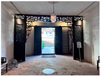 Mandarin’s House |  Mandarin’s House |  Mandarin’s House |  Dom Pedro V Theatre |  Former Mater Dei Church | ||||
| Major Categories | Structural Forms | |||||||||
| Subcategory | Chinese (Timber Frame) | Western | ||||||||
| Identification Result | Post-and-lintel construction | Column-and-tie construction | Brick-and-stone masonry | |||||||
| Representative Diagram |  Mandarin’s House |  Lou Kau Mansion |  Cathedral | |||||||
| Category | Architectural Materials | |||||||||||||
| Identification Results | Blue bricks | Grey tiles | Red tiles | Timber | Stone | Coloured glazed bricks/tiles | ||||||||
| Representative diagram |  Mandarin’s House |  Mandarin’s House |  Dom Pedro V Theatre |  Mandarin’s House |  Former Mater Dei Church |  Headquarters Building of the Municipal Affairs Bureau | ||||||||
| Major Categories | Architectural Colours | |||||||||||||
| Minor Category | Traditional Chinese blue-grey tones | Portuguese-inspired warm hues | ||||||||||||
| Identification Results | Blue-grey | White and light colours | Warm red | Warm yellow | Green/Blue tones | |||||||||
| Representative diagram |  Lou Kau Mansion |  Mandarin’s House |  Headquarters Building of the Orient Foundation |  Headquarters Building of the Marine and Water Bureau |  Dom Pedro V Theatre | |||||||||
| Major Categories | Decorative Forms | |||||||||||||
| Subcategory | Chinese Forms | Western Forms | ||||||||||||
| Identification Result | Lime sculpting | Wood carving | Stone carving | Brick carving | Iron art | Painted decoration | Glazed tiles | |||||||
| Representative Diagram |  Lou Kau Mansion |  Lou Kau Mansion |  A-Ma Temple |  Lou Kau Mansion |  Sir Robert Ho Tung Library Building |  Headquarters Building of the Holy House of Mercy |  Headquarters Building of the Municipal Affairs Bureau | |||||||
| Major Categories | Indigenous Religion Genes | ||||||||||||||||||
| Subcategory | Religion Category | Religions Category | |||||||||||||||||
| Identification Results | Ancestral religions | Local religions | Western religions | Parade activities | Ancestor worship activities | Sacrificial activities | Religious activities | ||||||||||||
| Representative Diagrams |  |  |  |  |  |  |  | ||||||||||||
| Major Categories | Vernacular Art Genes | ||||||||||||||||||
| Subcategory | Music | Dance | Technique | ||||||||||||||||
| Identification Results | Religious sacred music system | Festive folk music | Drama accompaniment music | Worship dance | Festival ceremonial dances | Dramatic narrative dances | The craft of divine incense production | The art of Guangzhou embroidery | The creation of commemorative gifts | ||||||||||
| Representative Diagrams |  |  |  |  |  |  |  |  |  | ||||||||||
| Major Categories | Vernacular Traditions Genes | ||||||||||||||||||
| Subcategory | Folk Festivals | Distinctive Cuisine | |||||||||||||||||
| Identification Results | Seasonal folk festivals | Western folk art festivals | Intangible cultural heritage cuisine | Festival cuisine | Daily cuisine | ||||||||||||||
| Representative Diagrams |  |  |  |  |  | ||||||||||||||
| General Criterion Layer | Score | Primary Indicator | Weight | Score | Second-Level Indicator | Weight | Score |
|---|---|---|---|---|---|---|---|
| Recognition of Cultural Heritage in the Historic Centre of Macao (Visitors) | 73.40 | A Architectural Function | 0.1905 | 71.67 | A1 Residential | 0.2524 | 73.54 |
| A2 Commercial | 0.1698 | 71.85 | |||||
| A3 Military | 0.1909 | 69.77 | |||||
| A4 Political | 0.2452 | 70.81 | |||||
| A5 Culture and Education | 0.1418 | 72.19 | |||||
| B Architectural Structure | 0.1479 | 66.23 | B1 Roof Shapes | 0.1773 | 60.11 | ||
| B2 Gable Elevation | 0.2557 | 66.28 | |||||
| B3 Facade Doors and Windows | 0.3287 | 69.99 | |||||
| B4 Structural Forms | 0.2383 | 65.56 | |||||
| C Architectural Ornamentation | 0.1480 | 76.71 | C1 Architectural Materials | 0.2284 | 68.96 | ||
| C2 Architectural Colour | 0.3100 | 78.82 | |||||
| C3 Decorative Forms | 0.4616 | 79.12 | |||||
| D Indigenous Religion Gene | 0.1952 | 71.59 | D1 Religion Category | 0.6316 | 71.16 | ||
| D2 Religious Activities | 0.3684 | 72.34 | |||||
| E Vernacular Art Genes | 0.1405 | 77.39 | E1 Music | 0.2723 | 70.26 | ||
| E2 Dance | 0.2748 | 73.13 | |||||
| E3 Technique | 0.4529 | 84.26 | |||||
| F Vernacular Traditions Genes | 0.1780 | 77.30 | F1 Folk Festivals | 0.5217 | 69.67 | ||
| F2 Distinctive Cuisine | 0.4783 | 85.63 |
| General Criterion Layer | Score | Primary Indicator | Weight | Score | Second-Level Indicator | Weight | Score |
|---|---|---|---|---|---|---|---|
| Recognition of Cultural Heritage in the Historic Centre of Macao (Residents) | 75.90 | A Architectural Function | 0.1905 | 74.14 | A1 Residential | 0.2524 | 77.47 |
| A2 Commercial | 0.1698 | 72.56 | |||||
| A3 Military | 0.1909 | 70.61 | |||||
| A4 Political | 0.2452 | 73.15 | |||||
| A5 Culture and Education | 0.1418 | 76.57 | |||||
| B Architectural Structure | 0.1479 | 67.64 | B1 Roof Shapes | 0.1773 | 68.12 | ||
| B2 Gable Elevation | 0.2557 | 68.84 | |||||
| B3 Facade Doors and Windows | 0.3287 | 70.34 | |||||
| B4 Structural Forms | 0.2383 | 62.26 | |||||
| C Architectural Ornamentation | 0.1480 | 75.04 | C1 Architectural Materials | 0.2284 | 67.71 | ||
| C2 Architectural Colour | 0.3100 | 75.66 | |||||
| C3 Decorative Forms | 0.4616 | 78.25 | |||||
| D Indigenous Religion Gene | 0.1952 | 78.05 | D1 Religion Category | 0.6316 | 77.27 | ||
| D2 Religious Activities | 0.3684 | 79.38 | |||||
| E Vernacular Art Genes | 0.1405 | 78.43 | E1 Music | 0.2723 | 75.63 | ||
| E2 Dance | 0.2748 | 74.19 | |||||
| E3 Technique | 0.4529 | 82.68 | |||||
| F Vernacular Traditions Genes | 0.1780 | 81.04 | F1 Folk Festivals | 0.5217 | 79.66 | ||
| F2 Distinctive Cuisine | 0.4783 | 82.54 |
| General Criterion Layer | Score | Primary Indicator | Weight | Score | Second-Level Indicator | Weight | Score |
|---|---|---|---|---|---|---|---|
| Recognition of Cultural Heritage in the Historic Centre of Macao (Third-Party Representative) | 75.05 | A Architectural Function | 0.1905 | 74.26 | A1 Residential | 0.2524 | 71.23 |
| A2 Commercial | 0.1698 | 73.63 | |||||
| A3 Military | 0.1909 | 73.49 | |||||
| A4 Political | 0.2452 | 75.61 | |||||
| A5 Culture and Education | 0.1418 | 79.12 | |||||
| B Architectural Structure | 0.1479 | 69.74 | B1 Roof Shapes | 0.1773 | 66.53 | ||
| B2 Gable Elevation | 0.2557 | 70.05 | |||||
| B3 Facade Doors and Windows | 0.3287 | 71.14 | |||||
| B4 Structural Forms | 0.2383 | 69.87 | |||||
| C Architectural Ornamentation | 0.1480 | 72.60 | C1 Architectural Materials | 0.2284 | 70.08 | ||
| C2 Architectural Colour | 0.3100 | 72.94 | |||||
| C3 Decorative Forms | 0.4616 | 73.62 | |||||
| D Indigenous Religion Gene | 0.1952 | 75.93 | D1 Religion Category | 0.6316 | 76.56 | ||
| D2 Religious Activities | 0.3684 | 74.86 | |||||
| E Vernacular Art Genes | 0.1405 | 78.57 | E1 Music | 0.2723 | 76.73 | ||
| E2 Dance | 0.2748 | 78.58 | |||||
| E3 Technique | 0.4529 | 79.67 | |||||
| F Vernacular Traditions Genes | 0.1780 | 78.62 | F1 Folk Festivals | 0.5217 | 76.73 | ||
| F2 Distinctive Cuisine | 0.4783 | 80.68 |
Disclaimer/Publisher’s Note: The statements, opinions and data contained in all publications are solely those of the individual author(s) and contributor(s) and not of MDPI and/or the editor(s). MDPI and/or the editor(s) disclaim responsibility for any injury to people or property resulting from any ideas, methods, instructions or products referred to in the content. |
© 2026 by the authors. Licensee MDPI, Basel, Switzerland. This article is an open access article distributed under the terms and conditions of the Creative Commons Attribution (CC BY) license.
Share and Cite
Ge, Y.; Wei, K.; Wang, Z.; Huang, Y.; Zhu, R. Identifying and Evaluating Cultural Genes in the Historic Centre of Macao: A Multi-Stakeholder Perspective. Buildings 2026, 16, 1517. https://doi.org/10.3390/buildings16081517
Ge Y, Wei K, Wang Z, Huang Y, Zhu R. Identifying and Evaluating Cultural Genes in the Historic Centre of Macao: A Multi-Stakeholder Perspective. Buildings. 2026; 16(8):1517. https://doi.org/10.3390/buildings16081517
Chicago/Turabian StyleGe, Yifan, Kexin Wei, Ziyang Wang, Yuhao Huang, and Rong Zhu. 2026. "Identifying and Evaluating Cultural Genes in the Historic Centre of Macao: A Multi-Stakeholder Perspective" Buildings 16, no. 8: 1517. https://doi.org/10.3390/buildings16081517
APA StyleGe, Y., Wei, K., Wang, Z., Huang, Y., & Zhu, R. (2026). Identifying and Evaluating Cultural Genes in the Historic Centre of Macao: A Multi-Stakeholder Perspective. Buildings, 16(8), 1517. https://doi.org/10.3390/buildings16081517