


Abstract
People spend most of their time indoors, highlighting the importance of indoor environmental quality for health and wellbeing. While previous studies have shown that exposure to nature can benefit wellbeing, much of this research has focused on outdoor environments, and less is known about how indoor plants and their spatial characteristics influence human perceptions and experiences. This paper reports on a survey study exploring how perceived health and wellbeing are influenced by indoor plants and human preferences for their characteristics, spatial arrangement, and other features within indoor environments. Indoor plants serve as visual and multisensory environmental stimuli. By examining the relationship between indoor plants, preferences, perceptions, visual comfort, multisensory experiences, and wellbeing, the study aims to understand these influences. The questionnaires include multiple-choice questions, yes-no questions, and open-ended questions, allowing the collection of both quantitative and qualitative data. The survey findings highlight the unique benefits of indoor plants, emphasising their potential to enhance wellbeing in ways that outdoor nature may not fully replicate in indoor settings. One significant finding of this study is that scattering indoor plants throughout a space can enhance the connection to nature through three-dimensional spatial interaction, potentially improving wellbeing. This arrangement may serve as a bridge to the outdoors, providing a psychological link to the natural environment. Crucial preference factors also include the complexity and coherence of indoor plants’ appearance, such as colour, shape, and size. The results further indicate that students prefer indoor plants over other elements such as cut flowers, fake plants, or artificial plant representations. The findings indicate that caring for indoor plants may foster emotional engagement, a sense of fulfilment, and place attachment through everyday interaction. In public spaces, plants may also enhance feelings of refuge and perceived security. These findings provide practical recommendations for designing indoor environments that enhance student wellbeing and human–environment interaction.
1. Introduction
Indoor environments shape occupants’ cognitive, emotional, and behavioural responses. As people spend a large proportion of their time indoors [1], the characteristics of built environments have important implications for health and wellbeing. Natural elements in particular have attracted growing attention for their potential to support psychological wellbeing and restorative experiences.
Biophilic design has been proposed as an approach to integrate nature into the human-built environment. It is defined as ‘biophilia applied to the design and the development of the human-built environment’ [2]. Plants represent a direct experience of nature, as they involve actual contact with living elements of the natural environment [2]. A growing body of research suggests that indoor plants can positively influence occupants’ cognitive and behavioural responses and contribute to improved health and wellbeing [3,4,5]. Recent studies have also reported that indoor plants can enhance mental wellbeing, cognitive performance, productivity, and satisfaction [6,7].
However, existing studies often treat indoor plants primarily as visual elements. This limitation has been noted in recent reviews examining the impact of indoor plants on human occupants [7,8]. In response, researchers have called for more comprehensive investigations that incorporate multisensory experiences of plants. For example, Ma et al. [9] emphasised the need to include olfactory and tactile interactions in studies of indoor vegetation. Similarly, Franco et al. [10] demonstrated that plant interactions may provide non-visual benefits and even non-sensory benefits for occupants. Empirical studies have also shown that tree fragrance can improve human perception of traffic noise [11] and that the physiological and psychological benefits of viewing plants can be enhanced by their fragrance [12]. In addition, a systematic review by Sal Moslehian et al. [5] highlighted the need for research that differentiates the impacts of natural and artificial indoor plants on occupant wellbeing.
Another important yet underexplored dimension concerns the difference between merely viewing plants and actively interacting with them. From the perspective of environmental psychology, the relationship between people and their environment is reciprocal: environment affects and constrains occupants’ behaviour and actions, and in turn these behaviours can also alter the environment [13]. Previous studies have shown that plant appearance affects perceived indoor air quality, relative humidity, and subjective wellbeing [14]; perceived attractiveness can mediate the restorative effects of indoor plants [15]; and perceived natural beauty can enhance prosocial behaviour [16]. Furthermore, outdoor plant arrangements have been shown to affect landscape preferences [17]. These findings imply that preferences for specific indoor plant characteristics and spatial arrangements may be instrumental in shaping human–environment responses and wellbeing.
University students were chosen as the target population for this study due to their vulnerability to mental health challenges. A recent review by Zarowski et al. [18] reported that university students experienced elevated levels of stress, anxiety, and depression both before and during the COVID-19 pandemic. The review also identified increased prevalence of sleep problems, obsessive–compulsive disorder, and suicidal ideation across multiple countries during this period [18]. Whilst working from home may have, in many cases, deteriorated mental wellbeing, research by Ortiz and Bluyssen [19] found that indoor plants were identified as a preferred element during COVID-19. Moreover, past research has shown that room aesthetics and views significantly affect students [20], and that students prefer study spaces containing plants over those without vegetation [21,22]. These findings highlight the potential role of indoor plants in supporting student wellbeing.
Despite increasing interest in indoor plants, limited research has examined how multisensory experiences, active interactions, and spatial arrangements of indoor plants influence students’ perceptions of wellbeing [5,9,10]. Biophilic design is not merely about adding numerous plants to a space; it must also contribute to health and wellbeing [2]. While prior studies have mainly focused on visual aspects of plants, few have addressed the importance of plant characteristics and their spatial arrangement as factors shaping cognitive, emotional, and behavioural responses. Understanding how indoor individuals perceive, interact with, and experience indoor plants, including both sensory engagement and arrangement preferences, could therefore provide insights for designing supportive indoor environments. Accordingly, this study investigates university students’ interactions with indoor plants and explores how multisensory experiences and preferences for plant characteristics and spatial arrangements may influence perceived wellbeing.
Research questions:
- (1)
- How do university students interact with indoor plants, and what are their experiences and perceptions regarding mental wellbeing?
- (2)
- What characteristics, features, and spatial arrangements of indoor plants do students prefer as multisensory stimuli, and how do these preferences shape human–environment responses?
2. Methodology
2.1. Research Design and Philosophical Stance
A convergent parallel approach was adopted: in this design, qualitative and quantitative data were collected in parallel, analysed separately, and then merged [23]. The importance of qualitative research in environmental psychology has been underscored by Lloyd and Gifford, highlighting its role in bringing diverse voices to the forefront, empowering participants and generating real-world change [24]. Therefore, this study included qualitative elements in the survey. This approach enabled the investigation of university students’ personal preferences for plants and an in-depth exploration of the reasons behind their choices. The questionnaires included a combination of multiple-choice, yes-no, and open-ended questions. The inclusion of open-ended questions allowed students to elaborate on their perceptions and experiences of indoor plants and helped explore the main topics in more detail.
2.2. Survey Development and Pilot Study
Two web-based surveys were conducted, each using a separate questionnaire. The questionnaires were developed through an iterative process that enabled the survey to be piloted, developed, and refined based on feedback at different stages of the process. First, a list of potential questions was created based on a desk-top review of existing literature on the nexus between indoor plants and human well-being. The list was refined based on a series of interviews conducted with a small test sample of students (n = 5) to select the final questions, refine wording and adjust question order for pilot testing. Each survey was then piloted with a small sample (n = 5) to further assess clarity, comprehensiveness, and response time, leading to minor refinements prior to formal implementation. The second survey was administered after the first and introduced additional questions that were not included in the initial survey, thus extending the thematic scope of the study, including preferred plant characteristics and the impact of the COVID-19 pandemic on plant purchases and plant care.
2.3. Sampling and Recruitment
The survey was advertised and circulated within the university through departmental and college bulletin boards and internal social media channels. Participation was voluntary, and no incentives were offered. Because the surveys were open-access online forms, a precise response rate cannot be calculated, which may introduce self-selection bias. Nevertheless, the sample represents a diverse range of students from an international university in the UK. The first survey was completed by 110 respondents, and the second survey by 282 respondents. To encourage participation and protect participant privacy, demographic information was not collected in the first survey, which represents a limitation of the study. In the second survey, respondents were asked to report their age and gender on an optional basis. The survey sample was drawn from students at an international university in the UK. In the second survey, the sample included 163 females, 110 males, 3 respondents who identified as other, and 6 who chose not to disclose their gender. Respondents were aged 18–64 years, with most (n = 240) between 18 and 34; three did not disclose their age.
2.4. Data Collection
Due to the uncertainty of the data collection process during the COVID-19 pandemic, the questionnaire was administered as an online survey. Responses were collected via Qualtrics between April 2022 and April 2023. Across the two questionnaires, the surveys examined students’ preferences for indoor plants compared to other indoor natural elements (e.g., cut flowers, artificial plants, plant-related artwork), their reasons for these preferences, preferred plant characteristics (e.g., flowering, fragrance, colour, form, and size), plant placement (e.g., clustered or scattered), and interactions with plants in public and private spaces.
2.5. Quantitative and Qualitative Analysis
Quantitative data were analysed descriptively to show preferences for plant characteristics, arrangements, and features, with sample sizes reported for each analysis in the results section. Qualitative data were analysed to explore in detail the reasons behind respondent choices [25]. Initially, the data were read thoroughly to gain familiarity with its content and context. Patterns were manually indexed to summarise key aspects of the data for each open-text question independently, ensuring a focused analysis. For example, the statement ‘I can see them grow and change over time. I love talking to my plants too.’ was indexed with the label ‘growth and change’.
Efforts were made to ensure consistency in the labelling process. Coding was conducted by the primary researcher with frequent cross-checking, and the coding process was reviewed by a second researcher to ensure coding reliability and consistency. Through this systematic process of identifying, labelling, and grouping recurring patterns within the data, common themes in participants’ responses were identified. Direct quotes are presented in the results section to enrich interpretation.
Each open-ended question was analysed separately to preserve the specific context of respondents’ answers. The integration of qualitative insights with quantitative results enabled a triangulated interpretation of the data, revealing the relationship between indoor plants, visual and multisensory experiences, personal preferences, and respondents’ perceptions of health and wellbeing. The researcher remained reflective throughout the study to monitor potential biases and their impact on the research process.
2.6. Ethics and Data Management
Ethical approval was obtained from the university’s ethics committee and the research was carried out in accordance with ethical guidelines and protocols. All participant identities were anonymised during data analysis. The data were stored in secure digital files, accessible only to the researchers. In reporting the findings, particularly qualitative responses, confidentiality, and anonymity of individual respondents were meticulously maintained.
3. Results
3.1. Preferred Characteristics of Plants
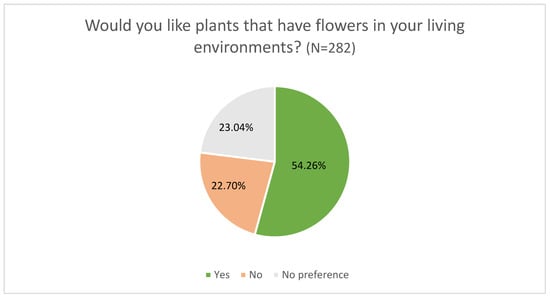
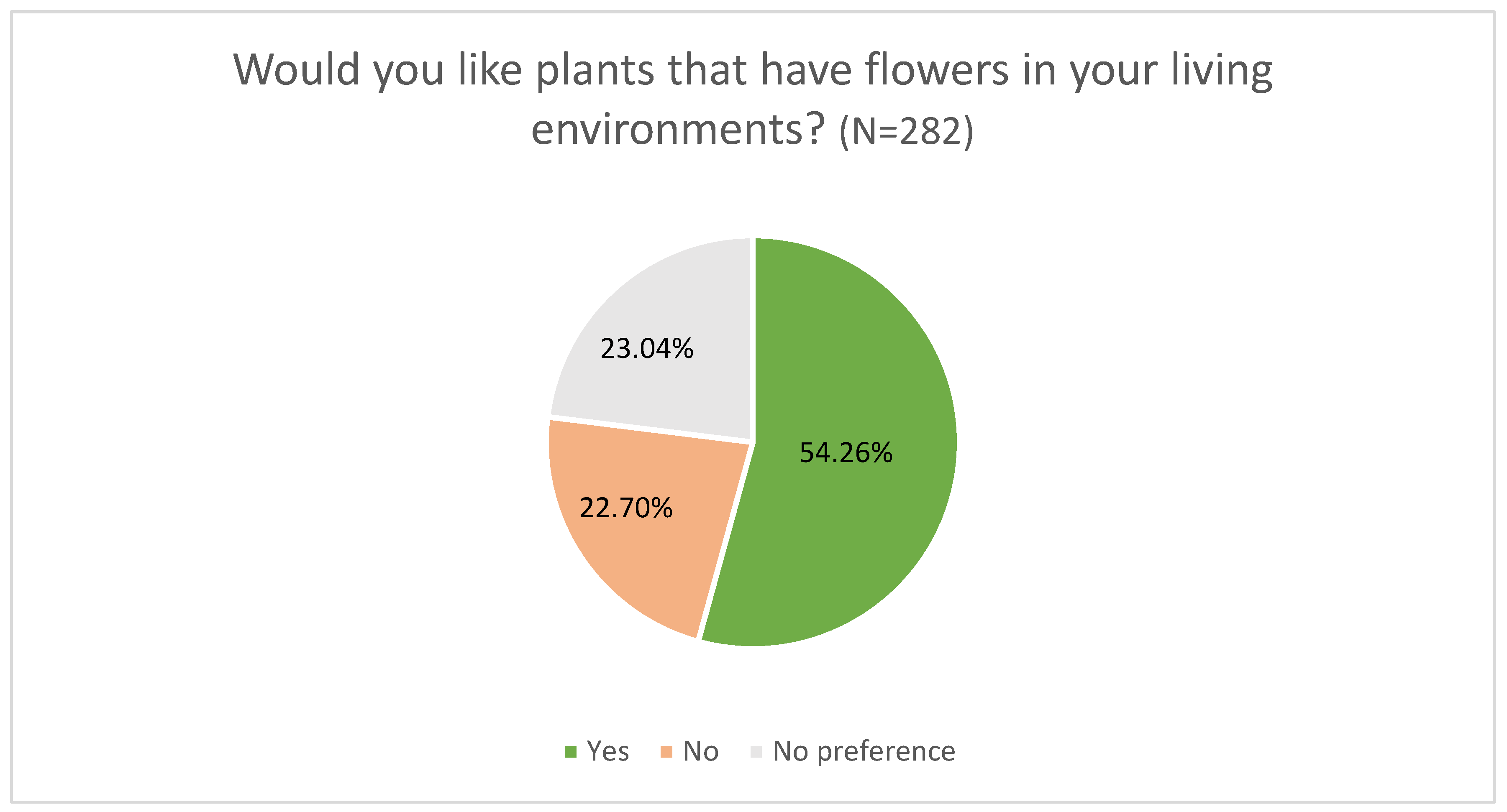
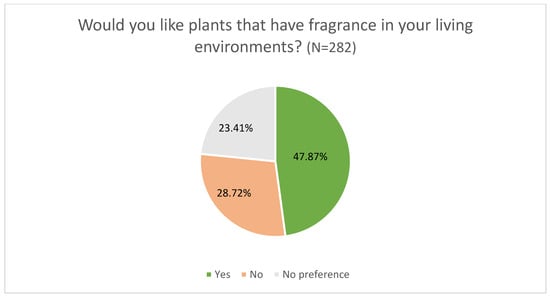
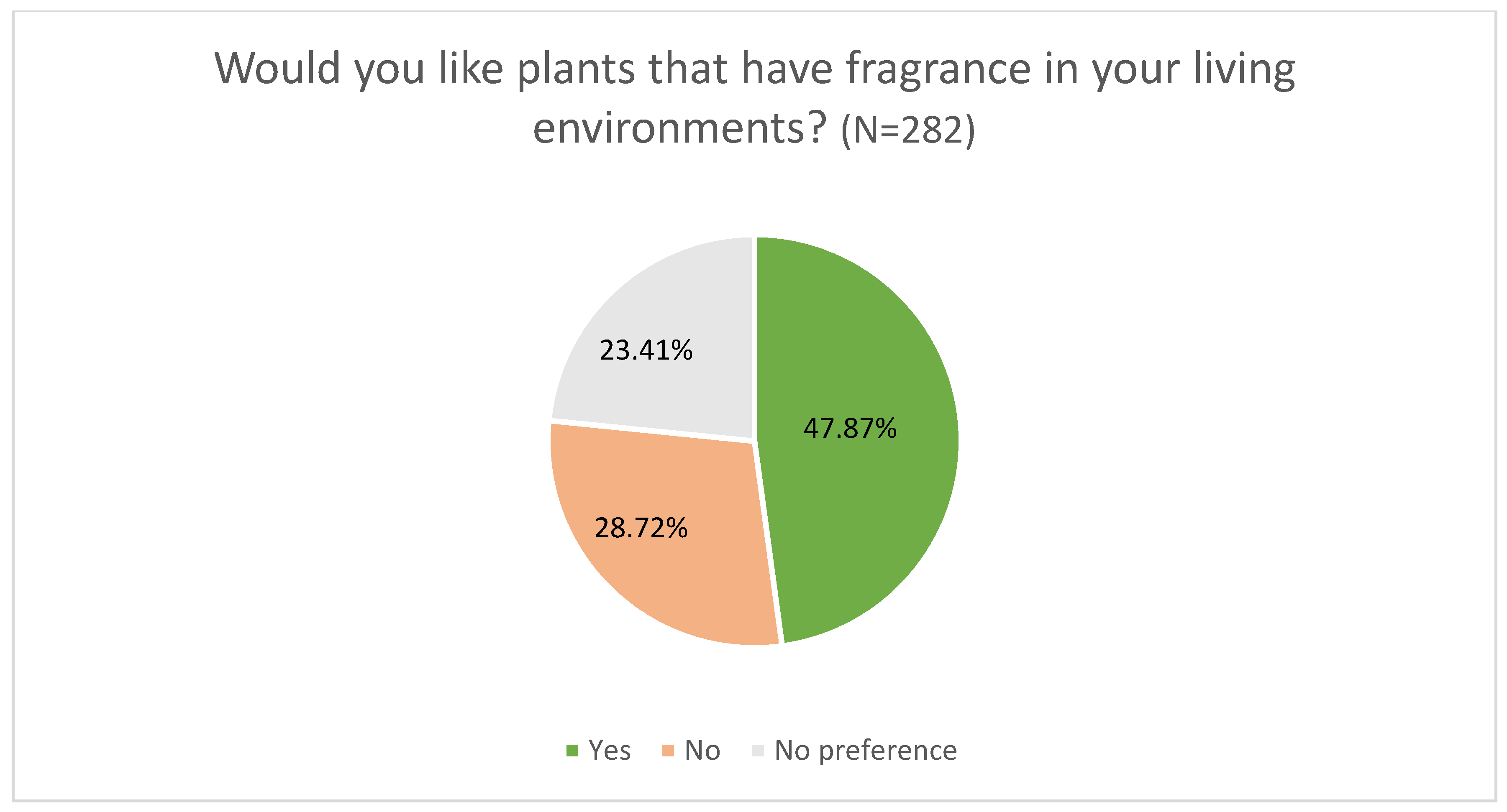
Figure 1 and Figure 2 illustrate respondents’ preference for flowers and fragrance, which represent important visual and sensory attributes of indoor plants. The results show that 54% of respondents prefer plants with flowers, and 48% of respondents enjoy plants that have a fragrance.
Figure 1.
Preference for plants with flowers.
Figure 2.
Preference for plants with fragrance.
A chi-squared test was conducted to assess whether there is an association between gender and preferences for flowering plants. The results showed a significant association, χ2 (2) = 7.32, p = 0.026, indicating that gender may influence these preferences. However, the Pearson residuals were not significant, meaning no specific gender group differed noticeably from the others. This implies that the observed association is driven by small differences across all groups, rather than any one group in particular. No association was found between gender and preferences for fragrant plants, χ2 (2) = 0.272, p = 0.873.
When asked to choose their preferred colours for indoor plants, green emerged as the most popular colour, with 90% of respondents selecting it. Additionally, 81% of respondents chose more than one colour, indicating a preference for some degree of complexity in their indoor plants. These results highlight a general preference for variety and richness in the features of indoor plants.
3.2. Comparison of Indoor Plants to Other Elements
3.2.1. Pot Plants vs. Cut Flowers
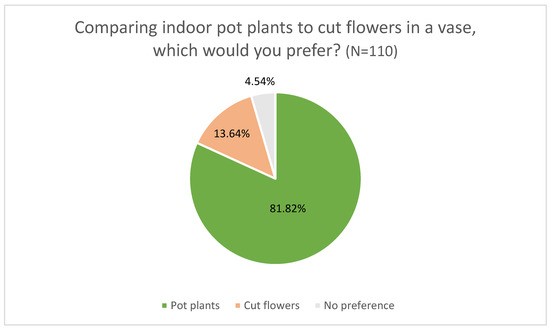
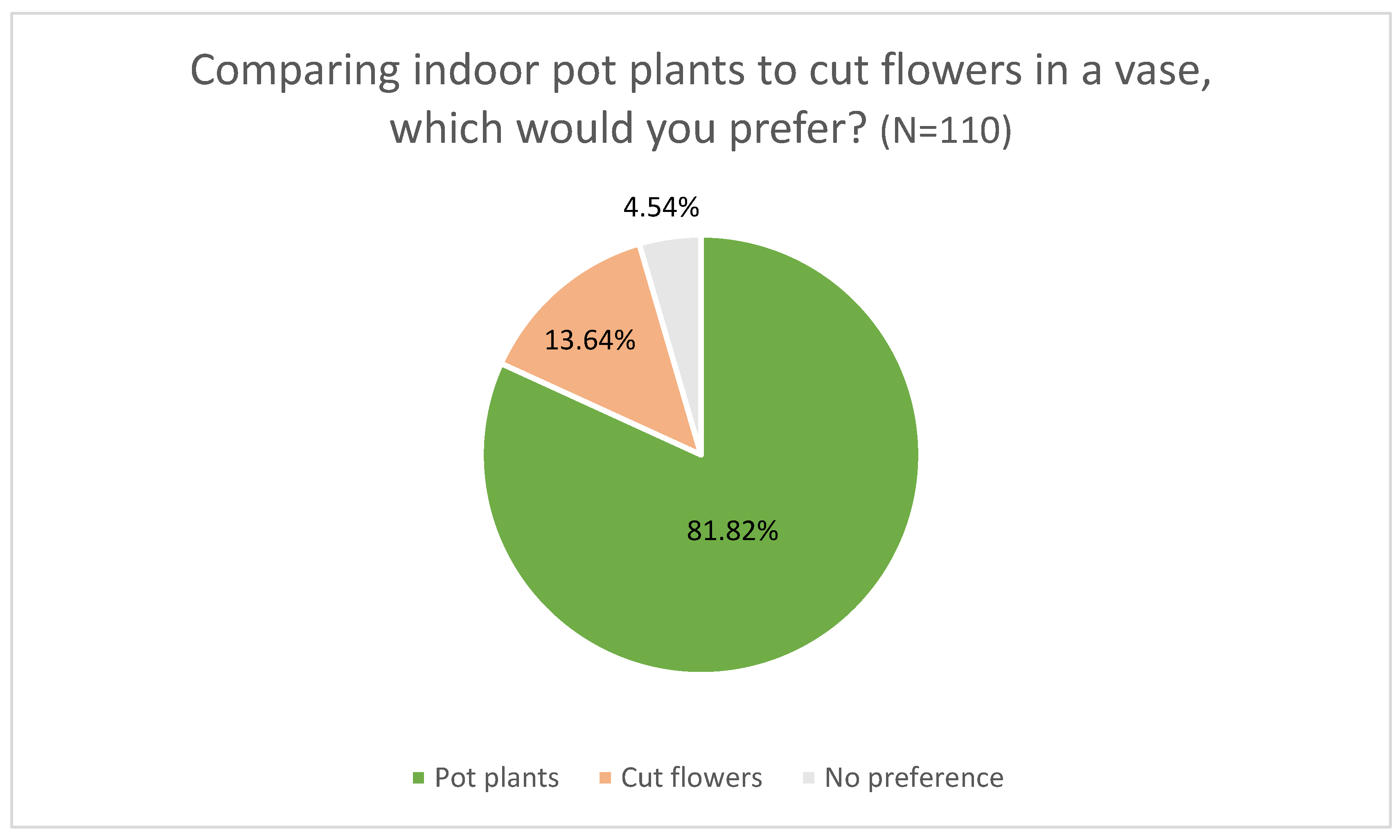
Figure 3 shows respondents’ preference for pot plants over cut flowers. About 82% of the respondents prefer pot plants. Responses consistently suggested that this preference was associated with perceptions of longevity and ease of care. This allows them to ‘form a long-term attachment’, as opposed to cut flowers, which will eventually wither regardless of care.
Figure 3.
Preference for pot plants versus cut flowers.
Considerations of sustainability also emerged as an important factor influencing respondents’ preferences. Pot plants were frequently perceived as more environmentally friendly and described as more ‘organic’ and ‘less manufactured’ than cut flowers.
Some respondents stated their preference for the colour green because of the perceived benefits to the eyes. Green plants elicit feelings of tranquillity, while flowers can make them feel visually ‘chaotic’. Moreover, respondents emphasised the dynamic and developmental nature of indoor plants. They enjoy the feeling of taking care of plants and nurturing them. As one respondent noted, caring for a pot plant involves ‘building a relationship with that plant’ as it grows and responds to its environment, in contrast to cut flowers, which were perceived as impermanent.
3.2.2. Real Plants vs. Artificial Plants
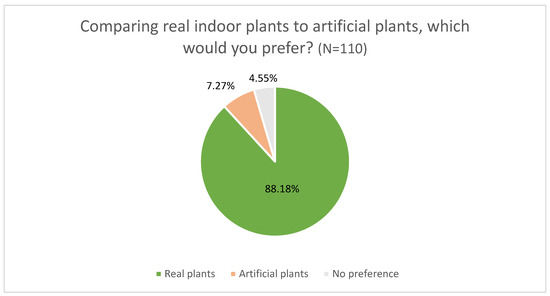
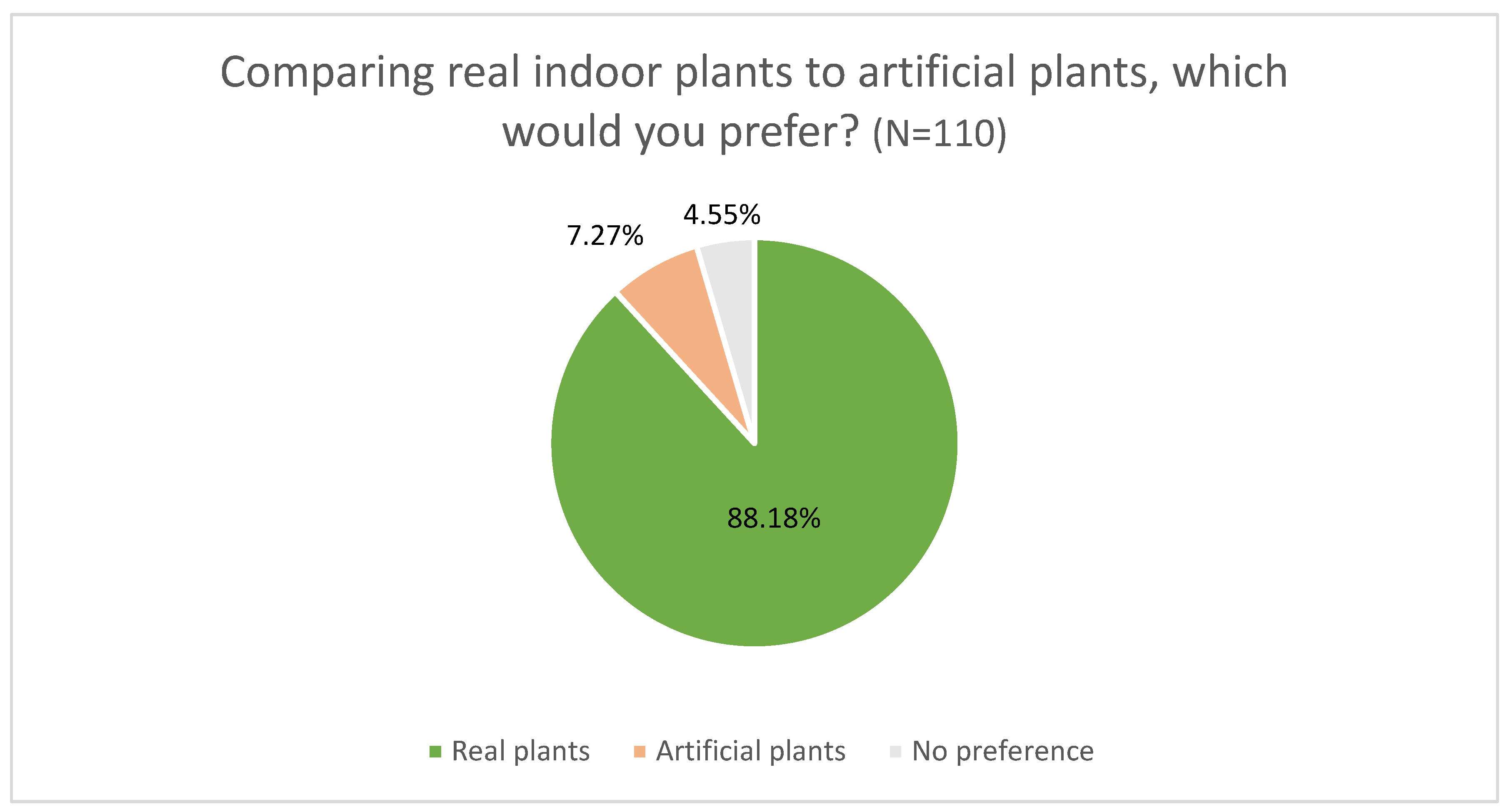
Figure 4 shows that respondents prefer real plants over artificial ones. A total of 88% of the respondents expressed a preference for real plants. One of the main reasons cited is that the fact of having real plants is an important reflection of environmental consciousness. The fact that the plants are real is significant. Knowing they are fake makes the subjects feel less positive. In addition, respondents highlighted the multisensory qualities of real plants. Subjects touch plants and smell them. The fresh scents provide a sense of authenticity.
Figure 4.
Preference for real plants versus artificial plants.
Respondents also expressed an interest in observing the growth and change in plants. Real plants demonstrate ‘fragility’ and ‘transform over time’. As respondents stated, ‘Things are valuable when they are breakable’, and real plants were seen as changing with seasonal cycles, such as flowers blooming or dying.
Respondents associated real plants with health and wellbeing. They believed real plants could improve the air quality, while artificial ones were perceived as producing no oxygen and potentially ‘contain toxic plastics’. Some simultaneously view sustainability as an important factor and believe that with indoor plants, they do not contribute to the creation of more plastic. The artificial plants are even ‘depressing’ and ‘cold’ to some people. One respondent explained that artificial plants evoked memories of malls and offices, which they preferred not to reproduce in their own homes.
3.2.3. Indoor Plants vs. Photos or Paintings of Plants
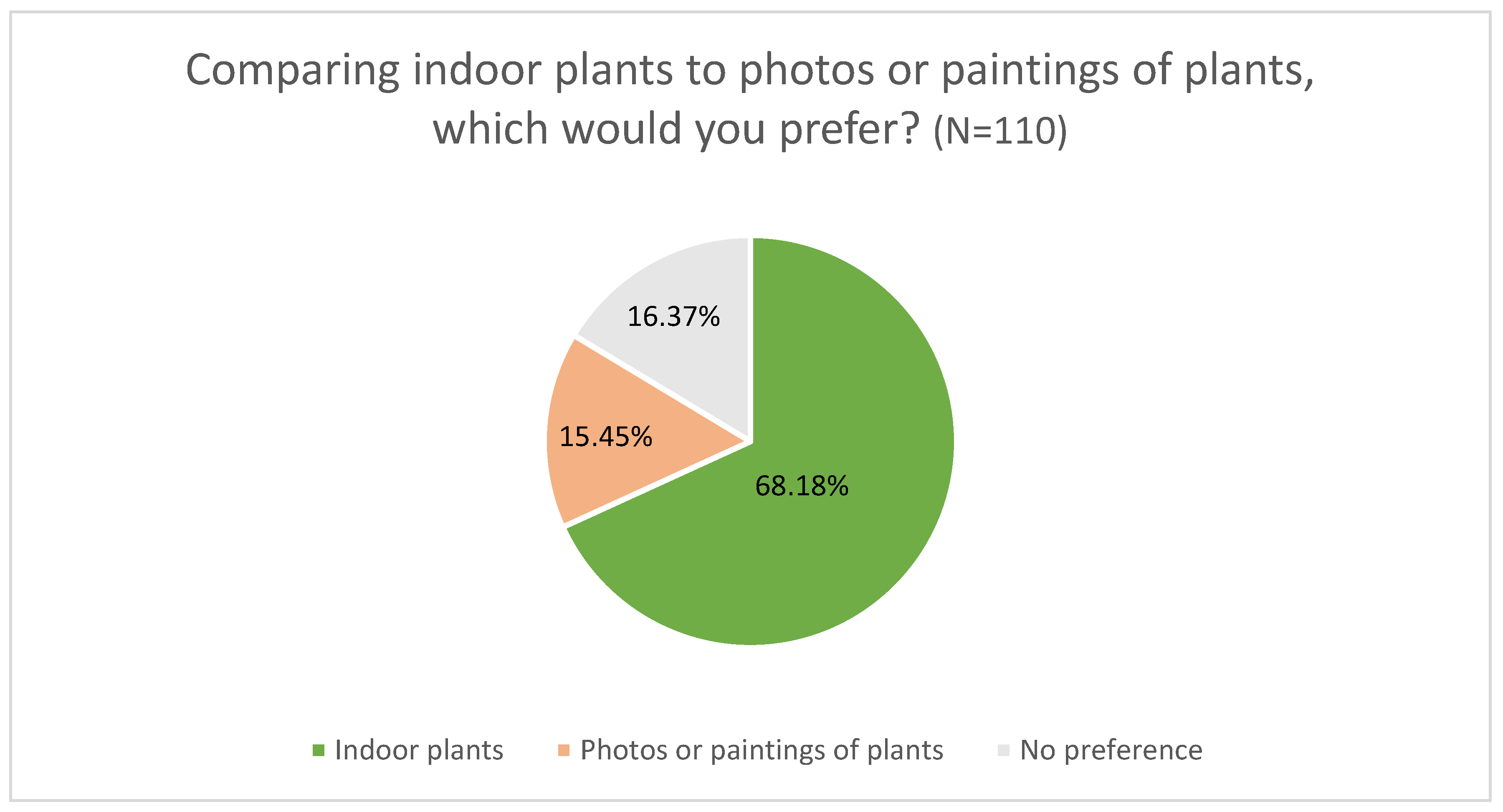
Figure 5 shows respondents’ preference for indoor plants over photos or paintings of plants, with 68% of respondents indicating a preference for real indoor plants. Respondents reported feeling more connected to nature with real plants, perhaps because indoor plants are more multisensory. Real plants are not only ‘three-dimensional’, but they also have ‘fragrances’ and ‘complex textures’. One respondent stated, ‘I prefer natural elements and enjoy them more than just the visual aesthetics.’ Another detailed, ‘Actual plants are much more versatile and take up physical space, interacting with the room in a multi-dimensional way. They throw shadows, can be touched and viewed from different angles.’
Figure 5.
Preference for indoor plants versus photos or paintings of plants.
Qualitative responses to the survey reveal that emotional connection with the plant is key to self-reported positive affect. Respondents think pictures cannot substitute reality and the energy that they can feel from real plants. Many find plant paintings boring, while a real plant is more ‘alive’ and ‘interactable’. One respondent stated, ‘A paint[ing] of plants means nothing to me, while a real plant gives some company’. Some even described natural paintings as ‘annoying’ as they ‘stay the same forever’. They enjoy taking care of real plants and watching their growth and change. One respondent supported, ‘You can see them growing, which creates an emotional bond with them. It cannot be replicated by photos or paintings.’ Another highlighted, ‘You can also cultivate them, propagate them, and watch them grow and change, which is satisfying!’ For many, having an indoor plant creates a more sentimental connection than a picture. ‘Art has its place, but real indoor plants are like members of one’s family’, one respondent stated.
Intriguingly, aesthetically, many respondents prefer to simultaneously have an indoor plant and a painting of something else, such as abstract art, to provide more diversity in room features. Respondents also emphasise the benefits to health and wellbeing, as they believe plants can clean the air of the indoor environment.
Although there are numerous benefits to keeping indoor plants, it is also noteworthy that a minority preferred other options (i.e., representations of plants, artificial plants, and cut flowers). The main reasons are allergy concerns, the attraction of bugs like gnats, and the commitment required for plant care. Some respondents do not have the time or confidence to keep potted plants alive. Those who prefer cut flowers noted that they can change them more frequently, allowing them to ‘watch them bloom and then whither…and their colours change’.
3.3. Preferred Arrangement of Plants
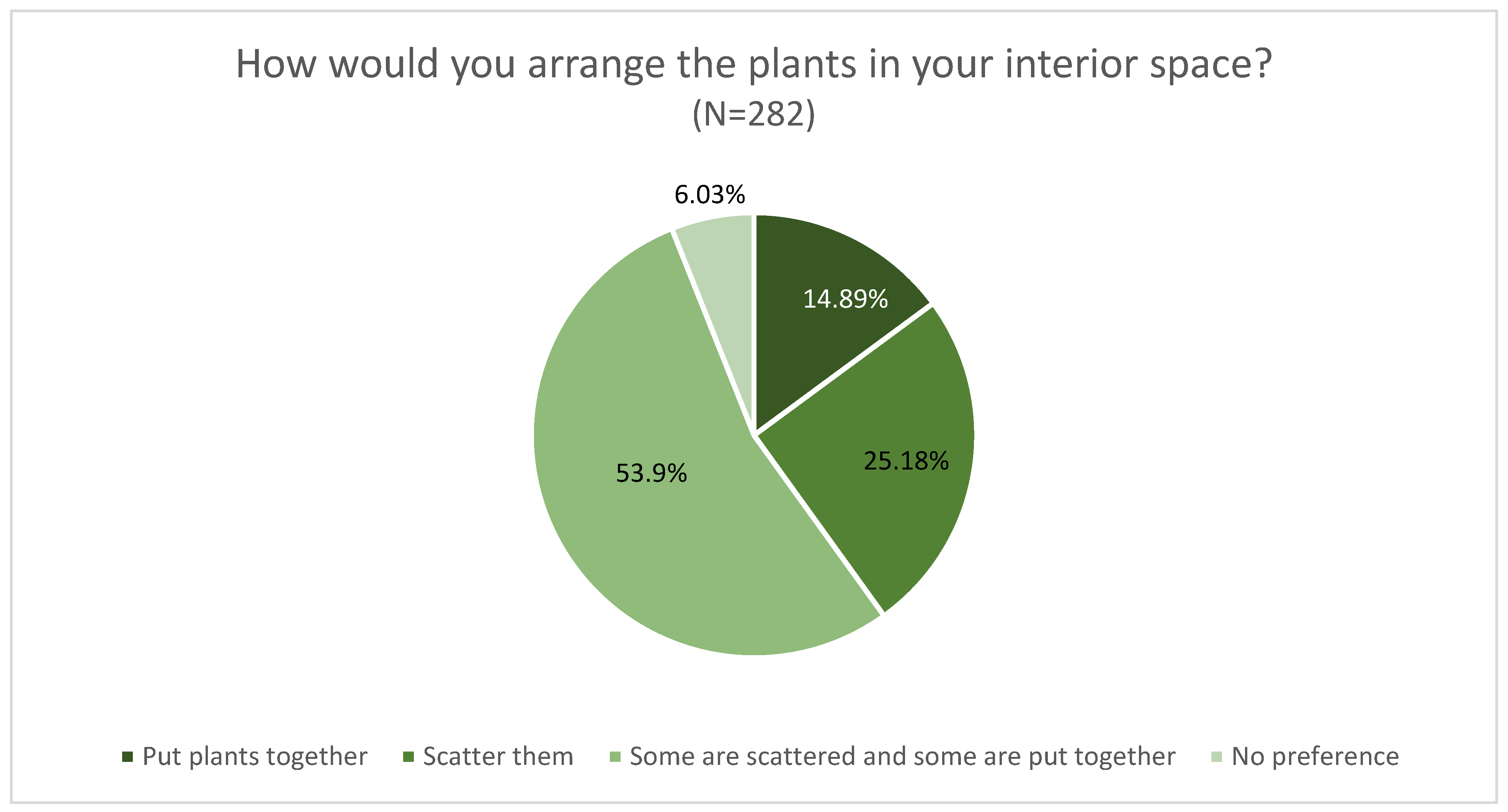
Figure 6 shows respondents’ preferences for the arrangements of indoor plants. The majority of respondents indicated a preference for scattering indoor plants rather than grouping them all together exclusively. Approximately 79% of respondents favoured the option of scattering plants throughout their interior space. There is no significant association between gender and plant arrangement preferences (χ2 (3) = 2.334, p = 0.506).
Figure 6.
Preference for indoor plant arrangements.
3.4. Seat Choices in a Public Space in Relation to Plants
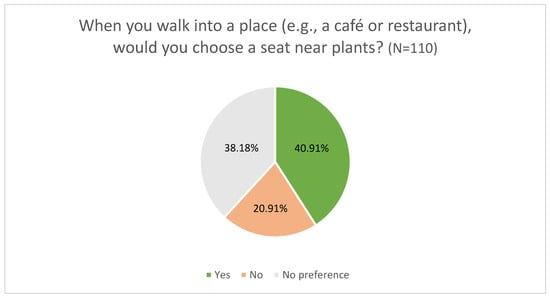
Figure 7 reveals the preference for sitting near indoor plants. A total of 41% of respondents prefer to choose a seat near plants in an indoor public space. They describe it as ‘lively’, ‘relaxing’, ‘tranquil’, ‘calming’, ‘comfortable’, and ‘peaceful’. Many respondents perceive a sense of ‘security’ and ‘privacy’ in a public place, especially with larger plants, so that they can hide ‘behind the crowd’ since plants act as a ‘buffer’.
Figure 7.
Seating preferences in relation to indoor plants in a public space.
It is noteworthy that those who do not choose seats near plants are worried about bugs and allergies. People who had no preference may appreciate having a view of indoor plants rather than just near the location of plants. One respondent explained, ‘I may get a better view of the plants if I sit further away’. Another stated, ‘I would most likely choose a place where the plant is not far, but neither it is really close’.
3.5. Plant Purchase During COVID-19
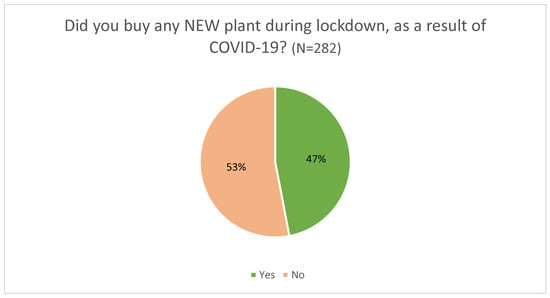
A total of 47% of respondents purchased new plants during the lockdown (2020–2021), as depicted in Figure 8. These responses reflect participants’ experiences during a time when many students were spending extended periods at home due to pandemic-related restrictions. There is a significant association between gender and plant purchase (χ2 (1) = 16.797, p < 0.001, Cramér’s V = 0.25). The odds ratio suggests that female students were 2.847 times more likely to purchase plants during COVID-19. Pearson’s residuals indicate that significantly fewer male students purchased plants than expected. This finding provides additional context for the overall analysis of plant-related behaviours among university students.
Figure 8.
Plant purchases during COVID-19.
These responses suggest that purchasing and caring for plants during this period may have increased participants’ awareness of the benefits of indoor plants. Many people began buying plants due to having more time at home and could dedicate more attention to their care. Plants were used to enhance the aesthetic and atmosphere of their rooms, making spaces feel more ‘livelier’ and ‘brighter’. Indoor plants ‘softened’ and ‘spruced up the space’, with rooms feeling ‘depressing’ without them. One respondent mentioned, ‘…they brighten up the room and can be a mood booster, especially during the time when many of us felt isolated.’ Another respondent stated, ‘That’s where my plant rampage began! And I won’t go back. Plants have made my home so much cosier and homier. It has added comfort and personality.’
Indoor plants also ‘bring nature inside’, fostering a sense of connection to nature, particularly when outdoor exploration is limited. Respondent desired greenery in small, enclosed spaces that lacked access to greenery. One respondent explained, ‘I was living in a basement room with no window or garden, and I needed some greenery to keep me going.’
Respondents also highlighted the emotional and cognitive benefits of plant care. Many described mindfulness, routine, and positive distraction as outcomes of taking care of plants, which helped reduce feelings of isolation and stress. Core quotes illustrating these experiences include:
Many new plants—helped to brighten up my room, helped to not feel as trapped in my room since I didn’t leave my house as much, helped keep my thoughts occupied, helped to have a routine of watering them and taking care of them, made me happy to see them doing well.
I buy plants and propagate them myself all the time. I love seeing how my spaces get wilder. I feel calmer and they cheer me up and really increase my wellbeing.
Additionally, indoor plants were also associated with fulfilment and companionship during lockdown. Respondents described plants as constant companions, particularly when social contact was limited. One respondent noted,
I was alone for most of the lockdown, not seeing or engaging with people, but purchasing plants connected me to life when so many people were dying. I was happy when a new leaf sprouted, and a flower bloomed.
For those who did not buy plants during COVID-19, reasons included already owning sufficient plants, lack of access due to lockdown restrictions, concerns about safety, or limited space. A few respondents reported they visited parks instead to immerse themselves in nature.
3.6. Qualitative Factors in Selecting Plants
The qualitative responses to the interview question ‘When you purchase plants for your home or office, what is your selection based on? Why?’ The responses were analysed and grouped into several thematic categories. The major considerations identified include psychological factors, practicability, appearance, fragrance, allergies, and utility.
The major considerations for purchasing plants include:
- (1)
- Psychological factors (e.g., memories, emotional bond, creativity, mindfulness);
- (2)
- Practicability (e.g., price, ease, plant size);
- (3)
- Appearance (e.g., colour, leaf shape, leaf size, aesthetics);
- (4)
- Fragrance and allergies (e.g., the presence of flowers or not);
- (5)
- Utility (e.g., air cleaning, edible herbs or fruits).
Detailed results are presented in the following paragraphs.
3.6.1. Psychological Factors
Having plants is viewed as ‘mentally rewarding’, with some indicating that they foster creativity or reflect personal identity. Plants can also hold special memories, connecting respondents with family or friends. For instance, one respondent mentioned the emotional bond they established with plants,
I have lots of plants at home…I care about them and even treat them as my child or friends. I talk to them, and also play music for them.
3.6.2. Practicability
Ease of care and longevity were important practical considerations. Respondents were concerned about how long plants could last and the amount of maintenance required. However, many people indicated that they live in dark spaces with little access to sunlight, so they needed to find plants that grow well in low-light environments.
Plant size was also a key factor: smaller plants were preferred in constrained spaces, while larger plants were valued for creating a ‘forest-like atmosphere’ and enhancing a sense of connection with nature. Some respondents prefer voluminous plants that take a lot of space around them because these bigger plants occupy ‘a larger proportion of the view’ when they look at it. Intriguingly, some people still prefer smaller plants because they enjoy nurturing them and watching them grow.
3.6.3. Appearance
Colour, leaf shape and leaf size were significant components affecting mood. Many people underscore the importance of green for both its visual and psychological benefits, such as relaxation and calmness. They often prefer variegated leaves with different shades of green. Some respondents noted that too many colours can be distracting. Flowers are sometimes avoided because they wilt easily.
Preferences for colour can also vary based on the space and intended use: single colours are preferred in working areas to aid concentration, while multiple colours are favoured in relaxation areas to enhance mood. Similarly, colourful flowers are chosen to uplift partners’ moods when they are upset.
Regarding leaf shape and size, there was no clear consensus among respondents. Some preferred unusual leaf shapes, whereas others favoured more leafy plants over spiky cacti and succulents, despite the latter’s ease of care. Many respondents also emphasised variety, selecting plants of different types and shapes. One respondent highlighted, ‘I like buying different types of plants with interesting leaves—I rarely buy more than one of any type of plant/ones that look similar’.
In terms of aesthetics, people not only consider the beauty of the plants but also value their compatibility with the environment. The colour, shape, and size of the plants need to suit the environment, and they should blend well with other plants and match each other. Even the choice of pot is considered, with respondents emphasising that ‘the pot needs to be as beautiful’ as the plant itself.
3.6.4. Fragrance vs. Allergy
Some people like plants with a fragrance for stimulating bodily sensory experience and make them feel immersed in nature. However, others dislike strong smells and pollen due to allergies, preferring unscented plants. Allergies such as hay fever are also a main reason why some people avoid flowers, despite some respondents enjoying them.
3.6.5. Utility
Air purification was the most frequently referred to functional benefit, followed by its use in cooking. Respondents believe plants can absorb radiation and pollutants. Additionally, they cultivate herbs such as rosemary and thyme or other edible produce such as chilli, tomato, cucumber, melon, citrus, squash, and corn plants. Some also propagate basil to repel insects during summer.
3.7. Looking After Plants Themselves vs. Having Someone Else Care for Them
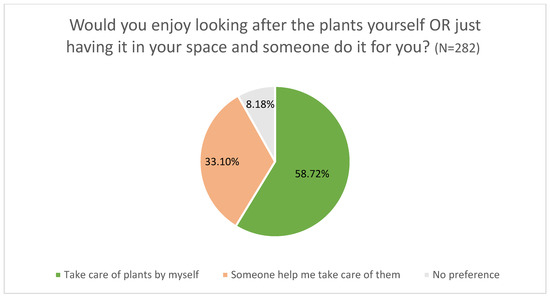
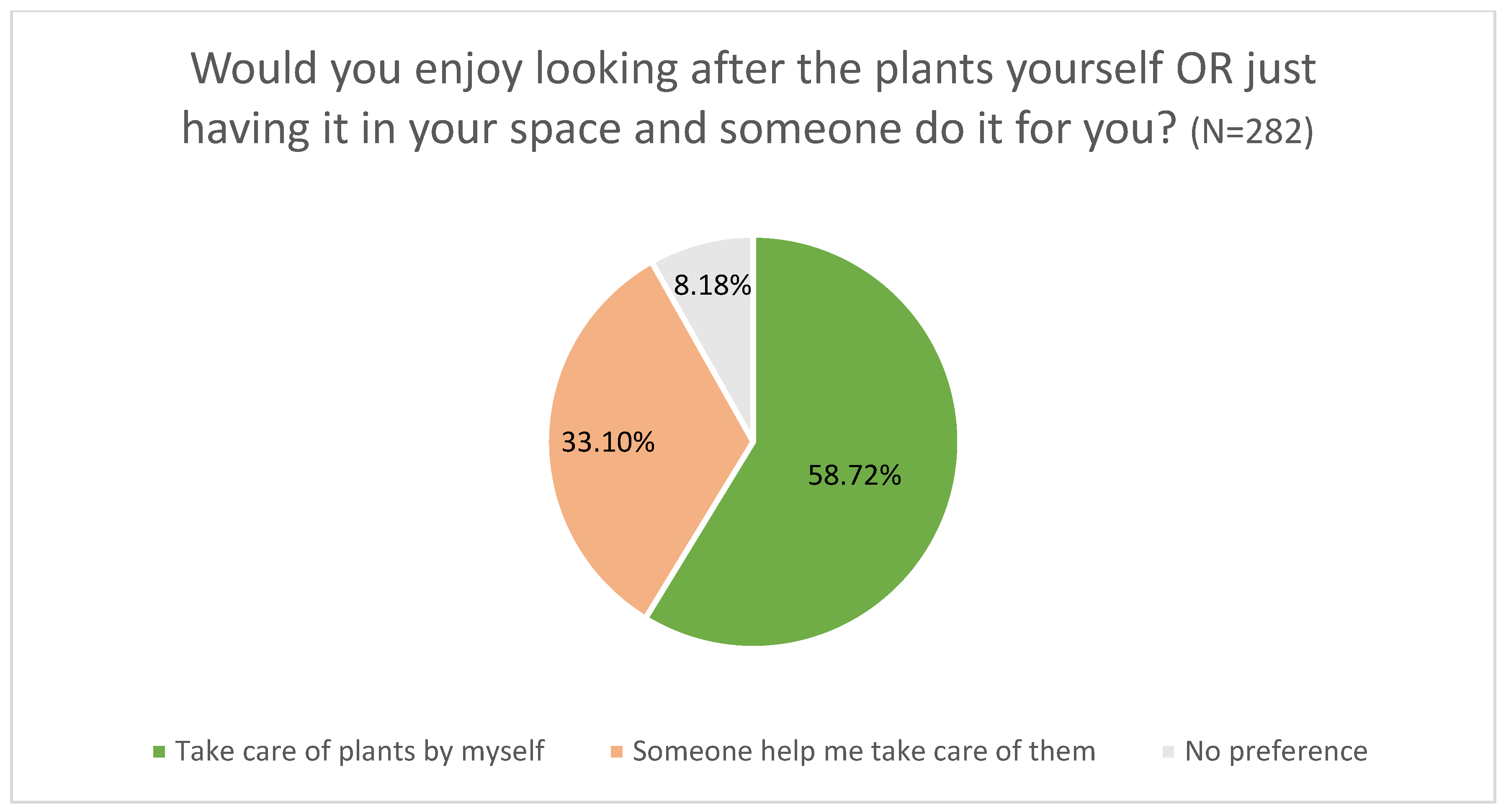
Figure 9 illustrates that 59% of respondents prefer to take care of plants themselves rather than have someone else do it for them. No association was found between gender and preferences for self-care plants, χ2 (2) = 2.398, p = 0.301. Respondents viewed plant care as a personal responsibility and found it rewarding to witness plant growth, reporting a sense of achievement. One respondent emphasised, ‘Taking care of the plant and seeing it flourish is one of the main appeals of the plants—part of the personal connection I have with it.’ Many respondents also emphasised companionship and emotional bonding, often using familial or pet-like terms to describe their plants. For instance, one respondent stated,
Figure 9.
Preference for self-care of plants versus having someone else care for them.
They are like a pet/companion… and the time and attention spent caring for them makes me feel alive and makes my head clearer and quieter.
Plant care was also reported as relaxing and enjoyable, with routine activities such as watering, pruning, repotting, fertilising, or trimming the leaves described as therapeutic and mindful. It was described as a ‘burst of serotonin’ and a ‘nice meditative activity’. Some respondents view plant care as a learning process, seeking to understand plant growth and improve their skills, such as recognising the signs that a plant needs water. One respondent explained, ‘I’m not very good at it currently,… [but] with more knowledge and practice it could be a calming activity.’
The main reason for the minority preferring someone assisting them is due to a lack of experience or knowledge in plant care. And they may be busy and forgetful, leading them to seek help with plant care tasks.
4. Discussion
4.1. Indoor Plants as Multisensory and Cognitive Stimuli
This research investigated the relationship between indoor plants and occupant wellbeing, considering the impact of students’ preferences and perceptions. Indoor plants provide not only visual stimuli but also opportunities for multisensory and cognitive interaction.
From a biophilic perspective, indoor plants can be understood as an important means through which contact with nature is reintroduced into everyday built environments. Joye [26] argues that opportunities for contact with natural elements have been reduced in modern urban life, a shift that may have subtle yet nontrivial adverse effects on both psychological and physiological wellbeing. In response, biophilic design seeks to mitigate this loss by reintroducing nature through direct representations such as indoor plants. The findings of the current study, therefore, are consistent with biophilic research suggesting that vegetated elements play a salient role in eliciting restorative and wellbeing-related responses in indoor settings.
4.2. Aesthetic Value and Preference for Plant Diversity
Indoor plants serve as important visual stimuli with significant aesthetic value for students. They use plants to decorate their spaces, describing them as making rooms ‘softer’, ‘livelier’ and ‘brighter’. Consideration is given not only to the plant colour, shape, size, or even pot, but also to how these elements interact with the space and occupants’ cognition and behaviour. Previous research has emphasised the impact of plants’ physical appearance on subjective wellbeing, perceived indoor air quality, and perceived humidity levels, with shape being the most important factor [14]. The current research supports these findings and further extends them by revealing that students also value diversity in indoor plants, including variations in leaf size, shape, and colour. This preference aligns with landscape research indicating a positive correlation between preference and complexity [17].
Many students enjoy combining diverse plants of different types, shapes, and sizes, mirroring the natural diversity found in the world. While green remains a dominant choice, most students prefer plants with more than one colour. However, excessive colourfulness or flowering plants may not be universally favoured, as some students find multi-coloured displays ‘chaotic’ or suitable only for specific spaces or purposes. Variegated leaves with varying shades of green or plants featuring subtle colours on leaves alongside green are often preferred. This suggests that students appreciate complexity to some extent but prefer it to be balanced and coherent. This aligns with environmental preference theories that stress human preferences for environments that are both highly complex and highly coherent, underscoring the importance of balance between complexity and coherence [27].
4.3. Fractals, Complexity, and Fluency in Natural Elements
At a broader theoretical level, this preference for balanced complexity closely reflects findings from environmental psychology and biophilic research, which indicate that natural environments are typically characterised by high visual complexity combined with a strong sense of coherence. Joye and van den Berg [28] argue that natural scenes are often perceived as more visually fluent than urban scenes, partly because their structural coherence allows observers to easily anticipate visual information across the scene. One proposed explanation for this fluency is the presence of fractal characteristics in natural elements such as vegetation [26,29]. In this context, fractals are self-similar patterns that repeat across multiple spatial scales, meaning that one part of a scene already provides information about its overall structure [28]. Research has shown that such fractal-like, recursive complexity is a key visual cue underlying the restorative potential of natural environments, mediating longer viewing times and higher restorative ratings compared to built scenes [30]. Supporting this, studies on biophilic fractal design demonstrate that mid-range fractal complexity, commonly found in plants, trees and foliage, can be processed with relative ease by the human visual system, a phenomenon described as fractal fluency, which is associated with aesthetic preference and physiological stress reduction [31]. The students’ preference for plant arrangements featuring diversity in leaf size, shape and subtle colour variation, while avoiding excessive visual chaos, may therefore reflect an intuitive sensitivity to fractal coherence rather than being driven solely by novelty. This helps explain why variegated greens and gently contrasting forms were favoured over highly colourful or densely flowering displays.
4.4. Spatial Arrangement and Views: Scattering vs. Concentrated Placement
Beyond plant form and visual characteristics, the presence of plants alone may not be sufficient; the spatial distribution and visibility of plants may be central to shaping occupants’ cognitive engagement, wellbeing, and connection to nature. This echoes previous research showing that larger green walls improved cognitive performance and perceived thermal comfort compared to small ones [9], while perceived thermal comfort can, in turn, increase psychological restoration [32]. Furthermore, research suggests that higher levels of green coverage positively associate with visual comfort, mood, self-reported productivity, self-reported alertness, concentration, and recovery [33]. Integrating indoor plants into indoor environments has been associated with improved aesthetic experience and perceived wellbeing in previous research.
The narrative of the respondents pertains to the idea that the visibility of plants while working is important. Students indicated that proximity alone is not the key factor, implying that having a visual connection to plants may be more important than sitting very close to them. This is consistent with prior research demonstrating that the perceived amount of plants in a three-dimensional space is more significant than the actual number of plants and their distance from the observer [34]. This also supports the broader environmental psychology theory, Attention Restoration Theory [35,36], showing that viewing natural environments can engage involuntary attention, reduce fatigue, and improve cognitive functioning. Additionally, respondents’ comments shed light on the importance of visual access to indoor plants in enclosed spaces lacking natural views, such as basements with no windows or gardens. This finding confirms previous research showing that indoor plants increase positive perceptions of underground spaces [37]. Indoor plants, therefore, help ‘bring nature inside’, fostering a stronger sense of nature connection. Such connections have been associated with higher levels of eudaimonic wellbeing, including personal growth, autonomy, purpose in life, self-acceptance, and positive relations with others [38].
Previous studies have shown that a window view of nature benefits wellbeing [39,40]. However, respondents’ narratives also highlight the unique advantages of indoor plants. Indoor plants are described as ‘three-dimensional’ visual stimuli, ‘interacting with the room in a multidimensional way’ by providing shadows and being viewable from different angles. Unlike window views, which are limited by the fixed angle of the window, indoor plants offer a more interactive visual experience within the interior environment, potentially enhancing the aesthetic and psychological benefits of nature exposure.
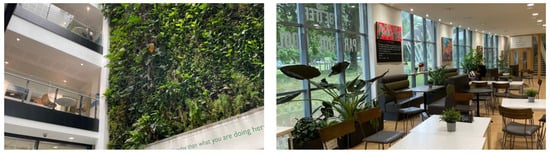
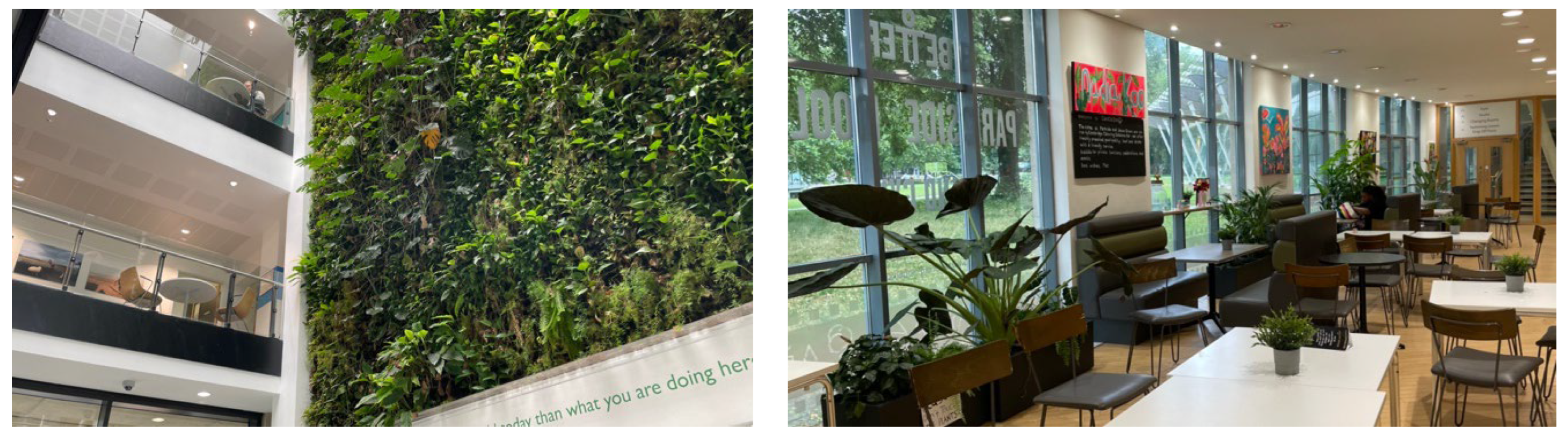
More students preferred scattering plants rather than solely concentrating them in one area. Figure 10 illustrates the differences between these two settings. This preference may relate to the spatial effects of distributed planting, as scattering plants across the room can create a sense of visual continuity. For instance, while a living wall is largely two-dimensional, multiple plants positioned at different locations may produce more three-dimensional engagement. A small plant placed nearby can visually connect with a group of plants positioned further away, whereas plants located only at the far end may not provide the same sense. Dispersed plants may therefore facilitate visual communication across the space, which is particularly relevant in smaller interiors where large plant groupings are difficult to place close to occupants. This finding echoes previous research showing that people tend to prefer a few strategically placed plants indoors and a larger number of plants combined with living walls outdoors [41]. Thus, indoor plants may help maintain a perceptual link with outdoor nature by introducing biophilic elements into the built environment.
Figure 10.
Concentrated placement of plants together (left) versus scattered placement (right). Photographs taken by the author at the David Attenborough Building, Cambridge (left), and the café in Parkside Pools and Gym, Cambridge (right).
From a biophilic design standpoint, the preference for dispersed rather than concentrated planting arrangements highlights the importance of spatially distributed visual engagement within indoor environments. Joye [26] notes that biophilic responses are influenced not only by the presence of natural elements but also by visual cues such as depth, structural patterns, and spatial complexity, factors that are central to Ulrich’s psycho-evolutionary framework and Kaplan and Kaplan’s preference matrix. These frameworks identify complexity, depth properties, and opportunities for exploration as predictors of positive affective responses and environmental preference [27,42]. Scattering plants at different distances and scales may enhance these qualities by creating a layered visual structure and a continuous sense of depth. Rather than relying on large-scale or visually dominant green installations, this suggests that smaller, strategically distributed plants can substantially activate biophilic responses by reproducing key spatial and fractal characteristics of natural environments. Such findings have direct implications for practical design, particularly in constrained indoor settings where extensive green walls or large planters may not be feasible.
4.5. Artificial vs. Natural Elements
Although previous virtual reality (VR) research indicates that both physical and virtual biophilic environments enhance similar physiological and cognitive responses [43], the narrative from respondents in this study provides additional insights into their experiences and perceptions related to wellbeing. The results highlight that indoor plants are preferred over other natural elements, such as artificial representations of nature or even fake plants. Plant paintings or photos are often perceived as ‘boring’, while fake plants are described as ‘depressing’ and ‘cold’. This supports past research showing VR nature does not improve positive affect as effectively as real outdoor nature, although both improve restoration and physiological responses [44]. The recognition that a plant is artificial may trigger an effect similar to the ‘uncanny valley’ phenomenon, where human-like artefacts evoke negative feelings toward near-human artefacts [45,46]. This further supports the respondents’ preference for real plants, which provide multisensory experiences beyond visual aesthetics, including delicate smells and tactile textures. These multisensory interactions contribute to a more authentic sensory experience, aligning with the holistic approach architecture can take to enhance wellbeing [47].
4.6. Looking at and Caring for Plants: Mental and Cognitive Benefits
A review highlighting positive human–environment experiences through non-visual senses such as sound, smell, taste, touch, and other non-sensory pathways further emphasises the importance of multisensory engagement [10]. Previous studies have demonstrated that visual, olfactory, and combined stimuli of plants all contribute to improved mood and cognition, with combined stimuli proving most effective [48]. Fragrant comfort not only correlates positively with positive affect but also alleviates thermal discomfort [49]. The findings of the current research align with these insights, suggesting that participants perceive real plants as providing multiple sensory and experiential benefits related to wellbeing.
Although some students liked flowering plants, they generally preferred potted plants over cut flowers or artificial plants due to sustainability concerns, as potted plants were perceived to have a longer lifespan than cut flowers. Moreover, cut flowers are often seen as less ‘organic’ and more ‘manufactured’. Similarly, fake plants are often associated with plastic and manufactured materials. Students’ preferences for exhibiting environmentally friendly behaviour resonate with previous research indicating that exposure to nature may promote sustainable practices [50]. The pro-environmental behaviour is linked to enhanced personal and social wellbeing [51].
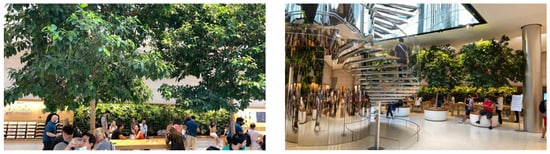
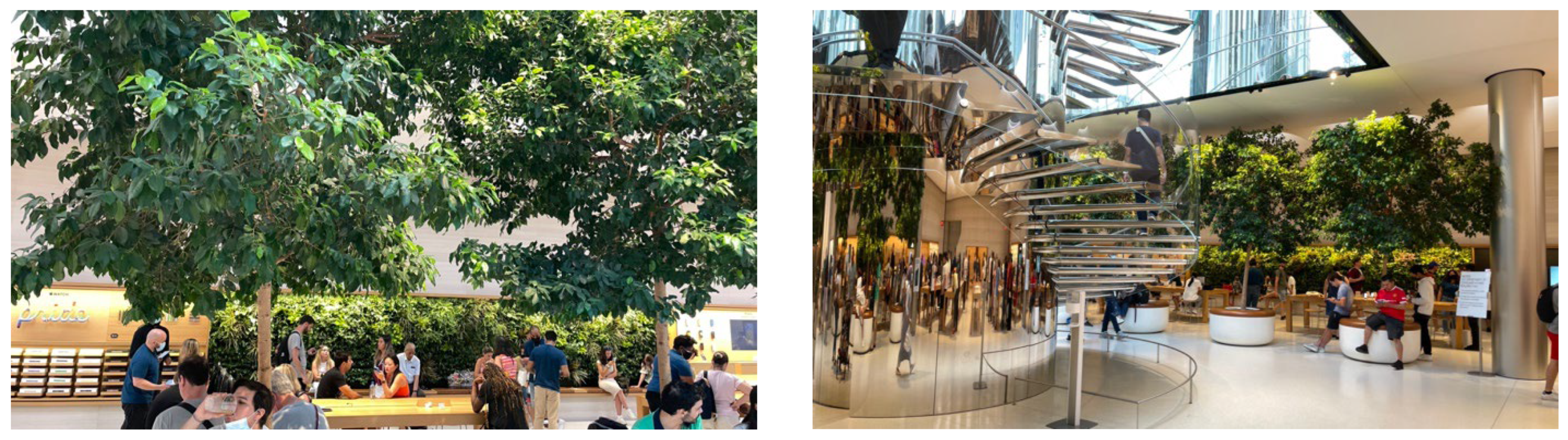
Participants described indoor plants as improving their wellbeing in various ways. In indoor public spaces, students show a preference for locations with larger plants due to perceived feelings of ‘security’ and ‘privacy’. Plants act as a natural ‘buffer’ in such settings and function as cognitive cues, enhancing perception of refuge and safety. The ‘prospect-refuge’ theory, as outlined by Dosen and Ostwald [52], posits that environments providing ‘the capacity to observe (prospect) without being seen (refuge)’ enhance feelings of security. This theory is supported by the current study. Figure 11 demonstrates the concept of prospect and refuge in plant arrangement.
Figure 11.
Photographs taken at the Apple store in New York. People feel sheltered, yet they have a view of public life—watching everyone come and go. Photos taken by the author.
Indoor plants provide relaxation and pleasure, acting as a ‘positive distraction’ that brings tranquillity and calmness. This reinforces previous studies showing that biophilic elements can elevate positive emotions, reduce stress and enhance collaboration and morale, contributing to overall productivity and workplace performance [53]. Additionally, it supports Stress Reduction Theory [54,55], a foundational concept in environmental psychology, demonstrating that natural environments can alleviate stress. Beyond merely looking at plants, interacting with them is also crucial for wellbeing, as the act of caring for plants is considered ‘therapeutic’ and ‘meditative’. This caring process has been found to alleviate nerves and reduce anxiety, especially during the pandemic. These findings confirm prior research demonstrating that gardening can relieve stress and improve mood and relaxation [56].
Students think indoor plants are interactive. Unlike artificial plants and cut flowers, indoor pot plants offer a sustained presence and connection. These interactions fulfil human cognitive and emotional needs, promoting place attachment and wellbeing. This also fosters a sentimental attachment among students, who often regard their plants as ‘family members’ or ‘pets’, viewing them as constant companions. Interacting with plants such as talking to them, helps alleviate feelings of loneliness, reinforcing prior research showing that indoor greenery is associated with reduced fear of COVID-19, loneliness, and depressive symptoms [57]. Caring for indoor plants establishes a long-term bond, extending this emotional connection to the space itself. Students believe that having plants makes their space more personal, often selecting plants that reflect their personalities. This practice underscores the fulfilment of human needs for identities, autonomy, relatedness, and competence, which are essential for developing place attachment [58].
Additionally, experiencing plants’ responses is mentally rewarding. Observing their growth and changes contributes significantly to a sense of fulfilment. Keeping plants is viewed as a ‘challenge’ that involves responsibility, as they sprout, bloom, and occasionally wither, revealing their ‘fragility’. Despite this fragility, plants are considered valuable because they are ‘breakable’. Students find satisfaction in witnessing their plants flourish under their care. Simple acts like watering plants can yield immediate results, reinforcing the sense of accomplishment. Moreover, students feel needed by their plants, without the level of commitment required by caring for animals or children. These insights support previous research showing that gardening enhances a sense of purpose and accomplishment, boosts confidence, and improves self-esteem [59,60,61]. Propagating plants requires little input while offering ‘maximum benefits’ in terms of personal satisfaction and emotional fulfilment.
Respondents also reported perceived cognitive benefits from having plants in interior spaces. Students have reported that plants foster their creativity, echoing past research that shows exposure to natural materials or leafy plants boosts creative thinking [62,63]. In addition, indoor plants aid concentration, supporting previous studies indicating that students’ attention was improved by indoor nature in classrooms [64]. Furthermore, audio-visual connection with nature has been found to improve university students’ cognitive performance, such as working memory, inhibition and task-switching [65]. Moreover, occupants become more ‘mindful’ since taking care of plants reminds them of looking after themselves. This supports prior research showing that indoor gardening is positively associated with mindfulness and higher levels of mental wellbeing [66]. Previous research has also shown participants use metaphors and anthropomorphism of the plants when taking care of them, reinforcing the reminder to nurture themselves [67]. Intriguingly, gardening has shown therapeutic effects on people with dementia [68], which resonates with current research demonstrating that indoor plants evoke homely memories related to significant others.
5. Conclusions
This study provides several key insights into the role of indoor plants in students’ experiences of indoor environments. The findings highlight the multisensory and emotional value of indoor plants, showing how interaction with plants can strengthen people’s connection with nature indoors. Behavioural patterns such as increased plant purchasing during the COVID-19 period and gender-related trends were also identified. In addition, the results offer practical implications for biophilic design, including preferred plant characteristics and spatial arrangements.
5.1. Strength and Contribution
This research illuminates human preferences and provides rich insights into the reasons behind these choices. Human perceptions and preferences for indoor plants are linked to their visual, multisensory, and cognitive experiences, providing greater insight into students’ interactions with indoor greenery. The qualitative data not only reinforces findings from previous studies but also offers a deeper explanation for these results. Respondent quotes contribute significantly to the literature, expressing these positive effects in ways that statistics alone might not capture. These insights enrich the understanding of people’s perceptions and experiences, supporting and complementing existing literature by elucidating emotions, sentiments, and behaviours beyond just numerical results.
Indoor plants seem to provide more than a view of nature or outdoor plants due to their proximity and three-dimensional presence in the space. Beyond visual stimuli, they engage multiple senses: you can smell them, touch them, and care for them, creating a rich multi-sensory experience. This interaction fosters a deeper emotional connection, as students often treat indoor plants like family members or pets, reducing loneliness and creating long-term attachment. These findings may highlight the unique benefits of indoor plants compared to outdoor views, especially their proximity and three-dimensional presence, which participants associated with positive wellbeing experiences. The preference and perception indicate that real plants are more effective than fake ones or artificial representations of plants. Additionally, the distribution of plants within a room affects how people relate to them. These qualitative insights, supported by respondent quotes, enrich our understanding of why indoor plants are strongly preferred and how participants perceive them as supporting wellbeing in multiple ways.
According to an online survey study in 2021, around 25% of respondents bought flowers and plants for others more often than before the COVID-19 pandemic, and 30% of them purchased more plants and flowers for themselves more frequently [69]. The current research indicates an even higher percentage—46% of students buying more plants, reflecting a potential need for indoor plants among university students.
While gender was not the primary focus of this study, an interesting pattern emerged regarding plant purchase behaviour in the second phase of the survey. No significant gender differences were found concerning preferred plant characteristics or arrangements. However, the observed purchasing behaviour could reflect broader trends in how men and women engage with nature and indoor environments, especially in times of crisis or social isolation. Female students’ increased plant purchases may reflect a stronger inclination toward creating nurturing indoor spaces for wellbeing, as echoed in previous research [70]. Lottrup et al. [70] found that males are more likely to use outdoor natural space during the workday than females, suggesting the relative importance of indoor biophilic environments for females.
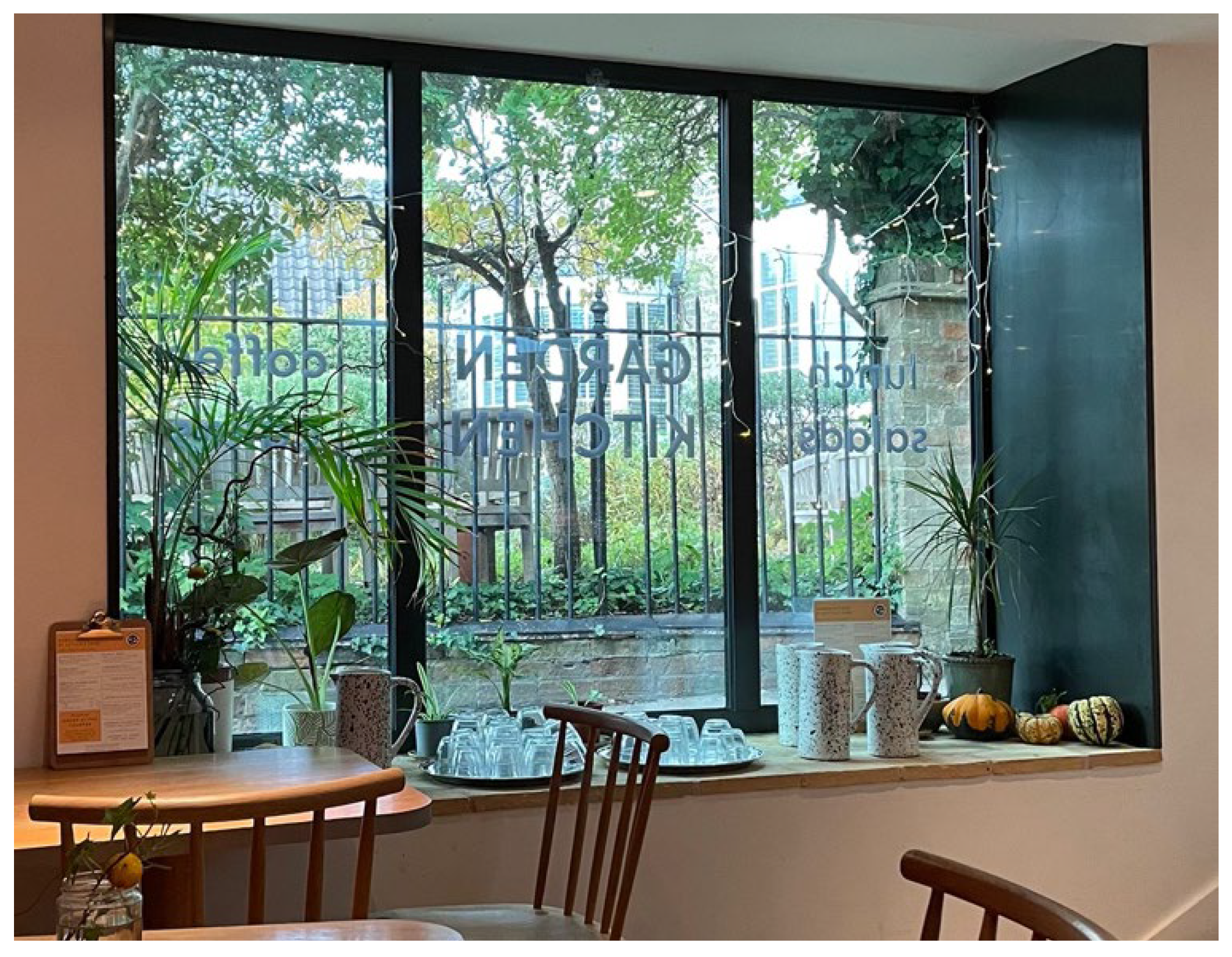
Biophilic design and gardening have been shown to contribute to physical, psychological, and social health [53,56]. A recent review paper has highlighted the significance of adopting and prioritising biophilic opportunities in design thinking [5]. People spend most of their time indoors [1]. Creating indoor spaces that are easy to cultivate indoor plants may help nudge health-related behaviour, as suggested by participants’ responses in the current study. Many respondents mentioned limitations in their spaces, such as insufficient sunlight or small areas, preventing them from having larger or more plants. It would be beneficial if designers or administrators could create accommodations that facilitate the keeping of plants, ensuring that space constraints do not hinder the practice. An example is shown in Figure 12.
Figure 12.
A windowsill designed for placing plants to receive indirect natural light and connect with the outdoor nature. Photograph taken in a café named Garden Kitchen at Kettle’s Yard Museum, University of Cambridge. Photo taken by the author.
Apart from underscoring participants’ perceptions of the benefits of indoor plants for health and wellbeing, this study also uncovers potential concerns associated with indoor plants. The three main concerns are the attraction of insects or bugs, allergies, and a lack of knowledge to keep plants alive. Therefore, in public spaces, it is important to select plants that do not easily attract bugs and insects and avoid species that are potential allergy triggers or have allergic pollens. To address worries about killing plants, education is essential to build confidence in gardening. Providing students with simple instructions on light exposure, watering and feeding, etc., can encourage them to start. As respondents mentioned, plant care is a learning process, and people are eager to understand how to cultivate plants and improve their skills, even if they are not initially skilled. Guidance at the beginning can be very helpful, allowing individuals to complete their gardening journey with more confidence.
5.2. Recommendation
Past research has proposed the ‘3-30-300’ green space rule, suggesting that people should have a window view of 3 trees, 30% tree cover in their neighbourhood, and live within 300 m of the nearest green space [71]. This study complements this guideline by proposing the addition of at least three indoor plants (three in order to enable scattering to increase impact), extending the concept to ‘3 × 3-30-300’ inside the home.
According to the current findings in this study, the suggestion is to design study spaces with real green plants. Distributing them throughout the space with a few clusters together would be effective. The colour, shape, and size of the plants should strike a balance between complexity and coherence to enhance the benefits of indoor greenery.
5.3. Limitation and Future Direction
Although this research sheds light on the relationship between indoor plants and wellbeing, it inevitably has some limitations. Firstly, the issue of self-selection bias may be present, as participation in the survey was voluntary. Secondly, the reliance on self-reporting can introduce biases, such as respondents providing socially desirable answers. Participants may therefore report attitudes that align with commonly accepted views about the positive effects of plants and nature, or responses influenced by existing knowledge regarding the benefits of greenery. In addition, without an experimental design, it is difficult to establish cause-and-effect relationships and control the survey environment, which might influence responses. Moreover, the findings are context-specific, as this research was conducted in a single university setting. The sample consisted primarily of university students, whose living environments, daily routines, and interactions with indoor spaces may differ from those of other population groups, such as office workers, families, or older adults. As a result, the findings should be interpreted with caution when extending them to other demographic groups or social contexts. The absence of demographic information (age and gender) in phase one further limits the analysis. In addition, cultural and climatic differences may influence people’s relationships with indoor plants and nature. Therefore, more studies at different universities and in different social, cultural and climatic contexts are needed to generalise the results to broader populations.
Having said that, this research has illuminated the cognitive, emotional, and multisensory impact of indoor plants on health and wellbeing, while analysing human perceptions and preferences. In future studies, it is suggested that stimuli be personalised based on participants’ preferences when conducting experiments on the effects of indoor plants on cognition, emotion, and wellbeing. Real plants should be prioritised due to their multisensory stimuli, as shown in this study. One intriguing area for exploration would be studying the intersection of indoor plants and perceived air quality, given that respondents in this research express beliefs that indoor plants can help purify the air. In addition, it would be worthwhile to investigate the interaction between exposure to sunlight and plant care on wellbeing since care for plants may increase sunlight exposure. As previous studies have shown that attractive plants promote prosocial behaviour and gardening provides opportunities for helping behaviour [16,56], social and community wellbeing should be a valuable focus in further research endeavours.
Author Contributions
Conceptualization, B.-T.X.L. and K.S.; methodology, B.-T.X.L.; software, B.-T.X.L.; validation, B.-T.X.L.; formal analysis, B.-T.X.L.; investigation, B.-T.X.L.; resources, B.-T.X.L.; data curation, B.-T.X.L.; writing—original draft, B.-T.X.L.; writing—review and editing, B.-T.X.L. and K.S.; visualisation, B.-T.X.L.; supervision, K.S.; project administration, B.-T.X.L. All authors have read and agreed to the published version of the manuscript.
Funding
This research received no external funding. B.-T.X.L. was in receipt of doctoral funding from the Cambridge Trust at the University of Cambridge, and the APC was paid by the University of Cambridge.
Institutional Review Board Statement
The study was conducted in accordance with the Declaration of Helsinki, and the protocol was approved by the Faculty of Architecture and History of Art Research Ethics Committee, University of Cambridge on 12 April 2022.
Informed Consent Statement
Informed consent was obtained from all subjects involved in the study.
Data Availability Statement
The datasets presented in this article are not readily available due to ethical approval constraints and commitments made to participants regarding data confidentiality and use. Anonymised data may be made available by the authors upon reasonable request.
Acknowledgments
We would like to express our gratitude to the editors and reviewers for their time and effort in enhancing the quality of this published work. We are also grateful to all the voluntary research participants involved in this study. This research was not funded by any specific institution; however, B.-T.X.L. wishes to acknowledge the Cambridge Trust at the University of Cambridge for funding his Ph.D. studies, from which this article emerges as part of a broader research project on biophilia, mental wellbeing, and human behaviours. He extends his sincere gratitude to colleagues from the Department of Architecture and friends from the university for their inspiring insights.
Conflicts of Interest
The authors declare no conflict of interest.
References
- Klepeis, N.E.; Nelson, W.C.; Ott, W.R.; Robinson, J.P.; Tsang, A.M.; Switzer, P.; Behar, J.V.; Hern, S.C.; Engelmann, W.H. The National Human Activity Pattern Survey (NHAPS): A Resource for Assessing Exposure to Environmental Pollutants. J. Expo. Sci. Environ. Epidemiol. 2001, 11, 231–252. [Google Scholar] [CrossRef] [Scilit] [PubMed]
- Kellert, S.R. Nature by Design: The Practice of Biophilic Design; Yale University Press: New Haven, CT, USA, 2018; ISBN 978-0-300-21453-6. [Google Scholar]
- Gunawardena, K.; Steemers, K. Living Walls in Indoor Environments. Build. Environ. 2019, 148, 478–487. [Google Scholar] [CrossRef] [Scilit]
- Mangone, G.; Kurvers, S.R.; Luscuere, P.G. Constructing Thermal Comfort: Investigating the Effect of Vegetation on Indoor Thermal Comfort through a Four Season Thermal Comfort Quasi-Experiment. Build. Environ. 2014, 81, 410–426. [Google Scholar] [CrossRef] [Scilit]
- Sal Moslehian, A.; Roös, P.B.; Gaekwad, J.S.; Van Galen, L. Potential Risks and Beneficial Impacts of Using Indoor Plants in the Biophilic Design of Healthcare Facilities: A Scoping Review. Build. Environ. 2023, 233, 110057. [Google Scholar] [CrossRef] [Scilit]
- Gunn, C.; Vahdati, M.; Shahrestani, M. Green Walls in Schools—The Potential Well-Being Benefits. Build. Environ. 2022, 224, 109560. [Google Scholar] [CrossRef] [Scilit]
- Zhang, X.; Du, J.; Chow, D. Association between Perceived Indoor Environmental Characteristics and Occupants’ Mental Well-Being, Cognitive Performance, Productivity, Satisfaction in Workplaces: A Systematic Review. Build. Environ. 2023, 246, 110985. [Google Scholar] [CrossRef] [Scilit]
- Wang, C.; Zhang, F.; Wang, J.; Doyle, J.K.; Hancock, P.A.; Mak, C.M.; Liu, S. How Indoor Environmental Quality Affects Occupants’ Cognitive Functions: A Systematic Review. Build. Environ. 2021, 193, 107647. [Google Scholar] [CrossRef] [Scilit]
- Ma, X.; Du, M.; Deng, P.; Zhou, T.; Hong, B. Effects of Green Walls on Thermal Perception and Cognitive Performance: An Indoor Study. Build. Environ. 2024, 250, 111180. [Google Scholar] [CrossRef] [Scilit]
- Franco, L.S.; Shanahan, D.F.; Fuller, R.A. A Review of the Benefits of Nature Experiences: More Than Meets the Eye. Int. J. Environ. Res. Public Health 2017, 14, 864. [Google Scholar] [CrossRef] [Scilit]
- Ba, M.; Kang, J. Effect of a Fragrant Tree on the Perception of Traffic Noise. Build. Environ. 2019, 156, 147–155. [Google Scholar] [CrossRef] [Scilit]
- Jiang, S.; Deng, L.; Luo, H.; Li, X.; Guo, B.; Jiang, M.; Jia, Y.; Ma, J.; Sun, L.; Huang, Z. Effect of Fragrant Primula Flowers on Physiology and Psychology in Female College Students: An Empirical Study. Front. Psychol. 2021, 12, 607876. [Google Scholar] [CrossRef] [Scilit]
- Gifford, R. Environmental Psychology. In Encyclopedia of Human Behavior, 2nd ed.; Ramachandran, V.S., Ed.; Academic Press: San Diego, CA, USA, 2012; pp. 54–60. ISBN 978-0-08-096180-4. [Google Scholar]
- Berger, J.; Essah, E.; Blanusa, T.; Beaman, C.P. The Appearance of Indoor Plants and Their Effect on People’s Perceptions of Indoor Air Quality and Subjective Well-Being. Build. Environ. 2022, 219, 109151. [Google Scholar] [CrossRef] [Scilit]
- Dijkstra, K.; Pieterse, M.E.; Pruyn, A. Stress-Reducing Effects of Indoor Plants in the Built Healthcare Environment: The Mediating Role of Perceived Attractiveness. Prev. Med. 2008, 47, 279–283. [Google Scholar] [CrossRef] [Scilit]
- Zhang, J.W.; Piff, P.K.; Iyer, R.; Koleva, S.; Keltner, D. An Occasion for Unselfing: Beautiful Nature Leads to Prosociality. J. Environ. Psychol. 2014, 37, 61–72. [Google Scholar] [CrossRef] [Scilit]
- Kuper, R. Evaluations of Landscape Preference, Complexity, and Coherence for Designed Digital Landscape Models. Landsc. Urban Plan. 2017, 157, 407–421. [Google Scholar] [CrossRef] [Scilit]
- Zarowski, B.; Giokaris, D.; Green, O.; Zarowski, B.; Giokaris, D.; Green, O. Effects of the COVID-19 Pandemic on University Students’ Mental Health: A Literature Review. Cureus 2024, 16, e54032. [Google Scholar] [CrossRef] [Scilit]
- Ortiz, M.A.; Bluyssen, P.M. Profiling Office Workers Based on Their Self-Reported Preferences of Indoor Environmental Quality and Psychosocial Comfort at Their Workplace during COVID-19. Build. Environ. 2022, 211, 108742. [Google Scholar] [CrossRef] [Scilit] [PubMed]
- Liu, F.; Chang-Richards, A.; Wang, K.I.-K.; Dirks, K.N. Effects of Indoor Environment Factors on Productivity of University Workplaces: A Structural Equation Model. Build. Environ. 2023, 233, 110098. [Google Scholar] [CrossRef] [Scilit]
- van den Bogerd, N.; Dijkstra, S.C.; Seidell, J.C.; Maas, J. Greenery in the University Environment: Students’ Preferences and Perceived Restoration Likelihood. PLoS ONE 2018, 13, e0192429. [Google Scholar] [CrossRef] [Scilit]
- van den Bogerd, N.; Dijkstra, S.C.; Koole, S.L.; Seidell, J.C.; Maas, J. Greening the Room: A Quasi-Experimental Study on the Presence of Potted Plants in Study Rooms on Mood, Cognitive Performance, and Perceived Environmental Quality among University Students. J. Environ. Psychol. 2021, 73, 101557. [Google Scholar] [CrossRef] [Scilit]
- Fetters, M.D.; Curry, L.A.; Creswell, J.W. Achieving Integration in Mixed Methods Designs—Principles and Practices. Health Serv. Res. 2013, 48, 2134–2156. [Google Scholar] [CrossRef] [Scilit]
- Lloyd, S.; Gifford, R. Qualitative Research and the Future of Environmental Psychology. J. Environ. Psychol. 2024, 97, 102347. [Google Scholar] [CrossRef] [Scilit]
- Creswell, J.W.; Creswell, J.D. Research Design: Qualitative, Quantitative, and Mixed Methods Approaches; SAGE Publications: Thousand Oaks, CA, USA, 2017; ISBN 978-1-5063-8669-0. [Google Scholar]
- Joye, Y. Architectural Lessons from Environmental Psychology: The Case of Biophilic Architecture. Rev. Gen. Psychol. 2007, 11, 305–328. [Google Scholar] [CrossRef] [Scilit]
- Kaplan, R.; Kaplan, S. The Experience of Nature: A Psychological Perspective; CUP Archive: Cambridge, UK, 1989; ISBN 978-0-521-34939-0. [Google Scholar]
- Joye, Y.; Van Den Berg, A. Is Love for Green in Our Genes? A Critical Analysis of Evolutionary Assumptions in Restorative Environments Research. Urban For. Urban Green. 2011, 10, 261–268. [Google Scholar] [CrossRef] [Scilit]
- Purcell, T.; Peron, E.; Berto, R. Why Do Preferences Differ between Scene Types? Environ. Behav. 2001, 33, 93–106. [Google Scholar] [CrossRef] [Scilit]
- Van den Berg, A.E.; Joye, Y.; Koole, S.L. Why Viewing Nature Is More Fascinating and Restorative than Viewing Buildings: A Closer Look at Perceived Complexity. Urban For. Urban Green. 2016, 20, 397–401. [Google Scholar] [CrossRef] [Scilit]
- Taylor, R.P. The Potential of Biophilic Fractal Designs to Promote Health and Performance: A Review of Experiments and Applications. Sustainability 2021, 13, 823. [Google Scholar] [CrossRef] [Scilit]
- Lyu, K.; de Dear, R.; Brambilla, A.; Globa, A. Restorative Benefits of Semi-Outdoor Environments at the Workplace: Does the Thermal Realm Matter? Build. Environ. 2022, 222, 109355. [Google Scholar] [CrossRef] [Scilit]
- Mihara, K.; Hii, D.J.C.; Takasuna, H.; Sakata, K. How Does Green Coverage Ratio and Spaciousness Affect Self-Reported Performance and Mood? Build. Environ. 2023, 245, 110939. [Google Scholar] [CrossRef] [Scilit]
- Han, K.-T. Effects of Visible Greenness, Quantity and Distance of Indoor Plants on Human Perceptions and Physical Parameters. Indoor Built Environ. 2021, 30, 1353–1372. [Google Scholar] [CrossRef] [Scilit]
- Kaplan, S. The Restorative Benefits of Nature: Toward an Integrative Framework. J. Environ. Psychol. 1995, 15, 169–182. [Google Scholar] [CrossRef] [Scilit]
- Kaplan, S.; Berman, M.G. Directed Attention as a Common Resource for Executive Functioning and Self-Regulation. Perspect. Psychol. Sci. 2010, 5, 43–57. [Google Scholar] [CrossRef] [Scilit]
- Kim, J.; Cha, S.H.; Koo, C.; Tang, S. The Effects of Indoor Plants and Artificial Windows in an Underground Environment. Build. Environ. 2018, 138, 53–62. [Google Scholar] [CrossRef] [Scilit]
- Pritchard, A.; Richardson, M.; Sheffield, D.; McEwan, K. The Relationship Between Nature Connectedness and Eudaimonic Well-Being: A Meta-Analysis. J. Happiness Stud. 2019, 21, 1145–1167. [Google Scholar] [CrossRef] [Scilit]
- Abd-Alhamid, F.; Kent, M.; Wu, Y. Quantifying Window View Quality: A Review on View Perception Assessment and Representation Methods. Build. Environ. 2023, 227, 109742. [Google Scholar] [CrossRef] [Scilit]
- Lin, T.-Y.; Le, A.-V.; Chan, Y.-C. Evaluation of Window View Preference Using Quantitative and Qualitative Factors of Window View Content. Build. Environ. 2022, 213, 108886. [Google Scholar] [CrossRef] [Scilit]
- Pérez-Urrestarazu, L.; Kaltsidi, M.P.; Nektarios, P.A.; Markakis, G.; Loges, V.; Perini, K.; Fernández-Cañero, R. Particularities of Having Plants at Home during the Confinement Due to the COVID-19 Pandemic. Urban For. Urban Green. 2021, 59, 126919. [Google Scholar] [CrossRef] [Scilit] [PubMed]
- Ulrich, R.S. Aesthetic and Affective Response to Natural Environment. In Behavior and the Natural Environment; Altman, I., Wohlwill, J.F., Eds.; Human Behavior and Environment; Springer: Boston, MA, USA, 1983; pp. 85–125. ISBN 978-1-4613-3539-9. [Google Scholar]
- Yin, J.; Zhu, S.; MacNaughton, P.; Allen, J.G.; Spengler, J.D. Physiological and Cognitive Performance of Exposure to Biophilic Indoor Environment. Build. Environ. 2018, 132, 255–262. [Google Scholar] [CrossRef] [Scilit]
- Browning, M.H.E.M.; Mimnaugh, K.J.; van Riper, C.J.; Laurent, H.K.; LaValle, S.M. Can Simulated Nature Support Mental Health? Comparing Short, Single-Doses of 360-Degree Nature Videos in Virtual Reality with the Outdoors. Front. Psychol. 2020, 10, 2667. [Google Scholar] [CrossRef] [Scilit]
- Moore, R.K. A Bayesian Explanation of the ‘Uncanny Valley’ Effect and Related Psychological Phenomena. Sci. Rep. 2012, 2, 864. [Google Scholar] [CrossRef] [Scilit] [PubMed]
- Ratajczyk, D.; Dakowski, J.; Łupkowski, P. The Importance of Beliefs in Human Nature Uniqueness for Uncanny Valley in Virtual Reality and On-Screen. Int. J. Hum.–Comput. Interact. 2023, 40, 3081–3091. [Google Scholar] [CrossRef] [Scilit]
- Spence, C. Senses of Place: Architectural Design for the Multisensory Mind. Cogn. Res. Princ. Implic. 2020, 5, 46. [Google Scholar] [CrossRef] [Scilit] [PubMed]
- Li, Z.; Zhang, W.; Cui, J.; Wang, L.; Liu, H.; Liu, H. Biophilic Environment with Visual-Olfactory Stimuli Contributes to Psychophysiological Restoration and Cognitive Enhancement. Build. Environ. 2024, 250, 111202. [Google Scholar] [CrossRef] [Scilit]
- Chang, J.; Du, M.; Hong, B.; Qu, H.; Chen, H. Effects of Thermal-Olfactory Interactions on Emotional Changes in Urban Outdoor Environments. Build. Environ. 2023, 232, 110049. [Google Scholar] [CrossRef] [Scilit]
- Zelenski, J.M.; Dopko, R.L.; Capaldi, C.A. Cooperation Is in Our Nature: Nature Exposure May Promote Cooperative and Environmentally Sustainable Behavior. J. Environ. Psychol. 2015, 42, 24–31. [Google Scholar] [CrossRef] [Scilit]
- Bartolo, M.G.; Servidio, R.; Palermiti, A.L.; Nappa, M.R.; Costabile, A. Pro-Environmental Behaviors and Well-Being in Adolescence: The Mediating Role of Place Attachment. Int. J. Environ. Res. Public Health 2023, 20, 5759. [Google Scholar] [CrossRef] [Scilit]
- Dosen, A.; Ostwald, M. Prospect and Refuge Theory: Constructing a Critical Definition for Architecture and Design. Int. J. Des. Soc. 2013, 6, 9–23. [Google Scholar] [CrossRef] [Scilit]
- Gray, T.; Birrell, C. Are Biophilic-Designed Site Office Buildings Linked to Health Benefits and High Performing Occupants? Int. J. Environ. Res. Public Health 2014, 11, 12204–12222. [Google Scholar] [CrossRef] [Scilit]
- Ulrich, R.S. Visual Landscapes and Psychological Well-being. Landsc. Res. 1979, 4, 17–23. [Google Scholar] [CrossRef] [Scilit]
- Ulrich, R.S.; Simons, R.F.; Losito, B.D.; Fiorito, E.; Miles, M.A.; Zelson, M. Stress Recovery during Exposure to Natural and Urban Environments. J. Environ. Psychol. 1991, 11, 201–230. [Google Scholar] [CrossRef] [Scilit]
- Beavers, A.W.; Atkinson, A.; Varvatos, L.M.; Connolly, M.; Alaimo, K. How Gardening in Detroit Influences Physical and Mental Health. Int. J. Environ. Res. Public Health 2022, 19, 7899. [Google Scholar] [CrossRef] [Scilit]
- Zhang, J.; Browning, M.H.E.M.; Liu, J.; Cheng, Y.; Zhao, B.; Dadvand, P. Is Indoor and Outdoor Greenery Associated with Fewer Depressive Symptoms during COVID-19 Lockdowns? A Mechanistic Study in Shanghai, China. Build. Environ. 2023, 227, 109799. [Google Scholar] [CrossRef] [Scilit] [PubMed]
- Landon, A.C.; Woosnam, K.M.; Kyle, G.T.; Keith, S.J. Psychological Needs Satisfaction and Attachment to Natural Landscapes. Environ. Behav. 2021, 53, 661–683. [Google Scholar] [CrossRef] [Scilit]
- Scott, T.L.; Masser, B.M.; Pachana, N.A. Exploring the Health and Wellbeing Benefits of Gardening for Older Adults. Ageing Soc. 2015, 35, 2176–2200. [Google Scholar] [CrossRef] [Scilit]
- Sia, A.; Tan, P.Y.; Wong, J.C.M.; Araib, S.; Ang, W.F.; Er, K.B.H. The Impact of Gardening on Mental Resilience in Times of Stress: A Case Study during the COVID-19 Pandemic in Singapore. Urban For. Urban Green. 2022, 68, 127448. [Google Scholar] [CrossRef] [Scilit]
- Wood, C.J.; Pretty, J.; Griffin, M. A Case-Control Study of the Health and Well-Being Benefits of Allotment Gardening. J. Public Health 2016, 38, e336–e344. [Google Scholar] [CrossRef] [Scilit]
- Douglas, I.P.; Murnane, E.L.; Bencharit, L.Z.; Altaf, B.; Costa, J.M.d.R.; Yang, J.; Ackerson, M.; Srivastava, C.; Cooper, M.; Douglas, K.; et al. Physical Workplaces and Human Well-Being: A Mixed-Methods Study to Quantify the Effects of Materials, Windows, and Representation on Biobehavioral Outcomes. Build. Environ. 2022, 224, 109516. [Google Scholar] [CrossRef] [Scilit]
- Shibata, S.; Suzuki, N. Effects of the Foliage Plant on Task Performance and Mood. J. Environ. Psychol. 2002, 22, 265–272. [Google Scholar] [CrossRef] [Scilit]
- van den Bogerd, N.; Dijkstra, S.C.; Tanja-Dijkstra, K.; de Boer, M.R.; Seidell, J.C.; Koole, S.L.; Maas, J. Greening the Classroom: Three Field Experiments on the Effects of Indoor Nature on Students’ Attention, Well-Being, and Perceived Environmental Quality. Build. Environ. 2020, 171, 106675. [Google Scholar] [CrossRef] [Scilit]
- Latini, A.; Torresin, S.; Oberman, T.; Di Giuseppe, E.; Aletta, F.; Kang, J.; D’Orazio, M. Effects of Biophilic Design Interventions on University Students’ Cognitive Performance: An Audio-Visual Experimental Study in an Immersive Virtual Office Environment. Build. Environ. 2024, 250, 111196. [Google Scholar] [CrossRef] [Scilit]
- Ma, J. Interaction with Nature Indoor: Psychological Impacts of Houseplants Care Behaviour on Mental Well-Being and Mindfulness in Chinese Adults. Int. J. Environ. Res. Public Health 2022, 19, 15810. [Google Scholar] [CrossRef] [Scilit] [PubMed]
- Biglin, J. Embodied and Sensory Experiences of Therapeutic Space: Refugee Place-Making within an Urban Allotment. Health Place 2020, 62, 102309. [Google Scholar] [CrossRef] [Scilit] [PubMed]
- Murroni, V.; Cavalli, R.; Basso, A.; Borella, E.; Meneghetti, C.; Melendugno, A.; Pazzaglia, F. Effectiveness of Therapeutic Gardens for People with Dementia: A Systematic Review. Int. J. Environ. Res. Public Health 2021, 18, 9595. [Google Scholar] [CrossRef] [Scilit] [PubMed]
- Flower Council. Available online: https://www.flowercouncil.com/press-calendar/effect-of-covid-19-on-consumption-of-flowers-and-plants (accessed on 14 January 2024).
- Lottrup, L.; Grahn, P.; Stigsdotter, U.K. Workplace Greenery and Perceived Level of Stress: Benefits of Access to a Green Outdoor Environment at the Workplace. Landsc. Urban Plan. 2013, 110, 5–11. [Google Scholar] [CrossRef] [Scilit]
- Nieuwenhuijsen, M.J.; Dadvand, P.; Márquez, S.; Bartoll, X.; Barboza, E.P.; Cirach, M.; Borrell, C.; Zijlema, W.L. The Evaluation of the 3-30-300 Green Space Rule and Mental Health. Environ. Res. 2022, 215, 114387. [Google Scholar] [CrossRef] [Scilit] [PubMed]
Disclaimer/Publisher’s Note: The statements, opinions and data contained in all publications are solely those of the individual author(s) and contributor(s) and not of MDPI and/or the editor(s). MDPI and/or the editor(s) disclaim responsibility for any injury to people or property resulting from any ideas, methods, instructions or products referred to in the content. |
© 2026 by the authors. Licensee MDPI, Basel, Switzerland. This article is an open access article distributed under the terms and conditions of the Creative Commons Attribution (CC BY) license.