Article

Preparation and Basic Mechanical Properties of White Clay Lightweight Concrete for Paper Making

1
Guangxi Engineering Research Center for 3D Digital Twin of Transportation Infrastructure, Guangxi Transport Vocational and Technical College, No. 1258, Kunlun Avenue, Xingning District, Nanning 530216, China
2
Guangxi Key Laboratory of Green Building Materials and Construction Industrialization, Guilin University of Technology, Guilin 541004, China
3
College of Civil Engineering, Guilin University of Technology, Guilin 541004, China
4
Department of Civil Engineering, School of Engineering, Monash University Malaysia, Jalan Lagoon Selatan, Bandar Sunway 47500, Selangor, Malaysia
*
Author to whom correspondence should be addressed.
Buildings 2026, 16(8), 1470; https://doi.org/10.3390/buildings16081470
Submission received: 26 February 2026 / Revised: 21 March 2026 / Accepted: 23 March 2026 / Published: 8 April 2026
(This article belongs to the Section Building Materials, and Repair & Renovation)

Abstract

In order to reduce the environmental pollution caused by waste white mud from the papermaking process, this paper proposes a new method of preparing lightweight concrete using waste white mud and shale ceramsite, aiming to provide a new approach for the recycling of papermaking waste. The main objective of this study is to investigate the feasibility of utilizing paper-making white clay as a cement replacement in lightweight concrete and to systematically evaluate the influence of key parameters, such as white clay content, on its fundamental mechanical properties. Based on lightweight ceramsite concrete, paper-making white clay was used to replace cement in preparing white clay lightweight concrete. Through orthogonal tests, mix proportion design and optimization were carried out, and the effects of factors like water–binder ratio and white clay content on the compressive strength, splitting tensile strength, and early-age cracking resistance of the concrete were studied. The results show that with the increase in white clay content, the cube compressive strength of concrete first increases and then decreases. When the white clay content is 5%, the splitting tensile strength of the concrete is the highest at all ages, and when the white clay content is 15%, the internal structural compactness of the concrete is optimal.

1. Introduction

Paper-mill white clay is a byproduct generated during the papermaking process, with approximately 0.5–0.65 tons produced per ton of pulp. In 2021, China’s total pulp production reached 81.77 million tons, including 5.54 million tons of non-wood pulp, resulting in a significant accumulation of paper-mill white clay [1,2]. Long-term stacking leads to highly alkaline leachate, causing pollution to surface and groundwater, altering soil properties, and exacerbating land salinization [3]. The previous extensive development model relying on simple piling or landfilling is no longer aligned with current national policies. Although traditional concrete technology remains widespread, it relies heavily on energy-intensive cement production—emitting about one ton of CO2 per ton of cement—and contributes to excessive sand and gravel mining, damaging riverbeds [4]. Numerous scholars [5,6,7,8,9] have conducted research and improvements on traditional concrete technology, yet its inherent drawbacks continue to significantly constrain the achievement of sustainability goals.
Currently, paper-mill white clay is mainly utilized in road embankment filling or converted into calcium oxide for CO2 capture. However, these two methods both suffer from significant drawbacks of low utilization rates and high costs [10]. In this context, shifting paper-mill white clay toward the building materials sector has become a key pathway to address the accumulation issue [10], though challenges in material modification and process optimization must still be overcome to achieve the dual goals of resource recovery and ecological protection.
Shi Shuzhao [11] partially replaced limestone with paper-mill white clay to produce cement clinker under laboratory conditions, demonstrating that qualified cement clinker can be obtained using paper-mill white clay as a substitute. Liu Laibao et al. [12] used paper-mill white clay as an equal-mass replacement for limestone raw material in the production of white cement, and the results showed that partial substitution effectively improved the whiteness of the white cement. Zhang Lihua [13] designed and optimized the proportioning of a paper-mill white clay–shale active blended system, and the results indicated that the cement blended material prepared from paper-mill white clay and shale achieved an activity index meeting the Grade II fly ash standard. Zheng Aizhong et al. [14] utilized waste heat from clinker coolers to efficiently dry and modify paper-mill white clay for cement production, and the results showed that the addition of paper-mill white clay significantly reduced the temperature of discharged clinker and exhaust gases. Liu Zheyi [15] improved the properties of a paper-mill white clay–shale–coal gangue system through thermal activation, and the results revealed that at a 20% paper-mill white clay content, the concrete exhibited significantly enhanced compatibility with water-reducing agents, later strength, and durability. Qi Zehao et al. [16] tested paper-mill white clay concrete using ultrasonic detection technology, and the results showed that incorporating an appropriate amount of paper-mill white clay contributes to improved concrete compactness. Liu Hao et al. [17] investigated the use of paper-mill white clay to partially replace lime raw materials in the preparation of aerated concrete, determining optimal calcination temperature and limestone substitution rate; the results indicated that aerated concrete prepared with paper-mill white clay calcined at 1200 °C and a 20% substitution rate exhibited the best mechanical and freeze–thaw resistance performance. Guan Liwei et al. [18] studied the corrosion resistance of ceramsite concrete incorporating paper-mill white clay, and the results showed that wet–dry cycles inhibit chloride ion penetration but accelerate sulfate attack. Xie Weibiao et al. [19] investigated the effect of paper-mill white clay content on the lime-bursting performance of fired shale bricks, and the results indicated that increasing paper-mill white clay content reduces shale usage and leads to decreased compressive strength of the bricks. Xian Yu et al. [20] studied the influence of paper-mill white clay on the mechanical properties of composites, and the results showed that within the test temperature range, as the paper-mill white clay content increases, both the storage modulus and loss modulus of the composite increase, while the loss factor decreases. He Sheng et al. [21] studied the influence of paper-mill white clay content on the compressive strength, water absorption, carbonation resistance, and freeze–thaw resistance of concrete small hollow blocks, and the filling, nucleation, and dilution effects of paper-mill white clay. Ren Biao et al. [22] studied the preparation of cement-based grouting materials with co-doped paper-mill white clay, and the results showed that adding 6% fly ash and 6% paper-mill white clay enables effective resource utilization of paper-mill white clay, reduces its negative environmental impact, and provides an efficient and eco-friendly grouting material for Trench-Cutting Deep Mixing Wall Method (TRD) construction. Balaji Govindan [23] delves into leveraging incinerated paper-mill sludge ash (IPMSA) as a supplement to fly ash and lime in FaL-G brick production, aiming to present an eco-conscious alternative to conventional burnt clay bricks.
Although some scholars have conducted research on paper-mill white clay concrete, related studies remain limited. Building upon previous work on lightweight aggregate concrete [24], this study aims to develop a novel lightweight concrete formulation using waste paper-mill white clay and shale ceramsite as the main raw materials. Through systematic mix design and performance testing, it focuses on investigating the influence of key parameters, such as the incorporation rate of paper-mill white clay, on the fundamental mechanical properties (e.g., compressive strength and splitting tensile strength) of this lightweight concrete. The goal is to clarify the feasibility and optimal mix proportion range for its use as a cement substitute in lightweight concrete, thereby providing a practical and new pathway for the large-scale, high-value-added resource utilization of paper-mill white clay.

2. Experimental

2.1. Raw Materials

2.1.1. Paper-Mill White Clay

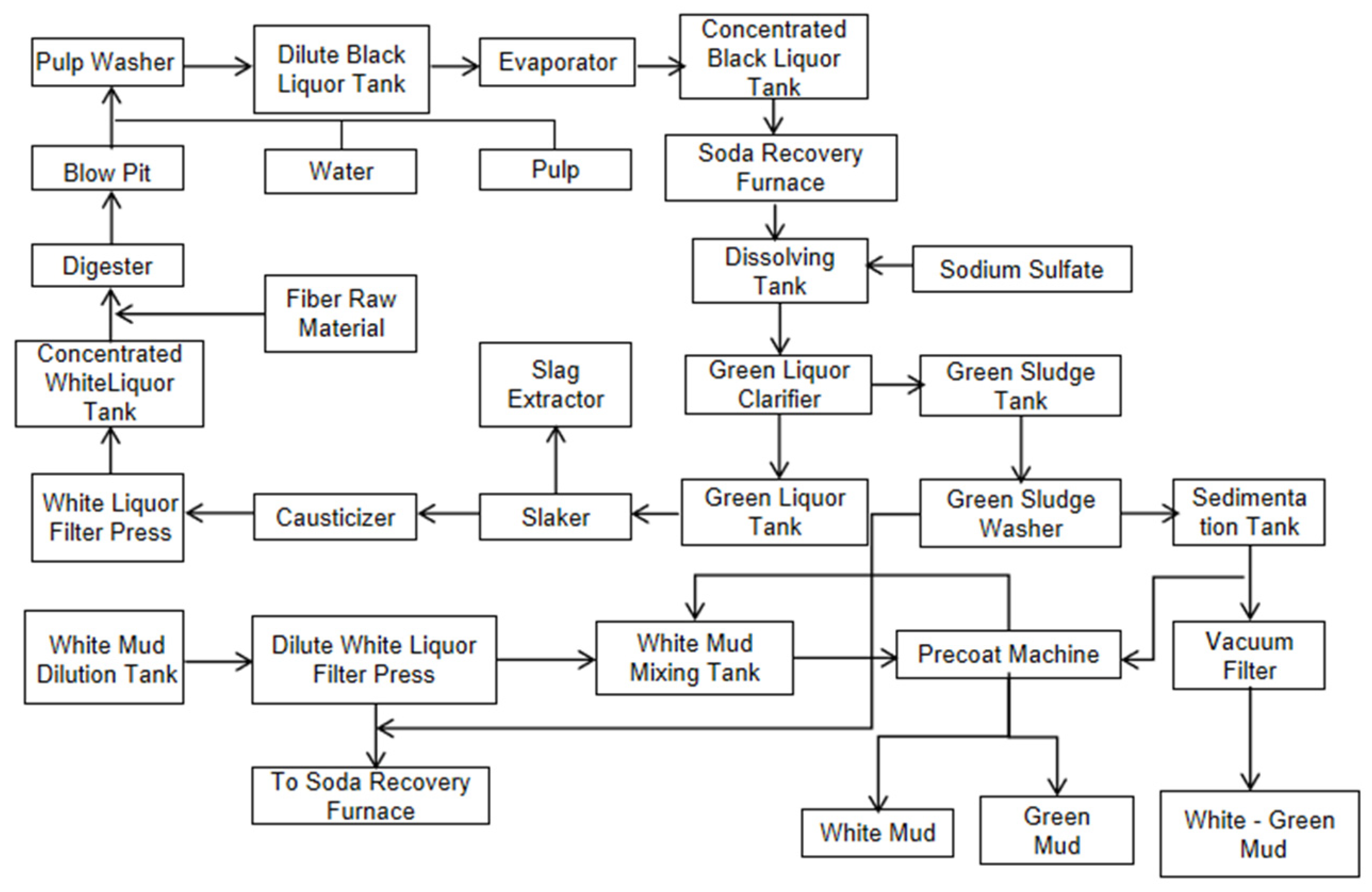
The paper-mill white clay used in this study was provided by Liuzhou Liujiang Paper Mill and generated through the causticization process in the alkali recovery of papermaking effluent. It was produced via a continuous process involving wood pulp cooking, black liquor alkali recovery, green liquor/white liquor recycling, multi-stage filtration/mixing, and pre-coat filtration separation. The black liquor alkali recovery system provides the alkaline foundation, with the white liquor filtered and diluted before reacting synergistically with green liquor, ultimately completing the alkali recovery process and the preparation of paper-mill white clay in the pre-coat filter. For detailed procedures, please refer to Figure 1.
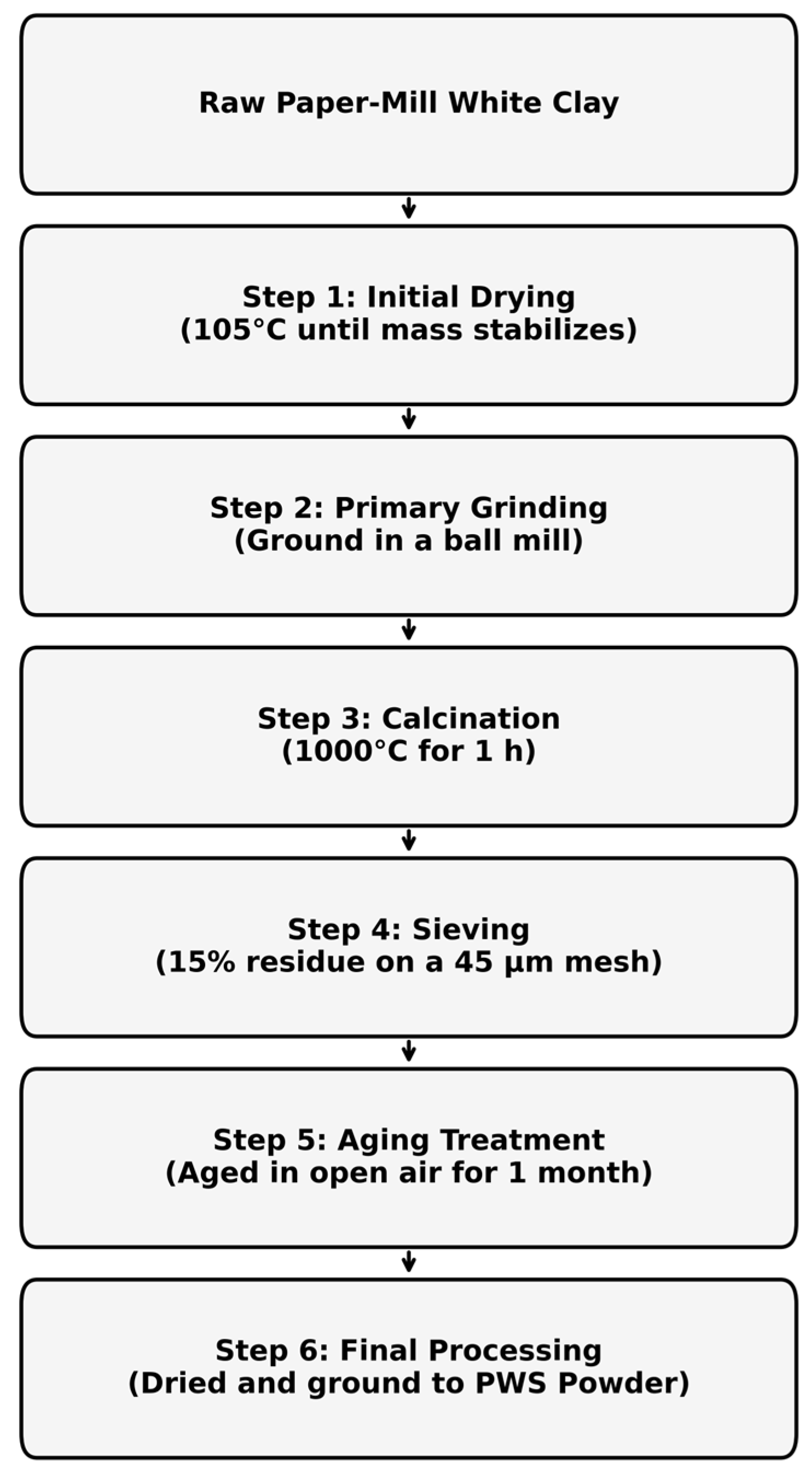
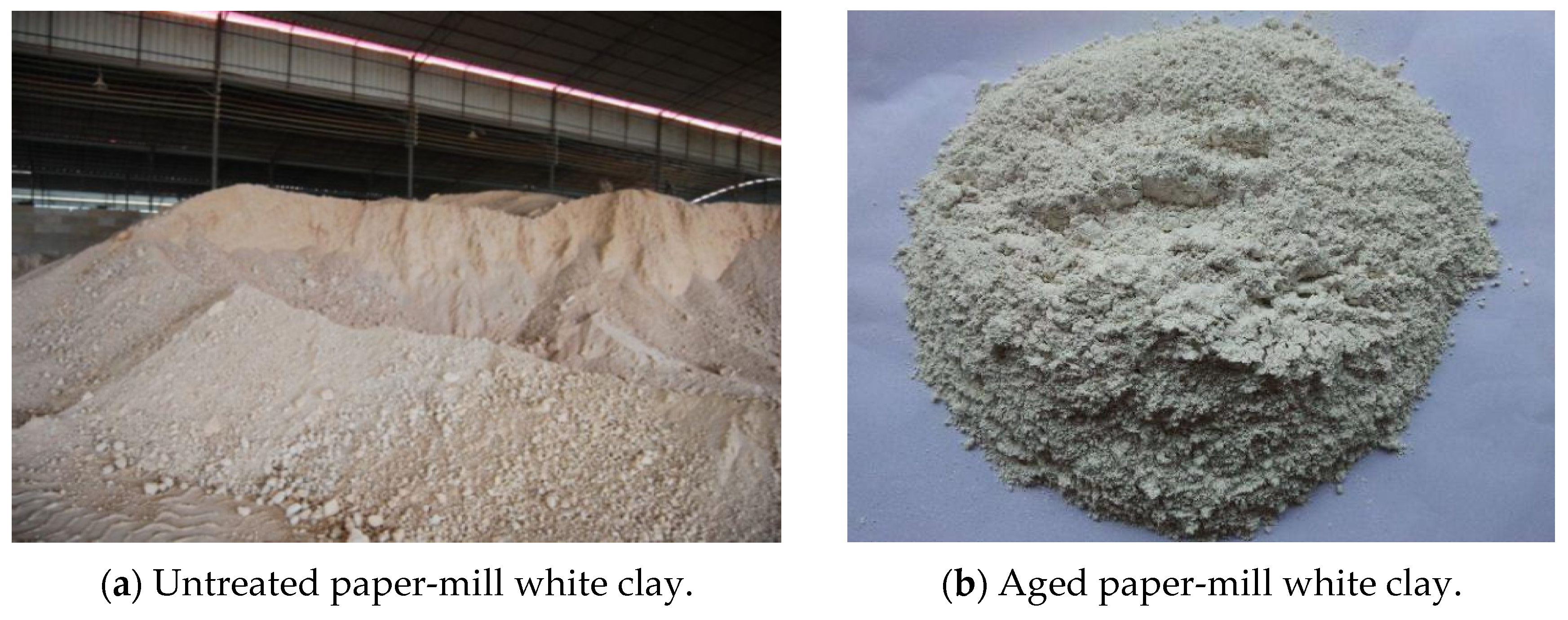
Paper-mill white clay, in its as-received state, appears as a grayish-white powdered solid, with slight agglomeration of particles under natural conditions and no pungent odor. The as-received moisture content of paper-mill white clay was measured in the laboratory to be 26.18%. Due to its high moisture content, tendency to form lumps, and the presence of some impurities, it cannot be directly used for concrete preparation. Therefore, pretreatment of paper-mill white clay is required before experimentation. Since the primary component of paper-mill white clay is calcium carbonate, which is highly consistent with limestone powder, the preparation of paper-mill white clay raw material follows the requirements for limestone powder specified in the Chinese National Standard “Limestone Powder Concrete” (GB/T 30190-2013). The flowchart of preparation steps is shown below as Figure 2. The preparation steps are as follows:
(1)
Place the paper-mill white clay sample (Figure 3) into an electric hot-air circulating oven and dry at a temperature of 105 °C. Remove and weigh the sample every 1 h until the mass stabilizes.
(2)
Grind the dried sample in a ball mill.
(3)
Calcinate the ground paper-mill white clay in a muffle furnace at 1000 °C for 1 h.
(4)
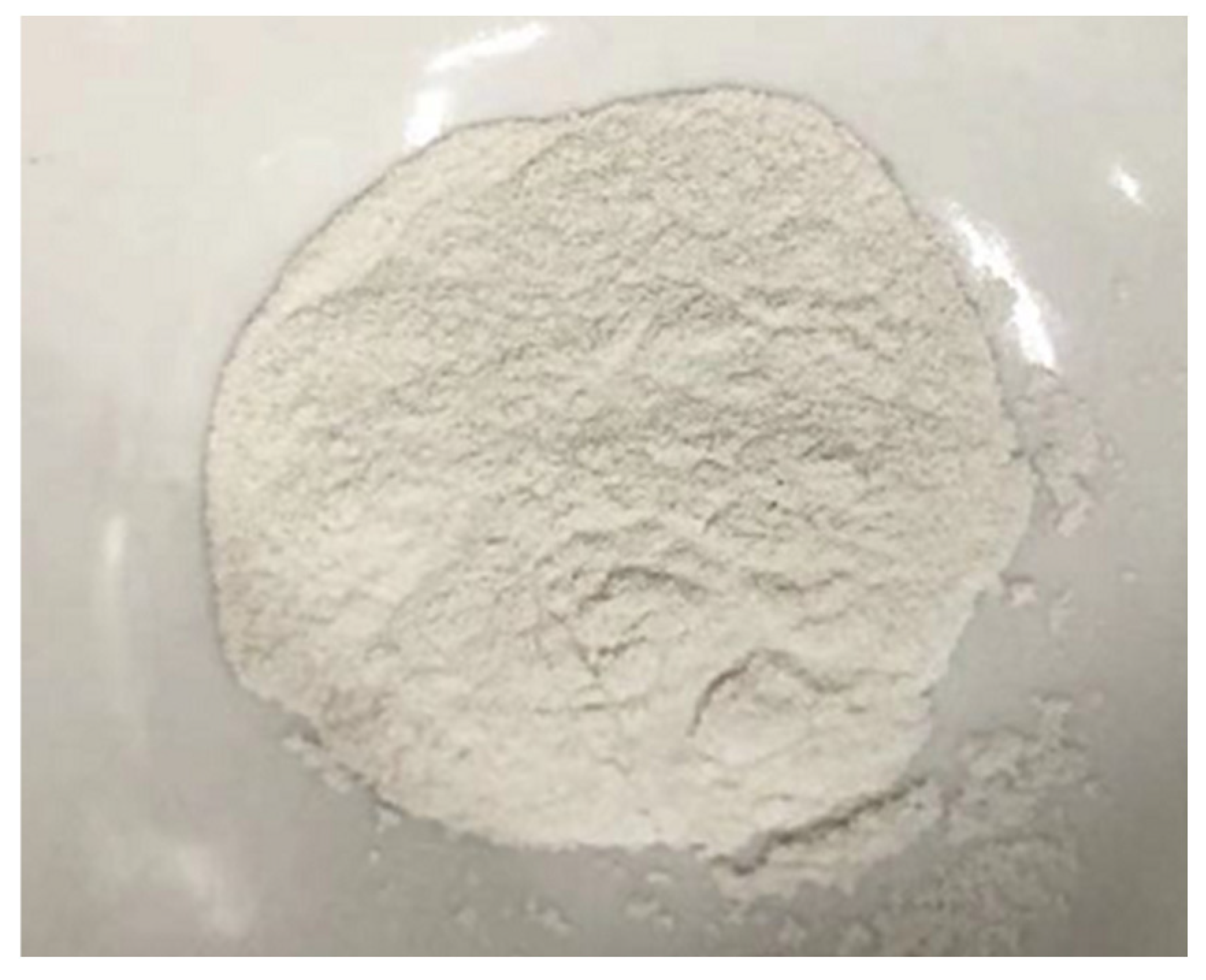
Sieve the calcined paper-mill white clay using a standard sieve shaker. The powder with a 15% residue on a 45 μm square mesh sieve is selected as the raw material for paper-mill white clay (Figure 4). Crucially, after calcination, the treated sludge is subjected to an aging process in an open environment for a month. During this aging period, the highly reactive free CaO generated from calcination fully absorbs moisture and CO2 from the air, undergoing a process of hydration and spontaneous carbonation to re-form stable CaO3. This aging treatment completely eliminates the risk of volume expansion caused by free CaO. The aged sludge is then dried and ground in a ball mill to obtain the final PWS powder used in the concrete mixtures.
The paper-mill white clay waste was tested for its properties according to the requirements for limestone powder specified in the Chinese National Standard “Limestone Powder Concrete” (GB/T 30190-2013) [3]. The test results are shown in Table 1.
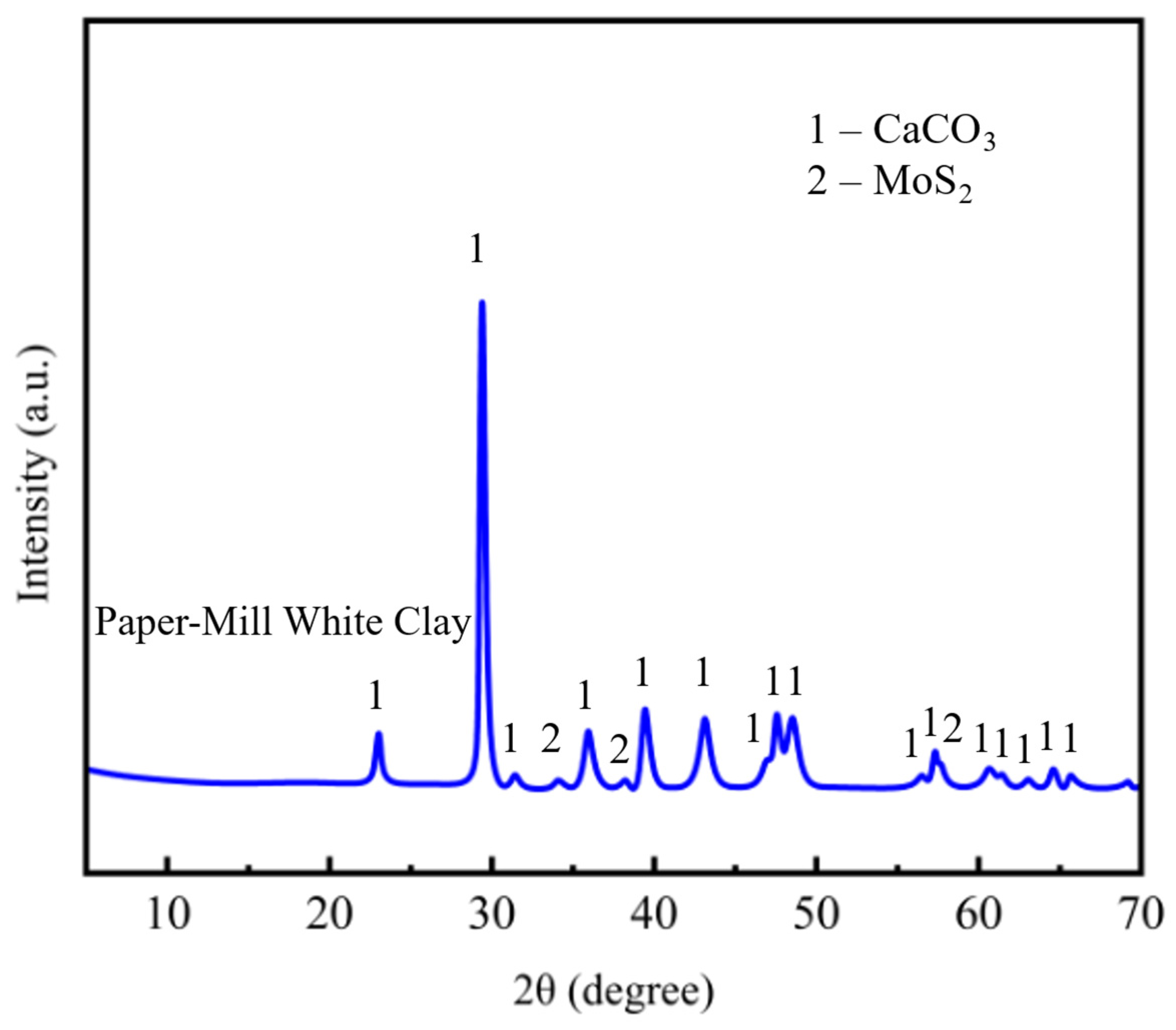
As shown in Table 1, all the performance indicators of the paper-mill white clay meet the requirements for limestone powder specified in the Chinese National Standard “Limestone Powder Concrete” (GB/T 30190-2013) [3]. An XRD analysis was conducted on the paper-mill white clay, yielding the XRD patterns of the paper-mill white clay (as shown in Figure 5). The main component of paper-mill white clay is CaCO3. This indicates that the properties of paper-mill white clay are similar to those of limestone, suggesting its feasibility as a substitute.

2.1.2. Other Materials

The cement used was P.O 42.5 ordinary Portland cement produced by Guangxi Yufeng Cement Co., Ltd. (Liuzhou, China), with relevant parameters shown in Table 2.
Expanded shale lightweight aggregate was selected from Henan Jinfeng Water Purification Materials Co., Ltd. (Gongyi, China), with relevant parameters shown in Table 3.
The sand used was ordinary sand, with measured parameters shown in Table 4.

2.2. Paper-Mill White Clay Lightweight Concrete Mix Design

To evaluate the macroscopic mechanical properties and microstructural morphology of the designed mixtures, a systematic experimental program was conducted. The methodology is divided into specimen preparation, mechanical testing, and microstructural observation.

2.2.1. Paper-Mill White Clay Lightweight Concrete Mix Design Method

Currently, there is no dedicated mix design specification for lightweight concrete. Therefore, the mix design was carried out by comprehensively considering the requirements specified in the “Ordinary Concrete Mix Design Specification (JGJ55-2011)” [25] and the “Technical Specification for Lightweight Aggregate Concrete (JGJ/T 12-2019)” [26], and the loose volume method was selected for mix proportion calculation.
(1)
Calculation of the designed strength value. The Formula (1) for calculating the designed strength value of paper-mill white lightweight concrete is as follows:
f c u , k f c u , 0 + 1.645 σ
In the formula, f c u , 0 is the design strength standard value of paper-mill white lightweight concrete (MPa); f c u , k is the designed strength value of paper-mill white lightweight concrete (MPa); and σ is the standard deviation of concrete strength (MPa).
The value of the standard deviation of concrete strength σ is shown in Table 5. This paper mainly studies components made of paper-mill white lightweight concrete, which have low requirements for mechanical properties; therefore, the standard deviation of strength σ is taken as 5.0.
(2)
Determine the water–binder ratio. Since the prepared paper-mill white lightweight concrete needs to meet crack resistance requirements, the water–binder ratio is controlled within the range of 0.3–0.4.
(3)
Determine the binder content. According to the requirements of the “Technical Standard for Application of Lightweight Aggregate Concrete (JGJ/T 12-2019)” [26], 700-grade expanded shale lightweight aggregate is used in the experiment; therefore, the binder content is taken as 350 kg, and P.O 42.5 ordinary Portland cement is selected.
(4)
Calculate the mineral admixture dosage. Formulas (2) and (3) can be used to calculate the mineral admixture dosage and the replacement ratio of mineral admixture.
m f = m b × β f
m c = m b m f
In the formula, m f is the mineral admixture dosage per cubic meter of lightweight aggregate concrete (kg); m b is the binder content per cubic meter of lightweight aggregate concrete (kg); β f is the mineral admixture replacement ratio (%); and m c is the cement dosage per cubic meter of lightweight aggregate concrete (kg).
(5)
Determine the sand ratio β . The proportion of sand in the concrete mixture is an important factor in preparing paper-mill white lightweight concrete; the sand ratio affects the performance of the concrete. The sand ratio can be selected according to Table 6, and the sand ratio for this experiment is 40%.
(6)
Determine the coarse and fine aggregate dosage. According to specification requirements, the total loose bulk volume of coarse and fine aggregates V t is selected as 1.2, and the dosages of coarse and fine aggregates are calculated using the following formulas:
V s = V t × β s
M s = V s × ρ l s
V a = V t V s
M a = V b × ρ l a
In the formula, V s , V a are the loose bulk volume of fine and coarse aggregate per cubic meter of concrete (m3), respectively; V t is the total loose bulk volume of coarse and fine aggregates (m3); M s , M a are the dosage of fine aggregate and coarse aggregate per cubic meter of concrete (kg), respectively; and β s is the loose volume sand ratio (%).
(7)
Calculate the net water content per unit volume W 0 . According to the water–cement ratio w c and the total water content per unit volume W 0 , the net water content per unit volume can be calculated using Formula (8).
W 0 = C 0 × C W
In the formula, W 0 is the net water content per unit volume of paper-mill white clay lightweight concrete (kg); C 0 is the cement dosage of paper-mill white clay lightweight concrete (kg); and C W is the reciprocal of the water–binder ratio of paper-mill white clay lightweight concrete.

2.2.2. Specimen Preparation Method

Paper-mill white clay lightweight concrete specimens were cast, formed, and cured in the materials laboratory to prepare standard cubes with dimensions of 150 × 150 × 150 mm.
The specimen casting, forming, and curing procedures are as follows:
(1)
According to the mix design scheme in Table 7, crushed stone, expanded shale lightweight aggregate, sand, cement, and paper-mill white clay were weighed.
(2)
Since the expanded shale lightweight aggregate has inherent water absorption, the weighed aggregate was soaked for 2–3 h to ensure full water absorption, and then spread out and air-dried to achieve a saturated surface-dry condition.
(3)
A forced-action mixer was used for mixing. The crushed stone, expanded shale lightweight aggregate, cement, paper-mill white clay, and sand were added to the mixer in sequence and dry-mixed for 120 s. Then water was added, and mixing continued for another 120 s. The uniformly mixed concrete was promptly transferred into prepared molds and compacted by vibration.
(4)
Immediately after casting, the exposed surfaces of the molds were covered with plastic film to prevent early moisture evaporation. After 1 day, the specimens were demolded, and the plastic film was removed. Subsequently, the demolded specimens were transferred into a standard curing room (temperature 20 ± 2 °C, relative humidity ≥ 95%) and cured until the specified testing ages in strict accordance with the standard GB/T 50081-2019 [27].

2.3. The Test Methodology

2.3.1. Paper-Mill White Clay Lightweight Concrete Cube Compressive Strength Test

A paper-mill white clay lightweight concrete cube compressive strength test was conducted according to the designed test scheme, involving a total of 8 test groups with 3 specimens in each group, amounting to 24 specimens. The test method followed the requirements of the “Technical Standard for Application of Lightweight Aggregate Concrete (JGJ/T 12-2019)” [26], and the cube compressive strength was measured on concrete specimens that had reached a 28-day curing age. The detailed test scheme is presented in Table 7.

2.3.2. Paper-Mill White Clay Lightweight Concrete Splitting Tensile Strength Test

A paper-mill white clay lightweight concrete splitting tensile strength test was conducted according to the test scheme designed in Table 7, involving a total of 8 test groups with 3 specimens in each group, amounting to 24 specimens. The test method followed the requirements of the “Standard for Test Methods of Physical and Mechanical Properties of Concrete (GB/T 50081-2019)” [27], and the splitting tensile strength was measured on the paper-mill white clay lightweight concrete specimens that had reached a 28-day curing age. The specific test procedure is as follows:
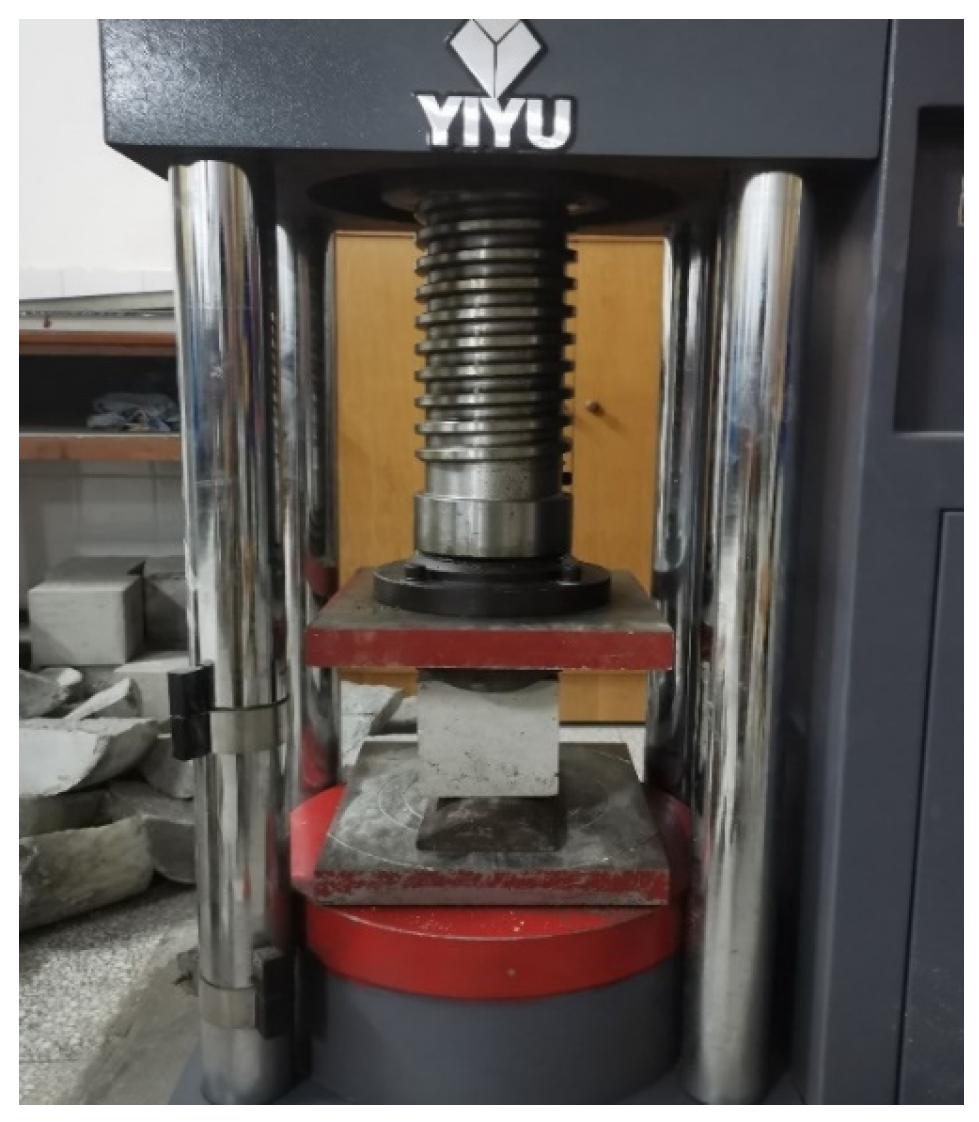
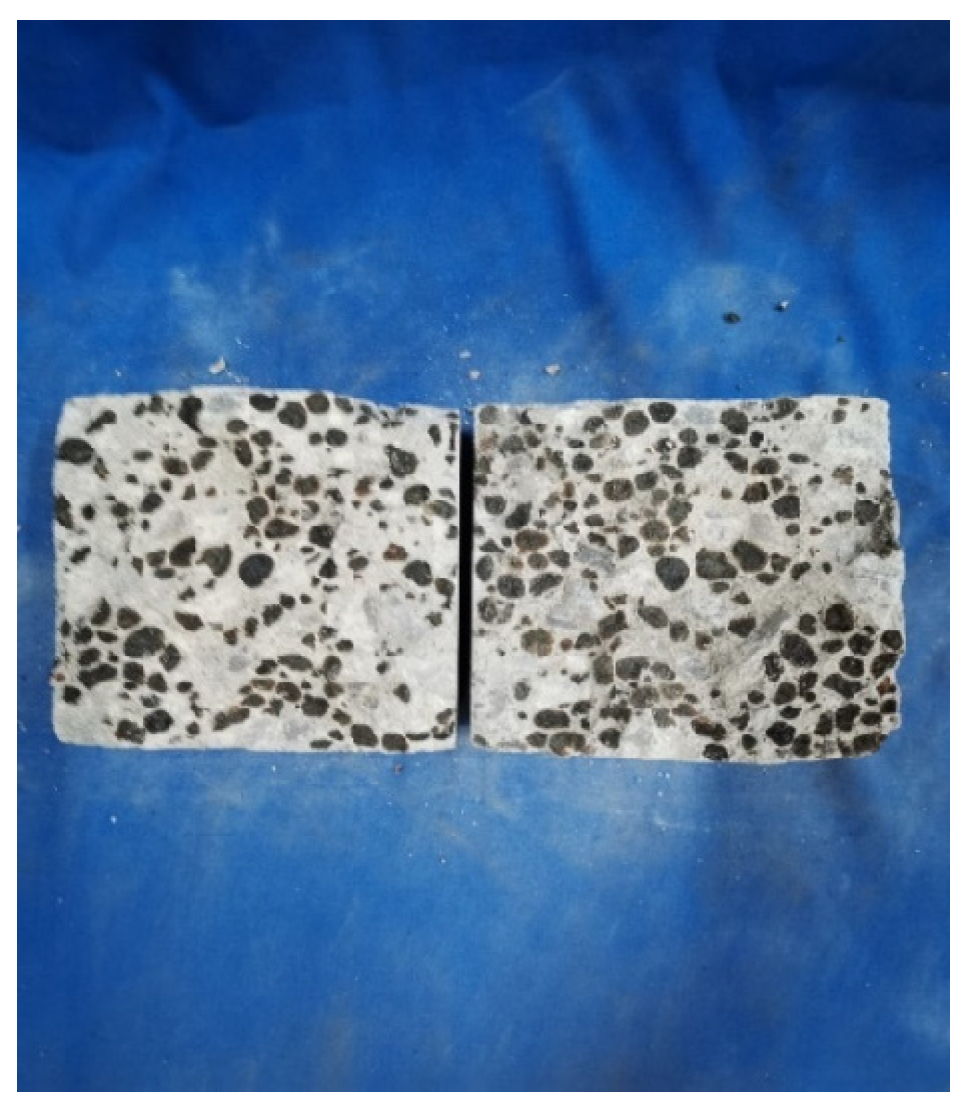
The specimen loading setup and failure fracture surface are shown in Figure 6 and Figure 7, respectively.

2.3.3. Paper-Mill White Clay Lightweight Concrete Early-Age Slab Cracking Resistance Test

A paper-mill white clay lightweight concrete early-age slab cracking resistance test was conducted according to the concrete early-age cracking test method specified in the “Standard for Test Methods of Long-Term Performance and Durability of Ordinary Concrete (GB/T 50082-2009)” [28]. A notched mold with dimensional constraints was used to prepare concrete slab specimens of size 800 × 600 × 100 mm. The paper-mill white clay lightweight concrete was mixed according to the mix proportions shown in Table 7, and a total of 8 test groups were designed based on different paper-mill white clay dosages, with 2 specimens per group, amounting to 16 specimens in total. After 24 h of casting, crack quantity, individual crack length, and crack width were measured using a steel ruler and a crack observation instrument to investigate the influence of paper-mill white clay dosage on the early-age cracking resistance of lightweight concrete, followed by a mechanistic analysis. The calculation formulas are as follows:
(1)
Average crack area per crack:
a = 1 2 N i = 1 N W i × L i
(2)
Number of cracks per unit area:
b = N A
(3)
Total crack area per unit area:
c = a × b
In the formulas, a is the average crack area per crack (mm2/crack), rounded to the nearest 1 mm2/ crack; b is the number of cracks per unit area (cracks/m2), rounded to the nearest 0.1 crack/m2; c is the total crack area per unit area (mm2/m2), rounded to the nearest 1 mm2/m2; N is the total number of cracks (cracks); W i is the maximum width of the i -th crack (mm), measured to an accuracy of 0.01 mm; L i is the length of the i -th crack (mm), measured to the nearest 1 mm; and A is the slab area (m2), measured to two decimal places, taken as 0.48   m 2 in this paper. The Grading of early crack resistance of concrete is shown in Table 8.

3. Experimental Results and Analysis

3.1. Paper-Mill White Clay Lightweight Concrete Cube Compressive Strength Test

3.1.1. Compressive Strength Test Results

Paper-mill white clay dosage and its relationship with cube compressive strengthise detailed in Figure 8, respectively.

3.1.2. Compressive Strength Test Analysis

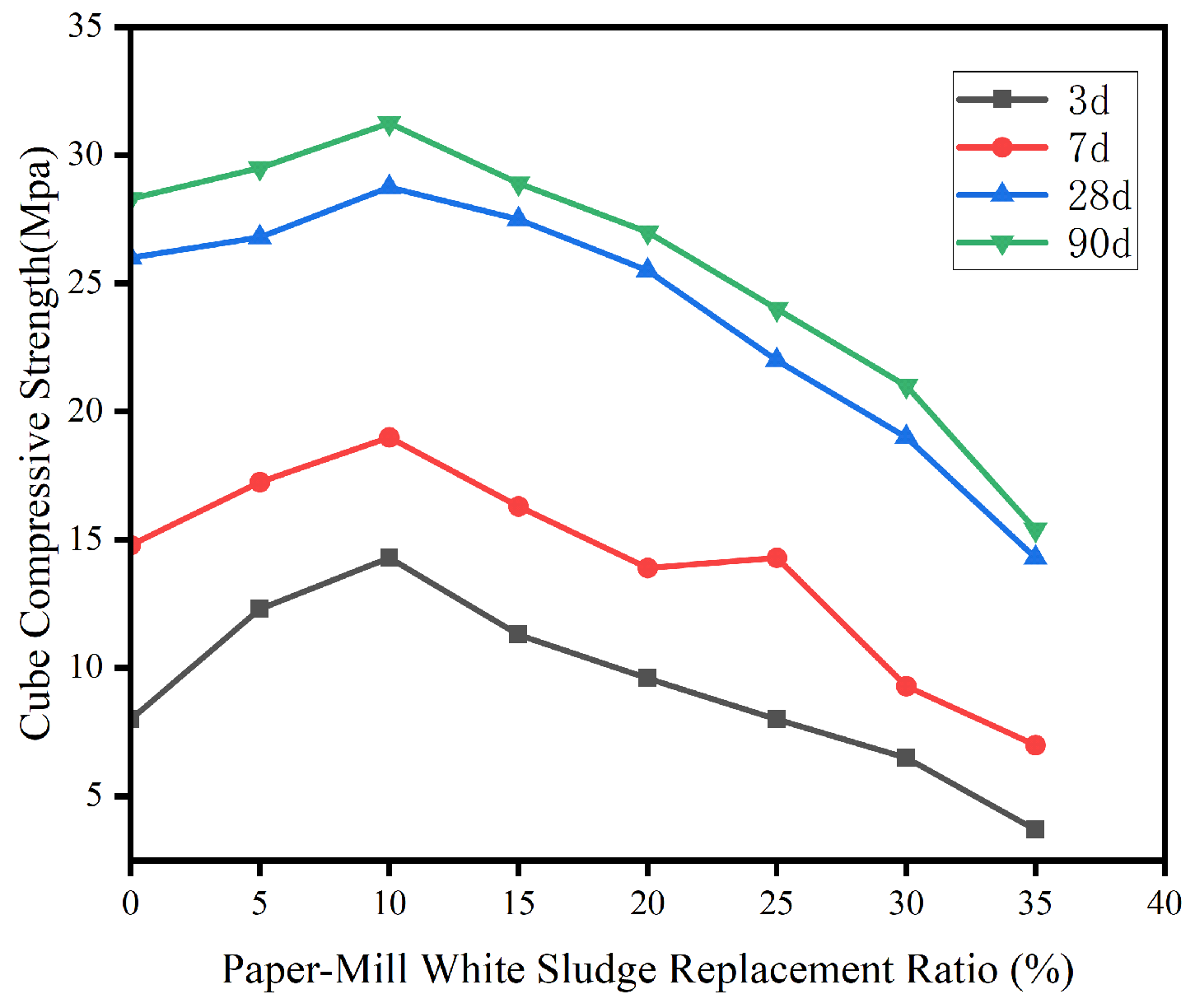
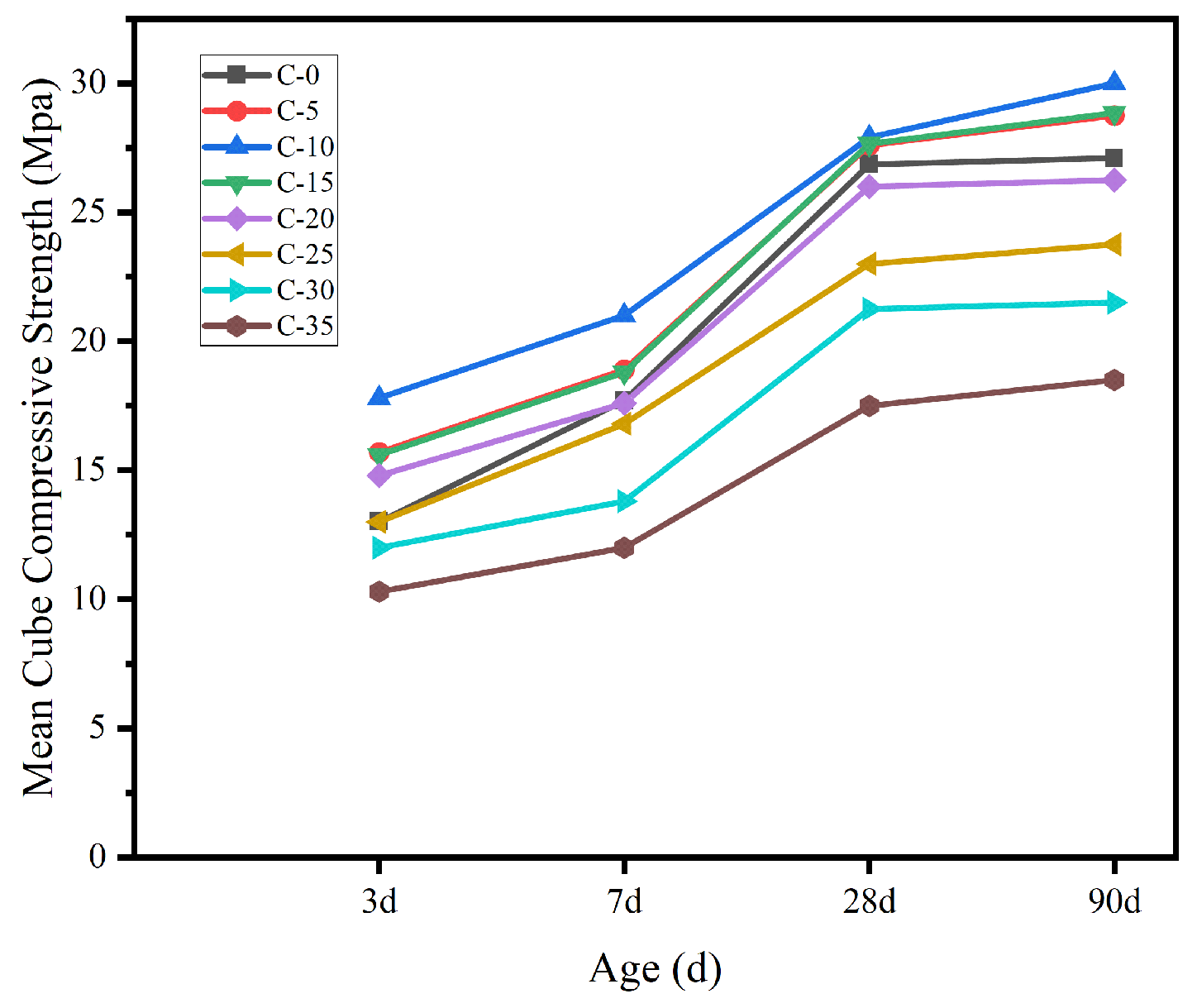
The relationship between curing age and cube compressive strength is detailed in Figure 9, respectively.
From Figure 8, it can be observed that as the paper-mill white clay dosage increases, the cube compressive strength of concrete first increases and then decreases. The compressive strengths of the groups with 5%, 10%, and 15% paper-mill white clay dosages are all higher than that of the 0% dosage group. However, the compressive strengths of the groups with 20–35% paper-mill white clay dosage are lower than that of the 0% dosage group. Among all curing ages, the group with 10% paper-mill white clay dosage exhibits the highest cube compressive strength. According to the data in Figure 9, the 28-day compressive strength of the control group (0% dosage) is 26.32 MPa. The strengths of the groups with 5%, 10%, and 15% paper-mill white clay dosage increase by 3.07%, 7.6%, and 4.6% respectively, reaching 27.13 MPa, 28.32 MPa, and 27.53 MPa. The 28-day compressive strength of the 20% dosage group is comparable to that of the control group, decreasing by only 2.24%. As the paper-mill white clay dosage continues to increase, the strength decreases progressively, with the most significant reduction observed in the 35% dosage group, whose 28-day compressive strength is only 68% of that of the control group.
From Figure 9, it is evident that as the curing age increases, the cube compressive strength of all paper-mill white clay lightweight concrete groups gradually increases. All groups exhibit a pattern of rapid strength gain in the early stages and slower growth in later stages. For the 0% dosage group, the compressive strengths at 3 days, 7 days, and 90 days reach 51.2%, 68.8%, and 105.4% of the 28-day strength, respectively. For the 5% dosage group, the corresponding values are 59.9%, 73.0%, and 106.9%. For the 10% dosage group, they are 63.8%, 75.4%, and 106.3%. For the 15% dosage group, they are 57.9%, 70.5%, and 103.9%. It can thus be concluded that the strength growth rates of the concrete groups with 5%, 10%, and 15% paper-mill white clay dosage during the 0–28 day period are all higher than that of the 0% dosage group. However, during the 90-day period, the strength growth rates of these groups are similar to that of the 0% dosage group, indicating that the promoting effect of paper-mill white clay on early-age compressive strength is more pronounced than its effect on later-age strength.

3.2. Paper-Mill White Clay Lightweight Concrete Splitting Tensile Strength Test

3.2.1. Splitting Tensile Strength Test Results

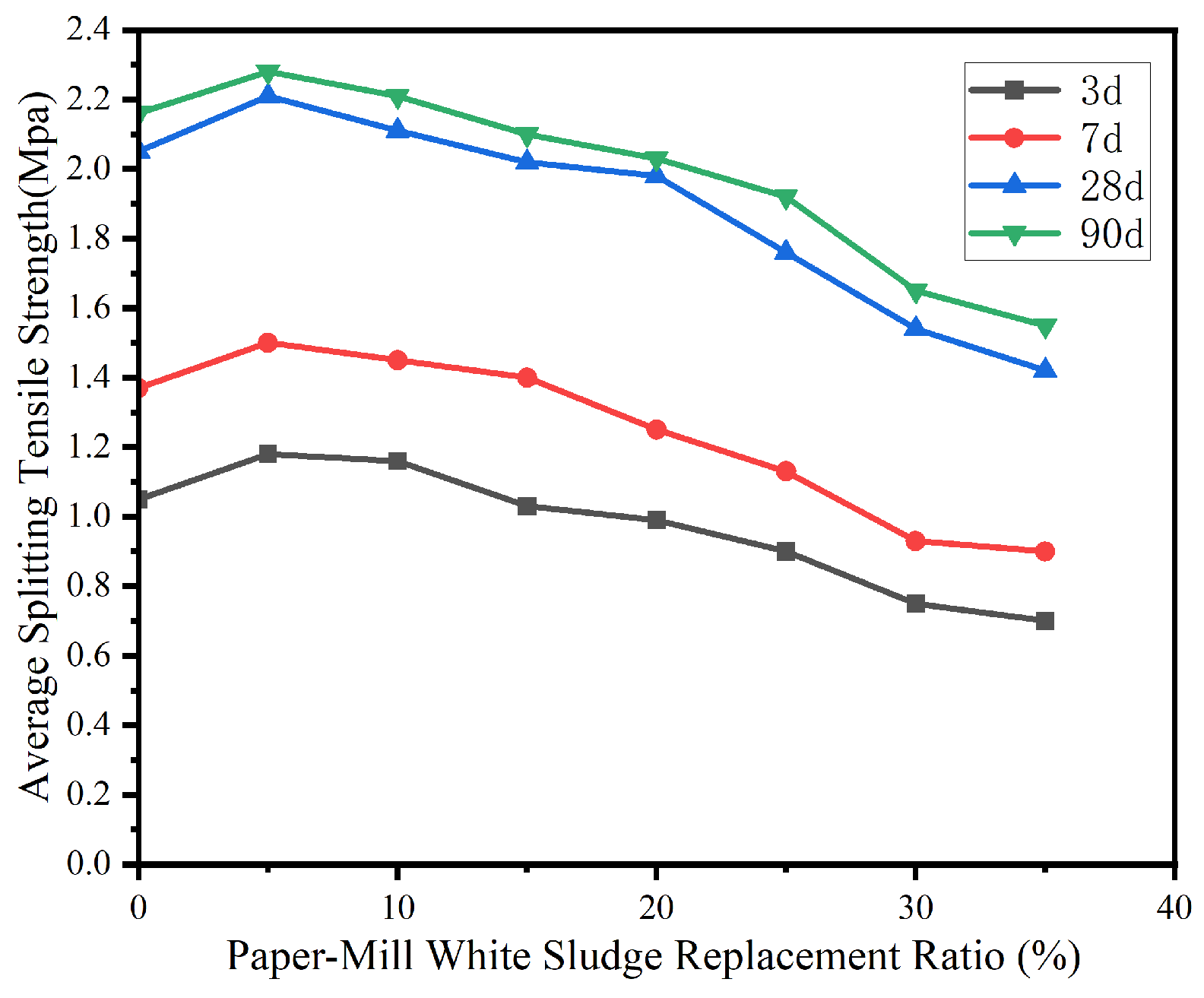
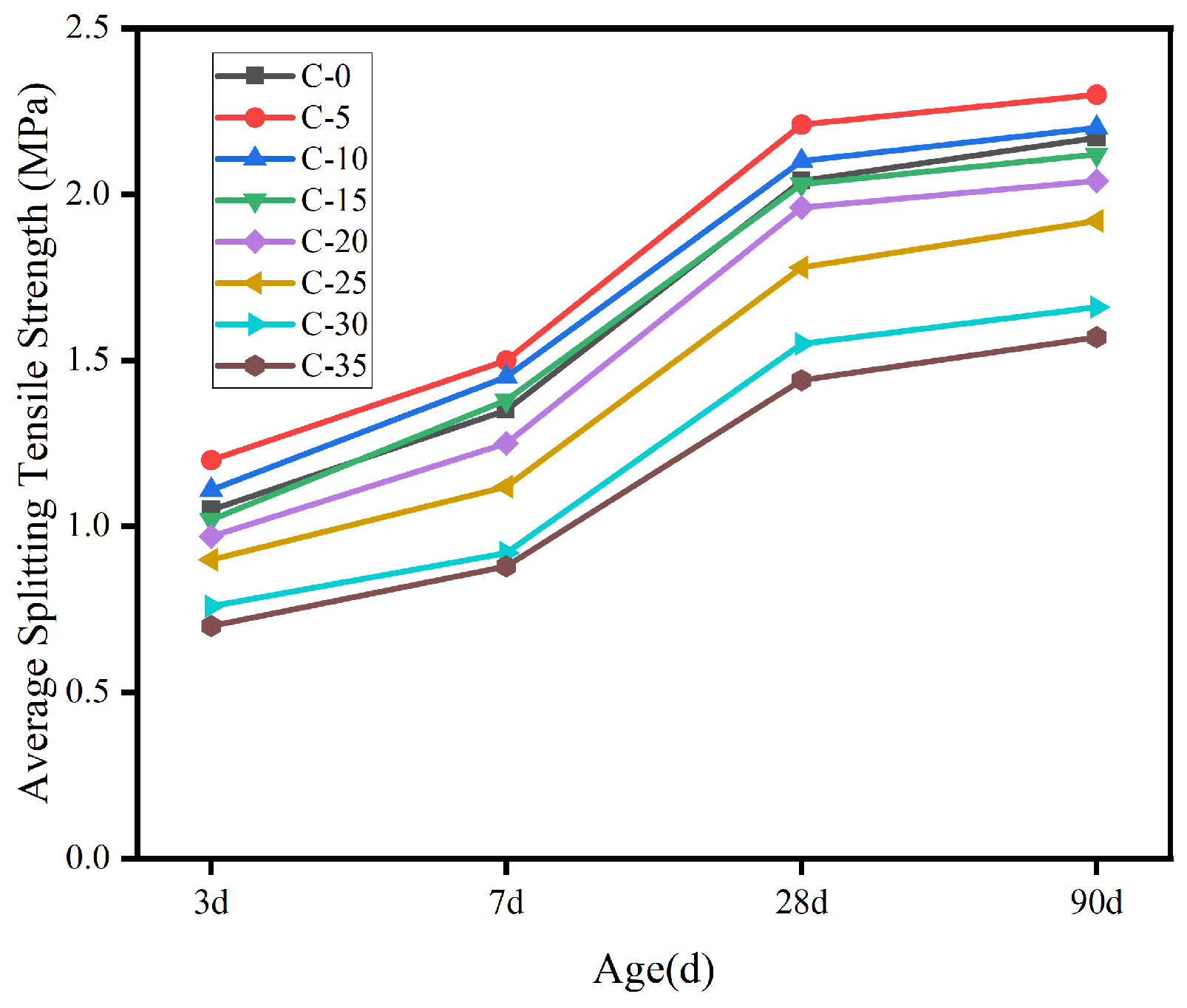
Paper-mill white clay lightweight concrete splitting tensile strength test results are detailed in Figure 10 and Figure 11, respectively.

3.2.2. Splitting Tensile Strength Test Analysis

From Figure 10, it can be observed that as the paper-mill white clay dosage increases, the splitting tensile strength of lightweight concrete first increases and then decreases. The splitting tensile strengths of the groups with 5% and 10% paper-mill white clay dosage are higher than that of the 0% dosage group, while the strengths of the groups with 15–35% dosage are lower than the 0% group. Among all curing ages, the group with 5% paper-mill white clay dosage exhibits the highest splitting tensile strength. Compared to the 0% dosage group, the 28-day splitting tensile strength of the 5% and 10% dosage groups increases by 8.3% and 2.9%, respectively. The 28-day splitting tensile strength of the 15% dosage group is comparable to that of the control group, decreasing by only 1%. As the paper-mill white clay dosage continues to increase, the strength decreases progressively, with the most significant reduction observed in the 35% dosage group, whose 28-day splitting tensile strength is only 70.2% of that of the control group.
From Figure 11, it is evident that the splitting tensile strength of all concrete groups gradually increases with curing age. All groups exhibit a pattern of rapid strength gain in the early stages and slower growth in later stages. For the control group (0% dosage), the splitting tensile strengths at 3 days, 7 days, and 90 days reach 49.3%, 64.9%, and 106.3% of the 28-day strength, respectively. For the 5% dosage group, the corresponding values are 53.2%, 67.6%, and 103.2%. For the 10% dosage group, they are 52.1%, 69.2%, and 105.2%. For the 15% dosage group, they are 50.2%, 68.5%, and 104.4%. It can thus be concluded that during the 0–28-day period, the splitting tensile strength growth rates of the concrete groups with 5%, 10%, and 15% paper-mill white clay dosage are all higher than that of the control group, while during the 90-day period, their strength growth rates are slightly lower. This indicates that paper-mill white clay has a promoting effect on early-age splitting tensile strength, but its influence on later-age strength is limited.

3.3. Paper-Mill White Clay Lightweight Concrete Early-Age Slab Cracking Resistance Test

3.3.1. Early-Age Slab Cracking Resistance Test Results

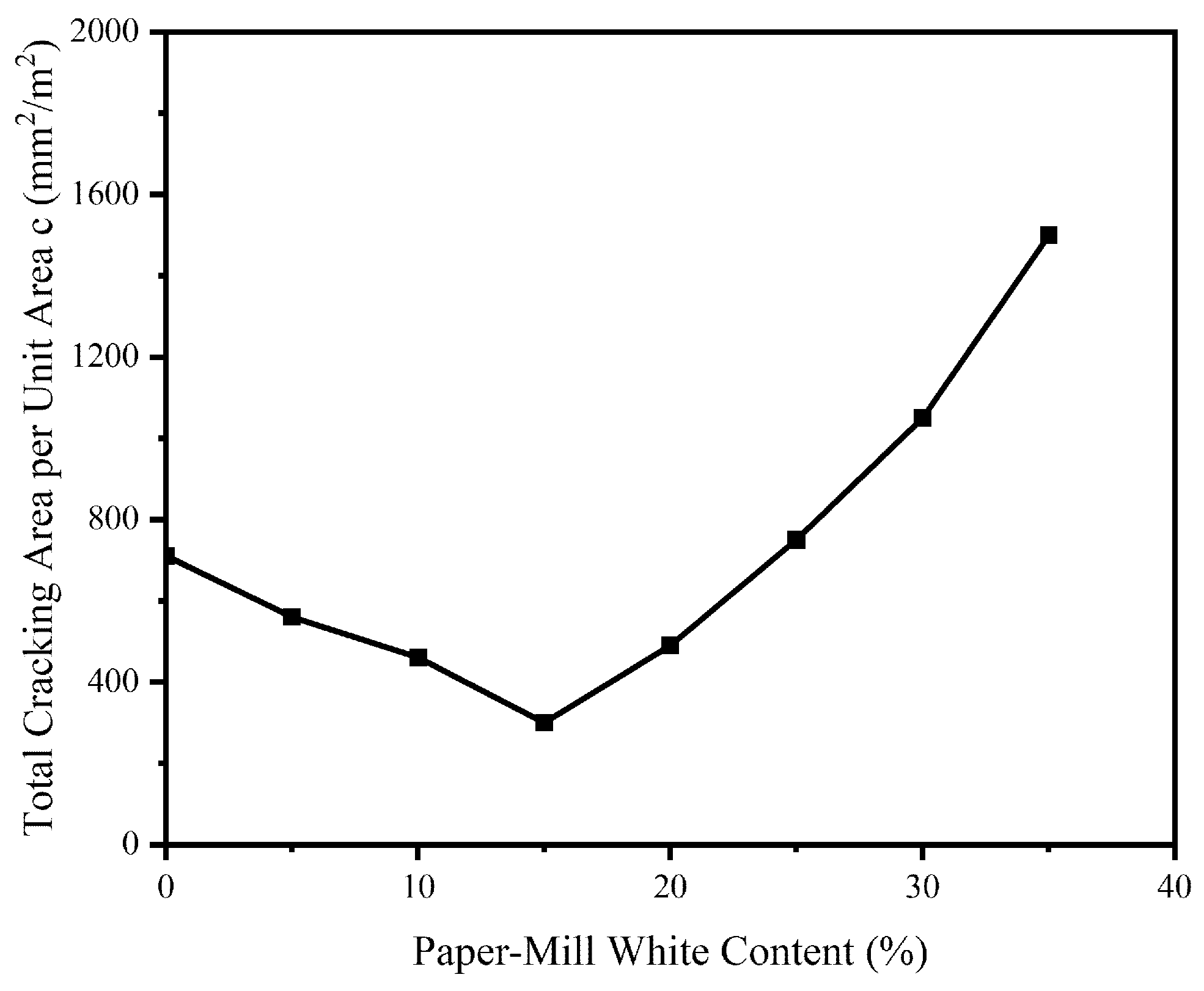
Paper-mill white clay lightweight concrete early-age slab cracking resistance test results and the relationship between paper-mill white clay dosage and total crack area per unit area are presented in Table 9 and Figure 12, respectively.

3.3.2. Early-Age Slab Cracking Resistance Test Analysis

From Table 9 and Figure 12, the following observations can be made:
(1) As the paper-mill white clay dosage increases, the total crack area per unit area of paper-mill white clay lightweight concrete first decreases and then increases. The total crack areas per unit area for mixtures with 5%, 10%, 15%, and 20% paper-mill white clay dosage are all smaller than that of the control group (0% dosage), whereas those with 25–35% dosage are larger. Compared to the control group, the total crack area per unit area is reduced by 22.60%, 35.57%, 56.92%, and 30.82% at 5%, 10%, 15%, and 20% dosage, respectively. The maximum crack width reduction rates are 1.82%, 10.9%, 36.36%, and 16.67%, and the maximum crack length reduction rates are 23.24%, 22.03%, 32.93%, and 19.85%, respectively. When the paper-mill white clay dosage exceeds 25%, all indicators increase with dosage, indicating a significant deterioration in early-age cracking resistance.
(2) According to the requirements of the “Standard for Test Methods of Long-Term Performance and Durability of Ordinary Concrete (GB/T 50082-2009)” [28], the mixture with 15% paper-mill white clay dosage exhibits the best early-age cracking resistance, achieving a crack resistance grade of L-IV. This indicates that replacing 15% of cement with paper-mill white clay significantly inhibits plastic shrinkage cracking. Mixtures with 5%, 10%, and 20% dosage achieve grade L-III; at 25% dosage, the grade is L-II; and at 25%, 30%, and 35% dosage, the grade reaches only L-I.
(3) The test results show that paper-mill white clay dosage below 20% effectively suppresses the initiation and propagation of microcracks, while dosage above 20% negatively impacts early-age crack resistance. From a mechanistic perspective, multiple factors contribute to concrete cracking. The primary cause of early-age cracking is thermal stress, resulting from the hydration heat generated during cement hydration. This heat accumulates within the paste, raising internal temperature. After hydration completion, cooling induces tensile stress on the concrete surface. If this stress exceeds the tensile strength, cracks form. Compared to cement, paper-mill white clay exhibits weaker hydration and lower heat release. Its incorporation reduces early hydration rate and heat generation, thereby minimizing the temperature differential between the interior and exterior of the concrete, ultimately reducing thermal stress and shrinkage strain. Additionally, paper-mill white clay acts as a micro-filler, optimizing the internal pore structure and reducing free water loss, thus inhibiting drying shrinkage and crack development. However, when the dosage exceeds 20%, excessive replacement of cement severely hinders hydration, reduces hydration products, weakens paste cohesion, and leads to a looser internal structure, making the concrete more prone to cracking.

4. Microstructural Analysis of Paper-Mill White Clay Lightweight Concrete

Concrete is a porous, multiphase, heterogeneous system composed of aggregates, cement paste, and the interfacial transition zone (ITZ). Long-term research and practice indicate that merely enhancing the strength and durability of aggregates and cement paste is insufficient to improve overall concrete performance. The ITZ between aggregates and cement paste has a different microstructure from the bulk cement paste—typically looser, weaker, and more prone to cracks and pores. Defects at the aggregate–paste interface are often the primary cause of concrete failure and are closely related to its physical properties and durability.
In cement-based materials, C-S-H gel and large flake-like CH crystals are the core microscopic products that determine the performance of concrete: C-S-H gel, as an amorphous nano-binding phase, is the fundamental source of the mechanical strength of concrete. It carries stress and blocks the intrusion of harmful substances by filling pores and densifying the structure. On the other hand, CH crystals are essential for maintaining the alkalinity of the pore solution, protecting steel reinforcement, and activating pozzolanic reactions. However, they possess low intrinsic strength and a fragile structure, making them prone to becoming initiation sites for microcracks and participating in deterioration processes such as carbonation and erosion. This approach not only enhances mechanical performance and durability but also provides a critical theoretical basis and technical pathway for the high-value-added resource utilization of industrial solid waste.
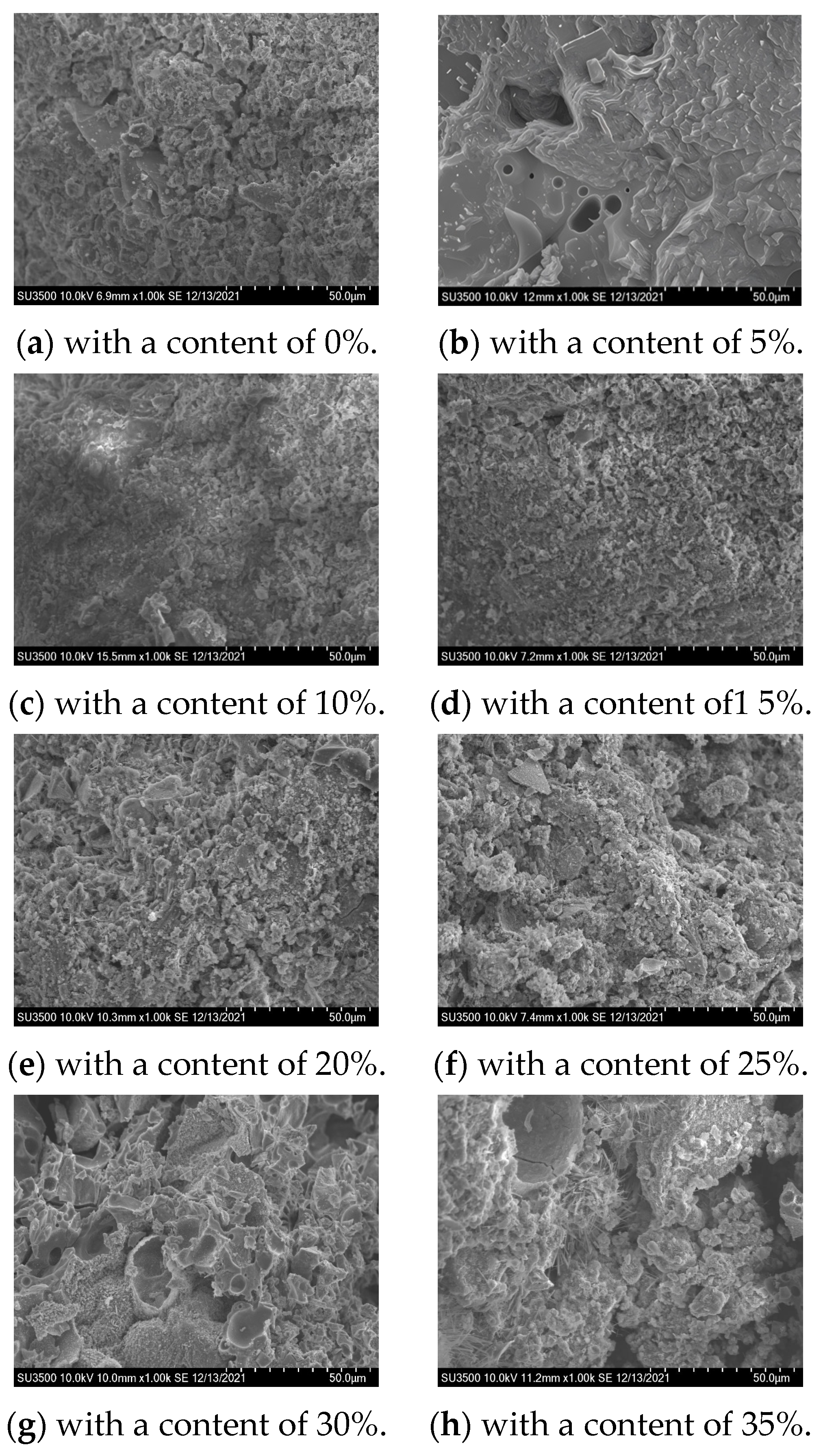
In this study, eight test groups were designed with paper-mill white clay dosages of 0%, 5%, 10%, 15%, 20%, 25%, 30%, and 35%. Scanning electron microscopy (SEM) was employed to investigate the effect of paper-mill white clay on the hydration process of cementitious materials and the improvement of the interfacial transition zone. For detailed SEM images, please refer to Figure 13.
Paper-mill white clay lightweight concrete interfacial transition zone (ITZ) microstructure analysis
From Figure 13a, it can be observed that in the lightweight concrete with 0% paper-mill white clay dosage, the hydration products in the interfacial transition zone (ITZ) are primarily composed of C-S-H gel and large flake-like CH crystals. No obvious microcracks are present, but a significant number of micropores exist. From Figure 13b–d, as the paper-mill white clay dosage increases, compared to the control group, the size of flake-like CH crystals gradually decreases, micropores become fewer, and the internal concrete structure becomes increasingly denser. When the dosage reaches 15%, large-sized CH crystals are rarely observed, and no apparent pores are visible. The structure is composed of various hydration products interwoven and bonded together, forming the most compact internal structure.
The reduction in large CH crystals is attributed to the micro-nucleation effect of paper-mill white clay. According to adsorption theory, CaCO3 particles physically adsorb Ca+ ions diffusing around them, resulting in the replacement of large CH crystals in the ITZ and cement paste with numerous finer CH crystals, thereby enhancing interfacial bond strength. Additionally, the calcium carbonate in paper-mill white clay can chemically react with C3A to form stable hydrated calcium carboaluminate, promoting interfacial cementation. The reduction in micropores reflects the “particle filling effect” of paper-mill white clay. An appropriate amount of paper-mill white clay can fill micropores within the ITZ and cement paste, contributing to the formation of a continuous and dense internal structure.
From Figure 13e–h, it is evident that further increasing the paper-mill white clay dosage exerts negative effects on the concrete structure. At 20% dosage, C-S-H gel and small CH crystals dominate, with a small amount of acicular AFt formed. The AFt is small in size and does not aggregate, integrating well with C-S-H gel and CH crystals to form a dense and continuous structure. At 25% dosage, the amount of large CH crystals and acicular AFt increases, with a few micropores and microcracks appearing, indicating further deterioration of the interfacial structure. At 30% and 35% dosage, the interfacial structure becomes loose, with numerous pores and microcracks present, and a large amount of acicular AFt formed—larger in size, entangled, and enriched. This leads to severe degradation of the interfacial structure.
This deterioration occurs because excessive paper-mill white clay dispersed in the cement paste adversely affects the bonding performance of the paste and interface, making it easier for pores and cracks to form. These defects create favorable conditions for the growth of acicular AFt. Given that AFt has strong expansive properties, its growth can easily induce expansion-induced cracking in concrete. Therefore, controlling AFt formation is crucial for improving the cracking resistance of concrete.

5. Conclusions

This study systematically investigates the feasibility and performance impacts of partially substituting cement with paper-mill white clay for the preparation of lightweight concrete. Using an orthogonal experimental design, the influence of the water–binder ratio, crushed stone volume replacement rate, and paper-mill white clay dosage on the cube compressive strength, splitting tensile strength, and early-age cracking resistance of the concrete was analyzed. The results demonstrate that an appropriate incorporation of paper-mill white clay effectively enhances both the mechanical properties and durability of the concrete:
(1) The cube compressive strength test results show that as the paper-mill white clay dosage increases, the cube compressive strength of concrete first increases and then decreases. When the paper-mill white clay dosage is 5%, the splitting tensile strength of paper-mill white clay lightweight concrete at all curing ages reaches the highest value. This indicates that incorporating an appropriate amount of paper-mill white clay can enhance both the cube compressive strength and splitting tensile strength of paper-mill white clay lightweight concrete.
(2) The early-age cracking resistance test results show that as the paper-mill white clay dosage increases, the early-age crack resistance of concrete first improves and then deteriorates. When the paper-mill white clay dosage is 15%, the early-age cracking resistance is optimal, achieving a crack resistance grade of L-IV.
(3) Scanning electron microscopy (SEM) analysis reveals that at a 15% dosage, large-sized CH crystals are rarely present, and no obvious pores are observed. The structure is composed of various hydration products interwoven and bonded together, forming the most compact internal microstructure of the concrete.
These results confirm that, through mix proportion optimization, the pozzolanic effect and micro-aggregate filling effect of paper-mill white clay can synergistically improve both the microstructure and macro-performance of concrete. This study has thereby achieved its set objectives: it has clarified the feasibility of using paper-mill white clay as a cement substitute in lightweight concrete, identified the appropriate dosage range (5–15%) for enhancing mechanical properties, and provided a practical technical pathway for the large-scale, high-value-added resource utilization of paper-mill white clay.

Author Contributions

Conceptualization, Z.-F.G. and L.P.; methodology, J.-Y.Z.; software, Y.-X.C.; validation, Z.-F.G.; investigation, Z.-F.G.; resources, Y.Y.; data curation, J.-Y.Z.; writing—original draft preparation, L.P.; writing—review and editing, J.-Y.Z. All authors have read and agreed to the published version of the manuscript.

Funding

This research is supported by the Guangxi Natural Science Foundation (No. AD25069101) and the Research Capacity Enhancement Project for Early- and Mid-Career Faculty at Guangxi Higher-Education Institutions (No. 2025KY1528).

Data Availability Statement

The dataset is available on request from the authors. The raw data supporting the conclusions of this article will be made available by the authors on request.

Conflicts of Interest

The authors declare no conflicts of interest.

References

  1. China Paper Industry Annual Report 2021. Pap. Pap. Mak. 2022, 41, 59–66.
  2. Zuo, W. Research on Treatment and Application of Causticizing White Mud from Papermaking. Master’s Thesis, Nanjing University of Science and Technology, Nanjing, China, 2012. [Google Scholar]
  3. GB/T 30190-2013; Concrete with Limestone Powder. Standards Press of China: Beijing, China, 2013.
  4. China Building Energy Consumption and Carbon Emission Research Report (2023). Architecture 2024, 2, 46–59.
  5. Li, Y.; Huang, Y.; Li, Y.; Wang, R.; Kong, K. Abrasion resistance and spatial damage gradient of concrete containing different types of coarse aggregates. Constr. Build. Mater. 2025, 505, 144793. [Google Scholar] [CrossRef]
  6. Huang, Y.; Wu, X.; Fang, C.; Wang, X.; Liu, C.; Su, H. Study on water permeability of hydraulic concrete under freeze-thaw deterioration based on microscopic pore structure evolution. Constr. Build. Mater. 2025, 504, 144502. [Google Scholar] [CrossRef]
  7. Krishnan, A.; Subramanian, S.S. Experimental study on partial cement replacement with horse gram pod ash in concrete. Nanomater. Energy 2025, 14, 183–191. [Google Scholar] [CrossRef]
  8. Luo, Q.; Zhao, S.; Wu, Q.; Gao, J.; Tang, L.; Shu, M.; Chen, Y.; Guo, Y.; Zhang, M. Experimental and simulation research on mechanical property of basalt fiber-rubber concrete. Constr. Build. Mater. 2025, 502, 144389. [Google Scholar] [CrossRef]
  9. Li, M.; Wang, L.; Wang, J.; Li, X.; Xu, F.; Liu, S. Research progress on carbonation behavior of concrete with high volume mineral admixtures. Bull. Chin. Ceram. Soc. 2023, 42, 3787–3798. [Google Scholar] [CrossRef]
  10. Zhao, B.; Wang, X.; Song, D.; Yuan, X.; Zhu, K.; Chen, S.; Pan, C. Analysis on industrial utilization status and countermeasures of papermaking white mud in Guangxi. China Pulp Pap. 2022, 41, 113–118. [Google Scholar]
  11. Shi, S.; Qi, Y. Experimental study on calcining cement clinker with papermaking white mud instead of limestone. China Cement 2008, 10, 55–57. [Google Scholar]
  12. Liu, L.; Tang, K.; Zhang, L.; Ding, W. Experimental study on using pulping and papermaking white mud as white cement admixture instead of limestone. Cement 2014, 1, 7–10. [Google Scholar]
  13. Zhang, L.; Liu, L.; Zheng, A.; Zhou, Y.; Liu, Z. Process research on preparing cement admixture by co-firing papermaking white mud and shale. Non-Met. Mines 2013, 36, 12–15. [Google Scholar]
  14. Zheng, A. Experimental Study on Preparing Cement Admixture by Efficiently Drying Modified Papermaking White Mud Using Waste Heat of Grate Cooler. Master’s Thesis, Southwest University of Science and Technology, Mianyang, China, 2015. [Google Scholar]
  15. Liu, Z.; Liu, L.; Xu, G.; Zhang, L.; Li, H. Performance study on new concrete admixture of papermaking white mud-shale-coal gangue. Non-Met. Mines 2013, 36, 18–21. [Google Scholar]
  16. Qi, Z.; Wang, Q.; Guan, L. Study on the influence of salt corrosion on ultrasonic velocity and strength of white mud ceramsite concrete. Build. Struct. 2020, 50, 524–528. [Google Scholar]
  17. Liu, H. Mix Proportion Design and Performance of Aerated Concrete with Papermaking White Mud. Master’s Thesis, Guangxi University of Science and Technology, Liuzhou, China, 2021. [Google Scholar]
  18. Guan, L. Study on Salt Corrosion Damage of Papermaking White Mud Ceramsite Concrete. Master’s Thesis, Jilin University, Changchun, China, 2020. [Google Scholar]
  19. Xie, W.; Mo, J.; Zhu, J.; Huang, B.; Huang, B.; Yang, L.; Liu, H. Influence of papermaking white mud content on lime bursting performance of sintered shale bricks. New Build. Mater. 2020, 47, 68–70+79. [Google Scholar]
  20. Xian, Y.; Li, H.; Wang, C.; Wang, G.; Cheng, H. Mechanical properties of papermaking white mud/HDPE composites. Plastics 2022, 51, 36–39+65. [Google Scholar]
  21. He, S.; Huang, F.; Li, Z.; Li, Y.; Yu, P. Experimental study on concrete small hollow blocks prepared with papermaking white mud. New Build. Mater. 2022, 49, 79–83. [Google Scholar]
  22. Ren, B.; Wang, H.; Cai, H.; Zhang, C.; Fu, L. Preparation of cement-based grouting material with composite papermaking white mud and its application in TRD construction. Pap. Sci. Technol. 2025, 44, 48–50+56. [Google Scholar] [CrossRef]
  23. Govindan, B.; Kumarasamy, V. Sustainable valorization through the reuse of incinerated paper mill sludge ash in building brick production. Constr. Build. Mater. 2024, 439, 137291. [Google Scholar] [CrossRef]
  24. Fu, Y.; Zhu, F.; Dai, Q.; Dong, P.; Fan, X.; Zhou, Y. Experimental study on different ceramsite lightweight concrete. Hous. Real Estate 2021, 15, 133–134. [Google Scholar]
  25. JGJ 55-2011; Specification for Mix Proportion Design of Ordinary Concrete. China Architecture & Building Press: Beijing, China, 2011.
  26. JGJ/T 12-2019; Technical Standard for Application of Lightweight Aggregate Concrete. China Architecture & Building Press: Beijing, China, 2019.
  27. GB/T 50081-2019; Standard for Test Methods of Physical and Mechanical Properties of Concrete. Standards Press of China: Beijing, China, 2019.
  28. GB/T 50082-2009; Standard for Test Methods of Long-Term Performance and Durability of Ordinary Concrete. Standards Press of China: Beijing, China, 2009.
Figure 1. Flowchart of alkali recovery process.
Buildings 16 01470 g001
Figure 2. Flowchart of the pretreatment process for paper-mill white clay.
Buildings 16 01470 g002
Figure 3. Paper-making white mud.
Buildings 16 01470 g003
Figure 4. Papermaking white pulp for papermaking mud powder after calcination and screening.
Buildings 16 01470 g004
Figure 5. The XRD patterns of the paper-mill white clay.
Buildings 16 01470 g005
Figure 6. Loading process of splitting tensile device.
Buildings 16 01470 g006
Figure 7. Split tensile specimen cross section.
Buildings 16 01470 g007
Figure 8. The relationship between paper-mill lime mud admixture and cubic compressive strength.
Buildings 16 01470 g008
Figure 9. Relationship between age and compressive strength of cubes.
Buildings 16 01470 g009
Figure 10. The relationship between the amount of paper-mill lime mud blending and splitting tensile strength.
Buildings 16 01470 g010
Figure 11. The relationship between age and splitting tensile strength.
Buildings 16 01470 g011
Figure 12. The relationship between the amount of paper-mill lime mud blending and the total cracking area per unit area.
Buildings 16 01470 g012
Figure 13. SEM images of paper white clay lightweight concrete with different dosages.
Buildings 16 01470 g013
Table 1. Performance test results of papermaking white mud.
ItemMeasured ValueRequired Performance Index by Specifications
Calcium carbonate content/%90.07 75
Fineness (residue on 45 μm square mesh sieve)/% 15 15
Activity index/%7 d71 60
28 d65 60
Flow ratio/%213 100
Moisture content/%0.54 1
MB value0.8 1.4
Table 2. Term fresh properties.
Apparent Density
(kg/m3)
Initial Setting Time
(min)
Final Setting Time
(min)
Volume Stability3 d Compressive Strength
(MPa)
28 d Compressive Strength (MPa)28 d Flexural Strength
(MPa)
Cement Fineness (%)Standard Consistency
Water Requirement
(%)
3100≥45≤600qualified≥17≥42≥6.5≤1027.8
Table 3. Physical parameters of ceramide.
Moisture Content (%)Dry Bulk Density (kg/m3)Apparent Density (kg/m3)24 h Water Absorption (%)
15.4400773.231.7
Table 4. Physical parameters of sand.
Moisture Content (%)Water Absorption (%)Bulk Density (kg/m3)Apparent Density (kg/m3)
0.664.01504.62636.9
Note: The water used in this experiment was laboratory tap water.
Table 5. Value table of standard deviation σ of strength [25].
Lightweight aggregate concreteStrength grade≤C20C20~C35>C35
σ (MPa)4.05.06.0
Table 6. Sand ratio of lightweight aggregate concrete [25].
Construction MethodFine Aggregate TypeSand Ratio (%)
PrecastLight sand35~50
Ordinary sand30~40
Cast–in–placeLight sand40~55
Ordinary sand35~45
Table 7. Test plan design.
Serial NumberPaper-Mill White Clay Dosage (%)Water–Binder RatioVolume Replacement Rate of Crushed Stone (%)
C-000.3330
C-55
C-1010
C-1515
C-2020
C-2525
C-3030
C-3535
Table 8. Grading of early crack resistance of concrete.
GradeL-IL-IIL-IIIL-IVL-V
Total cracking area per unit area c (mm2/m2) c 1000 700 c 1000 400 c 700 100 c 400 c 100
Table 9. Early cracking test data for concrete.
Serial NumberAverage Crack Area per Crack a (mm2/crack)Number of Cracks per Unit Area b (cracks/m2)Total Cracking Area per Unit Area c (mm2/m2) Maximum   Crack   Width   W i , m a x (mm) Maximum   Crack   Length   L i , m a x (mm)
C-031.5122.92722.170.55413
C-529.8118.75558.970.54317
C-1031.9114.58465.280.49322
C-1527.1411.46311.080.35277
C-2028.2117.71499.600.45331
C-2537.2120.84775.450.53394
C-3041.0826.041069.690.57439
C-3548.3829.171411.180.63470
Disclaimer/Publisher’s Note: The statements, opinions and data contained in all publications are solely those of the individual author(s) and contributor(s) and not of MDPI and/or the editor(s). MDPI and/or the editor(s) disclaim responsibility for any injury to people or property resulting from any ideas, methods, instructions or products referred to in the content.