OM-GPT: A Knowledge-Augmented and Fine-Tuned Large Language Model for Prefabricated Building Operation and Maintenance Management




Abstract
1. Introduction
2. Literature Review
2.1. Research Related to Prefabricated Buildings
2.2. Research Related to LLMs
2.3. Points of Departure
3. Methodology
3.1. Data Collection and Processing
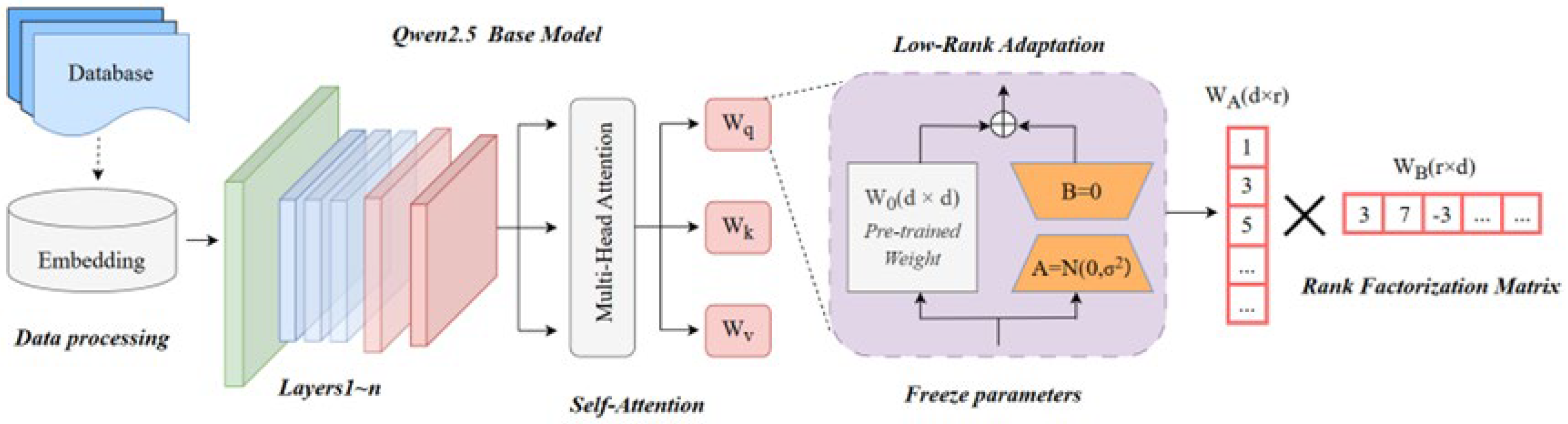
3.2. OM-GPT Model Development
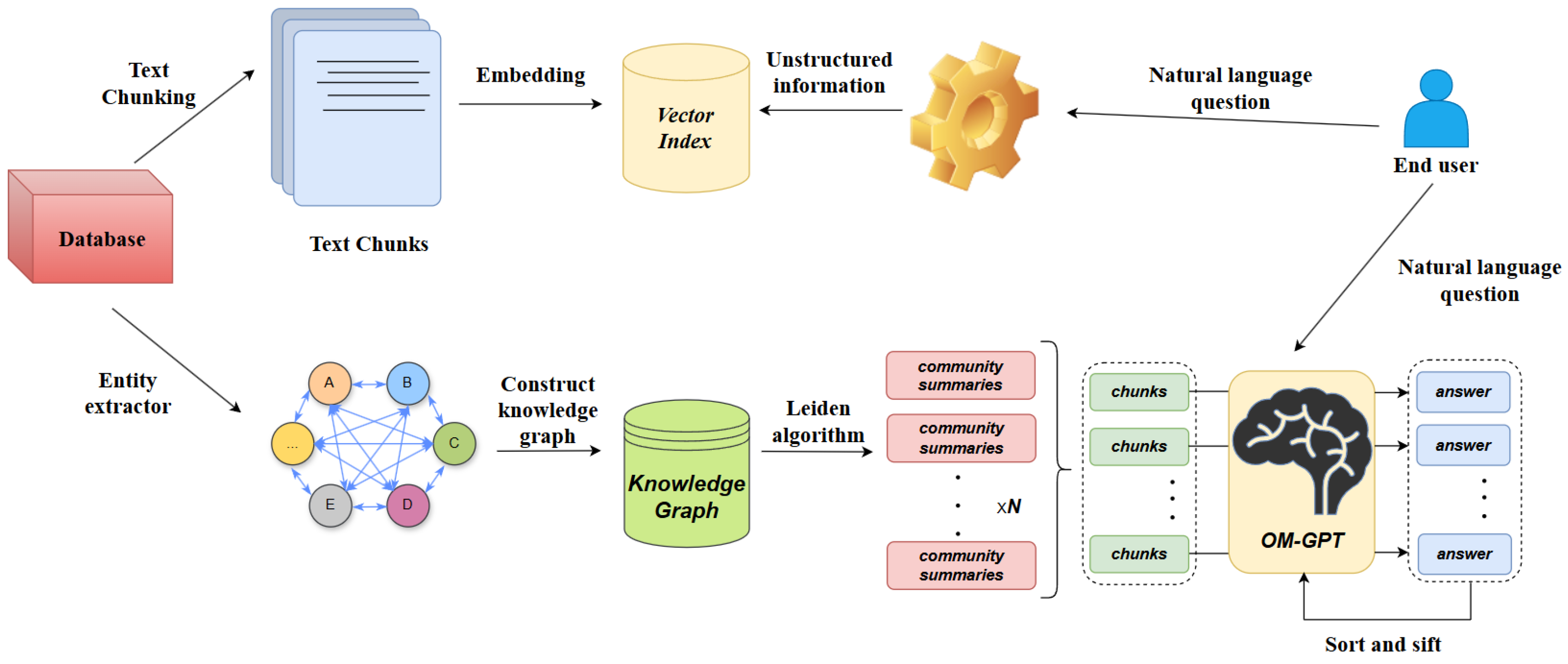
3.3. Developing a GraphRAG-Powered Knowledge Base for Automated Prefabricated Building O&M
3.3.1. Knowledge Graph Development
3.3.2. Knowledge Base-Augmented OM-GPT for O&M
3.4. Model Evaluation
- (1)
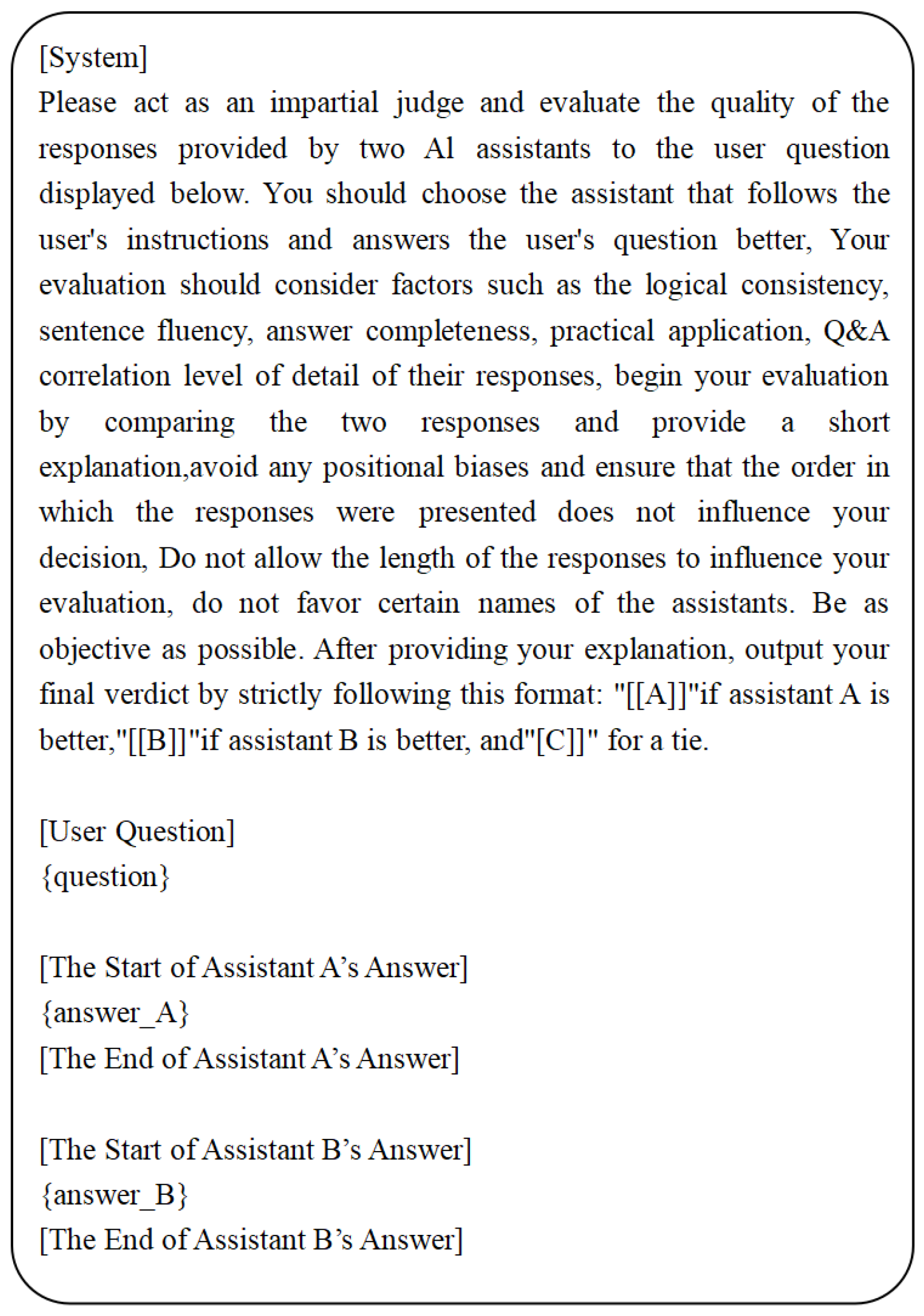
- Automatic evaluation
- (2)
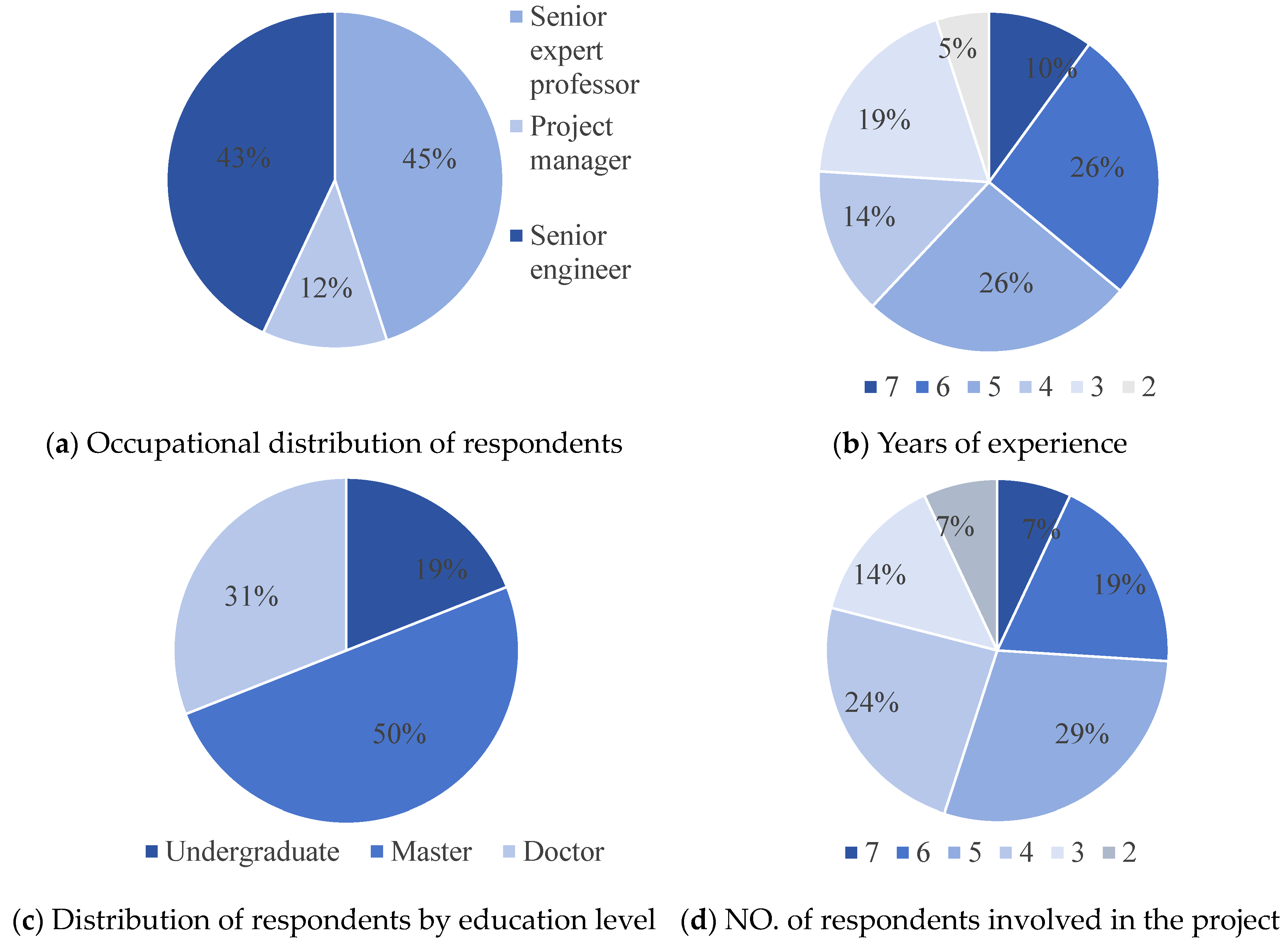
- Manual evaluation
4. Results
4.1. Validation
4.1.1. Performance Benchmarking of Parameter Optimized-OM-GPT
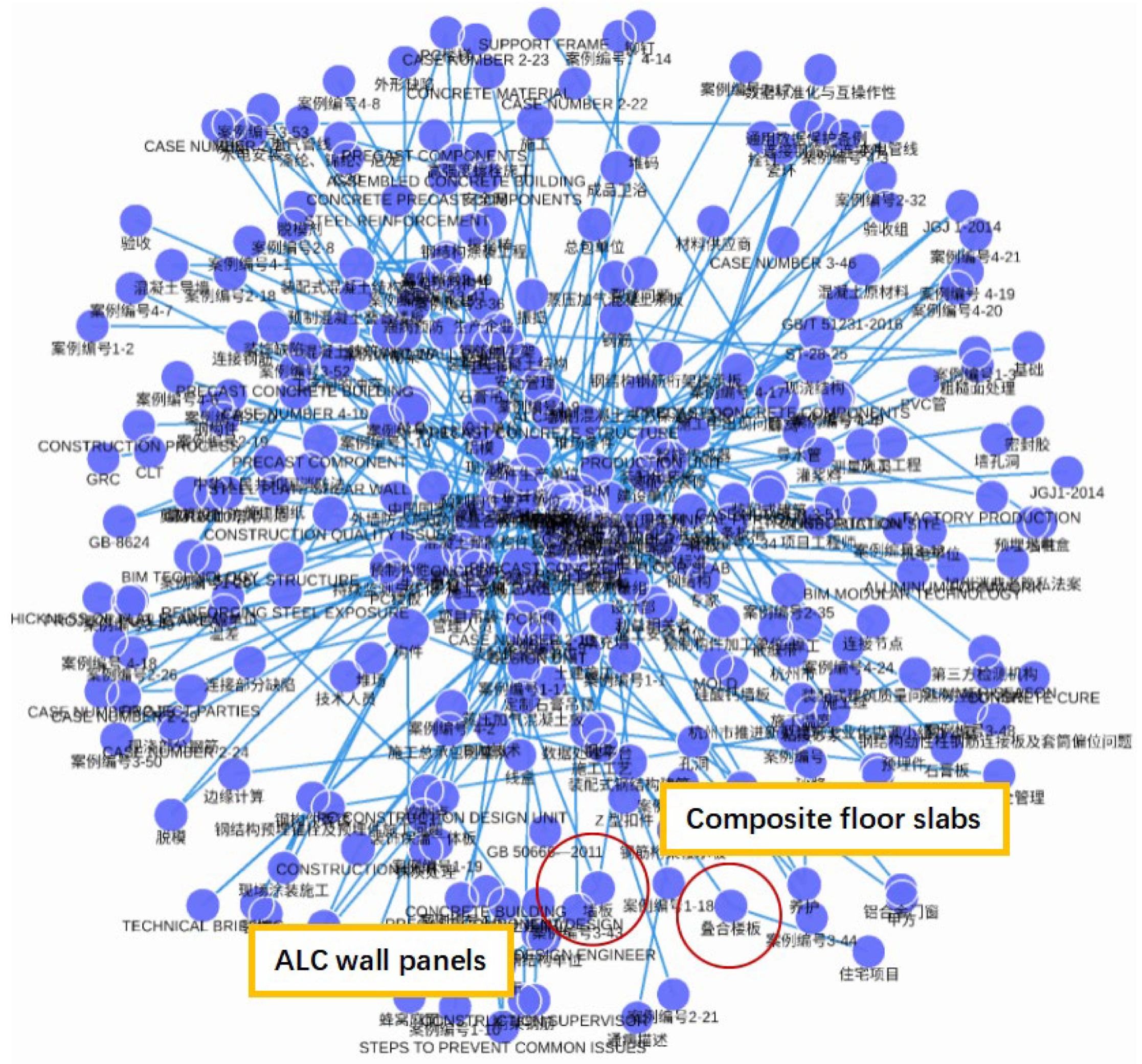
4.1.2. Validation of Knowledge Graph of Prefabricated Building O&M Management
4.1.3. Analysis of Knowledge Base-Augmented OM-GPT Model Responses
4.2. Performance Evaluation
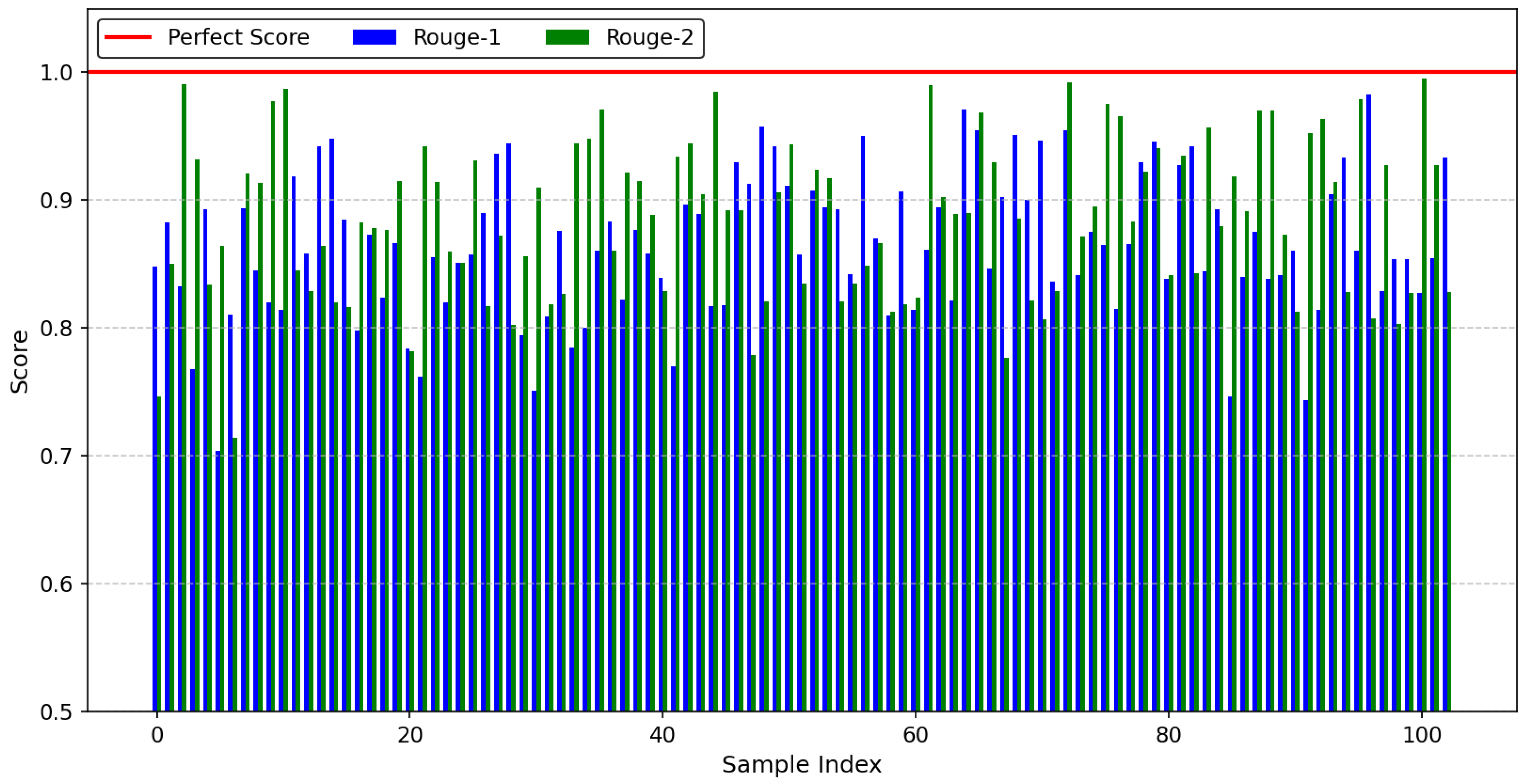
4.2.1. Automatic Evaluation
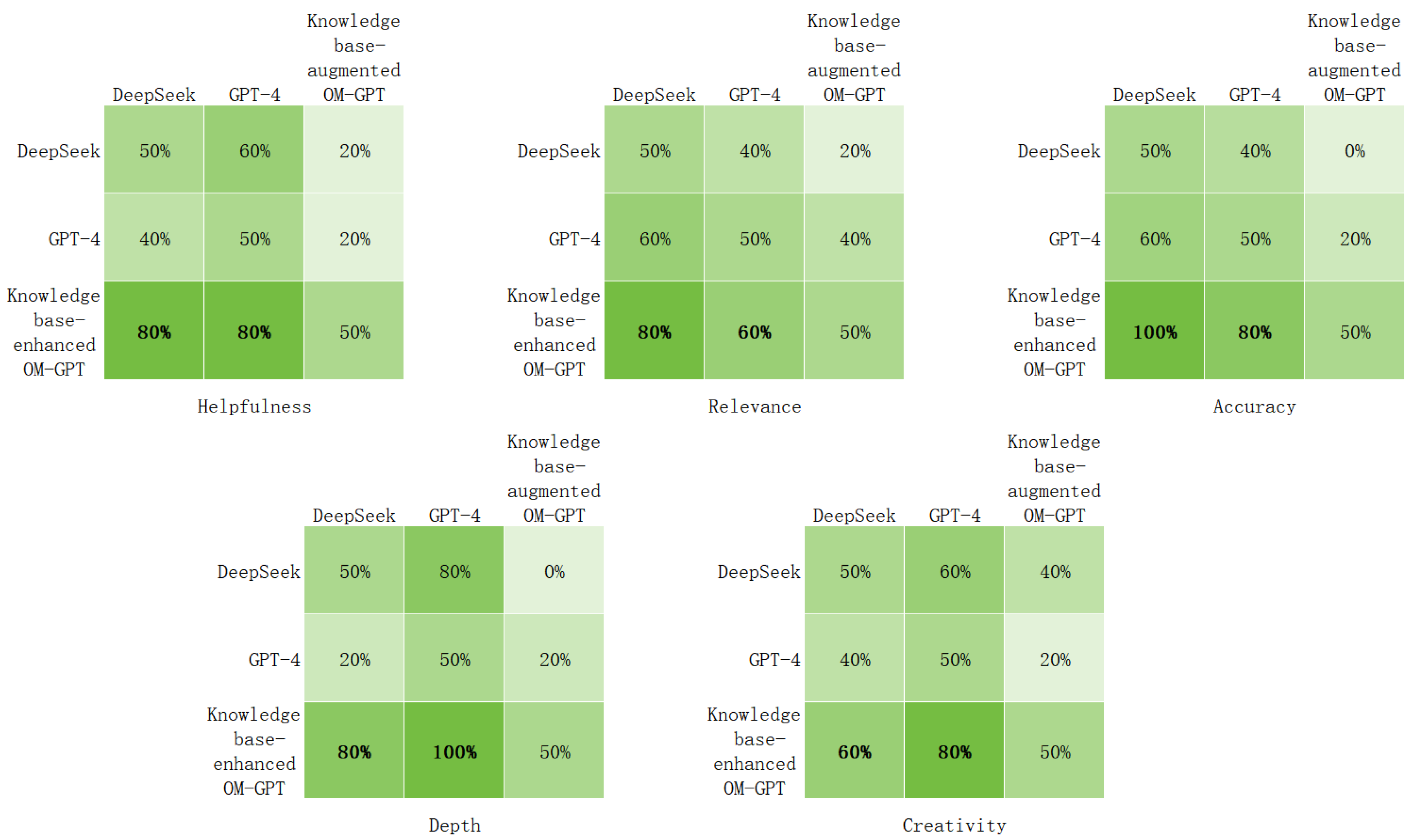
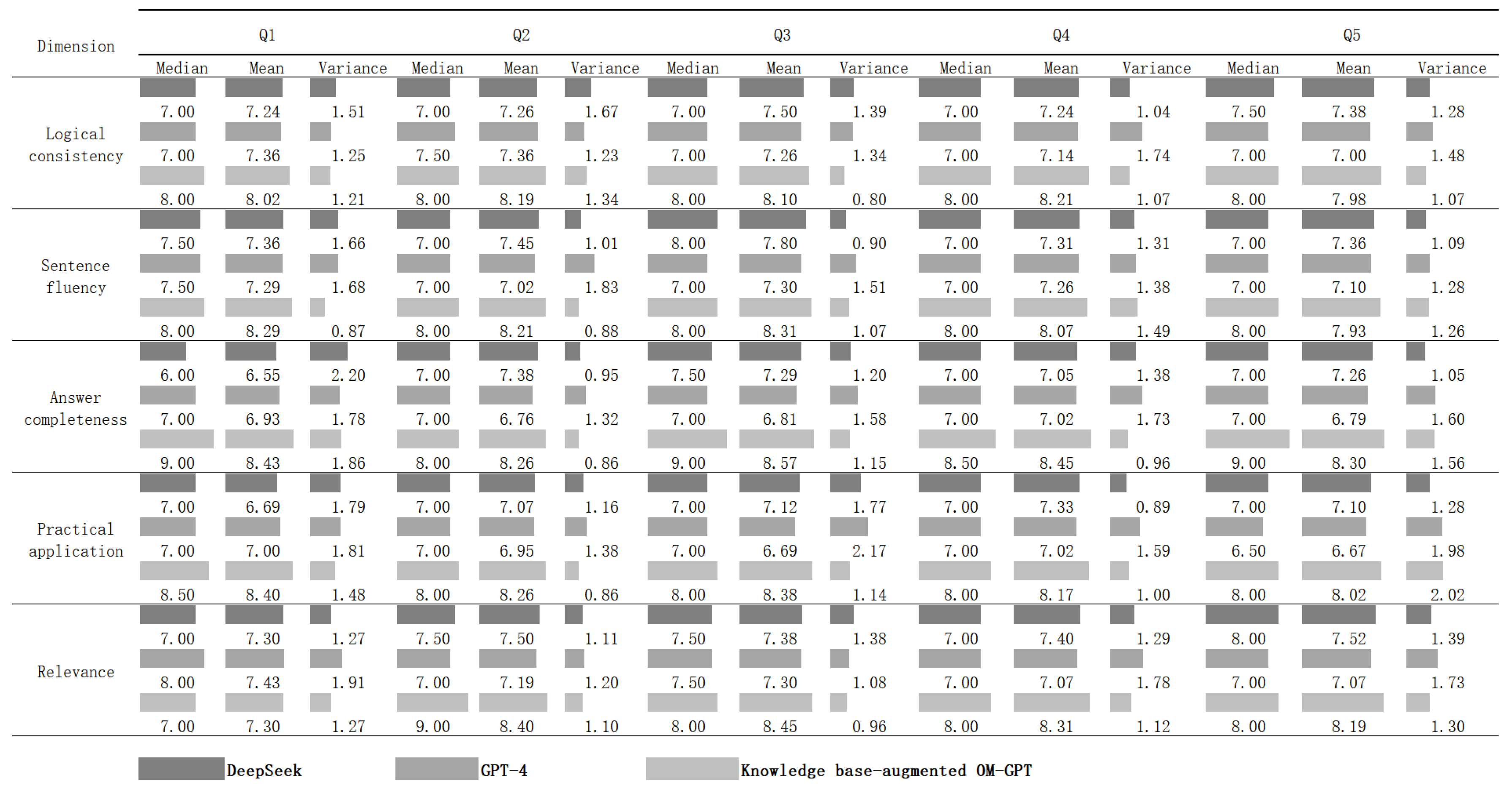
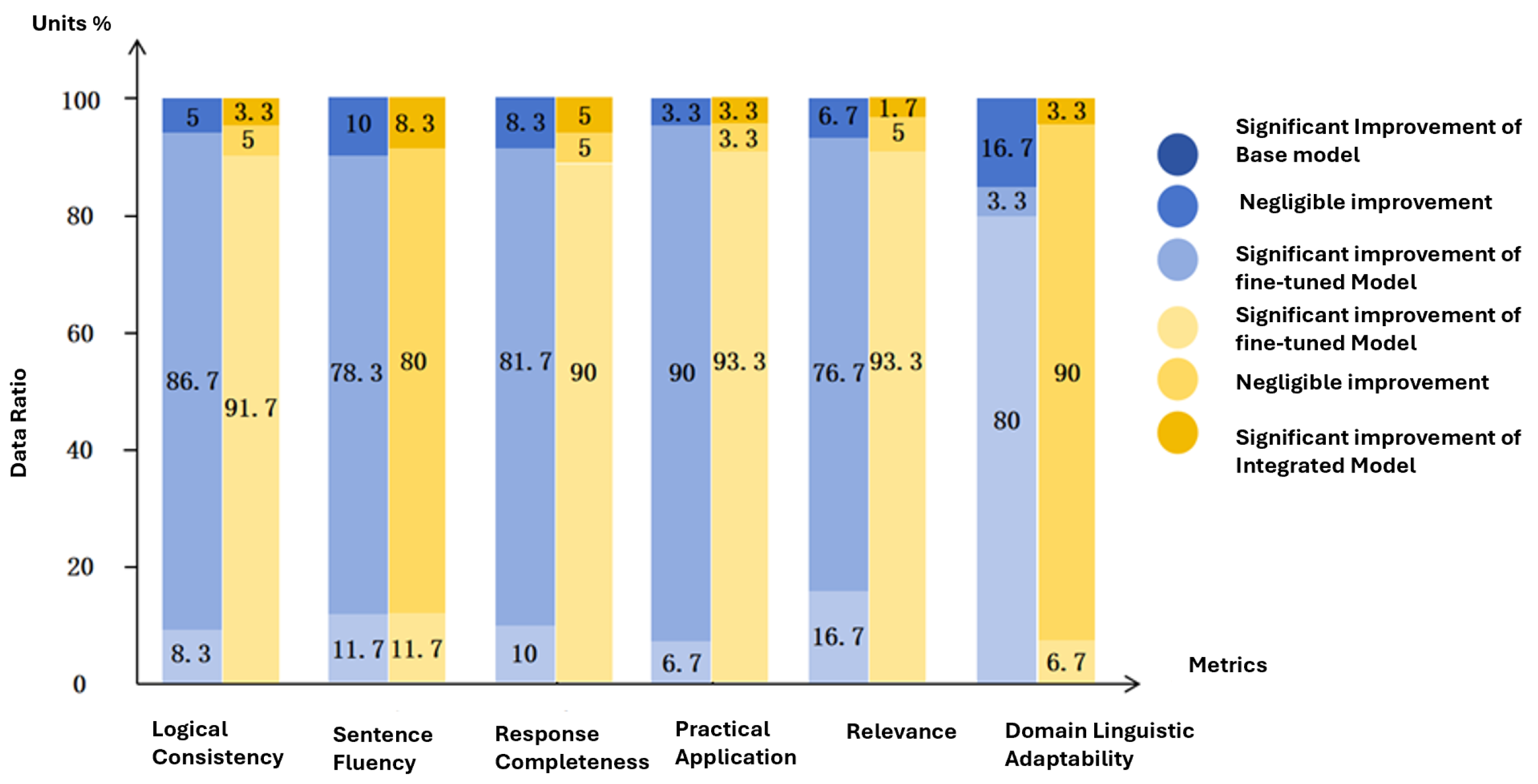
4.2.2. Manual Evaluation
4.3. Ablation Study
5. Conclusions and Future Work
Author Contributions
Funding
Data Availability Statement
Conflicts of Interest
References
- Daly, M.; Kempton, L.; McCarthy, T. Sustainability of Prefabricated Construction in Australia: Industry Perspectives on Challenges and Opportunities. J. Build. Eng. 2025, 102, 111805. [Google Scholar] [CrossRef]
- Lin, Z.; Hu, X.; Zhang, Y.-X.; Chen, Z.; Fang, Z.; Chen, X.; Li, A.; Vepakomma, P.; Gao, Y. SplitLoRA: A Split Parameter-Efficient Fine-Tuning Framework for Large Language Models. arXiv 2024, arXiv:2407.00952. [Google Scholar]
- Yuan, Z.; Sun, C.; Wang, Y. Design for Manufacture and Assembly-Oriented Parametric Design of Prefabricated Buildings. Autom. Constr. 2018, 88, 13–22. [Google Scholar] [CrossRef]
- Chang, L.; Zhao, S. Risk Evaluation of Prefabricated Building Construction Based on PTF-VIKOR of Prospect Theory. Alex. Eng. J. 2025, 115, 147–159. [Google Scholar] [CrossRef]
- Luo, L.; Wu, X.; Hong, J.; Wu, G. Fuzzy Cognitive Map-Enabled Approach for Investigating the Relationship between Influencing Factors and Prefabricated Building Cost Considering Dynamic Interactions. J. Constr. Eng. Manag. 2022, 148, 04022081. [Google Scholar] [CrossRef]
- Sukhwal, P.C.; Rajan, V.; Kankanhalli, A. A Joint LLM-KG System for Disease Q&A. IEEE J. Biomed. Health Inform. 2025, 29, 2257–2270. [Google Scholar] [CrossRef]
- Chen, L.; Darko, A.; Zhang, F.; Chan, A.P.C.; Yang, Q. Can Large Language Models Replace Human Experts? Effectiveness and Limitations in Building Energy Retrofit Challenges Assessment. Build. Environ. 2025, 276, 112891. [Google Scholar] [CrossRef]
- Lee, J.; Ahn, S.; Kim, D.; Kim, D. Performance Comparison of Retrieval-Augmented Generation and Fine-Tuned Large Language Models for Construction Safety Management Knowledge Retrieval. Autom. Constr. 2024, 168, 105846. [Google Scholar] [CrossRef]
- Xia, L.; Liang, Y.; Leng, J.; Zheng, P. Maintenance Planning Recommendation of Complex Industrial Equipment Based on Knowledge Graph and Graph Neural Network. Reliab. Eng. Syst. Saf. 2023, 232, 109068. [Google Scholar] [CrossRef]
- Zhou, B.; Hua, B.; Gu, X.; Lu, Y.; Peng, T.; Zheng, Y.; Shen, X.; Bao, J. An End-to-End Tabular Information-Oriented Causality Event Evolutionary Knowledge Graph for Manufacturing Documents. Adv. Eng. Inform. 2021, 50, 101441. [Google Scholar] [CrossRef]
- Pan, S.; Luo, L.; Wang, Y.; Chen, C.; Wang, J.; Wu, X. Unifying Large Language Models and Knowledge Graphs: A Roadmap. IEEE Trans. Knowl. Data Eng. 2023, 36, 3580–3599. [Google Scholar] [CrossRef]
- Kim, J.; Kwon, Y.; Jo, Y.; Choi, E. KG-GPT: A General Framework for Reasoning on Knowledge Graphs Using Large Language Models. arXiv 2023, arXiv:2310.11220. [Google Scholar] [CrossRef]
- Zhou, C.; Liu, P.; Xu, P.; Iyer, S.; Sun, J.; Mao, Y.; Ma, X.; Efrat, A.; Yu, P.; Yu, L.; et al. LIMA: Less Is More for Alignment. arXiv 2023, arXiv:2305.11206. [Google Scholar] [CrossRef]
- Wei, L.; Jiang, Z.; Huang, W.; Sun, L. InstructionGPT-4: A 200-Instruction Paradigm for Fine-Tuning MiniGPT-4. arXiv 2023, arXiv:2308.12067. [Google Scholar]
- He, Z.; Chen, H. Critical Factors for Practicing Sustainable Construction Projects in Environmentally Fragile Regions Based on Interpretive Structural Modeling and Cross-Impact Matrix Multiplication Applied to Classification: A Case Study in China. Sustain. Cities Soc. 2021, 74, 103238. [Google Scholar] [CrossRef]
- Yan, H.; He, Z.; Gao, C.; Xie, M.; Sheng, H.; Chen, H. Investment Estimation of Prefabricated Concrete Buildings Based on XGBoost Machine Learning Algorithm. Adv. Eng. Inform. 2022, 54, 101789. [Google Scholar] [CrossRef]
- Batikha, M.; Jotangia, R.; Baaj, M.Y.; Mousleh, I. 3D Concrete Printing for Sustainable and Economical Construction: A Comparative Study. Autom. Constr. 2022, 134, 104087. [Google Scholar] [CrossRef]
- Liu, C.; Wu, J.; Jiang, X.; Gu, Y.; Xie, L.; Huang, Z. Automatic Assembly of Prefabricated Components Based on Vision-Guided Robot. Autom. Constr. 2024, 162, 105385. [Google Scholar] [CrossRef]
- Liu, P.; Qi, H.; Liu, J.; Feng, L.; Li, D.; Guo, J. Automated Clash Resolution for Reinforcement Steel Design in Precast Concrete Wall Panels via Generative Adversarial Network and Reinforcement Learning. Adv. Eng. Inform. 2023, 58, 102131. [Google Scholar] [CrossRef]
- Alabbasi, M.; Agkathidis, A.; Chen, H. Robotic 3D Printing of Concrete Building Components for Residential Buildings in Saudi Arabia. Autom. Constr. 2023, 148, 104751. [Google Scholar] [CrossRef]
- Nguyen, D.-C.; Jeon, C.-H.; Roh, G.; Shim, C.-S. BIM-Based Preassembly Analysis for Design for Manufacturing and Assembly of Prefabricated Bridges. Autom. Constr. 2024, 160, 105338. [Google Scholar] [CrossRef]
- Pan, W.; Gibb, A.G.F.; Dainty, A.R.J. Strategies for Integrating the Use of Off-Site Production Technologies in House Building. J. Constr. Eng. Manag. 2012, 138, 1331–1340. [Google Scholar] [CrossRef]
- Pan, H.; Yang, B.; Pan, Y.; Luo, Z. Evolutionary Game of Incentive Strategy for Chinese Prefabricated Buildings Based on System Dynamics from the Perspective of Prospect Theory. Eng. Constr. Archit. Manag. 2024, ahead-of-print. [Google Scholar] [CrossRef]
- Chen, G.; Huang, J.; Wang, J.; Wei, J.; Shou, W.; Cao, Z.; Pan, W.; Zhou, J. Optimal Procurement Strategy for Off-Site Prefabricated Components Considering Construction Schedule and Cost. Autom. Constr. 2023, 147, 104726. [Google Scholar] [CrossRef]
- Zhang, Y.; Xu, L.; Xue, X.; Wang, Z.; Skibniewski, M. Formation and Dynamics of Prefabricated Building Innovation Network. Eng. Constr. Archit. Manag. 2024, ahead-of-print. [Google Scholar] [CrossRef]
- Xu, Z.; Kang, R.; Lu, R. 3D Reconstruction and Measurement of Surface Defects in Prefabricated Elements Using Point Clouds. Comput.-Aided Civ. Infrastruct. Eng. 2020, 34, 04020033. [Google Scholar] [CrossRef]
- Luo, L.; Shen, G.Q.P.; Xu, G.; Liu, Y.; Wang, Y. Stakeholder-Associated Supply Chain Risks and Their Interactions in a Prefabricated Building Project in Hong Kong. J. Manag. Eng. 2019, 35, 05019008. [Google Scholar] [CrossRef]
- Luo, L.; Jin, X.; Shen, G.; Wang, Y.; Liang, X.; Li, X.; Li, C.Z. Supply Chain Management for Prefabricated Building Projects in Hong Kong. J. Manag. Eng. 2020, 36, 04020023. [Google Scholar] [CrossRef]
- Marocco, M.; Garofolo, I. Integrating Disruptive Technologies with Facilities Management: A Literature Review and Future Research Directions. Autom. Constr. 2021, 131, 103917. [Google Scholar] [CrossRef]
- Rashid, K.M.; Louis, J.; Fiawoyife, K.K. Wireless Electric Appliance Control for Smart Buildings Using Indoor Location Tracking and BIM-Based Virtual Environments. Autom. Constr. 2019, 101, 48–58. [Google Scholar] [CrossRef]
- Vitiello, U.; Ciotta, V.; Salzano, A.; Asprone, D.; Manfredi, G.; Cosenza, E. BIM-Based Approach for the Cost-Optimization of Seismic Retrofit Strategies on Existing Buildings. Autom. Constr. 2019, 98, 90–101. [Google Scholar] [CrossRef]
- Bonci, A.; Carbonari, A.; Cucchiarelli, A.; Messi, L.; Pirani, M.; Vaccarini, M. A Cyber-Physical System Approach for Building Efficiency Monitoring. Autom. Constr. 2019, 102, 68–85. [Google Scholar] [CrossRef]
- Ma, G.; Wu, Z. BIM-Based Building Fire Emergency Management: Combining Building Users’ Behavior Decisions. Autom. Constr. 2020, 109, 102975. [Google Scholar] [CrossRef]
- Huang, L.; Yu, W.; Ma, W.; Zhong, W.; Feng, Z.; Wang, H.; Chen, Q.; Peng, W.; Feng, X.; Qin, B.; et al. A Survey on Hallucination in Large Language Models: Principles, Taxonomy, Challenges, and Open Questions. ACM Trans. Inf. Syst. 2025, 43, 1–55. [Google Scholar] [CrossRef]
- Han, Z.; Gao, C.; Liu, J.; Zhang, J.; Zhang, S.Q. Parameter-Efficient Fine-Tuning for Large Models: A Comprehensive Survey. arXiv 2024, arXiv:2402.12104. [Google Scholar]
- Liu, X.; Ji, K.; Fu, Y.; Du, Z.; Yang, Z.; Tang, J. P-Tuning v2: Prompt Tuning Can Be Comparable to Fine-Tuning Universally Across Scales and Tasks. arXiv 2021, arXiv:2110.07602. [Google Scholar]
- Hu, J.E.; Shen, Y.; Wallis, P.; Allen-Zhu, Z.; Li, Y.; Wang, S.; Chen, W. LoRA: Low-Rank Adaptation of Large Language Models. arXiv 2021, arXiv:2106.09685. [Google Scholar]
- Mao, Y.; Mathias, L.; Hou, R.; Almahairi, A.; Ma, H.; Han, J.; Yih, W.-t.; Khabsa, M. UniPELT: A Unified Framework for Parameter-Efficient Language Model Tuning. In Proceedings of the 59th Annual Meeting of the Association for Computational Linguistics, Online, 1–6 August 2021. [Google Scholar]
- Fitkau, I.; Hartmann, T. An Ontology-Based Approach of Automatic Compliance Checking for Structural Fire Safety Requirements. Adv. Eng. Inform. 2024, 59, 102314. [Google Scholar] [CrossRef]
- Lewis, P.; Perez, E.; Piktus, A.; Petroni, F.; Karpukhin, V.; Goyal, N.; Küttler, H.; Lewis, M.; Yih, W.-t.; Rocktäschel, T.; et al. Retrieval-Augmented Generation for Knowledge-Intensive NLP Tasks. arXiv 2020, arXiv:2005.11401. [Google Scholar]
- Gao, Y.; Xiong, Y.; Gao, X.; Jia, K.; Pan, J.; Bi, Y.; Dai, Y.; Sun, J.; Guo, Q.; Wang, M.; et al. Retrieval-Augmented Generation for Large Language Models: A Survey. arXiv 2023, arXiv:2312.10997. [Google Scholar]
- Heredia Álvaro, J.A.; Barreda, J.G. An Advanced Retrieval-Augmented Generation System for Manufacturing Quality Control. Adv. Eng. Inform. 2025, 64, 103007. [Google Scholar] [CrossRef]
- Uhm, M.; Kim, J.; Ahn, S.; Jeong, H.; Kim, H. Effectiveness of Retrieval Augmented Generation-Based Large Language Models for Generating Construction Safety Information. Autom. Constr. 2025, 170, 105926. [Google Scholar] [CrossRef]
- Edge, D.; Trinh, H.; Cheng, N.; Bradley, J.; Chao, A.; Mody, A.; Truitt, S.; Larson, J. From Local to Global: A Graph RAG Approach to Query-Focused Summarization. arXiv 2024, arXiv:2404.16130. [Google Scholar] [CrossRef]
- He, X.; Tian, Y.; Sun, Y.; Chawla, N.; Laurent, T.; LeCun, Y.; Bresson, X.; Hooi, B. G-Retriever: Retrieval-Augmented Generation for Textual Graph Understanding and Question Answering. arXiv 2024, arXiv:2402.07630. [Google Scholar]
- Lee, J.; Yoon, W.; Kim, S.; Kim, D.; Kim, S.; So, C.H.; Kang, J. BioBERT: A Pre-Trained Biomedical Language Representation Model for Biomedical Text Mining. Bioinformatics 2020, 36, 1234–1240. [Google Scholar] [CrossRef]
- Fu, Y.; Xu, C.; Zhang, L.; Chen, Y. Control, Coordination, and Adaptation Functions in Construction Contracts: A Machine-Coding Model. Autom. Constr. 2023, 152, 104890. [Google Scholar] [CrossRef]
- Zhong, Y.; Goodfellow, S.D. Domain-Specific Language Models Pre-Trained on Construction Management Systems Corpora. Autom. Constr. 2024, 160, 105316. [Google Scholar] [CrossRef]
- Devlin, J.; Chang, M.-W.; Lee, K.; Toutanova, K. BERT: Pre-Training of Deep Bidirectional Transformers for Language Understanding. In Proceedings of the 2019 Conference of the North American Chapter of the Association for Computational Linguistics: Human Language Technologies, Minneapolis, MN, USA, 2–7 June 2019; pp. 4171–4186. [Google Scholar]
- Han, X.; Zhang, Z.; Ding, N.; Gu, Y.; Liu, X.; Huo, Y.; Qiu, J.; Zhang, L.; Han, W.; Huang, M.; et al. Pre-Trained Models: Past, Present and Future. arXiv 2021, arXiv:2106.07139. [Google Scholar] [CrossRef]
- Jeong, C. Fine-Tuning and Utilization Methods of Domain-Specific LLMs. arXiv 2024, arXiv:2401.02981. [Google Scholar]
- Parthasarathy, V.B.; Zafar, A.; Khan, A.I.; Shahid, A. The Ultimate Guide to Fine-Tuning LLMs from Basics to Breakthroughs: An Exhaustive Review of Technologies, Research, Best Practices, Applied Research Challenges and Opportunities. arXiv 2024, arXiv:2408.13296. [Google Scholar] [CrossRef]
- Srivastava, N.; Hinton, G.; Krizhevsky, A.; Sutskever, I.; Salakhutdinov, R. Dropout: A Simple Way to Prevent Neural Networks from Overfitting. J. Mach. Learn. Res. 2014, 15, 1929–1958. [Google Scholar]
- Traag, V.A.; Waltman, L.; van Eck, N.J. From Louvain to Leiden: Guaranteeing Well-Connected Communities. Sci. Rep. 2018, 9, 5233. [Google Scholar] [CrossRef]
- Rezaei, M.R.; Fard, R.S.; Parker, J.; Krishnan, R.G.; Lankarany, M. Adaptive Knowledge Graphs Enhance Medical Question Answering: Bridging the Gap Between LLMs and Evolving Medical Knowledge. arXiv 2025, arXiv:2502.13010. [Google Scholar] [CrossRef]
- Bommasani, R.; Liang, P.; Lee, T. Holistic Evaluation of Language Models. Ann. N. Y. Acad. Sci. 2023, 1525, 140–146. [Google Scholar] [CrossRef]
- Chang, Y.-C.; Wang, X.; Wang, J.; Wu, Y.; Zhu, K.; Chen, H.; Yang, L.; Yi, X.; Wang, C.; Wang, Y.; et al. A Survey on Evaluation of Large Language Models. ACM Trans. Intell. Syst. Technol. 2023, 15, 39. [Google Scholar] [CrossRef]
- Zheng, L.; Chiang, W.-L.; Sheng, Y.; Zhuang, S.; Wu, Z.; Zhuang, Y.; Lin, Z.; Li, Z.; Li, D.; Xing, E.P.; et al. Judging LLM-as-a-Judge with MT-Bench and Chatbot Arena. In Proceedings of the 37th International Conference on Neural Information Processing Systems (NeurIPS 2023), New Orleans, LA, USA, 10–16 December 2023; Volume 36, pp. 46595–46623. [Google Scholar]
- Singhal, K.; Azizi, S.; Tu, T.; Mahdavi, S.S.; Wei, J.; Chung, H.W.; Scales, N.; Tanwani, A.; Cole-Lewis, H.; Pfohl, S.; et al. Large Language Models Encode Clinical Knowledge. Nature 2023, 620, 172–180. [Google Scholar] [CrossRef]
- Ziems, C.; Held, W.B.; Shaikh, O.; Chen, J.; Zhang, Z.; Yang, D. Can Large Language Models Transform Computational Social Science? Comput. Linguist. 2023, 50, 237–291. [Google Scholar] [CrossRef]



| Parameter | Parameter Configuration | Specifications |
|---|---|---|
| r | 16 | r > 0, with suggested values of r = 8, 16, 32, 64. Determine the size of the LoRA matrix; a higher rank can store more information but will increase the computational and memory cost of LoRA. In this study, r = 16 is chosen to avoid overfitting the dataset [51,52]. |
| Learning_rate | 2 × 10⁻⁴ | The hyperparameter that controls the update step of the model parameters. The initial learning rate is 2 × 10⁻⁴ [52], and the cosine annealing strategy achieves stable convergence. This value has been experimentally verified to balance training speed and model performance. |
| Lora_alpha | 16 | LoRA’s scaling factor, a larger number will allow fine-tuning to learn more about the dataset but may lead to overfitting. |
| Lora_dropout | 0 | Leaving it at 0 enables faster training and reduces overfitting [53]. |
| Random_state | 3407 | Used to generate random seeds to ensure reproducibility. |
| Dimension | Evaluation Description | Scoring Range |
|---|---|---|
| Logical consistency | Whether the logic of the answer content is coherent and consistent | 1~10 |
| Sentence fluency | Whether the generated responses are natural and easy to understand in terms of language expression | 1~10 |
| Response completeness | Whether the answers provided are comprehensive and cover all the key points of the question | 1~10 |
| Practical application | Whether the content of the answer is practical, has strong operability, and can directly and effectively solve users’ problems or needs | 1~10 |
| Relevance | Whether the answers are closely related to the questions asked by users | 1~10 |
| Data | Count | Note |
|---|---|---|
| Entities | 289 | Event (113), Organization (109), Uncategorized (41), Person (17), GEO (9) |
| Relationships | 346 | The relationship between entities |
| Communities | 37 | Communities identified through graph clustering |
| Community Report | 37 | Automatic summary of each community |
| Text Units | 85 | Original segmented text block |
| In Prefabricated Concrete Buildings, PC Precast Composite Floor Slabs May Develop Cracks and Leakage at the Cast-in-Place Slab Joints. Please Provide Relevant Recommendations for Measures to Address This Issue? | |
|---|---|
| DeepSeek | (1) Optimize node design: Strengthen the connection structure between cast-in-place strips and precast slabs, add crack-resistant steel mesh or fiber-reinforced materials to reduce shrinkage stress; (2) Control materials and construction: Use micro-expansion concrete or add anti-crack fibers to reduce shrinkage; ensure the base layer is moist before casting the in-place strips, compact in layers using vibration; strengthen curing, cover for moisture retention for ≥7 days; (3) Waterproofing: Add elastic sealant or waterproof membrane at joints and conduct water-tightness tests for verification; (4) Process control: Strictly check the stiffness of formwork supports, avoid premature formwork removal, and ensure coordinated deformation between cast-in-place strips and precast slabs. By controlling multiple aspects including design, materials, and construction, the risks of cracks and leakage can be effectively reduced. |
| GPT-4 | (1) Improve construction quality: Whether it is concrete pouring or the installation of prefabricated panels, construction workers need high-quality construction skills. Training and education can be used to improve workers’ technical level and construction quality; (2) Strict quality supervision: During the construction process, quality supervision should be strengthened to ensure that all construction steps meet the prescribed standards. Problems should be identified and resolved in a timely manner; (3) Use high-quality materials: Choosing high-quality, accurately sized prefabricated panels and concrete can effectively prevent cracking and leakage problems; (4) Timely maintenance and repair: For existing problems, such as cracks and leaks, maintenance and repair should be carried out promptly to prevent further development of the issues; (5) Improve design: At the design stage, potential problems that may arise during construction should be considered, and structures with better crack and leak resistance should be designed. |
| Knowledge base-enhanced OM-GPT | (1) Local search ① Strengthen concrete vibration, especially at the composite slab strips, strictly follow the code requirements for vibrating, and no construction joints should be left in the slab strips during pouring; ② Strictly control the formwork flatness during formwork construction, set grout stop strips, and after the slab surface is cleaned and accepted as qualified, proceed with lifting work, while enhancing the rigidity of the lower support frame; ③ Strengthen curing, delay the application of construction loads on the upper layer, and postpone the removal of the lower frame; ④ Treatment measures: First, chisel open the crack, and chisel about five centimeters on both sides of the crack; then, ensure that the joint surface maintains a sloped shape, and chisel the surface and sides of the prefabricated slab. After chiseling, clean the area thoroughly, and then brush a layer of pure cement mortar inside the crack. (2) Global search Design Stage: ① Optimize structural design: Fully consider the connection methods between PC components and cast-in-place sections. Use appropriate node designs to ensure firm connections and reduce cracks and leakage caused by stress concentration at joints; ② Add waterproof layers: Install reliable waterproof layers at the composite slab seams, such as SBS membranes or polyurethane coatings, clearly specifying the technical parameters and usage requirements of the waterproof materials in the construction drawings; ③ Refine structural detailing: Add water-stop strips at the composite slab seams and optimize the concrete vibration process parameters to ensure controllable construction quality; ④ Establish a ‘structural self-waterproofing + material waterproofing’ dual-system: apply polymer self-adhesive waterproof membranes in the composite layers and incorporate expansive anti-crack waterproofing agents into the cast-in-place layer, creating a dense millimeter-level waterproof barrier. Construction Stage: ① Strictly control the installation accuracy of PC components, ensure accurate alignment of joints, and reduce leakage and cracks caused by misalignment; ② Strengthen the management of template engineering, use high-quality template materials, seal the joints of the templates properly, and pay special attention to the reinforcement of the templates at the laminated board strips; ③ Strengthen concrete vibration (especially at the composite panel strip), strictly follow the specifications to vibrate until the surface is bleeding and no bubbles emerge; ④ During pouring, no construction joints shall be left at the strip, and the position of construction joints shall be arranged reasonably to avoid easily stressed areas; ⑤ Improve the quality of concrete, select high-quality aggregates and additives, ensure accurate mix proportions, and fully wet the surface of PC components before pouring; ⑥ Clean the surface of the formwork before installation and pass the acceptance inspection, strictly control the flatness of the formwork. ⑦ Deploy millimeter level laser displacement detection system to achieve real-time monitoring of PC component installation accuracy. Post maintenance Stage: ① Regular inspection and maintenance: Establish a comprehensive inspection system to promptly detect and address issues such as cracks and leaks. For cracks that have already appeared, epoxy resin or other specialized materials can be used for sealing and reinforcement; ② Strengthen maintenance work: Ensure that the cast-in-place concrete reaches a certain strength before demoulding, and immediately carry out sufficient maintenance after demoulding to avoid cracks caused by drying shrinkage. ③ Process integration innovation: adopting the combined process of “high-frequency vibration + vacuum dehydration” to reduce the porosity of concrete; Develop an intelligent vibration monitoring system to provide real-time feedback on vibration quality; ④ Develop phase change energy storage maintenance film, establish maintenance parameter database, and automatically adjust maintenance plan according to environmental temperature. (3) Tavily search ① A review of research on prefabricated assembled concrete composite floor slabs. This article systematically elaborates on the bending, shear, and connection performance of composite floor slabs, and points out the shortcomings in the development research of composite slabs, providing strong support for the derivation of China’s construction industrialization development. ② [Prefabricated Building Training] Prefabricated PC Components--Prefabricated Composite Plate-Zhihu. Composite Floor is a structural form that combines prefabricated floor slabs and cast-in-place floor slabs. The bottom uses prefabricated concrete thin plates as permanent templates, and the upper part is poured with cast-in-place concrete composite layers. The two parts of the concrete are subjected to overall force, forming an assembled integrated composite floor slab. ③ Research on Construction Technology of PC Prefabricated Components in Prefabricated Buildings-China Journal Network Research on Construction Technology of PC Prefabricated Components in Prefabricated Buildings. Shen Wei. Shanghai Chunli Construction Engineering Consulting Co., Ltd. (Shanghai, China). |
| Dimensions | Source of Variation | SS | df | MS | F | p-Value | F Crit |
|---|---|---|---|---|---|---|---|
| Logical consistency | Type of LLMs | 103.4381 | 2 | 51.7190 | 38.9703 | 0.0000 | 3.0104 |
| Questions | 3.0381 | 4 | 0.7595 | 0.5723 | 0.6828 | 2.3864 | |
| Interaction | 4.1333 | 8 | 0.5167 | 0.3893 | 0.9265 | 1.9534 | |
| Within | 816.1905 | 615 | 1.3271 | ||||
| Total | 926.8000 | 629 | |||||
| Sentence fluency | Type of LLMs | 103.8698 | 2 | 51.9349 | 39.5635 | 0.0000 | 3.0104 |
| Questions | 9.5651 | 4 | 2.3913 | 1.8216 | 0.1230 | 2.3864 | |
| Interaction | 5.4159 | 8 | 0.6770 | 0.5157 | 0.8450 | 1.9534 | |
| Within | 807.3095 | 615 | 1.3127 | ||||
| Total | 926.1603 | 629 | |||||
| Response completeness | Type of LLMs | 285.2790 | 2 | 142.6400 | 95.4949 | 0.0000 | 3.0104 |
| Questions | 4.6095 | 4 | 1.1524 | 0.7715 | 0.5440 | 2.3864 | |
| Interaction | 19.6571 | 8 | 2.4571 | 1.6450 | 0.1090 | 1.9534 | |
| Within | 918.6190 | 615 | 1.4937 | ||||
| Total | 1228.1700 | 629 | |||||
| Practical application | Type of LLMs | 236.6890 | 2 | 118.3440 | 77.6616 | 0.0000 | 3.0104 |
| Questions | 4.2222 | 4 | 1.0556 | 0.6927 | 0.5972 | 2.3864 | |
| Interaction | 13.6444 | 8 | 1.7056 | 1.1192 | 0.3480 | 1.9534 | |
| Within | 937.1670 | 615 | 1.5239 | ||||
| Total | 1191.72 | 629 | |||||
| Relevance | Type of LLMs | 158.2600 | 2 | 79.1302 | 58.8826 | 0.0000 | 3.0104 |
| Questions | 2.7365 | 4 | 0.6841 | 0.5091 | 0.7291 | 2.3864 | |
| Interaction | 5.1683 | 8 | 0.6460 | 0.4807 | 0.8702 | 1.9534 | |
| Within | 826.4760 | 615 | 1.3439 | ||||
| Total | 992.6410 | 629 |
Disclaimer/Publisher’s Note: The statements, opinions and data contained in all publications are solely those of the individual author(s) and contributor(s) and not of MDPI and/or the editor(s). MDPI and/or the editor(s) disclaim responsibility for any injury to people or property resulting from any ideas, methods, instructions or products referred to in the content. |
© 2026 by the authors. Licensee MDPI, Basel, Switzerland. This article is an open access article distributed under the terms and conditions of the Creative Commons Attribution (CC BY) license.
Share and Cite
Sun, L.; Zou, L.; Zhang, Y.; Flood, I. OM-GPT: A Knowledge-Augmented and Fine-Tuned Large Language Model for Prefabricated Building Operation and Maintenance Management. Buildings 2026, 16, 1429. https://doi.org/10.3390/buildings16071429
Sun L, Zou L, Zhang Y, Flood I. OM-GPT: A Knowledge-Augmented and Fine-Tuned Large Language Model for Prefabricated Building Operation and Maintenance Management. Buildings. 2026; 16(7):1429. https://doi.org/10.3390/buildings16071429
Chicago/Turabian StyleSun, Lingzhi, Linyan Zou, Yuanxin Zhang, and Ian Flood. 2026. "OM-GPT: A Knowledge-Augmented and Fine-Tuned Large Language Model for Prefabricated Building Operation and Maintenance Management" Buildings 16, no. 7: 1429. https://doi.org/10.3390/buildings16071429
APA StyleSun, L., Zou, L., Zhang, Y., & Flood, I. (2026). OM-GPT: A Knowledge-Augmented and Fine-Tuned Large Language Model for Prefabricated Building Operation and Maintenance Management. Buildings, 16(7), 1429. https://doi.org/10.3390/buildings16071429