


Abstract
Early-age cracking is a common issue in the prefabrication of large-scale box girders, and the application of pre-tensioning techniques to introduce pre-compressive stress is an effective measure to mitigate such cracking. To determine an optimal pre-tensioning scheme for the 60 m large-scale box girder used in the Ningbo–Xiangshan intercity railway, friction coefficient tests and field stress monitoring were conducted. A numerical model simulating the pre-tensioning process of the box girder, accounting for the constraint of the steel formwork, was developed using Abaqus 2021. Based on the validated finite element model, a parametric study was performed to investigate the effects of friction coefficient, internal formwork roof, and prestressing tendon arrangement on the pre-compressive stress. The results indicate that the bond force between cast-in-place concrete and steel formwork is approximately 2.1 times the sliding friction force. As the friction coefficient increases, the pre-compressive stress in the box girder exhibits a notable decreasing trend. For the critical midspan section S40, the inclusion of frictional effects results in a more uniform distribution of pre-compressive stress. Compared to the case without the internal formwork roof, its inclusion leads to a 9.2% to 10.4% reduction in pre-compressive stress at section S40. To mitigate prestress losses transmitted from the ends to the midspan section, it is recommended that the internal formwork be completely removed prior to prestressing tensioning. The pre-compressive stress in the box girder varies considerably with different prestressing combinations. The comparative analysis of different prestressing combinations reveals substantial variations in pre-compressive stress distribution. After evaluating multiple schemes, the optimal pre-tensioning sequence for the 60-m railway box girder is determined as follows: sequentially tensioning tendon groups F1-2, F1-4, F1-5, F1-6, and B2-3, with an anchorage stress controlled at 558 MPa. This scheme ensures that all critical sections of the box girder remain in a pre-compressive state. In particular, the pre-compressive stress at the key midspan section S40 ranges from 1.12 to 1.26 MPa, achieving the desired effect and effectively suppressing early-age cracking in the large-scale box girder concrete.
1. Introduction
Large-scale precast concrete box girders are widely employed in high-speed railways, highways, and viaducts due to their structural integrity, clear force transmission, rapid construction, durability, and aesthetic appeal [1,2,3]. However, early-age temperature variations due to hydration heat in large concrete box girders can readily induce concrete cracking, significantly compromising durability [4,5,6]. This issue is particularly critical for bridges in coastal environments and especially for sea-crossing bridges, where such deterioration is unacceptable. To mitigate this issue, primary strategies include studying the hydration heat temperature field and applying pre-tensioning to establish a pre-compressive stress reserve [7,8,9,10,11]. Existing research has extensively investigated the temperature field induced by hydration heat in large-scale box girders. Wang et al. [12] demonstrated that construction processes like formwork removal and prestressing significantly affect early-age strains in a 32 m highway box girder. Cai et al. [13] and Feng et al. [14], through field tests and numerical simulations on 50 m highway and 60 m railway girders, respectively, identified concrete placement temperature, cement content, and ambient wind speed as key factors influencing the early temperature field. Yang et al. [15] conducted tracking tests on a 60 m railway girder during winter, using ABAQUS with the secondary development of the subroutine to analyze parameters like insulation shed effects and concrete temperature. They recommended maintaining an insulation temperature of 15–20 °C and a placement temperature below 19 °C to control excessive temperature differentials. These studies have predominantly focused on the influencing factors and optimization strategies for the early-age temperature field in large-scale precast box girders, whereas the optimization of pre-tensioning technical schemes has not been systematically addressed.
Regarding prestressing technology, accurately obtaining prestress loss data is crucial for assessing the safety and durability of prestressed components [16,17,18,19]. For instance, Jiao [20] conducted experimental studies on friction losses in retard-bonded prestressed concrete beams, revealing significant influences from strand diameter, curvature angle, and tensioning procedures, with negligible impact from cone penetration during tensioning. Ma et al. [21] statistically analyzed the effective prestress at anchorages for standard 20, 25, 30 m small box girders and 40 m T-beams through theoretical calculations, finite element analysis, and field measurements. Their findings indicate that the beam length and the tensioning sequence exert significant influence on the effective prestress beneath the anchorage. Furthermore, new standard values for the effective prestress beneath the anchorage are proposed for standard small box girders with spans of 20 m, 25 m, and 30 m, as well as for the standard T-beam with a span of 40 m. The recommended values are 172 kN, 173 kN, 174 kN, and 174 kN, respectively. Jin et al. [22] investigated the influence of the rotation angle of prestressing tendons anchor ring in bottom slabs on prestress loss, demonstrating that larger rotation angles increase frictional loss at the anchor socket and reduce effective prestress, alongside proposed mitigation measures. Cho et al. [23] employed electromagnetic sensors to measure prestress distribution at the anchorage zone of actual beams and evaluated influencing factors, deriving a calculation formula limited to estimating prestress distribution near anchorage. Yan et al. [24] theoretically and experimentally studied friction losses induced by three representative deflectors, finding that contact friction loss due to contact imperfections accounted for up to 61% of total friction loss, and proposed a modified equation for friction calculation to help the design and manufacturing improvement. However, current research on bridge prestressing primarily focuses on laboratory measurements and conventional monitoring of prestress losses [25,26,27], with relatively limited attention paid to field monitoring and theoretical investigations of actual bridge components. As the production of precast box girders increasingly shifts toward larger scales and greater intelligence, large-scale box girders are predominantly fabricated using steel formworks and hydraulic internal formworks. Nevertheless, the mechanical influence mechanism of steel formwork constraints on large precast box girders remains inadequately understood, and research on prestress loss in large-scale railway box girders considering such constraints is notably scarce. This severely hinders the design and construction of large-scale box girders.
To reduce the number of piers in deep-water zones, the superstructure of the currently under-construction Xiangshan Bay Cross-Sea Bridge on the Ningbo–Xiangshan Intercity Railway features an innovative 60 m large-scale box girder design. This project represents the first application of a 60 m box girder in China’s intercity railway engineering. The concrete box girders are prefabricated centrally in factories and then transported by ship for offshore installation. Based on this actual project, friction tests were conducted on specimens to determine the bond strength and sliding friction coefficient between cast-in-place concrete and steel formwork. Field monitoring during the pre-tensioning process of prestressed tendons provided measured data on the pre-compressive stress of the 60 m railway box girder. Using the finite element software ABAQUS 2021, the stress field distribution in the large-scale box girder induced by the pre-tensioning process was simulated and compared with the field measurements. Based on the validated finite element model, the influences of the friction coefficient, the presence of the inner formwork top slab, and different prestressing combinations on the pre-compressive stress of the large-scale box girder were further analyzed. The findings of this study can provide a theoretical foundation and practical reference for the design of staged tensioning in large-scale box girders.
2. Test Design
2.1. Overview of the 60 m Railway Box Girder
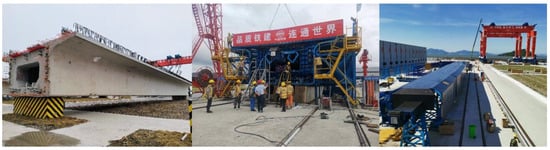
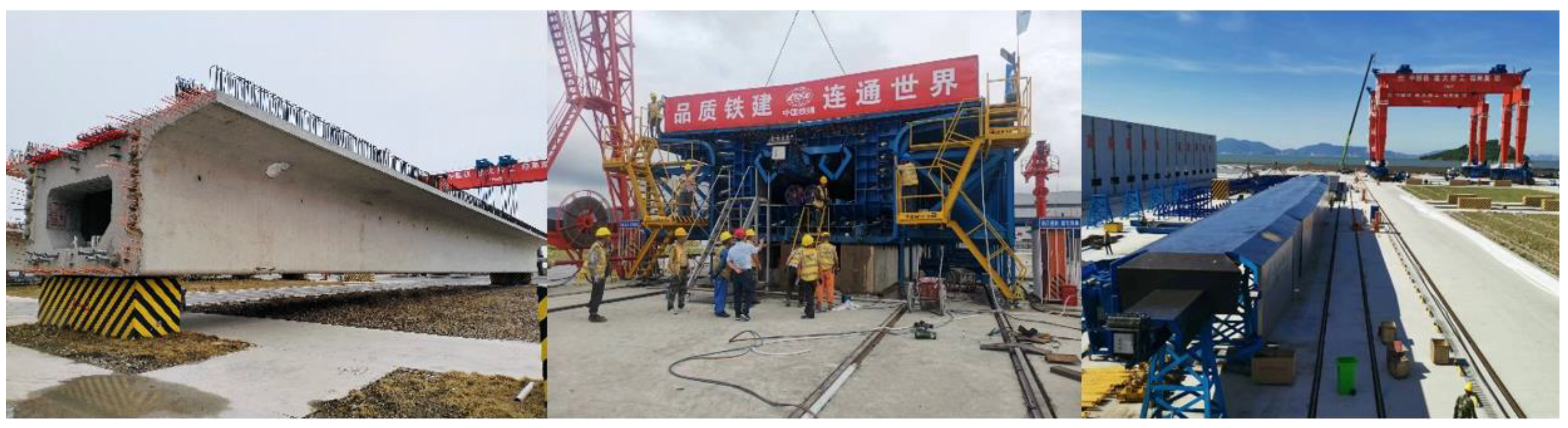
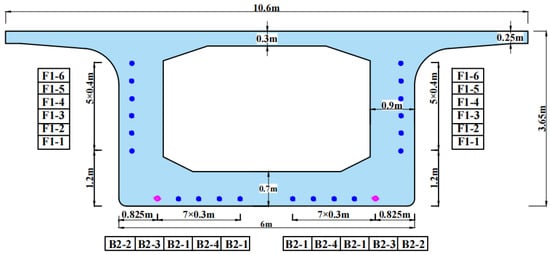
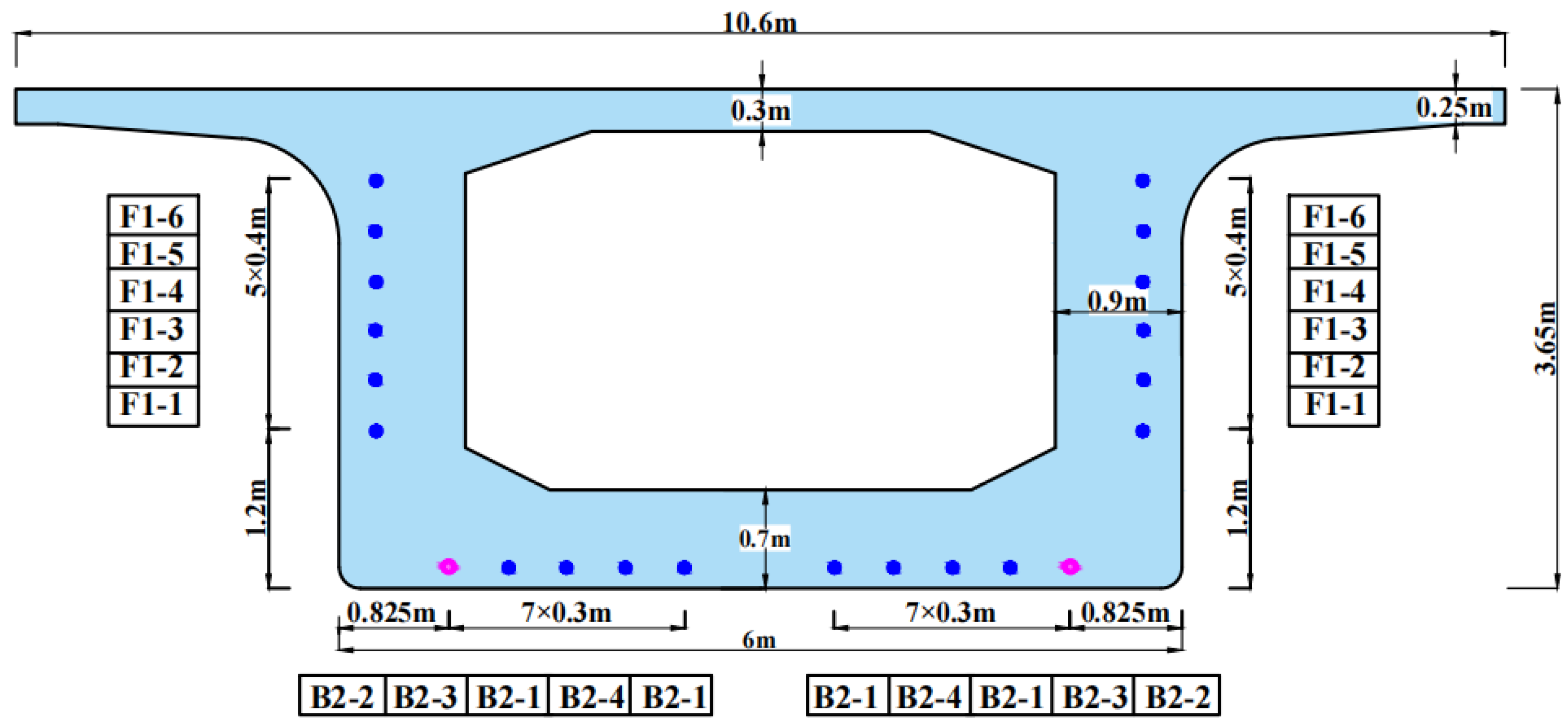
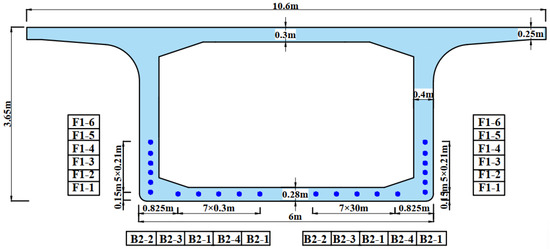
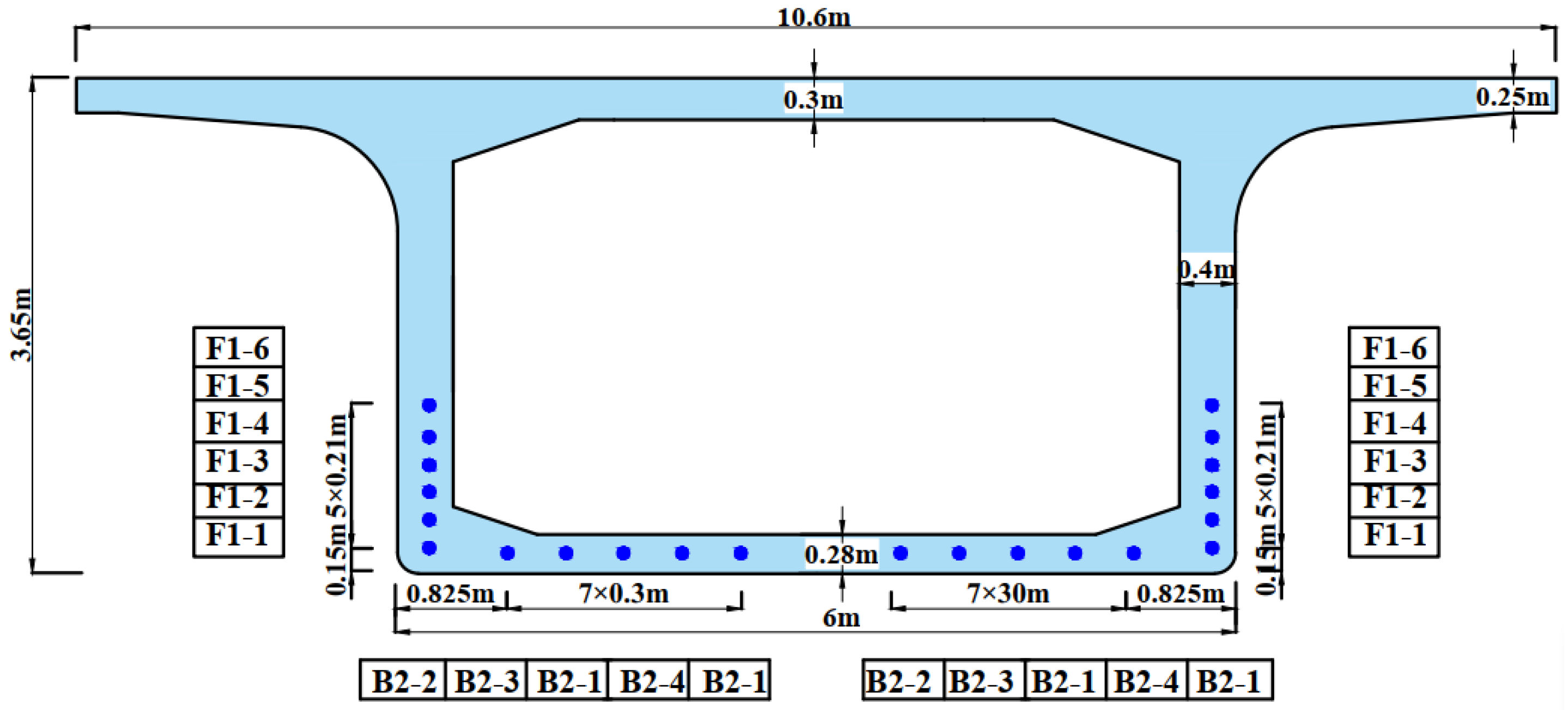
The 60 m railway precast box girder and steel formwork are shown in Figure 1. The box girder was fabricated using C50 marine concrete. The detailed mix design is shown in Table 1. The concrete utilized PII52.5 cement, supplied by Ningbo Conch Group Co., Ltd. (Zhejiang, China). The prestressing design, depicted in Figure 2, Figure 3 and Figure 4, adopts a two-end tensioning process. The specifications of the prestressing tendons for the web and bottom slab are provided in Table 2, where B2-2 denotes the internal prestressing tendon tensioned within the box girder.
Figure 1.
Overview of the box girder and steel formwork.
Table 1.
Mix design of the C50 marine concrete (kg/m3).
Figure 2.
Layout of prestressing tendons at the end section.
Figure 3.
Layout of prestressing tendons at the midspan section.
Figure 4.
Layout of prestressing tendons in the web.
Table 2.
Design of prestressing tendons.
2.2. Design of Prestressing Test for Large-Scale Box Girder
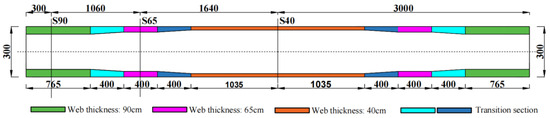
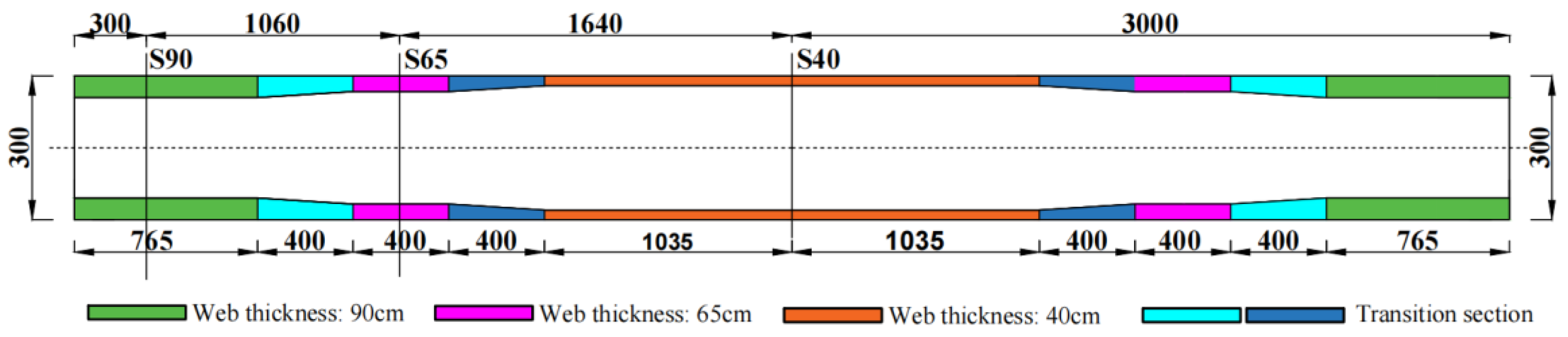
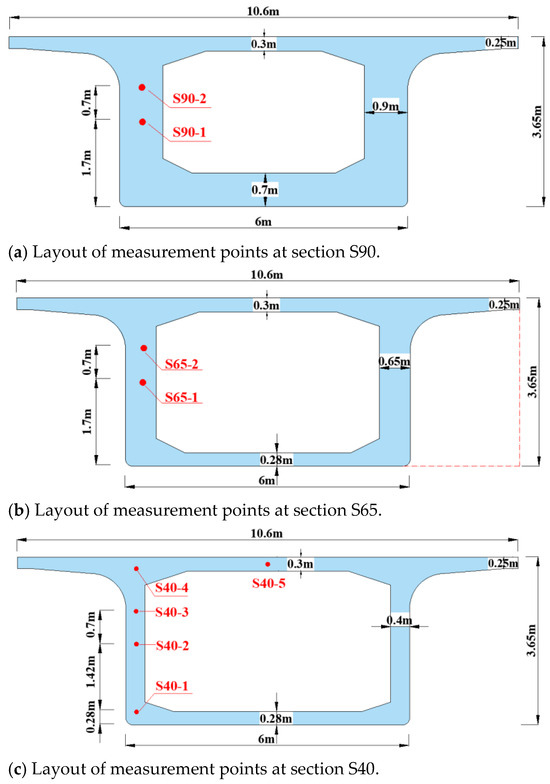
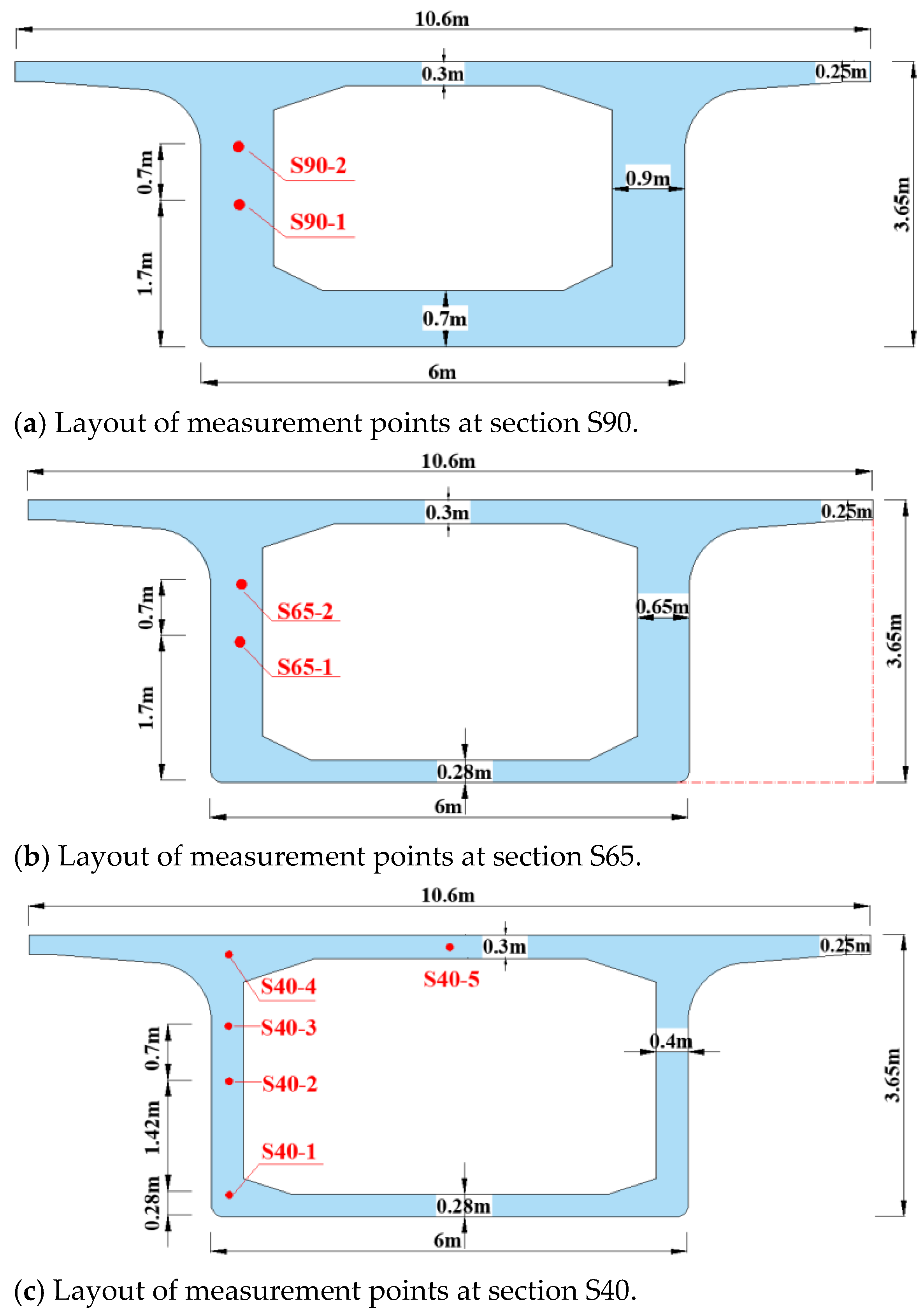
During the prefabrication process of the 60 m box girder, field measurements were conducted to monitor the resulting stress of prestress tensioning. The 60 m box girder features a uniform external profile, with webs primarily consisting of three standard thicknesses (90 cm, 65 cm, and 40 cm) connected by transition sections. Intelligent strain sensors were installed at three representative sections, designated as S90, S65, and S40. A schematic of the cross-sections is shown in Figure 5. The strain sensors were model JMZX-212HAT from Changsha Jinma Co., Ltd. (Changsha, China), with a measurement range of −2500 to +2500 με and an accuracy of ±0.1 με. The arrangement of measuring points at the three sections is illustrated in Figure 6. Specifically, measuring points S90-1 and S90-2 were installed at section S90, measuring points S65-1 and S65-2 at section S65, and measuring points S40-1 to S40-5 at the midspan section S40.
Figure 5.
Layout of Cross-Sections (Unit: cm).
Figure 6.
Layout of measurement points at the three sections.
Taking the state before prestress tensioning as the initial reference, the initial strain and temperature of the box girder concrete are assumed to be ε0 and T0, respectively. Approximately two hours after the prestress tensioning is completed, the measured strain and temperature of the concrete are recorded as εi and Ti. Temperature fluctuations induce errors in vibrating wire strain sensor measurements due to the differential thermal expansion coefficients between the steel wire and the concrete. The sensor readings do not fully reflect the actual strain of the concrete. Based on the thermal response mechanism and the technical specifications of the sensors provided by the manufacturer, the recorded data can be corrected for temperature using the following formula [28].
where E is the elastic modulus of concrete.
2.3. Design of Bond Performance and Friction Coefficient Tests
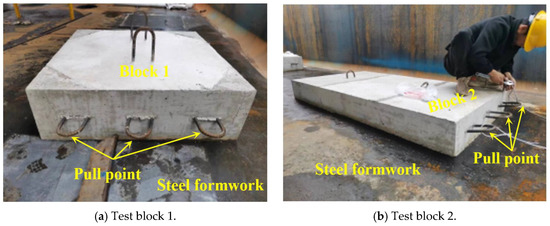
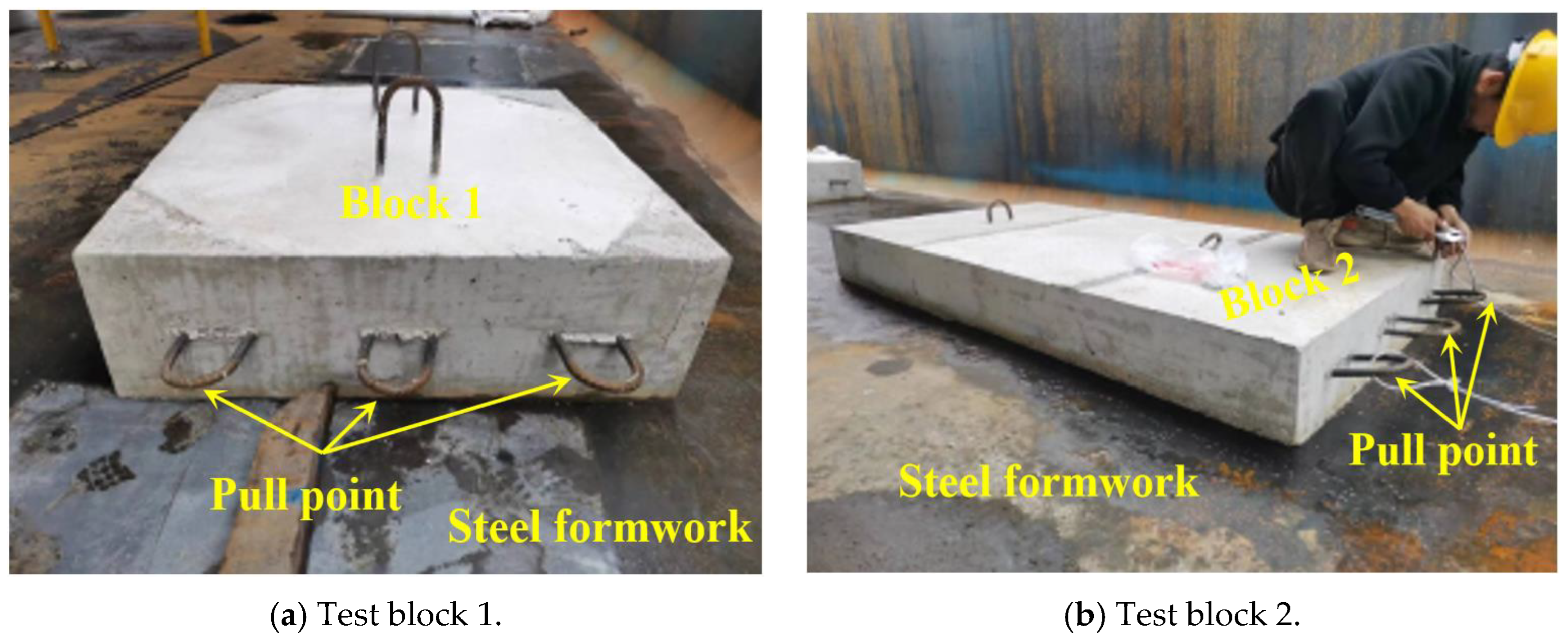
To investigate the bond-slip behavior and frictional interaction between newly cast concrete and steel formwork, two concrete test blocks of different dimensions were cast in situ on the large-scale box girder formwork. Block 1 measured 1.0 m × 1.0 m × 0.3 m (length × width × height) with a weight of 7500 N, while Block 2 measured 1.0 m × 2.0 m × 0.2 m and weighed 10,000 N. The steel formwork casting area was pre-treated by grinding and oil-coating following the standard construction procedure for large box girders. The on-site casting of the test blocks is illustrated in Figure 7.
Figure 7.
Overview of the Test Specimens.
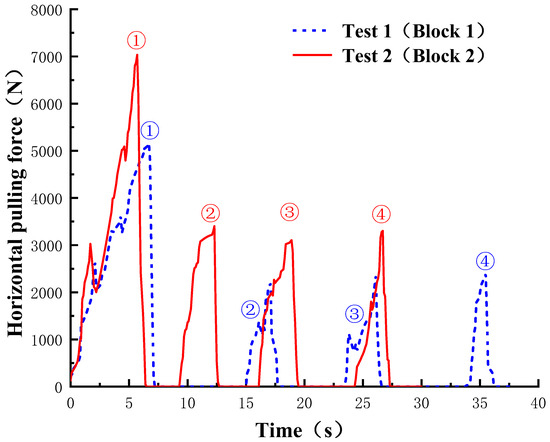
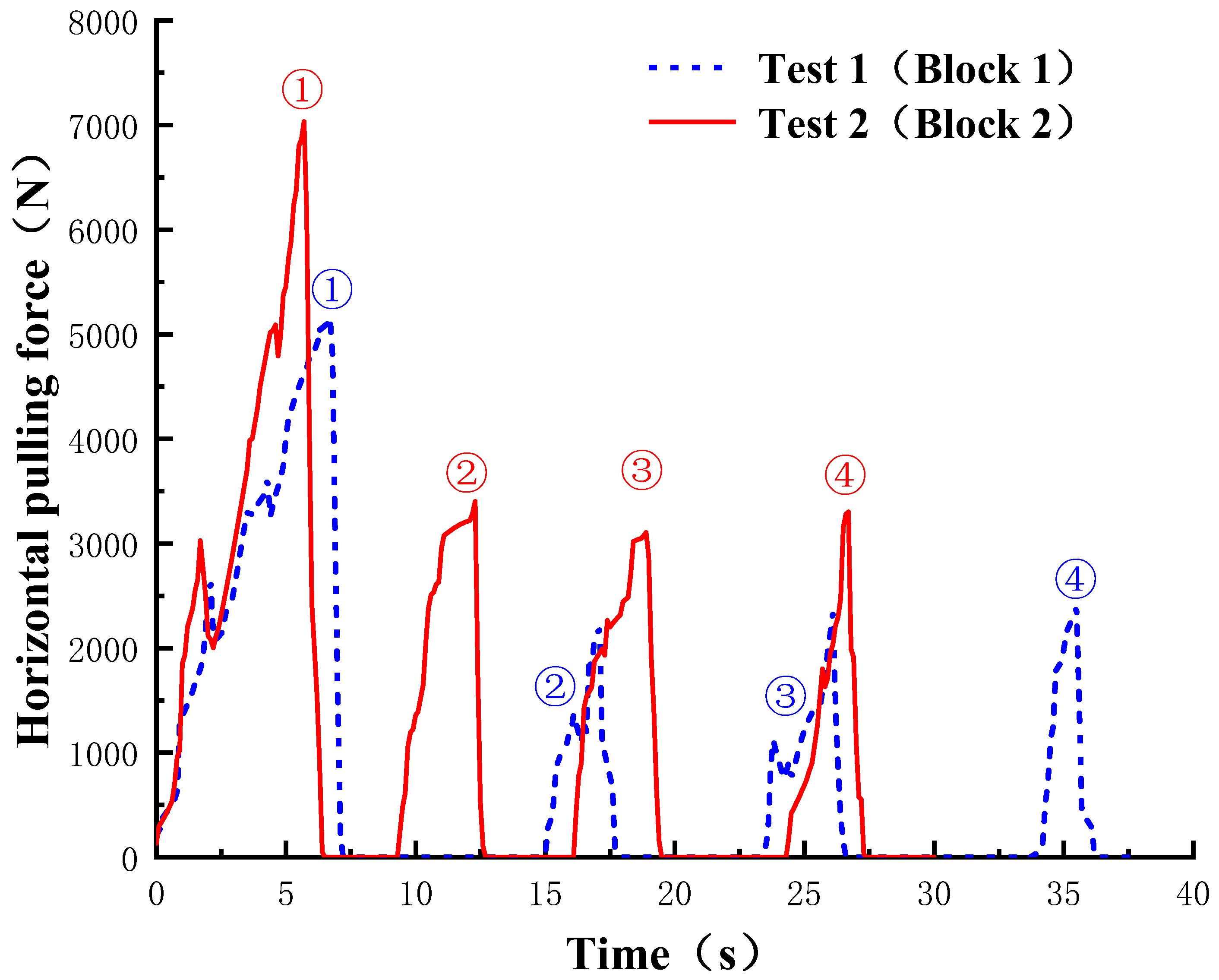
A horizontal pulling system, consisting of a steel wire rope and a dynamometer, was used to measure the horizontal force required to initiate and sustain the sliding of the test blocks. The variation in horizontal pulling force recorded during the test of Block 1 and Block 2 is shown in Figure 8. Minor fluctuations and slight drops in the measured horizontal force occurred due to control instabilities during the pulling process. Nevertheless, the overall trend of Block 1 demonstrates that as the horizontal pulling force increased, the block eventually initiated sliding, after which the force dropped abruptly to nearly zero. During the first pulling test, the peak horizontal force reached 5160.9 N, which was significantly greater than the three subsequent peaks recorded in the subsequent tests. This notable difference is primarily attributed to the combined effects of strong interfacial bonding and frictional resistance between the newly cast concrete and the steel formwork. For comparison with the sliding friction, the equivalent maximum friction coefficient, μ0, is defined as follows:
where fmax is the maximum horizontal pulling force, and G is the self-weight of the test block.
Figure 8.
Variation in horizontal pulling force for Block 1 and Block 2.
According to Equation (2), the equivalent maximum friction coefficient for Test Block 1 was calculated to be 0.69. The subsequent three pull tests were conducted primarily to determine the sliding friction coefficient between the test block and the steel formwork. During these tests, the recorded peak horizontal pulling forces were 2200.2 N, 2350.0 N, and 2390.2 N, corresponding to calculated sliding friction coefficients of 0.29, 0.31, and 0.32, respectively. The average sliding friction coefficient was 0.31, which is significantly lower than the equivalent maximum friction coefficient of 0.69 obtained from the initial sliding test of block 1.
The variations in the horizontal tensile force of Block 2 show that as the horizontal pulling force increased, Block 2 eventually underwent sliding, after which the force dropped abruptly to nearly zero. During the first pull test, the maximum horizontal force reached 7032.4 N, which was significantly higher than the peak values recorded in the subsequent three pull tests. This observation is consistent with the trend observed in the tests on Block 1. The equivalent maximum friction coefficient calculated for the initial movement of Block 2 was 0.71. For the subsequent three pull tests, the recorded peak horizontal forces were 3400.2 N, 3104.0 N, and 3300.0 N, corresponding to sliding friction coefficients of 0.34, 0.31, and 0.33, respectively, with an average of 0.33. This average is also significantly lower than the equivalent friction coefficient of 0.70 obtained from the initial sliding of Block 2. The test results from Block 1 and Block 2 demonstrate that the maximum horizontal force required to initiate separation and sliding between newly cast concrete and steel formwork is approximately 2.2 and 2.1 times the sliding friction force, respectively. In the staged tensioning design of prestressing, when the total axial prestress is less than the maximum horizontal bond force between the newly cast concrete and the steel formwork, the horizontal resistance to be overcome increases progressively with the applied prestress. Once the total axial prestress exceeds this maximum horizontal bond force, relative slip initiates at the interface between the newly cast concrete and the steel formwork. Subsequently, the horizontal resistance decreases substantially and stabilizes at the sliding friction force. The results of the friction tests provide an important reference for quantifying the variation range of the horizontal resistance and the sliding friction coefficient.
3. Analysis of Experimental and Numerical Simulation Results
3.1. Establishment of the Finite Element Model
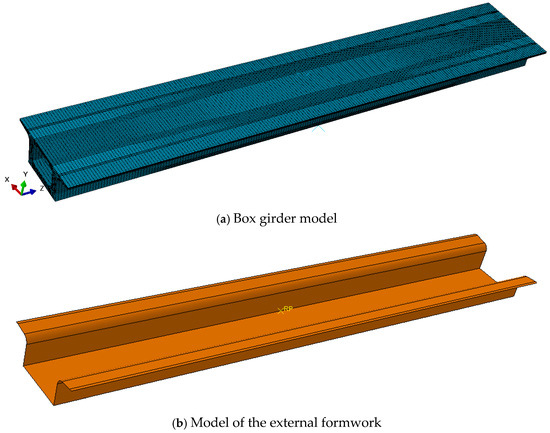
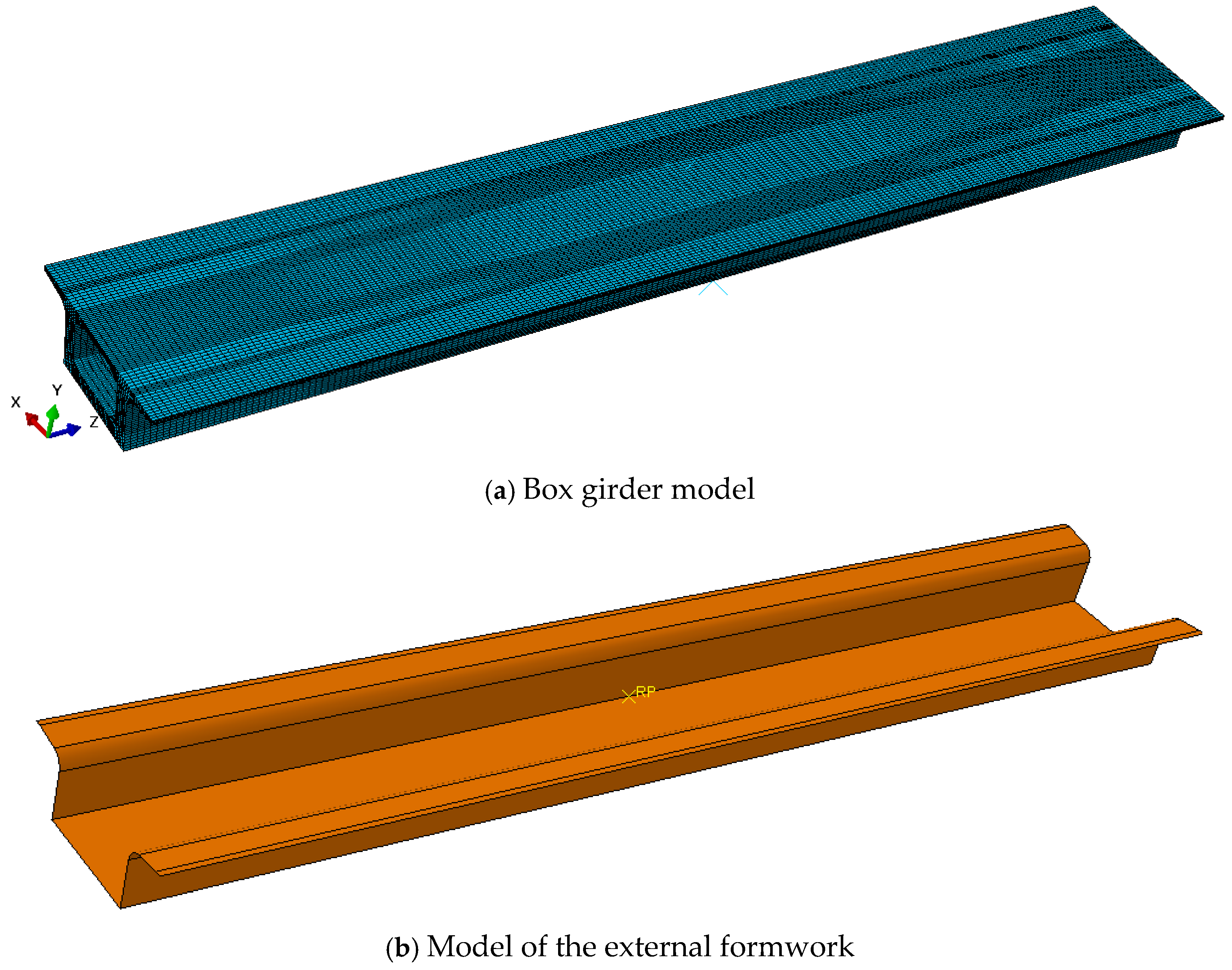
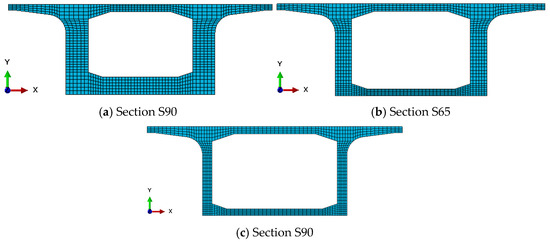
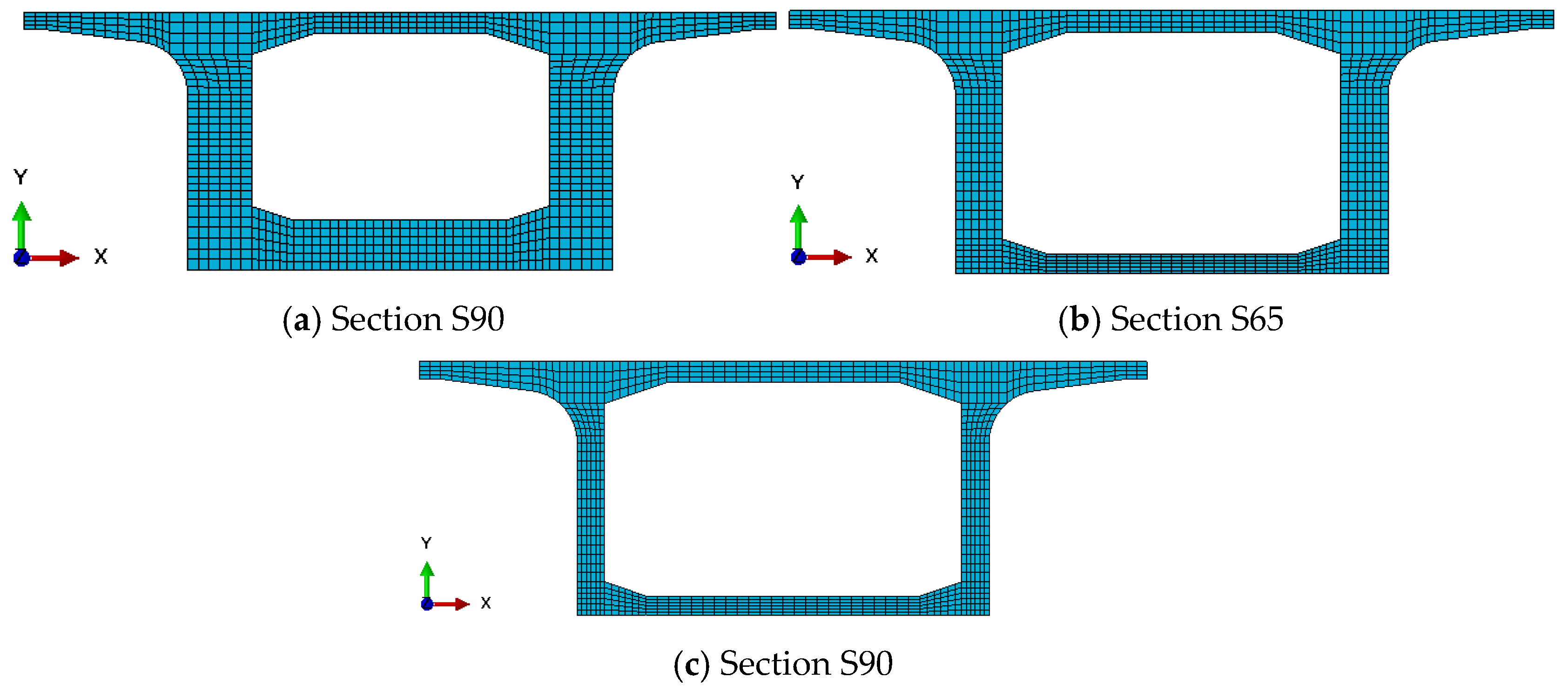
To investigate the influence of formwork friction on the pre-compressive stress distribution in box girders, the finite element analysis software ABAQUS 2021 was employed to simulate the pre-tensioning construction of a 60 m prefabricated railway box girder. Figure 9 presents the finite element model of the 60-m prefabricated box girder. The concrete girder was discretized using C3D8R elements (8-node linear hexahedral elements), while the prestressing tendons were modeled with T3D2 elements (2-node linear 3D truss elements). Given the high stiffness and supporting system of the external steel formwork, it was simplified as a rigid body in the numerical simulation. The interaction type between the box girder and the steel formwork was modeled as surface-to-surface contact, with the steel formwork designated as the master surface and the box girder surface as the slave surface. Normal behavior was defined as hard contact, while tangential behavior was simulated using the Coulomb friction model, for which the relationship between the frictional stress and the normal contact pressure is enforced via the penalty method. The model consists of 168,667 elements and 201,993 nodes, with element sizes ranging from 50 mm to 500 mm. Figure 10 illustrates the mesh configurations at the standard cross-sections S90, S65, and S40.
Figure 9.
Finite Element Model.
Figure 10.
Mesh division of typical cross-sections.
3.2. Validation of the Finite Element Model
Based on the elastic modulus test and axial compression test of concrete specimens, the elastic modulus of the concrete during the prestressing construction of the large-scale box girder was determined to be 2.65 × 10⁴ MPa, and the axial compressive strength was 31.4 MPa. It is noteworthy that in Abaqus, stress contours are displayed with positive or negative values, where positive values represent tensile stress and negative values indicate compressive stress. Since the sign indicates only tension or compression and does not affect the magnitude, subsequent data analysis primarily focuses on the absolute stress values. During the prestressing operation of the box girder, both the end formwork and the internal formwork were completely removed, leaving the box girder entirely supported by the external steel formwork.
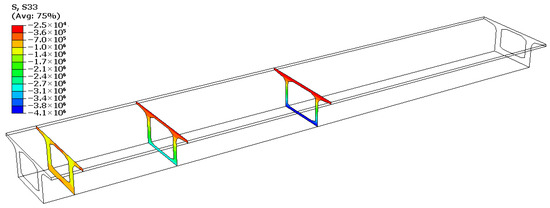
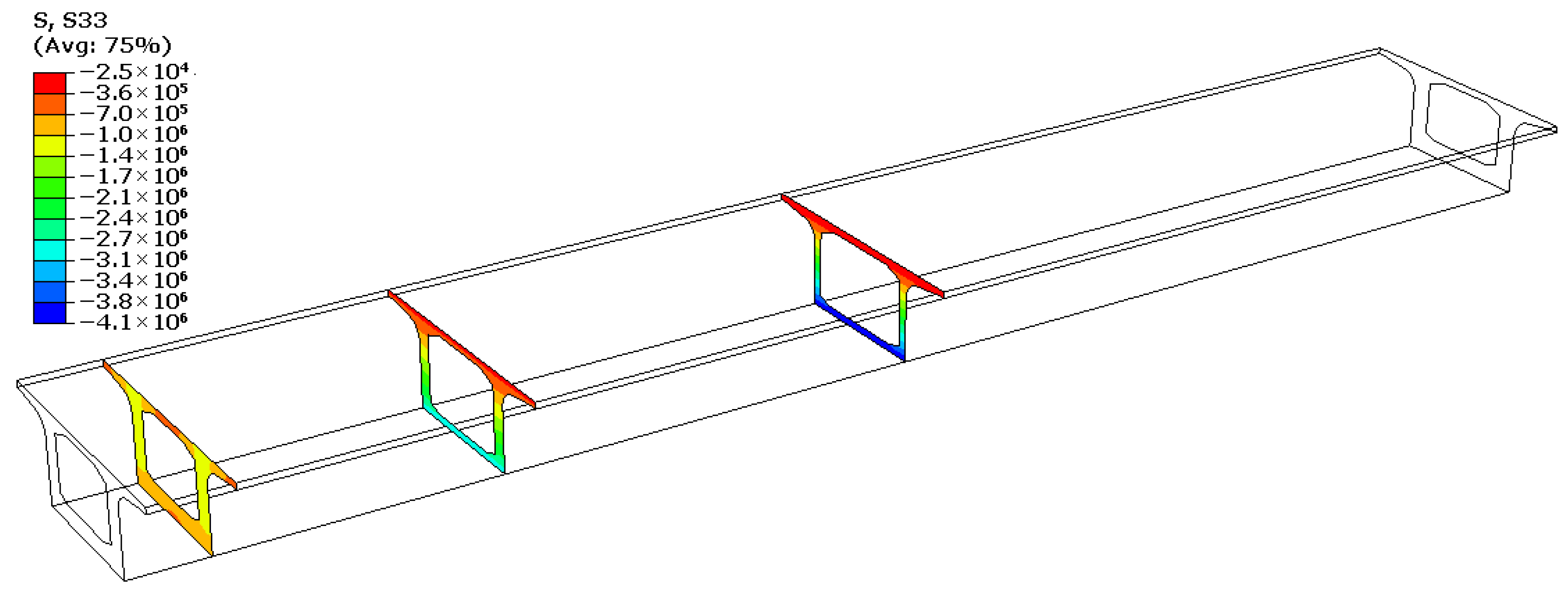
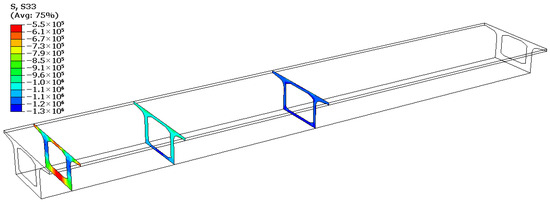
Assuming negligible formwork friction, the stress distribution at three typical cross-sections of the box girder is shown in Figure 11. The box girder is generally in a state of compression: the stresses at section S90 range from 0.53 to 1.3 MPa, at section S65 from 0.25 to 3.1 MPa, and at the midspan section S40 from approximately 0.03 to 4.00 MPa. Taking the midspan section S40 as an example, the pre-compressive stress distribution is non-uniform, with the top slab exhibiting relatively lower stresses, the webs intermediate values, and the bottom slab relatively higher stresses.
Figure 11.
Stress distribution of typical sections under frictionless conditions.
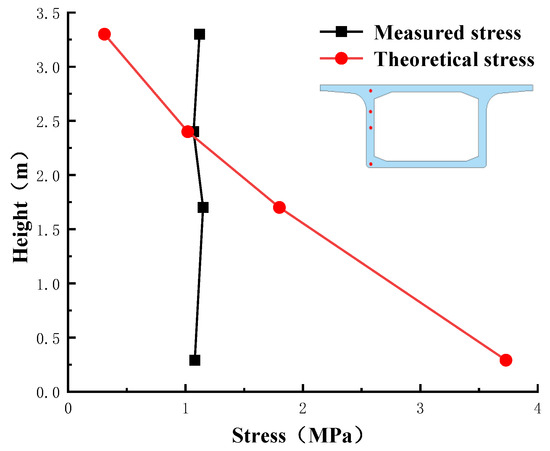
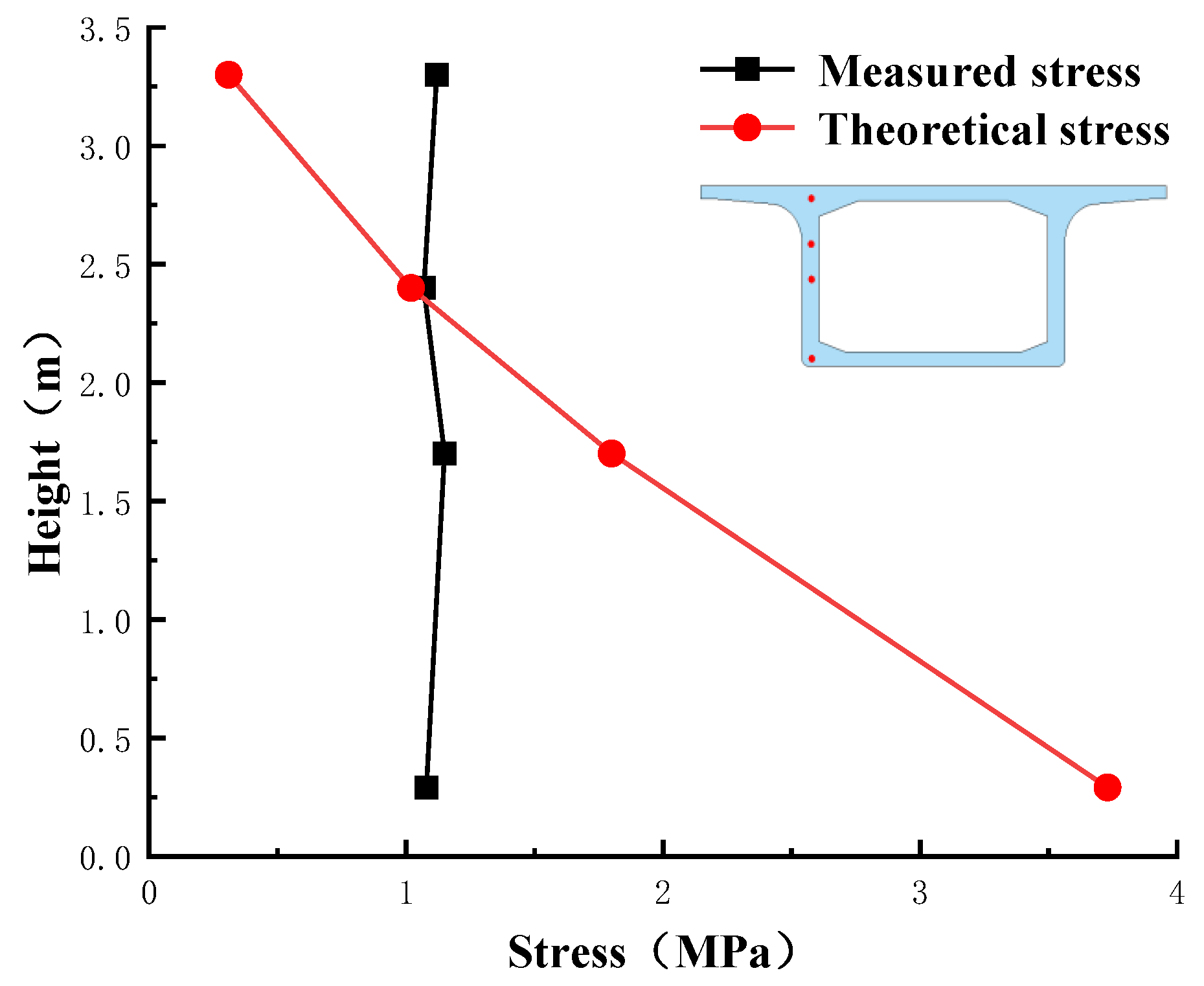
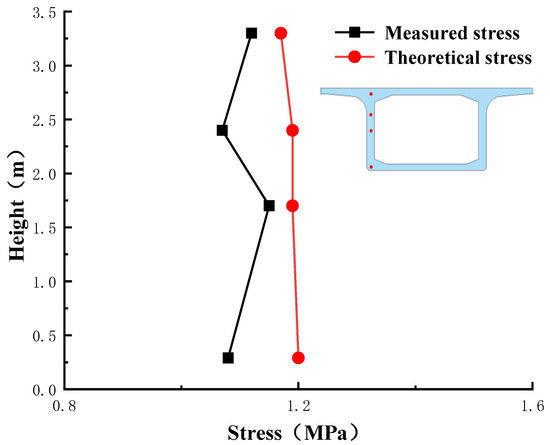
Figure 12 compares the measured and theoretical stresses of four measuring points in midspan section S40. A clear discrepancy can be observed in the distribution trends between the measured and theoretical stresses. Notably, the pre-compressive stress values exhibit considerable deviation at specific locations: a 72.3% difference at the top slab point S40-4 and a 245.4% difference at the bottom slab point S40-1. This indicates that numerical simulation results are markedly inaccurate when the frictional effects of the steel formwork are neglected. This is primarily because the steel formwork not only provides normal support for the large-scale box girder but also exerts a horizontal frictional force during the prestressing tensioning process. The presence of this horizontal friction effectively alters the boundary conditions of the box girder, partially transforming the “point” or “local” loading at the anchorage zones in post-tensioning into a distributed “surface” loading along the box girder length. Neglecting the friction effect between the steel formwork and the box girder would be inconsistent with the actual boundary constraints. Therefore, investigating the influence of horizontal friction on the pre-compressive stress distribution of box girders, while accounting for the variation in the friction coefficient, can reveal a more realistic stress state of large-scale box girders constrained by the steel formwork.
Figure 12.
Comparison between measured and theoretical stress results.
To induce a pre-compressive stress reserve of approximately 1.0 MPa in the web of the large-scale box girder at its midspan section, a preliminary pre-tensioning scheme was determined based on preliminary calculations. This scheme involved sequentially tensioning the following tendons: the web tendons F1-2, F1-4, F1-5, F1-6, and the bottom slab tendon B2-3, with a controlled tensioning stress of 558 MPa at the anchorage. The total axial prestressing force amounted to 14,220 kN. Considering the self-weight of the box girder (1450 t) and an equivalent maximum friction coefficient of 0.7, the calculated horizontal resistance to be overcome is 10,150 kN. This value is significantly lower than the total axial prestressing force of 14,220 kN. Therefore, it can be concluded that the box girder is capable of sliding on the steel formwork during the prestressing operation. Based on the aforementioned friction coefficient tests, a sliding friction coefficient of 0.33 is adopted under these conditions.
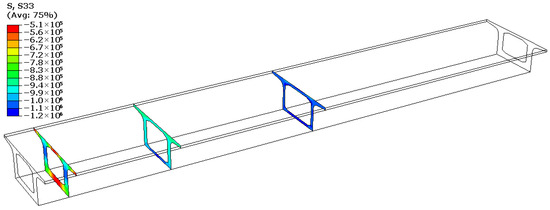
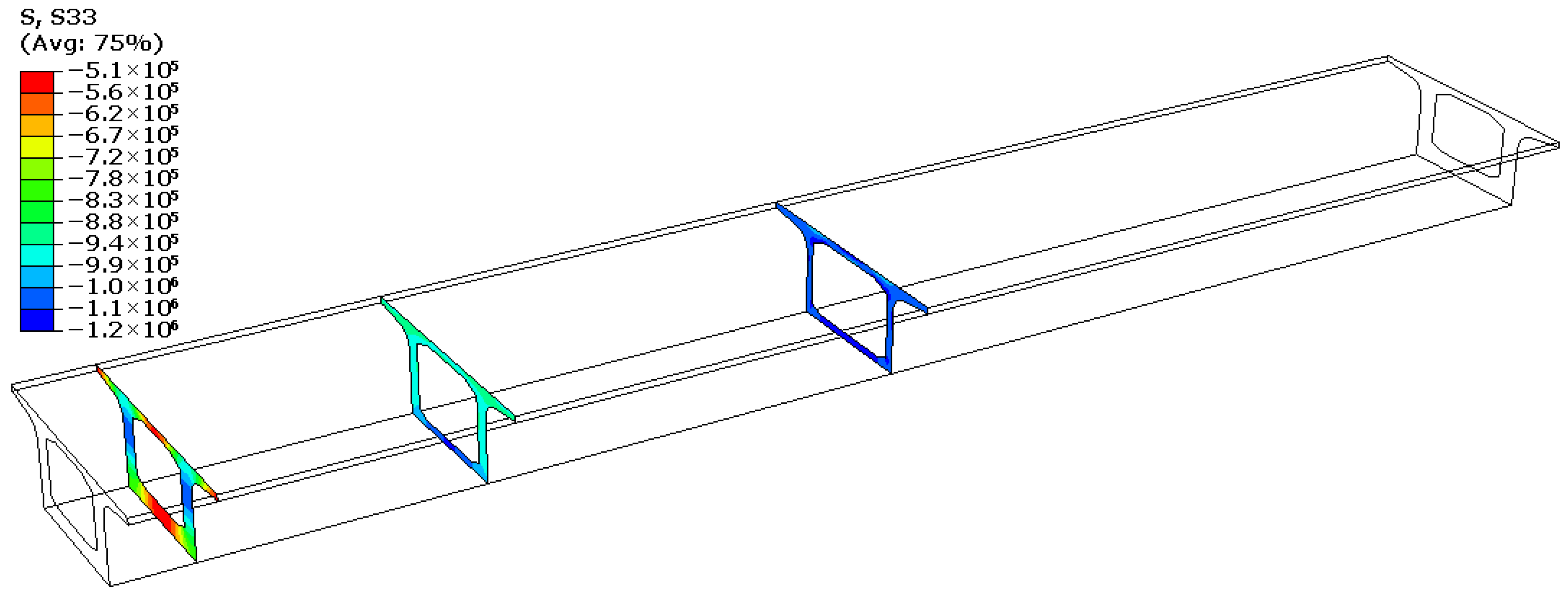
Figure 13 presents the pre-compressive stress distribution of three representative sections. The entire girder is in a state of compression. At section S90, pre-compressive stresses range from 0.55 to 1.22 MPa. For section S65, the stresses range from 0.99 to 1.22 MPa. At the midspan section S40, the pre-compressive stresses fall within 1.12 to 1.26 MPa. The stress distribution exhibits greater variability in sections nearer to the ends, whereas it becomes progressively more uniform towards the midspan.
Figure 13.
Pre-compressive stress distribution with a friction coefficient μ = 0.33.
Figure 14 and Table 3 illustrate a comparison between the measured and theoretical stresses. Although some deviation exists between the two datasets, the overall stress distribution trends are in good agreement. These discrepancies can be attributed to variations in factors such as the box girder dimensions, the actual prestressing force applied, the concrete elastic modulus, and the friction coefficient. It is important to note that the numerical model assumes an ideal prestressing condition, whereas in practice, other unavoidable prestress losses result in lower measured stresses. Additionally, the casting of large-scale box girders is a time-consuming process, which inevitably leads to differences in the elastic modulus of concrete in different parts of the structure. However, the numerical simulation employs a constant elastic modulus derived from specimen tests, which inevitably introduces further errors. The errors between the measured and theoretical stresses at the four monitoring points range from approximately 3.5% to 11.2%. Given the inherent complexities of practical engineering, these errors are considered acceptable. These findings indicate that, for the pre-tensioning of large-scale box girders, accurately accounting for the frictional effects of steel formwork in numerical simulations can more realistically predict the distribution patterns of pre-compressive stress within the box girder.
Figure 14.
Comparison between measured and theoretical stresses (μ = 0.33).
Table 3.
Measured and theoretical stresses.
3.3. Influence of Friction Coefficient on Pre-Compressive Stress in Box Girders
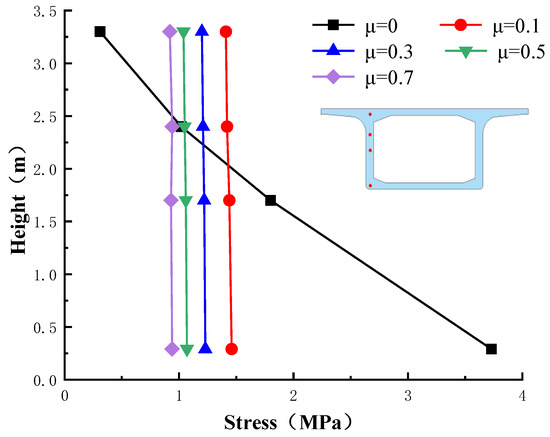
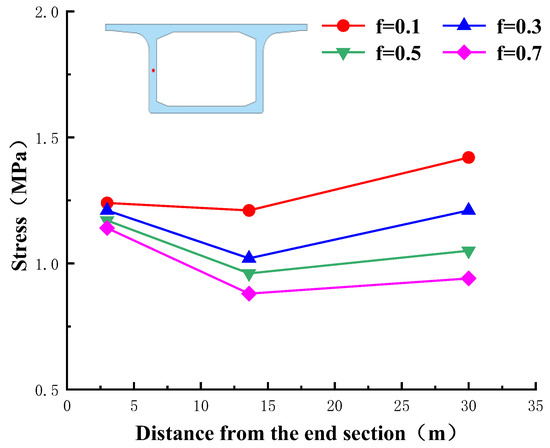
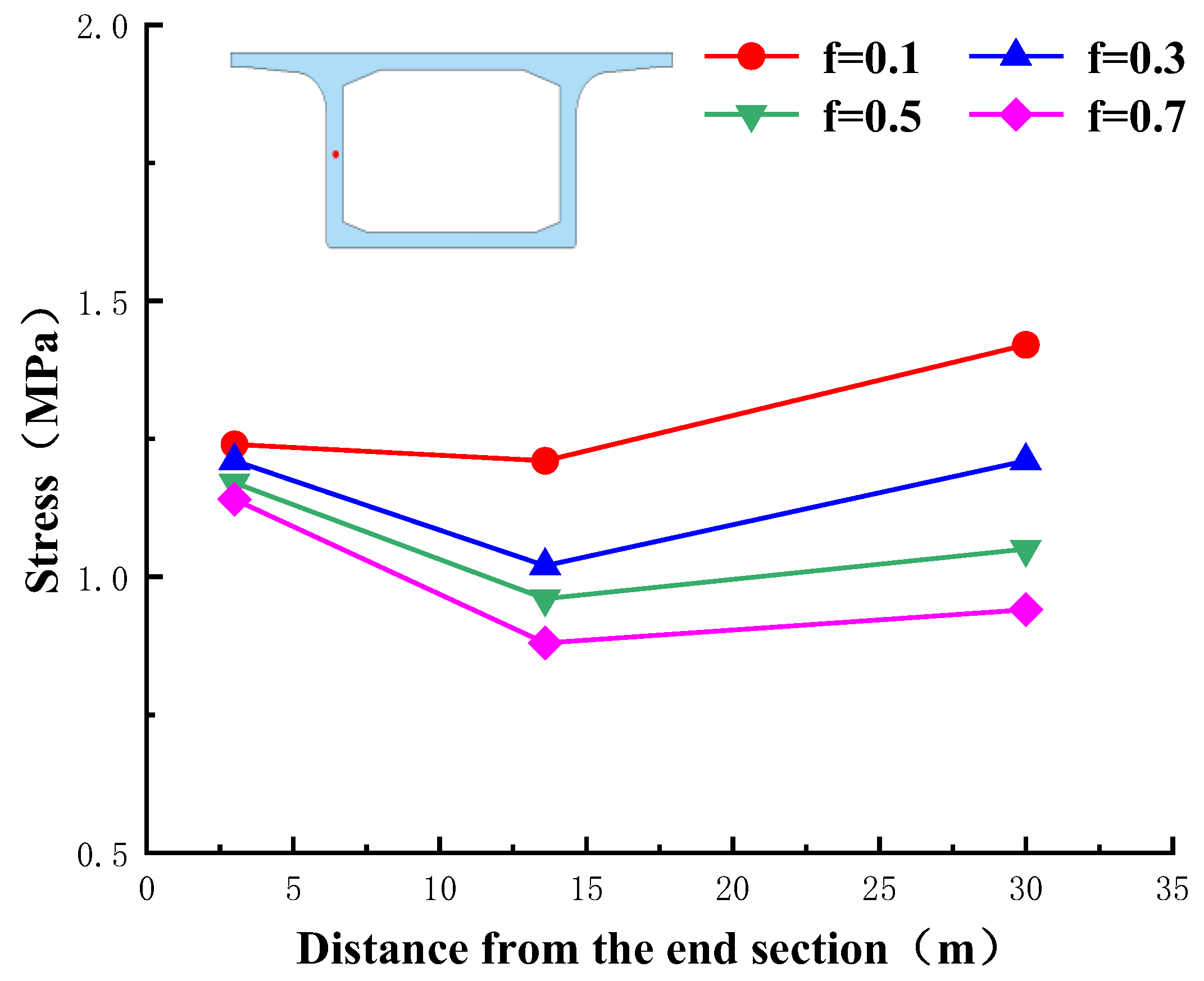
To investigate the influence of the friction coefficient on the pre-compressive stress distribution within the box girder, numerical models were assigned sliding friction coefficients of 0.1, 0.3, 0.5, and 0.7, and the results were compared with those from a frictionless model. The resulting pre-compressive stress distributions at the midspan section S3 are presented in Figure 15. When considering the friction effect of the steel formwork, the box girder remains predominantly under pre-compressive stress, and the distribution of pre-compressive stress becomes significantly more uniform. As the sliding friction coefficient increases from 0.1 to 0.7, the overall magnitude of the pre-compressive stress in the box girder exhibits a clear decreasing trend. Specifically, compared to the case of a sliding friction coefficient (μ) of 0.1, increasing μ to 0.3 results in reductions in pre-compressive stress of 15.8%, 15.3%, 14.8%, and 14.9% at the four measuring points from the top to the bottom of the section, respectively. For the case with μ = 0.7, the corresponding decreases are 35.6%, 35.4%, 33.8%, and 34.8%. These results indicate that an increase in the friction coefficient leads to greater prestress losses during transfer to the midspan section of the box girder, thereby significantly weakening the effectiveness of the pre-tensioning.
Figure 15.
Influence of friction coefficient on the pre-compressive stress of the box girder.
Figure 16 illustrates the distribution of pre-compressive stress along the web centerline at a height of 1.7 m for three representative sections. In general, the pre-compressive stress at each section exhibits a gradual decrease with increasing friction coefficient. This trend is primarily attributed to the enhanced frictional restraint provided by the steel formwork, which impedes the transfer of pre-compressive stress from the anchored ends toward the midspan section (S40). Specifically, the pre-compressive stress values at the end section S90 remain relatively close, while more pronounced reductions are observed at sections S65 and S40. This differential behavior can be explained by the two-end tensioning method adopted for the prefabricated box girder. Near the end of section S90, the influence of formwork friction on stress transfer is relatively limited. However, as the distance from the end increases, the contact area between the concrete and the steel formwork expands, thereby amplifying the cumulative effect of frictional resistance. Consequently, sections closer to the midspan experience greater cumulative losses in prestress-induced pre-compressive stress, leading to more significant stress reductions.
Figure 16.
Compressive stress distribution at the web center of three sections at a height of 1.7 m.
3.4. Influence of the Internal Formwork Roof on Pre-Compressive Stress in Box Girders
In the prefabrication of large-scale box girders, the internal formwork typically utilizes an integrated hydraulic support system. Before prestressing tension, the side panels of the internal formwork are usually retracted inward, detaching them from the inner surfaces of the box girder. However, the roof of the internal formwork, which contacts the top slab of the box girder, can be arranged in two configurations: removed or retained. Figure 17 illustrates the distribution of pre-compressive stresses across three sections of the box girder when the internal formwork roof is retained. At the end section S90, the pre-compressive stresses range from 0.51 to 1.10 MPa; at section S65, they range from 0.89 to 1.10 MPa; and at the midspan section S40, the stresses are essentially between 1.01 and 1.15 MPa. In the absence of the roof constraint, the pre-compressive stress at the midspan section S40 ranges from 1.12 to 1.26 MPa. This value is overall higher than the range of 1.01–1.15 MPa observed at the same section when the internal formwork roof is retained.
Figure 17.
Pre-compressive stress distribution considering the internal formwork roof.
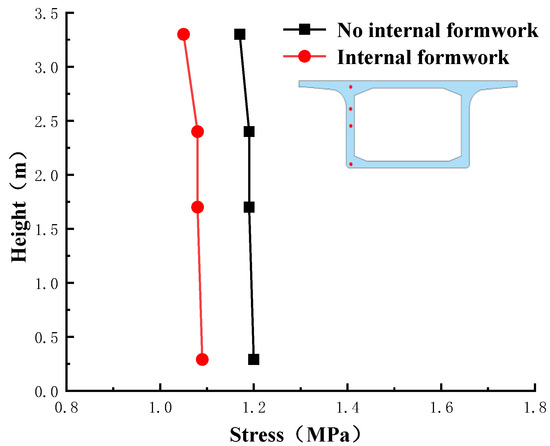
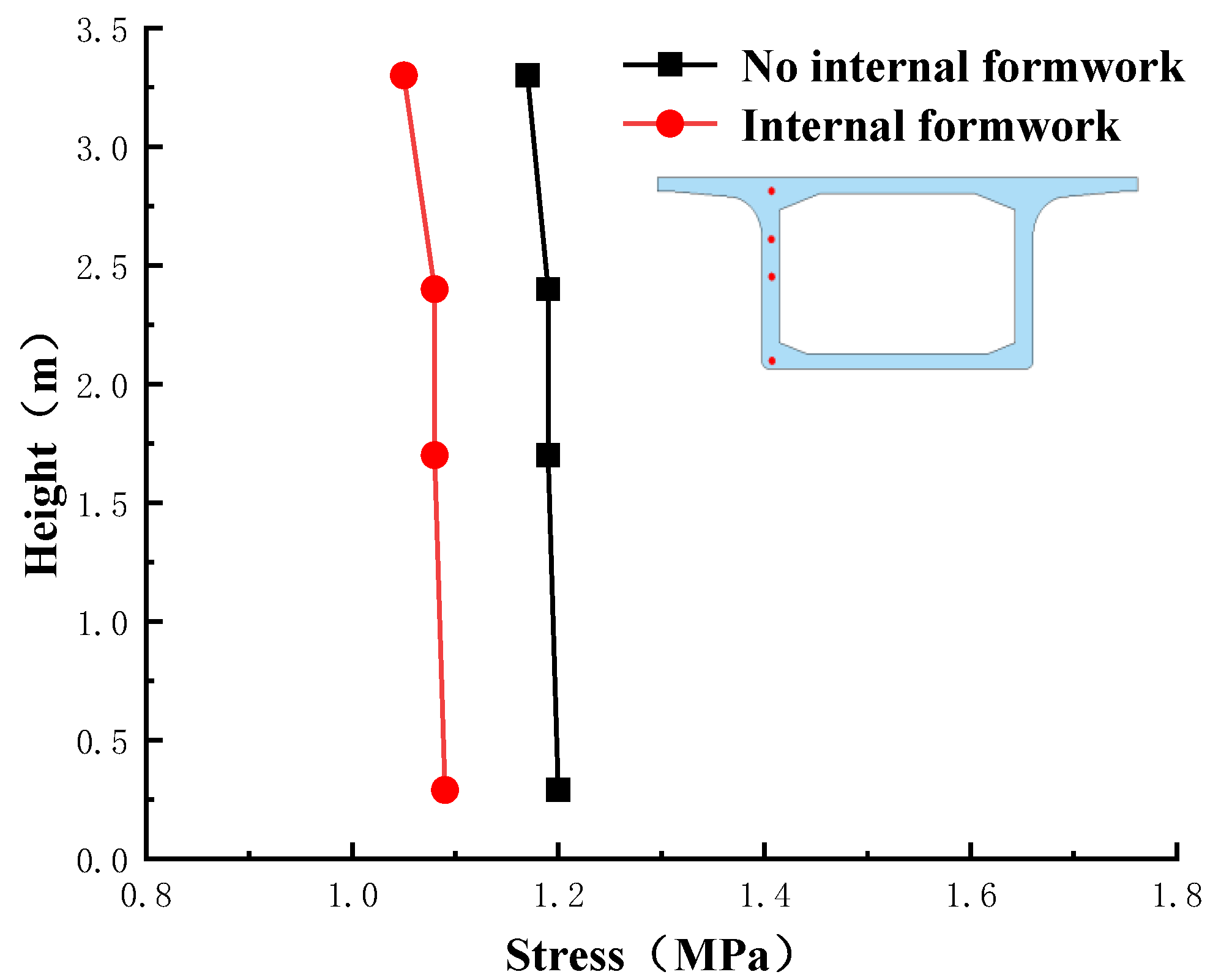
Figure 18 presents the stress comparison of four measuring points on the web of the midspan section S40 under two conditions: with and without the internal formwork roof. A friction coefficient of 0.33 is used for both cases. Compared to the scenario without the internal formwork roof, the pre-compressive stress transmitted to the midspan section S40 decreases when the constraint of the roof formwork is considered. Under roof restraint, the pre-compressive stresses at the four measuring points are approximately 89.6% to 90.8% of those in the unrestrained condition, indicating a pre-compressive stress loss ranging from 9.2% to 10.4%. As can be observed from the figure, the computed web stresses at different heights remain almost constant, and the presence of the internal formwork roof does not significantly alter this trend. This can be primarily attributed to the considerable length of the railway box girder, which spans 30 m from the end to the midspan section. Before prestressing construction, the frictional resistance provided by the steel formwork acts as an external constraint, modifying the initial stress state of the concrete. The application of double-end tensioning enables more uniform transfer of the prestressing force to the midspan section through stress diffusion. Furthermore, large-scale box girders inherently possess high sectional stiffness. The presence of the steel formwork further enhances the composite stiffness of the section while also mitigating shear lag effects, thereby promoting a more uniform stress distribution at the midspan section. Compared to the case without the internal formwork roof, its inclusion alters the boundary conditions of the box girder. Specifically, the constraint transitions from being provided solely by the external formwork to a combined system involving both the external formwork and internal formwork roofs. This change in boundary conditions leads to a redistribution of stresses. Nevertheless, given that the web of the investigated railway box girder is vertical, the frictional effect exerted by the external formwork on the vertical web surface is relatively limited. The restraint provided by the internal formwork roof can be considered to act uniformly over the full height of the web. Therefore, despite an overall reduction in web stresses at the midspan section caused by the presence of the internal formwork roof, it does not alter the uniformity of the pre-compressive stress along the web height.
Figure 18.
The stress comparison of the midspan section S40 under two conditions.
Similar trends are observed for sections S90 and S65. For the near-end section S90, the constraint of the internal formwork roof leads to reductions in web core pre-compressive stress of 9.5% and 10.2% at heights of 1.7 m and 2.4 m, respectively. For section S65, the pre-compressive stresses at the two measuring points decrease by 8.5% and 9.6%. These findings demonstrate that the frictional constraint of the internal formwork roof significantly influences the transfer of pre-compressive stress in large-scale box girders. Therefore, to mitigate prestress losses during transfer from the end to the midspan, it is recommended that the internal formwork be completely removed prior to prestressing.
3.5. Investigation of Rational Prestress Combination Schemes
During the early-age curing stage of large-scale box girders, the controlled stress at the anchorage zone should not be excessively high to avoid local concrete damage. Therefore, by investigating rational prestress combination schemes during the pre-tensioning phase, it is possible to maximize the pre-compressive stress transmitted to the midspan section of the box girder while maintaining the same anchorage zone stress.
Given that temperature-induced cracks during the early hydration heat stage of large-scale box girders predominantly occur in the top-web junction and the upper regions of the webs, the prestressing tendons are primarily arranged in the web areas. Additionally, the pre-compressive stress conditions in the bottom slab are also considered. Based on this rationale, the proposed tensioning schemes with different combinations are presented in Table 4.
Table 4.
Pre-tensioning schemes.
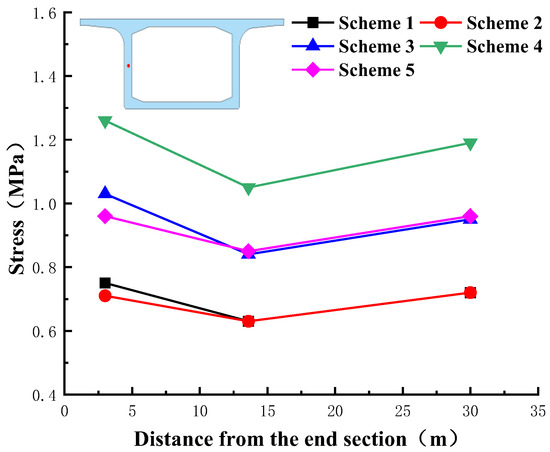
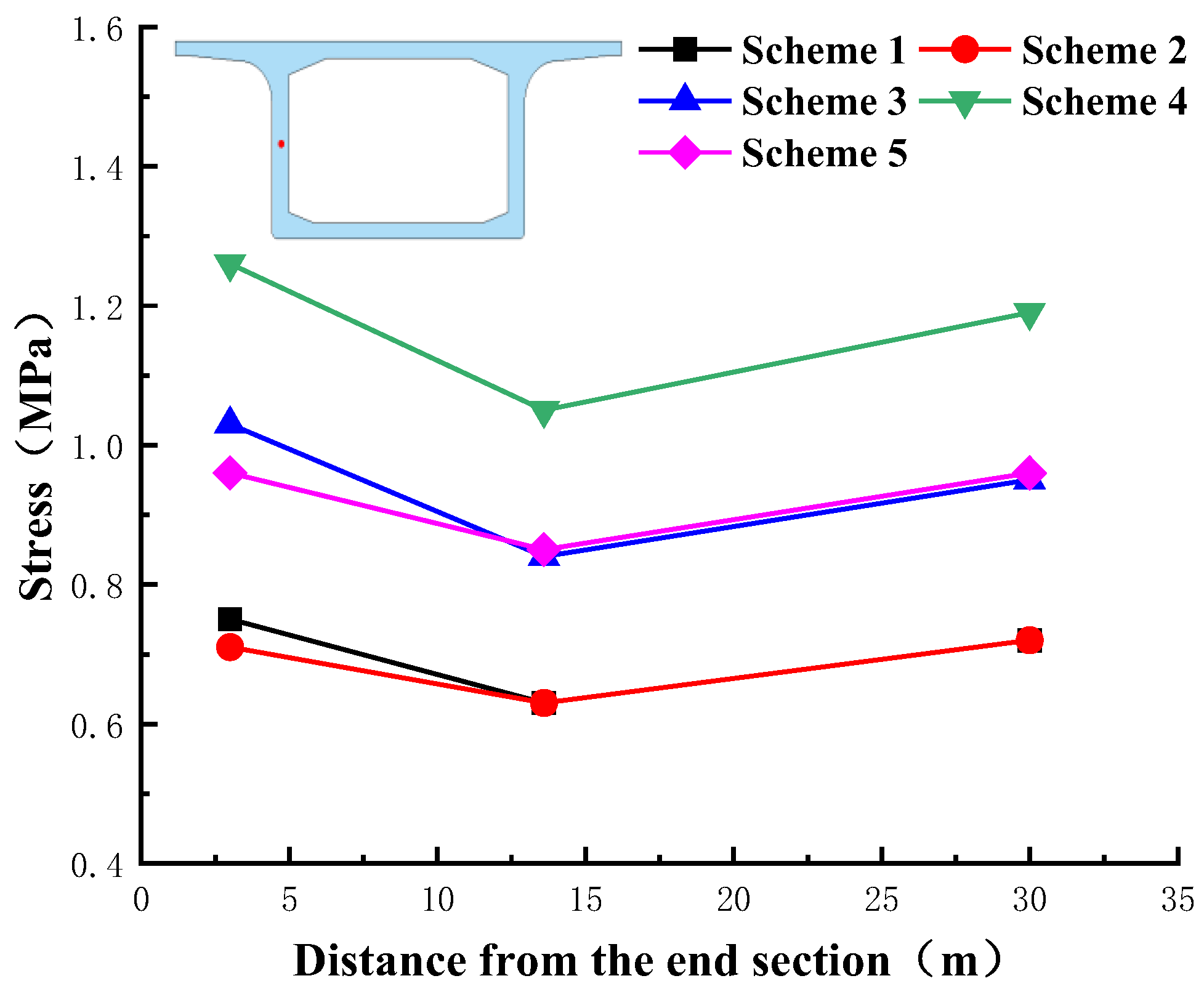
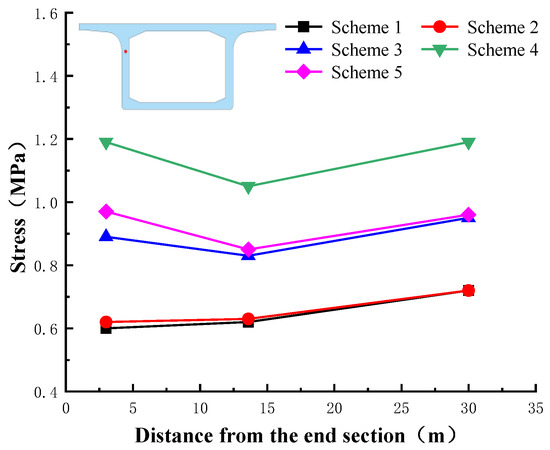
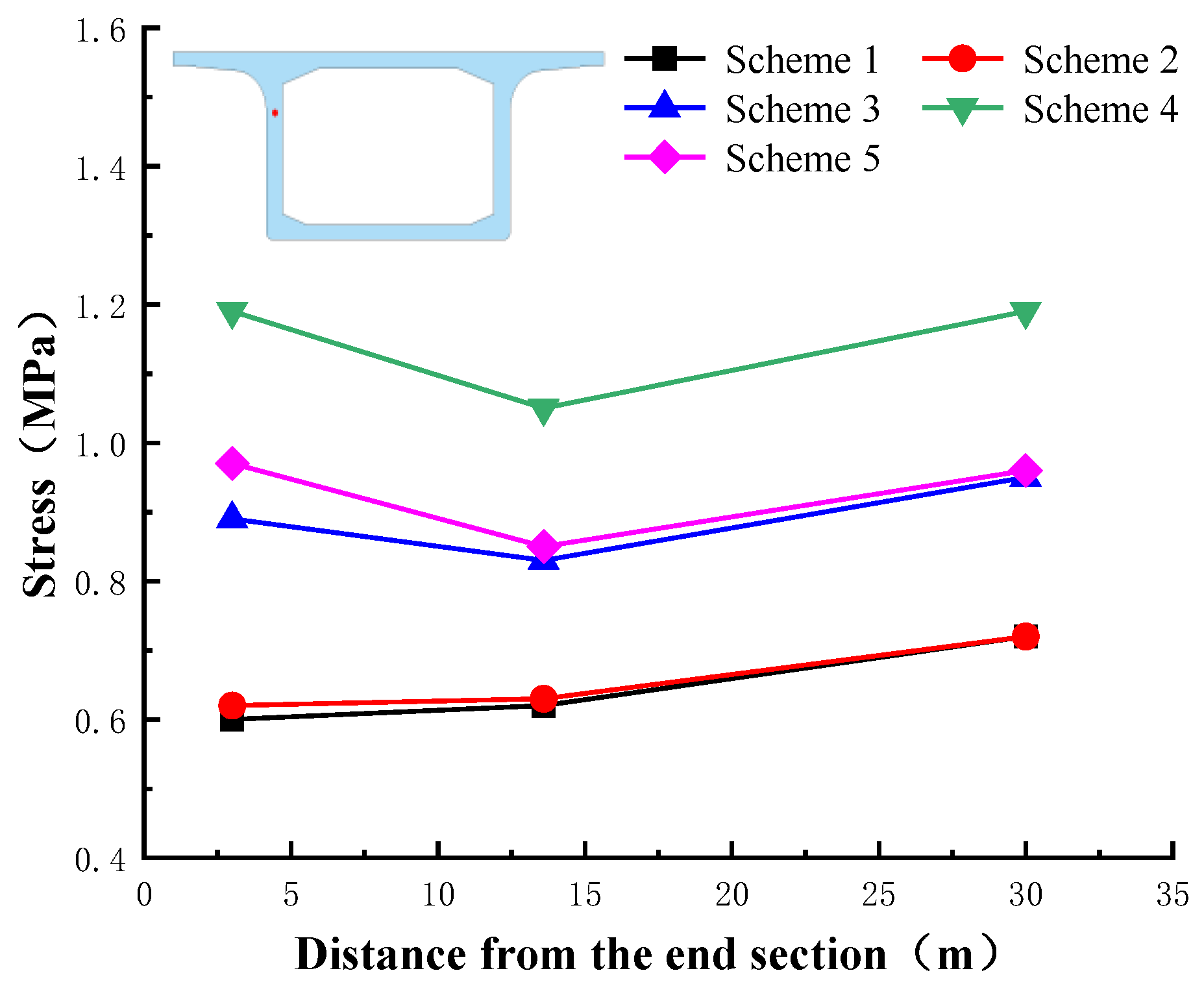
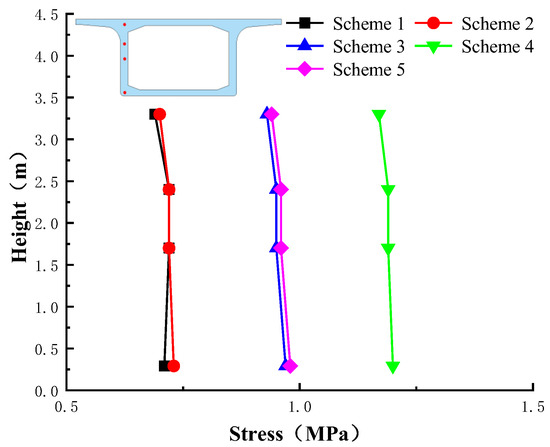
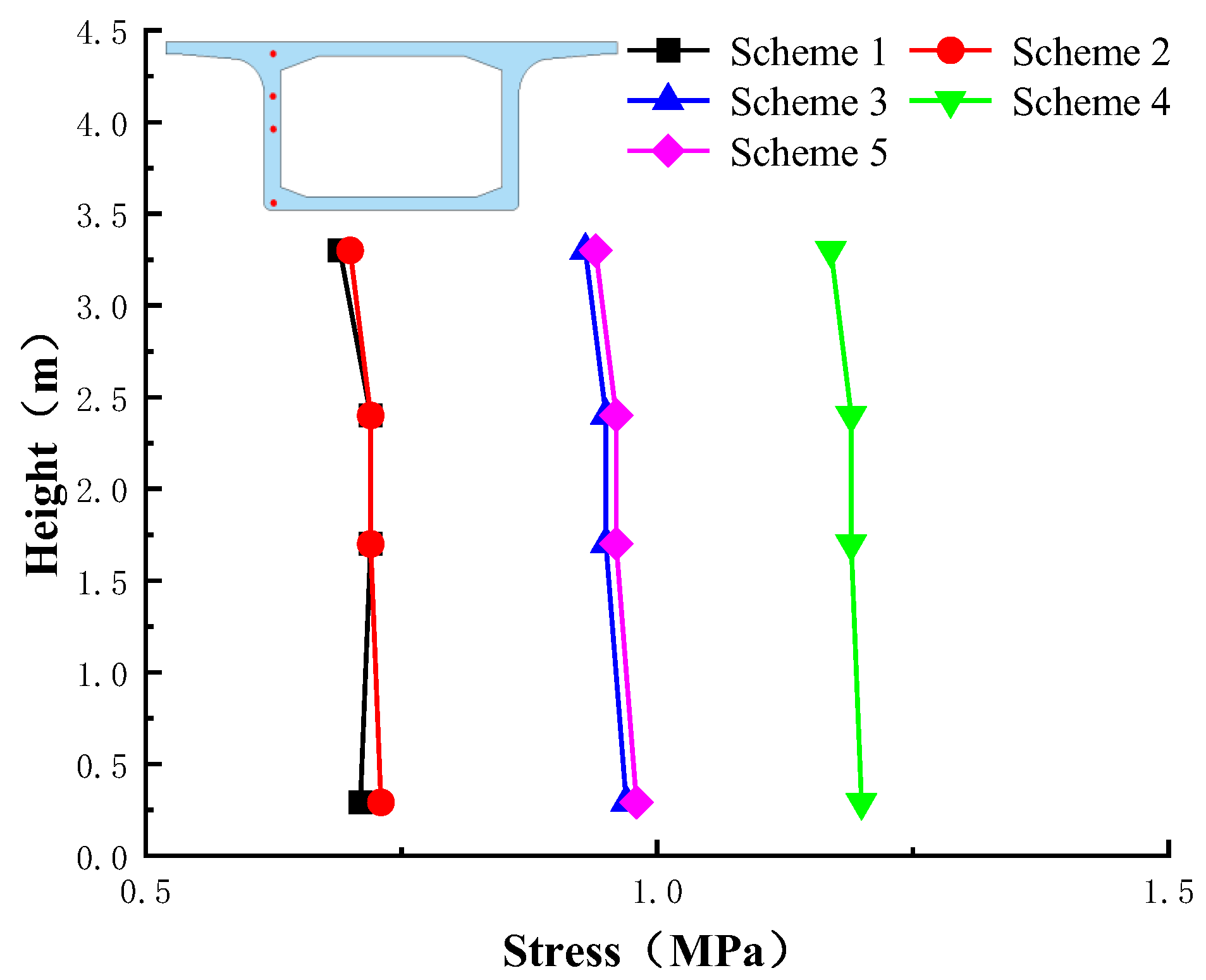
During the prestressing pre-tensioning phase, the internal formwork is assumed to be completely removed, with the box girder being constrained solely by the external formwork. Figure 19 and Figure 20 illustrate the stress distribution of measuring points along the longitudinal direction of the box girder at heights h =1.7 m and h =2.4 m, respectively. Figure 21 presents the pre-compressive stress distribution at the midspan section S40 under five different prestressing combination schemes. It is evident that, under the condition of applying the same number of prestressing tendons, the positioning of the tendons can lead to significant variations in the pre-compressive stress of the box girder. It is noteworthy that the pre-compressive stresses induced by Schemes 1 and 2 are the lowest, whereas Scheme 4 produces the highest pre-compressive stress. Compared to Scheme 1, the pre-compressive stresses at measuring points located at a height of 1.7 m in sections S90, S65, and S40 under Scheme 4 increase by 68.0%, 66.7%, and 65.3%, respectively. Similarly, at a height of 2.4 m, the stresses increase by 98.3%, 69.4%, and 65.2%, respectively. Based on these comparisons, Scheme 4 is identified as the optimal pre-tensioning scheme for the mass production of large-scale box girders, as it maximizes the pre-compressive stress within the structure.
Figure 19.
The stress distribution at heights h = 1.7 m.
Figure 20.
The stress distribution at heights h = 2.4 m.
Figure 21.
The pre-compressive stress distribution at the midspan section S40.
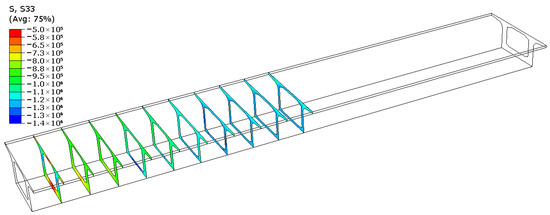
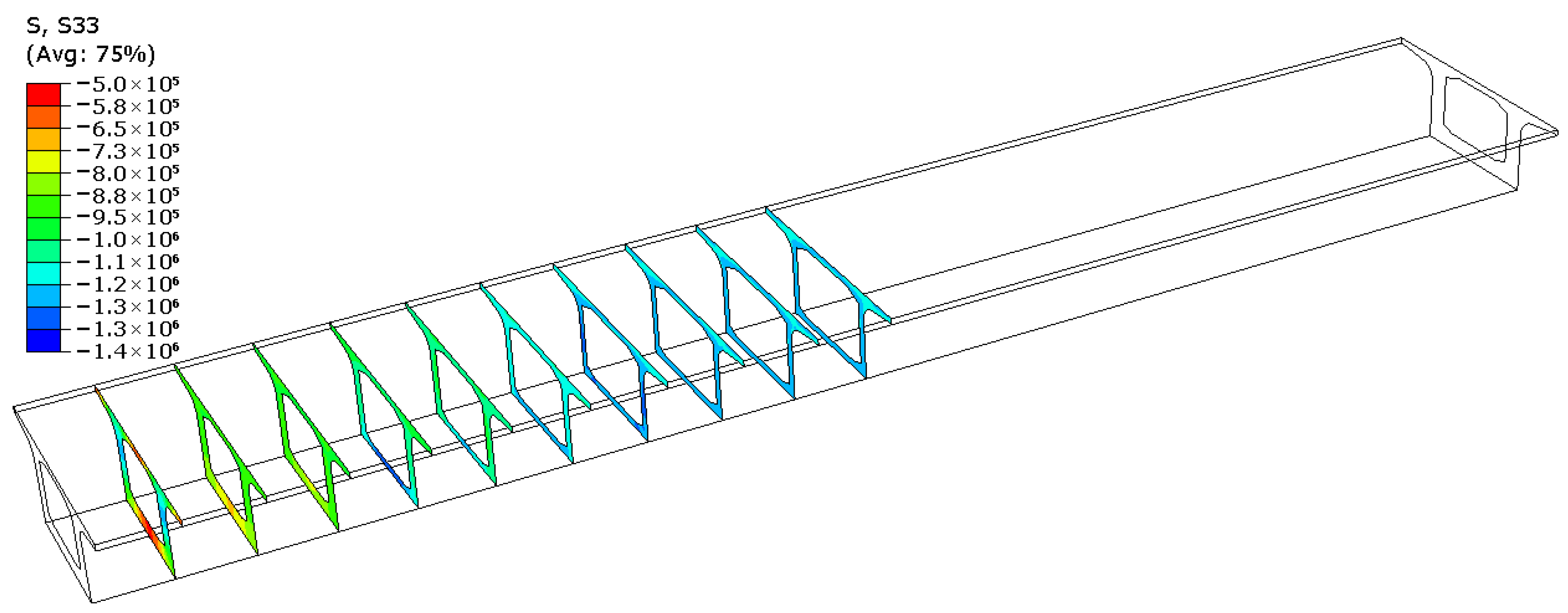
Figure 22 illustrates the pre-compressive stress distribution in representative sections of the 60 m box girder after pre-tensioning according to Scheme 4. The sections are selected at uniform intervals of 3 m. Upon completion of pre-tensioning, all sections remain under compression, with pre-compressive stresses generally ranging between 0.5 MPa and 1.4 MPa. Notably, the pre-compressive stress at the midspan section S40 ranges from 1.12 to 1.26 MPa, achieving the intended effect and effectively suppressing early-age cracking in the concrete of the 60 m box girder.
Figure 22.
Stress distribution in representative sections.
4. Conclusions
To address the early-age cracking issue in large-scale box girders, pre-tensioned prestressing technology is applied during the prefabrication stage of the 60 m box girders of Xiangshan Bay Cross-Sea Bridge on the Ningbo–Xiangshan Intercity Railway. This study systematically investigates the influence of steel formwork constraints and different prestressing schemes on stress transfer in the box girder through field tests and numerical simulations. The main conclusions are as follows:
- (1)
- The sliding friction coefficient between the steel formwork and newly cast concrete is approximately 0.33. Before initial slippage occurs, a strong adhesive bond exists between the steel formwork and concrete. The horizontal force required to overcome this bond is about 2.1 times the sliding friction force.
- (2)
- Numerical simulation results deviate significantly from the actual pre-compressive stress distribution in the box girder when the friction between the concrete and steel formwork is neglected. When the constraint effect of the steel formwork is considered, the pre-compressive stress distribution becomes more uniform, and the reduction in pre-compressive stress increases with the sliding friction coefficient.
- (3)
- The roof of the internal formwork significantly affects the transfer of pre-compressive stress in large-scale box girders. Compared to the scenario without the inner steel formwork, the pre-compressive stress transferred to the midspan section decreases when the roof constraint is considered, resulting in a pre-compressive stress loss of 9.2–10.4%. Therefore, it is recommended that the internal formwork be fully removed before applying pre-tensioned prestressing in large-scale box girders.
- (4)
- The pre-compressive stress in the box girder varies considerably under different prestressing combinations. Through a comparative analysis of multiple schemes, the optimal pre-tensioning scheme for the 60 m railway box girder was determined as follows: sequentially tensioning the prestressing tendons F1-2, F1-4, F1-5, F1-6, and B2-3, with an anchor-end stress controlled at 558 MPa. Under this scheme, the pre-compressive stresses at the midspan section S40 are consistently maintained within the range of 1.12 MPa to 1.26 MPa, effectively suppressing early-age concrete cracking in the 60 m box girder.
Author Contributions
Conceptualization, T.Z., W.Y. (Weitao Ye), and F.W.; methodology, W.Y. (Weitao Ye), and L.W.; investigation, T.Z., W.Y. (Weitao Ye), Z.Z. and Y.C.; writing—original draft preparation, W.Y. (Wei Yang), Z.Z. and L.W.; project administration, W.Y. (Wei Yang), and F.W.; and funding acquisition, W.Y. (Wei Yang) and F.W. All authors have read and agreed to the published version of the manuscript.
Funding
The financial support of the Major Project of “Science and Technology Innovation 2025” in Ningbo (2019B10076) comes from the Ningbo Science and Technology Bureau.
Data Availability Statement
The original contributions presented in this study are included in the article. Further inquiries can be directed to the corresponding author.
Conflicts of Interest
Authors Tao Zhang, Wei Yang and Zuqing Zhao were employed by the company China Railway Construction Bridge Engineering Bureau Group Co., Ltd. Author Weitao Ye was employed by the company Ningbo Regional Railway Investment and Development Co., Ltd. The remaining authors declare that the research was conducted in the absence of any commercial or financial relationships that could be construed as a potential conflict of interest.
References
- Nassr, A.A.; Abd-el-Rahim, H.H.A.; Kaiser, F.; El-sokkary, A.E. Topology optimization of horizontally curved box girder diaphragms. Eng. Struct. 2022, 256, 113959. [Google Scholar] [CrossRef] [Scilit]
- Liu, P.; Zheng, Z.; Yu, Z. Cooperative work of longitudinal slab ballast-less track prestressed concrete simply supported box girder under concrete creep and a temperature gradient. Structures 2020, 27, 559–569. [Google Scholar] [CrossRef] [Scilit]
- Wang, L.; Lv, Z.; Xu, A.; Wang, F.; Dong, X. Simulation-Based Tracking Test and Optimization of Large-Tonnage Box Girder Transport with Trolley on an Erected Bridge. Adv. Civ. Eng. 2022, 2022, 6126823. [Google Scholar] [CrossRef] [Scilit]
- Schackow, A.; Effting, C.; Gomes, I.R.; Patruni, I.Z.; Vicenzi, F.; Kramel, C. Temperature Variation in Concrete Samples Due to Cement Hydration. Appl. Therm. Eng. 2016, 103, 1362–1369. [Google Scholar] [CrossRef] [Scilit]
- Zeng, Y.; Zeng, Y.T.; Jiang, D.; Liu, S.H.; Tan, H.M.; Zhou, J.T. Curing parameters’ influences of early-age temperature field in concrete continuous rigid frame bridge. J. Clean. Prod. 2021, 313, 127571. [Google Scholar] [CrossRef] [Scilit]
- Zhu, J.S.; Wang, Z.Y. Experimental modeling and quantitative evaluation of mitigating cracks in early-age mass concrete by regulating heat transfer. J. Build. Eng. 2024, 96, 110641. [Google Scholar] [CrossRef] [Scilit]
- Wang, T.; Cai, J.; Feng, Q.; Jia, W.; He, Y. Experimental Study and Numerical Analysis of Hydration Heat Effect on Precast Prestressed Concrete Box Girder. Buildings 2025, 15, 859. [Google Scholar] [CrossRef] [Scilit]
- Do, T.A.; Tia, M.; Nguyen, T.H.; Hoang, T.T.; Tran, T.D. Assessment of Temperature Evolution and Early-Age Thermal Cracking Risk in Segmental High-Strength Concrete Box Girder Diaphragms. KSCE J. Civ. Eng. 2022, 26, 166–182. [Google Scholar] [CrossRef] [Scilit]
- Xu, H.; Yan, X. Numerical Analysis of Temperature Influence on Transverse Cracks in Concrete Box-Girder Bridges. Math. Probl. Eng. 2020, 2020, 3295037. [Google Scholar] [CrossRef] [Scilit]
- Wang, X. Pre-tension monitoring and analysis of large-tonnage prestressed concrete box girder. Railw. Constr. Technol. 2023, 10, 149–152. (In Chinese) [Google Scholar]
- Wang, F. Monitoring and analysis of hydration heat temperature and strain of asymmetric prestressed concrete box girder. Railw. Eng. 2021, 61, 41–43. (In Chinese) [Google Scholar]
- Wang, D.; Wang, F. Experimental study on early temperature and strain of large-tonnage box girder with full-span prefabrication. Highway 2022, 9, 231–235. (In Chinese) [Google Scholar]
- Cai, Y.L.; Gao, S.B.; Wang, F.; Zhang, Z.; Zhao, Z.; Ma, B.H. Early hydration heat temperature field of precast concrete T-beam under steam curing: Experiment and simulation. Case Stud. Constr. Mater. 2023, 18, E02067. [Google Scholar] [CrossRef] [Scilit]
- Feng, X.; Cai, Y.; Wang, F.; Lv, Z.; Yang, W.; Wang, L. Early-Age Hydration Heat in Railway 60-Meter Precast Box Girders: Experimental Study and Experimental Simulation. Buildings 2025, 15, 3832. [Google Scholar] [CrossRef] [Scilit]
- Yang, W.; Zhang, T.; Zhao, Z.; Feng, X.; Wang, L.; Wang, F.; Cai, Y. Winter Construction of 60 m Precast Railway Box Girders: An Investigation into Efficient Thermal Insulation Strategies. Buildings 2025, 15, 4201. [Google Scholar] [CrossRef] [Scilit]
- Guo, H.; Yang, J.; Tang, R.; Yang, C.; Xu, F. Monitoring and Analysis of Prestress Loss in Prestressed Box Girder Bridges Strengthened with External Prestressing. Sensors 2024, 24, 4549. [Google Scholar] [CrossRef] [Scilit] [PubMed]
- Yang, K.; Liu, J.; Wang, B.; Luo, D. Study on mechanisms of anchorage creep-induced prestress loss in prestressed systems with varying anchorage lengths. Mech. Time-Depend. Mater. 2025, 29, 34. [Google Scholar] [CrossRef] [Scilit]
- Acheli, A.E.; Jayaseelan, H.; Russell, B.W.; Peters, W.; Filip, C. Assessment and validation of prestress loss prediction models using real-time prestress loss measurements. PCI J. 2024, 69, 63–82. [Google Scholar] [CrossRef] [Scilit]
- Ding, Z.; Cao, Q. A state-of-the-art review of flexural behaviors of PC beams with corroded prestressing tendons. Structures 2024, 63, 106430. [Google Scholar] [CrossRef] [Scilit]
- Jiao, X. Influence of different factors on friction coefficient of slow bonded steel strand. Build. Struct. 2023, 53, 1466–1471. (In Chinese) [Google Scholar]
- Ma, W.; Xiao, G. Study on the standard value of effective prestress under anchor considering the tensioning sequence. Build. Struct. 2022, 52, 443–449. (In Chinese) [Google Scholar]
- Jin, Z.; Chen, S.; Sheng, J.; Lu, L. Influence of rotation angle of prestressing tendons anchor ring in bottom slabs on prestress loss of 60m-long box girder of Shenzhen-Zhongshan link. World Bridges 2023, 51, 34–40. (In Chinese) [Google Scholar]
- Cho, K.; Cho, J.R.; Kim, S.T.; Park, Y.H. Estimation of prestress force distribution in multi-strand system of prestressed concrete structures using field data measured by electromagnetic sensor. Sensors 2016, 16, 1317. [Google Scholar] [CrossRef] [Scilit] [PubMed]
- Yan, M.; Yang, Y.Q.; Li, X.; Bao, Y.; Sun, J.; Sun, B. Pretensioned prestress friction losses considering contact imperfection at deviators in prestressed concrete girders. Struct. Infrastruct. Eng. 2021, 17, 1639–1650. [Google Scholar] [CrossRef] [Scilit]
- Abdel-Jaber, H.; Glisic, B. Monitoring of long-term prestress losses in prestressed concrete structures using fiber optic sensors. Struct. Health Monit. 2019, 18, 254–269. [Google Scholar] [CrossRef] [Scilit]
- Kim, S.H.; Park, S.Y.; Kim, S.T.; Jeon, S.J. Analysis of Short-Term Prestress Losses in Post-tensioned Structures Using Smart Strands. Int. J. Concr. Struct. Mater. 2022, 16, 1. [Google Scholar] [CrossRef] [Scilit]
- Gou, H.; Gu, J.; Ran, Z.; Bao, Y.; Pu, Q. Flexural behaviors of full-scale prestressed high-performance concrete box girders. Struct. Eng. Mech. 2020, 75, 595–605. [Google Scholar] [CrossRef]
- Wang, G.; Zheng, J. In situ Monitoring and analysis forstress-dependent strains ofearly age concrete structures. Eng. Mech. 2009, 26, 61–66+73. (In Chinese) [Google Scholar]



Disclaimer/Publisher’s Note: The statements, opinions and data contained in all publications are solely those of the individual author(s) and contributor(s) and not of MDPI and/or the editor(s). MDPI and/or the editor(s) disclaim responsibility for any injury to people or property resulting from any ideas, methods, instructions or products referred to in the content. |
© 2026 by the authors. Licensee MDPI, Basel, Switzerland. This article is an open access article distributed under the terms and conditions of the Creative Commons Attribution (CC BY) license.