Next Article in Journal
Prestressing and Self-Healing of Fiber-Reinforced and Ultra-High-Performance Concrete Using Shape Memory Alloys
Previous Article in Journal
A Typological Study of the Socio-Spatial Composition of New-Type Universities in China: A Case of SUSTech Campus
Previous Article in Special Issue
A Novel Active Learning Method Combining Adaptive Support Vector Regression and Monte Carlo Simulation for Structural Reliability Assessment
 
 
Due to scheduled maintenance work on our servers, there may be short service disruptions on this website between 11:00 and 12:00 CEST on March 28th.
Article

Freeze–Thaw Resistance of Class C/Class F Fly Ash Geopolymer Mortars with Different Ash-to-Sand Ratios

1
Guangdong Architectural Design and Research Institute Group Co., Ltd., Guangzhou 510010, China
2
The Third Construction Co., Ltd. of CTCE Group, Tianjin 300011, China
3
School of Civil Engineering, Harbin Institute of Technology, Harbin 150090, China
4
Key Lab of Structures Dynamic Behavior and Control of the Ministry of Education, Harbin Institute of Technology, Harbin 150090, China
5
China Resources Land Limited, Beijing 100840, China
6
School of Civil Engineering and Transportation, Foshan University, Foshan 528225, China
*
Author to whom correspondence should be addressed.
Buildings 2026, 16(7), 1288; https://doi.org/10.3390/buildings16071288

Submission received: 4 February 2026 / Revised: 19 March 2026 / Accepted: 23 March 2026 / Published: 25 March 2026

Abstract

This paper investigates the freeze–thaw durability of geopolymer mortars synthesized from class C and class F fly ash, with varying ash-to-sand ratios ranging from 1:1 to 1:1.8. Optimizing freeze–thaw resistance is critical for promoting the practical application of geopolymer materials in cold regions, where cyclic freezing and thawing significantly threaten long-term durability. The performance of the mortars was evaluated through laboratory freeze–thaw cycling and natural environmental exposure. Freeze–thaw resistance was assessed by measuring mass loss and compressive strength after 60 laboratory cycles and 90 days of natural environmental exposure, while specimens cured under standard conditions were used as reference samples. The results demonstrate that the ash-to-sand ratio significantly influences durability performance. After 60 laboratory freeze–thaw cycles, specimens with a ratio of 1:1 exhibited a severe mass loss of 17.31%, whereas those with ratios between 1:1.4 and 1:1.8 maintained mass losses below 5%. Under natural environmental exposure, which reflects multiple coupled environmental factors such as moisture fluctuation, drying, and carbonation rather than freeze–thaw action alone, mass loss increased from approximately 2.26–3.64% at 15 days to 9.00–11.74% at 90 days. The geopolymer mortars with an ash-to-sand ratio of 1:1.4 exhibited superior freeze–thaw resistance, characterized by the lowest mass loss and the highest compressive strength. Microstructural and phase analyses indicated environment-dependent phase evolution and pore structure changes in the geopolymer matrix, which were associated with the observed durability performance. These findings contribute to the understanding of durability in geopolymer systems, offering insights into optimizing ash-to-sand ratios for enhanced freeze–thaw resilience.

1. Introduction

Geopolymers, regarded as a promising class of inorganic polymeric materials, have garnered increasing attention in the construction industry due to their environmental profile and enhanced durability compared with ordinary Portland cement (OPC) [1]. Geopolymers utilize solid wastes, such as fly ash, slag, and municipal residues (e.g., urban sludge), as primary raw materials, thereby reducing virgin resource consumption and CO2 emissions while aligning with the broader development of low-carbon construction materials based on multi-source waste utilization [2,3,4]. In terms of mechanical properties and durability, geopolymers often outperform OPC, exhibiting superior compressive strength, resistance to chemical attack, and enhanced freeze–thaw durability [5,6]. Nevertheless, the environmental and economic competitiveness of fly ash-based geopolymer mortars is strongly context-dependent, because the alkali activators (e.g., sodium silicate and sodium hydroxide) can dominate both the embodied impacts and the production cost. Recent syntheses and life cycle assessment studies indicate that the overall sustainability advantage of geopolymers may vary depending on activator dose, energy sources, and regional supply chains [7,8]. Therefore, while this work focuses on durability-driven mix optimization by isolating the ash-to-sand ratio, a full life-cycle assessment and cost analysis are identified as important future steps to quantify the trade-offs between freeze–thaw performance and practical sustainability.
The performance of geopolymers is governed by numerous factors, including precursor composition, activators, and curing regimes. Precursor materials are commonly classified into high calcium and low calcium sources, each imparting distinct properties to the resulting geopolymers. High-calcium precursors (e.g., slag) lead to the production of geopolymers with short setting times and high strength due to the formation of calcium-rich binding phases such as C–S–H [9]. In contrast, low-calcium precursors (e.g., fly ash) contribute to improve long-term durability and mechanical properties through the development of a dense microstructure via silicate polymerization mechanisms [10,11].
Fly ash, a widely available by-product of coal combustion, has been extensively utilized in geopolymer synthesis due to its advantageous chemical properties [12]. Class C fly ash, typically containing more than 10% CaO, generally results in geopolymers with rapid setting behavior and high early compressive strength owing to the formation of calcium-rich reaction products [13,14]. Antoni et al. [15] reported that geopolymer mortars prepared from class C fly ash with an ash-to-sand ratio of 1:2 exhibited an initial setting time of less than 20 min, whereas mortars based on class F fly ash showed significantly longer setting times ranging from 40 to 120 min. Wibowo et al. [16] confirmed that high-calcium fly ash geopolymers can achieve compressive strengths exceeding 60 MPa under optimized alkali activation, although their workability and ductility remain sensitive to activator dose and curing conditions. In contrast, class F fly ash, with a CaO content below 10%, typically produces geopolymers with longer setting times and higher workability, but often requires elevated curing temperatures to enhance reaction kinetics and early strength development [17]. The early strength of class F fly ash geopolymer increased as curing temperature increased from 65 °C to 80 °C [18]. Moreover, the performance of low-calcium fly ash-based geopolymers is highly dependent on alkali dose, activator modulus, and mixture design. Excessive alkali content may alter gel structure and increase pore connectivity, thereby affecting strength development and durability [19].
Blending calcium-rich and low-calcium precursors provides a practical approach to balancing reaction kinetics and long-term performance. Nuaklong et al. [20] synthesized a fly ash-based geopolymer by partially substituting high-calcium fly ash with low-calcium fly ash and found that a mass ratio of 1:1 between the two types significantly improved compressive strength and acid resistance. Jiao et al. [2] developed geopolymer mortars with varying strength levels by blending class C and class F fly ash, finding that the resulting materials exhibited excellent sulfate resistance. In addition, calcium-bearing additives (Ca(OH)2 and CaSO4) can enhance fly ash dissolution and provide Ca2+ for gel formation, thereby improving strength development when properly proportioned [21].
Compared with slag-dominant alkali-activated systems, which primarily rely on high calcium content and rapid C–A–S–H gel formation to achieve early strength and dense matrices, blended class C/class F fly ash systems involve a more complex interaction between calcium-driven and silicate-driven reaction pathways. The coexistence of C–A–S–H and N–A–S–H type gels makes the microstructure more sensitive to mixture parameters such as aggregate proportion and binder continuity. Therefore, understanding how the ash-to-sand ratio affects pore connectivity and freeze–thaw durability in such blended systems is essential for clarifying their performance mechanisms.
For geopolymer mortars, the ash-to-sand ratio is a key mixture parameter affecting fresh behavior, reaction extent, and hardened microstructure. Increasing binder content generally promotes gel formation and improves binder continuity, whereas excessive sand content reduces available binder, weakens gel–aggregate bonding, and may increase pore connectivity [22]. Wang et al. [23] indicated that higher sand content reduced setting time and strength while influencing drying shrinkage. Guades [24] also indicated that compressive strength decreases with increasing sand-to-fly-ash ratio, suggesting that an appropriate aggregate–binder balance is essential to achieve satisfactory mechanical performance and durability.
Freeze–thaw resistance is a key durability requirement for geopolymers used in cold regions and is primarily governed by pore structure and transport properties. Water ingress and the buildup of hydraulic pressure during freezing are strongly influenced by pore connectivity and permeability. Liu et al. [25] reported that pore coarsening and connectivity evolution play a decisive role in the frost resistance of fly ash-based geopolymer concrete under cyclic freezing, highlighting the transformation of harmless pores into harmful pores as a critical deterioration pathway. In addition, the initial curing regime can strongly influence freeze–thaw durability in fly ash-based geopolymers; prolonged curing at elevated temperature (60–80 °C) promotes matrix densification and improves strength retention after freeze–thaw cycling [26]. Similarly, class C fly ash-based geopolymers subjected to steam curing tend to exhibit superior freeze–thaw resistance due to the formation of C–S–H gels, which contributes to a denser matrix and reduced porosity [27]. This reduction in porosity limits water ingress, thereby minimizing the risk of freeze–thaw damage.
Beyond single-modifier strategies, hybrid geopolymer systems have received increasing attention in recent years. Slag–fly ash hybrid binders exhibited refined pore structures and enhanced resistance under coupled freeze–thaw and aggressive exposures. Similarly, Zhao et al. [28] investigated class F fly ash-based geopolymer concrete, where increasing the slag content to 50% enabled the material to endure 225 cycles, achieving freeze–thaw resistance comparable to that of ordinary Portland cement. Jin et al. [29] explored a tannery sludge/metakaolin-based geopolymer, optimized for both freeze–thaw and seawater corrosion resistance, and found that it retained considerable compressive strength after exposure to sulfate attack and freeze–thaw cycles, thereby showing promise as a durable building material in cold and coastal environments.
In addition to precursor modification strategies, additive-based approaches have also been widely explored to enhance freeze–thaw resistance. Li et al. [30] demonstrated that adding modified multi-walled carbon nanotubes and PVA fibers to fly ash-based geopolymer mortars substantially increased their durability, allowing specimens to withstand up to 175 freeze–thaw cycles without notable degradation. Similarly, Hu et al. [31] demonstrated that calcium-rich geopolymer systems modified with nano-SiO2 exhibited significantly reduced mass loss (<1%) even after 275 freeze–thaw cycles, attributing the improvement to refined pore structure and hybrid C–A–S–H/N–A–S–H gel formation. Overall, these findings highlight that freeze–thaw resistance depends on both pore-structure refinement and crack-control mechanisms. In this context, the ash-to-sand ratio is an important parameter because it directly governs binder continuity, pore connectivity, and the transport path for water ingress [32].
Despite these recent advances, limited studies have rigorously examined how the ash-to-sand ratio influences geopolymer performance under laboratory freeze–thaw cycling and natural environmental exposure, while maintaining a constant precursor blending ratio and fixed activator parameters. Moreover, systematic comparisons between laboratory freeze–thaw cycling and natural environmental exposure, which involves not only freezing and thawing but also coupled environmental factors such as moisture fluctuation, drying, and carbonation, remain insufficiently explored for fly ash-based geopolymer mortars. It should be noted that natural environmental exposure does not represent a direct equivalent to laboratory freeze–thaw cycling, but rather a multi-factor-coupled environmental condition. Therefore, this study aims to investigate the freeze–thaw resistance of class C/class F fly ash-based geopolymer mortars with varying ash-to-sand ratios under laboratory cycling and natural environmental exposure. By maintaining constant precursor blending, water-to-binder ratio, and activator parameters, the influence of ash-to-sand ratio on mass loss, compressive strength evolution, phase composition, and pore structure can be systematically evaluated. This approach enables clearer identification of the critical ash-to-sand ratio governing durability performance.

2. Materials and Methods

2.1. Materials

Two types of fly ash were used in this study: class C fly ash sourced from Harbin Acheng Suibao Thermoelectric Power Plant in Harbin, China, and class F fly ash supplied by Heilongjiang Shuangda Thermoelectric Power Plant in Harbin, China. Table 1 lists the chemical compositions of both fly ashes. River sand, obtained locally in Harbin, China, was employed as the fine aggregate in the geopolymer mortar mixtures. The sand exhibited an apparent density of 2.18 g/cm3, a bulk density of 1.277 g/cm3, and a clay content of 3.18%. Prior to mixing, the river sand was oven-dried to a constant mass to eliminate residual moisture, ensuring that the effective water-to-binder ratio was not affected by the moisture content of the sand. The gradation of the river sand is presented in Table 2. The alkaline activator consisted of NaOH (purity ≥ 96%, sourced from Tianjin Tianda Chemical Reagent Factory in Tianjin, China), water glass (Ms = 3.0, ωwater = 52%, bought from Julide Chemical Co. in Langfang, China), and tap water from Harbin.

2.2. Sample Preparation

The alkaline activator was prepared by combining water glass and sodium hydroxide to obtain a modulus of 1.3 and a Na2O content of 10%. Class C fly ash and class F fly ash were blended at a mass ratio of 1:1 to obtain the precursor binder. The water-to-binder ratio of all geopolymer mortars was fixed at 0.40. For the preparation of the geopolymer mortar samples, the blended fly ash and river sand were initially dry-mixed to achieve uniformity. The alkaline activator, maintained at ambient temperature, was then added to the dry mixture. Mixing was initially carried out at low speed for 2 min. After a pause of 1 min, the mixture was further mixed at high speed for an additional 2 min to ensure thorough blending. The freshly prepared mortar was then cast into 70.7 × 70.7 × 70.7 mm3 molds, as specified in Chinese standard JGJ/T 70-2009 [33] for freeze–thaw resistance testing of mortar specimens. The molds were then sealed with plastic film to minimize moisture evaporation. After 24 h, the specimens were demolded and transferred to a curing room maintained at 20 ± 2 °C with relative humidity higher than 95% for 28 days.

2.3. Test Methods

2.3.1. Laboratory Freeze–Thaw Cycling Test

The laboratory freeze–thaw cycling test was conducted in accordance with Chinese standard JGJ/T 70-2009 [33], utilizing the air freezing and water thawing method. After 28 days of curing under standard conditions, the samples were subjected to the laboratory freeze–thaw cycling test. Prior to testing, the samples were submerged in water for 48 h, ensuring that the water level remained at least 20 mm above the specimen surface. After immersion, the specimens were removed, and the surface water was gently wiped off using a damp cloth before mass measurement and testing, without additional drying. Each group consisted of three specimens, and their mass was recorded using an electronic balance after surface drying. The specimens were then placed into an automatic slow freeze–thaw testing machine. Each freeze–thaw cycle lasted 8 h, consisting of 4 h of freezing followed by 4 h of thawing. During freezing, the temperature at the center of the specimens was controlled between −20 °C and −15 °C, while the thawing temperature was maintained between 15 °C and 20 °C. Mass and compressive strength measurements were taken at intervals of 10 and 20 cycles, respectively. When two specimens within the same group exhibited evident delamination, cracking, or penetrating cracks, the freeze–thaw resistance test for that group was terminated in accordance with the standard. For each testing condition, the mass loss and compressive strength values represent the mean of three specimens, and the error bars in the figures indicate the standard deviation (SD). The mass loss (∆mn) was determined using Equation (1):
m n = m 0 m n m 0 × 100
where m0 denotes the initial mass before freeze–thaw test, and mn represents the mass after n freeze–thaw cycles.

2.3.2. Natural Environment Exposure Test

Harbin, a capital city in northeastern China, located between 125°42′–130°10′ E longitude and 44°04′–46°40′ N latitude, served as the natural environment testing site for this study. From March to May, the samples were exposed to natural weather conditions, including snowfall, rainfall, and direct sunlight, as detailed in Table 3. Effective freeze–thaw events were estimated based on daily temperature fluctuations crossing 0 °C (Tmax > 0 °C and Tmin < 0 °C). Using the recorded meteorological conditions during the exposure period (Table 3), the outdoor exposure was expected to involve approximately 20–35 effective freeze–thaw events, mainly occurring in March and early April. It should be noted that, unlike laboratory freeze–thaw cycling, the natural environmental exposure does not represent a direct equivalent freeze–thaw regime but rather involves multiple coupled environmental factors, including wet–dry cycling, carbonation, solar radiation, and moisture variation, which collectively contribute to more complex deterioration mechanisms. Three samples were tested for each group. After 28 days of standard curing, the samples were transferred outdoors for an additional 90 days. Meanwhile, control specimens remained under standard curing conditions throughout. The reported mass loss and compressive strength values under natural exposure were calculated as the mean of three specimens. Mass and compressive strength measurements were performed using an electronic balance and a WDW–100 microcomputer-controlled universal testing machine (Jinan Hengrui Gold Testing Machine Co., Ltd., Jinan, China) at intervals of 15 and 30 days.

2.3.3. Microstructural Analysis

To investigate the underlying mechanisms influencing the performance of specimens with varying ash-to-sand ratios in different environments, the reaction products were analyzed by XRD using a D8 ADVANCE diffractometer (AXS, Berlin, Germany). The microstructural morphology and elemental composition were examined by SEM-EDS using a Quanta 200FEG (FEI, Hillsboro, OR, USA). Additionally, pore size distributions were assessed by MIP using the AutoPore IV 9500 system (Micromeritics Instrument Ltd., Norcross, GA, USA).

3. Results and Discussion

3.1. Mass Loss

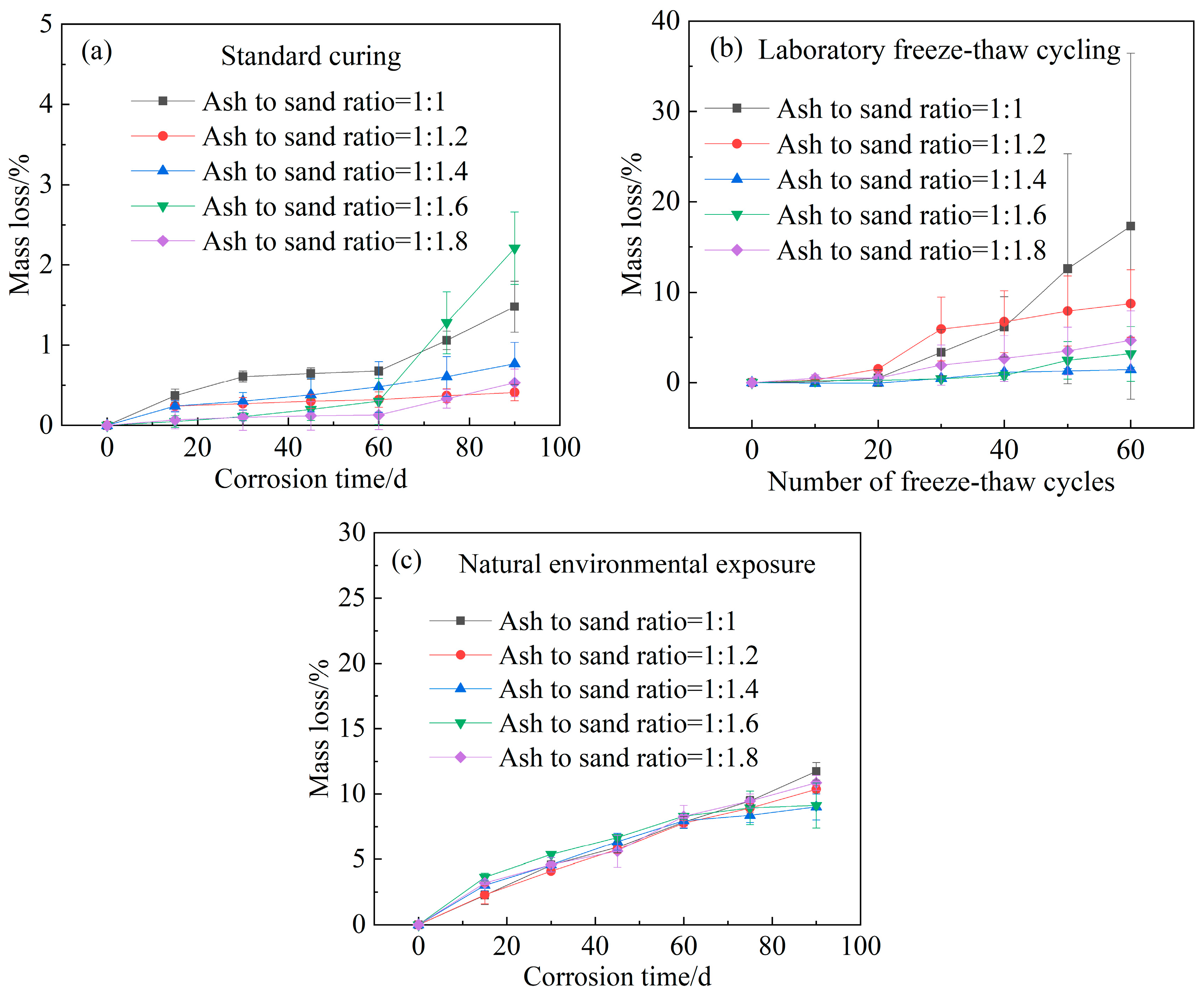
The influence of ash-to-sand ratios on the mass loss of class C/class F fly ash-based geopolymer mortars under standard curing, laboratory freeze–thaw cycles, and natural environmental exposure is illustrated in Figure 1. As shown in Figure 1, the mass loss of all samples increased progressively with increasing freeze–thaw cycles or exposure duration. This deterioration was accompanied by visible surface scaling and internal damage, indicating gradual structural degradation. SEM observations (Section 3.4) further revealed microcrack formation and propagation, suggesting that freeze–thaw-induced expansion of pore water contributed to material loss. Mixtures exhibiting higher mass loss are therefore likely associated with higher permeability, which facilitates water ingress and accelerates internal damage. Similar relationships between permeability and freeze–thaw deterioration have been widely reported for cementitious materials [34,35,36].
The ash-to-sand ratio significantly impacted mass loss during laboratory freeze–thaw testing. Geopolymer mortars with lower ash-to-sand ratios (1:1.4, 1:1.6, and 1:1.8) exhibited mass losses below 5% after 60 freeze–thaw cycles, whereas those with a ratio of 1:1 showed a mass loss of 17.31%, far exceeding 5%. As the ash-to-sand ratio increased from 1:1 to 1:1.4, mass loss decreased, but a further ratio increase to 1:1.8 led to a gradual rise. Similar trends have been reported in previous studies. Yılmaz et al. [26] found that low-calcium fly ash geopolymer mortars with a sand-to-ash ratio of 3:1 exhibited mass losses of 36.2–44.2% after 50 freeze–thaw cycles when cured at 40–80 °C, highlighting the sensitivity of freeze–thaw durability to mixture proportioning. The observed behavior reflects the balance between two mechanisms: binder-rich mixtures are more susceptible to shrinkage-related microcracking, whereas aggregate-rich mixtures tend to exhibit higher water absorption and pore connectivity, both of which can accelerate freeze–thaw scaling [32,37].
Under natural environmental exposure conditions, the differences among mixtures were less pronounced over the same exposure period. As exposure time increased from 15 to 90 days, mass loss increased from 2.26–3.64% to 9.00–11.74%, following a roughly linear trend. By 30 days, the mass loss of all samples exceeded 5%, whereas specimens kept under standard curing conditions maintained mass losses below 2.5% even after 90 days. The more severe deterioration observed under natural environmental exposure can be attributed to the combined effects of freeze–thaw action, wet–dry cycles, carbonation, and other environmental factors that intensify near-surface damage. Previous studies have shown that even single deterioration processes can cause significant mass loss in geopolymer materials; for instance, freeze–thaw cycling alone may induce mass losses of up to 16.5% [27], while wet–dry cycling can also result in noticeable surface degradation [38]. Compared with these single-factor effects, the multi-factor coupling in natural environmental exposure is expected to produce more complex and severe deterioration mechanisms.

3.2. Compressive Strength

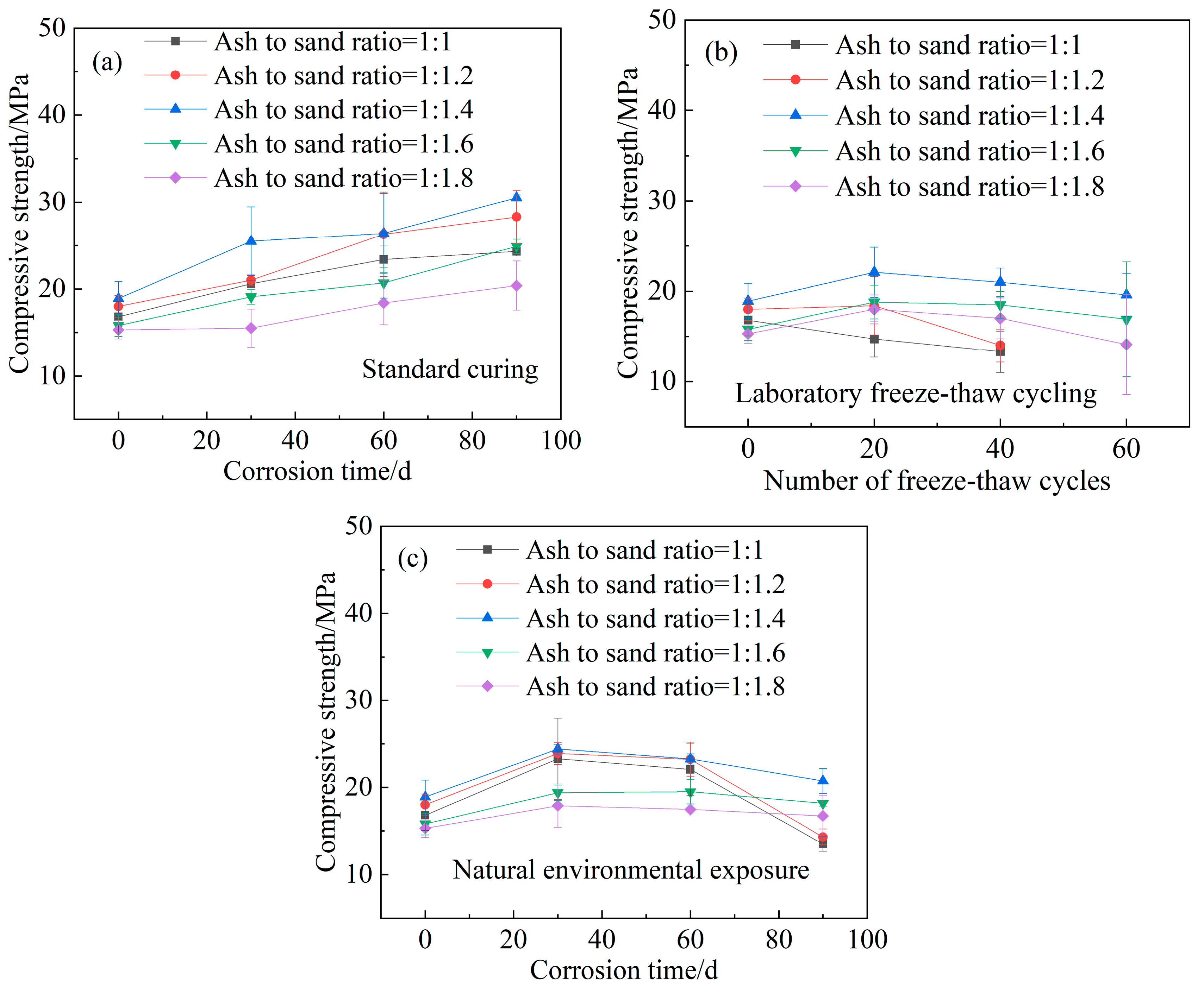
The development of compressive strength for geopolymer mortars with different ash-to-sand ratios under standard curing, laboratory freeze–thaw cycling, and natural environmental exposure conditions is depicted in Figure 2, while the corresponding strength retention values are summarized in Table 4. Under standard curing conditions, compressive strength increased with curing age due to continued geopolymerization and progressive matrix densification. Among all mixtures, the specimen with an ash-to-sand ratio of 1:1.4 consistently exhibited the highest strength. This behavior can be attributed to the balanced coexistence of C–A–S–H and N–A–S–H gels. The simultaneous formation of calcium-rich and aluminosilicate gel phases promotes a hybrid cross-linked network with improved structural continuity and reduced pore connectivity, thereby enhancing mechanical stability and resistance to freeze–thaw-induced cracking [39,40,41].
The compressive strength initially increased but subsequently declined as the exposure progressed under both laboratory freeze–thaw cycling and natural environmental conditions—whether the number of freeze–thaw cycles ranged from 0 to 60 in the laboratory or the exposure duration extended from 0 to 90 days in the natural environment. The early-stage strength gain is attributed to continued reaction and pore refinement, whereas prolonged freeze–thaw action induced internal damage and microstructural degradation. Similar evolution trends have been reported in previous studies [42,43,44]. The subsequent strength reduction is mainly associated with microcrack development and pore structure deterioration induced by cyclic freezing and thawing [45].
After 40 freeze–thaw cycles or 90 days of natural environmental exposure, the compressive strength of geopolymers with ash-to-sand ratios of 1:1 and 1:1.2 decreased below their initial values prior to freeze–thaw exposure. After 60 laboratory freeze–thaw cycles, the compressive strength of these samples could no longer be measured due to severe damage. A comparable strength degradation trend was reported by Uğurlu et al. [32], who observed compressive strength reductions of 12.07–15.24% after 100 freeze–thaw cycles in GGBFS-based geopolymer concretes with binder contents ranging from 300 to 500 kg/m3. This deterioration may be related to insufficient binder continuity and weakened gel–particle interfaces, which became more vulnerable under cyclic freezing and thawing [26]. Furthermore, the increased water absorption after freeze–thaw cycles, combined with hydraulic pressure, contributed to the formation of microcracks, further reducing compressive strength [45,46]. In contrast, geopolymer mortars with ash-to-sand ratios of 1:1.4, 1:1.6, and 1:1.8 maintained higher compressive strength after 60 freeze–thaw cycles or 90 days of natural environmental exposure compared with their pre-exposure values. The superior performance of the 1:1.4 mixture was consistently observed with relatively low variability, as indicated by the error bars, suggesting that the observed differences were statistically reliable rather than resulting from random variation. This improvement can be attributed to a denser microstructure with fewer harmful pores, which enhances resistance to freeze–thaw deterioration. Similar findings have been reported in previous studies [23,47], highlighting the important role of sand content in governing the mechanical performance and microstructural characteristics of geopolymer composites.
However, the optimal mixture from a mechanical and durability perspective does not necessarily correspond to the most favorable option in terms of material efficiency, cost, and environmental impact. Achieving enhanced performance relies on optimized mixture proportions, which may involve increased material usage or more complex design. Therefore, a balanced consideration of performance, sustainability, and cost is required in practical applications [48]. Furthermore, the identified optimal ash-to-sand ratio is conditional on the specific precursor composition, activator chemistry, alkali dose, and curing regime adopted, and may vary under different conditions [49]. From an engineering perspective, the 1:1.4 mixture exhibited stable performance under both laboratory and natural environmental exposure, indicating good potential for practical application. Nevertheless, further validation under field conditions is necessary to confirm its robustness in real engineering scenarios, as also discussed in recent studies [50].

3.3. XRD

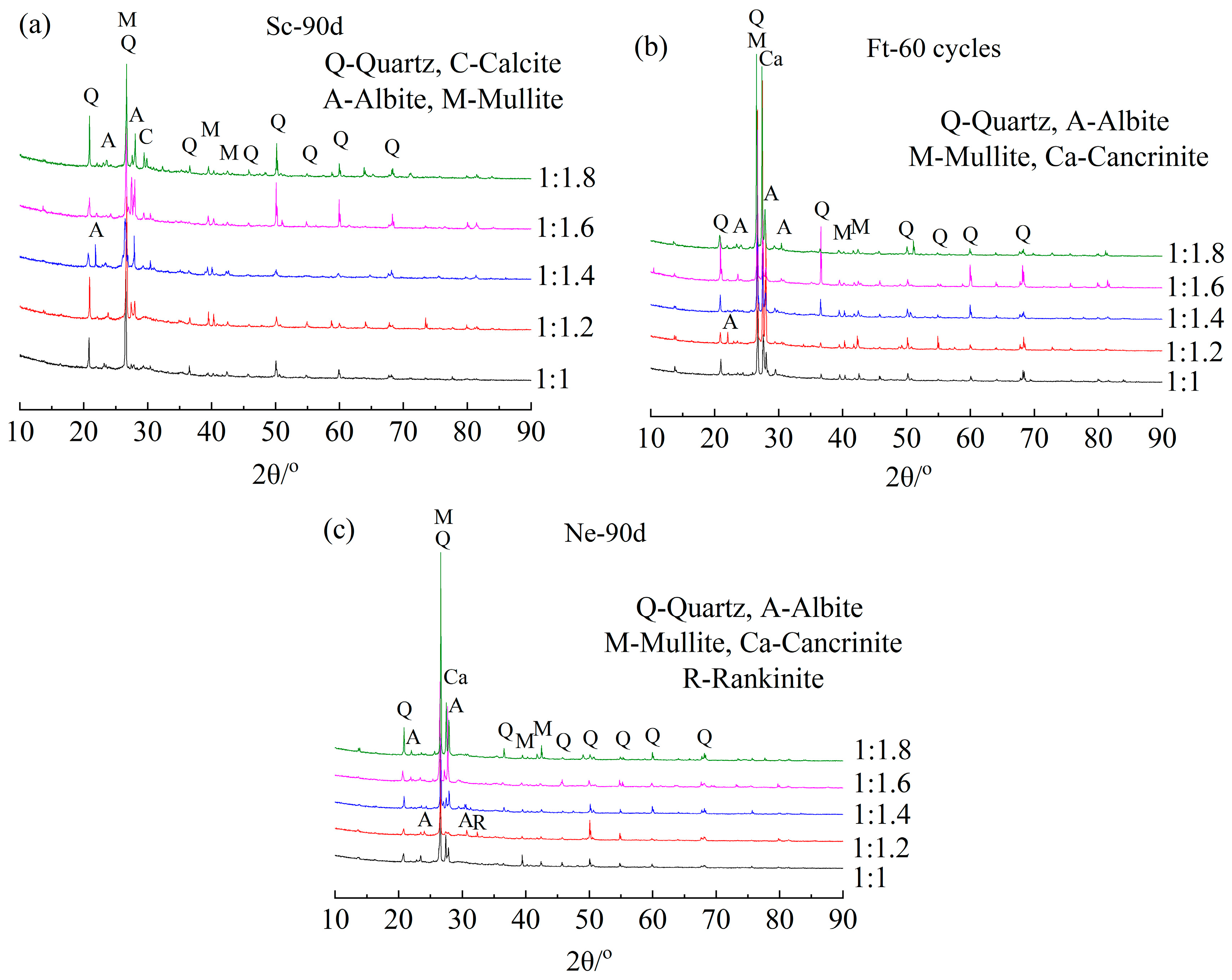
The XRD patterns of geopolymer mortars with varying ash-to-sand ratios, after 90 days of standard curing, 60 laboratory freeze–thaw cycles, and 90 days of natural environmental exposure are shown in Figure 3. As illustrated in Figure 3a, specimens cured under standard curing mainly contain crystalline phases including quartz (Q), albite (A), mullite (M), and calcite (C). The strong quartz peak at approximately 26.6° and the persistence of mullite suggest the presence of unreacted fly ash minerals, which primarily act as inert micro-fillers rather than reactive phases [29]. In addition, the broad amorphous hump between 20° and 35° suggests the formation of N–A–S–H and C–A–S–H gels, indicating successful geopolymerization. After exposure to laboratory freeze–thaw cycling and natural environmental exposure conditions (Figure 3b,c), additional crystalline phases such as cancrinite and rankinite appeared, which may indicate calcium-driven secondary phase transformation. These phases are generally considered to be associated with partial reorganization of C–A–S–H gels under cyclic temperature and moisture fluctuations. While limited crystallization may locally densify the matrix, excessive formation of such secondary phases is likely to increase internal stress concentration and microstructural heterogeneity, particularly under coupled freeze–thaw and carbonation conditions [42,51]. This gel restructuring and recrystallization may promote pore coarsening and contribute to the gradual deterioration of mechanical performance, consistent with previous observations [52].

3.4. SEM-EDS

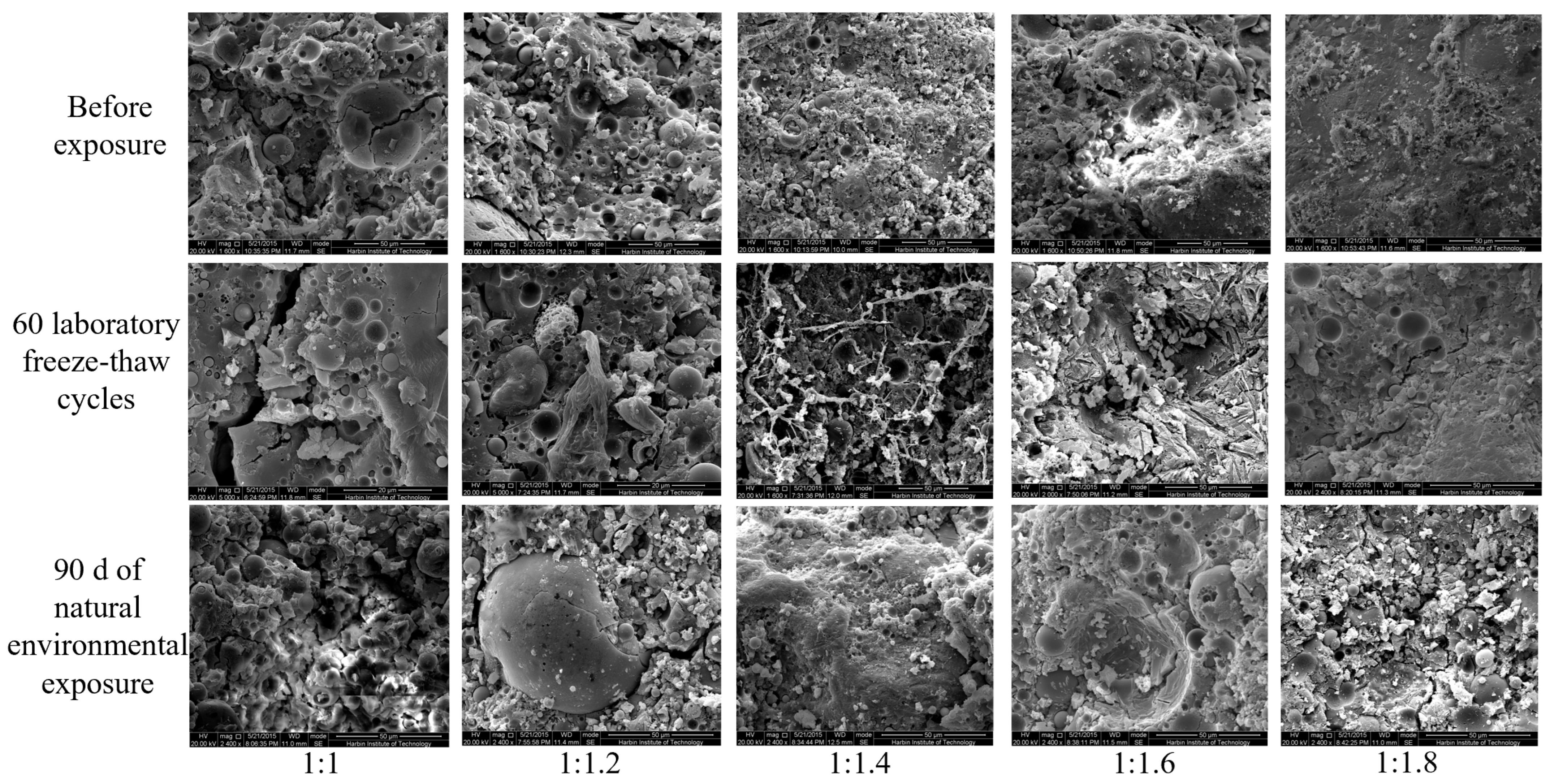
The microstructural morphology of specimens with ash-to-sand ratios ranging from 1:1 to 1:1.8, before and after exposure to laboratory freeze–thaw cycling and natural environmental exposure, is illustrated in Figure 4. A considerable number of unreacted fly ash particles can be observed in the matrix both before and after freeze–thaw exposure, particularly in mortars with ash-to-sand ratios of 1:1 and 1:1.2. The relatively slow early-stage reaction of fly ash in geopolymer systems may result in heterogeneous reaction products and a certain proportion of unreacted particles. Nevertheless, continued geopolymerization at later ages can gradually densify the matrix and enhance strength development [15,53]. Furthermore, the internal structure of samples with ash-to-sand ratios of 1:1 and 1:1.2 was notably loose. After laboratory freeze–thaw cycling and natural environmental exposure, these cracks became wider and more numerous, suggesting progressive microstructural deterioration under cyclic freezing and thawing. The formation and propagation of these cracks are likely associated with internal stress generated by the freezing of pore water, which exceeds the tensile resistance of the surrounding gel matrix, indicating that crack development is a key factor contributing to freeze–thaw-induced damage [41]. This microstructural deterioration corresponds well with the significant reduction in compressive strength discussed in Section 3.2.
In contrast, the samples with ash-to-sand ratios of 1:1.4, 1:1.6, and 1:1.8 exhibited much denser microstructure, with the 1:1.4 mixture showing the most compact morphology and abundant chain-like gel structures. Notably, the 1:1.4 specimens remained structurally intact after laboratory freeze–thaw cycling and natural environmental exposure, consistent with the observed increase in compressive strength (Section 3.2). A semi-quantitative comparison of SEM images further indicated that the 1:1.4 mixture exhibited a lower visible crack density and fewer unreacted particles compared with other mixtures, suggesting a more homogeneous and compact matrix. This improved performance may be associated with a more continuous hybrid C–A–S–H/N–A–S–H gel network and a refined pore structure, which may help limit water transport and reduce freezing-induced tensile stress. Such microstructural refinement, together with enhanced resistance to crack initiation and propagation, plays an important role in improving freeze–thaw resistance, consistent with previous findings [30,54]. These observations suggest that freeze–thaw deterioration is governed by progressive damage accumulation and microstructural heterogeneity under cyclic environmental loading, and that the observed differences among mixtures likely reflect variations in damage evolution rather than a single governing mechanism [55]. Recent studies have shown that improved deformation control and crack resistance can enhance mortar durability by reducing crack density and limiting water ingress [56].
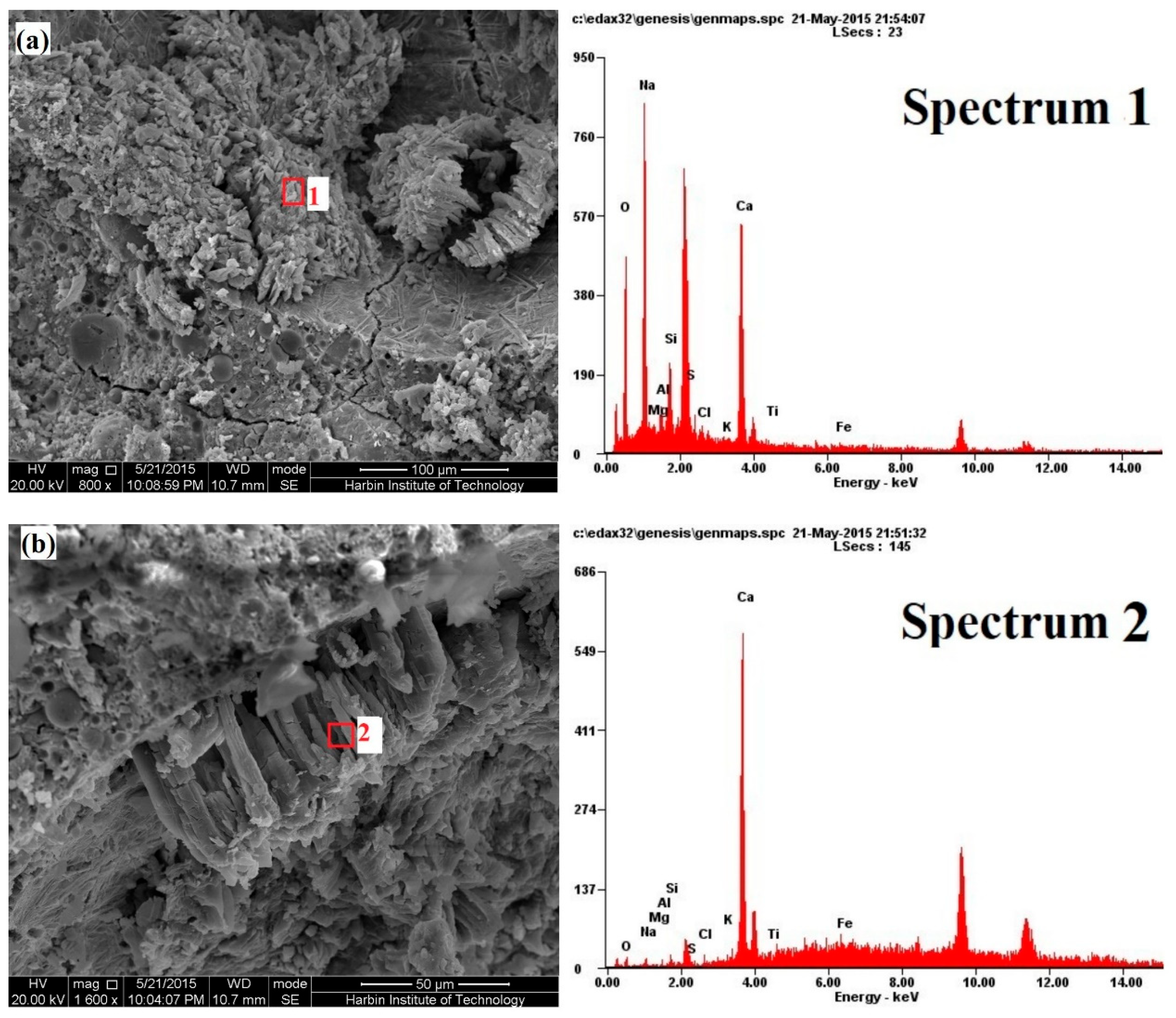
Figure 5 presents the SEM-EDS analysis of the geopolymer mortar with an ash-to-sand ratio of 1:1.4 after 90 days of standard curing. The reaction products exhibit heterogeneous elemental distributions, with regions enriched in Ca, Na, Al, and Si. The Si/Al ratio varied between 2.8 and 4.4, with the higher silicon content suggesting the formation of a relatively robust aluminosilicate structure. Previous study [32] has reported that geopolymers with binder contents ranging from 300 to 500 kg/m3 exhibited Si/Al ratios between 2.37 and 3.90. Such Si/Al ratios are generally associated with improved structural stability and mechanical performance in geopolymer systems. In conjunction with the XRD results (Section 3.3), the reaction products of the geopolymer displayed considerable diversity, reflecting the complexity of the geopolymerization process.
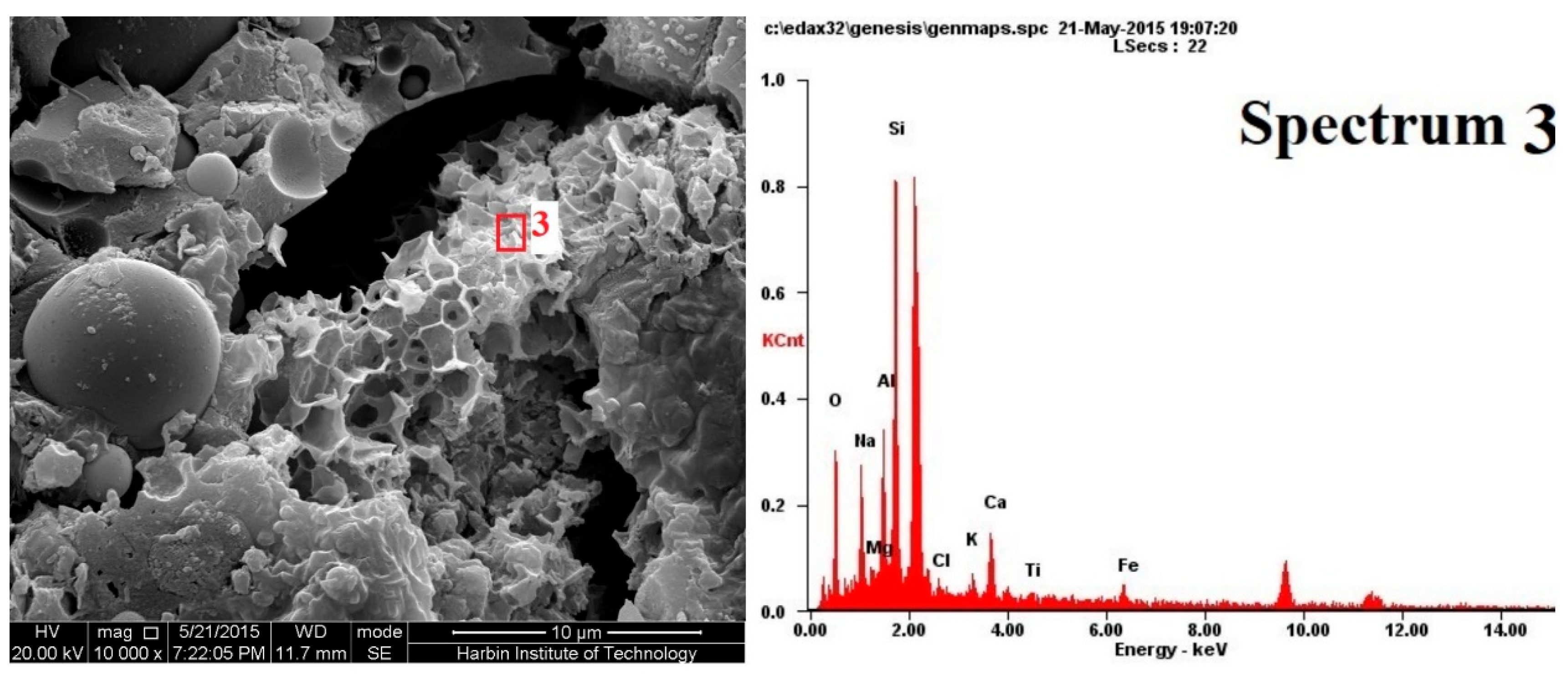
The SEM-EDS analysis of the geopolymer mortar with an ash-to-sand ratio of 1:1.6 after 60 laboratory freeze–thaw cycles is presented in Figure 6. The matrix was mainly composed of Na–Al–Ca–Si zeolite-like products, consistent with the aluminosilicate network structure indicated by XRD. However, microstructural discontinuities and localized damage were evident after laboratory freeze–thaw cycling. Residual fly ash particles were still observable within the matrix, indicating incomplete reaction in certain regions. Although these particles can function as micro-fillers, their presence may also influence crack initiation under repeated environmental loading. Similar microstructural features have been reported in previous studies of freeze–thaw-exposed geopolymers [38,54], supporting the observed relationship between microstructural integrity and durability performance.
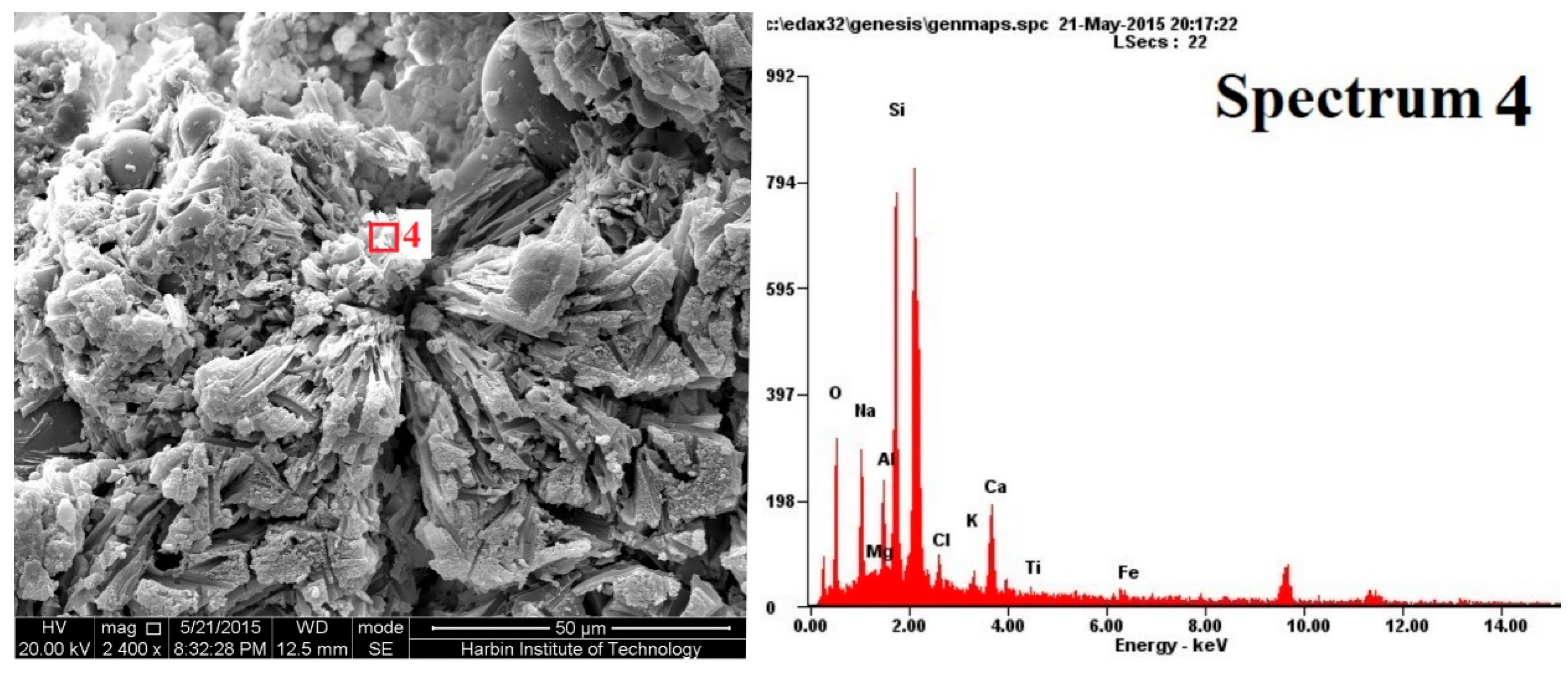
The SEM-EDS analysis of specimens with an ash-to-sand ratio of 1:1.4 after 90 days of natural environmental exposure is shown in Figure 7. The results reveal the presence of gel phases surrounding the fly ash particles, alongside a significant formation of acicular Na-Ca-Si-Al products. Despite prolonged exposure to fluctuating moisture and temperature conditions, the matrix retained a relatively continuous and compact morphology. The preservation of gel integrity under multi-factor environmental exposure is consistent with the superior compressive strength retained by the 1:1.4 mixture (Section 3.2). These observations suggest that an optimized ash-to-sand ratio may contribute to enhanced microstructural stability under coupled environmental stressors, consistent with previous durability studies of geopolymer systems [57].

3.5. MIP

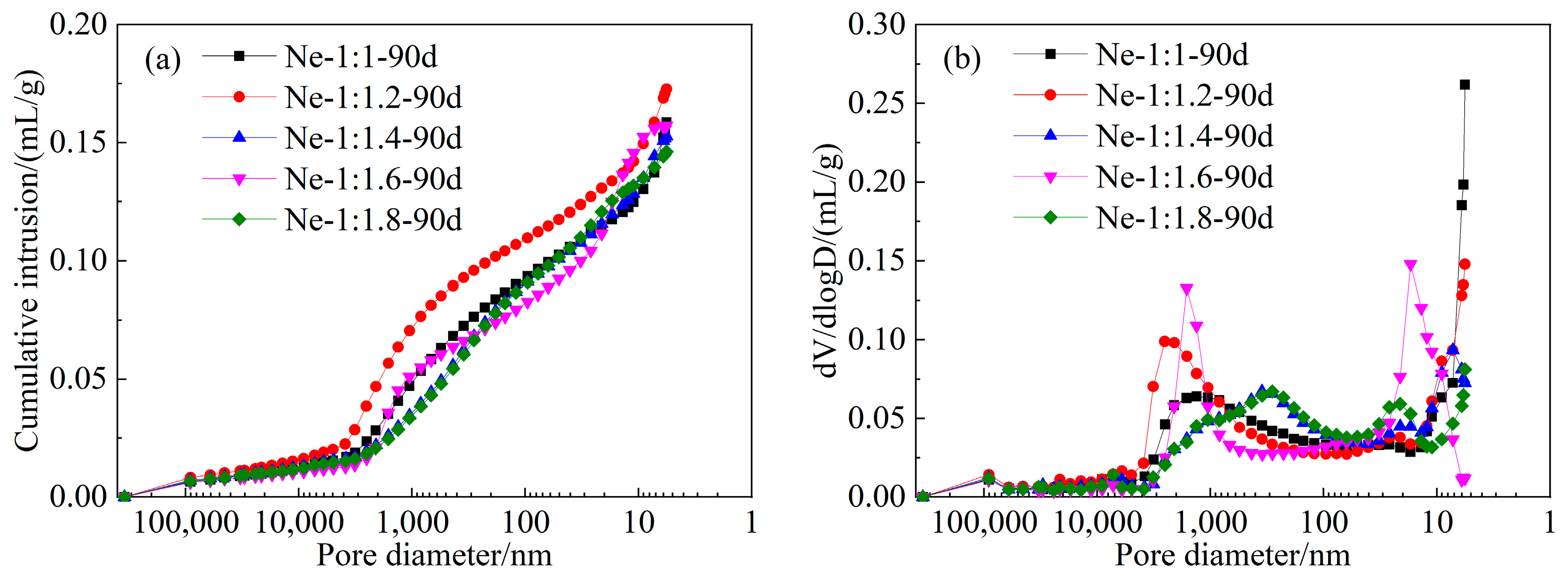
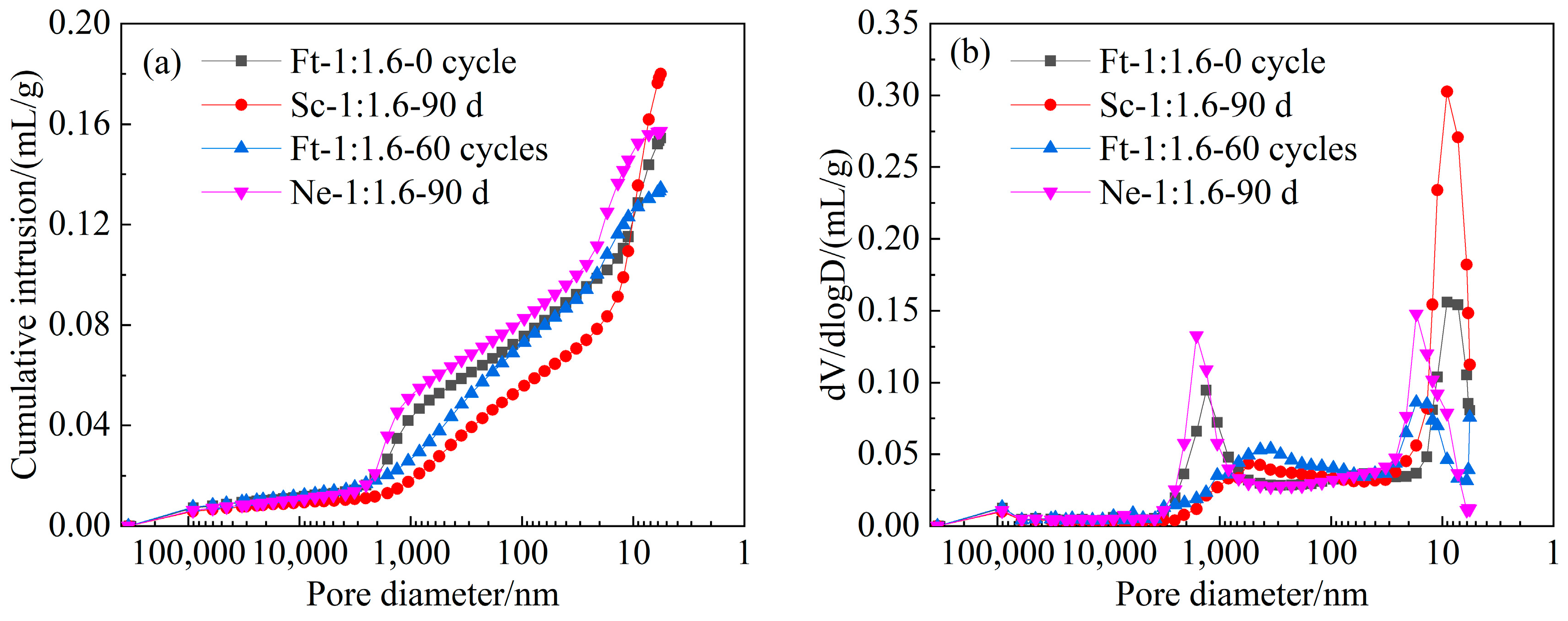
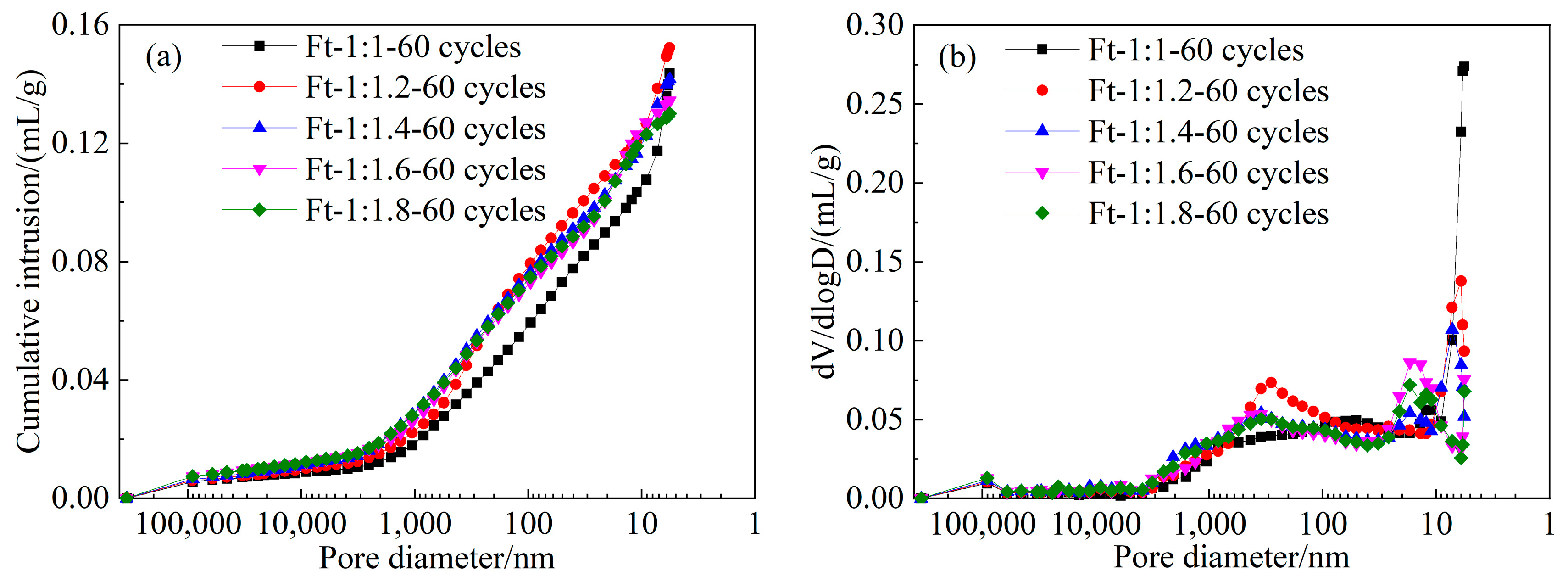
Pore structure plays a critical role in governing freeze–thaw durability. According to frost-damage theory, pores larger than approximately 200 nm are generally regarded as critical pores because they facilitate rapid water ingress and promote the development of hydraulic and crystallization pressures during freezing. In contrast, gel pores smaller than 20 nm are typically considered harmless pores, as the confined water within these nanoscale pores does not readily freeze under conventional conditions [25,58]. Figure 8 presents the mercury intrusion porosimetry (MIP) results for specimens with an ash-to-sand ratio of 1:1.6 under different curing conditions. The MIP results for samples with varying ash-to-sand ratios after 60 laboratory freeze–thaw cycles and 90 days of natural environmental exposure are shown in Figure 9 and Figure 10, respectively, while the corresponding pore parameters are summarized in Table 5.
For samples with an ash-to-sand ratio of 1:1.6, the pore size distribution changed markedly after exposure. Under standard curing for 90 days, the proportion of pores smaller than 20 nm reached 56.44%, indicating a relatively refined pore structure. In contrast, specimens exposed to 90 days of natural environmental exposure exhibited a much higher proportion of pores larger than 200 nm (45.42%). In addition, the most probable pore diameter increased from 9.06 nm to 17.11 nm, suggesting pore coarsening. Similar pore evolution under coupled environmental actions has been reported previously [59], highlighting the relationship between pore structure development and durability degradation. The formation and growth of larger pores are associated with the progressive merging of smaller pores into interconnected macropores, which can create continuous transport pathways for water migration under environmental exposure [60]. Such interconnected pore networks may facilitate water ingress and increase the availability of freezable water, thereby promoting the development of hydraulic and crystallization pressures and contributing to internal stress accumulation and microstructural damage.
In contrast, after 60 laboratory freeze–thaw cycles, both total porosity and the proportion of harmful pores slightly decreased compared with the initial condition. This refinement of pore structure may suggest continued microstructural densification during early freeze–thaw stages, which is consistent with the observed temporary increase in compressive strength (Section 3.2). The variation in pore volume before and after freeze–thaw cycles is considered to be an important factor influencing the freeze–thaw resistance of geopolymers [61].
As illustrated in Figure 9, the cumulative intrusion of geopolymer mortars with varying ash-to-sand ratios showed only slight changes after 60 laboratory freeze–thaw cycles. Notably, the specimens with an ash-to-sand ratio of 1:1.4 exhibited a higher pore volume proportion for pores smaller than 20 nm, a lower proportion for pores exceeding 200 nm, and a reduced average pore diameter. This refined pore structure may limit water transport pathways and reduce internal freezing stresses, thereby potentially suppressing crack initiation [62]. A negative relationship between porosity and compressive strength in geopolymer mortars has been well established [63], which may explain the superior durability performance of the 1:1.4 mixture.
Figure 10 illustrates that the pore volume proportions of geopolymer mortars with pore diameters larger than 200 nm were higher after 90 days of natural environmental exposure compared to those observed after 60 laboratory freeze–thaw cycles. This suggests more pronounced pore coarsening and reduced compactness under natural environmental conditions. The increase in larger pores may indicate progressive microstructural degradation under coupled environmental stressors, including freeze–thaw action, moisture fluctuation, and carbonation. Under such multi-factor coupling conditions, the enhanced pore connectivity may accelerate water transport, facilitate repeated saturation–desaturation processes, and promote internal stress fluctuations, ultimately leading to increased strength degradation. Similar pore coarsening behavior under multi-factor environmental conditions has been reported in previous studies [42], suggesting that such environmental coupling may accelerate microstructural deterioration and mechanical performance loss.

4. Conclusions

This study extensively evaluated the freeze–thaw resistance of fly ash geopolymer mortars with different ash-to-sand ratios, under laboratory freeze–thaw cycling and natural environmental exposure. The main conclusions can be summarized as follows:
(1) The ash-to-sand ratio significantly influences the freeze–thaw durability of geopolymer mortars. Among the investigated mixtures, the specimen with an ash-to-sand ratio of 1:1.4 exhibited the lowest mass loss and the highest compressive strength after laboratory freeze–thaw cycling and natural environmental exposure. Moreover, the compressive strength after exposure remained higher than the pre-exposure value.
(2) Microstructural analyses revealed that the reaction products and phase assemblages evolved during exposure. Mortars with ash-to-sand ratios of 1:1 and 1:1.2 exhibited relatively loose structures containing numerous unreacted fly ash particles and visible cracks. In contrast, mixtures with ratios of 1:1.4–1:1.8 developed denser microstructures, which contributed to their improved durability.
(3) Although the overall porosity of geopolymer mortars changed minimally after laboratory freeze–thaw cycling, there were significant shifts in pore size distribution, particularly for pores smaller than 20 nm and larger than 200 nm. These pore structure changes had a pronounced impact on the mechanical performance of the mortars, affecting their freeze–thaw resistance.
Within the investigated mixture design (fixed activator modulus and curing regime), controlling the ash-to-sand ratio is demonstrated to be a practical parameter for improving freeze–thaw durability of fly ash-based geopolymer mortars in cold-region applications. It should be noted that the identified optimal range is specific to the material system and curing conditions adopted in this study, and variations in activator composition or curing regime may influence durability performance.
Future research may further integrate ash-to-sand ratio optimization with fiber reinforcement, nano-modification or hybrid precursor systems to enhance crack resistance and pore refinement under freeze–thaw conditions. In parallel, advanced image-based techniques, including computer vision and deep learning models such as semantic segmentation and convolutional neural networks (CNNs), could be employed for automated and objective quantification of freeze–thaw damage.

Author Contributions

Conceptualization, Z.C.; methodology, G.Z.; validation, T.Y.; visualization, Y.S.; formal analysis, H.S.; investigation, Z.J. (Zhenpeng Jiang); data curation, Z.J. (Zhenzhen Jiao); writing—original draft preparation, X.L. (Xiaodong Li); writing—review and editing, X.L. (Xueying Li). All authors have read and agreed to the published version of the manuscript.

Funding

This research was funded by the National Natural Science Foundation of China (grant number 52508167 and 51378158) and Science and Technology Innovation Project of Guangdong Architectural Design and Research Institute Group Co., Ltd. (Grant No. KY25-20).

Data Availability Statement

The original contributions presented in this study are included in the article. Further inquiries can be directed to the corresponding author.

Conflicts of Interest

Authors Xiaodong Li, Zhenyu Chu, Tao Yu, Hengqiang Su were employed by the company Guangdong Architectural Design and Research Institute Group Co., Ltd. Authors Ge Zhu, Yueyong Shao were employed by the company The Third Construction Co., Ltd. of CTCE Group. Author Zhenpeng Jiang was employed by the company China Resources Land Limited. The remaining authors declare that the research was conducted in the absence of any commercial or financial relationships that could be construed as a potential conflict of interest.

References

  1. Albidah, A.S. Effect of partial replacement of geopolymer binder materials on the fresh and mechanical properties: A review. Ceram. Int. 2021, 47, 14923–14943. [Google Scholar] [CrossRef]
  2. Jiao, Z.; Li, X.; Yu, Q.; Yao, Q.; Hu, P. Sulfate resistance of class C/class F fly ash geopolymers. J. Mater. Res. Technol. 2023, 23, 1767–1780. [Google Scholar] [CrossRef]
  3. Yong-Sing, N.; Yun-Ming, L.; Cheng-Yong, H.; Abdullah, M.M.A.B.; Pakawanit, P.; Chan, L.W.L.; Hui-Teng, N.; Shee-Ween, O.; Wan-En, O.; Yong-Jie, H. Thin fly ash/ladle furnace slag geopolymer: Effect of elevated temperature exposure on flexural properties and morphological characteristics. Ceram. Int. 2022, 48, 16562–16575. [Google Scholar] [CrossRef]
  4. Zhu, J.F.; Xia, Y.N.; Ju, L.Y.; Yang, H.; Wang, Z.Q.; Jin, J.Y.; Zou, Y.C.; Liao, Y.C. Physico-mechanical performance and micro–mechanism analysis on urban sludge modified with a low carbon binder. Acta Geotech. 2025, 20, 5585–5601. [Google Scholar] [CrossRef]
  5. Hossain, M.M.; Karim, M.R.; Hossain, M.K.; Islam, M.N.; Zain, M.F.M. Durability of mortar and concrete containing alkali-activated binder with pozzolans: A review. Constr. Build. Mater. 2015, 93, 95–109. [Google Scholar] [CrossRef]
  6. Singh, B.; Ishwarya, G.; Gupta, M.; Bhattacharyya, S.K. Geopolymer concrete: A review of some recent developments. Constr. Build. Mater. 2015, 85, 78–90. [Google Scholar] [CrossRef]
  7. Martínez, A.; Miller, S.A. Life cycle assessment and production cost of geopolymer concrete: A meta-analysis. Resour. Conserv. Recycl. 2025, 215, 108018. [Google Scholar] [CrossRef]
  8. Ozcelikci, E.; Hu, M.; Meide, M.v.d.; Sahmaran, M. Life cycle assessment of SCM substitution in various CDW-based geopolymer concretes and sensitivity analyses on allocation methods. Waste Manag. 2025, 205, 115034. [Google Scholar] [CrossRef]
  9. Shi, C.; Qian, J. High performance cementing materials from industrial slags—A review. Resour. Conserv. Recycl. 2000, 29, 195–207. [Google Scholar] [CrossRef]
  10. Fu, Q.; Xu, W.; Zhao, X.; Bu, M.; Yuan, Q.; Niu, D. The microstructure and durability of fly ash-based geopolymer concrete: A review. Ceram. Int. 2021, 47, 29550–29566. [Google Scholar] [CrossRef]
  11. Amran, M.; Debbarma, S.; Ozbakkaloglu, T. Fly ash-based eco-friendly geopolymer concrete: A critical review of the long-term durability properties. Constr. Build. Mater. 2021, 270, 121857. [Google Scholar] [CrossRef]
  12. Mohana, R.; Leela Bharathi, S.M. Sustainable utilization of pre-treated and nano fly ash powder for the development of durable geopolymer mortars. Adv. Powder Technol. 2022, 33, 103696. [Google Scholar] [CrossRef]
  13. Davidovits, J. Geopolymer Chemistry and Applications; Institut Géopolymère: Saint-Quentin, France, 2011. [Google Scholar]
  14. Pacheco-Torgal, F.; Abdollahnejad, Z.; Miraldo, S.; Baklouti, S.; Ding, Y. An overview on the potential of geopolymers for concrete infrastructure rehabilitation. Constr. Build. Mater. 2012, 36, 1053–1058. [Google Scholar] [CrossRef]
  15. Antoni, A.; Wijaya, S.W.; Hardjito, D. Factors affecting the setting time of fly ash-based geopolymer. Mater. Sci. Forum 2016, 841, 90–97. [Google Scholar] [CrossRef]
  16. Wibowo, Y.N.; Piscesa, B.; Tajunnisa, Y.; Sutrisno, W. Investigation on the mechanical behavior of high-calcium fly ash geopolymer concrete using one-part method. Constr. Build. Mater. 2025, 490, 142436. [Google Scholar] [CrossRef]
  17. Provis, J.L.; Deventer, J.S.J.V. Alkali Activated Materials: State-of-the-Art Report, RILEM TC 224-AAM; Springer: Berlin/Heidelberg, Germany, 2014. [Google Scholar]
  18. Hardjito, D.; Cheak, C.C.; Ing, C. Strength and setting times of low calcium fly ash-based geopolymer mortar. Mod. Appl. Sci. 2008, 2, 3–11. [Google Scholar] [CrossRef]
  19. Lin, H.; Hu, J.; Song, T.; Li, Y.; Shen, J. Performance optimization of alkali-activated low-calcium fly ash geopolymers: Experimental study and machine learning modeling. J. Build. Eng. 2025, 113, 114066. [Google Scholar] [CrossRef]
  20. Nuaklong, P.; Wongsa, A.; Sata, V.; Boonserm, K.; Sanjayan, J.; Chindaprasirt, P. Properties of high-calcium and low-calcium fly ash combination geopolymer mortar containing recycled aggregate. Heliyon 2019, 5, e02513. [Google Scholar] [CrossRef]
  21. Yu, J.; Ji, F.; Lv, Q.; Li, W.; Lin, Z.; Peng, Y. Mechanical property and microstructure of fly ash-based geopolymer by calcium activators. Case Stud. Constr. Mater. 2024, 21, e03811. [Google Scholar] [CrossRef]
  22. Prusty, J.K.; Pradhan, B. Investigation on effect of precursor materials and sand-to-binder ratio on strength development, acid resistance and microstructure evolution of geopolymer mortar. Constr. Build. Mater. 2022, 346, 128501. [Google Scholar] [CrossRef]
  23. Wang, Y.; Wang, Y.; Zhang, M. Effect of sand content on engineering properties of fly ash-slag based strain hardening geopolymer composites. J. Build. Eng. 2021, 34, 101951. [Google Scholar] [CrossRef]
  24. Guades, E.J. Experimental investigation of the compressive and tensile strengths of geopolymer mortar: The effect of sand/fly ash (S/FA) ratio. Constr. Build. Mater. 2016, 127, 484–493. [Google Scholar] [CrossRef]
  25. Liu, F.; Liu, J.; He, Z.; Zheng, X.; Yang, Y.; Li, B. Study on the frost resistance and pore structure evolution of fly ash-coal gangue-based geopolymer concrete. Cold Reg. Sci. Technol. 2026, 241, 104709. [Google Scholar] [CrossRef]
  26. Yılmaz, A.; Degirmenci, F.N.; Aygörmez, Y. Effect of initial curing conditions on the durability performance of low-calcium fly ash-based geopolymer mortars. Boletín Soc. Española Cerámica Vidr. 2024, 63, 238–254. [Google Scholar] [CrossRef]
  27. Jiao, Z.; Li, X.; Yu, Q. Effect of curing conditions on freeze-thaw resistance of geopolymer mortars containing various calcium resources. Constr. Build. Mater. 2021, 313, 125507. [Google Scholar] [CrossRef]
  28. Zhao, R.; Yuan, Y.; Cheng, Z.; Wen, T.; Li, J.; Li, F.; Ma, Z.J. Freeze-thaw resistance of Class F fly ash-based geopolymer concrete. Constr. Build. Mater. 2019, 222, 474–483. [Google Scholar] [CrossRef]
  29. Jin, M.; Wang, Z.; Lian, F.; Zhao, P. Freeze-thaw resistance and seawater corrosion resistance of optimized tannery sludge/metakaolin-based geopolymer. Constr. Build. Mater. 2020, 265, 120730. [Google Scholar] [CrossRef]
  30. Li, F.; Chen, D.; Lu, Y.; Zhang, H.; Li, S. Influence of mixed fibers on fly ash based geopolymer resistance against freeze-thaw cycles. J. Non-Cryst. Solids 2022, 584, 121517. [Google Scholar] [CrossRef]
  31. Hu, Y.; Wang, Z.; Zong, S.; Zhu, D. The effect of nano-SiO2 on the mechanical properties and degradation of steel fiber-reinforced geopolymer composite material under freeze-thaw cycles. Constr. Build. Mater. 2025, 475, 141198. [Google Scholar] [CrossRef]
  32. Uğurlu, A.İ.; Karakoç, M.B.; Özcan, A. Effect of binder content and recycled concrete aggregate on freeze-thaw and sulfate resistance of GGBFS based geopolymer concretes. Constr. Build. Mater. 2021, 301, 124246. [Google Scholar] [CrossRef]
  33. JGJ/T 70-2009; Standard for Test Method of Basic Properties of Construction Mortar. Ministry of Housing and Urban-Rural Development of the People’s Republic of China: Beijing, China, 2009.
  34. Liang, G.; Zhu, H.; Li, H.; Liu, T.; Guo, H. Comparative study on the effects of rice husk ash and silica fume on the freezing resistance of metakaolin-based geopolymer. Constr. Build. Mater. 2021, 293, 123486. [Google Scholar] [CrossRef]
  35. Jaji, M.B.; Ibrahim, K.A.; van Zijl, G.P.A.G.; Babafemi, A.J. Effect of anisotropy on permeability index and water absorption of 3D printed metakaolin-based geopolymer concrete. Mater. Today Proc. 2023; in press. [Google Scholar] [CrossRef]
  36. Ma, Z.; Zhu, F.; Zhao, T. Effects of surface modification of silane coupling agent on the properties of concrete with freeze-thaw damage. KSCE J. Civ. Eng. 2018, 22, 657–669. [Google Scholar] [CrossRef]
  37. Khan, M.Z.N.; Shaikh, F.U.A.; Hao, Y.; Hao, H. Effects of curing conditions and sand-to-binder ratios on compressive strength development of fly ash geopolymer. Am. Soc. Civ. Eng. 2018, 30, 04017267. [Google Scholar] [CrossRef]
  38. Ngo, T.-P.; Bui, Q.-B.; Phan, V.T.-A.; Tran, H.-B. Durability of geopolymer stabilised compacted earth exposed to wetting–drying cycles at different conditions of pH and salt. Constr. Build. Mater. 2022, 329, 127168. [Google Scholar] [CrossRef]
  39. Zhang, P.; Shi, B.Z.; Dai, X.B.; Chen, C.C.; Lai, C.H. A state-of-the-art review on the freeze-thaw resistance of sustainable geopolymer gel composites: Mechanisms, determinants, and models. Gels 2025, 11, 537. [Google Scholar] [CrossRef]
  40. Karaaslan, C. Unary, binary and ternary use of slag, nano-CaCO3, and cement to enhance freeze-thaw durability in fly ash-based geopolymer concretes. J. Build. Eng. 2025, 99, 111631. [Google Scholar] [CrossRef]
  41. Wu, T.; Wu, J.; Zheng, C.; Wang, J. Evaluation of freeze-thaw resistance of geopolymer concrete incorporating GFRP waste powder. J. Build. Eng. 2024, 90, 109465. [Google Scholar] [CrossRef]
  42. Yang, L.; Zhu, Z.; Sun, H.; Huo, W.; Zhang, J.; Wan, Y.; Zhang, C. Durability of waste concrete powder-based geopolymer reclaimed concrete under carbonization and freeze–thaw cycles. Constr. Build. Mater. 2023, 403, 133155. [Google Scholar] [CrossRef]
  43. Zhang, H.; Sarker, P.K.; Xiao, L.; Ai, J.; He, B.; Ren, Q.; Zhu, X.; Zhang, Y. Durability of low-carbon geopolymer mortar: Different responses to cryogenic attack caused by water content and freeze-thaw mediums. Cem. Concr. Compos. 2023, 139, 105065. [Google Scholar] [CrossRef]
  44. Xiong, G.; Guo, X.; Yuan, S.; Xia, M.; Wang, Z. The mechanical and structural properties of lunar regolith simulant based geopolymer under extreme temperature environment on the moon through experimental and simulation methods. Constr. Build. Mater. 2022, 325, 126679. [Google Scholar] [CrossRef]
  45. Basheer, L.; Kropp, J.; Cleland, D.J. Assessment of the durability of concrete from its permeation properties: A review. Constr. Build. Mater. 2001, 15, 93–103. [Google Scholar] [CrossRef]
  46. Allahverdi, A.; Abadi, M.M.B.R.; Anwar Hossain, K.M.; Lachemi, M. Resistance of chemically-activated high phosphorous slag content cement against freeze–thaw cycles. Cold Reg. Sci. Technol. 2014, 103, 107–114. [Google Scholar] [CrossRef]
  47. Kumar, S.; Sekhar Das, C.; Lao, J.; Alrefaei, Y.; Dai, J.-G. Effect of sand content on bond performance of engineered geopolymer composites (EGC) repair material. Constr. Build. Mater. 2022, 328, 127080. [Google Scholar] [CrossRef]
  48. Tamoor, M.; Zhang, C. Balancing Sustainability and Cost in Concrete Production: LCA of Foam, Geopolymer, Slag, and Agricultural Waste Concretes. ACS Sustain. Chem. Eng. 2025, 13, 14990–15006. [Google Scholar] [CrossRef]
  49. Sun, L.; Chen, X.; Li, C.; Wu, Z.; Yang, Z.; Liang, T. Mix proportion design and reaction mechanism of alkali-activated slag mortar with marine materials. Constr. Build. Mater. 2025, 492, 142897. [Google Scholar] [CrossRef]
  50. Wan, F.; Guo, Y.; Zhuang, S.; Huang, Z.; Chen, Q.; Li, B. Towards practical application of eco-friendly engineered geopolymer composites: Achieving strength-ductility synergy through low fibre volume design. J. Build. Eng. 2025, 113, 114171. [Google Scholar] [CrossRef]
  51. Altawil, H. Influence of saline exposure and freeze-thaw effects on class C fly ash geopolymer mortars using the Taguchi method. Results Eng. 2025, 27, 106836. [Google Scholar] [CrossRef]
  52. Zheng, Y.; Rao, F.; Yang, L.; Zhong, S. Comparison of ternary and dual combined waste-derived alkali activators on the durability of volcanic ash-based geopolymers. Cem. Concr. Compos. 2023, 136, 104886. [Google Scholar] [CrossRef]
  53. Bakharev, T. Geopolymeric materials prepared using Class F fly ash and elevated temperature curing. Cem. Concr. Res. 2005, 35, 1224–1232. [Google Scholar] [CrossRef]
  54. Zhang, B.; Feng, Y.; Xie, J.; Lai, D.; Yu, T.; Huang, D. Rubberized geopolymer concrete: Dependence of mechanical properties and freeze-thaw resistance on replacement ratio of crumb rubber. Constr. Build. Mater. 2021, 310, 125248. [Google Scholar] [CrossRef]
  55. Zhang, X.L.; Liu, X.L.; Jin, J.X.; Wang, H.B.; Lv, Z.Q.; Xiao, Y. Investigation of damage characteristics in freeze-thawed grey-white sandstone using AE multifractal analysis. Geomech. Geophys. Geo Energy Geo-Resour. 2025, 11, 93. [Google Scholar] [CrossRef]
  56. Song, Y.; Xu, R.; Hong, J.; Zhou, Y.; Shi, T.; Wang, C.; Xie, C. Preparation of a novel green lithium slag expansive agent: Enhancing deformation control, crack resistance, and durability of mortar. Constr. Build. Mater. 2025, 495, 143644. [Google Scholar] [CrossRef]
  57. Tan, J.; Dan, H.; Ma, Z. Metakaolin based geopolymer mortar as concrete repairs: Bond strength and degradation when subjected to aggressive environments. Ceram. Int. 2022, 48, 23559–23570. [Google Scholar] [CrossRef]
  58. Li, Y.; Ji, K.; Lv, L.; Li, X. Mechanical response and deterioration mechanisms in freeze–thaw environments for crushed stone stabilized with industrial solid waste. Appl. Sci. 2024, 14, 5566. [Google Scholar] [CrossRef]
  59. Bao, W.; Yin, Y.; Mi, W.; Chen, R.; Lin, X. Durability and microstructural evolution of high-performance ecological geopolymer concrete under low-pressure–salt-erosion–freeze–thaw cycling conditions. Constr. Build. Mater. 2024, 426, 136197. [Google Scholar] [CrossRef]
  60. Wang, K.; Qiu, Z.; Hu, H.; Sun, M.; Wang, J. Macro-meso mechanical behavior and degradation mechanisms of silty clay subgrade subjected to coupled traffic loading and dry-wet cycles. Transp. Geotech. 2025, 55, 101725. [Google Scholar] [CrossRef]
  61. Choi, Y.-S.; Won, M.-S.; Yi, S.-T.; Yang, E.-I. Characteristics of pore structure and chloride penetration resistance of concrete exposed to freezing-thawing. J. Korea Inst. Struct. Maint. Insp. 2012, 16, 73–81. [Google Scholar] [CrossRef]
  62. Huang, M.; Bao, S.; Zhang, Y.; Li, M.; Ping, Y.; Lin, C. Durability of alkali-activated cementitious materials at freeze-thaw environment: Damage and protection mechanism. Constr. Build. Mater. 2025, 488, 142102. [Google Scholar] [CrossRef]
  63. Puertas, F.; Palacios, M.; Gil-Maroto, A.; Vázquez, T. Alkali-aggregate behaviour of alkali-activated slag mortars: Effect of aggregate type. Cem. Concr. Compos. 2009, 31, 277–284. [Google Scholar] [CrossRef]
Figure 1. Mass loss of class C/class F fly ash geopolymer mortars with different ash-to-sand ratios under (a) standard curing, (b) laboratory freeze–thaw cycling, and (c) natural environmental exposure. Error bars represent standard deviation (SD, n = 3).
Buildings 16 01288 g001
Figure 2. Compressive strength of class C/class F fly ash geopolymer mortars with different ash-to-sand ratios under (a) standard curing, (b) laboratory freeze–thaw cycling, and (c) natural environmental exposure. Error bars represent standard deviation (SD, n = 3).
Buildings 16 01288 g002
Figure 3. XRD patterns of geopolymer mortars with different ash-to-sand ratios after (a) 90 days of standard curing, (b) 60 laboratory freeze–thaw cycles, and (c) 90 days of natural environmental exposure.
Buildings 16 01288 g003
Figure 4. SEM images of the geopolymer mortars with different ash-to-sand ratios before and after laboratory freeze–thaw cycling and natural environmental exposure.
Buildings 16 01288 g004
Figure 5. SEM-EDS images of geopolymer mortars with an ash-to-sand ratio of 1:1.4 after 90 days of standard curing: (a) point 1 (800×) and EDS spectrum of point 1; (b) point 2 (1600×) and EDS spectrum of point 2.
Buildings 16 01288 g005
Figure 6. SEM-EDS image of geopolymer mortar with an ash-to-sand ratio of 1:1.6 after 60 laboratory freeze–thaw cycles.
Buildings 16 01288 g006
Figure 7. SEM-EDS image of geopolymer mortar with an ash-to-sand ratio of 1:1.4 after 90 days of natural environmental exposure.
Buildings 16 01288 g007
Figure 8. MIP results for geopolymer mortars with an ash-to-sand ratio of 1:1.6 under different curing conditions: (a) cumulative intrusion, and (b) differential intrusion.
Buildings 16 01288 g008
Figure 9. MIP results for geopolymer mortars with different ash-to-sand ratios after 60 laboratory freeze–thaw cycles: (a) cumulative intrusion, and (b) differential intrusion.
Buildings 16 01288 g009
Figure 10. MIP results for geopolymer mortars with different ash-to-sand ratios after 90 days of natural environmental exposure: (a) cumulative intrusion, and (b) differential intrusion.
Buildings 16 01288 g010
Table 1. Chemical compositions of class C and class F fly ash.
TypesSiO2Al2O3Fe2O3MgOCaOK2OSO3Others
Class C fly ash51.8420.452.711.2314.112.450.766.45
Class F fly ash58.0824.774.591.393.181.790.1676.03
Table 2. Particle size distribution of the river sand.
Sieve Size (mm)Residue on Each Sieve (%)
4.751.44
2.365.16
1.187.70
0.6017.66
0.3041.34
0.1522.42
<0.154.28
Table 3. Meteorological conditions during natural environmental exposure in Harbin.
MonthThe Cumulative Time/DaysThe Average Temperature/°CExtreme Low Temperature/°CExtreme High Temperature/°C
SnowRainSunnyLowestHighest
March7024−13−2−215
April751809−722
May014171223433
Table 4. Initial compressive strength and strength retention of geopolymer mortars under different conditions.
Ash-to-Sand RatioInitial Strength/MPaStandard Curing Strength Retention/%Laboratory Freeze–Thaw Cycling Strength Retention/%Natural Environmental Exposure Strength Retention/%
30 Days60 Days90 Days20 Cycles40 Cycles60 Cycles30 Days60 Days90 Days
1:116.8122.6139.3144.687.579.2 138.7131.380.4
1:1.218.0116.7146.1157.2102.277.8 132.8129.179.4
1:1.418.9134.9139.7161.4116.9111.1103.7129.1123.1109.7
1:1.615.8120.9131.0157.6119.0117.1107.0122.8123.4115.0
1:1.815.3101.3120.3133.3117.6111.192.2117.0114.2109.4
Note: Strength retention (%) represents the ratio of compressive strength after exposure to the initial compressive strength.
Table 5. Pore structure parameters of geopolymer mortars before and after freeze–thaw exposure.
TypePorosity/%Most Probable Pore Diameter/nmPore Size Distributions/%
<20 nm20–50 nm50–200 nm>200 nm
Ft-1:1.6-0 cycle27.689.0640.288.7012.9638.06
Sc-1:1.6-90 days30.119.0656.447.6812.0723.81
Ft-1:1-60 cycles25.885.6529.9220.9711.7037.40
Ft-1:1.2-60 cycles27.076.0325.3412.7719.1542.75
Ft-1:1.4-60 cycles25.197.2442.0919.7410.6527.53
Ft-1:1.6-60 cycles24.6017.1138.2022.2810.9928.53
Ft-1:1.8-60 cycles24.0617.1144.6320.9011.8322.64
Ne-1:1-90 days27.005.6527.537.8214.0150.64
Ne-1.1.2-90 days29.305.6524.317.7210.6557.31
Ne-1.1.4-90 days26.967.2424.339.6017.6548.41
Ne-1.1.6-90 days27.9817.1129.0312.1813.3745.42
Ne-1.1.8-90 days25.695.6517.5013.0719.7649.67
Note: The code “Ft-1:1.6-0 cycle” represents geopolymer mortars with an ash-to-sand ratio of 1:1.6 subjected to 0 laboratory freeze–thaw cycles, “Sc-1:1.6-90 days” represents specimens with an ash-to-sand ratio of 1:1.6 after 90 days of standard curing. “Ne-1:1-90 days” represents samples with an ash-to-sand ratio of 1:1 exposed to natural environment for 90 days, and so on.
Disclaimer/Publisher’s Note: The statements, opinions and data contained in all publications are solely those of the individual author(s) and contributor(s) and not of MDPI and/or the editor(s). MDPI and/or the editor(s) disclaim responsibility for any injury to people or property resulting from any ideas, methods, instructions or products referred to in the content.