Nature in Indoor Environments: An EEG Study Comparing Natural Greenery with Nature-Derived Visual Alternatives


Abstract
1. Introduction
1.1. Restorative Environments and Attention Restoration Theory
1.2. Visual Access to Nature in Indoor Settings
1.3. Neuroarchitectural Approaches and EEG-Based Assessment
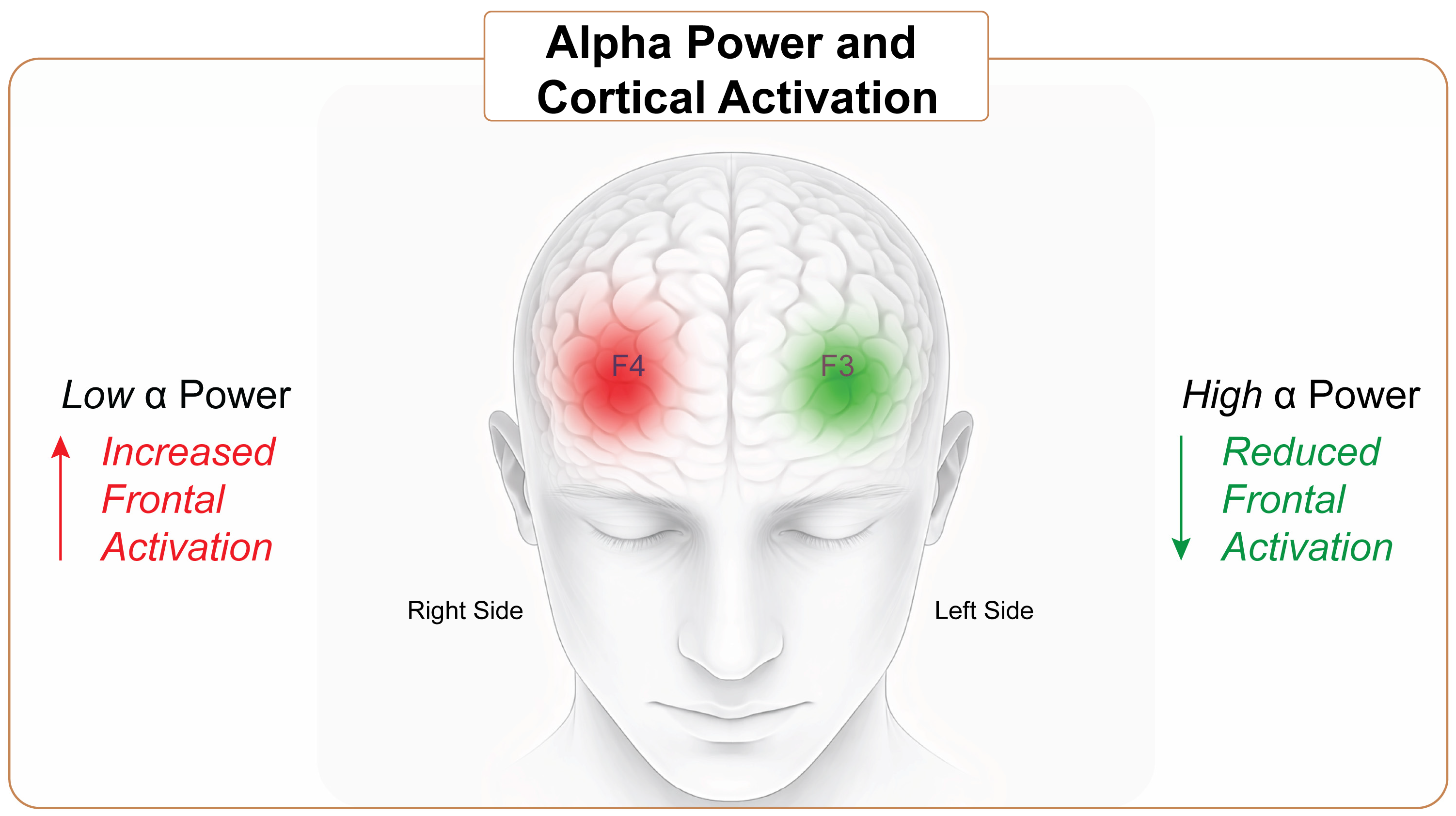
1.4. Frontal Alpha Asymmetry (FAA) in Nature Processing
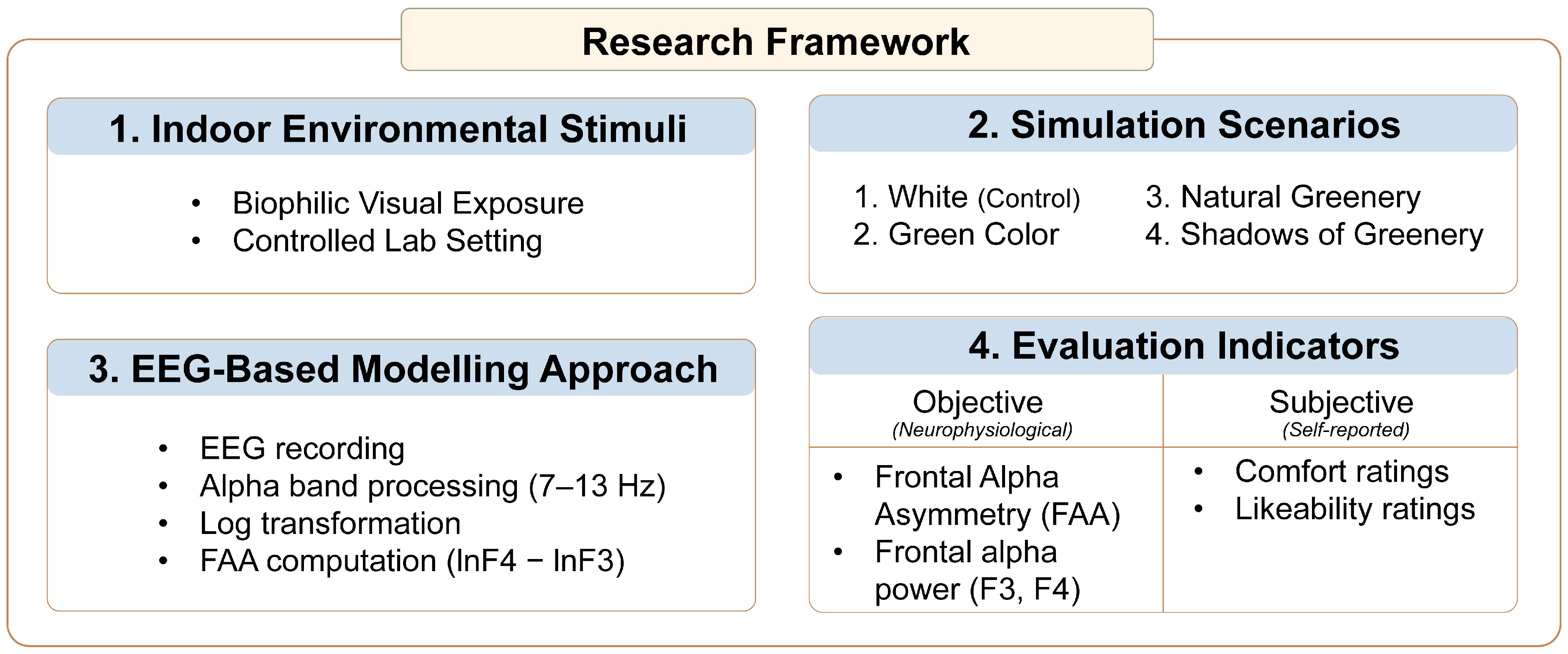
1.5. Do Nature-Derived Visual Features Elicit Similar Neural Responses?
2. Materials and Methods
2.1. Participants
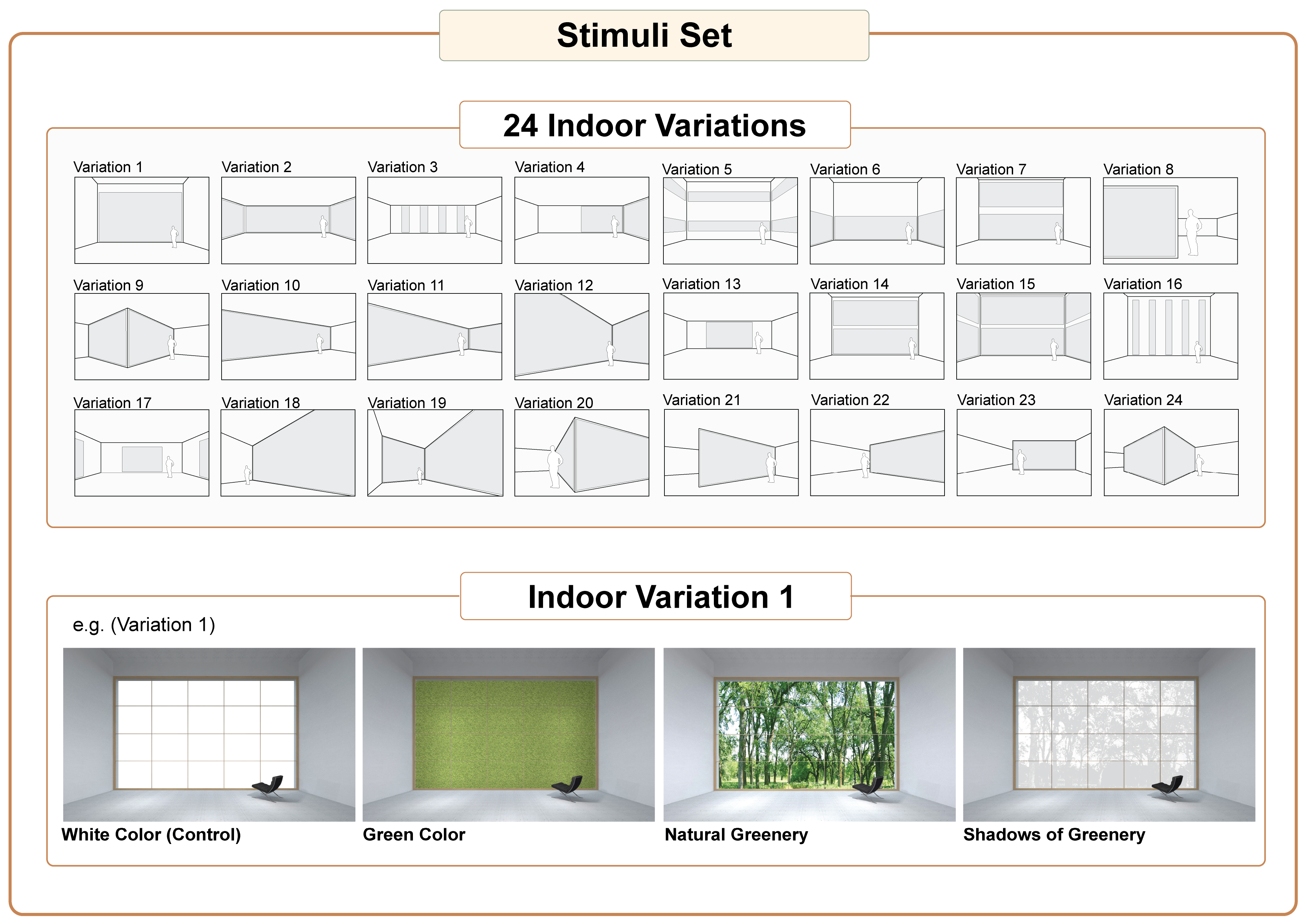
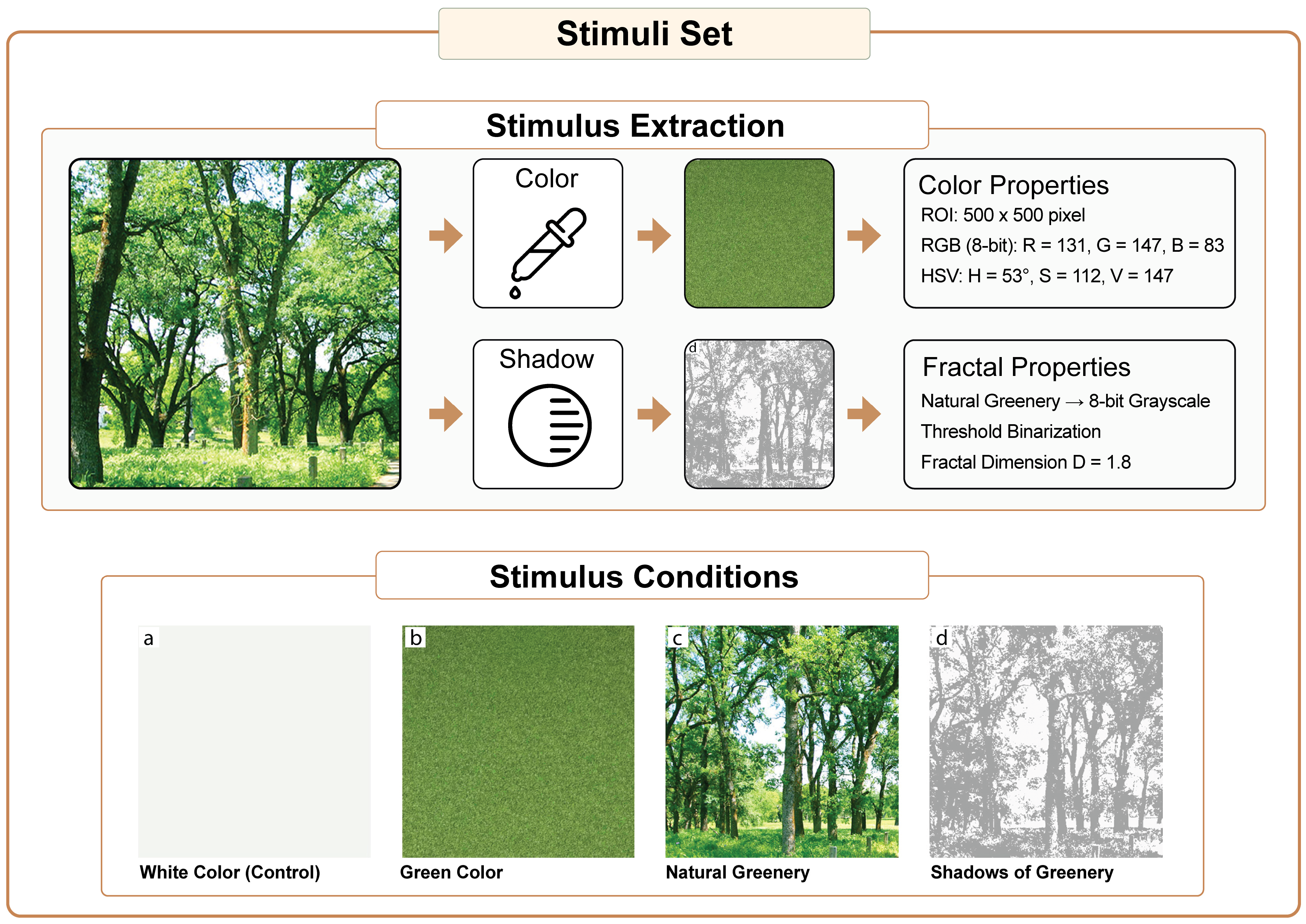
2.2. Stimuli Set
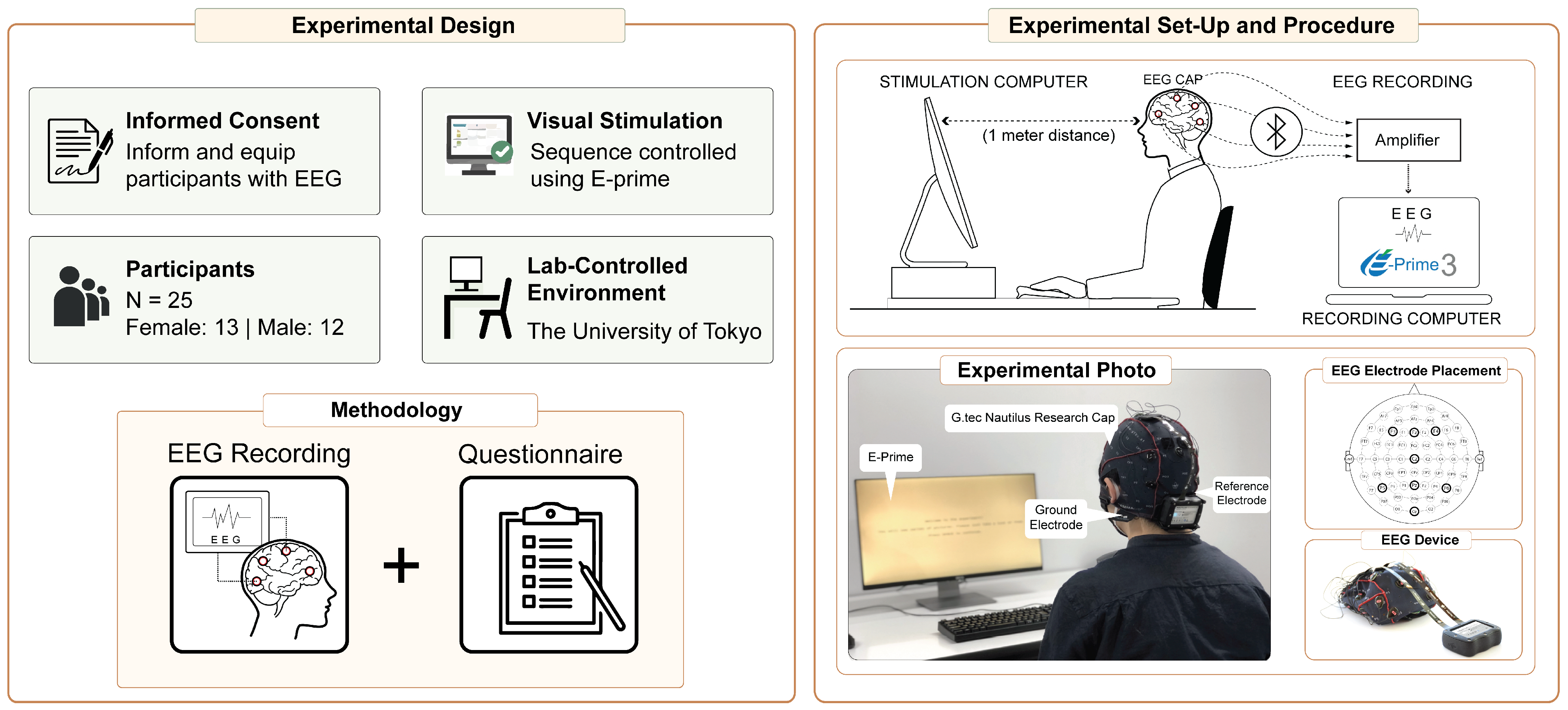
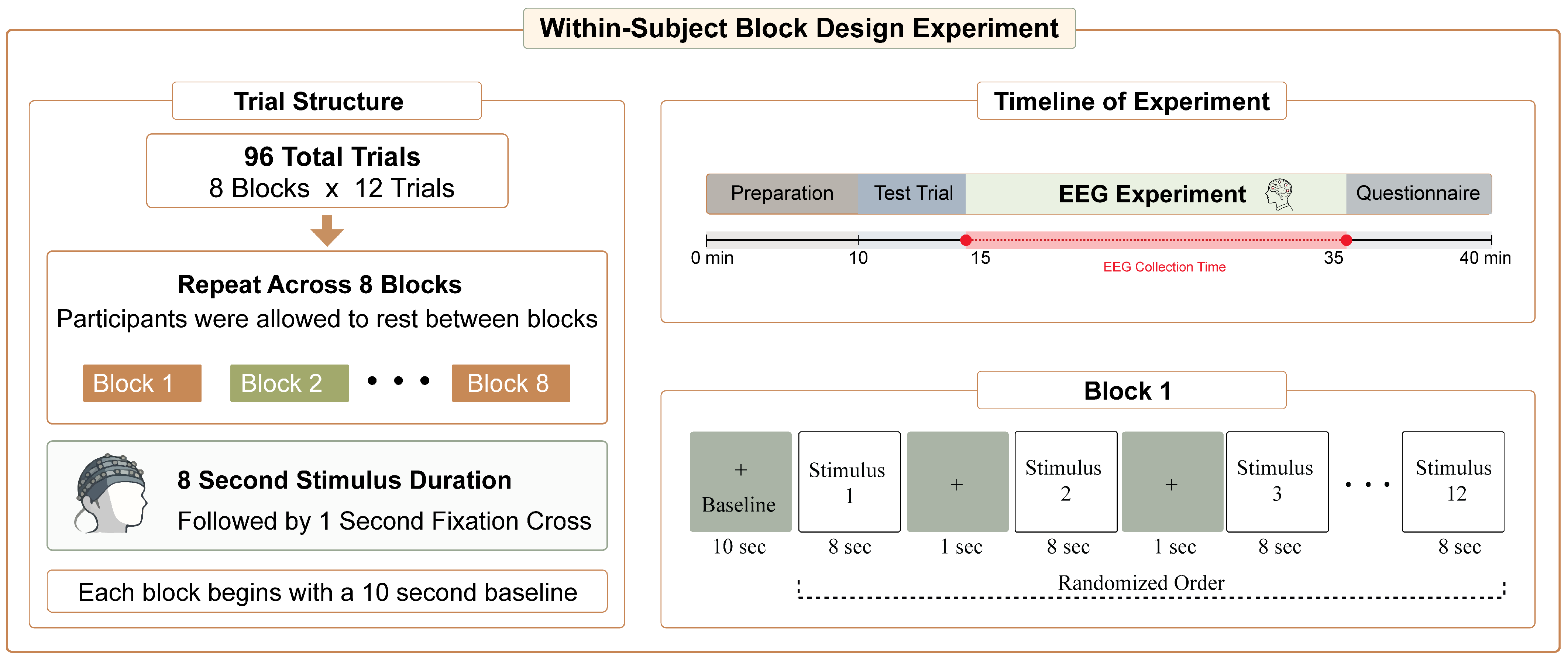
2.3. Experimental Design and Data Collection
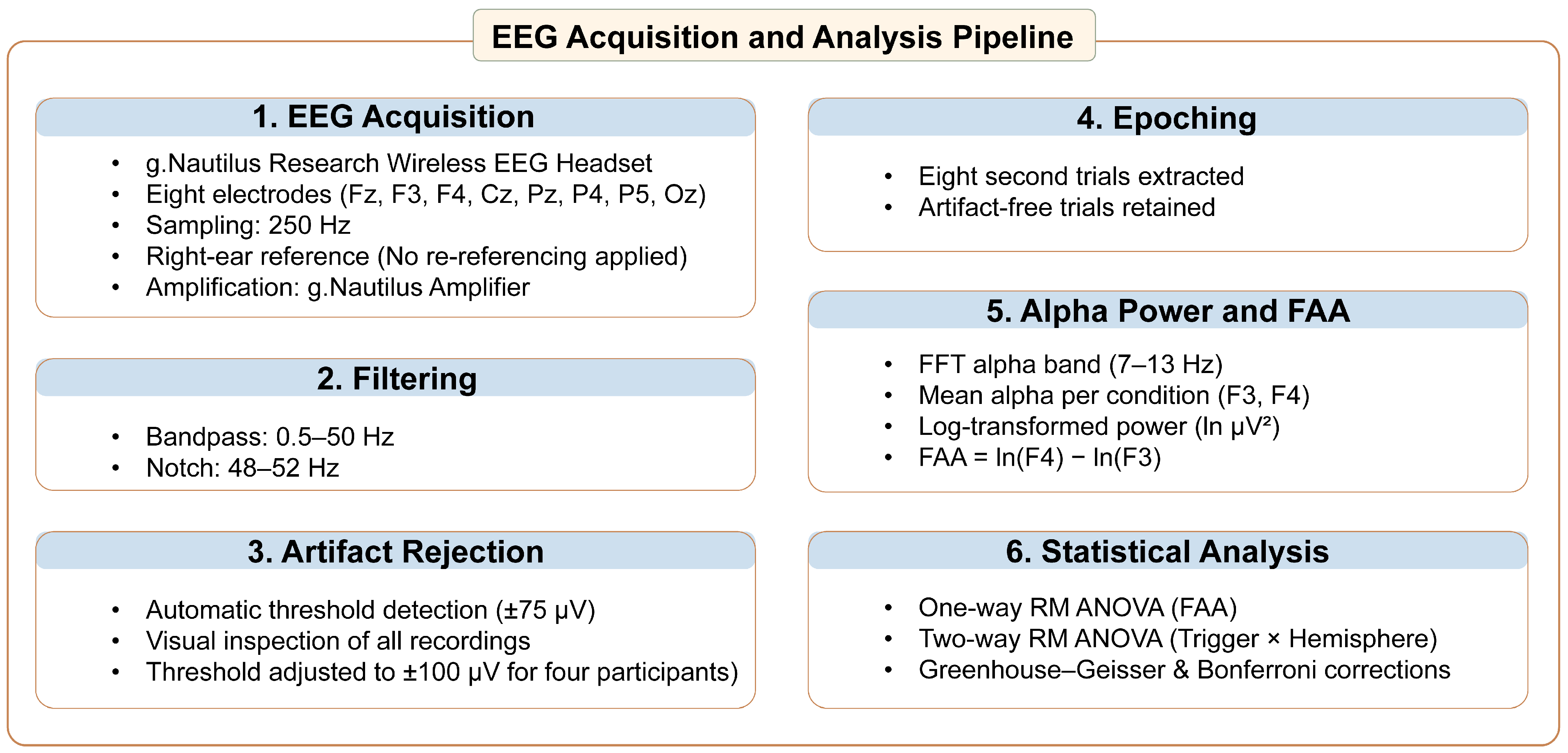
2.4. EEG Acquisition and Preprocessing
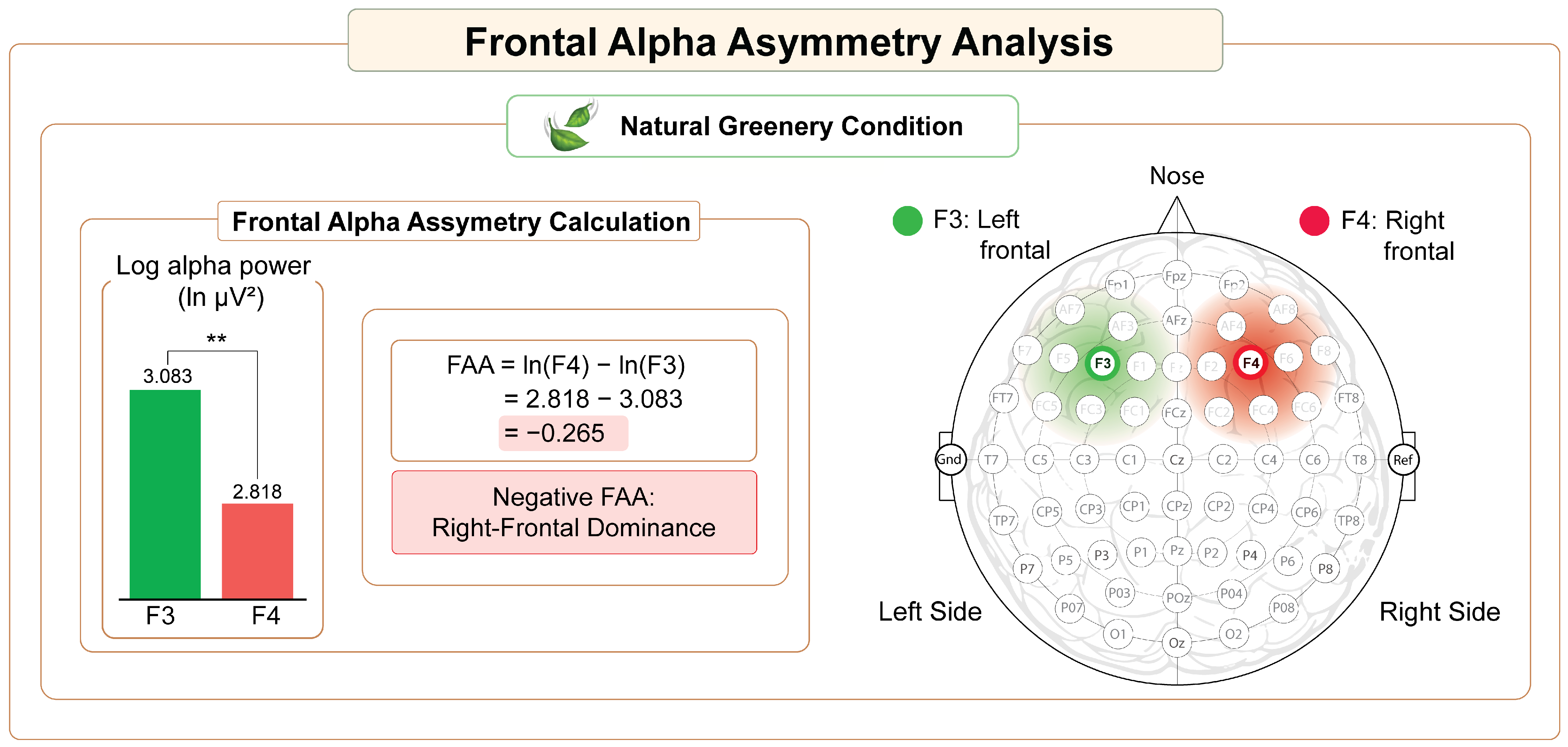
2.5. Alpha Power Extraction and FAA Calculation
2.6. Statistical Analysis
3. Results
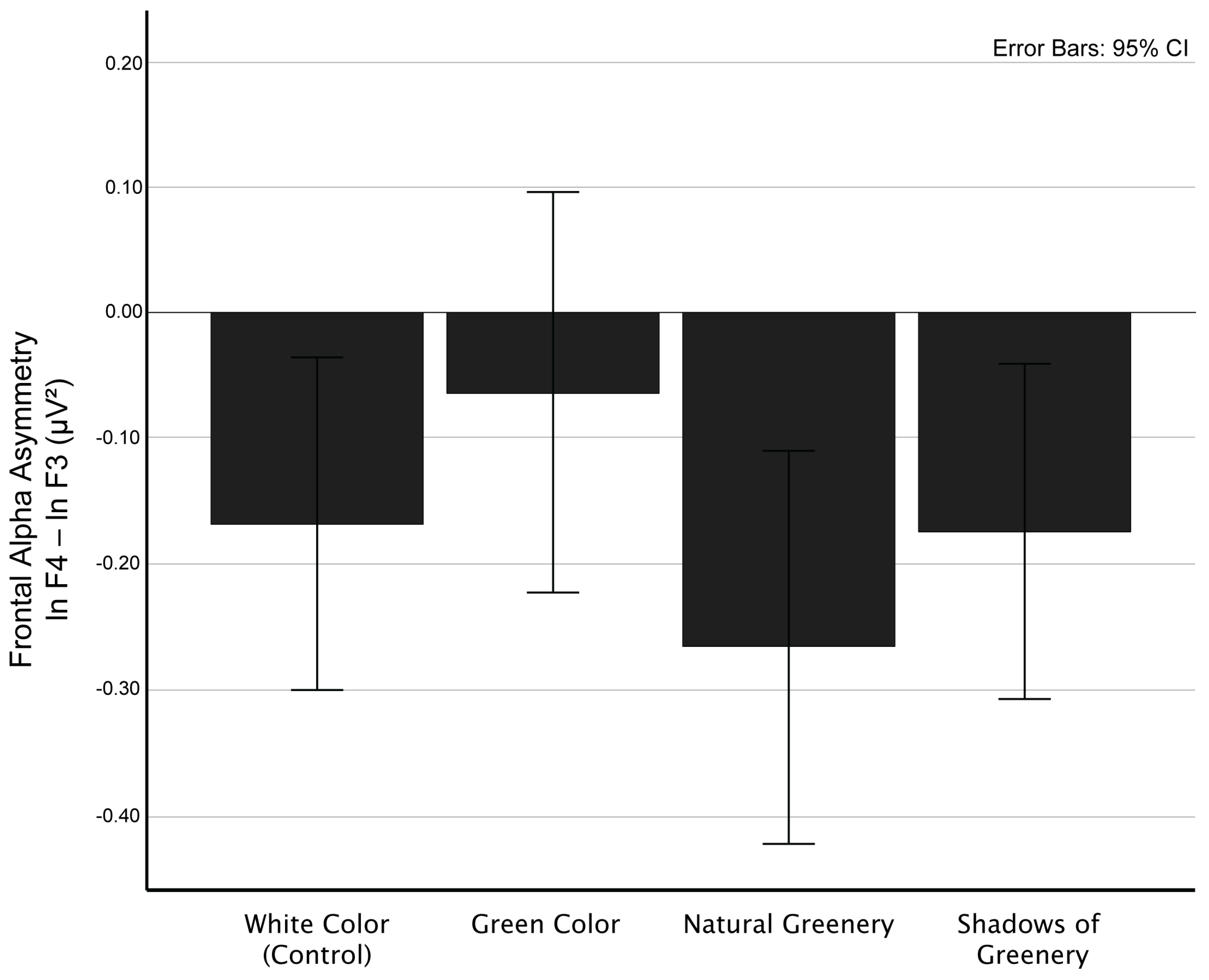
3.1. Frontal Alpha Asymmetry (FAA): One-Way Repeated Measures ANOVA
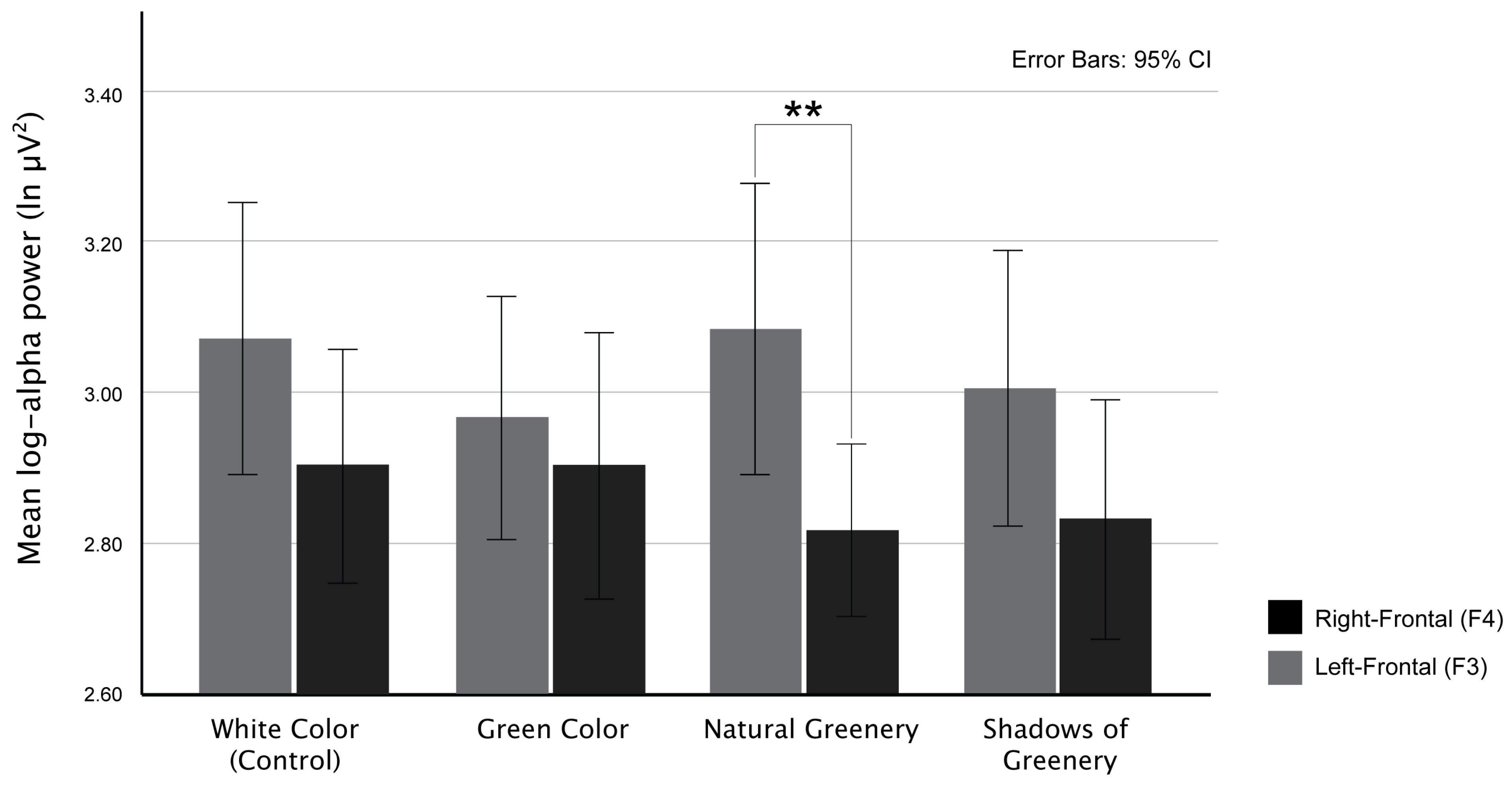
3.2. Frontal Alpha Asymmetry (FAA): Two-Way Repeated Measures ANOVA
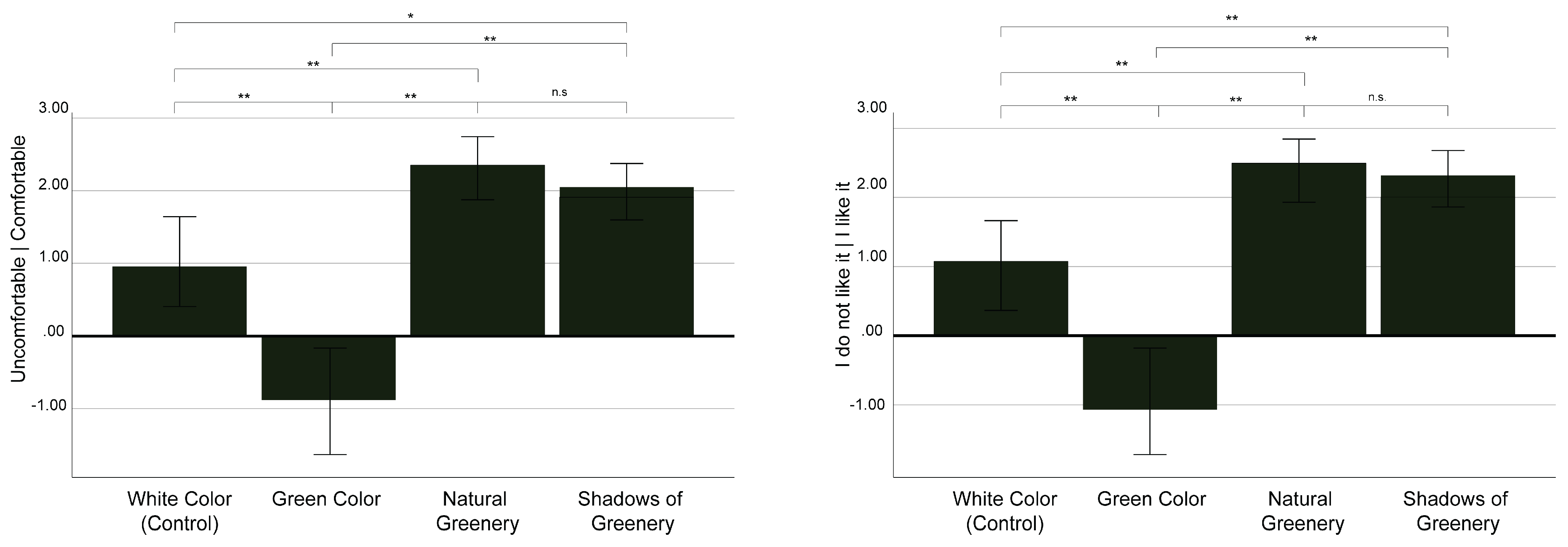
3.3. Subjective Ratings: Semantic Differential Questionnaires
4. Discussion
4.1. Attention Restoration Theory (ART) and Neural Evidence
4.2. Divergence Between Neural and Subjective Responses
4.3. Chromatic and Visual Complexity Considerations
4.4. Design Implications: What This Means for Architectural Practice
4.5. Limitations and Future Directions
4.5.1. Methodology
4.5.2. Stimulus Design
4.5.3. Room Layout
4.5.4. Participant Variability
4.5.5. Sample Size and Screening
5. Conclusions
Author Contributions
Funding
Institutional Review Board Statement
Informed Consent Statement
Data Availability Statement
Acknowledgments
Conflicts of Interest
Abbreviations
| EEG | Electroencephalography |
| FAA | Frontal alpha asymmetry |
| ART | Attention Restoration Theory |
| SD | Semantic Differential |
| D | Fractal Dimension |
| CI | Confidence Interval |
| lnF3 | Log-transformed alpha power at electrode F3 |
| lnF4 | Log-transformed alpha power at electrode F4 |
| ln µV2 | Log-transformed alpha power (microvolt squared) |
| α_adj | Adjusted significance level after Bonferroni correction |
References
- Bluyssen, P.M. The Indoor Environment Handbook; Taylor & Francis: Oxfordshire, UK, 2009; Volume 165. [Google Scholar]
- Constant, C. Eileen Gray: Operating in Dialogue; Disegno: London, UK, 2015. [Google Scholar]
- Neutra, R. Survival Through Design; Oxford University Press: New York, NY, USA, 1954. [Google Scholar]
- De Botton, A. The Architecture of Happiness; Knopf Doubleday Publishing Group: New York, NY, USA, 2008. [Google Scholar]
- Persiani, S.G.L. Benefits of Using Plants in Indoor Environments: Exploring Common Research Gaps. Architecture 2021, 1, 83–98. [Google Scholar] [CrossRef]
- Moya, T.A.; van den Dobbelsteen, A.; Ottelé, M.; Bluyssen, P.M. A review of green systems within the indoor environment. Indoor Built Environ. 2019, 28, 298–309. [Google Scholar] [CrossRef]
- Wilson, E.O. Biophilia; Harvard University Press: Cambridge, MA, USA, 1984. [Google Scholar]
- Kellert, S.R.; Wilson, E.O. The Biophilia Hypothesis; Island Press: Washington, DC, USA, 1993. [Google Scholar]
- James, W. Psychology, Briefer Course; Macmillan and Co.: London, UK, 1892. [Google Scholar]
- Kaplan, S. The restorative benefits of nature: Toward an integrative framework. J. Environ. Psychol. 1995, 15, 169–182. [Google Scholar] [CrossRef]
- Kaplan, R.; Kaplan, S. The Experience of Nature: A Psychological Perspective; Cambridge University Press: Cambridge, MA, USA, 1989. [Google Scholar]
- U.S. Green Building Council. Designing with Nature: Biophilic Design for the Indoor Environment Pilot Credit—Biophilic Design Plan Template. 2018. Available online: https://www.usgbc.org/credits/new-construction-core-and-shell-schools-new-construction-retail-new-construction-31 (accessed on 19 February 2025).
- International WELL Building Institute. Biophilia I—Qualitative: To Nurture the Innate Human-Nature Connection Within the Project|WELL Standard. Feature 88. Available online: https://standard.wellcertified.com/mind/biophilia-i-qualitative (accessed on 20 February 2025).
- Allen, J.G.; Bernstein, A.; Cao, X.; Eitland, E.S.; Flanigan, S.; Gokhale, M.; Goodman, J.M.; Klager, S.; Klingensmith, L.; Laurent, J.G.C.; et al. The 9 Foundations of a Healthy Building. 2017. Available online: www.ForHealth.org (accessed on 20 February 2025).
- Nakamoto, Y.; Nishina, H.; Masui, N.; Hashimoto, Y. Analysis of Amenity Effect on Human Psychology as Affected by Ornamental Foliage Plants Used as a Screen. J. Soc. High Technol. Agric. 1999, 11, 136–139. [Google Scholar] [CrossRef][Green Version]
- Danielski, I.; Svensson, A.; Weimer, K.; Lorentzen, L.; Warne, M. Effects of Green Plants on the Indoor Environment and Wellbeing in Classroom—A Case Study in a Swedish School. Sustainability 2022, 14, 3777. [Google Scholar] [CrossRef]
- Shin, W.S. The influence of forest view through a window on job satisfaction and job stress. Scand. J. For. Res. 2007, 22, 248–253. [Google Scholar] [CrossRef]
- Li, D.; Sullivan, W.C. Impact of views to school landscapes on recovery from stress and mental fatigue. Landsc. Urban Plan. 2016, 148, 149–158. [Google Scholar] [CrossRef]
- Aries, M.B.; Aarts, M.P.; van Hoof, J. Daylight and health: A review of the evidence and consequences for the built environment. Light. Res. Technol. 2013, 47, 6–27. [Google Scholar] [CrossRef]
- Boubekri, M.; Cheung, I.N.; Reid, K.J.; Wang, C.-H.; Zee, P.C. Impact of windows and daylight exposure on overall health and sleep quality of office workers: A case-control pilot study. J. Clin. Sleep Med. 2014, 10, 603–611. [Google Scholar] [CrossRef] [PubMed]
- Soga, M.; Evans, M.J.; Tsuchiya, K.; Fukano, Y. A room with a green view: The importance of nearby nature for mental health during the COVID-19 pandemic. Ecol. Appl. 2021, 31, e2248. [Google Scholar] [CrossRef] [PubMed]
- Dzhambov, A.M.; Lercher, P.; Browning, M.H.E.M.; Stoyanov, D.; Petrova, N.; Novakov, S.; Dimitrova, D.D. Does greenery experienced indoors and outdoors provide an escape and support mental health during the COVID-19 quarantine? Environ. Res. 2021, 196, 110420. [Google Scholar] [CrossRef]
- Yin, J.; Yuan, J.; Arfaei, N.; Catalano, P.J.; Allen, J.G.; Spengler, J.D. Effects of biophilic indoor environment on stress and anxiety recovery: A between-subjects experiment in virtual reality. Environ. Int. 2020, 136, 105427. [Google Scholar] [CrossRef]
- Ergan, S.; Radwan, A.; Zou, Z.; Tseng, H.-A.; Han, X. Quantifying Human Experience in Architectural Spaces with Integrated Virtual Reality and Body Sensor Networks. J. Comput. Civ. Eng. 2019, 33, 4018062. [Google Scholar] [CrossRef]
- Jeong, T.-J. A Study on the Healing Environment with Natural Elements in Healthcare Facility—Focused on the Case Study of Seoul National University Hospital. J. Archit. Inst. Korea Plan. Des. 2019, 35, 61–68. [Google Scholar]
- Albright, T.D. Neuroscience for Architecture. In Mind in Architecture: Neuroscience, Embodiment, and the Future of Design; Robinson, S., Pallasmaa, J., Eds.; MIT Press: Cambridge, MA, USA, 2015; pp. 197–217. [Google Scholar]
- Gage, F.H. Architecture and Neuroscience. In Proceedings of the Theme Presentation at AIA 2003 National Convention, San Diego, CA, USA, 8–10 May 2003. [Google Scholar]
- Pallasmaa, J.; Mallgrave, H.F.; Arbib, M. Architecture and Neuroscience; The Tapio Wirkkala-Rut Bryk Foundation: Espoo, Finland, 2009. [Google Scholar]
- Holl, S.; Pallasmaa, J.; Pérez-Gómez, A. Questions of Perception: Phenomenology of Architecture; William Stout Publisher: San Francisco, CA, USA, 1994. [Google Scholar]
- Haufe, S.; Nikulin, V.V.; Müller, K.-R.; Nolte, G. A critical assessment of connectivity measures for EEG data: A simulation study. Neuroimage 2012, 64, 120–133. [Google Scholar] [CrossRef] [PubMed]
- Başar, E. Brain Function and Oscillations—Volume I: Brain Oscillations. In Principles and Approaches; Springer: Berlin/Heidelberg, Germany, 1998. [Google Scholar]
- Wolpaw, J.R.; Wolpaw, E.W. Brain–Computer Interfaces: Principles and Practice; Oxford University Press: Oxford, UK, 2012. [Google Scholar]
- Malik, A.S.; Amin, H.U. Designing an EEG Experiment. In Designing EEG Experiments for Studying Brain; Academic Press: San Diego, CA, USA, 2017; pp. 1–30. [Google Scholar]
- Ulrich, R.S. Natural Versus Urban Scenes: Some Psychophysiological Effects. Environ. Behav. 1981, 13, 523–556. [Google Scholar] [CrossRef]
- Grassini, S.; Segurini, G.V.; Koivisto, M. Watching Nature Videos Promotes Physiological Restoration: Evidence From the Modulation of Alpha Waves in Electroencephalography. Front. Psychol. 2022, 13, 871143. [Google Scholar] [CrossRef]
- Jing, X.; Liu, C.; Li, J.; Gao, W.; Fukuda, H. Effects of Window Green View Index on Stress Recovery of College Students from Psychological and Physiological Aspects. Buildings 2024, 14, 3316. [Google Scholar] [CrossRef]
- Elsadek, M.; Deshun, Z.; Liu, B. High-rise window views: Evaluating the physiological and psychological impacts of green, blue, and built environments. Build. Environ. 2024, 262, 111798. [Google Scholar] [CrossRef]
- Elsadek, M.; Liu, B.; Xie, J. Window view and relaxation: Viewing green space from a high-rise estate improves urban dwellers’ wellbeing. Urban For. Urban Green. 2020, 55, 126846. [Google Scholar] [CrossRef]
- Chang, C.-Y.; Chen, P.-K. Human response to window views and indoor plants in the workplace. HortScience 2005, 40, 1354–1359. [Google Scholar] [CrossRef]
- Lee, M.J.; Oh, W. Changes in Electroencephalographic Results and Heart Rate Variability after Exposure to Green Landscape Photographs Correlated with Color Temperature and Illumination Level. J. People Plants Environ. 2021, 24, 639–649. [Google Scholar] [CrossRef]
- Zhu, H.; Yang, F.; Bao, Z.; Nan, X. A study on the impact of Visible Green Index and vegetation structures on brain wave change in residential landscape. Urban For. Urban Green. 2021, 64, 127299. [Google Scholar] [CrossRef]
- Kim, S.H.; Lee, C.H.; Park, S.A. Brain Wave Changes in the Prefrontal Cortex When Exposed to Varying Plant Types as Visual Stimuli. HortScience 2024, 59, 1413–1418. [Google Scholar] [CrossRef]
- Saadati, F.R.; Hir, Y.P.; Narimani, M. The effectiveness of exposure to green space on absolute power of alpha waves and stress reduction in people with attention-deficit/hyperactivity disorder. J. Res. Psychopathol. 2025, 6, 46–58. [Google Scholar]
- Park, S.-A.; Song, C.; Choi, J.-Y.; Son, K.-C.; Miyazaki, Y. Foliage Plants Cause Physiological and Psychological Relaxation as Evidenced by Measurements of Prefrontal Cortex Activity and Profile of Mood States. HortScience 2016, 51, 1308–1312. [Google Scholar] [CrossRef]
- Olszewska-Guizzo, A.; Escoffier, N.; Chan, J.; Yok, T.P. Window view and the brain: Effects of floor level and green cover on the alpha and beta rhythms in a passive exposure eeg experiment. Int. J. Environ. Res. Public Health 2018, 15, 2358. [Google Scholar] [CrossRef]
- Sabu, P.; Stuldreher, I.V.; Kaneko, D.; Brouwer, A.M. A Review on the Role of Affective Stimuli in Event-Related Frontal Alpha Asymmetry. Front. Comput. Sci. 2022, 4, 869123. [Google Scholar] [CrossRef]
- Davidson, R. EEG Measures of Cerebral Asymmetry: Conceptual and Methodological Issues. J. Neurosci. 1998, 39, 71–89. [Google Scholar] [CrossRef] [PubMed]
- Zhao, G.; Zhang, Y.; Ge, Y. Frontal EEG asymmetry and middle line power difference in discrete emotions. Front. Behav. Neurosci. 2018, 12, 225. [Google Scholar] [CrossRef] [PubMed]
- Fischer, N.L.; Peres, R.; Fiorani, M. Frontal alpha asymmetry and theta oscillations associated with information sharing intention. Front. Behav. Neurosci. 2018, 12, 166. [Google Scholar] [CrossRef]
- Coan, J.A.; Allen, J.B. Frontal EEG asymmetry and the behavioral activation and inhibition systems. Psychophysiology 2003, 40, 106–114. [Google Scholar] [CrossRef]
- Deutsch, G.; Papanicolaou, A.C.; Bourbon, W.T.; Eisenberg, H.M. Cerebral Blood Flow Evidence of Right Frontal Activation in Attention Demanding Tasks. Int. J. Neurosci. 1987, 37, 23–28. [Google Scholar] [CrossRef]
- Martínez-Soto, J.; Gonzales-Santos, L.; Pasaye, E.; Barrios, F.A. Exploration of neural correlates of restorative environment exposure through functional magnetic resonance. Intell. Build. Int. 2013, 5, 10–28. [Google Scholar] [CrossRef]
- McDonnell, A.S.; Strayer, D.L. Immersion in nature enhances neural indices of executive attention. Sci. Rep. 2024, 14, 1845. [Google Scholar] [CrossRef] [PubMed]
- McDonnell, A.S.; LoTemplio, S.B.; Scott, E.E.; Strayer, D.L. Nature images are more visually engaging than urban images: Evidence from neural oscillations in the brain. Front. Hum. Neurosci. 2025, 19, 1575102. [Google Scholar] [CrossRef]
- Jiang, X.; Hu, Y.; Larsen, L.; Chang, C.Y.; Sullivan, W.C. Impacts of urban green infrastructure on attentional functioning: Insights from an fMRI study. Front. Psychol. 2023, 14, 1047993. [Google Scholar] [CrossRef]
- Kühn, S.; Forlim, C.G.; Lender, A.; Wirtz, J.; Gallinat, J. Brain functional connectivity differs when viewing pictures from natural and built environments using fMRI resting state analysis. Sci. Rep. 2021, 11, 4110. [Google Scholar] [CrossRef] [PubMed]
- Harrison, R.M.; Hester, R.E. (Eds.) Indoor Air Pollution; Royal Society of Chemistry: London, UK, 2019. [Google Scholar]
- Hellenbeck, W.H. Quantitative Risk Assessment for Environmental and Occupational Health; CRC Press: Boca Raton, FL, USA, 2018. [Google Scholar]
- Rippe, J.M. (Ed.) Lifestyle Medicine; CRC Press: Boca Raton, FL, USA, 2013. [Google Scholar]
- Olszewska-Guizzo, A.A.; Paiva, T.O.; Barbosa, F. Effects of 3D contemplative landscape videos on brain activity in a passive exposure eeg experiment. Front. Psychiatry 2018, 9, 317. [Google Scholar] [CrossRef]
- Grassini, S.; Revonsuo, A.; Castellotti, S.; Petrizzo, I.; Benedetti, V.; Koivisto, M. Processing of natural scenery is associated with lower attentional and cognitive load compared with urban ones. J. Environ. Psychol. 2019, 62, 1–11. [Google Scholar] [CrossRef]
- Lindemann-Matthies, P.; Benkowitz, D.; Hellinger, F. Associations between the naturalness of window and interior classroom views, subjective well-being of primary school children and their performance in an attention and concentration test. Landsc. Urban Plan. 2021, 214, 104146. [Google Scholar] [CrossRef]
- Roe, J.J.; Aspinall, P.A.; Mavros, P.; Coyne, R. Engaging the brain: The impact of natural versus urban scenes using novel EEG methods in an experimental setting. Environ. Sci. 2013, 1, 93–104. [Google Scholar] [CrossRef]
- Berman, M.G.; Jonides, J.; Kaplan, S. The Cognitive Benefits of Interacting With Nature. Psychol. Sci. 2008, 19, 1207–1212. [Google Scholar] [CrossRef]
- Mandelbrot, B. The Fractal Geometry of Nature, 3rd ed.; Freeman: San Francisco, CA, USA, 1982. [Google Scholar]
- Spehar, B.; Clifford, C.W.G.; Newell, B.R.; Taylor, R.P. Universal aesthetic of fractals. Comput. Graph. 2006, 27, 813–820. [Google Scholar] [CrossRef]
- Hägerhäll, C.M.; Laike, T.; Küller, M.; Marcheschi, E.; Boydston, C.; Taylor, R.P. Human physiological benefits of viewing nature: EEG responses to exact and statistical fractal patterns. Nonlinear Dyn. Psychol. Life Sci. 2015, 19, 1–12. [Google Scholar]
- Augustin, S. Place Advantage: Applied Psychology for Interior Architecture; John Wiley & Sons, Inc.: Hoboken, NJ, USA, 2009. [Google Scholar]
- Abboushi, B.; Elzeyadi, I.; Taylor, R.; Sereno, M. Fractals in architecture: The visual interest, preference, and mood response to projected fractal light patterns in interior spaces. J. Environ. Psychol. 2019, 61, 57–70. [Google Scholar] [CrossRef]
- Yoto, A.; Katsuura, T.; Iwanaga, K.; Shimomura, Y. Effects of object color stimuli on human brain activities in perception and attention referred to EEG alpha band response. J. Physiol. Anthropol. 2007, 26, 373–379. [Google Scholar] [CrossRef]
- Sroykham, W.; Wongsathikun, J.; Wongsawat, Y. The effects of perceiving color in living environment on QEEG, Oxygen saturation, pulse rate, and emotion regulation in humans. In Proceedings of the 2014 36th Annual International Conference of the IEEE Engineering in Medicine and Biology Society, EMBC 2014, Chicago, IL, USA, 26–30 August 2014; pp. 6226–6229. [Google Scholar] [CrossRef]
- Lan, L.; Lian, Z. Application of statistical power analysis—How to determine the right sample size in human health, comfort and productivity research. Build. Environ. 2010, 45, 1202–1213. [Google Scholar] [CrossRef]
- Schöne, B.; Schomberg, J.; Gruber, T.; Quirin, M. Event-related frontal alpha asymmetries: Electrophysiological correlates of approach motivation. Exp. Brain Res. 2016, 234, 559–567. [Google Scholar] [CrossRef]
- Keil, A.; Debener, S.; Gratton, G.; Junghöfer, M.; Kappenman, E.S.; Luck, S.J.; Luu, P.; Miller, G.A.; Yee, C.M. Committee report: Publication guidelines and recommendations for studies using electroencephalography and magnetoencephalography. Psychophysiology 2014, 51, 1–21. [Google Scholar] [CrossRef] [PubMed]
- g.tec Medical Engineering GmbH. g.SAHARA Active Dry Electrode System. Schiedlberg, Austria. Available online: www.gtec.at (accessed on 18 March 2026).
- Pernet, C.; Garrido, M.I.; Gramfort, A.; Maurits, N.; Michel, C.M.; Pang, E.; Salmelin, R.; Schoffelen, J.M.; Valdes-Sosa, P.A.; Puce, A. Issues and recommendations from the OHBM COBIDAS MEEG committee for reproducible EEG and MEG research. Nat. Neurosci. 2020, 23, 1473–1483. [Google Scholar] [CrossRef]
- Luck, S.J. An Introduction to the Event-Related Potential Technique, 2nd ed.; MIT Press: Cambridge, MA, USA, 2014. [Google Scholar]
- Coan, J.A.; Allen, J.J.B. Frontal EEG asymmetry as a moderator and mediator of emotion. Biol. Psychol. 2004, 67, 7–50. [Google Scholar] [CrossRef] [PubMed]
- Smith, E.E.; Reznik, S.J.; Stewart, J.L.; Allen, J.J.B. Assessing and conceptualizing frontal EEG asymmetry: An updated primer on recording, processing, analyzing, and interpreting frontal alpha asymmetry. Int. J. Psychophysiol. 2017, 111, 98–114. [Google Scholar] [CrossRef]
- Berto, R. Exposure to restorative environments helps restore attentional capacity. J. Environ. Psychol. 2005, 25, 249–259. [Google Scholar] [CrossRef]
- Asanowitc, D.; Marzecová, A.; Jaśkowski, P.; Wolski, P. Hemispheric asymmetry in the efficiency of attentional networks. Brain Cogn. 2012, 79, 117–128. [Google Scholar] [CrossRef][Green Version]
- Avram, J.; Baltes, F.R.; Miclea, M.; Miu, A.C. Frontal EEG Activation Asymmetry Reflects Cognitive Biases in Anxiety: Evidence from an Emotional Face Stroop Task. Appl. Psychophyiol. Biofeedback 2010, 35, 285–292. [Google Scholar] [CrossRef] [PubMed]
- Olszewska-Guizzo, A.; Sia, A.; Fogel, A.; Ho, R. Can exposure to certain urban green spaces trigger frontal alpha asymmetry in the brain?—Preliminary findings from a passive task EEG study. Int. J. Environ. Res. Public Health 2020, 17, 394. [Google Scholar] [CrossRef]
- Sudimac, S.; Sale, V.; Kühn, S. How nature nurtures: Amygdala activity decreases as the result of a one-hour walk in nature. Mol. Psychiatry 2022, 27, 4446–4452. [Google Scholar] [CrossRef]
- Jung, D.; Kim, D.I.; Kim, N. Bringing nature into hospital architecture: Machine learning-based EEG analysis of the biophilia effect in virtual reality. J. Environ. Psychol. 2023, 89, 102033. [Google Scholar] [CrossRef]
- Fukumoto, H.; Shimoda, M.; Hoshino, S. The effects of different designs of indoor biophilic greening on psychological and physiological responses and cognitive performance of office workers. PLoS ONE 2024, 19, e0307934. [Google Scholar] [CrossRef]
- Eberhard, J.P. Brain Landscape: The Coexistence of Neuroscience and Architecture. In Brain Landscape: The Coexistence of Neuroscience and Architecture; Oxford University Press: Oxford, UK, 2009; pp. 1–280. [Google Scholar] [CrossRef]
- Kjellgren, A.; Buhrkall, H. A comparison of the restorative effect of a natural environment with that of a simulated natural environment. J. Environ. Psychol. 2010, 30, 464–472. [Google Scholar] [CrossRef]
- Kahn, P.H., Jr.; Friedman, B.; Gill, B.; Hagman, J.; Severson, R.L.; Freier, N.G.; Feldman, E.N.; Carrère, S.; Stolyar, A. A plasma display window?-The shifting baseline problem in a technologically mediated natural world. J. Environ. Psychol. 2008, 28, 192–199. [Google Scholar] [CrossRef]







| Condition | Mean FAA | SD |
|---|---|---|
| White Color (Control) | −0.168 | 0.321 |
| Green Color | −0.063 | 0.386 |
| Natural Greenery | −0.266 | 0.379 |
| Shadows of Greenery | −0.174 | 0.324 |
| Condition (Trigger) | F4 (Mean ± SD) | F3 (Mean ± SD) |
|---|---|---|
| White Color (Control) | 2.905 ± 0.376 | 3.072 ± 0.436 |
| Green Color | 2.904 ± 0.426 | 2.967 ± 0.393 |
| Natural Greenery | 2.818 ± 0.275 | 3.084 ± 0.465 |
| Shadows of Greenery | 2.833 ± 0.383 | 3.006 ± 0.439 |
| Effect | df | F | p | Partial η2 |
|---|---|---|---|---|
| Trigger | 1.557, 37.36 | 0.693 | 0.472 | 0.028 |
| Hemisphere | 1, 24 | 7.224 | 0.013 | 0.231 |
| Trigger × Hemisphere | 2.124, 50.968 | 4.591 | 0.013 | 0.161 |
Disclaimer/Publisher’s Note: The statements, opinions and data contained in all publications are solely those of the individual author(s) and contributor(s) and not of MDPI and/or the editor(s). MDPI and/or the editor(s) disclaim responsibility for any injury to people or property resulting from any ideas, methods, instructions or products referred to in the content. |
© 2026 by the authors. Licensee MDPI, Basel, Switzerland. This article is an open access article distributed under the terms and conditions of the Creative Commons Attribution (CC BY) license.
Share and Cite
Luma, D.; Kawazoe, Y. Nature in Indoor Environments: An EEG Study Comparing Natural Greenery with Nature-Derived Visual Alternatives. Buildings 2026, 16, 1284. https://doi.org/10.3390/buildings16071284
Luma D, Kawazoe Y. Nature in Indoor Environments: An EEG Study Comparing Natural Greenery with Nature-Derived Visual Alternatives. Buildings. 2026; 16(7):1284. https://doi.org/10.3390/buildings16071284
Chicago/Turabian StyleLuma, Dea, and Yoshiyuki Kawazoe. 2026. "Nature in Indoor Environments: An EEG Study Comparing Natural Greenery with Nature-Derived Visual Alternatives" Buildings 16, no. 7: 1284. https://doi.org/10.3390/buildings16071284
APA StyleLuma, D., & Kawazoe, Y. (2026). Nature in Indoor Environments: An EEG Study Comparing Natural Greenery with Nature-Derived Visual Alternatives. Buildings, 16(7), 1284. https://doi.org/10.3390/buildings16071284