1. Introduction
Locality refers to the natural and cultural characteristics that distinguish a place from others, formed through long-term human–land interactions [
1]. Building upon this basic definition, locality should be understood not merely as a set of objective regional attributes, but as a relational and experiential construct emerging from continuous interactions between people and their environments. In humanistic geography, the concept of place emphasizes space endowed with meaning through lived experience, memory, and emotional attachment [
2,
3]. From this perspective, locality overlaps with the notion of sense of place, which highlights individuals’ subjective feelings of belonging, familiarity, and symbolic identification with specific settings. In environmental psychology, place identity has been conceptualized as a component of self-identity rooted in physical environments, reflecting the integration of beliefs, values, memories, and emotions associated with particular places [
4,
5]. Related concepts such as place attachment and place dependence further explain affective bonds and functional reliance on environmental resources [
6,
7]. Together, these perspectives suggest that locality integrates material spatial structures with socially constructed meanings. Rapid urbanization in China has intensified the fragmentation of natural habitats and the homogenization of townscapes, weakening landscape locality. The long-standing urban–rural dual structure, reinforced by institutional systems such as household registration and land management policies, has further deepened spatial segmentation [
8]. Small towns serve as critical nodes connecting cities and rural areas, where urban, rural, and wilderness landscapes coexist and interact. However, existing studies largely focus on single-scale or single-type locality analysis [
9], these studies have extended the analytical field of locality from a research standpoint, but the practical understanding and application of local landscape knowledge remain incomplete. In particular, small towns, as an important transition node between the city and the countryside, lack diverse research and discussion of its landscape locality. In practical terms, effective landscape locality planning requires not only neighborhood-scale character analysis and design, but also attention to regional spatial patterns to enhance the overall structure connection of urban, rural, and wilderness landscapes [
10]. Therefore, relevant research lacks exploration of local characteristics across administrative boundaries.
In this study, locality is defined as a unique spatial understanding formed through people’s perception of the physical environment. It is not merely the objective presence of cultural or natural features, but the result of how individuals interpret and internalize these features in specific spatial contexts [
11]. Subjective perception refers to individuals’ personal, emotional, and cognitive responses to the physical characteristics of street environments as they are experienced in situ or through visual representation. Previous studies have shown that the formation of locality originates from people’s visual scenes, and its association with local attachment can be found in visual images [
12]. As an important carrier of visual scenes, the subjective perception and experience reflected in geotagged photographs provide a new perspective for describing urban and rural landscapes [
13], i.e., the result of the perception of locality [
14]. However, Research has also have predominantly focused on the identification of objective landscape patterns and the physical characterization of specific towns or regional settlement networks, with relatively fewer investigations addressing subjective perceptual dimensions [
15,
16], mainly focusing on the analysis of the spatial patterns of water network settlements in Jiangnan. This includes the morphological characteristics and structural order of town settlements in Jiangnan [
17], the coupling relationship between settlements and the water network topography [
18,
19], and the analysis of the landscape and wind patterns of rural villages in Jiangnan [
10]. However, the interaction mechanism between people and town landscape locality from a perceptual perspective remains insufficiently explored. Clarifying the relationship between subjective perception and spatial landscape distribution will help refine suitability-oriented planning goals in Wujiang [
20].
Simultaneously, small towns in Southern Jiangsu are the most representative and cutting-edge types of towns in China’s developed regions [
21], serving as prime examples of transformation driven by county urbanization [
22,
23]. In Wujiang’s small towns, rapid urbanization, industrial expansion, and hydrological changes in the Tai Lake Basin have fragmented the historic water-town fabric [
24] and ecological system [
25], disrupting habitat corridors and town–rural continuity, while tourism and development have further transformed their rich Jiangnan water-town heritage [
26]. These small towns therefore need to place greater emphasis on local landscape planning that incorporates residents’ subjective perceptions and responses [
27,
28]. Therefore, more detailed and in-depth analyses and research are required to explore the adaptive representations and developmental characteristics of local landscapes from a subjective perspective.
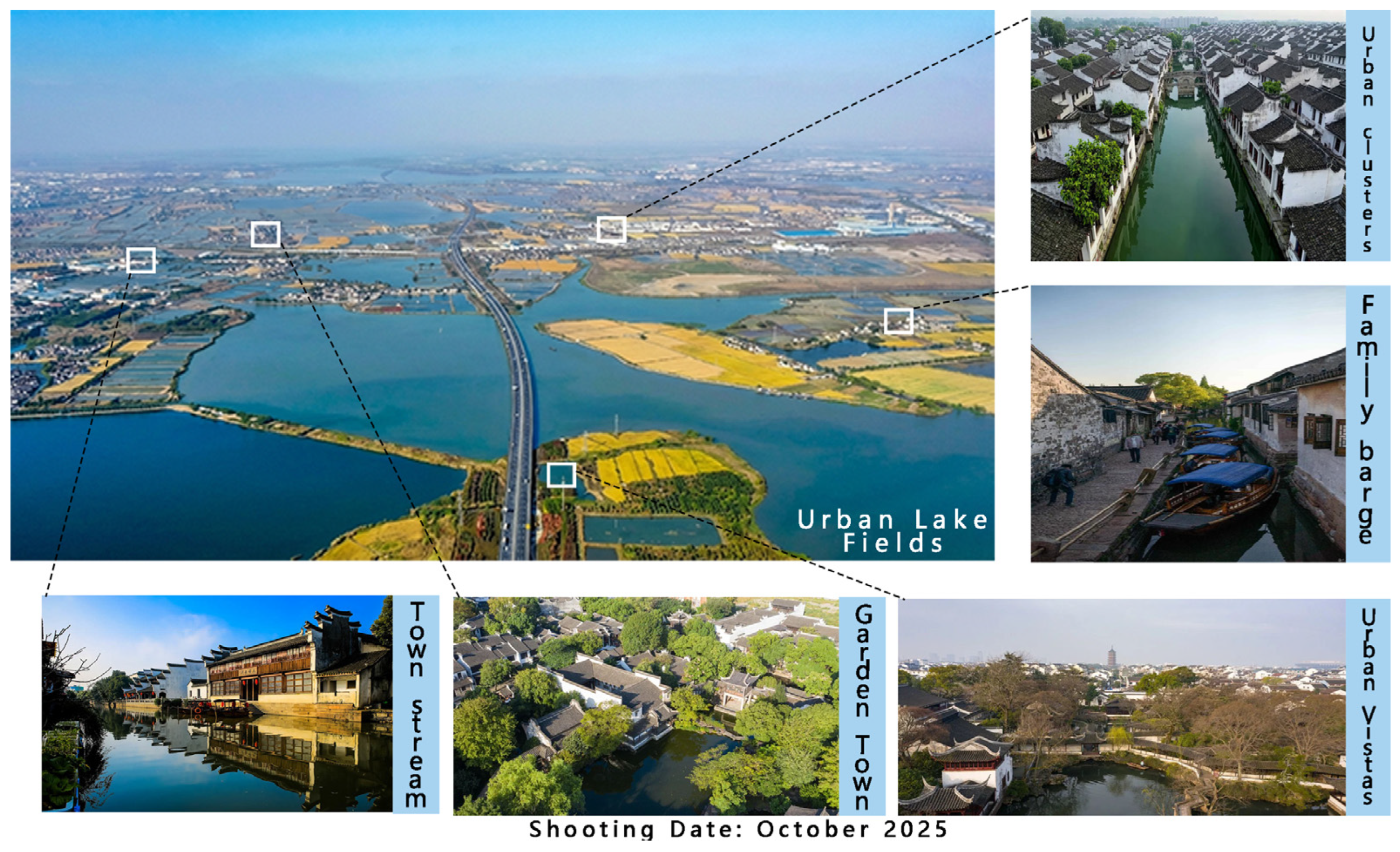
In this study, “Urban–Rural–Wilderness” refers to a spatial continuum rather than an administrative category. It describes the gradual transition in morphology, land use, and landscape characteristics from urbanized town centers, through rural settlements, to less-developed wilderness areas. This continuum captures both functional interdependence and environmental variation, and is particularly relevant in regions such as Wujiang, where historic water towns coexist with expanding peri-urban industrial and agrarian landscapes. Wujiang’s small towns exhibit distinctive water-town morphology shaped by longterm human–water interactions. Key characteristics include: a hybrid town–rural condition (both urban and rural attributes coexist); a ‘field–woodland’ (farmland–tree belt) texture integrated into settlements; a dense water-network system formed by lakes, canals, and distributaries; river–lake coupling that organizes daily life and settlement layout; a ‘small bridges–flowing water–waterside households’ streetscape formed by bridges, canals, white-walled black-tiled dwellings, and waterside lanes; a small-scale, low-rise, medium-density built form; and an increasingly blurred boundary among town, countryside, and wilderness, where farmland and semi-natural spaces surround and permeate the town fabric (
Figure 1). As carriers of local historical memory, Wujiang’s traditional water towns are increasingly intersecting with expanding industrial landscapes amid trends of regional and pan-urbanization. Reconciling perceived landscape conflicts while preserving the distinctive character of the Jiangnan water town has therefore become a critical task for the sustainable development of small towns in Wujiang District [
15].
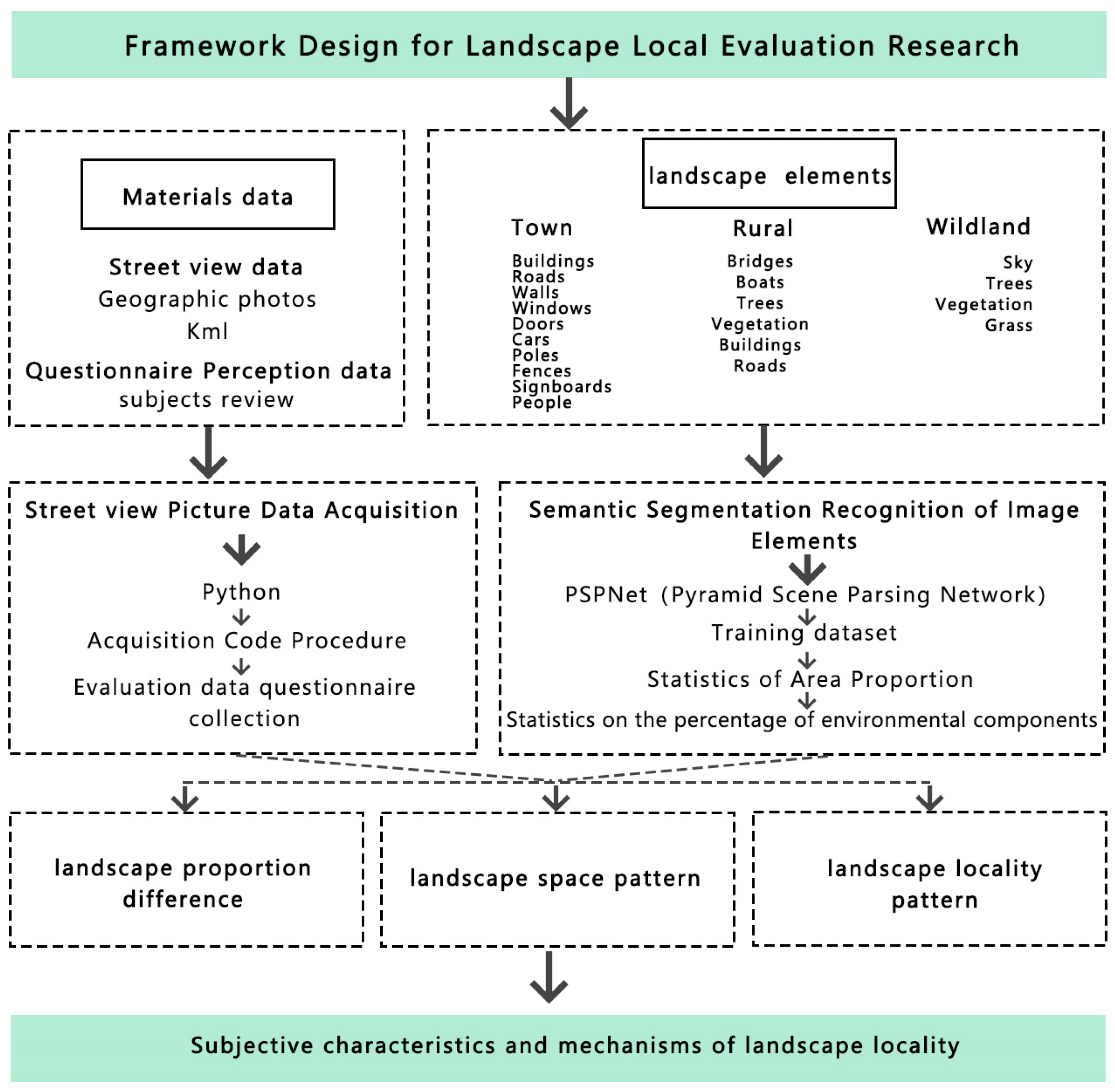
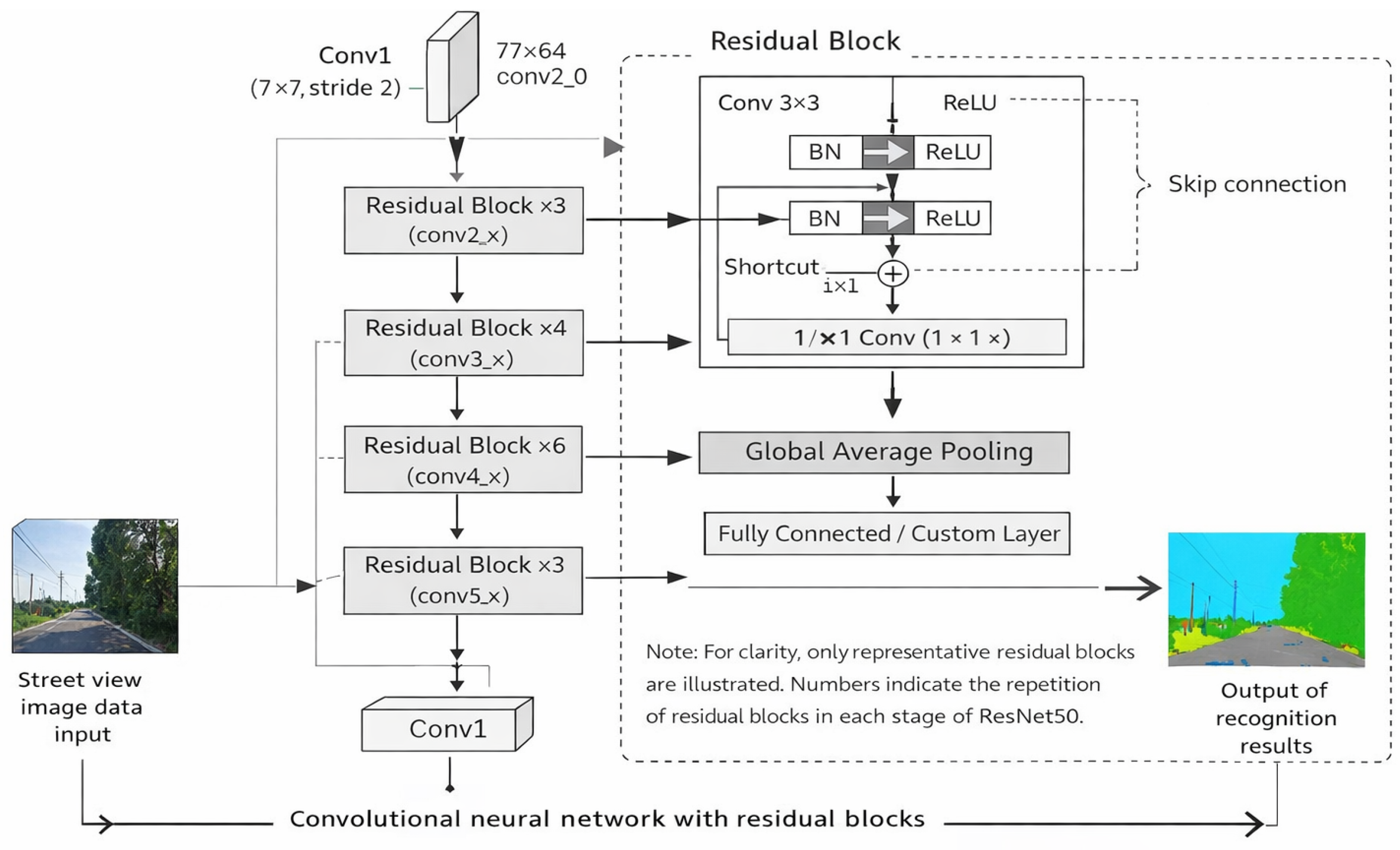
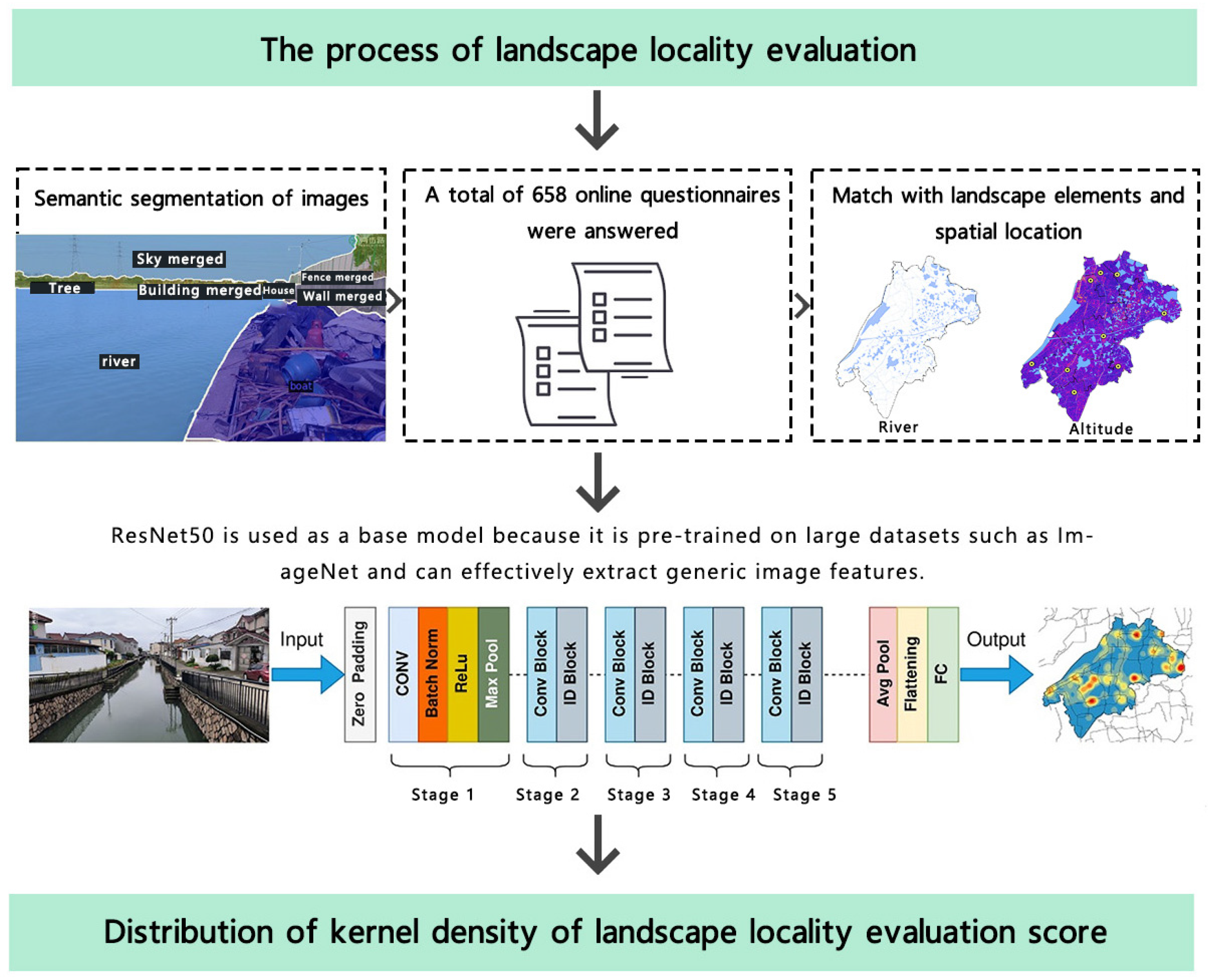
In summary, the locality of small towns in Wujiang is embodied in their water-town culture, traditional settlement morphology, and ecological structure. Amid urban–rural–wilderness integration, this locality faces risks of homogenization while also gaining opportunities for renewal through spatial reconstruction. Subjective perception serves as a bridge between people and place, shaping how locality is recognized and evaluated across interwoven urban, rural, and wild landscapes. To capture this perceptual dimension, this study employs streetscape big data and deep learning techniques, using the ResNet50 model to extract high-level semantic features from street-level images, thereby providing a robust foundation for analyzing how visual elements contribute to perceived locality. ResNet50 was selected for its strong balance between accuracy, computational efficiency, and feature representation capacity [
29]. Its residual architecture enables stable training of deep networks and effective extraction of complex visual patterns. Moreover, it has been widely applied in urban scene recognition, streetscape analysis, and environmental perception modeling, demonstrating its robustness and reliability in related research contexts [
30,
31]. By referencing the results of dataset collection, evaluating perceptions based on locality, and statistically eliminating cognitive differences, the study forms the final locality score simulation results.
Because landscape perception is inherently formed at the human and street level—where individuals directly experience visual elements such as buildings, waterways, vegetation, and streetscapes—the micro scale serves as the most relevant unit for understanding perceptual responses and for implementing planning interventions. By integrating street-level visual analysis with regional spatial structures, the research provides fine-grained, perception-oriented planning guidance for small towns in Southern Jiangsu, strengthens the emotional connection between people and place, and supports a balanced approach to cultural heritage conservation and sustainable urban development.
3. Results
3.1. Proportion of Various Landscape Types in Small Towns of Wujiang District
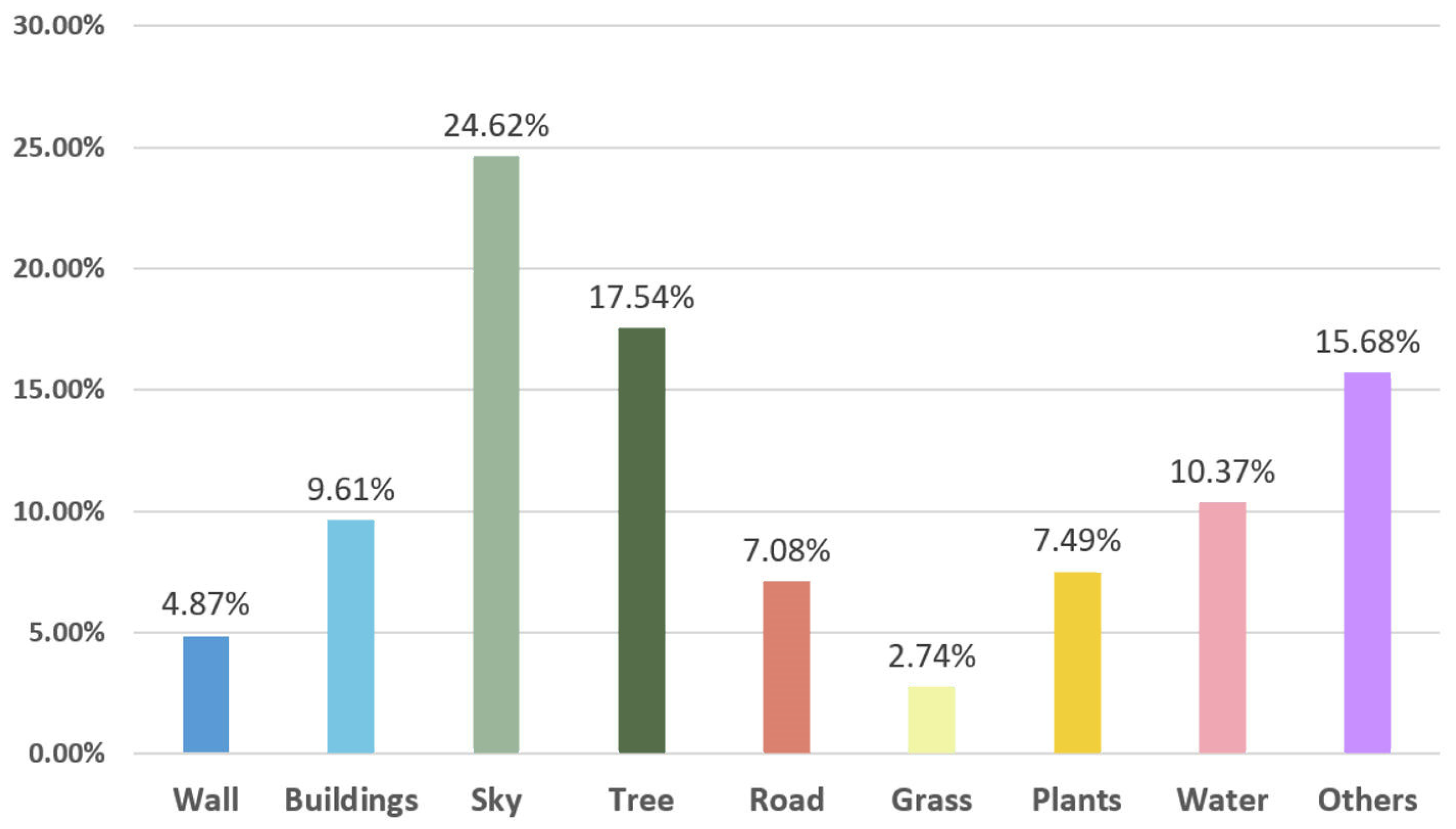
Based on the pixel proportions derived from element identification, statistical analysis showed that in the street-view images of Wujiang District (
Figure 6), four elements—sky, water surfaces, trees, and buildings—formed the primary group of observable physical-environment features. Together, these four elements accounted for 62.14% of all identified pixels. They can therefore be regarded as the dominant compositional elements of the street-view environment, as well as the primary objective environmental features visible to observers.
Among these first-level environmental elements, the sky had the highest proportion, with a pixel percentage of 24.62%. Trees, water, and buildings followed, with proportions of 17.54%, 10.37%, and 9.61%, respectively. Second-level elements in the street-view environment mainly included plants, roads, banisters, and grass, collectively accounting for 22.18% of all street-view image pixels. These categories had pixel percentages of 7.49%, 7.08%, 4.87%, and 2.74%, respectively. The remaining elements—people (0.17%), mountains (0.11%), windows (0.04%), doors (0.12%), cars (0.70%), banisters (0.77%), rocks (0.37%), labels (0.30%), sand and soil (0.09%), bridges (0.10%), streetlights (0.05%), and electric poles (0.27%)—together accounted for only 3.53% of the total pixel proportion in the street-view images (
Table 3). We applied the natural breaks method to distinguish the above proportional intervals, which is commonly used in spatial analysis to identify natural groupings or clusters within data based on variance minimization within groups and maximization between groups. This method is particularly suitable when the data distribution is uneven or skewed, as it avoids arbitrary thresholds.
Based on the pixel proportions obtained from element identification, the 17 environmental elements exhibit the following characteristics in terms of their attributes and spatial distribution. First, the elements with the highest proportions in the street-view environment of Wujiang District are predominantly natural. Natural elements account for 63.33% of all identified pixels, making them the primary environmental features perceived by observers. Finally, the dominant landscape elements also exhibit intrinsic relationships in their spatial distribution. For example, enclosure walls in the second-level elements commonly appear together with first-level architectural elements, jointly forming the enclosure characteristics of the street environment. Similarly, water surfaces—one of the dominant first-level elements and a key carrier of Wujiang’s local landscape—are often associated with third-level elements such as boats and bridges. In addition, road elements (second-level) and sky elements (first-level) jointly shape the perceived openness of street spaces. Compared with the first two levels, third-level elements occupy only a small proportion of spatial distribution and environmental composition, functioning mainly as embellishments superimposed on the dominant elements. Despite their small proportion, these elements can play a decisive role in shaping environmental impressions—for instance, streetscapes containing boats may still be perceived as representative Jiangnan water-town environments regardless of surrounding building configurations.
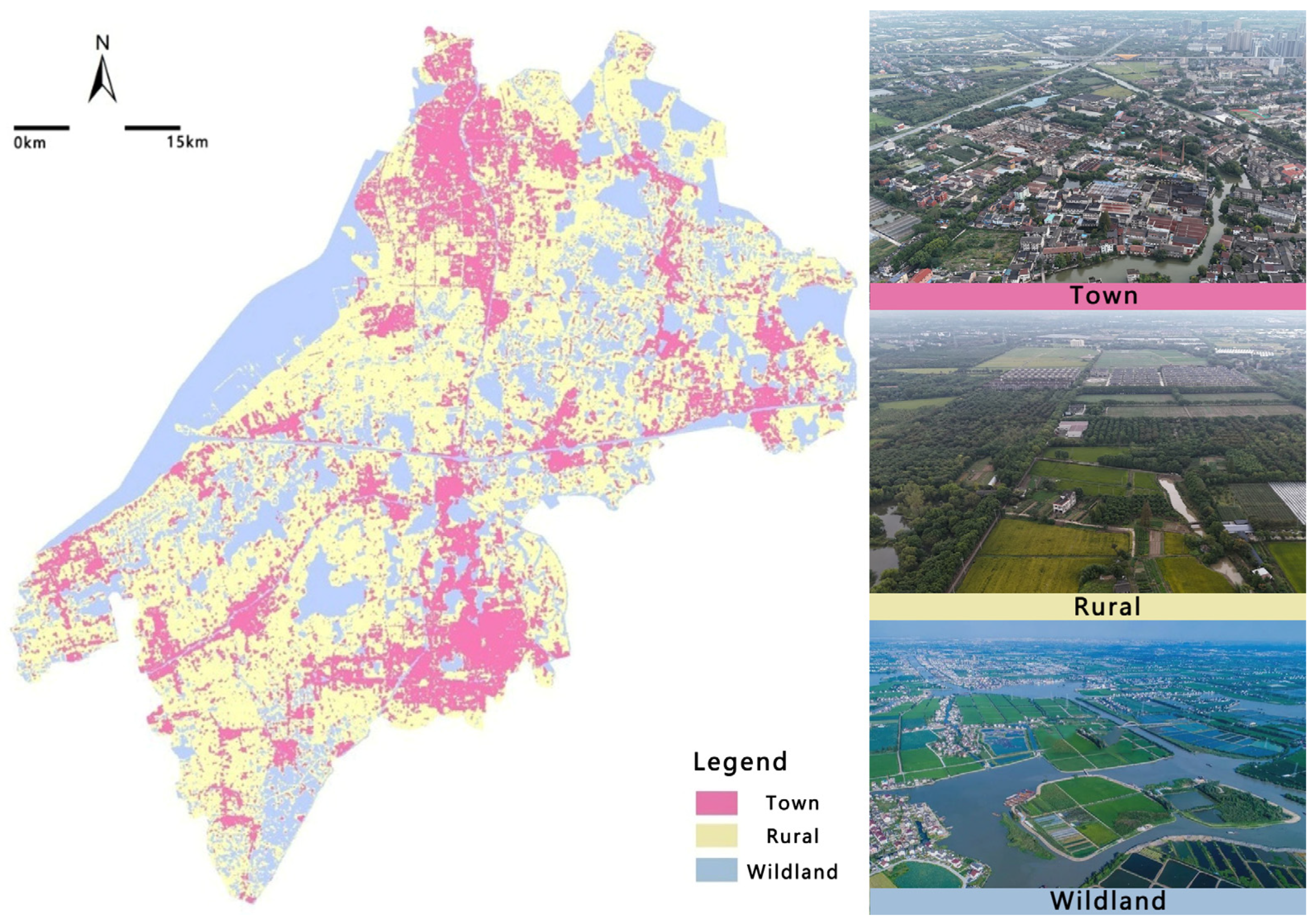
From a comparative perspective across town, rural, and wilderness areas (
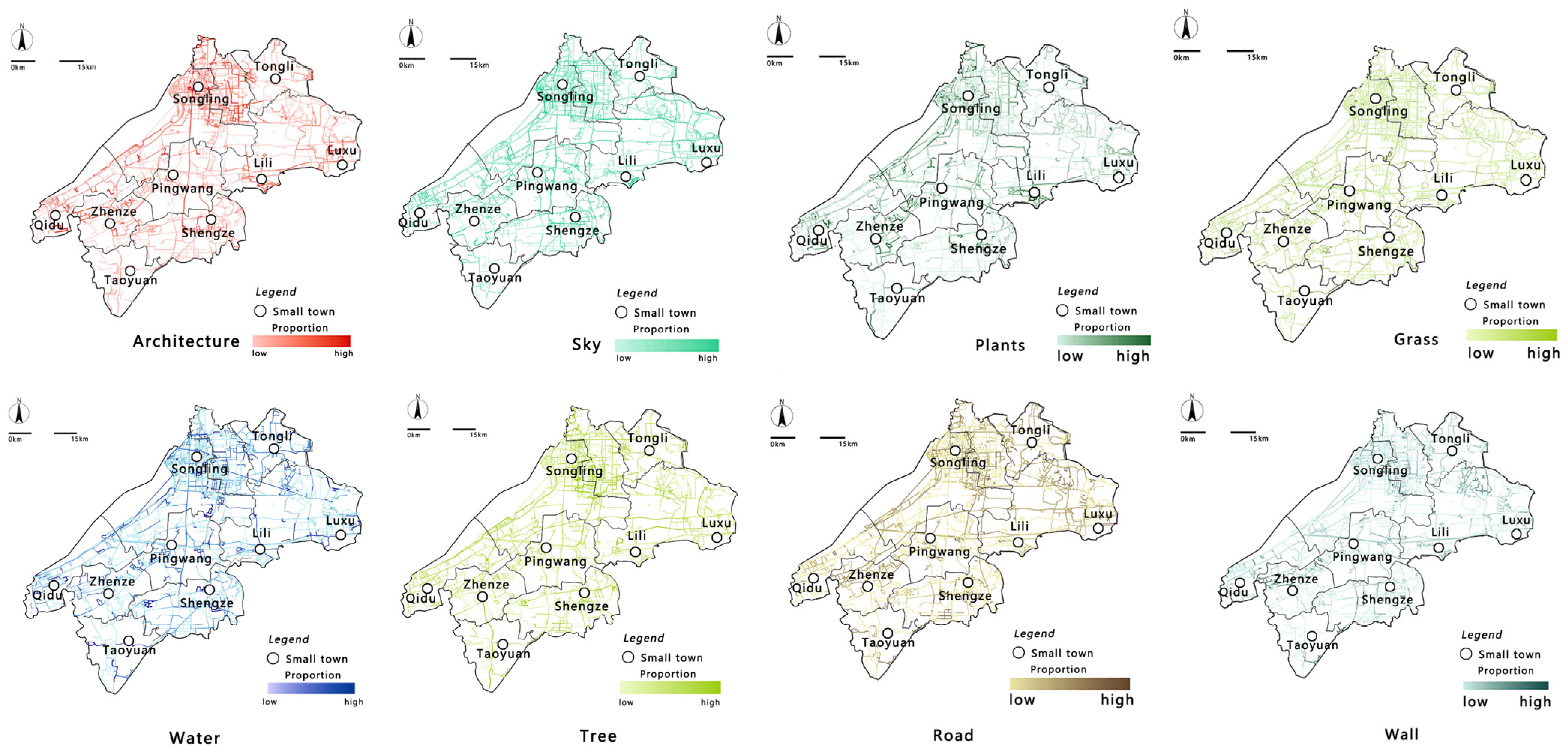
Figure 7), Town areas exhibit higher proportions of built environment elements, including buildings, roads, and walls. Perceived locality scores in these areas are generally moderate, often due to urban homogenization and the diminished presence of historically or ecologically significant features. Locality perception in towns is primarily shaped by architectural detailing and the degree of spatial enclosure. Rural areas are characterized by a combination of artificial and natural elements—such as canals, trees, small-scale buildings, and cultivated vegetation. These areas demonstrate the greatest variability in perceived locality scores, largely influenced by how traditional and contemporary landscape features are visually integrated. As transitional zones, rural areas can have their locality perceptions substantially altered by even subtle compositional changes. Wilderness areas are predominantly composed of natural features, including water bodies, trees, grasslands, and open sky (
Figure 8). These environments tend to receive higher locality scores, particularly where traditional elements—such as boats, arched bridges, or vernacular rural structures—remain visible. Perceptions of locality in these areas are closely associated with environmental openness and the continuity of historical landscape patterns.
3.2. Survey Results and Model-Based Locality Evaluation
A total of 658 valid questionnaires were collected from residents of Wujiang District, using original street-view photographs as visual stimuli to assess perceived landscape locality across town, rural, and wilderness environments. Survey results show clear perceptual differentiation among the three landscape types. Wilderness landscapes received the highest level of locality recognition (76.44%), followed by town spaces (65.50%) and rural spaces (43.77%), indicating that environments dominated by natural elements are more strongly associated with local identity.
In terms of photo-based scoring, townscape scenes generally obtained moderate locality scores (mostly 3.46–3.71), reflecting the effects of urban homogenization and standardized built forms. Rural landscapes exhibited higher but more variable scores (3.57–3.86), largely influenced by the visual integration of traditional settlements, farmland, canals, and vegetation. Wilderness scenes, characterized by water bodies, open space, and natural vegetation, consistently achieved high locality scores (3.61–3.89), highlighting their strong symbolic and perceptual connection to the Jiangnan water-town landscape.
Based on these questionnaire results, the trained ResNet50-based model was subsequently applied to all collected trajectory images, generating 2512 landscape locality evaluation scores across Wujiang District. Each image was classified into one of three spatial categories—town (0), rural (1), or wildland (2)—and assigned a corresponding locality score. The aggregated results indicate that wilderness images account for the highest proportion of high-locality scores, followed by rural images, while town images are more concentrated in the medium and low-score ranges. This overall distribution pattern is highly consistent with the questionnaire-based perception results, confirming the robustness of the model in extrapolating subjective locality perception from limited samples to a large-scale dataset. These 2512 locality scores form the quantitative basis for subsequent spatial hotspot analysis and correlation analysis between landscape elements and perceived locality.
3.3. Landscape Locality Evaluation Scores and Spatial Distribution Characteristics of Wujiang District
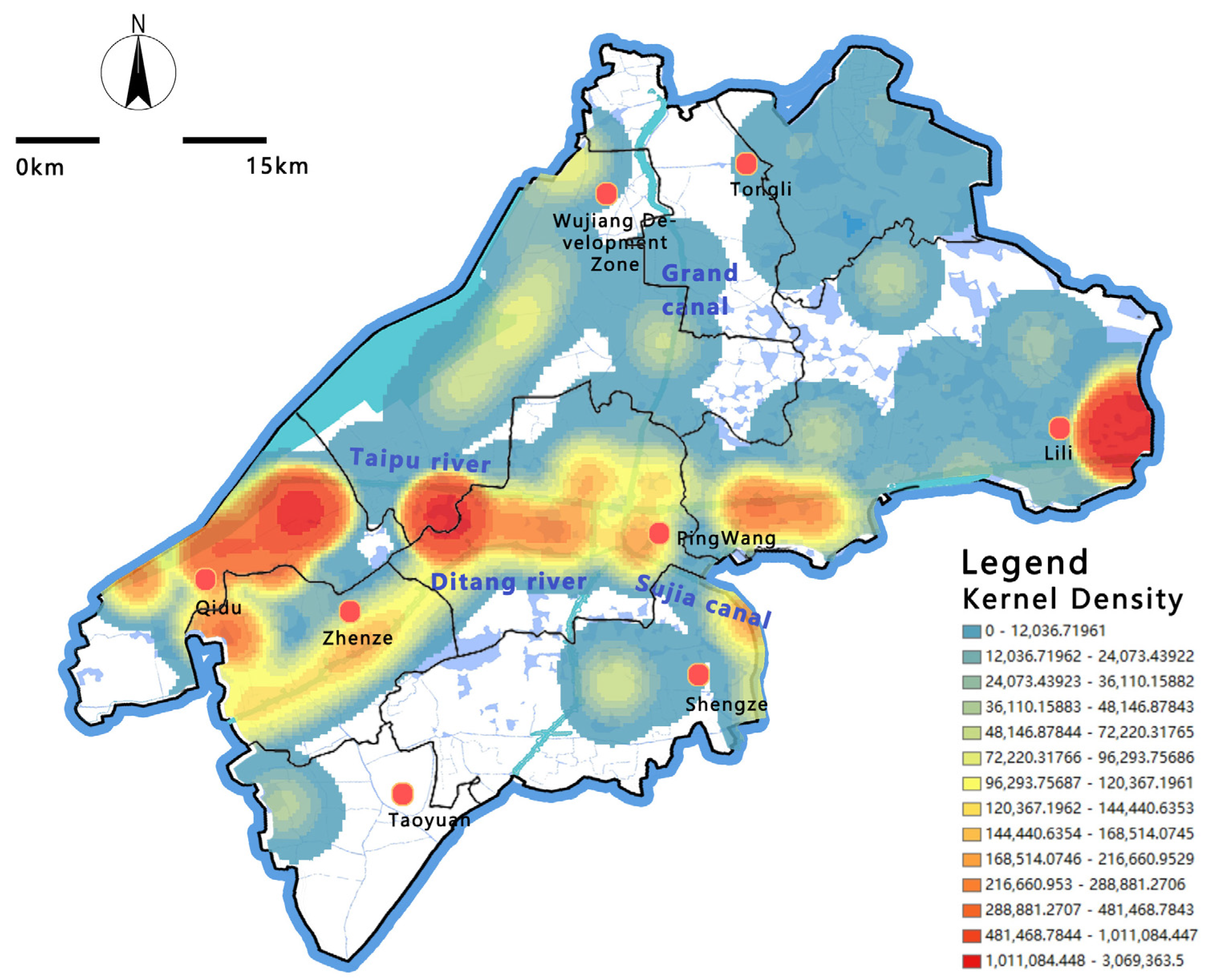
The landscape locality evaluation score map of Wujiang District exhibits spatial hot and cold effects (
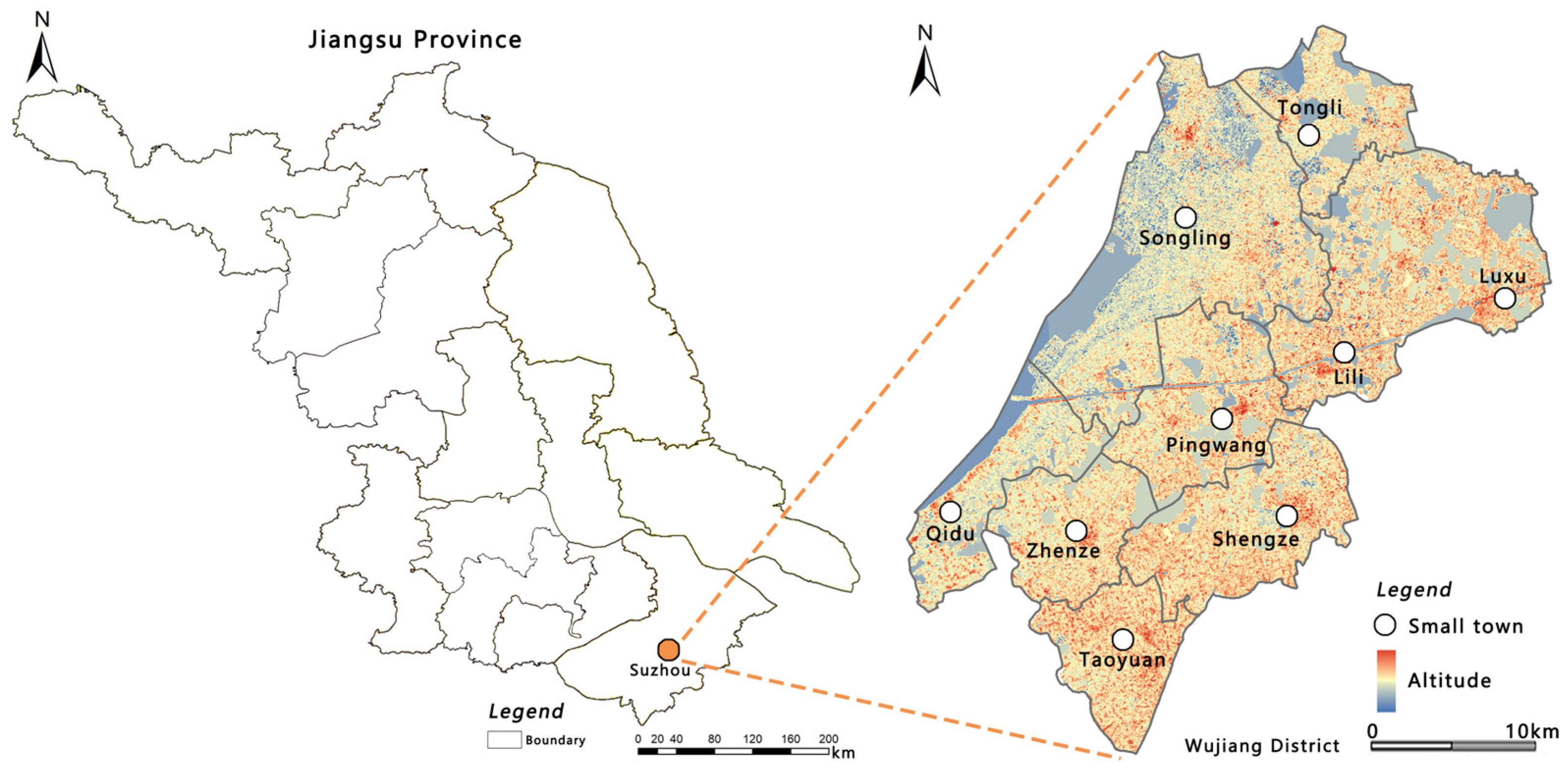
Figure 9), based on kernel density estimation with an automatically determined bandwidth. The spatial distribution of hotspots is characterized by a multi-point aggregation pattern, with more pronounced hotspots appearing along the shoreline of East Taihu Lake and forming a relatively continuous linear spatial corridor. This indicates that the lakefront linear space is a more prominent area of landscape locality due to the natural shoreline and mountain features. Moving eastward along the Taipu River, the continuous hotspot zone transitions into a single-core hotspot pattern in towns such as Lili, Tongli, and Qidu. Additionally, Pingwang and Zhenze towns also exhibit high locality scores, forming a “point-line-point” spatial structure with the continuous linear space. The spatial arrangement of these hotspots aligns with the development axis of the townships. For example, in Zhenze Township, the riverfront linear zone corresponds to the continuous hotspot corridor.
The analysis of landscape locality scores and the composition of landscape elements across the eight towns of Wujiang District reveals clear spatial heterogeneity, with significant differences in both physical landscape structure and perceptual outcomes. Overall, rural and wilderness spaces receive higher locality evaluation scores compared to urbanized areas, as natural elements—such as rivers, canal networks, lake shorelines, farmland, and grasses—are more intuitively and visibly expressed in these environments. In contrast, large-scale urbanization has often resulted in the homogenization of townscapes, where distinctive architectural styles and spatial flows are diminished by generic design strategies that disregard local cultural heritage.
Towns like Pingwang, Zhenze, and Lili exhibit stronger connections to the traditional forms of Jiangnan water towns, featuring higher proportions of natural elements such as canals, bridges, boats, and riparian vegetation. These features contribute to consistently higher perceived locality scores. For example, in Pingwang, the integration of the Beijing-Hangzhou Grand Canal and Taipu River with the town’s layout creates a hybrid landscape of built and natural elements, reducing visual contradictions and enhancing local identity perception.
In contrast, towns such as Songling (now part of the Wujiang Development Zone) and Shengze, which have undergone rapid urbanization and industrial expansion, show a dominance of artificial landscape elements including roads, walls, buildings, and signboards. These areas tend to score lower in perceived locality, reflecting a diminished expression of regional character. However, the data also show that high building density does not inherently lead to low locality scores; it is the spatial composition and integration of natural features that matter more. For instance, although Pingwang’s town center is built-up, the surrounding water-linked rural zones maintain high perceptual value due to their harmonious visual composition.
Furthermore, low-value areas are mainly found in expansive, monofunctional agricultural zones such as the paddy fields north of the Taipu River or the Jingbang dike fields in the south, where the absence of cultural or spatial layering weakens locality perception. Towns oriented toward heritage tourism, like Lili, Tongli, and Zhenze, benefit from preserved traditional layouts and water-oriented infrastructure, which enhances their perceptual identity.
From a comparative perspective across town, rural, and wilderness areas, clear differences emerge in both landscape composition and perceived locality. Town areas are dominated by built-environment elements such as buildings, roads, and walls, resulting in generally moderate locality scores that reflect urban homogenization and the reduced visibility of historically or ecologically significant features. In these settings, locality perception is mainly shaped by architectural detailing, façade continuity, and the degree of spatial enclosure rather than by natural elements. Rural areas, by contrast, exhibit a hybrid composition of artificial and natural features—including canals, trees, cultivated vegetation, and small-scale buildings—and display the greatest variability in perceived locality. As transitional zones between towns and wilderness, rural landscapes are particularly sensitive to subtle changes in spatial composition, where the visual integration of traditional and contemporary elements can significantly enhance or weaken locality perception. Wilderness areas are predominantly characterized by natural features such as water bodies, vegetation, grasslands, and open sky, and they consistently achieve higher locality scores, especially where traditional elements—such as boats, arched bridges, or vernacular rural structures—remain legible within the landscape. In these environments, perceptions of locality are closely linked to spatial openness, ecological continuity, and the persistence of historical landscape patterns. Overall, variations in locality scores across Wujiang’s small towns are driven not merely by urban density, but by the presence, coherence, and visual integration of cultural and ecological features. These findings highlight the necessity of adopting localized planning and design strategies that respond to the specific spatial composition and perceptual characteristics of each landscape type, rather than applying uniform development models.
3.4. Analysis of the Correlation Between Landscape Types in Wujiang Small Towns and Subjects’ Perceptions of Locality
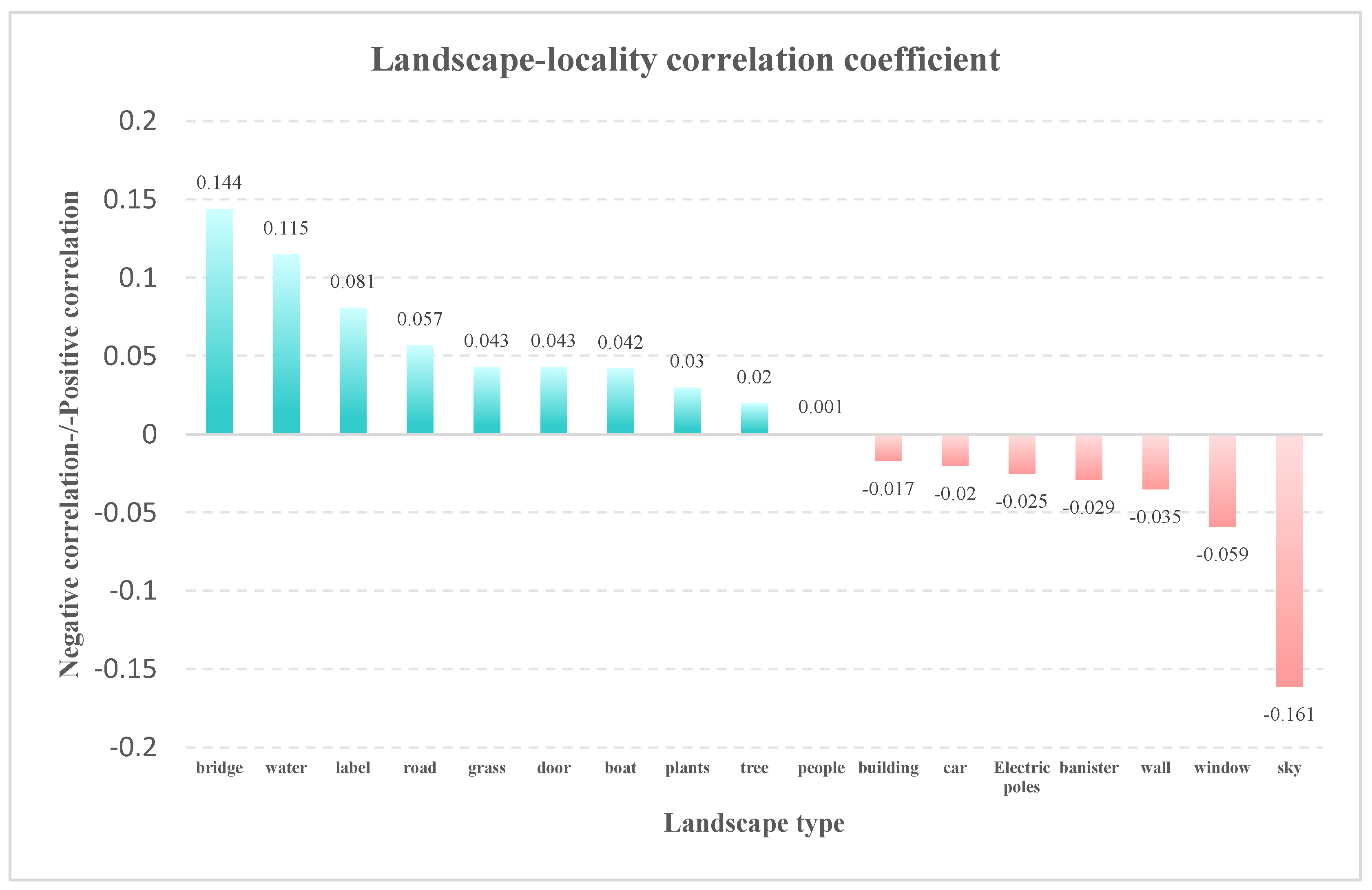
Further correlation analyses were conducted for the 17 landscape types (
Figure 10). The results showed that the landscape elements ‘bridge’ (
p = 0.144), ‘water’ (
p = 0.115), ‘label’ (
p = 0.081), ‘road’ (
p = 0.057), ‘boat’ (
p = 0.042), ‘door’ (
p = 0.043), and ‘grass’ (
p = 0.043) all exhibited significant positive correlations with perceived landscape locality. This indicates that the presence and proportion of these elements enhance perceived locality in visual scenes, particularly traditional signature elements such as bridge, water, and label, which are strongly associated with the identity of Jiangnan water towns. The analysis revealed that elements such as water, boats, bridges, and vegetation were positively correlated with perceived locality scores, while sky and walls showed negative correlations.
Spatially, rural and wilderness areas in western towns demonstrated consistently higher locality scores, coinciding with a greater presence of traditional Jiangnan elements such as canals and natural vegetation. In contrast, modernized or industrialized cores of Songling and Shengze exhibited lower scores due to the dominance of built surfaces and visual enclosure.
Conversely, landscape elements such as sky (p = −0.161), windows (p = −0.059), walls (p = −0.035), banisters (p = −0.029), and electric poles (p = −0.025) showed significant negative correlations with perceived landscape locality. This demonstrated that the presence and larger percentage of these elements reduce the level of perceived locality in the visual scene. Specifically, most of these elements are artificial and represent newer built structures that tend to be uniform and monotonous in form and color, creating visual conflict with the traditional landscape characteristics of Jiangnan water towns. In Jiangnan water towns, enclosed street-view environments—formed by narrow alleys, low-rise buildings, eaves, and dense vegetation—limit sky visibility and thereby enhance cultural intimacy and locality. In contrast, high sky visibility in open fields or peri-urban areas often reflects spatial emptiness and a lack of local character, leading to lower perceived locality scores. As a universal backdrop, the sky lacks regional specificity; its visual dominance without supporting cultural elements signals a weaker sense of place in street-level perception.
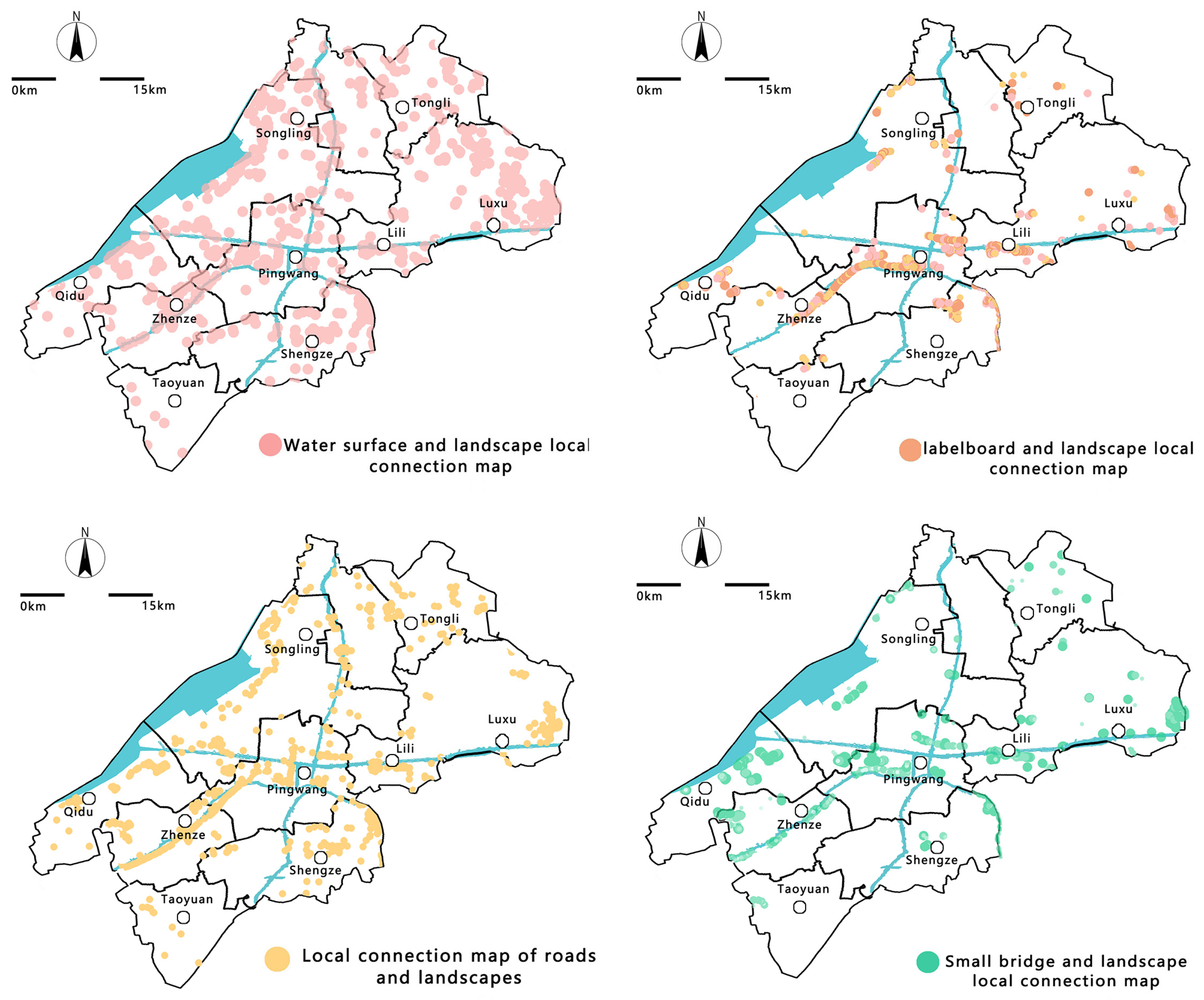
Overall, among the landscape elements that show positive correlations with locality perception, natural elements account for a higher proportion, whereas man-made elements account for a lower proportion (
Figure 11). Conversely, among elements negatively correlated with locality perception, natural elements constitute a smaller share, while man-made elements constitute a larger share. Therefore, natural landscape elements in the wilderness areas of Wujiang District are the primary contributors to locality perception, whereas man-made elements within townships contribute far less to the expression of locality. This further demonstrates that natural landscape elements serve as key carriers linking town and village systems, and form the primary basis for expressing landscape locality.
4. Discussion
4.1. Regional Spatial Differences in the Distribution of Landscape Types and Locality Across Small Towns of Wujiang District Based on Subjective Perception
The spatial heterogeneity of locality perception across Wujiang reflects the combined influence of landscape composition and visual structure rather than the mere presence of built or natural elements. Although natural components dominate the street-view environment, their perceptual contribution varies according to how they are spatially organized and visually integrated. Continuous water systems, vegetation corridors, and open sky views tend to create coherent landscape scenes that reinforce regional identity and strengthen locality perception.
By contrast, highly urbanized environments often fragment these natural structures, replacing them with repetitive architectural forms and standardized infrastructure. Such homogenization weakens visual distinctiveness and reduces the perceptual cues through which observers associate places with local cultural or ecological characteristics. This explains why towns with similar building densities may exhibit markedly different locality perceptions depending on whether natural and historical elements remain embedded within the spatial fabric.
The findings further suggest that transitional rural spaces play an important mediating role between urban and wilderness environments. Because these areas combine artificial and natural features, even small compositional adjustments can significantly alter perceptual outcomes. Consequently, locality perception emerges not solely from individual landscape elements but from the relational configuration among water, vegetation, built form, and cultural artifacts. From this perspective, landscape locality should be understood as an integrated spatial experience shaped by continuity, coherence, and cultural legibility across scales.
4.2. Positive and Negative Spatial Effects of Landscape Types on Locality in Small Towns of Wujiang District
According to the study, spatial variability in the landscape-locality scores of small towns in Wujiang District is evident, influenced not only by subjective environmental perceptions but also by their spatial correlation with the proportional distribution of local landscape elements. As previously discussed, the analysis indicates a significant correlation between the proportional distribution of the 17 landscape categories and landscape-locality scores, with different categories exhibiting either positive or negative associations.
Landscape categories that show positive correlations contain not only a higher proportion of natural elements but also culturally representative man-made elements. These elements, such as grass, bridges, water, and boats, are recognized in the literature as embodying the characteristics of Jiangnan water towns. Although these elements do not account for as large a proportion as first-level landscape elements, they are still perceived as key contributors to locality ratings. This suggests that differences in locality scores arise not only from the visual attributes of landscape elements but also from the cultural resonance and subjective perceptions embedded within the landscape [
49]. Conversely, landscape types negatively correlated with locality scores are predominantly within the built environment of small towns, such as walls, windows, and electric poles. These elements weaken perceived landscape locality, particularly walls, which impart a sense of enclosure and insecurity compared with elements such as bridges and boats that promote place attachment and a stronger sense of place [
50].
From the planning perspective revealed by these positive and negative impact effects, future planning in Wujiang District can leverage associations with these landscape elements to guide local landscape planning directions. For landscape elements with a strong sense of locality, such as natural water surfaces, the texture of rivers and lakes should be respected in planning. The organizational relationship between river networks, towns, neighborhoods, and farmland should be coordinated to protect these elements, allowing them to maintain their precious local features and to enhance their ecological, recreational value. For landscape elements with a weak sense of locality, such as window and banister, it is necessary to construct a distribution pattern of locally appropriate landscape elements by adjusting their proportion in the environment according to their spatial distribution. In the streetscape environment, their visibility and legibility can be enhanced through landscape creation. This can be achieved by transforming their color, form, style, and structure to ensure harmony with the local environment of Jiangnan water towns. At the same time, planning should gradually harmonize the relationship between the perception of landscape spatial locality and the negative effects of landscape distribution, following the local laws of socio-economic development. It is also necessary to examine which locations in the area need to improve the planning and design of landscape localities, and which locations need to retain the original landscape localities to weaken the impact of urbanization. Especially, the local protection of natural landscapes such as water, trees, and grass, which are concentrated expressions of the natural landscape of Jiangnan water towns, is crucial. These elements evolve together with the townscape, forming an interwoven “water–city” landscape. Accordingly, integrating these natural elements into town spaces, preserving their ecological patterns, and optimizing their perceptual expression constitute key planning recommendations for enhancing landscape locality in small towns. To realize the inheritance and sustainable development of landscape locality in Wujiang District, planning should follow the principle of dynamic adaptation—integrating the old with the new.
4.3. Spatial Patterns of Landscape-Locality Perception Across the Urban–Rural–Wilderness
The interweaving and integration of urban, rural, and wilderness spaces constitute the most distinctive locality feature of small towns in Wujiang. The gradient characteristics of these three spatial types are reflected in spatial morphology, land use patterns, landscape perception, and the composition of natural and artificial landscape elements. Within this gradient, the perceptual distribution of locality demonstrates consistent patterns shaped by spatial form and the cultural–ecological attributes embedded in each landscape type.
Urbanized town centers generally tend to exhibit relatively lower levels of locality perception, primarily due to their dense built-up environments dominated by buildings, walls, windows, fences, poles, signboards, and extensive paved surfaces. These elements correlate negatively with locality and often produce visually enclosed and homogenized streetscapes with limited cultural distinctiveness. The reduced presence of natural components—particularly water bodies, vegetation, and traditional architectural structures—further weakens perceptual identity. Industrial expansion and generic architectural styles may amplify this homogenization effect. However, this tendency is not universal. Towns that retain strong water-town characteristics and maintain the integration of canals, bridges, riparian vegetation, and vernacular spatial forms can still achieve comparatively high locality perception. For example, towns such as Pingwang, Zhenze, and Lili exhibit stronger connections to the traditional forms of Jiangnan water towns and consequently demonstrate relatively high locality scores despite their level of urban development.
In contrast, rural transitional spaces—located between town centers and wilderness zones—comprise hybrid mosaics of canals, small-scale buildings, farmland, trees, and bridges. These landscapes display greater variability in locality scores, as even subtle changes in the spatial arrangement or proportional composition of natural and cultural elements can significantly influence perceptual outcomes. Such areas function as living interfaces where the traditional Jiangnan water-town fabric interacts with contemporary production, settlement, and mobility systems, making locality perception particularly sensitive to spatial openness, continuity of water networks, and the preservation of cultural markers.
Wilderness areas, particularly along the riverbanks, lakefronts, and wetland complexes of Wujiang, generally demonstrate higher locality scores. This is attributable to the dominance of natural elements such as water surfaces, riparian vegetation, reeds, forest patches, open sky, and ecologically continuous corridors. These features retain the archetypal characteristics of Jiangnan’s waterside cultural landscape, in which water and vegetation form both the visual and ecological foundations of regional identity. The openness and coherence of wilderness environments enhance the legibility of cultural and ecological patterns, allowing them to serve as strong anchors of place identity within the broader spatial continuum.
Overall, the urban–rural–wilderness continuum reveals a perceptual gradient in which locality perception tends to increase with the dominance of natural and culturally distinctive elements, decrease with excessive built density and homogenization, and fluctuate within interwoven landscapes where natural and artificial components coexist and interact dynamically.
4.4. Research Limitations
While this study successfully achieved its research objectives and yielded generally reasonable results, several limitations should be acknowledged. Firstly, the use of computer semantic segmentation to identify and quantify metrics in street scene images is constrained by the accuracy achievable by deep-learning algorithms, potentially leading to discrepancies between analytical outputs and actual street-scene composition [
51]. Moreover, the assessment of landscape locality relied on street-view imagery as visual stimuli, which may introduce bias when compared with evaluations conducted in situ environments [
52,
53]. Future research should explore methods to correlate landscape distribution characteristics with locality elements at a regional level, considering their interactive mechanisms.
Furthermore, the study utilized relationships between landscape locality ratings derived from smaller samples and their landscape features to predict broader locality outcomes [
54]. Despite employing rigorous computational methods and high-precision prediction models, complete alignment between predicted and actual assessments cannot be guaranteed [
55]. Methodological limitations aside, the functional characteristics of street-view pavements [
56] and their spatial configuration at the landscape interface may influence subjects’ locality perceptions [
57].Therefore, future studies should meticulously categorize street views environment types and compare landscape localities across different regions and scales.
5. Conclusions
Landscape locality embodies people’s adaptation to the environment and imbues them with a sense of belonging, identity, and attachment [
58]. It integrates natural and cultural elements, combining natural foundations with social and cultural dimensions to enable the comprehension of physical space [
59,
60]. In doing so, it supports livability across the town–rural–wilderness continuum, which is fundamental to enhancing quality of life.
Quantifying subjective perceptions has long posed a challenge in research [
61]. This study provides a measurement and spatial analysis of human perceptions across macro-regional town–rural–wilderness spaces by analyzing street-view imagery using deep learning techniques [
62]. The findings are as follows: (1) The spatial distribution of landscape occupancy ratios in Wujiang District exhibits clear regional differentiation, with primary landscape elements widely dispersed across the district, whereas third-level elements are more sporadically distributed. (2) Spatial differentiation in landscape-locality scores among small towns differs from the distribution pattern of landscape occupancy ratios. High-scoring areas predominantly lie along canal networks, whereas low-scoring areas are concentrated in highly urbanized zones. (3) Landscape categories in the small towns of Wujiang District show significant positive and negative correlations with perceptions of landscape locality perception. Positively correlated elements include grass, bridges, water, and boats, whereas negatively correlated elements include sky, windows, walls, and banisters. These findings elucidate perceptual patterns and influencing relationships within Wujiang District’s small towns.
Utilizing open-source street-view data, this study demonstrates how future planning can leverage landscape-locality scores and the spatial distribution of landscape elements to integrate more organically with economic, demographic, and industrial factors. To realize the preservation and sustainable development of landscape locality in Wujiang District, planning should follow the principles of inheritance, dynamic adaptability, and collaborative integration. Specific adaptive planning strategies should optimize locality-related landscape elements, construct coherent locality patterns, and align spatial locality perceptions with emotional experience, thereby better responding to the perceptual needs of residents.