Article

A Study on the Influence of Hui-Style Architectural on Architecture in West Anhui

1
School of Architecture and Planning, Anhui Jianzhu University, Hefei 230601, China
2
Anhui Provincial Engineering Research Center for Regional Environmental Health and Spatial Intelligent Perception, Hefei 230601, China
3
Anhui Institute for Innovative Development of Urban-Rural Integration, Hefei 230601, China
4
School of Foreign Languages, Anhui Jianzhu University, Hefei 230601, China
*
Author to whom correspondence should be addressed.
Buildings 2026, 16(6), 1187; https://doi.org/10.3390/buildings16061187
Submission received: 29 January 2026 / Revised: 12 March 2026 / Accepted: 14 March 2026 / Published: 18 March 2026

Abstract

This study employs Western Anhui as a case study, establishing a three-dimensional quantitative analytical framework comprising ‘genetic map analysis—architectural feature coding—distribution pattern analysis’ to systematically describe and measure the cross-regional dissemination characteristics of Huizhou architectural culture within Western Anhui. Through field surveys and quantitative analysis of 20 traditional buildings (10 dwellings and 10 ancestral halls), this study employs order and law to determine feature weights and uses Spearman’s correlation coefficient to analyse feature associations, revealing the selective distribution pattern of Huizhou characteristics within Western Anhui architecture. Findings indicate: (1) the frequency of Huizhou features in ancestral halls (71%) significantly exceeds that in dwellings (36%), demonstrating typological differentiation; (2) plan-related features (plan form, courtyard configuration, compositional arrangement) appear most frequently in dwellings (60%), while stone carvings achieve comprehensive coverage in ancestral halls (100%); and (3) wood carvings and stone carvings co-occurred highly (ρ = 0.90), reflecting systematic application of decorative features; doors and plan forms showed a weak negative correlation (ρ = −0.17), potentially suggesting distinct adoption pathways, though not entirely mutually exclusive. The quantitative descriptive framework and feature database constructed in this study provide a replicable methodological reference for research into cross-regional architectural cultural transmission, while also offering scientific grounds for the conservation and restoration of traditional architecture in Western Anhui.

1. Introduction

1.1. Research Background and Current Status

Huizhou culture, originating from the ancient Huizhou region comprising ‘one prefecture and six counties,’ evolved historically into a comprehensive regional civilisation system that radiated outward and branched into diverse forms [1,2]. It stands as one of China’s three major scholarly traditions to gain international recognition [3,4]. The concept was first articulated in the modern disciplinary sense by Huang Binhong in the 1930s, distinguishing it from the narrower usage during the Ming and Qing dynasties, which referred solely to the ‘Huizhou Prefectural Academy.’ The formation of Huizhou culture is rooted in three large-scale southward migrations of Central Plains gentry fleeing warfare. The imported Confucian culture and clan systems intermingled with indigenous Shanyue peoples, establishing the cultural foundation of the ‘Southeast’s Confucian Heartland’ by the Southern Song Dynasty through the rise of Zhu Xi’s Neo-Confucianism (Xin’an School) [5]. The outward influence of Huizhou culture unfolded primarily through two channels: Firstly, Huizhou merchants, embodying the ethos of ‘merchants who cherish Confucianism,’ facilitated direct cultural dissemination by establishing guild halls, constructing ancestral temples, and promoting education in their trading hubs along the Yangtze River basin and Grand Canal routes. Secondly, tangible cultural artefacts, such as Huizhou-style architecture (featuring horse-head walls and the three carving arts), Hui ink and She inkstones, spread outward via trade routes and population migration. For instance, the design of horse-head walls evolved through fusion with local elements during its dissemination to the southeast and southwest. Spatially, Huizhou culture formed a concentric structure of ‘core zone—radiation zone—influence zone’. Western Anhui, situated within the commercial sphere of key Huizhou merchant hubs like Lu’an and Anqing, fell within this radiation zone. Historical records explicitly document Huizhou guild halls in Lu’an and Anqing, where Huizhou merchants ‘occupied nearly half the city’, driving regional economic and cultural integration [6,7,8].
As one of the material carriers of the ‘Huizhou culture,’ Huizhou-style architecture originated in ancient Huizhou (present-day Huangshan City, Jixi County, Wuyuan County, etc., in Anhui Province) and constitutes a significant branch within China’s traditional architectural system [9]. Its history traces back to the Eastern Jin Dynasty, when northern gentry migrated to the Huizhou region. Integrating with the stilted structures of the local Baiyue ethnic group, they gradually developed the distinctive Huizhou architectural style. Concurrently, the rise of Huizhou merchants during the Southern Song Dynasty spurred architectural prosperity [10], reaching its zenith in the Ming and Qing periods. This culminated in a distinctive architectural system characterised by residential dwellings, ancestral halls, and memorial arches [11]. Deeply influenced by Huizhou merchant culture, clan systems, and regional environments, Huizhou architecture—with its whitewashed walls, black-tiled roofs, horse-head walls, the ‘Three Carvings’ artistry, and courtyard designs featuring ‘four waters converging in the hall’—reflects both adaptation to the natural environment and the refined essence of Confucian merchant culture alongside the ethical concept of clan-centred settlement. In recent years, with the advancement of cultural heritage preservation and tourism development, the research value of Huizhou architecture has become increasingly prominent, serving as a vital window into exploring the wisdom of traditional Chinese architecture and regional cultural characteristics. The Western Anhui region lies within the sphere of influence of Huizhou culture and historically maintained frequent exchanges with Huizhou merchants. Substantial financial resources enabled Huizhou merchants to construct residences in this region, where the Huizhou architectural style subsequently developed and found application, exerting a profound influence on numerous local buildings [12].
Current academic discourse predominantly approaches the formal characteristics, cultural significance, and dissemination pathways of Huizhou-style architecture through qualitative interpretations grounded in art history, cultural geography, or communication studies [13]. For instance, some scholars explore the potential ‘mediating role’ of Huizhou residential architecture and its ornamentation as cultural carriers from a communication studies perspective. Other research takes the horse-head wall as a point of entry, analysing its structural evolution through the lens of migration [6]. This examines how its form and cultural significance underwent variation and integration as Huizhou merchant groups and clan migrants dispersed to the southeast and southwest regions, categorising these into “similar” and ‘variant’ forms. While such research has made significant contributions to revealing the driving forces, pathways, and morphological evolution of cultural transmission, its analytical framework remains confined to typological categorisation and qualitative description. It has yet to quantify core metrics, such as the transmission intensity, influence scope, and reception levels of architectural cultural elements. The transregional dissemination of architectural culture is fundamentally a spatial process, involving diffusion pathways, agglomeration characteristics, and gradient shifts of cultural elements from their source to destination. In recent years, scholars have employed spatial analysis tools such as ArcGIS10.8 to examine the distribution patterns of Huizhou’s ancient architectural heritage, revealing a ‘regional clustering’ form alongside spatial structures characterised by ‘plain aggregation’ and ‘water-axis orientation’ [14]. However, such studies predominantly focus on the distribution patterns of architectural remains within Huizhou itself, failing to extend their analytical scope to surrounding regions influenced by Huizhou-style architecture, such as Western Anhui. Conversely, while studies on traditional dwellings in the Dabie Mountains of Western Anhui have identified the constituent elements of their architectural character) and highlighted ‘cultural connotations’ as the primary factor shaping these features [15], such research has similarly failed to further investigate the extent to which Huizhou architectural elements observed in Western Anhui dwellings (such as horse-head wall designs, courtyard layouts, and decorative motifs) reflect Huizhou cultural influence. Does the intensity of this influence diminish with spatial distance? Which architectural elements are transmitted with high fidelity, and which undergo significant variation? These questions await resolution through quantitative analysis.
Overall, the academic community has accumulated substantial qualitative findings in the study of Huizhou architecture, alongside preliminary explorations in spatial analysis techniques. However, these two bodies of scholarly work have yet to converge effectively on the topic of ‘cross-regional dissemination.’ There remains a particular lack of methodological frameworks for systematically quantifying and analysing the outcomes of such dissemination. In light of this, this paper attempts to construct a quantitative analytical framework for describing and measuring the characteristics of cross-regional architectural cultural transmission. Taking the Western Anhui region as a case study, it integrates architectural typology with quantitative analysis methods. Through systematic analysis of the distribution frequency, combinatorial characteristics, and feature correlations of Huizhou architectural elements within Western Anhui’s built environment, this study reveals the selective distribution patterns of Huizhou architectural features in the region. It aims to provide a quantifiable and verifiable methodological supplement for research on architectural cultural transmission.

1.2. Research Methodology

In the field of architectural typology, quantitative analytical methods have achieved multiple breakthroughs in recent years. For instance, de-Miguel-Rodriguez (2025) employed variational autoencoders to realise the automatic identification of architectural types [16], while Zhang Kaiyue (2024) systematically quantified traditional architectural features by integrating typology with quantitative methodologies [17]. These studies offer methodological insights for the quantitative analysis of architectural characteristics, yet they have not yet focused on the issue of cross-regional cultural transmission. Building upon this foundation, this study adopts an interdisciplinary mixed-methods approach, integrating qualitative and quantitative analysis [18]. Through a systematic technical methodology, it investigates the influence of the Huizhou style on architecture in Western Anhui. The research design follows a three-dimensional model comprising ‘genetic map analysis—architectural feature coding—distribution pattern interpretation’, emphasising the cross-validation between cultural semantic analysis of architectural features and mathematical modelling. This ultimately establishes a quantitative analytical framework for the transregional dissemination of the Huizhou style. Through field surveys and measurements of 20–30 buildings in Huizhou’s core area and Western Anhui, the ‘genetic mapping analysis’ systematically identified the ‘core genetic traits’ of Huizhou architecture (including ten features such as horse-head walls, courtyards, and carvings), establishing a comparative genealogy of architectural characteristics between the two regions. Subsequently, ‘Architectural Feature Encoding’ converts these identified features into parameters, employing objective weighting methods to calculate their relative importance and establish a quantifiable, comparable data matrix. Finally, ‘Distribution Pattern Analysis’ systematically reveals the distribution frequency, typological variations, and inter-feature correlations of Huizhou characteristics within Western Anhui architecture through methods, including feature proportion analysis, heatmap visualization, and correlation analysis.
In terms of subject selection, this study draws extensively upon Shou’s (2020) research into the construction systems of Huizhou vernacular architecture [19], establishing a theoretical foundation for understanding the cultural context underpinning the architectural characteristics of Western Anhui. simultaneously employing the scientific screening framework for historic buildings established by Wang et al. (2025) [20]. A sample selection system was thus constructed across four dimensions: spatial distribution equilibrium, structural integrity, typological representativeness, and spatial authenticity. Regarding feature extraction, the study conducted a qualitative analysis of architectural samples across three dimensions: plan layout, façade composition, and decorative systems [21]. Integrating prior research on Huizhou architectural feature classification [22], these dimensions were refined into ten observable characteristics: plan form, courtyard configuration, assembly pattern, horse-head walls, doors, windows, brick carvings, wood carvings, stone carvings, and architectural colour schemes. To establish a unified quantitative basis, binary values (0/1) were assigned to record the presence or absence of each feature in Western Anhui architecture, forming a comparable data matrix. To determine feature weights, this study employed an ordinal method for objective weighting, thereby avoiding the arbitrariness of subjective weighting, to derive objective weights [23,24]. In terms of result synthesis, this study constructed a distribution dataset of Huizhou features in Western Anhui architecture through parametric transformation. Based on the encoded data matrix, the frequency of occurrence (proportion coefficient) for each feature in both residential dwellings and ancestral halls was calculated. Heatmaps were employed to visualise the distribution patterns of features, thereby reflecting the selective adoption of Huizhou-style characteristics across different building types. Given the binary nature of the variables, Spearman’s correlation coefficient was used to analyse co-occurrence relationships between features, replacing the originally proposed Pearson correlation coefficient. Furthermore, utilising the geographical coordinates of the architectural samples, spatial interpolation was performed on the Huizhou-style feature proportion coefficients. A Sanggi diagram was generated to illustrate the spatial differentiation patterns of these features. This was combined with historical and cultural context to preliminarily explore correlations with factors such as distance from the core Huizhou region and transportation corridors. All statistical analyses were conducted using Origin 2025 software.

1.3. Research Innovation

This study presents three key innovations: firstly, it transcends the conventional single-region architectural research paradigm in its geographical scope; secondly, it establishes a quantitative descriptive framework comprising ‘genetic map analysis—architectural feature coding—distribution pattern analysis’ in its methodology; and thirdly, it reveals the selective transmission pattern of Huizhou architectural characteristics in Western Anhui and their cultural implications.
(1)
Traditional architectural research has predominantly focused on the static characteristics of individual regions. This study shifts perspective to examine the cross-regional cultural transmission process between Huizhou-style architecture and Western Anhui architecture. Through systematic comparative analysis and quantitative measurement of architectural features in both regions, it reveals the outcomes of Huizhou architectural culture’s dissemination in Western Anhui—specifically, which features were selectively adopted, which underwent attenuation or mutation, and which exhibited differentiated distribution across distinct building types (residential dwellings/ancestral halls).
(2)
Methodologically, this study constructs a systematic analytical framework for transregional architectural cultural transmission: a three-dimensional quantitative descriptive model comprising ‘Hui-style architectural gene map analysis—Western Anhui architectural feature coding—distribution pattern analysis’. This achieves methodological innovation by transitioning from qualitative description to quantitative measurement. The core contribution of this framework lies in providing repeatable, verifiable quantitative tools for architectural cultural transmission studies. It enables researchers to conduct comparative analyses of cultural transmission phenomena across different regions and building types based on unified standards. Unlike traditional approaches reliant on case studies and qualitative induction, this framework emphasises cross-validation between cultural semantic analysis and mathematical modelling, establishing a methodological benchmark for future research.
(3)
By integrating quantitative analysis with qualitative interpretation, this study uncovers the underlying patterns governing the dissemination of Huizhou architectural culture in Western Anhui: architectural typology emerges as the pivotal variable influencing cultural transmission selectivity. Ancestral halls, as central repositories of clan culture, exhibit significantly higher adoption of Huizhou characteristics than vernacular dwellings. Functional requirements dictate transmission priorities, with ‘functional cores’ such as floor plans spreading widely, while decorative features face dissemination constraints. Technical-economic constraints limit dissemination depth: stone carvings spread widely due to readily available materials and robust structural functionality, whereas brick carvings saw limited transmission owing to complex craftsmanship and high costs. Building upon this, the study further dissects the differentiated expression of shared cultural concepts in architectural language across the two regions: the Huizhou ‘four waters converging in the hall’ motif, symbolising wealth accumulation, evolved in Western Anhui into the ‘four waters converging in the pond’ rainwater collection system adapted to mountainous terrain; The contrast between Huizhou ancestral halls’ multi-courtyard layout and Western Anhui family temples’ compact three-courtyard arrangement reflects the localised adaptation of Cheng-Zhu Neo-Confucianism across distinct geographical contexts. These findings demonstrate that architectural cultural transmission is not a straightforward process of transplantation and replication, but rather a dynamic interplay of selective adoption and innovative transformation. Building upon this, this study constructs an interpretative framework for regional cultural exchange mediated through architecture, providing a theoretical reference for understanding the cross-regional dissemination mechanisms of traditional Chinese architectural culture.

2. Methods

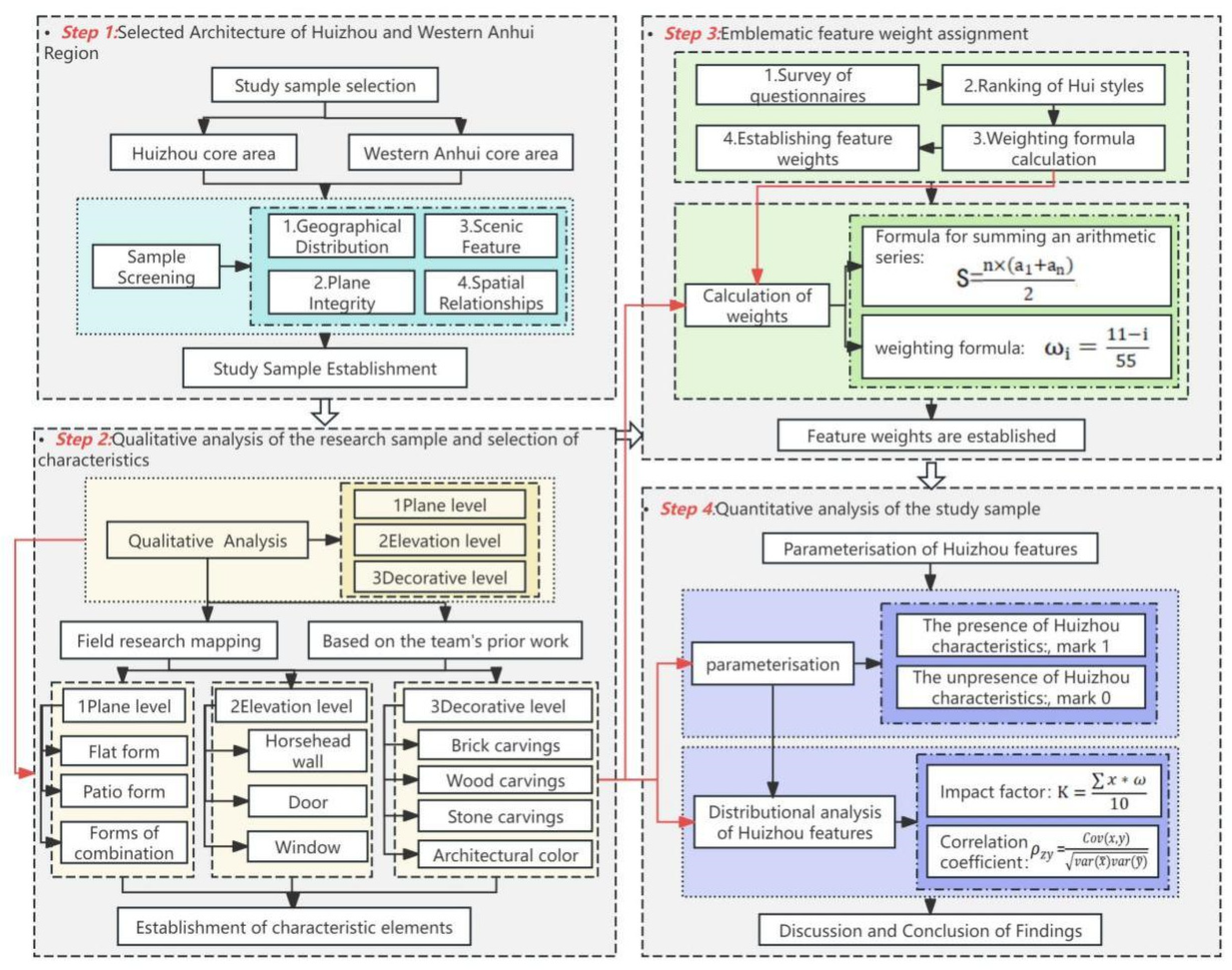
Figure 1 below presents the technical roadmap for this study, which comprises four distinct phases: selection of research subjects, analysis and extraction of architectural characteristics, determination of feature weights, and quantitative analysis with pattern interpretation.
Phase One: Based on the preservation status of traditional Huizhou and Western Anhui architecture, and drawing upon the team’s preliminary research findings, buildings from the core Huizhou region and core Western Anhui region were selected as initial research samples. The final analytical samples were established through a four-dimensional screening framework.
Step Two: Qualitative analysis was conducted on the selected Huizhou and Western Anhui architectural samples. Architectural style composition and cultural context were examined across three dimensions—plan, elevation, and ornamentation. Building upon the team’s prior work, these dimensions were subdivided into ten observable Huizhou-style characteristics.
Step Three: Objective weighting of the ten characteristics was performed using order and law. Based on the frequency data of each characteristic’s occurrence within the Western Anhui architectural samples, rankings were calculated for each feature to determine their respective weights. This reflected the relative importance of different characteristics in distinguishing architectural types or regional styles.
Step Four: Parametric coding (0/1) was applied to the presence or absence of Huizhou-style features in Western Anhui architecture. The frequency of occurrence for each feature was calculated, with proportion coefficients revealing distribution variations across different building types. Spearman’s correlation coefficient was employed to analyse co-occurrence relationships between features. Combining spatial distribution visualisation with historical documentation, the selective dissemination patterns of Huizhou-style features within the Western Anhui region were deciphered.

2.1. Selection of Research Subjects

The Huizhou-style architectural samples selected for this study are concentrated within the traditional geographical area of Huangshan City, Anhui Province (encompassing the former administrative regions of Huizhou District, She County, Yi County, Xiu’ning County, and Qimen County). This region served as the seat of the ancient Huizhou Prefecture [25] and preserves a substantial number of traditional Huizhou-style buildings, making it a representative area for studying the characteristics of Huizhou architecture [26]. From this area, this study selected 20 well-preserved residential and ancestral hall buildings with clearly defined forms to extract the ‘core genetic traits’ of Huizhou architecture.
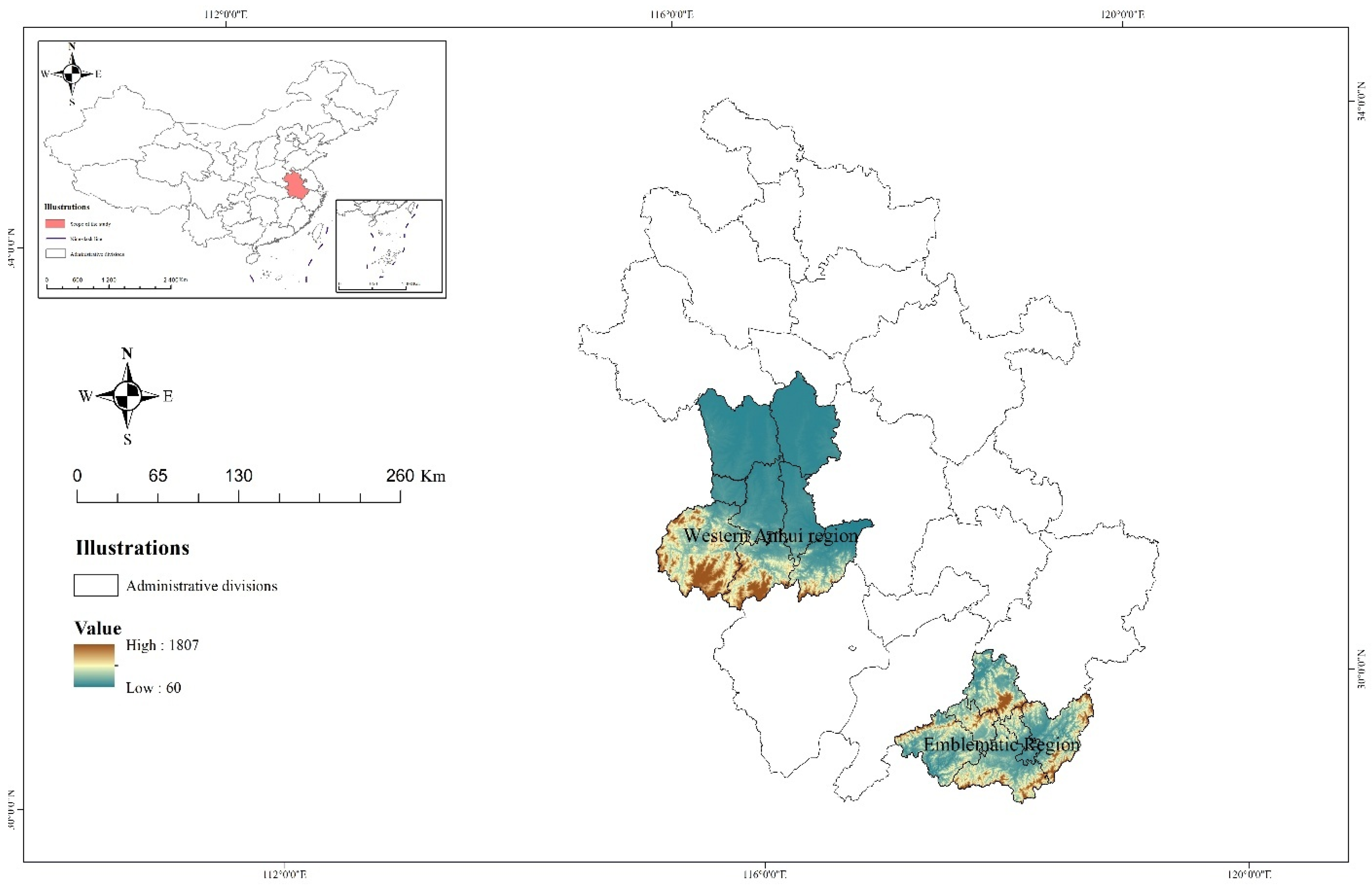
The Western Anhui architectural samples are primarily located in the western region of Anhui Province [27], encompassing traditional buildings from parts of Lu’an City and Anqing City. Historically, Huizhou architectural culture spread to Western Anhui through migration and trade routes, integrating with the local environment. This study initially selected 30 traditional buildings (15 dwellings and 15 ancestral halls) as candidate samples, covering three topographical types: mountainous, hilly, and river valley landscapes. As shown in Figure 2.
To ensure the representativeness and scientific validity of the samples, a systematic screening process was applied to candidate samples, drawing upon the four-dimensional screening framework proposed by Yuanquan et al. [20]:
(1) Samples encompassed three geomorphological environments in Western Anhui—mountainous terrain, hilly landscapes, and river valleys—to guarantee regional representativeness [19]. (2) Buildings required at least 80% integrity of their primary facades. Samples where over 20% of the original facade was destroyed by natural disasters (fire, flood) or insect damage were excluded to guarantee surveying data reliability. (3) Drawing upon Gong et al.’s (2020) [28] selection methodology and China’s architectural heritage conservation regulations, villages and buildings meeting criteria were selected from the nationally designated list of historical and cultural villages. Non-typical structures exhibiting significant stylistic divergence—such as religious buildings or European-style architecture—were excluded. (4) To prevent disruption of traditional spatial patterns by mixed new and old structures, only samples untouched by modern alterations or with minimal modifications that retain their original spatial logic were selected. Based on the aforementioned criteria, 20 buildings from Western Anhui (10 dwellings and 10 ancestral halls) were randomly selected from the candidate samples as core analysis subjects [29]. Table 1 illustrates the sample selection criteria for traditional architecture in the Western Anhui region.

2.2. Analysis of Architectural Samples

Based on the aforementioned samples, the research team conducted detailed field surveys and surveys of traditional architecture in the Huizhou and Western Anhui regions. To ensure data accuracy, a combined approach of multi-period, multi-angle photography and handheld laser rangefinder measurements was employed. This yielded plan, elevation, and decorative information for 50 buildings, with an average data error below 5%, meeting the requirements for quantitative research. Drawing upon the team’s prior research [22], the architectural entities were categorised into three levels: plan form, elevation structure, and decorative details. Characteristic summaries were then derived for both Huizhou-style and Western Anhui architecture [30]. The following presents a detailed analysis of the architectural features in both regions.

2.2.1. Analysis of Huizhou Architecture

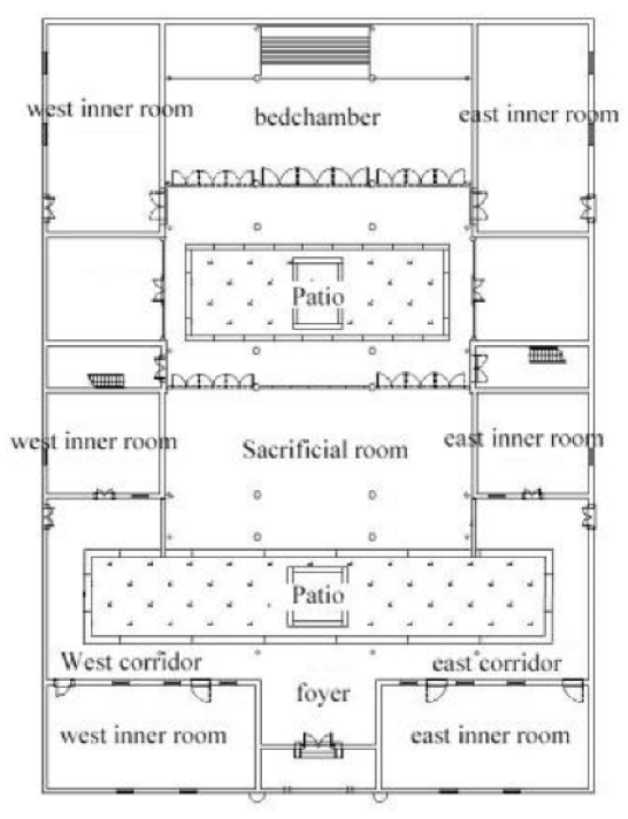
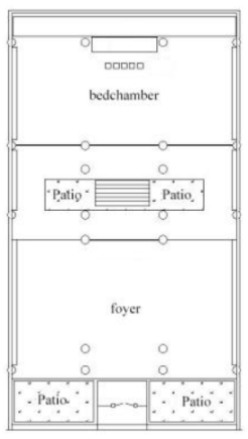
The formation of Huizhou architecture was shaped by a combination of factors, including geographical environment, patriarchal rituals, and the Huizhou merchant economy. Its floor plan centres around a courtyard, exhibiting a regular, square form. This design draws influence from traditional Chinese patriarchal ritual ideology [31] while also integrating elements from northern courtyard layouts and the local Baiyue ethnic group’s stilted-house traditions. To adapt to Huizhou’s mountainous terrain, residential buildings often adopt elongated forms with compact layouts [25]. According to Professor Shan Deqi’s classification system from Tsinghua University [32], Huizhou dwellings can be categorised into four fundamental plan types: 凹-shaped (concave), 回-shaped (enclosure), H-shaped, and 日-shaped (rectangular with an interior courtyard), as shown in Table 2. Concave dwellings represent the most economical form, featuring a courtyard at the front, a living room in the centre, and bedrooms flanking the rear. Circular dwellings position the courtyard centrally, with an entrance hall at the front and a living room at the rear, while bedrooms are arranged on either side of the courtyard, forming an enclosed compound. H-shaped dwellings comprise two three-courtyard structures arranged back-to-back, each with its own courtyard, with bedrooms situated along the building’s sides. Sun-shaped dwellings adopt a three-hall, three-courtyard longitudinal layout, with courtyards between each hall connected by corridors, the final hall serving as an ancestral worship space. Most Huizhou-style dwellings are two-storey structures, with the ground floor housing communal spaces and the upper floor accommodating bedrooms or storage. Courtyard configurations correspond to floor plan types, similarly categorised into 凹-shaped (concave), 回-shaped (enclosure), H-shaped, and 日-shaped (rectangular with an interior courtyard). Architectural combinations predominantly employ parallel or serial-parallel configurations. Ancestral halls in Huizhou architecture adhere to higher hierarchical standards than residential buildings [33]. Their standard layout features a three-courtyard, two-well central axis symmetrical arrangement: ceremonial gate, hall of worship, and hall of rest, flanked by corridors, embodying the solemnity of the clan system [34]. Additionally, variants exist, such as courtyard-style ancestral halls converted from residences and regularly laid-out corridor-courtyard ancestral halls. The courtyard forms of ancestral halls resemble those of dwellings, with their arrangement predominantly featuring serial and combined serial-parallel configurations.
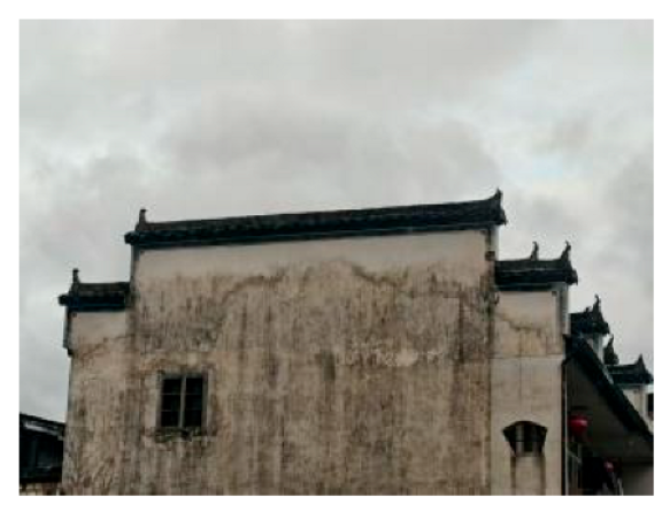
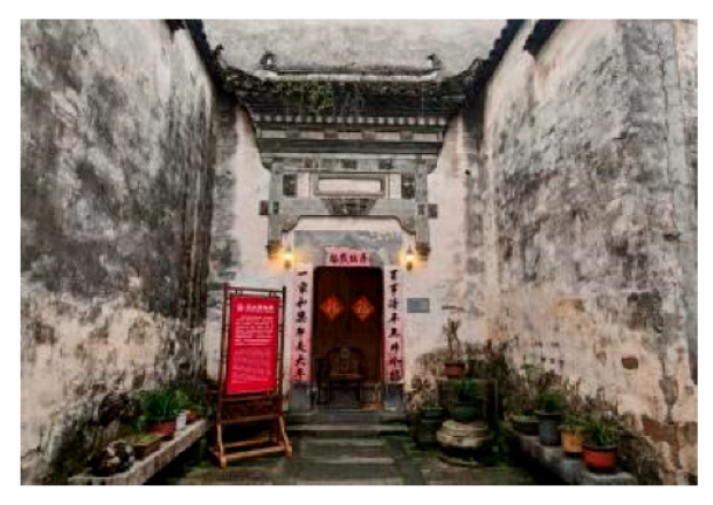
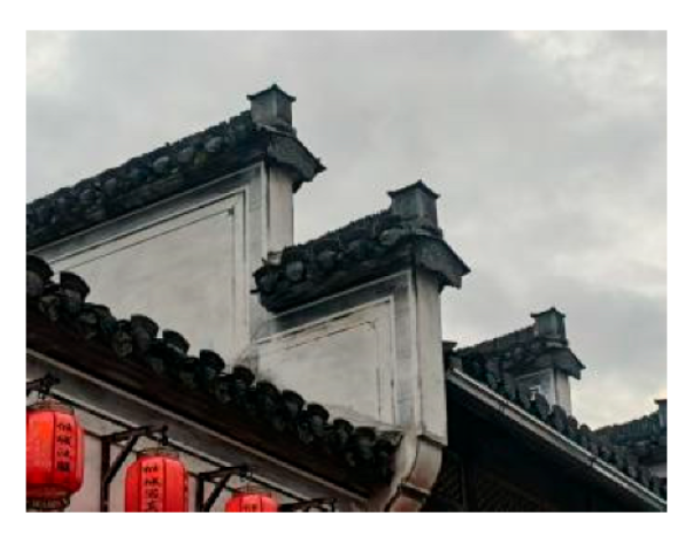
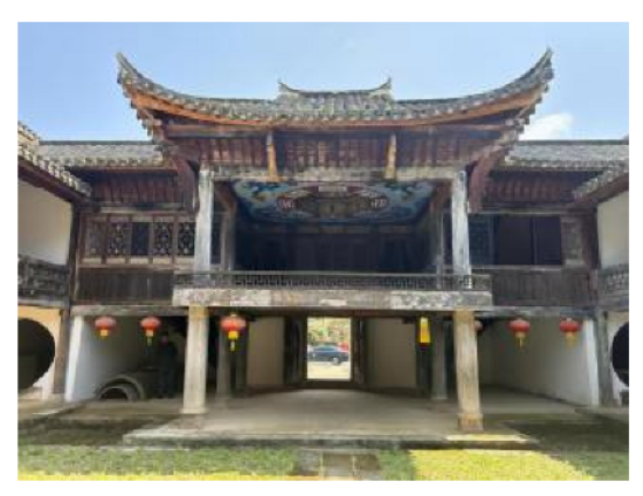
The facade of Huizhou-style architecture comprises two principal systems: the roof and the external walls [35]. Its defining characteristics are as follows: horse-head walls originated from fire prevention requirements. Given the high density of Huizhou dwellings and the ease with which fires spread, these walls effectively contained flames. Over time, they evolved into a signature element of Huizhou architecture [36]. Formally, they are categorised as magpie-tail, seal-imprint, or seated-kiss styles, symbolising ‘good fortune at first glance,’ ‘academic success and official rank,’ and ‘prayers for peace and safety’, respectively. Horse-head walls typically feature three or five tiers, harmonising with the building’s plan layout. Magpie-tail and seal-trough styles are most common in dwellings, while ancestral halls predominantly employ the more substantial, multi-tiered seated-kiss style (five or seven tiers). Huizhou architecture features three primary door designs, as outlined in Table 3. The door canopy style involves brickwork decoration above the doorway, topped with carved bricks; variations include plaque-door and hanging-flower-door styles based on ornamental elements. The “eight-character gate” features sloping walls flanking the entrance to form a horizontal “eight” shape, or a recessed doorway creating an “eight-character” space, emblematic of official residences; the “recessed entrance” style involves a concave façade creating a grey space with the central door [37]. In ancestral hall architecture, gate designs typically adopt the gatehouse style, featuring triple-tiered eaves adorned with large-scale wood carvings and brick carvings beneath. Plaques suspended from the lintel emphasize clan authority. Huizhou-style architecture exhibits relatively fewer window forms, primarily comprising three types. Wooden windows are most common, installed at ground level for both light transmission and ornamentation; lattice windows are predominantly used in courtyard walls for decorative purposes; and irregularly shaped windows, smaller in size, are positioned high on exterior walls to balance privacy with natural light. Ancestral halls feature fewer exterior windows, with only a few high-set windows positioned higher than those in residential buildings to enhance defensive capabilities and privacy.
Huizhou architectural decoration centres on the “three carvings” of brick, wood and stone, alongside a palette of black, white and grey. It integrates Confucian ethics, auspicious symbolism and regional characteristics [38]. Brick carvings predominantly feature line carving and relief, exhibiting a bold, unadorned style in the Ming dynasty that evolved towards intricate complexity in the Qing. Subjects encompass secular life and mythical imagery, predominantly adorning gate towers, door canopies, and screen walls, embodying aspirations for familial prosperity and scholarly distinction. Wood carvings predominantly employ shallow relief, characterised by fluid lines and distinct layering [39]. Themes include historical allusions, folk legends, and floral-animal motifs, frequently adorning beams, corbels, balustrades, and door/window frames. Stone carvings predominantly employ high relief, featuring animal and plant motifs. These are commonly found on door frames, column bases, and steps, serving both practical and decorative functions. Architectural colour schemes feature whitewashed lime plaster on exterior walls, forming a white base, while roofs clad in blue-grey tiles create a striking black-and-white contrast, evoking the ink-wash painting aesthetic characteristic of Huizhou [40]. Interior spaces eschew painted decoration, preserving the natural hues of materials. Ancestral halls maintain the white-walled, grey-tiled palette, though carvings on gate towers and beam frameworks are accented with gold and red to heighten ceremonial significance.
Through systematic analysis of the floor plans, elevations, and ornamentation of Huizhou architecture, this study has identified ten core characteristics possessing cross-regional comparability, which form the basis for subsequent quantitative analysis (Table 2, Table 3 and Table 4). These ten features will be employed in comparative analysis with Western Anhui architecture to elucidate the dissemination and selection patterns of Huizhou architectural culture within the Western Anhui region.

2.2.2. Analysis of Western Anhui Architecture

Architecture in Western Anhui shares the same regional context as Huizhou architecture within Anhui Province, influenced jointly by local culture, natural environment, and social structure [41]. While exhibiting similarities in form, it also demonstrates differentiated development in response to local conditions. The floor plan of Western Anhui architecture similarly centres on the courtyard, yet compared to Huizhou-style architecture, it places greater emphasis on practicality and adaptability to topography.
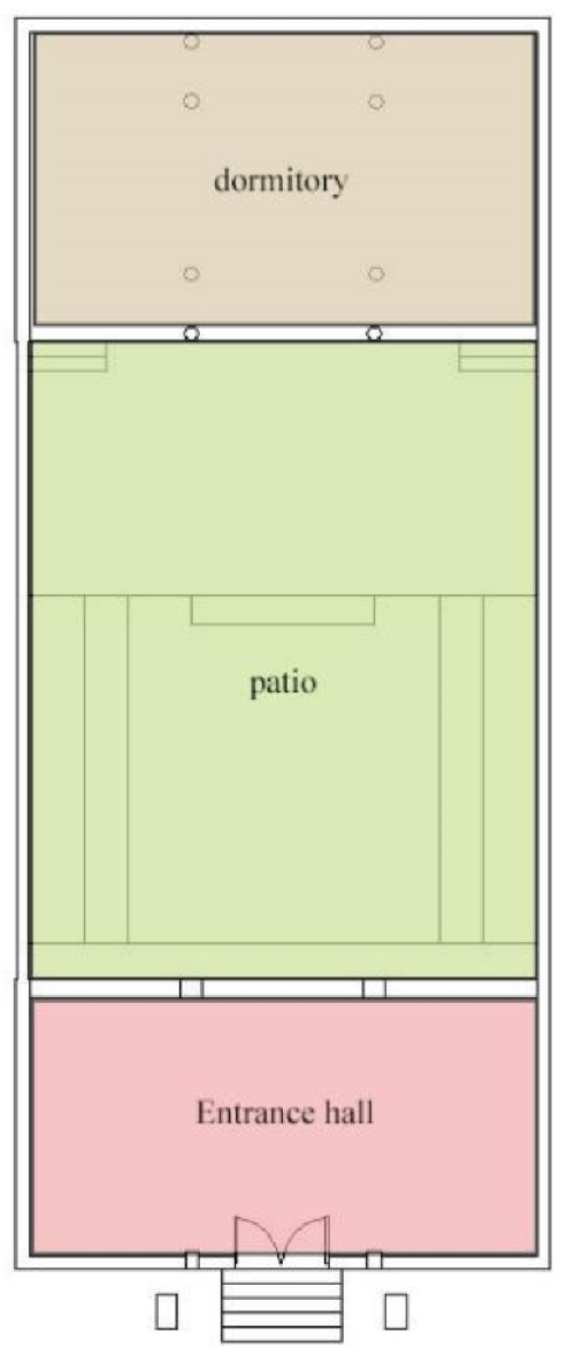
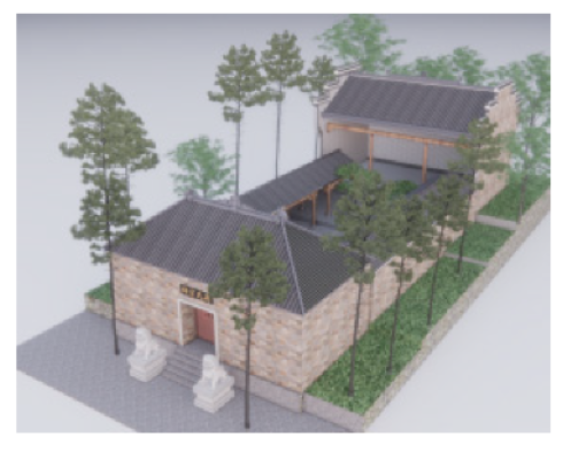
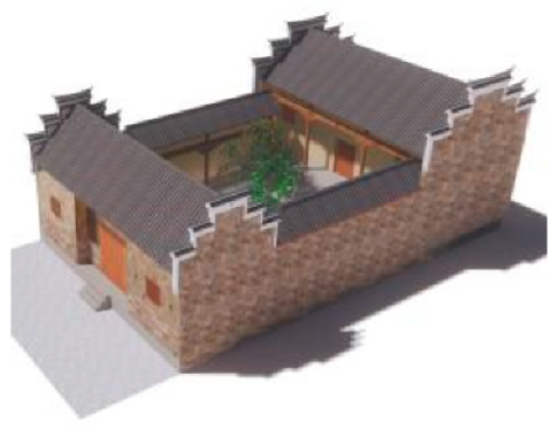
Residential floor plans predominantly adopt the three-courtyard or three-hall layout, as illustrated in Table 5. The three-courtyard style emphasises longitudinal development and bilateral symmetry, with the main structure divided into three distinct sections. The entrance hall serves as a communal activity space, the main hall as a private indoor area, and the ancestral hall as a sacred space for worship, with distinct functional zoning. The three-courtyard layout resembles the form of Huizhou clan halls, but to adapt to the rainy climate of the Dabie Mountains, each courtyard incorporates a concealed drainage system arranged in a stepped configuration descending from top to bottom. Rainwater collected via the courtyard is channelled through pipes into ponds, demonstrating proactive adaptation to the natural environment. Western Anhui also developed a distinctive large-scale communal dwelling form known as the ‘Western Anhui Grand House’ [27]. Such structures comprised dozens of households and hundreds of rooms, accommodating several hundred residents. Their core featured a three-courtyard layout (gatehouse, hall, main hall) serving all inhabitants, while numerous residential units surround courtyards on either side, forming a large-scale architectural cluster of ‘public core + residential clusters’. Courtyard positions are flexibly arranged according to functional needs, often integrated with drainage systems, with their scale varying according to the building’s size, fully demonstrating adaptability to the mountainous, rainy climate. Residential combinations primarily employ a combination of serial and parallel arrangements. Anhui Western ancestral halls, centred on patriarchal authority, commonly feature layouts such as three courtyards with two inner courtyards or corridor-courtyard arrangements. The three-courtyard, two-well layout resembles Huizhou ancestral halls, featuring ceremonial gates, ancestral halls, and sleeping quarters sequentially along the central axis, flanked by corridors and courtyards at both ends. Some halls adopt a two-courtyard ‘front hall, rear sleeping quarters’ layout, omitting ceremonial gates, demonstrating formal flexibility. The corridor-courtyard layout adopts a quadrangle form, with a ceremonial gate, ancestral hall, and sleeping quarters arranged along the central axis. Corridors flanking the courtyard connect to the main halls, forming a complete longitudinal sequence. Overall, while drawing upon the functional and formal principles of Huizhou ancestral halls, Western Anhui structures place greater emphasis on integration with the terrain, reflecting regional cultural variations in interpreting the same architectural type.
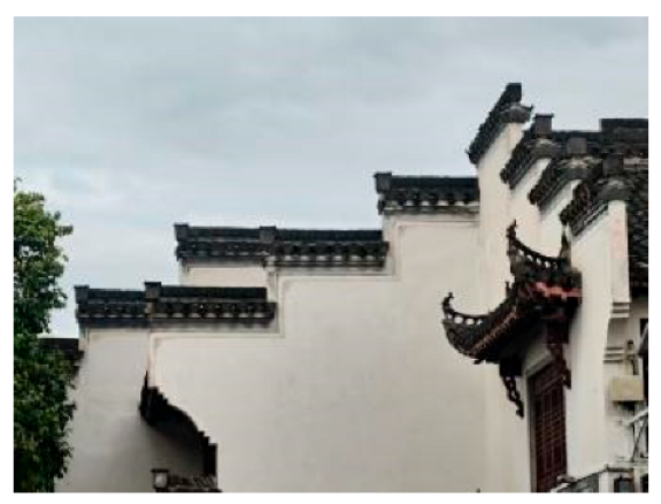
The facades of Western Anhui architecture exhibit greater simplicity compared to Huizhou-style buildings, a trait particularly evident in residential structures. Horse-head walls are less common in dwellings but frequently appear in ancestral halls. Unlike the ornate, symbolically rich horse-head walls of Huizhou architecture, those in Western Anhui prioritise practicality, serving primarily as fire barriers with comparatively modest decorative details. In terms of formal evolution, Western Anhui developed curved horse-head walls, forming a stark contrast to the traditional stepped, straight horse-head walls of Huizhou style, as shown in Table 6. This exemplifies the variation and innovation occurring during the localisation of Huizhou elements. The form of Western Anhui doors exhibits distinct differentiation based on building type. Residential gates are simple and functional, with minimal ornamentation, differing markedly from the intricate carvings of Huizhou-style gates. However, examples of the Huizhou-style double-arched gate can be found in some areas. Ancestral hall gates tend towards opulent solemnity, commonly featuring wall-mounted, recessed wall, or roofed designs. Wall-mounted gates involve a doorway cut directly into the exterior wall, with the door panel flush against the surface. The plaque-style variant incorporates a decorative tablet above the door. Recessed-wall doors feature an inward-curving entrance, resembling Huizhou-style house doors but with a smaller recessed area. The doorway is set within the recessed wall, topped with a plaque. House doors share similarities with Huizhou ancestral halls but are less common in Western Anhui. Windows in Western Anhui prioritise functionality, emphasising natural light and ventilation. Wooden windows are commonplace in dwellings, some adorned with geometric patterns or scenes from daily life, blending functionality with aesthetic appeal. Ancestral halls feature fewer exterior windows, primarily in the form of lattice windows and irregularly shaped openings. These are predominantly crafted from carved brick or stone, reminiscent of Huizhou-style stone-carved doors and windows, yet incorporating local cultural motifs and stylistic elements.
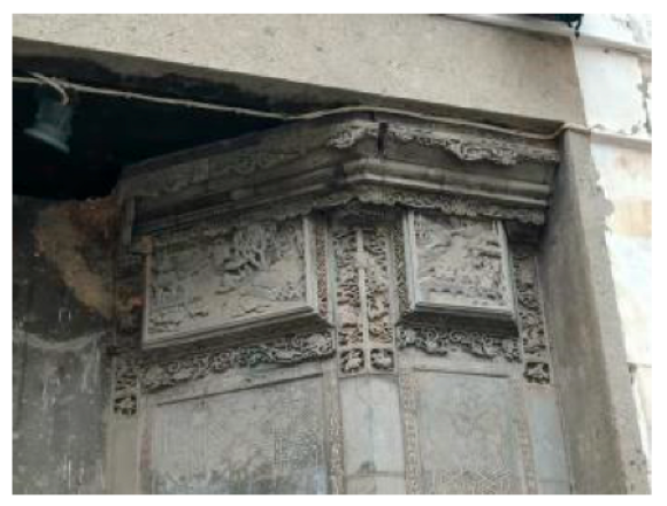
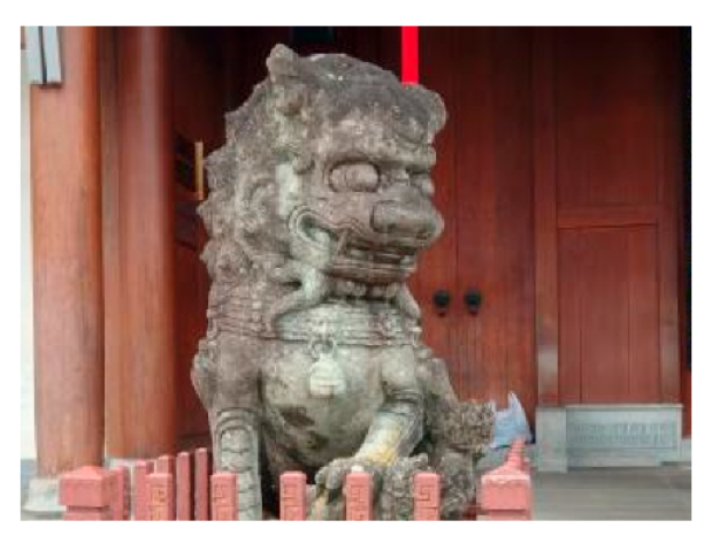
The architectural decoration of Western Anhui centres on carving and colour, blending practicality with cultural symbolism to embody both regional adaptation and the fusion of clan-based traditions. Compared to the ornate opulence of Huizhou-style architecture, Western Anhui decoration prioritises simplicity and utility, incorporating local historical and folk elements. Brick carving is less prevalent, primarily featured on gate towers and screen walls in a straightforward, functional style. Within ancestral halls, brick carvings are also uncommon, typically depicting themes of clan lineage and auspicious symbols. Wood carving sees limited application in dwellings, appearing chiefly on beam frames, window lattices, and lintels, emphasising both utility and aesthetics. Ancestral halls feature extensive, exquisitely crafted wood carvings on components such as beams, corbels, and diagonal braces, depicting themes of clan ethics and historical achievements, as illustrated in Table 7. Stone carvings in dwellings primarily serve structural purposes, adorning door frames and column bases with a focus on utility. Ancestral halls employ stone carvings more extensively, encompassing stone lions, drum-shaped bases, and column plinths, with motifs centred on historical achievements and clan symbolism. The extensive use of stone carvings is closely linked to the mountainous terrain and abundant stone resources of Western Anhui. The exterior walls of both residential dwellings and ancestral halls in this region typically exhibit a yellowish-brown hue, resulting from the use of local materials such as earth and stone, with minimal external decoration. This presents a stark contrast to the predominantly black, white, and grey palette characteristic of Huizhou-style architecture [42]. Regarding interior colour schemes, dwellings predominantly retain the natural hues of their materials, while ancestral halls incorporate accents of red, blue, and gold to enhance the structures’ cultural significance and ceremonial atmosphere.
Through systematic analysis of the plan, elevation, and decorative elements of Western Anhui architecture, this study established a comparative feature spectrum with Huizhou-style architecture to facilitate subsequent quantitative analysis of architectural characteristics [43].

2.3. Weighting of Huizhou Style Characteristics

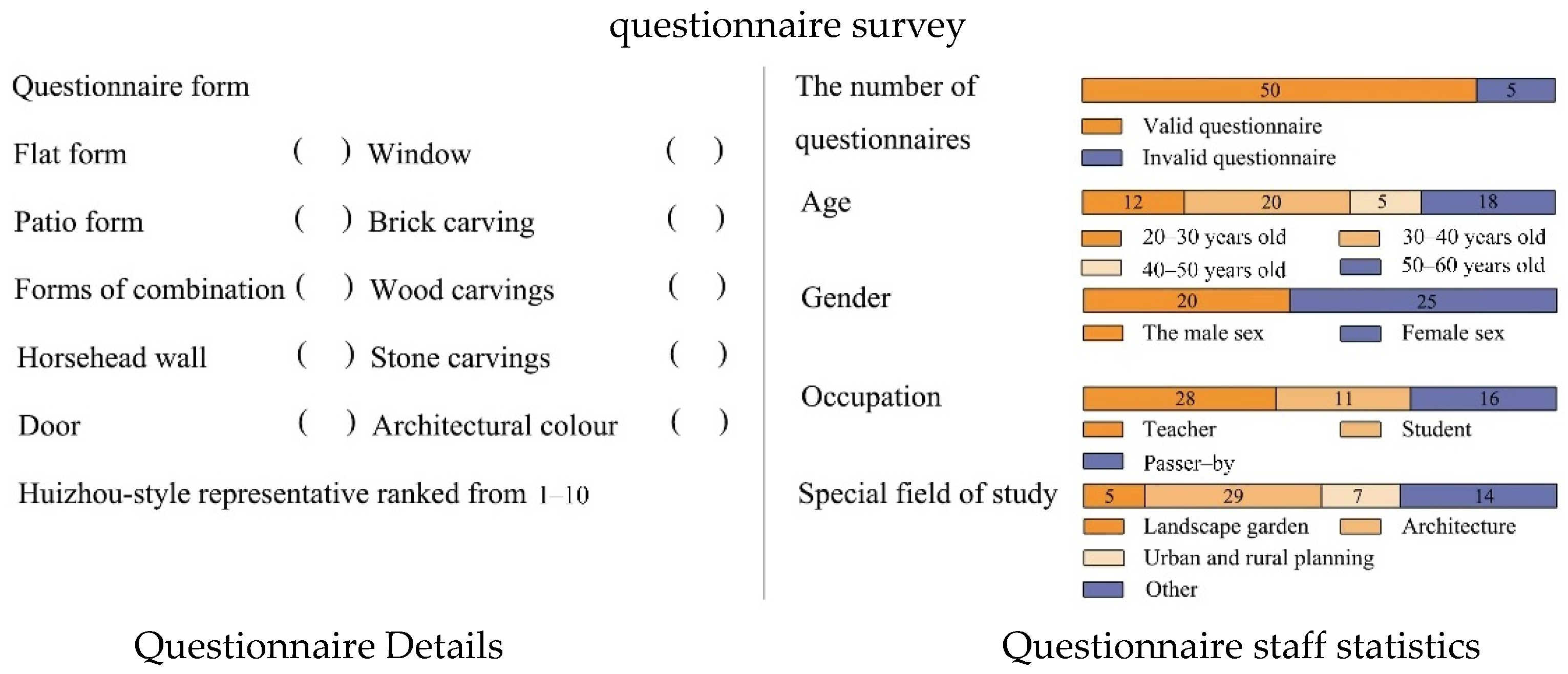
Based on the above research, to further explore the influence of Huizhou style on Western Anhui architecture, the study first ranked the ten characteristic elements of Huizhou architecture according to the degree to which they represent Huizhou style, and then assigned weights to these ten characteristics. To ensure the scientific rigour of the ranking order, the research team developed a questionnaire survey form specifically for ranking Huizhou-style architectural elements. To enhance the representativeness of the survey results, the team selected 55 participants of varying ages, genders, occupations, and professional backgrounds to complete the questionnaire. After excluding five invalid responses, 50 valid questionnaires were obtained. After a comprehensive statistical analysis of the questionnaire results, the research team derived the style rankings for the ten Huizhou-style features. Figure 3 shows the questionnaire survey details and personnel composition.
After determining the feature rankings, the study uses order and law to calculate the weights. The known importance levels decrease from 1 to 10 (1 being the most important and 10 being the least important). First, calculate the sum of these ten levels using the arithmetic series sum formula:
S = n × ( a 1 + a n ) 2 , where n = 10, a 1 = 1 , a n = 10 , and then the total sum s = 10 × ( 1 + 10 ) 2 = 55 . Then, for the data ranked i, their weights are ω i = 11 i 55 . For example, for the most important data (ranked 1st), its weight is ω 1 = 11 1 55 = 10 55 = 2 11 ; for the data ranked 2nd, its weight is ω 2 = 11 2 55 = 9 55 , and so on, until the data ranked 10th, whose weight is ω 10 = 11 10 55 = 1 55 .
In the above formula, n is the number of data points, which in this study refers to the number of features (10), and S is the sum of the first n terms of the sequence, which in this study is the sum of the first 10 terms (55). ω 1 represents the weight of the first-ranked feature, whose weight is 2 11 ; ω 2 represents the weight of the second-ranked feature, whose weight is 9 55 , and so on. After the calculation, the weights of the ten features can be obtained.

2.4. Quantitative Analysis

2.4.1. Feature-Based Parametric Coding

To facilitate subsequent statistical analysis, this study subjected the 20 selected architectural samples from Western Anhui (10 residential dwellings and 10 ancestral halls) to feature parameterisation. Based on the classification criteria for Huizhou-style and Western Anhui architectural features outlined in preceding sections, a binary assignment method (0/1) was employed to mark the presence of Huizhou-style characteristics in each sample: if a particular architectural feature aligned with typical Huizhou forms or was clearly identifiable as a Huizhou element, it was assigned a value of ‘1’; otherwise, it was assigned a value of ‘0’. Selected cases are presented visually [44,45], as shown in Table 8. This coding strategy establishes a unified, unambiguous quantitative foundation to support subsequent frequency distribution statistics and feature correlation analyses [46]. To ensure coding reliability, feature determinations for all samples were conducted independently by two researchers. Disagreements were resolved through discussion or consultation with relevant domain experts. Due to space constraints, the main text presents only the specific feature analysis and coding process for the Bailuoqiu Old House (residential) and the Jiang Clan Ancestral Hall (temple) as examples. Details of the analysis for the remaining 18 samples are omitted herein, with their distribution of Huizhou-style features to be presented collectively in subsequent sections.

2.4.2. Calculations

After obtaining the characteristic distributions of residential buildings and ancestral halls in Western Anhui, based on the aforementioned method of parametrising Huizhou-style characteristics, the study can further statistically analyse the proportion of Huizhou-style elements in different types of buildings in Western Anhui [47]. Here, this study introduces statistical methods to establish a simple probabilistic mathematical model, providing a basis and reference for related research. In the functional expression, such as y = kx (where k is a non-zero constant), the direct proportional function, where y and x are the function and independent variable, respectively, and k is the constant, this constant k is the proportional coefficient, also known as the proportional constant. When y is inversely proportional to x, such as y = k/x (where k is a constant and k is not equal to zero), k is also called the proportionality coefficient. In this study, the proportionality coefficient y represents the proportion of Huizhou-style features in Western Anhui architecture. Combined with the weighting assigned to Huizhou-style features, the study can obtain a relatively accurate coefficient of the influence of Huizhou-style features on Western Anhui architecture [18]:
K = ( x i × ω i )
Using binary 0/1 coded data representing Huizhou architectural features (20 building samples from Western Anhui, 10 Huizhou characteristics, each assigned 0 = absent/1 = present), Spearman’s rank correlation coefficient was employed to analyse feature associations. Spearman’s rank correlation coefficient ( r s ) is applicable to ordinal variables. The binary 0/1 coding in this paper constitutes a dichotomous ordinal variable (0 < 1, representing the ordinal scale from ‘absent’ to ‘present’), thus satisfying the conditions for this method’s application. This method measures association by calculating the consistency of feature rankings after ordinal sorting of each feature’s values. The result remains within the range [−1,1], with interpretation logic consistent with Pearson’s correlation: r s approaching 1 indicates strong positive correlation, approaching −1 indicates strong negative correlation, and approaching 0 indicates no correlation. The correlation formula is as follows:
r s = 1 6 d 2 n ( n 2 1 )
Here, r s denotes the coefficient, d 2 represents the sum of squares of all grade differences, and n indicates the number of paired observations, i.e., the sample size.

3. Results

3.1. Comparative Analysis of Architectural Features in the Two Regions

Building upon the systematic analysis of architectural samples from Huizhou and Western Anhui, this study compares the similarities and differences in their architectural characteristics across three dimensions: plan layout, façade composition, and decorative systems.
Regarding residential architecture, Huizhou dwellings centre around courtyards to form a ‘four-water-converging-hall’layout [33]. Their floor plans predominantly feature 凹-shaped (concave), 回-shaped (enclosure), H-shaped, and 日-shaped (rectangular with an interior courtyard) configurations, prioritising family privacy and functional integration. Facades feature tiered horse-head walls serving both fireproofing and symbolic functions, with gatehouses predominantly adorned by brick or stone carvings. Window designs balance light transmission and privacy; decoration is characterised by the ‘three carvings and one colour’ (referring to brick carving, wood carving, stone carving, and architectural colouring). Wood carving motifs frequently draw from flowers, birds, insects, fish, and opera narratives. Exterior colours predominantly utilise black, white, and grey, visually translating Confucian ethics and auspicious symbolism. Western Anhui dwellings, however, prioritise practicality and regional adaptation. Floor plans predominantly adopt three-courtyard or three-hall layouts. To address the rainy climate of the Dabie Mountains, drainage systems incorporate hidden channels alongside courtyards. Façade ornamentation is relatively restrained, with limited use of horse-head walls. Door designs prioritise simplicity and utility, while wooden windows remain the most common. Decorative elements show limited use of the ‘three carvings’ (wood, stone, and plaster), with motifs rooted in local history and folklore. Craftsmanship prioritises a balance between utility and aesthetics, while building colours predominantly reflect the natural hues of local materials—terracotta brown.
Comparing ancestral hall characteristics: Huizhou-style halls strictly adhere to central axis symmetry, employing a standard three-courtyard, two-well layout. The spatial sequence ascends in elevation, reinforcing patriarchal, hierarchical order; facades are solemn and elegant, featuring substantial horse-head walls and ornately decorated gate towers. The ‘three carvings’ (wood, stone, and plaster) display exquisite craftsmanship, with motifs emphasising clan ethics and historical achievements. The colour schemes are rich and luxurious, embodying the material expression of clan authority. Anxi ancestral halls share functional and formal similarities with Huizhou-style structures but exhibit distinct regional adaptations. Their floor plans predominantly feature three courtyards with two inner courtyards or corridor-enclosed courtyard layouts, with progressively elevated spaces reinforcing ceremonial significance. Facades maintain an overall solemnity, featuring intricate lattice windows and perforated screens. Decorative elements extensively employ wood and stone carvings, with themes centred on clan ethics and historical memory, though brick carvings are relatively scarce. Exterior colours predominantly utilise the natural hues of local materials, preserving an overall sense of regional simplicity.
Comprehensively, the architecture of these two regions exhibits distinct value orientations and expressive characteristics. Huizhou-style architecture, underpinned by clan culture and the wealth of Huizhou merchants, pursues intricate ornamentation and the expression of the ‘unity of heaven and humanity’ aesthetic, while Western Anhui architecture emphasises practicality and regional adaptation. Its flexible floor plans accommodate mountainous terrain, decorative motifs draw from local history, and its colours and craftsmanship remain more rustic. These contrasts collectively demonstrate the diverse practical wisdom of traditional Chinese architecture, characterised by ‘adaptation to local conditions and the inheritance of ritual systems’.
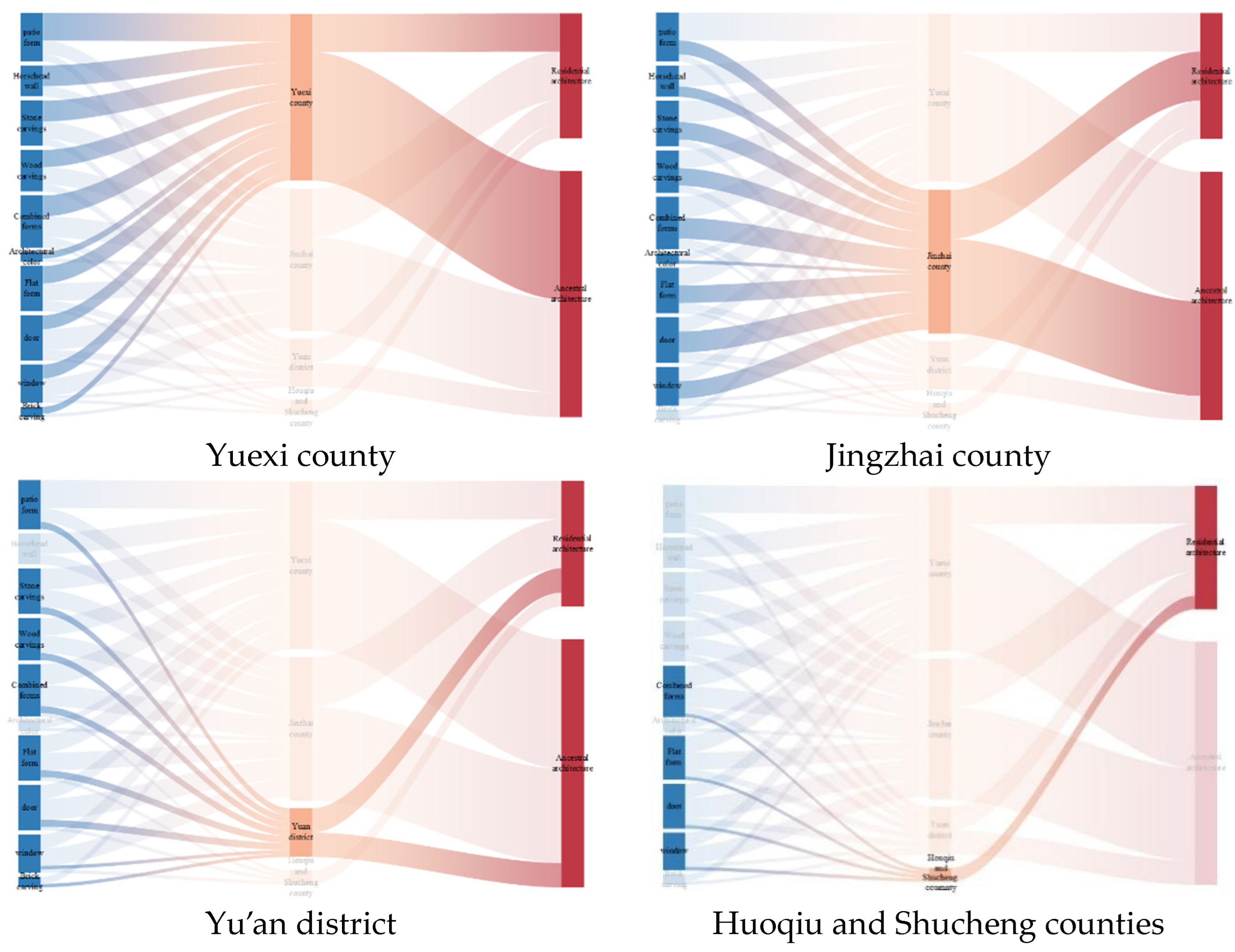
Spatial Distribution Figure 4 reveals a distinct spatial variation in the frequency of Huizhou-style features across architectural samples in Western Anhui. Samples closer to the core Huizhou region, such as Jinzhai County and Yu’an District, exhibit a relatively greater variety and quantity of Huizhou-style characteristics. Conversely, samples farther from the core area, like Huoqiu County and Shucheng County, display a lower frequency of such features. This distribution pattern correlates with geographical distance.

3.2. Weight Analysis Results

Following an analysis of Huizhou-style characteristics in Western Anhui architecture, a questionnaire survey yielded a ranking of ten defining features of Huizhou architecture. Subsequently, weighting coefficients for each feature were calculated using a weighted formula. As shown in Table 9, this presents the ranking and weighting coefficients for the ten characteristics.

3.3. Distribution of Huizhou Architectural Features in Western Anhui Buildings

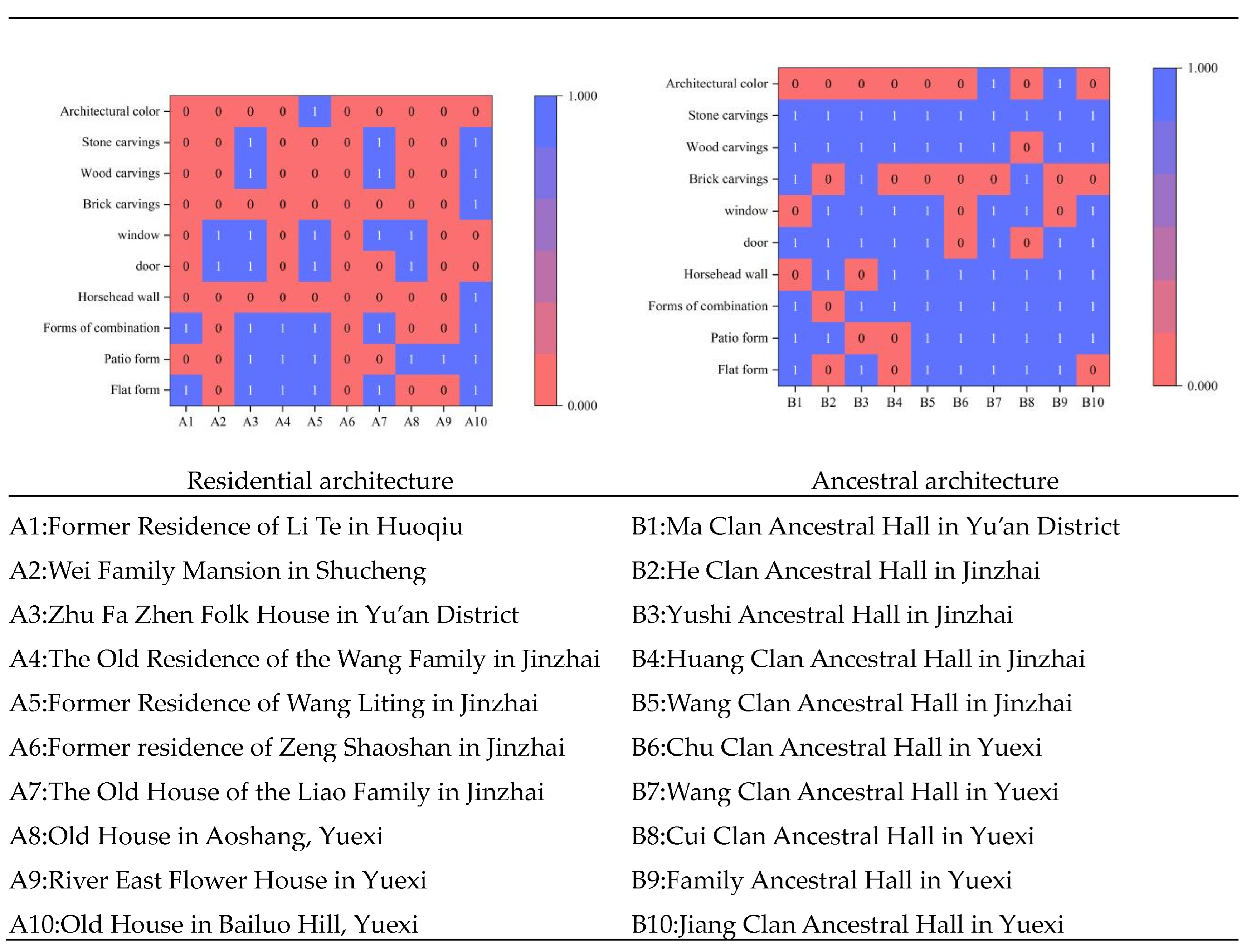
By encoding the Huizhou-style characteristics within Western Anhui architecture, one can determine the distribution of these features across the architectural samples. This is illustrated in the heatmap shown below (Figure 5).
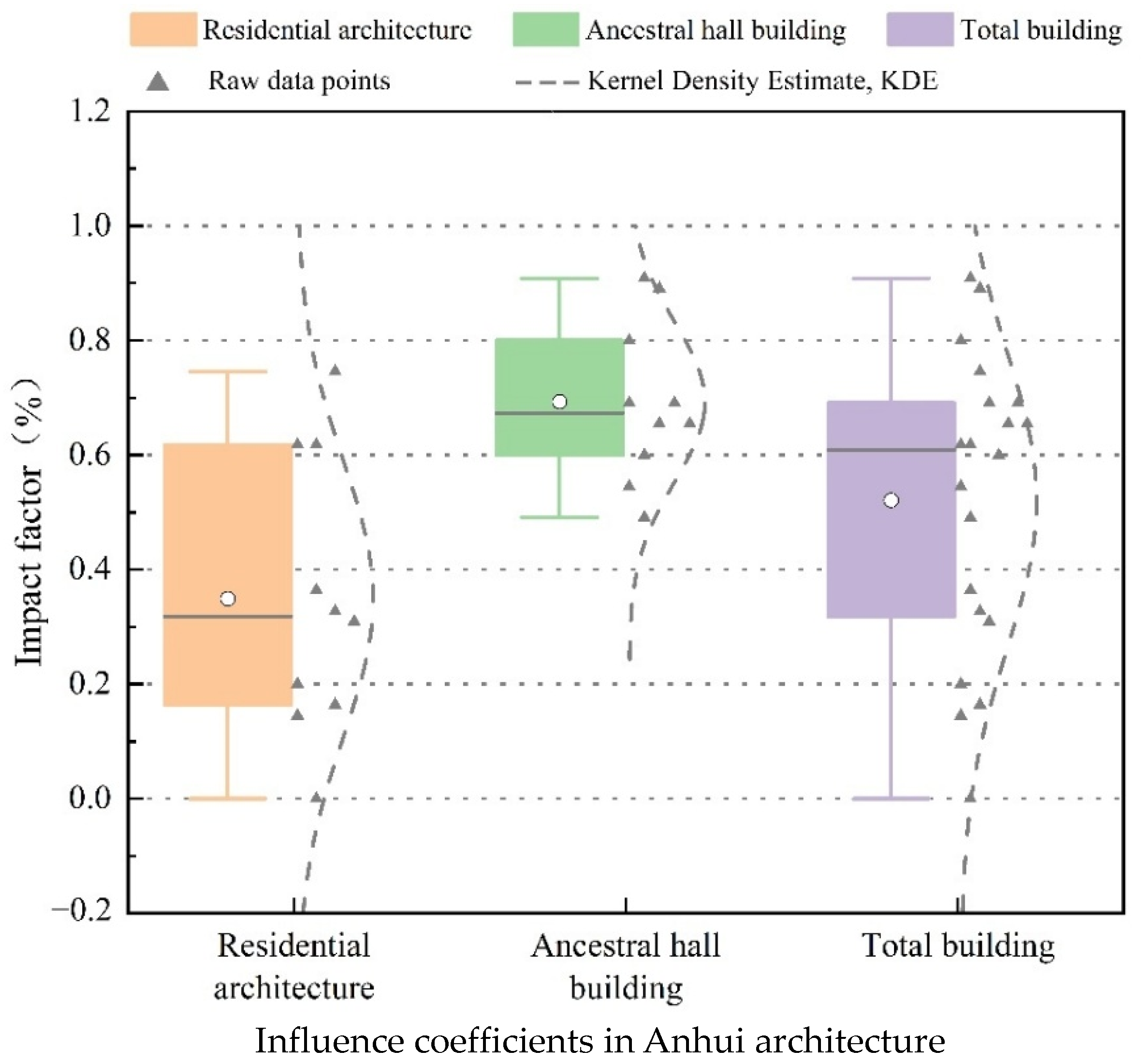
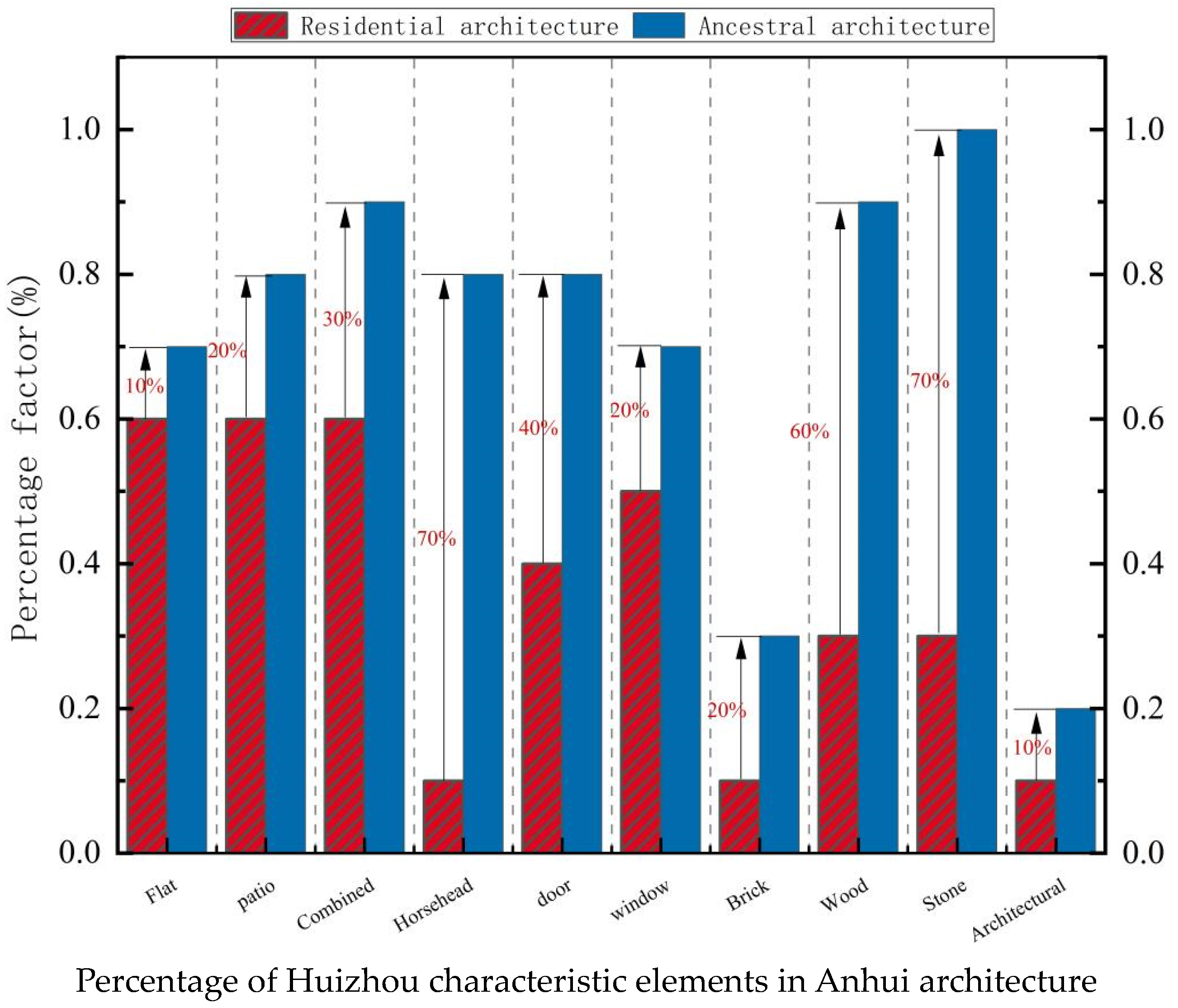
The frequency of occurrence (proportion coefficient) for ten architectural features across residential dwellings and ancestral halls is presented in Figure 6 and Figure 7. Among the ten residential buildings in Western Anhui, the overall frequency of Huizhou-style features was relatively low (mean = 0.36). Among these, the three plan-related features—plan form, courtyard configuration, and structural arrangement—exhibited the highest frequency of occurrence at 0.60 (appearing in six dwellings), as illustrated in Figure 7. Wood carvings and stone carvings each appeared at a frequency of 0.30; doors and windows at 0.40 and 0.50, respectively; while horse-head walls, brick carvings, and architectural colouring had the lowest frequency at 0.10 (appearing in only one dwelling). Among the ten ancestral halls in Western Anhui, Huizhou-style features exhibited a higher overall frequency (mean = 0.71). Stone carvings appeared with a frequency of 1.00 (present in all ancestral halls); composite forms and wood carvings appeared at 0.90; courtyard forms, horse-head walls, and doors appeared at 0.80; plan form and windows at 0.70; brick carvings at 0.30; and architectural colour at 0.20. Comparing the frequency of identical features between dwellings and ancestral halls, the most significant differences were observed in horse-head walls (0.10 vs. 0.80, difference 0.70) and stone carvings (0.30 vs. 1.00, difference 0.70); the smallest differences were observed in plan form (0.60 vs. 0.70, difference 0.10) and building colour (0.10 vs. 0.20, difference 0.10). Differences for the remaining features ranged between 0.20 and 0.60.

3.4. Quantitative Analysis Results

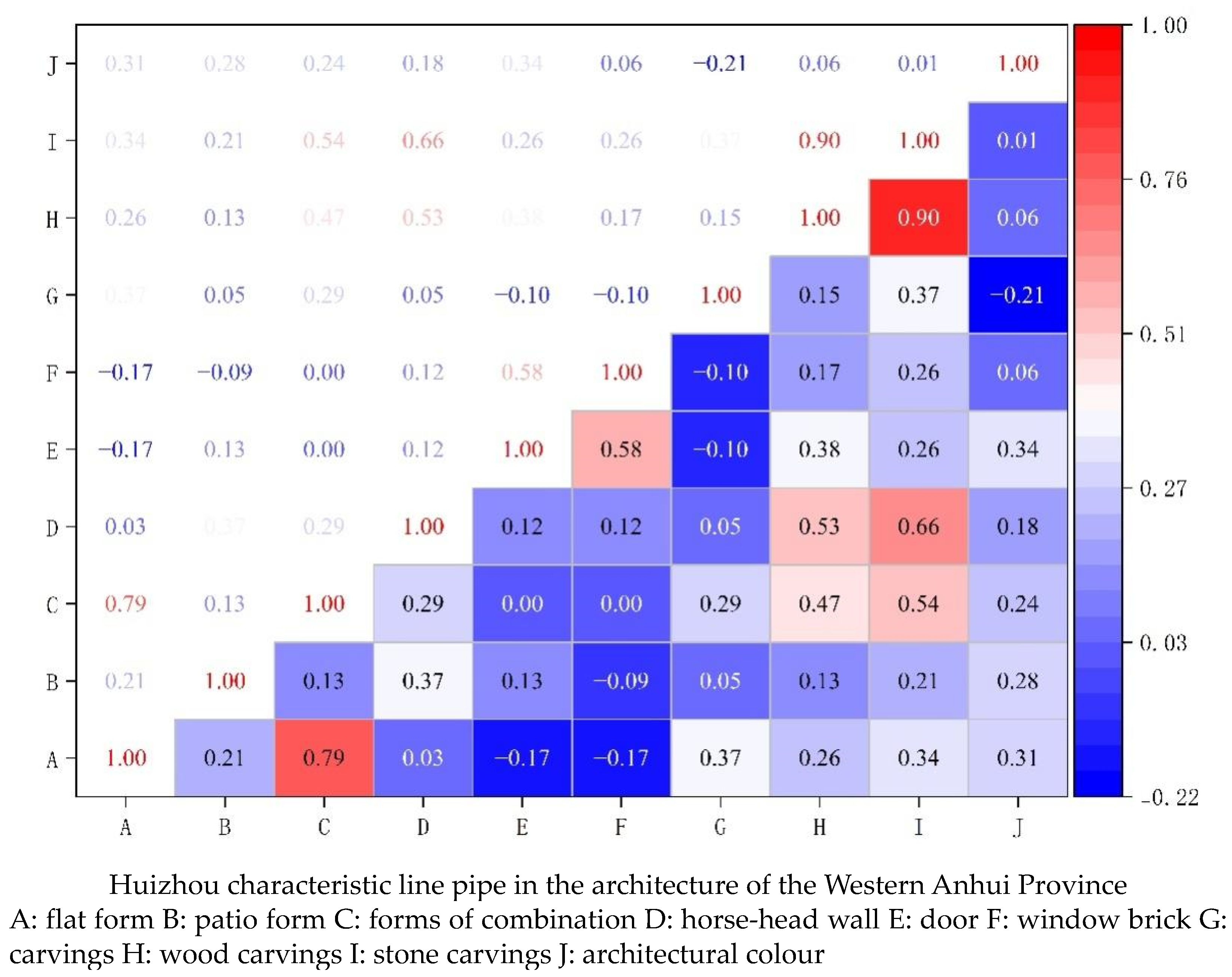
A feature encoding matrix comprising ten characteristics based on 20 architectural samples from Western Anhui was employed. Spearman’s rank correlation coefficient was utilised to measure the correlation between features. This correlation coefficient is suitable for assessing associations between binary categorical variables (0/1) and effectively reflects co-occurrence patterns among features. The results are presented in Figure 8.
(1)
Highly Correlated Feature Combinations
Wood carvings (H) and stone carvings (I) exhibit the strongest positive correlation (ρ = 0.90), indicating that these two decorative elements frequently co-occur in Western Anhui architecture. In the vast majority of samples, wood carvings and stone carvings either appear together or are absent simultaneously. This outcome reflects the systematic application of carved ornamentation in Western Anhui architecture, particularly within ancestral halls where both elements frequently co-occur to jointly constitute the decorative system. Plan form (A) exhibits a high correlation with combination form (C) (ρ = 0.79), confirming their intrinsic typological linkage: regularity in plan layout typically corresponds to systematicity in arrangement. Regularised floor plans (e.g., three courtyards with two inner courtyards) typically require corresponding arrangement methods (e.g., serialised) to achieve spatial organisation. Arrangement form (C) exhibits moderately high positive correlations with stone carving (I) (ρ = 0.54) and wood carving (H) (ρ = 0.48), indicating that buildings with more typical arrangement forms often employ greater quantities of carved ornamentation. Horse-head walls (D) and stone carvings (I) (ρ = 0.67), as well as horse-head walls (D) and wood carvings (H) (ρ = 0.53), similarly exhibit moderate positive correlations. This reflects the synergistic application of horse-head walls and carved ornamentation in clan architecture—where buildings employ horse-head walls to signal status, and carved decorations often accompany them to reinforce cultural expression. The correlation coefficient between doors (E) and windows (F) is ρ = 0.58, indicating a degree of design coordination between these core elements of the façade composition.
(2)
Negative Correlation Patterns
Plan form (A) exhibits a strong negative correlation with doors (E) (ρ = −0.17), while plan form (A) also shows a negative correlation with windows (F) (ρ = −0.17). Though the correlation strength is modest, the trend is consistent: buildings with greater plan regularity may exhibit weaker Huizhou-style characteristics in their doors and windows. This pattern may suggest a selective adoption of Huizhou characteristics within architecture, where some buildings prioritise imitating floor plans, while others focus on borrowing façade elements. Cases exhibiting both characteristics to a high degree are relatively rare. Architectural colour (J) exhibits a negative correlation with brick carving (G) (ρ = −0.21), while showing positive correlations with multiple other features, albeit at extremely low levels. This indicates that buildings employing the natural hues of local materials (colour feature = 0) tend to use carved ornamentation less frequently, and vice versa. This may reflect two distinct architectural value orientations: one emphasising material authenticity and regional adaptation, the other prioritising decorative craftsmanship and cultural expression.
(3)
Moderately Correlated Feature Combinations
Courtyard form (B) exhibits low to moderate positive correlations with stone carving (I) (ρ = 0.20588) and horse-head walls (D) (ρ = 0.37284). This suggests buildings with more typical courtyard forms may also favour other Huizhou-style features, though the association strength is relatively weak. Brick carvings (G) showed low to moderate positive correlations with stone carvings (I) (ρ = 0.36669) and wood carvings (H) (ρ = 0.15309), indicating a degree of synergy among carving-related features, though less pronounced than the strong association between wood and stone carvings. Door (E) and building colour (J) (ρ = 0.343), and window (F) and stone carving (I) (ρ = 0.25678) exhibit low positive correlations, indicating limited synergistic relationships between certain façade features and decorative elements.
(4)
Low-correlation feature combinations
Architectural colour (J) exhibits low absolute correlation values (|ρ| < 0.35) with most features, while courtyard form (B) shows weak correlations with certain features. This indicates these characteristics exhibit relatively independent distributions within Western Anhui architecture, their presence being less influenced by other features. Brick carving (G) and wood carving (H) (ρ = 0.15309) also exhibited low association, contrasting with the high correlation between wood carving and stone carving. This suggests that brick carving’s dissemination faces greater constraints. For feature combinations with high correlation coefficients (|ρ| > 0.8), variance inflation factors (VIFs) were further calculated to diagnose multicollinearity. Inverting the full correlation matrix yielded VIF values of 5.34 for wood carving (H) and 5.41 for stone carving (I), indicating moderate multicollinearity. In subsequent modelling or index construction, highly correlated features may be merged—such as combining wood and stone carving into a ‘carved ornamentation index’—to mitigate multicollinearity’s impact on analytical outcomes.

3.5. Summary of Results

Based on the above analysis, the associative patterns of Huizhou-style characteristics in Western Anhui architecture exhibit the following features: Carving-related features demonstrate high synergy, with wood carving and stone carving showing a strong positive correlation (ρ = 0.90). This reflects the systematic application of carved ornamentation in Western Anhui architecture, particularly in ancestral halls where both forms frequently occur in tandem. Plan characteristics and compositional features are intrinsically linked, with plan forms and compositional arrangements exhibiting a high correlation (ρ = 0.78), validating the inherent logic of architectural typology. Horse-head walls exhibit synergy with carved ornamentation, showing moderate positive correlations with stone carvings (ρ = 0.66) and wood carvings (ρ = 0.53). This is most evident in ancestral halls where all three features co-occur, reinforcing the structure’s authority and ceremonial significance. Architectural colour characteristics exhibit distinctiveness, showing a weak negative correlation with carved ornamentation. This may reflect divergent architectural value orientations between ‘material authenticity’ and ‘decorative craftsmanship’. Door–window associations demonstrate a moderate correlation. The coefficient between doors and windows (ρ = 0.58) indicates a degree of coordination, though not absolute synchrony. These findings provide quantitative evidence for understanding the selective transmission and synergistic application of Huizhou architectural characteristics within Western Anhui structures, while also establishing a data foundation for subsequent mechanism-based research.

4. Discussion

4.1. Scientific Rigour and Representativeness of Sample Selection

The sample selection process for this study established a four-dimensional scientific framework, systematically screening traditional architecture in the Western Anhui Province across four dimensions: spatial distribution equilibrium, structural integrity, typological representativeness, and spatial authenticity. This framework drew upon the ‘authenticity-first’ selection logic from cultural heritage conservation while integrating the fundamental principle of sampling theory to ‘ensure adequate representation of population characteristics’.
Specifically, (1) stratified sampling covered three topographical categories—mountainous, hilly, and river valley—to mitigate interference from singular geographical features on research conclusions; (2) a threshold of 80% for architectural plan integrity was set to guarantee the reliability and reproducibility of surveying data; (3) samples were selected from the National Register of Historic and Cultural Villages, excluding buildings with non-typical architectural features to guarantee representativeness; and (4) samples involving mixed-period renovations were excluded to avoid interference from modern design on traditional spatial prototypes. This screening framework provides a reliable data foundation for subsequent quantitative analysis and offers a reference methodology for traditional building research in other regions.

4.2. The Applicability and Limitations of the Research Framework

This study constructs a three-dimensional framework comprising ‘genetic map analysis—architectural feature coding—distribution pattern analysis’, enabling a systematic quantitative description of cross-regional architectural cultural transmission characteristics. Integrating qualitative typological analysis with quantitative statistical methods, this framework employs feature parameterisation coding, order and frequency weighting, proportional analysis, and Spearman’s correlation coefficient analysis to reveal the distribution frequency, typological variations, and inter-feature correlations of Huizhou-style characteristics within Western Anhui architecture.
Regarding methodological applicability, binary coding (0/1) provides a concise and effective pathway for establishing a unified quantitative foundation, enabling comparisons between diverse architectural structures and features. While this approach sacrifices rich information concerning ‘integration levels’ and ‘variation degrees,’ its core value lies in revealing the fundamental pattern of feature ‘presence or absence’—a prerequisite and foundation for subsequent in-depth research into ‘depth of influence.’ Regarding weight determination, this study employs an ordinal method grounded in questionnaire surveys, whose rationale manifests across multiple dimensions. This approach draws upon expert consensus regarding ‘which features most representatively embody Huizhou style,’ with weights reflecting cultural consensus rather than statistical characteristics. Within cultural transmission research, such ‘cognitive weighting’ complements ‘statistical weighting’ based on data dispersion. Despite respondents’ diverse backgrounds—encompassing scholars, artisans, heritage conservationists, and the general public—grouped statistical analysis reveals high consistency across groups in assessing feature significance. This indicates robust consensus on core Huizhou characteristics despite sample heterogeneity, lending stability to the weighting outcomes. The application of the Spearman’s correlation coefficient accurately reflects the co-occurrence relationship between binary variables, proving more suitable than the Pearson correlation coefficient. Findings such as the high co-occurrence of wood carving and stone carving (ρ = 0.90) and the weak negative correlation between doors and planar forms (ρ = −0.17) provide quantitative evidence for understanding the synergistic and selective relationships between features.
Nevertheless, this research framework retains several limitations. Firstly, the scope of feature selection remains limited. The ten features chosen primarily focus on easily observable and quantifiable morphological elements, with relatively insufficient coverage of deeper cultural dimensions such as construction techniques, spatial experience, and symbolic meaning. Although qualitative analysis provides some supplementation, the quantitative expression of cultural significance remains an area requiring future research breakthroughs. Second, the simplification of information through binary coding causes limitations. Reducing complex architectural forms to binary ‘presence/absence’ judgements facilitates quantitative analysis but sacrifices rich information regarding ‘degree of fusion’ and ‘degree of variation’. For instance, the curved horse-head walls in Western Anhui architecture represent a localised adaptation of Huizhou-style horse-head walls, yet binary coding can only record their ‘presence’ without reflecting their variant characteristics. Future research may adopt multi-valued coding, such as 0/1/2 representing ‘absent/variant/typical’, or continuous variable measurements like morphological parameters, to more precisely depict the gradual transitions and fusions occurring during the dissemination process. Thirdly, the sample size limits the analysis. Although the 20 core samples were rigorously selected to reflect the fundamental characteristics of Western Anhui, they remain insufficient for revealing finer spatial differentiation patterns, such as variations at the township level. Expanding the sample size and incorporating more architectural types, such as academies and memorial arches, will be crucial directions for subsequent research. Fourthly, causal interpretation is limited. This study aims to reveal patterns and correlations in feature distribution rather than test causal mechanisms. The correlations presented in Section 3.4 (e.g., the high correlation between wood carving and stone carving) reflect co-occurrence trends but cannot directly explain why they co-occur—such explanations require additional evidence from historical documents, artisan lineages, social networks, and other sources. The contribution of this research lies in providing verifiable quantitative findings and foundational data for subsequent causal investigations.

4.3. Cultural Contextual Interpretation of Feature Distribution Patterns

Combining the quantitative findings from Section 3.3 with historical records and field observations, this section offers a preliminary interpretation of the selective distribution pattern of Huizhou-style characteristics within Western Anhui architecture.
(1)
Potential Causes of Architectural Type Differentiation
Quantitative results indicate that the frequency of Huizhou-style features in ancestral halls (0.71) is significantly higher than in residential buildings (0.36). This disparity may relate to the social functions of the two building types: ancestral halls, as the core carriers of clan culture, fulfil public functions, such as worship, deliberation, and education, and their form is often strictly constrained by patrilineal ritual systems. Both Huizhou and Western Anhui were clan-based societies sharing a common recognition of ancestral worship as the core function of ancestral halls. Consequently, Huizhou-style layouts (three courtyards with two inner courtyards), façade elements (horse-head walls, gate towers), and decorative systems (three carvings) were widely adopted in Western Anhui ancestral halls. In contrast, residential architecture prioritised the practical demands of daily life, exhibiting lower adoption of Huizhou decorative elements. Only ‘functional core’ aspects like layout (courtyard arrangements, central axis symmetry) were assimilated.
(2)
Potential Explanations for Hierarchical Differentiation of Features
Across both building types, plan-related features (layout forms, courtyard configurations, compositional arrangements) appeared more frequently than decorative features (brick carvings, colour schemes). This gradient may reflect the ‘functionality-first’ principle in cultural transmission: floor plans directly influence a building’s utility (lighting, ventilation, drainage, spatial organisation), holding practical value for adapting to the mountainous, rainy climate of Western Anhui; whereas decorative features primarily carry cultural symbolism, their dissemination is constrained by multiple factors, including technical feasibility, economic cost, and aesthetic preferences.
Taking brick carving as an example, its frequency of occurrence in dwellings is merely 0.10, and even in ancestral halls it is only 0.30—significantly lower than that of wood carving (0.90) and stone carving (1.00). This phenomenon relates to brick carving’s ‘high threshold’ characteristics: it requires specialised blue-brick firing techniques, exquisite carving skills, and significant economic investment. The absence in Western Anhui of Huizhou merchants’ financial backing and professional artisan traditions, as seen in Huizhou, hindered brick carving’s widespread adoption. In contrast, stone carving materials were readily available locally and served both structural and decorative functions, thus achieving comprehensive application within ancestral halls.
(3)
Cultural Implications of Co-occurrence Patterns
The high co-occurrence of wood carving and stone carving (ρ = 0.90) reflects the systematic application of carved ornamentation in ancestral hall architecture. When clans possessed sufficient resources to construct a hall, they often employed multiple carving techniques simultaneously to demonstrate authority. The strong correlation between plan forms and combination forms (ρ = 0.78) confirms the inherent logic of architectural typology, where specific floor plans typically correspond to particular arrangement patterns.
Notably, door/window features exhibit weak negative correlations with plan features, such as door-plan form (ρ = −0.17) and window-plan form (ρ = −0.17). Though less pronounced than in earlier studies, this trend may suggest two distinct ‘pathways of Huizhou style adoption’. Some buildings prioritised imitating plan configurations—e.g., adopting courtyard layouts—while retaining fewer Huizhou characteristics in façade elements like doors and windows, and vice versa. However, this dichotomy is not absolute, as many buildings exhibit characteristics of both approaches, reflecting the local culture’s active adaptation and diverse selection of foreign elements.
(4)
Manifestations of Localised Innovation
Western Anhui architecture does not merely imitate Huizhou styles but incorporates localised innovations alongside absorption. For instance, while Huizhou horse-head walls predominantly feature stepped, linear forms, Western Anhui developed curved variants whose gentle curves adapt to undulating terrain. Huizhou courtyards emphasise the wealth-symbolising concept of ‘four waters converging in the hall’, whereas Western Anhui courtyards prioritise drainage functionality, incorporating concealed drainage systems to cope with rainy climates, as shown in Table 10. These variations demonstrate that cultural transmission is a bidirectional, interactive process. Foreign elements undergo adaptive transformation through interaction with local environments, technologies, and concepts, ultimately forming new regional characteristics.

4.4. Research Implications for the Conservation of Traditional Buildings

Research Implications for Traditional Building Conservation: The quantitative findings of this study provide scientific grounds for the conservation and restoration of traditional architecture in Western Anhui. Through systematic documentation of architectural features and the identification of distribution patterns, the research has established a characteristic spectrum and quantitative database for Western Anhui buildings, offering a foundational reference for assessing architectural value and formulating restoration strategies.
Taking the restoration simulations of the Gao Clan Ancestral Hall and Min Family New House as examples (see Table 11), we find the following: Plan level: based on the courtyard-drainage system characteristic of Western Anhui ancestral halls, the destroyed courtyard space was restored and drainage organisation improved. Elevation level: Given the high prevalence of horse-head walls in ancestral hall architecture (80%), these elements were augmented to reinforce the building’s authority. At the decorative level, modern cement repairs were removed and local materials employed to restore traditional appearance, guided by indigenous colour characteristics (predominantly ochre-brown). This ‘feature-oriented’ restoration strategy honours the traditional logic of regional architecture while providing flexibility to accommodate contemporary usage requirements.
Empirical evidence demonstrates that when traditional buildings face historical information gaps, accelerated natural erosion, and modern construction pressures, style analysis grounded in detailed survey data and locally adapted restoration strategies can effectively balance the dual imperatives of authenticity preservation and sustainable utilisation. The characteristic database and analytical methodology developed in this study may also provide technical support for traditional village conservation planning and architectural heritage assessment in Western Anhui.

5. Summary

This study employs Western Anhui as a case study, establishing a three-dimensional quantitative descriptive framework comprising ‘genetic map analysis—architectural feature coding—distribution pattern analysis’ to systematically measure and analyse the cross-regional dissemination characteristics of Huizhou architectural culture within Western Anhui. Through field surveys and quantitative research on 20 core samples (10 residential dwellings and 10 ancestral halls) in Western Anhui, it reveals the selective distribution patterns and typological differentiation of Huizhou characteristics within the region’s architecture.
(1)
Key Research Findings
The distribution of Huizhou-style characteristics within Western Anhui architecture exhibits pronounced typological differentiation. The overall frequency of Huizhou-style features in ancestral halls stands at 0.71, significantly higher than the 0.36 observed in residential buildings. Specifically, ancestral halls exhibit 100% coverage of stone carvings, 90% for combined forms with wood carvings and 80% for courtyard layouts, horse-head walls, and gate designs. This reflects their comprehensive adoption of Huizhou features as carriers of clan culture. In residential buildings, the frequency of three planar features—plan form, courtyard layout, and compositional arrangement—each reached 60%, while horse-head walls, brick carvings, and architectural colouring accounted for only 10%. This indicates that residential buildings selectively adopted Huizhou elements solely in functional layout, with limited incorporation of decorative features. Correlation analysis further reveals: that plan form and compositional arrangement showed a strong correlation (ρ = 0.78), validating the intrinsic logic of architectural typology; and door design exhibited a weak negative correlation with plan form (ρ = −0.17). Though less pronounced than in earlier studies, this may still suggest distinct ‘pathways of adoption’ for Huizhou characteristics, with some buildings emphasising plan form imitation, while others prioritised façade element borrowing—though these approaches are not mutually exclusive. Spatially, samples closer to Huizhou’s core region (e.g., Jinzhai County, Yu’an District) exhibit relatively higher frequencies of Huizhou-style characteristics, demonstrating a correlation with geographical proximity.
(2)
Methodological Contributions
This study’s three-dimensional analytical framework achieves a quantifiable, verifiable transformation in transregional architectural cultural transmission research. The genetic map analysis layer establishes a qualitative genealogy of Huizhou architecture’s core features, providing a benchmark for cross-regional comparison; the architectural feature coding layer converts building forms into comparable quantitative data through parametric transformation (0/1 assignment) and order-based objective weighting; the distribution pattern analysis layer systematically reveals feature distribution frequencies, typological variations, and inter-feature correlations by integrating methods such as proportion analysis, heatmap visualisation, and Spearman’s correlation coefficient analysis. The framework’s core contribution lies not in causal explanations of transmission mechanisms—which require further research design—but in providing systematic quantitative descriptive tools and foundational datasets for related studies. The established 20-building feature coding matrix for Western Anhui, the 10-item weighting system, and the feature correlation matrix all offer methodological references and data foundations for subsequent research.
(3)
Practical Implications
The established architectural feature spectrum and quantitative database for Western Anhui provide scientific grounds for the conservation and restoration of traditional buildings. Simulated restoration scenarios for the Gao Clan Ancestral Hall and Min Family New House demonstrate that restoration strategies grounded in characteristic distribution patterns—such as the 80% prevalence of horse-head walls in ancestral halls and the prioritisation of local material colours—achieve a balance between respecting regional traditions and adapting to contemporary needs. The developed feature identification and coding methodology also offers technical support for traditional village conservation planning and architectural heritage assessment in Western Anhui.
(4)
Research Limitations and Future Prospects
This study presents the following limitations:
Sample scale and scope: The core analysis comprises 20 buildings concentrated in central Western Anhui. Future research should incorporate additional samples from the Dabie Mountains region, such as Northern Lu’an and Western Anqing, to construct a more comprehensive spatial distribution model. Simplification of Feature Encoding: Binary coding loses information regarding ‘integration levels’ and ‘variation degrees.’ Future work may introduce multi-valued coding (0/1/2) or continuous variable measures, such as morphological parameters, to more precisely characterise gradual changes and innovations during the dissemination process. The absence of temporal dimensions: Current analysis centres on synchronic feature distribution, failing to reveal diachronic evolutionary patterns. Future work should integrate archival records and period-specific surveys to analyse the transmission and variation in Huizhou-style characteristics across historical eras. Limitations of causal interpretation: This study aims to reveal feature distribution patterns rather than test causal mechanisms. Subsequent work may incorporate social network analysis to map craftsmanship transmission pathways, while collaborative research with anthropology and history could explore clan systems and migratory patterns, advancing architectural cultural transmission studies towards multidisciplinary integration.
In summary, through methodological innovation and empirical analysis, this study provides a quantitative descriptive framework and foundational data for understanding the transregional dissemination of Huizhou architectural culture. The revealed selective distribution patterns—where architectural typology determines acceptance levels, functional requirements dictate dissemination priorities, and technical-economic conditions constrain dissemination depth—offer a testable academic foundation for subsequent theoretical development and conservation practice.

Author Contributions

Conceptualisation, T.H. and G.Z.; methodology, Q.W.; validation, Q.W. and H.L.; formal analysis, H.L. and G.Z.; investigation, G.Z. and T.H.; resources, Q.W. and X.B.; data curation, J.F. and W.Z.; writing—original draft preparation, H.L. and G.Z.; writing—review and editing, Q.W. and G.Z.; visualisation, Q.W.; supervision, T.H. and H.Y.; translation, H.Y.; funding acquisition, T.H. All authors have read and agreed to the published version of the manuscript.

Funding

This research was supported by the following funding: Projects funded by the Ministry of Education’s Planning Fund for Humanities and Social Sciences Research [Project No.:25YJA710017]; Anhui Provincial University Collaborative Innovation Project [Project No.: GXXT-2023-082]; Research and Innovation Team on Regional Human Settlements and Spatial Intelligence Perception [Project No.: 2022AH010021].

Data Availability Statement

The original contributions presented in this study are included in the article. Further inquiries can be directed to the corresponding author. The raw data supporting the conclusions of this article will be made available by the authors upon request.

Acknowledgments

We express our profound thanks to all individuals who participated in this study and its associated experiments; their contributions and dedication form the essential foundation upon which this thesis was built.

Conflicts of Interest

The authors declare no conflicts of interest.

References

  1. Wang, K.D. Current New Progress in Huizhou Studies. Available online: http://hnskl.org/shekedongtai/20250517/17374.html (accessed on 13 March 2026). (In Chinese)
  2. Huizhou Culture: Millennium Heritage and New Mission of the Times Published in Qiushi Journal. Available online: http://ah.anhuinews.com/szxw/202511/t20251102_8885503.html (accessed on 13 March 2026). (In Chinese)
  3. Kuang, G.L. Signed Article in Study Times: New Huizhou Studies Going Global. Available online: https://hwy.ahu.edu.cn/2023/0529/c15754a308789/page2.htm (accessed on 13 March 2026). (In Chinese)
  4. Zhou, X.G. Zhou Xiaoguang: Historical Contributions and Contemporary Value of Huizhou Culture. Anhui Daily. Available online: https://hwy.ahu.edu.cn/2018/1120/c15749a190880/page.htm (accessed on 13 March 2026). (In Chinese)
  5. Weng, F. What is the International Influence of Huizhou Culture? Available online: https://www.ah.chinanews.com.cn/news/2024/0404/324946.shtml (accessed on 13 March 2026). (In Chinese)
  6. Guo, X.X. A Study on the Transmission of Huizhou Horse-Head Wall Form Culture from the Perspective of Migration. Master’s Thesis, Jimei University, Xiamen, China, 2023. (In Chinese) [Google Scholar]
  7. Fan, J.M. The Disputes between Huizhou Merchants and Local Residents in the Qing Dynasty: A Case Study of the Huizhou Guild Hall in Liu’an. J. Anhui Univ. 2005, 116–121. (In Chinese) [Google Scholar]
  8. Wang, X.D.; Guo, X.X. Interpreting the Transmission of Huizhou Horse-Head Wall Form Culture from the Perspective of Migration. J. Jingdezhen Univ. 2023, 38, 80–84. (In Chinese) [Google Scholar]
  9. Fang, Q.; Li, Z. Cultural Ecology Cognition and Heritage Value of Huizhou Traditional Villages. Heliyon 2022, 8, e12627. [Google Scholar] [CrossRef] [PubMed]
  10. Niu, T.T.; Hong, T. Research on Reuse Strategy of Traditional Dwellings in Southern Anhui Province. Ind. Constr. 2014, 44, 17–22+26. (In Chinese) [Google Scholar] [CrossRef]
  11. Li, Z.; Cheng, G.; Wang, Q.; Gao, M.F.; Fang, Q.L. Research on Digital Perception Technology of Huizhou Traditional Villages under the Goal of Centralized and Continuous Protection and Utilization. J. Nat. Resour. 2025, 40, 402–422. (In Chinese) [Google Scholar]
  12. Sun, X.; Li, Z.; Cai, Y.Q.; Gao, X. Feature Analysis of Traditional Commercial Districts in Southern and Western Anhui Based on Semantic Ontology. Ind. Constr. 2022, 52, 125–132+48. (In Chinese) [Google Scholar] [CrossRef]
  13. Leng, X.P.; Chen, J.X. A Study on the Possibility of Architectural Media with Traditional Huizhou Residential Architecture and Its Decoration as Examples. Huazhong Archit. 2013, 31, 177–182. (In Chinese) [Google Scholar] [CrossRef]
  14. Zhong, J.; Chen, X.L. Research on Spatial Distribution and Evolution Characteristics of Huizhou Ancient Architectural Heritage. J. Shenyang Jianzhu Univ. (Soc. Sci. Ed.) 2024, 26, 565–573. (In Chinese) [Google Scholar]
  15. Xu, F.M. A Study on the Architectural Style Characteristics of Traditional Village Dwellings Based on Grounded Theory: A Case Study of the Dabie Mountain Area in Western Anhui. J. Huainan Norm. Univ. 2023, 25, 80–86. (In Chinese) [Google Scholar]
  16. de-Miguel-Rodriguez, J.; Requena-Garcia-Cruz, M.V.; Romero-Sánchez, E.; Morales-Esteban, A. Automated Building Typology Clustering and Identification Using a Variational Autoencoder on Digital Land Cadastres. Results Eng. 2025, 26, 105232. [Google Scholar] [CrossRef]
  17. Zhang, K.Y. Research on Architecture and Environment Design of Mei Shan Cultural Park Based on Architectural Typology. Master’s Thesis, Hunan University, Changsha, China, 2019. (In Chinese) [Google Scholar]
  18. Moore, D.S. Statistics among the Liberal Arts. J. Am. Stat. Assoc. 1998, 93, 1253–1259. [Google Scholar] [CrossRef]
  19. Shou, T. Research on the Tectonic System of Huizhou Vernacular Architecture. Ph.D. Thesis, Southeast University, Nanjing, China, 2022. (In Chinese) [Google Scholar]
  20. Wang, Q.; Yuan, Q.; Li, Z.; Cheng, G.; Gao, X.; Li, M.; Ma, X. Study on the Spatial Relationships of Traditional Regional Dwellings in Huizhou District. npj Herit. Sci. 2025, 13, 238. [Google Scholar] [CrossRef]
  21. Habib, F.; Etesam, I.; Ghoddusifar, S.H.; Mohajeri, N. Correspondence Analysis: A New Method for Analyzing Qualitative Data in Architecture. Nexus Netw. J. 2012, 14, 517–538. [Google Scholar] [CrossRef]
  22. Wang, Q.; Li, Z.; Gao, X.; Ye, M.S. Construction Method and Feature Analysis of Semantic System for Regional Vernacular Architecture Features: A Case Study of Huizhou Area. Zhuangshi 2019, 94–97. (In Chinese) [Google Scholar] [CrossRef]
  23. Sojobi, A.O.; Liew, K.M. Flexural Behaviour and Efficiency of CFRP-Laminate Reinforced Recycled Concrete Beams: Optimization Using Linear Weighted Sum Method. Compos. Struct. 2021, 260, 113259. [Google Scholar] [CrossRef]
  24. Lucas Segarra, E.; Ramos Ruiz, G.; Fernández Bandera, C. Probabilistic Load Forecasting for Building Energy Models. Sensors 2020, 20, 6525. [Google Scholar] [CrossRef]
  25. Pei, Q.; Zhang, D.D.; Lee, H.F. Contextualizing Human Migration in Different Agro-Ecological Zones in Ancient China. Quat. Int. 2016, 426, 65–74. [Google Scholar] [CrossRef]
  26. Hu, X.; Li, H.; Zhang, X.; Chen, X.; Yuan, Y. Multi-Dimensionality and the Totality of Rural Spatial Restructuring from the Perspective of the Rural Space System: A Case Study of Traditional Villages in the Ancient Huizhou Region, China. Habitat Int. 2019, 94, 102062. [Google Scholar] [CrossRef]
  27. Jin, N.L.; Che, L.C. Analysis of the Dwelling Form Culture of Western Anhui Grand Houses: A Case Study of the Ming Dynasty Ancient Residential Buildings in Nanhe Xinwu Bay, Tiantangzhai. J. Anhui Jianzhu Univ. 2016, 24, 85–90. (In Chinese) [Google Scholar]
  28. Pei, Y.; Gong, K.; Leng, J. Study on the Inter-Village Space of a Traditional Village Group in Huizhou Region: Hongguan Village Group as an Example. Front. Archit. Res. 2020, 9, 588–605. [Google Scholar] [CrossRef]
  29. Yi, T.; Liou, S.-R.; Tai, J.; Zhou, J. Analysis of Correlation Features in Material Application for Architectural Design Based on Big Data Text Mining. Buildings 2024, 14, 2832. [Google Scholar] [CrossRef]
  30. Zou, H.; Ge, J.; Liu, R.; He, L. Feature Recognition of Regional Architecture Forms Based on Machine Learning: A Case Study of Architecture Heritage in Hubei Province, China. Sustainability 2023, 15, 3504. [Google Scholar] [CrossRef]
  31. Fang, H.; Ji, X.; Chu, Y.; Nie, L.; Wang, J. Study on Skywell Shape in Huizhou Traditional Architecture Based on Outdoor Wind Environment Simulation. Sustainability 2023, 15, 8270. [Google Scholar] [CrossRef]
  32. Shan, D.Q. Huizhou Houses; China Architecture & Building Press: Beijing, China, 2009. (In Chinese) [Google Scholar]
  33. Chen, K.; Li, Y.; Cao, Y. A Study on the Space Characteristics of Ancient Ancestral Temples in the Taiping District of East China. J. Asian Archit. Build. Eng. 2016, 15, 365–372. [Google Scholar] [CrossRef]
  34. Zhang, Y. The Ancestral Hall and Ancestor Veneration Narrative of a Huizhou Lineage in Ming–Qing China. J. Asian Archit. Build. Eng. 2023, 22, 2006–2019. [Google Scholar] [CrossRef]
  35. Wang, G.; Huang, W.; Xu, Q. Constructing a Semantic System of Facade Elements for Religious Architecture from a Regional Perspective: A Case Study of Jingzhou. Buildings 2024, 14, 3147. [Google Scholar] [CrossRef]
  36. Cheng, G.; Li, Z.; Xia, S.; Gao, M.; Ye, M.; Shi, T. Research on the Spatial Sequence of Building Facades in Huizhou Regional Traditional Villages. Buildings 2023, 13, 174. [Google Scholar] [CrossRef]
  37. Tao, J.J.; Fang, J.Y.; Guan, J.L. Exploration of Grey Space in Jiangsu-Anhui Regional Architecture. Art Educ. Res. 2024, 104–106. (In Chinese) [Google Scholar]
  38. Cao, Z.; Mustafa, M.B. A Study of Ornamental Craftsmanship in Doors and Windows of Hui-Style Architecture: The Huizhou Three Carvings (Brick, Stone, and Wood Carvings). Buildings 2023, 13, 351. [Google Scholar] [CrossRef]
  39. Fang, X.; Li, L.; Gao, Y.; Liu, N.; Cheng, L. Expressing the Spatial Concepts of Interior Spaces in Residential Buildings of Huizhou, China: Narrative Methods of Wood-Carving Imagery. Buildings 2024, 14, 1414. [Google Scholar] [CrossRef]
  40. Cheng, G.; Li, Z.; Cheng, Z.; Zhang, Y.; Wang, Q.; Shao, W.; Shi, T. Similarity and Stability: A Study on the Color Features of Regional Built Spaces-Taking Chinese Hui-Style Architecture as an Example. J. Asian Archit. Build. Eng. 2025, 24, 3625–3653. [Google Scholar] [CrossRef]
  41. Lin, X.; Zhang, Y.; Wu, Y.; Yang, Y. Assessment of Architectural Typologies and Comparative Analysis of Defensive Rammed Earth Dwellings in the Fujian Region, China. Buildings 2024, 14, 3652. [Google Scholar] [CrossRef]
  42. Güzelci, O.Z.; Türel, A. A Comparative Study of Existing and Current On-Site Documentation of Anatolian Seljuk Kümbets. Digit. Appl. Archaeol. Cult. Herit. 2025, 39, e00472. [Google Scholar] [CrossRef]
  43. Zhao, P.; Miao, Q.; Song, J.; Qi, Y.; Liu, R.; Ge, D. Architectural Style Classification Based on Feature Extraction Module. IEEE Access 2018, 6, 52598–52606. [Google Scholar] [CrossRef]
  44. An, H.-S.; Jeon, Y.-C.; Kim, S.-W. Digital Architectural Form Generation Through Pixel System-Driven Image Feature Information. Buildings 2024, 14, 3635. [Google Scholar] [CrossRef]
  45. Xia, X.; Li, T. Building-Specific Recognition Algorithms Based on Image Sequence. IEEE Sens. J. 2020, 20, 12057–12064. [Google Scholar] [CrossRef]
  46. Li, H.; Chen, X.; Xu, J. Western Architectural Ornamental Art in Traditional Chinese Architecture: A Case Study of Tengchong City Based on Interdisciplinary Approach. J. Asian Archit. Build. Eng. 2025, 24, 4718–4741. [Google Scholar] [CrossRef]
  47. Morago, B.; Bui, G.; Duan, Y. 2D Matching Using Repetitive and Salient Features in Architectural Images. IEEE Trans. Image Process. 2016, 25, 4888–4899. [Google Scholar] [CrossRef]
Figure 1. Architectural methodology technology roadmap (source: drawn by the authors).
Buildings 16 01187 g001
Figure 2. Map of the study area (Source: drawn by the authors). DEM data are sourced from the geospatial data cloud, with an accuracy of 30 m. https://www.gscloud.cn/ (accessed on 1 June 2025).
Buildings 16 01187 g002
Figure 3. Questionnaire details and personnel composition (source: drawn by the authors).
Buildings 16 01187 g003
Figure 4. Sangji Map of architectural zones in Western Anhui Province (source: drawn by the authors).
Buildings 16 01187 g004
Figure 5. Feature distribution heatmap (source: drawn by the authors).
Buildings 16 01187 g005
Figure 6. Box plot of the influence coefficient of the Huizhou style in Anhui Western architecture (source: drawn by the authors).
Buildings 16 01187 g006
Figure 7. Statistical chart of Huizhou-style features in Anhui Western architecture (dource: drawn by the authors).
Buildings 16 01187 g007
Figure 8. Correlation coefficient diagram between Huizhou style characteristics in Anhui Western architecture (source: drawn by the authors).
Buildings 16 01187 g008
Table 1. Selection criteria for architectural samples in Western Anhui (photographed by the authors).
Building Sample Selection
Building DistributionThe building is located in the core area of Western Anhui.Buildings 16 01187 i001Buildings 16 01187 i002Buildings 16 01187 i003
Central AnhuiNon-core areaNon-core area
Structural integrityThe structural integrity of the building is at or above 80%.Buildings 16 01187 i004Buildings 16 01187 i005Buildings 16 01187 i006
Subject integrityPartial collapseDilapidated
Landscape featuresTraditional Anhui Western architecture with regional characteristicsBuildings 16 01187 i007Buildings 16 01187 i008Buildings 16 01187 i009
Traditional appearanceReligious buildingsEuropean architecture
Spatial functionsThe original functional space of the building is lost through renovation or updating.Buildings 16 01187 i010Buildings 16 01187 i011Buildings 16 01187 i012
Keep the original functionRenovate a bed and breakfastRenovation Exhibition
Regional data are mainly sourced from the Resource and Environmental Science Data Platform website. https://www.resdc.cn/ (accessed on 1 June 2025).
Table 2. Plan form of Hui-style architecture (Source: drawn by the authors).
TypePlane FeaturePlane Features of Huizhou Architecture
Plan formResidential architectureBuildings 16 01187 i013Buildings 16 01187 i014Buildings 16 01187 i015Buildings 16 01187 i016
凹-shaped (concave)回-shaped (enclosure)H-shaped日-shaped (rectangular with an interior courtyard)
Ancestral hall formBuildings 16 01187 i017
Three halls and two courtyards
Patio formBuildings 16 01187 i018Buildings 16 01187 i019Buildings 16 01187 i020Buildings 16 01187 i021
凹-shaped (concave) 回-shaped (enclosure) H-shaped日-shaped (rectangular with an interior courtyard)
Forms of combinationBuildings 16 01187 i022Buildings 16 01187 i023Buildings 16 01187 i024Buildings 16 01187 i025
Series combinationParallel combinationSeries-parallel combination
Table 3. Diagram of the facade characteristics of Huizhou architecture (photographed by the authors).
Features of Huizhou-Style Facades
Horse-head wallBuildings 16 01187 i026Buildings 16 01187 i027Buildings 16 01187 i028
Magpie-tail-style horse-head wallSitting kiss-style horse-head wallPrinting block-style horse-head wall
doorBuildings 16 01187 i029Buildings 16 01187 i030Buildings 16 01187 i031
Canopy-style door八-shaped door (splayed)House-shaped door
windowBuildings 16 01187 i032Buildings 16 01187 i033Buildings 16 01187 i034
Wooden windowLattice windowIrregularly shaped window
Table 4. Characteristics of Huizhou-style architectural decoration (photographed by the authors).
Decorative Features of Huizhou Architecture
Brick carvingsBuildings 16 01187 i035Buildings 16 01187 i036Buildings 16 01187 i037
EavesWall tilesEaves board
Wood carvingsBuildings 16 01187 i038Buildings 16 01187 i039Buildings 16 01187 i040
TrussCorbelBracing
Stone carvingsBuildings 16 01187 i041Buildings 16 01187 i042Buildings 16 01187 i043
Drum stoneColumn baseStone lion
Architectural colourBuildings 16 01187 i044Buildings 16 01187 i045Buildings 16 01187 i046
Colourful paintings on horse-head wallsWhite wallGrey tile
Table 5. Plan view of Anhui Western architecture (source: drawn by the authors).
Flat Features of Anhui Western Architecture
Plan formBuildings 16 01187 i047Buildings 16 01187 i048
Ancestral hall architectureResidential architecture
Patio formBuildings 16 01187 i049Buildings 16 01187 i050
Courtyard styleCourtyard style
Forms of combinationBuildings 16 01187 i051Buildings 16 01187 i052
Ancestral hall architectureResidential architecture
Table 6. Characteristics of the facades of buildings in Western Anhui (photographed by the authors).
Architectural Facade Characteristics of Western Anhui
Horse-
head wall
Buildings 16 01187 i053Buildings 16 01187 i054Buildings 16 01187 i055
Straight horse-head wallCurved horse-head wallStraight-curved mixed-shaped horse-head wall
DoorBuildings 16 01187 i056Buildings 16 01187 i057Buildings 16 01187 i058
Canopy-style door八-shaped door (splayed)House-style door
WindowBuildings 16 01187 i059Buildings 16 01187 i060Buildings 16 01187 i061
Wooden windowLattice windowIrregularly shaped window
Table 7. Characteristics of Anhui Western architectural decoration (photographed by the authors).
Anhui Western Construction and Decoration Special
Brick carvingsBuildings 16 01187 i062Buildings 16 01187 i063Buildings 16 01187 i064
Door panel brick carvingWall eaves brick carvingWall tile carving
Wood carvingsBuildings 16 01187 i065Buildings 16 01187 i066Buildings 16 01187 i067
Moon beam wood carvingWooden carving on a railingWooden carving of a diagonal brace
Stone carvingsBuildings 16 01187 i068Buildings 16 01187 i069Buildings 16 01187 i070
Column baseStone lionDrum stone
Architectural colourBuildings 16 01187 i071Buildings 16 01187 i072Buildings 16 01187 i073
Roof colourWall coloursInternal colour
Table 8. Analysis of examples of ancestral hall architecture and residential architecture (source: drawn by the authors).
Residential Architecture—Old House in Bailouqiu
Architectural LayersImage displayArchitectural featuresAnalysisFeatures
Planar featuresBuildings 16 01187 i074Flat formThe building plan is a regular rectangle.1
Patio formThe construction of the courtyard is consistent with that of Huizhou-style architecture.1
Forms of combinationThe building is a combination of series and parallel structures.1
Elevation featuresBuildings 16 01187 i075Horse-head wallThe architectural horse-head walls are consistent with the Huizhou style.1
DoorThe architectural style of the doors is inconsistent with that of Huizhou architecture.0
WindowNo windows on the exterior facade of the building0
Decorative featuresBuildings 16 01187 i076Brick carvingsBrick carvings used in the walls of buildings1
Wood carvingsWooden carvings in architecture1
Stone carvingsThe building has stone carving components.1
Architectural colourThe building has an overall yellowish-brown colour.0
Ancestral hall architecture—Jiang Family Ancestral Hall
Architectural LayersImage displayArchitectural featuresAnalysisFeatures
Planar featuresBuildings 16 01187 i077Flat formThe building is T-shaped.0
Patio formThe construction of the courtyard is consistent with that of Huizhou-style architecture.1
Forms of combinationThe building is a combination of series and parallel connections.1
Elevation featuresBuildings 16 01187 i078Horse-head wallThe architectural horse-head walls are consistent with the Huizhou style.1
DoorThe architectural door is in the form of a signboard door.1
WindowThe form of architectural windows is lattice windows.1
Decorative featuresBuildings 16 01187 i079Brick carvingsNo brick carving components in the building0
Wood carvingsWooden carvings in architecture1
Stone carvingsStone carvings in architecture1
Architectural colourThe overall colour of the building is yellowish brown.0
Table 9. Weighting of Huizhou characteristics (source: drawn by the authors).
Architectural FeaturesFeature DescriptionRankingWeight Assignment
Flat formThe design, centred on axial symmetry and courtyards, laid the foundation for the spatial aesthetics of Huizhou architecture.30.145
Courtyard formAs a core space for interaction between architecture and nature, its functionality and cultural significance are equally important.20.164
Forms of combinationDemonstrates the wisdom of modular expansion, adapting to the needs of family living.80.055
Horse-head wallAs the most recognisable symbol of Huizhou architecture, its cultural significance and visual impact are unmatched.10.182
DoorAs the face of a building, gate towers reflect the hierarchical system and cultural aspirations of a society.40.127
WindowAlthough it combines practicality and decorative functions, its representativeness in the overall style is relatively weak.100.018
Brick carvingsAs a representative of decorative art, it embodies the pinnacle of sculptural craftsmanship.60.091
Wood carvingsWidely used and rich in subject matter, it is an important part of Huizhou architectural art.70.073
Stone carvingsAlthough its application is limited, it is highly skilled and complements wood carving and brick carving.90.036
Architectural colourThe colour combination of white walls and black tiles constitutes the unique visual identity of Huizhou architecture.50.109
Table 10. Functional composition and spatial sequence of Anxi Ancestral Halls (source: drawn by the authors).
Architectural Form
SpaceBuildings 16 01187 i080Aerial Photograph
Buildings 16 01187 i081Buildings 16 01187 i082
Spatial Type
SpacePatioHallUtility roomEast wing-room
PhotoBuildings 16 01187 i083Buildings 16 01187 i084Buildings 16 01187 i085Buildings 16 01187 i086
Location featureEnclosed by building or wallsImportant position in the spindleSide room on the ground floor or auxiliary room behind the courtyardLocated on the east side of the central axis
Core functionPublic apace
(drying/festival)
Reception use
(wedding/funeral/
Official meeting)
Sundry space
(store farm tools and grain/maintain tidiness)
Flexible use
(study/storage space)
Spatial Type
SpaceWest wing-roomStairwellCourtyardCorner wing-room
PhotoBuildings 16 01187 i087Buildings 16 01187 i088Buildings 16 01187 i089Buildings 16 01187 i090
Location featureLocated on the west side of the central axisLocated on both sides of the courtyard or in the mezzanine behind the hallOn the central axis of the building, either in the centre of the building or at the top and bottom of the building.Corners of the interior first floor
Core functionFlexible use
(study/storage space)
Traffic connection
(connect floors/decorated with carved patterns)
Transport circulation space
(lie fallow/function)
Flexible use
(study/storage space)
Table 11. Renovation and restoration of a sample of traditional houses and ancestral hall buildings (Source: drawn by the authors).
Gao Ancestral Hall Repair and Renovation Program
Buildings 16 01187 i091Buildings 16 01187 i092Buildings 16 01187 i093Buildings 16 01187 i094
Buildings 16 01187 i095Buildings 16 01187 i096
Buildings 16 01187 i097Buildings 16 01187 i098
Status quo before remodelingPlane function before remodellingModified modelFunctionality of remodelled floor plan
Minjia New House Repair and Renovation Program
Buildings 16 01187 i099Buildings 16 01187 i100Buildings 16 01187 i101Buildings 16 01187 i102
Buildings 16 01187 i103Buildings 16 01187 i104
Status quo before remodelingPlane function before remodellingModified modelFunctionality of remodelled floor plan
Disclaimer/Publisher’s Note: The statements, opinions and data contained in all publications are solely those of the individual author(s) and contributor(s) and not of MDPI and/or the editor(s). MDPI and/or the editor(s) disclaim responsibility for any injury to people or property resulting from any ideas, methods, instructions or products referred to in the content.