Heritage Building Meets Feng Shui: Validating Wind Comfort Logic in a Beijing Siheyuan by CFD and Field Experiments


Abstract
1. Introduction
1.1. Research Background
1.2. Literature Review
1.3. Research Contributions
2. Research Object and Methods
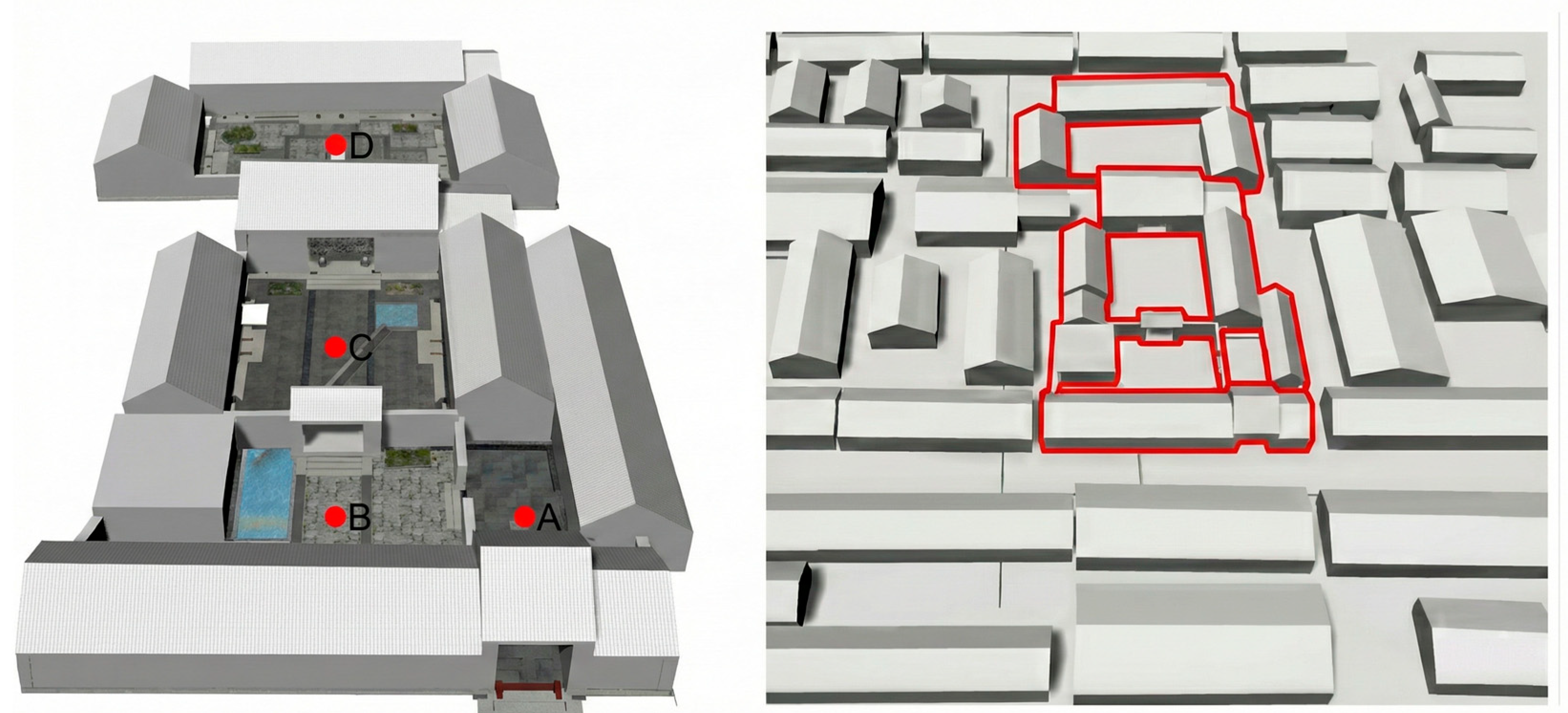
2.1. Research Object: Dongsi-Sitiao-77 Siheyuan
2.2. Comparative Study Method
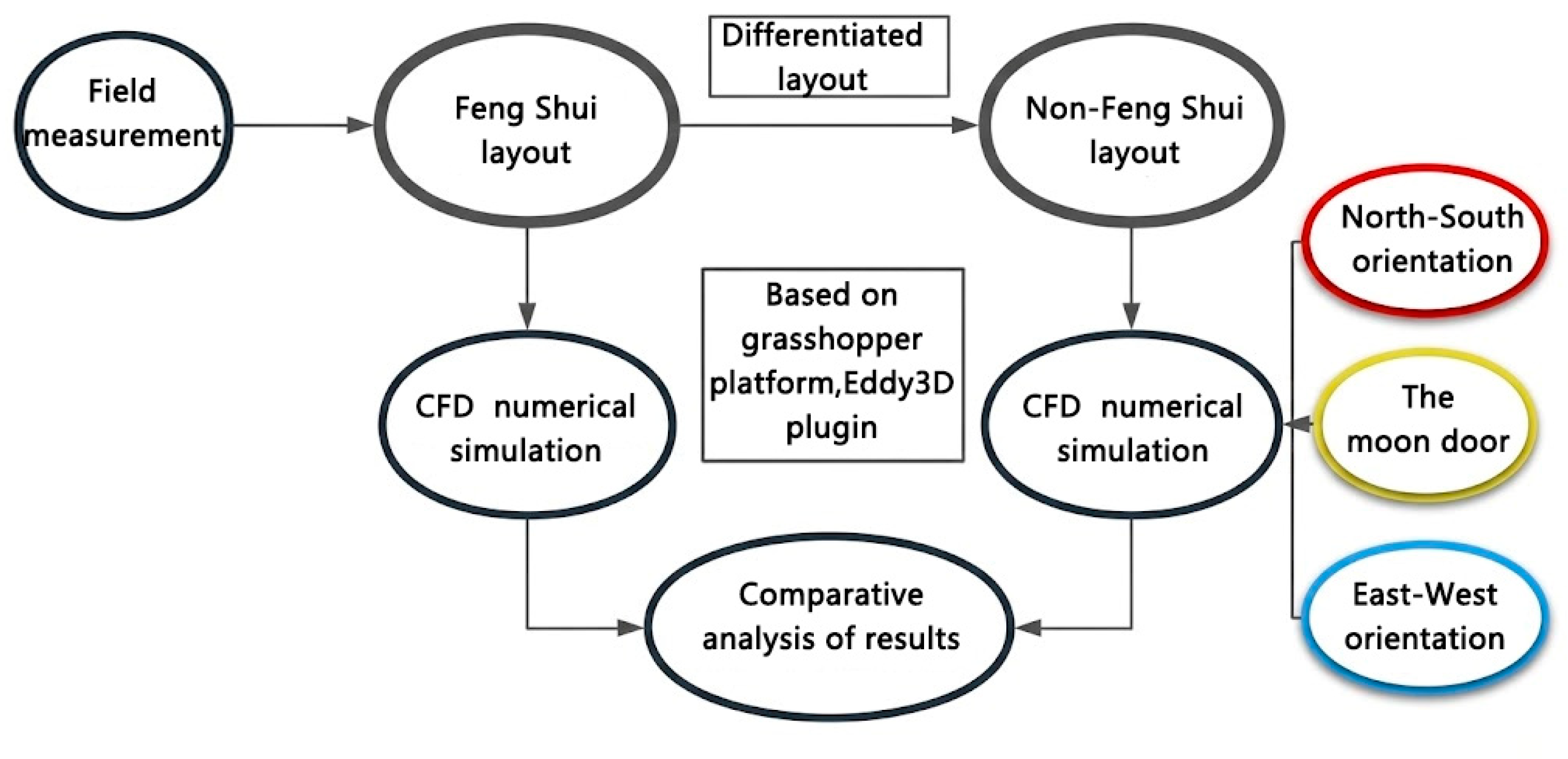
2.3. Research Framework
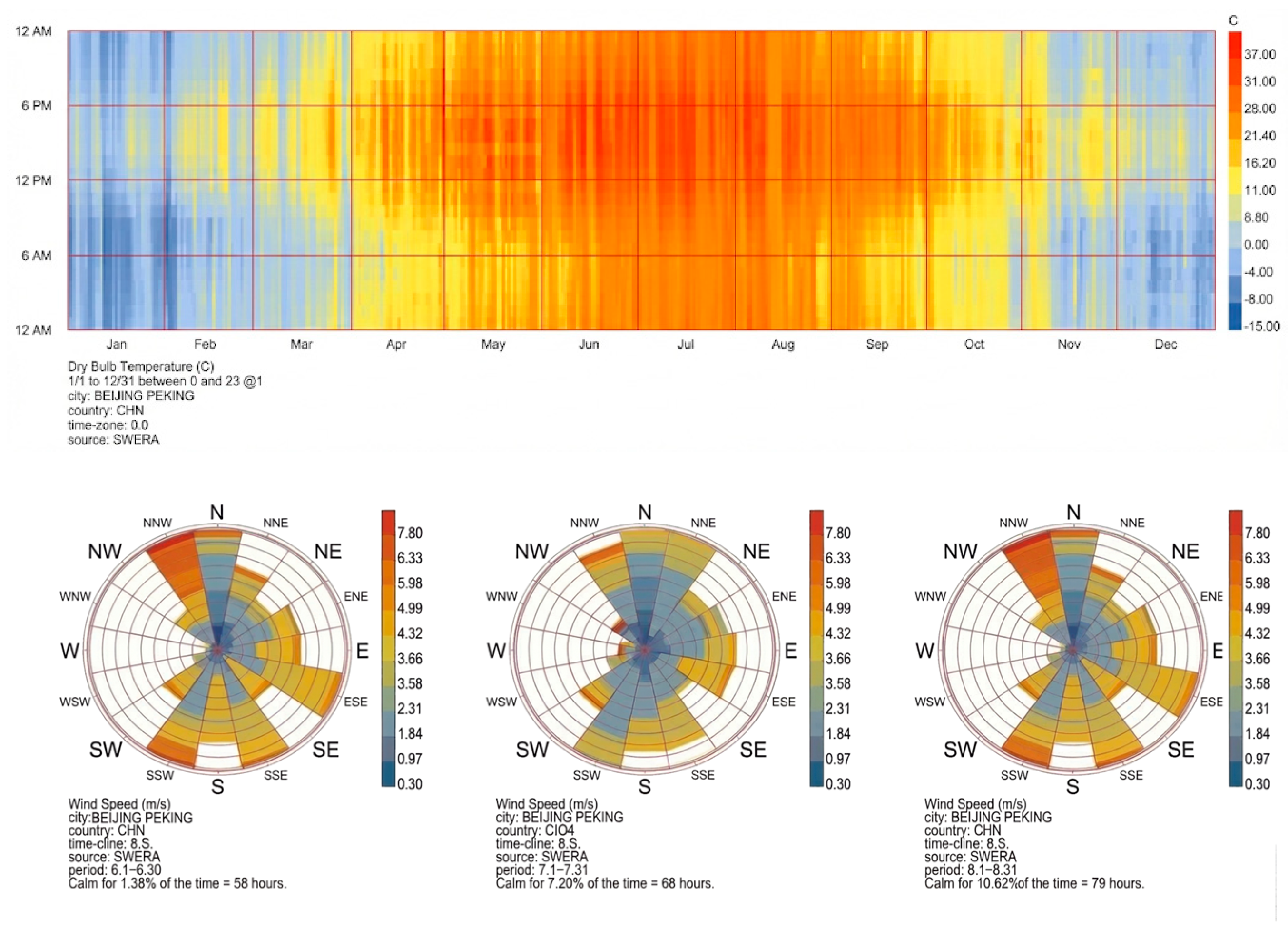
2.4. Evaluation Criteria of Wind Environment in Summer
2.5. Wind Environment Experiment
2.5.1. CFD Simulation Settings
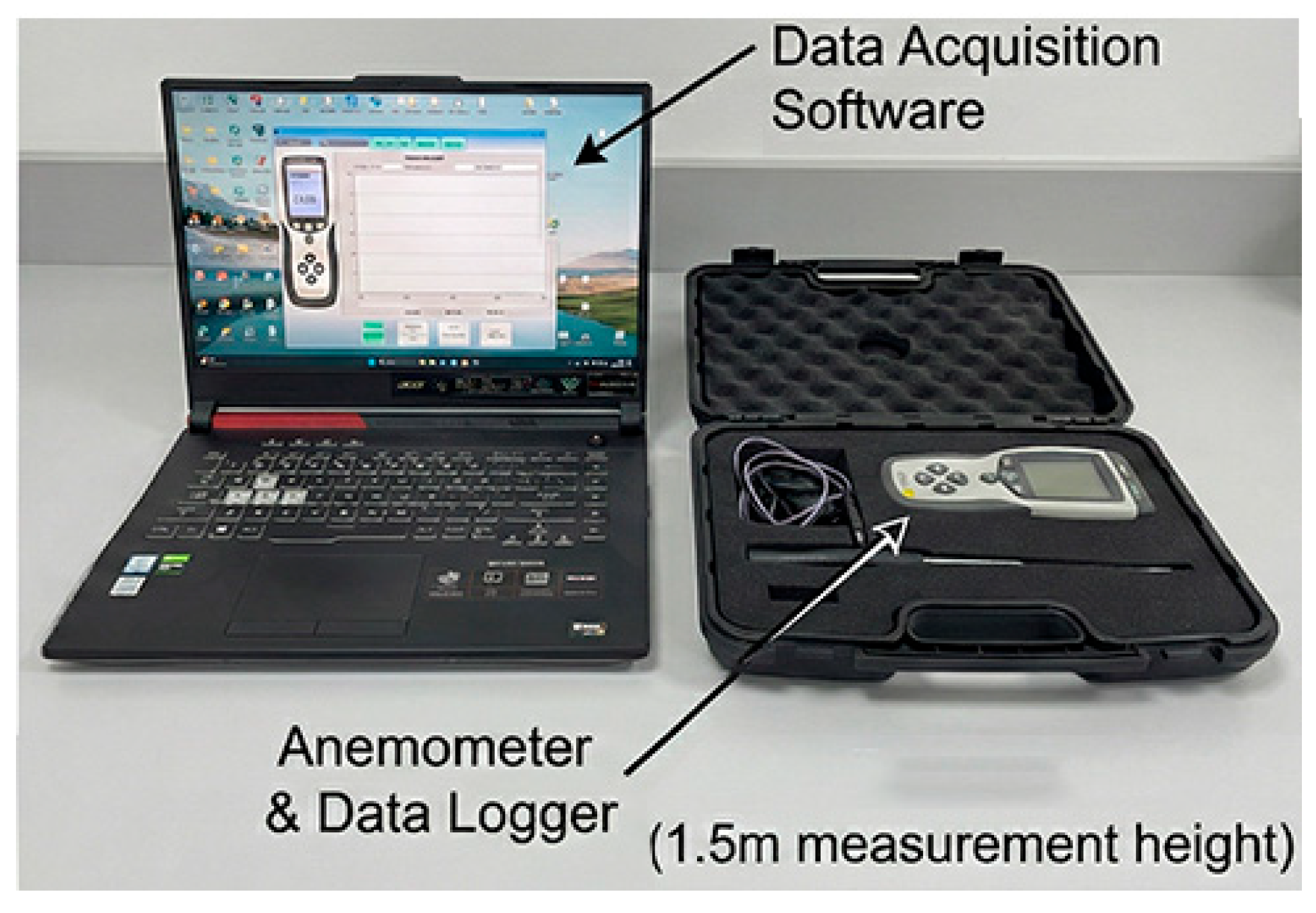
2.5.2. Field Experiment Method
3. Results and Discussion
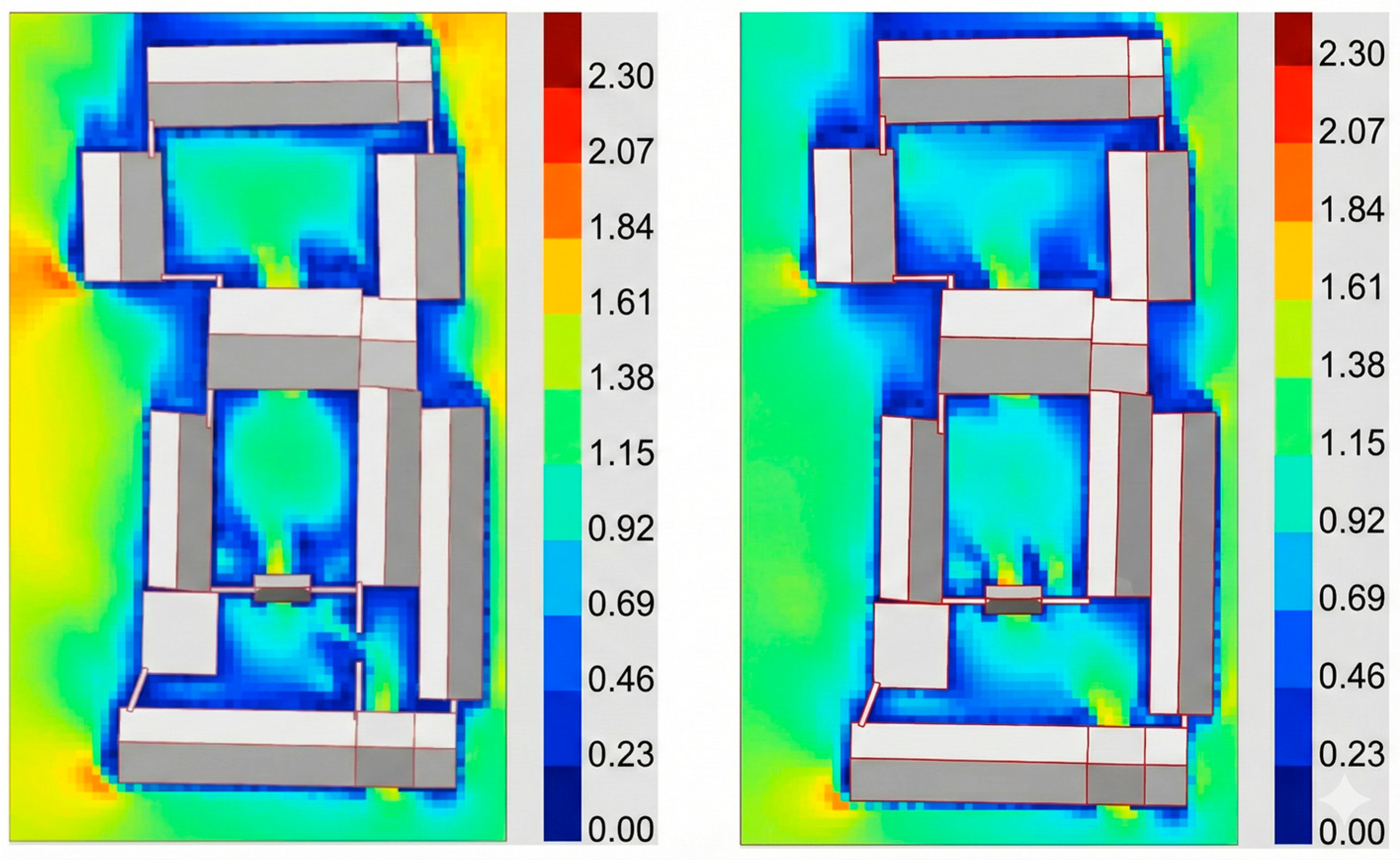
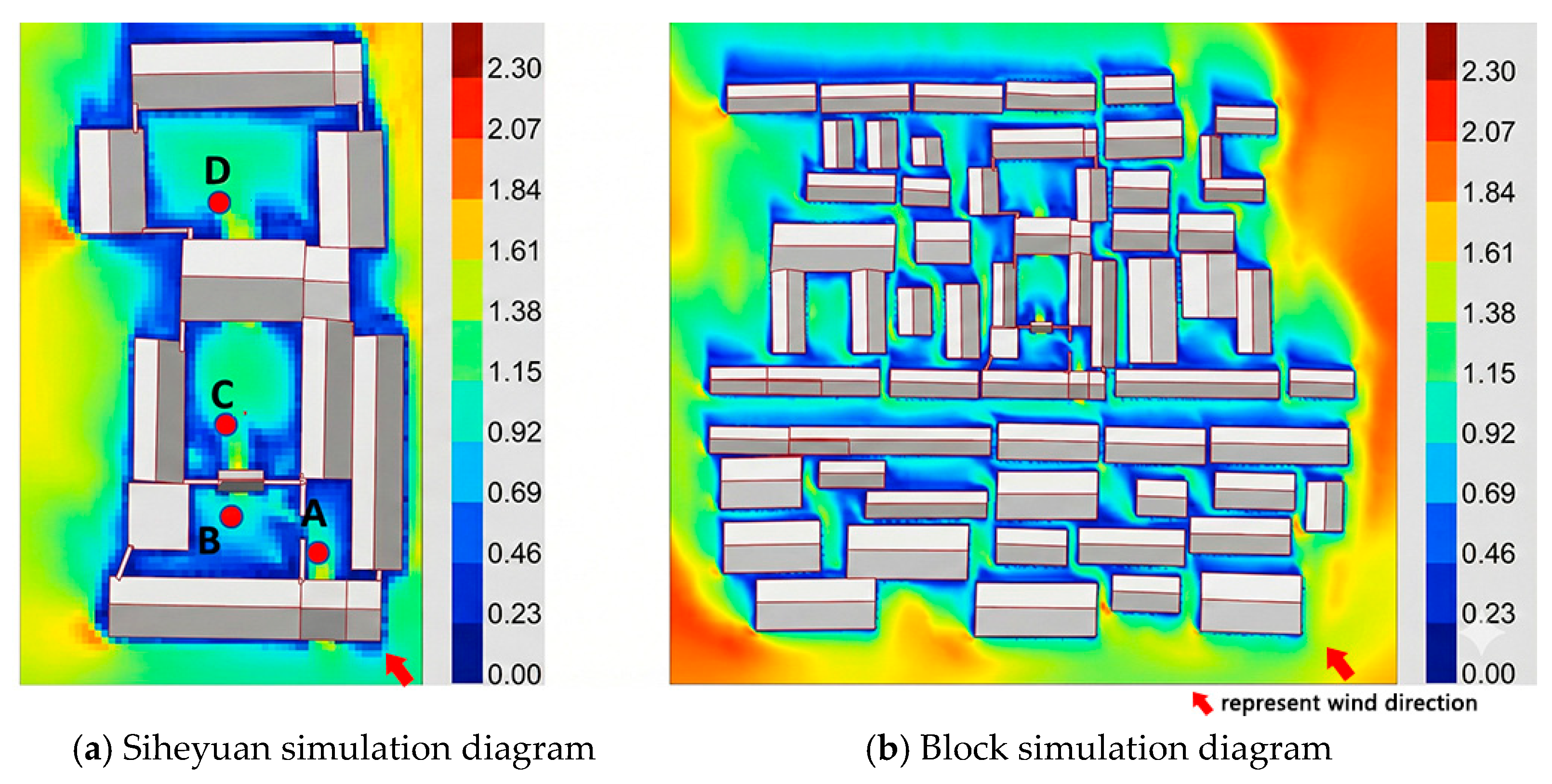
3.1. Analysis of Simulation
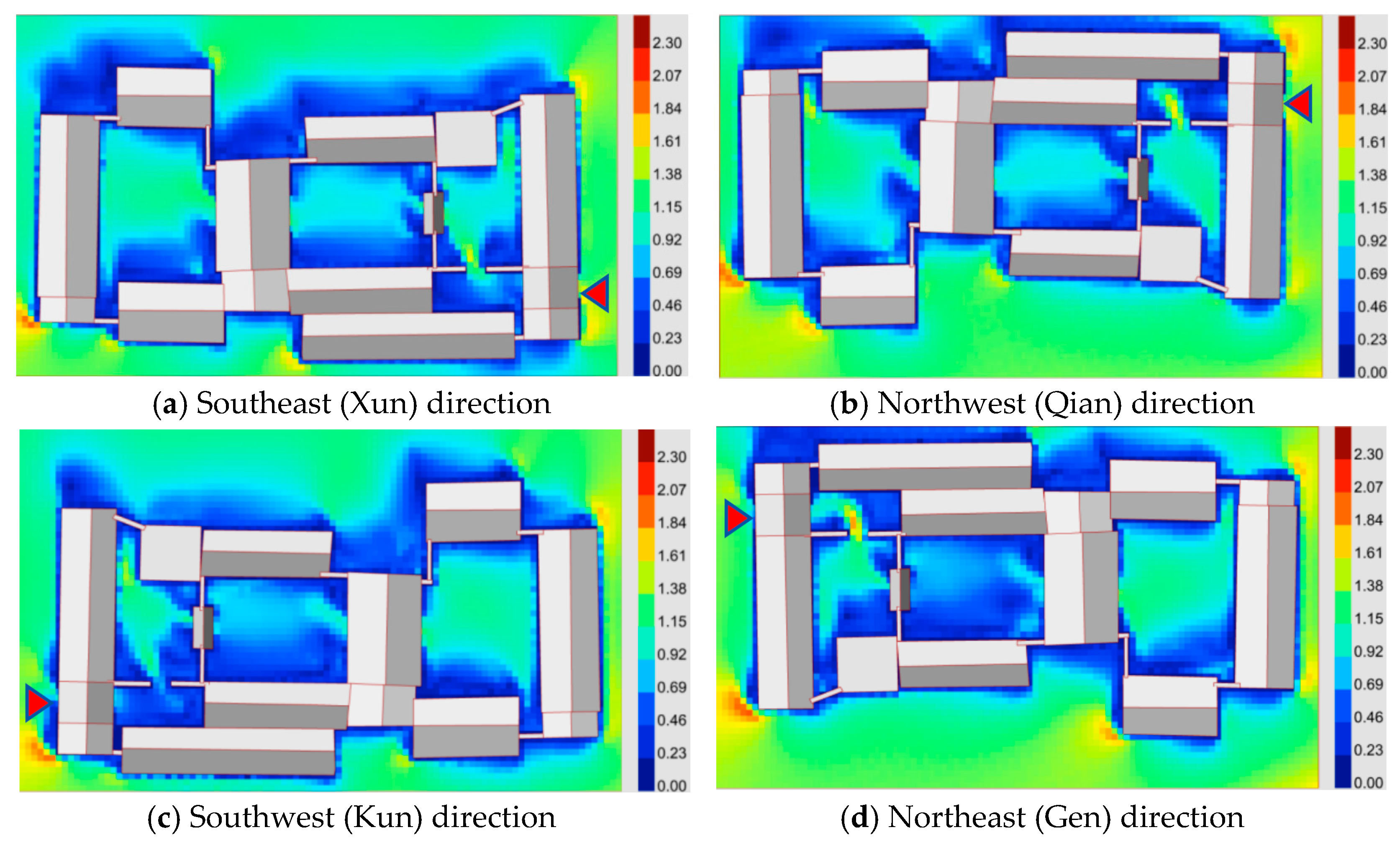
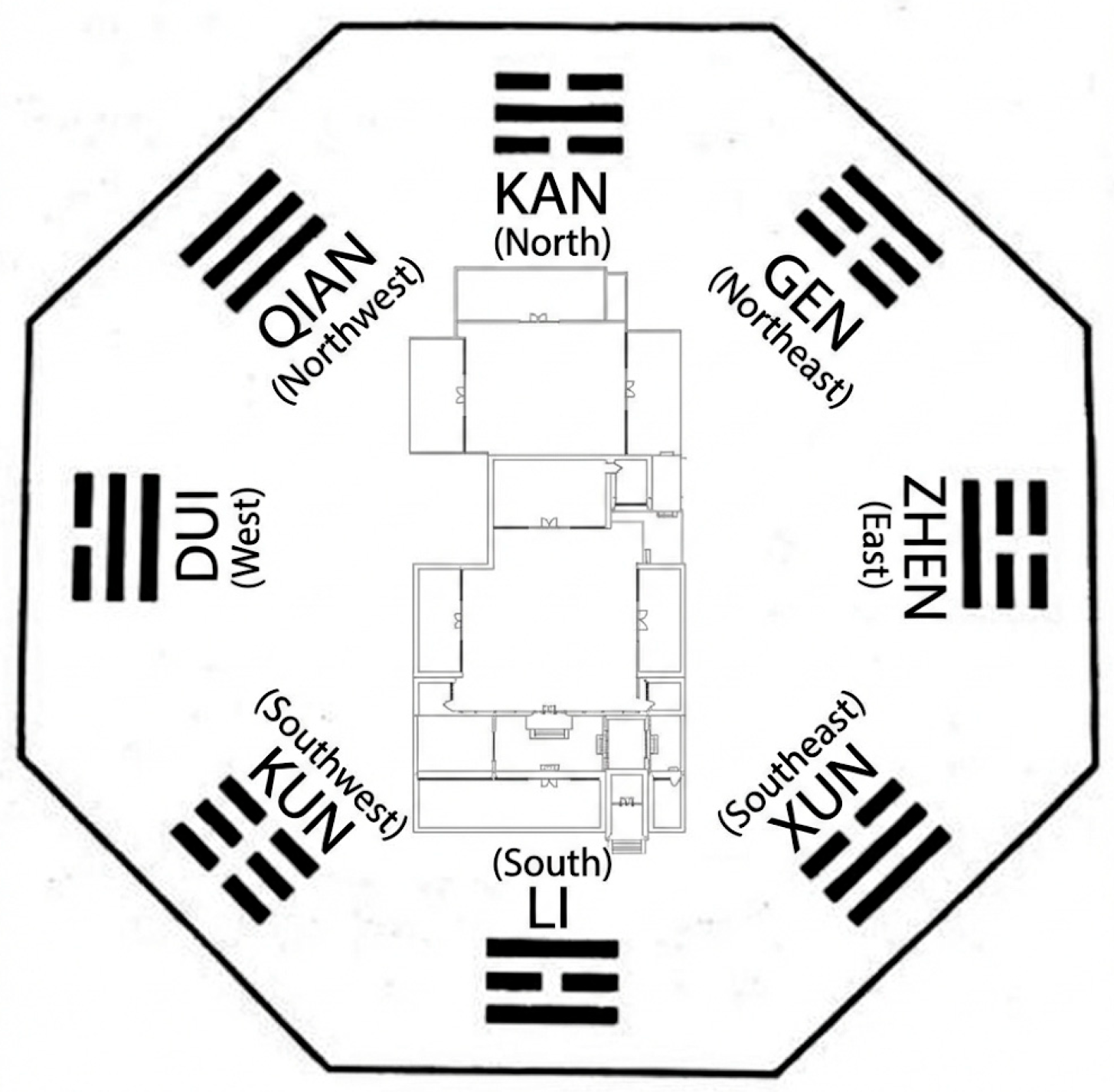
3.2. Eight Trigrams Direction’s Influence on Wind Environment
4. Conclusions
Author Contributions
Funding
Data Availability Statement
Conflicts of Interest
References
- Cheng, Z.; Zhou, S.; Zhang, B. The Spatial Factors of Cultural Identity: A Case Study of the Courtyards in a Historical Residential Area in Beijing. Sustainability 2018, 10, 2587. [Google Scholar] [CrossRef]
- Xu, J.; Luo, Z.; Gao, W.; Yang, M.; Shi, M. The Comparative Study on the Climate Adaptability Based on Indoor Physical Environment of Traditional Dwelling in Qinba Mountainous Areas, China. Energy Build. 2019, 197, 140–155. [Google Scholar] [CrossRef]
- Xu, J.; Ma, W.; Yan, W.; Luo, Z.; Xu, G.; Wang, X. Impact of Transition Spaces on the Indoor Thermal Environment: A Case Study of Traditional Dwellings in Southern Shaanxi, China. J. Build. Eng. 2024, 95, 110283. [Google Scholar] [CrossRef]
- Dorostkar, E.; Ziari, K. Integrating Ancient Chinese Feng Shui Philosophy with Smart City Technologies: A Culturally Sustainable Urban Planning Framework for Contemporary China. J. Chin. Archit. Urban 2025, 7, 025080018. [Google Scholar] [CrossRef]
- Hu, B.-X.; Li, W.-Y.; Chiou, S.-C. Study on Courtyard Residence and Cultural Sustainability: Reading Chinese Traditional Siheyuan through Space Syntax. Sustainability 2019, 11, 1582. [Google Scholar] [CrossRef]
- Huang, Z.; Zhao, W.; Wang, C.; Lu, Y.; Zhang, Y. Inheritance Design of Residence Based on Huizhou Traditional Dwellings. J. Asian Archit. Build. Eng. 2025, 24, 835–850. [Google Scholar] [CrossRef]
- Xu, P. “Feng-shui” Models Structured Traditional Beijing Courtyard Houses. J. Archit. Plan. Res. 1998, 15, 271–282. [Google Scholar]
- Zhao, Y.C. The Historical and Cultural Form of the Traditional Construction Techniques of Beijing Quadrangle Courtyards. Intang. Cult. Herit. China 2023, 1, 111–120. (In Chinese) [Google Scholar]
- Zhang, M.; He, Y.; Huang, L.; Xiong, R.; Zhang, Y. Built-In Environmental Construction Mechanism and Sustainable Renewal Strategies of Traditional Qiang Dwellings in Western China. Sustainability 2024, 16, 7122. [Google Scholar] [CrossRef]
- Wang, Z.Y.; Shi, J. Analysis of the Living Space of Beijing Quadrangle Courtyard. Chin. Resid. Houses 2011, 10, 5–6. (In Chinese) [Google Scholar]
- Bonaiuto, M.; Bilotta, E.; Bonnes, M. “Feng Shui” and Environmental Psychology: A Critical Comparison. J. Archit. Plan. Res. 2010, 27, 23–34. [Google Scholar]
- Mak, M.Y.; Ng, S.T. The Art and Science of Fengshui—A Study on Architecture Perception. Build. Environ. 2005, 40, 427–434. [Google Scholar] [CrossRef]
- Wang, Q.H. Research of Feng Shui Theory, 2nd ed.; Tianjin University Press: Tianjin, China, 2014. (In Chinese) [Google Scholar]
- Chan, S. Greenery Concerns of Green Building Design and Feng Shui. J. Int. Sci. Publ. 2015, 9, 609–618. [Google Scholar]
- Low, S.P.; Deng, X.; Quek, L.T. Assimilating Total Building Performance Mandates with Chinese Geomancy Principles and Scenarios. Facilities 2012, 30, 558–589. [Google Scholar] [CrossRef]
- Yu, Y.; Yang, Z.J. Scientificity and Rationality of Chinese Traditional Classical Fengshui Theory. Can. Soc. Sci. 2017, 13, 55–65. [Google Scholar] [CrossRef]
- Zhao, J.F. The Three Essentials of Dwellings; Hualing Publishing House: Beijing, China, 2011. (In Chinese) [Google Scholar]
- Wang, Z.; Liu, T.; Wu, X.; Chen, J.; Liang, X. Influence of Doorway Position on Wind Comfort in Beijing Quadrangle Dwellings. Buildings 2023, 13, 2557. [Google Scholar] [CrossRef]
- Jiang, Z.; Gao, W.; Yao, W. Research on the Wind Environment in an Enclosed Courtyard: Effect of the Opening Position, Size and Wind Angle. Urban Clim. 2023, 52, 101737. [Google Scholar] [CrossRef]
- Wang, Y.; Crompton, A.; Agkathidis, A. Form Follows Fengshui: A Parametric Approach to Investigate the Influence of Fengshui on Traditional Chinese Courtyard Dwelling Design. Herit. Sci. 2026, 14, 1. [Google Scholar] [CrossRef]
- Kastner, P.; Dogan, T. Eddy3D: A Toolkit for Decoupled Outdoor Thermal Comfort Simulations in Urban Areas. Build. Environ. 2022, 212, 108639. [Google Scholar] [CrossRef]
- Ai, Z.T.; Mak, C.M. Guidelines for CFD Simulation of Wind Environment in a Complex Urban Area: Case Study of a University Campus. Build. Environ. 2018, 129, 25–34. [Google Scholar]
- Tominaga, Y.; Mochida, A.; Yoshie, R.; Kataoka, H.; Nozu, T.; Yoshikawa, M.; Shirasawa, T. AIJ Guidelines for Practical Applications of CFD to Pedestrian Wind Environment around Buildings. J. Wind Eng. Ind. Aerodyn. 2008, 96, 1749–1761. [Google Scholar] [CrossRef]
- Toparlar, Y.; Blocken, B.; Maiheu, B.; van Heijst, G.J.F. A Review on the CFD Analysis of Urban Microclimate. Renew. Sustain. Energy Rev. 2017, 80, 1613–1640. [Google Scholar] [CrossRef]
- Tong, Z.; Chen, Y.; Malkawi, A. Estimating natural ventilation potential for high-rise buildings considering boundary layer meteorology. Appl. Energy 2017, 193, 276–286. [Google Scholar] [CrossRef]
- Miše, D.; Irrenfried, C.; Meile, W.; Brenn, G.; Kozmar, H. Wind-driven natural ventilation of cubic buildings in rural and suburban areas. J. Build. Eng. 2024, 87, 108740. [Google Scholar] [CrossRef]
- Nejat, P.; Calautit, J.K.; Fekri, Y.; Sheikhshahrokhdehkordi, M.; Alsaad, H.; Voelker, C. Influence of terrain and atmospheric boundary layer on the ventilation and thermal comfort performance of windcatchers. J. Build. Eng. 2023, 73, 106791. [Google Scholar] [CrossRef]
- Liu, Y.; Li, Z.; Zhang, X. From Traditional Settlements to Arrival Cities: A Study on Contemporary Residential Patterns in Chinese Siheyuan. Buildings 2025, 15, 1216. [Google Scholar] [CrossRef]
- Liu, W.; Zhao, H.; Sun, S.; Xu, X.; Huang, T.; Zhu, J. Green Space Cooling Effect and Contribution to Mitigate Heat Island Effect of Surrounding Communities in Beijing Metropolitan Area. Front. Public Health 2022, 10, 870403. [Google Scholar] [CrossRef]
- Muench, B. The Traditional Beijing Courtyard House: Assessment of Its Environmental Performance under Changing Historic Circumstances. Ph.D. Thesis, Technische Universität Berlin, Berlin, Germany, 2004. [Google Scholar]
- Guo, P.; Ding, C.; Guo, Z.; Liu, T.; Lyu, T. Coupling CFD Simulation and Field Experiments in Summer to Prove Feng Shui Optimizes Courtyard Wind Environments: A Case Study of Prince Kung”s Mansion in Beijing. Buildings 2022, 12, 629. [Google Scholar] [CrossRef]
- Zhang, D. Classical Courtyard Houses of Beijing: Architecture as Cultural Artifact. Archnet-IJAR 2016, 10, 47–68. [Google Scholar] [CrossRef]
- Li, B.; Guo, W.; Schnabel, M.A.; Moleta, T. Feng-Shui and Computational Fluid Dynamics (CFD): Analyzing Natural Ventilation and Human Comfort. In Proceedings of the 25th International Conference on Computer-Aided Architectural Design Research in Asia (CAADRIA), Bangkok, Thailand, 5–6 August 2020; pp. 731–740. [Google Scholar] [CrossRef]
- GB/T 50378-2019; Assessment Standard for Green Building. China Architecture & Building Press: Beijing, China, 2019.
- Zhang, H. Research on Natural Ventilation Design of Rural Housing in Yangtze River Delta. Ph.D. Thesis, Southeast University, Nanjing, China, 2016. (In Chinese) [Google Scholar]
- Blocken, B. 50 years of Computational Wind Engineering: Past, present and future. J. Wind Eng. Ind. Aerodyn. 2014, 129, 69–102. [Google Scholar] [CrossRef]
- Ramponi, R.; Blocken, B. CFD Simulation of Cross-Ventilation for a Generic Isolated Building: Impact of Computational Parameters. Build. Environ. 2012, 53, 34–48. [Google Scholar] [CrossRef]
- Ramponi, R.; Blocken, B. CFD Simulation of Cross-Ventilation Flow for Different Isolated Building Configurations: Validation with Wind Tunnel Measurements and Analysis of Physical and Numerical Diffusion Effects. J. Wind Eng. Ind. Aerodyn. 2012, 104, 408–418. [Google Scholar] [CrossRef]





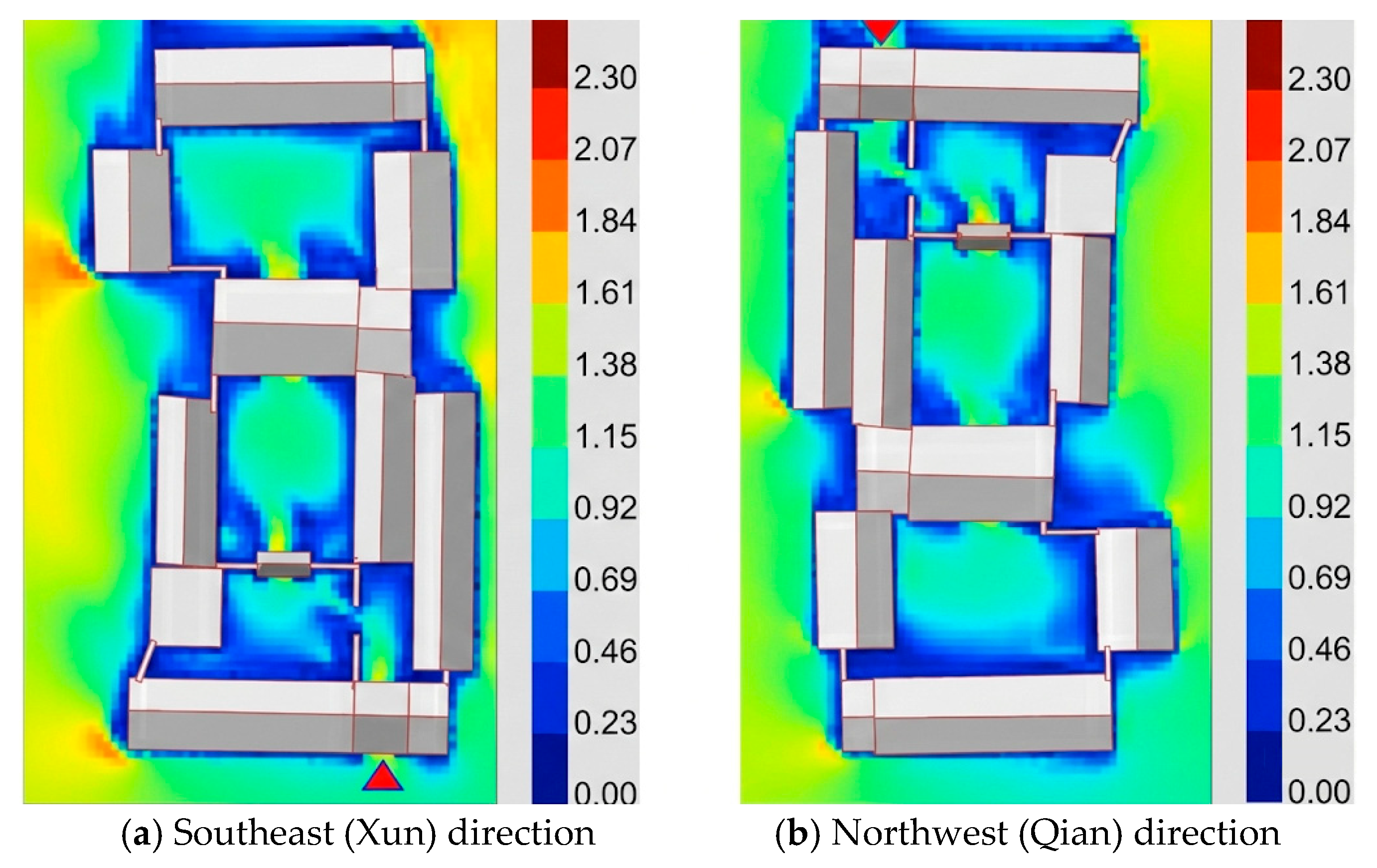
 represents the main entrance orientation.
represents the main entrance orientation.
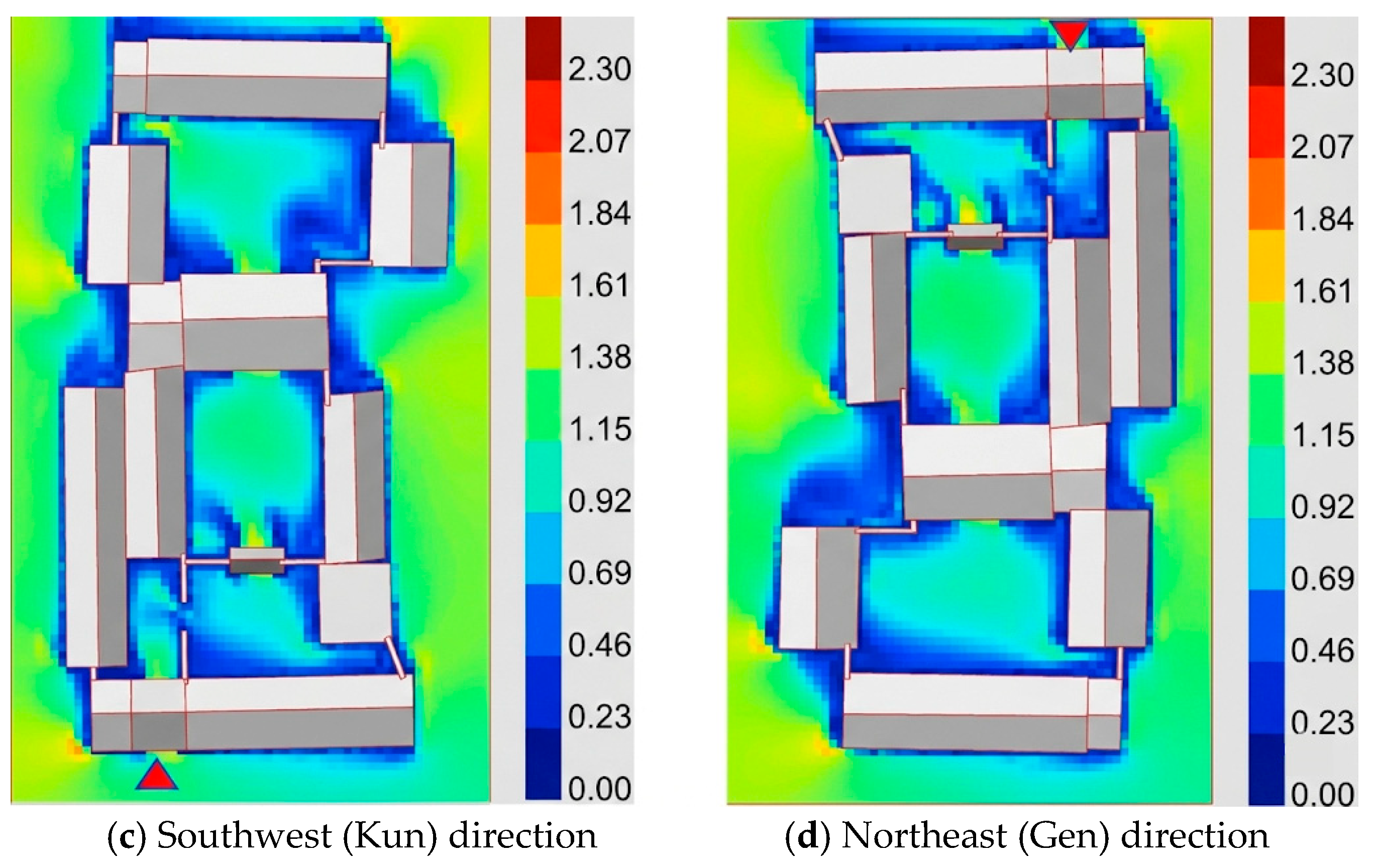
represents the main entrance orientation.
 represents the main entrance orientation.
represents the main entrance orientation.
represents the main entrance orientation.


| Wind Speed Range (M/S) | Physical Comfort Status | Feng Shui Perspective | Quantitative Definition |
|---|---|---|---|
| 0.0–0.4 | Stagnant | Dead Qi (Si Qi) | Insufficient ventilation |
| 0.5–2.0 | Ideal Comfort | Hidden Wind (Sheng Qi) | Optimal flow |
| 2.1–5.0 | Tolerable Comfort | Dispersing Qi | Transition zone |
| >5.0 | Uncomfortable | Killing Qi (Sha Qi) | High turbulence |
Disclaimer/Publisher’s Note: The statements, opinions and data contained in all publications are solely those of the individual author(s) and contributor(s) and not of MDPI and/or the editor(s). MDPI and/or the editor(s) disclaim responsibility for any injury to people or property resulting from any ideas, methods, instructions or products referred to in the content. |
© 2026 by the authors. Licensee MDPI, Basel, Switzerland. This article is an open access article distributed under the terms and conditions of the Creative Commons Attribution (CC BY) license.
Share and Cite
Sha, A.; Feng, H.; Zang, X.; Jing, Y. Heritage Building Meets Feng Shui: Validating Wind Comfort Logic in a Beijing Siheyuan by CFD and Field Experiments. Buildings 2026, 16, 1134. https://doi.org/10.3390/buildings16061134
Sha A, Feng H, Zang X, Jing Y. Heritage Building Meets Feng Shui: Validating Wind Comfort Logic in a Beijing Siheyuan by CFD and Field Experiments. Buildings. 2026; 16(6):1134. https://doi.org/10.3390/buildings16061134
Chicago/Turabian StyleSha, Ang, Hui Feng, Xiaolin Zang, and Yifang Jing. 2026. "Heritage Building Meets Feng Shui: Validating Wind Comfort Logic in a Beijing Siheyuan by CFD and Field Experiments" Buildings 16, no. 6: 1134. https://doi.org/10.3390/buildings16061134
APA StyleSha, A., Feng, H., Zang, X., & Jing, Y. (2026). Heritage Building Meets Feng Shui: Validating Wind Comfort Logic in a Beijing Siheyuan by CFD and Field Experiments. Buildings, 16(6), 1134. https://doi.org/10.3390/buildings16061134