1. Introduction
Establishing an efficient site layout plan is one of the key activities necessary for the successful execution of a construction project, formally known as construction site layout planning (CSLP). The CSLP has been widely acknowledged as a complex optimization problem. Many studies have been conducted regarding this issue, and comprehensive review papers have also been published that categorize and critically analyze the studies related to this topic [
1,
2]. Among the various factors, cost and safety parameters are regarded as two significant components in the CSLP problem. However, it is seen that many studies have focused on cost-optimized site layouts rather than safety parameters, even in recent years [
3]. Due to risk-related objectives being still less frequently considered as primary optimization targets in CSLP studies, this issue was considered a research gap. Also, risk mitigation was selected because of its secondary role in the literature, but also to enable a clear and controlled investigation of the Dragonfly Algorithm (DA) within the CSLP context. Before addressing more complex multi-objective trade-offs, DA was first employed in a single-objective risk-based optimization framework to clearly examine the algorithm’s search behavior. DA has a simple and flexible structure, which facilitates its application to complex optimization problems such as CSLP. Also, by tuning parameters, it offers effective transition exploration to exploitation behavior in optimization. Additionally, Lévy flight-based random movements enhance exploration in the search space and reduce the probability of premature convergence [
4,
5,
6]. In the literature, early studies indicate that DA can provide competitive performance compared with commonly used Genetic Algorithms (GAs) and Particle Swarm Optimizations (PSOs) across different problems. It is stated that DA can be capable of producing more robust and consistent solutions in repeated runs, particularly in complex and constrained problem spaces [
7,
8,
9,
10,
11]. However, it should be noted that these advantages of the DA are not specific to the CSLP problem. Due to the inherent characteristics of the CSLP, DA has the potential to provide effective solutions in this framework.
In early studies, Sing et al. [
12] developed a dynamic construction site layout planning model using the Branch and Bound algorithm implemented in LINGO to minimize material handling costs. Abdelalim et al. [
13] developed a dynamic construction site layout optimization model integrating cost and safety objectives. Their GA-based approach reduced overall site risk by 28% and material handling costs by 19%. Although Yin [
14] made inferences regarding safety risk in the optimization model, the cost parameter was considered the primary objective. However, reducing risk parameters should also be considered as a primary part of the health and safety prevention strategies [
15,
16]. Moreover, Tao et al. [
17] proposed a CSLP-based approach to reduce construction dust-related effects by integrating dust exposure laws and worker distribution into optimization. A multi-objective particle swarm optimization (MOPSO) model was used to minimize dust concentration and transportation cost simultaneously. The results showed that site layout planning can significantly reduce dust-related occupational health risks at a low cost. Yao et al. [
18] introduced a multi-objective CSLP model that integrates dust parameters into the optimization process. Dust exposure was modeled with safety risk and transportation cost, and they used NSGA-III with TOPSIS-based decision support to solve the problem. The results showed a certain reduction in environmental pollution, safety risk, and cost simultaneously. Wefki et al. [
19] developed a BIM-based multi-objective CSLP model to minimize material transportation cost and maximize site safety. The model uses parametric modeling in Revit to evaluate multiple layout alternatives during early project stages. The case study demonstrated that integrating BIM enables more flexible and accessible multi-objective CSLP decision-making. In general, these studies demonstrate that CSLP can be extended beyond cost minimization by embedding safety and environment-related parameters. However, the adopted safety representations are highly nonuniform and often address specific hazards. This situation limits comparability and makes it difficult to generalize risk-based objectives across projects.
It is well known that a considerable proportion of the high accident rates in construction work occur on construction sites [
20,
21]. To mitigate these accident rates, several studies have been conducted that incorporate risk issues as a parameter in construction site layout planning. It is known that there is a limited number of safety-focused studies compared to the cost-based optimization. El-Rayes and Khalafallah [
22] quantitatively assessed risks associated with crane, hazardous material and route intersections using three performance criteria. Medina-Herrera et al. [
23] formulated a risk-based layout optimization model for chemical plant facilities by quantitatively integrating incident probability and consequence severity into the optimization process. Rezaee et al. [
24] addressed CSLP by considering worker behavioral uncertainty in travel path selection. They modeled worker movements and they optimized facility locations by using a GA to minimize travel distance and related safety risks. Abune’meh et al. [
25] proposed an integrated framework for optimizing construction site layouts by combining hazard and vulnerability interaction matrices with spatial configuration analysis. El Meouche et al. [
26] quantitatively defined risks based on hazard–vulnerability interaction matrices and a spatial risk map based on visibility analysis. Ahumada et al. [
15] developed a stochastic framework that integrates quantitative risk assessment with facility layout optimization. Risks associated with explosions, fires, and toxic releases were assessed. Ning et al. [
27] proposed a quantitative model for evaluating safety risks in construction site layouts by classifying and quantifying both interaction flows and safety/environmental concerns. The model computes overall site safety levels across alternative layouts. Zavari et al. [
28] developed a model that minimizes total traveling distance and enhances safety by quantifying proximity-based relationships among facilities, achieving approximately 20% improvement in overall efficiency compared with conventional layouts. Soliman et al. [
29] also considered safety distances and facility conflicts as risk indicators. Risk-based CSLP models usually depend on either flow-based interactions or proximity-based exposure factors. However, few approaches combine multiple interacting risk sources within a single, consistent optimization framework.
From a computational perspective, although the CSLP problem is comprehended as a quadratic assignment problem (QAP) [
30,
31,
32], it is understood to be difficult to solve due to combinatorial complexity [
33,
34]. Thus, to find near-optimal solutions, heuristic and metaheuristic algorithms have been mostly used in recent years [
35,
36]. On the other hand, CSLP problems are considered either static or dynamic site design problems. In static CSLP, the site layout of the facilities is assumed to remain the same throughout the entire construction process. However, dynamic CSLP takes into account different phases of construction work because various facilities serve different functions at different times. Also, Tao et al. [
37] proposed a dynamic CSLP model in which construction phases are ordered according to their layout impact, quantified using material transportation data obtained from BIM and scheduling information. A MOPSO algorithm was used to minimize transportation cost and construction noise simultaneously. The study showed that impact-based phase ordering improves layout efficiency compared to static CSLP approaches. From a different point of view, Pham and Pham [
38] developed a dynamic multi-objective CSLP model for prefabricated construction projects that accounts for the actual existence time of facilities on-site. The model minimizes tower crane hoisting time and hazard-related risk posed by facilities by using an oMOAHA optimization algorithm, which is a variant of the multi-objective artificial hummingbird algorithm (MOAHA). The results demonstrated that dynamic facility scheduling improves space utilization and safety compared to static and phased CSLP approaches.
To solve the CSLP problem, either single objective or multi-objective, a wide range of metaheuristic algorithms have been employed, including GA [
39,
40], PSO [
41,
42], ant colony optimization ACO [
43,
44] and artificial bee colony algorithms (ABC) [
45]. While these methods have shown effectiveness in CSLP problems, they mainly prioritize the cost parameter. In most cases, construction site risks and occupational risk-related factors are either oversimplified or entirely ignored in the modeling process [
46,
47,
48,
49].
In the optimization process, although some evolutionary methods, such as elitism and mutations, are incorporated to enhance global search capacity, these algorithms still risk premature convergence and entrapment in local optima [
3]. Bio-inspired optimization methods have been recently used to overcome such situations. A fuzzy-based bee colony optimization (FBCO) algorithm was developed by Nguyen [
50] to solve the CSLP problem and algorithm parameters were adaptively tuned. The proposed multi-objective CSLP model that simultaneously minimizes facility cost, safety risk, and noise pollution was used in a case study. The results demonstrated that the proposed approach outperformed several metaheuristic methods in achieving safer and more efficient construction site layouts. However, Pham et al. [
6] proposed a hybrid optimization model for construction site layout planning that combines DA’s exploration with PSO’s exploitation. The model determined objectives as transportation cost, noise, and site safety. The results showed that the hybrid approach improves the stability and balance of layout solutions. It is seen that the DA has gained increasing attention due to its adaptability and ability to generate effective solutions [
8].
Despite the growing adoption of metaheuristics in the CSLP problems [
51,
52,
53,
54], only a limited number of studies have considered construction site risk as a primary objective. Additionally, various studies have shown that the proposed models follow different methods in modeling risk parameters based on the site layout problem [
50].
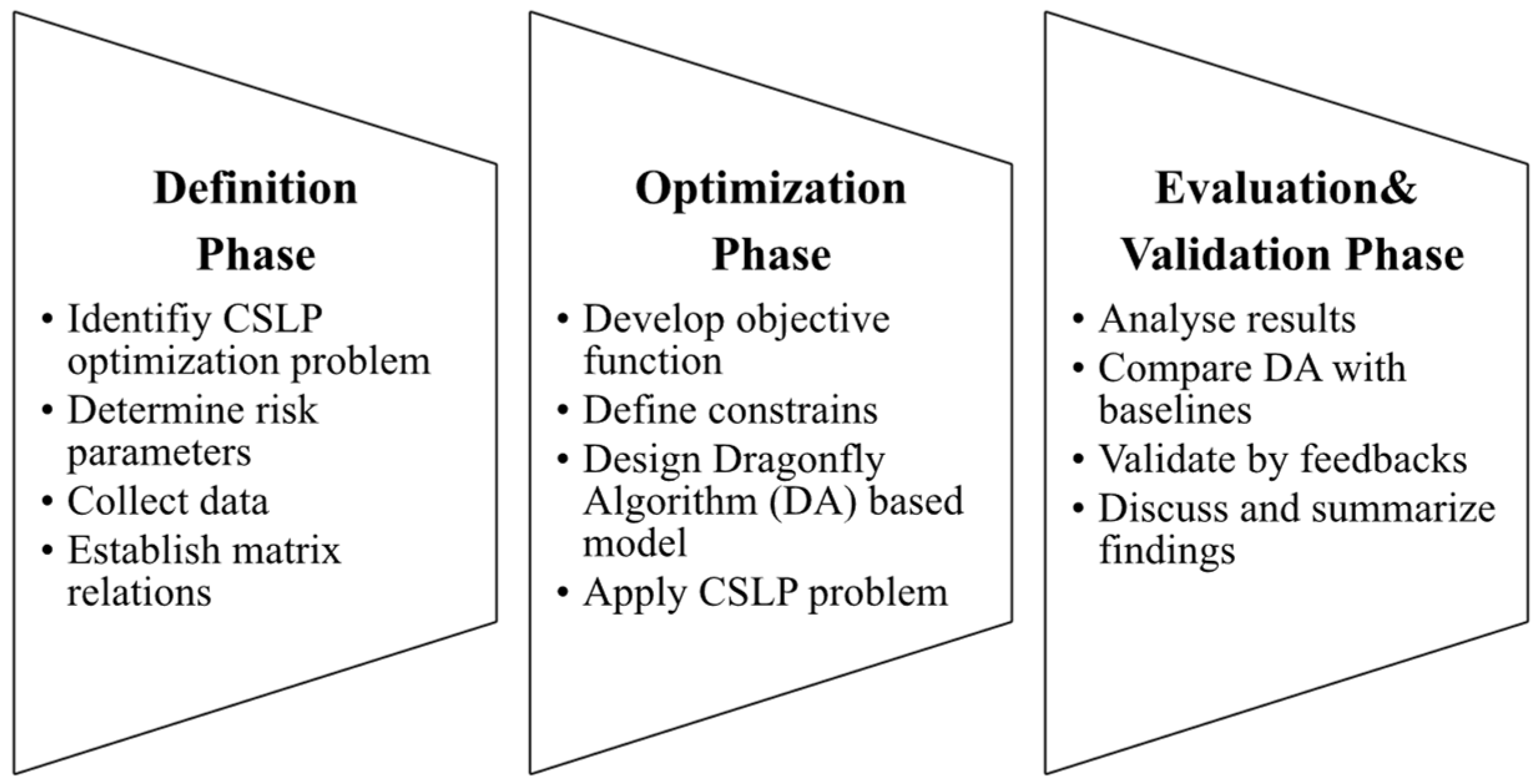
It is known that CSLP plays a vital role in ensuring occupational health and safety (OHS) on construction sites. Improper localization of facilities can lead to high worker density, increased material transportation distances, and unsafe proximity between hazardous facilities. To address these issues, this study integrates three safety parameters into the CSLP optimization model: the interaction flow (RF), representing the frequency of worker and material movement; the closeness factor (RS), reflecting environmental and spatial risk exposure between facilities due to proximities; and the crane risk (RC), quantifying the probability of accidents related to crane operations. These parameters collectively establish a quantitative link between layout planning decisions and OHS risk mitigation objectives. In this framework, DA was modified and adapted to address the CSLP problem, and a DA-based optimization model is designated to minimize determined site risks and find optimum solutions. The proposed model was applied to the real construction site as a case study, and the results are compared to PSO and GA algorithms. Also, DA’s performance was evaluated using feedback from experienced project managers and occupational health and safety (OHS) specialists. The results demonstrated that the DA-based model produced layouts that have lower risks compared to traditional expert-based layouts, while being applicable to real-world conditions. The methodological framework of the study is shown in
Figure 1.
2. Methodology
2.1. Site Risks
The risks in the construction site layout planning vary, but the one adopted in this study is taken into consideration to represent safety risks that are directly influenced by decisions. Although a wide range of safety and risk factors have been identified in early studies, this study focuses on risk mechanisms that can be effectively controlled through the allocational arrangement of temporary facilities. Therefore, determination of site risks, adaptation to the CSLP problem and weight settings can be evaluated in the scope of the risk index system, which systematically represents layout risks in construction sites. First, site risk is defined as accidents arising from spatial relationships and interactions among temporary facilities [
2,
16,
33,
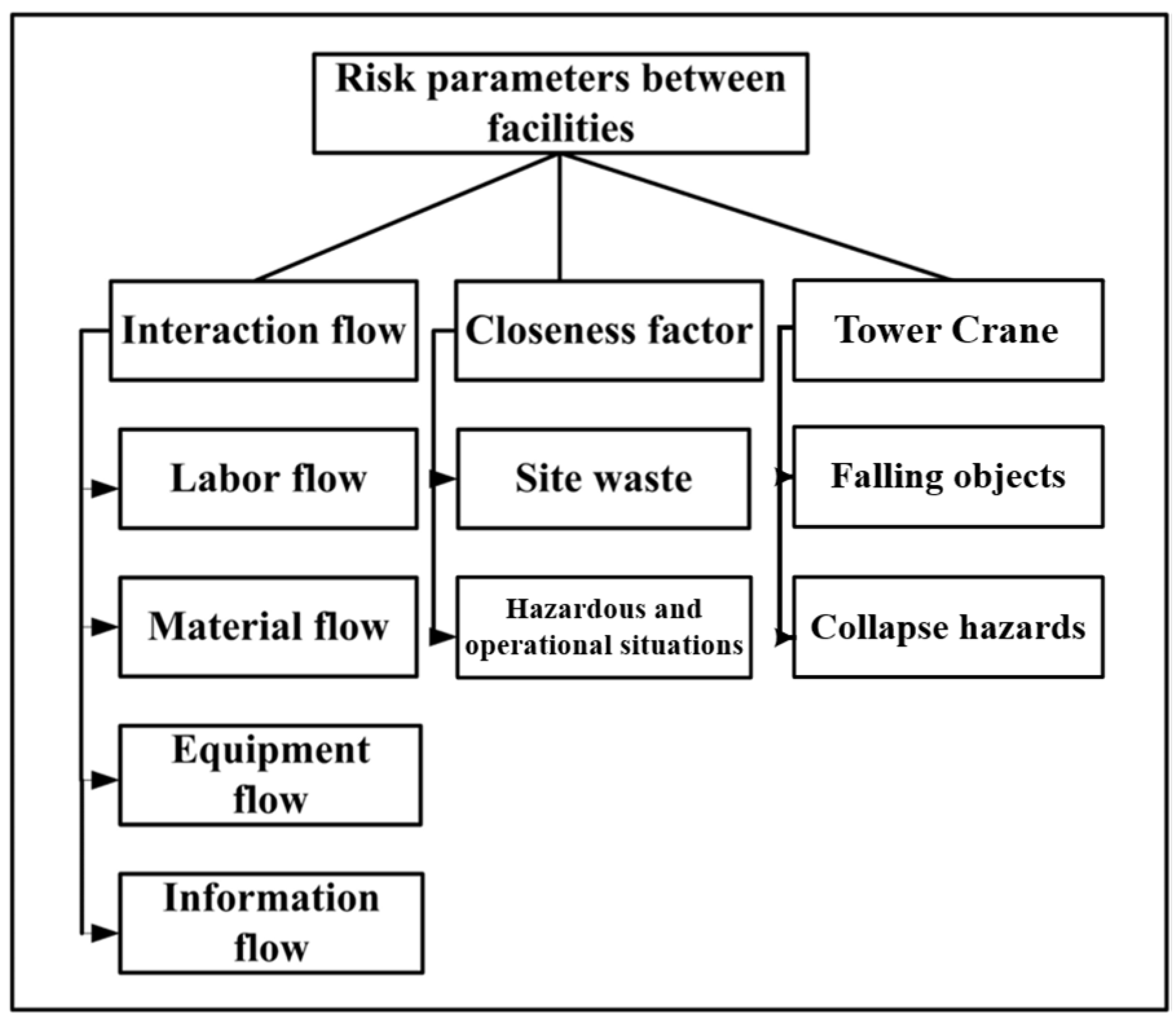
55]. Based on this definition, three major factors were used in this study to represent site risk due to the interactions of facilities: interaction flows, the closeness factor, and tower crane influence (
Figure 2). These parameters were also chosen because they are more practical and widely accepted for describing facility relationships [
6]. Interaction flow-based risk represents the probability of conflicts and accidents due to route intersections and conflict points [
13,
27,
47,
56]. Closeness-based risk, reflecting the exposure and interference risks associated with placing facilities too close to or too far from each other, which elevates accident probability [
28,
57,
58]. Crane-related risk, capturing high-severity hazards associated with tower cranes, such as falling objects and lifting operations [
22,
59]. These parameters are subsequently quantified and they are adopted to risk criteria scales to enable numerical evaluation. The weighting settings of the risk parameters are determined according to the potential consequences of each of them in terms of safety impact. For instance, it is realistic to assign a higher weight coefficient to crane-related risks. However, the weighting values are relative and influenced by the judgments of the responsible site professional. Finally, the quantified risk components are embedded into the optimization process through an aggregated objective function, allowing safety considerations to be directly incorporated into construction site layout planning. However, it should be noted that the selection of risk components, the specific parameter values may be adapted to project conditions and the expert judgment of responsible site professionals. In addition, the overall safety level of the site depends on which types of risks are considered and how many parameters are integrated into the model.
2.1.1. Interaction Flow
Increasing transportation movement between facilities causes overlaps in routes and creates complications at construction sites [
60]. To express the increase in accident probability due to rising intersections [
61], an interaction flow is proposed. This interaction flow refers to the movement of labor, materials, equipment, and information between facilities [
62]. Labor flow (LF) refers to the number of workers and engineers moving between facilities daily to execute activities. Material flow (MF) refers to the daily transportation of all products, such as raw materials, work-in-progress, and/or finished products, from one facility to another. Equipment flow (EF) refers to the number of tools and equipment (e.g., trucks, mixers and material handling equipment) transferred between facilities [
63]. The information flow (IF) is measured as the approximate number of oral communications and documented reports. However, collecting IF data is often impractical in real construction projects [
56,
64].
2.1.2. Closeness Factor
Environmental risks occur due to the closeness (proximity) of facilities [
65]. For example, workers exposed to site waste, such as noise and dust, may experience hearing loss and lung diseases [
37,
66,
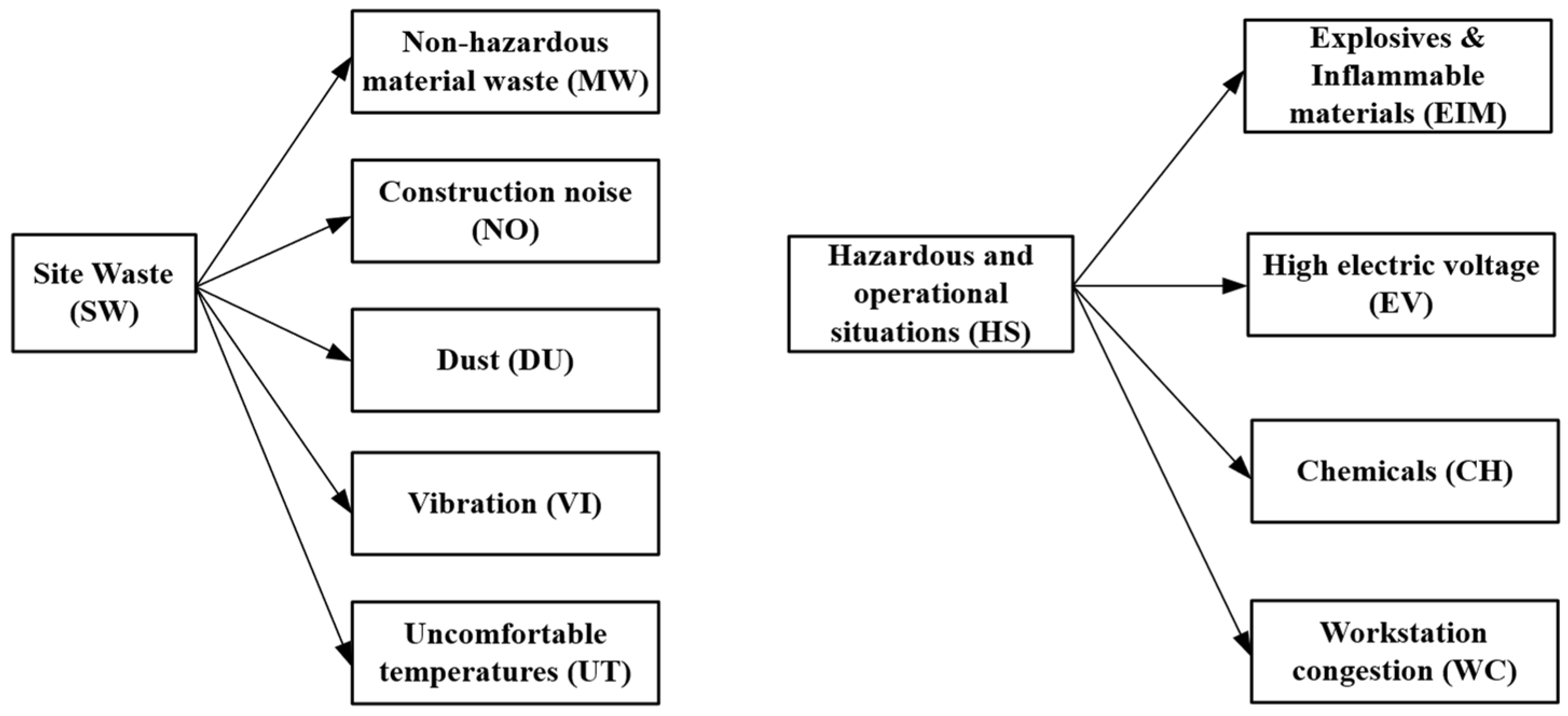
67]. Therefore, in terms of construction site safety, facilities should be located further apart from each other. Site waste (SW), hazardous and operational situations (HS), and their associated attributes are considered parameters that affect proximity-related risks. Site risks must be discussed in detail in layout planning. Since this issue requires thorough consideration, categorization was carried out by taking multiple parameters into account. Thus, non-hazardous material waste (MW) such as cement, brick, tile, concrete, ceramics, and metals, construction noise (NO), dust (DU), vibrations (VI) from heavy equipment, and uncomfortable temperature (UT) factors were categorized as site wastes. The use of or presence of explosives and inflammable materials (EIMs), which may cause explosions and fires, high electric voltages (EVs), hazardous chemicals (CHs) and workstation congestion (WC) are identified as hazardous and operational situations (
Figure 3). In addition to facilities containing hazardous materials, workstation congestion occurs when facilities with high labor and equipment demand are located in close proximity, if there are multiple activities and high interaction flows. In the proposed framework, congestion-related risks are implicitly reflected through the combined effects of closeness and interaction flow, rather than being modeled as a separate risk parameter. The relationship between facilities was defined as whether there was a risk-related situation associated with these attributes.
2.1.3. Tower Crane
Since tower crane operations are one of the most serious construction activities that can result in fatalities, numerous studies have been conducted on crane safety at construction sites [
68,
69,
70]. Tower crane-related risks in construction sites primarily arise from falling objects and potential collapse hazards during lifting operations. The severity of these hazards is influenced by several operational conditions, such as limited visibility and hidden work zones during crane operation, as well as interactions between nearby facilities and workers. In the proposed model, risk-specific levels were subsequently aggregated [
71]. These conditions are reflected through the distance of crane operation zones and the closeness of temporary facilities to crane activities, allowing their effect to be represented within a single crane risk component. El-Rayes and Khalafallah [
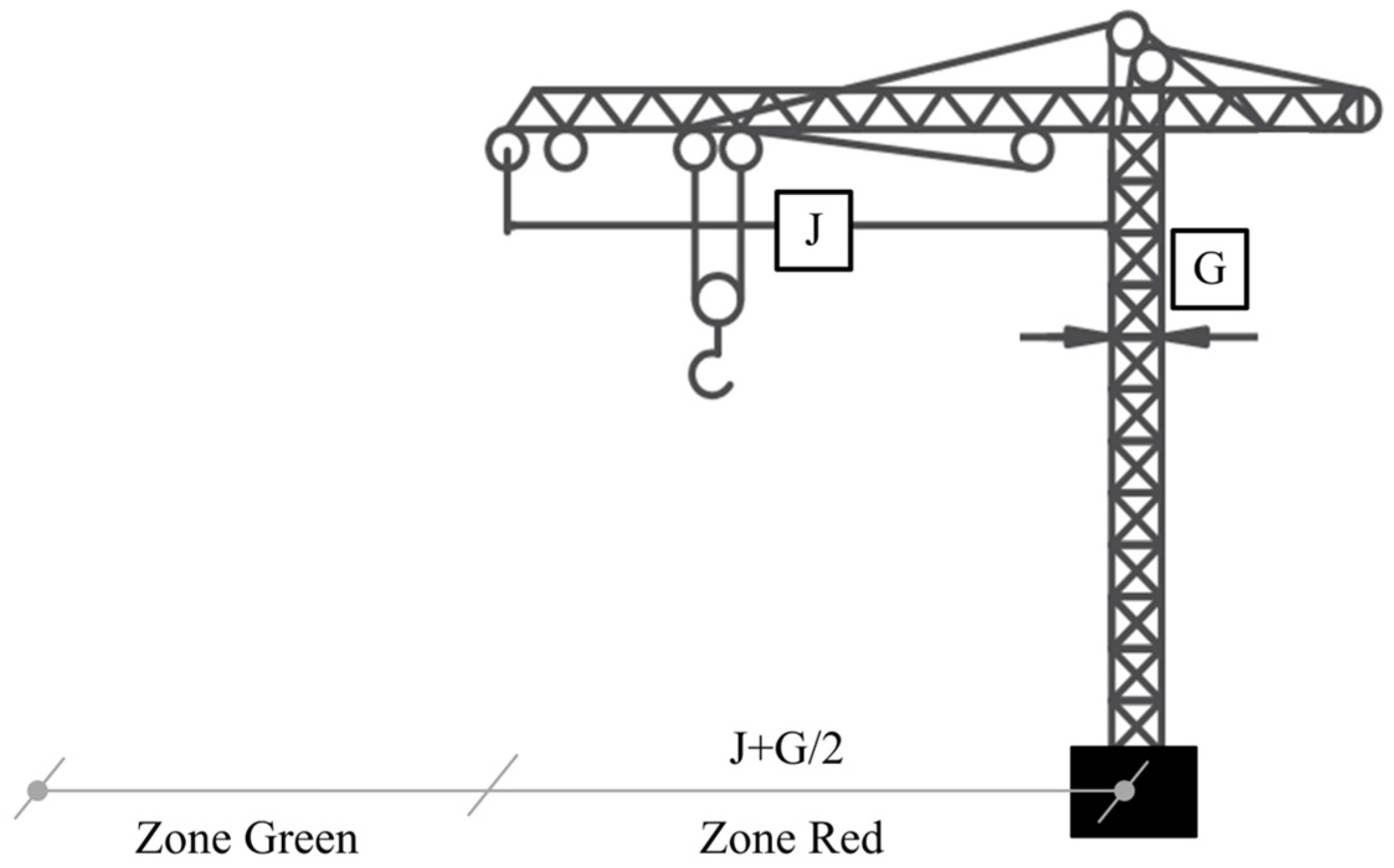
22] developed a model for the CSLP problem that extensively represents crane-related risk. Similarly, in this study, tower crane risks are divided into two zones: the red zone expresses the risky areas due to falling object probability, whereas the green zone expresses the areas where falling objects are not possible. In addition, the risk of crane collapse was ignored because of its low probability of occurrence. The zone separations were formed considering the jib length (J) and shaft width (G) of the tower cranes, which are depicted in
Figure 4. The radius of the crane (J + G/2) was considered in determining the risk values between the crane and the facilities. The determined value may pose less risk depending on the movement of personnel and equipment. For example, the damage caused by a falling object onto a gravel storage facility is not the same as the damage caused to a site office facility where personnel are constantly present.
2.2. Defining Risks Between Facilities
Various measurement strategies have been identified to address the risks between facilities, with different scales being used to represent both quantitative and qualitative factors [
71,
72]. To assess the level of risk for both quantitative and qualitative factors simultaneously, this study designed a risk criterion scale that accounts for risks due to interaction flow and risks arising from the closeness of facilities. Due to the closeness scale being considered the most efficient parameter in previous studies, it is increasing exponentially [
34,
73]. Also, measuring interaction flow is often impractical [
74]. Unlike material, labor, and equipment flows, IF does not represent a physical movement but rather the relative intensity of operational coordination and communication demand between temporary facilities. Moreover, obtaining precise information flow (IF) data is unrealistic [
75]. Due to the difficulty of obtaining reliable and continuous quantitative data on construction sites, IF can be represented using qualitative scales based on expert judgment of responsible site professionals. Early studies have employed closeness/intensity scales to capture interaction and coordination requirements between facilities [
34,
57,
76]. Therefore, this study adopts a closeness scale strategy to quantify information flow within the interaction flow [
77], as shown in
Table 1. This conversion enables the standardization of different flows on a common scale, ensuring consistency on a theoretical basis.
In this table, the scale is set as ‘unimportant (UI)’, ‘not important (NI)’, ‘important (I)’, ‘very important (VI)’, ‘absolutely important (AI)’, and ‘extremely important (EI)’, corresponding to values of 30, 31, 32, 33, 34, and 35, respectively. For example, for an electric generator facility and material storage area containing explosives, when the risk criterion is classified as ‘EI’ by an authorized site professional, the closeness scale is assigned a value of ‘35’. Similarly, if the interaction flow quantity ranges between 21% and 40%, it is categorized as ‘I’, which corresponds to a value of ‘32’ in the risk criteria.
The risk-associated interaction flow increases due to the high amount of labor, material, and equipment movement at the construction site. However, effective verbal communication, regular reporting, real-time information sharing, data exchange, supervision, and efficient organization help to mitigate this risk factor [
78]. In addition, greater distances between facilities lead to more road intersections, increasing the risk of accidents. In this study, the risks arising from the interaction flow
RF between facilities are modeled as illustrated in Equation (1). In this equation,
LFij,
MFij,
EFij and
IFij represent the flow values between facilities (
i) and (
j) for labor, material, equipment, and information flow, respectively.
F denotes the total number of facilities on the site, whereas
dij represents the centralized Euclidean distance between the facilities. Equation (2) provides the calculation for these distances by determining the coordinates of the two facilities (
i and
j).
The risk associated with the closeness factor (
RS) is represented in Equation (3), which is based on the acceptance of site waste (
SW) and hazardous situations (
HS), which increase the overall site risk, whereas greater distances between facilities reduce this risk. The
SW and
HS parameters are calculated as the sum of their respective attributes, as shown in
Figure 3.
The risk value associated with the tower crane decreases as the distance between the crane and the facilities increases (Equation (4)).
Here,
rci represents the determined risk value for facility (
i) to crane (
c), and
CR denotes the total number of cranes on the site during the optimization process.
dci refers to the Euclidean distance, which is calculated based on the coordinates of each facility relative to all cranes (Equation (5)). The crane radius was also considered in these calculations, as previously defined as J = G + 2 in earlier sections.
2.3. Dragonfly Algorithm
The dragonfly algorithm is a metaheuristic swarm optimization model developed by Mirjalili [
4], inspired by the behavior of dragonflies. The algorithm simulates the static and dynamic behaviors of dragonfly swarms and has recently gained popularity because of its simplicity and efficiency in solving optimization problems. The static behavior represents the swarm’s exploitation capability, which is used for searching for food, whereas the dynamic behavior represents its exploration capability, which is used for avoiding enemies (predators). Like in other swarm-based algorithms, individuals in the swarm follow five principles: separation (
S), alignment (
A), cohesion (
C), food source attraction (
F), and enemy avoidance (
E). These principles serve as operators, which are calculated using Equations (6)–(10). Additionally, each dragonfly tunes its position based on the status of other adjacent individuals. The neighbourhood radius (
rij) is the Euclidean distance between dragonflies in the swarm, which is calculated by Equation (11).
In these equations, N denotes the number of neighboring dragonflies, X represents the random position of the current dragonfly, and Xj is the random position of the jth neighboring dragonfly. Vj represents the velocity of the jth dragonfly, X+ refers to the food source, and X− represents the enemy.
For position updates, the step vector (Δ
X) concept, primarily based on the PSO algorithm, is employed. The updated position and velocity are calculated using Equation (12), while the new positions of the dragonflies are computed using Equation (13):
Here s, a, c, f, and e are coefficients indicating that the weights depend on the behavior of the dragonfly swarm. Where i refers to the ith dragonfly, w is the inertia weight of the current swarm position, and t is the iteration counter.
If a dragonfly has no neighbors within its neighborhood radius, its position is updated using the Lévy flight mechanism [
45,
79], which enhances randomness and global search capability. The new positions are calculated using Equations (14)–(16):
In these equations, r1 and r2 are two random variables in the range [0, 1] and β is a constant value that varies between [0.5, 1.5] depending on the static or dynamic behavior of the dragonfly swarm.
3. Proposed Model
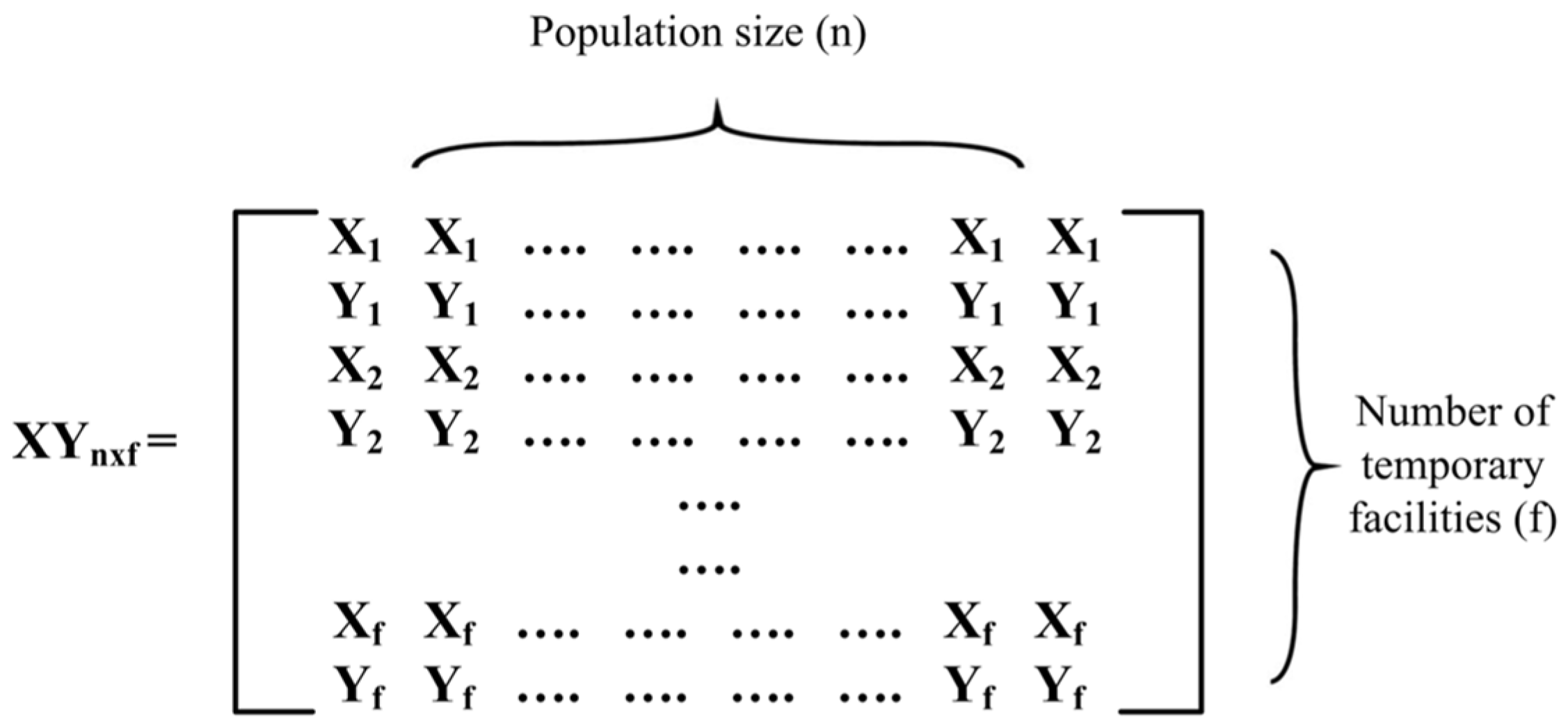
In this study, the proposed approach for modeling is based on the use of matrices to depict the risk parameters between facilities. The matrix-based solution approach of the DA provides a framework that can be easily applied to CSLP problems and customized according to different project requirements. In the model, the coordinates of the temporary facilities are defined as variables. Each column of the matrix is depicted as the centralized coordinates of the number of temporary facilities (f), which also correspond to a potential solution (X
1, Y
1, X
2, Y
2, …, X
f, Y
f). The population size (n) of the matrix is defined as the number of potential solutions in the search space. This coding system has been preferred for representing and solving CSLP problems [
80]. The XY
nxf population matrix (
Figure 5) is generated randomly for each pair of facility coordinates, ensuring that the coordinates remain within the site boundaries.
3.1. Objective Function
This study identified three objective functions. However, incorporating multiple objective functions increases the problem’s complexity, resulting in a prolonged optimization process. To reduce this complexity and facilitate the evaluation of the safety factor at the construction site, three methods are recommended: combining objectives into a performance criterion, obtaining a solution by turning the objective into constraints, and the dominant Pareto-based optimal method [
81]. Considering the structure of the problem, the objective functions are gathered into a single objective function within the performance criterion [
76,
82]. Consequently, the parameters representing risks due to interaction flow (
RF), the closeness factor (
RS), and risks associated with cranes (
RC) were consolidated using relative weight coefficients (
w1,
w2,
w3). These coefficients can be obtained from historical safety records and data on fatalities or injuries from previous projects, as reported by companies [
22]. The objective function, which considers minimizing the total risk (
TR), is presented in Equation (17). In this study, the weight coefficients were assigned as
w1 = 0.2 for the interaction flow parameter,
w2 = 0.2 for the closeness factor parameter and
w3 = 0.6 for the tower crane parameter. The weight coefficients were assigned to reflect the relative dominance of different risks in the construction site from a safety-impact perspective. Tower crane risks are mostly associated with fatal and catastrophic outcomes, which indicates a more dominant contribution to the total risk function. For this reason, a higher weight value was assigned to the crane risk factor to reflect its intense influence on overall site safety compared to the interaction flow and closeness factor risks. However, the weighting values are influenced by the judgments and experiences of site managers or decision-makers who are responsible for construction site planning, which means that different weighting values lead to different layout solutions. The total weight was leveled in this study among the parameters according to the assumption that the tower crane would pose a higher risk factor.
The weighting reflects the general industry perception of risk priorities in construction projects and is consistent with the Ning et al. [
82], which has a similar total risk equation. However, if the safety records or risk priorities differ across construction sites, the weight coefficients can be adjusted accordingly. This naturally leads to site-specific variations in the objective function, reflecting different managerial perceptions of risk. However, minor variations within realistic ranges (±5–10%) were also tested and did not significantly affect the overall layout structure. This situation also depicts the robustness of the weighting.
3.2. Constraints
At a construction site, areas such as the main construction area, tower cranes, transportation roadways, obstacles due to land characteristics, etc., are considered unoccupied areas or fixed facilities [
57]. Therefore, for the coordinates of temporary facilities, the obtained results must remain within the determined search space for the algorithm. In this study, the solutions obtained during the optimization process are constrained to lie outside the coordinate values of the structures classified as fixed facilities in the model.
In optimization, the minimum total risk is achieved by determining the coordinates in the search space. However, when seeking the optimal solution, the algorithm may place the coordinates of the facilities outside the site boundaries, or the obtained coordinates may lead to overlap [
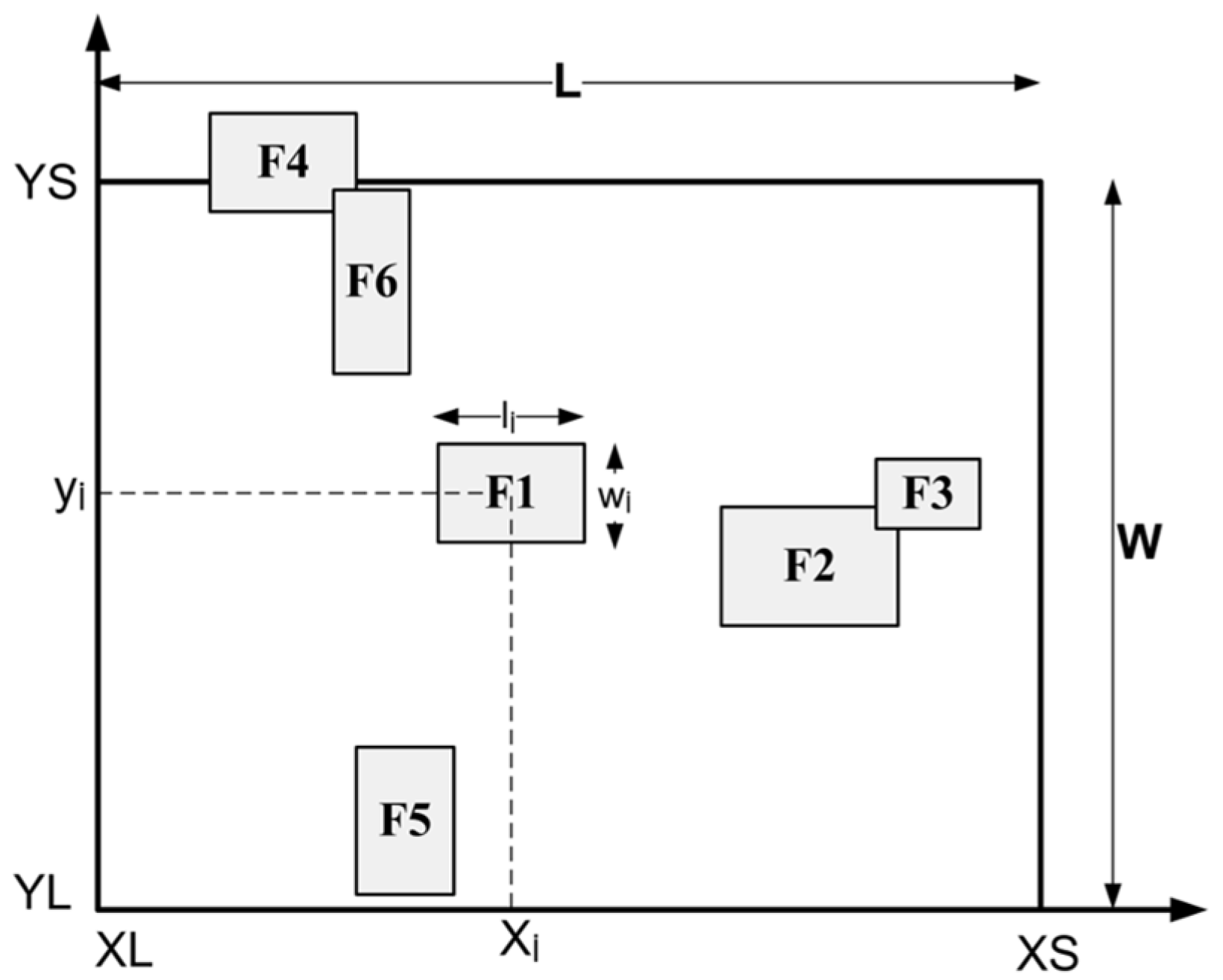
25]. Therefore, the results must satisfy the boundary (Equations (18)–(21)) and overlap (Equations (22) and (23)) conditions to obtain a feasible site layout.
Figure 6 illustrates the boundary and overlap conditions for facilities within the site area.
Here, the lower and upper bounds of the site area are depicted as XL, YL, XS, and YS in the X and Y directions, respectively. l and w represent the length and width of the facilities (i) or (j). Xi, Xj , and Yi, Yj denote the center coordinates of the specified facilities.
Additionally, the model’s results depend on the number of constraints and how they are applied to the model [
83]. To obtain acceptable results, this study incorporates safe distances as suggested by Sanad et al. [
72]. These distances refer to extra areas added to the physical area of the facilities that mitigate the risks arising from the movement of personnel, materials, and equipment operations [
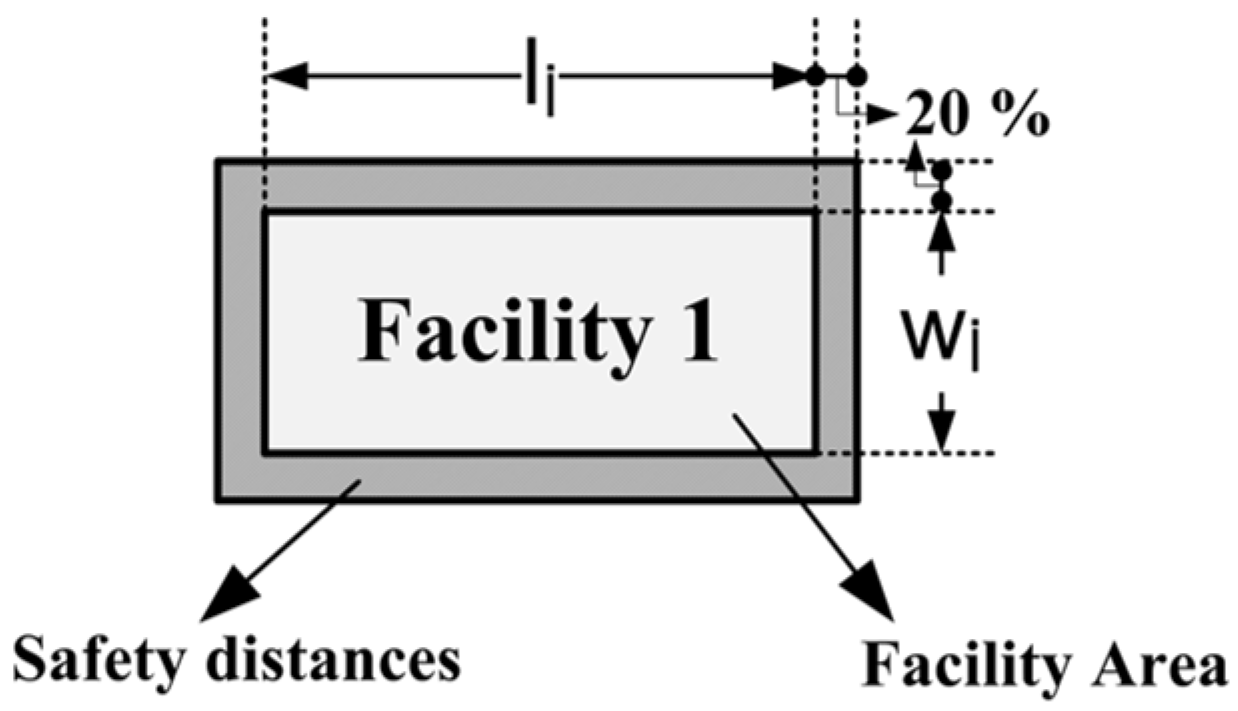
71]. It is recommended that the distances should be consistent with regulations such as fall prevention measures [
84]. For this reason, the areas of temporary facilities are expanded by 20% as a conservative safety distance in this study. Therefore, the dimensions of the facilities are extended in both the
X and
Y directions during the optimization process to standardize modeling across facilities (
Figure 7). However, the safety distance value can be changed or adjusted by the responsible site professional.
3.3. DA Implementation
In optimization problems, it is possible to adapt almost all metaheuristics to any problem. It has also been known that bio-inspired metaheuristics are widely applied to numerous optimization problems; however, this situation creates conflict for fostering a problematic paradigm in the comprehension of these algorithms [
85]. In our study, DA was evaluated not for its bio-inspired appeal but for its ability to address the complexities of CSLP. The design of the DA for the CSLP problem is structured by the specific characteristics of CSLP, which is a multi-factorial, spatially constrained, and nonlinear optimization problem. While satisfying boundary and overlap conditions simultaneously in feasible solutions, it is essential to avoid trapping local optima. The behavioral mechanisms of the DA are particularly suitable for this purpose, as strong exploration in early iterations enables the identification of promising layout regions, while intensified exploitation in later iterations allows adjustments of facility locations without violating boundary and overlap constraints. Therefore, the decision to employ the DA stems from empirical evidence and practical considerations, such as its capability in balancing exploration and exploitation, fast convergence, and effectiveness in constrained problems. Accordingly, the parameters and update strategies are configured to reflect DA’s search behavior, ensuring convergence towards promising search space areas and feasible layout solutions.
Regarding coefficients, the inertia weight (w) is gradually reduced during the iterative process to provide a smooth transition from exploration to exploitation. The separation coefficient (s) is kept constant, whereas the alignment (a) and cohesion (c) coefficients are adaptively adjusted in opposite directions to reflect the global search diversity and local solution refinement. Setting the sum of s, a, and c equal to unity ensures balanced swarm behavior and prevents any single interaction mechanism from dominating the search process. In addition, the food (f) and enemy (e) coefficients are assigned equal values to maintain operational effectiveness of the s, a, and c parameters. This adjustment prevents the search process from getting stuck at a single point or avoiding specific areas. Nevertheless, it should be noted that to balance exploration and exploitation, the swarming factors (s, a, c, f, e, and w) can adaptively tune. Variations in the tuning of behavioral coefficients may influence the search dynamics and convergence tendencies of the algorithm, without implying deterministic effects on the final layout solutions.
From the convergence behavior and stability, the determined coefficient update mechanism enables a gradual transition from exploration to exploitation. This mechanism is based on the behavior of dragonflies, which promotes convergence because it is assumed that dragonflies tend to see more dragonflies to adjust the flying path during the optimization process [
4]. During the iterative process, the behavior of the DA population finds feasible layout areas while avoiding premature convergence. Overall, the proposed algorithm demonstrates reliable convergence characteristics and stable performance in addressing the complexities of CSLP.
In addition, minimizing the computational load is crucial due to the complexity of the solutions. As a fast-tracking algorithm, the DA has already been applied to solve problems in various fields [
86,
87]. Compared to other bio-inspired metaheuristics, the DA is preferred for its efficient exploration and convergence mechanisms [
88]. The results of the benchmark tests demonstrate the superior performance of DA over GWO, PSO, and GA [
11]. Additionally, the DA performs better than its variants do in global optimization problems [
89]. This suggests that adapting the DA to the current problem with minor modifications may produce better results.
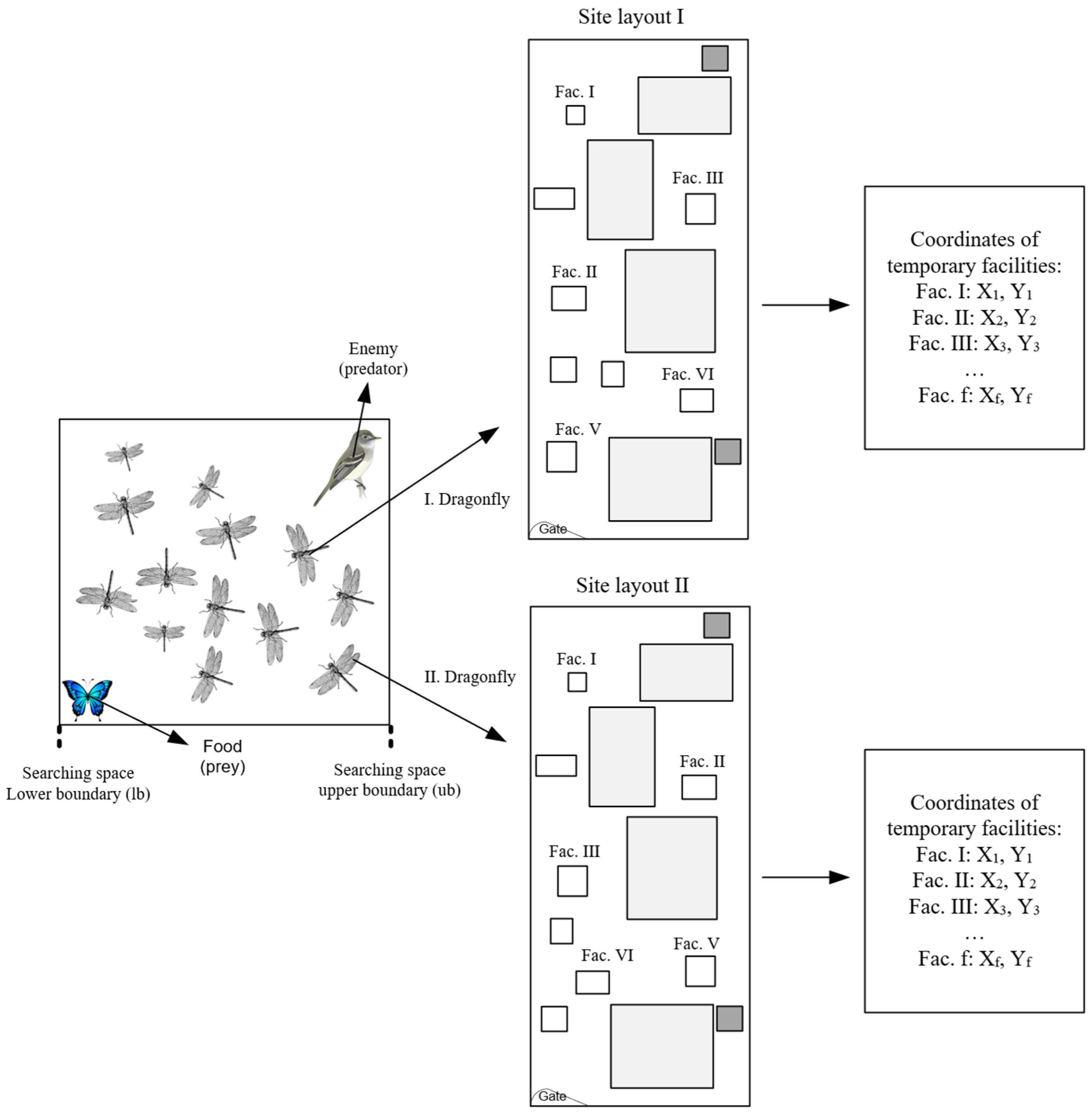
In our model, each column of the XY
nxf population matrix represents an alternative solution. The coordinates are coded such that every possible solution is represented by a dragonfly in the algorithm’s search space.
Figure 8 shows the behavior of the “n” dragonflies in the search space, where they seek the best solution (i.e., best layout) by avoiding the enemy (predator) and moving toward the food source (prey).
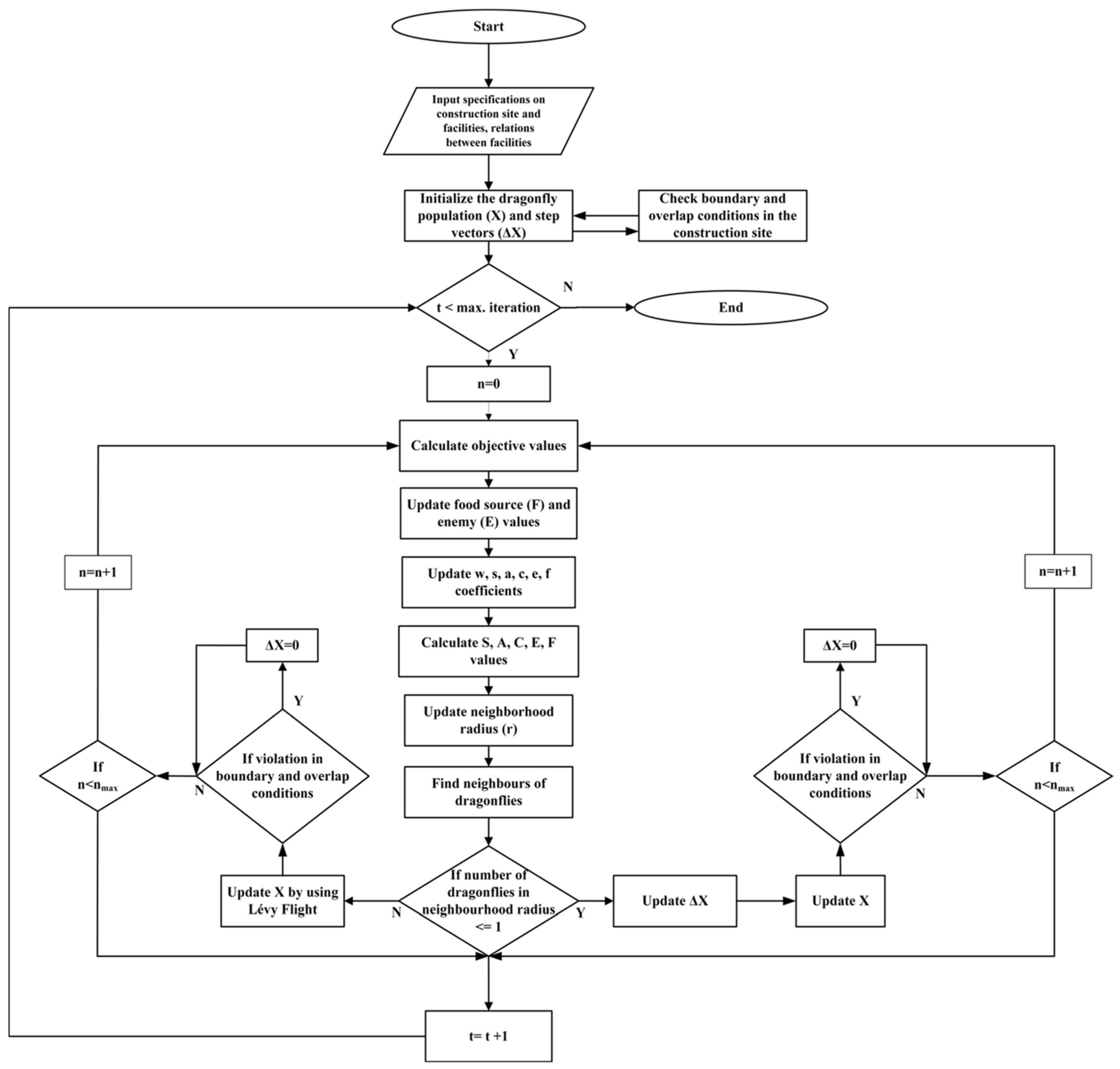
The pseudo-code and flowchart of the DA-based model are shown in Algorithm 1 and
Figure 9, respectively. The corresponding equations are taken from
Section 3.3 and implemented in the CSLP problem.
| Algorithm 1. Pseudo-code of the DA-based algorithm |
| 1 Input specifications on construction site and facilities |
| 2 Input relations between facilities |
| 3 Initialization set of parameters (maximum iteration, maximum number of search agents) |
| 4 Initialize the dragonflies population Xi (i = 1,2, …, n) |
| 5 Initialize step vectors ∆Xi (i = 1,2, …, n) |
| 6 Check boundary and overlap conditions in the construction site |
| 7 While maximum iterations not satisfied |
| 8 Calculate the objective values of all dragonflies |
| 9 Update food source (F) and enemy (E) values |
| 10 Update w, s, a, c, e, f coefficients |
| 11 Calculate S, A, C and F, E values |
| 12 Update neighborhood radius (r) |
| 13 if a dragonfly has at least one dragonfly in the neighborhood |
| 14 Update step vector (∆X) |
| 15 Update position vector (X) |
| 16 Check boundary and overlap conditions in the construction site |
| 17 if there is a violation in boundary or overlap conditions |
| 18 Restrict relevant ∆X value |
| 19 end if |
| 20 else |
| 21 Update position vector (X) by using Lévy Flight |
| 22 if there is a violation in boundary or overlap conditions |
| 23 Restrict relevant ∆X value |
| 24 end if |
| 25 end if |
| 26 Check the new positions based on the boundaries of variables |
| 27 End while |
To utilize the model, the following information must first be provided: the construction site boundaries, the lengths and widths of temporary facilities, the structures within the construction process (considered fixed facilities), and the length, width, and coordinates (
x,
y) of the tower cranes. The algorithm begins by initializing the population size (XY) and step size (Δ
X), ensuring that randomly generated coordinate values do not overlap and remain within the site boundaries. The population sizes of “n” dragonflies are expressed as X
1, X
2, X
3, …, and X
n. For example, dragonfly X
1 is a particle with dimensions of x
1, y
1, x
2, y
2, …… x
f, y
f coordinates. Thus, each dragonfly contains “temporary facilities *2” coordinate values. The same coding system applies to the Δ
X procedure. The objective values of the coordinate values produced in the first iteration are calculated within themselves. The
S,
A,
C,
F and
E values are calculated using the
w,
s,
a,
c,
e, and
f coefficients that are entered first and then updated via iterations. While adjusting the coefficient values here, the inertia coefficient (
w) was reduced in direct proportion to the increase in the number of iterations, from 0.9 to 0.4 values, to simulate the transition features of the algorithm from exploration to exploitation. The value of the separation coefficient (
s) was kept constant at 0.2, the alignment coefficient (
a) was reduced between 0.7 and 0.1 values inversely proportional to the number of iterations, and the cohesion (
c) coefficient was increased between 0.1 and 0.7 values in direct proportion to the number of iterations. The coefficients of food and enemy factors (
f and
e, respectively) were determined to be 1 [
4,
7]. In addition, the sum of the coefficients
s,
a, s and
c being equal to 1 showed that the solutions were effective by ensuring a balanced behavioral interaction among separation, alignment, and cohesion coefficients, preventing any single behavior from dominating. These adaptive behaviors were expressed in Equations (24)–(26).
where
t represents the current iteration and
T denotes the total number of iterations.
During the algorithm’s repetitive search process, the dragonflies are required to update their positions relative to each other and reach the best solution by increasing their neighbourhood radius (r) until they reach the maximum number of iterations. Here, ub refers to the upper boundaries of the search space in the planar dimension, and lb refers to its lower boundaries (
Figure 8). The maximum number of iterations can be determined by the user.
4. Case Study
An extensive lifestyle resort project, featuring commercial and recreational facilities, including a residential building, cinema, theatre, shopping center, and fitness center, was selected as a case study. This case study data was obtained from the actual site layout and design documentation of the project. The data regarding locations and coordinates were also extracted from architectural drawings and topographic surveys.
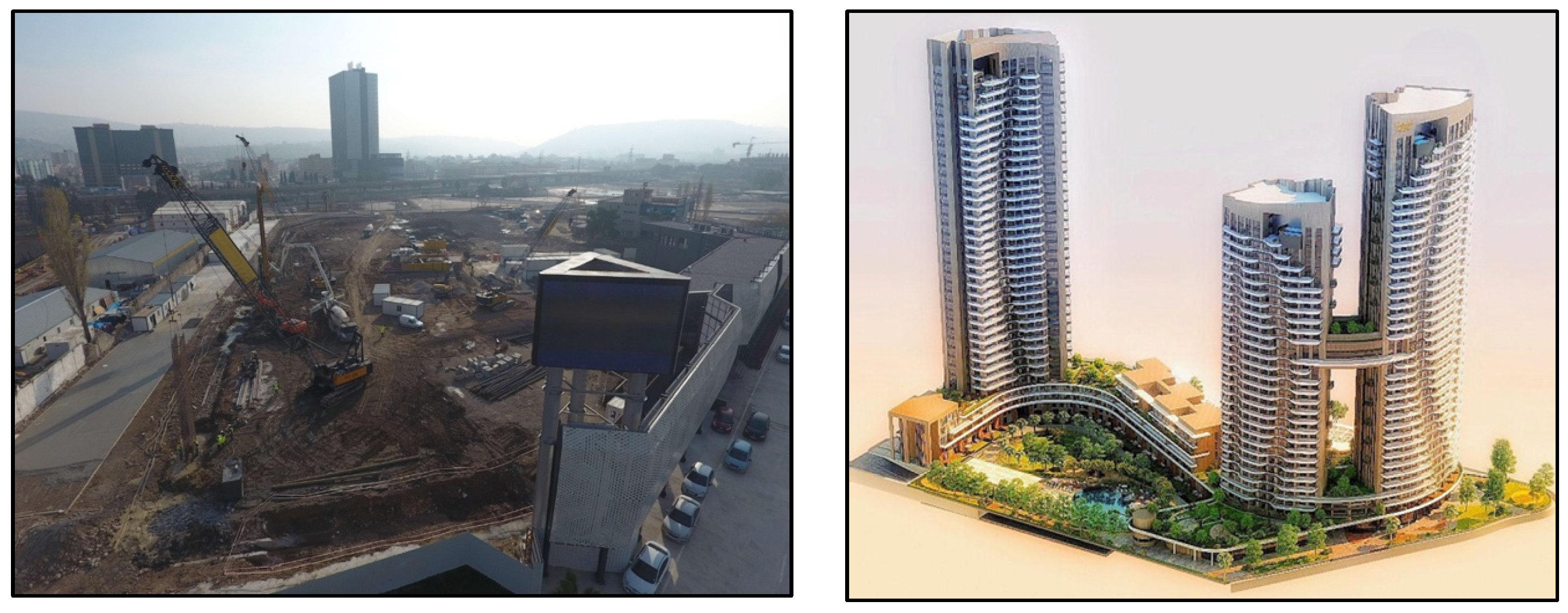
Figure 10 illustrates the construction phase and visual representation of the completed project, which consists of a total of 843 residences and 53 commercial areas.
The project has an approximate building footprint area of 3000 m
2 and is located within a 20,700 m
2 construction site area and has an approximate total floor area of 150,000 m
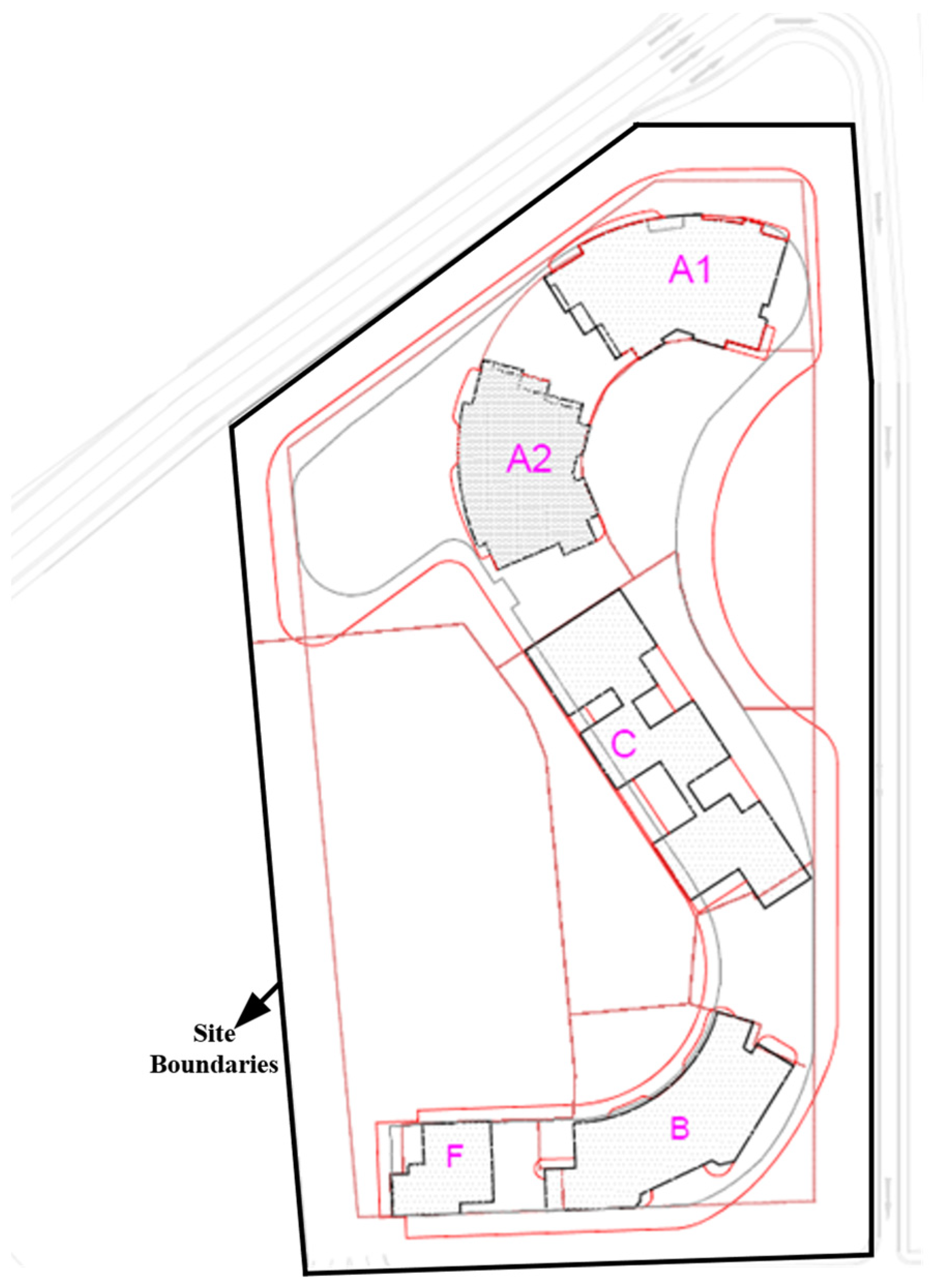
2. The site plan of the project, shown in
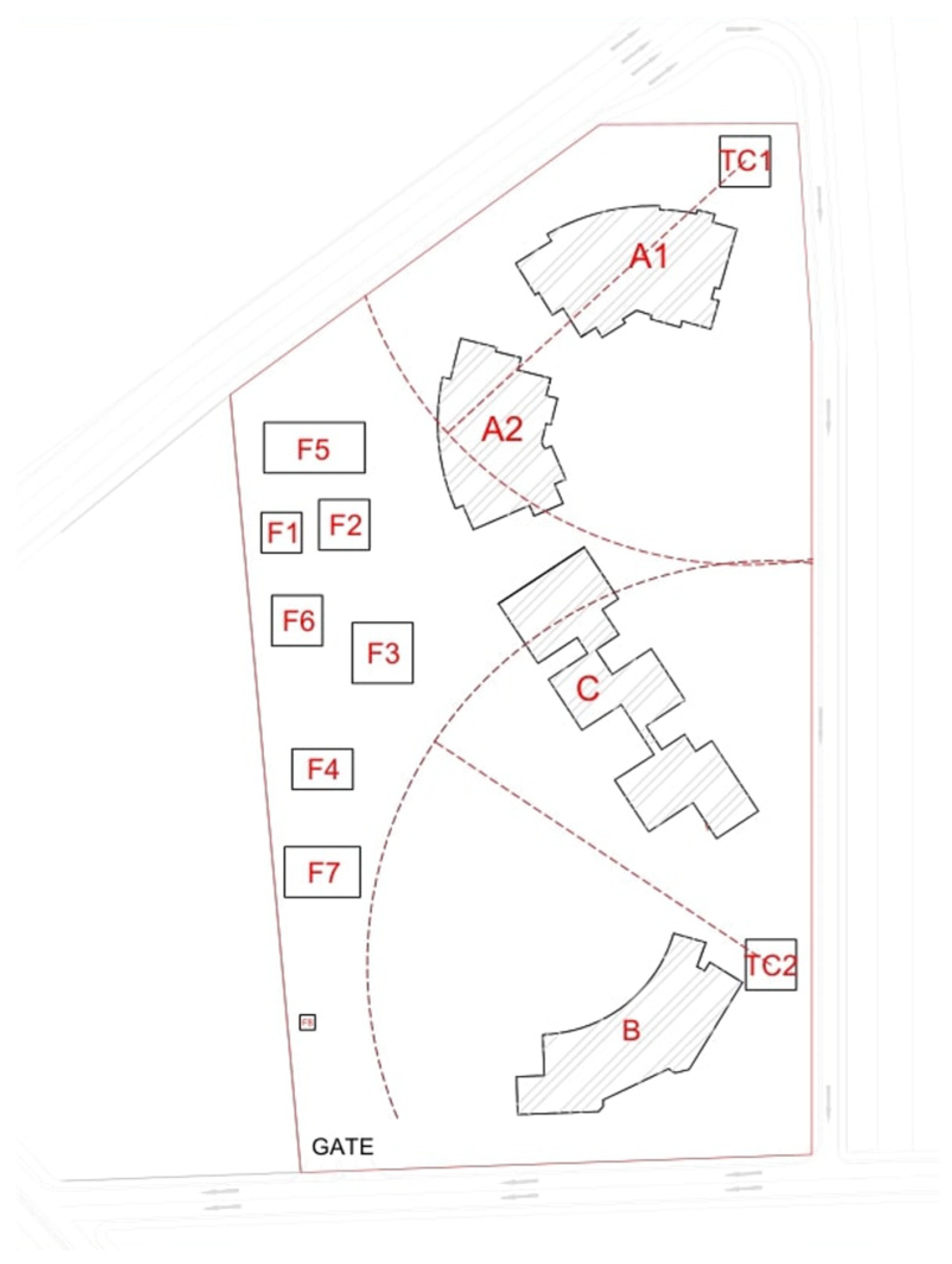
Figure 11, features three tower blocks: Block B with 31 storeys, Block A2 with 37 storeys, and Block A1 with 38 storeys, reaching a maximum height of 136 m. Block F is a porch structure planned for construction after the completion of the other blocks.
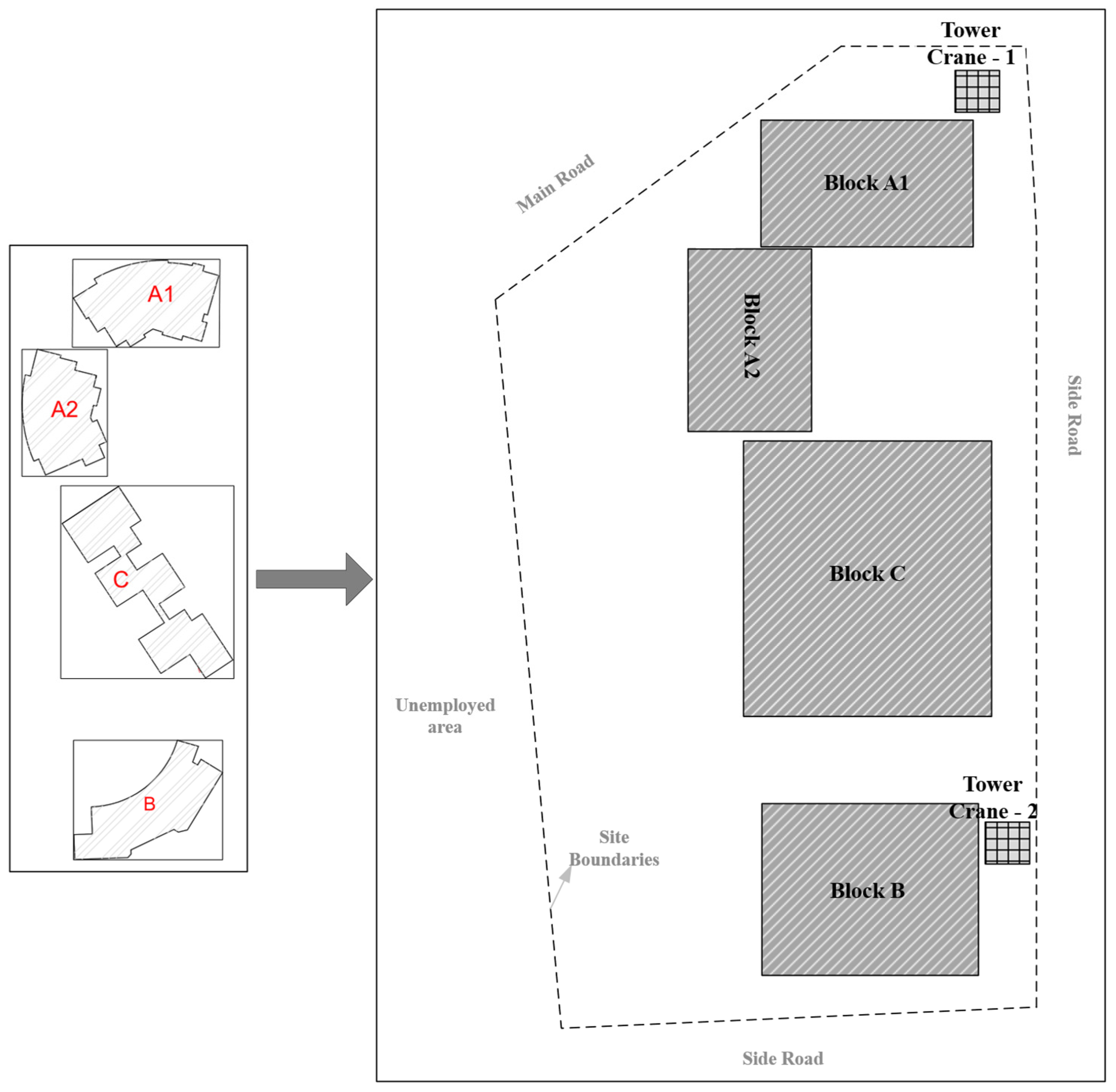
For all buildings to be constructed, the outermost points of their actual shapes are determined, and a rectangle is drawn with those points as the corners. This assumption ensures minimum area loss for representing building areas. There are two reasons for taking into consideration the buildings as rectangular shapes: (1) in terms of health and safety measures, fall accidents can be prevented by locating temporary facilities distant from fixed facilities [
90], (2) to decrease the optimization duration. In addition, gaps (distances) created by the rectangular shape provide safe travel for site personnel.
The construction project is positioned within a coordinate system where the exterior points of the site intersect at the (0, 0) point. The coordinates of the corner points defining the site boundaries are determined as (14, 0), (116, 3.5), (115, 165), (112, 208), (73.5, 208), and (0, 154). In this study, the construction phase considered two cranes that can reach specific points of the four blocks, which are fixed facilities, while eight temporary facilities are located. It should also be noted that the location of concrete pumping facilities is an important decision in construction site layout planning. Due to the scope of this study focusing on static site layout optimization, the concrete pump was not considered as a fixed or temporary facility, as it represents a high-frequency, short-term, and operation-dependent resource whose position varies throughout the construction process. For the tower crane, the horizontal operational range is set as 80 m (J + G/2), and this distance is accepted as the radius of the crane. The buildings to be constructed are represented in a rectangular shape, with site boundaries and roadways depicted in
Figure 12. The nomenclature and specifications of the facilities are presented in
Table 2.
Additionally, data (both numerical and verbal) on the daily average and the maximum number of personnel traveling between the facilities, the number of traveling for material transport and the amount of equipment transport were determined by work schedules, material procurements and heavy equipment work plans. This dataset was gathered through on-site observations and expert assessments conducted with the assistance of the project management team. The labor flow values (in terms of person/day) between facilities are converted according to the risk criteria scale and given in
Table 3. The material, equipment and information matrices were also created and presented in
Supplementary File as
Tables S1–S3, respectively. Similarly, each matrix represents pairwise interactions among facilities, where no self-interaction occurs in diagonal elements, and off-diagonal values denote the intensity or risk level between facilities.
Since the closeness of facilities to each other increases the risk within the construction site, they should be located as far away from each other as possible. The relationships among facilities are obtained based on the knowledge and experience of the project manager, or who is responsible for deciding the locations of the facilities. There is a subjective and verbal description of the relationship between the two facilities which includes both qualitative and quantitative aspects. For instance, electric generator–waste area closeness possesses more risk (VI in risk criteria scale) than electric generator–sand storage (NI in risk criteria scale). Non-hazardous wastes, noise, dust, vibration, and uncomfortable temperatures are considered construction site waste parameters, while facilities containing explosive and inflammable materials, high electrical voltages, or hazardous chemicals are classified as hazardous materials. Risk matrices are defined for nine parameters and the closeness factor between facilities for noise is given (
Table 4). Other parameters’ matrices are given in
Supplementary File as
Tables S4–S10 for the closeness factor.
For the tower crane parameter, crane specifications were taken from the project’s equipment plans and manufacturer data sheets. Also, collected data were verified with the site’s Health and Safety reports and the project’s schedule. Based on the data, risk matrices are determined and shown in
Table 5. To minimize the risk of accidents involving falling objects, the locations of temporary facilities were presumed to be in the red zone. Specifically, in areas with a high density of laborers, it is essential that temporary facilities are situated beyond the crane’s operational range [
91].
6. Discussion
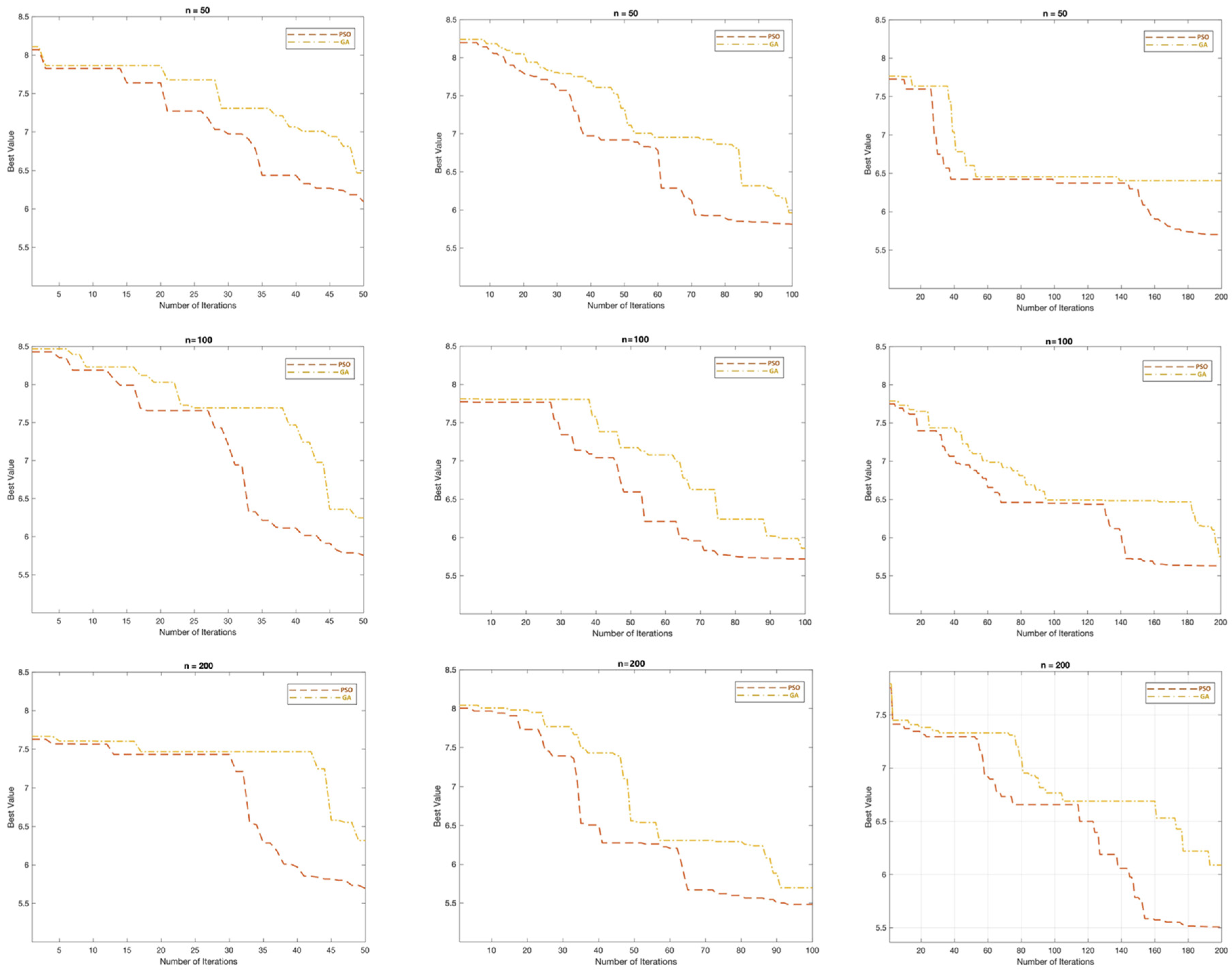
To validate the results, PSO and GA algorithms were employed for the same CSLP case study. The results of the best values obtained by the PSO and GA algorithms are presented in
Table 8, and convergence plots of these best results are depicted in
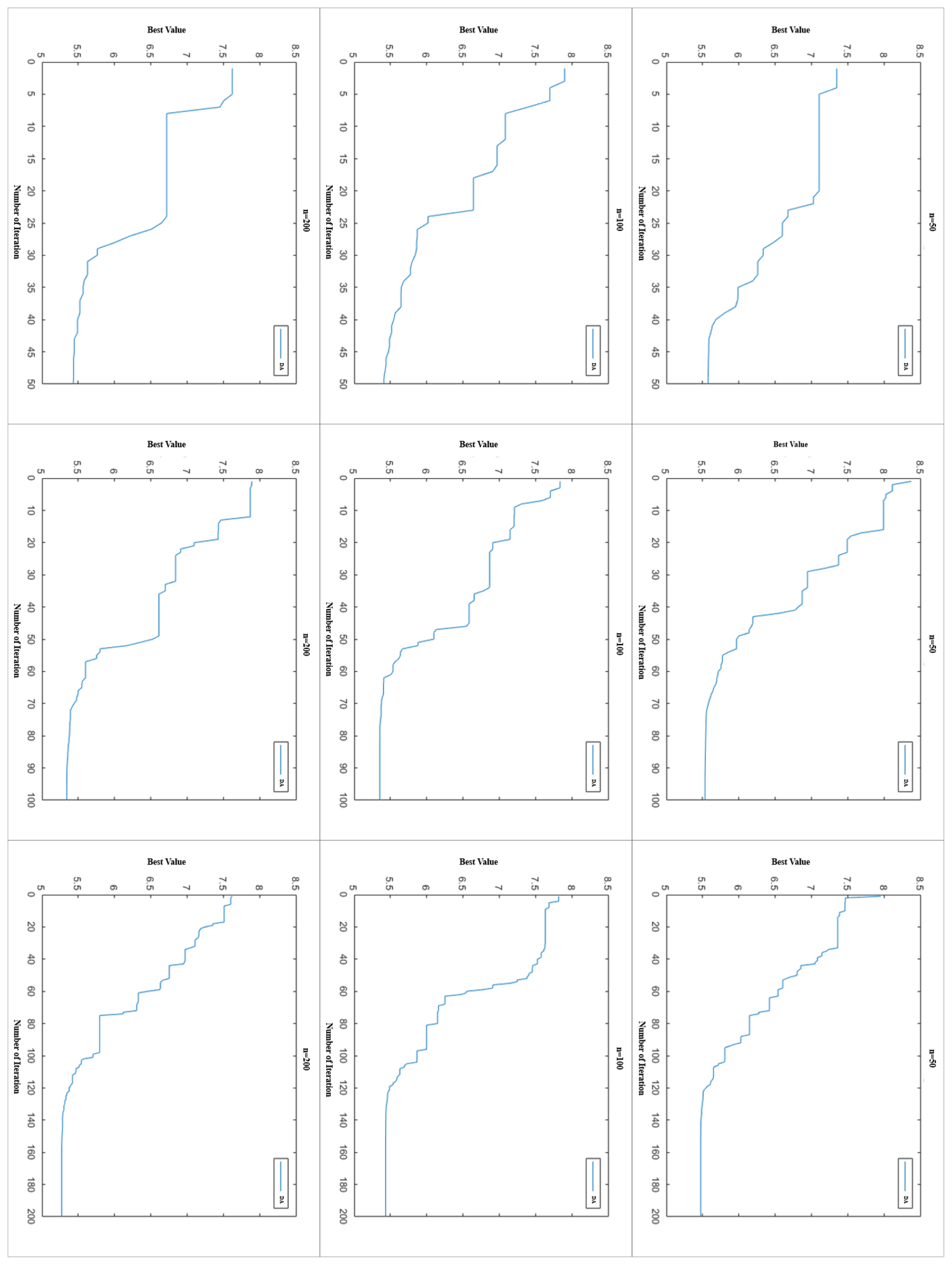
Figure 15 for populations of 50, 100, and 200 with 50, 100, and 200 iterations, respectively. It was observed that the results of PSO and GA were slightly inferior to those of DA.
In addition to the validation, an expert assessment process was conducted. In this scope, the layout plans obtained from the optimization process were shared with participants, who are professionals from various occupational groups who had experience placing facilities on construction site projects of a similar scale, and their feedback was requested. The purpose of this feedback was to determine whether professionals who had experienced risk scenarios in the CSLP problem found the results obtained with the DA to be satisfactory or better than their own, or to provide suggestions for improving the study. For this reason, feedback was collected from 10 participants, and the professions, roles, and sectors of the experts were shown in
Table 9. All the participants had 3 to 25 years of experience in their respective fields. In addition, it is already expected that, based on professionals’ knowledge and experience in site management and a health and safety perspective, different layout plans may result. The participant questions were given in
Table 10.
In terms of expert agreement, the qualitative feedback revealed a high level of consistency among the participants. It has emerged that the majority of the experts considered the DA-based layout solution to be more efficient and safer compared to manually generated layouts. Although the participants were asked to locate the facilities by considering predefined parameters, it is seen that some conditions, such as interaction flows, were not adequately accounted for by most participants. While more conventional parameters, such as maintaining a distance between non-hazardous material waste areas and electrical generators, were generally observed, other parameters, such as dust exposure, were frequently overlooked. Furthermore, most participants expressed a clear preference for layouts with lower risk values, even if longer computation times were required. Also, it has been commonly preferred to locate facilities as far as possible from tower cranes, indicating risk awareness among most participants. This consistency among expert judgments supports the reliability and practical relevance of the proposed optimization-based layout model.
It should also be noted that the expert assessment in this study was designed as a validation of the DA-based layout results. The experts were asked to evaluate and, if necessary, comment on the optimized layouts by considering the same parameters in the DA objective function, which are interaction flow, closeness factor, and tower crane-related risks. As a result, most expert feedback was collected in the form of qualitative assessments and suggested adjustments to the DA-generated optimal layout, rather than generated alternative layouts with defined geometric coordinates. Therefore, the validation was carried out by examining the consistency between expert judgments and the acquired optimization result.
The current state-of-the-art in CSLP mainly involves the customization of existing algorithms for determined project constraints [
51,
52,
53,
54]. They provide insights into the objective of effective layout plans that aim to maximize optimization with respect to cost and safety objectives [
19,
93]. In addition, validations of these models are often specific to the cases studied [
2,
32]. However, construction site risk is still less frequently modeled as a primary optimization objective; furthermore, when included, it is often represented through simplified or problem-specific expressions that may not fully capture the combined effect of interacting hazards [
50,
94]. The results of this study contribute to the state of the art by (i) defining a risk-driven objective structure that integrates interaction-flow (
RF), closeness-based risk (
RS), and crane-related risk (
RC) within a single formulation, (ii) adapting and implementing the DA as the search mechanism for this risk-focused CSLP, and (iii) demonstrating practical relevance through results compared to the GA and PSO and validation via structured expert feedback. Consequently, this study contributes a risk-based optimization framework for construction site layout planning by integrating OHS-related risk parameters with the DA. The proposed model not only applies the theoretical integration of safety metrics into metaheuristic optimization but also demonstrates practical applicability through a case study.
From a construction safety and management perspective, the effectiveness of the DA-based layout optimization in reducing site risk can be explained by its alignment with particular OHS principles. In construction sites, risk mitigation is essential and many safety incidents arise from repeated exposure to risk sources, such as intersecting material and equipment flows, congested work zones, the location of facilities that constitute risk to each other, and proximity to crane-related operations. The optimized layout rearranges temporary facilities in a manner that reduces these exposures by increasing spatial distance between high-risk incidents derived from interaction flows and conflict-prone zones. In addition, the interaction among different risk parameters plays a critical role in risk mitigation. Interaction flow and closeness-related risks are related, as high traffic intensity combined with facilities that have inadequate distances between them significantly increases the probability of collisions, near-misses, and unsafe worker movements. Crane-related risk, although more specific, represents high-severity hazards that enhance overall site risk when combined with close facility arrangements or heavily intense flow routes. The DA-based optimization reflects safety management strategies because risk reduction is achieved not by focusing on a single risk, but by controlling the effect of multiple interacting risk sources. Consequently, the frequency and intensity of unsafe interactions are mitigated at the planning stage, which is consistent with the approach widely adopted in construction safety management.
7. Conclusions
In our study, risks at construction sites were defined as components of quantitative or qualitative relationships and distances between facilities, because increasing the safety level at a construction site depends on the minimization of the risk factors. Three parameters, which are interaction flow (RF), closeness factor (RS), and tower crane (RC), were considered based on facility relationships to reduce site risk in layout plans. Site risks were modeled based on matrix representation. A DA-based model was developed for the CSLP problem. This model highlights the significance of the study and contributes to CSLP optimization as a means of creating efficient layout plans. To validate the model, a lifestyle resort construction project was used as a case study. PSO and GA algorithms were also applied to the same CSLP problem, and results showed that DA offers better layouts. Also, the results were discussed by participants who had experience locating facilities at construction sites. The feedback demonstrated a high level of consensus among experts, with most participants agreeing on the effectiveness of the proposed layout. In conclusion, feasible layout plans with reduced site risk were obtained as a result of this study. Addressing the gap that site risk is still rarely considered as a primary optimization objective in CSLP, this study proposes a risk-focused approach that accounts for interaction flow (RF), closeness-based risk (RS), and crane-related risk (RC). The case-study results, supported by comparison to GA and PSO and structured expert feedback, indicate that the proposed DA-based framework can generate feasible layouts with reduced site risk and also provide support for OHS-oriented layout decision-making.
As limitations, the DA-based model structure is flexible and can be adapted to various construction contexts with appropriate parameter adjustment, although direct transferability requires careful consideration of site-specific conditions. The definition of site risks can be enhanced, such as laborers’ poor psychological conditions and supervision efficiency, which can be determined as a parameter for hazard mitigation. In the DA-based model, a safety-cost trade-off analysis can be conducted to determine the optimal layout plan. Also, due to the nature of the DA, different solutions can be achieved by changing or tuning the coefficients (s, a, c).
It should be noted that the optimization process depends as much on the experience of project managers or decision makers as it does on data collected from the site. In addition, the post-safety situation of the site was not tracked within the scope of this study. Future research can focus on empirical validation through real-site monitoring to quantify the tangible safety improvements achieved by the optimized layout. Moreover, future studies may extend the proposed framework by incorporating construction productivity as an additional objective within a multi-objective optimization. Early CSLP studies mostly focused on the cost parameter in single-objective research and extended to multi-objective studies. For instance, material handling efficiency, travel distances, and operational delays could be considered with safety-related risks. The current single-objective optimization can be extended by adding efficiency-related objectives and solving the problem using a weighted-sum approach or Pareto-based multi-objective metaheuristics. Thus, it would enable the determination of trade-offs between safety and productivity and support more balanced construction site layout decisions. In this study, however, the optimization problem was intentionally formulated as a single-objective model focusing solely on risk minimization to evaluate DA performance as a baseline before considering additional objectives.
While this study treats CSLP as a static optimization problem, real construction projects typically undergo dynamic changes that may require layout adjustments during construction phases. However, the proposed framework is most directly applicable as a decision-support tool for early phases of construction to establish a baseline layout that reduces exposure to risk factors under the defined site constraints. In practice, the same framework can be operated at predefined milestones such as major trade transitions or crane relocations, using updated inputs to generate stage-specific layouts, without changing the model structure. Future research can be extended to a fully dynamic CSLP by incorporating multi-stage decision variables. Additionally, multi-objective trade-offs can be employed by embedding the cost parameter in the optimization framework.
The applicability of the proposed DA-based CSLP optimization framework is primarily associated with site safety, which is strongly influenced by selected risk parameters. The model is particularly suitable for projects with clearly defined site boundaries, temporary facility layouts, and risk mechanisms that can be quantitatively represented. While the framework is adaptable through the administration of risk parameters, its generalization to different construction scales or alternative risk scenarios requires validation. Therefore, this study demonstrates the effectiveness of the proposed approach within its defined problem scope.
It was recognized that the optimization results could be further evaluated within a comprehensive benchmarking framework by considering the best solutions by employing other mainstream bio-inspired algorithms. Also, to demonstrate the generality of the algorithm, repeated experiments, different case studies, and statistical significance tests can be executed. Additionally, the proposed DA-based model can be applied to another case study. However, it was intentionally left outside the scope of the present study to maintain focus on the proposed risk-based CSLP optimization framework; otherwise, it would have resulted in the study becoming overly extended.