Systematic Review

Quadruped Robots in Construction Automation: A Comprehensive Review of Applications, Localization, and Site-Level Operations


1
Department of Civil Engineering, Seunghak Campus, Dong-A University, Busan 49315, Republic of Korea
2
Department of Electronics Engineering, Seunghak Campus, Dong-A University, Busan 49315, Republic of Korea
*
Author to whom correspondence should be addressed.
Buildings 2026, 16(5), 962; https://doi.org/10.3390/buildings16050962 (registering DOI)
Submission received: 30 January 2026 / Revised: 19 February 2026 / Accepted: 24 February 2026 / Published: 1 March 2026
(This article belongs to the Special Issue Robotics, Automation and Digitization in Construction)

Abstract

This paper presents a comprehensive review of quadruped robots in the construction industry, focusing on their applications, technological capabilities, and integration with digital construction workflows. Quadruped robots have emerged as promising mobile platforms due to their ability to traverse uneven terrain, operate autonomously, and support multimodal sensing, enabling tasks such as site inspection, 3D reality capture, safety monitoring, logistics support, and integration with Building Information Modeling (BIM) and digital-twin systems. Despite these advantages, real-world deployment remains constrained by limitations in battery endurance, payload capacity, communication reliability, perception robustness, and system interoperability. This review synthesizes findings from 20 studies published between 2015 and 2025 and incorporates a quantitative bibliometric analysis using both SciVal and Scopus. While SciVal provides performance-based indicators and global research trends, Scopus offers complementary publication coverage, improving analytical reliability. Unlike general robotics surveys, this review adopts a construction-centric perspective by explicitly linking quadruped robot capabilities to construction engineering objectives under practical site conditions. The findings highlight current application domains, technological gaps, and adoption barriers, and outline future research directions to support the effective integration of quadruped robots into construction practice. This review provides actionable insights for researchers, engineers, and practitioners assessing the readiness and limitations of quadruped robots in construction environments.

1. Introduction

Construction sites are inherently complex and dynamic environments, characterized by continuously changing geometries, temporary structures, incomplete or outdated as-built information, and hazardous working conditions [1]. Unlike controlled industrial or warehouse settings, construction sites evolve daily as materials are delivered, structures are erected or dismantled, and work zones shift. Core management tasks such as site inspection, progress tracking, safety monitoring, and regulatory compliance verification, therefore, rely heavily on manual observation and human judgment. These processes are not only labor-intensive and time-consuming but also highly susceptible to subjectivity. As a result, inspection outcomes often vary between inspectors, decision-making may be delayed, and compliance records can lack transparency and traceability—particularly when assessments depend on individual experience rather than objective, data-driven metrics.
In response to these challenges, automated sensing and monitoring technologies have been increasingly explored. Unmanned Aerial Vehicles (UAVs) offer efficient top-down perspectives for large-area construction monitoring and rapid data acquisition. However, their practical deployment is constrained by limited flight endurance, restricted payload capacity, and regulatory considerations, which limit continuous or close-range inspection tasks [2]. Conventional wheeled Unmanned Ground Vehicles (UGVs), while capable of carrying heavier sensors, frequently encounter mobility limitations on cluttered, uneven, or partially unstructured surfaces typical of construction sites, such as rubble, temporary ramps, and staircases [3]. These constraints highlight the need for alternative mobile sensing platforms capable of operating reliably at ground level in unstructured and constantly changing construction environments.
Commercial quadruped platforms such as Boston Dynamics’ Spot, ANYbotics’ ANYmal, and Unitree Robotics’ quadruped robots have demonstrated promising real-world capabilities in autonomous inspection, site scanning, safety patrols, and three-dimensional reconstruction [4,5,6]. These deployments suggest that quadruped robots are transitioning from laboratory prototypes toward practical field applications, particularly in environments where human access is difficult, repetitive inspection is required, or safety risks are elevated.
To support such tasks, quadruped robots are typically equipped with multimodal sensor payloads, including Light Detection and Ranging (LiDAR), RGB-D cameras, thermal imagers, and inertial measurement units. Modern autonomous systems increasingly rely on sensor fusion to enhance perception robustness under challenging conditions. For example, self-driving vehicles integrate LiDAR, cameras, and radar to achieve full 360° environmental awareness [7]. Construction-oriented robotic platforms follow a similar paradigm; recent UGV systems combine 3D LiDAR and camera data to map complex structures and localize damage [8]. Likewise, Boston Dynamics’ Spot can integrate a Velodyne LiDAR (Velodyne Lidar Inc., San Jose, CA, USA) with its stereo camera system, extending its effective mapping range from approximately 4 m to nearly 100 m [9]. When coupled with advanced autonomy algorithms and middleware frameworks such as Robot Operating System (ROS) and ROS 2, these sensing capabilities enable continuous data acquisition, situational awareness, and seamless integration with Building Information Modeling (BIM) and digital twin environments [10,11].
Building on these technological foundations, quadruped robots have been explored for a range of construction-specific applications, including automated scaffold inspection [6,12], laser scanning for detailed 3D reconstruction [13], and progress monitoring through cloud-based Augmented Reality (AR) visualization [4]. Their support for Simultaneous Localization and Mapping (SLAM) techniques allows navigation and mapping in GPS-denied environments, which are common on dense urban construction sites or in indoor facilities. Integrating SLAM outputs with BIM models further enhances localization accuracy and enables model-based mission planning, such as repeated inspection patrols, safety compliance checks in confined spaces, thermal inspection of equipment, and systematic as-built data acquisition for BIM updating [14]. Collectively, these capabilities make quadruped robots particularly suitable for detailed, repetitive, and safety-critical inspection tasks in dynamic construction environments [15].
Despite this progress, a comprehensive understanding of quadruped robot deployment in construction remains limited. Existing review studies predominantly focus on UAV-based monitoring systems, wheeled ground robots, or general automation frameworks, with comparatively little attention given to legged robotic platforms. Moreover, quadruped robots are often discussed only as experimental demonstrations within robotics literature, without systematic evaluation of their construction-specific capabilities, operational constraints, and integration challenges with BIM-based workflows and digital construction ecosystems.
Practical deployment challenges further underscore this gap. Most commercial quadruped robots exhibit limited battery life, often restricting continuous operation to approximately 1–2 h, depending on payload configuration and activity intensity [5]. Their payload capacity, typically ranging from 5 to 14 kg, remains insufficient for heavy-duty construction tasks such as material hauling or tool transport. In addition, dusty or wet construction environments can lead to sensor occlusion and environment-induced component degradation, adversely affecting sensing reliability and long-term operational durability [16,17]. Interoperability with existing digital construction systems also presents challenges, particularly with respect to real-time BIM synchronization, scalable cloud connectivity, and the deployment of explainable Artificial Intelligence (AI) behaviors in multi-robot systems [18,19]. Safety, regulatory, and economic considerations further complicate adoption. Human–robot interaction on crowded job sites raises concerns related to proxemics, collision avoidance, and operator oversight [3], while clear regulatory guidelines for autonomous quadruped operation in real-world construction environments remain underdeveloped [20]. From an economic perspective, high acquisition and maintenance costs require that deployment be justified by measurable improvements in productivity, safety, or data quality [21]. At the same time, emerging research on BIM-based progress control, semantic mapping, and multi-agent coordination—including UAV-UGV teaming—suggests a pathway toward tightly coupled digital–physical construction workflows [22,23].
In response to these challenges and research gaps, this review provides a comprehensive, construction-oriented synthesis of quadruped robot applications in the built environment. Specifically, it (1) develops a taxonomy of quadruped robot missions and enabling technologies relevant to construction practice, (2) critically examines their integration with BIM, digital twins, and site-level monitoring workflows, (3) identifies key technical, organizational, and economic barriers limiting large-scale adoption, and (4) outlines future research directions and deployment guidelines. The findings aim to support construction researchers, robotics engineers entering the Architecture, Engineering, and Construction (AEC) domain, industry practitioners, and policymakers seeking to assess the readiness and potential impact of quadruped robots in construction.
Despite increasing experimentation with quadruped robots for construction-related tasks, the literature remains fragmented across robotics, sensing, and construction management domains. Previous research has mostly focused on platform-level technical performance, locomotion control, or algorithmic development, with little synthesis of how these skills relate to process integration, site-level decision-making, and construction-engineering goals. Moreover, few reviews critically evaluate deployment maturity across validation contexts (laboratory, near-real, on-site) or assess the operational feasibility of quadruped systems under real construction constraints. This fragmentation underscores the necessity for an organized, construction-centric synthesis and obscures the preparedness of quadruped robots for real-world building implementation.

2. Methodology

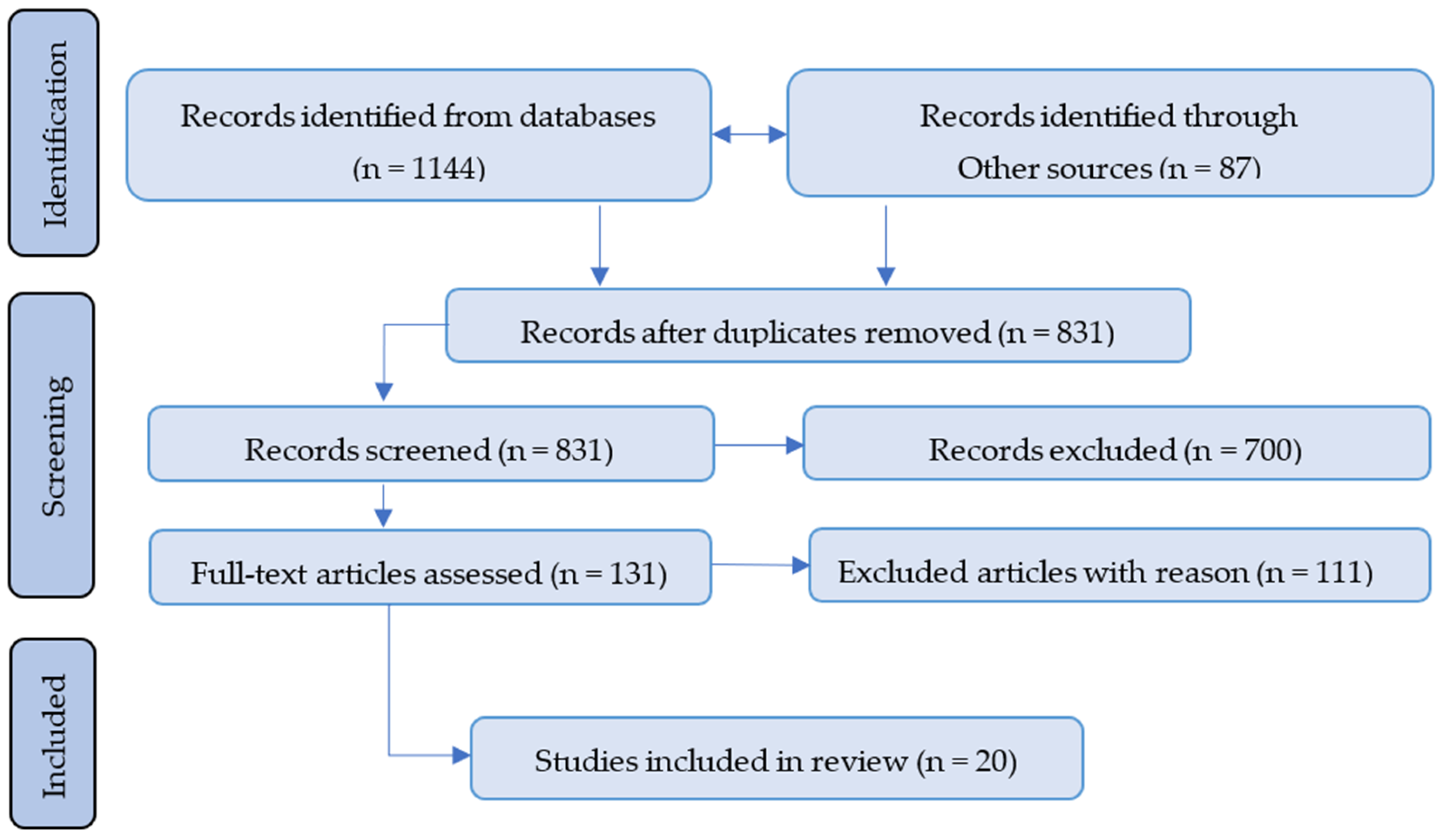
This review adopted a structured and transparent literature review methodology to systematically identify, screen, and analyze studies on the application of quadruped robots in construction environments. The review protocol was designed in accordance with the Preferred Reporting Items for Systematic Reviews and Meta-Analyses (PRISMA) framework to ensure reproducibility, rigor, and methodological clarity [24] (Figure 1).

2.1. Literature Search Strategy

A comprehensive literature search was conducted to capture peer-reviewed studies published between 2015 and 2025, reflecting the period during which legged robotic platforms began transitioning from laboratory research to field-level deployment. Four major academic databases—Google Scholar, Scopus, Web of Science, and ResearchGate—were selected to ensure broad coverage across robotics, construction engineering, and interdisciplinary domains.
The search strategy was constructed using Boolean operators and field restrictions to ensure transparency and reproducibility. In Scopus, the following query structure was applied:
  • (TITLE-ABS-KEY (“quadruped” OR “legged robot” OR “robot dog” OR “ANYmal” OR “Unitree Go2” OR “Boston Dynamics Spot”)
  • AND
  • TITLE-ABS-KEY (“construction” OR “construction site” OR “built environment” OR “civil engineering”))
  • AND PUBYEAR > 2014 AND PUBYEAR < 2026
This query restricted results to the Title, Abstract, and Keywords fields to ensure thematic relevance. Equivalent Boolean structures were adapted for Web of Science and other databases. Searches were further limited to journal articles and conference papers published in English.
The selected keywords were designed to capture both platform-oriented terminology (e.g., quadruped, legged robot, robot dog, ANYmal, Unitree Go2, Boston Dynamics Spot) and construction-related contexts (e.g., construction site, built environment, civil engineering). This dual-domain approach ensured inclusion of studies addressing both robotic system development and construction-specific applications.
The initial search yielded 1231 records, including 1144 articles from academic databases and 87 records from supplementary sources. After duplicate removal, 831 unique records were retained for screening.

2.2. Study Selection and Screening Process

Study selection followed a two-stage screening process. First, title and abstract screening was performed to assess relevance to construction-related applications of quadruped robots. During this phase, 700 records were excluded. The primary reasons for exclusion at this stage were absence of construction or built-environment context (n = 412), focus on unrelated robotic domains such as humanoid robots, industrial manipulators, or agricultural robotics (n = 176), and insufficient technical detail or non-peer-reviewed material (n = 112).
Second, full-text screening was conducted on the remaining 131 articles. Studies were evaluated against predefined inclusion and exclusion criteria to ensure construction-centric relevance and practical applicability. Following this assessment, 111 articles were excluded. The primary reasons for exclusion included a lack of integration with construction workflows, studies conducted exclusively in non-construction environments such as warehouses or laboratories, or purely theoretical analyses without experimental or near-real validation, and insufficient methodological transparency. Ultimately, 20 studies met all criteria and were included in the final review.

2.3. Inclusion and Exclusion Criteria

To maintain a strong construction-engineering focus, only English-language journal articles and conference papers published between 2015 and 2025 were considered. Included studies were required to satisfy at least one of the following conditions:
  • Explicit deployment or evaluation of quadruped robots in construction or built-environment contexts
  • Integration with construction workflows such as BIM-based inspection, reality capture, or progress monitoring
  • Validation through on-site, near-real, or experimentally representative environments
Several exclusion criteria were applied. Studies focusing solely on humanoid robots were excluded due to their limited deployment maturity in construction settings. Simulation-only studies and purely theoretical analyses were omitted, as they do not adequately reflect terrain variability, environmental uncertainty, and operational constraints present on real construction sites. Research conducted exclusively in factories, warehouses, or generic robotic testbeds without construction-specific integration was also excluded.

2.4. Data Extraction and Preliminary Thematic Analysis

A preliminary thematic analysis was conducted on the final set of 20 eligible studies to identify dominant research trends, application domains, and enabling technologies related to quadruped robot deployment in construction environments. For each study, structured data were systematically extracted, including research objectives, robotic platforms, sensing configurations, autonomy and navigation methods, targeted construction tasks, validation settings, and reported limitations. This standardized extraction process enabled consistent cross-study comparison despite substantial heterogeneity in experimental setups and application scope.
Of the 131 full-text articles initially assessed, only 20 studies met the strict construction-centric inclusion criteria. The relatively small number of eligible studies reflects the emerging maturity of quadruped robotics in construction rather than a limitation of the review methodology. A substantial portion of excluded studies focused on generic locomotion control, algorithmic benchmarking, or non-construction industrial applications. To preserve methodological rigor and ensure practical relevance, only studies demonstrating explicit construction integration, workflow validation, or built-environment experimentation were retained.
While all 20 studies meeting the inclusion criteria were reviewed and cited in this paper, only 15 representative studies are summarized in Table 1. The table is intentionally selective and focuses on studies that provide sufficient technical detail, explicit construction relevance, and clearly defined validation settings to enable meaningful structured comparison. The remaining studies, although relevant to the broader research landscape, primarily emphasize theoretical frameworks, bibliometric perspectives, or high-level system discussions without detailed implementation or validation characteristics, and are therefore discussed in the text but excluded from the tabular taxonomy.
In particular, the validation context of each study was explicitly extracted and classified as on-site, near-real, laboratory, or simulation. This classification serves as an indicator of experimental maturity and practical applicability, allowing differences in deployment realism to be systematically compared across studies. By combining application domain, key methods, and validation context, Table 1 provides a balanced overview of the technological breadth, deployment readiness, and construction relevance of representative quadruped robot research, and serves as the primary reference framework for the detailed analyses in Section 4 and Section 5.
The relationship between the search strategy (Section 2.1), the bibliometric analysis (Section 3), and Table 1 should be clarified. The keywords defined in Section 2.1 were used to identify the initial pool of quadruped robot studies relevant to construction. After screening, 20 studies met the inclusion criteria, forming the core dataset of this review.
The same keyword logic was also applied in the SciVal-based performance analysis (Section 3.1). However, while Table 1 reflects the strictly screened and construction-focused studies, the bibliometric analysis examines the broader research landscape to contextualize publication trends and impact. In this way, Table 1 provides qualitative synthesis, whereas Section 3.1, Section 3.2 and Section 3.3 provide quantitative contextualization using consistent keyword framing.

3. Bibliometric Analysis

To complement the qualitative synthesis of quadruped robot applications in construction, a bibliometric analysis was conducted to quantitatively examine research output, disciplinary distribution, and citation performance trends. This analysis aimed to contextualize the maturity, impact, and interdisciplinary diffusion of quadruped-robot research within the built-environment domain. Two complementary bibliometric platforms—SciVal and Scopus—were employed to provide both performance-oriented and publication-oriented perspectives.

3.1. SciVal-Based Performance Analysis

SciVal, an advanced research analytics platform developed by Elsevier, was employed to assess global research performance on quadruped robots in construction between 2015 and 2025 [30]. The bibliometric query combined quadruped-robot–specific keywords (“quadruped,” “legged robot,” “robot dog,” “ANYmal,” “Unitree Go2,” “Boston Dynamics Spot”) with construction- and built-environment–related terms (“construction,” “construction site,” “built environment,” “civil engineering”). This dual-keyword strategy was designed to capture both foundational robotics research and studies explicitly addressing construction-oriented deployment scenarios.
SciVal was selected because it provides field-normalized and performance-oriented indicators that extend beyond simple publication counts. In particular, the Field-Weighted Citation Impact (FWCI) metric was used to evaluate research influence relative to global citation expectations within the same subject area, publication year, and document type [31]. An FWCI value greater than 1.0 indicates that publications receive more citations than the world average, allowing meaningful comparisons across heterogeneous disciplines such as engineering, computer science, and construction management.
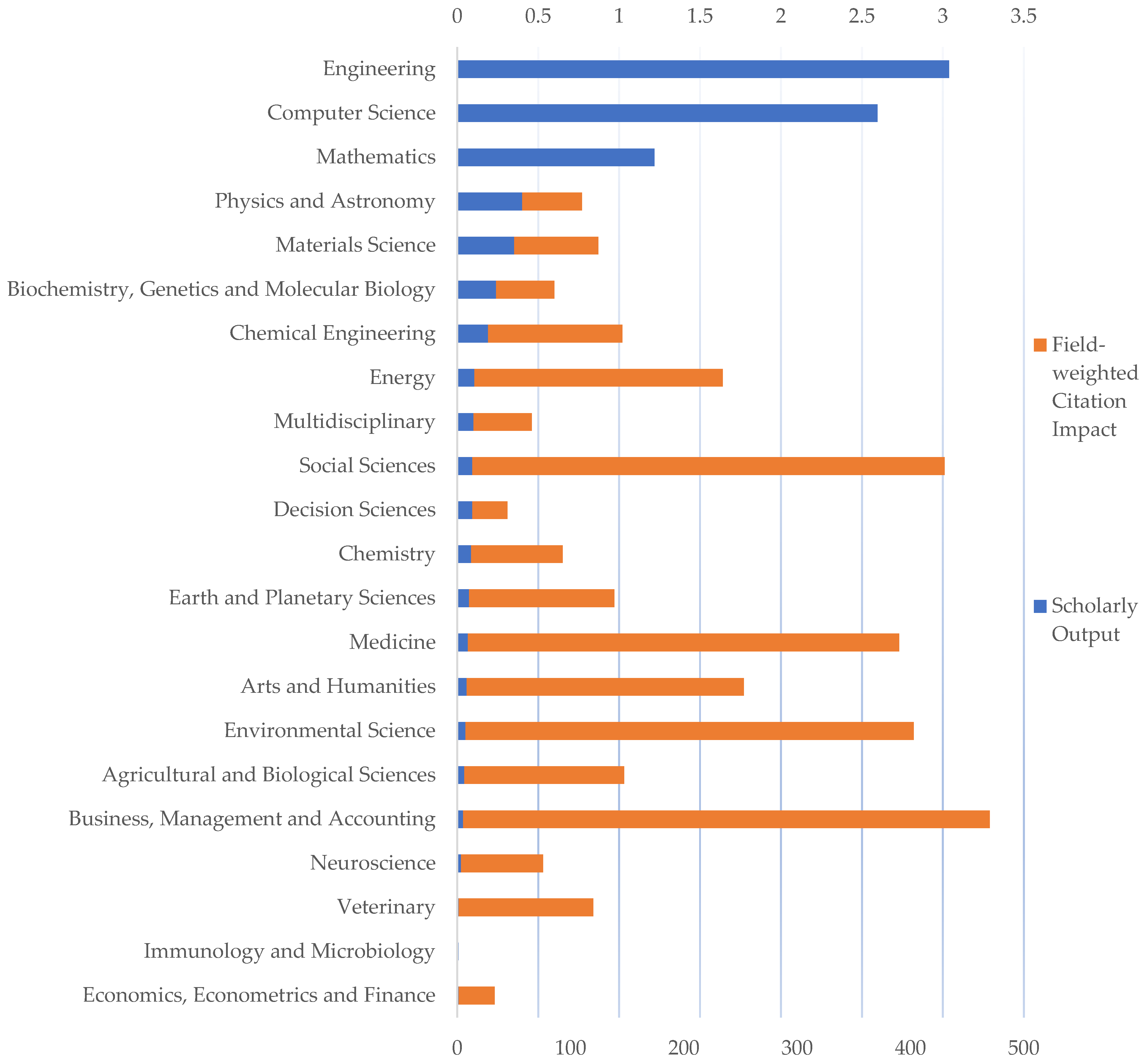
Figure 2 presents the distribution of publications by subject area. As expected, Engineering and Computer Science dominate overall publication volume, reflecting the technology-driven nature of quadruped robot development, including locomotion control, perception, and autonomy. However, when citation performance is considered, a more nuanced pattern emerges. Several adjacent disciplines—most notably Social Sciences, Business and Management, Environmental Science, and Arts and Humanities—exhibit substantially higher FWCI values despite producing fewer publications. This imbalance suggests that research appearing in these fields tends to attract disproportionately close scholarly attention, indicating strong relevance beyond purely technical audiences.
To further elucidate this trend, scholarly output and FWCI values were jointly analyzed. The results indicate that while technical disciplines primarily contribute to methodological and algorithmic advances, interdisciplinary and application-driven studies often achieve higher relative impact. In the context of construction robotics, this pattern reflects growing academic interest in issues such as human–robot interaction, organizational adoption, safety management, decision-making support, and sustainability—topics that resonate strongly with construction engineering practice and policy discussions.
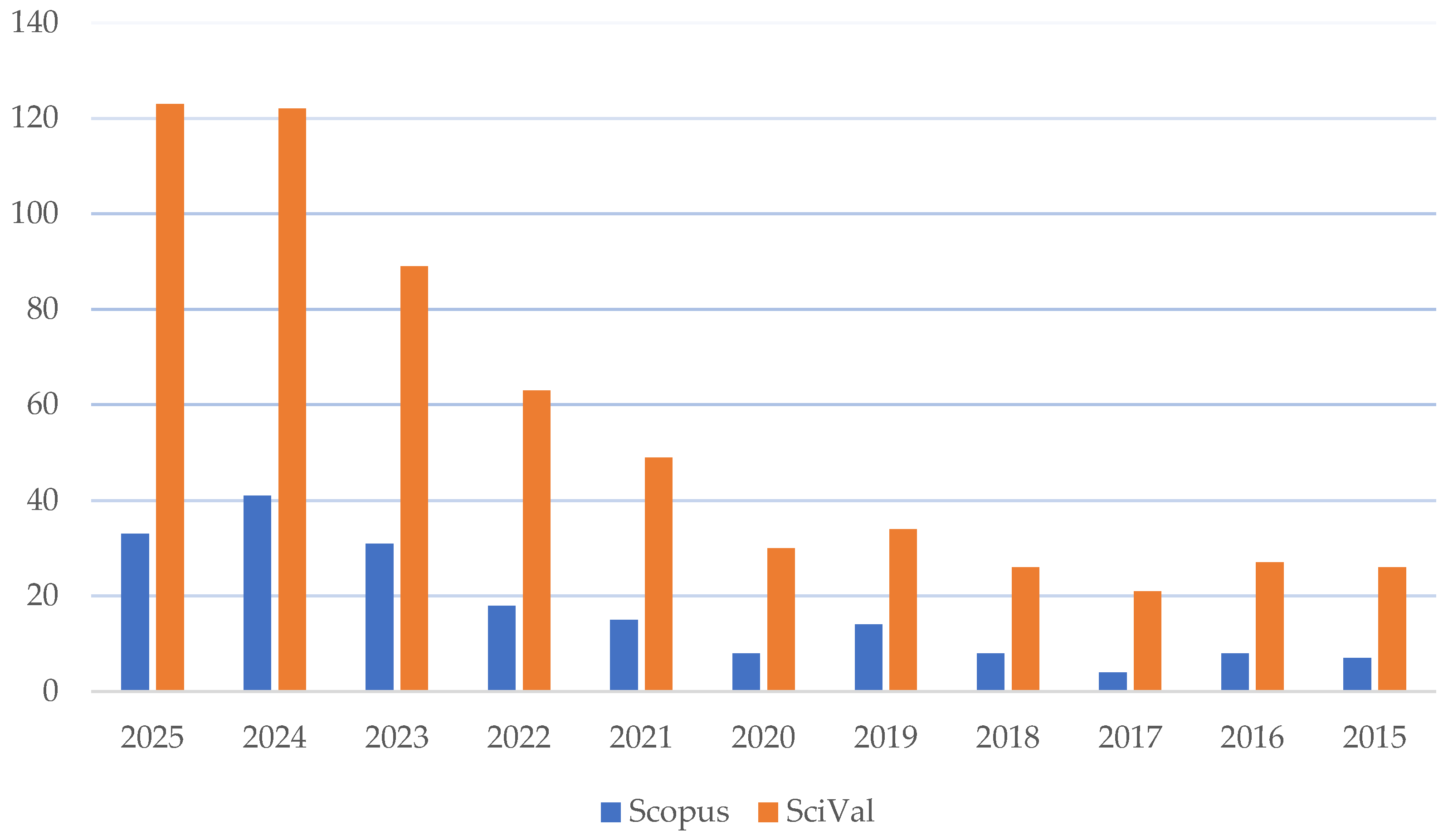
The consolidated annual publication trend (Figure 3) compares SciVal and Scopus outputs for the period 2015–2025. Although SciVal reports higher absolute publication counts due to broader institutional aggregation and indexing scope, both datasets exhibit highly consistent temporal growth patterns.
From 2015 to 2019, research activity increased gradually in both databases, reflecting an exploratory phase focused on platform validation and technical feasibility. Beginning around 2020, a clear acceleration is observed in both SciVal and Scopus records.
The parallel upward trajectories indicate a strong correlation between the two datasets, suggesting that the observed growth is not database-specific but reflects a genuine expansion of scholarly activity. Notably, the growth rate becomes markedly steeper after 2022, with 2024–2025 exhibiting peak outputs in both sources. This consistent acceleration indicates increasing research maturity and interdisciplinary integration, particularly in construction and built-environment applications.
The alignment between performance-oriented (SciVal) and publication-oriented (Scopus) datasets reinforces the robustness of the bibliometric findings and confirms the sustained expansion of quadruped robotics research in construction.

3.2. Scopus-Based Publication Trend Analysis

To complement the performance-oriented insights obtained from SciVal, a second bibliometric analysis was conducted using the Scopus database for the period 2015–2025. Scopus was selected due to its broad coverage of peer-reviewed journal articles and conference proceedings across engineering, robotics, and construction-related disciplines, making it suitable for identifying publication trends and thematic evolution at the field level.
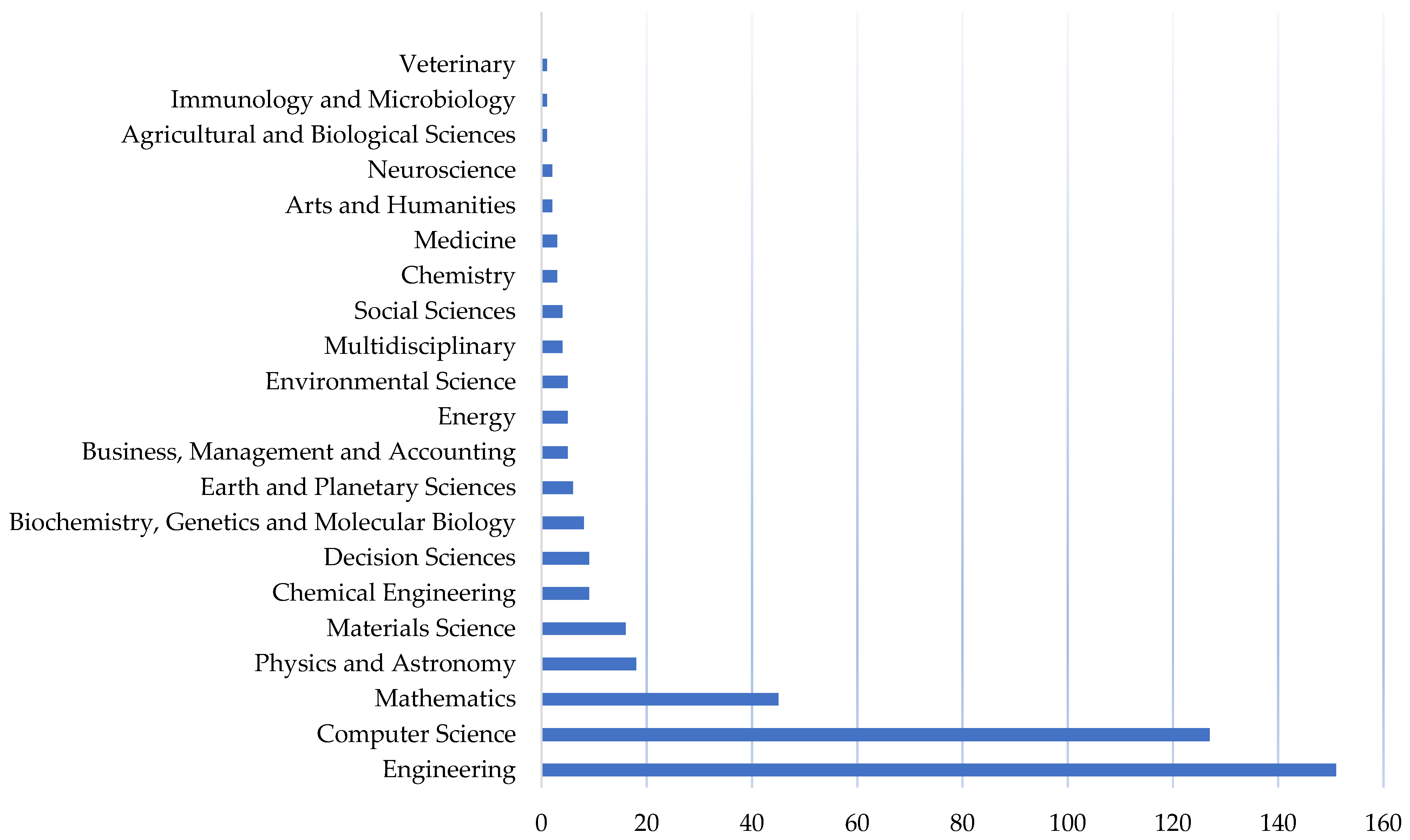
Subject-area distribution analysis (Figure 4) indicates that Engineering and Computer Science dominate the publication landscape, collectively accounting for the majority of indexed studies. This concentration underscores the strong technology-driven orientation of current research, with substantial emphasis on locomotion control, perception systems, SLAM-based navigation, and robotic system integration. Mathematics, Physics, and Astronomy also show notable contributions, reflecting the algorithmic and modeling foundations supporting quadruped robotics development. Additional representation from Materials Science and Decision Sciences highlights methodological refinement and optimization efforts within the field. Meanwhile, smaller yet observable contributions from Environmental Science, Business and Management, and Social Sciences suggest a gradual expansion toward application-driven and socio-technical dimensions, including sustainability, operational deployment, and organizational integration. Nevertheless, these domains remain comparatively underrepresented relative to core engineering disciplines, indicating that technological advancement continues to outpace construction-oriented impact evaluation and interdisciplinary integration.
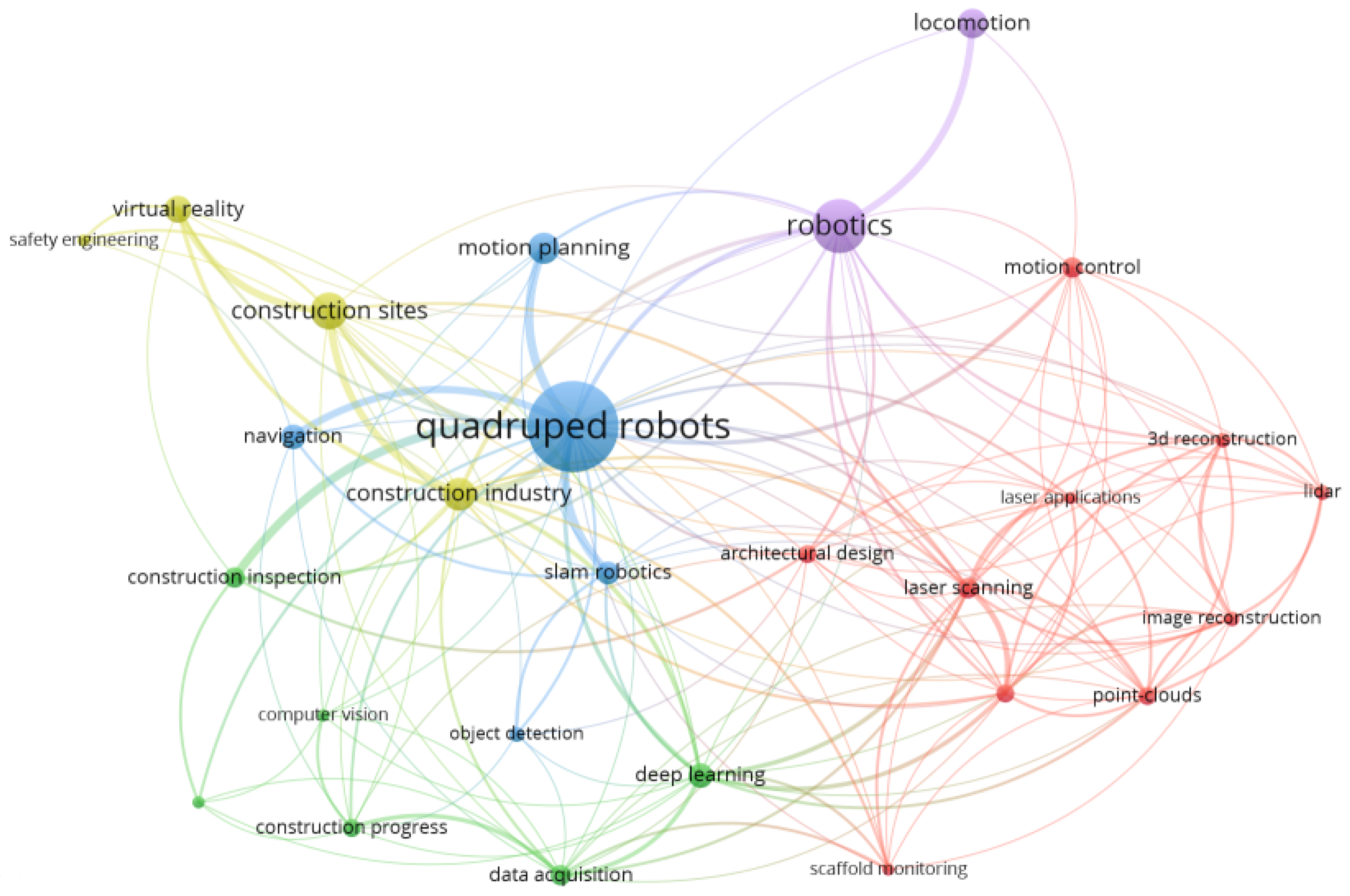
To further examine the thematic structure of the literature, a keyword co-occurrence network was generated using VOSviewer 1.6.20 based on the Scopus dataset (Figure 5) [32]. To ensure methodological transparency, the keyword-mapping procedure followed a structured workflow:
  • Export: Scopus bibliometric records (CSV) for 2015–2025.
  • Keyword scope: Include author keywords and index keywords.
  • Keyword cleaning: Standardize spelling, merge synonyms, and remove non-informative terms.
  • Threshold filtering: Apply minimum occurrence threshold (≥5).
  • Network building: Build a keyword co-occurrence network using full counting.
  • Normalization: Apply association strength normalization to compute link weights.
  • Clustering: Detect clusters using VOSviewer clustering (resolution = 1.00).
  • Interpretation: Label and interpret clusters based on network structure and domain relevance.
As illustrated in Figure 6, keywords such as “quadruped robot,” “construction site,” “SLAM,” and “deep learning” are characterized by relatively large node sizes and thick interconnecting links, indicating that these terms frequently appear together within the same studies. This repeated joint usage of perception, mapping, and construction-application terms suggests an increasing integration of autonomous navigation and sensing technologies into construction-specific problem contexts.
The resulting network reveals four dominant clusters: (1) quadruped robot-centered research for construction environments (blue), (2) perception and 3D reconstruction methods based on LiDAR, laser scanning, and point-cloud processing (red), (3) data-driven and computer-vision-based approaches for construction monitoring and progress assessment (green), and (4) core robotics, locomotion, and motion control methods (purple). The strong connections between “quadruped robots,” “construction sites,” “navigation,” and “SLAM robotics” indicate that recent studies increasingly integrate autonomous mobility, perception, and data acquisition to support inspection and monitoring tasks in construction environments. This bibliometric visualization further supports the growing convergence of robotics, sensing technologies, and construction engineering research.

3.3. Synthesis of Bibliometric Findings

By integrating SciVal’s performance-based analytics with Scopus’ publication- and keyword-based analysis, this review provides a dual-perspective bibliometric assessment of quadruped robot research in construction. Each platform contributes complementary insights: SciVal highlights citation impact, disciplinary influence, and research performance, while Scopus captures publication growth, thematic organization, and structural relationships within the literature.
The combined findings indicate that quadruped robotics research in construction is characterized by rapid growth in output alongside increasing disciplinary diversification. While Engineering and Computer Science continue to dominate in terms of publication volume, citation-performance analysis reveals that studies positioned at the intersection of robotics, construction management, and social or environmental domains often achieve higher relative impact. This divergence suggests that research addressing real-world deployment, human–robot interaction, safety, and organizational integration resonates more strongly with the broader academic community than purely technical contributions.
Moreover, the bibliometric evidence points to a gradual shift from platform- and algorithm-centric investigations toward application-driven and workflow-oriented studies, particularly those integrating quadruped robots with BIM, digital twins, and site-level monitoring systems. The emergence of clusters related to construction inspection and automation underscores growing recognition of quadruped robots as enabling components within digital construction ecosystems rather than isolated robotic platforms.
Unlike previous reviews that primarily focus on UAV monitoring systems, general inspection robotics, or algorithm-centric analyses, this study adopts a construction-engineering perspective that systematically links quadruped robot capabilities to specific construction management functions, validation maturity, and BIM-integrated workflows. In addition, this study is the first construction-robotics survey that uses both SciVal and Scopus to evaluate research on quadruped robots, as far as the authors are aware. Through the integration of publishing and topic analyses with performance indicators, the study provides a more comprehensive and nuanced picture of the field’s maturity and evolution. As discussed in the following sections of this review, these insights highlight the necessity of a construction-centric synthesis that combines technical capabilities with operational, managerial, and safety considerations.

3.4. Geographic Distribution and Author Productivity

To complement the bibliometric analysis, the geographic distribution of publications and author productivity were examined using Scopus data from 2015 to 2025.
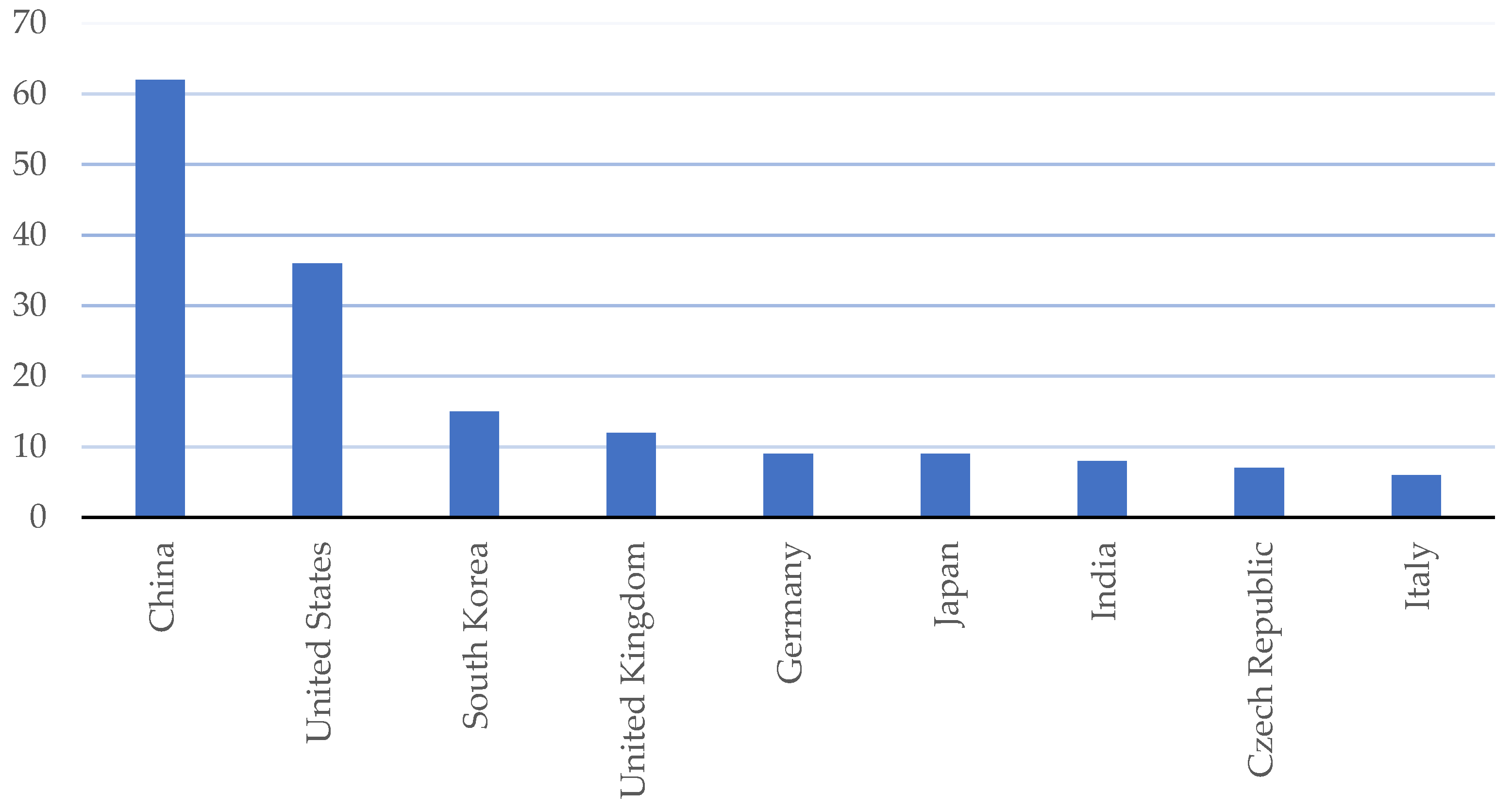
As shown in Figure 6, China leads research output with approximately 62 publications, followed by the United States with around 36 publications. South Korea ranks third with about 15 publications, while the United Kingdom and Germany contribute 12 and 9 publications, respectively. Japan and India show comparable outputs, and the Czech Republic and Italy demonstrate emerging participation. The concentration of research in China and the United States reflects strong robotics ecosystems and growing investment in construction automation, while the broader distribution across Europe and Asia indicates global engagement in the field.
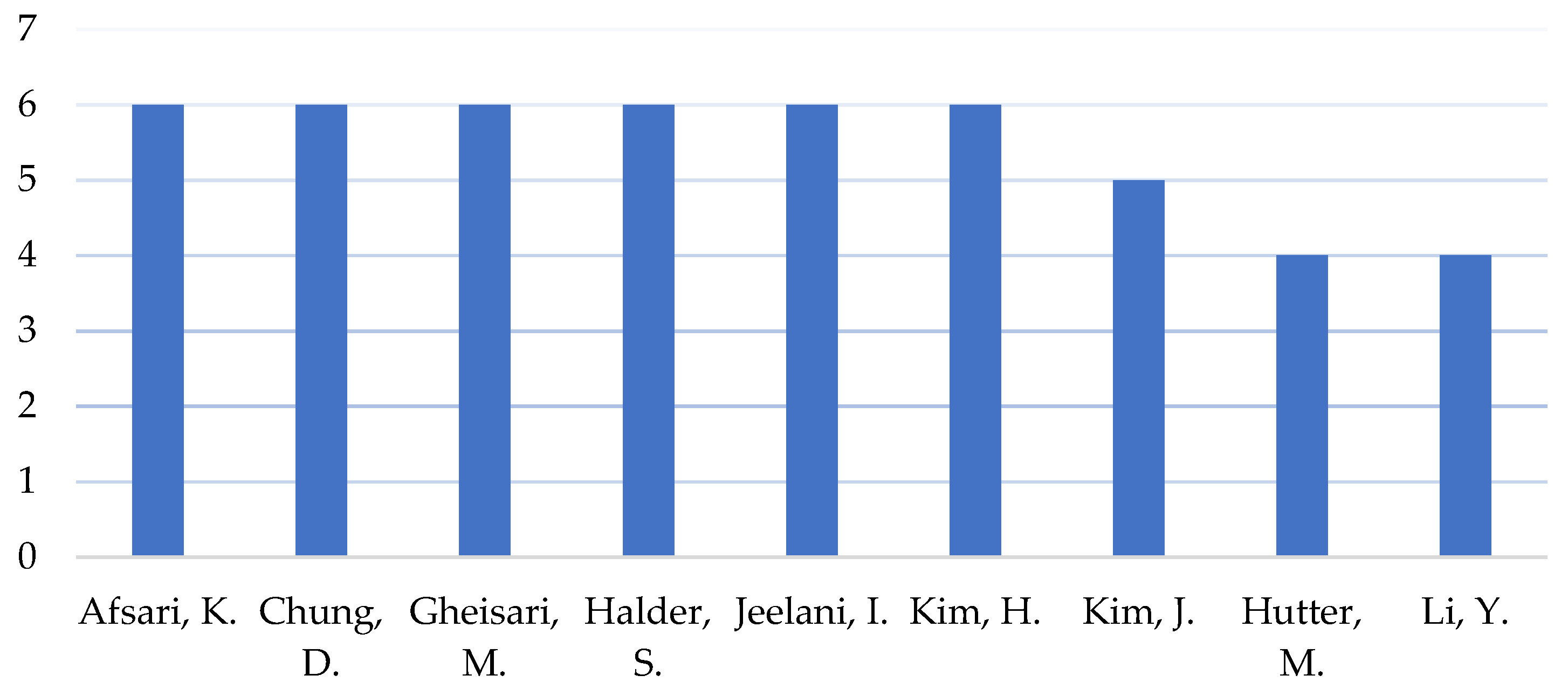
Figure 7 presents publication counts by author. Several researchers, including Afsari, K.; Chung, D.; Gheisari, M.; Halder, S.; Jeelani, I.; and Kim, H., each contributed approximately six publications. Kim, J. follows, with five publications, and Hutter, M. and Li, Y. contributed four each. The relatively balanced distribution suggests that quadruped robotics research in construction remains an emerging and distributed field, with multiple research groups contributing rather than a single dominant author or institution.

4. Technological Background of Quadruped Robots

Building on the representative studies summarized in Table 1, this section examines the technological foundations of quadruped robots, with emphasis on hardware systems, software architectures, and sensing configurations across different validation contexts.

4.1. Hardware Systems

The hardware systems of quadruped robots form the foundation for stable locomotion, perception, and task execution in dynamic and unstructured construction environments. A strong hardware system should support stable walking, data collection, and the ability to carry tools or sensors across uneven terrain.
The body structure and movement system are key parts of robots’ design. As described by Li et al. [33], choices in leg shape, joint types, and materials affect how well the robot moves and adapts to tasks. Most quadruped robots use rotary joints to allow flexible movement, and light but strong materials like aluminum or carbon fiber for the frame. Powerful motors, such as brushless motors, are used to move the legs. These motors must be carefully selected to carry the weight of the robot and any equipment it transports. Liu et al. [5] studied quadrupeds made for heavy-duty work. Their research focused on high-performance motors, cooling systems, and power supplies to help robots carry heavy loads and operate for long periods. One challenge is balancing battery size with movement time. Larger batteries last longer but make the robot heavier, which can limit its mobility.
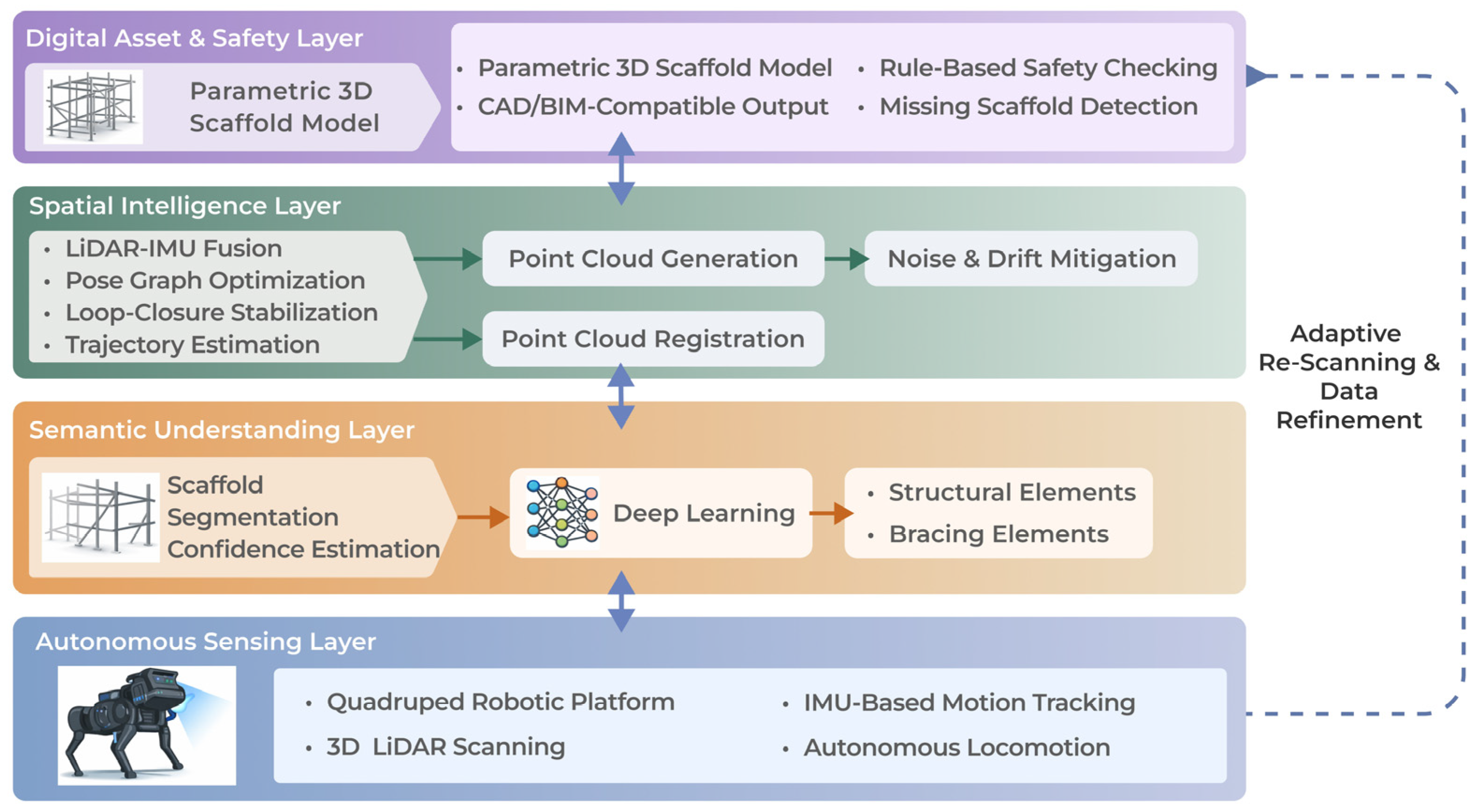
Sensors are another important part of the hardware. Quadruped robots in construction often use LiDAR, depth cameras, ultrasonic sensors, and motion trackers. Kim et al. [6] deployed a LiDAR sensor mounted on a quadruped robot to scan scaffold structures. They found that where the sensor is placed, how the robot moves, and how much it shakes can affect the quality of the scans. They recommended using special mounts to reduce vibration and improve scan results. Roscia et al. [16] presented a system that uses spinning wheels inside the robot to control body position. This device assists the robot in maintaining balance on uneven terrain or when it slides. It enables the robot to quickly alter its position, even if its legs lose touch with the ground.
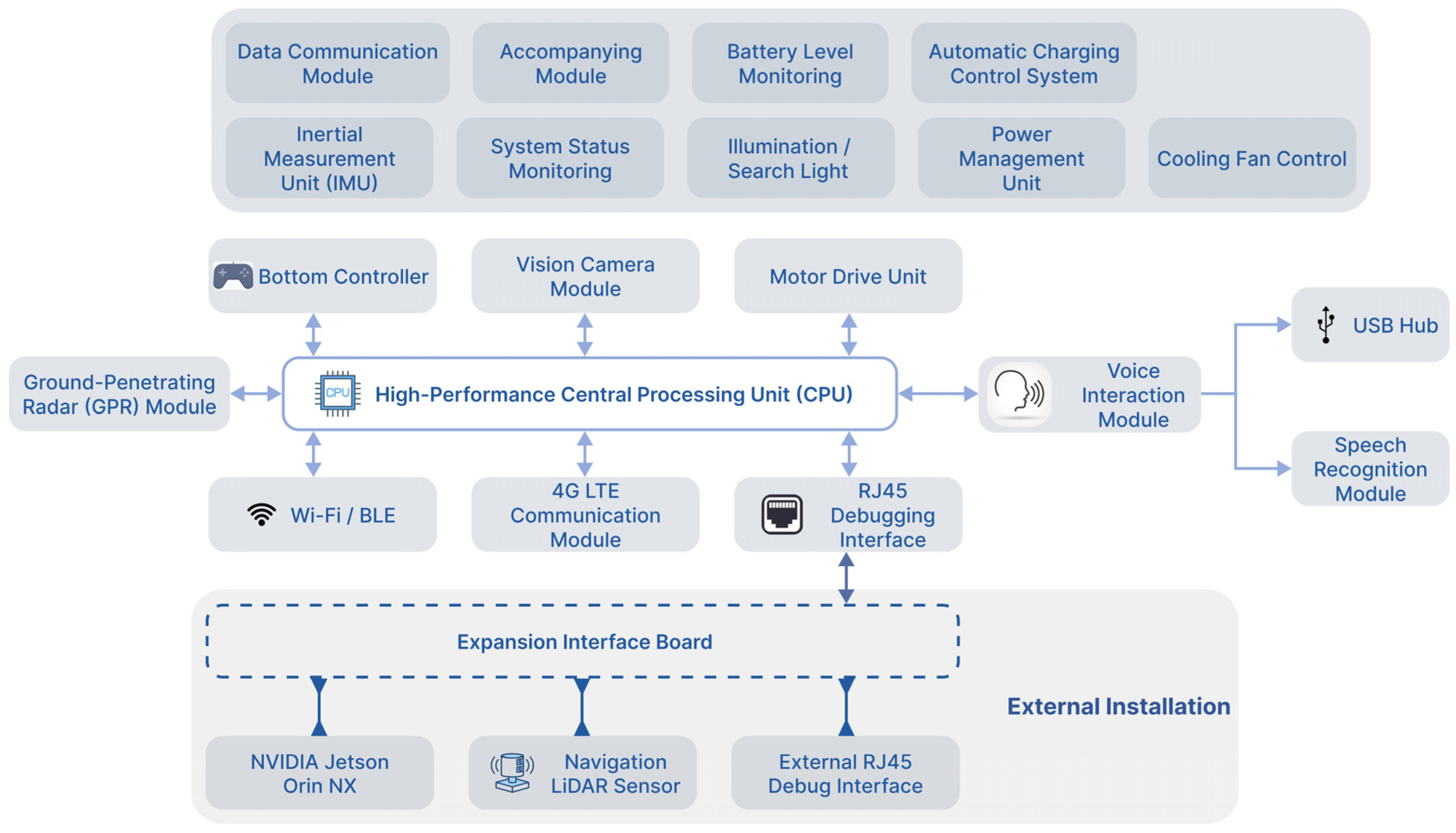
The Unitree Go2 platform exemplifies modern quadruped hardware integration (Figure 8). Its architecture centers on a high-performance CPU that coordinates motor units, cameras, radar, and control modules. The system employs multi-sensor fusion, combining LiDAR, IMU, and radar data for improved perception and localization. Supporting modules such as Wi-Fi/BLE, 4G LTE communication, and a power management unit ensure stable, long-duration operation. Additional components like the voice module and speech recognition systems facilitate human and robot interaction. The expansion interface board provides standardized interfaces for external modules, such as the NVIDIA Jetson Orin NX (NVIDIA Corporation, Santa Clara, CA, USA) and navigation LiDAR sensors, thereby extending the system’s computing and sensing capabilities and supporting advanced perception and interactive functionalities [34].
From a construction engineering and management perspective, hardware limitations directly influence operational feasibility on-site [21,23]. Battery endurance constrains the duration and frequency of daily inspection or scanning patrols, often limiting quadruped deployment to short, task-specific missions rather than continuous operation [21,33]. For instance, small quadruped models may sustain only 30 min of exhaustive use, while others can consume up to 20% of their battery capacity during a single 100-m inspection trip, necessitating frequent recharging cycles [3,15,23]. Payload capacity restricts the types of sensors or tools that can be mounted simultaneously, affecting the trade-off between perception quality and runtime [13]. In addition, exposure to dust, moisture, vibration, and debris typical of active construction sites places higher demands on mechanical robustness and ingress protection than laboratory or industrial environments [15]. These criteria illustrate that hardware design decisions are not only technical issues but also directly influence how quadruped robots might be integrated into ordinary building procedures.

4.2. Software Architecture

The software architecture of quadruped robots is typically designed around a modular and extensible framework, often utilizing ROS and ROS 2 to enable structured communication between diverse subsystems [35]. In recent construction-related robotics research, SLAM frameworks adapted to AEC workflows are increasingly combined with ROS platform architectures [36]. ROS middleware is now shown to provide enhanced quality-of-service (QoS), real-time multi-robot communication, and heterogeneous hardware support [10].
ROS is an open-source robotics middleware widely used in quadruped robots [11]. It helps different modules like sensors, actuators, and control systems communicate in real time. ROS provides reusable packages for tasks, for instance, sensor processing, motion planning, and visualization. ROS 2, its modern upgrade, improves safety, real-time performance, and multi-robot support, making it better suited for industrial and field robots such as quadruped robots operating on construction sites. Most commercial quadruped robots, ANYmal and Unitree Go1, support ROS [37,38]. This makes it easier to integrate LiDAR, RGB-D cameras, and IMU sensors for tasks like 3D scanning and autonomous inspection. ANYmal supports ROS integration through its Software Development Kit (SDK), enabling users to control the robot and access sensor data remotely. This interoperability is essential for linking quadruped robots with BIM systems or construction site monitoring platforms.
SLAM is used by quadruped robots to build a map of their surroundings and track their location in real time. This is especially important in construction areas where the Global Positioning System (GPS) may not work reliably. SLAM software, such as Cartographer, SLAM Toolbox, and RTAB-Map, works with LiDAR, cameras, and inertial sensors to estimate position and generate point clouds. In the system developed by Halder et al. [4], SLAM was used with quadruped robots to compare live LiDAR scans with BIM models during construction progress monitoring. This enabled the robot to understand changes in the environment and update 3D maps on-site. Accurate localization also enabled repeated autonomous patrols of predefined paths [3]. Path planning and navigation help quadruped robots move safely across construction zones. Path planning finds the best route around obstacles, while local navigation ensures the robot follows the route accurately [35]. Construction sites are highly dynamic environments with temporary barriers, debris, and moving workers, requiring rapid and adaptive locomotion. Chen et al. [28] proposed a quadruped robot control framework that integrates vision-based perception with Model Predictive Control (MPC) and Whole-Body Control (WBC). Intel RealSense depth cameras (Intel Corporation, Santa Clara, CA, USA) are used to detect terrain features and obstacles, enabling the MPC layer to plan optimal foot placements and body motions over a receding horizon. These plans are executed by the WBC layer, allowing real-time step adjustment and stable navigation in unstructured on-site conditions.

4.3. Sensory Systems

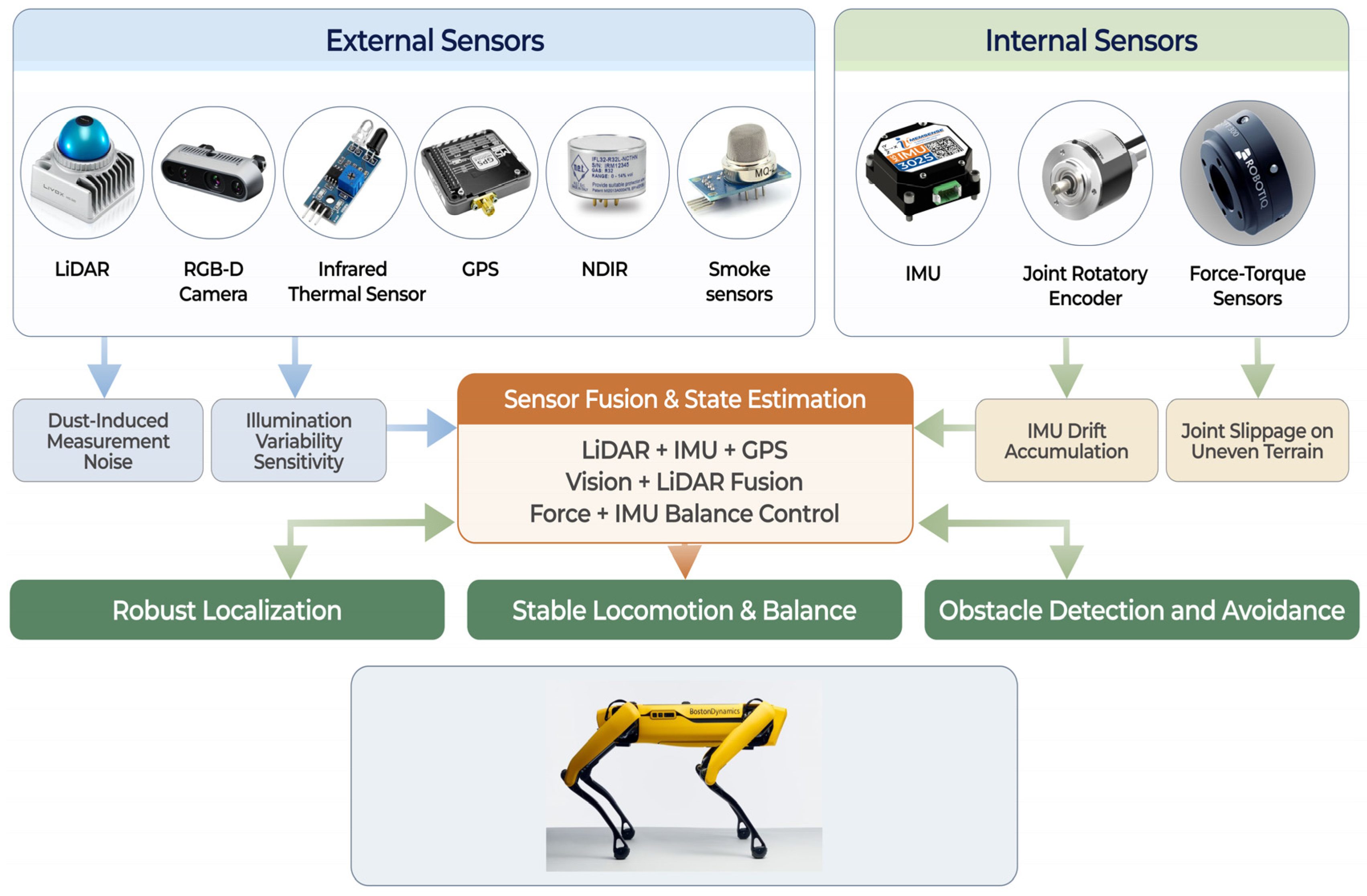
Sensory systems enable quadruped robots to perceive external environments and internal states, forming the foundation for autonomous functionality and responsive behavior (Figure 9). Robust sensing capabilities are essential for navigating uneven terrain, detecting and avoiding obstacles, preserving dynamic balance, and executing tasks that involve interaction with physical objects or human operators.

4.3.1. Internal Sensors

Internal sensing systems are very important in maintaining stability and precise control of a quadruped robot by continuously monitoring its own motion and joint positions [33,39]. The most utilized internal sensors are IMUs, rotary encoders, and force/torque sensors.
IMUs capture dynamic data such as acceleration, angular velocity, and orientation, which are essential for posture control and balance. By combining accelerometers, gyroscopes, and occasionally magnetometers, IMUs support robust state estimation by mitigating drift and improving pose accuracy [39,40,41].
Rotary encoders measure joint positions and rotational speeds, offering essential feedback for accurate motion control. Mounted on each joint actuator, rotary encoders provide real-time data on joint displacement and velocity [42]. High-resolution variants significantly enhance the precision of kinematic computations, making them indispensable for tasks that demand accurate foot placement or fine motor coordination.
Force and torque sensors detect the magnitude and direction of contact forces between the robot and its environment [43]. This information is critical for compliance control, allowing the robot to modulate its actions in response to external loads. Such responsiveness is especially valuable in activities that involve physical interaction, like ascending stairs or manipulating objects.

4.3.2. External Sensors

External sensing technologies provide quadruped robots with essential information about their surroundings, enabling them to detect obstacles, navigate diverse terrains, and engage with objects in their environment.
LiDAR (Light Detection and Ranging): LiDAR is a remote sensing technology that uses pulsed laser light to measure distances and create high-resolution 3D maps (point clouds) of an environment [44]. It provides precise spatial data, which is especially valuable for navigation and obstacle detection in environments where lighting is poor. LiDAR is a preferred choice for applications requiring detailed environmental mapping [23].
Ultrasonic sensors: These sensors determine the proximity of nearby objects by emitting high-frequency sound waves and measuring their echoes [45]. Though limited in resolution and accuracy compared to LiDAR and vision systems, ultrasonic sensors are low-cost and well-suited for short-range detection. They are frequently used as auxiliary sensors to reinforce environmental perception and improve safety margins.
GPS (Global Positioning System): In outdoor scenarios, GPS provides coarse location data for high-level navigation tasks [46]. Although not suitable for fine-scale positioning, GPS is valuable for guiding the robot to broader target areas within open environments.
Cameras: Visual sensors, including monocular, stereo, and RGB-D cameras, capture imagery used for object recognition, terrain classification, and SLAM [47]. Stereo cameras estimate depth by comparing images from two perspectives, while RGB-D systems combine color imaging with active depth sensing to enhance environmental awareness. Advanced image-processing algorithms, such as convolutional neural networks (CNNs), are often used to analyze visual data for semantic segmentation and feature identification [48].
Infrared sensors: Infrared (IR) technology allows robots to detect thermal signatures and is particularly effective in scenarios like search and rescue, where identifying heat sources (e.g., human bodies) is essential [49].
The use of multiple sensor types in combination significantly boosts the ability of the robot to perceive its surroundings, supporting complex operations such as SLAM and intelligent obstacle avoidance. Sensor fusion algorithms integrate inputs from different modalities to improve the reliability and precision of environmental understanding. For instance, fusing LiDAR and camera data provides both accurate depth measurements and detailed visual context, enabling robots to simultaneously localize, navigate, and identify or classify nearby objects [50].
A practical example is the ANYmal robot [51], which utilizes an integrated suite of LiDAR, cameras, IMUs, and joint encoders. The LiDAR sensor enables accurate 3D spatial mapping for detecting obstacles, while cameras assist in visual analysis and object detection. This multi-sensor configuration allows the robot to operate autonomously in complex industrial settings and carry out inspection tasks such as reading instrument gauges and identifying irregular conditions. Recent studies emphasize the use of sensor fusion strategies that combine complementary sensing modalities to enhance perception robustness in construction environments. LiDAR–camera fusion is commonly employed to integrate the geometric accuracy of LiDAR with the semantic richness of visual data, enabling more reliable obstacle detection and scene understanding under dust, occlusion, and lighting variability [17,23,39]. Similarly, fusing inertial measurement unit (IMU) data with LiDAR or visual inputs improves state estimation and motion compensation, reducing localization drift caused by robot-induced vibrations and intermittent sensor degradation [19,35].
Advanced fusion frameworks are often implemented within probabilistic filtering or optimization-based SLAM pipelines, such as extended Kalman filters, factor-graph optimization, or tightly coupled LiDAR–inertial odometry systems [35,52]. These approaches allow redundant sensing channels to compensate for partial sensor failure, ensuring stable localization and mapping even when individual sensors are temporarily compromised. In construction-specific scenarios, adaptive fusion strategies that dynamically reweight sensor inputs based on environmental conditions have shown promise in maintaining perception reliability. Collectively, sensor fusion plays a critical role in enabling quadruped robots to operate autonomously and safely in the visually and structurally complex conditions typical of active construction sites [15,28].

4.3.3. Sensors for Gas and Particulate Matter Monitoring

In addition to geometric and visual perception, environmental sensing has become an important capability for quadruped robots in construction environments. Non-dispersive infrared (NDIR) gas sensors are widely used on quadruped robotic platforms to measure concentrations of combustible and toxic gases, such as methane and carbon dioxide, due to their high selectivity, stability, and suitability for continuous monitoring in harsh construction environments. Commercial platforms such as Boston Dynamics’ Spot have been equipped with industrial-grade electrochemical and NDIR gas sensors to detect combustible and toxic gases, including methane, hydrogen sulfide, oxygen deficiency, and volatile organic compounds, during tunnel construction and industrial inspections [53,54].
Particulate matter (PM) sensors, typically based on optical light-scattering principles, enable real-time measurement of airborne particles (e.g., PM2.5 and PM10) and support mobile assessment of dust exposure generated during excavation, demolition, and material handling activities on construction sites. For particulate matter, research prototypes developed at Duke University have demonstrated the feasibility of using low-cost MQ-series sensors on quadruped platforms to map PM2.5 concentrations in construction and industrial cities [55]. More advanced configurations integrate gas sensing with acoustic and thermal modalities, enabling autonomous localization of gas leaks and supporting emergency response without exposing human workers to hazardous conditions [56,57].
Overall, the integration of gas and PM sensors extends quadruped robots from visual inspection tools to mobile environmental safety monitoring platforms, particularly when coupled with autonomous navigation and BIM- or digital twin-based workflows.

4.4. Commercial Platforms Overview

Multiple quadruped robot platforms have been developed for industrial, research, and defense applications. Among these, Boston Dynamics’ Spot (Boston Dynamics Inc., Waltham, MA, USA), Unitree Go1/Go2 (Unitree Robotics, Hangzhou, China), Ghost Robotics’ Vision 60 (Ghost Robotics Corp., Philadelphia, PA, USA), and ANYmal (ANYbotics AG, Zurich, Switzerland) represent leading commercial quadrupeds with potential for construction use. Each platform offers unique strengths in mobility, sensing, autonomy, and integration.
The Spot robot by Boston Dynamics is a robust, industrial-grade quadruped platform designed for autonomous inspection and data collection. It supports a wide range of sensors, including LiDAR, RGB, and thermal cameras, and gas detectors [54,58,59]. Its autonomy includes terrain adaptation, stair climbing, and dynamic obstacle avoidance. It can be operated via tablet or programmed with its API/SDK, which is compatible with ROS and ROS 2. Spot is already deployed for tasks. For example, site scanning, progress monitoring, and hazardous inspections on major construction projects, often paired with Trimble’s X7 (Trimble Inc., Westminster, CO, USA) scanner [60].
Ghost Robotics’ Vision 60 is a quadruped built for rugged deployment in extreme outdoor environments [61]. It features sealed electronics (IP67 rating), a durable chassis, and modular payload support, including communications and surveillance systems. Though primarily intended for defense and tactical applications, it has potential for infrastructure inspection or security patrols.
ANYmal, developed by ANYbotics, is an industrial-grade quadruped robot purpose-built for autonomous inspection in complex, unstructured environments such as construction sites, industrial plants, and confined facilities, where it performs tasks including autonomous navigation, 3D mapping, thermal inspection, and gas-leak detection under harsh and GPS-denied conditions [57,62]. It integrates sensors such as 360° LiDAR, depth cameras, and thermal sensors, and supports fully autonomous missions. ANYmal can autonomously climb stairs, open doors, and navigate through cluttered environments, making it highly suitable for inspection tasks on construction and energy sites. It supports ROS/ROS 2 and offers strong integration with SLAM and map-based navigation.
Table 2 compares five quadruped robot platforms used in construction-related research and field operations. The models include Boston Dynamics’ Spot, Unitree Go1, Unitree Go2, Ghost Robotics’ Vision 60, and ANYmal by ANYbotics. The parameters summarize their structural dimensions, performance capabilities, and operating features.
Table 2 summarizes the variation in size, payload capacity, speed, and durability among representative quadruped robots, highlighting how platform-level characteristics influence their suitability for construction applications. Industrial-grade platforms such as Boston Dynamics’ Spot and ANYmal prioritize mechanical robustness and ingress protection (IP54 and IP67, respectively), offering moderate speeds while maintaining reliable operation in dusty, moist environments and on uneven terrain. Their ability to climb slopes of up to 30° and operate for approximately two hours per charge makes them suitable for outdoor construction sites, confined spaces, and safety-critical inspection tasks. In contrast, Unitree Go1 and Go2 are lightweight, compact, and comparatively faster, reaching speeds of up to 3.5–5 m/s. Although these models lack official ingress protection ratings, their low cost, portability, and ease of deployment make them practical for indoor mapping, small-scale monitoring, academic research, and rapid prototyping in construction environments. The Go2 further improves construction-oriented performance through increased payload capacity, integrated 4D LiDAR, and enhanced onboard processing, supporting more advanced navigation and perception tasks.

5. Quadruped Robot Applications in Construction Management

The application domains discussed in this section are synthesized from the studies listed in Table 1. Attention is given to how reported performance and applicability vary depending on validation context, ranging from laboratory demonstrations to on-site construction deployments.

5.1. Construction-Oriented Taxonomy of Quadruped Robot Applications

To differentiate this review from general robotics surveys, quadruped robot applications are classified according to construction-engineering functions rather than robotic capabilities. This construction-oriented taxonomy reflects how such systems are evaluated, deployed, and adopted on real construction projects:
  • Site inspection and monitoring—autonomous or semi-autonomous inspection of construction sites, scaffolding, and temporary structures to support quality control, regulatory compliance, and routine site assessments.
  • 3D reconstruction and surveying—systematic reality capture using onboard LiDAR and vision sensors for as-built modeling, dimensional verification, and support of BIM and digital-twin updates.
  • Safety and hazard detection—mobile identification of unsafe conditions, hazardous zones, and deviations from safety requirements, enabling remote inspection and reduced human exposure to risk.
  • Material transport and logistics support—small-scale material and tool delivery, repetitive transport tasks, and on-site logistics assistance aimed at reducing manual handling and improving operational efficiency.
  • Progress tracking and documentation—periodic site traversal and data collection to support construction progress monitoring, documentation, and comparison between planned and actual project states.
This classification enables a construction-centric analysis of how quadruped robots contribute to productivity, safety, and decision-making at the site level, rather than treating them solely as robotic platforms or experimental systems.

5.2. Site Inspection and Monitoring

Site inspection and monitoring are critical activities in construction to ensure safety and compliance. Quadruped robots have been presented as mobile inspection platforms capable of gathering data in areas where wheeled or handheld devices are restricted. Their ability to move across uneven terrain and navigate crowded locations makes them well-suited for regular and methodical inspections.
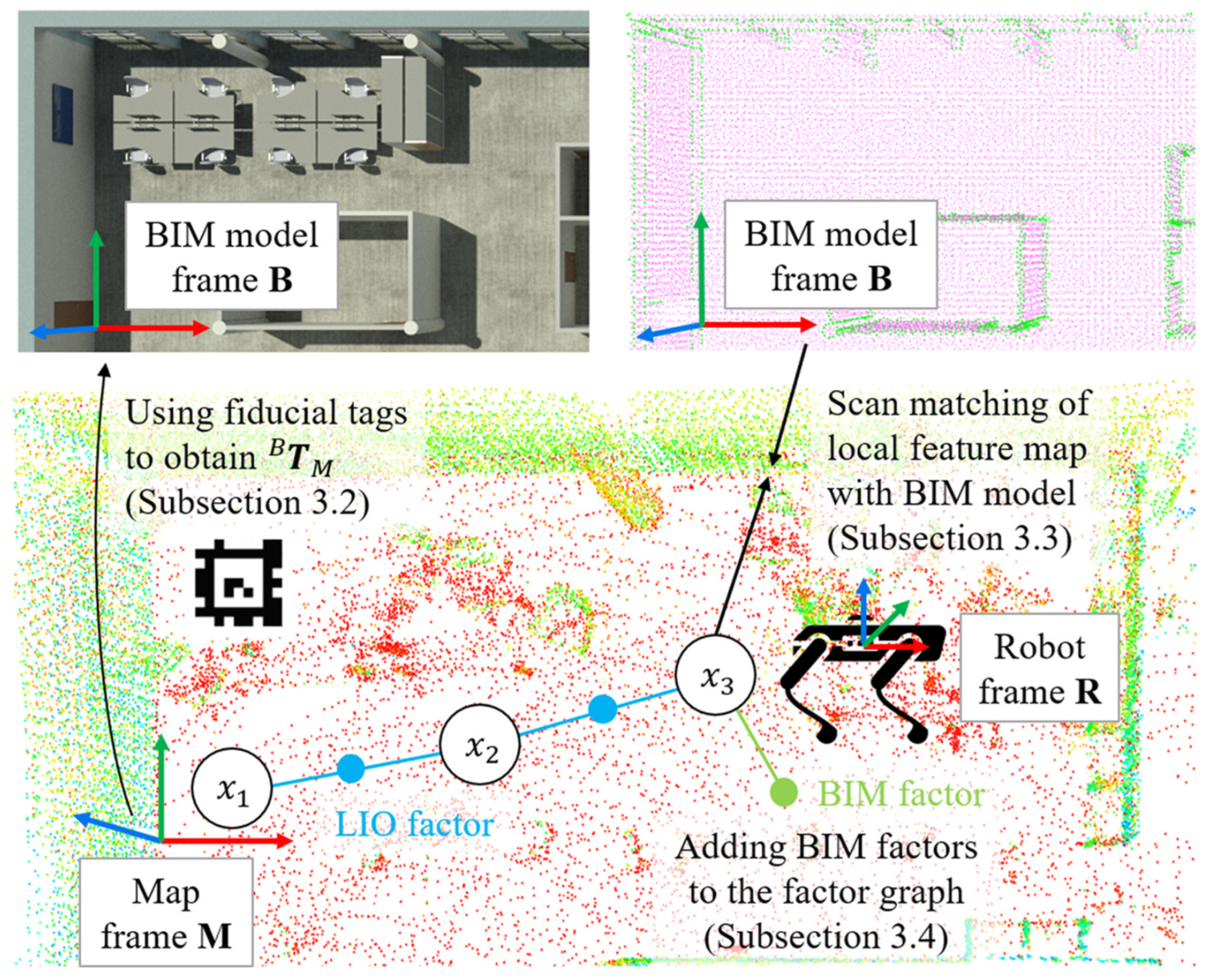
Torres and Pfitzner [15] investigated the capabilities of quadruped robots for construction monitoring by comparing technical specifications of different platforms and testing a Unitree Go1 equipped with a mapping system. The results demonstrated that quadrupeds could effectively capture 3D site data but were limited by short battery life and autonomy, as well as difficulties with stairs. Stührenberg and Smarsly [14] introduced the LIO-BIM framework that integrates lidar–inertial odometry with BIM for real-time robot localization and mapping during inspections. The framework achieved accurate BIM-aligned positioning but faced challenges due to deviations between the as-built and planned models. Halder et al. [4] combined a quadruped with augmented reality to overlay live data onto BIM-based models, enabling remote monitoring and inspection. Their approach proved feasible but was constrained by latency and camera stabilization issues.
At a broader level, Yue et al. [3] provided a review of quadruped applications in construction management. Their study emphasized inspection and monitoring as promising areas but also noted limitations in autonomy, human–robot collaboration, and large-scale deployment. Wetzel et al. [59] conducted one of the first pilot studies evaluating the feasibility of using a quadruped robot (SPOT) for terrestrial LiDAR scanning on an active construction site. By mounting a FARO LiDAR scanner (FARO Technologies Inc., Lake Mary, FL, USA) on the robot, the authors compared scan quality, productivity, and positional accuracy against traditional tripod-based scanning. Results indicated that while robot-mounted scans exhibited minor quality degradation due to lower sensor height and occlusion caused by the robot body, the overall geometric accuracy remained within millimeter-level tolerance. Collectively, these studies show that quadruped robots enhance site inspection by improving accessibility and automation, though scalability and robustness remain areas for further research.

5.3. 3D Reconstruction and Surveying

3D scanning and surveying are essential for validating as-built conditions, updating BIM models, and supporting digital twin applications. Traditional methods often suffer from occlusion and manual error, while quadruped robots provide mobility and repeatable scanning paths for automated data capture.
Kim et al. [6] used a quadruped robot with deep learning-based reconstruction methods to model scaffold structures (see Figure 10). Their system produced accurate 3D reconstructions to support safety and monitoring, although tests were limited to controlled conditions.
Moreover, Halder et al. [63] mapped current construction inspection workflows and proposed a human–robot teaming alternative. Through site observations and interviews, they documented how human inspectors work, then developed new process maps showing a legged robot as an “inspector assistant”. They found that a quadruped (e.g., Spot) could systematically capture site data, helping human inspectors be more thorough and consistent. Moreover, Miller et al. [20] demonstrated that quadruped robots can autonomously explore and map complex GPS-denied environments. Using multi-robot LiDAR–visual odometry, ICP-based registration, and distributed mesh networking, their system achieved reliable tunnel reconstruction and long-distance autonomous traversal, highlighting the potential for similar applications in underground or confined construction spaces. Gan et al. [13] proposed a decoupled mapping framework for indoor 3D scene reconstruction using a quadruped-mounted LiDAR. Their results showed improved efficiency and reduced drift, but applications were limited to static indoor settings. Zhai et al. [22] worked on BIM with IndoorGML semantics to guide quadrupeds in 3D scanning. The method improved coverage and reduced redundancy in scans, though its reliance on high-quality BIM limited generalization. Chen et al. [23] integrated BIM with a multi-sensor quadruped robot to enable automated indoor inspection and reality capture. Findings showed improved inspection accuracy, but sensor calibration and complex environments were identified as challenges. Kakhkharov et al. [64] proposed an autonomous Scan-to-BIM framework utilizing a quadruped robot equipped with LiDAR and IMU sensors, employing the FAST-LIO algorithm for real-time SLAM-based mapping. To address long-term localization drift in indoor and GPS-denied construction environments, the study introduced a BIM-assisted correction mechanism in which real-time point clouds were periodically aligned with BIM-derived virtual point clouds. Experimental results demonstrated robust localization performance in both simple and cluttered indoor environments, confirming the effectiveness of integrating LiDAR–inertial odometry with BIM geometry for construction site navigation.

5.4. Safety and Hazard Detection

Safety and hazard detection are critical concerns in construction management. Quadruped robots are being studied as mobile platforms for identifying unsafe conditions, reducing risks to human inspectors, and complementing conventional safety practices.
Halder et al. (2022) showed how quadruped robots can support remote inspection through AR-based overlays that help detect deviations from planned conditions, indirectly contributing to hazard detection [4]. Rao et al. (2022) conducted a review of real-time monitoring technologies, including quadrupeds, and identified their potential in hazard identification and worker tracking [17]. Their findings highlighted the importance of sensor fusion and mobile platforms but also noted the lack of large-scale validation. Yue et al. (2025) further emphasized safety as a key application of quadrupeds, reporting opportunities for worker–robot collaboration to improve on-site hazard awareness [3]. Practical deployment in real construction hazards is still limited, highlighting a gap for future applied research.
Quadruped robots have demonstrated strong potential as mobile platforms for gas and PM monitoring in construction environments. Deployments show that Boston Dynamics’ Spot can perform hazardous gas detection during tunnel construction and confined-space inspections, providing mobile coverage where fixed sensors are limited [53,54]. Common payload configurations include electrochemical and NDIR gas sensors for monitoring combustible and toxic gases, while research prototypes have shown that MQ-series sensors can be integrated to map PM2.5 concentrations in dust-intensive environments [55]. More advanced systems, such as ANYmal equipped with acoustic imaging and Spot carrying a FLIR MUVE™ C360 detector (Teledyne FLIR LLC, Wilsonville, OR, USA), support autonomous gas-leak localization and emergency response, thereby minimizing the need for human entry into hazardous areas [56,57].

5.5. Material Transport and Logistics Support

Material handling and logistics represent another potential use of quadruped robots, reducing manual labor and supporting site productivity. Research in this area has focused on lightweight and repetitive transport tasks.
Baru et al. (2025) studied the use of Boston Dynamics’ Spot for small-item transport [21]. They designed a payload system and used fiducial markers to automate delivery cycles. The experiments confirmed that the robot could carry loads up to 25 pounds efficiently across multiple workstations. Despite these promising results, the study was limited to laboratory-like conditions and highlighted issues of payload restrictions, endurance, and generalization to dynamic construction environments. This body of work suggests that quadrupeds can complement logistics in specific tasks such as tool and small-material delivery. However, significant barriers, including payload capacity, energy efficiency, and adaptability, remain before they can play a large-scale role in construction logistics.

5.6. Progress Tracking and Documentation

Progress tracking and documentation are vital for project management and quality control. Quadrupeds, when integrated with BIM and advanced localization techniques, provide automated methods for recording construction progress.
Stührenberg and Smarsly (2025) showed that LIO-BIM could provide accurate real-time localization aligned with BIM, enabling quadrupeds to support progress tracking with reduced drift errors [14]. Zou et al. (2025) improved localization accuracy by fusing LiDAR with visual-inertial data, thereby enhancing mapping and stability and supporting reliable navigation for documentation purposes [19]. Chen et al. (2024) developed a vision-based navigation and motion-control framework for quadrupeds operating in rough terrain, showing improved accuracy in path-planning and mobility, which indirectly supports robust progress monitoring under challenging conditions [28]. Moreover, Afsari et al. (2022) evaluated the use of a quadruped (Spot) for automated progress monitoring by repeatedly deploying it on live sites to capture 360° images [18]. They identified key technology, economic, and organizational indicators affecting robot-enabled reality capture for progress tracking. However, they also reveal limitations such as restricted autonomy, dependence on high-quality BIM models, and limited validation in large-scale real-world projects.

6. Integration with Other Technologies

Robotic platforms are most effective when tightly integrated with digital construction ecosystems. Across the reviewed studies, quadruped robots interface with BIM for localization and scan planning, contribute data streams to evolving digital twins, and, in several cases, leverage learning-based perception to structure reality capture. The subsections below synthesize how the included papers realize these couplings in practice.

6.1. Integration with BIM

Building Information Modeling (BIM) provides the geometric and semantic context that enables quadruped robots to localize, plan paths, and structure data capture indoors. The literature review identifies three distinct threads. First, semantic BIM for navigation and scanning, as shown by Zhai et al. [22], enriches IFC-based BIM with IndoorGML to produce a navigation-ready indoor graph and coverage-aware scan planning. In simulations and physical trials with a quadruped and 3D LiDAR, their workflow improved scan coverage and reduced redundant viewpoints by using BIM-derived semantics to guide both pathing and sensor poses.
Second, BIM-aligned localization and mapping: Stührenberg and Smarsly [14] couple lidar–inertial odometry with BIM features (LIO-BIM), adding BIM constraints to a factor-graph back-end and registering LiDAR submaps against BIM-extracted planes/edges (Figure 11). On quadruped datasets from office and construction, the method reduced drift and maintained robust, real-time localization despite scan-to-BIM deviations. Third, BIM-integrated inspection/reality capture: Chen et al. [23] demonstrated automated indoor inspection by fusing a multi-sensor quadruped data stream with BIM, aligning captured reality with design intent to support quality checks. BIM-assisted SLAM approach demonstrates a practical pathway toward construction-scale digital twins, where quadruped robots continuously update as-built conditions while maintaining localization accuracy through model-based constraints [64]. Reported benefits include more efficient capture and improved consistency of inspection outputs, with practical challenges around calibration and complex interiors.

6.2. Quadrupeds with Digital Twins

Digital twins (DT) depend on frequent, structured reality capture. The reviewed studies indicate that legged platforms can sustain these updates in GPS-denied, cluttered areas where aerial or handheld methods are limited. On the data-collection side, Halder et al. [4] combined a quadruped with BIM-anchored AR overlays to enable remote, repeatable walkthroughs for progress checks, illustrating how mobile sensing can feed near-real-time status into a model-centric workflow, while noting latency and stabilization as practical constraints. Zou et al. [19] showed that fusing 3D LiDAR with visual–inertial cues improves localization accuracy and trajectory stability across multi-scene datasets, supporting dependable patrols. Chen et al. [28] report improved path tracking and motion control on rough terrain, strengthening the reliability of autonomous routes that underpin periodic twin refreshes. Tang et al. [65] (a Chinese research team) developed a multi-modal quadruped inspection robot for construction sites. Their prototype uses a four-legged platform equipped with cameras, LiDAR, gas sensors, etc., fusing intelligent navigation, computer vision, and environmental monitoring. This system can automatically patrol and analyze a site, detecting safety hazards (e.g., missing helmets or gas leaks) and collecting 3D data for digital twins. In combination, these results support a closed loop in which quadruped robots perform structured patrols, localize robustly against BIM or fused maps, and stream aligned observations to the twin, improving progress visibility while evidencing open challenges in large-scale, highly dynamic sites.
DT frameworks depend on continuous, spatially contextualized data to represent real-time site conditions, and integrating environmental sensing from quadruped robots adds a critical safety-oriented layer beyond geometry and progress tracking. By synchronizing robot localization with BIM-aligned coordinates, gas concentrations and PM2.5 measurements collected during autonomous patrols can be spatially registered in DT environments, enabling the visualization of hazardous zones, confined-space risks, and dust-exposure hotspots over time [54,55,57]. This integration supports proactive safety management by enabling automated alerts, access control, and mitigation strategies, positioning quadruped robots as active sensing agents within cyber–physical construction systems rather than passive data collectors.

7. Challenges and Limitations

A key limitation identified through this review is the disparity in validation context across existing studies. As summarized in Table 1, a substantial portion of quadruped robot research in construction remains validated in laboratory, near-real, or simulated environments, with relatively few studies demonstrating sustained deployment on active construction sites. While these controlled settings are valuable for developing and benchmarking sensing, navigation, and control technologies, they do not fully capture the environmental complexity, operational uncertainty, and human–robot interactions inherent to real construction workflows.

7.1. Technical and Hardware Limitations

7.1.1. Battery Life and Terrain Adaptability

Battery endurance remains one of the most reported limitations. Torres and Pfitzner [15] noted that quadrupeds used for construction monitoring were constrained by short runtime, limiting their suitability for extended patrols. Baru et al. [21] similarly reported that transport tasks were feasible only for short delivery cycles, as battery depletion restricted sustained logistics support. While Liu et al. [5] demonstrated that task-oriented design could extend endurance to nearly two hours; this was achieved under controlled laboratory conditions rather than complex construction sites. In one experiment, the Go1 robot dog lasted only about 30 min during exhaustive use, necessitating manual charging efforts [15]. Terrain adaptability also remains a barrier. Chen et al. [28] addressed this issue with a vision-based motion control system that improved rough-terrain navigation, but broader validation across highly dynamic environments is still lacking.
This gap highlights the need for future research to prioritize longitudinal on-site validation and task-level performance evaluation under realistic construction constraints. Integrating quadruped robots into daily site operations, coordinating with human workers, and assessing robustness under dust, weather, and dynamic site reconfiguration remain critical challenges. Addressing these issues will be essential for transitioning quadruped robots from experimental platforms to reliable components of construction automation and digital twin–enabled site management.

7.1.2. Payload and Load Capacity

The material-carrying capacity of commercial quadruped robots is limited; for example, the Boston Dynamics Spot model has a demonstrated capacity of up to 25 lb. (11.3 kg), which restricts its applicability for transporting heavy materials [21]. Increased battery weight, necessary for longer operation, further reduces their effective load-bearing capacity and agility.

7.1.3. Vision and Sensing Accuracy

The walking motion inherent to quadruped robots can cause camera shaking, degrading the quality of visual data captured during remote inspection [4]. Additionally, sensors face challenges in distinguishing between moving obstacles and small objects [21]. External factors, such as light reflections in windows, can cause errors in LiDAR scans, leading to inaccurate mapping and compromised localization accuracy [14].

7.2. Operational and Software Challenges

7.2.1. Communication Latency

Reliable communication is essential for teleoperation and remote monitoring. Halder et al. [4] highlighted that network latency ranging from 300 to 2000 milliseconds (ms) caused delays in augmented reality overlays during remote inspections. This affected usability and underscored the difficulty of scaling quadruped-based monitoring to large construction sites where bandwidth limitations persist. The challenge suggests that robust on-board autonomy and reduced reliance on continuous teleoperation will be necessary for future deployment.

7.2.2. Reliance on Digital Models

Effective deployment depends on the availability of accurate digital models, yet BIM frequently has limitations in terms of Level of Development (LOD). These “scan-BIM deviations” cause problems in robot localization and mapping attempts [14].

7.3. Integration, Safety, and Cost Barriers

7.3.1. High Costs and Accessibility

Quadruped robots are expensive, and implementing a comprehensive system often requires additional investment in high-precision LiDAR sensors and integration middleware [22,48]. This high-cost limits accessibility, particularly for smaller construction companies or researchers operating under budget constraints [33,48].

7.3.2. Safety and Legal Regulations

Safety and regulatory acceptance were highlighted in reviews that synthesized adoption barriers. Yue et al. [3] emphasized that although quadrupeds hold promise for inspection and safety monitoring, issues of proxemics, human–robot interaction, and acceptance by workers require further study. Rao et al. [17] also noted gaps in hazard detection capabilities when quadrupeds are integrated into real-time monitoring workflows. Regulations and guidance on safe working distances are still underdeveloped, despite manufacturers recommending distances such as 6.5 feet (2 m) between the robot and human workers [4]. These studies show that legal frameworks and industry standards for deploying autonomous robots in active construction zones are still underdeveloped.

8. Discussion

This review has focused on quadruped robots rather than bipedal humanoid robots. This scope is justified by current research and practical trends in construction robotics. While advanced humanoid robots exist, they have not yet demonstrated practical on-site capabilities in construction due to balance and control challenges. By contrast, quadrupeds like Boston Dynamics’ Spot and ANYbotics’ ANYmal are already being deployed for construction tasks such as site scanning and inspection [60,62]. Emphasizing quadrupeds thus addresses the platforms most immediately relevant to the industry.
The strongest evidence of practical feasibility appears in structured inspection and reality-capture workflows. Applications such as site scanning, indoor mapping, and progress monitoring show consistent performance because they rely on repeatable navigation and data-acquisition tasks. In contrast, more dynamic operations—such as logistics support or hazard response—remain largely exploratory. This indicates that quadrupeds currently function more effectively as mobile sensing platforms than as fully autonomous construction agents.
A recurring challenge across the reviewed studies is the gap between algorithmic performance and environmental variability. Although many studies report strong SLAM and perception accuracy, construction sites are inherently dynamic, with dust, occlusion, layout changes, and human activity affecting localization stability. As a result, technological advancements often outpace real-world robustness.
Bibliometric findings further reveal a disciplinary imbalance. Engineering and Computer Science dominate the research landscape, emphasizing locomotion, perception, and system integration. Meanwhile, interdisciplinary studies addressing workflow integration, safety management, and organizational adoption remain comparatively limited, despite showing growing citation impact. This suggests that future progress depends not only on technical refinement but also on deeper integration with construction processes.
Integration with BIM and digital twin systems represents one of the most promising directions. Several studies demonstrate model-assisted localization and scan-to-BIM alignment, enabling structured inspection and progress verification. However, these approaches depend heavily on model accuracy and real-time synchronization, which remain technically challenging under evolving site conditions.
Hardware constraints also limit scalability. Battery endurance, payload capacity, and sensing robustness restrict continuous deployment and advanced task execution. In addition, communication reliability and the need for partial teleoperation indicate that full autonomy has not yet been consistently achieved.
Overall, quadruped robots should be viewed as enabling technologies within digital construction ecosystems rather than fully mature automation solutions. Their immediate value lies in inspection, structured data capture, and BIM-integrated monitoring, while broader adoption will require improvements in autonomy, energy systems, and operational resilience

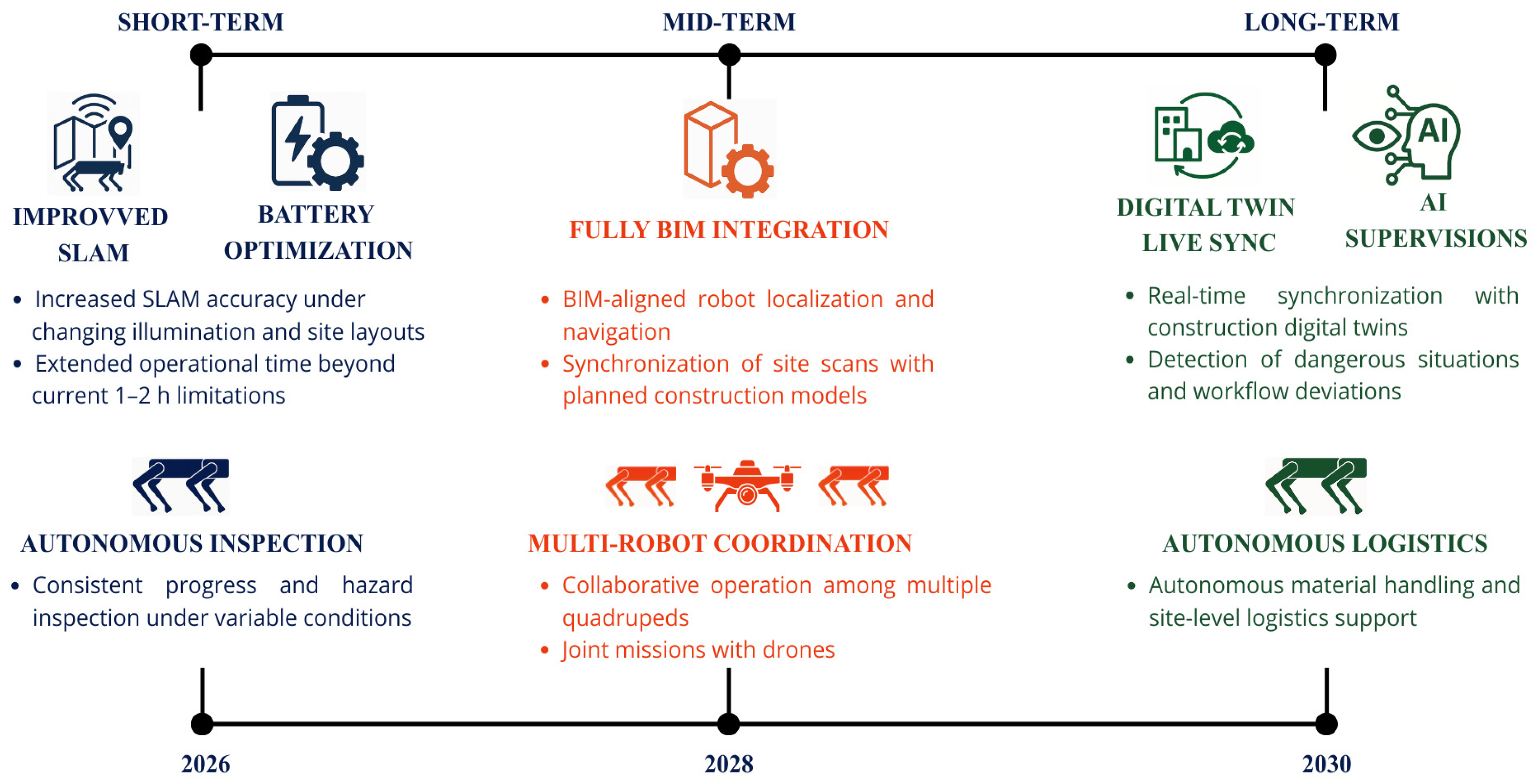
9. Future Research Directions

Quadruped robotics in construction is expected to evolve in three stages during the next few years (see Figure 12). In the short term, research may continue to focus on improving key autonomy capabilities such as robust SLAM, better perception under dust and occlusion, and dependable autonomous inspection processes. Recent research continuously emphasizes the need for improved SLAM accuracy and stability on dynamic task sites where illumination, layout, and barriers vary fast [3]. Battery optimization is also a significant obstacle, since existing quadrupeds generally function for just 1–2 h on active construction sites, limiting their viability for continuous field work.
By the mid-term, quadrupeds are expected to achieve deeper functional integration with BIM-based workflows. Researchers have demonstrated early-stage BIM-to-robot pipelines where robots localize against BIM geometries and follow semantic floor plans [14,22]. As these methods mature, quadrupeds will likely support BIM-integrated full autonomy executing mission plans directly derived from design data and synchronizing site scans with planned progress models. Another key mid-term direction is multi-robot coordination, in which quadrupeds collaborate with other quadrupeds or drones to perform joint scanning, inspection, or transport tasks, forming an integrated robotic ecosystem.
In the long term, quadrupeds are projected to evolve into intelligent agents embedded in digital-twin ecosystems. Future systems are expected to support real-time digital-twin live synchronization, enabling predictive analytics, automated progress verification, and safety-risk anticipation. Furthermore, advances in AI vision and scene understanding will pave the way for AI supervisory systems, allowing robots to grasp high-level construction contexts (e.g., dangerous conditions, material shortages, workflow deviations) and give decision assistance to managers.

10. Conclusions

This review analyzed 20 construction-oriented studies on quadruped robotics published between 2015 and 2025 and complemented the qualitative synthesis with bibliometric evidence from SciVal and Scopus datasets.
The findings confirm that quadruped robots demonstrate clear potential in inspection, 3D reconstruction, safety monitoring, logistics assistance, and progress tracking. Their ability to navigate uneven terrain and integrate with BIM-based digital workflows positions them as promising tools for construction-site automation.
Bibliometric trends indicate sustained and accelerating research growth, reflecting increasing interdisciplinary consolidation. However, widespread industry adoption remains constrained by energy limitations, sensing robustness, environmental variability, and regulatory considerations.
In conclusion, quadruped robots represent a promising yet still maturing technology in construction automation. Their near-term impact will center on structured monitoring and digital integration, while long-term deployment depends on advancements in autonomy, energy systems, environmental resilience, and organizational adaptation.

Author Contributions

Conceptualization, A.K. and J.-h.C.; methodology, A.K. and J.-h.C.; software, A.K.; validation, A.K. and J.-h.C.; formal analysis, A.K.; investigation, A.K.; resources, J.-h.C.; data curation, A.K.; writing—original draft preparation, A.K.; writing—review and editing, J.-W.K. and J.-h.C.; visualization, A.K.; supervision, J.-h.C.; project administration, J.-h.C.; funding acquisition, J.-h.C. All authors have read and agreed to the published version of the manuscript.

Funding

This research was supported by Dong-A University: 2025-GLOCAL-02-003-001.

Data Availability Statement

No new data were created or analyzed in this study. Data sharing is not applicable to this article.

Acknowledgments

During the preparation of this work, the authors used ChatGPT 5.1 from OpenAI for writing to improve linguistics, grammar, and clarity in writing, and AI tools for icon creation, which are used to generate figures. After using this tool, the authors reviewed and edited the content as needed and take full responsibility for the content of the published article.

Conflicts of Interest

The authors declare no conflict of interest.

Abbreviations

The following abbreviations are used in this manuscript:
BIMBuilding Information Modeling
SLAMSimultaneous Localization and Mapping
UAVUnmanned Aerial Vehicle
UGVUnmanned Ground Vehicle
ARAugmented Reality
LiDARLight Detection and Ranging
ROSRobot Operating System
GPSGlobal Positioning System
AECArchitecture, Engineering, and Construction
PRISMAPreferred Reporting Items for Systematic Reviews and Meta-Analyses
MLSMobile LiDAR Scanning
TSPTraveling Salesman Problem
IFCIndustry Foundation Class
IndoorGMLIndoor Geography Markup Language
IMUInertial Measurement Unit
LIO-SAMLiDAR-Inertial Odometry via Smoothing and Mapping
ICPIterative Closest Point
MPCModel Predictive Control
WBCWhole-Body Control
FWCIField-Weighted Citation Impact
CPUCentral Processing Unit
SDKSoftware Development Kit
CNNConvolutional Neural Network
LODLevel of Development
NDIRNon-Dispersive Infrared
DTDigital Twin
RGB-DRed, Green, Blue, and Depth
AIArtificial Intelligence
QoSQuality of Service
LLMLarge Language Model
VLMVision Language Model
TLSTerrestrial Laser Scanning
PMParticulate Matter

References

  1. Kim, H.; Kim, C. 3D As-Built Modeling from Incomplete Point Clouds Using Connectivity Relations. Autom. Constr. 2021, 130, 103855. [Google Scholar] [CrossRef]
  2. Liang, H.; Lee, S.-C.; Bae, W.; Kim, J.; Seo, S. Towards UAVs in Construction: Advancements, Challenges, and Future Directions for Monitoring and Inspection. Drones 2023, 7, 202. [Google Scholar] [CrossRef]
  3. Yue, H.; Sun, Y.; Zeng, N.; Chen, S.; Tan, Y.; Wang, Q. Legged Robots for Construction Management: Applications and Challenges. J. Constr. Eng. Manag. 2025, 151, 03125006. [Google Scholar] [CrossRef]
  4. Halder, S.; Afsari, K.; Serdakowski, J.; DeVito, S.; Ensafi, M.; Thabet, W. Real-Time and Remote Construction Progress Monitoring with a Quadruped Robot Using Augmented Reality. Buildings 2022, 12, 2027. [Google Scholar] [CrossRef]
  5. Liu, J.; Wang, Z.; Qian, L.; Luo, R.; Luo, X. Task-Oriented Systematic Design of a Heavy-Duty Electrically Actuated Quadruped Robot with High Performance. Sensors 2023, 23, 6696. [Google Scholar] [CrossRef]
  6. Kim, J.; Chung, D.; Kim, Y.; Kim, H. Deep Learning-Based 3D Reconstruction of Scaffolds Using a Robot Dog. Autom. Constr. 2022, 134, 104092. [Google Scholar] [CrossRef]
  7. Waymo Driver. Self-Driving Car Technology for a Reliable Ride. Available online: https://waymo.com/waymo-driver/ (accessed on 6 January 2026).
  8. Ge, L.; Sadhu, A. Deep Learning-Enhanced Smart Ground Robotic System for Automated Structural Damage Inspection and Mapping. Autom. Constr. 2025, 170, 105951. [Google Scholar] [CrossRef]
  9. Intuitive Robots. Spot EAP-2 LiDAR Payload (Boston Dynamics). Available online: https://www.intuitive-robots.com/spot-robot-payloads-and-accessories/spot-eap-lidar-payload/ (accessed on 6 January 2026).
  10. Chovet, L.; Garcia, G.; Bera, A.; Richard, A.; Yoshida, K.; Olivares-Mendez, M. Performance Comparison of ROS2 Middlewares for Multi-Robot Mesh Networks in Planetary Exploration. J. Intell. Robot. Syst. 2025, 111, 18. [Google Scholar] [CrossRef]
  11. ROS 2 Documentation—ROS 2 Documentation: Foxy Documentation. Available online: https://docs.ros.org/en/foxy/index.html (accessed on 16 September 2025).
  12. Chung, D.; Kim, J.; Paik, S.; Im, S.; Kim, H. Automated System of Scaffold Point Cloud Data Acquisition Using a Robot Dog. Autom. Constr. 2025, 170, 105944. [Google Scholar] [CrossRef]
  13. Gan, V.J.L.; Hu, D.; Wang, Y.; Zhai, R. Automated Indoor 3D Scene Reconstruction with Decoupled Mapping Using Quadruped Robot and LiDAR Sensor. Comput. Aided Civ. Eng. 2025, 40, 2209–2226. [Google Scholar] [CrossRef]
  14. Stührenberg, J.; Smarsly, K. LIO-BIM—Coupling Lidar Inertial Odometry with Building Information Modeling for Robot Localization and Mapping. Adv. Eng. Inf. 2025, 66, 103477. [Google Scholar] [CrossRef]
  15. Vega Torres, M.; Pfitzner, F. Investigating Robot Dogs for Construction Monitoring: A Comparative Analysis of Specifications and On-Site Requirements. arXiv 2024, arXiv:2409.15253. [Google Scholar] [CrossRef]
  16. Roscia, F.; Cumerlotti, A.; Del Prete, A.; Semini, C.; Focchi, M. Orientation Control System: Enhancing Aerial Maneuvers for Quadruped Robots. Sensors 2023, 23, 1234. [Google Scholar] [CrossRef] [PubMed]
  17. Rao, A.S.; Radanovic, M.; Liu, Y.; Hu, S.; Fang, Y.; Khoshelham, K.; Palaniswami, M.; Ngo, T. Real-Time Monitoring of Construction Sites: Sensors, Methods, and Applications. Autom. Constr. 2022, 136, 104099. [Google Scholar] [CrossRef]
  18. Afsari, K.; Halder, S.; King, R.; Thabet, W.; Serdakowski, J.; DeVito, S.; Ensafi, M.; Lopez, J. Identification of Indicators for Effectiveness Evaluation of Four-Legged Robots in Automated Construction Progress Monitoring. In Construction Research Congress 2022; American Society of Civil Engineers: Reston, VA, USA, 2022; p. 620. [Google Scholar]
  19. Zou, H.; Zhou, C.; Li, H.; Wang, X.; Wang, Y. Application of 3D Point Cloud and Visual-Inertial Data Fusion in Robot Dog Autonomous Navigation. PLoS ONE 2025, 20, e0317371. [Google Scholar] [CrossRef]
  20. Miller, I.D.; Cladera, F.; Cowley, A.; Shivakumar, S.S.; Lee, E.S.; Jarin-Lipschitz, L.; Bhat, A.; Rodrigues, N.; Zhou, A.; Cohen, A.; et al. Mine Tunnel Exploration Using Multiple Quadrupedal Robots. IEEE Robot. Autom. Lett. 2020, 5, 2840–2847. [Google Scholar] [CrossRef]
  21. Baru, A.; Tomori, M.; Irizarry, J. Exploring the use of Quadruped Robots in Construction Environments: The Case of Small Item Transportation. Eng. Constr. Archit. Manag. 2024, 19. [Google Scholar]
  22. Zhai, R.; Zou, J.; Gan, V.J.L.; Han, X.; Wang, Y.; Zhao, Y. Semantic Enrichment of BIM with IndoorGML for Quadruped Robot Navigation and Automated 3D Scanning. Autom. Constr. 2024, 166, 105605. [Google Scholar] [CrossRef]
  23. Chen, Z.; Song, C.; Wang, B.; Tao, X.; Zhang, X.; Lin, F.; Cheng, J.C.P. Automated Reality Capture for Indoor Inspection Using BIM and a Multi-Sensor Quadruped Robot. Autom. Constr. 2025, 170, 105930. [Google Scholar] [CrossRef]
  24. Page, M.J.; McKenzie, J.E.; Bossuyt, P.M.; Boutron, I.; Hoffmann, T.C.; Mulrow, C.D.; Shamseer, L.; Tetzlaff, J.M.; Akl, E.A.; Brennan, S.E.; et al. The PRISMA 2020 Statement: An Updated Guideline for Reporting Systematic Reviews. BMJ 2021, 372, 71. [Google Scholar] [CrossRef]
  25. Wang, Y.; Ramezani, M.; Fallon, M. Actively mapping industrial structures with information gain-based planning on a quadruped robot. In Proceedings of the 2020 IEEE International Conference on Robotics and Automation (ICRA), Paris, France, 31 May–31 August 2020; pp. 8609–8615. [Google Scholar]
  26. Google Scholar. A Methodology for BIM-Enabled Automated Reality Capture in Construction Inspection with Quadruped Robots. Available online: https://www.researchgate.net/profile/Srijeet-Halder/publication/356599994_A_Methodology_for_BIM-enabled_Automated_Reality_Capture_in_Construction_Inspection_with_Quadruped_Robots/links/61de09674e4aff4a6435f0c1/A-Methodology-for-BIM-enabled-Automated-Reality-Capture-in-Construction-Inspection-with-Quadruped-Robots.pdf (accessed on 24 November 2025).
  27. Park, S.; Yoon, S.; Ju, S.; Heo, J. BIM-Based Scan Planning for Scanning with a Quadruped Walking Robot. Autom. Constr. 2023, 152, 104911. [Google Scholar] [CrossRef]
  28. Chen, T.; Huangfu, Y.; Srigrarom, S.; Khoo, B.C. Path Planning and Motion Control of Robot Dog Through Rough Terrain Based on Vision Navigation. Sensors 2024, 24, 7306. [Google Scholar] [CrossRef] [PubMed]
  29. Naderi, H.; Shojaei, A.; Agee, P.; Afsari, K.; Akanmu, A. Autonomous Construction-Site Safety Inspection Using Mobile Robots: A Multilayer VLM-LLM Pipeline. arXiv 2025, arXiv:2512.13974. [Google Scholar]
  30. Elsevier. SciVal|Research Performance Assessment Solution. Available online: https://www.elsevier.com/products/scival (accessed on 29 January 2026).
  31. Fisch, E. Subject Guides: Research Metrics and Publishing: FWCI—Field Weighted Citation Impact. Available online: https://guides.lib.monash.edu/research-metrics-publishing/fwci (accessed on 29 January 2026).
  32. VOSviewer—Visualizing Scientific Landscapes. Available online: https://www.vosviewer.com// (accessed on 29 January 2026).
  33. Li, Q.; Cicirelli, F.; Vinci, A.; Guerrieri, A.; Qi, W.; Fortino, G. Quadruped Robots: Bridging Mechanical Design, Control, and Applications. Robotics 2025, 14, 57. [Google Scholar] [CrossRef]
  34. Unitree Robotics. Robot Dog Go2_Quadruped_Robot Dog Company. Available online: https://www.unitree.com/go2 (accessed on 17 September 2025).
  35. Tuomisto, J.; Zheng, Y.; Chauhan, I.; Seppänen, O.; Pajarinen, J. Automating On-Site Object Inspection with a Quadruped Robot and BIM. Autom. Constr. 2026, 181, 106571. [Google Scholar] [CrossRef]
  36. Li, S.; Ren, Z.; Kim, J.I. A Structured Review of SLAM Generation in the AEC Industry: Technical Framework, Site-Specific Challenges, and Adaptive Strategies. KSCE J. Civ. Eng. 2025, 30, 100408. [Google Scholar] [CrossRef]
  37. Unitree Robotics. Robot Dog Go1_Bionic Quadruped_Go1 Robot Dog Function Introduction. Available online: https://www.unitree.com/go1 (accessed on 17 September 2025).
  38. ANYbotics. Advance Robotics Research with ANYmal. Available online: https://www.anybotics.com/partners/research-academia/ (accessed on 18 September 2025).
  39. Alatise, M.B.; Hancke, G.P. A Review on Challenges of Autonomous Mobile Robot and Sensor Fusion Methods. IEEE Access 2020, 8, 39830–39846. [Google Scholar] [CrossRef]
  40. A Survey of Augmented Reality. Available online: https://www.researchgate.net/publication/269464134_A_Survey_of_Augmented_Reality (accessed on 29 January 2026).
  41. Erdem, A.T.; Ercan, A.O. Fusing Inertial Sensor Data in an Extended Kalman Filter for 3D Camera Tracking. Trans. Image Process. 2015, 24, 538–548. [Google Scholar] [CrossRef]
  42. Oguntosin, V.; Akindele, A. Design of a Joint Angle Measurement System for the Rotary Joint of a Robotic Arm Using an Incremental Rotary Encoder. J. Phys. Conf. Ser. 2019, 1299, 012108. [Google Scholar] [CrossRef]
  43. Cao, M.Y.; Laws, S.; Baena, F.R.Y. Six-Axis Force/Torque Sensors for Robotics Applications: A Review. IEEE Sens. J. 2021, 21, 27238–27251. [Google Scholar] [CrossRef]
  44. Lidar. Wikipedia. 2025. Available online: https://en.wikipedia.org/wiki/Lidar (accessed on 29 January 2026).
  45. Irawan, Y.; Muhardi, M.; Ordila, R.; Diandra, R. Automatic Floor Cleaning Robot Using Arduino and Ultrasonic Sensor. J. Robot. Control. (JRC) 2021, 2, 240–243. [Google Scholar] [CrossRef]
  46. Akhshirsh, G.S.; Al-Salihi, N.K.; Hamid, O.H. A Cost-Effective GPS-Aided Autonomous Guided Vehicle for Global Path Planning. Bull. Electr. Eng. Inform. 2021, 10, 650–657. [Google Scholar] [CrossRef]
  47. Huang, H.; Li, L.; Cheng, H.; Yeung, S.-K. Photo-SLAM: Real-Time Simultaneous Localization and Photorealistic Mapping for Monocular, Stereo, and RGB-D Cameras. arXiv 2024, arXiv:2311.16728. [Google Scholar]
  48. Halder, S.; Afsari, K. Robots in Inspection and Monitoring of Buildings and Infrastructure: A Systematic Review. Appl. Sci. 2023, 13, 2304. [Google Scholar] [CrossRef]
  49. Filippini, C.; Perpetuini, D.; Cardone, D.; Chiarelli, A.M.; Merla, A. Thermal Infrared Imaging-Based Affective Computing and Its Application to Facilitate Human Robot Interaction: A Review. Appl. Sci. 2020, 10, 2924. [Google Scholar] [CrossRef]
  50. Kolhatkar, C.; Wagle, K. Review of SLAM Algorithms for Indoor Mobile Robot with LIDAR and RGB-D Camera Technology; Favorskaya, M.N., Mekhilef, S., Pandey, R.K., Singh, N., Eds.; Springer: Singapore, 2021; Volume 661, pp. 397–409. [Google Scholar]
  51. Hutter, M.; Gehring, C.; Jud, D.; Lauber, A.; Bellicoso, C.D.; Tsounis, V.; Hwangbo, J.; Bodie, K.; Fankhauser, P.; Bloesch, M.; et al. ANYmal—A Highly Mobile and Dynamic Quadrupedal Robot. In Proceedings of the 2016 IEEE/RSJ International Conference on Intelligent Robots and Systems (IROS), Daejeon, Republic of Korea, 9–14 October 2016; pp. 38–44. [Google Scholar] [CrossRef]
  52. Request PDF. Multi-Sensor Perceptual System for Mobile Robot and Sensor Fusion-Based Localization. Available online: https://www.researchgate.net/publication/386955365_Multi-sensor_perceptual_system_for_mobile_robot_and_sensor_fusion-based_localization (accessed on 29 January 2026).
  53. Boston Dynamics. Construction. Available online: https://bostondynamics.com/industry/construction/ (accessed on 29 January 2026).
  54. Yoo, K.S. Hong Robot Dogs, Snakes to Patrol Industrial Sites for Safety. Available online: https://www.koreaherald.com/article/2982879 (accessed on 29 January 2026).
  55. Duke MEMS: Experiment Design and Research Methods. Prototyping Air-Quality Sensing Robotic Dog. Available online: https://sites.duke.edu/memscapstone/prototyping-air-quality-sensing-robotic-dog/ (accessed on 29 January 2026).
  56. Boston Dynamics. Autonomous Detection of Combustible Gas Leaks. Available online: https://bostondynamics.com/blog/autonomous-detection-of-combustible-gas-leaks/ (accessed on 29 January 2026).
  57. The Robot Report. ANYbotics Launches Gas Leak and Presence Detection for ANYmal Inspection Robot. Available online: https://www.therobotreport.com/anybotics-launches-gas-leak-presence-detection-anymal-inspection-robot/ (accessed on 29 January 2026).
  58. Boston Dynamics. Spot. Available online: https://bostondynamics.com/products/spot/ (accessed on 27 August 2025).
  59. Wetzel, E.; Liu, J.; Leathem, T.; Sattineni, A. The Use of Boston Dynamics SPOT in Support of LiDAR Scanning on Active Construction Sites. In Proceedings of the ISARC Proceedings 2022, 2022 Proceedings of the 39th ISARC, Bogotá, Colombia, 13–15 July 2022; pp. 86–92. [Google Scholar] [CrossRef]
  60. Scan’s Best Friend. Available online: https://fieldtech.trimble.com/resources/3d-laser-scanning/scans-best-friend (accessed on 17 September 2025).
  61. Ghost Robotics|Robots That Feel the World. Available online: https://www.ghostrobotics.io/ (accessed on 17 September 2025).
  62. ANYbotics|Autonomous Legged Robots for Industrial Inspection. Available online: https://www.anybotics.com/ (accessed on 17 September 2025).
  63. Halder, S.; Afsari, K.; Chiou, E.; Patrick, R.; Hamed, K.A. Construction Inspection & Monitoring with Quadruped Robots in Future Human-Robot Teaming: A Preliminary Study. J. Build. Eng. 2023, 65, 105814. [Google Scholar] [CrossRef]
  64. Autonomous quadruped robots for scan to BIM reality capture in smart construction. Available online: https://kiis.or.kr/conf/2025f/popSessionView.asp?code=47&idx=9910 (accessed on 7 January 2026).
  65. Xi’an Jiaotong-Liverpool University. XJTLU’s Robot Project Wins Provincial Award, Advancing Intelligent Inspection; Xi’an Jiaotong-Liverpool University: Suzhou, China, 2025. [Google Scholar]
Figure 1. PRISMA flow diagram for literature review.
Buildings 16 00962 g001
Figure 2. Distribution of publications by subject area, SciVal (2015–2025).
Buildings 16 00962 g002
Figure 3. Comparative annual publication trends from SciVal and Scopus databases (2015–2025).
Buildings 16 00962 g003
Figure 4. Distribution of publications by subject area (Scopus 2015–2025).
Buildings 16 00962 g004
Figure 5. Keyword co-occurrence network of quadruped robot research based on the Scopus dataset (2015–2025), generated using VOSviewer [32].
Buildings 16 00962 g005
Figure 6. Distribution of publications on quadruped robots in construction by country or territory (Scopus dataset, 2015–2025).
Buildings 16 00962 g006
Figure 7. Distribution of publications by leading authors in quadruped robot research for construction applications (Scopus dataset, 2015–2025).
Buildings 16 00962 g007
Figure 8. Hardware system architecture of the Unitree Go2 (revised from source: [34]).
Buildings 16 00962 g008
Figure 9. External and internal sensing components commonly integrated into quadruped robots.
Buildings 16 00962 g009
Figure 10. Framework of the proposed method by Kim et al. [6].
Buildings 16 00962 g010
Figure 11. Overview of the system structure of LIO-BIM [14].
Buildings 16 00962 g011
Figure 12. Future research roadmap for quadruped robots in construction (2026–2030).
Buildings 16 00962 g012
Table 1. Construction-oriented taxonomy of automated tasks and site-level achievements demonstrated using quadruped robots.
Ref.PlatformApplication DomainKey Methods Key Contributions
(Validation Context)
Y. Wang et al. [25]ANYmalInspection and autonomous 3D mappingInformation gain–based scan planning, LiDAR-based mappingNear-realDemonstrates a model-free active mapping system for quadruped robots, enabling autonomous inspection and efficient 3D reconstruction in complex environments.
S. Halder et al. [26]Boston Dynamics Spot Construction inspection and reality captureBIM-enabled mission planning, fiducial-based localization, 360° image capture, Unity-based visualizationNear-realBIM-integrated robotic inspection framework enabling autonomous reality capture and near-real-time visualization, supporting efficient remote construction inspection with reduced manual site visits
Kim et al. [6]Unitree A1 robot dog with LiDAR and IMUScaffold 3D reconstruction and inspection3D LiDAR MLS, SLAM, RandLA-Net semantic segmentation, transfer learning, CAD reconstructionNear-realAutomated scaffold inspection and 3D reconstruction using LiDAR-based MLS, demonstrating feasibility for replacing manual inspection tasks in construction environments. Automated scaffold modeling (90.84% F1)
Halder et al. [4]Boston Dynamics SpotRemote progress monitoring360° camera, AR with BIM cloud systemNear-realAR-enabled progress monitoring framework using a quadruped robot, enabling remote visualization and comparison of as-built and as-planned construction states
Afsari et al. [18]Boston Dynamics SpotProgress tracking evaluationKPI framework, repeated deploymentsOn-siteIdentifies performance and economic indicators for robot adoption
Park et al. [27]Boston Dynamics SpotAutomated building scan planningBIM-based scan planning, skeleton-based candidate generation, 3D visibility analysis, TSP-based scan orderingSimulationBIM-driven autonomous scan planning framework for quadruped robots, significantly reducing scan positions and operation time while maintaining high point-cloud coverage accuracy
Torres & Pfitzner [15]Go1, Spot, ANYmalConstruction site monitoring and digital-twin data acquisitionComparative specification analysis, robot-mounted mobile mapping system, LiDAR-IMU SLAM, BIM-supported analysisOn-siteSystematic comparison of available quadruped robots and demonstrates practical construction-site data acquisition using a quadruped robot, highlighting capabilities, limitations, and requirements for future autonomous monitoring
Liu et al. [5]Heavy-Duty QuadrupedHigh-payload field operationsTask-oriented design, MPC + WBCNear-realIntroduces a task-oriented systematic design framework for heavy-duty electric quadruped robots, enabling high payload, stable locomotion, and energy-efficient performance validated through real-world prototype experiments. Supports 179 kg loads
Zhai et al. [22]Quadruped/LiDARBIM-based indoor navigation and scan planningIFC → IndoorGML, semantic mapping, TSP optimizationSimulationProposes a BIM–IndoorGML–based semantic framework enabling autonomous navigation and systematic 3D scanning for quadruped robots, improving path feasibility and scan efficiency in complex indoor environments
Baru et al. [21]Boston Dynamics SpotSmall-item transportation and site logistics supportFiducial-based navigation, AutoWalk path recording, modular payload and scale system designNear-realDemonstrates the feasibility of quadruped robots for automated small-item transport, showing improved efficiency and safety in repetitive logistics tasks through autonomous navigation and custom payload integration
Chen et al. [28]Vision-based quadruped robotRough-terrain navigation and locomotion controlVision-based terrain perception, path planning, gait-aware motion controlSimulationDevelops a vision-based navigation and control framework enabling quadruped robots to traverse rough terrain safely, improving path feasibility and locomotion stability under complex construction environments
Stührenberg & Smarsly [14]Quadruped/LiDAR- Inertial Measurement Unit (IMU)Robot localization with BIMLidar–Inertial Odometry (LIO)- based state estimation, BIM-based map matching, semantic constraint integrationNear-realIntroduces the LIO-BIM framework that tightly couples LiDAR–inertial odometry with BIM models, improving localization accuracy and robustness for robot navigation in building environments
Gan et al. [13]Quadruped robot with 3D LiDARAutomated indoor 3D reconstruction and as-built captureDecoupled 3D reconstruction and 2D mapping, viewpoint optimization, occlusion-aware scan planning, TSP-based trajectory planningNear-realDecoupled robotic scanning framework that improves scan completeness and efficiency over TLS, enabling fast, accurate indoor 3D reconstruction using quadruped robots
Chen et al. [23]Unitree Go1 Edu with LiDAR, RGB-D camera, IMUAutomated indoor inspection and reality capture4D BIM map, RGB-D, LiDAR, deep learningNear-realBIM-integrated reality capture framework enabling autonomous indoor inspection with a quadruped robot, improving scan completeness, localization accuracy (drift by 71.8%), and automation compared to manual inspection workflows
Naderi et al. [29]Unitree Go2 EduAutonomous task planning and human–robot interactionLLM–based task planning, perception–language grounding, modular robot controlSimulationIntroduces an LLM-driven high-level decision-making framework for quadruped robots, enabling flexible task planning and adaptive behavior through natural-language understanding and perception-aware control
Table 2. Comparison of legged robots.
NameBody Length (cm)Height (cm)Weight (kg)Payload (kg)IPSpeed (m/s)Run time (h)Slope (°)Release Year
Boston Dynamics Spot110613214IP541.61.5302020
Unitree Go165401253.51–2.5352021
Unitree Go27045158–1251–2352023
Ghost Robotics Vision 601057632–4510–18IP6733352021
ANYmal 93895023IP671.32302019
Disclaimer/Publisher’s Note: The statements, opinions and data contained in all publications are solely those of the individual author(s) and contributor(s) and not of MDPI and/or the editor(s). MDPI and/or the editor(s) disclaim responsibility for any injury to people or property resulting from any ideas, methods, instructions or products referred to in the content.