1. Introduction
Structural Health Monitoring (SHM) is a crucial tool to ensure the safety and proper functioning of civil structures. It allows continuous assessment of structural and environmental parameters, facilitating early detection of failures and reducing catastrophic risks [
1]. Structures are exposed to gradual or sudden deterioration caused by factors such as intensive use and adverse environmental conditions. This damage, in addition to costly repairs and loss of functionality, represents a significant risk to the lives of users and adjacent structures. Therefore, the development and implementation of SHM systems are essential to improve safety and optimize preventive and corrective maintenance decisions.
In civil engineering, complex structures are susceptible to disturbances that modify their modal characteristics, including overloads that can generate reversible changes of up to 30%, while environmental variations, such as temperature and humidity, can alter these properties by up to 50%, even without visible damage [
2]. These variations reinforce the importance of implementing effective structural health monitoring systems to assess and ensure the safety as well as the functionality of structures over time.
Thus, SHM seeks to answer five key questions over the system in study, as posed by Farrar & Worden [
3]: (i) damage presence; (ii) damage location; (iii) damage type; (iv) damage severity; and (v) remaining useful life. These questions guide the design of SHM systems and reflect their value in making informed structural decisions.
To implement SHM in buildings, it is essential to have a network of sensors capable of capturing and translating relevant information about the state of the structure. Moreover, Worden et al. [
4] highlight that sensors do not measure damage directly (Axiom IVa), but rather magnitudes such as accelerations or displacements, and that measurements more sensitive to damage are also more sensitive to changing environmental conditions (Axiom IVb). In addition, Axiom VI highlights the trade-off between sensitivity to damage and the ability of an algorithm to reject noise, which represents a key challenge in the design of robust structural monitoring systems.
Recent advances in structural health monitoring have increasingly incorporated data-driven methodologies, including deep learning, deep reinforcement learning, and swarm intelligence-based optimization techniques for damage detection and optimal sensor placement. Comprehensive reviews highlight this shift toward intelligent and adaptive SHM frameworks, particularly in data-rich applications [
5]. Recent studies have also demonstrated the practical application of swarm intelligence and hybrid AI models for structural damage identification, showing improved accuracy compared to traditional approaches [
6,
7]. However, these methods often require large amounts of training data and involve complex model calibration, which may limit their applicability in building monitoring scenarios with sparse instrumentation and limited historical data.
One of the most critical aspects in sensor placement for structural health monitoring is the signal-to-noise ratio (SNR), as it directly affects the accuracy of the extracted modal information and the reliability of the identified parameters. Several studies have demonstrated that low SNR levels increase the uncertainty of modal parameters and may even lead to the loss of identifiable modes [
8,
9]. Dorvash & Pakzad [
10] experimentally showed that low-noise accelerometers provided more consistent and accurate modal parameters than noisier sensors when applied to the Golden Gate Bridge, confirming the direct relationship between noise level and parameter accuracy. Similarly, Ravizza et al. [
11] reported that, for low-cost accelerometers, modal identification quality degrades rapidly when the SNR falls below 10 dB. Jahangiri et al. [
12] further highlighted that the required SNR threshold also depends on the identification method and the modal order, with the first mode being more sensitive to noise than higher-order modes. In addition, Tan & Zhang [
13] emphasized that poor sensor placement can reduce the energy of the measured response, significantly lowering the SNR and complicating modal identification. These findings reinforce the importance of explicitly accounting for SNR in optimal sensor placement strategies.
Although technological advances have enabled the development and use of a greater number of sensors, their distribution is still limited by the high costs of data acquisition systems and accessibility constraints, especially in structures that require monitoring in operating conditions, where sensors are often embedded and not easily relocatable [
2]. Therefore, the sensor placement optimization problem has been addressed in the literature by three different classes of algorithms. Convex Relaxation [
14] reformulates the combinatorial problem as a convex optimization of the determinant of the estimation error matrix, allowing efficient suboptimal solutions with low computational cost. The Greedy approach [
15] selects sensors sequentially by maximizing metrics such as log-determinant or minimizing reconstruction error, standing out for its computational efficiency and scalability. Finally, metaheuristic (evolutionary) methods have demonstrated a strong ability to explore search spaces in complex engineering problems. Beyond traditional approaches, various metaheuristic algorithms have been successfully applied to the optimal sensor placement (OSP) problem, including simulated annealing [
16], the monkey algorithm [
17], the ant colony optimization [
18], and particle swarm optimization [
19]. In this context, genetic algorithms (GA) remain a preferred choice due to their versatility in handling discrete design variables and multi-objective constraints [
20].
A promising approach for optimal sensor placement is employing a Kalman filter, which allows the dynamic states of the structure to be estimated from noisy measurements. By minimizing the trace of the covariance matrix of the estimation error, it has proven a feasible evaluation criterion to identify optimal sensor configurations, as demonstrated by its application in sequential schemes [
21] and in mixed configurations using the modal Kalman filter under unknown inputs [
22]. However, the state estimation can be similarly evaluated by other metrics, such as Fisher entropy, modal energy combined with modal correlation criterion (MSE+MAC), or mutual information, depending on the methodological approach and monitoring objective [
23]. In addition, multi-objective methods integrating metrics such as covariance sensitivity matrix and response correlation [
24], as well as techniques based on Kriging interpolation to maximize modal information and minimize the number of sensors through Pareto fronts [
25] have been proposed. In parallel, recent studies have sought to improve modal coverage in mid-rise buildings by arranging sensors at corners to capture torsional modes [
26]. These developments reflect the diversity and evolution of techniques employed to design efficient and robust configurations in SHM systems. In this context, the Kalman filter-based framework is positioned as a complementary and robust alternative for optimal sensor placement, providing a reliable monitoring performance criterion and state estimation under noisy measurements.
Hence, this study seeks to optimize sensor placement on a tall building using a Kalman filter-based approach, addressing a multi-objective problem that aims to minimize, on the one hand, the trace of the state error covariance matrix (i.e., improved accuracy) and, on the other hand, the number of sensors required (i.e., higher efficiency). To solve this problem, we employed a multi-objective genetic algorithm, which allows exploring the sensor configurations and constructing the Pareto front. This methodology is applied to a set of two-dimensional tall building models. Additionally, the results are validated by numerical time-history simulations to evaluate sensor deployment performance.
The remainder of this paper is organized as follows.
Section 2 presents the theoretical background, describing the simplified structural model and the Kalman filter formulation used for state estimation.
Section 3 details the multi-objective optimization framework, defining the design variables, objective functions, and the multi-objective optimization algorithm employed.
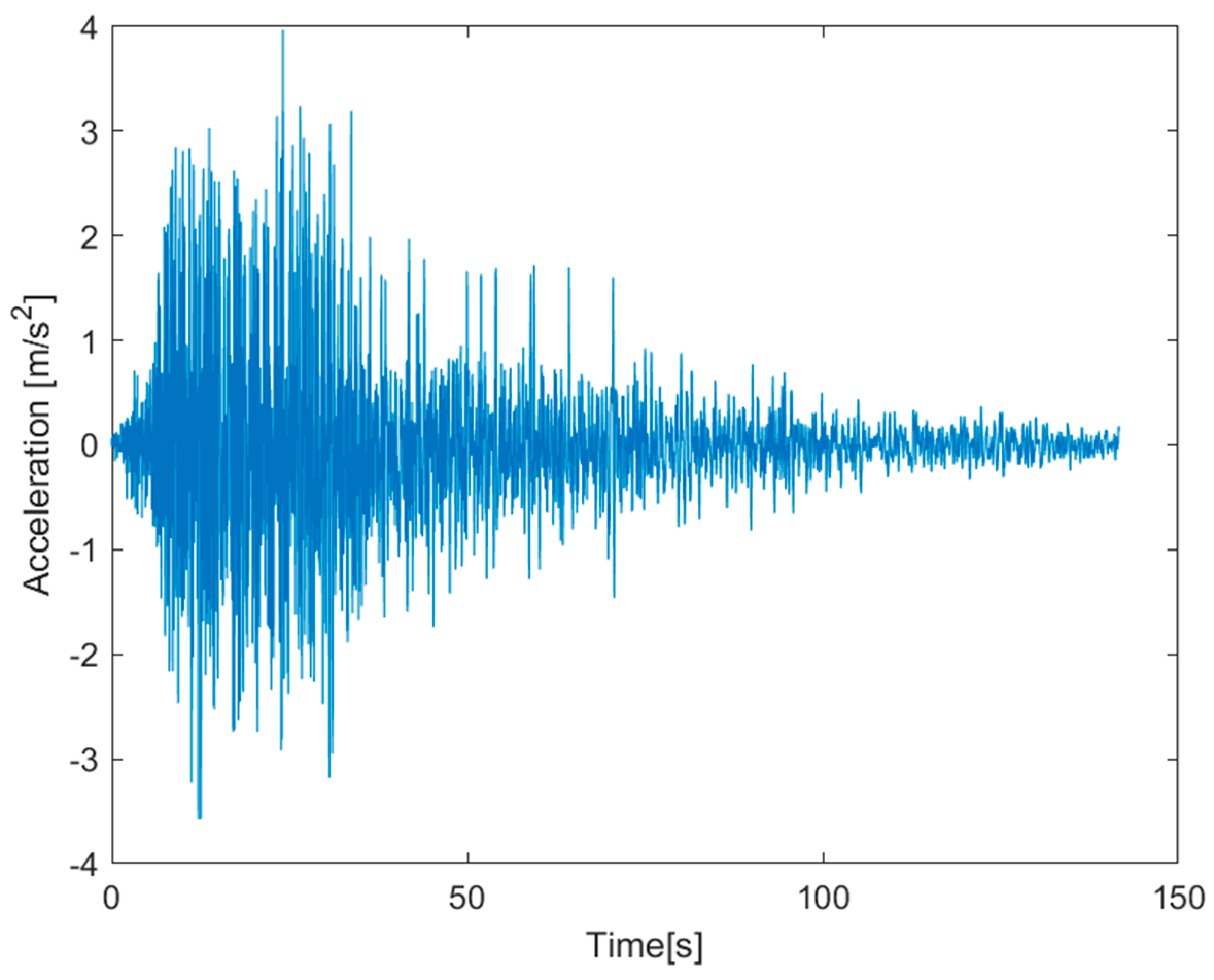
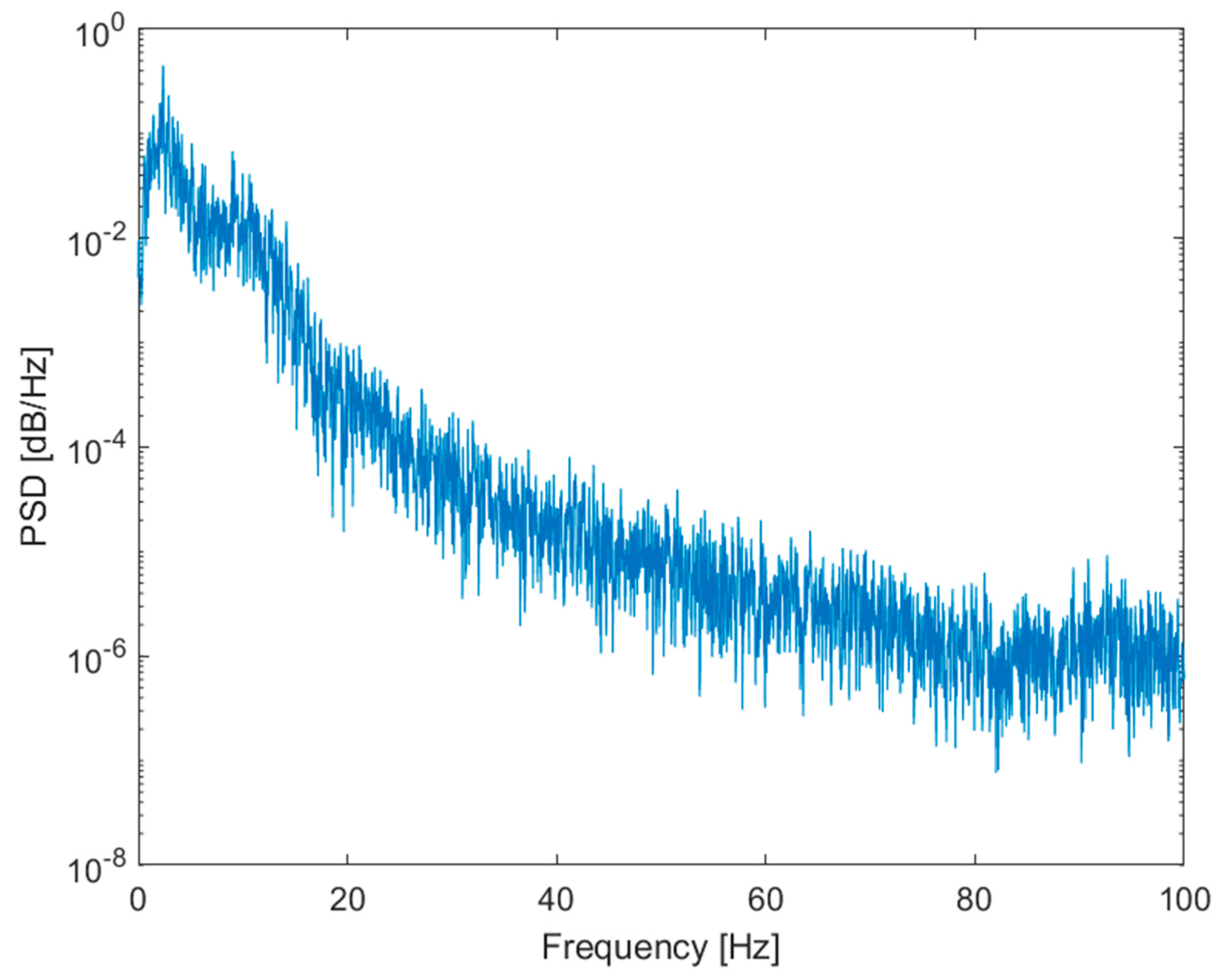
Section 4 presents the case studies based on four synthetic building prototypes (3, 9, 15, and 30 stories) for proof-of-concept validation. This section analyzes the optimization results for different building heights and assesses the optimal sensor configurations through time-history simulations involving both synthetic white noise and a real seismic record from the 2010 Maule earthquake (Chile). Finally,
Section 5 offers the concluding remarks and suggestions for future research.
2. Methodology
The methodology begins with the modeling of the structures under study, utilizing four synthetic building prototypes (3-, 9-, 15-, and 30-story) to perform a proof-of-concept validation of the proposed framework. These structures are represented through simplified models to generate the corresponding state-space systems for numerical analysis. Accelerometers are then selected as measurement devices, taking into account their sensitivity to noise; a minimum signal-to-noise ratio (SNR) of 10 dB is adopted to ensure reliable modal identification.
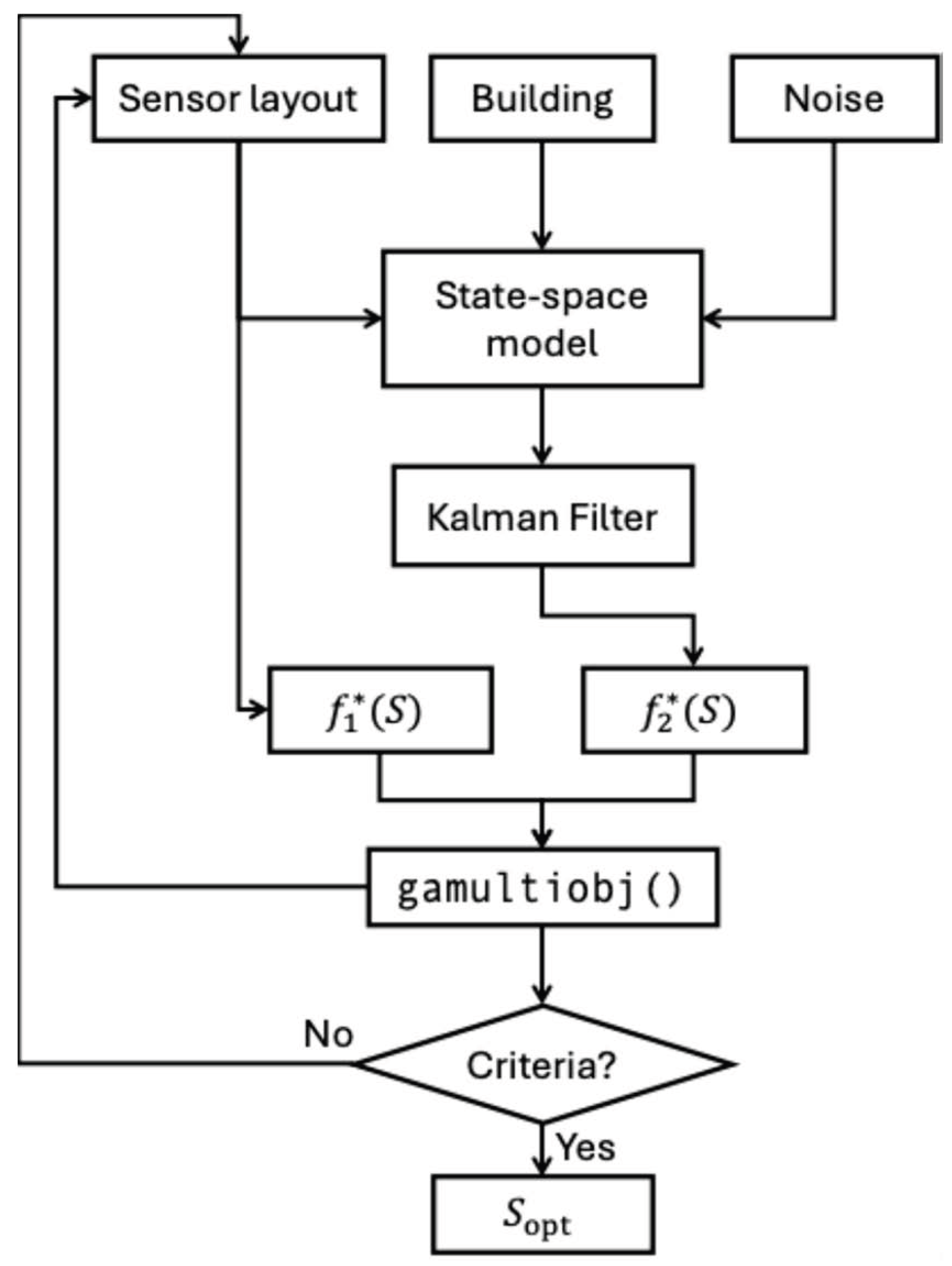
The optimization problem is formulated as a multi-objective task, where the Kalman filter is employed to evaluate the performance associated with each sensor configuration. The solutions are synthesized into a Pareto front, considering two competing objectives: minimizing the cost associated with the number of sensors and reducing the trace of the state error covariance matrix (). To approximate this Pareto front, the gamultiobj() function in MATLAB version R2023a is used to efficiently explore the design space and identify non-dominated solutions. Finally, the optimal sensor layouts are determined and applied to the different building cases, allowing a comparative analysis of the results and the evaluation of simulated sensor measurements under both synthetic and real seismic excitations.
2.1. Simplified Model
The simplified model proposed by Miranda & Taghavi [
27] provides an approximate method for calculating the ground acceleration demands at any level of a multi-story building, assuming an elastic or nearly elastic response during earthquake motions. The method employs a continuous structure model combining a flexural beam and a shear beam connected by infinitely rigid axial links to represent the building’s dynamic characteristics. The procedure relies on three non-dimensional parameters (
,
,
) which physically describe the deformation behavior and stiffness distribution of the structure.
The dimensionless parameter
governs the type of lateral deformation behavior. Physically, it represents the ratio of flexural stiffness to shear stiffness. A value of
corresponds to a purely flexural cantilever model (e.g., a shear wall building), while a value of
corresponds to a purely shear model (e.g., a moment frame building). Intermediate values of
describe dual systems. In practical terms, buildings with shear walls or braced frames usually have values between
; while buildings with moment-resisting frames usually have values
[
27].
To describe how the lateral stiffness varies along the building height, the model uses the following nondimensional shape equation:
where
is the normalized height (0 for ground level, and 1 for roof level). The parameter
represents the stiffness taper ratio, defined as the ratio of the lateral stiffness at the top story to that at the first story. Physically, a
accounts for the common practice of reducing structural sections (columns and walls) at higher floors;
would imply a uniform stiffness distribution along all floors. Finally, the parameter λ is the exponent of the stiffness variation, which dictates the rate at which stiffness reduces with height. A value of
represents a linear reduction, while
represents a parabolic (quadratic) reduction, allowing the model to fit various architectural mass and stiffness distributions.
By defining non-dimensional parameters (
,
,
) along with the fundamental natural period (
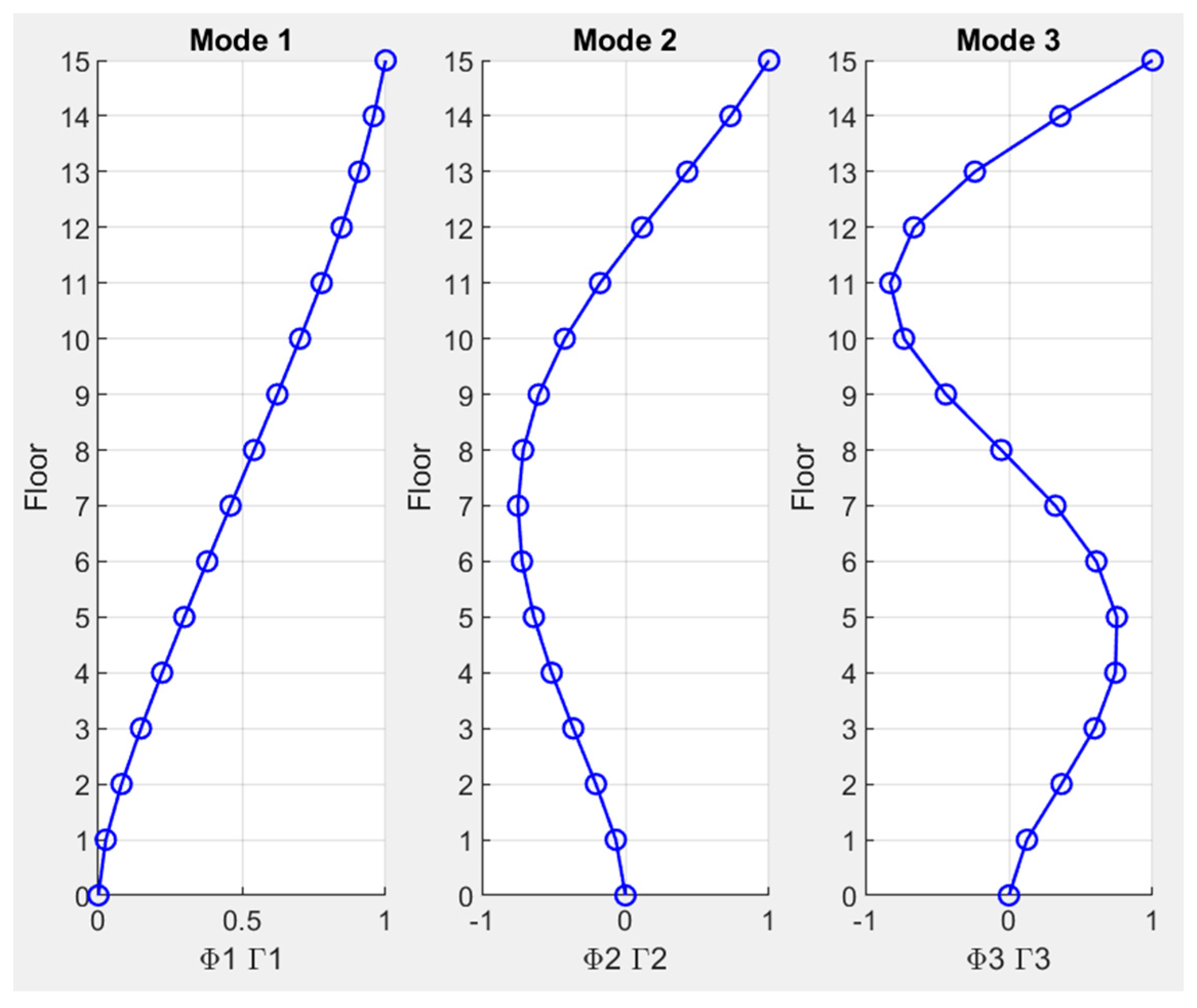
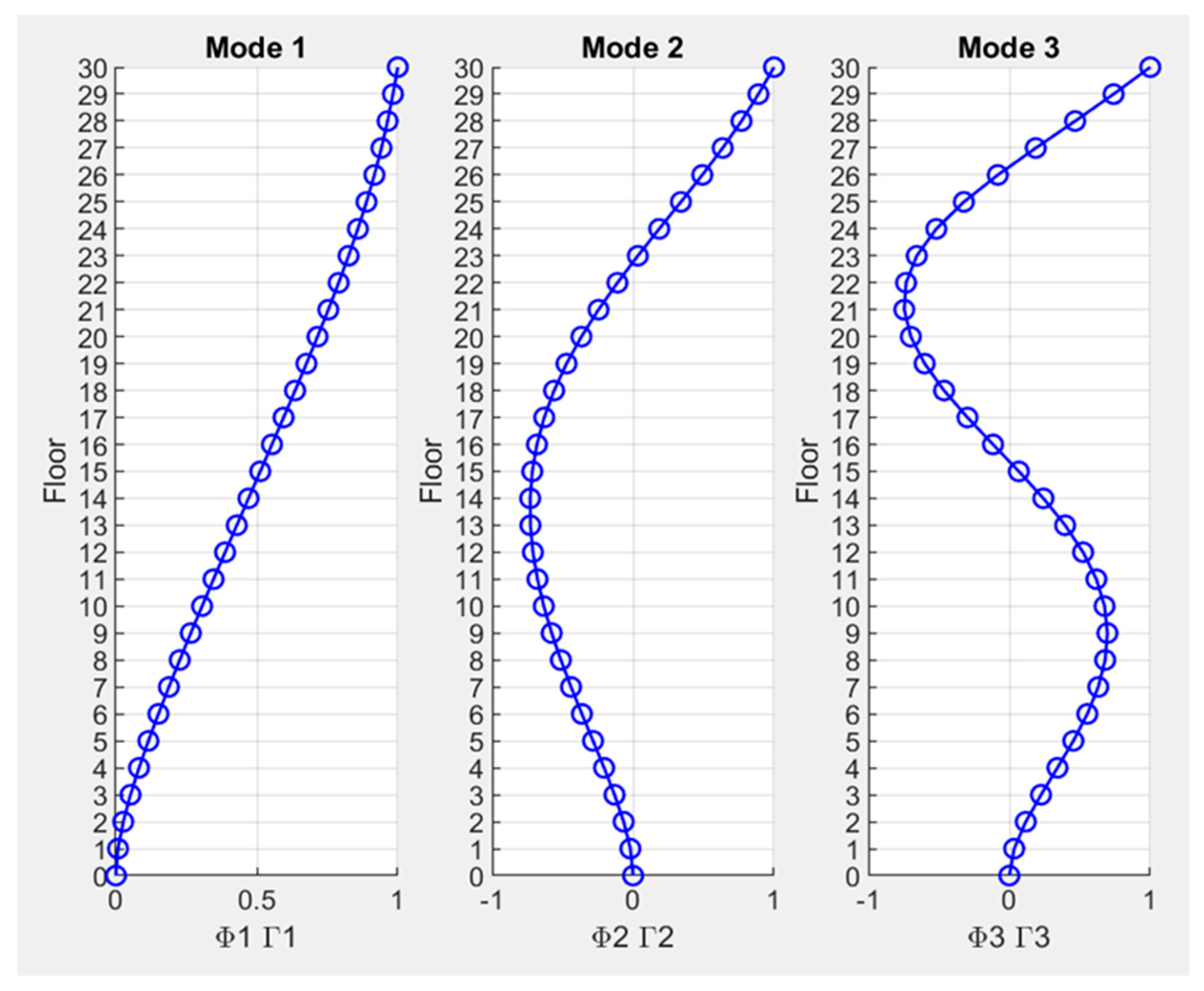
), the simplified model allows for the derivation of closed-form solutions for approximated dynamic properties for higher modes “
” such as mode shape vectors (
), period ratios (
), and participation factors (
), which are requisite inputs for generating the state-space model as described in the following section. All the specific details and mathematical formulas derived from this model are available in Miranda & Taghavi [
27].
Regarding the fundamental period (
), we employed the empirical equations by Guendelman et al. [
28], based on the statistical analysis of structural and dynamical properties of Chilean tall buildings, including 4105 reinforced concrete buildings constructed between 1993 and 2017, which allowed generating a robust classification to evaluate the dynamic behavior of a wide range of buildings against severe seismic events. The authors proposed a building classification based on the
ratio, where
is the total roof height of the building. Three building categories are described: (i) flexible (20 [m/s] <
< 40 [m/s]); (ii) normal (40 [m/s] <
< 80 [m/s]); and (iii) rigid (80 [m/s] <
< 150 [m/s]). Buildings with
values below 20 [m/s] or above 150 [m/s] fall outside typical ranges, indicating outliers with extreme flexibility or stiffness.
2.2. State Space Model
The state-space model is a mathematical framework that describes the time evolution of a dynamic system through equations that relate its internal states, inputs, and outputs [
29].
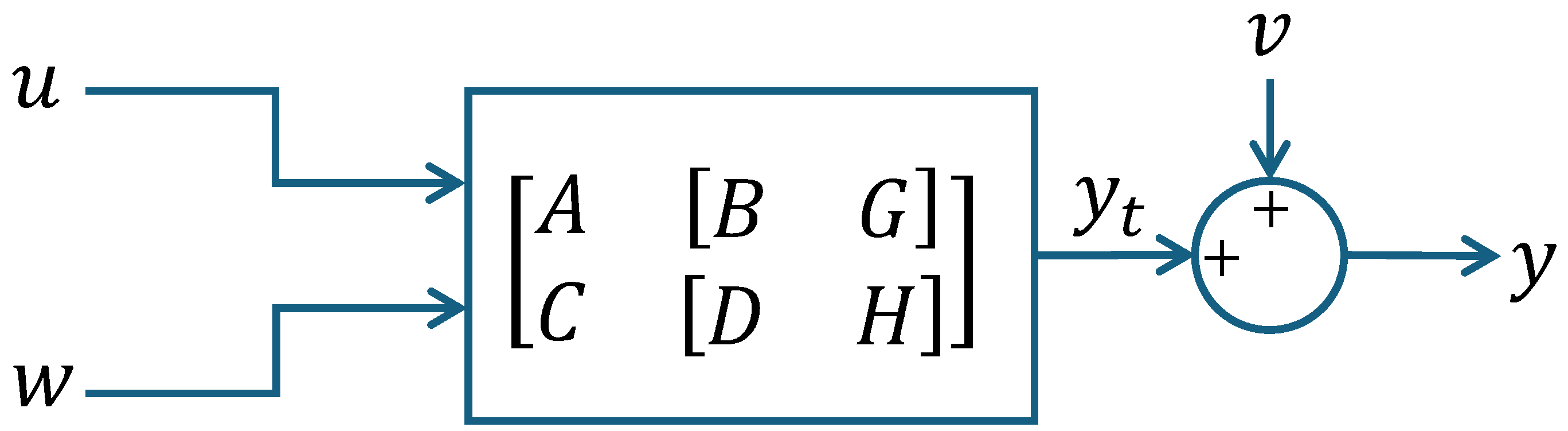
Figure 1 presents a block diagram illustrating this process, where the system is driven by two distinct inputs: the known control input
and the disturbance
, which models external uncertainties. The State Space Model block simulates the building’s dynamic behavior based on these inputs and its structural characteristics, generating a theoretical output
that represents the ideal, noiseless response. Finally, measurement noise
is added to this theoretical signal to produce the final observed output
, effectively capturing the reality of sensor data collection.
The explanation of how the state-space model is generated begins with the equation of motion. In this case, Equation (2) presents the equation of dynamic motion (EDM) in modal coordinates associated with the “
” mode:
where
,
and
are the acceleration, velocity, and displacement of mode “
”, respectively;
y
are the natural frequency and the damping ratio of the mode “
”;
is the modal participation factor of the external input of mode “
”; and
represents an exogenous input to the system, which in this study corresponds to ground acceleration due to an earthquake.
This equation of motion (which consists of a second-order ordinary differential equation) can be reformulated and simplified as a first-order equation in terms of state variables, which allows representing the dynamics of the system in a more manageable format for analysis and control, taking the following form:
where
represents the state vector, which describes the internal variables of the system;
A models the evolution of the system’s states over time;
B defines how known entries
affect the system; and
G defines how the disturbance
affects the dynamics of the system.
Measurements of the dynamic response of the structure
are expressed as linear functions of the states, incorporating measurement noise
, according to the following equation:
where
C links internal states to the observable outputs;
D directly relates the known entries
with the measurements; and
H describes how the disturbance
affects measurements.
Then, to generate the matrices
A,
B,
G,
C,
D, and
H to form the first-order equations of the state-space model, the following is considered:
where
is the “
” diagonal matrix, with diagonal entries as stated in its corresponding argument;
is the “
” vector that collects all modal participation factors; and
is the “
” mode shape matrix.
In the development of the model, “” is considered to represent the number of degrees of freedom of the structure, which defines the dimension of the state vector. The disturbance is assumed to affect the system in the same way as the known input . Therefore, in this study, it is considered that the matrices G and B are equal, i.e., G = B.
On the other hand, the matrix
C is constructed so that the measurements correspond to the absolute acceleration of each floor. Furthermore, when sensors are not installed on all floors of the building, the system response matrices are adjusted by keeping only the rows corresponding to the locations where sensors are installed. This modification is reflected in the
C,
D and
H, ensuring that the model outputs correspond only to the available measurements. More information is presented in
Section 3.
2.3. Signal-to-Noise Ratio (SNR)
The signal-to-noise ratio (SNR) is a fundamental metric in measurement systems that evaluates the quality of the signal obtained relative to the noise present.
where
is the RMS (Root Mean Square) value of the useful signal, which represents the effective magnitude of the structural response;
is the RMS value of the noise in the measurement;
and
represents the signal and noise levels in decibels (dB).
The RMS value of the signal is defined as
where
is the sample size. A similar definition is valid for
.
The RMS value (
) provides a measure of the energy contained in the signal, making it a useful tool for evaluating both signals and noise in practical applications. In terms of structural engineering, a high SNR indicates that the dynamic responses of the structure are more representative, while a low SNR suggests that noise significantly affects the measurement quality [
30].
In this research, the sensors are assumed to measure absolute acceleration. To assess sensor quality, the signal-to-noise ratio (SNR) is expressed in decibels, and only acceleration sensors with SNR values higher than 10 dB are considered, ensuring a minimum level of measurement reliability. The adoption of this 10 dB threshold is supported by previous studies that demonstrated the sensitivity of modal parameters to measurement noise. Ravizza et al. [
11] reported that, when working with low-cost sensors, the quality of modal identification degrades rapidly when the SNR falls below 10 dB. Similarly, Dorvash & Pakzad [
10] experimentally showed, using data from the Golden Gate Bridge, that sensors with lower noise levels provide more consistent and accurate modal parameter estimates than noisier sensors. Furthermore, Jahangiri et al. [
12] highlighted that the required SNR threshold also depends on the identification method: for beam structures, the first mode requires SNR ≥ 13.98 dB using Peak Picking method, while higher modes can be identified with lower values. Considering these findings, a minimum threshold of 10 dB is established in this work as a representative and conservative value to ensure the reliability of the estimated modal parameters.
2.4. Disturbance and Measurement Noise
The disturbance
) and measurement noise
represent unpredictable phenomena, such as model uncertainty and sensor inaccuracies, respectively. Both are modeled as stationary Gaussian white noise processes with zero mean:
where
is the expectation operator. Their corresponding covariance matrices,
and
, are defined as:
where
is the Dirac delta function. These equations indicate that the processes are uncorrelated in time. Therefore, the covariance can be written in a simplified form:
To characterize the relationship between these noise sources, a proportionality factor
is introduced:
In this study, the process noise covariance was assumed to be significantly lower than the measurement noise covariance , with set to a constant value close to zero (). This assumption reflects a scenario where the structural model is considered reasonably accurate and the structure operates strictly within the linear elastic range. By minimizing the uncertainty attributed to modeling errors (e.g., non-linearities or degradation), this approach allows for the isolation of sensor noise effects, thereby enabling a focused evaluation of how sensor placement and quality () influence state estimation performance.
2.5. Kalman Filter
The Kalman filter is a computationally efficient algorithm used to estimate the internal states of linear dynamic systems subject to unmeasured disturbances and measurement noise [
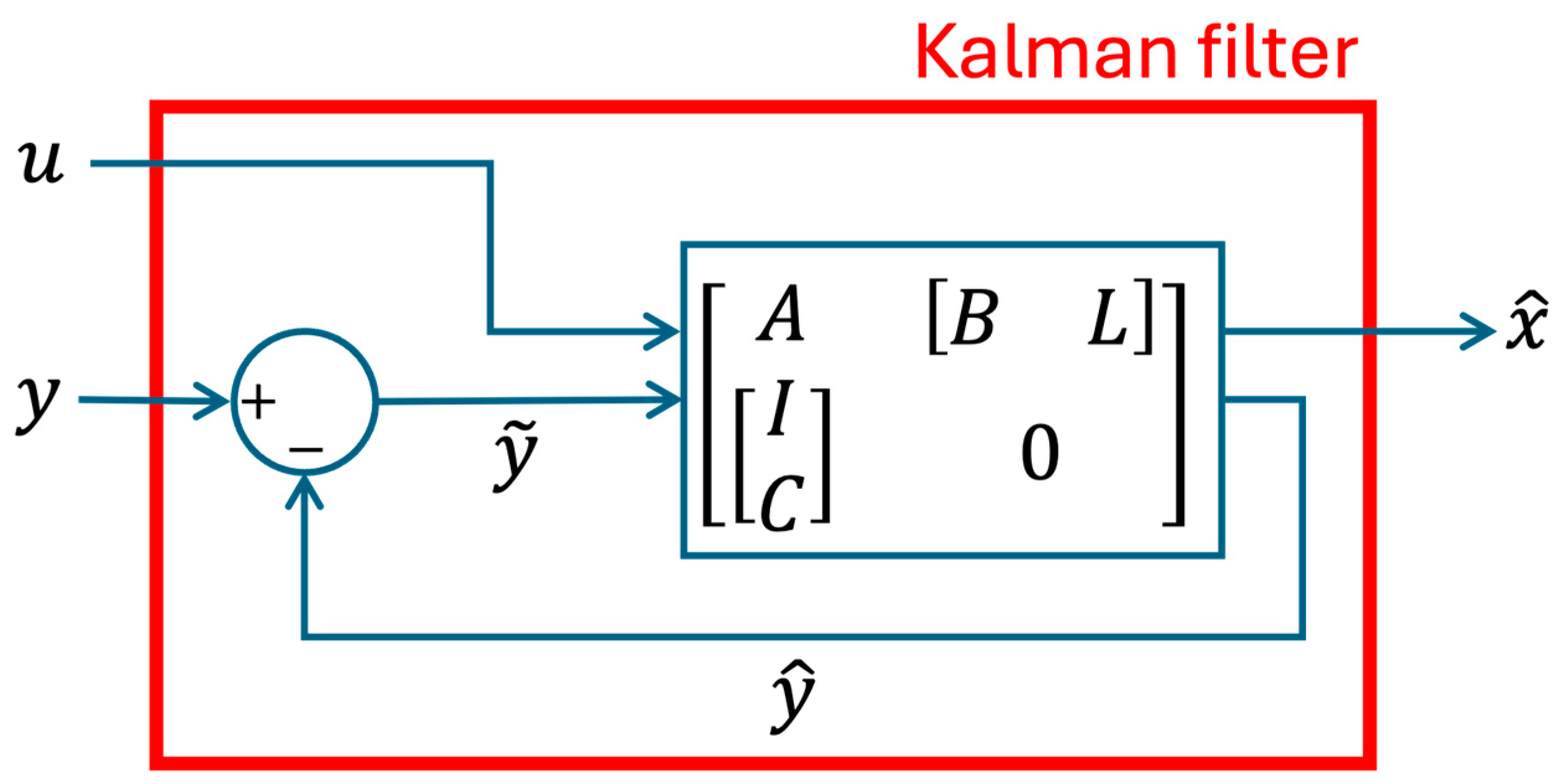
31]. As illustrated in
Figure 2, the filter operates recursively to predict the system state and minimize the associated estimation uncertainty
The primary objective is to minimize the deviation between the actual and estimated states, expressed as
where
is the output estimation error;
the state estimation error;
is the output estimation; and
the state estimation. To achieve this, the filter computes the error covariance matrix
P, a symmetric positive-definite matrix that quantifies the estimation uncertainty. This matrix is obtained by solving the continuous algebraic Riccati equation:
Once
P is determined, the Kalman gain
is computed:
Finally, the state estimate and system output are updated using the computed gain:
In this study, the MATLAB function kalman() was employed to automate the solution of the Riccati equation and the computation of the gain and state estimator, utilizing the system matrices () and noise covariances (,).
To ensure stability and proper performance of the filter, the following conditions must be met: (i) must be observable, which is verified if the observability matrix has full rank, that is, its rank is equal to the number of states of the system; (ii) matrix must be Hurwitz, meaning all its eigenvalues have negative real parts; and (iii) the states must be detectable, which implies that any unobservable state is associated with stable modes of the system.
However, it is important to mention that the classical concept of observability does not consider the inherent noise in the measurements. In systems with measurement noise, such as those addressed by the Kalman filter, the concept of “stochastic observability” is introduced. This approach evaluates whether the filter can keep the error covariance matrix bounded in the presence of noise, ensuring that the estimates do not grow indefinitely. A relevant methodology is the Stochastic Observability Test proposed by Bageshwar et al. [
32], which verifies this condition using singular values of matrices related to the system, providing a more robust design under uncertainty.
5. Conclusions
In this study, a method based on the Kalman filter was developed and validated to optimize sensor placement in buildings, formulated as a multi-objective problem that simultaneously minimizes the number of sensors and the state estimation error. Using the simplified modeling approach of Miranda & Taghavi [
27], together with the empirical equation of Guendelman et al. [
28], representative models of 3-, 9-, 15-, and 30-story buildings were constructed, allowing the application and evaluation of the method across structures with various dynamic characteristics.
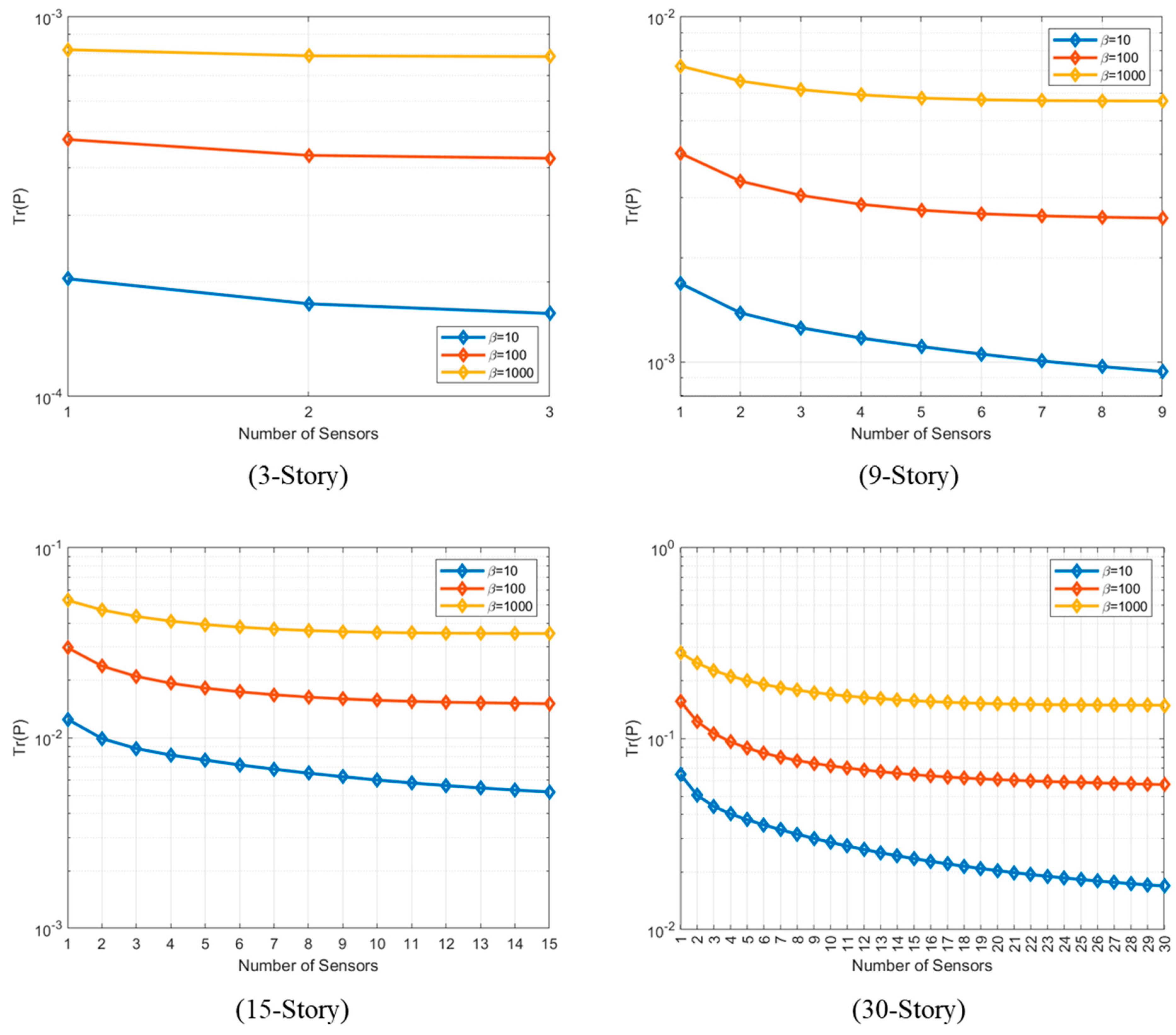
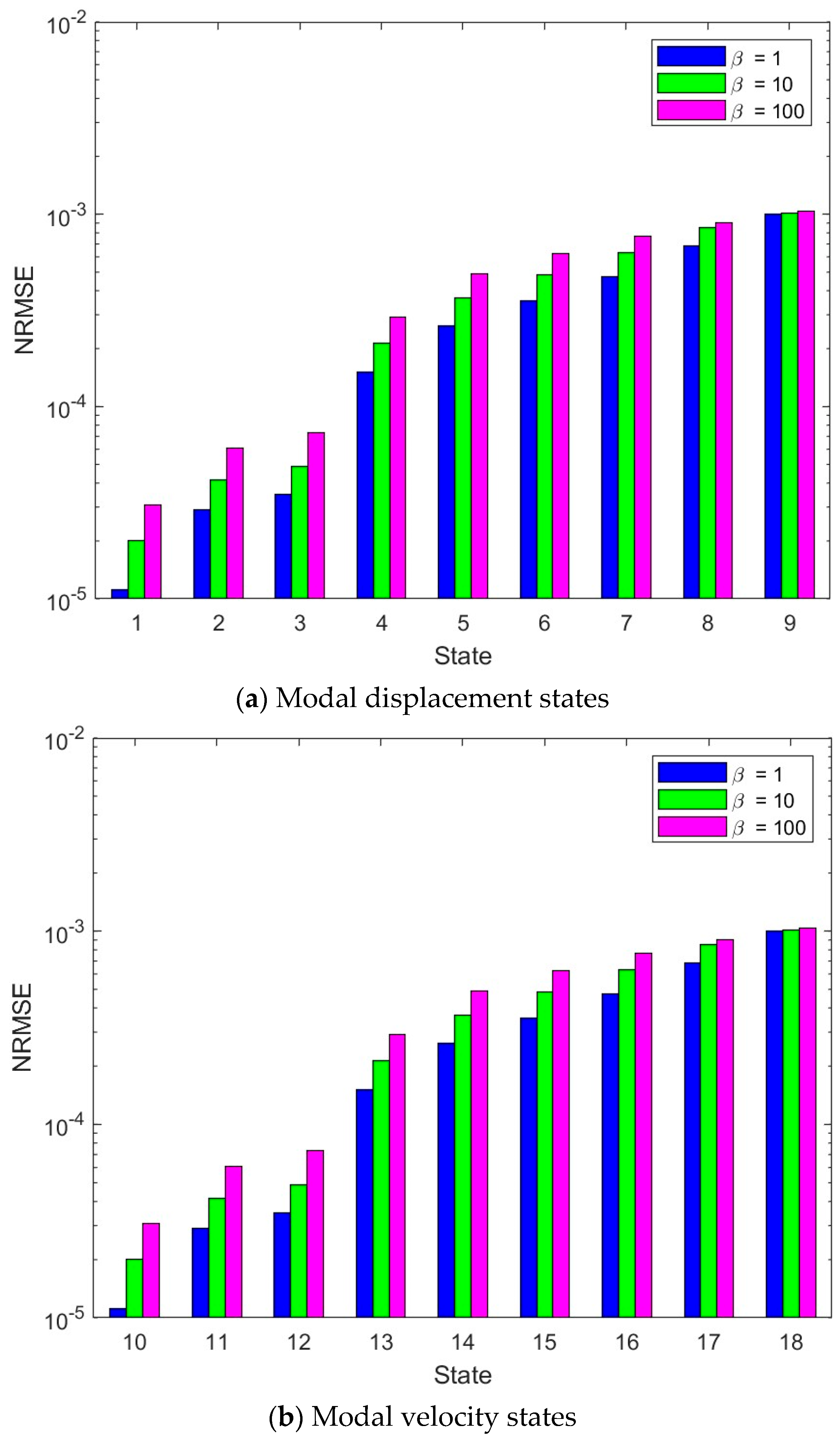
The trace of the state error covariance matrix () proved to be a representative performance criterion, directly correlating with both the signal-to-noise ratio (SNR) and the normalized absolute error in state estimation. This indicator enables the consistent quantification of uncertainty and effectively guides the search for optimal configurations, demonstrating that measurement noise is a critical factor in determining sensor layouts. As the noise covariance () increases, estimation uncertainty grows and placement strategies shift, requiring a greater number of sensors concentrated in specific high-energy structural zones. Conversely, high-sensitivity, low-noise sensors can significantly reduce uncertainty, confirming the fundamental balance between sensitivity and noise rejection required for robust monitoring systems.
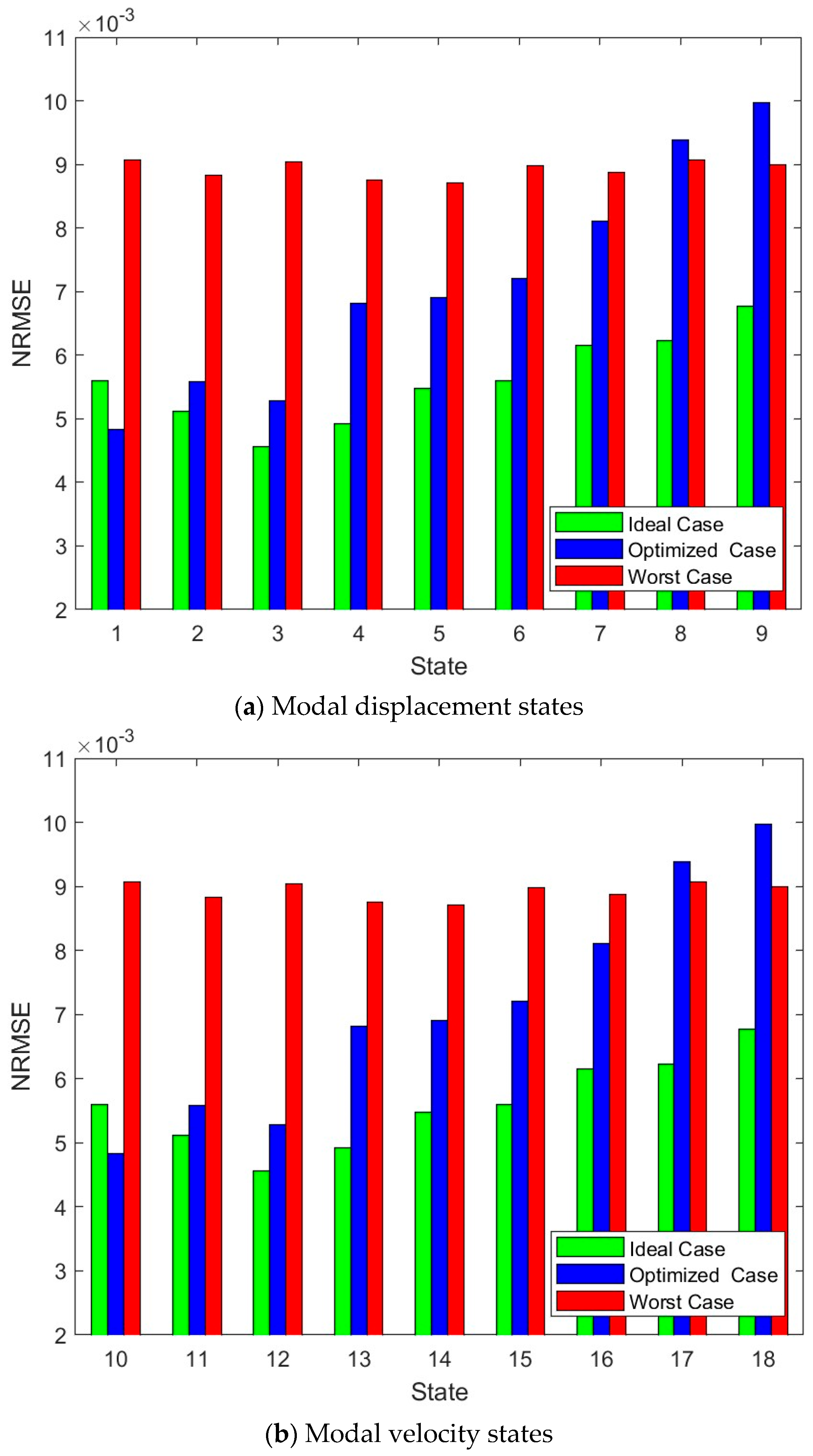
Optimal sensor layouts tended to concentrate on upper floors where accelerations are larger, and the SNR is more favorable. It was also confirmed that maintaining a minimum SNR threshold of 10 dB allows for more reliable estimations, supporting the inclusion of this parameter as a primary design criterion. This strategy maximizes measurement quality without the need to instrument every floor, confirming that sensor redundancy at modal nodes or lower levels does not provide significant benefits to the global state estimation.
The proposed methodology demonstrated high accuracy in identifying the fundamental frequencies of structures under both synthetic white noise and real seismic perturbations, such as the 2010 Concepción ground motion record. These results validate the effectiveness of the approach for structural health monitoring applications under realistic operating conditions. While this study establishes a robust theoretical framework, future research should transition to real-world applications by accounting for operational uncertainties, such as thermal variations, which can significantly influence material properties and structural response. Additionally, it is recommended to extend this framework to evaluate early damage detection capacity and explore hybrid sensor configurations—combining devices of varying sensitivity and cost—to enhance system robustness. Validating these strategies against open-source experimental benchmark datasets will be essential for demonstrating their practical applicability.