Sparse Auto-Encoder Networks to Detect and Localize Structural Changes in Metallic Bridges



Abstract
1. Introduction
2. SAE-Based Anomaly Detection and Localization
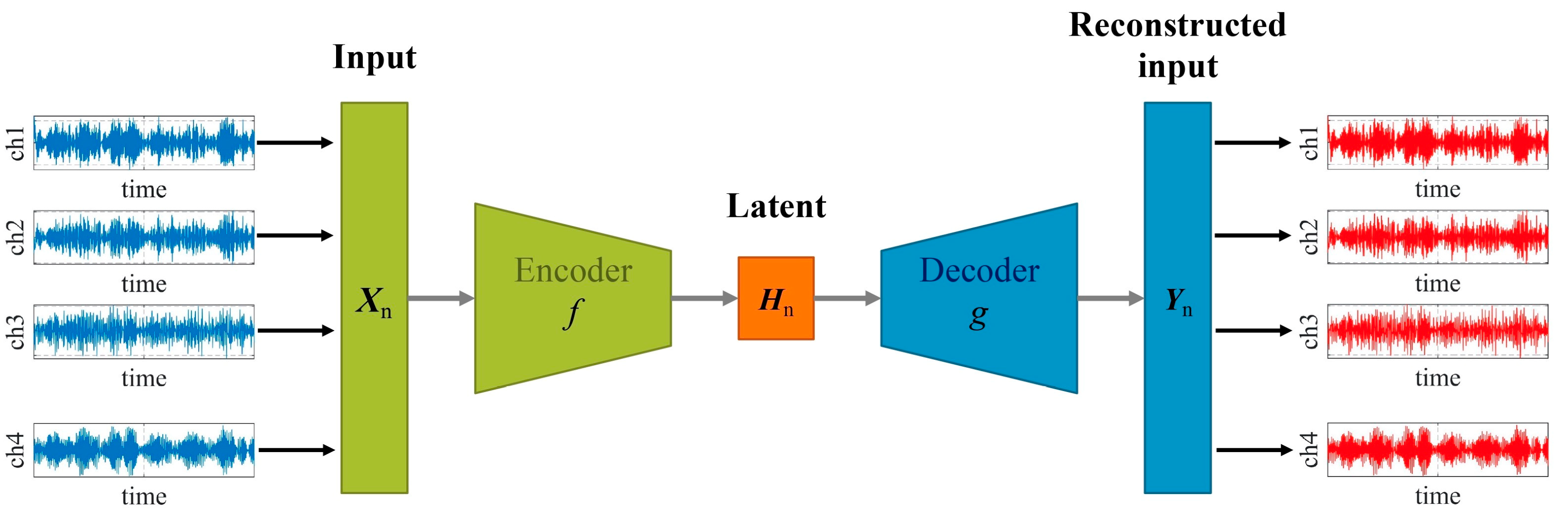
2.1. Theoretical Background
2.2. Training of the SAE
2.3. Testing of the SAE
- x(i)n,k is the k-th sample of the n-th realization of input at channel i;
- y(i)n,k is the k-th sample of the n-th realization of reconstructed output at channel i.
- Accuracy (ACC): measures the overall proportion of correctly categorized predictions across the entire dataset;
- Detection Rate (DR): represents the fraction of true anomalies successfully identified;
- False Alarm Rate (FAR): indicates the ratio of non-anomalous samples that are erroneously flagged as anomalous.
3. Application to Old ADA Bridge
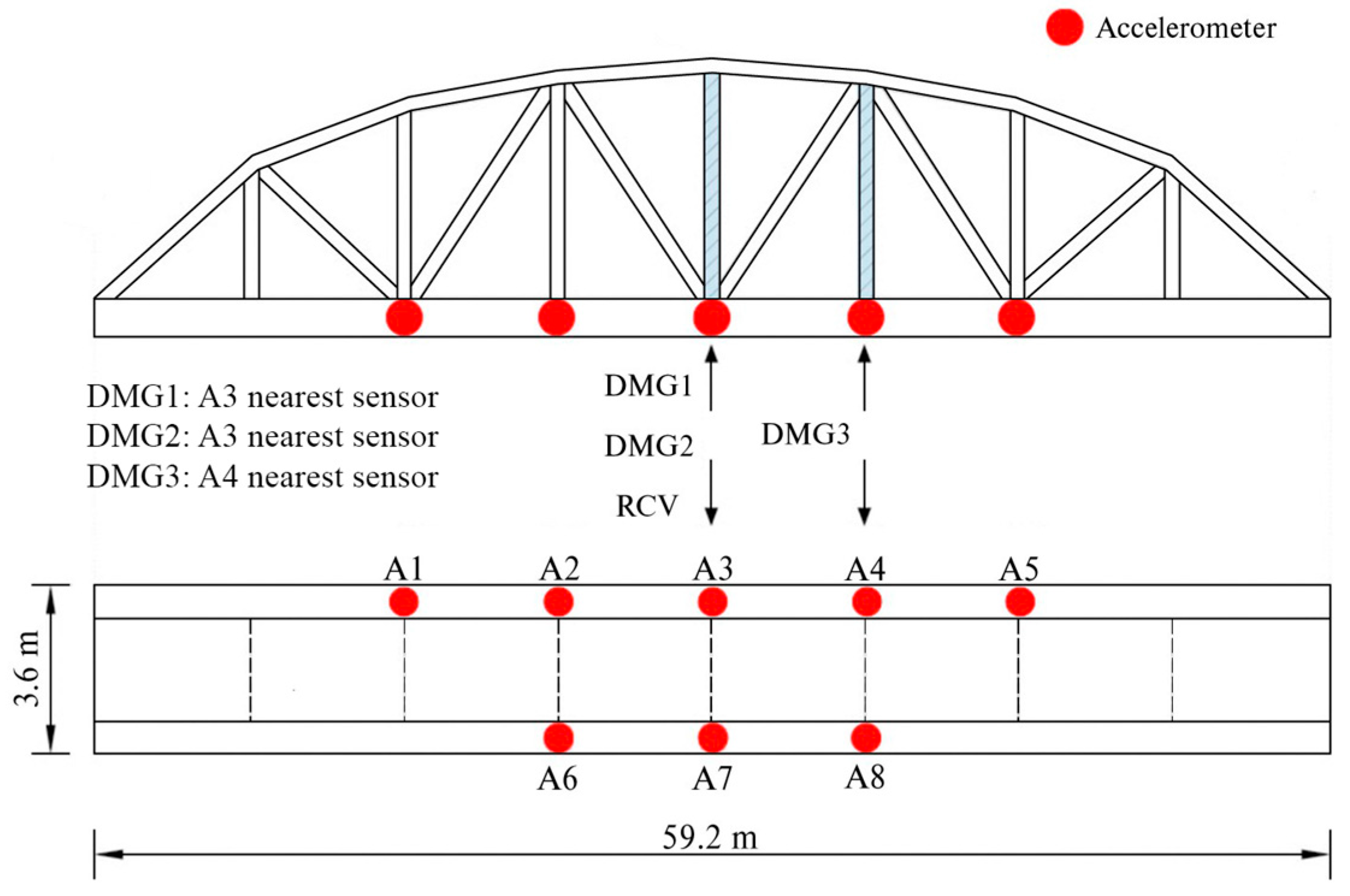
3.1. Description of the Bridge and Investigated Scenarios
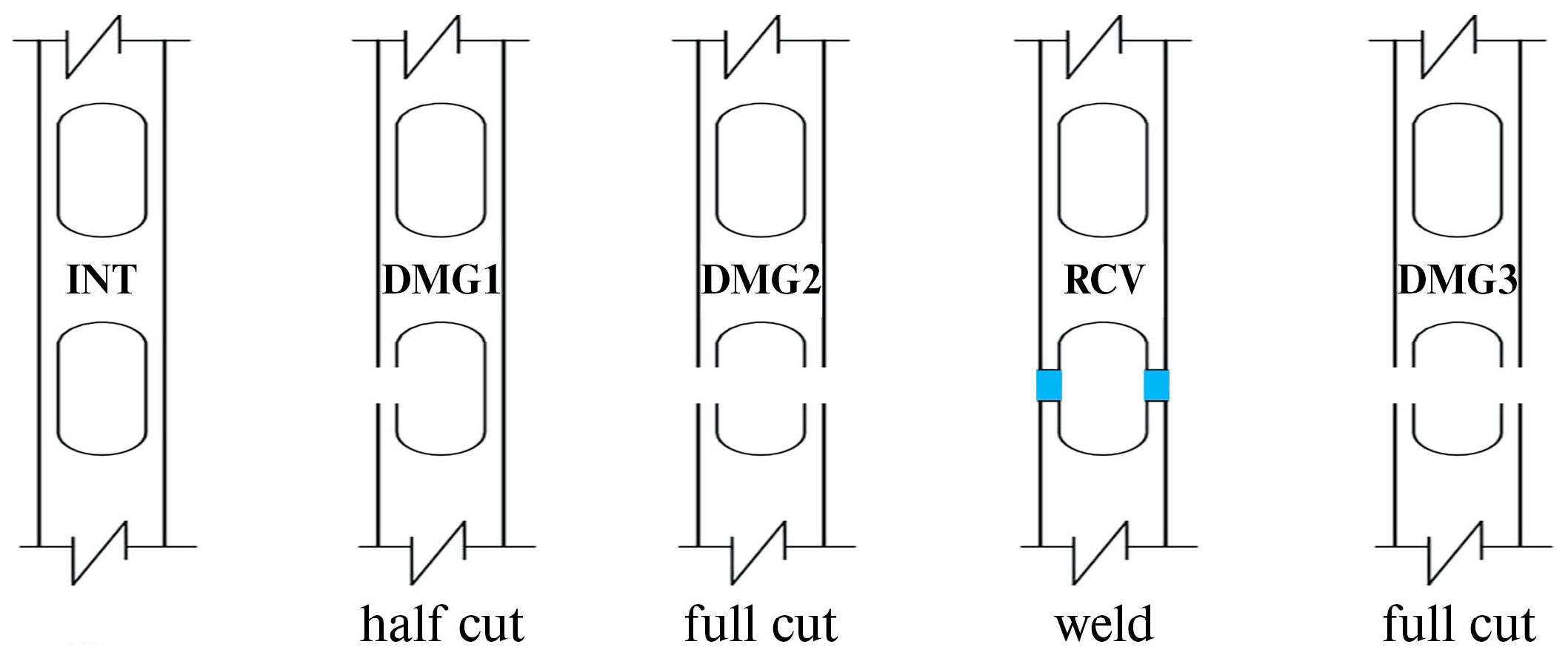
- INT (Intact): The baseline state, where no artificial damage was introduced;
- DMG1: Involves a partial cut (half-cut) applied to one vertical truss member at midspan, with this member being placed on the same side of accelerometer A3;
- DMG2: Involves the full cut of the same truss member that was previously damaged;
- RCV (Recovery): Represents the condition following the repair of the previously cut member;
- DMG3: Consists of the total cut of one vertical member located at 5/8ths of the span, positioned in the close neighborhood of accelerometer A4.
3.2. Training of the SAE
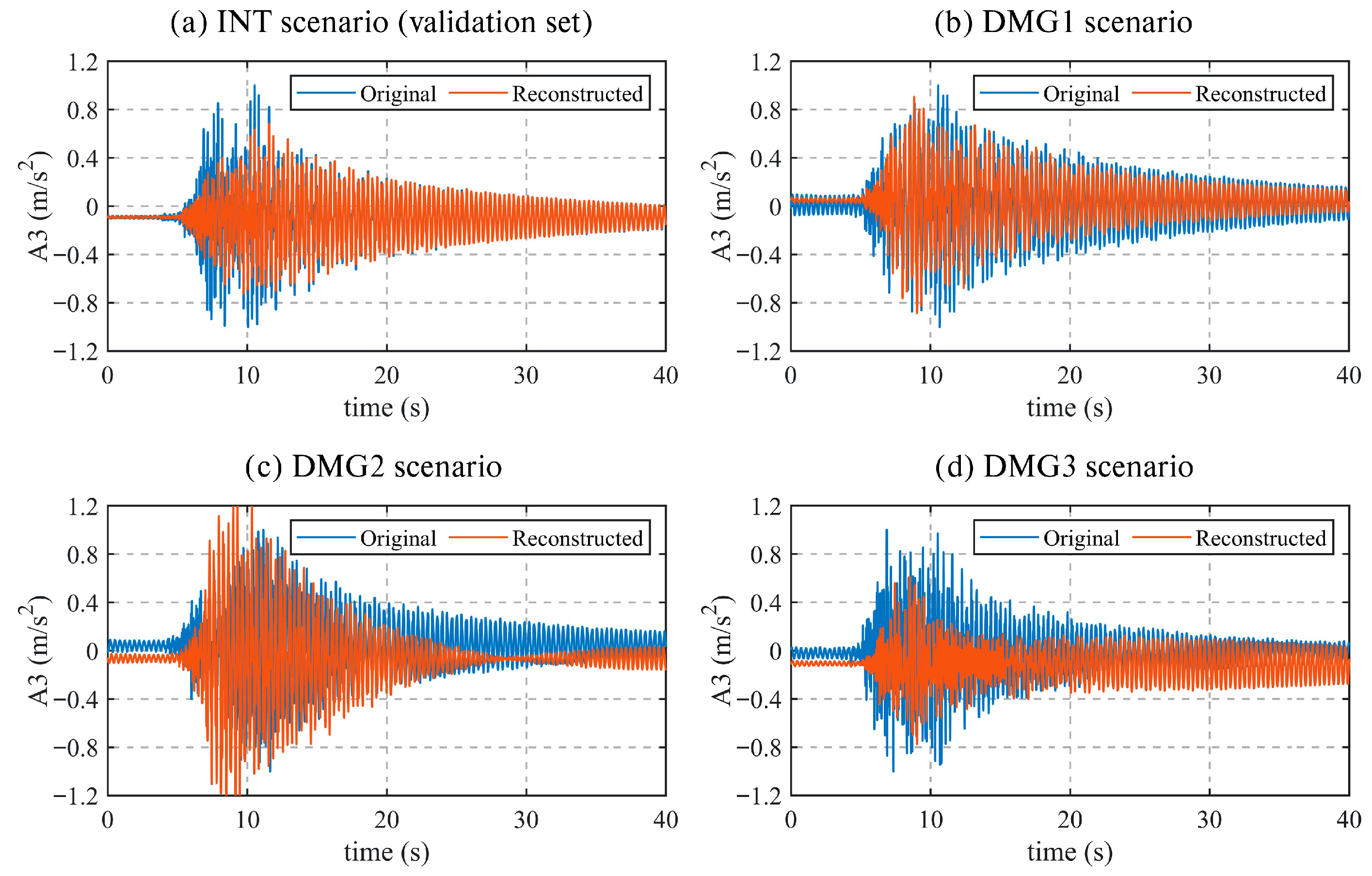
3.3. Testing of the SAE
- (a)
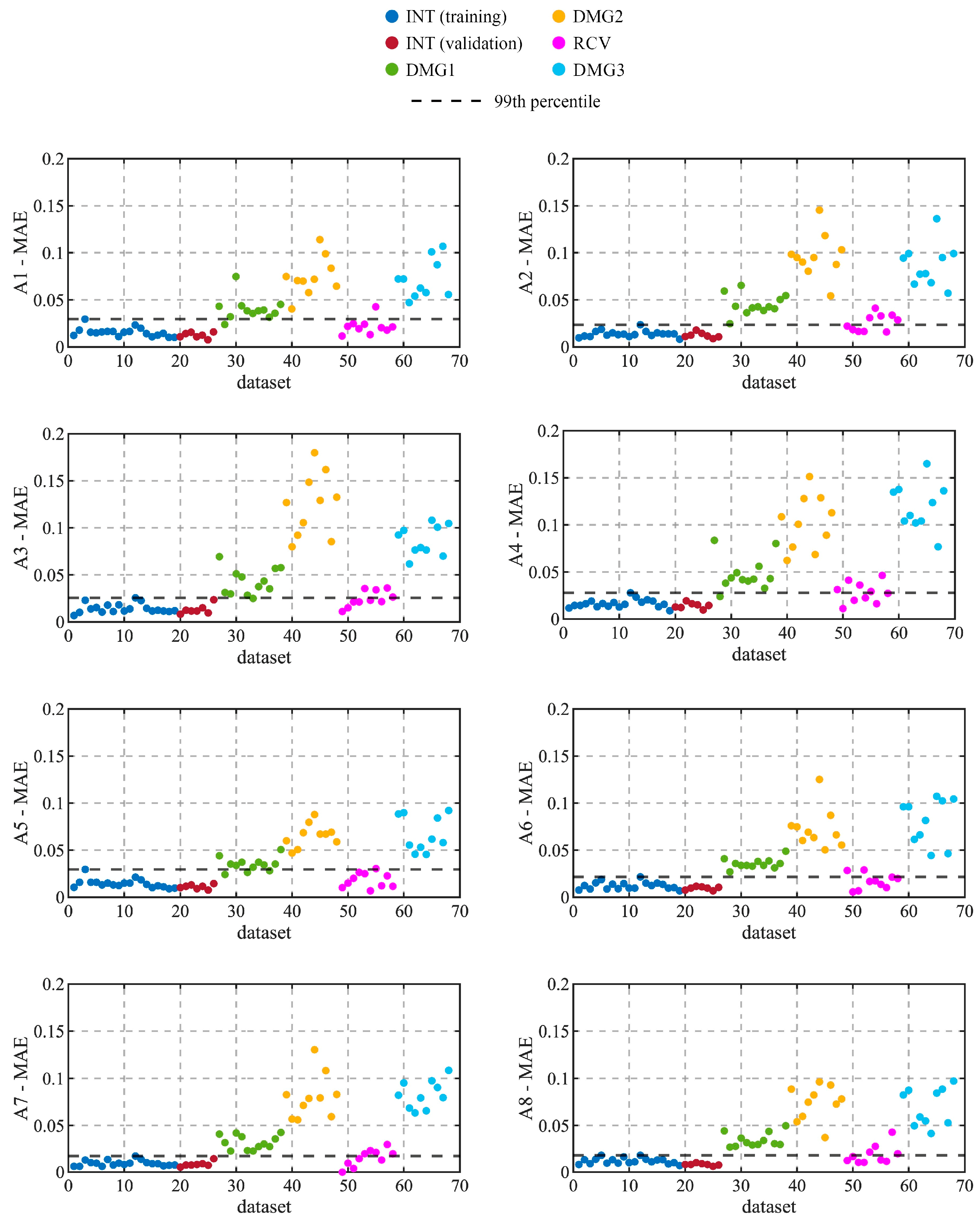
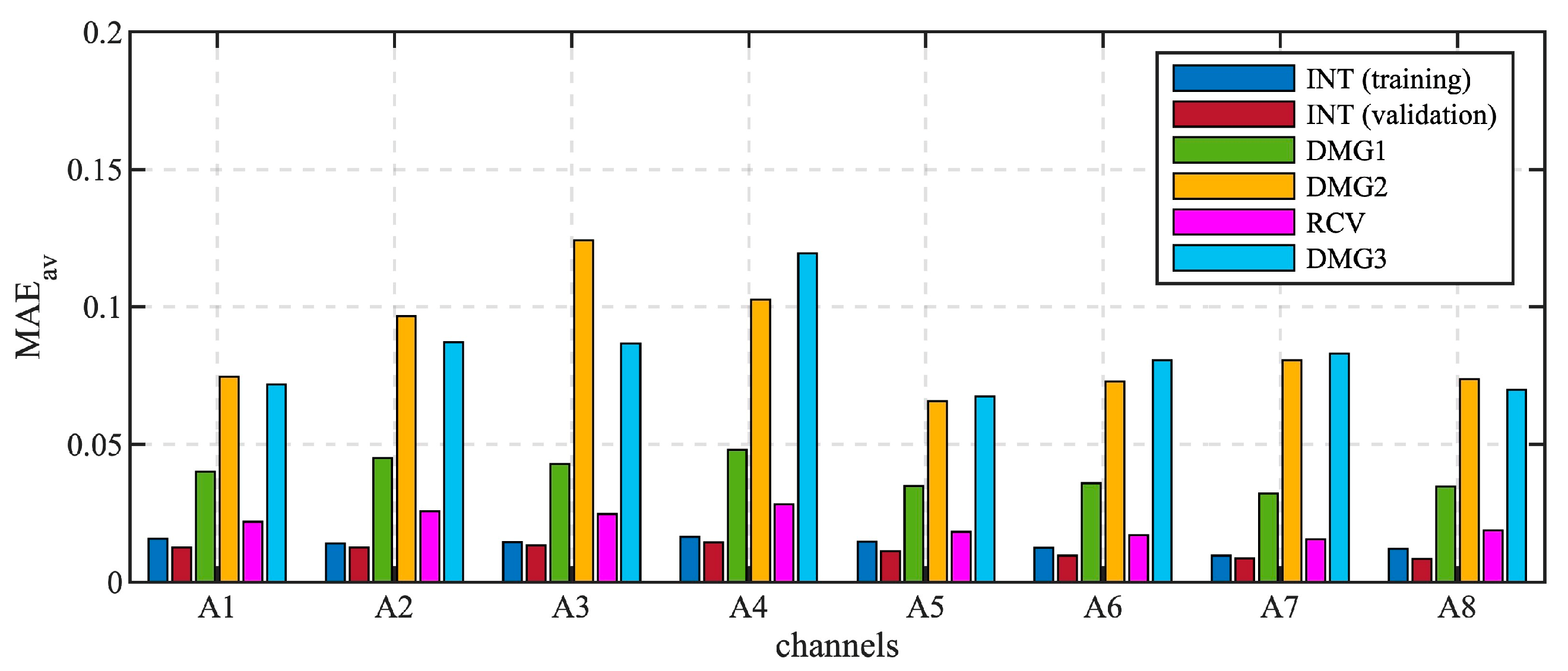
- most of the signals corresponding to damaged conditions (specifically, the DMG1, DMG2, and DMG3 scenarios) are correctly detected;
- (b)
- in the damaged scenarios, MAE values tend to be higher at locations closest to the damaged strut;
- (c)
- more severe damage correlates with larger MAE values;
- (d)
- the RCV scenario introduces some ambiguity in classification due to only partial recovery toward the undamaged state [18].
4. Application to San Michele Bridge
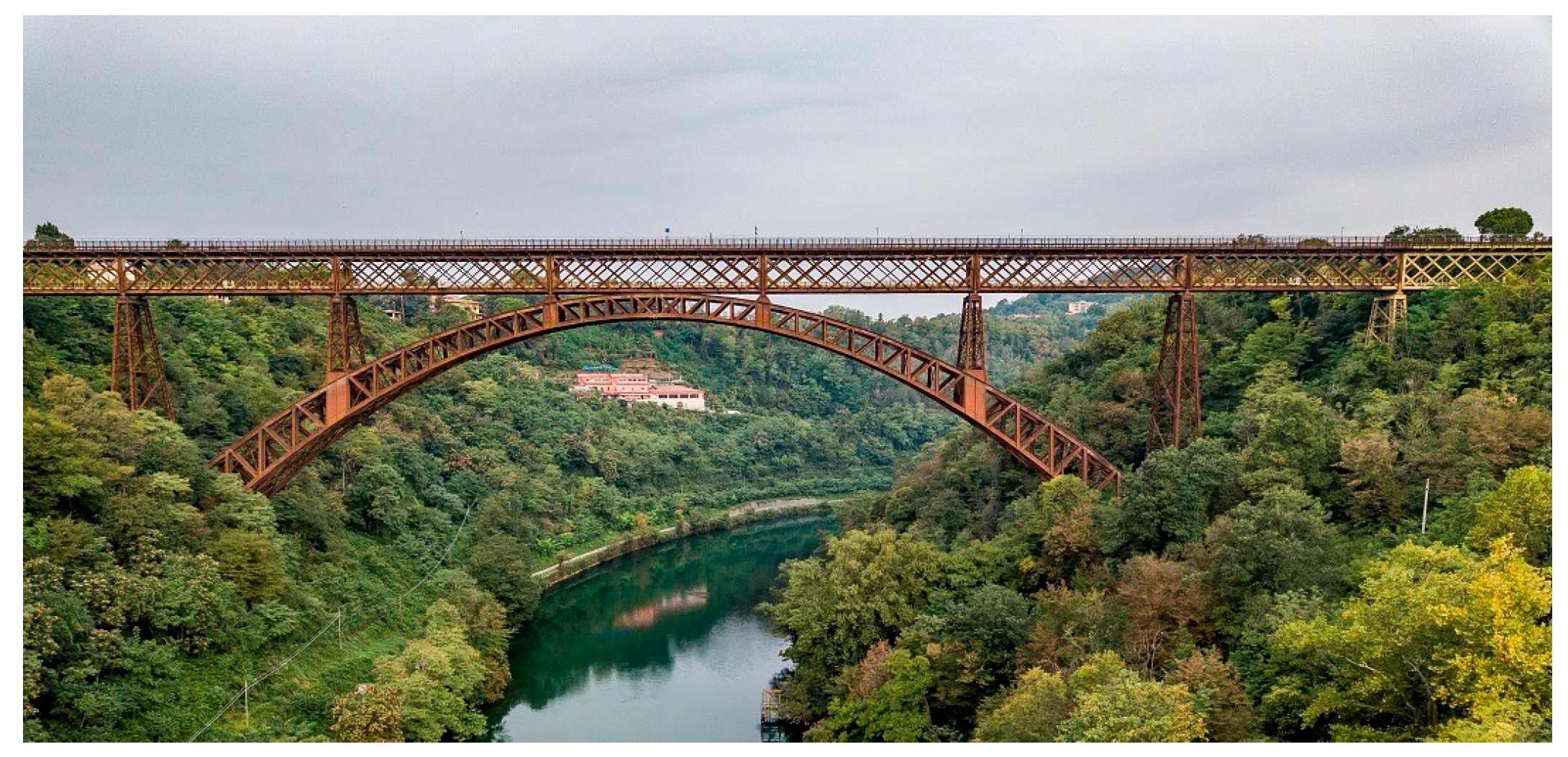
4.1. Description of the Bridge and Monitoring System
4.2. Training of the SAE
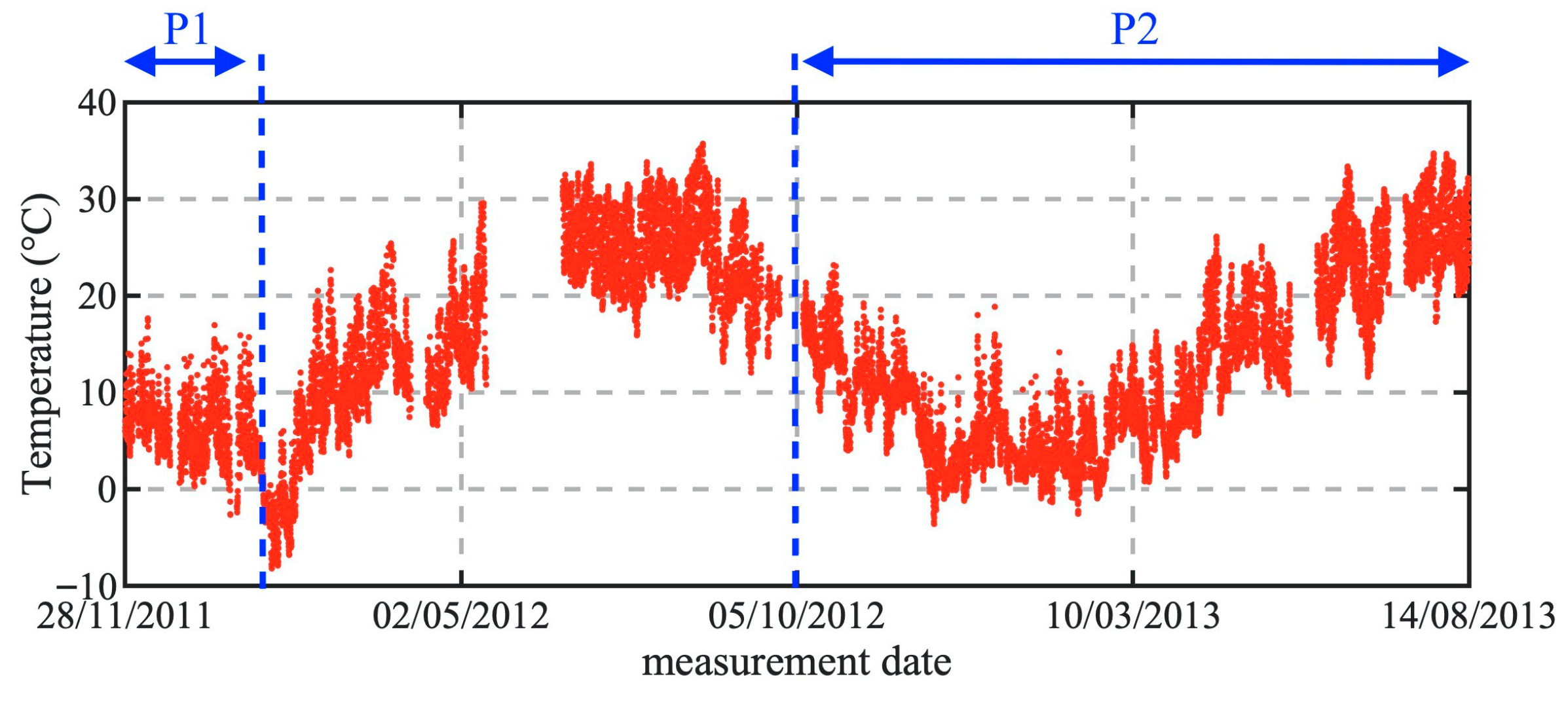
- Training period P1 extends from 28 November 2011 to 1 February 2012, yielding 1274 signal matrices used for training. During this interval, the average temperature (Figure 9) ranges from −2.6 °C to 17.6 °C. The coldest weeks of February 2012, which correspond to the lowest recorded temperatures, are excluded from this training set;
- Training period P2 covers the time span from 5 October 2012 to 14 August 2013, with 9860 signal matrices utilized for training. In this case, the average temperature (Figure 9) exhibits a broader range, varying between −3.6 °C and 34.7 °C, thus encompassing a wider range of thermal conditions than P1.
4.3. Testing of the SAE
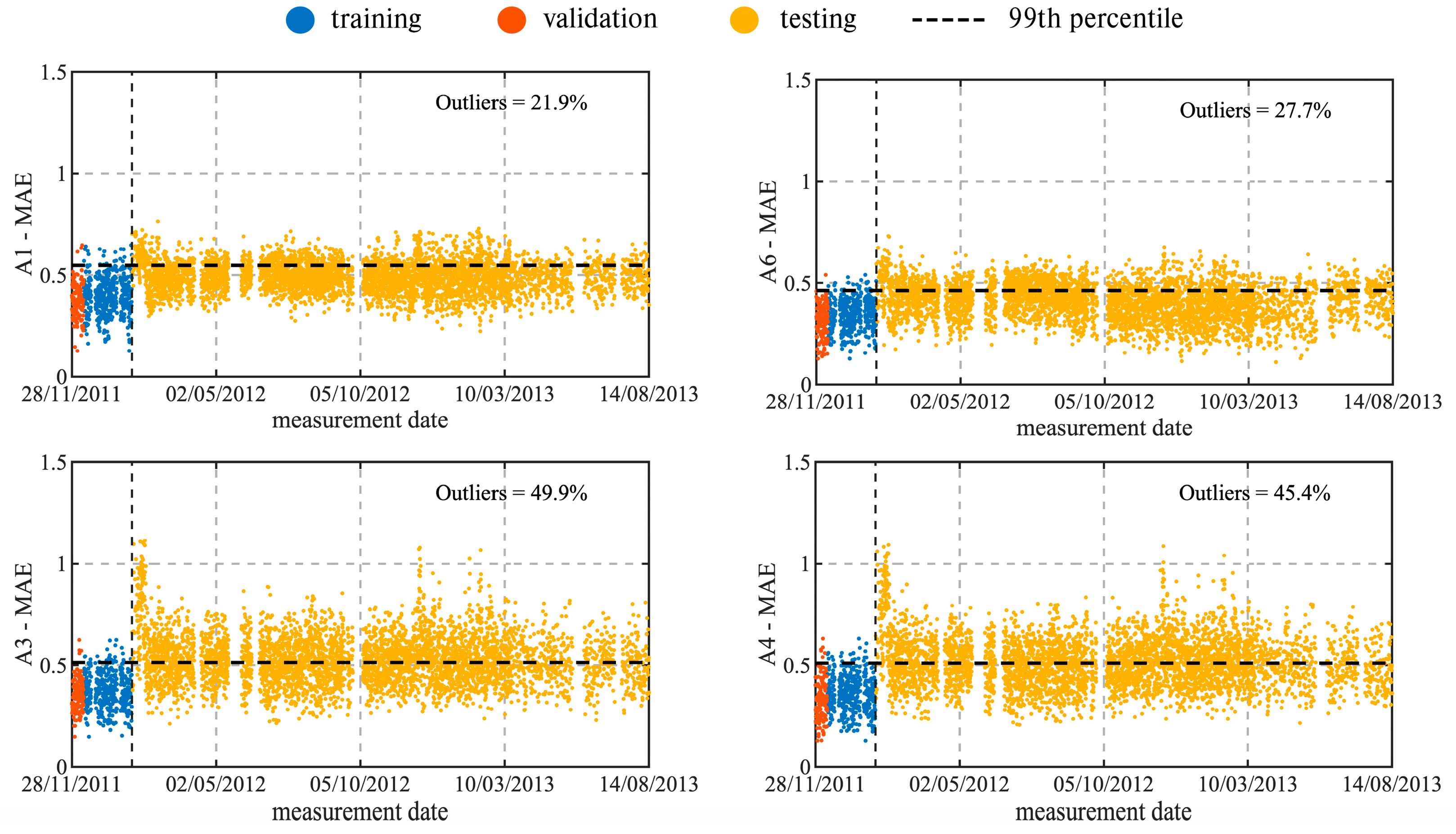
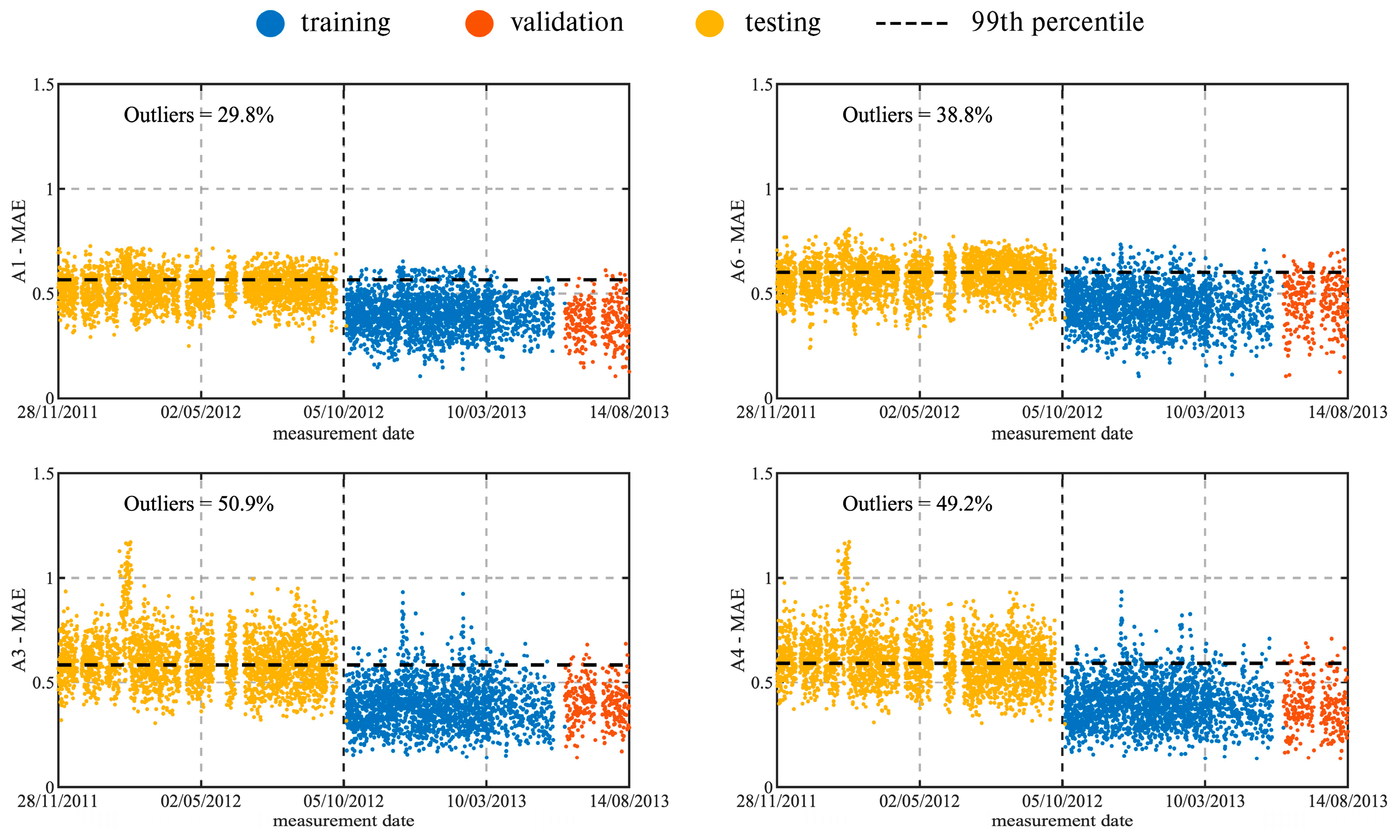
- In both cases, the testing dataset (represented by the yellow markers in Figure 11 and Figure 12) shows reconstruction errors exceeding the control threshold, defined as the 99th percentile of the training data. Additionally, up to 50% of the samples are classified as outliers in both testing phases. As illustrated in Figure 11 and Figure 12, this effect is especially prominent in sensors A3 and A4;
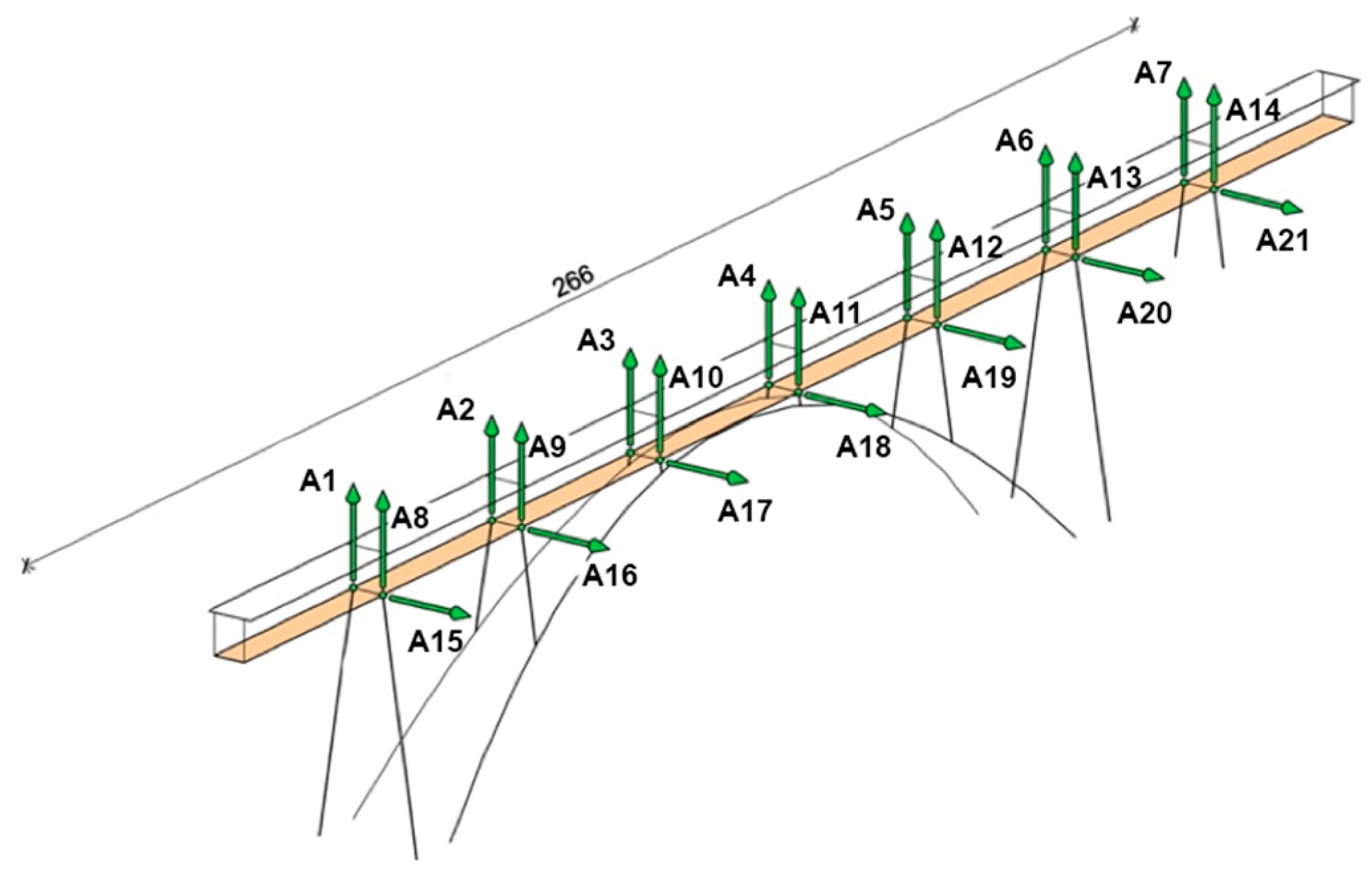
- During the testing phases, reconstruction errors reach higher magnitudes and exhibit larger variability in the channels located near the arch crown, specifically, sensors A3 and A4 in Figure 11 and Figure 12. This observation is further supported by the statistical analysis of the MAE, summarized in Table 4. The mean (MAEav) and standard deviation (σMAE) attain their highest values again for sensors A3 and A4, which are positioned closest to the arch crown (Figure 8). Those results fully correspond to previous observations reported in [20,21];
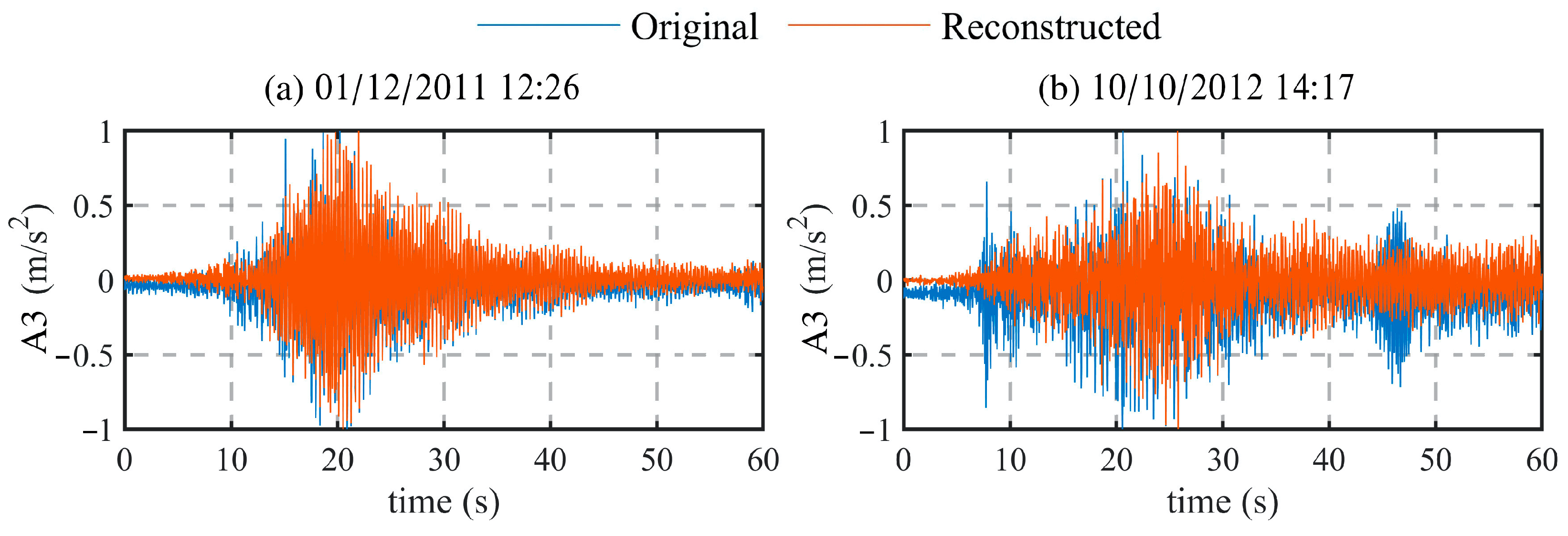
- The training period P1 (Figure 11), even if only 2 months long, turns out to be sufficient to develop a damage-sensitive indicator (i.e., the MAE) that effectively captures the structural deterioration occurring in the bridge;
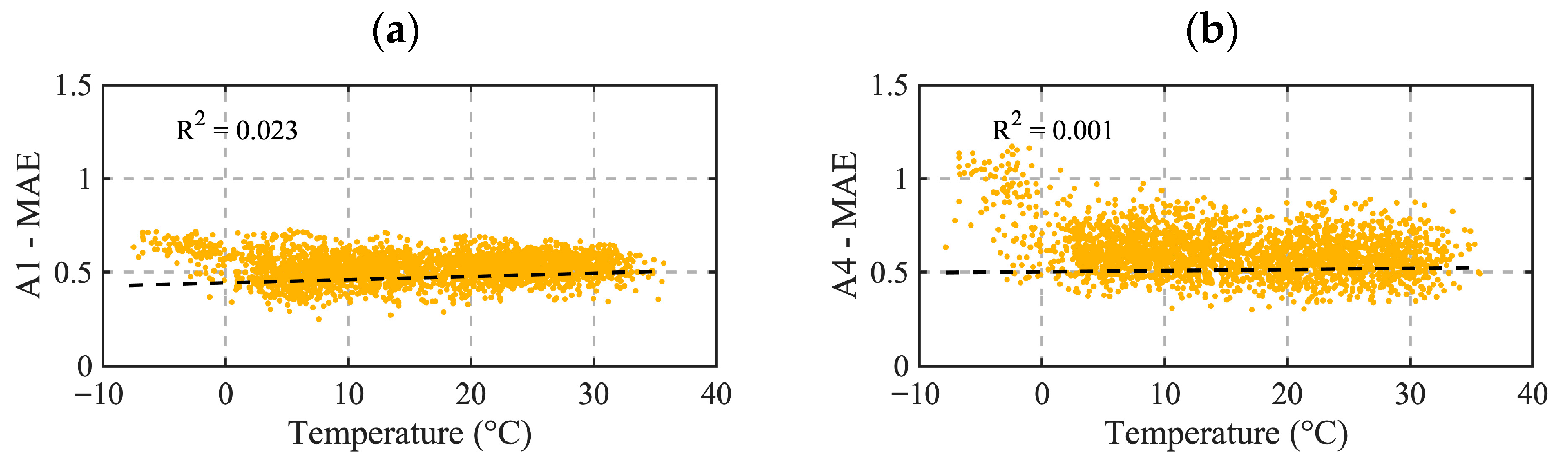
- When the training period is extended to nearly one year (P2, Figure 12), the structural variations become more distinctly observable. This demonstrates that the environmental and operational variations were implicitly incorporated into the model during training. Indeed, the coefficients of determination (R2) between the MAE value associated to each sensor and the recorded temperature fall in the range of 0.001–0.08 (Figure 13): the hourly files used to construct the linear regression are the same as those used during the testing phase, i.e., 2947. Furthermore, for each hour, a single MAE value is calculated by the proposed algorithm (for each channel), while a single temperature value is obtained by averaging the measured values.
- Due to the unavailability of environmental data other than temperature, it is not possible to correlate reconstruction errors with additional factors such as humidity or wind speed. Furthermore, previous OMA-based investigations [20,21] have shown that the dependence of dynamic characteristics on traffic intensity (estimated via the RMS of the recorded accelerations) is significantly weaker than the dependence on temperature. For this reason, these factors were not further investigated in the present study;
- It seems to confirm the SAE capability to implicitly model the intact (healthy) structural conditions under typical EOV influence, without explicitly minimizing masking effects related to EOVs;
- The SAE-based procedure applied to the San Michele bridge demonstrates a two-fold advantage over conventional SHM techniques. Firstly, it drastically reduces the computational effort required to process extensive monitoring datasets compared to traditional OMA-based pipelines. Secondly, the SAE architecture proves capable of implicitly capturing the influence of EOVs with a training period of only two months. While traditional modal-based methods generally require 9–12 months of monitoring to account for complete seasonal cycles, the proposed methodology achieves robust anomaly detection with a significantly smaller training window, enhancing its suitability for time-effective structural health assessment.
5. Conclusions
Author Contributions
Funding
Data Availability Statement
Conflicts of Interest
References
- Federal Highway Administration. Status of the Nation’s Highways, Bridges and Transit: Conditions and Performance–Report to Congress; Technical Report; U.S. Department of Transportation: Washington, DC, USA, 2008. [Google Scholar]
- Pereira, S.; Magalhães, F.; Gomes, J.; Cunha, Á.; Lemos, J. Vibration-based damage detection of a concrete arch dam. Eng. Struct. 2021, 235, 112032. [Google Scholar] [CrossRef]
- Sivasuriyan, A.; Vijayan, D.S.; Gòrski, W.; Wodzynski, L.; Vaverkovà, M.D.; Koda, E. Practical implementation of structural health monitoring in multi-story buildings. Buildings 2021, 11, 263. [Google Scholar] [CrossRef]
- Farrar, C.; Worden, K. An introduction to structural health monitoring. Philos. Trans. R. Soc. A 2007, 365, 303–315. [Google Scholar] [CrossRef] [PubMed]
- Magalhães, F.; Cunha, Á. Explaining operational modal analysis with data from an arch bridge. Mech. Syst. Signal Process. 2011, 25, 1431–1450. [Google Scholar] [CrossRef]
- Magalhães, F.; Cunha, Á.; Caetano, E. Vibration based structural health monitoring of an arch bridge: From automated OMA to damage detection. Mech. Syst. Signal Process. 2012, 28, 212–228. [Google Scholar] [CrossRef]
- Peeters, B.; De Roeck, G. One-year monitoring of the Z24-bridge: Environmental effects versus damage events. Earthq. Eng. Struct. Dyn. 2001, 30, 149–171. [Google Scholar] [CrossRef]
- Worden, K.; Manson, G. The application of machine learning to structural health monitoring. Philos. Trans. R. Soc. A 2007, 365, 515–537. [Google Scholar] [CrossRef] [PubMed]
- Fernandez-Navamuel, A.; Magalhães, F.; Zamora-Sánchez, D.; Omella, Á.; Garcia-Sanchez, D.; Pardo, D. Deep learning enhanced principal component analysis for structural health monitoring. Struct. Health Monit. 2022, 21, 1710–1722. [Google Scholar] [CrossRef]
- Giglioni, V.; Venanzi, I.; Poggioni, V.; Milani, A.; Ubertini, F. Auto-encoders for unsupervised real-time bridge health assessment. Comput.-Aided Civ. Infrastruct. Eng. 2023, 38, 959–974. [Google Scholar] [CrossRef]
- Ng, A. Sparse auto-encoder. CS294A Lect. Notes 2011, 72, 1–19. [Google Scholar]
- Neto, M.S.; Finotti, R.; Barbosa, F.; Cury, A. Structural Damage Identification Using Autoencoders: A Comparative Study. Buildings 2024, 14, 2014. [Google Scholar] [CrossRef]
- Finotti, R.; Gentile, C.; Barbosa, F.; Cury, A. Structural novelty detection based on sparse auto-encoders and control charts. Struct. Eng. Mech. 2022, 81, 647–664. [Google Scholar] [CrossRef]
- Cabboi, A.; Gentile, C.; Saisi, A. From continuous vibration monitoring to FEM-based damage assessment: Application on a stone-masonry tower. Constr. Build. Mater. 2017, 156, 252–265. [Google Scholar] [CrossRef]
- Pirrò, M.; Gentile, C. Detection and localization of anomalies in bridges using accelerometer data and sparse auto-encoders. Dev. Built. Environ. 2025, 23, 100715. [Google Scholar] [CrossRef]
- Pirrò, M.; Gentile, C. Detecting Structural Changes on a Long-Span Steel Bridge. In Proceedings of the 4th International Conference of Steel and Composite for Engineering Structures, ICSCES 2025; Milani, G., Magagnini, E., Khatir, S., Eds.; Lecture Notes in Civil Engineering; Springer: Cham, Switzerland, 2025; Volume 746. [Google Scholar] [CrossRef]
- Rojas, R. Neural Networks: A Systematic Introduction; Springer: New York, NY, USA, 1996. [Google Scholar]
- Kim, C.; Zhang, F.; Chang, K.; McGetrick, P.; Goi, Y. Ambient and vehicle-induced vibration data of a steel truss bridge subject to artificial damage. J. Bridge Eng. 2021, 26, 04721002. [Google Scholar] [CrossRef]
- Chang, K.C.; Kim, C.W. Modal-parameter identification and vibration-based damage detection of a damaged steel truss bridge. Eng. Struct. 2016, 122, 156–173. [Google Scholar] [CrossRef]
- Gentile, C.; Saisi, A. Continuous dynamic monitoring of a centenary iron bridge for structural modification assessment. Front. Struct. Civ. Eng. 2014, 9, 26–41. [Google Scholar] [CrossRef]
- Cabboi, A.; Gentile, C.; Saisi, A. Vibration-based SHM of a centenary bridge: A comparative study between two different automated OMA techniques. In Proceedings of the 9th International Conference on Structural Dynamics, Eurodyn 2014, Porto, Portugal, 30 June–2 July 2014; pp. 1461–1468. [Google Scholar]
- Società Nazionale delle Officine di Savigliano. Il Viadotto di Paderno sull’Adda (Ferrovia Ponte S. Pietro-Seregno); Camilla e Bertolero: Torino, Italy, 1889. [Google Scholar]
- Yang, L.; Shami, A. On Hyperparameter Optimization of Machine Learning Algorithms: Theory and Practice. Neurocomputing 2020, 415, 295–316. [Google Scholar] [CrossRef]
- Touati, R.; Mignotte, M.; Dahmane, M. Anomaly Feature Learning for Unsupervised Change Detection in Heterogeneous Images: A Deep Sparse Residual Model. IEEE J. Sel. Top. Appl. Earth Obs. Remote Sens. 2020, 13, 588–600. [Google Scholar] [CrossRef]
- Kingma, D.P.; Ba, J. Adam: A method for stochastic optimization. In Proceedings of the 3rd International Conference on Learning Representations (ICLR), San Diego, CA, USA, 7–9 May 2015. [Google Scholar]
- Singh, D.; Singh, B. Investigating the impact of data normalization on classification performance. Appl. Soft Comput. 2020, 97, 105524. [Google Scholar] [CrossRef]





| Parameters | Input Range | Optimal Values | |
|---|---|---|---|
| ADA Bridge | San Michele Bridge | ||
| Number of encoder/decoder layers | 1 | 1 | 1 |
| Number of hidden neurons | 10–50% of the signal length | 30% | 15% (P1), 30% (P2) |
| Encoder/decoder function | Sigmoid/linear | Sigmoid/linear | Sigmoid/linear |
| Max. Epochs | 500–5000 | 500 | 1000 (P1), 3000 (P2) |
| Sparsity target value | [0.0001; 0.001; 0.01; 0.1; 0.5] | 0.5 | 0.01 |
| Mini-batch size | [4; 16; 32; 64] | 4 | 16 |
| % | A1 | A2 | A3 | A4 | A5 | A6 | A7 | A8 | |
|---|---|---|---|---|---|---|---|---|---|
| ACC | (a) | 95.9 | 87.8 | 91.8 | 85.7 | 95.9 | 93.9 | 89.8 | 91.8 |
| (b) | 97.4 | 100 | 100 | 97.4 | 97.4 | 100 | 100 | 100 | |
| DR | (a) | 96.9 | 100 | 100 | 96.9 | 96.9 | 100 | 100 | 100 |
| (b) | 96.9 | 100 | 100 | 96.9 | 96.9 | 100 | 100 | 100 | |
| FAR | (a) | 5.9 | 35.3 | 23.5 | 35.3 | 5.9 | 17.6 | 29.4 | 23.5 |
| (b) | 0 | 0 | 0 | 0 | 0 | 0 | 0 | 0 |
| INT | DMG1 | DMG2 | RCV | DMG3 | ||||||
|---|---|---|---|---|---|---|---|---|---|---|
| MAEav | σMAE | MAEav | σMAE | MAEav | σMAE | MAEav | σMAE | MAEav | σMAE | |
| A1 | 0.015 | 0.004 | 0.037 | 0.010 | 0.074 | 0.020 | 0.021 | 0.008 | 0.071 | 0.020 |
| A2 | 0.014 | 0.003 | 0.045 | 0.010 | 0.097 | 0.023 | 0.025 | 0.009 | 0.087 | 0.022 |
| A3 | 0.014 | 0.005 | 0.044 | 0.016 | 0.123 | 0.033 | 0.024 | 0.008 | 0.086 | 0.016 |
| A4 | 0.016 | 0.004 | 0.046 | 0.017 | 0.099 | 0.026 | 0.027 | 0.011 | 0.119 | 0.024 |
| A5 | 0.014 | 0.004 | 0.036 | 0.008 | 0.066 | 0.012 | 0.017 | 0.008 | 0.067 | 0.019 |
| A6 | 0.012 | 0.003 | 0.036 | 0.005 | 0.073 | 0.021 | 0.017 | 0.008 | 0.080 | 0.024 |
| A7 | 0.009 | 0.002 | 0.032 | 0.007 | 0.080 | 0.023 | 0.014 | 0.009 | 0.083 | 0.014 |
| A8 | 0.011 | 0.003 | 0.034 | 0.007 | 0.074 | 0.018 | 0.018 | 0.010 | 0.069 | 0.020 |
| Index | A1 | A2 | A3 | A4 | A5 | A6 | A7 | |
|---|---|---|---|---|---|---|---|---|
| MAEav | P1 | 0.493 | 0.493 | 0.531 | 0.530 | 0.467 | 0.410 | 0.355 |
| P2 | 0.526 | 0.589 | 0.606 | 0.610 | 0.538 | 0.576 | 0.372 | |
| σMAE | P1 | 0.075 | 0.118 | 0.125 | 0.124 | 0.109 | 0.089 | 0.049 |
| P2 | 0.073 | 0.108 | 0.123 | 0.124 | 0.103 | 0.082 | 0.042 |
Disclaimer/Publisher’s Note: The statements, opinions and data contained in all publications are solely those of the individual author(s) and contributor(s) and not of MDPI and/or the editor(s). MDPI and/or the editor(s) disclaim responsibility for any injury to people or property resulting from any ideas, methods, instructions or products referred to in the content. |
© 2026 by the authors. Licensee MDPI, Basel, Switzerland. This article is an open access article distributed under the terms and conditions of the Creative Commons Attribution (CC BY) license.
Share and Cite
Pirrò, M.; Gentile, C. Sparse Auto-Encoder Networks to Detect and Localize Structural Changes in Metallic Bridges. Buildings 2026, 16, 802. https://doi.org/10.3390/buildings16040802
Pirrò M, Gentile C. Sparse Auto-Encoder Networks to Detect and Localize Structural Changes in Metallic Bridges. Buildings. 2026; 16(4):802. https://doi.org/10.3390/buildings16040802
Chicago/Turabian StylePirrò, Marco, and Carmelo Gentile. 2026. "Sparse Auto-Encoder Networks to Detect and Localize Structural Changes in Metallic Bridges" Buildings 16, no. 4: 802. https://doi.org/10.3390/buildings16040802
APA StylePirrò, M., & Gentile, C. (2026). Sparse Auto-Encoder Networks to Detect and Localize Structural Changes in Metallic Bridges. Buildings, 16(4), 802. https://doi.org/10.3390/buildings16040802