1. Introduction
The complexity and severity of fire incidents in high-rise buildings continue to pose significant challenges to public safety [
1,
2]. Recent research has progressively shifted from general models towards in-depth analyses tailored to specific building functions, occupant profiles, and emerging technological applications [
3,
4,
5]. Within this context, the fire safety of “talent apartments”—a form of policy-driven housing designed to attract and retain highly skilled young professionals—warrants particular attention. These buildings typically accommodate residents aged 18 to 45, with household structures often centered on nuclear families (young or middle-aged couples with minor children) or single professionals. This results in a relatively homogeneous occupant profile, characterized by high density and regular daily routines [
6,
7]. From a management perspective, talent apartments usually employ unified rental application and vetting systems based on talent qualifications, centralized property management, and standardized unit layouts. Eligibility for occupancy is typically tied to the local government’s designated “talent” tier, the employing enterprise, or research institution, resulting in a tenant profile dominated by stable, employed young and middle-aged core families or single professionals. This population structure differs substantially from that of student dormitories or conventional commercial residential areas, which are characterized by fragmented ownership and diverse tenant backgrounds. These distinctive features may lead to evacuation behavior patterns that differ from those observed in ordinary residential buildings. Moreover, their architectural layouts are often complex and associated with considerable fire loads, increasing the risk posed by smoke propagation during fire events [
8,
9]. Consequently, ensuring the safety of this type of high-density residential building is of great importance.
Computer simulation, which couples fire dynamics modeling with occupant evacuation modeling, has become a principal method for studying building fire safety [
10]. While substantial research exists on facilities such as schools and subway stations, studies focusing on evacuation in talent apartments and their specific resident demographics remain limited [
11,
12,
13]. Most existing studies examine either building environments or individual behavioral factors in isolation, lacking a comprehensive analytical framework that systematically integrates architectural layout, management strategies (e.g., evacuation priority), and group psychology (e.g., panic). Furthermore, current research frontiers continue to expand and deepen. In rescue organizations, studies not only focus on firefighter intervention itself but also emphasize coordination between intervention timing and civilian evacuation dynamics [
14]. Regarding behavioral mechanisms, research on wayfinding in complex or constrained environments (e.g., darkness and dense smoke) increasingly addresses decision-making processes and cognitive load [
15,
16]. At the level of high-rise building emergency response, investigations span multiple dimensions, ranging from professional search-and-rescue protocols to the optimization of phased evacuation strategies [
17,
18]. These evolving research directions are closely linked, both theoretically and practically, to the self-evacuation process of building occupants. Against this backdrop, this study focuses on the most fundamental and critical self-evacuation stage within the fire emergency response chain. It aims to systematically optimize the efficiency of self-organized evacuation inside buildings, thereby securing valuable “golden time” for subsequent external professional rescue operations.
To address the aforementioned gaps, this study establishes a research framework for high-rise talent apartments that integrates multi-factor analysis with data-driven prediction. Compared with previous research on analogous buildings such as student dormitories or ordinary residential apartments, this work exhibits three distinguishing features. First, it clearly defines the characteristics of the research subject by detailing occupant density, age structure, and management style, thereby delineating the applicability of the conclusions. Second, it emphasizes the synergistic effects of multiple factors by simultaneously considering interactions among the physical environment, management strategies, and psychological behaviors. Third, it introduces a methodological innovation by preliminarily exploring the use of an Artificial Neural Network (ANN) trained on multi-factor simulation data to predict evacuation time, thereby providing a complementary analytical tool.
Based on this framework, this study addresses the following four research questions:
1. In the fire evacuation of high-rise talent apartments, how do key physical and managerial factors (e.g., initial occupant distribution, evacuation speed settings, and exit usage strategies) influence evacuation efficiency, and what are their relative contributions?
2. How does panic psychology interact with architectural bottlenecks and managerial interventions (e.g., guidance) to alter the overall evacuation process and outcomes?
3. Can a synergistic strategy combining built-environment optimization (“hard” measures) and behavioral management guidance (“soft” measures) enhance evacuation system resilience more effectively than optimizing individual factors alone?
4. Is it feasible to establish an effective ANN model, based on limited multi-factor simulation data, to provide relatively accurate and rapid estimates of evacuation time?
By addressing these questions, this study aims to contribute in two respects. Practically, it provides evidence to support the formulation of targeted occupant evacuation plans. Methodologically, through integrated multi-factor analysis and preliminary exploration of predictive modeling, it offers a reference framework for safety design and assessment of similar buildings.
2. Materials and Methods
2.1. Simulation Platforms and Safety Assessment Method
Conducting full-scale fire and evacuation experiments in high-rise buildings is costly, and occupant behavior is difficult to control, making such approaches unsuitable for quantitative comparison of different management strategies. Therefore, this study adopts a validated numerical simulation approach and establishes a co-simulation workflow based on PyroSim and Pathfinder to systematically and controllably evaluate the impacts of multiple factors.
2.1.1. Simulation Platform Introduction and Co-Simulation Workflow
Fire dynamics simulations were conducted using PyroSim 2019, whose core solver is the Fire Dynamics Simulator (FDS) developed by the National Institute of Standards and Technology (NIST), USA. This platform simulates smoke spread, temperature distribution, and hazardous gas concentrations during fire events, providing environmental parameters required for calculating the Available Safe Egress Time (ASET). Occupant evacuation was simulated using Pathfinder 2019. The Steering mode was adopted, in which each occupant is treated as an autonomous agent with independent navigation and obstacle-avoidance capabilities, enabling simulation of evacuation processes under different strategies and calculation of the Required Safe Egress Time (RSET).
The co-simulation workflow consists of two stages. First, fire development is simulated in PyroSim to obtain time-dependent environmental data along evacuation routes. These data are then imported into Pathfinder, where multiple evacuation scenarios are implemented by adjusting agent parameters.
Numerous studies have demonstrated good agreement between PyroSim/Pathfinder simulation outputs and experimental measurements, confirming their reliability. The accuracy of FDS in predicting smoke spread, temperature fields, and visibility degradation has been validated in multiple experimental studies. For instance, Ahn et al. confirmed that FDS can accurately reproduce fire-induced thermal plume behavior in stairwells [
19]. Similarly, Pathfinder’s agent-based evacuation model has been validated against full-scale evacuation experiments [
20]. Furthermore, the combined application of FDS and Pathfinder for integrated fire safety assessment is an established methodology [
21]. Accordingly, the simulation framework constructed in this study provides a reliable basis for analyzing multi-factor interactions.
2.1.2. Fire Evacuation Safety Assessment
(1) Available Safe Egress Time (ASET)
ASET is defined as the time from fire ignition until environmental conditions no longer satisfy safe evacuation criteria [
22]. It is calculated as:
where
Tt is the time from fire ignition until the temperature first reaches the critical value;
Tv is the time from fire ignition until the visibility first falls below the critical value; and
TCO is the time from fire ignition until the CO concentration first reaches the critical value.
(2) Required Safe Egress Time (RSET)
RSET represents the total time from fire ignition until all occupants have reached safety [
22]. It is typically expressed as the sum of recognition time, pre-movement time, and movement time [
23]:
where
Tr is the recognition time, i.e., the time from when the detector identifies the fire to when occupants receive the alarm.
Tpre is the pre-movement time, i.e., the period between the fire notification being issued and occupants beginning to take action to evacuate.
Tm is the movement time, i.e., the time for occupants to travel to a place of safety.
2.2. Simulation Model Construction
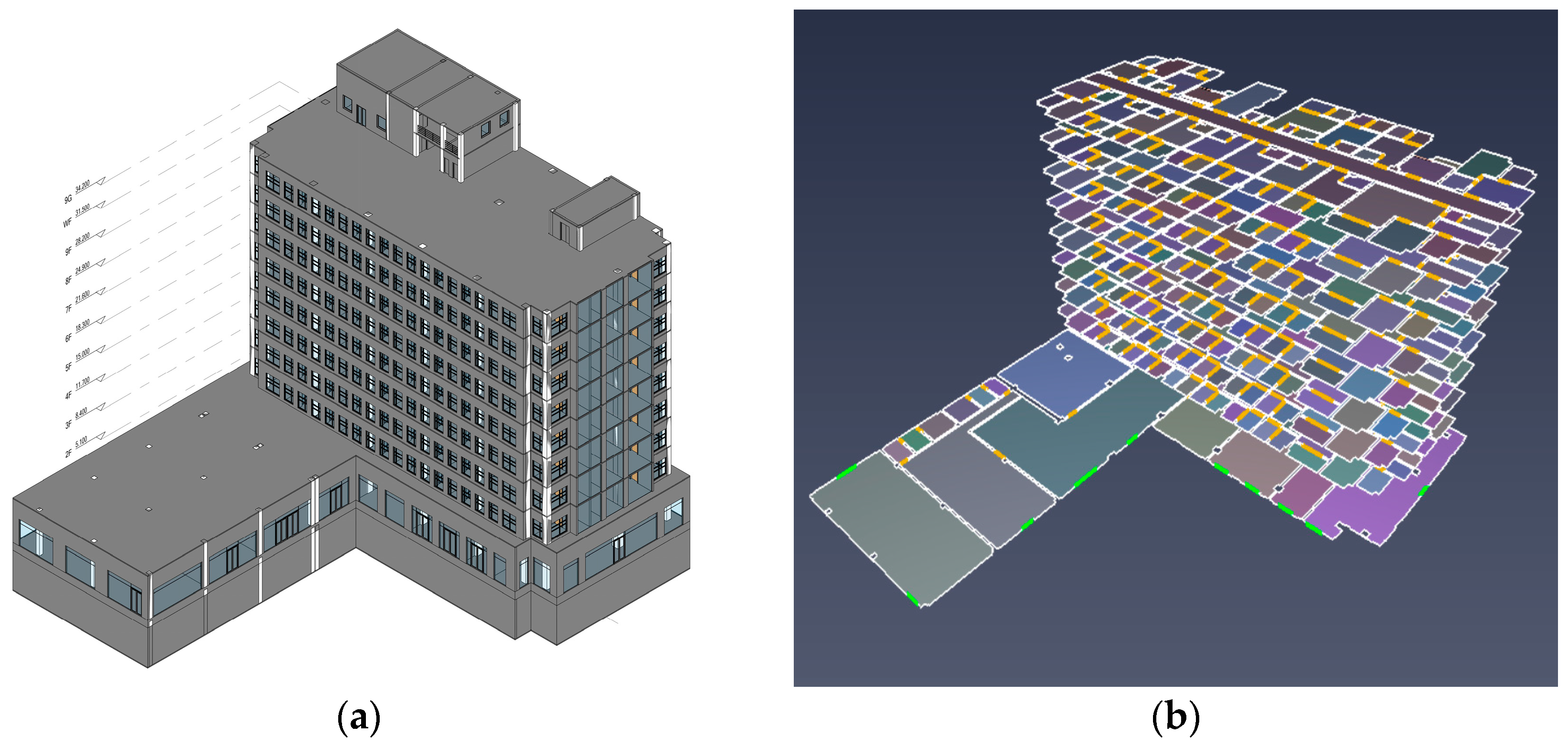
The study object is a high-rise talent apartment building located in a residential area. The building comprises nine stories with a total height of 31.5 m. The first floor has a height of 5.1 m and an area of 1313.70 m
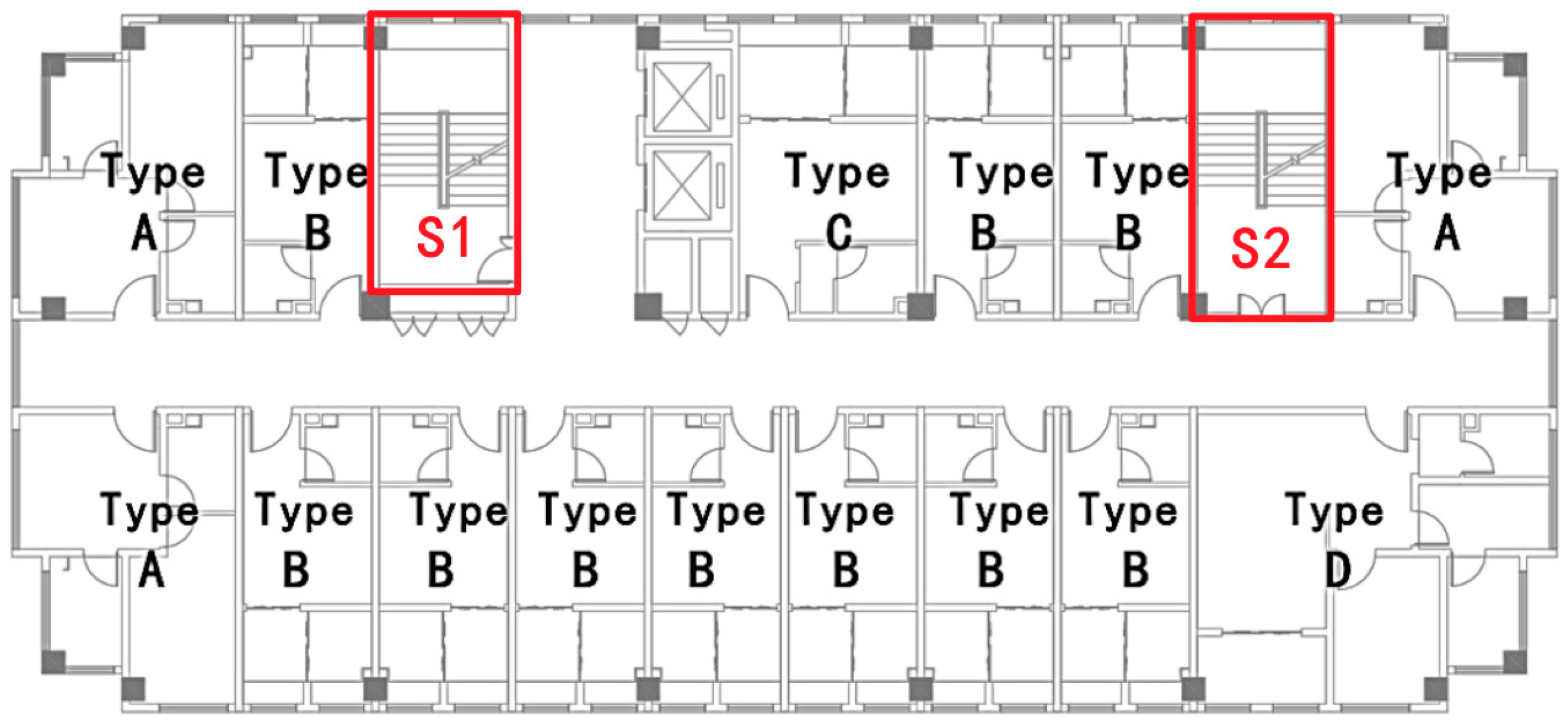
2, serving as a public space containing commercial facilities, offices, and a gym, with 14 exits and relatively high occupant density. Floors 2–9 are residential, each with a height of 3.3 m and an area of 729.20 m
2. Each residential floor contains 15 units, including three Type A rooms, ten Type B rooms, one Type C room, and one Type D room (
Figure 1).
A detailed three-dimensional Building Information Modeling (BIM) model was constructed in Revit 2026 (
Figure 2). To reduce computational complexity, non-essential elements such as interior decorations and furniture were omitted, while key architectural components influencing smoke propagation and evacuation paths—including walls, floors, staircases, and doors—were retained. The two evacuation stairwells were labeled S1 and S2 for clarity (
Figure 1). Elevators were excluded from evacuation modeling due to safety concerns during fire events.
2.3. Theoretical Basis and Key Parameters
Fire simulations focused on time-dependent variations in temperature, visibility, and CO concentration on the fire floor and within evacuation stairwells, providing input data for subsequent evacuation safety assessment.
2.3.1. Fire Heat Release Rate (HRR)
The
t2 model was adopted to describe unsteady fire growth:
where
Q is the heat release rate (kW),
α is the fire growth coefficient (kW/s
2), and
t denotes time (s). Assuming sprinkler activation, the heat release rate of the guest room fire source was set to 1.5 MW in accordance with GB51251-2017 [
24]. Based on NFPA 92 classifications [
25], a fast-growing fire was assumed, with
α = 0.04689.
2.3.2. Fire Scenario Design
The interior fire load density in talent apartments is relatively high, with primary combustibles including bedding, curtains, clothing, and paper products, among others. Furthermore, frequent use of electrical equipment by residents, often left powered on for extended periods, can lead to fires due to malfunction, overheating, or short circuits, which may rapidly ignite surrounding combustible materials [
8].
Considering that the ground floor functions primarily as a lobby with sufficient exits, evacuation bottlenecks are mainly concentrated at the evacuation stairwells [
26]. Accordingly, the fire scenario was designed following the “worst-case principle,” aiming to assess evacuation safety under extreme conditions. When a fire originates on a lower floor, high-temperature smoke is more likely to propagate upward into stairwells due to the stack effect, potentially blocking the primary evacuation routes and posing greater threats to occupants on upper floors, thereby increasing evacuation difficulty.
Therefore, the fire source was located in a Type B guest room on the second floor between the two evacuation stairwells. This configuration most effectively represents early stairwell failure and generates the maximum evacuation pressure. By contrast, fires occurring on middle floors, although potentially producing bidirectional evacuation flows, typically allow a longer available period for stairwells to remain viable egress paths.
To ensure that all evacuation scenarios were compared under identical fire threat conditions, the HRR of the fire source was fixed at 1.5 MW, consistent with the design value for sprinkler-protected guest rooms specified in relevant codes. This setting represents a steady-state fire size after sprinkler activation, rather than explicitly simulating the transient sprinkler activation and suppression process.
Thermal property parameters for the main combustibles were adopted from the default residential material settings in PyroSim (FDS). This approach—using built-in residential fire material properties and yields—is commonly applied in fire simulation studies to define fire loads, providing a clear and reproducible fire input for comparing evacuation strategies. Simulations further assumed that all room doors were open and external windows were closed [
27]. These unified boundary conditions were adopted to provide a stable fire environment input for subsequent evacuation simulations, thereby facilitating clearer identification of the effects of different management strategies.
2.3.3. Simulation Settings
A non-uniform mesh was applied: grid sizes of 0.5 m × 0.5 m × 0.5 m were used on the fire floor and adjacent upper floors, while 1.0 m × 1.0 m × 1.0 m grids were applied elsewhere, resulting in 179,544 cells. Monitoring points were placed at 1.6 m height to represent adult eye level. Critical evacuation criteria were set as follows [
28]: temperature ≤ 60 °C, visibility ≥ 5 m, and CO concentration ≤ 500 ppm.
2.4. Occupant Evacuation Simulation
Occupants were classified into five groups: Middle-aged Male (MAM), Middle-aged Female (MAF), Young Male (YM), Young Female (YF), and Children (Ch). The male-to-female ratio was 1:1, and the middle-aged/young/children ratio was 3:6:1. Evacuation priority was assigned in descending order as follows: Ch, YF, YM, MAF, and MAM.
Shoulder widths were defined based on GB/T 10000-2023 [
29], while walking speed ranges were determined from empirical studies [
30,
31] (
Table 1). In Pathfinder, individual walking speeds for each occupant category are automatically and randomly assigned within predefined ranges. Pathfinder assigns an internal random seed to each evacuee, ensuring complete repeatability of simulation results for the same model file. This study uses this default deterministic mode for all scenario simulations. This means that while individual speeds are randomly assigned within preset ranges, the random outcome for each simulation run is identical. This approach focuses on comparing systematic differences caused by various management strategies, treating the minor variability from individual randomness as background conditions for this stage of analysis. A more comprehensive assessment of its impact will be the subject of future work.
To evaluate evacuation system performance under extreme occupant loads, the scenario design follows the “worst-case principle.” Specifically, residential floors (2–9) are assumed to be fully occupied, with 22 occupants per floor. This value is based on the building’s design capacity and reflects potential nighttime peak occupancy conditions in talent apartments, providing a conservative benchmark for safety assessment. The distribution of occupant categories is summarized in
Table 2.
These parameters defined the baseline scenario (M). Subsequently, multiple control scenarios were constructed to investigate the effects of occupant distribution, evacuation speed, and management strategies on evacuation performance. It should be emphasized that the primary objective of these multi-factor simulations is to compare the relative influence of different strategies on evacuation flow efficiency.
Accordingly, simulations were initiated at the onset of occupant movement, and the reported “evacuation time” refers specifically to the movement time (
Tm), defined as the interval from movement initiation to evacuation completion. This approach enables isolation of the physical movement component of evacuation. The complete RSET, incorporating recognition time and pre-movement time (Equation (2)), is subsequently evaluated in the coupled fire–evacuation simulations presented in
Section 2.6 and
Section 3.4.
2.4.1. Single-Factor Evacuation Scenario Design
(1) Different Time Periods (TP)
To analyze the influence of occupant distribution under different building usage conditions on evacuation efficiency, four representative time-period scenarios were established: morning peak (TP1), noon (TP2), evening peak (TP3), and night (TP4). By adjusting the number of occupants on each floor, scenarios representing daytime concentration in public areas and nighttime aggregation on residential floors were simulated. This design enables evaluation of the macroscopic effects of temporal occupancy characteristics on overall evacuation time. Specific population distributions are provided in
Table 3.
(2) Occupant Density
To quantify evacuation sensitivity to occupant density, a series of occupant number scenarios (S1–S22) were designed. By fixing the number of occupants on the first floor and gradually increasing the number on floors 2–9, the relationship between total building population and evacuation time was examined. Detailed population adjustments are listed in
Table 4.
(3) Vertical Distribution of Occupants (VD)
To investigate the effects of different vertical distribution patterns on evacuation efficiency under a constant total population, multiple scenarios were constructed, including uniform distribution (M), pyramidal distributions (VD1–VD8), bimodal distribution (VD9), and inverted pyramidal distribution (VD10).
(i) Pyramidal distribution and optimization
While maintaining a constant total number of occupants, populations on higher floors were progressively reduced, with corresponding increases on lower floors. The specific floor-by-floor adjustments are presented in
Table 5.
(ii) Comparison of multiple distribution scenarios
Four representative vertical distribution scenarios—uniform distribution (M), pyramidal distribution (VD7), bimodal distribution (VD9), and inverted pyramidal distribution (VD10)—were selected for comparative analysis. Corresponding population configurations are summarized in
Table 5.
(4) Gender Ratio (GR)
Five male-to-female ratio scenarios (M to GR4) were established, as shown in
Table 6, to analyze how walking speed differences associated with gender influence overall evacuation flow stability.
(5) Evacuation Priority (EP)
Multiple evacuation priority scenarios (EP1–EP6) were defined by adjusting priority orders among children, young females, young males, middle-aged females, and middle-aged males. This design evaluates the effectiveness and limitations of hierarchical evacuation management strategies that prioritize specific groups. Detailed priority settings are provided in
Table 7.
(6) Evacuation Speed (ES)
Multiple evacuation speed scenarios were constructed based on walking speed adjustments [
30], including unorganized overall speed increases (ES1–ES3) and organized segmented speed increases (ES4–ES7). Specifically, ES4 increases young occupants’ speeds relative to ES1; ES5 increases speeds of young males; ES6 increases speeds of young and adult males; and ES7 increases young occupants’ speeds to an intermediate level relative to ES1. Detailed speed parameters are shown in
Table 8.
2.4.2. Combined Strategies (CS)
To examine the potential benefits of multi-factor collaborative optimization, optimal strategies identified from single-factor analyses (e.g., VD7 vertical distribution, EP2 priority, and ES6 speed) were combined into four composite scenarios (CS1–CS4) (
Table 9). These combined strategies were designed to minimize total evacuation time while evaluating superposition effects and compatibility among different management measures.
2.4.3. Exploratory Development of an Intelligent Prediction Model
To explore data-driven approaches for evacuation efficiency optimization, this study developed an ANN prediction model for high-rise talent apartment evacuation.
Based on 32 sets of single-factor and combined-strategy simulation data under non-panic conditions, an ANN model was constructed using four input variables—evacuation difficulty, speed efficiency, strategy score, and low-floor advantage—with evacuation time as the output. Model training employed the backpropagation algorithm, with the Levenberg–Marquardt (L–M) algorithm selected due to its fast convergence and strong numerical stability for small to medium datasets.
The L-M algorithm integrates the Gauss–Newton method with gradient descent through adaptive parameter adjustment. While alternative methods such as Bayesian Regularization and Resilient Backpropagation (RPROP) were considered, Bayesian Regularization entails higher computational cost, and RPROP may exhibit reduced fine-tuning capability. Given the limited data size and efficiency requirements, the L-M algorithm was deemed most suitable for this exploratory application.
After max–min normalization, the dataset was divided into training (22 samples), validation (5 samples), and test sets (5 samples) using a 7:1.5:1.5 ratio. Hidden-layer neuron numbers ranging from 2 to 6 were evaluated through parameter trials, with each configuration repeated ten times to assess model stability. Model performance was evaluated using mean squared error (MSE):
where
Yi,pred and
Yi,exp are the predicted and simulated values of the i-th dependent variable, respectively, and
n is the number of data points.
2.5. Panic Psychology Impact (PP)
Fire-induced uncertainty, emotional contagion, and individual psychological states can trigger panic, leading to impaired judgment and abnormal behaviors [
32]. Existing studies typically model panic effects by modifying parameters such as reaction time, walking speed, and decision-making patterns [
30,
33,
34]. To represent guidance effects more realistically, a guide role (resident or staff) was introduced, characterized by shorter reaction time, higher walking speed, and elevated evacuation priority. The presence of guides was also modeled to reduce reaction times among surrounding occupants.
Panic was categorized into three levels—mild, medium, and severe—implemented by corresponding adjustments in reaction time and walking speed. As panic severity increases, average reaction times increase accordingly. Simulations also indicate that within certain ranges, elevated panic may induce increased walking speed due to stress responses; however, under severe panic conditions, some occupants were assumed to become behaviorally incapacitated and remain stationary.
To evaluate the combined effects of panic psychology and guide intervention, scenario configurations are summarized in
Table 10.
2.6. Fire–Evacuation Coupled Simulation
To assess evacuation performance under realistic fire conditions, coupled fire–evacuation simulations were conducted, incorporating both dynamic smoke impacts on evacuation routes and panic-induced behavioral changes.
When environmental parameters (e.g., visibility) within stairwells S1 or S2 reached hazardous thresholds, these stairwells were designated as unavailable, and subsequent occupants avoided them during path selection. Fire information dissemination delays were also incorporated: occupants in the fire room evacuated immediately, those on the same floor after 40 s, and occupants on other floors after 70 s [
35]. Panic proportions were set as 10% mild, 40% medium, and 50% severe [
35].
3. Results and Discussion
3.1. Fire Smoke Simulation Results and Analysis Determination
3.1.1. Fire Floor Temperature Analysis
By comprehensively analyzing temperature evolution at evacuation stairwell entrances and temperature contour maps on the fire floor, the influence of the thermal environment on occupant evacuation safety can be systematically assessed.
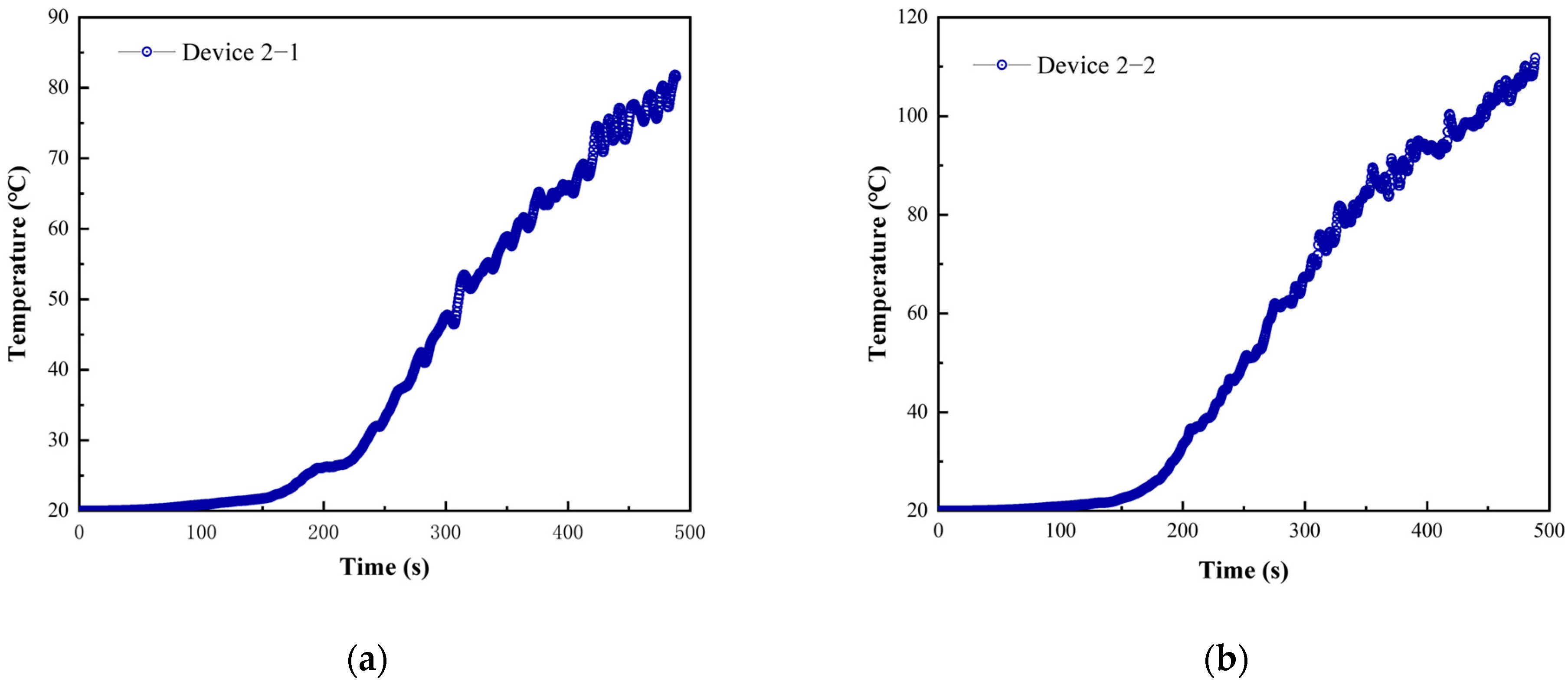
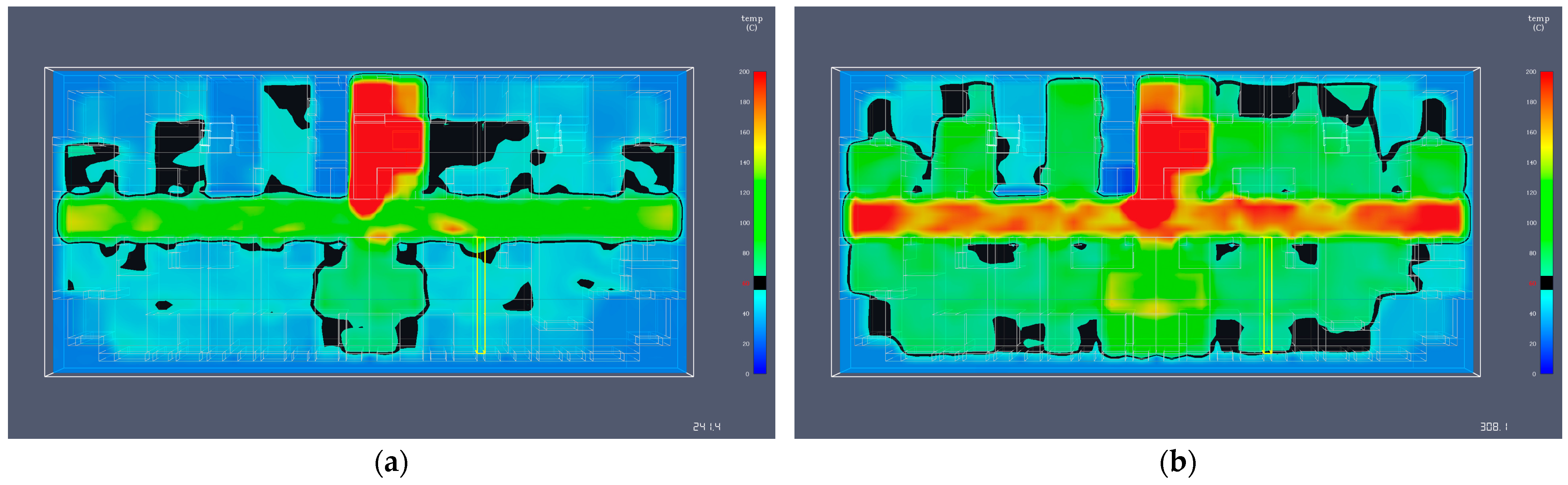
As smoke propagated toward the stairwell openings, temperatures gradually increased (
Figure 3a,b). Simulation results indicate that 241.4 s after fire ignition, the temperature at the entrance of evacuation stairwell S2, which directly faces the corridor, was the first to reach the critical threshold of 60 °C (
Figure 4a). At this point, S2 could no longer ensure safe evacuation. Subsequently, at 308.1 s, the temperature at the entrance of stairwell S1, which shares a vestibule with the elevator, also exceeded 60 °C (
Figure 4b). At this stage, both primary evacuation routes had failed, making stair-based evacuation extremely difficult.
3.1.2. Fire Floor Visibility Analysis
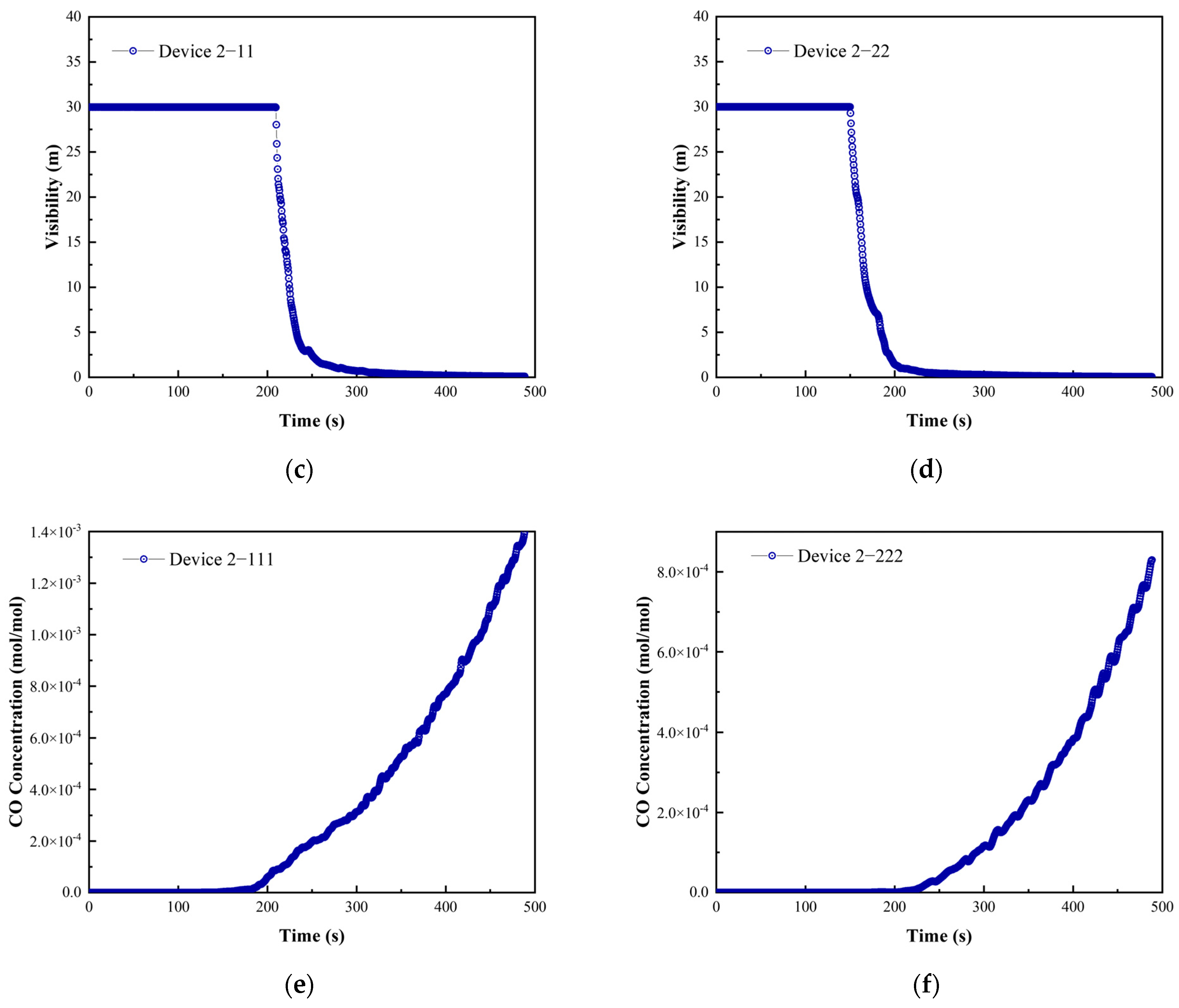
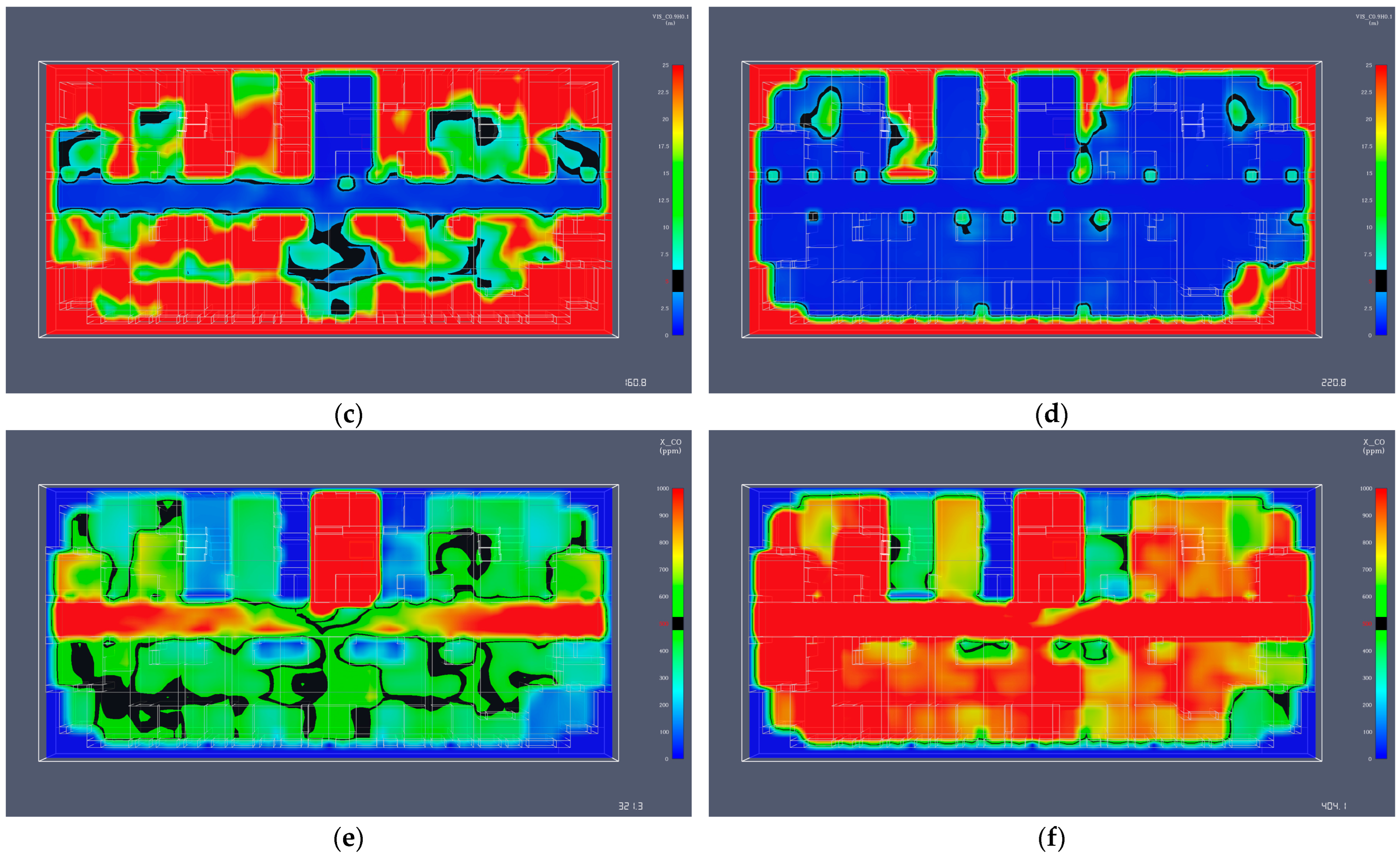
Visibility simulation results show that once smoke reached the stairwell openings, visibility rapidly decreased from approximately 30 m to nearly zero (
Figure 3c,d). At 160.8 s after fire ignition, visibility at the entrance of stairwell S2 first dropped below the critical safety limit of 5 m (
Figure 4c), preventing safe evacuation for occupants on upper floors through S2. By 220.8 s, visibility at the entrance of stairwell S1 also fell below 5 m (
Figure 4d). Consequently, both evacuation paths became unavailable, severely restricting occupants’ ability to evacuate.
3.1.3. Fire Floor CO Concentration Analysis
After smoke entered the stairwell openings, CO concentrations gradually increased (
Figure 3e,f). Simulation results show that at 321.3 s, CO concentration at the entrance of S2 exceeded the tolerance limit of 500 ppm (
Figure 4e), rendering this stairwell unsafe for evacuation. By 404.1 s, CO levels at S1 also surpassed 500 ppm (
Figure 4f), resulting in complete loss of stairwell usability.
3.1.4. Determination of ASET
Comprehensive fire simulation results are summarized in
Table 11. The final ASET values were determined as 220.8 s for S1 and 160.8 s for S2. Among the three assessed parameters, visibility was the first to reach critical thresholds, identifying it as the governing factor for evacuation safety in this scenario.
3.2. Evacuation Efficiency Optimization Analysis (No Panic State)
This section addresses Research Question 1. Through multi-scenario simulations under non-panic conditions, the impacts of key physical and management factors (e.g., occupant distribution, evacuation speed, and priority) on evacuation efficiency and their relative importance are examined.
3.2.1. Baseline Scenario (M) Analysis
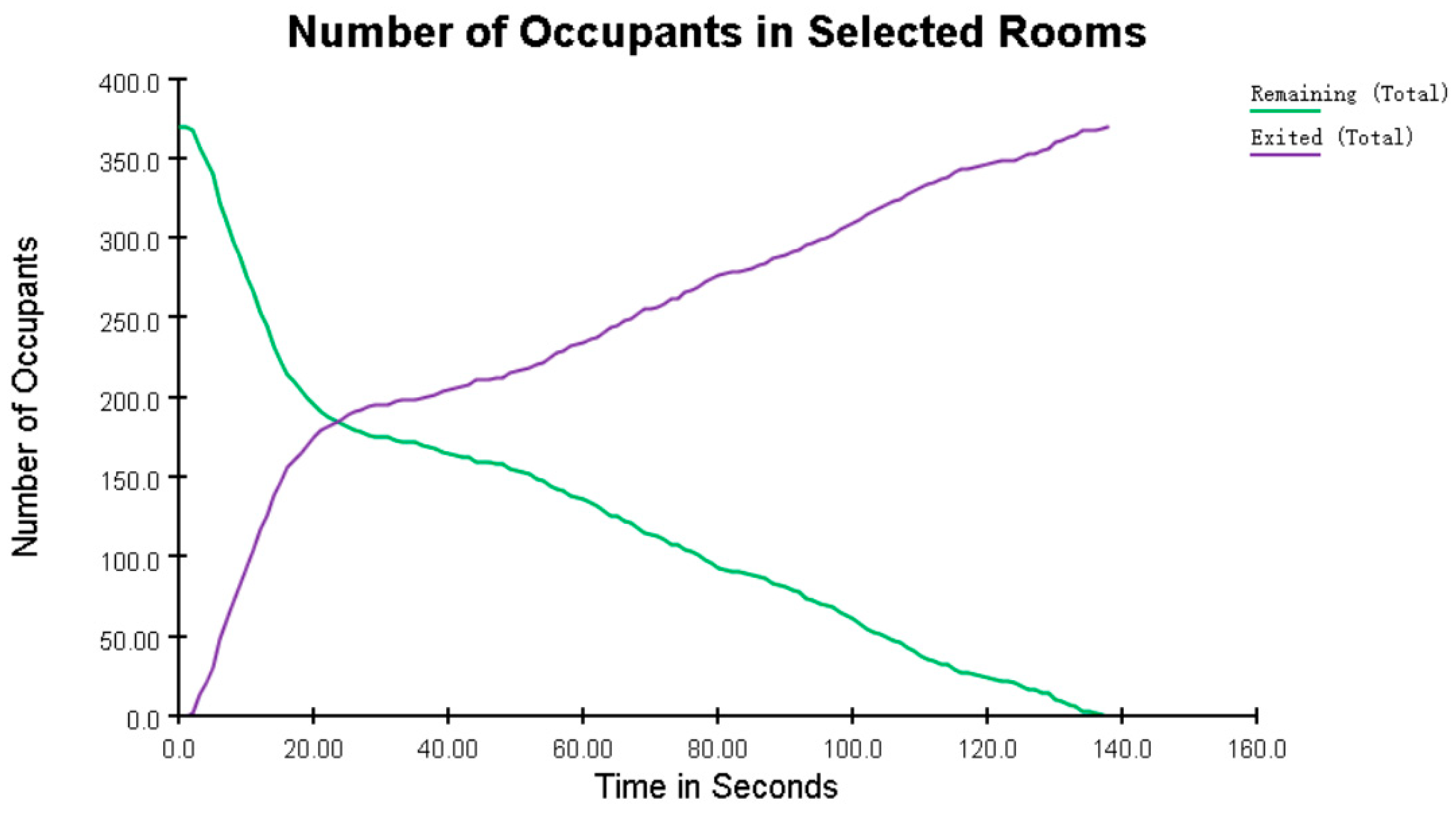
Under the baseline scenario (M), in which occupants were uniformly distributed across all floors, simulation results are presented in
Figure 5 and
Table 12. The total evacuation time was 137.8 s, and the evacuation process can be divided into two distinct phases:
(i) Rapid evacuation phase (0–28.4 s): This phase primarily involved first-floor occupants. Owing to the abundance of exits on this level, evacuation proceeded rapidly without sustained congestion.
(ii) Constrained evacuation phase (28.4–137.8 s): This phase was dominated by occupants from floors 2–9. As all evacuees were required to descend via stairwells, passage efficiency decreased significantly, leading to pronounced congestion within the stairs.
These results clearly demonstrate that the evacuation stairwells constitute the primary bottleneck governing overall evacuation efficiency, with their capacity directly determining total evacuation time.
3.2.2. Single-Factor Optimization Analysis
(1) Different Time Periods
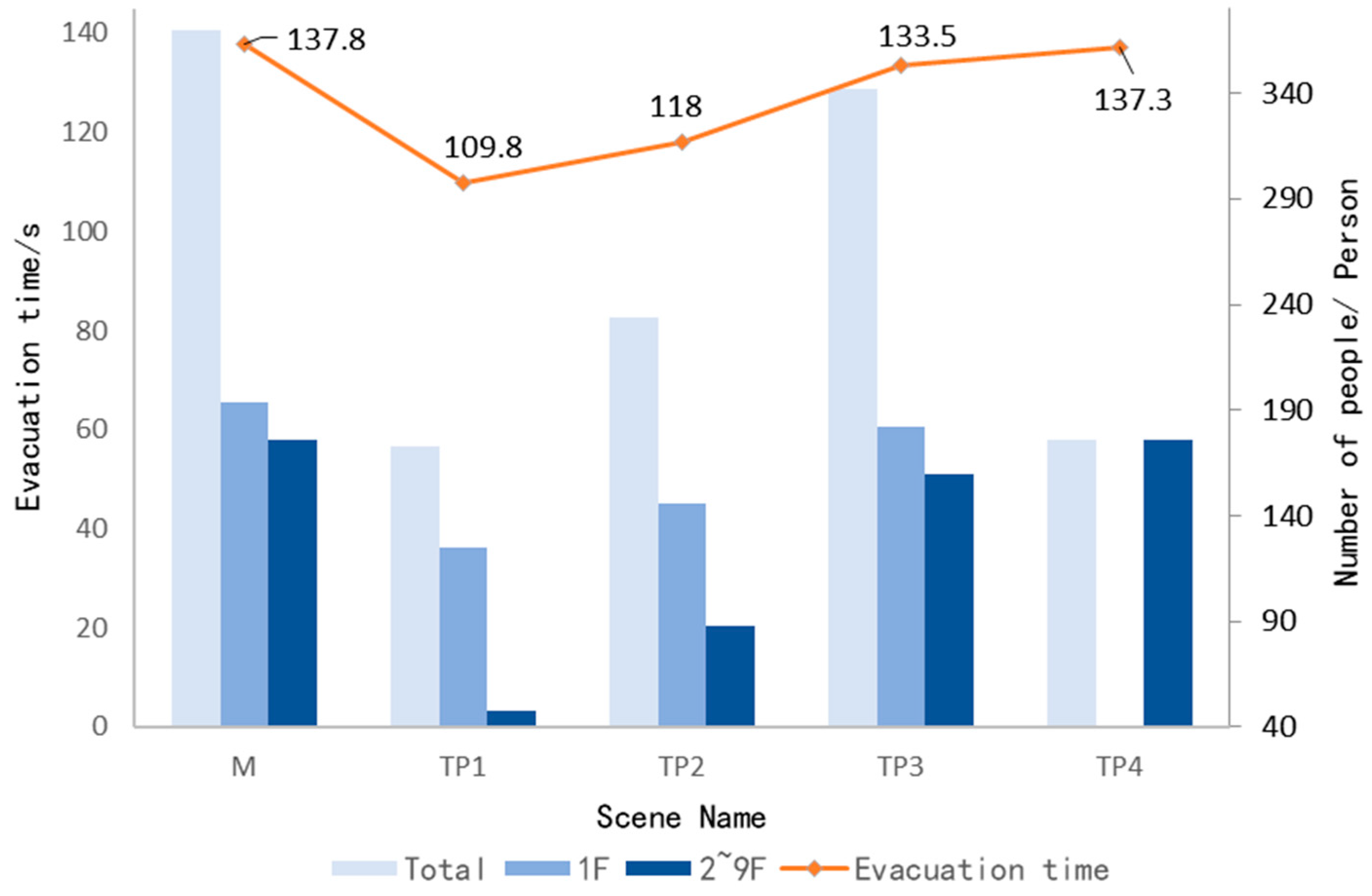
Figure 6 illustrates evacuation times under different time-period scenarios. Results indicate that, within this building configuration, evacuation time exhibits weak correlation with total building occupancy but strong positive correlation with the number of occupants on floors 2–9. This relationship is further confirmed by the nighttime scenario TP4, in which all occupants were located on residential floors, yielding an evacuation time of 137.3 s—nearly identical to the baseline value (137.8 s). These findings collectively demonstrate that vertical evacuation from floors 2–9 via stairwells represents the dominant bottleneck controlling overall efficiency.
Moreover, results indicate that temporal building usage significantly influences occupant distribution, thereby indirectly regulating evacuation performance. To further quantify the effect of occupant density, subsequent analyses examine evacuation sensitivity to population changes.
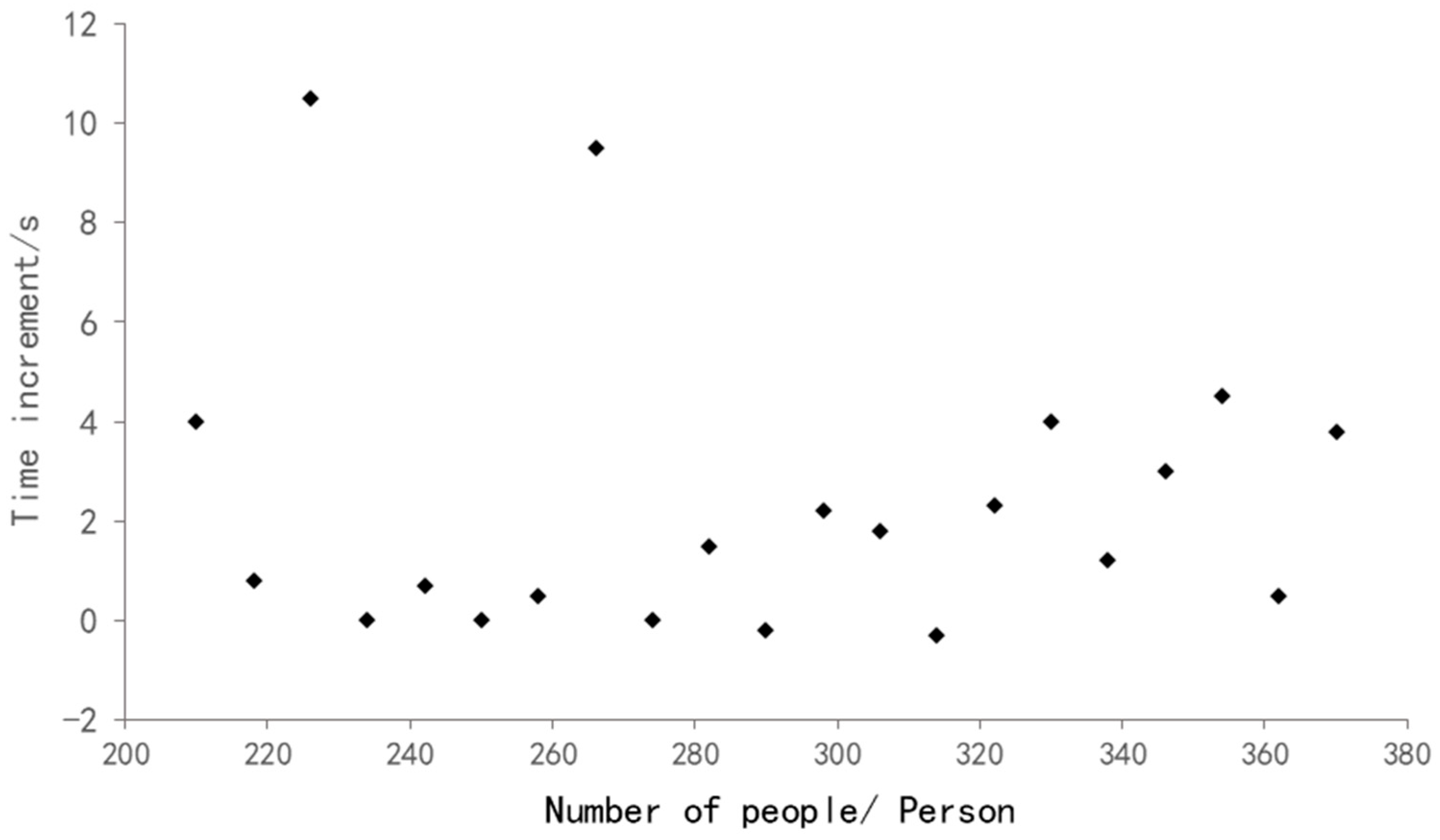
(2) Occupant Density
Simulation results for varying occupant numbers are presented in
Table 13 and
Figure 7. Based on time increment trends, the process can be divided into two stages:
(i) Random fluctuation phase (S1–S10): At relatively low occupancy levels, evacuation time increments exhibited irregular fluctuations, indicating dominance of individual stochastic behaviors along the longest evacuation paths, such as variability in reaction time and walking speed [
28].
(ii) Stable congestion phase (S11–S22): Beyond a critical population threshold, evacuation time increased steadily with occupant number, reflecting the emergence of systemic congestion governed by the fixed capacity of evacuation stairwells.
(3) Vertical Distribution
(i) Pyramidal Distribution and Optimization
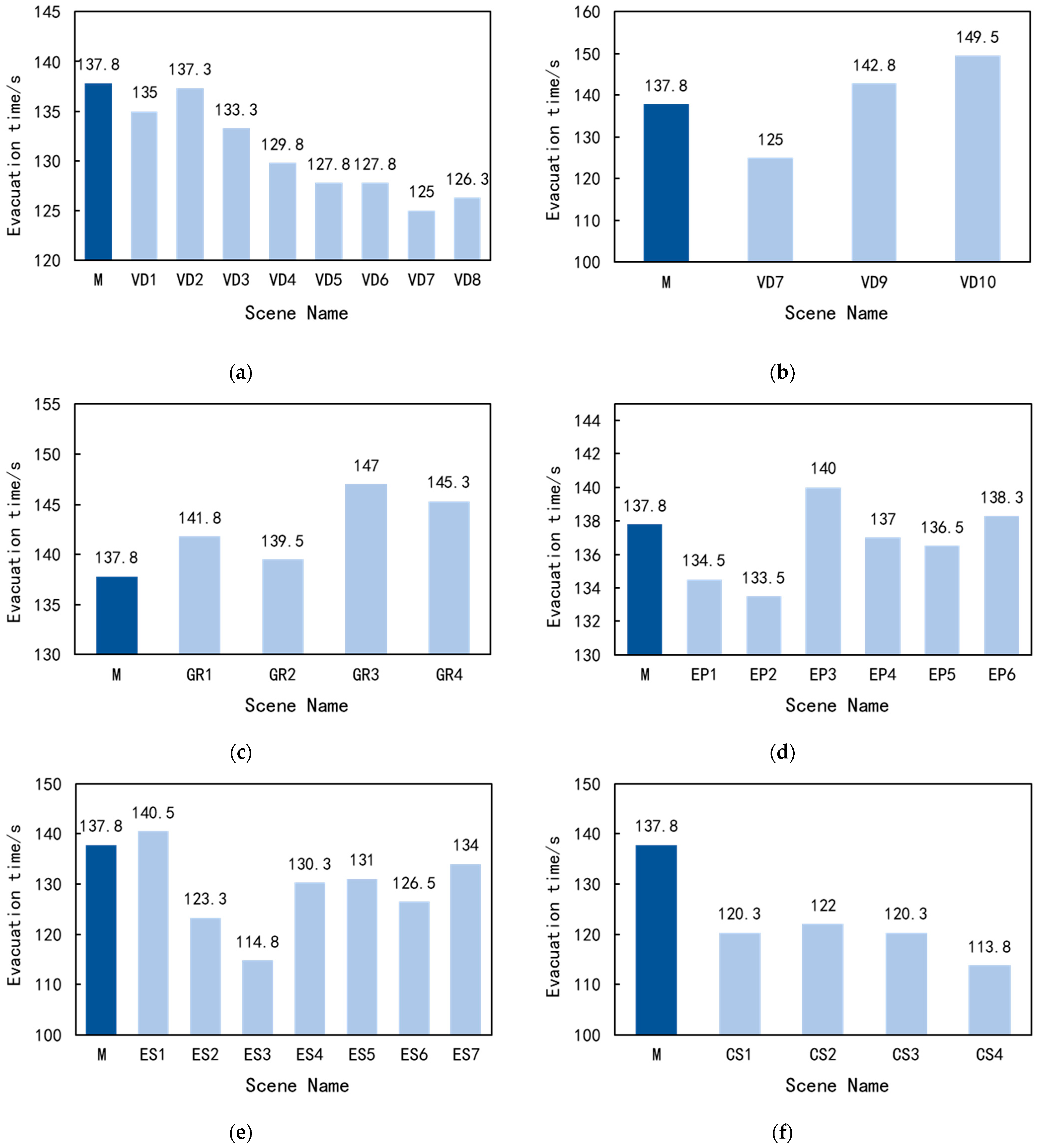
Figure 8a presents evacuation times for different vertical distribution schemes. Results show that pyramidal occupant distributions substantially enhance evacuation efficiency by concentrating more occupants on lower floors for rapid egress while reducing upper-floor congestion. Among these, VD7 achieved optimal performance, reducing evacuation time to 125.0 s (9.3% improvement relative to baseline). This demonstrates that rational vertical redistribution effectively alleviates stairwell pressure and improves overall evacuation capacity.
(ii) Comparison of multiple distribution modes
As shown in
Figure 8b, among uniform (M), pyramidal (VD7), bimodal (VD9), and inverted pyramidal (VD10) distributions, the pyramidal configuration achieved the highest efficiency, whereas the inverted pyramidal scenario performed worst (149.5 s). This outcome results from excessive occupant accumulation on upper floors, which markedly increases stairwell congestion duration.
(4) Gender Ratio
Figure 8c illustrates the influence of gender ratio on evacuation time. Evacuation efficiency was maximized under a balanced 1:1 ratio (M). Deviations from this configuration increased evacuation time, suggesting that balanced gender composition promotes smoother occupant flow and improved passage continuity.
(5) Evacuation Priority
Figure 8d indicates that evacuation priority adjustments exert limited influence on total evacuation time. The optimal scheme (EP2) reduced evacuation time by only 4.3 s relative to baseline, reflecting the dominant constraints imposed by physical bottlenecks.
(6) Evacuation Speed
Figure 8e shows that increasing walking speed in purely simulated environments (ES1–ES3) reduces evacuation time; however, indiscriminate acceleration increases real-world risks such as falls and stampedes [
36]. Organized speed strategies (ES4–ES7) generally outperform unstructured acceleration. Among them, ES6 produced the best result (126.5 s), indicating that selectively increasing speeds of specific groups is more effective than uniform acceleration under bottleneck constraints.
3.2.3. Multi-Strategy Collaborative Optimization Analysis
Combined-strategy results are presented in
Figure 8f. Among all configurations, CS4 (Vertical Distribution + Evacuation Speed + Evacuation Priority) achieved the greatest improvement, reducing evacuation time to 113.8 s (17.42% relative to baseline). These findings demonstrate that synergistic integration of multiple strategies can overcome limitations of individual measures and yield substantial gains in evacuation efficiency.
3.2.4. Neural Network Model Performance and Analysis of Intelligent Optimization Potential
This preliminary exploration addresses Research Question 4 by examining the feasibility of constructing an ANN model, trained on limited multi-factor simulation data, to predict evacuation time.
Based on the ANN architecture described in
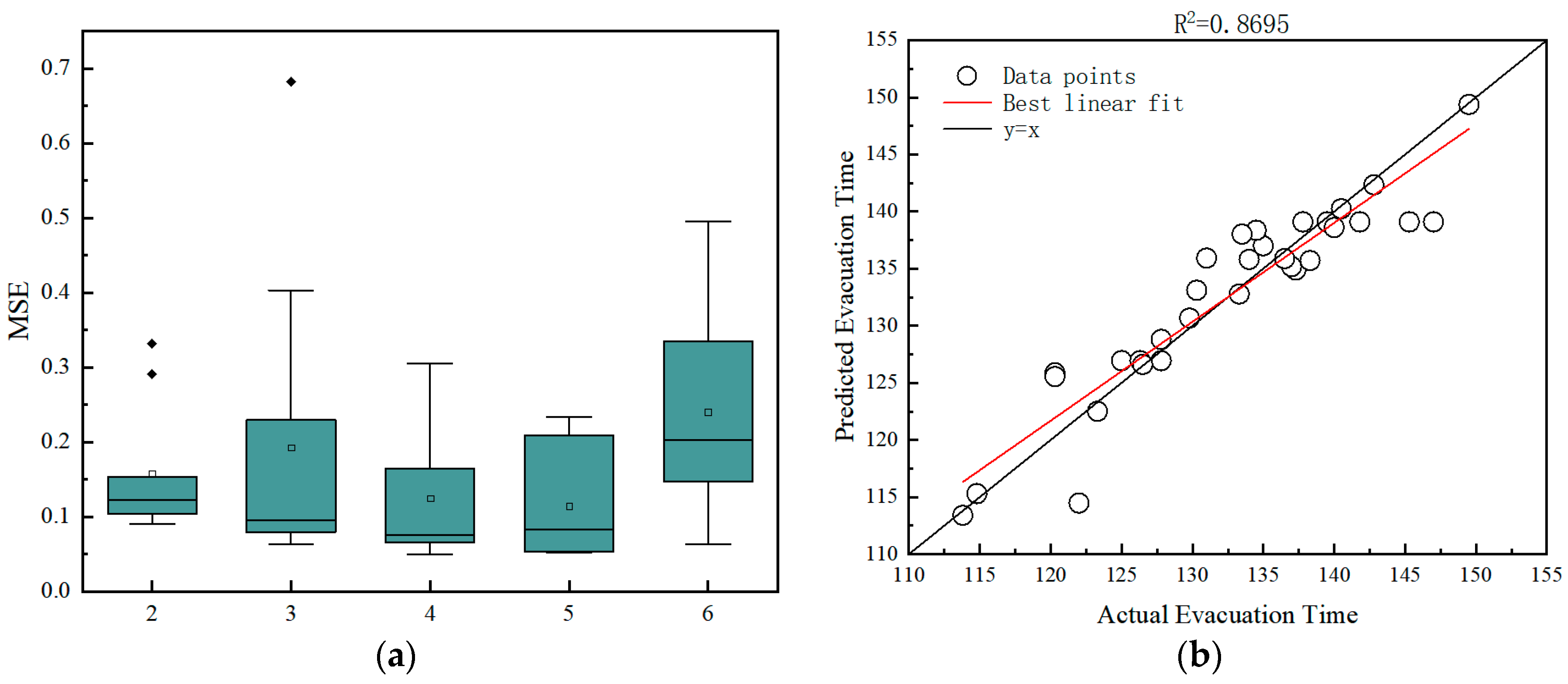
Section 2.4.3, optimal performance and stability were achieved when five neurons were adopted in the hidden layer (
Figure 9a). The trained model demonstrated acceptable predictive capability on the test dataset, yielding a coefficient of determination (R
2) of 0.8695 and a root mean square error of 3.20 s. As shown in
Figure 9b, predicted values are distributed on both sides of the y = x reference line, indicating that the model successfully captures the general mapping relationship between evacuation time and key influencing parameters within the training domain.
Building upon this ANN model, a genetic algorithm could be employed for global optimization within feasible parameter ranges, providing a potential alternative to conventional trial-and-error simulation approaches for identifying optimal evacuation strategies. This study therefore offers a preliminary demonstration of the applicability of machine learning techniques in building fire safety analysis. Future work may extend this framework to more complex conditions, including multi-hazard coupling and dynamic evacuation processes, thereby further exploring its potential in intelligent safety-oriented building design.
3.3. Impact of Panic Psychology on Evacuation System
This section addresses Research Question 2 by comparing scenarios with varying panic levels and guide interventions, investigating how panic psychology interacts with architectural bottlenecks and management measures to reshape evacuation dynamics and outcomes.
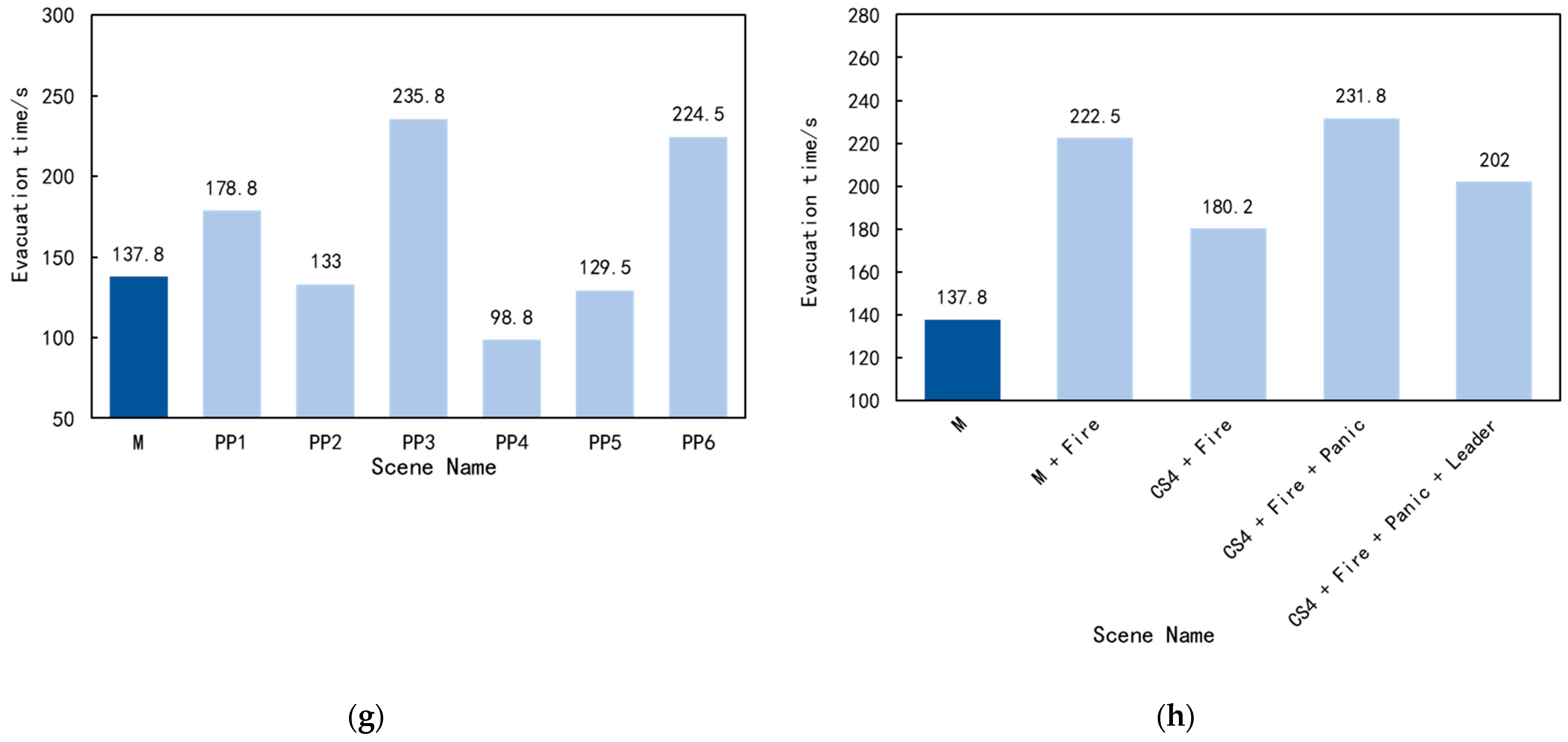
To quantitatively assess the effects of panic, comparative scenarios incorporating different panic intensities and guide participation were established. Simulation results (
Figure 8g) reveal the complex influence of panic on evacuation efficiency and highlight the critical intervention role of guides.
Results indicate that panic significantly affects evacuation performance. Mild panic (PP1) increased evacuation time by 29.7%, primarily due to delayed reactions and impaired decision-making, which disrupted orderly movement. Under moderate panic (PP2), evacuation time decreased, suggesting that panic-induced speed increases may temporarily mask behavioral disorder [
36]. However, such apparent efficiency gains are accompanied by elevated risks of collisions and pushing and therefore do not represent genuine improvements in evacuation safety. Severe panic (PP3) caused evacuation time to increase sharply by 71.1%. This deterioration is attributed to extreme behavioral responses, including immobility and freezing, which not only impede individual evacuation but also consume rescue resources and substantially hinder overall system performance.
Following the introduction of guides, evacuation efficiency improved significantly across all panic levels. In the mild panic scenario, guide intervention (PP4) reduced evacuation time by 44.7% relative to PP1 and achieved a 28.3% improvement even compared with the no-panic scenario. This demonstrates that appropriate on-site guidance not only mitigates panic-related disruption but also enhances evacuation efficiency by establishing organizational order. As panic severity increased, the stabilizing role of guides became progressively more critical. Under severe panic, although guide intervention (PP6) could not fully offset panic-induced degradation, evacuation time was still reduced. Guides alleviated hesitation and conflicts at bottlenecks and improved stairwell utilization through clear routing instructions and order maintenance.
This quantitative characterization of panic aligns with the principles of performance-based fire protection design. The SFPE Handbook of Fire Protection Engineering emphasizes that evacuation safety assessment must account for substantial uncertainty in human behavior. By parameterizing different panic levels, this study provides a practical framework for incorporating behavioral uncertainty into systematic evaluation, offering guidance for developing more resilient emergency plans.
In this study, guide intervention is implemented through shortened reaction times and enhanced movement priority. Typical simulation scenarios indicate that once stairwell S1 or S2 becomes unavailable due to smoke thresholds, guides rapidly move to affected floors and redirect occupants toward alternative safe stairwells through verbal or gestural instructions while preventing secondary congestion. This dynamic path adjustment combined with emotional reassurance constitutes the principal mechanism by which soft interventions enhance evacuation system resilience.
These findings offer direct implications for emergency management in personnel-intensive buildings such as high-rise talent apartments. First, institutionalizing guide roles within emergency plans is both necessary and effective. Trained staff or volunteers should be formally designated to provide calm command, optimize routing, and maintain order at critical bottlenecks. Second, routine fire drills should extend beyond route familiarization to include psychological preparedness and stress-response training. Finally, emergency planning criteria should evolve from purely time-based metrics toward resilience-oriented assessments incorporating behavioral uncertainty. Simulation-based evaluation methods such as those proposed here can support contingency planning, including alternative routing and phased evacuation. Integrated deployment of hardware optimization, personnel training, and intelligent planning is essential for establishing robust fire safety systems.
3.4. Fire-Evacuation Coupled Simulation Results
This section addresses Research Question 3 by coupling fire and evacuation simulations to assess the effectiveness of the hardware–software integrated strategy (CS4 with guides) in enhancing system resilience under realistic fire conditions.
Coupled simulation results (
Figure 8h) directly provide movement times for each scenario. Based on the framework in
Section 2.6, recognition time (
Tr) was set to 30 s, pre-movement time (
Tpre) to 70 s, and movement time (
Tm) obtained from coupled simulations. Combined with the ASET for S1 (220.8 s) determined in
Section 3.1.4, safety margins were evaluated.
Under the baseline fire scenario (M + fire), RSET reached 222.5 s, slightly exceeding ASET and yielding a safety deficit of approximately 1.7 s. After implementing CS4, RSET decreased to 180.2 s, producing a positive safety margin of approximately 40.6 s, indicating successful evacuation prior to critical fire conditions.
When panic psychology was introduced into CS4, RSET increased markedly to 231.8 s, resulting in a safety deficit of approximately 11.0 s. Incorporating guide intervention reduced RSET to 202.0 s, substantially narrowing this deficit. These results demonstrate that while hard optimization strategies establish the baseline for safety, soft interventions play a crucial role in compensating for behavioral uncertainty and enhancing system resilience.
4. Conclusions
Using a PyroSim–Pathfinder co-simulation framework, this study conducted a multi-factor coupled analysis of fire evacuation in a high-rise talent apartment, elucidating panic-related mechanisms and systematically evaluating management strategies. The main conclusions are as follows:
A “double-edged sword” effect of panic psychology was identified. Light panic reduces efficiency due to decision delays; moderate panic may superficially shorten evacuation time through irrational speed increases while concealing safety risks; severe panic induces behavioral incapacitation, increasing evacuation time by over 70% and representing a major contributor to system failure.
Multi-strategy collaborative optimization effectively mitigates physical bottlenecks. The combined CS4 strategy (VD7 vertical distribution + ES6 speed control) reduced evacuation time by 17.42%, demonstrating that coordinated architectural and managerial measures can substantially enhance efficiency under fixed stairwell constraints.
Guide intervention plays a critical role in resilient evacuation. Guides not only reduce physical congestion via path optimization but also stabilize emotions and behavior. Under mild panic, guides improved efficiency by over 28%, highlighting the irreplaceable contribution of human intervention alongside physical design.
Visibility was identified as the governing parameter for evacuation safety. Coupled fire simulations indicate that ASET is primarily constrained by visibility rather than temperature or toxic gases, emphasizing the need to prioritize visibility control in fire safety design.
The feasibility of intelligent evacuation prediction was demonstrated. An ANN model trained on non-panic scenarios achieved R2 = 0.8695, illustrating the potential of data-driven approaches for multi-factor evacuation assessment. Although currently limited to standard conditions, this work provides a preliminary methodological foundation for future intelligent safety evaluation systems incorporating dynamic fire scenarios and panic behavior.
Based on numerical simulation, this study offers theoretical insight and practical strategies for evacuation optimization in talent apartments. Future research should focus on: (i) calibrating panic behavior parameters using VR drills or real evacuation data; (ii) integrating real-time fire monitoring with intelligent algorithms for adaptive guidance; and (iii) investigating behavioral characteristics of highly educated populations to refine evacuation theory for specialized residential contexts.
5. Limitations and Future Work
This study proposes a systematic analytical framework for fire evacuation assessment in high-rise talent apartments; however, several limitations remain, which also indicate directions for future research. Clarifying these limitations not only facilitates an objective understanding of the scope of the present findings but also provides guidance for subsequent investigations.
First, limitations exist in model calibration and sensitivity analysis. Model parameters were primarily determined based on standards, guidelines, and literature, with validation conducted through comparison with benchmark cases. However, due to the absence of direct calibration using real combustion experiments or evacuation drill data from the target building, as well as the lack of systematic grid sensitivity analysis, uncertainty remains in the quantitative predictive accuracy of the model. In particular, grid resolution may influence predicted values of key safety parameters (e.g., the time required for visibility to reach critical thresholds). Future work should therefore include grid convergence studies to verify the robustness of simulation results.
Second, occupant classification in this study is based on typical resident characteristics (young and middle-aged professionals). Although this assumption ensures internal validity within the studied context, it does not adequately represent vulnerable populations, such as elderly individuals or persons with disabilities, thereby limiting the generalizability of the conclusions. In addition, the evacuation simulations rely on Pathfinder’s default random seed mechanism to ensure repeatability, without quantifying the statistical variability of evacuation times arising from individual behavioral randomness. Future studies could adopt more inclusive modeling approaches and uncertainty-aware evaluation frameworks by incorporating refined behavioral parameters and performing multiple repeated simulations.
Third, with respect to the quantitative representation of panic behavior, this study adjusts parameters such as reaction time and walking speed to construct scenarios with different panic levels. While this approach enables macro-level analysis of behavioral uncertainty on evacuation performance, it remains subject to model dependency and requires further calibration using empirical behavioral data.
Fourth, to facilitate comparison among management strategies, a path failure model based on fixed environmental thresholds (“available/unavailable”) was adopted. This simplification cannot fully capture the continuous influence of smoke exposure on occupant mobility. Moreover, dynamic sprinkler suppression processes and complex fuel property evolution were not explicitly simulated. Future research may incorporate continuous speed attenuation functions driven by real-time environmental conditions and more refined fire–water–structure interaction models to represent coupled fire–evacuation processes more realistically.
Fifth, the artificial neural network prediction model presented in this study represents a preliminary proof of concept. Its training was based on a limited dataset (32 samples), which constrains model generalizability. Larger and more diverse datasets will be required to develop and validate more robust predictive models in future work.
Finally, this study primarily addresses the self-evacuation stage within buildings. Comprehensive fire emergency response also involves complex external coordination, including firefighter intervention and professional search-and-rescue operations. Integrating the proposed framework with dynamic simulations of external rescue forces to optimize emergency procedures and resource allocation from a holistic perspective represents a valuable direction for future research. Furthermore, applying this framework to diverse building configurations (e.g., different apartment layouts and stair–elevator arrangements) will be essential for evaluating strategy universality and formulating transferable design guidelines.
In conclusion, explicitly acknowledging current limitations and outlining future research directions strengthens the contribution of this study. The proposed analytical framework and the identified multi-factor interaction patterns provide a foundation for more comprehensive investigations into resilient evacuation systems.