Sustainably 3D-Printing Mortar with Construction Residue Sand: Printability, Mechanical Properties, and Microstructural Mechanisms


Highlights
- Development of a sustainable 3D-printable mortar from construction residue sand.
- Optimal mix ratio: CSA 10–15% for improved printability and strength.
- Highly fine recycled aggregates show promise for load-bearing 3D construction.
Abstract
1. Introduction
2. Materials and Methods
2.1. Material
2.1.1. Construction Residue Sand (CRS)
2.1.2. Cement
2.1.3. Fly Ash (FA)
2.1.4. Polypropylene Fiber (PP Fiber)
2.1.5. Admixtures
2.1.6. Water
2.2. Methods
2.2.1. Workability
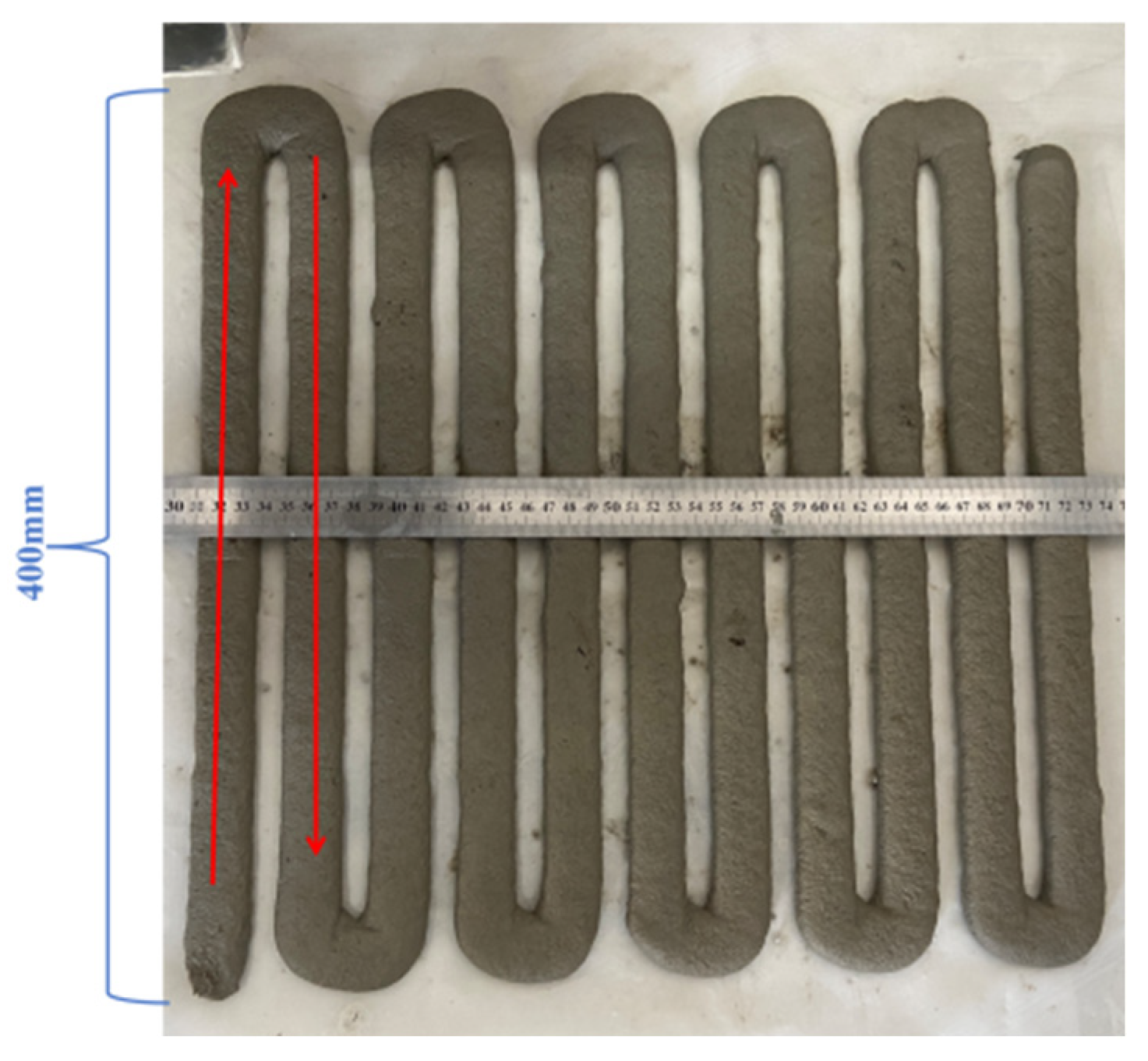
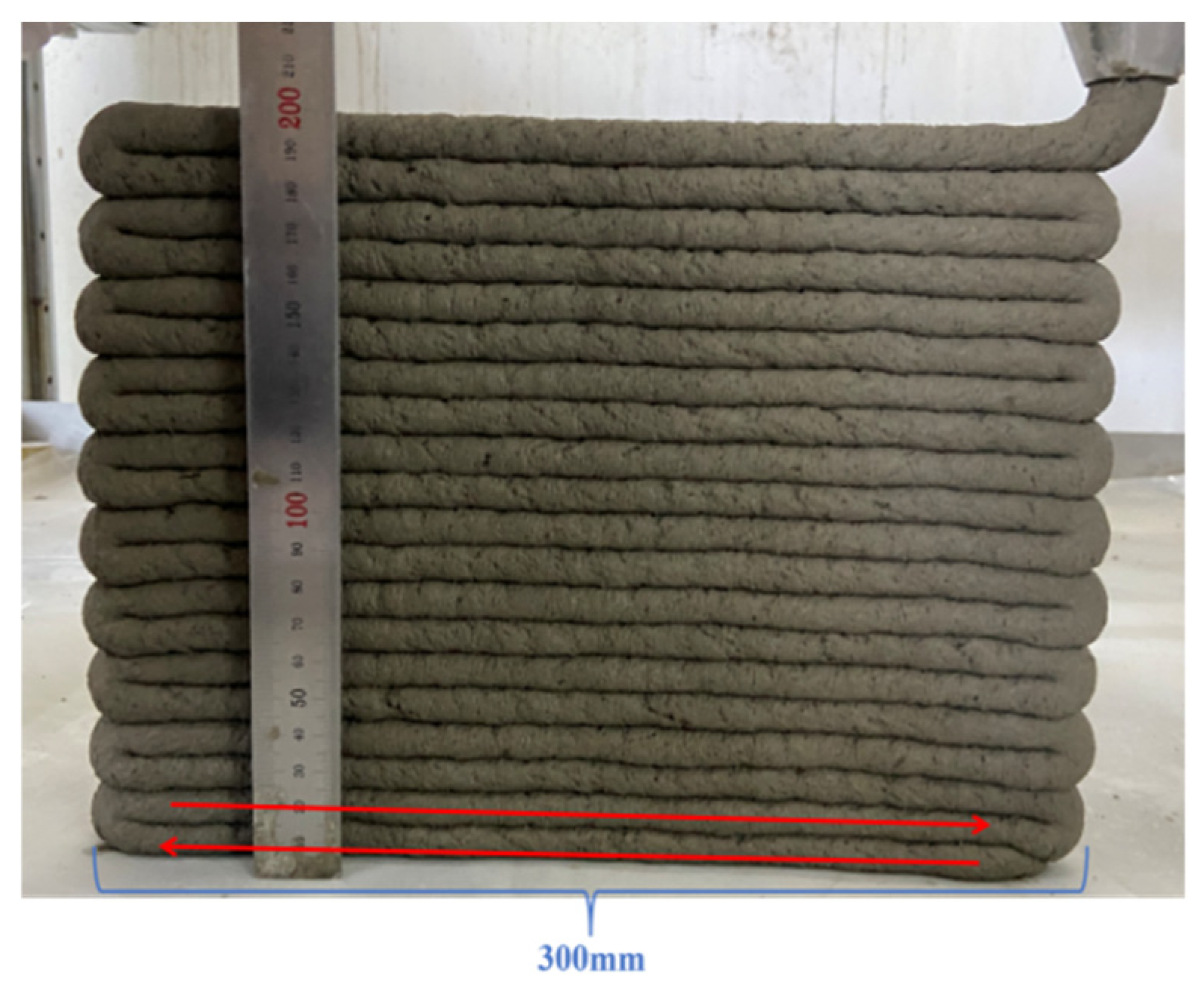
2.2.2. Printability


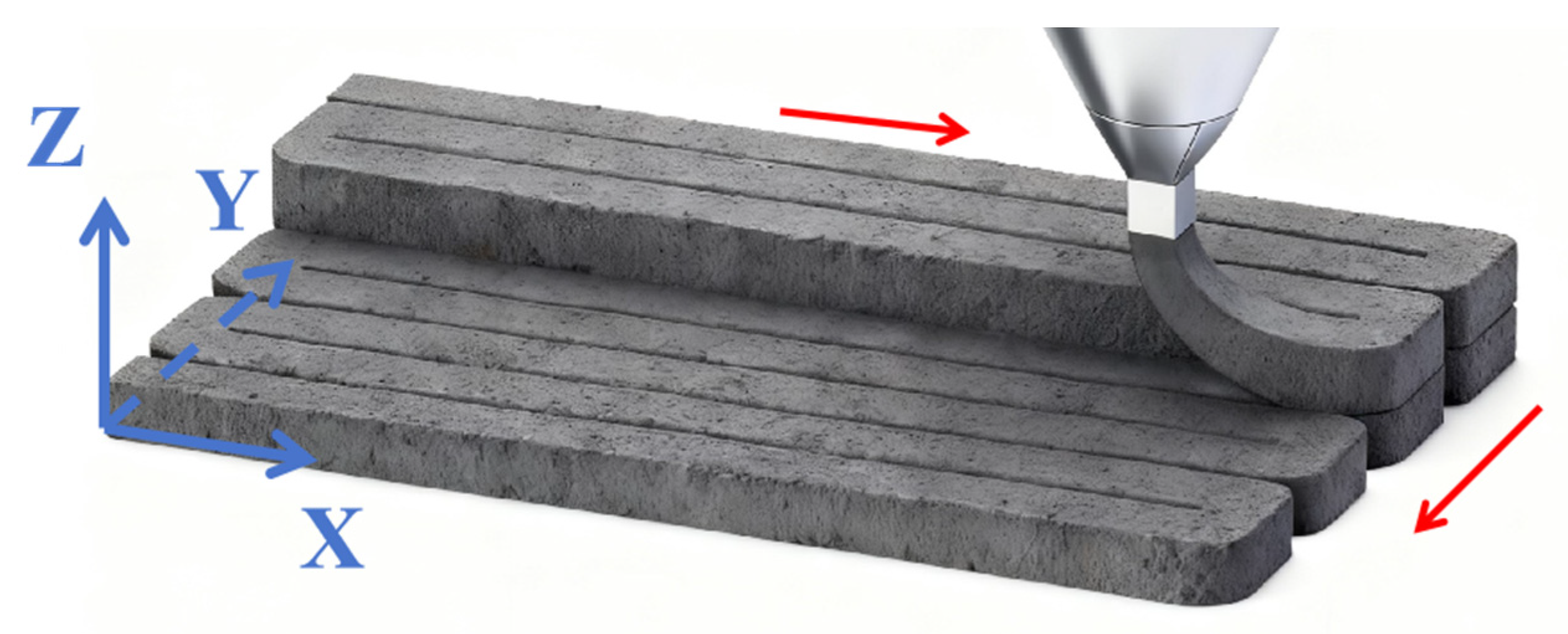
2.2.3. Mechanical Properties

2.2.4. Drying Shrinkage Properties
2.2.5. Microstructure Analysis
3. Results
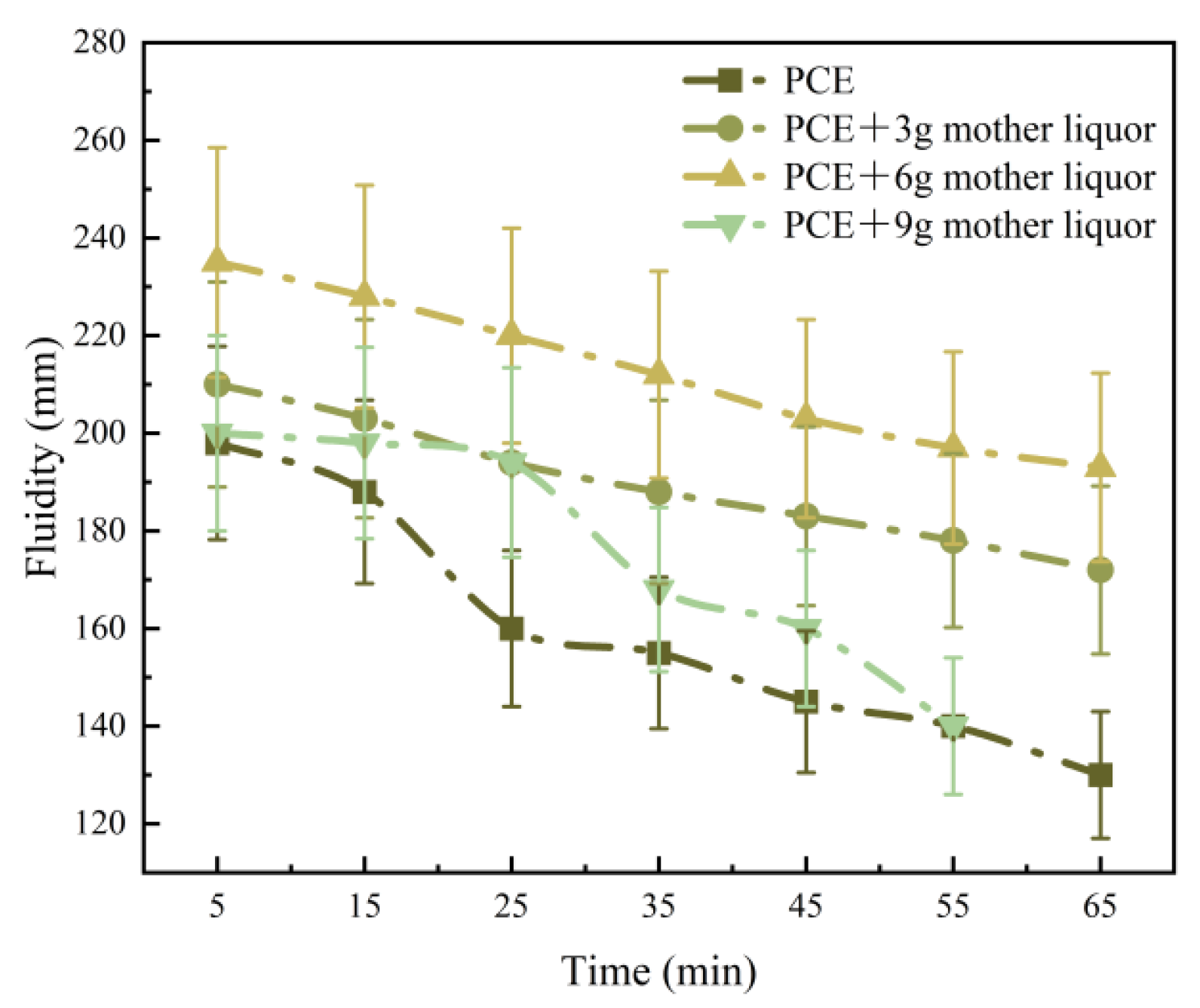
3.1. Determination of Fluidity and Water-Reducing Agent
3.2. Influence of CSA Dosage on Mortar Properties
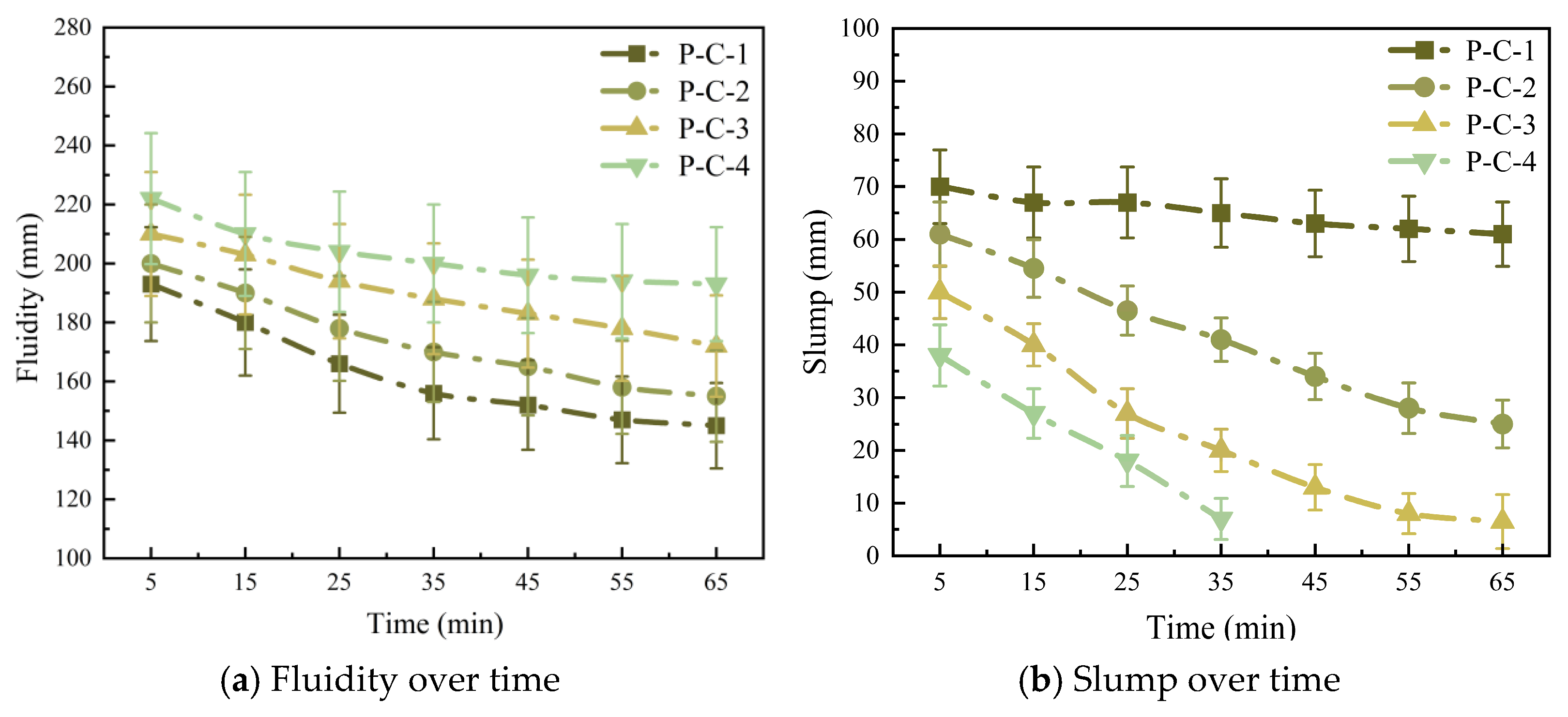
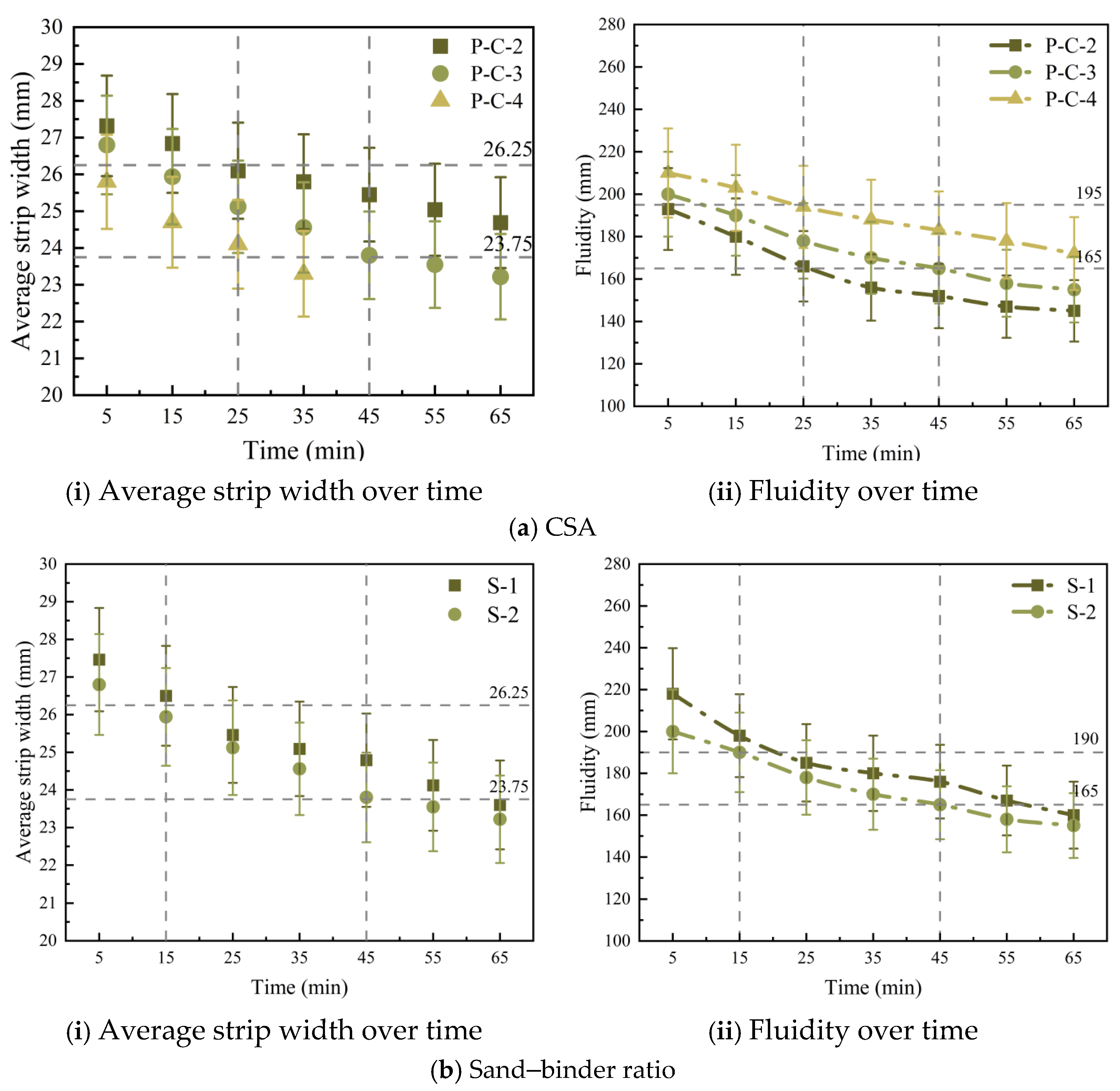
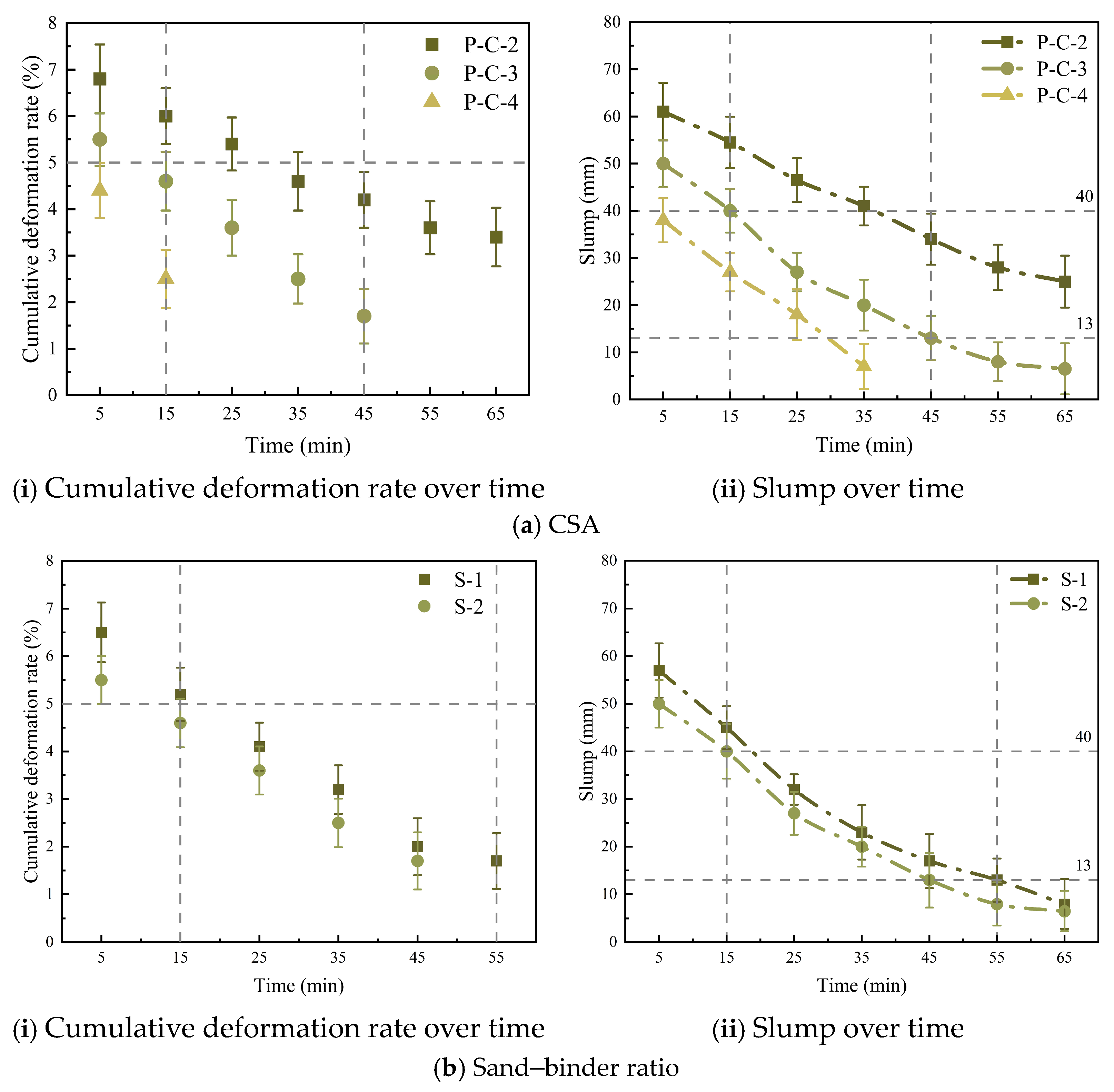
3.2.1. Effect on Slurry Properties
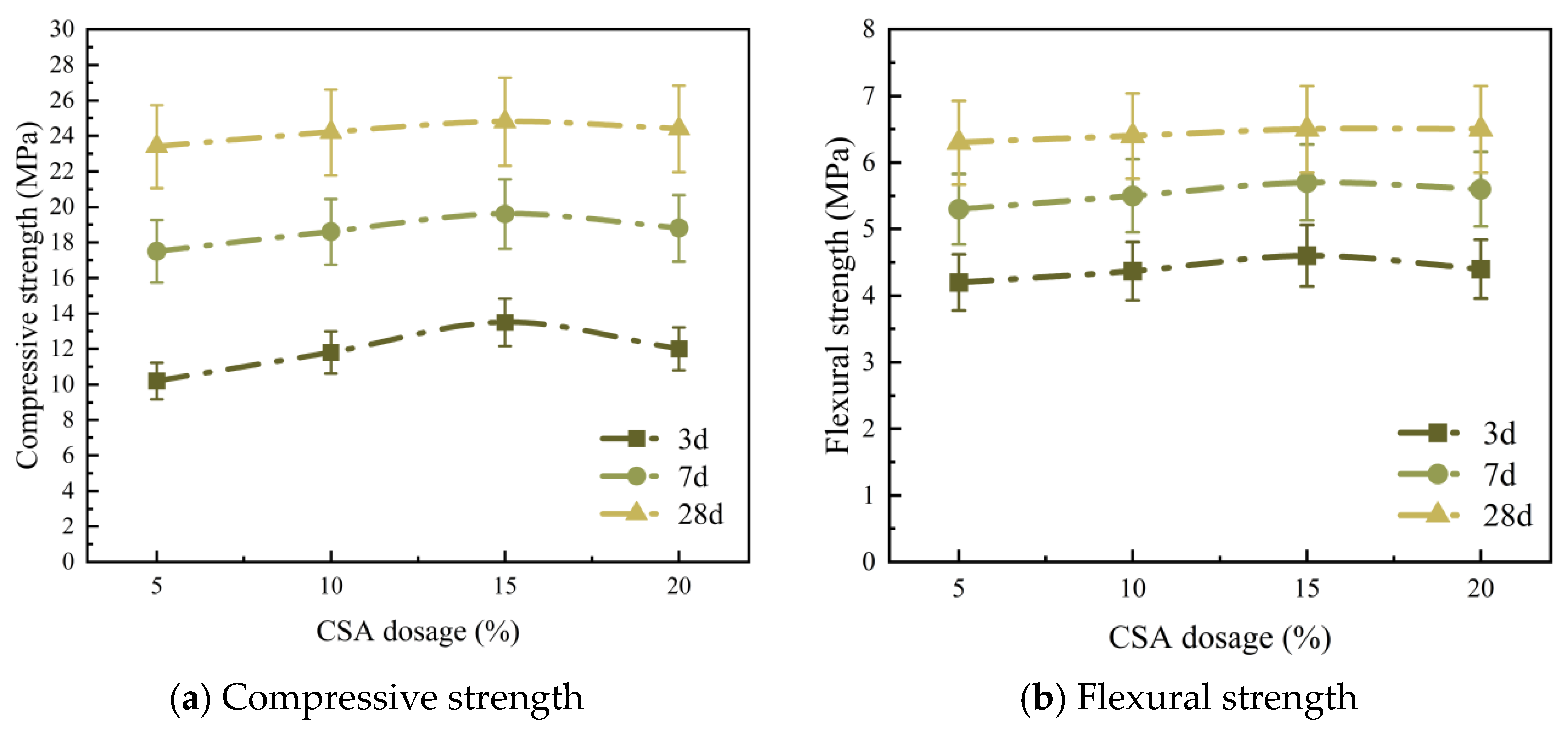
3.2.2. Effect on the Mechanical Properties of Cement Mortar Specimens
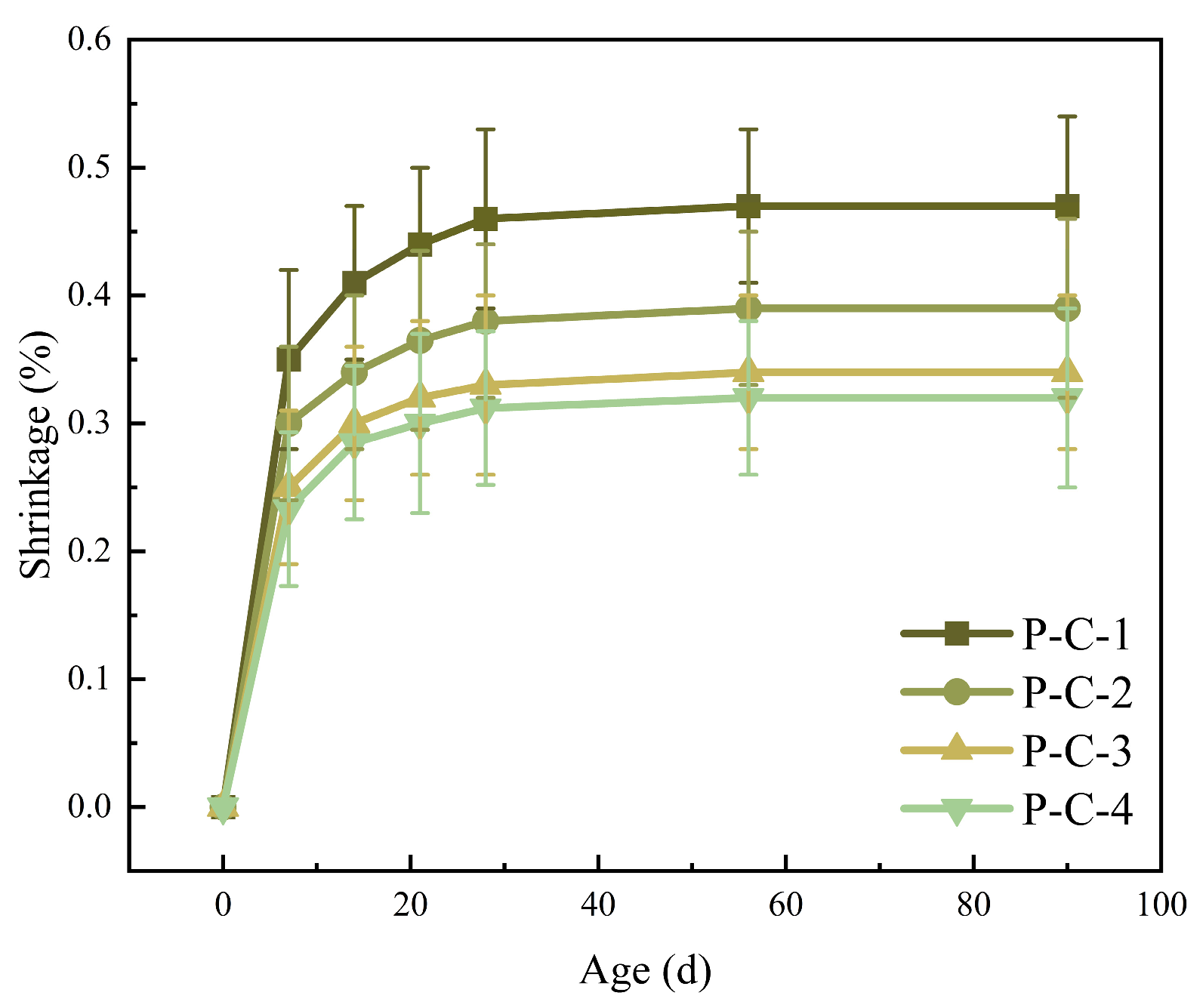
3.2.3. Effect on the Drying Shrinkage Properties of Cement Mortar Specimens
3.3. Influence of Sand–Binder Ratio on Mortar Properties
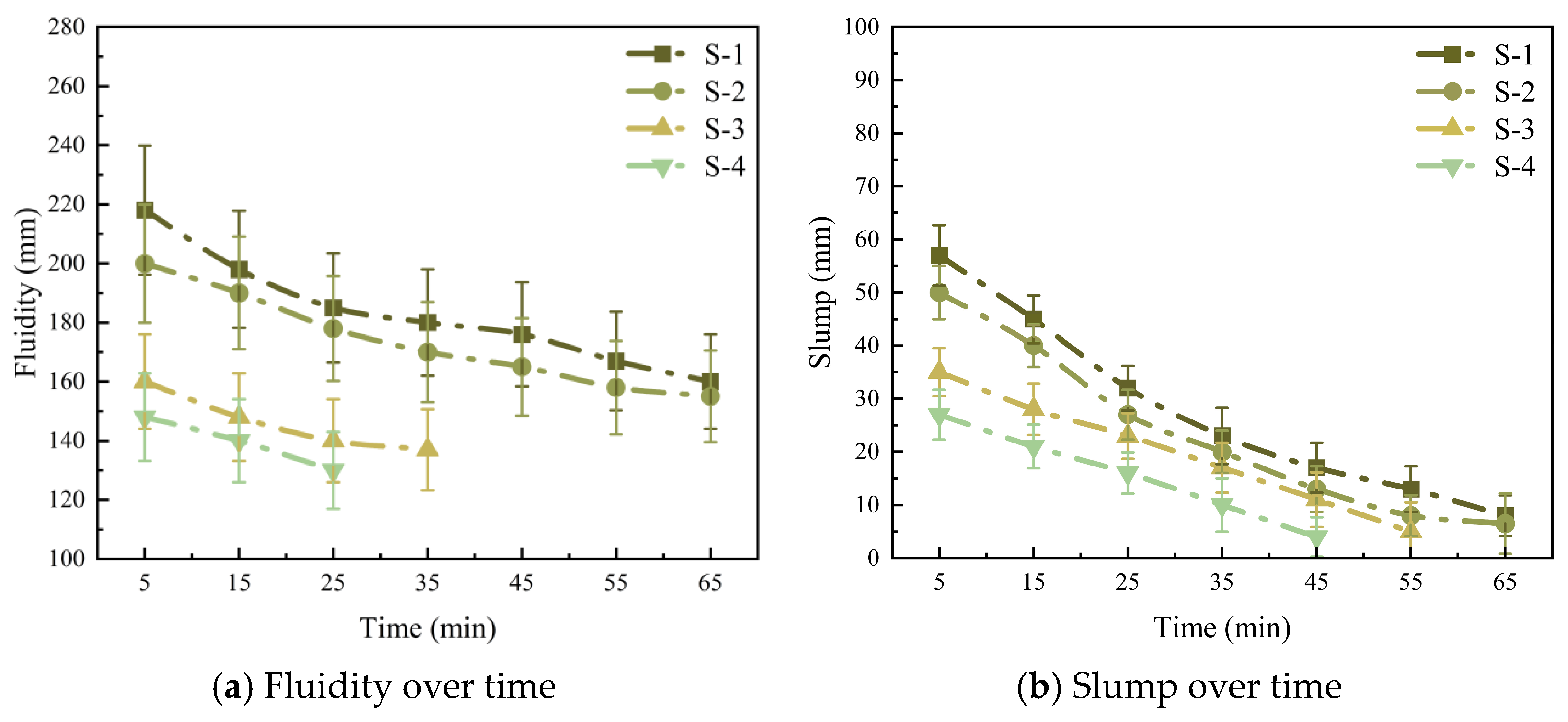
3.3.1. Effect on Slurry Properties
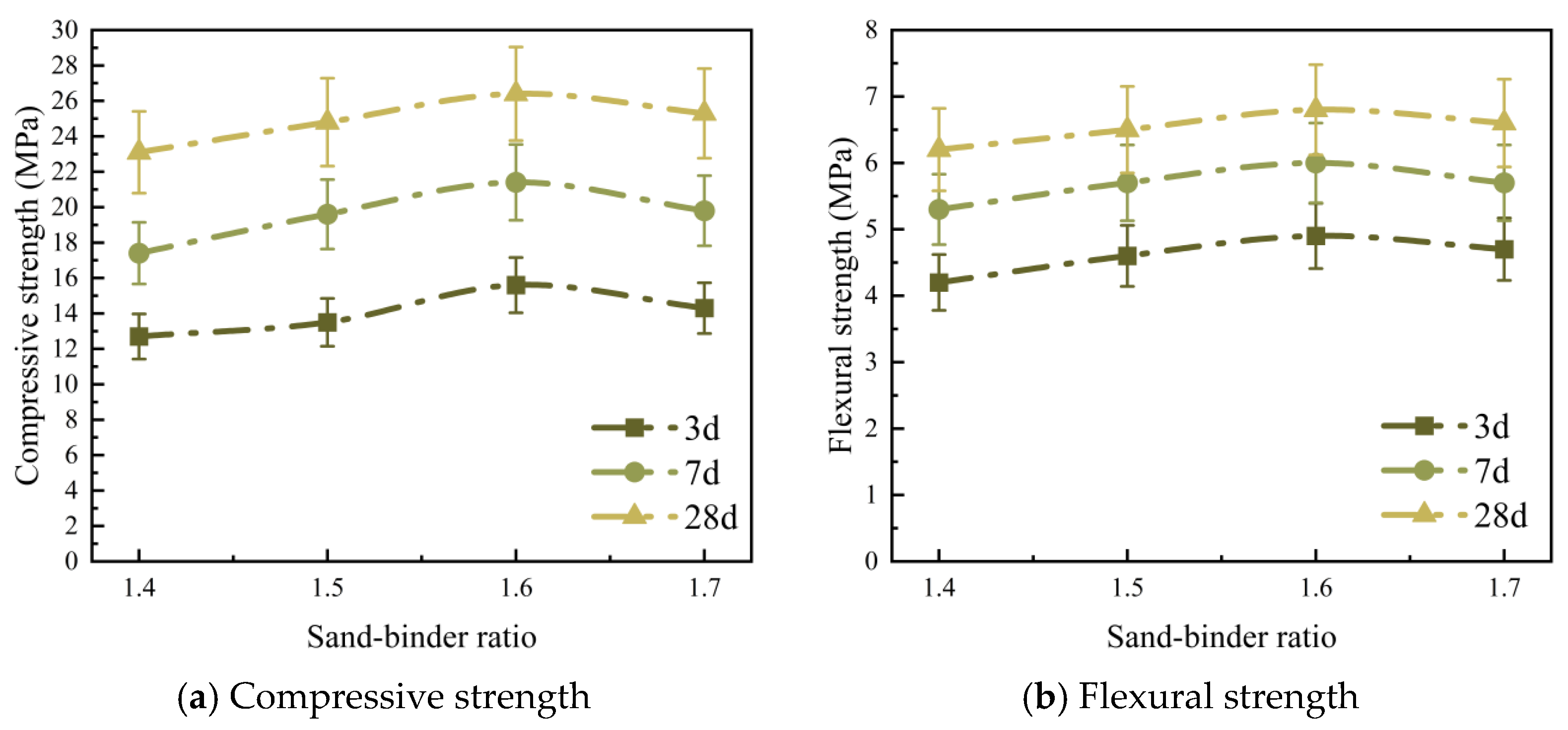
3.3.2. Effect on the Mechanical Properties of Cement Mortar Specimens
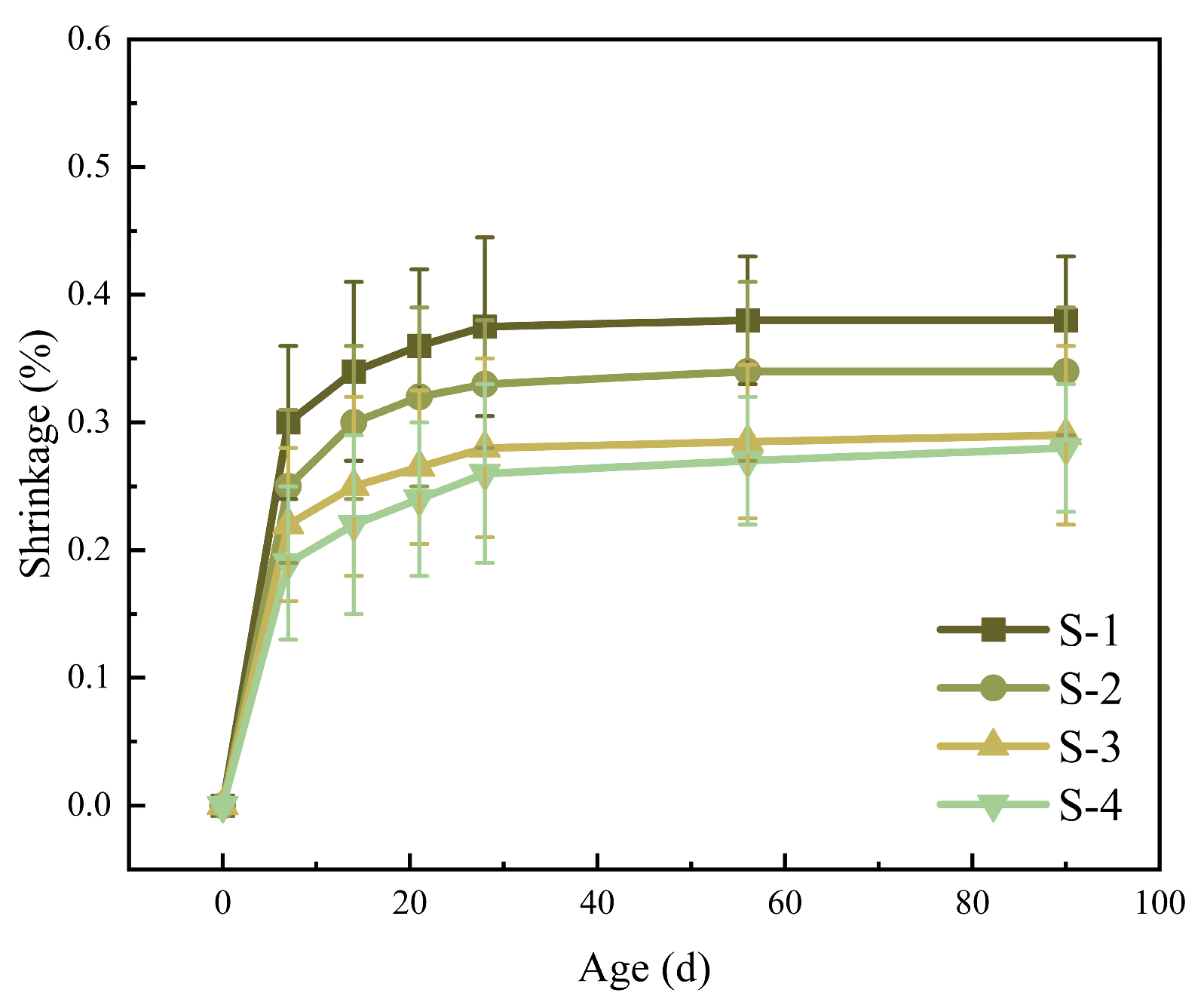
3.3.3. Effect on the Drying Shrinkage Properties of Cement Mortar Specimens
3.4. Factors Affecting the Performance of 3D-Printed Specimens
3.4.1. Extrudability and Constructability
3.4.2. Strength Reduction Rate
3.4.3. Mechanical Anisotropy Index
3.5. Microstructure Analysis
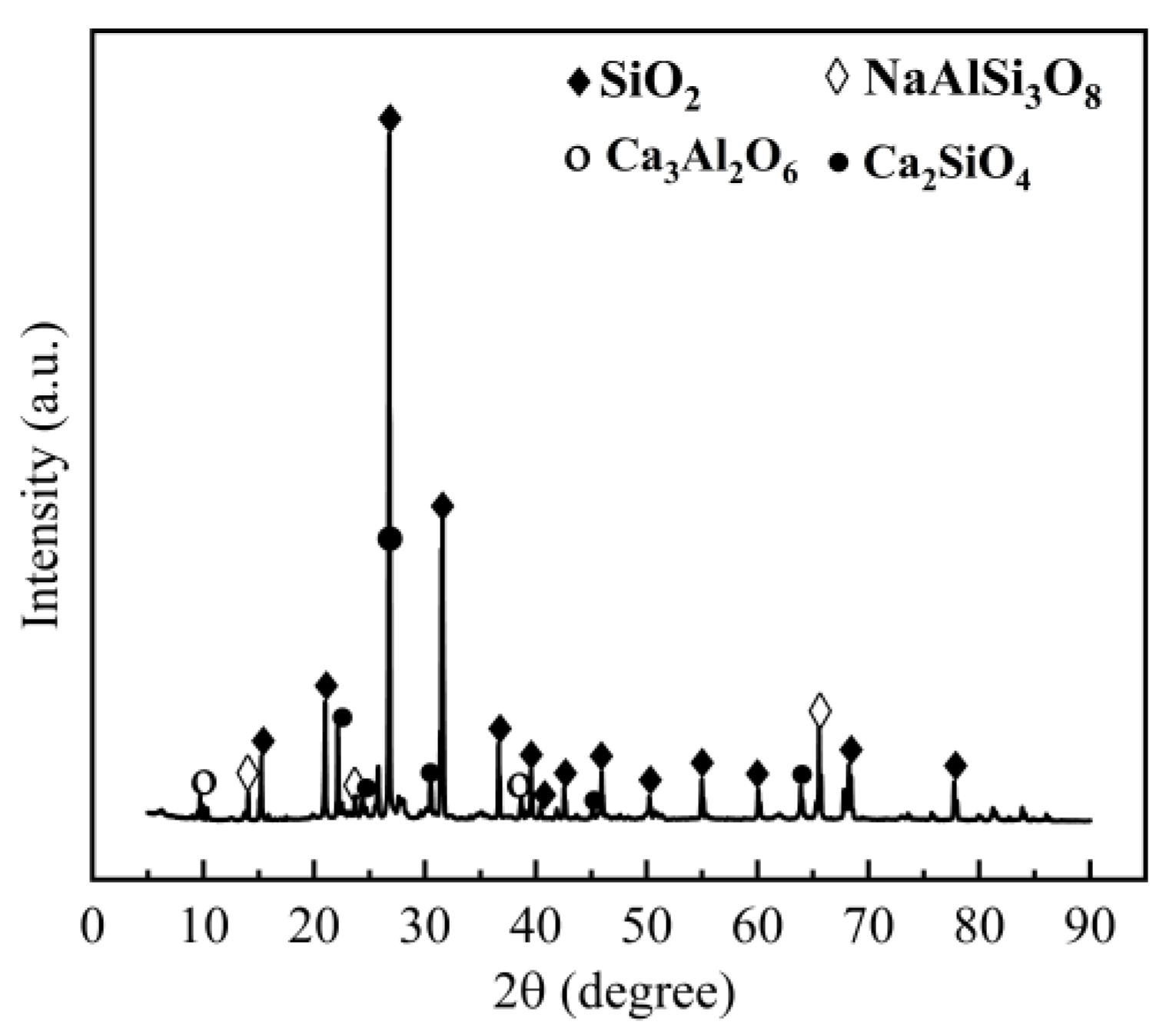
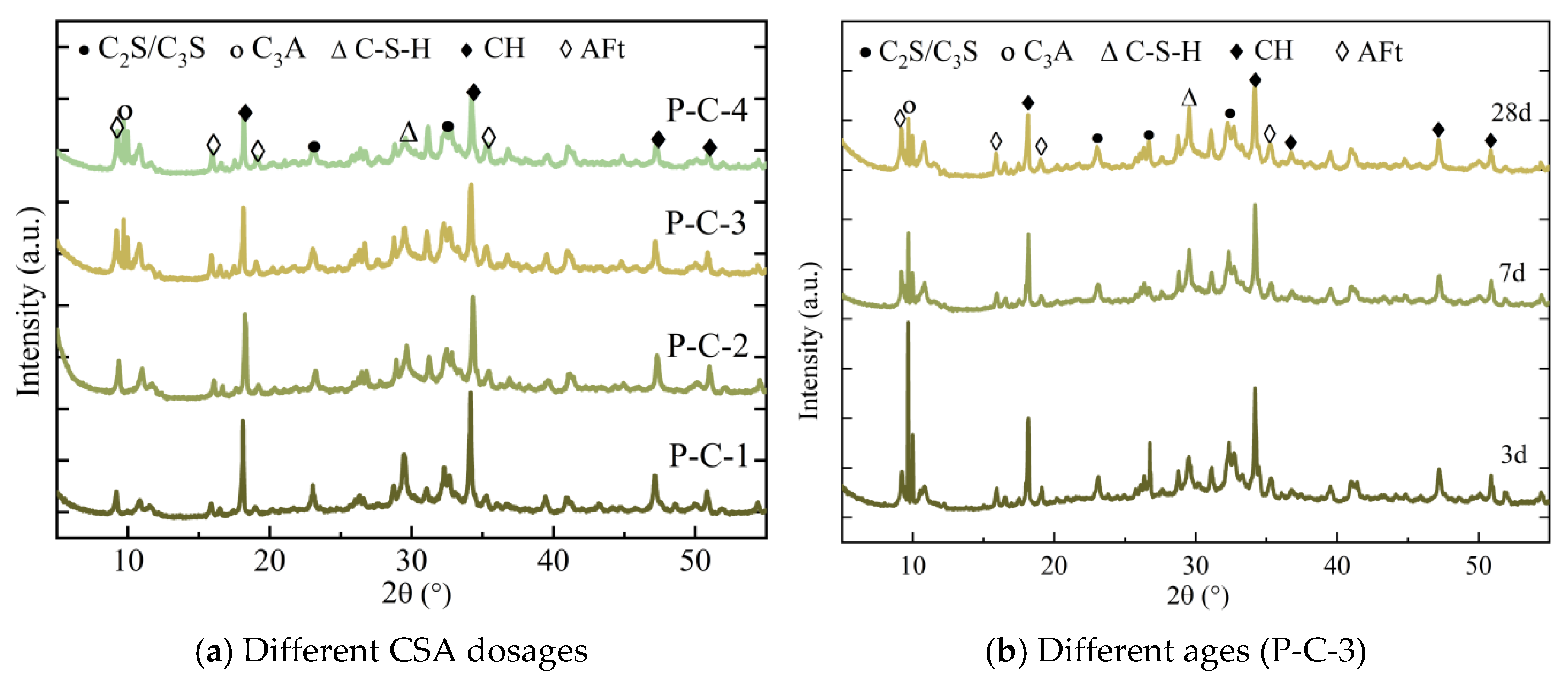
3.5.1. XRD
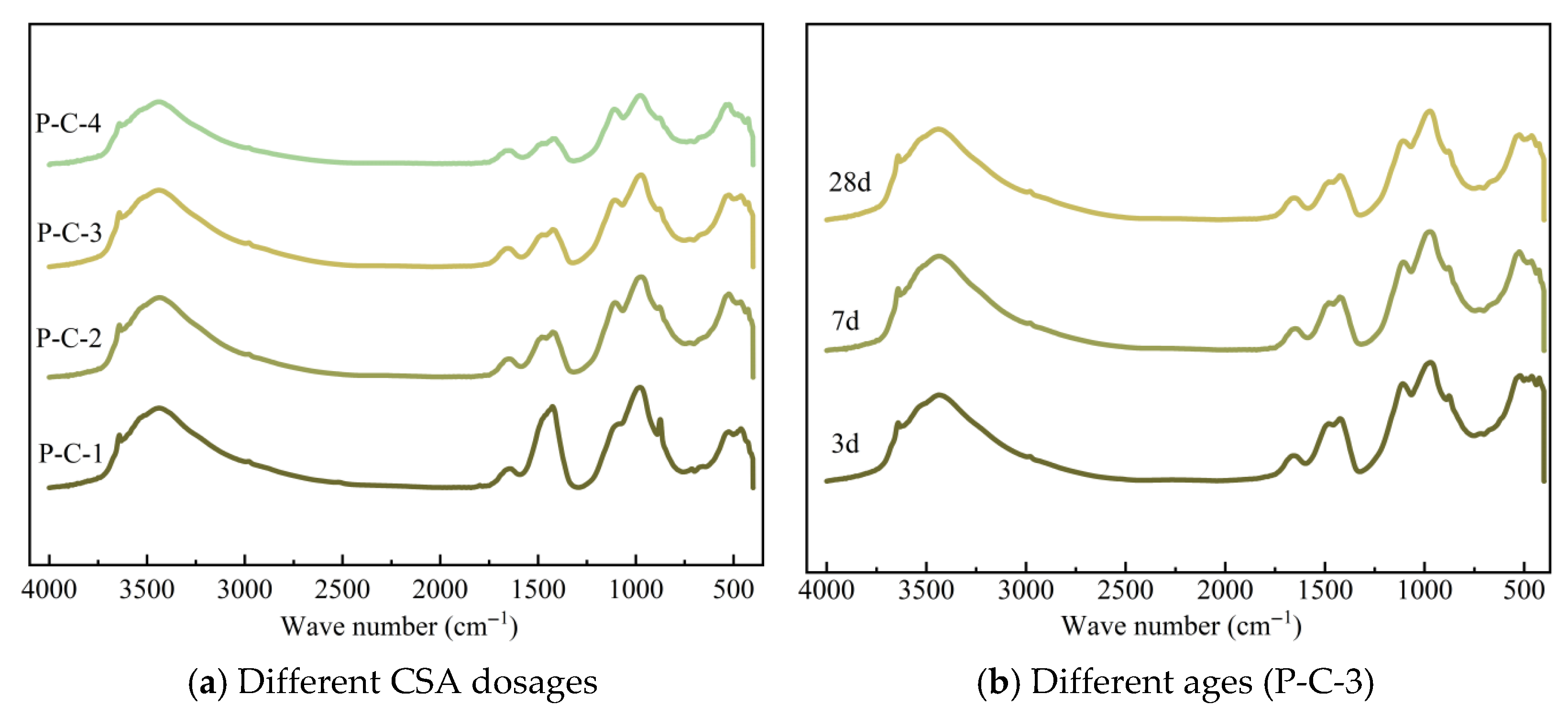
3.5.2. FTIR
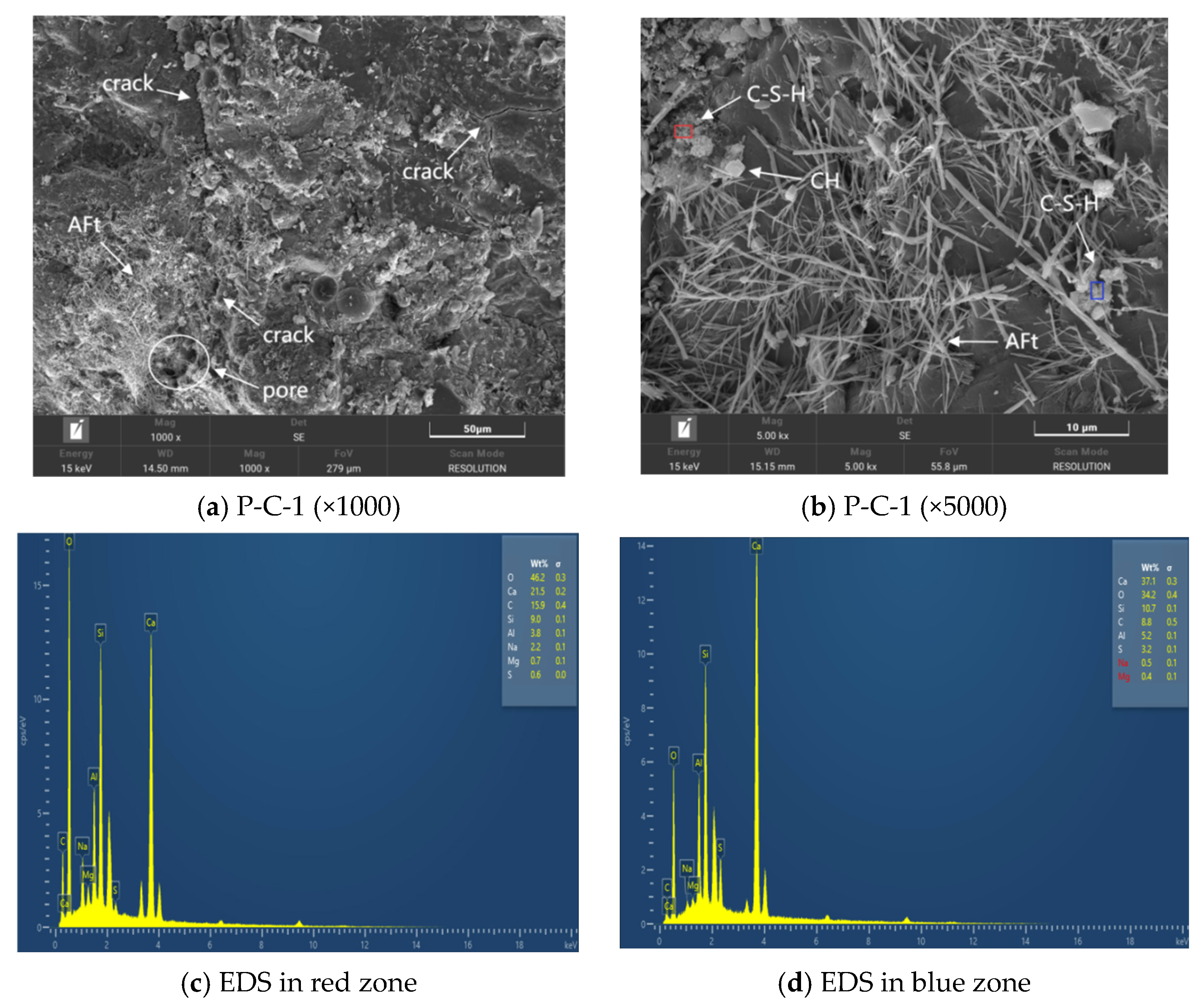
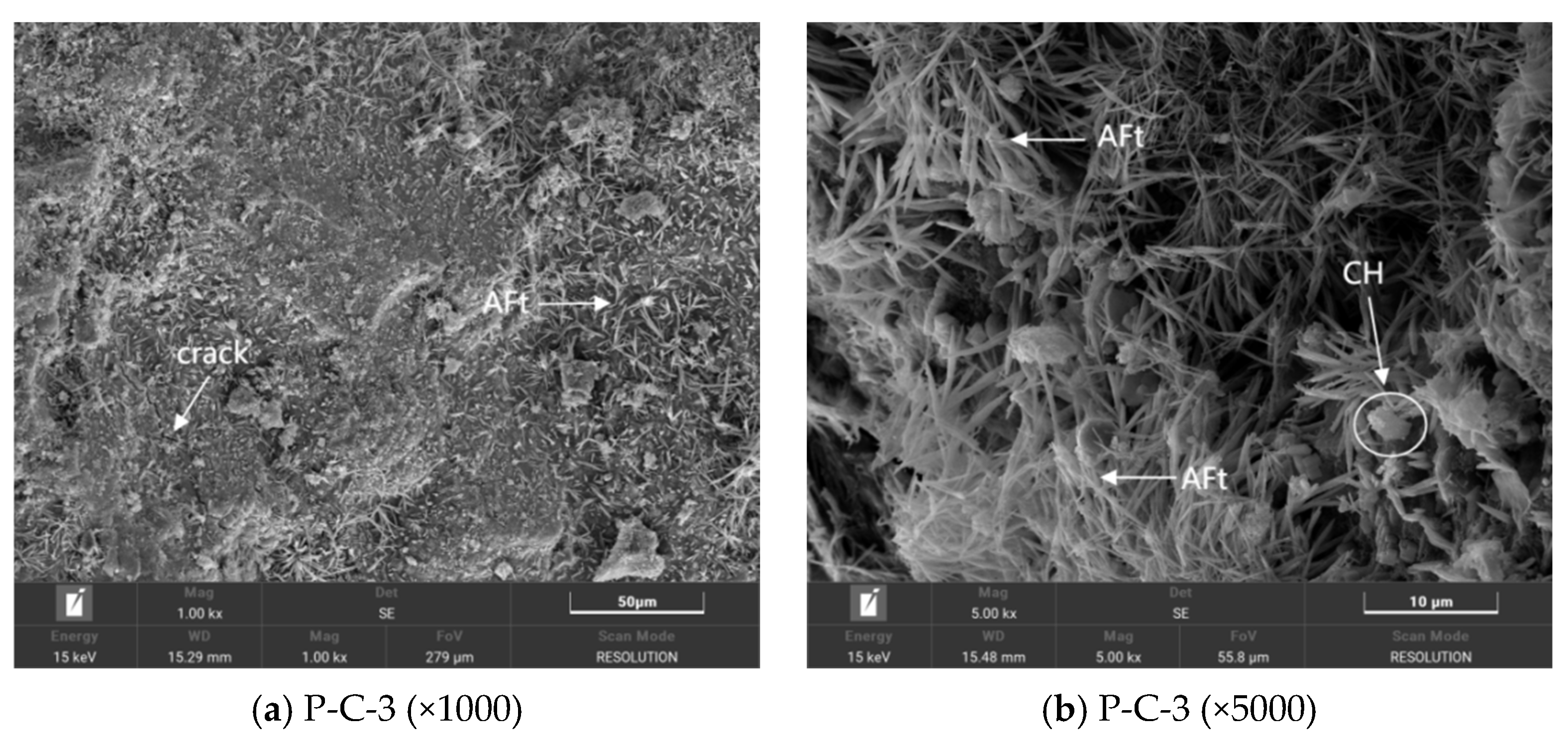
3.5.3. SEM
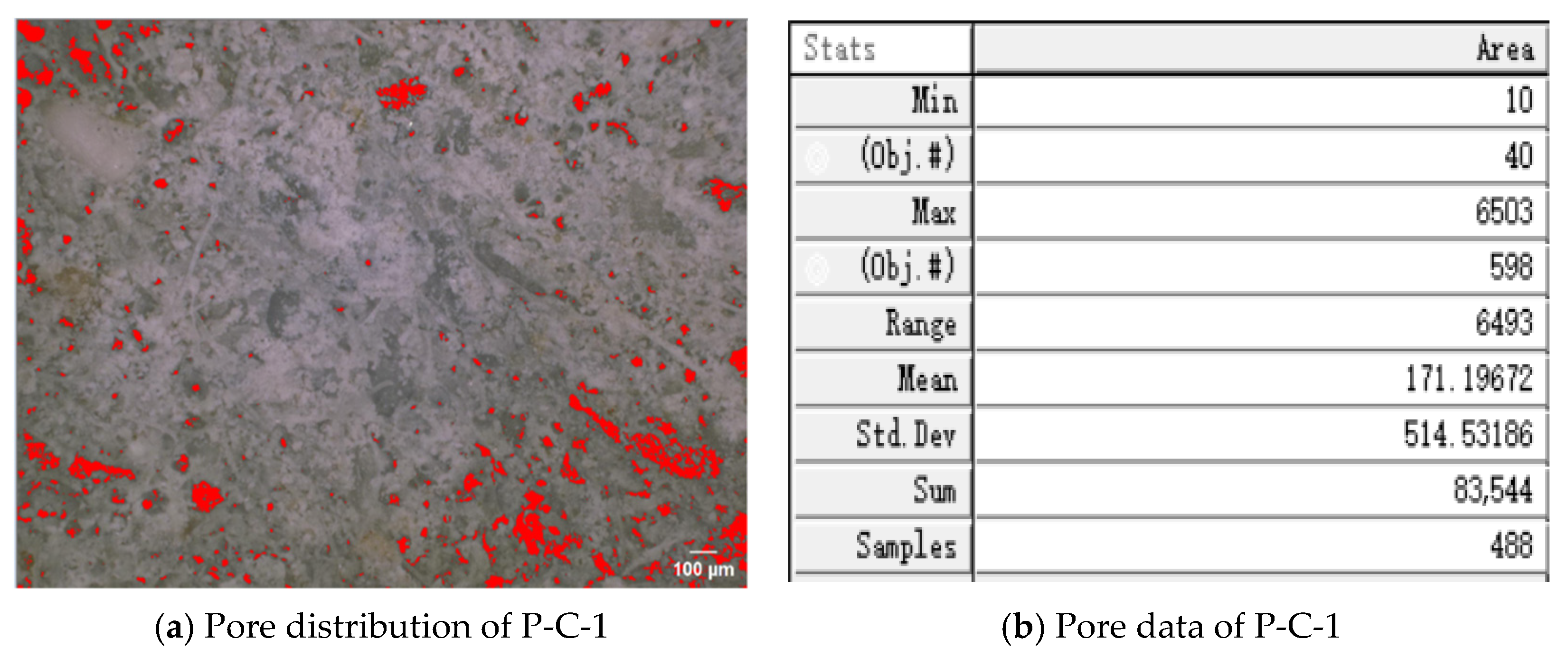
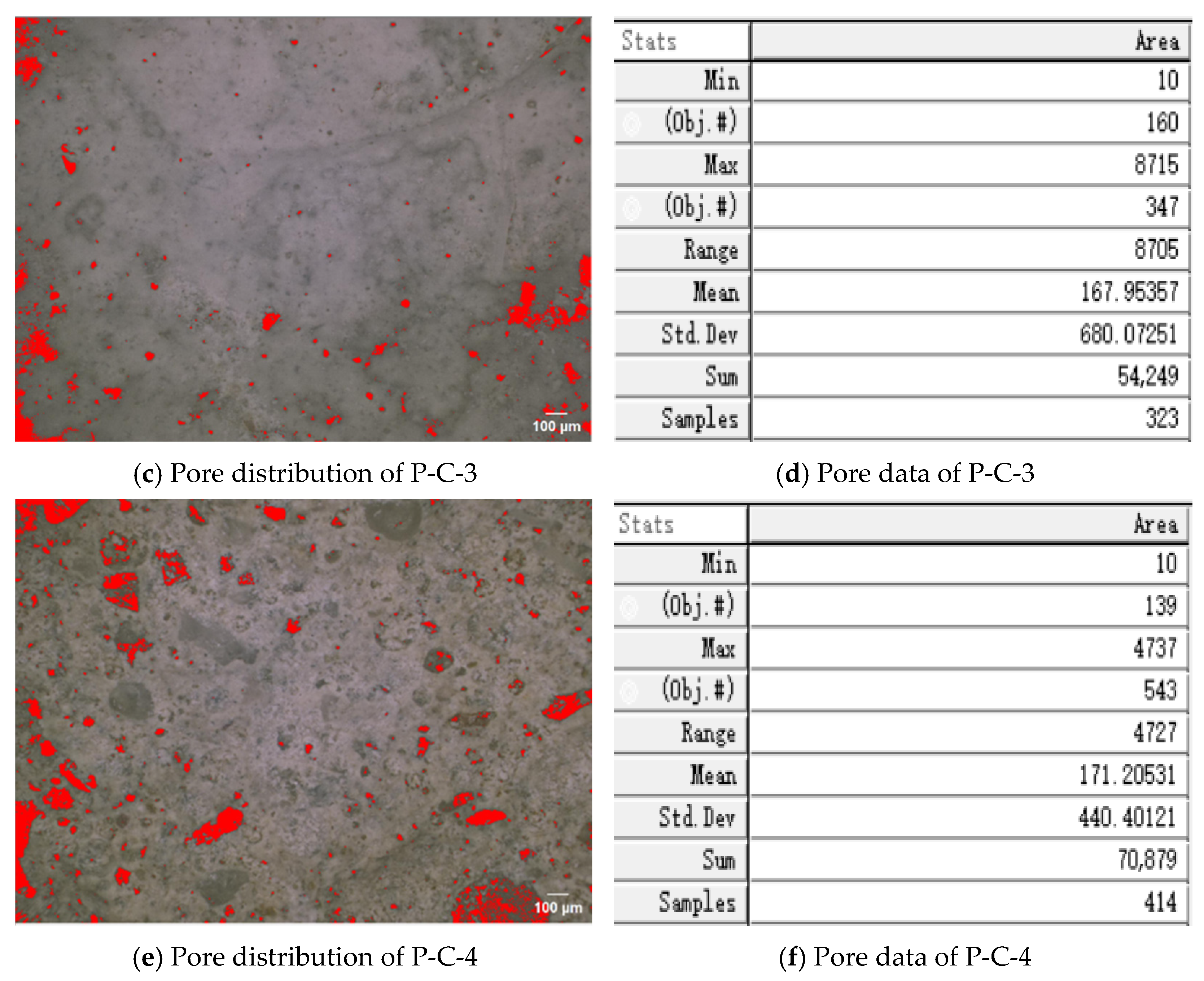
3.5.4. Image Analysis of Super Depth of Field (SDF)
4. Conclusions
Author Contributions
Funding
Data Availability Statement
Conflicts of Interest
References
- Wang, D.; Min, F.; Lyu, H.; Chen, J.; Wang, B.; Zhang, J. Recycling waste sand from slurry shield tunneling: A sustainable filter aid for waste slurry dehydration. J. Clean. Prod. 2023, 383, 135387. [Google Scholar] [CrossRef]
- Zhang, N.; Duan, H.; Sun, P.; Li, J.; Zuo, J.; Mao, R.; Liu, G.; Niu, Y. Characterizing the generation and environmental impacts of subway-related excavated soil and rock in China. J. Clean. Prod. 2020, 248, 119242. [Google Scholar] [CrossRef]
- Yin, Y.; Li, B.; Wang, W.; Zhan, L.; Xue, Q.; Gao, Y.; Zhang, N.; Chen, H.; Liu, T.; Li, A. Mechanism of the December 2015 Catastrophic Landslide at the Shenzhen Landfill and Controlling Geotechnical Risks of Urbanization. Engineering 2016, 2, 230–249. [Google Scholar] [CrossRef]
- Xiong, W.; Chen, Y.; Xu, J.; Zhang, Z.; Liang, C. Reuse of engineering waste soil and recycled fine aggregate to manufacture eco-friendly unfired clay bricks: Experimental assessment, data-driven modeling and environmental friendliness evaluation. Case Stud. Constr. Mater. 2023, 19, e02608. [Google Scholar] [CrossRef]
- Zaid, O.; El Ouni, M.H. Advancements in 3D printing of cementitious materials: A review of mineral additives, properties, and systematic developments. Constr. Build. Mater. 2024, 427, 136254. [Google Scholar] [CrossRef]
- Tauer, A.; Posch, H.; Kager, M.; Schubel, D. Recycling or landfill-Experience based on the example of Koralm Tunnel, contract KAT2 from design to construction: Verwertung oder Deponierung-Die Erfahrungen am Beispiel Koralmtunnel, Baulos KAT2 von der Planung bis zur Umsetzung. Geomech. Tunn. 2017, 10, 700–710. [Google Scholar] [CrossRef]
- Muntohar, A.S. Engineering characteristics of the compressed-stabilized earth brick. Constr. Build. Mater. 2011, 25, 4215–4220. [Google Scholar] [CrossRef]
- Jiang, J.; Wang, Y.; Li, J.; Wu, M.; Wang, C.; Bao, W. Characterization and mechanism of sintered light aggregate ceramsite with engineering excavated soil. Structures 2024, 70, 107699. [Google Scholar] [CrossRef]
- Jian, S.; Cheng, C.; Lv, Y.; Wang, C.; Tan, H.; Li, B. Preparation and evaluation of high-fluid backfill materials from construction spoil. Constr. Build. Mater. 2022, 345, 128370. [Google Scholar] [CrossRef]
- Vlieger, J.D.; Boehme, L.; Blaakmeer, J.; Li, J. Buildability assessment of mortar with fine recycled aggregates for 3D printing. Constr. Build. Mater. 2023, 367, 130313. [Google Scholar] [CrossRef]
- Yao, W.; Gao, Y.; Huang, X.; Du, H. Influence of printing speed and extrusion speed on the performance and pore structures of 3D printed mortar. Constr. Build. Mater. 2010, 493, 143157. [Google Scholar] [CrossRef]
- Hou, S.; Wu, W.; Duan, Z.; Zou, S.; Liang, C.; Ye, J.; Xiao, J. Rheology of fiber-reinforced mortar for 3D printing construction: Effect of recycled hybrid powder and polyethylene fiber. Constr. Build. Mater. 2024, 447, 138126. [Google Scholar] [CrossRef]
- Cho, E.; Gwon, S.; Cha, S.; Shin, M. Impact of accelerator on rheological properties of cement composites with cellulose microfibers: 3D printing perspective. J. Build. Eng. 2025, 106, 112538. [Google Scholar] [CrossRef]
- Liu, C.; Xiong, Y.; Chen, Y.; Jia, L.; Ma, L.; Deng, Z.; Wang, Z.; Chen, C.; Banthia, N.; Zhang, Y. Effect of sulphoaluminate cement on fresh and hardened properties of 3D printing foamed concrete. Compos. Part B Eng. 2022, 232, 109619. [Google Scholar] [CrossRef]
- Luo, W.; Liu, Y.; Lv, J.; Liu, H.; Li, H.; Chen, W. Mechanical and shrinkage properties of engineered cementitious composites with blended use of high-belite sulphoaluminate cement and ordinary Portland cement. J. Build. Eng. 2025, 106, 112551. [Google Scholar] [CrossRef]
- Panda, B.; Paul, S.C.; Hui, L.J.; Tay, Y.W.D.; Tan, M.J. Additive manufacturing of geopolymer for sustainable built environment. J. Clean. Prod. 2017, 167, 281–288. [Google Scholar] [CrossRef]
- Kilic, U.; Ma, J.; Baharlou, E.; Ozbulut, O.E. Effects of viscosity modifying admixture and nanoclay on fresh and rheo-viscoelastic properties and printability characteristics of cementitious composites. J. Build. Eng. 2023, 70, 106355. [Google Scholar] [CrossRef]
- Yin, Y.; Huang, J.; Wang, T.; Yang, R.; Hu, H.; Manuka, M.; Zhou, F.; Min, J.; Wan, H.; Yuan, D.; et al. Effect of Hydroxypropyl methyl cellulose (HPMC) on rheology and printability of the first printed layer of cement activated slag-based 3D printing concrete. Constr. Build. Mater. 2023, 405, 133347. [Google Scholar] [CrossRef]
- Nematollahi, B.; Vijay, P.; Sanjayan, J.; Nazari, A.; Xia, M.; Naidu Nerella, V.; Mechtcherine, V. Effect of Polypropylene Fibre Addition on Properties of Geopolymers Made by 3D Printing for Digital Construction. Materials 2018, 11, 2352. [Google Scholar] [CrossRef]
- Vargas, A.; Robayo-Salazar, R.; Mejía de Gutiérrez, R. Effects of Incorporating Fine Aggregates and Polypropylene Microfibres on the Cracking Control of 3D Printed Cementitious Mixtures. Buildings 2024, 15, 55. [Google Scholar] [CrossRef]
- JGJ/T 70-2009; Standard for Test Method of Performance on Building Mortar. Ministry of Housing and Urban-Rural Development of the People’s Republic of China: Beijing, China; China Architecture and Building Press: Beijing, China, 2009. (In Chinese)
- T/CECS 786-2020; Technical Specification for Concrete 3D Printing. China Association for Engineering Construction Standardization: Beijing, China; China Planning Press: Beijing, China, 2020. (In Chinese)
- GB/T 2419-2005; Test Method for Fluidity of Cement Mortar. General Administration of Quality Supervision, Inspection and Quarantine of the People’s Republic of China: Beijing, China; Standards Press of China: Beijing, China, 2005. (In Chinese)
- GB/T 50080-2016; Standard for Test Method of Performance on Ordinary Fresh Concrete. Ministry of Housing and Urban-Rural Development of the People’s Republic of China: Beijing, China; China Architecture and Building Press: Beijing, China, 2017. (In Chinese)
- GB/T 17671-2021; Test Method of Cement Mortar Strength (ISO Method). General Administration of Quality Supervision, Inspection and Quarantine of the People’s Republic of China: Beijing, China; Standards Press of China: Beijing, China, 2021. (In Chinese)
- Ma, G.; Li, Z.; Wang, L.; Wang, F.; Sanjayan, J. Mechanical anisotropy of aligned fiber reinforced composite for extrusion-based 3D printing. Constr. Build. Mater. 2019, 202, 770–783. [Google Scholar] [CrossRef]
- Gao, Y.; De Schutter, G.; Ye, G.; Tan, Z.; Wu, K. The ITZ microstructure, thickness and porosity in blended cementitious composite: Effects of curing age, water to binder ratio and aggregate content. Compos. Part B Eng. 2014, 60, 1–13. [Google Scholar] [CrossRef]
- Guo, C.; Chen, N.; Wang, R. Study on hydroxypropyl methylcellulose modified Portland cement-sulphoaluminate cement composites: Rheology, setting time, mechanical strength, resistance to chloride ingress, early reaction kinetics and microstructure. J. Build. Eng. 2024, 98, 111070. [Google Scholar] [CrossRef]
- Long, Z.; Long, G.; Tang, Z.; Shangguan, M.; Zhang, Y.; Wang, L.; Peng, L.; Yi, M. Hydration, strength, and microstructure evolution of Portland cement-calcium sulphoaluminate cement-CSH seeds ultra-early strength cementitious system. Constr. Build. Mater. 2024, 430, 136492. [Google Scholar] [CrossRef]
- Guo, C.; Wang, R. Using sulphoaluminate cement and calcium sulfate to modify the physical-chemical properties of Portland cement mortar for mechanized construction. Constr. Build. Mater. 2023, 367, 130252. [Google Scholar] [CrossRef]
- Bhat, R.; Han, T.; Sant, G.; Neithalath, N.; Kumar, A. A comprehensive analysis of hydration kinetics and compressive strength development of fly ash-Portland cement binders. J. Build. Eng. 2024, 88, 109191. [Google Scholar] [CrossRef]
- Li, J.; Chen, Y.; Wan, C. A mix-design method for lightweight aggregate self-compacting concrete based on packing and mortar film thickness theories. Constr. Build. Mater. 2017, 157, 621–634. [Google Scholar] [CrossRef]
- Wu, E.; Ma, X.; Fang, C.; Li, N.; Jia, L.; Jiang, P.; Wang, W. Strength performance and microscopic mechanism of cement mortar incorporating fine recycled concrete aggregate and natural sand. J. Build. Eng. 2025, 100, 111767. [Google Scholar] [CrossRef]
- Li, X.; Zhang, W.; Zhang, X.; Zhang, Y.; Zhang, L. Effects of inert particles in supplementary cementitious materials on the performance of super-sulfated cement and the enhancement mechanism of lithium slag. Constr. Build. Mater. 2025, 472, 140974. [Google Scholar] [CrossRef]
- Lopez-Zaldivar, O.; Lozano-Diez, R.V.; Verdu-Vazquez, A.; Llaurado-Perez, N. Effects of the addition of inertized MSW fly ash on calcium aluminate cement mortars. Constr. Build. Mater. 2017, 157, 1106–1116. [Google Scholar] [CrossRef]
- Petkova, V.; Stoyanov, V.; Mihaylova, K.; Kostova, B. Impact of pozzolanic and inert powders on the microstructure and thermal chemistry of cement mortars. Ceram. Int. 2025, 51, 5514–5527. [Google Scholar] [CrossRef]
- Chen, B.; Rao, M.; Feng, Y. Effects of curing temperature and supplementary cementitious materials on the interfacial transition zone (ITZ) of high-ferrite cement products. Constr. Build. Mater. 2024, 425, 135920. [Google Scholar] [CrossRef]
- Ahmad, Z.; Qureshi, M.I.; Ahmad, F.; El Ouni, M.H.; Asghar, M.Z.; Ghazouani, N. Effect of macro synthetic fiber (MSF) on the behavior of conventional concrete and the concrete containing e-waste aggregates. Mater. Struct. 2025, 58, 234. [Google Scholar] [CrossRef]
- Dai, P.; Lyu, Q.; Zong, M.; Zhu, P. Effect of waste plastic fibers on the printability and mechanical properties of 3D-printed cement mortar. J. Build. Eng. 2024, 83, 108439. [Google Scholar] [CrossRef]
- Li, L.G.; Xiao, B.; Kou, S. Influences of fiber length on the printability and strength of glass fiber-reinforced 3D-printed mortar. J. Intell. Constr. 2025, 3, 1–14. [Google Scholar] [CrossRef]
- Gurunandan, M.; Malla, H.J.; Nanthagopalan, P. Effect of water to binder, aggregate to binder ratio and admixtures on printability and mechanical properties of 3D printable mortar mixtures. J. Build. Eng. 2025, 99, 111649. [Google Scholar] [CrossRef]
- Tang, J.; Zhang, D.; Ma, G.; Ji, X.; Zhou, W. Early Hydration of Calcium Sulfoaluminate Cement at Elevated Temperaturesv. ACS Sustain. Chem. Eng. 2024, 12, 13654–13668. [Google Scholar] [CrossRef]
- Wu, Y.; Li, P.; Huang, X.; Li, W.; Sun, J.; Ma, S. Study on hydration mechanism of Ternesite-Ye’elimite binary system. Constr. Build. Mater. 2024, 421, 135699. [Google Scholar] [CrossRef]
- Higl, J.; Hinder, D.; Rathgeber, C.; Ramming, B.; Linden, M. Detailed in situ ATR-FTIR spectroscopy study of the early stages of C-S-H formation during hydration of monoclinic C3S. Cem. Concr. Res. 2021, 142, 106367. [Google Scholar] [CrossRef]
- Li, X.; Brigiano, F.S.; Pezzotti, S.; Liu, X.; Chen, W.; Chen, H.; Li, Y.; Li, H.; Lin, X.; Zhang, W.; et al. Unconventional structural evolution of an oxide surface in water unveiled by in situ sum-frequency spectroscopy. Nat. Chem. 2025, 17, 198–203. [Google Scholar] [CrossRef] [PubMed]
- Lothenbach, B.; Scrivener, K.; Hooton, R.D. Supplementary cementitious materials. Cem. Concr. Res. 2011, 41, 1244–1256. [Google Scholar] [CrossRef]
- Chen, B.; Fang, X.; Zhao, Y.; Li, Z. Ca/Si-dependent size of silica nanoparticles derived from C-S-H at high water to solid ratio. Cem. Concr. Res. 2024, 187, 107729. [Google Scholar] [CrossRef]
- Ahmad, F.; Jamal, A.; Iqbal, M.; Alqurashi, M.; Almoshaogeh, M.; Al-Ahmadi, H.M.; E. Hussein, E. Performance Evaluation of Cementitious Composites Incorporating Nano Graphite Platelets as Additive Carbon Material. Materials 2022, 15, 290. [Google Scholar] [CrossRef] [PubMed]
- Xie, Y.; Qian, C. Improved ettringite stabilization by calcium carbonate and calcium nitrate additions in ternary PC-CSA-C$ systems. Cem. Concr. Res. 2024, 175, 107383. [Google Scholar] [CrossRef]
- Zhang, Z.; Hu, Y.; Xiong, L.; Geng, G. The influence of portlandite, calcite, quartz and ettringite inclusions on the multiscale mechanical behaviors of C-S-H matrix. Cem. Concr. Res. 2025, 189, 107781. [Google Scholar] [CrossRef]



| Sieve diameter/mm | 4.75 | 2.36 | 1.18 | 0.60 | 0.30 | 0.15 | Bottom |
| Cumulative Retained Percentage/% | 1.32 | 16.98 | 25.28 | 38.14 | 65.66 | 91.74 | 100 |
| Bulk Density (kg/m3) | Apparent Density (kg/m3) | Natural Water Content /% | Mud Content /% | Fineness Modulus |
|---|---|---|---|---|
| 1800 | 2630 | 1.54 | 6.0 | 1.44 |
| Type | CaO | SiO2 | Al2O3 | SO3 | Fe2O3 | MgO | Others |
|---|---|---|---|---|---|---|---|
| PO 42.5 | 60.09 | 20.68 | 7.76 | 3.31 | 3.26 | 3.01 | 1.98 |
| CSA 42.5 | 49.42 | 9.50 | 21.77 | 9.64 | 4.50 | 1.79 | 3.38 |
| Type | Flexural Strength /MPa | Compressive Strength /MPa | Specific Surface Area (m2/kg) | Initial Setting Time /min | Final Setting Time /min | Apparent Density (kg/m3) | ||
|---|---|---|---|---|---|---|---|---|
| 3 d | 28 d | 3 d | 28 d | |||||
| PO 42.5 | 4.7 | 9.1 | 20.0 | 43.5 | 28.5 | 155 | 207 | 3000 |
| CSA 42.5 | 8.5 | 13.4 | 26.3 | 46.2 | 469 | 19 | 27 | 2810 |
| 45 μm Sieve Residue | Water Demand Ratio | Activity Index | Loss on Ignition |
|---|---|---|---|
| 9.8 | 94 | 82 | 2.9 |
| Density (g/cm3) | Equivalent Diameter /μm | Length /mm | Elongation at Break /% | Tensile Strength /MPa | Elasticity Modulus /MPa |
|---|---|---|---|---|---|
| 0.91 | 25.5 | 6 | 30 | ≥400 | ≥3500 |
| No. | PO /% | CSA /% | Sand–Binder Ratio | PP Fiber /% | HPMC /% | Water–Binder Ratio | Fly Ash /% | Water-Reducing Agent /% |
|---|---|---|---|---|---|---|---|---|
| Pre-test | 90 | 10 | 1.5 | 1.00 | 0.1 | 0.35 | 20 | 2.5 |
| P-C-1 | 95 | 5 | 1.5 | 0.75 | 0.1 | |||
| P-C-2 | 90 | 10 | ||||||
| P-C-3 | 85 | 15 | ||||||
| P-C-4 | 80 | 20 | ||||||
| S-1 | 85 | 15 | 1.4 | 0.75 | 0.1 | |||
| S-2 | 1.5 | |||||||
| S-3 | 1.6 | |||||||
| S-4 | 1.7 | |||||||
| H-1 | 85 | 15 | 1.5 | 0.75 | 0.050 | |||
| H-2 | 0.075 | |||||||
| H-3 | 0.100 | |||||||
| H-4 | 0.125 |
| Reduction Rate | 7 d | 28 d | ||||
|---|---|---|---|---|---|---|
| No. | X | Y | Z | X | Y | Z |
| P-C-3 | 40.1 | 30.4 | 24.4 | 20.9 | 15.8 | 8.2 |
| S-1 | 35.3 | 23.3 | 18.4 | 15.9 | 11.2 | 6.0 |
| Reduction Rate | 7 d | 28 d | ||||
|---|---|---|---|---|---|---|
| No. | X | Y | Z | X | Y | Z |
| P-C-3 | 31.6 | 18.9 | 11.6 | 11.6 | 5.4 | 2.6 |
| S-1 | 28.4 | 13.6 | 8.0 | 10.9 | 5.4 | 1.8 |
| Anisotropy Index | Compressive Strength | Flexural Strength | ||
|---|---|---|---|---|
| No. | 7 d | 28 d | 7 d | 28 d |
| P-C-3 | 0.215 | 0.124 | 0.250 | 0.115 |
| S-1 | 0.200 | 0.104 | 0.230 | 0.111 |
Disclaimer/Publisher’s Note: The statements, opinions and data contained in all publications are solely those of the individual author(s) and contributor(s) and not of MDPI and/or the editor(s). MDPI and/or the editor(s) disclaim responsibility for any injury to people or property resulting from any ideas, methods, instructions or products referred to in the content. |
© 2026 by the authors. Licensee MDPI, Basel, Switzerland. This article is an open access article distributed under the terms and conditions of the Creative Commons Attribution (CC BY) license.
Share and Cite
Zhou, W.; Yang, C.; He, X.; Zhou, M.; Zhao, H. Sustainably 3D-Printing Mortar with Construction Residue Sand: Printability, Mechanical Properties, and Microstructural Mechanisms. Buildings 2026, 16, 709. https://doi.org/10.3390/buildings16040709
Zhou W, Yang C, He X, Zhou M, Zhao H. Sustainably 3D-Printing Mortar with Construction Residue Sand: Printability, Mechanical Properties, and Microstructural Mechanisms. Buildings. 2026; 16(4):709. https://doi.org/10.3390/buildings16040709
Chicago/Turabian StyleZhou, Wenjuan, Can Yang, Xiao He, Mingli Zhou, and Handi Zhao. 2026. "Sustainably 3D-Printing Mortar with Construction Residue Sand: Printability, Mechanical Properties, and Microstructural Mechanisms" Buildings 16, no. 4: 709. https://doi.org/10.3390/buildings16040709
APA StyleZhou, W., Yang, C., He, X., Zhou, M., & Zhao, H. (2026). Sustainably 3D-Printing Mortar with Construction Residue Sand: Printability, Mechanical Properties, and Microstructural Mechanisms. Buildings, 16(4), 709. https://doi.org/10.3390/buildings16040709