
Article

Model Test Study on Group Under-Reamed Anchors Under Cyclic Loading

1
School of Civil Engineering and Architecture, Wuhan Institute of Technology, Wuhan 430074, China
2
Guangzhou Municipal Engineering Group Ltd., Guangzhou 510098, China
*
Author to whom correspondence should be addressed.
Buildings 2026, 16(3), 540; https://doi.org/10.3390/buildings16030540
Submission received: 6 December 2025 / Revised: 11 January 2026 / Accepted: 19 January 2026 / Published: 28 January 2026
(This article belongs to the Special Issue Advanced Applications of AI-Driven Structural Control)

Abstract

This study conducted laboratory model tests, integrated with Particle Image Velocimetry (PIV) technology, to investigate the evolution of the uplift bearing capacity of an under-reamed anchor group subjected to cyclic loading. The tests considered various working conditions, including different spacing ratios (S/D = 4, 5, 6, where S was the center-to-center spacing and D was the diameter of the under-reamed body), varying cyclic amplitude ratios (λ = 0.3, 0.5, 0.6, 0.7, 0.8) and different cycle times (M = 1, 5, 10, 30). PIV was utilized to observe the displacement field of the surrounding soil, revealing the group effect of the anchors and the variation in their uplift capacity under diverse cyclic amplitudes and cyclic times. The results indicated that the load–displacement curves could be delineated into three distinct stages: elastic, elastoplastic, and plastic. Notably, the group effect primarily initiated during the elastoplastic stage and developed significantly within the plastic stage. The cyclic amplitude ratio was identified as a key factor influencing the uplift capacity. Furthermore, compared to results from single pull-out tests, both the vertical displacement of the surrounding soil and the shear strength of the sidewall adjacent to the under-reamed body decreased following cyclic loading. Finally, the influence of the cyclic times depended on the occurrence of anchor failure; in the absence of failure, the anchor maintained satisfactory performance even after multiple cycles.

1. Introduction

In recent years, with the increasing depth of underground space development, structural safety concerns induced by groundwater buoyancy became increasingly prominent. Anchor technology occupied a dominant position in anti-flotation engineering due to its cost-effectiveness [1]. Notably, under-reamed anchors, characterized by their unique “enlarged base” design, transformed the load transfer mechanism from pure shaft friction (typical of traditional anchors) to a composite mode of “shaft resistance plus end bearing.” This significantly enhanced both the uplift bearing capacity and deformation resistance of individual anchors [2]. While the emergence of innovative variations, such as inflatable anchors [3] and continuous multi-under-reamed anchors [4], further expanded their application scenarios [5], and despite under-reamed anchors being increasingly employed as “anchor groups” in large-scale anti-flotation systems, engineering designs at the time still largely relied on the simple superposition of single-anchor theories or empirical reduction factors. Given the stringent safety requirements of underground engineering, it was imperative to elucidate the overall mechanical behavior from the perspective of the anchor group effect.
Extensive research was conducted on the group effect of conventional anchors, primarily utilizing laboratory model tests [6,7,8,9]. Regarding static loading, studies by Geddes and Murray [10] and Majumder et al. [11] identified the influence of critical spacing on group efficiency. However, under service conditions, anti-flotation anchors were frequently subjected to cyclic loads induced by fluctuating groundwater levels, which led to significant degradation of anchorage performance [12,13,14]. Research on group systems under cyclic loading existing at that time predominantly focused on friction piles or conventional uniform-section anchors. For instance, Al-Douri and Poulos [15] identified “friction fatigue” as the primary failure mechanism. Regarding helical anchor groups, work by Hao [16] highlighted the impact of cyclic action on bearing capacity. Nevertheless, existing theories based on conventional piles could not be directly applied to under-reamed anchor groups. It remained uncertain whether under-reamed anchor groups exhibited degradation patterns comparable to those of friction piles. Furthermore, under low-frequency cyclic loading—such as seasonal water level fluctuations—the mechanisms of accumulated plastic deformation and stress redistribution in the soil surrounding the enlarged base might have differed significantly from those in conventional friction-based foundations. The paucity of research on the cyclic performance of under-reamed anchor groups created a gap in design guidelines necessary for ensuring their long-term stability.
In light of these considerations, this paper employed laboratory model tests on under-reamed anchor groups subjected to cyclic loading. The study aimed to investigate the group effect at different spacings and the influence of cyclic loading—specifically varying amplitude ratios and the cyclic times—on the bearing behavior of the under-reamed anchor groups. Furthermore, the mechanism governing the degradation of their uplift bearing capacity was analyzed.

2. Model Test System for Anchors

2.1. Physical Properties of the Model Soil

Under drained conditions, the mechanical properties of saturated sand were similar to those of dry sand [17]. Based on this premise and scaling theory, the fundamental mechanical parameters of the geomaterials used in this experiment—including characteristic indices such as cohesion (c) and the internal friction angle (φ)—were determined. Graded sand was employed to simulate the mechanical characteristics of natural sand. The gradation curve of the experimental sand was shown in Figure 1. The mechanical parameters of the test soil were consistent with those utilized in previous experiments by the research group [18], and the specific data were presented in detail in Table 1.

2.2. Cyclic Loading Testing Equipment

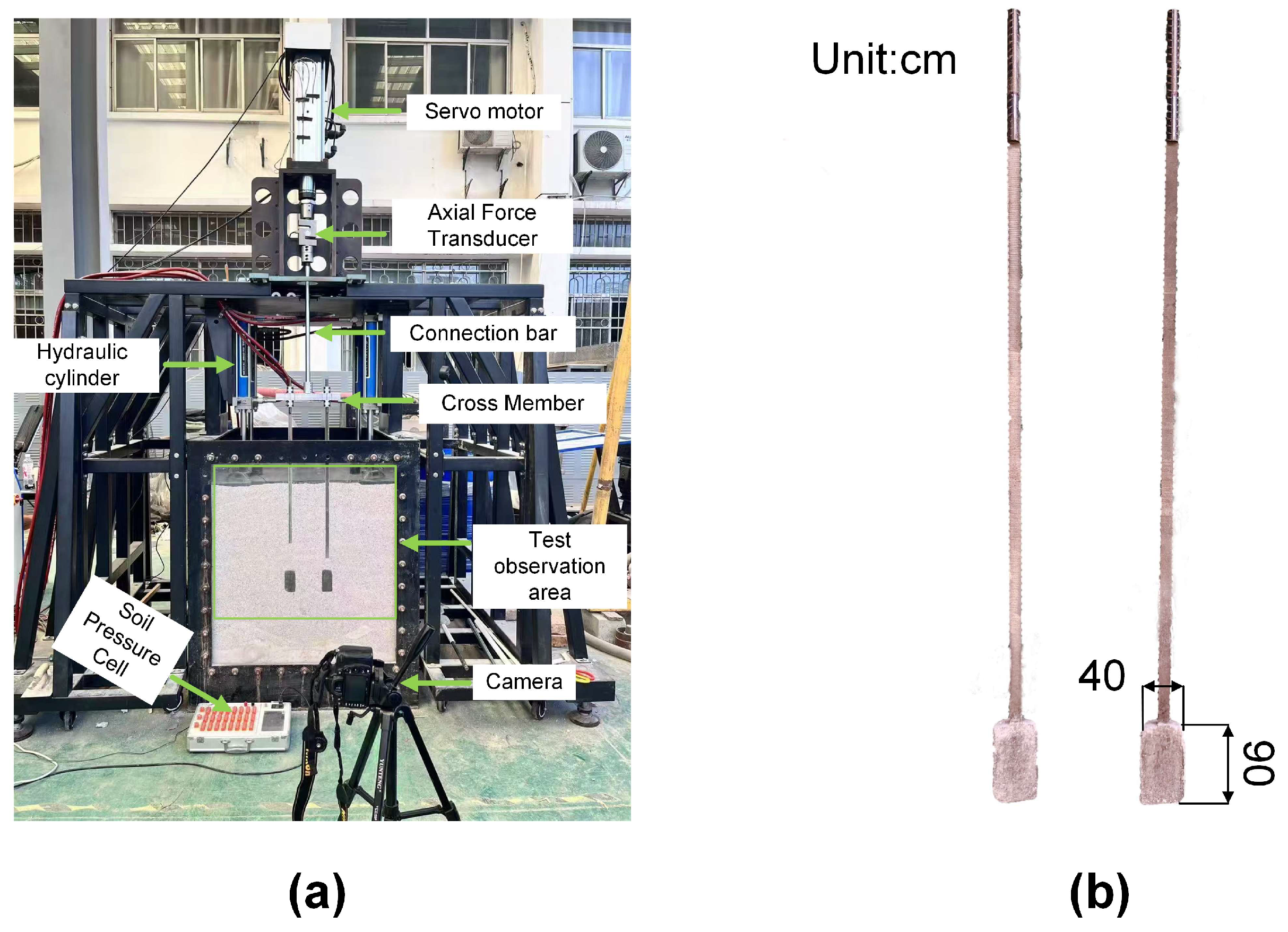
The tests were conducted using a multifunctional anchor pull-out test system, and the specific experimental setup was illustrated in Figure 2a. To enable visual monitoring, a half-model configuration was adopted, wherein all tests were performed against a transparent acrylic observation panel. A camera and supplementary lighting were positioned in front of the panel to capture the anchor pull-out process. The internal dimensions of the model box measured 1000 mm × 1000 mm × 1200 mm. A 550 mm thick layer of sand was placed at the bottom of the model box to serve as a cushion. The anchors were then installed flush against the transparent acrylic panel, ensuring full base contact with the cushion layer. Subsequently, sand was backfilled in successive 75 mm thick layers, with each layer manually compacted until the preset embedment depth was reached. However, since the designed burial depth could not be fully realized via layered backfilling due to experimental constraints [19], an equivalent embedment depth was achieved by applying surcharge pressure via an upper hydraulic jack. Specifically, a pressure of 18 kPa corresponded to one meter of burial depth. Images were captured at 1 s intervals. Finally, the PIV program was used to process the experimental data, and the variation in the pull-out axial force of the anchor group was recorded.

2.3. Test Plan

The model test system focused on a representative unit comprising two adjacent anchors selected from a larger group anchor system. A displacement-controlled servo system was employed for the pull-out tests, which applied uplift at a constant rate of 0.1 mm/s until a preset displacement was reached. Regarding scaling laws, considerations for model tests of under-reamed anchor groups generally fall into three categories: anchor geometry, cyclic loading characteristics, and soil properties. Notably, the bearing mechanism of under-reamed anchors closely resembles that of helical anchors; both systems derive uplift resistance primarily from soil bearing pressure acting on the upper surface of the enlarged base rather than relying solely on shaft friction. Therefore, guided by experimental precedents for similar anchorage structures, this study prioritized geometric similarity and adopted a 1:10 scale for the model design [19]
The cement mortar was prepared with a mass ratio of cement:sand:water = 1:1:0.4. The under-reamed body was secured to a reinforcing bar with a 12 mm diameter. To simulate the interface friction characteristics encountered in field applications, the surface of the under-reamed body was uniformly coated with epoxy resin and subsequently covered with the test sand. The diameter of the under-reamed body (D) was 40 mm, and the specific dimensions were detailed in Figure 2b.
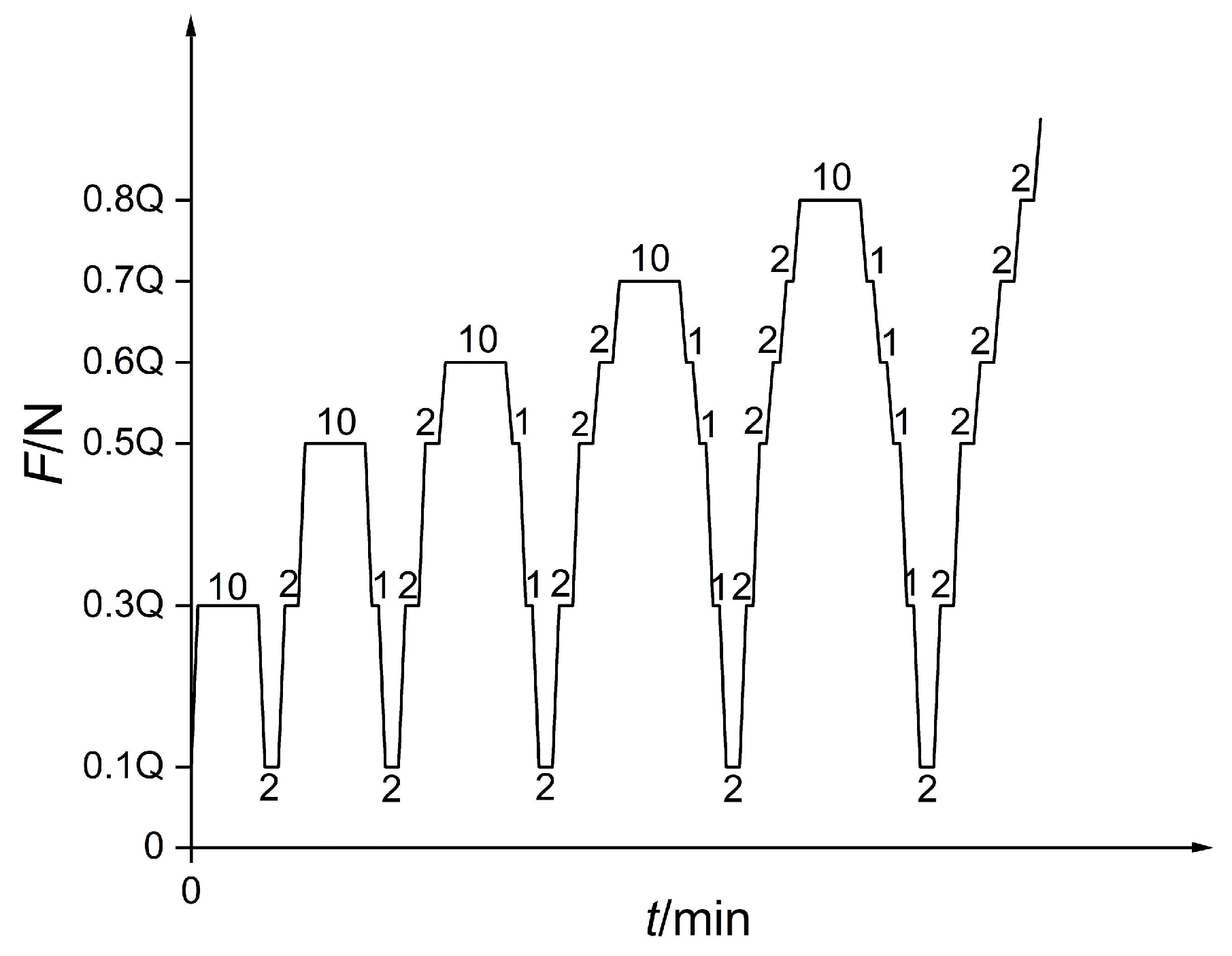
The pull-out procedures for the test anchors were categorized into two types: single pull-out and post-cyclic pull-out. For the single pull-out tests, a displacement rate of 0.1 mm/s was maintained, and all tests simulated a burial depth of 2 m. The ultimate uplift bearing capacity Q obtained from the single pull-out tests served as the reference for conducting the subsequent post-cyclic pull-out tests. A graded loading protocol was employed, as illustrated in Figure 3, with parameter values selected in accordance with code [20]. Consistent with the terminology used in the code, the applied load is designated as “cyclic load” throughout this paper. The initial load was set at 0.1 times the maximum test load. The cyclic loading tests investigated the effects of three varying parameters: the spacing ratio (S/D = 4, 5, 6, where S was the center-to-center distance between adjacent anchors), the cyclic amplitude ratio (λ = 0.3, 0.5, 0.6, 0.7, 0.8), and the cyclic times (M = 1, 50, 10, 30). During the tests, the variation in axial force of the anchors was monitored and recorded using electronic stress gauges installed at the anchor heads. Finally, Particle Image Velocimetry (PIV) was employed to analyze the soil displacement field around the test anchors. The specific details of the experimental program were presented in Table 2 and Table 3. It should be noted that a load level of 0.1 Q corresponded to λ = 0.1, 0.3 Q to λ = 0.3, and so forth.

3. Spacing Ratio Effects in Single Pull-Out Tests

3.1. Variation in Anchor Group Uplift Bearing Capacity with Spacing Ratio

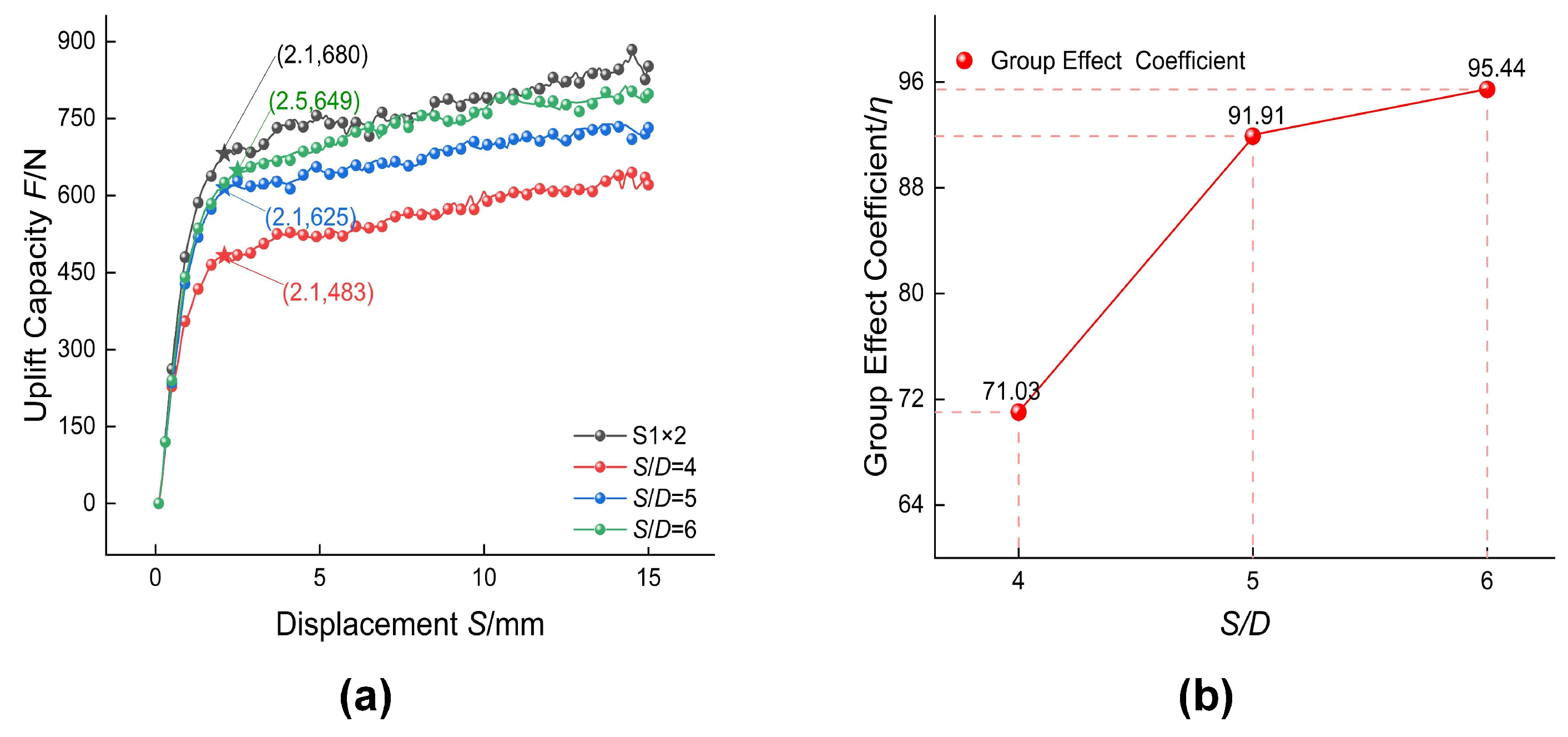
Figure 4a presented the pull-out F-S curves of the under-reamed anchor group compared with a baseline representing twice the uplift bearing capacity of a single anchor. Generally, all curves exhibited similar trends, characterized by a monotonically increasing pattern. In the initial pull-out stage, the uplift bearing capacity increased linearly with displacement, and the curve exhibited linear behavior. As displacement increased, the curve reached the first inflection point, marking the end of the elastic stage. In accordance with standard [20] and the specific experimental setup, a comprehensive criterion was adopted to evaluate the ultimate uplift capacity using displacement increments under constant load steps. Specifically, the point exhibiting a sharp rise in displacement under a constant load increment was defined as the transition from the elastoplastic to the plastic phase. This transition point is designated as the second inflection point. Consequently, the segment preceding this point represents the elastoplastic stage. After passing this second inflection point—which corresponded to the ultimate uplift bearing capacity—the uplift bearing capacity continued to increase slowly without exhibiting a distinct descending branch. The slope of the curve decreased significantly, indicating that the F-S curve had entered the plastic stage. In summary, the F-S curve of the under-reamed anchor group could be divided into three distinct phases: the elastic stage (up to the first inflection point), the elastoplastic stage (bounded by the second inflection point), and the plastic stage.
Therefore, this study defined the uplift bearing capacity value corresponding to the second inflection point in the F-S curve as the ultimate uplift bearing capacity, and the corresponding displacement as the ultimate displacement.
The uplift bearing capacity characteristics of the under-reamed anchor group exhibited variations under different spacing ratios, as shown in Figure 4a. During the elastic stage, the F-S curves of the anchor group essentially coincided; their slopes were independent of the spacing ratio and closely aligned with the curve representing twice the uplift bearing capacity of a single anchor. This behavior is attributed to the fact that the uplift bearing capacity in this stage was primarily provided by the side friction resistance [21], which depended on the surface area of the under-reamed body’s sidewall. Since the total surface area of all anchor group in this test was identical, the rate of increase in uplift bearing capacity with displacement was uniform during the elastic stage. Consequently, the influence of the spacing ratio S/D on the uplift bearing capacity in the elastic stage was minimal, and the group effect had not yet manifested.
In the elastoplastic stage, the uplift bearing capacity of the anchor group at a given displacement rose as the spacing ratio increased. However, when the spacing ratio S/D reached 5 and 6, the F-S curves tended to converge. At this point, the soil surrounding the anchors underwent the stage of elastoplastic deformation. The resistance mechanism transitioned from being dominated by soil shear strength to a combined action of the side friction resistance along the shaft of the under-reamed body and the end bearing resistance at its “shoulder” [21]. When the anchor spacing ratio increased to 5, the superposition effect of vertical stress between adjacent anchors weakened. Under these conditions, the group effect exerted a negligible influence on the uplift bearing capacity. Notably, at a spacing ratio of 4, the total uplift bearing capacity was attenuation due to the superposition of vertical stress increments between anchors. Conversely, at a spacing ratio of 5, this group effect was significantly mitigated. Although the load–displacement curves coincided during the elastic stage, they began to diverge in the elastoplastic stage, as shown in Figure 4a. This divergence indicated that the group effect became pronounced primarily during this phase.
In the plastic stage, the growth rate of the uplift bearing capacity of the anchor group system decreased significantly compared to the elastic and elastoplastic stages, demonstrating a characteristic of progressive strengthening with increasing displacement. Within this stage, anchor failure occurred, and the bearing capacity became particularly sensitive to variations in the spacing ratio. This sensitivity arises because, after entering the plastic stage, the uplift bearing capacity is primarily governed by end bearing resistance. As the spacing ratio increased, the end bearing resistance at the “shoulder” transitioned from a state of mutually interfering stress superposition towards independent load-bearing action. Consequently, the gain in uplift bearing capacity associated with larger spacing ratios was more pronounced in the plastic stage than in the elastoplastic stage.
Table 4 presents the uplift bearing capacity data for the single anchor and the anchor group at three different spacing ratios, where δ denoted the ultimate displacement value. The group effect coefficient (η) was calculated as follows:
η = Q g n Q
where Qg was the ultimate uplift bearing capacity of the anchor group; Q was the ultimate uplift bearing capacity of a single anchor; η was the number of anchors.
Based on the data in Table 4, the group effect of the under-reamed anchor group gradually weakened as the spacing ratio increases. For spacing ratios of 4, 5, and 6, the ultimate uplift bearing capacities of the anchor group were 483 N, 625 N, and 649 N, respectively, while the ultimate displacement values remained approximately constant at 2.1 mm. The corresponding group effect coefficients were 71.03%, 91.91%, and 95.44%, respectively.
As illustrated in Figure 4b, the group effect coefficient of the under-reamed anchor group exhibited a non-linear trend with increasing spacing ratio. Specifically, the coefficient increased significantly when the spacing ratio rose from 4 to 5. In contrast, the rate of increase became much more gradual when the spacing ratio further increased from 5 to 6. Once the spacing ratio reached 5, its influence on the group effect diminished markedly, and the group effect coefficient stabilized at approximately 90%. This observation indicated that the group effect essentially disappeared when the spacing ratio of the under-reamed anchor group exceeded 5. This behavior differed from that observed in conventional cylindrical anchor group with uniform cross-sections [22].

3.2. Displacement Contours Under Different Spacing Ratios

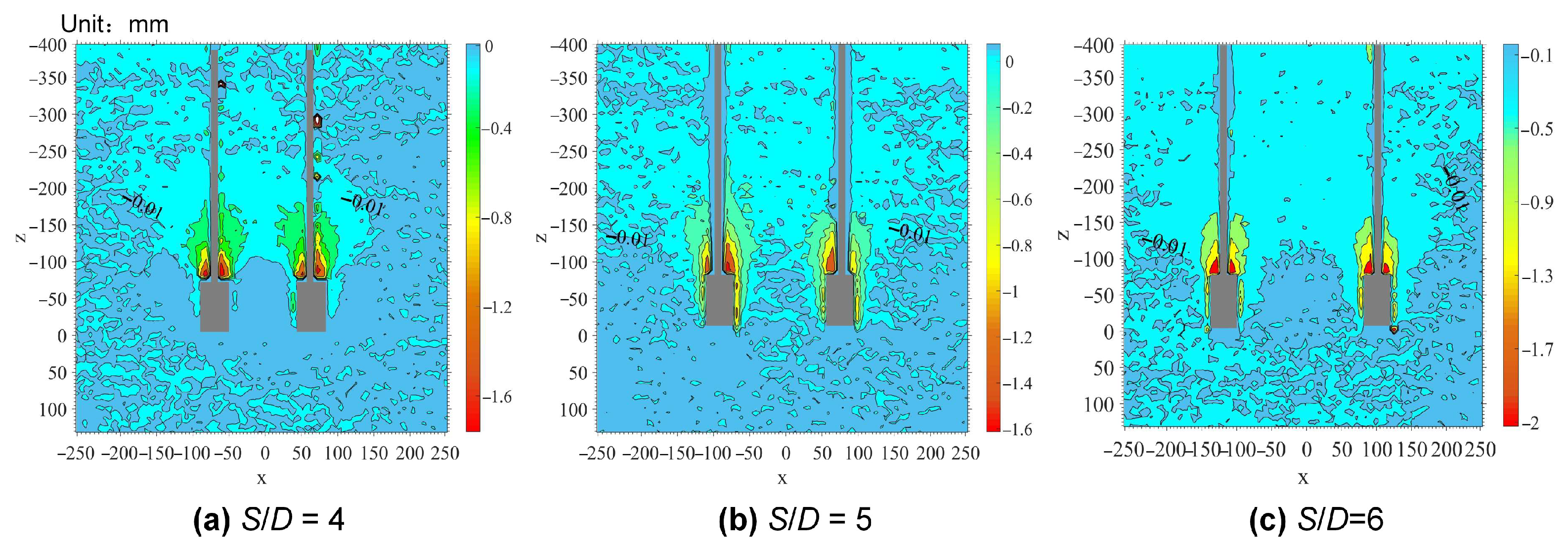
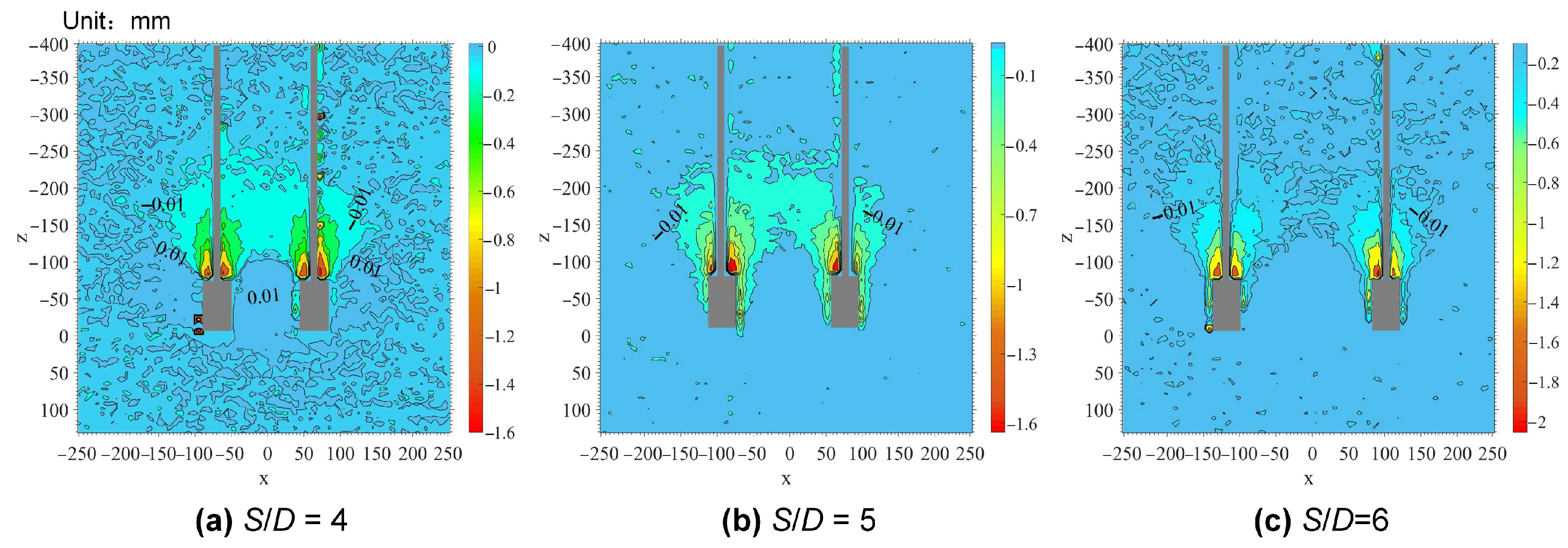
To investigate the evolution of the vertical soil displacement during the pull-out, the vertical displacement contour maps for anchor group with different spacing ratios were compared. As analyzed in the previous section, the group effect primarily occurred during the elastoplastic and plastic stages. Therefore, the analysis focused on these two stages, with the corresponding vertical displacement contour maps were presented in Figure 5 and Figure 6. The accumulated displacement represented the total soil displacement from the initial state to the current moment. Furthermore, in the PIV images [23], the horizontal and vertical coordinates were calibrated to reflect the actual physical dimensions of the observation area, and all numerical values are expressed in millimeters. The sign convention for displacement was defined as follows: a negative sign (− indicated upward movement of the soil, while a positive sign (+) denoted downward movement.
During PIV data processing, it was observed that the 0 mm vertical displacement contour extended beyond the effective observation area. Consequently, the −0.01 mm contour was adopted to delineate the vertical pull-out influence zone of the anchor.
During the elastoplastic stage, as shown in Figure 5a–c, the disturbance range of the soil surrounding the anchor group expanded as the spacing ratio increased. Specifically, at a spacing ratio of S/D = 4, the influence zone of the surrounding soil was minimal. Simultaneously, the area along the sidewall of the under-reamed body was enclosed by the −0.01 mm contour, indicating relatively minor soil displacement, as shown in Figure 5a. When the spacing ratio increased to 5 and 6, the disturbance range of the soil above the “shoulder” expanded significantly. Correspondingly, the soil displacement in the sidewall region of the under-reamed body also increased, as depicted in Figure 5b,c. Notably, at spacing ratios of 5 and 6, the soil disturbance ranges observed during the elastoplastic stage were comparable. This suggests that the mutual interference between anchors diminished at larger spacing ratios. This phenomenon was attributed to the fact that at larger spacing ratios, the stress field of each anchor within the soil became essentially independent, with minimal interaction between the under-reamed bodies. Consequently, the disturbance range of each individual anchor approached its maximum value under independent conditions. Furthermore, a larger spacing ratio facilitated fuller mobilization of the shear resistance along the sidewall of the under-reamed body.
During the plastic stage, the disturbance range of the soil surrounding the anchors contracted significantly compared to the elastoplastic stage, as specifically shown in Figure 6a–c. The disturbed area was primarily concentrated above the “shoulder” of the under-reamed body. Upon entering the plastic stage, anchor failure occurred, leading to a substantial reduction in the surrounding disturbance range, as illustrated in Figure 6a. Due to the limited anchor spacing (S/D = 4), the compression zones above the “shoulders” of adjacent under-reamed bodies overlapped. The actual compressed soil area was significantly smaller than the sum of the compression zones associated with independently acting anchors. During the uplift process in this stage, the shear stresses superposition occurred within the soil at the “shoulders” of the under-reamed bodies. The resulting arching effect caused the soil within the superposition zone to move as a monolithic block [24], subsequently generating tensile cracks in this region. This phenomenon is evidenced by the 0.01 mm displacement contour in the contour map. Additionally, the soil in the sidewall region of the anchor had essentially lost its capacity for upward displacement, indicating a degradation of shear strength. As the spacing ratio increased to 5 and 6, the disturbance range of the surrounding soil in the plastic stage exhibited distinct differences, primarily regarding the overlap of the compression zones in the soil above the “shoulders”. At S/D = 5, the overlapping compression zone between adjacent anchors remained substantial, as shown in Figure 6b. When the spacing ratio further increased to 6, the compression zones of the individual under-reamed bodies exhibited minimal overlap, resulting in essentially independent compression zones in the soil above each “shoulder,” as shown in Figure 6c. Consistent with the F-S curves in the plastic stage in Figure 4a, under the S/D = 6 condition, the uplift bearing capacity of the anchor group system approached twice that of a single anchor, indicating that the group effect had essentially disappeared.
The preceding analysis demonstrates that the disturbance range of the surrounding soil was closely related to the spacing ratio and corroborated the variation pattern of the uplift bearing capacity of the under-reamed anchor group. During the elastoplastic stage, the soil disturbance range expanded as the spacing ratio increased. When S/D ≥ 5, the disturbance range of the soil above the “shoulder” broadened, indicating that under larger spacing conditions, stress transmission from the “shoulder” of the under-reamed body became more widespread. This facilitated the mobilization of a larger volume of soil to resist uplift. However, when the spacing ratio exceeded 5, the adjacent anchors tended to behave independently with minimal mutual interaction. This reflected the existence of a critical threshold (S/D = 5) for the influence of the spacing ratio on soil disturbance during the elastoplastic stage. Upon entering the plastic stage, the soil disturbance range contracted significantly, with displacement concentrating above the “shoulder”. At a spacing ratio of 4, the actual compressed soil area above the “shoulder” was noticeably smaller than the sum of the compression zones associated with independent anchors. Furthermore, tensile cracks formed in the soil at the “shoulder”. As the spacing ratio increased to 6, the overlap of compression zones between the “shoulders” decreased markedly, and the interaction within the anchor group weakened. This allowed the under-reamed base to mobilize its end bearing resistance more effectively, resulting in an uplift bearing capacity that was essentially equivalent to twice that of a single anchor. Therefore, the evolution of the disturbance range was closely linked to the variation in uplift bearing capacity. Consequently, selecting an appropriate spacing ratio was essential for effectively optimizing both the soil disturbance range and the interaction between anchors.

4. Cyclic Amplitude Effects

4.1. Load–Displacement Curves Under Different Cyclic Amplitude Ratios

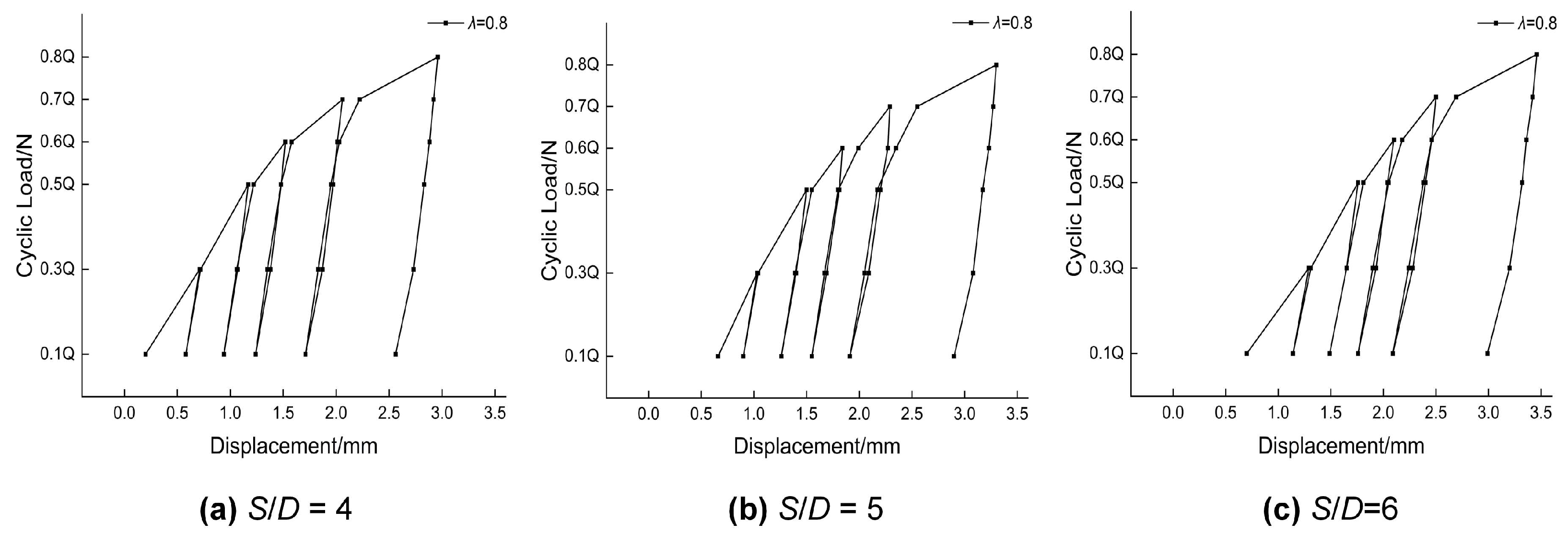
Following the determination of the ultimate uplift bearing capacity obtained from the single pull-out tests, post-cyclic pull-out tests were conducted. For anchors G1, G2, and G3, cyclic loading was terminated at λ = 0.9, when the maximum load reached 0.9 Q, because the displacement failed to converge [20]. It was observed that the under-reamed anchor group across all spacing ratios failed when subjected to λ = 0.8, and their displacement hysteresis curves during the cyclic process were analyzed.
The displacement hysteresis curves in Figure 7a–c indicated that the displacement evolution of the under-reamed anchor group during cyclic loading was generally consistent across different spacing ratios. As the load increased incrementally, the anchor displacement accumulated continuously during the loading phase and gradually recovered during the unloading phase. Once the load reached 0.8 Q, the displacement at the end of the unloading phase increased significantly, signifying that plastic deformation had occurred in the soil. This plastic deformation adversely affected the anchoring performance of the anchor group. The analysis reveals that the displacement under cyclic loading was heavily dependent on the load amplitude, with increasing amplitude leading to exacerbated anchor displacement. For spacing ratios of 4, 5, and 6, the anchor displacements recorded at the end of cycling were 2.56 mm, 2.90 mm, and 2.99 mm, respectively, demonstrating an increasing trend with larger spacing ratios. Synthesizing this with the analysis of the ultimate uplift bearing capacity in Section 3, a distinct trade-off is observed. Although increasing the spacing ratio improved the ultimate uplift bearing capacity, the displacement under cyclic loading became more pronounced at a large spacing ratio (S/D = 6). Therefore, after experiencing the same cyclic amplitude, an anchor group with a larger spacing ratio would exhibit greater displacement, indicating a relatively weaker controllability of displacement under cyclic action.
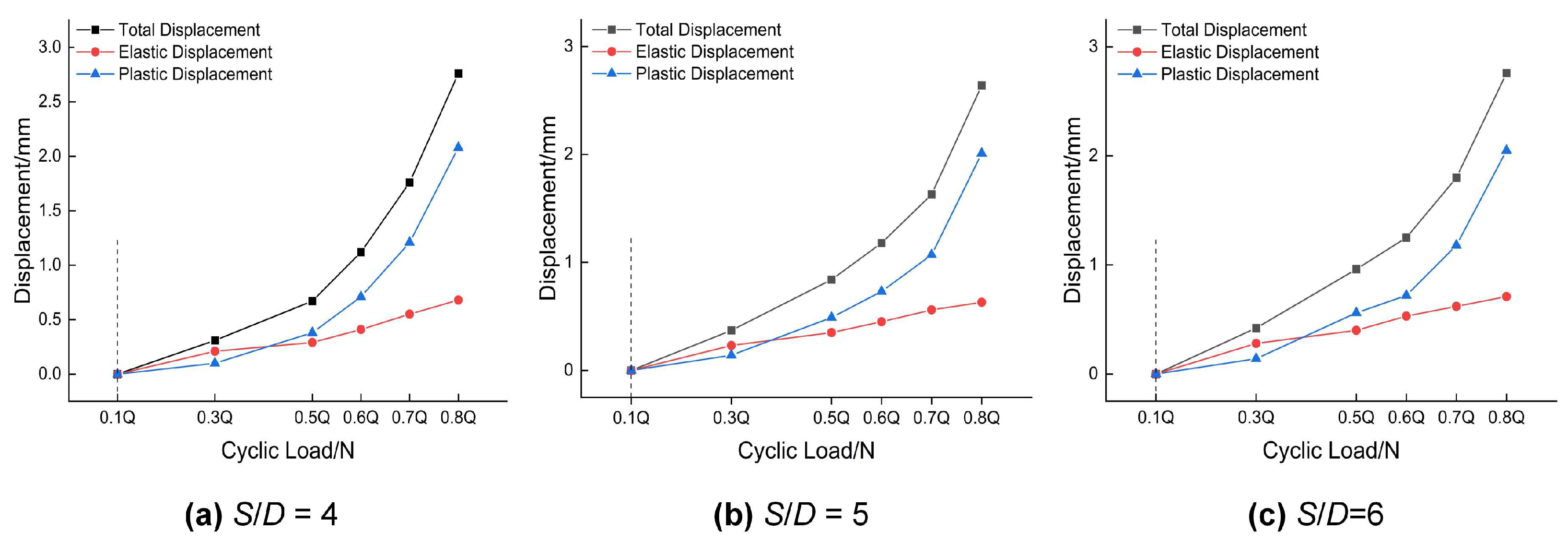
Figure 8a–c illustrated the patterns of elastic and plastic displacement for the under-reamed anchor group during cyclic loading under different spacing ratios. The results demonstrated that: At a spacing ratio of 4, during the first cycle (loading path: 0.1 Q → 0.3 Q → 0.1 Q, with a maximum load of 0.3 Q), the total displacement of the under-reamed anchor group measured 0.31 mm. The elastic displacement was 0.21 mm, accounting for 67.74% of the total displacement, while the plastic displacement was 0.1 mm, constituting 32.26%. This indicated that even at low load levels (λ < 0.3) during the initial cyclic loading stage, the anchor had already developed partial plastic displacement, a phenomenon consistent with findings reported in [25]. As the cyclic amplitude ratio increased, the proportion of elastic displacement within the total displacement gradually decreased, while the proportion of plastic displacement progressively increased. During the second cycle (maximum load 0.5 Q), third cycle (maximum load 0.6 Q), and fourth cycle (maximum load 0.7 Q), the proportion of elastic displacement decreased by 24.26%, 31.13%, and 36.49%, respectively. Correspondingly, the proportion of plastic displacement rose to 56.72%, 63.39%, and 68.75%, respectively. This trend indicated that under progressively increasing cyclic loading, plastic displacement developed continuously and gradually became the dominant component of the anchor’s total displacement. By the fifth cycle (maximum load 0.8 Q), the proportion of plastic displacement further increased to 75.36%, signifying that the anchor-soil system had accumulated substantial plastic deformation at this stage. Similar patterns were observed under the other two spacing ratio conditions.

4.2. Post-Cyclic Amplitude Effects

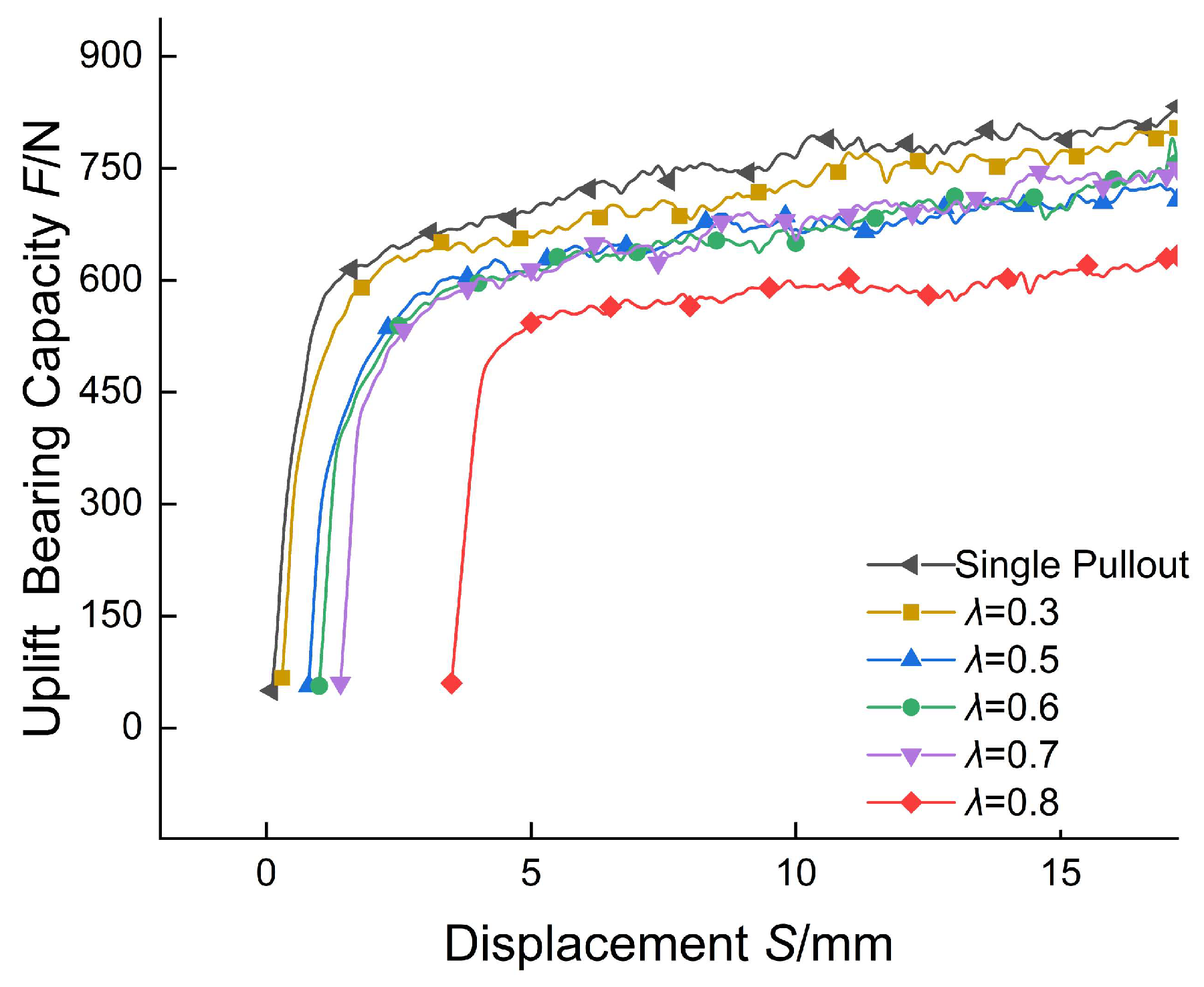
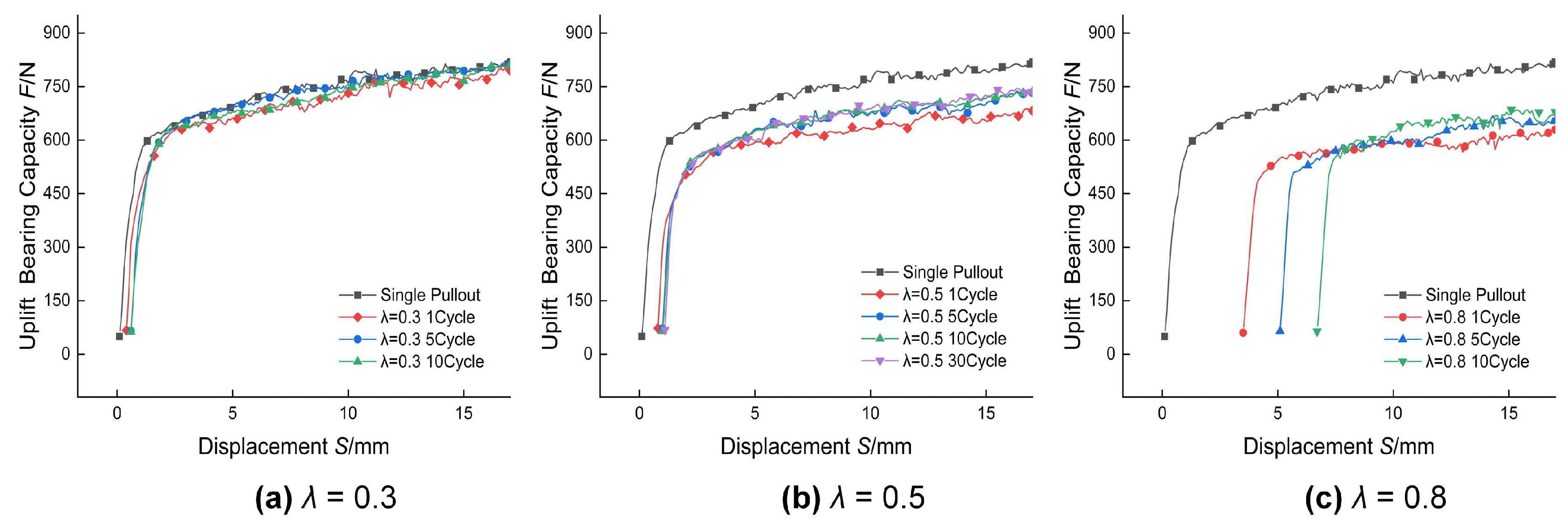
To facilitate comparison, the anchor group with a spacing ratio of 6 was selected for detailed analysis in this study. The anchor group with S/D = 6 was subjected to post-cyclic pull-out tests after being cycled under λ = 0.3, 0.5, 0.6, 0.7, and 0.8. Figure 9 presented a comparison of the bearing capacities obtained from single pull-out tests versus those measured after cyclic loading under varying amplitude ratios.
For λ = 0.3, 0.5, 0.6, 0.7, and 0.8, the ultimate uplift bearing capacity following cyclic loading was 640 N, 611 N, 605 N, 604 N, and 540 N, respectively, in comparison to the ultimate uplift bearing capacity (F) of 649 N obtained from the single pull-out test. The degradation rate of the ultimate uplift bearing capacity under different cyclic amplitude ratios was calculated as (Qg-F)/Qg and was summarized in Table 5. As indicated in Table 5, the degradation rate was the lowest at λ = 0.3, being only 1.39%. For λ = 0.5, 0.6, and 0.7, the degradation rates were all below 7%. However, at λ = 0.8, the degradation rate increased significantly to 16.8%. This demonstrated that λ exerted a significant influence on uplift performance. Furthermore, the cyclic amplitude ratio also significantly influenced the ultimate displacement of the anchor group. As detailed in Table 5, the ultimate displacement increased with λ, reaching 4.3 mm at λ = 0.8. This phenomenon is attributed to the substantial plastic deformation induced in the soil surrounding the anchor during the cyclic process, which necessitated requiring a larger displacement for the anchor to reach its ultimate uplift bearing capacity.
As shown in Figure 9, the curves of the under-reamed anchor group after cyclic loading exhibited behavior consistent with the single pull-out test, and could similarly be divided into the elastic stage, elastoplastic stage, and plastic stage. At a cyclic amplitude ratio of λ = 0.3, the F-S curve most closely resembled that of the single pull-out, indicating that the soil surrounding the anchor experienced minimal disturbance under this low-amplitude cyclic loading, with limited impact from the cyclic effects. As the cyclic amplitude ratio increased to 0.5, the uplift bearing capacity further degraded. However, when the amplitude ratio subsequently rose to 0.6 and 0.7, the uplift bearing capacity showed no significant change and remained essentially consistent with that at λ = 0.5. This suggested that within the λ range of 0.5–0.7, the soil particle arrangement and stress distribution underwent certain adjustments during cycling [26], but the impact of cyclic loading on the soil structure gradually stabilized. Consequently, the uplift bearing capacity remained largely consistent across this range of cyclic amplitudes. Nevertheless, when λ further increased to 0.8, the uplift bearing capacity showed substantial degradation compared to the single pull-out test. This was primarily due to the irreversible damage inflicted upon the soil structure around the anchor by the high-amplitude cyclic loading, which compromised the soil’s ability to provide sufficient uplift resistance to the anchor group.

4.3. Post-Cyclic Displacement Contours

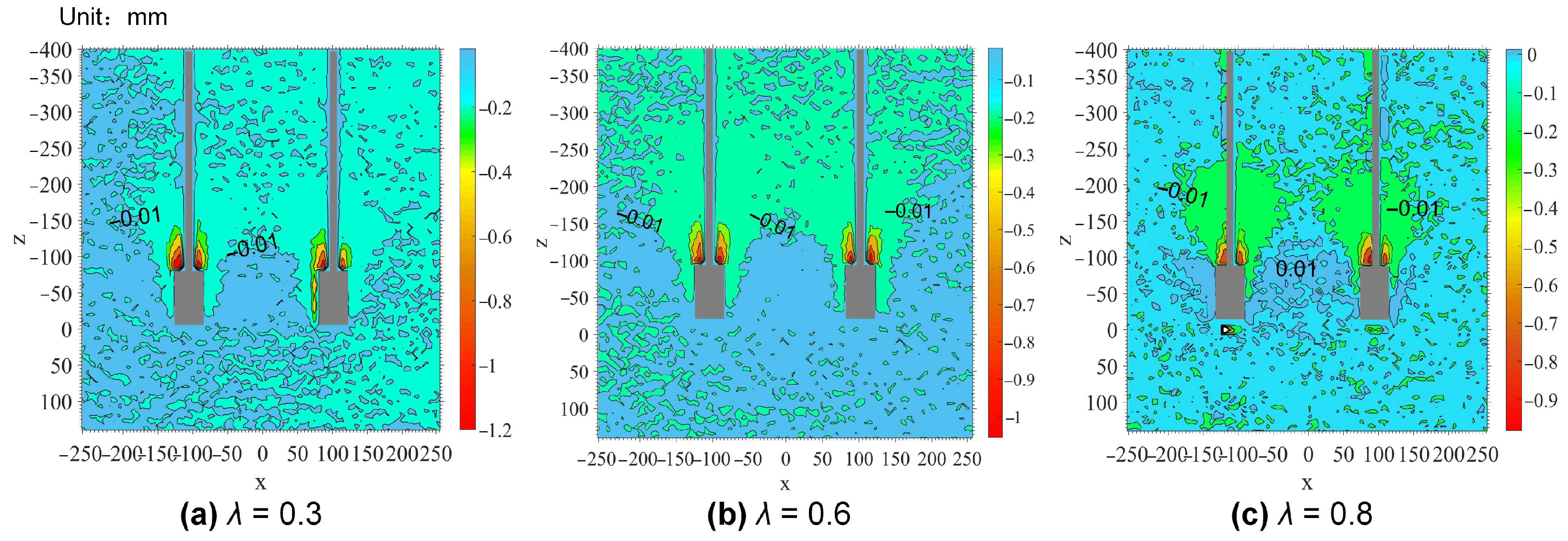
Figure 10a,b presented the contour maps of vertical accumulated displacement of the soil surrounding the anchor during the post-cyclic pull-out process within the elastoplastic stage under conditions of λ = 0.3 and λ = 0.6. In comparison to Figure 5c, the soil displacement in the sidewall zone of the under-reamed body was significantly influenced by the cyclic loading. At λ = 0.3, during the elastoplastic stage, the soil displacement along the sidewall exhibited a substantial reduction relative to the single pull-out scenario. The displacement in this zone was primarily represented by the outermost −0.01 mm contour, with only localized areas exhibiting displacement levels comparable to those above the “shoulder,” as shown in Figure 10a. Furthermore, the maximum displacement of the surrounding soil decreased from 2 mm to 1.2 mm. As the cyclic amplitude ratio increased to 0.6, displacement became concentrated above the “shoulder” of the under-reamed body, with a maximum displacement of 1 mm. In contrast, the sidewall region was completely enclosed by the −0.01 mm contour, as shown in Figure 10b. This indicated that during the post-cyclic pull-out process, the sidewall of the under-reamed body failed to mobilize the surrounding soil to undergo synchronized upward displacement.
Synthesizing the variation pattern of the uplift bearing capacity curves in the elastoplastic stage after cyclic loading shown in Figure 9, analysis indicated that the primary reason for the degradation of the uplift bearing capacity of the under-reamed anchor group after cyclic loading was the inability of the under-reamed body’s sidewall to mobilize the soil to displace during the post-cyclic pull-out process. This weakened the shear strength at the interface between the sidewall and the soil. Furthermore, after high-amplitude (λ = 0.8) cyclic loading, the disturbance range of the surrounding soil contracted significantly, suggesting that the soil had already undergone failure, as shown in Figure 10c. Additionally, the appearance of zones with downward soil displacement between the under-reamed bodies indicated that after experiencing λ = 0.8 cyclic loading, a slip surface developed in the soil along the sidewall zone during the pull-out process, leading to a significant degradation of the shear strength.
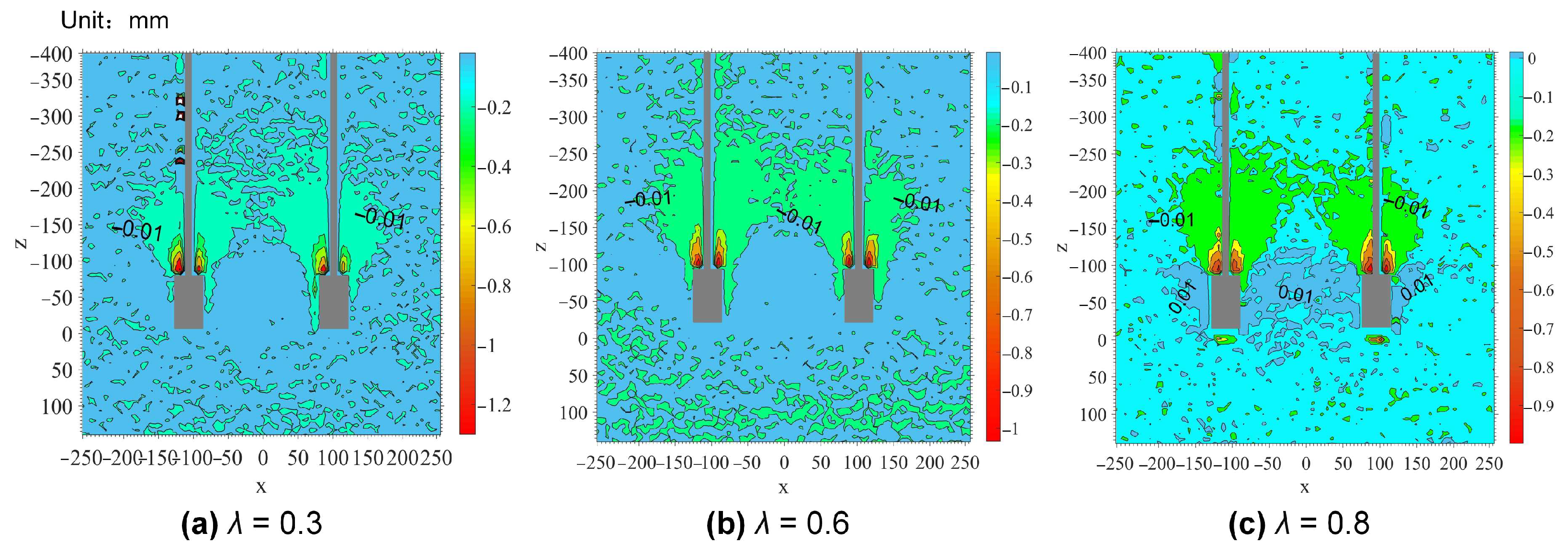
Figure 11a–c shown the contours of the vertical accumulated displacement of the soil surrounding the anchor during the post-cyclic pull-out process at the plastic stage. At this stage, the disturbance range of the surrounding soil contracted markedly, a phenomenon largely consistent with the soil displacement observed during the single pull-out test.
The preceding analysis identified the cyclic amplitude ratio was a key factor influencing both the ultimate uplift bearing capacity of the under-reamed anchor group and the disturbance range of the surrounding soil. As the cyclic amplitude ratio increased, the plastic displacement of the anchor under cyclic loading gradually accumulated, leading to diminished displacement control, particularly within the anchor group with large spacing ratios. During the post-cyclic pull-out process, the displacement response of the soil in the sidewall region of the under-reamed body was significantly affected by the cyclic amplitude ratio: as the ratio increased towards 0.8, the upward displacement of the soil in this region progressively decreased, ultimately resulting in slippage at the anchor-soil interface along the sidewall of the under-reamed body. Referencing Lehane’s [27] findings regarding radial stress relaxation at the pile-soil interface and volumetric contraction within the shear band induced by cyclic loading, it is inferred that the degradation of post-cyclic uplift capacity was likely associated with the weakening of soil shear strength in the sidewall region.

5. Cyclic Times Effects

To investigate the influence of cyclic times on the under-reamed anchor group, cyclic tests were conducted with a fixed spacing ratio of 6, under cyclic amplitude ratios of λ = 0.3 with M = 1, 5, and 10; λ = 0.5 with M = 1, 5, 10, and 30; and λ = 0.8 with M = 1, 5, and 10.

5.1. Load–Displacement Curves Under Various Cyclic Times

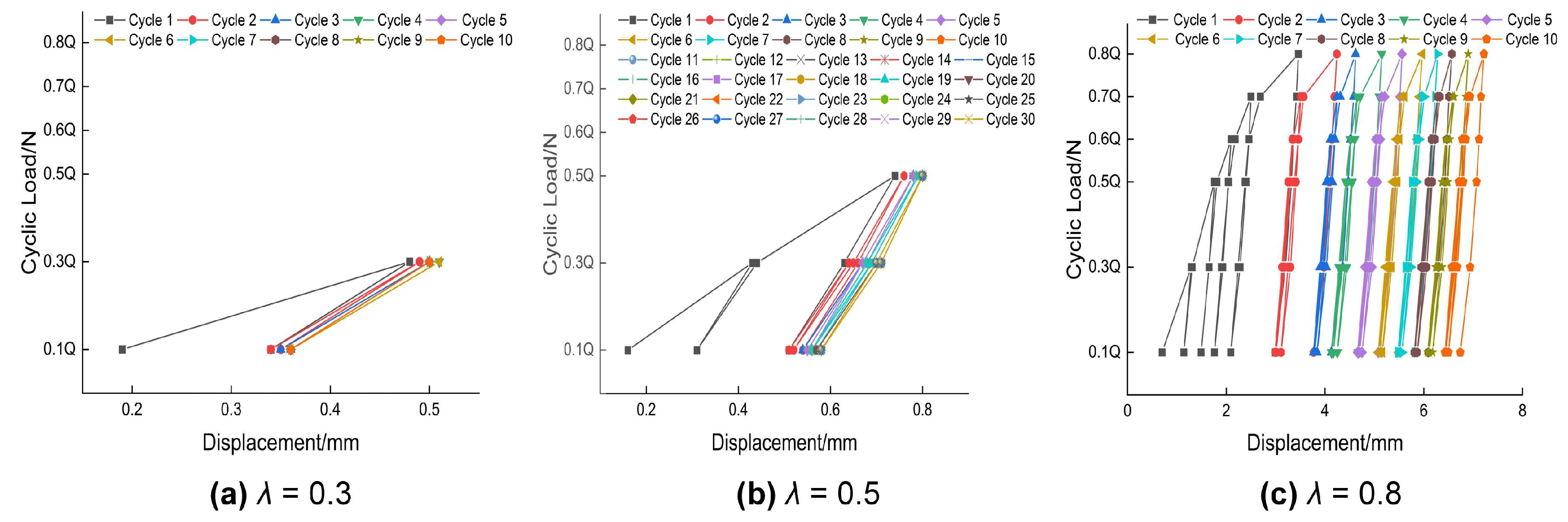
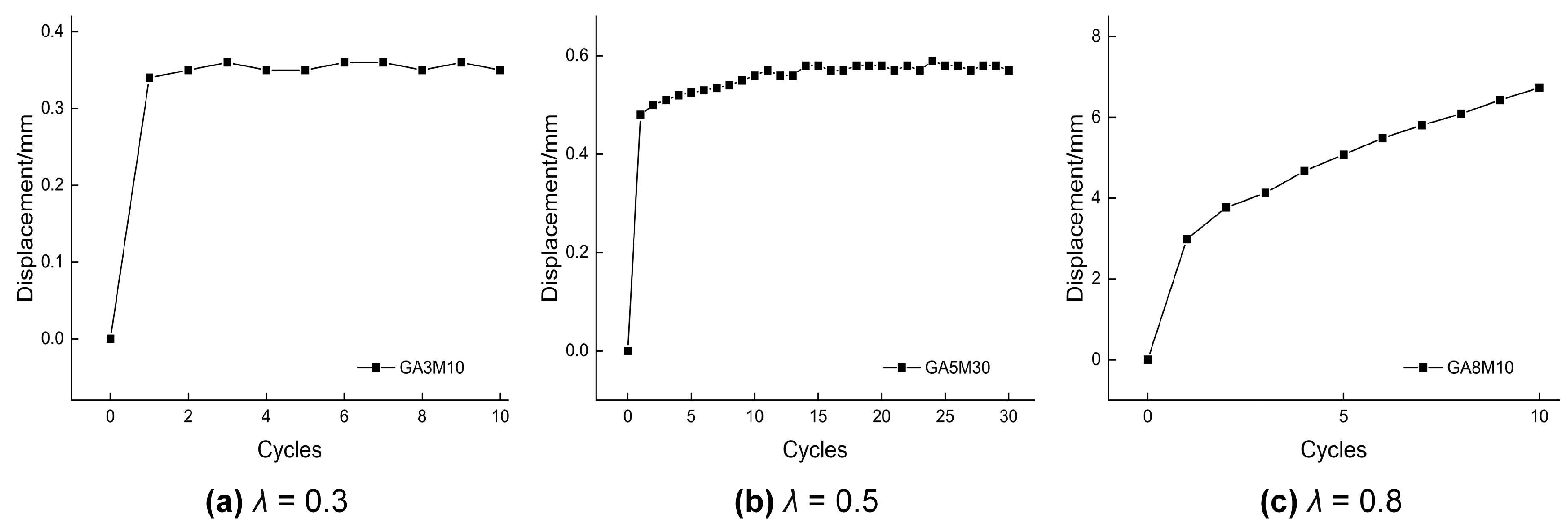
Figure 12a presented the displacement hysteresis curves obtained after 10 cyclic times under the condition of λ = 0.3. It could be observed that under low amplitude cycling, the displacement increment generated during the first cycle was the most significant. Subsequently, the displacement increments in the following cycles were markedly reduced, with negligible development of additional plastic displacement. This indicated that during multiple cycles at low amplitude, the rearrangement of soil particles led to the plastic displacement primarily occurring in the first cycle. The displacements produced in subsequent cycles were predominantly elastic deformations, with the displacement largely recovering to the initial loading state upon unloading. This demonstrated that the soil surrounding the anchor possessed a good elastic recovery capability under this cyclic amplitude. Furthermore, as seen in Figure 13a, the plastic displacement of the under-reamed anchor group under multiple cyclic times stabilized around 0.35 mm and did not fluctuate significantly with an increasing number of cycles.
Under the condition of λ = 0.5, the displacement increment changed most significantly during the first cycle, as shown in Figure 12b. The displacement continuously increased during the loading phase of the cycle, and the displacement after unloading was greater than that at the beginning of the loading phase. The displacement increment generated by the first cycle was the largest. This phenomenon indicated that plastic deformation had already occurred in the soil surrounding the anchor during the first cycle, which was consistent with the pattern described in Section 4.1. As the number of cyclic times increased to 5 and beyond (M = 5, 10, 30), the displacement variation gradually stabilized, the differences between the hysteresis curves continually decreased, and the hysteresis curves from multiple cycles began to coincide. This suggested that under multiple cycles at low amplitude (λ ≤ 0.5), soil deformation stabilized, generating negligible additional displacement with increasing cycle count [28]. Combined with Figure 13b, it was evident that the plastic displacement of the under-reamed anchor group under multiple cyclic times stabilized around 0.57 mm, showing a similar trend to that observed at λ = 0.3, as it remained unchanged with increasing cyclic times. This phenomenon indicated that the soil surrounding the anchor gradually stabilized with an increasing number of low-amplitude (λ ≤ 0.5) cycles, without continuously generating plastic deformation. This reflects the adaptation of the soil structure to the cyclic loading conditions, ultimately reaching a stable state.
As shown in Figure 12c, when λ = 0.8, each cycle generated a certain amount of plastic displacement. Upon reaching a cyclic amplitude of 0.8 Q, the displacement increment was substantial, consistent with the pattern described in Section 4.1. This indicated that the soil surrounding the anchor underwent failure and significant plastic deformation at this stage. Analyzing the evolution of plastic displacement over 10 cyclic times under λ = 0.8, as shown in Figure 13c, it could be observed that under high cyclic amplitude (λ = 0.8), the plastic displacement accumulated continuously with each cycle. The first cycle produced the largest plastic displacement, while subsequent cycles contributed to a steady, stable accumulation. Under high cyclic amplitude (λ = 0.8) loading, the structural damage to the soil caused by the first cycle was the most severe, leading to a rapid development of plastic deformation. As the number of cyclic times increased, the internal deformation mechanism of the soil gradually transitioned, with plastic deformation primarily resulting from sliding friction along the failure surface. Consequently, the growth rate of plastic displacement decreased significantly in subsequent cycles, and the curve exhibited an approximately linear and stable development trend.

5.2. Effects After Various Cyclic Times

To investigate the influence of cyclic times on the uplift bearing capacity of the anchor, tests were conducted using cyclic amplitude ratios of λ = 0.3, 0.5, and 0.8. Following the completion of cyclic loading, pull-out tests were performed to obtain the load–displacement curves presented in Figure 14. The variation rate of the ultimate uplift bearing capacity was calculated based on these results, with detailed data provided in Table 6.
As can be seen from Table 6 and Figure 14, under low-amplitude (λ ≤ 0.5) cyclic loading, the performance of the anchor anchoring system exhibited limited variation after different numbers of cyclic times. The maximum fluctuation range of the ultimate uplift bearing capacity was only 2.31%, indicating good stability under low cyclic times. In contrast, under high-amplitude (λ = 0.8) cyclic loading, the maximum fluctuation range of the ultimate uplift bearing capacity reached 7.71%, reflecting the adverse effect of multiple cycles on the bearing performance of the anchor under this amplitude.
As shown in Figure 14a, at λ = 0.3, low-amplitude cyclic loading induced a slight strengthening effect on the ultimate uplift bearing capacity, resulting in an improvement of approximately 0.9%. This was mainly attributed to the particle rearrangement induced by multiple cycles, which subsequently enhanced its pull-out performance. For λ = 0.5, as shown in Figure 14b, the ultimate uplift bearing capacity and ultimate displacement of the under-reamed anchor group remained essentially unchanged after 5, 10, and 30 cycles, indicating that the soil deformation was predominantly elastic, a finding consistent with Zhang Jimeng [28]. However, when λ = 0.8, as shown in Figure 14c, the influence of the number of cyclic times was more pronounced. Multiple cycles promoted stress redistribution and the formation of slip surfaces within the soil, generally leading to a significant degradation of the ultimate uplift bearing capacity. Nevertheless, at M = 10, a compaction effect [29] occurred in the soil surrounding the anchorage zone. Compared to the single-cycle condition, the ultimate uplift bearing capacity of the under-reamed anchor group increased by 7.25%. This compaction effect also existed under λ = 0.3 and λ = 0.5 conditions, but the corresponding increases in bearing capacity were relatively limited, with neither exceeding 2%.

5.3. Post-Cyclic Displacement Contours

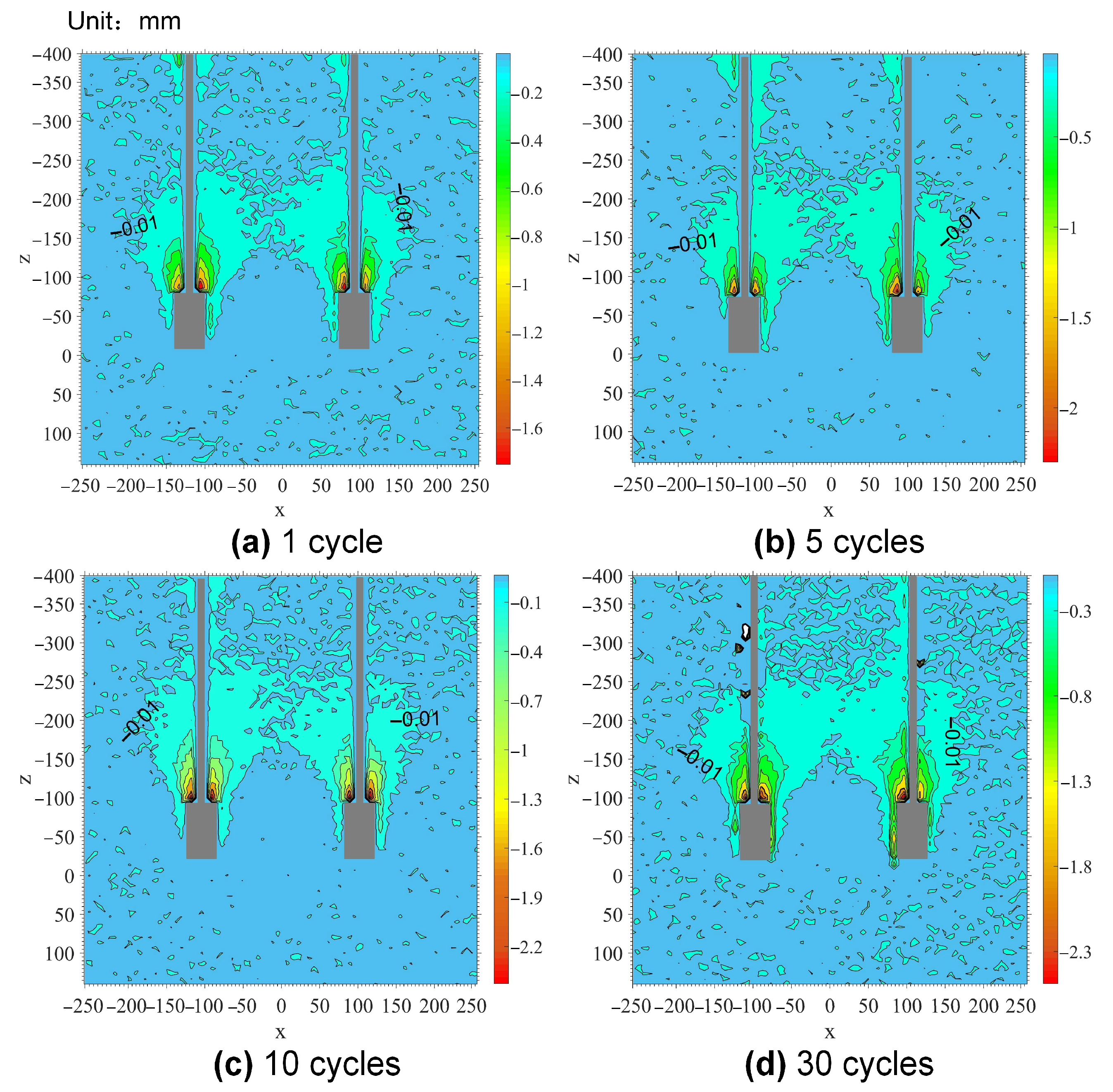
Figure 15a–d shown the vertical displacement contour maps of the soil surrounding the anchor after being subjected to 1, 5, 10, and 30 cyclic times, respectively, followed by a single pull-out test up to the ultimate uplift bearing capacity.
The contour maps of the accumulated displacement of the under-reamed anchor group at λ = 0.5, pulled to the ultimate uplift bearing capacity after different numbers of cyclic times, were selected for comparative analysis. As indicated in Figure 15a–c, after 1 cycle, the horizontal extent of the −0.01 mm displacement contour ranged approximately from –200 mm to 150 mm. After 5 and 10 cycles, this contour range expanded slightly, extending from –200 mm to 180 mm. This indicated that the disturbance range of the soil surrounding the anchor during pull-out to the ultimate displacement was the smallest after a single cycle. As the number of cyclic times increased, the internal structure of the surrounding soil gradually changed, leading to a slightly larger disturbance range during subsequent pull-out processes. This trend was consistent with the analysis results in Section 4.3. It was noteworthy that when the number of cyclic times reached 30, the connected zone formed in the soil above the “shoulder” of the under-reamed body slightly enlarged, as depicted in Figure 15d. Further analysis, combined with the experimental results in Figure 13b, revealed that although no significant plastic displacement occurred in the anchor under multiple cycles, the soil above the “shoulder” underwent continuous disturbance during repeated loading and unloading. This resulted in a slight expansion of the compressed soil zone. While this change lead to a further extension of the connected zone in the disturbed soil during subsequent pull-out, it did not affect the anchoring performance of the anchor group.
In summary, the influence of the number of cyclic times on the ultimate uplift bearing capacity and plastic displacement of the under-reamed anchor group exhibited different patterns depending on the failure state: Under non-failure conditions (λ = 0.3, 0.5), the plastic displacement of the anchor stabilized substantially after the first cycle and ceased to accumulate with increasing cyclic times. Concurrently, the degradation of the ultimate uplift bearing capacity of the under-reamed anchor group occurred predominantly during the first cycle; subsequent increases in the number of cyclic times had a negligible effect. In contrast, under anchor failure conditions (λ = 0.8), the soil structure was damaged during the first cycle, leading to rapid development of plastic deformation. As the number of cyclic times continues to increase, the increment in plastic displacement demonstrated an approximately linear growth trend. Furthermore, under multiple cyclic times, the maximum variation range of the ultimate uplift bearing capacity of the anchor group could reach 7.71%.

6. Discussion

To highlight the advantages of single under-reamed anchors, the results of this study were compared with existing data on straight-shaft anchors in identical soil conditions. Straight-shaft anchors subjected to cyclic loading typically experience rapid degradation of skin friction, leading to significant displacement accumulation and a reduction in bearing capacity [27]. In contrast, the under-reamed anchor groups in this study demonstrated superior cyclic stability. Unlike straight-shaft anchors, which relied heavily on unstable interface friction that was susceptible to cyclic degradation, the capacity of under-reamed anchors was primarily derived from the end-bearing resistance acting on the enlarged base. This end-bearing mechanism is less sensitive to skin friction degradation, thereby maintaining a higher post-cyclic capacity—a significant advantage over friction-based anchor groups which exhibit severe degradation.
For practical engineering design, adopting a spacing ratio of 5 was recommended. This ensures that both displacement and bearing capacity of the anchor group system remain within an optimal safety range after cyclic loading. Additionally, a factor of safety Fs > 2.0 must be strictly enforced in cyclic design.

7. Limitations and Future Recommendations

Notwithstanding the valuable insights this study offered regarding the performance of under-reamed anchors, several limitations should be acknowledged, which serve to outline directions for future research.
First, the experiments were conducted using specially constituted dry sand. It was recommended that future studies investigate saturated or stratified soils to explicitly account for the influence of pore water pressure.
Second, the current work employed a specific loading protocol. Future investigations could explore diverse loading patterns to simulate a more comprehensive mechanical response of the anchorage system.
Finally, this study was confined to a specific anchor configuration. Future experiments should vary the geometry and number of under-reams to develop a more robust design framework.

8. Conclusions

This study investigated under-reamed anchors through model tests and PIV technology, analyzing the group effect in under-reamed anchor groups under different spacing ratios, and the influences of cyclic amplitude ratio and number of cyclic times on the uplift bearing capacity. The main conclusions are as follows:
(1)
The optimal spacing ratio for anchor groups was dependent on anchor type. For under-reamed anchor groups investigated in this study, the optimal spacing ratio was identified as 5.
(2)
During the elastic stage, the uplift bearing capacity of the anchor group was negligibly affected by the spacing ratio. The group effect emerged in the elastoplastic stage and became significant in the plastic stage.
(3)
Both the cyclic amplitude ratio and the number of cyclic times influenced the ultimate uplift bearing capacity, with the cyclic amplitude ratio exerting a more pronounced effect. When λ < 0.5, the ultimate uplift bearing capacity degraded by only 1.39% (λ = 0.3). For 0.5 ≤ λ ≤ 0.7, the maximum degradation did not exceed 1%. At λ > 0.7, anchor failure occurred during both the cyclic process and the subsequent pull-out test, with the ultimate uplift bearing capacity degradation reaching 16.8% (λ = 0.8).
(4)
The degradation of the ultimate uplift bearing capacity of under-reamed anchor groups following cyclic loading was primarily attributed to the deterioration of the shear strength at the anchor-soil interface along the sidewall of the under-reamed body.
(5)
The influence of the number of cyclic times on anchor performance depended on whether anchor failure occurred. Under non-failure conditions, the influence of the number of cyclic times was marginal, and the ultimate uplift bearing capacity essentially stabilized after the first cycle. Conversely, under failure conditions, the maximum fluctuation in the ultimate uplift bearing capacity due to the number of cyclic times could reach 7.71%.
(6)
In specific cases, compared to a single cycle, the ultimate uplift bearing capacity of the anchor group showed a slight improvement after 10 cycles, but the maximum increase did not exceed 7.25%.

Author Contributions

Conceptualization, C.C. and Z.L.; methodology, C.C.; software, C.C.; validation, C.C., Z.L. and J.Y.; formal analysis, Z.L.; investigation, C.C.; resources, C.C.; data curation, Z.L.; writing—original draft preparation, Z.L.; writing—review and editing, C.C.; visualization, J.Y.; supervision, C.C.; project administration, C.C.; funding acquisition, C.C. and J.Y. All authors have read and agreed to the published version of the manuscript.

Funding

This research was funded by the National Natural Science Foundation of China (52278369) and Guangzhou Municipal Engineering Group Ltd. Science and Technology Plan Projects ([2024]–SZKJ02).

Data Availability Statement

The original contributions presented in this study are included in the article. Further inquiries can be directed to the corresponding author.

Conflicts of Interest

Author Junchao Yang was employed by Guangzhou Municipal Engineering Group Ltd. The remaining authors declare that the research was conducted in the absence of any commercial or financial relationships that could be construed as a potential conflict of interest.

References

  1. Xu, J.; Deng, H.; Liu, Z.; Dai, G.; Ke, L.; Guo, X.; Zhang, Z. Protection of Low-Strength Shallow-Founded Buildings Around Deep Excavation: A Case Study in the Yangtze River Soft Soil Area. Buildings 2025, 15, 4094. [Google Scholar] [CrossRef]
  2. Chen, C.; Xia, Y.Y.; Li, C.Q.; Ni, Q. Experimental investigations of end bearing anchors under uplift load using transparent soil and numerical simulation. Arab. J. Sci. Eng. 2020, 45, 3743–3759. [Google Scholar] [CrossRef]
  3. Liu, Y.G.; Wang, B.T.; Le, J.; Ma, Y.Q.; Zhang, M.L. Experimental investigation on the anchorage performance of a tension-compression-dispersed composite anti-floating anchor. Appl. Sci. 2023, 13, 12016. [Google Scholar] [CrossRef]
  4. Chen, C.; Xia, Y.Y.; Ni, Q. Investigation on the working mechanism and structural parameters optimization of multiple ball shaped nodular anchors. Soil Mech. Found. Eng. 2020, 57, 49–56. [Google Scholar] [CrossRef]
  5. Gyuiwoong, K.; Kwangkuk, A. Behavior characteristics of under-reamed ground anchor through field test and numerical analysis. J. Korean Geo-Environ. Soc. 2013, 14, 37–44. [Google Scholar]
  6. Han, J.; Ye, S.L. A field study on the behavior of a foundation underpinned by micropiles. Can. Geotech. J. 2011, 43, 30–42. [Google Scholar] [CrossRef]
  7. Xiao, X.; Zhu, R.; Huang, Z.; Xiao, F.; Yin, H.; Zhao, T.; Huang, M. Mechanical Analysis and Prototype Testing of Prestressed Rock Anchors. Buildings 2025, 15, 3952. [Google Scholar] [CrossRef]
  8. Zatar, W.; Xiao, F.; Chen, G.; Nghiem, H. Assessment of the Conditions of Anchor Bolts Grouted with Resin and Cement Through Impact-Echo Testing and Advanced Spectrum Analysis. Buildings 2025, 15, 399. [Google Scholar] [CrossRef]
  9. Luo, X.; Chen, R.; Ji, Y.; Li, P.; Ma, Z.; Jiang, X. Mechanical Properties of Reinforcement Cage Underreamed Anchor Bolts and Their Application in Soft Rock Slope Stabilization. Buildings 2025, 15, 319. [Google Scholar] [CrossRef]
  10. Geddes, J.D.; Murray, E.J. Plate anchor group pulled vertically in sand. J. Geotech. Eng. 1996, 122, 509–516. [Google Scholar] [CrossRef]
  11. Majumder, M.; Chakraborty, D.; Kumawat, V. Model test study on single and group under-reamed piles in sand under compression and tension. Innov. Infrastruct. Solut. 2022, 7, 129. [Google Scholar] [CrossRef]
  12. Tistel, J.; Grimstad, G.; Eiksund, G. Testing and modeling of cyclically loaded rock anchors. J. Rock Mech. Geotech. Eng. 2017, 9, 1010–1030. [Google Scholar] [CrossRef]
  13. Park, H.; Lee, S.R.; Kim, N.K.; Kim, T.H. A numerical study of the pullout behavior of grout anchors under-reamed by pulse discharge technology. Comput. Geotech. 2013, 47, 78–90. [Google Scholar] [CrossRef]
  14. Liu, G.H.; Jia, P.S.; Sun, J.P.; Jiang, Z.B.; Yang, F.; Yang, G.R.; Shao, G.B. Research and application of new anti-floating anchor in anti-floating reinforcement of existing underground structures. Front. Earth Sci. 2024, 12, 1364752. [Google Scholar] [CrossRef]
  15. Al-Douri, R.H.; Poulos, H.G. Predicted and Observed Cyclic Performance of Piles in Calcareous Sand. J. Geotech. Eng. 1995, 121, 1–16. [Google Scholar] [CrossRef]
  16. Hao, D.; Che, J.; Chen, R.; Zhang, X.; Yuan, C.; Chen, X. Experimental Investigation on Behavior of Single-Helix Anchor in Sand Subjected to Uplift Cyclic Loading. J. Mar. Sci. Eng. 2022, 10, 1338. [Google Scholar] [CrossRef]
  17. Zhang, X.; Huang, M.; Liu, Y. Model tests on a single pile considering influence of sand density under cyclic axial loading. Rock Soil Mech. 2016, 37, 1914. [Google Scholar]
  18. Rui, R.; Xiao, F.Y.; Cheng, Y.H.; Gao, F.; Hu, S.G.; Ding, Y.H.; Sun, T.J. Experimental study on pull-out resistance of plate anchors at different buried depths. Chin. J. Geotech. Eng. 2023, 45, 2032–2041. [Google Scholar] [CrossRef]
  19. Asgari, A.; Arjomand, M.A.; Bagheri, M.; Ebadi-Jamkhaneh, M.; Mostafaei, Y. Assessment of Experimental Data and Analytical Method of Helical Pile Capacity Under Tension and Compressive Loading in Dense Sand. Buildings 2025, 15, 2683. [Google Scholar] [CrossRef]
  20. JGJ476—2019; Technical Standard for Building Engineering Against Uplift. China Architecture & Building Press: Beijing, China, 2020.
  21. Guo, G.; Liu, Z.; Tang, A.P. Model test research on bearing mechanism of underreamed ground anchor in sand. Math. Probl. Eng. 2018, 2018, 9746438. [Google Scholar] [CrossRef]
  22. Chen, J.; Liang, W.P.; Ying, H.W. Experimental and numerical research on proper interval of large diameter soil-cement anchor cables. Rock Soil Mech. 2018, 39, 374–380. [Google Scholar] [CrossRef]
  23. White, D.J.; Take, W.A.; Bolton, M.D. Soil deformation measurement using particle image velocimetry (PIV) and photogrammetry. Géotechnique 2003, 53, 619–631. [Google Scholar] [CrossRef]
  24. Zhang, X.; Yue, J.C.; Liu, H.D. Experimental study of soil deformation around group anchors in sand. Rock Soil Mech. 2016, 37, 240–248. [Google Scholar]
  25. Wu, Z.K.; Bai, X.Y.; Sun, G.; Wang, F.J.; Yan, N.; Dong, X.G. Field test of anchorage performance of BFRP anti-floating anchor under multiple cyclic loads. Chin. J. Rock Mech. Eng. 2024, 43, 2314–2328. [Google Scholar] [CrossRef]
  26. Li, X.; Liu, J.W.; Zhu, N.; Zhao, G.X. Dynamic response of open pipe pile under vertical cyclic loading in sand and clay. Soil Dyn. Earthq. Eng. 2020, 139, 106364. [Google Scholar] [CrossRef]
  27. Lehane, B.; White, D. Friction fatigue on displacement piles in sand. Geotechnique 2004, 54, 645. [Google Scholar] [CrossRef]
  28. Zhang, J.M.; Zhang, C.R.; Zhang, K. Model tests of large-diameter single pile under horizontal cyclic loading in sand. Rock Soil Mech. 2021, 42, 6. [Google Scholar] [CrossRef]
  29. Su, D.; Yan, W.M. A multidirectional p–y model for lateral sand–pile interactions. Soils Found. 2013, 53, 199–214. [Google Scholar] [CrossRef]
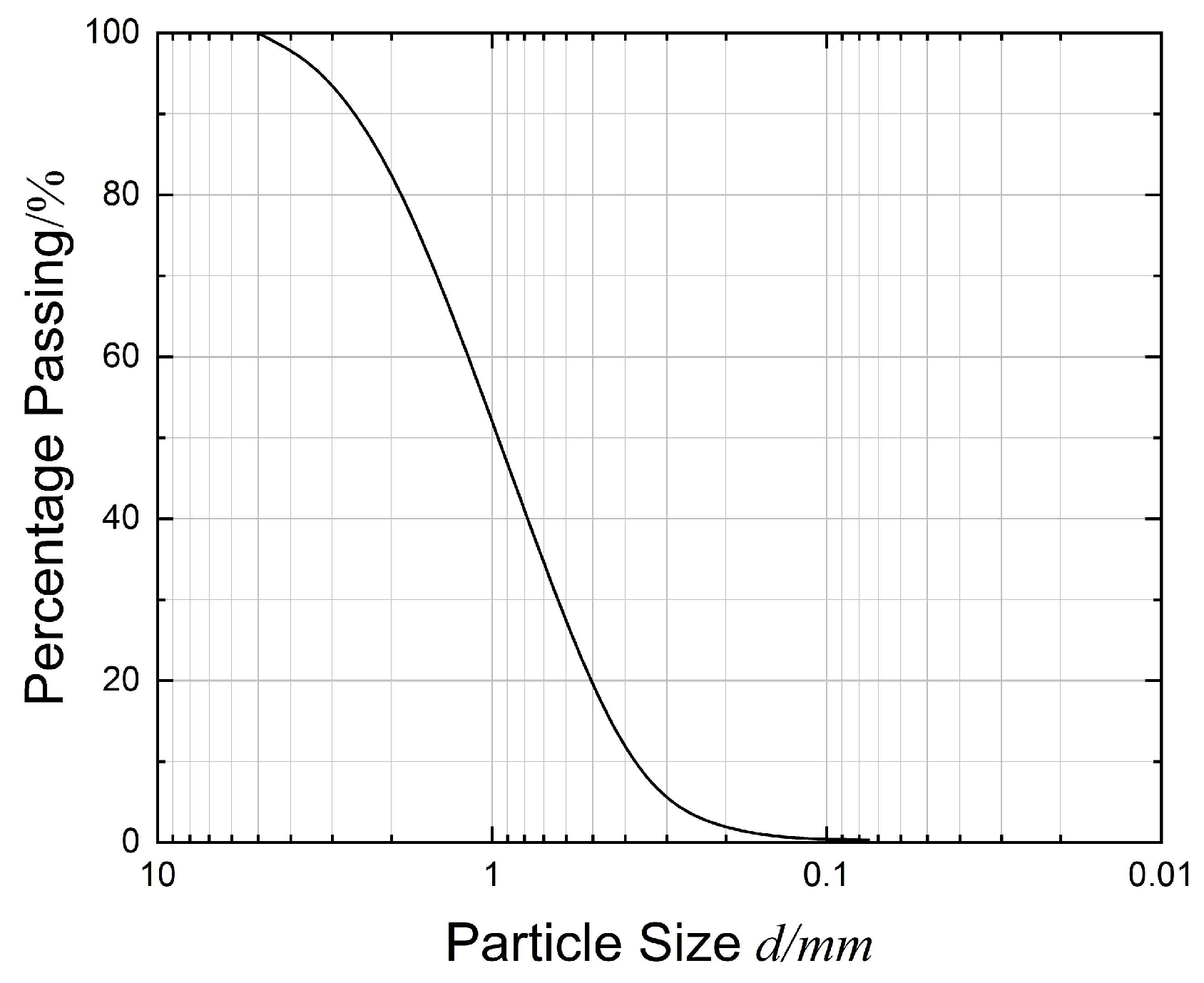
Figure 1. Particle size distribution of test sand.
Buildings 16 00540 g001
Figure 2. Experimental setup: (a) test setup; (b) anchor bolt.
Buildings 16 00540 g002
Figure 3. Schematic of stepwise loading protocol.
Buildings 16 00540 g003
Figure 4. Single pull-out experimental data: (a) single pull-out uplift bearing capacity; (b) group anchor effect coefficient.
Buildings 16 00540 g004
Figure 5. Vertical accumulative displacement contour maps in the elastoplastic stage.
Buildings 16 00540 g005
Figure 6. Vertical accumulative displacement contour maps in the plastic stage.
Buildings 16 00540 g006
Figure 7. Displacement hysteresis loops under different spacing ratios.
Buildings 16 00540 g007
Figure 8. Elastic displacement and plastic displacement under different spacing ratios.
Buildings 16 00540 g008
Figure 9. Uplift bearing capacity–displacement curves of anchor group after cyclic loading.
Buildings 16 00540 g009
Figure 10. Vertical accumulative displacement contour maps in the elastoplastic stage.
Buildings 16 00540 g010
Figure 11. Vertical accumulative displacement contour maps in the plastic stage.
Buildings 16 00540 g011
Figure 12. Displacement hysteresis loops under various cyclic times.
Buildings 16 00540 g012
Figure 13. Plastic displacements under cyclic amplitude ratios.
Buildings 16 00540 g013
Figure 14. Uplift bearing capacity–displacement curves.
Buildings 16 00540 g014
Figure 15. Vertical accumulative displacement contour maps under various cyclic times.
Buildings 16 00540 g015
Table 1. Physical and mechanical parameters of simulated foundation.
ρ, g/cm−3ω, %CuDrc, kPaφ, °ρmax, g/cm−3ρmin, g/cm−3
1.83902.690.76042.31.971.52
Table 2. Anchor rod grouping for single pull-out tests.
Anchor TypeS/DD, mmUnbonded Length, mm
S1-40810
G14
G25
G36
Table 3. Grouping for cyclic pull-out tests.
Test No.Cyclic Amplitude Ratio/λCyclic Times/MS/DD, mm
GA3M10.31640
GA3M55
GA3M1010
GA5M10.51640
GA5M55
GA5M1010
GA5M3030
GA6M10.61640
GA7M10.71640
GA8M10.81440
GB8M115
GC8M116
GA8M556
GA8M10106
Table 4. Ultimate uplift bearing capacity of anchor group and single anchors with group effect coefficients.
Test No.Qg, Nδ, mmS/Dη, %
S13402.1--
G14832.1471.03
G26252.1591.91
G36492.5695.44
Table 5. Rate of ultimate uplift bearing capacity degradation for anchor group under different cyclic amplitudes.
Test No.Cyclic Amplitude Ratio/λδ, mmQg, Nη, %
GA3M10.32.66401.39
GA5M10.52.96115.86
GA6M10.63.26056.78
GA7M10.73.36046.93
GA8M10.84.354016.8
Table 6. Rate of ultimate uplift bearing capacity degradation for anchor group under different numbers of cycles.
Test No.Cyclic Amplitude Ratio, λCyclic Times, Mδ, mmQg, Nη, %
GA3M10.312.66401.39
GA3M552.7653−0.62
GA3M10102.7655−0.92
GA5M10.512.96115.86
GA5M553.36145.39
GA5M10103.36155.24
GA5M30303.36135.55
GA8M10.814.354016.8
GA8M555.853717.26
GA8M10107.65879.55
Disclaimer/Publisher’s Note: The statements, opinions and data contained in all publications are solely those of the individual author(s) and contributor(s) and not of MDPI and/or the editor(s). MDPI and/or the editor(s) disclaim responsibility for any injury to people or property resulting from any ideas, methods, instructions or products referred to in the content.