Article

Lateral Static Load Test and Finite Element Analysis of Thin Cross-Laminated Timber Shear Wall

1
School of Civil Engineering, Yangzhou Polytechnic Institute, Yangzhou 225127, China
2
School of Civil and Transportation Engineering, Yangzhou University, Yangzhou 225127, China
3
School of Civil Engineering, Southeast University, Nanjing 210096, China
*
Author to whom correspondence should be addressed.
Buildings 2026, 16(3), 536; https://doi.org/10.3390/buildings16030536
Submission received: 5 December 2025 / Revised: 20 January 2026 / Accepted: 22 January 2026 / Published: 28 January 2026
(This article belongs to the Special Issue Advances and Applications in Timber Structures: 2nd Edition)

Abstract

To meet the development needs of high-rise timber structures, current cross-laminated timber (CLT) shear walls typically feature a single-layer thickness of 35 mm with more than three laminations in the stack. However, such thickness easily leads to resource waste in small-scale residential buildings, while increasing transportation and hoisting costs, which is not conducive to the prefabrication and lightweight development of timber structures. To adapt to the development trend of China’s timber structure market towards public buildings such as cultural and tourism projects and small-scale residential buildings including new rural housing renovation, this study focuses on thin CLT shear walls with an overall thickness of 48 mm (16 mm per layer) and conducts research on their lateral load-bearing performance. Monotonic lateral static load tests and finite element (FE) simulations were carried out on thin CLT shear walls without openings, with different opening areas, and with the same opening area but different positions. A corresponding FE model was established and validated, with a focus on analyzing the influence of opening parameters on the shear performance of the walls. The research results show that wall openings significantly reduce the bearing capacity and shear stiffness of the walls: compared with the wall without openings, the ultimate load and shear stiffness of the walls with openings decrease by 20.4–28.6% and 36.3–42.3%, respectively. Among them, increasing the opening height has a more obvious weakening effect on the bearing capacity; for the same opening area, a wider opening results in a more significant decrease in stiffness. The FE model exhibits reliable accuracy, with the error between the experimental and simulation results in the elastic stage controlled within 10%, and the influence of the under-wall support on the shear stiffness is relatively small. Opening parameters have a prominent impact on the stiffness of the wall in the elastic stage, and the influence of the opening position is more critical—the smaller the distance from the opening to the top of the wall, the more obvious the decrease in overall stiffness.

1. Introduction

Cross-laminated timber (hereinafter referred to as CLT) is a novel engineered wood product in which timber boards are arranged side by side within a single layer, and the grain directions of adjacent layers are mutually perpendicular. This fabrication method has broadened the development potential of timber structures and witnessed rapid growth in applications in Europe, Canada, Australia, and other regions [1]. Subsequently, the fourth edition of China’s Timber Structure Design Manual also included a chapter on CLT structures [2].
As an advanced timber material, CLT offers the following distinct advantages: (1) excellent environmental benefits; (2) the orthogonal layering structure between adjacent layers enhances the overall dimensional stability and load-bearing capacity of the panels [3,4,5]; (3) good fire resistance; (4) superior seismic performance of the constructed buildings, among others. In addition to inheriting the advantages of natural timber such as a high strength-to-weight ratio, favorable thermal performance, and environmental friendliness with sustainability [6], CLT also remedies the deficiencies of natural timber in mechanical properties.
In terms of connection joints, the physical properties of timber panels and the mechanical performance of metal connections endow CLT timber structures with enhanced in-plane stiffness and shear capacity. Currently, the main joint types in CLT timber structures are metal connections with metal fasteners and spliced connections with self-tapping screws. Schneider et al. [7] adopted two connection types (angle steel and screws) under monotonic and cyclic loading protocols and classified the damage degree of the connections into five grades based on test observations. He et al. [8] investigated the prestressed bolted connections between CLT shear walls and the underlying floor steel beams. Weng et al. [9] conducted a study on the axial compression performance of steel splint–CLT composite shear walls, where the panels were connected by steel splints and self-tapping screws; however, no relevant tests were performed on shear walls with wall openings. Their results indicated that failure was mainly concentrated in the out-of-plane local buckling of steel plates and the pull-out of screws. Furthermore, most researchers have found that bolted connections exhibit higher strength and stiffness compared with screwed connections, providing approximately 2.5 times the design load [10,11,12,13,14]. Notably, the aforementioned studies have not analyzed the coupling relationship between joint failure and panel failure in thin members, nor have they addressed the unique failure modes of thin CLT shear walls under lateral static loads.
In the research on CLT shear walls, scholars have identified that seismic performance is primarily correlated with the lateral load-bearing capacity of CLT wallboards [15]. In early international studies, Dujic et al. [16] investigated the influence of vertical loads at the top of CLT walls on their lateral performance. Reynolds et al. [17] carried out lateral monotonic static load tests and low-cycle fatigue tests to evaluate the lateral performance of CLT shear walls, and their findings revealed that CLT walls possess higher in-plane stiffness than traditional light wood frame structures. Nevertheless, these scholars only focused on the effect of vertical loads at the top of conventional-thickness CLT shear walls on their lateral performance. In contrast, thin CLT shear walls, with lower inherent stiffness, are more prone to out-of-plane deformation under vertical loads, which in turn significantly impairs their lateral load-bearing capacity and alters their failure modes. The coupling mechanism of vertical loads on the lateral static load performance of thin members remains unclear in existing literature, failing to provide a design basis for the lateral resistance of thin CLT shear walls considering load coupling effects.
Shah-newaz et al. [18], Xue et al. [19], and Casagrande et al. [20] conducted sensitivity analyses on the size and shape of wall openings via monotonic loading tests, pseudo-static tests, and numerical simulation validation, respectively, to assess the impact of wall openings on wall stiffness. Shahnewaz et al. [21] integrated the research results of Dujic et al. [16] and Mestar et al. [22], which demonstrated that the size and shape of wall openings reduce wall stiffness to varying degrees, and proposed a stiffness reduction formula for shear walls with wall openings. However, for thin CLT shear walls with wall openings, the stress concentration effect at the opening edges is more pronounced, and the synergistic failure behavior between panels and fasteners is more complex. The accuracy of existing formulas in estimating the stiffness of thin CLT shear walls with wall openings has not been verified. Regarding the failure mechanism of CLT shear walls with wall openings, Casagrande et al. [23,24] and Tran et al. [25] established equivalent numerical models to facilitate the analysis of failure mechanisms under lateral loads. They found that tensile failure occurred in the tensile anchors of the walls, and brittle failure was observed in the regions surrounding the wall openings. This research, however, only performed numerical simulations for conventional-thickness CLT shear walls and did not develop a finite element model (FEM) applicable to thin CLT shear walls. Mature simulation schemes are lacking for key aspects such as the constitutive relations of thin CLT wallboards, non-linear simulation methods for joint connections, and boundary condition settings under load coupling effects. As a result, existing models cannot accurately reflect the lateral mechanical responses of thin members.
The dimensions and stiffness of conventional-thickness CLT walls are well-suited for mid-rise and high-rise buildings, but their application in constructing small-scale timber buildings may result in resource waste and increased transportation and hoisting costs, which hinders the prefabrication and lightweight development of timber buildings. To adapt to the development trend of China’s timber structure market toward public buildings (e.g., cultural and tourism projects) and small-scale residential buildings (e.g., new rural housing renovations), this study shifts from conventional thick CLT to thin CLT (48 mm) that offers greater economic efficiency and lightweight potential, focusing on its application scenarios in low-rise buildings. The specific research contents are as follows:
(1)
Conduct lateral static load tests on thin CLT shear walls without wall openings to reveal their basic mechanical properties under monotonic lateral loads.
(2)
Perform experimental studies and finite element simulations on thin CLT shear walls with wall openings to quantify the effects of opening area and opening position on the lateral performance of the walls.
(3)
Based on the test and simulation results, propose preliminary structural recommendations and performance evaluation methods for the design of thin CLT shear walls with wall openings, aiming to promote the wider application of thin CLT shear walls in the construction market.

2. The Thin CLT Wall Panel Test

2.1. Test Piece Design

The specimens were fabricated using Canadian-sourced SPF No. 2 dimension lumber (species: spruce–pine–fir, grade classification in accordance with NLGA standards). The material exhibited an air-dry density of 0.40 g/cm3 and a moisture content of 9.41% [26], with individual lumber dimensions of 80 mm × 16 mm × 800 mm (width × thickness × length). The cross-laminated timber (CLT) panels were manufactured via a cold-pressing process, where 15 lumber pieces were laid per layer in a cross-laminated arrangement. A one-component polyurethane (PUR) adhesive (model: PURBOND HB S709) was applied between adjacent layers at an application rate of 200 g/m2, with the specific lamination configuration illustrated in Figure 1.
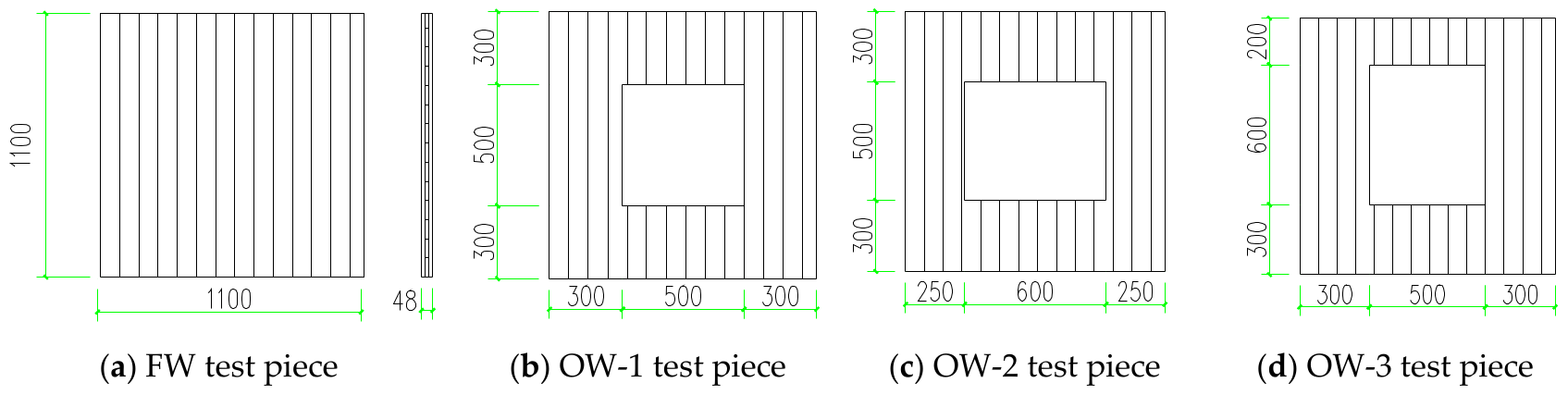
Based on the actual wall dimensions of low-rise cultural tourism residences in the demonstration project, the specimens were subjected to scaled-down fabrication at a 1:2.5 scale ratio. After panel formation, the CLT shear walls were cut to a final size of 1100 mm × 1100 mm × 48 mm (length × width × thickness). One test specimen was fabricated for each configuration, as detailed in Figure 2.
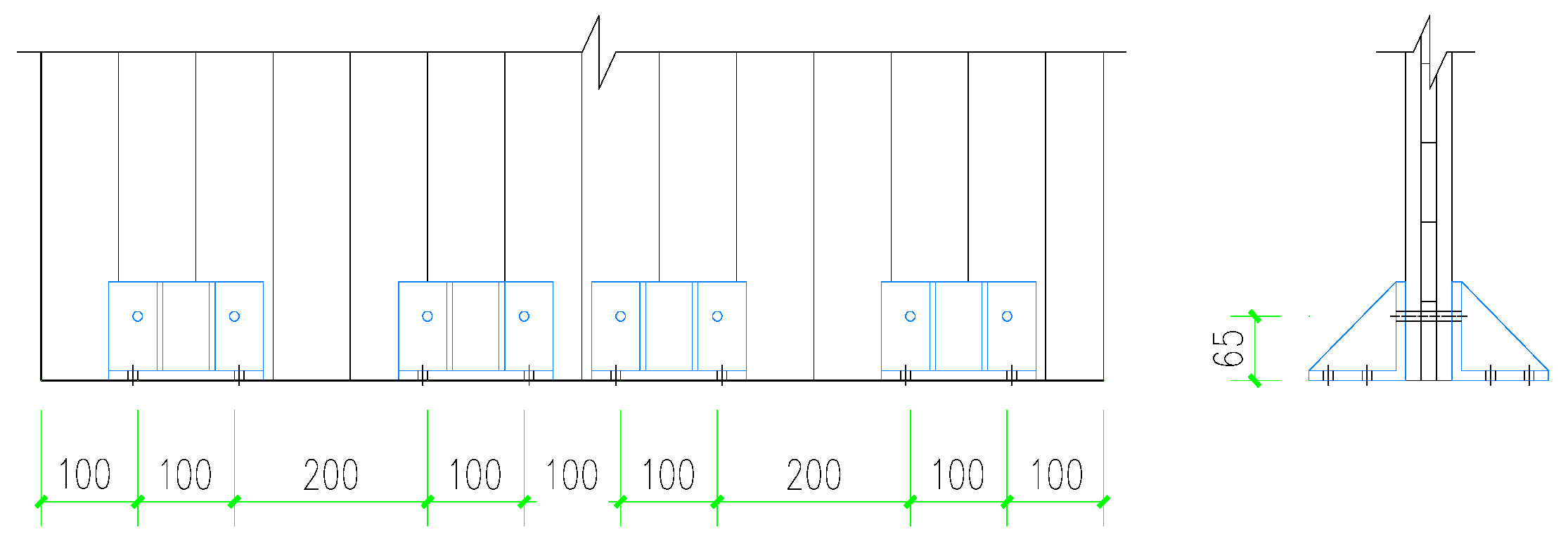
The connection between the CLT panels and the test rig base was achieved using angle steel and high-strength bolts. In compliance with the provisions of China’s current Code for Design of Timber Structures [2], the CLT panels were fastened to the angle steel using 8 Grade 8.8 high-strength bolts (diameter: 10 mm, length: 100 mm). Meanwhile, 16 Grade 8.8 high-strength bolts (diameter: 20 mm, length: 60 mm) were utilized for the connection between the angle steel and the test rig base, with the bottom connection detail presented in Figure 3.

2.2. Experimental Apparatus and Loading Plan

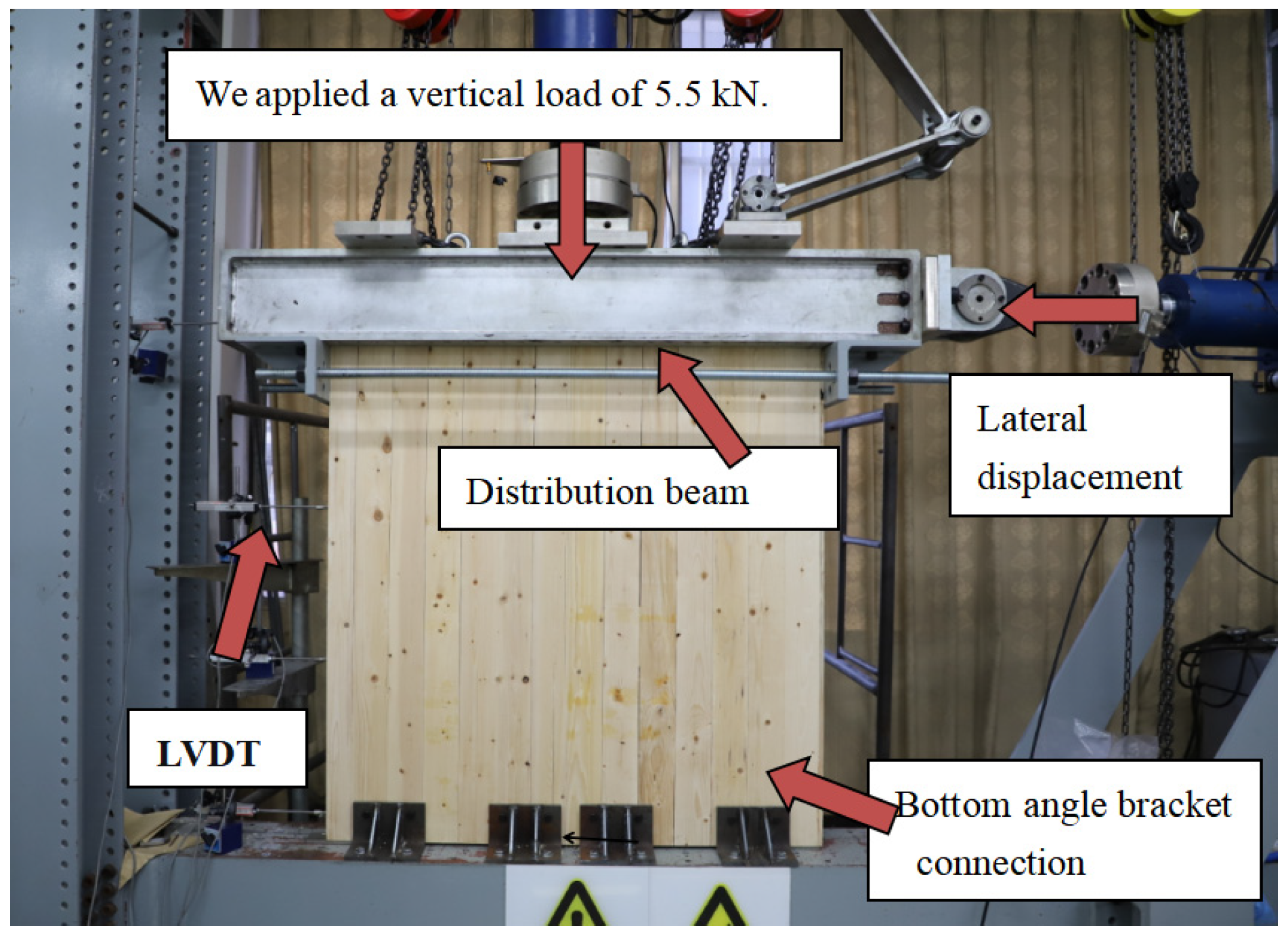
The horizontal monotonic lateral static load test was conducted using a YD-IID mechanical testing machine (Yantai Measurement and Control Technology Co., Ltd., Yantai, China). The testing machine has a maximum horizontal load capacity of 300 kN and a maximum loading head displacement of 200 mm. A constant vertical load of 5.5 kN was applied throughout the test, as illustrated in Figure 2 and Figure 3. Displacement and load data were recorded using a DH3816N data acquisition system at a sampling frequency of 1 Hz. The monotonic static load test procedure for the CLT wall panels followed the ASTM E564-06 standard [27], employing a displacement-controlled loading rate of 0.2 mm/s. A multi-stage loading protocol was implemented: initial loads corresponding to 10%, 30%, and 60% of the estimated ultimate panel load were applied sequentially. Each load level was maintained for 5 min before being removed. Following a 5 min recovery period, the next load level was applied as detailed in Figure 4. This incremental process was repeated until the specimen reached its ultimate load capacity [28,29,30].

3. Results and Analysis

3.1. Destruction Form

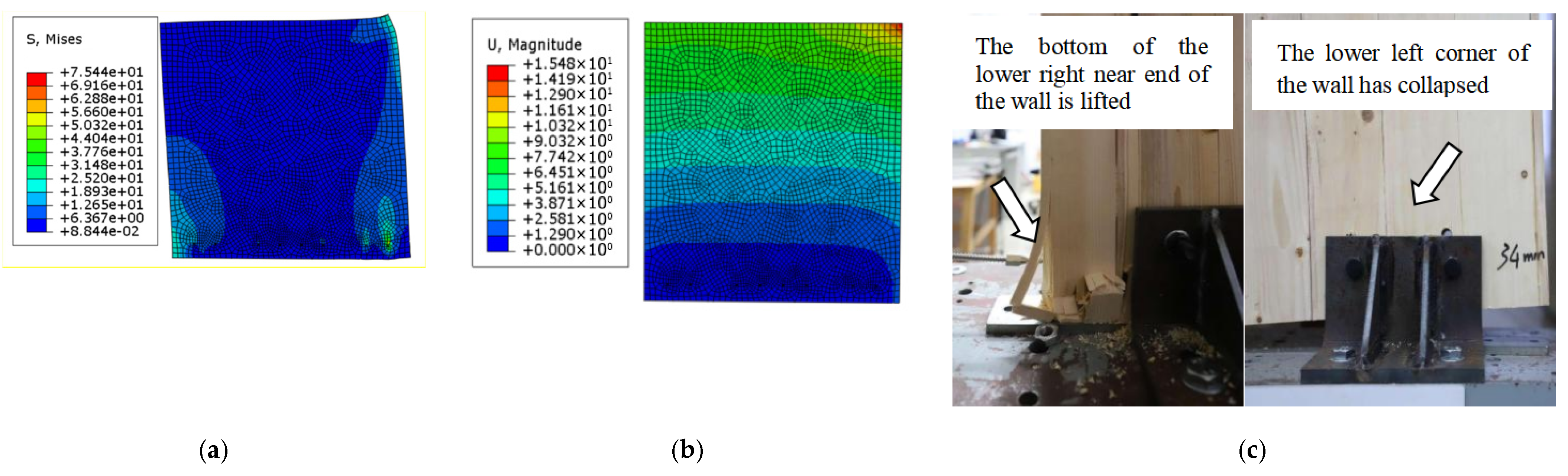
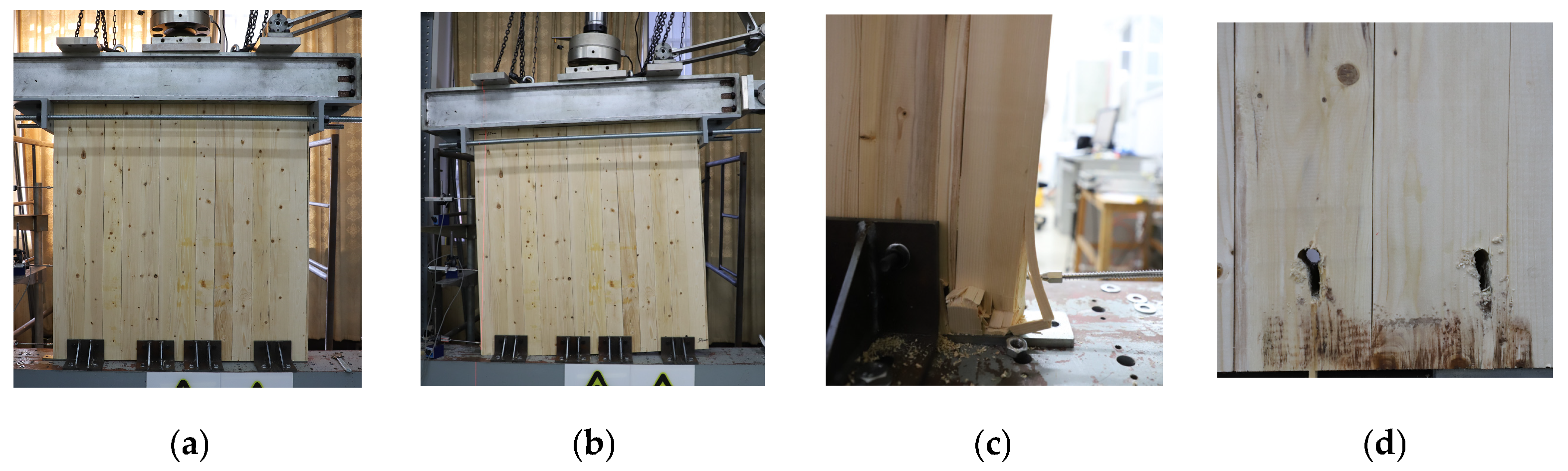
During the initial loading stage of the opening-free CLT shear wall specimens, minor slip (approximately 1–2 mm) occurred, as illustrated in Figure 5. In the middle loading stage, with the gradual increase in applied load, audible cracking sounds were emitted from the specimens. The bottom of the loaded end began to lift, leading to specimen rotation. When the displacement reached approximately 8 mm, minor slip was observed at the bottom connection joints. As the displacement increased to 16 mm, a rapid growth in displacement was noted, accompanied by progressive crushing at the bottom-left corner of the specimen.
The final failure mode was characterized by: (1) crushing at the bottom-left corner of the CLT panel; (2) shear-induced slip between the bolts and bolt holes at the bottom-right corner of the panel; and (3) no significant damage in other regions of the wall.
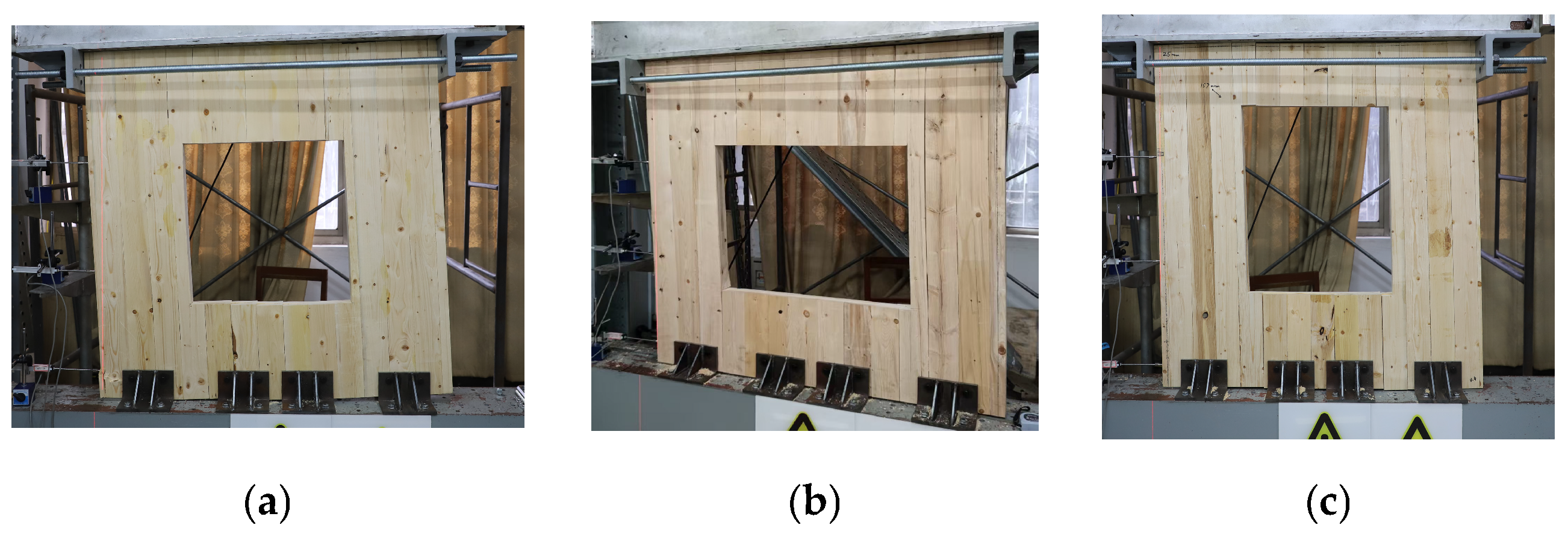
As illustrated in Figure 6, during the initial stage of displacement loading for the three CLT shear wall specimens with openings, minor stress concentration occurred in the edge region of the openings. The inner and outer layers of the lumber at the bottom of the openings slightly displaced relative to each other. As the displacement increased, slip occurred at the bottom bolts at the bottom-right corner of the shear walls. Notably, the lower the window opening was located, the more significant the relative displacement of the lumber layers became; meanwhile, the overall deformation of the entire wall exhibited a parallelogram shape.
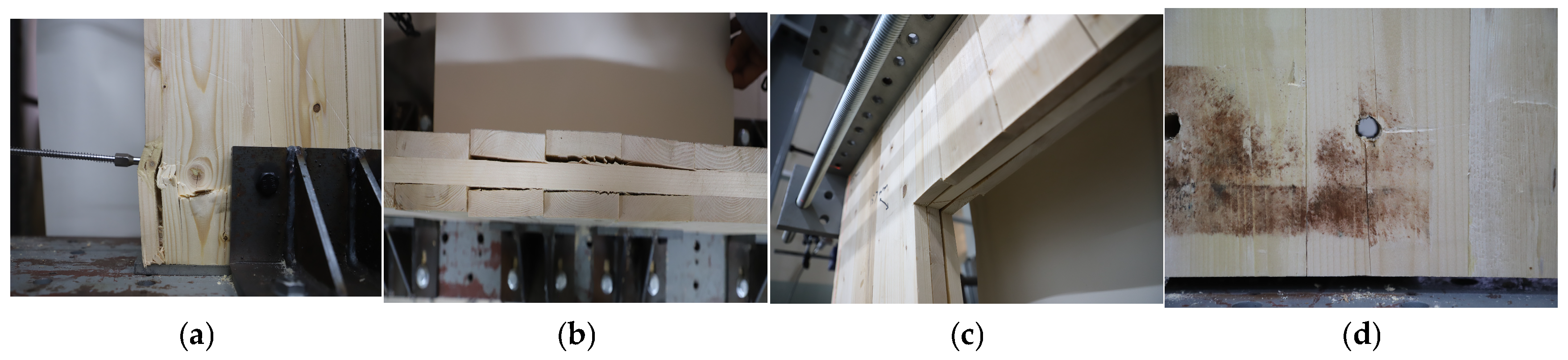
The failure characteristics of the specimens with openings were mainly characterized by: (1) brittle tearing of the lumber in the opening area of the walls; (2) adhesive detachment of the sheathing panels at the openings; and (3) shear failure of the bolt holes at the bottom-right corner of the shear walls caused by the bolts, as presented in Figure 7.

3.2. Displacement–Load Curve

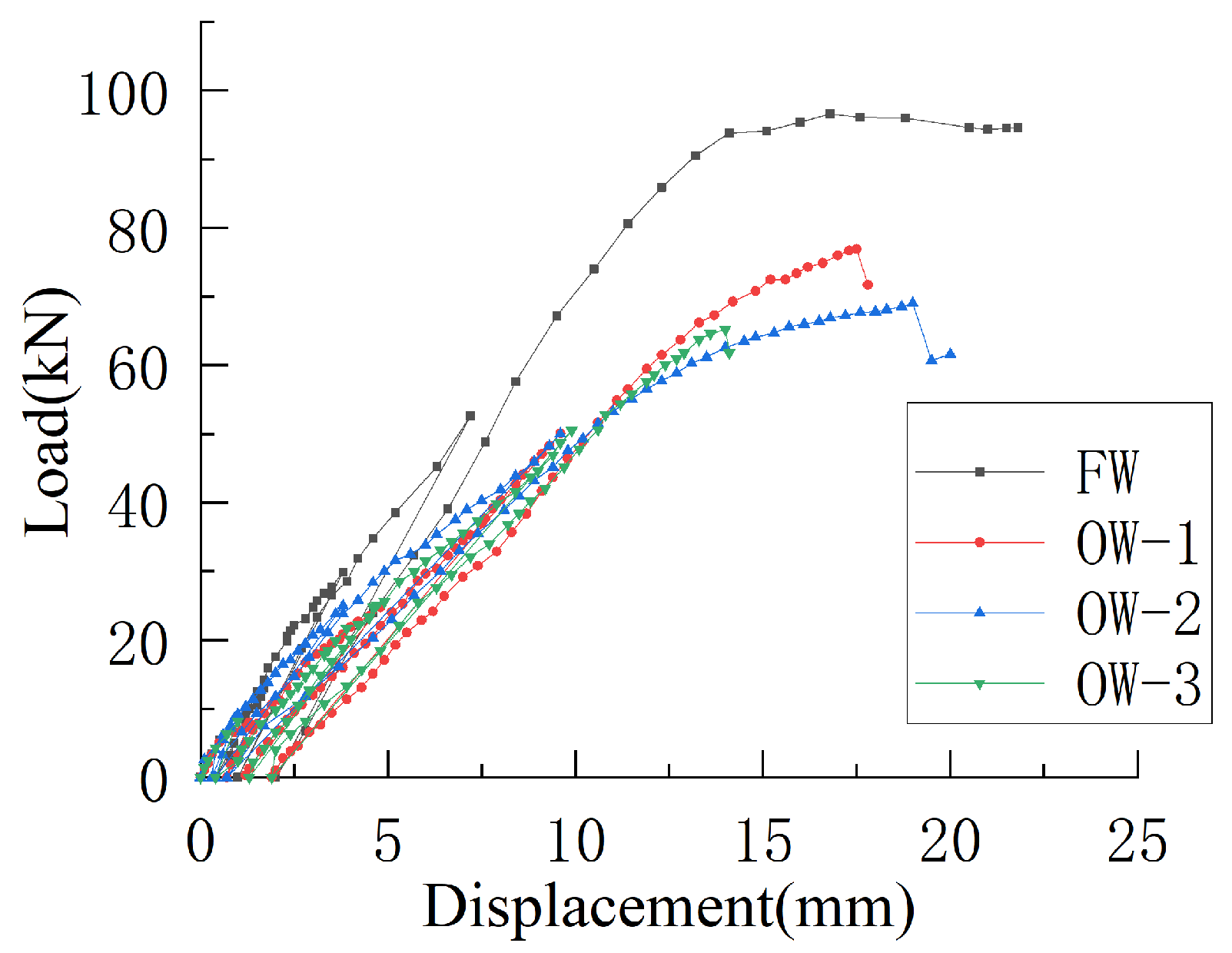
According to the test results, the deformation of the CLT wall panel is mainly composed of the displacement Δ′ induced by rotational deformation and the shear deformation Δbs of the panel member. The test load–displacement curves are presented in Figure 8. As indicated by the curves, the load–displacement of both the non-perforated CLT wall panel and the perforated CLT wall panels exhibits distinct linear characteristics prior to reaching the ultimate load. For specimen FW (the non-perforated wall), its curve declines gently after attaining the peak load, which demonstrates that the wall has favorable ductility. In contrast, the curves of the perforated walls show a slightly faster descending rate after reaching the peak load, implying that the presence of openings is likely to reduce the wall ductility. The local damage in the opening areas of the walls will shorten their plastic working range.
To compare the lateral resistance performance of each group of walls more clearly, the lateral resistance performance parameters were calculated with reference to the energy-equivalent elastoplastic curve parameter definition method [31]. The yield limit state was defined as the point corresponding to a 5% reduction in the elastic shear stiffness or the yield point (Δy, Py) derived from code-based calculation. The failure limit state was specified as the point where the load drops to 80% of the ultimate load or the point corresponding to severe damage of the specimens. The calculation formulas for the global shear stiffness G′ and wall panel shear stiffness Gint were adopted in accordance with ASTM E564-06 (2018) [27]. The lateral resistance performance parameters of all specimen groups are presented in Table 1.
It can be seen from Table 1 that the presence of openings exerts a significant influence on the bearing capacity of CLT wall panels. The ultimate loads of OW-1, OW-2, and OW-3 wall panels decrease by 20.4%, 28.6%, and 32.5%, respectively, compared with that of FW. Among them, OW-1 has the smallest opening area, resulting in the minimal reduction in ultimate load. In contrast, OW-2 and OW-3 have the same opening area, while the different opening positions exert a certain influence on their ultimate loads. Compared with OW-1, OW-2 features the same opening height and position with an increased opening width, leading to a 10.1% reduction in the ultimate load of the wall panel. When compared with OW-1, OW-3 has the same opening width and position with an increased opening height in the upper part, causing a 15.2% reduction in its ultimate load. This indicates that the increase in opening area in the height direction is more likely to reduce the bearing capacity of wall panels.
A comparison of the yield loads of all wall panels reveals that the influence law of the presence or absence of openings on the ultimate load and yield load of wall panels is consistent.
When comparing the global shear stiffness G′ with the wall panel shear stiffness Gint, it is found that the global shear stiffness of all specimens is lower than the wall panel shear stiffness. This is because the global shear stiffness takes into account the influence of the supports under the walls, whereas the supports exert a negligible effect on the inherent shear stiffness of the wall panels, with all the resulting errors within 10%. OW-3 exhibits the minimal error of approximately 1.1%, while FW has the maximal error of about 9.8%. A comparison of the slippage distances of the bolt holes in the walls during the test shows that FW has the largest slippage distance, which results in the reduction of its global stiffness. From the perspective of wall panel shear stiffness, the presence of openings has a tremendous impact on it. The shear stiffnesses of OW-1, OW-2, and OW-3 wall panels decrease by 36.3%, 42.3%, and 40.0%, respectively, compared with that of FW. Among them, OW-2 experiences the largest reduction in stiffness, which demonstrates that, with the same opening area, a wider opening leads to a more significant reduction in the shear stiffness of the wall panel.
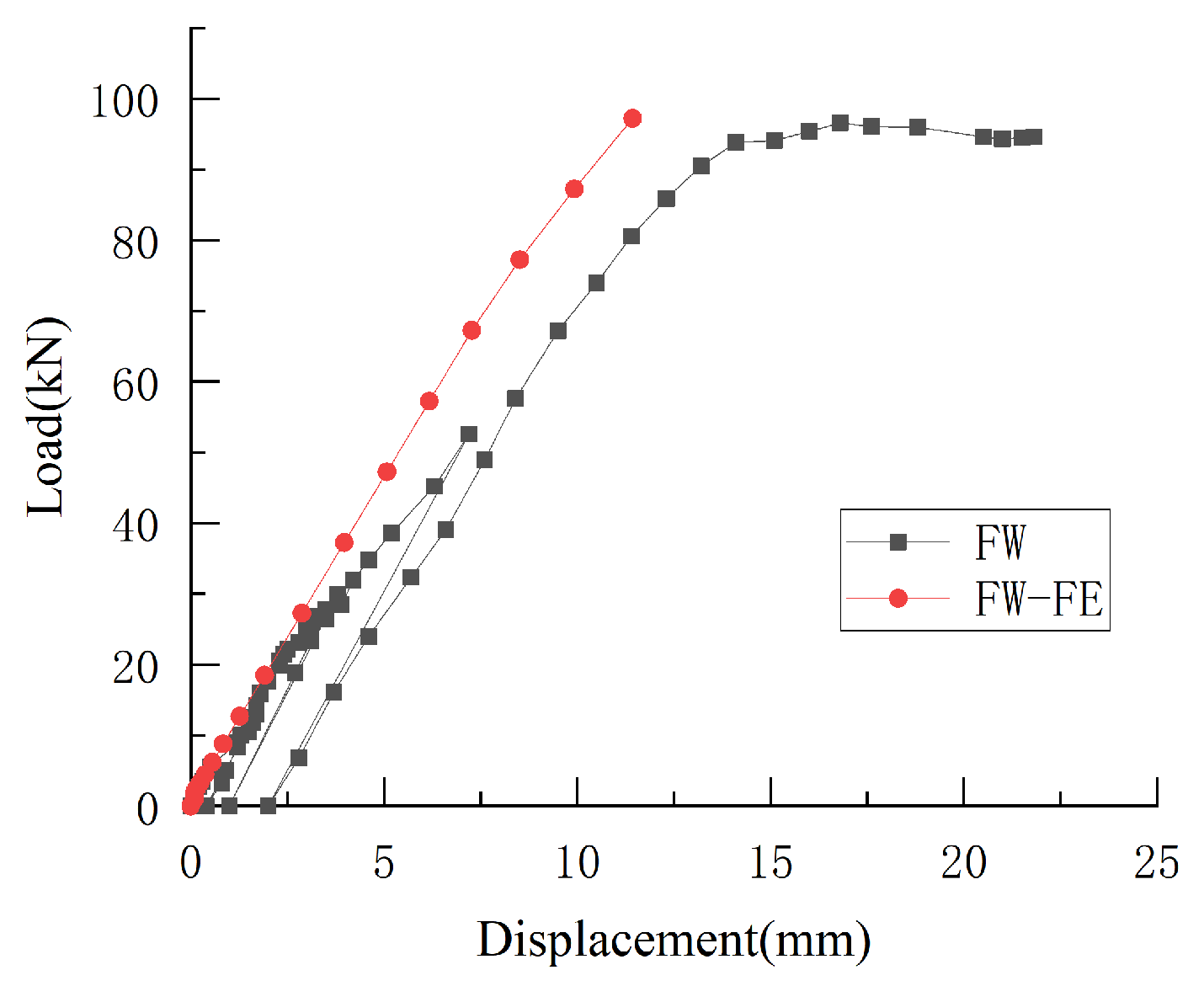
The experimental results of this study were compared and analyzed with the research findings on the lateral load-bearing performance of poplar cross-laminated timber (CLT) shear walls by Yue, K. et al. [32]. Their study utilized 30 mm lumber to fabricate 90 mm thick opening-free CLT panels with a size of 2.4 m × 2.4 m (length × width), and the measured ultimate load and yield load were 78.49 kN and 69.18 kN, respectively. In contrast, this study adopted 16 mm thin-type lumber to produce 48 mm thick opening-free CLT shear walls, with the scaled-down specimens having dimensions of 1.1 m × 1.1 m (length × width). The measured ultimate load and yield load of the specimens in this study reached 96.6 kN and 81.2 kN, respectively, indicating that the ultimate load-bearing capacity was increased by approximately 39.6% compared with the results of Yue, K. et al.’s research.
These comparative results initially demonstrate that the thin-type CLT shear walls adopted in this study exhibit certain performance advantages in terms of lateral load-bearing capacity.

4. Finite Element Model Creation

4.1. Basic Assumption

Based on the experimental results of this study and with reference to the relevant research findings by Shu, P. et al. [33], Diao, Y. et al. [34], and Du, Y.Y. et al. [26], the following basic assumptions are proposed targeting the mechanical development characteristics of CLT shear walls in the elastic stage: (1) the timber used in the wall tests was strictly selected and processed, and the influence of inherent timber defects on model calculations is not considered; (2) the timber is assumed to be a homogeneous material along the longitudinal, transverse, and thickness directions; (3) owing to the excellent bonding performance between laminations, which ensures their cooperative work, the laminations are assumed to be an integral plate, and the connection between adjacent laminations is defined as a tied connection; (4) the connection between bolts and bolt holes is defined as a general connection during modeling. The specimen dimensions for finite element simulation are as listed in Table 2.
The material properties are defined as follows.
Elastic Stage: The mechanical properties of timber comply with Hooke’s law. In finite element analysis (FEA), timber is generally regarded as an orthotropic material. When setting the mechanical parameters of timber in the elastic stage using ABAQUS software (2019), engineering constants (EngineeringConstant) are adopted to define 9 elastic constant values corresponding to 3 directions of the material, with specific parameters listed in Table 3 [27].
Plastic Stage: The Hill yield criterion is used to define the plasticity of the material, and the material strength of timber in the plastic stage is determined with reference to [35].
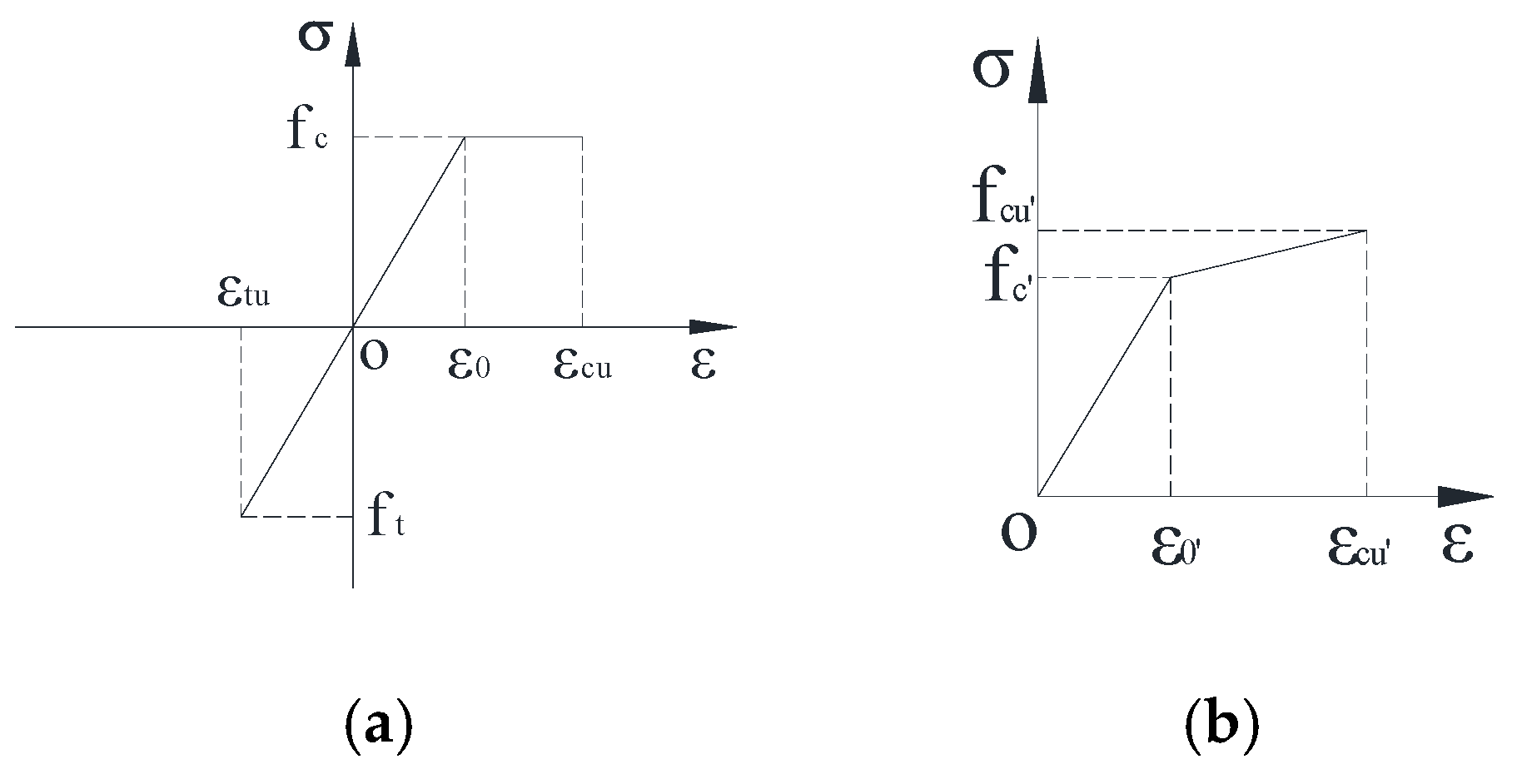
When subjected to tension and compression, timber generally undergoes elastic, yield, and densification stages. The constitutive relationship is shown in Figure 9 where fc and ft represent the ultimate compressive strength and ultimate tensile strength of timber along the grain, respectively; fc′ and fcu′ denote the yield compressive strength and ultimate compressive strength of timber perpendicular to the grain, respectively.

4.2. Model Establishment

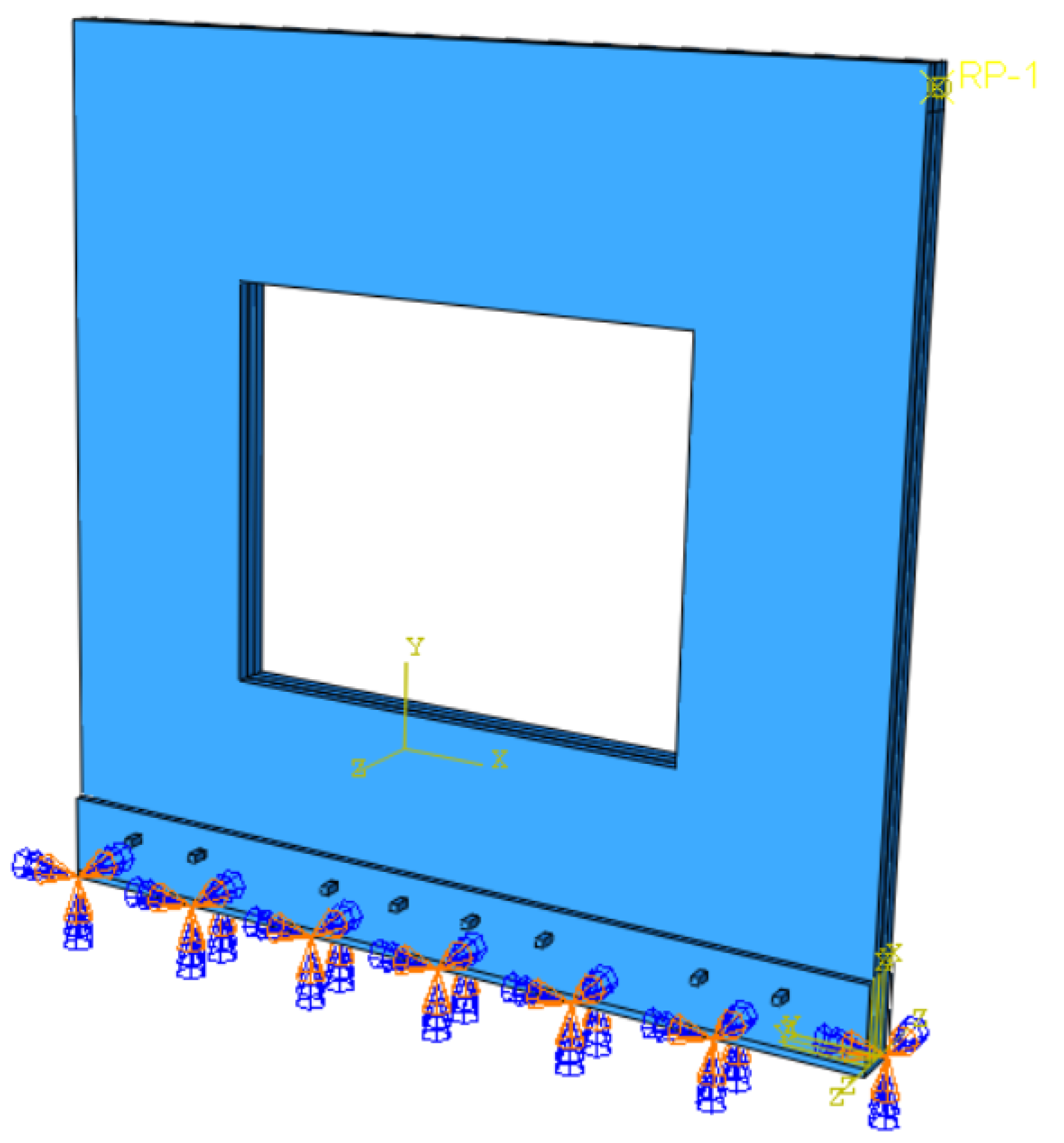
CLT walls were modeled as three layers where the first and third layers were defined with material properties corresponding to the vertical fiber direction and the middle layer to the horizontal fiber direction, consistent with the actual lamination fiber orientation. Eight bolts were arranged 65 mm above the wall base to replicate the real bolted connection between the wall and test rig base. The model was discretized into elements for analysis, with C3D8R first-order linear reduced-integration elements adopted to ensure mesh quality. The initial mesh size was set to 25 mm with adaptive meshing, and mesh refinement was implemented around bolt holes. Tied contact was specified between outer vertical laminations and the middle horizontal lamination, while surface-to-surface contact was defined for bolt holes–bolts, wall side laminations–steel plates, and wall base–test rig base, with bolts–steel plates set as tied contact. For contact pairs, tangential and normal directions were considered: the penalty method was used for tangential contact with a friction coefficient of 0.25, and hard contact was adopted for normal contact [35,36,37]. Regarding boundary conditions and loading, the bolt hole surfaces at the wall base were set as pinned supports, and the steel plate base was fixed without displacement or rotation in three directions. Vertical load was applied as pressure (0.104 MPa, converted from cross-sectional force) on the wall top. Lateral displacement loading was imposed at the upper end of one wall side: a 48 mm × 50 mm section on the wall side was coupled to a reference point (RP-1) that allowed displacement only in the X-direction (deformation direction), as illustrated in Figure 10. After applying the above conditions, a job was submitted to perform finite element solution and analysis of the CLT wall model.

5. Finite Element Analysis of Results

5.1. Finite Element Simulation Results and Analysis of Non-Perforated Walls

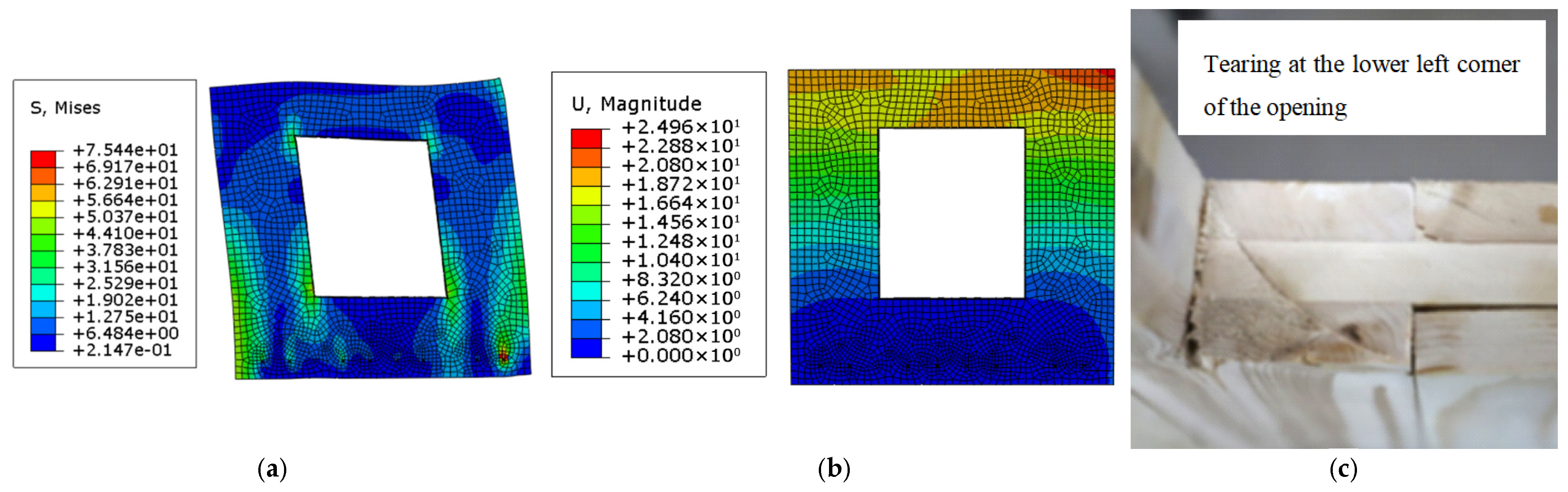
In the simulation results of the FW wall, the three locations with relatively high stress are the loading point, the first bolt at the lower corner near the loading point, and the bottom of the wall panel at the far end from the loading point, which are completely consistent with the failure locations of the wall panel observed in the actual test after loading. This is due to the rotation of the wall under horizontal loading: the first bolt near the loading point bears the maximum force, leading to contact between the bolt shank and the hole wall; with the gradual increase in load, compression between the bolt and the hole wall results in increased stress at the bolt hole. Meanwhile, the rotation of the wall also causes the bottom of the wall panel at the far end from the applied force to compress against the test rig base, leading to stress concentration at the wall corner. In comparison, the failure mode of the FW specimen during the test was characterized by timber crushing at the lower left corner of the panel and shear failure below the bolt hole at the lower right corner of the panel, and the simulation results are basically consistent with the test results. Regarding displacement, except for a small displacement at the loading point caused by panel compression, all other displacements are attributed to the wall panel’s own bending deformation, shear deformation, and wall rotation. The lifting of the bottom of the wall near the loading point is the main characteristic of wall rotation, and the simulation is basically consistent with the test process, as illustrated in Figure 11.
Figure 12 shows the comparison of load–displacement curves between the lateral monotonic static loading test and finite element simulation of the opening-free shear wall specimen FW. From the test and simulation data, the displacement corresponding to the yield load of 81.2 kN is 11.8 mm in the actual test and 9.8 mm in the simulation, with a difference of 16.9%. Possible reasons for this discrepancy are as follows: slip displacement occurs during initial loading due to the actual wall loading method; in the finite element simulation, the material is overly idealized, and although the wall panels are modeled in layers, the contact condition is set as tied contact, which ultimately results in smaller simulated displacements.

5.2. Comparative Analysis of Finite Element Simulation Results of CLT Shear Walls with Openings

5.2.1. Analysis of Stress Cloud Map and Displacement Cloud Map

(1)
Stress Distribution and Failure Modes
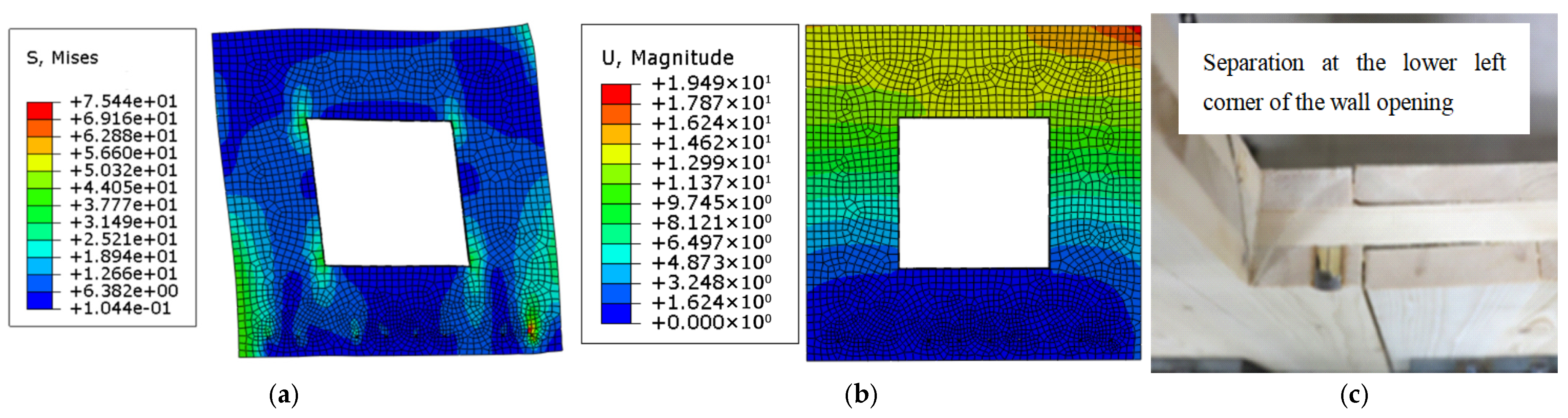
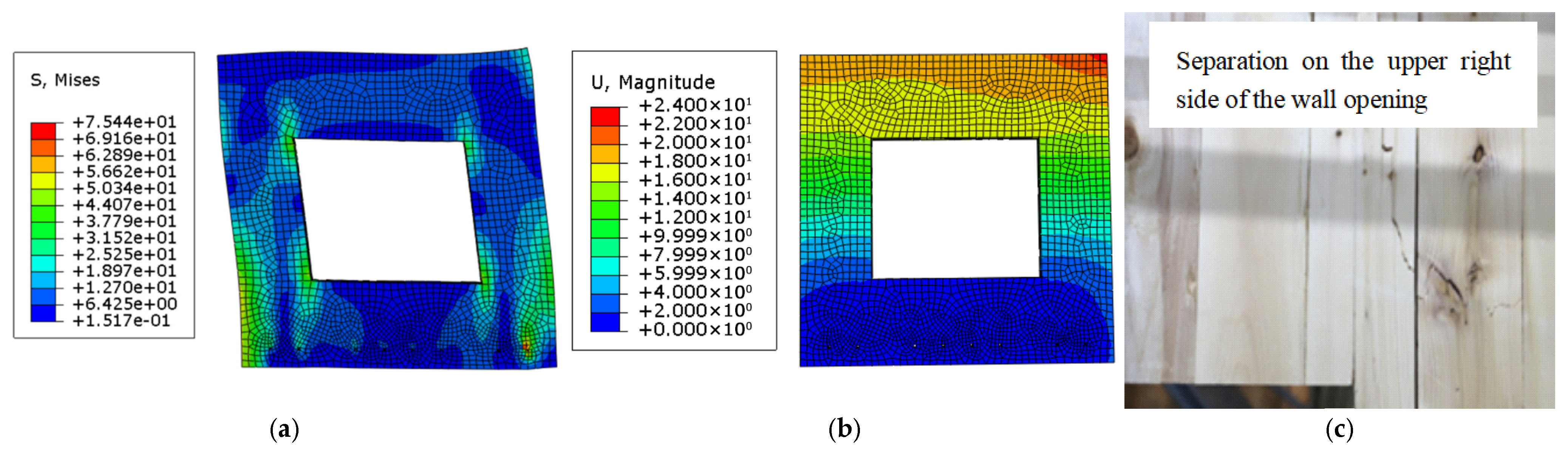
For the OW-1 wall, the high-stress regions are mainly distributed in three locations: the loading point, the first bolt at the lower corner near the loading point, and the bottom of the wall panel at the far end from the loading point. Meanwhile, the four corners of the opening are significant stress concentration zones, which is consistent with the failure modes observed in the test, such as lamination separation and debonding at the four corners of the opening, as shown in Figure 13.
For the OW-2 wall, the maximum stress range at the four corners of the opening is basically consistent with that of OW-1, but the stress range at the lower left corner increases to 44~50 MPa, which is 14%~16% higher than that of OW-1. Statistical analysis of the grid quantity corresponding to the color scale in the stress nephogram reveals that the 19~25 MPa stress range on the left side of the OW-2 wall forms a penetration. This phenomenon is attributed to the increased width of the opening in OW-2, which results in more significant weakening of the left cross-section of the wall and thus a substantial increase in local stress.
The OW-3 wall is designed with an increased opening height, leaving only 200 mm of wall width above the opening. Although its opening area is the same as that of OW-2, the stress distribution characteristics exhibit significant differences: the stress range at the lower left corner of the OW-3 opening increases to 50~56 MPa, and that at the lower right corner increases to 44~50 MPa, both significantly larger than those of OW-1 and OW-2. The underlying reason is that the wall above the opening is crucial for ensuring the cooperative work of the wall piers on both sides of the opening. The substantial reduction in the area of the wall above the OW-3 opening weakens the connection between the two side piers, leading to a significant expansion of the stress distribution range in the lower part of the single pier, and the high stress at the lower corners of the opening vertically penetrates down to the bottom of the wall.
In the actual test, the core failure modes of the OW-3 wall included timber lamination at the lower left corner of the opening, cracking at the upper-right corner, with the failure extending above the upper-right corner of the opening, manifested as tearing of the outer SPF timber along the grain direction. Meanwhile, obvious damage occurred at the upper-right part of the opening and the bolt holes on both left and right sides of the wall, as shown in Figure 14 and Figure 15. The stress concentration zones obtained in the elastic stage of the finite element simulation are highly consistent with the actual failure locations and modes observed in the test, indicating the relative reliability of the simulation.
(2)
Displacement Response and Deformation Mechanisms
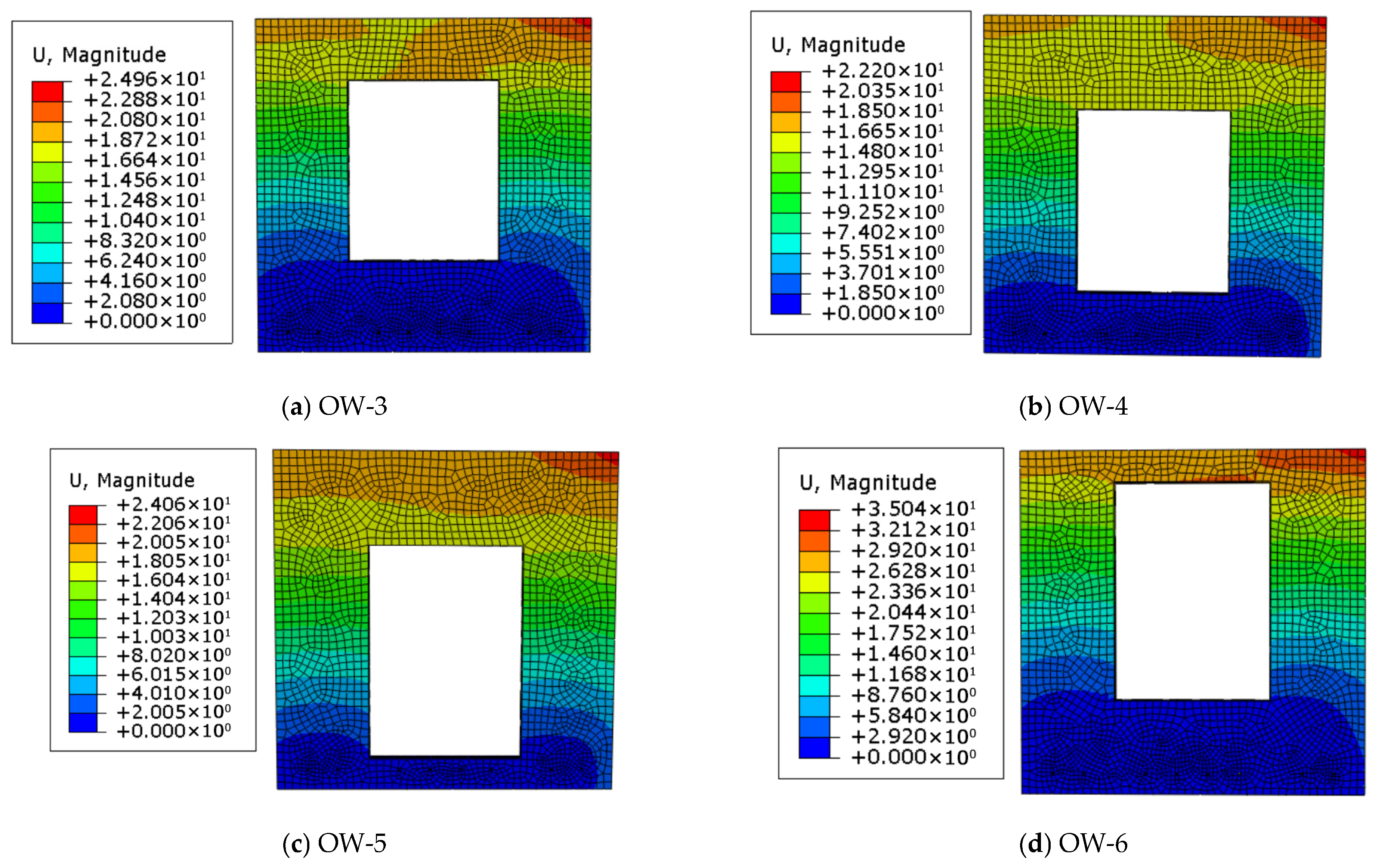
Analysis of the displacement nephograms indicates that the deformation of the four types of wall panels shows a non-linear increasing trend along the wall height. Statistical analysis of the color grids in the displacement nephograms reveals that the shear deformation of the walls with openings is significantly greater than that of the opening-free wall; the opening areas of OW-2 and OW-3 specimens are larger than that of OW-1, and their shear deformations are correspondingly greater. The increased shear deformation causes the walls with openings to exhibit obvious parallelogram deformation characteristics, which are highly consistent with the actual deformation of the specimens during the test. Meanwhile, significant expansion occurs at the inner corners of the opening. Since the model only simulates the deformation in the elastic stage, further deformation would directly induce mechanical responses such as adhesive layer interface damage and panel tearing between the inner and outer layers of the panels, which is consistent with the initial failure modes of the specimens observed in the test.

5.2.2. Comparative Analysis of Load–Displacement Curves

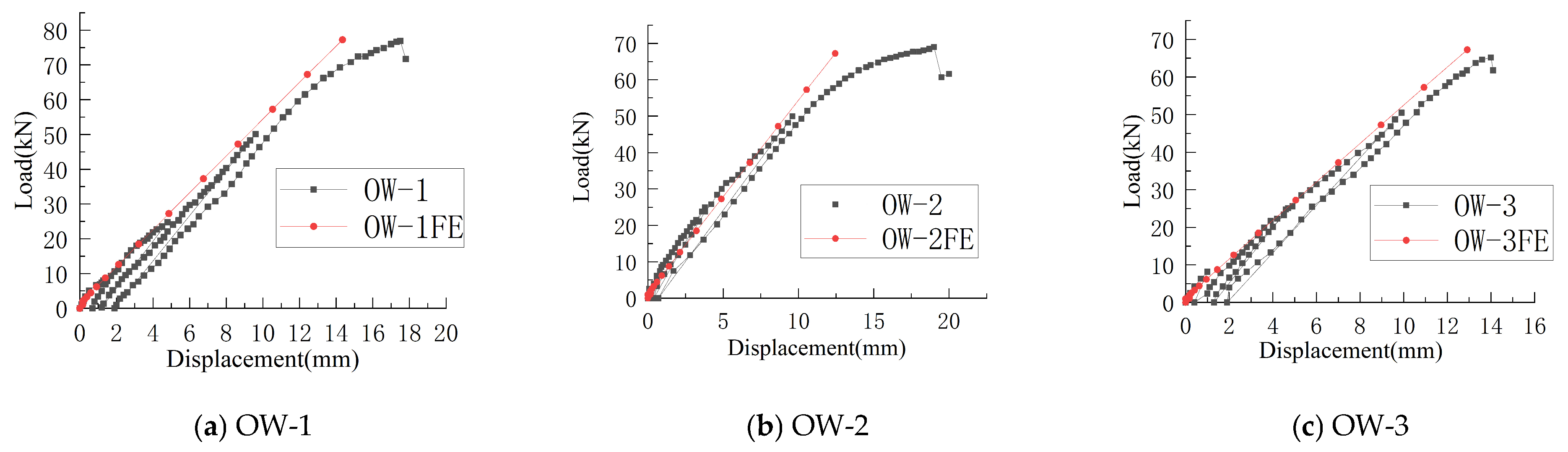
From the actual test and simulation data, as illustrated in Figure 16, it can be observed that, for OW-1, the displacement corresponding to the yield load of 62.3 kN in the actual test is 12.5 mm, while the displacement under the same load in the simulation is 11.5 mm, with a difference of 8%. For OW-2, the displacement corresponding to the yield load of 51.0 kN in the actual test is 10.6 mm, and the simulated displacement under the same load is 9.6 mm, with a difference of 9.4%. For OW-3, the displacement corresponding to the yield load of 48.9 kN in the actual test is 10.3 mm, and the simulated displacement under the same load is 9.4 mm, with a difference of 8.7%. The errors between simulation and actual tests are within 10%.
Table 4 presents a comparison between the shear stiffness G′ of CLT shear walls from monotonic loading tests and the elastic stage stiffness from finite element simulations. In some countries, the design value of the shear capacity of light wood frame shear walls is directly taken as the load corresponding to a horizontal displacement of 1/200 of the wall height [34,35,36]. Thus, the load FH/200 corresponding to a lateral displacement of 1/200 of the wall height was extracted to calculate the stiffness KH/200 (unit: kN/mm). As shown in Table 3 and Table 4, the error between the simulated value and the test value of the slope in the elastic stage of the opening-free CLT wall panel specimen is 8.5%, indicating that the finite element model can well simulate the behavior of the CLT wall panel specimen. Meanwhile, the stiffness of the opening-free wall in the simulation is greater than that of the test wall. This is because, in the finite element simulation, the wall material is homogeneous and free of defects; however, during the actual fabrication of wall specimens, the actual elastic stage stiffness of the walls is smaller than the finite element simulation results due to factors such as material properties.
Based on the comparative data of shear stiffness, the finite element simulation results for the elastic stage stiffness of perforated walls OW-1, OW-2, and OW-3 show good agreement with the experimentally measured values, with discrepancies of 6.3%, 11.0%, and 2.1%, respectively. Due to the weakening effect of openings on the wall cross-section, the stiffness of the perforated walls exhibits a significant decreasing trend compared to the solid wall FW without openings. The simulated elastic stiffness of the perforated walls is slightly higher than the experimental measurements, which can be attributed to the fact that, in the finite element analysis, the wall segment above the opening can effectively transfer loads to the wall panels on both sides of the opening, forming a continuous load-transfer mechanism. In contrast, during the actual tests, the loads in the perforated walls were primarily borne independently by the wall panels on either side of the opening, resulting in lower load-transfer efficiency compared to the simulation. Overall, the deviation between the finite element simulation and experimental results for the elastic stage stiffness of the perforated walls is within an acceptable range, demonstrating good consistency.

5.3. Finite Element Simulation Results and Analysis of Lightweight CLT Shear Walls with Different Sizes and Positions of Openings

Finite element simulations were performed on wall specimens measuring 500 mm × 600 mm and 500 mm × 700 mm to investigate the effect of opening geometry. Different opening configurations were designed while maintaining a constant opening area; the detailed dimensions are summarized in Table 5.

5.3.1. Stress Cloud Map Analysis

As illustrated in Figure 17:
(1)
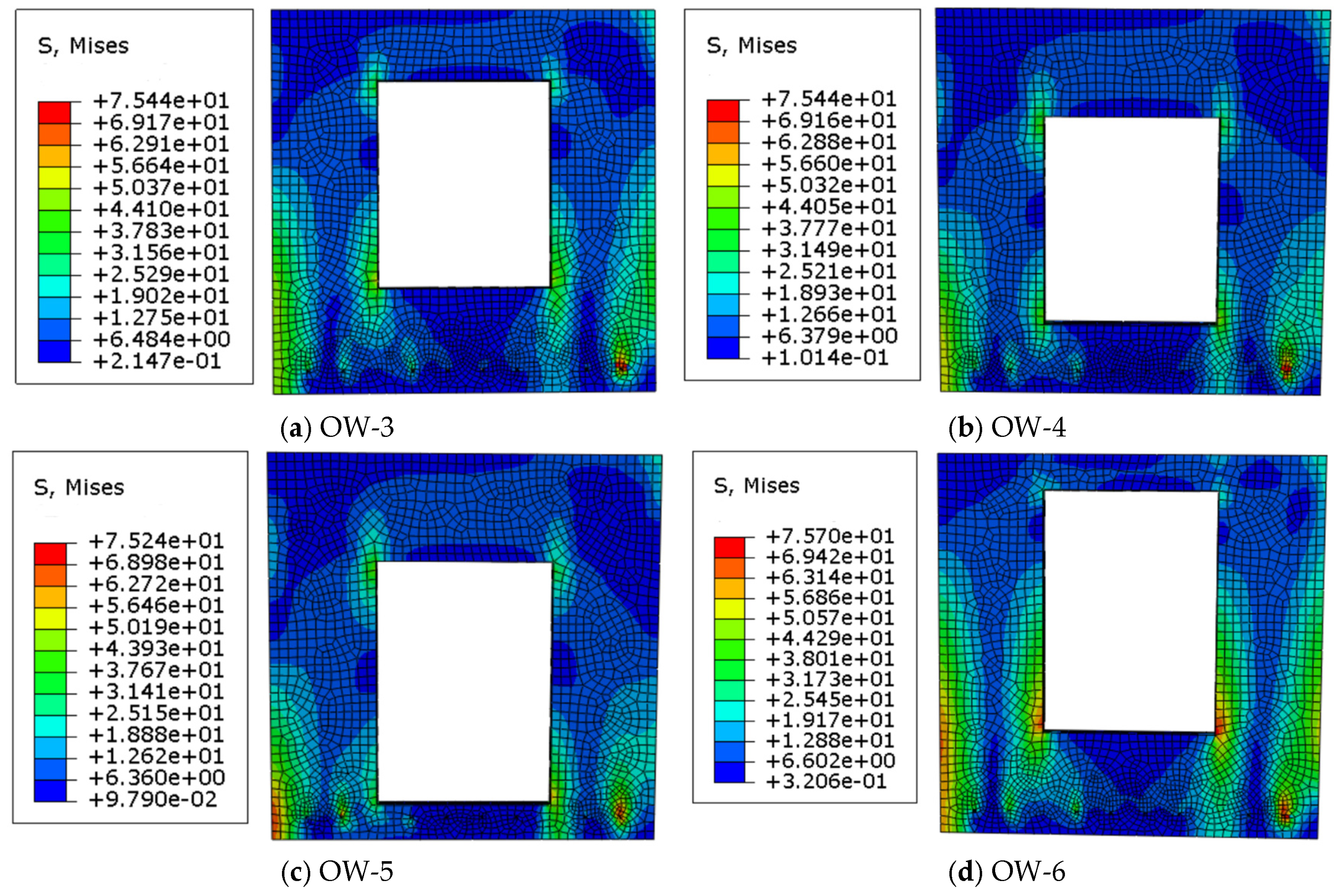
Although OW-3 and OW-4 have the same opening area, their different vertical opening layouts lead to markedly distinct stress distributions and load-carrying behaviors. In OW-4, the opening is positioned lower than in OW-3. The stress range at the lower-right corner of the opening in OW-4 is 37–44 MPa, which is comparable in magnitude to that in OW-3. However, because the opening in OW-4 is closer to the wall base, the effective load-bearing area beneath the opening is reduced and the restraining effect from the base is weakened. Consequently, the maximum stress at the lower-left corner of OW-4 reaches 50–56 MPa, significantly higher than the 44–50 MPa observed at the corresponding location in OW-3. This region becomes the core stress-concentration zone during the elastic stage and is likely to initiate local crushing failure.
(2)
OW-4 and OW-5 share the same vertical distance from the opening to the upper wall edge. With the enlargement of the opening in OW-5, the stress-concentration characteristics change noticeably: stresses increase substantially at both lower corners of the opening, with the increase at the lower-left corner being particularly pronounced. Moreover, in OW-4 the 44–50 MPa high-stress zone at the lower-right corner spreads continuously along the opening edge, tending to penetrate vertically through the wall. Such a penetrating high-stress band may trigger tearing failure at this location as deformation progresses.
(3)
OW-5 and OW-6 have identical opening areas, but the opening in OW-6 is located closer to the upper part of the wall. This configuration considerably reduces the effective load-transfer area above the opening and weakens the constraining and cooperative stress-carrying action in the upper wall region. As a result, stresses at both lower corners of the opening in OW-6 rise notably. Among the four wall specimens, OW-6 exhibits the largest stress ranges at the lower corners and the highest degree of stress concentration in the elastic stage. The associated risk of stress-induced damage is significantly greater, making OW-6 the most susceptible to initial failure.

5.3.2. Displacement Cloud Map Analysis

As illustrated in Figure 18:
(1)
Both different opening sizes and varying positions of openings with the same size exert an influence on the in-plane displacement of cross-laminated timber (CLT) shear walls.
(2)
When comparing OW-5 and OW-6 (with the same opening area), a 200 mm offset of the opening along the Y-direction results in an increase in the in-plane displacement of the wall, with the maximum displacement increasing from 24 mm to 35 mm, accompanied by an increase in the shear displacement of the wall segment above the opening. Similarly, when comparing OW-3 and OW-5 (also with the same opening area), a 100 mm offset of the opening along the Y-direction leads to a rise in the maximum displacement from 22 mm to 25 mm, along with a significant enhancement in the shear deformation of the wall segment above the opening.
(3)
When comparing OW-4 and OW-5, with the thickness of the wall segment above the opening remaining constant, extending the opening length downward by 100 mm also contributes to an increase in the in-plane displacement of the wall, with the maximum displacement rising from 22 mm to 24 mm.

5.3.3. Comparative Analysis of Load–Displacement Curves

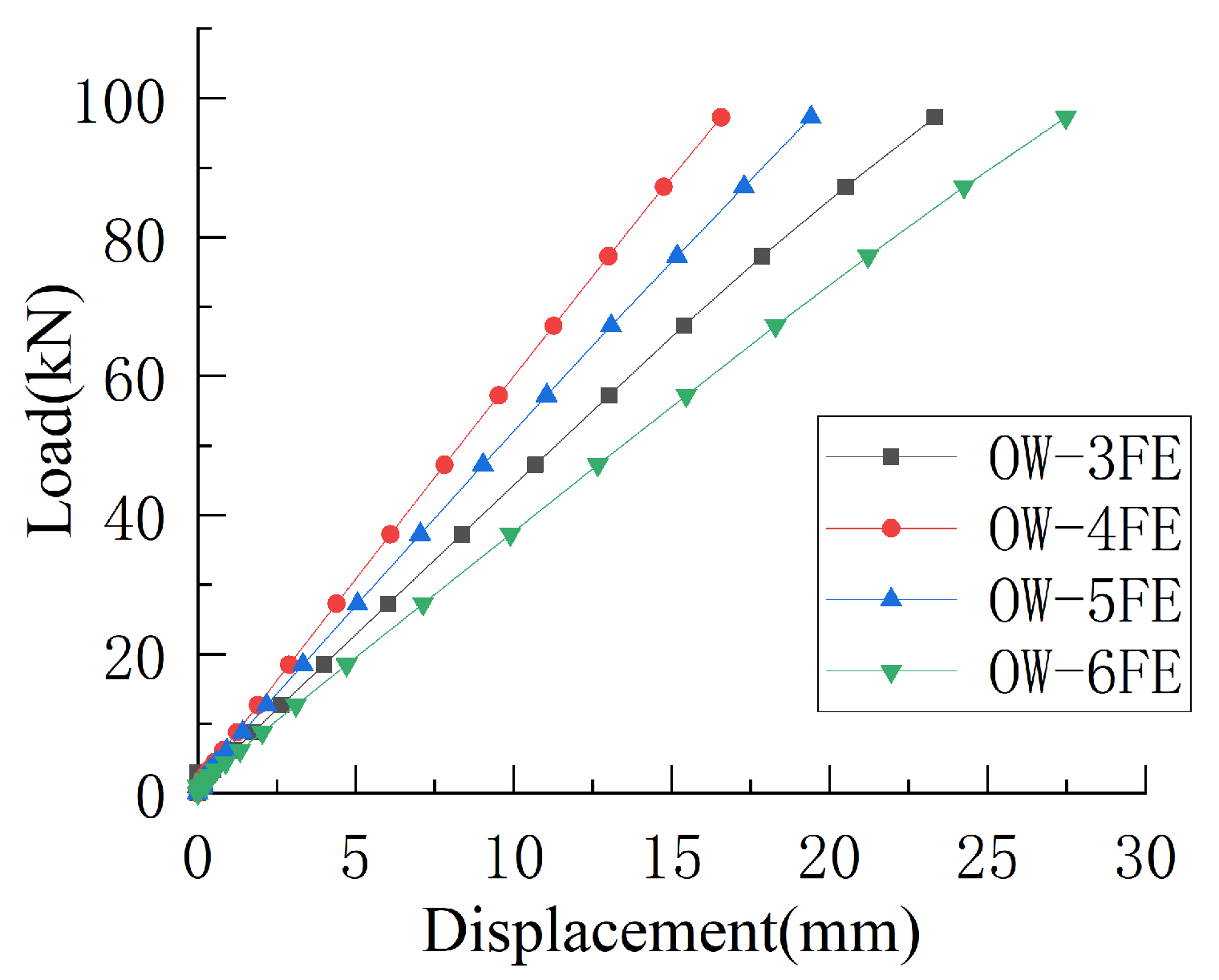
Figure 19 compares the load–displacement curves obtained from lateral monotonic testing and finite element simulation for a shear wall containing an opening. An analysis of the elastic stage stiffness across the four wall configurations reveals the following trends. When the width of the wall segment above the opening is held constant (as in OW-4 and OW-5), a moderate increase in opening size has limited influence on the elastic stage displacement. However, it raises the stress level in the bottom wall region under identical loading, thereby increasing its susceptibility to failure.
Comparing OW-3 and OW-4—where the opening size is unchanged but its distance from the top of the wall is reduced by 100 mm—the elastic stiffness decreases by 15.3%. A more pronounced reduction of 28.8% is observed between OW-5 and OW-6 under a 200 mm reduction in the top distance while maintaining the same opening size.
Consequently, in the design of openings for CLT shear walls, attention should be given not only to the opening’s dimensions but also to its vertical location relative to the wall top. A smaller distance between the opening and the wall top promotes larger deformations under lateral loading, amplifies the stress concentrations on both sides of the opening, and heightens the risk of wall damage.

6. Conclusions and Recommendations

This study conducted lateral static loading tests on 48 mm thick three-layer CLT shear walls, comparing the results between a solid CLT shear wall without openings and three perforated CLT shear walls. Finite element numerical simulations in the elastic stage were performed using ABAQUS software (2019), employing simplified models for the four specimen configurations (one without openings and three with different openings). The simulation results were compared with experimental data from thin CLT wall panels, leading to the following conclusions:
(1)
The influence of openings on the shear stiffness of thin CLT shear walls is more pronounced than that on their shear capacity. Among specimens OW-2 and OW-3, which have the same opening area of 0.3 m2, OW-3 with a greater opening height exhibits slightly lower shear strength than OW-2. However, OW-2, which has a larger opening width, shows significantly lower shear stiffness compared to OW-3.
(2)
The stress contours of specimens FW, OW-1, and OW-2 clearly reflect the stress distribution under load. The overall trends observed in the simulations are consistent with those in the tests throughout the loading process. Moreover, the discrepancies between the slope of the force–displacement curves from monotonic loading tests in the elastic stage and the finite element simulation results are generally within 10%, confirming the validity of the numerical models.
(3)
Finite element simulations of CLT walls with varying opening sizes and positions indicate that both the area and location of the opening affect the wall stiffness in the elastic stage, with the opening position playing a more critical role. A smaller distance from the opening to the upper edge of the wall leads to a more noticeable reduction in overall wall stiffness.
(4)
Based on the findings of this study, openings in CLT shear walls should preferably be positioned centrally. If central placement is not feasible, a slightly lower position may be considered, provided the distance from the opening to the lower edge of the wall is not less than 100 mm. Furthermore, the opening area should be minimized while meeting lighting requirements.

7. Limitations and Future Research Directions

(1)
Limitations of the current study
Due to constraints in laboratory space and equipment availability, reduced-scale models were employed in the experimental program. Although the stacking sequence of CLT laminations, material properties, and joint details were carefully controlled to preserve mechanical similarity, scale effects may influence the generalizability of the results. Future work will include comparative tests on both reduced-scale and full-scale models to systematically investigate the influence of size effects.
(2)
Simplifications in the numerical model
The finite element model did not account for progressive damage evolution in timber or interlaminar debonding behavior. The simulations relied on a linear elastic constitutive law and tied constraints to simplify interfacial interactions. Subsequent studies will incorporate elastoplastic constitutive relations coupled with damage models, refine the interlaminar constraints, and thereby improve the accuracy of simulations in predicting plastic behavior and failure modes of the walls.
Future research will focus on expanding the test matrix by including multiple opening-parameter variations, as well as conducting strengthening experiments on perforated walls using methods such as timber framing, FRP sheets, or metal connectors. These tests aim to quantify the enhancement in mechanical performance offered by different strengthening schemes, thereby providing data-driven insights for the optimized design and reinforcement of perforated CLT walls in practical engineering applications.

Author Contributions

Author Contributions are as follows: Conceptualization, X.F., S.Z. and D.Z.; methodology, X.F. and D.Z.; software, X.F.; validation: X.Z., C.Y. and J.H.; formal analysis, X.F. and D.Z.; investigation, X.F.; resources, S.Z. and D.Z.; data curation, X.F. and L.X.; writing—original draft preparation, X.F.; writing—review and editing, X.F., S.Z. and D.Z.; visualization, X.F.; supervision, X.Z. and C.Y.; project administration, X.F. and D.Z.; funding acquisition, X.F., S.Z. and D.Z. All authors have read and agreed to the published version of the manuscript.

Funding

This research was supported by the Scientific and Technological Projects of Jiangsu Provincial Department of Housing and Urban-Rural Development (Project No.: 2024ZD051 and 2024ZD055).

Data Availability Statement

The original contributions presented in this study are included in the article. Further inquiries can be directed to the corresponding author.

Conflicts of Interest

All authors declare that they have no conflicts of interest to report. No author has any financial, personal, or institutional interest that might influence the results or interpretation of this manuscript.

References

  1. Crespell, P.; Gagnon, S. Cross-Laminated Timber: A Primer. Wood Des. Focus 2010, 20, 3–7. [Google Scholar]
  2. Long, W.G.; Yang, X.B. Wood Structure Design Manual, 4th ed.; Architecture & Building Press: Beijing, China, 2021. [Google Scholar]
  3. Van de Kuilen, J.W.G.; Ceccotti, A.; Xia, Z.; He, M. Very Tall Wooden Buildings with Cross Laminated Timber. Procedia Eng. 2011, 14, 1621–1628. [Google Scholar] [CrossRef]
  4. Hristovski, V.; Mircevska, V.; Dujic, B.; Garevski, M. Comparative dynamic investigation of cross-laminated wooden panel systems: Shaking-table tests and analysis. Adv. Struct. Eng. 2018, 21, 1421–1436. [Google Scholar] [CrossRef]
  5. Hristovski, V.; Dujic, B.; Stojmanovska, M.; Mircevska, V. Full-Scale Shaking-Table Tests of XLam Panel Systems and Numerical Verification: Specimen 1. J. Struct. Eng. 2013, 139, 2010–2018. [Google Scholar] [CrossRef]
  6. Matos, F.T.; Branco, J.M.; Rocha, P.; Demschner, T.; Lourenço, P.B. Quasi-static tests on a two-story CLT building. Eng. Struct. 2019, 201, 109806. [Google Scholar] [CrossRef]
  7. Schneider, J.; Stiemer, S.F.; Tesfamariam, S.; Karacabeyli, E. Damage Assessment of Cross Laminated Timber Connections Subjected to Simulated Earthquake Loads. In Proceedings of the 15th World Conference on Timber Engineering, Auckland, New Zealand, 15–19 July 2012; pp. 398–406. [Google Scholar]
  8. He, M.J.; Zhang, Q.F. Anti-Slip Performance of Prestressed Bolted Connections Between Cross-Laminated Timber Walls and Floor Steel Beams. Spec. Struct. 2022, 39, 1–6. [Google Scholar] [CrossRef]
  9. Weng, W.S.; Hu, S.Q.; Liu, B. Axial Compression Performance of Steel Splint-CLT Composite Shear Walls. Low Temp. Archit. Technol. 2024, 46, 45–49. [Google Scholar] [CrossRef]
  10. Moerman, B.; Li, M.H.; Smith, T.; Lim, H. Design and Cyclic Testing of Bolted End Plate Connections Between Steel Link Beams and Cross-Laminated Timber for Coupled Shear Walls. Constr. Build. Mater. 2022, 353, 129060. [Google Scholar] [CrossRef]
  11. Hassanieh, A.; Valipour, H.R.; Bradford, M.A. Composite Connections Between CLT Slab and Steel Beam: Experiments and Empirical Models. J. Constr. Steel Res. 2017, 138, 823–836. [Google Scholar] [CrossRef]
  12. Shen, Y.L.; Schneider, J.; Tesfamariam, S.; Stiemer, S.F.; Mu, Z.-G. Hysteresis Behavior of Bracket Connection in Cross-Laminated-Timber Shear Walls. Constr. Build. Mater. 2013, 48, 980–991. [Google Scholar] [CrossRef]
  13. Flatscher, G.; Bratulic, K.; Schickhofer, G. Experimental Tests on Cross-Laminated Timber Joints and Walls. Proc. Inst. Civ. Eng.-Struct. Build. 2015, 168, 868–877. [Google Scholar] [CrossRef]
  14. Li, M.; Lam, F. Lateral Behaviour of Cross Laminated Timber Shear Walls Under Reversed Cyclic Loads. In Proceedings of the Tenth Pacific Conference on Earthquake Engineering, Sydney, Australia, 6–8 November 2015; pp. 1–8. [Google Scholar]
  15. Li, Z.; Wang, X.J.; He, M.J. Experimental and Analytical Investigations into Lateral Performance of Cross-Laminated Timber (CLT) Shear Walls with Different Construction Methods. J. Earthq. Eng. 2022, 26, 3724–3746. [Google Scholar] [CrossRef]
  16. Dujic, B.; Klobcar, S.; Zarnic, R. Influence of Openings on Shear Capacity of Wooden Walls. In Proceedings of the 40th CIB-W18 Meeting, Bled, Slovenia, 28–31 August 2007. Paper 40-15-6. [Google Scholar]
  17. Reynolds, T.; Foster, R.; Bregulla, J.; Chang, W.-S.; Harris, R.; Ramage, M. Lateral-Load Resistance of Cross-Laminated Timber Shear Walls. Struct. Eng. 2017, 143, 06017006. [Google Scholar] [CrossRef]
  18. Shahnewaz, I.; Tannert, T.; Alam, M.S.; Popovski, M. In-Plane Stiffness of Cross-Laminated Timber Panels with Openings. Struct. Eng. Int. 2017, 27, 217–223. [Google Scholar] [CrossRef]
  19. Xue, J.; Ren, G.; Qi, L.; Wu, C.; Yuan, Z. Experimental Study on Lateral Performance of Glued-Laminated Timber Frame Infilled with Cross-Laminated Timber Shear Walls. Eng. Struct. 2021, 239, 112354. [Google Scholar] [CrossRef]
  20. Casagrande, D.; Fanti, R.; Greco, M.; Gavric, I.; Polastri, A. On the Distribution of Internal Forces in Single-Storey CLT Symmetric Shear-Walls with Openings. Structures 2021, 33, 4718–4742. [Google Scholar] [CrossRef]
  21. Shahnewaz, M.; Alam, M.S.; Tannert, T.; Popovski, M. Cross Laminated Timber Walls with Openings: In-Plane Stiffness Prediction and Sensitivity Analysis. In Proceedings of the Annual Conference of the Canadian Society for Civil Engineering, London, ON, Canada, 1–4 June 2016; pp. 1–10. [Google Scholar]
  22. Mestar, M.; Doudak, G.; Polastri, A.; Casagrande, D. Investigating the Kinematic Modes of CLT Shear-Walls with Openings. Eng. Struct. 2021, 228, 111475. [Google Scholar] [CrossRef]
  23. Casagrande, D.; Fanti, R.; Doudak, G.; Polastri, A. Experimental and Numerical Study on the Mechanical Behaviour of CLT Shearwalls with Openings. Constr. Build. Mater. 2021, 298, 123858. [Google Scholar] [CrossRef]
  24. Casagrande, D.; Doudak, G.; Vettori, M.; Fanti, R. Proposal for an Equivalent Frame Model for the Analysis of Multi-Storey Monolithic CLT Shearwalls. Eng. Struct. 2021, 245, 112894. [Google Scholar] [CrossRef]
  25. Tran, D.K.; Jeong, G.Y. Effects of Wood Species, Connection System, and Wall-Support Interface Type on Cyclic Behaviors of Cross-Laminated Timber (CLT) Walls Under Lateral Loads. Constr. Build. Mater. 2021, 280, 122450. [Google Scholar] [CrossRef]
  26. Du, Y.Y. Study on Axial Compression Performance of Lattice Wooden Columns. Master’s Thesis, Yangzhou University, Yangzhou, China, 2021. [Google Scholar] [CrossRef]
  27. ASTM E564-06; Standard Practice for Static Load Test for Shear Resistance of Framed Walls for Buildings. ASTM International: West Conshohocken, PA, USA, 2018.
  28. Han, T.C.; Liu, Y.; Lu, Y.J.; Wu, W.; Sun, T.; Lv, Q. Design and numerical analysis of cross-laminated bamboo (CLB) buildings with different rocking wall configurations. Structures 2023, 56, 105011. [Google Scholar] [CrossRef]
  29. Akbas, T.; Sause, R.; Ricles, J.M.; Ganey, R.; Berman, J.; Loftus, S.; Dolan, J.D.; Pei, S.; van de Lindt, J.W.; Blomgren, H.-E. Analytical and experimental lateral-load response of self-centering posttensioned CLT walls. J. Struct. Eng. 2017, 143, 04017019. [Google Scholar] [CrossRef]
  30. Ganey, R.; Berman, J.; Akbas, T.; Loftus, S.; Dolan, J.D.; Sause, R.; Ricles, J.; Pei, S.; van de Lindt, J.; Blomgren, H.-E. Experimental investigation of self-centering cross-laminated timber walls. J. Struct. Eng. 2017, 143, 04017135. [Google Scholar] [CrossRef]
  31. ASTM E2126-11; Standard Test Methods for Cyclic (Reversed) Load Test for Shear Resistance of Vertical Elements of the Lateral Force Resisting Systems for Buildings. ASTM International: West Conshohocken, PA, USA, 2009.
  32. Yue, K.; Li, X.; Shi, X.L.; Jiao, X.; Wu, P.; Zhang, Z.; Dong, G.; Fang, Y. Effect of High-Temperature Pretreatment on Lateral Load-Bearing Performance of Poplar Cross-Laminated Timber (CLT) Shear Walls. Sci. Silvae Sin. 2024, 60, 117–128. [Google Scholar]
  33. Shu, P. Study on Lateral Load-Bearing Performance of Self-Centering Cross-Laminated Timber (CLT) Twin-Shear Walls with Replaceable Coupling Beams. Master’s Thesis, Xihua University, Chengdu, China, 2024. [Google Scholar] [CrossRef]
  34. Diao, Y. Experimental and Finite Element Analysis on Out-of-Plane Mechanical Performance of Mortise-Tenon Connected Cross-Laminated Timber (CLT) Wall Joints. Master’s Thesis, Beijing Forestry University, Beijing, China, 2020. [Google Scholar] [CrossRef]
  35. Chen, S.L. Study on Wind Resistance Performance of Light Wood Frame Buildings. Ph.D. Thesis, Harbin Institute of Technology, Harbin, China, 2009. [Google Scholar]
  36. Zhu, E.C.; Pan, J.L. Discussion on Issues in Wood Structure Design, 1st ed.; China Architecture & Building Press: Beijing, China, 2017. [Google Scholar]
  37. Pan, J.L.; Zhu, E.C. Principles of Wood Structure Design, 2nd ed.; China Architecture & Building Press: Beijing, China, 2019. [Google Scholar]
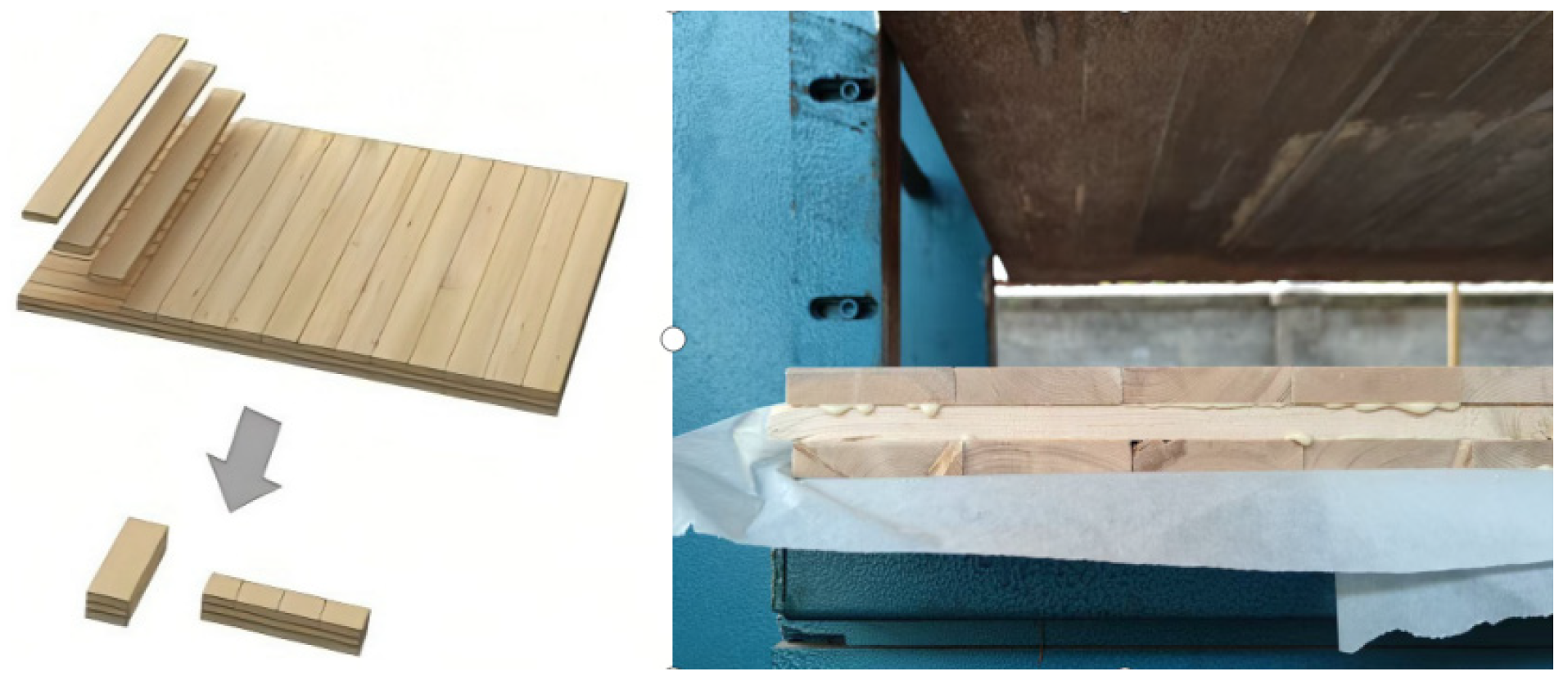
Figure 1. Three-layer lamination configuration of Cross-Laminated Timber (CLT) shear walls.
Buildings 16 00536 g001
Figure 2. The Dimensions of CLT Wall specimen Openings.
Buildings 16 00536 g002
Figure 3. The bottom connection diagram of CLT Wall specimen.
Buildings 16 00536 g003
Figure 4. Schematic diagram of test loading device.
Buildings 16 00536 g004
Figure 5. Failure Characteristics of the FW Shear Wall. (a) Initial Loading. (b) Mid-loading Stage. (c) Shear Wall Panel Crushing. (d) Slippage of Bolt Holes in Shear Wall Panel.
Buildings 16 00536 g005
Figure 6. Loading Diagram of Perforated Shear Walls. (a) OW-1 Shear Wall. (b) OW-2 Shear Wall. (c) OW-3 Shear Wall.
Buildings 16 00536 g006
Figure 7. Failure Characteristics of Perforated Shear Walls. (a) Shear Wall Panel Crushing. (b) Face Sheet Debonding. (c) Face Sheet Dislocation. (d) Shear Failure.
Buildings 16 00536 g007
Figure 8. Load–axial displacement curve.
Buildings 16 00536 g008
Figure 9. Wood constitutive relation. (a) Wood grain constitutive relationship. (b) Wood transverse grain constitutive relationship.
Buildings 16 00536 g009
Figure 10. Boundary conditions and load settings of FW specimen.
Buildings 16 00536 g010
Figure 11. The comparison between finite element simulation and test of FW specimen. (a) Stress cloud map of FW wall. (b) Displacement cloud map of FW wall. (c) Test specimen failure diagram.
Buildings 16 00536 g011
Figure 12. The comparison of lateral monotone test and finite element simulation load–displacement curves of shear wall without openings.
Buildings 16 00536 g012
Figure 13. The comparison between finite element simulation and test of OW-1 specimen. (a) Stress cloud map of OW-1 wall. (b) Displacement cloud map of OW-1 wall. (c) Test specimen failure diagram.
Buildings 16 00536 g013
Figure 14. The comparison between finite element simulation and test of OW-2 specimen. (a) Stress cloud map of OW-2 wall. (b) Displacement cloud map of QW-2 wall. (c) Test specimen failure diagram.
Buildings 16 00536 g014
Figure 15. The comparison between finite element simulation and test of OW-3 specimen. (a) Stress cloud map of OW-3 wall. (b) Displacement cloud map of QW-3 wall. (c) Test specimen failure diagram.
Buildings 16 00536 g015
Figure 16. The comparison of load–displacement curves of CLT shear wall specimens between test and finite element simulation.
Buildings 16 00536 g016
Figure 17. The stress nephogram of specimens with different openings.
Buildings 16 00536 g017
Figure 18. The displacement contour plot of specimens with different openings.
Buildings 16 00536 g018
Figure 19. The comparison of finite element simulation load–displacement curves of specimens with different openings.
Buildings 16 00536 g019
Table 1. Mechanical properties of CLT wall specimens.
Specimen NumberRotational DisplacementShear DeformationRotational Deformation Combined with Shear DeformationYield DisplacementDiagonal ElongationUltimate LoadYield LoadGlobal Shear StiffnessWall Panel Shear Stiffness
Δ′
(mm)
Δbs
(mm)
Δ
(mm)
Δy
(mm)
δ
(mm)
Pmax
(kN)
Py
(kN)
G′
(kN/m)
Gint
(kN/m)
FW10.011.821.811.8.8.096.681.27595.28547.3
OW-16.011.817.812.510.076.962.34960.85439.9
OW-27.013.020.010.69.069.051.04509.84881.0
OW-34.010.114.110.37.065.248.95066.75126.3
Table 2. The Dimensions of CLT shear wall specimen.
NumberSerial NumberWall Dimensions W × H (mm)Opening Size W × H (mm)
1FW1100 × 1100-
2OW-11100 × 1100500 × 500
3OW-21100 × 1100600 × 500
4OW-31100 × 1100500 × 600
Table 3. Wood material property table.
Elastic Modulus in the 1 DirectionElastic Modulus in the 2 DirectionElastic Modulus in the 3 DirectionPoisson’s Ratio (1–2 Direction)Poisson’s Ratio (1–3 Direction)Poisson’s Ratio (2–3 Direction)Shear Modulus in the 1–2 PlaneShear Modulus in
the 1–3
Plane
Shear Modulus in the 2–3
Plane
Material propertiesE1/MPaE2/MPaE3/MPaNu12Nu13Nu23G12/MPaG13/MPaG23/MPa
Timber94349434720.30.420.3567709171
Note: Directions 1, 2, and 3 represent the longitudinal, radial, and tangential directions of wood, respectively.
Table 4. The comparison of Shear Stiffness in Laterally Monotonically Loaded Shear Wall Specimens with Finite Element Simulations.
Specimen NumberShear Stiffness of Wall Panel
K (kN/mm)
Simulate
KH/200 (kN/mm)
Error
FW8.59.238.5%
OW-15.45.746.3%
OW-24.85.3311.0%
OW-35.15.212.1%
Table 5. The Dimensions of CLT shear wall specimen with holes.
NumberSerial NumberWall Dimensions W × H (mm)Opening Size W × H (mm)
1OW-31100 × 1100500 × 600 (200 mm from the top of the wall above the opening)
2OW-41100 × 1100500 × 600 (300 mm from the top of the wall above the opening)
3OW-51100 × 1100500 × 700 (300 mm from the top of the wall above the opening)
4OW-61100 × 1100500 × 700 (100 mm from the top of the wall above the opening)
Disclaimer/Publisher’s Note: The statements, opinions and data contained in all publications are solely those of the individual author(s) and contributor(s) and not of MDPI and/or the editor(s). MDPI and/or the editor(s) disclaim responsibility for any injury to people or property resulting from any ideas, methods, instructions or products referred to in the content.