Article

Study of the Resistivity of Concrete Modified with Recycled PET and Cane Bagasse Fiber to Facilitate the Cathodic Protection of Reinforcing Steel


by
Ana C. Espindola-Flores
1,
Manuel A. Somoza-Méndez
1,
Francisco J. Pérez Sánchez
2 and
Edgar Onofre-Bustamante
1,*
1
Instituto Politécnico Nacional, Centro de Investigación en Ciencia Aplicada y Tecnología Avanzada, Unidad Altamira, Red de Medio Ambiente, Grupo BioReCon+Sustentabilidad, Km. 14.5 Carretera Tampico-Puerto Industrial Altamira, Altamira 89600, Tamaulipas, Mexico
2
Facultad de Arquitectura, Diseño y Urbanismo, Universidad Autónoma de Tamaulipas, Centro Universitario Sur, Circuito Universitario s/n, Universidad Sur, Tampico 89336, Tamaulipas, Mexico
*
Author to whom correspondence should be addressed.
Buildings 2026, 16(3), 512; https://doi.org/10.3390/buildings16030512
Submission received: 27 November 2025 / Revised: 23 January 2026 / Accepted: 25 January 2026 / Published: 27 January 2026
(This article belongs to the Special Issue New Trends in Innovative Building Materials and Structures)

Abstract

Reinforced concrete is currently the most widely used system in the construction industry due to its excellent properties, including its durability, workability, lifetime, and compressive strength. However, reinforced concrete structures have disadvantages, such as corrosion, that affect their performance and may even lead to unexpected and/or premature failures. The main cause of this type of failure is the presence of chlorides, mostly from seawater. In this context, cathodic protection is one of the most efficient methods for protecting reinforced steel from corrosion. However, it is very expensive due to the high resistivity of concrete. In this research work, it is proposed to modify concrete by partially replacing the fine aggregate with rPET and CBF, thus exploiting the mechanical properties of rPET to promote energy dissipation, mitigating the stresses to which the reinforced concrete system is exposed and increasing its compressive strength. Furthermore, due to its hygroscopicity, CBF is used to promote moisture retention and reduce the resistivity of the concrete, thus facilitating cathodic protection of the reinforcing steel through the impressed current. The results indicate that the presence of rPET increases the compressive strength of concrete by approximately 8% in comparison with the reference sample after 28 days of curing, while the presence of CBF reduces the resistivity of concrete, ultimately increasing the cathodic protection efficiency of the reinforcing steel.

1. Introduction

While Portland cement dates back to the 17th century, it was not until 1862 that Hood began using Portland cement for concrete columns, patenting the idea of using cast iron to fill the columns along with the concrete. In 1878, Hyatt improved upon the idea of pillars for construction by adding lengthwise rings of steel [1,2,3,4]. From this point onwards, the development of reinforced concrete structures became increasingly important in the construction industry, until it reached the status of being the primary material used in this industry. The concrete–steel reinforcement system is highly versatile for the construction of small and large engineering works, some of which even seem to defy the laws of physics [4]. However, structures suffer considerable damage over time, reducing their structural load-bearing capacity and causing problems—due to, among other things, the corrosion of steel—resulting in a reduction in the structure’s useful life. Two main corrosion processes have been documented: chloride attack and carbonation. Chlorides enter through various mechanisms such as osmosis, diffusion, capillary suction, and migration—some of which are due to the intrinsic porosity of concrete—with chlorides migrating until they reach the reinforcing steel. Upon contact, these chlorides break down the passive layer of the steel and initiate the corrosion process, causing degradation of the mechanical properties of the system and the accumulation of oxides, ultimately inducing cracks in the structure [5,6,7].
Protecting concrete structures from corrosion is a key issue in civil engineering. It is known that the appropriate selection of materials, including concrete components, prevents chloride ingress or carbonation in reinforced concrete structures. Furthermore, cathodic protection has been demonstrated as an effective method to prevent or reduce corrosion in reinforced concrete structures [8,9,10]. In practice, sacrificial anodes are used to apply cathodic protection to protect reinforcing steel; while zinc or magnesium anodes are generally used, their protection efficiency is not very high [11]. Although cathodic protection effectively slows the progression of corrosion, the imposed cathodic polarization can interfere with the natural passivation (PN) behavior of the steel, potentially affecting the long-term durability of reinforced concrete. This concern is particularly critical when the cathodic protection is lost or improperly implemented, as inadequate protection can accelerate depassivation and localized corrosion [12,13,14]. Although intensive work has recently been carried out [11,14] on the mechanisms that control cathodic protection, the efficiency of the impressed current process remains poorly investigated, and studies that combine experimental and numerical approaches are scarce in the literature.
Therefore, in this research, a concrete–steel reinforcement system was modified by partially replacing the fine aggregate with recycled polyethylene terephthalate (rPET) and cane bagasse fiber (CBF). In this way, the mechanical properties of rPET are exploited to promote energy dissipation due to the compressive stresses to which the concrete–reinforced steel system is subjected, as well as leveraging the hygroscopicity of CBF to promote moisture retention and facilitate cathodic protection through the impressed current. The rPET and CBF only intervene physically as their addition does not affect the microstructure, as mentioned in other studies utilizing pozzolanic materials [15]. This made it possible to increase the compressive strength of the structural concrete, reduce the consumption of electricity in the use of ICCP, improve corrosion resistance, and increase the service life of the concrete–steel reinforcement system; furthermore, making use of plastic and agro-industrial wastes helps to reduce the resulting materials’ carbon footprint [16,17,18,19,20,21,22].

2. Materials and Methods

2.1. Aggregates Preparation

2.1.1. Grinding of rPET

To obtain rPET, bottles of different brands and sizes were collected from streets, rubbish bins, homes, etc. Subsequently, labels, screw caps, and all foreign material that was not rPET were removed. Once the bottles had been cleaned, they were ground to a fineness similar to that of fine aggregate, facilitating their integration into the concrete mixture.
The fineness module (FM) was determined using the following equation:
F M =   % r e t a i n e d a c u m u l a t e d ( N o . 4 + N o . 8 + N o . 16 + N o . 30 + N o . 50 + N o . 100 ) 100

2.1.2. Selection and Delignification of Cane Bagasse Fiber (CBF)

The CBF was donated by the Higo Veracruz sugar industry. The CBF used was retained in mesh No. 18 (1.0 mm) with a 1 mm opening. After selecting the size of the CBF, delignification was carried out using the chemical oxidation method employing a 3% hydrogen peroxide solution (H2O2 3%).

2.2. Mixture Design

The mixture design was carried out in accordance with the American Concrete Institute (ACI); in particular, based on ASTM C33 [23], which indicates the granulometric specifications. A modified concrete mix was designed using a water/cement ratio (w/c) of 0.45 and a minimum strength (f’c 40 MPa). Two modifications were performed. The first system was obtained by replacing the fine aggregate (sand) with crushed rPET by weight, in doses of 2.5, 5, and 10%, with the labels of the samples appearing as follows: rPET2.5, rPETR5, and rPET10. In the second system, cane bagasse fiber (CBF) was added in a single concentration of 1% by weight to replace the fine aggregate (sand) according to De la Cruz Cruz et al. [24], in addition to the aforementioned doses of crushed rPET. Therefore, the samples were labeled as follows: rPET2.5-CBF, rPET5-CBF, and rPET10-CBF. Table 1 shows the final mixture designs.

2.3. Mechanical Characterization

Compressive Strength

After establishing the substitution percentages, cylindrical test samples were prepared for mechanical characterization of the rPET and rPET-CBF systems in accordance with ASTM C39 (Ø = 4”, L = 8”) [25]. The compressive strength test was performed at different curing times (7, 14, and 28 days) to study the effects of adding rPET and rPET-CBF to the modified concrete. All samples were evaluated in triplicate.

2.4. Exposure to Aggressive Environments

To evaluate the electrical behavior of the test specimens, they were exposed to different corrosive environments such as a controlled atmosphere (relative humidity of 65% to 85%, atmospheric pressure of 1012 mbar), seawater, and beach sand saturated with seawater. The seawater and beach sand were obtained from the Miramar beach in Madero city, Tamaulipas, México.
The test samples were placed in pools (Figure 1) and evaluated at exposure times of 1, 6, 12, and 18 months.

2.5. Electrical Characterization

Rectangular test samples from the concrete–rPET and concrete–rPET-CBF systems were used, measuring 25 × 20 × 10 cm. To measure the resistivity of the specimens, four electrodes were placed equidistantly in a horizontal line on one side of the test piece, each separated by 5 cm, with a depth of 0.5–1 cm. A Nilsson Electrical Laboratory model 400, New York, NY, USA resistometer was used, where the external steel electrodes were connected to the resistometer at the current terminals and the internal electrodes were connected to the resistometer at the potential terminals.
After obtaining the resistance values, the resistivity was calculated using the following equation [26]:
ρ = 2πaR
where:
ρ = ground apparent resistivity
π = mathematical constant (3.1416)
a = electrode separation (cm, m)
R = resistance between potential difference and current at electrodes (Ω)

2.6. Cathode Polarization Curves

To determine the amount of current needed to protect the reinforcing steel embedded in the concrete, it was necessary to perform cathodic polarization curves and, based on the results, calculate the minimum protective current density according to the thermodynamic criterion of −850 mV (Cu/CuSO4) in the concrete–reinforced steel samples modified with rPET and rPET-CBF. Rectangular test samples (20 × 25 × 10 cm) were tested after 18 months of exposure to different aggressive environments. The experimental setup contained a steel reinforcement rod that functioned as the working electrode and a stainless-steel rod as the counter electrode.
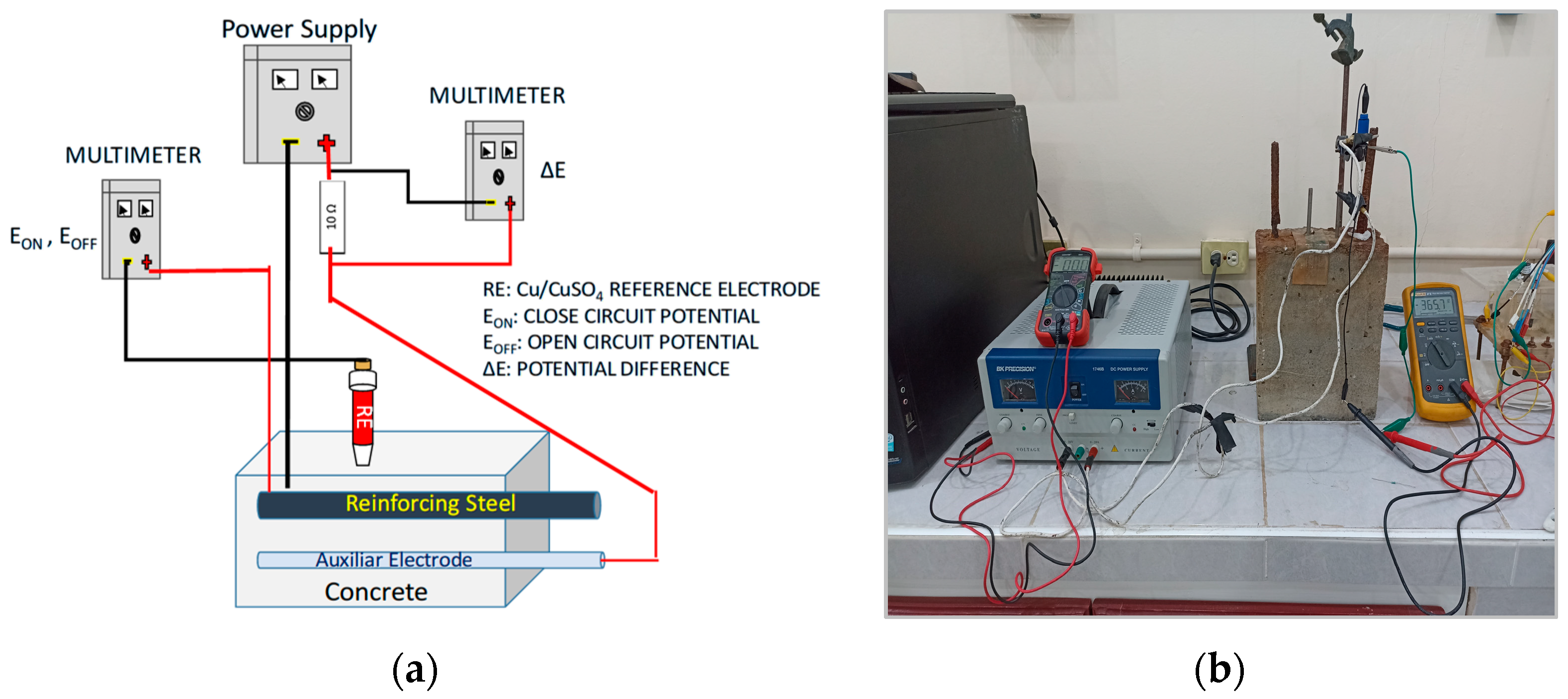
The cathodic polarization curves were obtained by shifting the system potential to −850 mV (Cu/CuSO4) in accordance with the thermodynamic criterion for cathodic protection [27]. A power supply was used to apply a polarization of up to −1200 mV. The experimental setup involved connecting the negative terminal of the power source to the structure to be protected and the positive pole to the current dispersing electrode. To measure the net current entering the system, it was necessary to connect a resistor with a known value (10 Ω) and a multimeter in parallel. Finally, to determine the potential displacement of the structure to be protected, the latter was connected to a multimeter and a reference electrode (Cu/CuSO4) (Figure 2).
Subsequently, to calculate the protection efficiency (in %), the following equation was used:
% Efficiency = (icorr reference − icorr sample)/(icorr reference) × 100

3. Experimental Results and Analysis

3.1. Preparation of Aggregates

3.1.1. Grinding of rPET

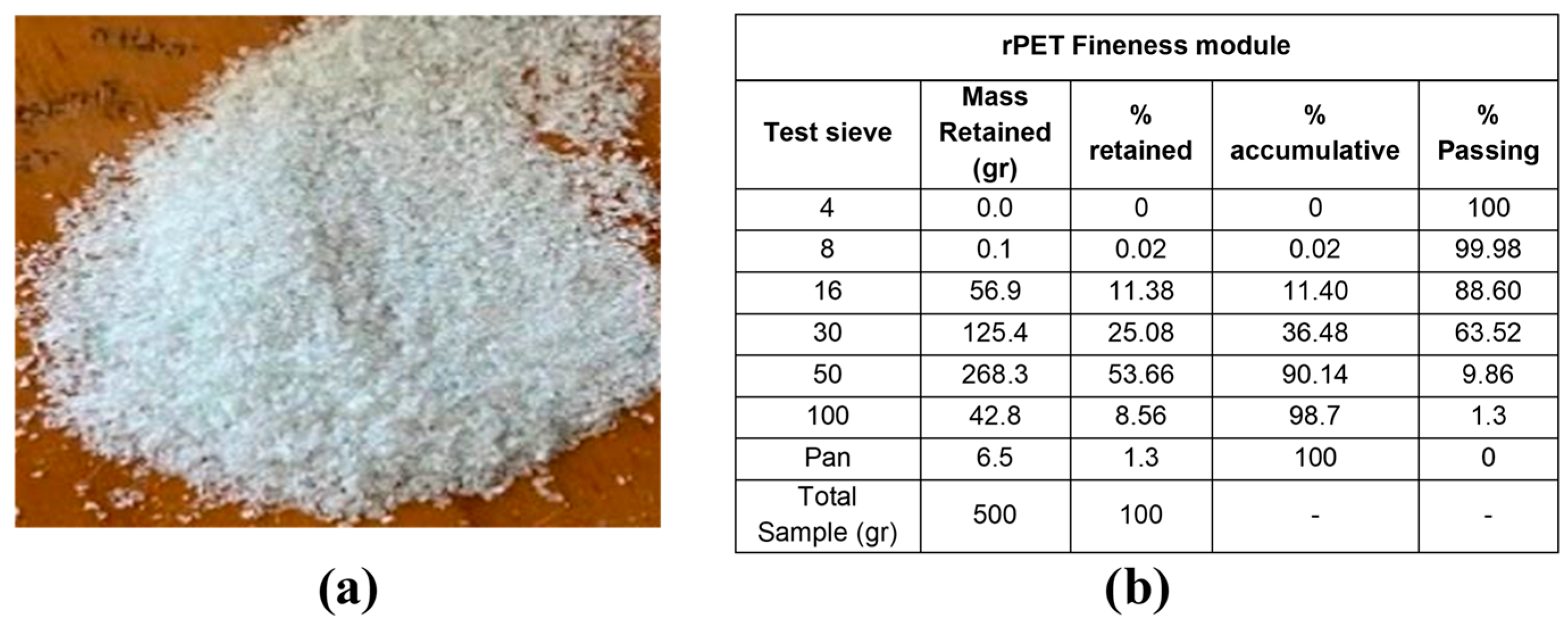
The fineness modulus results obtained for the shredded rPET indicated that its particle size was 2.36 mm (Figure 3). In accordance with ASTM C33 [23], which requires that the fineness modulus of the fine aggregate (sand) is between 2.3 and 3.1, it can be concluded that the rPET obtained is suitable for the partial replacement of the fine aggregate in the concrete mix, ensuring its correct incorporation.
F M = 0.02 + 11.40 + 36.48 + 90.14 + 98.70 100 = 2.36

3.1.2. CBF Delignification

After collecting and crushing the CBF, it was sieved using a series of sieves ranging from No. 4 to No. 100 mesh. The CBF retained in the No. 18 mesh, corresponding to an opening size of 1.0 mm, was selected. After selecting this CBF, a chemical delignification process using a 3% hydrogen peroxide solution (H2O2 3%) was carried out at room temperature for a resting time of 24 h, until the CBF was saturated. The aim of the delignification step was to reduce the presence of soluble sugars in CBF (e.g., lignin and hemicellulose) to slow down the fermentation process of CBF, and thus, reduce the chances of its degradation over time [28]. After the resting period, the 3% H2O2 solution was removed and the CBF was washed with distilled water until a pH of 7 was obtained. Finally, the CBF was compressed to remove all excess water and placed in an oven at 60 °C to dry for 24 h, in preparation for its incorporation into the concrete mixture.

3.2. Mechanical Characterization

Compressive Strength

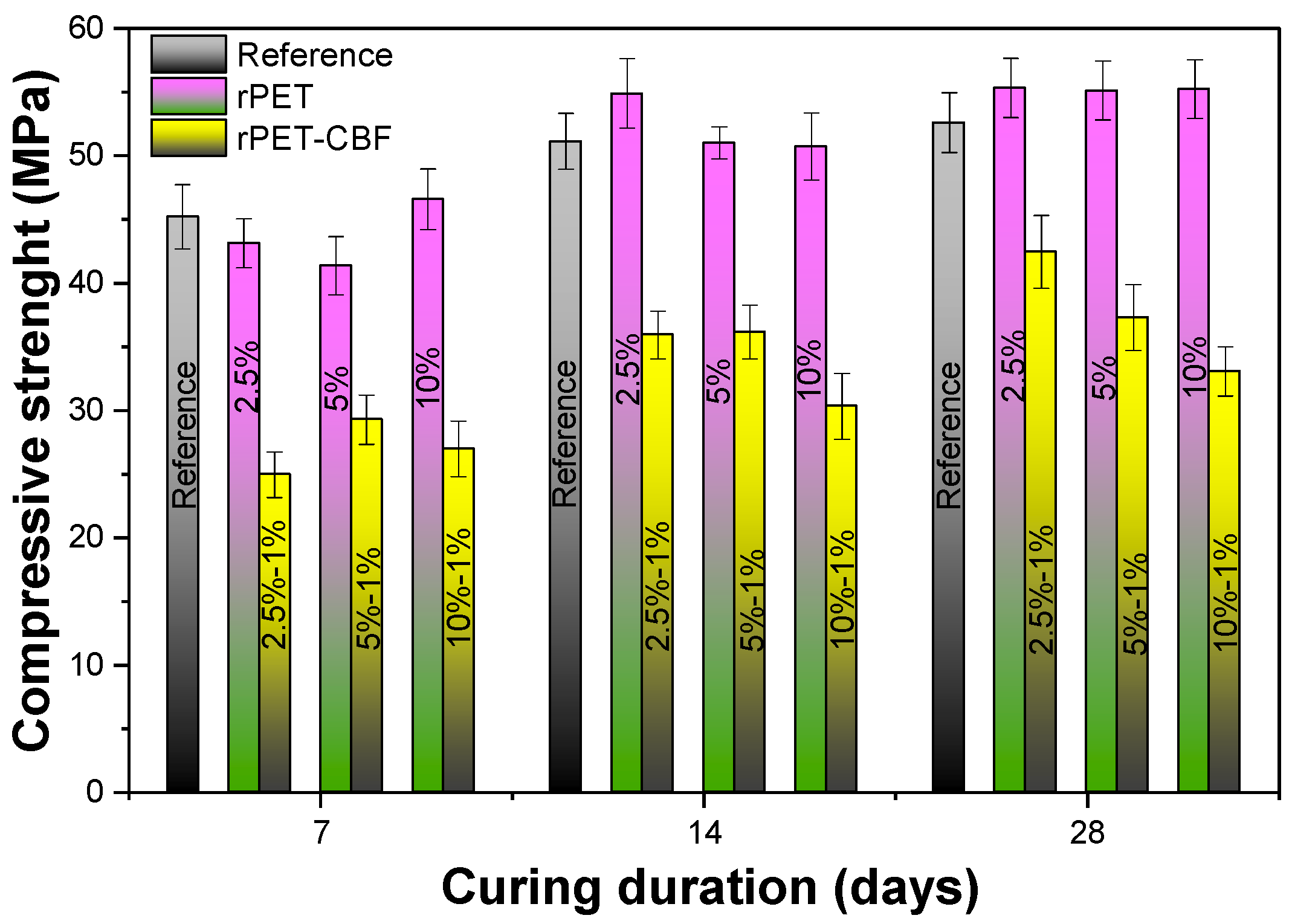
To perform the compressive strength tests, cylindrical test samples were prepared in accordance with ASTM C39 [25] for the rPET and rPET-CBF systems. The mixtures for the rPET- and rPET-CBF-modified concrete samples were designed to meet a minimum strength of 40 MPa, with a w/c ratio of 0.45. The cement used was Portland cement type 30RS. Compressive strength tests were performed at different curing times; namely, at 7, 14, and 28 days. The results obtained are shown in Figure 4.
According to the results obtained from the samples modified with rPET, it was determined that after 28 days of curing, they exhibited an increase in compressive strength compared to the reference sample. This behavior was more evident in the samples evaluated after 28 days of curing, regardless of the rPET concentration. Additionally, it can be clearly observed that in the rPET-modified samples, the compressive strength increased with curing time, reaching an increase of approximately 8% (55 MPa) compared to the reference sample (51 MPa). However, the results obtained after 7 and 14 days of curing are above the proposed design strength (40 MPa) and the minimum compressive strength for structural concrete (N-CMT-2-02-005/04) [29,30]. This behavior is mainly due to the fact that the presence of recycled PET promotes the dissipation of the energy applied during the compression test, so the increase in compressive strength is more noticeable after 28 days of curing [31]. On the other hand, the rPET-CBF system samples showed lower compressive strength values than the reference sample; however, they maintained the minimum strength required for structural concrete (24.5 MPa) and reached the minimum strength required for the type of cement used (30 MPa). In this respect, the sample with the best results was rPET2.5-CBF.

3.3. Resistivity Results

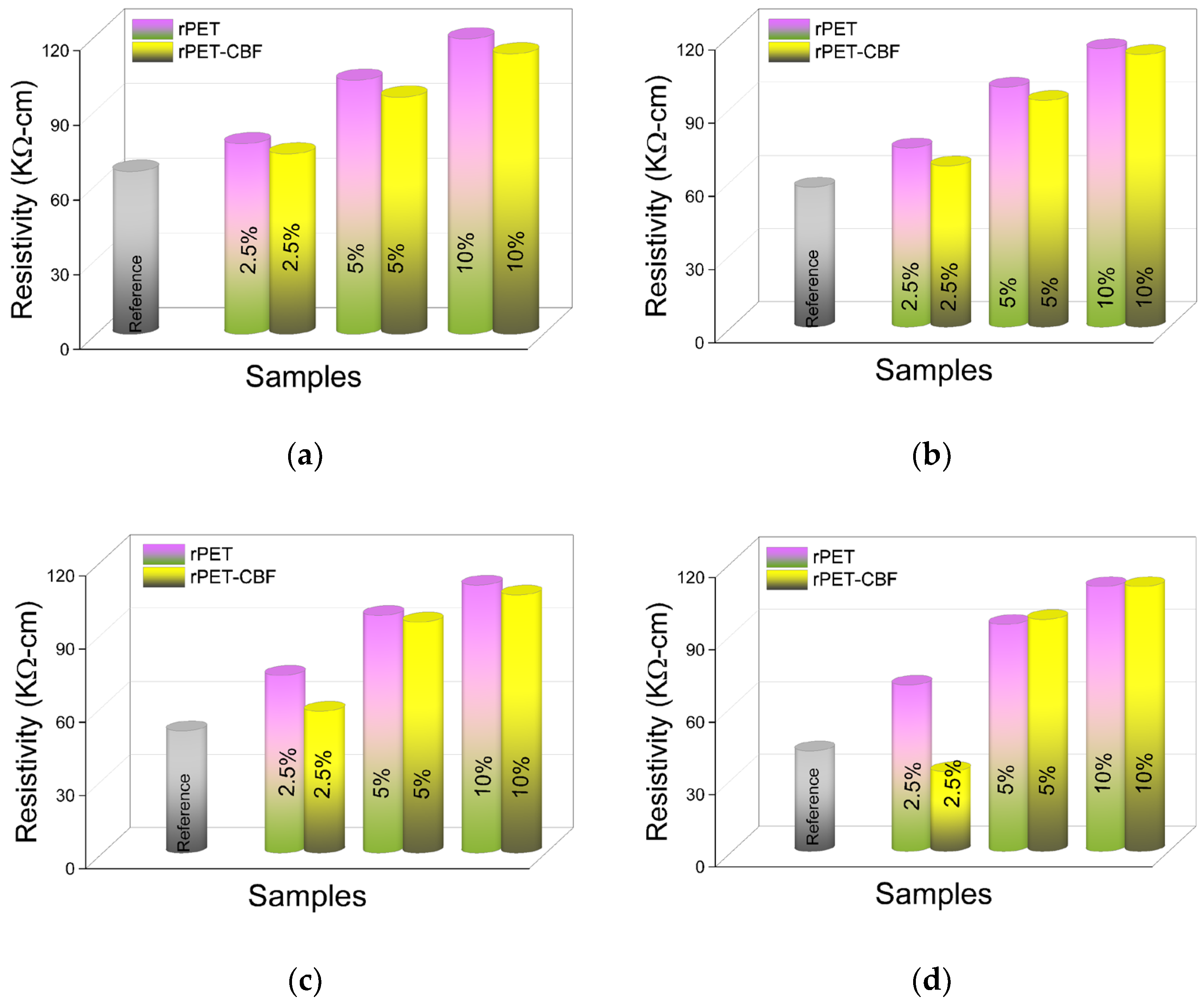
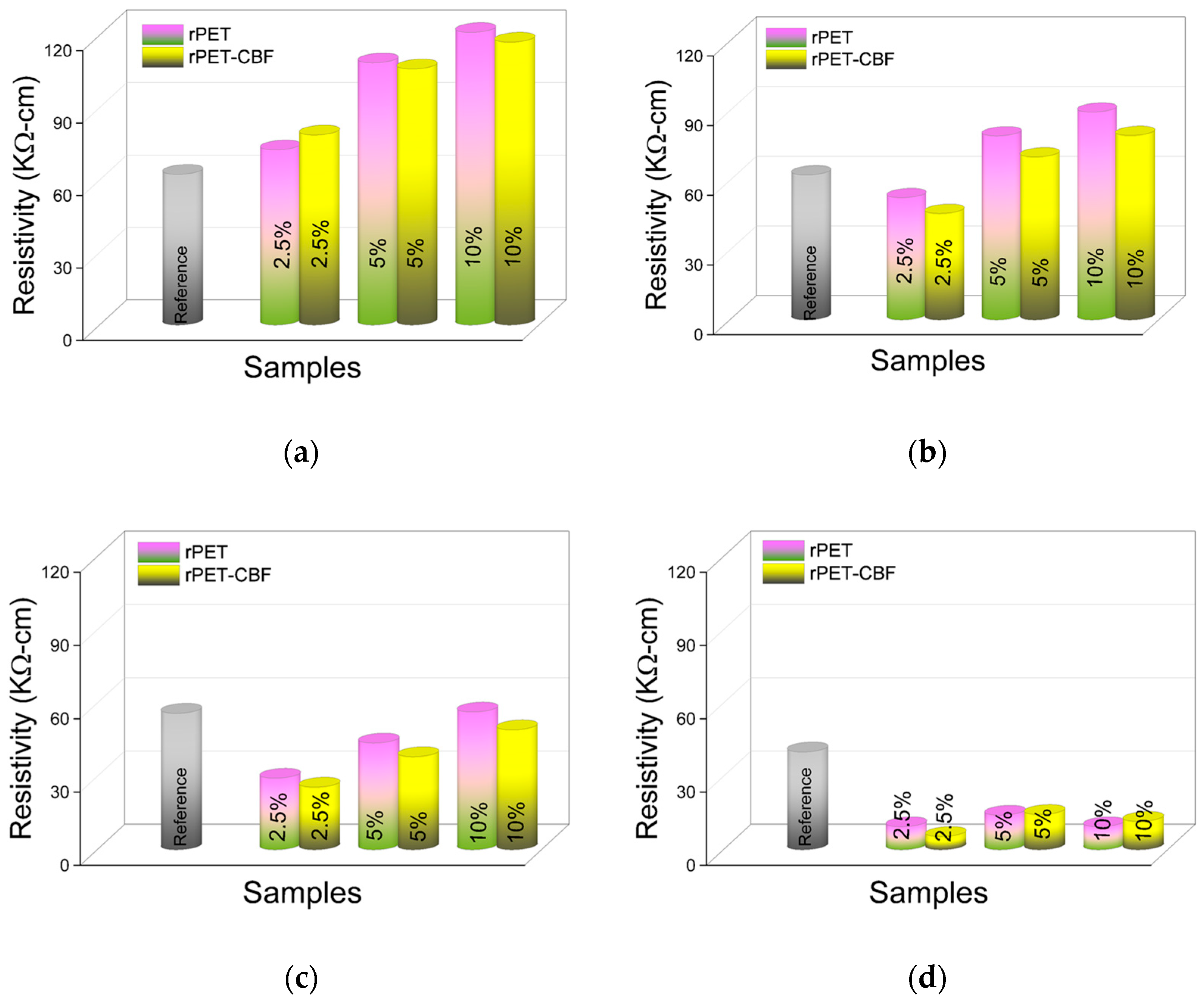
The resistivity results were divided according to the aggressive medium to which the samples were exposed and the exposure time. Therefore, the resistivity results obtained for the samples evaluated in a controlled atmosphere are presented first (Figure 5).
It can generally be observed that in the first 12 months of evaluation, the resistivity values are high (≈120 KΩ-cm)—characteristic of structural concrete [32]. However, after 18 months of exposure to the aggressive environment, the resistivity values were slightly lower (100–110 KΩ-cm). This behavior could be due to the concrete becoming damp after one year of exposure to a controlled atmosphere with an average relative humidity of around 85% [33]. Additionally, it can be observed in all graphs (Figure 5a–d) that the modified samples showed a gradual increase in resistivity values as the rPET content increased, regardless of exposure time. This result can be explained by considering that rPET is not a conductive material [34]. Therefore, within the concrete matrix, the presence and homogeneous distribution of rPET prevents the passage of current and, as a result, increases resistivity in a manner directly proportional to the rPET content [35].
On the other hand, when incorporating CBF, no significant changes in resistivity were observed initially (Figure 5a), with the samples exhibiting virtually the same behavior as those modified with rPET. However, the results obtained for the samples modified with CBF generally showed slightly lower resistivity values than the concrete–rPET samples.
Additionally, based on the evaluation time (Figure 5d), a significant decrease in resistivity can be observed in the case of the concrete–rPET2.5-CBF sample, with its resistivity of 75 KΩ-cm after 1 month of exposure decreasing to 25 KΩ-cm after 18 months. This behavior could be related to the presence of CBF and the moistening of the concrete after one year of exposure in an atmosphere with a relative humidity of around 85%, and to the more homogeneous distribution of CBF in the concrete matrix. Additionally, considering that CBF has hygroscopic properties, it may have retained enough water to form conduction bridges, thus increasing conductivity [36,37].
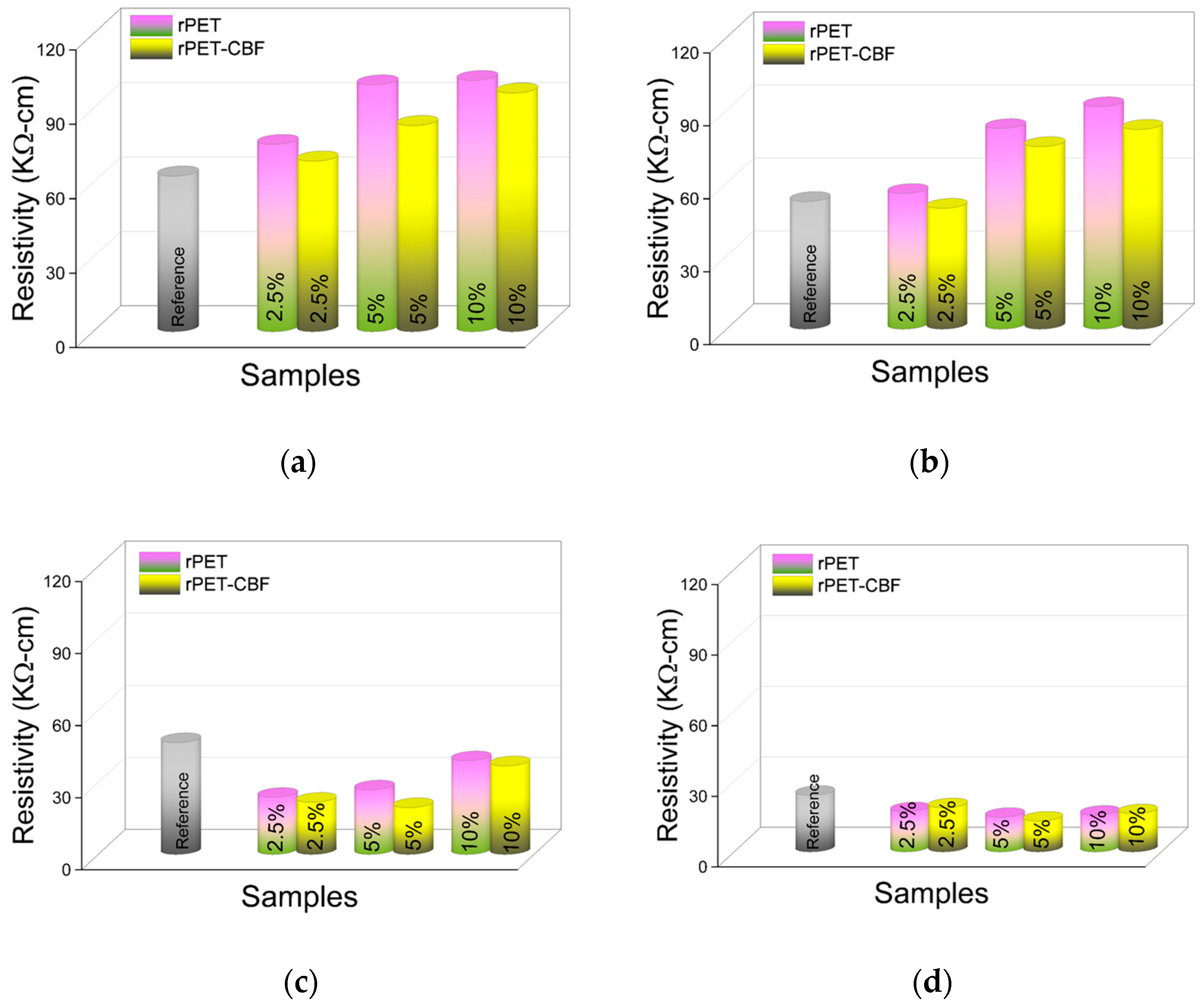
In the case of samples exposed to seawater (Figure 6), the results obtained after the first month of exposure indicate that both rPET and rPET-CBF systems have similar resistivity values (of around 120 KΩ-cm), which are very similar to those observed in the samples evaluated at the same exposure time in the controlled atmosphere system. However, at 6 months of exposure (Figure 6b), the resistivity values of the samples evaluated decreased to values very close to 90 KΩ-cm. At 12 months (Figure 6c) and 18 months (Figure 6d), the resistivity values continued to decrease, reaching ≈60 and 20 KΩ-cm, respectively. In other words, the resistivity of the test specimens decreased with the exposure time as a result of the moistening and/or saturation of water in the test specimens, which allowed for the establishment of conduction bridges that facilitate the conduction of current and therefore decrease resistivity [38]. Additionally, after 18 months of exposure of the test tubes to seawater, very similar resistivity values were observed between rPET and rPET-CBF, with a small difference between the rPET2.5 and rPET2.5-CBF samples. However, no significant effect of the presence of CBF was observed in the samples evaluated.
Finally, in the case of the samples exposed to the beach sand saturated with seawater it can be seen that in the first month of exposure (Figure 7a), the presence of CBF in the samples favored a reduction in the resistivity of the concrete. This behavior may be associated with the poor electrical conductivity of rPET, thereby increasing the resistivity of the concrete. However, with increasing contact time with the aggressive medium (18 months, Figure 7d), the concrete specimens became moist, presenting lower resistivity values in all of the samples evaluated. Furthermore, it can be observed that the presence of CBF enhanced the decrease in resistivity. Consequently, these results indicate that the concrete–rPET-CBF mixture design promotes conductivity (lower resistivity), where this behavior is more tangible for the concrete–rPET2.5-CBF samples.

3.4. Cathodic Polarization Curve Results

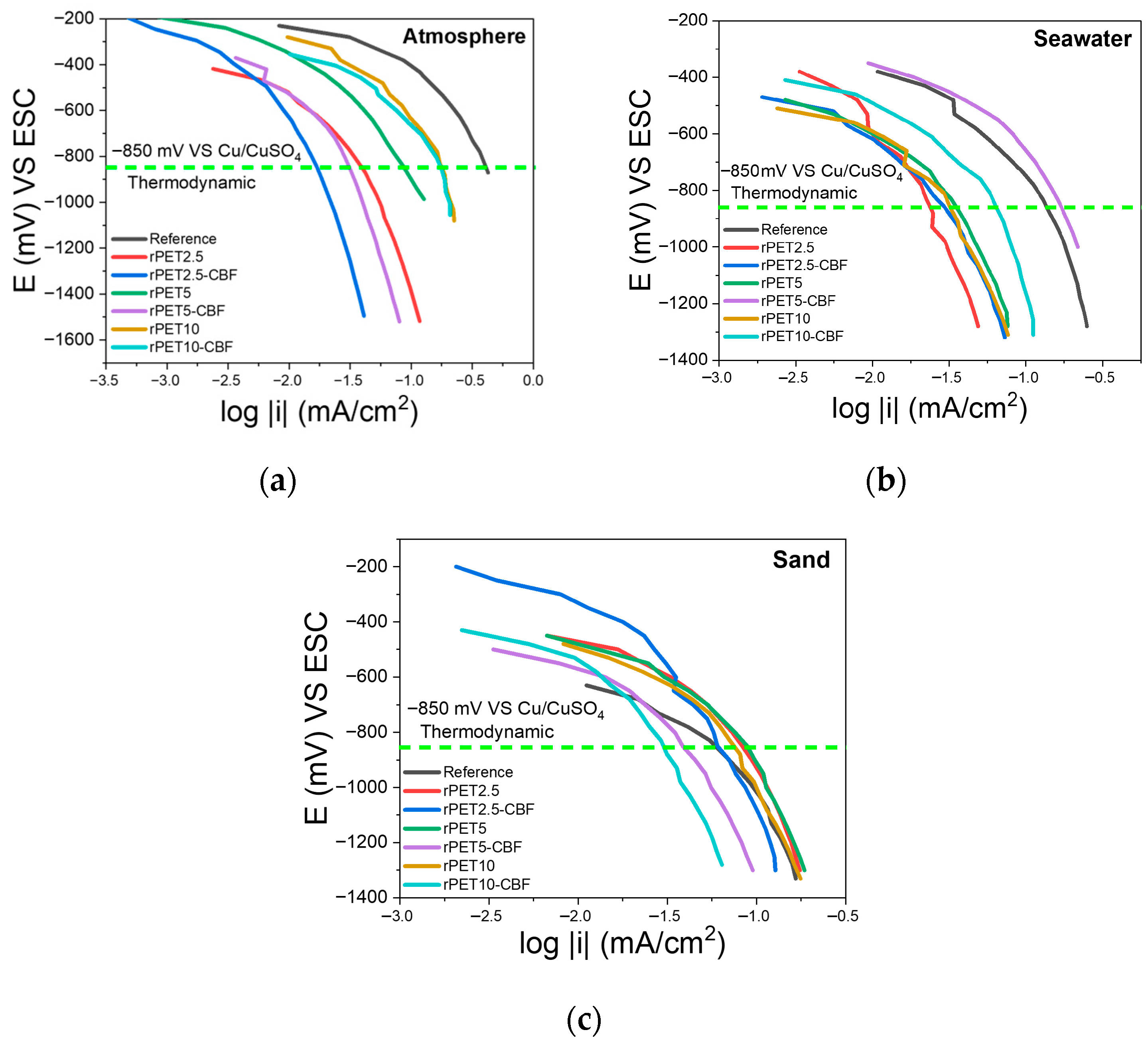
Figure 8 shows the cathodic polarization curves obtained for the different samples evaluated in different aggressive environments (i.e., atmosphere, seawater, and beach sand hydrated with seawater). In the samples exposed to a controlled atmosphere (Figure 8a), it can be seen that the rPET2.5-CBF samples have a lower current demand to protect the reinforcing steel—greater than an order of magnitude (0.019 mA/cm2)—according to the thermodynamic criterion of −850 mV (Cu/CuSO4) with respect to the reference sample (0.316 mA/cm2). The same behavior can be observed in the samples exposed to seawater (Figure 8b), showing a decrease in the current demand necessary to protect the reinforcing steel by at least one order of magnitude (0.0299 mA/cm2); this behavior is particularly evident in the rPET2.5 and rPET2.5-CBF samples. Finally, of the samples exposed to sea sand hydrated with seawater, which required a higher current density to protect the reinforcing steel was rPET10-CBF, with a slightly lower current reduction of one order of magnitude (0.033 mA/cm2). In all exposed environments, CBF contributed as a material that promotes electron flow as a result of its hygroscopicity, reducing the protective current demand of the reinforcing steel [39]. In this sense, concrete modified with rPET-CBF could reduce the cost of protecting reinforcing steel in an impressed current cathodic protection system with greater efficiency.

3.5. Efficiency of Cathodic Protection

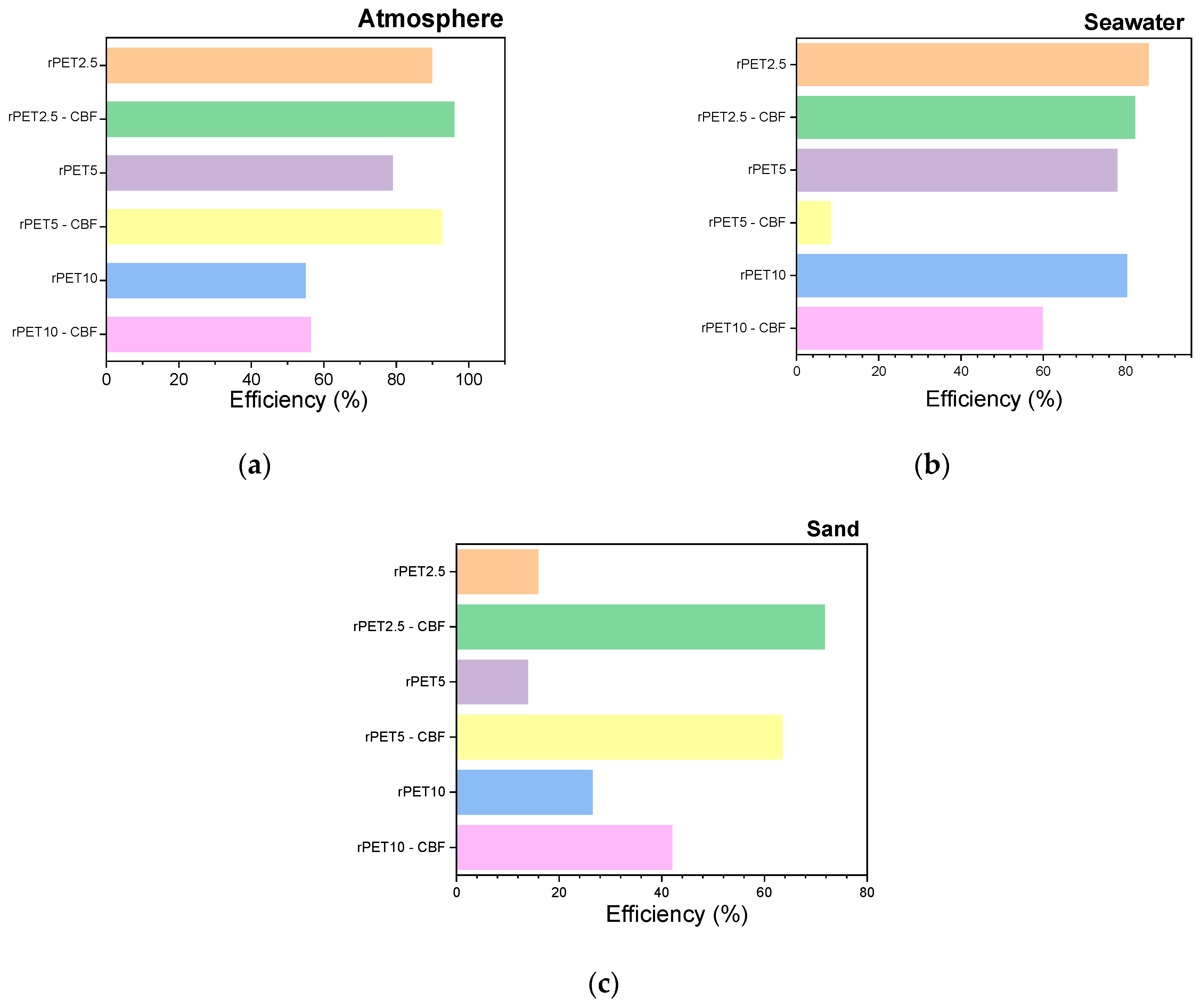
To facilitate observation of the effects of the presence of rPET and CBF on the protective current demand of the reinforcing steel, the protection efficiency was determined using the unmodified test specimen as a reference (i.e., in the absence of rPET or CBF). According to Equation (3), considering the protection current density following the thermodynamic criterion, the results obtained regarding the efficiency of cathodic protection via impressed current are summarized in Figure 9. It can be observed that, in all the systems exposed to different aggressive environments, the protection current demand was lower and the protection efficiency was between 70% and 93%. The most important results were obtained for the rPET2.5-CBF samples, which showed efficiency values of 93%, 82%, and 77% in a controlled atmosphere, seawater, and sand saturated with seawater, respectively. This behavior is closely related to the presence of CBF and its hygroscopicity, which promotes water retention, and thus, reduces resistivity and facilitates ionic conductivity [40,41,42].

4. Conclusions

This study modified concrete by partially replacing the standard fine aggregate with rPET and CBF, thus exploiting the mechanical properties of rPET and promote the dissipation of energy applied to the concrete–reinforced steel system and increase its compressive strength, as well as the hygroscopicity of CBF to promote moisture retention, thereby reducing the resistivity of concrete and facilitating cathodic protection of reinforcing steel through the impressed current. The results obtained can be summarized as follows.
The compressive strength results demonstrated that the modification of concrete with rPET increases the material’s compressive strength. This increase was most pronounced in the rPET2.5 sample, with an increase of nearly 8% in comparison with the reference sample, demonstrating that the presence of rPET reinforces the concrete matrix, thus promoting the dissipation of energy applied in the compression test and enhancing its mechanical properties.
On the other hand, the presence of the CBF did not increase compressive strength, likely because the fiber was not homogeneously distributed within the concrete matrix, consequently forming defects that reduced the compressive strength. Nevertheless, the compressive strength values obtained were still close to the minimum requirements for hydraulic concrete using Portland cement type 30RS.
Additionally, the resistivity results for the rPET-CBF-modified samples demonstrated that the presence of CBF improves the system’s conductivity, thus reducing the concrete’s resistivity. This behavior was more pronounced in the rPET2.5-CBF sample. Therefore, the modification of concrete with rPET-CBF promotes current flow, increasing the reinforcing steel protection efficiency to over 80% in some cases.
It was demonstrated that partially replacing the fine aggregate in a concrete mix with rPET increases compressive strength, while the presence of CBF decreases the concrete’s resistivity. Furthermore, the hygroscopic nature of CBF promotes electron flow, resulting in lower current consumption when applying impressed current cathodic protection.
Finally, the results obtained in this research demonstrated that recycled materials such as PET and CBF can be used to manufacture environmentally friendly concrete, contributing to a reduced carbon footprint. This concrete can be applied in the construction industry for sustainable housing or more robust buildings with a longer lifespan.

Author Contributions

A.C.E.-F.: conceptualization, supervision, formal analysis, investigation, and writing—review and editing. M.A.S.-M.: conceptualization, data curation, writing—original draft, investigation, and methodology. F.J.P.S.: conceptualization, methodology, and formal analysis. E.O.-B.: conceptualization, investigation, project administration, supervision, formal analysis, and writing—review and editing. All authors have read and agreed to the published version of the manuscript.

Funding

This research received no external funding.

Data Availability Statement

The data presented in this study are available upon request from the corresponding author. The data are not publicly available because they have not previously been published and there is no repository for them.

Acknowledgments

The research was conducted with the support of the Instituto Politécnico Nacional, under projects SIP 20250589 and SIP 20253511. We appreciate the collaboration of the companies Concretos Tancol S.A. de C.V., Altamira Tamaulipas, México for the development of concrete mixtures, and M&G Polímeros S.A. de C.V. Altamira Tamaulipas, México for trituration of the rPET.

Conflicts of Interest

The authors declare no conflicts of interest.

References

  1. Compendio Tecnología del Hormigón: Instituto Chileno del Cemento y del Hormigón (ICH). Available online: https://ich.cl/publicaciones/compendio-tecnologia-del-hormigon/ (accessed on 30 October 2025).
  2. Francis, A.J. The Cement Industry: A History; David&Charles: Madison, WI, USA, 1977. [Google Scholar]
  3. Huntzinger, D.N.; Eatmon, T.D. A life-cycle assessment of Portland cement manufacturing: Comparing the traditional process with alternative technologies. J. Clean. Prod. 2009, 17, 668–675. [Google Scholar] [CrossRef]
  4. Igliński, B.; Buczkowski, R. Development of cement industry in Poland—History, current state, ecological aspects. A review. J. Clean. Prod. 2017, 141, 702–720. [Google Scholar] [CrossRef]
  5. Cao, C.; Cheung, M.M.; Chan, B.Y. Modelado de la interacción entre la corrosión inducida por grietas en la cubierta del hormigón y la tasa de corrosión del acero. Corros. Sci. 2013, 69, 97–109. [Google Scholar] [CrossRef]
  6. Cao, C.; Cheung, M.M. Expansión de óxido no uniforme para corrosión por picaduras inducida por cloruro en estructuras de hormigón armado. Constr. Build. Mater. 2014, 51, 75–81. [Google Scholar] [CrossRef]
  7. Kranc, S.C.; Sagüés, A.A. Detailed Modeling of Corrosion Macrocells on Steel Reinforcing in Concrete. Corros. Sci. 2001, 43, 1355–1372. [Google Scholar] [CrossRef]
  8. Lozinguez, E.; Barthélémy, F.; Bouteiller, V.; Desbois, T. Contribución del ánodo de sacrificio en la reparación de parches de hormigón armado: Resultados de simulaciones numéricas. Constr. Build. Mater. 2018, 178, 405–417. [Google Scholar] [CrossRef]
  9. Bertolini, L.; Gastaldi, M.; Pedeferri, M.; Redaelli, E. Prevention of steel corrosion in concrete exposed to seawater with submerged sacrificial anodes. Corros. Sci. 2002, 44, 1497–1513. [Google Scholar] [CrossRef]
  10. McArthur, H.; D’Arcy, S.; Barker, J. Cathodic protection by impressed DC currents for construction, maintenance and refurbishment in reinforced concrete. Constr. Build. Mater. 1993, 7, 85–93. [Google Scholar] [CrossRef]
  11. Kouevidjin, A.B.; Adessina, A.; Barthélémy, J.-F.; Carpio-Perez, J.; Fraj, A.B.; Pavoine, A. Efficiency of the Impressed Current Cathodic Protection (ICCP) in reinforced concretes: Experimental and numerical investigation. Electrochim. Acta 2024, 480, 143923. [Google Scholar] [CrossRef]
  12. Broomfield, J.P. The Principles and Practice of Galvanic Cathodic Protection for Reinforced Concrete Structures; Technical note 6; Corrosion Prevention Association: Bordon, UK, 2000. [Google Scholar]
  13. HA (Highways Agency). Design Manual for Roads and Bridges, Cathodic Protection for Use in Reinforced Concrete Highway Structures; Highways Agency: London, UK, 2002; Volume 3.
  14. Jiang, H.; Jin, Z.; Li, S.; Zhang, X. Composition-structure-corrosion resistance of steel passive film in concrete under cathodic protection. Corros. Sci. 2026, 260, 113551. [Google Scholar] [CrossRef]
  15. Hussain, Z.; Ansari, W.S.; Akbar, M.; Azam, A.; Lin, Z.; Yosri, A.M.; Shaaban, W.M. Microstructural and mechanical assessment of sulfate-resisting cement concrete over portland cement incorporating sea water and sea sand. Case Stud. Constr. Mater. 2024, 21, e03689. [Google Scholar] [CrossRef]
  16. Kean, R.L.; Davies, K.G. Cathodic Protection, Guide Prepared British Department Trade and Industry; National Physical Laboratory: Teddington, UK, 1981; Volume 2–4. [Google Scholar]
  17. Kiamahalleh, M.V.; Gholampour, A.; Tang, Y.; Ngo, T.D. Incorporation of reduced graphene oxide in waste-based concrete including lead smelter slag and recycled coarse aggregate. J. Build. Eng. 2024, 88, 109221. [Google Scholar] [CrossRef]
  18. Hamada, H.M.; Shi, J.; Al Jawahery, M.S.; Majdi, A.; Yousif, S.T.; Kaplan, G. Application of natural fibres in cement concrete: A critical review. Mater. Today Commun. 2023, 35, 105833. [Google Scholar] [CrossRef]
  19. Jamshaid, H.; Mishra, R.K.; Raza, A.; Hussain, U.; Rahman, M.L.; Nazari, S.; Chandan, V.; Muller, M.; Choteborsky, R. Natural Cellulosic Fiber Reinforced Concrete: Influence of Fiber Type and Loading Percentage on Mechanical and Water Absorption Performance. Materials 2022, 15, 874. [Google Scholar] [CrossRef] [PubMed]
  20. Farooqi, M.U.; Ali, M. Effect of Fibre Content on Compressive Strength of Wheat Straw Reinforced Concrete for Pavement Applications. IOP Conf. Ser. Mater. Sci. Eng. 2018, 422, 012014. [Google Scholar] [CrossRef]
  21. Abdalla, J.A.; Hawileh, R.A.; Bahurudeen, A.; Jyothsna, G.; Sofi, A.; Shanmugam, V.; Thomas, B. A comprehensive review on the use of natural fibers in cement/geopolymer concrete: A step towards sustainability. Case Stud. Constr. Mater. 2023, 19, e02244. [Google Scholar] [CrossRef]
  22. Anas, M.; Khan, M.; Bilal, H.; Jadoon, S.; Khan, M.N. Fiber Reinforced Concrete: A Review. Eng. Proc. 2022, 22, 3. [Google Scholar] [CrossRef]
  23. ASTM C33/C33M-18; Standard Specification for Concrete Aggregates. ASTM International: West Conshohocken, PA, USA, 2018.
  24. De la Cruz Cruz, C.A. Determinación de la Eficiencia de Protección Del Sistema Concreto-Acero de Refuerzo Modificado Mediante Bagazo de Caña Y la Aplicación de Tratamientos Base Cerio. (Tesis de Maestría) Instituto Politécnico Nacional. 2016. Available online: https://www.repositoriodigital.ipn.mx/handle/123456789/137/browse?type=author&order=ASC&rpp=20&starts_with=de+la+cruz+cruz (accessed on 2 October 2025).
  25. ASTM C39/C39M-18; Standard Test Method for Compressive Strength of Cylindrical Concrete Specimens. ASTM International: West Conshohocken, PA, USA, 2018. Available online: http://www.astm.org (accessed on 16 July 2025).
  26. ASTM G57-95a; Standard Test Method for Field Measurement of Soil Resistivity Using the Wenner Four-Electrode Method. ASTM: West Conshohocken, PA, USA, 2001.
  27. SP0290-2007; Impressed Current Cathodic Protection of Reinforcing Steel in Atmospherically Exposed Concrete Structures. NACE: Houston, TX, USA, 2007.
  28. Sanchez-Torres, R.; Bustamante, E.O.; López, T.P.; Espindola-Flores, A.C. Efficiency Determination of Water Lily (Eichhornia crassipes) Fiber Delignification by Electrohydrolysis Using Different Electrolytes. Recycling 2025, 10, 130. [Google Scholar] [CrossRef]
  29. N-CMT-2-02-005/04; Características de Los Materiales, Materiales Para Estructuras, Materiales Para Concreto Hidráulico, Calidad Del Concreto Hi-Dráulico. Secretaría de Comunicaciones y Transporte: Ciudad de México, Mexico, 2004.
  30. N-CMT-2-02-001/02; Características de Los Materiales, Materiales Para Estructuras, Materiales Para Concreto Hidráulico, Calidad Del Cemento Portland. Secretaría de Comunicaciones y Transporte: Ciudad de México, Mexico, 2004.
  31. Oviello, C.G.; Lassandro, P.; Sabbà, M.F.; Foti, D. Mechanical and Thermal Effects of Using Fine Recycled PET Aggregates in Common Screeds. Sustainability 2023, 15, 16692. [Google Scholar] [CrossRef]
  32. Polder, R.; Andrade, C.; Elsener, B.; Vennesland, Ø.; Gulikers, J.; Weidert, R.; Raupach, M. Test methods for on site measurement of resistivity of concrete. Mat. Struct. 2000, 33, 603–611. [Google Scholar] [CrossRef]
  33. Xie, P.; Beaudoin, J.J. Electrically Conductive Concrete and its Application in Deicing. In SP-154: Advances in Concrete Technology, Proceedings of the Second CANMET/ACI International Symposium, Las Vegas, NV, USA, 11–14 June 1995; Wiley: Hoboken, NJ, USA, 1995. [Google Scholar] [CrossRef]
  34. Olam, M. Pet: Production, Properties and Applications. In Advances in Materials Science Research; Nova Science Publishers, Inc.: Hauppauge, NY, USA, 2021. [Google Scholar]
  35. Espindola-Flores, A.C.; Luna-Jimenez, M.A.; Onofre-Bustamante, E.; Morales-Cepeda, A.B. Study of the Mechanical and Electrochemical Performance of Structural Concrete Incorporating Recycled Polyethylene Terephthalate as a Partial Fine Aggregate Replacement. Recycling 2024, 9, 51. [Google Scholar] [CrossRef]
  36. Bustamante, E.O.; Espindola-Flores, A.C.; Fuente, A.K.C.D.L. Study of Integration, Distribution and Degradation of Sugarcane Bagasse Fiber as Partial Replacement for Fine Aggregate in Concrete Samples. Cellul. Chem. Technol. 2023, 57, 1121–1132. [Google Scholar] [CrossRef]
  37. Kearsley, E.; Wainwright, P.J. Porosity and permeability of foamed concrete. Cem. Concr. Res. 2001, 31, 805–812. [Google Scholar] [CrossRef]
  38. Cordeiro, G.C.; Kurtis, K.E. Effect of mechanical processing on sugar cane bagasse ash pozzolanicity. Cem. Concr. Res. 2017, 97, 41–49. [Google Scholar] [CrossRef]
  39. Goncalves, J.; Boluk, Y.; Bindiganavile, V. Cellulose nanofibres mitigate chloride ion ingress in cement-based systems. Cem. Concr. Compos. 2020, 114, 103780. [Google Scholar] [CrossRef]
  40. Qiu, J.; Xing, M.; Yang, Z.; Zhang, C.; Guan, X. Micro-pore structure characteristics and macro-mechanical properties of PP fibre reinforced coal gangue ceramsite concrete. J. Eng. 2020, 2020, 1192–1197. [Google Scholar] [CrossRef]
  41. Lerna, M.; Foti, D.; Petrella, A.; Sabbà, M.F.; Mansour, S. Effect of the Chemical and Mechanical Recycling of PET on the Thermal and Mechanical Response of Mortars and Premixed Screeds. Materials 2023, 16, 3155. [Google Scholar] [CrossRef]
  42. Coviello, C.G.; Mansour, S.; Rizzo, F.; Foti, D. An experimental study on the mechanical and thermal properties of graphene-reinforced screeds. In Proceedings of the 3rd fib Italy YMG Symposium on Concrete and Concrete Structures, Torino, Italy, 9–10 November 2023. [Google Scholar]
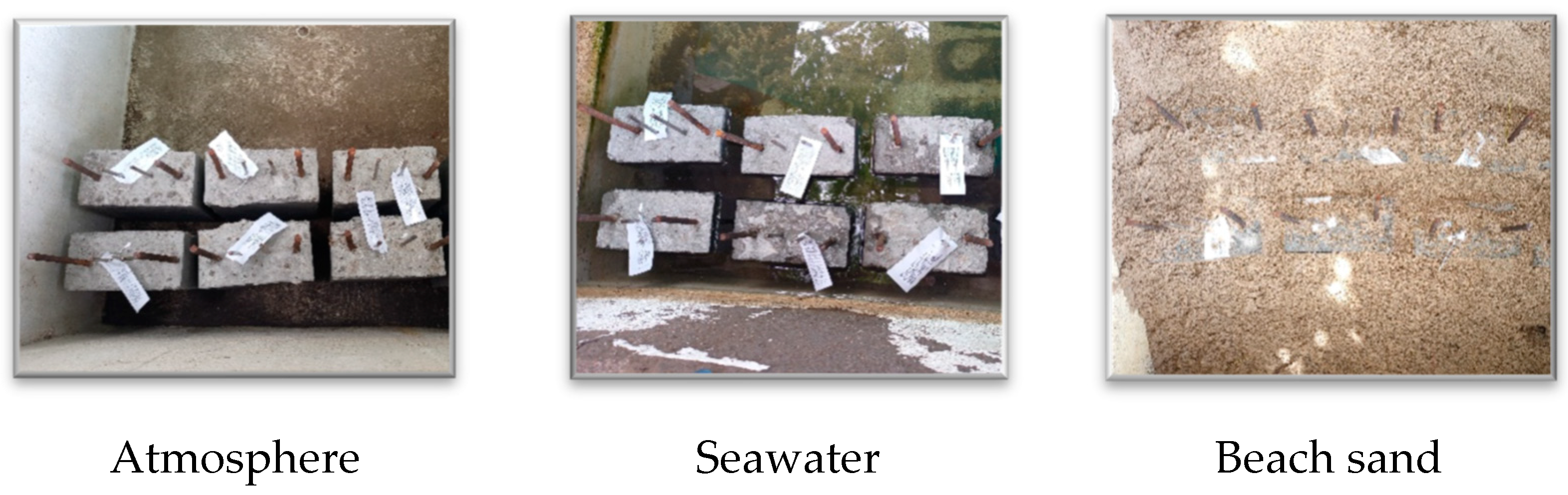
Figure 1. Exposure environment of samples.
Buildings 16 00512 g001
Figure 2. Cathodic polarization curves: (a) Schematic diagram and (b) real sample evaluation setup.
Buildings 16 00512 g002
Figure 3. (a) Ground rPET; (b) fineness modulus results.
Buildings 16 00512 g003
Figure 4. Compressive strength results for reference samples, rPET—modified concrete, and rPET—CBF—modified concrete at different curing times.
Buildings 16 00512 g004
Figure 5. Resistivity results for the samples evaluated in a controlled atmosphere after (a) 1, (b) 6, (c) 12, and (d) 18 months of exposure.
Buildings 16 00512 g005
Figure 6. Resistivity results of the samples evaluated in seawater after (a) 1, (b) 6, (c) 12, and (d) 18 months of exposure.
Buildings 16 00512 g006
Figure 7. Resistivity results of the samples evaluated in beach sand after (a) 1, (b) 6, (c) 12, and (d) 18 months of exposure.
Buildings 16 00512 g007
Figure 8. Current demand test results of the evaluated samples exposed to (a) atmosphere, (b) seawater, and (c) sand.
Buildings 16 00512 g008
Figure 9. Protection efficiency (%) of the evaluated samples exposed to (a) atmosphere, (b) seawater, and (c) beach sand.
Buildings 16 00512 g009
Table 1. Mixture designs.
SampleMixture Component (Kg/m3)
CementWaterCoarseFinerPETCBF
Reference395180952.8861.300
rPET2.5395180952.8839.7621.530
rPET5395180952.8818.2343.060
rPET10395180952.8775.1786.130
rPET2.5-CBF395180952.8831.1621.538.61
rPET5-CBF395180952.8809.6343.068.61
rPET10-CBF395180952.8766.5686.138.61
Disclaimer/Publisher’s Note: The statements, opinions and data contained in all publications are solely those of the individual author(s) and contributor(s) and not of MDPI and/or the editor(s). MDPI and/or the editor(s) disclaim responsibility for any injury to people or property resulting from any ideas, methods, instructions or products referred to in the content.