Article

Mitigating Heat Stress for Pedestrians in Residential Neighborhoods: A Simulation-Based Approach to Enhance Outdoor Thermal Comfort


Department of Architecture and Building Science, College of Architecture and Planning, King Saud University, Riyadh 11421, Saudi Arabia
Buildings 2026, 16(3), 493; https://doi.org/10.3390/buildings16030493
Submission received: 27 December 2025 / Revised: 20 January 2026 / Accepted: 23 January 2026 / Published: 25 January 2026

Abstract

Saudi Arabia’s ambition to improve quality of life is paving its way, and this study aligns with that vision, adopting an experimental approach to explore urban solutions to enhance outdoor thermal comfort for pedestrians in neighborhoods within Riyadh City, Saudi Arabia. Given the city’s hot and arid climate, outdoor spaces are often subject to extreme thermal conditions that reduce the quality of life for residents. To address this issue, the study utilizes Ladybug in Grasshopper, a tool designed for modeling the microclimate and assessing the impact of urban design strategies on outdoor thermal comfort. A base model representing the current urban fabric of selected neighborhoods is developed, and then multiple alternatives of urban morphology (sidewalk, setbacks, fence, and vegetation) are evaluated for their effectiveness in mitigating heat stress and improving outdoor thermal conditions. The findings from this study provide valuable insights into how urban planning and design interventions can be tailored to the unique climatic challenges of Riyadh, with potential applications for enhancing the sustainability, livability, and overall quality of life of the city’s neighborhoods.

1. Microclimatic Influences on Outdoor Thermal Comfort (OTC)

Outdoor thermal comfort (OTC) has become a central concern in urban climatology and urban design because open urban spaces are used daily and their thermal conditions strongly shape perceived urban livability, particularly under pressures from rapid urbanization and the associated degradation of outdoor environmental quality [1]. The outdoor environment in cities supports diverse pedestrian activities, and the comfort of these spaces is linked to whether people choose to remain outdoors and how often sidewalks are used [2]. As a result, pedestrian thermal comfort, the thermal acceptability of outdoor conditions for people moving or staying outdoors, sits at the core of contemporary discussions of walkability, since walking-friendly streets are increasingly understood to require not only safety and urban amenities but also thermally comfortable microclimates [3]. This framing is also reflected in the research emphasis on evaluating outdoor thermal comfort for pedestrians and in climate-specific contexts [4,5,6,7].
Pedestrian thermal comfort is governed by key meteorological drivers, air temperature, humidity, wind speed, and radiative exchange, and many urban design variables can influence it by modifying these parameters within street canyons and public spaces [8]. Empirical and modeling studies show that street geometry and urban morphology (e.g., orientation, height-to-width ratios/aspect ratios, building layouts, and block compactness) can significantly alter wind and radiation exposure at pedestrian height, thereby changing local thermal conditions and perceived comfort [9]. For example, work in a tropical African coastal city emphasizes that wind speed and mean radiant temperature are particularly sensitive to street orientation and height-to-width ratio, highlighting a direct pathway from urban configuration to pedestrian-level thermal experience [10]. Additionally, climate optimization research indicates that canyon orientation and the deliberate creation of shaded areas can reduce surface temperatures and enhance pedestrian comfort during hot periods, and are framed as strategies to mitigate urban heat island (UHI) effects [11]. Similar urban-form sensitivities are also reported for Mediterranean urban blocks, where changes in the aspect ratio and canyon orientation influence longwave radiation exposure and microclimatic performance [5].
Moreover, urban heat mitigation measures that target radiative load and airflow, especially shading strategies and urban greenery, are repeatedly identified as effective levers for improving pedestrian thermal comfort and reducing heat stress [12]. Street trees, in particular, are highlighted as a practical microclimate intervention that reduces solar irradiance through shade while also cooling and moistening air via evapotranspiration, thereby improving pedestrian thermal conditions in urban canyons [13]. Quantitatively, simulations of urban greening report that street trees can decrease the mean radiant temperature (up to 4.23 °C) and reduce the Universal Thermal Climate Index (UTCI), a widely used outdoor thermal comfort index that integrates air temperature, humidity, wind speed, and mean radiant temperature to assess pedestrian thermal stress (up to 0.88 °C). Moreover, these improvements can be significant enough to influence walking behavior [14]. During extreme heat events, tree shade is associated with substantial reductions in heat exposure metrics and enhanced pedestrian thermal comfort, and it has been used to estimate meaningful reductions in heat-related mortality risk during severe heat wave scenarios when shade trees are deployed at scale [13]. Across diverse climatic contexts, from traditional shaded street configurations in hot–humid neighborhoods to urban guidance emphasizing shading and ventilation, this convergent evidence positions UTCI-based and related OTC assessments as a practical way to quantify the pedestrian-level benefits of design strategies that manipulate shading, radiation, and ventilation to create more thermally comfortable and walkable urban environments [12,15].

1.1. Urban Morphology and Outdoor Thermal Comfort (OTC)

Urban morphology significantly influences outdoor thermal comfort, particularly in hot and arid climates. The configuration of urban spaces, including the arrangement of buildings, street patterns, and the presence of vegetation, plays a crucial role in determining microclimatic conditions. This relationship is vital as urban areas continue to expand, and the implications for thermal comfort become increasingly critical in the context of climate change and urban heat islands (UHIs). Moreover, the concept of urban morphology encompasses various elements, including building height, density, and spatial arrangement, which collectively shape the microclimate of urban environments. For instance, the height-to-width ratio of street canyons affects the amount of solar radiation received and the wind patterns within urban spaces. Studies have shown that a higher building density can lead to an increased heat retention, exacerbating the UHI effect, which in turn diminishes outdoor thermal comfort for residents [16,17,18]. The manipulation of urban density parameters is essential for improving thermal comfort, as denser urban forms can lead to higher surface temperatures and reduced airflow, making outdoor spaces less hospitable [7,19].
In hot and arid climates, the urban heat island effect is particularly pronounced due to the extensive use of materials that absorb and retain heat, such as concrete and asphalt. This phenomenon results in elevated temperatures in urban areas compared to their rural surroundings, which can significantly impact outdoor thermal comfort [20,21]. The design of urban spaces must therefore consider the thermal properties of materials and the geometry of buildings to mitigate these effects. For example, the strategic placement of vegetation can provide shade and reduce surface temperatures, enhancing thermal comfort in public spaces [22,23]. Additionally, the relationship between urban morphology and outdoor thermal comfort is further complicated by the interplay of various climatic factors. For instance, the presence of vegetation not only provides shade but also influences humidity levels through evapotranspiration, which can help to cool the surrounding air [24,25]. In arid regions, where water availability is limited, the selection of drought-resistant plant species becomes crucial for maintaining green spaces that contribute to thermal comfort without imposing excessive water demands [26].
Moreover, the orientation of buildings and the layout of streets can affect wind patterns, which are essential for cooling outdoor spaces. Properly designed urban layouts can enhance natural ventilation, allowing for cooler breezes to flow through urban areas, thereby improving thermal comfort [24,25]. Conversely, poorly designed urban forms can create wind tunnels or stagnant air pockets, leading to uncomfortable outdoor conditions [17,20]. Research has demonstrated that urban design strategies, such as increasing the sky view factor and incorporating green roofs, can significantly enhance outdoor thermal comfort in hot climates [22]. The sky view factor, which refers to the proportion of the sky visible from a specific point in the urban environment, influences solar radiation absorption and heat retention. By optimizing this factor through thoughtful urban design, cities can reduce the intensity of the UHI effect and improve overall thermal comfort for residents [25,27]. Furthermore, the integration of sustainable design practices, such as the use of permeable materials and the creation of urban green corridors, can help to mitigate the adverse effects of urbanization on thermal comfort [23,28]. These strategies improved air quality and reduced energy consumption in buildings, as cooler outdoor temperatures can decrease the reliance on air conditioning systems [20,23].
The impact of urban morphology on outdoor thermal comfort is not uniform across different urban contexts. Variations in local climate, cultural practices, and socio-economic factors can influence how urban design strategies are implemented and their effectiveness in enhancing thermal comfort [24,25]. For instance, in regions where cultural practices prioritize outdoor activities, such as markets or social gatherings, the need for comfortable outdoor spaces becomes even more critical [20,25].

1.2. Sidewalk–Building Heights–Fences and Setbacks

The design and characteristics of sidewalks play a pivotal role in determining pedestrian thermal comfort. Research indicates that the physical attributes of sidewalks, including their orientation, materials, and the presence of vegetation, can significantly influence the thermal environment experienced by pedestrians. For instance, sidewalks oriented towards the east–west direction are more prone to thermal stress compared to those oriented northwest, primarily due to the angle of sunlight exposure throughout the day [3]. Furthermore, the inclusion of shade-providing trees and the use of reflective or permeable materials can enhance thermal comfort by reducing surface temperatures and providing shade [29,30]. Moreover, the microclimatic effects of sidewalks are further enhanced by their landscaping; it was found that a combination of shade trees and grass significantly improves thermal comfort compared to either treatment alone, emphasizing the importance of integrating vegetation into urban design [29]. Moreover, natural design techniques, including the strategic placement of vegetation, can lead to measurable improvements in outdoor thermal comfort [31]. This is particularly relevant in hot arid climates where high temperatures can lead to increased heat stress among pedestrians.
Building heights are another critical factor influencing outdoor thermal comfort. The height-to-width ratio of street canyons affects wind flow, solar access, and, consequently, the thermal environment at the pedestrian level, where taller buildings can create wind shadows and reduce air circulation, leading to higher temperatures in urban canyons [32]. This phenomenon can exacerbate the urban heat island effect, making it essential for urban planners to consider building heights in relation to their surroundings. However, fences and other barriers can also influence thermal comfort by affecting airflow and shading. The presence of fences can create microclimates by blocking wind and altering the distribution of sunlight. For example, fences that are too tall may obstruct airflow, leading to stagnant air conditions that can increase local temperatures [33]. Conversely, strategically placed low fences can enhance ventilation while still providing necessary privacy and security. The design of these barriers should be carefully considered to balance privacy needs with the imperative of maintaining comfortable outdoor conditions.
Building setbacks, which are placed from property lines, are crucial in shaping outdoor thermal comfort. Adequate setbacks can facilitate airflow and reduce the concentration of heat in urban areas. They also allow for the incorporation of green spaces, which can further mitigate heat through shading and evapotranspiration [34]. Moreover, the relationship between setbacks and building orientation can amplify the benefits of thermal comfort strategies. For instance, buildings that are oriented to maximize shade during peak sunlight hours can reduce heat accumulation in outdoor spaces, thus improving pedestrian comfort [35]. Urban planners should consider these factors holistically to create environments that promote thermal comfort while also meeting the functional needs of urban residents. Overall, the correlation between sidewalks, building heights, fences, and setbacks is critical in shaping outdoor thermal comfort in hot arid climates. Effective urban design must prioritize these elements to mitigate heat stress, which impacts outdoor thermal comfort, and enhance the livability of urban spaces. By integrating sidewalks, optimizing building geometry, and considering the placement of fences and setbacks, urban planners can create environments that not only provide comfort but also promote sustainable urban living.

1.3. Vegetation as Passive Solutions

Vegetation has been consistently identified as one of the most effective passive strategies for improving outdoor thermal comfort (OTC) in urban environments, particularly in hot and arid climates. Its cooling performance operates through multiple interrelated mechanisms including shading, evapotranspiration, and the modification of radiative balance—which collectively alter pedestrian-level microclimates. Across diverse climatic contexts and urban typologies, empirical measurements and numerical simulations converge in demonstrating that urban greenery, especially trees, can substantially reduce thermal stress and enhance pedestrian comfort. In hot–arid residential settings, for instance, strategic vegetation placement has been shown to lower ambient air temperatures and improve comfort indices [36], while studies in urban plazas confirm that greenery mitigates thermal stress by providing shade and enhancing evaporative cooling [22]. Beyond microclimatic benefits, green infrastructure such as trees and parks also contributes to improved air quality, enhanced biodiversity, and overall urban livability, reinforcing its role in sustainable urban development [37].
As climate change intensifies heat exposure in cities, the role of vegetation as an adaptive urban strategy becomes even more critical. Rising global temperatures are expected to exacerbate heat stress in dense urban areas, making passive cooling measures indispensable for maintaining comfortable outdoor environments. Recent analyses of long-term thermal trends highlight the necessity of incorporating climate resilience into urban planning, particularly through nature-based solutions that can moderate future thermal extremes [38]. Within this broader framework, street-level vegetation—especially trees—emerges as one of the most practical and scalable interventions for enhancing pedestrian thermal comfort.
Focusing more specifically on the role of tree canopy coverage (TCC), a growing body of research demonstrates that canopy characteristics are a decisive factor in shaping outdoor thermal conditions. Studies in Zhengzhou, China, reveal that increased TCC can reduce the mean radiant temperature (MRT) by approximately 3.5 °C during summer, emphasizing the importance of canopy size and morphology for effective shading [39]. Similarly, research in Shenyang and Shantou shows that a higher tree density and strategic spatial configuration can reduce air temperatures by roughly 3–5 °C, contributing to a meaningful mitigation of urban heat island effects [40,41]. These findings suggest that not only the presence of trees but also their spatial distribution and structural characteristics critically influence thermal outcomes.
The effectiveness of vegetation is further shaped by its interaction with street geometry and urban morphology. Comparative studies of canopy forms indicate that cylindrical tree shapes can outperform spherical or conical canopies in optimizing shade distribution and reducing pedestrian-level temperatures, with potential reductions of up to 4 °C when tree height and spacing are appropriately calibrated [42]. In street canyon environments, the combined effect of tree placement and the canyon aspect ratio has been shown to reduce MRT by approximately 3–6 °C under extreme heat conditions, demonstrating the synergistic relationship between vegetation and built form [43]. Complementary findings from Dar es Salaam highlight that properly selected and positioned trees can lower pedestrian-level temperatures by 2–3 °C, particularly in dense urban areas, while also maintaining sufficient airflow when species are carefully chosen [44].
Across different climatic zones, the cooling performance of vegetation remains significant, though its magnitude varies with local conditions. In tropical contexts such as Akure, Nigeria, shaded areas beneath trees have been measured to be about 2.5 °C cooler than unshaded spaces, leading to marked improvements in thermal comfort indices [45]. In temperate settings such as Pisa, Italy, urban environments that prioritize tree protection and strategic planting arrangements have been found to reduce surface temperatures by up to 4 °C, reinforcing the importance of integrating green infrastructure into pedestrian-oriented planning [46]. Meanwhile, comparative analyses in hot–humid regions indicate that, while green façades have a limited influence on outdoor thermal conditions, street trees consistently produce the most substantial cooling effects, with canopy shading capable of lowering surface temperatures by up to 5 °C [47].
Overall, these studies illustrate that vegetation, particularly street trees, constitutes one of the most reliable passive strategies for mitigating heat stress in urban environments. Across different climates and methodologies, studies consistently report reductions in air temperature, MRT, and overall thermal stress ranging approximately between 2 and 6 °C depending on canopy size, density, spacing, and street configuration. Importantly, the literature suggests that the greatest thermal benefits are achieved when vegetation strategies are integrated with urban morphology rather than treated as isolated interventions. Effective design, therefore, requires maximizing tree canopy coverage while preserving airflow, selecting species adapted to local climatic conditions, coordinating tree placement with street orientation and canyon geometry, and balancing shading benefits with pedestrian movement and urban functionality. This synthesis supports prioritizing vegetation-based interventions in climate-responsive urban design, particularly in hot, arid cities where outdoor thermal comfort is critical to walkability, public space usability, and urban resilience.

2. Methodology

This study investigates pedestrian outdoor thermal comfort using a simulation-based approach, evaluating how variations in residential urban morphology and vegetation spacing influence pedestrian-level outdoor thermal comfort in a typical neighborhood setting in Riyadh.
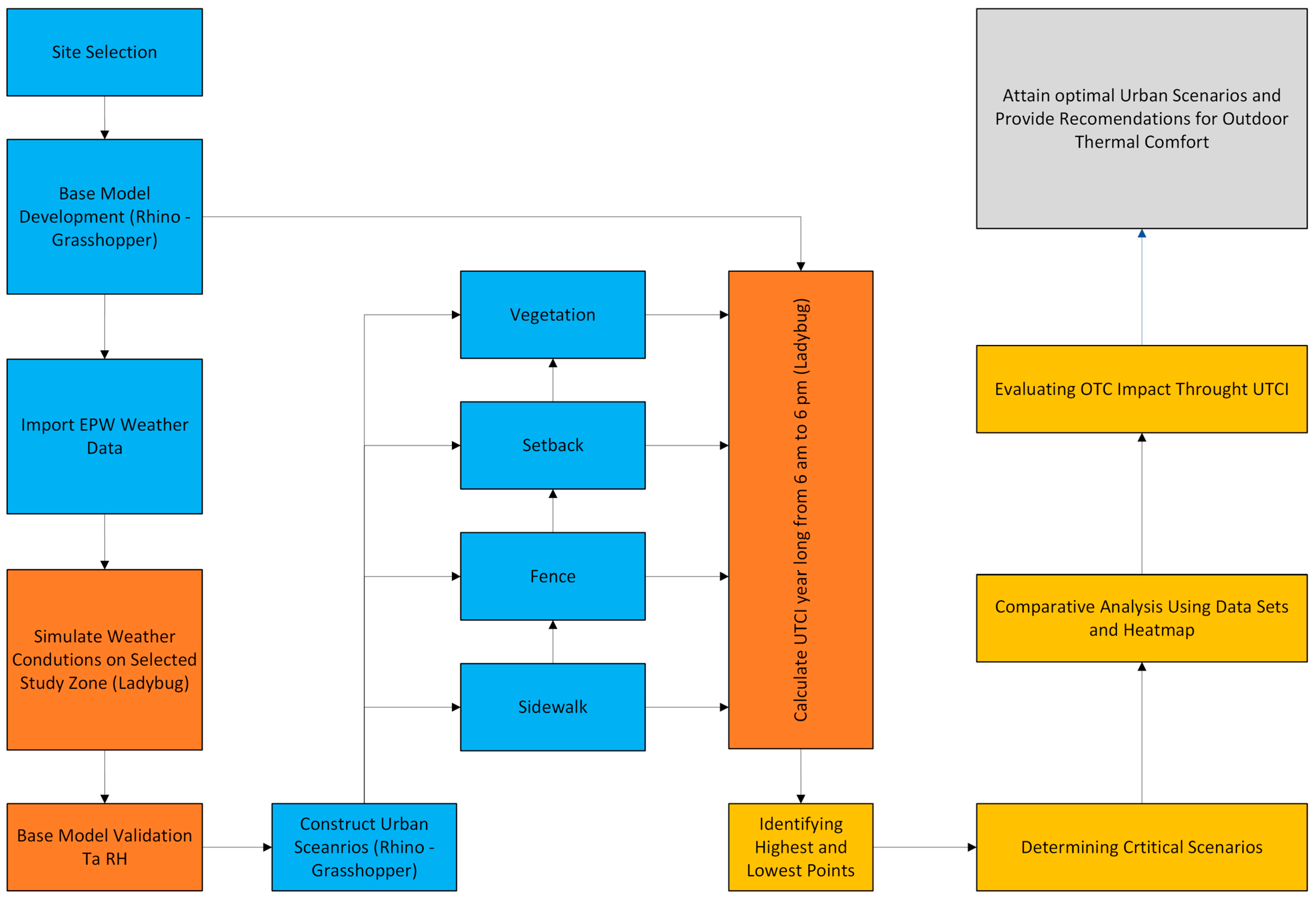
The methodological framework is structured into stages as shown in Figure 1, combining site selection and geometric modeling (base model and scenarios), simulating outdoor thermal comfort using the Universal Thermal Climate Index (UTCI) with Ladybug and then data validation, and moving to analyzing results to evaluate the best parameter from each presented scenario. Moreover, it analyzes and compares data to reach an optimal solution between all variations in setbacks, sidewalks, fences, and vegetation.

2.1. Study Area Selection

The research was conducted within the King Fahad neighborhood, shown in orange highlight in Figure 2, which resembles a common neighborhood layout in Riyadh City, characterized by a hot, arid climate. The neighborhood’s design resembles more than 50% of neighborhoods in the city. Also, the neighborhood has four sections, and the one in the blue highlight was selected, representing a cross-section of the typical urban environment in Riyadh. Afterwards, in the selected cluster highlighted in green in Figure 2, which covers 240 m by 160 m (38,400 m2), the intersections were selected as the focus.
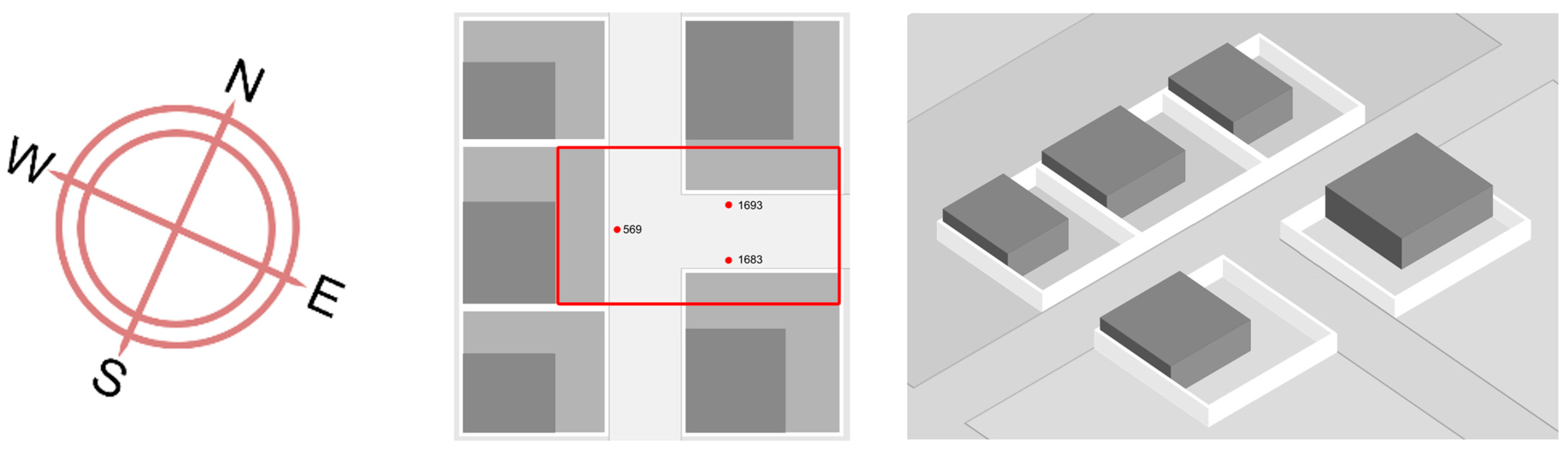
Then, after adjusting the north to align with the image 25° off the north, within the cluster, three intersections were nominated for the study, and the first one was chosen because it has a more typical plot size that dominates the main cluster. The intersection has 4–6 houses within 60 m by 65 m, covering 3900 m2, and has 10 m streets, shown in Figure 3 and highlighted in red in the one location selected.

2.2. Geometric Modeling-Base Model and Scenarios

The first stage involves developing simplified three-dimensional models of selected residential neighborhoods in Riyadh, representing buildings, open spaces, and existing vegetation layouts. The modeling process was conducted using Rhinoceros 3D 8.0 and Grasshopper (integrated), which allow for the parametric control of urban geometry. A Grasshopper workflow was created to represent residential parameters (base model), including a building height of 6 m, a sidewalk width of zero, a fence height of 3 m, no vegetation, and building placement within the plot having the biggest setback on the side facing the street. Then, the scenarios were developed by adding fence heights (0, 1, 2, 3, 4 m), sidewalk widths (1, 2, 3, 4, 5 m), and setbacks. Additionally, there were three variations beyond the base model: layouts for setbacks 1, 2, and 3 (attached on the back or on either side).
Moreover, a study zone was selected that is within the parameters of the plot of land and the street to cross, with the selected elements of sidewalk, fence, setback, and vegetation for pedestrians. The study zone has three points that were selected from the grid of all the points on the model to collect the data from (1693, 569, 1683), as shown in Figure 4. Additionally, the vegetation element refers to individual street tree units modeled with a fixed height and canopy diameter, representing shading vegetation and its influence on outdoor thermal comfort, which is interpreted primarily through shading and reductions in mean radiant temperature rather than evapotranspiration, which was not explicitly modeled. Furthermore, the trees are 3 m high and 3 m in diameter and are spaced at 3, 3.5, and 4 m. This stage establishes a geometric foundation for subsequent outdoor thermal comfort evaluation with scenarios.

2.3. Universal Thermal Comfort Index (UTCI)

Because pedestrians experience thermal conditions dynamically, this research has focused on objective thermal comfort indices and performance metrics that can represent microclimatic variability rather than relying on static or spatially averaged evaluations [15]. In this context, the Urban Thermal Comfort Index (UTCI) is used in applied pedestrian-focused studies as an objective indicator of outdoor thermal comfort for pedestrians, connecting the core atmospheric drivers of comfort (temperature, humidity, wind, and radiation/mean radiant temperature) to a single interpretable measure for urban assessment and intervention testing [14].
This index-based approach aligns with broader calls for comprehensive OTC metrics that explicitly account for temporal and spatial variability in outdoor comfort and that can better inform climate-conscious urban design decisions [15]. Additionally, UTCI is used to understand how microclimates may affect changes in the use of outdoor thermal comfort across hours and seasons and across different street contexts and land-use patterns [3], further supporting the selection of this index. Furthermore, UTCI was selected as the sole thermal comfort index in this study because it is explicitly formulated for outdoor conditions and enables a consistent comparison of microclimatic scenarios. Other indices were not applied, as the focus of the analysis is on relative differences between design configurations rather than cross-index evaluations of absolute comfort thresholds.

2.4. Simulation Process

In this stage, climate data for Riyadh were integrated into the model to enable the accurate simulation of outdoor thermal conditions. The Ladybug plugin for Rhino Grasshopper was utilized to import and process the hourly annual weather data format (EPW) for the city of Riyadh. Analysis periods were defined following a preliminary assessment of a year-long period from 6 am to 6 pm, with hourly intervals selected to capture the full daytime progression of solar-driven thermal conditions, from pre-peak baseline to maximum heat stress, showing Universal Thermal Climate Index (UTCI) measurements and identifying representative hot and moderate periods for the simulation. The climatic parameters, including air temperature, relative humidity, wind speed and direction, and solar radiation, were visualized using Ladybug 1.9.0 components to provide a comprehensive understanding of the city’s climatic behavior and its relevance to outdoor comfort studies.
We first started by evaluating the baseline outdoor thermal comfort conditions within the modeled neighborhoods based on the existing tree distribution. Using Ladybug, UTCI values were computed to represent thermal stress conditions by incorporating inputs such as air temperature, mean radiant temperature (MRT), relative humidity, and wind velocity. The results were visualized through UTCI heat maps that identified thermal patterns and variations across the study area. This baseline serves as the control scenario against which all variations in urban morphologies introduced in scenarios and vegetation are evaluated. Second, these were compared against the scenarios introduced to evaluate their influence on outdoor thermal comfort. Each scenario was analyzed using Ladybug to simulate UTCI values under identical climatic conditions, enabling a comparative assessment of how spatial variations in vegetation affect localized comfort levels. Finally, for further detailed analysis, the selection of the 20th day of each month and the 6 am to 6 pm analysis window was adopted to represent typical seasonal and daytime pedestrian exposure, focusing on periods dominated by solar radiation and outdoor activity rather than cumulative nighttime heat storage.

2.5. Validation

The climatic data used in this study were previously validated by [48] and further supported by [49] in the city of Riyadh with Coefficient of Determination (R2) values of 0.97 for Ta and 0.94 for RH. However, the same site validation was performed on 20 August 2025 through onsite measurements. These measurements were conducted using a Wintact digital monitor mounted on a tripod (model WT83), Shenzhen Wintact Electronics Co., Ltd., Shenzhen, China. The monitor measures temperatures from −20 °C to 70 °C and relative humidity from 0% to 100%, with a resolution of 0.1% and accuracy levels of ±0.5 and ±2%. Moreover, the Coefficients of Determination (R2) for Ta and RH were determined to be 0.96 and 0.91, respectively. The validation results showed a strong correlation between the actual data and the simulation outcomes. This high correlation indicates that the simulation accurately reflected real-world conditions, confirming the model’s reliability and accuracy.

2.6. Evaluation and Analysis

The final stage involving the assessment stage results will be presented for the whole year, and higher UTCI records crossing the comfort zone will be the targeted months of analysis. Enhanced UTCI comparisons of simulation results were conducted using a sample day of the month, the 20th of every month, representing a year’s study of one selected study point, to quantify the improvements achieved through the optimized scenarios, showing the parameters causing an impact on the urban morphology and vegetation layout. Results were compared with the baseline scenario to identify reductions in average UTCI values and expansions of spatial zones within thermally comfortable ranges. This comparative analysis provided measurable evidence of the effectiveness of tree distribution optimization in mitigating urban heat and enhancing outdoor livability in Riyadh’s residential neighborhoods.

2.7. Limitations

Certain limitations occurred in this study, starting with the exclusion of materials from the thermal calculations, as this was outside of the scope of the study. Also, the study focused on thermal impact during the day, when immediate solar impact happens, and excluded the thermal exchange that happens after solar impact is not available. Finally, the base model was simplified for modeling purposes and to make the model applicable to more similar locations. Moreover, because material properties, surface thermal inertia, and longwave radiation exchange were not included, the UTCI variations associated with fence height should be interpreted as geometry- and shading-driven effects rather than absolute thermal performance, and future studies incorporating material-specific parameters may refine the magnitude of these results.

3. Results and Discussion

This section examines the relative influence of selected residential-scale urban parameters on pedestrian-level outdoor thermal comfort under consistent climatic boundary conditions. The results are interpreted based on UTCI values extracted at representative pedestrian locations, including points adjacent to fences, near vegetation elements, and within the central walking zone of the street, to capture spatial variation in thermal exposure. Rather than evaluating absolute comfort thresholds, the analysis focuses on comparative performance trends between scenarios, allowing for the contribution of vegetation configuration, fence height, setbacks, and sidewalk width to be assessed in relation to the mechanisms discussed in the Introduction, particularly shading and mean radiant temperature reductions.
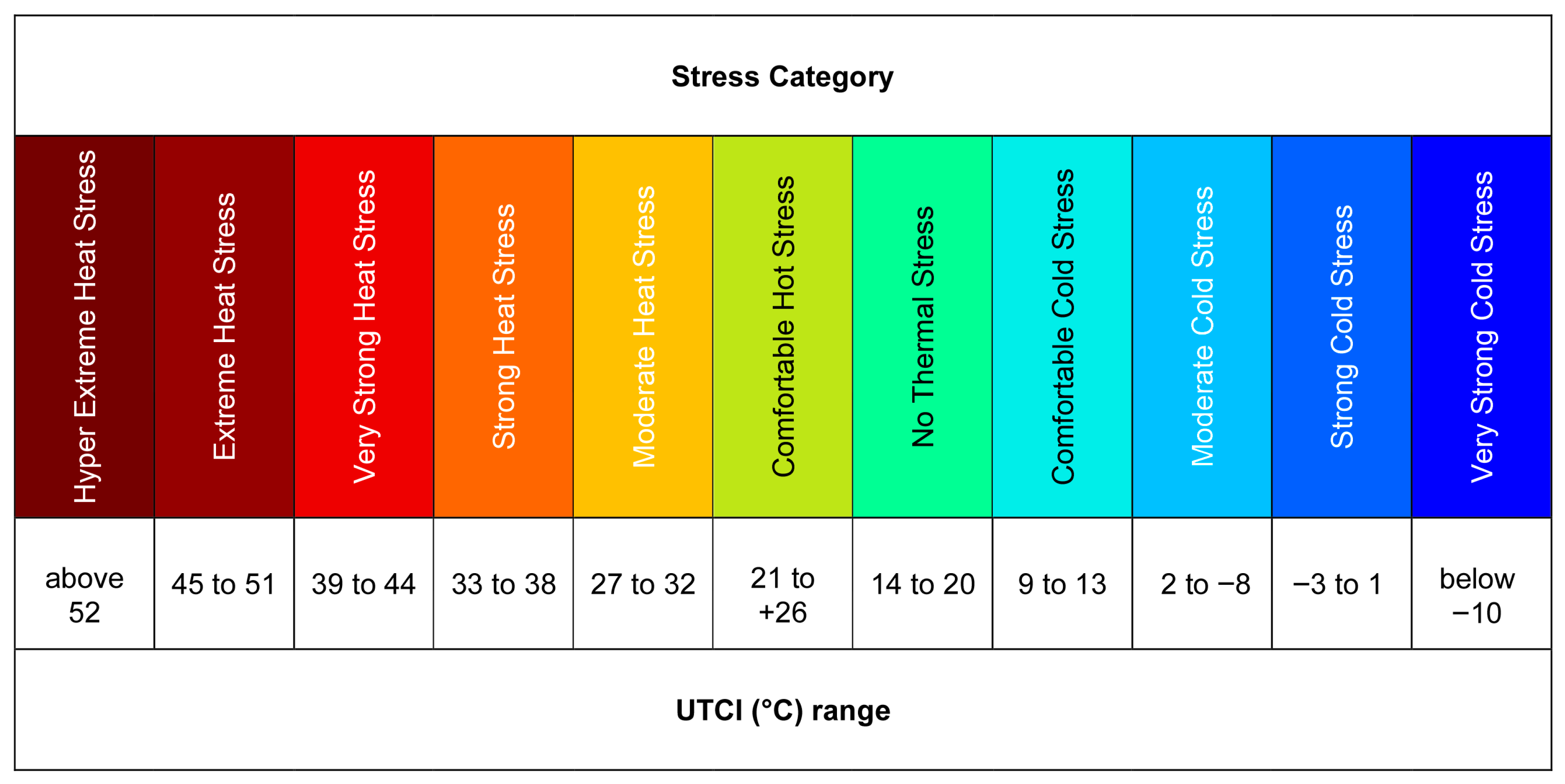
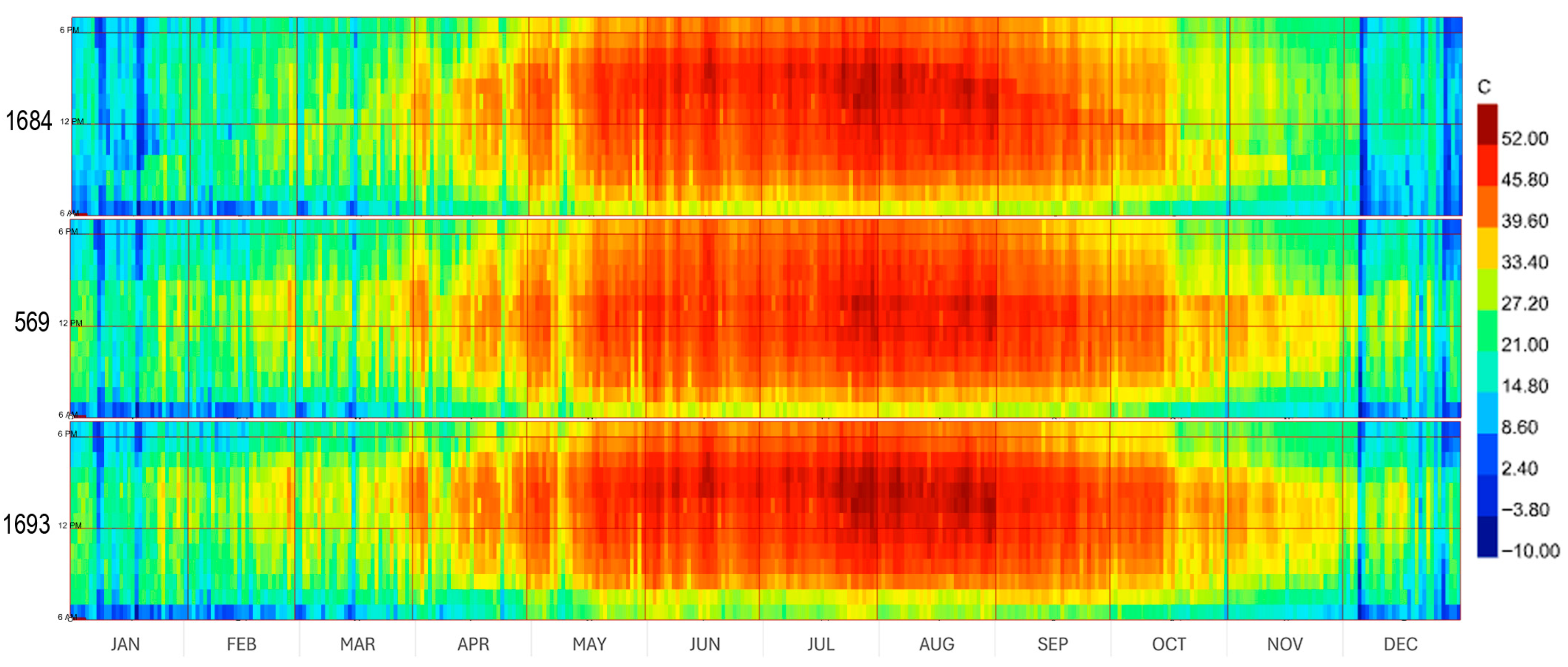
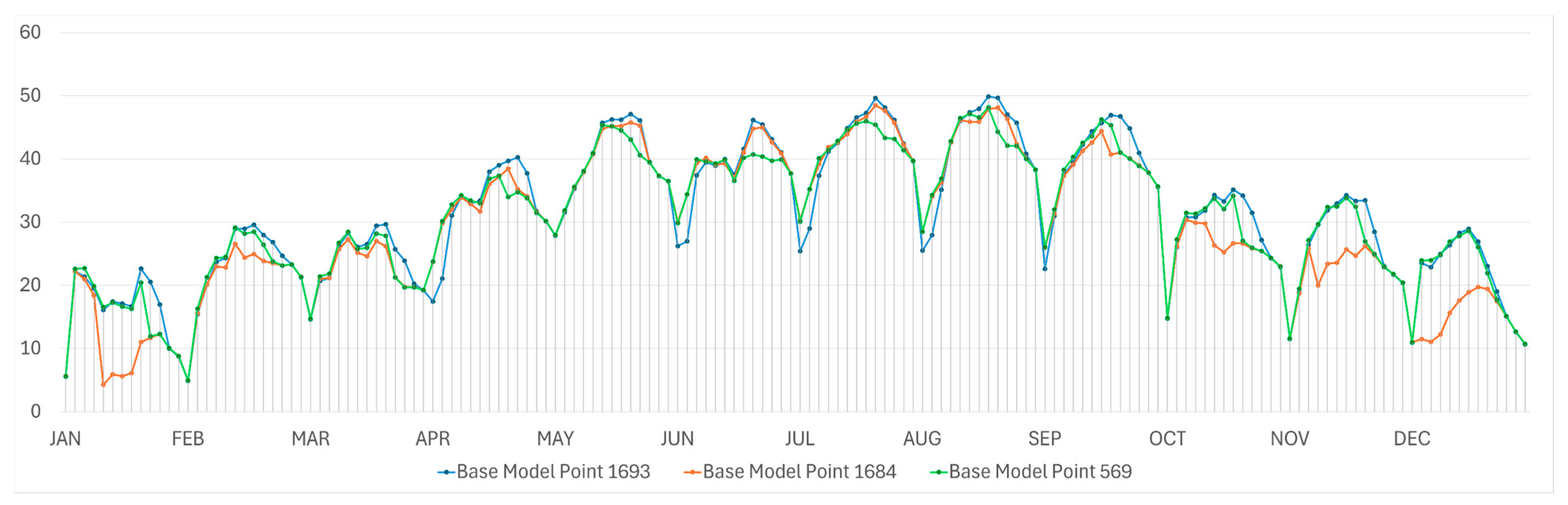
The base model and the three points selected for the study, covering the entire year from January to December, were logged hourly from 6 am to 6 pm, plotting 4745 UTCIs for each point and totaling 14,235 UTCI measurements. This study categorized the data according to the stress categories adopted and modified from [50], which comprise 11 categories and range from cold to hot, as shown in Figure 5. This provides the reference scale against which all subsequent results are interpreted, ensuring that variations in the UTCI are consistently evaluated in terms of their implications for human thermal stress. Moreover, a display of all those categories across the whole year is shown in Figure 6, with an upper point of 1984, middle point of 596, and lower point of 1693. The three selected points are poisoned in the study zone, and all 4745 calculated UTCIs are plotted; between them, the standard deviation comes up to 2.55–3.78° on average.
However, in extreme cases, it varies between the points, with a minimum of 6.08° and a maximum of 15.03°, keeping in mind that factors like position and orientation are impacted highly by solar radiation. Moreover, June, July, and August have the highest UTCI levels, reaching a maximum of 54.2° on 30 July at 2:00 pm, at study point 1693. Then come December, January, and February, with a minimum of −9° on 17 January at 6 am, recorded at study point 1684. These findings confirm that seasonal variability and solar exposure are dominant drivers of outdoor thermal stress in the study area. The consistently higher UTCI at point 1693 suggests a greater exposure to direct solar radiation and lower shading, making it the most thermally critical location for subsequent scenario comparisons.
Upon further investigation, as shown in Figure 7, the UTCI records one day per month, on the 20th of every month, and logs it from 6 am to 6 pm at all three study points. It shows that study point 1693 reaches the highest UTCI levels in the base model, which made it the focus of the initial comparison between scenarios to analyze all results in order to achieve optimal solutions in UTCI reduction. Then, to further investigate and compare the study points, we move forward to comparisons of setbacks, sidewalks, fences, and vegetation. Additionally, the temporal pattern peaking between late morning and mid-afternoon aligns with periods of maximum solar radiation, confirming that the radiant heat load rather than air temperature alone is the main contributor to extreme UTCI conditions in this context.

3.1. Urban Morphology

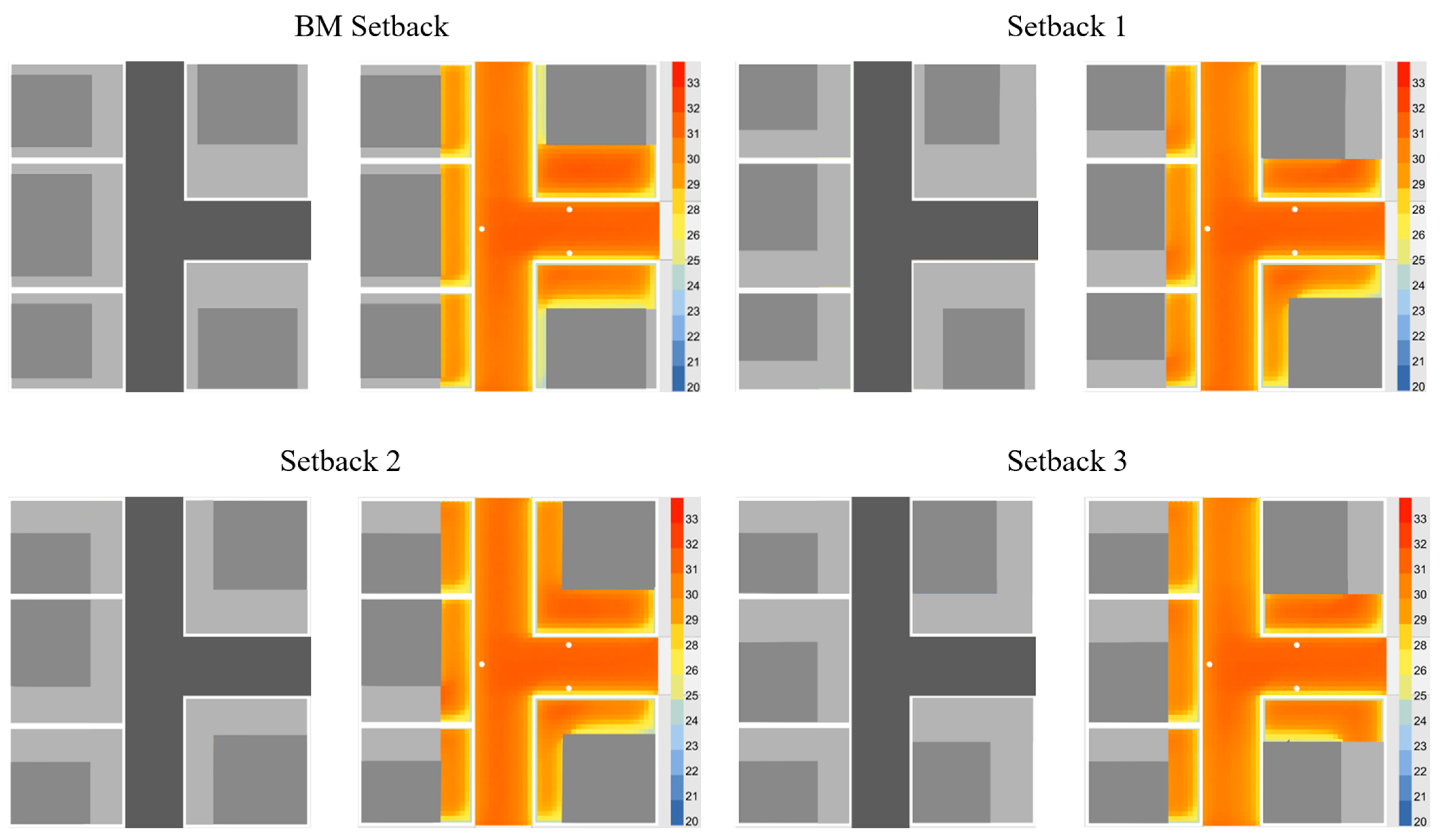
This section presents the results of the urban morphology variations examined in the study, including setbacks, sidewalk width, and fence height. The analysis begins with setback configurations, comprising a centered base model and three alternative layouts in which building attachments vary across the street, as illustrated in Figure 8. Also, in the same figure, we can see the heat map showing the UTCI distribution in each setup. This shows variations that extend beyond the study points. The results show only marginal differences in pedestrian-level UTCIs near building facades, with most variations confined to areas immediately adjacent to walls. No setback configuration produces a substantial, consistent reduction in the UTCI across the entire street.
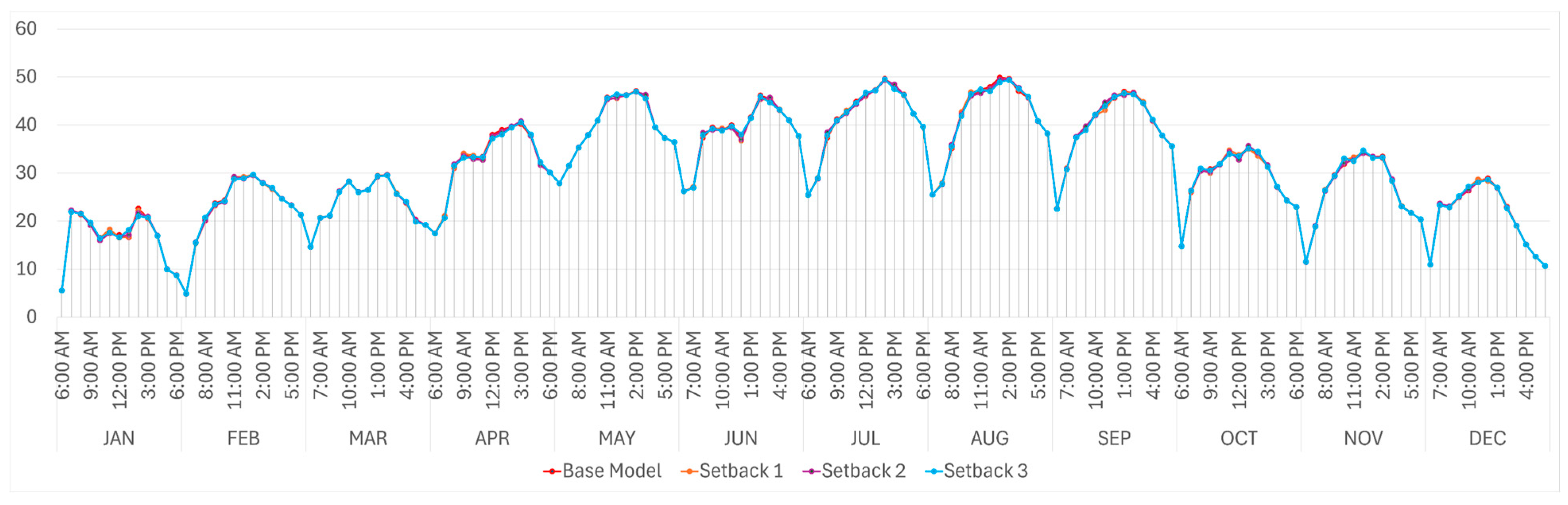
Figure 9 shows UTCIs from 6 am to 6 pm across all months of the year (the 20th of every month), a comparison between point 1693 across the base model, and three setback arrangements. The variation recorded is minimal, ranging from 0.01° to 1.5°, meaning that the suggested scenarios made very minimal changes that showed in the heat maps directly close to the walls. This confirms that building setback modifications alone are insufficient for meaningfully improving outdoor thermal comfort at a pedestrian level in this neighborhood typology. Shading from fences and vegetation plays a more decisive role than building positioning. Since the simulations are deterministic and conducted under identical climatic conditions, the reported UTCI differences reflect comparative responses to geometric variation rather than statistically tested effects; smaller differences should therefore be interpreted as indicative trends rather than definitive performance thresholds. However, while factors such as fence height across all models might have affected the results, their overall impact remained limited.
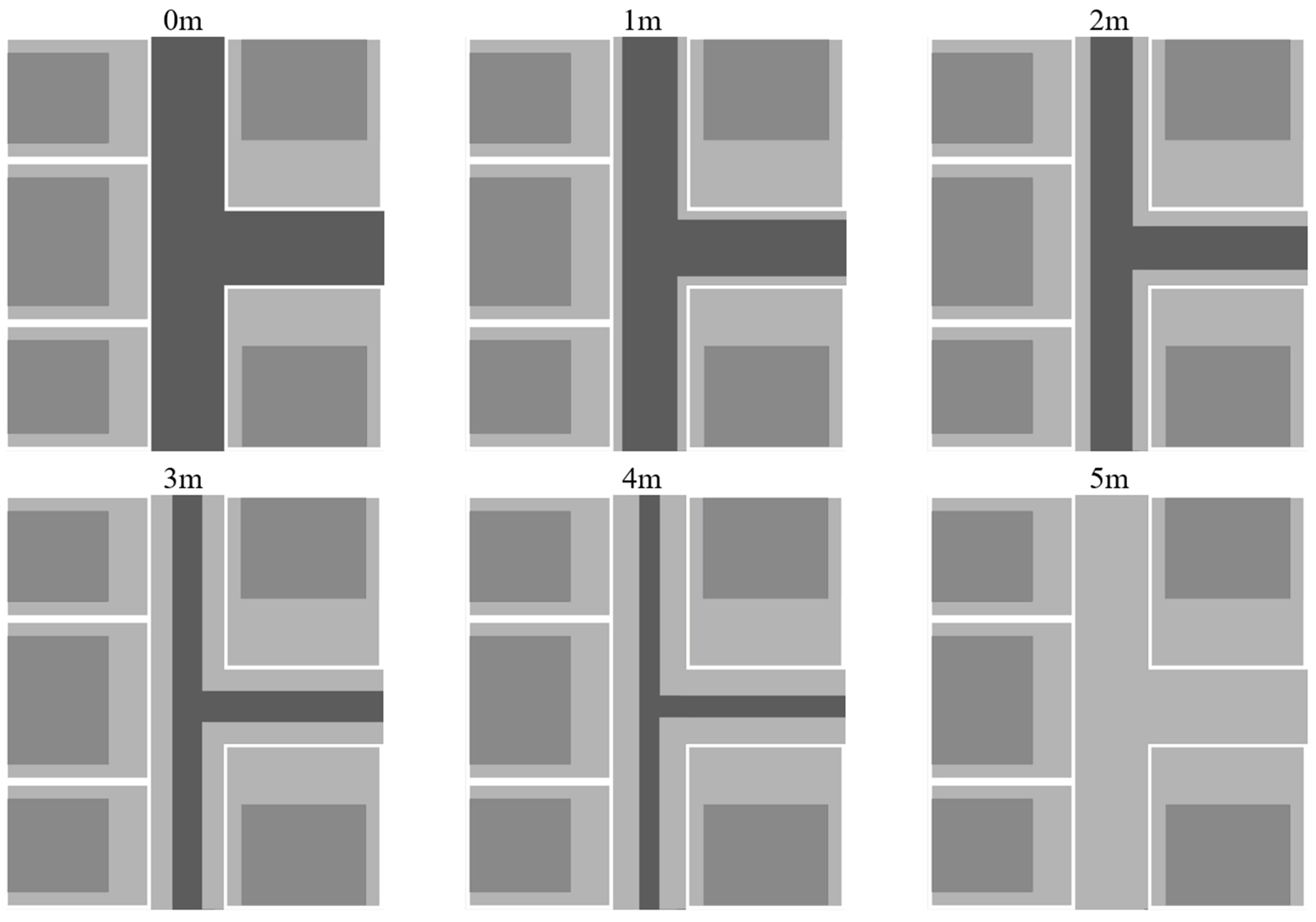
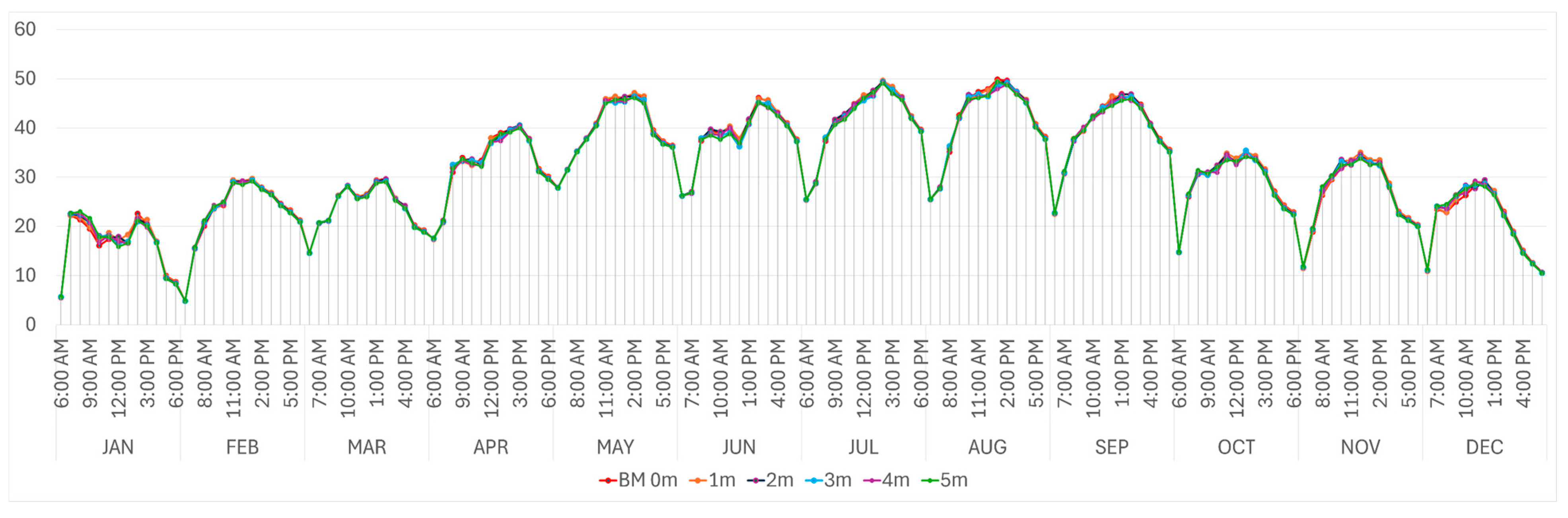
Sidewalk widths with six variations were investigated (0 m being the base model and 1 m, 2 m, 3 m, 4 m, and 5 m as added scenarios), as shown in Figure 10. The streets become narrow with the increased width of the street adding more possible paths for pedestrians. The change in street width implies a change in the functionality of the street that could be considered, which is out of the scope of the study, from two-way car movement to one-way, two-way bike lines to one-way, and finally just a pedestrian pathway.
Figure 11 shows UTCIs from 6 am to 6 pm across all months of the year (the 20th of every month), with a comparison between point 1693 across the sidewalk base model width of 0 m and scenarios with 1–5 m variations. The variation recorded is minimal, ranging from 0.8° to 2.1°, which means that the suggested scenarios made minimal changes, showing an increase in the reduction of 0.5°,0.3°, 0.3°, and 0.2° when having widths of 5 m, 4 m, 3 m, and 2 m. This indicates that no solar change significantly affected the results. The negligible thermal effect suggests that sidewalk widening primarily alters street functionality rather than the microclimate. The lack of a significant UTCI improvement implies that geometry alone, without additional shading or vegetation, is insufficient for meaningful heat mitigation.
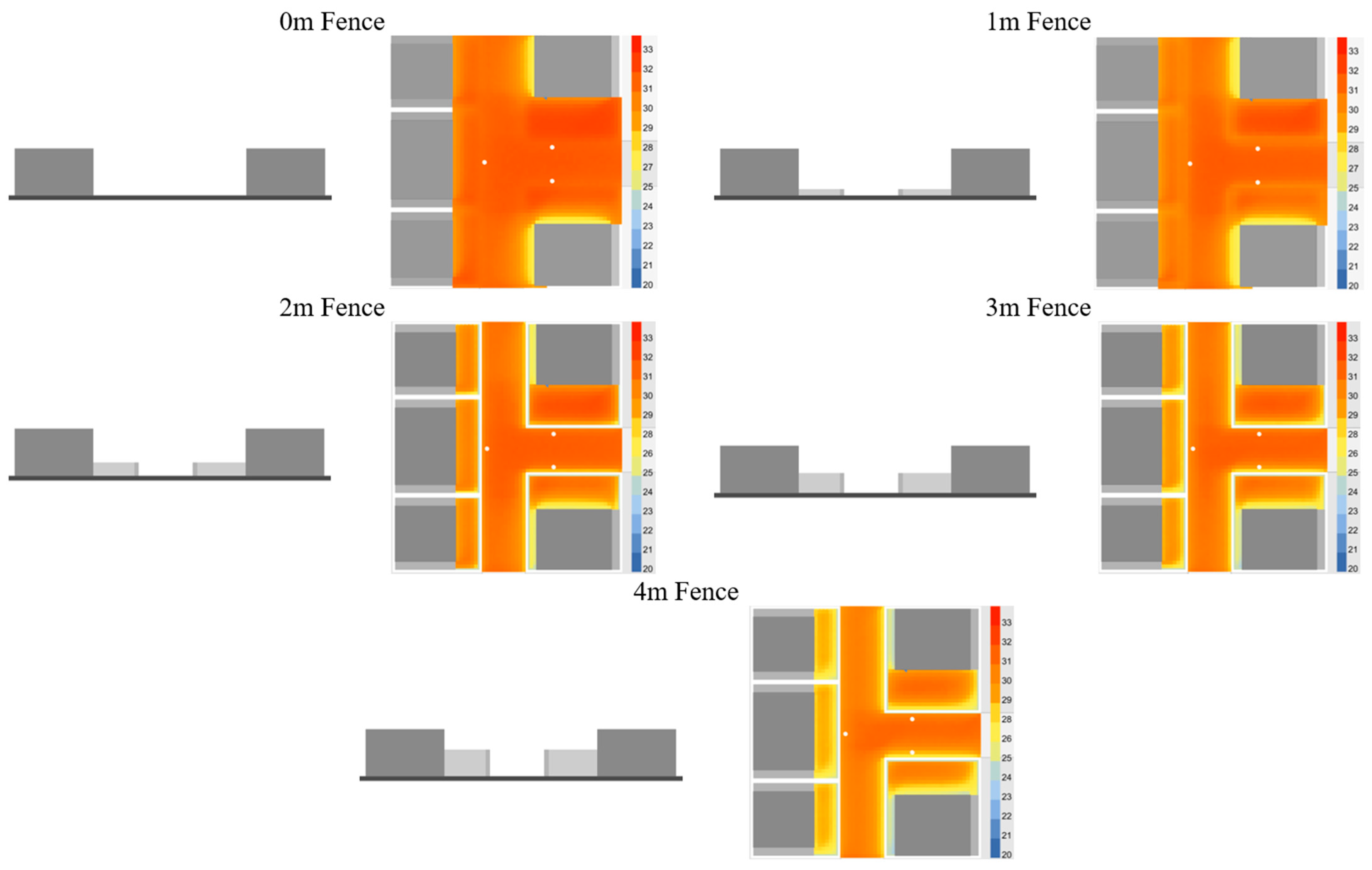
However, the fence height scenarios comprise five variations (3 m as the base model, with 0 m, 2 m, and 4 m as additional scenarios), as fences highlight the property parameter and enclose private spaces in residential areas. They also impact pedestrian walking in those areas, as this structure, which is made of concrete, impacts the OTC. This section considers removing it and assigning it a lower or higher height (permitted by local regulations). Figure 12 shows the model geometry for fence height variations of 0 m, 1 m, 2 m, 3 m, and 4 m and the heat map for the UTCI distribution across the study area. It is apparent that, with increasing fence height, the UTCI decreases from heights of 2 m to 4 m as opposed to 1 m, and no fence is shown on the heat map.
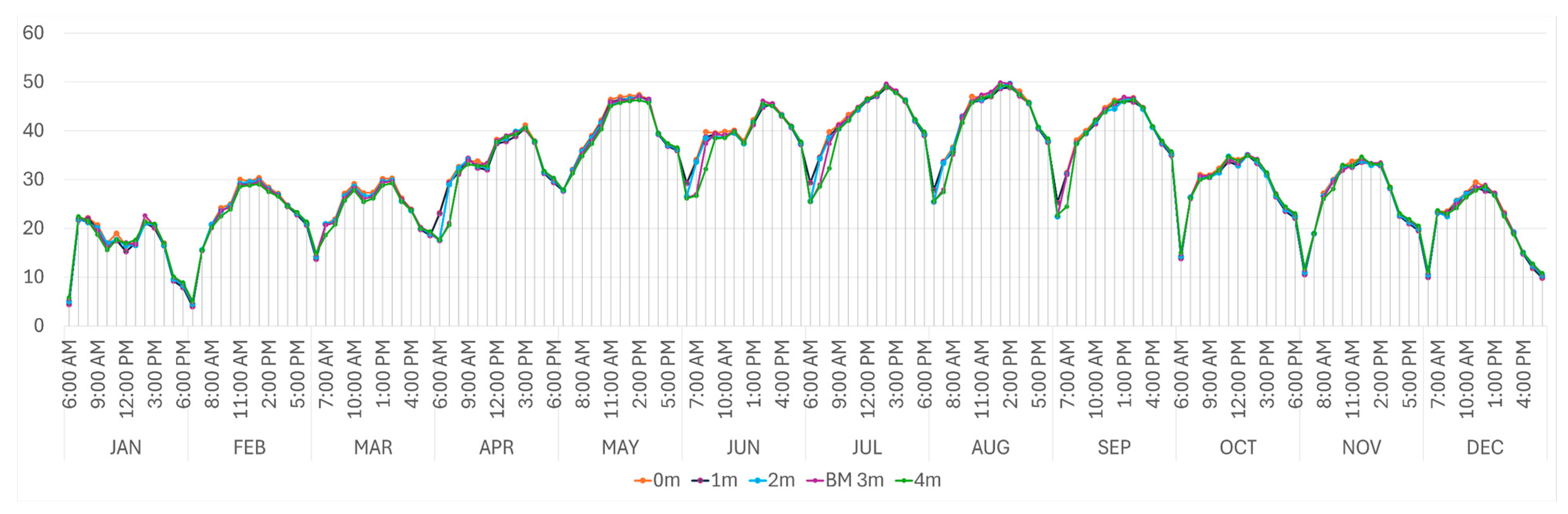
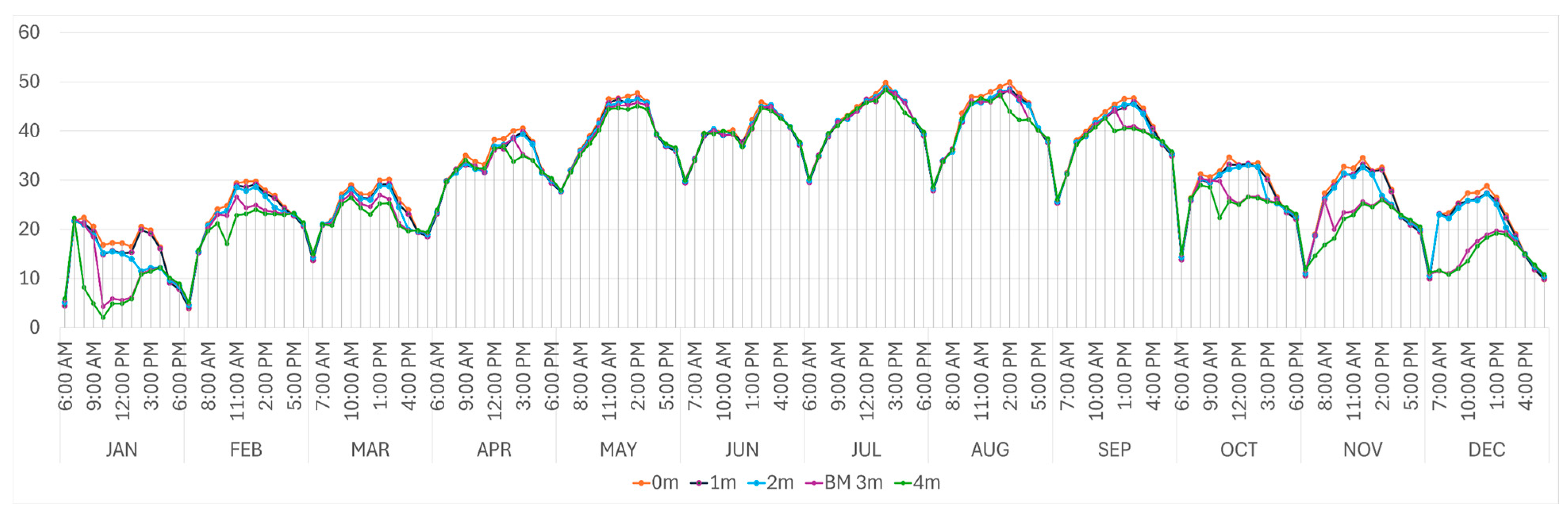
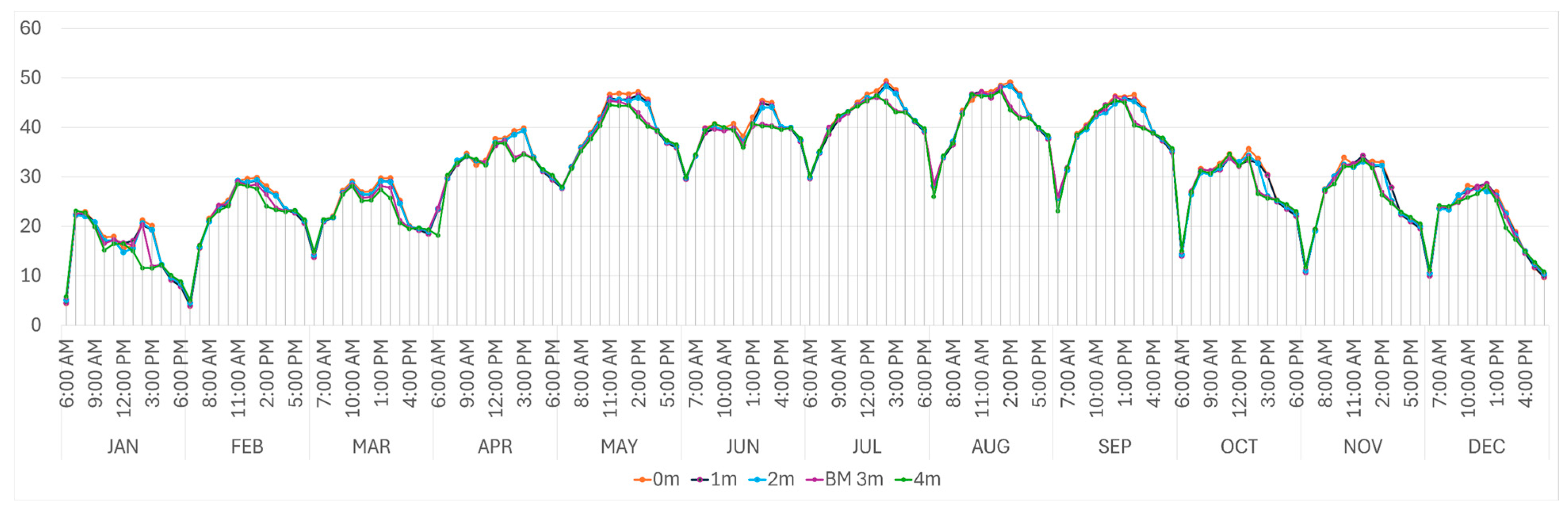
Moreover, Figure 13 shows the UTCI for all fences 0–4 m from point 1693, displaying January to December, and the variations are specifically more apparent from April to September. This led to a further investigation of point 1684, shown in Figure 14, and 569, shown in Figure 15, in the same manner displayed for point 1693. For point 1693, the differences were apparent between 6 am and noon in April, June, July, August, and September, which relates to the position of the sun impacting solar radiation and thermal impact hours during the day, as the wall casts shade on the measured data point.
However, for point 1684, we can see in Figure 14 that the variations in the UTCI happen here throughout all the months of the year, with minimal variations during June and July. Moreover, point 569, shown in Figure 15, displays less variation than point 1684; however, there is a higher UTCI reduction in the afternoon hours from 1 pm to 4 pm in May, June, and July. This is explained by the positioning of the study points and how solar radiation impacts them while the fence shades them from direct solar radiation at various times of the day. Moreover, the UTCI results exhibit highly consistent seasonal and diurnal patterns, confirming that the UTCI reduction minimum and maximum across all points were 0.5° and, in rare cases, 13.4°. However, in all three cases, winter months (December–February) show relatively low UTCI values, generally ranging between 5 and 22 °C, with early morning hours experiencing mild to moderate cold stress and midday periods remaining largely within thermally acceptable conditions. The vertical differences between measurement heights (0–4 m) are minimal during this season.
Additionally, during spring (March–April), the UTCI values increase steadily across all three points, reaching approximately 30–40 °C during midday hours. This transition period marks the onset of moderate heat stress, with slightly higher values observed at elevated heights (3–4 m), suggesting increased solar exposure and reduced shading effects compared to ground level. The diurnal amplitude becomes more pronounced, with clear daytime peaks and a cooler nighttime relief. In addition, the most critical thermal conditions occur consistently across all three points during summer (May–August). The peak UTCI values reach approximately 45–50 °C, particularly between late morning and mid-afternoon, corresponding to very strong to extreme heat stress. Vertical stratification is most evident during this period, with higher elevations systematically recording higher UTCI values than near-ground levels. Nighttime cooling remains limited, often maintaining a UTCI above 30 °C, indicating prolonged thermal discomfort and a limited recovery potential. Despite minor site-specific variations, the overall magnitude and timing of peak stress are remarkably consistent across the three locations.
During autumn (September–October), UTCI values gradually decline, though early autumn still exhibits high daytime stress levels, often exceeding 40 °C. By late autumn, thermal conditions transition back toward moderate and mild stress levels, particularly during mornings and evenings. Overall, the comparative analysis across the three points highlights a robust and repeatable thermal pattern dominated by seasonal forcing rather than localized microclimatic differences, reinforcing the need for year-round mitigation strategies such as shading, vegetation, and surface cooling. These patterns indicate that fence height influences thermal comfort primarily through shading rather than airflow or longwave radiation effects. The spatial variability among points reflects differences in solar exposure and relative position to the fence, confirming that the microclimatic benefits are highly location dependent.
Overall, the recorded UTCI difference between the base model (BM at 3 m) and the other heights (0 m, 1 m, 2 m, and 4 m) ranges from 0.5 to 8 °C, with the most significant differences occurring during peak summer hours or early morning hours. The 4 m fence height generally records the highest UTCI reduction values, while the others tend to be less impactful, particularly during the daytime, likely due to shading. Keep in mind that thermal inertia from the wall itself will change the results; however, this was outside of the scope of this research. Finally, these variations do not occur most of the time; however, they are thermally meaningful, as they could reduce the UTCI, improve OTC for pedestrians, and maximize comfortable thermal stress to encourage usability.

3.2. Vegetation

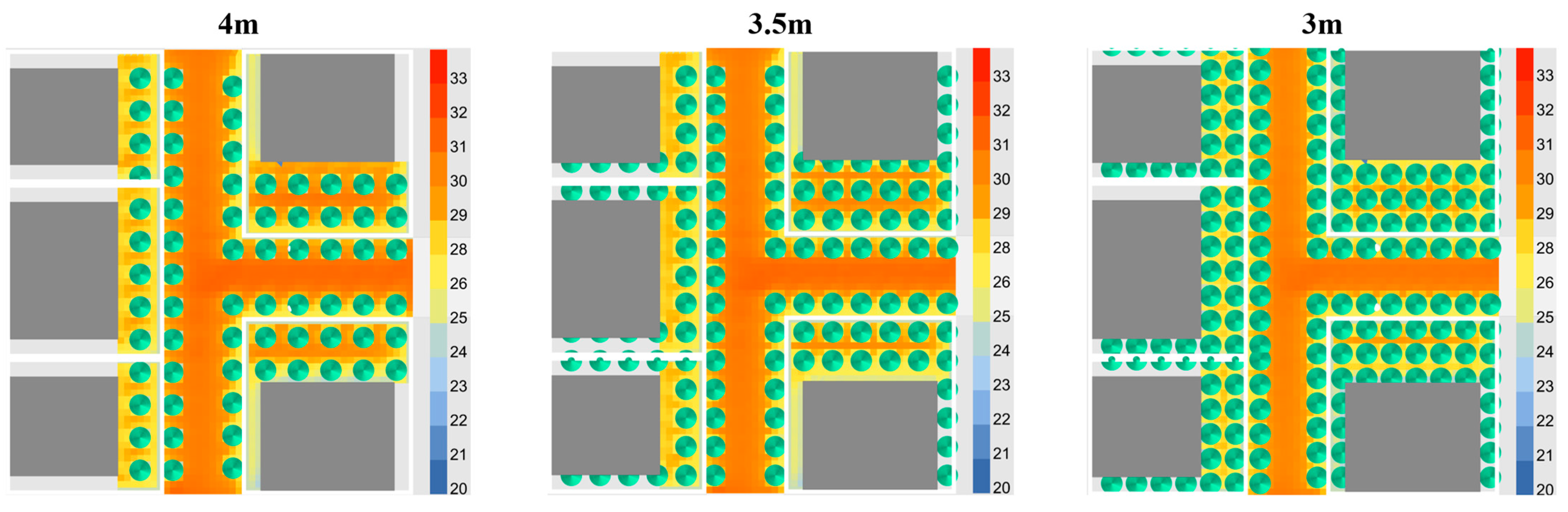
This section presents the UTCI data collected from the simulation for scenarios introducing vegetation while varying the spacing between vegetation elements to 3, 3.5, and 4 m, as vegetation is an element of the street scape and provides shade, among other benefits. Figure 16 shows the positioning of the vegetation in the model, and, in its simplest form, the model shows one row of vegetation on the outer portion of the fence impacting pedestrians. Additionally, the heat map indicates a reduction in UTCI in yellow, as opposed to the orange category being higher in UTCI, indicating the impact of shading on the UTCI.
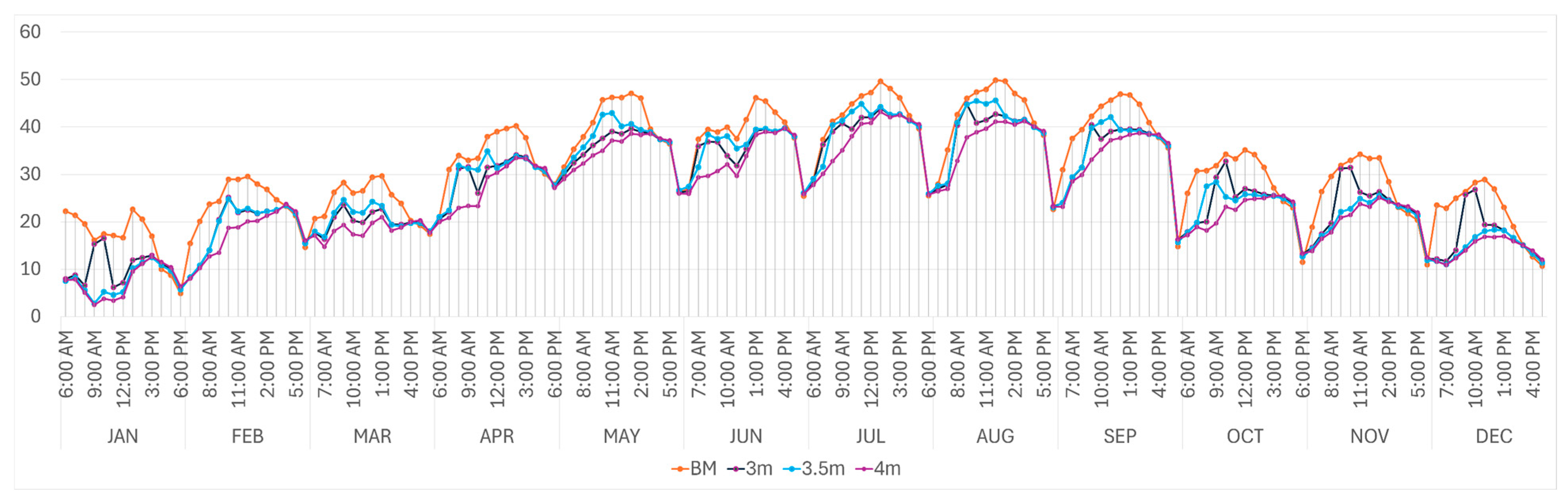
Figure 17 presents the annual variation in the UTCI values at point 1693 for the base model (BM) and three vegetation spacing scenarios (3 m, 3.5 m, and 4 m), covering the period from January to December. Overall, the figure shows a clear seasonal pattern, with lower UTCI values during winter months (December–February), a gradual increase during spring, peak thermal stress in summer (May–September), and a decline toward autumn. Across all months, the base model (BM) consistently records the highest UTCI values, indicating the most thermally stressful condition. In contrast, all vegetation scenarios demonstrate a reduction in the UTCI relative to the base model, confirming the cooling role of vegetation. Moreover, among the vegetated configurations, the 4 m spacing consistently produces the highest UTCI values, followed closely by the 3.5 m spacing, while the 3 m spacing shows comparatively the lowest UTCI values, lower than the base model. The difference between the scenarios becomes most pronounced during the warmer months, particularly from May to September, when midday UTCI values peak. During this period, the BM frequently reaches or exceeds 45–50 °C, whereas the 3 m, 3.5 m, and 4 m scenarios progressively reduce thermal stress, with the 4 m spacing achieving the most reduction, often by approximately 2–4 °C relative to the base case.
The improved OTC and thermal performance of the 3 m spacing can be attributed to more effective shading, improved airflow, and reduced heat accumulation with denser vegetation configurations. While all vegetation scenarios contribute positively to lowering the UTCI and thermal stress, decreasing the spacing from 3 m to 4 m appears to enhance microclimatic variables for pedestrians as it reduces radiant heat trapping, particularly during peak solar hours. This effect is consistently observed throughout the year but is most critical during summer months when thermal discomfort is highest. Overall, the 3 m vegetation spacing represents the most effective configuration for reducing the UTCI at study point 1693, followed by 3.5 m and then 4 m. The 4 m vegetation spacing reduces UTCI by approximately 4–6% compared to the base model. The 3.5 m spacing achieves a larger reduction of about 6–8%, while the 3 m spacing provides the greatest improvement, reducing UTCI by approximately 8–10% during peak heat periods. These results highlight the importance of optimizing vegetation spacing, as appropriate spacing can significantly improve outdoor thermal comfort in hot climatic conditions. These findings indicate that optimizing tree spacing is a more effective heat mitigation strategy than altering urban geometry alone (setbacks, sidewalks, or fences). For Riyadh-like climates, denser street tree arrangements should be prioritized in residential planning to maximize pedestrian thermal comfort.

4. Conclusions

This study contributes to the understanding of outdoor thermal comfort in hot–arid residential environments by shifting the focus from isolated urban form descriptors toward a comparative evaluation of everyday residential-scale elements. While previous UTCI-based studies have largely emphasized street canyons, aspect ratios, or generic greening strategies, the present analysis demonstrates that vegetation configuration plays a more dominant and consistent role in reducing pedestrian thermal stress than several commonly discussed geometric parameters, such as setbacks or sidewalk width. By quantifying the relative influence of these elements under identical climatic conditions, the study refines the current knowledge on the microclimatic mechanisms governing pedestrian comfort and highlights the importance of context-specific evaluation for residential neighborhoods in hot–arid climates. Additionally, this study examines the influence of urban morphology and vegetation spacing on outdoor thermal comfort in a hot arid climate, using Riyadh as a representative case, and applies UTCI-based microclimatic simulations to produce site-specific data. The findings confirm that thermal conditions in such environments are strongly governed by seasonal variability and solar exposure, with extreme heat stress occurring during the summer months, particularly between late morning and mid-afternoon. Across all analyzed scenarios, summer UTCI values frequently exceeded 45 °C, emphasizing the urgency of integrating effective heat mitigation strategies into urban design to encourage and support pedestrian OTC. Moreover, the results demonstrate that vegetation plays a significantly more influential role in moderating outdoor thermal stress than geometric modifications such as fence height, sidewalk width, and setbacks. While variations in fence height affected the UTCI, on average, with a range between 0.5 and 2 °C, vegetation spacing produced average reductions in the UTCI ranging between 1 and 4 °C. Among the tested configurations, the 3 m vegetation spacing achieved the most effective cooling performance, reducing UTCI values by approximately 8–10% during peak summer conditions. The 3.5 m spacing followed closely, while the 4 m configuration exhibited the least cooling benefits among the vegetation scenarios. These results indicate that denser vegetation arrangements enhance shading efficiency and reduce mean radiant temperature more effectively than wider spacing, particularly during periods of intense solar exposure.
The findings also reveal that increasing the fences does not necessarily improve outdoor thermal comfort all the time. In some cases, higher fences contributed to localized heat accumulation due to restricted airflow and increased radiant trapping, highlighting the limitations of relying solely on built form modifications without complementary vegetative strategies. This underscores the need for integrated urban design approaches that balance shading, ventilation, and surface exposure rather than focusing on singular morphological interventions. Additionally, other aspects that have to be considered in each site-specific study are the details of the street canyon and the building heights and their position in the plot, as in narrow streets they will contribute to the total shading, impacting the thermal impact of solar radiation during the day.
Overall, this research demonstrates that optimized vegetation spacing constitutes one of the most effective passive strategies for mitigating outdoor heat stress in hot, arid climates. By quantifying the thermal benefits of different spatial configurations, the study provides actionable evidence for urban designers and policymakers aiming to enhance pedestrian comfort and urban resilience. The findings support the prioritization of vegetation-based interventions in residential street design and contribute to the growing body of knowledge on climate-responsive urban morphology. Future research should extend this work by incorporating material albedo, long-term climatic projections, and human thermal perception to further refine adaptive urban design strategies under climate change conditions.

Funding

The authors extend their appreciation to the Ongoing Research Funding Program (ORF-2025-1344), King Saud University, Riyadh, Saudi Arabia.

Data Availability Statement

The datasets used and analyzed during the current study are available from the corresponding author upon reasonable request.

Conflicts of Interest

The author declares that they have no known competing financial interests or personal relationships that could have appeared to influence the work reported in this paper.

References

  1. Dunjić, J. Outdoor Thermal Comfort Research in Urban Areas of Central and Southeast Europe: A Review. Geogr. Pannonica 2019, 23, 359–373. [Google Scholar] [CrossRef]
  2. Fahmy, M.; Mahmoud, S.; Elwy, I.; Mahmoud, H. A Review and Insights for Eleven Years of Urban Microclimate Research Towards a New Egyptian ERA of Low Carbon, Comfortable and Energy-Efficient Housing Typologies. Atmosphere 2020, 11, 236. [Google Scholar] [CrossRef]
  3. Shakya, A.; Uprety, S.; Shrestha, B. Sidewalk Landscape Structure to Enhance Pedestrian Thermal Comfort in Kathmandu Metropolitan City. J. Environ. Sci. 2023, 9, 13–25. [Google Scholar] [CrossRef]
  4. Potchter, O.; Cohen, P.; Ferenez, M.; Mandelmilch, M.; Omer, I. The Effect of Outdoor Thermal Conditions on Daily and Seasonally Pedestrian Behavior in Various Streets of Mediterranean City. In Proceedings of the EMS Annual Meeting, Barcelona, Spain, 2–6 September 2024. [Google Scholar] [CrossRef]
  5. Ridha, S. Effect of Aspect Ratio and Symmetrical Distribution on Urban Design in Baghdad City, and the Impact of Greenery Strategies on Improving Outdoor Thermal Comfort. IOP Conf. Ser. Earth Environ. Sci. 2018, 151, 12035. [Google Scholar] [CrossRef]
  6. Ishak, N.; Abdullah, J.; Abdul Rahman, N.A. Outdoor Thermal Comfort of Urban’s Pedestrian in Tropical City of Kuala Lumpur. IOP Conf. Ser. Earth Environ. Sci. 2023, 1217, 012029. [Google Scholar] [CrossRef]
  7. Khraiwesh, M.M. Outdoor Thermal Comfort Integrated With Energy Consumption for Urban Block Design Optimization: A Study of the Hot-Summer Mediterranean City of Irbid, Jordan. Sustainability 2023, 15, 8412. [Google Scholar] [CrossRef]
  8. Eslamirad, N.; Sepúlveda, A.; Luca, F.D.; Lylykangas, K.; Yahia, S.B. Outdoor Thermal Comfort Optimization in a Cold Climate to Mitigate the Level of Urban Heat Island in an Urban Area. Energies 2023, 16, 4546. [Google Scholar] [CrossRef]
  9. Ndetto, E.L.; Matzarakis, A. Effects of Urban Configuration on Human Thermal Conditions in a Typical Tropical African Coastal City. Adv. Meteorol. 2013, 2013, 549096. [Google Scholar] [CrossRef]
  10. Bhusal, S. Investigating the Effect of Neighborhood Morphology on Outdoor Thermal Comfort in Public Spaces of Six Canadian Cities. Master’s Thesis, Ryerson University, Toronto, ON, Canada, 2024. [Google Scholar] [CrossRef]
  11. Nazarian, N.; Acero, J.A.; Norford, L.K. Outdoor Thermal Comfort Autonomy: Performance Metrics for Climate-Conscious Urban Design. Build. Environ. 2019, 155, 145–160. [Google Scholar] [CrossRef]
  12. Elbardisy, W.M.; Salheen, M.A.; Fahmy, M. The Impact of Street Trees on a Typical Urban Canyon in Eastern Cairo Region. IOP Conf. Ser. Earth Environ. Sci. 2022, 1056, 12025. [Google Scholar] [CrossRef]
  13. Wang, C.; Wang, Z.; Yang, J. Cooling Effect of Urban Trees on the Built Environment of Contiguous United States. Earth S Future 2018, 6, 1066–1081. [Google Scholar] [CrossRef]
  14. Yin, S.; Lang, W.; Xiao, Y.; Xu, Z.-D. Correlative Impact of Shading Strategies and Configurations Design on Pedestrian-Level Thermal Comfort in Traditional Shophouse Neighbourhoods, Southern China. Sustainability 2019, 11, 1355. [Google Scholar] [CrossRef]
  15. Jia, S.; Wang, Y.; Hien, W.N. The Effect of Urban Greening on Pedestrian’s Thermal Comfort and Walking Behaviour. E3s Web Conf. 2023, 396, 5013. [Google Scholar] [CrossRef]
  16. Elkhazindar, A.; Kharrufa, S.N.; Arar, M.S. The Effect of Urban Form on the Heat Island Phenomenon and Human Thermal Comfort: A Comparative Study of UAE Residential Sites. Energies 2022, 15, 5471. [Google Scholar] [CrossRef]
  17. Sedira, S.; Mazouz, S. The Effect of Urban Geometry on Outdoor Thermal Comfort. Application of the UTCI Index in Hot and Arid Climates. Technium Romanian. J. Appl. Sci. Technol. 2023, 6, 23–31. [Google Scholar] [CrossRef]
  18. Mahmoud, H. Effect of Urban Form on Outdoor Thermal Comfort of Governmental Residential Buildings: New Aswan as a Case Study, Egypt. J. Eng. Sci. 2019, 47, 309–325. [Google Scholar] [CrossRef]
  19. Bacha, A.E. A Comprehensive Study on Outdoor Thermal Comfort in Arid Urban Environments Through Microclimatic Analysis of Urban Density. Buildings 2024, 14, 700. [Google Scholar] [CrossRef]
  20. Ahmad Hamdan, D.M.; de Oliveira, F.L. The Impact of Urban Design Elements on Microclimate in Hot Arid Climatic Conditions: Al Ain City, UAE. Energy Build. 2019, 200, 86–103. [Google Scholar] [CrossRef]
  21. Emmanuel, R.; Steemers, K. Connecting the Realms of Urban Form, Density and Microclimate. Build. Res. Inf. 2018, 46, 804–808. [Google Scholar] [CrossRef]
  22. Shata, R.O.; Mahmoud, A.H.; Fahmy, M. Correlating the sky view factor with the pedestrian thermal environment in a hot arid university campus plaza. Sustainability 2021, 13, 468. [Google Scholar] [CrossRef]
  23. Ladan, T.A.; Ibrahim, M.H.; Ismail, M.; Ansari, M. The Potential of Urban Green Infrastructure in Mitigating Urban Heat Islands in the Semi-Arid Regions. Int. J. Acad. Res. Bus. Soc. Sci. 2023, 13, 180–190. [Google Scholar] [CrossRef] [PubMed]
  24. Ghaffour, W.; Ouissi, M.N.; Velay Dabat, M.A. Analysis of urban thermal environments based on the perception and simulation of the microclimate in the historic city of Tlemcen. Smart Sustain. Built Environ. 2020, 10, 141–168. [Google Scholar] [CrossRef]
  25. Kouklis, G.-R.; Yiannakou, A. The Contribution of Urban Morphology to the Formation of the Microclimate in Compact Urban Cores: A Study in the City Center of Thessaloniki. Urban Sci. 2021, 5, 37. [Google Scholar] [CrossRef]
  26. El Deeb, D.A.; Sarhan, A.E.; Kandile, Y.S. The Use of Green Design Strategies for Achieving Thermal Comfort (Applying PMV as a Measurement Tool). Eng. Res. J. 2021, 171, 35–46. [Google Scholar] [CrossRef]
  27. Mahmoud, H.; Ghanem, H. Urban Geometry Mitigation Guidelines to Improve Outdoor Thermal Performance in Egyptian Hot Arid New Cities. J. Eng. Sci. 2019, 47, 172–193. [Google Scholar] [CrossRef]
  28. Norman, L.M.; Ruddell, B.L.; Tosline, D.J.; Fell, M.; Greimann, B.P.; Cederberg, J.R. Developing Climate Resilience in Aridlands Using Rock Detention Structures as Green Infrastructure. Sustainability 2021, 13, 11268. [Google Scholar] [CrossRef]
  29. Kim, Y.J.; Lee, C.; Kim, J. Sidewalk Landscape Structure and Thermal Conditions for Child and Adult Pedestrians. Int. J. Environ. Res. Public Health 2018, 15, 148. [Google Scholar] [CrossRef]
  30. Terrani, E. Effect of Street Trees Shade on Perceived Thermal Comfort in a South Temperate Climate: The Sidewalks of Montevideo (Uruguay). Heliyon 2024, 10, e32762. [Google Scholar] [CrossRef]
  31. Sayad, B.; Alkama, D.; Rebhi, R.; Kidar, A.; Lorenzini, G.; Ahmad, H.; Menni, Y. Enhanced outdoor thermal comfort through natural design technique: In-situ measurement and microclimate simulation. Instrum. Mes. Metrol. 2021, 20, 131–136. [Google Scholar] [CrossRef]
  32. Albdour, M.S.; Baranyai, B. Impact of Street Canyon Geometry on Outdoor Thermal Comfort and Weather Parameters in Pécs. Pollack Period. 2019, 14, 177–187. [Google Scholar] [CrossRef]
  33. Baca, E.; Tsai, I.-T. A Model-Based Approach to Measuring the Effect of Shading on Outdoor Thermal Comfort. Int. J. Eng. Technol. 2015, 7, 116–121. [Google Scholar] [CrossRef][Green Version]
  34. Kalogeropoulos, G.; Dimoudi, A.; Toumboulidis, P.; Zoras, S. Urban Heat Island and Thermal Comfort Assessment in a Medium-Sized Mediterranean City. Atmosphere 2022, 13, 1102. [Google Scholar] [CrossRef]
  35. Şahin, Y.D.; Altunkasa, C. Holistic Approach to Ecological Design Parameters of Building and Landscape Design on Outdoor Thermal Comfort in Hot, Humid Climate. Prostor 2023, 31, 38–51. [Google Scholar] [CrossRef]
  36. Gomaa, M.M. Investigating the Impact of Various Vegetation Scenarios on Outdoor Thermal Comfort in Low-Density Residential Areas of Hot Arid Regions. Sustainability 2024, 16, 3995. [Google Scholar] [CrossRef]
  37. Dohssi, K.; Djaghrouri, D.; Benabbas, M. Effect of Vegetation on Outdoor Thermal Comfort in Hot Arid Regions, a Lesson of Sustainability From the Traditional Ksar of Ain Madhi, Algeria. Tech. Soc. Sci. J. 2022, 38, 794–804. [Google Scholar] [CrossRef]
  38. Wu, J.; Chang, H.; Yoon, S.-H. Numerical Study on Microclimate and Outdoor Thermal Comfort of Street Canyon Typology in Extremely Hot Weather—A Case Study of Busan, South Korea. Atmosphere 2022, 13, 307. [Google Scholar] [CrossRef]
  39. Xue, S. Impact of Canopy Coverage and Morphological Characteristics of Trees in Urban Park on Summer Thermal Comfort Based on Orthogonal Experiment Design: A Case Study of Lvyin Park in Zhengzhou, China. Forests 2023, 14, 2098. [Google Scholar] [CrossRef]
  40. Sui, Q.; Jia, H.; Zhao, M.; Zhou, Y.; Fan, L. Quantitative Evaluation of Ecosystem Services of Urban Street Trees: A Case Study of Shengjing Historical and Cultural Block in Shenyang, China. Sustainability 2023, 15, 2532. [Google Scholar] [CrossRef]
  41. Zheng, B.; Bedra, K.B.; Zheng, J.; Wang, G. Combination of Tree Configuration With Street Configuration for Thermal Comfort Optimization Under Extreme Summer Conditions in the Urban Center of Shantou City, China. Sustainability 2018, 10, 4192. [Google Scholar] [CrossRef]
  42. Wu, J. Quantitative Study on the Effects of Street Geometries and Tree Configurations on the Outdoor Thermal Environment. Energies 2024, 17, 2223. [Google Scholar] [CrossRef]
  43. Wu, J.; Li, X.; Li, S.; Liu, C.; Yi, T.; Zhao, Y. Spatial Heterogeneity and Attribution Analysis of Urban Thermal Comfort in China From 2000 to 2020. Int. J. Environ. Res. Public Health 2022, 19, 5683. [Google Scholar] [CrossRef] [PubMed]
  44. Yahia, M.W.; Johansson, E.; Thorsson, S.; Lindberg, F.; Rasmussen, M.I. Effect of Urban Design on Microclimate and Thermal Comfort Outdoors in Warm-Humid Dar Es Salaam, Tanzania. Int. J. Biometeorol. 2017, 62, 373–385. [Google Scholar] [CrossRef]
  45. Morakinyo, T.E.; Adegun, O.B.; Balogun, A.A. The Effect of Vegetation on Indoor and Outdoor Thermal Comfort Conditions: Evidence From a Microscale Study of Two Similar Urban Buildings in Akure, Nigeria. Indoor Built Environ. 2014, 25, 603–617. [Google Scholar] [CrossRef]
  46. Frosini, G. The Impact of Trees on the UHI Effect and Urban Environment Quality: A Case Study of a District in Pisa, Italy. Atmosphere 2024, 15, 123. [Google Scholar] [CrossRef]
  47. Lin, C. Comprehensive Analysis on the Thermal Comfort of Various Greening Forms: A Study in Hot-Humid Areas. Environ. Res. Commun. 2024, 6, 025010. [Google Scholar] [CrossRef]
  48. Binabid, J.; Anteet, Q. Numerical study of vegetation effects on thermal comfort for outdoor spaces at a public school in hot and arid climate. Environ. Adv. 2023, 15, 100482. [Google Scholar] [CrossRef]
  49. Binabid, J.; Alymani, A.; Alammar, A. Optimizing Outdoor Thermal Comfort for Educational Buildings: Case Study in the City of Riyadh. Buildings 2024, 14, 3568. [Google Scholar] [CrossRef]
  50. The Commission for Thermal Physiology of the International Union of Physiological Commission Sciences (IUPS Thermal Commission). Glossary of terms for thermal physiology. J. Therm. Biol. 2003, 28, 75–106. [Google Scholar] [CrossRef]
Figure 1. The methodology process.
Buildings 16 00493 g001
Figure 2. Site location.
Buildings 16 00493 g002
Figure 3. Intersection selection.
Buildings 16 00493 g003
Figure 4. Base model geometry.
Buildings 16 00493 g004
Figure 5. Thermal stress categories.
Buildings 16 00493 g005
Figure 6. All BM UCTIs from January to December using stress categories.
Buildings 16 00493 g006
Figure 7. UTCIs for all three points for the study from January to December.
Buildings 16 00493 g007
Figure 8. Setback BM and 1, 2, 3 layouts with all their heat maps of UTCI distribution.
Buildings 16 00493 g008
Figure 9. UTCIs for all setback arrangements from point 1693, displaying January to December.
Buildings 16 00493 g009
Figure 10. Sidewalk variations in widths: 0 m, 1 m, 2 m, 3 m, 4 m, and 5 m.
Buildings 16 00493 g010
Figure 11. UTCIs for all sidewalks 0–5 m from point 1693, displaying January to December.
Buildings 16 00493 g011
Figure 12. Fence height variations of 0 m, 1 m, 2 m, 3 m, and 4 m and the heat map for UTCI distribution.
Buildings 16 00493 g012
Figure 13. UTCIs for all fences 0–4 m from point 1693, displaying January to December.
Buildings 16 00493 g013
Figure 14. UTCIs for all fences 0–4 m from point 1684, displaying January to December.
Buildings 16 00493 g014
Figure 15. UTCIs for all fences 0–4 m from point 569, displaying January to December.
Buildings 16 00493 g015
Figure 16. The positioning of the vegetation at 3 m, 3.5 m, and 4 m.
Buildings 16 00493 g016
Figure 17. UTCIs for BM and all vegetation spacings, 3, 3.5, and 4 m, for point 1693, displaying January to December.
Buildings 16 00493 g017
Disclaimer/Publisher’s Note: The statements, opinions and data contained in all publications are solely those of the individual author(s) and contributor(s) and not of MDPI and/or the editor(s). MDPI and/or the editor(s) disclaim responsibility for any injury to people or property resulting from any ideas, methods, instructions or products referred to in the content.