


Abstract
People with developmental disabilities, who represent about 2% of the global population, encounter diverse functional and cognitive challenges that adversely impact their navigation and accessibility experiences in the built environments. Historically, accessibility standards predominantly focused on physical barriers, with less attention given to sensory and cognitive barriers. This multipart study delves into barriers faced by individuals with intellectual/developmental disabilities in the built environment. The first part reviews the state of existing literature on developmental disabilities. The second part captures insights from individuals with intellectual/developmental disabilities as they navigate various public buildings. The final part synthesizes the collected information, including lessons learned from autism-friendly architectural and other design requirements, to assess the current state of development of the Canadian accessibility standard, CSA/ASC B651:23, in meeting the needs of people with developmental disabilities. The study culminates in recommendations aimed at enhancing the accessibility standard for the built environment, specifically in addressing sensory and cognitive barriers faced by people with developmental disabilities.
1. Introduction
People with developmental disabilities constitute a diverse and significant segment of the global population, accounting for approximately 2% based on data from 2019 [1]. In Canada, this percentage similarly accounts for an estimated 2% of the population [2]. These individuals experience a range of conditions arising from different impairments and contributing factors affecting their motor, sensory, cognitive, linguistic, memory, and/or behavioural functions [3]. As a result, they often encounter common challenges related to memory, information acquisition and processing, attention, and problem-solving [4,5]. When compounded by accessibility barriers, these challenges impede full and meaningful participation in the built environment, particularly since cognitive disabilities are often less visible than physical and sensory disabilities [6].
Despite growing awareness, the development of accessibility standards tailored to the unique needs of this population has lagged. Historically, standards are derived from translating “physical” and “sensory” features into quantifiable measurements and parameters, such as minimum door widths, ramp slopes, light intensity, etc. [7]. While some of these requirements are necessary, they are not sufficient to accommodate the distinctive needs of this population [8]. This challenge is further intensified by a notable research gap related to accessibility for people with intellectual/developmental disabilities, cognitive impairments, and neurodiversity conditions [5,9,10,11,12]. Moreover, research studies have shown that involving insights from individuals with lived experiences is necessary to comprehend accessibility challenges and identify sensory and cognitive barriers [13,14,15]. The hidden voices of this population should be heard, and their unique experiences and perspectives should be incorporated into accessibility standards for built environments. This study delves into existing literature and experiences of individuals with developmental disabilities to identify latent accessibility barriers they encounter while traversing public buildings. It presents the measures prescribed by Canada’s CSA/ASC B651:23 accessibility standard and provides tangible recommendations that potentially meet the needs of people with developmental disabilities [16].
2. Methodology
A multipart study has been developed to address the aim of this research project, and it includes (1) synthesizing existing literature related to accessibility for people with developmental disabilities, (2) capturing the experiences of a group of individuals with intellectual/developmental disabilities as they traverse public buildings, (3) identifying the clauses prescribed by the Canadian Accessibility Standard, CSA/ASC B651:23, that correspond to the barriers noted in the previous part, and (4) reviewing the universality of proposed architectural and other design requirements for autism-friendly environments to identify design information and/or specifications that complement or add to the prescribed design requirements of CSA/ASC B651:23 standard for people with developmental disabilities.
Part 1—The Web of Science and Google Scholar databases were searched using the following keywords singularly or in combination: accessibility, accessibility barriers, built environment, cognitive, intellectual, developmental, and disabilities. A total of 92 studies were identified. The studies were subsequently filtered to exclude articles that centered on older people, individuals with dementia, those with functional disabilities unrelated to developmental disabilities, general accessibility studies not specific to developmental disabilities, and studies published prior to 2004. A total of 45 articles met the selection criteria, with 30 of these papers published in 2015 onward.
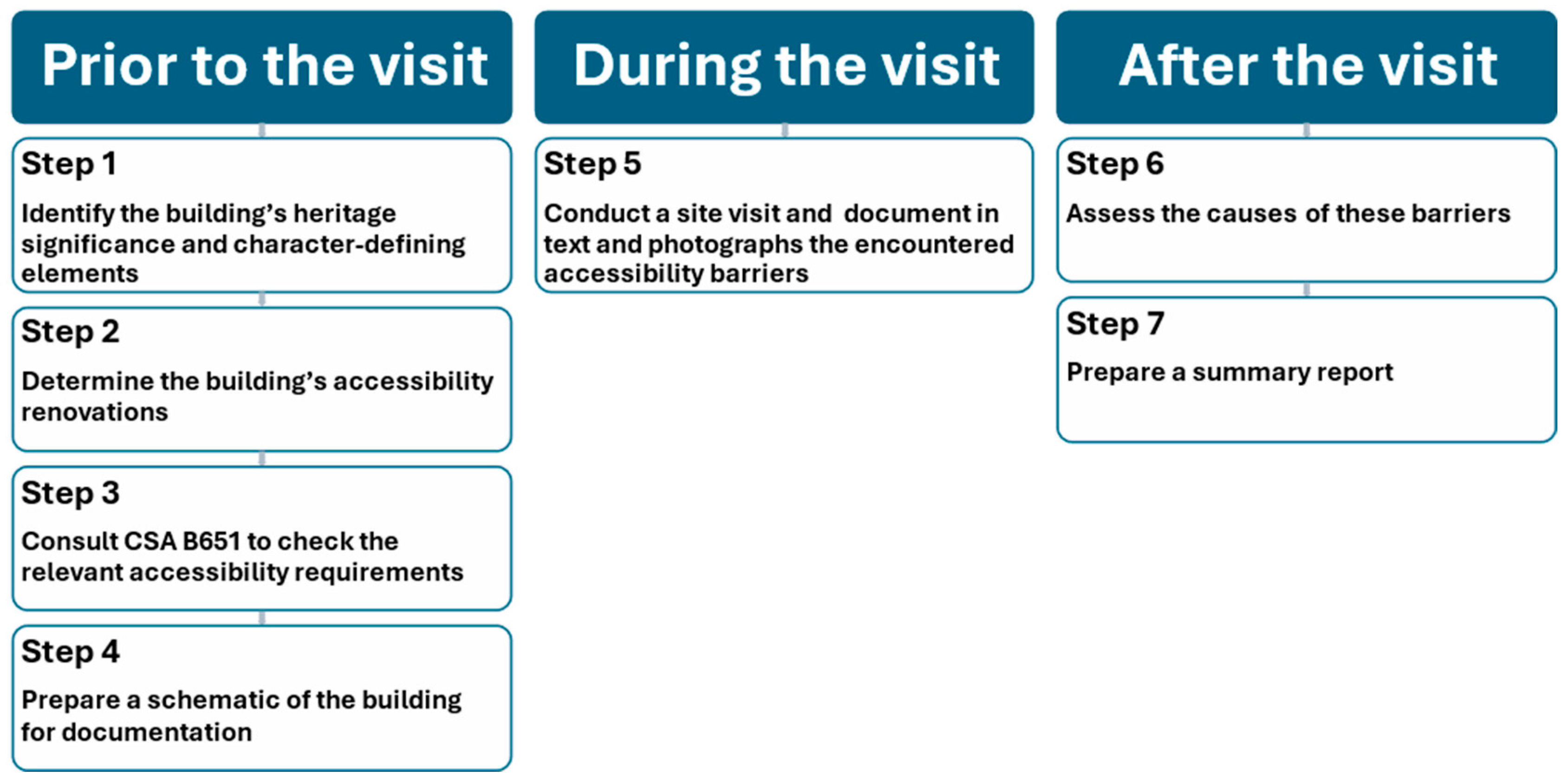
Part 2—Five participants with lived experiences as individuals with intellectual/developmental disabilities were recruited to share their experiences as they traversed ten public buildings that had undergone accessibility enhancements in compliance with current standards. The participants consist of two engineering students from McMaster University and three individuals who were accompanied by guides from People First of Canada. None of the participants experienced a co-occurring disability that required the use of assistive aids/devices. To ensure consistency in their documented experiences, the participants were provided with a site visit procedure and a copy of “Accessible design for the built environment”, CSA/ASC B651:23 standard [16], for reference. The site visit procedure encourages participants to familiarize themselves with the building prior to the visit, which can help alleviate their anxiety. During their visits, participants were instructed to document any accessibility barriers they encountered, using text and photographs. The site visit protocol, documented in [17], was reproduced for reference in Figure 1.
Figure 1.
Site Visit Protocol.
Part 3—Subsequently, the accessibility barriers were reviewed and categorized according to the structure of CSA/ASC B651:23 sections and subsections.
Part 4—A review of the gathered information was carried out to evaluate the completeness/adequacy of the current accessibility standard in addressing the needs of people with developmental disabilities. The architectural and other design requirements proposed in the literature, specifically for individuals with autism, were examined to determine their universality in offering solutions to the barriers identified by the participants. The aim is to complement and bridge existing design specifications to accommodate the unique needs of people with developmental disabilities.
3. Literature Review
The literature review reveals that the studies can be divided into three subject areas: (1) studies addressing “social factors” that impact accessibility of people with intellectual, developmental, or cognitive disabilities from a social perspective [18,19,20,21,22,23,24,25]; (2) studies proposing architectural and other design solutions, particularly for autism-friendly environments [8,26,27,28,29,30,31,32,33,34,35,36,37,38]; and (3) studies auditing/evaluating accessibility in built environments for people with intellectual/developmental disabilities, from the perspectives of professionals or people with lived experiences [5,6,39,40,41,42,43,44].
3.1. Social-Related Studies
Social-related studies examine the social factors that influence the inclusion and quality of life for individuals with developmental disabilities. This review investigated the social factors that influence participation, walkability, concentration abilities, and mobility in the built environment. The findings from these studies can shed light on latent factors that are often overlooked in engineering research and have “indirect” effects on accessibility of the built environment.
A study in Toronto, Canada, utilized mobile interviews to explore how 12 individuals with intellectual disabilities experience urban public spaces and discuss their daily routines [20]. The findings suggest that people with intellectual disabilities encounter various social, emotional, and relational barriers, beyond physical ones, that negatively impact their acceptance and mobility in public spaces. Feelings such as fear, belonging, shame, discomfort, self-regulation, resulting from financial insecurity, familial ties, encounters, institutional support, or staring, can restrict their mobility experiences. For people with intellectual disabilities, it is more than removing physical barriers from their built environments for better mobility. The study highlighted that, despite the importance of research relevant to accessibility of the built environment, accessibility should be conceived in the broadest sense possible, as results are often influenced by unique circumstances, interests, and goals of the individuals who participated in the study.
3.2. Architectural Design-Related Studies
Research studies, which offered architectural and other design requirements and guidelines, particularly for people with autism, were reviewed to investigate their potential for universal application to meet the needs of people with developmental disabilities. Autism Spectrum Disorder (ASD) represents a notable segment of developmental disabilities. In Canada, 1 in 50 (or 2%) children and youth aged 1 to 17 were diagnosed with ASD, as per highlights from the 2019 Canadian Health Survey on Children and Youth (CHSCY) [45]. The prevalence of ASD across 16 sites in the US is also approximately 1 in 31 (or 3%) among children aged 8 years, as per the Centers for Disease Control and Prevention data in 2022 [46]. For many individuals with ASD, navigating built environments can often be stressful and unsafe, given that environments are typically designed by and for the neurotypical population [26,43]. Consequently, a growing body of research focuses on reshaping this perspective and exploring the development of autism-friendly built environments. While some studies involved social aspects, they are still categorized in this section, as their focus is on designing autism-friendly spaces.
Black et al. conducted a scoping review to explore design recommendations for autism-friendly built environments [26]. The study outlined a set of recommendations for several aspects, including design and construction (layout, walls, building material, ceiling, entrances, orientation), illumination (lighting intensity, quality, and fixtures), acoustics (sound intensity and quality), aesthetics (patterns, windows, clutter, colour, texture), indoor air quality, and temperature. The findings were validated through consulting two adults with autism, two caregivers, and two professionals with a background in built environments. Another scoping review was carried out to investigate the relationship between people with ASD and autism-friendly spaces in urban environments [27]. The study offered spatial requirements for autism-friendly spaces, considering three factors: sensory quality (low-arousal environments, transition spaces, and quiet spaces), intelligibility (clear and simple spatial layout, visual relation, predictability and routine, circulation and possibility of choosing, and proportion and proxemics), and orientation (visual support and wayfinding).
Several studies focused on design requirements for educational environments. A study demonstrated the effect of architectural design solutions on the vocational and life skills of people with ASD by comparing two architectural plans for a vocational center [8]. The first plan complied with the Americans with Disabilities Act (ADA) standard, while the other one featured more elements derived from the Autism ASPECTSS Design Index [28,29]. The ASPECTSS criteria include Acoustics, Spatial sequencing, Escape spaces, Compartmentalization, Transition spaces, Sensory zoning, and Safety. The study highlighted how the varying sensitivities of people with autism, i.e., hyposensitive and hypersensitive sensory and cognitive needs, could lead to a universal and inclusive design for all individuals. Another study reviewed the literature related to the design of educational environments for children with autism within the Malaysian context [30]. The data was collected through design criteria checklists and photographic documentation during a site visit to the Autism Center for Students with Severe Communication Disorders. The study discussed several design elements, including physical learning environments (building entrance, building scale), internal environments (personal space and movement, wayfinding, legibility, threshold, classrooms), sensory issues (visual distraction, colours, sun and glare, lighting, acoustics, smells), and sensory spaces (calm and low stimulus space, safety and security). McAllister and Maguire explored design considerations for ASD-friendly Key Stage 1 (Ages 5–8) classrooms [31]. The two-year study was conducted in three phases. ASD-friendly learning environments available in the literature were reviewed, nine classrooms were surveyed, and then a classroom design kit comprising several classroom furniture elements was developed. Afterwards, teachers of children with ASD shared their perspectives by designing classrooms using three-dimensional models made from clear Perspex. The models were then transferred to a Computer-Aided Design (CAD) program by architects/researchers. The study explored 16 design considerations, including entrances, visual signage, volumetric changes, and washroom provisions.
Another study examined the effect of noise on the behaviour of children with ASD [34]. Seventy-four teachers in three schools for children with ASD completed a survey that addressed several architectural elements that might impact the behaviour of children with ASD in Houston, Texas. The findings highlighted that various fear responses resulted from noise. For instance, 96% of the teachers reported children covering their ears. Seventy-nine percent of the teachers emphasized the need for noise control, suggesting carpets (20%), wood furniture (18%), transitional spaces (12%), and thick walls (4%).
Other studies explored how people with ASD perceived the built environment differently. A study investigated how autism-friendly architecture can be interpreted differently by analyzing autobiographies of six adults with autism [36]. The researchers studied autobiographies from two perspectives. Initially, excerpts from the autobiographies were compared to design guidelines for autism-friendly architecture. Subsequently, the focus shifted to a critical review of the autobiographies themselves. The findings revealed how interpretations can vary from one person to another. For instance, some people with autism prefer incorporating open spaces to increase predictability, while others favour compartmentalized settings to minimize sensory stimuli that might arise in a single space. In addition, reviewing the autobiographies emphasized the importance of material environments that extend beyond design guidelines. Everyday objects and spaces offer security, comfort, and familiarity in unpredictable environments, yet their meaning might change depending on the individual’s state of mind. Another study discussed the complexities associated with personal interpretation of the built environment and design guidelines for people with autism [37]. Three autobiographies written by people with autism were reviewed to explore their experiences of spaces and physical environments. Observations were made based on how participants experienced features/elements in the physical spaces, understood the hidden logic of spaces, and perceived their built environments. Although the study was not intended to evaluate accessibility specifically, the individuals highlighted challenges relevant to inadequate signage at door or washroom facilities, leading to “maladjusted” behaviour.
3.3. Barriers to Accessibility-Related Studies
Recently, there has been growing recognition and awareness of the need for research tailored to improve accessibility in the built environment for people with developmental disabilities. Despite these notable initiatives, research in this field remains limited.
A study aimed to evaluate accessibility in museums for people with intellectual disabilities involved the insights of 35 professionals working with individuals with intellectual disabilities [39]. The participants completed an online questionnaire to identify accessibility barriers that hindered their cultural experiences during visiting museums in Greece. The questionnaire investigated several issues relevant to physical, multisensory, and digital accessibility. In terms of physical accessibility (wheelchair access, washroom facilities, etc.), 11% reported that museums were physically inaccessible. Concerning sensory accessibility (illumination, acoustics, overcrowded spaces, signage, etc.), 26% found the museums to be sensory inaccessible. Thirty-one percent reported that museums were completely inaccessible in terms of navigation and language accessibility, with 46% answering “No” when asked if the information was provided in an accessible and easy-to-read language. The study highlighted that museum exhibits that incorporate all five senses are beneficial for all visitors, particularly those with intellectual disabilities. For instance, using multisensory displays that feature sounds of music or nature, and touches of ceramics and textiles, engages all visitors and facilitates their cultural experiences. Additionally, the findings emphasized the importance of incorporating easy-to-read and easy-to-understand language, along with more user-friendly and inclusive alternative formats/options for the information provided, whether in documents, leaflets, or digital platforms like websites. Moreover, having trained staff ready to converse and guide those in need of assistance is essential. The participants rated museums in terms of content accessibility as low, since they lacked multimodal and multisensory guided museum tours. Another study evaluated the spatial and information accessibility in 15 museums in Greece, compared to another 15 in Great Britain [40]. The study involved site visits conducted independently by two researchers who utilized an extended accessibility checklist developed based on available research and standards, followed by semi-structured interviews with 30 museum accessibility representatives. The findings revealed the need to extend the focus on accessibility for diverse disabilities beyond physical/mobility. People with intellectual disabilities were found to face challenges due to the lack of information accessibility, including the use of plain language in information on exhibits and graphics for guidance. The researchers provided criteria to assess information accessibility. Exhibits should feature clear descriptive text, emphasizing titles, audio description, Braille language, enlarged print, and larger font in dimly lit conditions. The language on signage should be simple and concise. Recognizable and appropriate signs should be used, incorporating audible and tactile warnings for important features such as ramps, stairs, handrails, and doors. An exemplary initiative is found at the National Army Museum in Thessaloniki, Greece, where an accessible path for individuals with intellectual disabilities incorporates colourful large arrows on the pavement to facilitate independent navigation [41].
In another study, focusing on tourism challenges for people with cognitive functional diversity (CFD), the participants shared their personal experiences, including accessibility concerns [42]. The study was conducted through nine focus group interviews (3 groups, 3 sessions per group). The researchers discussed structural, interpersonal, and intrapersonal aspects during these interviews. The participants highlighted challenges such as the lack of accessible information formats or knowledgeable/trained staff who are ready to help. One participant stated, “It is difficult to understand the maps they offer you; it is not easy to understand clearly. At the tourist office, information should be easy to read”. Another participant mentioned, “At travel agents, I understand what the information leaflets are saying, but the writing is too small, and I find it hard to read them”. People with CFD were found to prefer human interaction over information boards to avoid any confusion. A participant stated, “You can feel confused and a little lost. However, people can help and guide you”. Another participant mentioned, “When I don’t know something, I just ask”. Financial accessibility was another concern, as price uncertainties, if not evident/visible, can lead to feelings of being ‘conned’. The study offers several recommendations to adapt easy-to-read text, Augmentative and Alternative Communication systems (AAC), and maps, along with providing trained staff and guides. It is worth mentioning that participants highlighted several physical accessibility concerns, such as the lack of ramps or narrow doors, despite their irrelevance to CFD. The researchers attributed that to empathy for people with disabilities with each other.
Castell reviewed the literature on wayfinding strategies to assist the Australian Building Code [5]. The study highlighted the impact of limited research on the advancement of building codes, particularly relevant to wayfinding for individuals with intellectual disabilities. Since cognitive capacity to process information is affected, these individuals encounter difficulties when obtaining and processing wayfinding information. The study offered recommendations based on literature and personal observations of individuals with intellectual disabilities to assist in obtaining and processing wayfinding information. These recommendations cover aspects related to information acquisition, such as signs, maps, directories, lighting, colours, reception facilities and human interface, as well as information processing, which includes building layouts, wayfinding cues, and minimizing distractions.
4. Experiences of People with Developmental Disabilities—An Experimental Study
An experimental program was carried out to document the experiences of five individuals with intellectual/developmental disabilities as they traverse public buildings. For an unknown population size, the sample size, n, can be evaluated statistically using the following relationship,
where is the Z-score, is the margin of error, and is the standard deviation. A sample size of 5 corresponds to a Z-score = 1.15, corresponding to a 75% degree of confidence, = 25%, and = 0.5. A sample size of 5 participants and a 75% confidence level is statistically considered a poor representation of the population. However, when accounting for the challenges associated with recruiting participants with developmental disabilities, the significance of documenting the experiences of a few participants as they traverse the built environment becomes more important than statistics.
The participants identified the accessibility barriers during their walkthroughs. These barriers are categorized into physical, sensory, and cognitive, based on how they affected the participants’ experiences and abilities to access the buildings.
4.1. Physical Barriers
People with developmental disabilities may encounter physical barriers that limit their mobility and physical access to the built environment, particularly for those with limited motor or mobility. Physical barriers often relate to the physical layout and infrastructure of the built environment [23,39,40,42]. Individuals with developmental disabilities tend to recognize physical barriers even if their abilities are not directly related, attributed to their understanding and empathy with individuals with other disabilities [42]. The physical barriers experienced by the participants are categorized according to CSA/ASC B651:23 [16] and reproduced in Table 1. The corresponding CSA/ASC B651:23 clause(s) are also included in the table for reference.
Table 1.
Physical barriers experienced by the participants.
4.2. Sensory Barriers
Sensory barriers involve sensory inputs that impact the perception and processing of sensory information. These barriers may trigger individuals who are hypersensitive or hyposensitive to sound, light, smell, touch, or other sensory input [39]. Buildups of sensory barriers often create stimulus overloads for those with developmental disabilities [43]. The sensory barriers experienced by the participants are itemized following CSA/ASC B651:23 and reproduced in Table 2.
Table 2.
Sensory barriers experienced by the participants.
4.3. Cognitive Barriers
Cognitive barriers relate to challenges with information processing, communication, attention, memory, or decision-making. These barriers may impact understanding and wayfinding [23,39,42]. Since people with developmental disabilities may face unique problems with perception and information processing, memory, focus, reading, writing, and communication, cognitive barriers present major concerns that impede their accessibility [4,47]. The cognitive barriers experienced by the participants are reproduced in Table 3.
Table 3.
Cognitive barriers experienced by the participants.
5. Information Review and Discussions
Review of CSA/ASC B651:23 reveals one clause, Clause 4.7 entitled “Additional considerations”, that directly addresses mitigating the functional or cognitive barriers for people with intellectual/developmental disabilities within a sub-clause, Clause 4.7.1 entitled “Functional and cognitive barriers”. Sub-clause 4.7.1 includes 6 items that provide descriptive requirements to reduce the barriers without providing any specifics. For example, Clause 4.7.1 (a) designing spaces with simple and logical layouts; and 4.7.1 (f) ensuring information is accessible to everyone in various formats [16]. This is evidence that the accessibility standard, which is a work in progress, needs to include detailed and specific requirements to ensure compliance and consistency and to accommodate the accessibility needs of people with intellectual/developmental disabilities.
The review of the existing literature pertinent to people with developmental disabilities demonstrates that their experiences are shaped by various factors, including their surroundings, perceptions, goals, emotions, feelings, and available social support, and the challenge of translating these subjective attitudinal, social, and psychological needs into standardized measures and parameters. For instance, several studies highlighted the need for social support, training, and routine as essential pillars to enhance accessibility [18,19,20,21,22]. These needs are difficult to prescribe in accessibility standards for new and existing buildings. Prescribing wayfinding cues/artifacts such as maps, schedules, landmarks, labels, and signs, which are essential to enhance navigational experiences, remains a challenge for accessibility standards [18,21]. In brief, social-related studies expose genuine challenges and barriers faced by individuals with developmental disabilities that remain unaddressed by accessibility standards.
Architectural-related studies, particularly for autism-friendly environments, emphasized how diverse needs and sensitivities influence the perceived accessibility [32,34,35,36,37]. For instance, Kinnaer et al. observed how some individuals prefer open spaces to increase predictability, while others prefer compartmentalized areas to reduce sensory stimuli [36]. Therefore, the realism of meeting all accessibility needs of all individuals, which is the objective of accessibility standards, is not viable. Nonetheless, reviews of architectural-related studies have led to architectural designs and building design specifications that could be explored for their universality and adaptability to alleviate accessibility barriers for people with developmental disabilities.
Accessibility-related studies have revealed significant research gaps concerning accommodating the needs of people with developmental disabilities. Most of the research draws on insights from professionals who articulate perspectives on behalf of those with lived experiences, which in some, if not most cases, do not necessarily represent their needs [14]. Additionally, a considerable portion of these studies focuses specifically on people with autism. Although this population constitutes a substantial segment, the needs of other types of developmental disabilities have yet to be studied.
From the experimental program, the participants’ experiences highlight the challenges people with developmental disabilities experience as they traverse public buildings. A parallel study, conducted by the authors, has revealed that 43% of the barriers identified by people with cognitive/intellectual disabilities were attributed to the lack of clarity/specificity in the accessibility standard and 48% to compliance with current standard requirements [14]. From this perspective, this study focuses on ameliorating the standard’s lack of clarity/specificity to accommodate the accessibility needs of people with developmental disabilities.
The knowledge acquired from the literature review is investigated to determine its merits in enhancing the clarity/specificity of CSA/ASC B651:23. As a first remedial attempt in this regard, the proposed autism-friendly architectural and other design guidelines discovered through this review, which entail various aspects relevant to design and construction elements, including layouts, walls, building materials, ceilings, orientation, aesthetics (patterns, texture, colours, windows and doors placement), as well as indoor air quality, ventilation, and temperature, are explored. Accordingly, the itemized lists of physical, sensory, and cognitive barriers reproduced in Table 1, Table 2 and Table 3 are re-examined to determine their cause(s), including clarity, specificity, inclusion, or lack of compliance, and to seek potential remedies.
5.1. Physical Barriers
The accessibility standard prescribes numerous requirements to ensure that the built environments are accessible. This includes requirements related to accessible routes, doors and doorways, handrails, stairs, ramps, elevating devices and lifting platforms, washroom facilities, as well as road quality and vehicular access requirements, including parking spaces and transit stops [13,17]. The data from the experimental program revealed that the participants documented the following accessibility barriers: designated accessible parking, accessible pathways, accessible entrances and doors, accessible seating and rest areas, and accessible washroom facilities. A closer examination of the barriers and the corresponding prescribed accessibility standard clause(s) revealed that these barriers are mostly due to the buildings’ lack of compliance with the accessibility standard and/or the National Building Code of Canada [16,48]. Canada’s national and provincial building codes prescribe mandatory requirements for the design and construction of new buildings. For existing buildings, these requirements apply only when the building is undergoing major renovation and/or change of use to ensure public safety, health, accessibility, fire protection, and environmental standards are met.
5.2. Sensory Barriers
Visual clutter or stimuli: The existing standard lacks specific prescriptions or design recommendations to mitigate accessibility barriers related to visual clutter, like visually unappealing colour/colour contrast or rapid illumination changes. However, solutions have been proposed to reduce visual stimuli and regulate the sensory input of people with autism [5,8,26,27,29,30,31,38,49]. The recommendations are to incorporate colour palette guidelines in the standard to accommodate the needs of people with developmental disabilities, as they do not adversely affect the needs of all other people. Drawing from autism-friendly environment guidelines, it is recommended to use soft, calming, and neutral colours, such as pastel cool shades for ceilings, walls, and floors. Shiny, bright, or reflective colours should be avoided. Colours like reds or oranges can be used to raise awareness in emergency fire exits, while yellow lines were found to be popular as directional signage. Complex colour palettes should be avoided. In terms of rapid light changes, it would be beneficial to mandate the provision of adjustable lighting or dimmer switches to allow for preferred light levels and less visual stimulation.
Signage: Despite signage requirements outlined in Clause 4.6 “Signage” and Clause 9.4.4 “Signage for designated accessible parking” of CSA/ASC B651:23, many barriers were identified by participants stemming from the lack of compliance/application of the standard, particularly concerning size, location, placement, and tactile features. Nevertheless, the standard was found to be lacking in defining some key signage terms, such as “consistent”, “easy-to-read” or “plain language”. In this regard, Castell discussed the three Cs for enhanced communication, being “clear”, “concise”, and “consistent” signs, for those with intellectual disabilities [5]. “Clear” signage involves using readable typefaces, appropriate fonts and sizes, and high colour contrasts. Colour combinations like grey on silver or red on pink should be avoided. Moreover, incorporating visual support such as pictures, symbols, and images on signs can assist people with intellectual/developmental disabilities, especially those who have difficulty relating words to mental images or at potentially critical points, e.g., stairs, power outlets, windows, doors [5,27]. “Concise” signage entails conveying essential information with minimal text and visuals. The use of lengthy words or a combination of photos can lead to confusion. The use of a familiar photograph can enhance understanding if linked to the sign’s purpose. Lastly, “consistent” signage refers to maintaining consistent colour schemes and predictable standard locations, particularly for directional signage. The standard will further benefit from mandating the use of “plain language” and adopting a clear definition from the “International Plain Language Federation” or “ISO 24495-1:2023 Plain language—Part 1: Governing principles and guidelines” [50,51]. It is worth mentioning that a current standard is being drafted titled “Plain Language” to foster accessible communication [52]. It would be greatly beneficial to explore the universality of its relevant guidelines in the built environment as well. In summary, referencing or adhering to established design guides and reports, such as “Am I Making Myself Clear”, “Guidance on the Accessible Canada Regulations”, or “Plain Language” would be highly advantageous for implementing best practices and enhancing the standard [53,54,55].
Illumination: CSA/ASC B651:23 standard specifies the luminance for different features, including operating controls (Clause 4.3.7), signage (Clause 4.6.5), ramps (Clause 5.5.6), escalators (Clause 5.6.3.3), moving walkways (Clause 5.6.4.6), operating devices (Clause 6.6.2.3) and pedestrian routes (Clause 8.2.9). However, specifying the light intensity alone was found to be insufficient. The experience of autism-related guidelines would significantly benefit the advancement of the standard. People with autism are sensitive to brightness and light intensity, which affects their mood and stimulation [26,30,35]. As people with autism vary in their sensory needs, high-intensity lighting may lead to anxiety and discomfort for those with hypersensitivity to light, while low-intensity lighting may disrupt those with hyposensitivity to light. This would lead to the need for more universal solutions. Among several recommendations, the standard would benefit from mandating dimmable/adjustable intensity lighting to meet various sensory needs [5,8,26,27,30,38]. Additionally, indirect sunlight and LED lights are favoured over fluorescent artificial lights, and pelmet lighting over traditional overhead lighting. The flickering and buzzing in fluorescent lights may lead to visual and auditory disturbance, adversely affecting users’ behaviours. LED lights enhance users’ behaviours, boost concentration, and foster a more engaging and inclusive environment. Pelmet lighting, as a hidden light source, minimizes visual distraction and reduces shadows.
Air circulation or ventilation: Environmental sensitivities to smells are not adequately addressed in CSA/ASC B651:23 standard, except for limited recommendations outlined in Clause 4.7.1 “Functional and cognitive barriers” and Clause 4.7.2 “Environmental intolerances” to provide adequate air circulation and ventilation. As a start, the standard should examine the recommendations offered by autism-friendly guidelines to ensure sufficient ventilation, such as 40 cubic feet per minute of ventilation air to each occupant (CFM/occupant) or MERV 13 and activated carbon filters to eliminate particulate matter [8,26,30].
Acoustics and sounds: CSA/ASC B651:23 recommends providing adequate acoustics in Clause 4.7.1 “Functional and cognitive barriers” and Clause 4.7.3 “Acoustics” without further details. According to the WHO “Guidelines for community noise” in 1999, noise has a significant impact on speech interference, information processing, message communication, and comfort level. Therefore, in educational settings, it is suggested to maintain background noise below 35 dB LAeq to comprehend spoken messages during classroom lessons, and 55 dB LAeq in outdoor playgrounds [56]. A study investigated the effect of noise on children with autism has suggested maintaining the sound level below 50 dB in schools, with levels above 69 dB found to be correlated with aggressive behaviour [26,33,34]. The standard could benefit from the WHO guidelines for sound levels. Additionally, installing double-paned or triple-glazed windows along with window coverings, like curtains and draperies, helps minimize noise from external sources [8,26,27]. Providing multiple entrances and exits assists in mitigating noise levels and socio-sensory barriers [26].
5.3. Cognitive Barriers
Information kiosks or payment machines (Communication aspect): CSA/ASC B651:23—Clause 9.6 “Ticketing dispensers or payment machines” references CSA/ASC B651.2:22 [57]. The barriers identified by participants, particularly relevant to instructions and communication input (plain language, voice or audio description), were due to noncompliance or the lack of application of the standard.
Wayfinding: It is highly recommended to allocate a specific section within CSA/ASC B651 that addresses wayfinding strategies and alternative communication systems. To further contribute to the standard, it would be beneficial to incorporate guidelines related to colour palettes/schemes for structural and architectural elements, specifications for colour-coded maps and directories, and characteristics of visual landmarks and cues. As mentioned earlier, neutral pastel colour schemes are recommended for ceilings, walls, and floors [8,26,27,30,38]. Implementing colour-coding techniques and utilizing distinct neutral colours and colour contrasts helps distinguish spaces and aid navigation. Moreover, maps and directories play a crucial role in aiding wayfinding and navigation, particularly when designed with minimal clutter and effective colour-coding [26,27]. It is recommended to avoid presenting excessive information in the maps and directories. Instead, they should be used to indicate the current location with a “you are here!” marker, highlight a specific location on the same floor, or point out major facilities like washrooms, stairs, and elevators. Incorporating speech technology and lighting to access the required locations would be highly beneficial [5,49].
Building layout: CSA/ASC B651:23 emphasizes the need for a clear and simple building layout as a recommendation outlined in Clause 4.7.1 “Functional and cognitive barriers”. Research focused on autism-friendly design has illuminated key concepts such as “simple” and “logical” [8,26,27,28,29,30,31,32,38]. However, translating these qualitative guidelines into quantifiable measures and parameters to be integrated into the standard remains challenging and warrants further investigation. To mention some of these guidelines, spaces should be designed in logical, safe, simple, and predictable order, with the user’s routine taken into consideration (spatial sequencing). There should be a seamless flow through one-way and easily legible circulation routes in a sequential style that reflects the user’s routine, utilizing transition zones, to enhance predictability and wayfinding. Radial layouts are recommended for this purpose. Blind corners, sudden corners, and rapid transitions should be avoided in circulation spaces. Also, curved, curvilinear, and bevelled wall corners should be considered, as sharp corners can conceal unexpected situations and dangers, leading to a sense of anxiety. Furthermore, high ceilings should be avoided, except for high-energy areas. Different ceiling heights can be adopted to separate spaces and increase the sense of safety.
Assistance: CSA.ASC B651:23 does not provide any specifications relevant to assistance or reception facilities. People with intellectual/developmental disabilities view the availability of reception facilities in public buildings as an essential component of an effective wayfinding system [5]. A reception counter with trained staff serves as a valuable resource to seek and obtain assistance as needed. Castell offered some recommendations to assist in this matter. It is recommended, where a reception area is not available, to place a reception desk in an obvious and expected area, such as the building entrance, but not in the middle of open space, which could be discouraging, noisy, and brightly lit. Additionally, human assistive staff should be trained to understand how to help people with different types of disabilities who might seek help. Similar to building layout, these recommendations are hard to incorporate into the standard, yet it would be useful to make these recommendations to aid people who need assistance, particularly those with intellectual/developmental disabilities.
Prices: This barrier is not addressed in CSA/ASC B651:23 standard and is outside the scope of the standard. Nonetheless, the standard can be informative by making recommendations to avoid hidden prices/costs to alleviate undue stress on some people.
6. Conclusions and Recommendations
The synthesis and analysis of existing guidelines and information have revealed the complexity of the problem and challenges facing the accessibility standard in accommodating the needs of people with developmental disabilities. Nonetheless, designs and recommendations put forward in literature can be adapted and included in the standard, particularly those related to acoustics/sounds, lighting, and building indoor circulation. Additionally, the review of existing literature and the documented experiences of people with developmental disabilities accessing the built environment revealed the following specific conclusions pertaining to the completion status of the accessibility standard for the built environment:
- People with developmental disabilities are influenced by social, attitudinal, and psychological barriers, beyond the physical, that are hard to translate into standardized accessibility measures and requirements for the built environment.
- Built environment accessibility-related research on people with developmental disabilities is limited and insufficient. Published studies involved professionals without lived experience, employed limited approaches like checklists and questionnaires, and focused on a specific group of disabilities.
- CSA/ASC B651:23 standard, which prescribes mandatory requirements and recommendations for the design and construction of new buildings and for existing buildings undergoing major renovation and/or change of use, is found to be adequate in only addressing the physical barriers from the perspective of the participants. For the other existing buildings, the documented non-compliances arise from the lack of mandatory enforcement to comply with accessibility standards requirements.
- Concerning the sensory barriers, CSA/ASC B651:23 standard lacks specificity and direction in the design and construction requirements pertaining to the needs of people with developmental disabilities.
- Architectural design-related studies, although specific to people with autism, present valuable insights that can contribute to the advancement of accessibility standards in the built environment.
From the information synthesis on the “universality” of existing guidelines in accommodating the needs of people with developmental disabilities, the following recommendations are put forward to the CSA/ASC B651 standard technical committee for consideration and/or further investigations to mitigate some of the reported sensory and cognitive barriers:
- For visual stimuli, the recommendations are to use neutral and calming colour palettes for walls and floors, along with the provision of adjustable lighting systems and dimmer switches.
- For signage, the recommendations are to define terms like “clear”, “concise”, “consistent”, “easy-to-read” or “plain language”.
- For lighting, it is recommended to mandate dimmable/adjustable intensity lighting, indirect sunlight, LED lights, and pelmet lighting.
- For ventilation, the recommendation is to compare the guideline-prescribed 40 CFM/occupant with the current NBC ventilation rate.
- For acoustics, the recommendation is to adopt a limit of 50 dB for sound level and to study the impact of 50 dB on people with other disabilities.
- For wayfinding, the recommendation is to dedicate a separate, complete and comprehensive section in CSA/ASC B651 standard that addresses wayfinding strategies and alternative communication systems.
- For colour palettes of structural and architectural elements, specific requirements for colour-coded maps and directories, and characteristics of visual landmarks and cues are recommended.
- For the non-physical attributes, such as support services in public spaces, and prices, etc., it is recommended that the standard provide awareness and implementation guidance.
Author Contributions
Conceptualization, S.E.C. and M.A.R.; formal analysis, M.A.R.; funding acquisition, S.E.C.; investigation, S.E.C. and M.A.R.; methodology, S.E.C. and M.A.R.; supervision, S.E.C.; validation, M.A.R.; writing—original draft, M.A.R.; writing—review and editing, S.E.C. All authors have read and agreed to the published version of the manuscript.
Funding
This research was funded by Accessibility Standards Canada, Grants and Contributions, Project Number ASC-21/22-010-01-C.
Institutional Review Board Statement
The individuals from the associations representing people living with disability, who were providing feedback on the framework and on their experiences in the buildings, were doing so as paid consultants and not research participants. Under the TCPS2, this type of participation in the project, would fall under the exception discussed in the application section of Art. 2.1, where people are providing information researchers need for the study, but as part of their professional role, and where the focus of the research is not on those individuals.
Informed Consent Statement
Informed consent was obtained from all subjects involved in the study.
Data Availability Statement
The original contributions presented in this study are included in the article. Further inquiries can be directed to the corresponding author.
Acknowledgments
The authors acknowledge the contribution of McMaster engineering students, technical advisors, and partners with lived experiences representing people with cognitive/intellectual disabilities, particularly representatives of People First of Canada.
Conflicts of Interest
The authors declare no conflicts of interest.
References
- Nair, R.; Chen, M.; Dutt, A.S.; Hagopian, L.; Singh, A.; Du, M. Significant Regional Inequalities in the Prevalence of Intellectual Disability and Trends from 1990 to 2019: A Systematic Analysis of GBD 2019. Epidemiol. Psychiatr. Sci. 2022, 31, e91. [Google Scholar] [CrossRef] [Scilit] [PubMed]
- Statistics Canada. Canadians with Learning, Developmental and Memory Disabilities, 2022. 2024. Available online: https://www150.statcan.gc.ca/n1/daily-quotidien/241008/dq241008d-eng.htm (accessed on 6 August 2025).
- World Health Organization. United Nations Children’s Fund (UNICEF) Global Report on Children with Developmental Disabilities: From the Margins to the Mainstream; World Health Organization: Geneva, Switzerland, 2023. [Google Scholar]
- García-Catalá, M.T.; Rodríguez-Sánchez, M.C.; Martín-Barroso, E. Survey of Indoor Location Technologies and Wayfinding Systems for Users with Cognitive Disabilities in Emergencies. Behav. Inf. Technol. 2022, 41, 879–903. [Google Scholar] [CrossRef] [Scilit]
- Castell, L. Adapting Building Design to Access by Individuals with Intellectual Disability. Constr. Econ. Build. 2012, 8, 11–22. [Google Scholar] [CrossRef] [Scilit]
- Sherman, J.; Sherman, S. Preventing Mobility Barriers to Inclusion for People With Intellectual Disabilities. J. Policy Pract. Intellect. Disabil. 2013, 10, 271–276. [Google Scholar] [CrossRef] [Scilit]
- Heylighen, A.; Van der Linden, V.; Van Steenwinkel, I. Ten Questions Concerning Inclusive Design of the Built Environment. Build. Environ. 2017, 114, 507–517. [Google Scholar] [CrossRef] [Scilit]
- Clouse, J.R.; Wood-Nartker, J.; Rice, F.A. Designing Beyond the Americans With Disabilities Act (ADA): Creating an Autism-Friendly Vocational Center. HERD Health Environ. Res. Des. J. 2020, 13, 215–229. [Google Scholar] [CrossRef] [Scilit]
- Carlsson, G.; Slaug, B.; Schmidt, S.M.; Norin, L.; Ronchi, E.; Gefenaite, G. A Scoping Review of Public Building Accessibility. Disabil. Health J. 2022, 15, 101227. [Google Scholar] [CrossRef] [Scilit]
- Mack, K.; McDonnell, E.; Jain, D.; Lu Wang, L.; E. Froehlich, J.; Findlater, L. What Do We Mean by “Accessibility Research”? In Proceedings of the 2021 CHI Conference on Human Factors in Computing Systems, Yokohama, Japan, 8–13 May 2021; ACM: New York, NY, USA; pp. 1–18. [Google Scholar]
- Eisenberg, Y.; Vanderbom, K.A.; Vasudevan, V. Does the Built Environment Moderate the Relationship between Having a Disability and Lower Levels of Physical Activity? A Systematic Review. Prev. Med. 2017, 95, S75–S84. [Google Scholar] [CrossRef] [Scilit] [PubMed]
- Reda, M.A.; Chidiac, S.E. Impact of Research on the Evolution of Accessibility Standards. Sustainability 2025, 17, 8218. [Google Scholar] [CrossRef] [Scilit]
- Reda, M.A.; Chidiac, S.E. Level of Preparedness of Accessibility Standards in Canada to Address the Needs of People with Disabilities in Heritage Buildings—Reconnaissance Survey. Can. J. Civ. Eng. 2025, 52, 1645–1657. [Google Scholar] [CrossRef] [Scilit]
- Chidiac, S.E.; Reda, M.A. “True” Accessibility Barriers of Heritage Buildings. Buildings 2025, 15, 1528. [Google Scholar] [CrossRef] [Scilit]
- Chidiac, S.E.; Reda, M.A.; Marjaba, G.E. Accessibility of the Built Environment for People with Sensory Disabilities—Review Quality and Representation of Evidence. Buildings 2024, 14, 707. [Google Scholar] [CrossRef] [Scilit]
- CSA/ASC B651:23; Accessible Design for the Built Environment. Canadian Standards Association: Toronto, ON, Canada, 2023.
- Chidiac, S.E.; Reda, M.A.; Marjaba, G.E. A Framework for Accessible Heritage Buildings & Structures Retrofits; McMaster University: Hamilton, ON, Canada, 2024. [Google Scholar]
- Chen, M.; Li, Q.; Wang, L. Understanding Factors Influencing People with Disabilities’ Participation in Sports and Cultural Activities. BMC Public Health 2024, 24, 389. [Google Scholar] [CrossRef] [Scilit]
- Pellichero, A.; Nezan, M.; Lamontagne, M.-E.; Routhier, F.; Allègre, W.; Le Goff-Pronost, M. Social Participation and Perceived Quality of Environment of Adults with Disabilities. Disabilities 2023, 3, 680–692. [Google Scholar] [CrossRef] [Scilit]
- Feldman, B.; Wilton, R.; Fudge Schormans, A. Including People with Intellectual Disabilities in the Mobilities Turn: Mobile Interviews in Toronto, Canada. Mobilities 2020, 15, 362–379. [Google Scholar] [CrossRef] [Scilit]
- Carmien, S.; Dawe, M.; Fischer, G.; Gorman, A.; Kintsch, A.; Sullivan, J.F. Socio-Technical Environments Supporting People with Cognitive Disabilities Using Public Transportation. ACM Trans. Comput. -Hum. Interact. 2005, 12, 233–262. [Google Scholar] [CrossRef] [Scilit]
- Wen, Y.; Li, Y.; Yang, Y.; Wang, J. Towards an Evaluation System of Disabled Individuals’ Friendly Communities from the Perspective of Inclusive Development—A Case Study in Jinan. Buildings 2023, 13, 2715. [Google Scholar] [CrossRef] [Scilit]
- Mangili, S.; Trabucchi, M.; Brambilla, A.; Capolongo, S. Built Environment Impact on People with Dementia (PwD) Health and Well-Being Outcomes: A Systematic Review of the Literature. Acta Biomedica 2023, 94, e2023155. [Google Scholar] [CrossRef] [Scilit]
- Mathers, A.R. Participation of People with Learning Disabilities in the Landscape Design Process of Urban Green Space. In Proceedings of the OPENSpace: People Space Conference, Virtual, 20–22 May 2015. [Google Scholar]
- Innes, A.; Kelly, F.; Dincarslan, O. Care Home Design for People with Dementia: What Do People with Dementia and Their Family Carers Value? Aging Ment. Health 2011, 15, 548–556. [Google Scholar] [CrossRef] [Scilit]
- Black, M.H.; McGarry, S.; Churchill, L.; D’Arcy, E.; Dalgleish, J.; Nash, I.; Jones, A.; Tse, T.Y.; Gibson, J.; Bölte, S.; et al. Considerations of the Built Environment for Autistic Individuals: A Review of the Literature. Autism 2022, 26, 1904–1915. [Google Scholar] [CrossRef] [Scilit]
- Tola, G.; Talu, V.; Congiu, T.; Bain, P.; Lindert, J. Built Environment Design and People with Autism Spectrum Disorder (ASD): A Scoping Review. Int. J. Environ. Res. Public Health 2021, 18, 3203. [Google Scholar] [CrossRef] [Scilit] [PubMed]
- Mostafa, M. ARCHITECTURE FOR AUTISM: Autism ASPECTSSTM in School Design. Int. J. Archit. Res. ArchNet-IJAR 2014, 8, 143. [Google Scholar] [CrossRef] [Scilit]
- Mostafa, M. An Architecture for Autism: Concepts of Design Intervention for the Autistic User. Int. J. Archit. Res. 2008, 2, 189–211. [Google Scholar] [CrossRef]
- Ghazali, R.; Md Sakip, S.R.; Samsuddin, I. Creating Positive Environment for Autism Using Sensory Design. Environ.-Behav. Proc. J. 2019, 4, 19. [Google Scholar] [CrossRef] [Scilit]
- McAllister, K.; Maguire, B. Design Considerations for the Autism Spectrum Disorder-friendly Key Stage 1 Classroom. Support Learn. 2012, 27, 103–112. [Google Scholar] [CrossRef] [Scilit]
- Khare, R.; Mullick, A. Incorporating the behavioral dimension in designing inclusive learning environment for autism. Int. J. Archit. Res. Archnet-IJAR 2009, 3, 45–64. [Google Scholar] [CrossRef]
- Kanakri, S.M.F. The Impact of Acoustical Environmental Design on Children With Autism. Ph.D. Thesis, Texas A&M University, College Station, TX, USA, 2014. [Google Scholar]
- Kanakri, S.M.; Shepley, M.; Varni, J.W.; Tassinary, L.G. Noise and Autism Spectrum Disorder in Children: An Exploratory Survey. Res. Dev. Disabil. 2017, 63, 85–94. [Google Scholar] [CrossRef] [Scilit]
- Tufvesson, C.; Tufvesson, J. The Building Process as a Tool towards an All-Inclusive School. A Swedish Example Focusing on Children with Defined Concentration Difficulties Such as ADHD, Autism and Down’s Syndrome. J. Hous. Built Environ. 2009, 24, 47–66. [Google Scholar] [CrossRef] [Scilit]
- Kinnaer, M.; Baumers, S.; Heylighen, A. Autism-Friendly Architecture from the Outside in and the inside out: An Explorative Study Based on Autobiographies of Autistic People. J. Hous. Built Environ. 2016, 31, 179–195. [Google Scholar] [CrossRef] [Scilit]
- Baumers, S.; Heylighen, A. Beyond the Designers’ View: How People with Autism Experience Space. In Proceedings of the Design and Complexity—DRS International Conference, Montreal, QC, Canada, 7–9 July 2010; pp. 2–9. [Google Scholar]
- Gaines, K.; Bourne, A.; Pearson, M.; Kleibrink, M. Designing for Autism Spectrum Disorders, 1st ed.; Routledge Taylor & Francis Group: Oxfordshire, UK, 2016; ISBN 9781315856872. [Google Scholar]
- Chaidemenaki, L.; Kolokytha, O. Whose Culture Is It Anyway? Perceptions of Accessibility in Museums by Professionals Working with People with Intellectual Disabilities in Greece. Mus. Manag. Curatorship 2025, 40, 494–511. [Google Scholar] [CrossRef] [Scilit]
- Koustriava, E.; Koutsmani, M. Spatial and Information Accessibility of Museums and Places of Historical Interest: A Comparison between London and Thessaloniki. Sustainability 2023, 15, 16611. [Google Scholar] [CrossRef] [Scilit]
- Naniopoulos, A.; Tsalis, P. A Methodology for Facing the Accessibility of Monuments Developed and Realised in Thessaloniki, Greece. J. Tour. Futures 2015, 1, 240–253. [Google Scholar] [CrossRef] [Scilit]
- Sanchez-Padilla, R.; Valverde, Á.C.; Rabanaque, T.V.; Marsilla, J.I.E. Tourists With Intellectual Disabilities. Tourism 2024, 72, 173–188. [Google Scholar] [CrossRef] [Scilit]
- McAllister, K.; McBeth, A.; Galway, N. Autism Spectrum Condition and the Built Environment. Cities Health 2022, 6, 1164–1178. [Google Scholar] [CrossRef] [Scilit]
- Earl, R.; Morris, S.; Girdler, S.; Falkmer, T.; Cowan, G.; Falkmer, M. Visual Search Strategies in a Shared Zone in Pedestrians with and without Intellectual Disability. Res. Dev. Disabil. 2019, 94, 103493. [Google Scholar] [CrossRef] [Scilit] [PubMed]
- Public Health Agency of Canada. Autism Spectrum Disorder—Highlights from the 2019 Canadian Health Survey on Children and Youth. 2022. Available online: https://www.canada.ca/content/dam/phac-aspc/documents/services/publications/diseases-conditions/autism-spectrum-disorder-canadian-health-survey-children-youth-2019/autism-spectrum-disorder-canadian-health-survey-children-youth-2019.pdf (accessed on 28 May 2025).
- Centers for Disease Control and Prevention. Prevalence and Early Identification of Autism Spectrum Disorder Among Children Aged 4 and 8 Years—Autism and Developmental Disabilities Monitoring Network, 16 Sites, United States, 2022. MMWR 2025, 74, 1–22. [Google Scholar]
- Verma, A.K.; Miesenberger, K.; Dirks, S.; Bühler, C. Cognitive Disabilities and Accessibility: Introduction to the Special Thematic Session; Miesenberger, K., Peňáz, P., Kobayashi, M., Eds.; Lecture Notes in Computer Science; Springer Nature: Cham, Switzerland, 2024; Volume 14751, pp. 171–178. ISBN 978-3-031-62848-1. [Google Scholar]
- NBC2020; National Building Code of Canada. Canadian Commission on Building and Fire Codes, National Research Council of Canada: Ottawa, ON, Canada, 2020.
- Salmi, P. Wayfinding Design: Hidden Barriers to Universal Access. Implications—InformeDesign. Available online: https://citeseerx.ist.psu.edu/document?repid=rep1&type=pdf&doi=a57466283fb103b7a9050840812351e1b7a64fa8 (accessed on 5 May 2025).
- International Plain Language Federation What Is Plain Language? Available online: https://www.iplfederation.org/plain-language/ (accessed on 10 August 2025).
- ISO 24495-1; Plain Language Part 1: Governing Principles and Guidelines. International Organization for Standardization: Geneva, Switzerland, 2023. Available online: https://www.iso.org/standard/78907.html (accessed on 10 August 2025).
- CAN/ASC-3.1; Plain Language—Draft. Accessibility Standards Canada: Gatineau, QC, Canada, 2025.
- MENCAP. Mencap’s Guidelines for Accessible Writing. In Am I Making Myself Clear? MENCAP: London UK, 2000. [Google Scholar]
- Income Security and Social Development Branch. Guidance on the Accessible Canada Regulations: Consulting Persons with Disabilities; Employment and Social Development Canada: Gatineau, QC, Canada, 2022. [Google Scholar]
- Employment and Social Development Canada. Guidance on the Accessible Canada Regulations: Simple, Clear and Concise Language; Employment and Social Development Canada: Gatineau, QC, Canada, 2022. [Google Scholar]
- Berglund, B.; Lindvall, T.; Schwela, D.H.; World Health Organization. Occupational and Environmental Health Team. Guidelines for Community Noise; World Health Organization: Geneva, Switzerland, 1999. [Google Scholar]
- CSA/ASC B651.2:22; Accessible Design for Self-Service Interactive Devices Including Automated Banking Machines. Canadian Standards Association: Toronto, ON, Canada, 2022.

Disclaimer/Publisher’s Note: The statements, opinions and data contained in all publications are solely those of the individual author(s) and contributor(s) and not of MDPI and/or the editor(s). MDPI and/or the editor(s) disclaim responsibility for any injury to people or property resulting from any ideas, methods, instructions or products referred to in the content. |
© 2026 by the authors. Licensee MDPI, Basel, Switzerland. This article is an open access article distributed under the terms and conditions of the Creative Commons Attribution (CC BY) license.