Article

Linking Coopetition to Sustainable Delivery in International Engineering Projects: A Dynamic Capability Perspective


by
Qiuhao Xie
1,*,
Wenjing Li
2 and
Wendan Deng
1
1
Business School, Hohai University, No. 8 West Focheng Road, Jiangning District, Nanjing 211100, China
2
College of Management and Economics, Tianjin University, No. 92 Weijin Road, Nankai District, Tianjin 300072, China
*
Author to whom correspondence should be addressed.
Buildings 2026, 16(2), 407; https://doi.org/10.3390/buildings16020407
Submission received: 17 December 2025 / Revised: 15 January 2026 / Accepted: 16 January 2026 / Published: 19 January 2026
(This article belongs to the Section Construction Management, and Computers & Digitization)

Abstract

Achieving sustainable delivery is a critical goal in international engineering projects, which involve interdependent actors—such as contractors, suppliers, and designers—engaged in simultaneous cooperation and competition. This study investigates how coopetition, conceptualized as intensity and balance, affects sustainable delivery performance through dynamic capabilities. Specifically, we introduce exploitation and exploration as mediating capabilities and examine their effects under coopetition structures (horizontal vs. vertical). We use hierarchical regression analyses, relationship critical tests, and the fuzzy set qualitative comparative analysis (fsQCA) approach. Using survey data from 172 global projects, the results show that exploitation and exploration partially mediate the relationship between coopetition intensity and sustainable delivery performance, and fully mediate the effect of coopetition balance. The analysis uncovers a structural differentiation in capability efficacy, showing that exploitation yields stronger effects within horizontal structures, whereas exploration exerts greater influence under vertical structures. fsQCA reveals three complex configurational pathways to sustainable delivery performance, demonstrating the compensatory configurational pathways in which structural characteristics can, under certain conditions, substitute for dynamic capabilities. This study extends the application of coopetition and dynamic capability theories to the context of international engineering projects and underscores the crucial role of governance structures in shaping capability development and sustainable delivery outcomes.

1. Introduction

International engineering projects are temporary, multi-tiered, and geographically dispersed inter-organizational networks formed to facilitate the execution and sustainable delivery of large-scale cross-border projects [1,2]. These projects integrate diverse capabilities across organizations and regions to address project complexity, stakeholder diversity, and delivery challenges in dynamic global environments. While project partners must collaborate closely to share and utilize complementary resources and knowledge, they also tend to engage in competitive activities for their individual interests, potentially conflicting with common goals [3,4]. Coopetition, simultaneous cooperation and competition with value creation intent has become a daily routine in international engineering projects [5]. In recent years, the phenomenon of coopetition in international engineering industry has gradually attracted growing scholarly attention [6,7,8,9].
In rapidly changing environments with increasing technological complexities, coopetition among partners from diverse institutional, economic, and cultural backgrounds has become more pronounced [10,11]. The transnational nature of international engineering projects introduces cultural, institutional, and legal differences that hinder collaboration [10,12]. Additionally, high asset-specific investments foster opportunism and competitive tensions [13,14]. In this context, coopetition in international engineering projects should be understood as an institutionally embedded governance phenomenon, shaped by regulatory frameworks, organizational hierarchies, and project-based coordination mechanisms, rather than a purely discretionary managerial choice [7]. Existing research on coopetition in international engineering projects primarily focuses on the determinants of coopetition strategies [15,16], the conceptualization of coopetition strategies [8], and the relationship between coopetition configurations and performance [9]. This indicates that the conceptual boundaries of coopetition within the international engineering project context remain ambiguous, and the underlying mechanisms through which coopetition influences sustainable delivery performance have yet to be fully elucidated. To address this issue, we begin by conceptualizing coopetition through two key dimensions: coopetition intensity and coopetition balance. Building on this framework, we seek to examine how international engineering project coopetition influences sustainable delivery performance, drawing on the lens of dynamic capabilities to uncover its underlying mechanisms.
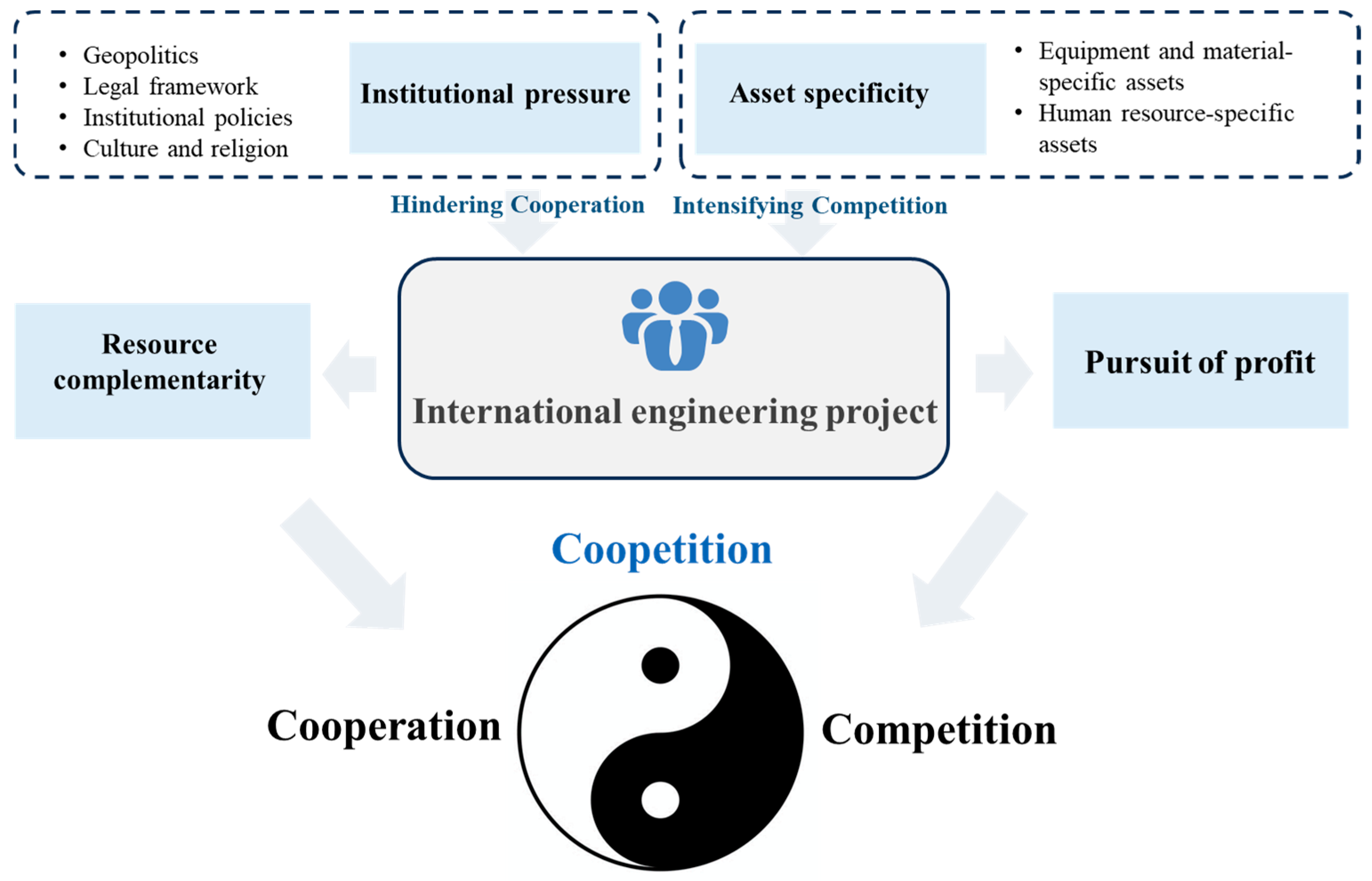
As shown in Figure 1, the coopetitive relationship embodies the Chinese philosophical concept of Taiji, which harmonizes two opposing yet interdependent forces—competition and cooperation—analogous to the yin (black) and yang (white) elements [17]. Their continual interaction signifies perpetual transformation, mirroring the dynamic nature of coopetition. The intensity of competitive and cooperative engagement fluctuates with market, technological, and policy changes, reflecting a dynamic capability—an alliance’s capacity to adapt and remain resilient in volatile environments [18]. Building on this view, Teece [19] conceptually links coopetition and dynamic capability theory, underscoring their convergence. Although the evolving nature of coopetition in international engineering projects has been recognized [20], empirical research examining its mechanisms through the dynamic capability lens remains limited [21]. To address this gap, this study applies dynamic capability theory [18] to connect coopetition with sustainable delivery, incorporating exploration and exploitation capabilities as mediating mechanisms through which coopetition enhances sustainability performance [22].
Coopetition can manifest in two structural forms: horizontal and vertical. Horizontal coopetition arises among actors operating at equivalent positions within an industry value chain, whereas vertical coopetition involves collaboration between partners across distinct stages, such as suppliers, producers, and distributors [23]. While prior research has examined competitive–cooperative dynamics in these structures [24,25,26], systematic differentiation remains limited [27,28]. Such ambiguity hampers both theoretical clarity and empirical rigor. Generally, horizontal relationships emphasize resource similarity, whereas vertical arrangements depend on resource complementarity [28]. By embedding these structural distinctions within a hierarchical theoretical framework—where coopetition constitutes the contextual and structural conditions, dynamic capabilities represent the operative mechanisms, and sustainable delivery performance reflects the outcomes—this study clarifies the conceptual ordering among key constructs. This integrated perspective not only enriches the theorization of coopetition within global engineering networks but also offers novel empirical evidence on how dynamic capabilities function across varying relational configurations.
This study adopts a dual-method approach that deliberately combines regression analysis and fuzzy set qualitative comparative analysis (fsQCA) to capture complementary aspects of the coopetition–performance relationship. Regression analysis examines net effects and mediation relationships under an additive and symmetric logic, allowing us to assess the average associations between coopetition intensity, coopetition balance, dynamic capabilities, and sustainable delivery performance. However, sustainable delivery in international engineering projects typically arises from complex combinations of interdependent conditions rather than from isolated factors [1]. To address this limitation, fsQCA is employed to uncover configurational causality and equifinality by identifying multiple, context-dependent pathways to high sustainable delivery performance [29], including potential substitution and compensatory effects. Together, these two methods are analytically complementary: regression establishes general patterns and mediation mechanisms, while fsQCA reveals how different structural and capability configurations jointly produce performance outcomes. This integrated design provides a more holistic and theoretically coherent understanding of coopetition dynamics in international engineering projects.

2. Theoretical Background

2.1. Sustainable Delivery Performance

Sustainable delivery performance has become an essential dimension of project success, extending beyond the traditional “iron triangle” of cost, time, and quality to incorporate environmental, social, and long-term economic considerations [30]. This shift reflects growing global concerns over climate change, resource depletion, and social responsibility, which have prompted both governments and stakeholders to demand the integration of sustainability into project management practices [31]. In the context of international engineering projects, sustainable delivery performance is understood as a multidimensional construct that combines delivery efficiency with social and environmental outcomes achieved in the host country. The concept encompasses both the sustainability of the project—focusing on sustainable delivery processes—and sustainability by the project—emphasizing the sustainability of project outcomes [32]. Numerous studies have demonstrated that sustainable project delivery can generate competitive advantages by lowering operational costs [33], mitigating risks [34], and enhancing stakeholder satisfaction [35], ultimately contributing to long-term financial performance. Importantly, these benefits are not limited to managerial efficiency but also stem from projects’ contributions to local employment, environmental impact mitigation, and long-term stakeholder value creation [29]. Therefore, in this study, sustainable delivery is conceptualized as a multidimensional construct encompassing not only traditional project efficiency outcomes (e.g., cost, schedule, and quality), but also social and environmental performance achieved in the host country, as well as relational sustainability reflected in long-term cooperative relationships among project partners. While past research has examined sustainable delivery through theoretical lenses such as innovation diffusion [36] and social exchange [29], there remains a need to explore this issue through the lens of coopetition, which offers a more nuanced understanding of how project partners can continuously adapt and sustain competitive advantage in a complex and evolving global environment.

2.2. Nature of Coopetition

Coopetition integrates two core elements of strategic management—competition and cooperation [37,38]. Traditional alliance literature viewed them as mutually exclusive, cautioning that competitive behavior among partners or cooperative engagement among rivals could produce adverse outcomes [39,40,41]. Recent perspectives, however, treat these forces as paradoxical yet complementary, emphasizing that cooperation enlarges the value creation space while competition determines its distribution [42,43,44,45]. From a syncretic rent-seeking perspective [37], coopetition challenges the notion of a single continuum and instead posits a dual continuum with varying levels of both elements [46,47]. It is thus defined as “a relationship that simultaneously encompasses elements of both cooperation and competition” [48]. Over the past two decades, scholarly attention to coopetition has grown rapidly [49,50,51]. Manifesting at multiple levels—individuals, projects, firms, and networks [21]—coopetition is particularly salient in international engineering projects, where interdependent actors pursue shared objectives and mutual gains [38,51].
Although consensus exists that organizations engage in cooperation and competition concurrently, ambiguity remains regarding whether coopetition entails proportional increases or a balance between them. The “intensity” perspective views it as the combined magnitude of both forces, while the “balance” perspective reflects their symmetry or disparity [52]. These approaches yield divergent results: Shu et al. [53] found no significant direct effect of coopetition intensity on performance, whereas Park et al. [54] showed that balanced coopetition enhances innovation. Bengtsson and Raza-Ullah [55] advocate integrating both dimensions, and recent studies highlight their joint importance [5,56]. Yet, empirical differentiation between intensity and balance—and their implications for sustainable delivery—remains limited. Accordingly, this study conceptualizes coopetition intensity as “the magnitude of competition and cooperation” and coopetition balance as “the evenness between competition and cooperation” [5].
Furthermore, these two dimensions may manifest across different structural configurations, notably horizontal and vertical arrangements. Horizontal coopetition occurs among firms positioned at the same stage in the value chain that simultaneously compete and collaborate within the same industry [24]. In contrast, vertical coopetition emerges among firms at different stages—such as suppliers, manufacturers, and distributors—that cooperate while pursuing individual interests [41]. Existing research acknowledges these structural distinctions, with some studies focusing exclusively on horizontal relationships [17,57,58] and others emphasizing vertical arrangements [24,52,59]. However, comparative analyses of coopetition across these two structural contexts remain scarce. Differentiating these configurations thus enables a more nuanced understanding of coopetition and its implications for organizational performance.

2.3. Exploitation and Exploration Capabilities

The resource-based view (RBV) provides a foundational lens in strategic management, emphasizing that organizational resources constitute the primary source of competitive advantage [60]. These resources include tangible assets, firm-specific capabilities, routines, and knowledge bases [60,61]. When such resources are valuable, rare, inimitable, and non-substitutable, they become strategic assets that sustain superior performance [18,62]. However, while resource possession is essential, the dynamic capabilities framework extends RBV by focusing on a firm’s ability to orchestrate, redeploy, and renew resources in response to environmental change [18]. Dynamic capabilities thus represent a firm’s capacity to continuously reconfigure its resource base to adapt to internal and external shifts [63,64].
Within this framework, exploitation and exploration are recognized as two critical dimensions of dynamic capability [22,65]. Exploitation focuses on leveraging existing competencies to improve efficiency and achieve incremental innovation [66,67], whereas exploration involves experimentation and the pursuit of breakthrough knowledge and innovation [66]. In international engineering projects, these capabilities are not merely routinized organizational processes but context-sensitive adaptive responses to institutional, regulatory, and technological discontinuities that characterize cross-border project environments. Specifically, exploitation capability in international engineering projects reflects a project organization’s ability to standardize, transfer, and locally adapt proven technical solutions, managerial routines, and contractual practices across heterogeneous institutional settings, whereas exploration capability denotes the capacity to develop novel solutions, experiment with new technologies, governance arrangements, or collaborative forms in response to regulatory uncertainty, institutional distance, and technological complexity [22]. Such capabilities are activated when project actors confront unfamiliar regulatory regimes, fragmented stakeholder environments, or rapidly evolving technical standards, which require both the disciplined reuse of existing knowledge and the flexible creation of new capabilities [68].
These capabilities jointly shape how project partners utilize and create resources across organizational boundaries. On one hand, partners must reconfigure and deploy parental resources effectively, as access to knowledge from parent firms does not automatically yield superior performance [22,69]. Institutional distance and regulatory uncertainty often constrain the direct transferability of parental routines, thereby increasing the importance of exploitation capabilities that enable selective adaptation rather than simple replication [70]. On the other hand, high levels of technological complexity and coordination interdependence across global project systems intensify the need for exploration capabilities, as partners must co-develop new technical interfaces, problem-solving routines, and collaborative mechanisms [71]. Prior studies on international alliances have identified distinct configurations of exploitation and exploration capabilities that drive sustainable delivery across economic, environmental, and social dimensions [10]. Extending this logic to international engineering projects, we argue that the effectiveness of exploitation and exploration is contingent on the structural and institutional conditions under which coopetition unfolds. Nevertheless, despite these advances, the link between coopetition and dynamic capabilities remains underexplored [51].

3. Hypotheses Development

3.1. Coopetition and Sustainable Delivery Performance

Coopetition, the practice of engaging in both cooperative and competitive interactions simultaneously, is a critical aspect in business relationships that forms a new kind of strategic interdependence among firms, giving rise to value creation intent [72]. Based on the RBV, Lado et al. [37] propose the syncretic rent-seeking perspective, i.e., coopetition generates a positive-sum game that enhances efficiency and contributes to knowledge creation, utilization, and strategic flexibility. In international engineering projects, such syncretic rent-seeking behavior is embedded within project-based governance arrangements characterized by high task interdependence, asset specificity, and formal coordination mechanisms—features that are widely observed across regions [20]. The basis for this syncretic rent-seeking is the existence of a mutual pursuit among project partners [55]. That is, when parties in international engineering projects possess a competitive mindset and a sense of mutual dependence, they are compelled to compete for individual interests while relying on each other due to their cooperative association [73]. Although institutional and cultural contexts may influence how competition and cooperation are enacted in practice, their simultaneous presence constitutes a common organizing logic in international engineering projects globally [8]. The implications of competition and cooperation may therefore be at once complementary and interactive, allowing international engineering projects to absorb the advantages of both competition and cooperation while eliminating the disadvantages thereof [74].
From a cooperative standpoint, partners pursuing common objectives under conditions that demand continuous innovation can achieve superior outcomes through resource complementarity and knowledge exchange [75]. From a competitive perspective, rivalry stimulates resource efficiency and motivates knowledge acquisition and capability enhancement [37]. Furthermore, the interplay of these two forces mitigates their respective drawbacks. Collaborative reciprocity and shared goals can alleviate opportunism and tension inherent in competitive interactions [5,47], while competitive pressures counterbalance the dependency risks associated with cooperation by fostering agility and efficiency [5,76]. Consequently, high coopetition intensity—characterized by strong cooperation and strong competition—can bolster sustainable delivery performance through improved knowledge sharing, operational efficiency, and commitment while curbing opportunism and excessive reliance. Numerous empirical studies support this positive linkage [77,78,79]. Based on these arguments, we hypothesize that coopetition intensity is positively related to sustainable delivery performance, and we propose the following hypothesis:
H1a: 
Coopetition intensity is positively related to sustainable delivery performance.
As mentioned above, competition and cooperation can offset each other’s negative effects, highlighting how the balance between cooperation and competition intensity is particularly crucial in international engineering project activities [5,54]. The balance of these contradictions, in which cooperation and competition are opposing forces that exert opposite influences on project parties, fosters international engineering project stability by keeping opposing forces in check and offsetting potential challenges [39]. Indeed, research suggests that balanced coopetition can foster positive organizational outcomes [54,55,56]. For example, Park et al. [54] empirically demonstrate that balanced coopetition has a positive effect on innovation performance, thereby confirming that international engineering projects can create and capture value in their relationships by maintaining a balance between cooperative and competitive forces. Moreover, the dark sides of coopetition (e.g., tension and opportunistic behavior) can be managed and dissolved through the effective balance of competition and collaboration [54]. Once this balance is disrupted, there is a high likelihood of negative consequences such as closed communication channels, reduced responsiveness, and increased distrust [56]. Adopting the conceptual logic outlined above, we therefore propose the following hypothesis:
H1b: 
Coopetition balance is positively related to sustainable delivery performance.

3.2. Exploitation and Exploration Capabilities and Sustainable Delivery Performance

The activities within an international engineering project involve the complex process of combining and integrating the transaction-specific investments carried out by various parties [2]. Hence, international engineering projects require the exploitation capability to leverage the resources of partners from different parent firms and transform them into competitive advantages. The RBV, then, can be used to explain the impact of exploitation capability on sustainable delivery performance; it not only emphasizes the attributes of resources such as value, rarity, inimitability, and nonsubstitutability—the basis of sustainable competitive advantage—but also highlights the issue of resource exploitation [22]. According to Penrose [80], resources can be utilized in various ways, whether individually or in conjunction with different types or quantities of resources, to serve different purposes. International engineering projects can thus create advantages by exploiting the existing resources among project parties [22]. Specifically, differences in competitive advantage among organizations arise from their collective “component” and “architectural” competence [81]. In the international engineering project context, then, the existing resources from their parent firms that project partners possess are considered component competence, while the ability to exploit these existing resources (i.e., exploitation capability) is architectural competence. An international engineering project that possesses a strong exploitation capability is effective in integrating, reconfiguring, and transforming existing resources, thus enhancing the sustainable delivery performance [22]. Exploiting existing resources is also essential for international engineering projects, comprising a relatively low-cost and low-risk approach to augmenting project efficiency [65]. Accordingly, we propose the following hypothesis:
H2a: 
Exploitation capability is positively related to sustainable delivery performance.
Within international engineering projects, two trajectories of resource flow can be identified. The first, exploitation-oriented, involves a one-way transfer of firm-specific advantages from the parent organization to the project [22]. The second, exploration-oriented, focuses on generating novel knowledge and resources by leveraging host-country advantages [82]. These perspectives are mutually reinforcing, facilitating the integrated use of internal and external resources [66,83]. Initially, projects rely on parent-firm resources for exploitation benefits; over time, they increasingly harness host-country institutional and market resources to enhance exploration capability. In volatile international environments, rigid adherence to established routines constrains agility and responsiveness [84]. Thus, projects must develop innovative resources and technologies to sustain competitiveness [22]. Stronger exploration capability enhances flexibility, responsiveness, and market penetration [85] while enabling partners to identify emerging technologies and dynamic market trends. Such insights promote the reconfiguration of existing routines and the implementation of novel solutions to address challenges and seize opportunities [86]. Accordingly, we propose the following hypothesis:
H2b: 
Exploration capability is positively related to sustainable delivery performance.
As highlighted earlier, coopetitive activities are embedded within specific organizational structures, notably horizontal and vertical arrangements [23,49]. Existing research underscores notable variations in strategic orientations, operational mechanisms, and performance implications across these structural configurations [27,87]. While there is broad agreement that complementary resources among project partners form the basis for synergy and competitive advantage [22,53], the nature of resource distribution differs between structures. In horizontally structured projects, partners operating at equivalent stages of the value chain typically exhibit higher degrees of resource similarity and competence alignment than those in vertical configurations [87]. This resource similarity, coupled with overlapping markets, creates favorable conditions for knowledge cross-fertilization and provides an efficient conduit for integration and transfer [27,54,88]. Within complex institutional environments and culturally heterogeneous contexts, such similarity facilitates more effective resource reconfiguration and utilization, thereby strengthening sustainable delivery performance [89].
Conversely, vertical structures involve partnerships across different value chain stages—such as supplier-buyer linkages—allowing for more rapid detection of evolving owner requirements and shifting environmental conditions. This responsiveness enables feedback loops that inform R&D roadmaps and promote the design and delivery of innovative offerings aligned with owner expectations [90]. Additionally, partners embedded within vertical structures possess resources, technologies, and knowledge that are more heterogeneous and complementary, thereby amplifying innovation capacity, accelerating technological advancement, and supporting market expansion [87]. These observations align with Harrison et al. [91], who emphasize that complementarities in resources and capabilities enhance mutual learning and capability development. Consequently, while exploitation capability exerts a stronger influence on sustainable delivery performance under horizontal coopetition, exploration capability assumes greater significance under vertical coopetition. Based on this reasoning, we propose the following hypotheses:
H3a: 
In a horizontal structure, exploitation capability is more effective than exploration capability in improving sustainable delivery performance.
H3b: 
In a vertical structure, exploration capability is more effective than exploitation capability in improving sustainable delivery performance.

3.3. Coopetition and Exploitation and Exploration Capabilities

According to the RBV, there are various challenges in the formation and evolution of resources, including stickiness, causal ambiguity, social interaction, and embeddedness [92]. These challenges imply that capability development is inherently cumulative and path-dependent, emerging through repeated interactions and learning processes rather than discrete, one-off events. In international engineering projects, the resources and technologies that partners acquire from their respective parent firms provide a nurturing ground for the development and innovation of their project. However, the fusion of these resources often fails to materialize, especially in international market environments, because partner firms tend to underestimate the complexity of blending and integrating the transaction-specific investments of different parties [93]. The interaction of competition and cooperation among partners can promote the utilization, integration, and reconfiguration of capabilities and resources. Importantly, such interactions unfold over the project lifecycle, enabling project organizations to gradually accumulate experiential knowledge and refine coordination routines. This simultaneous interplay between competition and cooperation occurs in the coordination of any position within a project, whether via a formal hierarchical structure, such as centralization, formalization, or specialization or an informal lateral relation such as social interaction [38,44]. Through repeated coopetitive interactions embedded in these structures, resource flows, transfers, and recombination processes are reinforced over time, greatly enhancing a project’s ability to integrate, reconfigure, and deploy resources, that is, its exploitation capability, thereby enhancing sustainable delivery performance and promoting competitive advantage [22].
Meanwhile, it is crucial to maintain the balance between competition and cooperation within a project’s comprehensive coopetition profile [46]. This balance is strategically framed and structured to effectively manage exploitation capability and achieve optimal performance outcomes. Overreliance on either cooperation or competition is likely to impede optimal resource allocation, risk diversification, and opportunistic behavior, hindering the efficiency of ongoing resource exploitation [46]. Thus, exploitation capability reflects the cumulative outcome of sustained coopetitive governance rather than a static operational attribute. Similarly, Teece [19] has explored the alignment and congruence of coopetition and dynamic capabilities, specifically, in the international engineering project context, where coopetition plays a pronounced role in promoting dynamic capabilities. Riquelme-Medina et al. [51] also find that coopetition within business ecosystems provides firms with valuable knowledge that enhances their absorptive capacity, leading to their improved performance. Accordingly, we propose the following:
H4a: 
Coopetition intensity is positively related to exploitation capability.
H4b: 
Coopetition balance is positively related to exploitation capability.
H5a: 
Exploitation capability mediates the effect of coopetition intensity on sustainable delivery performance.
H5b: 
Exploitation capability mediates the effect of coopetition balance on sustainable delivery performance.
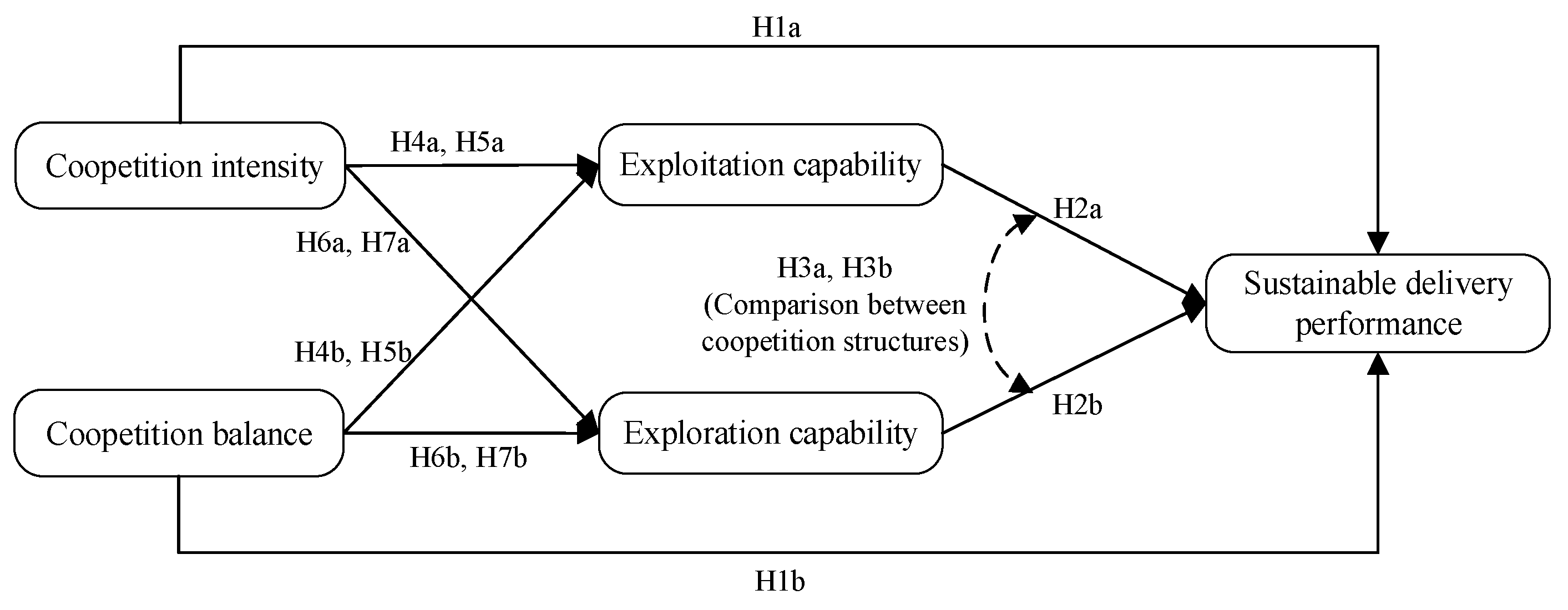
The extant research on international alliances focuses on the transfer and learning of existing knowledge and resources [94,95]. However, the competitive international engineering project advantage cannot be sustained solely with existing knowledge and resources. Especially in the volatile international marketing environment, international engineering projects must painstakingly develop new capabilities [22]. Hence, competition and cooperation among project partners can promote dialogue and interaction, whereby their complementary resources are integrated to compensate for information asymmetries in technology and market knowledge, which tend to create new knowledge [74,96]. These iterative interaction processes enable project organizations to sense emerging opportunities and threats, accumulate learning experiences, and gradually expand their capability base. Specifically, such interaction and communication facilitate projects enabling the organization to gather disorganized and unstructured information from its external environment [97]. Moreover, when significant changes occur in their external environment, the agility allowed by coopetition in international engineering projects enables them to quickly identify and determine how to fill capability gaps and develop new capabilities [19,51]. Intense and balanced coopetition thus supports the long-term accumulation of exploratory learning and innovation-oriented routines, enhancing sustainable delivery performance. Thus, we propose the following hypotheses, and we provide Figure 2 to illustrate the research model:
H6a: 
Coopetition intensity is positively related to exploration capability.
H6b: 
Coopetition balance is positively related to exploration capability.
H7a: 
Exploration capability mediates the effect of coopetition intensity on sustainable delivery performance.
H7b: 
Exploration capability mediates the effect of coopetition balance on sustainable delivery performance.

4. Methodology

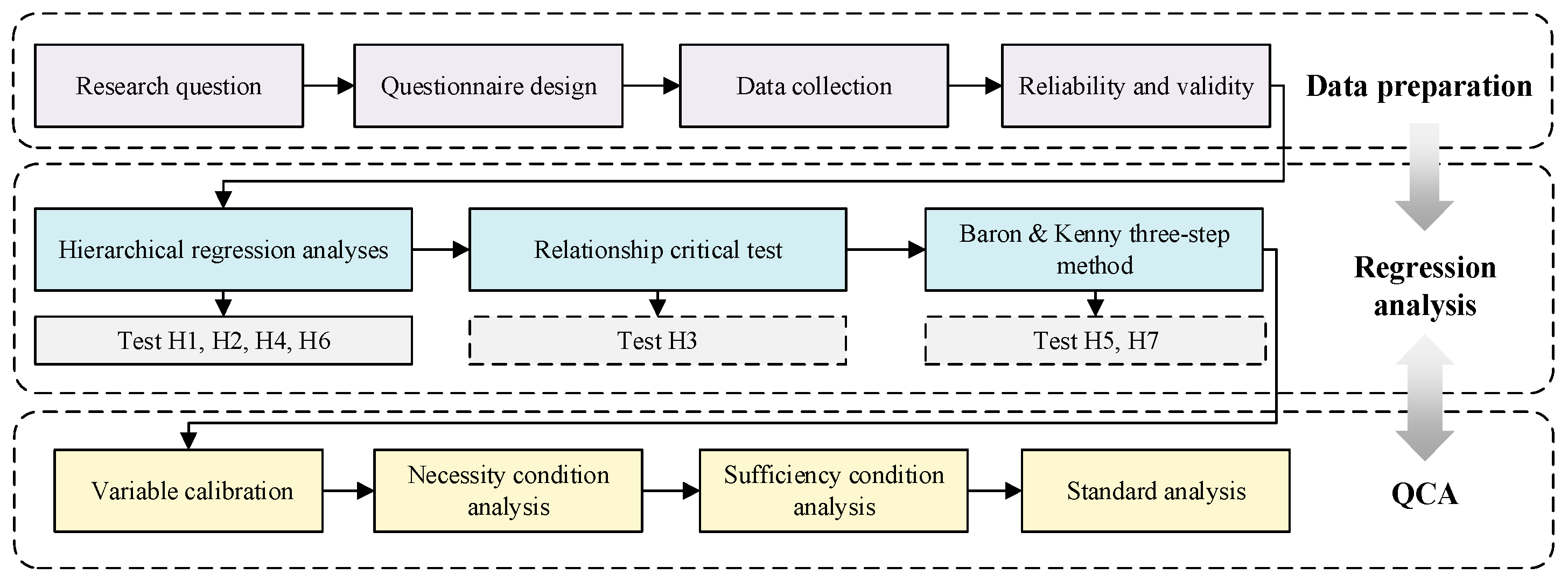
To ensure methodological rigor and clarity, the research design follows a multi-stage process, as illustrated in Figure 3. The first stage, data preparation, involves defining the research questions, designing the questionnaire, collecting data, and assessing reliability and validity. The second stage, regression analysis, applies hierarchical regression analyses to test Hypotheses H1, H2, H4, and H6, conducts a relationship critical test for H3, and employs the Baron and Kenny three-step approach to examine mediation effects for H5 and H7.
The final stage employed the fsQCA approach—including variable calibration, necessity and sufficiency analyses, and standard analysis—to complement regression results and address the inherent complexity of international engineering projects. This method was chosen for three main reasons. First, such projects exhibit high heterogeneity, interdependence, and configurational causality, where outcomes emerge from complex interactions among actors. Traditional regression assumes linear and independent effects, potentially overlooking how combinations of coopetition dimensions and dynamic capabilities jointly influence sustainable delivery. In contrast, fsQCA identifies equifinal pathways—multiple, non-linear causal configurations that can yield the same outcome [29,98]. Second, it captures asymmetric causation, showing that the drivers of success and failure differ, which is critical in uncertain and path-dependent environments [99]. Third, by integrating set-theoretic reasoning with empirical data, fsQCA provides contextual and theoretical depth, revealing governance–capability interactions beyond the scope of regression analysis [100].

4.1. Participants and Procedures

We collected our primary data through a cross-sectional survey, with a focus on international engineering projects involving at least one Chinese partner in the engineering industry. China, an increasingly important investor in the global economy, is an ideal setting for exploring and testing the above hypotheses. China’s nonfinancial outward direct investment (ODI) reached USD 144 billion in 2024, which is a 10.5% increase compared to the previous year. China is a key player in shaping the global engineering market. The international engineering project is an entry mode generally recognized by Chinese engineering firms in the international market [101], which allows them to leverage their expertise and resources while minimizing the risks and costs associated with entering new markets [102]. Although the data are cross-sectional, the measurement items capture respondents’ retrospective evaluations of capability development accumulated over the project lifecycle, rather than transient perceptions at a single point in time. Given respondents’ sustained involvement in project coordination and execution, these assessments reflect cumulative learning experiences embedded in repeated coopetitive interactions.
Data were collected through both online and on-site questionnaires targeting Chinese managerial personnel who had participated in international engineering projects. We first identified 79 major Chinese international engineering firms from the Engineering News Record (ENR) Top 250 International Contractors list. Managers from these firms’ overseas divisions were contacted via email or WeChat using information obtained from corporate websites and the authors’ institutional alumni network. After obtaining informed consent, an electronic survey was distributed through the Questionnaire Star platform. When a contacted individual was unavailable or ineligible, they were encouraged to recommend qualified colleagues. Follow-up messages were sent one week later if no response was received. Additionally, questionnaires were disseminated to participants of two project management training programs comprising managers from ENR Top 250 firms. Respondents were asked to complete the survey based on their prior or current project experience. To ensure ethical compliance, anonymity and confidentiality were guaranteed, participation was voluntary, and data were used solely for academic research. Participants were informed that there were no right or wrong answers, and a professional book was offered as appreciation for completion.
In total, we sent 318 questionnaires, and we received 218 completed questionnaires. After eliminating 46 responses where most of the items had the same score or the participants indicated that they were not involved in an international engineering project, we obtained 172 usable responses, a valid response rate of 78.90%. Our sample projects are distributed in 61 countries or regions: Asia (59.3%), Africa (21.5%), South America (8.1%), North America (4.1%), Europe (4.1%), and Oceania (2.9%). Although the focal firms are Chinese enterprises, the 172 international engineering projects examined involve collaboration with project participants from approximately 60 countries and regions worldwide, indicating a high degree of cross-national diversity in the project settings. More than 50% of these international engineering projects have been established for more than 3 years. In terms of type, 50% of the responding projects are contractual projects, 41.9% are partnership projects, and the remaining 8.1% are corporations. Regarding the structure, 88 projects (51.2%) feature a horizontal coopetition structure, and 84 projects (48.8%) a vertical coopetition structure, providing us with a sufficient database for comparing horizontal and vertical coopetition. Most respondents were experienced project managers or senior management personnel, with 73.9% having more than five years of professional experience, indicating that the sample possesses substantial managerial expertise and in-depth project knowledge. To reduce sampling bias, t-tests were used to compare the demographic variables of the 46 deleted respondents and the 172 retained respondents. These revealed no significant difference in project duration (t = −0.133, p = 0.894), project type (t = −0.314, p = 0.754), or project structure (t = −0.400, p = 0.689), indicating that the retained sample was eligible for further analyses.

4.2. Measurement

We employed a standard back-translation procedure to develop the Chinese version of the questionnaire. Since the instrument was derived from an extensive English-language literature review, it was first drafted in English and then translated into Chinese by a bilingual researcher. Another independent coder subsequently back-translated it into English to ensure accuracy and consistency. Three academics reviewed both versions to resolve discrepancies. To further establish validity, two rounds of pretesting were conducted. First, in-depth interviews were held with 10 experts—including scholars and practitioners experienced in international engineering projects—to obtain feedback on item clarity and relevance. Second, a pilot test involving 30 international engineering managers was conducted. Based on their comments, several items were refined or reworded to enhance clarity and contextual appropriateness. The final measurement items are listed in Table S1 of the Supplementary Materials.
Coopetition intensity. Coopetition reflects the simultaneous occurrence of both cooperative and competitive interactions among firms [21,46]. Consequently, the measurement of coopetition intensity and its balance is grounded in the underlying dimensions of cooperation and competition. To capture cooperation, we adapted scales from Shu et al. [53] and Raza-Ullah [103], operationalizing it as the extent of interaction and collaboration among partners, such as knowledge sharing and communication enhancement. For competition, we employed items developed by Shu et al. [53], Liu et al. [52], and Raza-Ullah [103], which assess the degree to which partners engage in competitive behaviors, including attempts to secure greater control or profit shares. All items were rated on a seven-point Likert scale, ranging from “1 = strongly disagree” to “7 = strongly agree.” Consistent with the conceptualization of coopetition as the concurrent engagement in cooperation and competition [37,55], this study adopted an indirect operationalization of coopetition intensity by calculating the multiplicative interaction between cooperation and competition scores. This method aligns with prior research by Shu et al. [53] and Raza-Ullah [103].
Coopetition balance. As outlined previously, coopetition balance concerns the relative equilibrium between cooperative and competitive dimensions. To measure this construct, we followed the approach of Yoo et al. [56], computing the absolute difference between cooperation and competition. To facilitate interpretation, the measure was reverse-coded by subtracting the difference score from seven, ensuring that a higher value represents a more balanced state of coopetition [104].
Coopetition structure. Consistent with Huo et al. [90] and Robert et al. [87], coopetition structure was captured using a proxy variable. Specifically, a value of “1” was assigned when respondents indicated that coopetition occurred in a horizontal relationship, where partners occupy the same stage in the projects, and a value of “2” when coopetition occurred in a vertical relationship within the value chain.
Sustainable delivery performance. The measurement of sustainable delivery performance was adapted primarily from Li et al. [29], Ozorhon et al. [105], and Robson et al. [4] to better reflect the international engineering industry context. A seven-item scale was employed, rated on a seven-point Likert scale anchored by “strongly disagree” and “strongly agree.” Four items captured delivery efficiency and managerial performance, evaluating the extent to which objectives related to cost, schedule, quality, and client satisfaction were achieved in managing international engineering projects. Two additional items explicitly captured social and environmental sustainability outcomes, namely job creation in the host country and the reduction of negative environmental impacts. The remaining item reflected relational sustainability by assessing the extent to which the project contributed to long-term cooperative relationships, risk and resource sharing, and knowledge acquisition among project partners. Collectively, these items capture sustainable delivery performance as a delivery-oriented sustainability construct that integrates efficiency, social, environmental, and relational dimensions, consistent with prior research on sustainability in project-based and international engineering contexts.
Exploitation capability and exploration capability. The constructs of exploitation and exploration capabilities were measured using scales adapted from Zhan and Chen [22]. Exploitation capability was assessed through five items focusing on the recombination, integration, and reconfiguration of existing resources and competencies, whereas exploration capability was assessed using three items emphasizing the creation, discovery, and development of novel resources and capabilities [18,64]. Consistent with prior research on dynamic capabilities in project-based settings [29], the survey items capture respondents’ retrospective and experience-based evaluations of exploitation and exploration capabilities accumulated through repeated coopetitive interactions over the project lifecycle, rather than momentary or single-point perceptions. Both constructs were rated on seven-point Likert scales ranging from “1 = strongly disagree” to “7 = strongly agree.”
Control variables. Several control variables were included to account for contextual influences on sustainable delivery performance. Project duration was controlled to capture the effects of long-term cooperation on information sharing and relationship stability [4]. Project type (corporation, partnership, or contractual/consortium) was included following Mohamed [106], as structural forms may affect performance outcomes. Project complexity was also controlled, since higher complexity increases resource, time, and financial requirements [71]. It was measured using a six-item scale adapted from Gao et al. [107] to assess technical and organizational dimensions. Finally, environmental uncertainty—covering political, economic, geographic, and climatic factors—was incorporated due to its potential to disrupt performance [106]. This variable was measured using a five-item scale adapted from Gao et al. [107] and You et al. [108].

4.3. Reliability and Validity

To test construct reliability, we computed Cronbach’s alpha for each construct. As seen in Table S1, all the calculated values exceeded the accepted threshold of 0.75. Furthermore, the composite reliability (CR) values ranged from 0.789 to 0.930, indicating a high level of internal consistency across the constructs. Hence, these findings confirm our measures, indicating that these items have satisfactory internal consistency and reliability.
Construct validity, including both convergent and discriminant validity, was tested to ensure that our measurements accurately captured the underlying theoretical construct. To test convergent validity, confirmatory factor analysis was conducted with AMOS 22.0. The model fit indices (χ2/df = 2.037, CFI = 0.922, IFI = 0.923, TLI = 0.908, SRMR = 0.061, and RMSEA = 0.078) indicated the adequate fit of the data to the model. Moreover, each factor loading was greater than the 0.50 cut-off at the significance level of 0.001. Therefore, convergent validity was acceptable. Regarding discriminant validity, we compared the square root of the average variance extracted (AVE) of each construct with the interconstruct correlations. These results revealed that the square root of the AVE consistently exceeded the interconstruct correlations, as shown in Table 1. Accordingly, these findings indicate that the measures have satisfactory reliability and construct validity.

4.4. Common Method Variance

As this study utilized data from a singular source, the potential for common method variance within the survey responses cannot be disregarded. To mitigate this potential issue, the measures of constructs were obtained from diverse sources during questionnaire design. Additionally, semantic differentiation was utilized to establish a clear psychological demarcation among the different variables. During the survey phase, respondents were provided with the option of answering questions anonymously to promote their candid and honest responses. After the completion of data collection, we adopted two steps, introduced in Podsakoff et al. [109], to test common method variance. First, Harmon’s one-factor analysis was performed. We found that the Kaiser–Meyer–Olkin value for the factors was 0.879, above the recommended threshold of 0.5. Our findings in the exploratory factor analysis (EFA) indicated factors with eigenvalues greater than 1, accounting for 71.788% of the total variance, and that the largest factor, which accounts for 39.439% of the variance, fell short of the recommended threshold of 50%, suggesting that neither a single factor nor a general factor predominated in explaining the total variance. Second, all the items in the questionnaire were loaded on a single factor, forming a one-factor model. These results showed that the one-factor model had a poor data fit (χ2/df = 4.636, CFI = 0.709, IFI = 0.711, TLI = 0.678, SRMR = 0.097, and RMSEA = 0.146). Therefore, common method variance was not a concern in this study.

5. Results

5.1. Results of Regression Test

We performed hierarchical regression analyses using SPSS 22.0 to test our hypotheses. To evaluate the possibility of multicollinearity, we calculated variance inflation factor (VIF) values, which were all below 10 (the highest was 2.328), indicating that multicollinearity did not significantly impact our results [110]. The results of the main effects and mediating effects of exploitation and exploration capabilities are presented in Table 2.
H1 concerns whether coopetition intensity and balance are positively and directly related to sustainable delivery performance. To test H1, the baseline model (Model 5) included four control variables. Model 6 added the independent variables, and regression analysis indicated that both coopetition intensity (β = 0.504, p < 0.01) and coopetition balance (β = 0.152, p < 0.05) have positive and significant effects on sustainable delivery performance, supporting H1a and H1b. Model 7 was used to test the relationship between exploitation and exploration capabilities and sustainable delivery performance. These results indicate that the effects of exploitation capabilities (β = 0.446, p < 0.01) and exploration capabilities (β = 0.341, p < 0.01) on sustainable delivery performance are significantly positive. Thus, H2a and H2b are supported. Model 2 was used to examine the relationship between coopetition intensity (β = 0.510, p < 0.01) and coopetition balance (β = 0.122, p < 0.10) and exploitation capability. These results are significant, supporting H4a and H4b. Similarly, as shown in Model 4, we found that the effects of coopetition intensity (β = 0.463, p < 0.01) and coopetition balance (β = 0.211, p < 0.01) on exploration capability are significantly positive. These results therefore lend support to H6a and H6b.
Following Arranz and de Arroyabe [111] and Liu et al. [112], we conducted the relationship critical test to examine the effects of exploitation capability and exploration capability on sustainable delivery performance in both horizontal and vertical coopetition structures. We report these results in Table 2. H3 was tested using the proportion of variance explained by these effects. Model 9 and Model 13 mainly tested the respective effects of the control variables on sustainable delivery performance in horizontal and vertical structures. Model 10 and Model 14 contained sustainable delivery performance as a function of exploitation capability and the four control variables. Model 11 and Model 15 contained sustainable delivery performance, as a function of exploration capability and the four control variables. Finally, Model 12 and Model 16 captured sustainable delivery performance, as a function of exploitation capabilities, exploration capability, and the control variables.
Regarding horizontal structure (H3a), we obtained ∆R2 from the regression results of Model 10, Model 11, and Model 12, as follows:
R M o d e l 12 M o d e l 10 2 = R M o d e l 12 2 R M o d e l 10 2 = 0.532 0.518 = 0.014
R M o d e l 12 M o d e l 11 2 = R M o d e l 12 2 R M o d e l 11 2 = 0.532 0.393 = 0.139
Here R M o d e l 12 M o d e l 10 2 represents the proportion of the variance in sustainable delivery performance that exploration capability in the horizontal structure can explain. R M o d e l 12 M o d e l 11 2 represents the proportion of the variance in sustainable delivery performance that exploitation capability in the horizontal structure can explain. Since R M o d e l 12 M o d e l 10 2 < R M o d e l 12 M o d e l 11 2 , we can conclude that exploitation capability is more forceful in shaping sustainable delivery performance than exploration capability in the horizontal structure. Therefore, H3a is supported.
Similarly, for vertical structure (H3b), we obtained ∆R2 from the regression results of Model 14, Model 15, and Model 16, as follows:
R M o d e l 16 M o d e l 14 2 = R M o d e l 16 2 R M o d e l 14 2 = 0.532 0.403 = 0.129
R M o d e l 16 M o d e l 15 2 = R M o d e l 16 2 R M o d e l 15 2 = 0.532 0.433 = 0.099
Here R M o d e l 16 M o d e l 14 2 represents the proportion of the variance in sustainable delivery performance that exploration capability in the vertical structure can explain. R M o d e l 16 M o d e l 15 2 represents the proportion of the variance in sustainable delivery performance that exploitation capability in the vertical structure can explain. Since R M o d e l 16 M o d e l 14 2 > R M o d e l 16 M o d e l 15 2 , it suggests that exploration capability is statistically stronger in shaping sustainable delivery performance than exploitation capability in the vertical structure, thus supporting H3b.
Concerning the mediating effect of exploitation and exploration capabilities on the relationship between coopetition intensity and balance and sustainable delivery performance, we examined the impacts of coopetition intensity and balance on sustainable delivery performance by incorporating the mediating variables (exploitation capability and exploration capability) into the model, specifically, in Model 8. These results indicate that the coefficients between exploitation capability (β = 0.373, p < 0.01) and exploration capability (β = 0.269, p < 0.01) and sustainable delivery performance are significantly positive. Hence, after incorporating exploitation and exploration capabilities into the model, the coefficient between coopetition intensity and sustainable delivery performance decreased but was still significant (β = 0.189, p < 0.01), while the effect of coopetition balance on sustainable delivery performance became nonsignificant (β = 0.050, p > 0.10). Accordingly, these results jointly demonstrate that exploitation and exploration capabilities (partly) mediate the impact of coopetition intensity on sustainable delivery performance and that exploitation and exploration capabilities (fully) mediate the impact of coopetition balance on sustainable delivery performance. Therefore, H5a, H5b, H7a, and H7b are supported.

5.2. Results of fsQCA

This study employs the direct calibration method proposed by Ragin [113], which necessitates specifying three qualitative anchors: full non-membership, full membership, and the crossover point. Consistent with the approach of Mellewigt et al. [114], the sample mean of each variable is adopted as the crossover point. The threshold for full membership is determined by adding one standard deviation to the mean, whereas full non-membership is defined by subtracting one standard deviation from the mean. Except for the coopetition structure, which is a dichotomous variable, all remaining variables underwent calibration. Quantile-based calibration was performed using fsQCA 4.1, whereby the raw scores of five variables across 172 cases were systematically transformed into fuzzy set membership scores. The results of calibrations are shown in Table S2 in the supplemental items. Necessity analysis assesses whether a single condition or a combination of conditions constitutes a prerequisite for the occurrence of an outcome. From a set-theoretic perspective, this entails examining whether cases exhibiting the outcome consistently share a particular antecedent condition or configuration of conditions. As outlined by Schneider and Wagemann [115], an antecedent condition is deemed necessary when its consistency with the outcome reaches a threshold of 0.9. Table S3 reports the results of the necessity analysis for high and low levels of cooperation in international engineering projects. Since all consistency scores fall below the 0.9 benchmark, none of the antecedent conditions—whether present or absent—can be considered necessary for either high or low cooperation in this study.
A truth table was constructed for sufficiency analysis. The raw consistency threshold was set at 0.85, with a minimum case frequency of 4. The PRI consistency threshold was specified at 0.5. The analytical results are presented in Table 3. Consistency reflects the extent to which cases exhibiting a given configuration consistently lead to a specified outcome. Raw coverage indicates the proportion of the outcome that can be accounted for by a particular configuration. As illustrated in Table 3, three configurations (C1 to C3) are associated with high levels of sustainable delivery performance, exhibiting an overall solution consistency of 0.835. The solution coverage is 0.680, suggesting that these configurations capture the primary pathways leading to high sustainable delivery performance. The results indicate that C2 demonstrates how, within a vertical coopetitive structure, high-intensity and balanced coopetition combined with strong exploratory capability can lead to high sustainable delivery performance. In contrast, C1 and C3 suggest that, within a horizontal structure, the simultaneous presence of coopetition intensity and balance, along with the concurrent manifestation of exploitative and exploratory capabilities, functions in a mutually substitutive manner.
This configurational insight further validates the structural contingency revealed in the regression analysis. For example, regression indicates that exploitation is more effective in horizontal governance, and exploration is stronger under vertical structures. fsQCA corroborates this pattern through C1 and C2: in horizontal structures, high exploitation and exploration together drive high performance, whereas in vertical structures, exploratory capability combined with strong and balanced coopetition intensity is critical. Moreover, fsQCA adds nuance beyond regression by uncovering C3, where horizontal structures with high coopetition intensity and balance achieve superior performance even in the absence of strong dynamic capabilities. This compensatory pathway suggests that structural characteristics can substitute for capability-based advantages under certain conditions—an insight not captured by regression’s net effect logic.

5.3. Robustness Analysis

To ensure the reliability and robustness of both the regression-based mediation results and the configurational findings derived from fsQCA, we performed several robustness analyses. First, regarding the mediation analysis, we employed a non-parametric bootstrapping approach with 5000 replications [116] to verify the stability of the indirect effects. The indirect effect of coopetition intensity on sustainable delivery performance through exploitation capability was 0.025, with a 95% confidence interval (CI) of [0.013, 0.040], excluding zero. Similarly, the indirect effect through exploration capability was 0.019, with a 95% CI of [0.007, 0.033], also excluding zero. These findings confirm the mediating roles proposed in H5a and H7a. Moreover, the indirect effects of coopetition balance on sustainable delivery performance via exploitation and exploration capabilities were 0.141 and 0.125, with 95% CIs of [0.034, 0.250] and [0.050, 0.219], respectively, supporting H5b and H7b. Collectively, these results are consistent with and reinforce the regression-based mediation results, demonstrating the robustness of our hypothesized mechanisms.
Second, to assess the robustness of the fsQCA findings, we conducted sensitivity analyses by systematically varying key calibration thresholds, including the frequency, consistency, and PRI levels [29,70,117]. Specifically, we adjusted the consistency threshold to both a stricter level (0.90) and a more lenient level (0.80) to evaluate whether such changes would yield substantively different interpretations. The results showed no material deviations from the original solution. Additionally, when the frequency threshold was increased from 4 to 5, minor alterations were observed in the specific configurations associated with high sustainable delivery performance; however, the core causal patterns and theoretical interpretations remained stable. Finally, robustness checks using alternative PRI thresholds produced consistent outcomes. In summary, the convergence of results across different analytical techniques and parameter settings confirms that our key empirical findings and theoretical conclusions remain stable and robust.

6. Discussion

6.1. Theoretical Contributions

6.1.1. Bridging Coopetition and Dynamic Capabilities

This study extends the project coopetition literature by clarifying the relationships between coopetition and sustainable delivery performance, and it contributes to dynamic capability theory by refining its explanatory relevance in international, project-based, and inter-organizational contexts. Several studies examine how coopetition is associated with performance through mechanisms such as knowledge integration [118], knowledge transfer [119], organizational learning [77], or relational factors including trust, dependence, and conflict [24,120]. However, this literature often abstracts coopetition from the distinctive governance conditions of international engineering projects, where cooperative–competitive interactions are embedded in temporary project organizations, formal contracts, and cross-border institutional environments. Although Teece [19] conceptually connects coopetition and dynamic capability theory, empirical evidence on dynamic capabilities as mediating mechanisms in such complex international project settings remains limited, particularly regarding exploitation and exploration capabilities.
Our study addresses this gap by incorporating exploitation and exploration capabilities as mediating mechanisms linking coopetition to sustainable delivery performance in international engineering projects. Our findings indicate that while exploitation and exploration capabilities partially mediate the relationship between coopetition intensity and sustainable delivery performance, they fully mediate the relationship between coopetition balance and sustainable delivery performance. This distinction suggests that, in international engineering projects characterized by high task interdependence and institutional heterogeneity, the structural stabilization of coopetition is critical for capability development. In this sense, coopetition among project partners is associated not only with the deployment of parent-firm resources but also with the development of new project-level capabilities. By demonstrating this mediating logic, the study refines dynamic capability theory by showing that capability effectiveness is conditioned by the structure and balance of inter-organizational interactions, extending prior work on absorptive capacity [51]. Overall, this contribution clarifies that, in international engineering projects, dynamic capabilities operate as structurally embedded mechanisms rather than as isolated firm-level attributes, thereby reframing how coopetition is translated into sustainable delivery outcomes.

6.1.2. Structural Differentiation in Capability Efficacy

A novel linkage is established between coopetition theory and dynamic capability theory from the perspective of coopetition structures. Although the importance of coopetition structures has been acknowledged in prior studies [41,55], most existing research focuses on organizational relationships within a single coopetition structure [24,25,26]. Empirical investigations comparing different coopetition structures remain limited [28], and even fewer studies have examined their implications for dynamic capabilities. This study addresses this gap by examining how exploitation and exploration capabilities are associated with horizontal and vertical coopetition structures. The findings indicate that coopetition structure functions as a differentiating context in which the associations between dynamic capabilities and sustainable delivery performance vary. Specifically, exploitation capability is more strongly associated with performance in horizontal coopetition, whereas exploration capability is more salient in vertical coopetition. This pattern builds on Xu et al. [121] and clarifies the heterogeneous roles of exploitation and exploration capabilities by demonstrating that their effectiveness varies systematically across structural contexts. In horizontal coopetition, partners operating at equivalent value chain stages share similar resources and overlapping markets, facilitating knowledge transfer and supporting exploitation-oriented capability development [27,54,88]. In contrast, vertical coopetition involves heterogeneous and complementary resources across value chain stages, fostering responsiveness and mutual learning and supporting exploration capability development [87]. These findings challenge the assumption that exploitation and exploration capabilities exert uniform effects across organizational settings and instead highlight the structural contingency of their efficacy. Taken together, this contribution demonstrates that the performance relevance of dynamic capabilities is inherently structure-sensitive, advancing a context-contingent understanding of capability efficacy in project-based environments.

6.1.3. Structural-Configurational Complementarity

The integration of fsQCA findings with regression results provides deeper theoretical insight into the coopetition–performance relationship in international engineering projects. While regression analysis identifies net effects and confirms the mediating role of dynamic capabilities under an additive logic, fsQCA reveals configurational complexity and equifinality, showing that multiple context-dependent pathways can lead to high sustainable delivery performance. Specifically, configurations C1 and C2 reinforce the structural contingencies suggested by the regression results, indicating that exploitation capability is more salient in horizontal structures, whereas exploration capability plays a more central role in vertical structures. Moreover, the configurational analysis identifies a compensatory pathway in which high coopetition intensity and balance within horizontal structures are associated with strong performance even in the absence of well-developed dynamic capabilities.
This finding points to a structural substitution paradox, whereby organizational architecture and inter-organizational design partially substitute for capability-based mechanisms. From an organizational design and structural contingency perspective, horizontal coopetition among structurally similar partners facilitates standardized interfaces, shared routines, and externally coordinated resource alignment. Under conditions of high intensity and balanced interaction, such structural arrangements reduce coordination costs and enable effective collective action, thereby compensating for limited internal capability development [77,120]. In this sense, form substitutes for function, challenging the conventional dynamic capability assumption that superior performance necessarily depends on well-developed internal capabilities [122]. Importantly, this substitution effect does not negate the value of dynamic capabilities but highlights their context-dependent necessity. In resource-constrained or capability-limited environments, appropriate structural configurations can temporarily offset capability deficiencies, whereas in more complex or vertically differentiated settings, dynamic capabilities remain indispensable. By revealing this paradox, the study extends contingency theory and enriches dynamic capability research by demonstrating how governance structures, organizational design, and capability mechanisms interact configurationally rather than hierarchically. Finally, although the empirical model specifies a unidirectional causal path from coopetition to dynamic capabilities and performance for analytical clarity, the findings also invite reflection on potential reciprocal and co-evolutionary dynamics. This contribution underscores that sustainable delivery in international engineering projects is not driven by isolated factors but emerges from the joint configuration of structural conditions and capability mechanisms.

6.2. Managerial Implications

The findings have important implications for senior and middle-level managers in international engineering project management. First, managers must recognize the strategic significance of engaging in coopetitive relationships with project partners to achieve mutual performance gains. Despite extensive studies on the cooperation–competition trade-off [43,123,124], the optimal managerial approach remains uncertain—whether to balance cooperation and competition or to pursue high levels of both. Our results suggest that managers should simultaneously attend to coopetition intensity and coopetition balance as complementary levers of project governance, rather than treating them as mutually exclusive choices. Practically, this implies actively calibrating contractual, organizational, and coordination mechanisms to sustain high-intensity yet balanced coopetition across project phases. Maintaining a “strategic balance” [46] is essential: overreliance on cooperation may increase vulnerability to opportunism, while excessive competition can provoke retaliatory actions.
Second, the mediating role of exploitation and exploration capabilities highlights the importance of dynamic capabilities in linking coopetition to sustainable delivery performance. Managers should therefore view dynamic capabilities not as abstract organizational attributes, but as actionable outcomes of deliberate coopetition design. By fostering appropriate levels of coopetition intensity and balance, project managers can facilitate both the effective deployment of existing resources (exploitation) and the development of new capabilities (exploration). Failing to align coopetition arrangements with capability development objectives may limit the performance benefits derived from inter-organizational collaboration.
Third, managers should adopt a nuanced view of how coopetition interacts with dynamic capabilities. Before establishing coopetitive relationships, they need to align overall project goals, assess interpartner relationships, and select suitable coopetitive mechanisms based on the coopetition structure [55]. In horizontally structured projects, where partners possess similar knowledge bases and resources, managers should emphasize high-intensity and well-balanced coopetition to enhance exploitation capability and operational efficiency. In contrast, vertical coopetition structures—characterized by resource complementarity along the value chain—require managerial attention to exploration-oriented mechanisms, such as joint problem-solving, interface coordination, and capability upgrading. Accordingly, beyond managing coopetition intensity and balance, managers should strategically match coopetition structures with capability configurations to improve sustainable delivery outcomes.

6.3. Limitations and Future Directions

While this study offers valuable theoretical and practical implications, several limitations warrant attention. First, the cross-sectional design limits causal inference and the ability to capture the temporal, oscillating nature of coopetition documented in prior studies [5,49,55,125]. Future longitudinal or case-based research could examine the reciprocal and co-evolutionary dynamics between coopetition and dynamic capabilities over time. Although this study shows that coopetition is associated with value co-creation in international engineering projects, it does not examine how value creation and appropriation interact. Future research could use paired or multi-source data to explore whether coopetition yields mutually beneficial outcomes or asymmetric value capture among partners. Third, while environmental uncertainty is included as a control, institutional environments are not explicitly modeled. Future research could examine regulatory, governance, or cultural contexts as moderating or configurational conditions shaping coopetition effectiveness. Fourth, although coopetition balance is operationalized using a parsimonious absolute-difference measure, this approach may compress theoretically distinct configurations of cooperation and competition into a single indicator. Future research could adopt alternative specifications to capture more fine-grained relational dynamics of coopetition. Last, although the environmental and social dimensions in this study are captured using parsimonious indicators, they reflect core sustainability concerns that are both observable and managerially actionable in international engineering projects. Future research could further enrich this construct by incorporating more granular ESG or life-cycle-based sustainability indicators. Regarding external validity, although responses were obtained from Chinese managers, the study covers 172 international engineering projects across more than 60 countries and regions, each involving multinational participation, supporting a degree of external validity. At the same time, as the projects are largely Chinese-led, future research could test the proposed mechanisms in non–China-led or comparative international settings.

7. Conclusions

In the context of international engineering projects, coopetition has become increasingly salient and complex due to volatile market conditions and diverse cultural and institutional environments [15,16]. This study conceptualizes coopetition through its intensity and balance dimensions and examines its associations with sustainable delivery performance from a dynamic capability perspective. Using survey data from 172 international projects, the results indicate that both coopetition intensity and balance are positively associated with sustainable delivery performance. Exploitation and exploration capabilities partially mediate the effects of coopetition intensity and fully mediate those of coopetition balance. Moreover, the efficacy of dynamic capabilities is structurally contingent: exploitation proves more effective under horizontal coopetition, whereas exploration is stronger under vertical coopetition, challenging the conventional assumption of uniform capability effects. Configurational analysis further identifies a compensatory pathway where high coopetition intensity and balance within horizontal structures achieve strong performance even when dynamic capabilities are weak—contradicting the traditional dynamic capability view that superior performance requires superior capabilities. Overall, this research integrates coopetition structure into the dynamic capability framework and uncovers novel insights into the heterogeneous effects of exploitation and exploration capabilities.

Supplementary Materials

The following supporting information can be downloaded at https://www.mdpi.com/article/10.3390/buildings16020407/s1. Table S1. Measures and validation statistics; Table S2. Calibrations of variables; Table S3. Analysis of necessary conditions.

Author Contributions

Conceptualization, Q.X.; methodology, Q.X.; validation, W.L.; formal analysis, Q.X. and W.L.; data curation, W.D.; writing—original draft preparation, Q.X.; writing—review and editing, W.L. and W.D.; visualization, W.D.; funding acquisition, Q.X. All authors have read and agreed to the published version of the manuscript.

Funding

This research was funded by the National Natural Science Foundation of China, grant number 72501100.

Data Availability Statement

The original contributions presented in the study are included in the article; further inquiries can be directed to the corresponding author.

Conflicts of Interest

The authors declare no conflicts of interest.

Abbreviations

fsQCAFuzzy Set Qualitative Comparative Analysis
RBVResource-Based View
ODIOutward Direct Investment
ENREngineering News Record
AVEAverage Variance Extracted
CRComposite Reliability
EFAExploratory Factor Analysis
VIFVariance Inflation Factor

References

  1. Kopczak, L.R.; Fransoo, J.C. Teaching supply chain management through global projects with global project teams. Prod. Oper. Manag. 2000, 9, 91–104. [Google Scholar] [CrossRef]
  2. Zhao, X.; Hwang, B.-G.; Yu, G.S. Identifying the critical risks in underground rail international construction joint ventures: Case study of Singapore. Int. J. Proj. Manag. 2013, 31, 554–566. [Google Scholar] [CrossRef]
  3. Luo, Y.; Shenkar, O.; Gurnani, H. Control–cooperation interfaces in global strategic alliances: A situational typology, strategic responses. J. Int. Bus. Stud. 2008, 39, 428–453. [Google Scholar] [CrossRef]
  4. Robson, M.J.; Katsikeas, C.S.; Schlegelmilch, B.B.; Pramboeck, B. Alliance capabilities, interpartner attributes, performance outcomes in international strategic alliances. J. World Bus. 2019, 54, 137–153. [Google Scholar] [CrossRef]
  5. Gnyawali, D.R.; Charleton, T.R. Nuances in the interplay of competition, cooperation: Towards a theory of coopetition. J. Manag. 2018, 44, 2511–2534. [Google Scholar] [CrossRef]
  6. Butt, A.S. Coopetition in supply chains: A case study of Australian construction industry in supplier market. J. Bus. Res. 2025, 189, 115111. [Google Scholar] [CrossRef]
  7. Lv, J.; Zou, X.; Yang, Q.; Zhang, K. Analyzing the influence of coopetition on resilience in the open innovation network from the perspective of knowledge diffusion. Int. J. Manag. Proj. Bus. 2025, 18, 165–188. [Google Scholar] [CrossRef]
  8. Niu, Y.; Zhao, D.; Zhao, X.; Lu, R.; Deng, X. Coopetition strategies of international joint ventures for high-speed railway projects. J. Infrastruct. Syst. 2021, 27, 04021031. [Google Scholar] [CrossRef]
  9. Xie, Q.; Zhang, S.; Gao, Y.; Qi, J.; Feng, Z. Impact of coopetition on the performance outcomes of international construction joint ventures: A contingency and configuration approach. Eng. Constr. Archit. Manag. 2025, 35, 7149–7180. [Google Scholar] [CrossRef]
  10. Li, J.; Tian, L.; Wan, G. Contextual distance and the international strategic alliance performance: A conceptual framework, a partial meta-analytic test. Manag. Organ. Rev. 2015, 11, 289–313. [Google Scholar] [CrossRef]
  11. Luo, Y.; Rui, H. An ambidexterity perspective toward multinational enterprises from emerging economies. Acad. Manag. Perspect. 2009, 23, 49–70. [Google Scholar] [CrossRef]
  12. Xie, H.; Wang, X. Innovative governance schemes for international engineering projects: Cultural identification and trust networks of project participants. Buildings 2025, 15, 3251. [Google Scholar] [CrossRef]
  13. Lu, J.W.; Hebert, L. Equity control, the survival of international joint ventures: A contingency approach. J. Bus. Res. 2005, 58, 736–745. [Google Scholar] [CrossRef]
  14. Pangarkar, N.; Klein, S. The impact of control on international joint venture performance: A contingency approach. J. Int. Mark. 2004, 12, 86–107. [Google Scholar] [CrossRef]
  15. Gao, L.; Deng, X.; Yang, W.; Chang, T. Exploring critical factors affecting contractors’ coopetition relationship in international construction projects. Adv. Civ. Eng. 2021, 2021, 8897395. [Google Scholar] [CrossRef]
  16. Niu, Y.L.; Li, H.M.; Ye, K.H.; Mahmoudi, A.; Deng, X.P. Determinants of coopetition relationships in international joint ventures for high-speed rail projects. KSCE J. Civ. Eng. 2022, 26, 2036–2057. [Google Scholar] [CrossRef]
  17. Crick, J.M.; Crick, D. The yin and yang nature of coopetition activities: Non-linear effects and the moderating role of competitive intensity for internationalised firms. Int. Mark. Rev. 2021, 38, 690–716. [Google Scholar] [CrossRef]
  18. Teece, D.J.; Pisano, G.; Shuen, A. Dynamic capabilities and strategic management. Strateg. Manag. J. 1997, 18, 509–533. [Google Scholar] [CrossRef]
  19. Teece, D.J. Coopetition and the dynamic capabilities framework. In Routledge Companion Coopetition Strategies; Routledge: London, UK, 2018; pp. 349–357. [Google Scholar] [CrossRef]
  20. Rouyre, A.; Fernandez, A.S.; Estrada, I. Co-evolution of governance mechanisms and coopetition in public-private projects. J. Oper. Manag. 2024, 70, 50–79. [Google Scholar] [CrossRef]
  21. Bouncken, R.B.; Gast, J.; Kraus, S.; Bogers, M. Coopetition: A systematic review, synthesis, future research directions. Rev. Manag. Sci. 2015, 9, 577–601. [Google Scholar] [CrossRef]
  22. Zhan, W.; Chen, R. Dynamic capability and IJV performance: The effect of exploitation, exploration capabilities. Asia Pac. J. Manag. 2013, 30, 601–632. [Google Scholar] [CrossRef]
  23. Dorn, S.; Schweiger, B.; Albers, S. Levels, phases and themes of coopetition: A systematic literature review, research agenda. Eur. Manag. J. 2016, 34, 484–500. [Google Scholar] [CrossRef]
  24. Chai, L.; Li, J.; Tangpong, C.; Clauss, T. The interplays of coopetition, conflicts, trust, and efficiency process innovation in vertical B2B relationships. Ind. Mark. Manag. 2020, 85, 269–280. [Google Scholar] [CrossRef]
  25. Yang, X. Vertical coopetition: Effect of supplier relationship management strategies on supplier involvement in new product development. IEEE Trans. Eng. Manag. 2022, 71, 2911–2920. [Google Scholar] [CrossRef]
  26. Wilhelm, M.M. Managing coopetition through horizontal supply chain relations: Linking dyadic, network levels of analysis. J. Oper. Manag. 2011, 29, 663–676. [Google Scholar] [CrossRef]
  27. Le Roy, F.; Robert, F.; Hamouti, R. Vertical vs horizontal coopetition, the market performance of product innovation: An empirical study of the video game industry. Technovation 2022, 112, 102411. [Google Scholar] [CrossRef]
  28. Xie, Q.; Gao, Y.; Xia, N.; Zhang, S.; Tao, G. Coopetition and organizational performance outcomes: A meta-analysis of the main, moderator effects. J. Bus. Res. 2023, 154, 113363. [Google Scholar] [CrossRef]
  29. Li, Y.; Zhang, Y.; Li, Y.; Ding, R. Exploring the impact of dynamic capabilities on the sustainable delivery of international engineering projects: A configurational approach. IEEE Trans. Eng. Manag. 2023, 71, 9003–9018. [Google Scholar] [CrossRef]
  30. Longoni, A.; Cagliano, R. Environmental, social sustainability priorities: Their integration in operations strategies. Int. J. Oper. Prod. Manag. 2015, 35, 216–245. [Google Scholar] [CrossRef]
  31. Calabrese, A.; Costa, R.; Levialdi, N.; Menichini, T. Integrating sustainability into strategic decision-making: A fuzzy AHP method for the selection of relevant sustainability issues. Technol. Forecast. Soc. Change 2019, 139, 155–168. [Google Scholar] [CrossRef]
  32. Silvius, G.; Schipper, R. Exploring variety in factors that stimulate project managers to address sustainability issues. Int. J. Proj. Manag. 2020, 38, 353–367. [Google Scholar] [CrossRef]
  33. Lee, M.-J.; Roh, T. Unpacking the sustainable performance in the business ecosystem: Coopetition strategy, open innovation, digitalization capability. J. Clean. Prod. 2023, 412, 137433. [Google Scholar] [CrossRef]
  34. Dangelico, R.M.; Pujari, D.; Pontrandolfo, P. Green product innovation in manufacturing firms: A sustainability-oriented dynamic capability perspective. Bus. Strategy Environ. 2017, 26, 490–506. [Google Scholar] [CrossRef]
  35. Cantele, S.; Zardini, A. Is sustainability a competitive advantage for small businesses? An empirical analysis of possible mediators in the sustainability–financial performance relationship. J. Clean. Prod. 2018, 182, 166–176. [Google Scholar] [CrossRef]
  36. Banihashemi, S.; Hosseini, M.R.; Golizadeh, H.; Sankaran, S. Critical success factors (CSFs) for integration of sustainability into construction project management practices in developing countries. Int. J. Proj. Manag. 2017, 35, 1103–1119. [Google Scholar] [CrossRef]
  37. Lado, A.A.; Boyd, N.G.; Hanlon, S.C. Competition, cooperation, and the search for economic rents: A syncretic model. Acad. Manag. Rev. 1997, 22, 110–141. [Google Scholar] [CrossRef]
  38. Luo, Y. Toward coopetition within a multinational enterprise: A perspective from foreign subsidiaries. J. World Bus. 2005, 40, 71–90. [Google Scholar] [CrossRef]
  39. Das, T.K.; Teng, B.-S. Instabilities of strategic alliances: An internal tensions perspective. Organ. Sci. 2000, 11, 77–101. [Google Scholar] [CrossRef]
  40. Dyer, J.H.; Singh, H. The relational view: Cooperative strategy and sources of interorganizational competitive advantage. Acad. Manag. Rev. 1998, 23, 660–679. [Google Scholar] [CrossRef]
  41. Hoffmann, W.; Lavie, D.; Reuer, J.J.; Shipilov, A. The interplay of competition and cooperation. Strateg. Manag. J. 2018, 39, 3033–3052. [Google Scholar] [CrossRef]
  42. Bengtsson, M.; Kock, S. Coopetition—Quo vadis? Past accomplishments, future challenges. Ind. Mark. Manag. 2014, 43, 180–188. [Google Scholar] [CrossRef]
  43. Gnyawali, D.R.; He, J.; Madhavan, R. Impact of co-opetition on firm competitive behavior: An empirical examination. J. Manag. 2006, 32, 507–530. [Google Scholar] [CrossRef]
  44. Tsai, W. Social structure of “coopetition” within a multiunit organization: Coordination, competition, intraorganizational knowledge sharing. Organ. Sci. 2022, 13, 179–190. [Google Scholar] [CrossRef]
  45. Brandenburger, A.; Nalebuff, B. Co-Opetition; Crown Currency: Sydney, Australia, 1996. [Google Scholar]
  46. Luo, Y. A coopetition perspective of global competition. J. World Bus. 2007, 42, 129–144. [Google Scholar] [CrossRef]
  47. Raza-Ullah, T.; Bengtsson, M.; Kock, S. The coopetition paradox, tension in coopetition at multiple levels. Ind. Mark. Manag. 2014, 43, 189–198. [Google Scholar] [CrossRef]
  48. Bengtsson, M.; Kock, S. Cooperation and competition in relationships between competitors in business networks. J. Bus. Ind. Mark. 1999, 14, 178–194. [Google Scholar] [CrossRef]
  49. Gernsheimer, O.; Kanbach, D.K.; Gast, J. Coopetition research-A systematic literature review on recent accomplishments, trajectories. Ind. Mark. Manag. 2021, 96, 113–134. [Google Scholar] [CrossRef]
  50. Wang, J.; Lu, J.; Dabić, M.; Halaszovich, T. Digitalization-based competitive pressure originating from coopetitors and the focal firm’s digital innovation. IEEE Trans. Eng. Manag. 2025, 72, 3433–3448. [Google Scholar] [CrossRef]
  51. Riquelme-Medina, M.; Stevenson, M.; Barrales-Molina, V.; Llorens-Montes, F.J. Coopetition in business Ecosystems: The key role of absorptive capacity, supply chain agility. J. Bus. Res. 2022, 146, 464–476. [Google Scholar] [CrossRef]
  52. Liu, Y.; Luo, Y.; Yang, P.; Maksimov, V. Typology and effects of co-opetition in buyer–supplier relationships: Evidence from the Chinese home appliance industry. Manag. Organ. Rev. 2014, 10, 439–465. [Google Scholar] [CrossRef]
  53. Shu, C.; Jin, J.L.; Zhou, K.Z. A contingent view of partner coopetition in international joint ventures. J. Int. Mark. 2017, 25, 42–60. [Google Scholar] [CrossRef]
  54. Park, B.J.; Srivastava, M.K.; Gnyawali, D.R. Walking the tight rope of coopetition: Impact of competition, cooperation intensities, balance on firm innovation performance. Ind. Mark. Manag. 2014, 43, 210–221. [Google Scholar] [CrossRef]
  55. Bengtsson, M.; Raza-Ullah, T. A systematic review of research on coopetition: Toward a multilevel understanding. Ind. Mark. Manag. 2016, 57, 23–39. [Google Scholar] [CrossRef]
  56. Yoo, D.K.; Roh, J.J.; Cho, S.; Yang, M.M. Coopetition in a platform ecosystem: From the complementors’ perspective. Electron. Commer. Res. 2024, 24, 1509–1532. [Google Scholar] [CrossRef]
  57. Luo, X.; Rindfleisch, A.; Tse, D.K. Working with rivals: The impact of competitor alliances on financial performance. J. Mark. Res. 2007, 44, 73–83. [Google Scholar] [CrossRef]
  58. Wu, Z.; Choi, T.Y.; Rungtusanatham, M.J. Supplier-supplier relationships in buyer-supplier-supplier triads: Implications for supplier performance. J. Oper. Manag. 2010, 28, 115–123. [Google Scholar] [CrossRef]
  59. Bouncken, R.B.; Clauß, T.; Fredrich, V. Product innovation through coopetition in alliances: Singular or plural governance? Ind. Mark. Manag. 2016, 53, 77–90. [Google Scholar] [CrossRef]
  60. Barney, J. Firm resources and sustained competitive advantage. J. Manag. 1991, 17, 99–120. [Google Scholar] [CrossRef]
  61. Conner, K.R. A historical comparison of resource-based theory, five schools of thought within industrial organization economics: Do we have a new theory of the firm? J. Manag. 1991, 117, 121–154. [Google Scholar] [CrossRef]
  62. Grant, R.M. The resource-based theory of competitive advantage: Implications for strategy formulation. Calif. Manag. Rev. 1991, 33, 114–135. [Google Scholar] [CrossRef]
  63. Altay, N.; Gunasekaran, A.; Dubey, R.; Childe, S.J. Agility and resilience as antecedents of supply chain performance under moderating effects of organizational culture within the humanitarian setting: A dynamic capability view. Prod. Plan. Control 2018, 29, 1158–1174. [Google Scholar] [CrossRef]
  64. Eisenhardt, K.M.; Martin, J.A. Dynamic capabilities: What are they? Strateg. Manag. J. 2000, 21, 1105–1121. [Google Scholar] [CrossRef]
  65. Yalcinkaya, G.; Calantone, R.J.; Griffith, D.A. An examination of exploration and exploitation capabilities: Implications for product innovation, market performance. J. Int. Mark. 2007, 15, 63–93. [Google Scholar] [CrossRef]
  66. March, J.G. Exploration and exploitation in organizational learning. Organ. Sci. 1991, 2, 71–87. [Google Scholar] [CrossRef]
  67. Benner, M.J.; Tushman, M.L. Exploitation, exploration, and process management: The productivity dilemma revisited. Acad. Manag. Rev. 2003, 28, 238–256. [Google Scholar] [CrossRef]
  68. Eriksson, P.E. Exploration and exploitation in project-based organizations: Development and diffusion of knowledge at different organizational levels in construction companies. Int. J. Proj. Manag. 2013, 31, 333–341. [Google Scholar] [CrossRef]
  69. Anh, P.T.T.; Baughn, C.C.; Hang, N.T.M.; Neupert, K.E. Knowledge acquisition from foreign parents in international joint ventures: An empirical study in Vietnam. Int. Bus. Rev. 2006, 15, 463–487. [Google Scholar] [CrossRef]
  70. Gupta, K.; Crilly, D.; Greckhamer, T. Stakeholder engagement strategies, national institutions, and firm performance: A configurational perspective. Strateg. Manag. J. 2020, 41, 1869–1900. [Google Scholar] [CrossRef]
  71. Luo, L.; He, Q.; Xie, J.; Yang, D.; Wu, G. Investigating the Relationship between Project Complexity and Success in Complex Construction Projects. J. Manag. Eng. 2017, 33, 04016036. [Google Scholar] [CrossRef]
  72. Dagnino, G.B. Coopetition strategy: A new kind of interfirm dynamics for value creation. In Coopetition Strategy; Routledge: London, UK, 2009; pp. 45–63. [Google Scholar]
  73. Jakobsen, S. Managing tension in coopetition through mutual dependence, asymmetries: A longitudinal study of a Norwegian R&D alliance. Ind. Mark. Manag. 2020, 84, 251–260. [Google Scholar] [CrossRef]
  74. Xu, T.; Yang, J.J.; Zhang, F.; Guo, W.Y. Interfirm coopetition, interfirm knowledge creation, collaborative innovation performance: The moderating roles of environmental competitiveness, dysfunctional competition. Ind. Mark. Manag. 2021, 99, 123–135. [Google Scholar] [CrossRef]
  75. Tödtling, F.; Lehner, P.; Trippl, M. Innovation in knowledge intensive industries: The nature, geography of knowledge links. Eur. Plan. Stud. 2006, 14, 1035–1058. [Google Scholar] [CrossRef]
  76. Sanchez, R. Strategic flexibility in product competition. Strateg. Manag. J. 1995, 16, 135–159. [Google Scholar] [CrossRef]
  77. Bendig, D.; Enke, S.; Thieme, N.; Brettel, M. Performance implications of cross-functional coopetition in new product development: The mediating role of organizational learning. Ind. Mark. Manag. 2018, 73, 137–153. [Google Scholar] [CrossRef]
  78. Bouncken, R.B.; Fredrich, V.; Ritala, P.; Kraus, S. Coopetition in new product development alliances: Advantages, tensions for incremental, radical innovation. Br. J. Manag. 2018, 29, 391–410. [Google Scholar] [CrossRef]
  79. Estrada, I.; Faems, D.; de Faria, P. Coopetition, product innovation performance: The role of internal knowledge sharing mechanisms, formal knowledge protection mechanisms. Ind. Mark. Manag. 2016, 53, 56–65. [Google Scholar] [CrossRef]
  80. Penrose, E. The Theory of the Growth of The Firm. Long Range Plan. 1995, 29, 596. [Google Scholar] [CrossRef]
  81. Henderson, R.; Cockburn, I. Measuring competence? Exploring firm effects in pharmaceutical research. Long Range Plan. 1994, 15, 63–84. [Google Scholar] [CrossRef]
  82. Shan, W.; Song, J. Foreign Direct Investment and the Sourcing of Technological Advantage: Evidence from the Biotechnology Industry. J. Int. Bus. Stud. 1997, 28, 267–284. [Google Scholar] [CrossRef]
  83. Faroque, A.R.; Torkkeli, L.; Sultana, H.; Rahman, M. Network exploration and exploitation capabilities and foreign market knowledge: The enabling and disenabling boundary conditions for international performance. Ind. Mark. Manag. 2022, 101, 258–271. [Google Scholar] [CrossRef]
  84. Levitt, B.; March, J.G. Organizational learning. Annu. Rev. Sociol. 1988, 14, 319–338. [Google Scholar] [CrossRef]
  85. Ferreira, J.; Coelho, A.; Moutinho, L. Strategic alliances, exploration and exploitation and their impact on innovation and new product development: The effect of knowledge sharing. Manag. Decis. 2020, 59, 524–567. [Google Scholar] [CrossRef]
  86. Hsiao, Y.-C.; Chen, C.-J.; Choi, Y.R. The innovation, economic consequences of knowledge spillovers: Fit between exploration, exploitation capabilities, knowledge attributes, transfer mechanisms. Technol. Anal. Strateg. Manag. 2017, 29, 872–885. [Google Scholar] [CrossRef]
  87. Robert, M.; Chiambaretto, P.; Mira, B.; Le Roy, F. Better, faster, stronger, the impact of market oriented coopetition on product commercial performance. Management 2018, 21, 574–610. [Google Scholar] [CrossRef]
  88. Ramjaun, T.I.; Rodrigues, V.S.; Kumar, M. Horizontal supply chain collaboration amongst small enterprises: Insights from UK brewery networks. Prod. Plan. Control 2024, 35, 206–224. [Google Scholar] [CrossRef]
  89. Nielsen, B.B.; Gudergan, S. Exploration and exploitation fit and performance in international strategic alliances. Int. Bus. Rev. 2012, 21, 558–574. [Google Scholar] [CrossRef]
  90. Huo, L.S.; Shao, Y.F.; Jin, Y.; Kong, W.J. Alliance coopetition and breakthrough innovation: The contributory roles of resources integration and knowledge ambiguity. Technol. Anal. Strateg. Manag. 2022, 36, 871–885. [Google Scholar] [CrossRef]
  91. Harrison, J.S.; Hitt, M.A.; Hoskisson, R.E.; Ireland, R.D. Resource complementarity in business combinations: Extending the logic to organizational alliances. J. Manag. 2001, 27, 679–690. [Google Scholar] [CrossRef]
  92. Helfat, C.E. Know-how and asset complementarity and dynamic capability accumulation: The case of r&d. Strateg. Manag. J. 1997, 18, 339–360. [Google Scholar]
  93. Madhok, A.; Tallman, S.B. Resources, Transactions and Rents: Managing Value Through Interfirm Collaborative Relationships. Organ. Sci. 1998, 9, 326–339. [Google Scholar] [CrossRef]
  94. Khan, Z.; Shenkar, O.; Lew, Y.K. Knowledge transfer from international joint ventures to local suppliers in a developing economy. J. Int. Bus. Stud. 2015, 46, 656–675. [Google Scholar] [CrossRef]
  95. Park, B.I. Knowledge transfer capacity of multinational enterprises and technology acquisition in international joint ventures. Int. Bus. Rev. 2011, 20, 75–87. [Google Scholar] [CrossRef]
  96. Yao, Z.; Yang, Z.; Fisher, G.J.; Ma, C.; Fang, E. Knowledge complementarity, knowledge absorption effectiveness, and new product performance: The exploration of international joint ventures in China. Int. Bus. Rev. 2013, 22, 216–227. [Google Scholar] [CrossRef]
  97. Augier, M.; Teece, D.J. Dynamic Capabilities and the Role of Managers in Business Strategy and Economic Performance. Organ. Sci. 2009, 20, 410–421. [Google Scholar] [CrossRef]
  98. Fainshmidt, S.; Witt, M.A.; Aguilera, R.V.; Verbeke, A. The contributions of qualitative comparative analysis (QCA) to international business research. J. Int. Bus. Stud. 2020, 51, 455–466. [Google Scholar] [CrossRef]
  99. Furnari, S.; Crilly, D.; Misangyi, V.F.; Greckhamer, T.; Fiss, P.C.; Aguilera, R.V. Capturing causal complexity: Heuristics for configurational theorizing. Acad. Manag. Rev. 2021, 46, 778–799. [Google Scholar] [CrossRef]
  100. Greckhamer, T.; Furnari, S.; Fiss, P.C.; Aguilera, R.V. Studying configurations with qualitative comparative analysis: Best practices in strategy and organization research. Strateg. Organ. 2018, 16, 482–495. [Google Scholar] [CrossRef]
  101. Jia, R.; Li, Q.; Deng, X.; Zhao, X.; Yuan, J. Entry Mode Taxonomy and Choice of Chinese International Construction Companies. J. Manag. Eng. 2017, 33, 04016058. [Google Scholar] [CrossRef]
  102. Tetteh, M.O.; Chan, A.P.C. Review of Concepts and Trends in International Construction Joint Ventures Research. J. Constr. Eng. Manag. 2019, 145, 04019069. [Google Scholar] [CrossRef]
  103. Raza-Ullah, T. When does (not) a coopetitive relationship matter to performance? An empirical investigation of the role of multidimensional trust and distrust. Ind. Mark. Manag. 2021, 96, 86–99. [Google Scholar] [CrossRef]
  104. Cao, Q.; Gedajlovic, E.; Zhang, H. Unpacking organizational ambidexterity: Dimensions, contingencies, synergistic effects. Organ. Sci. 2009, 20, 781–796. [Google Scholar] [CrossRef]
  105. Ozorhon, B.; Arditi, D.; Dikmen, I.; Birgonul, M.T. Toward a multidimensional performance measure for international joint ventures in construction. J. Constr. Eng. Manag. 2011, 137, 403–411. [Google Scholar] [CrossRef]
  106. Mohamed, S. Performance in international construction joint ventures: Modeling perspective. J. Constr. Eng. Manag. 2003, 129, 619–626. [Google Scholar] [CrossRef]
  107. Gao, N.; Chen, Y.Q.; Wang, W.Q.; Wang, Y. Addressing project complexity: The role of contractual functions. J. Manag. Eng. 2018, 34, 04018001. [Google Scholar] [CrossRef]
  108. You, W.; Chen, Y.; Gao, Y.; You, J. Understanding the Relationship between Environmental Uncertainty and Transaction Costs in Construction Projects: Moderating Roles of Prior Cooperation Experience and Intragroup Transactions. J. Manag. Eng. 2020, 36, 04020087. [Google Scholar] [CrossRef]
  109. Podsakoff, P.M.; MacKenzie, S.B.; Lee, J.-Y.; Podsakoff, N.P. Common method biases in behavioral research: A critical review of the literature, recommended remedies. J. Appl. Psychol. 2003, 88, 879. [Google Scholar] [CrossRef]
  110. Hair, J.F.; Sarstedt, M.; Ringle, C.M.; Mena, J.A. An assessment of the use of partial least squares structural equation modeling in marketing research. J. Acad. Mark. Sci. 2012, 40, 414–433. [Google Scholar] [CrossRef]
  111. Arranz, N.; de Arroyabe, J.C.F. Effect of formal contracts, relational norms and trust on performance of joint research and development projects. Br. J. Manag. 2012, 23, 575–588. [Google Scholar] [CrossRef]
  112. Liu, Y.; Luo, Y.D.; Liu, T. Governing buyer-supplier relationships through transactional, relational mechanisms: Evidence from China. J. Oper. Manag. 2009, 27, 294–309. [Google Scholar] [CrossRef]
  113. Ragin, C.C. Redesigning Social Inquiry: Fuzzy Sets and Beyond; University of Chicago Press: Chicago, IL, USA, 2010. [Google Scholar]
  114. Mellewigt, T.; Hoetker, G.; Lütkewitte, M. Avoiding high opportunism is easy, achieving low opportunism is not: A QCA study on curbing opportunism in buyer–supplier relationships. Organ. Sci. 2018, 29, 1208–1228. [Google Scholar] [CrossRef]
  115. Schneider, C.Q.; Wagemann, C. Set-Theoretic Methods for the Social Sciences: A Guide to Qualitative Comparative Analysis; Cambridge University Press: Cambridge, UK, 2012. [Google Scholar] [CrossRef]
  116. Preacher, K.J.; Hayes, A.F. Asymptotic and resampling strategies for assessing and comparing indirect effects in multiple mediator models. Behav. Res. Methods 2008, 40, 879–891. [Google Scholar] [CrossRef]
  117. Leppänen, P.; George, G.; Alexy, O. When do novel business models lead to high performance? A configurational approach to value drivers, competitive strategy, and firm environment. Acad. Manag. J. 2023, 66, 164–194. [Google Scholar] [CrossRef]
  118. Chen, H.H.; Yao, Y.H.; Zan, A.; Carayannis, E.G. How does coopetition affect radical innovation? The roles of internal knowledge structure and external knowledge integration. J. Bus. Ind. Mark. 2021, 36, 1975–1987. [Google Scholar] [CrossRef]
  119. Kumar, A.; Dutta, S.K. Tacit knowledge transfer in coopetition An empirical investigation of the role of business group (BG) affiliation. J. Strategy Manag. 2017, 10, 453–468. [Google Scholar] [CrossRef]
  120. Ul Hameed, W.; Naveed, F. Coopetition-based open-innovation, innovation performance: Role of trust, dependency evidence from Malaysian High-Tech SMEs. Pak. J. Commer. Soc. Sci. 2019, 13, 209–230. [Google Scholar]
  121. Xu, H.J.; Guo, H.L.; Zhang, J.; Dang, A. Facilitating dynamic marketing capabilities development for domestic, foreign firms in an emerging economy. J. Bus. Res. 2018, 86, 141–152. [Google Scholar] [CrossRef]
  122. Pezeshkan, A.; Fainshmidt, S.; Nair, A.; Frazier, M.L.; Markowski, E. An empirical assessment of the dynamic capabilities–performance relationship. J. Bus. Res. 2016, 69, 2950–2956. [Google Scholar] [CrossRef]
  123. Cui, V.; Yang, H.; Vertinsky, I. Attacking your partners: Strategic alliances, competition between partners in product markets. Strateg. Manag. J. 2018, 39, 3116–3139. [Google Scholar] [CrossRef]
  124. Luo, X.M.; Slotegraaf, R.J.; Pan, X. Cross-functional “coopetition”: The simultaneous role of cooperation and competition within firms. J. Mark. 2006, 70, 67–80. [Google Scholar] [CrossRef]
  125. Cozzolino, A.; Rothaermel, F.T. Discontinuities, competition, and cooperation: Coopetitive dynamics between incumbents and entrants. Strateg. Manag. J. 2018, 39, 3053–3085. [Google Scholar] [CrossRef]
Figure 1. Coopetition in international engineering project.
Buildings 16 00407 g001
Figure 2. Conceptual model.
Buildings 16 00407 g002
Figure 3. Research roadmap.
Buildings 16 00407 g003
Table 1. Means, standard deviations, and correlations.
Variables12345
1. Sustainable delivery performance0.767
2. Coopetition intensity0.559 **N/A
3. Coopetition balance0.341 **0.350 *N/A
4. Exploitation capability0.666 **0.578 **0.305 **0.853
5. Exploration capability0.630 **0.555 **0.367 **0.658 **0.871
Mean5.02028.7395.7795.4214.829
SD1.0788.8821.0360.9711.210
Note: N = 172; The numbers in bold are the square roots of the AVE values. * p < 0.05. ** p < 0.01.
Table 2. Regression analysis results.
VariablesExploitation CapabilityExploration CapabilitySustainable Delivery Performance
(n = 172)(n = 172)(n = 172)Horizontal Structure (n = 88)Vertical Structure (n = 84)
Model 1Model 2Model 3Model 4Model 5Model 6Model 7Model 8Model 9Model 10Model 11Model 12Model 13Model 14Model 15Model 16
Control variables
Project duration−0.148 *−0.064−0.120−0.034−0.175 **−0.088−0.068−0.055−0.205 *−0.077−0.118−0.075−0.136−0.071−0.09−0.062
Project type0.0160.020−0.018−0.0260.0040.0040.0030.0040.0280.0040.0240.0070.0320.0200.0280.018
Project complexity0.253 ***0.1150.186 **0.0620.132−0.004−0.045−0.0640.197 *0.0050.0620−0.020−0.153−0.095−0.143
Environmental uncertainty−0.070−0.0540.0030.024−0.046−0.028−0.015−0.014−0.131−0.073−0.121−0.0810.1170.1410.0810.107
Independent variables
Coopetition intensity 0.510 *** 0.463 *** 0.504 *** 0.189 ***
Coopetition balance 0.122 * 0.211 *** 0.152 ** 0.050
Mediators
Exploitation capability 0.446 ***0.373 *** 0.701 *** 0.568 *** 0.622 *** 0.382 ***
Exploration capability 0.341 ***0.269 *** 0.589 ***0.179 0.632 ***0.432 ***
F2.50715.3371.46614.6201.35114.50829.60624.3561.42517.61510.63915.3470.61210.53611.93014.581
R20.0570.3580.0340.3470.0310.3450.5180.5440.0640.5180.3930.5320.0300.4030.4330.532
Adjusted R20.0340.3350.0110.3230.0080.3220.5010.5220.0190.4880.3560.497−0.0190.3650.3970.495
R2-0.301-0.313-0.3140.4870.513-0.4540.3290.468-0.3730.4030.502
Notes: * p < 0.1, ** p < 0.05, *** p < 0.01.
Table 3. Configurations to achieve high sustainable delivery performance.
Antecedent ConditionsHigh Sustainable Delivery Performance
C1C2C3
Coopetition intensity Buildings 16 00407 i001Buildings 16 00407 i001
Coopetition balance Buildings 16 00407 i002Buildings 16 00407 i001
Coopetition structureBuildings 16 00407 i004Buildings 16 00407 i001Buildings 16 00407 i004
Exploitation capabilityBuildings 16 00407 i001 Buildings 16 00407 i004
Exploration capabilityBuildings 16 00407 i001Buildings 16 00407 i001Buildings 16 00407 i003
Consistency0.8360.8520.825
Raw coverage0.3940.2420.097
Unique coverage0.3410.2420.044
Overall solution consistency0.835
Overall solution coverage0.680
Note: Filled circles (Buildings 16 00407 i001) represent the presence of a causal condition, while crossed circles (⊗) denote its absence. Large circles signify core conditions, and small circles indicate peripheral conditions. A blank space shows that the condition can be either present or absent.
Disclaimer/Publisher’s Note: The statements, opinions and data contained in all publications are solely those of the individual author(s) and contributor(s) and not of MDPI and/or the editor(s). MDPI and/or the editor(s) disclaim responsibility for any injury to people or property resulting from any ideas, methods, instructions or products referred to in the content.