1. Introduction
Performance venues, including theaters, concert halls, and auditoriums, are purpose-built for artistic presentations. In these indoor spaces, the acoustic environment plays a major role in shaping the audience’s experience. Among the parameters used to evaluate room acoustics, reverberation time (RT) has been a fundamental metric since Sabine (1898) introduced the first objective method for its calculation [
1]. However, Sabine’s formula was derived for an ideal, fully diffused sound field in which sound energy was uniformly distributed and propagated isotropically [
2]. This simplified assumption rarely holds in real-world performance spaces, whose complex surface geometries and material properties produce non-uniform sound diffusion and reduce the accuracy of RT estimation [
3]. When appropriately applied, diffusers systematically alter sound energy distribution and enhance perceived sound quality [
4,
5,
6]. Recent research in performance space acoustics has focused on clarifying how surface scattering influences acoustic parameters and how these parameters relate to listener perception.
Theoretically, variations in surface geometry influence sound-scattering strength and, in turn, affect room-acoustic performance. In the domain of acoustic research, the concepts of scattering and diffusion, while related, are distinct physical phenomena. The term “scattering” specifically denotes the spatial redistribution property whereby incident energy at a single interface is reallocated away from the specular reflection direction. This property is typically quantified using the “scattering coefficient (s),” defined as the ratio of non-specular reflected energy to total reflected energy [
7]. Meanwhile, the term ‘diffusion’ describes the uniformity of reflected sound energy distribution within a given space. Its assessment does not exclude components of specular reflection and is commonly characterized by the ‘diffusion coefficient (range 0–1),’ with higher values indicating superior spatial diffusion performance. An interface’s scattering capability is primarily determined by its surface geometry (e.g., undulations, texture). Consequently, the present study investigates the impact of variations in scattering coefficients on the listener’s subjective perception [
8]. In room acoustics, the scattering coefficient (s), calculated as the ratio of diffusely reflected energy to total reflected energy, is commonly used to characterize surface-scattering performance [
9,
10]. Extensive research has examined how scattering coefficients influence acoustic parameters. Ryu et al. demonstrated, through scale-model experiments, that introducing diffusers decreased sound pressure level (SPL) by approximately 1 dB on average, with more pronounced reductions in rear seating and areas near the diffusers [
11]. Similarly, Suzumura et al. showed that adding cylindrical diffusers to stage and side-wall surfaces reduced interaural cross-correlation (IACC), enhancing spatial impression [
12].
Using a 1:10 scale concert hall model, Kim et al. observed that increasing side-wall scattering led to reduced RT, with modifications to audience area side walls producing a greater effect than modifications to stage area walls [
13,
14]. Jeon et al. further found that installing diffusers on side walls and beneath balconies increased clarity (C80) at the front of the orchestra seating area while reducing C80 at the rear. They further observed that RT decreased substantially when diffusers covered a larger area, were more numerous, and were positioned closer to receivers. Although scattering may produce modest changes in objective acoustic metrics, subjective evaluations become more favorable, particularly when diffusion is added to side walls and ceilings [
15,
16]. Wang’s scale model results indicated that variations in early decay time (EDT) depended on diffuser placement and receiver position [
17], and related studies showed decreases in sound strength (G) when diffusers were incorporated [
16].
With advances in computational acoustic modeling, scattering coefficients have increasingly been incorporated into simulations, substantially improving prediction accuracy. Simultaneously, these modeling techniques have provided new approaches for examining how scattering affects sound quality [
18,
19,
20,
21]. Kang demonstrated that, in elongated spaces, greater scattering was associated with increasing T30 as source-receiver distance increased, while EDT initially increased and then decreased [
22,
23]. Using three acoustic-simulation platforms to model a fan-shaped hall, Shtrepi et al. observed that EDT increased in proportion to surface-scattering values of the ceilings and walls [
24,
25].
In the acoustic design of performance spaces, a critical step is understanding how objective acoustic parameters relate to subjective listening experience. To examine how variations in acoustic parameters affect subjective perception, researchers conduct controlled listening tests in which participants evaluate auditory samples. From an acoustic design perspective, subjective auditory judgments should correlate with objective parameters and fall within certain optimal ranges. Santika et al. employed computer simulation and subjective surveys to comprehensively evaluate the acoustic properties of the Gugak Hall, a venue for traditional Korean music, examining reverberation, clarity, spatial impression, and audience preference [
26]. Yang identified an optimal RT range of 0.2–0.6 s and a preferred loudness level of 70–73 dB for Peking Opera halls through a subjective preference listening test, in which clarity, richness, and brilliance were the most valued perceptual attributes by the audience [
27]. Xu et al. used virtual reality simulation and subjective evaluation to study how musical tempo influences visitor dwell time in exhibition spaces. Their findings showed that visitors stayed approximately 30 s longer when slow-tempo music was played, with tempo exerting greater influence in crowded conditions and serving as the dominant factor [
28]. These studies reveal contextual differences in audience preferences for acoustic parameters and offer valuable insight into subjective listening preferences. Nevertheless, the role of surface scattering in shaping objective acoustic parameters and, in turn, influencing subjective perception, has been less explored.
In recent years, subjective listening tests have been extensively applied in spatial audio research. Numerous studies have employed higher-order ambisonics systems to evaluate listeners’ perceptions of sound field diffusion, directional accuracy, and the degree of immersion experienced within controlled listening environments. Pawlak et al. provided a comprehensive evaluation of the performance of spatial decomposition methods (SDMs), binaural SDM, and higher-order Ambisonics in audible representation within the confines of a critical listening room. They sought to identify the differences in spatial and timbral fidelity across the methods examined and explore potential pathways for optimization [
29]. In a separate study, Noisternig et al. proposed a novel framework for real-time architectural acoustics audible representation. This framework employed beam tracing and higher-order ambisonics, with the objective of facilitating high-fidelity spatial audio rendering in interactive virtual reality (VR) environments [
30]. McCormack et al. systematically investigated the impact of spherical harmonic order, dedicated diffusion sound fields, and frequency resolution on perceived fidelity in higher-order ambisonics using formal listening experiments [
31]. The aforementioned studies provide a crucial foundation for understanding spatial auditory perception and offer valuable insights for designing subjective listening experiments.
Existing studies have focused on either how surface scattering affects objective acoustic parameters or how such parameters relate to subjective listening experience. A smaller but growing body of work evaluates how listener-to-surface distance and scattering variation influence subjective perception of sound diffusion. In a classical theater concert hall, Haan categorized surface relief depth into high, medium, and low levels and asked 35 musicians to rate the acoustics. The results indicated that scattering on walls and ceilings positively correlated with perceived acoustic quality [
32,
33]. Takahashi et al. found, through subjective tests, that as surface roughness increased, listeners were able to easily distinguish between specular and diffuse reflections, particularly when seated near reflective surfaces [
34]. Shtrepi et al. identified a maximum perceptual distance of approximately 2.15 m between a receiver and a diffusing surface, beyond which the presence of diffusion became imperceptible [
35,
36]. Follow-up experiments showed that although objective acoustic parameters varied when diffusers were positioned in the front, middle, or rear zones, listeners struggled to perceive these differences [
36]. In a virtual concert hall, Vitale et al. reported a just-noticeable-difference (JND) range of 0.27–0.49 s for scattering-coefficient changes. Additional listening tests conducted in the variable acoustics hall at IRCAM in Paris highlighted that changes in scattering coefficients were often imperceptible, and surfaces with different scattering values could be interchanged without affecting perceived quality [
37]. Other studies using simulation-based stimulus generation suggested that scattering coefficients must vary by at least 0.4–0.5 s for listeners to detect differences [
25,
37,
38]. Together, these findings clarify the perceptual characteristics of diffusion and define threshold ranges for perceptual sensitivity.
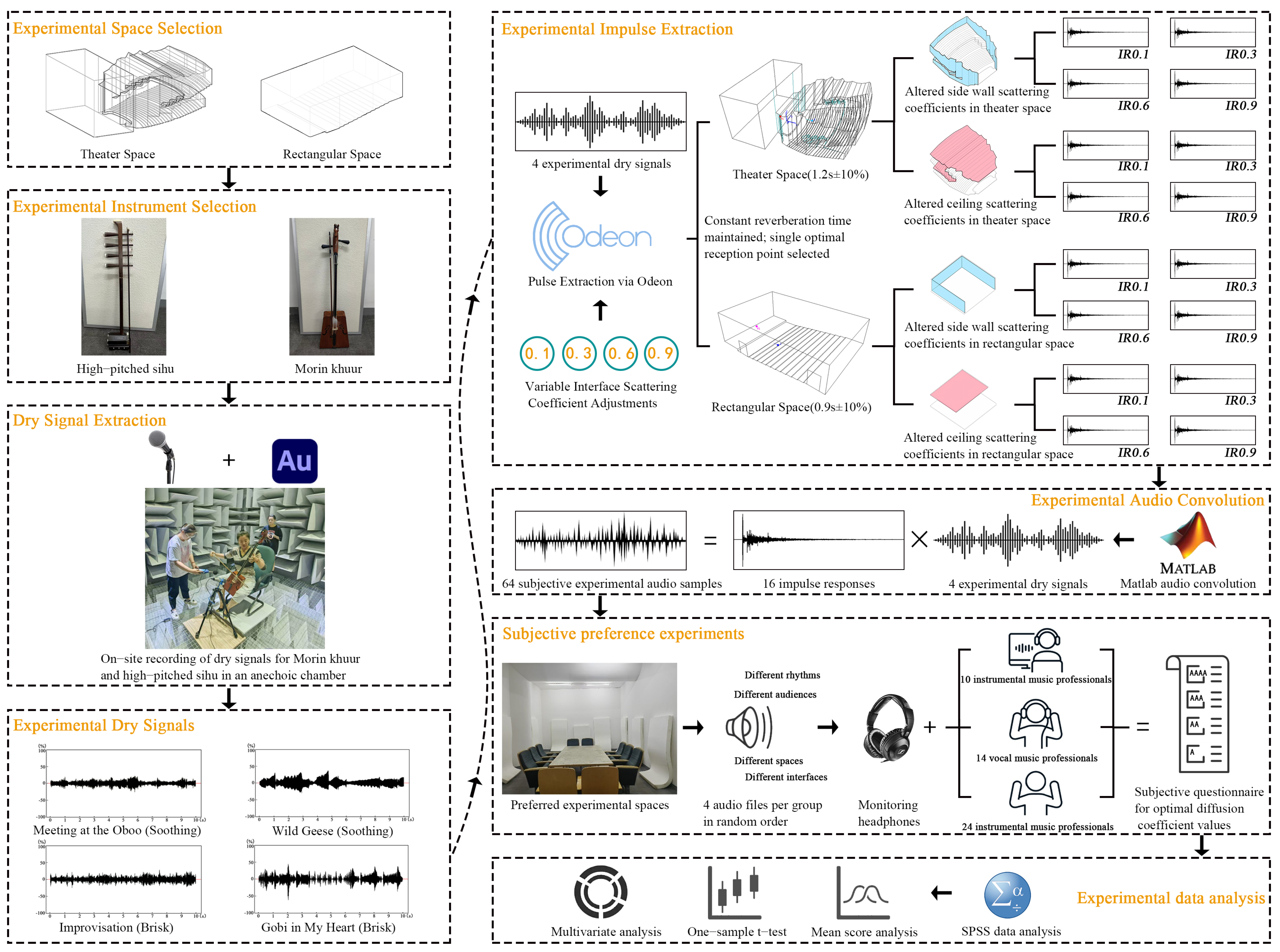
However, several gaps can be identified. While studies have established perceptual thresholds for diffusion, quantitative identification of optimal subjective preference values remains limited. Moreover, prior work has not examined the relative weighting of factors influencing perceptual judgments under varying scattering conditions. A systematic understanding is lacking regarding how subjective perception varies across different conditions affecting surface scattering. Hence, this study focuses on cultural and acoustic contexts in Inner Mongolia, employing traditional Mongolian musical instruments as auditory stimuli. Using subjective preference-based listening methods, it systematically examines how space type, surface type, listener group, and musical tempo influence perceptual judgments under varying scattering conditions. It conducts a comprehensive and structured analysis of influencing factors and listener preferences. Specifically, it addresses the following research questions:
What are the optimal subjective preference ranges for surface scattering in typical performance spaces?
How do variations in space type, surface type, listener group, and musical tempo influence subjective judgments under changing surface scattering conditions?
What are the preferred subjective ranges of scattering coefficients under different influencing factors?
3. Results
After reliability and validity screening, 36 valid questionnaires were retained: 18 from the ordinary listener group, 9 from the instrumental group, and 9 from the vocal group. The coded preference data were analyzed to evaluate the effects of space type, scattering coefficient, scattering surface type, and musical tempo on listener preference, and determine the optimal scattering coefficient under different experimental conditions.
3.1. Selection of Preferred Scattering Coefficients Based on t-Tests
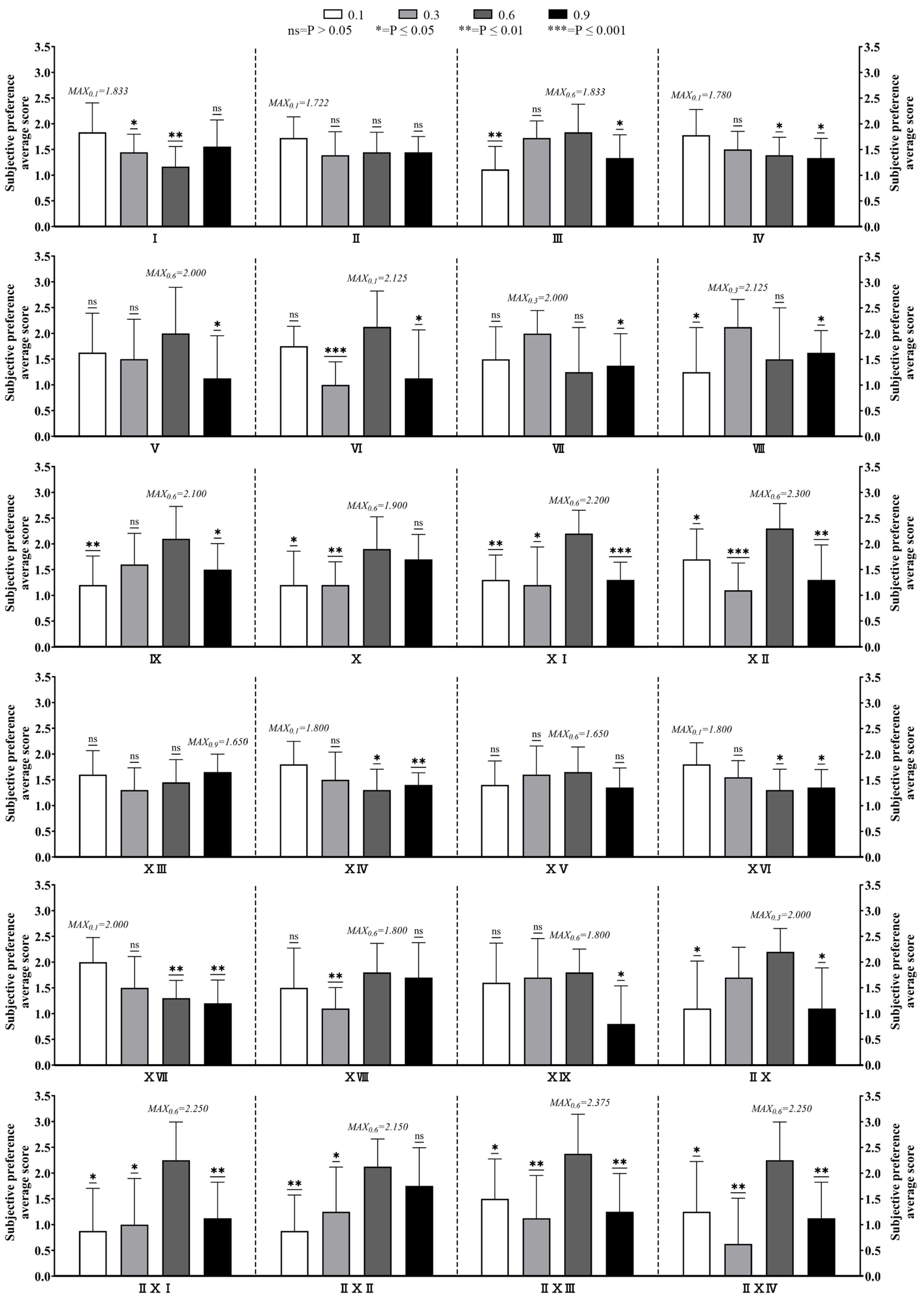
A one-sample t-test was conducted for each combination of space type and experimental condition. Considering “Theater–Instrumental Group–Ceiling–Brisk (IX)” as an example, when the ceiling scattering coefficient was 0.6, the sample mean reached the highest value (2.100). Comparative t-tests between the mean preference score at 0.6 and those at 0.1 and 0.9 yielded p-values of 0.005 < 0.05 and 0.025 < 0.05, respectively. These results indicated significant differences in preference, implying that listeners distinguished between these scattering conditions. However, the p-value for the comparison between 0.3 and 0.6 was 0.093 > 0.05, suggesting no significant difference between the two conditions. Hence, for the “Theater–Instrumental Group–Ceiling–Brisk (IX)” condition, the preferred scattering coefficients were 0.3 and 0.6.
The same analytical procedure was applied to all other test conditions.
Table 3 summarizes the subjective preference outcomes, while
Figure 6 presents the overall
t-test results for the two simulated spaces. Groups I–XII corresponded to the
t-test results for the theater-type space, while groups XIII–XXIV represented the rectangular space.
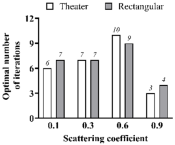
Table 3 summarizes the optimal scattering coefficients across 24 combinations of space type (Theater/Rectangular), listener group (Ordinary/Vocal/Instrumental), surface type (Ceiling/Side wall), and tempo (Brisk/Soothing). Among these combinations, a scattering coefficient of 0.6 appeared most frequently as the optimal value (19 occurrences, 79.16%), considerably more than 0.1 (13, 54.17%), 0.3 (13, 58.33%), and 0.9 (7, 29.16%). Therefore, 0.6 can be regarded as the most preferred scattering coefficient across listener groups, space types, surface types, and musical tempos.
3.2. Optimal Scattering Coefficients Based on Spatial Variation
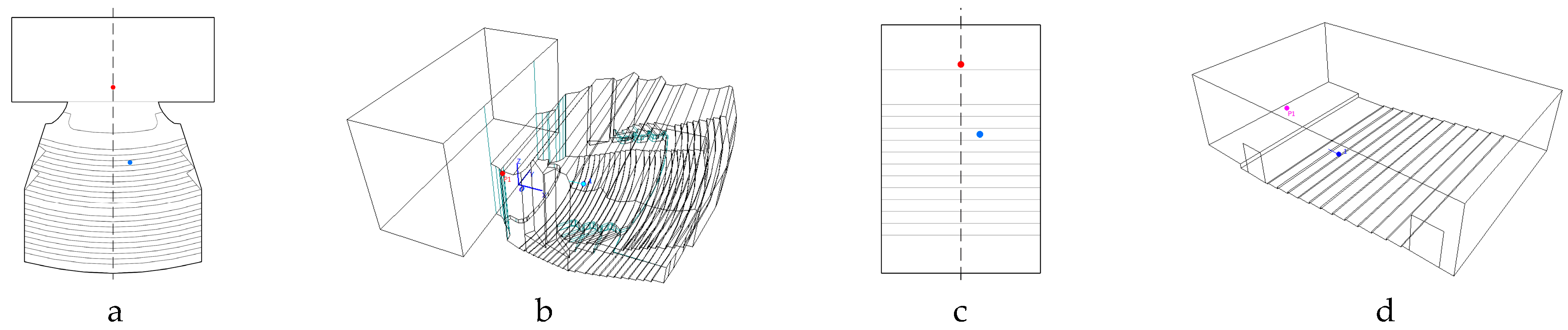
The theater-type space, representing a complex architectural form, and the rectangular-type space, representing a simpler form, are two typical configurations of performance venues. Results show that, in the theater space, the 0.6 scattering coefficient was preferred 10 times, followed by 0.3 (7 occurrences), which was close to 0.1 in frequency. In the rectangular space, the pattern was consistent: 0.6 had the highest count (9 occurrences), followed by 0.3 and 0.1. Notably, 0.9 received the fewest selections in both spaces, showing a significant difference compared to the other coefficients (
Table 4).
Overall, both theater and rectangular spaces exhibited the same optimal scattering coefficient of 0.6. Although space type influenced subjective preference to some degree, the participants in both environments demonstrated a consistent pattern: preference values showed a non-symmetrical “middle-high, edge-low” distribution, with mid-range scattering conditions rated highest. Specifically, listeners showed a markedly stronger preference for the 0.6 condition compared to the high-scattering (0.9) condition, while acceptance of the low-scattering (0.1) condition was slightly below the moderate-scattering (0.3) condition. In general, the participants favored moderate diffusion over excessive or insufficient diffusion.
3.3. Optimal Scattering Coefficients Based on Surface Variation
Previous studies have demonstrated that variations in surface scattering coefficients at different surface locations within performance spaces can differently affect acoustic parameters in the audience area.
Table 5 summarizes the preference frequencies for different scattering coefficients across surface types. For the ceiling, the highest number of preferences occurred at a scattering coefficient of 0.6 (9 occurrences), followed by 0.1 (8 occurrences). The coefficients 0.9 and 0.3 were each preferred 6 times, showing relatively small differences from the top-ranked values. For the side-wall, the preference for 0.6 was the highest (10 occurrences), followed by 0.3 (8 occurrences). In contrast, 0.1 and 0.9 received significantly fewer preference, with only 5 and 1 occurrences, respectively.
These results indicated that for both ceiling and side-wall, the optimal scattering coefficient was consistently 0.6, and surface variation exerted a notable effect on subjective preference across scattering coefficients. Preferences for side-wall scattering were more concentrated than for ceiling scattering, suggesting that participants were more perceptually sensitive to side-wall scattering variations. In both surfaces, participants showed a stronger preference for mid-to-high scattering levels (0.6) than for lower or higher values.
3.4. Optimal Scattering Coefficients Based on Listener Group Variation
Perceptual sensitivity to sound quality varied among different listener groups.
Table 6 summarizes the preference frequencies by participant group. Among ordinary listeners, the 0.1 and 0.3 conditions were most frequently preferred (7 occurrences each), followed by 0.6 and 0.9 (4 occurrences each). In the vocal group, 0.6 had the highest preference frequency (7 occurrences), closely followed by 0.1 and 0.3 (6 occurrences each), while 0.9 was the least preferred (1 occurrence). For the instrumental group, the preference for 0.6 was strongest (8 occurrences), significantly exceeding that for 0.9 (2 occurrences) and 0.3 (1 occurrence).
These findings reveal significant differences in subjective preference across expertise levels. As professional expertise increased, participants’ preferences for scattering coefficients became more consistent and clearly defined. Both professional groups—vocal and instrumental—favored moderate-to-high diffusion (0.6), whereas the ordinary group preferred lower diffusion levels (0.1–0.3). Ordinary listeners primarily focused on overall visual and auditory comfort during performances and exhibited lower sensitivity to scattering coefficient variations. As shown in
Table 5, this group frequently selected all four coefficients (0.1, 0.3, 0.6, and 0.9) as equally acceptable, indicating uncertainty in determining an optimal value.
For vocal participants, the key concern was the compatibility between reflected sound and vocal frequency range. A moderate-to-high scattering coefficient (0.6) offered a desirable balance between sufficient loudness and clarity, making it the optimal choice, while lower coefficients (0.1, 0.3) remained acceptable. In contrast, instrumental performers required more precise acoustic conditions to accommodate the diverse frequency characteristics of instruments and maintain spatial uniformity in sound distribution. Both overly high and overly low scattering coefficients could disrupt the spectral balance of the sound field, leading to less favorable acoustic conditions. Consequently, instrumental participants consistently preferred a scattering coefficient of 0.6.
3.5. Optimal Scattering Coefficients Based on Musical Tempo
Regarding musical tempo, the summarized results of participant preferences are shown in
Table 7. In both brisk and soothing musical conditions, a scattering coefficient of 0.6 received the highest number of preferences, 10 and 9 times, respectively. This was followed by coefficients of 0.3 and 0.1, while 0.9 was selected the least frequently and showed a significant difference compared with the other coefficients.
For tempo variation, the most preferred scattering coefficient was 0.6 in both brisk and soothing conditions, although surface type exerted some influence on listener preference. These findings are consistent with the results of spatial variation, indicating that participants generally favored moderate scattering over excessive or insufficient scattering when evaluating samples with different musical tempos.
Taken together, listener preferences for scattering coefficients varied across space types, surface types, listener groups, and musical tempos. Across all experimental conditions, a scattering coefficient of 0.6 emerged as the most preferred value, while 0.1 was relatively favored among non-professional listeners as well.
4. Discussion
Through the subjective preference experiment, this study found that in performance scenarios featuring traditional Mongolian instruments, a scattering coefficient of 0.6 consistently yielded the highest listener preference across varied space types, surface types, listener groups, and musical tempos [
23,
33]. In contemporary engineering practice, the maximum attainable diffusion coefficient is 0.7. When utilizing a quadratic residue diffusion (QRD) type diffuser, achieving the diffusion coefficient of 0.6 investigated in this study necessitates an interface depth ranging from 50 mm to 100 mm, which aligns with the high diffusion range identified in Hann’s research [
47]. In his work, Concert Halls and Opera Houses, Bärnacka documented subjective acoustic ratings of 76 Western concert halls by professional musicians. The Vienna Golden Hall (rectangular hall) and Boston Symphony Hall (rectangular hall) received the highest ratings, with all musicians awarding them top marks. It was observed that both concert halls employed textured surfaces (e.g., coffered ceilings and ornamental walls). These surfaces functioned as highly diffusive interfaces, yielding scattering coefficients within the 0.5–0.7 range [
39]. This outcome aligned with the optimal scattering coefficient value of 0.6 that was identified in this study.
4.1. The Influence of Variable Factors on Subjective Preferences
This result confirmed the broadly adaptive value of the scattering coefficient in optimizing sound-field quality [
23,
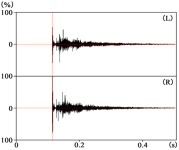
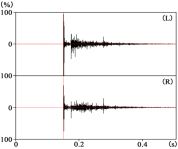
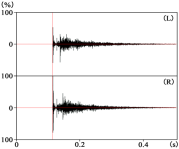
33]. Previous studies have shown that changes in surface scattering within performance spaces affect the impulse response at the listening position. From an auditory perspective, the sequence of reflected sounds in the impulse response influences key acoustic parameters, and different spatial geometries further modify these effects. These findings are consistent with the present study’s results regarding spatial and surface variations.
When examining the influence of scattering on individual surfaces, the current study found that changes in side-wall scattering produced more perceptually distinguishable audio samples than ceiling scattering, suggesting that side-wall diffusion had a stronger impact on room-acoustic quality. This aligned with Zhu [
46]. A literature review reveals that the lateral sound energy fraction (LF
80) and the early interaural cross-correlation coefficient (IACC
early) emerge as the most salient objective measures for characterizing apparent source width (ASW) and spatiality. The most critical objective acoustic parameters for characterizing ASW and spatiality are IACC
early. Lower IACC
early values have been found to correspond to a more pronounced spatial perception experience [
47,
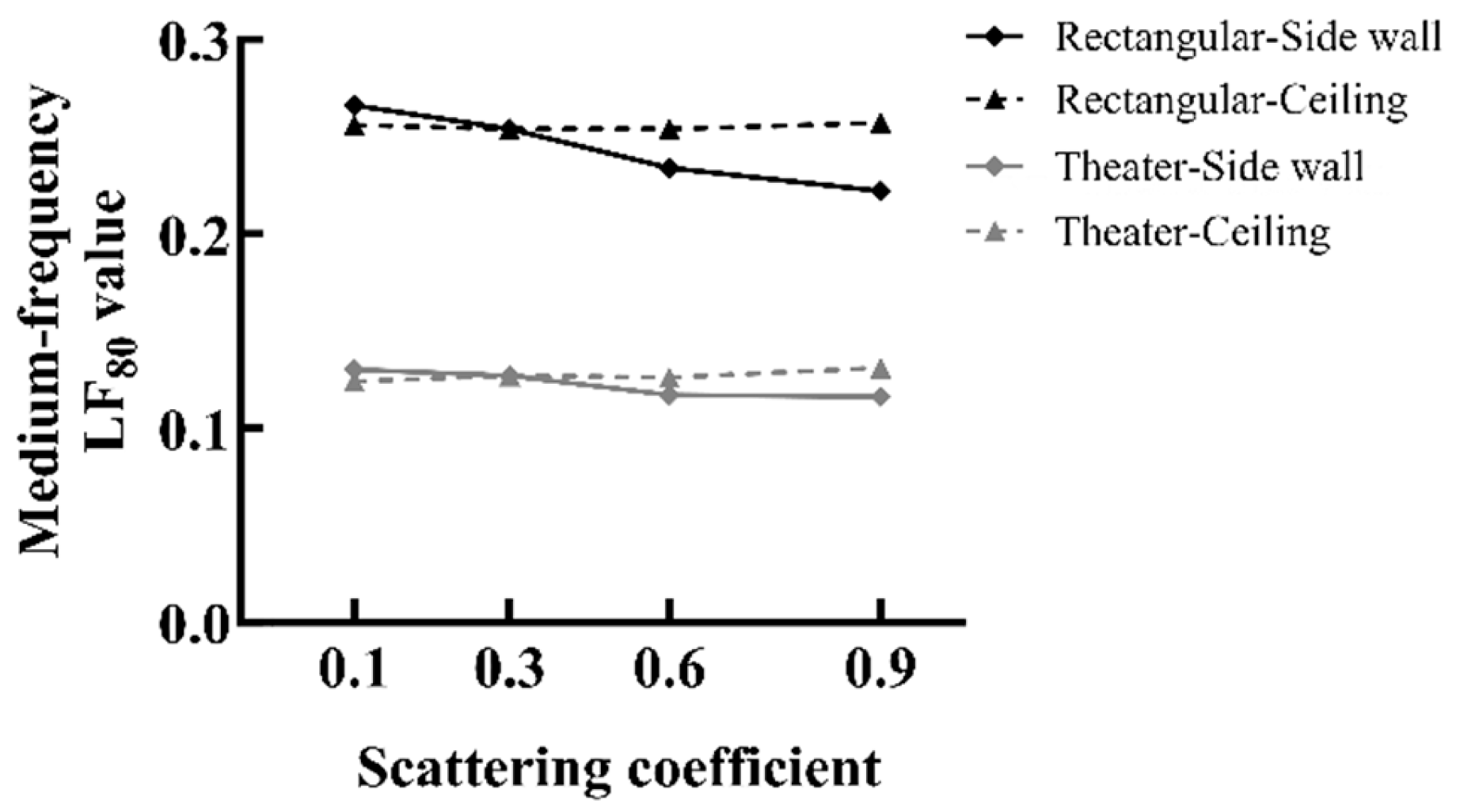
54]. This study collated mid-frequency LF
80 and IACC
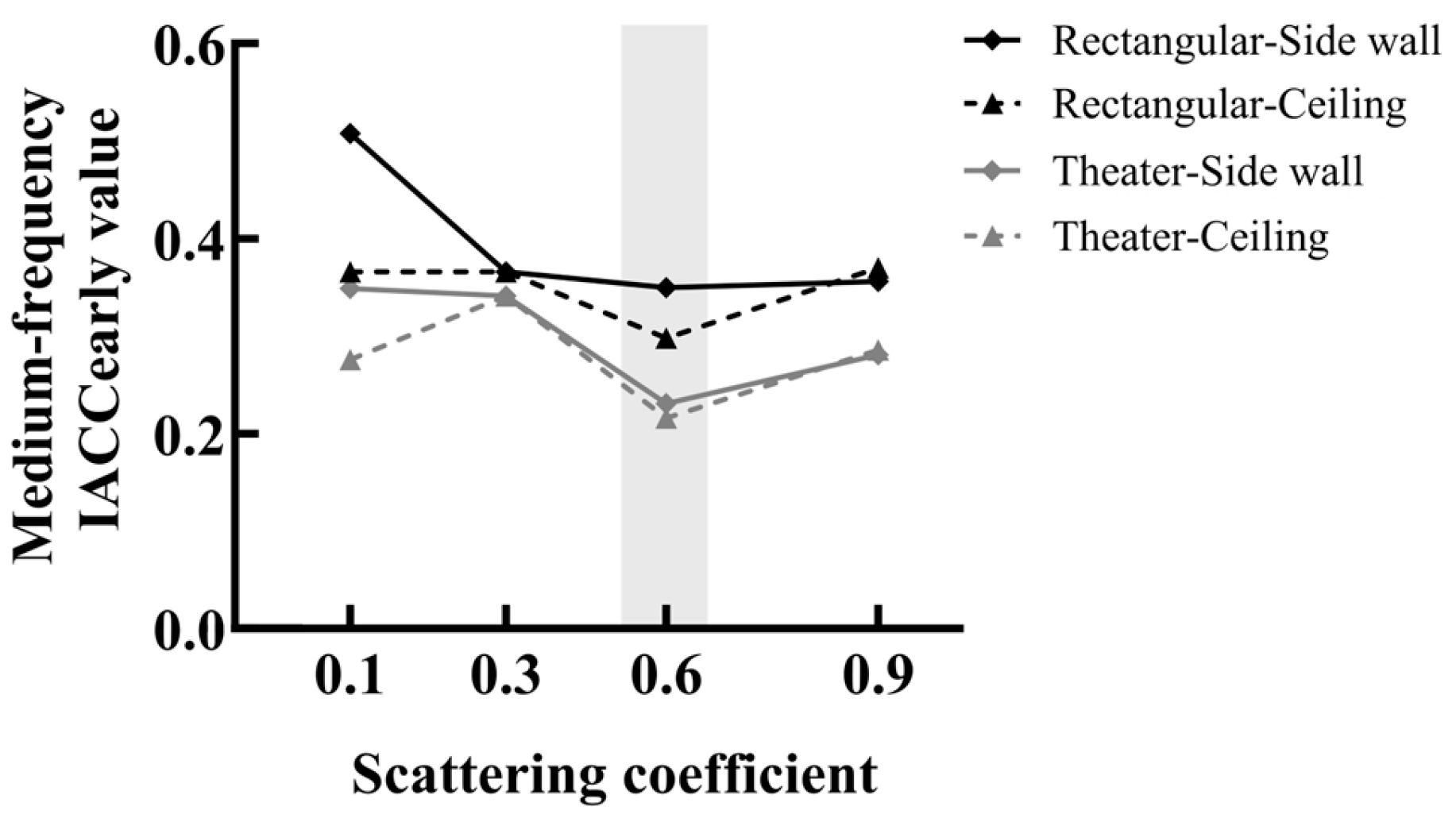
early values for binaural impulse responses under four scattering coefficient conditions, as illustrated in
Figure 7 and
Figure 8. Analysis indicates that as the scattering coefficient increases, enhanced sidewall scattering capability leads to a significant rise in LF
80 values across both spatial configurations, with a notably pronounced variation amplitude. In contrast, fluctuations in ceiling scattering capacity exhibited a comparatively negligible effect on LF
80 values. Concurrently, IACC
early values demonstrated an initial decline, followed by an increase; the decrease was attributed to side walls being more significant than that from the ceiling. Both reached their minimum values at a scattering coefficient of 0.6. These findings confirm that alterations in side wall scattering characteristics exert a more dominant influence on listeners’ spatial perception than those of the ceiling. Furthermore, they indicate that a scattering coefficient of 0.6 represents a critical threshold for optimizing spatial auditory experiences. The conclusions drawn from this objective parameter analysis align with the results of the subjective listening experiments conducted in this study, thereby further substantiating the validity of the findings.
Furthermore, the study revealed that musical tempo affected participants’ subjective judgments, a pattern comparable to Xu, who investigated the influence of musical tempo on visitors’ dwell time in exhibition environments [
28].
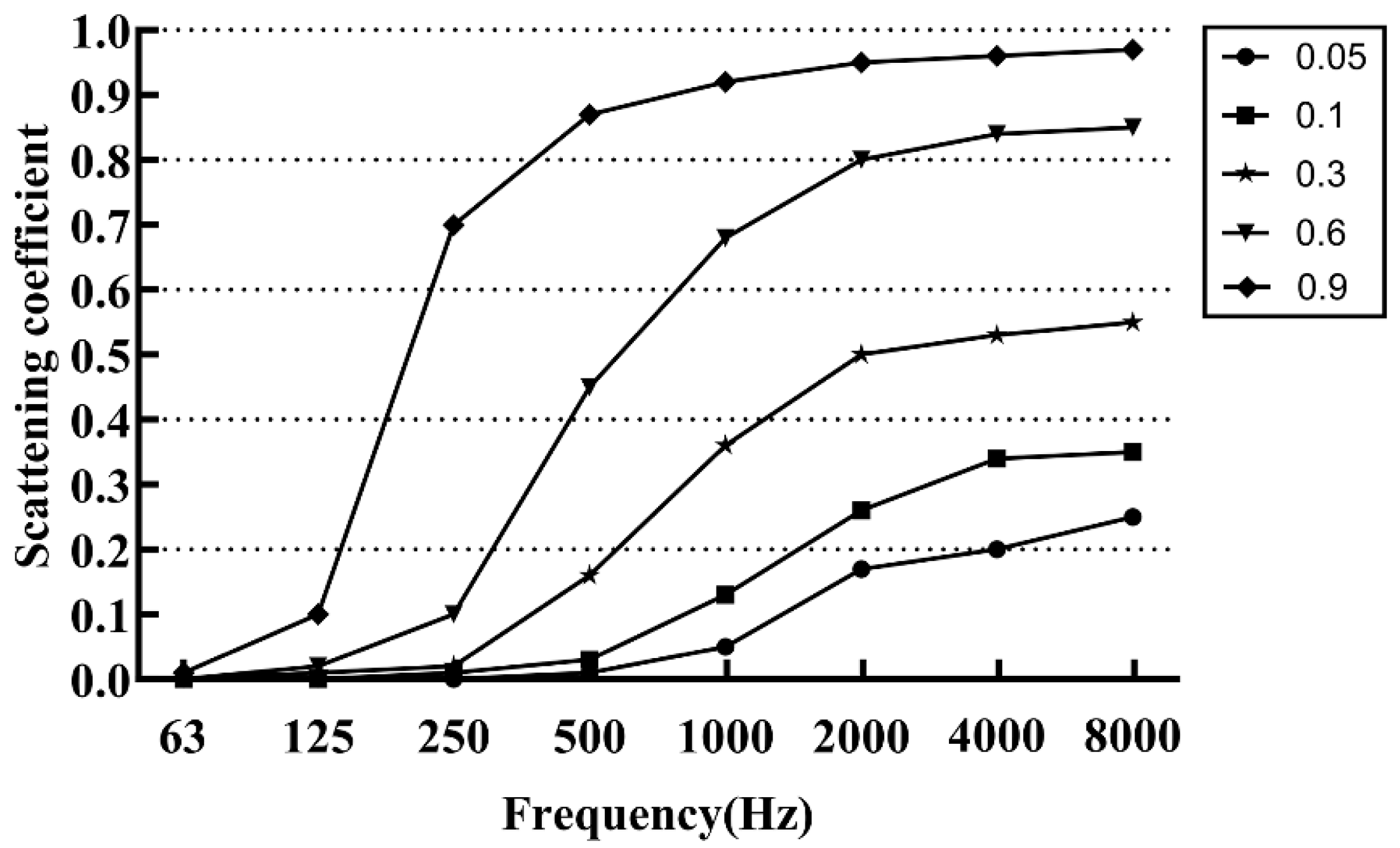
The present experiment tested four scattering coefficients (0.1, 0.3, 0.6, and 0.9). Participants were able to make discernible preference judgments within this range of variation, consistent with previous research identifying perceptual thresholds for scattering coefficients between 0.27 and 0.5 [
25,
37,
44]. Unlike earlier studies that primarily focused on the perceptual detectability or audibility thresholds of scattering variation, this work determined an optimal scattering coefficient within the tested spaces using a subjective preference approach. The analysis revealed that consistency in selecting the optimal value decreased with lower levels of listener expertise. Non-professional participants frequently identified multiple coefficients as equally preferred and generally favored lower scattering levels. Vocal specialists made more focused judgments; however, some selected up to three preferred coefficients. Instrumental specialists consistently demonstrated a preference for the 0.6 scattering condition. These differences likely reflect varying perceptual sensitivities and evaluation criteria associated with musical training, suggesting that long-term musical practice enhances one’s sensitivity and preference differentiation for sound-field diffusion.
4.2. Limitations and Outlook
Despite its contributions, the current study has certain limitations. First, the research employed high-fidelity acoustic simulation methods. While it is reasonable to posit that simulations can reflect real acoustic scenarios, the accuracy of simulations is constrained by the number of sound rays employed, leading to discrepancies between simulated and actual spaces. Nevertheless, the conclusions drawn from these simulations provide valuable reference points for the acoustic design and analysis of real auditoriums. Second, while this study proposes a scattering coefficient of 0.6 as a reference value for subjective listening preference, the current scarcity of test samples for diffuser scattering coefficients means that engineering practice requires substantial empirical scattering coefficient data to establish clear correspondences between diffuser values and design approaches. Finally, the present study employed headphones for the administration of subjective listening tests. However, this approach may influence spatial perception in comparison with natural listening in actual rooms. Nonetheless, the aforementioned limitations do not undermine the validity of the core trends and design principles revealed by this research. Rather, they can offer constructive directions for subsequent in-depth investigations.
4.3. Applications
Overall, this research demonstrates how space type, surface type, listener group, and musical tempo collectively shape audience preference for different scattering coefficients, with 0.6 emerging as the most favored value. Since the simulation models were based on real-world performance spaces, the findings may serve as a design reference prototype for future auditorium and theater acoustics. They provide a benchmark for assessing sound-quality design. Moreover, the differing preferences observed across listener groups offer useful theoretical guidance for practical acoustic design: for general audience spaces or semi-professional venues, slightly lower scattering coefficients may be appropriate, whereas professional performance environments can adopt 0.6 as a reference value. This study contributes to improving acoustic design strategies, enabling designers to better control room-acoustic quality and enhance the listening experience for audiences.