Article

Evacuation Time Variability Caused by Equal-Cost Path Selection in Underground Station Routing

1
Department of Civil and Environmental Engineering, Gachon University, 1342, Seongnam-daero, Sujeong-gu, Seongnam-si 13120, Republic of Korea
2
Department of Fire Safety Engineering and Disaster Management, University of Seoul, 163, Seoulsiripdae-ro, Dongdaemun-gu, Seoul 02504, Republic of Korea
3
Urban Life Network, Yongun-ro 1-3, 2F, Dae-dong, Dong-gu, Daejeon 34648, Republic of Korea
*
Authors to whom correspondence should be addressed.
Buildings 2026, 16(18), 3736; https://doi.org/10.3390/buildings16183736 (registering DOI)

Submission received: 12 August 2026 / Revised: 13 September 2026 / Accepted: 17 September 2026 / Published: 20 September 2026

Abstract

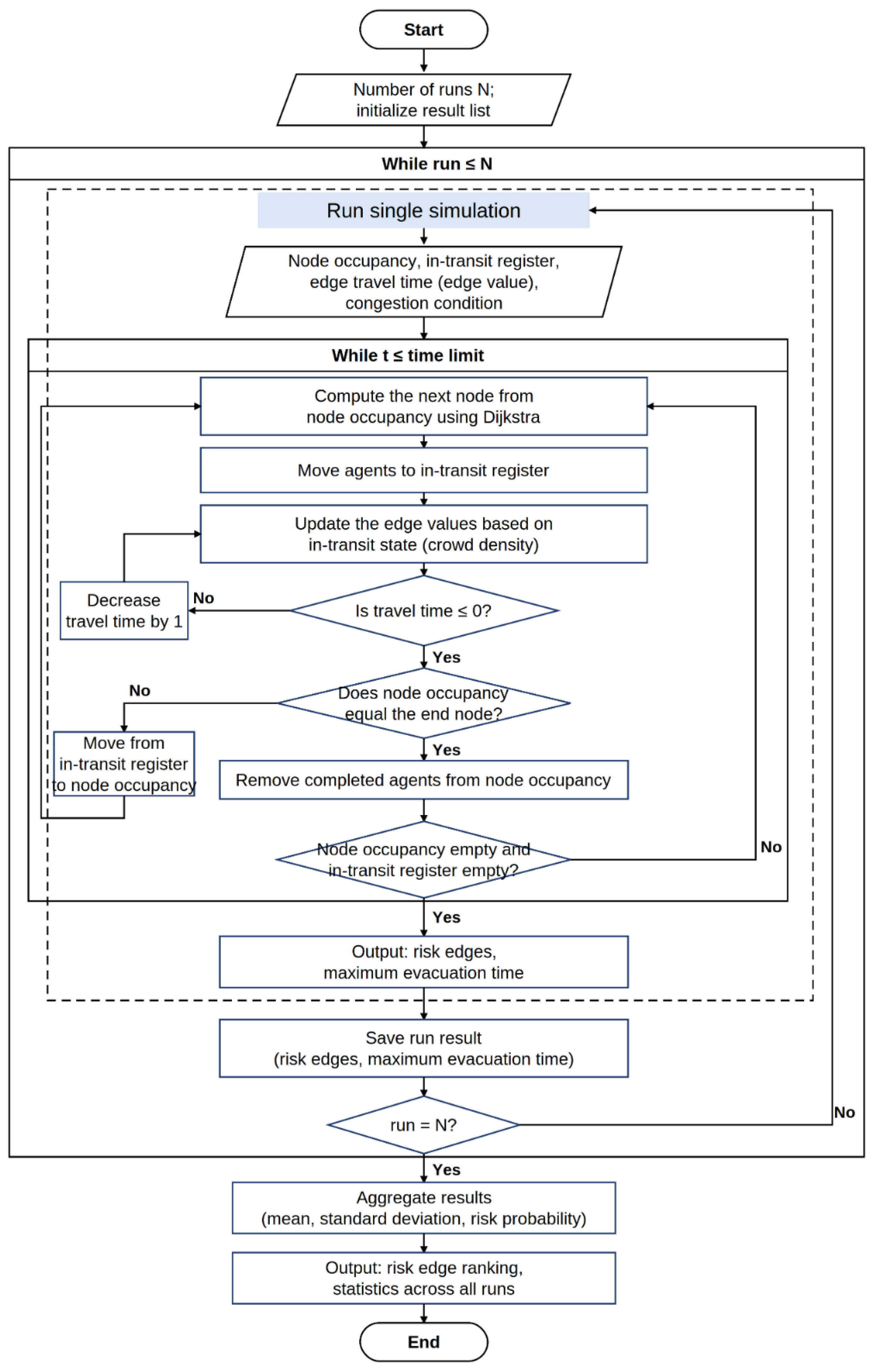
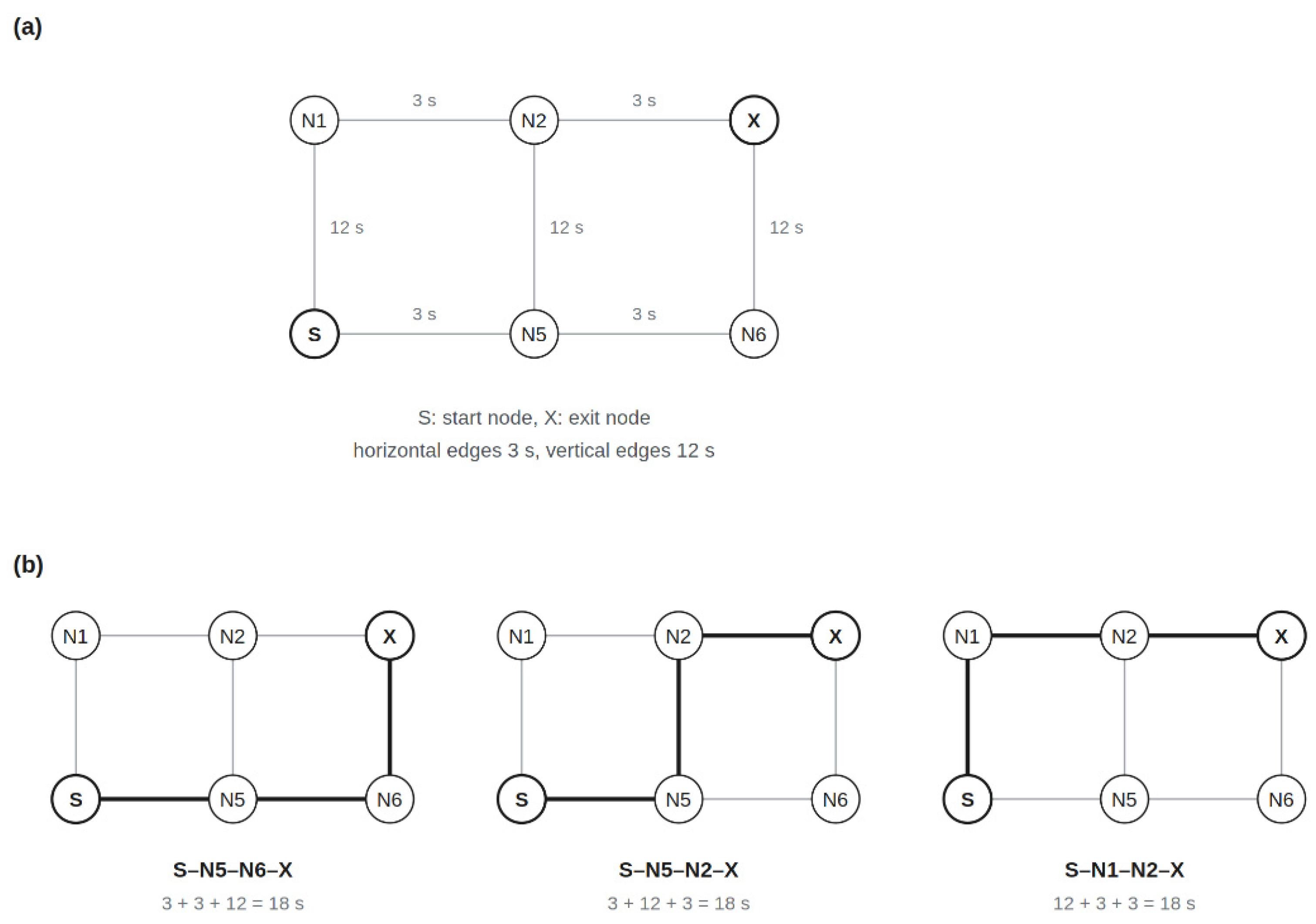
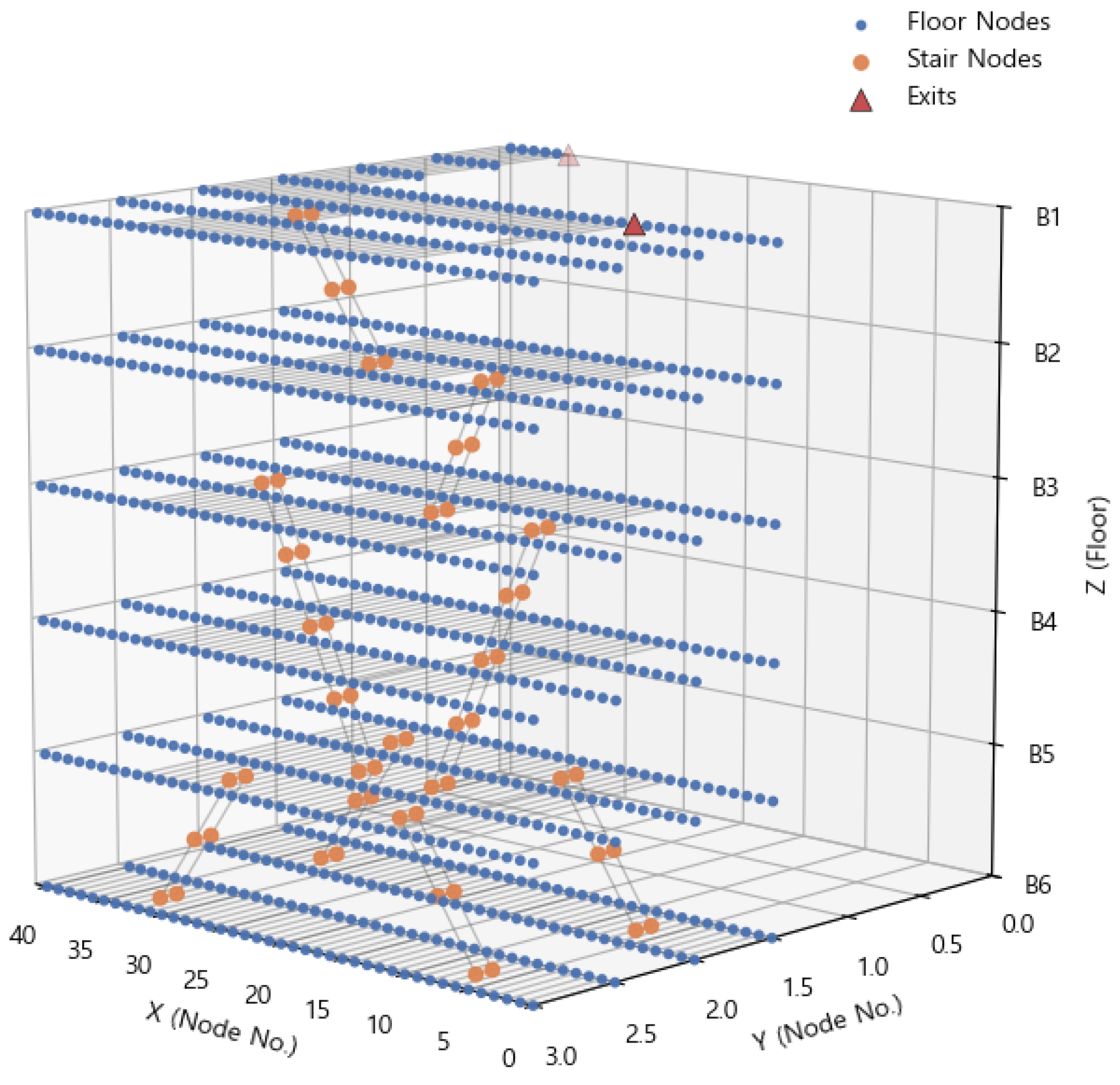
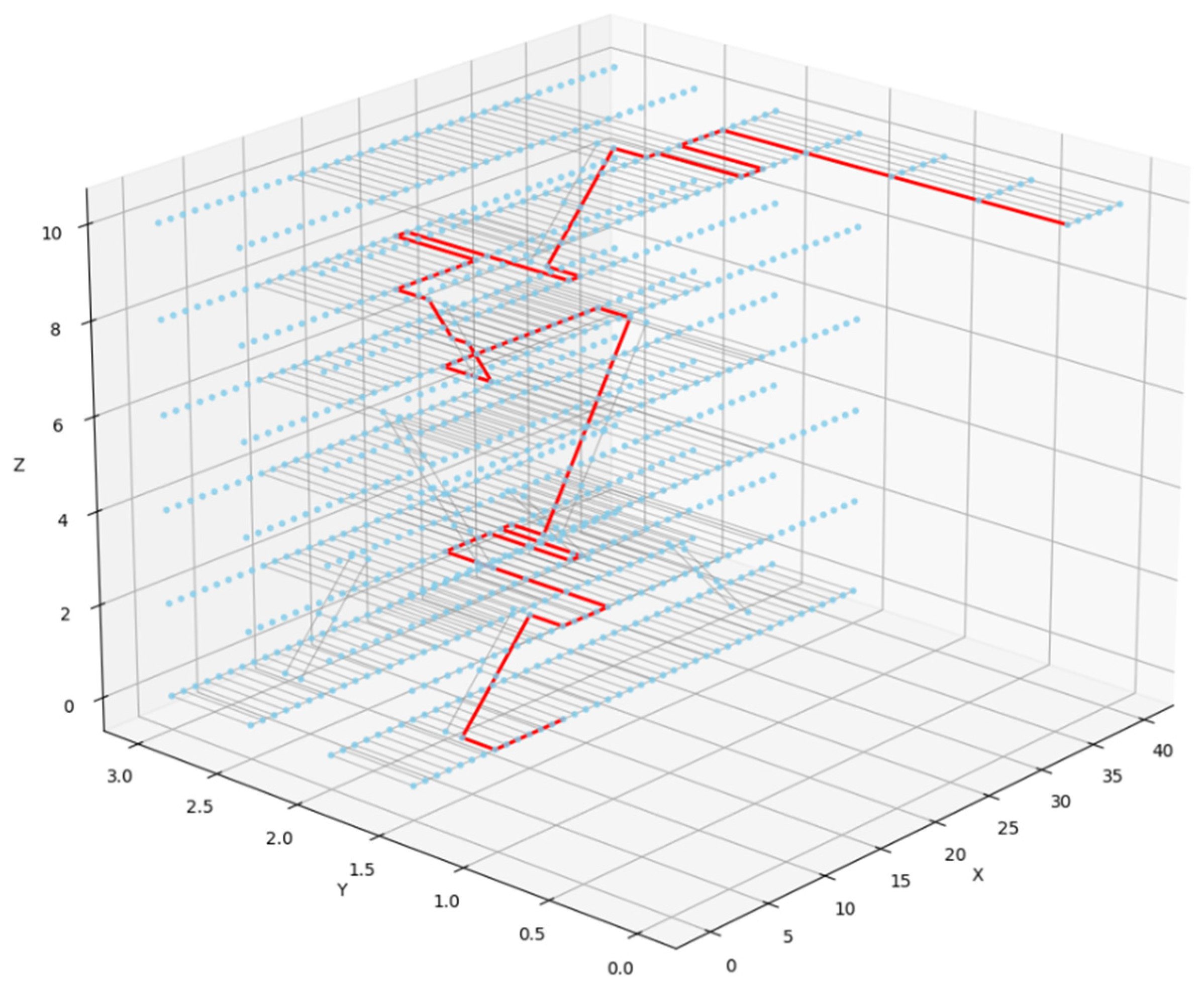
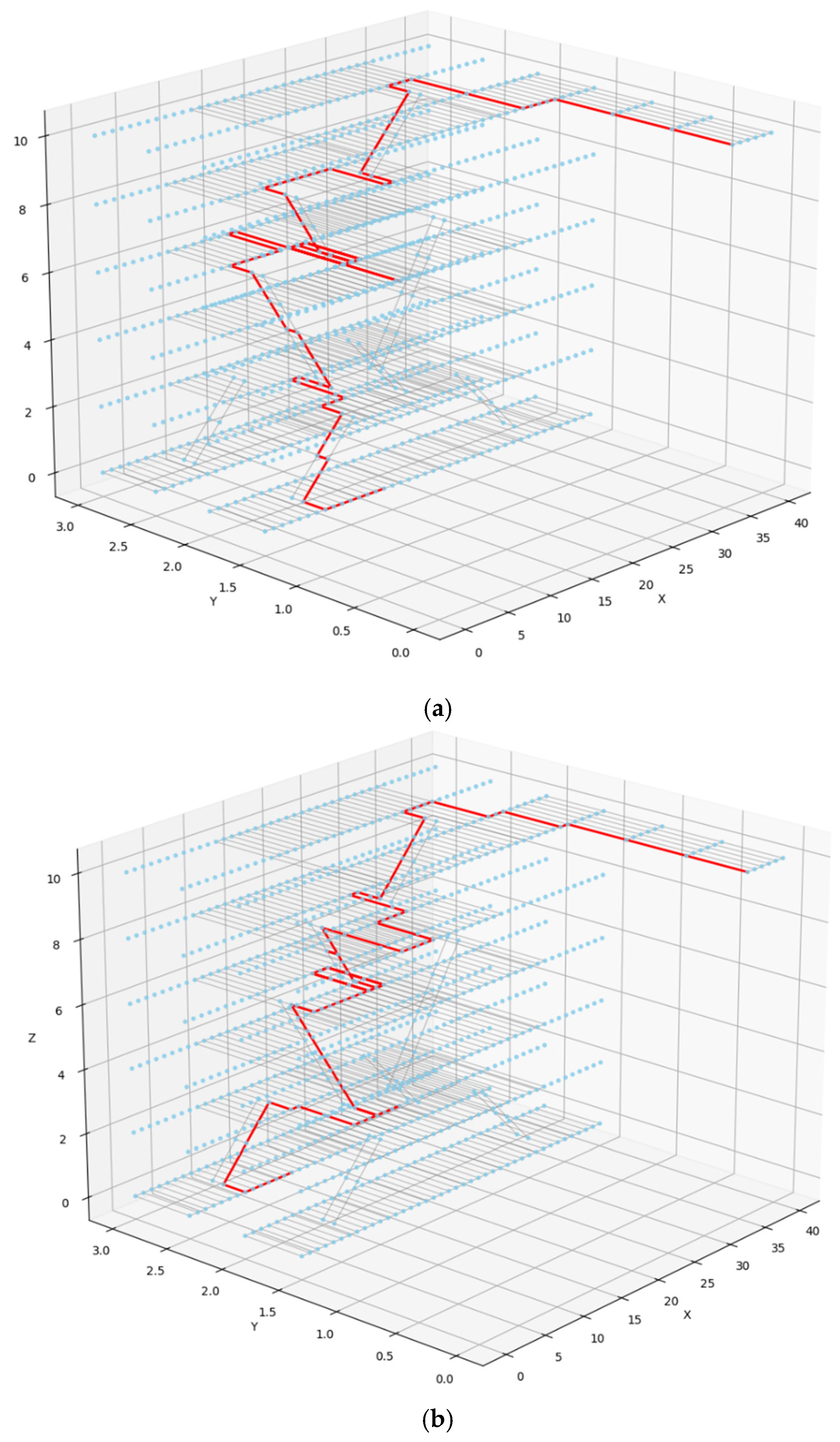
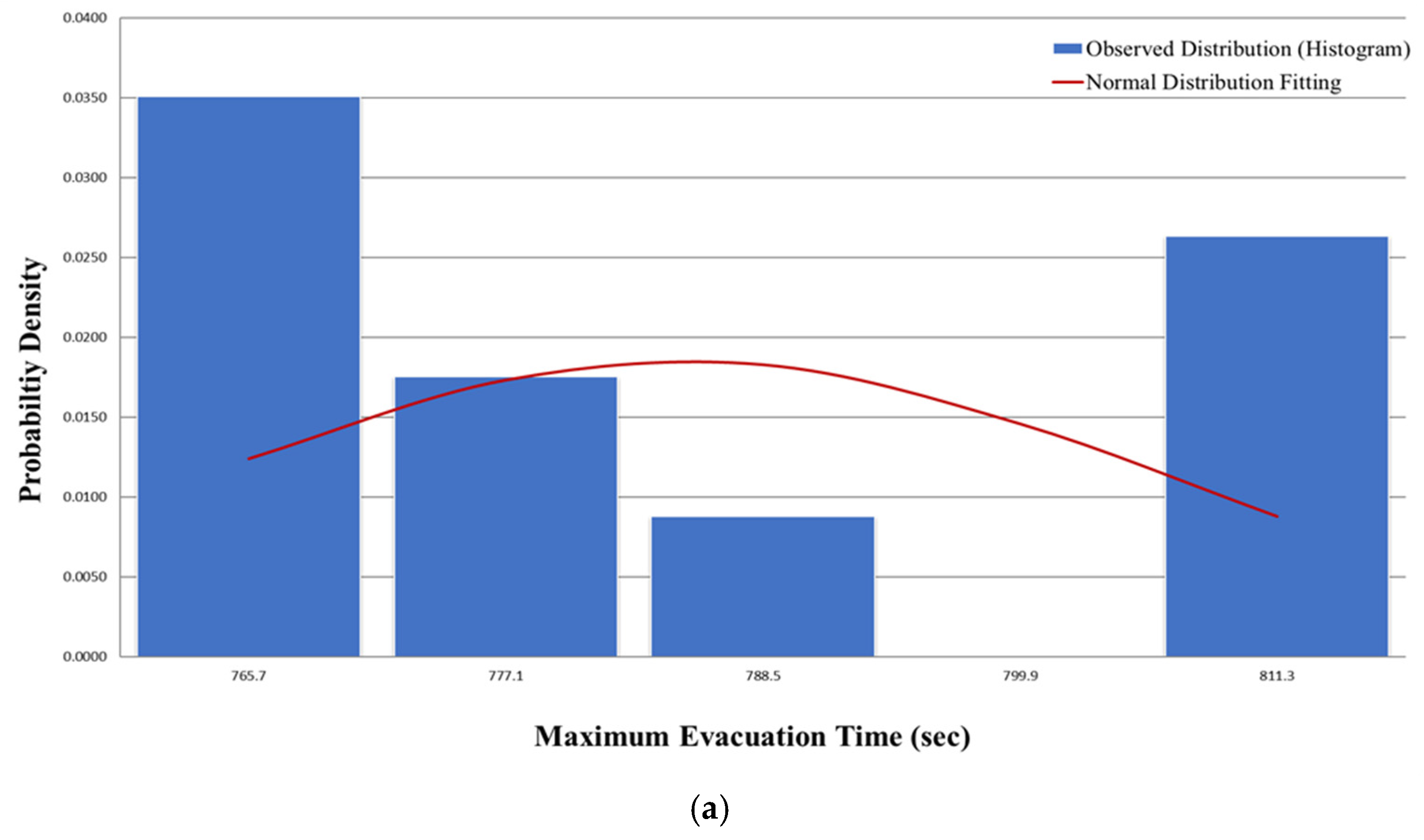
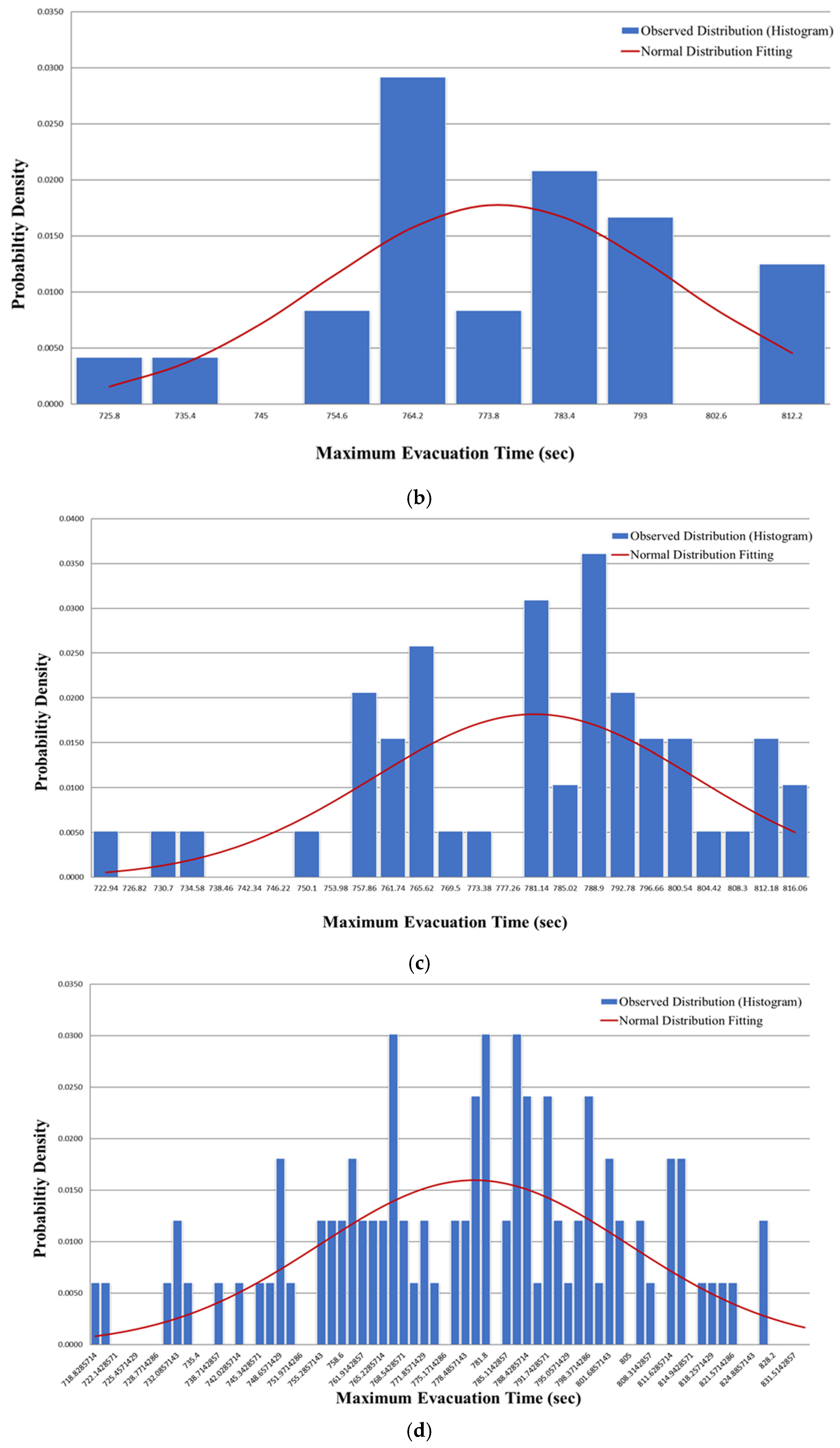
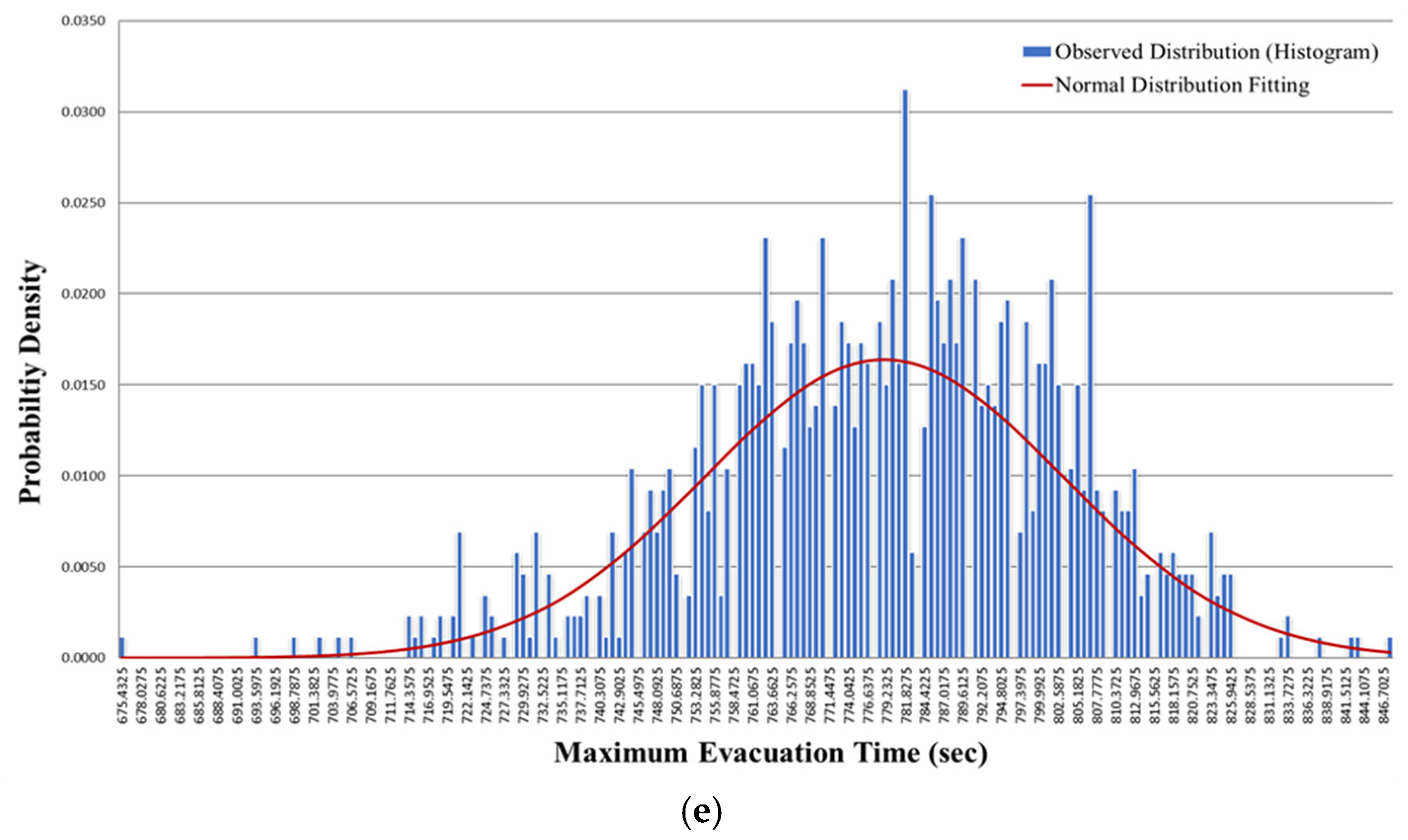
In evacuation analysis for underground stations, Dijkstra’s algorithm is widely used to estimate the maximum evacuation time on the assumption that it returns a unique and reproducible route. This assumption does not hold in structurally symmetric networks, where many routes share an identical cost and the route actually returned depends on an arbitrary, implementation-dependent tie-breaking rule. The aim of this study is to quantify how much the maximum evacuation time varies solely as a result of this tie-breaking rule, and to determine how many repeated executions are required before that variability is adequately characterized. A six-level underground station network of 720 nodes and 2222 edges was used. A random tie-breaking rule was implemented within Dijkstra’s algorithm, and the evacuation simulation was repeated under independently seeded runs of 1, 10, 25, 50, 100, and 1000 iterations while the station layout, movement speeds, congestion thresholds, and evacuee distribution were held fixed. A single execution produced a maximum evacuation time of 782 s, whereas the 1000-iteration case yielded a range of 671–864 s. The mean and median stabilized within 10–25 iterations, but the observed minimum and maximum continued to widen through 1000 iterations. These results show that a single Dijkstra execution can reasonably estimate typical evacuation performance but may underestimate the upper-tail evacuation times that govern life-safety design. For practical application to underground station design and evacuation-time verification, it is recommended that Dijkstra-based route generation be repeated across multiple tie-breaking realizations and that upper-percentile evacuation times be reported alongside the deterministic single-run result, so that the required safe egress time used in life-safety assessment reflects the variability inherent in equal-cost path selection.
Keywords: Dijkstra algorithm; equal-cost path; tie-breaking; evacuation time uncertainty; underground station; evacuation simulation; Monte Carlo simulation Dijkstra algorithm; equal-cost path; tie-breaking; evacuation time uncertainty; underground station; evacuation simulation; Monte Carlo simulation