Review

Valuer-in-the-Loop: A Co-Adaptive Workflow for AI-Enabled Real Estate Valuation

Department of Architecture and Built Environment, Northumbria University, Sutherland Building, Northumberland Road, Newcastle upon Tyne NE1 8ST, UK
*
Author to whom correspondence should be addressed.
Buildings 2026, 16(18), 3727; https://doi.org/10.3390/buildings16183727 (registering DOI)
Submission received: 20 July 2026 / Revised: 2 September 2026 / Accepted: 4 September 2026 / Published: 19 September 2026
(This article belongs to the Special Issue Sustainable Urban Development and Real Estate Analysis)

Abstract

This paper proposes an original co-adaptive workflow termed Valuer-in-the-Loop, which establishes a pathway for integrating artificial intelligence within real estate valuation. Structural changes in real estate markets, driven by the rise of hybrid working, e-retail and evolving occupier behaviours, are reshaping the built environment and increasing uncertainty within real estate markets. These changes are accelerating demand for advanced property technologies capable of supporting risk analysis and investment profiling under rapidly evolving market conditions. The increasing adoption of artificial intelligence within real estate valuation raises fundamental questions regarding the relationship between computational analysis and professional judgement. While advances in automated valuation models have improved the ability to analyse large volumes of market data, valuation remains a professional activity in which the application of professional judgement is central. Adopting a deductive research design based on a novel conceptual review, the paper synthesises professional valuation standards and valuation theory to conceptualise real estate valuation as a structured workflow. Within this workflow, valuation models are positioned as quantitative tools that are used to implement valuation methods in whole or in part within a broader automated valuation system. The workflow provides an original theoretical contribution to the field by clarifying and extending the hierarchical relationship between valuation approaches, methods and models. It also newly conceptualises AI-enabled real estate valuation as a co-adaptive process, termed herein “Valuer-in-the-Loop”, through which valuation knowledge is represented through repeated interactions between the valuer and the automated valuation system. In practice, the Valuer-in-the-Loop workflow provides a conceptual basis for professional bodies and practising valuers to integrate AI within established valuation workflows, while offering a set of principles for technology developers and researchers to design co-adaptive AI systems.

1. Introduction

As a professional activity, real estate valuation occupies a central role within international financial systems, supporting secured lending, investment decisions, pension fund management, financial reporting, property taxation and a range of other economic and regulatory functions [1]. Although the notion of value has long been associated with urban land economics [2], the contemporary practice of real estate valuation emerged alongside the expansion of organised financial systems and increasingly sophisticated real estate markets during the twentieth century [3]. Within this period, the concept of market value became the dominant basis of value, while three approaches to valuation became widely recognised as the overarching economic framework: the market, income, and cost approaches [3]. These three approaches are applied through the five traditional methods of valuation: the comparable, investment, residual, profits, and cost methods [4].
In response to the increased financialisation of valuation practice, formal standards were developed to promote transparency, accountability, and public confidence in the practice. The first national valuation standards (‘The Red Book’) was introduced by the Royal Institution of Chartered Surveyors (RICS) in 1976, followed by the introduction of the International Valuation Standards (IVS) by the International Valuation Standards Council (IVSC) in 1985 [5]. The standards framework provides principled guidance for real estate valuation, but it does not prescribe the specific technological or analytical tools that may be used. Consequently, the emergence of automated valuation models (AVMs) in US financial markets demonstrated how quantitative techniques could replicate certain components of the valuation process [4]. A burgeoning literature base has subsequently developed that examines the comparative performance of numerous predictive modelling techniques [6,7,8,9,10]. Recent attempts to synthesise the literature has reintroduced the notion of ‘hybrid approaches’ [11]. Considered initially by Downie and Robson [12], hybrid approaches consider how AVMs can support professional practice rather than operate independently of it. Despite a growing body of research examining the application of artificial intelligence within valuation contexts [13,14,15,16], the adoption of new valuation technologies has occurred within an environment characterised by persistent technological caution [12,17].
The significance of these technological developments extends beyond valuation practice alone and to the wider functioning and long-term adaptation of real estate markets. Real estate markets are currently experiencing significant structural change driven by factors such as hybrid working and the continued growth of e-retail, both of which raise questions on the future performance and utilisation of core real estate assets [18]. In this environment, valuation plays a critical role in investment profiling and development appraisal, while the growing availability of AI-enabled valuation can enhance these professional activities through the application of advanced property technologies to perform real-time risk analysis and monitor future market trends [11]. The application of AI enables dynamic valuation practice at the speed that structural market change now demands, as traditional valuation cadence struggles to keep pace with rapidly shifting occupier demands.
As the implications of artificial intelligence have expanded, valuation professional organisations (VPOs) have begun to address the question of artificial intelligence in real estate valuation. Most notably, the IVSC perspectives paper Navigating the Rise of Artificial Intelligence in Valuation [19] considers the opportunities, risks, and challenges associated with AI-enabled real estate valuation; while the RICS professional standard Responsible use of artificial intelligence in surveying practice [20] considers the baseline knowledge, practice management and uses of AI. At the time of writing, RICS is developing guidance entitled Artificial intelligence in real estate valuation which will explore the application of AI throughout the valuation process, while consulting on Comparable evidence in real estate valuation, 2nd edition which considers the use of AVM outputs as a source of comparable evidence. Collectively, these developments demonstrate that the profession is moving towards a framework in which AI supports valuation practice, while professional judgement remains central to the formation of value opinions. However, there remains no overarching conceptual framework explaining how artificial intelligence can be embedded within professional valuation practice in a manner that is consistent with established professional standards, traditional valuations methods and valuation knowledge.
Accordingly, this paper asks the following original research question: How can artificial intelligence be integrated with the valuation process to support, rather than replace, professional judgement?
For the purposes of this paper, AI is considered to support professional judgement if the AI system performs or assists the completion of tasks within the valuation process, while the valuer retains the authority to modify or override the inputs, analysis or outputs. Conversely, AI is considered to replace professional judgement if the system determines the valuation outcome without meaningful opportunity for the valuer to influence or override the result.
To this end, the paper develops a novel workflow for AI-enabled real estate valuation termed herein ‘Valuer-in-the-Loop’. The workflow provides professional bodies such as the IVSC and RICS with a conceptual basis to directly inform the live standard-setting process that is currently being drafted without one. It provides valuers with a structured approach to using AI while retaining professional judgement, technology developers with principles for designing systems that support rather than replace professional judgement, and researchers with a framework for examining AI adoption in other regulated activities where judgement and accountability must be balanced, such as medical and legal professions. The significance of these contributions is underscored by the scale at which AI-enabled valuation is already embedded in professional practice. Among surveyed UK mortgage lenders, AVMs are employed in 23% of owner-occupied purchase mortgages and 43% of remortgages [21], while in the United States AVM appraisal waivers account for around 10–15% of government-sponsored purchase mortgages, having approached 50% during the COVID-19 pandemic [22]. More broadly, RICS [23] identifies AVM adoption as occurring “at a global scale”, particularly in residential lending, mass appraisal and consumer-facing valuations, while the European Mortgage Federation [24] reports routine AVM use across European mortgage markets and many portfolio valuation processes.
The core contribution of the paper lies in the development of a unified framework that connects the valuation process, the valuation hierarchy, and AI-enabled systems research. In doing so, the paper directs the discussion of AI-enabled real estate valuation from a models-based approach to a process-based perspective through a progressively structured discussion. Section 3 establishes the valuation process as a structured workflow, synthesising the procedural tasks of the valuation process included in the international framework of professional valuation standards. Section 4 then examines the hierarchy of valuation approaches, methods, and models, clarifying the role of valuation models in the implementation of traditional valuation methods. Building on these foundations, Section 5 integrates insights from human-centred AI to develop the Valuer-in-the-Loop workflow, conceptualising a co-adaptive valuation process that combines AI techniques with the valuer’s professional judgement.

2. Methodology

2.1. Research Design

This study adopts a conceptual and deductive research design to develop a workflow for the integration of artificial intelligence within real estate valuation practice. To support this, a conceptual synthesis is appropriate to integrate existing knowledge and clarify relationships between concepts, with the objective being to develop a new framework [25]. Consistent with the typologies of Grant and Booth [26], the review is interpretive rather than exhaustive and selectively synthesises literature to construct a coherent conceptual framework capable of addressing the research question. The approach follows previous conceptual research in the field, in which deductive reasoning has been employed to develop new conceptual understandings of professional valuation practice [27].
To address the research question, the study follows a three-stage analytical synthesis. First, international valuation standards are synthesised with valuation theory to conceptualise a structured workflow for the real estate valuation process. Second, the valuation hierarchy is analysed and expanded to clarify the role of quantitative techniques within valuation practice, which provide the mathematical basis for valuation models. Third, literature in human-centred AI is synthesised to develop the Valuer-in-the-Loop workflow, identifying where AI techniques can support valuation practice through knowledge representation.

2.2. Literature Identification and Boundaries

The reviewed literature spans the domains of real estate valuation practice and theory and artificial intelligence. The intention is to synthesise research from real estate valuation and human-centred artificial intelligence to provide a basis for future research and debate. The review adopted an iterative and purposive rather than systematic approach, reflecting its aim of developing a conceptual framework rather than exhaustively identifying and aggregating empirical evidence. The review focuses primarily on literature published since 2000; however, seminal studies were included where they contributed to the theoretical foundations of contemporary research, particularly those relating to the evolution of automated valuation models (AVMs) and human-centred AI. Although much of the AVM literature originates from applications in residential valuation, the Valuer-in-the-Loop framework is applicable across residential and commercial real estate sectors. While the sectors have marked differences in valuation methods and market characteristics, the valuation process and the exercise of professional judgement remain consistent.
The review was initially seeded by established literature addressing four areas central to the developing framework: the valuation process [28]; the valuation hierarchy [29,30,31,32]; and AVMs and AI [12,19,23,33]. These sources provided the initial conceptual and theoretical foundations for the review. From these starting points, the literature was expanded iteratively through searching, reading, backward and forward citation tracking, snowball sampling, and searches of related work by key authors. The review proceeded across two cycles of reading and refinement of the emerging framework. The initial seeding literature and subsequent iterative review process are summarised in Table 1.
Approximately 120 sources were reviewed, with a subset of 68 forming the principal evidential basis for the framework. Sources were retained within the principal evidential set where they made a substantive contribution to one or more of the framework’s central conceptual concerns: the valuation process, professional judgement, the role of AVMs and AI, or the relationship between technology and human decision-making in real estate. Sources were excluded from the principal evidential set where they were primarily duplicative, peripheral to these concerns, or did not provide a relevant conceptual or theoretical contribution to the research question. New sources were pursued through citation tracking and snowball sampling until they ceased to introduce novel conceptual categories or distinctions relevant to the framework’s central conceptual concerns, including the valuation process, professional judgement, the role of AVMs and AI, valuation knowledge, or the relationship between technology and human decision-making. A combination of peer-reviewed journal articles, books and professional standards were included to capture discourse, recognising that contemporary valuation research has noted a decline in engagement with the conceptual foundations of valuation theory [3,34]. The review was therefore interpretive and purposive rather than exhaustive, consistent with its theory-building and conceptual synthesis objectives.
Table 1. Initial seeding literature and iterative review process.
Review ComponentKey Literature/ApproachPurpose
Initial seeding: valuation processBlackledge [4]Established the valuation process as a conceptual foundation.
Crosby et al. [5]
Wyatt [28]
Initial seeding: valuation hierarchyFrench and Gabrielli [31,32]Established the literature on the valuation hierarchy, including approaches, methods and models.
Numan and Yusuf [29]
Pagourtzi et al. [30]
Initial seeding: AVMsRosen [35]Established the conceptual and professional literature on automated valuation models and the implications for valuation practice.
Downie and Robson [12]
Glumac and Des Rosiers [33]
RICS [20,23]
IVSC [19]
Initial seeding: Human-centred AICrootof et al. [36]Established the conceptual foundations for understanding human–AI interaction, human oversight, and the role of human judgement in AI-supported decision-making.
Lindsay [37]
Natarajan et al. [38]
Trippi [39]
Iterative identificationScopus and Web of Science searches; professional body website searches; backward and forward citation tracking; searches of related work by initial seeding authorsExpanded the literature and refined the emerging conceptual framework, with sources retained where they made a substantive contribution to the framework’s central conceptual concerns.
Stopping ruleContinued searching and citation tracking until no new relevant conceptual categories or distinctions emergedEstablished conceptual saturation.

2.3. Standards Comparison and Framework Development Process

A structured document analysis was undertaken to compare the procedural requirements contained within four valuation standards: the International Valuation Standards (IVS), the RICS Valuation—Global Standards (Red Book), the Uniform Standards of Professional Appraisal Practice (USPAP), and the European Valuation Standards (EVS). These standards were selected because they represent the principal international, regional and national frameworks governing professional valuation practice across mature real estate markets in the UK, Europe and North America.
The standards comparison followed a structured process of identification, categorisation, and mapping. The initial set of procedural components was derived from the RICS process in Valuation of development property [40] and used as a functional coding framework for the comparison. The Global Standards, IVS, USPAP, and EVS were then examined to identify provisions addressing the same or equivalent procedural activities. These provisions were categorised according to their primary procedural function rather than their terminology or location within individual standards documents. Where different standards addressed the same underlying activity using different terminology or asymmetric clause and sub-clause levelling, these provisions were grouped under the corresponding functional category, as presented in Table 1. The identified categories were then synthesised into three principal stages of the valuation process—instruction, analysis, and reporting—by grouping activities according to their position and function within the overall sequence of valuation practice. Instruction comprises activities establishing the scope and parameters of the assignment; analysis comprises activities through which evidence is gathered, evaluated, and applied through valuation methods; and reporting comprises activities through which the valuation conclusion is communicated and documented. This provided a common functional basis for comparing the four standards and informed the development of the valuation process workflow presented in Figure 1. The valuation hierarchy defined by Numan and Yousuff [29] was recategorised and expanded to include the methods of Pagourtzi et al. [30] to develop the valuation hierarchy (Figure 2). Concepts from human-centred artificial intelligence were subsequently synthesised with the workflow and valuation hierarchy to develop the Valuer-in-the-Loop workflow (Figure 3).
Accordingly, the valuation process workflow (Figure 1), the valuation hierarchy (Figure 2), and the Valuer-in-the-Loop workflow (Figure 3) represent original conceptual contributions derived from the comparative standards analysis and synthesis of the real estate valuation and human-centred AI literature.

2.4. Scope and Limitations

As a conceptual review, the objective is to develop a theoretically grounded framework rather than to evaluate its implementation in practice. Consequently, the proposed Valuer-in-the-Loop workflow has not been empirically validated with valuation practitioners and should be regarded as a conceptual model to inform further research and debate. Similarly, while the review synthesises research across real estate valuation and human-centred artificial intelligence, it does not represent a systematic review of the literature. The framework operates at the level of professional workflow and conceptual system design, rather than specifying the engineering of valuation data or the technical implementation of individual models. These limitations define the scope of the present study while identifying priorities for future research, which are considered further in Section 6.

3. The Valuation Process

The term ‘valuation’ can be used to describe both an outcome and a process. The outcome is an estimate of value, while the process is the act of preparing that estimate [41]. As a process, valuation is based on the analysis and interpretation of relevant market evidence by an independent expert who uses their professional judgement to form a reasoned opinion of value [41]. Professional judgement encompasses both theoretical knowledge acquired through formal training, and experiential knowledge which is developed through repeated exposure to market events [42,43]. The nature of experiential knowledge introduces an inherent degree of variance in the valuation process as two valuers, presented with identical market evidence, may reach different opinions of value due to their different exposure to market events [44]. Thus, a valuation cannot therefore be considered wholly objective or precise and is best understood as an opinion of the most probable transaction price within a range of possible outcomes [45]. Despite this, the RICS considers a stated range of values “not good practice” [46] and a valuation is typically reported as a single point estimate to encourage clarity for end users [47]. This creates a tension between deterministic reporting conventions and the probabilistic nature of valuation, reflecting its characterisation as “an art, not a science” [48].
Given the interpretative nature of real estate valuation, professional standards play a key role in ensuring consistency, transparency, and quality within the valuation process [31]. The International Valuation Standards (IVS) provides a principles-based framework that has been incorporated into the standards of many individual valuation professional organisations (VPOs) and has contributed to a progressively harmonised international framework. While valuation practitioners are generally supportive of standardisation within individual jurisdictions, they express caution towards excessive international uniformity that may overlook local market practices [49]. This is due to the difference in the institutional structures, transparency, and professional cultures of local real estate markets which influences the methods that are adopted in practice [30]. Consequently, professional standards rarely prescribe specific valuation methodologies, instead providing a process-based framework to guide valuation practice [5].
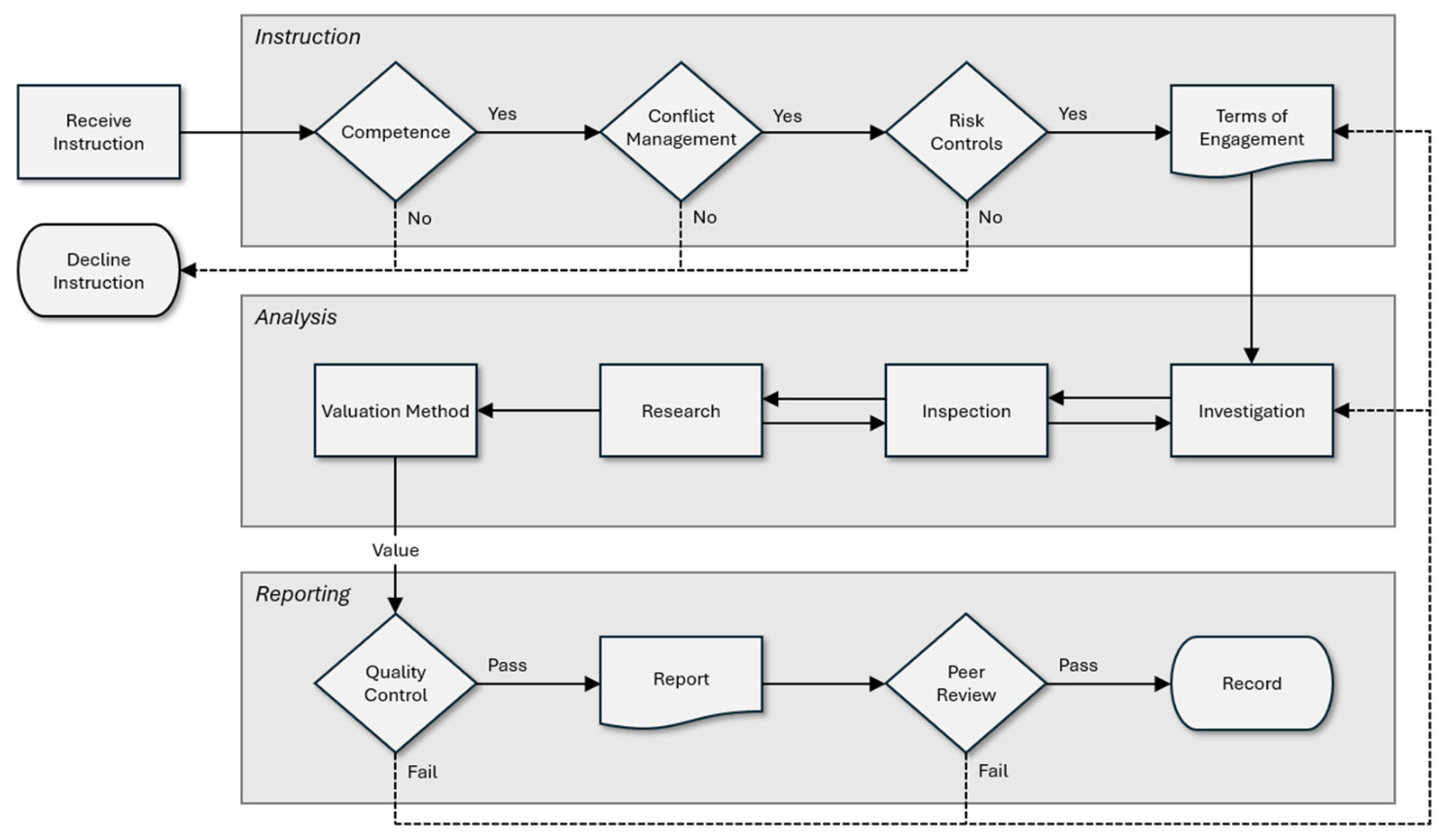
The procedural components of the valuation process can be codified across valuation standards to promote consistency in the approach [28] as summarised in Table 2. These components can be understood as part of a structured valuation workflow, which is illustrated in Figure 1. The workflow conceptualises valuation as a sequence of tasks and decision points grouped into three principal stages: (1) instruction, where the scope and purpose of the valuation are established; (2) analysis, where evidence is collected and interpreted through investigation, research and inspection; and (3) reporting, where the valuation conclusion is communicated to the end user. In practice, however, these stages are not strictly linear and new information frequently requires previous tasks to be revisited. For example, information identified during the inspection may reveal previously unknown physical characteristics or legal issues, requiring the valuer to revisit earlier assumptions or undertake further market research. Accordingly, valuation is a sequential but iterative process in which professional judgement remains embedded throughout the workflow.

3.1. Instruction

The first stage of the valuation process establishes the scope of the valuation through a formal instruction [28]. The valuer must clarify the purpose of the valuation and identify the asset to be valued before determining the appropriate basis of value, which defines the underlying assumptions that underpin the analytical process [46,50,51,52]. The most common basis of value in professional contexts is market value, which requires the valuer to consider a hypothetical transaction between typical market participants on the open market [53]. This reinforces the valuer’s role as an intermediary expert in interpreting available evidence and forming an objective opinion of value requires professional judgement, particularly where market information is incomplete or asymmetric [27].
Once the scope of the instruction has been established, the valuer must determine whether the assignment can be accepted and undertaken in accordance with professional standards. This assessment comprises three key tasks: establishing competence, managing conflicts of interest, and controlling professional risk. First, the valuer must assess whether they possess the knowledge, skills, and experience necessary to undertake the valuation to an appropriate professional standard. This may relate to familiarity with the relevant property type, understanding of local market conditions, or experience applying the required valuation methodology. The instruction should only be accepted if the valuer is competent to undertake it to a professional standard and, if lacking specific skills, appropriate specialist support can be obtained. Second, the valuer must identify and address any actual or potential conflicts of interest that may compromise independence or objectivity. Professional standards require conflicts to be disclosed to the client and, where possible, appropriately managed in line with the principle of informed consent. Third, the valuer must consider the professional and commercial risks associated with undertaking the instruction. This includes assessing whether the scope of work is sufficient to produce a reliable valuation, identifying material uncertainties, and ensuring that appropriate risk management measures, including professional indemnity arrangements, are in place if required.
Once these requirements have been satisfied, the instruction is formalised through written terms of engagement. These terms establish a shared understanding between the valuer and client regarding the scope and limitations of the valuation, defining the parameters within which the valuation will be undertaken. Conversely, where competence, independence, or risk considerations cannot be adequately addressed, the valuer is professionally required to decline the instruction. This safeguards both the client’s interests and the integrity of the wider valuation profession.

3.2. Analysis

The analysis stage represents the core of the valuation workflow, involving a series of interrelated tasks through which the valuer gathers and interprets evidence relating to the subject property and its market context. These tasks comprise investigation, inspection, research, and the selection and application of appropriate valuation methods. While each tasks serves a distinct purpose, they are highly interconnected in practice.
The analysis stage begins with the collection and evaluation of evidence relating to the subject property and its market context through a desktop investigation. The purpose of the investigation is to establish a detailed understanding of the subject property and identify any materials factors that may influence value [54,55]. In most valuation contexts, the investigation is followed by a physical inspection. The inspection enables the valuer to verify information gathered during the investigation and, importantly, to identify the value-determinant characteristics of the subject property. Characteristics include features of the locality such as adjacent land uses, communication links, and access to amenities, as well as features of the land and buildings such as construction, age, physical condition, connected services, accommodation, and specification [28]. The nature of these characteristics and their impact on value varies considerably between different property types and market contexts. This requires the valuer to determine the most appropriate sources of information to determine value through detailed market research. Commonly, this includes direct transactions of properties that are similar to the subject of the valuation (colloquially known as “comparables”) but may also include indicators of prevailing market conditions such as supply and demand, economic activity, or other general market data [56]. Once gathered, evidence must be assessed for its completeness and relevance, recognising that real estate markets are heterogenous and characterised by imperfect information [57].
The final analytical task involves the application of an appropriate valuation method to derive an opinion of value. Drawing upon the findings from the investigation, market research, and inspection tasks, the valuer must determine the most suitable method and establish the relevant inputs required to undertake the valuation through appropriate adjustments to the market evidence. The traditional valuation methods and their application are considered in further detail in Section 4.2.

3.3. Reporting

The reporting stage translates the valuation output into a communicable opinion of value, providing the valuation user with a transparent explanation of how the valuation figure has been derived [47]. Professional standards require the valuer to communicate the opinion of value alongside the basis of value, the scope of work undertaken, the evidence considered, and any assumptions or limitations that may influence the valuation process or output. In practice, this requires the valuer to organise and present the evidence gathered throughout the valuation process in a clear and coherent manner, which includes summarising the key characteristics of the subject property while justifying the valuation method adopted and the selection of valuation inputs [56].
The reporting stage also serves as a key mechanism for professional accountability. Before the valuation is finalised, the valuer will typically undertake a series of reasonableness checks to determine whether the conclusion appears realistic when considered against the available evidence and prevailing market conditions. This may involve cross-checking the valuation against alternative methods or undertaking a broader sense-check informed by professional experience. In organisations with multiple valuers, it is common for reports to be subject to peer review to provide an additional layer of quality assurance. Once the valuation is quality checked, the report and any supporting evidence must be retained as a case file to create a documented record of the valuation process in line with legal requirements of the jurisdiction. For example, in England and Wales, the Limitation Act 1980 provides a six-year limitation period for most negligence claims [58], while the RICS Registered Valuer Scheme undertakes audits of valuation files to verify sufficient audit trails are maintained [59]. The reporting stage is ultimately the process that makes the valuation estimate accountable to a professional expert.

4. The Valuation Hierarchy

4.1. Valuation Approaches

The current professional standards framework recognises a three-layered hierarchy to the application of valuation techniques. In order, these are valuation approaches, methods, and models [32]. At the most fundamental level, the valuation approach defines the economic principles that underpin the broader valuation methodology. The authors consider the following description for each valuation approach:
  • Market approach: Value as a price equilibrium—an indicative value of the subject property can be derived by comparison to similar property assets, assuming a buyer will pay no more than the cost of acquiring an asset of equivalent utility.
  • Income approach: Value as an anticipated benefit—an indicative value of the subject property can be derived by converting future cash flows into a present value, assuming a buyer will pay a capital price for the benefit of receiving future income.
  • Cost approach: Value as the cost of substitution—an indicative value of the subject property can be derived by estimating the total reproduction cost of the asset, assuming a buyer will pay no more than the cost to construct an asset of equivalent utility.
Not all valuation approaches are equally appropriate for a given valuation context, and selecting the most appropriate approach represents an important exercise of professional judgement. The valuer must consider the nature of the property, the purpose and basis of the valuation, the availability and reliability of relevant market evidence, and the way in which market participants interact with the asset [31].

4.2. Valuation Methods

At the second level of the hierarchy, valuation methods translate the principles of each approach into a structured framework to estimate value [31]. The suitability of prevailing methods has been the subject of considerable deliberation within the international valuation community [60]. This has contributed to the continued evolution of the historically termed “traditional methods of valuation”—namely, the comparable, investment, residual, profits, and the cost methods. Despite increasing technological sophistication, these methods remain central to the foundations of professional valuation practice. The principal characteristics of these methods are summarised in Table 3.
Collectively, the methods all rely, to varying degrees, on comparative-based reasoning [32]. In its simplest form, the comparable method estimates the value of the subject property through direct comparison with the sale price of similar properties (known colloquially as “comparables”) with the valuer adjusting the sale prices for differences in value-determinant attributes. Within the cost method, comparative analysis is required to determine the construction costs, land value and depreciation by reference to the costs of completed projects of similar building types and comparable land transactions. Under the investment method, comparison is required to determine the level of rent and, likewise with the profits method, an appropriate capitalisation rate (or yield) having adjusted for uncertainty and risk. In the residual method, comparative analysis is required to determine the gross development value using any one of the four other traditional methods, while comparable evidence informs assumptions related to development costs, project risk, and sense-checking of the residual land value.
The traditional valuation methods are not without criticism, and there has been an increased movement towards discounted cash flow (DCF) techniques in some markets. In part, this is due to the distinction between implicit and explicit growth models and the traditional methods reliance on comparable evidence [60]. While this paper does not seek to provide a detailed evaluation of the respective advantages and limitations of each method, it is important to note that debates regarding the most appropriate method have evolved across jurisdictions which has resulted in varied valuation practices. Implicit models remain prevalent in the UK, which was explained by Crosby and Henneberry as an “institutionalised comfort” with the traditional methods of valuation [61]. This can be explained by the relative accessibility of comparable evidence, with French [56] finding the UK to be a highly transparent market for direct transactional evidence and indicative of the information-sharing culture across the professional valuation network [62]. This, in turn, enables valuers to adopt the traditional valuation methods which more accurately reflect the behaviour of market participants.

4.3. Valuation Models

At the final layer of the hierarchy, valuation models are the quantitative techniques that are applied within each method [62]. Confusion exists as to the role of valuation models. In part, this is due to the proliferation of automated valuation models, whose terminology suggests a circumvention of the valuer, alongside the historic absence of a definition within the standards framework. Resolving this ambiguity requires consideration of the evolution of AVMs and the current IVS definition of valuation models.
The concept of AVMs can be traced to multiple researchers from the 1960s, but it was the work of Rosen [35] that laid the mathematical foundations for their application. Rosen formalised the hedonic price theory that conceptualised the value of a good based on its utility-bearing characteristics, which is revealed by observed prices of differentiated products. Thus, a property’s value can be expressed as a function of its n number of X value-determinant attributes, such that:
Value = f (X1, X2, …, Xn)
The regression function led to the development of computer-assisted techniques for real estate appraisal. By 1976, the International Association of Assessing Officers (IAAO) reported that approximately 20 per cent of 1500 local government assessors across the United States were utilising multiple regression analysis for property tax appraisals [63]. During the 1990s, the mortgage finance industry adopted similar regressions techniques to value residential properties for mortgage underwriting, risk assessment, and securitisation processes which came to be known as automated valuation models. By 2004, AVMs were estimated to account for approximately 10 per cent of all mortgage originations within the United States. The growing acceptance diffused to other anglophone countries with comparable lending systems and real estate market structures in the 2000s, with their implementation adapted to reflect local market practices [12]. As AVM awareness grew across the valuation profession, concerns emerged in the UK regarding the potential displacement of human valuers, with approximately 70 per cent of RICS residential valuers believing AVMs were likely to replace aspects of their work in the future [12]. However, perceptions remained divided between those who viewed AVMs as a threat to professional practice and those who regarded AVMs as an opportunity to enhance valuation services. While comparable studies on are lacking on the specific use of AVMs, the RICS [64] has found that 75 per cent of 1265 commercial property professionals surveyed in 2026 were using AI, with almost 50 per cent adopting early-stage pilot projects and almost 20 per cent using AI for specific functions. Over the next five years, respondents expect AI to have the biggest impact on valuation, with 50 per cent expecting the application of AI through decision-support tools in automated valuation and appraisal.
The growing adoption of AVMs was accompanied by the development of professional valuation guidance. In 2013, the RICS produced an information paper considering the use of AVMs in the UK and provided guidance on the selection, application, and limitations of different modelling techniques [65]. As the use of AVMs became increasingly embedded within lending practices, attention shifted from the regulation of specific technologies towards broader questions concerning data, modelling, and professional responsibility. The IVSC established an ‘AVM, Data and Modelling Working Group’ in 2020 to consider the need for guidance following stakeholders feedback regarding the growing use of AVMs in residential mortgage lending. The RICS published its AVM Roadmap [23] outlining future priorities for guidance and professional standards, followed by an insight paper [66] examining the extent and nature of AVM adoption across RICS-regulated markets. In the same year, the IVSC published Automated Valuation Models and Residential Valuation, which provided an international perspective on the increasing use of AVMs within residential markets. These developments culminated in a significant revision to the international standards framework. The 2022 edition of the IVS adopted a formal definition of ‘valuation models’ within IVS 105 Valuation Approaches and Methods, which was expanded in the 2025 update through the introduction of IVS 105 Valuation Models and IVS 104 Data and Inputs. The current IVSC definition states:
‘A valuation model is a tool used for the quantitative implementation of a valuation method in whole or in part… [and] converts inputs into outputs used in the development of a value, whereas a valuation method is a specific technique to develop a value… No model without the valuer applying professional judgement, for example an automated valuation model (AVM), can produce an IVS-compliant valuation’
[50].
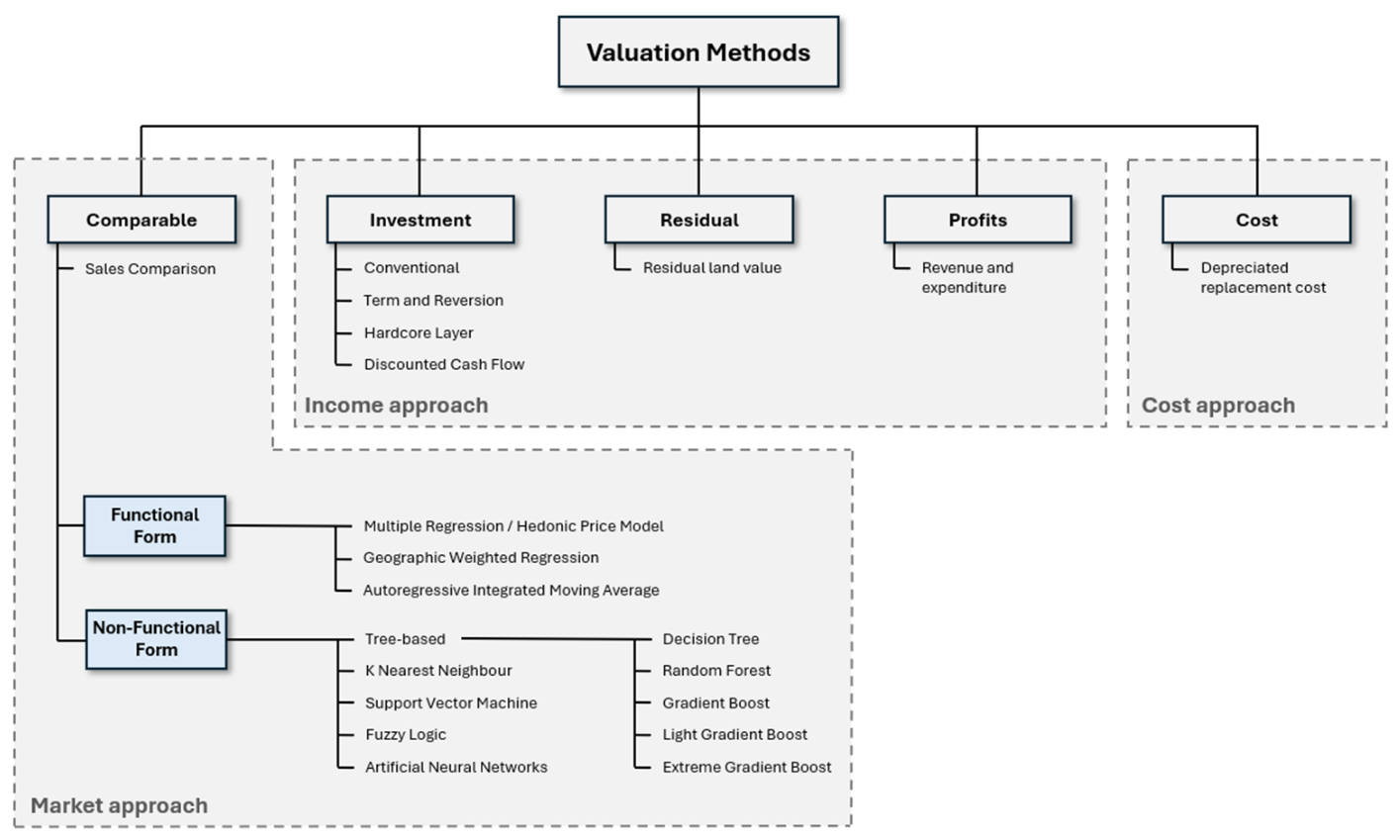
The absence of the term ‘automated’ represents a conceptual shift in the international standards frameworks. Rather than representing an automated process, valuation models are quantitative tools that can be used to implement a valuation method either in whole or in part. In whole, a valuation model can estimate the capital value of a property by identifying statistical relationships between comparable transaction prices and value-determining attributes, thereby implementing the comparable method through regression analysis. In part, a valuation model can apply regression analysis to comparable market evidence to estimate individual valuation inputs, such as market rents or capitalisation yields. Although these estimates may subsequently be used within the investment method, the regression model itself continues to implement the comparable method by deriving those inputs from observed market transactions using comparative-based reasoning. Regression-based valuation models can be broadly categorised into functional-form and non-functional-form techniques. Functional-form models are typically associated with traditional regression approaches, in which the relationship between value and value-determining attributes is specified a priori. By contrast, non-functional-form techniques infer these relationships directly from the data, allowing more complex valuation patterns to be identified [29]. Similarly, the investment method may be implemented through different valuation models. These include implicit growth models, which capitalise a stabilised income stream using an all-risks yield, and explicit growth models, which estimate value by projecting future cash flows and discounting them to present value. Although they differ in their treatment of future income growth, both constitute valuation models as they each provide an alternative quantitative implementation of the investment method [41]. Thus, valuation models can be understood as the quantitative implementation of valuation methods.
Figure 2 illustrates the proposed hierarchy of valuation approaches, methods, and models. Valuation approaches (dashed boxes) provide the conceptual framework for estimating value, while valuation methods (boxed nodes) represent the specific techniques used within each approach. The model classifications and examples shown beneath each method illustrate alternative quantitative implementations of those methods. The hierarchal framework shines light on the various valuation model techniques, enabling their effective implementation within traditional valuation methods.

5. The Valuer-in-the-Loop Workflow

The extent to which valuation models can be applied is contingent on the availability of quality data. Data that is relevant, accurate, and complete is the central determinant of valuation model reliability and effectiveness [11]. This explains the proliferation of valuation models in residential markets, which are characterised by homogeneous assets with abundant comparable evidence. By contrast, commercial markets represent heterogenous assets which are typically income producing, resulting in limited comparable data with more valuation inputs that requires a greater degree of expert interpretation [16]. In this context, valuation models have been utilised in the estimation of capital values under the assumption of vacant possession and in the analysis of market rents which rely upon the comparable method as opposed to the investment method of valuation [23]. While recent advancements in machine learning techniques have increased predictive capability and their ability to handle a diverse range of data types, their multi-layer architectures can result in “black box” systems which make decision-making processes difficult for humans to interpret [67]. This presents a particular challenge within valuation practice, which requires the valuer to understand the assumptions, techniques, and limitations of any valuations model that are applied in the formation of an opinion of value [54].
These limitations have contributed to the emergence of human-centred AI, which conceptualises artificial intelligence as augmenting, rather than replacing, domain expertise while retaining human judgement as the central component of the decision-making process [68]. Within real estate valuation, this represents a shift towards collaboration in which the valuer adopts the role of expert interpreter between the valuation model and the decision-making process [69]. Downie and Robson [12] were one of the earliest researchers to articulate this perspective in UK practice, which is summarised pertinently by the observation of an RICS participant:
“The future for both AVMs and valuers is for the two elements to come together—an AVM in the hands of the valuer with relevant expert local knowledge and able to manipulate the data is like 2 + 2 = 5!”
[12].
In recent years, Glumac and Des Rosiers [33] have developed the concept of the automated valuation system (AVS), originally introduced by Clapp [70]. They describe an AVS as “a structured and routine decision process that leads to the choice of software, which must include data, model and user interface, designed to help an individual or organisation generate a market value estimate for either a single piece or portfolio of real estate and land asset(s)” [33]. This conceptualisation extends the view of a valuation model beyond a standalone predictive tool and instead positions it within an integrated decision support system (DSS). A DSS is a system that supports the decision-making capabilities of an individual or group by transforming data within a system that comprises three components: (1) data, (2) a model and (3) a user interface [71]. DSS software packages to support real estate investment decisions were available as early as the 1970s, with one of the earliest successful commercial products being the Decisionex system introduced in the mid-1970s [39]. However, a fundamental limitation of early DSS was their reliance on data and analytical models, rather than the domain-specific knowledge and reasoning processes that human experts use to interpret information and make judgements [72]. Nevertheless, the three components provide a foundation for AI-enabled real estate valuation.
The development of expert systems (ES) addressed this challenge using expert reasoning that was captured through explicit knowledge structures [73]. These ideas originated in the DENDRAL project beginning in 1965 which, regarded as the first successful ES, separated domain-specific knowledge from a general inference mechanism that could apply existing knowledge to new domain problems [37]. This separation between knowledge and reasoning remains influential in the development of explainable and human-centred approaches [74]. The adoption of AI in valuation models requires sufficient explainability to enable the interpretation and communication of the valuation outputs [19]. This raises a fundamental question beyond the quantitative techniques that underpin valuation models. Model transparency alone does not resolve the challenge of whether the knowledge represented by an AI system adequately reflects the knowledge applied by a professional valuer.
The representation of valuation knowledge is, however, a complex challenge. As described in Section 3, valuers possess extensive domain-specific knowledge which is comprised of theoretical and experiential knowledge. The interaction of these forms of valuation knowledge can be applied to complex valuation problems through “knowing-in-action” [75]. While theoretical knowledge is generally explicit in nature, experiential knowledge is tacit and must first be encoded into machine-interpretable representations such as data, rules, or ontologies before it can support computational reasoning [76]. This perspective challenges the long-standing perspective of human–machine interaction as a static allocation of tasks. This has been described as the MABA-MABA trap (“Men Are Better At–Machines Are Better At”), whereby functions are assigned according to whether they are performed more effectively by humans or machines [36]. Such an approach overlooks the fact that AI fundamentally changes the nature of the decision-making system itself. Rather than simply replacing or reallocating individual tasks, effective AI systems integrate computational capabilities with human expertise, enabling each to complement the strengths and limitations of the other [77]. Emerging co-adaptive perspectives extend this view by recognising that human expertise and AI systems evolve through continuous interaction, with both the user and the system adapting through repeated use and feedback [38].
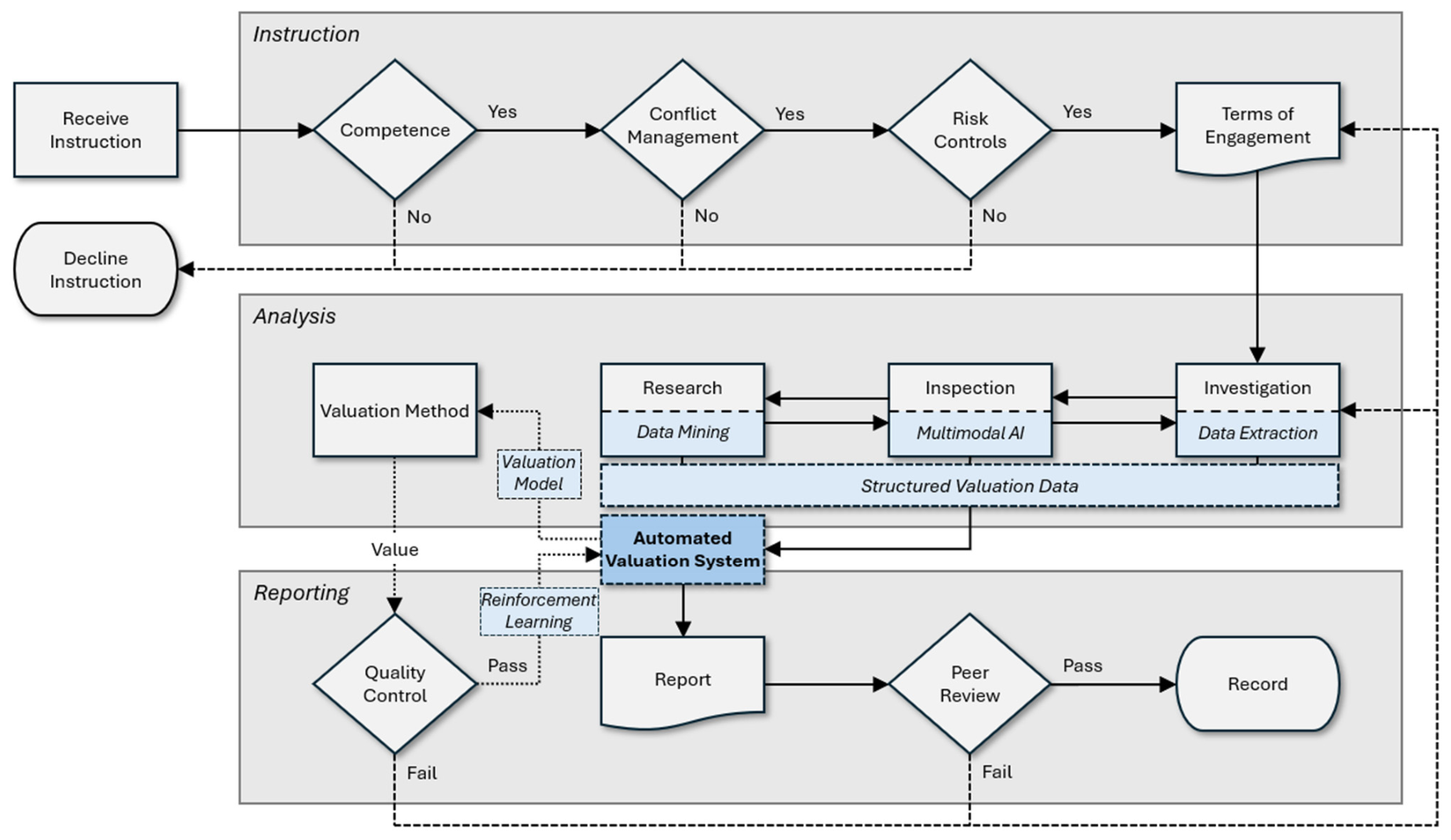
The proposed Valuer-in-the-Loop workflow reframes the role of artificial intelligence within real estate valuation around this co-adaptive perspective. Figure 3 illustrates the integration of the automated valuation system within the Valuer-in-the-Loop workflow, demonstrating how AI-enabled support knowledge representation through structured valuation data in the analysis stage, while maintaining the valuer’s professional requirements in the instruction and reporting stages. Thus, knowledge representation occurs across three principal tasks in the analytical stage of the valuation workflow:
  • Investigation: Documentary evidence relating to the subject property, such as statutory due diligence, is collected and organised through data and information extraction techniques [78]. Data extraction is the automated process of identifying and retrieving relevant data from structured or unstructured sources, such as documents and databases, and converting it into a structured format for subsequent analysis [79]. While digital technologies such as Natural Language Processing (NLP) substantially reduce the administrative burden associated with information collection, automated extraction may misinterpret, omit, or incorrectly structure information, particularly where documentary evidence is incomplete, ambiguous, or presented in inconsistent formats; therefore, the verification of evidence and determination of its materiality remain professional responsibilities requiring the valuer’s judgement.
  • Inspection: Multimodal AI techniques, including computer vision, support the extraction of observable property attributes from photographs [80] and street-view and satellite datasets [81]. Computer vision is the use of AI techniques to analyse and interpret visual information, enabling observable features within images to be identified and converted into structured data [82]. These methods assist the identification of physical attributes to augment the collection of observable evidence. However, these techniques may fail to identify physical features in poor quality images. Consequently, AI-derived observations should be treated as supplementary evidence that enhances the efficiency of translating physical observations into structured digital data, rather than replacing the valuer’s interpretation and validation of evidence.
  • Research: AI processes can support the analysis of market evidence through techniques such as data mining. Data mining is the process of using computational techniques to identify relationships, patterns, and trends within large datasets that may not be readily apparent through manual analysis [83]. Techniques such as NLP facilitate the extraction of relevant property data from large property datasets that are too large to analyse manually [84,85]. However, the relationships identified through automated analysis may reflect spurious correlations or biases within the underlying data [86], requiring the valuer to assess their reliability before incorporating into the AVS.
While these examples are not exhaustive, they illustrate how AI technologies can be used to generate structured valuation data throughout the valuation process. In this sense, market evidence can be broken down into individual data points, whereby the relevant characteristics of each transaction are identified, classified, and structured as variables that can be processed and analysed by the AVS. Ultimately, the credibility of the AVS relies on the quality of the data used to derive robust statistical inferences, and the valuer must therefore maintain oversight of the system inputs.
During the investigation and inspection tasks, AI technologies may assist with the collection and structuring of market evidence. The valuer, however, remains responsible for assessing the accuracy, relevance, and completeness of the information. In the research task, classification techniques such as K-nearest neighbour (KNN) algorithms and data-point matching can be used to assist in the selection of relevant comparable evidence [87]. The valuer can exercise control over the criteria used to identify comparables, including the distance metric and the hierarchy of data points used to determine whether a transaction is sufficiently comparable for analysis. Where structured valuation data is incomplete, the valuer may make reasoned assumptions to address missing data points based on their professional judgement. The structured data can then be analysed using a suitable valuation model to estimate the valuation inputs required for an appropriate valuation method, as illustrated by Figure 2.
The outcome of the valuation method is then evaluated by the valuer, providing feedback to a reinforcement learning process. Reinforcement learning is a machine learning process that enables an AI agent to learn decision-making through interactions with its environment, using feedback in the form of rewards or penalties to improve subsequent actions [88]. In the Valuer-in-the-Loop workflow, the outcome generated by the AVS is compared with the valuer’s assessment, using the valuer’s subsequent adjustments or feedback as a reward signal to refine the system’s future decision-making. Through this loop, the qualitative reasoning associated with the valuer’s professional judgement can be translated into quantitative adjustments to the valuation model or valuation method using a fuzzy logic system [89]. For example, qualitative judgements about the relative superiority or inferiority of a comparable property can be represented as degrees of difference and translated into corresponding quantitative adjustments. Through repeated interactions over multiple valuations, these adjustments provide a means of capturing and representing aspects of the valuer’s professional judgement within the AVS, allowing the resulting knowledge to be stored and applied in future valuations. Crucially, this reinforcement learning loop enables the AVS to adapt to the knowledge of individual valuers, particularly under conditions of limited data or where system outputs require correction. This creates a personalised decision-support environment that progressively externalises the expertise of each individual valuer. In doing so, the Valuer-in-the-Loop workflow recognises the variation in valuation outcomes and makes this both explicit and traceable within the valuation process. Thus, the workflow presents a novel framework in which AI enhances the construction of valuation knowledge through a co-adaptive AVS, while professional responsibility for the final opinion of value remains with the valuer.

6. Conclusions and Further Research

This paper has examined the integration of artificial intelligence within real estate valuation practice by adopting the valuation process as its primary unit of analysis. Although valuation has traditionally been characterised as “an art, not a science”, this study demonstrates that professional valuation activities can be understood as a structured workflow governed by internationally recognised standards. This provides a foundation for identifying how AI can be integrated into valuation practice while preserving the central role of professional judgement.
The study makes three principal contributions. First, it develops a valuation workflow derived from international professional standards, structuring the valuation process into the stages of instruction, analysis, and reporting. The workflow provides a systematic representation of valuation practice, identifying the professional tasks through which instructions are established, evidence is collected and interpreted, valuation methods are applied, and conclusions are communicated. Secondly, it extends the valuation hierarchy of approaches, methods, and models by clarifying the role of valuation models as quantitative implementations of valuation methods. Finally, it proposes the Valuer-in-the-Loop workflow by integrating insights from human-centred AI to conceptualise AI-enabled valuation as a co-adaptive decision support system. Within this workflow, elements of the valuer’s professional judgement are progressively represented as structured valuation knowledge, enabling AI to augment analytical capability while maintaining the valuer’s responsibility for the final opinion of value. Thus, AI becomes an integrated component of a valuation system in which technological capability and professional expertise reinforce one another.
The conceptual nature of this study also considers several important directions for future research:
  • First, recognising that variance is inherent to real estate valuation, detailed consideration should be given to uncertainty within the Valuer-in-the-Loop workflow. The treatment of uncertainty remains a fundamental challenge since its explicit recognition in both The Mallison Report (1994) and The Carsberg Report (2002), with their practical consequences experienced during the Global Financial Crisis in 2008 and the Coronavirus Pandemic in 2020 [47,48]. In this regard, the principal contribution of artificial intelligence in AVS may by the integration of probabilistic methods—such as sensitivity analysis, scenario testing, and discrete probability modelling—which, historically, have proven computationally laborious in traditional calculation methods. Such a system represents a connection between probabilistic reasoning and deterministic outputs, producing a “risk-aware” simulation model that can lead to a better understanding of the nature of the real estate asset under consideration [28,41].
  • Secondly, a systematic review would provide a clearer understanding of the capabilities and limitations of individual techniques across the broader valuation workflow, extending the conceptual foundations established by the Valuer-in-the-Loop workflow.
  • Thirdly, further research is required into the engineering of valuation data. This includes the development of structured data representations that maintain provenance and regulatory compliance under the professional standards framework.
  • Finally, empirical research examining professional attitudes towards the Valuer-in-the-Loop workflow would provide valuable insight into the organisational and practical challenges associated with their adoption. Further research in this regard should be conducted through a pilot study to develop a data specification based on the professional standards framework identified in Table 1. Further, a Delphi study should be conducted to present the data specification to relevant professional bodies and a representative sample of professional valuers to ensure the data specification presents a practical framework for implementation.
Taken together, these recommendations direct a pathway towards the responsible integration of artificial intelligence within real estate valuation practice. Further, they support the development of advanced property technologies that can assist dynamic investment profiling and risk assessment in markets undergoing structural transformation. By enabling a more responsive and adaptive valuation system, the Valuer-in-the-Loop workflow supports the wider evolution of real estate markets by providing timely insights for asset repositioning, adaptive reuse, and retrofit investment decisions. In this context, AI-enabled valuation represents an important capability for supporting the long-term resilience of the built environment.

Author Contributions

Conceptualization, J.P. and L.J.; methodology, J.P.; software, J.P.; validation, J.P.; formal analysis, J.P.; investigation, J.P.; resources, J.P.; data curation, J.P.; writing—original draft preparation, J.P.; writing—review and editing, J.P. and L.J.; visualization, J.P.; supervision, J.P. and L.J.; project administration, J.P. and L.J.; funding acquisition, NA. All authors have read and agreed to the published version of the manuscript.

Funding

This research received no external funding.

Data Availability Statement

No new data were created or analyzed in this study. Data sharing is not applicable to this article.

Conflicts of Interest

The authors declare no conflict of interest.

References

  1. Gilbertson, B.; Preston, D. Practice Briefing A Vision for Valuation. J. Prop. Invest. Finance 2005, 23, 123–140. [Google Scholar] [CrossRef] [Scilit]
  2. Harvey, J.; Jowsey, E. Urban Land Economics, 6th ed.; Red Globe Press: London, UK, 2003. [Google Scholar]
  3. Zhang, J.J.; Danivska, V.; Schraven, D.; Remøy, H. A Historical Narrative of Value Theory in Economics and Appraisal. J. Prop. Res. 2026, 43, 145–166. [Google Scholar] [CrossRef] [Scilit]
  4. Blackledge, M. Introducing Property Valuation, 2nd ed.; Routledge: Oxon, UK, 2017. [Google Scholar]
  5. Crosby, N.; Hutchinson, N.; Lusht, K.; Yu, S.M. Valuations and Their Importance for Real Estate Investments. In Routledge Companion to Real Estate Investment; MacGregor, B.D., Schulz, R., Green, R.K., Eds.; Routledge: Oxon, UK, 2018. [Google Scholar]
  6. Pérez-Rave, J.I.; Correa-Morales, J.C.; González-Echavarría, F. A Machine Learning Approach to Big Data Regression Analysis of Real Estate Prices for Inferential and Predictive Purposes. J. Prop. Res. 2019, 36, 59–96. [Google Scholar] [CrossRef] [Scilit]
  7. Forys, I. Machine Learning in House Price Analysis: Regression Models versus Neural Networks. In Procedia Computer Science; Elsevier B.V.: Amsterdam, The Netherlands, 2022; Volume 207, pp. 435–445. [Google Scholar] [CrossRef] [Scilit]
  8. Harahap, T.H.; Dachi, S.W.; Sitompul, D.N. K-Nearest Neighbor Algorithm for Predicting Land Sales Price. Int. Comput. Sci. Inf. Technol. (AIoCSIT) J. 2022, 3, 58–67. [Google Scholar]
  9. Baur, K.; Rosenfelder, M.; Lutz, B. Automated Real Estate Valuation with Machine Learning Models Using Descriptions. Expert Syst. Appl. 2023, 213, 119147. [Google Scholar] [CrossRef] [Scilit]
  10. Cardone, B.; Di Martino, F.; Senatore, S. Real Estate Price Estimation through a Fuzzy Partition-Driven Genetic Algorithm. Inf. Sci. 2024, 667, 120442. [Google Scholar] [CrossRef] [Scilit]
  11. El Jaouhari, A.; Samadhiya, A.; Kumar, A.; Šešplaukis, A.; Raslanas, S. Mapping the landscape: A systematic literature review on automated valuation models and strategic applications in real estate. Int. J. Strateg. Prop. Manag. 2024, 28, 286–301. [Google Scholar] [CrossRef] [Scilit]
  12. Downie, M.-L.; Robson, G. Integrating Automated Valuation Models (AVMs) with Valuation Services to Meet the Needs of UK Borrowers, Lenders and Valuers. In Proceedings of the ERES 2009 Conference, Stockholm, Sweden, 24–27 June 2009. [Google Scholar]
  13. Baum, A.; Saull, A.; Braesemann, F. Proptech 2020: The Future of Real Estate; Proptech: Oxford, UK, 2020. [Google Scholar]
  14. Starr, C.W.; Saginor, J.; Worzala, E. The Rise of PropTech: Emerging Industrial Technologies and Their Impact on Real Estate. J. Prop. Invest. Finance 2021, 39, 157–169. [Google Scholar] [CrossRef] [Scilit]
  15. de la Cal, A.S.; Raya, A.M.; Morales-Alonso, G. Mapping the Role of Artificial Intelligence in Real Estate: A Bibliometric and Case Study Analysis. J. Entrep. Manag. Innov. 2025, 21, 5–23. [Google Scholar] [CrossRef] [Scilit]
  16. Renigier-Bilozor, M.; Ache, P.; Dimopoulos, T.; Janowski, A. The future of property valuation: Avms and camas in the era of AI. Econ. Environ. 2026, 96, 974. [Google Scholar] [CrossRef] [Scilit]
  17. Al-haimi, B.; Khalid, H.; Zakaria, N.H.; Jasimin, T.H. Digital Transformation in the Real Estate Industry: A Systematic Literature Review of Current Technologies, Benefits, and Challenges. Int. J. Inf. Manag. Data Insights 2025, 5, 100340. [Google Scholar] [CrossRef] [Scilit]
  18. Orr, A.M.; Stewart, J.L. Property Use Diversity and Spatial Accessibility within Urban Retailing Centres: Drivers of Retail Rents. J. Prop. Res. 2022, 39, 365–392. [Google Scholar] [CrossRef] [Scilit]
  19. International Valuation Standards Council. Navigating the Rise of AI in Valuation: Opportunities, Risks, and Standards; International Valuation Standards Council: London, UK, 2024. [Google Scholar]
  20. Royal Institution of Chartered Surveyors. Responsible Use of Artificial Intelligence in Surveying Practice; Royal Institution of Chartered Surveyors: London, UK, 2025. [Google Scholar]
  21. PricewaterhouseCoopers. PWC AVM Benchmarking Survey; PricewaterhouseCoopers: London, UK, 2026. [Google Scholar]
  22. United States Government Accountability Office. Property Technology for Homebuying: Products Present Benefits and Risks Amid Evolving Federal Oversight Report to Congressional Requesters United States Government Accountability Office; United States Government Accountability Office: Washington, DC, USA, 2025. [Google Scholar]
  23. Royal Institution of Chartered Surveyors. Automated Valuation Models Roadmap for RICS Members and Stakeholders Automated Valuation Models; Royal Institution of Chartered Surveyors: London, UK, 2021. [Google Scholar]
  24. European AVM Alliance. Joint Paper on the Use of Automated Valuation Models in Europe; European AVM Alliance: Brussels, Belgium, 2025. [Google Scholar]
  25. Torraco, R.J. Writing Integrative Literature Reviews: Guidelines and Examples. Hum. Resour. Dev. Rev. 2005, 4, 356–367. [Google Scholar] [CrossRef] [Scilit]
  26. Grant, M.J.; Booth, A. A Typology of Reviews: An Analysis of 14 Review Types and Associated Methodologies. Health Inf. Libr. J. 2009, 26, 91–108. [Google Scholar] [CrossRef] [Scilit]
  27. Bartke, S.; Schwarze, R. The Economic Role and Emergence of Professional Valuers in Real Estate Markets. Land 2021, 10, 683. [Google Scholar] [CrossRef] [Scilit]
  28. Wyatt, P. Property Investment Valuation. In Property Valuation in an Economic Context; John Wiley & Sons: Oxford, UK, 2007. [Google Scholar]
  29. Numan, J.A.A.; Yusoff, I.M. Identifying the Current Status of Real Estate Appraisal Methods. Real Estate Manag. Valuat. 2024, 32, 12–27. [Google Scholar] [CrossRef] [Scilit]
  30. Pagourtzi, E.; Assimakopoulos, V.; Hatzichristos, T.; French, N. Real Estate Appraisal: A Review of Valuation Methods. J. Prop. Invest. Finance 2003, 21, 383–401. [Google Scholar] [CrossRef] [Scilit]
  31. Gabrielli, L.; French, N. Pricing to Market: Property Valuation Methods—A Practical Review. J. Prop. Invest. Finance 2021, 39, 464–480. [Google Scholar] [CrossRef] [Scilit]
  32. French, N.; Gabrielli, L. Pricing to Market: Property Valuation Revisited: The Hierarchy of Valuation Approaches, Methods and Models. J. Prop. Invest. Finance 2018, 36, 391–396. [Google Scholar] [CrossRef] [Scilit]
  33. Glumac, B.; Des Rosiers, F. Towards a Taxonomy for Real Estate and Land Automated Valuation Systems. J. Prop. Invest. Finance 2020, 39, 450–463. [Google Scholar] [CrossRef] [Scilit]
  34. Johnson, L.; Muldoon-Smith, K.; Greenhalgh, P. Unlocking Value: The Impact of Traditional Valuation Practices on the Number of Vacant Retail Units in the Built Environment. Environ. Plan. F 2024, 3, 268–285. [Google Scholar] [CrossRef] [Scilit]
  35. Rosen, S. Hedonic Prices and Implicit Markets: Product Differentiation in Pure Competition. J. Political Econ. 1974, 82, 34–55. [Google Scholar] [CrossRef] [Scilit]
  36. Crootof, R.; Kaminski, M.E.; Nicholson, W.; Ii, P.; Bagley, N.; Bechtold, S.; Bernstein, D.; Copeland, C.; Deacon, D.; Eisenberg, R.; et al. Humans in the Loop. Vanderbilt Law Rev. 2023, 76, 429–509. [Google Scholar]
  37. Lindsay, R.K.; Buchanan, B.G.; Feigenbaum, E.A.; Lederberg, J.; Lindsay, R.K. DENDRAL: A Case Study of the First Expert System for Scientific Hypothesis Formation. Artif. Intell. 1993, 61, 209–261. [Google Scholar] [CrossRef] [Scilit]
  38. Natarajan, S.; Mathur, S.; Sidheekh, S.; Stammer, W.; Kersting, K. Human-in-the-Loop or AI-in-the-Loop? Automate or Collaborate? In Proceedings of the AAAI Conference on Artificial Intelligence, Vancouver, BC, Canada, 26–27 February 2024; pp. 28594–28600. [Google Scholar]
  39. Trippi, R.R. Decision Support and Expert Systems for Real Estate Investment Decisions: A Review. Interfaces 1990, 20, 50–60. [Google Scholar] [CrossRef] [Scilit]
  40. Royal Institution of Chartered Surveyors. Valuation of Development Property; Royal Institution of Chartered Surveyors: London, UK, 2019. [Google Scholar]
  41. Wyatt, P. Property Valuation; John Wiley & Sons: Hoboken, NJ, USA, 2008. [Google Scholar]
  42. Amidu, A.R.; Boyd, D.; Agboola, A.O. The Role of Knowledge in Valuation Practice: Expert Valuers’ Perceptions. J. Prop. Invest. Finance 2019, 37, 524–540. [Google Scholar] [CrossRef] [Scilit]
  43. Salzman, D.; Zwinkels, R.C.J. Behavioural Real Estate. J. Real Estate Lit. 2017, 25, 77–106. [Google Scholar] [CrossRef] [Scilit]
  44. Crosby, N.; Lavers, A.; Murdoch, J. Property Valuation Variation and the ‘Margin of Error’ in the UK. J. Prop. Res. 1998, 15, 305–330. [Google Scholar] [CrossRef] [Scilit]
  45. Boyd, T.; Irons, J. Valuation variance and negligence: The importance of reasonable care. Pac. Rim Prop. Res. J. 2002, 8, 107–126. [Google Scholar] [CrossRef] [Scilit]
  46. Royal Institution of Chartered Surveyors. RICS Valuation-Global Standards; Royal Institution of Chartered Surveyors: London, UK, 2025. [Google Scholar]
  47. Thorne, C. Valuation Uncertainty—When and Why This Is Important. J. Prop. Invest. Finance 2020, 39, 500–508. [Google Scholar] [CrossRef] [Scilit]
  48. French, N.; Gabrielli, L. The Uncertainty of Valuation. J. Prop. Invest. Finance 2005, 22, 484–500. [Google Scholar] [CrossRef] [Scilit]
  49. Hemphill, L.; Lim, J.L.; Adair, -C.; Mcgreal, A. The Role of International and Local Valuation Standards in Influencing Valuation Practice in Emerging and Established Markets; Royal Institution of Chartered Surveyors: London, UK, 2014. [Google Scholar]
  50. International Valuation Standards Council. International Valuation Standards; International Valuation Standards Council: London, UK, 2025. [Google Scholar]
  51. The Appraisal Foundation. Uniform Standards of Professional Appraisal Practice (USPAP); Appraisal Foundation, Appraisal Standards Board: Washington, DC, USA, 2024. [Google Scholar]
  52. The European Government of Valuers’ Association. European Valuation Standards; The European Government of Valuers’ Association: Bruxelles, Belgium, 2025. [Google Scholar]
  53. Jowsey, E. Real Estate Concepts; Routledge: London, UK, 2014. [Google Scholar]
  54. Royal Institution of Chartered Surveyors. Technical Due Diligence of Commercial Property; Royal Institution of Chartered Surveyors: London, UK, 2023. [Google Scholar]
  55. Just, T.; Stapenhorst, H. Real Estate Due Diligence; Springer International Publishing: Cham, Switzerland, 2018. [Google Scholar] [CrossRef] [Scilit]
  56. French, N. Pricing to Market an Investigation into the Use of Comparable Evidence in Property Valuation. J. Prop. Invest. Finance 2020, 41, 300–318. [Google Scholar]
  57. Baum, A. Real Estate Investment; Routledge: London, UK, 2022. [Google Scholar]
  58. Limitation Act 1980. Legislation.gov.uk. Available online: https://www.legislation.gov.uk/ukpga/1980/58 (accessed on 28 August 2026).
  59. RICS. Valuer Registration. Rics.org. Available online: https://www.rics.org/regulation/regulatory-schemes/valuer-registration (accessed on 28 August 2026).
  60. Jefferies, R.L. A Brief History and Development of “Real Value” Valuation Models—The Last Four Decades. In Proceedings of the Pacific Rim Real Estate Society Conference, Sydney, Australia, 18–21 January 2009. [Google Scholar]
  61. Crosby, N.; Henneberry, J. Changing valuation practices—A critical history of uk investment valuation. In Proceedings of the 17th Annual European Real Estate Society Conference, Milan, Italy, 23–26 June 2010. [Google Scholar]
  62. Wiejak-Roy, G. Transparency in the Real Estate Market-A Global Comparative Study. In Proceedings of the FIG Working Week 2024, Accra, Ghana, 19–24 May 2024. [Google Scholar]
  63. Bidanset, P.E.; Rakow, R. Survey on the Use of Automated Valuation Models (AVMs) in Government Assessment Offices: An Analysis of AVM Use, Acceptance, and Barriers to More Widespread Implementation. J. Prop. Tax Assess. Adm. 2022, 19, 3. [Google Scholar] [CrossRef] [Scilit]
  64. Royal Institution of Chartered Surveyors. AI in Commercial Property and Construction Report 2026; Royal Institution of Chartered Surveyors: London, UK, 2026. [Google Scholar]
  65. Royal Institution of Chartered Surveyors. Automated Valuation Models (AVMs); Royal Institution of Chartered Surveyors: London, UK, 2013. [Google Scholar]
  66. Royal Institution of Chartered Surveyors. Automated Valuation Models (AVMs): Implications for the Profession and Their Client; Royal Institution of Chartered Surveyors: London, UK, 2022. [Google Scholar]
  67. Lipton, Z.C. The Mythos of Model Interpretability. Commun. ACM 2018, 61, 36–43. [Google Scholar] [CrossRef] [Scilit]
  68. Shneiderman, B. Human-Centered AI. In Proceedings of the 5th Workshop on Human Factors in Hypertext; ACM: New York, NY, USA, 2022; pp. 1–2. [Google Scholar] [CrossRef] [Scilit]
  69. Cheung, K.S. Real Estate Insights: Establishing Transparency—Setting AI Standards in Property Valuation. J. Prop. Invest. Finance 2024, 42, 406–408. [Google Scholar] [CrossRef] [Scilit]
  70. Clapp, J.M. A Semiparametric Method for Valuing Residential Location. SSRN 2001. [Google Scholar]
  71. Power, D.J.; Sharda, R. Model-Driven Decision Support Systems: Concepts and Research Directions. Decis. Support Syst. 2007, 43, 1044–1061. [Google Scholar] [CrossRef] [Scilit]
  72. Nelson Ford, F. Decision Support Systems and Expert Systems: A Comparison. Inf. Manag. 1985, 8, 21–26. [Google Scholar] [CrossRef] [Scilit]
  73. Mccarthy, J. Programs with Common Sense; RLE and MIT Computation Center: Cambridge, MA, USA, 1959. [Google Scholar]
  74. Mueller, S.T.; Veinott, E.S.; Hoffman, R.R.; Klein, G.; Alam, L.; Mamun, T.; Clancey, W.J. Principles of Explanation in Human-AI Systems. arXiv 2020, arXiv:2102.04972. [Google Scholar]
  75. Schön, D.A. The Reflective Practitioner: How Professionals Think in Action; Basic Books: New York, NY, USA, 1983. [Google Scholar]
  76. Russell, S.J.; Norvig, P.; Chang, M.-W.; Devlin, J.; Dragan, A.; Forsyth, D.; Goodfellow, I.; Malik, J.; Mansinghka, V.; Pearl, J.; et al. Artificial Intelligence: A Modern Approach; Pearson: London, UK, 2022. [Google Scholar]
  77. Dellermann, D.; Ebel, P.; Söllner, M.; Leimeister, J.M. Hybrid Intelligence. Bus. Inf. Syst. Eng. 2019, 61, 637–643. [Google Scholar] [CrossRef] [Scilit]
  78. Müller, P.M.; Päuser, P.; Kurzrock, B.M. Fundamentals for Automating Due Diligence Processes in Property Transactions. J. Prop. Invest. Finance 2021, 39, 97–124. [Google Scholar] [CrossRef] [Scilit]
  79. Adnan, K.; Akbar, R. An Analytical Study of Information Extraction from Unstructured and Multidimensional Big Data. J. Big Data 2019, 6, 91. [Google Scholar] [CrossRef] [Scilit]
  80. Poursaeed, O.; Matera, T.; Belongie, S. Vision-Based Real Estate Price Estimation. Mach. Vis. Appl. 2018, 29, 667–676. [Google Scholar] [CrossRef] [Scilit]
  81. Law, S.; Paige, B.; Russell, C. Take a Look around: Using Street View and Satellite Images to Estimate House Prices. ACM Trans. Intell. Syst. Technol. 2019, 10, 1–19. [Google Scholar] [CrossRef] [Scilit]
  82. Fawakherji, M.; Alaoui, S.; Turjya, S.M. Learning to See with Less: A Survey on Computer Vision with Limited and Imperfect Data. Arch. Comput. Methods Eng. 2026, 33, 8627–8663. [Google Scholar] [CrossRef] [Scilit]
  83. Han, J.; Kamber, M.; Pei, J. Data Mining: Concepts and Techniques; Elsevier/Morgan Kaufmann: Amsterdam, The Netherlands, 2012. [Google Scholar]
  84. Hromada, E. Real Estate Valuation Using Data Mining Software. Procedia Eng. 2016, 164, 284–291. [Google Scholar] [CrossRef] [Scilit]
  85. Ahmed, E.; Moustafa, M. House Price Estimation from Visual and Textual Features. arXiv 2016, arXiv:1609.08399. [Google Scholar]
  86. Ye, W.; Jiang, L.; Xie, E.; Zheng, G.; Ma, Y.; Cao, X.; Guo, D.; Qi, D.; He, Z.; Tian, Y.; et al. The Clever Hans Mirage: A Comprehensive Survey on Spurious Correlations in Machine Learning. arXiv 2025, arXiv:2402.12715. [Google Scholar]
  87. Bjørgve, E.; Oust, A.; Pollestad, A.J.; Sandnes, C.; Sønstebø, O.J. Comparing Housing Valuation Techniques and Stacked Generalization: Exploiting Explainable AI. J. Real Estate Finance Econ. 2026, 72, 640–665. [Google Scholar] [CrossRef] [Scilit]
  88. Sutton, R.S.; Barto, A.G. Reinforcement Learning: An Introduction; The MIT Press: Boston, MA, USA, 2020. [Google Scholar]
  89. Gutiérrez-García, F.J.; Alayón-Miranda, S.; Pérez-Díaz, P. A Fuzzy Decision Support System for Real Estate Valuations. Electronics 2024, 13, 5046. [Google Scholar] [CrossRef] [Scilit]
Figure 1. The real estate valuation process.
Buildings 16 03727 g001
Figure 2. The real estate valuation hierarchy.
Buildings 16 03727 g002
Figure 3. The Valuer-in-the-Loop workflow, illustrating a co-adaptive approach to integrating professional expertise and valuation knowledge engineering.
Buildings 16 03727 g003
Table 2. The procedural components of the property valuation process derived from international, regional and national professional standards.
ComponentIVSCRICSTAFTEGoVA
International Valuation Standards [50]RICS Valuation—Global Standards [46]Uniform Standards of Professional Appraisal Practice [51]European Valuation Standards [52]
CompetenceIVS 100.10.02PS 2 paragraph 2.1The COMPETENCY RULEEVS 3.4
Conflict ManagementIVS 100.10.01PS 2 paragraph 2.3The ETHICS RULEEVS 3.5.2
Risk ControlsIVS 100.20VPS 1.3 m)The ETHICS RULEEVS 3.5.4
Terms of EngagementIVS 101VPS 1The SCOPE OF WORK RULEEVS 4.3
InvestigationIVS 400.40.08VPGA 8.2
VPGA 8.3
Standards Rule 1–2 (e)EVS 4.6.3
ResearchIVS 104
IVS 400.100
Standards Rule 1–3EVS 4.6.1
InspectionIVS 400.40VPGA 8.1Standards Rule 1–2EVS 4.6.2
Valuation MethodsIVS 103 A10
IVS 103 A20
IVS 103 A30
VPS 3Standards Rule 1–4II.6
II.7
II.8
II.9
Quality ControlIVS 100.20VPS 4.3Standards Rule 1–6II.10
II.11
ReportingIVS 106.30VPS 6Standards Rule 2–1
Standards Rule 2–2
EVS 5
RecordingIVS 106.20VPS 4.3The RECORD KEEPING RULEEVS 4.6.1
IVSC—International Valuation Standards Council; RICS—Royal Institution of Chartered Surveyors; TAF—The Appraisal Foundation; TEGoVA—The European Group of Valuer’s Association.
Table 3. The five traditional methods of real estate valuation (adapted from [31]).
ApproachMethodDescription
MarketComparableValue is estimated based on direct capital comparison with transactions of similar assets with suitable adjustments, on total price or price per area.
IncomeInvestmentValue is estimated based on actual or estimated income that is, or could be, generated by the owner.
ResidualValue is estimated based on the completed gross development value after deducting development costs and return to arrive at the residual value of the land.
ProfitValue is estimated based on the actual or potential cash flows that would accrue to the owner of the building from trading activity.
CostCostValue is estimated based on the cost to build a modern equivalent, adjusted for depreciation, including the value of the land.
Disclaimer/Publisher’s Note: The statements, opinions and data contained in all publications are solely those of the individual author(s) and contributor(s) and not of MDPI and/or the editor(s). MDPI and/or the editor(s) disclaim responsibility for any injury to people or property resulting from any ideas, methods, instructions or products referred to in the content.