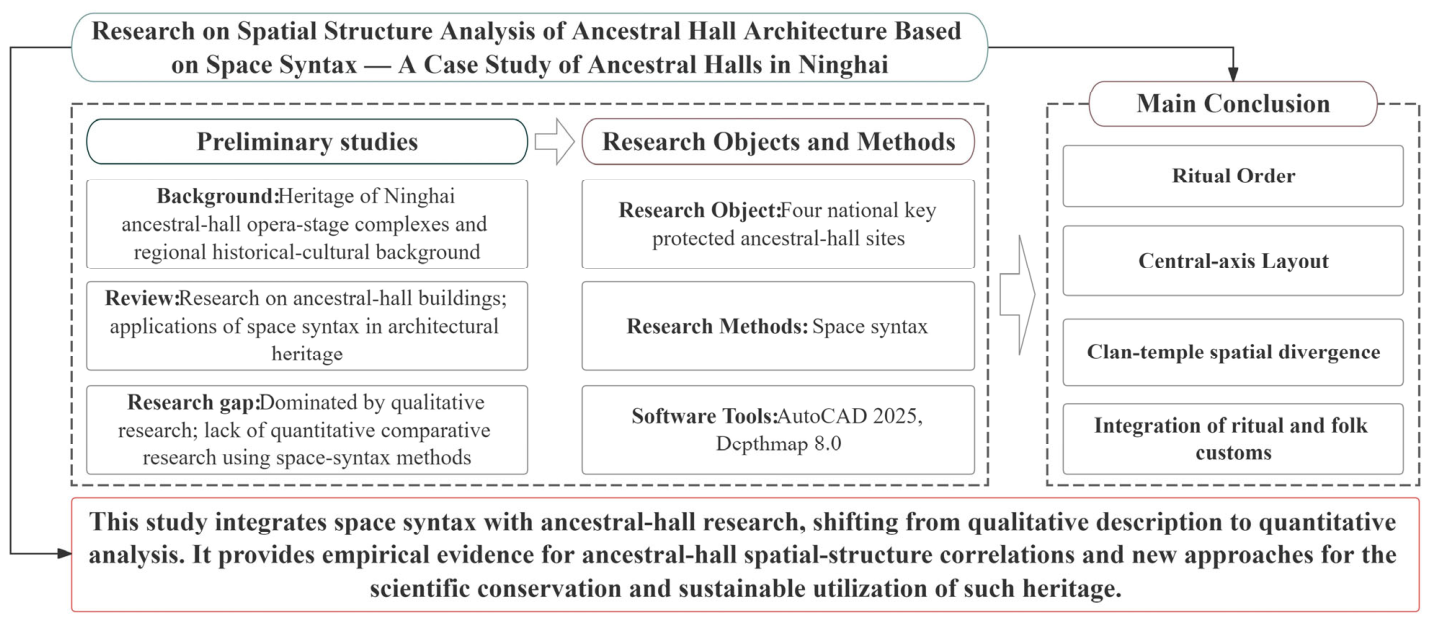
Research on Spatial Structure Analysis of Ancestral Hall Architecture Based on Space Syntax—A Case Study of Ancestral Halls in Ninghai

 ,
,
Abstract
1. Introduction
1.1. Background
1.2. Literature Review
1.3. Research Questions and Research Objectives
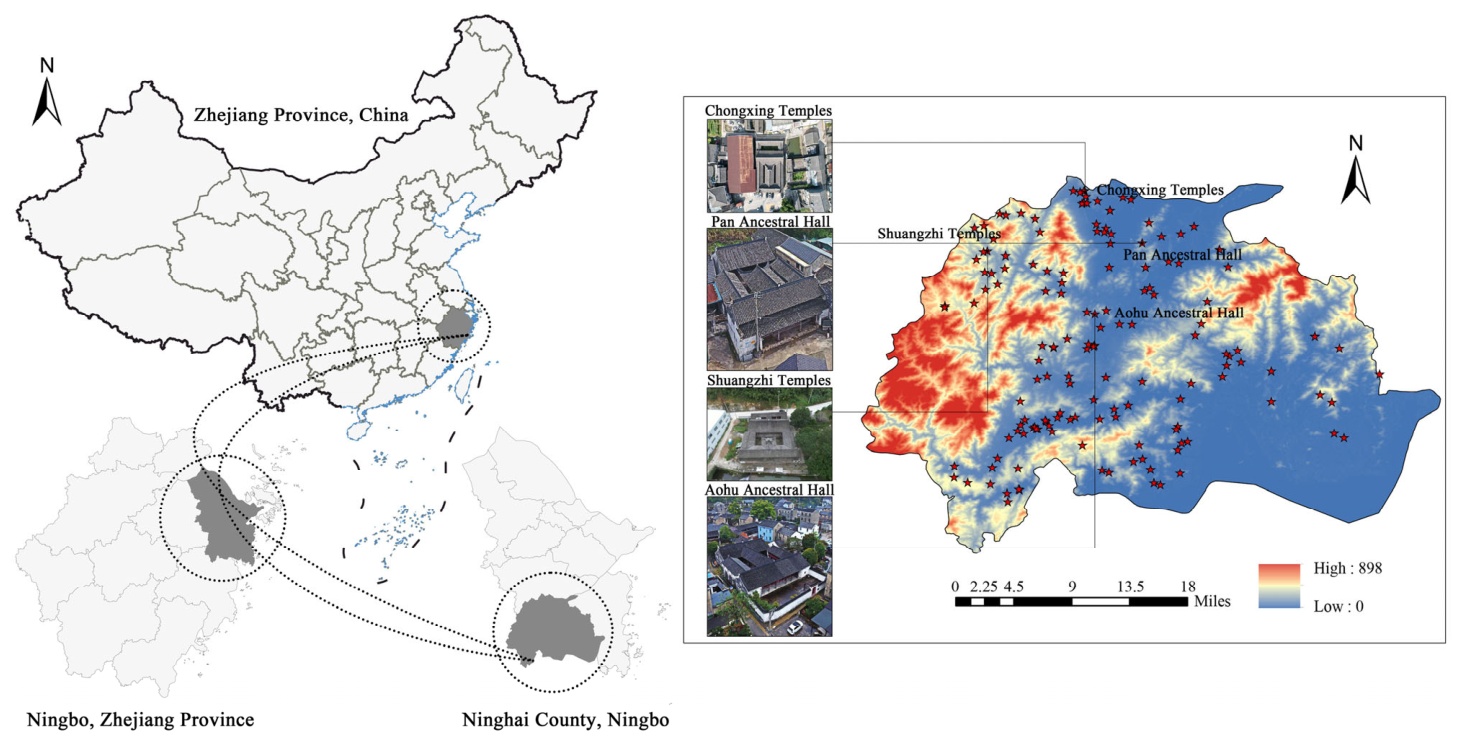
2. Research Object
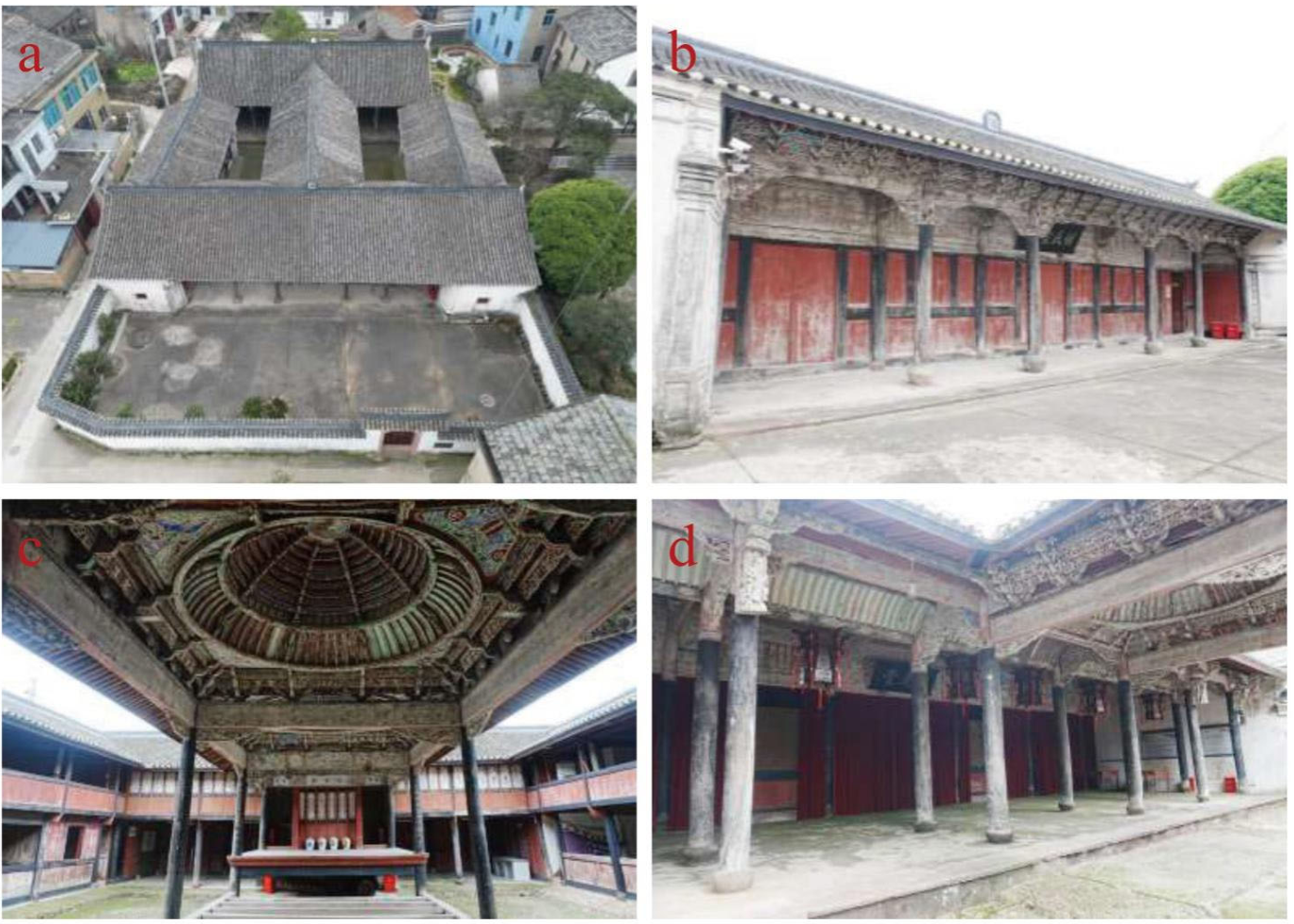
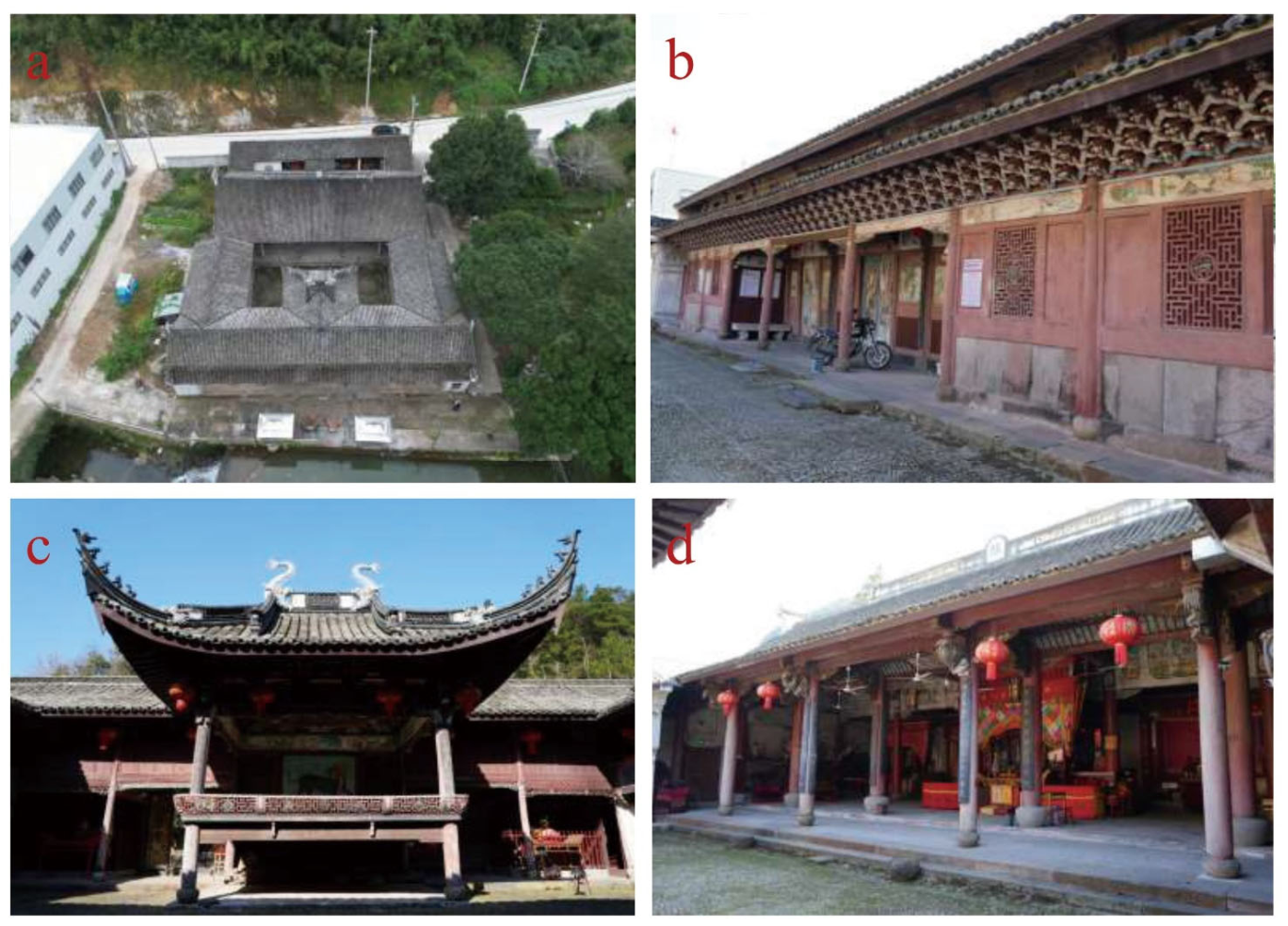
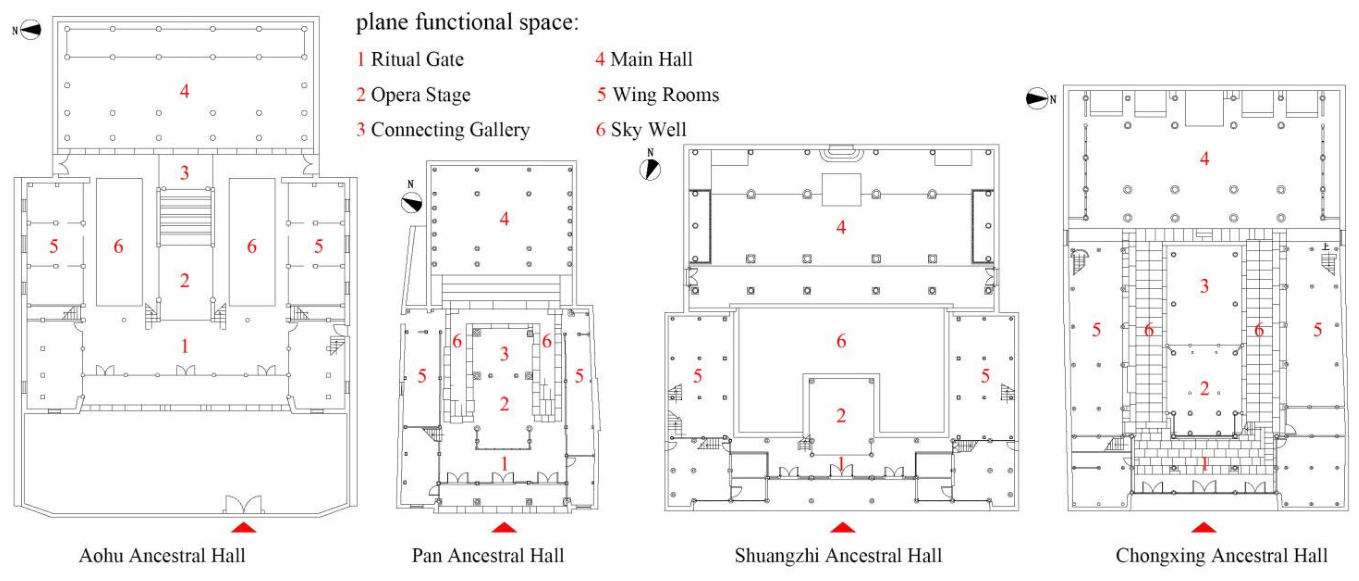
2.1. Aohu Ancestral Hall
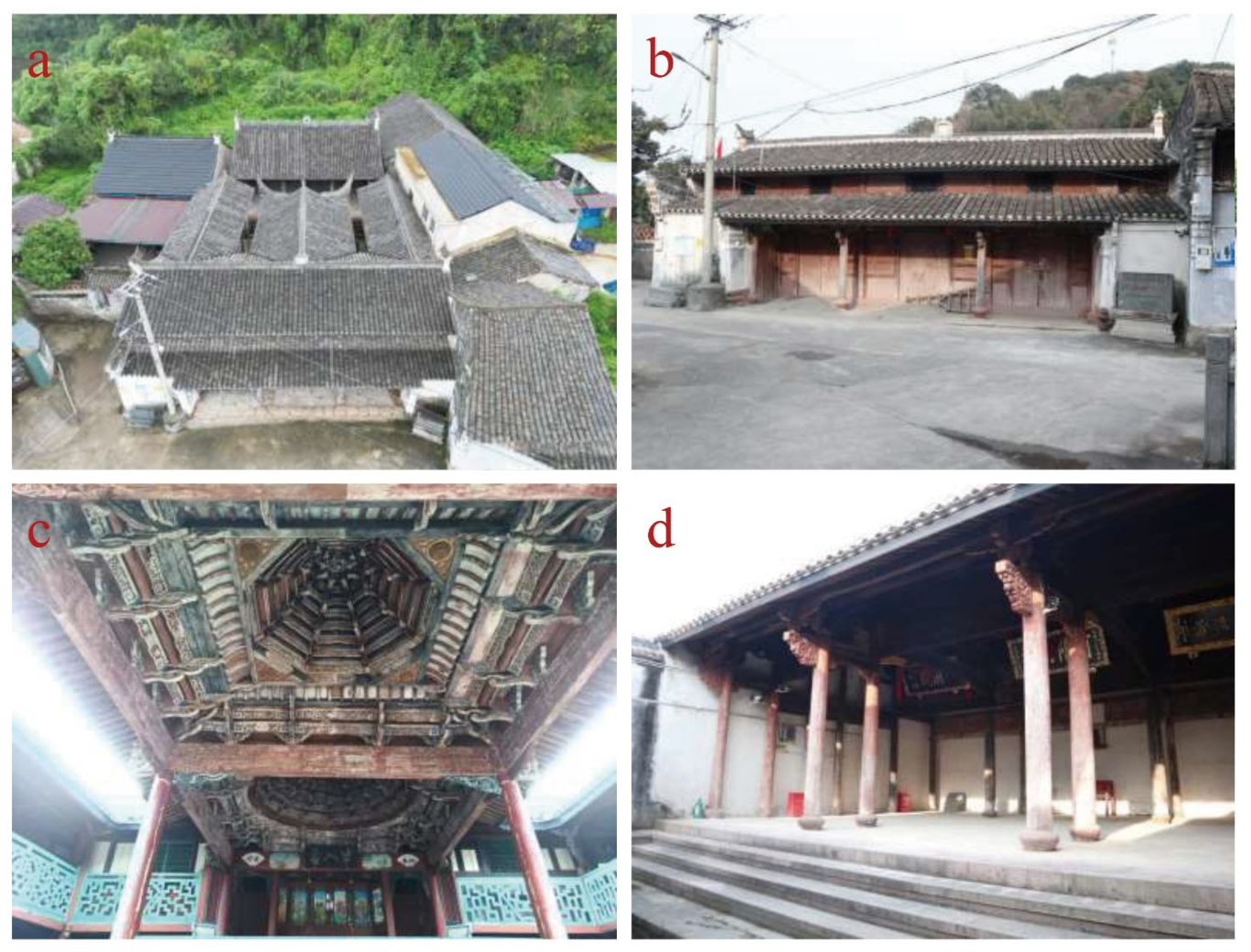
2.2. Pan Ancestral Hall
2.3. Shuangzhi Temples
2.4. Chongxing Temples
3. Methods
4. Results
4.1. Simulation Preparation
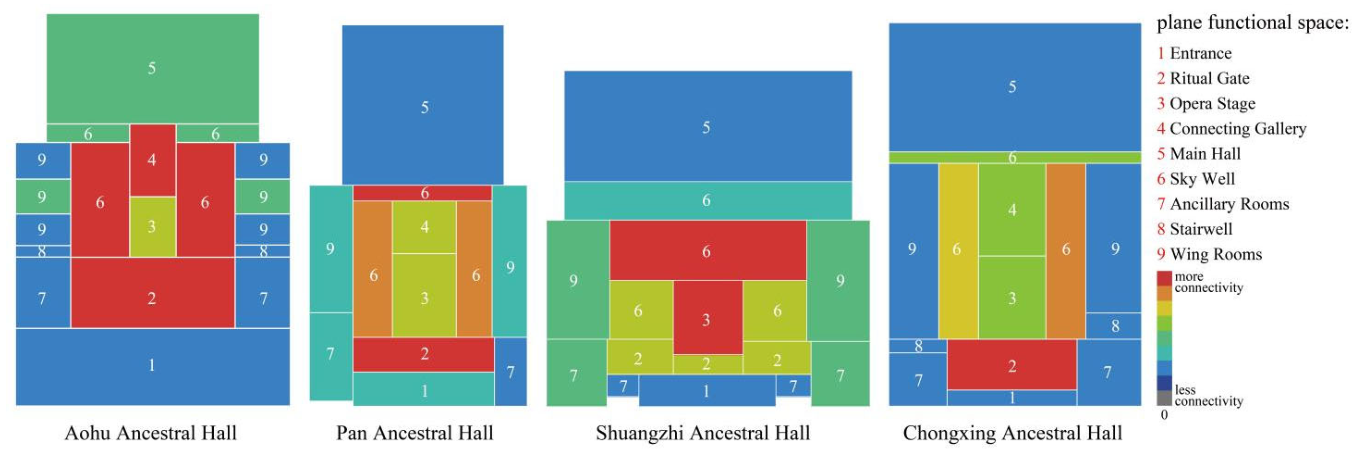
4.2. Convex Space Analysis
4.3. Axial Analysis
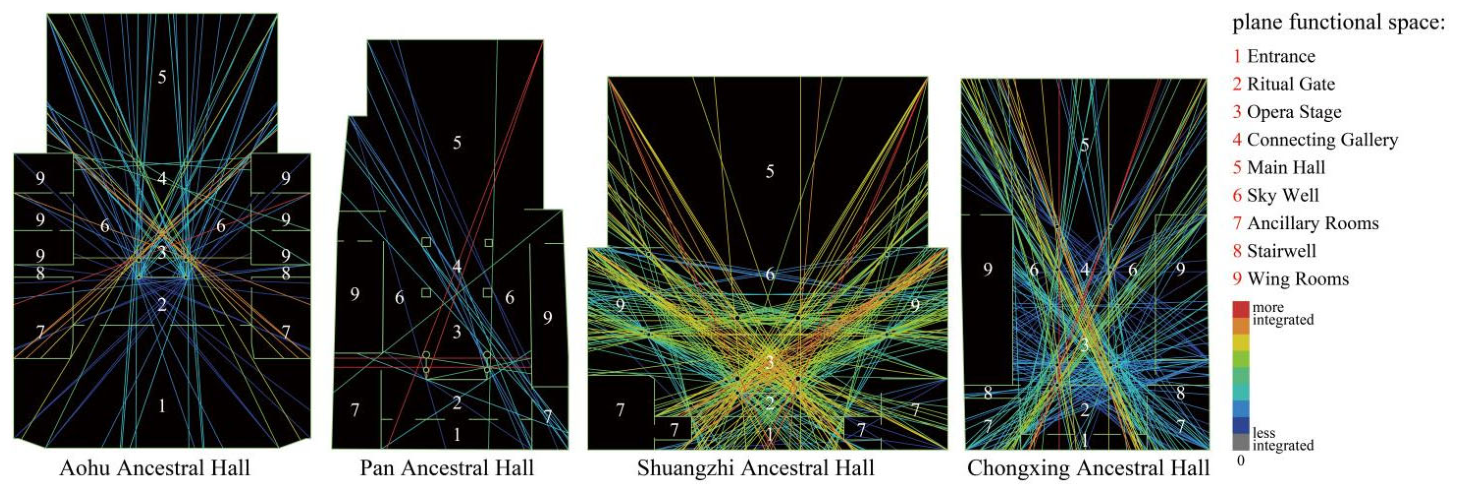
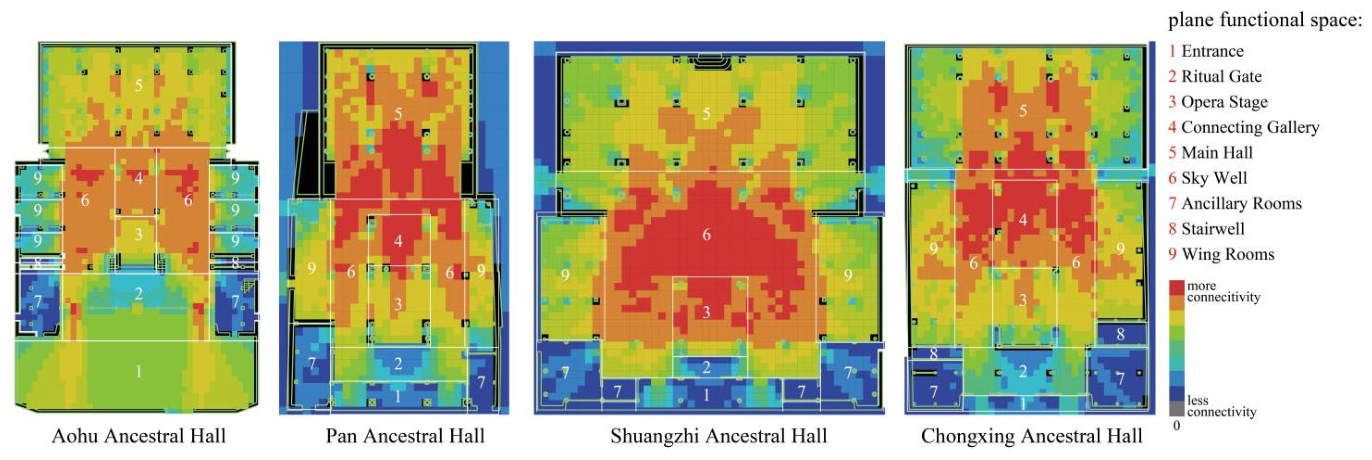
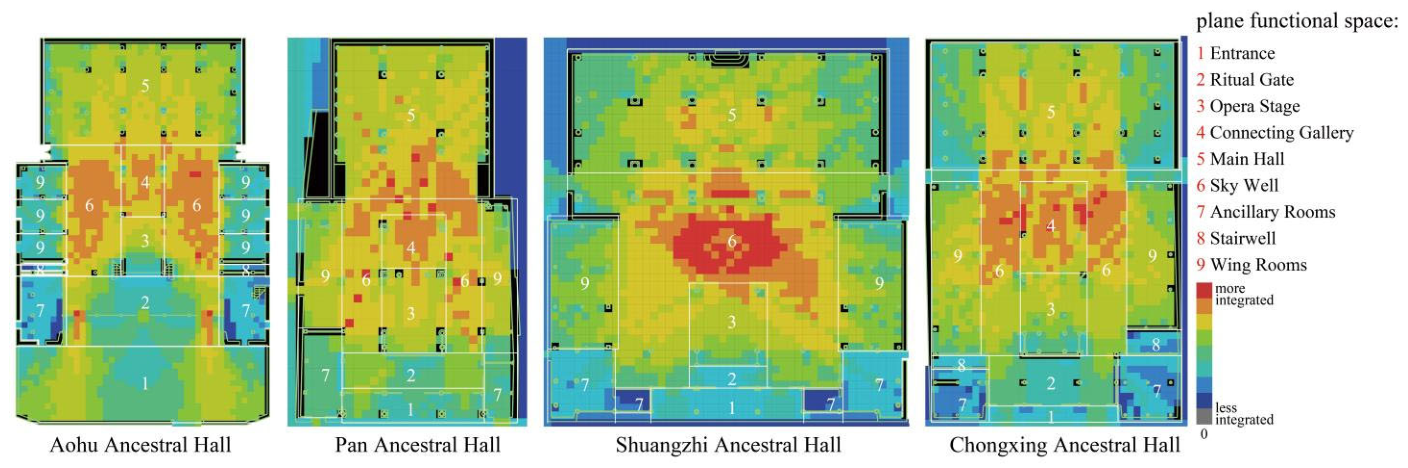
4.4. Visibility Graph Analysis
4.5. Comparative Statistical Analysis
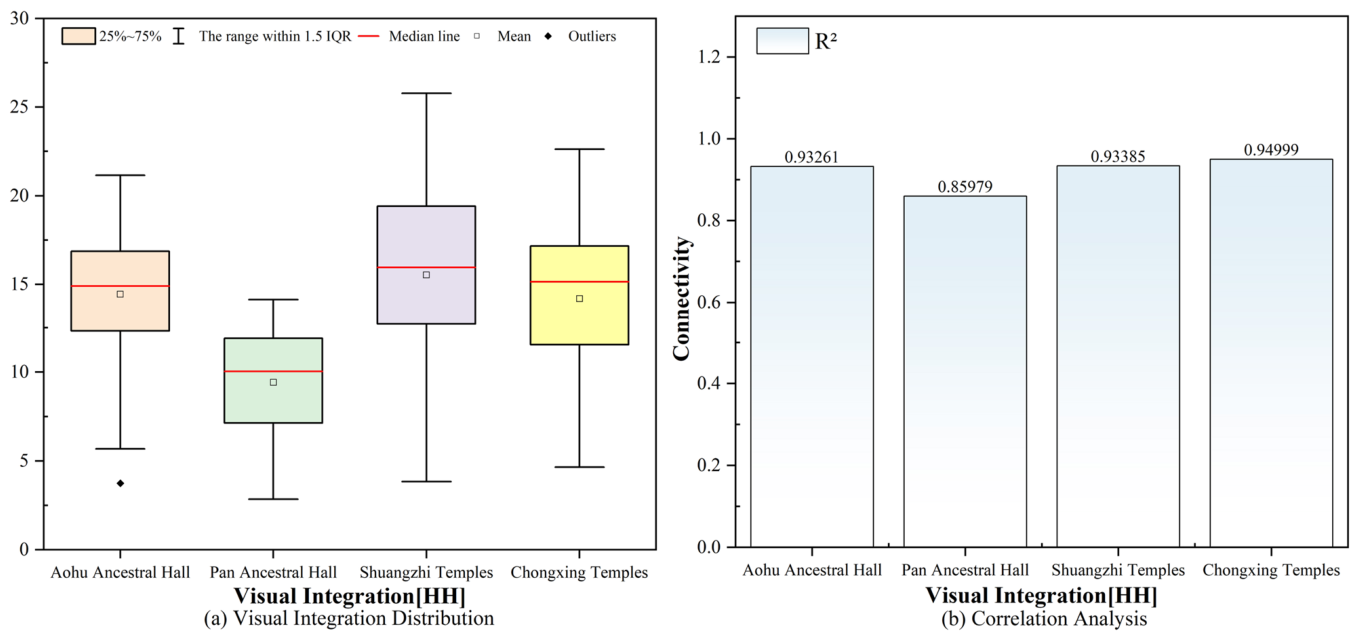
4.5.1. Visual Integration Analysis
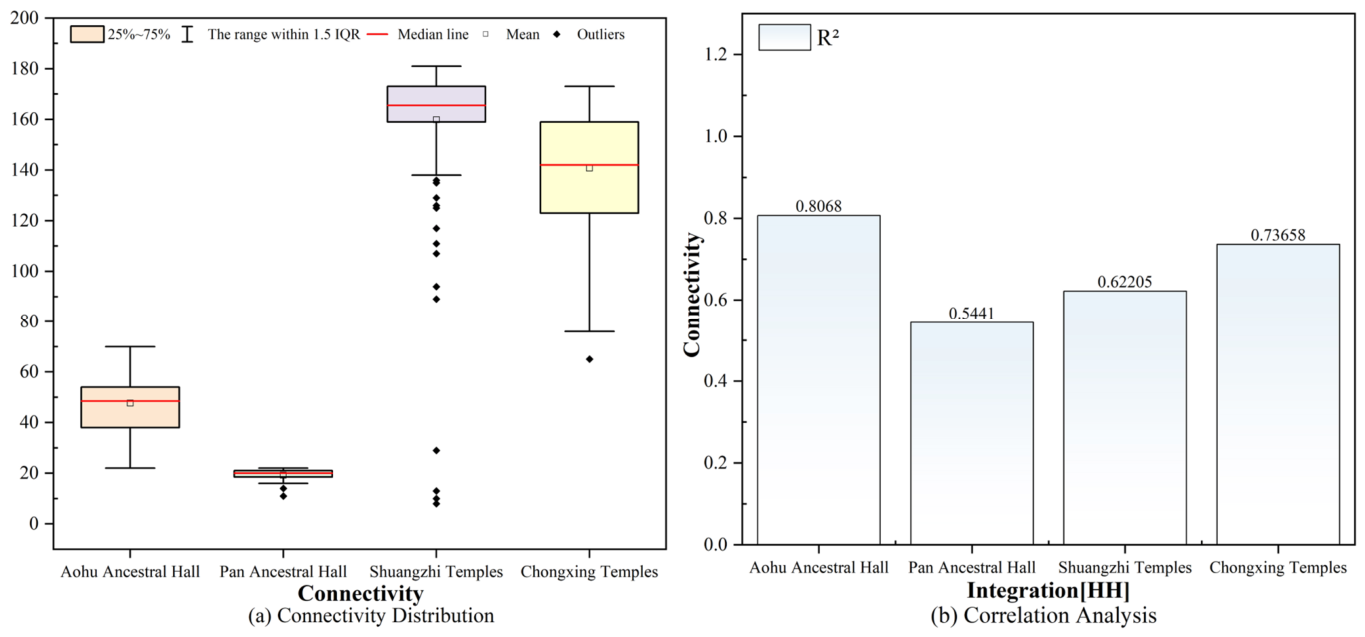
4.5.2. Connectivity Analysis
5. Discussion
5.1. Ancestral Hall Site Selection
5.2. Spatial Layout
5.3. Integration of Ritual and Folk Custom
5.4. Differentiation Between Ancestral Halls and Temples
6. Conclusions
Author Contributions
Funding
Data Availability Statement
Conflicts of Interest
References
- Han, Z.Y. Ancient Ancestral Halls of Shanxi; Liaoning People’s Publishing House: Shenyang, China, 2004; p. 56. [Google Scholar]
- Huo, M. Construction of Ancestral Hall Forms and Community Consciousness in the Yellow River Basin during the Ming and Qing Dynasties. West J. 2026, 6, 77–80. [Google Scholar]
- Li, F.; Hu, M.; Li, M.; Tang, Y.; Xu, X.; Zhang, J.; Li, K.Q.; Song, B.; Chen, E.; Xu, Y.B.; et al. Imperial Readings of the Taiping Era; Zhonghua Book Company: Beijing, China, 1960; Volume 589, Literature Section V; p. 2653. [Google Scholar]
- Wang, B.H. Loss of Cultural Value of Folk Ancestral Halls and Countermeasure Research. People’s Trib. Acad. Front. 2020, 2, 84–87. [Google Scholar]
- Liang, Y.Z.; Zhong, W.J. Research Progress and Trend Analysis of Domestic Ancestral Hall Architecture Based on CiteSpace. Guangxi Urban Constr. 2025, 6, 33–40. [Google Scholar]
- Xia, C.Y. Research on Intangible Cultural Heritage Living Inheritance Design from the Perspective of Service Design: A Case Study of Ninghai Ancestral Hall Architecture. Master’s Thesis, Donghua University, Shanghai, China, 2023. [Google Scholar]
- Xu, P.L.; Ying, K.J. Ancestral Hall Architecture in Ninghai; Zhonghua Book Company: Beijing, China, 2007; pp. 12–178. [Google Scholar]
- Xue, L.P. Research on Traditional Ancestral Hall Stage Architecture in Zhejiang. Huazhong Arch. 2008, 6, 114–124. [Google Scholar]
- Yu, X.L. Inheritance and Protection of Ancestral Hall Architecture in Ninghai. Heilongjiang Chron. 2015, 5, 105. [Google Scholar]
- Zhou, H. Research on the Ninghai Ancestral Hall Complex; Zhejiang University Press: Hangzhou, China, 2015; pp. 7–144. [Google Scholar]
- Xia, X.M.; Zhou, J.J.; Wu, S.S. Traditional Construction Techniques and Conservation Inheritance: A Case Study of Ninghai Ancestral Hall Architecture; Peking University Press: Beijing, China, 2023; pp. 1–200. [Google Scholar]
- Chen, Y.; Chen, J. Analysis and Research on Spatial Nodes of Historical Villages Based on Spatial Syntax Theory: Cuiwei Village in Qianshan Area of Zhuhai as an Example. J. Comput. Sci. Technol. Stud. 2022, 4, 7–34. [Google Scholar] [CrossRef] [Scilit]
- Zhang, W.; Wang, P.; Chen, Y.H.; Sheng, Q.; Zhang, W.; Zheng, J.; Chen, S. Renovation Design of an Urban Historic District Based on Space Syntax: A Case Study of the Qianmen Area in Beijing. Buildings 2026, 16, 226. [Google Scholar] [CrossRef] [Scilit]
- Ayyildiz, S.; Durak, Ş. Space Syntax Analysis of the Spatial Configuration of Yalova Traditional Rural Houses. Nexus Netw. J. 2024, 26, 27–48. [Google Scholar] [CrossRef] [Scilit]
- Hu, C.J.; Qi, Y.B.; Wang, C.E. An Analysis of the Spatial Characteristics of Jin Ancestral Temple Based on Space Syntax. Buildings 2025, 15, 85. [Google Scholar] [CrossRef] [Scilit]
- Yang, Y.Q.; Lin, X.H.; Lu, J.F. Space Syntax Analysis of Spatial Cultural Relationships in Traditional Xiangxi Academies. J. Asian Archit. Build. Eng. 2025, 25, 7. [Google Scholar] [CrossRef] [Scilit]
- Guo, P.Y.; Sang, Y.X.; Li, F.Y.; Lyu, T.F.; Liu, T.F. Harmony Between Ritual and Residential Spaces in Traditional Chinese Courtyards: A Space Syntax Analysis of Prince Kung’s Mansion in Beijing. Buildings 2025, 15, 3815. [Google Scholar] [CrossRef] [Scilit]
- Li, Y.; Chen, Y. Assessment of Architectural Typologies and Comparative Analysis of Defensive Rammed Earth Dwellings in the Fujian Region, China. Buildings 2024, 14, 3652. [Google Scholar] [CrossRef] [Scilit]
- Porretta, P.; Pallottino, E.; Colafranceschi, E.; Minnan, M.; Tulou, H. Functional, Typological and Construction Features of the Rammed Earth Dwellings of Fujian (China). Int. J. Archit. Herit. 2022, 16, 899–922. [Google Scholar] [CrossRef] [Scilit]
- Wang, W.-J.; Wang, M.-H. Embedded schema: Towards a new research program of traditional Chinese house types. J. Asian Archit. Build. Eng. 2008, 7, 1–7. [Google Scholar] [CrossRef] [Scilit]
- Xu, P.L. Prosperity Witness of the Hometown of Drama: Ninghai Ancestral Hall Architecture. China Cult. Herit. 2013, 5, 50–55. [Google Scholar]
- Hillier, B. Space Is the Machine: A Configurational Theory of Architecture; Cambridge University Press: Cambridge, UK, 1996; pp. 1–9. [Google Scholar]
- Bandyopadhyay, A.; Merchant, A.N. Space Syntax Analysis of Colonial Houses in India. Environ. Plan. B Plan. Des. 2006, 33, 923–942. [Google Scholar] [CrossRef] [Scilit]
- Zhou, W.Y.; Jia, S.H. Coupling Analysis of Space Syntax and Behavioral Patterns of Ancestral Hall Architecture: A Case Study of Luodongshu Ancestral Hall in Chengkan. Chin. Overseas Archit. 2019, 2, 44–49. [Google Scholar]
- Hillier, B.; Hanson, J. The Social Logic of Space; Cambridge University Press: Cambridge, UK, 1984; pp. 91–108. [Google Scholar]
- Kwon, Y.; Jeon, B.; Kim, S. The Seventeenth-Century Transition of Seoul’s Spatial Structure to Functional Pragmatism. J. Asian Archit. Build. Eng. 2015, 14, 419–426. [Google Scholar] [CrossRef] [Scilit]
- Yamu, C.; van Nes, A.; Garau, C. Bill Hillier’s Legacy: Space Syntax—A Synopsis of Basic Concepts, Measures, and Empirical Application. Sustainability 2021, 13, 3394. [Google Scholar] [CrossRef] [Scilit]
- Turner, A.M.; Doxa, D.; O’Sullivan, D.; Penn, A. From Isovists to Visibility Graphs: A Methodology for the Analysis of Architectural Space. Environ. Plan. B Plan. Des. 2001, 28, 103–121. [Google Scholar] [CrossRef] [Scilit]
- Zhu, X. Family Rituals; Wang, Y.J., Wang, G.Z., Eds.; Shanghai Ancient Books Publishing House: Shanghai, China, 2002; p. 875. [Google Scholar]
- Sun, H. A Study on Zhu Xi’s Family Rituals. Doctoral Dissertation, Zhejiang University, Hangzhou, China, 2009. [Google Scholar]
- Pan, G.X. A History of Chinese Architecture, 7th ed.; China Architecture & Building Press: Beijing, China, 2015; pp. 228–232. [Google Scholar]
- Liao, B.; Liu, Y.J. A Brief History of the Development of Chinese Opera; Shanxi Education Press: Taiyuan, China, 2014; pp. 3–4. [Google Scholar]
- Sang, Y.F.; Ying, Z.P. Spatial Form Analysis and Utilization of Ancient Stage Buildings in Zhejiang. Zhejiang Archit. 2018, 35, 2–6. [Google Scholar]






Disclaimer/Publisher’s Note: The statements, opinions and data contained in all publications are solely those of the individual author(s) and contributor(s) and not of MDPI and/or the editor(s). MDPI and/or the editor(s) disclaim responsibility for any injury to people or property resulting from any ideas, methods, instructions or products referred to in the content. |
© 2026 by the authors. Licensee MDPI, Basel, Switzerland. This article is an open access article distributed under the terms and conditions of the Creative Commons Attribution (CC BY) license.
Share and Cite
Wang, J.; Tian, J.; Shi, Z.; Xie, Q.; Cao, M.; Huang, S.; Tang, X.; Wang, L. Research on Spatial Structure Analysis of Ancestral Hall Architecture Based on Space Syntax—A Case Study of Ancestral Halls in Ninghai. Buildings 2026, 16, 3696. https://doi.org/10.3390/buildings16183696
Wang J, Tian J, Shi Z, Xie Q, Cao M, Huang S, Tang X, Wang L. Research on Spatial Structure Analysis of Ancestral Hall Architecture Based on Space Syntax—A Case Study of Ancestral Halls in Ninghai. Buildings. 2026; 16(18):3696. https://doi.org/10.3390/buildings16183696
Chicago/Turabian StyleWang, Juanli, Jiayao Tian, Zhiqiang Shi, Qingyang Xie, Ming Cao, Shan Huang, Xingjia Tang, and Lin Wang. 2026. "Research on Spatial Structure Analysis of Ancestral Hall Architecture Based on Space Syntax—A Case Study of Ancestral Halls in Ninghai" Buildings 16, no. 18: 3696. https://doi.org/10.3390/buildings16183696
APA StyleWang, J., Tian, J., Shi, Z., Xie, Q., Cao, M., Huang, S., Tang, X., & Wang, L. (2026). Research on Spatial Structure Analysis of Ancestral Hall Architecture Based on Space Syntax—A Case Study of Ancestral Halls in Ninghai. Buildings, 16(18), 3696. https://doi.org/10.3390/buildings16183696