Article

Youth-Oriented Public Space Regeneration in Historic Districts: A Participatory IPA-Based Evaluation in Beijing’s Fayuan Temple Area

1
School of Architecture and Urban Planning, Beijing University of Civil Engineering and Architecture, Beijing 100044, China
2
School of Education Science, Shaanxi Xueqian Normal University, Xi’an 710061, China
3
School of Physical Education, Xi’an University of Architecture and Technology, Xi’an 710055, China
*
Author to whom correspondence should be addressed.
Buildings 2026, 16(17), 3416; https://doi.org/10.3390/buildings16173416
Submission received: 23 July 2026 / Revised: 20 August 2026 / Accepted: 24 August 2026 / Published: 26 August 2026
(This article belongs to the Section Architectural Design, Urban Science, and Real Estate)

Abstract

In recent years, the agentive role of youth groups in urban regeneration has garnered increasing academic attention. As vital carriers of urban cultural heritage, the ways in which historic districts can leverage youth dynamics to achieve vitality revitalization have emerged as a key research issue. This study selects the Fayuan Temple Historic and Cultural District in Beijing as an empirical case, constructs a public space evaluation system grounded in the concept of “youth-friendliness,” adopts a mixed-method approach integrating field surveys, questionnaire administration, and multi-source data mining, and employs Importance–Performance Analysis (IPA) modeling for deconstruction. Based on behavioral characteristic differences, youth within the district are categorized into two groups: “resident/local youth” and “transient visiting youth.” The comprehensive experience quality scores were 3.559 (Fair) for resident and local youth and 3.85 (Fair) for temporary visitors, with cultural space scoring highest for both groups. Resident youth demonstrate stronger demands for renewal concerning the completeness of cultural facilities, diversity of commercial formats, and street navigability. Transient visiting youth, by contrast, exhibit greater concern for eight factors: pedestrian safety and comfort, static traffic order, diversity of commercial formats, quality of consumption environment, richness of social venues, pleasantness of spatial scale, landscape interactivity, and street navigability. These findings indicate that youth groups with varying interactive relationships with historic districts possess significantly heterogeneous needs regarding public space utilization, and their expectations for historic district regeneration also manifest differentiated characteristics. This provides a scientific basis for formulating precise, multi-layered strategies for district renewal.

1. Introduction

The international conceptualization of “historic districts” is predominantly shaped by the United Nations Educational, Scientific and Cultural Organization (UNESCO) and the International Council on Monuments and Sites (ICOMOS). The Charter for the Conservation of Historic Towns and Urban Areas (commonly known as the Washington Charter), adopted by ICOMOS in 1987, explicitly states that a historic urban area or historic quarter “refers to an urban fragment constituted by historic buildings, street patterns, open spaces, and social life. Its value lies not only in the artistic or archaeological significance of individual monuments, but more importantly in the historical continuity, cultural diversity, and the way of life of local inhabitants embodied by the whole” (ICOMOS, 1987: Arts. 1–2) [1]. The Charter emphasizes that the conservation of historic districts must transcend physical restoration and extend to the maintenance of social structures, community functions, and traditional economic activities, opposing the “museumification” and “gentrification” resulting from large-scale demolition and redevelopment. Within the World Heritage framework, UNESCO describes such areas as “historic towns or groups of buildings possessing Outstanding Universal Value (OUV),” and stipulates in the Operational Guidelines for the Implementation of the World Heritage Convention that assessments of authenticity and integrity must simultaneously consider the conservation status of both physical and morphological features (form and design) and sociocultural practices [2]. UN-Habitat further argues in its Culture in Sustainable Urban Development report series that historic districts are important carriers of urban cultural resilience, and that their regeneration should follow a “people-centered heritage management” approach, safeguarding the right of original residents to remain and ensuring spatial access for diverse groups including youth, so that heritage protection does not become an exclusionary instrument [3]. The publication of this series of landmark documents not only signals the significant position of historic districts in urban conservation but also provides a relatively clear and precise definition of the concept.
Beyond the attention given by the United Nations, scholarly discussions on historic districts have also encompassed development philosophies, resident ecologies, forms of spatial utilization, and regeneration strategies. These studies have clarified the delimitation of historic districts, greatly enriched their typological classification, provided robust analyses of their internal ecologies, and synthesized practical experience regarding their regeneration. With respect to delimitation, different countries adopt varying indicators based on their own circumstances. In the United States, due to differences in the stringency of state-level legislation, the core definition of a historic district comprises legally defined spatial boundaries, heritage value recognition, and regulatory mechanisms [4]. In China, a “historic and cultural district” refers to an area of a certain scale that contains abundant cultural relics and concentrated historic buildings, capable of reflecting traditional layout and historical style in a relatively complete and authentic manner [5]. Such definitional differences also shape the forms in which the historic districts under study are manifested.
Regarding the internal ecology of historic districts, numerous scholars have attended to the issue of vitality, considering it a key indicator of a district’s integration into modern life [6]. It is argued that vibrant historic and cultural districts possess greater attractiveness [7], and that such vitality is typically manifested in the state of people’s activities on the streets [8]. Some scholars have classified the vitality of historic districts into five components: physical–spatial vitality, social vitality, cultural vitality, economic vitality, and political vitality [9]. Furthermore, other researchers have established a correlation between vitality and human activity, contending that human behavioral activity constitutes the direct source of vitality in the revitalization of historic districts and necessitates demographic targeting, as well as attention to overall morphology, building restoration, and micro-spatial reconfiguration [10].
Recent scholarship on sustainable urban built heritage has moved beyond object-based conservation toward an integrated understanding in which cultural continuity, social inclusion, environmental performance, and accessibility are treated as co-dependent [11]. Drăghici-type case evidence shows that accessibility—understood not merely as wheelchair ramps but as legibility, wayfinding, sensory and cognitive inclusivity—can be retrofitted into historic fabrics without erasing historical identity, provided that governance is participatory and spatial interventions remain reversible [12].
A synthesis of this strand reveals three consensual findings: (i) sustainability in historic districts is not reducible to environmental metrics but encompasses cultural sustainability and the “right to heritage” for diverse user cohorts; (ii) historical identity survives not by freezing form but by remaining legible and usable to contemporary practices, including youth sociability; (iii) accessibility is the connective tissue that translates heritage value into everyday public-space quality, yet it remains under-theorized in youth-oriented regeneration literature.
The present study enters this gap: while we center youth groups, our four-dimensional frame (circulation, culture, social interaction, consumption) internally operationalises accessibility (via “traffic accessibility”, “pedestrian safety”, “orientation of streets”) and historical identity (via “cultural display”, “immersion”), thereby linking the youth-friendliness debate to the broader sustainability–accessibility–identity triad rather than treating it as a standalone demographic preference.
Finally, with regard to regeneration practice, scholars have offered recommendations from various perspectives on the retrofitting of public spaces. From a management standpoint, some propose that the proper governance of heritage conservation districts can support and enhance local economic development, with the effectiveness of economic revitalization being significantly influenced by built-environment characteristics, historical integrity, and external planning provisions [13]. Others argue that historic conservation districts are not simple reproductions of history but rather “organized and idealized” versions whose very conception is informed by ideas of good urban form [14]. Young people may also participate in the regeneration of historic districts to enhance the inclusivity of such transformation efforts [15,16,17,18]. In terms of renovation methods, scholars have emphasized the application of novel approaches to achieve micro-regeneration [19], and the enhancement of tangible tourism environments and experiential quality to realize the sustainable development of historic districts [20,21]. Building upon accumulated experience, some researchers have conducted comparative analyses of revitalization cases across different historic districts, revealing that the same regeneration concept can demonstrate feasibility for a given set of historic districts [22]. Additionally, scholars have examined the internal spatial subdivision of historic districts, particularly the retrofitting of public spaces [23,24,25,26]. These studies provide a reference for deconstructing the spatial operation mechanisms within historic and cultural districts.
At present, historic districts in Beijing face a tension between conservation and development, particularly regarding the utilization of public spaces. On the one hand, the historically formed urban character, combined with irregular usage by long-term residents, has resulted in acute spatial deficiency. The aging demographic profile and inadequate infrastructure have further constrained district development, producing a built environment inconsistent with the area’s locational advantages. On the other hand, under increasingly stringent policy requirements for preserving the historic character of these districts, the approach of rapid redevelopment through direct demolition is no longer applicable to Beijing’s historic areas. This contradiction suggests that the retrofitting of public spaces in Beijing’s historic districts must now be addressed by optimizing neighborhood functions and facilitating demographic renewal. Introducing young populations into historic districts—harnessing youthful agency to achieve synergy between conservation and development—has thus emerged as a viable regeneration strategy, rendering the adoption of the youth-friendly city concept urgently necessary. The youth-friendly city paradigm emphasizes respect for youth subjectivity, prioritizes youth development, and advocates for the full-cycle participation of young people. Its objective is to satisfy as comprehensively as possible the work, living, and leisure needs of young people within urban planning, thereby attracting and retaining them and consequently promoting urban development. While seeking to preserve the traditional character of historic districts, this concept offers a practically feasible methodology—from the perspective of urban renewal—for addressing the challenges of population aging and insufficient vitality. A growing number of scholars have recognized the role of young people in the process of urban district regeneration [27,28,29]. These studies provide substantial references for applying the youth-friendly concept to historic districts. The present study introduces the Importance–Performance Analysis (IPA) framework, taking youth groups exhibiting distinct patterns of interaction within the Fayuan Temple Historic District in Beijing as its research subjects. Through quadrant analysis, it identifies youth behavioral modes and then correlates empirically derived youth needs with the public-space ecology of the historic district, with the aim of exploring pathways for regenerating vitality in historic urban areas.
It is important to acknowledge that the present study deliberately focuses on youth groups as the primary analytical subject, rather than attempting to cover all demographic categories within the historic district. This decision is based on three considerations:
First, from a strategic urban regeneration perspective, historic districts in Beijing are currently facing a dual crisis of population aging and declining vitality. Injecting youthfulness is widely recognized as a key driver for reversing this trend. Prioritizing youth needs therefore addresses the most pressing bottleneck in the renewal process. Second, from a methodological feasibility standpoint, different demographic groups (e.g., elderly residents, middle-aged commuters, child families) exhibit fundamentally different spatial usage patterns and evaluation criteria. Incorporating all groups into a single IPA framework would risk conflating heterogeneous needs and diluting the analytical precision. A focused approach targeting one clearly defined group yields more actionable insights. Third, this study does not claim that other age groups are unimportant. Rather, it positions itself as the first phase of a broader research agenda. The analytical framework developed here—particularly the IPA-based evaluation method and the four-dimensional indicator system—is designed to be transferable and adaptable to other user groups in future studies.
Therefore, the exclusive focus on youth is a deliberate methodological choice aimed at maximizing the depth and applicability of the findings within the scope of the study.

2. Materials and Methods

2.1. Conceptualization of the Youth-Friendly City Theory and Its Application to Historic Districts

In early discourses concerning youth and urban design, Woolcock and Gleeson delineated the spatial dimensions of the “Youth-Friendly City,” positing that its core constituents should encompass accessibility, inclusive social spaces, and opportunities for cultural expression [30]. This framework provides a significant theoretical locus for cross-national comparative research on the concept. Although this proposition has influenced scholarly understanding of what constitutes a youth-friendly city, no authoritative consensus definition has emerged. Most scholars define the youth-friendly city as “a people-centered planning, construction, and regeneration model that prioritizes youth development”. This characterization underscores the core tenet of the youth-friendly city: an urban development paradigm centered on the growth and daily life of young people.
Building on this concept, numerous empirical cases of youth-friendly cities have been documented. In urban planning and development initiatives led by developed countries, American scholars have proposed the “Job (Study) Destination Indicator System,” [30] which provides young job-seekers and students with reference and support for choosing where to live, work, and study based on demographic characteristics, urban economic conditions, and quality-of-life dimensions. Canada, meanwhile, has developed the “Youthful City” indicator system, organized around three core dimensions—live, work, and play—to measure the priority of youth needs and preferences [16]. These indicator systems not only offer a cognitive model for understanding youth-friendly cities but also expand the potential scope of application for the youth-friendly concept. In practice, however, the concept has been predominantly applied to the planning and design of urban spaces, with its emphasis oriented toward youth-oriented urban living.
At present, the application of the youth-friendly concept to the regeneration of different urban functional zones is not uncommon, and a number of scholars have explored the role of young people in urban renewal. Some researchers have demonstrated the impact of youth/child participatory planning on the evaluation of public-space quality, proposing an analytical framework of “youth perception → spatial rights → place attachment,” thereby positioning young people as the principal agents of urban renewal [16]. Others have focused on the formation of social interaction spaces, introducing the concept of “social affordance” from an environmental psychology perspective to assess young people’s autonomous needs for using urban neighborhood public spaces [28]. Still others have approached the issue from the perspective of youth social interaction needs, attempting to inform the upgrading of existing older residential communities. For example, Lin Yuyun’s research explores intergenerational cohabitation between the young and the elderly, seeking to develop universally applicable upgrading strategies that reconcile the needs of different demographic groups within the renewal of aging neighborhoods. These studies provide concrete methodologies for applying youth-friendly theories within urban functional zones.
Furthermore, research focusing on traditional hutong alleyways and historic street conservation areas is equally extensive. For instance, my own study examined the renewal model of Beijing’s traditional courtyard conservation areas from the perspective of cultural symbiosis. Similarly, Xiang Lanlin and colleagues have investigated the issue of “symbiotic courtyards” within traditional hutongs and historic lanes, aiming to develop effective regeneration strategies drawing on dramaturgical theory. Y. Zhang’s study of Chengdu’s Kuanzhai Alley focuses on adolescents’ visual engagement with and cultural perception of the historic district interface, offering an important perspective for understanding young people’s experiences in historic spaces [30]. Collectively, these studies provide the knowledge base and analytical framework for the present research, and offer a viable regeneration pathway for applying youth-friendly theory within historic districts.
Beyond the discourse on youth-friendly cities, a parallel strand of scholarship has addressed the tension between preserving historical identity and accommodating modern community needs. Cesare Brandi’s restoration theory emphasizes that intervention should prioritize the “horizontal plan” surrounding a heritage structure—i.e., its urban context—over isolated physical repairs, ensuring that the building is recognized within its historical setting. This perspective aligns with Giovannoni’s view that preservation should focus not merely on individual monuments but on the broader urban fabric that collectively constitutes the city’s historical environment.
More recently, scholars have called for integrated strategies that harmonize heritage conservation with inclusive access. Drăghici et al. [31] demonstrated through a case study of Lugoj, Romania, that creating an urban promenade can bridge the gap between historical identity and modern community needs while improving accessibility for diverse user groups, including those with mobility, visual, auditory, and cognitive impairments. Their study highlights that accessibility is rarely addressed in historic contexts, and that few strategies successfully integrate preservation with urban cohesion and inclusivity.
These findings are directly relevant to the present study. While our research focuses specifically on youth groups, the underlying challenge—balancing heritage conservation with contemporary functional demands—applies universally. The four-dimensional framework (circulation, culture, social interaction, consumption) developed in this study implicitly addresses accessibility and inclusivity concerns, particularly through indicators such as “Pedestrian Safety and Comfort,” “Static Traffic Order,” and “Orientation of Street and Alley Spaces.” Future research could extend this framework to explicitly incorporate accessibility criteria for diverse demographic groups, including the elderly and people with disabilities.

2.2. Indicator Evaluation System for Youth-Friendly Theory in the Retrofitting of Public Spaces in Historic Districts

Scholarship has long identified a structural misalignment between the needs of “daily residents” and those of “visitors/tourists” in the context of historic district renewal [32]. Consequently, evaluations of public space in historic districts have been urged to reconcile the preservation of “genius loci” (the spirit of place) with the adaptation to contemporary functional requirements [33,34]. This body of work underscores the necessity of incorporating the dimension of social usage—particularly relevant for justifying the inclusion of youth perceptions in heritage conservation assessments—and provides crucial reference principles for establishing the indicator evaluation system employed in this study. Building upon prior research emphasizing youth participation in historic district renewal, this study adopts a tripartite analytical lens of “behavior–space–governance.” It transforms the specific contradictions arising from the intersection of local residents’ daily livelihood needs, demands for historic character preservation, and objectives for sustainable district development into quantifiable and measurable academic evaluation indicators. Addressing the core research question concerning divergent cognitive logics and usage behaviors toward public space among distinct youth groups, this indicator system seeks to unveil the active processes of spatial production engendered by youth engagement, while elucidating the underlying mechanisms through which these practices foster long-term sustainable development in historic districts.
Grounded in the analysis of youth needs within the theory of Youth-Friendly Cities and the tangible spatial realities of the Fayuan Temple Historic District, we deconstruct youth demands into four interrelated dimensions to analyze their utilization patterns of public space. Anchored in the core demand orientation of youth as defined by the Youth-Friendly Cities framework, and integrated with the spatial texture, aesthetic characteristics, and current developmental status of the Fayuan Temple Historic District, we disaggregate youth spatial needs into four synergistic core dimensions: circulation space, cultural space, social interaction space, and consumption space. This framework systematically dissects the diverse utilization modes and behavioral logics of youth groups regarding public space in historic districts. This framework systematically dissects the diverse utilization modes and behavioral logics of youth groups regarding public space in historic districts.
It is crucial to clarify that these four synergistic core dimensions are not arbitrarily selected but are established through a dual-driven approach: theoretically grounded in the “Youth-Friendly Cities” framework and the spatial production theory, and empirically refined based on the tangible spatial realities and investigative characteristics of the Fayuan Temple Historic District [35]. Among these, circulation space serves as the foundational carrier and primary perceptual interface through which youth enter the district and engage in various spatial activities [36]. This dimension goes beyond physical aspects of traffic safety and convenience—such as pedestrian–vehicle separation, paving quality, and transport-supporting facilities—to emphasize the psychological sense of security engendered by the spatial scene, signage system, and ambient atmosphere of the district. Circulation space thus constitutes the core prerequisite for youth to form an initial impression of the district and to establish spatial identity.
Cultural space and social interaction space represent the core carriers of the Fayuan Temple Historic District’s distinctive character and sources of attraction, as well as the key media through which youth establish emotional connections and achieve deep interaction with the district. Cultural space is oriented toward cultural immersion and identity formation, moving beyond static evaluations of the presence or absence of heritage assets to focus on the completeness of the district’s historical narrative, the coherence of its cultural scenes, and the quality of youth cultural participation, thereby measuring the effectiveness of historical–cultural dissemination and revitalization. Social interaction space centers on interaction flexibility and community incubation, with particular emphasis on the temporal adaptability of public spaces, their inclusiveness toward diverse scenarios, and the appropriateness of their scale, assessing the capacity of the district’s spaces to accommodate diverse youth social behaviors and to nurture youth community vitality.
Consumption space constitutes the core dimension supporting the sustainable renewal of the historic district and balancing commercial development with community life. This dimension introduces an evaluative logic centered on consumption justice, commercial-format symbiosis, and co-governance between businesses and residents. It rejects simplistic criteria based solely on commercial diversity or entertainment value. While considering the quality and vibrancy of the district’s consumption scenes, it critically examines the rationality of commercial-format distribution, assesses whether commercial expansion encroaches upon residents’ daily living spaces or squeezes out public interests, and evaluates the adequacy and effectiveness of conflict mediation and collaborative governance mechanisms between commercial actors and the local community [37,38].
Based on the above logic, 15 indicators are assigned to the four dimensions, and their respective IPA measurement orientations are specified, as shown in Table 1.

3. Study Area, Data and Methods

3.1. Study Area

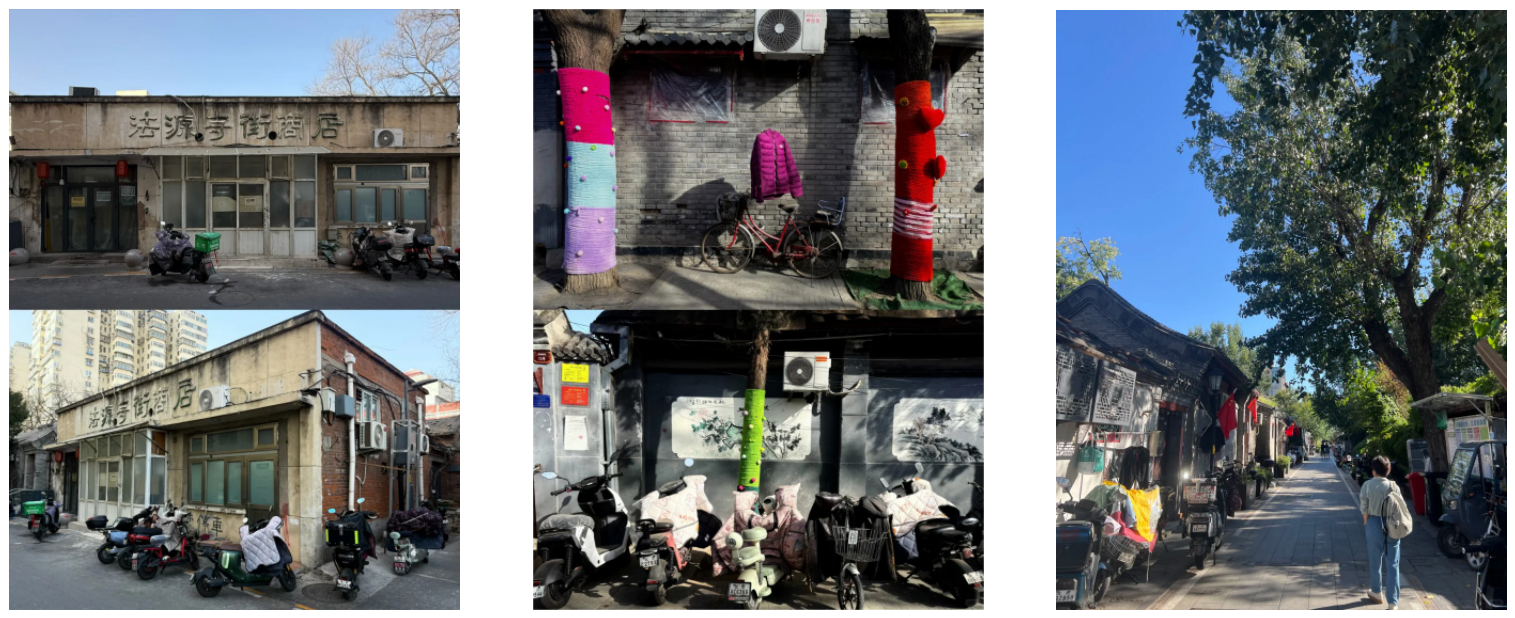
The Fayuan Temple Historic Block is located in the Xicheng District of Beijing, as shown in Figure 1. It was designated as the second batch of Beijing’s Historic and Cultural Preservation Areas in 2002, and was subsequently inscribed on the Capital Functional Core Area Traditional Place Name Protection List in 2022. The block contains a cluster of historic buildings, including the Fayuan Temple itself, the Liuyang Guild Hall (Liuyang Huiguan), and the Hunan Guild Hall (Hunan Huiguan), interconnected by a network of historic hutong alleyways such as Lanman Hutong and Nanbanjie Hutong. Together, these elements constitute a “living monument” that authentically reflects Beijing’s urban character and hutong culture. The existing Fayuan Temple Historic Block underwent a phased design and renovation process commencing in 2017 and concluding in 2022. Facilitated by the rise of social media and online platforms, it has gradually transformed into a popular internet-famous check-in destination.
The selection of the Fayuan Temple Historic and Cultural District as the case study area was based on a set of predefined inclusion and exclusion criteria.
Inclusion criteria:
(1)
The district must be officially designated as a historic and cultural conservation area by the municipal government, ensuring legal recognition and protected status.
(2)
The district must have undergone recent regeneration interventions (post-2017), allowing for the evaluation of contemporary renewal outcomes.
(3)
The district must exhibit a visible presence of youth activity and youth-oriented commercial formats (e.g., cafés, cultural and creative shops, social media “check-in” hotspots), ensuring sufficient data availability for youth-focused analysis.
(4)
The district must include a mix of public space types (circulation, cultural, social, and consumption spaces) to allow for multidimensional evaluation.
Exclusion criteria:
(1)
Districts that have not undergone any regeneration interventions in the past decade were excluded because they would not provide meaningful performance data for evaluating renewal strategies.
(2)
Districts dominated by single residential functions with minimal public space or commercial activity were excluded, as they would not yield sufficient variation across the four analytical dimensions.
(3)
Districts where youth presence was negligible (e.g., predominantly elderly-populated areas without emerging youth-oriented businesses) were excluded, as they would not support the research objective of youth-centric evaluation.
The Fayuan Temple District met all inclusion criteria and none of the exclusion criteria, making it an ideal representative case for examining youth-oriented public space regeneration in Beijing’s historic districts.

3.2. Spatial Utilization Patterns and Typology of the Fayuan Temple Historic Block

Based on the current spatial planning of the Fayuan Temple Historic Block, its internal public spaces can be classified into three typical combinatorial patterns:
The first is the integrated type, in which different categories of public space are tightly coupled within the same module, exhibiting strong interrelations, blurred spatial boundaries, and mutual nesting; thereby forming a composite spatial configuration. This type is exemplified by the main commercial street, Fayuan Temple Front Street (Fayuan Si Qianjie), where public-space utilization is centered on consumption space, with cultural space and social interaction space embedded within it. The primary user groups are transient visitors and service-industry workers.
The second is the segregated type, in which public spaces of different functions coexist within the same physical field but exhibit weak interrelations, clear spatial boundaries, and mutual independence, presenting a discrete distribution pattern. This pattern is represented by the tourist-oriented hutong segments extending from the commercial street, such as Xizhuan Hutong and Lianhua Hutong. Although these alleys contain diverse spaces for circulation, culture, and social interaction, they lack systematic functional integration, which results in a fragmented overall distribution.
The third is the dominant-function type, in which a single category of public space overwhelmingly dominates the module, while other types exist only in ancillary or supplementary roles, producing a heterogeneous configuration characterized by a prominent primary function with secondary elements interspersed. This type is typically found in the secondary lanes branching off Xizhuan Hutong and Lianhua Hutong, as well as unnamed passages between residential compounds. Circulation space is absolutely dominant, with only a small amount of cultural space scattered sporadically throughout.
In addition, the block contains a considerable number of historic guild halls (huiguan) buildings. Although their functional attributes would logically position them as core carriers of cultural space, complex land tenure and property rights issues have consigned them to a prolonged ambiguous zone between public and private space, and they have yet to be effectively incorporated into the public-space system of the blockas shown in Figure 2.

3.3. Figures, Tables and Schemes

To ensure the theoretical foundation and practical applicability of the evaluation, the construction of the indicator system followed a rigorous multi-stage process:
  • Literature Review (Initial Indicator Set): A comprehensive review of domestic and international literature regarding historic district evaluation, public space vitality, and youth-oriented urban regeneration was initially conducted. This process yielded an initial pool of 40 candidate indicators covering four core dimensions: circulation space, cultural space, social interaction space, and consumption space.
  • Expert Consultation (Refinement): Subsequently, semi-structured interviews were conducted with 3 experts specializing in urban planning, cultural heritage conservation, and public space design. Experts evaluated the relevance, representativeness, and feasibility of the initial indicators. Suggestions regarding merging redundant items, removing less relevant indicators, and adding context-specific elements were collected.
  • Indicator Revision and Final System: Based on expert feedback, redundant and low-scoring indicators were removed, and the definitions were refined. After two rounds of iteration, the final indicator system was established, comprising 15 indicators across four dimensions. This system not only aligns with established theoretical frameworks but also addresses the specific context of the Fayuan Temple Historic Block.
Based on the above framework, this study conducts research from both qualitative and quantitative perspectives. First, an action system for cultural reshaping in the historic block is constructed through document interpretation and targeted interviews with key stakeholders. Second, based on the content analysis method, the characteristics and emotional polarity of local culture are analyzed from the perspectives of temporary visitors, residents, and operators. Subsequently, through questionnaire surveys and based on the Importance—Performance Analysis (IPA) method, the expression effects of various cultural elements during the process of historic block renewal and local cultural reshaping are explored from the viewpoints of temporary visitors, residents, and operators.

3.3.1. Content Analysis Method

Content analysis is a research method that converts qualitative content such as texts and images into systematic and quantitative data [45]. In this paper, the Likert five—point scale is used to quantify online texts. The specific quantification process is as follows: Two professional researchers independently read each online text, extract experiential elements, and score them according to semantics, emotion, and attitudinal tendency. The highest score is 5 points, and the lowest is 1 point. For elements with a score difference of more than 1 point, a third researcher scores them. The score closer to each other between the two researchers is taken as the final score of the element. All online texts are refined and scored according to this method, and the quantification basis is shown in Table 2. Elements not mentioned in the text are assigned a score of 3 points.
A methodological note is warranted regarding the assignment of a neutral score (3 points) to indicators not mentioned in an online text. This treatment follows the convention established in content-analysis-based tourism experience studies, where absent mentions are interpreted as the baseline “no strong feeling” rather than as negative or positive. The rationale is twofold: First, online reviews are inherently selective: users tend to comment on aspects that are either exceptionally satisfying or exceptionally disappointing, while satisfactory-but-unremarkable features are often omitted. Assigning a missing mention as “neutral” (3) avoids artificially deflating the performance score of indicators that are simply “adequate.” Second, we conducted a sensitivity check by comparing two scoring strategies: (a) treating missing mentions as 3 (neutral), and (b) excluding missing mentions entirely (i.e., calculating the mean only from texts that explicitly mention the indicator). The rank order of indicator scores remained stable (Spearman’s ρ = 0.94, p < 0.001), confirming that the neutral-assignment rule does not distort the relative performance ranking.
Meanwhile, the extracted experience elements are compared and verified one by one with the indicator elements in the evaluation index system. No experience elements need to be added or deleted, which means that the evaluation index system in Table 1 can be used to conduct research on the tourism experience quality of the “Fayuan Temple Historic and Cultural Block”. Based on this, the entropy method is used to objectively weight each indicator, and the linear weighted function method is used to evaluate the tourism experience quality of each sample. The final evaluation result ranges from 1 to 5 points, and its calculation formula is as follows:
E i = i = 1 n x i j w j
where E i denotes the tourism experience quality of the i -th sample; x i j denotes the score of the j-th evaluation indicator for the i -th sample; and w j denotes the weight of the j -th evaluation indicator.

3.3.2. Importance–Performance Analysis (IPA)

Importance–Performance Analysis (IPA) is a straightforward and effective tool for determining the priority of improvement for measured items and for integrating and optimizing resources [46]. The underlying rationale is to identify strengths and weaknesses by comparing the discrepancy between respondents’ perceived importance of and actual performance on each attribute. The operational procedure is as follows: perceived importance is plotted on the Y-axis and perceived performance on the X-axis; the grand mean of all importance scores and the grand mean of all performance scores serve as the dividing lines, partitioning the space into four quadrants.
Conventional IPA elicits both importance (I) and performance (P) from the same respondents on matched scales. This study adopts a derived-importance IPA variant justified by data-structure constraints: importance is inferred as the salience frequency of each indicator in visitor-generated texts (n = 267), while performance is the mean Likert score from situated-youth questionnaires (n = 105). Derived importance avoids self-report bias where respondents inflate stated importance (the known ceiling effect of direct IPA) and captures revealed priorities from behavior, whereas stated importance captures declared priorities.
The Y-axis (importance) is thus the normalized mention-frequency of the 15 indicators across the corpus; the X-axis (performance) is the 1–5 questionnaire mean. Grand mean of derived importance and grand mean of performance split the quadrants. We acknowledge this breaks strict IPA commensurability—I and P are not on the same measurement origin—so quadrant membership is interpreted as relative priority gaps (“high revealed salience/low lived performance”) rather than classic “importance–performance discrepancy”. This is flagged as a methodological adaptation, not a replacement of IPA.

3.4. Data Sources and Processing

Based on the typology of public-space utilization in the Fayuan Temple Historic Block established through field investigation, semi-structured interviews and questionnaire surveys were conducted among youth populations residing, living, working, and visiting the block, following the definition set forth in the Medium- and Long-Term Youth Development Plan.
This study employs a mixed-method approach combining subjective questionnaire surveys with objective online text analysis to systematically collect data from locally based youth, resident youth, and temporary visitors, aiming to capture the usage characteristics, satisfaction levels, and affective perceptions of public space in the historic district across different relational types of youth.
The questionnaire survey strictly targets two core groups: “resident youth,” who live permanently within the Fayuan Temple Historic District, and “locally based youth,” who work in the area but do not reside there. To ensure a representative sample, the questionnaires were distributed through a combination of on-site intercept surveys and purposive snowball sampling. On-site data collection was conducted at key public spaces and nodes within the district (e.g., cultural heritage sites, community parks, and popular commercial streets) where youth activities are concentrated. Additionally, local community workers and business owners assisted in inviting eligible participants to fill out the questionnaires. For individuals who were unavailable on site, online questionnaire links (via WeChat/email) were also provided to supplement the data collection. The survey was conducted on 20–21 April 2026 (weekdays during the off-peak tourist season). A total of 178 questionnaires were distributed, of which 105 were valid, comprising 58 from resident youth and 47 from locally based youth, accounting for 63.6% of the effective sample. Youth are defined as individuals aged 14 to 35. Their relationship with the district is categorized via multiple-choice selection into four types: “resident,” “long-term worker in the area,” “temporary worker in the area,” and “visitor for sightseeing.” Respondents selecting both the first and second options are identified as locally resident youth, serving as the foundation for quantitative analysis.
For the online text analysis, data were sourced from Dianping, Xiaohongshu, and Amap using keywords such as “Fayuan Temple Historic District,” “Lanman Hutong,” and “Nanbanjie Hutong.” Comments, travelogs, and shared posts published between January 2024 and May 2026 were scraped. After deduplication and screening, 267 valid texts (totaling 14,041 characters) were retained, representing the perceptual evaluations of young temporary visitors and supplementing the questionnaire data with a mobile perspective.
The two tracks are not demographically matched by design. The questionnaire track yields attitudinal importance + performance from situated youth; the text track yields behavioral salience (frequency) and sentiment performance from visitor-generated content. They are methodologically complementary, not statistically pooled. Demographic profile of the 105 questionnaire respondents: 58 resident (55.2%), 47 local-employed (44.8%); gender 51.4% F/48.6% M; mean age 26.8 (SD 4.1); education 78% bachelor+. The text track is undemographable, but dominant age is inferred to be 18–30 from platform skews. We therefore compare structural IPA patterns across groups, not mean-score equivalence, and flag this as a scoped limitation (see Conclusions).
By integrating the questionnaire and online data, three categories of youth in the Fayuan Temple Historic District were ultimately identified: locally based youth, resident youth, and temporary visitors. Based on this classification, a needs analysis table was designed accordingly, as shown in Table 3.

3.5. Data Quality Testing

To ensure the reliability and validity of the questionnaire data, reliability and validity tests were conducted on the sample data prior to formal analysis.

3.5.1. Reliability Test

Reliability reflects the internal consistency of a measurement scale, i.e., the degree to which scores on individual items within the same construct are consistent with one another. In this study, Cronbach’s α coefficient was employed to assess reliability. The calculation formula is as follows:
α = k k 1 1 i = 1 k s i 2 s t 2
where k is the number of items, si2 is the variance of the i-th item, and st2 is the variance of the total score. It is generally accepted that a Cronbach’s α coefficient greater than 0.7 indicates acceptable reliability, greater than 0.8 indicates good reliability, and greater than 0.9 indicates excellent reliability [47].
In this study, reliability tests were conducted separately for the importance scale and the performance scale of the two questionnaires administered to resident/local youth and temporary visitors. The results are presented in Table 4.
Resident/Local Youth Questionnaire: Importance scale Cronbach’s α = 0.892; Performance scale Cronbach’s α = 0.914.
Temporary Visitor Questionnaire: Importance scale Cronbach’s α = 0.876; Performance scale Cronbach’s α = 0.903.
All Cronbach’s α coefficients exceeded 0.8, indicating good internal consistency and reliable data across all scales.

3.5.2. Validity Test

Validity reflects the extent to which a measurement instrument accurately captures the target construct. This study examined validity from two aspects: content validity and construct validity.
The evaluation indicators in this study were derived from three sources: first, a systematic review of the domestic and international literature on youth-friendly city theory and public-space evaluation in historic districts; second, in-depth interviews with 15 young residents of the Fayuan Temple Block and feedback from a pilot survey; and third, review and revision of the indicator system by three experts in urban and regional planning and two experts in cultural heritage conservation. Through this iterative three-stage refinement process—literature review, fieldwork, and expert consultation—the coverage and representativeness of the items with respect to the target construct were ensured, confirming satisfactory content validity.

3.6. Weight Calculation and Comprehensive Score Determination

To ensure the scientific rigor of the evaluation, the weights for each indicator were established using the Arithmetic Mean Method based on expert consultations. Three experts in urban planning, regional planning, and cultural heritage conservation were invited to evaluate the relative importance of each indicator. The weight for each specific indicator (Wi) was calculated by averaging the experts’ scores, ensuring that the sum of weights for indicators within each dimension equals 1, and the sum of all indicator weights equals 1. Subsequently, the dimension weights were aggregated based on the sum of their constituent indicator weights.
The Comprehensive Experience Quality Score (CEQS)for the historic district was calculated using a weighted summation model. The calculation formula is as follows:
C E Q S = S i × W i
where
S i represents the Mean Score per Indicator (the average satisfaction score of the i-th indicator, ranging from 1 to 5).
W i represents the Weight per Indicator for the i-th indicator.
Furthermore, the Overall Mean per Dimension and Overall Weight per Dimension were calculated by aggregating the respective indicators’ means and weights within each dimension. The final total score (3.402) is the sum of the weighted scores across all 15 indicators.

4. Data Analysis and Results

4.1. Tourism Experience Quality Score Analysis

Based on the evaluation results, the tourism experience quality of the historic and cultural district was classified into three tiers: “Poor,” “Fair,” and “Excellent,” corresponding to the score intervals [1, 3), [3, 4), and [4, 5], respectively.

4.1.1. Analysis of Resident and Local Youth

The comprehensive score of resident and local youth in the Fayuan Temple Block was 3.559 (Fair). Among the four dimensions, cultural space scored the highest (Excellent) at 3.73, while circulation space, social interaction space, and consumption space all scored in the Fair range, at 3.50, 3.12, and 3.17, respectively.
The complete scoring table based on the aforementioned weights and calculations is presented below, as shown in Table 5.
The experience quality of resident and local youth exhibits a pattern characterized by “culture-led, circulation-supported, consumption-lagged”. Theoretically, the dominance of the cultural space aligns with the ‘Place Spirit’ (Genius Loci) theory [49,50], which posits that deep emotional and cultural attachments are the primary drivers of youth satisfaction in historic districts. For the resident and local youth, the religious culture of Fayuan Temple and the vernacular hutong culture are internalized as a ‘spiritual foundation,’ generating a strong sense of cultural belonging that overshadows other functional demands. This confirms that in historic district regeneration, cultural continuity acts as the core capital for place identity. Conversely, the lower evaluation of the consumption space can be interpreted through the lens of ‘Spatial Production’ theory and the concept of authenticity. The proliferation of non-cultural commercial establishments (e.g., generic snack shops) often leads to a homogenization of business formats. This commercialization creates a mismatch with the youth’s pursuit of authentic cultural experiences, resulting in lower perceived value. The ‘culture-led’ pattern thus reflects a tension where cultural expectations exceed the current commercial reality.
The overall mean score for the cultural space dimension was 3.61, with a weight of 0.29, indicating relatively high importance. The indicators “Degree of historical and cultural display” and “Participation in cultural activities” received notably high scores, reflecting that youth who have long resided in the block have internalized the historical and cultural heritage as a “spiritual foundation” of their daily lives. The religious culture of Fayuan Temple and the vernacular culture of the hutong alleyways, transmitted through daily commuting, neighborly interactions, and festival participation, generate a strong “sense of cultural belonging,” which serves as the core driver of their friendliness evaluation. The indicator “Immersion in cultural atmosphere” scored markedly lower, possibly attributable to the proliferation of non-cultural facilities and commercial establishments within the area that compete for visitor attention.
For the circulation space dimension, the overall mean score was 3.60, with a weight of 0.192. The indicator “Orientation of street and alley spaces” received the lowest score, stemming from the fact that delivery personnel, couriers, and ride-hailing drivers frequently encounter difficulty locating entrances or inadvertently entering dead ends, while visitors repeatedly ask for directions or take wrong turns, causing inconvenience to residents. The indicator “Pedestrian safety and comfort” essentially meets daily commuting needs, yet “Static traffic order” scored relatively low, reflecting the disruptive impact of mixed vehicular and non-vehicular traffic within the hutong on daily mobility—a latent concern for resident and local youth.
For the consumption space dimension, the overall mean score was 3.27, with a weight of 0.18. The indicator “Nighttime economic vitality” scored only 2.78, with a weight of 0.03, corroborating resident and local youth’s concerns about noise, light pollution, and pedestrian congestion associated with nighttime commerce. Conversely, the indicator “Business–community co-governance mechanism” scored 4.35, reflecting youth’s expectation that commercial development should not disrupt community tranquility, suggesting that “time-sharing” strategies for the nighttime economy represent a promising direction for optimization.
For the social interaction space dimension, the overall mean score was 3.76, with a weight of 0.14. The richness of social venues adequately satisfies daily communication needs, and the “human-scale spatial dimensions” are well suited to the “small-but-dense” social scenarios characteristic of the hutong. However, the indicator “Landscape interactivity” scored slightly lower, indicating that youth’s demand for participatory design of cultural landscapes has yet to be fully met.
Although the overall comprehensive score is Fair, the IPA results (or the comparison of dimension means) reveal significant disparities that highlight the key drivers of youth satisfaction. Specifically, the high performance of Cultural Space (3.73) acts as a primary attractor, whereas the lower scores in Social Interaction Space (3.12) and Consumption Space (3.17) indicate these are critical areas for improvement. The relative effects of these factors suggest that enhancing social interaction opportunities and consumption convenience would yield a higher marginal increase in overall satisfaction compared to further optimizing cultural displays.

4.1.2. Analysis of Temporary Visitors

The comprehensive score of temporary visitors to the Fayuan Temple Block was 3.85 (Fair). Among the four dimensions, cultural space scored the highest (Excellent) at 4.13, while circulation space, social interaction space, and consumption space scored in the Fair and Poor ranges, at 3.53, 2.81, and 2.91, respectively.
The complete scoring table based on the aforementioned weights and calculations is presented below, as shown in Table 6.
The overall mean score for the circulation space dimension was 3.56, with a weight of 0.33. The indicators “Traffic accessibility and convenience” and “Pedestrian safety and comfort” received relatively high scores, whereas “Orientation of street and alley spaces” scored notably lower, reflecting temporary visitors’ sense of disorientation within the labyrinthine hutong layout. The indicator “Static traffic order” received a moderate score, indicating that temporary visitors’ complaints about parking difficulties and disorderly shared-bicycle parking were less pronounced than those of resident and local youth, presumably because temporary visitors stay for shorter durations and are thus less sensitive to static traffic conditions.
For the cultural space dimension, the overall mean score was 4.32, with a weight of 0.39. The indicator “Immersion in cultural atmosphere” received the highest score, attributable to temporary visitors’ “check-in-style experience” of the religious culture of Fayuan Temple and the vernacular hutong culture. The indicator “Degree of historical and cultural display” scored slightly lower, reflecting that temporary visitors’ demand for in-depth cultural interpretation—such as historical narratives and cultural connotations—is weaker than that of resident and local youth. Instead, temporary visitors place greater emphasis on the visual impact of symbolic elements such as red walls, historic architecture, and distinctive shops.
For the consumption space dimension, the overall mean score was 3.47, with a weight of 0.15. The indicators “Diversity of commercial formats” and “Quality of consumption environment” received relatively high scores, reflecting temporary visitors’ diversified demand for clothing, food, entertainment, shopping, and exhibitions. The indicator “Nighttime economic vitality” scored the highest, as temporary visitors predominantly engage in daytime sightseeing and thus exhibit heightened interest in nighttime consumption. Conversely, the indicator “Business–community co-governance mechanism” scored the lowest, indicating that temporary visitors’ perception of the harmony between commercial activities and the local community is weaker than that of resident and local youth, owing to their lack of direct participation in community life.
For the social interaction space dimension, the overall mean score was 2.85, with a weight of 0.13. The indicator “Richness of social venues” adequately satisfies the need for “encounter-based social interaction.” However, the indicators “Human-scale spatial dimensions” and “Landscape interactivity” scored relatively low, reflecting temporary visitors’ greater dissatisfaction with the crowdedness of hutong spaces and the limited participatory nature of the landscape. Their social behaviors tend to be more transient and superficial, characterized by check-in-style interactions.

4.2. IPA of Youth-Friendliness Evaluation

4.2.1. IPA of Resident and Local Youth

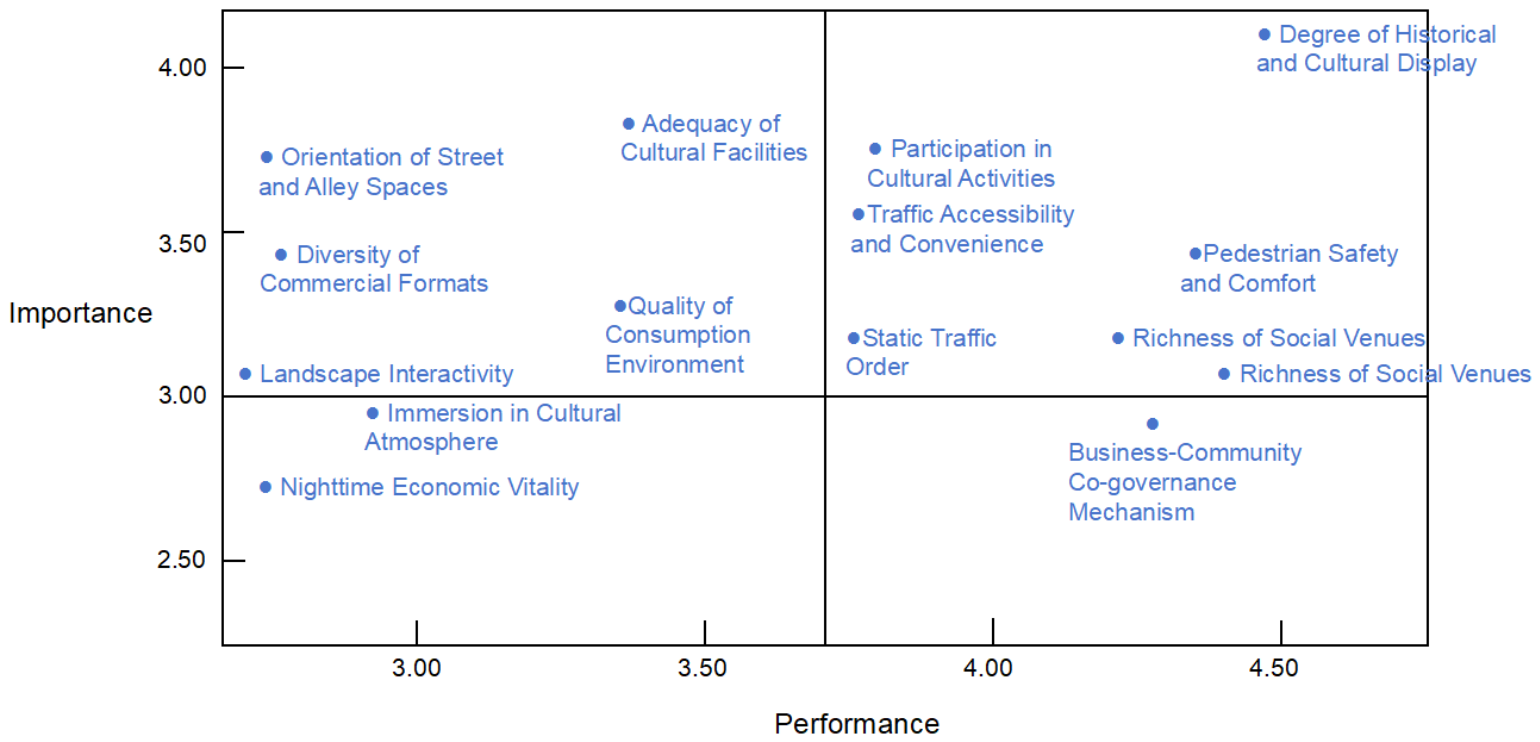
An Importance–Performance Analysis (IPA) of youth-friendly elements for resident and locally based youth in the Fayuan Temple Historic District visually reveals the improvement priorities of various elements, thereby providing a basis for optimizing public spaces (Figure 3). The analytical results are delineated across four quadrants as follows:
Quadrant I (High Importance–High Performance) constitutes the Zone of Strength. The elements involved include historical and cultural display, safe and comfortable walking environments, richness of social spaces, agreeable spatial scale, orderliness of static traffic, traffic accessibility, participation in cultural activities, and quality of the consumption environment. These elements are highly valued and yield favorable experiential feedback. Among them, “historical and cultural display” exhibits the highest importance (4.42) and optimal performance, reflecting that the sense of cultural immersion fostered by the religious heritage and hutong fabric of Fayuan Temple is highly recognized by youth. The performance scores for “safe and comfortable walking” and “richness of social spaces” both exceed 4.20, indicating that narrow alleyways and micro-public nodes (e.g., pocket parks, outdoor seating areas) effectively support daily interaction and slow-paced mobility experiences. Overall, this quadrant represents a domain of strength in youth friendliness.
Quadrant II (High Importance–Low Performance) is identified as the Zone of Primary Improvement. The elements here are completeness of cultural facilities, diversity of commercial formats, and wayfinding legibility of streets and alleys. Youth demand is intense, yet supply remains insufficient. The importance of “completeness of cultural facilities” is 3.8, with a performance of 3.38, attributable to a lack of regularized cultural amenities such as community art museums, 24 h bookstores, and creative workshops. The importance of “diversity of commercial formats” is 3.63, with performance at about 3.3; the area is dominated by traditional retail and low-end dining, with a scarcity of youth-preferred formats such as cultural and creative experiences, light meals, and co-working spaces. The importance of “wayfinding legibility of streets and alleys” is 3.74, with performance at 2.75, due to the absence of signage systems and smart navigation, resulting in difficulties for new residents in route finding. This quadrant requires urgent improvement.
Quadrant III (Low Importance–Low Performance) is designated as the Zone of Secondary Improvement. The elements comprise landscape interactivity, immersive quality of cultural atmosphere, and nighttime economic vitality. Youth attention is low, and current experiences are limited. The importance of “landscape interactivity” is 3.07 and performance about 2.62, characterized by a lack of facilities preferred by youth such as graffiti walls and interactive installations. The importance of “immersive quality of cultural atmosphere” is 2.90 and performance about 2.92; experiences remain predominantly sightseeing-oriented, with a dearth of immersive activities such as intangible cultural heritage handicrafts and historical role-playing games. The importance of “nighttime economic vitality” is 2.82 and performance about 2.78, hindered by inadequate lighting and monotonous formats, leading to a scarcity of nighttime social consumption scenarios. This quadrant is a zone for secondary improvement.
Quadrant IV (Low Importance–High Performance) serves as the Zone of Keep Up the Good Work. Only the “merchant–resident co-governance mechanism” falls here; youth regard it with relatively low importance, yet the evaluation of the district’s practice is positive—for instance, merchant self-discipline conventions and resident proposal mechanisms have achieved a balance between commercial development and quality of life. This may be because youth perceive governance mechanisms indirectly, focusing more on the user experience itself. This quadrant is a maintenance zone.
In summary, the IPA clarifies the realistic positioning of various elements from the perspective of resident and locally based youth, offering decision-making references for spatially optimized strategies that are prioritized and hierarchically structured.

4.2.2. IPA of Temporary Visitors

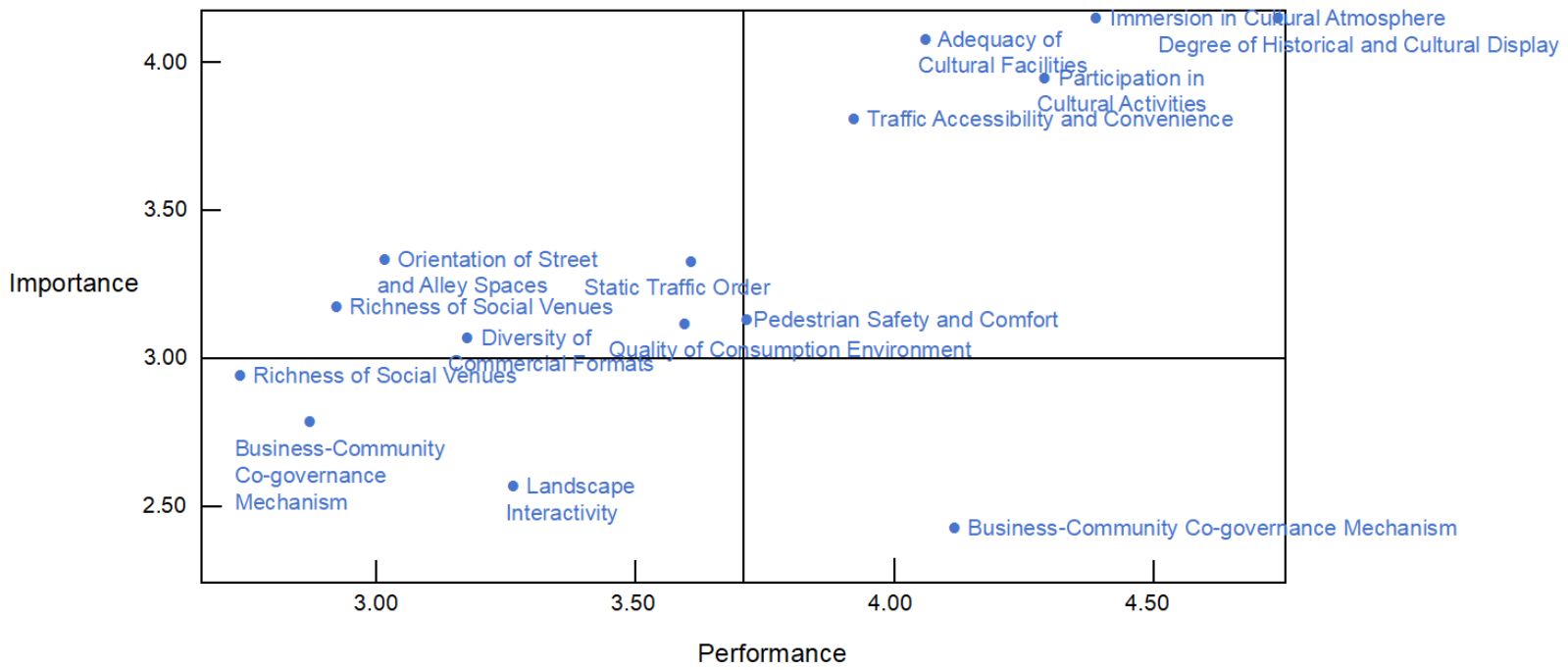
The IPA for temporary visitors (tourists, short-stay youth, and business travelers) to the Fayuan Temple Historic District identifies their experiential priorities and supply-side deficiencies, thereby providing a basis for creating a mutually youth-friendly and tourism-friendly scenario in the historic district (Figure 4). The results are organized across four quadrants as follows:
Quadrant I (High Importance–High Performance) is the Core Zone of Strength. The elements include immersive quality of cultural atmosphere, historical and cultural display, completeness of cultural facilities, participation in cultural activities, and traffic accessibility. These elements are highly valued and deliver satisfactory experiences. Among them, “immersive quality of cultural atmosphere” has an importance of approximately 4.11 and a performance of approximately 4.21, benefiting from the sense of historical immersion evoked by the “ancient temple + old alley” setting. “Historical and cultural display” shows an importance of approximately 4.09 and a performance of 4.42, effectively conveying cultural value through means such as stone inscriptions and exhibitions. “Traffic accessibility” records an importance of 3.71 and a performance of 3.74, facilitated by proximity to subway stations and bus stops, along with clear pedestrian routes that meet mobility needs. This quadrant constitutes the core advantage area for attracting temporary visiting youth.
Quadrant II (High Importance–Low Performance) is the Zone of Urgent Improvement. The elements involved are safe and comfortable walking environments, orderliness of static traffic, diversity of commercial formats, quality of the consumption environment, richness of social spaces, agreeable spatial scale, and wayfinding legibility of streets and alleys. Temporary visitors express strong demand, yet supply is insufficient. For example, although a specific importance score for ‘safe and comfortable walking’ is absent in the quantitative dataset, its performance score is notably low. Coupled with qualitative observations indicating severe issues such as the mixing of pedestrians and vehicles in hutongs and damaged pavements, this element is critically flagged in the Zone of Urgent Improvement [52]. “Diversity of commercial formats” (importance 3.21, performance3.08) lacks new offerings such as cultural and creative products and specialty dining. “Wayfinding legibility of streets and alleys” (importance approximately 3.18, performance 2.75) causes difficulty for first-time visitors in navigating due to insufficient signage. This quadrant requires urgent improvement.
Quadrant III (Low Importance–Low Performance) is the Zone of Secondary Improvement. The elements are landscape interactivity and the merchant–resident co-governance mechanism. Both attention and experience levels are low. “Landscape interactivity” has an importance of 2.56 and a performance of 2.62, primarily involving static viewing with a lack of interactive facilities such as photo-worthy installations. The “merchant–resident co-governance mechanism” records an importance of 2.8 and a performance of 4.35, with weak perception among tourists, who consider it less relevant to their own experience. This quadrant is a zone for secondary improvement.
Quadrant IV (Low Importance–High Performance) is the Zone of Keep Up the Good Work. Only “nighttime economic vitality” falls here. Temporary visitors assign it relatively low importance, yet the district has generated favorable evaluations through activities such as “cultural markets” and “night tours of the ancient temple.” This may be because tourists predominantly engage in daytime cultural experiences and naturally pay less attention to nighttime consumption. This quadrant is a maintenance zone.

4.2.3. Commonalities and Differences in IPA Results Between the Two Youth Groups

Based on the IPA of youth-friendly elements for both resident youth and transient visitors, further commonalities and differences in spatial needs and perceptual evaluations between the two groups can be identified, providing a basis for differentiated renovation strategies for youth-friendly public spaces in historic districts.
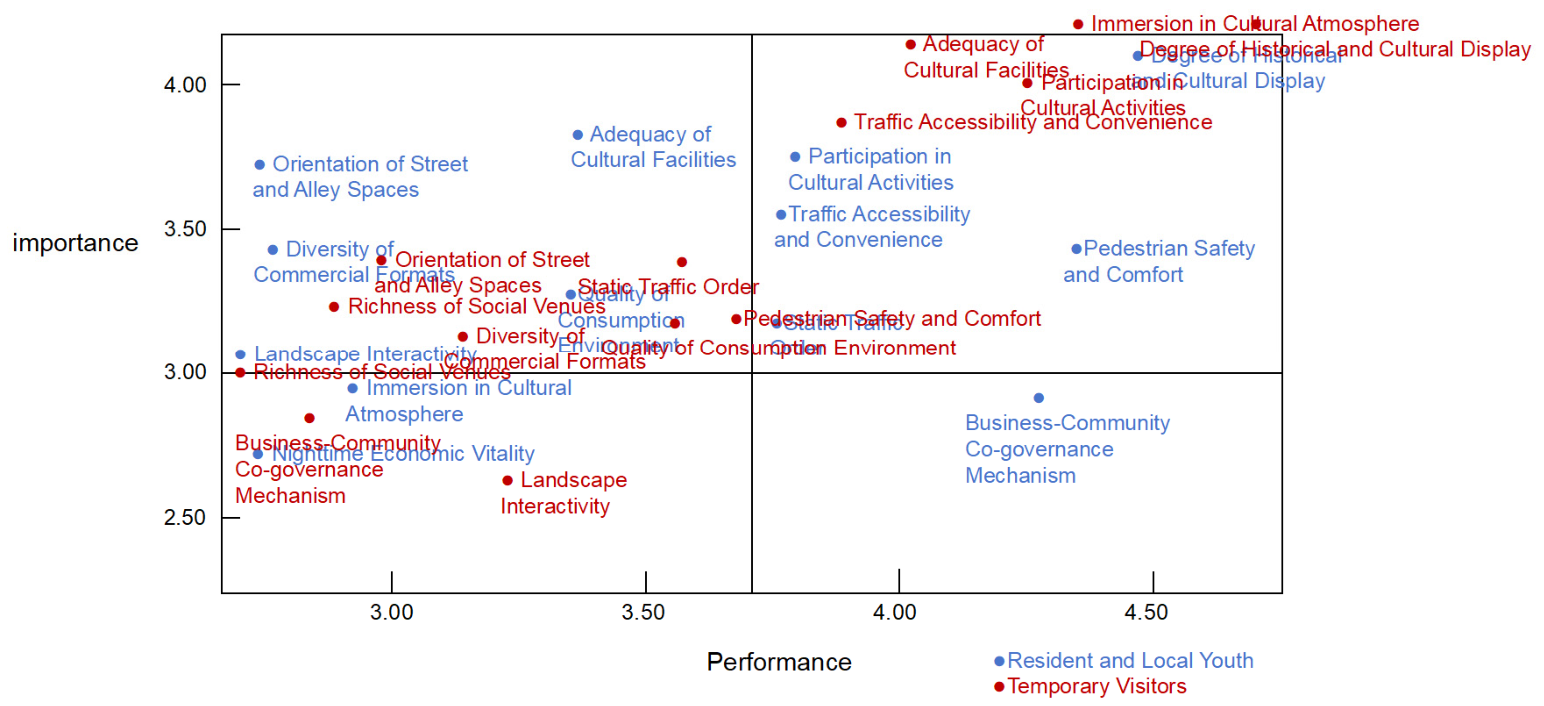
In terms of common features, the cultural space construction of the Fayuan Temple Historic District has received joint recognition from both types of youth, as shown in Figure 5. Cultural elements such as “historical and cultural display,” “immersion in cultural atmosphere,” “completeness of cultural facilities,” and “participation in cultural activities” all fall into Quadrant I (high importance–high performance). This indicates that the Fayuan Temple district, leveraging its core cultural resources—including the religious heritage of Fayuan Temple, the Xuan’nan guild hall clusters, and the hutong texture—has formed a cultural magnetic field with universal appeal to young people. The “high importance + high satisfaction” characteristics of cultural space constitute the core competitive advantage of the district’s youth-friendliness.
Consumer space is a weak point of the Fayuan Temple Historic District. Three factors—”diversity of commercial formats,” “quality of consumption environment,” and “street navigability”—fall into Quadrant II (high importance–low performance) in the IPA analyses of both youth groups, indicating an “area in urgent need of improvement.” Resident youth generally perceive the area’s consumption structure as homogeneous, dominated by tourist-oriented consumption patterns due to its tourism-oriented street layout, lacking venues tailored to local young residents. Transient visitors, meanwhile, believe that the consumer offerings in the Fayuan Temple Historic District lack regional distinctiveness, are far removed from the district’s historical and cultural atmosphere, and suffer from severe homogeneity.
Transportation space planning also constitutes a shortcoming. The complexity of the historic street texture makes the absence of signage systems and smart navigation tools a shared wayfinding pain point for both youth groups. In particular, the serious conflation of streets used daily by residents and tourists leads to chaotic traffic conditions involving pedestrians, non-motorized vehicles, and motorized vehicles without proper segregation, severely constraining the district’s development. Although the two youth groups have different expectations regarding consumer and transportation spaces, the problems they reflect share certain similarities: existing consumer and transportation space planning fails to accommodate the lifestyles of either group. This dual supply deficiency has become a key bottleneck limiting the enhancement of the district’s youth-friendliness.
The complex texture of historic streets, combined with a severe lack of internal signage and smart navigation facilities, along with frequent interweaving of residents’ daily commutes and tourists’ routes, results in widespread mixed traffic among pedestrians, non-motorized vehicles, and motorized vehicles, creating chaotic traffic conditions that stand out as a prominent weakness. Both youth groups face wayfinding difficulties and safety hazards: residents experience low commuting efficiency, while tourists report poor travel experiences. Although their specific demands for consumer and transportation spaces differ, current supply fails to meet either group’s needs—homogeneous consumption formats and imbalanced transportation planning do not effectively respond to their respective lifestyles. This dual supply deficiency is increasingly becoming a critical bottleneck restricting improvements in the district’s youth-friendliness.
Due to fundamental differences in spatial usage patterns and demand logics between the two youth groups, their IPA quadrant distributions also show significant divergence.
Regarding transportation space, transient visitors classify “traffic accessibility and convenience” into Quadrant I (high importance–high performance), while “pedestrian safety and comfort” and “static traffic order” fall into Quadrant II (high importance–low performance), indicating basic satisfaction with “arrival efficiency” but higher expectations for “internal pedestrian experience.” In contrast, resident youth place all three indicators in Quadrant I, reflecting relatively high satisfaction with the entire commuting process, though they express a more urgent need for “street navigability” (which falls into Quadrant II). This difference reveals divergent commuting logics between the two groups: transient visitors focus more on sightseeing experiences, while resident youth, familiar with local transportation through long-term residence, essentially aim to improve overall traffic efficiency through optimized street diversion systems.
The difference in spatial perception is consistent with existing urban planning research. For instance, Ji Xiaofeng’s study points out that local residents prioritize functional efficiency and daily commuting convenience, while tourists place greater emphasis on landmark accessibility and overall cultural atmosphere [53]. Research on historical districts such as the Sajin Bridge Historic District also indicates that residents value community facilities and a sense of belonging, whereas tourists prioritize transportation accessibility and commercial vitality [54]. This “host–guest” perceptual gap suggests that residents regard the district as a living environment, thus placing all three indicators in Quadrant I; whereas tourists seeking sightseeing experiences exhibit different trade-offs between importance and performance.
In terms of social interaction space, transient visitors classify “richness of social venues” and “pleasant spatial scale” into Quadrant II, indicating unmet high expectations for social scene quality. Resident youth, however, place these two items in Quadrant I, suggesting that their daily usage habits partially compensate for insufficient spatial supply. Additionally, “landscape interactivity” falls into Quadrant III (low importance–low performance) for both youth groups, but for different reasons: transient visitors prioritize macro-level cultural experiences and exhibit lower sensitivity to micro-level landscape interactions, while resident youth experience perceptual fatigue from prolonged exposure to static landscapes.
Regarding governance mechanisms and economic models, “vitality of nighttime economy” falls into Quadrant IV (low importance–high performance) in the analysis of transient visitors, but into Quadrant III (low importance–low performance) in the analysis of resident youth. This suggests that although the former, primarily engaging in daytime visits, pay little attention to this factor, they unexpectedly recognize the district’s existing nighttime activities; the latter rate it lower due to disruptions caused by nighttime economic activities to daily life (e.g., noise, crowds). The “merchant–resident co-governance mechanism” falls into Quadrant III for transient visitors and Quadrant IV for resident youth, reflecting differing perceptual distances to governance issues between the two groups: transient visitors scarcely perceive the governance process, while resident youth, despite having indirectly benefited through community participation, have yet to fully appreciate its value.

5. Conclusions

Taking the Fayuan Temple Historic Block as a case study to observe the role of the youth-friendly city concept in the renewal and regeneration of historic districts, it becomes evident that even within the same youth demographic, differing relationships with the block give rise to distinct types of demands on public space. It is precisely because of this variability that the process of urban renewal must, in essence, account for the different needs of different population segments vis-à-vis the block. Based on this premise, the following four points merit particular attention in the regeneration of public spaces within historic districts.
First, upgrading the district’s commercial formats to construct an integrated “culture + consumption” composite business ecosystem. In response to the two common shortcomings of “diversity of commercial formats” and “quality of consumption environment,” it is recommended that, subject to the preservation of historic character, youth-friendly commercial formats aligned with the block’s cultural DNA be introduced: (1) develop “culture-experience-oriented consumption,” such as intangible-heritage handicraft workshops, themed cultural and creative stores, and immersive role-playing game venues, embedding consumer behavior within cultural narratives; (2) cultivate “quality social consumption,” such as specialty coffee shops, light-meal restaurants, and rooftop bars, to address the shared demand of both youth groups for a high-quality consumption environment; and (3) establish a market-entry and exit mechanism to avoid low-end homogeneous competition and ensure a balance between commercial upgrading and community life.
Second, facilitating traffic segregation between population groups through the construction of an integrated online–offline smart navigation system. To address the common shortcoming of “orientation of street and alley spaces,” on-site traffic guidance can be improved by installing uniformly styled signage at key nodes indicating core attractions, restrooms, parking lots, and other practical information, thereby realizing the true function of the historic district’s pedestrian streets. At the digital level, a WeChat mini-program or a “hutong audio guide” function integrated into map applications can be developed to provide real-time positioning, route recommendations, and historical narrative commentary, benefiting in particular first-time temporary visitors and newly arrived young residents.
Third, implementing a dedicated “hutong micro-renewal” initiative. In response to the shortcoming of “pedestrian safety and comfort” reported by temporary visitors, systematic micro-regeneration of the block’s core pedestrian sections is recommended: (1) pedestrian–vehicle separation, with motor vehicle restrictions or one-way traffic during peak morning and evening hours to prioritize pedestrian rights-of-way; (2) pavement renovation, replacing severely deteriorated stone slabs with permeable, slip-resistant materials to improve walking safety in rainy conditions; and (3) nighttime illumination, adding low-level lighting at hazardous points such as hutong corners, steps, and thresholds to enhance both safety and ambiance during nighttime walking.
Fourth, promoting cultural activation by transforming cultural experiences from “sightseeing” to “immersive” engagement, thereby establishing cultural connections between youth groups and the community, strengthening the sense of identity among resident and local youth, and more effectively enhancing the block’s attractiveness. Although “immersion in cultural atmosphere” did not fall into Quadrant II in either youth group’s analysis, its placement in Quadrant III for resident/local youth suggests a risk of “perceptual fatigue.” It is recommended that the optimization of cultural space shift from “static display” to “dynamic participation”: (1) launch a “youth curator program,” inviting local youth to participate in the excavation of historical narratives and exhibition design, thereby enhancing cultural identification; (2) introduce normalized experiential activities such as “intangible-heritage classes in the hutong,” transforming cultural consumption from one-time sightseeing into repeatable daily practice; and (3) utilize AR/VR technology to recreate historical scenes—such as literati gatherings in guild halls or the lilac poetry gatherings at Fayuan Temple—offering differentiated immersive cultural experiences for both youth groups.
Finally, establishing a spatial operation mechanism that distinguishes between day and night and accommodates both hosts and guests. In response to the divergent evaluations of “nighttime economic vitality” between the two youth groups, a time-sharing strategy can be implemented: during the daytime (10:00–18:00), the block opens to temporary visitors for cultural experiences, themed markets, and check-in consumption, maximizing tourism revenue; during the nighttime (18:00–22:00), operations pivot to serve resident and local youth, offering low-disturbance activities such as quiet community reading rooms, open-air movies, and yoga classes, avoiding noisy commercial formats that disrupt residents’ rest. Through functional switching along the temporal dimension, a compatible coexistence of “daytime cultural tourism and nighttime community life” can be achieved. Due to the absence of official census data for the block, the total population size of resident and local youth remains unclear, rendering the sampling proportion unmeasurable and the sample size relatively limited. Second, constrained by the on-site street-intercept questionnaire distribution method, respondents were predominantly youth who remained in the block on weekdays, while those commuting to workplaces outside the block were largely excluded, making it difficult for the survey results to fully capture the genuine needs of all youth in the block. Third, online data were primarily scraped from youth-popular platforms such as Dianping, Xiaohongshu, and Amap; however, reviews on these platforms are disproportionately contributed by tourists, giving greater weight to data from temporary visitors arriving for commercial or tourism purposes, while long-term behavioral data reflecting the actual living conditions of local youth remain relatively scarce. The questionnaire survey (n = 105) and the online text analysis (n = 267) draw from different data sources and are not demographically matched, meaning that IPA comparisons between resident/local youth and temporary visitors should be interpreted as structural pattern contrasts rather than statistical equivalence tests. Second, assigning a neutral score (3) to indicators not mentioned in online texts assumes absence implies neutrality, although a sensitivity check confirmed the stability of rank-order results (Spearman’s ρ = 0.94). Finally, the cross-sectional design captures perceptions at a single time point, limiting insight into how youth satisfaction evolves after regeneration interventions.
In response to these shortcomings, future research will conduct long-term field tracking and in-depth investigation of this historic block. Through sustained observation, the aim is to further refine the precise profiling of youth needs in the block, thereby effectively compensating for the sampling bias of the present study. At the same time, using the Fayuan Temple Historic Block as a real-world sample, the study aspires to deeply explore the specific points of application and entry for the youth-friendly city concept in the renewal and regeneration of historic districts, ultimately injecting youthful energy into the sustainable development of historic districts. The four-dimensional evaluation framework and the modified IPA methodology are transferable to other historic districts and adaptable to other user groups (e.g., elderly residents, families). Future studies could extend the framework to explicitly incorporate universal accessibility criteria, conduct longitudinal tracking of post-intervention changes, or apply the same methodology to historic districts in other Chinese cities for cross-contextual comparison.

Author Contributions

Conceptualization, Q.L. and W.L.; Methodology, Q.L.; Validation, Q.L., W.L. and R.Z.; Formal analysis, Q.L.; Investigation, Q.L. and Y.L.; Resources, R.Z.; Data curation, Q.L.; Writing—original draft, Q.L.; Writing—review and editing, W.L. and R.Z.; Visualization, Q.L.; Supervision, R.Z. and Y.L.; Project administration, Y.L. and L.J.; Funding acquisition, L.J. All authors have read and agreed to the published version of the manuscript.

Funding

This research was funded by the Beijing Social Science Foundation Project: No. 24JCC077, the Beijing Municipal Education Science “14th Five-Year Plan” 2025 Annual General Project: No. CDDB25252, and the Subject of Beijing Association of Higher Education: No. MS2022276.

Institutional Review Board Statement

The study was conducted in accordance with the Declaration of Helsinki, and the protocol was approved by the BUCEA School of Architecture and Urban Planning Ethics Committee, code 2108530022010, approved on 1 July 2026 (originally issued for sister project).

Informed Consent Statement

Used for the questionnaire survey conducted in this study, detailing the research purpose, participant rights, data confidentiality, and voluntary participation.

Data Availability Statement

The original contributions presented in this study are included in the article. Further inquiries can be directed to the authors.

Conflicts of Interest

The authors declare no conflicts of interest. The funders had no role in the study’s design; in the collection, analyses, or interpretation of the data; in the writing of the manuscript; or in the decision to publish the results.

References

  1. ICOMOS. Charter for the Conservation of Historic Towns and Urban Areas (Washington Charter); International Council on Monuments and Sites: Paris, France, 1987. [Google Scholar]
  2. UNESCO. Operational Guidelines for the Implementation of the World Heritage Convention; United Nations Educational, Scientific and Cultural Organization: Paris, France, 2023. [Google Scholar]
  3. UN-Habitat. Culture in Sustainable Urban Development; United Nations Human Settlements Programme: Nairobi, Kenya, 2016. [Google Scholar]
  4. Gale, D.E. The impacts of historic district designation: Planning and policy implications. J. Am. Plan. Assoc. 1991, 57, 325–340. [Google Scholar] [CrossRef] [Scilit]
  5. Hampton, M.P. Heritage, local communities and economic development. Ann. Tour. Res. 2005, 32, 735–759. [Google Scholar] [CrossRef] [Scilit]
  6. Shi, J.; Miao, W.; Si, H.; Li, Y.; Zhu, X. Urban vitality evaluation and spatial correlation research: A case study from Shanghai, China. Land 2021, 10, 1195. [Google Scholar] [CrossRef] [Scilit]
  7. Forsyth, M. Understanding Historic Building Conservation; Blackwell Publishing: Oxford, UK, 2007. [Google Scholar]
  8. Schreier, M. Qualitative Content Analysis in Practice; Sage Publications: New York, NY, USA, 2012. [Google Scholar]
  9. Miao, L.; Liu, S.; Li, B.; Zhao, Y. Research on vitality improvement strategy for the Historic District of Taiyanggou in Lushun. IOP Conf. Ser. Mater. Sci. Eng. 2021, 1203, 032039. [Google Scholar] [CrossRef] [Scilit]
  10. Wu, C.; Li, G.; Li, Y.; Pu, Y.; Zhang, Y. A review of research on strategies and methods for the revitalization of urban historic districts. IOP Conf. Ser. Earth Environ. Sci. 2022, 1101, 052021. [Google Scholar] [CrossRef] [Scilit]
  11. Drăghici, C.-C.; Drăghici, I.-A.; Andreescu, C.-M. Integrating Historical Identity and Modern Community Needs through Accessible Heritage-Led Regeneration: The Lugoj Urban Promenade Case. Sustainability 2025, 18, 2068. [Google Scholar] [CrossRef] [Scilit]
  12. Teklemariam, N. Historic Preservation as Sustainable Urban Development in African Cities: A Technical and Technological Framework. Sustainability 2024, 16, 5949. [Google Scholar] [CrossRef] [Scilit]
  13. Shipley, R.; Snyder, M. The role of heritage conservation districts in achieving community economic development goals. Int. J. Herit. Stud. 2013, 19, 304–321. [Google Scholar] [CrossRef] [Scilit]
  14. Bohl, C.C. Learn from the Past: Historic Districts and the New Urbanism in the United States; Congress for the New Urbanism: Chicago, IL, USA, 1999. [Google Scholar]
  15. Swensen, I.; Berg, P.G. Integration of historic fabric in new urban development—A Norwegian case-study. Landsc. Urban Plan. 2013, 107, 229–238. [Google Scholar] [CrossRef] [Scilit]
  16. Derr, V.; Tarantini, E. “Because we are all people”: Outcomes and reflections from young people’s participation in the planning and design of child-friendly public spaces. Local Environ. 2016, 21, 1534–1556. [Google Scholar] [CrossRef] [Scilit]
  17. Timothy, D.J.; Boyd, S.W. Heritage Tourism; Routledge: Abingdon, UK, 2003/2015. [Google Scholar]
  18. Scarpaci, J.L.; González, M.; García, L. Places to be young: The dispossession of public space in Old Havana. Urban Stud. 2025, 62, 273–291. [Google Scholar] [CrossRef] [Scilit]
  19. Lyu, Y.; Abd Malek, M.I.; Jaafar, N.H.; Sima, Y.; Han, Z.; Liu, Z. Unveiling the potential of space syntax approach for revitalizing historic urban areas: A case study of Yushan Historic District, China. Proc. Int. Conf. Archit. Urban Des. 2023, 12, 1144–1156. [Google Scholar] [CrossRef] [Scilit]
  20. Chi, C.G.-Q. Authenticity, involvement, and image: Evaluating tourist experiences at historic districts. Tour. Manag. 2015, 48, 164–174. [Google Scholar] [CrossRef] [Scilit]
  21. Zeng, F.; Shen, Z. Study on the impact of historic district built environment and its influence on residents’ walking trips: A case study of Zhangzhou ancient city’s historic district. Int. J. Environ. Res. Public Health 2020, 17, 4367. [Google Scholar] [CrossRef] [Scilit]
  22. Luo, Y.; Zhang, L. Exploring the creation of ecological historic district through comparing and analyzing four typical revitalized historic districts. Sustainability 2020, 12, 7845. [Google Scholar] [CrossRef] [Scilit]
  23. Zhang, F.; Liu, Q.; Zhou, X. Vitality evaluation of public spaces in historical and cultural blocks based on multi-source data: A case study of Suzhou Changmen. Sustainability 2022, 14, 14040. [Google Scholar] [CrossRef] [Scilit]
  24. Cheng, Z.-F.; Zhou, S.-Y. The relationship between the representation and the nonrepresentation in historical and cultural blocks: A case study of the cultural meaning Change of Xisi Historical and Cultural Block in Beijing. Hum. Geogr. 2021, 36, 127–135. (In Chinese) [Google Scholar] [CrossRef]
  25. Liang, F.; Pan, Y.; Gu, M.; Liu, Y.; Lei, L. Research on the paths and strategies of the integrated development of culture and tourism industry in urban historical blocks. Front. Public Health 2022, 10, 1016801. [Google Scholar] [CrossRef] [Scilit]
  26. Ding, W.; Wei, Q.; Jin, J.; Nie, J.; Zhang, F.; Zhou, X.; Ma, Y. Research on public space micro-renewal strategy of historical and cultural blocks in Sanhe Ancient Town under perception quantification. Sustainability 2023, 15, 2790. [Google Scholar] [CrossRef] [Scilit]
  27. Lopes, F.; Cordovil, R.; Neto, C. Independent mobility and social affordances of places for urban neighborhoods: A youth-friendly perspective. Front. Psychol. 2018, 9, 2198. [Google Scholar] [CrossRef] [Scilit]
  28. Collins, P.Y.; Sinha, M.; Concepcion, T.; Patton, G.; Way, T.; McCay, L.; Mensa-Kwao, A.; Herrman, H.; de Leeuw, E.; Anand, N.; et al. Making cities mental health friendly for adolescents and young adults. Nature 2024, 627, 137–148. [Google Scholar] [CrossRef] [Scilit]
  29. Masri, S.S. Integrating youth in city planning: Developing a participatory tool toward a child-friendly vision of Eastern Wastani–Saida. Alex. Eng. J. 2018, 57, 897–909. [Google Scholar] [CrossRef] [Scilit]
  30. Woolcock, G.; Gleeson, B. Feeling and thinking in the city: Youth, urban design and the ‘friendly’ city. In The Handbook of Urban Geography and Urban Studies; Imrie, R., Lees, L., Raco, M., Eds.; Edward Elgar: Cheltenham, UK, 2013; pp. 287–308. [Google Scholar]
  31. Drăghici, C.; Onescu, I.; Tănase, I.; Povian, C.M. Towards a More Cohesive and Accessible City Centre: Bridging the Gap Between Historical Identity and Modern Community’s Needs—Case Study: Lugoj City, Romania. Heritage 2025, 8, 396. [Google Scholar] [CrossRef] [Scilit]
  32. Xu, H. Optimization Strategy of Public Space in Old Residential Communities Based on Youth Interaction Needs. Master’s Thesis, Zhejiang University, Hangzhou, China, 2023. (In Chinese) [Google Scholar]
  33. Lin, Y. Renewal Strategy of Residential Space in Aging Urban Communities Under the Intergenerational Cohabitation Model of Youth and Elderly. Master’s Thesis, Hunan University, Changsha, China, 2023. (In Chinese) [Google Scholar]
  34. Li, Q.; Liu, W.; Chen, Z.; Wang, T. Research on renewal strategy of public space in peri-urban village from the perspective of youth-friendliness. Beijing Plan. Rev. 2025, 93–98. (In Chinese) [Google Scholar]
  35. Xiang, L.; Wang, X.; Shi, Y. Research on spatial hierarchy of symbiotic courtyards in Beijing old city from the perspective of dramaturgy: A case study of Nanluoguxiang. Urban Dev. Stud. 2024, 31, 73–81. (In Chinese) [Google Scholar]
  36. Zhang, Y.H.; Mo, N.; Liang, J.K. Youth visual engagement and cultural perception of historic district interfaces: The case of Kuanzhai Alley, Chengdu. Buildings 2025, 15, 3224. [Google Scholar] [CrossRef] [Scilit]
  37. Tiesdell, S.; Oc, T. Revitalising Historic Urban Quarters; Architectural Press: Oxford, UK, 1998. [Google Scholar]
  38. Bandarin, F.; van Oers, R. The Historic Urban Landscape: Managing Heritage in an Urban Century; Wiley-Blackwell: Chichester, UK, 2012. [Google Scholar]
  39. Crankshaw, N. Creating Vibrant Public Spaces: Streetscape Design in Commercial and Historic Districts; Island Press: Washington, DC, USA, 2012. [Google Scholar]
  40. Ye, C.; Ma, X.; Zhang, L. Revitalizing heritage: The role of urban morphology in creating public value in China’s historic districts. Cities 2021, 114, 103207. [Google Scholar] [CrossRef] [Scilit]
  41. Ramli, S.H.; Samadi, Z.; Bakri, A.F. Urban Heritage Revitalization: Significance of Cultural Heritage: Attributes of Sense of Places for Kuala Lumpur. ARChive 2025, 9, 1. [Google Scholar] [CrossRef] [Scilit]
  42. Guo, X.; Zhang, Y.; Sun, Y. Examining the urban regeneration of public cultural space using multi-scale geospatial data: A case study of the historic district in Jinan, China. ISPRS Int. J. Geo-Inf. 2022, 11, 478. [Google Scholar] [CrossRef] [Scilit]
  43. Wang, X. Research on Youth-Friendly City Evaluation and Spatial Optimization: Taking Northeast Central Cities as Examples. Master’s Thesis, Dalian University of Technology, Dalian, China, 2024. (In Chinese) [Google Scholar]
  44. Li, S.; Wu, L.; Li, Y. How Does Sense of Place Serve Architectural Heritage Conservation and Development? A Scoping Review and Implementation Framework. Buildings 2026, 16, 3010. [Google Scholar] [CrossRef] [Scilit]
  45. Xu, J.; Chen, L.; Liu, T.; Wang, T.; Li, M.; Wu, Z. Multi-sensory experience and preferences for children in an urban forest park: A case study of Maofeng Mountain Forest Park in Guangzhou, China. Forests 2022, 13, 1435. [Google Scholar] [CrossRef] [Scilit]
  46. Xiao, X.; Ye, Q.; Dong, X. Using importance–performance analysis to reveal priorities for multifunctional landscape optimization in urban parks. Land 2024, 13, 564. [Google Scholar] [CrossRef] [Scilit]
  47. Dan, P.; Huang, Y.T. A study on the tourism destination imagination of Lijiang ancient town: Content analysis based on travel blogs. Tour. Trib. 2019, 34, 80–89. [Google Scholar]
  48. Iwamoto, T. Integrating Youth Well-being into Smart Urban Design: Insights from a Nationwide Survey to Inform Human-Centered City Planning. ISPRS Ann. Photogramm. Remote Sens. Spat. Inf. Sci. 2025, 10, 59–65. [Google Scholar] [CrossRef] [Scilit]
  49. Wang, R.; Huang, P.; Hu, J.; Li, Y. Study on rural tourism experience of Wuyuan County based on online travel notes. Resour. Sci. 2019, 41, 372–380. [Google Scholar]
  50. CPC Central Committee; State Council of the PRC. Medium- and Long-Term Youth Development Plan (2016–2025); The Central People’s Government of the PRC: Beijing, China, 2017. (In Chinese)
  51. Nunnally, J.C.; Bernstein, I.H. Psychometric Theory, 3rd ed.; McGraw-Hill: New York, NY, USA, 1994. [Google Scholar]
  52. Ibrahim, A.A.; Hafiz, H.; Idris, R.G. Psychometric properties of WhatsApp use and perceived academic performance: An exploratory factor analysis. J. Creat Writ. 2015, 1, 57–64. [Google Scholar] [CrossRef] [Scilit]
  53. Chen, F. Multi-Dimensional Measurement of Urban Traffic Satisfaction Considering Differences between Residents and Tourists: A Case Study of Dali City. J. Highw. Transp. Res. Dev. 2020, 37, 98–106, 129. [Google Scholar]
  54. Zhang, X.; Chen, J.; Lyu, P.; Zhang, B.; Chin, C.-L.; Ma, C.-K.; Fu, H.; Cui, H. Balancing Residents and Tourists: Evaluating Public Building Spaces in Ancient Towns of Fujian, China, Using the IPA–Kano Model. Buildings 2026, 16, 1851. [Google Scholar] [CrossRef] [Scilit]
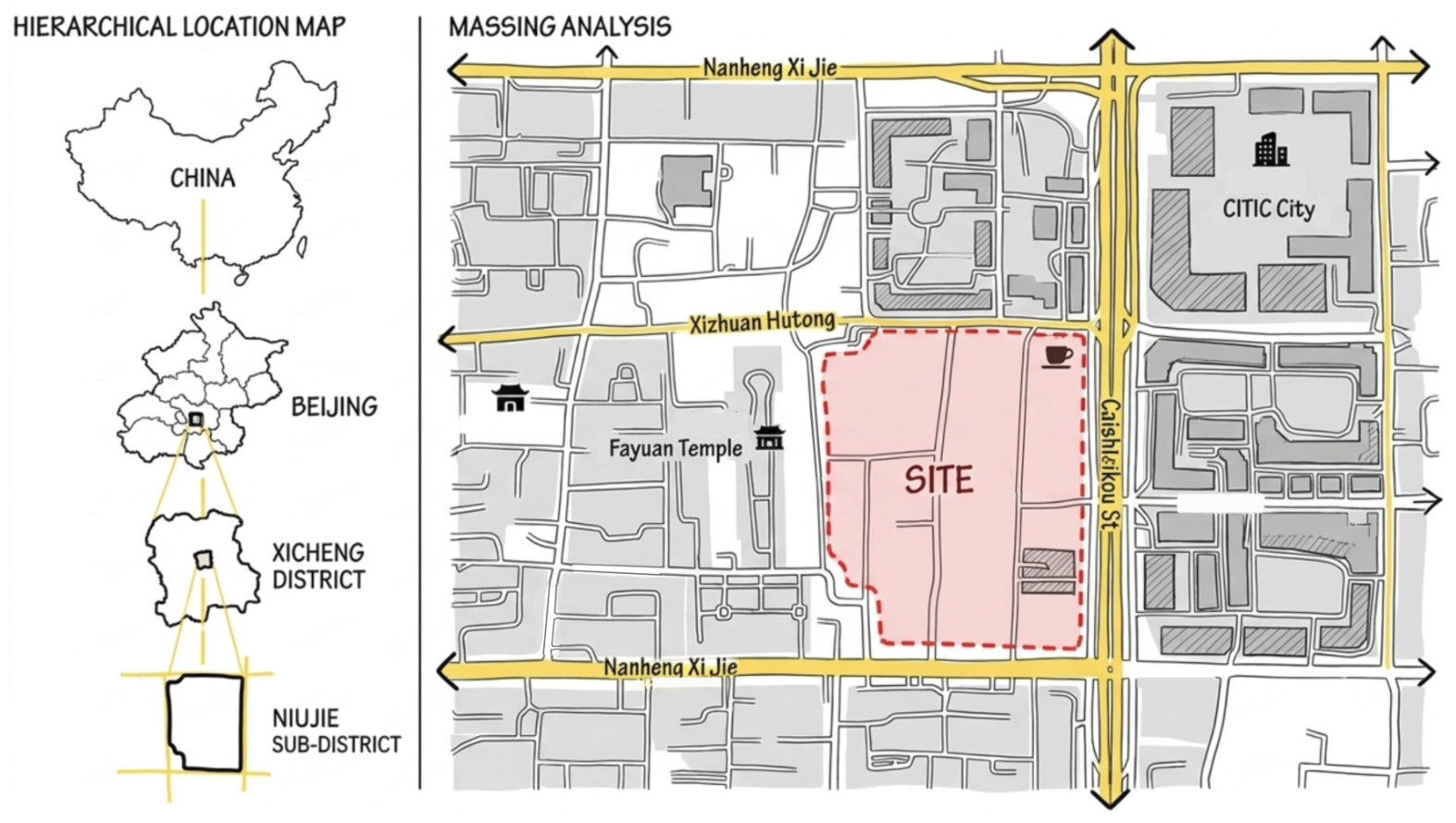
Figure 1. Location map of the study area. Figure Source: Created by the authors. Table Source: Created by the authors using Adobe Photoshop CC 2019.
Buildings 16 03416 g001
Figure 2. Current spatial use of the Fayuan Temple Historic Block. Source: Photographed by the author.
Buildings 16 03416 g002
Figure 3. IPA results for youth-friendliness factors: resident and local youth.
Buildings 16 03416 g003
Figure 4. IPA results of youth-friendliness factors: Temporary visitors.
Buildings 16 03416 g004
Figure 5. Comparative IPA quadrant distribution between resident/local youth and temporary visitors.
Buildings 16 03416 g005
Table 1. Evaluation indicator system for historic and cultural districts from a youth perspective.
Spatial DimensionSpatial DimensionSpatial Dimension
Circulation SpaceTraffic Accessibility and Convenience [39]Refers to the ease of moving from the periphery of the district into the core area and between different functional zones within the district, including the clarity of the road network and the efficiency of transfer connections.
Pedestrian Safety and ComfortAssesses vehicle–pedestrian separation, sidewalk continuity, nighttime lighting conditions, and the smoothness and anti-slip properties of ground paving.
Static Traffic Order [40]Refers to the management of parking for motor vehicles and non-motor vehicles, including whether parking space planning is reasonable, whether it encroaches on public activity spaces, and whether shared bicycle parking is orderly.
Orientation of Street and Alley SpacesRefers to the degree to which the district is easy to understand, explore, and remember through elements such as signage systems and landscape nodes.
Cultural SpaceDegree of Historical and Cultural Display [41]Refers to the extent to which the district excavates and displays its historical and cultural heritage, traditional style, and historical narratives.
Participation in Cultural Activities [42]Refers to the willingness of young people to participate in and their sense of integration within traditional festivals, art exhibitions, hands-on experiences, and other cultural activities held in the district.
Adequacy of Cultural FacilitiesAssesses the provision and user experience of public cultural service facilities such as reading spaces, exhibition halls, and cultural and creative markets.
Immersion in Cultural AtmosphereRefers to the degree to which the cultural ambiance, thematic conception, and humanistic character presented by the district evoke deep experiences and emotional resonance among young people.
Social Interaction SpaceRichness of Social Venues [43]Refers to the quantity and types of venues such as street plazas, cafes, and teahouses suitable for various social behaviors among youth, including gatherings, interactions, and solitude.
Human-Scale Spatial DimensionsAssesses the openness and enclosure of public spaces, determining whether they meet the needs of collective activities while ensuring individual safety and privacy.
Landscape InteractivityRefers to the degree to which the cultural ambiance, thematic conception, and humanistic character presented by the district evoke deep experiences and emotional resonance among young people.
Consumption SpaceDiversity of Commercial Formats [44]Assesses the variety of shop types and brands that meet the diverse needs of youth for clothing, food, entertainment, travel, shopping, and exhibitions.
Quality of Consumption EnvironmentRefers to the hygiene conditions, service quality, price acceptability, and overall comfort and tidiness of the consumption environment.
Business-Community Co-governance MechanismRefers to the maturity of the interactive, mutually supportive, and co-governance relationships established between commercial formats, their operators, and the local community.
Nighttime Economic VitalityRefers to the vibrancy of consumption scenes, the creation of lighting ambiance, and the willingness of youth to go out at night in the district.
Table 2. Sentiment scoring criteria for tourism experience elements in historic and cultural districts.
Quantitative BasisScore
The text contains degree adverbs such as “extremely”, “very”, “most”, “highly” + words expressing positive emotion or attitude.5
The text contains degree adverbs such as “quite”, “fairly”, “relatively” + words expressing positive emotion or attitude.4
The text shows no clear attitude or emotional tendency; it is purely objective description.3
The text contains degree adverbs such as “slightly”, “somewhat”, “a bit”+ words expressing negative emotion or attitude.2
The text contains degree adverbs such as “extremely”, “very”, “highly”+ words expressing negative emotion or attitude.1
Table 3. Needs analysis of youth groups in the Fayuan Temple historic block.
Youth CategoryDefinitionBehavior AgentsSpatial Usage NeedsSpatial RequirementsActivity Space Characteristics
Resident YouthYoung people who have long resided in the Yinan area, with their life circles highly dependent on the local community.Native residents, renting youth, community workersDeep emotional attachment and habitual use of the block, including daily shopping, neighborhood socializing, commuting, and basic leisure activities.Employment needs, convenient services, pre-residential resting areas, community public transportation access.Traditional production and living spaces characterized by convenience and a sense of belonging.
Local YouthYoung people whose workplace is located in or adjacent to the Fayuan Temple Block but who do not reside locally. They commute daily or frequently to the area.Business owners, commercial zone employeesConcentrated use during work hours and along commuting routes; efficient commuting, relaxation during breaks, quick meals, brief social visits.Convenient pedestrian pathways, resting spaces with accessibility, good living environment, entrepreneurial environment.Fixed resting spaces; recognizable, accessible, and belonging-oriented spaces; attractive non-traditional production spaces with strong retention capacity.
cultural institution staff
freelancers
Temporary VisitorsYoung people who visit the area primarily for sightseeing purposes.Temporary visitorsIntermittent, purpose-driven behavior with strong emphasis on experiential engagement and social sharing.Tourist consumption and experience spaces.Innovative spaces, attractive consumption and social interaction spaces
Table 4. Reliability test results of the questionnaires.
Questionnaire TypeScale TypeNumber of ItemsCronbach’s a
Resident/Local YouthImportance Scale150.892
Resident/Local YouthPerformance Scale150.914
Temporary VisitorsImportance Scale150.876
Temporary VisitorsPerformance Scale150.903
Table 5. Analysis of public space friendliness for core youth (residents/local employed) in Fayuan Temple.
DimensionEvaluation IndicatorMean Score per IndicatorOverall Mean per DimensionWeight per IndicatorOverall Weight per DimensionComprehensive Experience Quality Score
Circulation SpaceTraffic Accessibility and Convenience [48]3.743.600.07120.22743.559
Pedestrian Safety and Comfort4.210.0437
Static Traffic Order [47]3.71060.0506
Orientation of Street and Alley Spaces2.750.0619
Cultural SpaceDegree of Historical and Cultural Display [49]4.423.610.10030.4058
Participation in Cultural Activities [50]3.730.0902
Adequacy of Cultural Facilities3.380.1005
Immersion in Cultural Atmosphere2.920.1148
Social Interaction SpaceRichness of Social Venues [51]4.453.760.04050.1554
Human-Scale Spatial Dimensions4.200.0632
Landscape Interactivity2.620.0517
Consumption SpaceDiversity of Commercial Formats [52]2.653.270.06050.2114
Quality of Consumption Environment3.300.0615
Business–Community Co-governance Mechanism4.350.0495
Nighttime Economic Vitality2.780.0399
Table 6. Analysis of public space friendliness for youth (tourists/visitors) in Fayuan Temple Historic District.
DimensionEvaluation IndicatorMean Score per IndicatorOverall Mean per DimensionWeight per IndicatorOverall Weight per DimensionComprehensive Experience Quality Score
Circulation SpaceTraffic Accessibility and Convenience [46]3.823.560.09120.33743.63
Pedestrian Safety and Comfort3.850.0937
Static Traffic Order [48]3.540.0706
Orientation of Street and Alley Spaces3.040.0819
Cultural SpaceDegree of Historical and Cultural Display [47]4.754.320.11030.3958
Participation in Cultural Activities [49]4.010.0902
Adequacy of Cultural Facilities4.090.0905
Immersion in Cultural Atmosphere4.420.1048
Social Interaction SpaceRichness of Social Venues [50]2.852.910.05050.1354
Human-Scale Spatial Dimensions2.620.0432
Landscape Interactivity3.260.0417
Consumption SpaceDiversity of Commercial Formats [51]3.233.470.04090.1514
Quality of Consumption Environment3.630.0415
Business-Community Co-governance Mechanism2.850.0318
Nighttime Economic Vitality4.180.0372
Note to Table: The “Comprehensive Experience Quality Score” for each dimension represents the weighted sum of the mean scores of its constituent indicators, calculated using the formula: Dimension Score = ∑(Mean Score per Indicator × Weight per Indicator). For instance, the Comprehensive Experience Quality Score for Circulation Space is 3.63 (calculated as 3.82 × 0.0912 + 3.85 × 0.0937 + 3.54 × 0.0706 + 3.04 × 0.0819).
Disclaimer/Publisher’s Note: The statements, opinions and data contained in all publications are solely those of the individual author(s) and contributor(s) and not of MDPI and/or the editor(s). MDPI and/or the editor(s) disclaim responsibility for any injury to people or property resulting from any ideas, methods, instructions or products referred to in the content.