Rubber Aggregate Concrete with Enhanced Damping Performance for Mass Concrete Applications

Abstract
1. Introduction
2. Materials and Experimental Methods
2.1. Raw Materials
2.2. Experimental Design and Sample Notation
2.3. Testing Methods
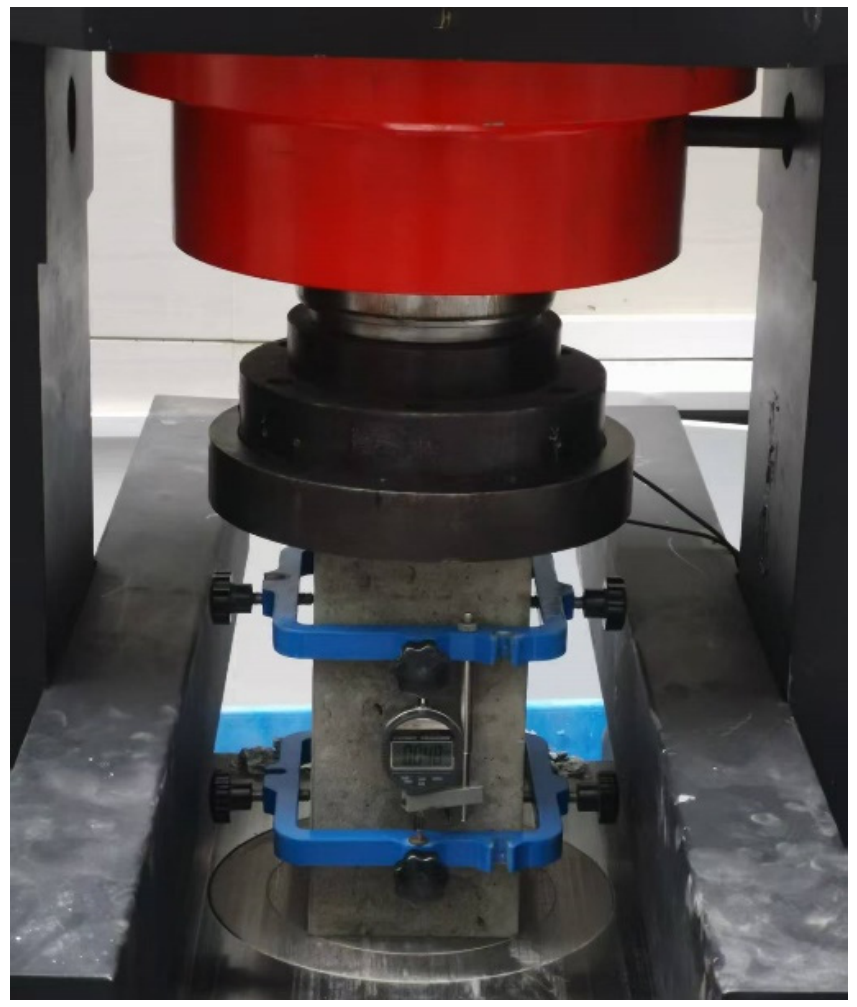
2.3.1. Mechanical Properties Test
2.3.2. Dynamic Properties and Vibration Damping Performance Test
2.3.3. Thermal Properties Test
2.3.4. Microstructural Analyses Test
3. Mechanical and Thermal Properties
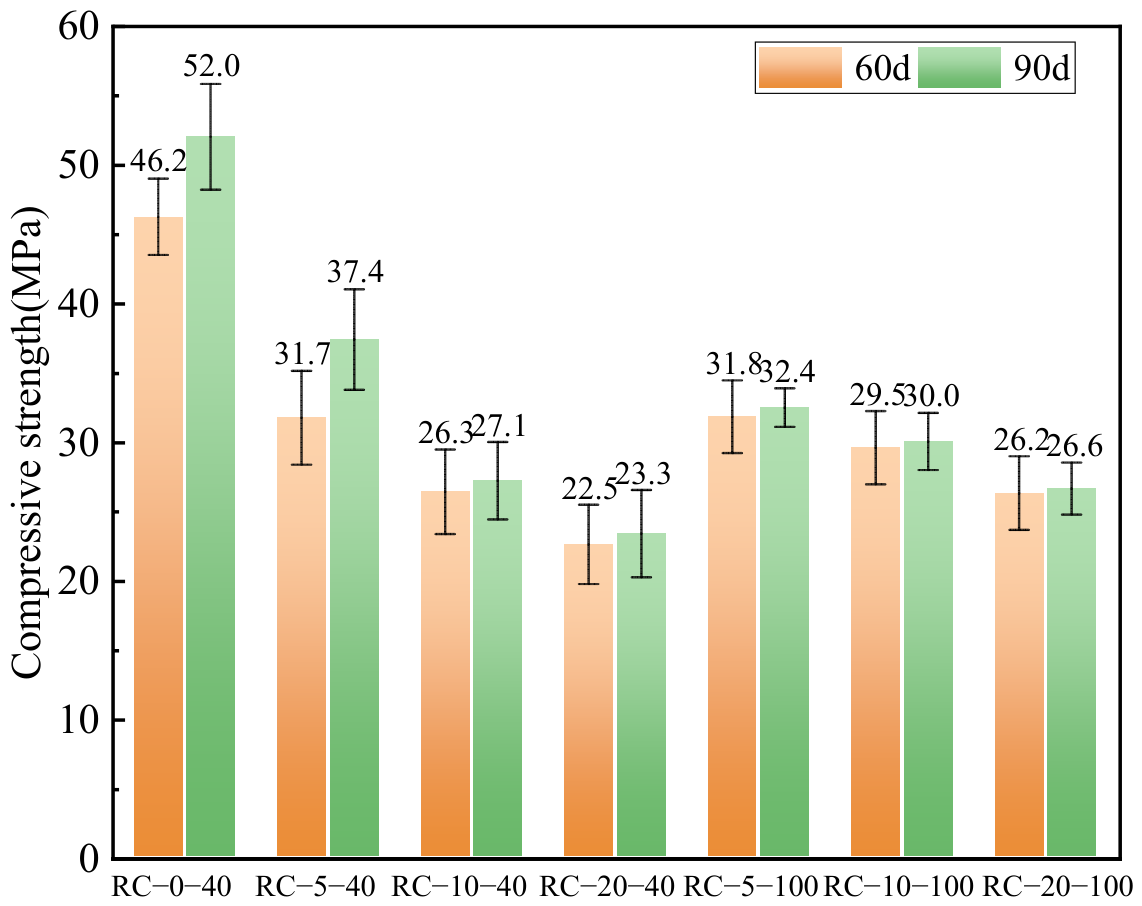
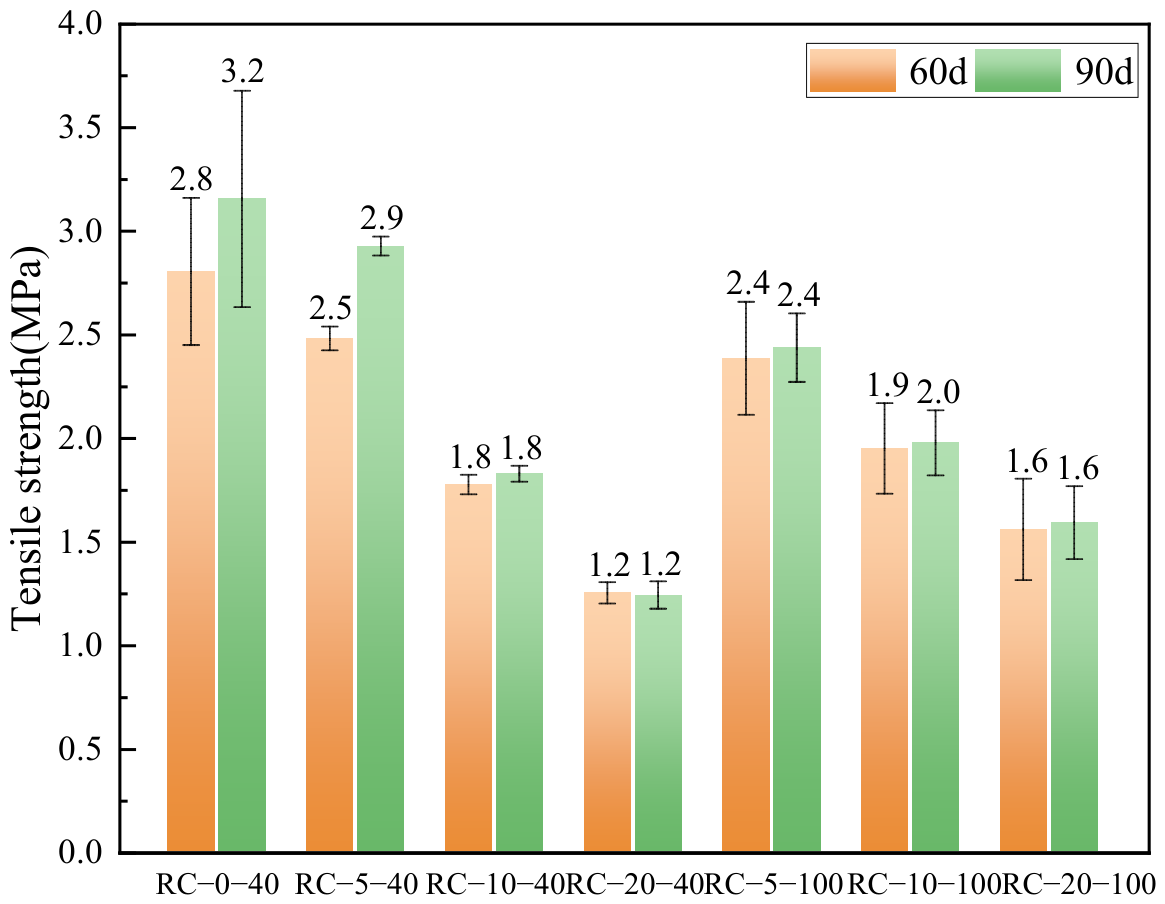
3.1. Compressive and Splitting Tensile Strength
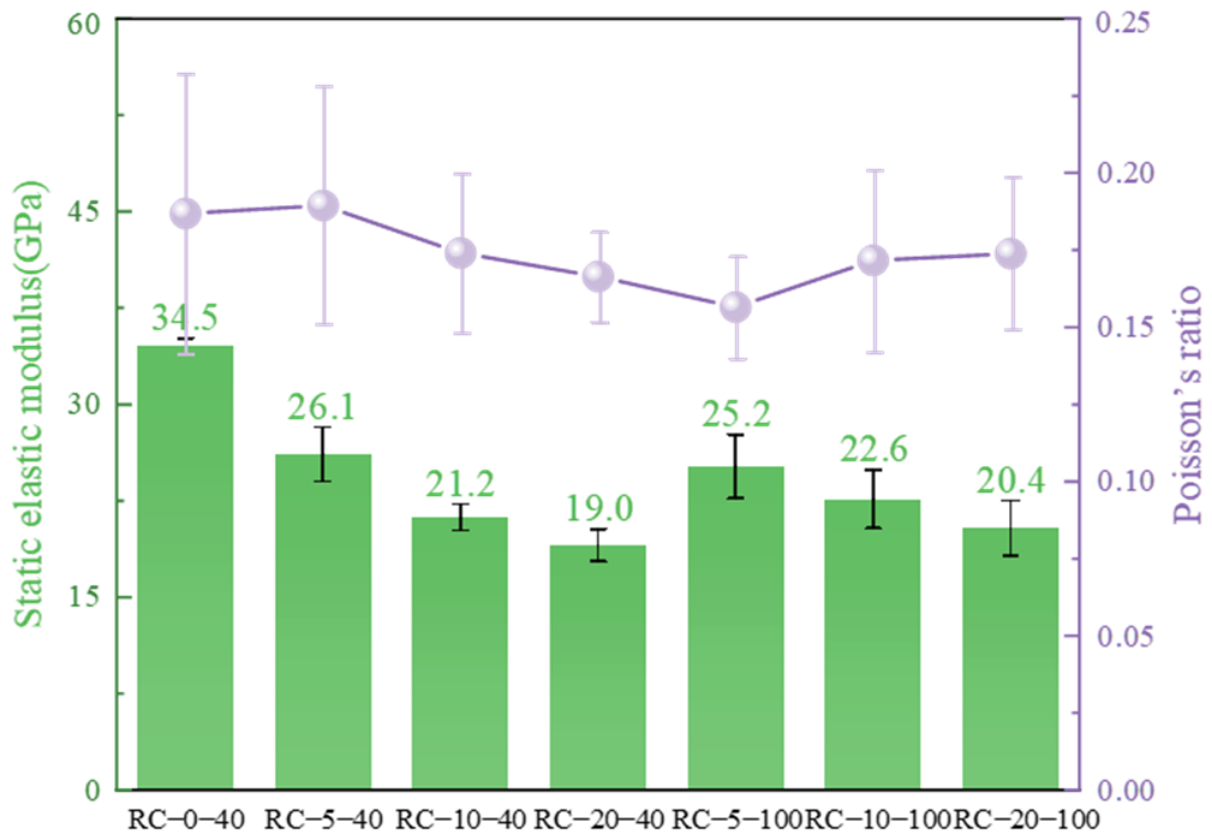
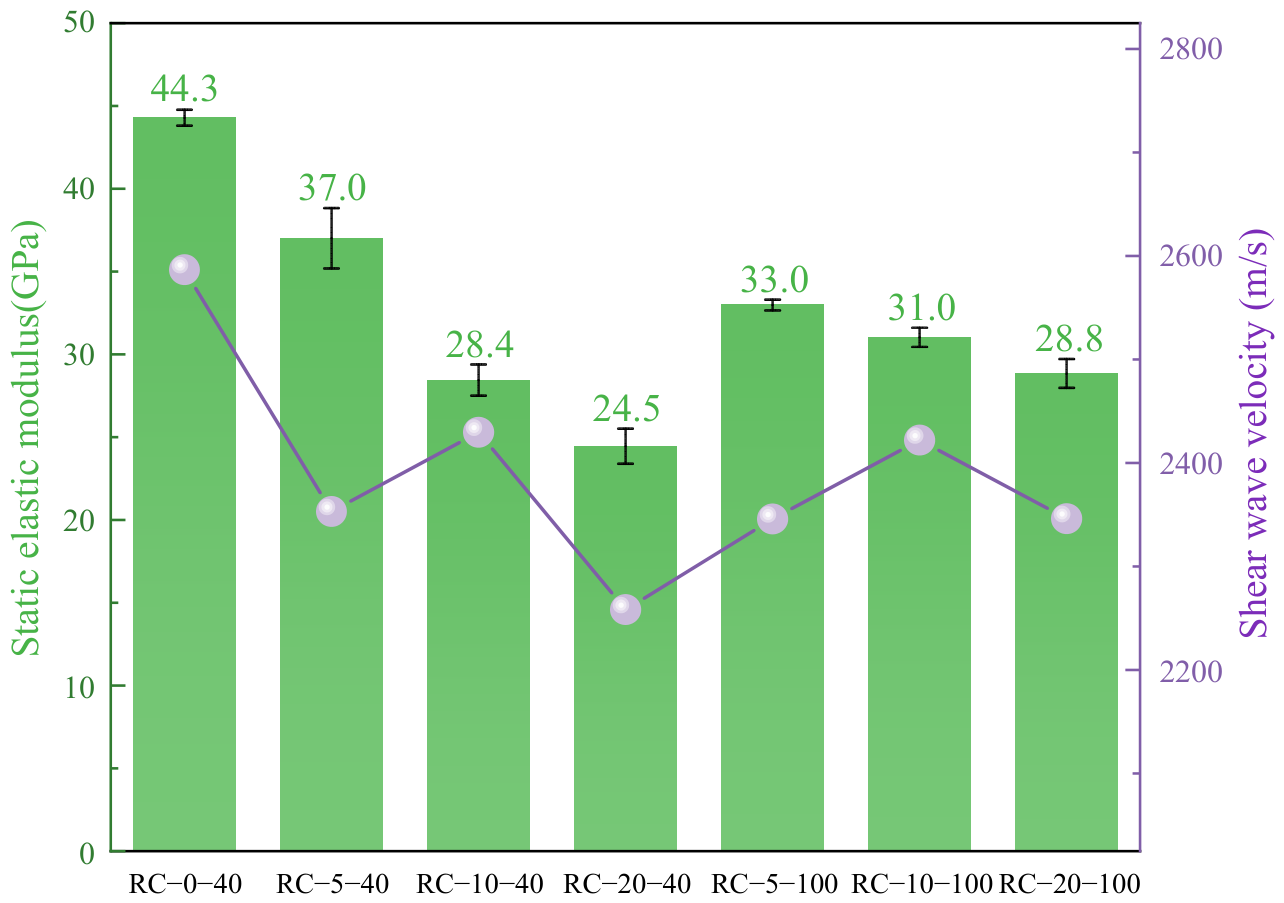
3.2. Static Elastic Modulus and Poisson’s Ratio
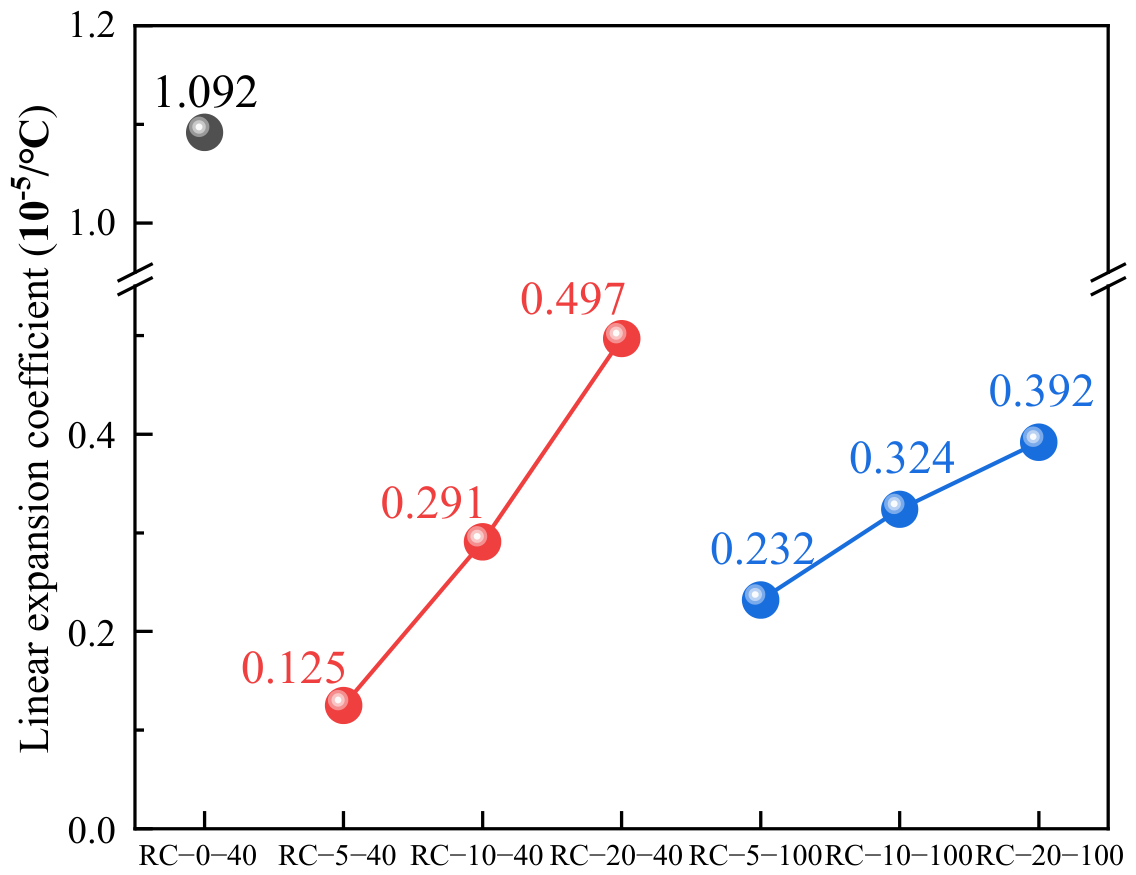
3.3. Linear Expansion Coefficient
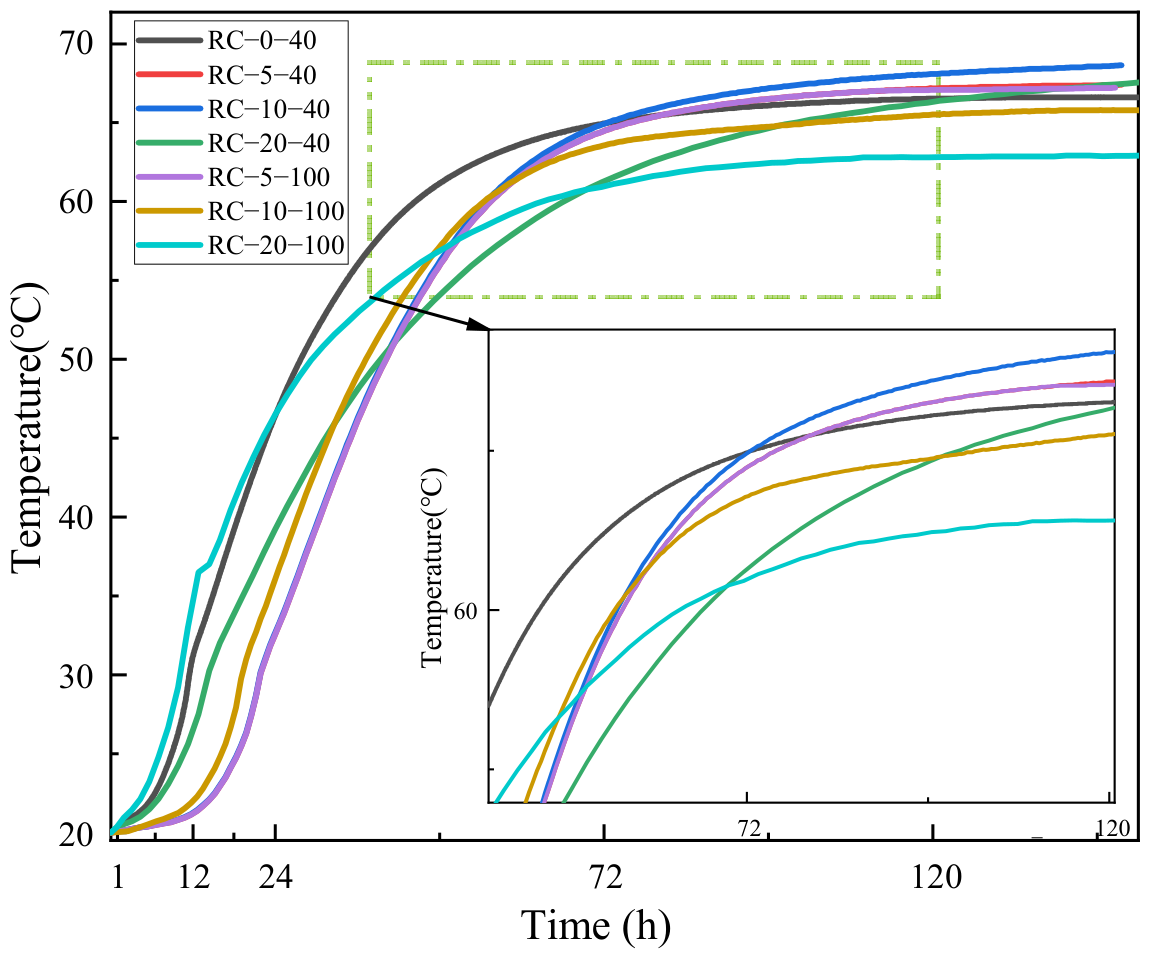
3.4. Adiabatic Temperature Rise
4. Dynamic Properties and Vibration Damping Performance
4.1. Dynamic Elastic Modulus and Shear Wave Velocity
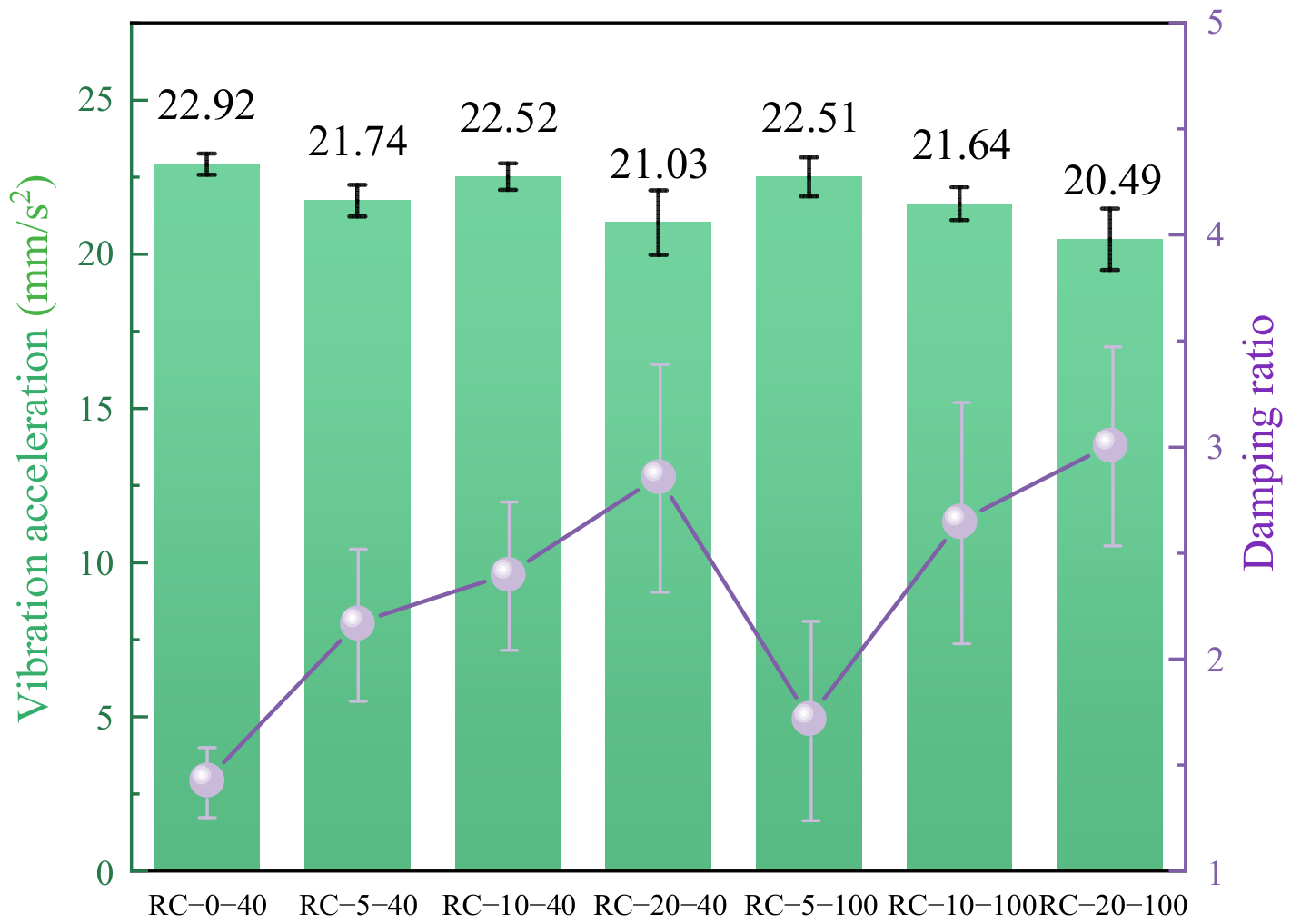
4.2. Vibration Acceleration Response and Damping Ratio
5. Microstructural Analyses
5.1. Functional Groups and Chemical Interactions
5.2. Pore Structure Characteristics
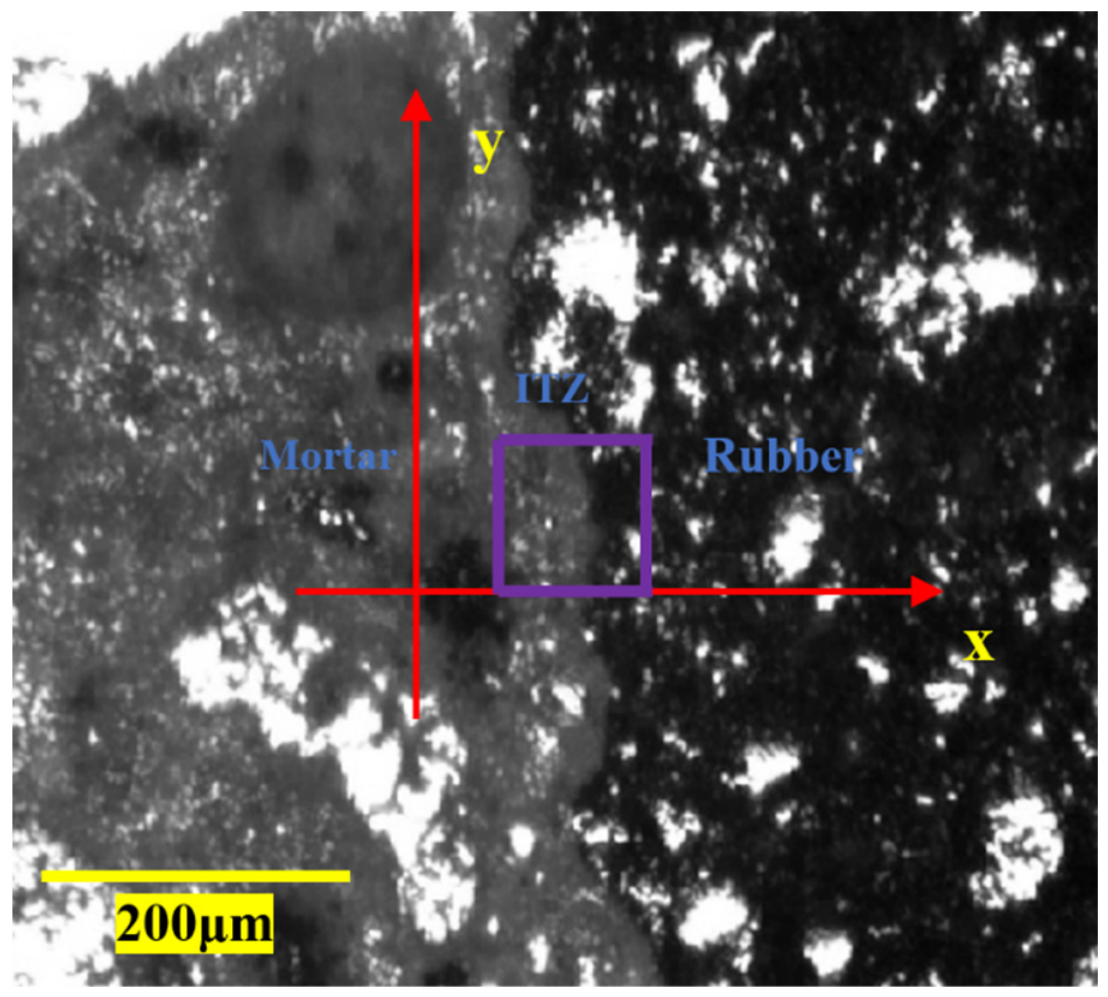
5.3. Nanoindentation
6. Discussion
6.1. Influence of Rubber Aggregate on Mechanical and Thermal Properties
6.2. Improvement Mechanisms of Vibration-Damping Performance
- (i)
- Intrinsic viscoelasticity of rubber. Rubber is a typical viscoelastic material whose polymer chains undergo segmental motion and internal friction when subjected to cyclic loading. This converts mechanical vibration energy into heat, dissipating it from the concrete system. The effect is more pronounced at higher rubber contents and for finer particles, as the total rubber volume and exposed surface area increase.
- (ii)
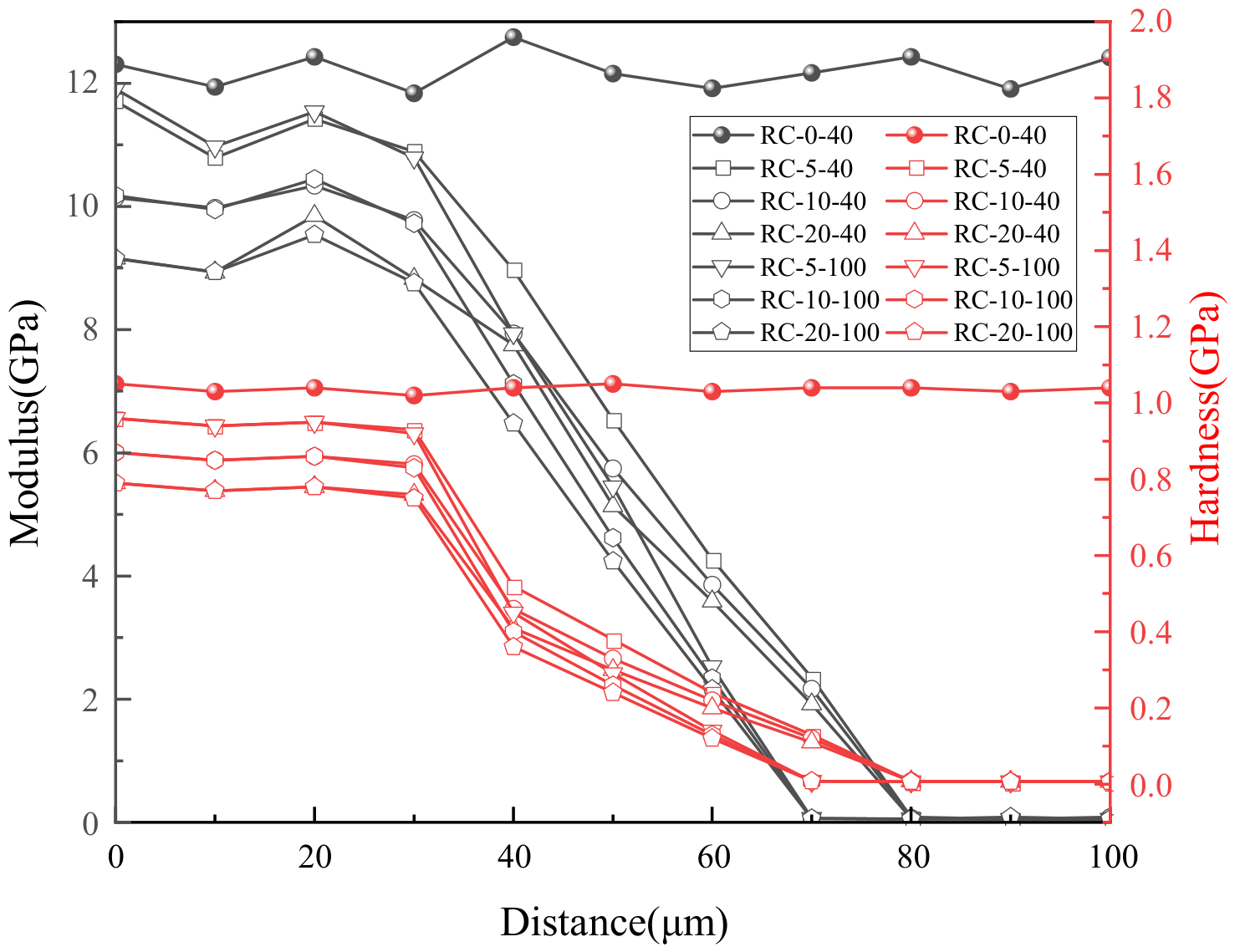
- Interfacial friction and micro-slip. The weak rubber–cement interface, characterized by micro-cracks, gaps, and low adhesion (as confirmed by nanoindentation), provides numerous sites for frictional energy dissipation. Under dynamic loading, the relative slip between the rubber particle and the surrounding mortar generates additional damping. The finer rubber particles, with their larger specific surface area, create a higher density of such frictional interfaces, which explains the superior damping of the 100-mesh series at higher replacement levels.
- (iii)
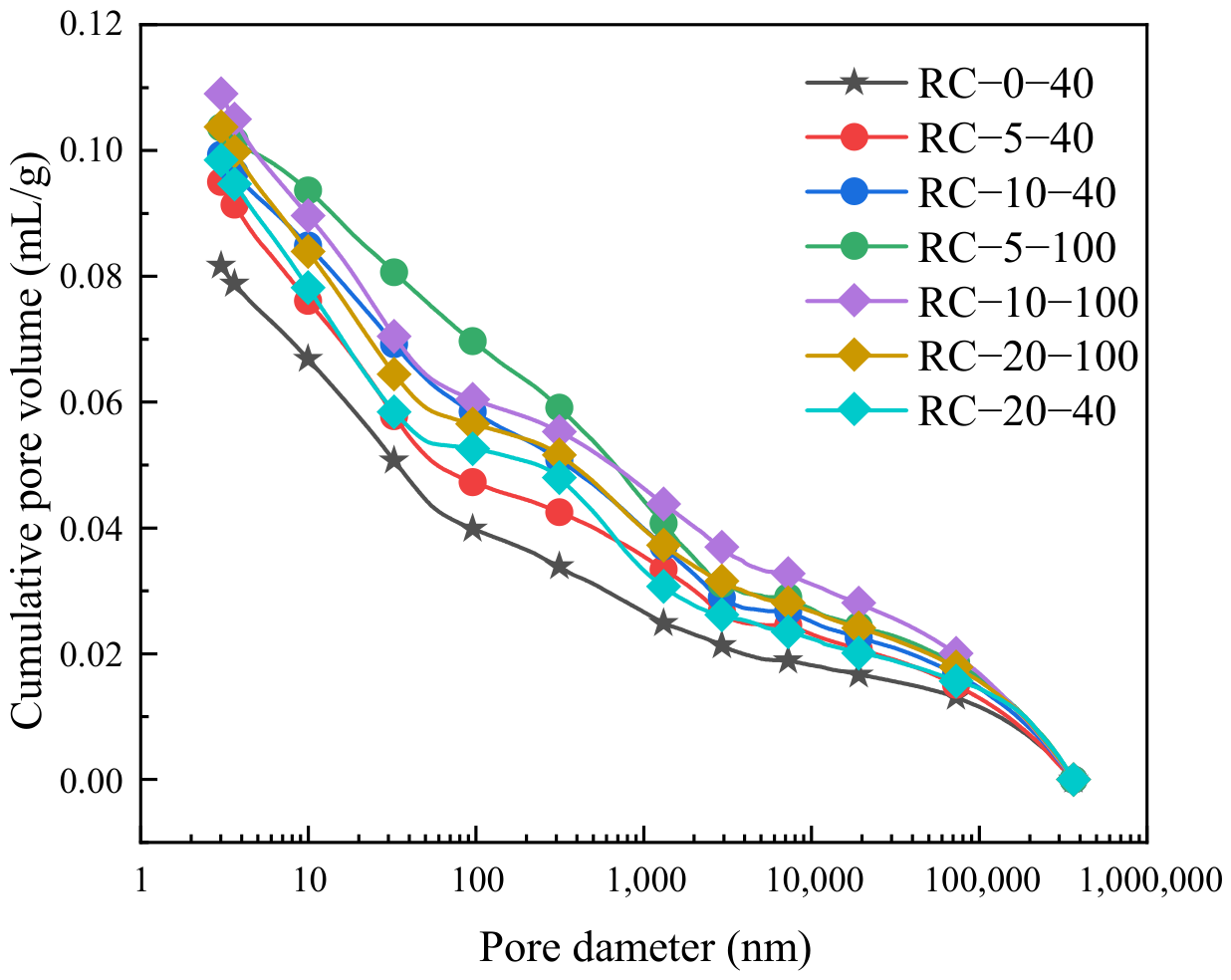
- Porosity and micro-cracking. The MIP results (Section 5.2) show that rubber incorporation increases porosity, especially for the 40-mesh series (porosity up to 20.57% at 20% replacement). Pore walls and micro-cracks act as additional energy-dissipating sites during vibration, as they open and close cyclically, consuming energy. The 40-mesh series, with its coarser pore structure, exhibits a progressive increase in damping with rubber content, while the 100-mesh series, despite pore refinement at higher contents, still benefits from the abundant weak interfaces.
6.3. Microstructure—Property Relationships: Why Rubber Aggregate Enhances Damping While Reducing Strength
7. Conclusions
- (1)
- The incorporation of rubber aggregate reduces compressive strength, splitting tensile strength, and static elastic modulus, while Poisson’s ratio remains largely unchanged (0.157–0.190). The finer 100-mesh rubber, at 10% and 20% replacement, outperforms the coarser 40-mesh rubber at the same contents due to a micro-filler effect that refines the pore structure.
- (2)
- The damping ratio increases markedly with rubber content, reaching 3.01% for RC-20-100, which is 110% higher than that of the reference concrete (1.43%). The finer 100-mesh rubber exhibits higher damping than the coarser rubber at 10% and 20% replacement, attributed to its larger specific surface area and more uniform dispersion. The vibration acceleration generally decreases, except for RC-10-40, where a temporary increase occurs due to stiffness reduction, lowering the natural frequency.
- (3)
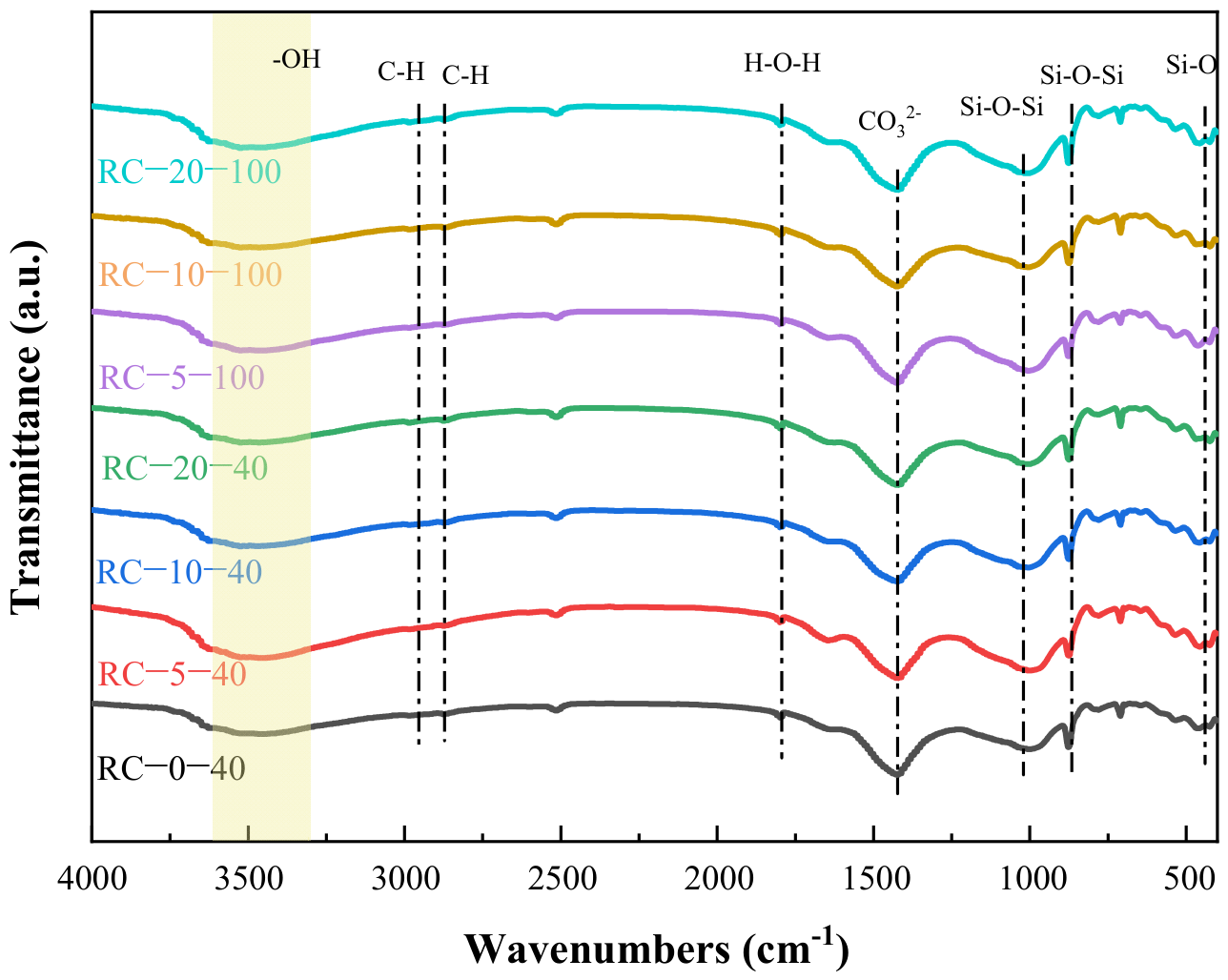
- FTIR analysis did not reveal any obvious new bands associated with chemical bonding between rubber and the cementitious matrix, indicating that the interaction is likely dominated by physical effects. MIP shows that 40-mesh rubber continuously increases porosity (from 15.7% to 20.6%), while 100-mesh rubber, at 10% and 20% replacement, decreases porosity to 17.5% and reduces the average pore diameter to 18.1 nm—even smaller than that of the reference concrete. Nanoindentation reveals that the rubber–mortar ITZ has a modulus of only 32–52% of the mortar matrix and a thickness of 20–50 µm; finer rubber produces a thinner but more severely weakened ITZ, which simultaneously explains the strength loss and the damping enhancement.
- (4)
- The enhanced damping originates from three factors: intrinsic viscoelasticity of rubber, micro-slip and friction at the weak ITZ, and additional energy-dissipating sites provided by pores and micro-cracks. The strength loss is caused by the replacement of high-strength aggregates by soft rubber particles, stress concentration at the weak interface, and increased porosity. This trade-off can be rationally managed by selecting the appropriate rubber particle size and replacement level.
- (5)
- For mass concrete applications where vibration control and thermal crack mitigation are priorities (e.g., tunnel invert-fillings, machine foundations, seismic buffer zones), 20% fine rubber (100 mesh) is recommended. RC-20-100 offers a damping ratio of 3.01% (110% increase), a 32% reduction in adiabatic temperature rise, a 64% reduction in linear expansion coefficient, and a 90-day compressive strength of 26.6 MPa—adequate for many non-primary structural elements. For higher strength requirements, 5% rubber replacement maintains C30 grade concrete while providing a 20–85% increase in damping ratio.
Author Contributions
Funding
Data Availability Statement
Acknowledgments
Conflicts of Interest
References
- Du, M. Study on the Mechanism of Structural Noise of Box Girder. Ph.D. Thesis, Lanzhou Jiaotong University, Lanzhou, China, 2025. [Google Scholar]
- Ahmad, Z.A.B.; Hui, K.H.; Lim, M.H.; Leong, M.S. Building floor vibration due to in-building speed bump. J. Perform. Constr. Facil. 2018, 32, 04018051. [Google Scholar] [CrossRef] [Scilit]
- Beskhyroun, S.; Navabian, N.; Wotherspoon, L.; Ma, Q. Dynamic behaviour of a 13-story reinforced concrete building under ambient vibration, forced vibration, and earthquake excitation. J. Build. Eng. 2020, 28, 101066. [Google Scholar] [CrossRef] [Scilit]
- Klyuyev, S.V.; Klyuyev, A.V.; Lesovik, R.V.; Netrebenko, A.V. High-strength fiber concrete for industrial and civil engineering. World Appl. Sci. J. 2013, 24, 1280–1285. [Google Scholar]
- Su, J.-Y.; Chen, G.; Pan, H.-S.; Lin, J.-X.; Zhang, J.; Zhuo, K.-X.; Chen, Z.-B.; Guo, Y.-C. Rubber modified high strength-high ductility concrete: Effect of rubber replacement ratio and fiber length. Constr. Build. Mater. 2023, 404, 133243. [Google Scholar] [CrossRef] [Scilit]
- Bompa, D.V.; Elghazouli, A.Y.; Xu, B.; Stafford, P.; Ruiz-Teran, A. Experimental assessment and constitutive modelling of rubberised concrete materials. Constr. Build. Mater. 2017, 137, 246–260. [Google Scholar] [CrossRef] [Scilit]
- Mei, X.; Cui, Z.; Sheng, Q.; Zhou, J.; Li, C. Application of the improved POA-RF model in predicting the strength and energy absorption property of a novel aseismic rubber-concrete material. Materials 2023, 16, 1286. [Google Scholar] [CrossRef] [Scilit] [PubMed]
- Xue, J.; Shinozuka, M. Rubberized concrete: A green structural material with enhanced energy-dissipation capability. Constr. Build. Mater. 2013, 42, 196–204. [Google Scholar] [CrossRef] [Scilit]
- Banaei, A.; Asadi, P.; Eftekhar, M.R. Mechanical and Vibration Properties of Self-compacting Rubberized Concrete Beams with Silica Fume Enhancement. Iran. J. Sci. Technol. Trans. Civ. Eng. 2025, 49, 3729–3741. [Google Scholar]
- Xu, L.; Zhang, Y.; Zhang, Z.; Ni, H.; Hu, M.; Sun, D. Optimization design of rubberized porous asphalt mixture based on noise reduction and pavement performance. Constr. Build. Mater. 2023, 389, 131551. [Google Scholar] [CrossRef] [Scilit]
- Assaggaf, R.A.; Ali, M.R.; Al-Dulaijan, S.U.; Maslehuddin, M. Properties of concrete with untreated and treated crumb rubber—A review. J. Mater. Res. Technol. 2021, 11, 1753–1798. [Google Scholar] [CrossRef] [Scilit]
- Liu, B.; Yang, S.; Li, W.; Zhang, M. Damping dissipation properties of rubberized concrete and its application in anti-collision of bridge piers. Constr. Build. Mater. 2020, 236, 117286. [Google Scholar] [CrossRef] [Scilit]
- Elchalakani, M.; Aly, T.; Abu-Aisheh, E. Mechanical properties of rubberised concrete for road side barriers. Aust. J. Civ. Eng. 2016, 14, 1–12. [Google Scholar] [CrossRef] [Scilit]
- Ghoniem, A.; Aboul Nour, L. Experimental investigation into the properties of crumb rubberized concrete incorporating corrugated round steel fibers. Arch. Civ. Mech. Eng. 2024, 24, 100. [Google Scholar] [CrossRef] [Scilit]
- Pelisser, F.; Zavarise, N.; Longo, T.A.; Bernardin, A.M. Concrete made with recycled tire rubber: Effect of alkaline activation and silica fume addition. J. Clean. Prod. 2011, 19, 757–763. [Google Scholar] [CrossRef] [Scilit]
- Wang, R.; Zhang, Y.X. Recycling fresh concrete waste: A review. Struct. Concr. 2018, 19, 1939–1955. [Google Scholar] [CrossRef] [Scilit]
- Jokar, F.; Khorram, M.; Karimi, G.; Hataf, N. Experimental investigation of mechanical properties of crumbed rubber concrete containing natural zeolite. Constr. Build. Mater. 2019, 208, 651–658. [Google Scholar] [CrossRef] [Scilit]
- Li, L.; Ruan, S.; Zeng, L. Mechanical properties and constitutive equations of concrete containing a low volume of tire rubber particles. Constr. Build. Mater. 2014, 70, 291–308. [Google Scholar] [CrossRef] [Scilit]
- Pacheco-Torres, R.; Cerro-Prada, E.; Escolano, F.; Varela, F. Fatigue performance of waste rubber concrete for rigid road pavements. Constr. Build. Mater. 2018, 176, 539–548. [Google Scholar] [CrossRef] [Scilit]
- Noaman, A.T.; Bakar, B.H.A.; Akil, H.M.; Alani, A. Fracture characteristics of plain and steel fibre reinforced rubberized concrete. Constr. Build. Mater. 2017, 152, 414–423. [Google Scholar] [CrossRef] [Scilit]
- Raffoul, S.; Garcia, R.; Pilakoutas, K.; Guadagnini, M.; Medina, N.F. Optimisation of rubberised concrete with high rubber content: An experimental investigation. Constr. Build. Mater. 2016, 124, 391–404. [Google Scholar] [CrossRef] [Scilit]
- Su, H.; Yang, J.; Ling, T.C.; Ghataora, G.S.; Dirar, S. Properties of concrete prepared with waste tyre rubber particles of uniform and varying sizes. J. Clean. Prod. 2015, 91, 288–296. [Google Scholar] [CrossRef] [Scilit]
- Shu, X.; Huang, B. Recycling of waste tire rubber in asphalt and portland cement concrete: An overview. Constr. Build. Mater. 2014, 67, 217–224. [Google Scholar] [CrossRef] [Scilit]
- Holmes, N.; Browne, A.; Montague, C. Acoustic properties of concrete panels with crumb rubber as a fine aggregate replacement. Constr. Build. Mater. 2014, 73, 195–204. [Google Scholar] [CrossRef] [Scilit]
- Güneyisi, E. Fresh properties of self-compacting rubberized concrete incorporated with fly ash. Mater. Struct. 2010, 43, 1037–1048. [Google Scholar] [CrossRef] [Scilit]
- Yang, L. Exploration on Microstructure and Structural Theory of Crumb Rubber Concrete. Ph.D. Thesis, Tianjin University, Tianjin, China, 2010. [Google Scholar]
- Jing, Y.; Zhang, C.; Lin, G.; Niu, Y.; Zhao, M.; Lin, Z. Enhancing rubber concrete with supercritical fluid-assisted Nano-SiO2 embedding and high-temperature stirred waste rubber. J. Build. Eng. 2024, 96, 110530. [Google Scholar] [CrossRef] [Scilit]
- Wang, R.; He, X.; Li, Y. Evaluation of microcracks in the interfacial transition zone of recycled rubber concrete. Struct. Concr. 2019, 20, 1684–1694. [Google Scholar] [CrossRef] [Scilit]
- Hu, P. Experimental Study on Permeability of Crumb Rubber Concrete. Master’s Thesis, Tianjin University, Tianjin, China, 2007. [Google Scholar]
- Wang, J.; Guo, Z.; Yuan, Q.; Zhang, P.; Fang, H. Effects of ages on the ITZ microstructure of crumb rubber concrete. Constr. Build. Mater. 2020, 254, 119329. [Google Scholar] [CrossRef] [Scilit]
- Najim, K.B.; Hall, M.R. Crumb rubber aggregate coatings/pre-treatments and their effects on interfacial bonding, air entrapment and fracture toughness in self-compacting rubberised concrete (SCRC). Mater. Struct. 2013, 46, 2029–2043. [Google Scholar] [CrossRef] [Scilit]
- Gupta, T.; Chaudhary, S.; Sharma, R.K. Assessment of mechanical and durability properties of concrete containing waste rubber tire as fine aggregate. Constr. Build. Mater. 2014, 73, 562–574. [Google Scholar] [CrossRef] [Scilit]
- Dehdezi, P.K.; Erdem, S.; Blankson, M.A. Physico-mechanical, microstructural and dynamic properties of newly developed artificial fly ash based lightweight aggregate–Rubber concrete composite. Compos. Part B Eng. 2015, 79, 451–455. [Google Scholar] [CrossRef] [Scilit]
- Guo, S.; Dai, Q.; Si, R.; Sun, X.; Lu, C. Evaluation of properties and performance of rubber-modified concrete for recycling of waste scrap tire. J. Clean. Prod. 2017, 148, 681–689. [Google Scholar] [CrossRef] [Scilit]
- Chen, Z.; Li, L.; Xiong, Z. Investigation on the interfacial behaviour between the rubber-cement matrix of the rubberized concrete. J. Clean. Prod. 2019, 209, 1354–1364. [Google Scholar] [CrossRef] [Scilit]
- Luhar, S.; Chaudhary, S.; Luhar, I. Development of rubberized geopolymer concrete: Strength and durability studies. Constr. Build. Mater. 2019, 204, 740–753. [Google Scholar] [CrossRef] [Scilit]
- Liang, C.; Fu, Y.; Wang, C.; Gao, Y.; Zhao, J. Damping of rubberized recycled aggregate concrete and damping estimation of its elements by finite element analysis. Compos. Struct. 2022, 281, 114967. [Google Scholar] [CrossRef] [Scilit]
- Chandran, V.; Nagarajan, L.; Thomas, M.R. Evaluation of vibration damping behavior of different sizes of waste tyre rubber in natural rubber composites. J. Compos. Mater. 2018, 52, 2493–2501. [Google Scholar] [CrossRef] [Scilit]
- Hassanli, R.; Youssf, O.; Mills, J.E. Experimental investigations of reinforced rubberized concrete structural members. J. Build. Eng. 2017, 10, 149–165. [Google Scholar] [CrossRef] [Scilit]
- Eltayeb, E.; Ma, X.; Zhuge, Y.; Youssf, O.; Mills, J.E. Influence of rubber particles on the properties of foam concrete. J. Build. Eng. 2020, 30, 101217. [Google Scholar] [CrossRef] [Scilit]
- Lin, C.Y.; Yao, G.C.; Lin, C.H. A study on the damping ratio of rubber concrete. J. Asian Archit. Build. Eng. 2010, 9, 423–429. [Google Scholar] [CrossRef] [Scilit]
- Mo, J.; Ren, F.; Feng, W.; Tian, S.; Guo, S.; Lu, H.; Lai, C.; Xiong, J.; Zhou, W. Enhancing of damping capacity in crumb rubber concrete at various damage levels: Effects of fly ash and ground granulated blast furnace slag. J. Build. Eng. 2024, 92, 109739. [Google Scholar] [CrossRef] [Scilit]
- GB175-2023; Common Portland Cement. Standardization Administration of the People’s Republic of China: Beijing, China, 2023.
- GB/T 1596-2017; Fly Ash Used for Cement and Concrete. Standardization Administration Committee: Beijing, China, 2017.
- GB/T 18046-2017; Ground Granulated Blast Furnace Slag Used for Cement, Mortar and Concrete. Standardization Administration of the People’s Republic of China: Beijing, China, 2017.
- JGJ 52-2006; Standard for Technical Requirements and Test Method of Sand and Crushed Stone (or Gravel) for Ordinary Concrete. Ministry of Housing and Urban-Rural Development of the People’s Republic of China: Beijing, China; Architecture and Building Press: Beijing, China, 2006.
- GB 8076-2008; Concrete Admixtures. Standardization Administration of China: Beijing, China; Standards Press of China: Beijing, China, 2008.
- GB/T-50081; Standard for Test Methods of Concrete Physical and Mechanical Properties. Standardization Administration of China: Beijing, China; Standards Press of China: Beijing, China, 2019.
- GB/T-50082; Standard for Test Methods of Long-Term Performance and Durability of Concrete. Standardization Administration of China: Beijing, China; Standards Press of China: Beijing, China, 2024.
- SL/T 264-2020; Code for Rock Tests in Water and Hydropower Projects. Ministry of Water Resources of the People’s Republic of China: Beijing, China; China Water and Power Press: Beijing, China, 2020.
- Shao, Z.; Bai, W.; Dai, J.; Sun, G. Measurement and analysis of vibration responses due to subway transit in residential areas. Structures 2024, 69, 107305. [Google Scholar] [CrossRef] [Scilit]
- SL 352-2020; Test Code for Hydraulic Concrete. Ministry of Water Resources of the People’s Republic of China: Beijing, China; China Water and Power Press: Beijing, China, 2020.
- Yang, G.; Qi, Y.; Ma, Z.; Xu, J. Quantitative characterization of crumb rubber concrete interfacial transition zone based on microscopic test method. Constr. Build. Mater. 2025, 505, 144689. [Google Scholar] [CrossRef] [Scilit]





| Materials | Chemical Composition | LOI | ||||||||
|---|---|---|---|---|---|---|---|---|---|---|
| CaO | SiO2 | Fe2O3 | Al2O3 | MgO | SO3 | Na2O | K2O | MnO | ||
| Cement | 61.14 | 23.35 | 3.46 | 5.48 | 1.54 | 2.28 | 0.10 | 0.02 | - | 2.63 |
| Fly ash | 8.56 | 56.24 | 6.24 | 21.77 | 1.27 | 1.77 | 0.54 | 0.03 | - | 3.58 |
| Slag | 43.82 | 29.24 | 0.58 | 14.42 | 6.86 | 2.56 | 0.44 | - | 0.62 | 1.46 |
| Label | Rs% | Mix Proportions (kg/m3) | ||||||||
|---|---|---|---|---|---|---|---|---|---|---|
| w/b | Cement | Sand | Gravel | Fly Ash | Slag | Water | RPA (Mesh) | |||
| 40 | 100 | |||||||||
| RC-0-40 | 0 | 0.45 | 210 | 810 | 1030 | 90 | 80 | 116 | - | - |
| RC-5-40 | 5 | 0.45 | 210 | 769.5 | 1030 | 90 | 80 | 170 | 40.5 | - |
| RC-10-40 | 10 | 0.45 | 210 | 729 | 1030 | 90 | 80 | 170 | 81 | - |
| RC-20-40 | 20 | 0.45 | 210 | 648 | 1030 | 90 | 80 | 170 | 162 | - |
| RC-5-100 | 5 | 0.45 | 210 | 769.5 | 1030 | 90 | 80 | 170 | - | 40.5 |
| RC-10-100 | 10 | 0.45 | 210 | 729 | 1030 | 90 | 80 | 170 | - | 81 |
| RC-20-100 | 20 | 0.45 | 210 | 648 | 1030 | 90 | 80 | 170 | - | 162 |
| RC-0-40 | RC-5-40 | RC-10-40 | RC-20-40 | RC-5-100 | RC-10-100 | RC-20-100 | |
|---|---|---|---|---|---|---|---|
| Porosity (%) | 15.7406 | 17.5823 | 18.6208 | 20.5721 | 19.3347 | 18.4987 | 17.4582 |
| Average pore diameter (nm) | 19.6 | 20.5 | 24.31 | 27.54 | 20.38 | 19.35 | 18.07 |
| Maximum number of pore diameter (nm) | 32.6 | 31.3 | 30.85 | 30.58 | 24.6 | 19.91 | 19.05 |
Disclaimer/Publisher’s Note: The statements, opinions and data contained in all publications are solely those of the individual author(s) and contributor(s) and not of MDPI and/or the editor(s). MDPI and/or the editor(s) disclaim responsibility for any injury to people or property resulting from any ideas, methods, instructions or products referred to in the content. |
© 2026 by the authors. Licensee MDPI, Basel, Switzerland. This article is an open access article distributed under the terms and conditions of the Creative Commons Attribution (CC BY) license.
Share and Cite
Li, Y.; Dong, X.; Li, Z. Rubber Aggregate Concrete with Enhanced Damping Performance for Mass Concrete Applications. Buildings 2026, 16, 3133. https://doi.org/10.3390/buildings16153133
Li Y, Dong X, Li Z. Rubber Aggregate Concrete with Enhanced Damping Performance for Mass Concrete Applications. Buildings. 2026; 16(15):3133. https://doi.org/10.3390/buildings16153133
Chicago/Turabian StyleLi, Yanan, Xianguo Dong, and Zejun Li. 2026. "Rubber Aggregate Concrete with Enhanced Damping Performance for Mass Concrete Applications" Buildings 16, no. 15: 3133. https://doi.org/10.3390/buildings16153133
APA StyleLi, Y., Dong, X., & Li, Z. (2026). Rubber Aggregate Concrete with Enhanced Damping Performance for Mass Concrete Applications. Buildings, 16(15), 3133. https://doi.org/10.3390/buildings16153133