Article

Synergistic Enhancement of Recycled Sand Concrete by Slurry-Coating Mixing and Nano-SiO2: Mechanical Properties, Durability, and ITZ Microstructure

1
Shaanxi Key Laboratory of Safety and Durability of Concrete Structures, Xijing University, Xi’an 710123, China
2
School of Civil Engineering & Architecture, Wenzhou Polytechnic, Wenzhou 325035, China
*
Author to whom correspondence should be addressed.
Buildings 2026, 16(14), 2774; https://doi.org/10.3390/buildings16142774
Submission received: 27 May 2026 / Revised: 9 July 2026 / Accepted: 11 July 2026 / Published: 13 July 2026
(This article belongs to the Special Issue Development and Research of Cement-Based Materials)

Abstract

To improve the performance of recycled sand concrete (RSC), this study investigated the synergistic effects of the slurry-coating mixing method and Nano-SiO2 (NS). The strength, durability, and microstructure of concrete with different recycled sand replacement ratios (RSR), mixing methods, and NS dosages were systematically examined. The results indicated that the strength and durability of concrete generally decreased with increasing RSR. Compared with the conventional mixing method, the slurry-coating mixing method increased the 7-day compressive strength by 8.9–13.9% and the 28-day compressive strength by 4.1–9.3%. Similarly, the addition of NS substantially improved both the mechanical strength and durability of concrete. The maximum increases reached 24.4% for 7-day compressive strength, 9.7% for 28-day compressive strength, and 18.2% for 28-day splitting tensile strength. Meanwhile, the electric flux, the mass loss after freeze–thaw cycles, and the relative dynamic modulus loss were noticeably reduced when either the slurry-coating mixing method or NS was applied. When both modification methods were combined, a pronounced synergistic enhancement effect was observed. The 7-day compressive strength increased by up to 43.2%, while the 28-day compressive strength increased by approximately 21%. In addition, the electric flux value decreased by up to 29.2%, and the freeze–thaw resistance was significantly improved. Microstructural observations revealed that the slurry-coating mixing method promoted the formation of a dense slurry layer on the aggregate surface, while NS enhanced hydration through its filling effect, pozzolanic reactivity, and nucleation effect. The combined action effectively densified the interfacial transition zone (ITZ) and optimized the pore structure, thereby improving the mechanical properties and durability of RSC. These results demonstrate that the synergistic modification of slurry-coating mixing and NS is an effective strategy for enhancing the overall performance of RSC. This study provides a promising approach for improving the performance of RSC and promoting sustainable construction materials.

1. Introduction

Large-scale building demolition and infrastructure renewal have generated enormous quantities of construction and demolition waste with the continuous advancement of urbanization, among which waste concrete accounts for the largest proportion. If these wastes are not effectively utilized, they may not only lead to serious pollution but also cause significant land occupation and excessive consumption of natural resources [1,2,3]. Therefore, processing waste concrete into recycled aggregates and reutilizing them in concrete production are widely regarded as key approaches to achieving the sustainable development of construction materials [4,5]. In recent years, recycled coarse aggregate concrete has been extensively studied and increasingly applied, whereas the utilization of recycled sand (RS, or recycled fine aggregate) still faces several technical challenges. Compared with natural sand or gravel, recycled coarse aggregate or RS generally has greater water absorption, higher porosity, and a larger number of pre-existing microcracks, while its surface is often covered with adhered old cement mortar [6,7,8]. These unfavorable characteristics can increase internal defects in recycled concrete (RC, recycled aggregate concrete) and cause more porous structure in the ITZ, thereby resulting in noticeable deterioration in both the strength and durability of concrete. Consequently, how we might effectively improve the microstructure of recycled aggregate concrete and enhance its overall performance has become a focus in the field of RC [9,10,11].
To address the insufficient performance of RC, various modification strategies have been proposed by researchers, including optimizing aggregate treatment processes [9,10,11,12,13,14], incorporating mineral admixtures [15,16,17], and introducing nano-materials [18,19]. Among these approaches, nano-SiO2, owing to its small size and high pozzolanic activity, can promote hydration through filling, pozzolanic, or nucleation effects, all of which help refine the internal pore structure and thereby enhance the strength and long-term performance of concrete [20,21,22]. Lyu et al. [23] demonstrated that NS can establish nucleation sites on recycled aggregate surfaces, promoting long-term pozzolanic activity and strengthening interfacial bonding via the generated Ca2SiO4, which significantly improves long-term strength retention and early-age strength development. Liu et al. [24] indicated that SiO2 modification can effectively fill cracks and micro pores within recycled concrete aggregates (RCA), improving the ITZ adhesion between aggregates and asphalt and ultimately causing an enhancement in the strength and long-term performance of RCA. Another study by Hussein et al. [25] reported that colloidal NS improved the ITZ in specimens containing RCA, resulting in a 40% reduction in water absorption and a 20% increase in strength. Furthermore, the synergistic effect of CNS and polypropylene fibers further enhanced the compactness, hydration, and bonding between cement paste and aggregates, thereby improving the microstructure and durability of self-compacting concrete containing RCA. In addition, Su et al. [26] innovatively developed NS-modified concrete and investigated the effects of recycled carpet fibers and NS on its mechanical and microstructure properties. The potential application value of NS in improving concrete performance has been further emphasized in recent years [27,28,29,30].
In addition, the slurry-coating mixing method proposed in recent years enables cement slurry to preferentially coat the surface of aggregates during the mixing process, thereby effectively improving the ITZ structure between cement paste and aggregates, and making the ITZ more compact [31,32,33]. Gong et al. [34] proposed a combined cement slurry coating and mixing approach (CSCM) to enhance the performance of RAC. Compared with the conventional mixing method, CSCM can improve the strength of RAC. This enhancement was attributed to the CSCM nailing effect, which strengthened the bonding between the newly formed mortar matrix and aggregates. Oruji et al. [35] experimentally demonstrated that the well-dispersed bottom ash slurry coating can effectively enhance both the bulk matrix and the ITZ. This approach not only reduced porosity and unhydrated clinker content but also increased calcium silicate hydrate (C–S–H) content near the ITZ, resulting in significant improvements in strength and fracture toughness. Furthermore, Li et al. [36] proposed a modification method in which fine powders were dry-mixed with aggregates prior to slurry coating to fill and bond internal defects, such as pores and cracks. The results indicated that this method could significantly improve both the crushing resistance and apparent density of recycled aggregates and reduce water absorption ratio. Previous studies [37,38,39] have likewise shown that such multi-step slurry-coating mixing methods can substantially enhance the interfacial properties and overall performance of RC.
Although slurry-coating treatment [34,35,36,40,41,42] and nano-material modification [18,19,20,21,22,23,24,25,26,27,28,29,30] have been independently applied in cement-based materials, their combined effect on recycled sand concrete remains insufficiently understood. Unlike conventional aggregates, recycled sand contains adhered mortar and internal defects, resulting in higher porosity and a weaker ITZ. Therefore, improving the surface characteristics of recycled sand before incorporating nanoscale modification may provide a more effective strategy for enhancing the performance of recycled sand concrete. In view of this, this study proposes a synergistic modification approach combining slurry-coating mixing and NS incorporation, aiming to improve the microstructural characteristics, mechanical properties, and durability of recycled sand concrete, especially at high recycled sand replacement ratios.

2. Experiment

2.1. Material Properties

P·O 42.5 cement was used in this study, and its main physical properties are presented in Table 1. Natural river sand with a fineness modulus of 2.7 and a silt content of 2.2% was used as the fine aggregate, and its other key properties are summarized in Table 2. RS was produced from waste C40 concrete specimens obtained from laboratory tests (90-day compressive strength of 58.6 MPa) through a process of primary crushing, secondary crushing, and particle reshaping. The waste C40 concrete was mainly produced with granite-based aggregates, indicating a predominantly siliceous mineralogical composition. The key properties of RS are shown in Table 2. The gas-phase hydrophilic NS was selected, with a specific surface area of 374 m2/g and a silica content of over 99.8%; the chemical compositions of cement and NS are shown in Table 3. High-speed mechanical stirring was employed to ensure uniform dispersion, and the NS was pre-dispersed in mixing water prior to incorporation into the concrete mixture to avoid agglomeration and ensure homogeneity.
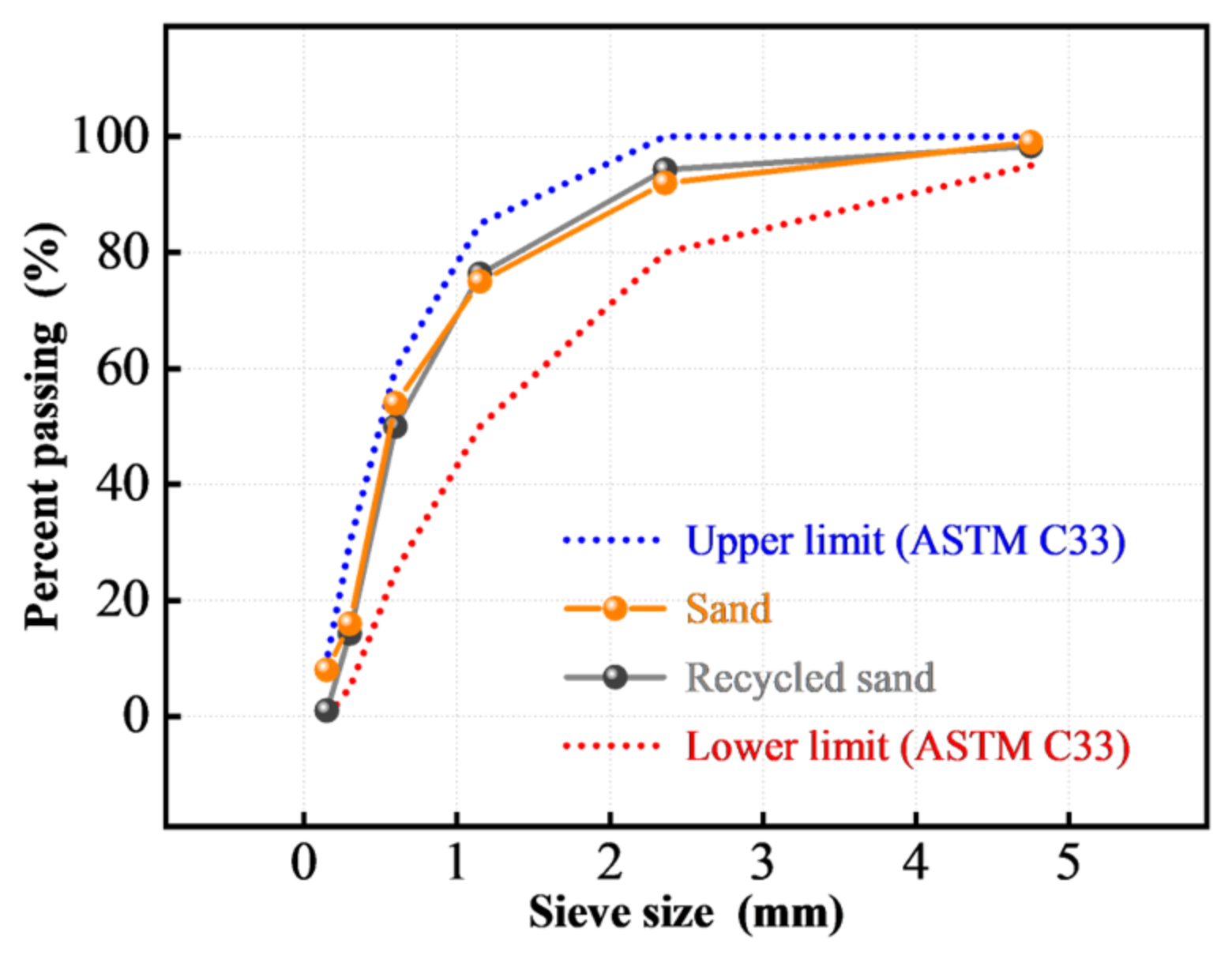
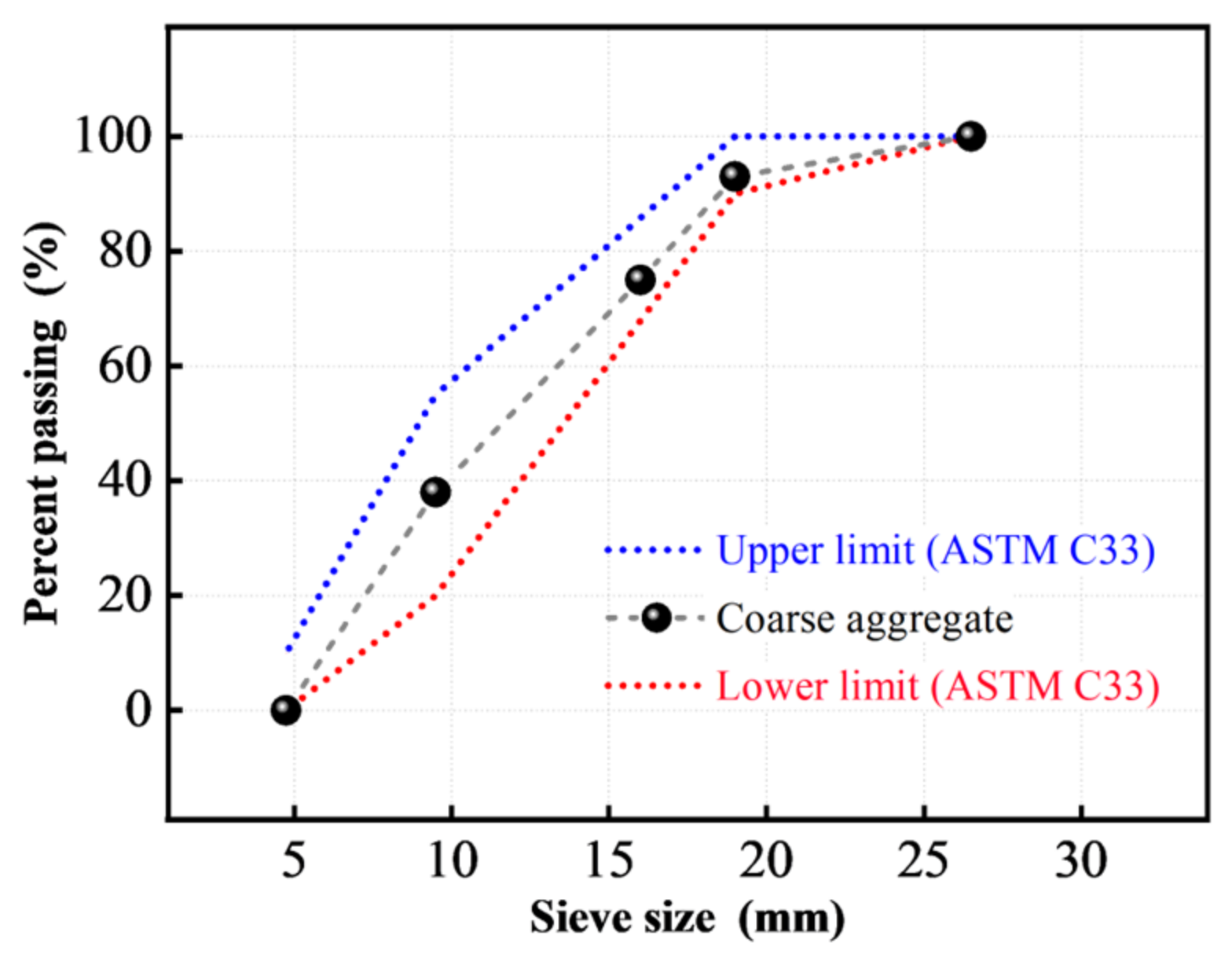
To minimize experimental deviations, the particle size distributions of natural sand and RS were adjusted to be similar prior to testing. The adjusted grading curves of natural sand and RS are shown in Figure 1, according to standard ASTM C33-24 [43]. The limestone crushed stone was prepared by blending three size fractions (16–31.5 mm, 10–20 mm, and 5–10 mm) at a mass ratio of 1:6:3, and the corresponding grading curve is presented in Figure 2. A polycarboxylate ether superplasticizer (PCE) was used, with a designed water reduction ratio of 30% and a measured value of 28% under laboratory conditions. Tap water from the laboratory supply was used.

2.2. Mix Design and Specimen Preparation

Table 4 lists 12 mix proportions of concrete with different RSR and mixing methods. In principle, the quantities of fine aggregates and coarse aggregates shown in Table 4 correspond to the oven-dry condition. The natural crushed stone and sand were used after air-drying in the actual tests, and their moisture contents were extremely low and therefore negligible. However, the surface-dried RS used in the tests was actually in an air-dry condition due to the high porosity, with a measured moisture content of 3.0%. Accordingly, the actual additional mixing water was calculated as the total additional water minus the water introduced by the air-dry RS during concrete mixing. The amount of additional water was determined as 80% of the water absorption corresponding to the 24 h saturated surface-dry condition of RS.
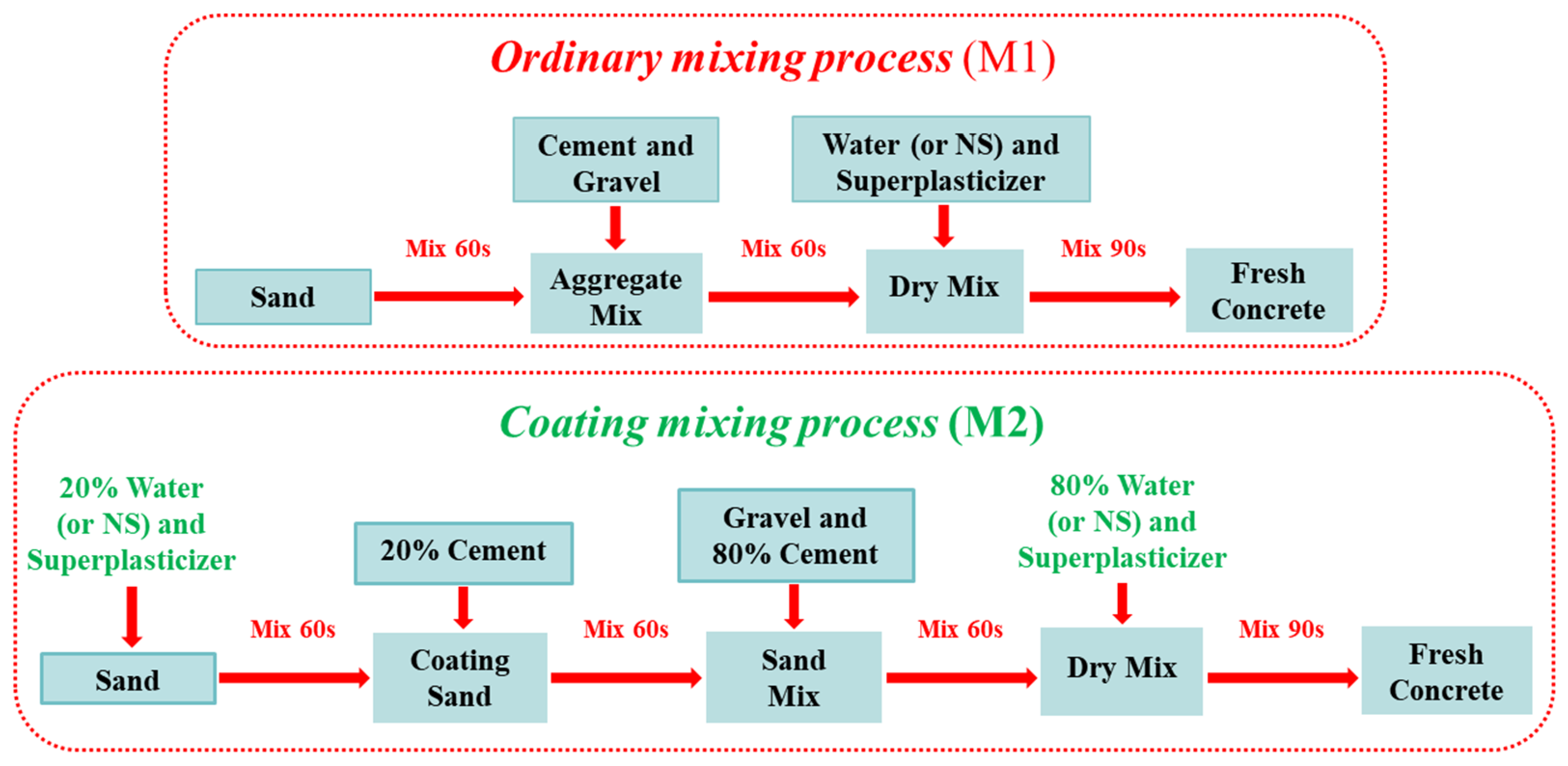
It should be noted that the incorporation of RS and NS significantly reduced the workability of concrete mixtures. To ensure comparable workability among mixtures with different RSR, an appropriate amount of superplasticizer was added so that the slump of each RS mixture was maintained close to that of the control concrete, i.e., (200 ± 20) mm [19,26,27,28]. Figure 3 illustrates and compares the procedures of the conventional and slurry-coating mixing methods. The water-to-cement ratio (w/c) of the initial coating slurry was 0.4. During the slurry-coating process, the fine aggregate was first mixed with the cementitious slurry for 1 min to ensure uniform coating and adequate interaction between the slurry and the aggregate surface.
In Table 4, the pre-absorbed water refers to the sum of the inherent moisture content of RS and the additional water. The M1 represents the conventional mixing method, M2 indicates the slurry-coating mixing method, and S1 denotes the mixture in which NS equivalent to 1% of the binder content was used to replace cement. The selection of 1% NS was based on prior literature reports [19,26,27,28] and preliminary optimization studies, which indicated that this dosage provided a balanced improvement in mechanical performance and microstructural densification without causing significant particle agglomeration or workability loss. It should be noted that the purpose of adopting this dosage was not to optimize the NS content but to investigate the synergistic effect between NS modification and slurry-coating mixing on recycled sand concrete.

2.3. Testing Method

2.3.1. Mechanical Properties Test

Cubic specimens with a side length of 100 mm were prepared for testing. The compressive strength was determined at the ages of 7 and 28 days, while the splitting tensile strength was measured at 28 days. For each test group, three parallel specimens were tested, and the average value of three measurements was taken as the representative strength of the group, with the results reported to an accuracy of 0.1 MPa. It should be noted that if either the maximum or minimum value among the three measurements differed from the median value by more than 15% of the median value, the median value was taken as the representative strength for that group while both the maximum and minimum values were discarded. The test results for that group were considered invalid when both the minimum and maximum values deviated from the median value by more than 15%. In the test, all test datasets satisfied the specified acceptance criterion (i.e., deviation within 15% of the median value).

2.3.2. Durability Properties Test

The chloride ion permeability (CIP) and freeze–thaw resistance of concrete were evaluated according to GB/T 50082—2009 [44], using the electric flux method and rapid freeze–thaw cycles method. Cylindrical specimens with a diameter of 100 mm and a height of 50 mm were prepared for the CIP test. The main testing instruments included a CABR-BSY vacuum saturation apparatus and a CABR-RCMP6 rapid chloride permeability tester from Xian, China. For the freeze–thaw test, the 100 × 100 × 400 mm prismatic specimens were used. The test was conducted using an SF-300 concrete rapid freeze–thaw testing machine from Xian, China. All specimens were cured under standard curing conditions (T = 20 ± 2 °C, RH = 95 ± 5%) until the testing ages of 28 days before testing.
The freeze resistance of specimens was evaluated in terms of the relative dynamic modulus of elasticity (RDME) and the mass loss rate. Prior to the freeze–thaw test, the initial mass of each specimen was recorded, and its dynamic modulus of elasticity was measured. Subsequently, freeze–thaw cycles were conducted, with every 25 cycles defined as one test stage. After each stage, the loose particles on the specimen surface were carefully removed, and the surface water was wiped off. The specimens were then inspected for visible damage, followed by measurements of mass and dynamic modulus of elasticity. These operations, including visual inspection, sample weighing, and property measurement, were completed as quickly as possible to minimize moisture loss. Specimens awaiting testing in the same batch were covered with a wet cloth to prevent drying. For each CIP and freeze resistance test group, three parallel specimens were tested; testing, data processing, and presentation rules are the same as those for the strength test above.

2.3.3. Microstructure Test

The microscopic morphology of the specimens was observed using a TESCAN CLARA ultra-high resolution field emission scanning electron microscope (SEM), with a magnification of 2–2,000,000, acceleration voltage of 200 V to 30 kV, and secondary electron image resolution of 0.9 nm. Small fragments with approximate dimensions of 0.5 × 0.5 cm2 were collected from the specimens after the compressive strength test. To terminate the hydration process, the specimens were immediately immersed in absolute ethanol for 7 days. Subsequently, the specimens were dried to a constant mass in a vacuum-drying oven at (60 ± 5) °C. After vacuum-drying, the specimen surfaces were sputter-coated with gold to ensure electrical conductivity.

3. Results and Analysis

3.1. Compressive Strength

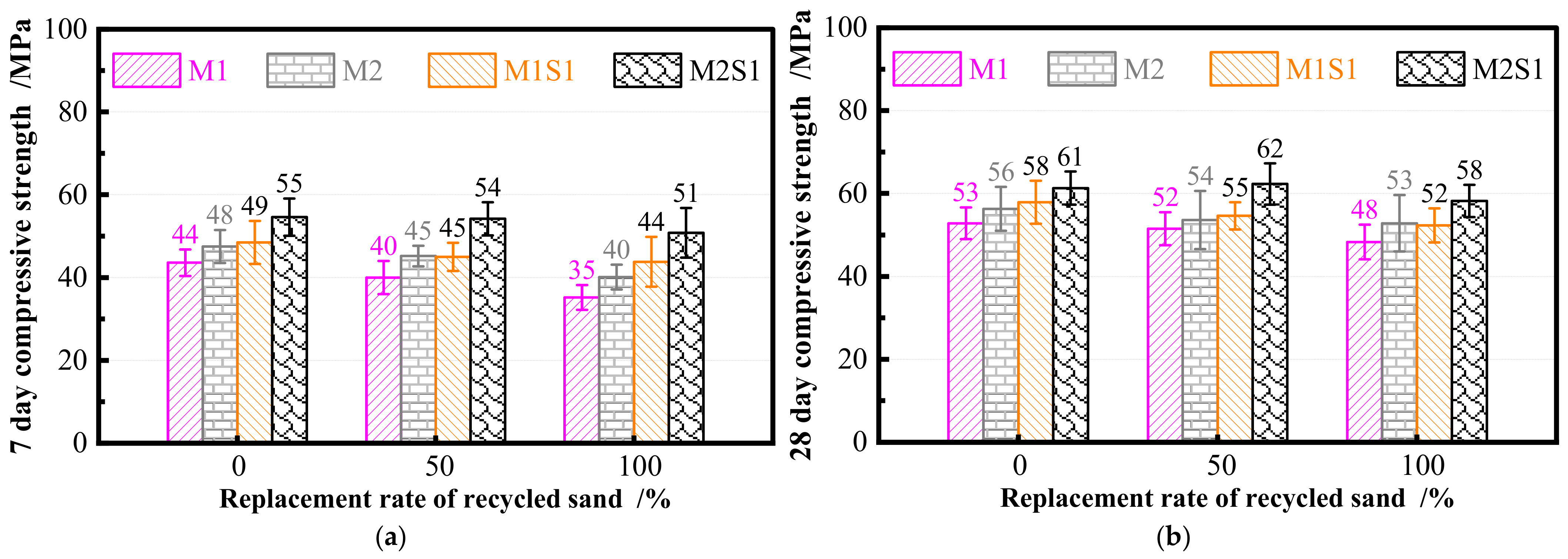
As shown in Figure 4, the compressive strength of all mixture specimens decreased with the increase in RSR, regardless of the mixing method employed. This reduction in compressive strength could be mainly attributed to the intrinsic characteristics of RS. Compared with natural sand, RS contained adhered old mortar, higher porosity, and more pre-existing microcracks, which led to a weaker aggregate–matrix interface and a higher defect density within the concrete matrix. As the RSR increased, these defects accumulated, resulting in a gradual reduction in the compressive strength of RSC. Similar trends have also been reported in previous studies on recycled aggregate concrete [4,5,17,22].
However, the application of the slurry-coating mixing method (M2) significantly improved the compressive strength of concrete compared with the conventional mixing method (M1). When the RSR was 0, 50, and 100%, the 7-day compressive strengths of the M2 mixtures increased by 8.9, 13.0, and 13.9%, respectively, while the corresponding increases at 28 days were 6.6, 4.1, and 9.3%. This improvement could be attributed to the slurry-coating mixing process, in which the cement slurry preferentially coated the aggregate surface during mixing, resulting in a denser ITZ and enhanced bonding between the cement matrix and the aggregates. The incorporation of NS also contributed to a noticeable enhancement in the compressive strength of concrete. For the M1S1 mixtures, the increases in 7-day compressive strength were 11.2, 12.5, and 24.4 at 0, 50, and 100% of RSR, respectively, while the 28-day strengths increased by 9.7, 6.3, and 8.3%. This improvement was mainly attributed to the nano-filling effect, nucleation effect, and pozzolanic activity of NS, which could accelerate cement hydration and refine the pore structure of concrete.
When the slurry-coating mixing method and NS were applied simultaneously (M2S1), a more pronounced enhancement in compressive strength was observed. Compared with those of the M1 mixtures, the 7-day compressive strengths increased by 25.2, 35.5, and 43.2% at RSR levels of 0, 50, and 100%, respectively, while the 28-day compressive strengths increased by 16.1, 21.0, and 20.5%. These results indicated that the combined use of NS and the slurry-coating mixing method produced a significant synergistic effect. The slurry-coating process improved the ITZ structure, while NS further refined the microstructure and promoted hydration, resulting in a denser cement matrix and stronger interfacial bonding. As shown in Figure 4, the improvement effects of the slurry-coating mixing method and nano-materials on RSC appeared to be more pronounced than those on natural aggregate concrete. This can be attributed to the fact that RSC contains more microcracks and ITZs due to the adhered old mortar on recycled aggregate surfaces. Consequently, the slurry-coating mixing method and nano-materials can more effectively mitigate these defects by densifying the ITZ and refining the internal microstructure of the concrete matrix.
It is also noteworthy that the enhancement effect of NS on the compressive strength at 7 days is more significant than that at 28 days. This phenomenon can be explained by the high pozzolanic reactivity of NS, which promotes cement hydration at early ages. NS can effectively act as nucleation sites for hydration products at the early stage of hydration, while its nano-filling effect and chemical reactivity accelerate the hydration process and facilitate the formation of hydration products. Therefore, the development of early-age compressive strength in concrete is significantly improved. At a later stage of hydration, although the filling effect of NS can still contribute to the densification, the hydration reaction of cement has already progressed substantially. Therefore, the pozzolanic reaction and nucleation effect of NS become less pronounced, resulting in a smaller contribution to the improvement of compressive strength at 28 days.

3.2. Splitting Tensile Strength

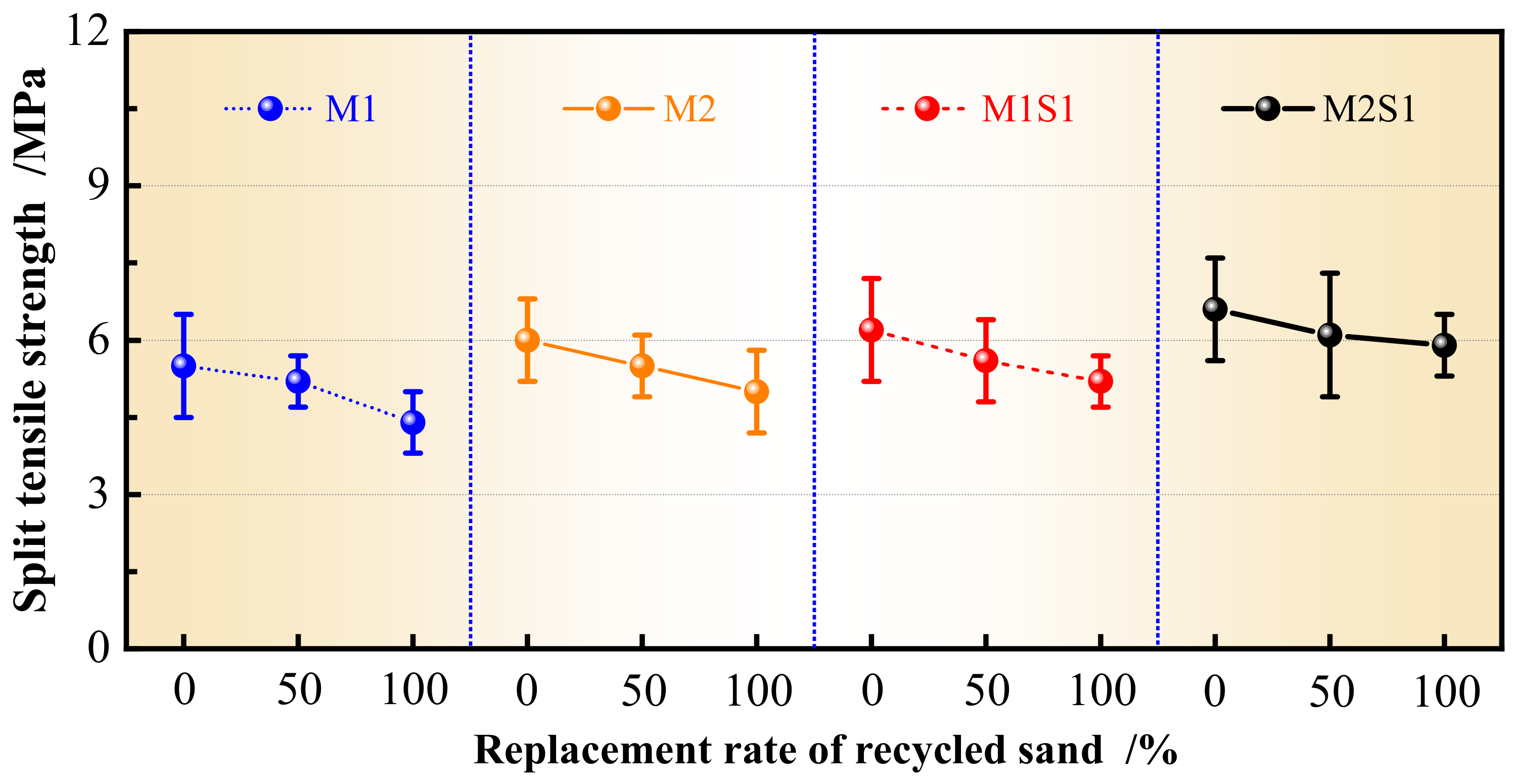
As shown in Figure 5, the splitting tensile strength of the concrete mixtures exhibited trends similar to those observed for compressive strength. Compared with those of the M1 specimens, the 28-day splitting tensile strengths of the M2 specimens increased by 9.1, 5.8, and 13.6% at RSR levels of 0, 50, and 100%, respectively. For the M1S1 mixtures, the corresponding increases were 12.7, 7.7, and 18.2%, while for the M2S1 mixtures, the increases reached 20.0, 17.3, and 34.1%, respectively.
The use of either the slurry-coating mixing method or NS individually can improve the strength of both conventional concrete and RSC. When NS was combined with the slurry-coating mixing method, a further enhancement in splitting tensile strength was achieved. This improvement can be attributed to mechanisms similar to those responsible for the increase in compressive strength. Specifically, the slurry-coating mixing process improves the ITZ quality between the aggregates and the matrix, while NS refines the microstructure through its nano-filling effect, nucleation effect, and pozzolanic effect. These combined effects lead to a denser concrete matrix and stronger interfacial bonding, thereby enhancing the resistance of the concrete to tensile cracking under splitting loading.

3.3. Rapid Chloride Permeability

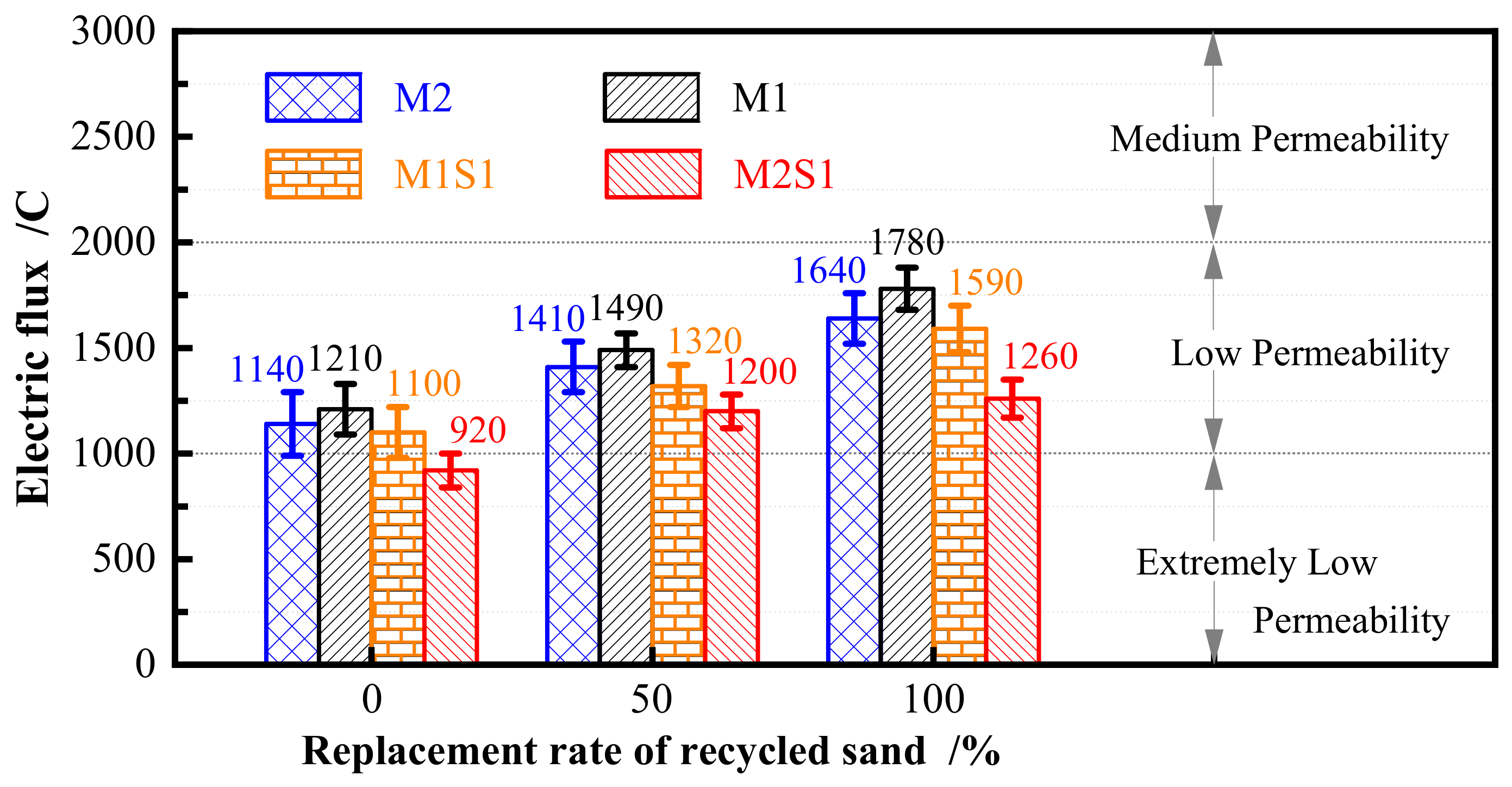
Figure 6 presents the comparison of CIP results for different concrete mixtures. Compared with those of the M1 specimens, the 28-day electric flux of the M2 mixtures decreased by 5.8, 5.4, and 7.9% at RSR levels of 0, 50, and 100%, respectively. For the M1S1 mixtures, the corresponding reductions were 9.1, 11.4, and 10.7%. These results indicate that both the slurry-coating mixing method and NS incorporation effectively reduce the electric flux values of concrete, thereby improving its resistance to CIP. The improvement induced by the slurry-coating mixing method can be attributed to the preferential coating of cement slurry on the aggregate surface during mixing. This process increases the amount of cement particles surrounding the aggregates and within the ITZ, leading to a denser interface with lower porosity compared with that produced by the conventional mixing method. Consequently, the permeability of the concrete is reduced.
Similarly, the optimization effect of NS on the concrete matrix can be explained by three main mechanisms. First, due to its extremely small particle size, NS can act as a nano-filler that occupies nanoscale pores within the cement matrix, thereby increasing matrix compactness and refining the pore structure. Second, NS can react with the generated calcium hydroxide to form additional C–S–H gel during cement hydration, which contributes to strength development while simultaneously reducing the amount of relatively weak calcium hydroxide. Third, the high specific surface area of NS allows it to serve as a nucleation site for hydration products, promoting the growth of C–S–H gel and accelerating cement hydration. These combined effects significantly enhance the microstructure’s compactness and improve the concrete CIP.
Compared with those of the M1 mixtures, the 28-day electric flux of the M2S1 mixtures decreased by 24.0, 19.5, and 29.2% at RSR levels of 0, 50, and 100%, respectively. In combination with the previously discussed strength results, both the slurry-coating mixing method and NS incorporation appear to improve the compressive strength and impermeability of concrete, indicating a potential synergistic effect between the two modification strategies. This synergistic behavior may be related to the enhanced dispersion of NS within the cementitious matrix facilitated by the slurry-coating process. In addition, the incorporation of NS may further improve the compactness and quality of the slurry-coating layer surrounding the aggregates. The interaction between these two mechanisms is likely to contribute to the refinement of the microstructure, demonstrating a typical “1 + 1 > 2” synergistic effect, thereby improving the durability of RSC.
To further evaluate the interaction between slurry-coating mixing and nano-SiO2 modification, the relative contribution of each modification strategy was quantitatively analyzed. The enhancement provided by the combined treatment was compared with the sum of the improvements achieved by individual treatments. When the improvement obtained from the combined method exceeded the theoretical additive contribution of the two individual methods, a positive synergistic effect was considered to occur. The results demonstrate that the combined treatment exhibited a stronger enhancement effect than either slurry coating or nano-SiO2 modification alone, particularly for mixtures with high recycled sand content. This indicates that slurry coating may improve the surface condition of recycled sand and provide a more favorable environment for nano-SiO2 dispersion and secondary hydration, resulting in further refinement of the ITZ and pore structure.

3.4. Freeze Resistance

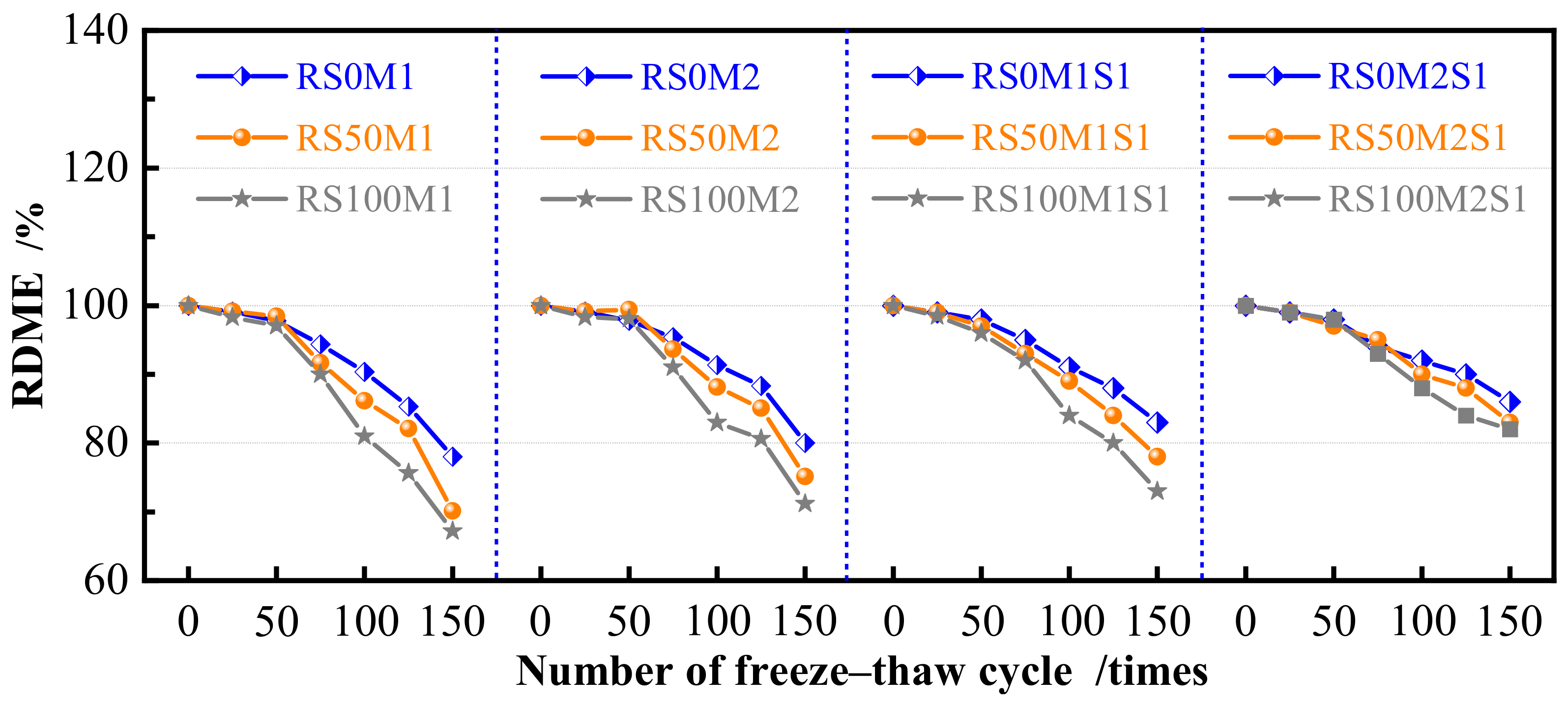
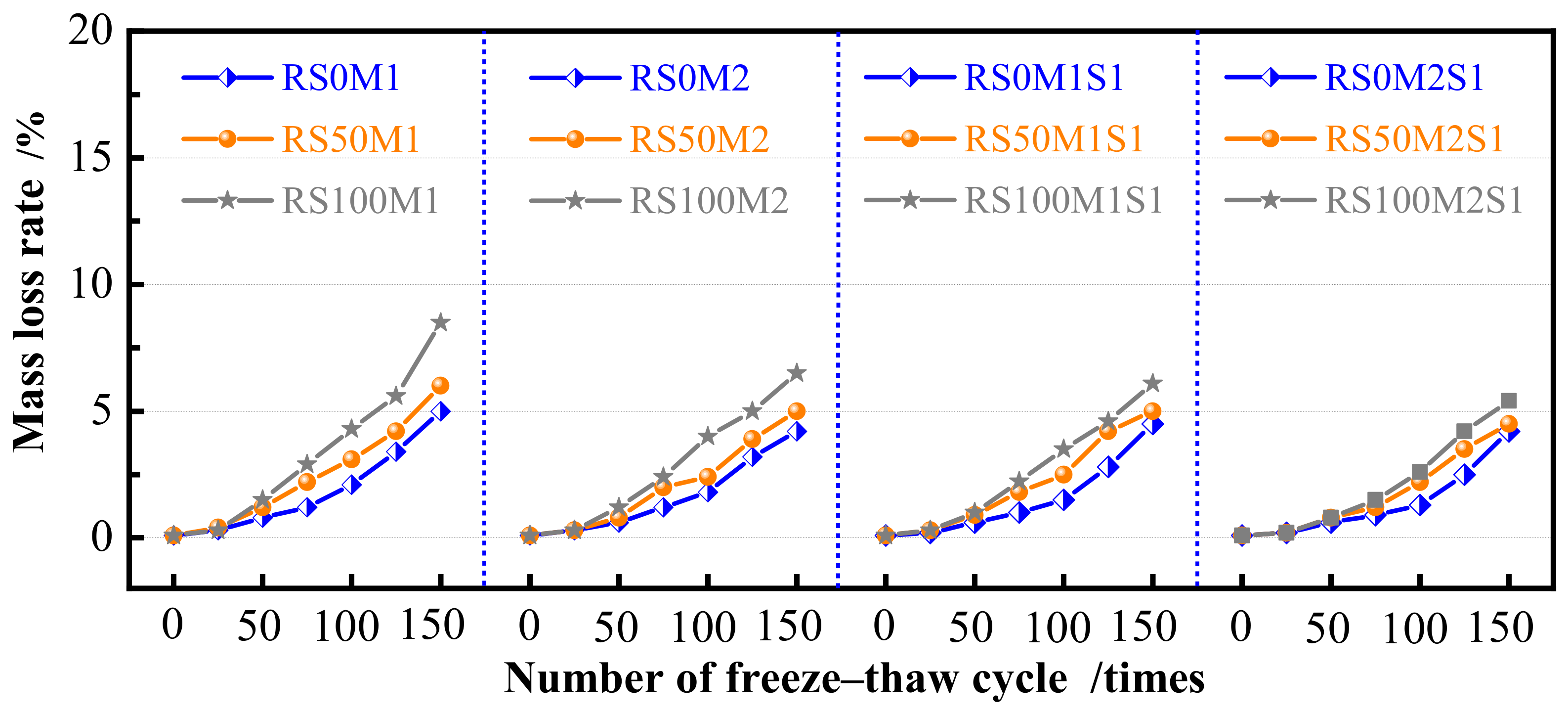
Figure 7 and Figure 8 present the variations in the specimen RDME and mass loss after different numbers of freeze–thaw cycles. In general, a higher mass loss indicates poorer freeze–thaw resistance, while a lower RDME reflects more severe internal damage in the concrete. As shown in Figure 7 and Figure 8, the RDME of all concrete specimens gradually decreased with the increase in RSR or the cycle number, while the mass loss increased. This deterioration can be attributed to the internal defects and higher porosity introduced by recycled aggregates. As the RS content increased or as freeze–thaw cycles accumulated, the internal microcracks and pore structure within the concrete matrix expanded and propagated, resulting in a reduction in elastic modulus and overall mechanical integrity. Similar trends have been reported in previous studies [1,9,10,19].
Compared with those of the M1 mixtures, the RDME of the M2 mixtures after 150 freeze–thaw cycles increased by 2.6, 7.1, and 14.9% at RSR levels of 0, 50, and 100%, respectively, while the corresponding mass loss rates decreased by 10.0, 16.7, and 23.5%. For the M1S1 mixtures, the RDME increased by 6.4, 11.2, and 17.7%, while the mass loss rates decreased by 10.0, 16.7, and 28.2% under the same conditions. When both modification methods were applied simultaneously (M2S1), the improvement became more pronounced. Compared with the M1 mixtures, the RDME values increased by 10.3, 18.3, and 32.3%, and the mass loss rates decreased by 16.0, 25.0, and 36.5% at RSR levels of 0, 50, and 100%, respectively. Overall, the results indicate that both modification methods enhance freeze–thaw durability, and their combined application exhibits a more pronounced improvement effect.
The improvement in freeze–thaw resistance can be attributed to the enhancement of the microstructural quality of the concrete system achieved through the optimized mixing method and the incorporation of nano-materials. Both approaches contribute to the refinement of the pore structure and the reduction of overall porosity within the concrete matrix. A lower porosity reduces the migration rate of water molecules within the concrete. Consequently, under the same cycle number, the extent of internal damage caused by ice formation and hydraulic pressure is reduced, indicating improved freeze–thaw resistance. This mechanism represents the primary reason why the optimized mixing process and the addition of NS significantly enhance the freeze–thaw resistance of concrete.
It is also noteworthy that, similar to the trends observed in the strength results but even more pronounced, the beneficial effects of the slurry-coating mixing method and NS are more significant in RSC than in natural aggregate concrete. This phenomenon can be explained by the fact that RSC typically contains a larger number of microcracks and interfacial regions, leading to higher porosity and a less compact microstructure. Compared with high-quality natural aggregates, these inherent defects provide greater potential for improvement. Therefore, the slurry-coating process and nano-materials are more effective in repairing and densifying these weak regions, resulting in a more substantial enhancement in the RSC performance than that observed in conventional concrete.

3.5. Microstructure and ITZ

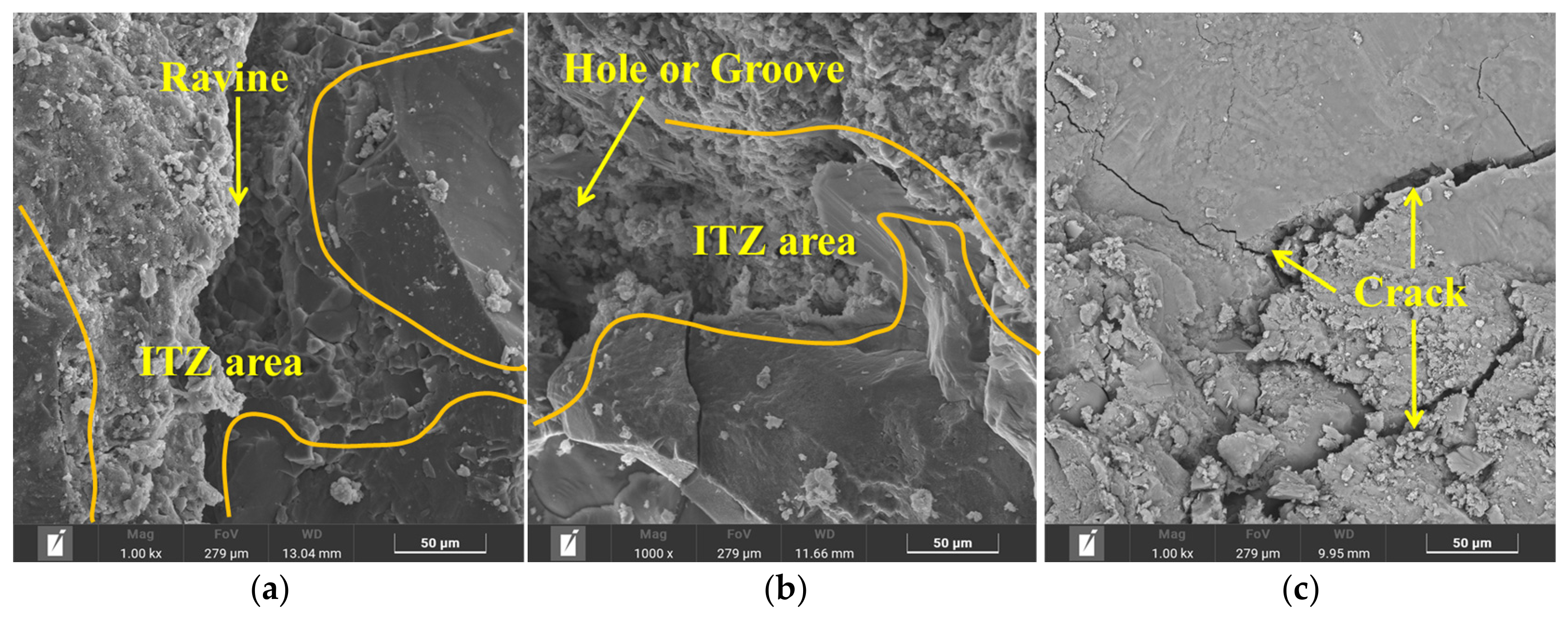
Figure 9, Figure 10, Figure 11 and Figure 12 present representative SEM images of the ITZ and microstructure of the RSC specimens. Considering that the slurry-coating mixing method and NS exhibit a more pronounced influence on RSC, the specimens with the most significant microstructural differences, namely RS100M1 and RS100M2S1, were selected for comparative analysis to elucidate the underlying mechanisms of microstructural modification. As shown in Figure 9, the ITZ in RS100M1 concrete appears relatively loose and porous (Figure 9c). Numerous large pores can be observed both within the interfacial region and in the hardened cement paste (Figure 9a,b), indicating a poorly developed pore structure within the concrete system. In some areas, a distinct gap or groove-like separation can even be observed between the aggregates and the cement paste. Moreover, a considerable number of microcracks are present within the cement matrix. These microcracks are likely associated with the pre-existing cracks and pores within the RS, which may further propagate and expand during the mixing and hydration processes. The primary reason for this phenomenon is that the conventional mixing method does not specifically target the improvement of the interfacial region. As a result, the ITZ becomes a weak zone in the concrete, ultimately leading to relatively lower mechanical strength and durability.
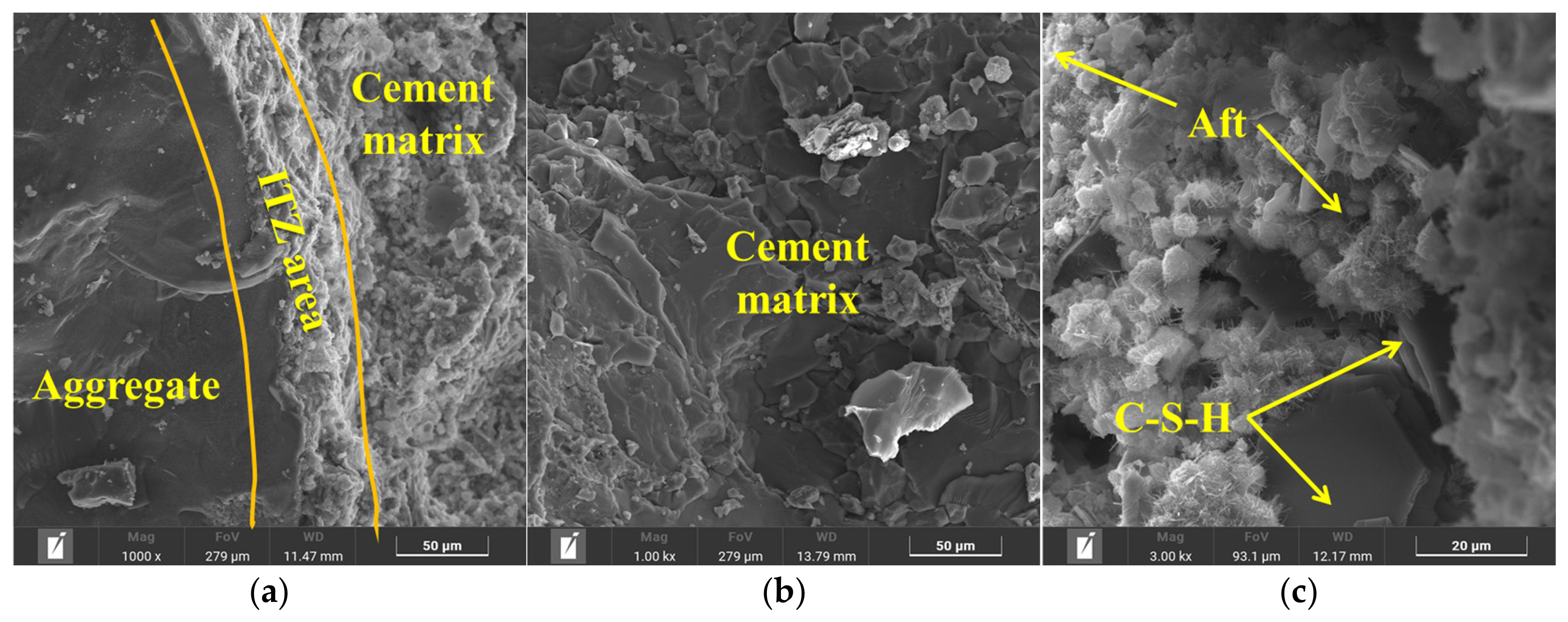
In contrast, the RS100M2S1 specimen exhibits a markedly improved ITZ structure. The generation of C–S–H gel in the interfacial region is denser, and the ITZ and hardened cement paste are significantly improved. As shown in Figure 12a, the hydration products are tightly bonded to the coarse aggregate, indicating a high-quality ITZ. Furthermore, Figure 12c reveals that the interfacial region contains abundant hydration products, including needle-like ettringite (AFt), flaky C–S–H, and granular calcium hydroxide (Ca(OH)2). These phases are spatially interwoven and densely packed, forming a highly compact and well-developed microstructure. However, these interpretations are primarily based on SEM observations and should be further validated through quantitative pore structure characterization (MIP/NMR test) and chemical composition (XRD or TG/DTG test) in future studies.
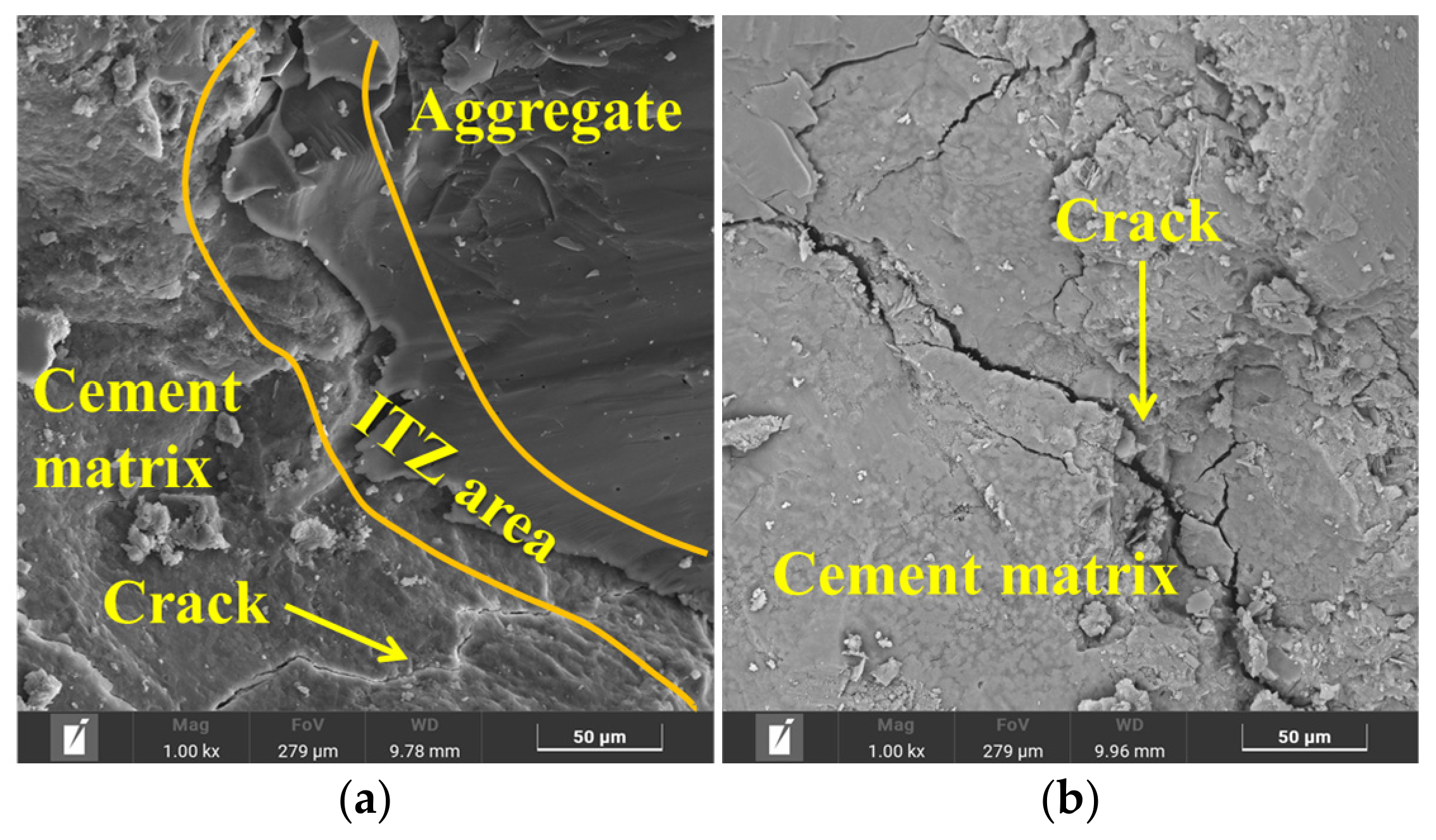
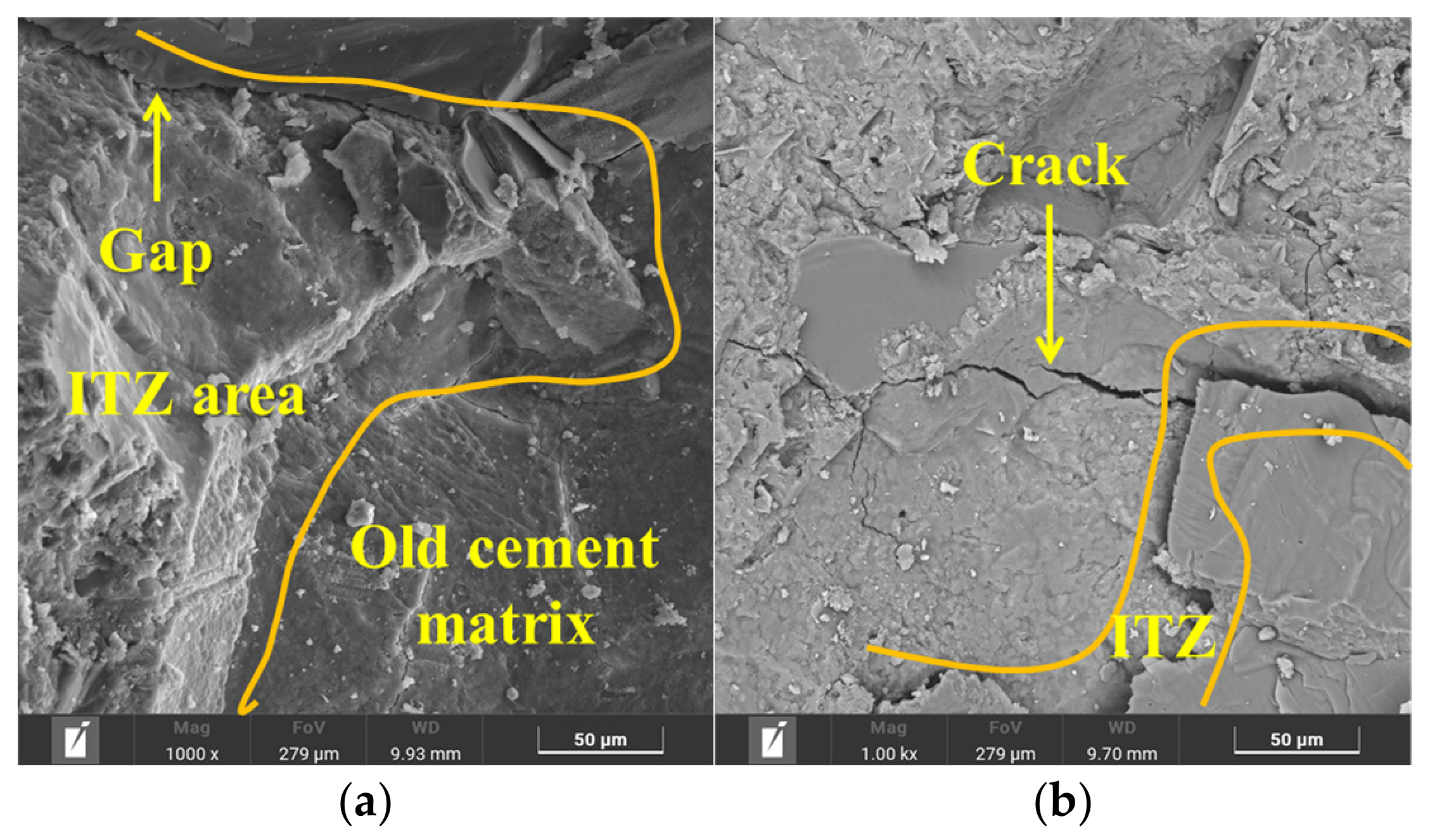
For the RS100M2 and RS100M1S1 specimens, the observed microstructural characteristics were intermediate between those of the two extreme cases discussed above. Compared with RS100M1, RS100M2 exhibited a noticeably denser ITZ, whereas no obvious reduction in or disappearance of cracks or pores was observed within the cement matrix. This observation suggests that the slurry-coating mixing method primarily improves the ITZ, while its influence on the bulk cement matrix remains relatively limited. By contrast, RS100M1S1 exhibited a more compact microstructure in both the ITZ and the cement matrix. This may be attributed to the more uniform action of nano-SiO2 throughout the cementitious system, which contributes to microstructural refinement beyond the ITZ region. Although nano-SiO2 is beneficial for improving the ITZ, its effect is not specifically concentrated within this region.
NS may contribute to microstructural refinement through its filling effect, nucleation effect, and pozzolanic activity, which are generally reported to promote hydration and reduce pore connectivity in cementitious materials. In addition, the slurry-coating mixing method appears to facilitate the preferential distribution of cementitious materials and nano-particles around the recycled aggregate surface during mixing. As a result, the combined application of slurry-coating mixing and nano-SiO2 appears to produce a synergistic effect, simultaneously enhancing the ITZ quality and refining the pore structure, which is consistent with the superior mechanical and durability performance observed in this study.
The combined action of these two modification strategies may contribute to improving both the ITZ and the overall matrix compactness. Since the ITZ is widely recognized as one of the weakest regions in recycled aggregate concrete, its densification is likely to be beneficial to the enhancement of mechanical performance and durability. The microstructural observations obtained from SEM are generally consistent with the improvements observed in compressive strength, splitting tensile strength, chloride ion penetration resistance, and freeze–thaw resistance. However, further quantitative characterization techniques, such as MIP, XRD, or TG/DTG analysis, would be valuable for providing additional verification of the proposed mechanisms.

4. Conclusions

The study introduced a synergistic modification approach that combined the slurry-coating mixing method with NS. The strength and durability of RSC with different RSR were systematically investigated, and the microstructure was revealed using SEM to elucidate the mechanisms by which the slurry-coating mixing and NS influenced the structure and performance of the ITZ in RSC. Based on the test results and analyses, the following conclusions can be drawn:
(1) As the RSR increased from 0–100%, the compressive strength, splitting tensile strength, and durability of concrete generally decreased. This deterioration was mainly attributed to the higher porosity and pre-existing microcracks within RS, which introduced additional defects into the concrete matrix and weakened the structural quality of the ITZ.
(2) The slurry-coating mixing method effectively improved the quality of the interfacial structure in concrete. Compared with the conventional mixing method, the use of slurry-coating mixing increased the 7-day compressive strength by 8.9–13.9%, the 28-day compressive strength by 4.1–9.3%, and the 28-day splitting tensile strength by 5.8–13.6%, while the 28-day electric flux decreased by up to 7.9%.
(3) The incorporation of NS significantly enhanced both the strength and durability of concrete. Compared with mixtures without NS, the addition of 1% NS increased the 7-day compressive strength, 28-day compressive strength, and 28-day splitting tensile strength by up to 24.4, 9.7, and 18.2%, respectively. Meanwhile, the electric flux, mass loss after freeze–thaw cycles, and loss of relative dynamic modulus were all noticeably reduced.
(4) The slurry-coating mixing method with NS exhibited a clear synergistic enhancement effect. When the two modification methods were applied simultaneously, the 7-day compressive strength increased by up to 43.2%, while the 28-day compressive strength increased by approximately 21%. In addition, the 28-day electric flux decreased by up to 29.2%, and both the relative dynamic modulus loss and the mass loss after freeze–thaw cycles were significantly mitigated, indicating that chloride permeability and freeze–thaw damage were effectively suppressed.
(5) SEM observations revealed that conventional RSC exhibited a relatively loose ITZ with numerous pores and microcracks. In contrast, when the slurry-coating mixing method was combined with NS incorporation, the interfacial region contained more abundant hydration products and exhibited a significantly denser microstructure with reduced pore size and number. This microstructural refinement effectively enhanced the mechanical properties and durability of the concrete.

Author Contributions

Formal analysis, M.Z.; Investigation, D.L.; Resources, M.Z.; Data curation, M.Z., D.L. and T.L.; Writing—original draft, M.Z.; Writing—review and editing, Q.W.; Supervision, T.L.; Project administration, Q.W.; Funding acquisition, Q.W. All authors have read and agreed to the published version of the manuscript.

Funding

The authors gratefully acknowledge financial support from the Major Provincial-Level Project of Wenzhou Polytechnic (WZY2025002).

Data Availability Statement

The original contributions presented in this study are included in the article. Further inquiries can be directed to the corresponding author.

Conflicts of Interest

The authors declare no conflicts of interest related to this work.

Abbreviations

The following abbreviations are used in this manuscript:
RSCRecycled sand concrete
NSNano-SiO2
RSRRecycled sand replacement ratio
ITZInterfacial transition zone
RSRecycled sand
RCRecycled concrete
RCARecycled concrete aggregates
CSCMCombined cement slurry coating and mixing approach
C–S–HCalcium silicate hydrate
PCESuperplasticizer
CIPChloride ion permeability
RDMERelative dynamic modulus of elasticity
SEMScanning electron microscope
AFtEttringite

References

  1. Bertelsen, I.M.G.; Ottosen, L.M.; Fischer, G. Influence of fibre characteristics on plastic shrinkage cracking in cement-based materials: A review. Constr. Build. Mater. 2020, 230, 116769. [Google Scholar] [CrossRef]
  2. Silva, R.V.; De Brito, J.; Dhir, R.K. Prediction of the shrinkage behavior of recycled aggregate concrete: A review. Constr. Build. Mater. 2015, 77, 327–339. [Google Scholar] [CrossRef]
  3. Zhang, H.; Wang, Y.Y.; Lehman, D.E.; Geng, Y. Autogenous-shrinkage model for concrete with coarse and fine recycled aggregate. Cem. Concr. Compos. 2020, 111, 103600. [Google Scholar] [CrossRef]
  4. Li, J.; Chen, J.; Bu, C.; Zhang, M.; Yu, J.; Yu, X.; Yu, Y. Synergistic enhancement of sulfate resistance in recycled aggregate concrete through multi-pathway blocking via carbonation treatment and fly ash incorporation. Constr. Build. Mater. 2025, 491, 142685. [Google Scholar] [CrossRef]
  5. Guo, X.; Yi, H.; Hu, Z.; Rong, H. Study on improving the performance of recycled aggregate concrete by microorganism and additional calcium source. J. Build. Eng. 2025, 110, 113010. [Google Scholar] [CrossRef]
  6. Silva, R.V.; de Brito, J.; Dhir, R.K. Properties and composition of recycled aggregates from construction and demolition waste suitable for concrete production. Constr. Build. Mater. 2014, 65, 201–217. [Google Scholar] [CrossRef]
  7. Verian, K.P.; Ashraf, W.; Cao, Y. Properties of recycled concrete aggregate and their influence in new concrete production. Resour. Conserv. Recycl. 2018, 133, 30–49. [Google Scholar] [CrossRef]
  8. Nedeljkovic, M.; Visser, J.; Savija, B.; Valcke, S.; Schlangen, E. Use of fine recycled concrete aggregates in concrete: A critical review. J. Build. Eng. 2021, 38, 102196. [Google Scholar] [CrossRef]
  9. Tang, Q.; Ma, Z.; Wu, H.; Wang, W. The utilization of eco–friendly recycled powder from concrete and brick waste in new concrete: A critical review. Cem. Concr. Compos. 2020, 114, 103807. [Google Scholar] [CrossRef]
  10. Kim, J. Influence of quality of recycled aggregates on the mechanical properties of recycled aggregate concretes: An overview. Constr. Build. Mater. 2022, 328, 127071. [Google Scholar] [CrossRef]
  11. Xiao, J.; Ma, Z.; Sui, T.; Akbarnezhad, A.; Duan, Z. Mechanical properties of concrete mixed with recycled powder produced from construction and demolition waste. J. Clean. Prod. 2018, 188, 720–731. [Google Scholar] [CrossRef]
  12. Katz, A. Treatments for the improvement of recycled aggregate. J. Mater. Civ. Eng. 2004, 16, 597–603. [Google Scholar] [CrossRef]
  13. Pepe, M.; Filho, R.D.; Koenders, E.A.B.; Martinelli, E. Alternative processing procedures for recycled aggregates in structural concrete. Constr. Build. Mater. 2014, 69, 124–132. [Google Scholar] [CrossRef]
  14. Dilbas, H.; Çakır, Ö.; Atiş, C.D. Experimental investigation on properties of recycled aggregate concrete with optimized Ball Milling Method. Constr. Build. Mater. 2019, 212, 716–726. [Google Scholar] [CrossRef]
  15. Zhang, H.R.; Liu, W.S.; Lin, X.J.; Su, S.L.; Zhao, B.J. To ameliorate the performance of recycled aggregate concrete (RAC) by pretreating aggregate in sulfoaluminate cement slurry and water glass solution. J. Build. Eng. 2021, 44, 103364. [Google Scholar] [CrossRef]
  16. Zhang, H.R.; Ji, T.; Liu, H.; Su, S.L. Improving the sulfate resistance of recycled aggregate concrete (RAC) by using surface-treated aggregate with sulfoaluminate cement (SAC). Constr. Build. Mater. 2021, 297, 123535. [Google Scholar] [CrossRef]
  17. Wang, J.G.; Zhang, J.X.; Cao, D.D.; Dang, H.X.; Ding, B. Comparison of recycled aggregate treatment methods on the performance for recycled concrete. Constr. Build. Mater. 2020, 234, 117366. [Google Scholar] [CrossRef]
  18. Du, H.J.; Du, S.H.; Liu, X.M. Durability performances of concrete with nano-silica. Constr. Build. Mater. 2014, 73, 705–712. [Google Scholar] [CrossRef]
  19. Gao, G.H.; Huang, W.D.; Li, C.H. Improvement of frost resistance for concrete by coating aggregate with Nano-SiO2. J. Build. Mater. 2021, 24, 45–53. [Google Scholar]
  20. Nili, M.; Ehsani, A. Investigating the effect of the cement paste and transition zone on strength development of concrete containing nanosilica and silica fume. Mater. Des. 2015, 75, 174–183. [Google Scholar] [CrossRef]
  21. Chithra, S.; Kumar, S.R.R.S.; Chinnaraju, K. The effect of colloidal nano-silica on workability, mechanical and durability properties of high performance concrete with copper slag as partial fine aggregate. Constr. Build. Mater. 2016, 133, 794–804. [Google Scholar] [CrossRef]
  22. Wang, X.Y.; Dong, S.F.; Ashour, A.; Zhang, W.; Han, B.G.; Wang, X.; Dong, S.; Ashour, A. Effect and mechanisms of nanomaterials on interface between aggregates and cement mortars. Constr. Build. Mater. 2020, 240, 117942. [Google Scholar] [CrossRef]
  23. Lyu, K.; Qu, Y.; Liu, X.; Kou, F.; Xie, X.; Shi, J.; Shah, S.P. Synergistic modification of recycled concrete powder through nano silica co-grinding: A mechanochemical approach for sustainable cementitious composites. Constr. Build. Mater. 2025, 492, 142961. [Google Scholar] [CrossRef]
  24. Liu, W.; Wang, J.; Wu, S.; Liu, Q.; Xu, H. Analysis of the influence of interface features on shear strength between thin overlay and base layer via random forest regression. Constr. Build. Mater. 2025, 462, 139870. [Google Scholar] [CrossRef]
  25. Hussein, I.A.; Ghalehnovi, M. The impact of colloidal nano silica (CNS) and polypropylene fibers (PP) on the properties of recycled concrete aggregate self-compacting concrete (SCC). Case Stud. Constr. Mater. 2025, 22, e04424. [Google Scholar] [CrossRef]
  26. Su, T.; Yu, X.; Jin, H.; Chen, L.; Tan, Z.; Ngo, T. Macro-mechanical properties and freeze thaw evaluation of innovative nano-silica modified concrete reinforced by recycled carpet fibers. Constr. Build. Mater. 2025, 492, 142894. [Google Scholar] [CrossRef]
  27. Nisar, N.; Rahman, I.; Paruthi, S.; Khan, A.H.; Sabi, E.; Alyaseen, A. Enhancing concrete properties with nano-SiO2 and nano-TiO2: A review. J. Struct. Integr. Maint. 2025, 10, 2496613. [Google Scholar] [CrossRef]
  28. Syamsunur, D.; Wei, L.; Memon, Z.A.; Surol, S.; Yusoff, N.I.M. Concrete performance attenuation of mix nano-SiO2 and nano-CaCO3 under high temperature: A comprehensive review. Materials 2022, 15, 7073. [Google Scholar] [CrossRef] [PubMed]
  29. Fan, C.; Zheng, Y.; Zhuo, J.; Du, C.; Hu, S. Study on mechanical and bonding properties of nano-SiO2 reinforced recycled concrete: Macro test and micro analysis. J. Build. Eng. 2024, 94, 109877. [Google Scholar] [CrossRef]
  30. Oh, T.; Chun, B.; Jang, Y.S.; Yeon, J.H.; Banthia, N.; Yoo, D.Y. Effect of nano-SiO2 on fiber–matrix bond in ultra-high-performance concrete as partial substitution of silica flour. Cem. Concr. Compos. 2023, 138, 104957. [Google Scholar] [CrossRef]
  31. Zhao, K.; Zhao, L.; Zhang, X.; Feng, Z.; Yang, S. An experimental study on the mixing process and properties of concrete based on an improved three-stage mixing approach. Mater. Struct. 2022, 55, 134. [Google Scholar] [CrossRef]
  32. Zhu, Y.G.; Kou, S.C.; Poon, C.S.; Dai, J.G.; Li, Q.Y. Influence of silane-based water repellent on the durability properties of recycled aggregate concrete. Cem. Concr. Compos. 2013, 35, 32–38. [Google Scholar] [CrossRef]
  33. Tam, V.W.Y.; Tam, C.M.; Le, K.N. Removal of cement mortar remains from recycled aggregate using presoaking approaches. Resour. Conserv. Recycl. 2007, 50, 82–101. [Google Scholar] [CrossRef]
  34. Gong, Y.; Yu, C.; Zhang, Z.; Jia, Z.; Dong, E.; Lin, Q.; Wang, W. Enhancement of recycled coarse aggregate concrete properties using a combined adjustable cement slurry coating and mixing approach. Constr. Build. Mater. 2025, 491, 142634. [Google Scholar] [CrossRef]
  35. Oruji, S.; Brake, N.A.; Hosseini, S.; Adesina, M.; Nikookar, M. Enhancing recycled aggregate concrete using a three-stage mixed coal bottom ash slurry coating. J. Mater. Civ. Eng. 2023, 35, 04023061. [Google Scholar] [CrossRef]
  36. Li, X.; Fan, L.; Chai, S. An experimental study on strengthening recycled aggregates considering dry mixing before slurry coating. Coatings 2022, 12, 1702. [Google Scholar] [CrossRef]
  37. Vahabi, M.Y.; Tahmouresi, B.; Mosavi, H.; Aval, S.F. Effect of pre-coating lightweight aggregates on the self-compacting concrete. Struct. Concr. 2022, 23, 2120–2131. [Google Scholar]
  38. Xiong, B.; Gao, H.; Lu, X.; Tian, B.; Zhang, P.; Chen, B. Influence of maximum paste coating thickness without void clogging on the pore characteristics and seepage flow of pervious concrete. Constr. Build. Mater. 2023, 392, 131979. [Google Scholar] [CrossRef]
  39. Siletani, A.H.; Asayesh, S.; Javid, A.A.S.; Korayem, A.H.; Ghanbari, M.A. Influence of coating recycled aggregate surface with different pozzolanic slurries on mechanical performance, durability, and micro-structure properties of recycled aggregate concrete. J. Build. Eng. 2024, 83, 108457. [Google Scholar] [CrossRef]
  40. Teichmann, A.; Strahm, B.; Garrecht, H.; Blandini, L. Effects of a two-stage mixing process on the characteristics of concrete: Part I-Hardened concrete characteristics. Results Mater. 2024, 23, 100604. [Google Scholar] [CrossRef]
  41. Yang, F.; Yao, Y.; Wang, X.; Wei, J.; Feng, Z. Preparation of recycled and multi-recycled coarse aggregates concrete with the vibration mixing process. Buildings 2022, 12, 1369. [Google Scholar] [CrossRef]
  42. Al-Naghi, A.A.A.; Ali, T.; Inam, I.; Qureshi, M.Z.; Kahla, N.B.; Ghazouani, N. An innovative approach to enhancing the strength and durability of recycled aggregate concrete through fly ash-silica fume coating and rice husk ash supplementation. Sci. Rep. 2025, 15, 32780. [Google Scholar] [CrossRef] [PubMed]
  43. ASTM C33-24; Standard Specification for Concrete Aggregates. ASTM International: West Conshohocken, PA, USA, 2024.
  44. GB/T 50082-2009; Standard for Test Method for Long-Term Performance and Durability of Ordinary Concrete. National Standards of People’s Republic of China: Beijing, China, 2009.
Figure 1. Particle size distributions of fine aggregates.
Buildings 16 02774 g001
Figure 2. Particle size distributions of coarse aggregates.
Buildings 16 02774 g002
Figure 3. Mixing process.
Buildings 16 02774 g003
Figure 4. Compressive strength of concrete: (a) 7-day; (b) 28-day.
Buildings 16 02774 g004
Figure 5. Splitting tensile strength of concrete.
Buildings 16 02774 g005
Figure 6. Electric flux of concrete.
Buildings 16 02774 g006
Figure 7. Relative dynamic modulus of elasticity with freeze-thaw cycles.
Buildings 16 02774 g007
Figure 8. Mass loss rate with freeze-thaw cycles.
Buildings 16 02774 g008
Figure 9. SEM images of hardened concrete (RS100M1) at 28 days of curing: (a) ITZ 1; (b) ITZ 2; (c) hardened cement paste.
Buildings 16 02774 g009
Figure 10. SEM images of hardened concrete (RS100M2) at 28 days of curing: (a) ITZ 1; (b) hardened cement paste.
Buildings 16 02774 g010
Figure 11. SEM images of hardened concrete (RS100M1S1) at 28 days of curing: (a) ITZ 1; (b) ITZ 2.
Buildings 16 02774 g011
Figure 12. SEM images of hardened concrete (RS100M2S1) at 28 days of curing: (a) ITZ1; (b) hardened cement paste; (c) hydration products in ITZ.
Buildings 16 02774 g012
Table 1. Key properties of cement.
Specific Surface Area
(m2/kg)
Setting Time (min)SoundnessFlexural
(MPa)
Compressive (MPa)
InitialFinal3 Days28 Days3 Days28 Days
360260320qualified5.28.924.548.8
Table 2. Properties of fine aggregates.
Fine AggregateFineness ModulusBulk Density
(kg/m3)
Apparent Density
(kg/m3)
Void Ratio
(%)
Crushing Index
(%)
Fine Powder Content
(%)
Methylene Blue Value
(g/kg)
24-h Water Absorption
(%)
Silt Content
(%)
Natural sand2.7165027404012.2-0.60.52.2
Recycled sand2.8150024603921.881.08.9-
Table 3. Compositions of cement and NS (wt.%).
CompoundCaOFe2O3SiO2SO3Al2O3MgONa2OK2OLOSS
Cement58.513.0823.643.827.051.850.650.900.50
NS00>99.800000
Table 4. Mixture proportions of concrete (kg/m3).
SpecimenCement
(kg)
Nano-SiO2
(kg)
River Sand
(kg)
Recycled Sand
(kg)
Pre-Absorbed Water
(kg)
Coarse Aggregate
(kg)
Water
(kg)
PCE
(%)
RS0M140007830010371601.2
RS50M140003923923110371601.5
RS100M1400007836310371602.0
RS0M240007830010371601.2
RS50M240003923923110371601.5
RS100M2400007836310371602.0
RS0M1S139647830010371601.5
RS50M1S139643923923110371601.8
RS100M1S1396407836310371602.4
RS0M2S139647830010371601.5
RS50M2S139643923923110371601.8
RS100M2S1396407836310371602.4
Disclaimer/Publisher’s Note: The statements, opinions and data contained in all publications are solely those of the individual author(s) and contributor(s) and not of MDPI and/or the editor(s). MDPI and/or the editor(s) disclaim responsibility for any injury to people or property resulting from any ideas, methods, instructions or products referred to in the content.