Review

A Review on Polymer-Modified Cementitious Materials for Underwater Repair: Workability, Bonding, Mechanical Performance and Durability

1
School of Civil Engineering, Qingdao University of Technology, Qingdao 266033, China
2
Engineering Research Center of Concrete Technology Under Marine Environment, Ministry of Education, Qingdao 266033, China
3
School of Civil Engineering, Qingdao Agricultural University, Qingdao 266109, China
4
Qingdao Haihe Underwater Technology Engineering Co., Ltd., Qingdao 266108, China
5
Gansu Provincial Transportation Research Institute Group Co., Ltd., Lanzhou 730030, China
*
Authors to whom correspondence should be addressed.
Buildings 2026, 16(14), 2751; https://doi.org/10.3390/buildings16142751
Submission received: 16 June 2026 / Revised: 6 July 2026 / Accepted: 8 July 2026 / Published: 10 July 2026
(This article belongs to the Special Issue Sustainable Approaches to Building Repair—2nd Edition)

Abstract

Underwater concrete infrastructure is gradually damaged by water scouring, chloride ingress, freeze–thaw cycles, and fatigue loading, so reliable in situ repair materials are increasingly needed. Conventional cement-based repair materials are often unsuitable for underwater use because they disperse in water, bond weakly to wet substrates, and show limited durability. Polymer-modified cementitious materials can reduce these problems by combining cement compatibility with polymer film formation and interfacial strengthening. Water-soluble polymers mainly improve fresh-state cohesion and anti-washout performance through adsorption, bridging, and flocculation regulation. In comparison, polymer emulsions and latexes are more effective after hardening, improving bonding, crack resistance, and durability through polymer films and organic–inorganic networks. For self-leveling underwater repair, the flow spread should reach at least 130 mm. For vertical repair with a 20 mm layer, a yield stress of about 360 Pa is needed to prevent sagging. Therefore, performance should not be judged by strength alone, but by constructability, interfacial water films, and pore connectivity. Future studies should consider responsive polymers, multi-component modification, standardized tests, and low-carbon binders.

1. Introduction

In national economic development and infrastructure operation and maintenance, concrete has become one of the most important and widely used engineering materials in underwater infrastructure construction and repair worldwide, thanks to its high availability, low cost, and mature construction techniques [1]. However, as a heterogeneous, porous, and highly permeable brittle material [2,3,4,5], ordinary concrete suffers from defects such as susceptibility to dispersion underwater, low interfacial bond strength, and insufficient durability in underwater construction environments, making it difficult to meet the stringent requirements for workability and durability demanded of underwater repair materials [6]. A vast number of underwater structures worldwide—including bridge piers, port terminals, hydraulic dams, and offshore wind turbine foundations—are constantly subjected to the effects of flow scouring, water level fluctuations, freeze–thaw cycles, and chloride corrosion [7]. These factors ultimately reduce the durability of concrete structures [8,9,10,11]. It has been reported that the incidence of defects in underwater bridge structures in China exceeds 15% [12]. In 2021, China allocated $10.19 billion for reservoir dam reinforcement, accounting for over 10% of that year’s water conservancy development funds [13]. In the United States, approximately 6.8% (over 42,000) of bridges are currently in “poor” condition, and more than 22,000 bridges face the risk of flooding or foundation scouring during extreme weather events; Furthermore, the average service life of 92,000 dams has reached 64 years, with approximately 15% exhibiting severe structural defects [14]. Given the enormous costs and lengthy timelines associated with such repairs, the trend of deterioration in water-related concrete structures appears difficult to reverse over the coming decades. It is foreseeable that underwater infrastructure repair work will continue worldwide, presenting vast market opportunities for the development and application of underwater repair materials.
Underwater repair materials are material systems designed for the in situ rehabilitation of submerged or water-saturated concrete structures. At present, although inorganic repair systems [15,16,17,18,19] offer advantages in terms of compatibility and cost, they are susceptible to scouring; organic repair systems [20,21,22], while capable of effective curing and bonding underwater, are relatively expensive and have poor compatibility with existing cement-based substrates. Therefore, the practical material options are primarily focused on organic–inorganic composite repair materials [23,24,25]. In this paper, based on different polymer types, these materials are classified into water-soluble polymers (e.g., cellulose ethers, polyacrylamide, etc.), polymer emulsions and latex (e.g., water-based epoxy, SBR, acrylic emulsions, etc.), and nanomaterials (e.g., nanoscale silica). Additionally, this paper provides a systematic characterization and review of the underwater anti-dispersion properties, flowability, bond strength, and durability of these underwater repair materials to clarify the performance requirements for different underwater repair scenarios.

2. Recent Advances in Underwater Repair Materials, Both Domestic and International

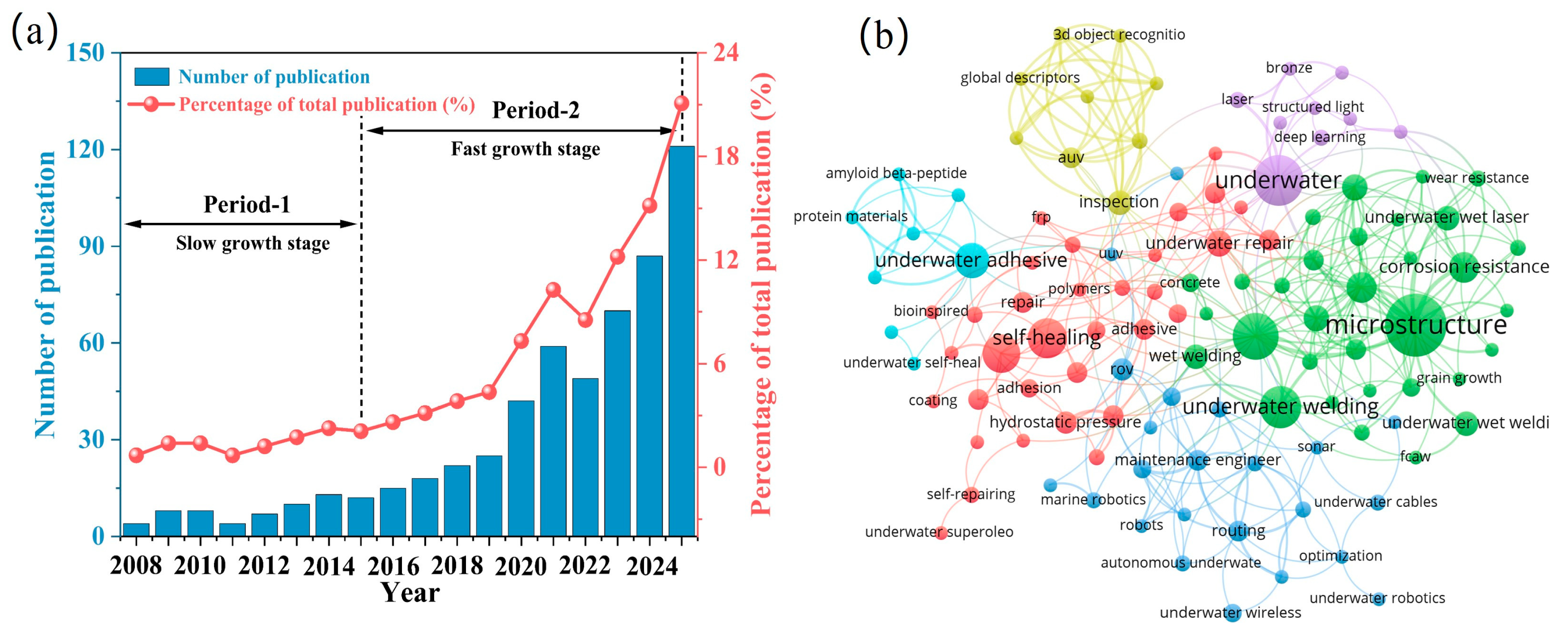
To examine how research on underwater repair has developed, a bibliometric search was carried out in the Web of Science Core Collection. The retrieval period covered 2008–2025. Because this section is intended to describe the overall significance and evolution of underwater repair research, rather than to limit the discussion to a single type of repair material, two broad keywords were selected: “underwater” and “repair”. The specific search formula in Web of Science was TS = (“underwater” AND “repair”). The document types were restricted to English-language Articles and Review Articles. This search first returned 630 records. The titles, abstracts, and keywords were checked manually, and duplicate entries as well as papers with no clear relevance to underwater repair were excluded. After screening, 567 papers were retained for publication trend analysis. The retained papers mainly involved underwater repair, underwater concrete repair, hydraulic engineering repair, and marine infrastructure repair. Records were excluded when they were unrelated to underwater repair, were not Articles or Review Articles, were not written in English, or appeared more than once in the dataset.
The annual publication trend shows two stages. From 2008 to 2015, the number of studies increased slowly, indicating that underwater repair had not yet become a major research focus. From 2016 to 2025, however, the growth became faster. This change is closely related to the increasing exposure of underwater infrastructure to complex service environments and to the practical repair problems that have appeared in engineering projects. As a result, more studies have examined underwater concrete from the perspectives of mechanical performance, repair behavior, microstructure, and interfacial adhesion. These topics therefore appear to be central concerns in current underwater repair research (Figure 1).

2.1. Classification and Evolution of Underwater Repair Materials

As discussed above, underwater repair materials can be broadly understood in terms of inorganic [24], organic [26,27,28], and organic–inorganic composite systems [29,30,31]. However, for polymer-modified cementitious underwater repair materials, material classification alone is insufficient to explain their practical applicability. In real underwater repair scenarios, their performance depends not only on chemical composition, but also on their ability to remain stable during placement, resist water scouring, adapt to wet environments, bond with water-saturated substrates, and maintain mechanical integrity and durability after hardening [32,33,34,35,36].

2.2. Control of Underwater Workability in Polymer-Modified Cementitious Materials

2.2.1. Workability of Underwater Repair Materials-Flat Surfaces/Grouting

In underwater surface restoration, repair materials must be able to fully fill defects under their own weight or under pumping pressure. Therefore, they should possess not only sufficient resistance to washout under water flow, but also adequate flowability. Considerable efforts have been devoted to understanding the dynamic balance between anti-washout performance and rheological behavior.
Cellulose ethers are widely used to regulate water retention, pore structure, and rheology in cementitious materials. Pourchez et al. [37] reported that hydroxypropyl methylcellulose (HPMC) can stabilize 50–250 μm air bubbles introduced during mixing, thereby improving water retention while maintaining suitable rheological properties. Chen et al. [38] further showed that 0.45–0.5% medium-viscosity HPMC can form Ca-O bonds with C-S-H, resulting in a flow spread above 145 mm and turbidity below 100 NTU. In polyacrylamide (PAM) systems, Lu et al. [39] identified a lubrication regime at a PAM dosage of 0.3–0.67%, in which non-adsorbed polymer chains reduce flow loss while improving anti-washout performance. Sun et al. [40] synthesized an SA (sodium acrylate):AM (acrylamide) = 7:3 copolymer through in situ copolymerization and used long chains with low charge density to provide dynamic lubrication. This approach limited washout loss to approximately 1% while maintaining a low dynamic yield stress (<150 Pa), thus achieving a favorable balance between flowability and washout resistance. Natural biopolymers also show promise. For example, 0.5% sodium alginate or guar gum reduced washout loss from 15% to approximately 5% while maintaining a slump of about 50 mm [41].
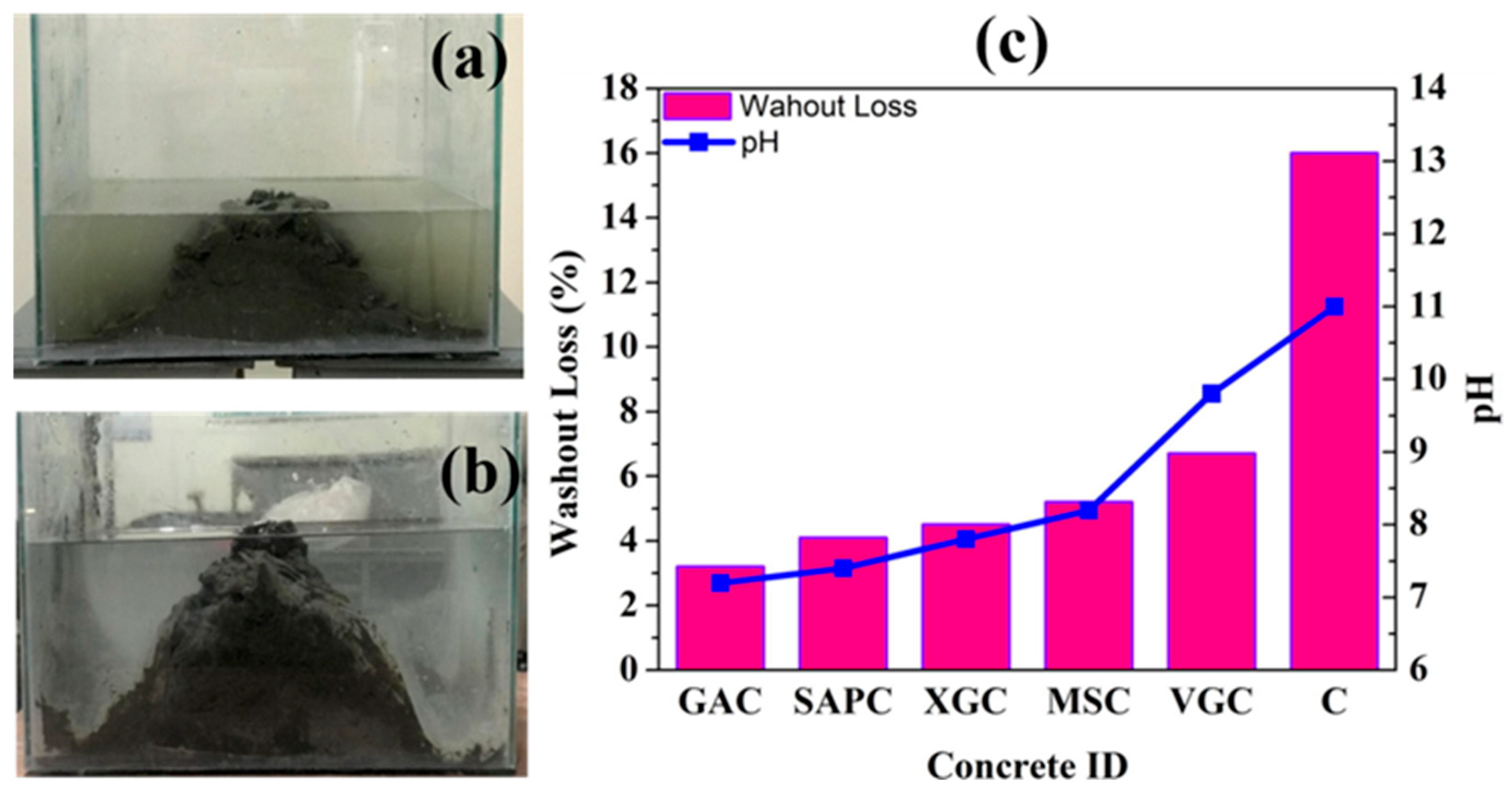
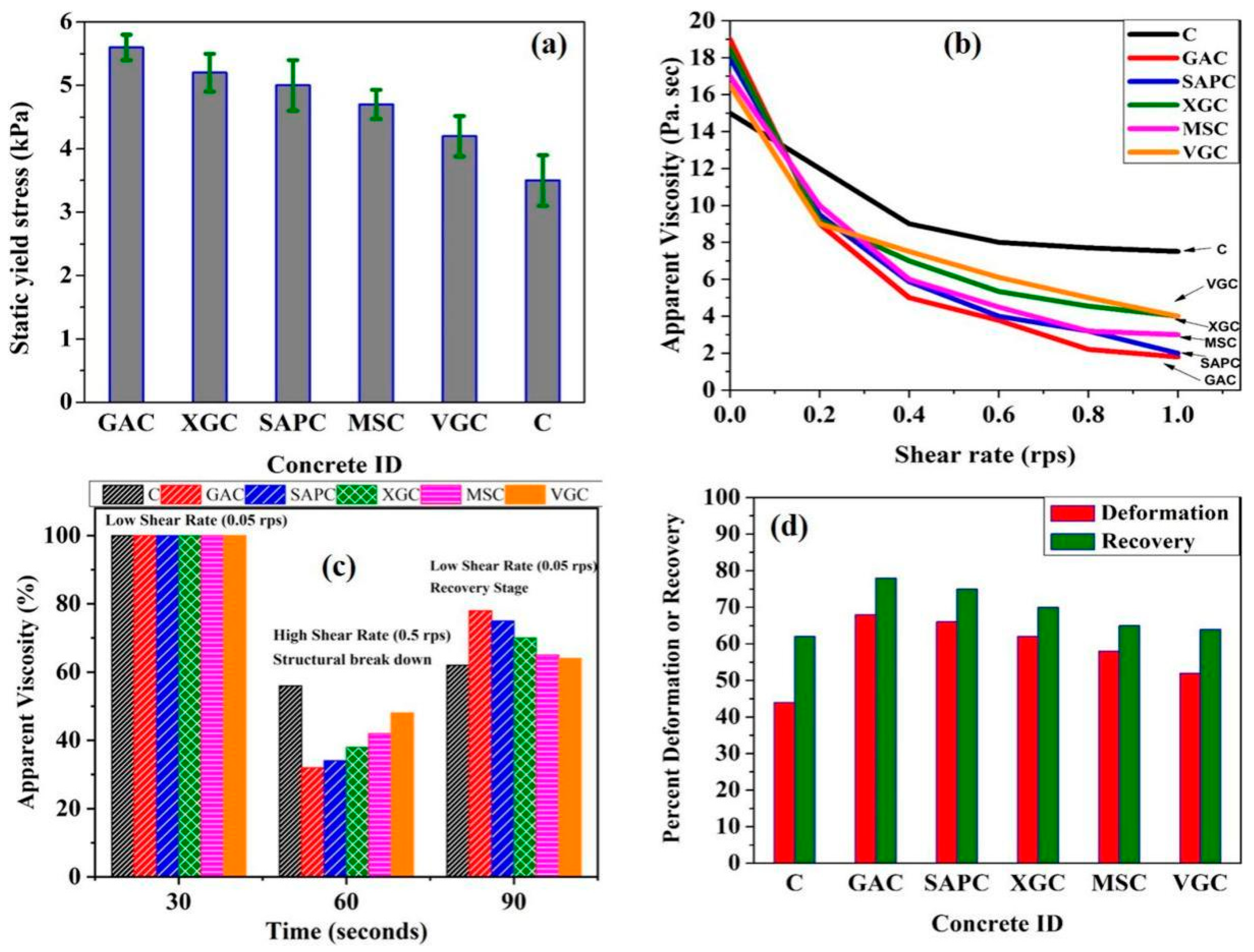
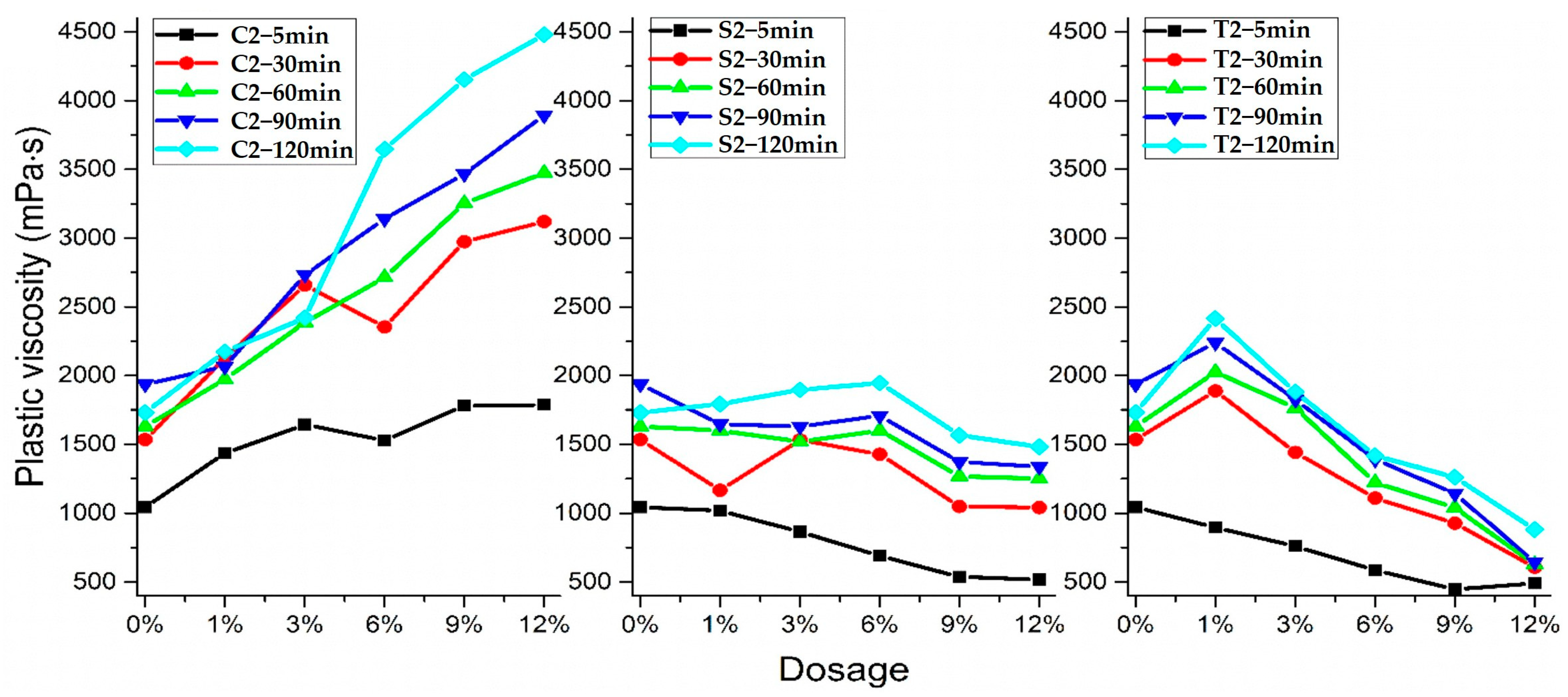
In practical engineering applications, however, superplasticizers are often required to further improve workability. Ma et al. [42] found that competitive adsorption occurs between HPMC and polycarboxylate superplasticizers (PCEs). HPMC can bind with Ca2+ to form aggregates, thereby consuming PCE and weakening its dispersing efficiency. At a dosage of 0.2%, high-molecular-weight HPMC sharply increased the yield stress to approximately 50 MPa, significantly reducing the dispersion efficiency of PCE. In addition, Sikandar et al. [43] demonstrated that anti-washout admixtures (AWAs) can enhance matrix cohesion through polymer–water, polymer–polymer, and polymer–particle interactions. As a result, the washout loss of underwater concrete (UWC) was reduced from 16% to 3.1–4.8%, accompanied by substantial improvements in rheological performance, as shown in Figure 2 and Figure 3.
Although water-soluble polymers can effectively improve the anti-washout performance of cementitious materials, their contributions to interfacial bonding and long-term durability remain limited. By contrast, waterborne polymer emulsions can reduce yield stress and improve flowability through particle lubrication, while also forming polymer films and filling pores within the cement matrix and interfacial region. These effects contribute to enhanced bond strength, toughness, and durability. Therefore, waterborne polymer emulsion modification represents an effective strategy for improving the overall performance of cementitious underwater repair materials.
Lu et al. [44] investigated the effects of colloidal polymers with different surface properties on the rheological behavior of fresh cement paste, as shown in Figure 4. They found that polystyrene latex containing carboxyl groups (-COO-) can form complex bonds with Ca2+ in the pore solution. Through this “calcium-bridging” effect, polymer particles adsorb onto and bridge adjacent cement particles, forming a stable three-dimensional flocculated network. Although this structure increases yield stress and reduces flowability, it improves the resistance of the system to water-induced washout. Zhang et al. [45] further reported that the bridging-induced thickening effect becomes most pronounced when the polymer surface coverage reaches approximately 20%, at which point the reduction in flowability is also most significant.
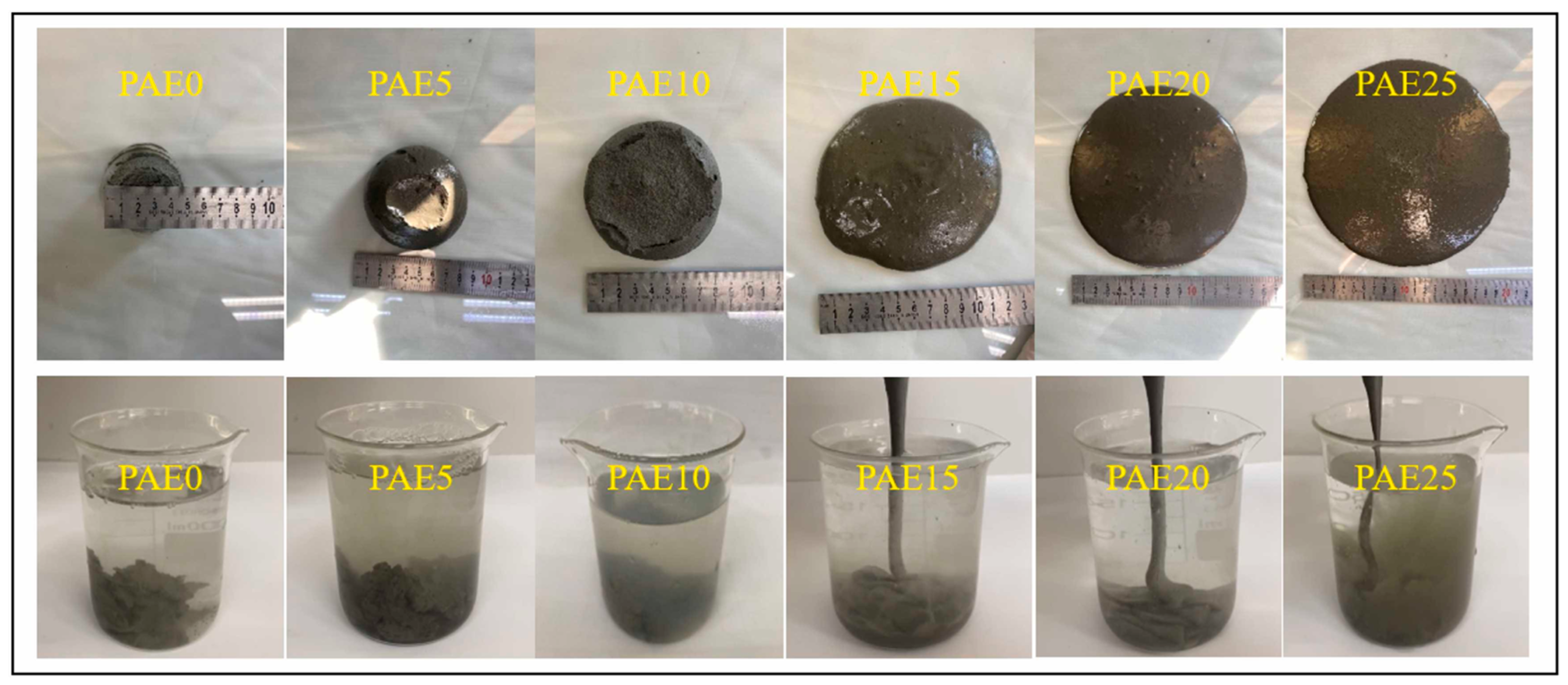
Recent studies have also confirmed the value of waterborne polymers in underwater repair systems. Zheng et al. [46] prepared a water–oil gradient composite epoxy resin (DEP)-modified sulfoaluminate cement system by combining waterborne epoxy resin (WEP) with oil-based epoxy resin (EP). Compared with the control group, this system showed a much lower static yield stress, a maximum flow spread of 235 mm, and a washout mass loss of only about 0.01% after 60 min. Its bond strength at the wet underwater interface was also increased by 195.7%, suggesting that flowability, washout resistance, and interfacial bonding were improved at the same time. Han et al. [47] attempted to solve the poor flow retention of underwater epoxy–cement mortar by adding 20% polyacrylate emulsion (PAE). As shown in Figure 5, PAE and WEP formed a compact film on particle surfaces, raising the flow spread to 210 mm and keeping it stable for 30 min. The bond strength of underwater-cast specimens increased by 65.8%, showing improved constructability and mechanical performance.
Overall, a single polymer emulsion is usually insufficient to ensure stable anti-washout performance, especially under flowing-water conditions. Therefore, underwater surface repair materials should be designed as cementitious composites modified by multiple synergistic polymers rather than as single-polymer systems. Low- or medium-viscosity water-soluble polymers can provide washout resistance and suspension stability, whereas waterborne polymer emulsions can compensate for the insufficient interfacial bonding, toughness, and durability of the cementitious matrix. The key optimization target is to determine an appropriate polymer composition and dosage window that simultaneously satisfies the requirements for flowability, underwater washout resistance, interfacial bonding, and long-term durability.

2.2.2. Underwater Repair Materials-Performance on Vertical Surfaces

Unlike underwater construction materials, which mainly require high flowability to achieve self-compaction, underwater repair materials are applied not only on horizontal surfaces but also on vertical and overhead defects. When formwork cannot be used for direct placement, the material must exhibit sufficient plasticity and high yield stress to resist sagging, slumping, and collapse under its own weight. Under these conditions, washout resistance, viscosity, and structural build-up are more critical than high flowability.
High-viscosity cellulose ethers and high-molecular-weight polyacrylamide (PAM) can form dense bridging networks or microgel structures in cement pore solutions, thereby significantly increasing yield stress and improving anti-washout performance [48]. High-viscosity hydroxypropyl methylcellulose (HPMC) at dosages up to approximately 0.7% and PAM at dosages up to approximately 0.5% can generate yield stresses of about 300 Pa [49,50], which is beneficial for sag resistance in vertical repair. However, the use of high-viscosity polymers should be carefully controlled, because excessive thickening may reduce substrate wetting, weaken interfacial contact, and limit local penetration into surface defects.
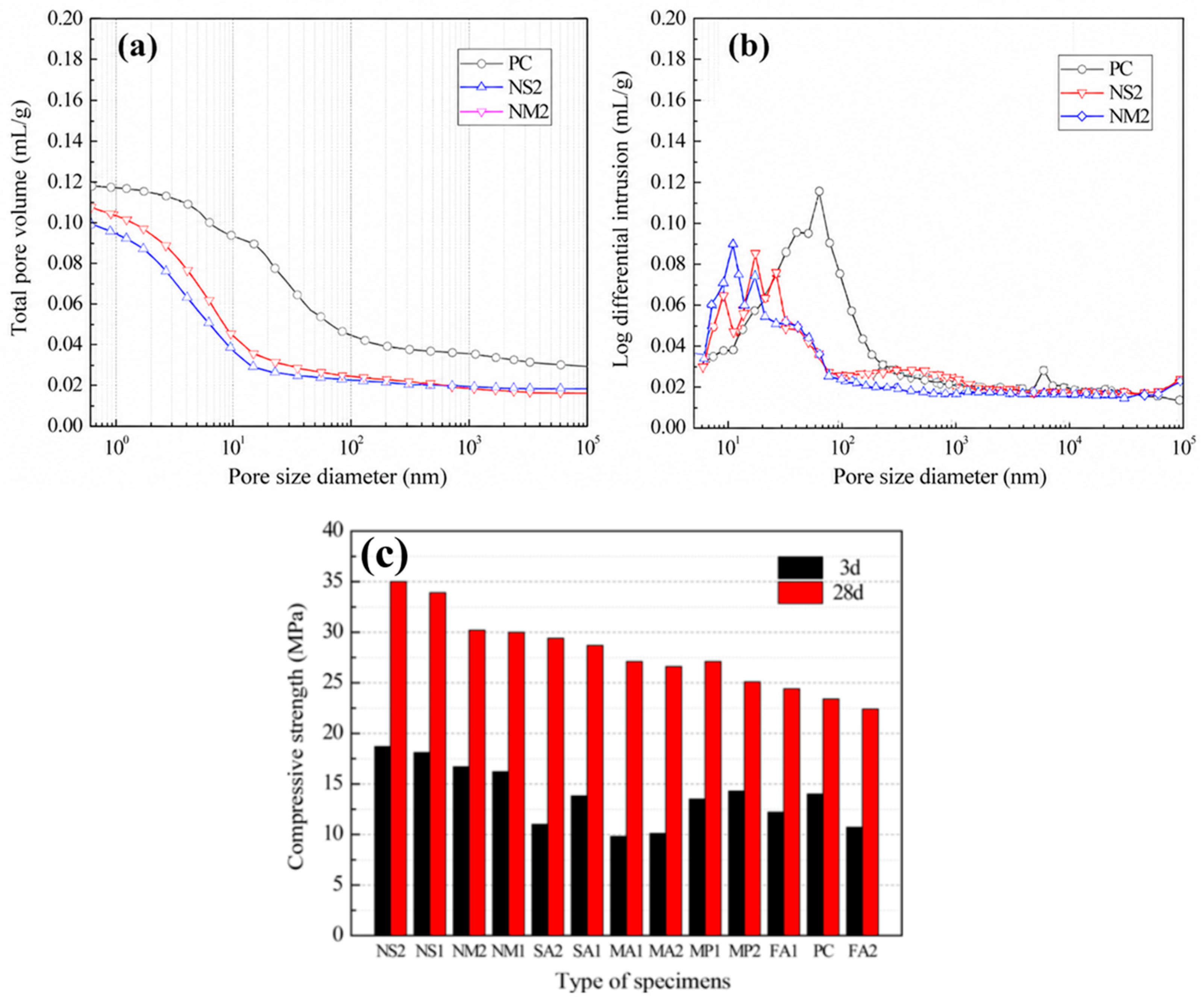
Nano-reinforcement provides an additional strategy for improving the performance of vertical repair materials. Nano-SiO2, nano-metakaolin, and nano-clay can be incorporated into polymer–cement networks to increase structural build-up, enhance thixotropic recovery, and reduce washout in the fresh state. During hardening, these nanoparticles can refine the pore structure, promote the precipitation of hydration products, densify the interfacial transition zone, and improve mechanical strength and durability [51,52,53]. The practical dosage range of nano-additives is commonly around 1–3%, although the optimal dosage strongly depends on dispersion quality and compatibility with the polymer system (Figure 6 and Figure 7).
Therefore, for vertical and overhead underwater repair, a promising design strategy is to combine high-viscosity water-soluble polymers with well-dispersed nano-reinforcing phases. Such systems can provide sag resistance during placement and improve strength and durability after hardening.

2.2.3. Applicability and Design Indicators

As shown in Table 1, the materials suitable for different underwater repair scenarios are classified, and the corresponding dosage ranges and performance trade-offs reported in existing studies are summarized. It must be noted, however, that key parameters—including flowability, yield stress, washout loss, and turbidity—are highly sensitive to test conditions (e.g., water-to-binder ratio, aggregate content, polymer type and dosage, mixing method, water flow conditions, and testing standards). Therefore, direct numerical comparisons across different studies are not advisable unless the experimental conditions are strictly identical. At present, the open literature does not provide a universally accepted single flow-spread threshold for defining the self-leveling condition required for underwater horizontal repair. As a practical reference, the Chinese industry standard for cementitious self-leveling floor mortars (JC/T 985-2005 [54]) specifies an initial flow spread of not less than 130 mm as the criterion for self-leveling performance.
For vertical repair, yield stress is a key parameter. Theoretically, the yield stress of the repair material should exceed the shear stress induced by gravity. For example, a repair layer with a thickness of 20 mm requires a yield stress of approximately 360 Pa to achieve excellent anti-sagging performance [55]. This provides an important target for practical mixture design. Underwater repair also requires sufficient interfacial bond strength. Waterborne polymer emulsions and latexes can improve both the bonding performance and durability of cementitious materials. However, because fresh waterborne polymer emulsions and cementitious matrices are prone to dispersion in water, multi-polymer synergistic modification is usually required to meet the comprehensive performance requirements of underwater repair.
Overall, mechanisms such as polymer adsorption and bridging, cement-particle flocculation, polymer film formation, and nanoparticle-induced pore refinement have been confirmed by rheological tests, washout tests, and mechanical measurements. However, most studies have verified these mechanisms only in isolated binary systems, such as water-soluble polymer–cement, waterborne polymer emulsion-cement, or nanomaterial-cement systems. Systematic evidence for multi-component polymer systems remains limited. In addition, most conclusions are still derived from laboratory-scale tests under simplified underwater conditions. Field validation under realistic hydrostatic pressure, water flow, substrate roughness, chloride exposure, temperature fluctuation, and construction disturbance remains insufficient and should be prioritized in future research.
Table 1. Classification and design considerations of polymer-modified cementitious materials for different underwater repair scenarios.
Repair ScenarioMajor Polymer SystemsIndicative Dosage WindowKey Performance IndicatorsKey Considerations
Horizontal patching and self-leveling repairLow-viscosity water-soluble polymers (e.g., PAM, cellulose ethers, sodium alginate, etc.)HPMC/CE about 0.1–0.5% binder; PAM about 0.1–0.6%; biopolymers about 0.3–0.5%.Flowability, self-leveling ability, resistance to dispersion under water, resistance to segregation, turbidity.HPMC (0.45–0.5%) can balance high flowability (>145 mm) with low turbidity (<100 NTU) and offers excellent resistance to dispersion; the optimal PAM dosage of 0.3–0.6% can address the effects on flowability and viscosity [38,39].
Vertical surface repairHigh-viscosity HPMC/CE, high-molecular-weight PAM, and nano-reinforced polymer–cement systems.HPMC up to about 0.7%; PAM up to about 0.5%; nano-SiO2 or nano-clay commonly about 1–3%.Yield stress, thixotropy, workability, adhesion to damp surfaces, and resistance to dispersion during placement.The material’s yield stress must exceed the shear stress caused by gravity (estimated at approximately 360 Pa) to prevent sagging on the facade [55]. While 3% nano-SiO2 can increase thixotropy by approximately 80%.
Scenarios requiring underwater adhesionSolvent-based epoxies, polyurethanes, etc.; water-based polymers and cement-based composite materials (water-based epoxies, SBR emulsions, water-based polyurethanes, etc.)WEP/EP about 0.10–0.30 in reported systems;
SBR emulsion: Addition level of 5–15%.
Underwater bond strength, early strength, durability, and underwater resistance to dispersion.Water-based epoxy has virtually no effect on the underwater resistance to dispersion of cement-based materials, whereas WEP/EP (water-based epoxy/epoxy resin) can significantly enhance the cohesion of mortar, thereby improving its underwater resistance to dispersion. In comparison, SBR emulsion yields even better results: at a 15% blend ratio, underwater leaching loss decreased from 6.6% to 3.2% (a 52% reduction), and underwater bond strength increased from 2.57 MPa to 4.22 MPa (a 64% increase) [56].
Long-term marine exposureWEP/EP, SBR/acrylate, WPU, polymer-nano systems and dense hybrid mineral–polymer binders.Often P/C about 0.10–0.30 for emulsions/epoxy systems; nano-additions about 1–3%, depending on dispersion.Chloride diffusion/migration, freeze–thaw, wet–dry cycling, polymer aging and interface durability.Lower total porosity alone is insufficient; connectivity, tortuosity, ITZ continuity, polymer-film stability and shrinkage/thermal compatibility control service durability. Most long-term conclusions remain based on accelerated tests.

2.3. Interface Bonding Mechanisms of Polymer-Modified Cement-Based Underwater Repair Materials

2.3.1. Challenges and Failure Mechanisms in Underwater Interface Bonding

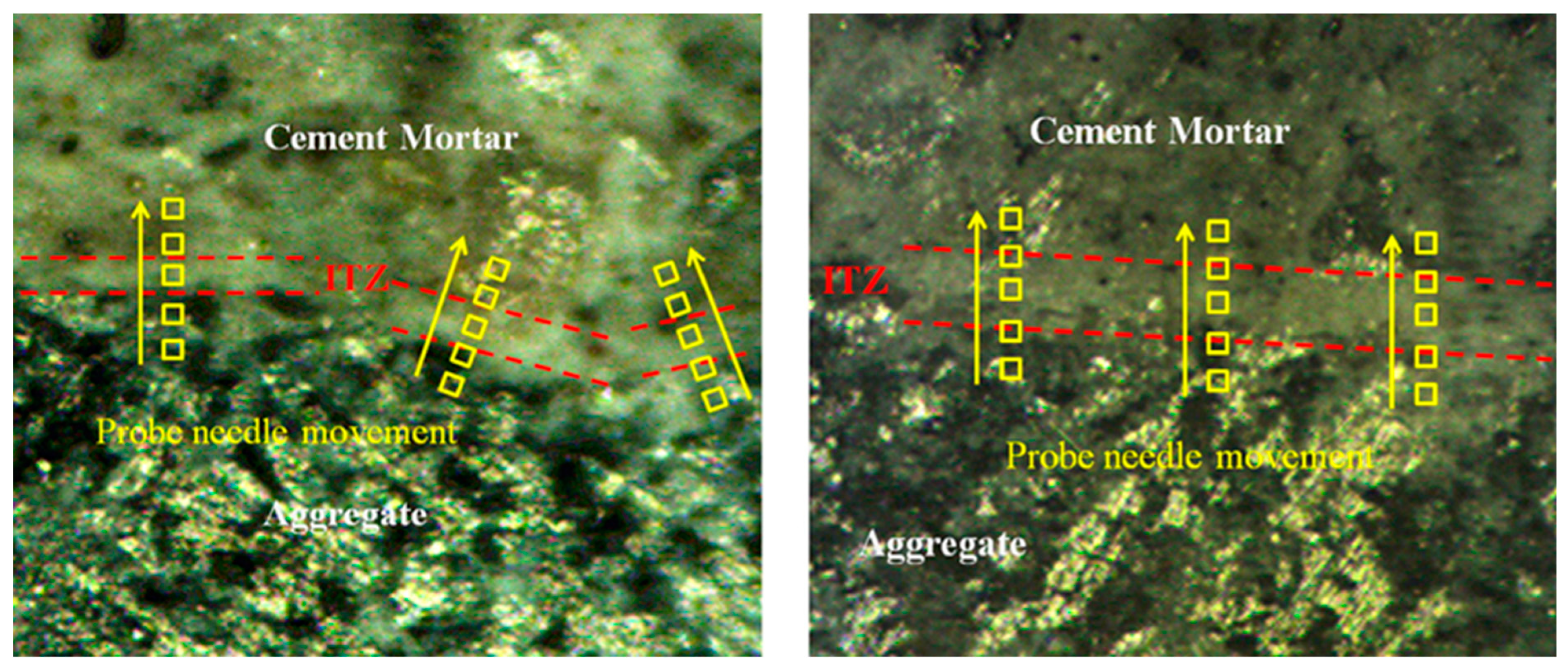
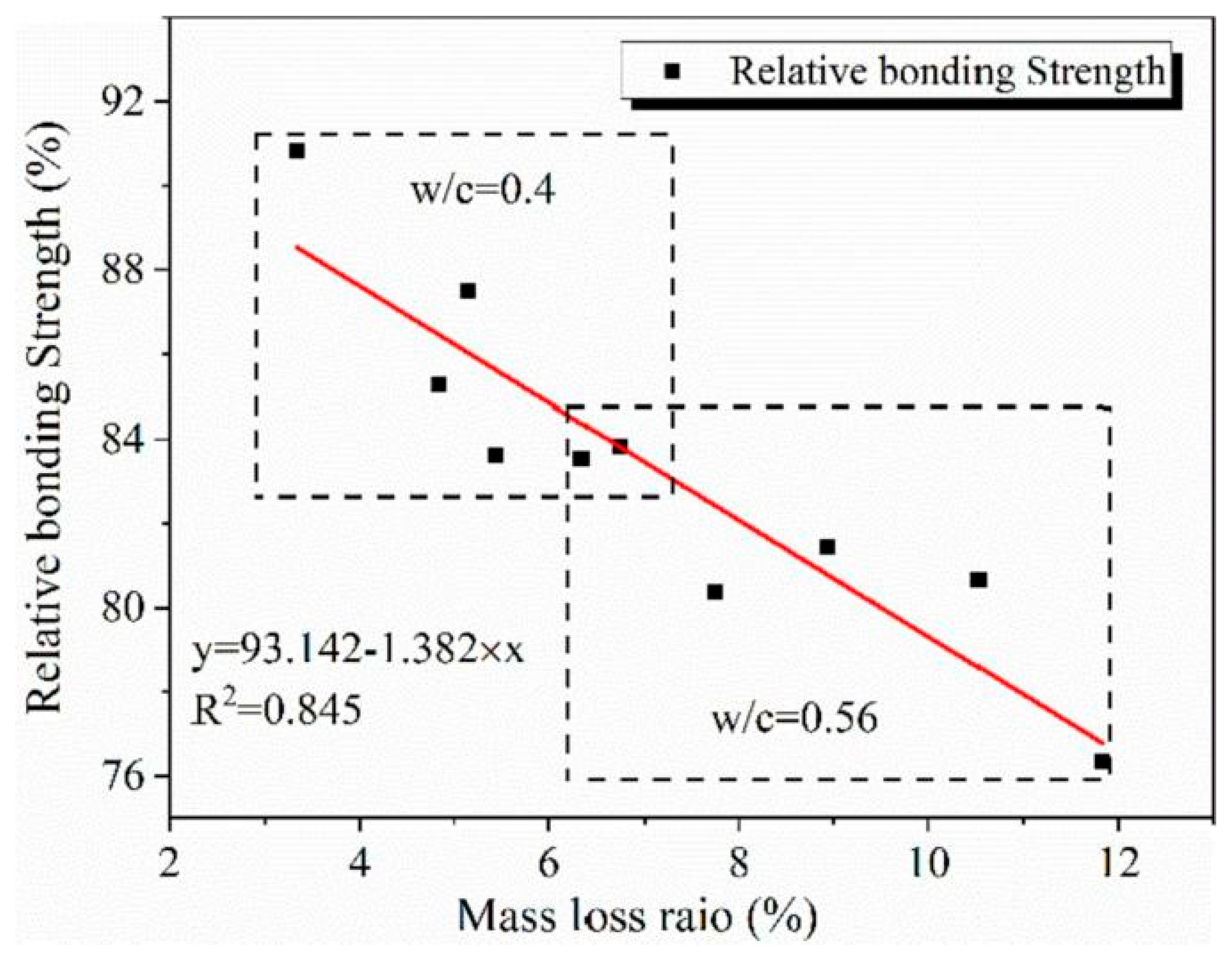
In underwater repair scenarios, such as hydraulic, port, and underground engineering, the existing concrete substrate is typically water-saturated. Free water, capillary water, and strongly adsorbed water films on its surface [57,58] hinder effective wetting and physical contact between the repair material and the substrate, thereby increasing interfacial defects and pore connectivity. Meanwhile, flowing water can wash out ordinary cementitious repair materials, leading to the loss of cement paste at the new-to-old concrete interface, exposure of aggregates, and the formation of a weak interfacial transition zone (ITZ), which severely compromises early-age bond strength and long-term service performance [59] (Figure 8). In addition to the water film, which represents the primary barrier, the actual bonding performance is also affected by the substrate surface condition and contaminants such as oil stains, laitance, and biofilms, as summarized in Table 2. Therefore, the key to underwater in situ repair lies in how to penetrate, displace, or exploit the water film [60,61,62,63,64]. A comprehensive consideration of substrate conditions and environmental factors, together with an in-depth understanding of the bonding behavior of polymer-modified materials under different service conditions, is essential for providing a theoretical basis for reliable repair.

2.3.2. Bonding Mechanisms of Underwater Repair Materials at the Water Interface

To overcome the barrier posed by water films and re-establish high-strength underwater interfacial bonding, researchers primarily employ polymer physics and chemistry to actively displace, penetrate, or utilize interfacial water. Based on the core physicochemical mechanisms by which polymers act at saturated interfaces, the bonding mechanisms relevant to cement-based underwater repair can be broadly classified into the following three categories:
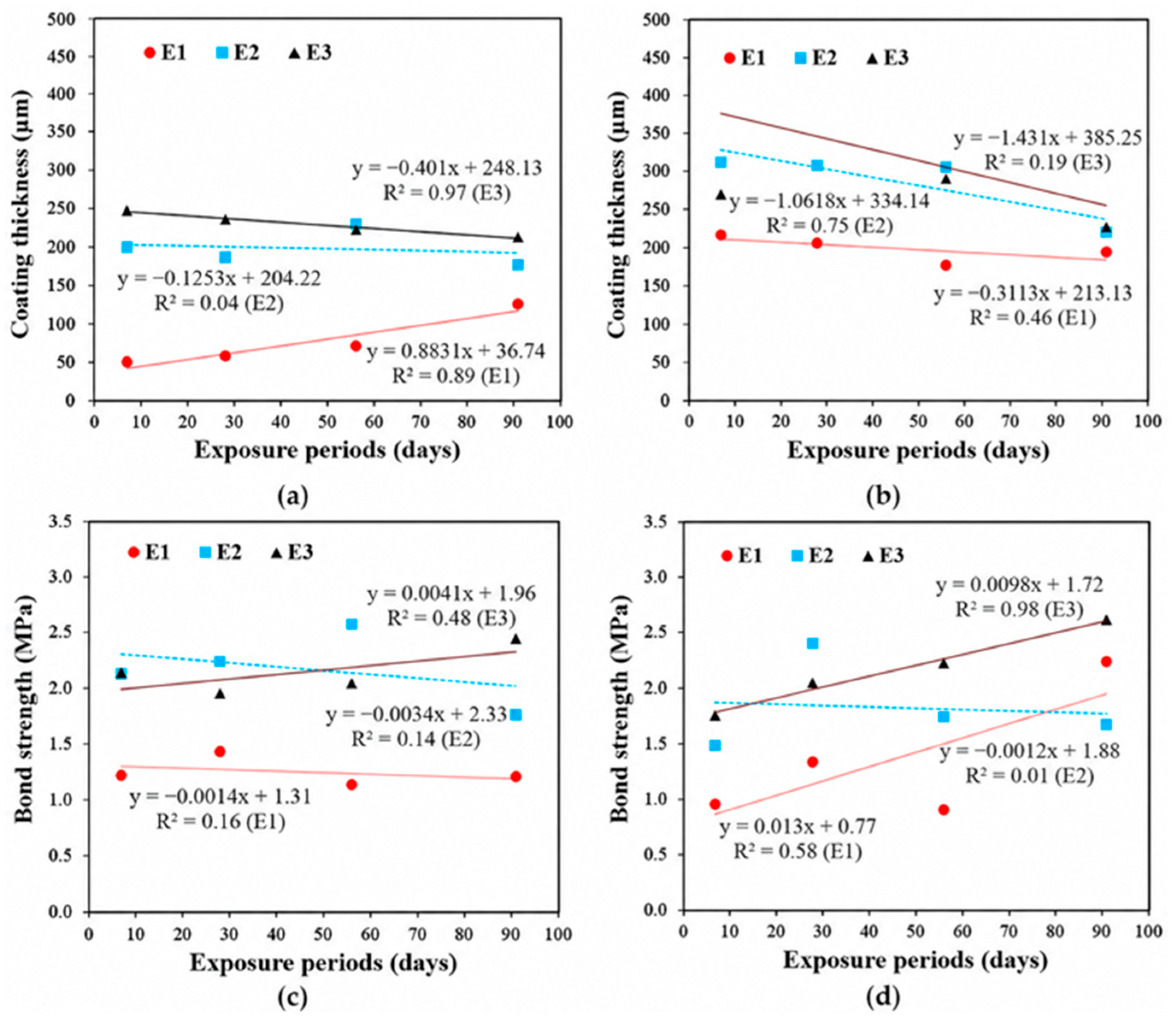
The first mechanism departs from the conventional drainage-based approach and directly employs an organic binder phase with high polarity and strong hydrophilicity. This mechanism relies on the exceptionally high thermodynamic affinity between polar functional groups, such as carboxyl, amino, and epoxy groups, and cations on the concrete surface. Through competitive adsorption, these groups can directly penetrate and replace the layer of bound water molecules on the substrate surface, thereby enabling in situ electrostatic adsorption or covalent bonding [65,66]. When the bonding force exceeds the intrinsic strength of the material, cohesive failure occurs. Du et al. [67] conducted molecular dynamics simulations and observed that Ca2+ in C-S-H gels migrates to the interface and forms strong electrostatic bonds with hydroxyl groups (-OH) in epoxy resin. This electrostatic interaction contributes up to 126.5 kJ/m2 of adhesion energy to the system and serves as the fundamental origin of high-strength bonding at the macroscopic interface. In addition, Kim et al. [68] incorporated cresyl glycidyl ether into pure bisphenol A as a reactive diluent to improve wettability and promote long-term curing (Figure 9). In a real marine environment, the bond strength showed a continuous increase after 91 days of exposure, rising from approximately 2.0 MPa to 2.71 MPa, indicating excellent long-term interfacial adaptability. Xie et al. [69] found that low viscosity enhanced interfacial penetration, whereas high polarity promoted hydrogen bonding with cement hydrates. The negative Gibbs free energy confirmed the spontaneous nature of adhesion, which was mainly driven by entropy gains from OH-π interactions and further stabilized by hydrogen bonding, van der Waals forces, and electrostatic interactions. The contribution of hydrates followed the order C-S-H > AFt > Ca(OH)2 > CaCO3, indicating that polymer bonding is governed by interfacial free-energy regulation and specific molecular interactions rather than simple wetting or mechanical anchoring.
Figure 8. Relationship between the relative bond strength of UWC and the underwater mass loss ratio. Reproduced with permission from [70], Elsevier, 2026.
Buildings 16 02751 g008
Figure 9. Effect of exposure time on (a) coating thickness under TW conditions; (b) coating thickness under RS conditions; (c) bond strength under TW conditions; and (d) bond strength under RS conditions [68].
Buildings 16 02751 g009
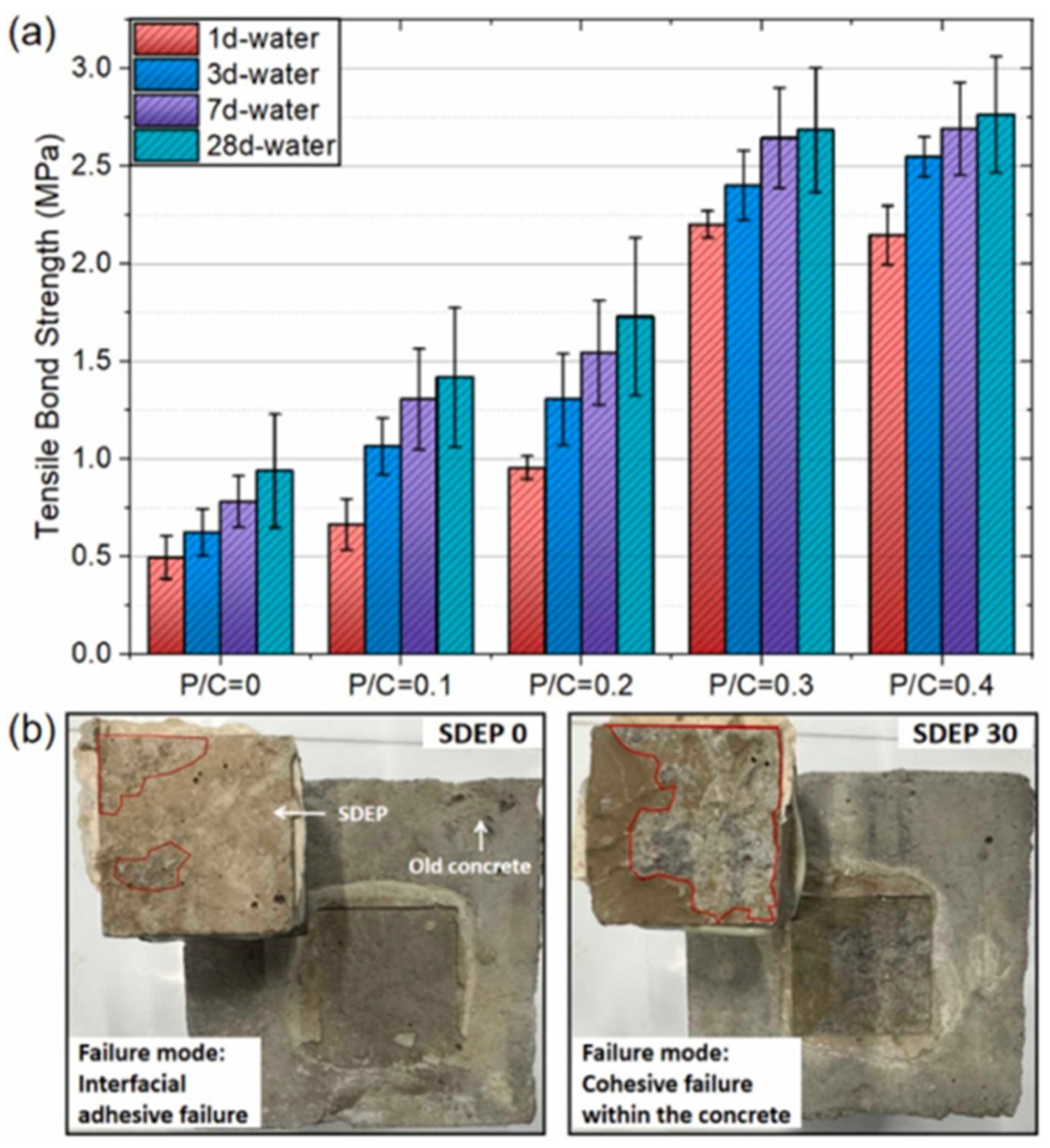
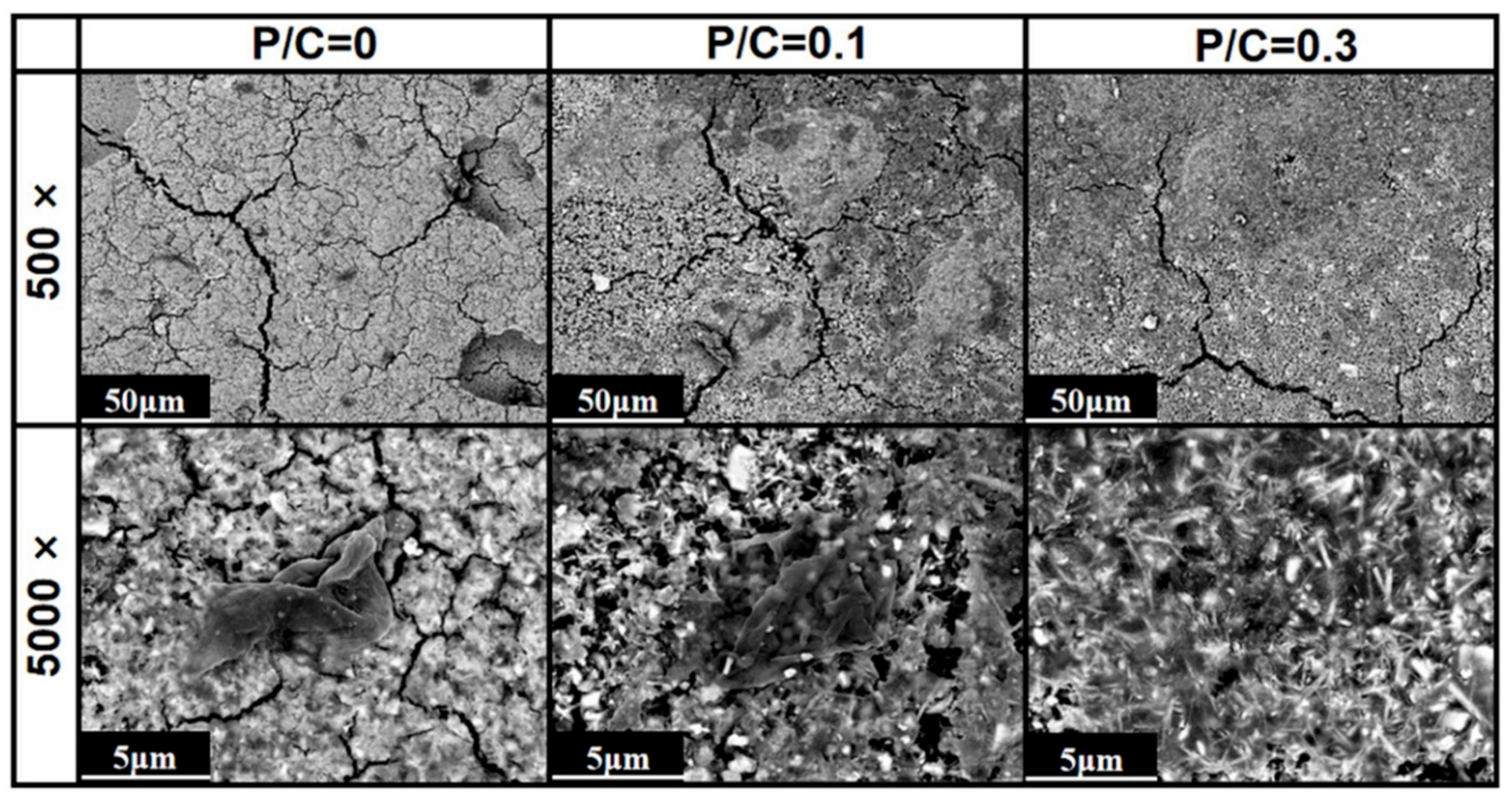
The second mechanism employs an amphiphilic composite system containing both nonpolar hydrophobic segments and polar reactive groups [71,72,73]. The hydrophobic phase displaces free interfacial water and creates a locally dry microenvironment, while the polar phase bonds with the substrate. In this way, the interfacial contact quality is improved, water-film-induced interfacial defects are eliminated, and loads can be effectively transferred throughout the composite system, thereby inducing cohesive failure. Zheng et al. [46] designed a gradient network in which WEP served as a hydrophilic transition phase and cross-linked with hydrophobic EP. At P/C = 0.3, the 28-day underwater wet bond strength reached 2.75 MPa, representing a 295% increase compared with the control, and the failure mode shifted from interfacial delamination to cohesive failure within the old concrete (Figure 10 and Figure 11). Zhang et al. [74] developed a barnacle-inspired amphiphilic high-strength adhesive, PUU-FPD. This material repels interfacial water molecules through the self-assembly of bulky hydrophobic fluorinated side chains (FPD), while exposing free urea/carbamate groups to form high-density hydrogen-bond bridges with the substrate. As a result, its adhesive strength increased from an initial value of 308 kPa to approximately 1.62 MPa after 24 h of immersion in water, and further exhibited an anomalous increase to 3.72 MPa at a low temperature of −50 °C. Pang et al. [24] further confirmed, using Flory-Huggins-theory-based simulations, that low-density C-S-H can act as a hydrophilic–hydrophobic bridge, promoting uniform polymer dispersion and the formation of an interpenetrating polymer network (IPN).
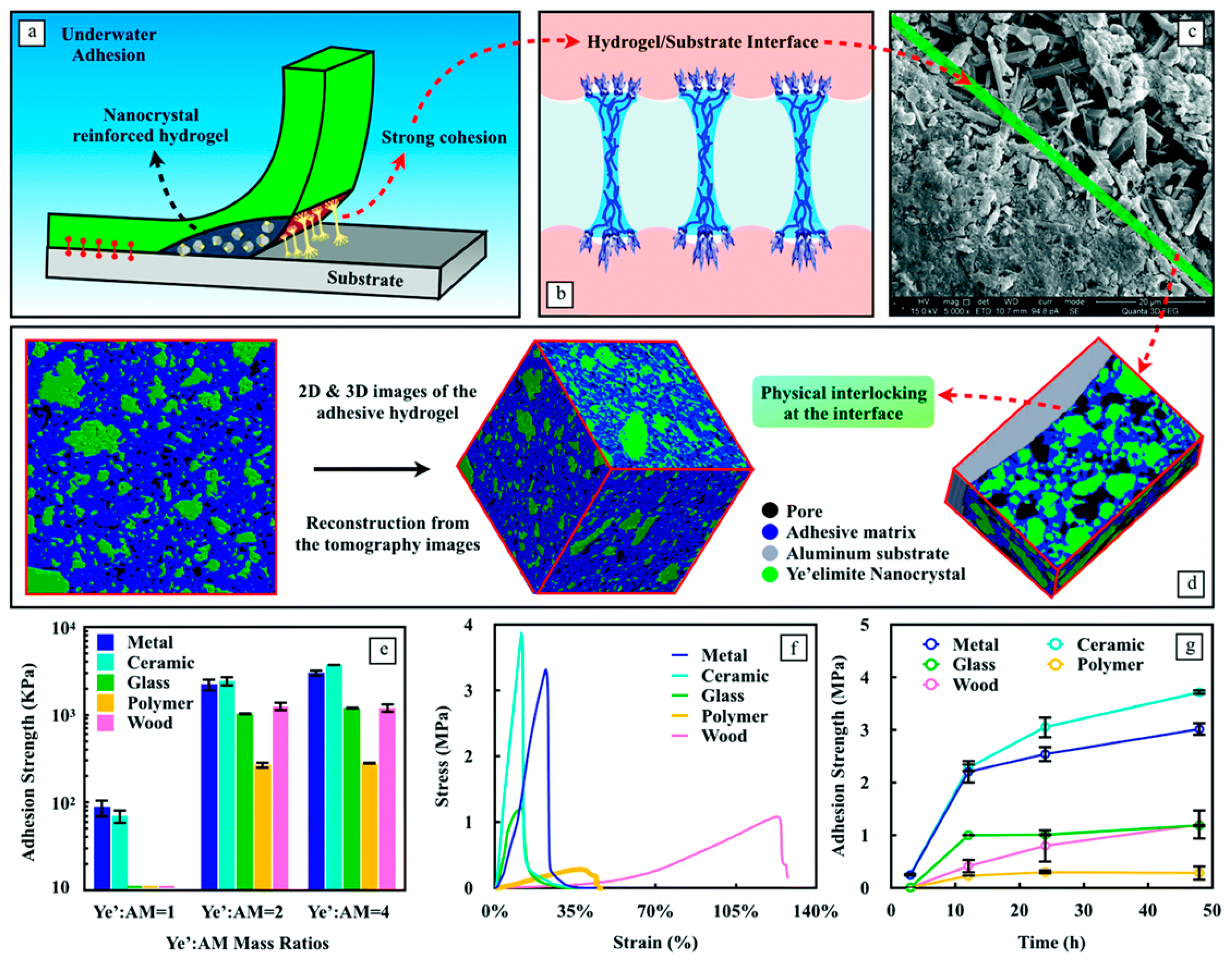
The third mechanism relies on polar polymers to provide initial interfacial adhesion and tack, while inorganic mineral phases, such as cement clinker and sulfoaluminates, absorb residual free water at the interface. As the mineral phases hydrate, calcium silicate hydrate (C-S-H) gel or ettringite crystals penetrate the pores and microcracks of the old substrate and form deep physical and mechanical interlocking with the polymer film [75]. This markedly increases the crack propagation path and energy dissipation, forcing fractures to occur within the substrate. Ma et al. [76] found that hydroxyl groups in EVA chains can form hydrogen bonds with interfacial water and generate a dense polymer film that fills pores during cement hydration. The incorporation of 3% EVA increased the 28-day underwater bond strength from approximately 1.5 MPa to 2.8 MPa, corresponding to an 87% increase, while 6% EVA reduced the thickness of the interface zone (IZ) from 90 μm to 30 μm. Pan et al. [77] developed a biomimetic underwater adhesive using a PAM hydrogel and nanocrystals. In this system, the PAM precursor absorbs surface water, whereas anhydrous calcium sulfoaluminate rapidly hydrates to form nanocrystals that precipitate within micropores, thereby providing physical anchorage. The adhesive achieved a bond strength of approximately 3.3 MPa on aluminum substrates after 3 days, with continued strength development (Figure 12). Assaad et al. [78] reported that SBR-modified cementitious grout performs well under humid conditions. SBR particles swell and entangle in the alkaline pore solution and adsorb cement particles to form a viscous gel, thereby blocking interfacial water and reducing grout loss. At an SBR content of 15%, the underwater pull-out bond strength of anchor rods increased from 2.32 MPa to 5.26 MPa.
In recent years, numerous advanced and biomimetic studies on underwater adhesion have emerged. Strong underwater adhesion has been achieved through biomimetic coordination bonding [79,80,81], water-triggered/water-consuming mechanisms [82,83,84], and physical adsorption based on topological microstructures [85], providing important insights for the design and practical application of underwater repair materials. Overall, interfacial bonding in underwater repair, particularly on water-saturated concrete substrates, is highly complex and strongly dependent on material composition, interfacial regulation mechanisms, and service conditions. Reliable underwater adhesion is generally not achieved by a single component, but rather through the synergistic effects of multiple components in water displacement, wetting, bonding, hydration, and interfacial filling. Among these strategies, organic–inorganic hybrid systems exhibit significant advantages in enhancing the bond strength and durability of water-saturated concrete surfaces. However, current methods for evaluating underwater bonding performance remain insufficient. Existing tests mainly include direct tensile bond tests, slant shear tests, and flexural bond tests, which are typically conducted by underwater casting or molding followed by conventional bond strength testing procedures. Standardized methods for evaluating interfacial bond strength under complex service conditions, such as flowing-water scouring, marine erosion, and long-term immersion, are still lacking. This limitation hinders reliable performance comparison among different material systems and the assessment of their engineering applicability.
Table 2. Practical factors affecting underwater interfacial bond strength and corresponding treatment or material-design strategies.
Practical FactorEffect on Bond StrengthRecommended Treatment or Material-Design Strategy
Surface roughness [86]Moderate roughness increases contact area, enhances mechanical interlocking, and promotes the penetration of hydration products into pores and microcracks. Excessive roughness may trap water, sediment, or air bubbles, causing local interfacial defects.Use controlled roughening, such as sandblasting, high-pressure water jetting, scabbling, or grinding, and remove loose particles before repair.
Laitance and weak surface layer [87]Long-term service or water scouring may leave laitance, loose hydration products, powdery deposits, or deteriorated mortar layers on the old concrete surface, weakening interfacial bonding.Remove weak layers by grinding, high-pressure water jetting, sandblasting, or wire brushing to expose a sound and stable substrate.
Biofouling [88]Algae, microbial biofilms, shellfish, soft organic deposits, or other biological fouling may hinder wetting and direct contact between the repair material and substrate.Remove biofouling by scraping, high-pressure water jetting, brushing, or eco-friendly biological treatment, and repair promptly after cleaning.
Flowing water/hydraulic pressureStatic water, slow flow, tidal fluctuation, or flowing-water scouring may disturb placement, increase washout, and weaken early interfacial contact.Use anti-washout admixtures, thixotropic agents, or multi-polymer systems to improve cohesion, build-up, and washout resistance.

2.4. Mechanical Properties and Microstructural Mechanisms of Polymer-Modified Underwater Repair Materials

2.4.1. Mechanical Properties

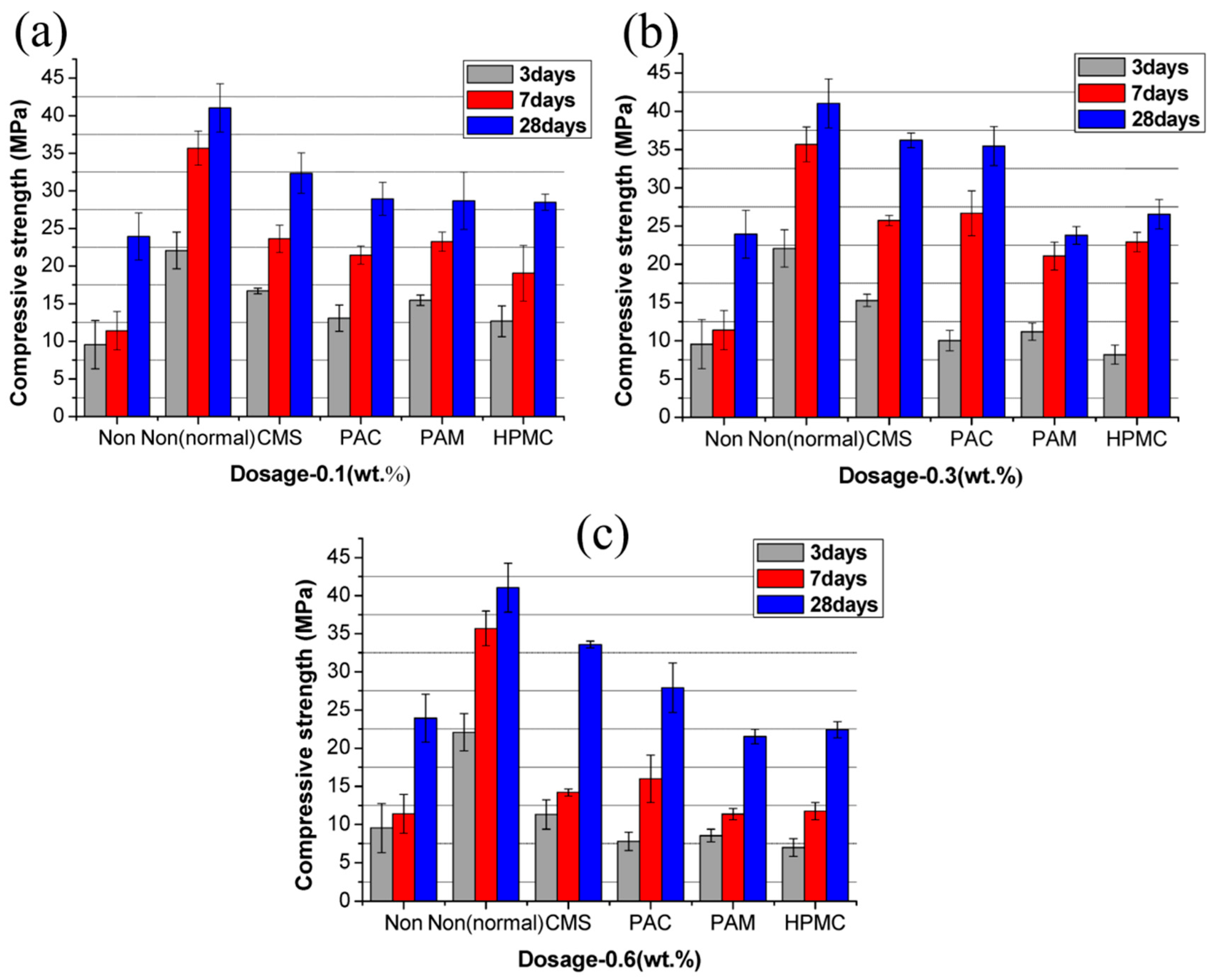
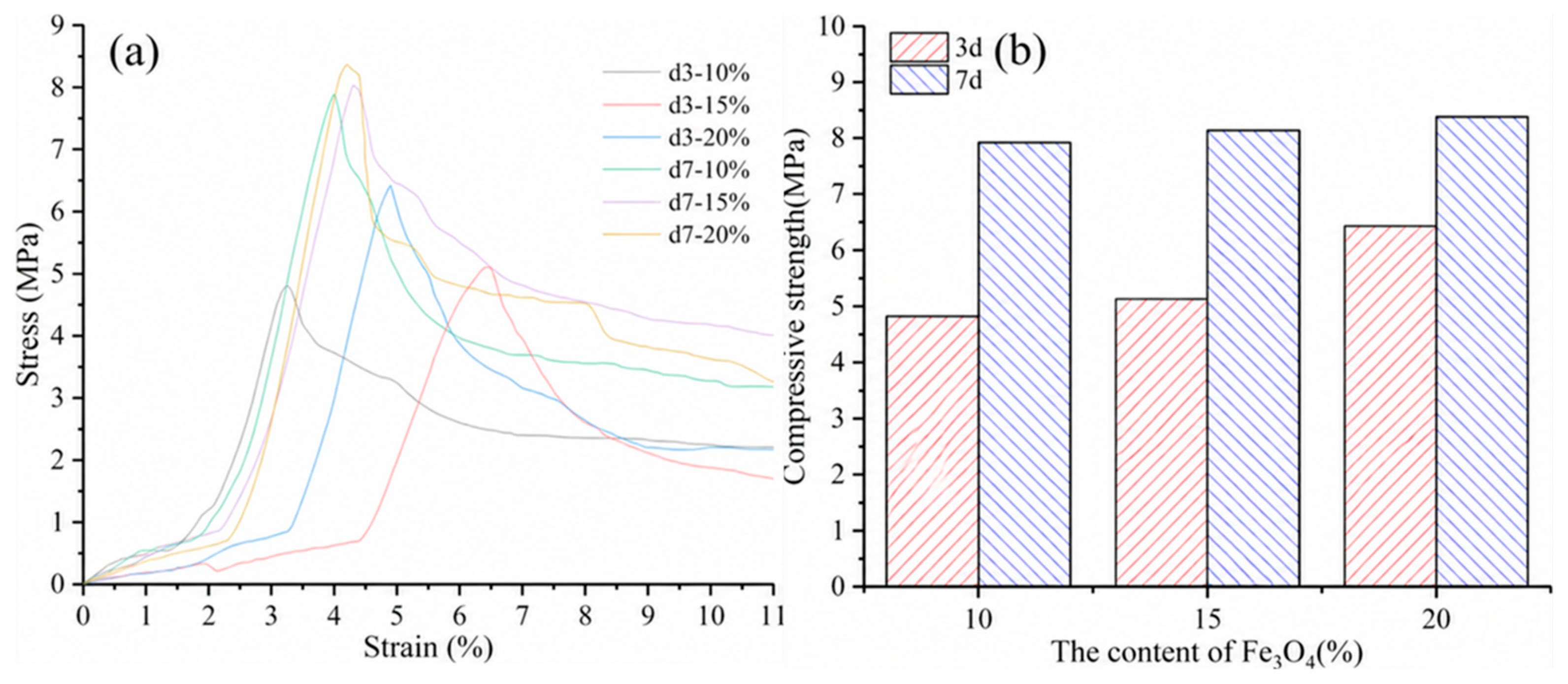
The effect of polymers on the mechanical properties of cement-based materials varies depending on environmental conditions, polymer type, and polymer dosage [89,90,91,92]. In terms of compressive strength, polymer modification does not always produce a beneficial effect. In some cases, polymers can enhance compressive strength by reducing underwater washout, retaining cementitious particles, improving matrix cohesion, and refining the pore structure. Song et al. [93] applied anionic anti-dispersants, including CMS and PAC, to underwater repair materials. At a dosage of 0.6%, the 28-day compressive strength of underwater concrete reached 37 MPa, representing a 151% increase compared with the control group without anti-dispersants. This improvement was mainly attributed to the “point-adsorption” mechanism of anionic anti-dispersants, which preserves the hydration activity of cement particles. By contrast, non-ionic anti-dispersants tend to form an “enveloping adsorption” layer around cement particles, resulting in much lower compressive strengths of only 16–18 MPa. Wang et al. [94] developed a magnetically driven cementitious grouting material incorporating Fe3O4 magnetic powder. When the Fe3O4 content increased from 10% to 20%, the 3-day compressive strength increased by 33.40%, while the 7-day compressive strength increased by 5.67%. This improvement was mainly associated with the filling effect of Fe3O4 during the early hydration stage, which reduced voids, increased the solid volume fraction, and promoted early matrix densification. However, these beneficial effects are conditional. Excessive polymer content may reduce compressive strength because of air entrainment [95,96], delayed cement hydration, increased capillary porosity, or the formation of polymer films that partially hinder the continued hydration of cement particles. Therefore, the compressive strength of polymer-modified underwater repair materials should be regarded as a dosage-dependent property rather than a property that is inevitably improved by polymer addition.
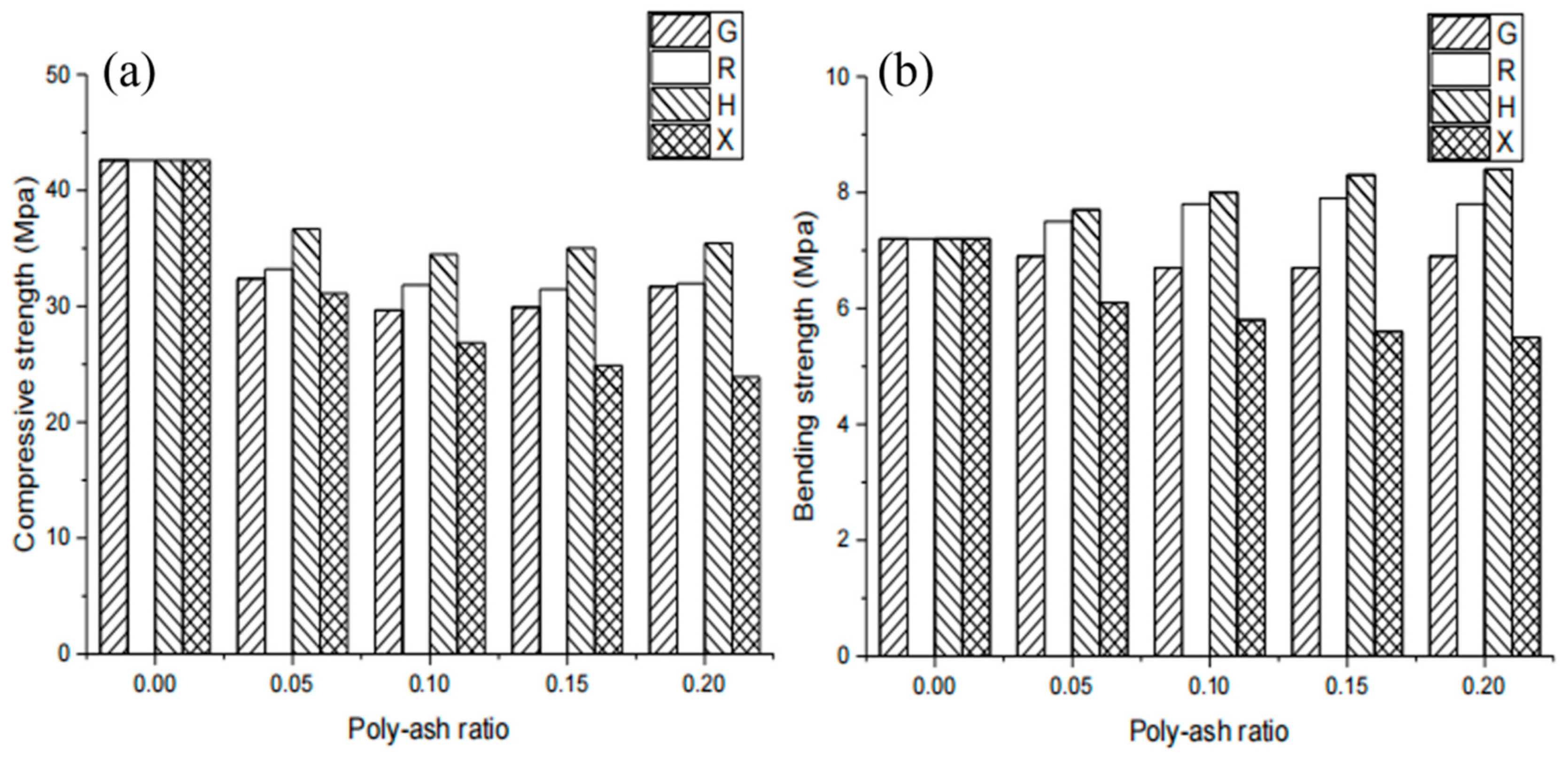
Compared with compressive strength, polymer modification usually shows a more direct and stable beneficial effect on flexural strength. This is because flexural failure is closely related to crack initiation, crack propagation, and matrix continuity, all of which can be improved by polymer film formation and the development of organic–inorganic networks. Under conventional curing conditions, Tian et al. [97] systematically investigated the effects of four types of polymer emulsions, namely silicone-acrylic, styrene-acrylic, waterborne epoxy, and acrylic emulsions, on the mechanical properties of cement-based materials. They reported that styrene-acrylic emulsion increased the flexural strength by 9.7% at a polymer-to-cement ratio of 0.15, while waterborne epoxy increased the flexural strength by up to 16.7% at a polymer-to-cement ratio of 0.2. These results indicate that an appropriate polymer dosage can improve the flexural performance of cementitious materials by enhancing matrix continuity and delaying crack propagation. Nevertheless, excessive polymer addition may interfere with cement hydration, form polymer films with non-uniform thickness, weaken the bonding between cement particles, and eventually reduce the overall mechanical strength [98].
With respect to dynamic mechanical performance, polymer modification can improve crack-bridging capacity and energy dissipation under rapid loading. Yu et al. [99] systematically investigated the interfacial mechanical behavior between underwater-cast alkali-activated mortar and ordinary Portland cement substrates. Under dynamic impact loading at high strain rates of 5.9–9.9 s−1, the energy absorption capacity of PAM-modified specimens in dynamic splitting tensile tests increased by approximately 17.4%. This result indicates that the polymer network can delay crack propagation and improve resistance to tensile-type failure under dynamic loading.
These results suggest that the main mechanical benefit of polymer modification is not always the maximization of compressive strength [100], but the improvement of toughness, crack-bridging capacity, and interfacial integrity under underwater curing and loading conditions. Beyond dosage, polymer Tg and surface charge critically govern mechanical performance [101]. Low-Tg polymers form films that enhance flexural/tensile strength via crack-bridging, while high-Tg polymers remain as particles unless post-heated. For underwater repair, low curing temperatures necessitate proper Tg selection to ensure film formation and effective reinforcement (Figure 13, Figure 14 and Figure 15).

2.4.2. Modification Mechanisms of Polymer-Modified Cement-Based Underwater Repair Materials

The evolution of macroscopic mechanical properties resulting from polymer modification stems from fundamental changes in the system’s internal pore structure, hydration kinetics, interface transition zone (ITZ), and molecular-scale interactions.
The evolution of macroscopic performance resulting from polymer modification can be understood through the chain of polymer adsorption and bridging, fresh-state flocculation, hydration kinetics, film formation or IPN development, pore-structure evolution, and ITZ densification.
Pore Structure
Pang et al. [24] identified the threshold conditions for the formation of an interpenetrating polymer network (IPN) between water-based epoxy (WEP) and C-S-H gel: when the degree of polymerization is ≥6 and the polymer-to-ash ratio is >10%, low-density C-S-H acts as a “hydrophilic–hydrophobic bridge,” promoting the formation of a continuous network of WEP that penetrates the matrix. This bridging effect generates a composite coating less than 1 μm thick on the surface of inorganic fibers, significantly enhancing interfacial sliding friction (Figure 16).
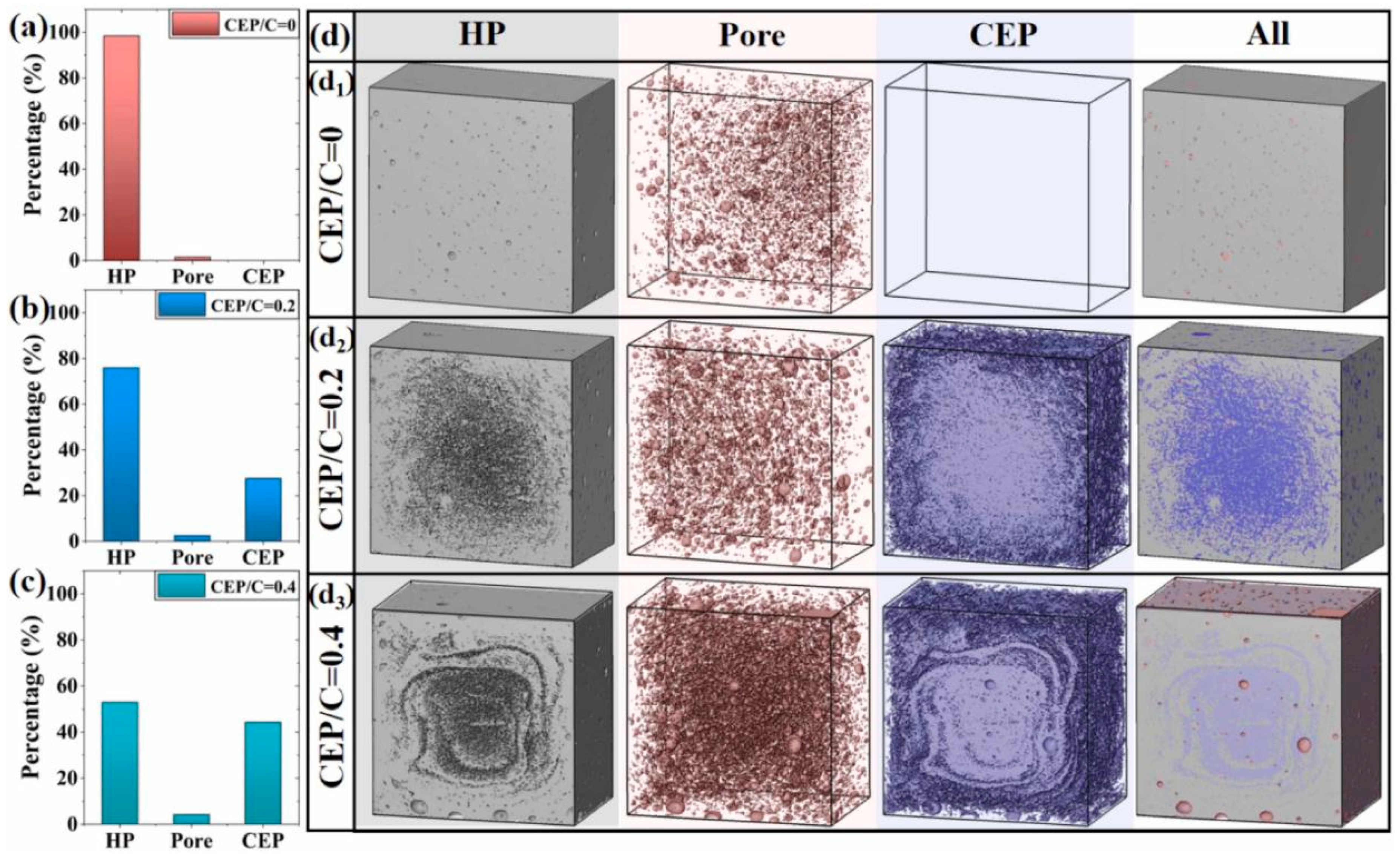
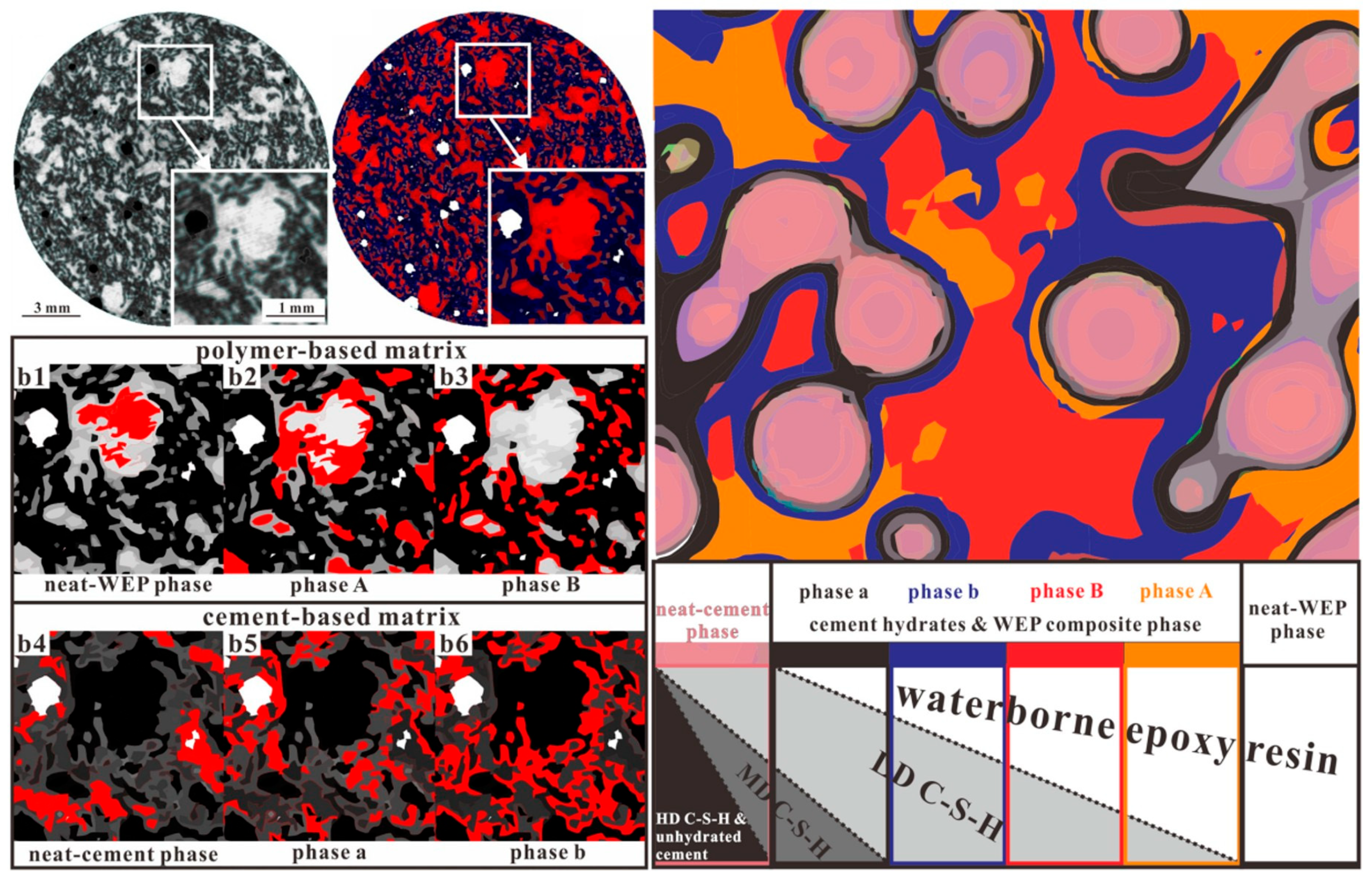
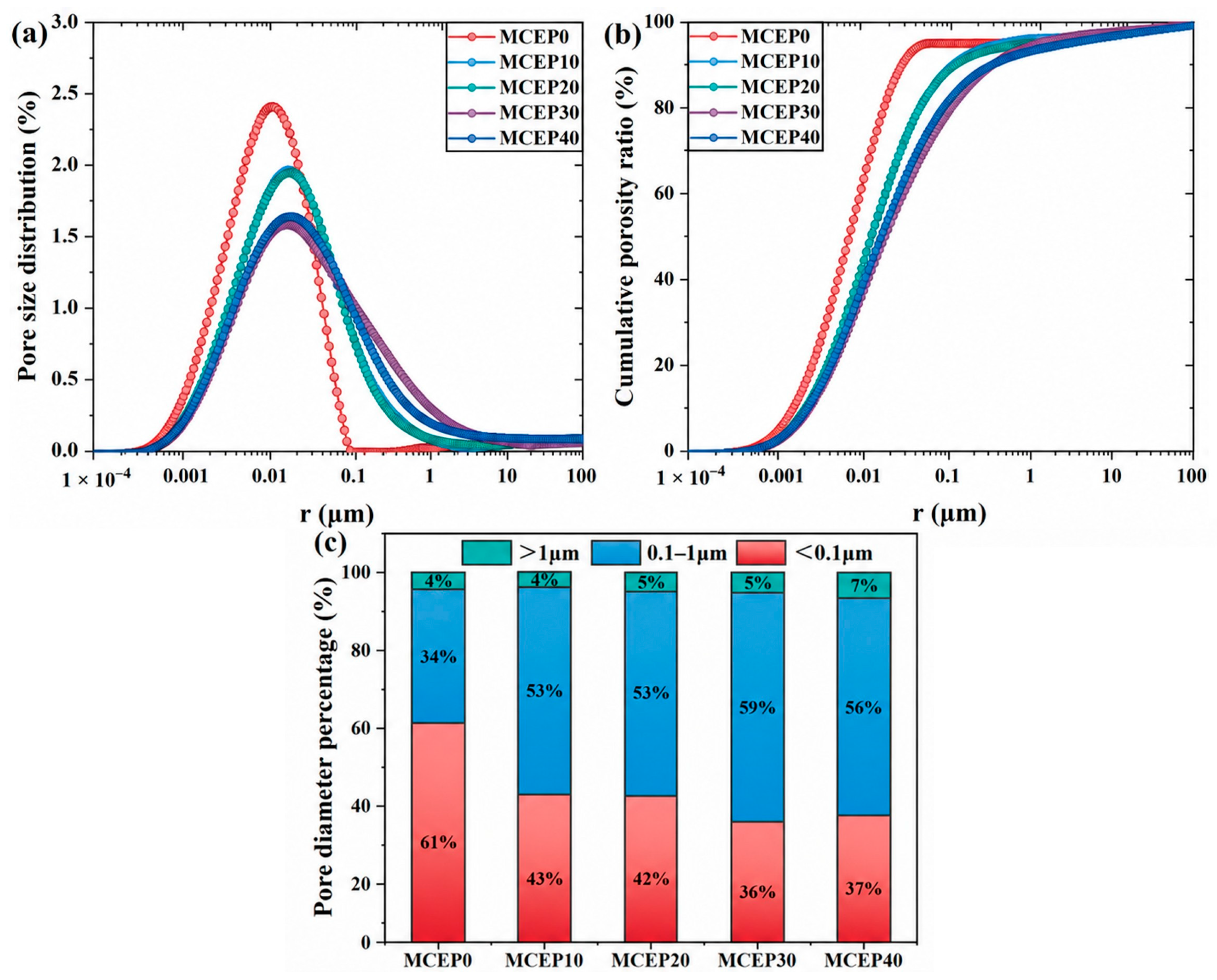
Zheng et al. [102] characterized the pore structure and phase distribution of gradient epoxy (CEP)-modified cement paste. The results indicated that the total porosity increased from 1.53% to 4.19% with the increase in CEP/C from 0 to 0.4 (Figure 17), and the proportion of capillaries and macropores larger than 0.1 μm increased significantly, which was attributed to the air-entraining effect of the polymer. The X-CT three-dimensional reconstruction, however, showed (Figure 18) that the CEP phase was uniformly distributed in the cement paste. As the CEP content increased, the volume fraction of the CEP phase increased from 27.57% to 46.31%, forming an interpenetrating continuous network (IPN) with the cement hydration products. Although this IPN structure did not significantly reduce the total porosity, it effectively slowed down the transport of water and corrosive media through encapsulation and bridging of the pores by the polymer membrane, while at the same time increasing crack deflection and energy dissipation pathways and improving the material toughness and durability.
Jeon et al. [103] found through quantitative analysis using the mercury intrusion porosimetry (MIP) method that the addition of nano-SiO2 reduced the total porosity from 38.1% to 19.5%, with a significant increase in the proportion of gel pores; SEM images revealed that brucite (Mg(OH)2) and hydrated magnesium carbonate crystals filled the capillary pores in rose-like or needle-like morphologies, resulting in a denser microstructure after carbonization.
Hydration Reactions and Microscopic Mechanisms
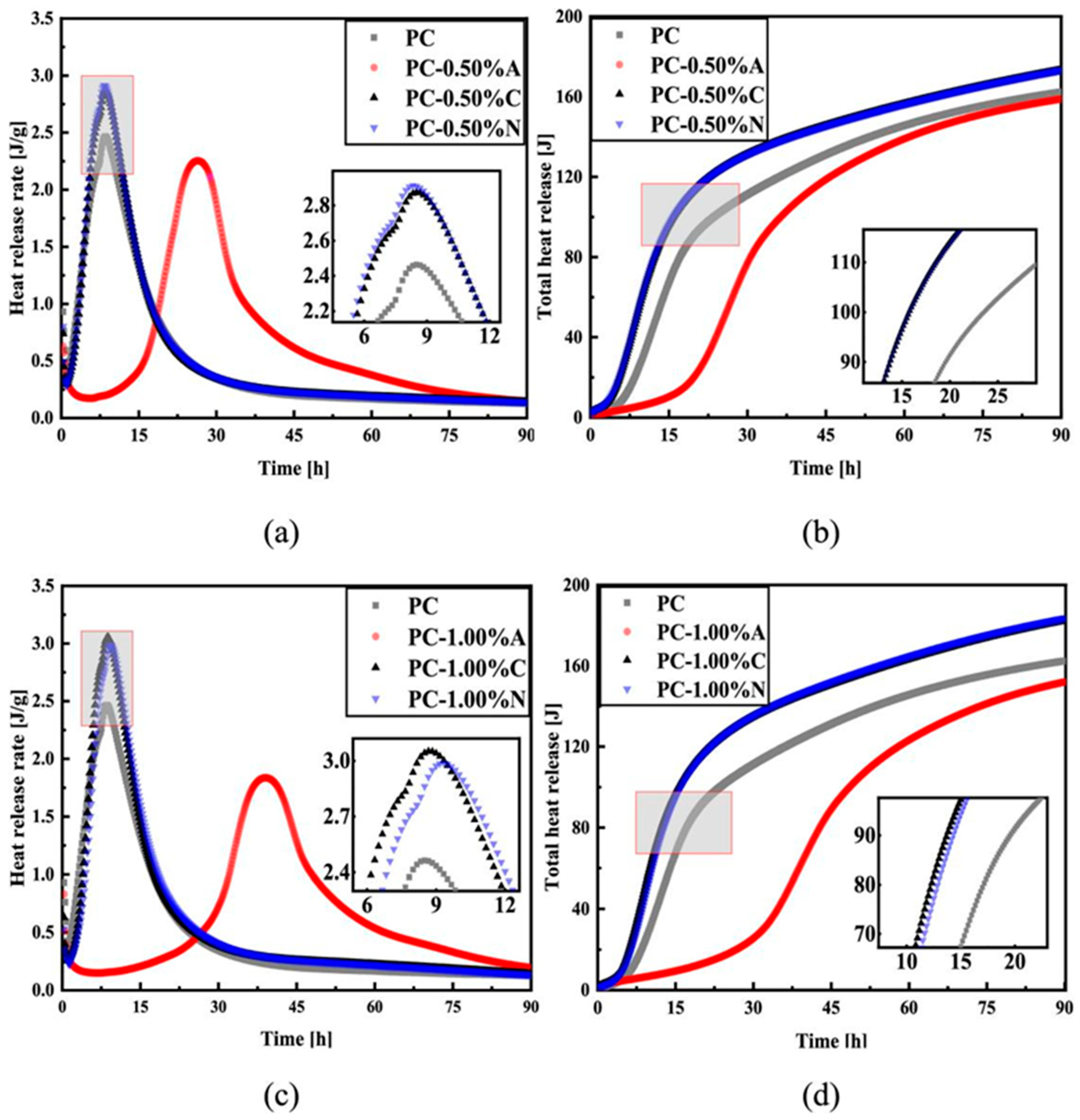
The effect of polymers on cement hydration is a key factor in the determination of the microstructure and macroscopic properties of the material. Different polymers have different mechanisms of action, but most commonly include a retardation effect [104,105,106,107,108,109,110]. The extent and stage of action vary according to the type of polymer. Yuan et al. [111] studied the heat of hydration and found that anionic PAM (APAM) greatly delayed the exothermic peak of hydration (from about 12 h to more than 17 h) and reduced the total heat released, while cationic (CPAM) and nonionic (NPAM) PAMs slightly increased the exothermic rate. The fitting of the Krstulovic-Dabic kinetic model revealed that APAM primarily retarded the crystallization nucleation and phase boundary reactions. Thermogravimetric analysis (TGA) showed that APAM significantly inhibited the formation of Ca(OH)2 in the first 12 h, but the CH content was higher than that of the blank group afterwards. Quantitative X-ray diffraction (XRD) analysis showed that APAM inhibited the dissolution of C3S in the early stage and promoted the dissolution of C2S, while CPAM and NPAM only enhanced the early dissolution of C3S (Figure 19).
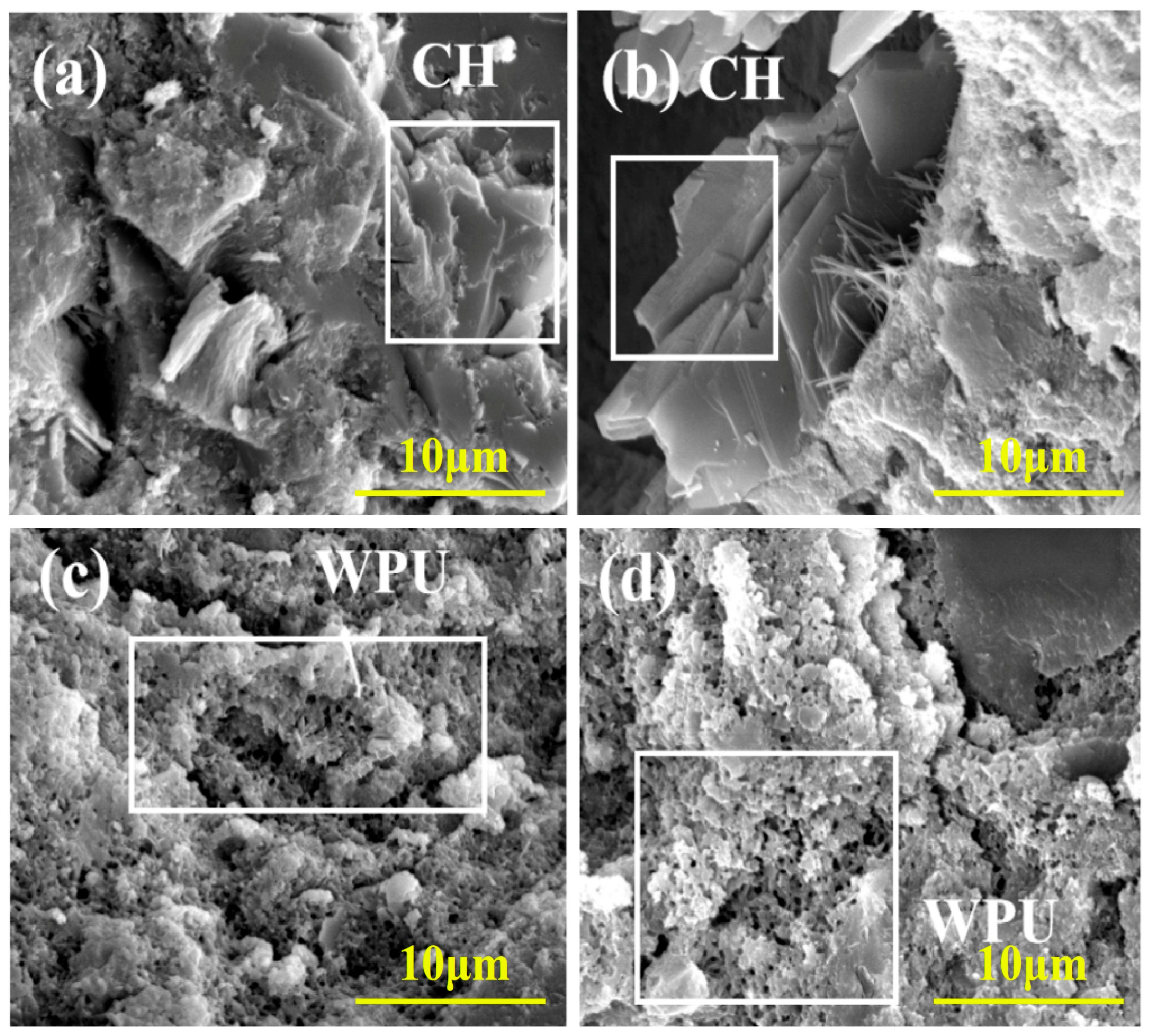
Zheng et al. [112] demonstrated that the incorporation of waterborne polyurethane (WPU) delays the hydration process of cement and postpones the peak of hydration heat, primarily because WPU particles encapsulate cement particles, increasing steric hindrance and thereby inhibiting ion dissolution and crystallization. At the same time, microstructural characterization confirmed that the addition of WPU did not generate new crystalline phases, but significantly affected the yield of existing hydration products, forming a three-dimensional polymer network in conjunction with hydration products such as C-S-H gel (Figure 20).
Pang et al. [90] concluded through comparative analysis of FTIR, Raman spectroscopy, and XRD that at low blending ratios (<20%), water-based epoxy resin promotes the early formation of CH and C-S-H, but at high blending ratios, physical encapsulation inhibits later-stage hydration; more importantly, non-emulsion epoxy resin (NEP) promotes the microcrystallization of CH (fine grains), whereas emulsion-type (EEP) primarily promotes the coarsening and growth of CH grains; this change in crystallization behavior directly affects the density and mechanical toughness of the interfacial transition zone.

3. Durability in Complex Hydraulic Environments

Underwater repair structures are continuously exposed to water-saturated environments and face multiple severe challenges, including chloride attack, flowing-water scouring, fatigue loading, and freeze–thaw cycles [113]. Therefore, polymer-modified cementitious materials should not only possess good early-age performance and mechanical properties, but should also maintain long-term durability under complex service conditions, which is critical for determining the service life of repair projects.
Zhi et al. [114] found that cellulose ether (CE) can increase Cl adsorption sites and improve chloride-binding capacity. However, it also increases the proportion of capillary pores and macropores and reduces pore tortuosity. As a result, higher CE contents lead to lower overall resistance to chloride ingress. In contrast, polyacrylamide (PAM) can enhance the physical chloride-binding capacity of C-S-H gel by reducing the alkalinity of the system. Although PAM increases the total porosity, the increase is mainly associated with gel pores, thereby effectively improving the overall resistance to chloride ion penetration [115].
Fu et al. [116] investigated the effect of waterborne epoxy resin (WEP) on the sulfate resistance of sulfoaluminate cement (SAC) repair mortar under sodium sulfate wet–dry cycles. The results showed that, with changes in the polymer-to-cement ratio (P/C), the corrosion resistance coefficient and relative dynamic elastic modulus of the mortar changed only slightly, indicating that WEP dosage had little influence on sulfate resistance. This was mainly because the SAC-based mortar had intrinsically low porosity and formed a dense IPN structure, which limited the ingress of SO42−. Even when a small amount of SO42− entered the matrix, the AFt and CaSO4 produced by its reaction with cementitious components preferentially filled the pores and temporarily increased the compactness of the structure. This behavior contrasts with OPC mortar, which has higher porosity and is more sensitive to sulfate attack.
Takahashi et al. [117] investigated the fatigue behavior of bridge bearing mortar submerged in water using compression fatigue tests, in which the maximum stress was 60% of the static compressive strength. Fluorescence tracing showed that water-dispersible polyurethane ether (PUE) effectively suppressed the dynamic ingress and egress of water under fatigue loading by forming hydrophobic or dense structures from the nanoscale to the micrometer scale. Consequently, the fatigue life under saturated conditions increased by 4.7 times. This finding is highly relevant to underwater repair materials subjected to wave action, traffic vibration, and flow-induced cyclic loading.
Yang et al. [118] evaluated the durability of silica nanoparticle (SN)-reinforced underwater repair materials in terms of impermeability, corrosion resistance, and freeze–thaw resistance. The results showed that SNs act as microstructural densifiers through pore filling, pozzolanic reaction, and nucleation effects. Their practical application in dam impermeabilization repair confirmed simultaneous improvements in workability, impermeability grade up to Grade 8, and underwater bond strength. Zheng et al. [119] systematically evaluated anionic waterborne polyurethane (WPU)-modified repair mortar and found that WPU formed an interpenetrating polymer network (IPN) with cement hydration products, reducing the volume of large pores of 1–100 μm by 68%. This significantly reduced drying shrinkage and provided good resistance to acid corrosion and 200 freeze–thaw cycles.
Felekoglu [120] evaluated the deformation compatibility between a conventional repair mortar (RM), a high-strength micro-concrete (MiC), and a substrate mortar (SM). Although MiC had higher strength, it showed much poorer compatibility: its 28-day drying shrinkage reached −1930 × 10−6 mm/mm, about 6.5 times that of RM, and its coefficient of thermal expansion was 15.5 × 10⁻⁶ °C−1, more than twice that of RM. Accordingly, the calculated thermal stress under a 50 °C temperature differential was 27.0 MPa for MiC, compared with only 7.4 MPa for RM. These results indicate that high-strength repair materials may be unsuitable for moderate-strength substrates when they exhibit high shrinkage and large thermal expansion mismatch.
Overall, the durability of polymer-modified cementitious underwater repair materials should be evaluated from transport-controlled and interface-controlled perspectives. Lower total porosity does not necessarily indicate better durability. Pore connectivity, pore tortuosity, pore-size distribution, interfacial transition zone stability, transport-path blocking, polymer-film integrity, IPN stability, and deformation compatibility with old concrete are more directly related to long-term service performance. Existing studies have shown that polymer modification can improve durability indicators such as chloride resistance, impermeability, and freeze–thaw resistance. However, most results are still based on single-factor or accelerated laboratory tests. Future studies should focus on durability evaluation under coupled actions, including chloride–sulfate attack [121], wet–dry cycling, flowing-water scouring, fatigue loading, and polymer aging.

4. Summary and Prospects

This review summarizes the effects of polymer-modified cementitious materials on workability, interfacial bonding, mechanical properties, and durability in underwater repair applications. Existing studies indicate that polymers do not merely act as thickeners or reinforcing agents. Instead, they improve the construction adaptability and long-term service performance of cementitious materials in underwater environments by regulating the fresh-state slurry structure, interfacial water-film behavior, pore connectivity, and organic–inorganic composite networks. The main mechanisms can be summarized as follows.
(1)
Regulation of underwater workability. Polymers reconstruct the flocculated structure of fresh cementitious materials through adsorption, entanglement, bridging, and steric hindrance, thereby improving slurry cohesion and washout resistance. The key challenge is to balance flowability, anti-washout performance, and shape stability according to different repair scenarios, such as grouting, horizontal repair, and vertical repair.
(2)
Enhancement of underwater interfacial bonding. Polymers can weaken the interfacial water-film barrier through competitive adsorption, hydrogen bonding, electrostatic interactions, or coordination involving polar groups. Hydrophobic segments can also displace free water at the interface. Meanwhile, cement hydration products can penetrate pores and microcracks in the old concrete, forming mechanical interlocking. Therefore, reliable underwater interfacial bonding arises from the synergy among interfacial water-film regulation, chemical interactions, and physical interlocking.
(3)
Improvement of mechanical properties and durability. Polymer film formation or the development of organic–inorganic interpenetrating networks can optimize the pore structure, enhance crack-bridging capacity, and improve interfacial continuity. Long-term durability depends not only on the reduction in total porosity, but also on the blocking of connected pores, the extension of transport pathways for aggressive media, the stability of the polymer phase, and the long-term integrity of the repair–substrate interface.
It should be noted that existing studies still focus mainly on single-polymer or binary systems, whereas practical underwater repair materials are usually multi-component organic–inorganic composites. In addition, performance evaluation methods and standard testing protocols for underwater repair materials remain insufficient, which limits reliable comparisons among different material systems and assessments of their engineering applicability (Table 3).
Overall, future research should focus on smart responsive underwater repair materials, self-healing and self-reinforcing underwater interfaces, multi-component organic–inorganic synergistic design, testing methods closer to real underwater service conditions, coupled models for durability and service-life prediction, and low-carbon environmentally friendly material systems. These directions are expected to provide more durable, adaptive, low-carbon, and field-reliable repair solutions for marine, hydraulic, and offshore concrete infrastructure.

Author Contributions

S.J.: data curation, formal analysis, writing—original draft. B.P.: funding acquisition, methodology, supervision, validation. Y.C.: methodology supervision, validation. J.W.: writing—review and editing, supervision, validation. P.W.: writing—review and editing, supervision, validation. S.S.: Writing—review and editing, Funding acquisition, Formal analysis, Conceptualization. W.L.: Writing—review and editing, Project administration, Methodology, Investigation, Conceptualization. All authors have read and agreed to the published version of the manuscript.

Funding

This research was funded by the National Natural Science Foundation of China [No. 52478260], the Key & D Program of Shandong Province [No. 2024KJHZ023], and the Scientific Observation and Research Base of Transport Industry of Long Term Performance of Highway Infrastructure in Northwest Cold and Arid Regions (Gansu Provincial Highway Development Group Co., Ltd.).

Data Availability Statement

No new data were created or analyzed in this study. Data sharing is not applicable to this article.

Conflicts of Interest

Author Jianling Wang was employed by Qingdao Haihe Underwater Technology Engineering Co., Ltd. Authors Shanglin Song and Wensen Lai were employed by Gansu Provincial Transportation Research Institute Group Co., Ltd. The remaining authors declare that the research was conducted in the absence of any commercial or financial relationships that could be construed as a potential conflict of interest. The authors declare that this study received funding from the National Natural Science Foundation of China [No. 52478260], the Key R&D Program of Shandong Province [No. 2024KJHZ023], and the Scientific Observation and Research Base of Transport Industry of Long-Term Performance of Highway Infrastructure in Northwest Cold and Arid Regions (Gansu Provincial Highway Development Group Co., Ltd.). The funders were not involved in the study design, collection, analysis, interpretation of data, the writing of this article, or the decision to submit it for publication.

References

  1. Manu, B.A. Innovative Construction Materials: Advancing Sustainability, Durability, Efficiency, and Cost-effectiveness in Modern Infrastructure. Int. J. Res. Public Rev. 2024, 5, 4987–4999. [Google Scholar] [CrossRef]
  2. Mindess, S. Relationships between strength and microstructure for cement-based materials: An overview. MRS Online Proc. Libr. 1984, 42, 53–68. [Google Scholar] [CrossRef]
  3. Shah, S.P. Fracture toughness of cement-based materials. Mater. Struct. 1998, 21, 145–150. [Google Scholar] [CrossRef]
  4. Wang, L.; Zeng, X.; Yang, H.; Lv, X.; Guo, F.; Shi, Y.; Hanif, A. Investigation and Application of Fractal Theory in Cement-Based Materials: A Review. Fractal Fract. 2021, 5, 247. [Google Scholar] [CrossRef]
  5. Liu, R.; Wang, H.; Xiao, H. Simulation study on the impermeability improvement effect of cement-based materials with different pore structures. J. Build. Eng. 2024, 82, 108237. [Google Scholar] [CrossRef]
  6. Ozkilic, Y.O.; Celik, C.A.; Shcherban, E.M.; Yildizel, S.A. Integrated meta analytical and multi criteria evaluation of walnut shell as a sustainable aggregate in concrete with emphasis on durability performance. Sci. Rep. 2026, 16, 17996. [Google Scholar] [CrossRef] [PubMed]
  7. Cascardi, A.; Verre, S.; Micelli, F.; Aiello, M.A. Durability-aimed performance of glass FRCM-confined concrete cylinders: Experimental insights into alkali environmental effects. Mater. Struct. 2025, 58, 329. [Google Scholar] [CrossRef]
  8. Hasan, M.S. Abrasion on Concrete Surfaces Caused by Hydraulic Loading with Water-Borne Sands. Master’s Thesis, Concordia University, Montreal, QC, Canada, 2015. [Google Scholar]
  9. Li, J.; Bai, Y.; Cai, Y.; Zhu, Y. Evaluation of Concrete Abrasion Using Traditional and High-Speed Underwater Methods. J. Mater. Civ. Eng. 2023, 35. [Google Scholar] [CrossRef]
  10. Xu, Y.; Gao, Y.; Yu, H.; Ma, H.; Xu, M.; Xu, Z.; Feng, T. Time variation law of chlorine diffusion coefficient of marine concrete structures in tidal zone and its influence on service life. J. Build. Eng. 2023, 76, 107379. [Google Scholar] [CrossRef]
  11. Zhang, C.; Li, J.; Yu, M.; Lu, Y.; Liu, S. Mechanism and Performance Control Methods of Sulfate Attack on Concrete: A Review. Materials 2024, 17, 4836. [Google Scholar] [CrossRef] [PubMed]
  12. Xiaoyang, H.; Yiqiang, X.; Cheng, X. Disease analysis and reinforcement of concrete bridge substructure. J. Chongqing Jiaotong Univ. 2013, 32, 807–811. [Google Scholar]
  13. Planning Department of the Ministry of Water Resources of the People’s Republic of China. Brief Report on Water Conservancy Planning Plan; Planning Department of the Ministry of Water Resources of the People’s Republic of China: Beijing, China, 2022. [Google Scholar]
  14. A Comprehensive Assessment of America’s Infrastructure. 2025. Available online: https://infrastructurereportcard.org/cat-item/bridges-infrastructure/ (accessed on 2 May 2026).
  15. Tang, Z.; Li, W.; Hu, Y.; Zhou, J.L.; Tam, V.W.Y. Review on designs and properties of multifunctional alkali-activated materials (AAMs). Constr. Build. Mater. 2019, 200, 474–489. [Google Scholar] [CrossRef]
  16. Gonzalez, A.J.O. Using BCSA Cement to Repair Waterway Transportation Structures. University of Arkansas. 2020. Available online: https://www.proquest.com/openview/9011253f3b41fd6c937bd50f117a7f4e/1 (accessed on 10 July 2025).
  17. Song, X.; Song, X.; Liu, H.; Huang, H.; Anvarovna, K.G.; Ugli, N.A.D.; Huang, Y.; Hu, J.; Wei, J.; Yu, Q. Cement-Based Repair Materials and the Interface with Concrete Substrates: Characterization, Evaluation and Improvement. Polymers 2022, 14, 1485. [Google Scholar] [CrossRef] [PubMed]
  18. Yusslee, E.; Beskhyroun, S. Performance Evaluation of Hybrid One-Part Alkali Activated Materials (AAMs) for Concrete Structural Repair. Buildings 2022, 12, 2025. [Google Scholar] [CrossRef]
  19. Talukdar, S.; Roghanian, N.; Heere, R.; McAskill, N. Design Methodology and Properties of Concrete Mixes Developed for an Underwater Repair Application. In Canadian Society of Civil. Engineering Annual Conference; Springer: Cham, Switzerland, 2024; Volume 359, pp. 1047–1060. [Google Scholar] [CrossRef]
  20. Seica, M.V.; Packer, J.A. FRP materials for the rehabilitation of tubular steel structures, for underwater applications. Compos. Struct. 2007, 80, 440–450. [Google Scholar] [CrossRef]
  21. Shen, B.; Sheng, Y.; Abdulakeem, A.; Zhu, C.; Yang, H.; Wang, L. An experimental characterization of the properties of graphene oxide—Waterborne epoxy resin coating of concrete after chloride erosion. Constr. Build. Mater. 2024, 428, 136207. [Google Scholar] [CrossRef]
  22. Zhai, D.; Sun, Q.; Liu, Z.; Yue, X. Study on the pore characteristics of polyurethane-based repair materials. Constr. Build. Mater. 2025, 483, 141058. [Google Scholar] [CrossRef]
  23. Ohama, Y. Polymer-based admixtures. Cem. Concr. Compos. 1998, 20, 189–212. [Google Scholar] [CrossRef]
  24. Pang, B.; Jia, Y.; Pang, S.D.; Zhang, Y.; Du, H.; Geng, G.; Ni, H.; Qian, J.; Qiao, H.; Liu, G. The interpenetration polymer network in a cement paste–waterborne epoxy system. Cem. Concr. Res. 2021, 139, 106236. [Google Scholar] [CrossRef]
  25. Yao, H.; Fan, M.; Huang, T.; Yuan, Q.; Xie, Z.; Chen, Z.; Li, Y.; Wang, J. Retardation and bridging effect of anionic polyacrylamide in cement paste and its relationship with early properties. Constr. Build. Mater. 2021, 306, 124822. [Google Scholar] [CrossRef]
  26. Guo, S.; Zhang, X.; Chen, J.; Mou, B.; Shang, H.; Wang, P.; Zhang, L.; Ren, J. Mechanical and interface bonding properties of epoxy resin reinforced Portland cement repairing mortar. Constr. Build. Mater. 2020, 264, 120715. [Google Scholar] [CrossRef]
  27. Li, J.; Shang, J.; Yang, Q. Study on the evolution of impermeability and mechanical properties of epoxy composite coatings. Polym. Compos. 2023, 44, 6736–6746. [Google Scholar] [CrossRef]
  28. Zhang, H.; Chu, X.; Ding, Q.; Zhao, G.; Li, H. Study on the UV aging resistance of ZnO-modified epoxy resin by experiments and MD simulation. Polym. Eng. Sci. 2024, 64, 5903–5914. [Google Scholar] [CrossRef]
  29. Tarannum, N.; Pooja, K.; Khan, R. Preparation and applications of hydrophobic multicomponent based redispersible polymer powder: A review. Constr. Build. Mater. 2020, 247, 118579. [Google Scholar] [CrossRef]
  30. Yang, Y.e.; Pang, B.; Zhang, Y.; Wang, M.; Miao, G.; Zhou, A. A Review of Waterborne Polymer–Cementitious Composite Repair Materials for Application in Saline Soil Environments: Properties and Progress. Buildings 2024, 14, 848. [Google Scholar] [CrossRef]
  31. Xiao, M.; Zhang, J.; Feng, Y. A Review on Recent Application of Acrylate Emulsion/Resin in Cement Additives. Polym. Adv. Technol. 2025, 36, e70218. [Google Scholar] [CrossRef]
  32. Li, G.; Ding, Y.; Gao, T.; Qin, Y.; Lv, Y.; Wang, K. Chloride resistance of concrete containing nanoparticle-modified polymer cementitious coatings. Constr. Build. Mater. 2021, 299, 123736. [Google Scholar] [CrossRef]
  33. Chen, W.; Wu, Z.; Xie, Y.; He, X.; Su, Y.; Qin, Y.; Tang, D.; Oh, S.-K. Fabrication of silane and nano-silica composite modified Bio-based WPU and its interfacial bonding mechanism with cementitious materials. Constr. Build. Mater. 2023, 371, 130819. [Google Scholar] [CrossRef]
  34. Su, F.; He, T.; He, Z.; Yu, Q.; Wang, H. Mechanism of Acrylate Emulsion-Modified Cement-Based Materials. Molecules 2024, 29, 1260. [Google Scholar] [CrossRef] [PubMed]
  35. Wang, Y.; Li, Z.; Gao, W.; Liu, R. Interaction between demulsification, curing of waterborne epoxy resin emulsions and cement hydration. J. Build. Eng. 2024, 91, 109639. [Google Scholar] [CrossRef]
  36. Shao, L.; Liu, M.; Liu, Q.; Yu, Z.; Zhang, Y.; Feng, P. Enhancement of toughness and bonding strength of sulfoaluminate cement-based repair materials via in-situ polymerization. J. Build. Eng. 2025, 113, 114254. [Google Scholar] [CrossRef]
  37. Pourchez, J.; Ruot, B.; Debayle, J.; Pourchez, E.; Grosseau, P. Some aspects of cellulose ethers influence on water transport and porous structure of cement-based materials. Cem. Concr. Res. 2010, 40, 242–252. [Google Scholar] [CrossRef]
  38. Chen, W.; Zhou, Y.; Yu, Q.; Zhan, B.; Li, W.; Xiong, C.; Chen, S.; Cheng, L.; Zheng, Y. Microscopic thickening mechanisms of hydroxypropyl methyl cellulose ether anti-washout admixture and its impact on cementitious material rheology and anti-dispersal performance. J. Build. Eng. 2024, 89, 109346. [Google Scholar] [CrossRef]
  39. Lu, H.; Dai, B.; Li, C.; Wei, H.; Wang, J. Flocculation Mechanism and Microscopic Statics Analysis of Polyacrylamide Gel in Underwater Cement Slurry. Gels 2025, 11, 99. [Google Scholar] [CrossRef] [PubMed]
  40. Sun, Z.; Xu, B.; Yang, Z.; Sun, M.; Xian, X.; Chen, B. Resolving rheological dilemma in non-dispersible underwater concrete: Conflict between fluidity and anti-washout. Constr. Build. Mater. 2025, 493, 143258. [Google Scholar] [CrossRef]
  41. Beik, M.R.A.; Moghadam, K.Y.; Noori, M.; Altabey, W.A.; Chang, X.; Liu, C.; Wang, X.; Farsangi, E.N. Using Biopolymers as Anti-Washout Admixtures under Water Concreting. Buildings 2024, 14, 1140. [Google Scholar] [CrossRef]
  42. Ma, B.; Peng, Y.; Tan, H.; Jian, S.; Zhi, Z.; Guo, Y.; Qi, H.; Zhang, T.; He, X. Effect of hydroxypropyl-methyl cellulose ether on rheology of cement paste plasticized by polycarboxylate superplasticizer. Constr. Build. Mater. 2018, 160, 341–350. [Google Scholar] [CrossRef]
  43. Ali Sikandar, M.; Wazir, N.R.; Khan, A.; Nasir, H.; Ahmad, W.; Alam, M. Effect of various anti-washout admixtures on the properties of non-dispersible underwater concrete. Constr. Build. Mater. 2020, 245, 118469. [Google Scholar] [CrossRef]
  44. Lu, Z.; Kong, X.; Zhang, C.; Xing, F.; Zhang, Y. Effect of colloidal polymers with different surface properties on the rheological property of fresh cement pastes. Colloids Surf. A Physicochem. Eng. Asp. 2017, 520, 154–165. [Google Scholar] [CrossRef]
  45. Zhang, C.; Kong, X.; Yu, J.; Jansen, D.; Pakusch, J.; Wang, S. Correlation between the adsorption behavior of colloidal polymer particlesand the yield stress of fresh cement pastes. Cem. Concr. Res. 2022, 152, 106668. [Google Scholar] [CrossRef]
  46. Zheng, H.; Duan, Y.; Xu, B.; Sun, Z.; Wang, P.; Pang, B.; Hou, D. Performance study of a tough and non-dispersible underwater concrete repair material based on organic–inorganic IPN structure with water-oil composite transition epoxies. Constr. Build. Mater. 2025, 485, 141964. [Google Scholar] [CrossRef]
  47. Han, X.; Xu, F.; Ge, J.; Qian, W.; He, Y.; Meng, X.; Zhu, P. Modification study of underwater epoxy-cement mortar with polyacrylate latex: Engineering performance optimization and microstructure analysis. Constr. Build. Mater. 2025, 462, 139966. [Google Scholar] [CrossRef]
  48. Brumaud, C.; Baumann, R.; Schmitz, M.; Radler, M.; Roussel, N. Cellulose ethers and yield stress of cement pastes. Cem. Concr. Res. 2014, 55, 14–21. [Google Scholar] [CrossRef]
  49. Bessaies-Bey, H.; Baumann, R.; Schmitz, M.; Radler, M.; Roussel, N. Effect of polyacrylamide on rheology of fresh cement pastes. Cem. Concr. Res. 2015, 76, 98–106. [Google Scholar] [CrossRef]
  50. Guo, C.; Chen, N.; Wang, R. Study on hydroxypropyl methylcellulose modified Portland cement-sulphoaluminate cement composites: Rheology, setting time, mechanical strength, resistance to chloride ingress, early reaction kinetics and microstructure. J. Build. Eng. 2024, 98, 111070. [Google Scholar] [CrossRef]
  51. Grzeszczyk, S.; Jurowski, K.; Bosowska, K.; Grzymek, M. The role of nanoparticles in decreased washout of underwater concrete. Constr. Build. Mater. 2019, 203, 670–678. [Google Scholar] [CrossRef]
  52. Wang, Y.; Gu, L.; Zhao, L. Beneficial Influence of Nanoparticles on the Strengths and Microstructural Properties of Non-dispersible Underwater Concrete. KSCE J. Civ. Eng. 2021, 25, 4274–4284. [Google Scholar] [CrossRef]
  53. Wang, Y.; Zeng, D.; Ueda, T.; Fan, Y.; Li, C.; Li, J. Beneficial effect of nanomaterials on the interfacial transition zone (ITZ) of non-dispersible underwater concrete. Constr. Build. Mater. 2021, 293, 123472. [Google Scholar] [CrossRef]
  54. JC/T 985-2005; Cementitious Self-Leveling Floor Mortars. Standards Press of China: Beijing, China, 2005.
  55. Kaci, A.; Chaouche, M.; Andréani, P.A. Influence of bentonite clay on the rheological behaviour of fresh mortars. Cem. Concr. Res. 2011, 41, 373–379. [Google Scholar] [CrossRef]
  56. Assaad, J.J.; Gerges, N.; Khayat, K.H.; Lattouf, N.; Mansour, J. Assessment of Bond Strength of Underwater Polymer-Modified Concrete. ACI Mater. J. 2019, 116, 169–178. [Google Scholar] [CrossRef]
  57. Liu, J.; Wang, S.; Shen, Q.; Kong, L.; Huang, G.; Wu, J. Tough Underwater Super-tape Composed of Semi-interpenetrating Polymer Networks with a Water-Repelling Liquid Surface. ACS Appl. Mater. Interfaces 2021, 13, 1535–1544. [Google Scholar] [CrossRef] [PubMed]
  58. Yu, F.; Ai, J.; Liu, J.; Fan, T.; Zhang, Y. Oscillating magnetic field drive water film displacement to enhance underwater interfacial bonding. Constr. Build. Mater. 2025, 501, 144243. [Google Scholar] [CrossRef]
  59. Shi, J.; Chen, D.; Yu, Z. Novel epoxy resin-bonded sand system: Mechanical strength, deterioration resistance, and failure mechanism. Eng. Fail. Anal. 2024, 158, 108020. [Google Scholar] [CrossRef]
  60. Frigione, M.; Aiello, M.A.; Naddeo, C. Water effects on the bond strength of concrete/concrete adhesive joints. Constr. Build. Mater. 2006, 20, 957–970. [Google Scholar] [CrossRef]
  61. Lau, D.; Büyüköztürk, O. Fracture characterization of concrete/epoxy interface affected by moisture. Mech. Mater. 2010, 42, 1031–1042. [Google Scholar] [CrossRef]
  62. Büyüköztürk, O.; Buehler, M.J.; Lau, D.; Tuakta, C. Structural solution using molecular dynamics: Fundamentals and a case study of epoxy-silica interface. Int. J. Solids Struct. 2011, 48, 2131–2140. [Google Scholar] [CrossRef]
  63. Lau, D. Moisture-induced Debonding in Concrete-epoxy Interface. HKIE Trans. 2012, 19, 33–38. [Google Scholar] [CrossRef]
  64. Zhou, A.; Büyüköztürk, O.; Lau, D. Debonding of concrete-epoxy interface under the coupled effect of moisture and sustained load. Cem. Concr. Compos. 2017, 80, 287–297. [Google Scholar] [CrossRef]
  65. Wang, S.; Ou, R.; Li, J.; Jin, K.; Yu, L.; Murto, P.; Wang, Z.; Xu, X. Deformation-Resistant Underwater Adhesion in a Wide Salinity Range. Small 2024, 20, 2403350. [Google Scholar] [CrossRef] [PubMed]
  66. Ou, R.; Wang, S.; Li, J.; Li, Z.; Yu, L.; Wang, Z.; Murto, P.; Xu, X. Robust, Switchable and Printable Underwater Adhesives Based on a Temperature-Deactivated Design. Adv. Funct. Mater. 2025, 35, 2416043. [Google Scholar] [CrossRef]
  67. Du, J.; Bu, Y.; Shen, Z. Interfacial properties and nanostructural characteristics of epoxy resin in cement matrix. Constr. Build. Mater. 2018, 164, 103–112. [Google Scholar] [CrossRef]
  68. Kim, S.; Yi, J.H.; Hong, H.; Choi, S.I.; Kim, D.; Kim, M.O. Interfacial Bond Properties of Underwater Concrete Coated with Bisphenol A Epoxy Resins. Polymers 2023, 15, 4290. [Google Scholar] [CrossRef] [PubMed]
  69. Xie, Z.; Tian, Y.; Xu, Y.; Zhong, F.; Li, S.; Zhu, X.; Yuan, Q. Molecular design of epoxy resin and the driving forces in adhesion with cementitious materials. Appl. Surf. Sci. 2025, 689, 162498. [Google Scholar] [CrossRef]
  70. Assaad, J.J.; Issa, C.A. Bond strength of epoxy-coated bars in underwater concrete. Constr. Build. Mater. 2012, 30, 667–674. [Google Scholar] [CrossRef]
  71. Kikkawa, K.; Sumiya, Y.; Okazawa, K.; Yoshizawa, K.; Itoh, Y.; Aida, T. Thiourea as a “Polar Hydrophobic” Hydrogen-Bonding Motif: Application to Highly Durable All-Underwater Adhesion. J. Am. Chem. Soc. 2024, 146, 21168–21175. [Google Scholar] [CrossRef] [PubMed]
  72. Li, Y.; Liu, Z.; Wang, T.; Wang, M.; Yao, H.; Gao, F.; Cheng, J.; Zhang, J. Barnacle-inspired amphipathic high strength adhesives under-water/oil. Chem. Eng. J. 2024, 498, 155067. [Google Scholar] [CrossRef]
  73. Zhang, B.; Zhang, P.; Zhang, G.; Ma, C.; Zhang, G. Sterically Hindered Oleogel-Based Underwater Adhesive Enabled by Mesh-Tailoring Strategy. Adv. Mater. 2024, 36, 2313495. [Google Scholar] [CrossRef] [PubMed]
  74. Zhang, Y.; Zhao, Z.H.; Wang, L.; Sun, F.; Xu, J.; Yao, B.; Sun, Z.; Liu, T.; Zeng, Y.; Zhang, G.; et al. Barnacle-Inspired Underwater Adhesive with Instant, Robust, and Reversible Adhesion on Diverse Surfaces. Adv. Funct. Mater. 2025, 35, e07942. [Google Scholar] [CrossRef]
  75. Sun, J.; Liu, W.; Chen, S.; Qiao, G.; Zhang, H. Ultra-fast preparation of epoxy composites underwater via frontal polymerization. Chem. Eng. J. 2024, 498, 155491. [Google Scholar] [CrossRef]
  76. Ma, H.; Tang, J.; Bai, Y. Investigation on underwater bonding strength and improvement mechanism of ethylene-vinyl acetate copolymer modified mortar. Constr. Build. Mater. 2024, 457, 139486. [Google Scholar] [CrossRef]
  77. Pan, F.; Ye, S.; Wang, R.; She, W.; Liu, J.; Sun, Z.; Zhang, W. Hydrogel networks as underwater contact adhesives for different surfaces. Mater. Horiz. 2020, 7, 2063–2070. [Google Scholar] [CrossRef]
  78. Assaad, J.J.; Gerges, N. Styrene-butadiene rubber modified cementitious grouts for embedding anchors in humid environments. Tunn. Undergr. Space Technol. 2019, 84, 317–325. [Google Scholar] [CrossRef]
  79. Li, A.; Jia, M.; Mu, Y.; Jiang, W.; Wan, X. Humid Bonding with a Water-Soluble Adhesive Inspired by Mussels and Sandcastle Worms. Macromol. Chem. Phys. 2014, 216, 450–459. [Google Scholar] [CrossRef]
  80. Li, A.; Mu, Y.; Jiang, W.; Wan, X. A mussel-inspired adhesive with stronger bonding strength under underwater conditions than under dry conditions. Chem. Commun. 2015, 51, 9117–9120. [Google Scholar] [CrossRef] [PubMed]
  81. Yoon, T.; Cha, H.J. Amino acid chemistry and post-translational modifications underlying marine adhesive proteins: Biochemical insights for designing underwater adhesives. Protein Expr. Purif. 2026, 239, 106851. [Google Scholar] [CrossRef] [PubMed]
  82. Qin, C.; Ma, Y.; Zhang, Z.; Du, Y.; Duan, S.; Ma, S.; Pei, X.; Yu, B.; Cai, M.; He, X.; et al. Water-assisted strong underwater adhesion via interfacial water removal and self-adaptive gelation. Proc. Natl. Acad. Sci. USA 2023, 120, e2301364120. [Google Scholar] [CrossRef] [PubMed]
  83. Yin, L.; Cholewinski, A.; Zhao, B. Solvent-free urethane-based prepolymer as a versatile underwater adhesive material. Chem. Eng. J. 2024, 481, 148487. [Google Scholar] [CrossRef]
  84. Liu, J.; Huang, W.; Han, Z.; Zang, Y.; Wang, J.; Tan, H.; Kong, L. A polyurethane underwater adhesive with strong adhesion and self-curing capability. Eur. Polym. J. 2025, 239, 114300. [Google Scholar] [CrossRef]
  85. Chen, Y.; Meng, J.; Gu, Z.; Wan, X.; Jiang, L.; Wang, S. Bioinspired Multiscale Wet Adhesive Surfaces: Structures and Controlled Adhesion. Adv. Funct. Mater. 2020, 30, 1905287. [Google Scholar] [CrossRef]
  86. Feng, S.; Xiao, H.; Geng, J. Bond strength between concrete substrate and repair mortar: Effect of fibre stiffness and substrate surface roughness. Cem. Concr. Compos. 2020, 114, 103746. [Google Scholar] [CrossRef]
  87. Brzozowski, P.; Horszczaruk, E. Influence of surface preparation on adhesion of underwater repair concretes under hydrostatic pressure. Constr. Build. Mater. 2021, 310, 125153. [Google Scholar] [CrossRef]
  88. Perdanawati, R.A.; Risdanareni, P.; Setiamarga, D.H.; Ekaputri, J.J. The Effect of Biofouling on Cement based Concrete Substrate: Insights from Microfouling and Macrofouling Growth. In The 5th Sustainability and Resilience of Coastal Management (SRCM 2024); EDP Sciences: Les Ulis, France, 2025; Volume 157, p. 16. [Google Scholar] [CrossRef]
  89. Wang, R.; Wang, P.-M.; Li, X.-G. Physical and mechanical properties of styrene–butadiene rubber emulsion modified cement mortars. Cem. Concr. Res. 2005, 35, 900–906. [Google Scholar] [CrossRef]
  90. Pang, B.; Zhang, Y.; Liu, G. Study on the effect of waterborne epoxy resins on the performance and microstructure of cement paste. Constr. Build. Mater. 2018, 167, 831–845. [Google Scholar] [CrossRef]
  91. Zhang, X.; Du, M.; Fang, H.; Shi, M.; Zhang, C.; Wang, F. Polymer-modified cement mortars: Their enhanced properties, applications, prospects, and challenges. Constr. Build. Mater. 2021, 299, 124290. [Google Scholar] [CrossRef]
  92. Bi, J.X. Preparation and Performance of Waterborne Polyurethane-Cement-Based Composite Repair Materials. Master’s Thesis, Southeast University, Nanjing, China, 2022. [Google Scholar]
  93. Song, X.; Zheng, H.; Xu, L.; Xu, T.; Li, Q. Comparative Study of the Performance of Underwater Concrete between Anionic and Nonionic Anti-Washout Admixtures. Buildings 2024, 14, 817. [Google Scholar] [CrossRef]
  94. Wang, N.; Deng, Y.; Liu, S.; Chen, L. Study on the performance of new cement-based underwater building crack repair materials based on response surface analysis. Sci. Rep. 2025, 15, 18499. [Google Scholar] [CrossRef] [PubMed]
  95. Wang, R.; Wang, P. Function of styrene-acrylic ester copolymer latex in cement mortar. Mater. Struct. 2010, 43, 443–451. [Google Scholar] [CrossRef]
  96. Knapen, E.; Van Gemert, D. Polymer film formation in cement mortars modified with water-soluble polymers. Cem. Concr. Compos. 2015, 58, 23–28. [Google Scholar] [CrossRef]
  97. Tian, Y.; Gao, P.; Wang, R.; Wang, L.; Zhong, J.; Li, J. Study on the influence of organic polymers on the physical and mechanical properties of cement-based materials. Earth Environ. Sci. 2020, 474, 072028. [Google Scholar] [CrossRef]
  98. Jin, Z.; Zhao, L.; Pang, B.; Chen, J.; Song, X. Effect of waterborne polymer on mechanical properties, carbonation resistance and freeze-thaw resistance of cement mortar. Constr. Build. Mater. 2025, 492, 142922. [Google Scholar] [CrossRef]
  99. Yu, Z.; Wang, B.; Liu, F.; Han, J. Interfacial mechanical behaviour of underwater-cast alkali-activated mortar and cement mortar: Quasi-static and dynamic responses and mechanisms. J. Build. Eng. 2026, 123, 115855. [Google Scholar] [CrossRef]
  100. Xue, Y.; Wang, L.; Liu, Y.; Ranjith, P.G.; Cao, Z.; Shi, X.-y.; Gao, F.; Kong, H.-L. Brittleness evaluation of gas-bearing coal based on statistical damage constitution model and energy evolution mechanism. J. Cent. South Univ. 2025, 32, 566–581. [Google Scholar] [CrossRef]
  101. Zhang, C.; Liu, J.; Zhang, S.; Kong, X. Mechanical properties of polymer modified mortars using polymer latexes with varied glass transition temperature and surface charges. Cem. Concr. Compos. 2024, 150, 105573. [Google Scholar] [CrossRef]
  102. Zheng, H.; Duan, Y.; Pang, B.; Wang, M.; Wang, P.; Hou, D. Research on the durability of composite epoxy resin modified repair mortars based on water-oil gradient phase change: From macroscopic to nanoscopic scales. Constr. Build. Mater. 2024, 457, 139325. [Google Scholar] [CrossRef]
  103. Jeon, I.K.; Qudoos, A.; Woo, B.H.; Yoo, D.H.; Kim, H.G. Effects of nano-silica and reactive magnesia on the microstructure and durability performance of underwater concrete. Powder Technol. 2022, 398, 116976. [Google Scholar] [CrossRef]
  104. Su, Z.; Bijen, J.M.J.M.; Larbi, J.A. Influence of polymer modification on the hydration of portland cement. Cem. Concr. Res. 1991, 21, 242–250. [Google Scholar] [CrossRef]
  105. Knapen, E.; Van Gemert, D. Cement hydration and microstructure formation in the presence of water-soluble polymers. Cem. Concr. Res. 2009, 39, 6–13. [Google Scholar] [CrossRef]
  106. Tang, J.; Liu, J.; Yu, C.; Wang, R. Influence of cationic polyurethane on mechanical properties of cement based materials and its hydration mechanism. Constr. Build. Mater. 2017, 137, 494–504. [Google Scholar] [CrossRef]
  107. Wang, Q.; Wang, Y.; Han, S.; Han, L.; Han, G. Hydration behaviour of cement in polymer cement waterproof coating and its effect on the macroscopic performance. Constr. Build. Mater. 2023, 408, 133825. [Google Scholar] [CrossRef]
  108. Yin, B.; Qi, D.; Hua, X.; Fan, F.; Han, K.; Hou, Y.; Hou, D.; Chen, B. Mechanical properties and micro-mechanism of cement-based materials strengthened by in-situ organic-inorganic polymerization. Cem. Concr. Compos. 2023, 142, 105202. [Google Scholar] [CrossRef]
  109. Tripathi, B. Effects of Polymers on Cement Hydration and Properties of Concrete: A Review. ACS Omega 2024, 9, 2014–2021. [Google Scholar] [CrossRef] [PubMed]
  110. Song, P.; Wang, X.; Wang, Y.; Zhou, J.; Qiu, H.; Rahimi, A.; Ingham, J. Assess the interaction of water reducers and accelerators on the rheological and early hydration properties of cement-based materials. J. Mater. Res. Technol. 2025, 36, 806–822. [Google Scholar] [CrossRef]
  111. Yuan, Q.; Xie, Z.; Yao, H.; Huang, T.; Fan, M. Hydration, mechanical properties, and microstructural characteristics of cement pastes with different ionic polyacrylamides: A comparative study. J. Build. Eng. 2022, 56, 104763. [Google Scholar] [CrossRef]
  112. Zheng, H.; Pang, B.; Jin, Z.; Liu, S.; Zhang, Y.; Bi, J.; Chang, H.; Liu, Y.; Wang, F. Mechanical properties and microstructure of waterborne polyurethane-modified cement composites as concrete repair mortar. J. Build. Eng. 2024, 84, 108394. [Google Scholar] [CrossRef]
  113. Lin, H.; Jiang, Y.; Li, S.; Li, W.; Zhu, D.; Chen, J.; Teng, T.; Xue, Y.; Cao, Z. In Situ Study on High-Temperature Performance and Structural Deterioration Mechanism of Concrete. Processes 2026, 14, 1753. [Google Scholar] [CrossRef]
  114. Zhi, F.; Jiang, Y.; Li, W.; Yang, G.; Zhu, P.; Chu, H.; Jiang, L. Effect of cellulose ethers on the chloride transport in cement pastes. Constr. Build. Mater. 2025, 459, 139745. [Google Scholar] [CrossRef]
  115. Zhi, F.; Yang, G.; Zhu, P.; Gu, Y.; Song, Z.; Chu, H.; Jiang, L. Influence of polyacrylamide on the chloride transport in cement pastes. J. Build. Eng. 2026, 119, 115316. [Google Scholar] [CrossRef]
  116. Fu, H.; Pang, B.; Wang, P.; Yang, C.; Liu, Y.; Du, Z.; Ji, H. Microstructure and durability of rapid repair mortar with self-emulsifying waterborne epoxy polymer. Mater. Today Commun. 2024, 40, 109375. [Google Scholar] [CrossRef]
  117. Takahashi, K.; Matsuda, Y.; Miura, S.; Akitou, T.; Kuraoka, M.; Kono, I. Underwater fatigue behavior of cementitious mortar and a countermeasure using a water-dispersible polyurethane ether–Portland cement composite. Constr. Build. Mater. 2024, 428, 136296. [Google Scholar] [CrossRef]
  118. Yang, J.; Deng, S.; Xu, H.; Zhao, Y.; Nie, C.; He, Y. Investigation and Practical Application of Silica Nanoparticles Composite Underwater Repairing Materials. Energies 2021, 14, 2423. [Google Scholar] [CrossRef]
  119. Zheng, H.; Pang, B.; Jin, Z.; Zhang, Y.; Hou, D.; Bi, J.; Zhang, W.; Yuan, L. Durability enhancement of cement-based repair mortars through waterborne polyurethane modification: Experimental characterization and molecular dynamics simulations. Constr. Build. Mater. 2024, 438, 137204. [Google Scholar] [CrossRef]
  120. Felekoğlu, B. A comparative study on the bonding performance of an admixed repair mortar and high-strength flowable micro-concrete with substrate: Considerations on the physico-mechanical compatibility. J. Build. Eng. 2024, 98, 111113. [Google Scholar] [CrossRef]
  121. Xu, G.; Yuan, S.; Miao, C.; Zhou, K.; Zheng, H.; Tang, Z.; Zhou, X.; Huang, Y.; Cao, K.; Bian, S.; et al. Geopolymer-based electrolytes derived from industrial solid waste for structural energy storage. Joule 2026. [Google Scholar] [CrossRef]
  122. Jin, Z.; Jing, S.; Pang, B.; Wang, P.; Chen, J.; Yang, C.; Song, X.; Liu, L. Sustainable infrastructure repair materials: Self-emulsifying waterborneepoxy enhanced CSA cement with superior shrinkage mitigation properties. Constr. Build. Mater. 2025, 490, 142432. [Google Scholar] [CrossRef]
  123. ASTM C109/C109M-21; Standard Test Method for Compressive Strength of Hydraulic Cement Mortars. ASTM International: West Conshohocken, PA, USA, 2021.
  124. Nasr, A.A.; Chen, S.; Jin, F. Washout resistance of self-protected underwater concrete in freshwater and seawater. Constr. Build. Mater. 2021, 289, 123186. [Google Scholar] [CrossRef]
  125. Zhu, J.Y.; Chen, F.X.; Dai, X.Q.; Tan, Y.Z.; Duan, L.Q.; Zhang, Z.W.; Leng, Y.; Wang, S.Y.; Yin, T.Y.; Yu, R. Development of a novel ultra-high performance concrete (UHPC) suitable for underwater operation: Design and performance evaluation. J. Build. Eng. 2023, 75, 107030. [Google Scholar] [CrossRef]
  126. SL/T 352-2020; Test Code for Hydraulic Concrete. Ministry of Water Resources of the People’s Republic of China: Beijing, China, 2020.
  127. DL/T 5126-2021; Test Code for Polymer Modified Cement Mortar. National Energy Administration: Beijing, China, 2021.
  128. ASTM C1202-19; Standard Test Method for Electrical Indication of Concrete’s Ability to Resist Chloride Ion Penetration. ASTM International: West Conshohocken, PA, USA, 2019.
  129. ASTM C666/C666M-23; Standard Test Method for Resistance of Concrete to Rapid Freezing and Thawing. ASTM International: West Conshohocken, PA, USA, 2023.
Figure 1. (a) Trends in annual publication volumes for “Underwater” and “Repair” in the Web of Science (WOS) from 2008 to 2025; (b) related keywords for underwater concrete.
Buildings 16 02751 g001
Figure 2. Visual appearance of the control (a) and UWC (b) mixtures placed underwater, and evaluation of the scour resistance of the control mixture and the UWC mixture (c). Reproduced with permission from [43], Elsevier, 2026.
Buildings 16 02751 g002
Figure 3. Evaluation of rheological properties of control and UWC samples: (a) static yield stress; (b) apparent viscosity loss under shear; (c) 3IIT of thixotropic behavior; (d) percentage of deformation and recovery in concrete mixtures. Reproduced with permission from [43], Elsevier, 2026.
Buildings 16 02751 g003
Figure 4. The effect of plastic viscosity after adding colloidal polymers with different surface properties (C2: carboxyl groups, S2: sulfonic acid groups, T2: surface layer with PEO hair-like structures. Reproduced with permission from [44], Elsevier, 2026.
Buildings 16 02751 g004
Figure 5. Operational performance of the PECM. Reproduced with permission from [47], Elsevier, 2026.
Buildings 16 02751 g005
Figure 6. The interface transition zone in nanoindentation testing.
Buildings 16 02751 g006
Figure 7. Total pore volume (a), pore size distribution (b), and compressive strength of non-dispersive underwater concrete containing different admixtures (c) for the NUC sample [52].
Buildings 16 02751 g007
Figure 10. (a) Tensile bond strength of SDEP specimens underwater erosion in different ages; (b) Diagrams of the failure mode at the interface between SDEP and old concrete substrate. Reproduced with permission from [46], Elsevier, 2026.
Buildings 16 02751 g010
Figure 11. SEM results of SDEP with P/C = 0, 0.1, 0.3. Reproduced with permission from [46], Elsevier, 2026.
Buildings 16 02751 g011
Figure 12. Adhesion properties and failure behavior of nanocomposite adhesives. (a) Schematic illustration showing the deformation evolution of the nanocomposite adhesive during delamination from the substrate. (b) Schematic illustration showing the physical interlocking relationship between the nanocrystals and the substrate, and (c) corresponding SEM image of the interface. (d) Three-dimensional microstructure of the nanocomposite adhesive measured by X-ray tomography, indicating strong interactions between the adhesive and the Al substrate at the interface. (e) Effect of chemical composition on adhesion strength. Three mass ratios (1, 2, and 4) were used between ye’elimite and AM. (f) Stress–strain curves of the nanocomposite adhesive on various substrates. (g) Evolution of underwater bond strength over time on multiple surfaces [77].
Buildings 16 02751 g012
Figure 13. Mechanical properties of cement paste mixed with polymer emulsion: (a) Compressive strength; (b) Bending strength [97].
Buildings 16 02751 g013
Figure 14. Compressive strength of UWC with different AWCA contents: (a) 0.1%; (b) 0.2%; (c) 0.3% [93].
Buildings 16 02751 g014
Figure 15. Mechanical properties of stone body: (a) Stress–strain curves; (b) Compressive strength [94].
Buildings 16 02751 g015
Figure 16. The mixing of water-based epoxy with cement paste involves multiphase coexistence and phase transition diffusion. Reproduced with permission from [24], Elsevier, 2026.
Buildings 16 02751 g016
Figure 17. Pore structure of MCEP with different CEP/C ratios: (a) pore size distribution; (b) relationship between pore volume fraction and pore size; (c) pore volume percentage in different pore size ranges. Reproduced with permission from [102], Elsevier, 2026.
Buildings 16 02751 g017
Figure 18. Phase distribution of CEP cement pastes with (a) CEP/C = 0, (b) CEP/C = 0.2, and (c) CEP/C = 0.4; (d) X-CT reconstruction images of CEP cement pastes with different CEP/C ratios after 28 days of curing: (d1) CEP/C = 0, (d2) CEP/C = 0.2, and (d3) CEP/C = 0.4. Reproduced with permission from [102], Elsevier, 2026.
Buildings 16 02751 g018
Figure 19. Calorimetric curves of cement slurries containing different ionic types of PAM: (a) heat release rate of the sample containing 0.50% PAM, (b) total heat released by the sample containing 0.50% PAM, (c) heat release rate of the sample containing 1.00% PAM, (d) total heat released by the sample containing 1.00% PAM. Reproduced with permission from [111], Elsevier, 2026.
Buildings 16 02751 g019
Figure 20. SEM images of tensile cross-sections of cement mortar with different polymer-to-cement ratios at 28 days: (a) 0%, (b) 5%, (c) 10%, (d) 15%. Reproduced with permission from [112], Elsevier, 2026.
Buildings 16 02751 g020
Table 3. Test methods for the underwater performance of polymer-modified cementitious materials.
Performance MetricsTest Methods/StandardsTesting and Adaptation Methods for Underwater Repair Materials
Compressive/Flexural strengthASTM C109/C109M-21 [122,123]Test specimens were cast underwater, cured underwater, or formed underwater and then subjected to standard curing.
Bond strengthDirect tensile bond tests, slant shear tests, and flexural bond tests [26]Test specimens were cast underwater, cured underwater, or formed underwater and then subjected to standard curing.
Underwater Dispersion ResistancePlace the freshly mixed material in a water column to allow it to fall freely, and test for parameters such as dispersion loss, turbidity, and pH in the water.Mass loss rate [124], turbidity, pH [125], slurry loss
DurabilitySL/T 352-2020 [126], DL/T5126-2021 [127], ASTM C 1202 [128], ASTM C 666 [116,129]Test specimens were cast underwater, cured underwater, or formed underwater and then subjected to standard curing.
Disclaimer/Publisher’s Note: The statements, opinions and data contained in all publications are solely those of the individual author(s) and contributor(s) and not of MDPI and/or the editor(s). MDPI and/or the editor(s) disclaim responsibility for any injury to people or property resulting from any ideas, methods, instructions or products referred to in the content.