Strengthening Comparison of Carbonated Stabilized Soils Under Different Organic Matters

 ,
, 
Abstract
1. Introduction
2. Experimental Plan and Methods
2.1. Materials
2.2. Sample Preparation and Carbonation Curing
2.3. Test Methods
2.3.1. Physical Tests
2.3.2. pH Test
2.3.3. Unconfined Compressive Strength Test
2.3.4. Microscopic Tests
3. Results and Analysis
3.1. Visual Appearance and Physicochemical Properties
3.2. Unconfined Compressive Strength
3.3. pH Variation
3.4. Microscopic Mechanism Analysis
3.4.1. XRD
3.4.2. SEM
3.4.3. Pore Characteristics of Stabilized Soil
4. Discussion
5. Conclusions
- (1)
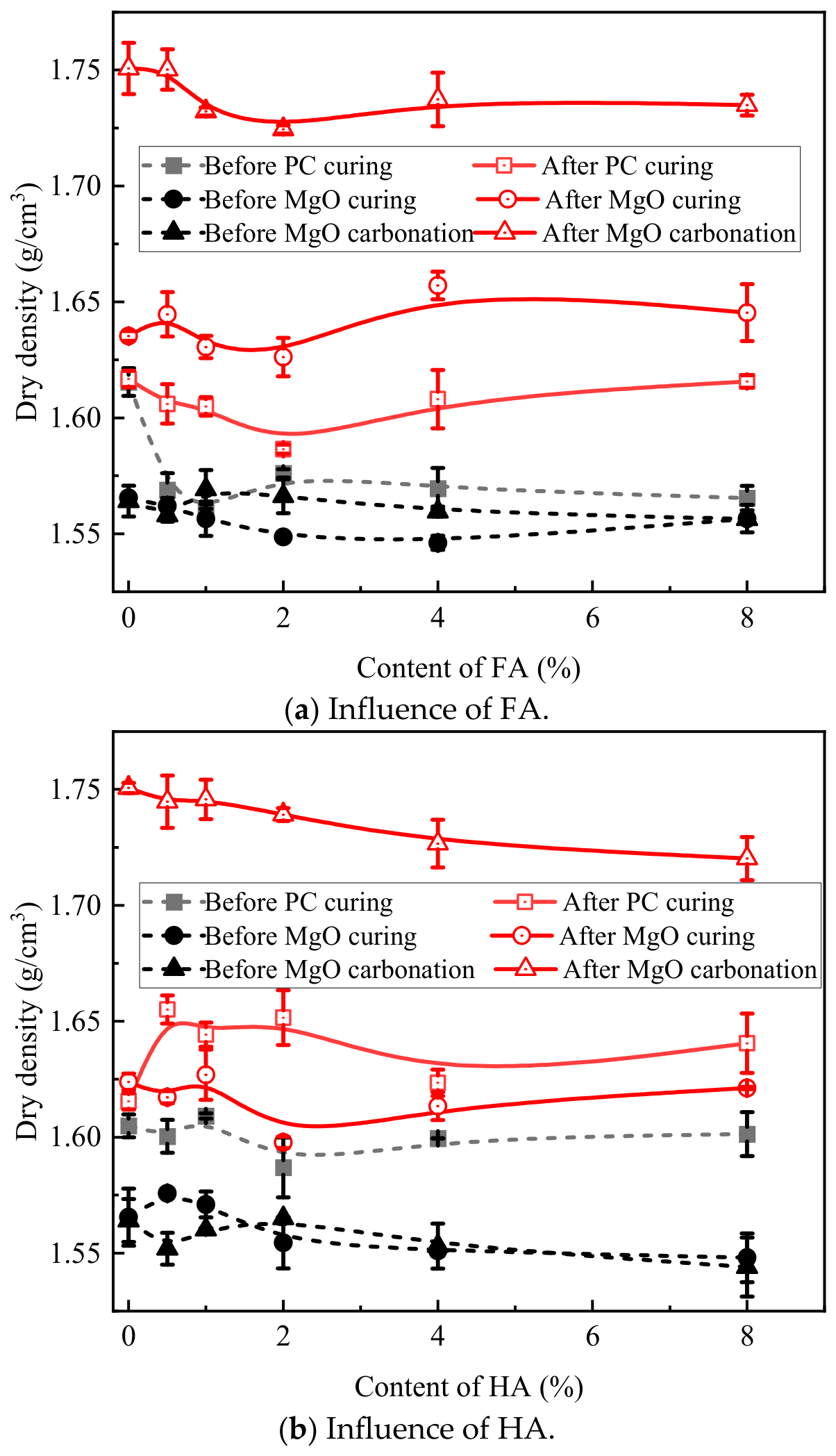
- This study clarifies the scientific advancement of applying reactive MgO carbonation to organic-rich soils by separately evaluating the effects of FA and HA and by comparing PC stabilization, MgO stabilization, and MgO carbonation under the same organic-matter dosage range. The results show that MgO carbonation has stronger resistance to organic-matter interference than conventional PC and uncarbonated MgO stabilization.
- (2)
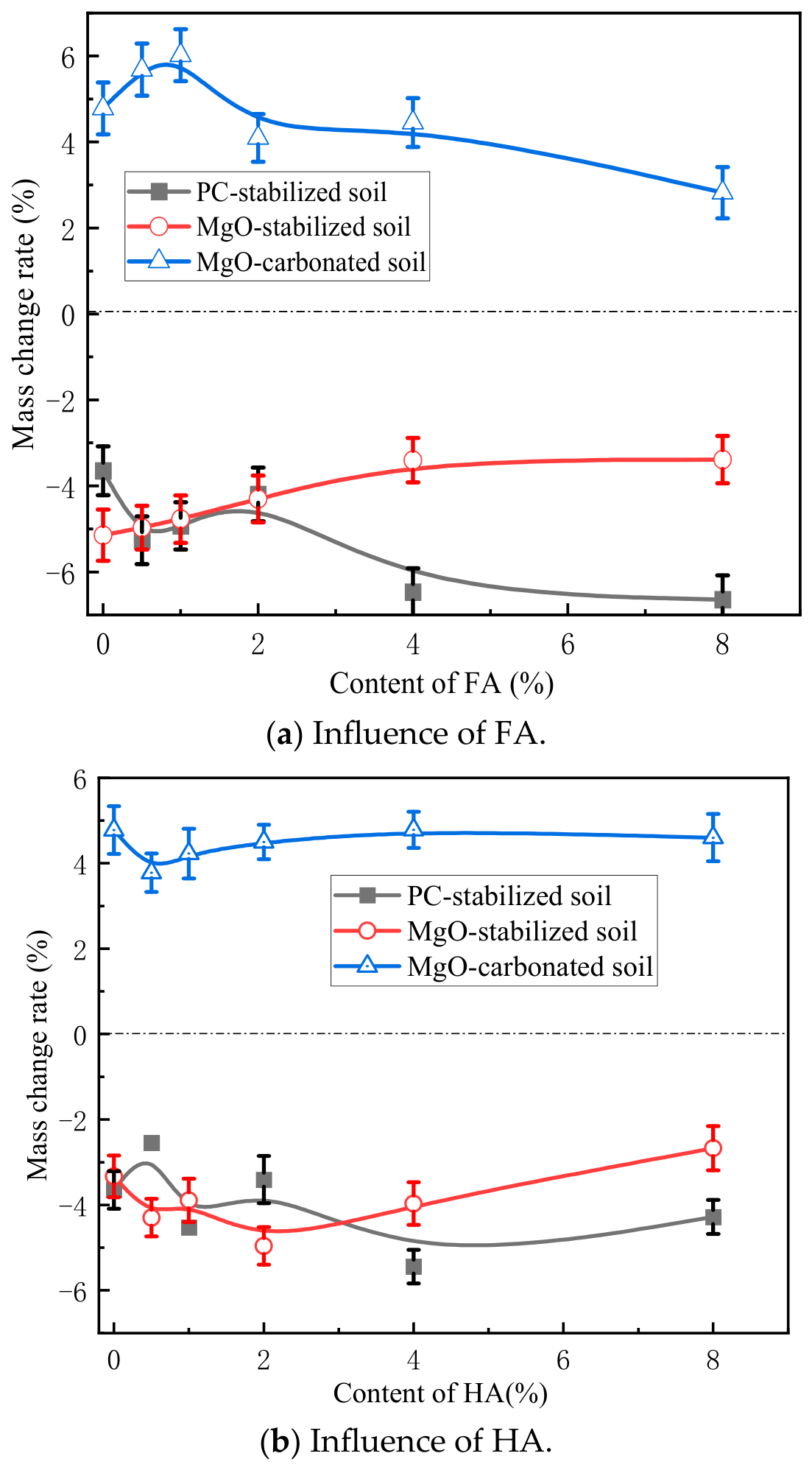
- MgO carbonation produced the most favorable macroscopic performance among the three treatment methods. The higher mass change, dry density, and UCS of the carbonated specimens are attributed to CO2 absorption and the formation of hydrated magnesium carbonates, which fill pores and cement soil particles. However, mass change should be regarded as an indirect indicator of carbonation, and direct measurements such as CO2 uptake or TGA are recommended in future work to quantify the carbonation degree.
- (3)
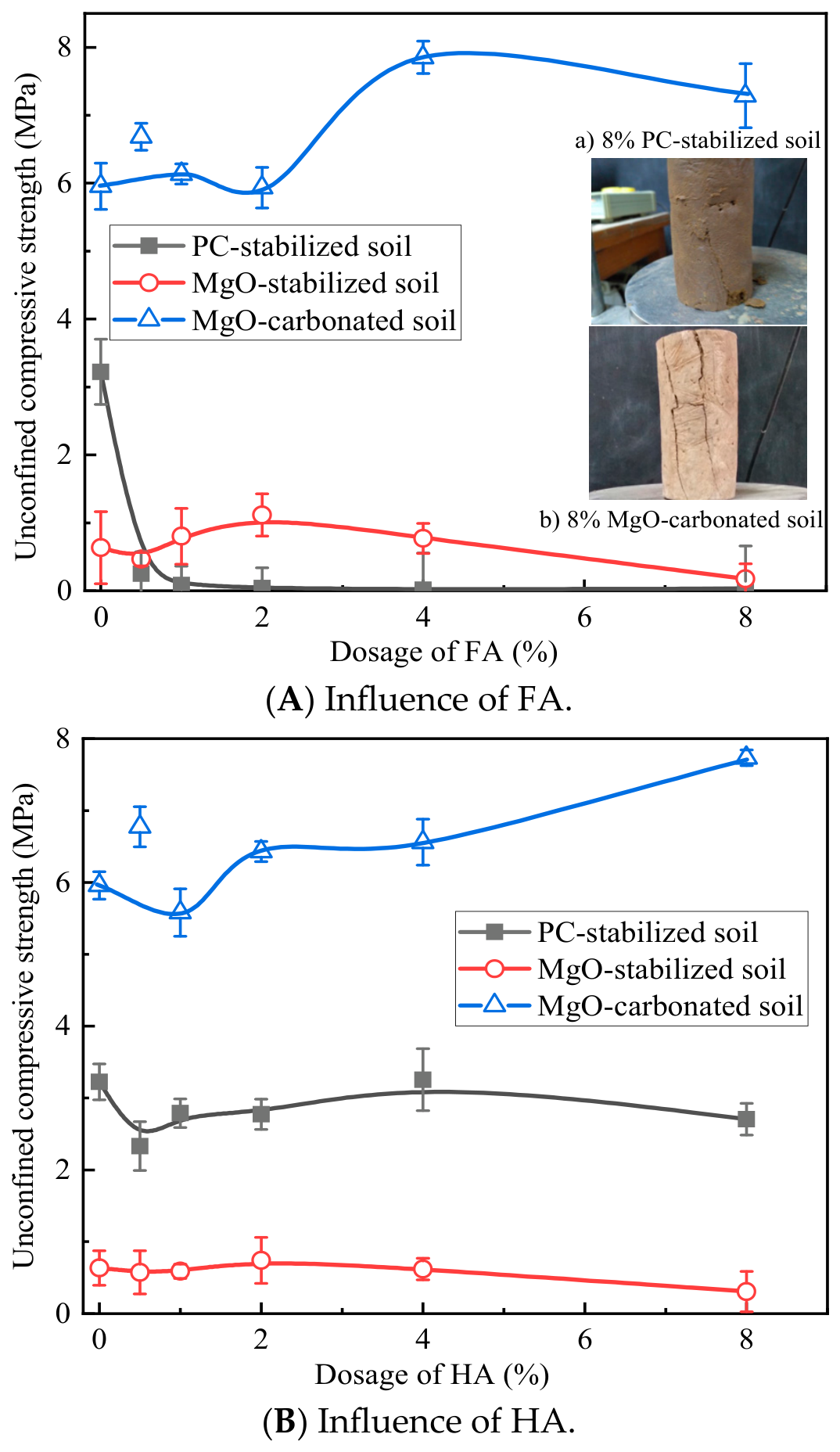
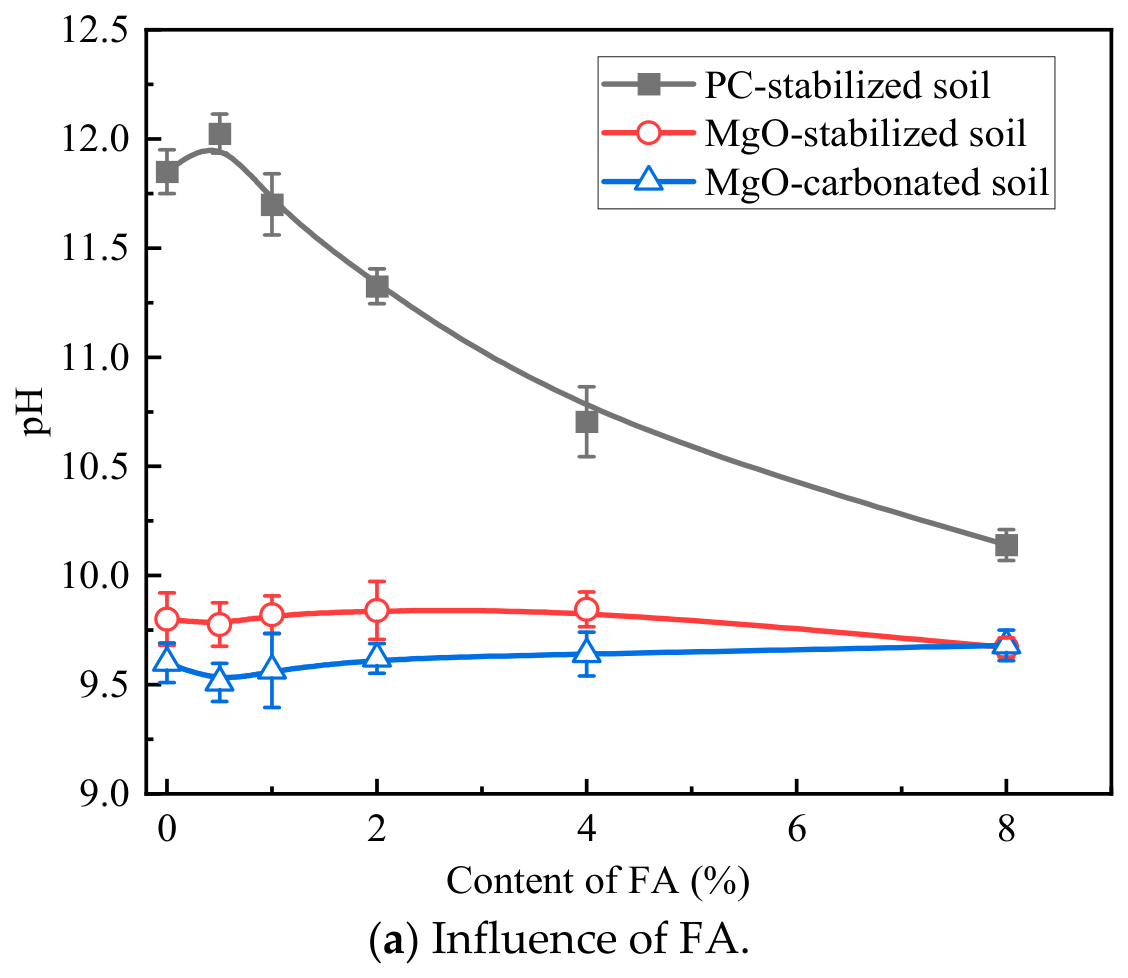
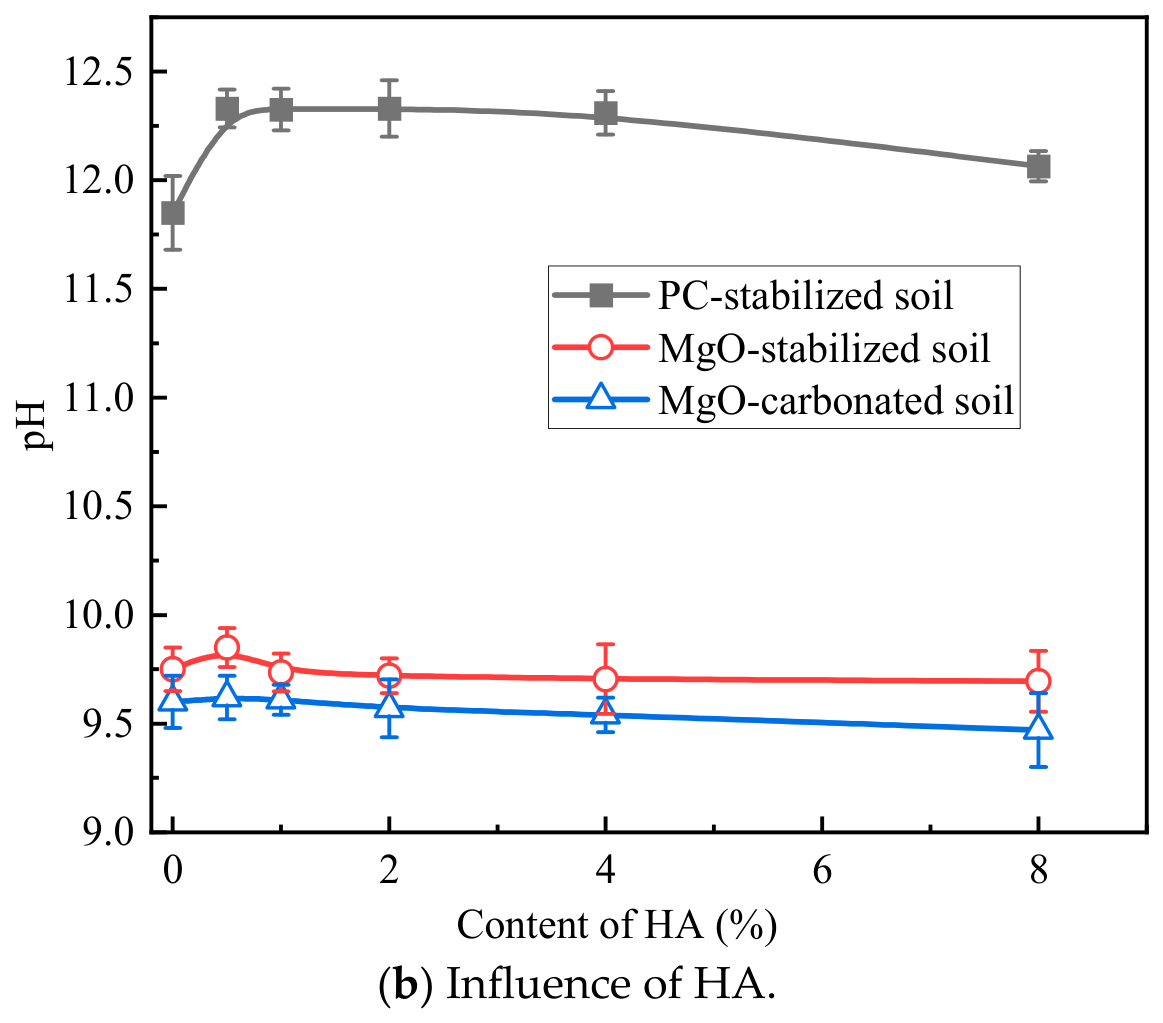
- The influence of organic matter on strength development is governed by competing chemical and physical mechanisms. At low FA or HA contents, organic functional groups complex Mg2+ ions, reduce alkalinity, and inhibit carbonate nucleation, resulting in strength reduction. At higher contents, the viscous or particulate nature of organic matter can increase cohesion, particle interlocking, or organic-mineral bonding, which partly explains the UCS recovery observed after the initial decrease. Therefore, the effect of organic matter should not be interpreted as purely inhibitory.
- (4)
- FA and HA affect MgO carbonation differently. FA shows a stronger inhibitory effect because of its higher solubility, mobility, and interaction with Mg-bearing species, whereas HA mainly acts through localized adsorption, pore blocking, and frictional effects. This difference explains the lower minimum UCS and greater dosage sensitivity of FA-containing specimens compared with HA-containing specimens.
- (5)
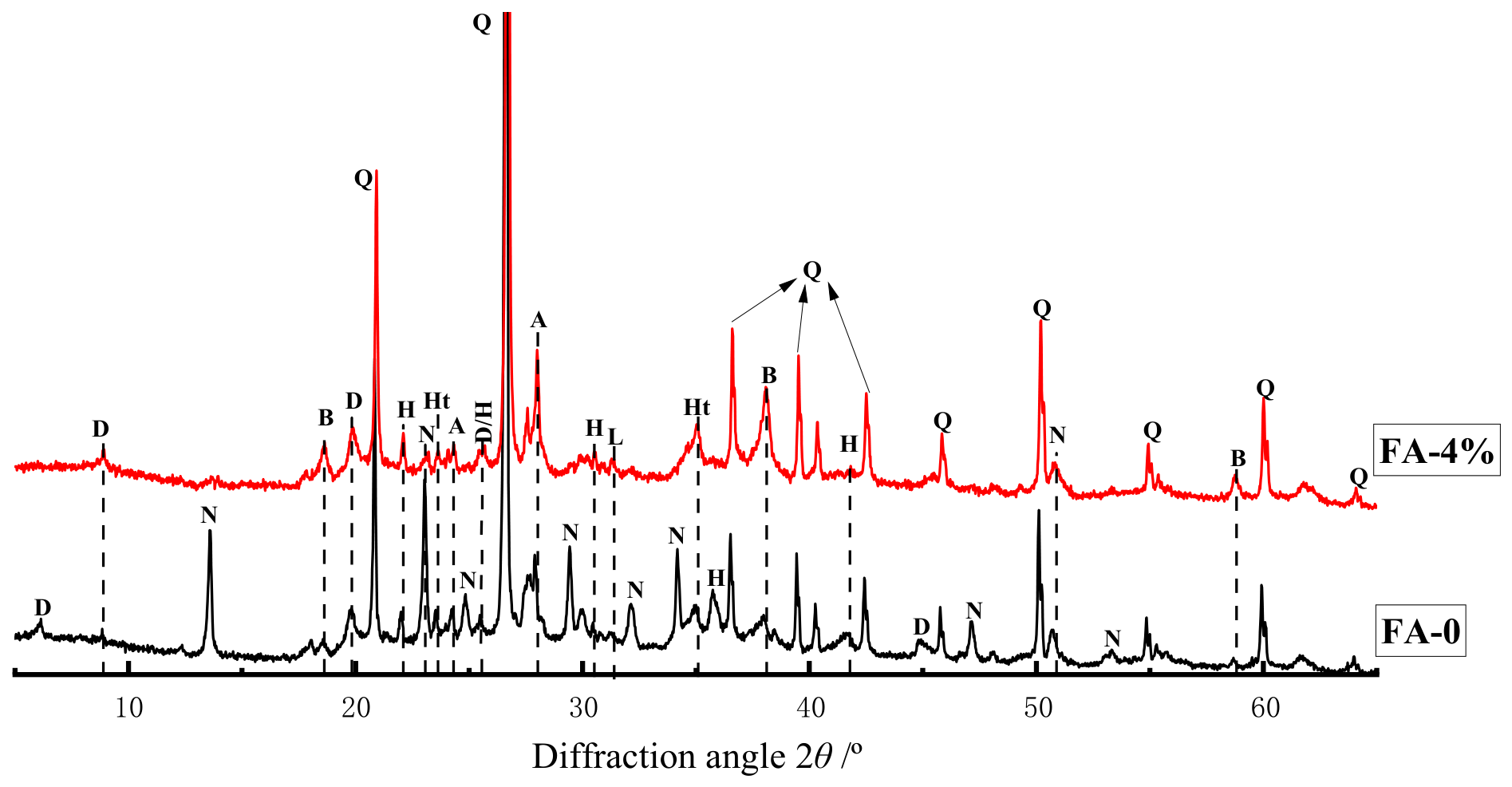
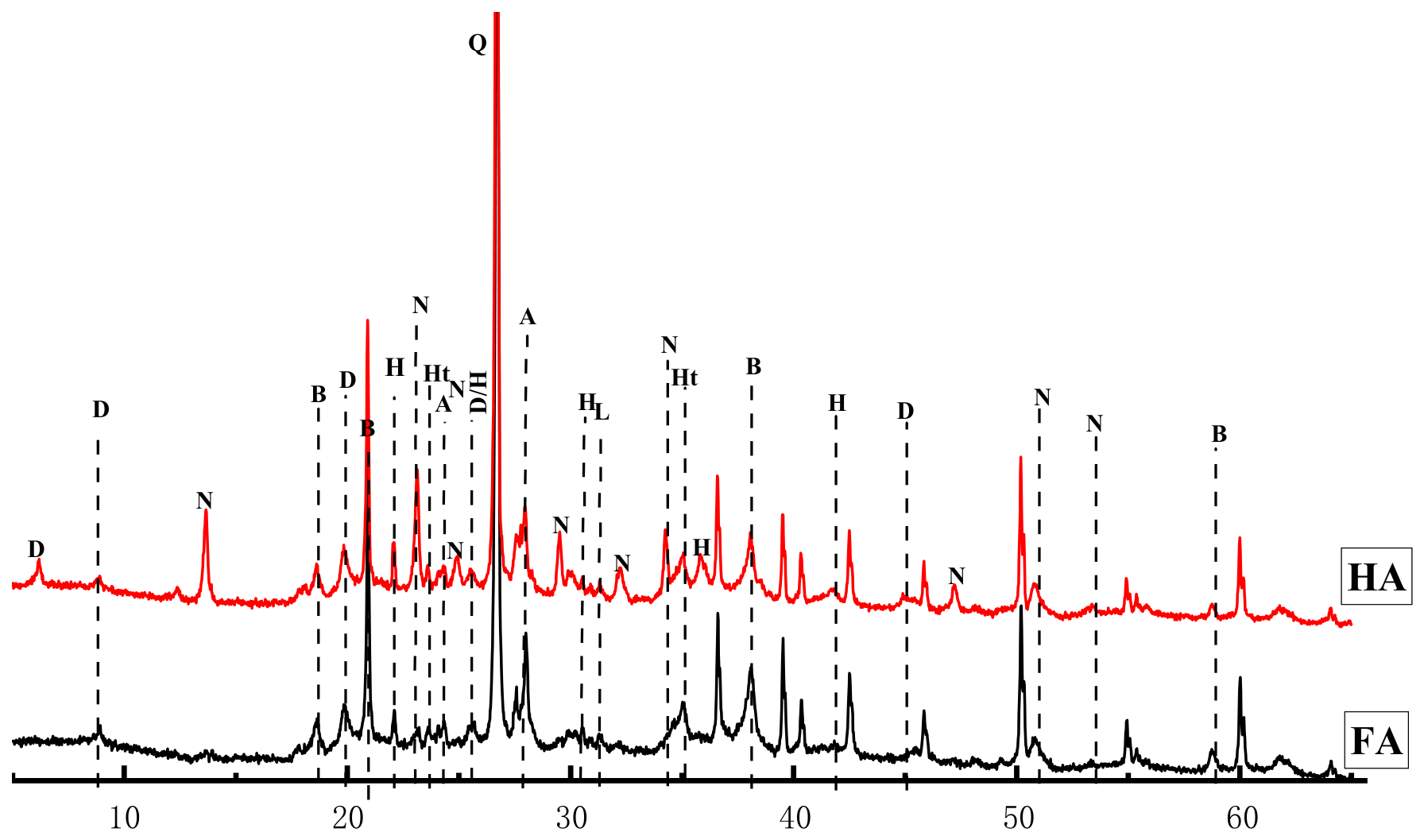
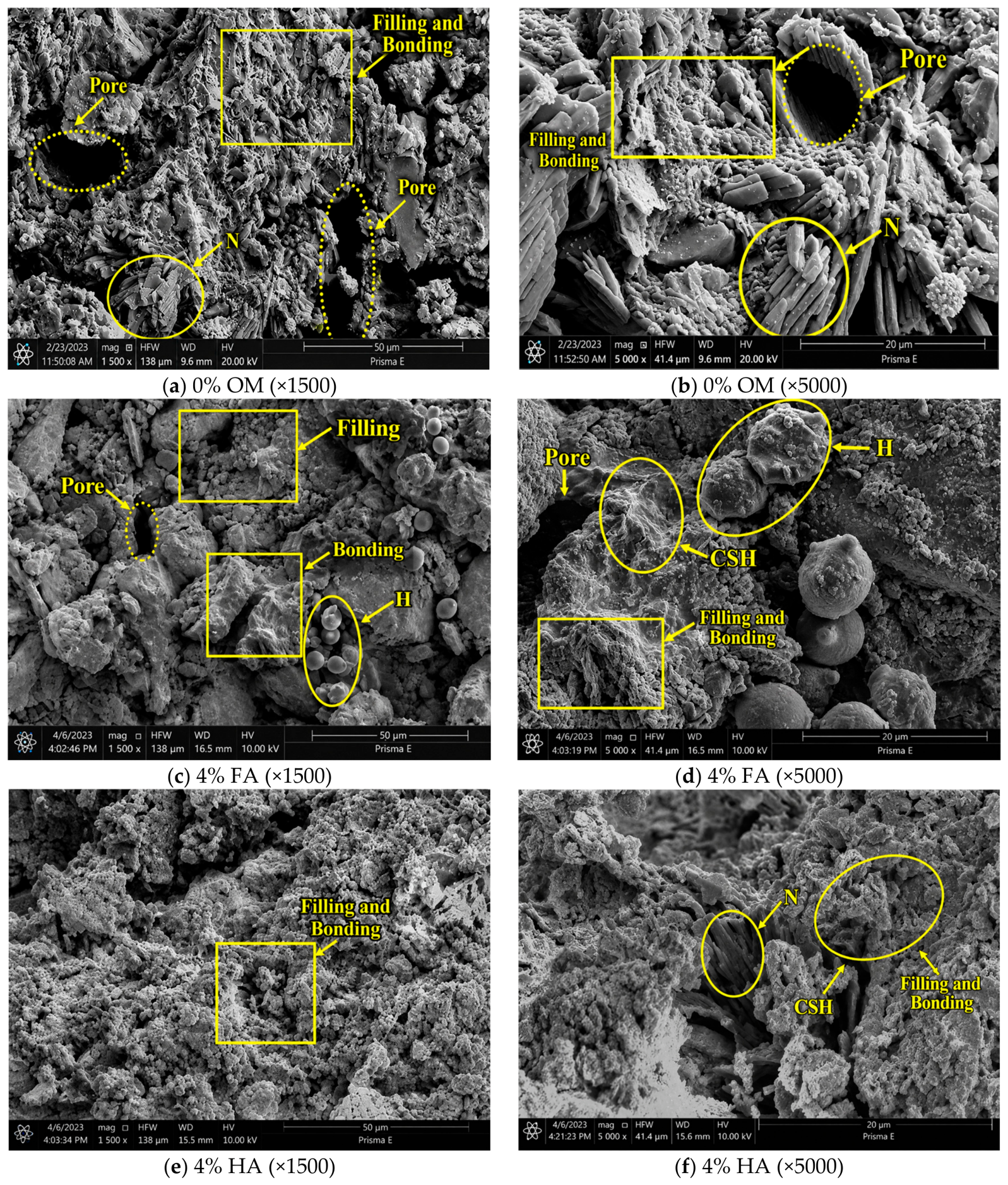
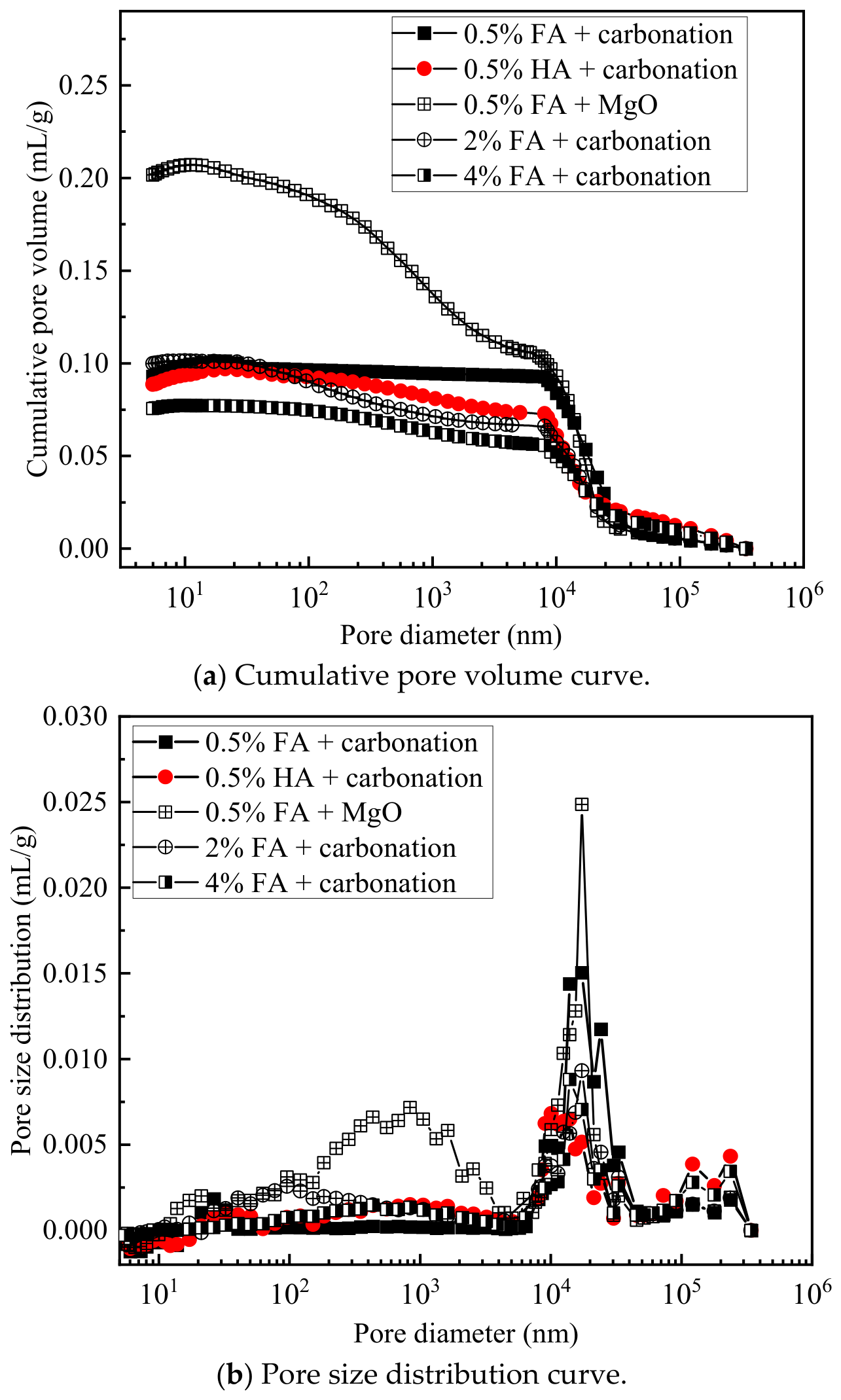
- XRD and SEM observations indicate that nesquehonite, dypingite, and hydromagnesite are the main carbonation products, while organic matter changes their morphology and distribution. Together with MIP results, the microstructural evidence suggests that strength is controlled not only by total porosity but also by the continuity and rigidity of carbonate bonding. Because the present XRD and SEM analyses are qualitative, future studies should include Rietveld refinement, quantitative image analysis, and direct carbonation measurements to strengthen the microstructural interpretation.
Author Contributions
Funding
Data Availability Statement
Acknowledgments
Conflicts of Interest
References
- Zhang, L.; Qiu, Y.; Wu, T.; Wang, Z. Correlation analysis of physical and mechanical parameters of inland fluvial-lacustrine soft soil based on different survey techniques. Appl. Rheol. 2023, 33, 20220145. [Google Scholar] [CrossRef]
- Wassie, T.A.; Demir, G. Mechanical strength and microstructure of soft soil stabilized with cement, lime, and metakaolin-based geopolymer stabilizers. Adv. Civ. Eng. 2024, 2024, 6613742. [Google Scholar] [CrossRef]
- Anburuvel, A. The engineering behind soil stabilization with additives: A state-of-the-art review. Geotech. Geol. Eng. 2024, 42, 1–42. [Google Scholar]
- Shao, L.; Ding, Z.; Wang, S.; Pan, K.; Hu, C. Effect of organic matter components on the mechanical properties of cemented soil. Materials 2023, 16, 5889. [Google Scholar] [CrossRef] [PubMed]
- Zhuang, X.; Li, T.; Yang, D. Dynamic properties and microstructural mechanisms of cement-stabilized soils improved with industrial by-product silica fume. J. Eng. Appl. Sci. 2025, 72, 202. [Google Scholar] [CrossRef]
- Yu, Y.; Wang, Z.; Shen, L.; Saeed, N.; Li, M. An innovative oxidation–coagulation–cementation strategy for effective and long-term peat soil stabilization. Eng. Geol. 2025, 358, 108404. [Google Scholar] [CrossRef]
- Mohammed, S.H.; Saeed, K.A.; Al Shaikhli, H.I. Evaluation of the strength and microstructural characteristics of stabilized organic clay soil. Case Stud. Chem. Environ. Eng. 2024, 9, 100647. [Google Scholar] [CrossRef]
- Avci, E.; Balci, M.C.; Toprak, M.A. Engineering properties of pozzolanic cement-stabilized organic soil. Q. J. Eng. Geol. Hydrogeol. 2024, 57, qjegh2023-095. [Google Scholar] [CrossRef]
- Lang, L.; Liu, N.; Chen, B. Strength development of solidified dredged sludge containing humic acid with cement, lime and nano-SiO2. Constr. Build. Mater. 2020, 230, 116971. [Google Scholar] [CrossRef]
- Beddaa, H.; Ben Fraj, A.; Lavergne, F.; Torrenti, J.-M. Effect of potassium humate as humic substances from river sediments on the rheology, the hydration and the strength development of a cement paste. Cem. Concr. Compos. 2019, 104, 103400. [Google Scholar] [CrossRef]
- Gong, S.; Feng, S.; Wang, S.; Duan, L.; Niu, Z.; Xu, Q.; Zhang, Q.; Chen, Y. Research on the mechanism of humic acid effect on the strength of cement-cured dredged sludge. Res. Sq. 2023. [Google Scholar] [CrossRef] [PubMed]
- Ma, C.; Chen, B.; Chen, L. Effect of organic matter on strength development of self-compacting earth-based construction stabilized with cement-based composites. Constr. Build. Mater. 2016, 123, 414–423. [Google Scholar] [CrossRef]
- Wang, S.; He, X.; Gong, S.; Cai, G.; Lang, L.; Ma, H.; Niu, Z.; Zhou, F. Influence mechanism of fulvic acid on the strength of cement-solidified dredged sludge. Water 2022, 14, 2616. [Google Scholar] [CrossRef]
- Luo, Z.; Zhang, B. Effect of humic acid and FA on mechanical and durability properties of geopolymer stabilized soft soil. Constr. Build. Mater. 2023, 409, 133875. [Google Scholar] [CrossRef]
- Yuan, X.; Peng, L.; Chen, B. Investigation of magnesium phosphate cement on river dredged sludge with varying humic acid content and solidification mechanism. J. Rock Mech. Geotech. Eng. 2025, 17, 573–585. [Google Scholar] [CrossRef]
- Winnefeld, F.; German, A.; Lura, P.; Rentsch, D.; Lothenbach, B. Low-CO2 cements based on magnesium oxide/hydromagnesite blends—Hydration mechanism and mechanical properties. ce/papers 2023, 6, 357–362. [Google Scholar] [CrossRef]
- Guo, Y.; Luo, L.; Liu, T.; Hao, L.; Li, Y.; Liu, Z. A review of low-carbon technologies and projects for the global cement industry. J. Environ. Sci. 2024, 136, 682–697. [Google Scholar] [CrossRef]
- Yi, Y.; Liska, M.; Al-Tabbaa, A. Carbonating magnesia for soil stabilization. Can. Geotech. J. 2013, 50, 899–905. [Google Scholar] [CrossRef]
- Cai, G.; Liu, S. Compaction and mechanical characteristics and stabilization mechanism of carbonated reactive MgO-stabilized silt. KSCE J. Civ. Eng. 2017, 21, 2641–2654. [Google Scholar] [CrossRef]
- Guo, Z.Y.; Cai, G.H.; Liu, S.Y.; Zhong, Y.Q.; Liu, T.Y.; Poon, C.S. Influence of organic matter and carbonation time on engineering performance of reactive MgO carbonated soils. J. Build. Eng. 2025, 104, 112257. [Google Scholar] [CrossRef]
- Ma, S.; Chen, G.; Li, W. Influence of aqueous carbonate species on hydration and carbonation of reactive MgO cement. J. CO2 Util. 2020, 41, 101260. [Google Scholar] [CrossRef]
- Liska, M.; Al-Tabbaa, A. Performance of magnesia cements in porous blocks in acid and magnesium environments. Adv. Cem. Res. 2012, 24, 221–232. [Google Scholar] [CrossRef]
- Kong, X.; Wang, D.; Xiao, J.; Gao, X. Microscopic mechanism and road performance analysis of MgO carbonation–solidification of dredged sediment. Sustainability 2024, 16, 5097. [Google Scholar] [CrossRef]
- Shang, Z.; Cai, G.; Liu, S. A review of carbonated reactive MgO-stabilized soil. MATEC Web Conf. 2020, 319, 01001. [Google Scholar] [CrossRef]
- Cai, G.H.; Liu, S.Y.; Zheng, X. Physical properties, electrical resistivity, and strength characteristics of carbonated silty soil admixed with reactive magnesia. Can. Geotech. J. 2015, 52, 1699–1713. [Google Scholar] [CrossRef]
- Taj, K.; Akturk, B.; Ulukaya, S. Influence of carbonation curing and nano-silica incorporation on compressive strength and micro-structural development of binary RMC-based systems. J. Build. Eng. 2023, 66, 105856. [Google Scholar] [CrossRef]
- Gao, X.; Li, Q. Carbon dioxide sequestration on magnesium-based binders. In Carbon Dioxide Sequestration in Cementitious Construction Materials, 2nd ed.; Pacheco-Torgal, F., Shi, C., Palomo, A., Eds.; Woodhead Publishing: Duxford, UK, 2024; pp. 37–59. [Google Scholar]
- Haque, M.A.; Dai, J.G.; Zhao, X.L. Magnesium cements and their carbonation curing: A state-of-the-art review. Low-Carbon Mater. Green Constr. 2024, 2, 2. [Google Scholar] [CrossRef]
- Tan, Y.; Liu, S.; Zhang, X. Is it possible to make magnesia-based cement environmentally friendly? ACS Sustain. Chem. Eng. 2024, 12, 16869–16883. [Google Scholar] [CrossRef] [PubMed]
- Cai, G.; Liu, S.; Zheng, X. Mechanical performances and microstructural characteristics of reactive MgO-carbonated silt subjected to freezing-thawing cycles. J. Rock Mech. Geotech. Eng. 2021, 13, 875–884. [Google Scholar] [CrossRef]
- Cai, G.; Liu, S.; Zheng, X.; Cao, J. Model investigation of the low-carbon MgO-treated soil foundation based on CO2 overall carbonation. J. Rock Mech. Geotech. Eng. 2023, 15, 2901–2916. [Google Scholar] [CrossRef]
- Cui, H.Y.; Hoang, T.; Chu, J.; Dong, Z.L.; Lam, K.P. Pre-bio-carbonation method for using reactive MgO for rapid pavement repair and the carbonation mechanisms. Acta Geotech. 2024, 19, 4519–4531. [Google Scholar] [CrossRef]
- Hay, R.; Celik, K. Hydration, carbonation, strength development and corrosion resistance of reactive MgO cement-based composites. Cem. Concr. Res. 2020, 128, 105941. [Google Scholar] [CrossRef]
- Wehrung, Q.; Bernasconi, D.; Pastero, L. Impact of operational parameters on the CO2 absorption rate and uptake in MgO aqueous carbonation—A comparison with Ca(OH)2. Minerals 2025, 15, 1205. [Google Scholar] [CrossRef]
- Niu, S.; Feng, J.; Dai, E.; Ma, H.; Niu, X. Phase evolution and microstructural changes induced by accelerated carbonation in MgO-slag binders with Na2CO3 and silica fume. Constr. Build. Mater. 2024, 457, 139383. [Google Scholar] [CrossRef]
- Liang, S.; Zhou, X.; Hou, P. Synergetic regulation of hydration and carbonation of reactive MgO cement by amino acids. Cem. Concr. Res. 2025, 196, 107949. [Google Scholar] [CrossRef]
- Wang, C.L.; Xu, C.-Y.; Ma, R.-T.; Li, Q.-R.; Hu, F.-N.; Zhao, S.-W.; Bol, R. Comparison for colloidal stability and aggregation behavior of fulvic and humic acids: Effects of cations and pH. Front. Soil Sci. 2025, 5, 1452870. [Google Scholar] [CrossRef]
- Ma, H.; Dai, E.; Fu, H.; Du, E.; Zheng, X.; Feng, J. Synergistic-inhibition mechanism of MgO and Na2CO3 as alkali activator: Hydration–hardening characteristics of MgO–Na2CO3–activated slag. J. Mater. Civ. Eng. 2024, 36, 04024332. [Google Scholar] [CrossRef]
- Zhakina, A.K.; Zhakin, A.M.; Vassilets, Y.P.; Arnt, O.V.; Muldakhmetov, Z. Selective binding of hardness ions by humic sorbents for prevention of carbonate scaling in reverse osmosis systems. Molecules 2026, 31, 1677. [Google Scholar] [CrossRef] [PubMed]
- JTG 3430-2020; Test Methods of Soils for Highway Engineering. China Communications Press: Beijing, China, 2020.
- GB/T 50123-2019; Standard for Geotechnical Testing Method. China Planning Press: Beijing, China, 2019.
- ASTM D4972-19; Standard Test Method for pH of Soils. ASTM International: West Conshohocken, PA, USA, 2019.
- Ministry of Transport of the People’s Republic of China. Test Methods of Soils for Highway Engineering (JTJ 051-93); Method T0148-1993 (Unconfined Compressive Strength Test); China Communications Press: Beijing, China, 1993. [Google Scholar]
- Liu, S.Y.; Li, C. Influence of MgO activity on stabilization efficiency of carbonated mixing method. Chin. J. Geotech. Eng. 2015, 37, 148–155. [Google Scholar]
- Zhu, W.; Zeng, K.L.; Zhang, C.L. Influence of organic components on solidification of dredged sludge. Rock Soil Mech. 2008, 29, 33–36. [Google Scholar]
- Fan, Z.P.; Zhu, W.; Zhang, C.L. Experimental study on influence of organic matter content on solidification effect of dredged sludge. Rock Soil Mech. 2005, 26, 1327–1330. [Google Scholar] [CrossRef]





| Physicochemical Properties | Chemical Composition | ||
|---|---|---|---|
| Parameter | Value | Constituent | Proportion/% |
| w/% | 22.3 | MgO | 2.61 |
| wL/% | 41.4 | Al2O3 | 17.40 |
| wP/% | 20.7 | CaO | 1.25 |
| IP | 20.7 | SiO2 | 64.30 |
| GS | 2.67 | Fe2O3 | 8.00 |
| pH | 8.39 | K2O | 3.10 |
| EC/(mS/cm) | 0.38 | TiO2 | 1.18 |
| Material | MgO | Al2O3 | CaO | SiO2 | Fe2O3 | K2O | TiO2 |
|---|---|---|---|---|---|---|---|
| MgO | 93.50 | 0.21 | 4.91 | 1.02 | 0.10 | 0.16 | - |
| PC | 5.90 | 5.53 | 62.00 | 18.30 | 2.69 | 0.69 | 0.18 |
| Name of Mineral | Symbol | Name of Mineral | Symbol |
|---|---|---|---|
| Quartz | Q | Dypingite | D |
| Kaolinite | K | Hydromagnesite | H |
| Brucite | B | Artinite | A |
| Portlandite | P | Hydrotalcite | Ht |
| Magnesite | M | Gypsum | G |
| Calcite | C | Calcium silicate hydrate | CSH |
| Nesquehonite | N | Dypingite | D |
Disclaimer/Publisher’s Note: The statements, opinions and data contained in all publications are solely those of the individual author(s) and contributor(s) and not of MDPI and/or the editor(s). MDPI and/or the editor(s) disclaim responsibility for any injury to people or property resulting from any ideas, methods, instructions or products referred to in the content. |
© 2026 by the authors. Licensee MDPI, Basel, Switzerland. This article is an open access article distributed under the terms and conditions of the Creative Commons Attribution (CC BY) license.
Share and Cite
Cai, G.-H.; Zhou, Z.-M.; Guo, Z.-Y.; Zhuang, Y.; Huang, J.-Y.; Yan, C.; Dong, Y.-Q.; Lu, H.-J. Strengthening Comparison of Carbonated Stabilized Soils Under Different Organic Matters. Buildings 2026, 16, 2739. https://doi.org/10.3390/buildings16142739
Cai G-H, Zhou Z-M, Guo Z-Y, Zhuang Y, Huang J-Y, Yan C, Dong Y-Q, Lu H-J. Strengthening Comparison of Carbonated Stabilized Soils Under Different Organic Matters. Buildings. 2026; 16(14):2739. https://doi.org/10.3390/buildings16142739
Chicago/Turabian StyleCai, Guang-Hua, Zi-Ming Zhou, Zhao-Yuan Guo, Yun Zhuang, Jia-Yu Huang, Chao Yan, Yi-Qie Dong, and Hai-Jun Lu. 2026. "Strengthening Comparison of Carbonated Stabilized Soils Under Different Organic Matters" Buildings 16, no. 14: 2739. https://doi.org/10.3390/buildings16142739
APA StyleCai, G.-H., Zhou, Z.-M., Guo, Z.-Y., Zhuang, Y., Huang, J.-Y., Yan, C., Dong, Y.-Q., & Lu, H.-J. (2026). Strengthening Comparison of Carbonated Stabilized Soils Under Different Organic Matters. Buildings, 16(14), 2739. https://doi.org/10.3390/buildings16142739