Article

Mechanical and Thermal Characteristics of Foam Mortars: Effects of Analcime- and Clinoptilolite-Blended Cements

1
Department of Construction, Vocational School of Technical Sciences, Ordu University, 52200 Ordu, Türkiye
2
Department of Renewable Energy, Institute of Science, Ordu University, 52200 Ordu, Türkiye
*
Author to whom correspondence should be addressed.
Buildings 2026, 16(13), 2657; https://doi.org/10.3390/buildings16132657 (registering DOI)
Submission received: 12 May 2026 / Revised: 25 June 2026 / Accepted: 30 June 2026 / Published: 4 July 2026

Abstract

Nowadays, for energy-based targets, investigations on the thermal characteristics of building materials are becoming increasingly common. Foam concrete is one of them. Foam concrete, which is already a very popular building material in terms of thermal insulation, needs to simultaneously improve its mechanical and thermal characteristics. Therefore, in the present study, we address the effects on foam mortars of blended cements containing zeolites. The replacement ratios of blended cements containing two different zeolites were 0, 10, 30, and 50%. This study aims to encourage the use of alternative additives to achieve objectives such as sustainability, energy efficiency and lower carbon emissions and to obtain optimum design data for the foam concrete market. The parameters examined in 28-day-old samples were basic physical characteristics, water absorption, ultrasonic pulse velocity (UPV), compressive strength, thermal characteristics and microstructure analysis. Based on the test results, for foam mortars containing blended cement with analcime and clinoptilolite, a 10% replacement ratio is optimal in terms of strength, whereas a 30% ratio is required for a significant improvement in thermal insulation. The foam mortars with a 10% analcime replacement ratio demonstrated the highest specific heat capacity.

1. Introduction

The world has dealt with critical problems such as energy shortages and global warming. In solving these problems, the building and construction sector has high potential [1,2,3,4]. The use of building materials which have high thermal performances and blended cements are the easiest solutions [5,6]. This situation has led to increased interest in building materials with low density and natural mineral additives. Foam concrete and zeolites are among them [7,8,9].
Foam concrete, which offers easy and flexible production possibilities, is a type of lightweight concrete. It has a low density (400–1800 kg/m3) due to its numerous closed pores and regular air gap contents. Additionally, it is an ideal choice for energy-efficient buildings thanks to its widespread use in filling, insulation, and lightweight block-panel production [10,11]. In addition, the use of lower-density mineral additives in foam concrete positively improves the thermal insulation performance of foam concrete [12,13,14]. Appropriate material composition, such as non-pozzolanic or pozzolanic mineral additives with high silica content, could increase the strength of foam concrete. Thus, for foam concrete, sustainable, energy-efficient, cost-effective, and eco-friendly solutions are obtained [11,15,16,17,18,19,20].
One of the appropriate materials mentioned above is zeolite. Zeolite is a natural mineral additive with high porosity and shows pozzolanic activity due to its aluminosilicate content. Therefore, it is also a well-matched material to foam concrete, in addition to being used as a mineral additive in blended cement. The pozzolanic activity of zeolite causes the formation of secondary CSH gels by reacting with Ca (OH)2 released from the hydration of cement [21,22]. Thus, the microstructure of foam concrete tightens and its compressive strength improves in later ages [23,24]. While the pozzolanic activity of zeolite is known to contribute to strength development over time, the scope of this study is limited to evaluating the properties up to the standard 28-day curing period. Zeolite also creates a filling effect in the product thanks to its use below the fineness of cement. Therefore, the durability of the product increases. In addition, it improves the heat and moisture performance of concrete [25,26]. In addition, zeolite, which is a natural and abundant mineral, enables a lower carbon emitting, economic and sustainable method of blended cement production. Zeolite is also incorporated into the designs of many heat storage systems due to its high heat storage ability [27,28,29].
Accordingly, in this study, analcime and clinoptilolite, which are alternative minerals to each other and are among the most valuable minerals of the zeolite group, were used as partial replacement materials for blended cements to see their effects on the mechanical and thermal characteristics of foam mortars.
To date, some studies have used clinoptilolite as a supplementary cementitious material in foam concretes. For instance, Ref. [7] emphasized that in their study, conducted on foam mortars with different foam densities and containing clinoptilolite, the foam content is the primary parameter affecting the density, porosity, and thermal conductivity of composites, and replacing cement with natural zeolite at an optimal ratio of 15% successfully lowered the thermal conductivity by up to 35%. In another study, Ref. [30] reported that strength decreased and thermal insulation improved depending on density with an increasing replacement ratio in foam concrete containing clinoptilolite. Moreover, formwork placement was negatively affected by reduced spreading. Furthermore, studies [31,32], focusing on life cycle assessments, emphasize that zeolite incorporation drastically mitigates CO2 emissions, offering an eco-friendly and sustainable pathway for foam concrete production. However, although analcime is the second-most valuable mineral in the zeolite group, there are no studies in the literature on foam concrete containing analcime. The specific role of analcime in this study is to enable us to comparatively examine its effects, especially on foam concretes, as an alternative mineral to clinoptilolite, and to question the usability of analcime in foam concretes. In conclusion, the findings of this research point to an alternative material for optimizing foam concretes using analcime. The importance of the study is to contribute to the variety of mineral additives used in foam concrete production. In the study, the promising and sufficient properties of analcime and clinoptilolite, such as abundance, natural, pozzolanic activity, pore structure, lightness and heat storage capability, and those foam concrete, such as lightness and thermal insulation, were collected for a synergistic effect.
An important challenge in developing the mechanical and thermal characteristics of foam mortars is that as their thermal insulation improves, their strength deteriorates. To address this issue, this study utilizes blended cements containing zeolites. The preliminary findings show that the incorporation of zeolite-blended cement met the strength limit value of the standard for samples of 28 days. Both zeolite additives demonstrated a good degree of thermal insulation in this class. However, the analcime shows slightly more improvement in the heat storage compared to clinoptilolite.
In summary, some preliminary tests were carried out on cement-based foam mortars obtained by using blended cements containing zeolites in the study. The aims of this study are to determine the usability of analcime in foam concrete. In other words, this study addresses the need for alternative additives as a response to the inadequacy regarding the increasing demand for current additives in the market.

2. Materials and Methods

2.1. Materials

In the study, analcime and clinoptilolite, two different natural zeolites, were used as replacement materials. Clinoptilolite, the world’s most preferred type with a high purity rate (>95), was supplied by Gordes Zeolite Mining Industry and Trade Inc. at Manisa/Gordes in the west region of Türkiye. Analcime, the second most valuable mineral of zeolite group, was supplied as natural rock from Ordu/Perşembe in the north region of Türkiye. The zeolites were replaced to clinker at 0, 10, 30, and 50%.
X-ray fluorescence (XRF) analysis was used to determine the elemental composition of the zeolites. XRF is a non-destructive analytical method used to determine the chemical and elemental composition of materials. The analysis provides the chemical composition of the material directly as a ratio (%) in oxide form. The measurements were performed at Acme Analytical Laboratories (Bureau Veritas Commodities Canada Ltd., Vancouver, BC, Canada) using a Zetium WDXRF spectrometer (Malvern Panalytical B.V., Almelo, The Netherlands) operated with SuperQ software (version 5.0). All samples were prepared and analyzed in the form of fused beads. The density and Blaine specific surface of the zeolites were determined by tests complied with EN 197-1 [33] and EN 196-6 [34], respectively. These results of natural zeolites are displayed in Table 1.
The mineral identifications of analcime and clinoptilolite were determined with X-ray diffraction (XRD) analysis. XRD is a non-destructive analysis method used to determine the atomic structure, crystal phases, and crystallographic properties of materials. It was carried out using a diffractometer with CuKα-radiation and Ni filter at 40 kV and 40 mA. The prepared samples were investigated from 2θ, 2 to 45°, at a scanning speed of 2°/min.
Moreover, to obtain microstructure images with high resolution and elemental analyses of analcime and clinoptilolite, a scanning electron microscope (SEM; SU1510, Hitachi High-Tech Corp., Tokyo, Japan) equipped with energy dispersive X-ray analysis (EDX; Oxford Instruments, Abingdon, UK) was used. Prior to the analysis, the non-conductive samples were gold-coated to prevent charging effects.
Because, the zeolites used in the study are pozzolanic additives, to comprehensively defining of zeolites, their pozzolanic activity was evaluated with the Strength Activity Index (SAI) determined according to ASTM C311 [35]. To determine SAI, two different mortar samples were produced as a reference sample and a test sample. In the mixtures, the cement/sand and water/cement ratios are fixed as 1:3 and 1:2, respectively. In the reference sample (A), there was only Portland cement (no zeolite). However, in the test sample (B), 20% of cement by weight was replaced with zeolites (analcime and clinoptilolite). At the end of the 28 days, compressive strength tests were performed on both samples (A and B). SAI was calculated using the formula: (A/B) × 100. According to the standard limit value, SAI should be at least 75%. The SAI values calculated for analcime and clinoptilolite were 77% and 81%, respectively.
On the other hand, according to ASTM C618-03 [36], for pozzolanic sufficiency, the total mass percentage of silica alumina and iron oxides must be above 70%. As seen from Table 1, the total percentage of SiO2 + Al2O3 + Fe2O3 in the zeolites meets the limit values with 73.1% and 77.30% for analcime and clinoptilolite, respectively. In addition, a pozzolan has no binder properties by itself. But, when it is finely ground, it reacts with CaO to create cementitious compounds [22]. Thus, zeolites were used ground below cement fineness (Table 1). As also shown in Table 1, the proportion of free lime (CaO) in Portland cement is considerably higher than in analcime and clinoptilolite. This composition reacts with analcime and clinoptilolite for a pozzolanic effect.
Also, in determining tests of thermal characteristics of zeolite rock samples, a heat transfer analysis device measuring according to the hot wire method was used in accordance with DIN 51046 [37] and EN 993-15 [38]. The tests were performed to comply with the test procedures of EN ISO 8990 [39] and EN ISO 6946 [40]. The surface probe of the device was used for sample measurements. To ensure accurate measurements, the sample and probe were brought to thermal stability (same temperature) with the medium temperature. The appropriate heat pulse and measurement range were selected for testing. A pre-test was performed using a calibration block before starting the measurements. The measuring probes of the device named ISOMET 2104 (Applied Precision Ltd., Bratislava, Slovakia) determine the thermal conductivity (λ) for 5% and the volumetric specific heat capacity (C) for 15% sensitivities, respectively. The probes separately measure from five points on the sample surface. The λ and C values of samples are determined by meaning the obtained measurement values. Thermal measurements were performed on dry samples. The medium temperature was variable in the range of 28.00–28.35 °C.
In the study, Portland cement (PC) coded CEM I 42.5 R, whose characteristics were given in Table 2, was used. It was obtained from Ünye Cement Industry and Trade Inc., Ordu, Türkiye. In the production of foam mortars, CEN standard sand was used, complying with EN196-1 [41] and supplied by Limak-Trakya Cement Industry and Trade Inc., Kırklareli, Türkiye. The particle size distribution of CEN sand is given in Table 3. The foaming agent used in the study was obtained by hydrolysis of animal proteins. And, it was supplied by Artra Chemical Co., Ltd., Istanbul, Türkiye. It provides the creation of air bubbles in the foam mortars. Its density is 1.09 ± 0.01 g/cm3. The city tap water was used in the mixtures. The mix proportions of foam mortars containing the components defined above are given in Table 4. In the mixtures, the cement/sand, foaming agent/water, water/cement are fixed as 1:1, 1:30 and 0.40, respectively.

2.2. Methods

In the study, the workability and consistency of the fresh foam mortar mixtures were determined by measuring the mini-slump and spread. Due to the absence of a direct standard for mini-slump, the test was conducted using a scaled-down mini-cone (top: 70 mm, base: 100 mm, height: 60 mm) based on the modified ASTM C143 procedure [42]. The fresh mortar mixture was poured into the mini-cone, and upon lifting the mold, the final spread diameter was measured in two directions to obtain the mean spread value.
The dry-saturated densities and water absorption of the hardened foam mortars at the age of 28 days were determined in accordance with the ASTM C642 standard [43]. To measure the dry density, the specimens were first dried at a temperature of 105 ± 5 °C dried until constant mass (w1). Subsequently, to evaluate the water absorption, the dried samples were taken in a water bath at 20 ± 2 °C. The saturated surface-dry mass was recorded (w2). The water absorption (%) by mass was calculated using the formula: ((w2 − w1)/w1) × 100.
The non-destructive evaluation of the hardened foam mortars was carried out with the ultrasonic pulse velocity (UPV) testing method in accordance with the ASTM C597-22 standard [44]. The UPV tests were performed on cube samples prepared with standard cube molds (150 × 150 × 150 mm). Following the casting process, the foam mortars were cured at a temperature of 20 ± 2 °C and a relative humidity of 95% until the testing age of 28 days. The UPV measurements were performed using a digital ultrasonic tester. To ensure effective acoustic coupling and eliminate air gaps between the transducer faces and the mortar surface, a thin layer of ultrasonic gel was applied. The pulse velocity (m/s) was calculated by dividing the path length by the transit time.
Following the UPV tests, compressive strength tests were carried out on the same cube samples. The compressive strength of the foam mortars was determined in accordance with the ASTM C495 standard [45]. The tests were carried out by applying uniaxial compressive stress under load control.
Moreover, SEM-EDX analysis was performed on powdered samples of foam mortars. The method regarding SEM-EDX analysis is the same as the test method applied to zeolite rock samples. Accordingly, morphological images and elemental information of the samples were obtained. The elemental atomic %s and Ca/Si ratios of the foam mortars are given in Table 5.
In addition, the test method of determining the thermal characteristics of plate-shaped foam mortar samples is the same as the test method applied to zeolite rock samples. In the tests, regarding thermal characteristics of foam mortars, the plate molds were at 20 × 60 × 150 mm to comply with the probe dimensions of the device. However, this time, in the measurement moment, the medium temperatures were in the range of 26.54–27.62 °C. The obtained results from the test series were evaluated with the comparison method. The flow chart of the experimental study is given in Figure 1.
The brief definitions and meanings of thermal characteristics determined in the study are as follows. The thermal conductivity coefficient (λ) represents the amount of heat that passes through a material of unit thickness per unit time under a unit temperature difference. Its unit is W/mK. Specific heat (cp) is the amount of heat required to increase the temperature of a unit mass of a material by 1 K. Its unit is J/kgK. Volumetric specific heat capacity (C) is the amount of heat required to raise the temperature of a unit volume of a substance by 1 K. Materials with high volumetric heat capacity can store more heat per unit volume. Its unit is J/m3K. Thermal diffusivity (α) is a physical property that describes how quickly heat spreads through a material, or how fast a material responds to changes in temperature. Its unit is (m2/s). Accordingly, the λ of a good insulation material is low. A high C (by volume) and cp (by mass) represent the good heat storage ability of a material. And, low α corresponds to a good heat storage medium. These parameters are increasingly important to ensure thermal efficiency in the buildings [46,47].
To ensure the reliability, accuracy, and reproducibility of the experimental findings, all mechanical and thermal tests were performed using at least three identical specimens (n = 3) for each of the foam mortar series. The experimental data presented in the figures and tables represent the calculated mean values. In all figures, the variability is illustrated via error bars.

3. A Cost Approach for Foam Mortars

As an addition to all results, a cost approach calculation based on energy consumption per ton for blended cements containing zeolite used in the production of foam mortars was performed in the study.
The costs of cement-based foam mortars are closely related to the energy demands of the cements in their mixtures because the costs of other components in the mixtures of foam mortars are fixed. Therefore, a cost approach calculation based on energy consumption per ton for blended cements containing zeolite used in the production of foam mortars was performed in the study. Equations (1) and (2) have been used for calculation of the energy consumption of Portland cement and blended cement, respectively [48].
E (kWh/t) is the energy consumption. Cclinker and Czeolite are the replacement ratios of Portland cement and zeolite. Eprocess of clinker (kWh/t) is the energy consumption of the clinker production processes (950 kWh/t) [49]. Egrinding of clinker (kWh/t) is the energy consumption of final grinding of the clinker (50 kWh/t) [50]. Eprocess of zeolite (kWh/t) is no calcination process (0 kWh/t). Egrinding of zeolite is the energy consumption of grinding of the zeolite due to its lower hardness than clinker (35 kWh/t) [51].
EPortland cement = Cclinker (Eprocess of clinker + Egrinding of clinker)
Eblended cement = Cclinker (Eprocess of clinker + Egrinding of clinker) + Czeolite(Eprocess of zeolite + Egrinding of zeolite)
According to the energy consumption values given above, the calculated results are 1000 kWh/t, 903.5 kWh/t, 710.5 kWh/t and 517.5 kWh/t for cements with 0, 10, 30 and 50% zeolite replacement, respectively. As seen, the energy consumption of blended cements containing zeolite was lower than that of Portland cement. This is because, in the zeolite-blended cements, the use of zeolite, which has a lower hardness than clinker and without a calcination process, requires less energy demand. Therefore, foam mortar containing zeolite-blended cement is more economical than foam mortar containing Portland cement.

4. Results and Discussion

4.1. The Analysis of Zeolites

4.1.1. XRD Analysis of Zeolites

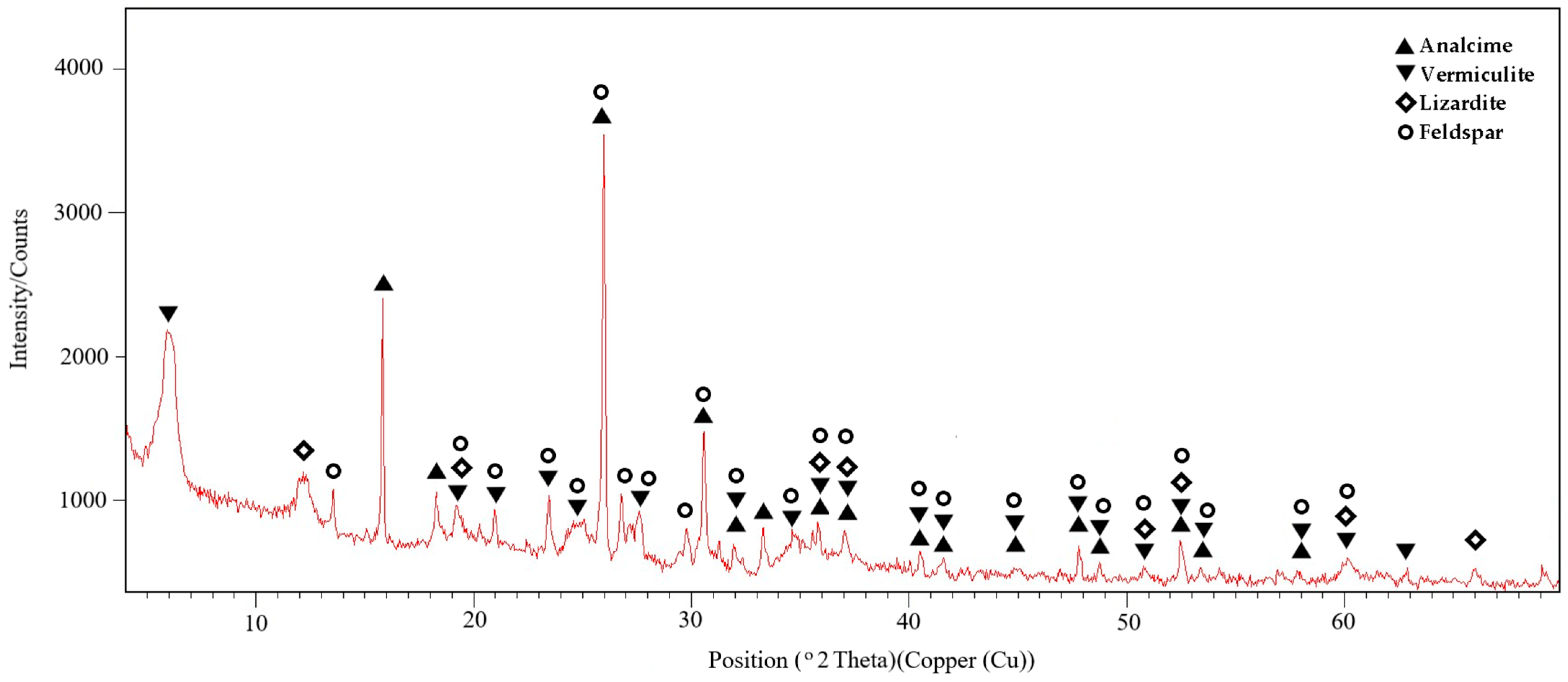
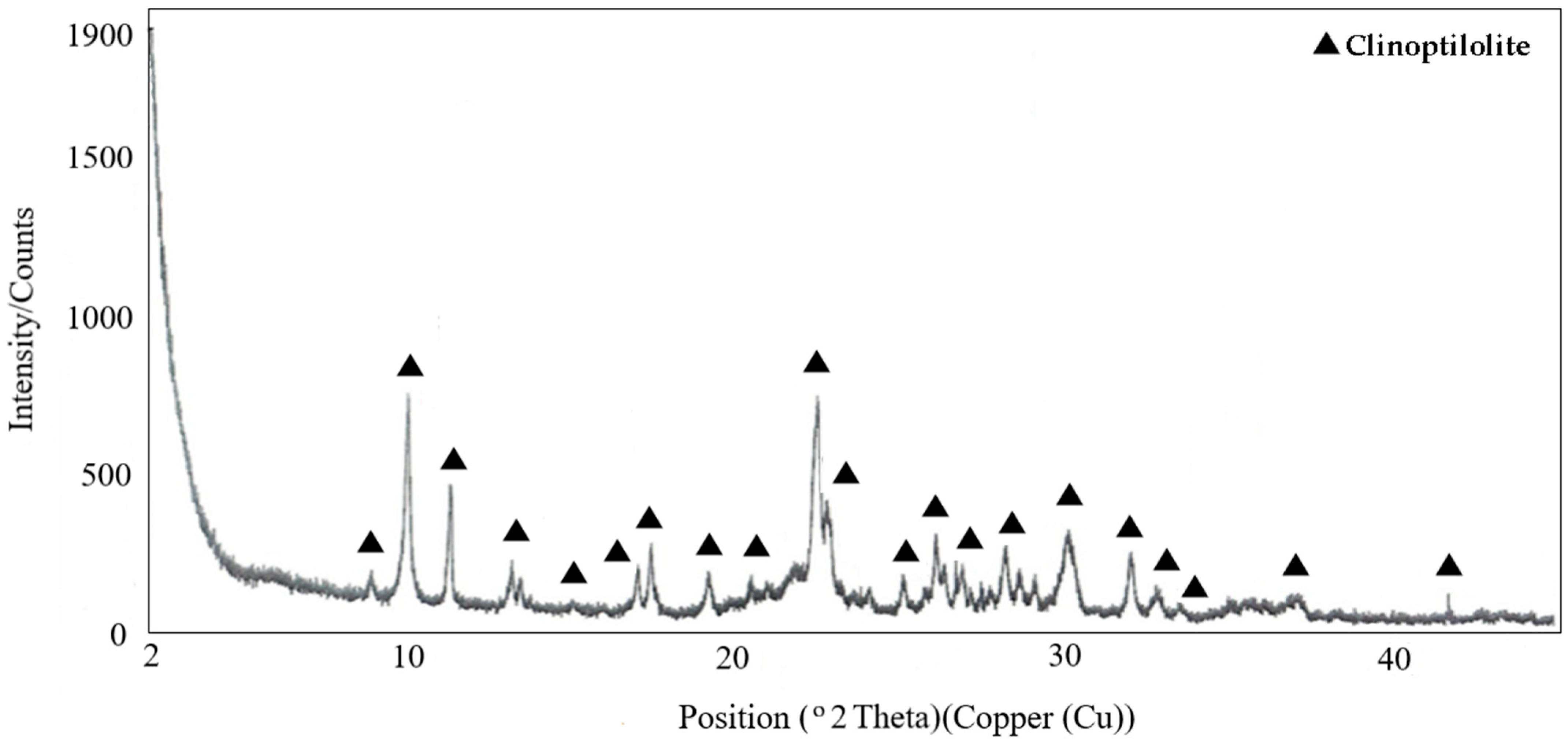
The test results regarding XRD analysis performed on the zeolites used in the study are given below. According to the XRD investigations performed on analcime and clinoptilolite samples, the XRD patterns of analcime and clinoptilolite are displayed in Figure 2 and Figure 3, respectively. In the XRD patterns of analcime samples (Figure 2), analcime was clearly identified as the main phase, and vermiculite, feldspar, and lizardite as secondary phases. Characteristic peak sequences complying with analcime were approximately observed at 15–16°, 26–27°, and 30–31° (2θ). These indicate that the sample is multiphase, but the dominant phase is the natural analcime mineral.
Conversely, in the XRD patterns of clinoptilolite samples (Figure 3), all of the peaks are sharp and well decomposed. This indicates a high level of crystallinity and phase purity. Characteristic peak sequences complying with clinoptilolite were approximately observed at 9–10°, 11–12°, 22–23°, 26–27°, and 30–32° (2θ). These indicate that the sample is a clinoptilolite mineral. All of these demonstrate that the analcime sample exhibits a more heterogeneous mineralogical composition compared to clinoptilolite. These XRD data together allow evaluation in terms of the mineralogical differences of the two different zeolite minerals, analcime and clinoptilolite.

4.1.2. SEM-EDX Analysis of Zeolites

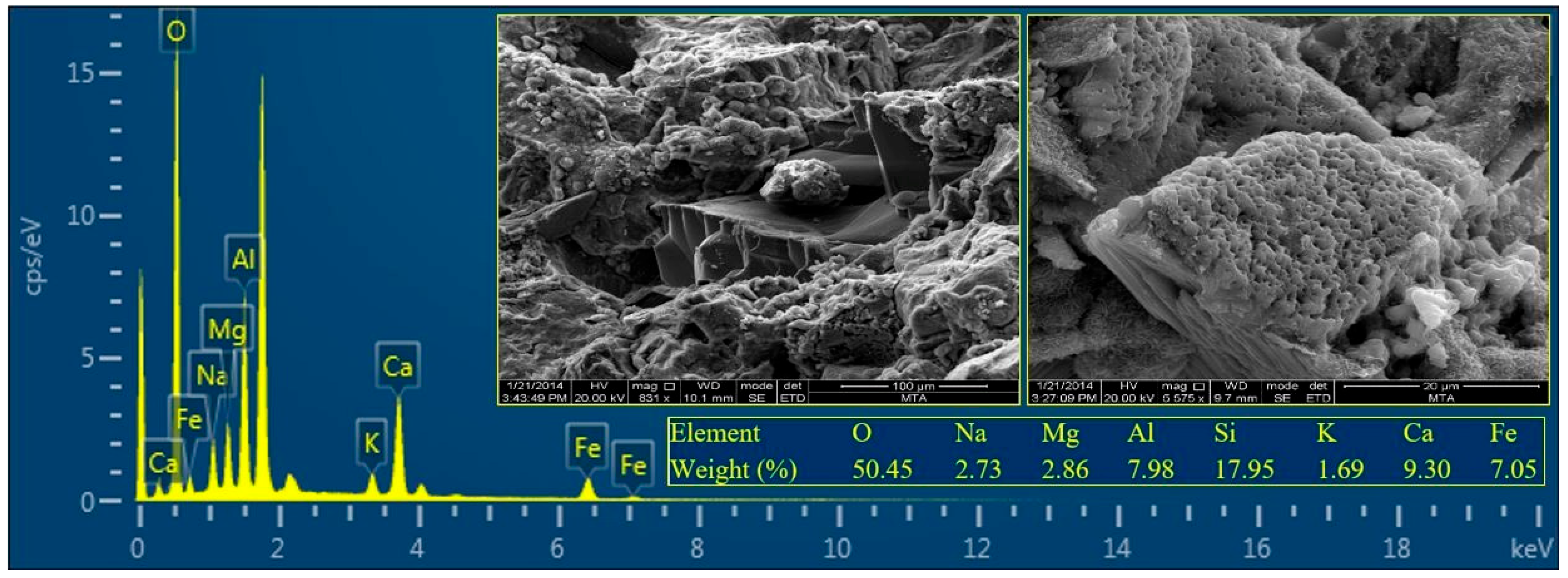
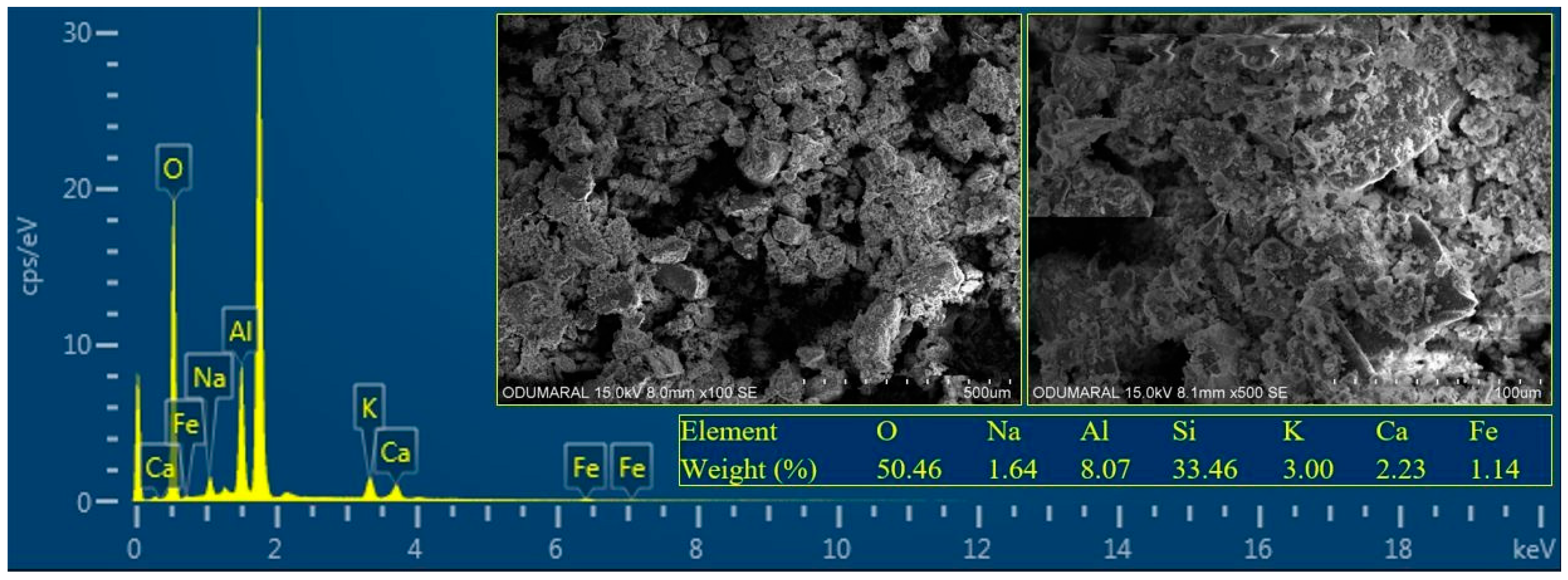
According to SEM-EDX analysis investigations undertaken to determine the general morphologic structures and elemental changes in analcime and clinoptilolite, the SEM images and elemental compositions of analcime and clinoptilolite are displayed in Figure 4 and Figure 5, respectively. It is shown in the SEM images that analcime presents a massive and irregular morphology, but clinoptilolite presents a fine-grained and highly agglomerated structure. The literature defines zeolites as crystalline structure minerals containing pores and channels [52]. Based on this definition, the SEM images in Figure 4 and Figure 5 clearly show the crystalline structure morphology for both analcime and clinoptilolite. Due to their porous internal structure as seen in Figure 4 and Figure 5, the natural zeolite rocks used in the present study are lightweight. The thermal conductivities of analcime and clinoptilolite rocks were determined as 1.13 W/mK and 0.61 W/mK, respectively. The EDX analysis results for clinoptilolite show that the sample has an Al–Si–O-based zeolite structure with a Si/Al ratio of approximately 4.15. This value is typical for clinoptilolite and indicates a high silica content. The presence of Na+, K+, and Ca2+ cations in the sample confirms the ion exchange capacity of clinoptilolite. The low Fe content (1.14%) indicates the high purity of the sample.
EDX analysis results made for analcime show that the sample has a low Si/Al ratio (~2.25). This value is consistent with analcime-type zeolites. The higher Fe content (7.05%) compared to clinoptilolite corresponds to impurities. The chemical formula of analcime is NaAlSi2O6·H2O [53]. Sometimes in the formula, minor amounts of potassium and calcium substitute for sodium. Clinoptilolite has the complex chemical formula (Na,K,Ca)23Al3(Al,Si)2Si13O36.12H2O [54]. According to these, the elemental components of EDX analysis are compatible with the chemical formulas of both zeolites. These results verify the combinational and structural differences between analcime and clinoptilolite within the zeolite group.

4.2. The Tests on Foam Mortars

4.2.1. Slump–Spread Tests

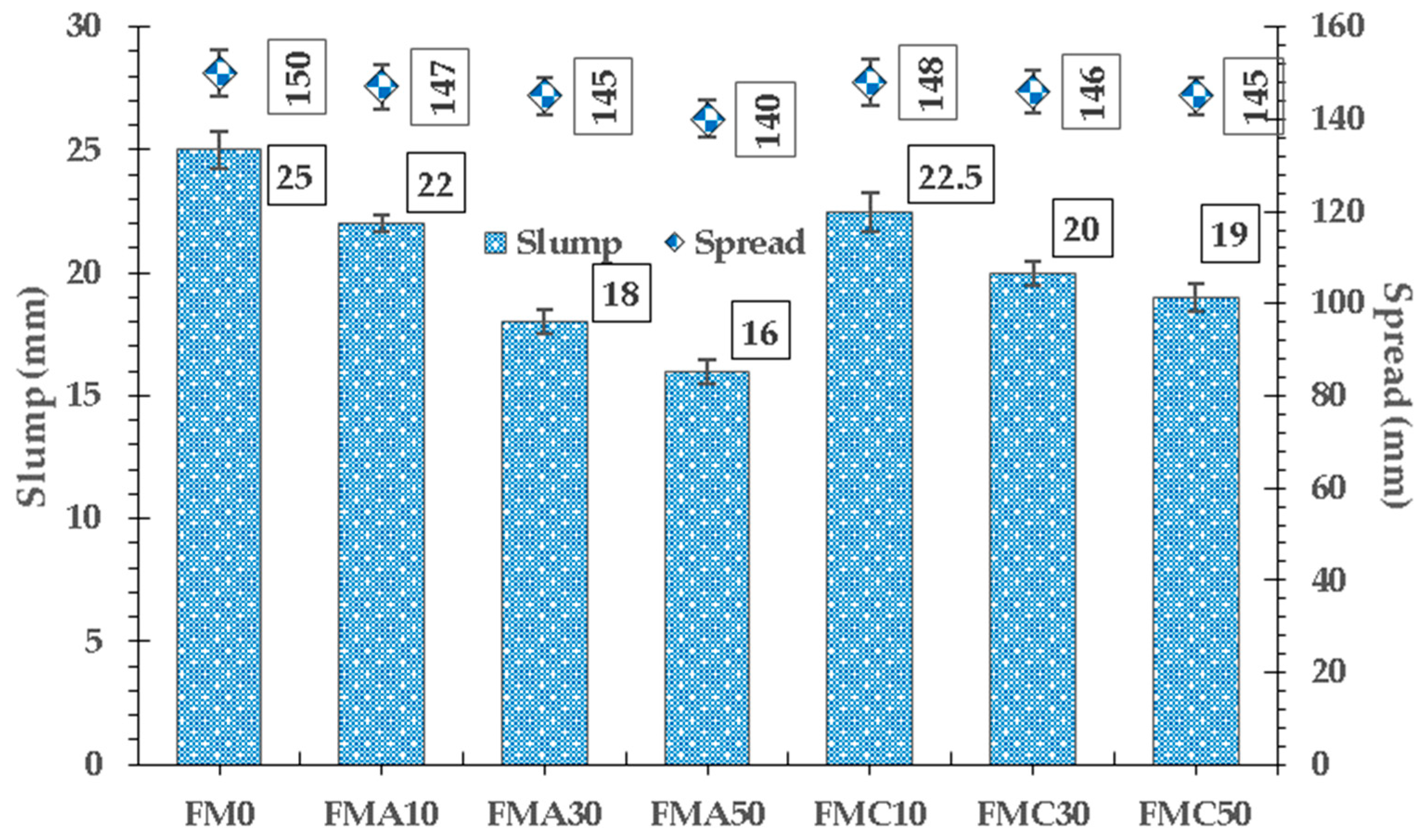
According to the mini-slump and spread test results, as seen in Figure 6, the workability of foam mortars with analcime-blended cements (FMA) is lower than those of foam mortars with clinoptilolite-blended cements (FMC) and with Portland cement (FM0) (Figure 6). These declines are the results of both the fineness of zeolites and the increasing replacement ratios in the mixtures [25] because the fineness of both zeolites is lower than that of Portland cement. In addition, the fineness of analcime is lower than that of clinoptilolite (Table 1). The inevitable increase in their specific surface areas due to the fineness of zeolites is reflected in the variations in workability of the foam mortars.

4.2.2. Density and Water Absorption Tests

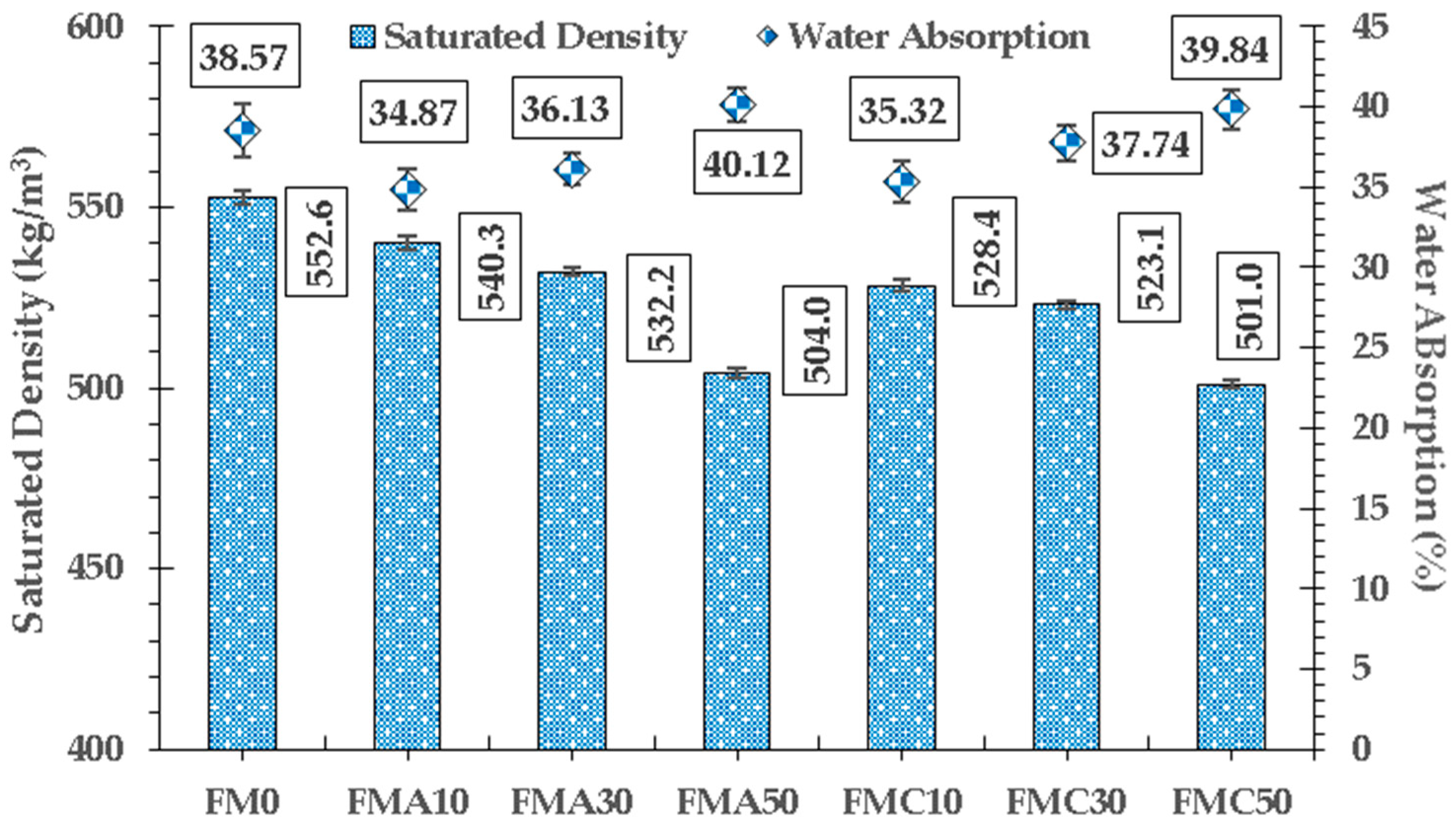
According to the test results of density and water absorption, the densities of the foam mortars were changed based on the densities of the components included in the mix compositions of samples (Figure 7). The saturated and dry densities of all foam mortars containing analcime- and clinoptilolite-blended cements decreased with the increase in zeolite replacement ratios because the analcime and clinoptilolite are 26.45% and 31.94% materials with lower average density than Portland cement, respectively (Table 1). In addition, increments were shown in the percentages of average water absorption of foam mortars containing zeolites with increasing zeolite replacement ratios.

4.2.3. Compressive Strength and UPV Tests

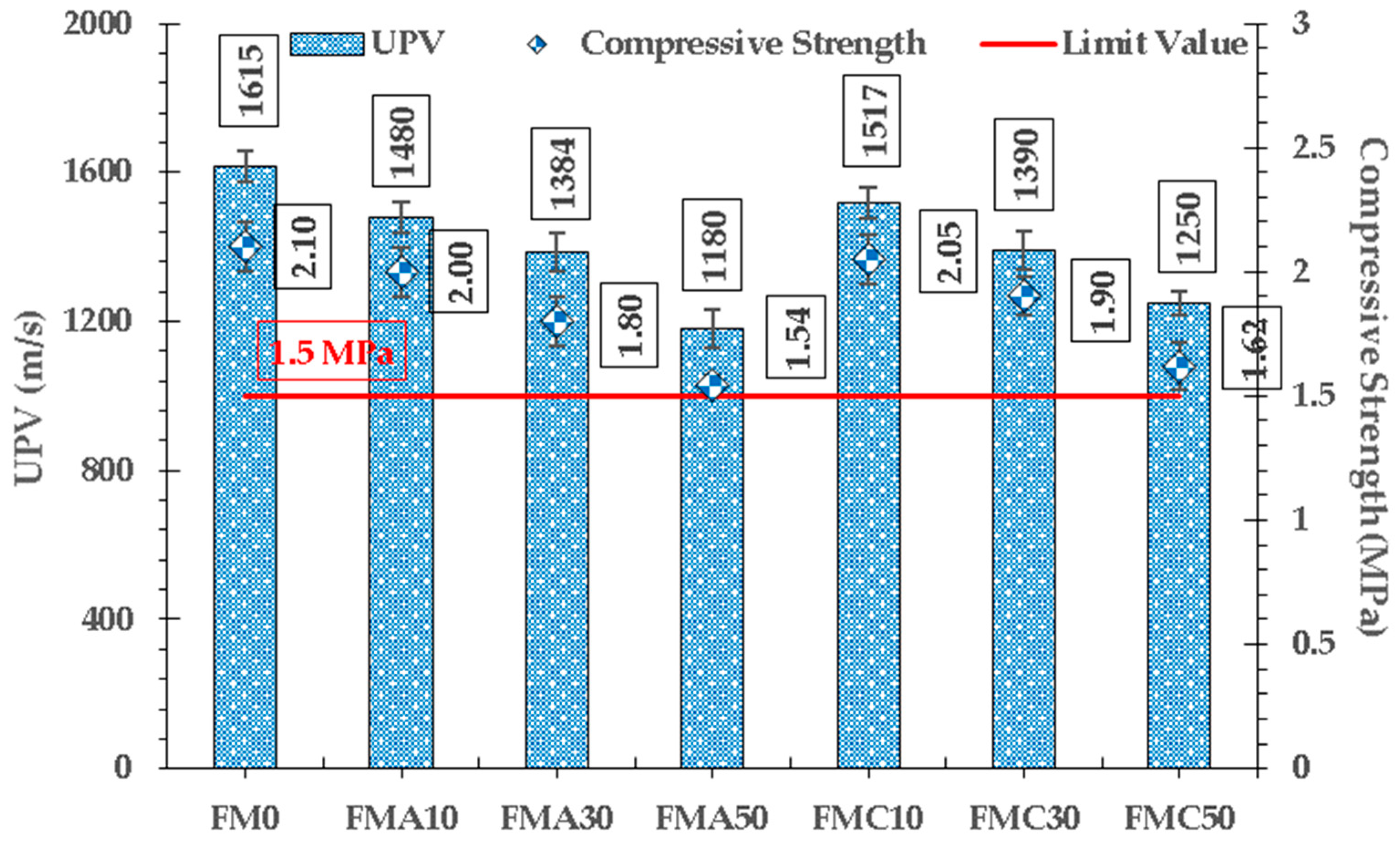
The values of compressive strength were between 1.54 and 2.10 MPa for all foam mortar series (Figure 8). The lower and upper findings in the strengths of foam mortars complied with the 1.5 MPa limit value given in TS EN 13655 [55] and were even 2.67% and 40.0% higher, respectively. Additionally, it can be seen from Figure 7 and Figure 8 that there are similar variation trends between the density and compressive strength of foam mortars. The compressive strength of foam mortars with Portland cement (without zeolite) was higher than that of foam mortars containing analcime- and clinoptilolite-blended cements. The decrease in the strengths of foam mortars containing zeolites is attributed to the decrease in the amount of binder due to the increase in the zeolite replacement ratio [56,57]. The foam mortars containing clinoptilolite had a greater compressive strength than those containing analcime. This is thought to be due to the higher silica content of clinoptilolite compared to analcime (Table 1). In addition, this situation can be seen from the EDX characterizations and decreasing Ca/Si ratios of the foam mortars (Table 5). The Ca/Si ratios in Table 5 are significant in the interpretations regarding the strength of cementitious materials. They show the Ca-Si amount of CSH gel. As the strength increases, this ratio decreases. The optimum Ca/Si ratio for cementitious materials containing foam is ~1.0–1.5. At this optimum ratio, polymerized gel structure is formed. This improves the ultimate compressive strength by increasing the cell wall strength in the porous system [58]. All samples were 28 days old during strength tests. While the 28-day strength data obtained in this study demonstrate the potential of zeolite incorporation at early and standard ages, the long-term effects remain beyond the scope of this investigation. Some studies on the late-age strengths of foam concretes produced with different pozzolans are available in the literature [59,60,61,62]. Although the slow hydration characteristic of pozzolanic materials limits the early-age strength in the mortar/concrete, in the studies on pozzolanic additives such as metakaolin, bentonite and zeolite in the literature [21,30,31,32,57], they increase the ultimate compressive strength and durability by secondary C-S-H gel development at late ages. Therefore, it is clear that the long-term performance of the zeolites used in the present study for foam mortars needs to verified in future studies.
Actually, it is worth noting that the later-age mechanical performance (up to 90 days) of the exact same zeolites obtained from the same reserve as zeolites used in the present study have been extensively verified in a previous study by the authors [57]. In that study, which focused on conventional concrete and mortar mixtures, both zeolites demonstrated significant structural improvements at 90 days due to late-age pozzolanic reactions. Therefore, while the long-term behavior of these additive materials (analcime and clinoptilolite) is already established in the literature, the current study focuses strictly on the standard-age (up to 28 days) performance of the newly developed foam mortars.
It can be seen from Figure 8 that, depending on the replacement ratio and type of additive in the foam mortars, the UPV and compressive strength test results exhibited similar variation trends. Thus, it is understood that these results also support the conformity between the destructive testing method based on a single-axis compression press and the non-destructive testing method based on strength estimation depending on the void structure.
It should be acknowledged that the mechanical characterization of the developed foam mortars in this study was primarily focused on compressive strength, which serves as a main indicator of structural performance. However, due to the high porosity and crack sensitivity of foam concrete, a detailed understanding of its material performance needs the evaluation of other mechanical characteristics and durability. Parameters such as flexural and tensile strength, elastic modulus, drying shrinkage, and later-age behaviors are very important for evaluating the field performance of these lightweight materials. The absence of these additional characterizations represents a limitation of the current study. Consequently, these mechanical and durability-related aspects are planned as the primary focus of our future investigations to provide a more holistic assessment of the developed foam mortars containing zeolite.
It should be noted here that, in this study, zeolite replacement ratios were selected up to a maximum of 50% to systematically examine extreme replacement conditions. In the test results, while increasing the replacement ratio improves the thermal insulation performance, it simultaneously leads to a decrease in compressive strength. At the 50% replacement ratio, the compressive strength decreases greatly, approaching the minimum limits required by standards. The compressive strength values reported for all developed foam concrete mixtures range between approximately 1.54 and 2.10 MPa. While this mechanical capacity restricts the use of these materials in structural load-bearing components, it satisfies the performance requirements for non-structural functional applications, such as thermal insulation layers, trench backfilling, and lightweight partition elements.

4.2.4. SEM-EDX Analysis of Foam Mortars

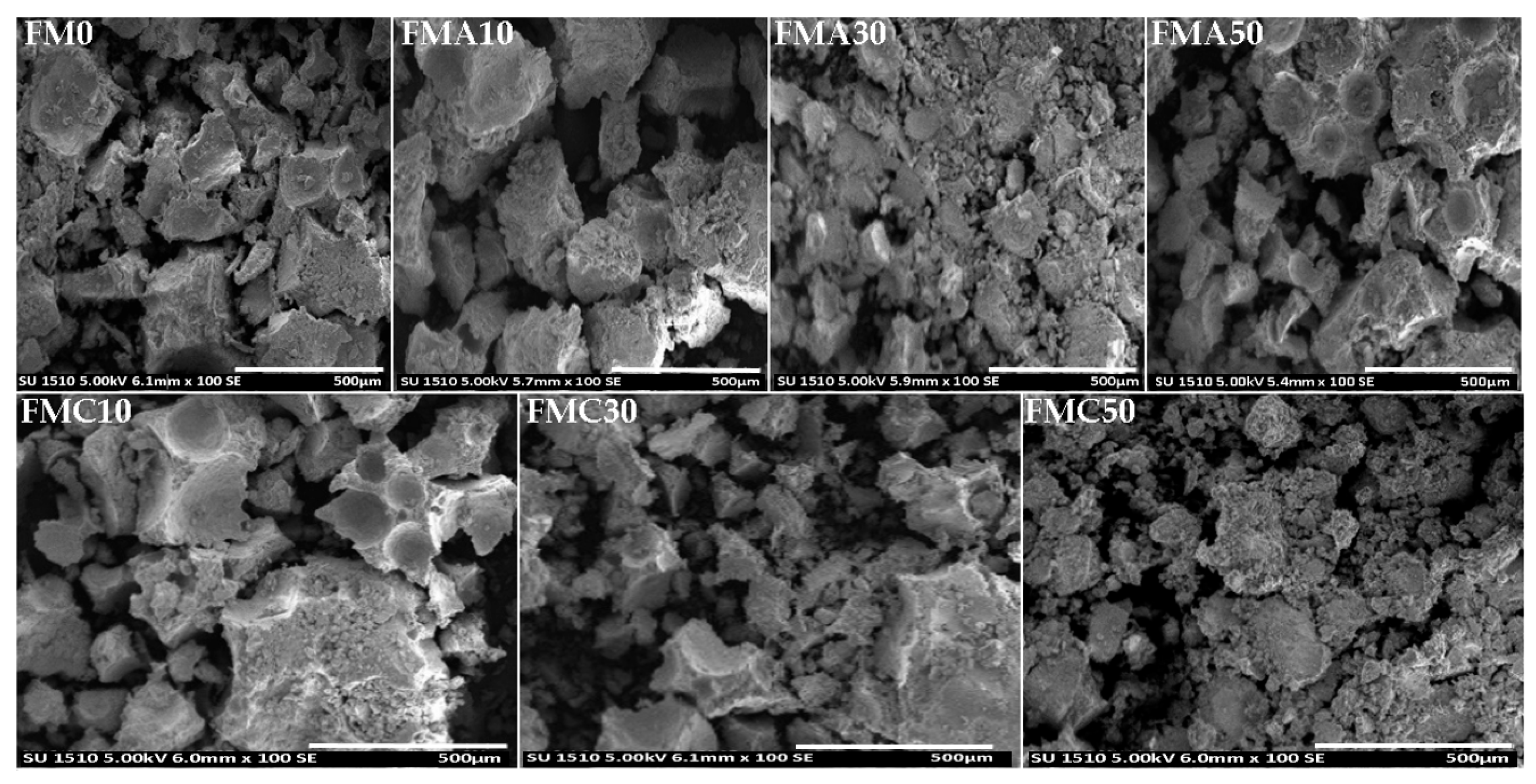
The results of SEM-EDX investigations applied to foam mortars are given below in Figure 9. It contains the SEM images of foam mortars with 0, 10, 30 and 50% analcime and clinoptilolite.
These images provide evidence-based visual information about the internal structure surface morphologies of the foam mortars. To quantify this visual information, Ca/Si ratios obtained from EDX analysis results and the changes in macro porosity and pore diameter distributions were determined in this study.
In the SEM images of all series except the FMO series in Figure 9, zeolites were observed as a solid phase in the form of dense and textured particles. The porous medium with many micro pores mainly defines the microstructure of foam mortars. This medium causes decreased strength. However, in the SEM images regarding foam mortars containing zeolites in Figure 9, the transition zone between the pore and cement paste was associated with being slightly dense and uniform in some areas. The SEM images and Ca/Si ratios comply with the strength test results. The zeolites used in the study have lower densities compared to Portland cement. This led to lower density of the foam mortars. The pore structure in the SEM images verifies the lightness of the foam mortars. This also confirms the relationship between the pore structure and thermal insulation [63]. As seen in Figure 10, the thermal conductivity results of the foam mortars in the study accompany these SEM images.
To estimate the mean pore size and porosity percentage, image-based quantifications were performed on microstructural SEM images using Image J software (version 1.54h, NIH, Bethesda, MD, USA). The results of the analysis are given in Table 6. Accordingly, in the literature, a decrement in porosity and pore diameter generally increases mechanical strength and thermal conductivity [64]. This increment is explained with the increment of the material’s effective cross-sectional area. However, this study presents an opposite trend, although the reduction in macro pore area, mechanical strength decreased, and thermal insulation improved. This situation can be interpreted by two fundamental microstructural mechanisms. First, using high replacement ratios of zeolites caused a volumetric dilution of calcium–silicate–hydrate (C-S-H) gels. This mechanism is partially supported by the variations in the atomic percentages of Ca and Si elements given in Table 5. As is known, these gels constitute the primary binding phase in the matrix. In addition, the dense zeolite rapidly absorbed the fresh mixing water. This rapid uptake blocked the full hydration of clinker components, thus limiting mechanical strength development. Second, the porosity decrement detected with image analysis only includes microscopic ‘macro-air pores’. The intra-crystalline pores within the zeolite lattice and nano-sized gel pores in the matrix were not detected. These ultra-micro pores are below the pixel resolution limits of the Image J software. These ultra-micro pores interrupt the heat transfer much more effectively. Consequently, the macro pore area decreased, but the microstructure became enriched with capillary and gel pores. This structural alteration reduced the thermal conductivity coefficient and enhanced the insulation performance of the material.
The observed changes in compressive strength and thermal performance across the foam mortars are strongly hypothesized to be linked with hydration enhancement and potential gel–pore formation pathways induced by analcime and clinoptilolite. Although the Image J software (version 1.54h, NIH, Bethesda, MD, USA) porosity analysis successfully tracks macro porosity trends, it should be acknowledged that directly resolving nano-scale gel pores or exact hydration products warrants advanced characterization techniques such as Mercury Intrusion Porosimetry (MIP) or Thermogravimetric Analysis (TGA), which are beyond the scope of the present study. Nevertheless, based on established literature on zeolite-modified cementitious matrices, the pozzolanic activity of zeolites and their structural filler effect are highly anticipated to play a synergistic role in modifying the pore matrix [7]. While the mechanistic claims regarding gel–pore refinement remain interpretive at this stage, the atomic %s and Ca/Si ratios partially align with these conceptual hydration models. Future studies are essential to precisely decouple these microstructural mechanisms.

4.2.5. Thermal Performance Tests

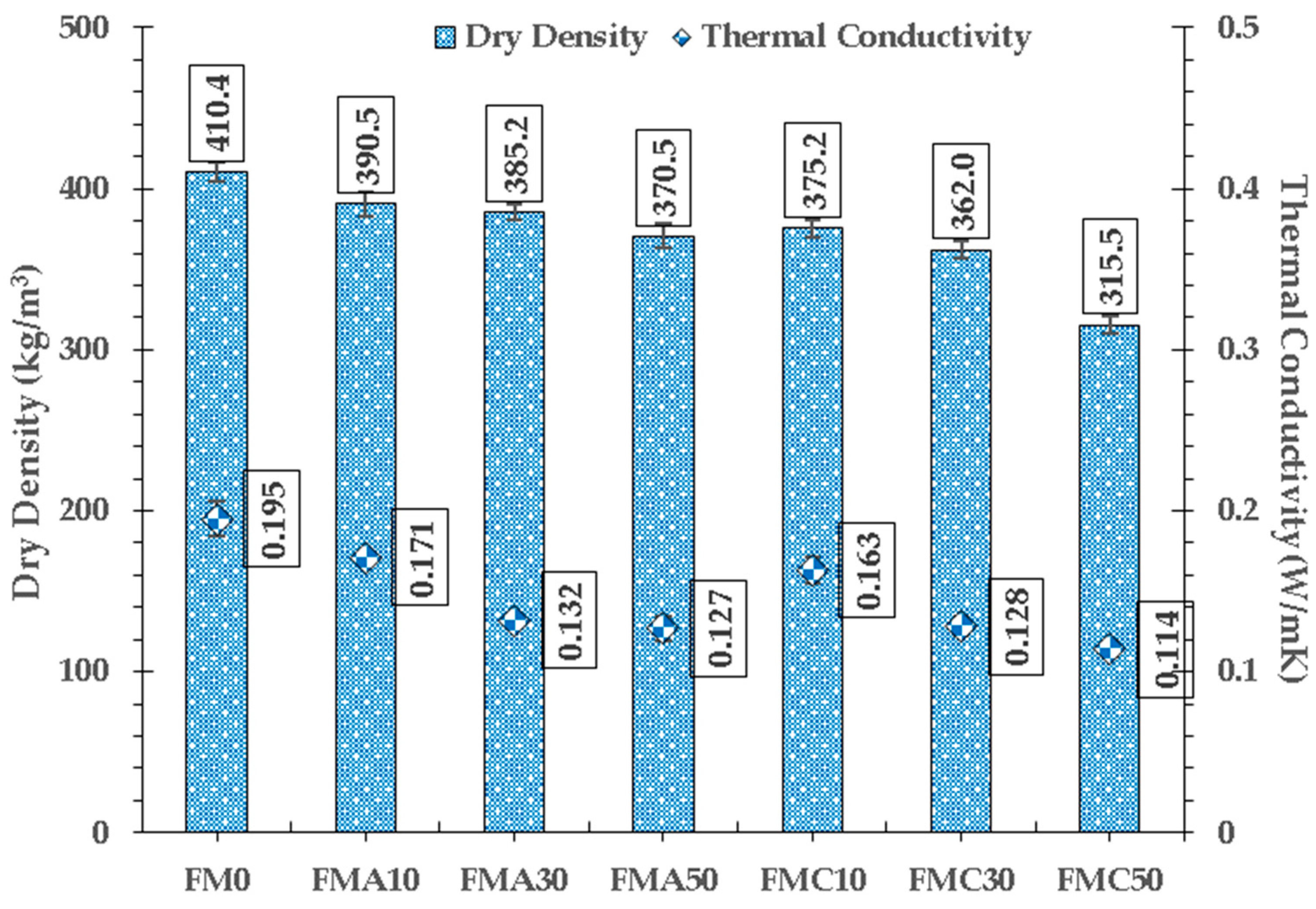
The results of thermal performance tests applied to foam mortars are given below in Figure 10, Figure 11, Figure 12 and Figure 13. The thermal conductivity coefficients of foam mortars containing zeolite-blended cements were in the range of 0.171–0.127 W/mK for containing analcime and 0.163–0.114 W/mK for containing clinoptilolite. The thermal conductivity coefficients of test series with zeolite were up to 34.87% for series with analcime and 41.54% for series with clinoptilolite lower than that of series with PC. The thermal conductivity coefficients have been decreased significantly based on each increment in the replacement ratios of both zeolite additives. These reductions are due to not only lower densities of zeolites but also their structural voids [65]. This situation could be expressed as the improvement in the thermal insulation abilities of foam mortars produced with blended cements containing zeolites.
On the other hand, in the literature it is defined that zeolites have high heat storage capacities [27,66] because, thanks to their porous structure, zeolites can absorb water through a physicochemical process called adsorption (surface adhesion) and release this water when needed, thereby releasing a large amount of thermal energy [67]. The volumetric specific heat capacities of natural zeolite rocks used in this study were determined as 1.76 × 10⁶ J/m3K for analcime and 1.64 × 10⁶ J/m3K for clinoptilolite with thermal performance tests in the present study. We suggest that these results regarding zeolites affected the heat storage performance of the foam mortars.
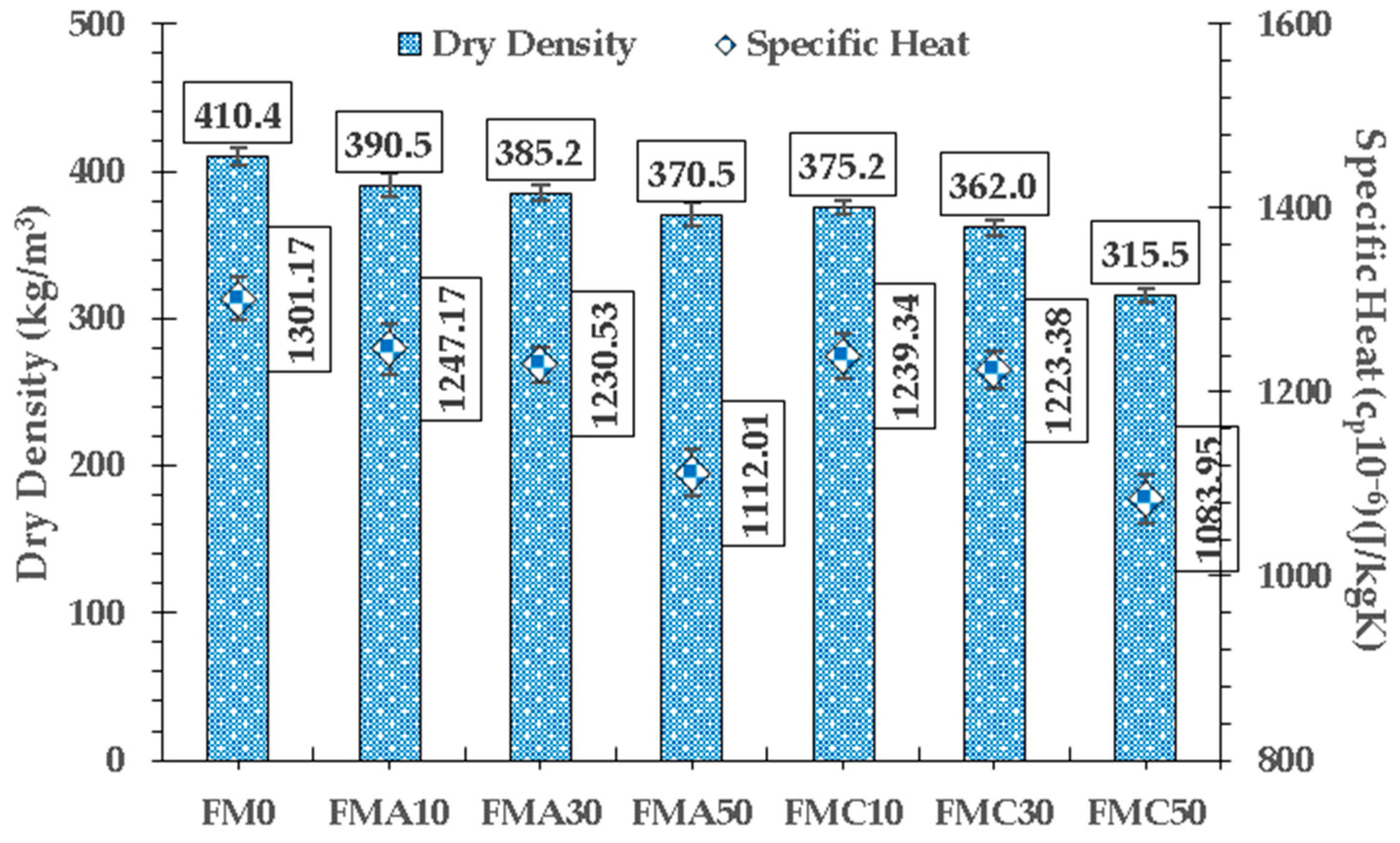
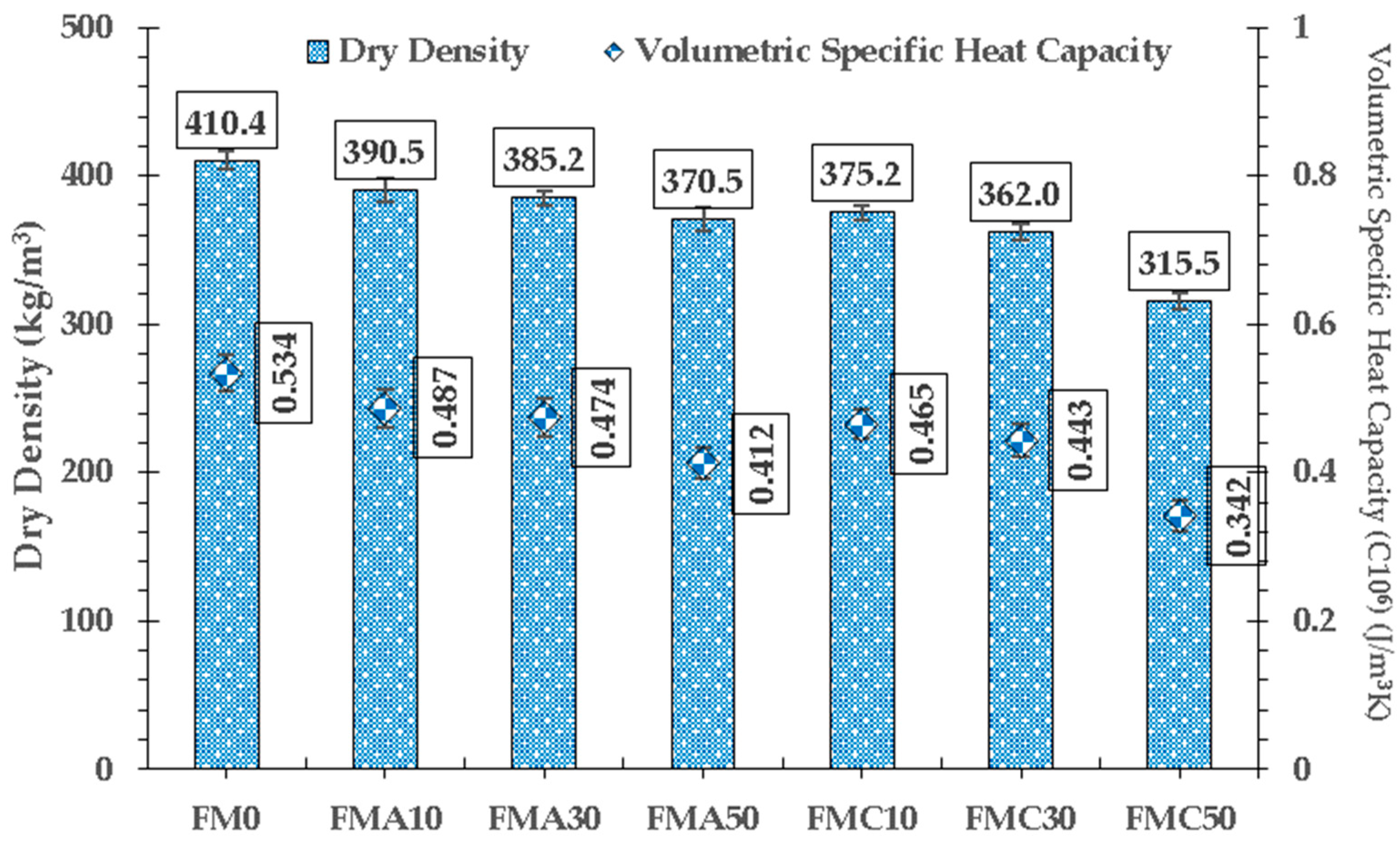
According to the results of thermal tests performed on foam mortars, as seen in Figure 11 and Figure 12, the heat storage parameters (cp and C) of the foam mortars decreased depending on their density. In the foam mortar series with zeolites, the FMA10 test series has the highest specific heat values. Their heat storage capacity is only 4.15% lower than that of the FMO series. Moreover, the heat storage parameters (cp and C) of foam mortars containing analcime were better than those of foam mortars with clinoptilolite. Because as also mentioned above, according to specific heat data obtained from tests on zeolite rocks in the present study, the heat storage capacity of analcime rock was higher than that of clinoptilolite rock and analcime has a higher density than clinoptilolite.
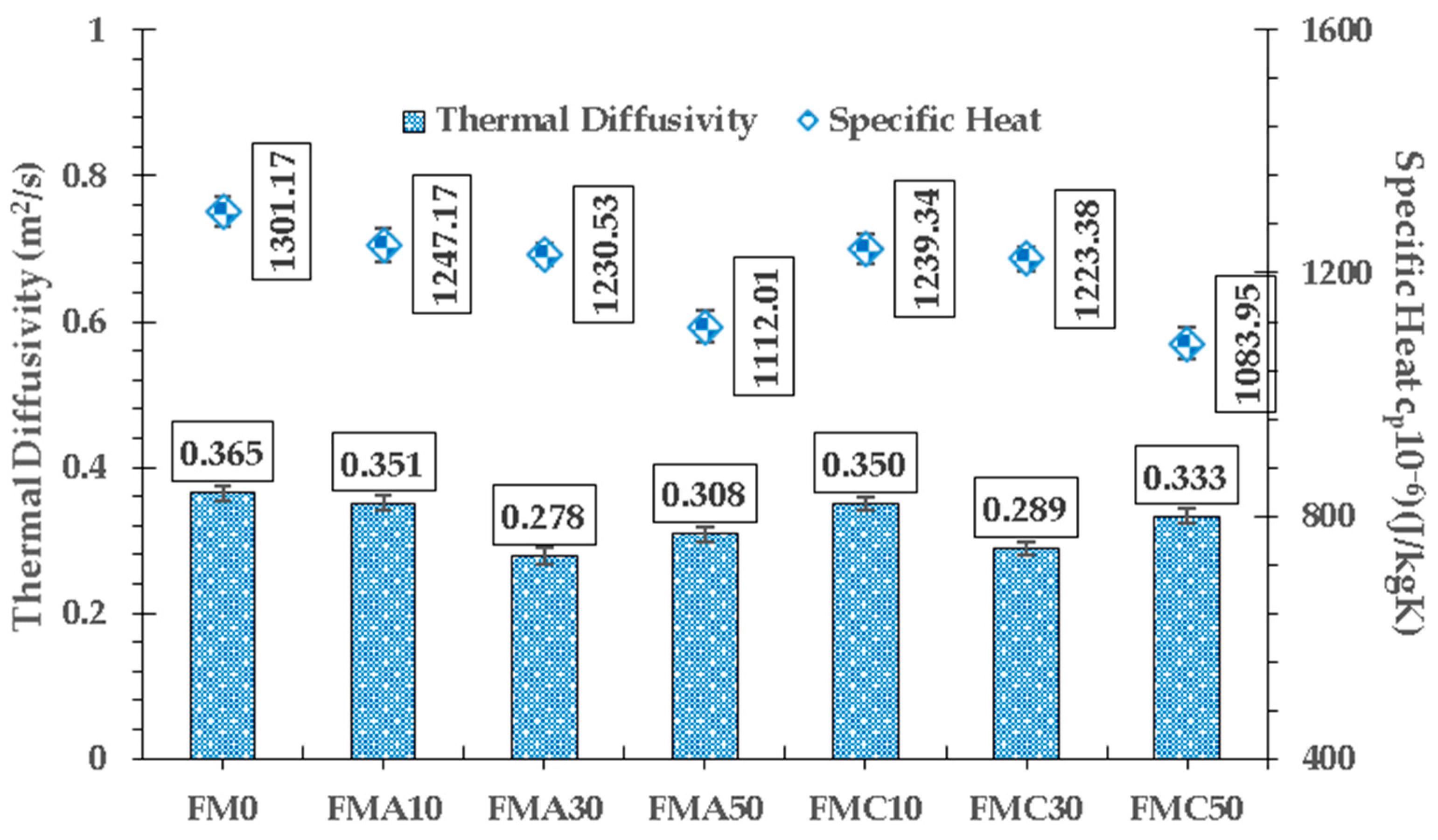
In addition, as seen in Figure 13, the thermal diffusivities of foam mortars containing both analcime- and clinoptilolite-blended cements were decreased up to a 30% replacement ratio. This decrease is an indicator of the heat storage potential of foam mortars in this study [68]. The thermal diffusivity value (m2/s) that is dependent on specific heat, density and thermal conductivity shows how fast the heat is diffused into the material medium. Low thermal diffusivity value means that most of the heat is absorbed by the material and a very small amount is transmitted. In other words, the absorption of heat within the material leads to a decrease in the thermal diffusivity [46,47]. According to the variations in the thermal diffusivity coefficients evaluated together with the cp and C parameters, in future studies, the effects on the heat storage of foam concrete containing zeolites should be investigated with higher density and with different foam contents under different curing conditions. As a recommendation, it is also stated in the literature that steam curing partially improves the porous skeleton in foamed mixtures, thereby contributing to strength [7].
On the other hand, it must be acknowledged that all thermal measurements in this study were conducted on dry specimens under controlled laboratory conditions. In real-world service environments, factors such as moisture fluctuations, ambient relative humidity, freeze–thaw cycles, and environmental aging are well known to influence the thermal performance of foam concrete [7,10]. Especially for porous cementitious matrices, absorbed moisture can significantly increase the effective thermal conductivity due to the higher thermal conductivity of water compared to air pockets [12,13]. While evaluating environmental conditioning scenarios was beyond the scope of this initial material characterization phase, the baseline dry thermal measurements reported herein provide a fundamental comparative framework for all of the developed series. Consequently, the long-term thermal durability and moisture-dependent thermal performance under wet–dry or freeze–thaw exposures are explicitly identified as essential future research steps before full-scale field implementations.
Depending on the strength and thermal performance targets, a 10% replacement ratio of analcime and clinoptilolite stands out for optimal strength, whereas a 30% replacement ratio emerges as a practical choice for insulation systems. Regarding the threshold strength and thermal storage targets, up to a 30% replacement ratio can be utilized to maximize the heat storage capacity of zeolite.

4.2.6. Statistical Analysis Using One-Way ANOVA

For statistical evaluation of the main parameters such as the slump, water absorption, compressive strength, thermal conductivity and specific heat in the study, a one-way ANOVA analysis was performed. As seen from the analysis results given in Table 7, the analysis revealed that the mixture design has a highly significant effect on the selected parameters of the foam mortars. The calculated effect sizes confirm a strong experimental impact, meaning that the variances in all parameters is governed by the replacement ratio and additive type modifications.
According to the Tukey HSD post hoc test, FM0 [95% CI: 24.44, 25.90] exhibited the highest distinct workability group (a) while the modifications progressively reduced the slump values down to FMA50 [95% CI: 15.27, 16.73], which formed the lowest independent statistical group (e).
FMA50 [95% CI: 38.25, 41.83] exhibited the highest distinct water absorption group (a) which was statistically similar to FMC50 [95% CI: 37.89, 41.67]. Conversely, the modifications led to lower permeation values, where FMC10 [95% CI: 32.55, 36.33] registered the lowest water absorption capacity, statistically sharing group (c) with FMA10 [95% CI: 33.20, 37.04] and FMA30 [95% CI: 34.13, 37.97]. FM0 [95% CI: 36.33, 40.18] and FMC30 [95% CI: 35.33, 39.16] acted as transitional formulations under group (b).
FM0 [95% CI: 1.99, 2.21] exhibited the highest compressive strength group (a), which was statistically similar to FMC10 [95% CI: 1.94, 2.16] and FMA10 [95% CI: 1.89, 2.11]. Conversely, the modifications progressively lowered the mechanical performance down to FMA50 [95% CI: 1.44, 1.67], which formed the lowest distinct statistical group (e).
FM0 [95% CI: 0.1833, 0.2000] displayed the highest distinct thermal conductivity group (a). No statistically significant difference was observed between FMA10 [95% CI: 0.1630, 0.1797] and FMC10 [95% CI: 0.1576, 0.1744], both sharing group (b). Furthermore, the modifications led to a significant decrease in thermal conductivity, where FMA10 [95% CI: 0.1236, 0.1404], FMA50 [95% CI: 0.1190, 0.1357], FMC30 [95% CI: 0.1183, 0.1350], and FMC50 [95% CI: 0.1063, 0.1230] statistically clustered together under group (c), representing the lowest thermal conductivity zone.
FM0 [95% CI: 1254.96, 1371.15] exhibited the highest distinct specific heat group (a). No statistically significant differences were observed among FMC10 [95% CI: 1174.03, 1298.86], FMA10 [95% CI: 1162.62, 1302.16], FMC30 [95% CI: 1177.21, 1278.38], and FMA30 [95% CI: 1174.52, 1269.16], which statistically clustered together under group (b). Conversely, the lowest thermal storage zone was represented by FMA50 [95% CI: 1044.42, 1170.25] and FMC50 [95% CI: 1014.57, 1141.40], both sharing the statistical group (c).
Furthermore, according to these, the 95% confidence intervals obtained across all mixtures verify the precision and reproducibility of the experimental data under standardized laboratory conditions.

4.2.7. Comparison with Previous Research

In order to quantitatively demonstrate the significance and novelty of the developed foam mortars, a comparison was established against representative literature studies on foam concrete containing zeolite (Table 8). The comparative analysis indicates that the proposed materials successfully bridge the gap in the literature studies on strength, thermal insulation and heat storage, while conventional foam concrete formulations in previous studies typically underperform in terms of specific heat (heat storage), generally remaining below 1000 J/kgK. In contrast, the foam mortar design containing zeolite in the present study yields a thermal storage performance reaching up to 1247.17 J/kgK (FMA10). Furthermore, the FMA50 mixture outperforms existing alternatives by lowering the thermal conductivity to a lower value of 0.127 W/mK. Consequently, these findings validate the proposed synergetic mixture design, confirming its novelty and practical value. As illustrated in this comparison table, the utilization of analcime as an additive in foam concrete has not been reported in the literature yet. Furthermore, no prior studies have investigated the thermal energy storage performance of foam concrete regarding the inherent heat storage capacity of zeolites.

5. Conclusions and Recommendations

Some conclusions and recommendations of the experimental study performed on foam mortars in the 28-day-old samples containing analcime and clinoptilolite are given below.
Thanks to the blended cements obtained from natural zeolites, which have a lower density than PC and high porosity, the densities of foam mortars containing analcime- and clinoptilolite-blended cements were further reduced by 8.79% and 9.34% compared to those of foam mortars containing PC, respectively.
The workability of foam mortars decreases by increasing the replacement ratio of both zeolites. Moreover, due to analcime having lower fineness compared to clinoptilolite and PC, the workability of the FMA series is lower than those of the FMC and FM0 series. In addition, the water absorption of foam mortars increases by increasing the replacement ratio of both zeolites. The increment is up to 4.02% for blended cements containing analcime.
The thermal conductivity coefficients of foam mortars containing analcime- and clinoptilolite-blended cements have been further reduced by up to 34.87% for analcime and 41.54% for clinoptilolite compared to those of foam mortars containing PC.
Although zeolite incorporation improves thermal insulation, the density-dependent strengths approach the minimum limit values of the standard. For this contradictory situation, it is determined that an optimum zeolite replacement ratios between 10% for strength and 30% for thermal insulation is the most practical and feasible option. Furthermore, findings regarding the optimized replacement ratios of both zeolites in foam mortars for different objectives such as 28-day strength and thermal insulation performance have contributed to the literature in the field. The evaluation of later-age properties remains a prospective study to fully validate the long-term pozzolanic benefits of the developed foam mortar mixtures.
The highest specific heat value was determined as 1247.17 × 10−6 J/kgK in the foam mortars containing analcime with a 10% replacement ratio. The heat storage capacity of this series was only 4.15% lower than that of the reference series. Moreover, foam mortars containing analcime-blended cement exhibited a better heat storage performance than foam mortars containing clinoptilolite-blended cement at all replacement ratios.
According to the cost approach calculation results based on energy consumption per ton for zeolite-blended cements used in the foam mortar productions, due to the energy consumption of blended cement being lower than that of Portland cement, the production costs of foam mortars containing zeolite-blended cement are more economical than those of foam mortars containing Portland cement.
In the literature [7,8,9,10,11], studies on foam concrete containing zeolite have generally focused on clinoptilolite additives. In the present study, we have demonstrated the usability in foam concrete of analcime as an alternative to clinoptilolite by exhibiting similar behaviors to clinoptilolite and providing a contribution to the diversity of zeolite additives in cementitious materials. Furthermore, unlike previous studies on foam concrete containing zeolite in the literature [12,13,14], the present study also investigated heat storage parameters (cp, C and α) in addition to thermal insulation.
In summary, the optimum sustainable mix design for foam concrete should be selected based on minimized cement content, combined with lower emissions, reduced energy consumption, and application-specific performance.
Future studies focusing on the thermal storage effects of zeolite-incorporated foam concrete should investigate higher densities and varying foam contents under diverse curing conditions.

Author Contributions

Visualization, Y.A.; Investigation, A.R.Y.; Methodology, Y.A.; Writing—review and editing, Y.A.; Validation, A.R.Y.; Supervision, Y.A. The authors read and approved the manuscript. All authors have read and agreed to the published version of the manuscript.

Funding

This research was funded by the Scientific Research Projects Coordination Department of Ordu University, Türkiye, grant number D-2101.

Data Availability Statement

The authors confirm that the data supporting the findings of this study are available within the article.

Acknowledgments

The authors are grateful to Laboratories of Dicle University, Laboratories of General Directorate of Mineral Research and Explorations, Gordes Zeolite Mining Industry and Trade Inc. and Altaş Ready-Mixed Concrete Company.

Conflicts of Interest

The author declares no conflicts of interest.

Abbreviations

The following abbreviations are used in this manuscript:
SEMScanning Electron Microscopy
EDXEnergy Dispersive X-Ray
UPVUltrasonic Pulse Velocity
CSHCalcium–Silicate–Hydrate
PCPortland Cement
FMFoam Mortar
SAIStrength Activity Index
TSTurkish Standards
ASTMAmerican Society for Testing and Materials
DINDeutsches Institut für Normung

References

  1. Karakosta, C.; Papathanasiou, J. Decarbonizing the Construction Sector: Strategies and Pathways for Greenhouse Gas Emissions Reduction. Energies 2025, 18, 1285. [Google Scholar] [CrossRef]
  2. Ascione, F.; Nižetić, S.; Wang, F. Future technologies for building sector to accelerate energy transition. Energy Build. 2025, 326, 115044. [Google Scholar] [CrossRef]
  3. Li, C.; Pradhan, P.; Chen, G.; Kropp, J.P.; Schellnhuber, H.J. Carbon footprint of the construction sector is projected to double by 2050 globally. Commun. Earth Environ. 2025, 6, 831. [Google Scholar] [CrossRef] [PubMed]
  4. Zinyama, M.; Crafford, G. Practical Strategies for Addressing Climate Change in the Construction Industry: A Systematic Literature Review. In Facilitating Inclusivity in Multi-, Inter-, and Transdisciplinary Sustainable Built Environment Research in Emerging Economies; Aigbavboa, C., Awuzie, B., Aghimien, D., Oke, A.E., Omotayo, T., Eds.; Lecture Notes in Civil Engineering; SURE-Built; Springer: Cham, Switzerland, 2025; Volume 772. [Google Scholar] [CrossRef]
  5. Jeremi, L.O.; Mohammed, B.S.; Al-Yacouby, A.M.; Abbas, F.O. Optimizing sustainability in cement production: A combined LCA and TOPSIS approach for evaluating GGBS substitution and alternative energy strategies. Carbon Manag. 2026, 17, 2610583. [Google Scholar] [CrossRef]
  6. Kumar, S.; Gangotra, A.; Barnard, M. Towards a Net Zero Cement: Strategic Policies and Systems Thinking for a Low-Carbon Future. Curr. Sustain. Energy Rep. 2025, 12, 5. [Google Scholar] [CrossRef]
  7. Çavuş, M.; Alim, M.; Genç, G.; Kaplan, G. Microstructure properties and life cycle analysis (LCA) of zeolite-containing foam composites produced under different curing conditions. J. Build. Eng. 2026, 123, 115909. [Google Scholar] [CrossRef]
  8. Muthaiyan, U.M.; Palaniappan, K.K. Utilization of natural zeolite and nano-cuttlefish bone powder as sustainable admixtures in foamed concrete. Eur. J. Environ. Civ. Eng. 2025, 29, 1384–1404. [Google Scholar] [CrossRef]
  9. Chetharajupalli, V.; Suriya Prakash, S.; Dirar, S.; Gandhi, I.S.R. Characterization of Synthetic Foaming Agent with Additives for Lightweight Aggregate Foam Concrete Applications. J. Mater. Civ. Eng. 2026, 38, 04026201. [Google Scholar] [CrossRef]
  10. Pan, G.; Gong, H.; Sun, Z.; Chen, L.; Liu, Z.; Gao, L. Towards High-Performance Low-Carbon Foam Concrete: A Review on Multi-component Synergy and Pore Structure Optimization. J. Build. Eng. 2026, 120, 115570. [Google Scholar] [CrossRef]
  11. Beskopylny, A.N.; Stel’makh, S.A.; Shcherban, E.M.; Shakhalieva, D.M.; Chernil’nik, A.; Shcherban, N.Y.; Budovskiy, A. Mechanical Properties and Microstructure of Environmentally Friendly Foam Concrete with Fly Ash Modified with Micro-and Nano-SiO2. Materials 2026, 19, 814. [Google Scholar] [CrossRef] [PubMed]
  12. Liu, J.; Liu, Y.; Ma, X.; Xu, H.; Wu, X.; Liu, M.; Zhuge, Y. Thermal performance optimisation of foam concrete for energy-efficient construction: A state-of-the-art review. J. Build. Eng. 2025, 112, 113899. [Google Scholar] [CrossRef]
  13. Rakam, A.; Sahu, S.S.; Pillalamarri, B. State-of-the-art review on advancement in foam concrete production technology using mineral admixtures. Innov. Infrastruct. Solut. 2024, 9, 439. [Google Scholar] [CrossRef]
  14. Maglad, A.M.; Mydin, M.A.O.; Majjeed, S.S.; Tayeh, B.A.; Mostafa, S.A. Development of eco-friendly foamed concrete with waste glass sheet powder for mechanical, thermal and durability properties enhancement. J. Build. Eng. 2023, 80, 107974. [Google Scholar] [CrossRef]
  15. Compaore, A.; Toure, J.Y.N.K.; Klenam, D.E.P.; Merenga, A.S.; Asumadu, T.K.; Obayemi, J.D.; Rahbar, N.; Migwi, C.; Soboyejo, W.O. Foam concrete with mineral additives: From microstructure to mechanical/physical properties, workability and durability. Open Ceram. 2025, 23, 100812. [Google Scholar] [CrossRef]
  16. Abdulazeez, A.S.; Sani, A.A. Properties of foam concrete: A review. Discov. Concr. Cem. 2026, 2, 4. [Google Scholar] [CrossRef]
  17. Gencel, O.; Bilir, T.; Bademler, Z.; Ozbakkaloglu, T. A Detailed Review on Foam Concrete Composites: Ingredients, Properties, and Microstructure. Appl. Sci. 2022, 12, 5752. [Google Scholar] [CrossRef]
  18. Zhang, S.; Qi, X.; Guo, S.; Zhang, L.; Ren, J. A systematic research on foamed concrete: The effects of foam content, fly ash, slag, silica fume and water-to-binder ratio. Constr. Build. Mater. 2022, 339, 127683. [Google Scholar] [CrossRef]
  19. Yuan, H.; Ge, Z.; Sun, R.; Xu, X.; Lu, Y.; Ling, Y.; Zhang, H. Drying shrinkage, durability and microstructure of foamed concrete containing high volume lime mud-fly ash. Constr. Build. Mater. 2022, 327, 126990. [Google Scholar] [CrossRef]
  20. Vishavkarma, A.; Venkatanarayanan, H.K. Assessment of pore structure of foam concrete containing slag for improved durability performance in reinforced concrete applications. J. Build. Eng. 2024, 86, 108939. [Google Scholar] [CrossRef]
  21. Pachideh, G.; Gholhaki, M.; Aljenabi, A.; Rezaifar, O. Compressive strength ratios of concretes containing pozzolans under elevated temperatures. Heliyon 2024, 10, e26932. [Google Scholar] [CrossRef] [PubMed]
  22. Yeşilyurt, O.C.; Kalkan, Ö.F.; Türk, S.; Yaman, İ.Ö. Pozzolanic Reactivity of Calcareous Low-Grade Calcined Clays. Turk. J. Civ. Eng. 2025, 3, 1–21. [Google Scholar]
  23. Doan, C.C.; Tran, V.K.; Huynh, T.P. Natural zeolite powder as a cement substitution in sustainable concrete: Influence on engineering properties, durability, and microstructure characteristics. Mater. Res. Express. 2026, 13, 035503. [Google Scholar] [CrossRef]
  24. Chen, L.; Chen, X.; Wang, L.; Ning, Y.; Ji, T. Compressive strength, pore structure and hydration products of slag foam concrete under sulfate and chloride environment. Constr. Build. Mater. 2023, 394, 132141. [Google Scholar] [CrossRef]
  25. Alexa-Stratulat, S.-M.; Olteanu, I.; Toma, A.-M.; Pastia, C.; Banu, O.-M.; Corbu, O.-C.; Toma, I.-O. The Use of Natural Zeolites in Cement-Based Construction Materials—A State of the Art Review. Coatings 2024, 14, 18. [Google Scholar] [CrossRef]
  26. Shill, S.K.; Garcez, E.O.; Al-Deen, S.; Subhani, M. Influence of Foam Content and Concentration on the Physical and Mechanical Properties of Foam Concrete. Appl. Sci. 2024, 14, 8385. [Google Scholar] [CrossRef]
  27. Kandilli, C.; Acikbas, Y.; Yilmaz, H. Assessment of the thermophysical, mechanical and structural properties of the natural zeolites-perlite composite plates for an enhanced Trombe wall application. Energy Build. 2025, 347, 116384. [Google Scholar] [CrossRef]
  28. Kumar, N.; Rathore, P.K.S.; Sharma, R.K.; Gupta, N.K. Integration of lauric acid/zeolite/graphite as shape stabilized composite phase change material in gypsum for enhanced thermal energy storage in buildings. Appl. Therm. Eng. 2023, 224, 120088. [Google Scholar] [CrossRef]
  29. Dora, S.; Kuznik, F.; Mini, K.M. A novel PCM-based foam concrete for heat transfer in buildings-Experimental developments and simulation modelling. J. Energy Storage 2025, 105, 114625. [Google Scholar] [CrossRef]
  30. Al-Khazaleh, M.; Kumar, P.K.; Qtiashat, D.; Alqatawna, A. Experimental study on strength and performance of foamed concrete with glass powder and zeolite. Civ. Eng. J. 2024, 10, 3911–3925. [Google Scholar] [CrossRef]
  31. Zhou, G.; Su, R.K.L. A Review on Durability of Foam Concrete. Buildings 2023, 13, 1880. [Google Scholar] [CrossRef]
  32. Zimele, Z.; Sinka, M.; Korjakins, A.; Bajare, D.; Sahmenko, G. Life cycle assessment of foam concrete production in Latvia. Environ. Clim. Technol. 2019, 23, 70–84. [Google Scholar] [CrossRef]
  33. CEN EN 197-1; Cement Part 1: Composition, Specification and Conformity Criteria for Common Cements. European Committee for Standardization: Brussels, Belgium, 2012.
  34. CEN EN 196-6; Methods of Testing Cement—Part 6: Determination of Fineness. European Committee for Standardization: Brussels, Belgium, 2000.
  35. ASTM C 311; Test Methods for Sampling and Testing Fly Ash or Natural Pozzolans for Use as a Mineral Admixture in Portland Cement Concrete. ASTM International: West Conshohocken, PA, USA, 2021.
  36. ASTM C618-03; Standard Specification for Coal Fly Ash and Raw or Calcined Natural Pozzolan for Use in Concrete. ASTM International: West Conshohocken, PA, USA, 2017. [CrossRef]
  37. DIN 51046; Testing of Ceramic Materials. Determination of Thermal Conductivity Up to 1600 °C According to the Hot Wire Method, Thermal Conductivity Up to 2 WK−1m−1. The German Institute for Standardization: Berlin, Germany, 1976.
  38. CEN EN 993-15; Methods of Test for Dense Shaped Refractory Products—Determination of Thermal Conductivity by the Hot-Wire (Parallel) Method. European Committee for Standardization: Brussels, Belgium, 2006.
  39. CEN EN ISO 8990; Thermal Insulation—Determination of Steady-State Thermal Transmission Properties-Calibrated and Guarded Hot Box. European Committee for Standardization: Brussels, Belgium, 1989.
  40. CEN EN ISO 6946; Building Components and Building Elements—Thermal Resistance and Thermal Transmittance—Calculation Methods. European Committee for Standardization: Brussels, Belgium, 2017.
  41. CEN EN 196-1; Methods of Testing Cement—Part 1: Determination of Strength. European Committee for Standardization: Brussels, Belgium, 2016.
  42. ASTM C143/C143M-20; Standard Test Method for Slump of Hydraulic-Cement Concrete. ASTM International: West Conshohocken, PA, USA, 2026. [CrossRef]
  43. ASTM C642-21; Test Method for Density, Absorption, and Voids in Hardened Concrete. ASTM International: West Conshohocken, PA, USA, 2021. [CrossRef]
  44. ASTM C 597-22; Standard Test Method for Pulse Velocity Through Concrete. ASTM International: West Conshohocken, PA, USA, 2023. [CrossRef]
  45. ASTM C495/C495M-12; Standard Test Method for Compressive Strength of Lightweight Insulating Concrete. ASTM International: West Conshohocken, PA, USA, 2019. [CrossRef]
  46. Cengel, Y.A.; Ghajar, A.J. Heat and Mass Transfer—Fundamentals and Applications, 6th ed.; McGraw-Hill Education: New York, NY, USA, 2020. [Google Scholar]
  47. Dincer, I.; Ezan, M.A. Heat Storage: A Unique Solution for Energy Systems, 1st ed.; Springer: Cham, Switzerland, 2018. [Google Scholar] [CrossRef]
  48. Hamidi, M.; Kacimi, L.; Cyr, M.; Clastres, P. Evaluation and improvement of pozzolanic activity of andesite for its use in eco-efficient cement. Constr. Build. Mater. 2013, 47, 1268–1277. [Google Scholar] [CrossRef]
  49. Hosten, C.; Fidan, B. An industrial comparative study of cement clinker grinding systems regarding the specific energy consumption and cement properties. Powder Technol. 2012, 221, 183–188. [Google Scholar] [CrossRef]
  50. Worrell, E.; Martin, N.; Price, L. Potentials for energy efficiency improvement in the US cement industry. Energy 2000, 25, 1189–1214. [Google Scholar] [CrossRef]
  51. Fyten, G.C.; Luke, K.; Rispler, K.A. Cementitious Compositions Containing Interground Cement Clinker and Zeolite. U.S. Patent No. 7,182,137, 27 February 2007. [Google Scholar]
  52. Breynaert, E.; Vandenabeele, D.; Yan, W.; Valtchev, V.; Sels, B.; Van Speybroeck, V.; Kirschhock, C. A reflection on ‘Flexibility versus rigidity: What determines the stability of zeolite frameworks? A case study. Mater. Horiz. 2025, 12, 8232–8239. [Google Scholar] [CrossRef]
  53. Haddouch, B.; Baha, A.A.; Afqir, M.; Idouhli, R.; Abouelfida, A.; Khadiri, M.E.; Elaatmani, M. Sustainable Synthesis of Analcime Zeolite from Natural Silica and Coal Fly Ash: Taguchi Optimization and Adsorption Performance. Silicon 2026, 18, 1443–1457. [Google Scholar] [CrossRef]
  54. Grifasi, N.; Ziantoni, B.; Fino, D.; Piumetti, M. Fundamental properties and sustainable applications of the natural zeolite clinoptilolite. Environ. Sci. Pollut. Res. 2025, 32, 27805–27840. [Google Scholar] [CrossRef] [PubMed]
  55. TS EN 13655; Specification for Masonry Units—Foam Concrete Masonry Units. Turkish Standard Institue: Ankara, Türkiye, 2015.
  56. Othman, R.; Jaya, R.P.; Muthusamy, K.; Sulaiman, M.; Duraisamy, Y.; Abdullah, M.M.A.B.; Przybył, A.; Sochacki, W.; Skrzypczak, T.; Vizureanu, P.; et al. Relation between Density and Compressive Strength of Foamed Concrete. Materials 2021, 14, 2967. [Google Scholar] [CrossRef] [PubMed]
  57. Akgün, Y.; Yılmaz, T. Thermal performance of mortars/concretes containing analcime. J. Therm. Anal. Calorim. 2021, 146, 47–60. [Google Scholar] [CrossRef]
  58. Sun, X.; Zhong, J.; Zhang, W.; Li, G.; Cao, H.; Gao, P. Deformation and mechanical properties of foamed concrete under various components and pore structure. J. Build. Eng. 2024, 94, 109920. [Google Scholar] [CrossRef]
  59. Zheng, X.; Liu, K.; Gao, S.; Wang, F.; Wu, Z. Effect of pozzolanic reaction of zeolite on its internal curing performance in cement-based materials. J. Build. Eng. 2023, 63, 105503. [Google Scholar] [CrossRef]
  60. Compaore, A.; Toure, K.J.Y.N.; Klenam, D.E.P.; Asumadu, T.K.; Obayemi, J.D.; Rahbar, N.; Soboyejo, W.O. Performance of foam concrete containing low-temperature calcined clay as a partial replacement of Portland cement. J. Mater. Res. Technol. 2025, 38, 1761–1781. [Google Scholar] [CrossRef]
  61. Mydin, M.A.O.; Sor, N.H.; Taqieddin, Z.N.; Jagadesh, P.; Al Bakri Abdullah, M.; Awoyera, P.O.; Isleem, H.F.; Fadugba, O.G.; Tawfik, T.A. Evaluation of Foamed Concrete Properties Containing Engineered Pozzolans and Compressive Strength Prediction through Artificial Neural Networks. Int. J. Concr. Struct. Mater. 2026, 20, 26. [Google Scholar] [CrossRef]
  62. Yılmazoğlu, M.U.; Kara, H.O.; Toklu, K.; Mütevelli Özkan, İ.G.; Türkel, I.; Bilgehan, M.; Ahıskalı, A.; Bayraktar, O.Y.; Kaplan, G. Development of Lightweight Building Materials Using a Sustainable Chemistry Approach: The Multifunctional Effects of Garlic Husk Ash on Foam Concrete. ACS Omega 2025, 22, 58619–58646. [Google Scholar] [CrossRef] [PubMed]
  63. Liu, C.; Liu, G. Characterization of pore structure parameters of foam concrete by 3D reconstruction and image analysis. Constr. Build. Mater. 2021, 267, 120958. [Google Scholar] [CrossRef]
  64. Wei, S.; Yiqiang, C.; Yunsheng, Z.; Jones, M.R. Characterization and simulation of microstructure and thermal properties of foamed concrete. Constr. Build. Mater. 2013, 47, 1278–1291. [Google Scholar] [CrossRef]
  65. Shinebayar, S.; Chen, Y.; Kim, J.; Lee, J.; Han, J. Experimental and simulation-based assessment of zeolite aggregate mortars for building thermal and energy performance in cold climates. J. Sustain. Cem.-Based Mater. 2026, 15, 846–865. [Google Scholar] [CrossRef]
  66. Kandilli, C.; Gür, M.; Yilmaz, H.; Öztop, H.F. Experimental and numerical analyses of a model Trombe wall employing the natural zeolite/perlite composite plate as a thermal mass for nearly zero energy buildings. Int. Commun. Heat Mass Transf. 2025, 160, 108386. [Google Scholar] [CrossRef]
  67. Guo, R.; Xue, C.; Guo, W.; Wang, S.; Shi, Y.; Qiu, Y.; Zhao, Q. Preparation of foam concrete from solid wastes: Physical properties and foam stability. Constr. Build. Mater. 2023, 408, 133733. [Google Scholar] [CrossRef]
  68. Kang, Z.; Wang, C.; Tan, R.; Liu, S.; Wang, F. Numerical study of an energy storage unit based on zeolite-water adsorption for mobilized thermal energy storage. J. Energy Storage 2024, 98, 113092. [Google Scholar] [CrossRef]
  69. Yılmazoğlu, M.U.; Kara, H.O.; Benli, A.; Demirkıran, A.R.; Bayraktar, O.Y.; Kaplan, G. Sustainable alkali-activated foam concrete with pumice aggregate: Effects of clinoptilolite zeolite and fly ash on strength, durability, and thermal performance. Constr. Build. Mater. 2025, 464, 140160. [Google Scholar] [CrossRef]
  70. Jitchaiyaphum, K.; Sinsiri, T.; Jaturapitakkul, C.; Chindaprasirt, P. Cellular lightweight concrete containing high-calcium fly ash and natural zeolite. Int. J. Miner. Metall. Mater. 2013, 20, 462–471. [Google Scholar] [CrossRef]
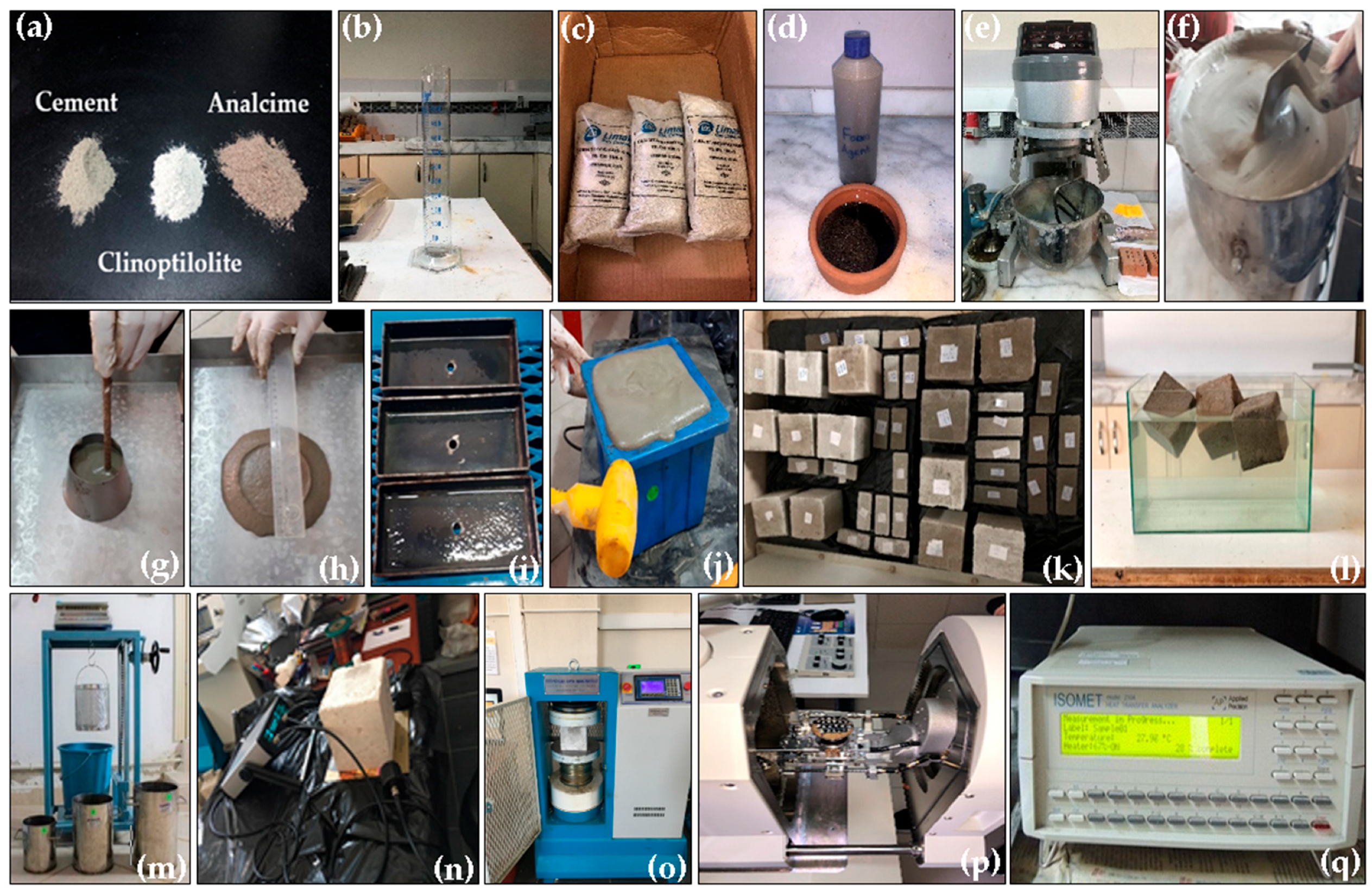
Figure 1. Images from production and tests: (a) materials of blended cements, (b) water, (c) CEN sand, (d) foam agent, (e) mixer, (f) mixture, (g) mini-slump, (h) spread, (i) plate mold, (j) cube mold, (k) samples, (l) a view regarding densities of samples, (m) Archimedes’ scales, (n) UPV test, (o) compressive strength test, (p) SEM-EDX test, (q) thermal characteristic test.
Buildings 16 02657 g001
Figure 2. The XRD patterns of analcime.
Buildings 16 02657 g002
Figure 3. The XRD patterns of clinoptilolite.
Buildings 16 02657 g003
Figure 4. SEM images and EDX results of analcime.
Buildings 16 02657 g004
Figure 5. SEM images and EDX results of clinoptilolite.
Buildings 16 02657 g005
Figure 6. Slump–spread values.
Buildings 16 02657 g006
Figure 7. Density–water absorption values.
Buildings 16 02657 g007
Figure 8. UPV-compressive strength values.
Buildings 16 02657 g008
Figure 9. SEM images of foam mortars.
Buildings 16 02657 g009
Figure 10. Density–thermal conductivity values.
Buildings 16 02657 g010
Figure 11. Density–specific heat values.
Buildings 16 02657 g011
Figure 12. Density–volumetric specific heat values.
Buildings 16 02657 g012
Figure 13. Thermal diffusivity–specific heat values.
Buildings 16 02657 g013
Table 1. Oxide compositions and physical characteristics of natural zeolites.
Oxides (%)SiO2Al2O3Fe2O3CaOMgONa2OK2ODensity
(g/cm3)
Blaine
(cm2/g)
Analcime46.7117.249.213.035.294.844.082.284780
Clinoptilolite64.7011.211.382.080.790.383.782.114079
Table 2. Characteristics of CEM42.5 R.
PhysicalChemical (%)Clinker (%)Mechanical
Density (g/cm3)3.10SO33.34Na2O0.34C3S54.83Strength 2 Days
Blaine (cm2/g)3911Cl0.0154K2O1.20C2S26.1233.60 MPa
Initial Set (min)147SiO219.68Al2O35.37C3A11.91Strength 28 Days
Vol. Exp. (mm)1.9CaO62.57Fe2O33.36C4AF0.9451.30 MPa
Table 3. The particle size distribution of CEN sand.
Mesh Size (mm)2.0–1.61.6–1.01.0–0.50.5–0.160.16–0.08
Passing (%)726342013
Table 4. Mix proportions of foam mortars.
MixID/(kg/m3)FM0FMA10FMA30FMA50FMC10FMC30FMC50
Cement500450350250450350250
Zeolite-5015025050150250
Sand500500500500500500500
Water *200200200200200200200
Foam Agent4444444
Water **120120120120120120120
* For mix of dry components; ** for activation of foaming agent.
Table 5. Elemental atomic %s and Ca/Si ratios of foam mortars.
ElementsM0MA10MA30MA50MC10MC30MC50
Ca10.569.3010.3913.9016.089.399.28
Si4.583.996.125.255.828.178.69
Al1.441.162.111.561.401.471.87
O82.3067.7368.1467.4675.2166.0763.26
Mg0.190.200.650.380.310.190.20
Fe0.180.160.490.490.340.220.26
S0.560.690.550.510.830.570.37
Na0.190.230.580.87-0.140.34
C-16.3810.649.30-13.5815.09
K-0.160.320.27-0.210.64
Ca/Si 2.312.331.692.652.761.151.07
Table 6. Mean pore size and porosity percentage of foam mortars.
Pore ValuesM0MA10MA30MA50MC10MC30MC50
Pore diameter (µm)91.509 57.925 51.334 51.750 96.241 63.033 49.931
Porosity (%Area)74.10640.21141.49929.14363.47851.56136.857
Table 7. Results of the one-way ANOVA test for main parameters.
ParametersMSdfFpeta2
Between
Series
Within
Series
Between
Series
Within
Series
Slump (mm)29.010.3561483.943.63 × 10−60.973
Water absorption (%)14.321.836147.841.71 × 10−40.771
Compressive strength (MPa)0.1180.00761415.871.62 × 10−50.872
Thermal conductivity (W/mK)0.002510.0000561455.126.10 × 10−90.959
Specific heat (J/kgK)19,921.44576.8061434.541.31 × 10−70.937
Table 8. Comparison of present study against representative literature data.
ParametersDensity
(kg/m3)
Strength
(MPa)
Thermal
Conductivity
(W/mK)
Specific
Heat
(J/kgK)
Best performing of present studyStrength and
heat storage
FMA10390.52.000.1711247.17
Thermal
insulation
FMA50370.51.540.1271112.01
Strength and
heat storage
FMC10375.202.050.1631239.34
Thermal
insulation
FMC50315.501.620.1141083.95
LiteratureStrength,
thermal insulation
and heat storage
[7]900150.35-
[8]150010–13--
[30]1200–14005–80.2–0.3-
[69]600–9002.26–2.700.155–0.183-
[70]8002.05–2.47--
Disclaimer/Publisher’s Note: The statements, opinions and data contained in all publications are solely those of the individual author(s) and contributor(s) and not of MDPI and/or the editor(s). MDPI and/or the editor(s) disclaim responsibility for any injury to people or property resulting from any ideas, methods, instructions or products referred to in the content.