1. Introduction
The construction and real estate sectors are expanding as urbanization and infrastructure expand, and vacant spaces in cities are increasingly being developed with commercial, industrial, and residential buildings. To ensure comfortable working and living conditions, heating and ventilation systems, heat pumps, and generators are used, which emit noise into the environment. To solve acoustic comfort problems, noise-reducing screens, barriers, and enclosures are often installed; however, high air permeability is necessary to ensure the safe operation of the aforementioned devices, since a large volume of air is discharged into the environment and effective cooling is required. In these cases, typical noise reduction measures are not suitable for noise control. As noise regulation standards become stricter, increasingly more residents and representatives of the industrial and commercial sectors are looking for effective noise control measures.
The European Environment Agency (EEA) 2025 report indicates that, although noise pollution is widely recognized as a major environmental issue, noise still significantly affects the health and quality of life of the population, with more than 112 million Europeans being exposed to harmful noise. Every year, noise is associated with 73,000 premature deaths and 49,000 cases of cardiovascular disease, and as many as 16.9 million people experience severe annoyance and sleep disorders. Noise also affects children’s development, learning, and behavior [
1,
2]. Although noise from road and air transport remains the main source, industrial and residential noise sources in urban areas, workplaces, and residential environments cause similar problems. Heating, Ventilation, and Air-Conditioning (HVAC) systems (which comprise ventilators, fans, heat pumps, and air ducts) [
3], as well as generators and compressors, are common sources of noise in residential and industrial environments. The noise generated by this equipment—like that from the previously mentioned noise sources—can cause problems for residents due to sleep disruption and annoyance, which can lead to more serious health problems [
3,
4]. Although air-source heat pumps are considered a key technology for reducing carbon dioxide emissions associated with building heating and have become a viable alternative to conventional fossil-fuel-fired heating systems, their rapid deployment exacerbates the problems related to the noise emitted by these devices in the living environment. Previous studies have demonstrated that subjective responses to air-source heat pump noise are influenced not only by sound pressure levels but also by psychoacoustic characteristics such as loudness, roughness, and tonality, which are primary psychoacoustic predictors of annoyance, arousal, and valence [
5]. It is worth noting that in recent years, more attention has been paid to the impacts of noise generated by heat pumps on people, with noise emissions being one of the main obstacles to the wider deployment of heat pumps. Studies have shown that when assessing air-source heat pump noise, it is important to take into account not only the sound pressure level but also the acoustic characteristics and background noise conditions. In general, there is a great need to develop effective noise reduction measures and optimize installation solutions for these devices [
6].
HVAC systems are essential for maintaining comfortable indoor environments. Although they regulate temperature and improve indoor air quality, these systems can generate significant noise, which may negatively affect occupants. HVAC noise is recognized as a stressor that adversely affects sleep, cognitive performance, and learning. Prolonged exposure to such noise can lead to stress, sleep disorders, and cognitive decline. Scientists have emphasized that noise control measures should be integrated into the HVAC system design process from the early stages; for example, by optimizing the equipment layout, ductwork systems, and sound absorption solutions [
3]. HVAC system noise is typically dominated by low-frequency content, which is caused by vibrations from mechanical and electrical system components, inadequate vibration isolation, and incorrect installation. These vibrations are transmitted through building structures and felt by occupants, potentially causing annoyance. In these systems, most low-frequency noise—in the frequency range from 16 to 250 Hz—is caused by fan operation, most noise in the mid-frequency range (250–500 Hz) is caused by dampers, and most noise in the high-frequency range (typically 500–8000 Hz, but also extending up to 20,000 Hz) is caused by diffusers [
3,
7]. Meanwhile, noise generated by generators is attributed to the operation of their exhaust pipe, AVR panel, and radiator. Noise generated by generators at high frequencies (2000–8000 Hz) is associated with internal combustion processes, while that at low frequencies (<250 Hz) originates from the mechanical vibrations of the structure and radiator. On average, noise generated by generators consists of 60% high-frequency energy and 40% low-frequency energy. Overall, generator noise affects auditory and cognitive functions, causes stress, and disrupts concentration. The equivalent noise level generated by generators can reach up to 100 dB at the source [
8]. Although household generators emit an average noise level of ~74 dB, they can also reach >100 dB, thus significantly exceeding recommended limits [
9,
10].
Commonly used HVAC noise control measures include acoustic screens, sound-absorbing materials, and noise barriers. The implementation of effective control measures, such as vibration isolation, active noise control, damping, and architectural modifications, is essential to reduce noise transmission. The installation of noise barriers near HVAC outdoor units can significantly reduce sound levels—often by several decibels [
3]. Nevertheless, there is still a lack of studies systematically assessing the influence of the geometry of ventilated louvered noise barriers on their noise reduction performance. Previous studies have shown that the noise reduction efficiency of a barrier is significantly determined by its geometry, height, and distance from the noise source. Properly designed acoustic barriers can significantly reduce the noise emitted by heat pumps in residential environments [
11]. Studies have shown that acoustic screens and protective structures can reduce sound pressure levels by several decibels without reducing the ventilation efficiency of heat pump equipment, and the Danish Energy Agency recommends installing barriers that can reduce noise in the surrounding environment by at least 5–10 dB [
12].
Noise barriers with high air permeability are increasingly being studied by scientists. To achieve greater air permeability or proper shading, scientists have proposed several types of barriers, including sonic crystals or louvered structures [
13]. Sonic crystals have been found by scientists to enable sound attenuation from 16 to 25 dB (A) [
13]. Louvered structures are often used as building facade elements or structural elements. They ensure the necessary light and air permeability, while also having sound-absorbing properties [
14]. Noise-attenuating louvers can be used to reduce noise from engineering equipment or road noise [
15], and have been described in a patent [
16] published on 1 December 1992 regarding reduce the noise generated by stationary noise sources that require ventilation or air intake or exhaust. As such devices cannot be fully covered with sound-attenuating structures, structures that allow air to pass through while reducing noise transmission are necessary.
The first evaluation of louvers for noise reduction was conducted by the authors of [
17], who investigated the effectiveness of a noise reduction structure with a single- or double-louvered structure. The sound reduction efficiency of these structures was found to be 12 and 21 dB, respectively [
17]. Research procedures and their effectiveness have been evaluated in [
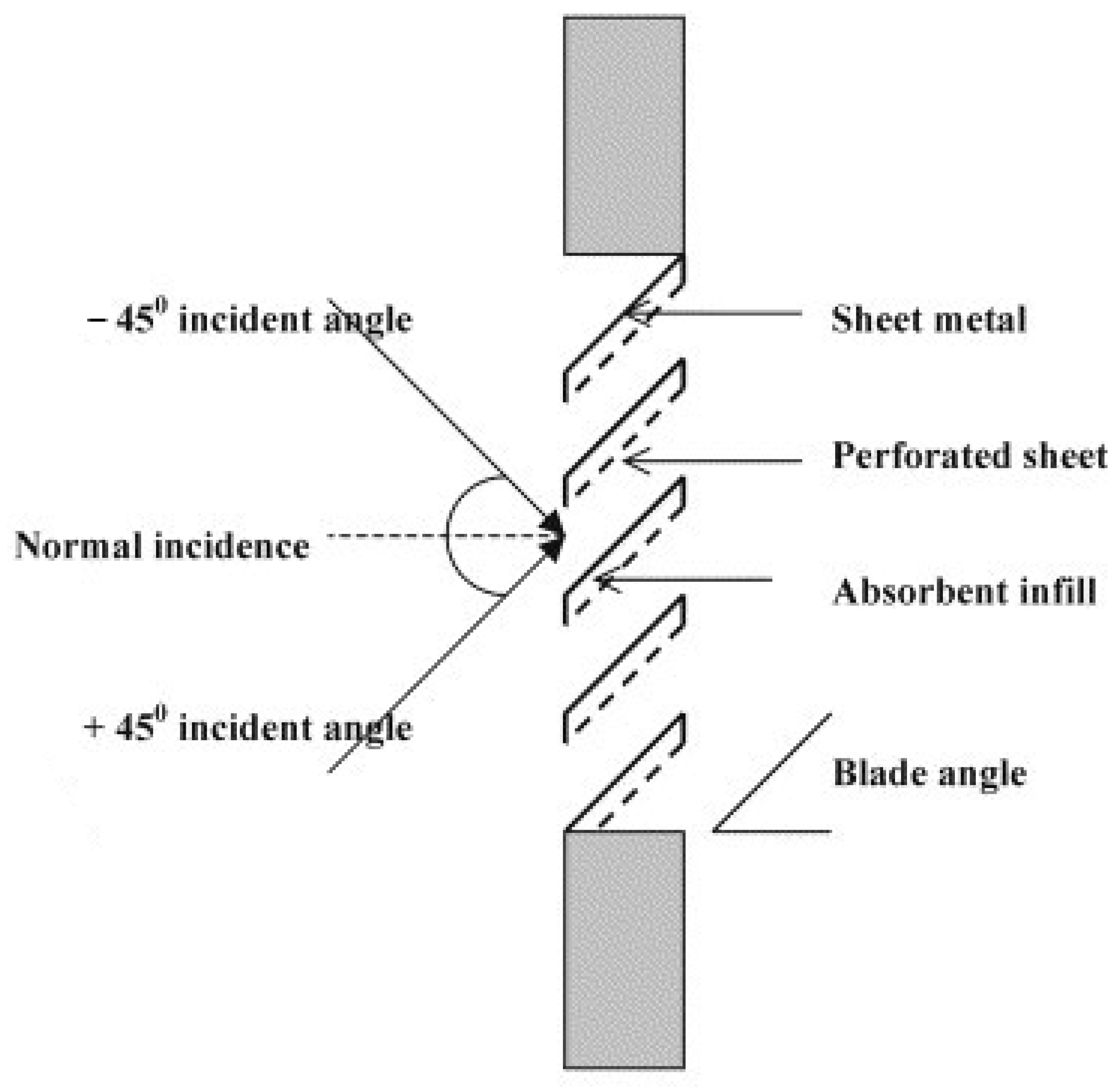
18], where the structure under study consisted of perforated metal plates with an absorbing layer between them. The sound attenuation properties of acoustic louvers were studied using the impulse response method and it was found that at low frequencies, sound transmission is mainly determined by the mass of the louver structure and does not depend on the angle of inclination of the louvers. At medium and high frequencies, factors such as diffraction, interference, and absorption become significant, leading to the dependence of sound attenuation performance on the inclination of the louvers. Overall, it was found that the geometry of the louvers has a minimal effect on low-frequency sound attenuation, while their mass has little effect at higher frequencies [
18]. An active noise reduction system integrated into a louver structure was proposed in [
19]. It was found that when installing piezoelectric sensors in the louvers that absorb low-frequency sound, the total sound loss reached up to 30 dB and was 10 dB higher in the low-frequency range, when compared with the passive noise reduction system in the louvers [
19]. Other researchers have evaluated the effectiveness of louvers integrated into building facades or window elements in reducing sound [
14,
20]. For example, Lee found that the sound reduction efficiency of a double facade with a louver structure made of polycarbonate sheets ranged from 3 to 6 dB (A) in the frequency range from 500 to 4000 Hz [
20]. In [
21], three louver configurations were investigated: louvers made from metal plates, louvers covered with 20 mm-thick polystyrene foam panels on both sides, and louvers covered with 15 mm-thick glass wool panels. According to the test results, the best noise reduction characteristics were obtained with the glass wool panel louvers, for which the sound insulation index ranged from 10.8 to 12.5 dB [
21]. The authors of [
15] studied a louvered noise barrier for traffic noise reduction through experimental testing in a sound attenuation chamber. Experimental studies were conducted using different louvered barrier configurations, characterized by different louver tilt angles and varying thicknesses of the sound-absorbing material [
15]. The sound attenuation was highest in the 2500 and 3150 Hz octave frequency bands. Depending on the angle of inclination of the louvered barrier, the sound attenuation in the mentioned frequency bands reached up to 28 dB (A), and the equivalent sound pressure level was reduced to 17 dB (A). The best sound attenuation performance was achieved using 30 mm-thick mineral wool [
15].
Despite these developments, several important knowledge gaps remain. Previous studies have mainly focused on louvered barriers incorporating conventional sound-absorbing materials such as mineral wool, glass wool, and rubber-based materials. Although the influence of louver geometry has been partially investigated, the combined effects of the louver inclination angle, number of louvers, and hemp fiber density on the acoustic performance of ventilated louvered noise barriers have not yet been systematically evaluated. In the studies reviewed above, all investigated louvered noise barriers were based on metal sheet structures combined with various sound-absorbing materials. However, to date, no study has reported a louvered noise barrier composed of perforated louvered panels with hemp fiber as the internal sound-absorbing material. In general, the application of hemp fiber as a sustainable sound-absorbing material in louvered noise barriers intended for HVAC equipment, heat pumps, and generators remains largely unexplored.
In the studies described above, porous granular or fibrous materials were most often used as sound-absorbing materials in louvers, such as various types of rubber granulate, as well as glass and mineral fiber. These sound-absorbing porous materials are often used in combination with perforated plates made of materials such as steel, glass, and plastic. The perforation of a sound-absorbing plate can influence the effectiveness of the material in absorbing sound at various frequencies. The main parameters affecting sound absorption efficiency are the perforation size, shape, area ratio, and arrangement, as well as the thickness of the perforated plate and the air gap between the plate and the sound-absorbing material. Perforated plates usually absorb medium- and high-frequency sounds more effectively. To effectively absorb low-frequency sound, perforations with larger diameter, deeper air gaps, or additional sound-absorbing materials are used. Perforation increases sound absorption as the viscous and thermal losses of the sound wave increase as it interacts with the edges of the perforations. Although round perforations are typically used in louvered barriers, other shapes can also be used, such as square, triangular, or elongated perforations. The shape affects the propagation of sound waves through the perforated surface and, accordingly, the sound absorption characteristics. Another important aspect is the perforation density (or perforation coefficient), which refers to the fraction of perforated surface area on the panel. A higher perforation density usually increases sound absorption because more sound waves can interact with the holes. Furthermore, the thickness of the perforated panel and the air gap between the sound-absorbing material and the perforated panel affect the range of frequencies that can be absorbed. Thicker panels and a larger air gap allow for more efficient absorption of lower frequencies. Additional layers of sound-absorbing material behind the perforated panel can significantly improve the sound absorption performance, and the air cavity between the panel and the sound-absorbing material can act as a Helmholtz resonator, which can be tuned to specific frequencies depending on the dimensions and perforations of the cavity [
22].
As mentioned earlier, in louvered noise-reducing structures, porous granular or fibrous materials are most often used as fillers, including rubber granules, glass wool, and mineral wool. Sustainable, environmentally friendly materials are increasingly being studied in the field of acoustics. For example, the authors of [
23] indicated that natural and recycled fibers can serve as a sustainable alternative to traditional acoustic materials due to their good sound absorption properties and lower environmental impact, while those of [
24] demonstrated that natural fibers such as hemp, kenaf, cork, and sheep wool exhibit promising sound absorption characteristics and can be effectively used in acoustic applications. More recently, the authors of [
25] showed that acoustic structures based on natural fibers can effectively absorb sound over a wide frequency range. Furthermore, the authors of [
26] reported that plant-based materials can achieve high sound absorption performance and thus represent viable solutions for sustainable noise control. One of the most ecologically attractive alternatives to conventional sound-absorbing or insulating materials, which meets the principles of the European Green Deal and sustainability, is hemp fiber [
27,
28,
29,
30]. Hemp plants are characterized by rapid biomass growth [
28], and growing hemp plants reduces the amount of carbon dioxide in the atmosphere [
29,
30]; in particular, the cultivation of 1 hectare of hemp plants allows for the absorption of about 10 tons of CO
2 from the atmosphere during one growing season [
27]. Hemp plants are characterized by high resistance to various pests and can be cultivated repeatedly on the same land, as they do not deplete the soil [
31]. Due to these ecological advantages, hemp plant cultivation has been increasingly expanding in Europe, growing from 20,540 hectares in 2015 to 33,020 hectares in 2022 [
32]. Hemp fiber has good sound absorption properties and, by densifying the fiber, sufficient sound insulation properties can be achieved [
33,
34,
35,
36,
37,
38,
39,
40]. In addition to acoustic applications, hemp fiber is increasingly being incorporated into sustainable construction materials, including cement-based composites and geopolymer systems, due to its low environmental impact and favorable physical and mechanical properties. Recent studies have demonstrated that hemp fiber can contribute to improved thermal insulation performance, reduced material density, and enhanced sustainability of building materials, further supporting its growing use in green engineering applications [
41,
42]. However, although hemp fiber has great environmental potential and sustainable material properties, as well as good acoustic properties, it is worth noting that it is a biodegradable material that absorbs moisture and decomposes over time; therefore, when using it in noise-reducing structures, preventive measures must be implemented to ensure its long-term durability. When planning to use the barrier in outdoor conditions, to improve the outdoor durability of hemp fiber-based materials, their water and moisture, weathering, and biotic resistance should be evaluated. To improve these parameters, methods such as alkali, silane, chemical impregnation, salicylic acid, or natural monoterpene phenols treatments could be considered [
43,
44,
45].
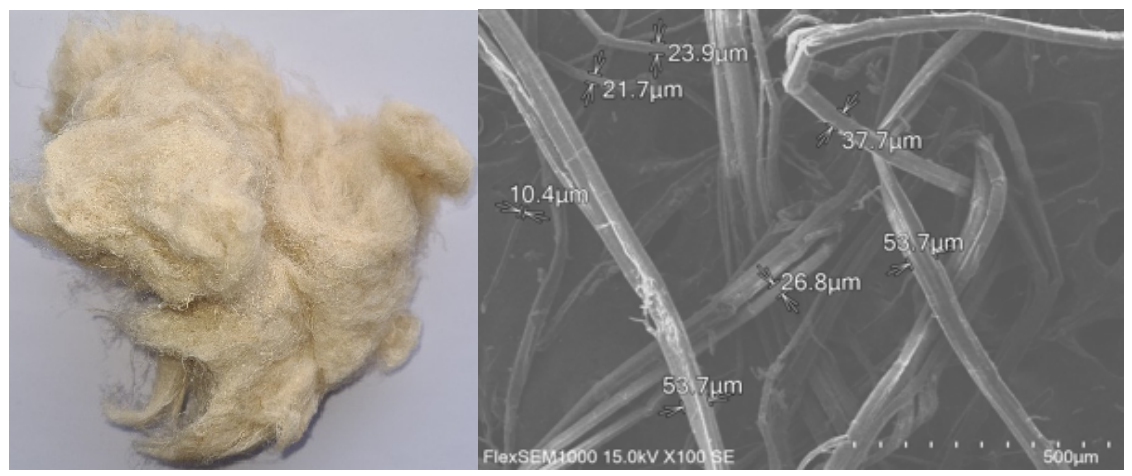
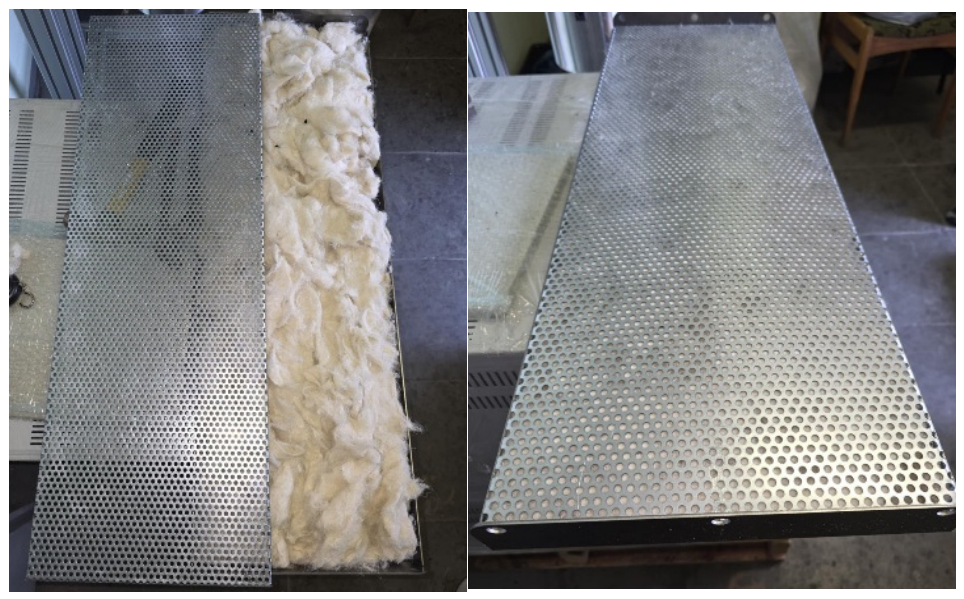
Before conducting this research, extensive experimental studies for the evaluation of different hemp fibers were carried out, confirming the possibility of using hemp fiber in the studied structure. After evaluating these preliminary results, bleached hemp fiber (BHF) was selected, which showed the highest sound absorption and transmission loss results when incorporated in the material. When testing samples with a thickness of 60 mm and a density of 250 kg/m
3, the sound absorption coefficient of bleached hemp fiber in the medium- and high-frequency ranges reached up to 0.99 and the sound transmission loss (DTL) reached up to 58.64 dB [
40].
The aim of this experimental study was to investigate the effectiveness of a louvered noise barrier in a semi-anechoic noise reduction chamber and to evaluate the influence of the number of louvers, louver inclination angle, and hemp fiber density on the performance of the barrier.
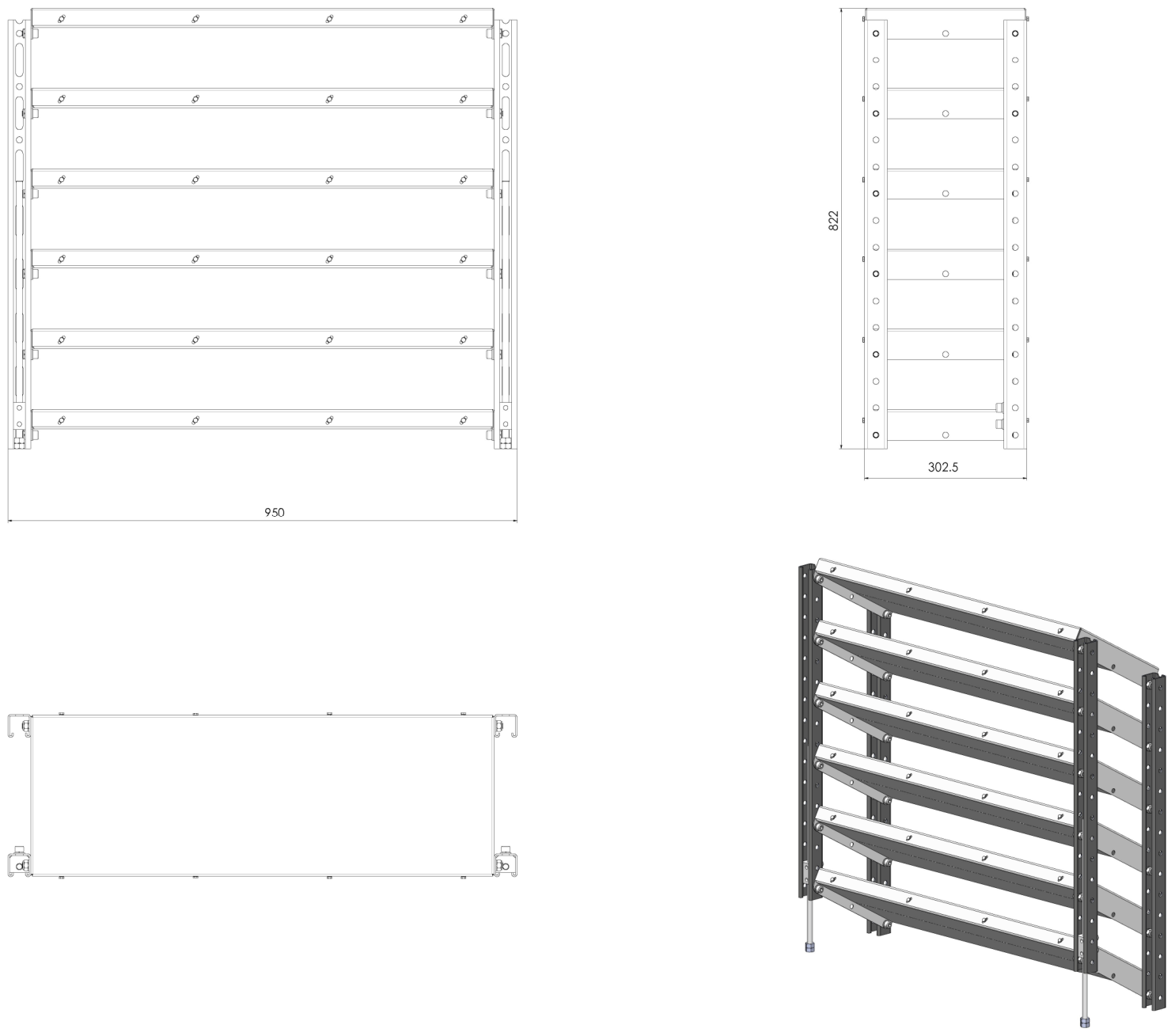
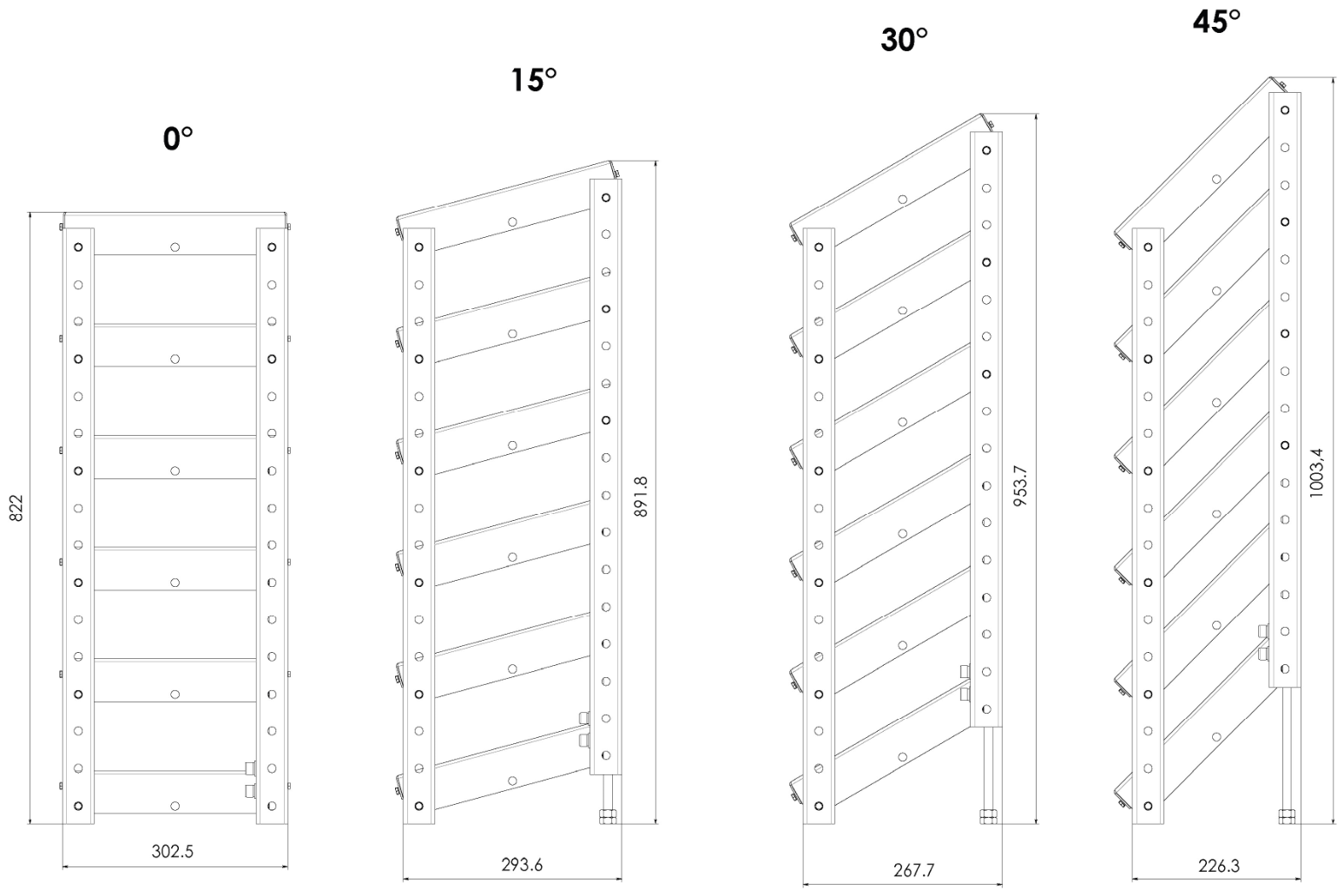
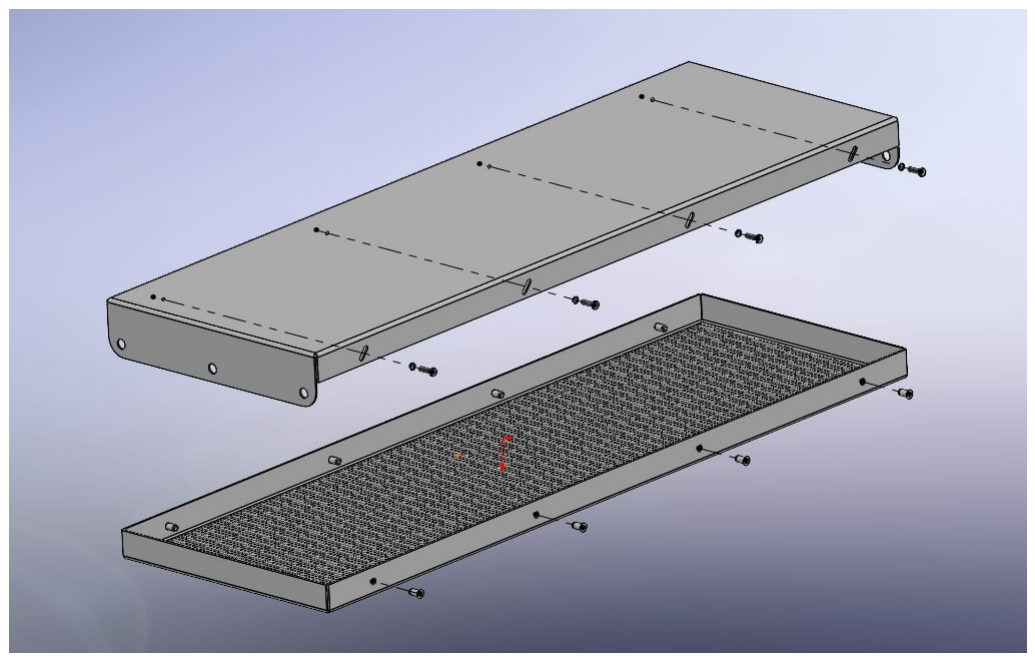
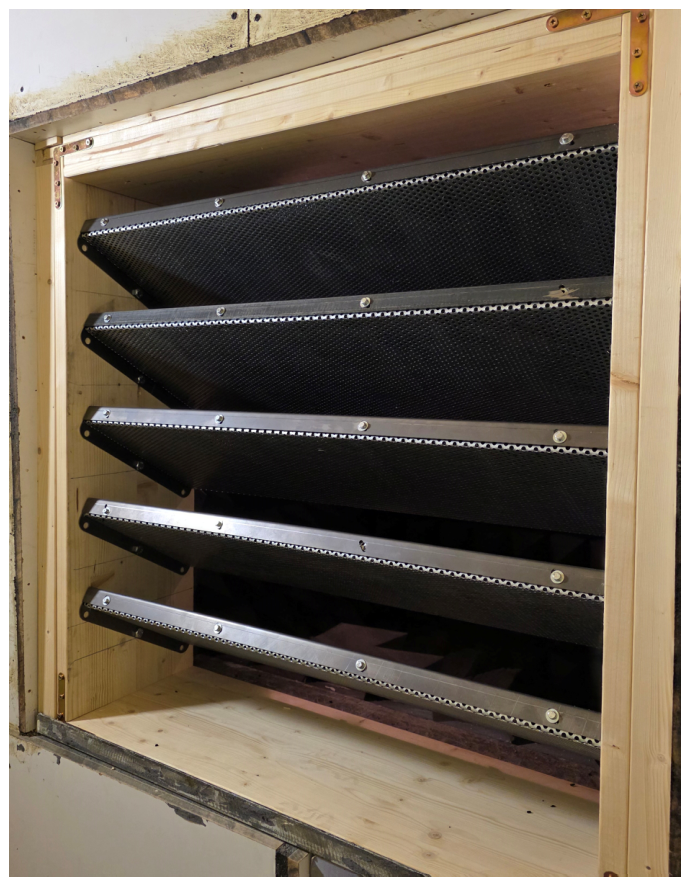
It should be noted that this is a continuation of research previously conducted with other structures using a similar methodology. Based on the results and experience gained from these previous studies, a metal louvered noise barrier was designed and manufactured, the design of which is described and studied in this article. The structure uses hemp fiber selected through the experimental studies mentioned above [
40]. For comparison, a louver barrier filled with a mixture of rubber granulate plates and loose rubber granulate was also manufactured. The results obtained using this comparative material have been presented at the international conference Forum Acusticum Euronoise 2025 [
46].
4. Discussion
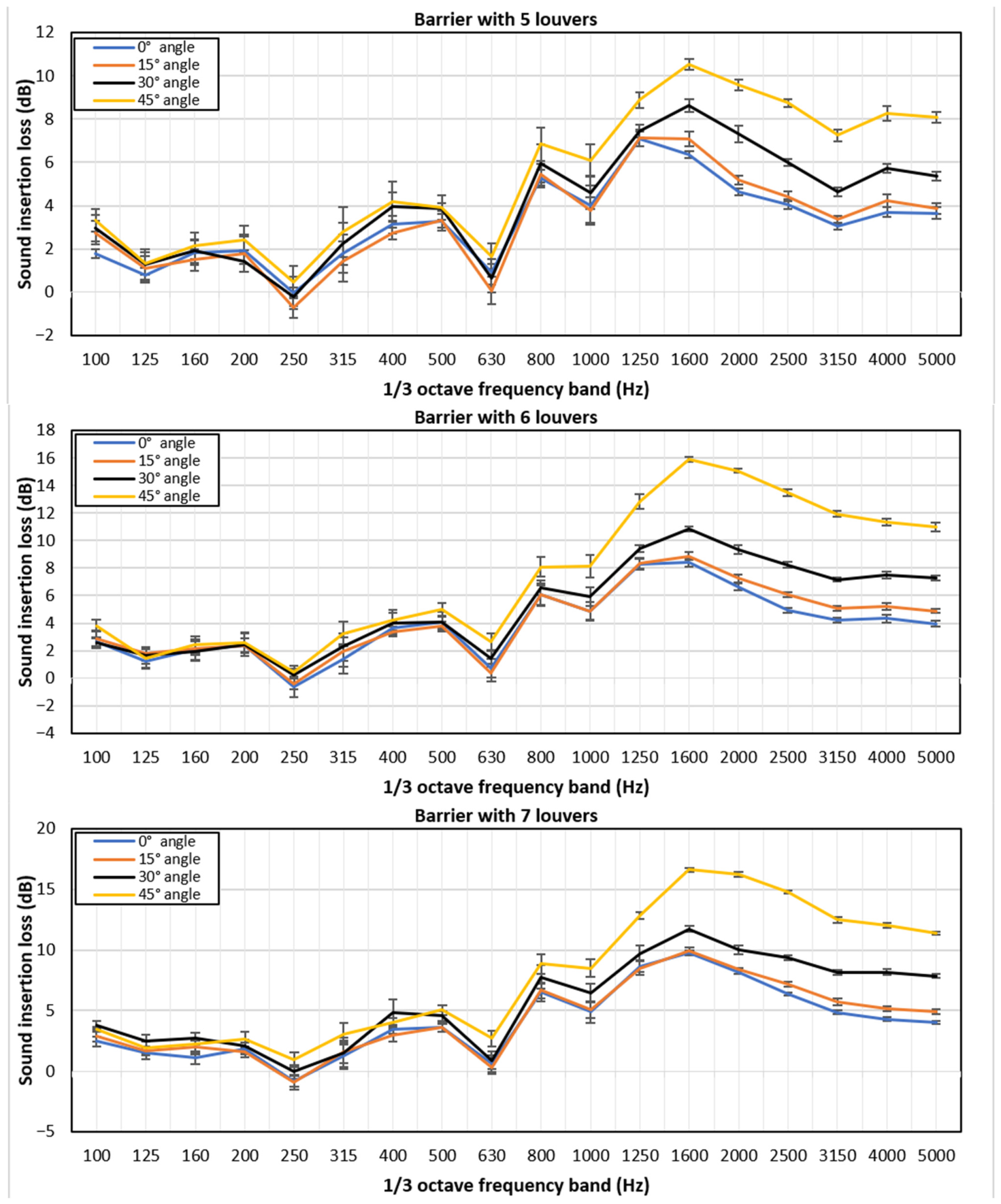
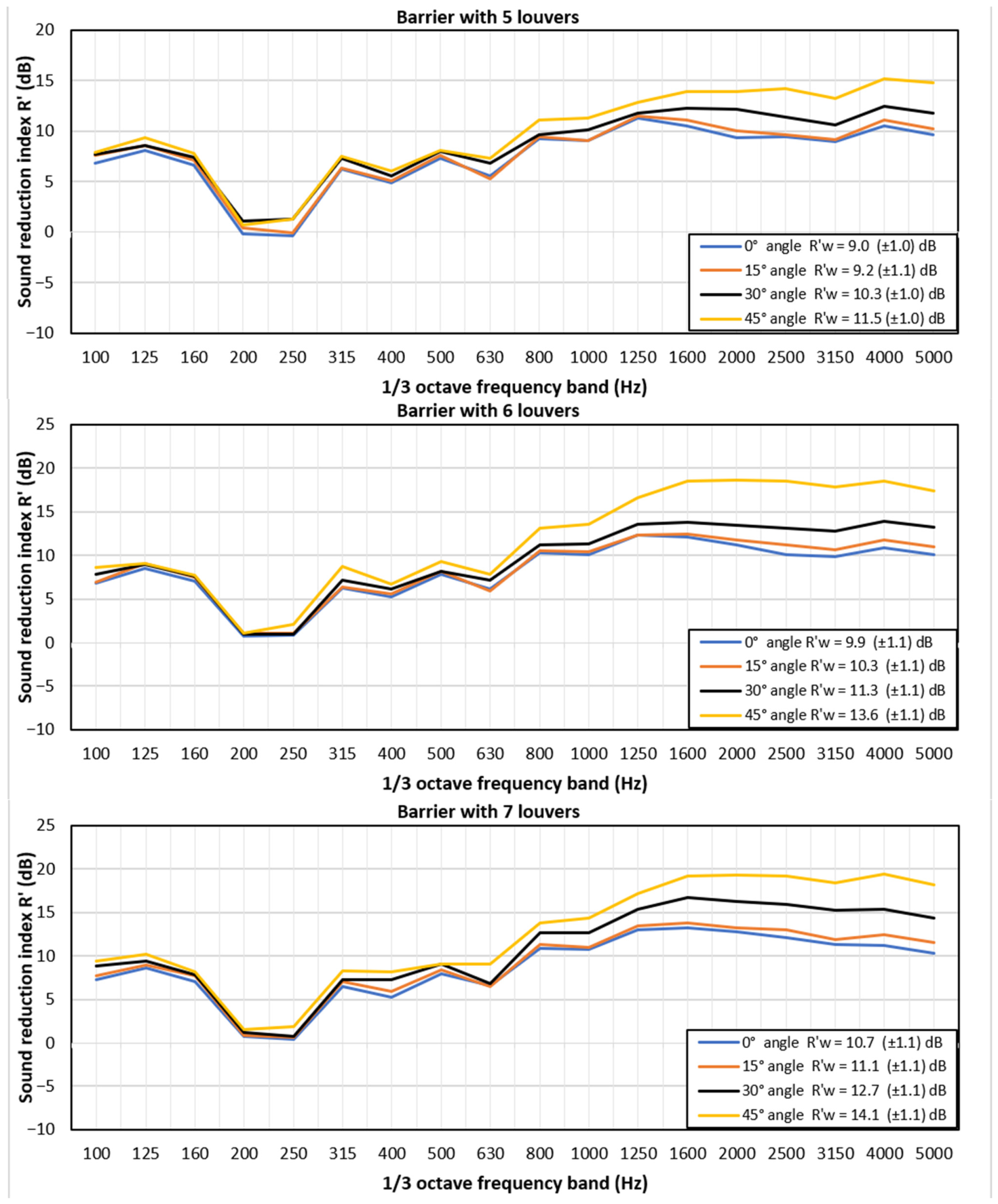
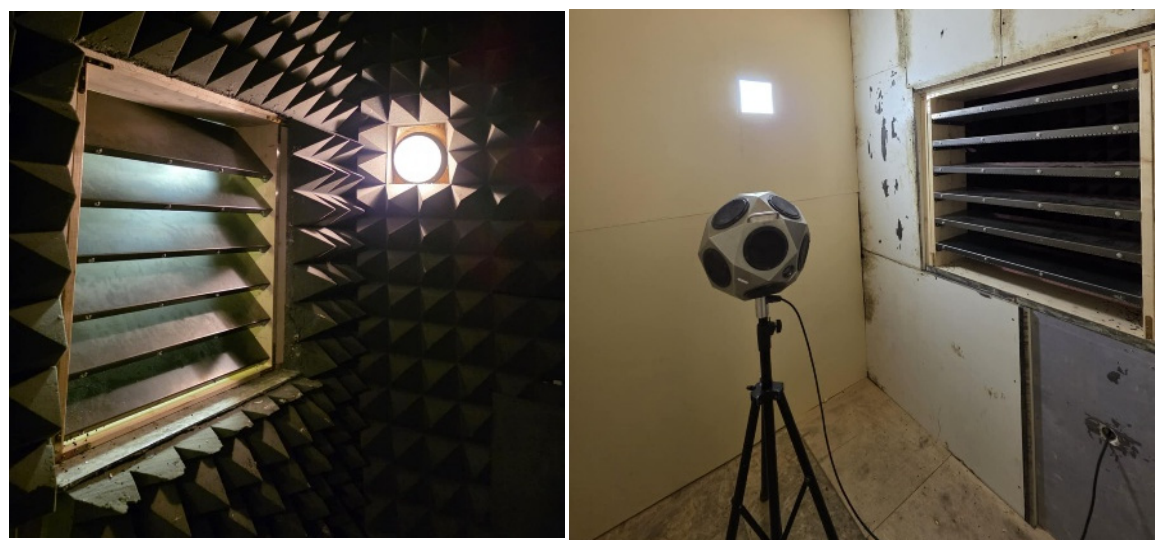
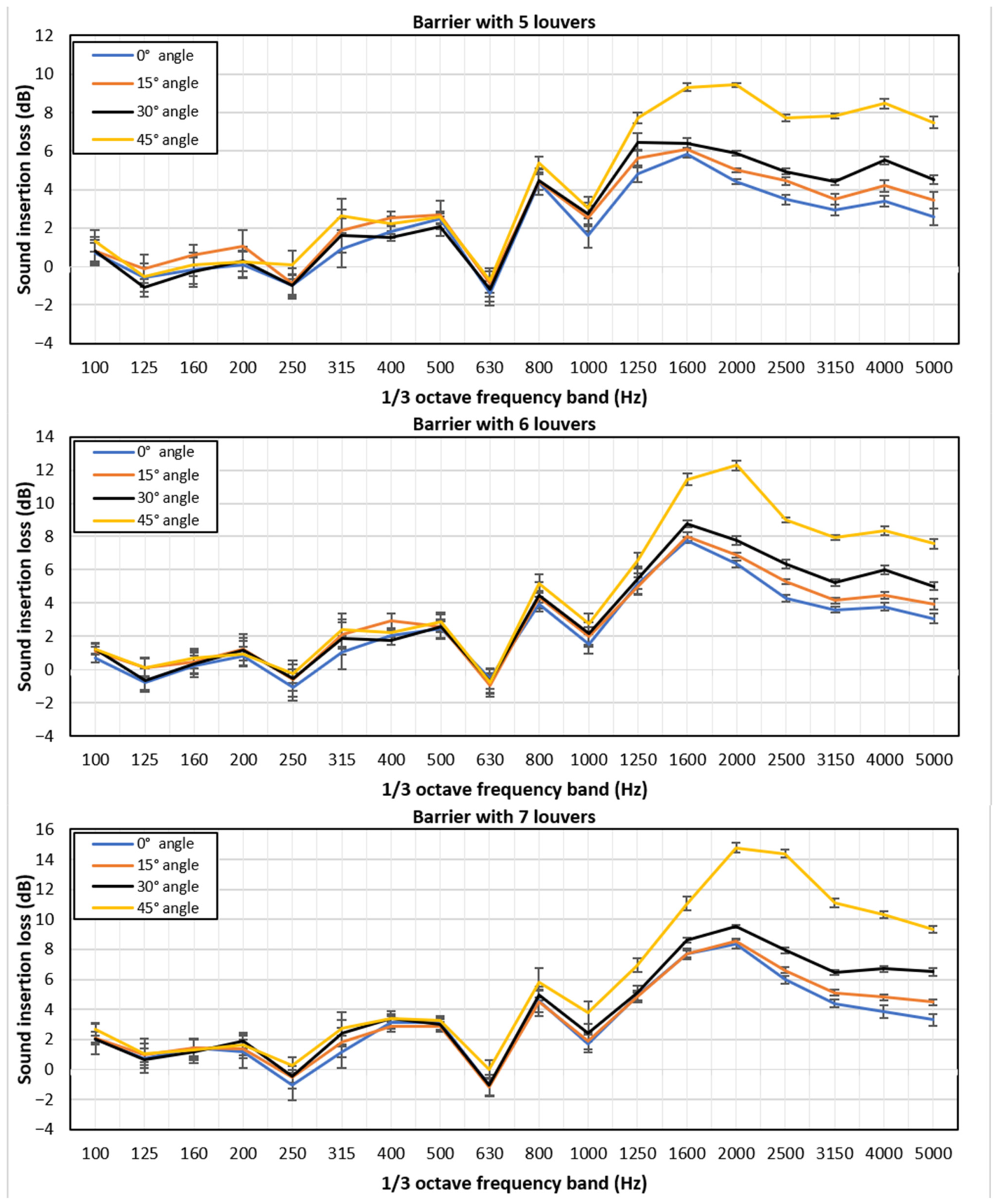
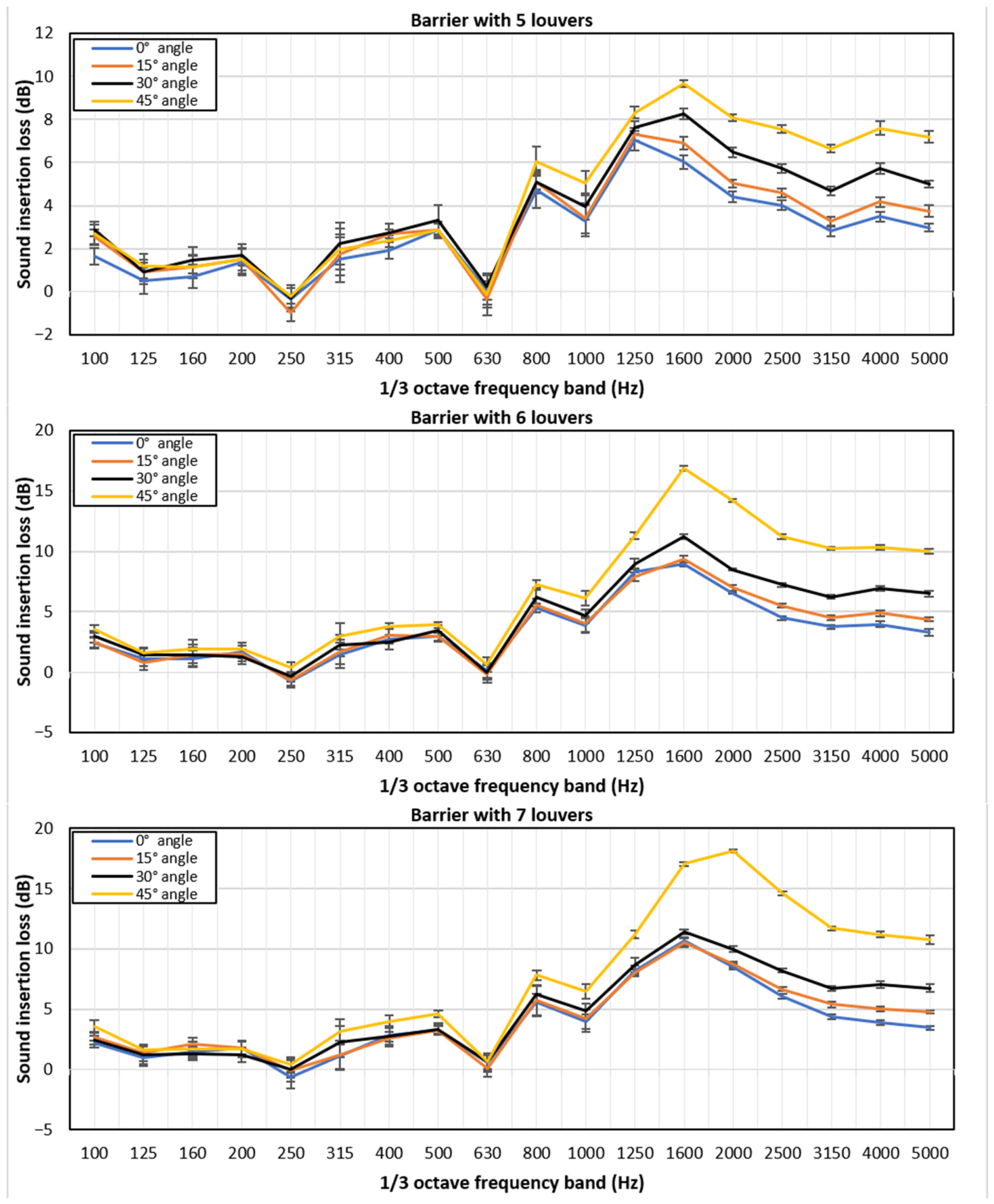
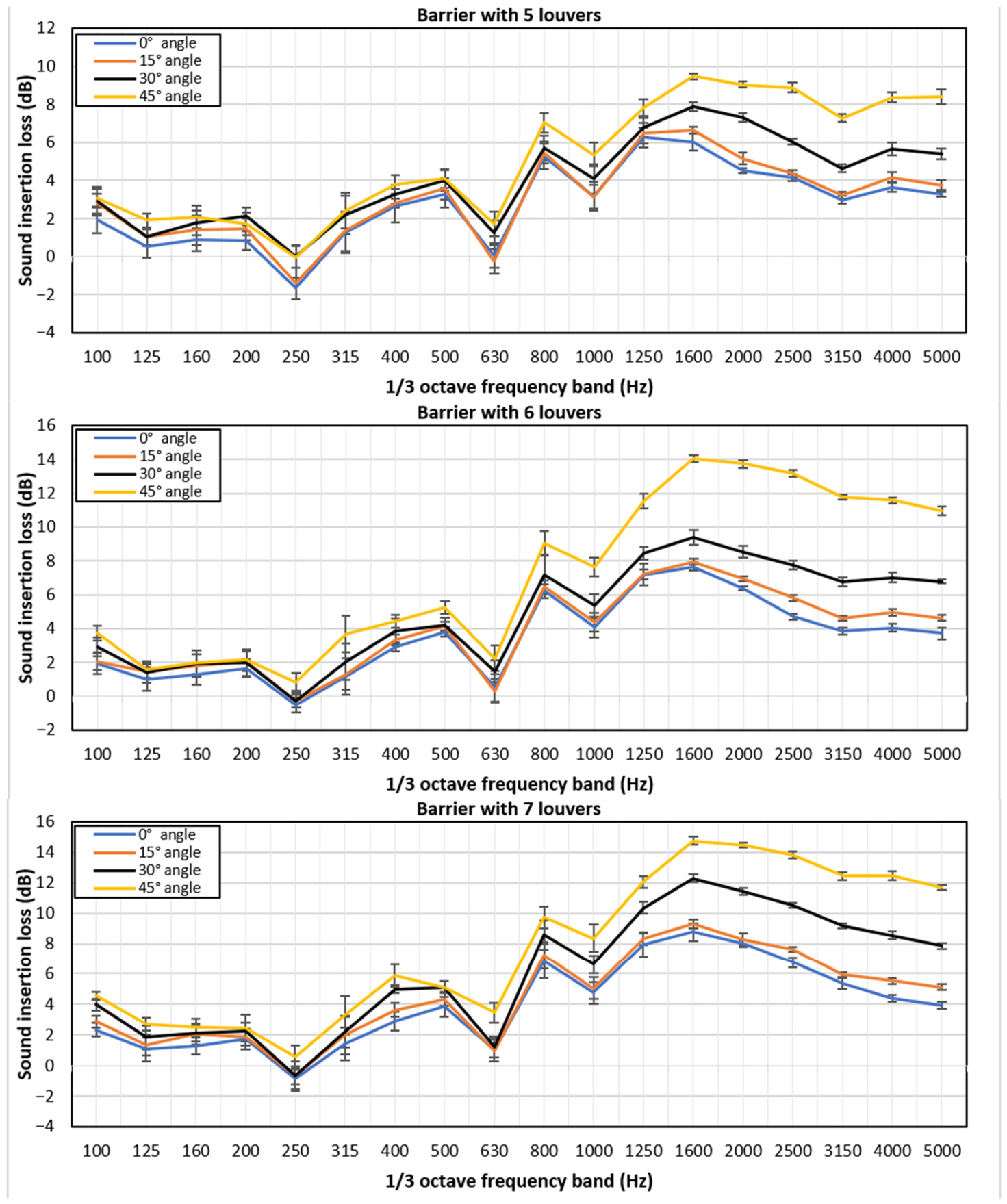
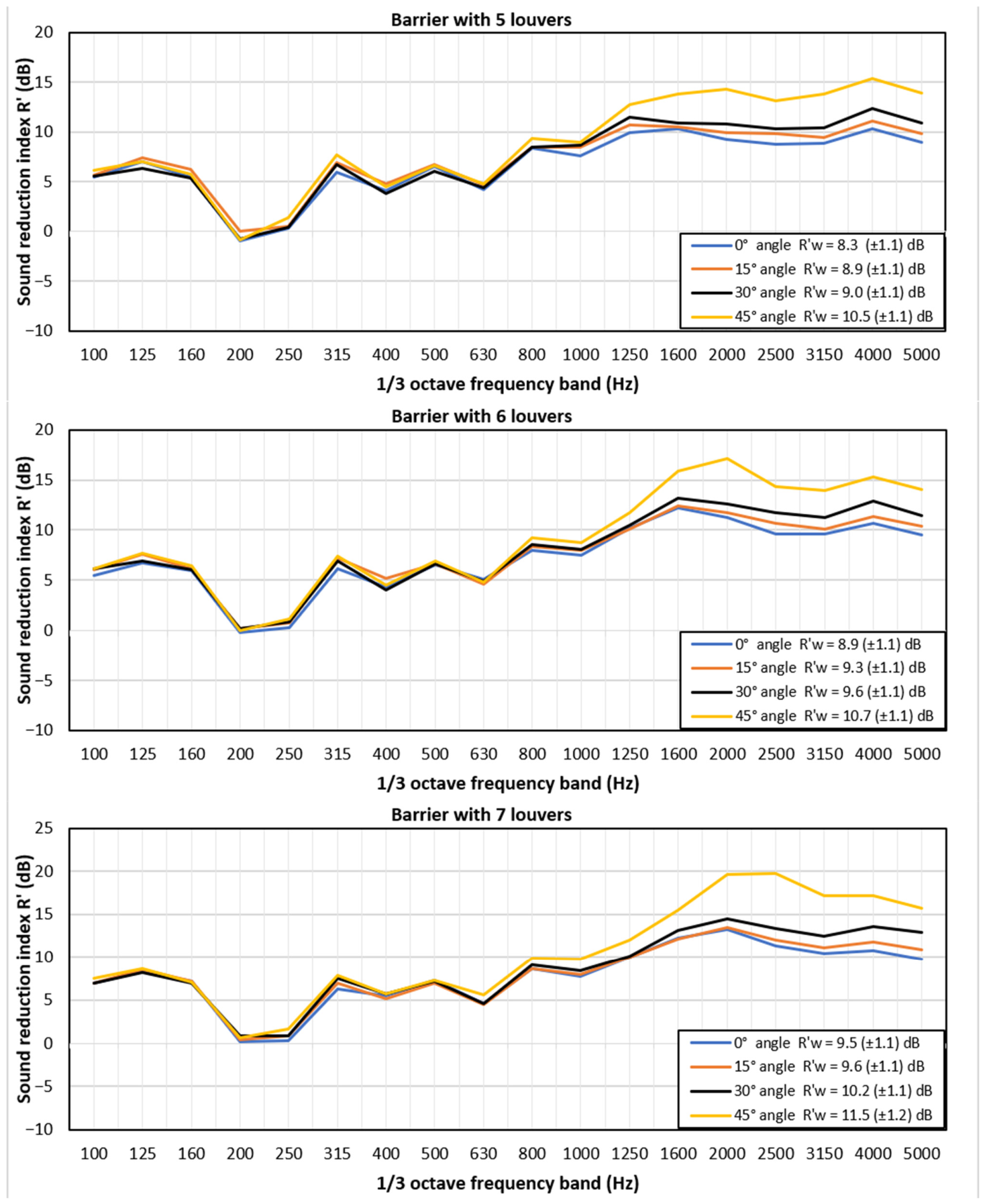
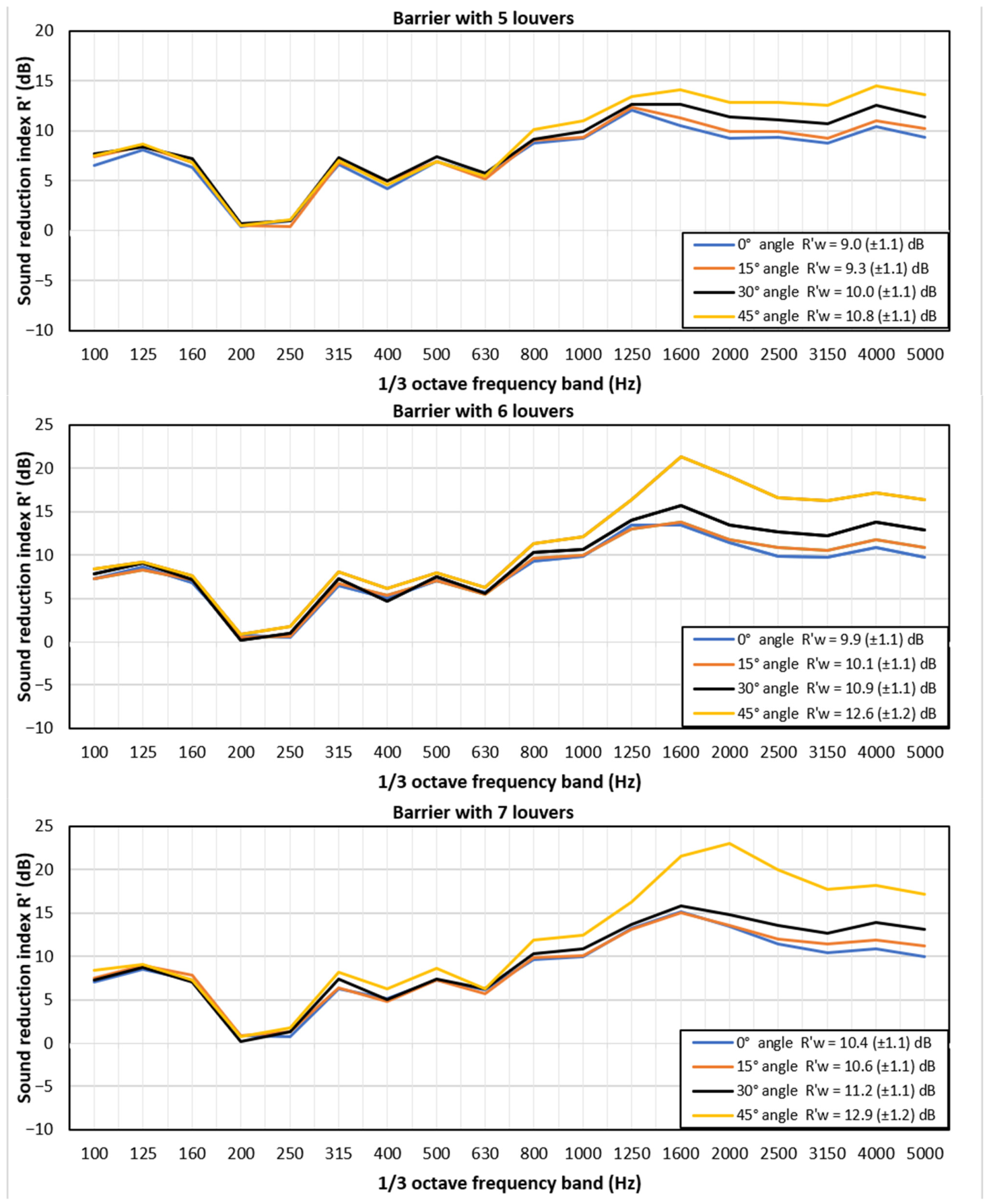
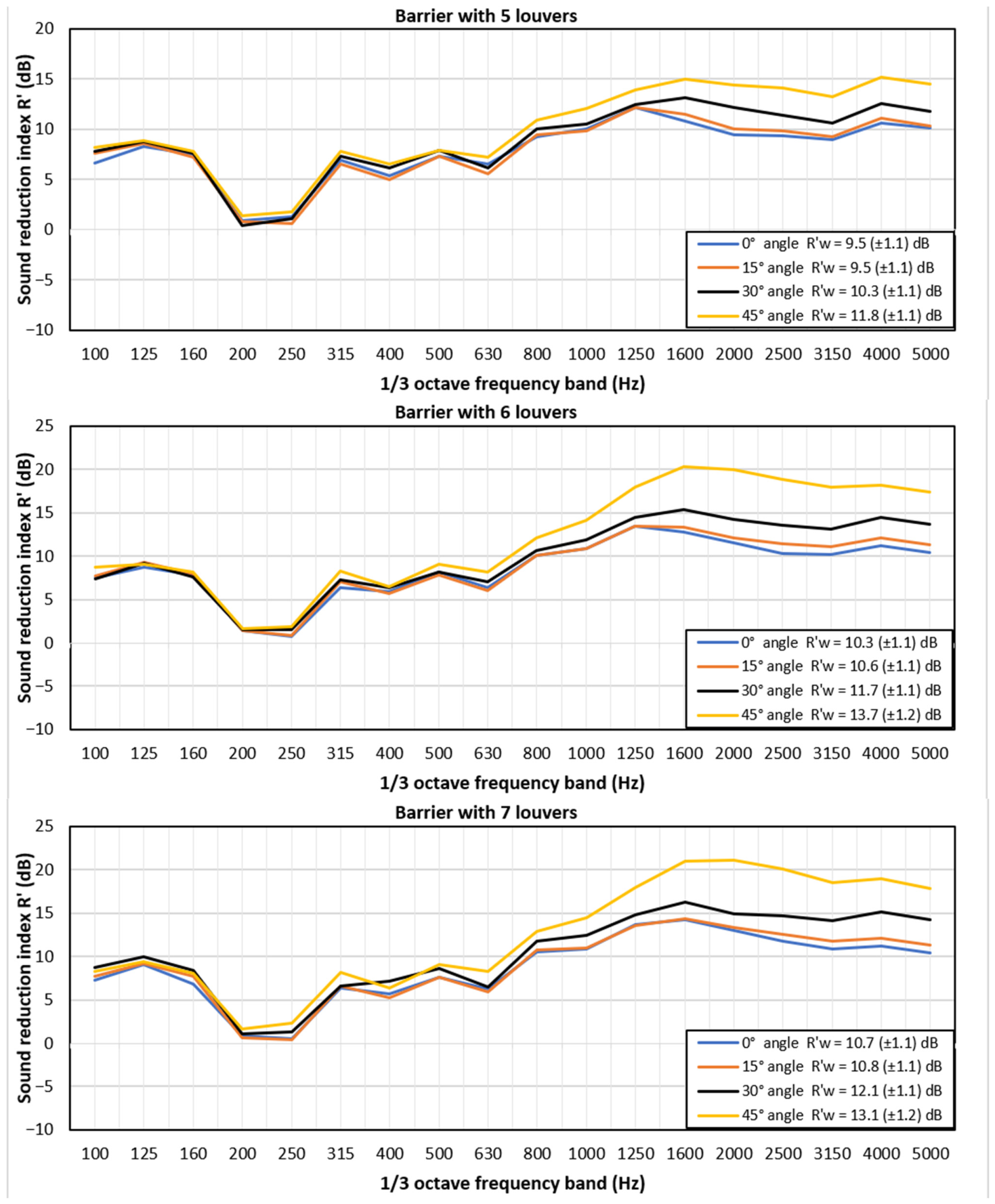
Based on the presented research methodology, a prototype louvered noise barrier was manufactured and its acoustic parameters were investigated in a semi-anechoic noise reduction chamber. These parameters included the apparent sound reduction index (R′), weighted sound reduction index (Rw), insertion loss (IL), and equivalent sound level loss (LAeq). Based on the results, several key insights can be defined. First, in the mid-frequency range, in all cases, a sharp increase in the results was observed at 1000 Hz. At this frequency, the acoustic wavelength in air is approximately 0.34 m, which is comparable with the characteristic dimensions of the louvered barrier. As the wavelength comes closer to the dimensions of the structure, the interaction between the sound wave and the barrier becomes more significant. Consequently, sound reflections between the louvers and energy dissipation within the hemp fiber filling become more pronounced, resulting in increased sound attenuation. At this frequency, increases in the assessed parameters begin to be seen, revealing the direct influence of the louver inclination angle on the results. At frequencies lower than 1000 Hz, the values were low in all cases and essentially similar, as the barrier structure has a poor ability to absorb the long wavelengths characteristic of low frequencies. For this reason, the direct influence of the louver inclination angle cannot be clearly observed in the low-frequency range. Similar observations have been reported in other studies conducted in semi-anechoic chambers [
46].
In addition to the effects of the critical frequency and the angle of inclination of the louvers, the effectiveness of the louvered noise barrier can be explained by other acoustic phenomena, such as diffraction, viscous losses, tortuosity, and airflow resistivity. Inclination of the louvers at a certain angle creates conditions promoting multiple reflections and diffraction of sound waves in the air gaps between them, which lengthens the effective path of sound wave propagation and increases energy losses. By increasing the inclination angle of the louvers, the air gap between the louvers decreases while the amount of sound wave reflections increases; this leads to greater diffraction and energy losses, as a result of which the noise reduction performance of the barrier increases.
The hemp fiber inside the louvers, which is classified as a porous sound-absorbing material, also plays a significant role in determining the performance of the designed barrier. From the obtained results, it can be concluded that the optimal porosity of hemp fiber is achieved at a density of 100 kg/m3, where not only are the sound absorption peaks reported in previous studies attained, but also the maximum efficiency of the structure itself in suppressing sound. The porosity of hemp fiber affects the attenuation of sound wave energy due to viscous and thermal losses, which is influenced by the interaction of air particles with the complex pore structure in the material. The barrier efficiency is determined not only by the airflow resistance of hemp fiber, but also by the tortuosity of the fibrous material, which increases the path of sound waves in the porous medium and promotes greater energy dissipation. Considering the influence of the described parameters on the efficiency of the structure, the described properties of hemp fiber should be evaluated and experimentally investigated in future studies.
Another important aspect identified in this study is related to the acoustic and physical characteristics of the louver filling. When studying the sound reduction index (R′) and sound insertion loss (IL) results, the peak values were determined for the barriers consisting of louvers filled with bleached hemp fiber with a density of 100 kg/m
3. When assessing those with higher density hemp fiber (i.e., 150 and 200 kg/m
3), the peak values decreased. Notably, when studying the 200 kg/m
3 louvers, the results became essentially similar to those obtained with the barriers filled with 50 kg/m
3 hemp fiber. This can be explained by the fact that, according to [
40], increasing the density of hemp fiber increases its air resistance (50 kg/m
3—23.5 kPa∙s/m
2; 100 kg/m
3—70.8 kPa∙s/m
2; 150 kg/m
3—128.0 kPa∙s/m
2; 200 kg/m
3—212.5 kPa∙s/m
2). At the same time, although the insulating properties of the fiber increased over the entire frequency range, the sound absorption properties in the high-frequency range decreased slightly while increasing in medium- and low-frequency ranges, as a result of which a decrease in the peak efficiency of the structure at high frequencies was observed with increasing fiber density. However, it is worth noting that the use of higher density fiber allows for increased efficiency of the structure in attenuating sound in the low- and medium-frequency ranges, as reflected by increases in the weighted sound reduction index (R′w) and equivalent sound level loss (LAeq). After analyzing the obtained results, it can be concluded that to achieve higher efficiency in the higher frequency range (from 1250 to 5000 Hz), it is recommended to use louvers filled with bleached hemp fiber with a density of 100 kg/m
3; meanwhile, to improve attenuation in the low- and medium-frequency ranges, a denser (i.e., 200 kg/m
3) hemp fiber should be used.
Higher fiber density reduces performance at high frequencies due to the sound absorption mechanisms in porous fibrous materials. This can be explained by the fact that, in general, the acoustic characteristics of hemp fibers are determined by the interactions between airborne sound waves and the pores of the material. When increasing the density of the investigated hemp fiber, the size of the pores in the fibrous material decreases, thus decreasing the porosity and increasing the airflow resistivity. While higher airflow resistance often improves a material’s ability to dissipate sound energy in the low- and mid-frequency ranges, excessive resistance can prevent high-frequency sound waves from penetrating the porous structure. In the high-frequency range, as sound wave attenuation is caused by viscosity and thermal losses within the pores of the material, sound waves must be able to enter and propagate through the pore network. When the fiber density becomes too high, the surface of the material becomes more reflective than sound-absorbing. Therefore, a greater proportion of the energy of a sound wave traveling through a material is reflected, rather than scattered and absorbed within the material. This explains the decreased insertion loss (IL) and apparent sound reduction index (R′) values observed in the high-frequency range results. Considering the obtained results, a hemp fiber density of 100 kg/m3 provides optimal airflow resistance, sound absorption, and adequate pore accessibility for high-frequency sound waves. When the density is increased to 150 or 200 kg/m3, the acoustic characteristics shift towards lower and medium frequencies, which explains the determined increases in the weighted sound reduction index (R′w) and the equivalent sound level loss (LAeq), despite the fact that the maximum attenuation values decreased at frequencies between 1250 and 5000 Hz.
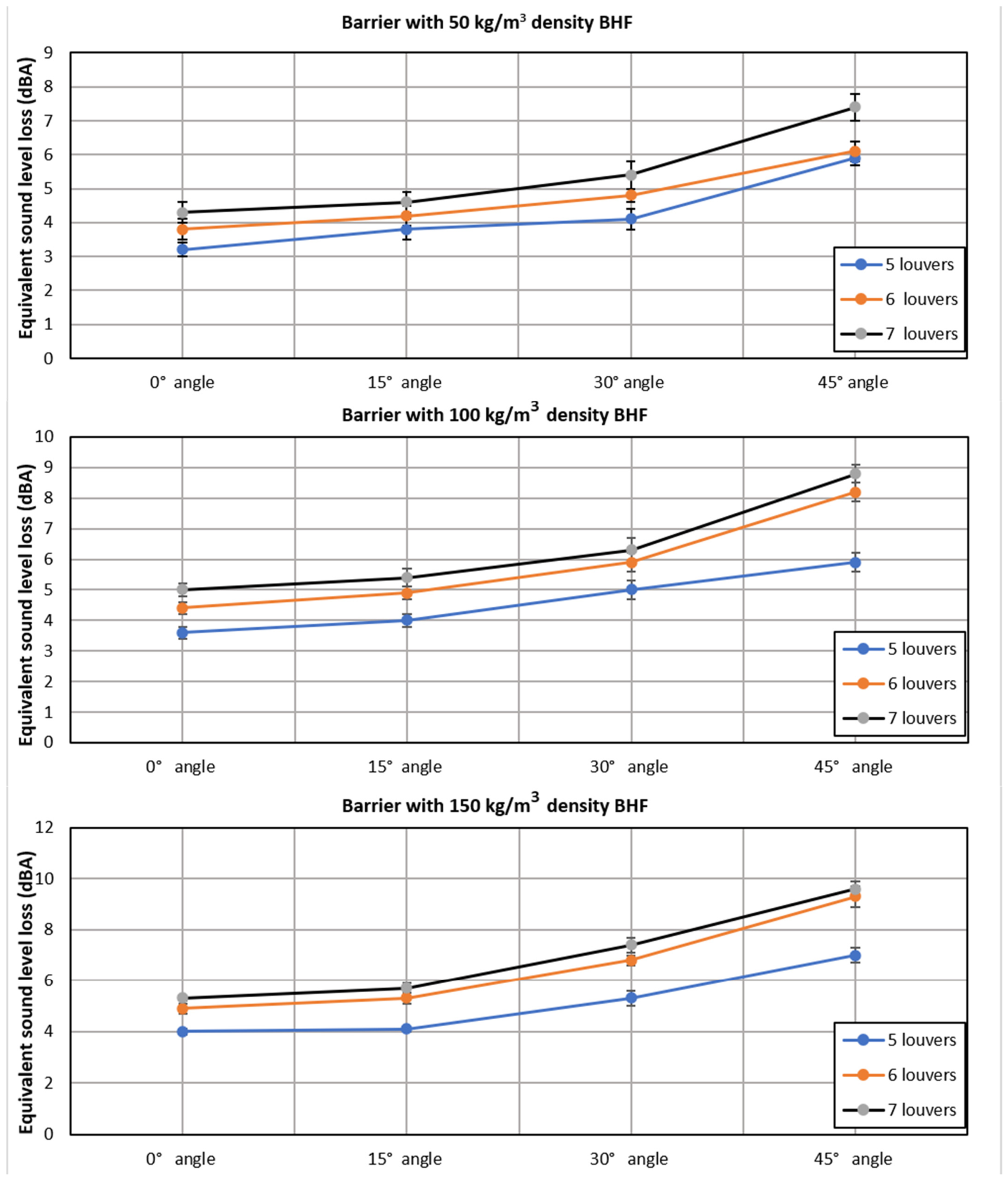
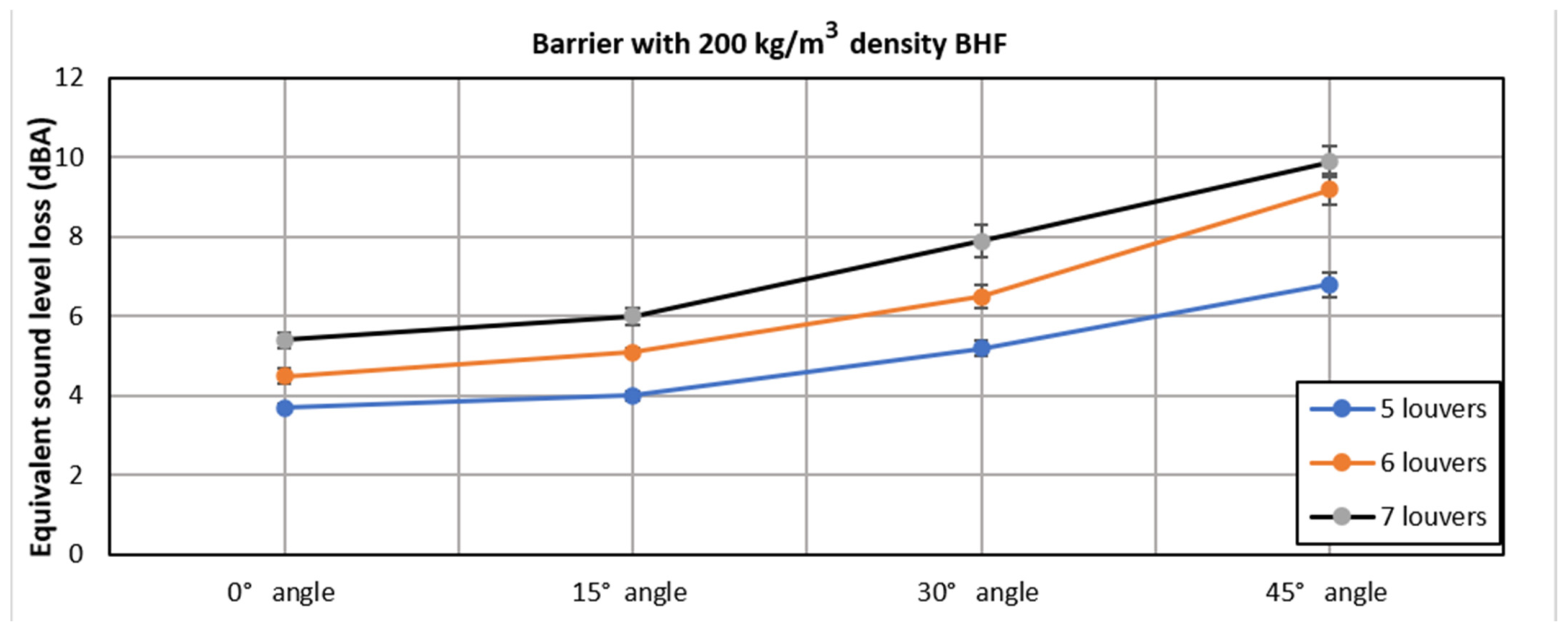
The greatest influence on the louvered barrier’s sound attenuation efficiency was observed when the inclination of the louvers was turned from 30 degrees to 45 degrees, as well as when the number of louvers increased from five to six. In all cases, regardless of the number of louvers and the fiber density used, increasing the angle of inclination of the louvers increased the noise attenuation properties of the barrier, which can be attributed to narrowing of the air gap between the louvers. The measured values generally increased when increasing the number of louvers and the density of hemp fibers in them. This can be attributed to an increase in the surface area and amount of material interacting with the propagating sound wave, resulting in greater sound wave energy loss and increased attenuation.
When assessing the feasibility of using hemp fiber in this design, it is useful to compare the obtained results with those of other studies. For example, compared with the results reported in [
15], where the louvers were covered with mineral wool (the density of which reached 40 kg/m
3) at a thickness on both sides of the louvers of 20 mm, the equivalent sound level reduction reached up to about 11 dB (A), which is similar to the 9.9 dB (A) reduction obtained in our study (approximately 10% lower than the value reported in [
15]). Our slightly lower result may be influenced by the fact that the authors of [
15] used a structure with louvered panels with a total thickness of about 40 mm, while ours was only 30 mm thick. It is also worth mentioning the environmental friendliness and sustainability advantages of the louvered noise barrier with hemp fiber, when compared with mineral wool. Furthermore, the barrier investigated in this study is superior in that its louvered structure is protected from environmental conditions, compared with the previous studies, in which the louvered panels were used without a frame and the sound-absorbing material was simply glued to the metal plates.
As mentioned in the Introduction, considering the increasing popularity of louvered noise barriers filled with rubber panels or granulate, to comparatively evaluate the advantages of hemp fiber, the louvered barrier described in this study was filled with rubber granulate panels and loose rubber granulate. Analogous studies were conducted according to the described methodology, and the results have been presented in [
46]. The obtained results allowed us to evaluate the noise reduction efficiency of the same structure when using different fillers. It was found that the maximum insertion loss of the comparative structure reached 12.63 dB at 2500 Hz, the apparent sound reduction index reached up to about 10 dB, and the equivalent noise level reduction reached up to 9.3 dB (A). These results confirm the advantages of hemp fiber when used in this type of louvered structure. The peak values obtained for the louvered noise barriers filled with hemp fiber of varying densities are summarized in
Table 1.
Considering the results obtained in this study, from a practical application perspective, the developed louvered noise barrier demonstrates potential for implementation in noise control solutions where acoustic attenuation and high airflow permeability are required. Based on the measured acoustic performance, the proposed design may be suitable for HVAC systems, ventilation units, heat pumps, and power generators, which typically emit significant noise in the medium- and high-frequency ranges. The scalability of the concept is supported by the modular nature of the louvered structure, as the number, dimensions, and inclination angle of the louvers can be adapted to meet specific airflow and acoustic requirements while maintaining the same operating principle, indicating that the proposed barrier can be transferred from laboratory-scale prototypes to full-scale engineering applications. Before implementing the barrier, the frequency characteristics of the sound emitted by the device should be evaluated, as this type of noise barrier most effectively suppresses sound in the medium- and high-frequency range, with peak suppression achieved in the frequency range of 1250–2500 Hz. Depending on practical requirements, the inclination angle and number of louvers can be changed, thus increasing or decreasing the air permeability. The proposed barrier is suitable for reducing noise emitted by heat pumps, generators, or ventilation equipment, as diffusers typically produce sounds in the high-frequency range (generally in the range of 500–8000 Hz, but also up to 20,000 Hz) [
3,
7]. Meanwhile, the noise generated by generators is due to the operation of their exhaust pipe, AVR panel, and radiator, and is typically characterized by high frequencies (2000–8000 Hz) associated with internal combustion processes [
9,
10]. The studied louvered noise barrier, due to its structural features, can be used in outdoor and indoor installations. To improve the reliability of the barrier in outdoor conditions, the hemp fiber’s water and moisture resistance, weathering resistance, fire resistance, and biotic resistance should be evaluated in future works with the aim of improving its resistance. To improve these parameters, methods such as alkali, silane, chemical impregnation, salicylic acid, or natural monoterpene phenol treatments could be considered [
43,
44,
45].
Limitations
This study has several limitations. The acoustic efficiency of the louvered noise-absorbing barrier was evaluated in a semi-anechoic chamber, examining typical parameters such as the apparent sound reduction index (R′), weighted sound reduction index (Rw), insertion loss (IL), and equivalent sound level loss (LAeq). These experiments are comparable with laboratory conditions, and thus, may not fully reflect the effectiveness of such a barrier in real conditions. Standing waves may form in a semi-anechoic chamber of this size, potentially affecting the results. It is also worth noting that the studied structure was designed and manufactured taking the parameters of the acoustic chamber into account; therefore, it was not possible to assess the effects of varying the width, thickness, or length of the louver on sound attenuation. It is also unclear how the barrier’s effectiveness will change under changing environmental conditions (e.g., humidity, temperature), and whether applying this design to reduce noise in real conditions may increase the sound level due to vibration generated by the equipment during operation. Although care was taken to ensure proper installation of the prototype, the potential effects of edge leakage and frame vibrations on the measured acoustic performance cannot be completely excluded. In addition, the airflow resistance and ventilation performance of the developed louvered barrier were not evaluated in the present study. All these aspects should be evaluated in future studies, through the use of numerical modeling and/or testing the barrier in real conditions.
5. Conclusions
In this study, the acoustic properties of a louvered noise barrier containing bleached hemp fiber were investigated. After designing the noise barrier, a prototype which fully met the design parameters was constructed and tested in a semi-anechoic noise reduction chamber. Barrier configurations with five, six, or seven louvers were tested. The louvers were rotated at 0, 15, 30, or 45 degrees, and the density of the hemp fiber in the louver was varied from 50 to 200 kg/m3 (in steps of 50 kg/m3). The apparent sound reduction index (R′), insertion loss (IL), and equivalent sound level loss (LAeq) were measured.
The highest apparent sound reduction index (R′) was 23.0 dB and the highest insertion loss (IL) was 18.3 dB, determined for the barrier consisting of seven louvers filled with 100 kg/m3 bleached hemp fiber. The highest weighted sound reduction index (R′w) of 14.1 dB and the highest equivalent sound level loss (LAeq) were determined when testing the barrier consisting of seven louvers filled with 200 kg/m3 bleached hemp fiber. In all cases, the highest values were determined when the louver inclination angle was set at 45 degrees with respect to the noise source. The peak values were most often determined in the high-mid- and high-frequency ranges, specifically at frequencies of 1600, 2000, and 2500 Hz. It was found that increasing the hemp fiber density increased the sound attenuation properties of the structure in the low- and medium-frequency ranges but decreased them in the high-frequency range, where peaks were detected in most cases. It was also found that the greatest influence on the efficiency of the structure in attenuating sound was observed when the louver inclination angle was changed from 30 to 45 degrees, and the number of louvers changed from six to seven.
To reduce the noise generated by devices that require high air permeability during operation, it is recommended to use the barrier structure studied in this work with seven louvers turned at an angle of 45 degrees. To reduce the equivalent noise level, it is recommended to fill the louvers with bleached hemp fiber, at a density up to 200 kg/m3. If it is necessary to reduce only high-frequency noise (e.g., in the range of 1600–2500 Hz), it is recommended to implement a barrier consisting of louvers filled with bleached hemp fiber at a density of 100 kg/m3.
From a practical perspective, the developed louvered hemp fiber noise barrier demonstrates potential for application in installations including HVAC systems, air-source heat pumps, ventilation units, and power generators, for which noise reduction and high airflow permeability are required. The results indicate that the designed barrier is particularly effective in attenuating noise in the medium- and high-frequency ranges. Furthermore, the measured equivalent sound level reduction ranged from 3.2 to 9.9 dB (A), while the best-performing configurations achieving reductions of 8.2–9.9 dB (A), which are within the 5–10 dB noise reduction range recommended for noise barriers installed near heat pump systems [
12]. Based on the obtained results, configurations incorporating 6–7 louvers inclined at 45° and filled with hemp fiber at a density of 100 kg/m
3 are recommended for applications requiring effective noise reduction and high airflow permeability. Although the presented results indicate that the proposed barrier may provide acoustically meaningful noise mitigation in residential environments, it should be noted that the present study was conducted under controlled laboratory conditions using a prototype-scale barrier tested in a semi-anechoic chamber. Therefore, additional full-scale field investigations are required to evaluate the effects of environmental conditions, installation configuration, airflow regimes, and long-term exposure on the acoustic performance and durability of the proposed barrier.
Future research plans include assessing the impacts of the structural parameters of the louvered noise barrier on sound attenuation using numerical modeling tools, as well as determining the aerodynamic parameters of the structure.