1. Introduction
Historic districts are among the most complex components of the built environment. As living carriers of urban morphology, architectural heritage, and collective memory, they integrate historic buildings, traditional streetscapes, public spaces, and contemporary urban functions within a single spatial system [
1,
2]. In rapidly urbanising contexts, such districts are increasingly subject to intensive public use, commercial activities, and adaptive reuse pressures, which together reshape both their physical fabric and their experiential qualities [
3]. A central challenge in the conservation and management of historic districts lies not only in the preservation of architectural authenticity but also in maintaining cultural meaning, place identity, and spatial legibility amid high-intensity use and urban transformation [
4,
5]. Recent research in built heritage and historic urban landscapes has increasingly recognised this as a systemic issue affecting historic districts worldwide [
6,
7].
This challenge is particularly evident in mixed-use historic districts, where conservation objectives intersect with leisure, tourism, and consumption functions. The Fuzimiao–Qinhuai Scenic Belt in Nanjing, China, exemplifies this condition. Originally established in 1034 AD as a Confucian ritual and educational complex, the district has evolved into a hybrid heritage environment in which historic buildings, ritual spaces, traditional commerce, and contemporary nightscape coexist within a compact urban fabric. Such districts illustrate a common tension in built heritage management: the spatial and visual presentation of the district often privileges visually attractive and commercially active elements, while culturally significant components—such as ritual spaces, museum interpretation, and educational heritage—may receive comparatively less experiential attention [
8,
9]. Although this tension has been widely discussed in qualitative case studies, there remains limited empirical evidence quantifying how visitors actually perceive and evaluate different components of the built heritage environment at scale.
From the perspective of built environment and heritage conservation, historic districts should not be understood merely as collections of preserved buildings or tourism destinations. Rather, they are composite heritage environments in which architectural form, street morphology, ritual spaces, interpretive facilities, commercial activities, public services and visitor movement jointly shape the experience of place [
10,
11]. The conservation challenge is therefore not limited to maintaining the physical fabric of historic buildings. It also involves sustaining the cultural legibility, interpretive depth and experiential coherence through which visitors recognise and engage with heritage value [
7,
12].
This issue is particularly important in mixed-use historic districts such as Fuzimiao–Qinhuai, where heritage conservation, everyday public use, commercial consumption and night-time leisure are closely intertwined. In such contexts, some elements of the district may become highly visible and emotionally rewarding, especially visually attractive nightscapes, food streets and leisure-oriented public spaces [
13]. Other components, such as ritual spaces, museums, educational heritage and historical interpretation, may remain central to the district’s cultural identity but receive weaker experiential attention from visitors [
9,
14]. This imbalance between spatial visibility, emotional performance and heritage significance constitutes a key problem for conservation-oriented spatial management.
Existing research has examined historic districts from several perspectives, including urban morphology, adaptive reuse, place-making, heritage tourism, digital mediation and post-occupancy evaluation [
11,
12,
15,
16]. However, three limitations remain. First, many studies rely primarily on qualitative case description, expert assessment or small-sample surveys, which makes it difficult to diagnose the relative performance of different experiential components across an entire district. Second, physical conservation and visitor experience are often evaluated separately, although the perceived quality of a historic district depends on the interaction between spatial form, cultural interpretation and everyday use [
7,
10]. Third, while user-generated content has been increasingly used in tourism and urban studies, its potential contribution to built heritage evaluation remains insufficiently conceptualised [
17,
18,
19]. Online reviews are often treated as general satisfaction data, rather than as post-use perception evidence that can reveal how visitors attend to, evaluate and prioritise different components of a built heritage environment.
To address these limitations, this study develops a diagnostic framework for evaluating the experiential performance of historic districts as built heritage environments. The framework does not treat computational text analytics as an end in itself. Instead, it uses large-scale visitor reviews to examine three interrelated questions: which components of the historic district become salient in visitor narratives; how these components are emotionally evaluated; and which dimensions reveal a mismatch between heritage significance, visitor attention and experiential performance. In this sense, the study links computational evidence with a built heritage concern: how conservation-oriented management can identify underperforming cultural cores within highly commercialised and visually attractive historic districts [
17,
19,
20].
Taking the Fuzimiao–Qinhuai Scenic Belt in Nanjing as a representative mixed-use historic district, this study analyses 2940 online reviews collected between 2020 and 2025. TF-IDF keyword extraction, LDA topic modelling, StructBERT sentiment analysis and Importance–Performance Analysis are used as complementary analytical tools to identify experiential dimensions, compare emotional performance and diagnose management priorities. The research is guided by three objectives: first, to identify the main experiential dimensions through which visitors perceive the historic district as a built heritage environment; second, to examine whether leisure-oriented, architectural and cultural-heritage dimensions perform differently in visitor perception; and third, to identify priority areas where conservation-oriented spatial management and heritage interpretation require improvement.
By reframing online visitor reviews as post-use perception evidence, this study contributes to building heritage scholarship in two ways. Conceptually, it highlights the imbalance between visually dominant leisure spaces and culturally significant but experientially underperforming heritage cores in mixed-use historic districts. Methodologically, it demonstrates how computational text analysis can support, rather than replace, heritage-sensitive evaluation by providing scalable evidence for diagnosing experiential performance. The findings therefore offer implications for the conservation, interpretation and culturally sustainable management of historic districts under conditions of intensive public use and commercial pressure.
2. Materials and Methods
This study adopts a computational mixed-methods design, in which the term “mixed methods” refers to the integration of multiple complementary computational techniques. Specifically, the framework combines computational text mining (TF-IDF, LDA, StructBERT) with diagnostic evaluation (IPA) within a unified analytical pipeline, each method addressing a distinct analytical task: keyword extraction, thematic identification, affective measurement, and prioritisation diagnosis.
2.1. Case Study: The Fuzimiao Historic District as a Built Heritage Environment
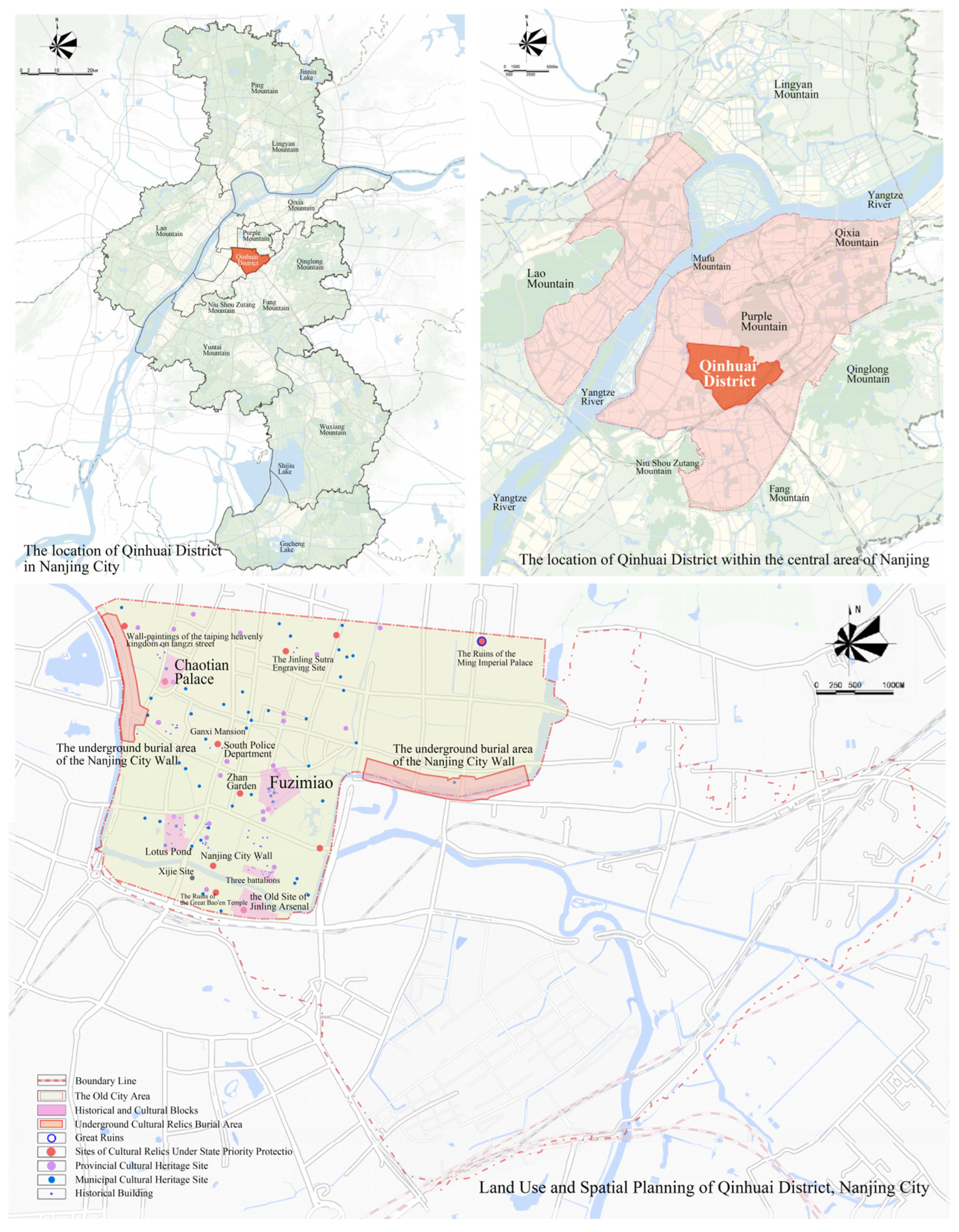
The Fuzimiao–Qinhuai Scenic Belt in Nanjing, China, exemplifies this condition. Originally established in 1034 AD as a Confucian ritual and educational complex, the district has evolved over nearly a millennium into a multi-layered historic urban environment characterised by a distinctive water–street–temple–market spatial structure, in which the Qinhuai River, traditional street networks, the Confucius Temple complex, and historic commercial blocks together form an integrated urban morphology (
Figure 1). Within this compact spatial system, ritual, commercial, and leisure functions coexist and continuously interact, producing one of the most representative examples of a mixed-use historic district in China. As such, Fuzimiao–Qinhuai constitutes a representative case for evaluating heritage experience in mixed-use and open-access historic districts, where conservation objectives must be reconciled with intensive public use, commercial activities, and contemporary leisure demands.
2.2. Data Collection and Preprocessing
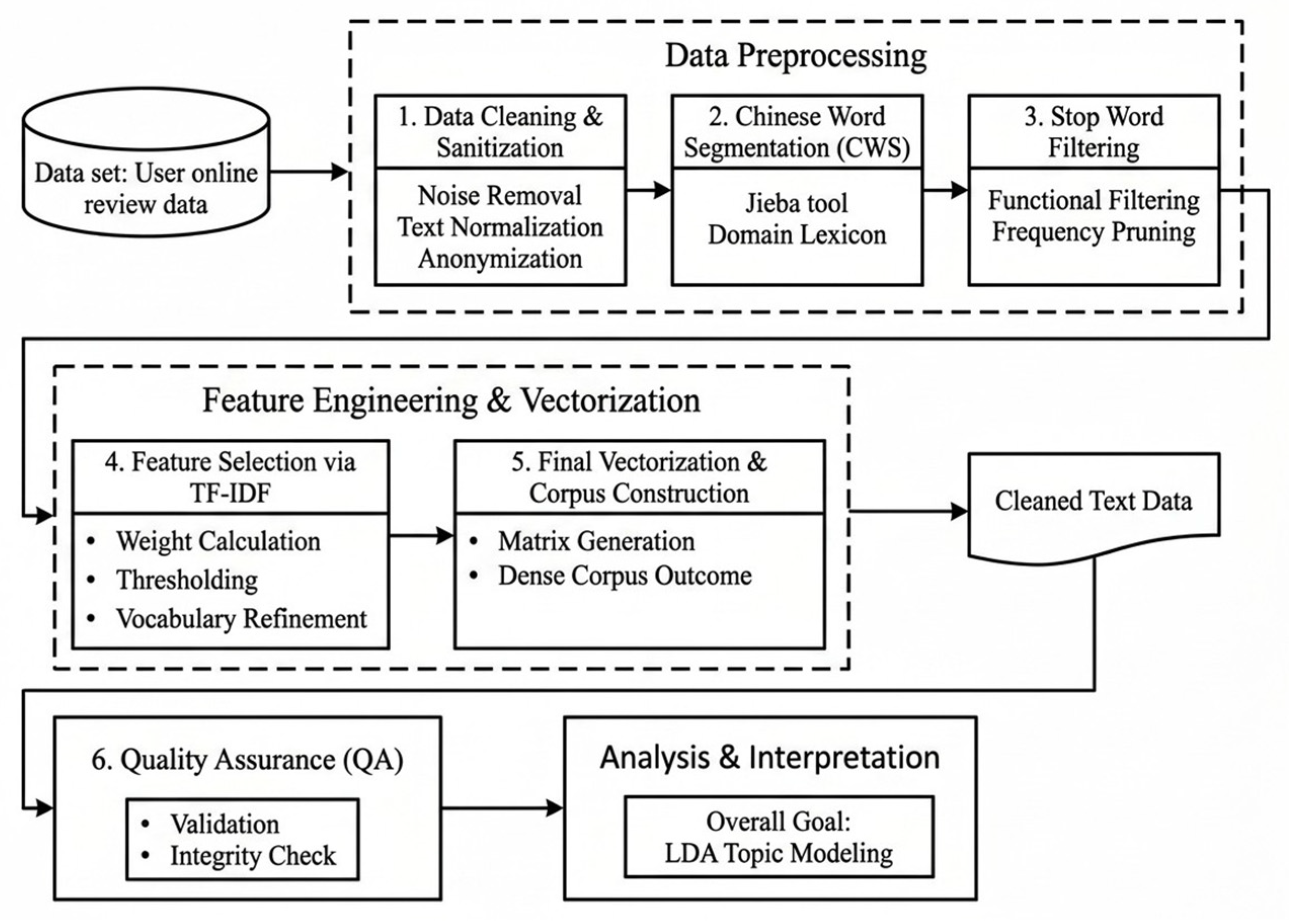
Data were retrieved from Trip.com, China’s largest online travel platform. Trip.com was selected as the data source because the Fuzimiao historic district primarily serves domestic Chinese tourists, and Trip.com provides the most extensive and representative corpus of Chinese-language user-generated reviews for this destination. Although this platform choice means that the dataset predominantly reflects the perspectives of Chinese tourists, a custom Python-based crawler harvested reviews for ‘Nanjing Fuzimiao’ published between January 2020 and December 2025. Following rigorous cleaning procedures (
Figure 2) and Chinese word segmentation using the Jieba library, 2940 valid reviews were retained for subsequent analysis. The dataset encompasses diverse visitor demographics and seasonal variations, providing a broad snapshot of domestic tourist experiences at the site.
The inclusion criteria were as follows: reviews had to be directly related to the Fuzimiao–Qinhuai Scenic Belt, contain textual descriptions of visitor experience, and provide evaluative or perceptual information relevant to the historic district. Records were excluded if they were duplicated, irrelevant to the study site, promotional in nature, non-textual, malformed, extremely short, or lacking meaningful experiential content. During preprocessing, usernames, personal identifiers, platform-specific metadata unrelated to the research objectives, emojis, abnormal symbols, repeated characters, and irrelevant web-formatting elements were removed. As the available platform data did not provide reliable demographic information such as age, origin, education level, or visitor type, the dataset is treated as a large-scale sample of online visitor perceptions rather than a demographically representative sample of all visitors.
Chinese word segmentation was conducted using the Jieba library. To improve segmentation accuracy in the context of built heritage and local cultural experience, a domain-specific dictionary was manually extended to include place names, heritage-related expressions, ritual terms, museum-related terms, and night-tour vocabulary, such as “夫子廟” (Fuzimiao), “秦淮河” (Qinhuai River), “江南貢院” (Jiangnan Examination Hall), “文廟” (Confucian Temple), “科舉” (imperial examination), “夜遊” (night tour), and “燈會” (lantern festival). Stop words were removed based primarily on the Harbin Institute of Technology Chinese stop-word list, with additional manual filtering of platform-specific, high-frequency, and semantically weak expressions unrelated to visitor perception. After segmentation and stop-word filtering, TF-IDF was used for feature weighting and vocabulary refinement. Terms with very low document frequency or excessively high corpus frequency were excluded to reduce noise and avoid the over-representation of generic words. The resulting segmented corpus was then converted into a dictionary and bag-of-words representation for subsequent LDA modelling.
Quality control was conducted in two steps. First, a random subset of cleaned reviews was manually inspected to check whether the cleaning, segmentation, and stop-word removal procedures preserved meaningful spatial, cultural, and experiential information. Second, the retained keywords and representative documents for each topic were reviewed to ensure that the extracted vocabulary was interpretable in the context of historic district evaluation. These procedures were used to improve corpus quality and enhance the reliability of the subsequent LDA topic modelling, StructBERT sentiment analysis, and IPA diagnosis.
To further optimise the feature space and enhance semantic coherence for subsequent topic modelling, this study applied the Term Frequency-Inverse Document Frequency (TF-IDF) algorithm for weighted feature selection. Formally, the TF-IDF weight of term
i in review document
j is computed as:
where
denotes the frequency of term
i in review
j,
N is the total number of reviews (
N = 2940), and
is the number of reviews containing term
i. The statistical results are shown in
Table 1.
2.3. Thematic Extraction
To identify the latent narrative structures within the visitor discourse, we employed Latent Dirichlet Allocation (LDA) [
21]. As an unsupervised generative probabilistic model, LDA functions as a ‘digital hermeneutic tool’, capable of discovering hidden thematic patterns without the bias of pre-imposed researcher categories [
22,
23]. In the context of this study, LDA treats each review document
j as a mixture of
K latent topics, where each topic
k is characterised by a probability distribution over the vocabulary. The generative process is governed by two Dirichlet priors:
α (document-topic concentration) and
β (topic-word concentration). The marginal probability of observing word w
i,j in document
j is given by:
where z
i,j is the latent topic assignment for word
i in document
j;
is the per-document topic distribution; and
is the per-topic word distribution. Model selection was guided by two complementary metrics. Perplexity, which measures the model’s generalisation capability on held-out data, is defined as:
where
M is the number of test documents and
Nj is the token count of document
j. A lower perplexity value indicates better predictive fitness. Complementarily, the coherence score
Cv measures the semantic interpretability of each topic by computing the co-occurrence-based pointwise mutual information (PMI) among the top-
n words within a topic.
The LDA topic model was implemented using Gensim’s LdaModel in Python 3.10. Before model estimation, the segmented reviews were converted into a dictionary and bag-of-words corpus. The number of topics was selected by comparing perplexity and C_v coherence across different K values. In the model-selection stage, each candidate model was estimated with passes = 30 and random_state = 42, and coherence was calculated using Gensim’s CoherenceModel with the Cv metric. The final LDA model was estimated with the following settings: number of topics K = 6, passes = 20, and random_state = 42. The α and β/η priors were not manually tuned; instead, Gensim’s default symmetric prior settings were retained. Under the final six-topic setting, the symmetric document-topic prior is α = 1/K ≈ 0.167, and the symmetric topic-word prior is β/η = 1/K ≈ 0.167. The α prior controls the sparsity of the document-topic distribution, whereas the β/η prior controls the sparsity of the topic-word distribution. After model estimation, each review was assigned to the topic with the highest posterior probability. The document-topic probability matrix was also retained for subsequent topic-level aggregation, sentiment analysis, and IPA diagnosis. To improve interpretability, the topic labels were determined through a combined reading of high-probability keywords, representative high-posterior-probability reviews, and established experiential dimensions in built heritage and heritage-tourism studies.
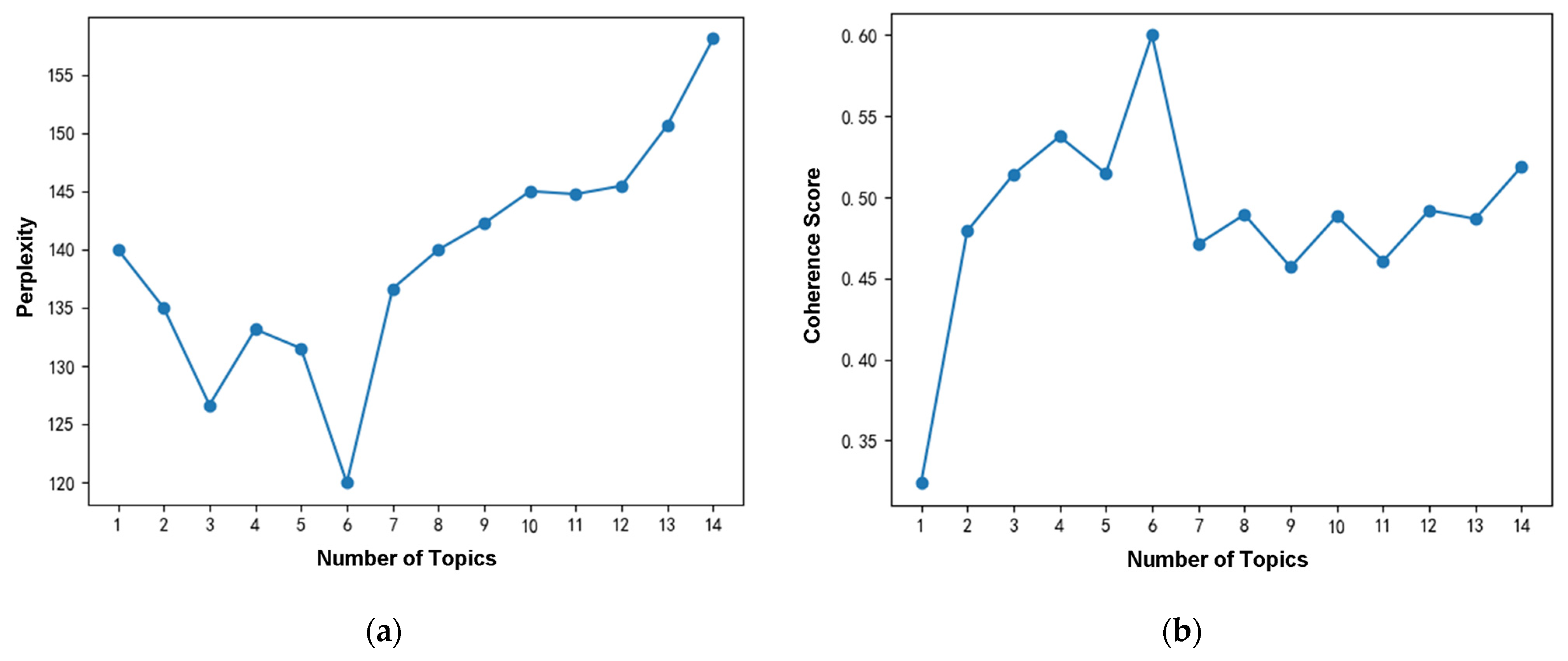
The optimal solution was determined at
K = 6, a convergence point where perplexity stabilised, and the coherence score
Cv achieved a local maximum (see
Figure 3), yielding the best balance between model fit and thematic interpretability.
As an additional robustness and interpretive check, representative reviews with high posterior probabilities for each topic were manually inspected after the selection of K = 6. This step was used to assess whether the model-generated keywords corresponded to coherent visitor narratives and whether the topic labels were appropriate for interpreting the experiential dimensions of the historic district. The manual inspection confirmed that the six topics could be meaningfully associated with cultural learning, nightscape leisure, ritual and museum visits, architectural space, value evaluation, and service experience. This procedure was not intended to replace quantitative model selection, but to improve the transparency and interpretability of the topic-labelling process.
2.4. StructBERT-Based Sentiment Analysis and Validation
To estimate the emotional orientation of visitor narratives, this study employed StructBERT for Chinese sentiment analysis. Sentiment analysis was conducted using the pretrained StructBERT sentiment-classification model “iic/nlp_structbert_sentiment-classification_chinese-large” from ModelScope, with revision v1.0.0. Compared with dictionary-based sentiment methods, transformer-based models are better suited to modelling contextual relationships within sentences and therefore provide a useful tool for analysing short online reviews [
24,
25].
Specifically, after the sentiment scores were generated, a stratified sample of reviews was manually examined by the research team. The sample covered the six LDA topics and included positive, neutral and negative cases, as well as comments containing mixed evaluations or culturally specific expressions. Each sample review was coded according to its dominant sentiment orientation. Cases of disagreement were discussed until a consensus label was reached. The manually coded labels were then compared with the StructBERT outputs to assess whether the model produced reasonable sentiment classifications for the Trip.com review corpus.
This validation step was used to identify potential sources of error, including irony, vague praise, mixed positive–negative evaluations and comments where service-related dissatisfaction coexisted with appreciation of the nightscape or heritage environment. The results indicated that StructBERT provided an acceptable basis for estimating overall sentiment tendencies, but the model may still have limitations in detecting nuanced or ambivalent emotional expressions. Therefore, the sentiment scores in this study are interpreted as computational indicators of visitor affective tendency rather than as exact measures of tourist satisfaction.
2.5. Integrated Evaluation of Heritage-Space Performance
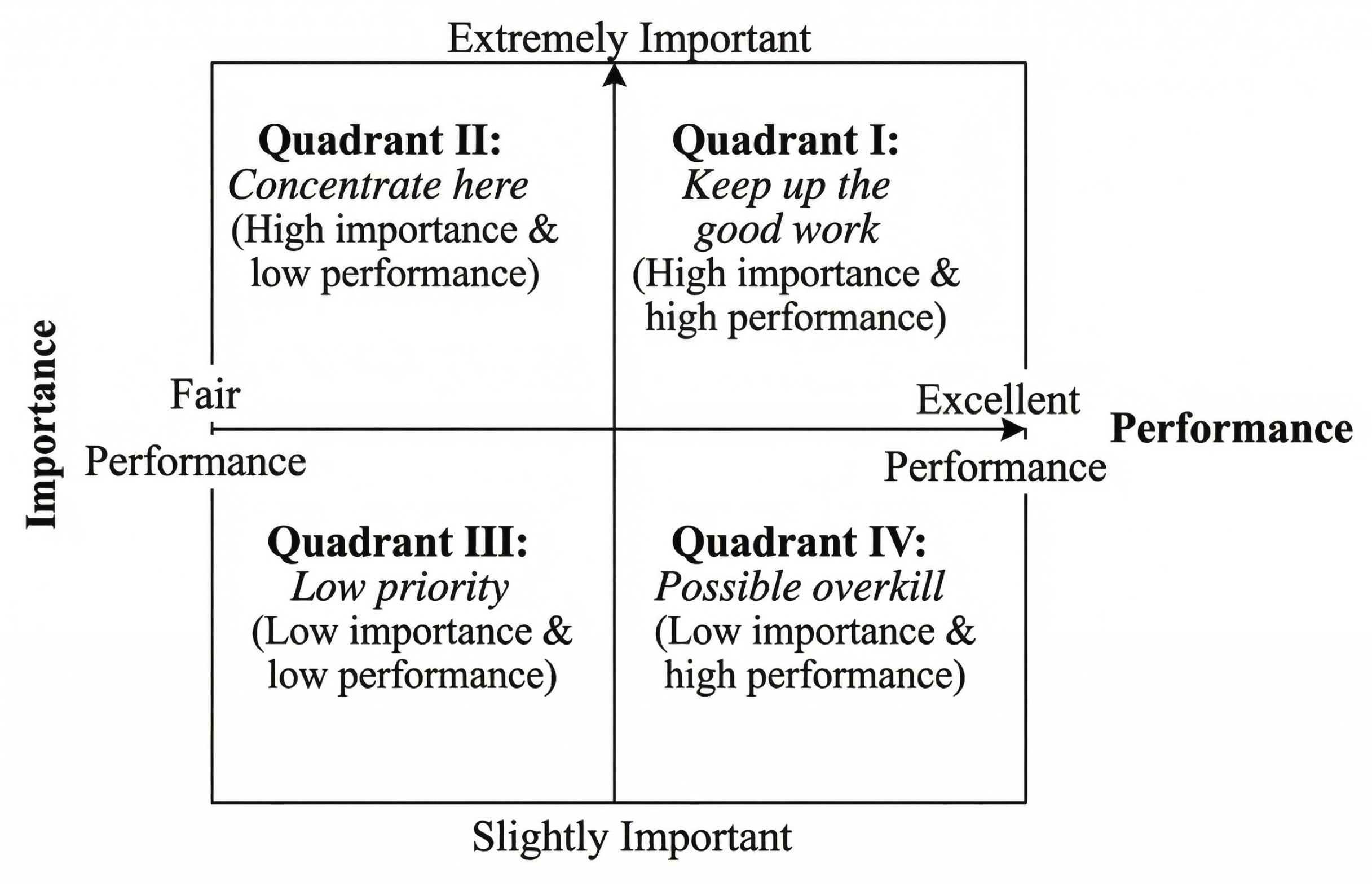
To translate the text-mining results into a diagnostic framework, this study constructed an IPA-type matrix using two topic-level proxy indicators derived from online reviews (see
Figure 4).
Importance: The horizontal axis was defined as review-based perceived salience, calculated from the mean TF-IDF weight of the representative terms associated with each topic. This indicator does not represent tourists’ self-reported importance in a strict survey-based sense; rather, it reflects the relative textual prominence of a topic in visitor-generated review narratives [
17];
Performance: The vertical axis was defined as affective performance, calculated from the aggregated StructBERT sentiment score of reviews assigned to each topic. This indicator should be understood as a computational estimate of affective tendency rather than as an exact measurement of tourist satisfaction.
The overall mean values of topic salience and affective performance were used as descriptive reference lines to divide the matrix into four quadrants, following the diagnostic logic of IPA. By mapping the six identified cultural/functional topics onto this matrix, we can visually diagnose the structural contradictions of the destinations, specifically identifying areas where high visitor attention (High Importance) meets low emotional satisfaction (Low Performance), a diagnostic indicator of mismatch between visitor attention and experiential performance in the heritage environment.
3. Results
3.1. Perceived Topic Dimensions
The analysis of 2940 online reviews indicates an overall positive perception of the Fuzimiao historic district, with 82.8% of comments classified as positive. Beyond this general evaluation, the LDA results reveal six distinct experiential dimensions associated with the district’s-built heritage environment, ranging from cultural learning and ritual space to nightscape ambience, architectural setting, perceived value, and practical services. These thematic dimensions demonstrate that visitors’ perception of the historic district is shaped not only by its heritage attributes but also by the way architectural, spatial, and leisure functions are organized and experienced.
Latent Dirichlet Allocation (LDA) modelling identified the topic dimensions in
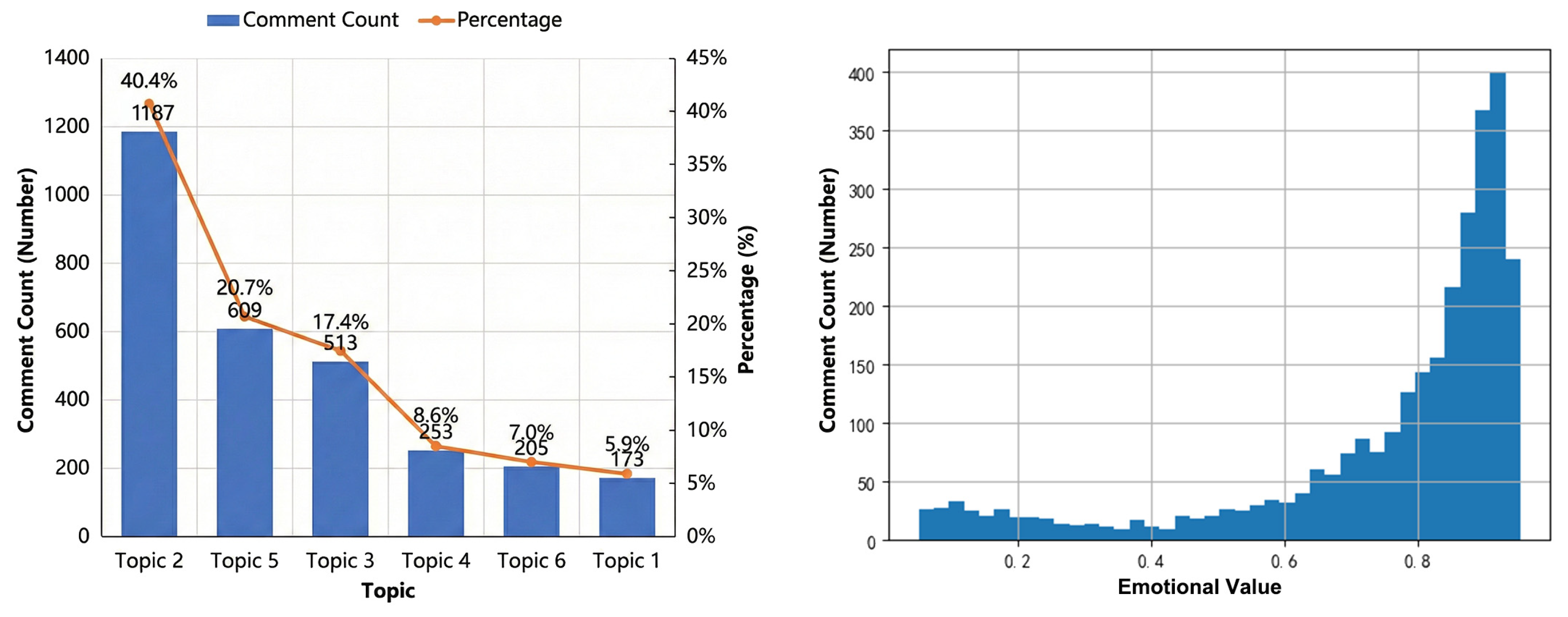
Table 2, each characterised by coherent lexical patterns and a specific thematic focus. The six topic labels were derived through a combined interpretation of model-generated keywords, representative high-probability reviews and established dimensions in built heritage experience research. To further assess the robustness of the topic solution, the LDA model was re-estimated using different random seeds and resampled subsets of the corpus. For each run, the top keywords and representative high-probability documents were compared across topics to examine topic stability. Adjacent topic solutions, including K = 5 and K = 7, were also inspected to determine whether the six-topic structure was stable or merely a local modelling artefact. The K = 6 solution was retained because it achieved a reasonable balance between perplexity, coherence, semantic stability, and interpretability in relation to the built heritage context. In terms of comment volume, Topic 2 emerged as the dominant discourse, comprising over 40% of total comments, whereas Topic 1 and Topic 6 attracted relatively marginal discussion (both <10%).
To make the topic interpretation less dependent on algorithmic labels alone, representative review excerpts were examined for each topic. These excerpts were selected from reviews with high posterior probabilities for the corresponding LDA topic, anonymised, and translated into English by the authors. For Topic 1, visitors typically referred to cultural learning, historical knowledge, or the imperial examination tradition, indicating that this dimension was associated with educational engagement rather than general sightseeing. For Topic 2, the representative comments frequently described the nightscape, riverside ambience, food streets, and lively atmosphere, confirming its role as the dominant leisure-oriented discourse. For Topic 3, visitors mentioned the Confucian Temple, museum visits, rituals, and ticketed cultural spaces, but their comments often focused on whether these experiences were sufficiently engaging or worth visiting. Topic 4 was represented by comments on architectural features, spatial layout, historical buildings, and traditional street scenes. Topic 5 included evaluative expressions such as “worth visiting”, “recommended”, “suitable for families”, and “good value”, showing that this topic captured overall value judgement and recommendation intention. Topic 6 mainly concerned practical issues, including queuing, ticketing, convenience, staff service, environmental order, and crowd management. These representative voices confirmed that the six topics corresponded to meaningful experiential dimensions in the historic district, rather than being purely statistical word clusters.
The distribution of sentiment values exhibits a distinct concentration towards the positive spectrum. Frequencies for sentiment scores ≤ 0.6 remained consistently low (below 50), with a negligible proportion of negative or neutral-to-negative sentiment. Conversely, scores ≥ 0.6 exhibited a stepwise surge, peaking near the maximum value of 1.0 (with approximately 400 comments), thereby visually corroborating the markedly positive skew of visitor feedback (
Figure 5).
Each topic dimension captures a distinct facet of the visitor experience:
Topic 1 (Cultural Inheritance and Educational Experience) represents the pedagogical and cognitive dimensions, emphasising intellectual engagement with Confucian culture, history, and traditional knowledge systems.
Topic 2 (Qinhuai Night Scenery and Leisure Plaza) constitutes the most prominent dimension, covering the holistic perspective of Nanjing Fuzimiao as a comprehensive destination. It highlights multifaceted experiences, including the nightlife economy, culinary offerings, and the vibrant ambient atmosphere.
Topic 3 (Fuzimiao Rituals and Museum Visit) underscores the site’s historical significance and institutional identity, focusing on the interplay between tangible heritage (museums/temples) and intangible ceremonial rites.
Topic 4 (Ancient Architectural Complex and Spatial Features) pertains specifically to the physical environment, addressing the architectural heritage elements of the Fuzimiao complex and its spatial layout characteristics.
Topic 5 (Value and Recommendation Evaluation) encompasses evaluative judgements regarding the overall experiential value, cost-performance ratio, family suitability, and willingness to recommend to potential tourists.
Topic 6 (Practical Experience and Service Quality) addresses the pragmatic dimensions of the visit, including operational logistics (ticketing, booking platforms), service encounters, and environmental management factors.
3.2. Sentiment Analysis
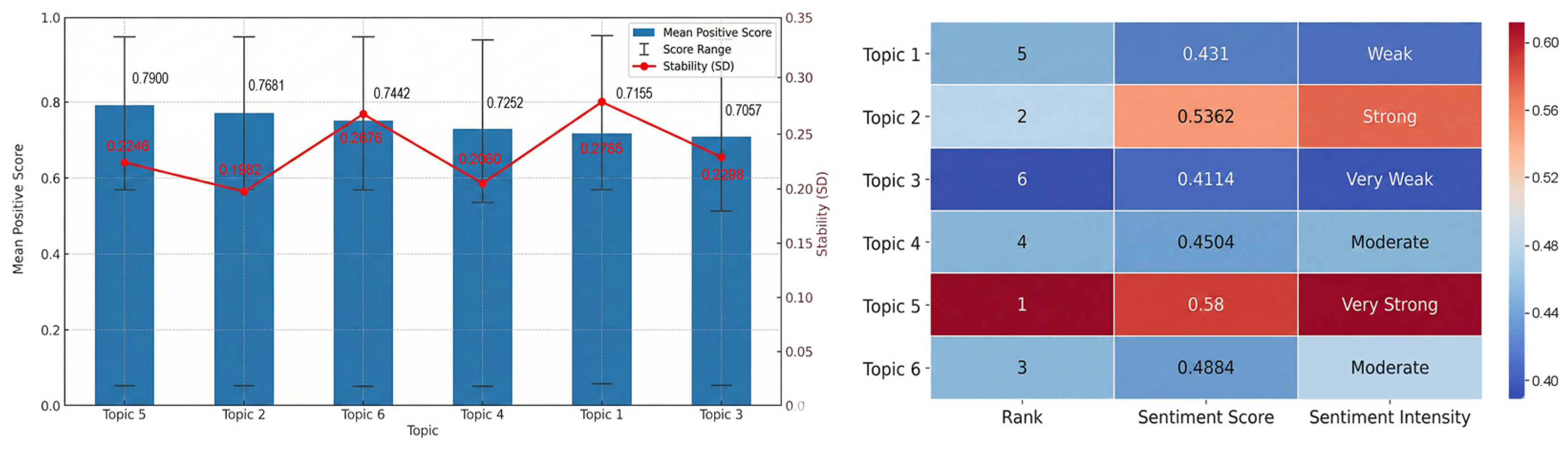
Building upon the six thematic clusters identified via the LDA model, this study evaluated sentiment metrics—specifically mean positive scores, standard deviations, and sentiment intensity—across each dimension. As shown in
Table 3, the results reveal a distinct emotional stratification in visitor experiences at Nanjing Fuzimiao.
Figure 6 illustrates a pronounced structural disparity: the commercial and landscape dimensions (Topic 5 & Topic 2) received the highest sentiment scores, whereas the core cultural and historical dimensions (Topic 1 and Topic 3) registered the lowest. This empirical evidence directly challenges the conventional axiom in heritage tourism management that ‘cultural value constitutes the core competitive advantage’. In the context of Fuzimiao, visitor satisfaction stems overwhelmingly from visual appeal and entertainment value, eclipsing the site’s intrinsic cultural significance as a source of gratification.
3.3. The Top Tier: Visual Spectacle and Value Affirmation (Topics 5 & 2)
This tier forms the precinct’s competitive core, marked by the highest sentiment scores and strongest visitor consensus. Topic 5 (Value and Recommendation Evaluation) achieved the highest mean sentiment (
M = 0.7900,
SD = 0.2246), indicating a robust perception of ‘value for money’. Despite overcrowding, a positive ‘mental account balance’ emerges, suggesting that the site’s high-quality visual presentation—particularly its nightscape—compensates for logistical discomforts. This ‘compensatory mechanism’ is reinforced by an open-access model that lowers the psychological barrier to entry. Topic 2 (Qinhuai Night Scenery) records exceptional and remarkably consistent sentiment (
M = 0.7681,
SD = 0.1982), validating Debord’s ‘Society of the Spectacle’ in a tourism context. Here, a carefully orchestrated simulacra of light and water masks the site’s daytime congestion, with vivid visual enchantment serving as the primary stabiliser of visitor satisfaction [
13].
3.4. The Middle Tier: Service Volatility and Spatial Mediocrity (Topics 6 & 4)
This intermediate tier reflects structural misalignments, characterised by diminished emotional intensity and widening evaluative disparities. Topic 6 (Practical Experience/Service) shows acceptable mean sentiment (
M = 0.7442) but high volatility (
SD = 0.2676), revealing a bifurcated experience: while digital tools streamline access, negative interpersonal ‘moments of truth’—such as staff apathy—may undermine otherwise positive evaluations [
26]. Topic 4 (Ancient Architectural Complex) registers mediocre performance (
M = 0.7252), signalling ‘aesthetic fatigue’.
3.5. The Lower-Performing Cultural Dimensions: Limited Engagement with Interpretation and Ritual Experience (Topics 1 & 3)
The lower-performing topics are associated with the cultural and interpretive dimensions of the site. Topic 1 (Cultural Inheritance and Educational Experience) recorded a relatively low mean sentiment score (M = 0.7155) and the highest standard deviation (SD = 0.2785), suggesting uneven visitor responses to educational and cultural learning experiences. This may indicate that some visitors found value in historical and Confucian cultural content, whereas others did not engage with these elements in depth or did not perceive them as central to their visit.
Topic 3 (Fuzimiao Rituals and Museum Visit) recorded the lowest mean sentiment score (M = 0.7057, SD = 0.2298). Rather than indicating an “identity crisis” in a definitive sense, this result suggests that the ritual and museum-related components of the district were less positively evaluated than nightscape, leisure, and value-related experiences. The relatively modest performance of this topic points to a perceived gap between the cultural significance of these heritage components and their experiential impact on visitors. In particular, static museum displays, limited participatory interpretation, or insufficiently engaging ritual presentation may have constrained visitors’ emotional connection with the site. These findings should therefore be understood as evidence of a perceived weakness in heritage interpretation, rather than as direct proof of structural cultural decline.
3.6. Importance-Performance Analysis of LDA Topics
To diagnose the core drivers of satisfaction and identify critical service gaps within the Nanjing Fuzimiao experience, this study integrates LDA topic modelling with sentiment analysis techniques. An IPA matrix framework was constructed along two distinct dimensions: the Importance Index (proxied by TF-IDF values, reflecting visitor attention) and the Performance Index (derived from sentiment scores, reflecting visitor satisfaction) in
Table 4.
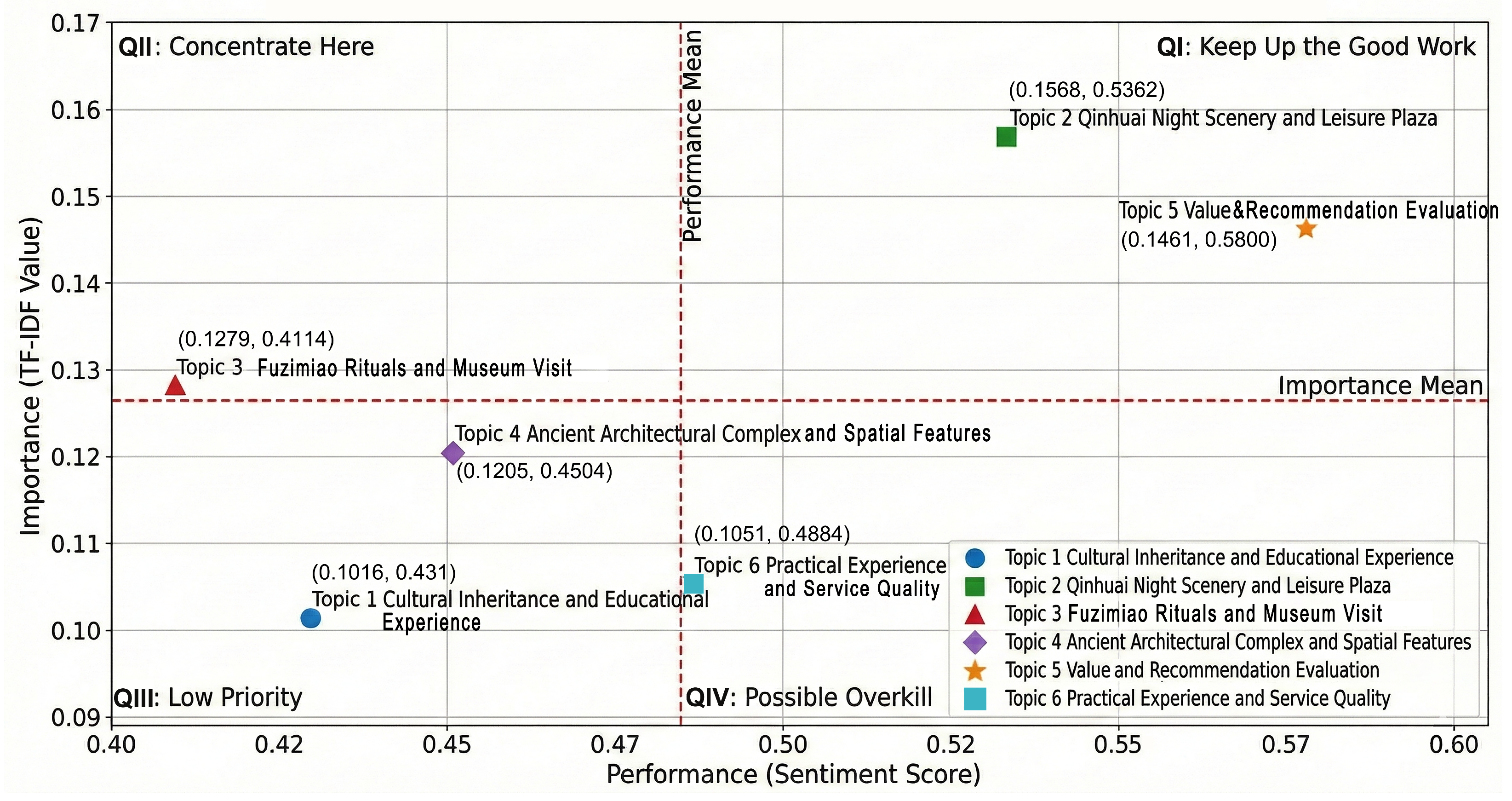
The axes were intersected at the aggregate mean values of the two dimensions (Importance
μ = 0.1263; Performance
μ = 0.4829) to delineate the quadrants. Consequently, the six core tourism topics extracted via LDA were precisely mapped onto four strategic quadrants (see
Figure 7). Building upon the spatial characteristics of each quadrant, a targeted analysis of management strategies was conducted, as detailed below.
3.6.1. The Strength Maintenance Zone (Quadrant I: Keep up the Good Work)
The ‘Keep Up the Good Work’ quadrant encapsulates attributes exhibiting dual characteristics of high importance and high performance. It represents the locus of the scenic area’s core competitive advantages and market differentiation strategies. In the context of this study, this quadrant encompasses two pivotal domains: Topic 2 (Qinhuai Night Scenery and Leisure Plaza) and Topic 5 (Value and Recommendation Evaluation).
Empirically, Topic 2 registered an importance index of 0.1568 and a performance score of 0.5362, ranking paramount across all six dimensions. This confirms that the ‘Qinhuai Nightscape’ functions not only as the discursive centre of visitor narratives but also as the primary determinant of overall experiential satisfaction, demonstrating a strong synergy between scenic aesthetics and leisure utility.
Similarly, Topic 5 achieved a sentiment score of 0.5800, significantly surpassing the aggregate performance mean (μ = 0.4829). This finding corroborates a robust positive correlation between visitors’ perceived value and their behavioural intention to recommend, thereby establishing a solid foundation for positive electronic word-of-mouth (eWOM) dissemination.
3.6.2. The Key Improvement Area (Quadrant II: Concentrate Here)
The ‘Concentrate Here’ quadrant exhibits a critical ‘high importance–low performance’ asymmetry. It represents both the critical bottleneck constraining the scenic area’s experiential quality upgrade and the strategic fulcrum for achieving experiential optimisation. This quadrant exclusively encompasses Topic 3 (Fuzimiao Rituals and Museum Visit).
Data analysis reveals that the importance index for Topic 3 stands at 0.1279, marginally surpassing the aggregate mean (μ = 0.1263). This signifies a robust visitor anticipation for the core cultural experiences at Fuzimiao (such as the Confucius Memorial Ceremony and the Imperial Examination Museum), reflecting a high recognition of its intrinsic cultural symbolism. However, the performance score for this topic remained relatively low at 0.4114, ranking lowest among all six dimensions. This disparity creates a notable gap between perceived salience and affective performance, highlighting a systemic misalignment between the supply of core cultural narratives and the depth of visitor engagement demanded.
3.6.3. The Secondary Improvement Quadrant (Quadrant III: Low Priority)
The ‘Low Priority’ quadrant encapsulates attributes characterised by low importance and low performance. These represent peripheral attributes in the visitor perception matrix, exerting a relatively limited impact on the overall experiential evaluation. This quadrant encompasses Topic 1 (Cultural Inheritance and Educational Experience) and Topic 4 (Ancient Architectural Complex and Spatial Features).
Quantitative analysis indicates that both topics registered scores falling below the aggregate means for both importance (μ = 0.1263) and performance (μ = 0.4829). While Topic 4 provides the physical spatial foundation and Topic 1 constitutes the abstract cultural core—effectively underpinning the visitor experience—they function predominantly as the ambient backdrop within the average visitor’s perception. They have not yet been crystallised into explicitly compelling points of attraction; consequently, visitors express low urgency regarding their immediate optimisation.
3.6.4. The Over-Supply Quadrant (Quadrant IV: Possible Overkill)
The ‘Possible Overkill’ quadrant is characterised by a ‘low importance–high performance’ dynamic, indicating that the scenic area’s service provision in this domain exceeds visitors’ core expectations, potentially leading to diminishing marginal returns. This quadrant encompasses Topic 6 (Practical Experience and Service Quality).
Data analysis indicates that the sentiment score for Topic 6 (0.4884) marginally surpasses the aggregate performance mean (
μ = 0.4829), reflecting satisfactory delivery of fundamental services (including environmental hygiene, security, and ticketing logistics). However, the Importance Index for this topic stands at only 0.1051, falling below the aggregate mean. This pattern aligns with the theoretical construct of ‘hygiene factors’: while meeting these basic standards is essential to prevent visitor dissatisfaction, they lack the capacity to function as core motivators or attractors [
27]. Consequently, excessive investment in this domain risks allocative inefficiency, suggesting that resources could be more effectively redeployed to areas of critical deficit.
4. Discussion
By integrating LDA topic modelling with fine-grained sentiment analysis, this study unveils the multidimensional landscape and structural contradictions characterising visitor experiences at Nanjing Fuzimiao. Beyond merely quantifying the drivers of satisfaction, the findings illuminate the profound dilemmas confronting historic cultural districts amidst the pressures of modernisation. The subsequent discussion triangulates these empirical results with theoretical perspectives, focusing on three critical dimensions: the alienation of experience under visual attractiveness, the erosion and reconstruction of core identity, and the strategic recalibration necessitated by the IPA diagnosis.
4.1. Experiential Imbalance Between Visually Dominant Spaces and Culturally Interpretive Spaces
The results reveal an experiential imbalance between visually prominent leisure-oriented dimensions and culturally interpretive dimensions. Topics related to nightscape, leisure ambience, food, and overall value evaluation received relatively high attention and positive sentiment, whereas topics associated with cultural learning, rituals, and museum visits received lower sentiment scores. This pattern suggests that visitors’ online narratives were more strongly shaped by immediately visible and atmospherically engaging experiences than by deeper cultural or educational interpretation.
This finding does not necessarily mean that the historic district has lost its cultural value, nor does it directly prove a decline in authenticity. Rather, it indicates that the cultural components of the site may be less visible, less accessible, or less emotionally engaging within the current visitor experience. From a built heritage management perspective, this is important because the success of a historic district should not be assessed only through visual attractiveness, commercial vitality, or general satisfaction. It should also be evaluated in terms of whether visitors are able to recognise, understand, and emotionally connect with its historical and cultural meanings.
The theoretical discussion on spectacle and staged authenticity is therefore used here as an interpretive lens rather than as a definitive causal explanation. In the case of Fuzimiao, the strong performance of the Qinhuai nightscape suggests that visual and atmospheric design has become a major source of visitor satisfaction. However, if such experiences remain insufficiently connected to the district’s Confucian, ritual, and educational heritage, there is a risk that cultural interpretation may become secondary to visual consumption. The management challenge is therefore not to reduce the appeal of nightscape experiences, but to better integrate cultural narratives, ritual meanings, and museum interpretation into the district’s most visible and attractive experiential settings.
4.2. Heritage Interpretation Deficit and the Weakening of Place Identity
The IPA diagnosis positions Topic 3, Fuzimiao Rituals and Museum Visit, within the “Concentrate Here” quadrant. This indicates a high-importance but relatively low-performance pattern in visitors’ online evaluations. Given the cultural significance of the Confucian Temple, ritual activities, and museum-related spaces, this result suggests a perceived gap between the symbolic importance of these heritage components and their actual experiential impact on visitors.
MacCannell’s concept of staged authenticity is used here only as a cautious interpretive reference. The online review data do not directly prove that rituals have become commodified spectacles or that the genius loci of the site has been severed. What the data do show is that ritual and museum-related experiences were evaluated less positively than visually oriented and leisure-related experiences. This may reflect several possible issues, including limited participatory depth in ritual presentation, insufficiently engaging museum interpretation, or a weak connection between historical narratives and contemporary visitor expectations.
Therefore, the key issue is better understood as an interpretation and engagement deficit rather than as a definitive crisis of identity. For conservation-oriented spatial management, this suggests that future improvement should focus on strengthening the experiential accessibility of cultural content. Possible strategies include improving the narrative structure of museum displays, enhancing guided interpretation, introducing carefully designed digital media, and embedding Confucian educational and ritual meanings into the broader visitor route. Such interventions should aim to deepen cultural understanding rather than merely add another layer of visual spectacle.
4.3. Implications for Conservation-Oriented Spatial Management in Historic Districts
Synthesising the spatial distribution within the IPA Matrix, this study argues that the future development of Fuzimiao needs to transcend incremental service quality improvements. Instead, it requires a structural reconfiguration of its experiential ecosystem to rectify the identified supply-demand asymmetries.
Firstly, optimising allocative efficiency (Quadrant IV: Possible Overkill). The analysis indicates that Topic 6 (Practical Experience and Service Quality) falls within the ‘Possible Overkill’ zone. Aligned with Herzberg’s (1966) theory of ‘hygiene factors’, excessive investment in this domain yields diminishing marginal utility [
28]. Management should therefore adopt a ‘maintenance strategy’: establishing standardised protocols to prevent service degradation while rigorously curbing resource redundancy. The strategic imperative is to redirect these freed-up operational resources towards the critical deficits identified in Topic 3, thereby maximising the aggregate quality of the tourism experience through Pareto-optimal resource allocation.
Secondly, digital–cultural symbiosis (Quadrant II: Concentrate Here). For Topic 3 (Fuzimiao Rituals and Museum Visit)—identified as the critical bottleneck—a strategy of ‘Digital–Cultural Integration’ is paramount. Given the empirical evidence of visitors’ heightened sensitivity to visual stimuli (as seen in Topic 2), it is recommended to leverage immersive technologies (VR/AR/MR) to reimagine the presentation of Imperial Examination culture and Confucian ceremonies. The objective is to transform the currently static, passive viewing paradigm into an interactive, embodied experience [
15], thereby bridging the gap between historical gravity and modern experiential demands.
Finally, deepening the narrative matrix (Quadrant I: Keep Up the Good Work). While Topic 2 (Qinhuai Night Scenery) anchors the site’s current success, strategic vigilance is required to prevent its decoupling from the cultural core. Future night tourism development needs to transcend ‘surface-level lightscaping’. The strategy should focus on embedding the narrative substance of Topic 1 (Cultural Inheritance & Educational Experience) into the visual medium of Topic 2. By adopting models such as ‘Night Tourism + Edutainment’ or ‘Night Tourism + Intangible Heritage Performance’, the destination can achieve a value ascension from ‘sensory gratification’ to ‘cultural resonance’. This approach effectively rectifies the current structural imbalance where commercial values overshadow cultural substance.
4.4. Implications for Culturally Sustainable Regeneration of Historic Built Environments
This study carries significant implications for cultural sustainability—a dimension increasingly recognised as integral to the broader sustainable development agenda [
29]. The structural marginalisation of core cultural experiences at Fuzimiao directly contravenes the spirit of SDG, which calls for strengthening efforts to ‘protect and safeguard the world’s cultural and natural heritage’ [
2]. When a UNESCO-referenced heritage site’s experiential architecture systematically prioritizes spectacle over substance, the resulting erosion of the genius loci represents not merely a tourism management failure but a sustainability deficit.
The IPA diagnosis provides an actionable framework for rectifying this deficit. The identified ‘Concentrate Here’ quadrant (Topic 3) signals precisely where cultural sustainability interventions are most urgently needed. The proposed strategy of ‘Digital–Cultural Integration’—leveraging immersive technologies to revitalise static heritage displays—aligns with scholarship on immersive technologies in cultural heritage [
15] and on authenticity-oriented sustainable heritage tourism [
30]. Critically, however, digital re-enchantment must not become another form of spectacularisation. The risk of VR/AR experiences merely substituting one visual spectacle for another—a ‘digital simulacrum’ replacing a ‘lighting simulacrum’—must be actively guarded against. Authentic cultural sustainability requires that technology serve as a bridge to deeper cognitive and emotional engagement, not as an alternative surface for consumption.
Furthermore, the ‘Possible Overkill’ diagnosis for service quality (Topic 6) raises a fundamental question about resource allocation in heritage governance: are current management models investing in the right dimensions of sustainability? The misallocation of resources toward hygiene factors at the expense of cultural core vitality suggests a conceptual narrowness in how sustainability is operationalised at heritage sites. True cultural sustainability demands a holistic approach that treats the preservation of intangible cultural meaning as equally important as physical conservation and service delivery [
31].
4.5. Limitations and Future Research Directions
While the LDA–IPA framework offers robust insights into the structural inversion between ‘visual landscapes’ and ‘cultural cores’ at Nanjing Fuzimiao, three inherent constraints warrant critical reflection, each delineating precise pathways for future inquiry.
First, single-platform scope and demographic opacity. Data were collected exclusively from Trip.com, which means that the findings predominantly capture the perceptions of domestic Chinese tourists. International visitors, who may evaluate heritage authenticity, spatial legibility, and cultural interpretation through different cultural lenses, are not represented in the current dataset. Future research should therefore extend data collection to international review platforms—such as TripAdvisor, Google Reviews, and Booking.com—to enable cross-cultural comparative analysis and enhance the international relevance of the findings. Furthermore, the exclusive reliance on online reviews introduces survivorship bias, skewing the dataset toward digitally active demographics and potentially under-representing middle-aged and elderly visitors—cohorts often more attuned to Fuzimiao’s historical gravitas (Topics 1 and 3). Privacy protocols preclude access to granular demographic variables (e.g., age, origin, education), limiting our ability to dissect perceptual heterogeneity, such as differences between residents and tourists in their perception of cultural landscapes in historic districts [
32].
Second, interpretative limits of automated text mining. While LDA efficiently delineates thematic boundaries, sentiment analysis struggles to decode nuanced emotional semantics—sarcasm, irony, or cognitive dissonance. The study identifies visual gratification ‘offsetting’ commercial overcrowding, yet current algorithms cannot disentangle genuine satisfaction from ‘resigned acceptance’ (a ‘well, I’m here anyway’ mentality). This psychological interplay remains partially opaque to computational approaches alone.
Third, bounded generalisability. As an ‘open-access historic district’, Fuzimiao’s experiential logic may diverge from enclosed heritage sites (e.g., the Forbidden City). Future studies should undertake cross-typological comparisons between open-access and enclosed heritage environments to examine whether the experiential imbalances identified here (e.g., the dominance of visual-leisure dimensions over cultural-interpretive dimensions) are specific to the open-access typology or reflect a more general pattern in heritage tourism. Moreover, cross-sectional data fail to capture temporal dynamics, such as experiential variations between routine days and peak festivals (e.g., the Qinhuai Lantern Festival). Future research could leverage time-stamped review metadata (e.g., posting date, travel date) to segment the corpus by season, day-of-week, or event period, enabling a temporally sensitive analysis of heritage perception.
Future research should advance along four strategic dimensions:
- (1)
Methodological triangulation. Integrate big data analytics with qualitative methods—offline interviews to capture ‘thick data’ from non-digital cohorts, and combine multi-platform review data with on-site surveys, interviews, spatial observation, and temporally stratified analysis to better capture the perceptions of different visitor groups and temporal contexts.
- (2)
Cross-case comparison and theoretical extension. Comparative analysis of diverse historic districts (e.g., Chengdu’s Kuanzhai Alleys, Suzhou’s Pingjiang Road) could investigate whether ‘core cultural marginalisation’ is an isolated anomaly or a systemic challenge inherent to Chinese heritage commercialisation. Such synthesis could distinguish a generalisable ‘Evolutionary Model of Heritage Tourism Experiences’.
- (3)
From descriptive diagnosis to causal experimentation. While the IPA matrix identifies Topic 3 as a critical deficit, the efficacy of remedial measures remains unquantified. Future research should employ experimental designs to simulate interventions (e.g., measuring the marginal contribution of VR adoption or guided tour optimisation on sentiment scores). This shift from ‘perceptual measurement’ to ‘causal mechanism analysis’ would provide actionable, evidence-based decision support for heritage managers.
Linking computational diagnostics to sustainability indicators. Future studies should triangulate UGC-derived sentiment metrics with established cultural sustainability indicators (e.g., UNESCO Culture 2030 Indicators, ICOMOS HIA) to construct a composite Cultural Sustainability Index for historic urban landscapes.
5. Conclusions
This study developed a computational mixed-methods framework to assess visitor perception of a historic district as a built heritage environment. Using 2940 online reviews of the Fuzimiao–Qinhuai Scenic Belt in Nanjing, the research integrated TF-IDF, LDA topic modelling, StructBERT sentiment analysis, and IPA to identify the main experiential dimensions of the site and evaluate their relative performance.
The results reveal a clear imbalance in the experiential structure of the historic district. Leisure-oriented and visually prominent elements, especially the nightscape and value-related experience, receive the highest levels of attention and positive evaluation. By contrast, the district’s core heritage components, particularly rituals, museum visits, and educational-cultural interpretation, perform relatively weakly despite their central role in defining the historical identity of the place. The IPA results further confirm that heritage interpretation associated with rituals and museum spaces is the most critical area requiring improvement.
From a Buildings perspective, these findings indicate that the performance of historic districts cannot be understood solely through physical preservation or commercial vitality. Rather, the quality of the built heritage environment depends on the coordinated interaction of spatial character, architectural setting, interpretive systems, visitor services, and cultural meaning. A historic district may remain physically attractive and economically active while still underperforming in its core heritage function.
The study provides two main contributions. First, it offers a built heritage-oriented application of established UGC-based analytical methods, showing how online visitor narratives can be reframed as post-use perception evidence for diagnosing the experiential performance of historic districts. Second, it clarifies a management-relevant imbalance within the Fuzimiao–Qinhuai heritage environment: visually prominent leisure and value-related experiences perform strongly, whereas culturally significant components, especially rituals and museum interpretation, require further experiential and interpretive enhancement.
Several limitations should be acknowledged. The study relies on textual data from a single online platform and one representative case, and does not incorporate spatial trajectory, visual perception, or longitudinal behavioural data. Future research could integrate multi-source datasets—such as GPS trajectories, street-view imagery, and environmental sensing data—to construct spatially explicit perception maps of historic districts and undertake comparative cross-cultural and longitudinal studies to further test the generalisability of the proposed framework.
Overall, the study suggests that future regeneration of historic districts should move beyond visually oriented place marketing toward a more integrated conservation strategy that reinforces cultural legibility, place identity, and long-term heritage value. Such an approach is essential for the sustainable management of historic built environments under conditions of intensive public use and commercial pressure.