AHP-FCE-Based Cultural Gene Analysis of Wooden Architectural Decorations in Ming–Qing Wu-Style Architecture: A Case Study of Luzhai, Dongyang

Abstract
1. Introduction
2. Materials and Methods
2.1. Sample Selection
2.2. Methods
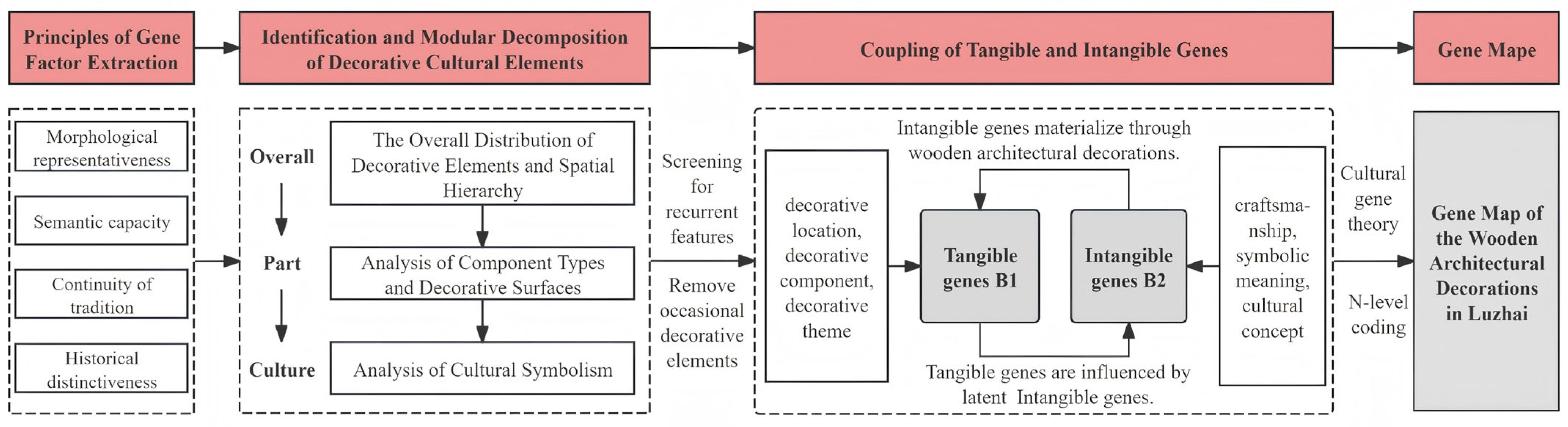
2.2.1. Extraction of Genes and Construction of a Gene Map for the Wooden Architectural Elements of the Luzhai
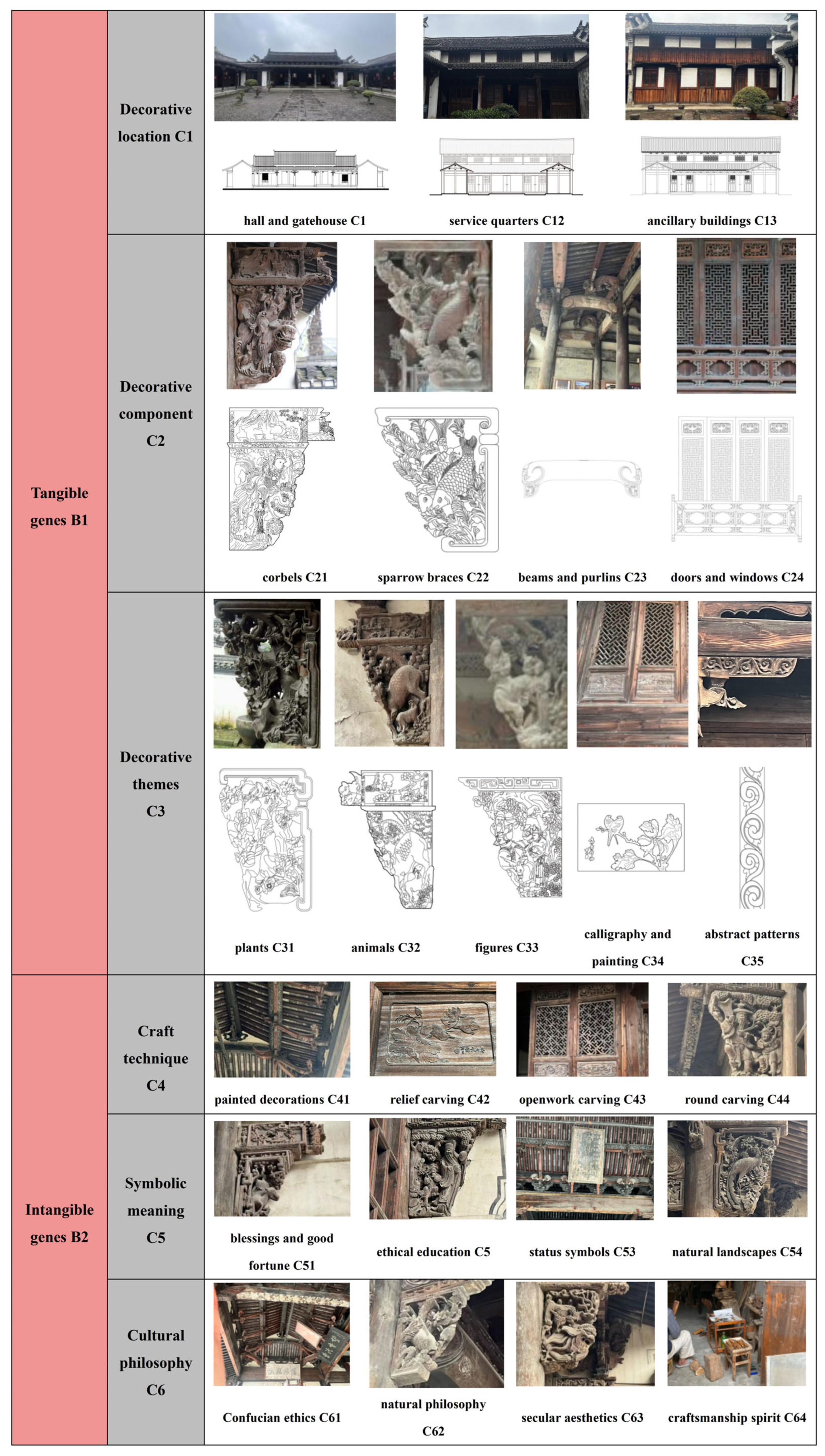
- Gene Factor Identification and Extraction
- 2.
- Construction of the Luzhai Wooden Decorative Gene Map
- 3.
- Gene Coding and Analysis of wooden architectural decorations in Luzhai
- (1)
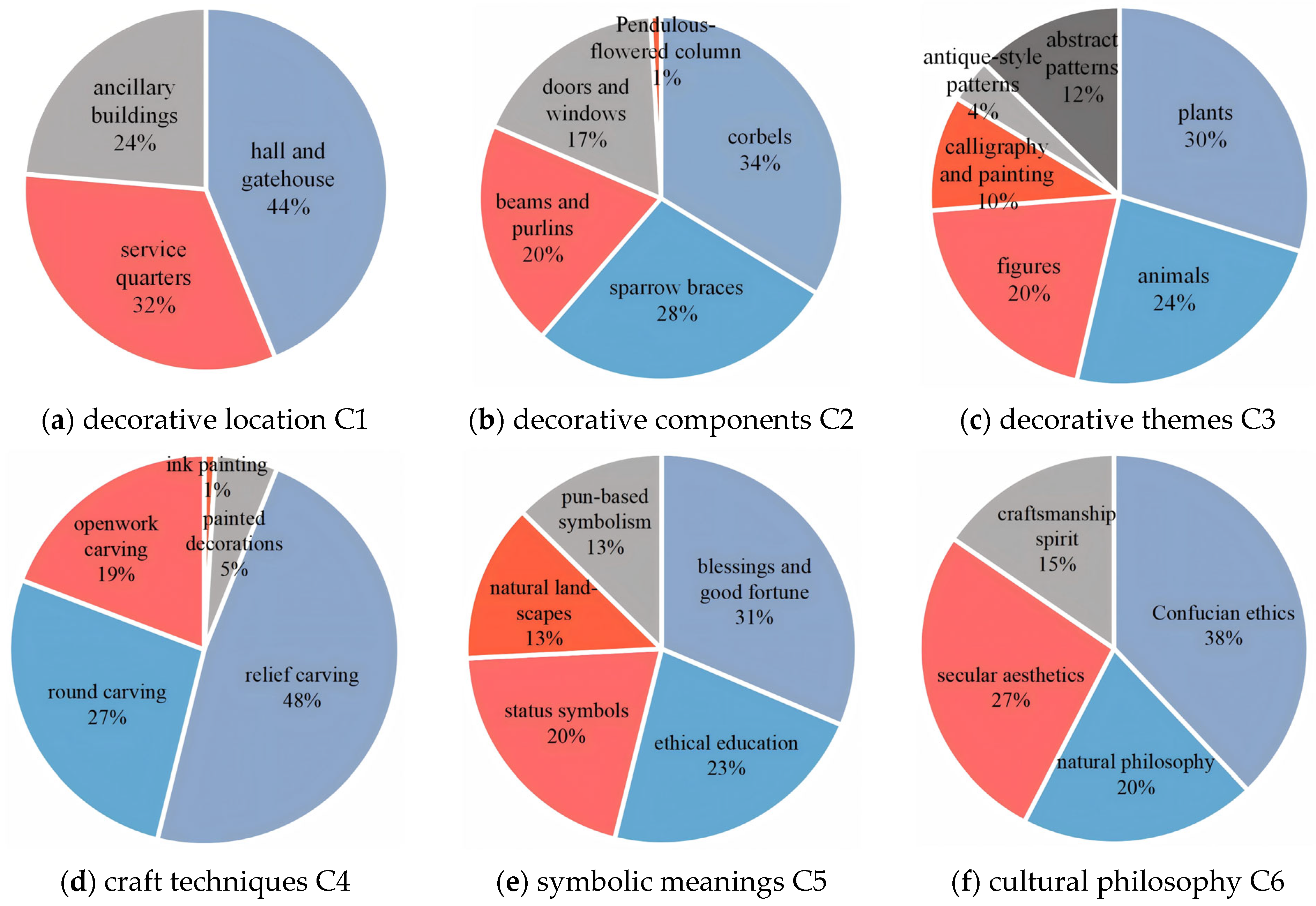
- Preliminary screening. All samples underwent a preliminary review to exclude components that did not meet the criteria for analysis. Specifically, this included: ① severely damaged components (where the main body of the component was missing or decorative details were unidentifiable, with damage exceeding 30%), and ② components showing obvious signs of repair or replacement (such as later splicing, re-engraving, or significant differences in materials that affected the interpretation of original information). Following this preliminary screening, 312 sets were retained from the original 427 sets.
- (2)
- Quality Assessment. Samples that pass the initial screening are evaluated based on the following four criteria: ① Form integrity: Is the overall shape of the component intact, and are the structural relationships clearly discernible. 264 out of 312 sets were retained; ② Clarity of craftsmanship: Are the carving techniques, chisel marks, and fine details clearly identifiable? 223 out of 264 sets were retained. ③ Clarity of chronological identification: Does the element have reliable evidence for dating (such as inscriptions, stylistic features, or references in historical texts). 187 out of 223 sets were retained; ④ Validity of spatial location: Is the element located in a part of the beam-and-post framework with clear structural attributes (such as beam brackets, corbels, or corbel arms), and has its decorative information not been severely distorted or lost due to the particular nature of its location. 126 out of 187 sets were retained.
2.2.2. Evaluation Model Construction
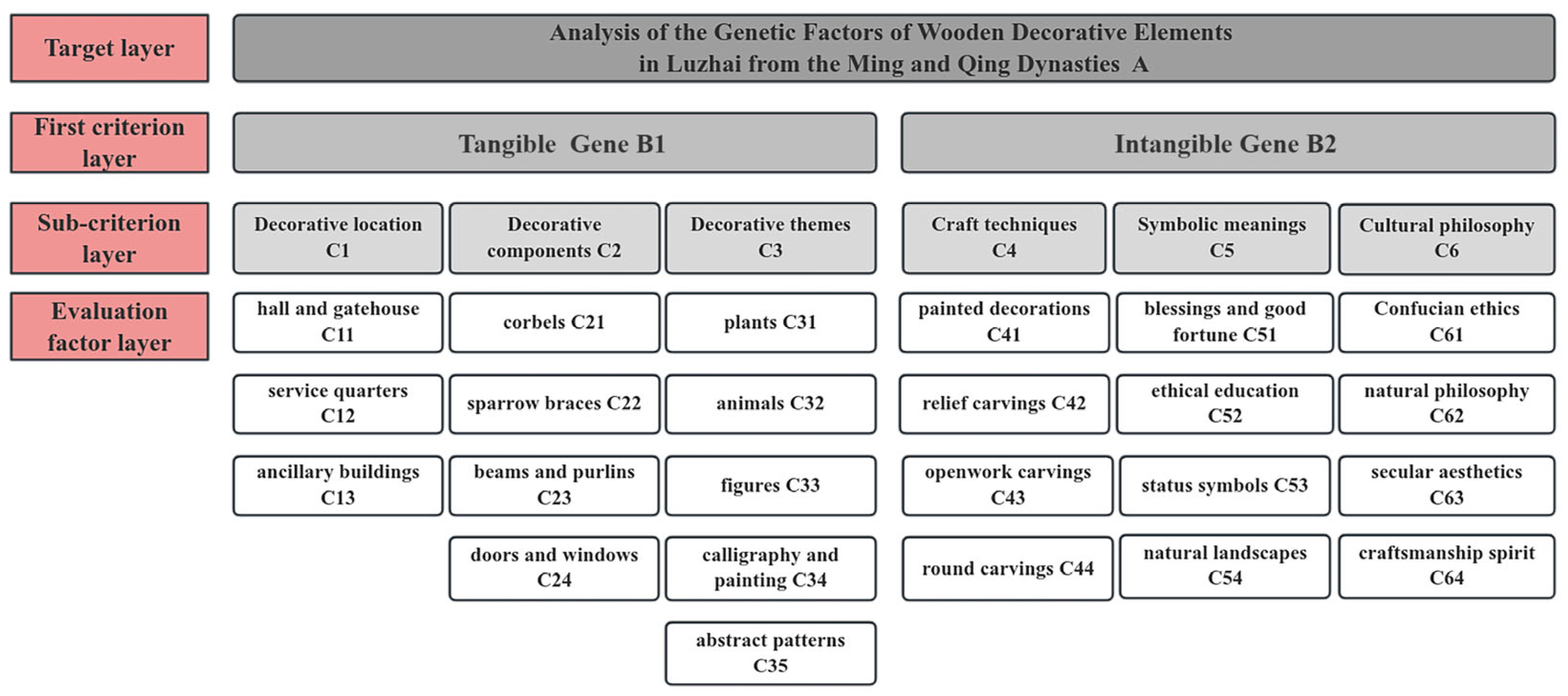
- Development of the Evaluation Indicator System
- 2.
- Weight Calculation
- 3.
- Consistency test
- 4.
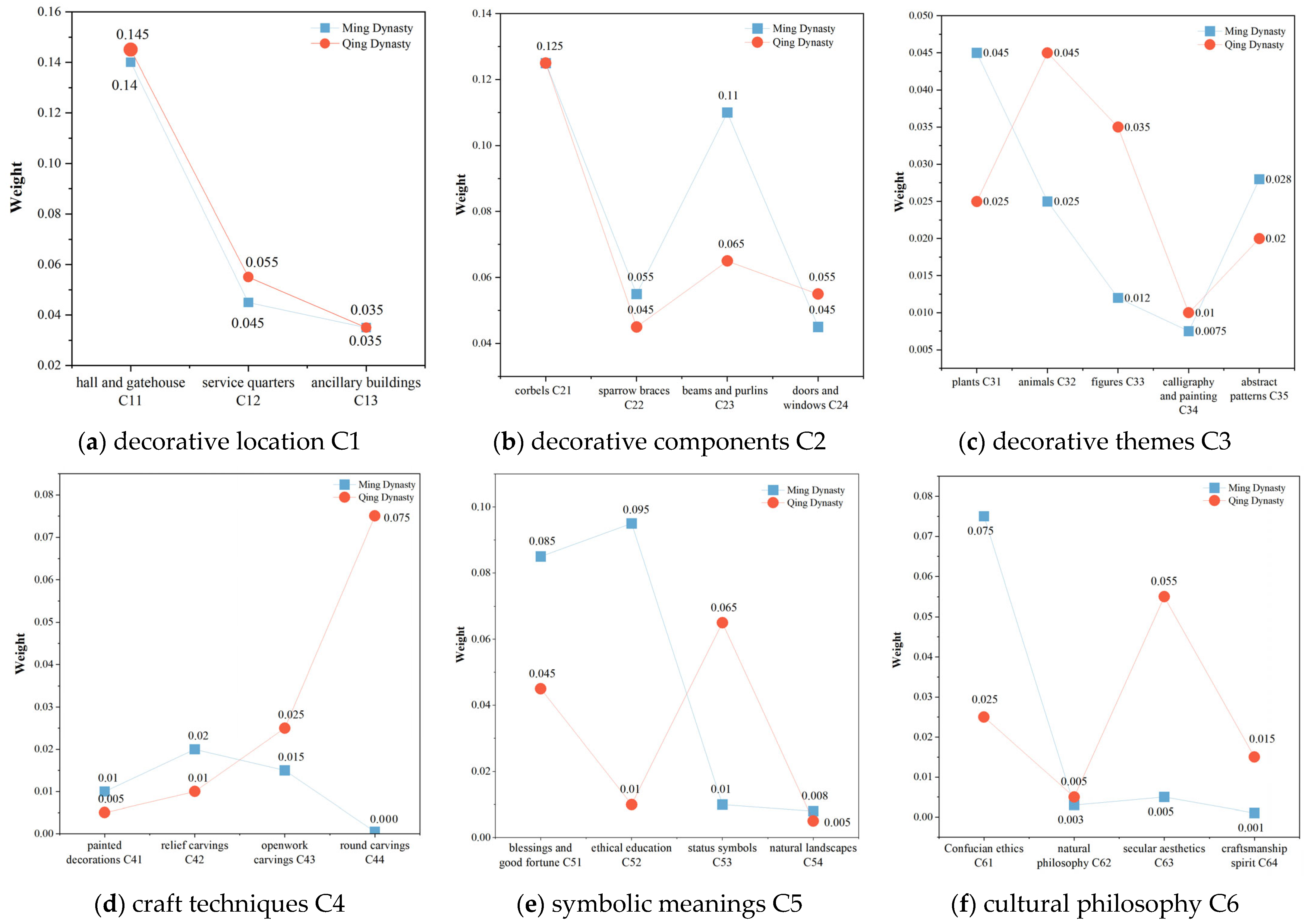
- Weight Calculation Results and Analysis
- 5.
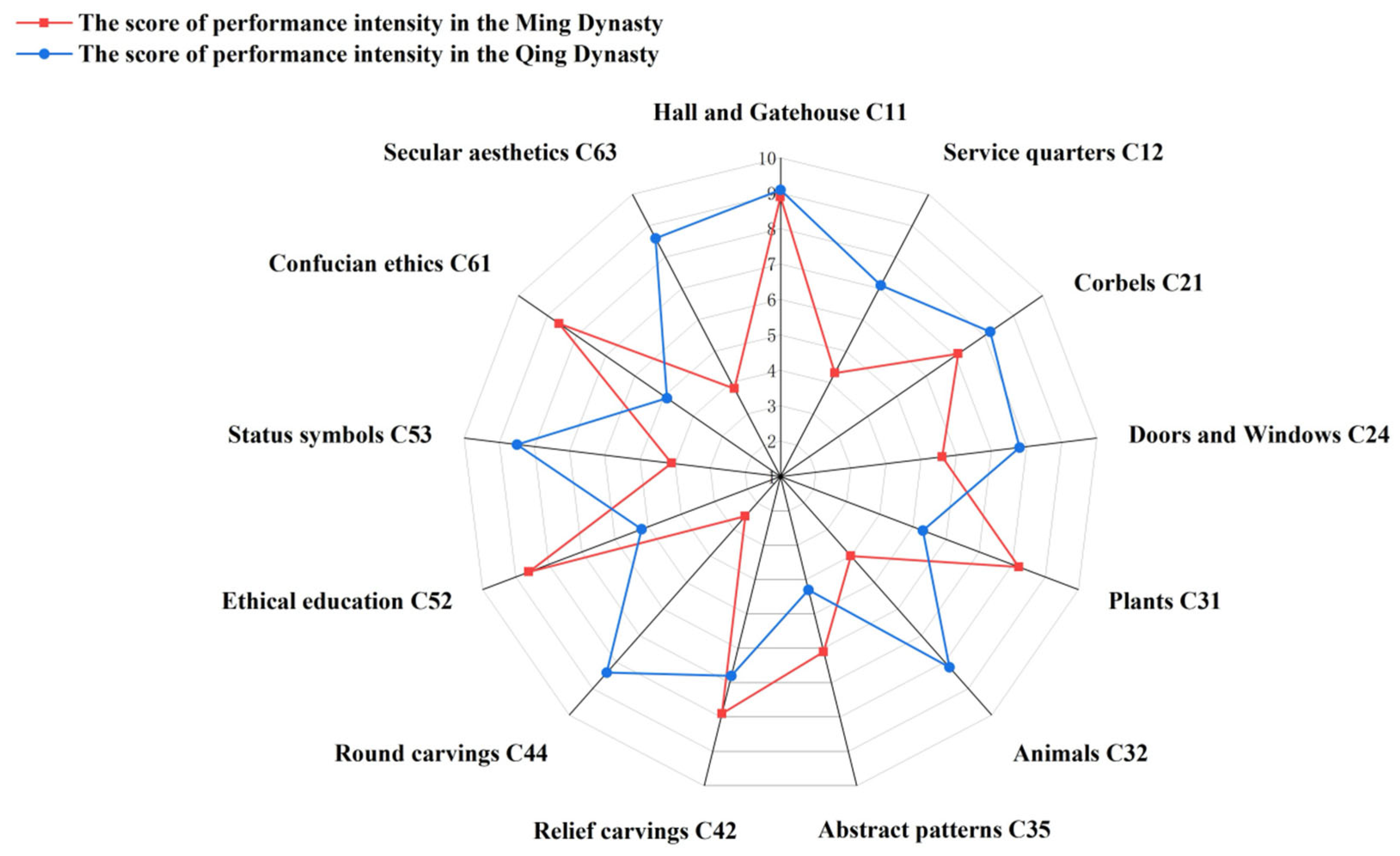
- Fuzzy Comprehensive Evaluation
3. Results
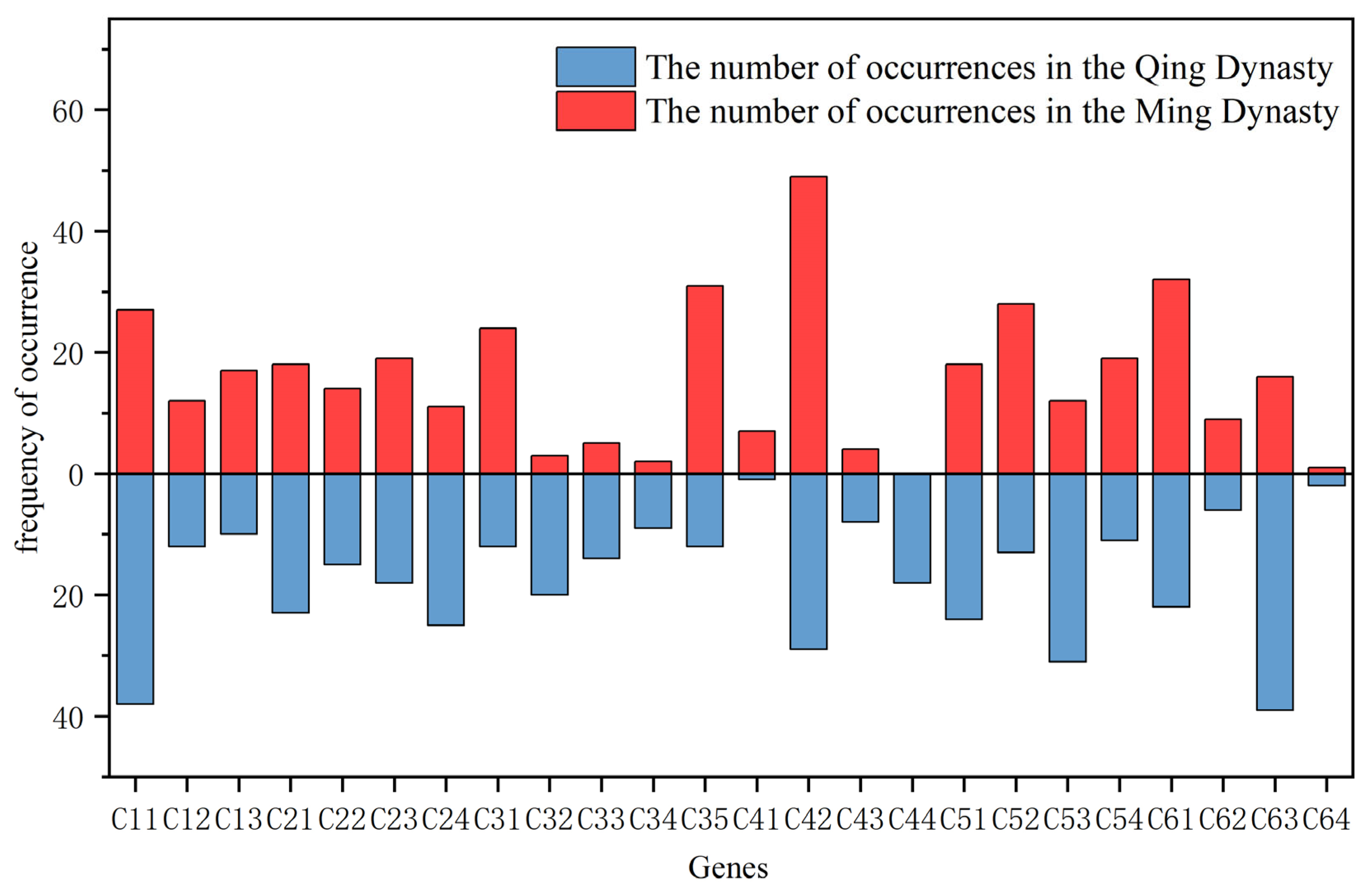
3.1. Diachronic Differences in Gene Factors of Ming and Qing Wooden Architectural Decorations
3.2. Social and Cultural Reflections of Changes in Cultural Gene Weights
- Continuity of Spatial Ritual and Structural Aesthetics
- 2.
- The Ritualistic Core of Ethical Education in the Ming Dynasty
- 3.
- Economic Drivers Behind the Secularisation Trend in the Qing Dynasty
- 4.
- The Separation of Structural Engineering and the Integration of Decorative Elements
4. Discussion
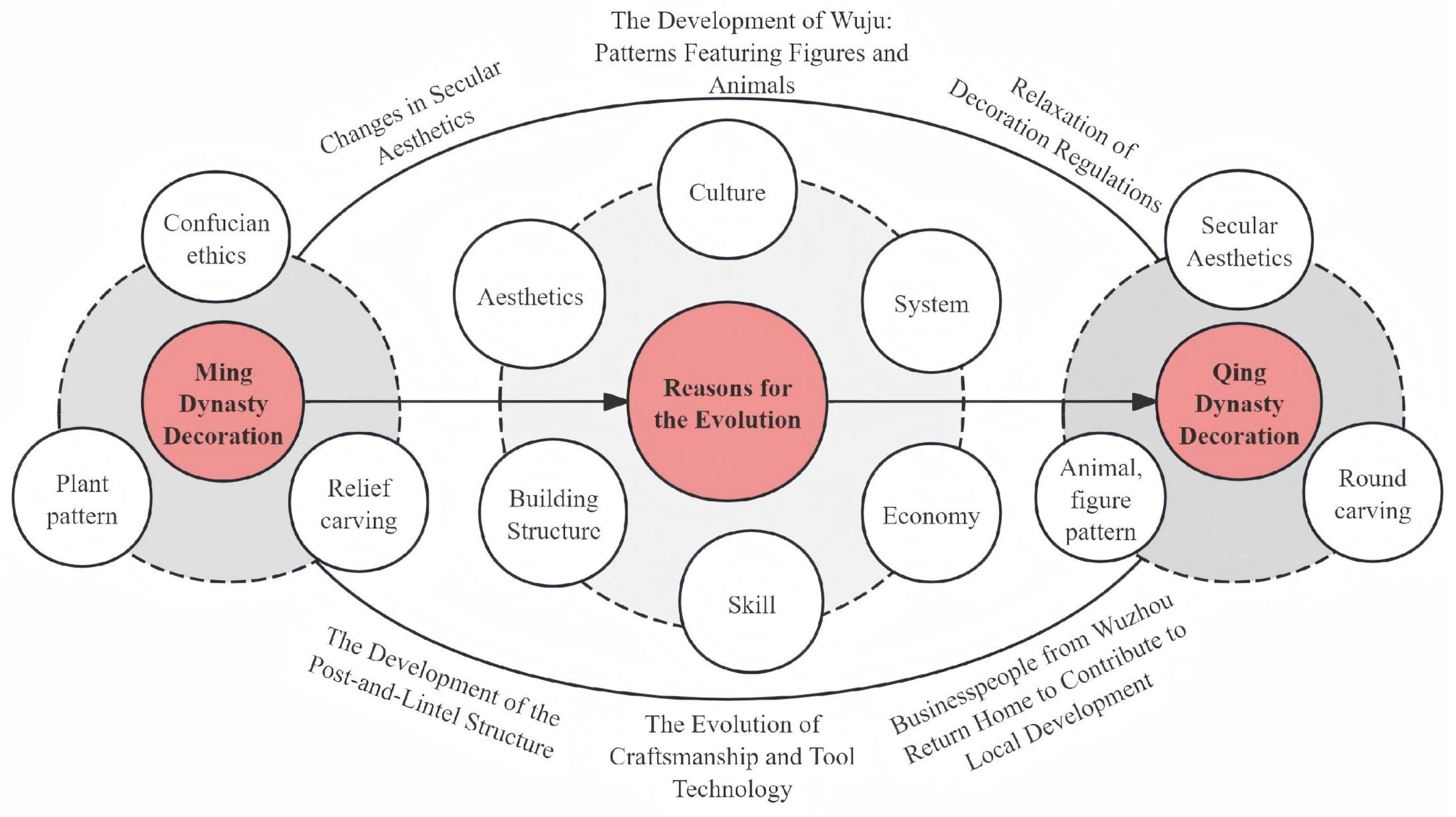
4.1. Analysis of the Causes of Decorative Variations
4.2. Methodological and Theoretical Implications
4.3. Limitations and Future Research
5. Conclusions
- (1)
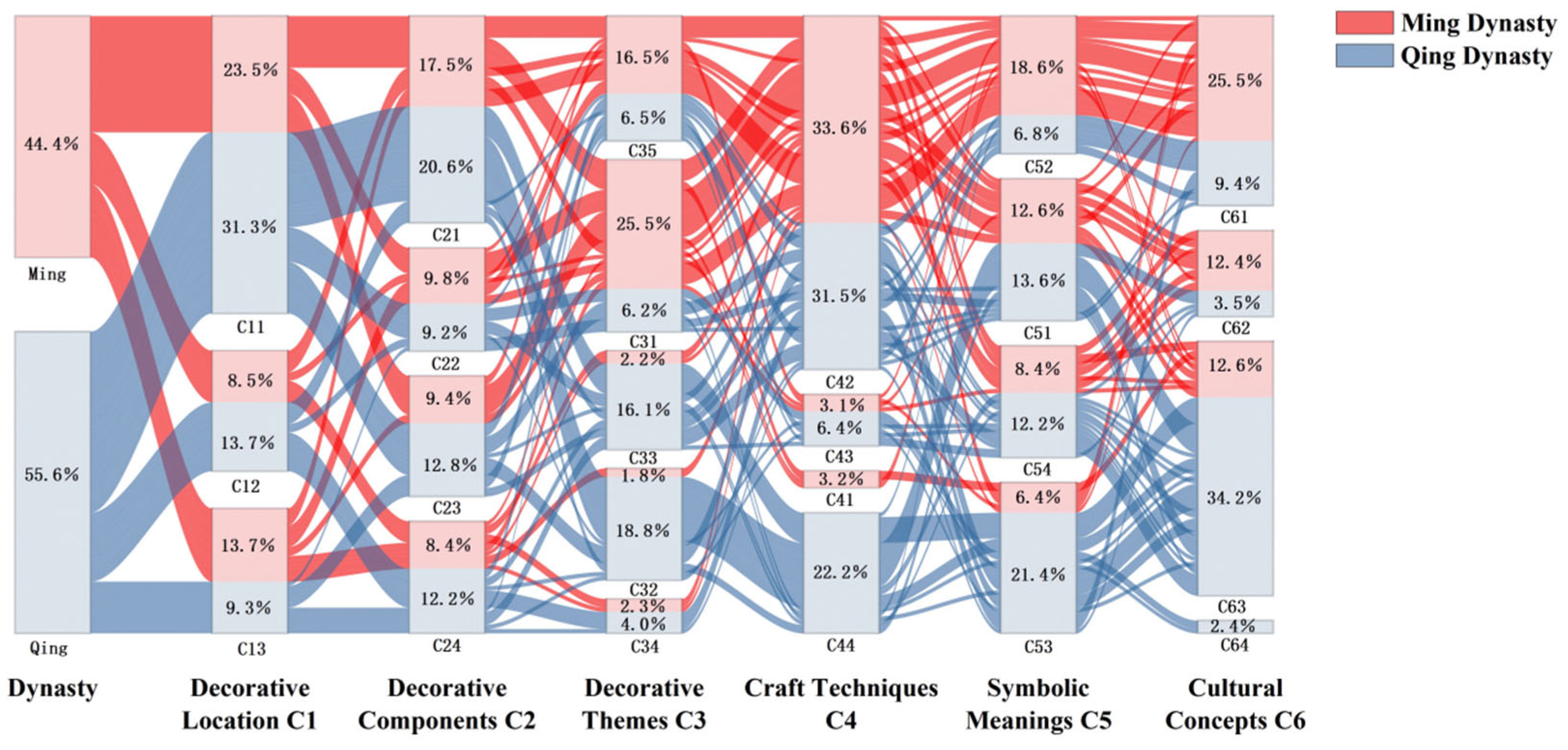
- Diachronic differences in decorative genes: Ming wooden architectural decorations emphasized plant patterns and shallow relief carving, articulating Confucian ethics through structural elements and forming ritual-oriented spatial symbolism. This restrained style reflects adaptation to the hierarchical norms of feudal society. In contrast, the Qing era saw a paradigm shift: animal patterns, round carving, and increased decoration in private spaces manifested the influence of merchant capital. This transition from a “ritual container” to a “monument of financial power” illustrates how commercial economy disrupted traditional rites, highlighting cultural gene evolution driven by technological, economic, and cultural factors.
- (2)
- Social and structural influences: In the Ming dynasty, decoration was constrained by hierarchical norms and Confucian ethics, concentrating decoration in public ritual spaces and load-bearing structures, resulting in a restrained aesthetic. By the Qing dynasty, economic prosperity and technological advances, particularly the post-and-lintel construction system, liberated decoration from structural constraints, enabling intricate carvings and private aesthetic expression. This shift from “ethical symbolism” to “capital display” demonstrates how decoration functions as a tangible text mediating between social structures, technology, and cultural power.
- (3)
- Methodological innovation: A “tangible—intangible” gene map incorporating 24 factors was developed, enabling systematic analysis of decorative attributes. A cross-period quantitative model, integrating multidisciplinary expert and craftsman evaluations, allowed objective weighting of gene factors. This approach addresses the shortcomings of traditional research methods in decorative arts, providing a foundation that combines theoretical value with practical guidance for the in-depth analysis, valuation, and living heritage preservation of the wooden decorative elements in Wu-style architecture.
Author Contributions
Funding
Data Availability Statement
Acknowledgments
Conflicts of Interest
Abbreviations
| AHP | Analytic Hierarchy Process |
| FCE | Fuzzy Comprehensive Evaluation |
| TOPSIS | Technique for Order Preference by Similarity to Ideal Solution |
| VIKOR | VIseKriterijumska Optimizacija I Kompromisno Resenje |
| UNESCO | United Nations Educational, Scientific and Cultural Organization |
References
- Lou, Q. Traditional Chinese Architectural Decoration; China Architecture and Building Press: Beijing, China, 1999; pp. 12–15. [Google Scholar]
- Gong, M.; Yang, J. Dongyang Wood Carving; Zhejiang Photography Publishing House Press: Hangzhou, China, 2008. [Google Scholar]
- Han, K.; Ge, M.; Li, K.; Liu, X.; Ruan, Y.; Huang, D.; Yang, H.; Zhuoga, B.; Mai, B.; Li, Y.; et al. Conservation of color paintings on the Rain Flower Pavilion using a multi-functional composite coating. NPJ Herit. Sci. 2025, 13, 266. [Google Scholar] [CrossRef]
- Xie, X.; Fechner, H. Material engagement in architecture. Humanit. Soc. Sci. Commun. 2026, 13, 557. [Google Scholar] [CrossRef]
- Meng, X.; López-Pujol, J.; Zhang, Q.; Yue, M.; Li, Z. Comparative genomic analysis of Acer tsinglingense and A. davidii provides insights into nervonic acid biosynthesis, population evolution and genome vulnerability of endangered A. tsinglingense. Plant J. 2025, 124, e70625. [Google Scholar] [CrossRef]
- Dawkins, R. The Selfish Gene; Oxford University Press: Oxford, UK, 1976. [Google Scholar]
- Lumsden, C.J.; Wilson, E.O. Précis of Genes, Mind, and Culture. Behav. Brain Sci. 1982, 5, 1–7. [Google Scholar] [CrossRef]
- Liu, P. Research on the Construction and Application of a Gene Map of Traditional Chinese Settlement Landscapes. Ph.D. Thesis, Peking University, Beijing, China, 2011. [Google Scholar]
- Liang, H. Cultural Genes. Urban. Plan. 2011, 35, 78–80. [Google Scholar]
- Cai, T.; Duan, J. Construction and application of characteristic townscape knowledge graph based on space gene theory. Cities 2025, 167, 106289. [Google Scholar] [CrossRef]
- Cai, P.; Gao, Y.; Xie, M. The Characteristics of Spatial Genetic Diversity in Traditional Township Neighborhoods in the Xiangjiang River Basin: A Case Study of the Changsha Suburbs. Sustainability 2025, 17, 6129. [Google Scholar] [CrossRef]
- Liu, R.; Liu, P.; Shen, X.; Zhou, W. Effect of Traditional Village Landscape Genes on Tourists’ Image Construction: Case Study of Zhangguying Village. J. Resour. Ecol. 2024, 15, 587–600. [Google Scholar] [CrossRef]
- Hussein, K.A.; Abrahim, A.R.; Mohammed, A.S.; Ali, K.A. Digital preservation of heritage urban facades: An integrated approach using historic building information modeling and shape grammar analysis. Digit. Appl. Archaeol. Cult. Herit. 2024, 35, e00383. [Google Scholar] [CrossRef]
- Cao, K.; Liu, Y.; Cao, Y.; Wang, J.; Tian, Y. Construction and characteristic analysis of landscape gene maps of traditional villages along ancient Qin-Shu roads, Western China. Herit. Sci. 2024, 12, 37. [Google Scholar] [CrossRef]
- Liu, H.; Yang, C.; Su, Y.; Qiang, M.; Zhou, X.; Yuan, Z. A Study on the Atlas and Influencing Factors of Architectural Color Paintings in Tibetan Timber Dwellings in Yunnan. Buildings 2024, 14, 3971. [Google Scholar] [CrossRef]
- Shi, Y. Literal translation extraction and free translation change design of Leizhou ancient residential buildings based on artificial intelligence and Internet of Things. Sustain. Energy Technol. Assess. 2023, 56, 103092. [Google Scholar] [CrossRef]
- Liu, C.; Lei, Q. Construction and Design Translation of the Cultural Gene Map of Mongolian Yurts from a Cultural Field Perspective. Packag. Eng. 2023, 44, 286–301+310. [Google Scholar]
- Cudzik, J.; Sędzicki, D.; Szmelter-Fausek, B. From Craft to Code: Integrating Digital Fabrication with Traditional Conservation Techniques. Digit. Appl. Archaeol. Cult. Herit. 2025, 38, e00442. [Google Scholar] [CrossRef]
- Zhang, W.; Taib, N. Virtual Experimental Model and Digital Preservation Path of Traditional Wooden Carvings in Huizhou Traditional Dwellings. Int. J. Conserv. Sci. 2025, 16, 199–206. [Google Scholar] [CrossRef]
- Xiao, Q. An Archaeological Perspective on the Decorative Gene Mapping of Traditional Temple Architecture in the Huaihe River Basin. Mediterr. Archaeol. Archaeom. 2025. Available online: https://www.maajournal.com/index.php/maa/article/view/1427 (accessed on 31 May 2026).
- Jiang, S.; Yang, L. An Analysis of the Architectural Characteristics of Dong Villages Based on Cultural Genes: A Case Study of the Sizi Dong Village in Guizhou. Cent. China Archit. 2021, 39, 144–149. [Google Scholar]
- Li, W.; Lv, H.; Liu, Y.; Chen, S.; Shi, W. An investigating on the ritual elements influencing factor of decorative art: Based on Guangdong’s ancestral hall architectural murals text mining. Herit. Sci. 2023, 11, 234. [Google Scholar] [CrossRef]
- Zhao, H.; Huang, Z.; Deng, C.; Ren, Y. The Decorative Auspicious Elements of Traditional Bai Architecture in Shaxi Ancient Town, China. Sustainability 2023, 15, 1918. [Google Scholar] [CrossRef]
- Du, C.; Chang, B. A Genetic Interpretation of the Architecture of the Shuixi Yi Tusi from a Cultural Anthropological Perspective. J. Hum. Settl. West China 2021, 36, 125–131. [Google Scholar]
- Zhao, H.; Wang, J.; Yuan, Z.; Ma, T. Research on the Construction of a Genealogical Chart and Pathways of Transmission for Cultural Genes: A Case Study of the Cultural Genes of the Ancient Dian Kingdom. Mod. Urban. Stud. 2014, 5, 90–97. [Google Scholar]
- Ma, S.; Qiao, Y.; Huang, W.; Wang, Z.; Xu, Y.; Xie, J. A Study on the Diversity and Cultural Characteristics of Decorative Patterns of Traditional Academies in Eastern China Based on Diversity Index and Social Network Analysis. Buildings 2025, 15, 692. [Google Scholar] [CrossRef]
- Wei, Y.; Gao, Y. Research on the Construction of a Cultural Gene Map and Pathways for Digital Preservation: A Case Study of the Decorative Art of Traditional Residential Architecture in Lingshui Village. Creat. Des. Source 2021, 2, 58–62. [Google Scholar]
- Hong, T. Chinese Wu-Style Architecture; China Architecture and Building Press: Beijing, China, 2018; pp. 12–18. [Google Scholar]
- Wang, Z. Construction Techniques of Folk Houses in Wuzhou; China Architecture and Building Press: Beijing, China, 2014. [Google Scholar]
- Zhou, G.; Cai, J.; Liu, Y. Research on the Eaves Component System of the Central Hall in Traditional Folk Dwellings of Wuzhou. Decoration 2020, 4, 79–83. [Google Scholar]
- Zhou, J. The Essence of Wood Carving in Ming and Qing Dynasty Residential Architecture: Wood Carving in Residential Architecture in the Central Zhejiang Region; Shanghai Ancient Books Publishing House Press: Shanghai, China, 1998; pp. 28–45. [Google Scholar]
- Qian, K. Research on Wood Carving Patterns in Ancient Buildings in Dongyang, Zhejiang. Res. Art Educ. 2020, 4, 41–42. [Google Scholar]
- Liu, Y.; Cai, J.; Zhang, J. Research on the Characteristics of Wooden Frame in the Hall of Wuzhou Traditional Dwellings. J. Anc. Build. Gard. Technol. 2022, 6, 16–19. [Google Scholar]
- Zhan, K. A Study on the Historical Origins and Architectural Art of Traditional Folk Dwellings in Wuzhou. Shanxi Archit. 2021, 47, 34–36. [Google Scholar]
- Ni, L. A Comparative Study of Wood Carvings in Ming and Qing Dynasty Architecture in Dongyang. Master’s Thesis, Zhejiang University, Hangzhou, China, 2012. [Google Scholar]
- Peng, N.; Zhang, C.; Zhu, Y.; Zhang, Y.; Sun, B.; Wang, F.; Huang, J.; Wu, T. A vulnerability evaluation method of earthen sites based on entropy weight-TOPSIS and K-means clustering. Herit. Sci. 2024, 12, 161. [Google Scholar] [CrossRef]
- Kang, X.; Wang, J. Design optimization of wood-carved window grilles in historical architectures using stable diffusion model and intuitionistic Fuzzy VIKOR. Humanit. Soc. Sci. Commun. 2025, 12, 972. [Google Scholar] [CrossRef]
- Huang, B.; Liu, L.; Lyu, S.; Li, Z. Evaluation of the Protection of Historical Buildings in Universities Based on RCM-AHP-FCE. Buildings 2024, 14, 2078. [Google Scholar] [CrossRef]
- Zheng, X.; Guo, S.; Heath, T. Beyond Short-Term Success: Developing an FCE-Based Framework for User Satisfaction in China’s Industrial Heritage Regeneration. Buildings 2025, 15, 2831. [Google Scholar] [CrossRef]
- Wang, Z. The Dongyang Nong People and Their “Thirteen-Room”. Chin. Resid. Archit. (Early Ed.) 2016, 3, 86–91. [Google Scholar]
- Zhang, W. A Study of Dongyang Wood Carving Decorative Art During the Ming and Qing Dynasties; Shanghai Jiao Tong University Press: Shanghai, China, 2017. [Google Scholar]
- Lu, L. An Analysis of the Structure and Construction of Coding Rules in the “N-Level Coding Theory”. Chin. Character Cult. 2021, 2, 153–155. [Google Scholar]
- Conzen, M.R.G. Morphogenesis, morphological regions, and secular human agency in the historic townscape. Urban. Hist. Geogr. 1988, 72, 72–253. [Google Scholar]
- Hu, Z.; Liu, P.; Deng, Y. Identification and extraction methods of traditional settlement landscape genes. Geogr. Sci. 2015, 35, 1518–1524. [Google Scholar] [CrossRef]
- Carboni, N.; de Luca, L. Towards a conceptual foundation for documenting tangible and intangible elements of a cultural object. Digit. Appl. Archaeol. Cult. Herit. 2016, 3, 108–116. [Google Scholar] [CrossRef]
- Hua, D. Chinese Dongyang Wood Carving; Zhejiang Photography Publishing House Press: Hangzhou, China, 2001; pp. 29–35. [Google Scholar]
- Nghiem, T.B.H.; Chu, T.C. Evaluating Sustainable Conceptual Designs Using an AHP-Based ELECTRE I Method. Int. J. Inf. Technol. Decis. Mak. 2021, 20, 1121–1152. [Google Scholar] [CrossRef]
- Deng, Z. Guangxu Jinhua County Annals; Shanghai Bookstore Press: Shanghai, China, 1993. [Google Scholar]
- Jinhua City Local Chronicles Compilation Committee. Wanli Jinhua Prefecture Annals; National Library Publishing House Press: Beijing, China, 2013. [Google Scholar]
- Li, D. Da Ming Huidian; Guangling Book Society Press: Yangzhou, China, 2007. [Google Scholar]
- Zhu, X. Zhuzi Jiali; East China Normal University Press: Shanghai, China, 2010. [Google Scholar]
- Dang, J. Dongyang County Chronicles of the Daoguang Period; Local Chronicles Office of the Dongyang Municipal Government; Xiling Printing Society Press: Hangzhou, China, 2017. [Google Scholar]
- Huang, Z. Mingyi Daifang Lu; Jinfeng Publishing Company Press: Taiwa, China, 1987. [Google Scholar]





| Decorative Location | Decorative Picture | Decorative Line Art | Cultural Gene Coding | Cultural Gene Characteristics |
|---|---|---|---|---|
| The corbels under the eaves of the main hall of Suyong Hall |  |  | MC11C21C31C42C52C61 | The decorative theme centers on plants, featuring bas-relief carvings. The blooming flowers symbolize prosperity and good fortune. |
| The corbels under the eaves of the front gate of Suyong Hall |  |  | MC11C21C31C42C52C61 | The decorative theme focuses on plants and figures, with the carving style being shallow relief, reflecting the Lu family’s commemoration of their ancestors. |
| The doors and windows of the side rooms of Leshou Hall |  |  | QC13C24C33C42C52C61 | The decorative theme focuses on calligraphy, painting, fishing, woodcutting, farming, and reading. The carving technique is shallow relief, which better reflects the atmosphere of daily life. |
| The corbels under the eaves of the main hall of Shude Hall |  |  | QC11C21C32C42C53C63 | The decorative theme features animals and figures, and the carving style is round carving. The word “lion” is a homophone for “market”, symbolizing the family’s prosperity and strength. |
| Shude Hall interior beam frame |  |  | QC11C23C35C42C53C63 | The decoration on this beam primarily features an abstract dragon-whisker pattern, a common decorative element found on beams in Wu-style architecture. |
| Factor 1 Compared to Factor 2 | Scale |
|---|---|
| of equal importance (value) | 1 |
| the former is slightly more important (valuable) | 3 |
| the former is more important (valuable) | 5 |
| the former is clearly more important (valuable) | 7 |
| the former is definitely more important (valuable) | 9 |
| importance (value) evaluation median value | 2, 4, 6, 8 |
| Factor 2 compared to Factor 1 | The results are reciprocal |
| B1 | C1 | C2 | C3 | Weighting Value |
|---|---|---|---|---|
| C1 | 1 | 7 | 9 | 0.7766 |
| C2 | 1/7 | 1 | 3 | 0.1549 |
| C3 | 1/9 | 1/3 | 1 | 0.0685 |
| Evaluation Factor | Ming’s Score | Qing’s Score | Drive Type | Feature Description |
|---|---|---|---|---|
| hall and gatehouse C11 | 8.9 | 9.1 | continuous | Core of spatial ritual. |
| service quarters C12 | 4.3 | 7.1 | emerging | Decorative elements in private spaces during the Qing dynasty. |
| corbels C21 | 8.6 | 8.8 | continuous | Reinforced load-bearing and decorative functions. |
| doors and windows C24 | 5.6 | 7.8 | emerging | The aesthetic upgrade of private spaces in the Qing dynasty. |
| plants C31 | 8.2 | 5.3 | declining | Symbolism in the natural philosophy of Ming dynasty wooden architecture. |
| animals C32 | 4.0 | 8.2 | emerging | The explosion of secular aesthetics in the Qing dynasty |
| abstract patterns C35 | 6.1 | 4.3 | declining | Decline in auxiliary elements. |
| relief carvings C42 | 7.9 | 6.8 | declining | Wood carvings from the Ming dynasty are relatively simple. |
| round carvings C44 | 2.5 | 8.4 | emerging | Ostentatious skills in the Qing dynasty. |
| ethical education C52 | 8.2 | 5.2 | declining | The core of moral order in the Ming dynasty. |
| status symbols C53 | 4.1 | 8.5 | emerging | Signs of social competition in the Qing dynasty. |
| Confucian ethics C61 | 8.6 | 4.9 | declining | The spiritual core of the Ming dynasty. |
| secular aesthetics C63 | 3.8 | 8.6 | emerging | Aesthetics of the commodity economy in the Qing dynasty. |
Disclaimer/Publisher’s Note: The statements, opinions and data contained in all publications are solely those of the individual author(s) and contributor(s) and not of MDPI and/or the editor(s). MDPI and/or the editor(s) disclaim responsibility for any injury to people or property resulting from any ideas, methods, instructions or products referred to in the content. |
© 2026 by the authors. Licensee MDPI, Basel, Switzerland. This article is an open access article distributed under the terms and conditions of the Creative Commons Attribution (CC BY) license.
Share and Cite
Shen, J.; Qian, C.; Rao, X.; Tong, S.; Wu, Q. AHP-FCE-Based Cultural Gene Analysis of Wooden Architectural Decorations in Ming–Qing Wu-Style Architecture: A Case Study of Luzhai, Dongyang. Buildings 2026, 16, 2339. https://doi.org/10.3390/buildings16122339
Shen J, Qian C, Rao X, Tong S, Wu Q. AHP-FCE-Based Cultural Gene Analysis of Wooden Architectural Decorations in Ming–Qing Wu-Style Architecture: A Case Study of Luzhai, Dongyang. Buildings. 2026; 16(12):2339. https://doi.org/10.3390/buildings16122339
Chicago/Turabian StyleShen, Jiahui, Chen Qian, Xiaoxiao Rao, Shishu Tong, and Qiuxiang Wu. 2026. "AHP-FCE-Based Cultural Gene Analysis of Wooden Architectural Decorations in Ming–Qing Wu-Style Architecture: A Case Study of Luzhai, Dongyang" Buildings 16, no. 12: 2339. https://doi.org/10.3390/buildings16122339
APA StyleShen, J., Qian, C., Rao, X., Tong, S., & Wu, Q. (2026). AHP-FCE-Based Cultural Gene Analysis of Wooden Architectural Decorations in Ming–Qing Wu-Style Architecture: A Case Study of Luzhai, Dongyang. Buildings, 16(12), 2339. https://doi.org/10.3390/buildings16122339