Article

AHP-FCE-Based Cultural Gene Analysis of Wooden Architectural Decorations in Ming–Qing Wu-Style Architecture: A Case Study of Luzhai, Dongyang

by
Jiahui Shen
1,
Chen Qian
1,
Xiaoxiao Rao
1,2,*,
Shishu Tong
1 and
Qiuxiang Wu
3
1
College of Landscape and Architecture, Zhejiang A&F University, Hangzhou 311300, China
2
Zhejiang Province Key Think Tank: Institute of Ecological Civilization, Institute of Carbon Neutrality, Hangzhou 311300, China
3
Taishun County Museum of Culture, Taishun, Wenzhou 325500, China
*
Author to whom correspondence should be addressed.
Buildings 2026, 16(12), 2339; https://doi.org/10.3390/buildings16122339
Submission received: 27 March 2026 / Revised: 28 May 2026 / Accepted: 1 June 2026 / Published: 11 June 2026
(This article belongs to the Section Architectural Design, Urban Science, and Real Estate)

Abstract

As an important medium for conveying rich historical and cultural information, the decorative elements of ancient Chinese timber architecture still lack a systematic understanding of their intrinsic cultural logic in current research and conservation practices. Guided by the cultural gene theory, this study systematically analyzes the wooden decorations of the Luzhai complex in Dongyang, Zhejiang, and constructs a “tangible–intangible” gene map comprising 24 relevant factors, including form, craftsmanship, and symbolic meaning. Through AHP-FCE (Analytic Hierarchy Process- Fuzzy Comprehensive Evaluation) quantitative analysis, 126 typical components from 427 decorative samples (including 165 from the Ming Dynasty and 262 from the Qing Dynasty) in the Ming and Qing Dynasty Luzhai in Dongyang were coded and quantitatively evaluated. The results indicate that the Ming-dynasty wooden architectural decorations in the Luzhai complex are characterized by botanical patterns, relief carving, and Confucian ethics, embodying restraint and ritual order; whereas Qing-dynasty decorations are characterized by animal patterns, round carving, and status symbols, reflecting sociocultural and economic transformation. This study provides a methodological framework for interpreting regional architectural decoration and offers theoretical and practical support for the conservation and digital preservation of traditional architectural heritage.

1. Introduction

Ancient Chinese architecture is rich in artistic expression, with architectural decoration playing a significant role in shaping its distinctive characteristics [1]. As a key cultural medium in central and western Zhejiang Province, Wu-style architecture embodies multifaceted value in architecture, art, and sociology. The wooden decorative elements of Wu-style architecture are primarily realized through Dongyang woodcarving techniques, which have been included in the National List of Intangible Cultural Heritage. Dongyang woodcarving originated in the Shang and Zhou dynasties, traces its roots to the Tang dynasty, developed during the Song dynasty, and reached its peak during the Ming and Qing dynasties [2]. The deep integration of Dongyang woodcarving techniques with the traditional Wu-style timber-frame system allows the decorative elements, carried by structural components, to exhibit three-dimensional and multi-layered characteristics. While reinforcing visual order, this integration achieves an organic synthesis between architectural logic and decorative expression, embodying a highly unified “technology–art” system.
Under the combined pressures of rapid urbanization and the decline of traditional craftsmanship, the wooden decorative elements of Wu-style architecture are facing increasing deterioration and irreversible damage. Current conservation efforts mainly focus on documentation and restoration [3], while research on the internal logic and cultural mechanisms of these decorative components remains insufficient. As carriers of craftsmanship, cultural memory, and traditional knowledge, wooden decorations require not only visual preservation but also in-depth cultural interpretation [4]. Therefore, a systematic study of the evolutionary process of Wu-style wooden architectural decoration is essential for understanding its cultural and technical value and for supporting the preservation and revitalization of traditional architectural heritage.
The cultural gene theory offers a new analytical framework for understanding the cultural significance of wooden architectural decoration and the mechanisms underlying its evolution. Rooted in the biological notion of the “gene” as the fundamental hereditary unit controlling traits [5], cultural gene theory builds on a long tradition of theoretical inquiry into the definition and transmission of culture. Dawkins [6] subsequently introduced the notion of “memes” as replicators of cultural information, transmitted through imitation rather than biological inheritance, thereby conceptualizing cultural evolution in genetic terms. This perspective was further elaborated by Lumsden and Wilson [7], who proposed the theory of gene-culture coevolution, highlighting the dynamic interaction between biological and cultural mechanisms. Together, these contributions laid the theoretical foundation for subsequent research on cultural gene theory.
With the advancement of interdisciplinary studies linking anthropology and genetics, cultural phenomena have increasingly been interpreted through a gene-based analytical lens. Within this context, the concept of cultural genes has been progressively incorporated into disciplines such as sociology, settlement research, and architectural studies. Drawing on cultural gene theory and a typological approach to settlements, Liu [8] innovatively proposed the concept of the Genetic Landscape of Traditional Settlements (GLGTS) and established corresponding methods for its identification and extraction, thereby providing a systematic analytical framework for research in this field. Liang [9] introduced the theory of cultural genes into the field of urban planning, while Duan et al. [10] proposed that spatial genes play a significant role in the transmission of urban cultural heritage. Subsequent scholars have explored issues related to urban space and cultural heritage [11] as well as the application of cultural gene theory to tourism [12] and other fields [13]. Taken together, these studies establish a methodological foundation and provide conceptual support for the present research.
In the field of architectural heritage research, Cao et al. [14] introduced coding methods to categorize architectural cultural genes into dimensions such as form and structure, thereby systematically deconstructing and reconstructing traditional architectural elements. Regarding architectural decoration research, the academic community has primarily focused on constructing decorative genealogies [15], innovations in semiotic translation [16,17], and digital applications [18,19]. In-depth discussions were conducted across three major directions. For example, Xiao [20] classified temple decorative elements into categories such as animal, plant, and geometric themes to construct decorative gene maps. Jiang et al. [21] developed architectural gene maps for the Dong villages of Sizhai in Guizhou, covering plans, facades, structures, materials, colors, and decorations, thereby revealing their visual and cultural characteristics. Other studies emphasize cultural semantics and influence mechanisms. Li et al. [22] used text mining and statistical analysis to identify the cultural drivers behind ancestral hall murals and traditional decorations, linking decorative content to broader sociocultural contexts. These studies demonstrate the strong potential of cultural gene theory for micro-level research on architectural timber decoration.
In the field of regional architectural decoration research, studies focusing on southwestern regions such as Yunnan, Sichuan, Guizhou, etc., have garnered increasing attention in recent years. Some scholars have analyzed the architectural ornamentation of ethnic groups such as the Bai, Yi in Yunnan, revealing its close relationship with local cultural identity [23,24]. Meanwhile, digital methods including knowledge graphs, information coding, and pattern recognition have been introduced to construct databases of architectural decorative cultural genes, promoting a shift from descriptive studies toward systematic and digital analysis [25]. In addition to the Southwest, regions such as the North China and Lingnan have also conducted research on the typology, semiotics, and digital preservation of architectural ornamentation, collectively contributing to the diversification of methodological approaches in this field [26,27]. These studies provide important methodological references for research on architectural decoration gene maps.
In contrast, research on the wooden decorative elements of Wu-style architecture currently focuses primarily on artistic characteristics, carving techniques, pattern themes, and expressions of regional culture. Hong [28], Wang [29], and Zhou et al. [30] have examined Wu-style architecture in terms of form, construction techniques, and decorative vocabulary, while other works have offered valuable discussions of carving techniques, stylistic features, and thematic content [31,32], emphasising the importance of these decorative arts in reflecting regional culture and humanistic background [33,34]. In addition, Ni [35] conducted research on the similarities and differences in architectural wood carvings in the Dongyang region during the Ming and Qing dynasties. These studies have laid the groundwork for understanding the artistic characteristics and cultural value of the wooden decorative elements in Wu-style architecture, but on the whole, they remain primarily descriptive in nature.
Overall, existing research still has several gaps. Most studies focus mainly on decorative themes or digital presentation, with digitization serving primarily for information storage and visualization rather than for analyzing the internal logical relationships of decorations. In addition, research often relies on static cross-sectional comparisons and lacks diachronic analysis of decorative evolution across different periods. Clear connections between decorative forms, carving techniques, and cultural semantics also remain insufficiently established, causing interpretations of decorative evolution to depend heavily on empirical judgment. To address these issues, this study applies cultural gene theory to analyze wooden architectural decoration through the framework of “minimal unit identification–structural relationship construction–evolutionary mechanism analysis,” thereby shifting the focus from descriptive representation to systematic structural interpretation.
In architectural heritage research, multi-criteria decision-making methods are being widely applied. In addition to the Analytic Hierarchy Process (AHP) and the Fuzzy Comprehensive Evaluation (FCE) method, Technique for Order Preference by Similarity to Ideal Solution (TOPSIS) achieves solution ranking by constructing an evaluation matrix and calculating the distances between each alternative and the ideal solution and the negative ideal solution [36]. Its core principle is that “the optimal solution should be closest to the ideal solution and farthest from the negative ideal solution.” In contrast, VIseKriterijumska Optimizacija I Kompromisno Resenje (VIKOR) places greater emphasis on seeking “acceptable compromise solutions” under conditions of multi-objective conflict [37], making it more suitable for complex decision-making problems such as architectural heritage conservation, historic building renovation, and cultural heritage design optimization.
However, methods such as TOPSIS and VIKOR focus primarily on solution ranking and still have certain gaps regarding the hierarchical structure of evaluation systems and the handling of ambiguity in expert judgments. The AHP enables systematic weight assignment through hierarchical structuring, while FCE addresses uncertainty and subjectivity in expert judgments. The integration of AHP and FCE is particularly well-suited for cultural analysis, as hierarchical structures coexist with semantic ambiguity. The integrated AHP-FCE approach combines the strengths of both methods and has been effectively applied in areas such as historical building conservation assessment [38] and heritage regeneration user satisfaction evaluation [39], offering a promising methodological tool for analyzing the multidimensional attributes and diachronic evolution of architectural decorative elements.
Based on the above framework, this study examines the wooden architectural decorations of the Ming and Qing dynasties in the Dongyang Luzhai complex. Through the identification and analysis of cultural genes, it explores period-specific decorative characteristics and their underlying sociocultural mechanisms. The study constructs a “tangible–intangible” cultural gene map by integrating decorative forms, construction techniques, and cultural semantics through coding methods. It further establishes a multi-stakeholder evaluation system combining the perspectives of architectural scholars and traditional craftsmen, and applies the AHP-FCE model to determine the weights of cultural genes across different periods. Compared with existing approaches, this study introduces a cross-disciplinary evaluation framework involving architecture, history, anthropology, and traditional craftsmanship to improve interpretive reliability. Moreover, by comparing gene weights across periods, the research shifts the focus from simple evaluation results to the explanation of decorative evolution and its underlying mechanisms.

2. Materials and Methods

2.1. Sample Selection

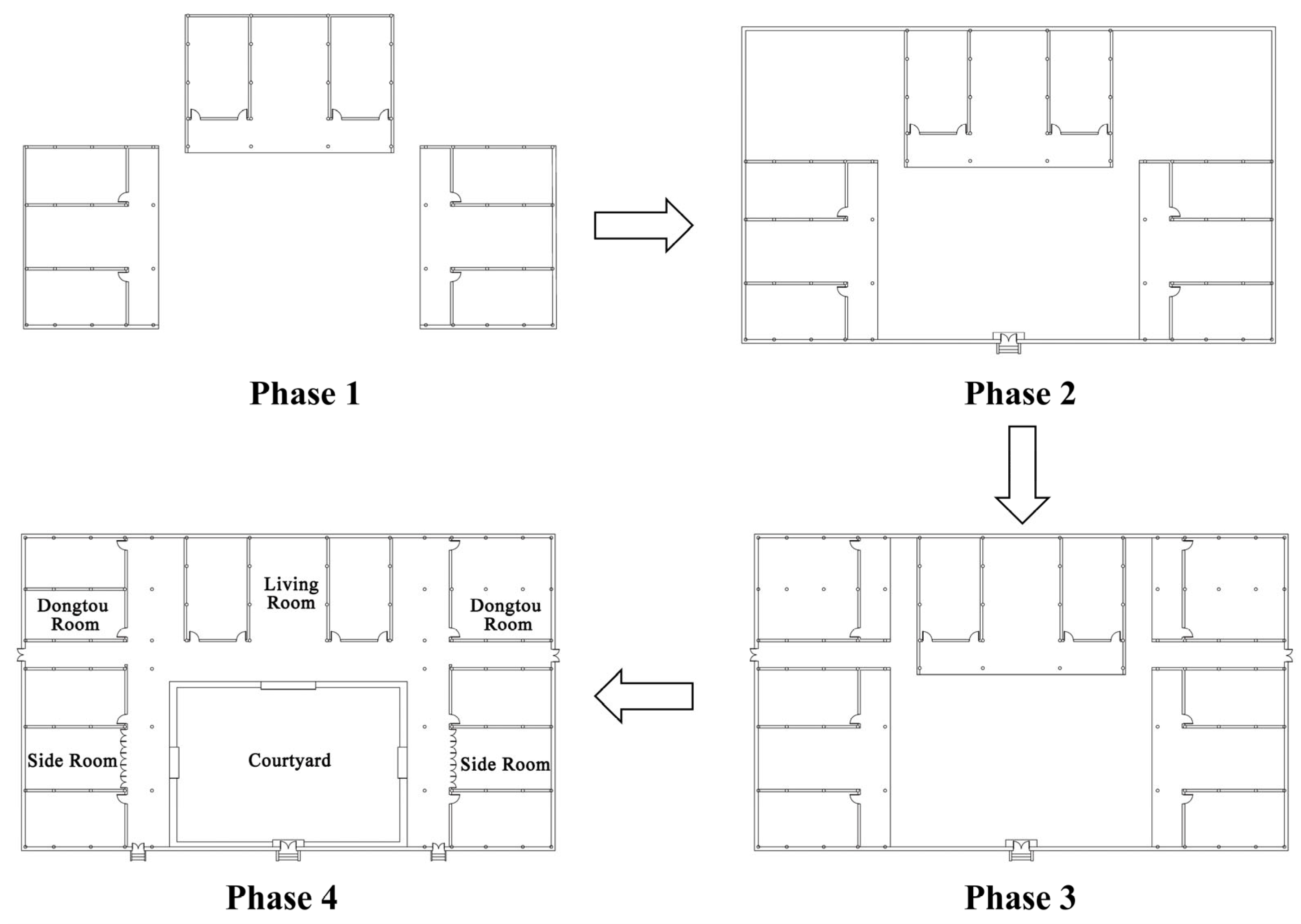
Wu-style architecture, a representative form of Ming-Qing residential buildings in the Jinhua and Wuzhou regions, is distinguished by horse-head walls, open halls, expansive courtyards, spacious layouts, and elaborate wooden architectural decorations [28]. The history of Wu-style architecture dates back to the Eastern Han Dynasty, when it began to take shape alongside the gradual formation of Wu-culture. According to legend, during the Song Dynasty, in order to secure more living space while complying with government building regulations that limited ordinary citizens to constructing only three rooms, mountain villagers gradually developed a typical floor plan unit, thereby establishing the basic layout of Wu-style architecture (Figure 1) [40]. After the Song court’s migration south, large numbers of northern literati and officials relocated to the Jinhua region. They built their residences in accordance with the hierarchical system of architecture and in accordance with the Yingzao Fashi (Construction Standards) to accommodate the needs of large extended families living together [41]. Most extant Wu-style buildings date from the Ming and Qing dynasties. Architecture from this period reached a high level of achievement in terms of scale, artistic expression, and cultural integration, becoming an important component of China’s traditional architectural system.
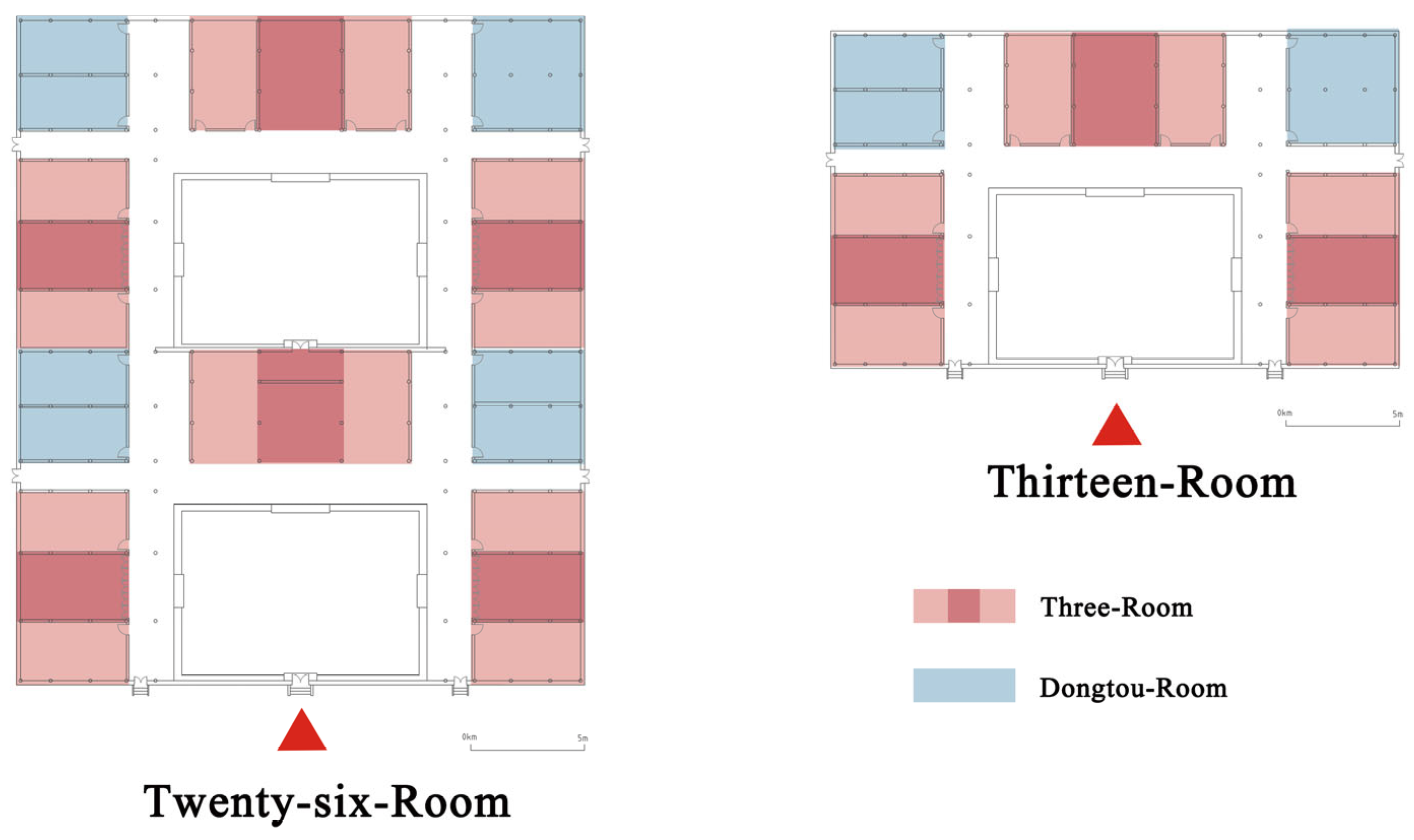
The floor plan of Wu-style architecture consists of a “Thirteen-Room”, which is composed of three “Three-Room” and two “Dongtou-Room.” Large-scale buildings are extended horizontally and vertically from this “Three-Room”, resulting in configurations such as the “Twenty-Six-Room” (Figure 2). In previous research, Wu-style architecture has often been compared to the Hui-style architecture of the neighboring Huizhou region, but there are significant differences between the two: courtyards in Wu-style architecture are larger in scale, whereas Hui-style dwellings feature relatively smaller central courtyards; the practice of open “Three-Room” halls in Wu-style architecture is uncommon in Hui-style architecture. Wu-style architecture is distributed across the counties that formerly belonged to the Wuzhou Prefecture (present-day Jinhua, Yiwu, Dongyang, Lanxi, Yongkang, Pujiang, and Wuyi), while Hui-style architecture is primarily found in southern Anhui and northeastern Jiangxi. Therefore, based on the actual state of surviving architectural remains, this study focuses primarily on analyzing Wu-style architecture in the Jinhua region during the Ming and Qing dynasties.
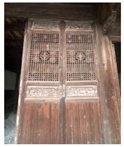
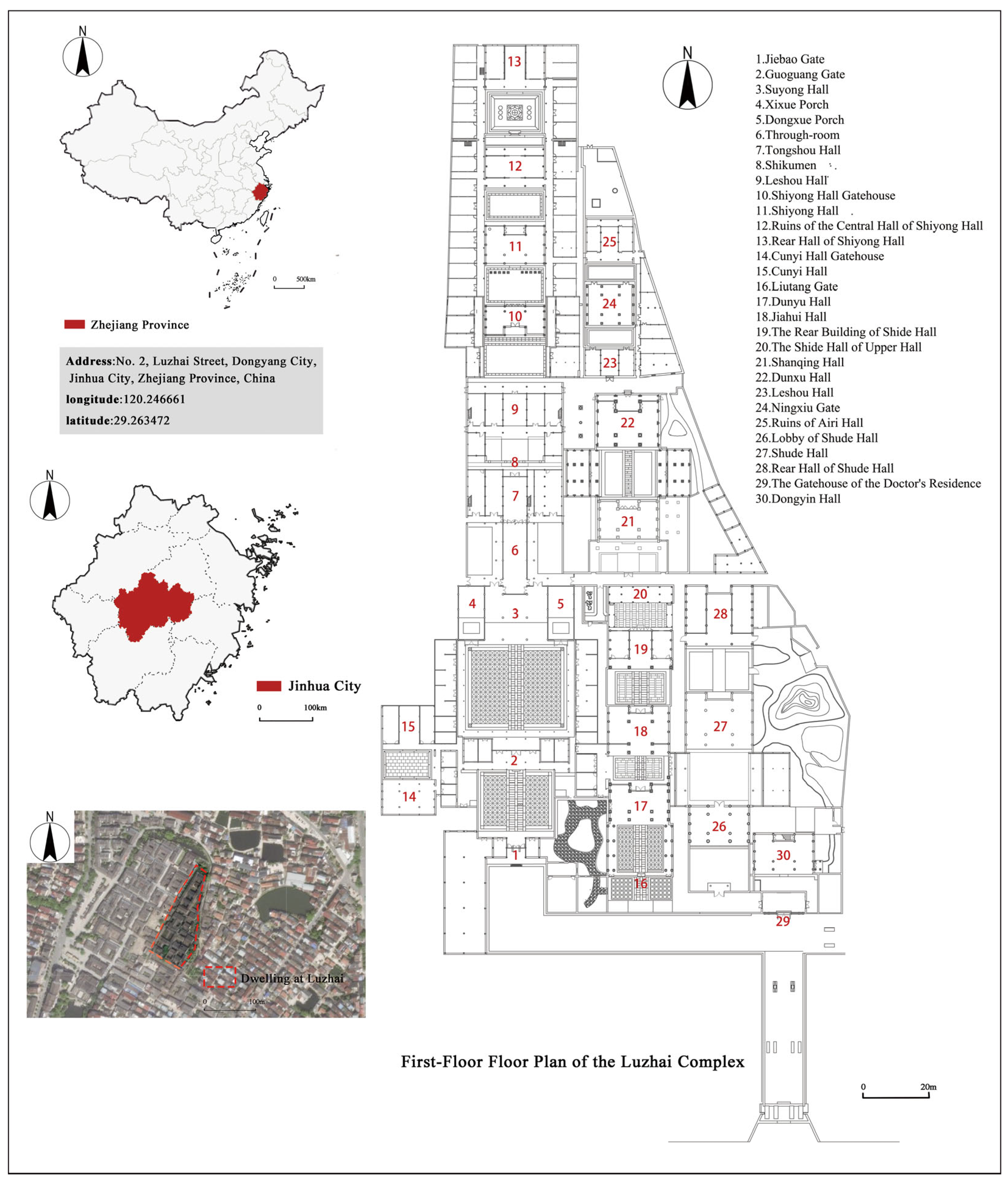
The Luzhai complex in Dongyang (Figure 3) serves as an exemplary case for study for several reasons. First, it preserves decorative layers spanning from 1456 to the mid-Qing dynasty, providing a continuous record of the transformation of wooden decoration from structural to cultural functions. Second, its ceremonial layout, enriched by folk craftsmanship, integrates intricate decoration into both public and private spaces, thereby realizing a localized adaptation of hierarchical spatial norms. Third, as a designated national heritage site, Luzhai carries exceptional cultural value. Finally, research on representative Wu-style architectural complexes, such as the Huangshan Bamian Hall in Yiwu (built approximately 1520–1560, with a floor area of about 3000 square meters) and the Zheng Family Ancestral Hall in Pujiang (built approximately 1680–1730, with a floor area of 6600 square meters), further confirms the representativeness of the Luzhai complex. With a floor area of approximately 26,800 square meters, the Luzhai complex is larger in scale and better preserved. Furthermore, its construction date, restoration history, and family lineage are all well-documented in historical records, giving it a distinct advantage in research on the chronological dating and historical evolution of its timber-frame decoration.
Studies show that Huangshan Bamian Hall is characterized by elaborate Qing-style decoration, refined carving techniques, and expressions of social status, while the Zheng Family Ancestral Hall retains Ming-style features, with wooden decorations emphasizing clan ethics and moral education and secular themes tending toward simpler abstract forms. These characteristics are all reflected in the Ming–Qing wooden decorations of Luzhai. Unlike the former examples, Luzhai, with its continuous Ming–Qing construction sequence, more comprehensively demonstrates the evolution of Wu-style wooden decoration from Ming simplicity to Qing elaboration. Overall, Luzhai is highly representative in architectural form, decorative art, historical value, and preservation status, making it a key case for studying Wu-style wooden architectural decoration.

2.2. Methods

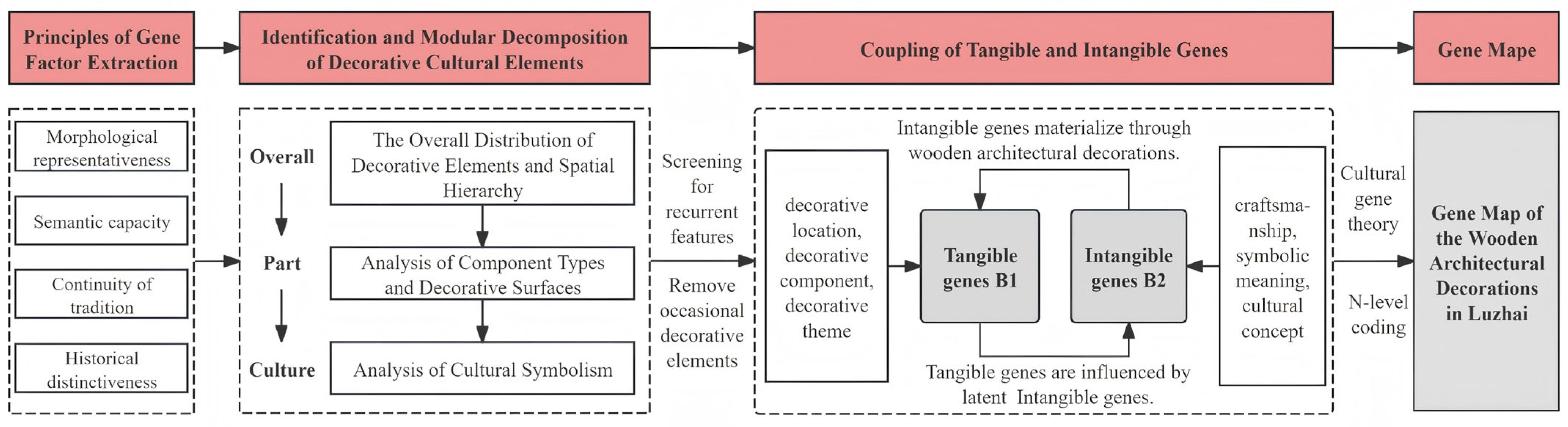
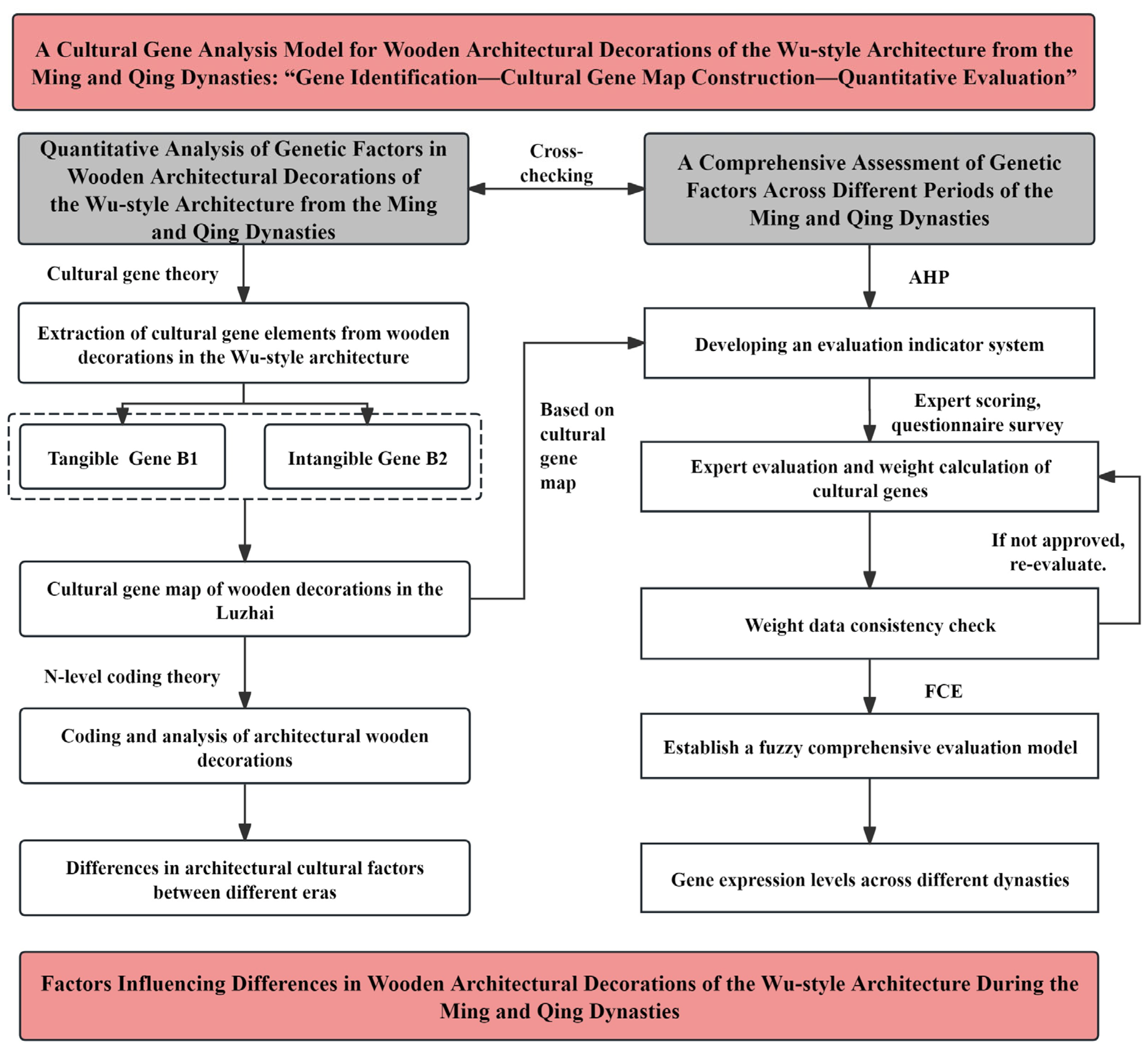
This study, grounded in cultural gene theory, integrates perspectives from architectural history, art semiotics, and typology to construct a systematic research paradigm of “gene identification—map construction—quantitative assessment”. Focusing on the wooden decorative structures of Ming-Qing Wu-style architecture, it proposes an architectural cultural gene analysis model (Figure 4). Using the Luzhai complex as a case study, the analysis was conducted across two dimensions: deconstructing genes via morphological analysis and interpreting symbolic meanings in terms of regional cultural representation. Within this framework, tangible gene (B1) and intangible gene (B2) were systematically examined. N-level coding methods [42] were applied to construct a gene map and code the wooden architectural decorations, enabling the analysis of temporal variations in gene factors. An evaluation indicator system derived from the gene map was used to perform expert scoring and questionnaires via AHP, with consistency tests repeated until criteria were met. Finally, a FCE model quantified the performance of gene factors across periods, facilitating analysis of their impact on differences in Ming and Qing Wu-style wooden architectural decorations. This framework facilitates the reconstruction of decorative configurations and their transformation over time, providing a basis for understanding the evolution of architectural decoration as a dynamic system.

2.2.1. Extraction of Genes and Construction of a Gene Map for the Wooden Architectural Elements of the Luzhai

  • Gene Factor Identification and Extraction
The term “gene” used in this paper does not refer to a unit of inheritance in the biological sense. Instead, drawing on cultural gene theory, it defines decorative features that have been continuously repeated and stably transmitted through long-term construction practices, and that serve to disseminate cultural information, as “cultural genes.” To enhance the systematic and practical nature of decorative research, this paper treats the wooden architectural decorations of the Luzhai as “cultural genes” with an inherent logic, and systematically identifies and decomposes them within the theoretical framework of cultural genes. The study breaks down the wooden architectural decorations into a set of genetic factors that can be repeatedly identified, compared, and reorganized. These factors are not merely images, but rather a composite set of information comprising morphological characteristics, spatial orientation, craftsmanship attributes, and cultural references.
The core objective of cultural gene identification is to extract stable, reproducible, and culturally significant key elements from a vast array of specific examples. Building on the cultural gene theory, this study combines the morphological, semantic, and transmission characteristics of wooden architectural decoration to develop a method for identifying cultural genes applicable to such decoration. In the process of identifying the cultural gene factors of the Ming and Qing dynasty wooden architectural decoration in the Luzhai, the study drew upon the principles of cultural gene identification proposed by Liu Peilin [8]. ① Morphological Representativeness: The decoration possesses typical morphological characteristics within the wooden decorative elements of Wu-style architecture and can collectively represent the basic style of a certain category of decoration; ② Semantic Capacity: The factor carries clear and stable cultural semantics, capable of conveying specific symbolic meanings or cultural concepts through decorative elements; ③ Continuity of Tradition: The factor maintains a stable trajectory of continuity across generations within the Wu-style architectural system, without significant discontinuities or alterations, manifested as the traceability of techniques and forms across the temporal continuum; ④ Historical Distinctiveness: Throughout its diachronic evolution during the Ming and Qing dynasties, the core characteristics of this factor have remained relatively stable, allowing for clear identification and cross-period comparison. In practical terms, the feature decomposition and extraction method was employed, sequentially conducting structural extraction, element extraction, graphic extraction, and semantic extraction [43]. The extracted elements were categorized according to the principle of “merging similar categories,” assigned to predetermined feature types, and ultimately compiled into the final extraction results [44].
During the extraction process, we first organized and identified the decorative elements based on their overall spatial locations within the Luzhai’s wooden structures, then delved into the characteristic forms of specific details and individual decorations. The extraction of material forms primarily relied on digital photographic documentation, while the identification of intangible cultural elements was achieved through in-depth analysis of relevant literature, ancient texts, and oral accounts from artisans.
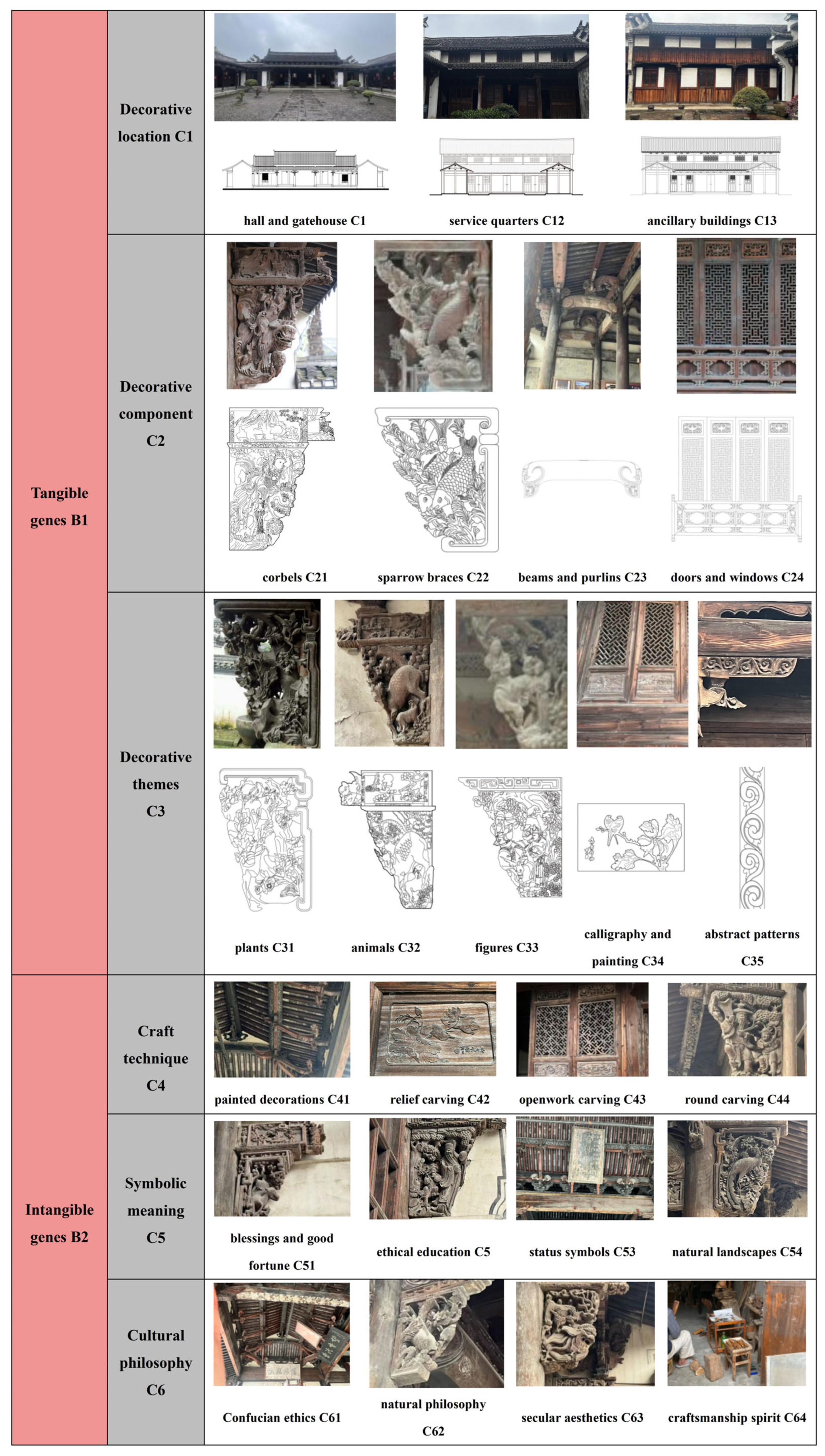
On this basis, a hierarchical coding system was established. Drawing on the classification principles of the UNESCO World Heritage Convention [45], the decorative elements are first divided into tangible and intangible dimensions. The tangible dimension records physical attributes—including decorative location, decorative components, decorative themes—while the intangible dimension captures craft techniques, symbolic meanings, and cultural philosophy. These two dimensions are not independent but form a coupled structure: intangible meanings are materialized through tangible forms, and tangible forms are in turn shaped by intangible values. This coupling mechanism constitutes the core of the decorative expression system in the Luzhai (Figure 5).
A multi-level encoding scheme was then applied, following the logic of “Xx”, where the uppercase letter denotes the hierarchical level and the lowercase element specifies the attribute. The framework is organized around three interrelated domains: the overall wooden decorative gene system of Luzhai (A1), alongside its tangible (B1) and intangible (B2) dimensions. These domains are further decomposed into six analytical categories, which are then articulated into specific variables, yielding a total set of 24 gene attributes. This layered structure underpins the construction of a systematic representation of Luzhai’s wooden architectural decoration across the Ming–Qing transition.
By means of this encoding logic, previously fragmented decorative instances are reorganized into a relational dataset with explicit internal structure. This dataset subsequently supports quantitative evaluation of representative components, through which the dominant gene attributes influencing stylistic differentiation between the Ming and Qing periods can be identified, providing a more rigorous basis for interpreting their cultural implications and evolutionary trajectory.
2.
Construction of the Luzhai Wooden Decorative Gene Map
Based on the extraction and analysis of Luzhai’s wooden architectural decorations, this study systematically constructed a cultural gene map to reveal the multidimensional connections between decorative features and historical context. Traditional Chinese wooden architectural decorations act as tangible carriers of cultural symbols and philosophical concepts. Through features such as decorative locations, patterns, and components, they translate abstract cultural genes—including natural laws, ethical order, and religious beliefs—into a tangible visual language. While fulfilling practical functions, they also facilitate spatial expression and intergenerational transmission of social value systems. For example, while the doors and windows of the rear living quarters in the Luzhai serve the practical functions of enclosing the space and providing natural light, the themes of “fishing, woodcutting, farming, and reading” carved on their lintel panels repeatedly convey the moral teachings of managing the household through agriculture and scholarship in daily life. Similarly, the corbels beneath the hall’s eaves, in addition to their practical functions of supporting the overhang and protecting the walls from rain, are carved with auspicious themes such as lions. These symbols endow the hall with ceremonial significance that transcends daily life, clearly distinguishing it from other functional spaces.
A total of 427 decorative samples were collected from the wooden architectural complex of the Luzhai, including 165 from the Ming Dynasty and 262 from the Qing Dynasty. The study extracted genetic factors from these samples. During the extraction process, decorative features with high repetition frequency, stable morphological characteristics, and clear semantic boundaries were retained as candidate genetic factors; features with lower frequency, significant morphological variations, or ambiguous semantic boundaries were merged or excluded to ensure the representativeness and stability of the gene factors.
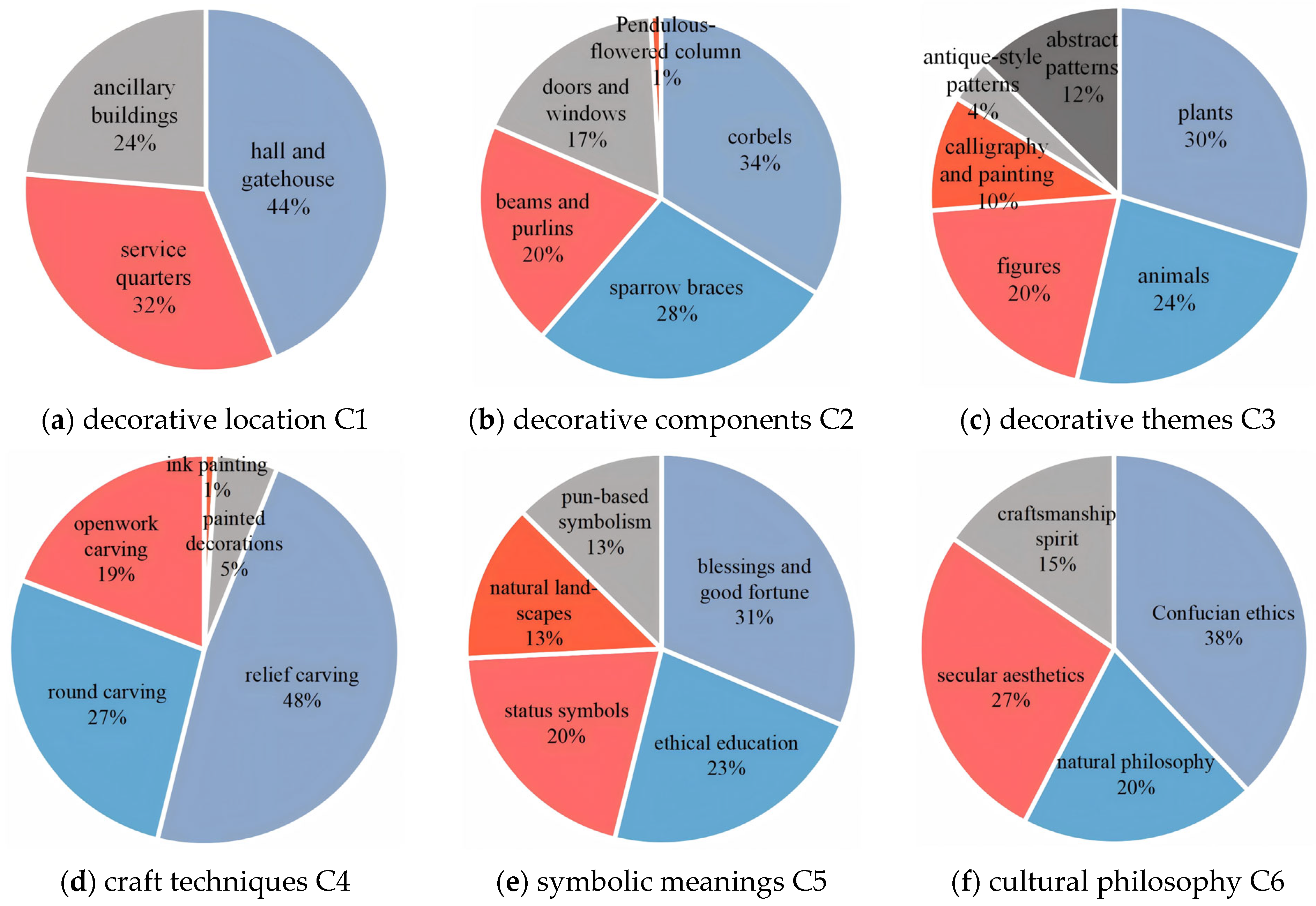
The cultural genes of Luzhai’s wooden architectural decorations are divided into tangible genes B1 and intangible genes B2, further subdivided into six dimensions: decorative location C1, decorative components C2, decorative themes C3, craft techniques C4, symbolic meanings C5, and cultural philosophy C6. These six primary dimensions were further subdivided, and the genetic factors were categorized and statistically analyzed to form a hierarchical system of wooden architectural decorative genes, the results of which are shown in Figure 6. The objective is to enhance the analytical resolution of decorative features while providing a variable foundation for subsequent quantitative models. The essence of this classification is not a simple refinement of decorative elements, but rather a systematic decomposition of the “smallest distinguishable units” across the Ming and Qing periods and across different dimensions; both the number and composition of these units are strictly constrained by the internal structural logic of the decorative system.
From the perspective of decorative location C1, decorative location is not a continuous variable but is instead governed by discrete factors such as architectural ritual hierarchy and functional zoning. In the Luzhai, decorations are primarily distributed across three distinct categories, ceremonial core spaces (halls and gatehouse), daily living spaces (service quarters), and secondary ancillary spaces. These three categories of spaces exhibit significant differences in functional attributes and decorative intensity, with internal variations being smaller than those between categories. Therefore, this dimension is subdivided into the hall and gatehouse (C11), service quarters (C12), and ancillary buildings (C13). From the perspective of decorative components C2, decoration is attached to the timber framework system, and its distribution is strictly constrained by the type of structural member. Corbel arms, bracket blocks, beams and transoms, and doors and windows constitute the primary decorative carriers in the Luzhai. These four types of components exhibit fundamental differences in structural function, scale, and visual position, and they cover the main points of decorative attachment. However, since pendulous-flowered columns are very rare in the Luzhai, this factor has been omitted. Thus, they form the categories of corbels (C21), sparrow braces (C22), beams and purlins (C23), and doors and windows (C24). Regarding decorative themes C3, the themes exhibit strong typological clustering. Through analysis of the samples, they can be consistently categorized into five types: plants, animals, figures, calligraphy and painting, and abstract patterns. These five categories not only possess clear boundaries in terms of image morphology but also exhibit significant differences in cultural connotations. There are a few decorative elements featuring the “Bogu” themes (such as vase designs), but they are extremely rare and occur very infrequently. Thus, this factor has been omitted. Furthermore, they encompass the primary decorative content of the Luzhai, thus forming the categories of plants (C31), animals (C32), figures (C33), calligraphy and painting (C34), and abstract patterns (C35).
In craft techniques C4, craft techniques are fundamentally constrained by processing methods and spatial dimensions and can be categorized into four types: two-dimensional surface treatment (painting, ink painting), shallow carving (relief carving), openwork carving, and three-dimensional carving (round carving). These four techniques are clearly distinguished in terms of their production logic and visual effects, forming a continuous technical continuum from two-dimensional to three-dimensional forms. Ink painting, on the other hand, involves an element of chance and occurs very rarely, so this factor has been omitted. Thus constituting painted decorations (C41), relief carving (C42), openwork carving (C43), and round carving (C44). Within the symbolic meanings C5, the social functions carried by decoration can be categorized into four basic types: blessings and auspiciousness (expression of wishes), ethical education (transmission of norms), symbols of status (indicators of hierarchy), natural landscapes (aesthetic and cosmological projections), and pun-based symbolism (for example, the word for “deer” [lù] sounds the same as the word for “fortune” [lù], expressing the hope for promotion and honor). Since the pun-based symbolism generally expresses positive hopes and overlaps with those of blessings and good fortune, they have been grouped under the category of blessings and good fortune. These four categories cover the most fundamental functional orientations of traditional architectural decoration and exhibit stable correspondences within specific imagery, thus forming blessings and good fortune (C51), ethical education (C52), status symbols (C53), and natural landscapes (C54). Finally, in cultural philosophy C6, the underlying logic of decorative creation can be traced to four dominant ideological sources, Confucian ethics, natural philosophy, secular aesthetics, and the spirit of craftsmanship. These correspond respectively to four distinct conceptual systems—institutional norms, cosmological concepts, everyday aesthetics, and technical traditions—which together constitute the cognitive foundation for the generation of decoration, thus forming Confucian ethics (C61), natural philosophy (C62), secular aesthetics (C63), and craftsmanship spirit (C64).
The symbolic dimension of wooden decorative elements C5 reflects societal aspirations and values. Blessings and good fortune (C51) use auspicious themes, such as bats and Ruyi, to express aspirations for happiness and prosperity. Ethical education (C52) conveys moral norms through classical themes, such as the Twenty-Four Filial Exemplars. Status symbols (C53) employ exclusive designs, including dragons and phoenixes, to signify power and social rank. Natural landscapes (C54) depict elements of nature, embodying the ideal of harmony between heaven and earth or principles of Feng Shui. The cultural concepts dimension C6 represents deeper philosophical foundations. Confucian ethics (C61) emphasize ritual order, shaping both layout and thematic content. Natural philosophy (C62) reflects Daoist principles, including “following the way of nature” and the Five Elements, manifested in spatial harmony and cosmic symbols such as the Bagua. Secular aesthetics (C63) focus on everyday aesthetics, highlighting lively, festive, and commonplace themes. The craftsmanship spirit (C64) embodies artisans’ pursuit of technical perfection and wisdom, ensuring the unique beauty of the architecture. In summary, symbolic meanings encode aspirations, identity, and moral values, while cultural concepts reveal underlying philosophies and technical traditions. Together, they constitute the core framework for understanding the essence of traditional Chinese architectural decoration.
In summary, the decorative elements of the Luzhai’s wooden architecture can be categorized into 24 gene factors: 3 factors for decorative location C1, 4 factors for decorative components C2, 5 factors for decorative themes C3, 4 factors for craft techniques C4, 4 factors for symbolic meanings C5, and 4 factors for cultural philosophy C6. Together, these factors form the cultural gene map of the Luzhai’s wooden decorative elements (Figure 7). Although this gene map was derived from the specific case of the Luzhai, the transferability and generalizability of its methodological logic do not lie in the fixed application of a specific number of attributes, but rather in the reusability of the “tangible–intangible” dichotomous framework and the multidimensional analytical approach encompassing “space–components–themes–techniques–meaning–culture”. Other architectural cases can follow this approach by constructing an attribute system through sample extraction and category consolidation, with the number of attributes flexibly adjusted according to the characteristics of the samples, expanding when decoration is rich, and converging when it is simplified.
3.
Gene Coding and Analysis of wooden architectural decorations in Luzhai
Based on the cultural gene map of the Luzhai’s wooden decorative elements, a seven-digit hierarchical coding system was established. The coding format is “M/Q-C1xC2xC3xC4xC5xC6x”, where “M” and “Q” represent the Ming and Qing dynasties, respectively, corresponding to the temporal attributes of the decorations. The remaining six characters represent six dimensions: decorative location C1, decorative components C2, decorative themes C3, craft techniques C4, symbolic meanings C5, and cultural philosophy C6. Through this coding system, the wooden architectural decorations of the Luzhai have been transformed from a collection of isolated cases into a culturally genetic system with an inherent logic (Table 1). For example, the corbels in Suyong Hall were coded as C11 (hall and gatehouse)—C21 (corbels)—C31 (plants)—C42 (relief carving)—C52 (ethical education)—C61 (Confucian ethics), whereas the corbels in Shude Hall were coded as C11 (hall and gatehouse)—C21 (corbels)—C32 (animal patterns)—C44 (round carving)—C53 (status symbols)—C63 (secular aesthetics). These examples illustrate the differences in decorative features between the Ming and Qing dynasties.
This system facilitates detailed analysis of individual components and reveals evolutionary patterns in style and cultural meaning. For instance, the shift from Ming decorations (plants C31; relief carvings C42; ethical education C52) to Qing decorations (animalsC32; round carvings C44; status symbols C53) reflects changes in decorative themes and craft techniques, as well as shifts in underlying cultural values and concepts.
To ensure the validity of the sample data and the reliability of the analysis results, this study conducted a phased screening of the 427 sets of wooden decorative elements initially collected. The screening employed a multi-criteria comprehensive evaluation method: any component that failed to meet the basic criteria in any dimension was excluded; for samples with duplicate information or highly similar characteristics, deduplication was performed, prioritizing those with higher data completeness and distinctiveness. The specific screening process is as follows:
(1)
Preliminary screening. All samples underwent a preliminary review to exclude components that did not meet the criteria for analysis. Specifically, this included: ① severely damaged components (where the main body of the component was missing or decorative details were unidentifiable, with damage exceeding 30%), and ② components showing obvious signs of repair or replacement (such as later splicing, re-engraving, or significant differences in materials that affected the interpretation of original information). Following this preliminary screening, 312 sets were retained from the original 427 sets.
(2)
Quality Assessment. Samples that pass the initial screening are evaluated based on the following four criteria: ① Form integrity: Is the overall shape of the component intact, and are the structural relationships clearly discernible. 264 out of 312 sets were retained; ② Clarity of craftsmanship: Are the carving techniques, chisel marks, and fine details clearly identifiable? 223 out of 264 sets were retained. ③ Clarity of chronological identification: Does the element have reliable evidence for dating (such as inscriptions, stylistic features, or references in historical texts). 187 out of 223 sets were retained; ④ Validity of spatial location: Is the element located in a part of the beam-and-post framework with clear structural attributes (such as beam brackets, corbels, or corbel arms), and has its decorative information not been severely distorted or lost due to the particular nature of its location. 126 out of 187 sets were retained.
Following the screening process described above, 126 wooden decorative components were ultimately selected from the initial sample of 427, including 56 from the Ming Dynasty and 70 from the Qing Dynasty, to serve as valid samples for subsequent analysis. The morphological and semantic changes in these components across different periods reveal the patterns of evolution in the decorative cultural heritage of Luzhai during the Ming and Qing dynasties.
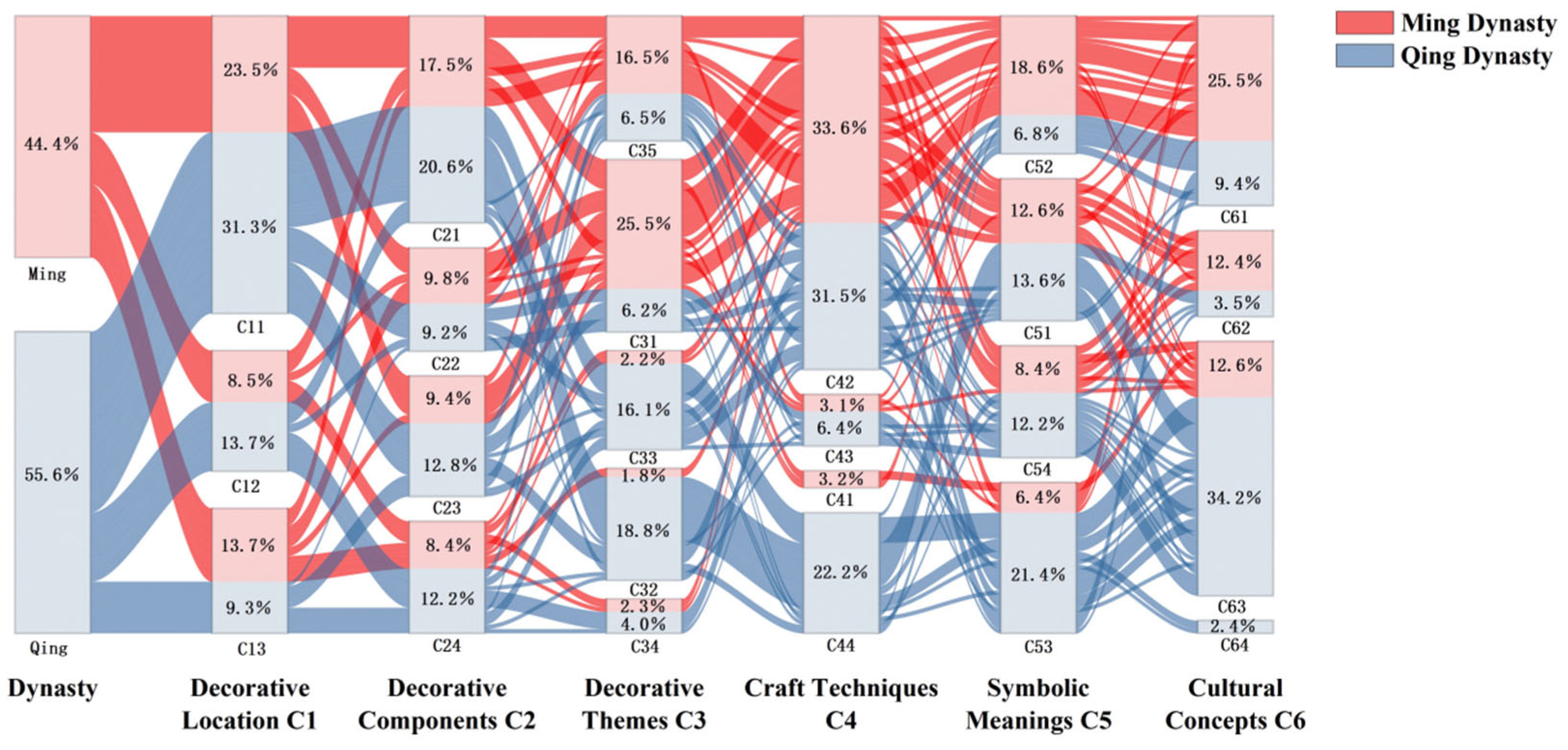
An alluvial diagram (Figure 8) visualizes these temporal shifts. The horizontal axis represents time and the six gene categories, while the vertical axis shows the proportional distribution of gene factors. Red and blue bands denote the Ming and Qing dynasties, respectively. Band width is directly proportional to the proportion of each gene, with wider bands indicating higher prevalence during the corresponding period.
Decorations were mainly located in hall and gatehouse corbels, with relief carving predominating. Ming decorations emphasized plants (C31), abstract patterns (C35), relief carving (C42), and Confucian ethics (C52). Qing decorations, in contrast, focused on animals (C32), figures (C33), round carving (C44), status symbols (C53), and secular aesthetics (C63). During the Ming, themes such as lotus arches and “Jiang Taigong Fishing” carvings reflected imperial examination culture and moral instruction. By the Qing, merchant influence introduced more secular themes, including “two lions playing with a ball” (homophonous with “market” in merchant slang), reflecting prosperity and social mobility [46]. This shift from ethical instruction to capital symbolism resulted from socio-economic changes and technical innovations, manifested in wooden architectural decorations.

2.2.2. Evaluation Model Construction

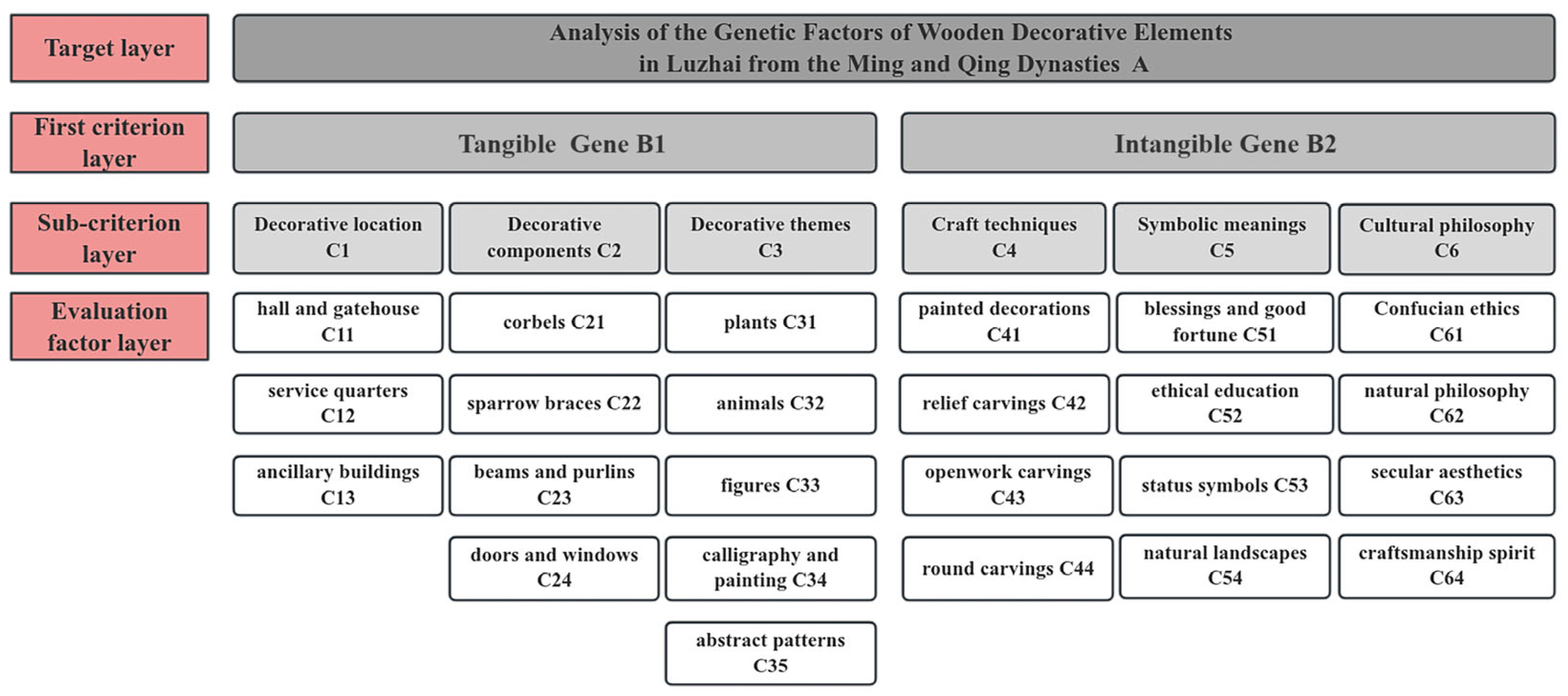
Using the decorative gene map of Luzhai’s wooden architectural decorations, this study employed a combined AHP-FCE approach to evaluate gene factors across periods. A hierarchical evaluation model was constructed, comprising the target layer, primary criterion layer, sub-criterion layer, and evaluation factor layer. 20 experts were invited, comprising 8 professors of architectural history and theory, 5 archaeology professors, 2 anthropology professors, and 5 woodcarving craftsmen. Judgments were aggregated using the arithmetic mean to form a comprehensive judgment matrix. To mitigate subjectivity, the FCE method was applied to synthesize expert evaluations, providing a more accurate assessment of the temporal influence of core gene factors.
  • Development of the Evaluation Indicator System
The hierarchical structure model was constructed through the conversion of the architectural wooden decorative genetic map, with the specific construction process as follows: ① Set “Analysis of the Genes of Wooden Decoration in Luzhai from the Ming and Qing Dynasties A” as the target layer for decision-making; ② The “tangible gene B1” and “intangible gene B2” of wooden decorative cultural genes are set as the first criterion layer. Within the tangible gene, three sub-criterion layers are established: decorative location C1, decorative components C2, and decorative themes C3. Within the cultural gene, three sub-criterion layers are established: craft techniques C4, symbolic meanings C5, and cultural philosophy C6; ③ Below the sub-criterion layer, establish 24 evaluation factor layers (Figure 9). Based on the above steps, complete the model construction for evaluating the cultural genes of Ming and Qing dynasty Wu-style architecture.
2.
Weight Calculation
Based on the principles of comprehensiveness and comprehensiveness in indicator selection, this study employs the AHP to score the indicator factors at each level of the Luzhai wooden decoration assessment model according to their importance, and calculates the weights of the indicator factors at each level. This reveals the relative importance of relationships among the various indicators of the cultural genes of Luzhai wooden architectural decorations from different periods of the Ming and Qing dynasties. A 1–9 scale was used for scoring (Table 2), enabling comparisons and assignments between different genes. By constructing a judgment matrix, the weight vector of the judgment matrix was calculated using the sum-product method. The specific calculation steps are as follows:
① Construction of the judgment matrix. The judgment matrix A is derived from the results of expert scoring. In this matrix, an element a i j denotes the value assigned by experts to characterize the pairwise comparison between the i-th and j-th criteria.
② Normalisation processing. Normalise matrix A so that the sum of the weights of the gene factors in each sequence of the vector equals 1, resulting in the normalised matrix W. W i is the normalised weight value for the i-th indicator, satisfying i = 1 n W i = 1 . Use the arithmetic mean method (summation method) to calculate the weight vector of each gene factor, where n is the total number of evaluation criteria, as shown in Formula (1).
W i = 1 n j = 1 n a i j k = 1 n a k j ( i , j = 1 , 2 , , n )
③ Eigenvector solution. Multiply the weight vector ω of the judgement matrix by the weight ratio matrix A to obtain the eigenvector, which is the maximum eigenvalue of the judgement matrix, as shown in Formula (2).
A ω = λ max ω
Using the above formula, the weight values of each element in each level can be calculated. Taking the weight index of the judgment matrix for the Ming dynasty architectural wooden decoration B1 layer constructed by one of the experts as an example, see Table 3. According to the matrix, the C1 row can be calculated, (Aω)1 = a11ω1 + a12ω2 + a13ω3 = 1 × 0.7766 + 7 × 0.1549 + 9 × 0.0685 = 2.47747. Then the eigenvector of C1 can be calculated, λ1 = (Aω)11 = 2.4774/0.7766 = 3.1905. Then calculate the eigenvectors of C2 and C3 as follows: λ2 = 3.0426, λ3 = 3.0124. Finally, the calculation yields the following λmax, λmax = λ1 + λ2 + λ3/3 = 3.0818. That is, the judgment matrix of λmax is 3.0818, and the λmax calculation is in preparation for consistency testing.
3.
Consistency test
The construction of a judgment matrix inevitably introduces errors due to individual cognitive differences. Therefore, the ranking weights reflected by the elements W of the judgment matrix can only represent the relative importance ranking of factors at the same level compared to those at the previous level. To ensure the rationality and reliability of this ranking, a consistency test must be conducted on the judgment matrix. Consistency testing is a critical step in AHP for assessing the reliability of the judgment matrix. Its core is to calculate the consistency index CI (Formula (3)), which is used to quantify the consistency of the judgment matrix.
C I = λ m a x n n 1
In this context, n represents the order of the judgment matrix. The consistency of the judgment matrix can be assessed by calculating the CI value to determine whether it is acceptable. The CI value reflects the degree to which the judgment matrix deviates from consistency, but its value increases as the order of the matrix n increases. To more accurately assess consistency, the random consistency index RI must be introduced. The corresponding RI value for the order n can be obtained from the average random consistency index table. Finally, consistency is determined by calculating the consistency ratio CR (Formula (4)).
C R = C I R I
When the consistency ratio CR is less than 0.10, it indicates that the judgement matrix passes the consistency test, and its construction results are valid [47]. Otherwise, it indicates that the consistency of the judgement matrix does not meet the requirements, and the element values need to be readjusted. The consistency test is conducted separately for each judgment matrix in the model, including the criterion-level matrix under the objective layer, the sub-criterion-level matrix under each criterion, and the factor-level matrix under each sub-criterion. Taking the first criterion-level B1 judgment matrix as an example, C I = 3.0818 3 / 3 1 = 0.0409 . When n = 3, the table shows that RI = 0.58. According to Formula (4), we can calculate that C R = 0.0705 < 0.1 , so the judgment matrix is valid.
4.
Weight Calculation Results and Analysis
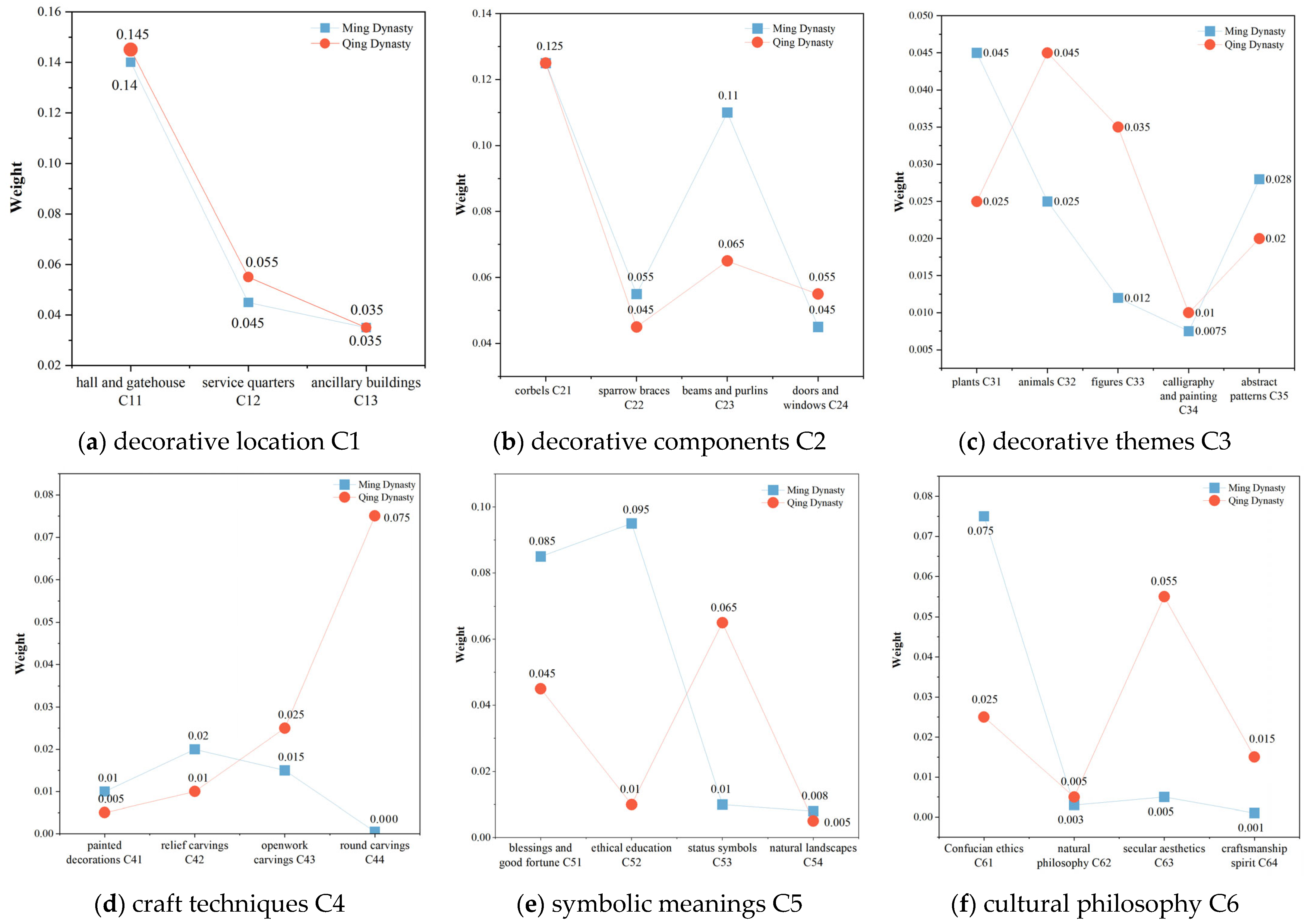
Use the above formula to calculate the weight values for each gene factor at every level. Consistency tests on the judgment matrices for Luzhai’s wooden architectural decorations yielded values below 0.1, indicating acceptable consistency. Based on expert scoring, weighted vectors for the Ming and Qing dynasties were derived by averaging the data (Figure 10).
Ming dynasty: Decorative focus was on halls and gatehouses, with the ranking C11 > C12 > C13. Corbels were of highest importance (C21 > C23 > C22 > C24), while plant patterns dominated decorative themes (C31 > C35 > C32 > C33 > C34). Relief carving was the primary craft technique (C42 > C41 > C43 > C44). In terms of symbolic meanings, ethical education was most prominent, followed by blessings, status symbols, and natural landscapes (C51 > C53 > C54). Confucian ethics exerted the strongest influence among cultural philosophy factors (C61 > C63 > C62 > C64).
Qing dynasty: Halls and gatehouses remained key decorative areas (C11 > C12 > C13), and corbels continued to be most significant (C21 > C23 > C24 > C22). Animal patterns gained prominence (C32 > C33 > C31 > C35 > C34), while round carving became the dominant craft technique (C44 > C43 > C42 > C41). Status symbols emerged as the core thematic element (C53 > C51 > C52 > C54), and secular aesthetics dominated cultural philosophy (C63 > C61 > C64 > C62).
5.
Fuzzy Comprehensive Evaluation
To balance research depth and feasibility, this study focuses on core cultural gene factors from different periods of the Ming and Qing dynasties. The specific selection criteria are as follows: ① AHP weight priority principle, selecting the factor with the highest weight in each criterion layer; ② Significant frequency variation principle, based on coded quantitative calculations of frequency changes, selecting the factor with the greatest difference between the Ming and Qing dynasties from each sequence. FCE is used to quantitatively analyse the prominence of these factors in different eras. The aforementioned 20 experts were invited to continue assigning membership percentage values (totaling 100%) to each factor’s performance in the corresponding period. An example of the questionnaire design is as follows:
Prominence of animal patterns in the Qing dynasty (C32):
Not prominent (__%) Moderately prominent (__%) Prominent (__%) Very prominent (__%) Extremely prominent (__%)
The membership degree vector of the factors is denoted as B = (r1, r2, r3, r4, r5). At the same time, the evaluation grade set V = {not obvious (2), generally obvious (4), obvious (6), very obvious (8), extremely obvious (10)} is designed. The performance intensity score S of the factors is calculated according to Formula (5), which is the membership degree, and is assigned to the evaluation.
S = j = 1 5 r j · v j
For example, the membership vector B = (0.0, 0.1, 0.3, 0.4, 0.2) of Ming dynasty Confucianism, representing its expression intensity score. That is, the expression intensity of Ming dynasty Confucianism in wooden architectural decorations is 7.8 points. Using the above method, the expression intensity score for each gene factor is calculated. The higher the score, the more significant the expression of that factor in the corresponding era’s decorative elements.
The selected gene factors are as follows: ① Key gene factors were selected according to their weight values: for the Ming dynasty, these included hall and gatehouse C11, corbels C21, plants C31, relief carving C42, ethical education C52, and Confucian ethics C61; for the Qing dynasty, the selected factors were hall and gatehouse C11, corbels C21, animals C32, round carving C44, status symbol C53, and secular aesthetics C63. ② Factors showing the greatest inter-dynastic differences were identified through encoded frequency analysis, including auxiliary buildings C13, doors and windows C24, abstract patterns C35, round carving C44, ethical education C52, and secular aesthetics C63.
These underwent fuzzy comprehensive evaluation. Membership percentage distributions were assigned to each factor reflecting period-specific expression, and averaged. Expert evaluators possessed expertise in wood carving and architectural history. 20 valid questionnaires were collected, with performance intensity scores for each gene factor provided in Table 4.
Based on quantitative analysis using the AHP-FCE model, the evolution of core features of Luzhai’s wooden architectural decorations reveal distinct shifts between the Ming and Qing dynasties. In the Ming dynasty, decorations focused on hall and gatehouse structures, corbels, plant patterns, relief carvings, ethical education, and Confucian ethics, reflecting ritual order. In the Qing dynasty, emphasis shifted to hall and gatehouse, corbels, animal patterns, round carvings, status symbols, and secular aesthetics.
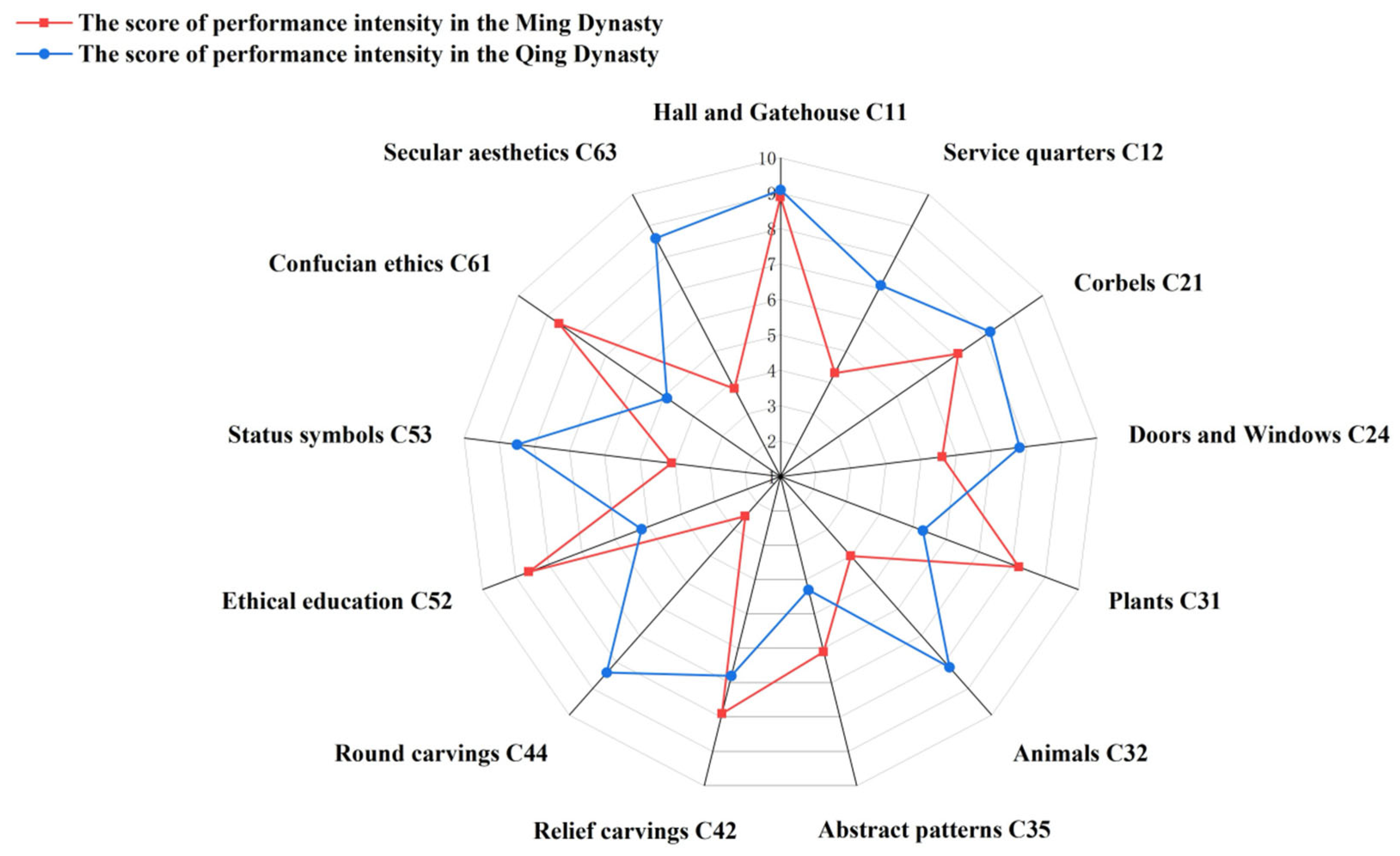
The evolution of these features can be categorized into three patterns: ① Continuous type: Elements such as hall and gatehouse structures and corbels, which scored above 8.5 in the Ming dynasty, increased further in the Qing dynasty, indicating persistence of core functions alongside strengthened decorative elaboration. ② Emerging type: Features including animal patterns, round carvings, status symbols, and secular aesthetics, which were minimal in the Ming dynasty, exhibited a marked increase in intensity during the Qing dynasty. For example, round carvings rose from 2.5 (Ming) to 8.4 (Qing), reflecting the adoption of more complex carving techniques. ③ Declining type: Elements dominant in the Ming dynasty—plant patterns, ethical education, and Confucian ethics—declined substantially. Confucian ethics, for instance, dropped from 8.9 to 4.9, indicating the growing influence of secular culture on traditional ritual values during the Qing dynasty.
Based on a quantitative analysis using the AHP-FCE model, this study evaluated the intensity and weight of various cultural gene factors during the Ming and Qing dynasties, revealing the differentiated impact of dominant factors in different eras on the formation of wooden decorative features. By analysing the diachronic evolution of gene factors, the study further elucidated the underlying sociocultural driving mechanisms.

3. Results

3.1. Diachronic Differences in Gene Factors of Ming and Qing Wooden Architectural Decorations

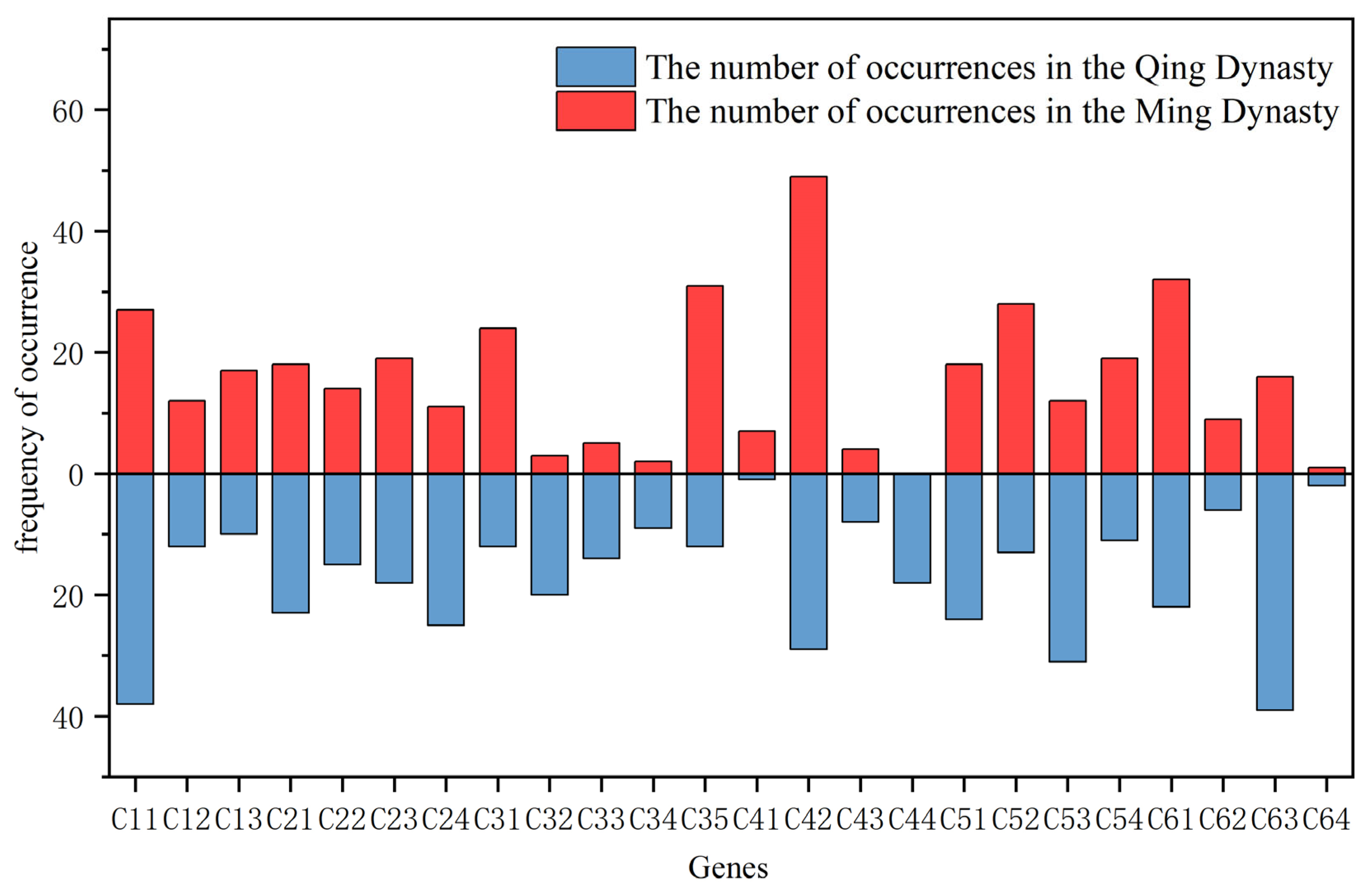
A quantitative analysis of 126 wooden decorative samples (Figure 11) shows a high degree of consistency between gene factor frequencies and the weights and intensity values derived from the AHP–FCE model. Both the Ming and Qing dynasties are dominated by hall and gatehouses, and corbels, which correspond to AHP–FCE scores above 8.5. In terms of characteristics, the Ming Dynasty is mainly associated with plants, relief carving, and Confucian ethics, whereas the Qing Dynasty shifts toward animals, round carving, status symbols, and secular aesthetics. This transition is further confirmed by the model results, Confucian ethics decrease from 8.9 to 4.9, while round carving increases from 2.5 to 8.4; plant and animal factors both reach 8.2 in their respective periods. The consistency between frequency statistics and AHP-FCE weights validates the robustness of the model and indicates that expert subjective bias in this study is relatively limited. Overall, the findings confirm clear diachronic changes between the Ming and Qing dynasties in spatial distribution, decorative themes, craftsmanship levels, and symbolic meanings.
① Spatial distribution: Both the Ming and Qing dynasties concentrated decorations in public areas such as halls and gatehouses (C11) and corbels (C21). However, the Qing dynasty exhibited a marked increase in decorations on doors and windows (C24). ② Decorative themes: Ming dynasty decorations primarily featured plants (C31) and abstract patterns (C35), whereas Qing dynasty decorations shifted toward animals (C32) and figures (C33). ③ Carving techniques: The Ming dynasty predominantly employed relief carvings (C42) with a simple and restrained style. In contrast, the Qing dynasty increasingly adopted round carvings (C44), indicating a trend toward more elaborate decoration. ④ Symbolic meanings and cultural concepts: Ming dynasty decorations emphasized Confucian ethical education (C52), while Qing dynasty decorations highlighted status symbols (C53) and secular aesthetics (C63).

3.2. Social and Cultural Reflections of Changes in Cultural Gene Weights

Analysis of the radar chart based on fuzzy evaluation scores of Ming and Qing dynasty gene factors (Figure 12) shows that five gene factors were most prominent in the Ming dynasty, whereas eight gene factors were dominant in the Qing dynasty. In the Ming dynasty, the peak factors were Confucian ethics (C61, 8.6 points) and ethical education (C52, 8.6 points). In contrast, the Qing dynasty exhibited secular aesthetics (C63, 8.6 points) and status symbols (C53, 8.5 points) as the most heavily weighted factors. Notably, animal patterns (C32) and round carvings (C44) increased markedly, from 4.0 and 2.5 in the Ming dynasty to 8.2 and 8.4 in the Qing dynasty, respectively.
The genes of Ming and Qing dynasty Wu-style architectural wooden architectural decorations represent cultural information units transmitted through decorative forms, craftsmanship techniques, and symbolic meanings. They exhibit temporal and spatial replicability and evolutionary features. The expression of these cultural genes is regulated by three interrelated mechanisms: institutional, technological, and economic. Specifically, these mechanisms manifest as follows:
  • Continuity of Spatial Ritual and Structural Aesthetics
Continuous type, such as the hall and gatehouse (C11) and corbels (C21) maintained high prominence and frequency throughout the Ming and Qing dynasties, indicating their stability as “vectors of structural-ritual coupling.” The persistent existence of these themes suggests that, regardless of social changes, architectural decoration has always been tied to the established spatial hierarchy, leaving relatively limited room for variation. In terms of the selection of decorative elements, corbels were given higher priority in both the Ming and Qing dynasties.
Hall and gatehouse (C11) and corbels (C21), as dual carriers of ritual genes, retained very high performance intensity (score > 8.0) in both the Ming and Qing dynasties. This not only confirms the adherence of Wu-style architecture to spatial hierarchical order, but also demonstrates the topological continuity of the “structure-decoration-ritual” trinity in traditional Chinese architecture. Historical records provide supporting evidence. The Guangxu Jinhua County Annals [48] notes that “the mansions of the gentry were built with gate towers exceeding the prescribed height and adorned with carved eaves and beams, not only to protect against wind and rain, but also to demonstrate the family’s enduring prestige.” Similarly, the Wanli Jinhua Prefecture Annals [49] records: “The beams and brackets of the hall are carved with rhinoceroses gazing at the moon, the brackets shaped like lingzhi mushrooms and swirling clouds, and the eaves carved with the Two Immortals of Harmony.”
These records illustrate that carved themes and patterns vary across spatial areas and structural components. Empirical research on surviving Ming and Qing Wu-style residential buildings confirms that high-value carvings, particularly those on corbels, were predominantly concentrated in gatehouses and halls. This consistency highlights the cultural genetic stability of these design elements, which persisted despite broader societal transformations.
2.
The Ritualistic Core of Ethical Education in the Ming Dynasty
The peak factors of Confucian ethics (C61, 8.6 points) and ethical education (C52, 8.2 points) in the Ming dynasty were materialized through halls, gatehouses, corbels, and other architectural elements. This spatial distribution pattern originates from the mandatory architectural hierarchy system established by the Da Ming Huidian [50], which stipulated, for example, that “the dwellings of commoners shall not exceed three rooms and five beams, and the use of bracket sets and colourful decorations is prohibited.” These regulations strictly limited the form of wooden architectural decorations, prohibiting painted decorations. Under these constraints, the Jinhua region developed white wood carving, preserving the natural characteristics of the wood, with decorative elements concentrated in public spaces of ritualistic significance.
Field surveys of extant Ming dynasty Wu-style architecture confirm the effectiveness of this system. The vast majority of wooden architectural decorations remain concentrated in public spaces, representing a material embodiment of the Confucian ethical order. Wu-style architecture thus incorporated Confucian thought into specific decorative symbols. For instance, the relief sculpture on the gate tower of Suyong Hall, depicting “Jiang Taigong Fishing,” commemorates the Lu family’s ancestors and metaphorically conveys the Confucian ideal of “talent meeting a wise ruler.” This aligns with Zhuzi Jiali [51], which states: “The heart of repaying one’s origins and revering one’s ancestors is the foundation of family hierarchy, and thus the basis for establishing a family and passing it down through generations.”
Such reverence for ancestral duties profoundly shaped the core value orientation of Ming dynasty wooden decoration, making it an important spatial carrier for maintaining family ethics and hierarchical order. Consequently, an integrated expressive mechanism—“architectural carrier—decorative symbol—ethical education”—was established, embedding moral instruction directly within the spatial and material fabric of Wu-style architecture. During the Qing Dynasty, however, Confucian ethics (C61) and ethical education (C52) showed a marked downward trend, with both their weight and intensity of expression declining simultaneously. This shift was not merely an aesthetic transition, but rather a “weakening” of the constraints imposed by ritual systems in spatial expression. In other words, the traditional spatial disciplinary mechanisms centered on clan-based ethics gradually gave way to more flexible forms of social expression during the Qing Dynasty.
3.
Economic Drivers Behind the Secularisation Trend in the Qing Dynasty
Quantitative results show that by the Qing Dynasty, the intensity of certain emerging genetic factors—such as animals (C32), round carvings (C44), secular aesthetics (C63), and status symbols (C53)—had increased significantly. The scores for these factors generally rose to 8 or higher, and they occupied dominant positions in the weighted rankings, indicating that they had evolved from peripheral elements into core expressive content.
During the Qing dynasty, Luzhai’s wooden architectural decorations experienced a marked increase in animal patterns, round carvings, and secular aesthetics. This change was not merely aesthetic; it represented a strategic spatial practice whereby Wuzhou merchants converted economic capital into cultural capital through construction projects. The Guangxu Jinhua County Annals [48] records: “In the eastern suburbs of Jinhua, wealthy merchants gathered in large numbers. Since the Xianfeng and Tongzhi eras, merchants from Huizhou and She County have returned home with their capital, extensively constructing ancestral halls adorned with carved eaves and embroidered balustrades, competing in opulence and splendour.”
Historical evidence from the Daoguang Dongyang County Annals [52] confirms that, during the Jiaqing and Daoguang periods, affluent families sought to display wealth through intricate carvings, particularly round carvings and animal patterns. Completing a single corbel carving could involve up to 120 craftsmen, reflecting both high craftsmanship and substantial investment. The prevalent use of the post-and-lintel structural system allowed the separation of load-bearing and decorative components, enabling high-density carvings on doors, windows. Consequently, wooden architectural decorations transitioned from ritual objects to markers of regional wealth, echoing Huang Zongxi’s observation in Mingyi Daifang Lu [53]: “Confucian scholars fail to understand that commerce and industry are not trivial pursuits…craftsmen are precisely what the sage kings sought to attract, and merchants are those who voluntarily take to the roads—both are fundamental to society.”
From a structural perspective, the rise of the Wu-merchant class and their accumulation of capital during the Qing Dynasty led residential architecture to gradually transcend its purely functional roles of shelter and ritual observance, transforming it into a vital medium for displaying wealth and competing for social status. The large-scale application of high-cost, highly intricate relief carvings in residential decoration was a direct manifestation of this externalized economic power, reflecting a positive correlation between decorative investment and economic strength. The shift in decorative themes from plant patterns to animal patterns during the Qing Dynasty also indirectly reflects changes in social psychology and consumer culture. While plant patterns often carried ethical symbolism and natural metaphors, animal patterns were more potent as symbols of power and possessed greater visual impact. Their significant increase during the Qing Dynasty—marked by a simultaneous rise in both frequency and intensity—indicates a shift in the function of decoration from “expressing meaning” to “visual competition.” Concurrently, the development of Wuju theater during the Qing Dynasty not only provided artisans with creative inspiration but also aligned with the trend toward the commodification of aesthetics driven by changing social roles and economic development. This shift meant that architecture no longer served merely to express normative standards but gradually became a platform for displaying individual aesthetic preferences and social status.
Despite merchants’ traditionally low social status under the Confucian hierarchy of “scholars, farmers, craftsmen, and merchants,” Wuzhou merchants leveraged material capital in decorative architecture to elevate their social standing. The increased decorative intensity in private spaces, such as doors and windows (C24, scores rising from 5.6 to 7.8), illustrates both the penetration of aesthetic preferences into daily life and the considerable financial influence of these merchants during the Qing dynasty.
4.
The Separation of Structural Engineering and the Integration of Decorative Elements
The score for doors and windows (C24) rose significantly from 5.6 in the Ming Dynasty to 7.8 in the Qing Dynasty; the score for ancillary buildings (C13) also increased from 4.3 to 7.1. Taken together, these data point to a single conclusion, decorative aesthetics began to permeate from core ritual spaces into everyday life and private spaces. In the Ming Dynasty’s post-and-lintel framework, load-bearing and decorative elements were integrated, limiting the freedom of decoration.
This change is closely linked to the evolution of timber-frame construction techniques. In the Ming Dynasty’s raised-beam structure, load-bearing and decorative elements were highly integrated; decoration was often constrained by structural safety and ritual norms, resulting in relatively limited creative freedom. However, the widespread adoption of the post-and-lintel system in the Qing Dynasty gradually shifted the structural load to the wall-panel system. As a result, a large number of beams, brackets, doors, windows, and partition panels were freed from their primary load-bearing functions, thereby creating the technical conditions for high-density, intricate carving. It was precisely against this backdrop of the “separation of structure and decoration” that Qing Dynasty wood carving gradually developed the decorative characteristic of “carving on every piece of wood.”
Technological advancements not only increased the decorative complexity of architectural elements such as corbels, doors, and windows, but also spurred the expansion of ornamentation from public ceremonial spaces into private areas such as domestic quarters. The significant increase in the score for the ancillary buildings (C13) indicates that aesthetic demands have become deeply embedded in daily life. This shift reflects not only the improvement in the living standards and purchasing power of Qing Dynasty residents but also the transition of architectural decoration from being “exclusively ritualistic” to serving “everyday aesthetics.” In other words, with technological progress and economic growth, architectural decoration gradually broke through traditional hierarchical constraints, achieving a “democratization” that permeated from core ritual spaces into ordinary living spaces.

4. Discussion

4.1. Analysis of the Causes of Decorative Variations

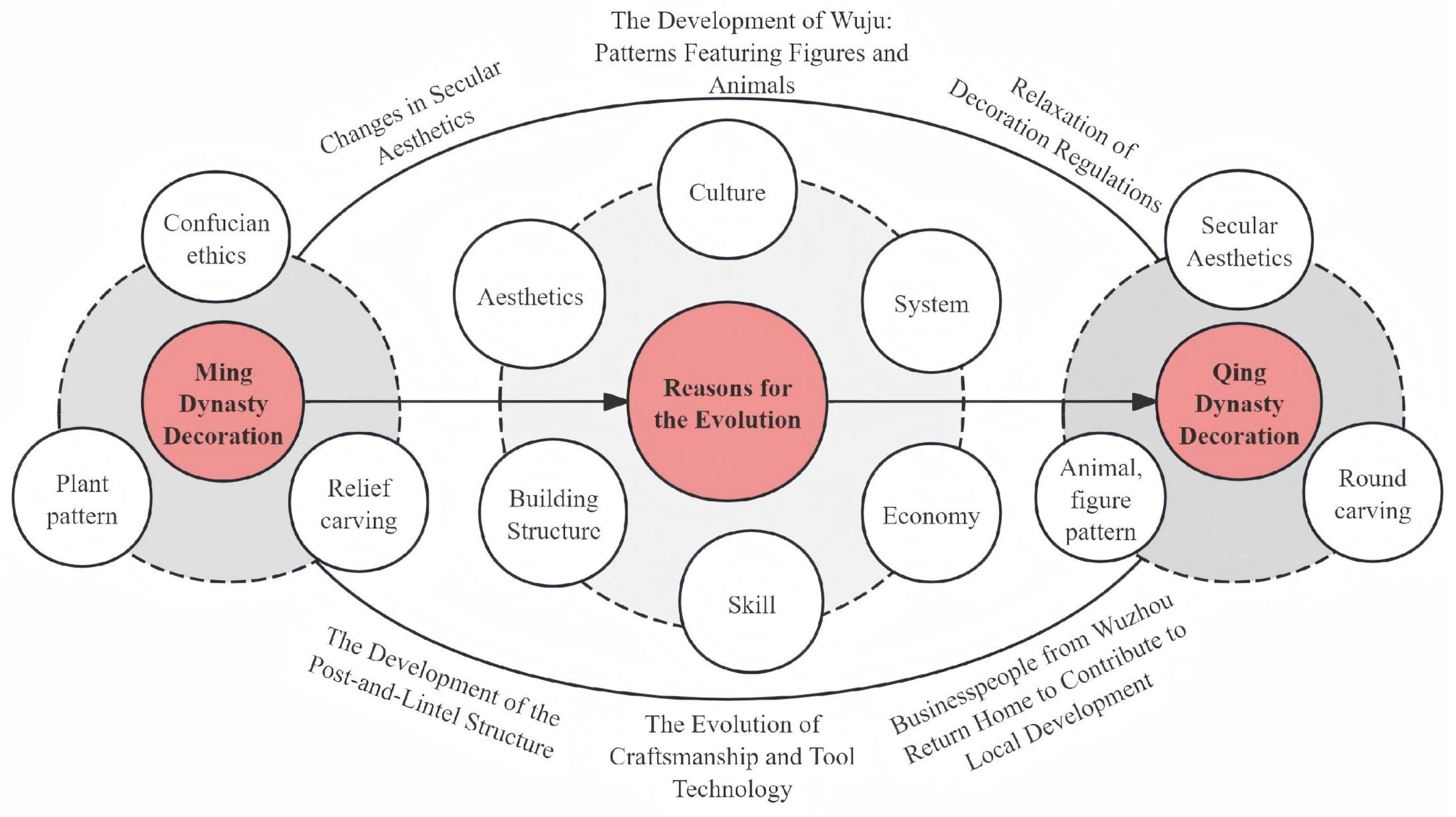
The differences in the wooden architectural decoration of Luzhai during the Ming and Qing dynasties stemmed primarily from profound changes in institutional constraints and economic transformation. During the Ming Dynasty, strict hierarchical regulations governed the decoration of residential buildings; decoration was concentrated in ceremonial spaces such as halls, featuring a restrained style dominated by botanical themes and shallow relief carvings. The overall aesthetic was simple and unadorned, emphasizing the embodiment of Confucian ethical order. After the Qing dynasty began, institutional controls were relatively relaxed. Coupled with the rise of commercial capital in the Wuzhou region, merchants from Wuzhou returned home to undertake large-scale construction projects, using intricate carvings to display their wealth. Consequently, the function of decoration shifted from “reflecting Confucian ethics” to “displaying wealth.”
At the same time, technological advancements and cultural shifts further accelerated this transformation. The maturation of architectural structures led to the gradual separation of structural and decorative elements, providing the technical foundation for high-density carving on components such as corbels, and facilitating the widespread adoption of complex techniques like round carving. In terms of cultural values, Ming-dynasty decoration centered on Confucian classics, whereas the Qing dynasty shifted toward auspicious symbolism and secular enjoyment. Particularly noteworthy is that the flourishing of Wu-Opera provided a rich source of visual resources and narrative themes for the expansion of decorative themes in the Qing Dynasty. The content of its plays, drawn from folk legends, historical romances, and everyday life, resonated with the widespread demand in Qing society for secular entertainment and emotional expression. This shift transformed architectural decoration from the ethical symbolism centered on Confucian moral education in the Ming Dynasty to a cultural practice centered on secular entertainment and status expression in the Qing Dynasty, reflecting a profound transformation in social aesthetic tastes and value orientations. These factors collectively drove the paradigm shift in the wooden architectural decoration of Wuzhou during the Ming and Qing dynasties from “ethical symbolism” to “capital expression” (Figure 13).

4.2. Methodological and Theoretical Implications

The findings of this study provide both methodological and theoretical implications for the analysis of architectural decoration. By integrating coding, weighting, and fuzzy evaluation, the proposed framework establishes a structured and replicable approach that advances beyond conventional qualitative analysis.
Methodologically, the study transforms dispersed decorative features into analyzable cultural gene units, enabling multi-dimensional interpretation across form, craft techniques, and symbolic meanings. The AHP–FCE model effectively addresses hierarchical complexity and semantic ambiguity: AHP determines the relative importance of gene factors, while fuzzy comprehensive evaluation captures uncertainty in cultural interpretation. Their integration enhances both analytical rigor and interpretive flexibility. In addition, the tangible–intangible cultural gene map links physical attributes with cultural semantics, bridging the divide between formal analysis and interpretive approaches.
Theoretically, decoration can be understood as a structural cultural gene. This perspective no longer views decorative elements as static objects of classification, but rather as dynamic cultural codes and processes of transformation that are heritable and subject to variation. This study employs quantitative methods to present the differences in Ming and Qing dynasty decoration in a more intuitive form.
Furthermore, the integration of quantitative methods suggests a move toward a more data-informed paradigm in architectural research, enhancing objectivity and reproducibility. Although this framework originated from the Luzhai case study, it can provide methodological support for research on decorative elements in other regional architectural systems; however, its regional applicability still requires further validation through additional case studies.

4.3. Limitations and Future Research

While the “tangible–intangible” gene map and AHP-FCE model enhance systematic and objective analysis, several limitations remain. (1) The gene factor framework, though scientifically grounded, requires finer granularity to capture transitional or composite traits. (2) Although subjective bias has been mitigated to some extent through the use of a multidisciplinary panel of experts and consistency checks, the AHP method remains inherently dependent on expert judgment; cognitive differences among experts with varying knowledge backgrounds may influence the weighting results. Future research should incorporate sensitivity analysis (such as weight perturbation tests) or expand the sample size of experts to further evaluate the robustness and reproducibility of the model results. (3) The identification of intangible cultural gene relies on detailed historical records to construct a data chain; however, inherent limitations in this approach still constrain the objective validation of results. The analytical framework proposed in this paper demonstrates methodological potential in the case of the Wu-style architecture, but its generalizability requires further testing. Future efforts could involve expanding the scope to include cross-regional and cross-type cases, refining the cultural gene map, optimizing multi-stakeholder consensus mechanisms, and strengthening cross-validation among multiple data sources to gradually validate and enhance the explanatory power and universal value of this framework.

5. Conclusions

Using the theory of “cultural genes” as a framework, this study systematically analyzes the unique characteristics of the wooden architectural decorations at the Luzhai complex, a typical example of the Wu-style architecture from the Ming and Qing dynasties, and explores its cultural motivations. The main findings are as follows:
(1)
Diachronic differences in decorative genes: Ming wooden architectural decorations emphasized plant patterns and shallow relief carving, articulating Confucian ethics through structural elements and forming ritual-oriented spatial symbolism. This restrained style reflects adaptation to the hierarchical norms of feudal society. In contrast, the Qing era saw a paradigm shift: animal patterns, round carving, and increased decoration in private spaces manifested the influence of merchant capital. This transition from a “ritual container” to a “monument of financial power” illustrates how commercial economy disrupted traditional rites, highlighting cultural gene evolution driven by technological, economic, and cultural factors.
(2)
Social and structural influences: In the Ming dynasty, decoration was constrained by hierarchical norms and Confucian ethics, concentrating decoration in public ritual spaces and load-bearing structures, resulting in a restrained aesthetic. By the Qing dynasty, economic prosperity and technological advances, particularly the post-and-lintel construction system, liberated decoration from structural constraints, enabling intricate carvings and private aesthetic expression. This shift from “ethical symbolism” to “capital display” demonstrates how decoration functions as a tangible text mediating between social structures, technology, and cultural power.
(3)
Methodological innovation: A “tangible—intangible” gene map incorporating 24 factors was developed, enabling systematic analysis of decorative attributes. A cross-period quantitative model, integrating multidisciplinary expert and craftsman evaluations, allowed objective weighting of gene factors. This approach addresses the shortcomings of traditional research methods in decorative arts, providing a foundation that combines theoretical value with practical guidance for the in-depth analysis, valuation, and living heritage preservation of the wooden decorative elements in Wu-style architecture.
Overall, the cultural genes embedded in these decorations document sociohistorical change in Jinhua and reflect the dynamic continuity of traditional craftsmanship. The thematic shift from “Jiang Taigong Fishing” (ethical instruction) to “two lions playing with a ball” (economic symbolism) exemplifies both stylistic evolution and materialized social history. The decoding framework highlights cultural vitality through the dialectic of “constancy” and “change”: core genes (e.g., ritual spaces) persist, while new carriers and meanings emerge with social transformation (e.g., merchant influence). Understanding this dynamic is essential for reinterpreting architectural heritage not as a static artifact but as a living cultural system.

Author Contributions

Conceptualization, J.S. and X.R.; methodology, J.S. and X.R.; validation, J.S., C.Q., X.R. and S.T.; formal analysis, J.S. and C.Q.; investigation, J.S., C.Q. and Q.W.; writing—original draft preparation, J.S., C.Q. and S.T.; writing—review and editing, X.R. and J.S.; supervision, X.R. and S.T.; project administration, X.R.; funding acquisition, X.R. and S.T. All authors have read and agreed to the published version of the manuscript.

Funding

This research was funded by the Ministry of Education of China, Humanities and Social Sciences Annual Research Project, Research on the Construction of a Cultural Genealogy of Traditional Vernacular Dwellings in Southern Zhejiang Based on Digital-Intelligent Technologies (Grant No. 25YJAZH139); the Zhejiang Provincial Natural Science Foundation Project, Research on the Technical Genealogy and Regionalization of Zhejiang Vernacular Architecture Based on Low-Technology Strategies (Grant No. LGF22E080017); and the Ministry of Education of China, Department of Social Sciences, Humanities and Social Sciences Research Project, Digital Interpretation of the Traditional Timber Frame Construction Techniques of Ningbo Vernacular Architecture (Grant No. 24YJCZH277).

Data Availability Statement

The original contributions presented in this study are included in the article. Further inquiries can be directed to the corresponding author. The raw data supporting the conclusions of this article will be made available by the authors upon request.

Acknowledgments

We sincerely thank the Dongyang Cultural Heritage Protection Center and the Luzhai Management Office for their support during field research and data collection. We are also deeply grateful to all scholars and master craftsmen who participated in expert consultations and completed questionnaire surveys. Finally, we extend our heartfelt appreciation to all teachers, colleagues, and friends who contributed their guidance and support to this study.

Conflicts of Interest

The authors declare no conflicts of interest.

Abbreviations

The following abbreviations are used in this manuscript:
AHPAnalytic Hierarchy Process
FCEFuzzy Comprehensive Evaluation
TOPSISTechnique for Order Preference by Similarity to Ideal Solution
VIKORVIseKriterijumska Optimizacija I Kompromisno Resenje
UNESCOUnited Nations Educational, Scientific and Cultural Organization

References

  1. Lou, Q. Traditional Chinese Architectural Decoration; China Architecture and Building Press: Beijing, China, 1999; pp. 12–15. [Google Scholar]
  2. Gong, M.; Yang, J. Dongyang Wood Carving; Zhejiang Photography Publishing House Press: Hangzhou, China, 2008. [Google Scholar]
  3. Han, K.; Ge, M.; Li, K.; Liu, X.; Ruan, Y.; Huang, D.; Yang, H.; Zhuoga, B.; Mai, B.; Li, Y.; et al. Conservation of color paintings on the Rain Flower Pavilion using a multi-functional composite coating. NPJ Herit. Sci. 2025, 13, 266. [Google Scholar] [CrossRef]
  4. Xie, X.; Fechner, H. Material engagement in architecture. Humanit. Soc. Sci. Commun. 2026, 13, 557. [Google Scholar] [CrossRef]
  5. Meng, X.; López-Pujol, J.; Zhang, Q.; Yue, M.; Li, Z. Comparative genomic analysis of Acer tsinglingense and A. davidii provides insights into nervonic acid biosynthesis, population evolution and genome vulnerability of endangered A. tsinglingense. Plant J. 2025, 124, e70625. [Google Scholar] [CrossRef]
  6. Dawkins, R. The Selfish Gene; Oxford University Press: Oxford, UK, 1976. [Google Scholar]
  7. Lumsden, C.J.; Wilson, E.O. Précis of Genes, Mind, and Culture. Behav. Brain Sci. 1982, 5, 1–7. [Google Scholar] [CrossRef]
  8. Liu, P. Research on the Construction and Application of a Gene Map of Traditional Chinese Settlement Landscapes. Ph.D. Thesis, Peking University, Beijing, China, 2011. [Google Scholar]
  9. Liang, H. Cultural Genes. Urban. Plan. 2011, 35, 78–80. [Google Scholar]
  10. Cai, T.; Duan, J. Construction and application of characteristic townscape knowledge graph based on space gene theory. Cities 2025, 167, 106289. [Google Scholar] [CrossRef]
  11. Cai, P.; Gao, Y.; Xie, M. The Characteristics of Spatial Genetic Diversity in Traditional Township Neighborhoods in the Xiangjiang River Basin: A Case Study of the Changsha Suburbs. Sustainability 2025, 17, 6129. [Google Scholar] [CrossRef]
  12. Liu, R.; Liu, P.; Shen, X.; Zhou, W. Effect of Traditional Village Landscape Genes on Tourists’ Image Construction: Case Study of Zhangguying Village. J. Resour. Ecol. 2024, 15, 587–600. [Google Scholar] [CrossRef]
  13. Hussein, K.A.; Abrahim, A.R.; Mohammed, A.S.; Ali, K.A. Digital preservation of heritage urban facades: An integrated approach using historic building information modeling and shape grammar analysis. Digit. Appl. Archaeol. Cult. Herit. 2024, 35, e00383. [Google Scholar] [CrossRef]
  14. Cao, K.; Liu, Y.; Cao, Y.; Wang, J.; Tian, Y. Construction and characteristic analysis of landscape gene maps of traditional villages along ancient Qin-Shu roads, Western China. Herit. Sci. 2024, 12, 37. [Google Scholar] [CrossRef]
  15. Liu, H.; Yang, C.; Su, Y.; Qiang, M.; Zhou, X.; Yuan, Z. A Study on the Atlas and Influencing Factors of Architectural Color Paintings in Tibetan Timber Dwellings in Yunnan. Buildings 2024, 14, 3971. [Google Scholar] [CrossRef]
  16. Shi, Y. Literal translation extraction and free translation change design of Leizhou ancient residential buildings based on artificial intelligence and Internet of Things. Sustain. Energy Technol. Assess. 2023, 56, 103092. [Google Scholar] [CrossRef]
  17. Liu, C.; Lei, Q. Construction and Design Translation of the Cultural Gene Map of Mongolian Yurts from a Cultural Field Perspective. Packag. Eng. 2023, 44, 286–301+310. [Google Scholar]
  18. Cudzik, J.; Sędzicki, D.; Szmelter-Fausek, B. From Craft to Code: Integrating Digital Fabrication with Traditional Conservation Techniques. Digit. Appl. Archaeol. Cult. Herit. 2025, 38, e00442. [Google Scholar] [CrossRef]
  19. Zhang, W.; Taib, N. Virtual Experimental Model and Digital Preservation Path of Traditional Wooden Carvings in Huizhou Traditional Dwellings. Int. J. Conserv. Sci. 2025, 16, 199–206. [Google Scholar] [CrossRef]
  20. Xiao, Q. An Archaeological Perspective on the Decorative Gene Mapping of Traditional Temple Architecture in the Huaihe River Basin. Mediterr. Archaeol. Archaeom. 2025. Available online: https://www.maajournal.com/index.php/maa/article/view/1427 (accessed on 31 May 2026).
  21. Jiang, S.; Yang, L. An Analysis of the Architectural Characteristics of Dong Villages Based on Cultural Genes: A Case Study of the Sizi Dong Village in Guizhou. Cent. China Archit. 2021, 39, 144–149. [Google Scholar]
  22. Li, W.; Lv, H.; Liu, Y.; Chen, S.; Shi, W. An investigating on the ritual elements influencing factor of decorative art: Based on Guangdong’s ancestral hall architectural murals text mining. Herit. Sci. 2023, 11, 234. [Google Scholar] [CrossRef]
  23. Zhao, H.; Huang, Z.; Deng, C.; Ren, Y. The Decorative Auspicious Elements of Traditional Bai Architecture in Shaxi Ancient Town, China. Sustainability 2023, 15, 1918. [Google Scholar] [CrossRef]
  24. Du, C.; Chang, B. A Genetic Interpretation of the Architecture of the Shuixi Yi Tusi from a Cultural Anthropological Perspective. J. Hum. Settl. West China 2021, 36, 125–131. [Google Scholar]
  25. Zhao, H.; Wang, J.; Yuan, Z.; Ma, T. Research on the Construction of a Genealogical Chart and Pathways of Transmission for Cultural Genes: A Case Study of the Cultural Genes of the Ancient Dian Kingdom. Mod. Urban. Stud. 2014, 5, 90–97. [Google Scholar]
  26. Ma, S.; Qiao, Y.; Huang, W.; Wang, Z.; Xu, Y.; Xie, J. A Study on the Diversity and Cultural Characteristics of Decorative Patterns of Traditional Academies in Eastern China Based on Diversity Index and Social Network Analysis. Buildings 2025, 15, 692. [Google Scholar] [CrossRef]
  27. Wei, Y.; Gao, Y. Research on the Construction of a Cultural Gene Map and Pathways for Digital Preservation: A Case Study of the Decorative Art of Traditional Residential Architecture in Lingshui Village. Creat. Des. Source 2021, 2, 58–62. [Google Scholar]
  28. Hong, T. Chinese Wu-Style Architecture; China Architecture and Building Press: Beijing, China, 2018; pp. 12–18. [Google Scholar]
  29. Wang, Z. Construction Techniques of Folk Houses in Wuzhou; China Architecture and Building Press: Beijing, China, 2014. [Google Scholar]
  30. Zhou, G.; Cai, J.; Liu, Y. Research on the Eaves Component System of the Central Hall in Traditional Folk Dwellings of Wuzhou. Decoration 2020, 4, 79–83. [Google Scholar]
  31. Zhou, J. The Essence of Wood Carving in Ming and Qing Dynasty Residential Architecture: Wood Carving in Residential Architecture in the Central Zhejiang Region; Shanghai Ancient Books Publishing House Press: Shanghai, China, 1998; pp. 28–45. [Google Scholar]
  32. Qian, K. Research on Wood Carving Patterns in Ancient Buildings in Dongyang, Zhejiang. Res. Art Educ. 2020, 4, 41–42. [Google Scholar]
  33. Liu, Y.; Cai, J.; Zhang, J. Research on the Characteristics of Wooden Frame in the Hall of Wuzhou Traditional Dwellings. J. Anc. Build. Gard. Technol. 2022, 6, 16–19. [Google Scholar]
  34. Zhan, K. A Study on the Historical Origins and Architectural Art of Traditional Folk Dwellings in Wuzhou. Shanxi Archit. 2021, 47, 34–36. [Google Scholar]
  35. Ni, L. A Comparative Study of Wood Carvings in Ming and Qing Dynasty Architecture in Dongyang. Master’s Thesis, Zhejiang University, Hangzhou, China, 2012. [Google Scholar]
  36. Peng, N.; Zhang, C.; Zhu, Y.; Zhang, Y.; Sun, B.; Wang, F.; Huang, J.; Wu, T. A vulnerability evaluation method of earthen sites based on entropy weight-TOPSIS and K-means clustering. Herit. Sci. 2024, 12, 161. [Google Scholar] [CrossRef]
  37. Kang, X.; Wang, J. Design optimization of wood-carved window grilles in historical architectures using stable diffusion model and intuitionistic Fuzzy VIKOR. Humanit. Soc. Sci. Commun. 2025, 12, 972. [Google Scholar] [CrossRef]
  38. Huang, B.; Liu, L.; Lyu, S.; Li, Z. Evaluation of the Protection of Historical Buildings in Universities Based on RCM-AHP-FCE. Buildings 2024, 14, 2078. [Google Scholar] [CrossRef]
  39. Zheng, X.; Guo, S.; Heath, T. Beyond Short-Term Success: Developing an FCE-Based Framework for User Satisfaction in China’s Industrial Heritage Regeneration. Buildings 2025, 15, 2831. [Google Scholar] [CrossRef]
  40. Wang, Z. The Dongyang Nong People and Their “Thirteen-Room”. Chin. Resid. Archit. (Early Ed.) 2016, 3, 86–91. [Google Scholar]
  41. Zhang, W. A Study of Dongyang Wood Carving Decorative Art During the Ming and Qing Dynasties; Shanghai Jiao Tong University Press: Shanghai, China, 2017. [Google Scholar]
  42. Lu, L. An Analysis of the Structure and Construction of Coding Rules in the “N-Level Coding Theory”. Chin. Character Cult. 2021, 2, 153–155. [Google Scholar]
  43. Conzen, M.R.G. Morphogenesis, morphological regions, and secular human agency in the historic townscape. Urban. Hist. Geogr. 1988, 72, 72–253. [Google Scholar]
  44. Hu, Z.; Liu, P.; Deng, Y. Identification and extraction methods of traditional settlement landscape genes. Geogr. Sci. 2015, 35, 1518–1524. [Google Scholar] [CrossRef]
  45. Carboni, N.; de Luca, L. Towards a conceptual foundation for documenting tangible and intangible elements of a cultural object. Digit. Appl. Archaeol. Cult. Herit. 2016, 3, 108–116. [Google Scholar] [CrossRef]
  46. Hua, D. Chinese Dongyang Wood Carving; Zhejiang Photography Publishing House Press: Hangzhou, China, 2001; pp. 29–35. [Google Scholar]
  47. Nghiem, T.B.H.; Chu, T.C. Evaluating Sustainable Conceptual Designs Using an AHP-Based ELECTRE I Method. Int. J. Inf. Technol. Decis. Mak. 2021, 20, 1121–1152. [Google Scholar] [CrossRef]
  48. Deng, Z. Guangxu Jinhua County Annals; Shanghai Bookstore Press: Shanghai, China, 1993. [Google Scholar]
  49. Jinhua City Local Chronicles Compilation Committee. Wanli Jinhua Prefecture Annals; National Library Publishing House Press: Beijing, China, 2013. [Google Scholar]
  50. Li, D. Da Ming Huidian; Guangling Book Society Press: Yangzhou, China, 2007. [Google Scholar]
  51. Zhu, X. Zhuzi Jiali; East China Normal University Press: Shanghai, China, 2010. [Google Scholar]
  52. Dang, J. Dongyang County Chronicles of the Daoguang Period; Local Chronicles Office of the Dongyang Municipal Government; Xiling Printing Society Press: Hangzhou, China, 2017. [Google Scholar]
  53. Huang, Z. Mingyi Daifang Lu; Jinfeng Publishing Company Press: Taiwa, China, 1987. [Google Scholar]
Figure 1. Variations of the “Thirteen-Room” Formation [40].
Buildings 16 02339 g001
Figure 2. Spatial Analysis of the “Thirteen-Room” and “Twenty-Six-Room” Layouts.
Buildings 16 02339 g002
Figure 3. Location and Floor Plan of the Luzhai Complex.
Buildings 16 02339 g003
Figure 4. Technology roadmap of cultural gene analysis model for Ming and Qing dynasty Wu-style wooden architectural decorations.
Buildings 16 02339 g004
Figure 5. Gene Extraction and Coupling Framework.
Buildings 16 02339 g005
Figure 6. The proportion of wooden architectural decorative gene factors in each dimension.
Buildings 16 02339 g006
Figure 7. Cultural gene map of Ming and Qing Wooden Architectural Decorations in the Luzhai.
Buildings 16 02339 g007
Figure 8. Alluvial map of wooden architectural decorations in the Luzhai during the Ming and Qing dynasties.
Buildings 16 02339 g008
Figure 9. Layered structural model of wooden architectural decorations in the Luzhai.
Buildings 16 02339 g009
Figure 10. Line Chart of Weight Values for the 24 Genes of the Wooden Decorative Elements in the Luzhai from the Ming and Qing Dynasties.
Buildings 16 02339 g010
Figure 11. Comparison of the frequency of 24 genes in the Luzhai wooden architectural decorations between the Ming and Qing dynasties.
Buildings 16 02339 g011
Figure 12. Fuzzy evaluation score of Ming and Qing dynasty genes.
Buildings 16 02339 g012
Figure 13. Evolutionary mechanisms of wooden decorative cultural genes from Ming to Qing dynasties.
Buildings 16 02339 g013
Table 1. Partial Wooden Decoration Coding Analysis.
Decorative LocationDecorative PictureDecorative Line ArtCultural Gene CodingCultural Gene Characteristics
The corbels under the eaves of the main hall of Suyong HallBuildings 16 02339 i001Buildings 16 02339 i002MC11C21C31C42C52C61The decorative theme centers on plants, featuring bas-relief carvings. The blooming flowers symbolize prosperity and good fortune.
The corbels under the eaves of the front gate of Suyong HallBuildings 16 02339 i003Buildings 16 02339 i004MC11C21C31C42C52C61The decorative theme focuses on plants and figures, with the carving style being shallow relief, reflecting the Lu family’s commemoration of their ancestors.
The doors and windows of the side rooms of Leshou HallBuildings 16 02339 i005Buildings 16 02339 i006QC13C24C33C42C52C61The decorative theme focuses on calligraphy, painting, fishing, woodcutting, farming, and reading. The carving technique is shallow relief, which better reflects the atmosphere of daily life.
The corbels under the eaves of the main hall of Shude HallBuildings 16 02339 i007Buildings 16 02339 i008QC11C21C32C42C53C63The decorative theme features animals and figures, and the carving style is round carving. The word “lion” is a homophone for “market”, symbolizing the family’s prosperity and strength.
Shude Hall interior beam frameBuildings 16 02339 i009Buildings 16 02339 i010QC11C23C35C42C53C63The decoration on this beam primarily features an abstract dragon-whisker pattern, a common decorative element found on beams in Wu-style architecture.
Table 2. Judgement Matrix Scale.
Factor 1 Compared to Factor 2Scale
of equal importance (value)1
the former is slightly more important (valuable)3
the former is more important (valuable)5
the former is clearly more important (valuable)7
the former is definitely more important (valuable)9
importance (value) evaluation median value2, 4, 6, 8
Factor 2 compared to Factor 1The results are reciprocal
Table 3. Evaluation gene layer judgement matrix and weight values under the “tangible gene” of the Ming dynasty.
B1C1C2C3Weighting Value
C11790.7766
C21/7130.1549
C31/91/310.0685
Table 4. Comprehensive evaluation of the blurred cultural genes of Ming and Qing dynasty wooden decoration.
Evaluation FactorMing’s ScoreQing’s ScoreDrive TypeFeature Description
hall and gatehouse C118.99.1continuousCore of spatial ritual.
service quarters C124.37.1emergingDecorative elements in private spaces during the Qing dynasty.
corbels C218.68.8continuousReinforced load-bearing and decorative functions.
doors and windows C245.67.8emergingThe aesthetic upgrade of private spaces in the Qing dynasty.
plants C318.25.3decliningSymbolism in the natural philosophy of Ming dynasty wooden architecture.
animals C324.08.2emergingThe explosion of secular aesthetics in the Qing dynasty
abstract patterns C356.14.3decliningDecline in auxiliary elements.
relief carvings C427.96.8decliningWood carvings from the Ming dynasty are relatively simple.
round carvings C442.58.4emergingOstentatious skills in the Qing dynasty.
ethical education C528.25.2decliningThe core of moral order in the Ming dynasty.
status symbols C534.18.5emergingSigns of social competition in the Qing dynasty.
Confucian ethics C618.64.9decliningThe spiritual core of the Ming dynasty.
secular aesthetics C633.88.6emergingAesthetics of the commodity economy in the Qing dynasty.
Disclaimer/Publisher’s Note: The statements, opinions and data contained in all publications are solely those of the individual author(s) and contributor(s) and not of MDPI and/or the editor(s). MDPI and/or the editor(s) disclaim responsibility for any injury to people or property resulting from any ideas, methods, instructions or products referred to in the content.