Article

BIM-Based Mixed-Reality Application for Geometric Inspection of Prefabricated Bridge Decks

1
Research Group on Industry 4.0 in Transportation (I4T Group), University of Transport Technology, Hanoi 100000, Vietnam
2
Department of Civil and Environmental Engineering, Chung-Ang University, Seoul 06974, Republic of Korea
*
Author to whom correspondence should be addressed.
Buildings 2026, 16(12), 2337; https://doi.org/10.3390/buildings16122337
Submission received: 2 May 2026 / Revised: 3 June 2026 / Accepted: 4 June 2026 / Published: 11 June 2026
(This article belongs to the Section Construction Management, and Computers & Digitization)

Abstract

Ensuring geometric accuracy in prefabricated bridge decks is essential for successful onsite assembly and maintaining structural performance. Conventional dimensional and geometric inspections rely heavily on manual measurements, which are time-consuming, labor-intensive, and prone to human error. This study proposes a BIM-based Mixed-Reality (MR) application that enables rapid, intuitive, and accurate geometric inspection of prefabricated bridge decks. The system integrates design BIM models with the physical environment through marker-based registration on the Microsoft HoloLens 2 (HL2), allowing inspectors to visualize dimensional attributes and shapes, assess positional deviations, and verify tolerance compliance directly within the MR workspace. To evaluate system accuracy, drift and translational error experiments were conducted, demonstrating stable hologram performance and marker-detection accuracy. The proposed method was validated on both small-scale and full-scale prefabricated decks, showing reliable detection of dimensional deviations and shear-pocket misalignments. The results confirm that the BIM–MR approach significantly improves inspection efficiency, accuracy, and decision-making, offering a practical and effective alternative for fabrication quality control and preassembly analysis in prefabricated bridge construction.

1. Introduction

Prefabricated bridge decks have become a key component of accelerated bridge construction due to their advantages in quality consistency, reduced onsite labor, and shortened construction duration [1,2]. Despite these benefits, ensuring geometric accuracy during fabrication remains a critical challenge. Even minor deviations in deck thickness, shear-pocket locations, camber, and embedded connectors can lead to substantial fit-up issues during onsite assembly, diminished structural reliability, and costly rework [3,4]. Consequently, geometric inspection is an essential quality assurance process to ensure that prefabricated components conform to design tolerances and established standards, and project-level fabrication requirements. Traditional inspection methods largely rely on manual measuring tools such as tapes, rulers, and calipers, which are inherently labor-intensive, time-consuming, and susceptible to inconsistency and human error [5]. Advanced sensing technologies, including terrestrial laser scanning and structured-light scanning, have demonstrated strong potential for improving inspection accuracy. For example, Tan et al. 2023 [6] developed a Building Information Modeling (BIM)-integrated laser-scanning workflow for automated dimensional quality assessment. However, these techniques require expensive hardware, significant processing time, and specialized expertise, limiting their practicality for routine inspections in prefabrication facilities [5]. This highlights the need for an accessible, rapid, and intuitive inspection method that effectively bridges the gap between BIM-based design information and real-time fabrication quality verification.
The BIM model provides a rich and reliable repository of design geometry, tolerance specifications, and component attributes for prefabricated structures [7]. The existing literature emphasizes the value of BIM-enabled digital quality control and geometry management in offsite construction [8,9]. However, conventional BIM workflows alone are not inherently designed to support intuitive and real-time as-designed versus as-built comparisons directly within fabrication environments. Existing scan-to-BIM and clash-detection approaches often require extensive post-processing, specialized equipment, and offline analysis workflows. Mixed Reality (MR) technologies, particularly head-mounted devices such as the Microsoft HoloLens 2 (HL2), provide a promising solution to this challenge. HL2 provides an integrated MR platform that combines SLAM-based spatial tracking, depth sensing, hands-free interaction, and real-time holographic visualization within a single wearable device. Unlike handheld Augmented Reality (AR) solutions, HL2 allows inspectors to conduct inspection tasks while maintaining mobility and direct interaction with physical components, thereby improving operational efficiency in prefabrication environments. MR allows users to visualize 3D BIM models overlaid onto physical components, enabling intuitive comparison between design and fabrication conditions. Recent studies have validated the potential of MR for construction quality inspection, progress monitoring, and assembly guidance [10,11]. Moreover, several works have evaluated the spatial accuracy, depth sensing, and tracking performance of HL2, confirming its suitability for geometry-related tasks [12]. However, most existing MR applications focus on visualization rather than geometric inspection. Research remains limited on whether MR devices are capable of meeting the ±5 mm tolerance demanded in prefabricated concrete fabrication [3], and on how tracking drift and marker-detection inaccuracies may compromise inspection reliability. Furthermore, recent studies highlight a growing trend toward integrating MR with digital twins and BIM-based fabrication workflows for real-time quality management [13,14]. Although previous studies have explored MR applications for visualization, assembly guidance, and construction inspection, rigorous quantitative validation of MR–BIM frameworks for tolerance-based geometric inspection of prefabricated bridge decks remains limited.
From a methodological perspective, existing studies on geometric quality control for prefabricated components can be broadly classified into three categories. The first category focuses on BIM-integrated laser scanning, photogrammetry, scan-to-BIM, or structured-light scanning approaches, which have demonstrated high geometric accuracy for dimensional quality assessment and as-built verification [6,15,16,17,18]. However, these methods often require costly sensing hardware, extensive point-cloud processing, and specialized technical expertise. The second category involves BIM-based in-plant quality control frameworks, which improve information management and inspection traceability but continue to depend on conventional manual measurements and indirect as-built comparisons [4]. The third category includes mixed-reality-based applications that overlay BIM models onto physical components; these approaches provide a more intuitive and lightweight visualization environment, enabling inspectors to directly compare BIM-defined geometry with physical components in real time [10,11,19]. However, existing MR applications primarily emphasize qualitative visualization, assembly guidance, or progress monitoring, with limited attention to tolerance-based geometric inspection and quantitative accuracy validation. Consequently, a clear research gap exists in the development of a lightweight, BIM-integrated MR framework that supports real-time, tolerance-driven geometric inspection and is quantitatively validated for prefabricated bridge deck applications.
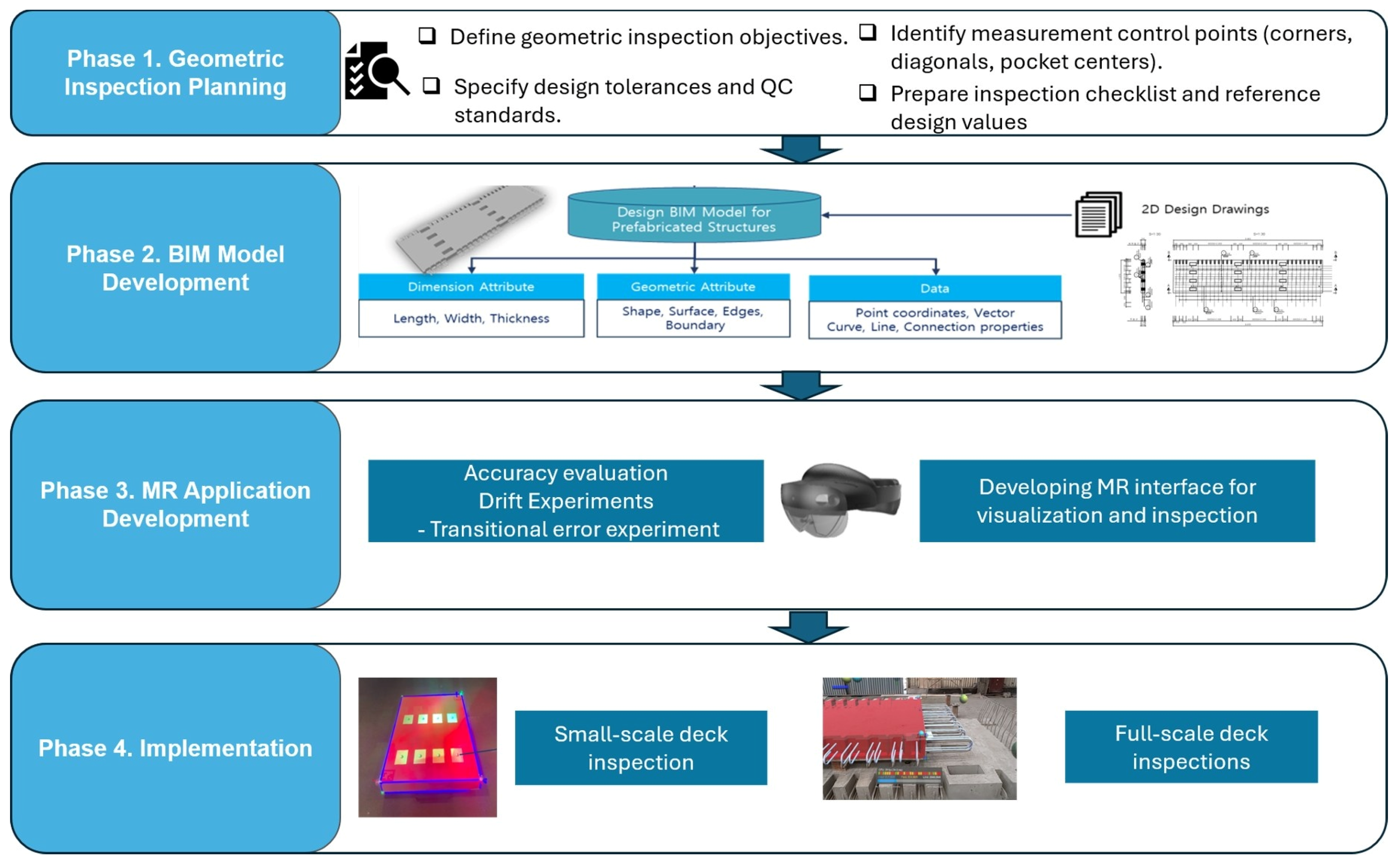
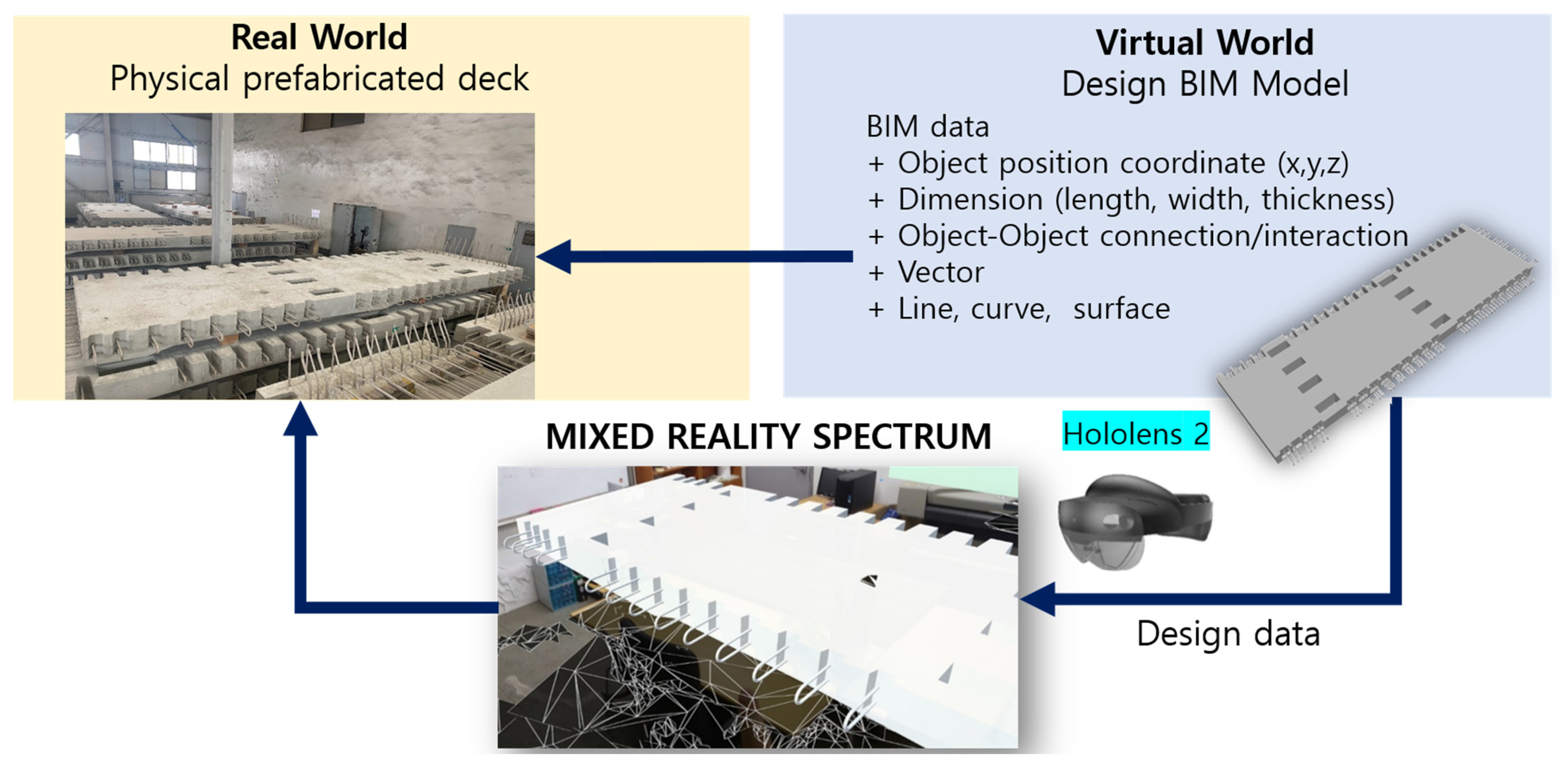
To address these gaps, this study introduces a BIM-enabled MR application designed to support rapid, intuitive, and spatially aligned geometric inspection of prefabricated bridge decks. As illustrated in Figure 1, the system integrates the design BIM model with the physical deck through marker-based registration, enabling automatic and stable alignment within the MR working environment. Unlike existing MR-based visualization and guidance approaches, the proposed framework enables direct, tolerance-based comparison between as-designed and as-built geometry, including the measurement of key dimensional attributes and the verification of shear-pocket positions in real time. To ensure inspection reliability, the spatial accuracy of the MR system is rigorously examined through drift and translational error experiments, providing quantitative evidence of HL2 tracking stability and marker-detection performance under typical fabrication conditions. The proposed application is further validated through small-scale tests and full-scale inspections conducted at an active prefabricated deck fabrication facility, demonstrating its capability to identify geometric deviations efficiently and with millimeter-level precision. In essence, this work advances the adoption of MR technologies for construction quality assurance and establishes a practical foundation for digitalized fabrication inspection, with strong potential for future integration into automated digital twin-based quality management systems.

2. Literature Review

2.1. Prefabricated Bridge Construction and Quality Challenges

Prefabricated bridge construction has become an integral strategy in modern infrastructure delivery, primarily due to its ability to enhance production efficiency, improve component quality, and significantly reduce onsite construction time and labor demands [20]. Despite these advantages, maintaining geometric precision during the fabrication of prefabricated bridge decks remains a persistent and technically significant challenge [1]. Recent studies have shown that even minor geometric deviations can lead to significant assembly challenges during field installation [7,21]. Variations in deck thickness, camber irregularities, out-of-plane distortions, or positional errors in shear pockets and embedded connectors may accumulate across fabrication stages. These deviations compromise fit-up accuracy, reduce shear transfer effectiveness, and ultimately increase the likelihood of costly rework or construction delays [22]. These inaccuracies often arise from cumulative fabrication tolerances associated with manual formwork preparation, reinforcement placement variability, and uncertainties inherent in concrete casting and curing processes [23,24]. Additionally, the advancement of accelerated bridge construction has imposed stricter dimensional tolerance standards, reinforcing the necessity for rigorous and dependable geometric verification approaches [25]. As highlighted across recent literature, ensuring geometric compliance during deck fabrication is essential not only for achieving onsite assemblability but also for safeguarding structural performance, long-term durability, and lifecycle serviceability of prefabricated bridge systems [26]. Consequently, there is a growing need for improved inspection methodologies capable of delivering timely, accurate, and spatially robust assessments of dimensional and positional deviations in prefabricated components. This research gap has motivated the development of advanced sensing-based inspection technologies, including laser scanning, photogrammetry, digital twins, and mixed-reality-assisted workflows to address the limitations of traditional manual measurements and enhance fabrication-stage quality assurance [15,16,17].

2.2. BIM-Based Digital Geometry Management for Prefabricated Components

BIM has become a central digital environment for managing geometric information throughout the design and fabrication of prefabricated bridge components [7]. Given the strict dimensional tolerances required for prefabricated bridge decks, BIM provides a reliable platform that consolidates detailed geometry, material data, fabrication parameters, and connection configurations [27]. Hence, BIM enables designers to precisely define openings, shear pockets, reinforcement layouts, and embedded connector features that directly influence field assembly accuracy. Recent research shows that BIM-driven workflows improve fabrication planning through automated quantity extraction, clash detection, and early geometry validation, thereby reducing production errors and rework [4,28]. BIM also supports quality assurance by specifying inspection requirements, reference geometry, and allowable tolerances. Several frameworks link BIM with sensing technologies to automate inspection checklists and design as-built comparisons [18,29]. However, BIM by itself is unable to represent real-time as-built conditions throughout the fabrication process. To bridge this gap, recent studies increasingly integrate BIM with laser scanning, photogrammetry, and mixed reality (MR) to enhance digital geometry management [30,31]. These hybrid systems allow inspectors to verify dimensional accuracy more efficiently, visualize deviations more intuitively, and feed inspection results back into the BIM environment for documentation and further analysis.

2.3. Mixed Reality for Geometric Inspection

Mixed Reality (MR) technologies have gained increasing attention as an effective means of linking digital design data with physical construction environments, particularly for tasks requiring precise geometric interpretation [32]. Devices such as the Microsoft HoloLens 2 (HL2) enable real-time visualization of BIM models directly overlaid onto physical components, offering an intuitive and spatially aligned platform for inspection activities [19]. MR has been applied to construction tasks such as progress monitoring, installation guidance, and assembly verification, demonstrating improvements in communication, error reduction, and decision-making [11,33]. For geometric inspection, MR allows inspectors to compare physical components with design geometry directly in the field. Prior studies show that HL2’s depth sensing and head-tracking capabilities can achieve millimeter-level spatial fidelity under controlled conditions [34]. However, challenges such as hologram drift, field-of-view limitations, and variability in marker-free alignment remain significant. Consequently, marker-based registration methods such as ArUco are widely used to improve overlay stability and positional accuracy [35,36]. AR and MR are closely related technologies within the extended reality continuum; however, they differ in the degree of environmental understanding and interaction between digital and physical entities. AR typically enhances the user’s perception of the physical environment by overlaying digital information onto real-world scenes, thereby supporting visualization, information delivery, and task guidance [32]. Recent advances in AR technologies have enabled spatial registration and tracking capabilities; however, digital content generally remains less aware of and less responsive to the surrounding physical environment. In contrast, MR technologies integrate spatial mapping, depth sensing, and environmental understanding to establish a shared spatial context between virtual and physical objects. This enables holographic content not only to remain spatially aligned with the physical world but also to interact dynamically with real-world geometry and user actions [12,19].
The distinction between AR and MR is particularly important for construction inspection applications, where accurate BIM-to-physical alignment and continuous environmental awareness are essential for reliable geometric assessment. Previous studies have demonstrated the effectiveness of AR and MR technologies for construction visualization, progress monitoring, and inspection support [11,30]. However, tolerance-based geometric verification requires more than visual augmentation alone; it demands robust spatial registration, depth-aware interaction, and stable alignment between digital models and physical components. For prefabricated bridge elements, where dimensional tolerances are often within a few millimeters, even small registration inaccuracies may significantly affect inspection reliability. Therefore, MR provides a more suitable technological foundation for geometric inspection by supporting enhanced environmental awareness, real-time spatial interaction, and more reliable assessment of dimensional and positional deviations within BIM-enabled fabrication environments [12,19,30]. Although MR research has expanded rapidly, few studies have focused on the geometric inspection of prefabricated components with strict tolerances, such as bridge decks. Existing work largely emphasizes visualization rather than deviation measurement. This gap highlights the need for validated MR-based inspection frameworks capable of capturing detailed geometric deviations and supporting BIM-integrated quality control in prefabricated bridge construction.

3. Methodology

3.1. Overview Research Process

Figure 2 provides an overview of the research workflow, organized into four sequential phases to enable the systematic development and validation of the proposed BIM–MR geometric inspection approach. Phase 1: Geometric Inspection Planning establishes the foundational requirements for the inspection process by defining the geometric attributes to be examined, specifying the design tolerances, and identifying the control points required for dimensional verification. This phase sets the benchmark against which all subsequent MR-based measurements are evaluated. In Phase 2: BIM Model Development, a detailed digital representation of the prefabricated bridge deck is constructed based on the project design drawings and structural specifications. The BIM model incorporates the essential dimensional attributes (e.g., length, width, thickness), geometric features (e.g., surfaces, edges, and shear-pocket boundaries), and precise point-coordinate data required for accurate MR visualization and measurement. This phase ensures that the BIM model functions as a reliable geometric reference for subsequent comparison and deviation analysis during the inspection process. Phase 3: MR Application Development focuses on transforming the BIM data into an operational mixed-reality inspection tool. This includes building the MR visualization interface, integrating measurement functionalities, and conducting accuracy evaluations such as drift analysis and translational error experiments. These tests quantify the spatial fidelity of the MR device and verify its suitability for millimeter-level inspection tasks. Finally, Phase 4: Implementation validates the proposed framework through both controlled laboratory testing and full-scale evaluations at a prefabrication facility. In the laboratory, the system is applied to a small-scale deck specimen to assess the stability of model registration and the accuracy of dimensional and positional measurements. Subsequently, the MR application is deployed on full-scale prefabricated decks under actual production conditions to examine its robustness, practicality, and capability to detect geometric deviations in real-world environments. Overall, these four phases form an integrated workflow that moves from conceptual planning and digital model generation to software development and real-world validation, ensuring a comprehensive examination of the framework’s performance and applicability in prefabricated deck inspection.

3.2. Development of the BIM Model for Prefabricated Decks

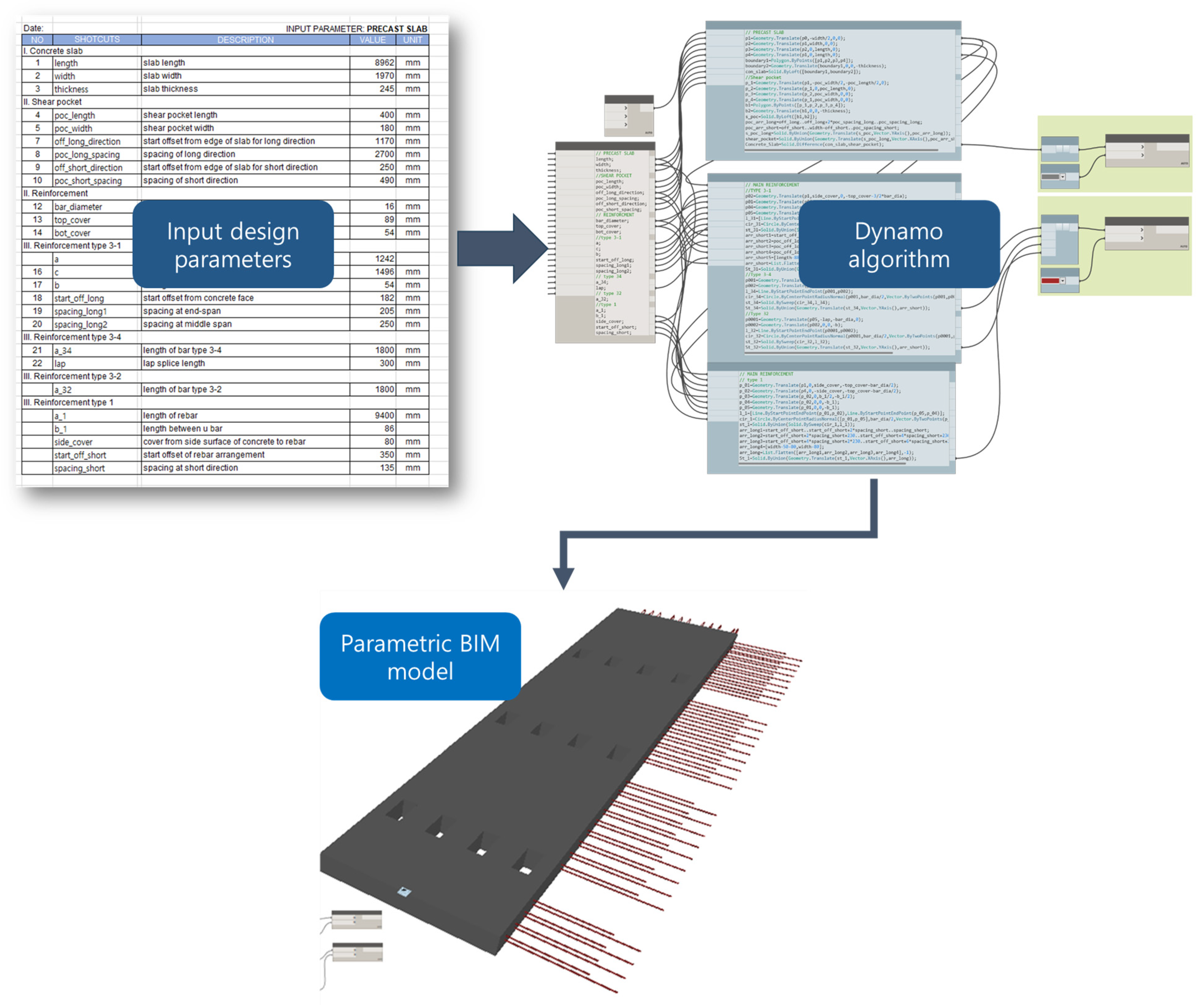
The BIM model for the prefabricated bridge decks was developed using a parametric modeling strategy to ensure consistent geometry generation and efficient integration with the MR inspection workflow. As illustrated in Figure 3, all key design parameters such as deck length, width, thickness, reinforcement layouts, shear-pocket dimensions, and spacing rules were predefined in an Excel-based input sheet. These parameters were then automatically imported into a Dynamo algorithm, which executed rule-based scripts to construct the corresponding Revit model. This automated process enabled the creation of LOD 350 BIM models that accurately represented deck geometry, including openings, embedded components, and shear pockets, while maintaining strict adherence to design specifications. To support high-precision MR inspection, the BIM model incorporated a structured data schema containing geometric attributes, design tolerances, annotation points, and metadata describing each feature. Critical measurement points such as deck corner control points, diagonal reference points, and shear-pocket centers were programmatically identified using rule-based logic to ensure consistent placement across different deck configurations. Design tolerances were also embedded for each geometric feature, enabling direct comparison between design values and MR-derived measurements during inspection. Consequently, the parametric BIM model serves as a reliable geometric ground truth, ensuring that subsequent MR-based inspections can be conducted with consistency, accuracy, and repeatability.

3.3. Mixed-Reality Application Development

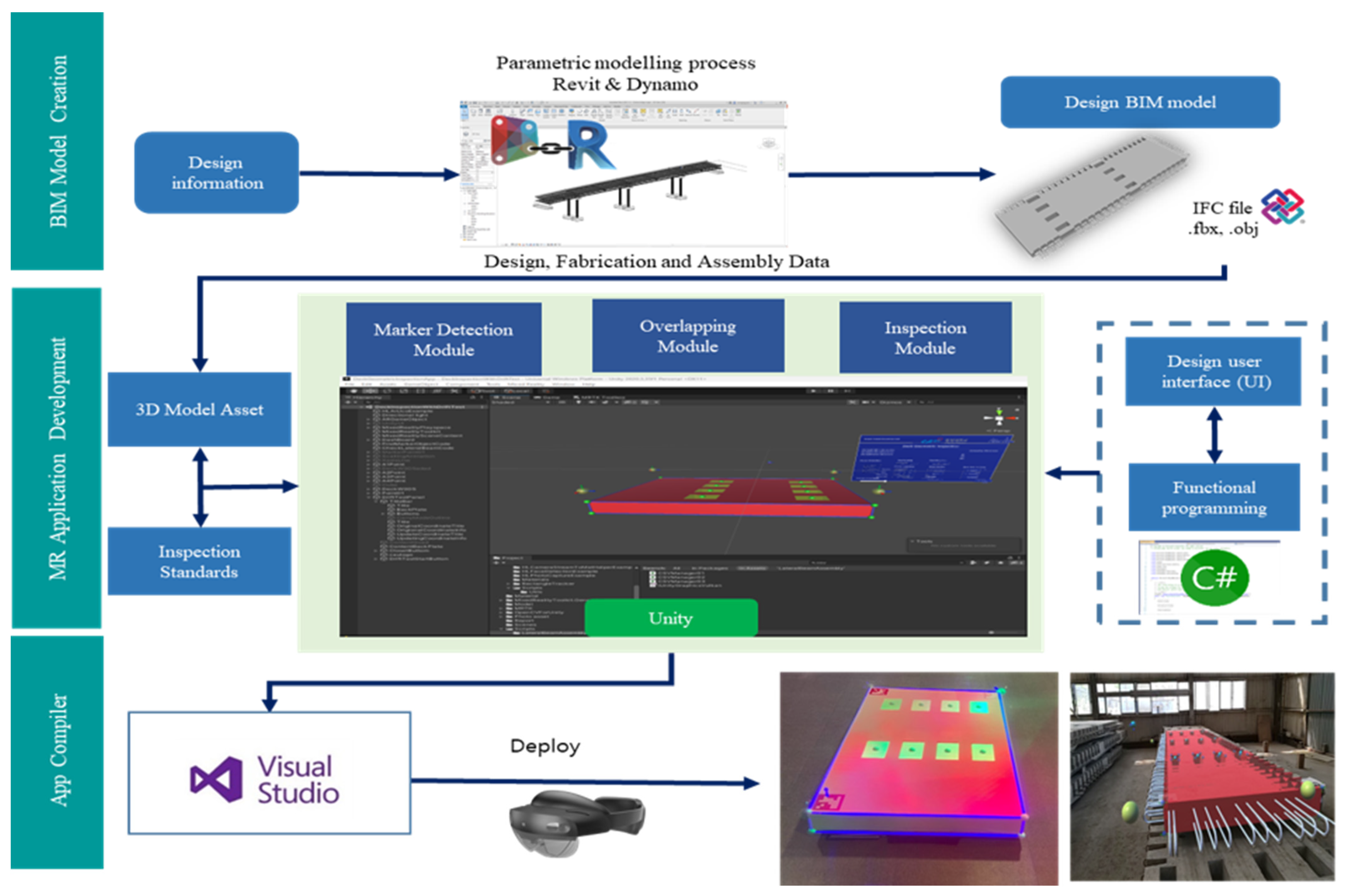
Figure 4 illustrates the development workflow of the BIM-based MR inspection application, which is structured into three primary layers: BIM model creation, MR application development, and application compilation and deployment. In the first layer, the 3D BIM model of the prefabricated deck is generated and exported to interoperability-friendly formats such as IFC (industry foundation class) or FBX (Autodesk Filmbox format) to facilitate seamless integration into the mixed-reality development environment. The second layer focuses on the development of the MR application in Unity. In this stage, the imported 3D assets and predefined inspection standards are integrated to establish the interaction logic and overall inspection workflow. The user interface (UI) is designed, and functional modules are implemented using C#. Three core modules form the backbone of the system: (1) a marker detection module, which identifies fiducial markers and extracts their spatial coordinates; (2) an overlapping module, which computes the transformation matrix and automatically aligns the BIM model with the physical deck in the MR workspace; and (3) an inspection module, which enables dimensional verification, visualization of geometric discrepancies, and detection of positional deviations at critical features such as shear pockets. These modules ensure robust hologram anchoring and support real-time, high-precision geometric inspection within the mixed-reality environment. In the final layer, the completed application is compiled using Microsoft Visual Studio and deployed to the HoloLens 2 device. This process compiles the Unity components, scripts, and BIM assets into a deployable application, thereby ensuring that the MR inspection system functions robustly in both laboratory conditions and real-world prefabrication environments.

3.4. Accuracy Evaluation Experiments

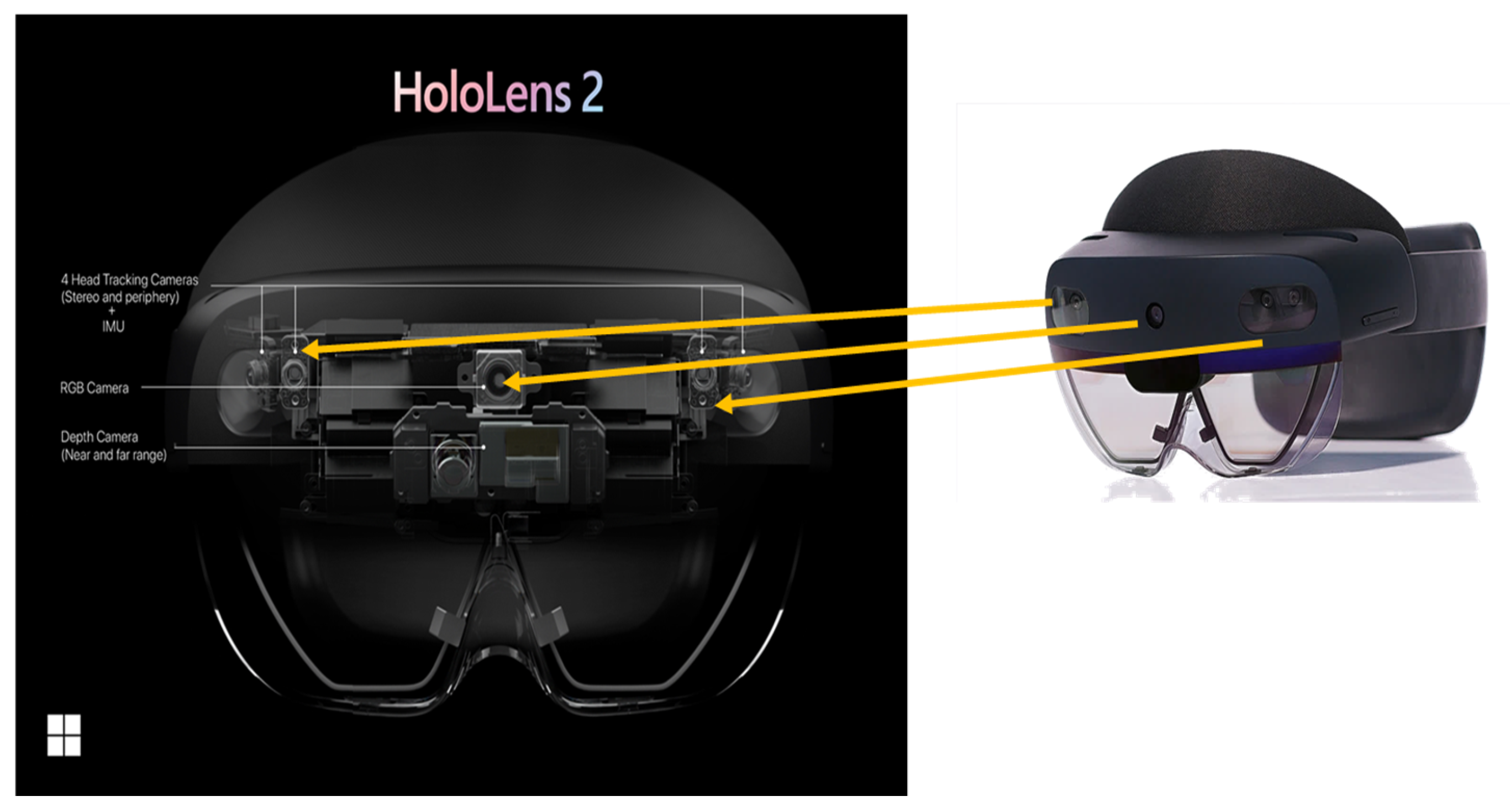
HoloLens 2 (HL2) integrates multiple cameras, IMU sensors, and SLAM-based computer-vision algorithms to track motion and reconstruct the surrounding environment. Although this sensing system enables stable spatial mapping, its accuracy is affected by lighting conditions, surface texture, contrast, and user movement. As illustrated in Figure 5, HL2 employs a combination of depth, grayscale tracking, RGB, and infrared cameras to perceive the environment and stabilize holographic content. Despite these capabilities, two critical limitations remain pertinent to construction applications: spatial drift, the gradual shift of a world-locked hologram during user movement, and translational error, the positional inaccuracy associated with detecting fiducial markers used for BIM model alignment [37,38]. To quantify these limitations and evaluate whether HL2 can achieve the millimeter-level precision required for geometric inspection of prefabricated bridge decks, two experiments were conducted: a drift experiment to assess hologram stability during walking, and a translational error experiment to measure marker-detection accuracy under different distances and camera resolutions. All experiments were conducted under controlled indoor environmental conditions to minimize external disturbances to the MR tracking performance. Ambient lighting was maintained at approximately uniform indoor illumination typical of prefabrication facilities, avoiding direct glare, strong shadows, or rapid lighting fluctuations. The ambient temperature during testing ranged from approximately 20 °C to 30 °C, ensuring stable sensor operation without thermal drift. The prefabricated deck surfaces used for testing were clean, dry, and free of reflective coatings, standing water, or debris that could interfere with marker detection or depth sensing. Markers were mounted on planar surfaces with sufficient contrast against the background to ensure reliable detection. Based on these conditions, the proposed MR-based inspection workflow is recommended to be applied in indoor and semi-indoor fabrication environments with stable lighting, moderate temperature variation, and unobstructed marker visibility. Extreme lighting contrasts, highly reflective or wet surfaces, and outdoor environments with rapidly changing illumination may adversely affect tracking stability and should be carefully managed in future implementations.

3.4.1. Drift Experiment

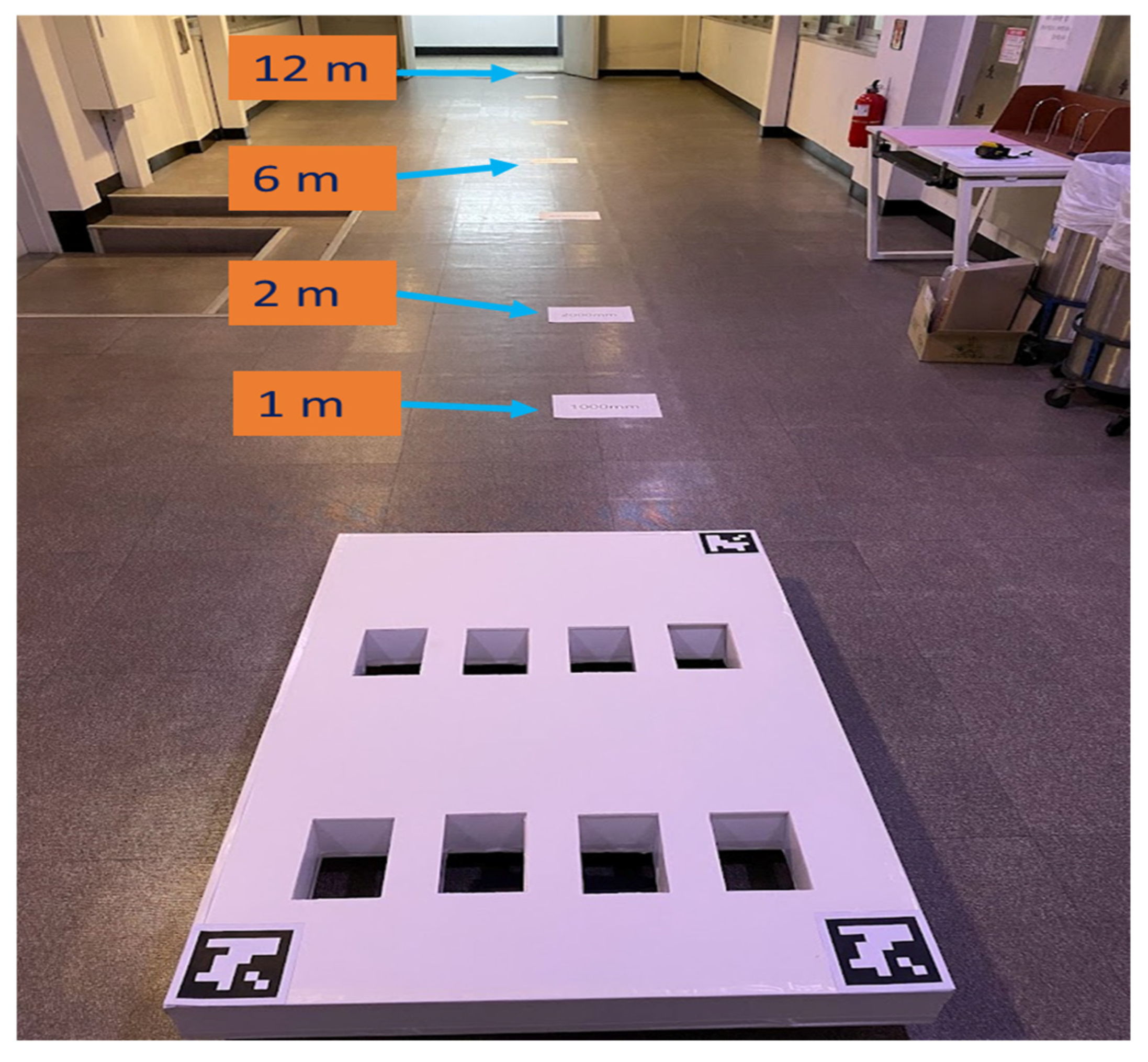
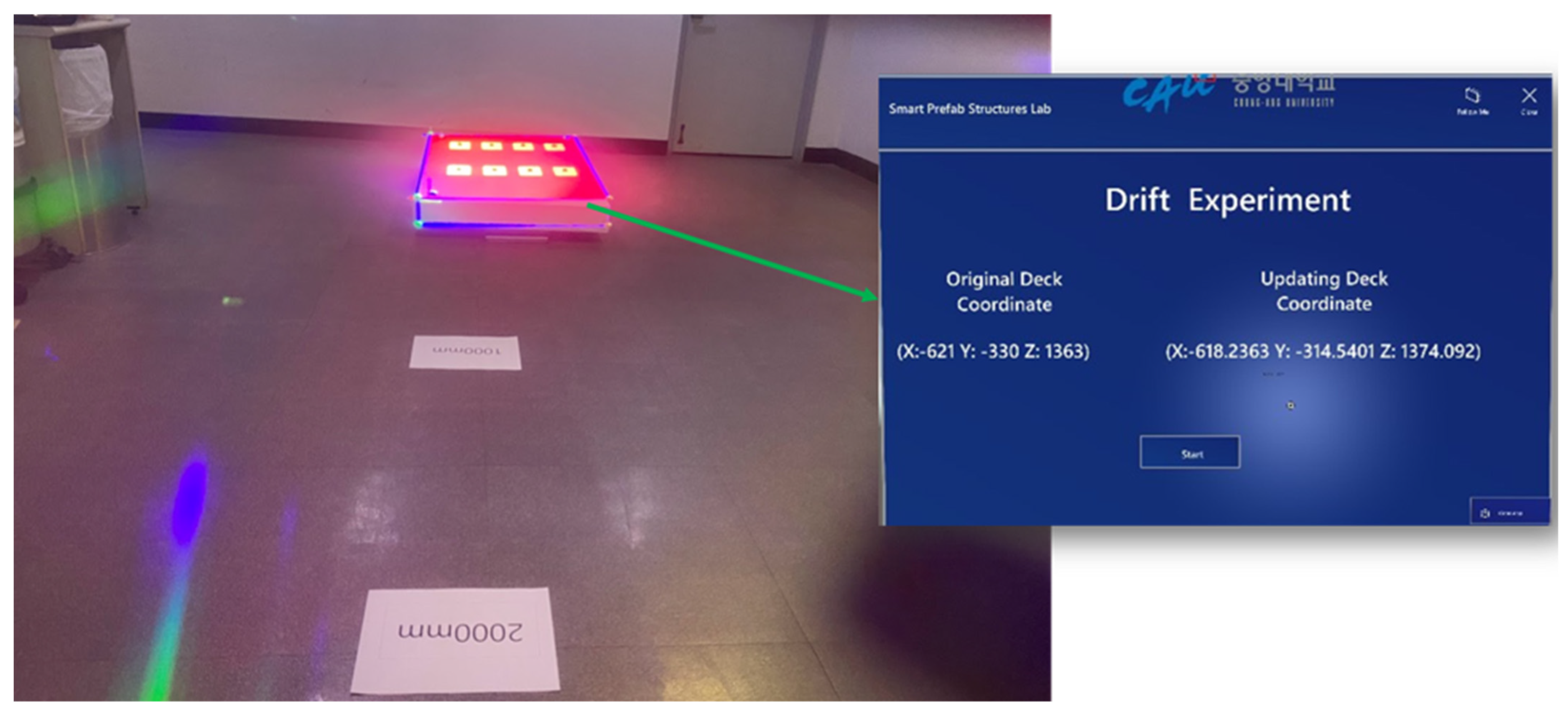
At the core of mixed-reality operation, holographic models are positioned within a real-world spatial coordinate system, allowing users to view them as fixed, world-locked objects. Although HL2 provides several spatial coordinate systems to stabilize holograms, users may still experience drift, in which the hologram gradually shifts from its original placement. Drift typically arises from accumulated SLAM errors influenced by walking distance, camera resolution, sensor performance, model size, and surrounding environmental conditions. To quantify this effect and evaluate the stability of the world-locked deck model, a drift experiment was conducted as illustrated in Figure 6. In this test, the user walked predefined distances ranging from 1 m to 12 m, and the corresponding displacement of the MR deck model was recorded to measure the perceived drift as a function of user movement. For each walking-distance configuration, the drift experiment was conducted using a single continuous walking sequence with a duration of approximately 120 s. During each sequence, the spatial deviation between the holographic marker and its initial reference position was continuously recorded. The reported drift values therefore represent the maximum observed deviation over the entire sequence rather than averaged results from multiple repetitions.
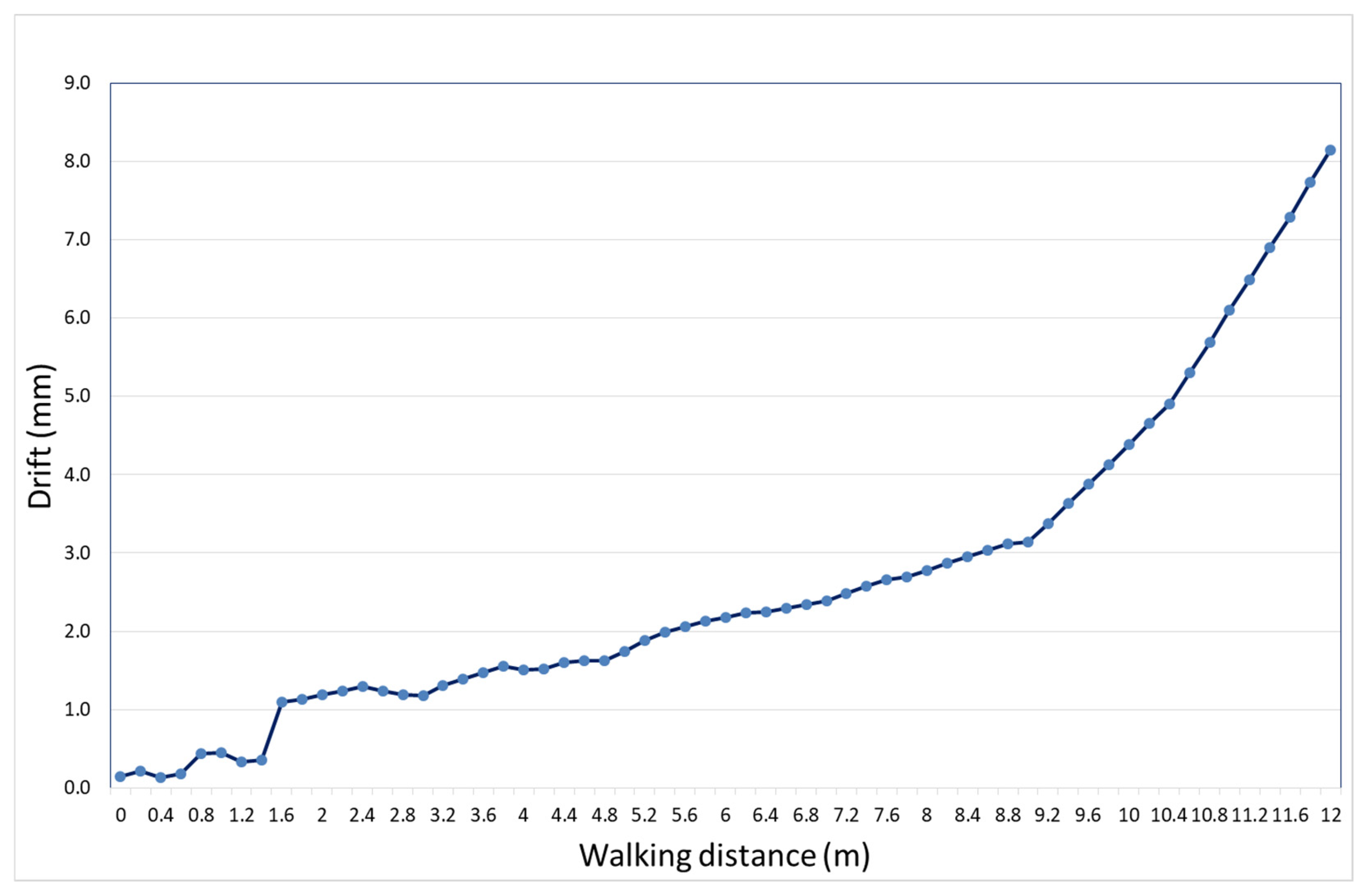
Figure 7 shows the measured displacement of the world-locked MR deck model during the drift experiment. After the hologram was aligned using three fiducial markers, the initial deck coordinate was stored as the reference for evaluating subsequent positional changes. The user then walked distances ranging from 1 m to 12 m, while the MR application updated the deck coordinate at one-second intervals. As illustrated in Figure 8, the drift increased progressively with walking distance and reached approximately 8.2 mm at 12 m. This result demonstrates that hologram stability degrades noticeably beyond about 10 m of user movement, emphasizing the importance of incorporating spatial anchors to maintain accurate hologram placement in large indoor environments. Positioning the anchor near the hologram significantly reduces accumulated SLAM error and supports stable alignment during inspection tasks. These findings provide a quantitative foundation for implementing real-time drift-compensation strategies, an essential requirement for ensuring reliable geometric inspection and preassembly analysis in factory-scale MR applications.
The drift experiment clearly demonstrates how accumulated SLAM error affects hologram stability during extended user movement. This pattern indicates that HL2’s world-locked coordinate system is reliable only within short to moderate ranges; beyond approximately 10 m, spatial drift becomes significant enough to compromise millimeter-level inspection tasks. From an application standpoint, these results are critical for MR-based geometric inspection of prefabricated decks. Since inspection activities require comparing physical deck features against BIM-defined reference geometry, even small hologram displacements translate directly into measurement inaccuracies. The drift trend observed in the experiment addresses the necessity of integrating spatial anchors near the inspection area to stabilize hologram placement and maintain consistent BIM-to-physical alignment during operator movement. For the proposed BIM–MR inspection framework, the experimental findings validate two key design requirements: (1) holographic content must be anchored within proximity to the inspection region to ensure reliable dimensional evaluation, and (2) drift-compensation mechanisms or periodic re-anchoring should be incorporated when users move across large factory spaces. By quantifying the magnitude and behavior of hologram drift, this experiment provides practical thresholds and implementation guidelines to ensure the MR system performs within the ±5 mm tolerance required for prefabricated deck inspection, thereby strengthening the applicability and reliability of the proposed inspection workflow.

3.4.2. Translational Error Experiment

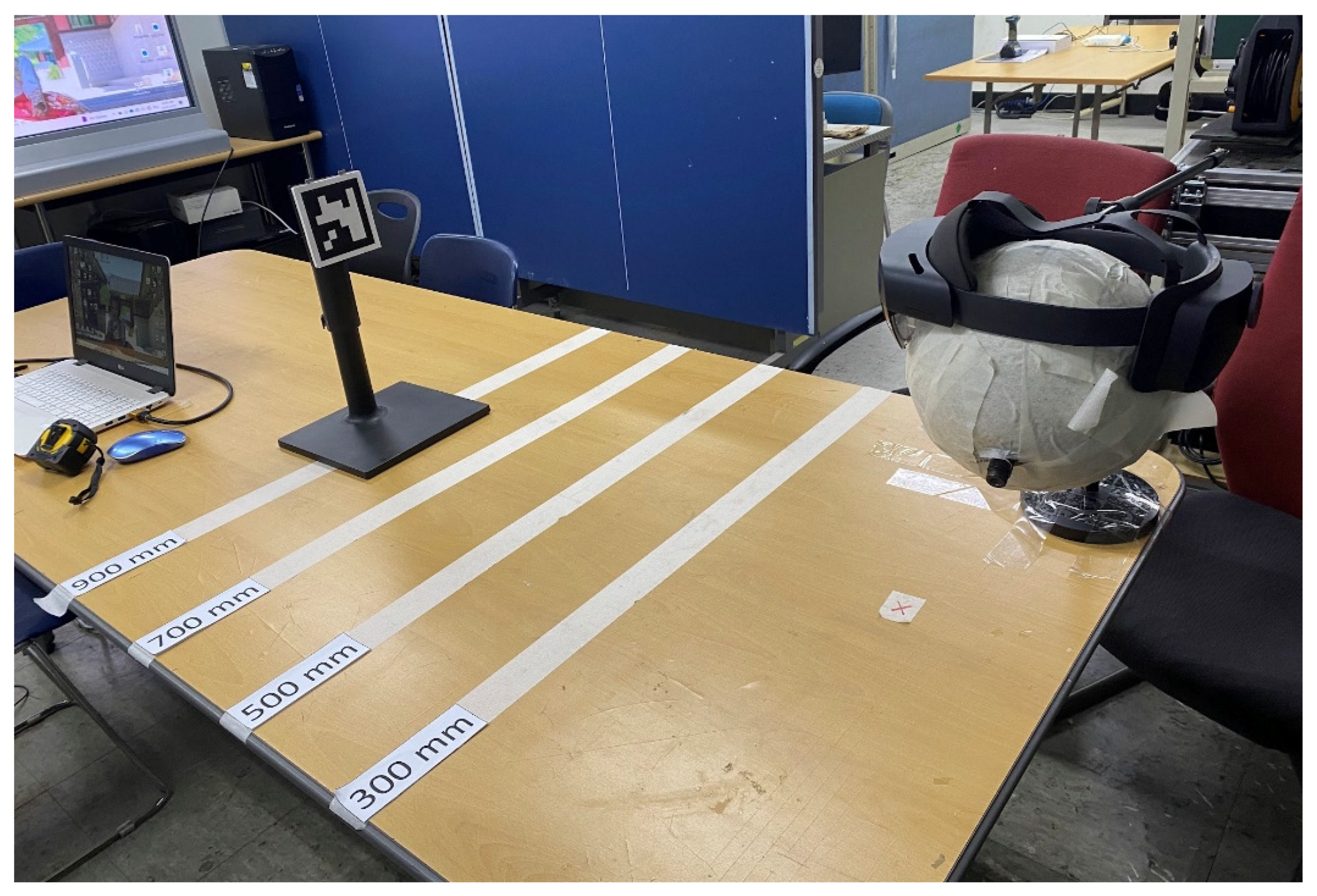
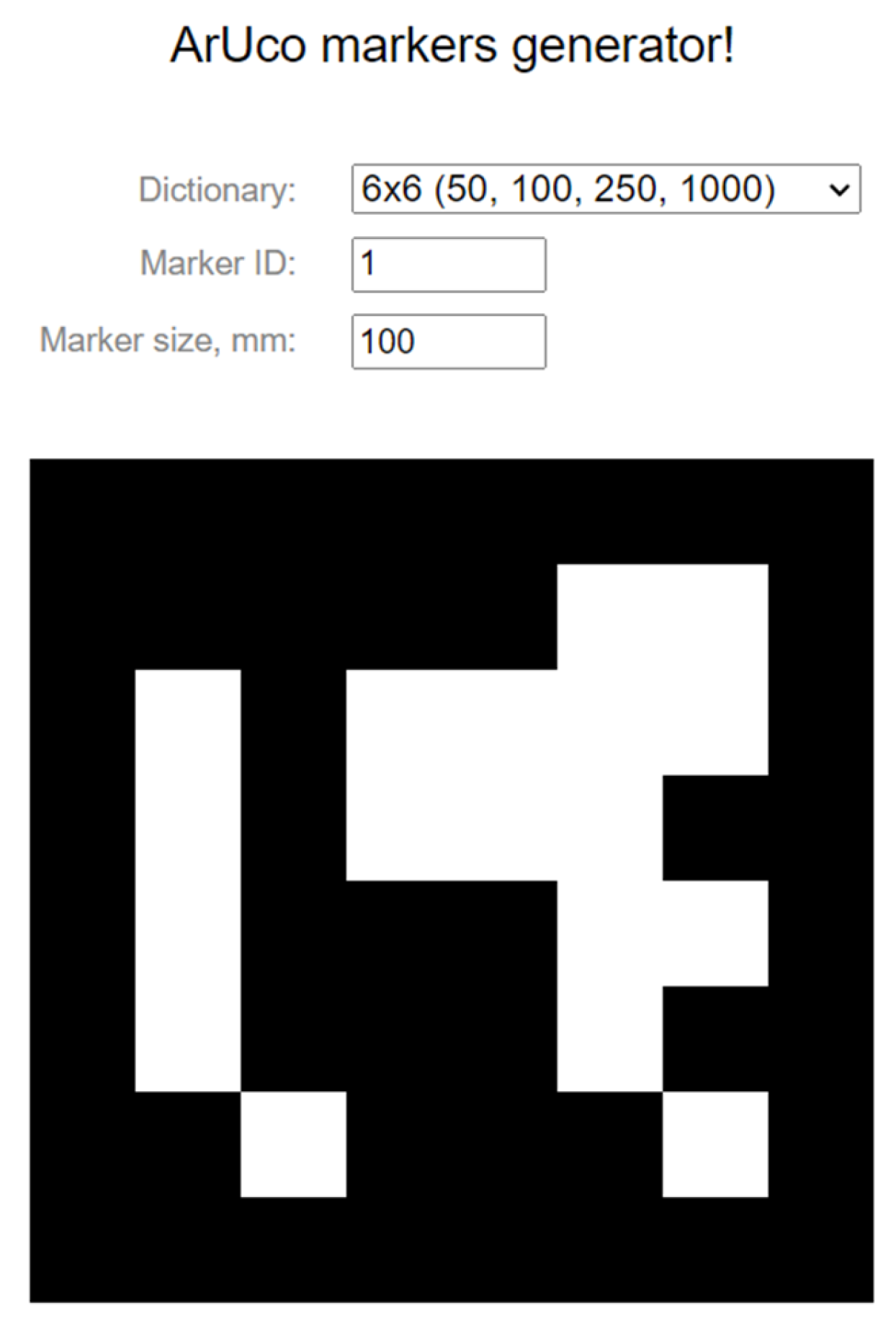
HL2 employs a suite of multimodal sensors for spatial mapping, tracking, and scene understanding. In this study, its integrated mono- and stereo-vision cameras were utilized to assess the device’s positional accuracy in detecting planar fiducial markers, a capability that is fundamental to ensuring robust BIM–MR registration. Accurate marker-based alignment is critical because the proposed mixed-reality inspection workflow requires the holographic BIM model to be superimposed onto the as-built element with high precision; geometric inspection of precast bridge decks typically demands tolerances within ±5 mm. Accordingly, this experiment was designed to quantify the influence of camera configuration, viewing distance, and image resolution on HL2’s translational tracking error. The experimental setup is shown in Figure 9, where the HL2 was fixed in position while an ArUco marker was placed sequentially at four known distances: 300 mm, 500 mm, 700 mm, and 900 mm. ArUco markers were selected because they are open-source, computationally efficient, and compatible with both single-camera and stereo-vision pipelines. Each marker consists of a square black border surrounding an internal binary matrix whose pattern uniquely defines its identifier (Figure 10). The border facilitates rapid localization within the image, while the binary encoding supports rotation disambiguation and enables error detection and correction, thereby improving pose estimation reliability. The size of the internal matrix determines the number of encoded bits; for example, a 4 × 4 marker contains 16 binary elements. The size of the ArUco markers plays a critical role in detection robustness and registration accuracy. In this study, a marker size of 100 mm was selected based on practical inspection requirements and preliminary pilot observations. Smaller markers (approximately 50–70 mm) were found to be more sensitive to viewing angle, partial occlusion, and camera resolution, particularly at inspection distances exceeding 0.6 m. Conversely, larger markers (>120 mm) improved detectability at longer distances but reduced placement flexibility and interfered with normal fabrication operations on dense deck surfaces. The 100 mm marker size therefore represents a balanced compromise, enabling reliable detection and stable spatial registration within the typical working distance range of 0.6–1.0 m while maintaining ease of deployment in a prefabrication environment.
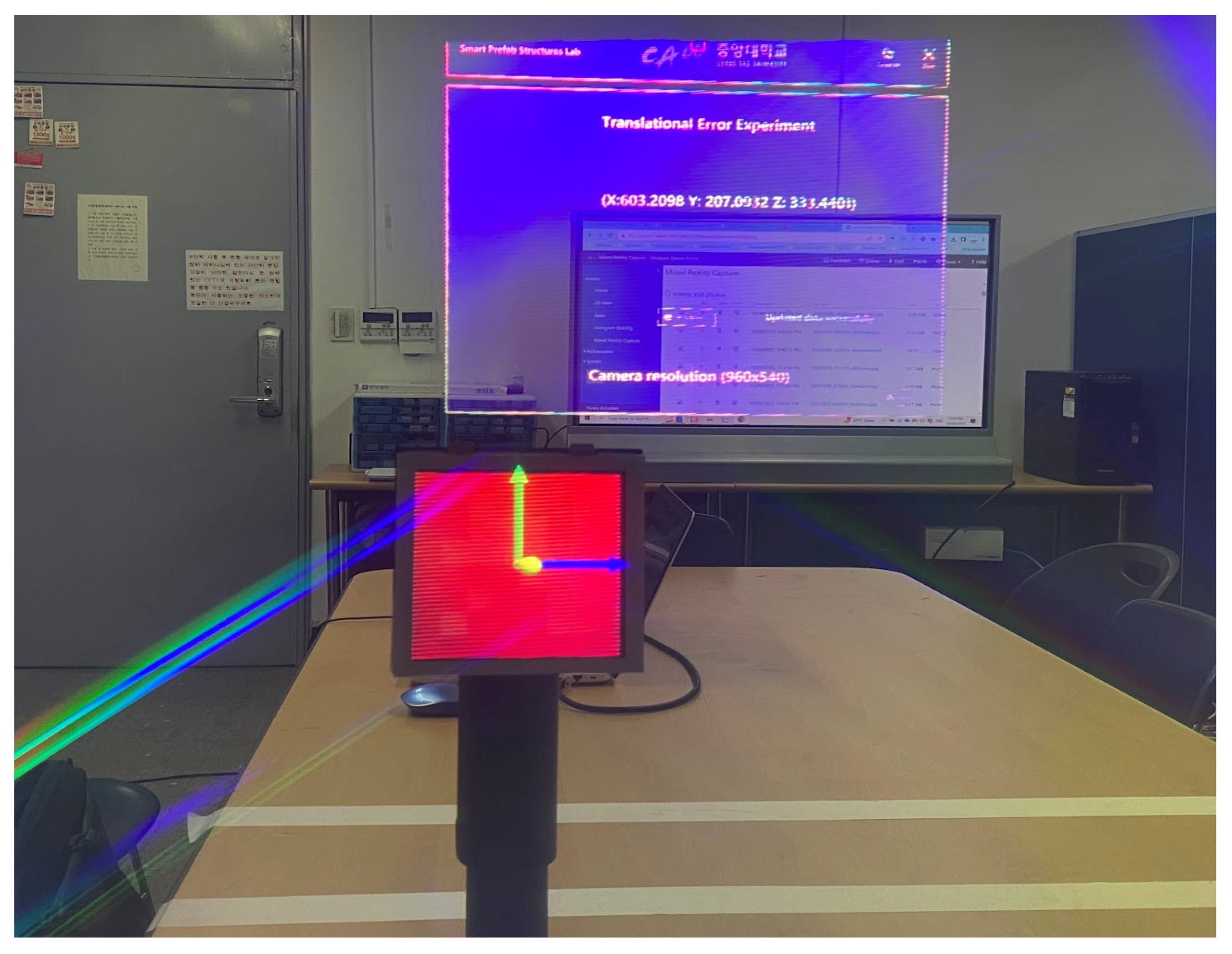
Figure 11 presents the HL2’s detection output, with the marker enclosed within a red bounding box and its estimated (x, y, z) coordinates rendered in the MR environment. Once detected, the marker’s pose is tracked continuously, allowing systematic evaluation of translational deviation across predefined distances and camera settings. This controlled characterization provides a necessary foundation for determining whether HL2’s visual-tracking reliability meets the accuracy requirements of MR-enabled geometric inspection workflows in precast deck fabrication.
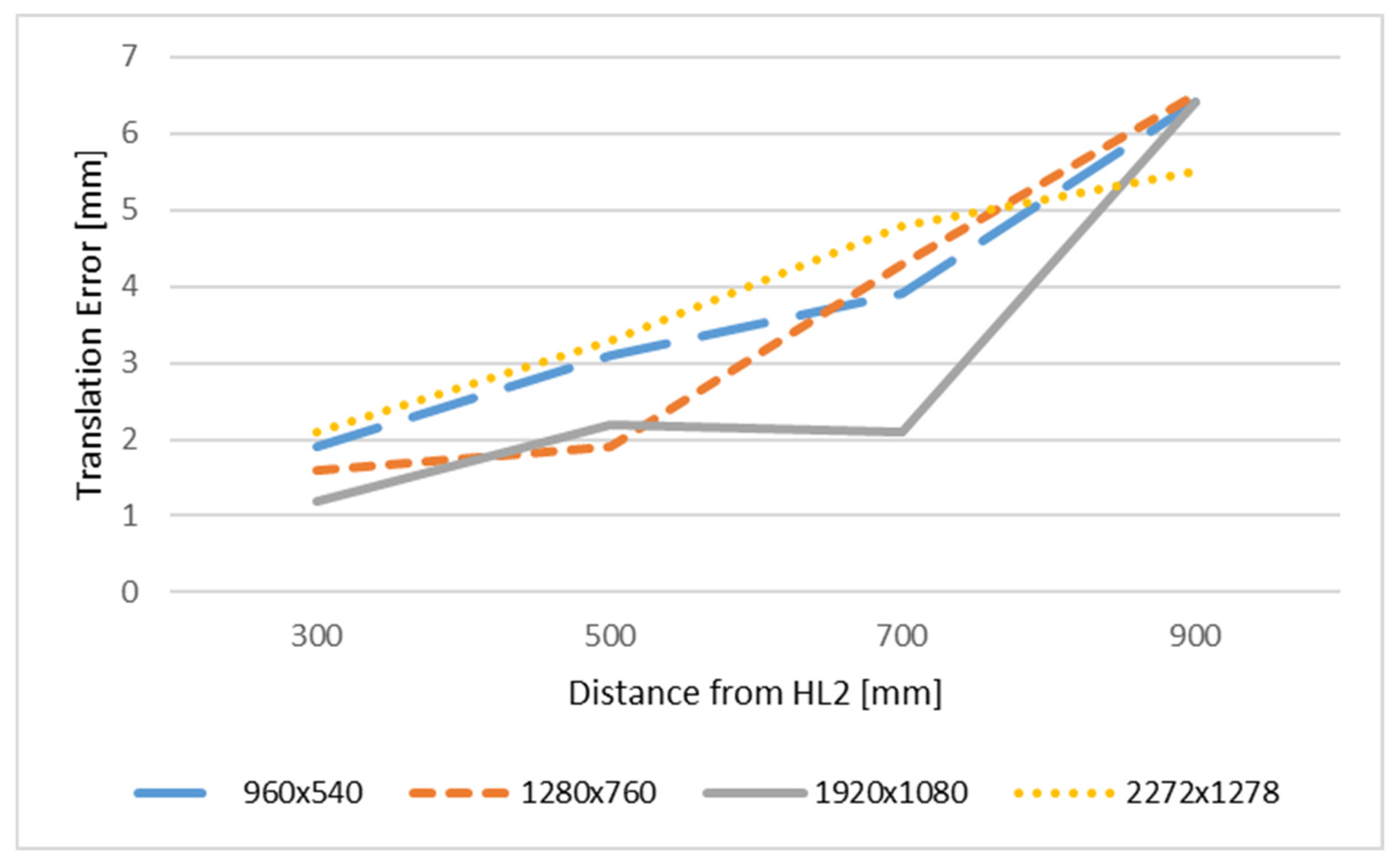
High-precision MR applications for large precast decks require that marker-based registration remain within a positional tolerance of ±5 mm. To evaluate whether the HL2 meets this requirement, translational errors were quantified under four camera resolutions (960 × 540, 1280 × 760, 1920 × 1080, and 2272 × 1278) and four marker distances (300, 500, 700, and 900 mm). Marker coordinates were continuously sampled for 100 s (100 frames), and the maximum positional deviation was taken as the translational error. The results in Table 1 and Figure 12 reveal a clear trend: translational error increases with distance from the HL2 across all resolutions. Although the reported values focus on the maximum translational deviation, inspection of the error time histories indicates that the majority of sampled deviations remained significantly below the reported maxima, with no observable accumulation or monotonic growth over time. The error distributions were generally stable and bounded, suggesting that the maximum deviation represents a conservative estimate of system performance rather than an isolated outlier. At 300 mm, all resolutions exhibit low error values ranging from ±1.2 mm to ±2.1 mm, well within the ±5 mm tolerance. The lowest error is observed at 1920 × 1080 (±1.2 mm), confirming that higher pixel density enhances positional stability at close range. At intermediate distances (500–700 mm), error magnitudes begin to diverge between resolutions. The 1920 × 1080 configuration consistently maintains the lowest deviation (±2.2 mm at 500 mm and ±2.1 mm at 700 mm), whereas the 2272 × 1278 resolution exhibits comparatively higher variability (±3.3 mm and ±4.8 mm at the same distances). This suggests that although higher camera resolution is commonly assumed to improve feature detection accuracy, the experimental results indicate that the 2272 × 1278 resolution exhibits greater tracking instability than 1920 × 1080, particularly at medium-to-long inspection distances. This behavior can be attributed to system-level limitations of the HoloLens 2 real-time tracking pipeline. Higher-resolution image streams increase computational load and data throughput for marker detection and pose estimation, which may introduce additional processing latency under real-time constraints. Such latency reduces temporal consistency between successive frames and can amplify sensitivity to slight user motion. Furthermore, the HL2 employs an optimized sensor-fusion framework that integrates RGB imagery with depth sensing and inertial measurements. This framework is tuned for specific operating resolutions, and higher-resolution inputs may be internally down-sampled or filtered, limiting the practical benefit of increased pixel density. Consequently, the 1920 × 1080 resolution represents a more balanced configuration, providing sufficient feature detail while maintaining stable real-time processing and sensor synchronization. This explains why further increases in nominal resolution do not translate into improved translational accuracy in the present experiments.
At the farthest distance of 900 mm, the translational error increases sharply for all resolutions. The highest deviation is recorded for 1280 × 760 (±6.5 mm), exceeding the acceptable tolerance threshold. The 1920 × 1080 setting again delivers the best performance (±6.4 mm), though still slightly above the ±5 mm limit. These findings indicate that marker-based tracking using HL2 remains reliable up to approximately 700–900 mm, but distances beyond 900 mm introduce non-negligible instability. In practical inspection workflows, a marker distance of up to approximately 700 mm is recommended to ensure consistent compliance with the ±5 mm tolerance requirement. Operation at 900 mm may still be acceptable for qualitative visualization or preliminary alignment checks; however, quantitative acceptance-level verification should be conducted within the shorter distance range. This clarification helps define a clear operational boundary for applying the proposed MR-based inspection method in prefabrication environments. Overall, 1920 × 1080 provides the most stable and consistent performance across all distances, maintaining sub-5-mm accuracy up to 700 mm and approaching the threshold at 900 mm. Therefore, for MR-based geometric inspection requiring ±5 mm tolerance, the optimal operating distance between HL2 and the ArUco marker should be maintained below 900 mm, with 1920 × 1080 recommended as the preferred camera configuration for robust, stable marker detection.

4. Implementation

The practical implementation of the proposed BIM-based MR geometric inspection application was evaluated through a controlled laboratory experiment and full-scale validation tests conducted within a prefabrication facility. Before these implementation studies, the drift and translational-error experiments described in Section 3.4 were conducted to evaluate the hologram tracking stability and marker-detection accuracy of the HL2 platform. These experiments established the technical performance characteristics of the underlying MR system and provided the basis for its subsequent application to geometric inspection tasks. The implementation phase therefore focused on assessing the capability of the proposed BIM–MR framework to identify dimensional and positional deviations under both controlled laboratory and real-world fabrication conditions. Before the experimental evaluation, inspectors were provided with a short training session to become familiar with the MR system, including device operation, marker alignment, gesture-based interaction, and basic measurement functions. Based on the experimental observations, inspectors were able to achieve functional proficiency after approximately 15–20 min of guided training. Once familiar with the interface, users could perform routine inspection tasks with minimal difficulty. Several usability considerations were observed during testing. Initial learning effort was primarily associated with adapting to gesture-based interactions and maintaining optimal viewing distance for stable marker tracking. Prolonged use of the head-mounted display may also introduce mild visual fatigue, suggesting that MR-based inspection is best suited for short, task-focused inspection sessions rather than continuous operation. Overall, no significant usability barriers were identified that would prevent practical adoption in prefabrication facilities, provided that basic user training and operational guidelines are followed.
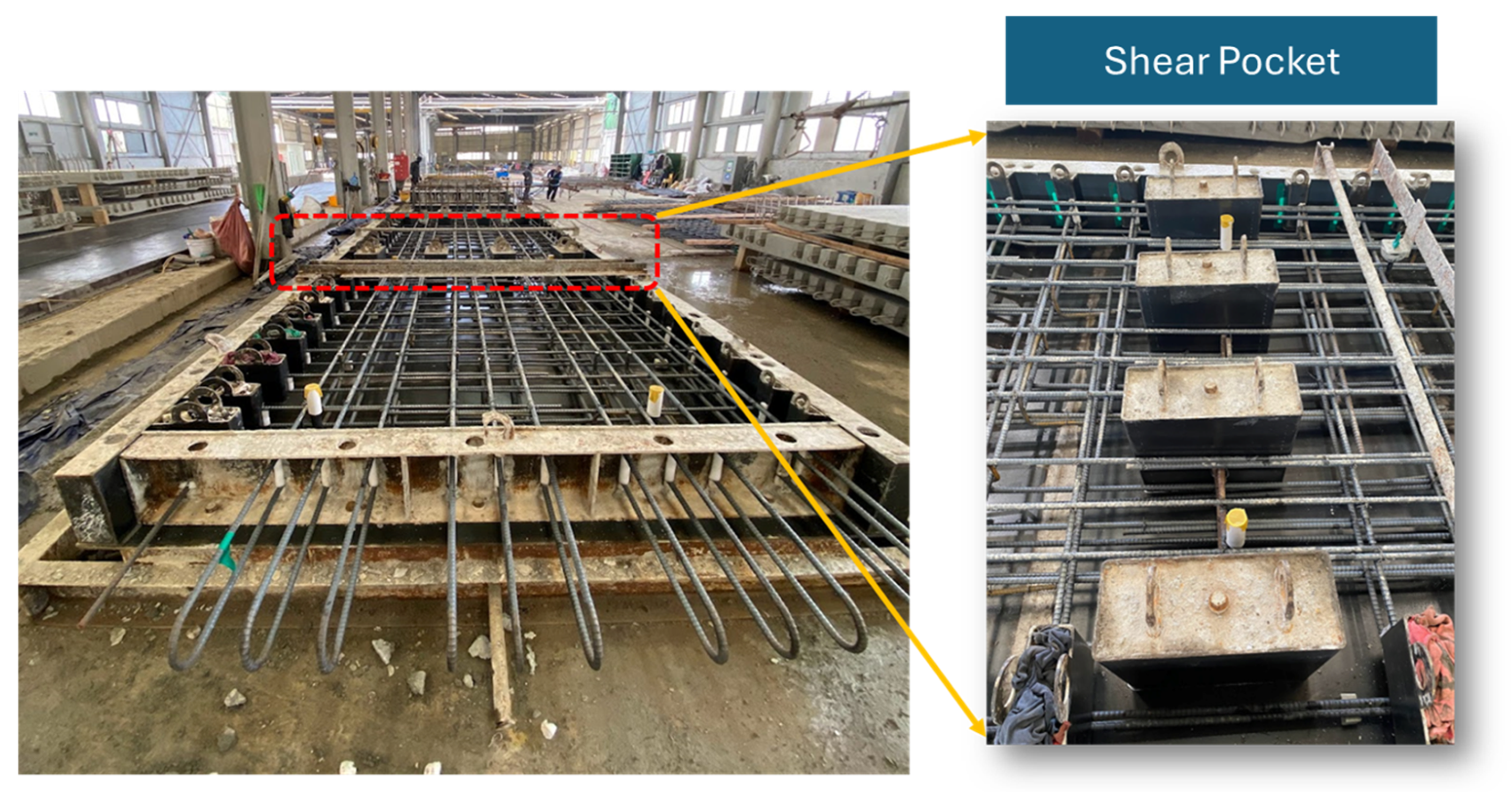
As illustrated in Figure 13, the fabrication of prefabricated bridge decks involves several manual and semi-automated processes, including the installation of reinforcement cages, placement of shear-pocket formwork, positioning of embedded components, and concrete casting, each of which can result in dimensional or positional inaccuracies. Among these, shear pockets demand particularly precise placement to ensure proper engagement with girder shear keys during onsite assembly; even minor deviations can compromise fit-up and potentially cause assembly failure. The onsite photographs further demonstrate the challenges of maintaining geometric control during fabrication, especially given the dense reinforcement configuration and the heavy reliance on manual formwork alignment. This production environment emphasizes the need for an inspection system capable of accurately and efficiently verifying the geometric quality of prefabricated bridge decks. Accordingly, the implementation phase focused on deploying the BIM–MR system to identify deviations in shear-pocket locations, visually assess geometric regularity, and validate key dimensional attributes across both small-scale and full-scale deck specimens. By superimposing the as-designed BIM model onto the physical deck in a mixed-reality environment, inspectors were able to obtain real-time insights into the geometric conformity of critical features. The following subsections present the configuration of the test specimens, the MR-based inspection workflow, and the evaluation of system performance and accuracy under realistic fabrication conditions.

4.1. Small-Scale Deck Inspection

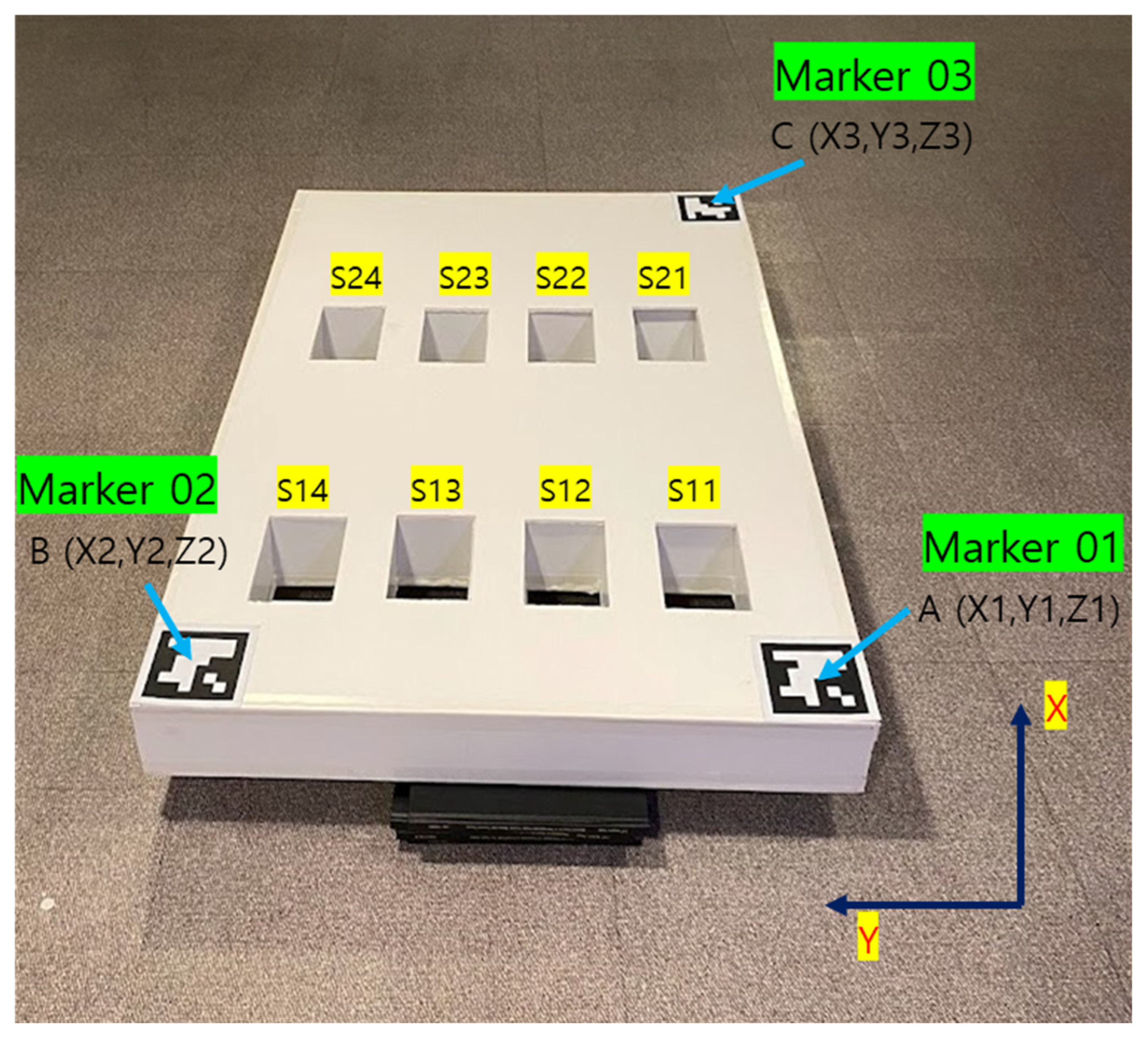
To evaluate the performance of the proposed BIM–MR inspection framework under controlled conditions, a small-scale prefabricated deck specimen was designed and fabricated with predefined geometric deviations. The specimen consists of eight shear pockets arranged in two rows (S11–S14 and S21–S24), replicating the layout of typical shear connectors used in full-scale bridge decks. As shown in Table 2 and Figure 14, intentional positional deviations were introduced into the specimen to assess the sensitivity and accuracy of the MR-based inspection application. Specifically, pockets S11 and S12 were shifted +5 mm in the X-direction, S13 was shifted +2 mm, and S21 exhibited a larger deviation of +10 mm, while smaller variations were applied to pockets S12 and S13 in the Y-direction (−2 mm). These controlled deviations served as ground-truth values for validating the system’s capability to detect dimensional and positional errors.
Three ArUco markers were affixed to the specimen at locations A, B, and C, corresponding to markers 01, 02, and 03 in Figure 14. These markers functioned as reference control points for establishing the spatial coordinate system required for BIM–MR model alignment. Their positions (X1,Y1,Z1), (X2,Y2,Z2), and (X3,Y3,Z3) define the local reference frame used by the HL2 device to accurately superimpose the design BIM model onto the physical specimen. The deck specimen was fabricated from lightweight material to ensure dimensional stability, and all shear pockets were machined precisely to match the predefined deviation matrix. This preparation enabled a reliable and repeatable testing setup, allowing the MR system’s geometric inspection performance including pocket deviation detection, dimensional measurement, and surface alignment to be rigorously assessed.
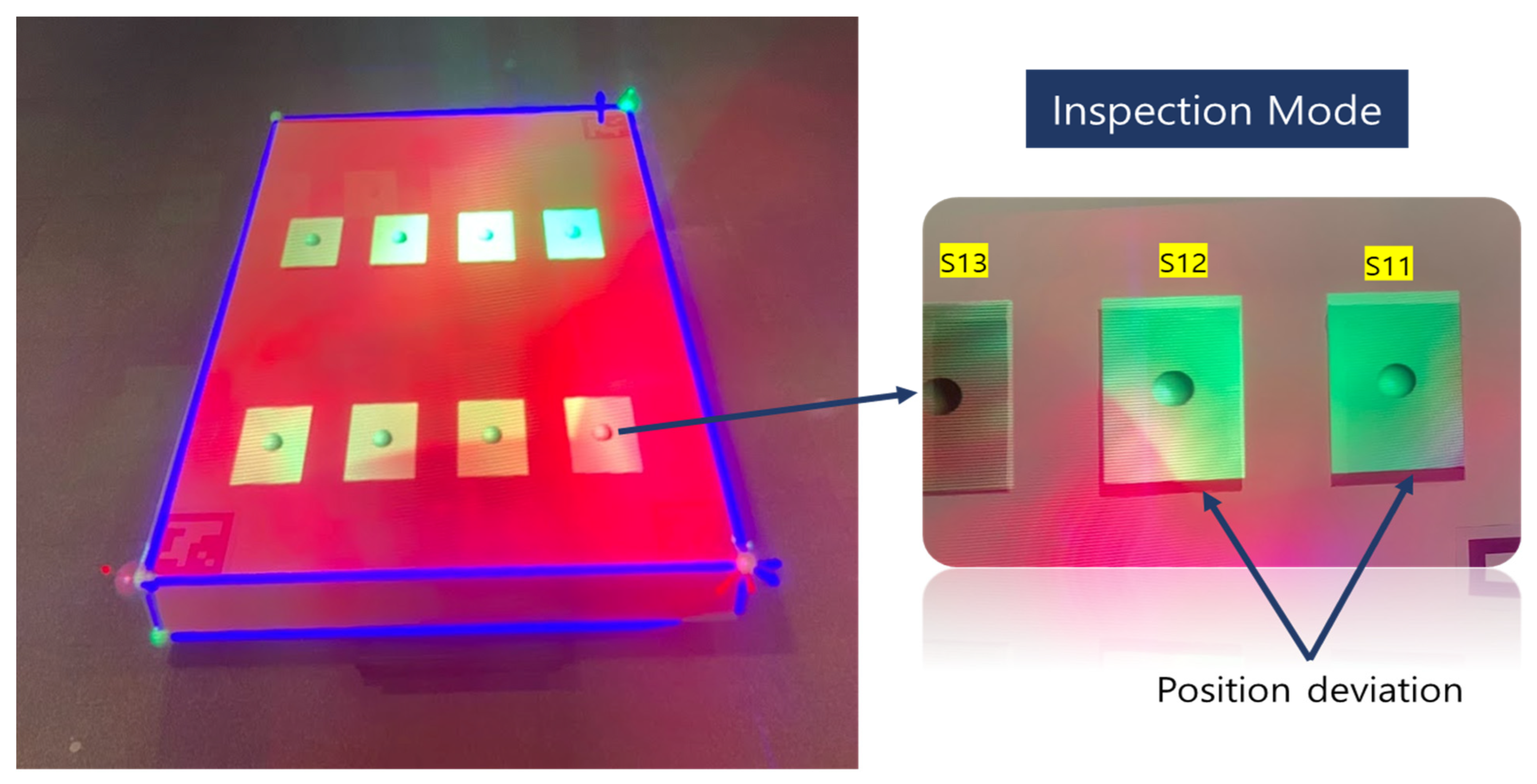
Figure 15 illustrates the mixed-reality visualization of the small-scale deck specimen following the successful registration of the as-designed BIM model onto the physical component. The alignment was achieved using a marker-based registration approach, wherein the spatial coordinates of three fiducial markers were utilized to compute the transformation matrix required to accurately superimpose the BIM geometry onto the deck surface. The HL2’s RGB camera detects each marker and estimates its position and orientation relative to the device’s coordinate frame, enabling the system to establish a stable, world-locked reference space. Because the accuracy of marker-based tracking depends on the quality of the captured marker imagery, factors such as camera-to-marker distance, ambient illumination, viewing angle, and surface contrast influence the resulting registration precision. Prior translational-error experiments indicate that the HL2 achieves approximately ±1.6 mm accuracy at a 300 mm distance with a 1920 × 1080 resolution, meeting the ±5 mm geometric tolerance required for prefabricated deck inspection.
Once the BIM model is properly anchored, the MR environment supports real-time evaluation of both positional and dimensional attributes. As depicted in Figure 15, the overlaid holographic geometry reveals positional deviations in individual shear pockets (e.g., S11, S12, S13). The inspection mode highlights each pocket, allowing inspectors to visually compare the BIM-defined pocket centers with their corresponding physical positions. This visualization effectively exposes local misalignments, as discrepancies are clearly revealed by the spatial offset between the holographic projection and the physical surface. Beyond local shear-pocket inspection, the MR system also facilitates global dimensional verification using predefined control points placed at the four deck corners. By selecting these corner control points in the MR interface, the application automatically generates measurement lines such as overall deck length, width, and diagonal spans and computes MR-based distances Dmr for comparison with the design dimensions D. This process enables the visual assessment of key geometric attributes, including overall length, width, squareness, straightness, and flatness. Incorporating both local (shear-pocket) and global (corner control point) measurements provides a comprehensive basis for evaluating the specimen’s geometric fidelity. Experimental results demonstrate that the MR application successfully detected shear-pocket positional deviations within ±2 mm and recovered deck dimensions with high consistency relative to the BIM-defined values. These outcomes confirm that the proposed BIM–MR inspection approach offers adequate precision for high-accuracy geometric verification tasks in prefabricated deck fabrication.

4.2. Full-Scale Deck Inspections

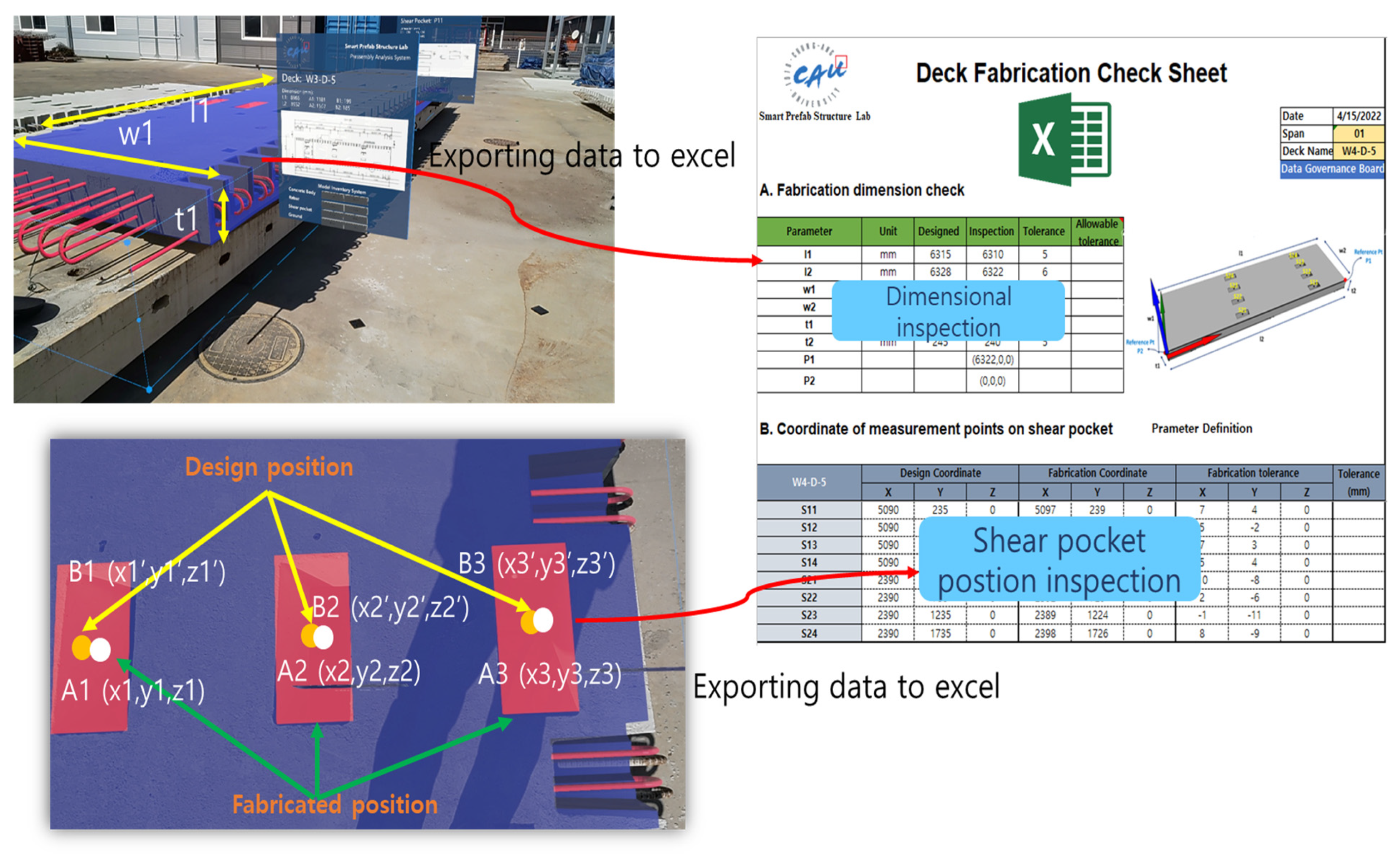
To further assess the practical applicability and robustness of the proposed BIM–MR inspection application under real production conditions, full-scale evaluations were performed on prefabricated bridge decks. These tests aimed to examine the system’s capability to visually assess dimensional attributes, detect positional deviations in shear pockets, and accurately visualize geometric discrepancies directly on the production floor. As shown in Figure 16, the MR system successfully aligned the design BIM model with the first full-scale deck using marker-based registration. Once the digital model was anchored to the physical component, inspectors extracted dimensional information such as length, width, thickness, and edge alignment directly in the MR interface. These measurements were automatically exported to the deck fabrication check sheet, enabling efficient documentation and comparison against design tolerances. The positional deviation of shear pockets was determined by capturing the center-point coordinates of each pocket in both the BIM-based MR model and the physical deck and computing their differences. This automated process allowed for rapid identification of pockets that approached and exceeded the allowable tolerance.
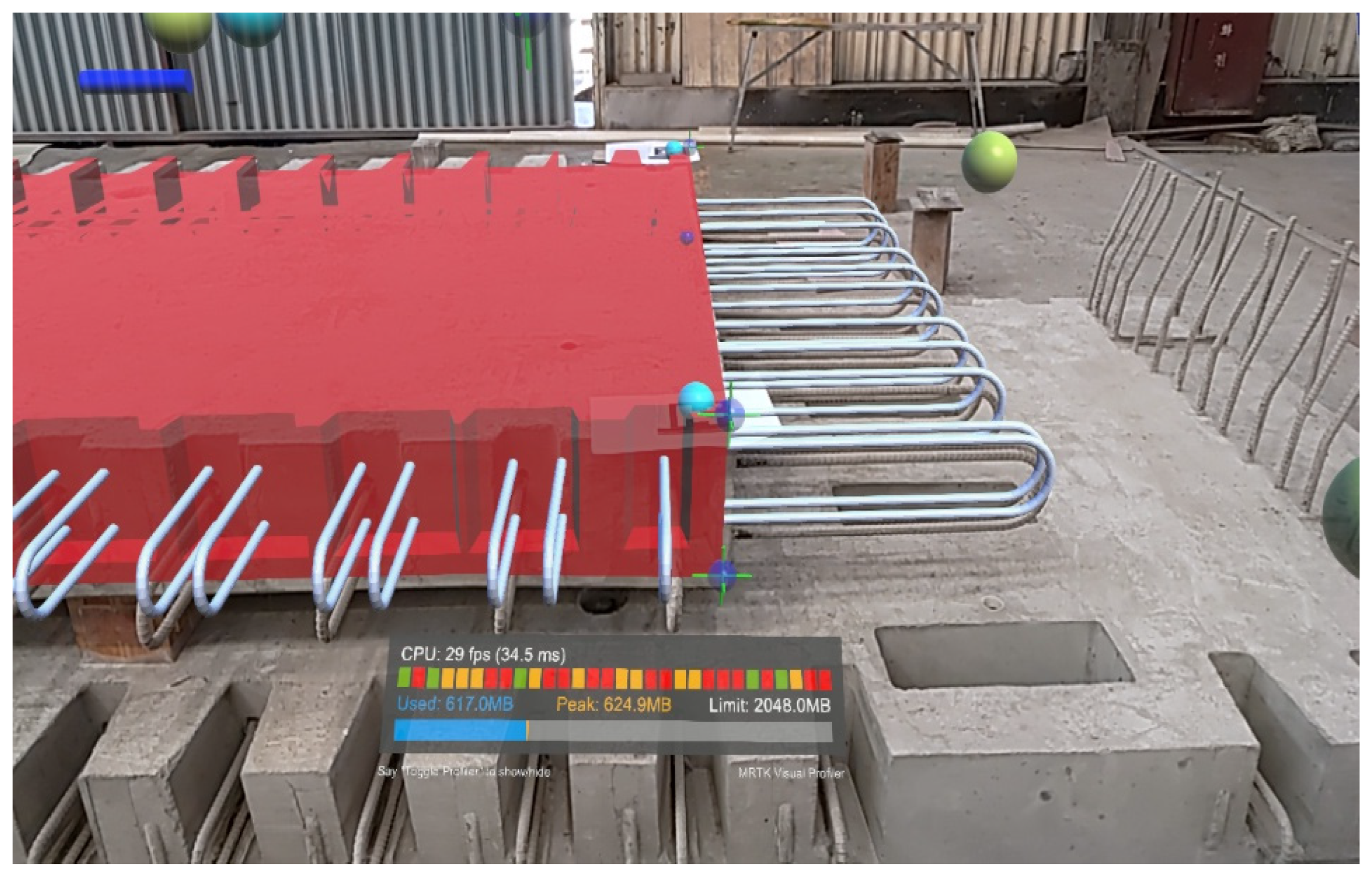
Figure 17 shows an example where local surface irregularities became clearly visible due to the contrast between the BIM surface and the actual fabricated contour. The red-colored hologram in the MR view highlighted the intended design geometry, allowing deviations in the concrete body to be detected immediately. Such visualization is particularly useful for identifying camber deviations, edge misalignment, and localized deformation, which are often missed during conventional manual inspection.
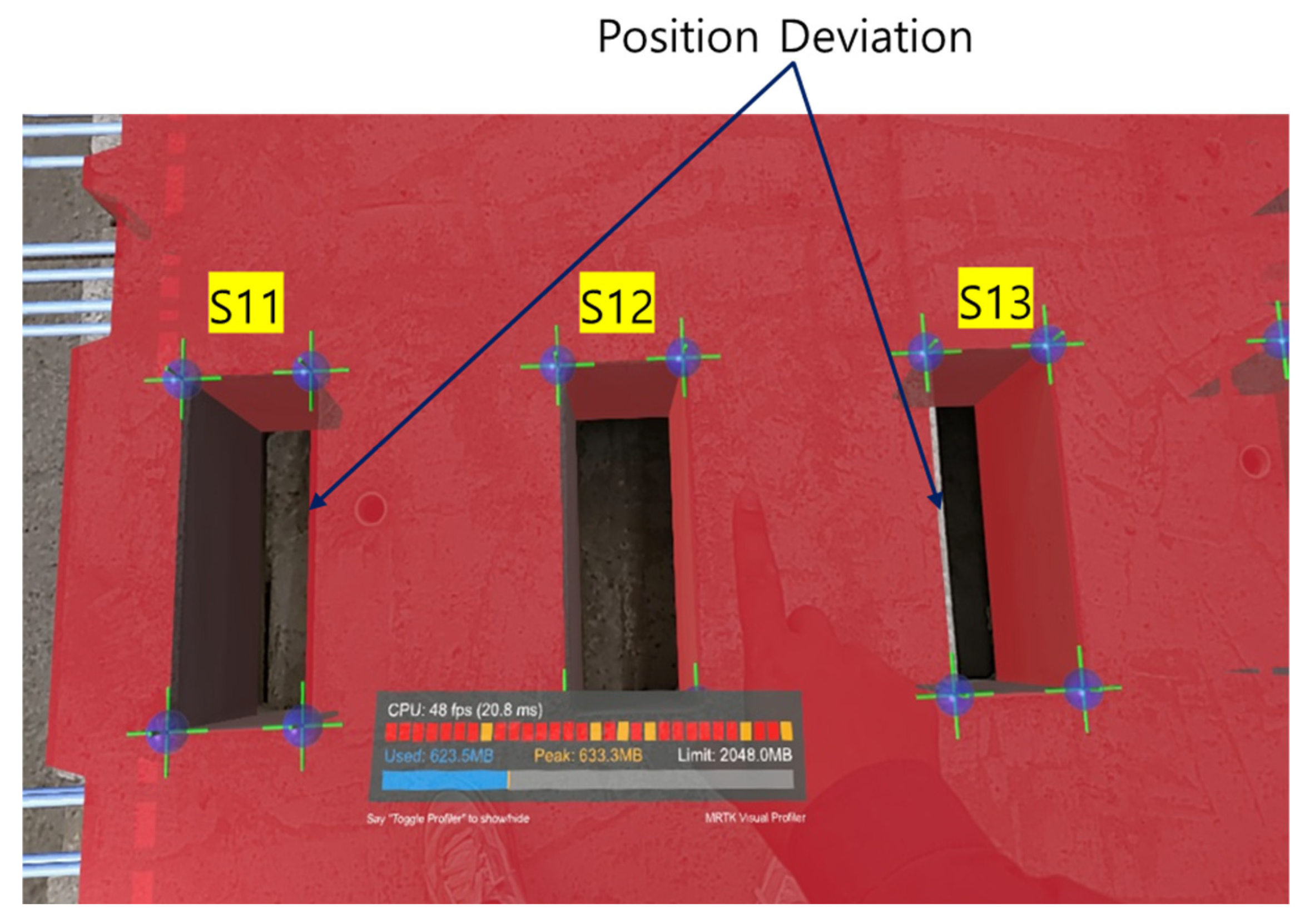
A detailed visualization of the shear-pocket deviation was generated and is presented in Figure 18. The system identified measurable deviations in pockets S11 and S13, which were verified by comparing the MR-derived pocket centers with their corresponding design coordinates. This capability is crucial for ensuring the safe and efficient assembly of prefabricated bridge components, as misaligned shear pockets can impede proper engagement with girder shear keys and may lead to significant assembly challenges and compromised structural performance.
Eventually, the results from full-scale inspections demonstrate that the BIM–MR system provides accurate, intuitive, and highly efficient geometric inspection capabilities in an operational factory environment. The integration of BIM-based design geometry with real-time MR visualization significantly improves the inspector’s ability to detect deviations, reduces reliance on manual measurements, and enhances decision-making during the quality-control process. These findings reinforce MR’s growing potential as a practical tool for digital fabrication inspection and align with the broader movement toward data-driven and model-oriented quality management in prefabricated construction.

5. Conclusions

This study proposed and validated a BIM-based mixed-reality (MR) framework to support geometric inspection of prefabricated bridge decks. By combining design BIM models with MR visualization and marker-based registration, the system enables real-time dimensional verification and positional assessment of key fabrication features, such as shear pockets. Controlled accuracy experiments demonstrated that the HL2 provides sufficient spatial precision for millimeter-level inspection, while full-scale factory tests confirmed the framework’s practical capability to detect geometric deviations and streamline quality-control workflows. These findings highlight the potential of MR-assisted inspection to enhance fabrication reliability, reduce manual measurement effort, and strengthen alignment between digital design intent and physical production. While the study offers meaningful contributions, several limitations remain. First, the accuracy evaluation was conducted under controlled environmental conditions and may not fully capture the variability of lighting, occlusion, and operational complexity encountered in highly dynamic fabrication settings. Second, the current framework relies on marker-based registration, which, although effective for achieving stable BIM-to-physical alignment, constrains workflow flexibility and requires manual placement and maintenance of physical markers. Consequently, the proposed workflow remains partially dependent on manual preparation and cannot yet be considered a fully automated inspection solution. Third, the inspection tasks evaluated in this study focused primarily on dimensional and positional attributes; more complex geometric characteristics such as camber variation, surface flatness, or deformation were not fully assessed. Furthermore, broader industrial adoption may depend on additional considerations beyond technical performance, including hardware acquisition and maintenance requirements, integration with existing BIM and quality-management systems, and the long-term usability of head-mounted MR devices in routine inspection activities.
Future research should therefore expand the experimental dataset to include more diverse fabrication conditions and a broader range of component geometries. Advancing registration strategies through markerless or hybrid tracking methods could reduce reliance on physical markers and improve workflow adaptability. Incorporating automated feature-recognition and real-time deviation-mapping techniques may further reduce manual intervention and enhance inspection throughput. Moreover, extending the framework to evaluate complex geometric attributes, including camber, flatness, and surface deformation, would broaden its applicability. Finally, integrating the MR-based inspection workflow with cloud-enabled BIM platforms or digital-twin systems would enable real-time data synchronization, continuous monitoring, and more data-driven quality management throughout prefabricated bridge construction.


Author Contributions

Conceptualization, D.-C.N. and C.-S.S.; methodology, D.-C.N.; software, D.-C.N.; validation, D.-C.N. and C.-S.S.; formal analysis, D.-C.N.; investigation, D.-C.N.; resources, C.-S.S.; data curation, D.-C.N.; writing—original draft preparation, C.-S.S.; supervision; project administration; funding acquisition. All authors have read and agreed to the published version of the manuscript.

Funding

This research received no external funding.

Data Availability Statement

The original contributions presented in this study are included in the article. Further inquiries can be directed to the corresponding author.

Conflicts of Interest

The authors declare that they have no conflict of interest.

References

  1. Saleem, M.A.; Zafar, M.N.; Saleem, M.M.; Xia, J. Recent developments in the prefabricated bridge deck systems. Case Stud. Constr. Mater. 2021, 15, e00750. [Google Scholar] [CrossRef]
  2. Zhao, R.; Zheng, K.; Wei, X.; Jia, H.; Li, X.; Zhang, Q.; Xu, G.; Zhan, Y.; Shen, R.; Zhang, F.; et al. State-of-the-art and annual progress of bridge engineering in 2021. Adv. Bridg. Eng. 2022, 3, 29. [Google Scholar] [CrossRef]
  3. Kim, M.-K.; Wang, Q.; Park, J.-W.; Cheng, J.C.; Sohn, H.; Chang, C.-C. Automated dimensional quality assurance of full-scale precast concrete elements using laser scanning and BIM. Autom. Constr. 2016, 72, 102–114. [Google Scholar] [CrossRef]
  4. Hong, Z.; Hong, Y.; Cai, H.; Abraham, D.M.; Zhang, J.; Dunston, P.S. BIM-Based Framework for In-Plant Quality Control of Precast Concrete Manufacturing. J. Constr. Eng. Manag. 2025, 151, 05025017. [Google Scholar] [CrossRef]
  5. Ma, Z.; Liu, Y.; Li, J. Review on automated quality inspection of precast concrete components. Autom. Constr. 2023, 150, 104828. [Google Scholar] [CrossRef]
  6. Tan, Y.; Chen, L.; Wang, Q.; Li, S.; Deng, T.; Tang, D. Geometric quality assessment of Prefabricated steel box girder components using 3D laser scanning and building information model. Remote. Sens. 2023, 15, 556. [Google Scholar] [CrossRef]
  7. Nguyen, D.-C.; Jeon, C.-H.; Roh, G.; Shim, C.-S. BIM-based preassembly analysis for design for manufacturing and assembly of prefabricated bridges. Autom. Constr. 2024, 160, 105338. [Google Scholar] [CrossRef]
  8. Luo, H.; Wu, H.; Bao, D.; Wu, Y.-F. Building information modeling applications in off-site construction: A comprehensive analysis. Arch. Sci. Rev. 2025, 1–16. [Google Scholar] [CrossRef]
  9. Nguyen, D.C.; Park, S.J.; Shim, C.S. Digital engineering models for prefabricated bridge piers. Smart Struct. Syst. 2022, 30, 35–47. [Google Scholar] [CrossRef]
  10. Halder, S.; Afsari, K.; Serdakowski, J.; DeVito, S.; Ensafi, M.; Thabet, W. Real-time and remote construction progress monitoring with a quadruped robot using augmented reality. Buildings 2022, 12, 2027. [Google Scholar] [CrossRef]
  11. Alizadehsalehi, S.; Yitmen, I. Digital twin-based progress monitoring management model through reality capture to extended reality technologies (DRX). Smart Sustain. Built Environ. 2023, 12, 200–236. [Google Scholar] [CrossRef]
  12. Balakrishnan, P.; Guo, H.-J. HoloLens 2 Technical Evaluation as Mixed Reality Guide. In International Conference on Human-Computer Interaction; Springer: Cham, Switzerland, 2024; pp. 145–165. [Google Scholar]
  13. Ma, T.; Xiao, F.; Zhang, C.; Zhang, J.; Zhang, H.; Xu, K.; Luo, X. Digital twin for 3D interactive building operations: Integrating BIM, IoT-enabled building automation systems, AI, and mixed reality. Autom. Constr. 2025, 176, 106277. [Google Scholar] [CrossRef]
  14. Yue, H.; Wang, Q.; Zhao, M.; Yang, Z.; Lu, L. Advancements in Digital Twin Applications for Intelligent Construction Quality Management. J. Constr. Eng. Manag. 2026, 152, 03125011. [Google Scholar] [CrossRef]
  15. Lyu, W.; Chen, X.; Han, W.; Ni, K.; Jing, R.; Tong, L.; Pan, J.; Wang, Q. Non-contact dimensional quality inspection system of prefabricated components using 3D matrix camera. Buildings 2025, 15, 837. [Google Scholar] [CrossRef]
  16. Li, C.Z.; Li, S.; Ya, Y.; Tam, V.W. Digital inspection techniques of modular integrated construction. Heliyon 2023, 9, e21399. [Google Scholar] [CrossRef]

  17. Li, S.; Zhang, B.; Zheng, J.; Wang, D.; Liu, Z. Development of automated 3D LiDAR System for dimensional quality inspection of prefabricated concrete elements. Sensors 2024, 24, 7486. [Google Scholar] [CrossRef]
  18. Hu, W.; Xie, Z.; Cai, Y. A network analysis-based approach for as-built BIM generation and inspection. Appl. Sci. 2024, 14, 6587. [Google Scholar] [CrossRef]
  19. Tao, B.; Li, J.; Bosché, F. Autonomous Mixed Reality Framework for Real-Time Construction Inspection. J. Inf. Technol. Constr. 2025, 30, 852–874. [Google Scholar] [CrossRef]
  20. Aurier, L.; Hassan, M.; Jaworski, J.; Guizani, L. Review of accelerated bridge construction systems for bridge superstructures and their adaptability for cold weather. CivilEng 2023, 4, 83–104. [Google Scholar] [CrossRef]
  21. Jang, D.-H.; Roh, G.-T.; Jeon, C.-H.; Shim, C.-S. Simulation-based optimization of crane lifting position and capacity using a construction digital twin for prefabricated bridge deck assembly. Buildings 2025, 15, 475. [Google Scholar] [CrossRef]
  22. Long, L.; Liu, W.; Xu, S.; Shi, P.; Zhang, C.; Deng, L. Automated alignment deviation measurement for precast concrete assembly using point cloud-image fusion. Autom. Constr. 2025, 180, 106540. [Google Scholar] [CrossRef]
  23. Reichenbach, S.; Kromoser, B. State of practice of automation in precast concrete production. J. Build. Eng. 2021, 43, 102527. [Google Scholar] [CrossRef]
  24. Liu, Y.; Tong, W.; Li, Q.; Yao, F.; Li, H.X.; Huang, J. Study on complexity of precast concrete components and its influence on production efficiency. Adv. Civ. Eng. 2022, 2022, 9926547. [Google Scholar] [CrossRef]
  25. Kenarkoohi, M.; Hassan, M. Review of accelerated construction of bridge piers—Methods and performance. Adv. Bridg. Eng. 2024, 5, 3. [Google Scholar] [CrossRef]
  26. Jia, B.; Yang, Y.; Xie, B.; Yu, X. Novel geometric control technology for precast segmental bridges. J. Constr. Eng. Manag. 2021, 147, 04021006. [Google Scholar] [CrossRef]
  27. Wu, S.; Ramli, M.Z.; Ngian, S.P.; Qiao, G.; Jiang, B. Review on parametric building information modelling and forward design approaches for sustainable bridge engineering. Discov. Appl. Sci. 2025, 7, 127. [Google Scholar] [CrossRef]
  28. Wang, Y.; Thangasamy, V.K.; Tiong, R.L.K.; Zhang, L. Improved workflow for precast element design based on BIM and lean construction. J. Constr. Eng. Manag. 2022, 148, 04022065. [Google Scholar] [CrossRef]
  29. ElQasaby, A.R.; Alqahtani, F.K.; Alheyf, M. State of the art of BIM integration with sensing technologies in construction progress monitoring. Sensors 2022, 22, 3497. [Google Scholar] [CrossRef]
  30. Nguyen, D.-C.; Nguyen, T.-Q.; Jin, R.; Jeon, C.-H.; Shim, C.-S. BIM-based mixed-reality application for bridge inspection and maintenance. Constr. Innov. 2021, 22, 487–503. [Google Scholar] [CrossRef]
  31. Doan, D.T.; Atencio, E.; La Rivera, F.M.; Alnajjar, O. A Systematic Literature Review of Building Information Modelling (BIM) and Offsite Construction (OSC) Integration: Emerging Technologies and Future Trends. Appl. Sci. 2025, 15, 9981. [Google Scholar] [CrossRef]
  32. Han, B.; Clevenger, C.M. Augmented Reality and Mixed Reality Implementation Status Survey in the Architecture, Engineering, and Construction Industry: Benefits, Limitations, and Future Directions. J. Arch. Eng. 2025, 31, 04025017. [Google Scholar] [CrossRef]
  33. Carrasco, M.D.O.; Chen, P.-H. Application of mixed reality for improving architectural design comprehension effectiveness. Autom. Constr. 2021, 126, 103677. [Google Scholar] [CrossRef]
  34. Jurado, D.; Jurado, J.M.; Ortega, L.; Feito, F.R. GEUINF: Real-time visualization of indoor facilities using mixed reality. Sensors 2021, 21, 1123. [Google Scholar] [CrossRef] [PubMed]
  35. Cho, J.; Kim, S.; Kang, S. Development of a Spatial Alignment System for Interacting with BIM Objects in Mixed Reality. Appl. Sci. 2025, 15, 9713. [Google Scholar] [CrossRef]
  36. Moghaddam, S.; Dashti, M.S.; Alvanchi, A.; Khanzadi, M. An integrated BIM-based augmented reality framework for improving facility maintenance management. Eng. Constr. Arch. Manag. 2025, 33, 2007–2047. [Google Scholar] [CrossRef]
  37. Costa, G.M.; Petry, M.R.; Martins, J.G.; Moreira, A.P.G.M. Assessment of multiple fiducial marker trackers on hololens 2. IEEE Access 2024, 12, 14211–14226. [Google Scholar] [CrossRef]
  38. Soares, I.; Sousa, R.B.; Petry, M.; Moreira, A.P. Accuracy and repeatability tests on HoloLens 2 and HTC Vive. Multimodal Technol. Interact. 2021, 5, 47. [Google Scholar] [CrossRef]
Figure 1. BIM–MR integration for deck inspection.
Buildings 16 02337 g001
Figure 2. Overview of the research process.
Buildings 16 02337 g002
Figure 3. Rule-based parametric BIM generation for prefabricated decks.
Buildings 16 02337 g003
Figure 4. Development pipeline of the BIM–MR inspection application.
Buildings 16 02337 g004
Figure 5. Sensors and cameras of the HoloLens 2.
Buildings 16 02337 g005
Figure 6. Drift experiment setup.
Buildings 16 02337 g006
Figure 7. Drift experiment results.
Buildings 16 02337 g007
Figure 8. Drift progression of the MR deck model from 1 m to 12 m.
Buildings 16 02337 g008
Figure 9. Experiment setup for translational error.
Buildings 16 02337 g009
Figure 10. Example of an ArUco marker.
Buildings 16 02337 g010
Figure 11. Marker detection and coordinate visualization.
Buildings 16 02337 g011
Figure 12. Translational error trends across different HL2 camera resolutions.
Buildings 16 02337 g012
Figure 13. Prefabricated bridge deck fabrication process.
Buildings 16 02337 g013
Figure 14. Deck specimen.
Buildings 16 02337 g014
Figure 15. Small-scale deck inspection mode.
Buildings 16 02337 g015
Figure 16. MR-Based Inspection of the First Prefabricated Deck.
Buildings 16 02337 g016
Figure 17. Geometric inspection of the concrete part.
Buildings 16 02337 g017
Figure 18. Shear pocket position inspection.
Buildings 16 02337 g018
Table 1. Summary of translational errors for 100 mm ArUco marker detection.
Distance (mm)960 × 5401280 × 7601920 × 10802272 × 1278
300±1.9±1.6±1.2±2.1
500±3.1±1.9±2.2±3.3
700±3.9±4.3±2.1±4.8
900±6.4±6.5±6.4±5.5
Table 2. Positional deviations of shear pockets in the deck specimen.
Shear PocketS11S12S13S14S21S22S23S24
Axis X+5+5+20+10+300
Axis Y0−2−200000
Disclaimer/Publisher’s Note: The statements, opinions and data contained in all publications are solely those of the individual author(s) and contributor(s) and not of MDPI and/or the editor(s). MDPI and/or the editor(s) disclaim responsibility for any injury to people or property resulting from any ideas, methods, instructions or products referred to in the content.