
Systematic Review

Linking Energy Efficiency and User Experience for Sustainable Healthcare: A Systematic Review and Conceptual Framework


by
Noor Saleh Alalawi
* and
Fay Abdulla Alkhalifa
Department of Architecture and Interior Design, College of Engineering, University of Bahrain, Manama P.O. Box 32038, Bahrain
*
Author to whom correspondence should be addressed.
Buildings 2026, 16(12), 2324; https://doi.org/10.3390/buildings16122324
Submission received: 6 May 2026 / Revised: 7 June 2026 / Accepted: 9 June 2026 / Published: 10 June 2026
(This article belongs to the Section Building Energy, Physics, Environment, and Systems)

Abstract

Energy efficiency and positive users’ experiences are key to sustainable healthcare. However, limited research has been conducted to examine the relationship between them. A framework-based systematic literature review using the PRISMA methodology was conducted to identify key links in existing literature between the two dimensions in hospitals. A total of 138 publications including articles, reviews, and conference papers were retrieved from the Scopus database on 23 March 2026. Selected studies were critically appraised for methodological quality and potential bias prior to the analysis and narrative synthesis using the TCCM framework. This review advances the field by reconceptualizing indoor environmental quality as the mediating link between energy efficiency and user experience in hospitals, offering an integrated multi-dimensional framework linking both dimensions. Key linking constructs were identified as spatial, environmental, psychological, behavioral, and organizational. Future pathways must integrate qualitative users’ experiences with quantitative energy efficiency data to enrich the understanding of hospital sustainability. Considering stakeholder priorities, conducting comprehensive evaluations of indoor environmental quality, and adopting holistic and interdisciplinary methodologies and simulations in hospital designs and retrofits are essential to address gaps in healthcare sustainability. Architectural measures must prioritize natural light, acoustic comfort, air quality, and access to views. The findings provide practical guidance for hospital designers, managers, and policymakers on strategies that promote healthcare sustainability through energy efficiency and positive user experiences.

1. Introduction

Sustainability in healthcare is an important area of study, given the increasing challenges linked to the climate crisis. It draws upon environmental, social, cultural, ecological, and technical practices [1]. To achieve sustainability in healthcare, social sustainability measures depend on economic measures, influenced by environmental measures. Sustainability and healthcare are closely linked, as the quality of the built environment significantly impacts human health and users’ outcomes [2]. Healthcare buildings account for 5% of global greenhouse gas emissions [3]. Hospitals are among the most energy-intensive buildings due to their operating hours and energy consumption patterns [4,5]. In the United States, the average energy usage of hospitals is 738.5 kWh/m2, which is about 2.6 times higher than that of other commercial buildings [6]. Hospital energy consumption varies globally depending on capacity, location, and climatic zones [7]. Hospitals are sensitive, highly stressful, socially charged environments, where patient safety and the quality of care are crucial [8,9]. Patient satisfaction and health are often the subject of discussion in literature, increasing the demand for hospitals to balance thermal comfort and users’ experiences [10]. This study focuses on the environmental and social dimensions of sustainability of hospitals, which from an architectural perspective are crucial to reducing environmental impacts while enhancing users’ well-being [11]. The economic aspects include other complex issues and factors which are beyond the scope of this study.
Achieving sustainability in hospitals necessitates a balance between technical environmental aspects and the well-being of users [12]. Despite this, very few studies have discussed the interrelationship between energy efficiency (EE) and users’ experiences (UX) in hospitals, and findings remain fragmented and insufficiently synthesized. There is a lack of deep understanding of social aspects in sustainability initiatives in healthcare buildings, with most strategies focusing on environmental aspects [10,13]. This fragmented and technical-driven approach relies on static measurements, failing to capture the dynamic, complex, and diverse nature of healthcare environments and users’ needs. Addressing this knowledge gap is essential to developing research on sustainable healthcare, which simultaneously prioritizes environmental and human health. Thus, this paper aims to identify the constructs linking EE and UX in hospitals through a systematic review of the literature. The research questions are as follows:
RQ1: Which constructs link EE measures and UX in hospitals?
RQ2: What are the research gaps and methodological limitations in current studies that address EE and UX in hospitals?
RQ3: What are the implications for practice and future research in aligning EE goals with UX in hospitals?
The first question relates to “what we know” from existing studies and research on the subject. The second question relates to “how do we know”, and the third question relates to “where should we be headed” in this subject by focusing on implications for practice and future research [14]. The paper is divided into five parts. The first part summarizes previous studies, followed by the adopted methodology of this systematic literature review. This is then followed by the results, a discussion of the data, and a conclusion in which a summary and synthesis of the key findings are presented. The findings of the research can benefit policymakers and stakeholders in bridging EE and UX in the design and management of hospitals.

2. Background

Various scholars have discussed the impact of different sustainability approaches in healthcare buildings [10,14,15,16,17,18,19,20,21]. Some studies explored more technological aspects which include the environmental performance of these facilities [22,23]. The literature presents continuous debates on promoting the individual dimensions of environmental sustainability and social sustainability of healthcare facilities [2]. However, only a few studies have assessed the synergies between the two dimensions. This is mostly because patient care, profitability, and ecological impacts often conflict in healthcare settings, thus limiting opportunities for creating a balance between them [24]. Table 1 presents past reviews in the field of sustainable healthcare from the years 2019–2025.
Li et al. examined the interrelationship between building performance, indoor environmental quality (IEQ), and patients’ well-being in healthcare facilities [19]. They focused on the interplay between the physical environment of healthcare facilities and medical activities. Their findings highlight the importance of addressing challenges related to sustainability in healthcare through a holistic approach. This emphasizes the gap of limited studies that integrate the different dimensions of sustainability in healthcare facilities. Amer et al. investigated the links between socio-spatial design, energy, and daylighting to propose a balanced framework that envelops all three aspects. The cruciform architectural layout is presented as the most effective layout for improving patients’ privacy and overall surveillance in in-patient wards [24]. Ackley et al. evaluated the combined effects of IEQ aspects on healing outcomes in healthcare facilities [25]. Read and Meath discussed synergies between evidence-based design and sustainable design principles, to outline a framework for sustainable and therapeutic outcomes in healthcare contexts [26]. Although the authors shed light on the environmental and social sustainability attributes of healthcare facilities, their research includes many aspects of environmental sustainability, without a particular focus on individual aspects such as EE.
A critical gap in past studies on sustainability in healthcare environments is the lack of integration between sustainability measures and user outcomes. In particular, the social and environmental dimensions of sustainability remain underexplored. In particular, the relationship between EE and users’ outcomes is not well studied in the literature. EE is the most significant sustainability criterion and the key to sustainable buildings [27]. It is one of the four key environmental sustainability indicators of sustainable development, along with pollution reduction, resource efficiency, and enhancing biodiversity [28]. The EE of buildings is typically defined as their ability to decrease their energy consumption while maintaining or improving the quality of services and indoor comfort [29]. This is usually achieved through the implementation of efficiency measures related to the architectural design, building envelope, and mechanical systems [30]. EE measures can significantly reduce greenhouse gas emissions and are considered a policy target [31]. It also has the potential to promote and enhance sustainable development and aid the transition toward a decarbonized economy [32]. Improving EE has a significant impact on the IEQ of buildings and UX.
In this study, UX is defined as the range of perceptual, emotional, sensorial, and psychological experiences individuals encounter within architectural spaces and built environments. Buildings are not viewed as static physical structures, but as dynamic environments that continuously influence—and are influenced by—human interaction, behavior, and perception. From this perspective, UX emerges through the ongoing relationship between users and environmental conditions, including thermal, visual, spatial, and indoor environmental qualities. Accordingly, users’ experiences are conceptualized as a multidimensional construct encompassing thermal comfort, visual comfort, IEQ, perceived safety, and overall user satisfaction. This conceptualization is informed by perspectives from environmental psychology, phenomenology of space, and post-occupancy evaluation, which collectively emphasize that human experiences in buildings are shaped not only by measurable physical conditions, but also by subjective sensorial and emotional responses to space. In recent years, the interrelationship between EE, IEQ, and comfort in public buildings has emerged as a popular area of study [33]. Scholars such as Niza et al. highlight how different technologies and approaches can balance EE and users’ comfort in buildings [34]. However, the existing literature continues to exhibit a disconnect between sustainability measures and user outcomes, which this study attempts to address.

3. Structured Literature Review

The primary aim of this paper is to identify the constructs that link EE and UX in hospitals through a domain-based methodology [35]. The methodology is divided into three stages: defining criteria for formulating research questions, selecting articles and screening based on inclusion and exclusion criteria, and analyzing and synthesizing findings. This research utilizes the theories–characteristics–contexts–methods (TCCM) framework, which establishes a systematic guide to extract valuable insights, highlight gaps, and present directions for further research. Framework-based reviews promote theory development and are more impactful than bibliometric-based reviews [36]. Theories (T) represent theoretical underpinnings to explain different relationships, and contexts (C) refers to the research setting. Characteristics (C) refer to the research elements and their relationships with other variables, and methods (M) refer to the analytical tools of measurement [37]. Notably, the framework includes two dimensions beginning with the letter “C”: context and characteristics. The TCCM framework is particularly valuable in studies exploring multi-disciplinary subjects such as EE and UX. EE is technical, quantitative, and tied to environmental sustainability, while UX is more subjective in nature and linked to social sustainability [38].

3.1. Planning of the Systematic Literature Review

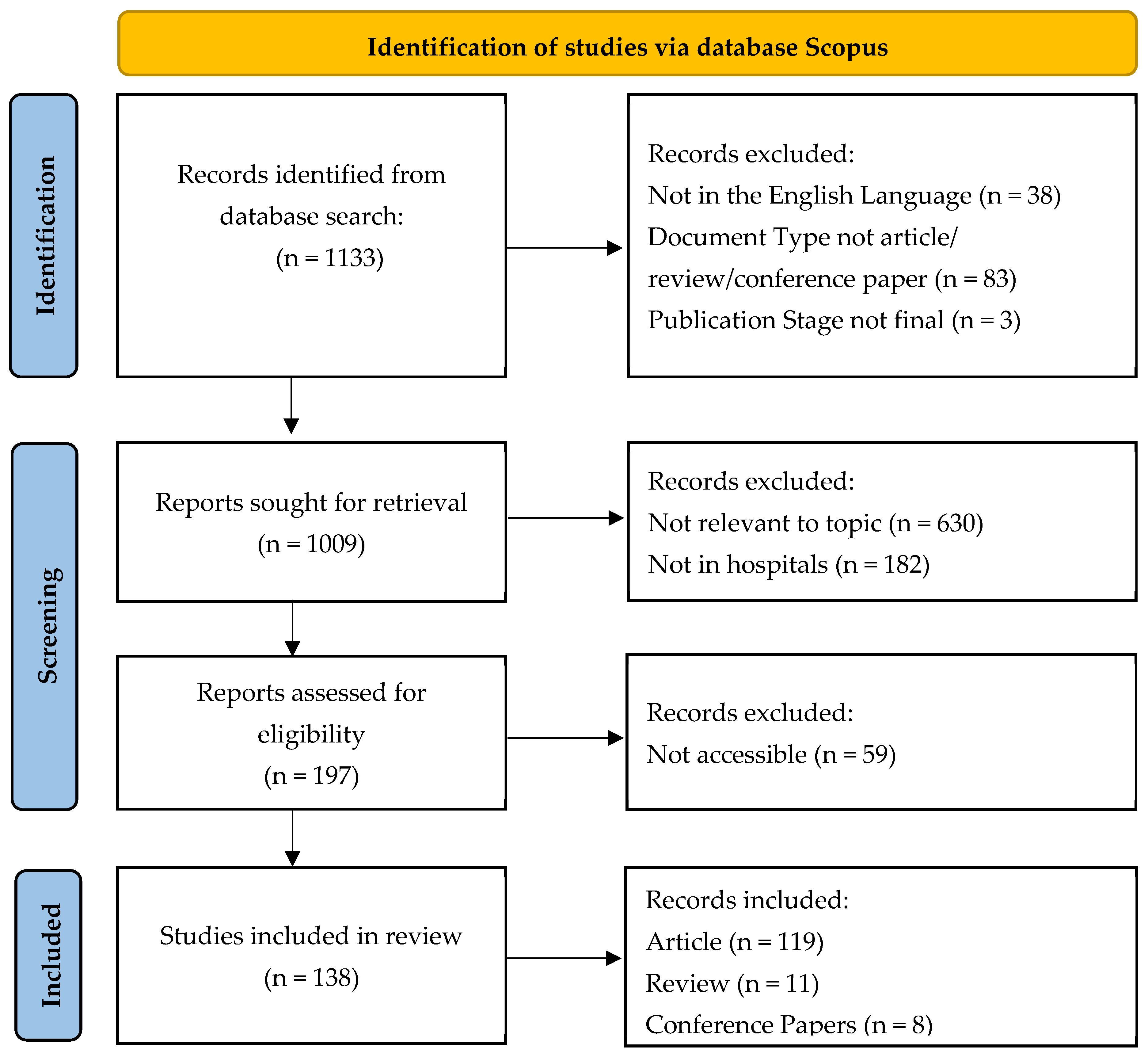
The design of this review and article selection is based on the Preferred Reporting Items for Systematic Reviews and Meta-Analyses (PRISMA) framework. A systematic approach guides the collection, critical analysis, and transparent reporting of relevant data [39]. Appendix A includes the PRISMA 2020 checklist (see Table A1) which was followed as a guide for reporting the results of the systematic review. On 23 March 2026, a search was conducted through ‘Scopus’ to identify studies linked to EE and UX in hospital environments. Searches on other databases were not included due to institutional access limitations. ‘Scopus’ is an international database which allows for wide geographical coverage of peer-reviewed research, which is particularly relevant given the interdisciplinary nature of the subject. Figure 1 outlines the systematic literature review screening process.
The search criteria included articles focusing on EE and performance of healthcare buildings, examining their potential impact and interrelationship with UX. To ensure consistency and transparency, a set of inclusion and exclusion criteria was defined prior to the search. Only full articles written in the English language were considered. Books and publications not in their final stage were excluded to ensure the quality and scientific validity of the selected resources. A total of 1133 articles were initially retrieved. Following search filtering based on language (n = 38), document type (n = 83), and stage of publication (n = 3), 1009 articles were subject to title and abstract screening. Articles that were not relevant to EE or UX in hospitals were excluded (n = 630). This refers to studies that did not examine the relationship between EE measures and UX outcomes within hospital or healthcare building contexts. Additionally, articles not in the context of hospitals were also excluded (n = 182). Prior to exclusion, efforts were made to retrieve inaccessible full-text records through institutional subscriptions, open-access repositories, and alternative academic platforms. Despite these attempts, 59 records could not be accessed in full and were therefore excluded from the final review process. Only studies with accessible full texts were included to ensure adequate assessment of eligibility, methodological quality, and data extraction consistency.
The selected studies were critically appraised for methodological quality and potential bias. To minimize selection bias, the screening and eligibility assessment were conducted independently by two reviewers. During the title and abstract screening stage, each reviewer evaluated the retrieved records against the predefined inclusion and exclusion criteria. Full-text articles deemed potentially relevant were subsequently assessed independently for eligibility. Any disagreements regarding study inclusion were resolved through discussion and consensus between the reviewers. A total of 138 articles underwent full-text review, which included articles (n = 119), reviews (n = 11), and conference papers (n = 8).

3.2. Overview of the Selected Studies

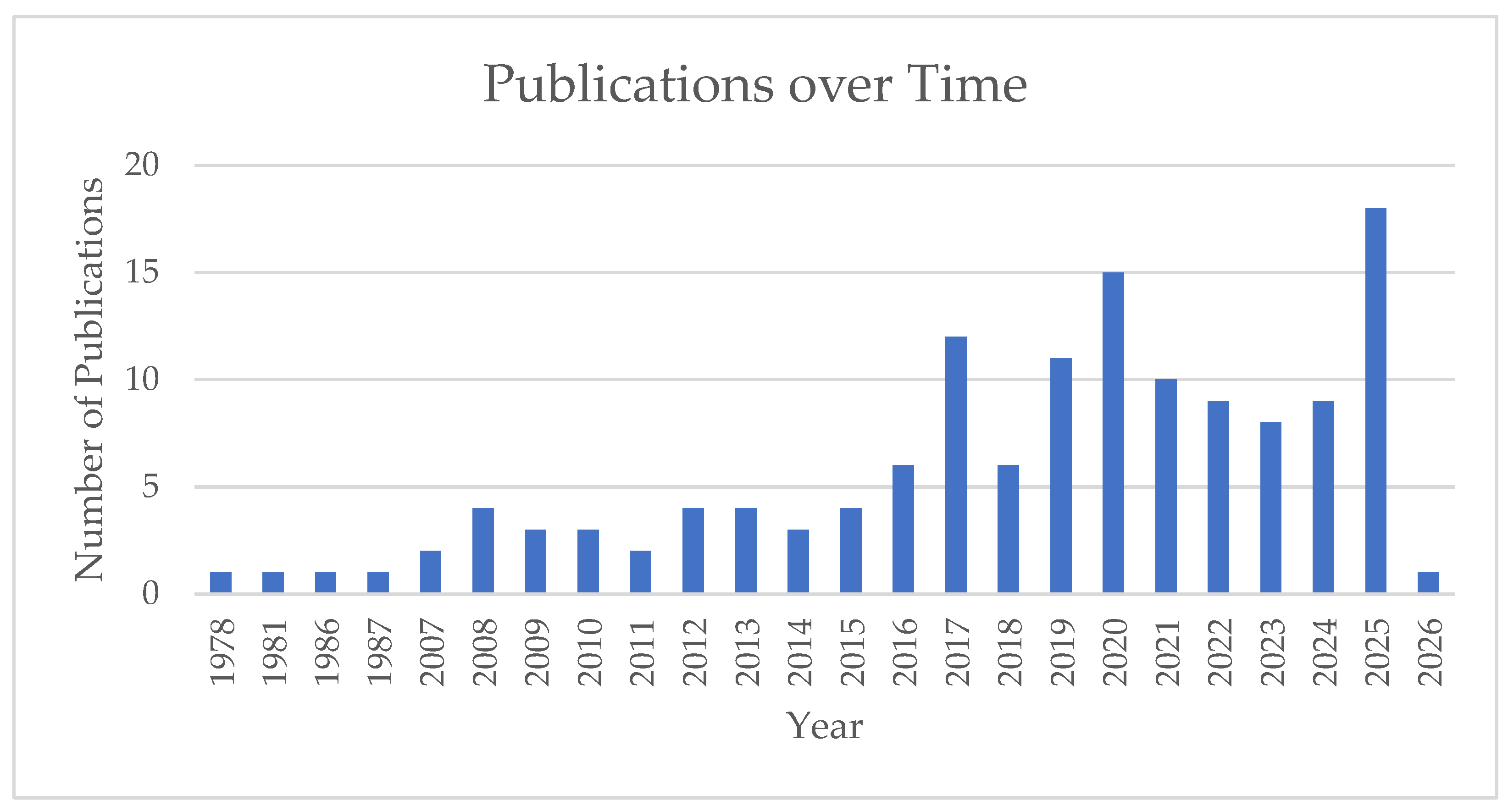
The interrelationship between EE and UX in hospitals was first published and reported in the year 1978. The reviewed literature spans more than four decades, with a historical progression that highlights how the field has moved from a purely technical understanding of energy efficiency to a more holistic view that recognizes users as a critical component of building performance. Early studies primarily focused on thermal comfort and energy conservation as separate technical objectives. UX was largely assessed in terms of basic thermal satisfaction and productivity. From the 1990s, scholars started acknowledging the importance of IEQ in design, incorporating lighting, acoustics, and air quality into the discussion of energy-efficient buildings. The slight decline in publications after 2008 may be attributed to the change in research priorities after the global financial crisis [40]. Figure 2 depicts the increasing trajectory of publications over time, emphasizing an increase in sustainability practices within hospital settings, aligned with the global sustainability and decarbonization agenda. From 2010 onwards, there is a noticeable shift toward human-centered and user-focused approaches, where users’ well-being, satisfaction, and perception became central to evaluating building performance. Studies are increasingly examining how architectural elements such as daylight, views, greenery, and spatial design interact with EE measures. Most recent publications demonstrate an integrated perspective, investigating the complex interaction between EE strategies, IEQ, and users’ well-being, often using mixed-method approaches and advanced monitoring technologies.
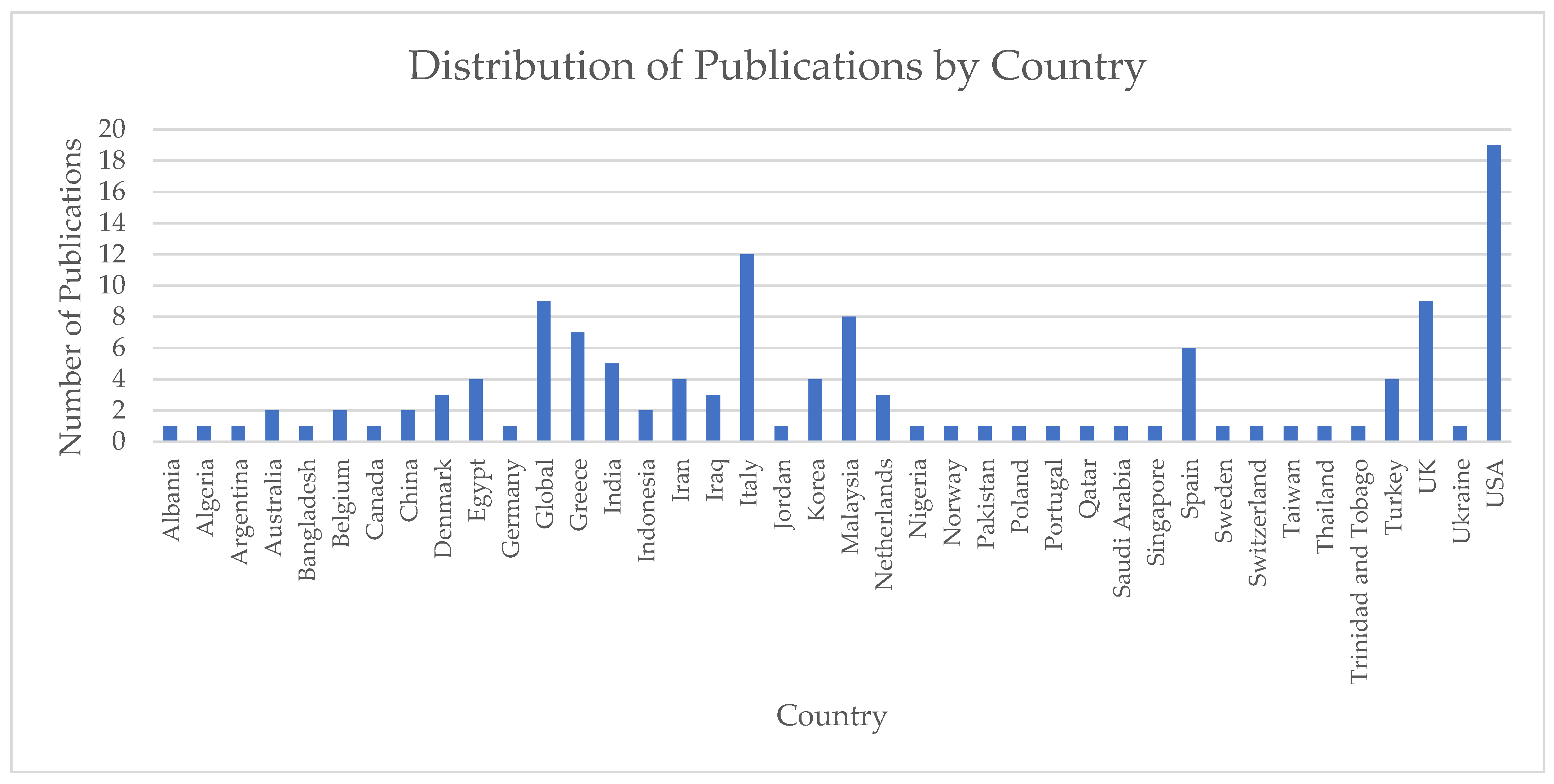
The selected articles were published in 91 different sources including journals and conference proceedings. The majority of publications (n = 8) were published in ‘Energy and Buildings’, followed by ‘Energies’ (n = 7), ‘Buildings’ (n = 6), and ‘Journal of Building Engineering’ (n = 6). The diversity of journals emphasizes the multidisciplinary nature of EE and UX. The classification of the selected publications shows that the USA (n = 19) is the leading country with publications related to EE and UX within hospitals. This is possibly attributed to the high energy consumption of healthcare buildings in the USA which approximates to 9 billion US dollars per year. This intense consumption of energy has prompted greater attention to research on EE in healthcare settings in the USA [41]. Figure 3 illustrates the distribution of publications by country.
Some of the selected publications consisted of reviews which did not focus on a specific country of study and, therefore, have been classified as “Global” in the country classification. Italy (n = 12) and Malaysia (n = 9) also emerged as key contributors in the field. This demonstrates that the USA, Southeast Asia, and Europe are the leading publishing nations. From the Gulf Cooperation Council (GCC) countries, Qatar (n = 1) and Saudi Arabia (n = 1) are the only countries with a publication related to the subject. The selected articles in the review represent research that has been conducted across a total of 40 countries.

3.3. Visualization of Bibliometric Networks

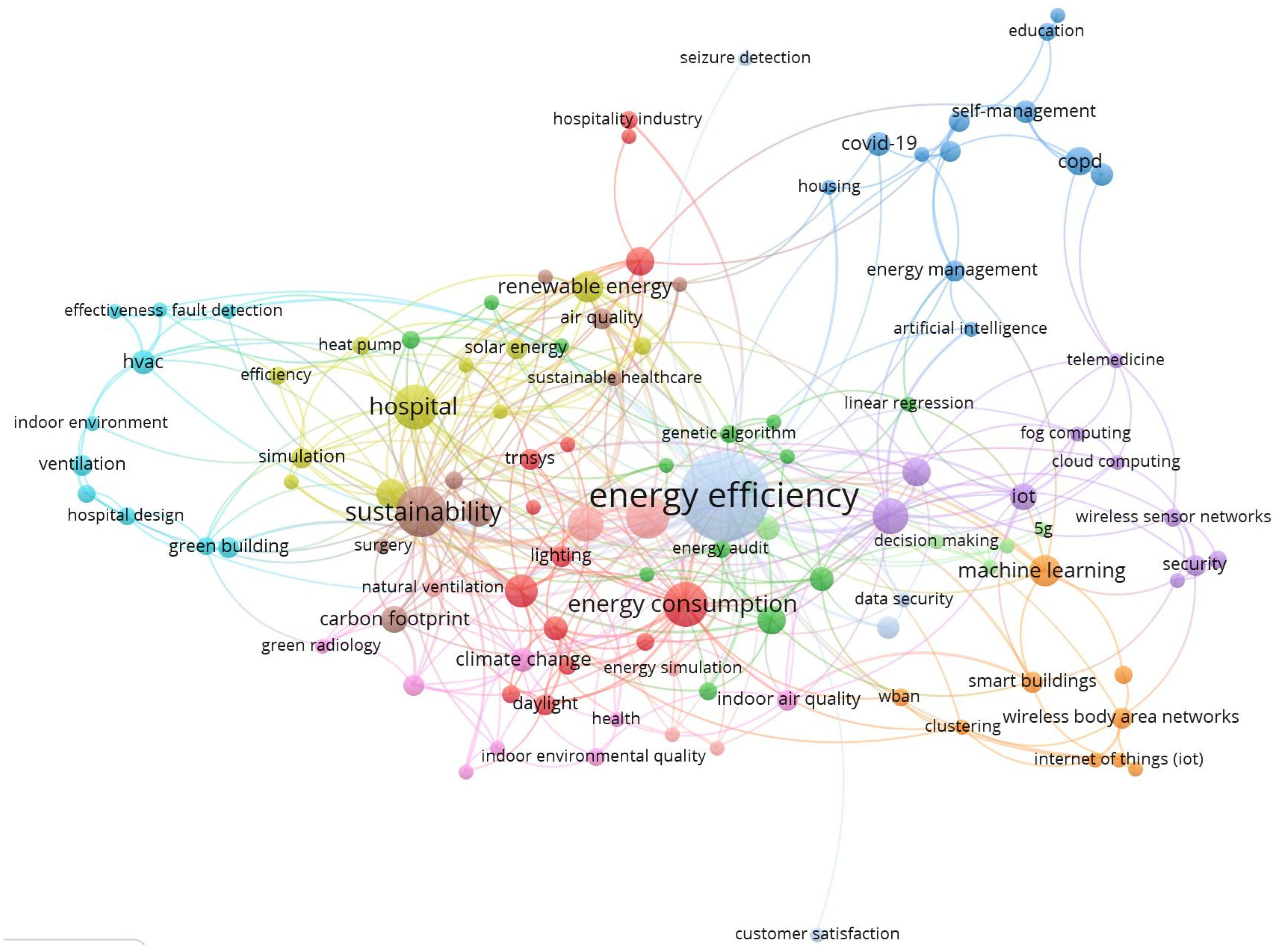
A search was conducted via VOSviewer, version 1.6.20, to create a co-occurrence bibliometric network to visualize the relationship between specific keywords. The Scopus database was used to obtain input data for the bibliometric analysis, using the search query outlined in Section 2. The literature search was conducted on 23 March 2026 and returned 138 documents, published between the years 1978 and 2026, for term co-occurrence analysis in VOSviewer. The minimum occurrence of keywords was set to three, which resulted in a total of 113 keywords, categorized into 12 clusters. The final result of the bibliometric network is illustrated in Figure 4. The network presents a series of interconnected links and nodes emerging from studies on EE and UX in hospitals.
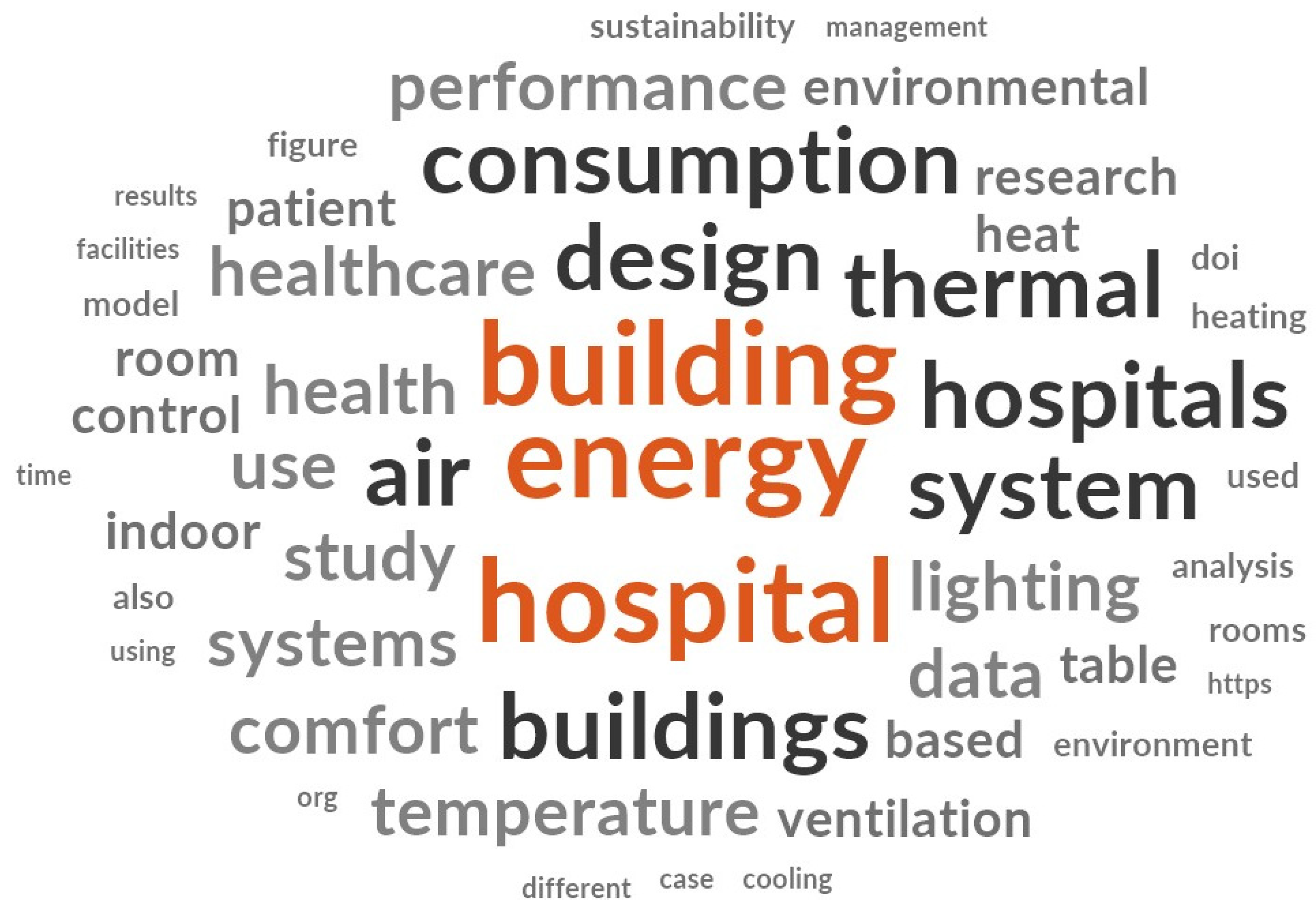
In the bibliometric map, the node size represents keyword frequency, while connectors represent the strength of connections between nodes. The most recurring term is ‘EE’ (87 occurrences), followed by ‘sustainability’ (28 occurrences), ‘hospital’ (23 occurrences), and ‘energy consumption (21 occurrences). The 12 clusters in the network emphasize key thematic areas in literature which have received a high level of attention in existing literature. The largest cluster in light blue represents keywords focused on EE. This is followed by the sustainability cluster in brown, and keywords linked to hospitals in yellow. The red cluster represents terms linked to energy consumption such as lighting and natural ventilation. The aquamarine cluster represents terms linked to the IEQ of hospitals. The dark blue, orange, and purple clusters are interconnected and mainly focused on green and smart technologies associated with enhancing the sustainability of hospitals. The bibliometric network demonstrates the interconnectivity of all of the abovementioned themes, which collaboratively work toward enhancing and developing sustainability in the healthcare industry. It is evident from the initial analysis on VOSviewer that the concept of EE is more recurring in literature, as opposed to UX in hospitals which include thermal comfort and perceptions of the IEQ. An additional search was conducted using NVivo 15 to explore high occurrences of keywords in all of the selected publications (see Figure 5).
The settings were set to outline the top 100 most recurring terms with three letters as the minimum word length. Similarly to the VOSviewer search, the terms ‘building’, ‘energy’, and ‘hospital’ emerged as the most recurring, highlighting the significance of EE in healthcare sustainability. Following the initial search, a thorough review was conducted, where the research team manually coded the publications according to themes using NVivo. The codes are organized based on their links to sustainability in hospitals, environmental sustainability, and social sustainability, and the intersections between sustainability dimensions. The search string did not include any terms related to economic sustainability, and, therefore, no publications were related to the economic dimension. 15 codes in total were generated, as outlined in Table 2. The majority of publications were focused on ‘energy performance’ (n = 59) and ‘sustainable healthcare’ (n = 35).
The analytical process integrated three complementary methods within a unified research design. First, the PRISMA framework was used to ensure a transparent and reproducible selection of relevant studies, forming the final dataset for analysis. Second, bibliometric analysis using VOSviewer was applied to this dataset to identify patterns in keyword co-occurrence, research clusters, and thematic trends within the literature. These results provided a macro-level overview of the intellectual structure of UX in hospitals. Third, NVivo was used to conduct thematic coding of the same dataset to extract and organize recurring qualitative themes related to UX. The bibliometric findings informed and complemented the thematic coding by highlighting dominant research foci, while NVivo provided deeper interpretive insights into the content of those clusters. Finally, the results were synthesized and interpreted through the TCCM framework to systematically structure and position the findings. This sequential and complementary integration ensured methodological coherence across quantitative mapping, qualitative synthesis, and conceptual framing. The following sections present descriptive results of the systematic literature review, guided by the TCCM framework. Findings are categorized by theories (T), contexts (C), characteristics (C), and methods (M).

3.4. Sustainability in Hospitals

A total of 14 articles explored different issues related to sustainability in hospitals. The selection included articles on sustainable healthcare (n = 9), sustainable catering (n = 1), sustainability assessment (n = 3), and climate change mitigation (n = 1).

3.4.1. Theories

The articles concerned with the general sustainability in hospitals showcased several theories and practical concepts related to sustainability. Abu-Shaika’s work aimed to develop sustainable hospital design, with a primary focus on EE and environmental conservation techniques [42]. Ayçam and Yazici’s work was grounded in the underpinnings of green design criteria for hospitals. They examined different aspects related to the IEQ, water management, lighting and energy performance, and waste management [43]. Similarly, Schwab et al. discussed the implementation of green strategies in healthcare buildings [44]. From a more environmental perspective, Pradere et al. reviewed climate-smart strategies to promote sustainability practices in hospitals [45]. Silva et al.’s work discussed the combination of green, smart, and sustainable strategies in hospital environments [46]. Strategies and theories related to facilities management to enhance hospital performance were also discussed [47]. Bozoudis et al. developed key performance indicators as part of a plan to mitigate greenhouse gas emissions [48].
Some articles discussed specific avenues of healthcare sustainability. Pantzartzis et al. emphasized the importance of understanding bed capacity implications to promote sustainability in hospitals [49]. Cui et al. considered modular construction techniques to achieve zero-carbon developments [53]. Bux et al. emphasized the importance of sustainable catering as an environmental criterion of sustainable hospitals [52]. Bulakh and Merylova were more focused on investigating the traditional architecture of underground spaces within hospitals [50]. Ebrahimi et al. were also concerned with improving the physical architectural design of healthcare environments [51].
Various articles discussed and implemented sustainability assessments, which are considered a key theme in sustainable healthcare. Cui et al. utilized the Building Research Establishment Environmental Assessment Method (BREEAM) to evaluate a hospital’s performance and carbon footprint [53]. Golbazi and Aktaz explored the Leadership in Energy and Environmental Design (LEED) rating system [54]. Okeowo et al. were more focused on the air quality of hospitals and therefore implemented the UK’s Clean Air Hospital Framework (CAHF) [55].

3.4.2. Context

The majority of publications discussing the general sustainability of hospitals were conducted in temperate climates in European countries. Limited research has been conducted in hot, humid, and arid climates, with only three studies in Asia. Four articles consisted of a review of literature discussing hospital sustainability [44,46,50,54]. Most of the studies were conducted in large-scale hospitals [47,51,52,55]. Other studies included an army hospital, a university hospital, and general healthcare facilities in Jordan [42,48,53]. Ayçam and Yazici and Pradere et al. focused on operating rooms. One study also included a small-scale hospital as a case study [43,45,49].

3.4.3. Characteristics

The selected studies demonstrated a plethora of variables and relationships related to the general sustainability of hospitals (see Table 3). The strongest relationship is evident between EE and other sustainability aspects, such as pollution and waste, water conservation, IEQ, carbon emissions, cost, technology, user satisfaction, and air quality. The relationship between the spatial design of hospitals, EE, and satisfaction is also emphasized in the literature [43,50,51]. The relationship between sustainability assessment and users’ well-being is also highlighted [54]. A few studies explore bed capacity, KPIs, and climate-smart actions.

3.4.4. Methods

The articles adopted eight different methods to examine the sustainability of hospitals (see Table 4). Literature review emerged as the most used methodology, emphasizing the importance of understanding the current trends and studies in sustainable healthcare. Some studies used narrative reviews, while others utilized a systematic method. Different sustainability assessments were used to analyze healthcare facilities, including Life Cycle Assessments (LCA), Building Research Establishment Environmental Assessment Method (BREAAM), the UK’s Clean Air Hospital Framework (CAHF), and Audits. The questionnaire is a popular tool for evaluating perceptions of satisfaction and performance. LEED checklists, green operating room criteria, energy consumption data, and carbon footprint calculations were utilized to assess different healthcare facilities. Other methods included Multi-Criteria Decision Analysis (MCDA) and interviews.

3.4.5. Findings, Gaps, and Future Pathways in Sustainability

The findings of the articles presented the current trends in the general sustainability of hospitals. They outlined the importance of several sustainability aspects such as EE, waste management, the selection of sustainable materials, IEQ, and technologies such as telemedicine in reducing carbon emissions and achieving net-zero carbon [45,48,53]. Sustainable site planning is also considered a top priority in enhancing healthcare sustainability in hot and arid climates [42]. Silva et al. emphasized the role of users’ behavior in reducing resource consumption in healthcare buildings [46]. Despite the clear opportunities of sustainability within the healthcare sector, the literature presents several barriers to achieving sustainability, such as economic challenges, and labor and skill shortages [44].
Some of the articles suggested that more research on different climates and regions is needed to enrich the literature on sustainable healthcare [53]. Abu-Shaikha proposed the exploration of hybrid models combining AHP and CBA methods to enhance the planning of sustainable healthcare facilities [42]. Future research can also focus on assessing the impact of intelligent lighting, HVAC systems, and sustainable materials in hospitals on energy consumption [46,47].

3.5. Environmental Sustainability: Energy Efficiency (EE) in Hospitals

A total of 76 articles were linked to environmental sustainability. They discussed several issues related to EE in hospitals. These included technological advances (n = 7), HVAC performance (n = 1), environmental performance (n = 5), energy performance (n = 59), and energy management (n = 5).

3.5.1. Theories

The five subcategories are somewhat linked to the energy consumption, efficiency, and performance of hospital buildings, with a distinguished focus on performance. The majority of articles discussed practical implementations of technological models to optimize, enhance, and predict EE and the environmental sustainability of hospitals. Some papers discussed general strategies related to EE, while others focused on particular technical elements of EE such as HVAC systems, lighting control systems, smart systems, and adaptive and kinetic building envelopes. A few studies also performed sustainability assessments and highlighted the importance of audits, monitoring, and benchmarking in understanding energy performance.

3.5.2. Context

Similarly to the articles on general healthcare sustainability, the majority of studies were conducted in Europe (n = 27), followed by Asia (n = 19), and the USA (n = 13). Technology and simulation tools and modeling were used in 21 articles, especially within the last decade [56,57,58,59,69,70,71,72,73,74,75,76,77,78,79,80,81,82,83,84,85]. 12 of the articles were based on a review of literature and did not take place in a physical building [60,61,64,86,87,88,89,90,91,92,93,127]. 18 studies examined large general hospitals in different parts of the world [62,63,65,66,94,95,96,97,98,99,100,101,102,103,104,105,106,128,132,150]. A few articles focused on different hospital typologies such as small hospitals [129], medium hospitals [107], teaching hospitals [108,109], military hospitals [110], and orthopedic hospitals [111].
Several articles focused on specific zones within hospital buildings. These included patients’ rooms [67,68,112,113], medical offices [114], radiology departments [115], the neonatal intensive care Unit [116], nursing units [117], corridors [118], operating theatres [119,120,121,122,123], and entire hospital wards [124].

3.5.3. Characteristics

The literature highlighted different relationships between EE and other sustainability design variables, listed in Table 5. The most frequently cited relationship between EE and other variables is that with comfort, which is evident in 9 publications. This is followed by the relationship between EE and HVAC (n = 6), and EE, lighting (n = 7), and cost (n = 5). Some of the articles presented other relationships which include air quality, ventilation, temperature, IEQ, technology, carbon footprint, medical equipment, and renewable energy. Others include the relationship between EE and spatial design, the building envelope, infection control, management, and solar energy.

3.5.4. Methods

The methodologies used for developing research on EE are listed in Table 6. The most prevalent methodology in the articles is facility analysis through the use of technological models. These mostly include digital simulation models to increase the EE of hospitals. The understanding and quantitative assessment of energy consumption within hospitals is integral for increasing EE, as highlighted by several studies. Many studies discussed case studies, secondary data, and performed narrative and systematic literature reviews. The questionnaire also emerged as a popular methodology and tool for assessing qualitative aspects of EE, such as those related to perceptions of AI integration, perceptions of sick building syndrome (SBS), energy consumption, and perceptions of the healthcare facility [65,99,111,133]. Some articles performed different types of sustainability assessments in hospitals such as an analysis of energy labeling, energy audits, and analysis of environmental performance [66,71,98,125,126,130,131,134,144,145,150]. Interviews with experts, focus group discussions, and other types of facility assessments were conducted, but did not receive much attention in the literature.

3.5.5. Findings, Gaps, and Future Pathways in Environmental Sustainability

The findings from the selected articles on EE in hospitals demonstrate various ways of increasing EE and reducing energy consumption. According to Hwang et al., EE factors are divided into three categories: energy baselines, energy consumption goals, and energy consumption trends for setting energy reduction measures [71]. The adoption of AI, energy management tools, and energy audits is also integral in achieving EE in hospitals [89,98,103]. However, the efficiency of technological interventions for increasing EE is highly dependent on user behavior [86,92]. Kinetic facades also have the potential to increase EE in patients’ rooms [113]. To ensure the effectiveness of EE measures, they must be supported by leadership including the authorities and the management team within healthcare facilities [122].
The adoption of renewable energy sources and implementation of mechanical and electrical improvements can significantly reduce energy consumption [76,102]. Ekhaese et al. and William et al. add that bioclimatic design strategies and efficient retrofitting actions such as envelope refurbishment can decrease energy consumption and energy costs [84,95,111]. Cogeneration, HVAC control, and passive design strategies such as natural ventilation can also contribute to energy savings in hospitals [102,105]. This is due to HVAC’s large contribution to the energy consumption of hospitals due to space heating and cooling, which approximates to 40–65% of total energy usage [92,98,104,150]. Lighting also plays a crucial role in reducing energy consumption in hospitals and is considered the EE measure with the fastest impact [98,116]. Dimmable systems can increase energy savings by more than 35% [75]. Window design strategies including efficient glazing and shading systems can enhance EE and IEQ in patient rooms [67,68]. The size of the hospital, activities, number of beds, climatic zone, building envelope, level of energy management, and equipment maintenance have a direct impact on the energy consumption of hospital buildings. Thus, larger hospitals are presumed to have higher EE potential [89,97]. Hwang et al. argue that the number of beds is the most suitable indicator for quantifying the energy consumption of hospital buildings [71].
The literature highlights a scarcity of consistent benchmarks of hospital energy performance [62]. Cygańska & Kludacz-Alessandri and Eames et al. propose a cross-disciplinary international collaboration along with comparative studies across diverse climatic regions to achieve net-zero healthcare buildings in the future [97,121]. Roletto et al. emphasize the need to promote environmental culture within hospital departments to achieve EE [115]. Reddy et al. suggest that more research should be focused on retrofitting existing healthcare buildings in the path to reduce energy consumption and increase EE [104].

3.6. Social Sustainability: Users’ Experiences (UX) in Hospitals

A total of 21 articles discussed issues related to UX in hospitals, under the umbrella of social sustainability. The majority of articles (n = 9) investigated thermal comfort in hospital settings. The rest of the articles explored IEQ (n = 1), indoor air quality (n = 3), ventilation (n = 1), human-centric design (n = 1), evidence-based design (n = 1), sustainability education and healthcare (n = 2), users’ behavior (n = 1), and lighting (n = 2).

3.6.1. Theories

The majority of articles discuss concepts linked to the thermal comfort of users within hospital environments. Such concepts included measurements of thermal comfort, strategies for enhancing comfort, and recommendations for incorporating tools to enhance comfort levels. Other papers were linked to other factors within the indoor environment of hospitals, such as ventilation, air quality, lighting, and architectural design.

3.6.2. Context

Asia (n = 6) and Europe (n = 5) emerged as the top continents with publications related to UX in hospitals. These included papers published in Malaysia, Korea, India, Pakistan, Italy, Greece, Turkey, and the Netherlands. The UK and Qatar were the regions with the lowest (n = 1) publications. Four articles consisted of reviews and did not physically involve hospital buildings [134,141,144,145,175]. Ahn’s work was based on a simulation methodology and also did not involve a hospital setting [134]. The focus of a few papers was on patient rooms and in-patient wards [135,136,137,143,148]. Other papers looked at general hospitals, a university hospital, and a comparison between green and conventional hospitals [132,133,138,139,142,146]. Hospital operating rooms were also assessed in terms of UX [140,176]. These findings emphasize the diversity of different hospital zones due to their different indoor environment requirements, which directly affect the UX of spaces.

3.6.3. Characteristics

UX in hospitals is an integral aspect of social sustainability within the healthcare sector. The selected articles emphasize the significant role of thermal comfort in UX within hospitals [132,133,134,135,136,137,138,139,143]. Thermal comfort is a subjective quality and refers to perceptions of the thermal qualities of the physical environment [138]. Thermal comfort is considered one of the elements of IEQ within architectural spaces, alongside visual comfort, air quality, and acoustic comfort. Balaras et al., Cannistraro and Bernardo, Dascalaki et al., Khan et al., and Sawyer et al. explored all four dimensions of IEQ to assess UX in hospitals [137,139,140,148,176]. Some studies explored UX through perceptions of architectural design [143,144,145]. Users’ behavior and users’ satisfaction also emerged in some studies related to UX [133,148]. Some studies covered perceptions of ventilation, temperature, air quality, lighting, and HVAC systems [134,139,140,142,143,149]. Sadler et al. investigated the relationship between perceptions of architectural design and the cost of hospital buildings [145]. Saini et al.’s work was more focused on adopting technologies such as the Internet of Things (IoT) to enhance air quality in hospital environments [134]. Table 7 outlines the different variables discussed in the publications.

3.6.4. Methods

Several methods were adopted to explore UX in hospitals. The methods are outlined in Table 8. Many studies performed objective field measurements and monitoring to assess different IEQ conditions such as thermal comfort, temperature, humidity levels, and lighting levels [133,135,136,137,138,139,140,142,148]. The questionnaire also emerged as a popular tool to measure subjective perceptions of ventilation, comfort, IEQ, lighting, sustainability education, and sustainable healthcare practices [41,135,136,138,143,146,147,148,176]. Some studies included a review of literature [134,141,144,145,149]. Only one article utilized a simulation method to optimize the indoor temperature in a cold area, which is applicable to large hospitals among other buildings [175].

3.6.5. Findings, Gaps, and Future Pathways in Social Sustainability

The articles uncovered several findings related to UX in hospitals. Khan and Lucas state the importance of biophilic design in hospitals. They portray that green elements and natural light aid in improving mental and physical well-being in hospital environments [144]. HVAC plays a crucial role in improving both users’ comfort and EE in hospitals [137]. Caner and Ilten outline factors that impact thermal comfort levels, including gender, age, participant type, and room orientation [138]. One of the studies revealed that a radial design for a hospital ward is recommended for enhancing users’ comfort and satisfaction [133].
The existing literature highlights a need for comprehensive design approaches that balance well-being and EE in hospitals [144]. Machine Learning and Deep Learning methodologies have the potential to enhance predictive thermal comfort analysis [137]. To better analyze patient comfort, more studies are needed which focus on the effect of medical treatment on the requirements of thermal comfort [136]. Additionally, a clear method is needed for assessing the complex relationship between lighting, architectural design, and circadian rhythms. This would address the knowledge gap related to spatial design and its impact on users’ circadian experiences.

3.7. The Interrelationship Between EE and UX in Hospitals

This section attempts to answer the research questions outlined in the introduction.

3.7.1. Theories

A total of 27 publications discussed the interrelationship between EE and UX in hospitals. This accounts for about 20% of all selected articles in the systematic literature review. EE is a clear dimension in literature; however, UX is vague and includes different types of subjective experiences within hospitals. The review outlines the following as different types of UX: experiences of visual comfort, experiences of safety, experiences of thermal comfort, experiences of the IEQ, and experiences of the air quality of hospitals. These experiences are further broken down into various categories, as depicted in Table 9. The Theory of Affordances and the Theory of Planned Behavior were referenced in the literature to optimize lighting in hospital environments [151].

3.7.2. Context

Several countries in Asia exhibited numerous publications highlighting the relationship between EE and UX in hospitals. These included India, Taiwan, China, Iran, Malaysia, and Qatar. Europe was also dominant in related publications, and particularly in Spain, Belgium, Italy, and Denmark. Some of the studies consisted of reviews and did not focus on a specific healthcare setting. The patient room proved to be an interesting place of study within hospitals, particularly to examine perceptions of light and its impact on EE. Eisazadeh et al. and Cesari et al. explored the effects of different window systems on energy and visual comfort in patient rooms [152,153,154]. Similarly, Aghajari and Chen, and Alzubaidi and Soori looked at lighting design in patient rooms and its potential to increase EE and patient care through visual comfort [155,156,177]. In efforts to also improve comfort and EE in patient rooms, Gaspari et al. focused on parametric design in hospital retrofitting [157]. Valdiserri et al. focused on using radiant ceiling panels in patient rooms to optimize thermal comfort and EE [158].
The impact of daylighting on EE and patients’ outcomes in the ICU and particularly their circadian response was examined in the literature [159]. Many studies were also conducted in patients’ wards which consist of shared spaces. They had a particular focus on optimizing lighting in these spaces [151,160]. One of the studies had a different focus which discussed the implications of natural ventilation on energy and thermal comfort in patient wards. The hospital waiting room was assessed in terms of lighting and glazing technologies [161]. General hospitals were discussed in numerous publications. Jain et al. conducted a performance evaluation to balance IEQ and energy performance in a general hospital in the UK [162]. The optimization of hospital ventilation systems was also studied through the use of building information modeling [163]. Lighting analysis and building forms were also the focus of one of the studies [164]. Mohammadpour et al.’s work heavily focused on retrofitting hospital buildings to improve EE while ensuring patients’ safety [165,166]. In China, a study was conducted linking IEQ, satisfaction, and energy consumption in a general hospital [167]. Ma et al. also discussed the relationship between thermal comfort and energy consumption in hospitals [168]. Wu & Liu’s focus was on a rehabilitation hospital in a tropical region in China [169].

3.7.3. Characteristics

The selected articles heavily focused on the interrelationship between EE and UX of visual comfort, safety, thermal comfort, and IEQ within hospital environments. These variables highlight a strong relationship between the environmental sustainability and social sustainability of hospitals. Sustainable hospitals have the potential to balance both dimensions to increase the sustainable performance of these infrastructures.

3.7.4. Methods

The publications adopted various methodologies to study the interrelationship between EE and UX, as listed in Table 10. The use of technological tools such as energy simulations, thermal comfort simulations, and lighting simulations is heavily used in literature to optimize visual and thermal comfort while enhancing EE. Reviews, questionnaires, focus groups, facility analysis, and document analysis were also used by some scholars. Post-occupancy evaluations are effective tools for evaluating both qualitative and quantitative measures related to EE and UX.

3.7.5. Findings, Gaps, and Future Pathways in the Interrelationship Between EE and UX in Hospitals

According to Sun et al., the key determinants of thermal comfort in hospitals are the indoor temperature and the time of day [167]. They also suggest that occupant satisfaction is influenced by gender, working hours, and length of stay at the hospital. Adaptive, high-performance glazing has the potential to significantly enhance EE and improve visual comfort in hospitals [152,153,154,170]. Optimal hospital layouts are dependent on stakeholder priorities [24]. Aghajari and Chen suggested increasing the reflectance coefficient of artificial lights to reduce energy consumption while improving visual comfort [177]. Jiang et al. developed a framework to improve thermal comfort, EE and infection control through building information modeling, HVAC adaptive control, and computational fluid dynamics [163]. Harshalatha et al. also proposed a framework that optimizes hospital architectural forms to balance daylight, energy performance, and comfort [164]. Abd. Rahman et al. developed a hybrid system using solar panels to improve the thermal comfort and energy performance of hospitals [171]. Mohammadpour et al. focused on promoting patient safety and EE in retrofitting projects through an innovative framework [165,166]. Sun et al. established an IEQ model and a model for evaluating EE [167]. Gatea et al. highlighted the performance gap between the predicted and actual energy demands of hospital buildings [150]. According to Ma et al., decreasing the energy consumption of healthcare buildings can be summarized into four aspects: reducing HVAC consumption, and enhancing the performance of windows, roofs, and external walls [168].
The literature highlights the scarcity of studies in cool climates, urging the need for comparative studies across geographical regions and the inclusion of climatic variables in simulation models [153,167,170]. Sun et al. suggested in-depth studies to analyze the differences in energy consumption in diverse climate regions [167]. The integration of smart technologies such as AI and IoT and interdisciplinary mixed-method approaches to enhance EE and UX is vital in hospital settings [163,170]. Jain et al. promote the importance of integrated approaches to hospital building performance, which prioritize EE and users’ health [162]. Figueiro emphasizes the need to develop research on sustainable lighting, which has the potential to decrease negative impacts on the environment while enhancing the quality of life and visual comfort [172]. Sfakianaki et al. suggest the development of new building standards which encourage low energy and comfortable buildings [173]. Melikov urged researchers to focus on developing wearable and furniture-integrated HVAC systems to provide building users with ultimate control over their indoor environment while reducing energy usage [174].

4. Data Analysis and Synthesis of Findings

4.1. Linking EE and UX in Hospitals

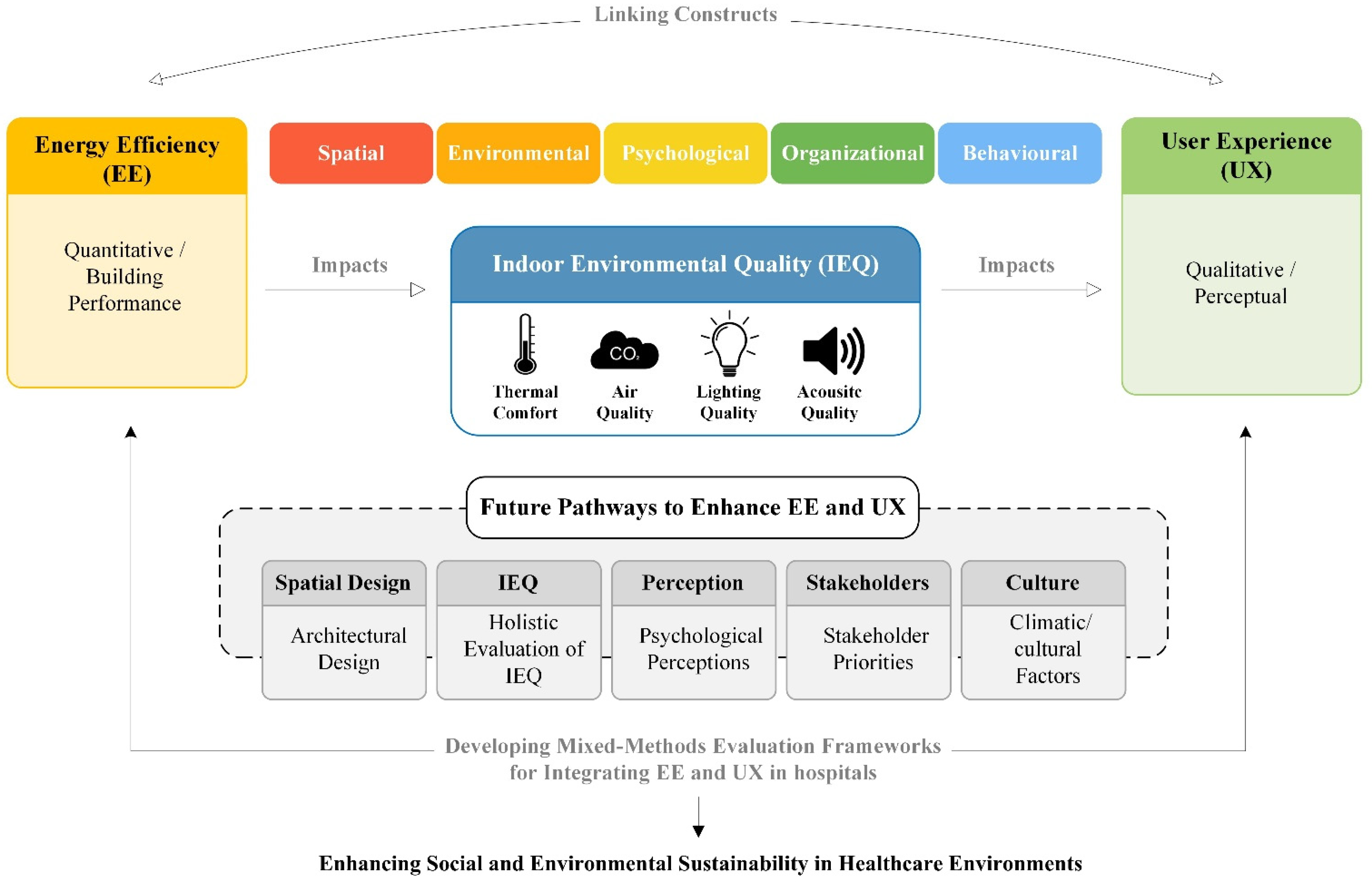
The relationship between EE and UX can be understood through multiple constructs or intersecting dimensions. The intersections can be categorized into spatial, environmental, psychological, behavioral, and organizational intersections, with IEQ as the mediating mechanism linking EE and UX in hospitals. Based on the findings of the review, Figure 6 depicts a graphical representation of a conceptual framework linking EE and UX in hospitals.
UX is mostly associated with visual and thermal comfort. Although the environmental intersection between EE and UX is the most discussed in the literature, a comprehensive evaluation of all IEQ aspects with EE is lacking in the literature. Jain et al. and Sun et al. attempted to holistically assess the relationship between the two domains in hospitals in China and in the UK [162,167]. Spatial architectural qualities have a direct impact on the quality of healthcare and the healing process within hospitals [178]. However, only one of the studies explored the intersections between spatial hospital design and EE, emphasizing the need for further research in this area [24]. A few authors discussed perceptions of satisfaction in hospital settings [151,167,173]. However, there is a lack of studies exploring intersections between psychological aspects such as users’ perceptions of satisfaction, control, productivity and EE in healthcare buildings. Two of the studies discussed behavioral aspects in hospitals, and particularly lighting control interactions [151,170]. This also presents a gap in behavioral studies linking EE and users’ behavior. The integration of policies and guidelines by the organizational entities of hospitals is critical for the optimization of EE and UX. This is briefly explored by Amer et al., demonstrating a gap in the literature [24]. Furthermore, the literature presents contextual, methodological, and policy gaps related to EE and UX in hospitals. According to the findings of the publications, future studies must incorporate mixed-methodological approaches and conduct studies in different climatic locations with diverse cultural backgrounds to enrich research on sustainable healthcare buildings. There is also limited evidence on how post-occupancy evaluations and policies integrate users’ feedback and experiences in energy-efficient hospital designs. Several theoretical, methodological, and contextual gaps are highlighted, which suggest future pathways to promote the environmental and social sustainability of hospitals through stronger interrelationships between EE and UX.
Spatial Design:
Further research can address the impact of spatial design on EE and UX. According to Amer et al., the hospitals’ architectural layout, and particularly the cruciform layout, is critical for improving patients’ privacy [24]. However, more research is needed into how spatial design and layout can impact both social sustainability (UX) and environmental sustainability (EE) in hospitals. González et al. emphasize the complex relationship between spatial design, lighting, and circadian systems [149]. They suggest that there is difficulty in understanding this complex relationship due to the absence of a clear method that assesses the impact of design and lighting on circadian patterns. This further confirms the gap linked to spatial design in the context of EE and UX. Spatial design and energy efficiency strategies are interdependent and should prioritize natural light, acoustic comfort, air quality, and access to views to enhance user experience. From an architectural standpoint, strategies that enhance visual and thermal comfort demonstrate the strongest link between EE and UX. In particular, lighting design and window-related strategies play a central role in achieving this balance.
Mixed Methods:
There is currently a limited utilization of holistic methodologies that explore the relationship between EE and UX in hospitals. Interdisciplinary mixed methodologies and simulations can be developed and adopted to integrate different qualitative and quantitative aspects of hospital design. Despite their complex nature, the integration of qualitative measurements of UX with quantitative EE data can enrich our understanding of hospital sustainability.
IEQ:
There are also very limited studies that address all aspects of IEQ in hospital sustainability. An integrated analysis of all IEQ factors can enhance our understanding of the relationship between environmental factors, energy, and experiences.
Climatic and Cultural Factors:
Several scholars such as Aburumman et al., Eisazadeh et al., and Sun et al., highlighted the need for studies in different geographical regions [153,167,170]. Further studies should take into account climatic and cultural factors to allow for comparability of research findings.
Users’ Behavior and Psychological Perceptions:
Users’ behavior is often neglected in EE studies, highlighting a gap in knowledge in healthcare sustainability. Addressing users’ behavior can significantly reduce resource consumption in healthcare buildings and enhance the efficiency of technological measures [46,86,92]. Furthermore, most studies on UX in hospitals focus on the perceptions of the indoor environment, spatial layout, and physiological measurements. Psychological perceptions are often overlooked due to their complexity and subjective nature. Further research integrating these aspects can enhance our understanding of UX in hospitals.
Stakeholder Priorities:
Stakeholder priorities must be considered as a crucial element during the data collection phase to understand hospital priorities, optimize architectural layouts, and advance EE and UX in hospitals [24].
Integrated Frameworks:
The literature also highlights the scarcity of consistent benchmarks for assessing energy performance, emphasizing the need for standardized evaluation frameworks that integrate EE metrics with UX and IEQ indicators in hospital settings [62].

4.2. Research Gaps

The reviewed literature revealed several research gaps addressing EE and UX in hospitals. There is a limited geographical and climatic diversity within existing studies, with only a few conducted in regions with cooler climates, restricting the generalizability of findings across healthcare contexts. The literature remains fragmented, often examining EE and UX as separate research domains rather than adopting integrated approaches that consider their interdependencies and potential trade-offs. There is also an insufficient understanding of user-centered factors, including the influence of patient characteristics, medical treatment requirements, occupant behavior, and circadian responses on the relationship between building performance and user comfort. The complex interactions between architectural design, lighting, IEQ, and well-being remain inadequately explored. While emerging technologies such as artificial intelligence, Internet of Things (IoT) systems, advanced HVAC controls, intelligent lighting, and renewable energy solutions show considerable potential for improving both EE and UX, empirical evidence regarding their effectiveness in healthcare settings remains limited. Collectively, these gaps highlight the need for more comprehensive, interdisciplinary, and context-sensitive research to better understand and optimize the relationship between energy performance and user experience in hospitals.

4.3. Methodological Limitations

The review identified several methodological limitations within the existing body of research. A key limitation is the absence of standardized frameworks and measurement approaches for evaluating the relationship between EE and UX. Many studies focus on isolated performance indicators, such as energy consumption, thermal comfort, or visual comfort, without employing integrated assessment methods capable of capturing the multidimensional nature of hospital environments. Furthermore, interdisciplinary and mixed-method research designs remain limited, despite the need to combine engineering, architectural, healthcare, and behavioral perspectives to fully understand EE–UX interactions. Another methodological challenge relates to the reliance on simulation-based analyses, as several studies highlight discrepancies between predicted and actual building performance, indicating a persistent performance gap. Finally, existing decision-making and evaluation approaches often lack the complexity required to assess competing sustainability and user-centered objectives simultaneously, suggesting a need for more robust and integrated analytical methodologies. These limitations constrain the development of comprehensive evidence and underscore the need for more rigorous, holistic, and standardized research approaches in future studies.

4.4. Limitations of the Review

The authors acknowledge a few limitations in this review. The first is related to the scope of the search, which was limited to the ‘Scopus’ database. Although Scopus offers extensive interdisciplinary coverage and is widely recognized for bibliometric and systematic review research, the reliance on a single database may limit the comprehensiveness of the retrieved literature and may have introduced publication selection and representational bias, potentially influencing how the relationship between EE and UX in hospitals was framed. Future studies may improve robustness by integrating multiple databases, including Web of Science and cross-validating search results across indexing platforms. The publication type can be extended to include book chapters for comprehensive coverage. The exclusion of inaccessible studies may have affected the comprehensiveness and representativeness of the review. Although multiple retrieval attempts were undertaken, some potentially relevant studies could not be included due to full-text accessibility constraints. Consequently, the final synthesis may be subject to a degree of selection bias, and future reviews may benefit from broader database access and additional retrieval mechanisms, such as interlibrary loan services or direct author correspondence. An additional limitation relates to the broad conceptualization of “user experience,” which varies across studies and may include differing interpretations and measurement approaches, ranging from thermal comfort and satisfaction to broader aspects of well-being and perception. This variability may have influenced comparability across studies and the synthesis of findings. This systematic review was not prospectively registered. A formal review protocol was not prepared; however, the review followed PRISMA guidelines and predefined methodological procedures. Nonetheless, the study provided valuable insights into the interrelationship between EE and UX in hospitals. Addressing the knowledge gaps outlined in this study can positively contribute to the development of sustainable healthcare facilities which enhance both human and planetary health.

5. Conclusions and Future Directions

The findings of this systematic literature review presented several constructs linking EE and UX in hospital environments. EE and UX in hospitals must be prioritized to promote environmental and social sustainability. This review conceptualizes IEQ as the key link between EE and UX in hospitals. While EE strategies influence environmental conditions, these conditions shape perceptions and experiences. This study contributes to knowledge by conceptually integrating EE and UX in hospitals, domains that have previously been examined in isolation. It identifies IEQ as the critical link through which energy performance influences perception. The findings highlight a multi-dimensional understanding of this relationship through several linking constructs.
The findings of this review have important implications for both practice and future research. From a practical perspective, hospital planners, designers, and facility managers should adopt integrated approaches that simultaneously consider EE, UX, IEQ, and patient well-being throughout the design, operation, and retrofitting of healthcare facilities. The implementation of smart technologies, including adaptive HVAC systems, intelligent lighting controls, building information modeling (BIM), and renewable energy solutions, offers significant opportunities to enhance both environmental performance and occupant comfort. Furthermore, sustainability strategies should account for the diverse needs of hospital users and recognize the influence of behavior on building performance. From a research perspective, future studies should focus on developing and validating comprehensive frameworks that assess EE and UX in an integrated manner, while expanding investigations across different climatic regions and healthcare contexts. Greater use of interdisciplinary and mixed-method approaches is also needed to capture the complex interactions between building systems, environmental conditions, and human experiences. Additionally, emerging technologies such as artificial intelligence, Internet of Things (IoT) systems, predictive analytics, and personalized comfort solutions warrant further exploration to support the development of sustainable, energy-efficient, and user-centered hospital environments.
Hospital designers and architects should adopt integrated design approaches that simultaneously optimize energy performance, IEQ, and well-being through daylight optimization, biophilic design, and high-performance building envelopes. Facility managers can support both EE and UX by implementing smart monitoring systems and incorporating occupant feedback into building operation and maintenance decisions. For policymakers, the findings highlight the need for healthcare-specific sustainability guidelines and performance standards that balance environmental objectives with user comfort and health outcomes. Furthermore, hospital retrofit projects should prioritize interventions that deliver dual benefits, such as advanced HVAC systems, adaptive glazing, and sustainable lighting solutions, to enhance both energy efficiency and user experience. By illustrating the constructs linking EE and UX, this study provides the researchers, practitioners, and the healthcare industry with clear priorities for design, retrofit, and facility management decisions that enhance both environmental and social sustainability.

Author Contributions

Conceptualization, N.S.A. and F.A.A.; methodology, N.S.A. and F.A.A.; software, N.S.A. and F.A.A.; validation, N.S.A. and F.A.A.; formal analysis, N.S.A. and F.A.A.; investigation, N.S.A. and F.A.A.; resources, N.S.A. and F.A.A.; data curation, N.S.A. and F.A.A.; writing—original draft preparation, N.S.A. and F.A.A.; writing—review and editing, N.S.A. and F.A.A.; visualization, N.S.A. and F.A.A.; supervision, N.S.A. and F.A.A.; project administration, N.S.A. and F.A.A.; funding acquisition, N.S.A. and F.A.A. All authors have read and agreed to the published version of the manuscript.

Funding

This research received no external funding.

Data Availability Statement

The authors confirm that the data supporting the findings of this study is available within the manuscript.

Conflicts of Interest

The authors declare no potential conflicts of interest with respect to the research, authorship, and publication of this article.

Appendix A

This section includes the PRISMA 2020 checklist (see Table A1) which is used as a comprehensive guide for reporting the results of the systematic review.
Table A1. PRISMA 2020 checklist.
Section and TopicItem #Checklist ItemLocation Where Item Is Reported
TITLE
Title1Identify the report as a systematic review.Title
ABSTRACT
Abstract2See the PRISMA 2020 for Abstracts checklist.Abstract
INTRODUCTION
Rationale3Describe the rationale for the review in the context of existing knowledge.Section 1. Introduction
Objectives4Provide an explicit statement of the objective(s) or question(s) the review addresses.Section 1. Introduction
METHODS
Eligibility criteria5Specify the inclusion and exclusion criteria for the review and how studies were grouped for the syntheses.Section 3.1. Planning of the Systematic Literature Review
Information sources6Specify all databases, registers, websites, organizations, reference lists and other sources searched or consulted to identify studies. Specify the date when each source was last searched or consulted.Section 3.1. Planning of the Systematic Literature Review
Search strategy7Present the full search strategies for all databases, registers and websites, including any filters and limits used.Section 3.1. Planning of the Systematic Literature Review
Selection process8Specify the methods used to decide whether a study met the inclusion criteria of the review, including how many reviewers screened each record and each report retrieved, whether they worked independently, and if applicable, details of automation tools used in the process.Section 3.1. Planning of the Systematic Literature Review
Data collection process9Specify the methods used to collect data from reports, including how many reviewers collected data from each report, whether they worked independently, any processes for obtaining or confirming data from study investigators, and if applicable, details of automation tools used in the process.Section 3.1. Planning of the Systematic Literature Review
Data items10aList and define all outcomes for which data were sought. Specify whether all results that were compatible with each outcome domain in each study were sought (e.g., for all measures, time points, analyses), and if not, the methods used to decide which results to collect.Section 3.1. Planning of the Systematic Literature Review
10bList and define all other variables for which data were sought (e.g., participant and intervention characteristics, funding sources). Describe any assumptions made about any missing or unclear information.Section 3.1. Planning of the Systematic Literature Review
Study risk of bias assessment11Specify the methods used to assess risk of bias in the included studies, including details of the tool(s) used, how many reviewers assessed each study and whether they worked independently, and if applicable, details of automation tools used in the process.Section 3.1. Planning of the Systematic Literature Review
Effect measures12Specify for each outcome the effect measure(s) (e.g., risk ratio, mean difference) used in the synthesis or presentation of results.Section 3.1. Planning of the Systematic Literature Review
Synthesis methods13aDescribe the processes used to decide which studies were eligible for each synthesis (e.g., tabulating the study intervention characteristics and comparing against the planned groups for each synthesis (item #5)).Section 3.1. Planning of the Systematic Literature Review
13bDescribe any methods required to prepare the data for presentation or synthesis, such as handling of missing summary statistics, or data conversions.Section 3.1. Planning of the Systematic Literature Review
13cDescribe any methods used to tabulate or visually display results of individual studies and syntheses.Section 3.1. Planning of the Systematic Literature Review
13dDescribe any methods used to synthesize results and provide a rationale for the choice(s). If meta-analysis was performed, describe the model(s), method(s) to identify the presence and extent of statistical heterogeneity, and software package(s) used.Section 3.1. Planning of the Systematic Literature Review
13eDescribe any methods used to explore possible causes of heterogeneity among study results (e.g., subgroup analysis, meta-regression).Section 3.1. Planning of the Systematic Literature Review
13fDescribe any sensitivity analyses conducted to assess robustness of the synthesized results.Section 3.1. Planning of the Systematic Literature Review
Reporting bias assessment14Describe any methods used to assess risk of bias due to missing results in a synthesis (arising from reporting biases).Section 3.1. Planning of the Systematic Literature Review
Certainty assessment15Describe any methods used to assess certainty (or confidence) in the body of evidence for an outcome.Section 3.1. Planning of the Systematic Literature Review
RESULTS
Study selection16aDescribe the results of the search and selection process, from the number of records identified in the search to the number of studies included in the review, ideally using a flow diagram.Section 3.1. Planning of the Systematic Literature Review
16bCite studies that might appear to meet the inclusion criteria, but which were excluded, and explain why they were excluded.Section 3.1. Planning of the Systematic Literature Review
Study characteristics17Cite each included study and present its characteristics.Section 4.1. Visualization of Bibliometric Networks
Risk of bias in studies18Present assessments of risk of bias for each included study.Section 4.1. Visualization of Bibliometric Networks
Results of individual studies19For all outcomes, present, for each study: (a) summary statistics for each group (where appropriate) and (b) an effect estimate and its precision (e.g., confidence/credible interval), ideally using structured tables or plots.Section 4.1. Visualization of Bibliometric Networks
Results of syntheses20aFor each synthesis, briefly summarize the characteristics and risk of bias among contributing studies.Section 4. Results
20bPresent results of all statistical syntheses conducted. If meta-analysis was done, present for each the summary estimate and its precision (e.g., confidence/credible interval) and measures of statistical heterogeneity. If comparing groups, describe the direction of the effect.Section 4. Results
20cPresent results of all investigations of possible causes of heterogeneity among study results.Section 4. Results
20dPresent results of all sensitivity analyses conducted to assess the robustness of the synthesized results.Section 4. Results
Reporting biases21Present assessments of risk of bias due to missing results (arising from reporting biases) for each synthesis assessed.Section 4. Results
Certainty of evidence22Present assessments of certainty (or confidence) in the body of evidence for each outcome assessed.Section 4. Results
DISCUSSION
Discussion23aProvide a general interpretation of the results in the context of other evidence.Section 5. Discussion
23bDiscuss any limitations of the evidence included in the review.Section 5. Discussion
23cDiscuss any limitations of the review processes used.Section 5. Discussion
23dDiscuss implications of the results for practice, policy, and future research.Section 5. Discussion
OTHER INFORMATION
Registration and protocol24aProvide registration information for the review, including register name and registration number, or state that the review was not registered.Section 6. Conclusions
24bIndicate where the review protocol can be accessed, or state that a protocol was not prepared.Section 6. Conclusions
24cDescribe and explain any amendments to information provided at registration or in the protocol.NA
Support25Describe sources of financial or non-financial support for the review, and the role of the funders or sponsors in the review.Section 7. Patents
Competing interests26Declare any competing interests of review authors.Section 7. Patents
Availability of data, code and other materials27Report which of the following are publicly available and where they can be found: template data collection forms; data extracted from included studies; data used for all analyses; analytic code; any other materials used in the review.Section 7. Patents

References

  1. Cenani, S.; Can, G. Multi-criteria ranking of LEED healthcare criteria for designing green hospitals. J. Build. Eng. 2025, 105, 112443. [Google Scholar] [CrossRef]
  2. Mehra, R.; Sharma, M.K. Measures of sustainability in healthcare. Sustain. Anal. Model. 2021, 1, 100001. [Google Scholar] [CrossRef]
  3. Pichler, P.P.; Jaccard, I.S.; Weisz, U.; Weisz, H. International comparison of health care carbon footprints. Environ. Res. Lett. 2019, 14, 064004. [Google Scholar] [CrossRef]
  4. Chen-Xu, J.; Corda, M.O.; Varga, O.; Viegas, S. Health burden and costs attributable to the carbon footprint of the health sector in the European Union. Environ. Int. 2024, 190, 108828. [Google Scholar] [CrossRef]
  5. Harshalatha Patil, S.; Kini, P.G. Role of space layout and building envelope in hospital energy performance—A context of warm humid climate in India. In Sustainable Resilient Built Environments; Nandineni, R.D., Ang, S., Mohd Nawawi, N.B., Eds.; Springer Nature: Singapore, 2024; pp. 409–419. [Google Scholar] [CrossRef]
  6. Bawaneh, K.; Ghazi Nezami, F.; Rasheduzzaman, M.; Deken, B. Energy consumption analysis and characterization of healthcare facilities in the United States. Energies 2019, 12, 3775. [Google Scholar] [CrossRef]
  7. Alotaiby, R.; Krenyácz, É. Energy efficiency in healthcare institutions. Soc. Econ. 2023, 45, 494–511. [Google Scholar] [CrossRef]
  8. Messmann, L.; Köhler, S.; Antimisaris, K.; Fieber, R.; Thorenz, A.; Tuma, A. Indicator-based environmental and social sustainability assessment of hospitals: A literature review. J. Clean. Prod. 2024, 466, 142721. [Google Scholar] [CrossRef]
  9. Orsini, P.L.; Landi, S.; Leardini, C.; Veronesi, G. Towards greener hospitals: The effect of green organisational practices on climate change mitigation performance. J. Clean. Prod. 2024, 462, 142720. [Google Scholar] [CrossRef]
  10. Ibrahim, M.; Ghofar, A.; Purwanti, L.; Iqbal, S. Sustainability practices in hospitals: A systematic literature review and research agenda. SAGE Open 2025, 15, 21582440251357033. [Google Scholar] [CrossRef]
  11. Tian, Y. A review on factors related to patient comfort experience in hospitals. J. Health Popul. Nutr. 2023, 42, 125. [Google Scholar] [CrossRef]
  12. Hegazy, H.; Essam, M.; Zhang, J.; Zaki, J.N.; Fouda, S.; Elwakkad, M.T. Challenges and opportunities for the design and construction of a sustainable hospital. Innov. Infrastruct. Solut. 2025, 10, 232. [Google Scholar] [CrossRef]
  13. El Khoury, R.; Nasrallah, N.; Toumi, A. ESG and performance in public health-care companies: The role of disclosure and director liability. Compet. Rev. 2023, 33, 203–221. [Google Scholar] [CrossRef]
  14. Rahat, N.; Sahni, S.; Nasim, S. Mapping sustainability practices in the healthcare sector: A systematic literature review and future research agenda. Int. J. Consum. Stud. 2024, 48, e12997. [Google Scholar] [CrossRef]
  15. Berniak-Woźny, J.; Rataj, M. Towards green and sustainable healthcare: A literature review and research agenda for green leadership in the healthcare sector. Int. J. Environ. Res. Public Health 2023, 20, 908. [Google Scholar] [CrossRef]
  16. Cimprich, A.; Santillán-Saldivar, J.; Thiel, C.L.; Sonnemann, G.; Young, S.B. Potential for industrial ecology to support healthcare sustainability: Scoping review of a fragmented literature and conceptual framework for future research. J. Ind. Ecol. 2019, 23, 1344–1352. [Google Scholar] [CrossRef]
  17. Del Bene, L.; Leoni, G.; Vermiglio, C.; Zarone, V. Sustainable development practices in healthcare: A systematic review. J. Health Organ Manag. 2025, 39, 991–1010. [Google Scholar] [CrossRef]
  18. Lennox, L.; Linwood-Amor, A.; Maher, L.; Reed, J. Making change last? Exploring the value of sustainability approaches in healthcare: A scoping review. Health Res. Policy Syst. 2020, 18, 120. [Google Scholar] [CrossRef]
  19. Li, Y.; Pan, X.; Han, Y.; Taylor, J.E. Sustainable healthcare facilities: A scoping review. J. Constr. Eng. Manag. 2021, 147, 03121007. [Google Scholar] [CrossRef]
  20. Punnakitikashem, P.; Hallinger, P. Bibliometric review of the knowledge base on healthcare management for sustainability, 1994–2018. Sustainability 2019, 12, 205. [Google Scholar] [CrossRef]
  21. Sahoo, M.; Kumar, A.; Thakur, V. Promoting green healthcare initiatives: A systematic literature review, conceptual framework and future research agenda. J. Clean. Prod. 2025, 498, 145024. [Google Scholar] [CrossRef]
  22. Sherman, J.D.; Thiel, C.; MacNeill, A.; Eckelman, M.J.; Dubrow, R.; Hopf, H.; Lagasse, R.; Bialowitz, J.; Costello, A.; Forbes, M.; et al. The green print: Advancement of environmental sustainability in healthcare. Resour. Conserv. Recycl. 2020, 161, 104882. [Google Scholar] [CrossRef]
  23. Vishwakarma, L.P.; Singh, R.K.; Mishra, R.; Kumari, A. Application of artificial intelligence for resilient and sustainable healthcare system: Systematic literature review and future research directions. Int. J. Prod. Res. 2025, 63, 822–844. [Google Scholar] [CrossRef]
  24. Amer, M.; Mashaly, I.; Sherif, A. Framework for balancing socio-spatial, energy, and daylighting objectives in healthcare facilities design. J. Build. Eng. 2025, 111, 113342. [Google Scholar] [CrossRef]
  25. Ackley, A.; Olanrewaju, O.I.; Oyefusi, O.N.; Enegbuma, W.I.; Olaoye, T.S.; Ehimatie, A.E.; Ukpong, E.; Akpan-Idiok, P. Indoor environmental quality (IEQ) in healthcare facilities: A systematic literature review and gap analysis. J. Build. Eng. 2024, 86, 108787. [Google Scholar] [CrossRef]
  26. Read, J.; Meath, C. A conceptual framework for sustainable evidence-based design for aligning therapeutic and sustainability outcomes in healthcare facilities: A systematic literature review. Health Environ. Res. Des. J. 2025, 18, 86–107. [Google Scholar] [CrossRef] [PubMed]
  27. Hafez, F.S.; Sa’di, B.; Safa-Gamal, M.; Taufiq-Yap, Y.H.; Alrifaey, M.; Seyedmahmoudian, M.; Stojcevski, A.; Horan, B.; Mekhilef, S. Energy efficiency in sustainable buildings: A systematic review with taxonomy, challenges, motivations, methodological aspects, recommendations, and pathways for future research. Energy Strat. Rev. 2023, 45, 101013. [Google Scholar] [CrossRef]
  28. Al Khalifa, F.A. Adaptation of international sustainability rating tools to Bahrain: A comparative analysis of eleven systems. Archnet-IJAR 2019, 13, 169–193. [Google Scholar] [CrossRef]
  29. Tekbıyık Ersoy, N. Energy efficiency and the need for energy efficiency. In Energy Efficiency and Renewable Energy Policies; Springer Nature: Cham, Switzerland, 2025; pp. 1–5. [Google Scholar] [CrossRef]
  30. Nematchoua, M.K.; Yvon, A.; Roy, S.E.J.; Ralijaona, C.G.; Mamiharijaona, R.; Razafinjaka, J.N.; Tefy, R. A review on energy consumption in residential and commercial buildings in tropical regions of the Indian Ocean: Madagascar case. J. Energy Storage. 2019, 24, 100748. [Google Scholar] [CrossRef]
  31. Vehmas, J.; Kaivo-oja, J.; Luukkanen, J. Energy efficiency as a driver of total primary energy supply in EU-28 countries: Incremental decomposition analysis. Heliyon 2018, 4, e00878. [Google Scholar] [CrossRef]
  32. Foggia, G. Energy efficiency measures in buildings for achieving sustainable development goals. Heliyon 2018, 4, e00953. [Google Scholar] [CrossRef]
  33. Franco, A. Balancing user comfort and energy efficiency in public buildings through social interaction by ICT systems. Systems 2020, 8, 29. [Google Scholar] [CrossRef]
  34. Niza, I.L.; Luz, I.M.D.; Bueno, A.M.; Broday, E.E. Thermal comfort and energy efficiency: Challenges, barriers, and steps towards sustainability. Smart Cities 2022, 5, 1721–1741. [Google Scholar] [CrossRef]
  35. Paul, J.; Barari, M. Meta-analysis and traditional systematic literature reviews—What, why, when, where, and how? Psychol. Mark. 2022, 39, 1099–1115. [Google Scholar] [CrossRef]
  36. Paul, J.; Merchant, A.; Dwivedi, Y.K.; Rose, G. Writing an impactful review article: What do we know and what do we need to know? J. Bus. Res. 2021, 133, 337–340. [Google Scholar] [CrossRef]
  37. Paul, J.; Khatri, P.; Kaur Duggal, H. Frameworks for developing impactful systematic literature reviews and theory building: What, why and how? J. Decis. Syst. 2024, 33, 537–550. [Google Scholar] [CrossRef]
  38. Aaltonen, P.H.M. Piecing together a puzzle—A review and research agenda on internationalization and the promise of exaptation. Int. Bus. Rev. 2020, 29, 101664. [Google Scholar] [CrossRef]
  39. Page, M.J.; McKenzie, J.E.; Bossuyt, P.M.; Boutron, I.; Hoffmann, T.C.; Mulrow, C.D.; Shamseer, L.; Tetzlaff, J.M.; Akl, E.A.; Brennan, S.E.; et al. The PRISMA 2020 statement: An updated guideline for reporting systematic reviews. BMJ 2021, 372, n71. [Google Scholar] [CrossRef]
  40. Li, Y.; Zhang, H.; Shen, X.; Sun, B.; Qu, K. Evaluating building performance and patient well-being in healthcare facilities: A literature review of environmental quality and design strategies. J. Build. Eng. 2024, 98, 111031. [Google Scholar] [CrossRef]
  41. Davis, R.G.; McCunn, L.J.; Wilkerson, A.; Safranek, S. Nurses’ satisfaction with patient room lighting conditions: A study of nurses in four hospitals with differences in the environment of care. Health Environ. Res. Des. J. 2020, 13, 110–124. [Google Scholar] [CrossRef] [PubMed]
  42. Abu-Shaikha, M.F. Enhancing sustainable hospital design in Jordan: An AHP-based approach to energy efficiency and environmental protection. Results Eng. 2025, 26, 105319. [Google Scholar] [CrossRef]
  43. Ayçam, İ.; Yazici, A. Evaluation of operating room units within the context of green design criteria. J. Sci. 2017, 30, 1–15. [Google Scholar]
  44. Schwab, R.; Schiestl, L.J.; Hasenburg, A. Greening the future of healthcare: Implementation of sustainability strategies in German hospitals and beyond—A review. Front. Public Health 2025, 13, 1559132. [Google Scholar] [CrossRef]
  45. Pradere, B.; Mallet, R.; de La Taille, A.; Bladou, F.; Prunet, D.; Beurrier, S.; Bardet, F.; Game, X.; Fournier, G.; Lechevallier, E.; et al. Climate-smart actions in the operating theatre for improving sustainability practices: A systematic review. Eur. Urol. 2023, 83, 331–342. [Google Scholar] [CrossRef] [PubMed]
  46. Silva, B.V.F.; Holm-Nielsen, J.B.; Sadrizadeh, S.; Teles, M.P.R.; Kiani-Moghaddam, M.; Arabkoohsar, A. Sustainable, green, or smart? Pathways for energy-efficient healthcare buildings. Sustain. Cities Soc. 2024, 100, 105013. [Google Scholar] [CrossRef]
  47. Fotovatfard, A.; Heravi, G. Identifying key performance indicators for healthcare facilities maintenance. J. Build. Eng. 2021, 42, 102838. [Google Scholar] [CrossRef]
  48. Bozoudis, V.; Sebos, I.; Tsakanikas, A. Action plan for the mitigation of greenhouse gas emissions in hospital-based healthcare of the Hellenic Army. Environ. Monit. Assess. 2022, 194, 221. [Google Scholar] [CrossRef]
  49. Pantzartzis, E.; Edum-Fotwe, F.T.; Price, A.D.F. Sustainable healthcare facilities: Reconciling bed capacity and local needs. Int. J. Sustain. Built Environ. 2017, 6, 54–68. [Google Scholar] [CrossRef]
  50. Bulakh, I.; Merylova, I. Sustainable hospital architecture—Potential of underground spaces. Civ. Eng. Archit. 2020, 8, 1127–1135. [Google Scholar] [CrossRef]
  51. Ebrahimi, A.; Mardomi, K.; Hassanpour Rahimabad, K. Architecture capabilities to improve healthcare environments. Trauma Mon. 2013, 18, 21–27. [Google Scholar] [CrossRef]
  52. Bux, C.; Zizzo, G.; Amicarelli, V. A combined evaluation of energy efficiency, customer satisfaction and food waste in the healthcare sector by comparing cook-hold and cook-chill catering. J. Clean. Prod. 2023, 429, 139594. [Google Scholar] [CrossRef]
  53. Cui, D.; Zhao, H.Y.; Zhang, R. Approaching zero-carbon development through modular construction: A case study of healthcare buildings in London. Indoor Built Environ. 2025, 34, 1404–1421. [Google Scholar] [CrossRef]
  54. Golbazi, M.; Aktas, C.B. LEED certification and patient wellbeing in green healthcare facilities. J. Green Build. 2020, 15, 3–18. [Google Scholar] [CrossRef]
  55. Okeowo, B.; Dixon, J.; Entwistle, J.A.; James, P.; Malone, D.; Middlemass, L.; Mills, A.-L.; Namdeo, A.; Deary, M.E. Cleaner air, healthier hospitals: Implementing the UK’s clean air hospital framework. J. Environ. Manag. 2025, 391, 126468. [Google Scholar] [CrossRef] [PubMed]
  56. Saba, T.; Haseeb, K.; Ahmed, I.; Rehman, A. Secure and energy-efficient framework using internet of medical things for e-healthcare. J. Infect. Public Health 2020, 13, 1567–1575. [Google Scholar] [CrossRef]
  57. Shin, S.; Baek, K.; So, H. Rapid prediction of local mean age of air for energy-efficient ventilation systems using permutation feature importance. Int. J. Energy Res. 2025, 2025, 3878472. [Google Scholar] [CrossRef]
  58. Tera, S.; Kolan, S. Enhanced occupancy detection system using ultrasonic/PIR sensors: Improving accuracy and efficiency in smart environments. Proc. Eng. Sci. 2024, 6, 1603–1610. [Google Scholar] [CrossRef]
  59. Yang, Y.; Bjørnskov, J.; Jradi, M. Optimizing HVAC systems with model predictive control: Integrating ontology-based semantic models for energy efficiency and comfort. Front. Energy Res. 2025, 13, 1542107. [Google Scholar] [CrossRef]
  60. Ahad, A.; Tahir, M.; Yau, K.L. 5G-based smart healthcare network: Architecture, taxonomy, challenges and future research directions. IEEE Access 2019, 7, 100747–100762. [Google Scholar] [CrossRef]
  61. Ahad, A.; Tahir, M.; Sheikh, M.A.; Ahmed, K.I.; Mughees, A.; Numani, A. Technologies trend towards 5G network for smart healthcare using IoT: A review. Sensors 2020, 20, 4047. [Google Scholar] [CrossRef]
  62. Bagnasco, A.; Catanzariti, R.; Coppi, L.; Fresi, F.; Silvestro, F.; Vinci, A. Multi facility energy monitoring in medical structures: Defining KPIs for energy saving and exporting best practices. Int. J. Heat Technol. 2017, 35, S214–S220. [Google Scholar] [CrossRef]
  63. Mohd, A.K.; Ahmad, E.Z.; Razak, T.R.; Jarimi, H. Expertise-based systematic guidelines for chiller retrofitting in healthcare facilities. J. Build. Eng. 2023, 74, 106708. [Google Scholar] [CrossRef]
  64. McGain, F.; Naylor, C. Environmental sustainability in hospitals—A systematic review and research agenda. J. Health Serv. Res. Policy 2014, 19, 245–252. [Google Scholar] [CrossRef]
  65. Jongwutiwes, N.; Thiengkamol, N.; Thiengkamol, T. Development of hospital environmental management model through PAIC process. Mediterr. J. Soc. Sci. 2012, 3, 303–310. [Google Scholar]
  66. Kumar, C.; Chaudhary, R. Environmental sustainability practices in hospitals of Bihar. Curr. Res. Environ. Sustain. 2021, 3, 100106. [Google Scholar] [CrossRef]
  67. Eisazadeh, N.; De Troyer, F.; Allacker, K. Window design strategies for environmentally friendly and energy efficient patient rooms: A case study in the Belgian context. IOP Conf. Ser. Earth Environ. Sci. 2019, 290, 012074. [Google Scholar] [CrossRef]
  68. Eisazadeh, N.; De Troyer, F.; Allacker, K. Environmental performance of window systems in patient rooms: A case study in the Belgian context. IOP Conf. Ser. Earth Environ. Sci. 2019, 323, 012151. [Google Scholar] [CrossRef]
  69. Buonomano, A.; Montanaro, U.; Palombo, A.; Santini, S. Dynamic building energy performance analysis: A new adaptive control strategy for stringent thermohygrometric indoor air requirements. Appl. Energy 2016, 163, 361–386. [Google Scholar] [CrossRef]
  70. Febrero-Garrido, L.; López-González, J.L.; Eguía-Oller, P.; Granada-Álvarez, E. Development of a calibrated simulation method for airborne particles to optimize energy consumption in operating rooms. Energies 2019, 12, 2433. [Google Scholar] [CrossRef]
  71. Hwang, D.K.; Cho, J.; Moon, J. Feasibility study on energy audit and data-driven analysis procedure for building energy efficiency: Benchmarking in Korean hospital buildings. Energies 2019, 12, 3006. [Google Scholar] [CrossRef]
  72. Khelil, S.; Khelil, A.E.; Bouzir, T.; Berkouk, D.; Zemmouri, N. Assessing the effect of building skin adaptability on energy consumption in hot arid regions. Basic Appl. Sci.-Sci. J. King Faisal Univ. 2022, 23, 1–8. [Google Scholar] [CrossRef]
  73. Martini, I.; Discoli, C.; Rosenfeld, E. Methodology developed for the analysis of energy-productive building modules in the health network. Int. J. Energy Environ. Econ. 2011, 17, 69–81. [Google Scholar]
  74. Montiel-Santiago, F.J.; Hermoso-Orzáez, M.J.; Terrados-Cepeda, J. Sustainability and energy efficiency: BIM 6D. Study of the BIM methodology applied to hospital buildings. Value of interior lighting and daylight in energy simulation. Sustainability 2020, 12, 5731. [Google Scholar] [CrossRef]
  75. Papantoniou, S.; Kolokotsa, D.; Kalaitzakis, K.; Cesarini, D.N.; Cubi, E.; Cristalli, C. Adaptive lighting controllers using smart sensors. Int. J. Sustain. Energy 2016, 35, 537–553. [Google Scholar] [CrossRef]
  76. Pooyanfar, M.; Topal, H. Assessing effectiveness of integrated building design parameters on energy performance and emissions in healthcare facilities by means of building energy modelling. J. Therm. Sci. Technol. 2018, 38, 151–165. [Google Scholar]
  77. Putra, N.S.D.; Anggoro, T.; Winarta, A. Experimental study of heat pipe heat exchanger in hospital HVAC system for energy conservation. Int. J. Adv. Sci. Eng. Inf. Technol. 2017, 7, 871. [Google Scholar] [CrossRef]
  78. Sleiman, H.; Hempel, S.; Traversari, R.; Bruinenberg, S. An assisted workflow for the early design of nearly zero emission healthcare buildings. Energies 2017, 10, 993. [Google Scholar] [CrossRef]
  79. Teke, A.; Timur, O.; Çağatay Bayındır, K. Development and testing of an energy saving tool—Suitability analysis with case study. Int. J. Electr. Power Energy Syst. 2016, 77, 59–69. [Google Scholar] [CrossRef]
  80. Traversari, R.; Den Hoed, M.; Di Giulio, R.; Bomhof, F. Towards sustainability through energy efficient buildings design: Semantic labels. Entrep. Sustain. Issues. 2017, 4, 243–256. [Google Scholar] [CrossRef] [PubMed]
  81. Uddin, M.N.; Ruva, I.J.; Syed, A.; Hossain, D.; Akter, R.; Tamanna, N.; Rahman, A.; Saka, A. Occupant-centric energy renovation strategy for hospital and restaurant building envelope using distinct modelling tools: A case study from low-income cultural context. Energy Build. 2022, 272, 112338. [Google Scholar] [CrossRef]
  82. Vaziri, S.M.; Rezaee, B.; Monirian, M.A. Utilizing renewable energy sources efficiently in hospitals using demand dispatch. Renew. Energy 2020, 151, 551–562. [Google Scholar] [CrossRef]
  83. Wang, Q.; Wang, T.; Li, J. Patient flow prediction-based energy savings in green hospitals: A simulation study. IEEE Robot. Autom. Lett. 2024, 9, 7859–7866. [Google Scholar] [CrossRef]
  84. William, M.A.; Elharidi, A.M.; Hanafy, A.A.; Attia, A.; Elhelw, M. Energy-efficient retrofitting strategies for healthcare facilities in hot-humid climate: Parametric and economical analysis. Alex. Eng. J. 2020, 59, 4549–4562. [Google Scholar] [CrossRef]
  85. Younger, W.J. Using interval meter data for improved facility management. Energy Eng. 2007, 104, 21–33. [Google Scholar] [CrossRef]
  86. Adderley, A.E.; O’Callaghan, P.W.; Probert, S.D. Prospects for energy thrift in Welsh hospitals. Appl. Energy 1987, 26, 83–96. [Google Scholar] [CrossRef]
  87. DeRoos, R.L. Environmental health and safety concerns and energy conservation practices in academic institutions and hospitals. Am. J. Public Health 1978, 68, 1011–1015. [Google Scholar] [CrossRef][Green Version]
  88. Franco, A.; Shaker, M.; Kalubi, D.; Hostettler, S. A review of sustainable energy access and technologies for healthcare facilities in the Global South. Sustain. Energy Technol. Assess. 2017, 22, 92–105. [Google Scholar] [CrossRef]
  89. Kolokotsa, D.; Tsoutsos, T.; Papantoniou, S. Energy conservation techniques for hospital buildings. Adv. Build. Energy Res. 2012, 6, 159–172. [Google Scholar] [CrossRef]
  90. Li, Y.; Tang, J.; Noakes, C.; Hodgson, M.J. Engineering control of respiratory infection and low-energy design of healthcare facilities. Sci. Technol. Built Environ. 2015, 21, 25–34. [Google Scholar] [CrossRef]
  91. Marmion, P. Rethinking hospital design. ASHRAE J. 2012, 54, 84–93. [Google Scholar]
  92. Papadakis, N.; Katsaprakakis, D.A. A review of energy efficiency interventions in public buildings. Energies 2023, 16, 6329. [Google Scholar] [CrossRef]
  93. Schipper, L.; Meyers, S.; Ketoff, A.N. Energy use in the service sector. Energy Policy 1986, 14, 201–218. [Google Scholar] [CrossRef]
  94. Ahmed, T.M.F.; Rajagopalan, P.; Fuller, R. Experimental validation of an energy model of a day surgery/procedure centre in Victoria. J. Build. Eng. 2017, 10, 1–12. [Google Scholar] [CrossRef]
  95. Ascione, F.; Bianco, N.; De Masi, R.F.; Vanoli, G.P. Rehabilitation of the building envelope of hospitals: Achievable energy savings and microclimatic control on varying the HVAC systems in Mediterranean climates. Energy Build. 2013, 60, 125–138. [Google Scholar] [CrossRef]
  96. Briller, D.L. Patients and urgency: Strategies for designing sustainable and energy-efficient hospitals for the 21st century. Energy Eng. 2014, 111, 22–80. [Google Scholar] [CrossRef]
  97. Cygańska, M.; Kludacz-Alessandri, M. Energy consumption trends and determinants in Polish hospitals: Implications for energy efficiency strategies. Sustainability 2024, 16, 9153. [Google Scholar] [CrossRef]
  98. Dorri, A.; Dhoska, K.; Saidjon, K. Energy efficiency analysis in Korça Regional Hospital. Int. J. Innov. Technol. Interdiscip. Sci. 2023, 6, 1121–1129. [Google Scholar] [CrossRef]
  99. Kim, H.G.; Jeong, D.W.; Kwon, S.J.; Kim, S.S. Development of building energy performance benchmark for hospitals. Buildings 2023, 13, 12. [Google Scholar] [CrossRef]
  100. McClanathan, J. Low EUI community hospital. ASHRAE J. 2013, 55, 6. [Google Scholar]
  101. Mejía, K.J.; Barbero-Barrera, M.D.M.; Rodríguez Pérez, M. Evaluation of the impact of the envelope system on thermal energy demand in hospital buildings. Buildings 2020, 10, 250. [Google Scholar] [CrossRef]
  102. Ostroy, L. Energy conservation in large hospitals & medical centers. J. Clin. Eng. 1981, 6, 125–130. [Google Scholar] [CrossRef] [PubMed]
  103. Pariso, P.; Picariello, M.; Marino, A. AI integration in energy management: Enhancing efficiency in Italian hospitals. Health Econ. Rev. 2025, 15, 40. [Google Scholar] [CrossRef] [PubMed]
  104. Reddy, S.; Sandbhor, S.; Dabir, V. Bringing energy efficiency for hospital building through conservative and preventive measures. Int. J. Innov. Technol. Explor. Eng. 2019, 8, 3056–3060. [Google Scholar] [CrossRef]
  105. Short, C.A.; Al-Maiyah, S. Design strategy for low-energy ventilation and cooling of hospitals. Build. Res. Inf. 2009, 37, 264–292. [Google Scholar] [CrossRef]
  106. Sun, Y.; Zhang, W.; Zhang, C. Preliminary study on natural ventilation for hospital building in hot and humid regions. In Proceedings of the 30th International Plea Conference, Ahmedabad, India, 16–18 December 2014. [Google Scholar]
  107. Gordo, E.; Campos, A.; Coelho, D. Energy efficiency in a hospital building: Case study—Hospitais da Universidade de Coimbra. In Proceedings of the Proceedings of the 2011 3rd International Youth Conference on Energetics (IYCE), Leiria, Portugal, 7–9 July 2011; pp. 1–6. [Google Scholar]
  108. Rohde, T.; Martinez, R. Equipment and energy usage in a large teaching hospital in Norway. J. Heal. Eng. 2015, 6, 419–434. [Google Scholar] [CrossRef]
  109. Silvestro, F.; Bagnasco, A.; Lanza, I.; Massucco, S.; Vinci, A. Energy efficient policy and real time energy monitoring in a large hospital facility: A case study. Int. J. Heat Technol. 2017, 35, S221–S227. [Google Scholar] [CrossRef]
  110. Lavy, S.; Kiss, C.W.; Fernandez-Solis, J.L. Linking design and energy performance in U.S. military hospitals. Arch. Eng. Des. Manag. 2015, 11, 41–64. [Google Scholar] [CrossRef]
  111. Ekhaese, E.N.; Mohammed, I.A.; Akindoyin, P.O. Bioclimatic design strategies and energy efficiency in an orthopaedic hospital in Nigerian cities: A cross-sectional study. J. Infrastruct. Policy Dev. 2024, 8, 2736. [Google Scholar] [CrossRef]
  112. Calama-González, C.M.; León-Rodríguez, Á.L.; Suárez, R. Daylighting and energy performance evaluation of an egg-crate device for hospital building retrofitting in a Mediterranean climate. Sustainability 2018, 10, 2714. [Google Scholar] [CrossRef]
  113. Hasan, A.; Kamoona, G. Effects of kinetic façades on energy performance: A simulation in patient’s rooms of a hospital in Iraq. Eng. Environ. Sci. 2023, 10, 178–193. [Google Scholar]
  114. Gomes, M.G.; Rodrigues, A.M.; Natividade, F. Thermal and energy performance of medical offices of a heritage hospital building. J. Build. Eng. 2021, 40, 102349. [Google Scholar] [CrossRef]
  115. Roletto, A.; Zanardo, M.; Bonfitto, G.R.; Catania, D.; Sardanelli, F.; Zanoni, S. The environmental impact of energy consumption and carbon emissions in radiology departments: A systematic review. Eur. Radiol. Exp. 2024, 8, 35. [Google Scholar] [CrossRef]
  116. Safranek, S.; Wilkerson, A.; Irvin, L.; Casey, C. Using occupant interaction with advanced lighting systems to understand opportunities for energy optimization: Control data from a hospital NICU. Energy Build. 2021, 251, 111357. [Google Scholar] [CrossRef]
  117. Sameh, H.; Mokhtar, E.; Ezz el-Dein, N. Criteria for evaluating the saving and production of energy in hospitals “nursing units ”. Int. J. Eng. Res. Technol. 2019, 12, 670–678. [Google Scholar]
  118. Mousavi, E.S. Toward an energy efficient healthcare environment: A case study of hospital corridor design. Int. J. Environ. Sci. Technol. 2019, 16, 7633–7642. [Google Scholar] [CrossRef]
  119. Cannistraro, G.; Cannistraro, M.; Galvagno, A.; Trovato, G. Analysis and measures for energy savings in operating theaters. Int. J. Heat Technol. 2017, 35, S442–S448. [Google Scholar] [CrossRef]
  120. Cappiello, F.L. Energy and economic analysis of energy efficiency actions in surgery rooms: A dynamic analysis. Appl. Energy 2024, 373, 123887. [Google Scholar] [CrossRef]
  121. Eames, I.; Symons, A.; Wilson, D.; Kalaji, Y.R.; Muirhead, L.; Groome, J. Towards net zero for hospital operating theatres. J. R. Soc. Interface 2025, 22, 20250048. [Google Scholar] [CrossRef]
  122. González-Gil, A.; López-González, J.L.; Fernández, M.; Eguía, P.; Erkoreka, A.; Granada, E. Thermal energy demand and potential energy savings in a Spanish surgical suite through calibrated simulations. Energy Build. 2018, 174, 513–526. [Google Scholar] [CrossRef]
  123. Sukarno, R.; Putra, N.; Hakim, I.I.; Rachman, F.F.; Mahlia, T.M.I. Multi-stage heat-pipe heat exchanger for improving energy efficiency of the HVAC system in a hospital operating room. Int. J. Low. Carbon. Technol. 2021, 16, 259–267. [Google Scholar] [CrossRef]
  124. Fifield, L.J.; Lomas, K.J.; Giridharan, R.; Allinson, D. Hospital wards and modular construction: Summertime overheating and energy efficiency. Build. Environ. 2018, 141, 28–44. [Google Scholar] [CrossRef]
  125. Gatea, A.A.; Batcha, M.F.M. Building energy index (BEI) of hospital buildings in Iraq: A case study. Songklanakarin J. Sci. Technol. (SJST) 2021, 43, 17791785. [Google Scholar] [CrossRef]
  126. Lee, S.E.; Rajagopalan, P. Building energy efficiency labeling programme in Singapore. Energy Policy 2008, 36, 3982–3992. [Google Scholar] [CrossRef]
  127. Tolleson, R.; Dorough, S.; Putnam, C. Implementing a strategic energy management plan for health care. Strat. Plan. Energy Environ. 2008, 28, 44–57. [Google Scholar] [CrossRef]
  128. Sepetis, A.; Rizos, F.; Parlavantzas, I.; Zaza, P.N.; Nikolaou, I.E. Environmental costs in healthcare system: The case studies of Greece health care. BMC Health Serv. Res. 2025, 25, 522. [Google Scholar] [CrossRef]
  129. Bonnema, E.; Pless, S.; Doebber, I. Advanced Energy Design Guide for small hospitals and healthcare facilities. J. Heal. Eng. 2010, 1, 277–296. [Google Scholar] [CrossRef]
  130. Pedersen, J.M.; Jebaei, F.; Jradi, M. Assessment of building automation and control systems in Danish healthcare facilities in the COVID-19 era. Appl. Sci. 2022, 12, 427. [Google Scholar] [CrossRef]
  131. Abd Rahman, N.; Zaki, N.; Abu Husain, M. Implementation of sustainable energy management programme in Hospital Langkawi. Int. J. Civ. Eng. Technol. (IJCIET) 2019, 10, 1241–1253. [Google Scholar]
  132. Rahman, N.M.A.; Haw, L.C.; Jamaludin, M.H.; Kamaluddin, K.A.; Zaidi, T.Z.A.; Hussin, A.; Adnan, Y.; Razak, I.S. Field study of hybrid photovoltaic thermal and heat pump system for public hospital in the tropics. Case Stud. Therm. Eng. 2022, 30, 101722. [Google Scholar] [CrossRef]
  133. Kim, S.K.; Hwang, Y.; Lee, Y.S.; Corser, W. Occupant comfort and satisfaction in green healthcare environments: A survey study focusing on healthcare staff. J. Sustain. Dev. 2015, 8, 156. [Google Scholar] [CrossRef]
  134. Saini, J.; Dutta, M.; Marques, G. Indoor air quality monitoring systems based on Internet of Things: A systematic review. Int. J. Environ. Res. Public Health 2020, 17, 4942. [Google Scholar] [CrossRef] [PubMed]
  135. Derks, M.T.H.; Mishra, A.K.; Loomans, M.G.L.C.; Kort, H.S.M. Understanding thermal comfort perception of nurses in a hospital ward work environment. Build. Environ. 2018, 140, 119–127. [Google Scholar] [CrossRef]
  136. Khalid, W.; Zaki, S.A.; Rijal, H.B.; Yakub, F. Investigation of comfort temperature and thermal adaptation for patients and visitors in Malaysian hospitals. Energy Build. 2019, 183, 484–499. [Google Scholar] [CrossRef]
  137. Khan, I.; Khalid, W.; Ali, H.M.; Khan, N.Z.; Uddin, E.; Ali, Z.; Ali, M.; Javed, H. An experimental machine learning evaluation on adaptive thermal comfort in hospitals. Future Cities Environ. 2025, 11, 1–14. [Google Scholar] [CrossRef]
  138. Caner, I.; Ilten, N. Evaluation of occupants’ thermal perception in a university hospital in Turkey. Proc. Inst. Civ. Eng.–Eng. Sustain. 2020, 173, 414–428. [Google Scholar] [CrossRef]
  139. Cannistraro, M.; Bernardo, E. Monitoring of the indoor microclimate in hospital environments: A case study. Int. J. Heat Technol. 2017, 35, S456–S465. [Google Scholar] [CrossRef]
  140. Balaras, C.A.; Dascalaki, E.; Gaglia, A. HVAC and indoor thermal conditions in hospital operating rooms. Energy Build. 2007, 39, 454–470. [Google Scholar] [CrossRef]
  141. Wang, J.; Li, J.; Chen, X.; Lv, Z. Developing indoor air quality through healthcare and sustainable parametric method. In Proceedings of the 2010 4th International Conference on Bioinformatics and Biomedical Engineering, Chengdu, China, 18–20 June 2010; pp. 1–4. [Google Scholar] [CrossRef]
  142. Yau, Y. Development and application of an indoor environmental quality audit to hospital ward in the tropics. Build. Environ. 2010, 36, 181–188. [Google Scholar]
  143. Muhamad, J.; Ismail, A.A.; Ahmad, H.; Abdul Aziz, A. User perception of natural ventilation strategy at inpatient ward, Kuala Kangsar Hospital. Plan. Malays. 2022, 20, 1117. [Google Scholar] [CrossRef]
  144. Khan, R.; Lucas, J. Building for human experiences: An in-depth exploration of human-centric design. J. Build. Eng. 2025, 106, 112493. [Google Scholar] [CrossRef]
  145. Sadler, B.L.; DuBose, J.; Zimring, C. The business case for building better hospitals through evidence-based design. Health Environ. Res. Des. J. 2008, 1, 22–39. [Google Scholar] [CrossRef]
  146. Hamid, I.Z.; Ibrahim, R.H. Promoting sustainability healthcare practices: A quasi-experimental study on nursing education in governmental hospitals. Malays. J. Nurs. 2025, 16, 218–228. [Google Scholar] [CrossRef]
  147. De Freitas, L.; Basdeo, D.; Seepersad, A.; Francis, A.; Wang, H.-I. Health professional and public perspectives on environmentally sustainable healthcare in Trinidad and Tobago. J. Clim. Change Health 2025, 26, 100587. [Google Scholar] [CrossRef]
  148. Sawyer, L.; Kemp, S.; James, P.; Harper, M. Assessment of a nurse-led energy behavior change intervention in an NHS community hospital ward. Energies 2021, 14, 6523. [Google Scholar] [CrossRef]
  149. González, L.V.; Melenchón, A.S.; Moyano, D.B.; González-Lezcano, R.A. Towards sustainable indoor lighting design: Ensuring energy efficiency, health and human wellbeing—A review. Sustain. Dev. 2026, 34, 1067–1095. [Google Scholar] [CrossRef]
  150. Gatea, A.A.; Batcha, M.F.M.; Taweekun, J. Energy efficiency and thermal comfort in hospital buildings: A review. Int. J. Integr. Eng. 2020, 12, 33–41. [Google Scholar] [CrossRef]
  151. Maleetipwan-Mattsson, P.; Laike, T.; Johansson, M. Factors affecting optimal lighting use in shared hospital environments: A case study. Build. Environ. 2016, 96, 260–269. [Google Scholar] [CrossRef]
  152. Eisazadeh, N.; Allacker, K.; De Troyer, F. Integrated energy, daylighting and visual comfort analysis of window systems in patient rooms. Sci. Technol. Built Environ. 2021, 27, 1040–1055. [Google Scholar] [CrossRef]
  153. Eisazadeh, N.; De Troyer, F.; Allacker, K. Environmental performance of window systems in patient rooms: A case study. Archit. Sci. Rev. 2022, 65, 319–337. [Google Scholar] [CrossRef]
  154. Cesari, S.; Valdiserri, P.; Coccagna, M.; Mazzacane, S. The energy saving potential of wide windows in hospital patient rooms. Energies 2020, 13, 2116. [Google Scholar] [CrossRef]
  155. Aghajari, S.; Chen, C.-C. The effectiveness of lighting design for improved patient care considering energy conservation. Eng. Proc. 2023, 55, 91. [Google Scholar] [CrossRef]
  156. Alzubaidi, S.; Soori, P.K. Energy efficient lighting system design for hospitals diagnostic and treatment room—A case study. J. Light Vis. Environ. 2012, 36, 23–31. [Google Scholar] [CrossRef]
  157. Gaspari, J.; Fabbri, K.; Gabrielli, L. Parametric design application to hospital retrofitting for improving energy savings and comfort conditions. Buildings 2019, 9, 220. [Google Scholar] [CrossRef]
  158. Valdiserri, P.; Cesari, S.; Coccagna, M.; Romio, P.; Mazzacane, S. Experimental data and simulations of performance and thermal comfort in a patient room equipped with radiant ceiling panels. Buildings 2020, 10, 235. [Google Scholar] [CrossRef]
  159. Campano, M.Á.; García-Martín, G.; Acosta, I.; Bustamante, P. Designing ICU windows in a Mediterranean climate: Efficiency, daylighting, and circadian response. Appl. Sci. 2024, 14, 9798. [Google Scholar] [CrossRef]
  160. Roy, S.; Satvaya, P. Effects of lamp types and surface reflectance combinations on subjective perception of a simulated hospital ward. Facilities 2022, 40, 697–718. [Google Scholar] [CrossRef]
  161. Sadek, A.H.; Mahrous, R. Adaptive glazing technologies: Balancing outdoor views in healthcare environments. Sol. Energy 2018, 174, 719–727. [Google Scholar] [CrossRef]
  162. Jain, N.; Burman, E.; Stamp, S.; Shrubsole, C.; Bunn, R.; Oberman, T.; Barrett, E.; Aletta, F.; Kang, J.; Raynham, P.; et al. Building performance evaluation of a new hospital building in the UK. Atmosphere 2021, 12, 115. [Google Scholar] [CrossRef]
  163. Jiang, F.; Xie, H.; Shi, Q.; Gai, H. Hospital ventilation optimization: Balancing thermal comfort and energy efficiency. Buildings 2025, 15, 3267. [Google Scholar] [CrossRef]
  164. Harshalatha, P.; Patil, S.; Kini, P.G.; Sathwik, B. Daylighting analysis for optimal hospital building form in warm humid climate. Energy Build. 2025, 341, 115858. [Google Scholar] [CrossRef]
  165. Mohammadpour, A.; Anumba, C.J.; Messner, J.I. Integrated framework for patient safety and energy efficiency in healthcare retrofit projects. Health Environ. Res. Des. J. 2016, 9, 68–85. [Google Scholar] [CrossRef]
  166. Mohammadpour, A.; Anumba, C.J.; Messner, J.I. Retrofitting of healthcare facilities: Case study approach. J. Archit. Eng. 2017, 23, 05017003. [Google Scholar] [CrossRef]
  167. Sun, Y.; Kojima, S.; Nakaohkubo, K.; Zhao, J.; Ni, S. Indoor environment, occupant satisfaction, and energy consumption in general hospital in China. Buildings 2023, 13, 1675. [Google Scholar] [CrossRef]
  168. Ma, S.; Ma, Y.; Zhang, Q.; Deng, W.; Lu, J.; Zhou, T. Thermal comfort and energy consumption in healthcare buildings—A review. In Proceedings of the 7th International Conference on Architecture, Materials and Construction; Springer: Berlin/Heidelberg, Germany, 2022; pp. 381–390. [Google Scholar] [CrossRef]
  169. Wu, Y.; Liu, C.Y. Tropical regions rehabilitation hospital building energy efficiency and interior environmental design research. Appl. Mech. Mater. 2013, 357–360, 164–167. [Google Scholar] [CrossRef]
  170. Aburumman, S.; Karahan, E.; Tekce, I.; Tajer, E. Systematic review of energy efficiency and lighting control interactions. Health Environ. Res. Des. J. 2025, 18, 43–68. [Google Scholar] [CrossRef]
  171. Abd Rahman, N.M.; Haw, L.C.; Fazlizan, A. Literature review of naturally ventilated hospital wards in tropical climates. Energies 2021, 14, 435. [Google Scholar] [CrossRef]
  172. Figueiro, M. Sustainable lighting for healthcare facilities. J. Green Build. 2008, 3, 74–89. [Google Scholar] [CrossRef]
  173. Sfakianaki, A.; Santamouris, M.; Hutchins, M.; Nichol, F.; Wilson, M.; Pagliano, L.; Pohl, W.; Alexandre, J.; Freire, A. Energy consumption variation due to EN 15251 comfort categories. Int. J. Vent. 2011, 10, 195–204. [Google Scholar] [CrossRef]
  174. Melikov, A.K. Advanced air distribution: Improving health and comfort while reducing energy use. Indoor Air 2016, 26, 112–124. [Google Scholar] [CrossRef]
  175. Ahn, J. Performance analyses of temperature controls by a network-based learning controller for an indoor space in a cold area. Sustainability 2020, 12, 8515. [Google Scholar] [CrossRef]
  176. Dascalaki, E.G.; Gaglia, A.G.; Balaras, C.A.; Lagoudi, A. Indoor environmental quality in Hellenic hospital operating rooms. Energy Build. 2009, 41, 551–560. [Google Scholar] [CrossRef]
  177. Aghajari, S.; Chen, C.C. Lighting design for visual comfort and energy efficiency considerations: A patient room case study. Int. J. Eng. Technol. Innov. 2025, 15, 223–236. [Google Scholar] [CrossRef]
  178. Rafeeq, D.A.; Mustafa, F.A. Evidence-based design and inpatient typology in hospitals in Erbil. Ain Shams Eng. J. 2021, 12, 1073–1087. [Google Scholar] [CrossRef]
Figure 1. PRISMA 2020 flow diagram outlining the article screening process of the study (developed by the authors).
Buildings 16 02324 g001
Figure 2. Number of publications on EE and UX in hospitals over time (developed by the authors).
Buildings 16 02324 g002
Figure 3. Distribution of publications on EE and UX in hospitals (developed by the authors).
Buildings 16 02324 g003
Figure 4. Bibliometric visualization of the co-occurrence of keywords in the reviewed publications, generated using VOSviewer as a preliminary analysis tool (developed by the authors).
Buildings 16 02324 g004
Figure 5. Co-occurrence visualization generated in NVivo, illustrating the most recurring terms in the reviewed publications (developed by the authors).
Buildings 16 02324 g005
Figure 6. Conceptual framework presenting key constructs linking energy efficiency (EE) and user experience (UX), alongside future pathways to enhance social and environmental sustainability in hospitals (developed by the authors).
Buildings 16 02324 g006
Table 1. Past studies on sustainability in healthcare from the years 2019 to 2025 (developed by the authors).
Author/sType of ReviewFocus of ReviewGaps/Limitations
[16]Scoping ReviewThe impact of sustainability in healthcareFragmented literature: studies often address isolated environmental impacts rather than holistic sustainability
[18]Scoping ReviewImpact of sustainability approaches in healthcare buildingsLimited studies report actual sustainability outcomes and their effectiveness in practice
[20]Bibliometric ReviewSustainable healthcare managementSocial and environmental aspects of sustainability are underexplored
[22]Narrative ReviewImproving the environmental performance of healthcare servicesLack of comprehensive empirical research demonstrating real-world application of environmental sustainability frameworks
[19]Systematic and Scoping reviewSustainability dimensions in healthcare buildingsLack of universally accepted definition or scope of sustainable healthcare facilities
[23]Systematic Literature ReviewAI for resilient and sustainable healthcareLimited studies on measurable impact of AI on resilience or healthcare sustainability
[15]Bibliometric ReviewCurrent knowledge on green and sustainable healthcareLack of empirical evidence on how sustainability leadership impacts healthcare outcomes
[14]Systematic Literature Review and Bibliometric reviewSocial, economic, environmental sustainability practices in healthcare buildingsLack of consensus on how sustainability practices affect social, environmental, and economic performance of healthcare buildings
[25]Systematic Literature ReviewIndoor environmental quality in healthcare buildingsAbsence of consistent evidence on impact of IEQ across different settings
[26]Systematic Literature ReviewAligning therapeutic and sustainability outcomes in healthcare buildingsLiterature lacks comprehensive integration of therapeutic outcomes with sustainability objectives
[17]Systematic Literature ReviewSustainable development practices in the healthcare sectorAbsence of studies on how sustainable development goals are integrated into managerial systems in healthcare buildings
[10]Systematic Literature ReviewSustainability practices in hospitalsLack of consensus on how sustainability practices affect social, environmental, and economic performance of healthcare buildings
[21]Systematic Literature ReviewGreen healthcare initiatives in healthcare buildingsLimited understanding of the impact of green initiatives in practice
Table 2. Codes derived from selected publications, in relation to sustainability, environmental sustainability, social sustainability, and intersections between sustainability dimensions (developed by the authors).
CodeReferences
Sustainability
Sustainable Healthcare[42,43,44,45,46,47,48,49,50,51]
Sustainable Catering[52]
Sustainability Assessment[53,54,55]
Climate Change Mitigation[48]
Environmental Sustainability
Technological Advances[56,57,58,59,60,61,62]
Heating, Ventilation, and Air Conditioning (HVAC) Performance[63]
Environmental Performance[64,65,66,67,68]
Energy Performance[69,70,71,72,73,74,75,76,77,78,79,80,81,82,83,84,85,86,87,88,89,90,91,92,93,94,95,96,97,98,99,100,101,102,103,104,105,106,107,108,109,110,111,112,113,114,115,116,117,118,119,120,121,122,123,124,125,126]
Energy Management[127,128,129,130,131]
Social Sustainability
Thermal Comfort[132,133,134,135,136,137,138,139,140]
IEQ[14]
Indoor Air Quality[41,141,142]
Ventilation[143]
Human-Centric Design[144]
Evidence-Based Design[145]
Sustainability Education & Sustainable Healthcare[146,147]
Behavior[148]
Lighting[41,149]
Intersections
Energy Efficiency (EE) and
Users’ Perceptions (UX)
[24,57,150,151,152,153,154,155,156,157,158,159,160,161,162,163,164,165,166,167,168,169,170,171,172,173,174]
Table 3. Variables discussed in selected publications (developed by the authors).
VariableReferences
Air Quality[55]
EE[43,46,47,50,52,53,55]
Pollution and Waste[43,52,53]
Water Conservation[43]
IEQ[43,46]
Technology[46]
Cost[47,53]
Carbon Footprint[45,48,53]
Sustainability Measures[42,44]
Satisfaction[51,54,123]
Climate-Smart Actions[45]
KPIs[47,48]
Spatial Design[43,50,51]
Sustainability Assessment[54]
Well-being[54]
Bed Capacity[49]
Table 4. Adopted methodologies (developed by the authors).
MethodologyDetailsReferences
Sustainability AssessmentLCA and BREAAM[53]
CAHF[55]
Audit[49]
Multi-Criteria Decision Analysis (MCDA)Analytic Hierarchy Process (AHP)[42]
Literature ReviewNarrative[44,49,50]
Systematic[45,46]
QuestionnairePerceptions of Satisfaction[52]
Perceptions of Performance[47]
Perceptions of Facility[51,54]
InterviewsExperts[47]
Facility AnalysisLEED[54]
Green Operating Room Criteria[43]
Energy Consumption[52]
Carbon Footprint[48]
Table 5. Variables discussed in selected publications (developed by the authors).
VariableReferences
Air Quality[57,119]
Ventilation[90,105,106,118,121]
Lighting[67,68,72,74,75,112,116]
Temperature[72]
IEQ[69,95,100,101]
HVAC[59,77,95,108,119,123]
Technology[56,60,61,88]
Cost[58,84,91,109,120,127,147]
Carbon Footprint[76,78,115]
Medical Equipment[108]
Renewable Energy[82]
Spatial Design[105,110,111]
Building Envelope[10,72,113]
Comfort[57,59,63,69,84,114,119,127,132]
Infection Control[70,90]
Management[65,107,130]
Solar Energy[102]
Table 6. Adopted methodologies (developed by the authors).
MethodologyDetailsReferences
Sustainability AssessmentEnergy Labeling Analysis[126]
Audit[71,98,125,130]
Environmental Performance[66]
Literature ReviewNarrative[60,61,78,80,86,87,88,89,90,92,96,102,104,106,139]
Systematic[112,115]
QuestionnairePerceptions of AI[103]
Perceptions of SBS[65]
Energy Consumption[99]
Perceptions of Facility[111]
InterviewsExperts[66,78,111]
Focus Group DiscussionsStaff[65]
Facility AnalysisEnergy Consumption[62,93,97,99,108,109,112,117,124,125,147]
Thermal Behavior Monitoring[114]
Lighting Monitoring[112]
Technological Models (ABM/BIM/Simulation/Semantic Models/EE Tool)[56,57,58,59,63,67,68,69,70,72,74,75,76,77,79,81,82,83,84,91,94,101,110,113,114,118,121,122,123]
HPVHPS Field Study[132]
BMS[121]
IEQ[95]
Energy-Productive Building Modules Analysis[73]
HVAC[95]
Lighting System Control Data[116]
Case Study/Action Plan[85,100,105,107,127,129]
Table 7. Variables discussed in selected publications (developed by the authors).
VariableReferences
Architectural Design[126,143,144]
Ventilation[143]
Behavior[148]
IEQ[137,139,140,148,176]
Temperature[175]
IoT[134]
Air Quality[134,141,142]
Lighting[41,139,149]
Satisfaction[41,133]
Cost[145]
Thermal Comfort[132,133,135,136,137,138,139,143,175]
HVAC[140]
Table 8. Adopted methodologies (developed by the authors).
MethodologyDetailsReferences
Literature ReviewNarrative[141,145]
Systematic[134,144,149]
QuestionnairePerceptions of Sustainability Education[146]
Perceptions of Sustainable Healthcare[147]
Perceptions of Ventilation[143]
Perceptions of Comfort[135,136,138,148]
Perceptions of IEQ[176]
Perceptions of Lighting and Satisfaction[41]
Facility AnalysisField Measurements[133,135,136,137,138,139,140,142,148]
Experimental Setup[132]
TechnologySimulation[175]
Table 9. Categorization of UX in hospitals (developed by the authors).
Intersections
Visual
Comfort
EE and Lighting[57,151,152,153,154,156,160,161,164,170,172]
EE, Lighting, Socio-Spatial Design[24]
Efficiency, Lighting, Circadian Response[159]
Energy Conservation, Lighting, Patient Care[155]
SafetyEE and Patient Safety[165,166]
Thermal ComfortEE/Performance and Thermal Comfort[150,157,158,163,168,171,173,174]
Air QualityEE and Infection Control[163]
IEQEnergy Consumption, IEQ, Satisfaction[167]
Energy Performance and IEQ[162,169]
Table 10. Adopted methodologies (developed by the authors).
MethodologyDetailsReferences
Literature ReviewNarrative[150,155,168,171,172,174]
Systematic[170]
QuestionnaireStakeholder Perceptions[24]
Perceptions of Lighting Levels[151,160]
Pro-Environmental Behavior[151]
Focus GroupsPerceptions of Safety and EE[165]
Facility AnalysisLighting and EE[155]
Daylighting and Glare Analysis[151,152]
LCA of Window Systems[153]
POE (IEQ measurements, interviews, questionnaires, utility bills)[162,167]
Energy Consumption[173]
Site Observation, Interviews[166]
Design Analysis[169]
Document AnalysisThermal Comfort Standards[173]
TechnologyEnergy, Thermal Comfort, and Lighting Simulation[152,153,154,156,157,158,159,160,161,163,164]
Disclaimer/Publisher’s Note: The statements, opinions and data contained in all publications are solely those of the individual author(s) and contributor(s) and not of MDPI and/or the editor(s). MDPI and/or the editor(s) disclaim responsibility for any injury to people or property resulting from any ideas, methods, instructions or products referred to in the content.