1. Introduction
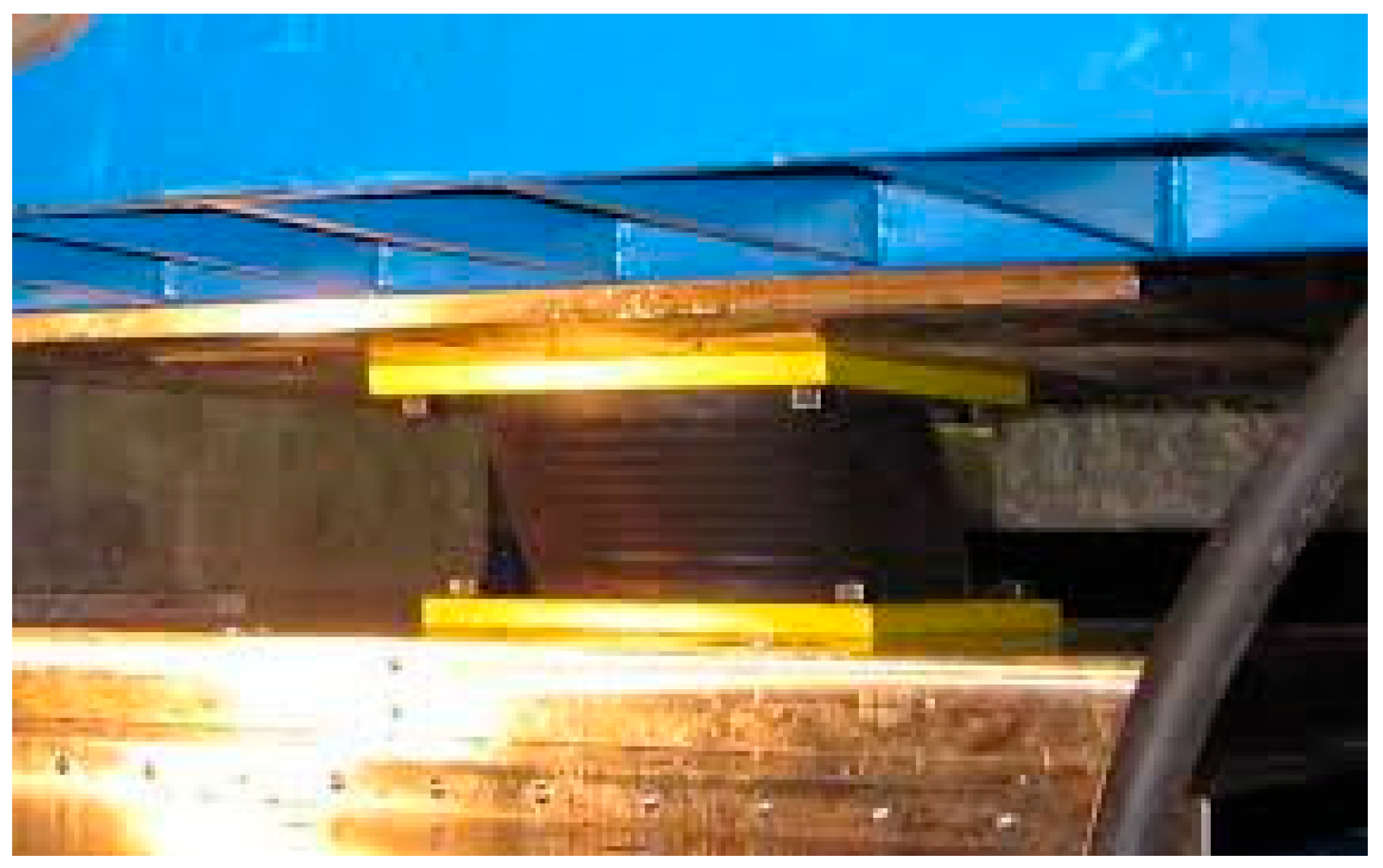
Bridge structures are critical components of transportation infrastructure and play an essential role in maintaining connectivity following natural hazards. Among various extreme events, earthquakes pose significant risk to bridge systems due to large lateral forces, cyclic loading, and displacement demands imposed on structural components. Past earthquake events have demonstrated that, even when collapse is prevented, excessive displacement and inadequate recentering capability may lead to permanent structural offsets, service interruption, and costly post-earthquake rehabilitation. Seismic isolation has emerged as an effective strategy for mitigating earthquake-induced forces by decoupling the bridge superstructure from ground motion. Among available isolation devices, lead rubber bearings (LRBs) are widely used because they combine lateral flexibility with energy dissipation capacity as shown in
Figure 1. The laminated rubber layers provide flexibility and period elongation, while the yielding lead core dissipates seismic energy through hysteretic behavior. Consequently, LRB systems significantly reduce force transmission to piers and foundations and have been successfully implemented in numerous bridge projects worldwide.
Seismic isolation has been extensively studied as an effective approach for improving earthquake performance of bridge structures by reducing force transmission and displacement demand [
1,
2,
3,
4]. Among available isolation devices, lead rubber bearings (LRBs) are widely used due to their combined flexibility and energy dissipation characteristics [
5,
6,
7]. However, conventional LRB systems often exhibit limited recentering capability, resulting in residual displacement after strong ground motions [
8,
9]. In recent years, shape memory alloys (SMAs) have attracted considerable attention in seismic applications due to their superelastic behavior and inherent self-centering capability [
10,
11,
12]. SMA materials can undergo large reversible strains and provide restoring force upon unloading, thereby reducing permanent deformation. Several researchers have investigated SMA-based isolation systems and hybrid SMA–LRB configurations using analytical, experimental, and numerical approaches [
13,
14,
15,
16,
17,
18,
19]. These studies demonstrate that SMA elements significantly enhance recentering performance and reduce residual displacement. A summary of relevant studies highlighting adopted isolation systems, analysis methods, key findings, and identified research gaps is presented in
Table 1.
Despite these advancements, most existing studies are limited to component-level investigations or simplified analytical models. Only a limited number of studies have examined hybrid two-level shape memory alloy–lead rubber bearing (TL-LRB-SMA) systems at the structural level using multi-degree-of-freedom models [
20,
21], and comprehensive bridge-level evaluations remain scarce. In practical bridge systems, structural characteristics such as pier height play a crucial role in governing seismic response. Bridges with taller piers exhibit increased flexibility and displacement demand, whereas shorter piers tend to behave as stiffer systems with lower displacement response [
22,
23,
24,
25]. Previous studies have shown that neglecting substructure characteristics may lead to inaccurate prediction of seismic response, particularly in flexible systems [
26,
27]. Another important aspect is structural irregularity. Irregular bridges, characterized by nonuniform stiffness distribution and varying pier heights, exhibit complex dynamic behavior, including uneven displacement demand and higher-mode effects [
28,
29,
30]. Such irregularities can significantly increase vulnerability to seismic damage and residual deformation. Despite significant progress in SMA-based isolation systems, bridge-level investigations considering both structural flexibility and geometric irregularity remain limited. In particular, the combined influence of pier flexibility, nonuniform stiffness distribution, support compliance, and record-to-record ground motion variability on staged hybrid isolation systems has not been sufficiently examined [
31,
32,
33,
34,
35,
36,
37,
38]. Recent studies have also explored machine-learning-based fragility assessment, performance-based design, and advanced SMA-integrated bridge isolation systems [
39,
40,
41,
42].
Table 1.
Literature Summary.
Table 1.
Literature Summary.
| Ref. No. | Author (Year) | Adopted Isolation System | Analysis Methodology | Key Findings | Identified Gaps |
|---|
| [1] | Chen et al. (2022) | Partial seismic isolation system | Numerical optimization and seismic analysis | Demonstrated improved seismic performance and optimization of partial isolation systems. | Focused on frame structures rather than bridge applications. |
| [5] | Kamal and Gunadi (2020) | Lead rubber bearing (LRB) | Nonlinear time-history analysis | Demonstrated applicability of nonlinear time-history analysis for bridge response evaluation. | Did not investigate recentering systems or SMA integration. |
| [10] | DesRoches et al. (2004) | Superelastic SMA devices | Experimental cyclic tests | Identified strong recentering and energy dissipation capacity of SMA materials. | Focused on material behavior rather than isolation systems. |
| [13] | Hedayati Dezfuli et al. (2017) | SMA-enhanced LRB | Experimental cyclic loading | SMA wires enhance restoring force and recentering behavior. | Limited bridge-scale implementation. |
| [14] | Shuai Li et al. (2022) | SMA roller bearing | Analytical modeling | Developed self-centering hysteresis model for SMA-based isolators. | No bridge-level validation. |
| [15] | Fang et al. (2023) | SMA cable-restrained isolator | Shaking table tests and numerical simulation | SMA cables significantly reduce residual displacement. | Focused on component behavior rather than bridge systems. |
| [16] | Chen et al. (2023) | Seismically isolated structures with Bouc–Wen model | Numerical simulation | Improved estimation of residual deformation in isolated structures. | Limited application to bridge-specific isolation systems. |
| [17] | Wilde et al. (2000) | SMA self-centering isolators | Analytical modeling | Demonstrated flag-shaped hysteresis and enhanced seismic resilience. | Lacked detailed bridge-level validation under multiple earthquakes. |
| [18] | Costanza et al. (2024) | SMA self-centering seismic applications | Review article | Summarized recent advancements in SMA-based self-centering systems. | No investigation on staged or two-level hybrid isolators. |
| [20] | Heydari et al. (2025) | Two-level TL-LRB-SMA | FE simulation | Sequential SMA activation via cable slack limits extreme displacement. | Lacks spatial deployment studies for multi-span systems. |
| [21] | Hosseini et al. (2020) | TL-LRB-SMA hybrid isolator | Multi-objective optimization | Optimized SMA cable parameters improve seismic performance. | Limited validation at bridge system level. |
| [26] | Rasouli et al. (2023) | PBD for isolated RC bridges | 2-DOF analytical model | SDOF models underestimate pier drift by ignoring substructure mass. | Focused on design procedures rather than hardware optimization. |
| [29] | Ozbulut and Hurlebaus (2010) | SMA–rubber isolation system | Sensitivity analysis | Temperature affects performance of SMA isolation devices. | Simplified structural modeling. |
| [30] | Almutairi et al. (2016) | LRB / Soil Springs | OpenSees; ESA vs. THA | Twelve-percent difference in displacement demand for Salinas Bridge. | No SMA or multi-level mechanisms considered. |
| [33] | El-Sokkary (2025) | Review of SMA systems | Review paper | SMA widely applicable in structural engineering. | Limited bridge-specific deployment. |
| [38] | Akbarnezhad et al. (2022) | SMA rocking bridge system | ML-based fragility | SMA improves resilience and reduces damage probability | No bearing-level hybrid study. |
| [41] | Fang et al. (2022) | SMA cable-restrained HDRB | Nonlinear dynamic analysis | SMA cables improve seismic resistance under near-fault ground motions. | Limited spatial deployment studies. |
| [42] | Kumar and Ghosh (2022) | LRB for curved bridge | Dynamic analysis | LRB effective under multi-directional loading. | No SMA system. |
Motivated by these gaps, the present study develops a comprehensive numerical framework to evaluate the seismic performance of a TL-LRB-SMA system for multi-span bridges. The analysis considers regular bridge configurations with different pier heights, an irregular bridge with varying support stiffness, flexible foundation conditions represented by equivalent soil springs, and multiple earthquake excitation scenarios including directional loading. The objective is to quantify improvements in peak displacement response, residual displacement control, and post-earthquake recentering capability relative to conventional LRB systems.
The novelty of this study lies in the integrated bridge-scale evaluation of a staged TL-LRB-SMA isolation system considering pier height flexibility, structural irregularity, flexible supports, and multiple seismic excitation scenarios within a unified analytical framework.
2. Methodology
This study adopts a comprehensive analytical and numerical framework to evaluate the seismic performance of a hybrid two-level shape memory alloy–lead rubber bearing (TL-LRB-SMA) isolation system applied to multi-span bridge structures. The methodology integrates nonlinear analytical modeling of the hybrid isolator, finite-element modeling of bridge systems, and nonlinear time-history analysis under earthquake excitation.
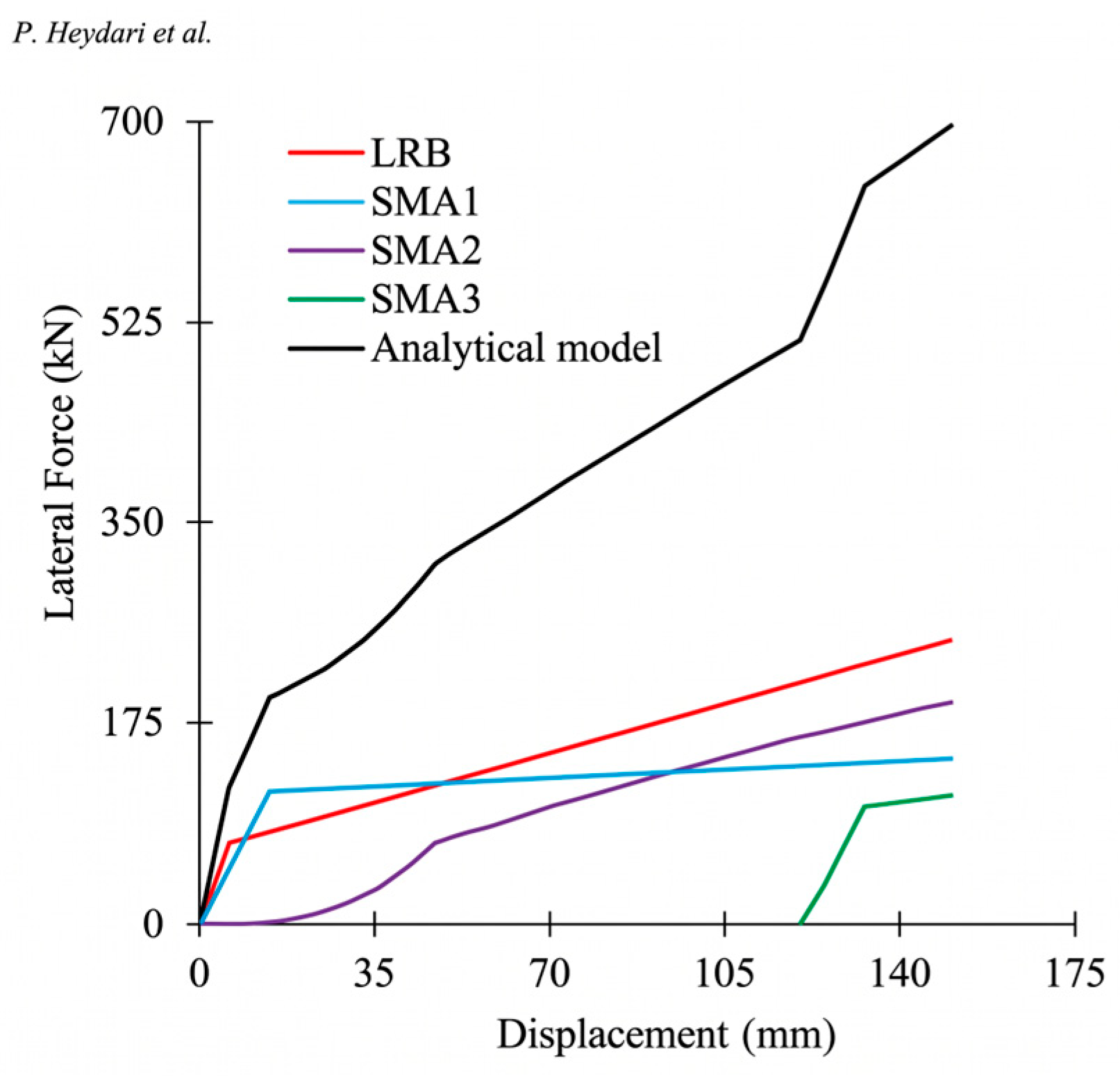
The primary objective is to assess the influence of pier height and structural configuration on displacement response and recentering capability. The hybrid system consists of a conventional lead rubber bearing combined with multiple SMA cable elements arranged in a two-level configuration. SMA-1 and SMA-2 remain active throughout the loading process, while SMA-3 is provided with a predefined slack length and activates only when the isolator displacement exceeds a specified threshold. This staged activation mechanism enables the system to maintain flexibility at small displacements while providing increased restoring force at larger deformation levels.
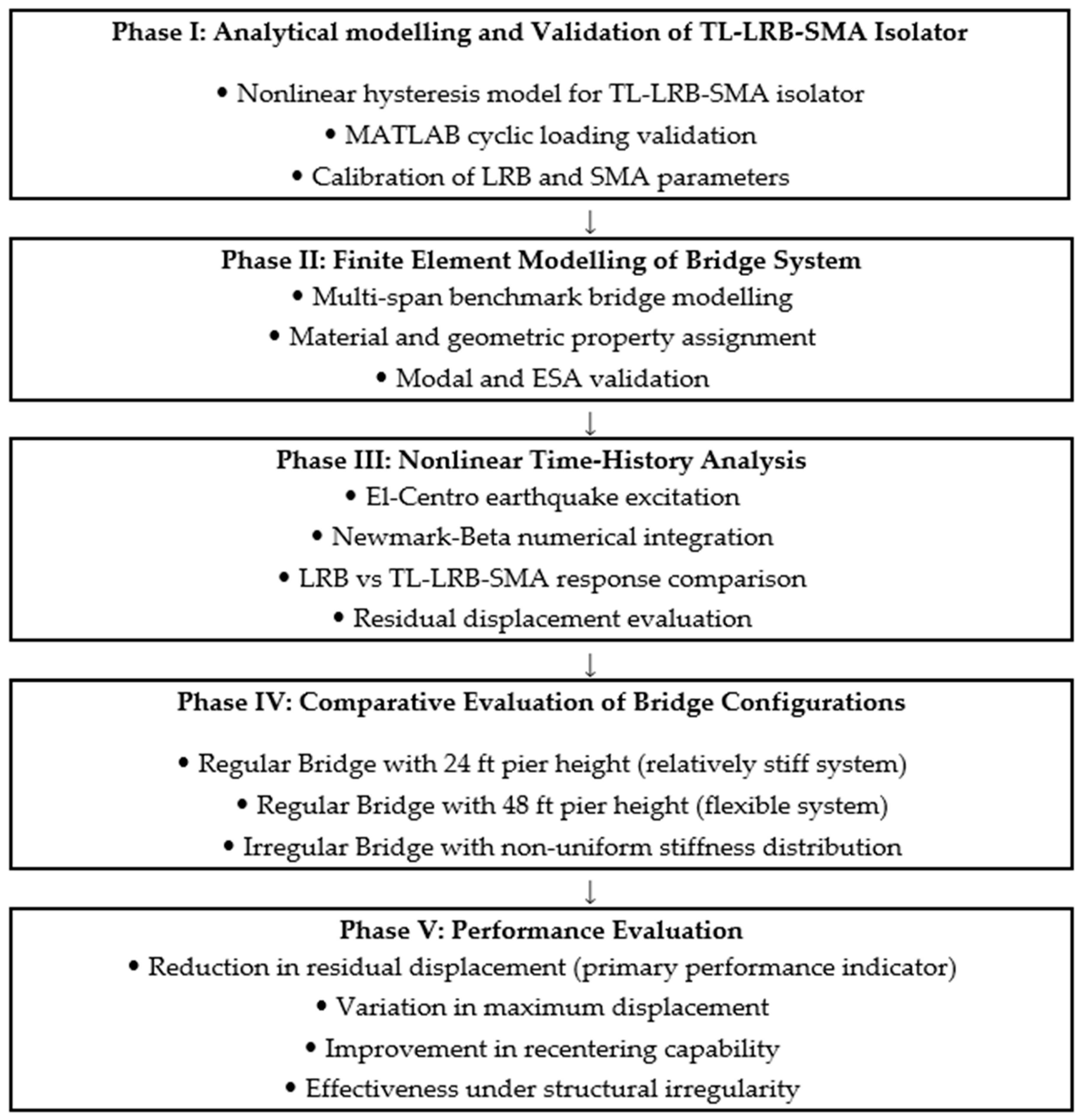
The overall research workflow consists of five sequential phases: development and validation of the TL-LRB-SMA analytical model, numerical modeling of the benchmark bridge, nonlinear dynamic analysis under earthquake excitation, comparative evaluation of SMA deployment across bridge supports, and performance evaluation for both regular and irregular bridge configurations. The adopted research methodology is illustrated in
Figure 2.
The first phase involves development of a nonlinear analytical model representing the mechanical behavior of the TL-LRB-SMA isolator. The hybrid system combines the bilinear hysteretic behavior of conventional lead rubber bearings with the superelastic restoring characteristics of shape memory alloy cables arranged in a two-level configuration. MATLAB (R2025b) was used to implement the analytical formulation and simulate cyclic loading behavior [
35]. The analytical response obtained from MATLAB simulations was then compared with benchmark results reported in the literature to validate the modeling approach and ensure accurate representation of hysteretic response, energy dissipation, and recentering capability.
In the second phase, a numerical model of a benchmark multi-span bridge was developed using MATLAB. The bridge was represented as a multi-degree-of-freedom (MDOF) system incorporating lumped masses for the superstructure and elastic stiffness for piers. Isolation bearings were modeled as nonlinear elements capable of reproducing the hysteretic response obtained from the validated analytical model. Instead of idealized fixed-base supports, flexible foundation conditions were represented using equivalent translational soil springs with stiffness of 5000 kips/in at the pier bases [
36]. This first-order soil–structure interaction (SSI) approximation captures support compliance effects while maintaining computational efficiency for system-level analysis. Modal analysis and equivalent static analysis were performed to verify the dynamic characteristics of the bridge model and ensure consistency with previously reported benchmark results. To further verify the developed numerical framework, the benchmark bridge model was additionally cross-checked using MSBridge software (MSBridge Beta 1.0.1) [
37]. The natural periods and displacement responses obtained from the MATLAB (MATLAB R2025b) model showed close agreement with the independent software results, confirming the reliability of the adopted formulation.
The third phase consists of nonlinear time-history analysis (NLTHA) performed using recorded earthquake excitation. To improve robustness against record-to-record variability, multiple seismic excitation scenarios were considered in the present study. These include the 1940 El-Centro record applied in the longitudinal direction, the Kobe ground motion applied at an oblique angle of 67.5° with respect to the transverse direction, and combined loading cases. The selected records represent different intensity characteristics, frequency content, and directional demand, thereby enabling a broader evaluation of isolation performance.
The ground motions were applied as uniform support excitation to all bridge supports in the dynamic model. Where required, amplitude normalization was adopted to maintain consistent comparative intensity levels between loading cases. This procedure ensures transparent and reproducible assessment of bridge response under different earthquake scenarios.
In the fourth phase, a comparative study was performed to assess the influence of structural characteristics on isolation performance. Regular bridge configurations with 24 ft and 48 ft pier heights were analyzed to evaluate the effect of structural flexibility, while an irregular bridge with varying pier heights was considered to examine response under nonuniform stiffness conditions. The effectiveness of TL-LRB-SMA systems was evaluated based on reduction in residual displacement and improvement in recentering capability.
In the final phase, the seismic performance of conventional LRB and hybrid TL-LRB-SMA systems was systematically evaluated based on key response parameters obtained from nonlinear time-history analysis. The comparison focused on maximum displacement, absolute residual displacement, and overall recentering behavior for both regular and irregular bridge configurations. Particular emphasis was placed on quantifying the influence of pier height and structural irregularity on isolation effectiveness. The results were interpreted to identify performance trends and assess the capability of the TL-LRB-SMA system in reducing residual displacement and enhancing post-earthquake serviceability of bridge structures.
The integrated analytical and numerical framework developed in this study enables comprehensive evaluation of hybrid isolation performance and provides a practical approach for evaluating SMA deployment in bridge seismic isolation systems.
3. Validation of TL-LRB-SMA Isolation Model
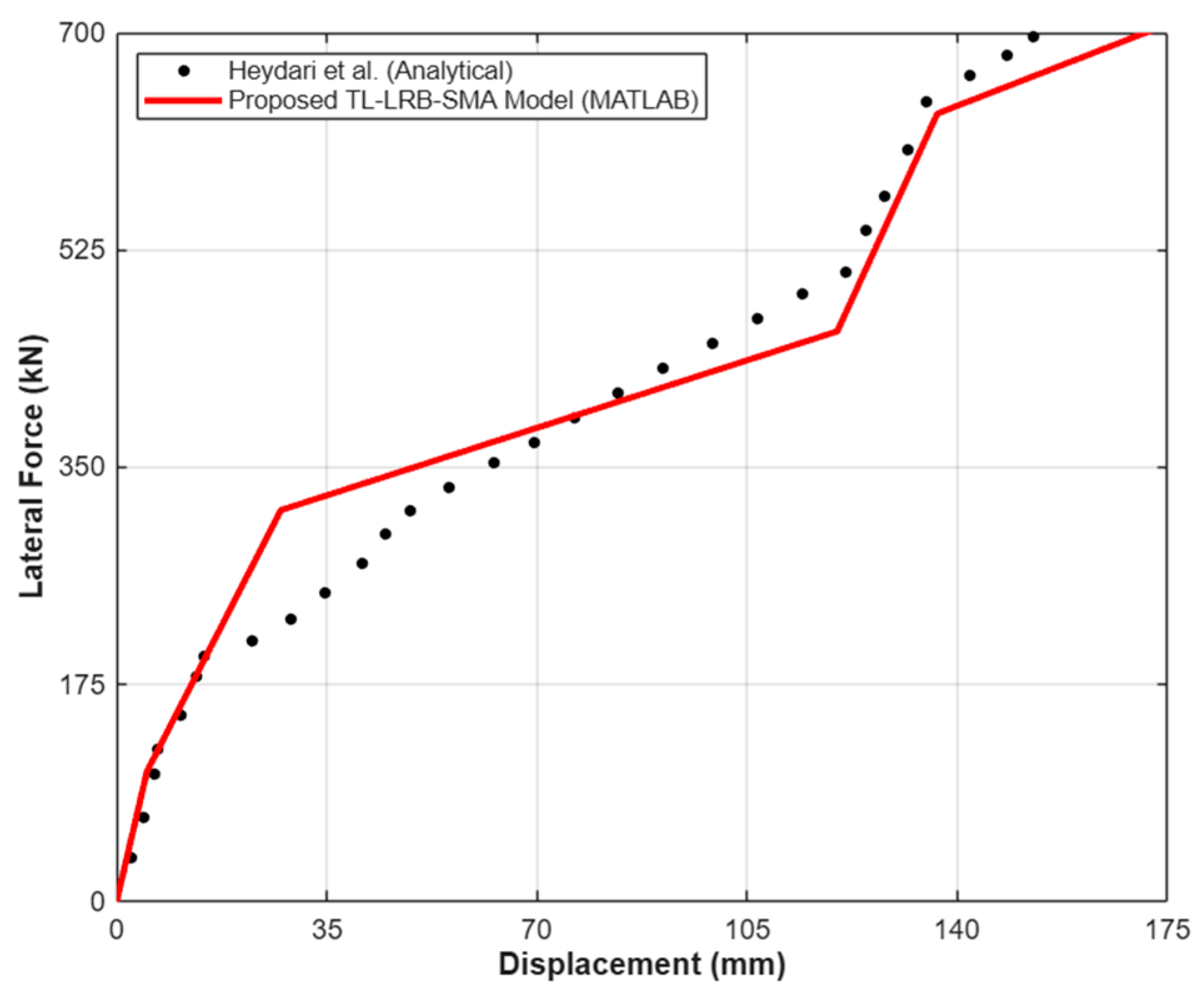
Prior to implementing the hybrid isolation system in the bridge-level seismic analysis, the nonlinear behavior of the proposed two-level shape memory alloy–lead rubber bearing (TL-LRB-SMA) isolator was validated through analytical modeling in MATLAB. The objective of the validation process was to verify that the developed analytical formulation can accurately reproduce the characteristic hysteretic response, stiffness transition, energy dissipation, and self-centering behavior of the proposed hybrid isolator prior to bridge-level implementation. The validation process was carried out by comparing the force–displacement response obtained from the MATLAB analytical model with benchmark results reported in previous research studies on TL-LRB-SMA isolators as shown in
Figure 3. The reference hysteresis behavior represents the expected cyclic response of the hybrid isolator and serves as a benchmark for evaluating the accuracy of the developed numerical model.
The TL-LRB-SMA isolator combines the bilinear hysteretic behavior of conventional lead rubber bearings with the superelastic restoring force provided by shape memory alloy (SMA) cables. The LRB component contributes lateral flexibility and energy dissipation through yielding of the lead core and shear deformation of rubber layers. The SMA components provide additional restoring force due to reversible phase transformation between austenite and martensite phases, enabling the system to recover its original configuration after unloading. In the TL-LRB-SMA hybrid isolator, three SMA cables are employed to provide staged restoring force. The staged activation mechanism adopted in the TL-LRB-SMA system is governed by the predefined slack length of the SMA-3 element, which is introduced to delay its engagement until high displacement demand is reached. In the present configuration, SMA-1 and SMA-2 remain continuously active and control the response up to approximately 120 mm displacement, while SMA-3 becomes active only beyond this threshold, contributing additional restoring force and enhancing residual displacement reduction. In practical applications, the specified slack length does not require exact preservation at all times but can be maintained within an acceptable tolerance range through adjustable anchorage systems, pre-tensioned replaceable connectors, or mechanical gap devices. These components are compatible with standard bridge bearing maintenance practices, allowing periodic inspection and recalibration. Furthermore, potential influences such as temperature variation, material relaxation, and service-level vibrations can be accommodated in design through tolerance-based detailing. Therefore, the staged activation mechanism remains practically feasible while effectively ensuring delayed engagement of SMA-3 for improved recentering performance under large seismic displacements. The delayed activation of SMA-3 enables the isolator to retain low initial stiffness during moderate shaking while mobilizing additional restoring force only at higher displacement demand. This staged response improves the balance between seismic isolation efficiency and post-earthquake recentering capability. The mechanical and geometric properties of the TL-LRB-SMA isolator were adopted from previously published experimental and analytical studies on staged SMA–LRB hybrid bearings and implemented directly in the present MATLAB model. The selected parameters correspond to representative bridge-scale bearing dimensions and superelastic SMA characteristics reported in the literature, as summarized in
Table 2. These parameters were directly implemented in the MATLAB model to ensure accurate representation of the hybrid isolator behavior.
The analytical model was developed using a displacement-controlled cyclic loading procedure. The restoring force of the LRB component was computed using a bilinear hysteretic formulation based on yield strength and post-yield stiffness of the lead core. Simultaneously, the strain in each SMA cable was evaluated considering geometric compatibility and cable orientation relative to the isolator displacement.
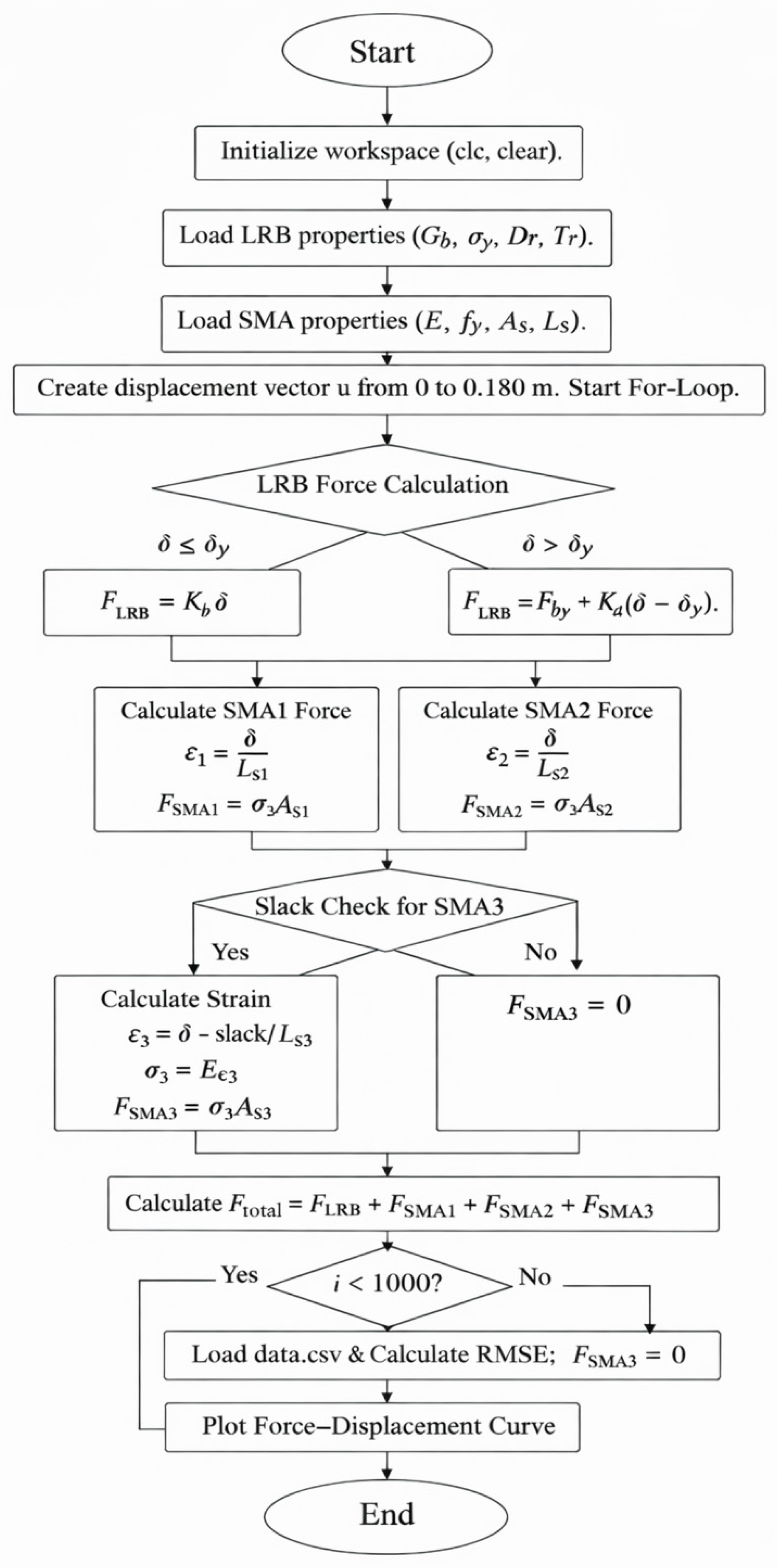
The stress–strain response of the SMA cables was modeled using nonlinear superelastic constitutive relations representing phase transformation behavior of Ni–Ti alloys. The formulation includes elastic stiffness, transformation stress limits, and post-transformation modulus. In addition, one of the SMA cables was assigned a slack parameter to simulate delayed activation at larger displacement levels, thereby representing the two-level behavior of the TL-LRB-SMA system. The computational procedure adopted in MATLAB is illustrated in the algorithmic flowchart shown in
Figure 4. The algorithm begins with initialization of model parameters, including isolator geometry, material properties, and loading conditions. The displacement history is then generated, and restoring forces from both LRB and SMA components are calculated incrementally for each displacement step. The total restoring force of the hybrid isolator is obtained by superimposing the contributions of individual components.
The resulting force–displacement response obtained from the MATLAB simulation was compared with the reference hysteresis curve in order to verify the accuracy of the analytical model as shown in
Figure 5. The comparison demonstrates close agreement between the developed model and benchmark response in terms of loop shape, loading–unloading stiffness, restoring force magnitude, and residual offset. This confirms that the essential nonlinear mechanisms of the TL-LRB-SMA system are captured adequately by the adopted formulation.
The MATLAB-generated hysteresis loops exhibit stable cyclic behavior with symmetric loading and unloading paths. To further strengthen the credibility of the developed analytical model, a quantitative comparison was carried out between the MATLAB-generated TL-LRB-SMA hysteresis response and the benchmark results. The comparison, presented in
Table 3, includes key response parameters such as initial stiffness, peak restoring force, displacement at peak force, and root mean square error (RMSE). The MATLAB model predicted an initial stiffness of 12.44 kN/mm compared with 10.50 kN/mm from the reference model, corresponding to a difference of 18.5%. The peak restoring force obtained from the developed model was 721.50 kN, which is only 3.96% higher than the reported benchmark value of 694.00 kN. Importantly, the displacement corresponding to peak force was reproduced exactly at 175 mm, indicating accurate prediction of the activation and force-development stages of the hybrid isolator. The overall RMSE of 28.42 kN confirms close agreement between the two hysteresis curves over the complete loading cycle. At small displacement levels, the response is governed primarily by the elastic stiffness of the LRB and SMA components. As displacement increases, yielding of the lead core occurs, followed by progressive activation of SMA cables. The contribution of SMA elements increases the restoring force at larger deformation levels, resulting in enhanced recentering behavior compared with conventional LRB systems. Another important observation from the validation analysis is the significant reduction in residual displacement after unloading cycles. Unlike conventional LRB systems that may exhibit noticeable residual displacement due to plastic yielding of the lead core, the TL-LRB-SMA system demonstrates strong recentering capability due to the superelastic behavior of SMA cables. The enclosed hysteresis area also indicates substantial energy dissipation resulting from combined rubber shear deformation, lead yielding, and SMA phase transformation.
Overall, the MATLAB analytical model successfully reproduces the nonlinear hysteretic characteristics of the TL-LRB-SMA isolator reported in previous studies. The close agreement between the analytical and reference responses confirms the validity of the developed modeling framework. Therefore, the validated TL-LRB-SMA model was subsequently incorporated into the bridge finite-element model for nonlinear time-history analysis and parametric evaluation of SMA deployment.
4. Bridge Finite-Element Modeling
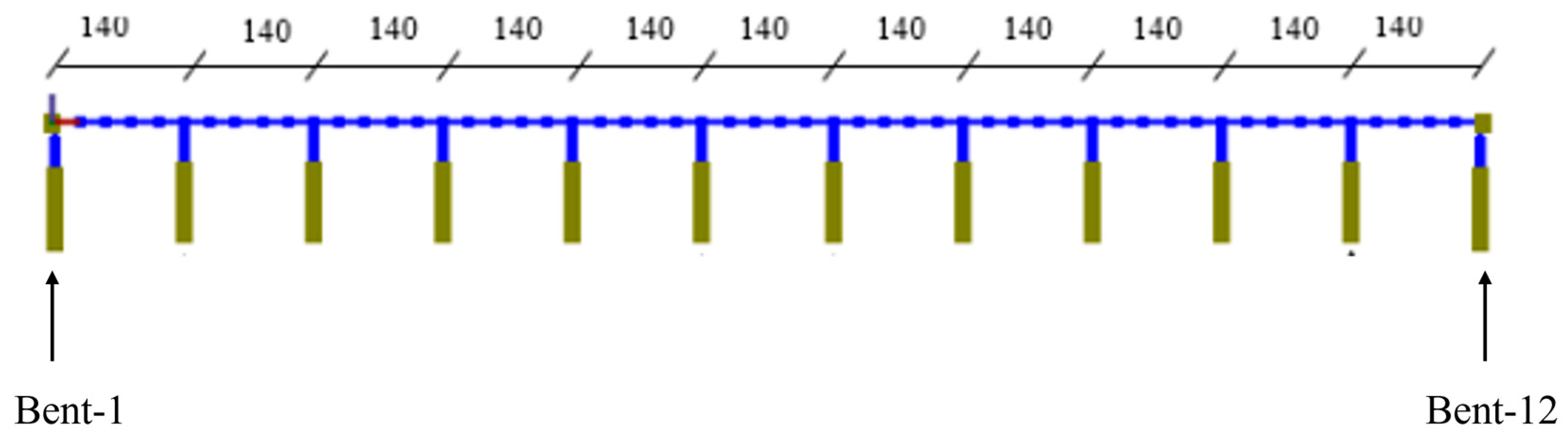
To evaluate the seismic performance of the proposed TL-LRB-SMA isolation system at the structural level, a numerical model of a benchmark multi-span bridge was developed. The model was formulated to capture the global dynamic characteristics of the bridge while allowing integration of nonlinear isolation devices, flexible supports, and nonlinear pier behavior under earthquake excitation. The objective of the modeling process was to accurately represent the dynamic characteristics of the bridge system while allowing integration of nonlinear isolation devices for seismic analysis. The bridge model was implemented in MATLAB using a multi-degree-of-freedom (MDOF) formulation in which the superstructure mass, pier stiffness, and isolator behavior were incorporated explicitly. The benchmark bridge considered in this study is a reinforced concrete multi-span box-girder bridge consisting of eleven continuous spans. Each span has a length of approximately 140 ft and is supported by two-column bent substructures as shown in
Figure 6. The bridge superstructure consists of a four-cell reinforced concrete box girder with an overall deck width of approximately 42.5 ft and a structural depth of about 5.75 ft. The deck and soffit slab thicknesses are approximately 8 in and 6 in, respectively. The benchmark bridge geometry and site information were adopted from the reference study. In the present analysis, detailed liquefaction modeling was not considered; instead, the influence of foundation flexibility was represented through equivalent translational soil springs corresponding to firm support conditions. Foundation flexibility was incorporated by assigning equivalent translational springs of 5000 kips/in at the pier bases. The added support compliance modifies the global stiffness matrix and enables first-order assessment of soil–structure interaction effects on seismic response. This assumption provides a practical first-order approximation of support compliance for comparative system-level evaluation.
The bridge consists of eleven uniform spans supported by identical two-column bents, including abutments that are modeled with similar structural properties. Each bent supports the deck through isolation bearings located at the deck–bent interface. The structural configuration used in the present study is summarized in
Table 4, which lists the principal geometric parameters used in the bridge numerical model.
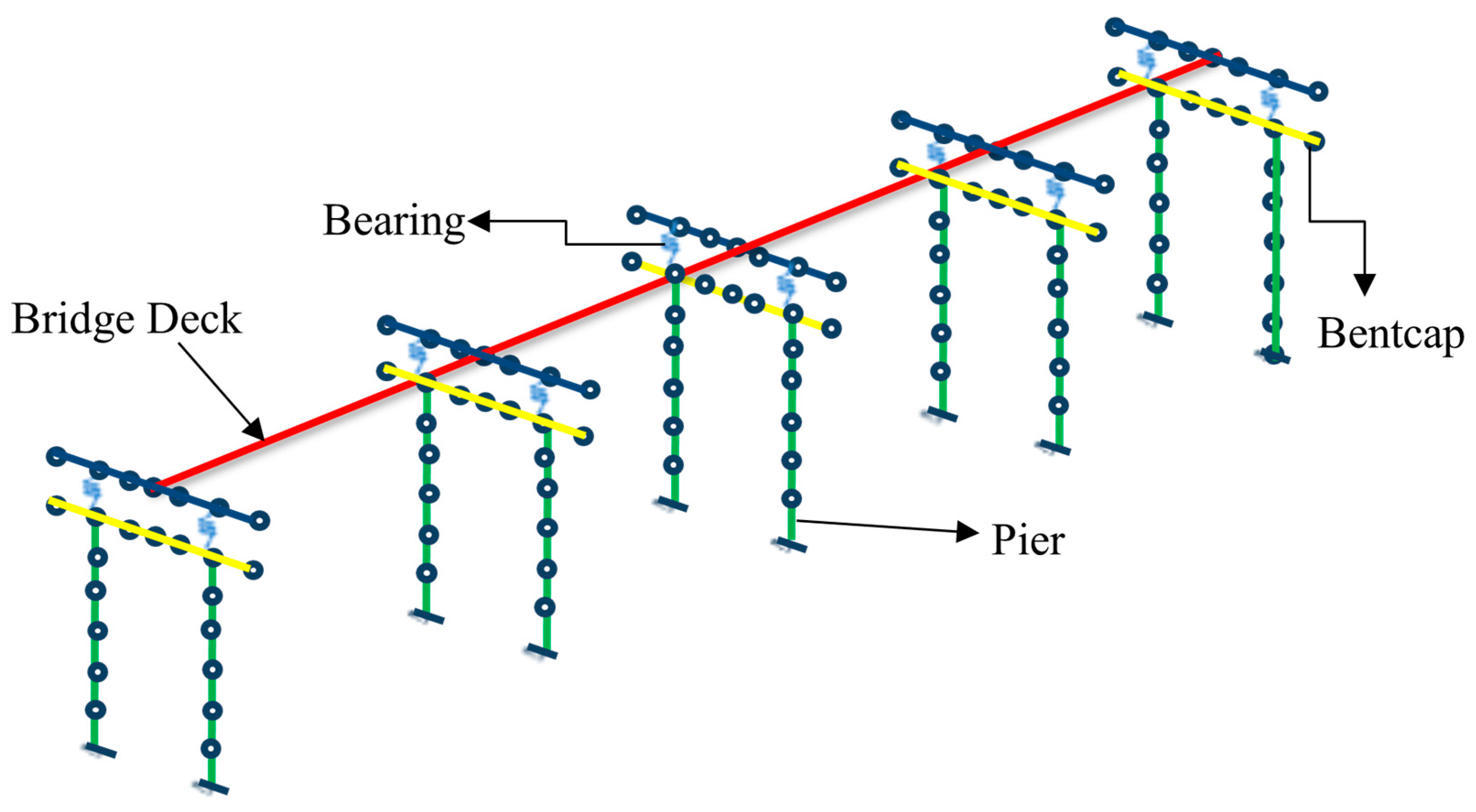
The bridge numerical model was developed by discretizing the structure into nodal masses connected through stiffness elements representing the piers and isolation bearings as shown in
Figure 7. Lumped mass representation was adopted for the bridge deck, while the reinforced concrete piers were modeled using nonlinear elastic stiffness elements capable of representing stiffness transition under increasing lateral demand. This improved idealization provides more realistic response prediction than a purely linear elastic assumption. The isolation devices were incorporated as nonlinear elements capable of reproducing the force–displacement behavior of both conventional LRB and hybrid TL-LRB-SMA systems.
The mass, damping, and stiffness matrices of the bridge system were assembled based on the structural properties of the superstructure, piers, and isolation bearings. Classical Rayleigh damping was adopted to represent inherent structural energy dissipation. The damping coefficients were evaluated using the first two dominant vibration modes of the bridge system and implemented in the global damping matrix.
A numerical implementation of the bridge model was developed in MATLAB, enabling efficient integration with the nonlinear isolator models previously validated. The resulting computational framework allows simulation of the bridge dynamic response under earthquake excitation while capturing nonlinear behavior of the isolation devices.
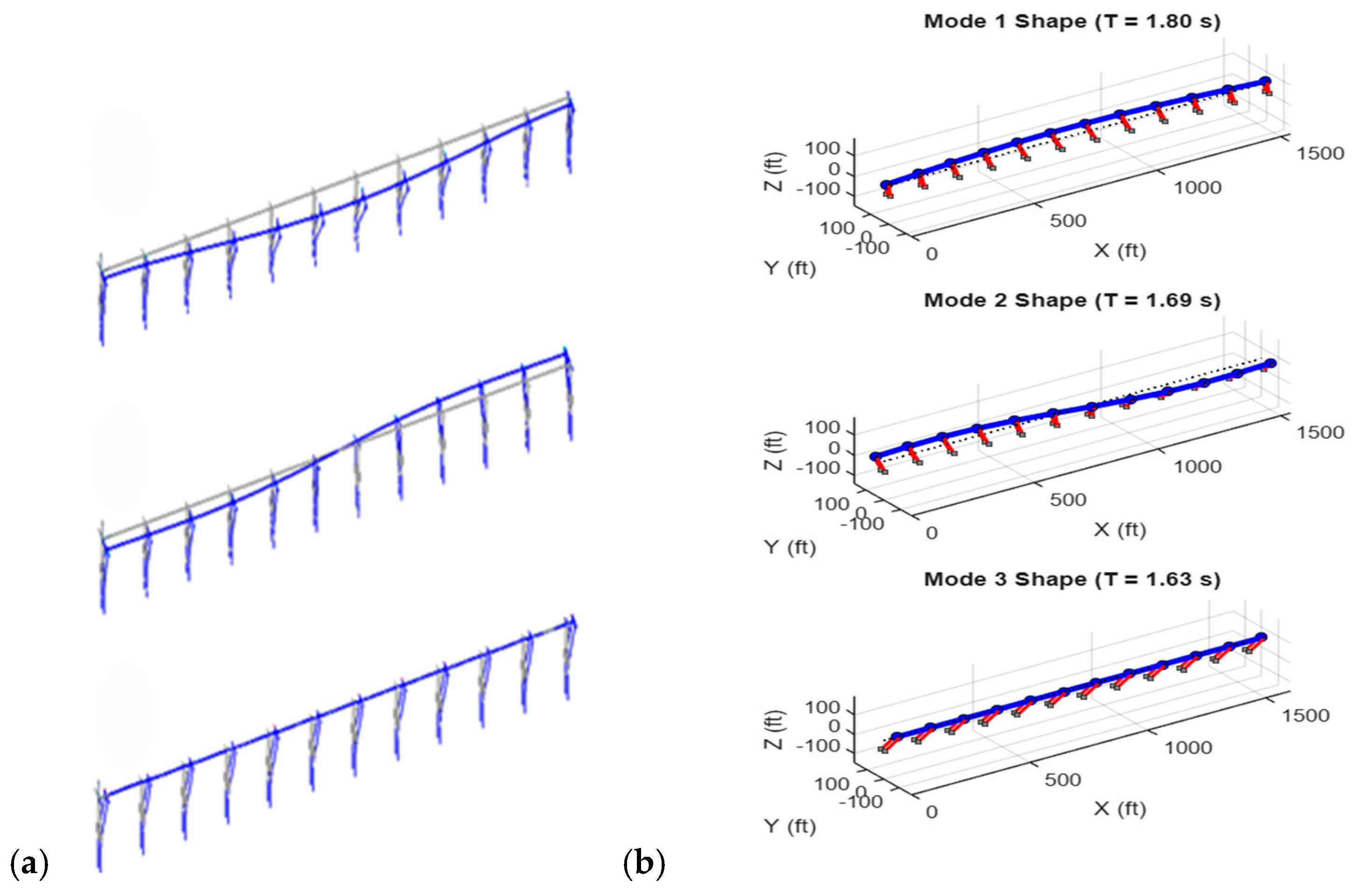
To verify the accuracy of the developed bridge model, modal analysis was performed to determine the natural vibration periods and mode shapes of the structure. The first few modes primarily represent longitudinal deck motion and pier deformation, while higher modes capture localized deformation patterns along the bridge span.
The natural periods obtained from the MATLAB model were compared with those reported in the benchmark bridge study as shown in
Figure 8. To further improve confidence in the developed numerical framework, the benchmark bridge model was independently cross-verified using MSBridge software. Comparisons of modal periods and global displacement response showed close agreement between the two platforms. The close agreement between the calculated and reference modal characteristics confirms that the mass and stiffness distribution of the numerical model accurately represent the dynamic behavior of the bridge structure. Further validation of the bridge model was carried out using equivalent static analysis (ESA) to compare displacement responses with those reported in the reference study as tabulated in
Table 5.
The comparison results indicate that the calculated natural periods and equivalent static displacement responses differ only marginally from the benchmark values. The additional agreement obtained through MSBridge cross-verification further confirms that the adopted mass, stiffness, damping, and boundary-condition idealizations are appropriate for the objectives of the present study.
Based on the successful validation of modal characteristics and static displacement response, the numerical bridge model was considered appropriate for subsequent nonlinear seismic analysis. The validated model was therefore integrated with both conventional LRB and hybrid TL-LRB-SMA isolation systems to evaluate the seismic performance of different isolation configurations through nonlinear time-history analysis.
5. Results and Discussion
Nonlinear time-history analysis (NLTHA) was performed to evaluate the seismic response of bridges equipped with conventional lead rubber bearings (LRBs) and the proposed TL-LRB-SMA system. The comparison focuses on peak displacement demand, residual displacement response, and overall recentering capability under multiple excitation scenarios, flexible support conditions, and varying structural configurations.
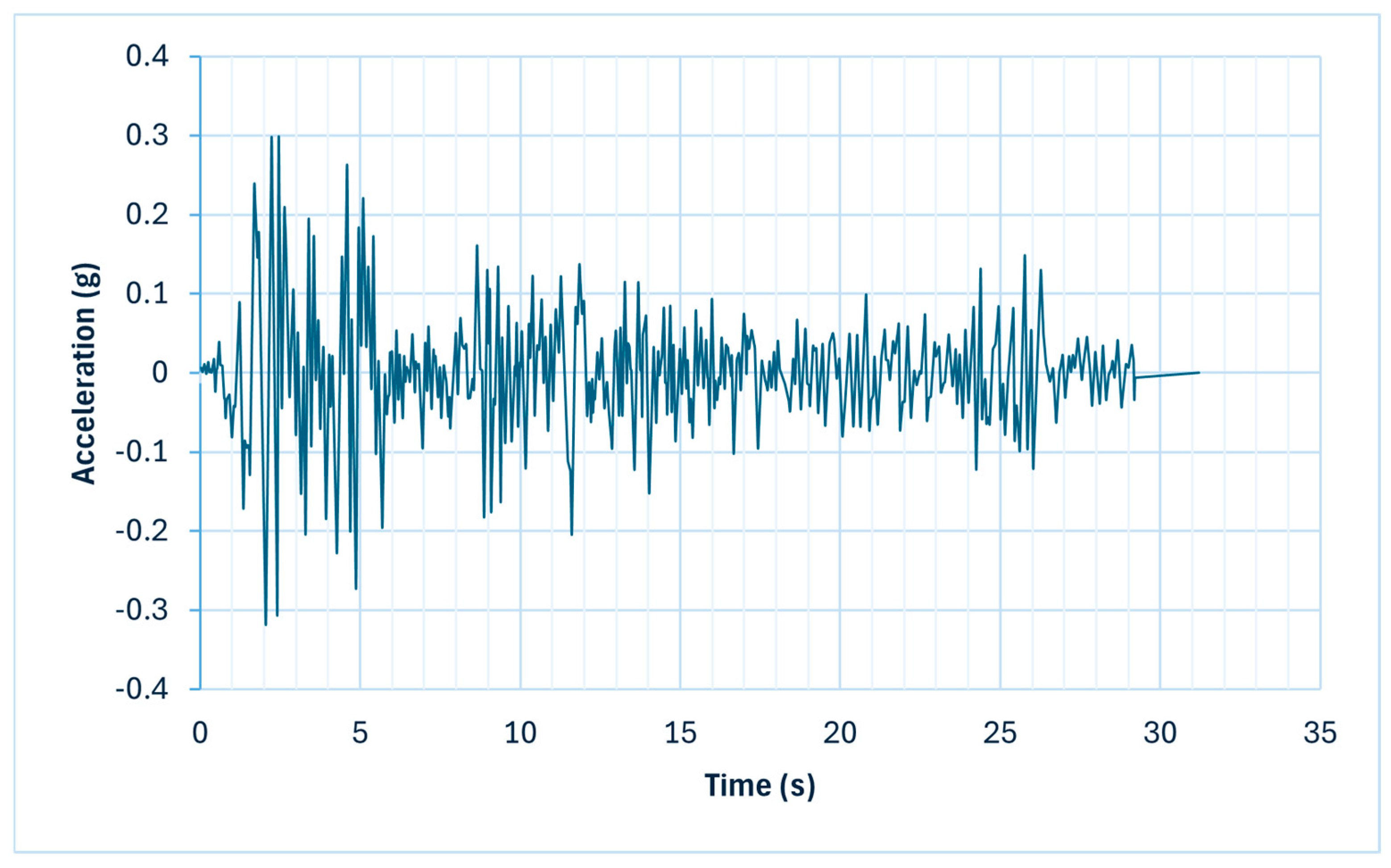
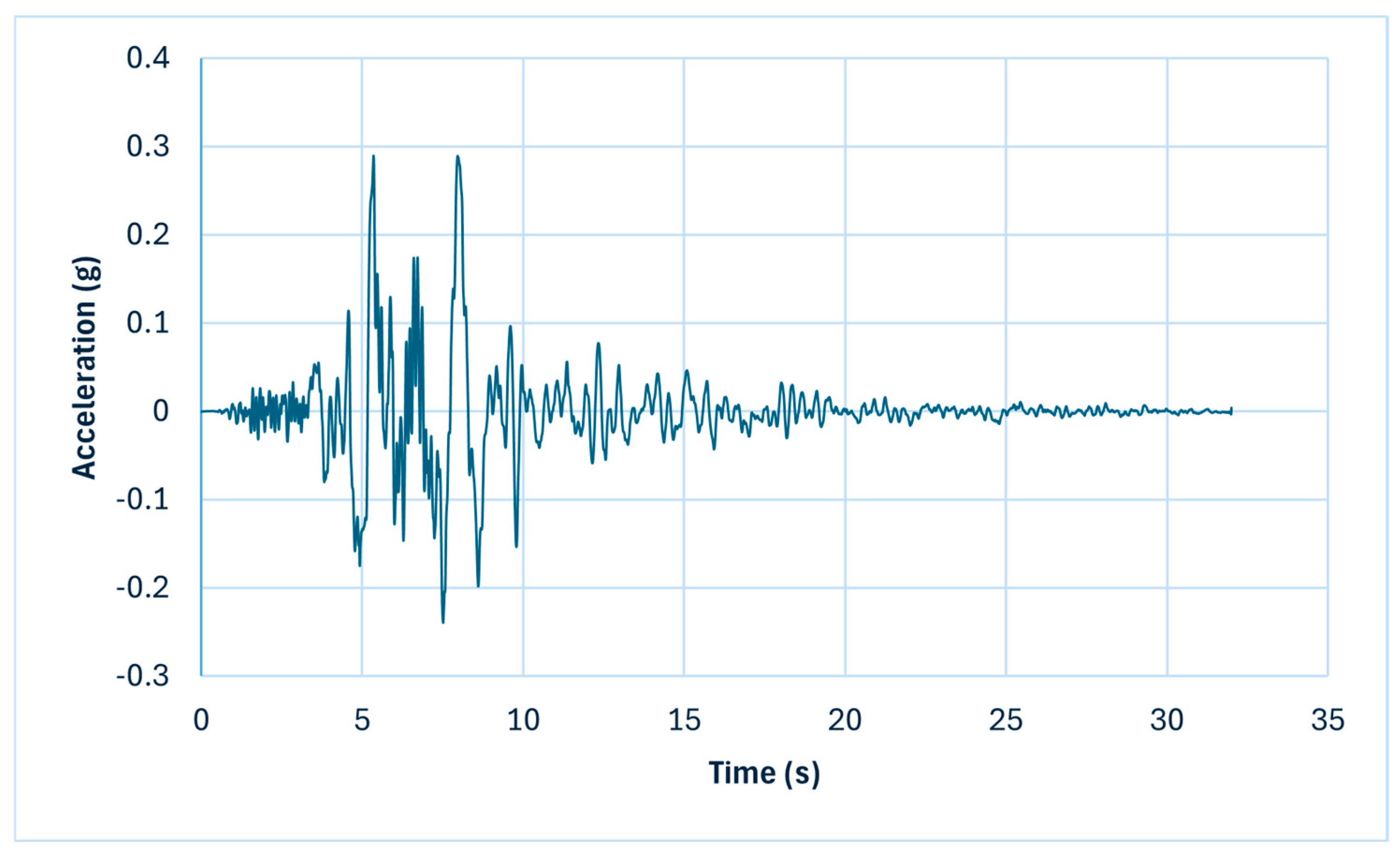
The El-Centro and Kobe earthquake records were selected as shown in
Figure 9 and
Figure 10 respectively as the input excitations for the nonlinear dynamic analysis. These ground motions have been widely used in structural earthquake engineering studies due to their well-documented characteristics and suitability for evaluating seismic performance of bridge structures. The acceleration time history was applied at the base of the bridge model to simulate ground motion effects transmitted to the structure.
To reduce dependence on a single excitation record, additional analyses were performed using the Kobe ground motion and combined loading cases. The selected records exhibit different frequency characteristics and directional demand, allowing broader assessment of system robustness. In the most cases considered, the TL-LRB-SMA system maintained improved recentering performance relative to conventional LRBs.
The El-Centro ground motion was applied in the longitudinal direction and Kobe ground motion was applied at 67.5° to the transverse direction of the bridge, with identical intensity at all bridge supports, representing uniform base excitation along the primary axis of motion considered in the MATLAB dynamic model.
The dynamic response of the bridge system was obtained by solving the nonlinear equation of motion of the multi-degree-of-freedom (MDOF) system using the Newmark-Beta time integration method. The analysis provided time-dependent response quantities, from which maximum and residual displacements were extracted.
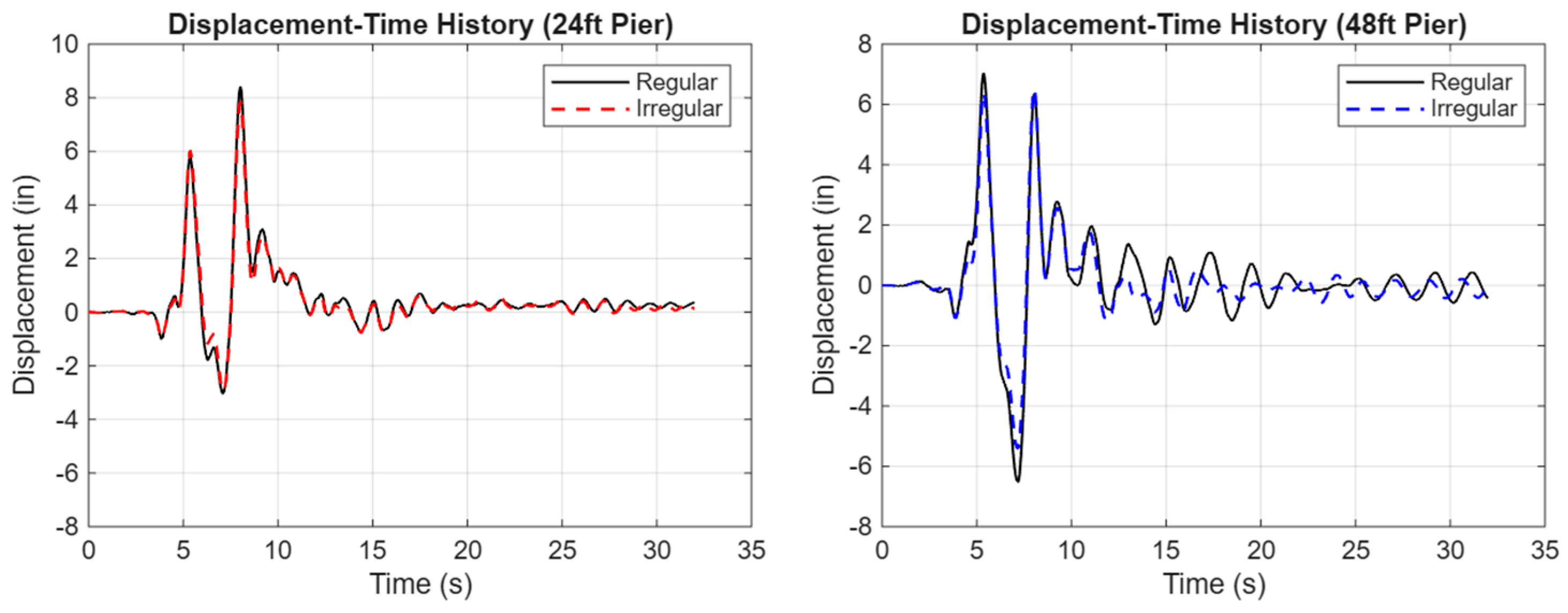
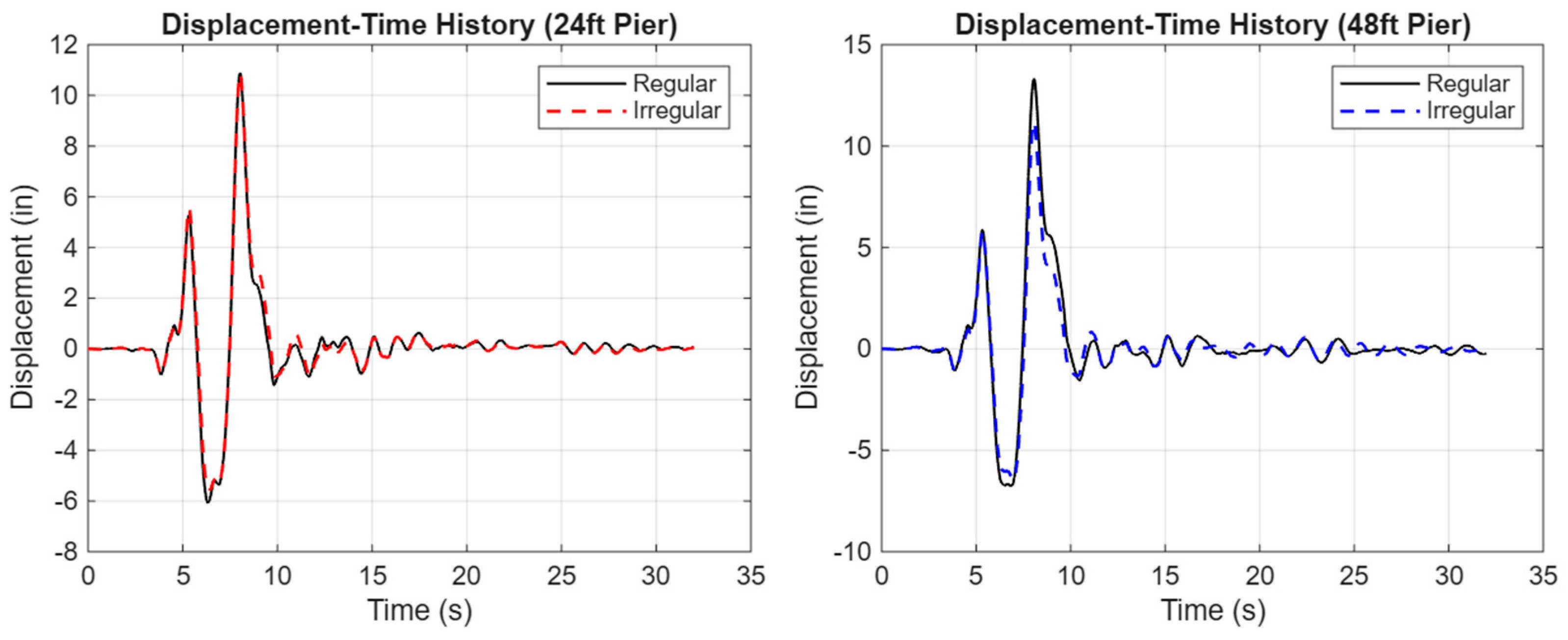
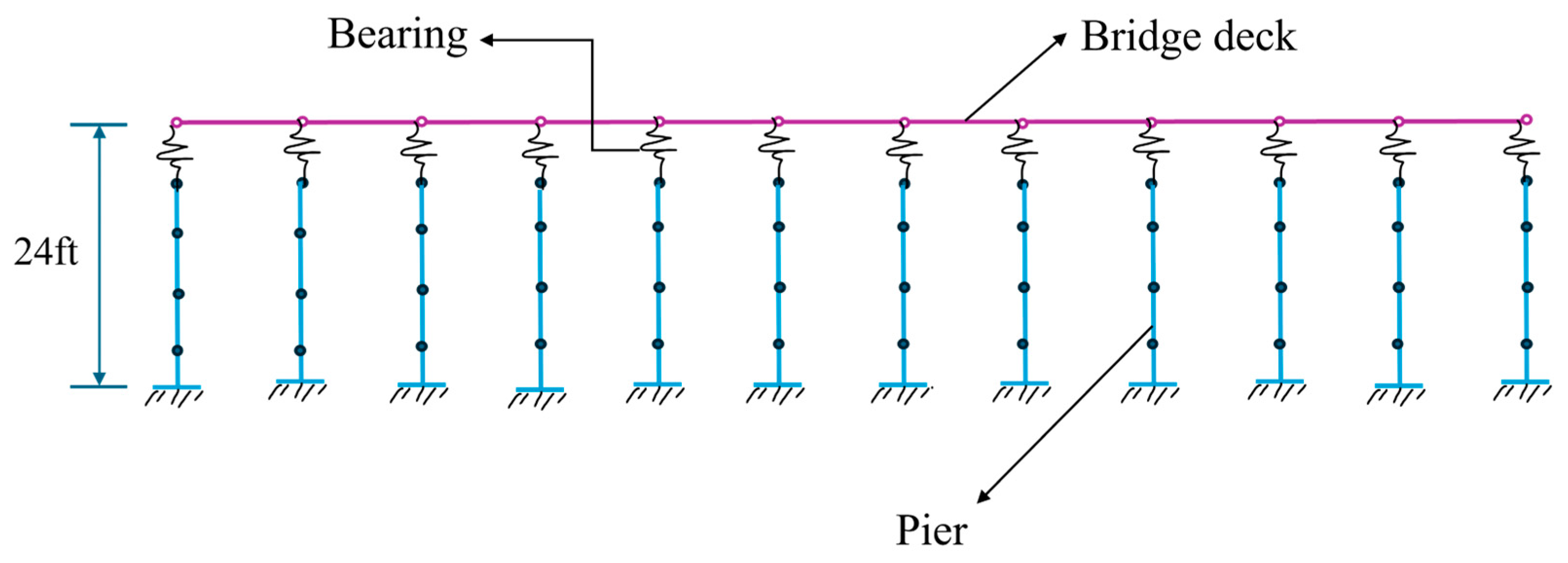
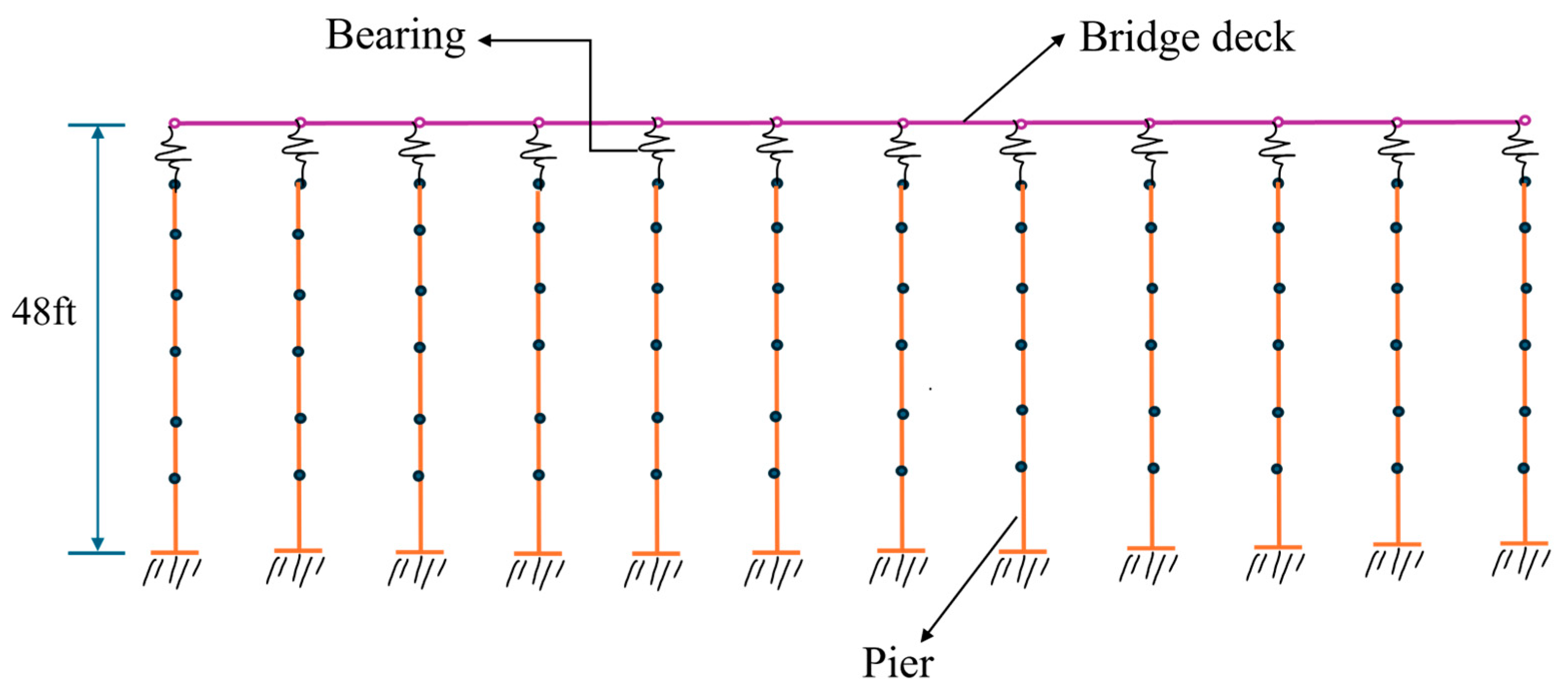
To assess the influence of structural flexibility, the analysis was conducted for two regular bridge configurations characterized by different pier heights, namely 24 ft and 48 ft as shown in
Figure 11 and
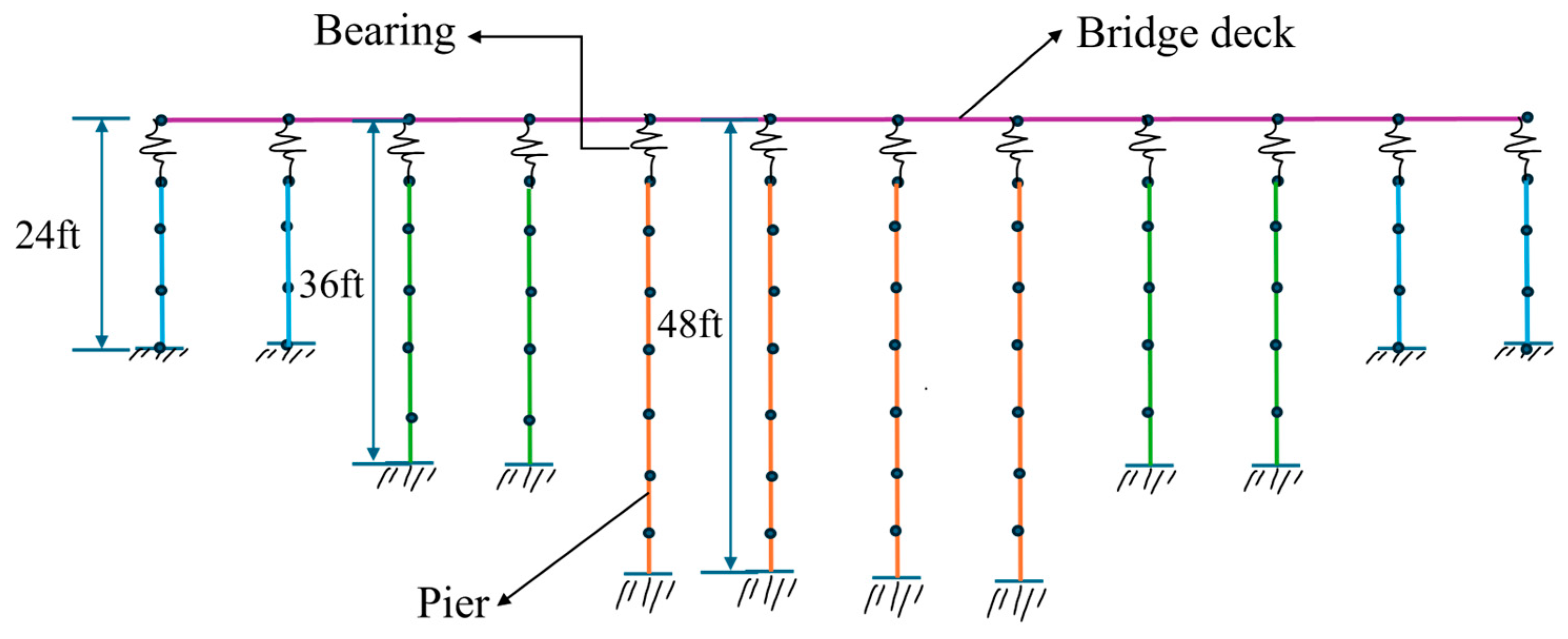
Figure 12, respectively. In addition, an irregular bridge configuration with varying pier heights was considered to evaluate the effectiveness of the hybrid isolation system under nonuniform stiffness distribution as shown in
Figure 13. For each configuration, the seismic response was computed for both conventional LRB and hybrid TL-LRB-SMA systems, enabling direct comparison of their performance under identical loading conditions.
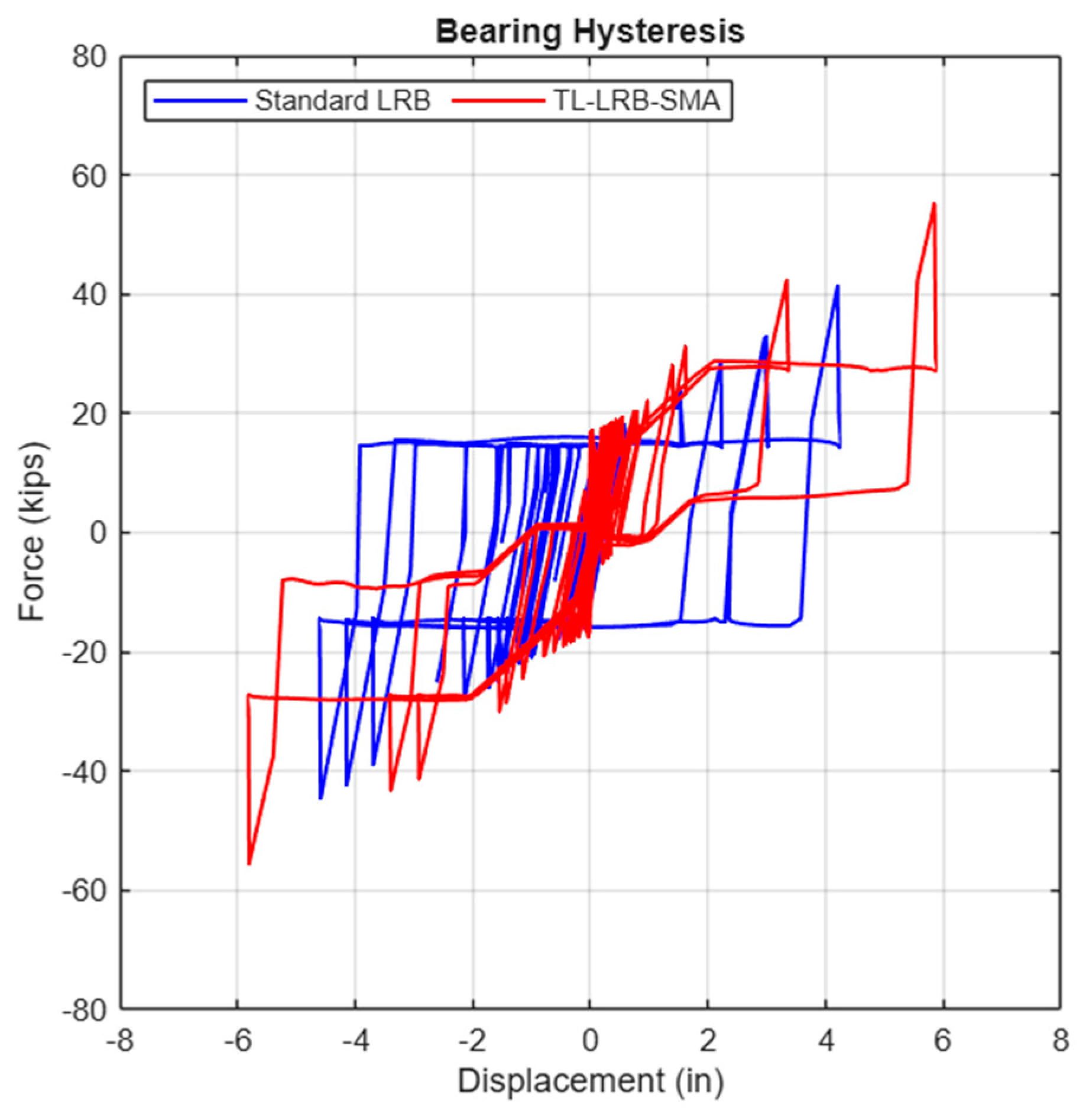
The hysteresis loops shown in
Figure 14 compare the force–displacement behavior of the conventional LRB system and the hybrid TL-LRB-SMA isolator under cyclic loading. The LRB exhibits typical bilinear hysteresis response with noticeable residual offset after unloading, indicating limited recentering capability. In contrast, the TL-LRB-SMA system demonstrates a flag-shaped hysteresis response with increased restoring force due to the superelastic behavior of SMA elements. This enhanced restoring mechanism enables the hybrid isolator to return closer to its original position after loading, significantly reducing residual displacement. Overall, the TL-LRB-SMA system demonstrates superior performance compared to the conventional LRB by providing improved recentering performance while maintaining effective energy dissipation characteristics.
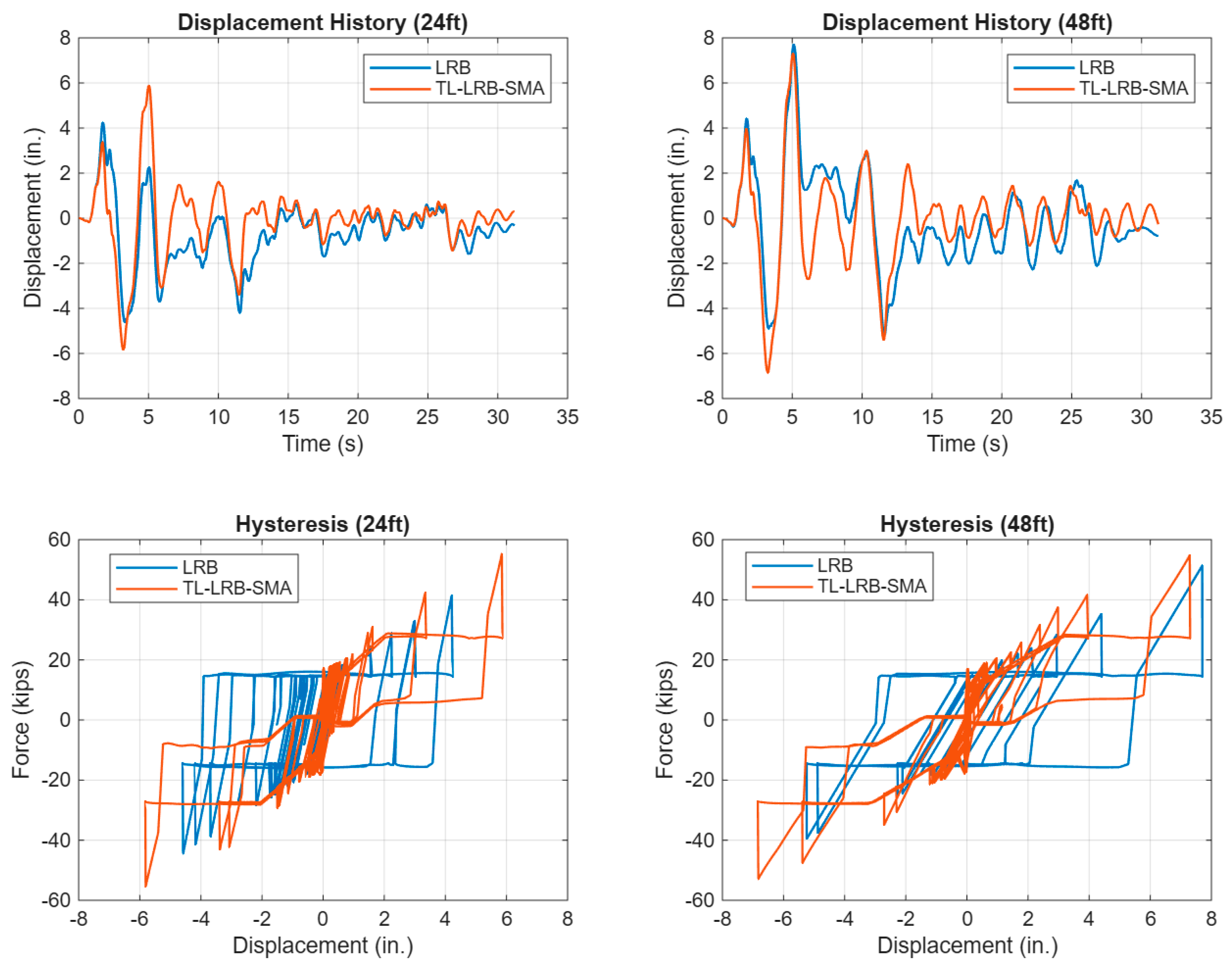
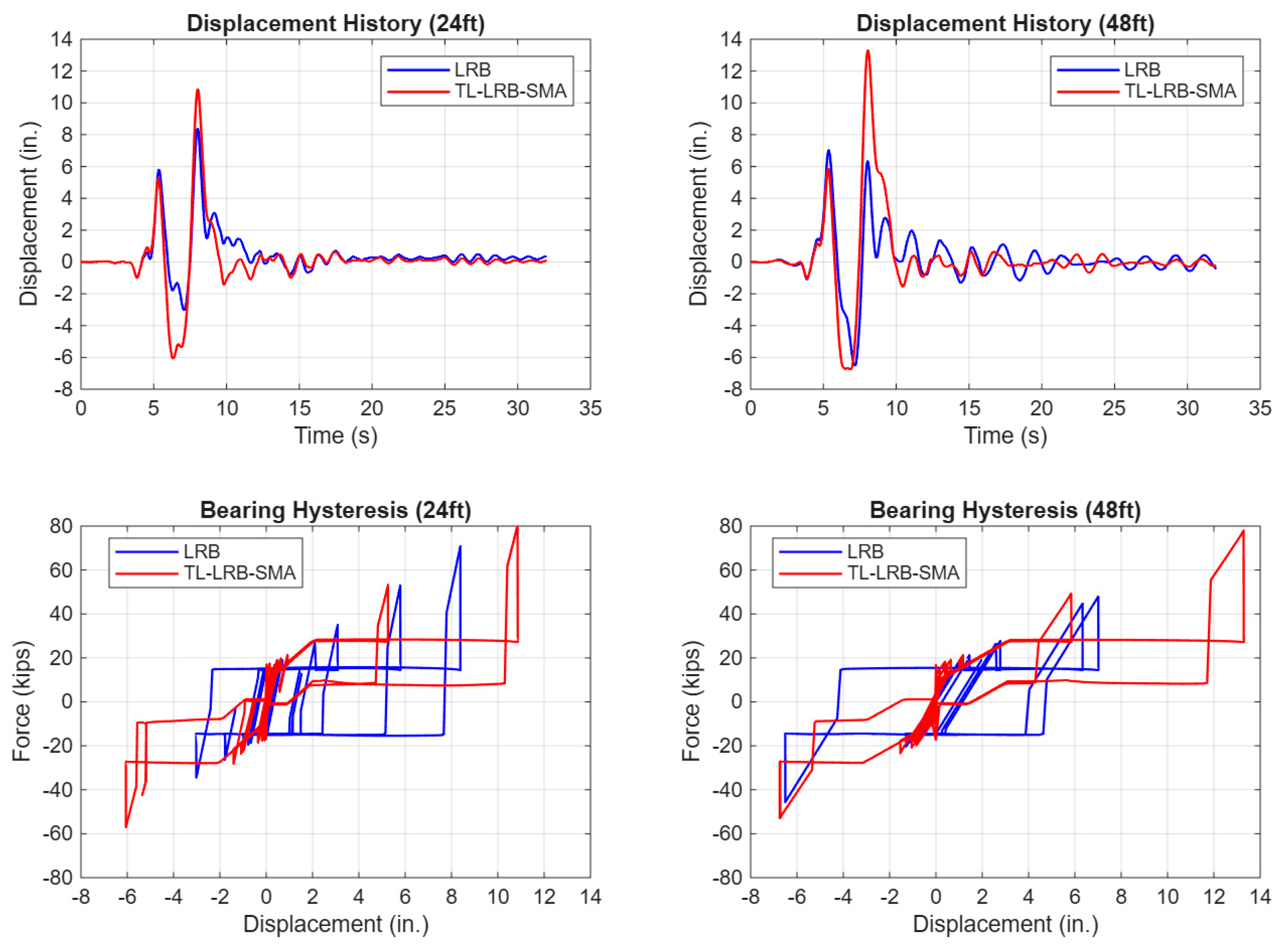
For the regular bridge configurations, the influence of pier height on seismic response was evaluated by considering two cases, namely 24 ft and 48 ft pier heights. These cases represent relatively stiff and flexible structural systems, respectively. The seismic responses obtained for both conventional LRB and hybrid TL-LRB-SMA systems are summarized in
Table 6 and
Table 7.
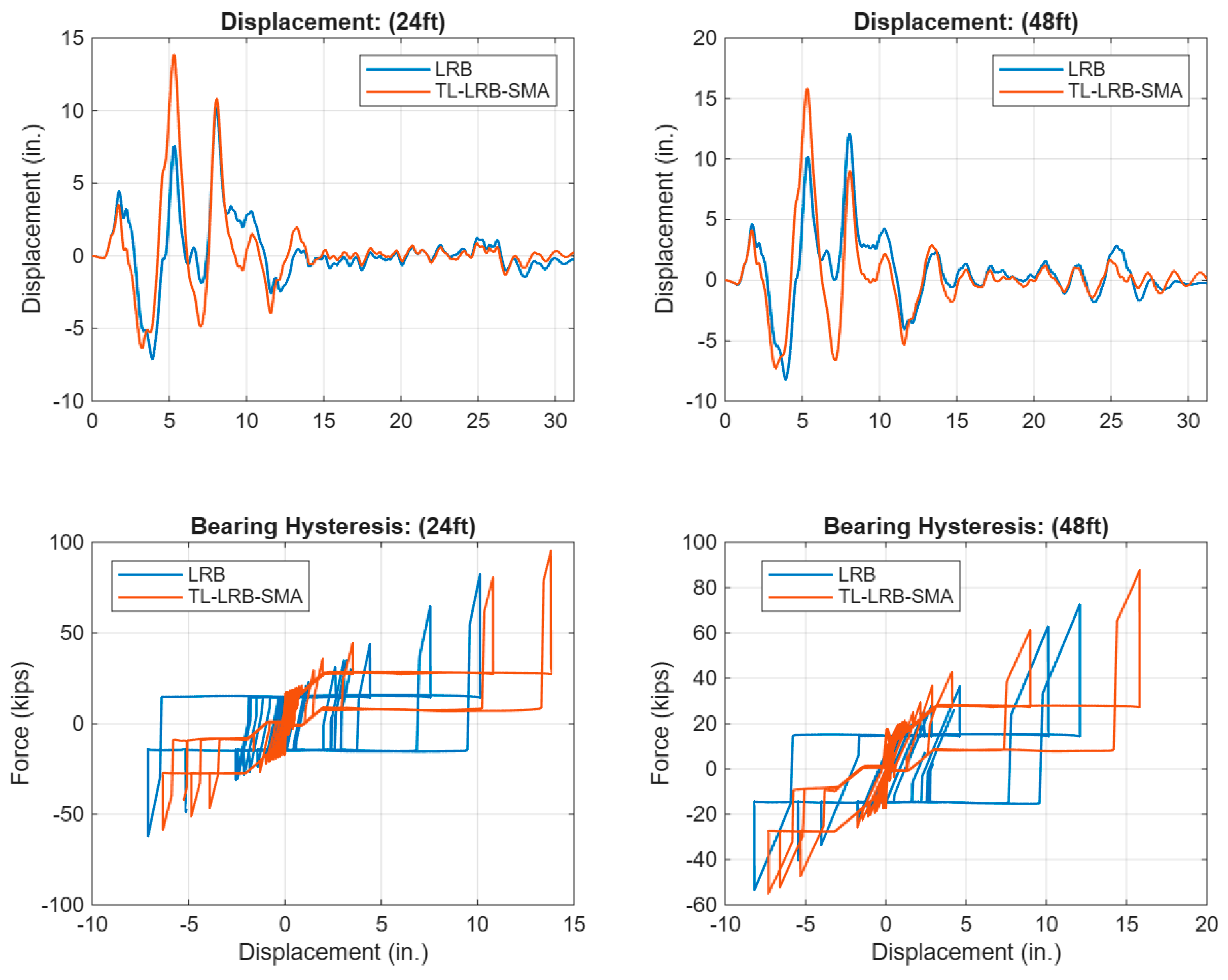
Figure 15 and
Figure 16 present the displacement time-history responses and bearing hysteresis curves for 24 ft and 48 ft regular bridge configurations under El-Centro and Kobe excitations, respectively, illustrating improved recentering behavior and reduced residual displacement in the hybrid system.
For the regular bridge with 24 ft piers, the TL-LRB-SMA system provided moderate reduction in residual displacement while maintaining acceptable peak response. Under El-Centro excitation, residual displacement decreased from 0.326 in to 0.290 in. Under Kobe excitation, the reduction improved from 0.243 in to 0.166 in. This behavior indicates that the hybrid system remains beneficial even for relatively stiff bridge configurations.
For the bridge with 48 ft piers, the influence of the hybrid system was more pronounced due to the greater flexibility of the substructure. Under El-Centro excitation, residual displacement reduced from 0.786 in to 0.268 in. Under combined excitation, the residual response further reduced from 0.264 in to 0.087 in. These results demonstrate that SMA-based restoring action becomes increasingly effective as structural flexibility increases.
In certain loading cases, the TL-LRB-SMA system exhibited a moderate increase in peak displacement. The observed increase in the peak displacement in the TL-LRB-SMA system increases under the considered seismic scenarios; the obtained values remained within the numerical displacement range considered in the analytical model. The modeled displacement capacity of the hybrid isolator is significantly higher than the maximum displacement demand obtained from the analysis, ensuring an adequate safety margin. From a performance-based design perspective, this controlled increase in displacement is acceptable as it reduces force transmission to the substructure while being accompanied by a substantial reduction in residual displacement. Ongoing experimental investigations are expected to further validate the displacement capacity, staged activation behavior, and overall safety margins of the proposed system. This response is attributed to the staged activation mechanism, which preserves low initial stiffness during early shaking cycles and delays engagement of the secondary SMA stage until larger displacement demand is reached. From a performance-based design perspective, controlled transient displacement is acceptable when accompanied by substantial reduction in permanent residual deformation.
A comparison between the two pier height cases clearly indicates that the effectiveness of the TL-LRB-SMA system is strongly dependent on structural flexibility. While only a moderate reduction in residual displacement is observed for the 24 ft case, a substantial improvement is achieved for the 48 ft case. This demonstrates that hybrid TL-LRB-SMA systems are particularly effective in flexible bridge structures, where larger displacement demands allow full utilization of the superelastic behavior of SMA components as shown in
Figure 17.
Even under intensified combined loading, the TL-LRB-SMA system significantly reduced permanent displacement, particularly for the 48 ft bridge where residual displacement decreased by approximately 67% as shown in
Table 8.
To evaluate the applicability and robustness of the proposed TL-LRB-SMA isolation system under realistic structural conditions, the study was extended to an irregular bridge configuration. In practical scenarios, bridge irregularities often arise due to variations in terrain, unequal pier heights, and geometric constraints, resulting in nonuniform stiffness distribution along the bridge length. Such irregularity significantly influences seismic response by inducing uneven displacement demand, localized deformation, and increased vulnerability at flexible supports.
In the present study, the irregular bridge configuration was developed by introducing variation in pier heights along the bridge, leading to nonuniform lateral stiffness. This variation alters the dynamic characteristics of the structure and results in complex response behavior compared to regular bridge systems. The irregular bridge model was analyzed using the same validated MDOF framework and nonlinear time-history analysis procedure adopted for the regular bridge, ensuring consistency in performance evaluation.
With the implementation of the TL-LRB-SMA system, a significant improvement in dynamic response is observed. The displacement time-history curves demonstrate reduced residual offset and improved stability of the response as shown in
Figure 18,
Figure 19,
Figure 20 and
Figure 21. The enhanced restoring force provided by the superelastic SMA elements enables the structure to return closer to its original position after unloading, thereby improving recentering behavior even in the presence of structural irregularity.
The quantitative comparison of maximum and residual displacements at selected bents of the irregular bridge under El-Centro and Kobe excitation is summarized in
Table 9 and
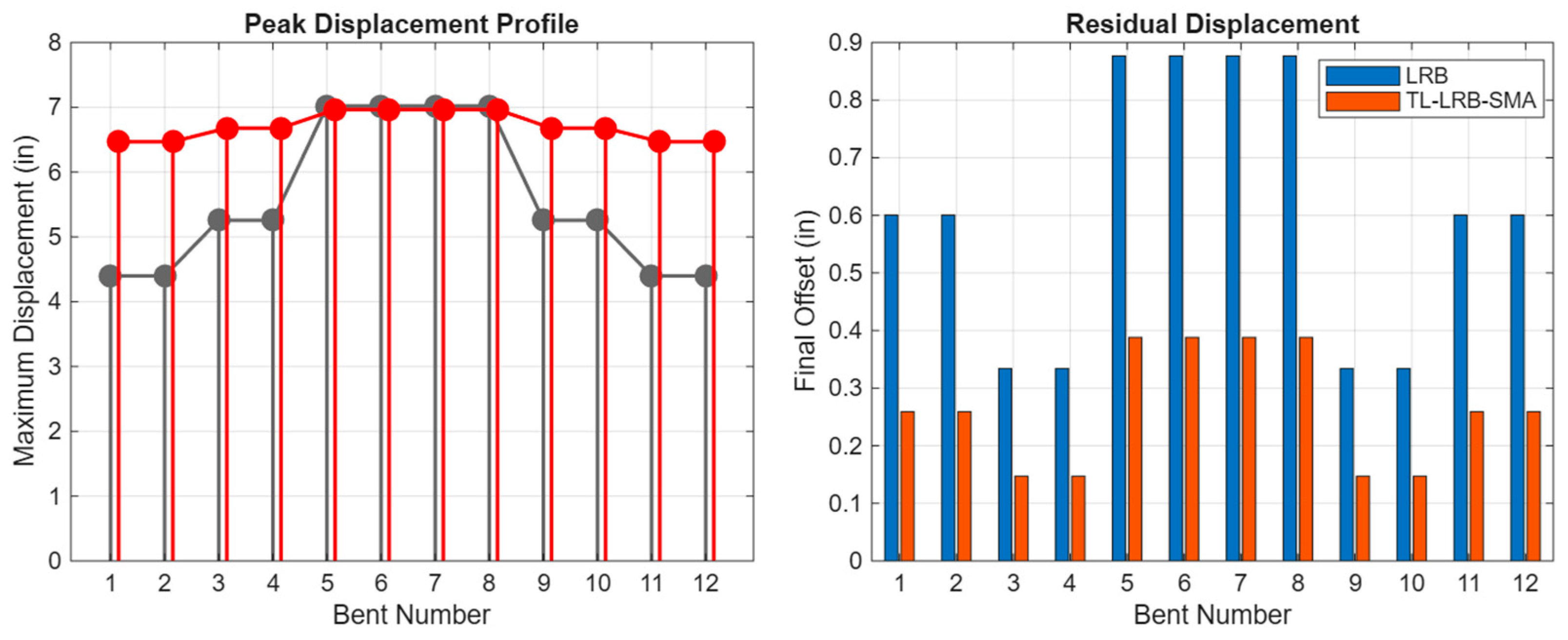
Table 10, respectively. The irregular bridge exhibited nonuniform displacement demand due to varying pier heights and stiffness distribution. Taller supports generally developed larger response amplitudes, whereas shorter supports behaved more stiffly. Despite these complexities, the TL-LRB-SMA system improved recentering performance at most supports under both longitudinal and oblique excitation. For example, under longitudinal loading, residual displacement at Bent-1 reduced from 0.600 in to 0.259 in, while at Bent-6 it reduced from 0.876 in to 0.388 in.
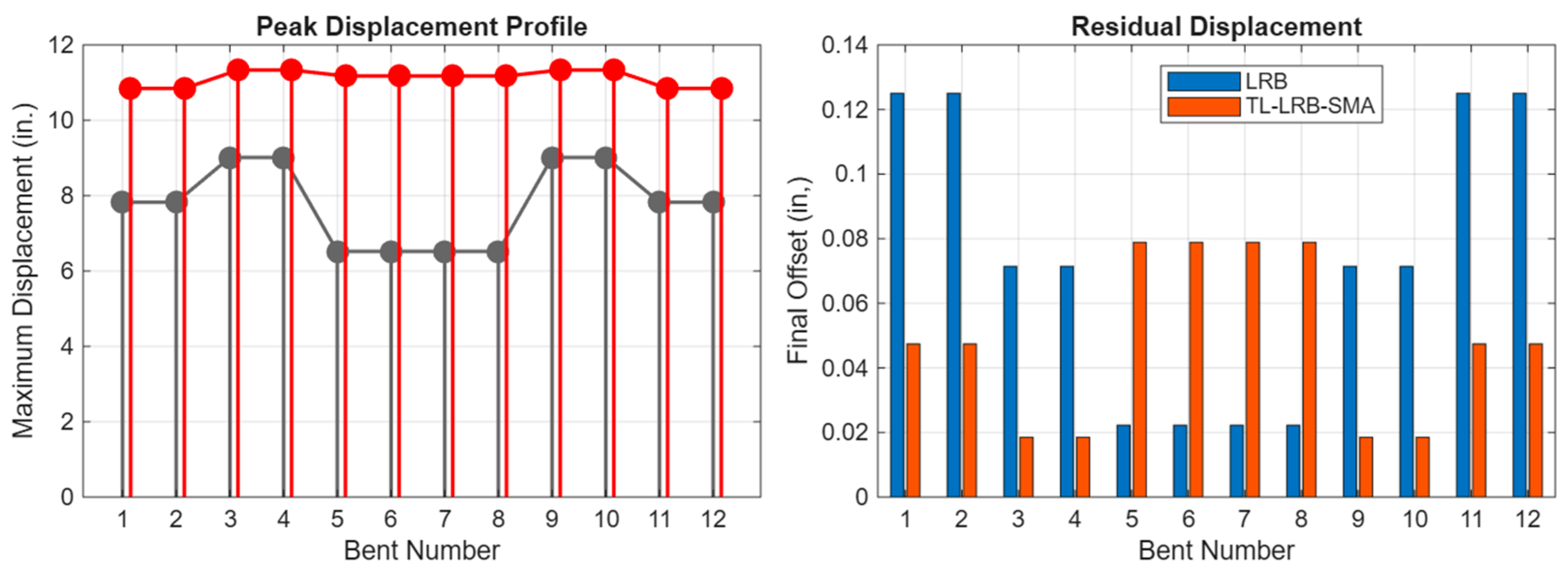
Under Kobe excitation applied at 67.5°, a coupled bridge response was observed due to simultaneous longitudinal and transverse demand. Even under this more demanding loading condition, the proposed hybrid system substantially reduced residual displacement at several supports. At Bent-1, residual displacement decreased from 0.125 in to 0.047 in, and at Bent-4 from 0.071 in to 0.018 in, demonstrating robustness under directional seismic incidence.
The introduction of the TL-LRB-SMA system leads to a considerable reduction in residual displacement across all supports. At the 24 ft pier, the residual displacement decreases from 0.600 in to 0.259 in, corresponding to a reduction of approximately 56.87%. At the 48 ft pier, the residual displacement reduces from 0.876 in to 0.388 in, representing a reduction of approximately 55.74%. Similar improvements are observed at intermediate pier heights, confirming the consistent effectiveness of the hybrid system under varying stiffness conditions.
Similarly, the introduction of the TL-LRB-SMA system leads to a considerable reduction in residual displacement at the shorter and intermediate supports under Kobe earthquake excitation. At the 24 ft pier, the residual displacement decreases from 0.125 in to 0.047 in, corresponding to a reduction of approximately 62.08%. At the 36 ft pier, the residual displacement reduces from 0.071 in to 0.018 in, representing a reduction of approximately 74.13%. However, at the 48 ft pier, the residual displacement increases from 0.022 in to 0.078 in, indicating that the response at the tallest support is influenced by the directional characteristics and higher displacement demand of the oblique excitation. Overall, the results demonstrate that the hybrid system remains highly effective at most supports and provides strong recentering performance under directional seismic loading.
Although slight increases in maximum displacement are observed in some cases, particularly at shorter piers, the overall reduction in residual displacement is significant. This behavior indicates that the TL-LRB-SMA system introduces additional flexibility while simultaneously enhancing restoring force through SMA activation. The net effect is improved recentering capability without compromising overall seismic performance.
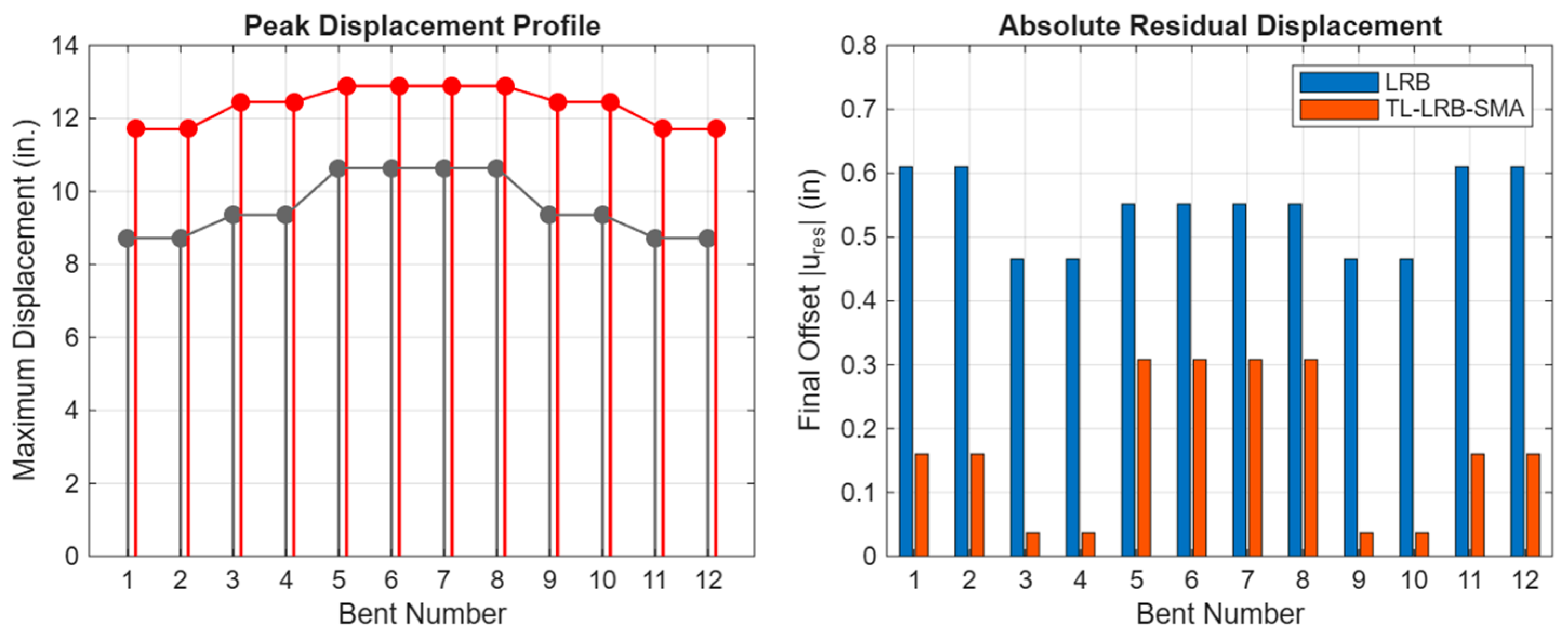
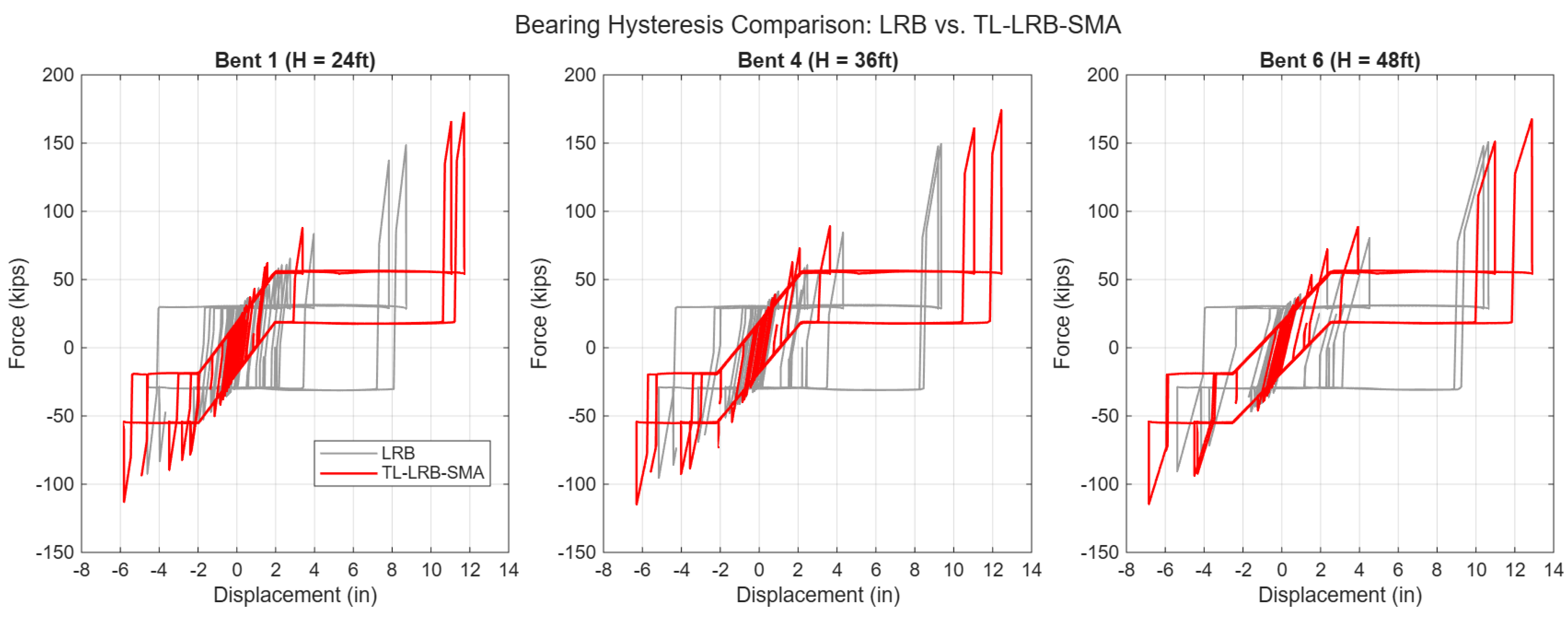
The variation of peak displacement and residual displacement along the bridge length and the bearing hysteresis curves for the irregular configuration is further illustrated in
Figure 22 and
Figure 23. The peak displacement profile demonstrates a nonuniform distribution across the bridge bents, reflecting the influence of varying pier heights and stiffness irregularity. For the conventional LRB system, displacement demand increases significantly at intermediate and taller bents, particularly around Bent-5 to Bent-8, where the maximum response is observed. This behavior highlights the concentration of deformation in relatively flexible regions of the bridge due to nonuniform stiffness distribution.
Under the combined El-Centro and Kobe excitation case, the irregular bridge experienced the highest overall displacement demand due to the cumulative effect of multiple seismic inputs and nonuniform stiffness distribution. The conventional LRB system exhibited significant residual offsets at all critical supports, indicating limited recentering capability under severe loading. In contrast, the TL-LRB-SMA system substantially improved post-earthquake recentering response as tabulated in
Table 11. At Bent-1 (24 ft), the residual displacement changed from 0.610 in to 0.160 in, corresponding to an absolute reduction of approximately 73.77%. At Bent-4 (36 ft), the residual displacement reduced from 0.4654 in to 0.0368 in, representing an improvement of about 92.09%. At Bent-6 (48 ft), the residual displacement decreased from 0.551 in to 0.307 in, corresponding to a reduction of approximately 44.20%. Although peak displacement increased in the hybrid system due to preserved flexibility and staged SMA activation, the substantial decrease in permanent residual deformation confirms the superior self-centering capability of the TL-LRB-SMA system under severe combined seismic loading.
In comparison, the TL-LRB-SMA system exhibits a more uniform displacement profile along the bridge length, although slight increases in peak displacement are observed at certain bents. This increase can be attributed to the additional flexibility introduced by SMA elements; however, it does not adversely affect overall seismic performance. More importantly, the residual displacement profile demonstrates a substantial reduction across all bents when the hybrid system is employed. The conventional LRB system demonstrates significantly higher residual offsets, particularly at flexible supports, whereas the TL-LRB-SMA system effectively reduces permanent deformation due to enhanced restoring force provided by the superelastic SMA components.
The comparison clearly indicates that, while peak displacement variations remain within acceptable limits, the hybrid TL-LRB-SMA system significantly improves recentering behavior throughout the bridge. The reduction in residual displacement is consistent across both shorter and taller piers, demonstrating the robustness of the hybrid isolation system in mitigating the adverse effects of structural irregularity. This behavior confirms that the TL-LRB-SMA system not only enhances global seismic performance but also improves uniformity of response along the bridge length.
A direct comparison between regular and irregular bridge configurations further highlights the influence of structural irregularity on seismic response as tabulated in
Table 12 and
Table 13. Under conventional LRB isolation, irregular bridges exhibit significantly higher residual displacements compared to regular bridges for the same pier height. For instance, at a 24 ft pier, the residual displacement increases from 0.326 in in the regular bridge to 0.601 in in the irregular bridge. Similarly, at a 48 ft pier, the residual displacement increases from 0.786 in to 0.876 in. This increase is primarily due to nonuniform stiffness distribution, which causes concentration of deformation at flexible supports and amplifies displacement demand.
However, when the TL-LRB-SMA system is employed, the difference between regular and irregular bridge responses is significantly reduced. The hybrid system effectively compensates for stiffness irregularity by providing additional restoring force through SMA activation. As a result, residual displacement values for irregular bridges are brought closer to those of regular bridges, indicating improved uniformity in seismic response.
The comparison values clearly illustrate that, while irregular bridges exhibit higher displacement demand under conventional isolation systems, the TL-LRB-SMA system significantly mitigates this effect by reducing residual displacement in most of the cases. The improvement is particularly pronounced at taller piers, where displacement demand is higher and SMA elements are more effectively activated.
Table 13 compares the seismic performance of regular and irregular bridge configurations subjected to Kobe oblique excitation using conventional LRB and hybrid TL-LRB-SMA isolation systems. The results show that the bridge response is strongly influenced by both structural configuration and pier flexibility under directional seismic loading. In general, the TL-LRB-SMA system demonstrates improved recentering capability and reduced residual deformation compared with the conventional LRB system, highlighting the beneficial contribution of the superelastic SMA components. Irregular bridge configurations exhibit more complex response patterns due to nonuniform stiffness distribution and coupled dynamic effects. Although moderate increases in peak displacement are observed in some cases, the hybrid system consistently provides better post-earthquake functionality and enhanced seismic resilience.
Although slight increases in maximum displacement are observed in some cases, particularly for shorter piers, the overall reduction in residual displacement is substantial. This indicates that the hybrid system enhances recentering capability without adversely affecting overall seismic performance. The results confirm that the effectiveness of the TL-LRB-SMA system is strongly dependent on displacement demand and becomes more pronounced in flexible and irregular structures.
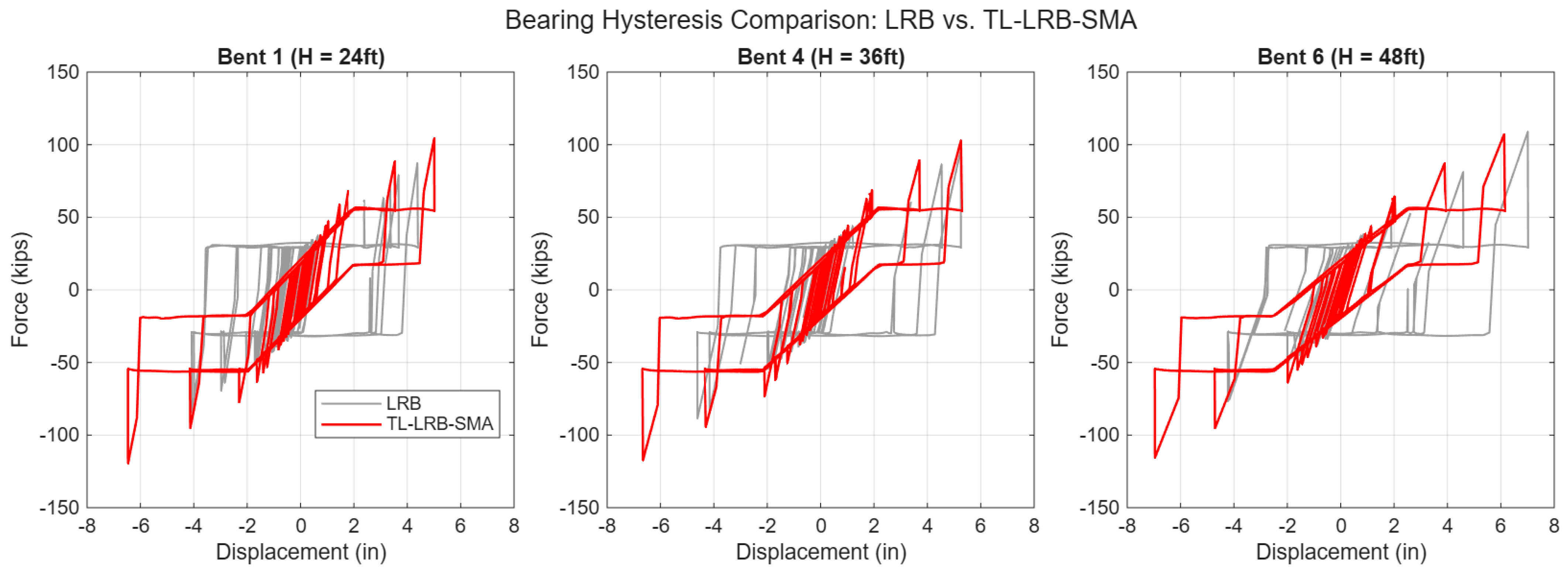
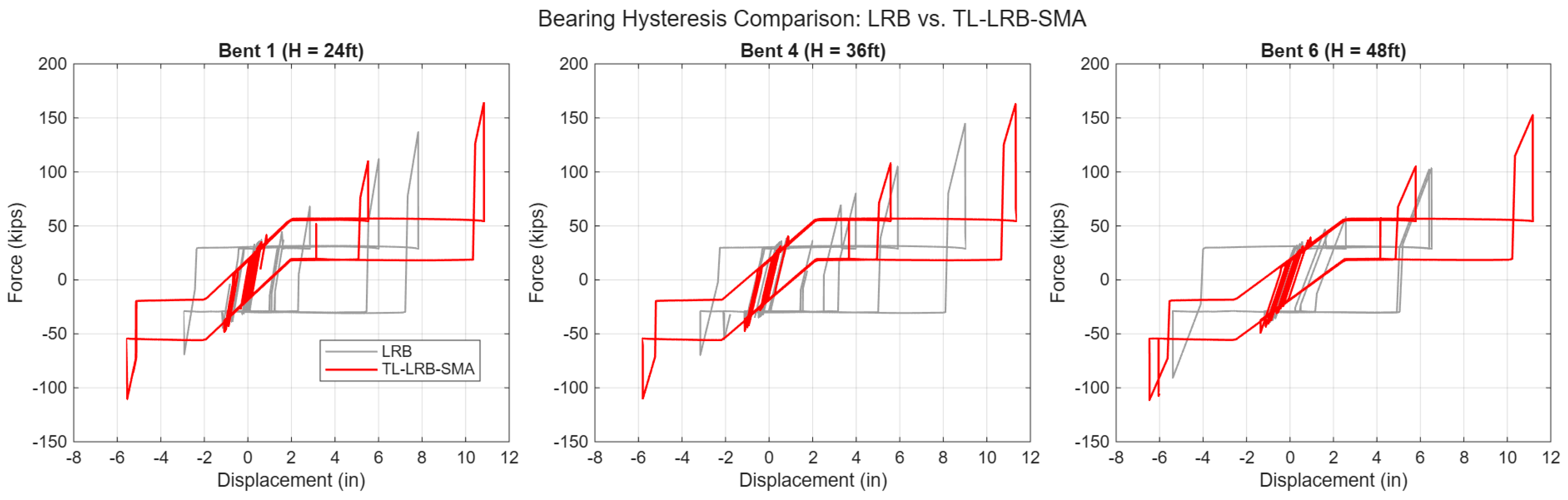
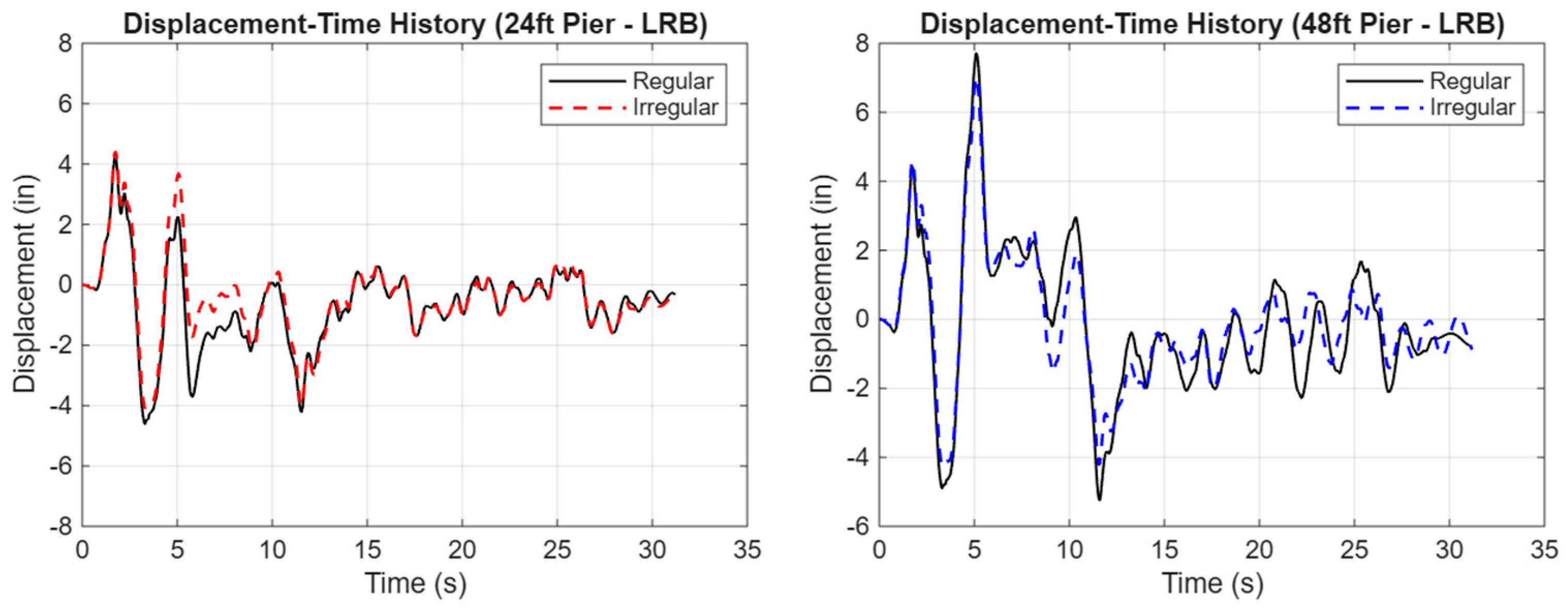
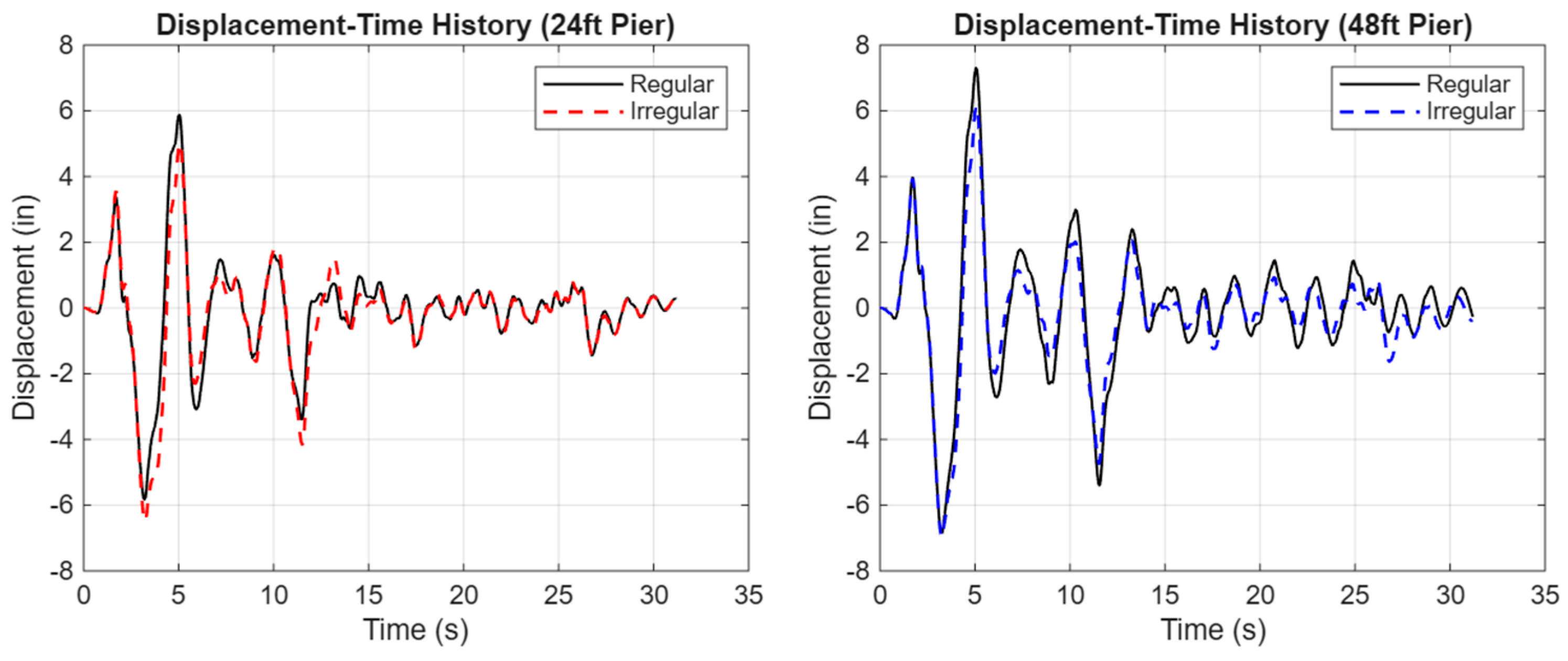
The comparative displacement–time-history and bearing hysteresis responses for both regular and irregular bridge configurations with pier heights of 24 ft and 48 ft are presented in
Figure 24,
Figure 25,
Figure 26 and
Figure 27 for conventional LRB and hybrid TL-LRB-SMA systems. For the conventional LRB system, both pier height cases exhibit typical bilinear hysteresis behavior with noticeable residual displacement, which is significantly higher in irregular bridge configurations due to nonuniform stiffness distribution. The effect of irregularity becomes more pronounced for the 48 ft pier height, where increased structural flexibility results in larger displacement amplitudes and wider hysteresis loops, indicating higher energy dissipation but poor recentering capability. In contrast, the TL-LRB-SMA system demonstrates a marked improvement in seismic performance across both pier heights and configurations. The displacement–time histories show reduced residual displacement with only marginal variation in peak displacement, while the hysteresis response exhibits a characteristic flag-shaped behavior indicative of enhanced restoring force due to SMA activation. For the 24 ft pier height, the improvement in recentering is moderate due to relatively lower displacement demand; however, for the 48 ft pier height, a substantial reduction in residual displacement is observed in both regular and irregular bridges, confirming effective activation of SMA elements. Overall, the results clearly indicate that, while conventional LRB systems are sensitive to structural irregularity and flexibility, the TL-LRB-SMA system effectively mitigates these effects by enhancing recentering capability, particularly in flexible and irregular bridge configurations.
Inclusion of equivalent foundation springs slightly altered global dynamic characteristics by increasing support compliance and modifying displacement amplitudes. However, the relative advantage of the TL-LRB-SMA system remained consistent, indicating that the observed performance improvement is not dependent on idealized fixed-base assumptions.
Overall, the analysis demonstrates that irregular bridge configurations are more vulnerable to residual displacement under seismic loading; however, the TL-LRB-SMA system effectively addresses this limitation by significantly improving recentering behavior. From an engineering perspective, the ability of the hybrid system to reduce residual displacement in irregular bridges is particularly important, as it directly contributes to improved post-earthquake serviceability and reduced maintenance requirements. Therefore, the TL-LRB-SMA isolation system provides a robust and efficient solution for seismic response control in both regular and irregular bridge structures.
Although consistent response trends were observed, the present study considers a limited number of ground motions and simplified equivalent soil springs. Future investigations should include larger suites of spectrally matched records, detailed nonlinear soil models, and temperature-dependent SMA constitutive behavior for probabilistic performance assessment.




 ,
,