1. Introduction
The analysis of historic urban fabrics offers profound insights into the socio-economic structures, cultural paradigms, societal worldviews, and architectural typologies of past communities [
1]. Consequently, the historic urban fabric stands as one of the most critical indicators of a society’s tangible cultural heritage [
2]. To adapt to shifting contemporary requirements and evolving utilization patterns over time, these historical edifices undergo structural, esthetic, and functional transformations. Such functional adaptations facilitate the sustainable utilization of heritage buildings, thereby promoting both their active preservation and the transmission of historical culture to contemporary audiences. Indeed, the conservation of cultural heritage structures is intrinsically linked to sustaining societal and spatial needs through controlled functional evolution [
3,
4].
Throughout history, numerous cultural edifices and entire settlements have been obliterated by conflagrations and seismic events, erasing vital historical evidence. Historically, major urban conflagrations have prompted administrative endeavors to restrict flame propagation, regulate construction materials, and redesign urban layouts. Furthermore, historical fire data regarding flame progression, containment challenges, and structural consequences serve as invaluable parameters for developing contemporary building codes and disaster action plans.
The conflagration in Rome in 64 BC, which occurred during the reign of Nero, required five days to be extinguished and consequently, four out of 14 settlements were completely destroyed, while seven were partially reduced to ashes [
5]. The conflagration, which originated among commercial establishments specializing in flammable and ignitable merchandise, propagated rapidly throughout the city, where wooden residences were prevalent [
6].
The Great Fire of London in 1666 destroyed 200 houses, 87 parish churches and numerous official buildings, leading to the obliteration of commercial and socio-cultural values and architectural understanding of that period [
7]. Despite the pervasive destruction, a mere six casualties were recorded, a testament to the efficacy of the evacuation procedures and the low-rise nature of the buildings. In the aftermath of the devastation, a new city was erected, characterized by its modernity, orderliness and esthetic appeal. This new metropolis emerged in the stead of former London, which had been destroyed in the process.
The Great Chicago Fire of 1871, which resulted in approximately 300 deaths, damage to an area exceeding 85 km
2 containing more than 17,000 buildings and left over 100,000 people homeless, began in a neighborhood on the southwest side of the city [
8]. The role of meteorological factors, particularly high temperatures and wind speeds, in the rapid propagation of wildfires has been well-documented [
9]. In response to this incident, the Chicago city administration introduced improved building regulations with a view to mitigating future fire risks and proceeded with a city-wide reconstruction program to higher standards [
10]. The advent of the new regulations necessitated the utilization of non-combustible materials, such as bricks, stones, marble and limestone, in construction, thereby establishing novel legislation pertaining to fire safety [
11].
Throughout history, significant conflagrations have occurred in Istanbul, Izmir and Bursa, which were pivotal hubs of trade and economic activity in their respective eras, resulting in the destruction of the cultural heritage of these cities. The conflagrations, which rapidly disseminated from one commercial establishment containing flammable goods and wooden buildings to another, resulted in the destruction of a substantial proportion of the settlement. In addition to their being ignited by negligence and lack of precautions, fires were also deliberately initiated for political and economic reasons, such as sieges, plunder and expropriation, since the Ottoman period, as external powers sought to gain control of the city through such means. As early as the late 18th century, measures to facilitate the evacuation of individuals from burning buildings began to be contemplated [
12].
Following significant fires, there have been instances of the cultural heritage of urban areas being lost. However, in the aftermath of such disasters, there has been an increase in the design of more resilient buildings and settlements. Esin defined cities as areas where crowds gather, populations are dense, there is a more specialized social division of labor and active trade and governance relationships exist [
13]. The history of urban fires has prompted the adoption of a design and planning approach that uses non-combustible materials, such as brick and concrete, in a dispersed layout. This approach is intended to mitigate the scale of potential fires [
14].
Bursa hans, which have been in operation since the 15th century, have historically been a significant hub for trade. Over time, they have evolved in line with the dynamics of modern life and continue to be used according to changing user profiles and needs. Changes in user profiles and needs have had a significant impact on fire risks. It was noted that the fires that occurred in the historical han region of Bursa and its environs were the result of looting, arson or gas stoves being left open.
Large-scale fires that have occurred throughout history have profoundly affected not only the physical environment but also the socio-cultural continuity of cities, sometimes leading to irreversible losses. In this context, the Bursa Han district serves as a unique historical center, bearing witness to the city’s economic, social and cultural development as a tangible spatial representation of approximately seven centuries of commercial and urban growth.
Qualitative studies have been conducted in the literature on risk analysis to identify threats faced by historic buildings, mitigate risks and propose solutions. Upon reviewing these studies, the methods used were classified into three groups: index-based and deterministic methods, probabilistic and engineering-based methods, and decision-making and hybrid approaches. As a simplification of the ARICA method, this approach is widely used in the assessment of large-scale historic cities [
15,
16]. Using the FRI method, which applies a single risk indicator to the entire area based on similar characteristics, only a limited number of risks have been identified and no recommendations have been provided [
17,
18]. Probabilistic and engineering-based methods address fire dynamics and the complex relationships between variables using statistical modeling. They modeled the fire as a sequence of probabilities (Event Tree) and simulated the actual thermal and structural behavior of the building under fire [
19].
It has been observed that risk levels are qualitatively determined through a matrix where probability and severity parameters intersect, using decision-making and hybrid approaches. Yaman utilized this method to identify fire risks in buildings with limited data and specific structural characteristics, such as historic wooden buildings. Additionally, while subjective judgments are eliminated using the fuzzy analytic hierarchy process (FAHP), an objective weighting of the data is performed using the entropy weight method (EWM), enabling the creation of a hybrid assessment [
20].
Although this area has undergone various social transformations over time, it has reached the present day largely preserved its original spatial layout and functional continuity. Ensuring that the cultural heritage values it possesses can be transmitted to future generations is only possible through the development of comprehensive and sustainable conservation approaches. The 11 historic hans located in the region, which are inscribed on the UNESCO World Heritage List, pose a multi-layered fire risk. The necessity of preserving these buildings without compromising their unique architectural and historical values necessitates intervention strategies that are site-specific and sensitive, going beyond standard approaches in designing fire safety measures. However, the current lack of a comprehensive fire risk analysis model and an integrated conservation plan for the historic hans and the bazaar fabric currently in active use indicates that the area is under serious threat. In this context, the present study aims to systematically identify the fire risks of the 11 historic hans located in the Bursa Han district and under protection, evaluate these risks using multi-criteria analysis methods and develop feasible strategies for risk mitigation. Within the scope of the research, an integrated methodological framework consisting of eight stages was adopted to identify, analyze and propose preventive/mitigative measures; based on the findings, a site-specific fire risk management approach and a proposed emergency action plan were developed. In this regard, the study aims to make an original contribution to the literature on the preservation of historic commercial districts in the context of fire safety.
This study highlights a significant gap in the literature regarding the identification of fire risks faced by historic buildings and the determination of intervention and management strategies to mitigate them and emphasizes the necessity of a comprehensive approach, particularly for actively used historic commercial buildings. The research findings provide a guiding framework for future studies from both theoretical and practical perspectives; they establish a methodological and conceptual foundation for efforts to ensure fire safety in historic buildings. In this context, the analyses developed using the example of the Bursa Han district demonstrate the effectiveness of low-intervention, sustainable maintenance strategies based on a preventive conservation approach, as opposed to high-cost demolition and reconstruction processes, in preserving buildings of cultural heritage value.
Furthermore, the study demonstrates that fire safety is not merely a technical requirement but also a fundamental element in preserving cultural continuity, as emphasized by UNESCO. The fire risk analysis model developed in this context systematically addresses risk parameters specific to hans located within the fabric of historic bazaars, thereby providing an adaptable reference framework for similar historic commercial areas worldwide. In conclusion, it is assessed that the model and recommendations presented in this study will serve as an important resource capable of contributing to interdisciplinary efforts aimed at reducing fire risks in historical hans and bazaars worldwide.
Fire Problem in Bursa Hanlar District
Bursa, the former capital of the Ottoman Empire, has historically served as a significant cultural and civilizational crossroads. Due to its strategic location, past significance as a major trade center and historical character, Bursa holds a significant place in terms of cultural heritage. The Han district, often referred to as the city’s beating heart, was once the vibrant trade center of Bursa and continues to thrive as a focal point for diverse identities and users from different time periods. Along with the Orhangazi Complex, the Bursa Han district, which also includes the Cumulukizik and Sultan Complexes, was included in the UNESCO World Cultural Heritage List in 2014. The major han located in the area, such as Emir Han, Fidan Han, Geyve Han, İpek Han, Kapan Han, Koza Han and Pirinç Han, have continued to be the focal points of economic life in the city since the 14th century [
21].
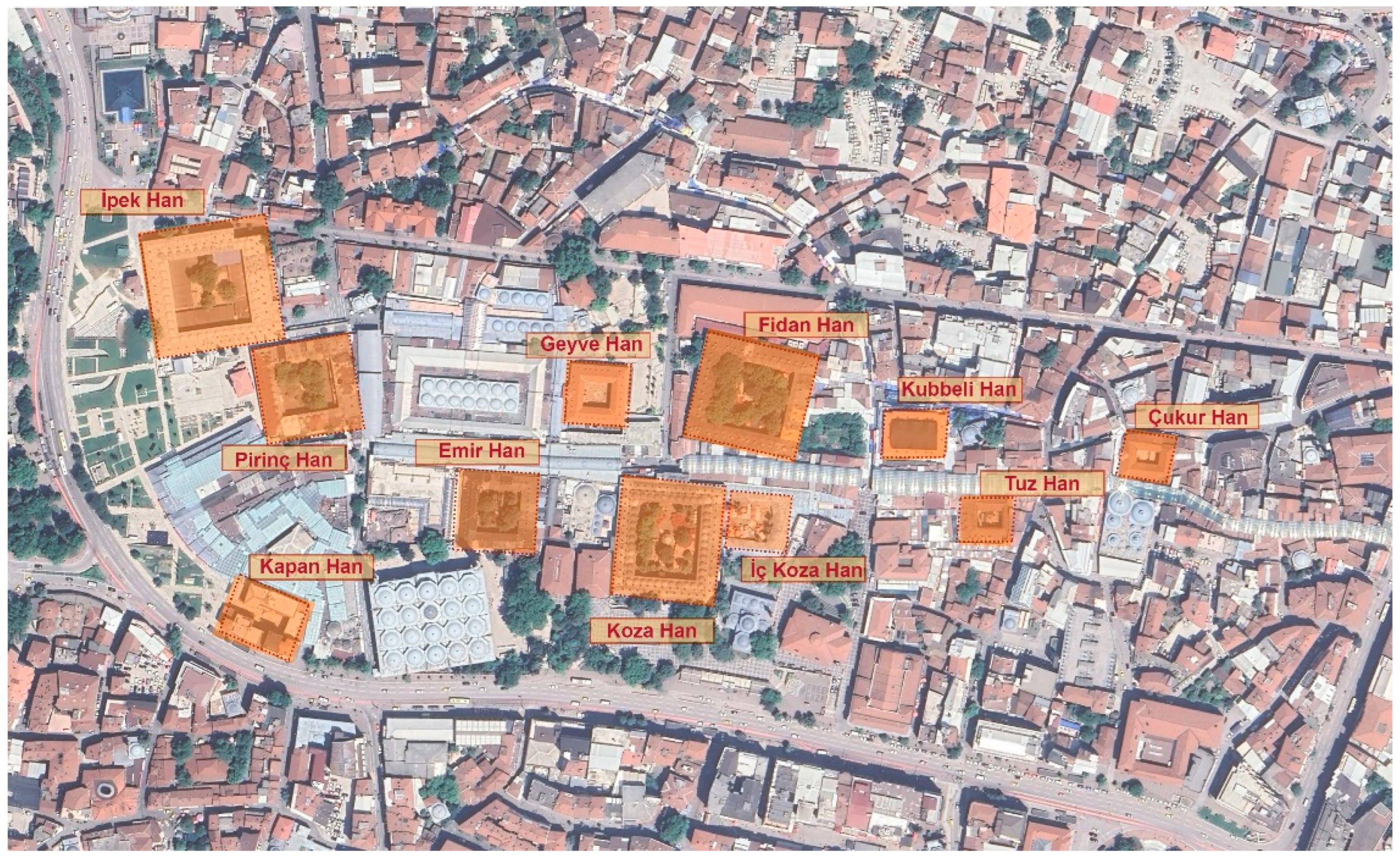
The commercial han district has suffered several significant fires, often triggered by events such as wars, riots, arson, the ignition of oil that has been carelessly melted, inexperience among shop staff and uncontrolled tobacco use. This has necessitated reconstruction or repairs on multiple occasions. Historical hans such as Ulucami, Emir Han, Fidan Han, İpek Han, Pirinç Han and Kapan Han, as well as the Covered Bazaar, have undergone repeated repairs after these fires, but many historical monuments and hans have suffered damage beyond repair due to the severity of the fires (
Figure 1) [
22].
In this area, in the 1400s, Ulucami was destroyed by fires caused by the Timurid army, and it was reconstructed. After the Karamoğlu fires in 1413, Orhan Mosque and wooden houses burned down. Fires broke out after the earthquake in 1417, and subsequently, a large area from Ulucami to Çırapazarı-Cakırhamam burned down due to fires following the Fidan Han and Çıra market fires. Then, a fire broke out in the Salt Market originating from the wax house. In 1518–1519, fires occurred as a result of arson and looting by those who wanted to expand the city. The south wind intensified the fire [
23]. The wooden parts of the Doğan Gözü Han, built by Başçı İbrahim Pasha across from the Kapan Han, burned down, and despite being repaired after the fire, it was completely destroyed in the next fire. After the earthquake of 1674, Emirhan was repaired. In the Great Bazaar fire, a large part of the bazaar and hans were destroyed in 1743 [
20]. A fire broke out in the tannery, spreading to Şengül Bath in 1755–1764, causing great damage to the area under the Closed Bazaar. In the 1765 Great Kayan fire, the bazaar burned down from end to end and then spread to the flea market, reaching Yıldırım Mosque and the people’s homes. The buildings next to the mosque, such as the ascetics’ quarters and dining hall, were completely destroyed. After the Çıra market and Kayan fires, Bursa’s two thirds burned in the fires of 1773 and 1801. After the fires of 1854 and 1870, the roads were widened, taking on their present form [
24]. In the 1889 fire, which occurred during the Ulucami festival, a fire broke out in a chickpea shop and spread to the minaret of Ulucami with the wind, causing all the shops in the west gate to burn down. The wooden and lead-covered minaret burned down completely, and it was rebuilt with bricks after the fire [
25]. In the 1900s, fires continued to devastate Bursa with fires in the Salt Market, the rice han, and the bazaar. The presence of textile products in the shops especially contributed to the rapid spread of the fire.
Following one of the biggest fires in the region, the 1958 fire in the Covered Bazaar, which lasted for days, where many shops were destroyed, it was decided to relocate the workshops involving fire use away from the bazaar area [
26]. Today, although there is still a significant presence of textile products being sold in the area, which results in a similar fire load, the presence of ignition sources such as open flames and the extensive use of electricity, as well as air conditioning systems in many shops, constantly expose the premises to the danger of fire. According to information obtained from the Bursa Metropolitan Municipality Fire Department, it was determined that 197 fires occurred in the region between 2015 and 2023 [
27]. It is observed that more fires occur today compared to historical fires, but they are promptly addressed and brought under control.
Despite the transformation of lifestyle and trade venues in Bursa hans due to the requirements of the era, along with changing trade practices and social needs, vitality in the area continues with different uses alongside historical traces. Materials used in shops and manufacturing still pose a high risk of fire today [
28]. This situation, in case of the slightest negligence or carelessness, can lead to significant damage or complete destruction of the region, which is an important center listed in the UNESCO World Cultural Heritage List. In this context, the aim of the study is to identify the fire risks faced by the area listed in the UNESCO World Cultural Heritage List in Bursa and to provide risk reduction recommendations to protect the historical and cultural assets of the hans against fires.
2. Materials and Methods
A fire risk analysis is a process that involves assessing potential ignition sources in a building, as well as the effect of combustible materials on the spread of fire. It also examines situations that pose risks for evacuation and firefighting. The aim of a fire risk analysis is to foresee, identify and mitigate or reduce the impact of potential risks. These analyses were conducted using various qualitative and quantitative methods, guided by the knowledge and skills of the analyst and based on the available data to reach conclusions [
29].
In the study, fire risk analyses for the 11 historical hans listed on the UNESCO World Heritage Site in Bursa were conducted by evaluating cause-and-effect relationships. To identify fire risks in the historical hans and their surroundings, a model consisting of 8 steps was proposed below. This model was applied to analyze fire risks in the historic han district of Bursa. Using this method, the risks in the area were analyzed and solutions were proposed.
Analysis of the fires that occurred in the historical Bursa Hanlar region over time.
Classification of potential fire risks in the han buildings.
Analysis of the compliance of the protected han buildings in the area with regulations, identification of risks, and documentation.
Assigning probability values to each risk category within each han.
Assigning severity values to each risk category within each han.
Calculating the risk score by multiplying the probability by the severity.
Identifying factors with high risk and taking risk mitigation measures.
Recalculating the risk score according to the new regulations and lowering the hazard group accordingly.
In the literature on risk, disaster, and fire safety, risk is defined as the combination of the probability of a specific hazard occurring and the magnitude of the consequences that could arise if that hazard were to occur. This approach is widely accepted, particularly in decision-making processes under uncertainty [
30]. International standards similarly define risk as “the effect of uncertainty on objectives” and base risk measurement on probability and consequence components [
31].
In this study, the risk score is defined as the product of the probability of an event occurring and the severity of the damage that would result if it occurred, in accordance with the semi-quantitative approach commonly used in the field of fire safety.
In the risk analysis conducted in the first stage, past incident analyses constitute a significant data source for identifying hazards and are considered a critical step determining the accuracy of the entire process [
30]. Therefore, in the first stage of the risk assessment process, hazards that could cause fires in historic buildings were systematically identified by examining past fire experiences in similar buildings.
In the second stage, the classification of risk types is widely used in fire safety performance analyses and reveals the multidimensional nature of risk [
14]. The identification and joint assessment of risks provide a multidimensional analytical framework that encompasses not only the formation stage of fire risk but also the dimensions of spread, human safety, and response capacity. Similar approaches are widely used in performance-based design and risk indexing models [
14]. Additionally, NFPA 5512 specifies the need for analysis based on the stages of fire development [
32].
In the third stage, to determine the effects of the identified fire risks on the buildings under review and the measures to be taken against the resulting risks, an analysis was conducted to assess whether these requirements are met by Turkish fire regulations, and the necessary measures were identified within the scope of these regulations. The control tables specified in NFPA 5512 have been developed to align with Turkish fire regulations. There are numerous publications where the fire risks of buildings are analyzed using control tables within the scope of regulatory provisions method is considered highly valid for conducting such analyses.
The fourth stage covers the building of the probability calculation, which also utilizes an L-type matrix used for risk calculation. Probability refers to the likelihood of an event that could cause a fire occurring within a specific timeframe. The L-type risk matrix is a semi-quantitative assessment method in which probability and severity are rated on specific scales, and the risk level is determined based on the intersection of these two components. This method is considered a highly applicable tool, particularly in complex systems such as historic buildings where data gaps are common.
In the fifth stage, severity refers to the magnitude of the effects that could arise if a fire were to occur. In the case of historic hans, this impact is not limited to physical damage but also includes the loss of cultural heritage. Therefore, the severity assessment considers criteria such as the level of structural damage, the risk of loss of life and injury, the loss of cultural and historical value, economic loss, and the fire’s potential to spread.
In the sixth stage, the risk score was calculated, and the necessary measures for high-risk situations were defined. This approach is a widely used method in fire risk indexing studies and is also incorporated into models developed specifically for historic buildings [
14].
In the seventh stage, risk-mitigating factors were integrated into the matrix. One of the study’s original contributions is the integration of risk-mitigating elements present in the households into the assessment process. This approach enables the quantitative evaluation of the effectiveness of risk control measures, which is consistent with contemporary risk management approaches.
In the eighth stage, the net risk scores obtained were compared to prioritize hans and risk types. This process is of critical importance for identifying high-risk areas and developing intervention strategies. The developed eight-step model facilitates the systematic, comparable, and standards-compliant assessment of fire risk in historic hans. The method is consistent with international risk management standards and fire safety literature, serving as a practical decision-support tool applicable to cultural heritage buildings.
The method used incorporates both quantitative and subjective assessments. Consequently, results may vary significantly from person to person depending on the analyst’s knowledge and experience; this can negatively impact the method’s consistency. Therefore, to ensure an evaluation that is as data-driven and objective as possible, probability and severity values were determined based on fire and prevention activities conducted by the fire department in the relevant area. To minimize subjectivity in the study, input was sought from three occupational health and safety experts specializing in risk and severity assessments, as well as from 11 institutional managers working on similar issues in the region. Additionally, the assessments were validated by consulting occupational health and safety experts who conducted the risk assessment. Due to data gaps, the “frequency” parameter, which indicates the frequency of exposure to hazards, was not included in the calculation. The risk assessment range was set between 1 and 5, taking into account the accessibility level of the values.
Method for Determining the Fire Risks of Historical Bursa Hans
As part of the study, fire risk analyses were conducted for the hans located in the han district, which is listed on the UNESCO World Heritage List. This included Emir Han, Fidan Han, Geyve Han, Old Silk Han, Kapan Han, Koza Han, Inner Koza Han, Tuz Han, Kubbeli Han, Çukur (Kütahya Han) and Pirinç Han. Suggestions for reducing risk were also provided. Please note that buildings outside the selected HANS located within the area were excluded from the analysis.
Determining the causes and propagation factors of fires that occurred in hans in history will provide important data for risk analysis. In the initial phase of this study, the causes of fires documented in the study area throughout history, along with the factors contributing to their propagation, were examined. This research will be effective in determining potential fire sources and the reasons for their propagation.
In the second stage of the method for determining the fire risks of historical Bursa hans, based on examined case studies and literature research, four main headings constituting fire risks were identified. In this context, an analysis of the risks arising from ignition, propagation, evacuation and control of fire in hans and their surroundings was conducted [
33]. Prepared detection forms were evaluated on an individual basis for each han and its surrounding area.
The primary objectives of fire safety are to prevent ignition; control of ignition is key in preventing the formation of fires, and early warning and detection systems also play an important role in reducing risks by controlling fires as they occur and preventing their spread. The second stage is to prevent propagation, which is directly related to the combustibility and flame propagation properties of the materials used alongside the ignition source. The design of escape routes is a key concern that must be addressed to minimize or eliminate risks to users. Finally, timely and correct extinguishing processes eliminate the risk of propagation and ensure fire control. In this context, when historical buildings are examined in terms of fire safety, it is observed that potential fire risks are influenced by early warning and detection systems, ignition sources, fire loads, escape route designs and fire extinguishing methods.
Yaman examined the fire risks of wooden mosques by identifying risks related to evacuation, fire spread, and structural failure of the wood using a risk matrix model developed for historic wooden structures [
34]. Çetintaş used an L-type matrix to identify fire risks in green roofs, defining risks across six categories that include the roof’s flammability characteristics, fire suppression, and fire department access [
35]. In their studies on the examination of fire risks in historic structures, Netoa and Ferreira, as well as Palazzi et al., similarly identified these subcategories when calculating the fire risk index [
15,
16].
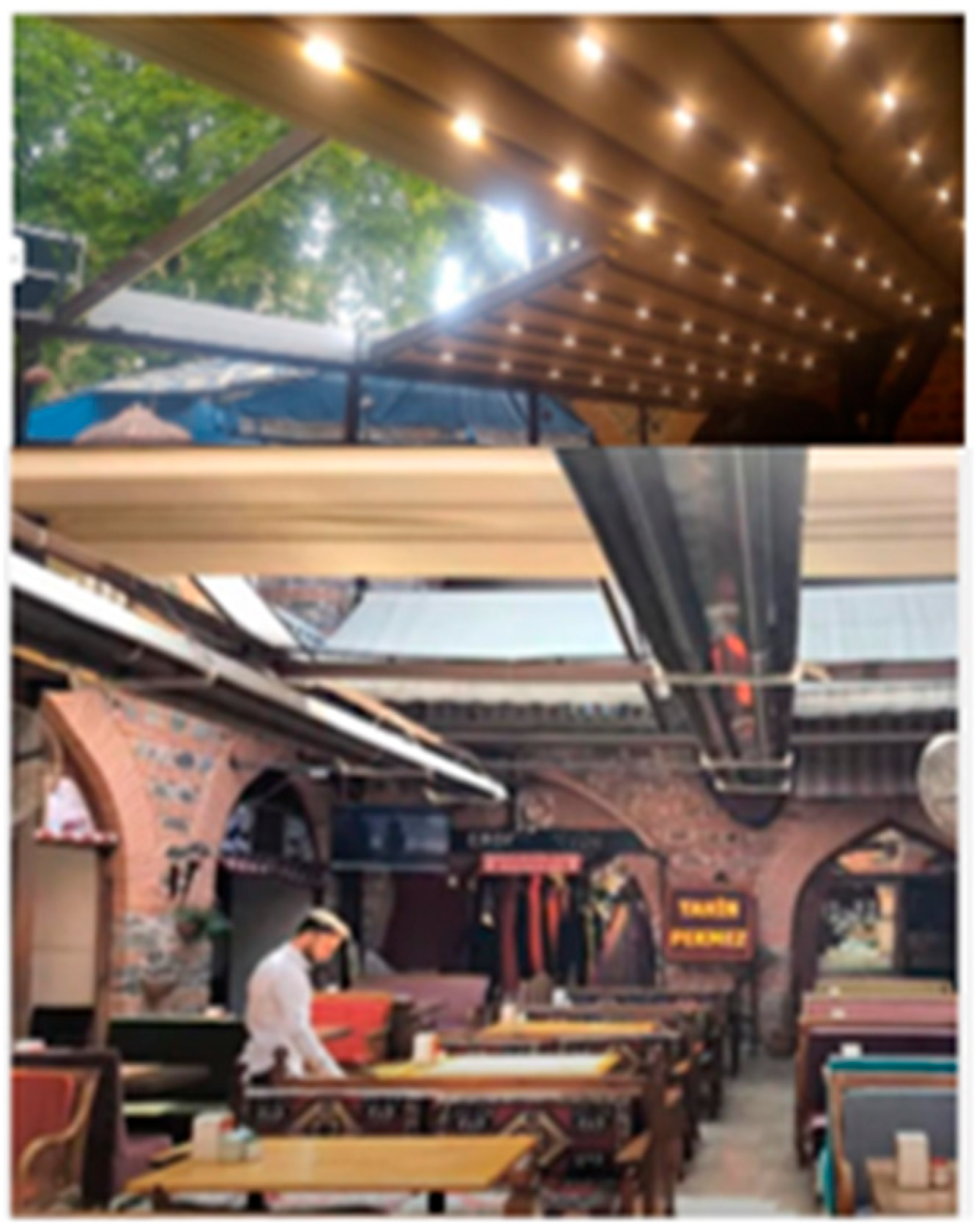
In this study, the existing fire risks of hans in the Bursa Han region were examined in four main groups and analyzed by reducing each of them to sub-units as follows. The examination of the risks arising from ignition, propagation, evacuation and control of fire in protected hans in the region, compliance analysis with regulations, determination of risks and documentation studies were carried out through observation and checklist methods (
Figure 2). The identified hazards were entered into a risk analysis table and risk scores were calculated. To determine the risks, detection forms were created based primarily on regulations regarding building fire protection and each han was examined separately. A brief summary of the obtained data is provided by synthesizing the data in table. These data were used to calculate the risk score.
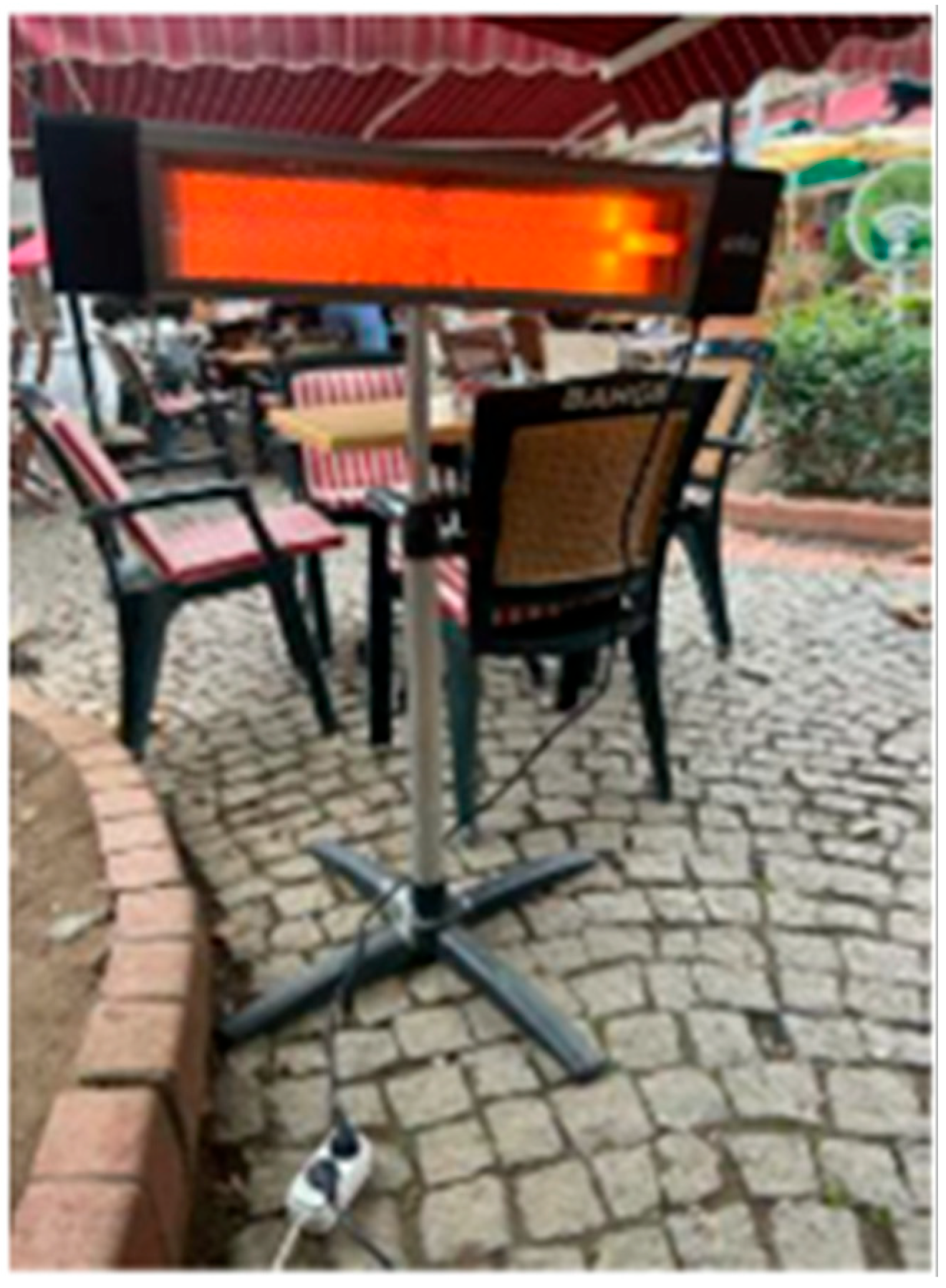
The ignition risk is defined as the presence of flame sources (see
Figure 3). Following detailed observational analyses in all the hans, potential fire hazards have been identified. These include stoves in dining areas, equipment used in workshops, exposed or hanging cables, outdoor electrical outlets in the courtyard exposed to weather conditions, electrical systems and infrastructure not designed for increased electricity usage, extension cords and air conditioner motors.
In situations where the fire cannot be contained, the rapid spread of flames can lead to a difficult-to-control disaster. In such cases, it has been identified that fabric materials transmitting flames between shops in the han, tents on courtyard and facade surfaces, trees extending into the internal facade of the han courtyard, tents in front of shops on the external facade and exhibited combustible materials (fabric, clothing), as well as the use of combustible cladding on the external facade and roof of the han, combustible covers in the internal courtyard, window openings through which flames can spread to adjacent buildings and the use of combustible materials on the facade and roof of adjacent buildings, are risk factors affecting the spread of fire.
In the interest of user safety, it is imperative to ensure the prompt evacuation of users to safe areas in the event of a fire. The dangers encountered during evacuation serve to highlight the risks arising from the design of escape routes. Whilst the integration of indoor areas with open courtyards may appear advantageous for the purposes of evacuation, the linkage of han exits to overcrowded market axes hinders the efficient egress of person. In this context, a survey form has been developed in accordance with the Regulation on the Protection of Buildings from Fire. The purpose of this form is to ascertain whether each han is in compliance with the regulations on fire as outlined in the legislation. The inspection identified potential fire hazards in the escape routes, including but not limited to: non-compliant escape distances, inadequate number of exits, unclear exits, obstacles in escape routes, use of slippery and combustible materials in escape routes, inappropriate stair height, and escape route widths not suitable for user capacity.
In the context of fire safety, it is also of paramount importance to limit and control the spread of fire. During the phase of controlling the spread of fire, the inability of fire brigade teams to access all sides of the building, the absence of fire hydrants, portable and automatic fire extinguishing systems, smoke alarm systems and smoke detection systems pose significant risks in terms of delaying fire intervention [
36].
In the fourth stage of determining the fire risks in historical Bursa hans, the risk scores constituting the danger identified in the hans were determined. The risk score is calculated by multiplying the probability of the event occurring by the severity of the damage that may result if it occurs. According to
Table 1, probabilities are assigned values ranging from 1 to 5 based on their frequency. In this method, the probability of the event occurring and the severity of the damage it may cause are evaluated as components and the risk score is obtained by multiplying them (Risk Score = Probability × Severity). Risk scores were calculated on an individual basis for each han, categorized as follows: ignition risk, fire spread risk, evacuation risk and fire containment and control risk. In addition to the L matrix, risk-mitigating factors in the hans were determined and entered into the matrix as negative values [
37].
An evaluation was conducted on each building, with the assessment based on 29 risks identified across four main categories for each building. The data obtained in these four main categories, as determined by observational analyses conducted in the hans, were evaluated according to the following categories: ignition, spread, evacuation and containment and control of fire. The obtained values were evaluated with the matrix diagram as the fire risk before and after the precautions. The objective of the project was to use numerical methods to assess the fire risks present in historical han buildings and to evaluate the effectiveness of fire safety systems in these contexts.
Severity is defined as the numerical value representing the estimated damage to individuals in the event of potential hazards, scored on a scale of 1 to 5 (
Table 2). The risk factor is indicated on the score matrix as insignificant, low, moderate, high, very high and intolerable based on the multiplication of probability and severity score values (
Table 3) [
37]. In the risk score calculation, low and very low risk are expressed in green, medium risk in blue, high risk in yellow, and very high risk in red.
The importance level is determined by evaluating the probability and severity values on the matrix. The score range of 16–25 corresponds to the I importance level in the red group, the score range of 10–15 corresponds to the II importance level in the yellow group, the score range of 5–9 corresponds to the III importance level in the blue group and the score range of 1–4 corresponds to the IV importance level in the green group. The red group in the table represents “Unacceptable” risks, where the probability of the event occurring and the damage it may cause are highest. It is therefore essential that action is taken immediately to mitigate these risks (
Table 4). In the yellow group, activities within the building can continue as normal, but efforts to reduce the risks should be initiated immediately. In the blue group, risks are not significant, but improvements can be made in the long term through planning and control. The green group defines risks that are acceptable and do not raise concerns. The objective is to reduce high-risk groups to the blue or green level [
37].
The total risk for all examined historical hans regarding ignition, spread, evacuation, and fire control is calculated using the following formula, where the sum of risks is the product of the value where the total risk is present and the number of risky situations:
3. Result and Discussion
The findings of the study are discussed in two parts: the results obtained regarding fires and their causes and the data obtained from the analysis of the fire risk scores of the hans.
3.1. Result and Discussion on Fires and Their Causes in the Bursa Han Region
The fire risks of 11 historic hans protected under the UNESCO World Heritage have been analyzed based on 29 risks categorized into ignition, spread, evacuation and fire control, identified as four main headings. These subheadings were determined based on the analysis of past fire incidents and the identification of elements in hans that do not comply with fire regulations.
3.1.1. Findings and Discussion on Ignition Risk
In general, in terms of fire risk, Emir Han, Koza Han, İç Kozahan, Pirinç Han and Çukur Han were found to have high risk scores ranging from 80 to 91. In the lowest-risk han, Geyve Han (27), Fidan Han (27) and Kapan Han (27) are the buildings with the lowest risk scores. In these han buildings, risks such as workshop use, sagging cables and outdoor outlets appear to have been minimized. In most of the examined han buildings (Emir, Koza, İç Kozahan, Pirinç, Çukur, Kubbeli, Tuz), this risk is at the “Unacceptable” level with a score of 25 points. This situation indicates that historic buildings cannot handle today’s electrical load. In the Emir, Koza, İç Kozahan, Pirinç, Çukur and Tuz hans, this poses a serious danger, with a score of 20 points. There is a risk that these outlets could ignite awnings or trees.
It was observed that eight of the inns inspected had dining areas; while these areas posed a high fire risk due to the use of stoves and fuel, the fire extinguishers present in these areas reduced the fire risk from a level of 12 to three. Since there was no fire extinguisher in the Pirinç han, one instance of high risk—a “significant risk”—was identified in terms of ignition risk. The presence of users in the establishment during hours when open flames were active reduced the risk level from very high to high. The presence of portable fire extinguishers reduces fire risks to an acceptable level of three.
After the Great Bazaar Fire of 1958, a decision was made to relocate workshops using open flames away from the historical bazaar area with the aim of preventing fires. Nowadays, when examining the usage of hans, in the Emir and Koza hans, it is observed that only two hans have workshops using open flames for short periods [
37]. By keeping flammable materials away from ignition sources and providing training to users, the fire risk score can be reduced to four; furthermore, by keeping fire extinguishers on-site, the fire risk score can be lowered to eight points, bringing it down to an acceptable level (
Table 5).
Historical buildings, which do not have the necessary infrastructure, have experienced a high electrical load over the years due to increased energy consumption from the necessities of life. It is therefore important to note the proliferation of uncontrolled cables in proximity to flammable materials. Following a thorough examination of the historical buildings, it was determined that such cables were not present in Building 2, indicating no risk. However, in seven, there was a high risk due to cables directly contacting flammable materials and in the other two, there was a very high risk due to cables directly touching flammable materials. While the removal of flammable materials or the enclosure of cables in cable trays appears to be an effective method, that alone is not sufficient to reduce risks. However, inspecting and renewing cables can help to reduce risks to an acceptable level.
As industry and technology have evolved, so too has social life. These developments have had a significant impact on commercial and social life, resulting in changes to the usage diversity of hans. In the current climate, the positioning of electric heaters used for indoor heating, in close proximity to flammable ceiling coverings and outdoors near trees, umbrellas and even on top of trees and shading elements, has been identified as a significant contributing factor to an increased fire risk. Another factor that increases the fire risk is the use of extension cords to connect heaters and even refrigerators containing beverages, which are positioned far from electrical outlets. In this context, an observation of outdoor sockets and heaters in six hans revealed that external environmental conditions were a risk factor. In seven hans, the use of extension cords connected to each other due to increased electricity consumption posed a very high risk. In two hans, high risk was identified (
Figure 2). The location of open flames and the nature of nearby flammable materials have been effective parameters in determining the risk group (
Table 3).
In 2022, a 24-story residential building located in Kadıköy Fikirtepe, Istanbul, experienced a fire outbreak originating from the air conditioning motors on its exterior facade. The flames quickly spread due to the wooden panels on the facade, engulfing the entire structure. This incident clearly highlights the ignition risk associated with air conditioning motors. Since the construction of the hans occurred at a time when there was no centralized heating system, most spaces are heated and cooled using air conditioners to achieve optimal comfort conditions, thereby increasing the risk of ignition. It was observed that in 10 of the examined hans, air conditioning motors were placed near flammable materials, resulting in the high-risk category. The fundamental measure to reduce ignition risk involves controlling the ignition source, renewing the installation and keeping away from flammable materials. With the implementation of all these measures, the risks can be reduced to tolerable risk values of 12 (
Table 5 and
Table 6).
Historically, open flames and dining areas have been considered the main factors that increase the risk of fire, which is why functional separation was introduced. However, it has been observed that dining areas account for only 9% of high-risk areas within the han, specifically those originating from the Pirinç Han. With the necessary precautions, these risks can be reduced to an acceptable level and those associated with dining and drinking establishments can be lowered to an acceptable level of 100%.
Electricity use is unavoidable and poses the highest risk. In Emir Han, Koza Han, İç Kozahan, Pirinç Han and Çukur Han, the most significant factor increasing risk is the placement of outlets and heaters in open areas close to awnings and trees. This situation poses a high risk in all of these han. Exposed wiring poses a very high risk in 64% of the han, a moderate risk in 27% and a low risk in 9%.
When considering subsequent risk scenarios, it is possible to reduce the risk level associated with 90% of the entries in
Table 5 from high to moderate. This can be achieved by renovating the electrical wiring and eliminating electrical usage in the courtyard. In order to reduce the risk of fire to an absolute minimum, however, the entire electrical system must be replaced. All of these renovation processes can be carried out without damaging the building’s historical integrity.
3.1.2. Findings and Discussion on Spread Risk in Hans
In cases where ignition cannot be controlled, materials near the ignition source can ignite as they reach their ignition temperatures, contributing to the spread of the fire. Factors such as the presence of users and the flammability of materials significantly affect the containment of the fire. Through the examination, nine effective risk factors contributing to the spread of fire in hans have been identified. The precautions taken after each risky situation vary depending on the presence of users in the area.
Parameters affecting fire spread were examined in four categories based on the flammability of materials found inside the premises, in the courtyard, on the outer shell of the hans and on the walls of neighboring buildings (
Table 7). Today, hans are used as textile warehouses, shops, jewelers, dining areas, or workshops. Besides the materials stored in shops, the flammability of decorative elements significantly increases the risk of spread. The fact that flames can engulf an entire room in approximately 2.5 min underscores the importance of spread risk [
31].
When considering subsequent risk scenarios, it was found that the risk level for 90% of the hans listed in
Table 5 could be reduced from high to moderate. In the fire risk analysis conducted on the 11 hans examined, which included renovating the electrical wiring and reviewing electrical usage in the courtyards, the average fire spread risk score was calculated as 125. Around 82% of han buildings have a high fire spread risk. The remaining han buildings carry a moderate fire spread risk. İpek Han (160), Koza Han (155) and Tuz Han (150) are among the han buildings with the highest fire spread risk. The awnings in the courtyards and the textile products on the façades of adjacent buildings have contributed to these higher scores in particular. Kubbeli Han’s fire spread risk is reduced to 70 points by the absence of flammable awnings and plants in its courtyard (
Table 6). While using non-flammable materials would completely eliminate the risk of fire spreading, this may not be feasible in practice due to restrictions on furniture, decorative elements and product selection. Automatic fire suppression systems reduce the risk level to five points, even when there are no occupants present, thereby bringing risks down to a tolerable level. Using portable fire extinguishers reduces the risk level to 10, but only when there are occupants, depending on their knowledge and ability to extinguish the fire. Although some hans had fire extinguishers, there were not enough of them and they were not in easily accessible places. The placement of fire extinguishers alone cannot prevent fire spread. Reduction in risk can only be achieved through a combination of staff training and practical exercises to inform them about on-site intervention procedures, as well as periodic checks of fire extinguishers (
Table 8).
The presence of courtyards in hans facilitates diverse usage, making them lively spaces with cafés opening onto them. Cultural heritage and values are passed down to future generations through the active use of historical sites. Spaces that are actively used and free from dilapidation become more well-maintained and noticeable, attracting more users. Active use of courtyards draws more users and allows them to experience the characteristics of the era. However, the use of flammable materials and the requirement for ignition sources in such spaces poses a high fire risk. Umbrellas, canopies and trees with long branches in the courtyard can cause flames to spread rapidly to the upper floors and block entrances. Of the 11 han buildings examined, only one does not have a courtyard.
The exception is Kubbeli Han and in seven of the hans, trees increase the risk of spread. All hans with courtyards pose a high fire risk. This raises the fire risk (25) to a very high level. In addition to the fire risk, the awnings have a negative impact on the historical character of the buildings. In accordance with decisions made by the relevant authorities, these awnings are to be removed. However, by eliminating ignition sources, the risk can be completely eliminated. These measures reduce the risk of spread to the lowest level, ‘5’. Nevertheless, in buildings with existing trees, the risk cannot be reduced below 25 if a fire were to occur.
The use of stone as a building material, which is non-combustible and does not transmit flames, makes the risk of fire spreading to the facades of the han tolerable. Of all the han buildings, only Pirinç Han has flammable awnings on its façade. This is because the shops only open onto the inner courtyard. However, flammable materials displayed on the exterior façade, such as awnings, contribute to the spread of fire. This risk was found to be very high in eight han, tolerable in nine and high in three. Similarly, only 10% of attached buildings—specifically the ‘Dome-Roofed Han’—have non-flammable materials on their exterior façades. Nevertheless, flammable materials displayed on external facades, such as canopies, can effectively spread fire. This risk is very high in 72% of han buildings, tolerable in 1% and high in 28%. These risks can be mitigated by removing all materials and canopies displayed on the façade. This is an important step in ensuring the area’s continuity and vibrancy.
The roof, along with the facades, forms the outer shell of a building. Especially in row houses, roofs are a key factor in preventing the spread of fire to neighboring buildings. Removing combustible materials from between roofs and controlling ignition sources are effective in reducing risks; however, changes to roof coverings can only be implemented following cost–benefit analyses in accordance with decisions made by the Cultural Heritage Preservation and Restoration Board. Moderate risks were identified in 45% of the hans and high risks in the remaining ones; however, implementing these measures can only reduce the risks to a moderate level (
Table 7). Constructing a fire wall extending approximately 50 cm upward on the roofs of attached buildings can reduce these risks to level five. This does not affect the building’s historical character. Since there are no adjacent buildings to the domed han, the hazards typically associated with adjacent buildings do not apply to this han.
A fire does not affect only the building where it originates; uncontrolled flames, in the presence of materials that burn like a wick, can engulf a neighboring building within seconds. The quality of materials used on the roof and facade of an adjacent building, as well as structural voids that influence the spread of a fire from the interior to the facade, has been identified as key parameters affecting fire propagation. Following preventive measures, 100% of the hans can be restored to at least a moderate level without compromising their historical value.
3.1.3. Findings and Discussion on Evacuation Risks in Hans
The Bursa Han area, which continues its activities with the dynamics of trade intensively carried out in the city and attracts both local and foreign tourists with its historical identity, is an important commercial center contributing to the city’s tourism. All these factors significantly increase the user density in the region. In a region where vehicle entry is limited and the road widths are narrow due to the historical texture, the increasing user density cannot be met. In particular, on holidays, weekends and public holidays, the density increases further as users meet their needs in this area. During disasters such as earthquakes and fires, panic during evacuation and the difficulty of finding escape routes due to the intensity of this area can lead to stampedes. The non-compliance of escape routes with the user load and fire regulations can make evacuation difficult, delayed and result in loss of life. Especially considering the user density in the region, it is anticipated that the potential loss of life during such a disaster would be very high. The problem is not only the evacuation of individuals from the hans but also the difficulty of accessing narrow streets with low user density after leaving the hans. In such a situation, reaching a wide and unobstructed escape route after leaving the hans becomes very difficult. When examining the evacuation risks of historical hans, nine risks have been identified (
Table 9 and
Table 10). Risks include compliance with regulations regarding evacuation distances, fire department access and approach distances to the building, unobstructed evacuation routes, smoke exhaust in evacuation routes and material properties.
Due to the fact that buildings have “Historic Building” status and, in accordance with the decisions of the Regional Council for the Protection of Cultural Assets (K.V.K.B.K.), it is observed that medium and high risk scores (R = 12, 9, 20) for structural elements such as evacuation distances, stair landing heights and evacuation route widths remain unchanged before and after the measures. However, in areas where structural interventions could not be made, it was observed that the risk score was significantly reduced through “user”-focused measures. By removing materials blocking exits, the risk score was reduced from nine to three, bringing it to a low-risk level. Similarly, when evaluating alternative escape routes, it was observed that only 10% of the han buildings had insufficient alternative escape routes in the Kapan Han, a situation that constituted a medium-risk group with a value of nine. Upon examining evacuation risk groups, it was found that all han buildings had similar risk levels. The han with the lowest evacuation risk, at a rate of 47 and 50, is Pirinç Han and Çukur Han, where all exit doors open to open areas and have no connection to a covered bazaar. In general, 82% of the hans have a low evacuation risk due to their location and the resulting environmental arrangements that allow evacuation to open areas. In this context, it has been observed that the most significant factor increasing evacuation risk stems from the fact that the han’s exits open onto a covered bazaar. Even if the evacuation distances from the premises to the han exits comply with regulations, opening directly onto streets with heavy pedestrian traffic could lead to congestion and overcrowding at these points. At the same time, the congestion in these areas will hinder the access and intervention of firefighting teams. Pirinç Han opens onto a newly redesigned square following the demolition of the old buildings in front of it. It is clearly evident that fire risks can be reduced through urban planning measures involving the demolition of substandard buildings surrounding the hans. To mitigate these risks, a management plan for the han district should be prepared and alternative routes should be created by removing the shops surrounding the hans (
Table 9).
The fact that all rooms open directly to the open courtyard and corridors minimizes the risk of smoke inhalation. Since it is possible to reach the open area directly from the rooms in the hans, the escape distances have been measured to the exit doors of the hans, assuming that people may be trapped in the flames if the exit doors of the hans are closed and the escape distances from these doors have been measured. It appears that 90% of the buildings that comply with regulations regarding evacuation distances on the ground floor hans, with unused upper floors, were assumed to fall into the tolerable risk category, as the evacuation distances on these floors were disregarded. Only one of the han ground floors (10%) was deemed high-risk due to having a single exit and a high user load. Only 18% of the hans with actively used upper floors were deemed to pose a high evacuation risk, as some of these floors provide direct exits from that level. Since opening any door in the historic stone walls would both compromise the hans’ authenticity and pose a structural risk, it is not possible to reduce these risks by adding alternative exits. Such measures can only be implemented in accordance with decisions made by the relevant authorities.
Factors affecting the speed and safety of evacuation include the quality of escape routes and the materials used for flooring, the riser heights of stairs and the presence of obstacles that hinder escape. Among these risks, the risk levels can be reduced by removing only the obstacles found in the escape routes; decisions regarding materials can be made only after obtaining approval from relevant institutions and organizations, considering the sustainable historical identity of the hans. In conclusion, considering that the risks reduced after implementing measures, evacuation safety in historic hans is observed to be more of a “management and user discipline” issue than an architectural one. While structural risks remain constant (due to heritage value), minimizing operational risks brings overall evacuation safety down to an acceptable level. A total of 100% of the hans remain in the medium-risk category after the implementation of safety measures. This situation indicates the need for a comprehensive, site-wide approach to reduce evacuation risks.
3.1.4. Findings and Discussion on Control of Fire
When the fire is not brought under control, combustible materials in the space begin to spread rapidly depending on the ratio of flammable substances. During the fire containment phase, six risks were identified, including access for fire trucks, fire alarm, detection and suppression systems and hydrant systems. At this stage, only with the intervention of the fire brigade can the fire be brought under control. Article 22 of the Regulation on the Protection of Buildings from Fire in Turkey states that the horizontal distance from the furthest point where fire vehicles can approach to any point on the exterior facade of the building should be a maximum of 45 m. Additionally, it is stated that the normal width of internal access roads should be at least 4 m and in case of a dead-end street, it should be at least 8 m. According to Article 22, in order for fire vehicles to reach every building in the city, it is necessary to ensure that all access roads have a width that allows fire vehicles to pass without obstruction. All hans have been examined in terms of distances where fire brigades can reach from all sides.
Similarly, it has been estimated that the integration of smoke detection and warning systems could reduce user- and management-related risks by 50% to 75%. When examining the risk of fire trucks accessing the area around the han due to design issues, it was found that fire crews can only reach the building at Pirinç Han for intervention. This situation was achieved by demolishing the abandoned buildings around the Pirinç han and improving the surrounding infrastructure. Since fire crews can access only three sides of 45% of the hans, these are classified as having a risk level of 10; the remaining 45%, which are accessible from only one side, are classified as high-risk with a risk level of 20 (
Table 10). In particular, the fact that the han is surrounded by closed or open markets complicates and delays access in these areas with heavy pedestrian traffic. Only by clearing abandoned buildings, removing stalls around the buildings, keeping the roads open at all times and conducting road-widening projects can the risk level be reduced from 25 to 12. Even if fire trucks can reach the site, they cannot turn around; since there are insufficient hydrants in the vicinity to ensure continuous intervention once the water supply runs out, successive fire trucks must be dispatched. The inability of fire trucks to access courtyards further increases the risks. Measures to be taken include demolishing historic buildings to widen roads, removing stalls that narrow the roads to increase road widths and connecting hydrants to the water network in courtyards and the area to ensure water supply. The high historical value of the area and its status as a UNESCO cultural heritage site under protection limit the measures that can be taken. In this context, it has been determined that risk scores can only be reduced from very high to high risk (
Table 11 and
Table 12).
The total fire risks for the protected hans in the area have been determined using the formula given below. It has been observed that the risks calculated during ignition, spread and evacuation stages are in the high-risk group (considerable and unacceptable risk). Therefore, control measures should be developed and planning should be done for these risks. During the phase of bringing the fire under control, it has been identified as moderate (considerable risk) and control measures should also be developed and planning should be done for these risks. The total risks were determined by summing the individual risks associated with the ignition, spread, evacuation and intervention stages. In the subsequent phase, the risks were recalculated following the implementation of mitigation measures to quantify the extent of risk reduction achieved through these interventions. Finally, to categorize the risk levels, the score for each unit was normalized by dividing it by the number of evaluated risks. This allowed the results to be mapped onto the predefined intervals (negligible, low, moderate, high and very high), as presented in
Table 4. The cumulative value derived from this process represents the overall fire risk (
Table 12).
4. Conclusions
This study examined the fire safety of 11 historic hans in the Bursa Han district, a UNESCO World Heritage Site, and demonstrated the effectiveness of fire risk analysis methods. It also identified strategies for preserving cultural heritage. Fire risks were identified in relation to the stages of fire spread, ignition, containment and intervention in the hans. Data obtained through the eight-stage model, which was developed as part of the research, statistically reveals the multi-layered structure of fire risk and response capabilities in historic commercial centers.
Analyses showed that total pre-mitigation risk scores for all examined han buildings ranged from 306 to 403. These values fall within the ‘significant risk’ category, indicating a high risk level.
The most critical factor in terms of ignition risk was determined to be outdated electrical wiring that was unable to meet energy demands. High-risk sagging and exposed cables were identified in 63% of han buildings (seven hans), while very-high-risk sagging and exposed cables were found in 18% (two hans). It has been proven statistically that renovating the wiring and removing flammable materials would reduce this risk score from 25 to 1 (an acceptable level) and eliminate ignition risks completely.
While risks contributing to fire spread can be significantly reduced, it is observed that fire spread cannot be fully controlled. It is noted that 82% of han buildings pose a high risk of fire spreading. The highest risk is posed by awnings and flammable textile materials in the courtyards and on the exterior facades of 91% of the han buildings (excluding the domed han). İpek Han (160), Koza Han (155) and Tuz Han (150) in particular stand out as buildings with the highest risk of fire spread due to the flammable textile products they contain and those present on their exterior facades. Although the presence of trees in the courtyards contributes to maintaining a high risk level of 25, this can be reduced to below eight by properly managing and organizing the removal of awnings and roof coverings from the facades and courtyards.
It is not necessary to evacuate the entire space after every ignition. In heavily used spaces, rapid intervention to bring the fire under control ensures continuity of daily life without the need for evacuation. This reduces the probability of an evacuation being necessary. Similarly, shops opening directly onto an open area reduce the risk of smoke inhalation and the need for evacuation.
While it is possible to modify standard buildings by replacing materials in escape routes with non-slip, non-flammable and non-toxic materials and adjusting handrail heights, such changes to historical buildings can only be implemented following reviews by the Cultural Heritage Preservation Board, as they may compromise the building’s historical identity. Although the risk values for structural elements such as stair landings and escape distances remain at a moderate level (nine on the risk scale) due to the ‘historic building’ status, it has been observed that operational risks can be reduced from nine to three—a low level—through user-focused administrative measures (such as keeping escape routes clear). This clearly demonstrates that, in addition to architectural solutions, ‘administrative organization’ is required to ensure the safety of historic buildings. If current practices significantly increase fire risk, minor changes can be made to preserve cultural values. If the risks are not high or can be controlled through external interventions, measures aimed at preserving the building’s originality must be implemented. Unfortunately, it is not possible to intervene in risks arising from the design of existing and historic buildings. In such cases, opening the exits of hans, which are considered risky for evacuation, into the covered bazaar is unavoidable and cannot be prevented. The objective in this situation should be to reduce the likelihood of a fire by preventing ignition and spread.
The most dangerous situation that hinders the evacuation of historic hans is the formation of large crowds, which are drawn into the heavy pedestrian traffic at the han’s open exit points. All hans except the Pirinç Han received a risk score of 25—the highest possible—in this regard. These risks could not be mitigated through structural measures. In particular, the canopies covering the upper sections of the crowded market streets, where the escape route doors are located, may lead to insufficient ventilation, causing smoke to settle and increasing the risk of poisoning. It must not be forgotten that a fire in one han will affect not only its interior but also the entire market street. In this context, it has been concluded that efforts in historic bazaars and hans should adopt a holistic approach, not just structural measures. This includes organizing an evacuation plan for the entire area outside the building and clearing the fronts of historic hans by demolishing abandoned buildings, as was done at Pirinç Han, to ensure user evacuation. In enclosed bazaars, priority must be given to smoke evacuation efforts.
The fire risk at night was found to be the highest (score of 25) due to the lack of automatic fire suppression systems in all han buildings. As a result of the active fire safety measures taken to bring the fire under control, the risk level was reduced to low in 54% of the han. However, the primary factor preventing complete risk reduction is the inability of fire crews to access all sides of the han due to the historical nature of the area. Many han facades are surrounded by enclosed or open markets and fire trucks cannot access these areas, which hinders the complete reduction in risks.
In conclusion, this study demonstrates that, when it comes to ensuring fire safety in historic commercial areas, priority should be given to preventive protection strategies based on technological (e.g., detection/suppression systems) and managerial (e.g., maintaining road widths, removing storage areas) measures, rather than costly and destructive architectural interventions. In particular, an evacuation plan should be developed for the entire bazaar area and plans should be made to demolish all old and annexed buildings. This plan should include signage directing people to safe zones and assembly areas within the bazaar. By implementing the measures identified in this study to address the risks highlighted, it is believed that potential fires in the historic bazaar and han districts can be prevented, thereby ensuring the preservation of these buildings. This study involves identifying fire risks in the hans located within the historic bazaar area and taking appropriate measures. It presents recommendations for ensuring fire safety in the historic bazaar area and will serve as a pioneering study for future efforts to ensure fire safety throughout the region.