A Study on Indoor Air Quality in Traditional Earthen Residences of Western Hunan: Field Survey and Passive Mitigation Strategies

Abstract
1. Introduction
2. Materials and Methods
2.1. Study Objects
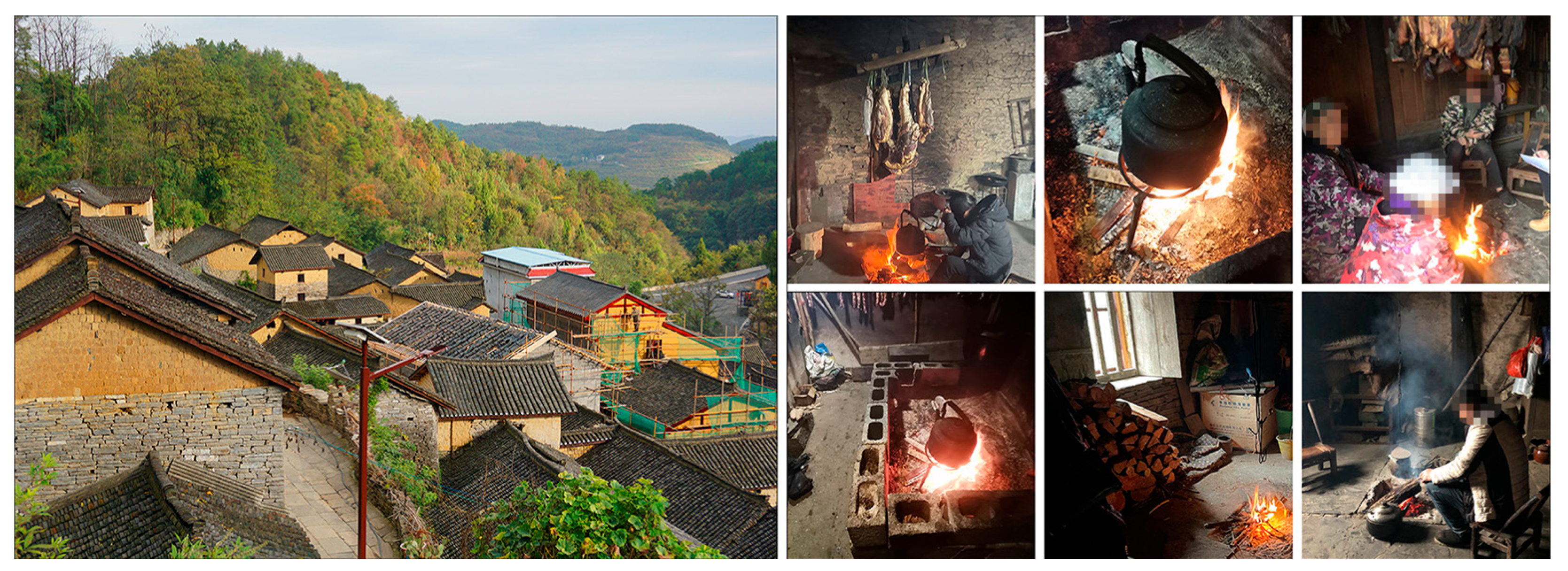
2.1.1. Traditional Earthen Dwellings in Western Hunan
- The selected earthen villages were included in the national list of Chinese Traditional Villages or were characterized by relatively underdeveloped infrastructure;
- The selected dwellings were mainly made of raw earth or combined with rubble and wood;
- The traditional architectural appearance of the selected dwellings was well preserved;
- The selected dwellings had not undergone renovation or extension within the past 20 years;
- The selected dwellings were currently occupied and in regular use.
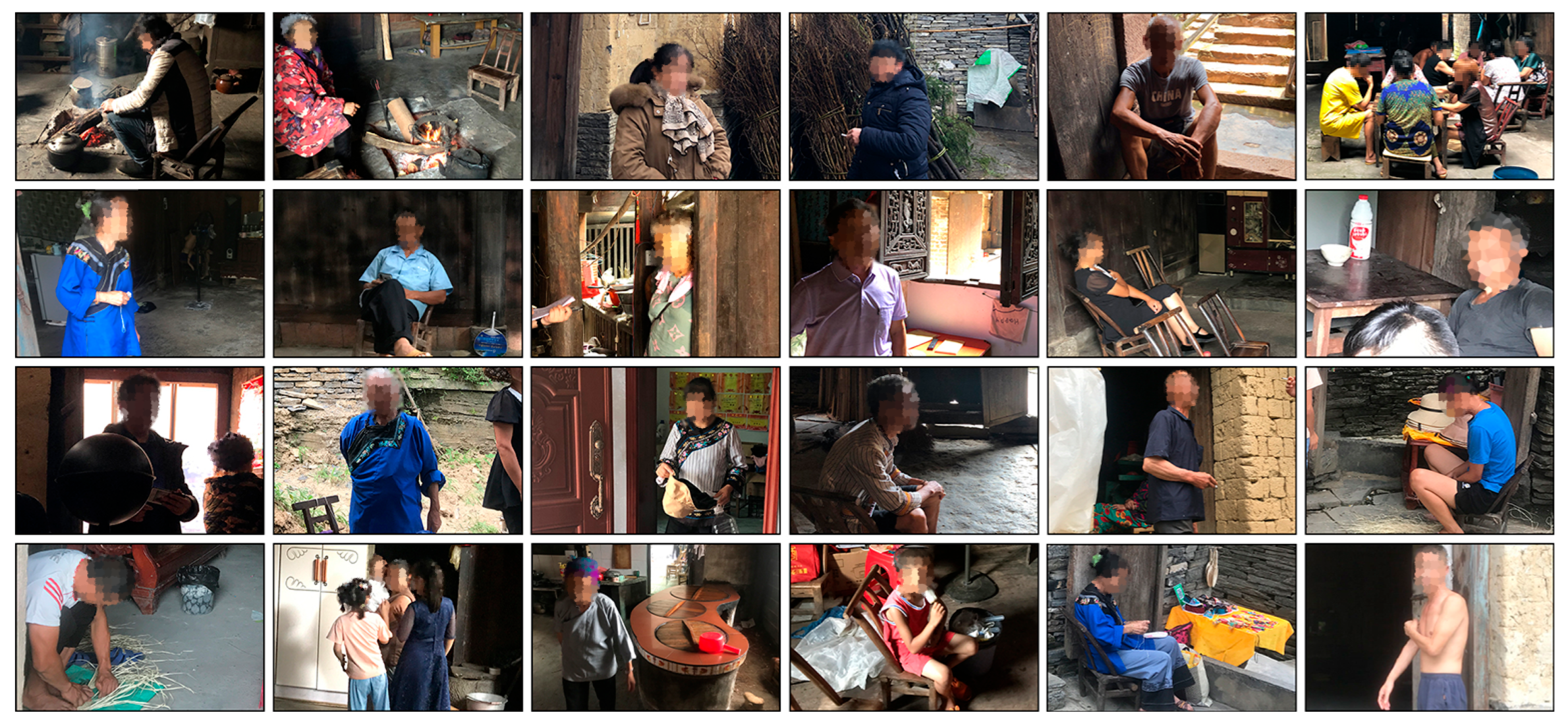
2.1.2. Basic Characteristics of the Respondents
2.2. Field Investigation
2.2.1. Subjective Survey
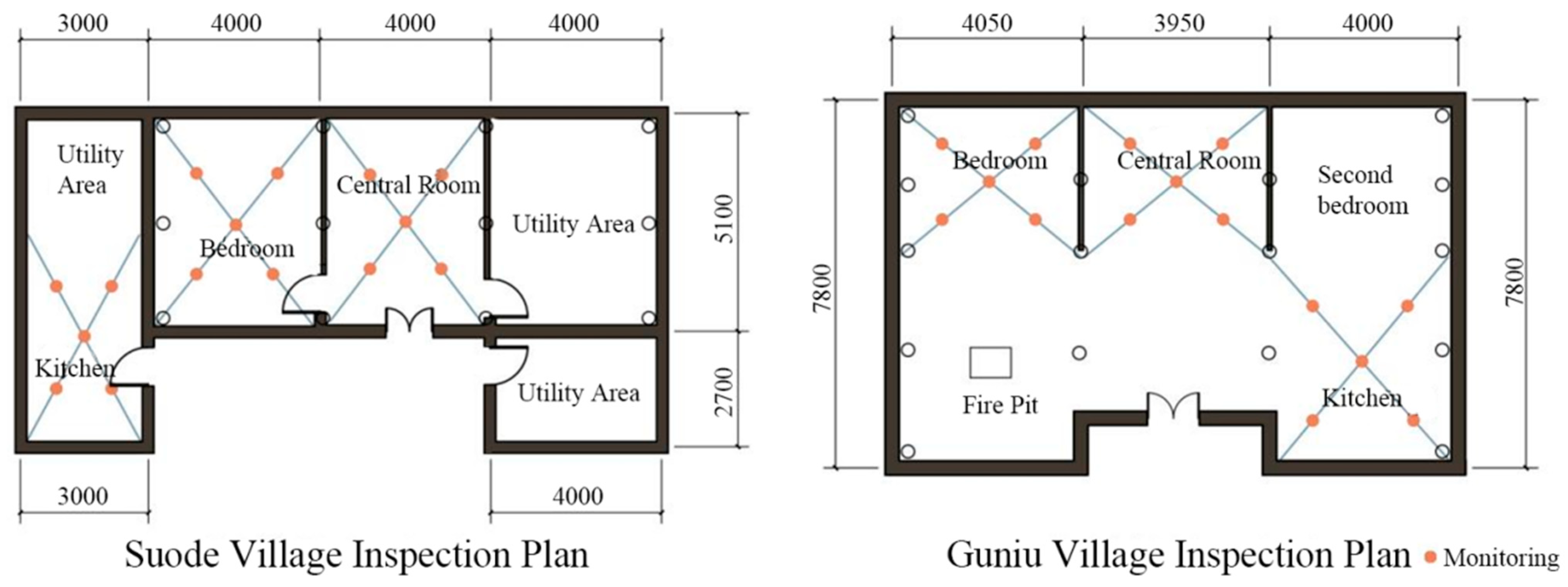
2.2.2. Objective Monitoring
2.2.3. Data Analysis
2.3. Indoor Pollutant Dispersion Simulation
2.3.1. Simulation Method
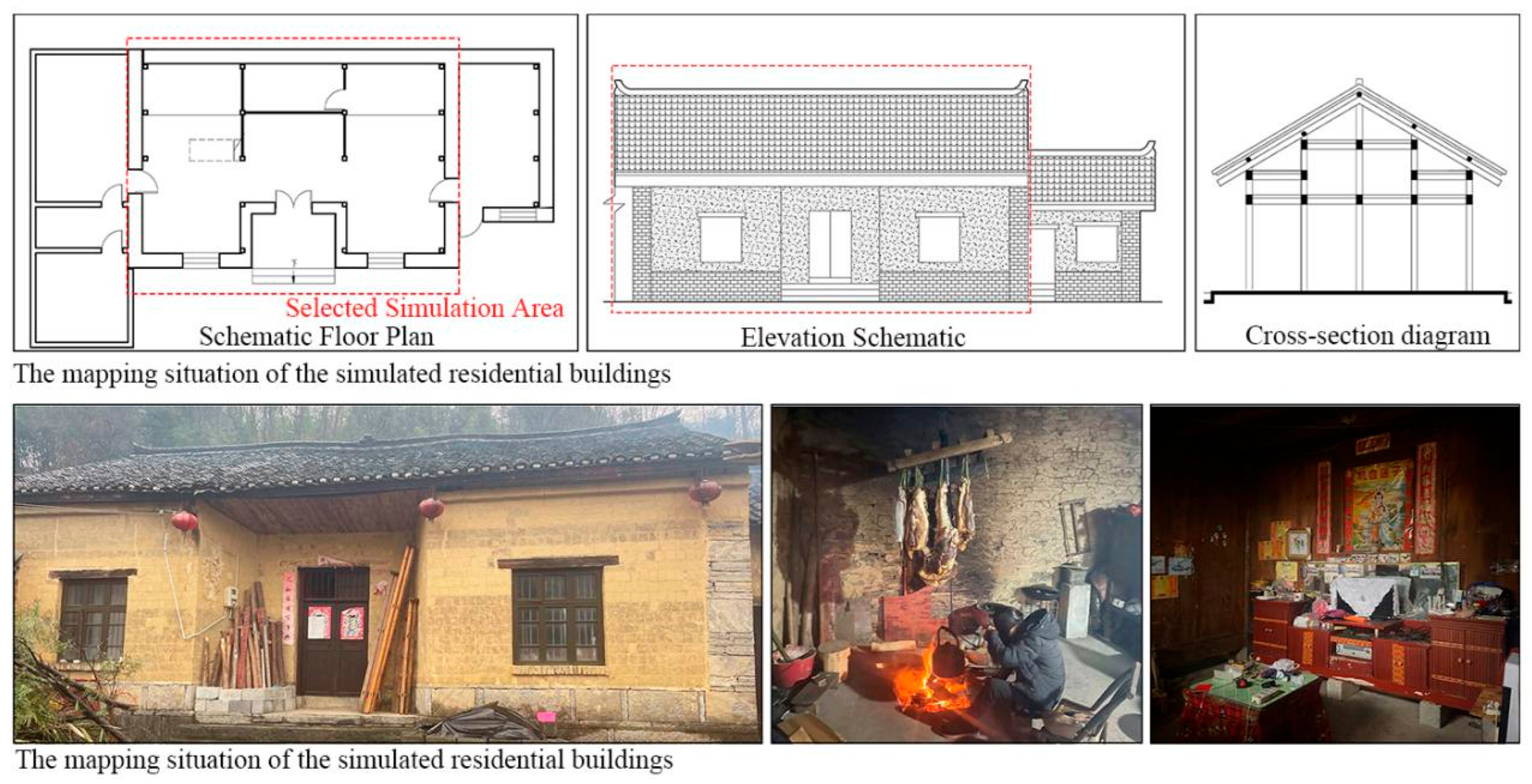
2.3.2. Model Development and Parameter Selection
2.4. Improvement Measures
2.4.1. Facade Configuration: Window Smoke Ventilation
2.4.2. Floor Plan: Separate Flue Gas
2.4.3. Passive Equipment: Accelerated Smoke Exhaust
3. Results
3.1. Indoor Air Quality Evaluation
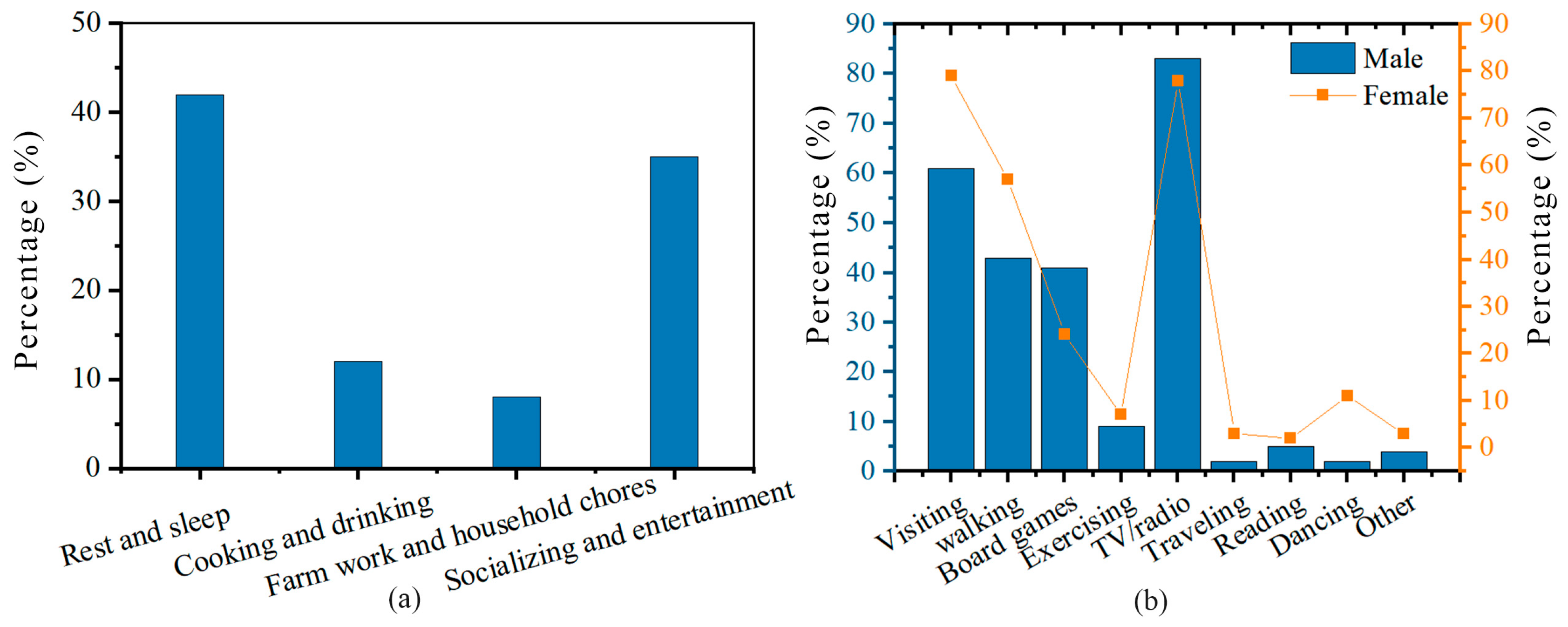
3.1.1. Subjective Evaluation
3.1.2. Objective Monitoring Results
PM2.5
PM10
HCHO
3.2. Simulation Results of Indoor Pollutant Diffusion
3.2.1. Facade Form
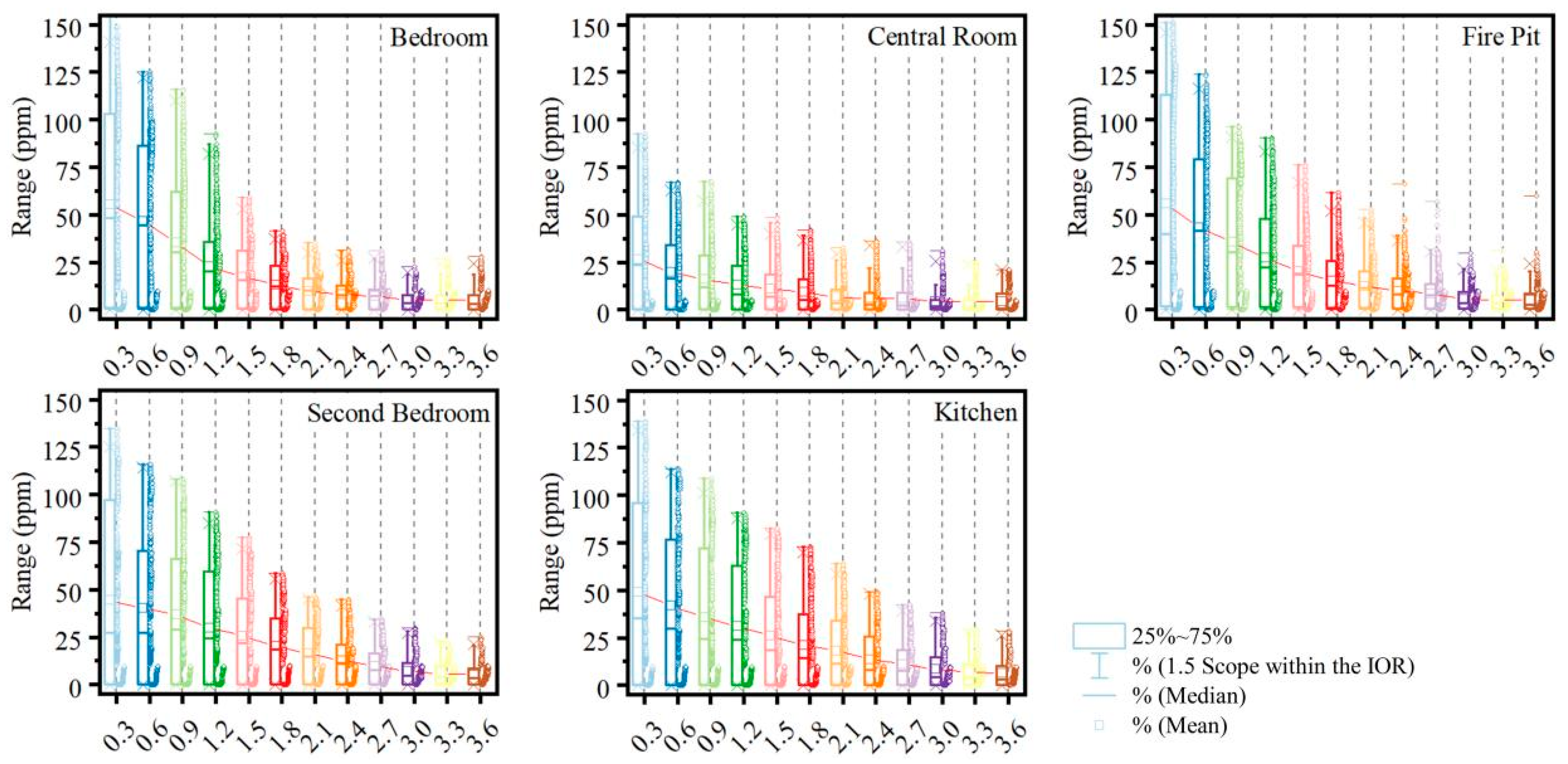
Window Vertical Position: Window Smoke Exhaust
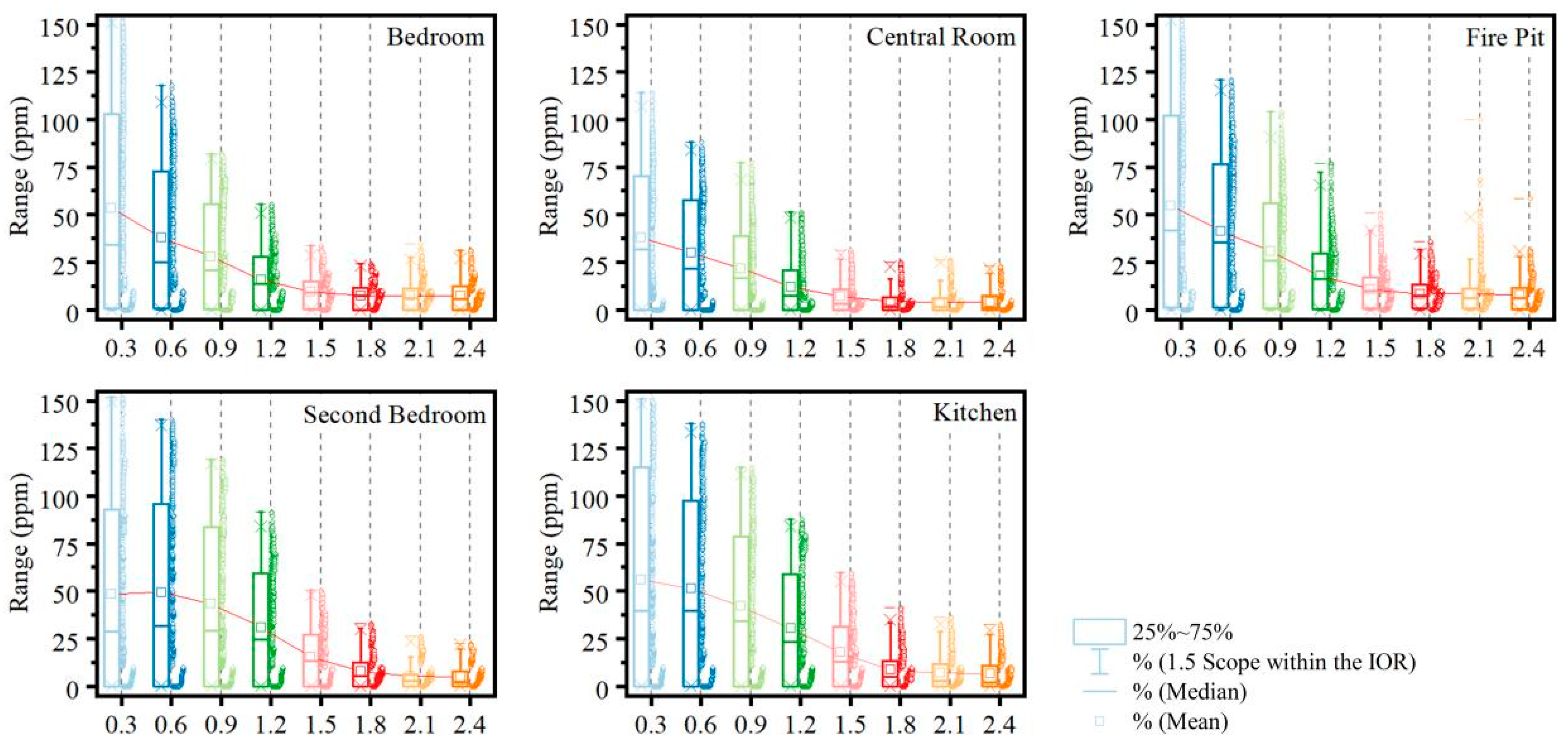
Window Sill Height Levels
Horizontal Window Dimensions
Window Vertical Dimension
Summary
3.2.2. Plan Layout
No Partition Walls
With Partition Walls
3.2.3. Passive Devices: Accelerated Smoke Evacuation
Smoke Evacuation in Non-Partitioned Structures
Partitioned Walls—Equipment Exhaust
4. Passive Strategies for Improving Air Quality
4.1. Impact of Window Parameters on Indoor Air Quality
4.2. Impact of Interior Floor Plans on Indoor Air Quality
4.3. Impact of Passive Smoke Collectors on Indoor Air Quality
5. Discussion
6. Conclusions
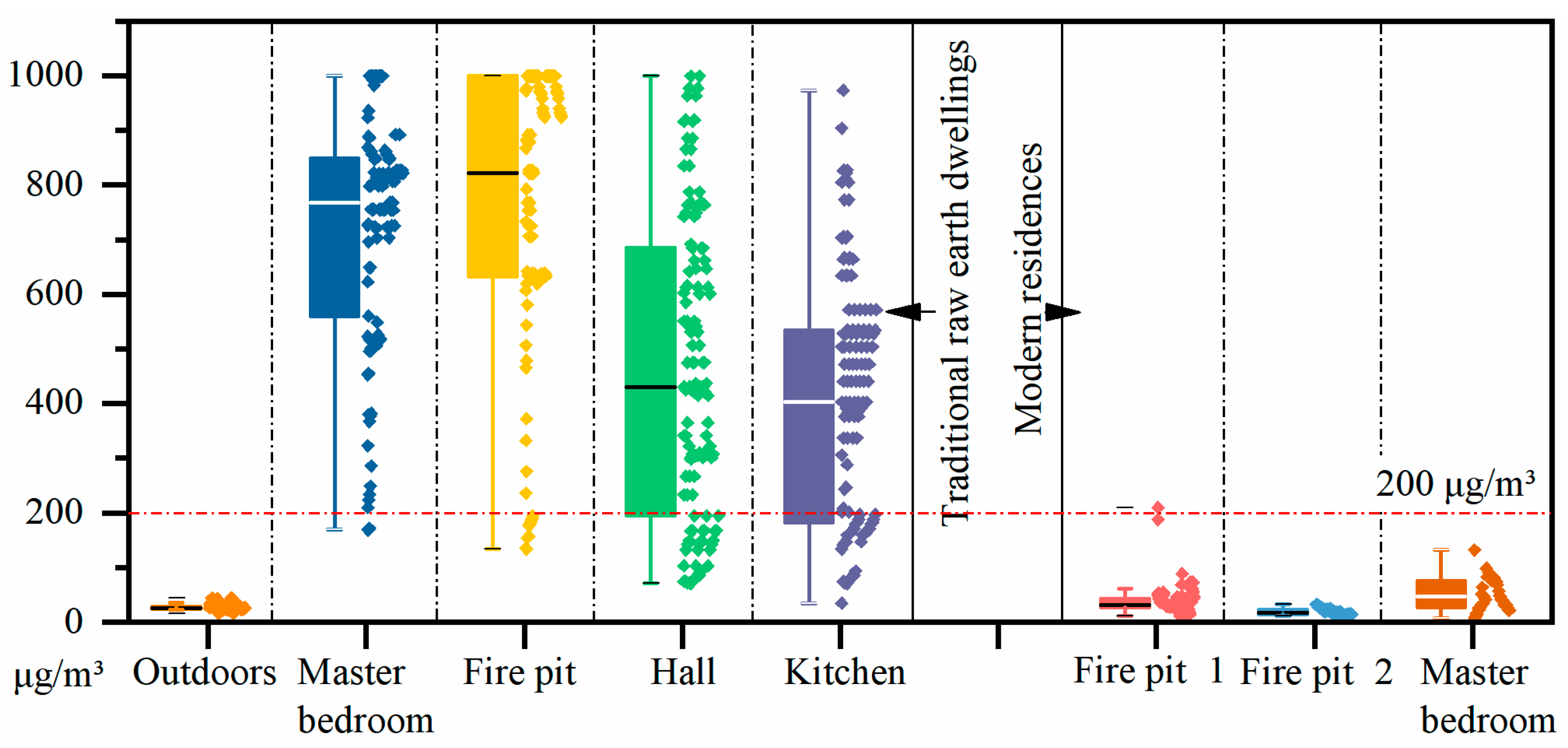
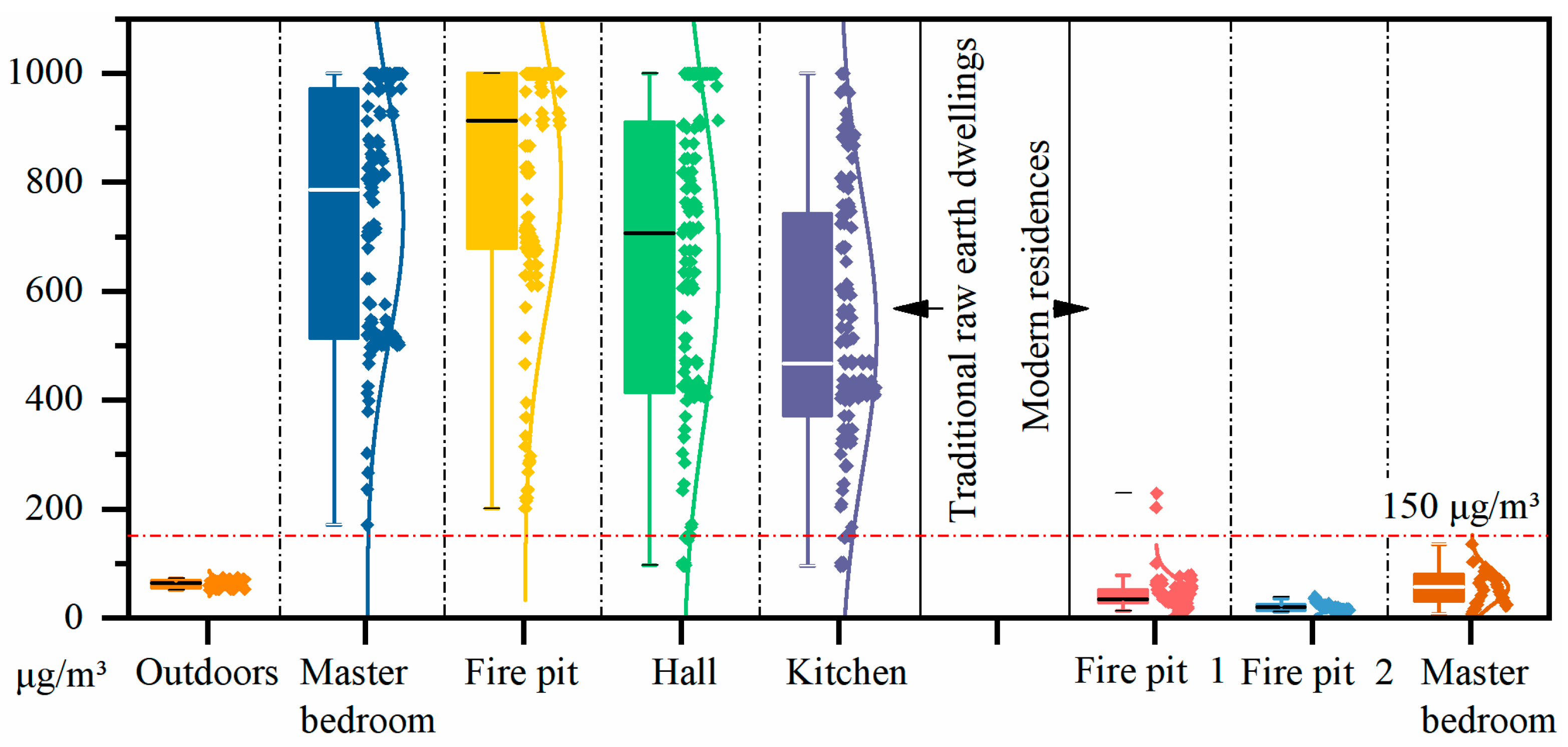
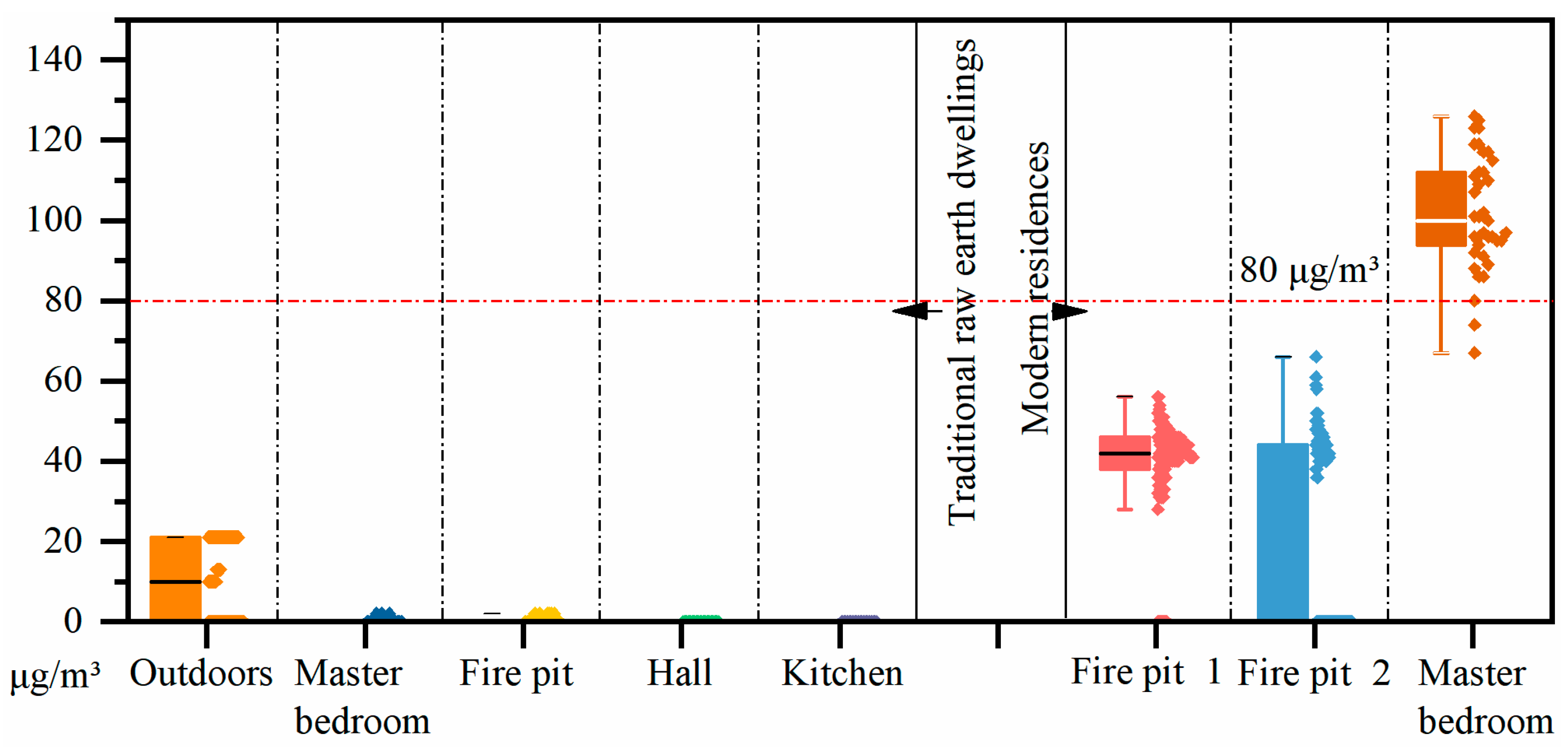
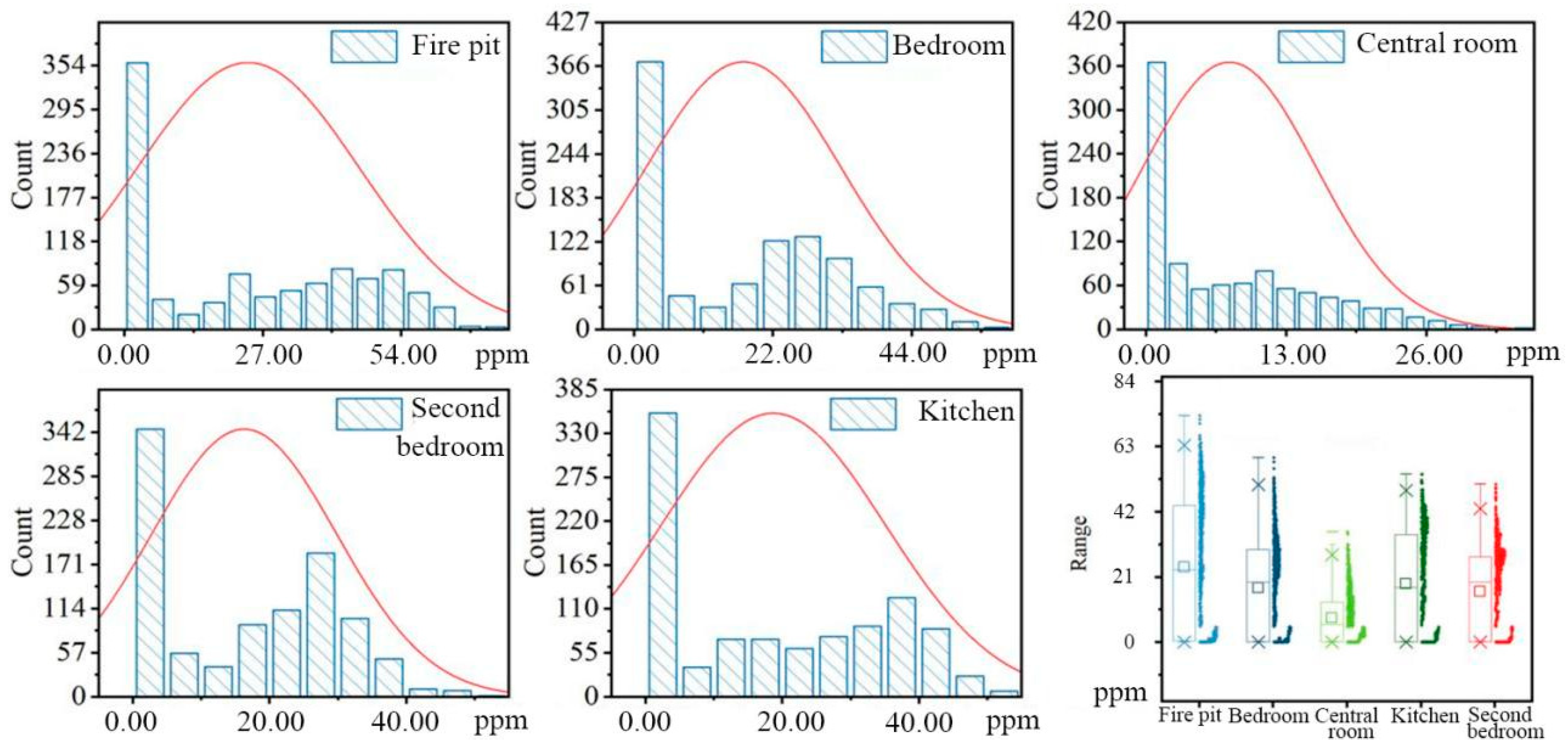
- Indoor air pollution in traditional rammed-earth dwellings in Western Hunan is a significant issue. During the winter fire pit usage period, PM2.5 and PM10 concentrations significantly exceeded the limits set by the “Indoor Air Quality Standard” (GB/T 18883-2002), while HCHO concentrations remained generally low. This indicates that particulate matter generated by wood combustion is the primary source of indoor air pollution.
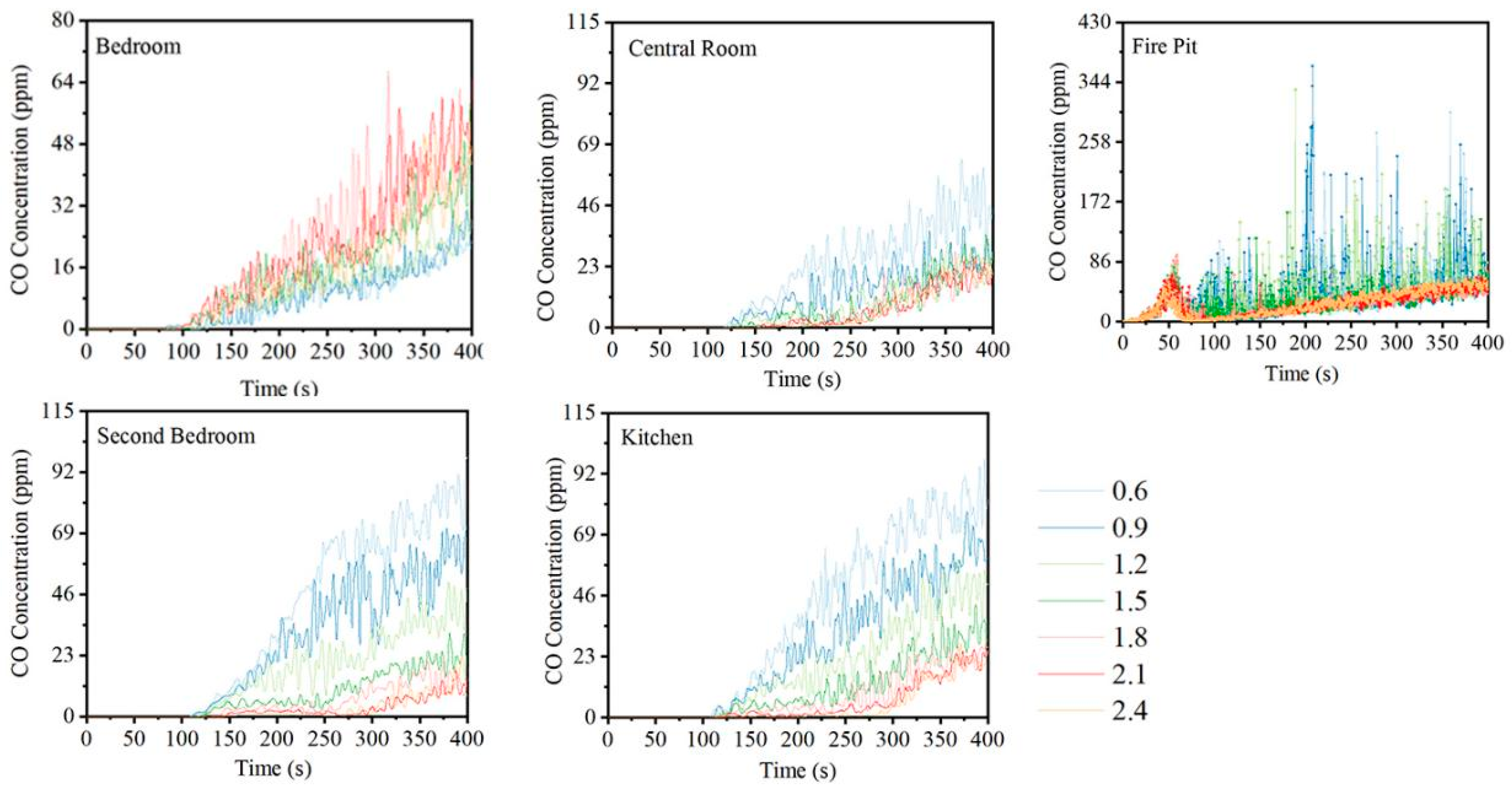
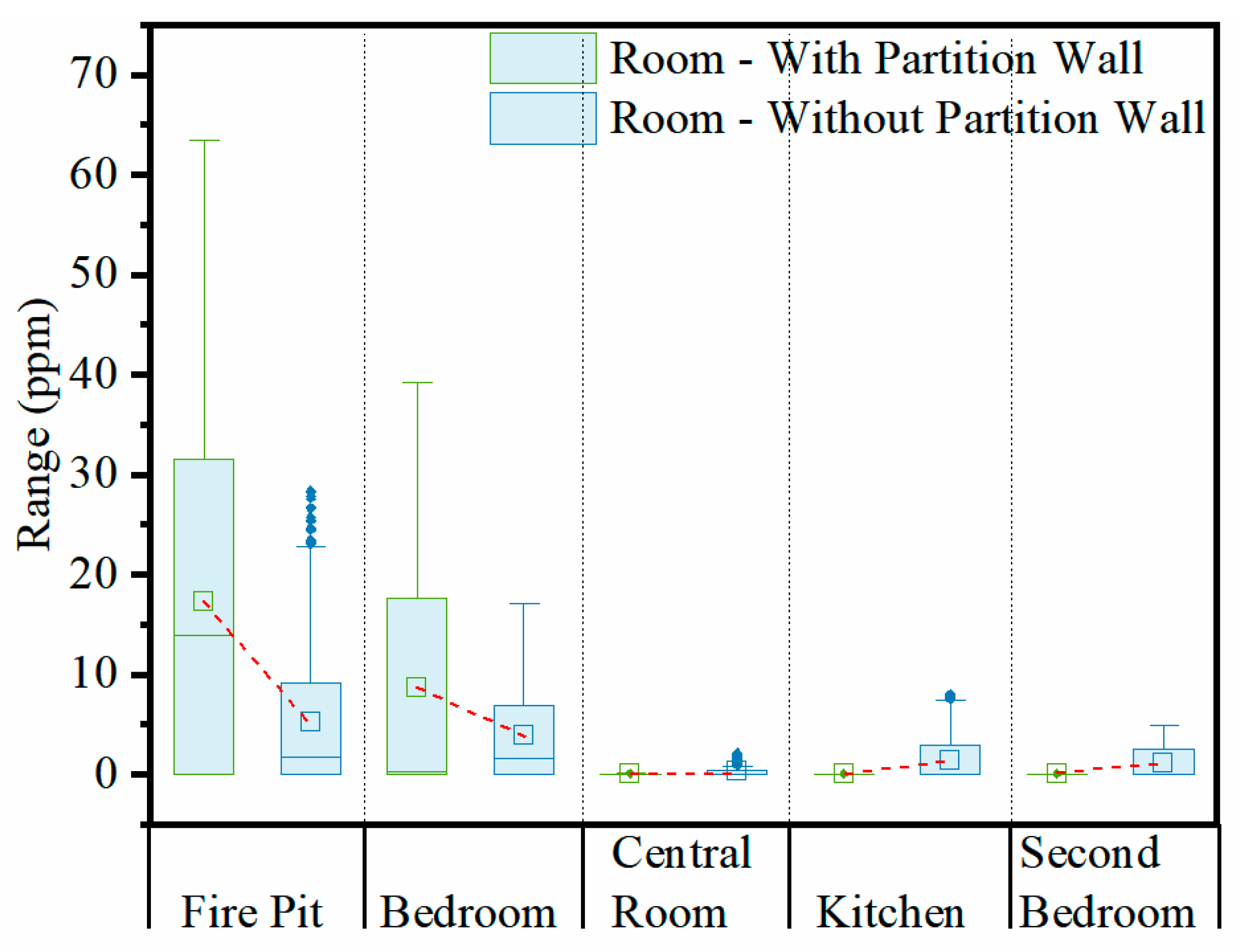
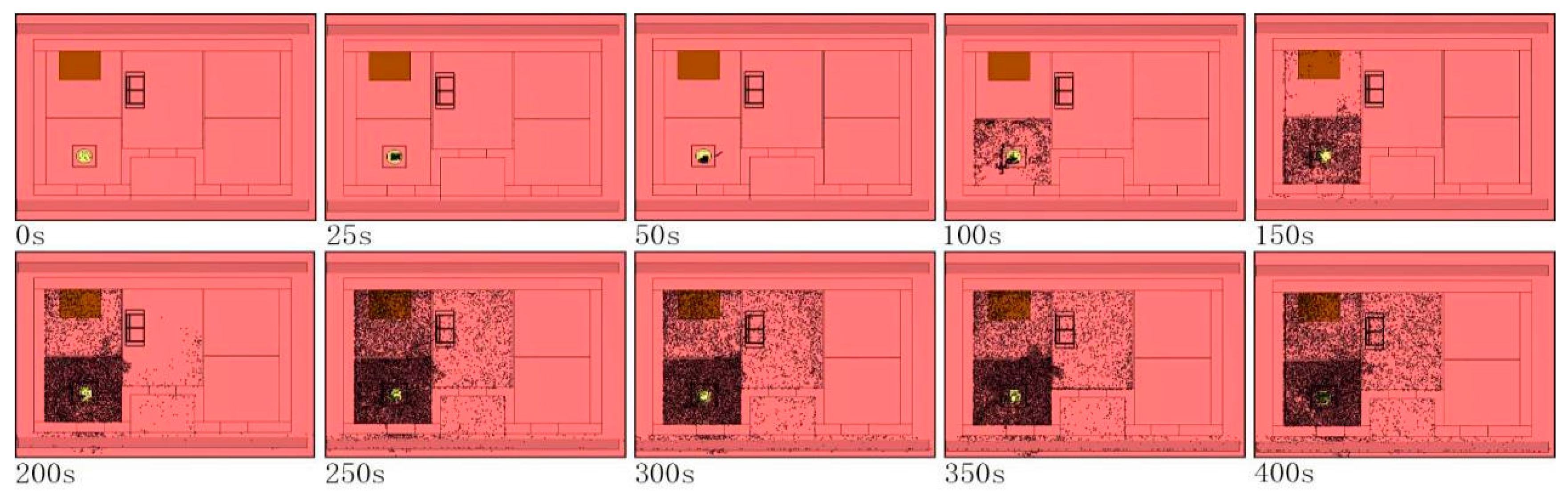
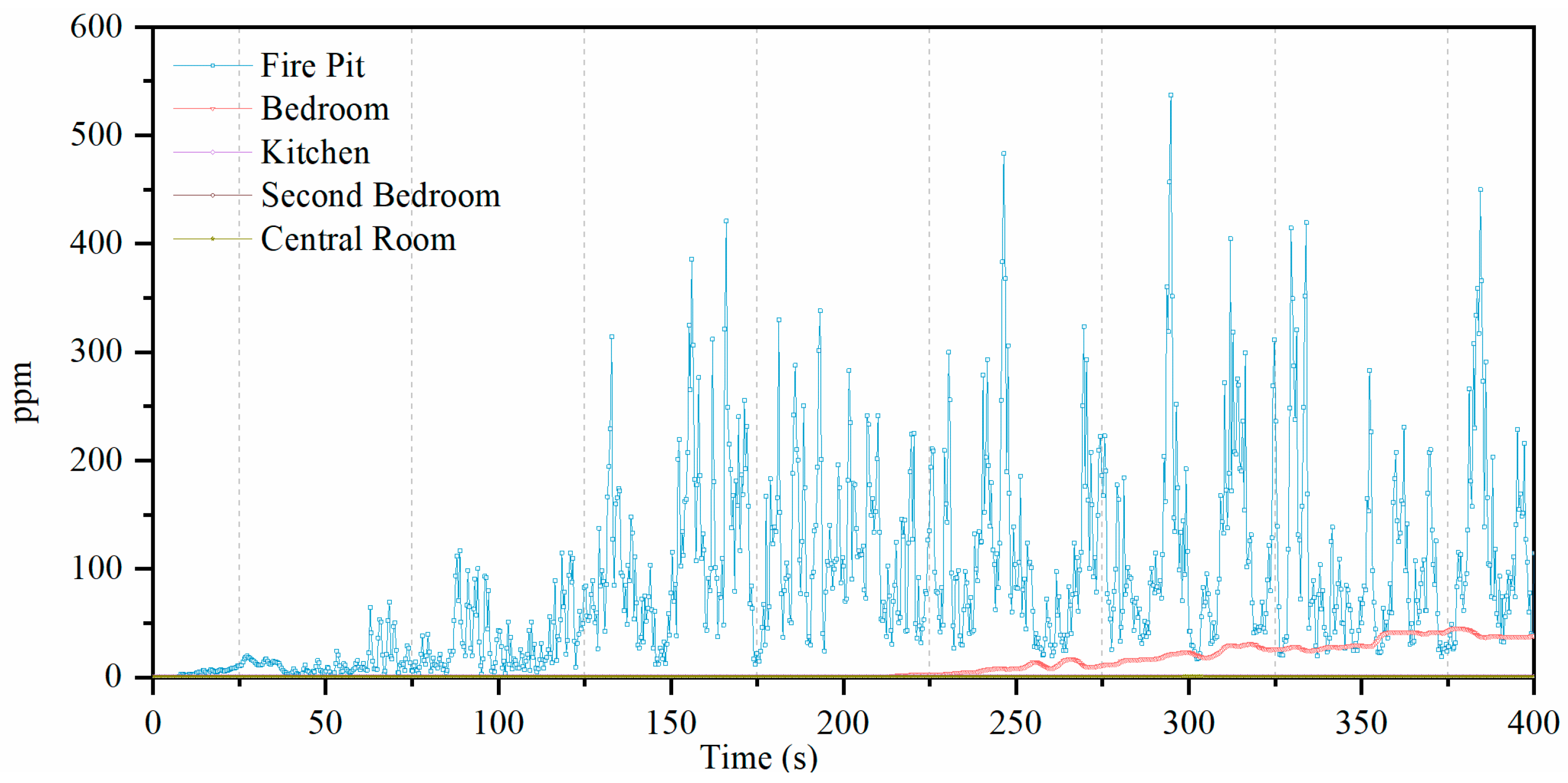
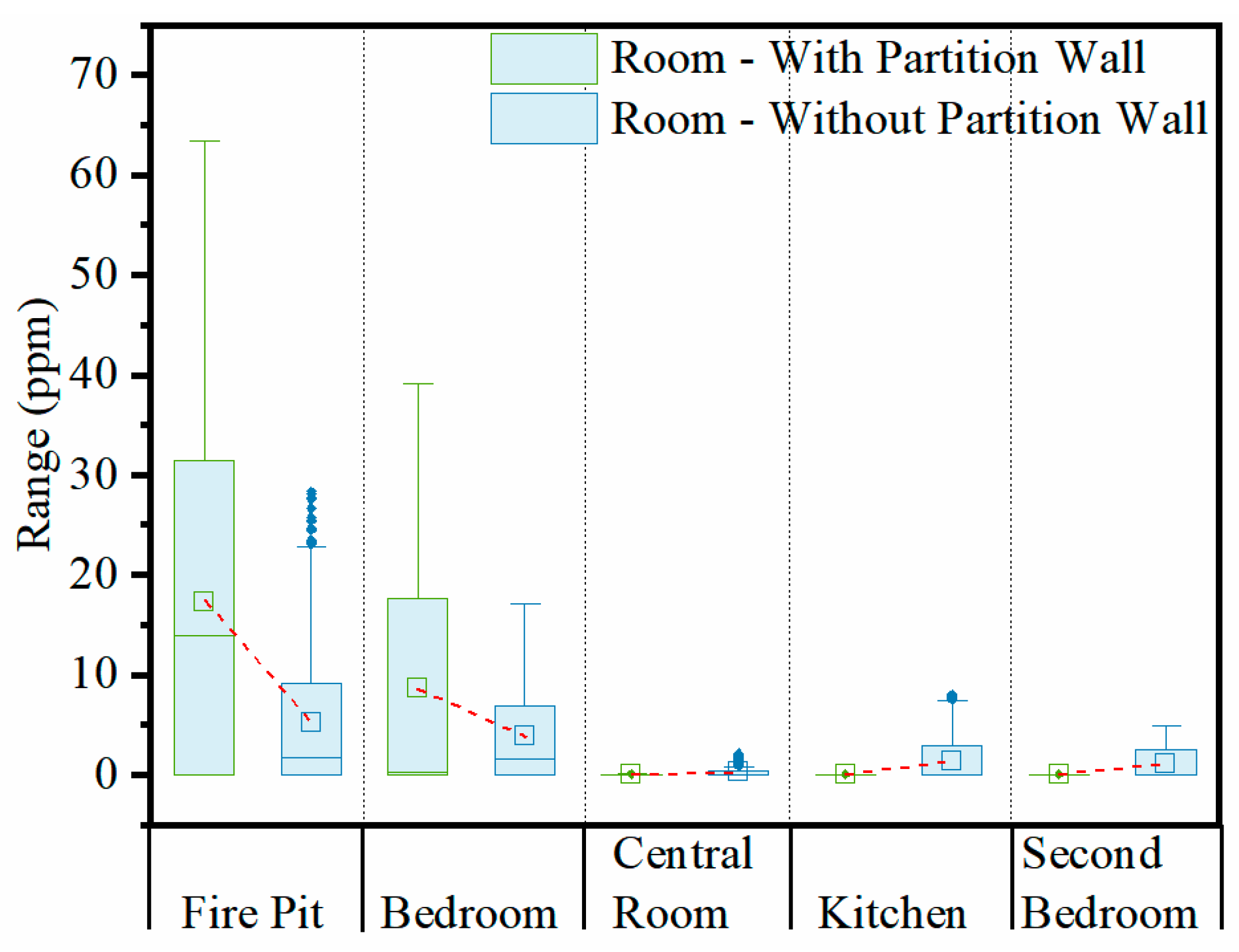
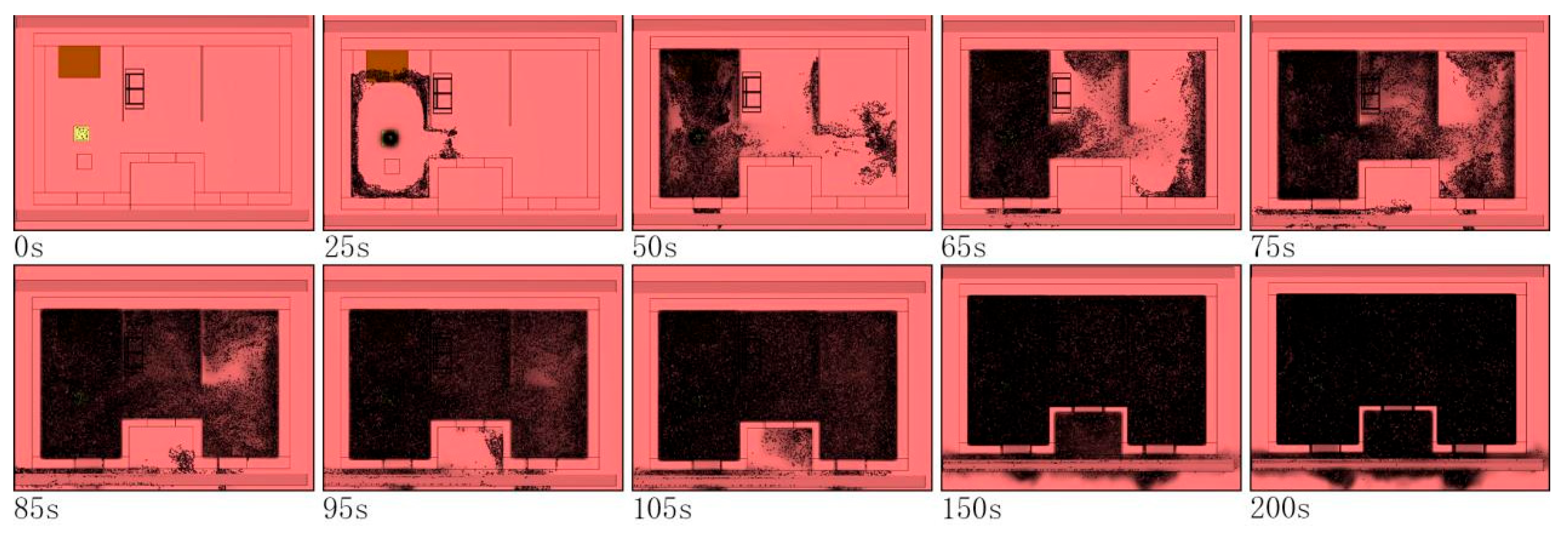
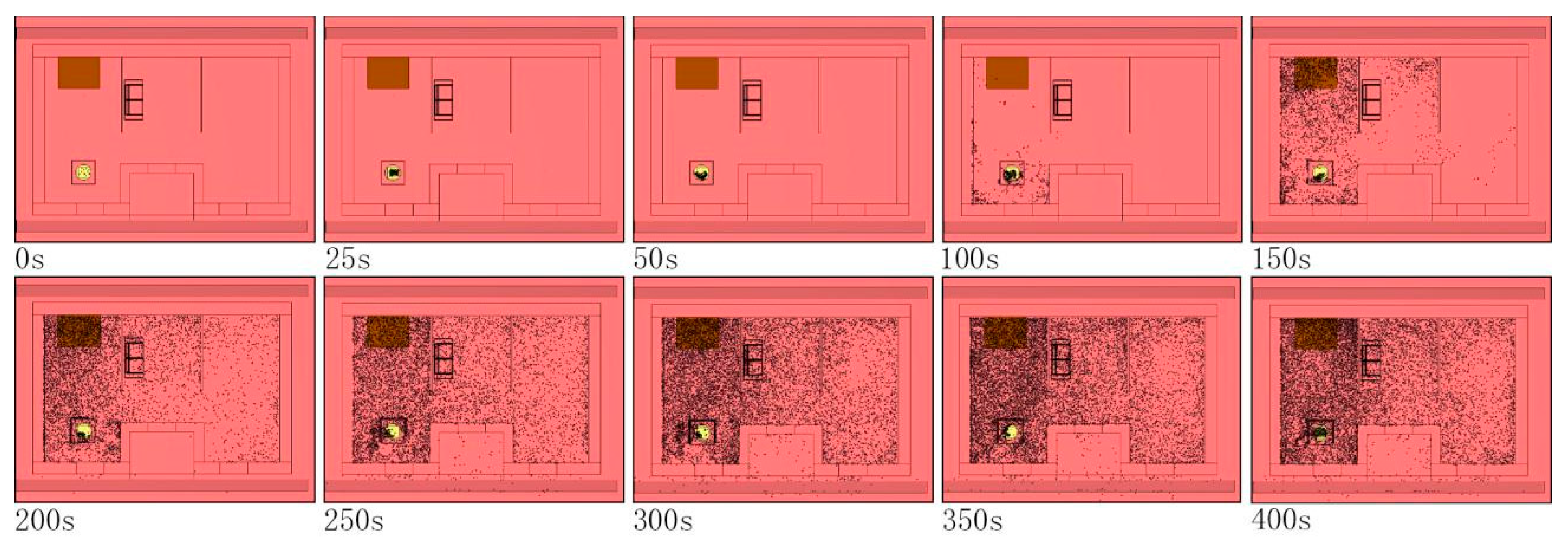
- According to software simulation results, after smoke accumulates at high concentrations in the hearth area, it diffuses along indoor airflow toward the master bedroom and the main living room. Partition walls can, to some extent, block the spread of pollutants toward the kitchen and the secondary bedroom; however, they simultaneously enhance the retention of pollutants in the hearth and master bedroom areas. The average pollutant concentrations in the hearth and master bedroom were 2.33 times and 3.05 times higher, respectively, compared to conditions without partition walls, indicating that spatial partitioning has a dual effect on pollutant diffusion.
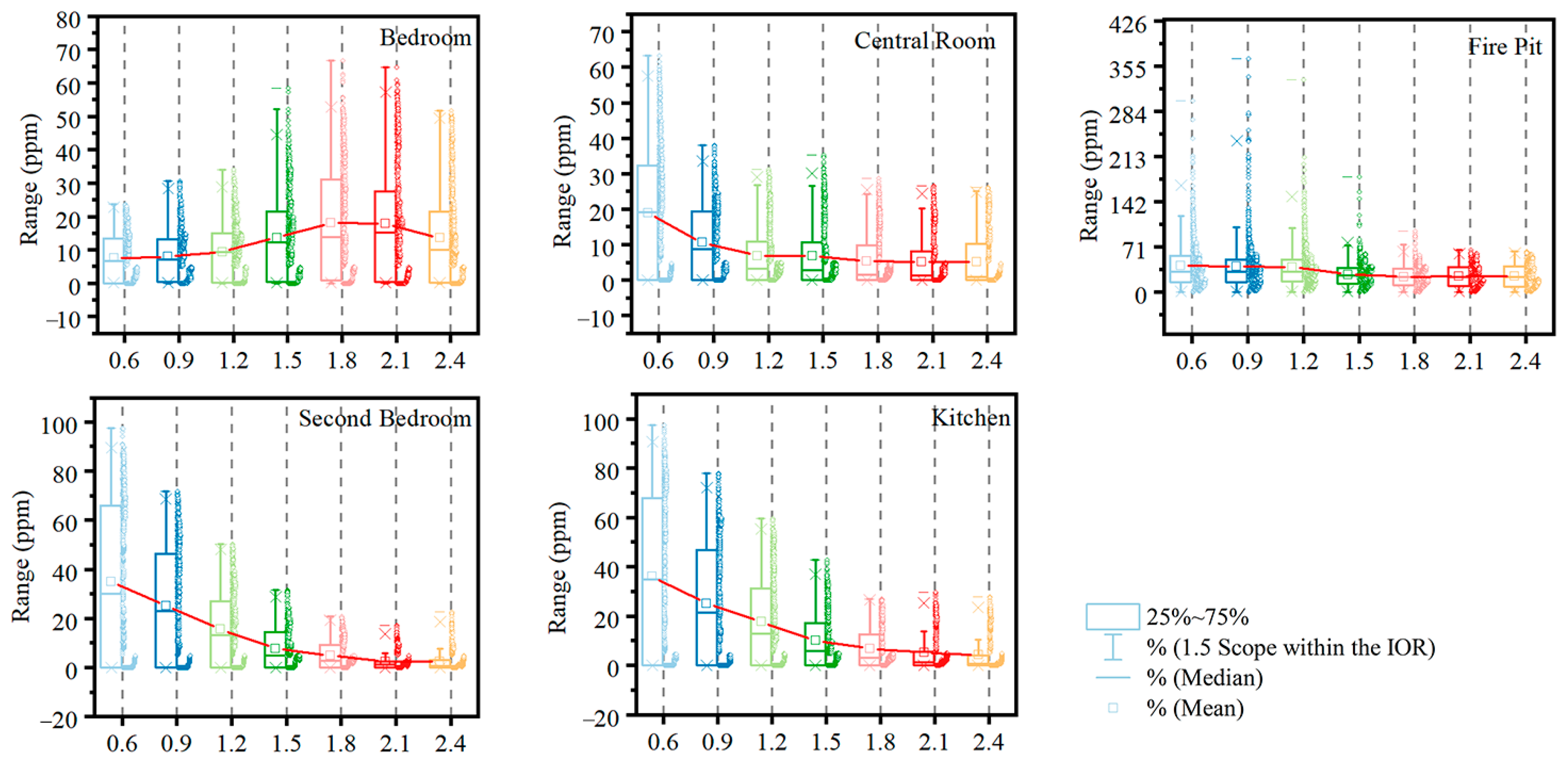
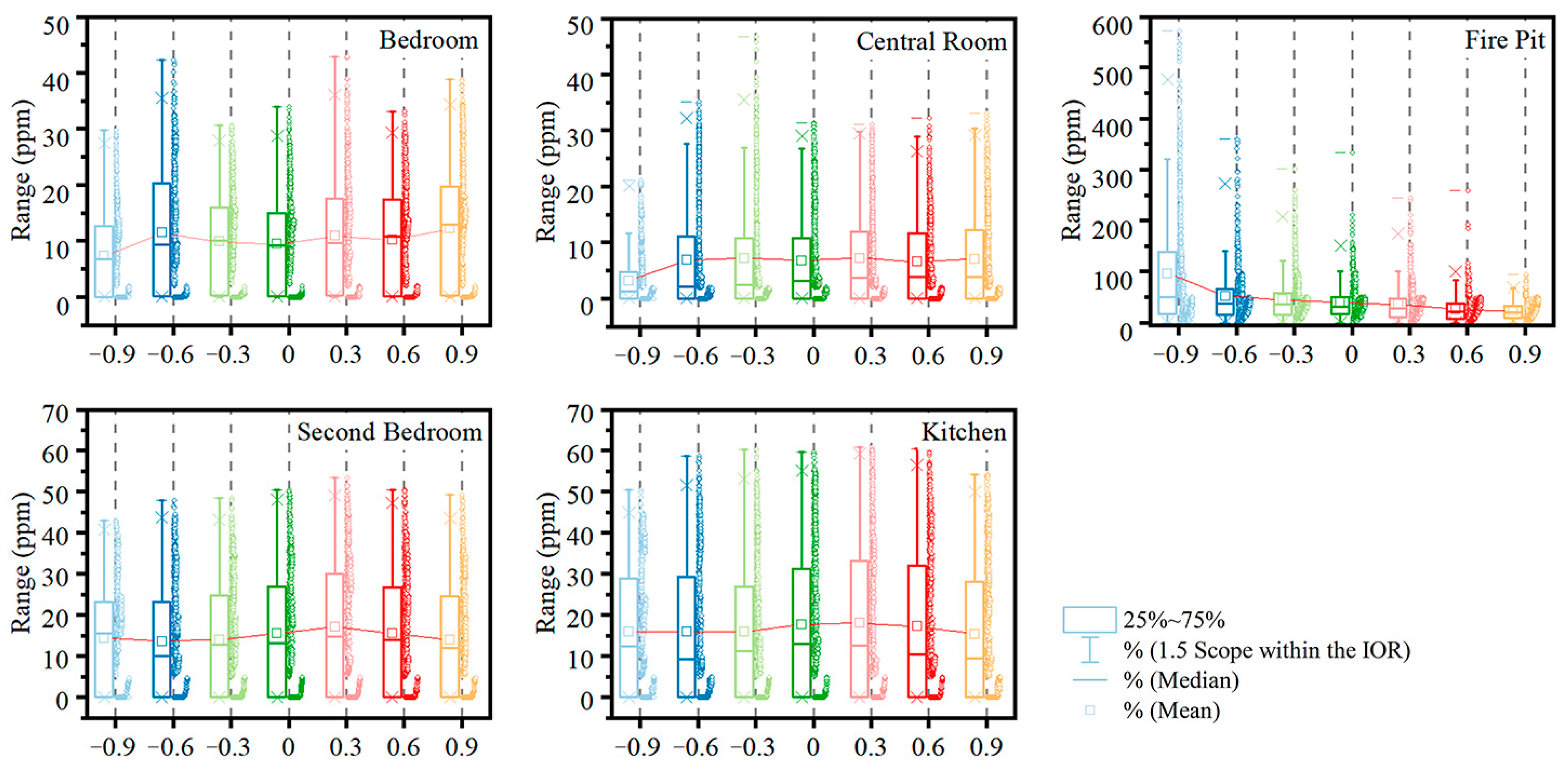
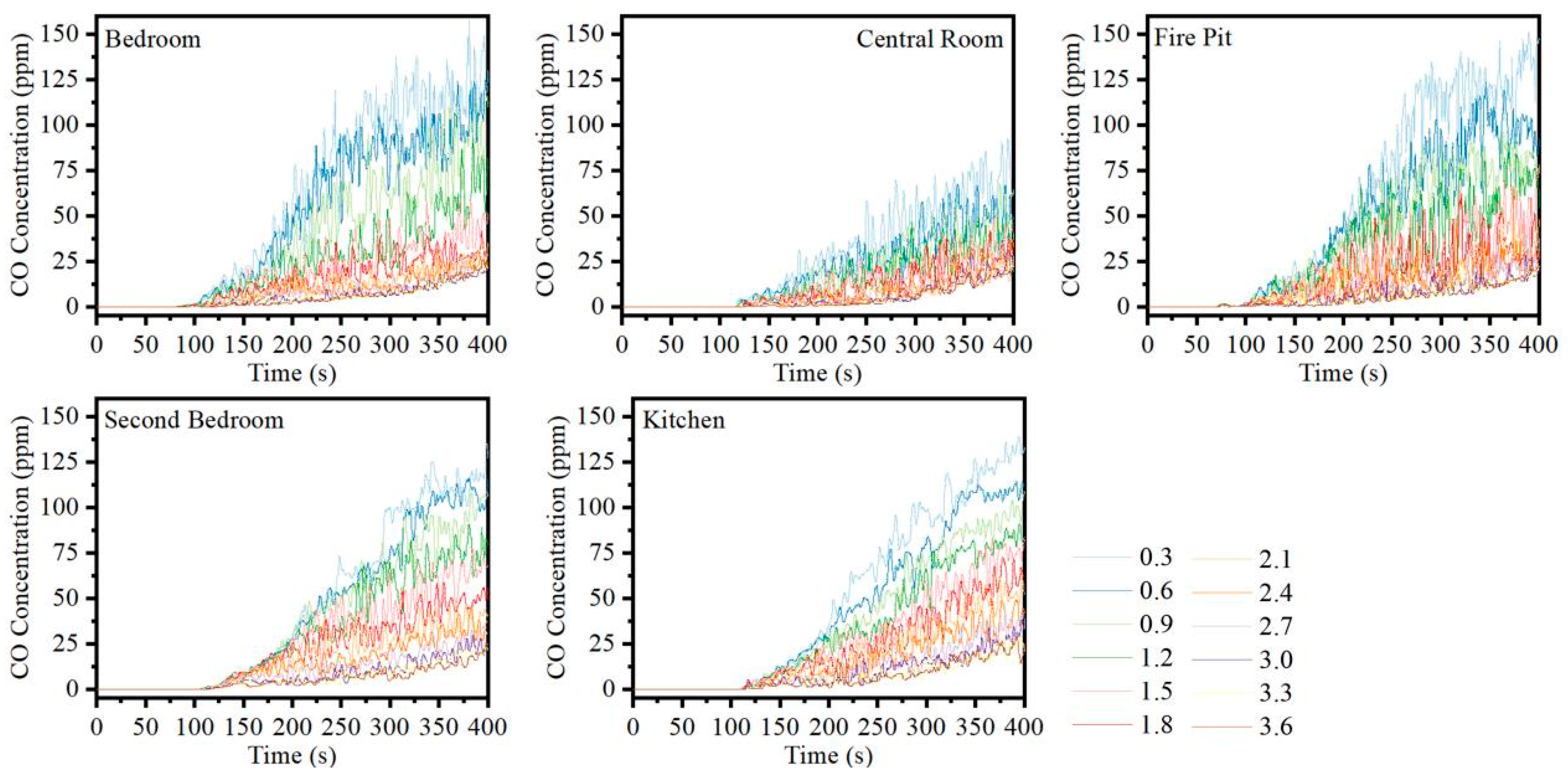
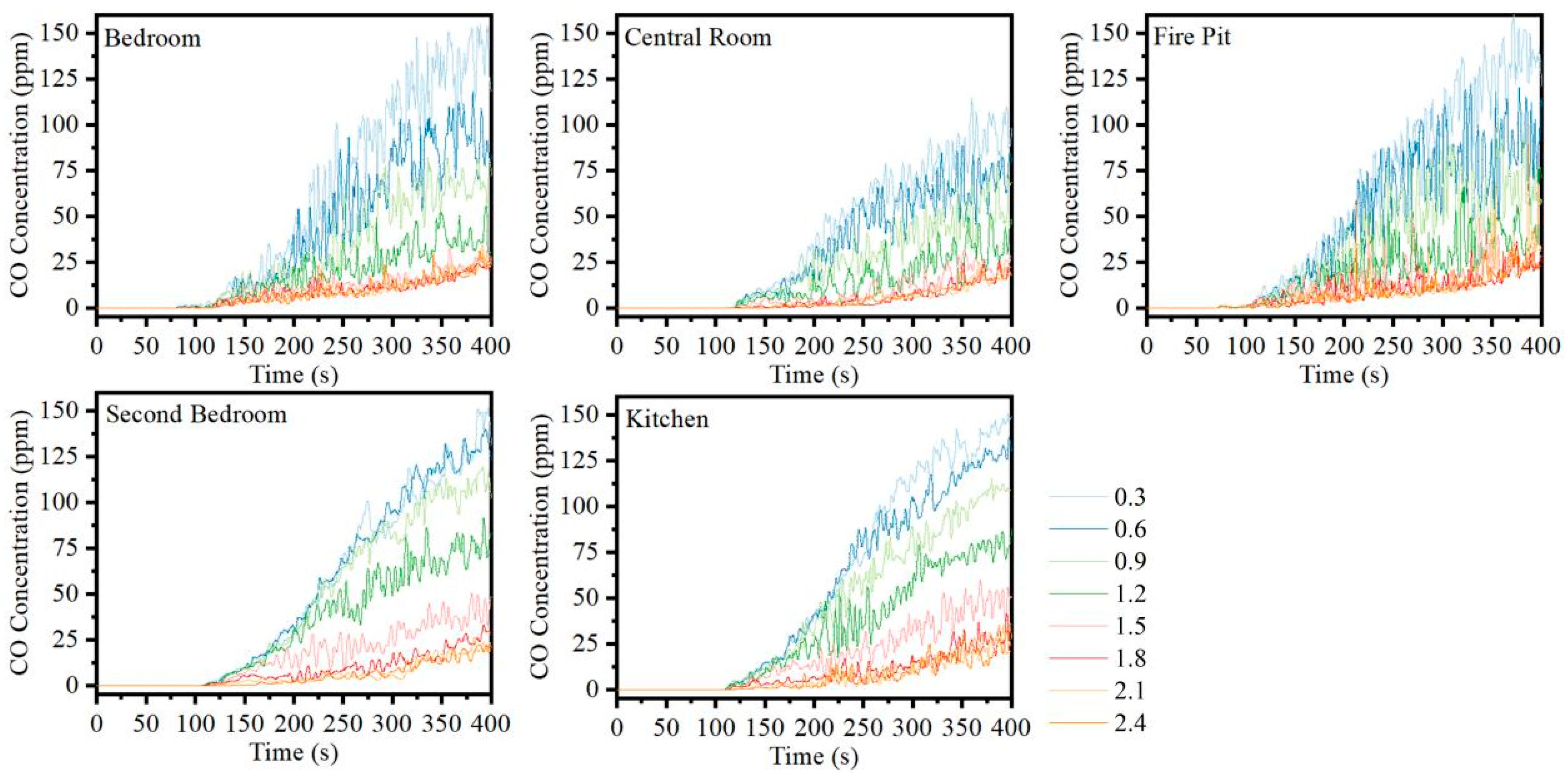
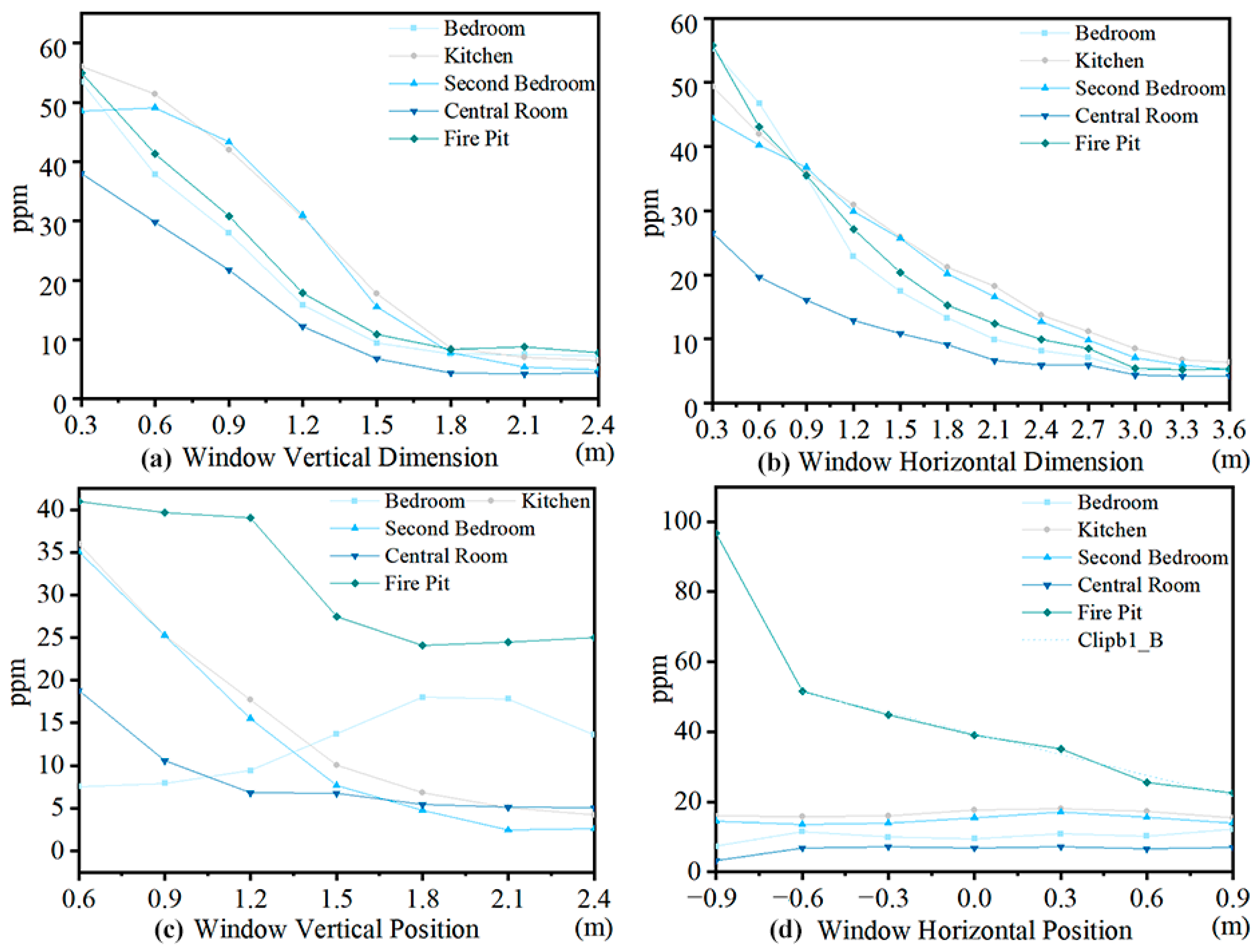
- Reasonably optimizing the height, location, and dimensions of windows helps enhance indoor air circulation and smoke exhaust capacity while improving the indoor lighting environment. The study indicates that appropriately increasing ventilation openings and optimizing airflow organization can effectively alleviate the problem of pollutant accumulation inside traditional dwellings.
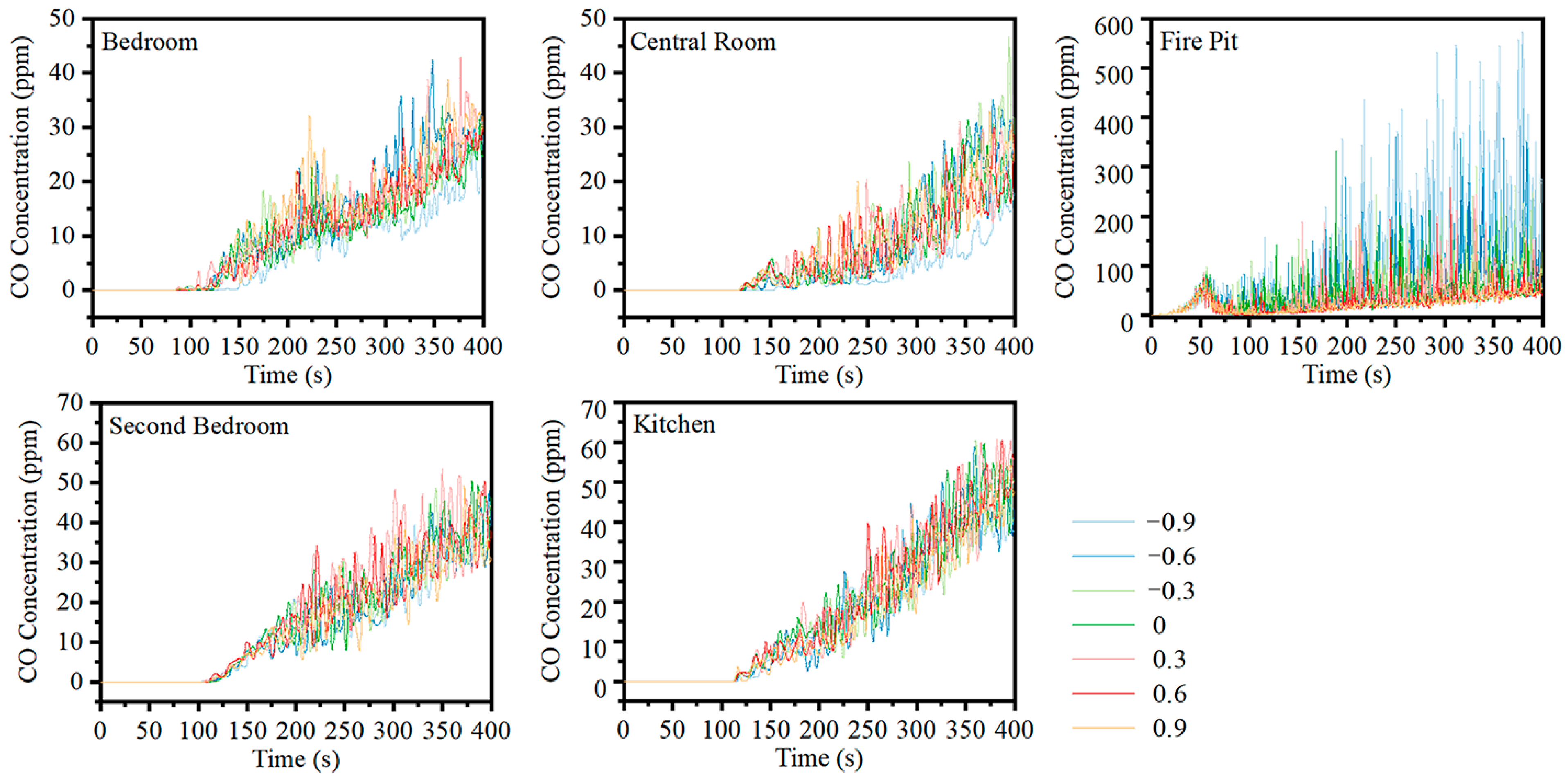
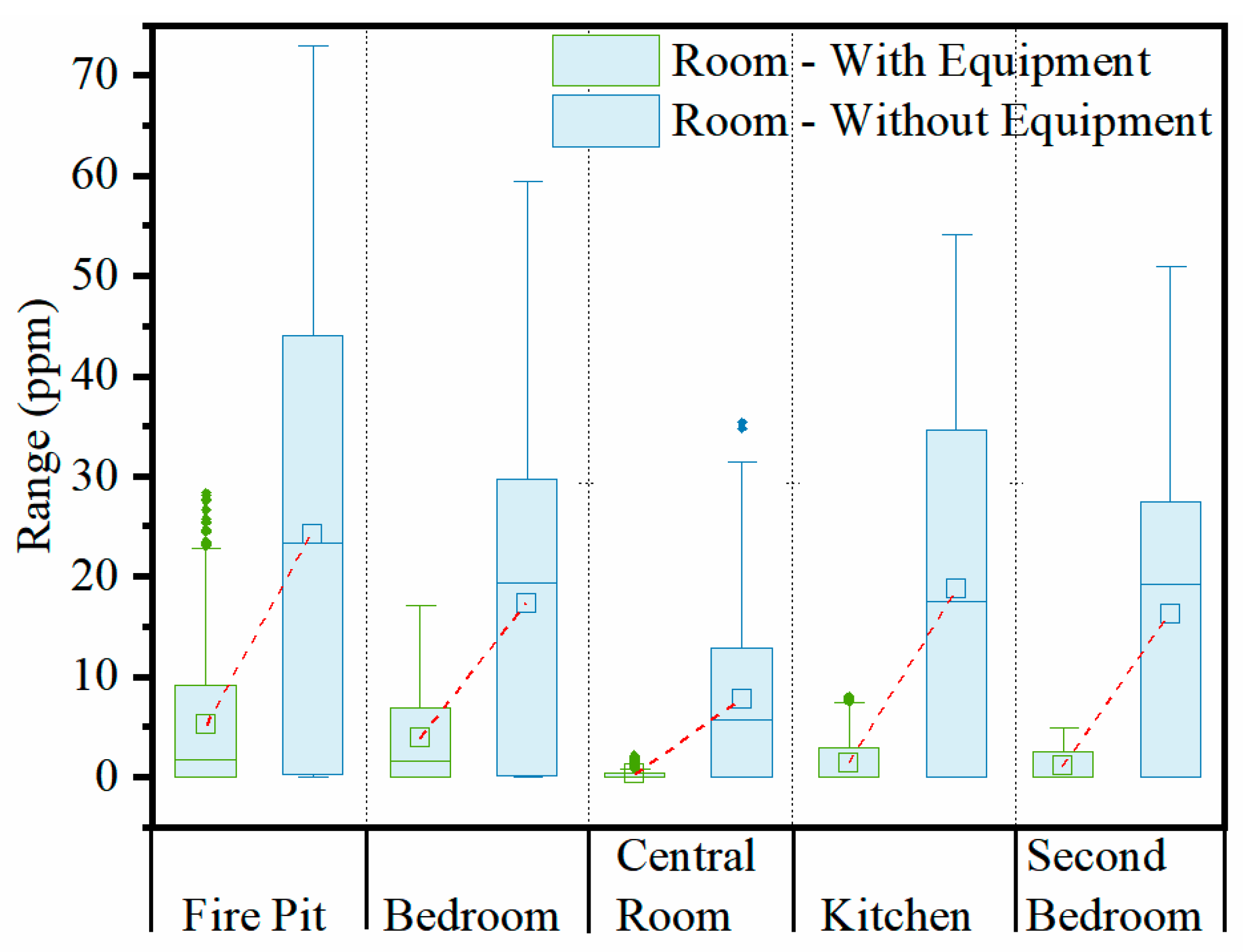
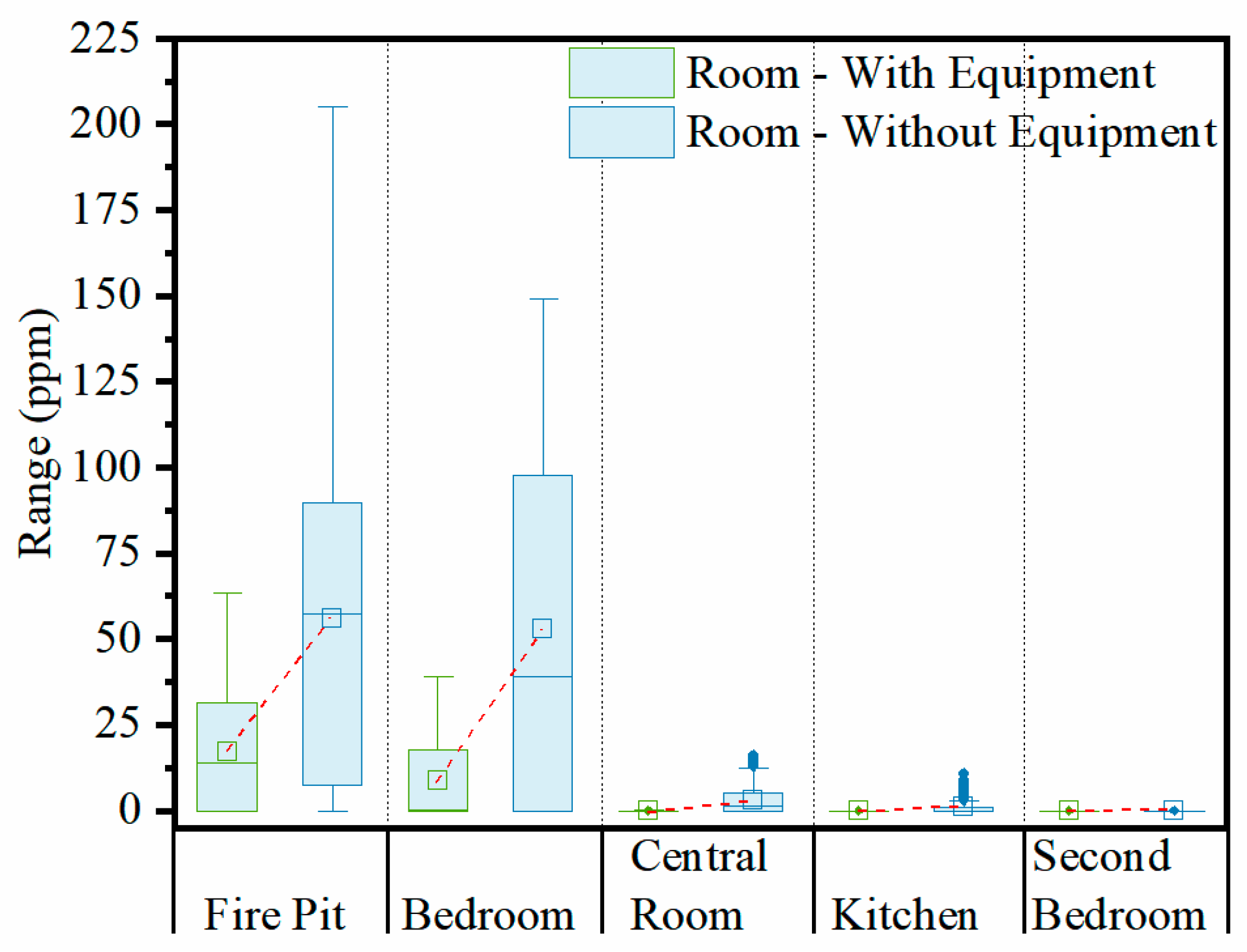
- Installing a passive smoke collector above the hearth significantly reduces indoor pollutant concentrations and minimizes the spread of pollutants to adjacent spaces. The results indicate that through optimized passive ventilation and smoke extraction strategies, the healthiness of the indoor environment in traditional dwellings can be improved while preserving the architectural characteristics and lifestyle of these structures.
Supplementary Materials
Author Contributions
Funding
Data Availability Statement
Acknowledgments
Conflicts of Interest
References
- Klepeis, N.E.; Nelson, W.C.; Ott, W.R.; Robinson, J.P.; Tsang, A.M.; Switzer, P.; Behar, J.V.; Hern, S.C.; Engelmann, W.H. The National Human Activity Pattern Survey (NHAPS): A resource for assessing exposure to environmental pollutants. J. Expo. Anal. Environ. Epidemiol. 2001, 11, 231–252. [Google Scholar] [CrossRef]
- Household Air Pollution. Available online: https://www.who.int/news-room/fact-sheets/detail/household-air-pollution-and-health (accessed on 15 December 2025).
- Zhang, J.; Smith, K.R.; Ma, Y.; Ye, S.; Jiang, F.; Qi, W.; Liu, P.; Khalil, M.A.K.; Rasmussen, R.A.; Thorneloe, S.A. Greenhouse gases and other airborne pollutants from household stoves in China: A database for emission factors. Atmos. Environ. 2000, 34, 4537–4549. [Google Scholar] [CrossRef]
- Yu, K.; Qiu, G.; Chan, K.H.; Lam, K.B.H.; Kurmi, O.P.; Bennett, D.A.; Yu, C.; Pan, A.; Lv, J.; Guo, Y.; et al. Association of Solid Fuel Use with Risk of Cardiovascular and All-Cause Mortality in Rural China. JAMA-J. Am. Med. Assoc. 2018, 319, 1351–1361. [Google Scholar] [CrossRef]
- The Healthy China Action (2019–2030). Available online: https://www.nhc.gov.cn/guihuaxxs/c100133/201907/2a6ed52f1c264203b5351bdbbadd2da8.shtml (accessed on 15 December 2025).
- Aunan, K.; Hansen, M.H.; Liu, Z.H.; Wang, S.X. The Hidden Hazard of Household Air Pollution in Rural China. Environ. Sci. Policy 2019, 93, 27–33. [Google Scholar] [CrossRef]
- Hansel, N.N.; McCormack, M.C.; Belli, A.J.; Matsui, E.C.; Peng, R.D.; Aloe, C.; Paulin, L.; Williams, D.L.; Diette, G.B.; Breysse, P.N. In-Home Air Pollution Is Linked to Respiratory Morbidity in Former Smokers with Chronic Obstructive Pulmonary Disease. Am. J. Respir. Crit. Care 2013, 187, 1085–1090. [Google Scholar] [CrossRef]
- Azuma, K.; Ikeda, K.; Kagi, N.; Yanagi, U.; Osawa, H. Physicochemical risk factors for building-related symptoms in air-conditioned office buildings: Ambient particles and combined exposure to indoor air pollutants. Sci. Total Environ. 2018, 616, 1649–1655. [Google Scholar] [CrossRef]
- Baumgartner, J.; Schauer, J.J.; Ezzati, M.; Lu, L.; Cheng, C.; Patz, J.A.; Bautista, L.E. Indoor Air Pollution and Blood Pressure in Adult Women Living in Rural China. Environ. Health Perspect. 2011, 119, 1390–1395. [Google Scholar] [CrossRef]
- Li, N.; Chen, G.; Liu, F.; Mao, S.; Liu, Y.; Liu, S.; Mao, Z.; Lu, Y.; Wang, C.; Guo, Y.; et al. Associations between long-term exposure to air pollution and blood pressure and effect modifications by behavioral factors. Environ. Res. 2020, 182, 109109. [Google Scholar] [CrossRef]
- Ye, W.; Zhang, X.; Gao, J.; Cao, G.Y.; Zhou, X.; Su, X. Indoor air pollutants, ventilation rate determinants and potential control strategies in Chinese dwellings: A literature review. Sci. Total Environ. 2017, 586, 696–729. [Google Scholar] [CrossRef] [PubMed]
- Meininghaus, R.; Gunnarsen, L.; Knudsen, H.N. Diffusion and sorption of volatile organic compounds in building materials—Impact on indoor air quality. Environ. Sci. Technol. 2000, 34, 3101–3108. [Google Scholar] [CrossRef]
- Persson, J.; Wang, T.; Hagberg, J. Indoor air quality of newly built low-energy preschools—Are chemical emissions reduced in houses with eco-labelled building materials? Indoor Built Environ. 2019, 28, 506–519. [Google Scholar] [CrossRef]
- Jung, C.; Mahmoud, N.S.A. Ventilation Strategies for Mitigating Indoor Air Pollutants in High-Rise Residential Buildings: A Case Study in Dubai. Atmosphere 2023, 14, 1600. [Google Scholar] [CrossRef]
- Fu, N.D.; Kim, M.K.; Huang, L.; Liu, J.Y.; Chen, B.; Sharples, S. Experimental and numerical analysis of indoor air quality affected by outdoor air particulate levels (PM1.0, PM2.5 and PM10), room infiltration rate, and occupants’ behaviour. Sci. Total Environ. 2022, 851, 158026. [Google Scholar] [CrossRef]
- Baumgartner, J.; Schauer, J.J.; Ezzati, M.; Lu, L.; Cheng, C.; Patz, J.; Bautista, L.E. Patterns and predictors of personal exposure to indoor air pollution from biomass combustion among women and children in rural China. Indoor Air 2011, 21, 479–488. [Google Scholar] [CrossRef]
- McCracken, J.P.; Smith, K.R.; Díaz, A.; Mittleman, M.A.; Schwartz, J. Chimney stove intervention to reduce long-term wood smoke exposure lowers blood pressure among Guatemalan women. Environ. Health Perspect. 2007, 115, 996–1001. [Google Scholar] [CrossRef] [PubMed]
- Liu, Y.H.; Lu, Y.K.; Liu, X.T.; Li, Y.L.; Hu, L.K.; Gao, H.Y.; Yang, K.; Yan, Y.X. Association of household solid fuel use and long-term exposure to PM2.5 with arthritis in middle-aged and older population in China: A cohort study. Ecotoxicol. Environ. Safe 2022, 230, 113104. [Google Scholar] [CrossRef] [PubMed]
- Ali, M.U.; Yu, Y.; Yousaf, B.; Munir, M.A.M.; Ullah, S.; Zheng, C.; Kuang, X.; Wong, M.H. Health impacts of indoor air pollution from household solid fuel on children and women. J. Hazard. Mater. 2021, 416, 126127. [Google Scholar] [CrossRef] [PubMed]
- Zhao, H.; Geng, G.; Zhang, Q.; Davis, S.J.; Li, X.; Liu, Y.; Peng, L.; Li, M.; Zheng, B.; Huo, H.; et al. Inequality of household consumption and air pollution-related deaths in China. Nat. Commun. 2019, 10, 4337. [Google Scholar] [CrossRef]
- Feng, S.; Shen, X.; Hao, X.; Cao, X.; Li, X.; Yao, X.; Shi, Y.; Lv, T.; Yao, Z. Polycyclic and nitro-polycyclic aromatic hydrocarbon pollution characteristics and carcinogenic risk assessment of indoor kitchen air during cooking periods in rural households in North China. Environ. Sci. Pollut. Res. 2021, 28, 11498–11508. [Google Scholar] [CrossRef]
- Liu, Y.F.; Zhang, Y.; Li, C.; Bai, Y.; Zhang, D.; Xue, C.; Liu, G. Air pollutant emissions and mitigation potential through the adoption of semi-coke coals and improved heating stoves: Field evaluation of a pilot intervention program in rural China. Environ. Pollut. 2018, 240, 661–669. [Google Scholar] [CrossRef]
- Deng, M.; Ma, R.; Lu, F.; Nie, Y.; Li, P.; Ding, X.; Yuan, Y.; Shan, M.; Yang, X. Techno-economic performances of clean heating solutions to replace raw coal for heating in Northern rural China. Energy Build. 2021, 240, 110881. [Google Scholar] [CrossRef]
- Chen, Y.; Shen, H.; Zhong, Q.; Chen, H.; Huang, T.; Liu, J.; Cheng, H.; Zeng, E.Y.; Smith, K.R.; Tao, S. Transition of household cookfuels in China from 2010, to 2012. Appl. Energy 2016, 184, 800–809. [Google Scholar] [CrossRef]
- Shen, G.; Xiong, R.; Tian, Y.; Luo, Z.; Jiangtulu, B.; Meng, W.; Du, W.; Meng, J.; Chen, Y.; Xue, B.; et al. Substantial transition to clean household energy mix in rural China. Natl. Sci. Rev. 2022, 9, nwac050. [Google Scholar] [CrossRef] [PubMed]
- Wong, N.H.; Huang, B. Comparative study of the indoor air quality of naturally ventilated and air-conditioned bedrooms of residential buildings in Singapore. Build. Environ. 2004, 39, 1115–1123. [Google Scholar] [CrossRef]
- Järnström, H.; Saarela, K.; Kalliokoski, P.; Pasanen, A.L. Reference values for indoor air pollutant concentrations in new, residential buildings in Finland. Atmos. Environ. 2006, 40, 7178–7191. [Google Scholar] [CrossRef]
- Missia, D.A.; Demetriou, E.; Michael, N.; Tolis, E.; Bartzis, J.G. Indoor exposure from building materials: A field study. Atmos. Environ. 2010, 44, 4388–4395. [Google Scholar] [CrossRef]
- Hazrati, S.; Rostami, R.; Farjaminezhad, M.; Fazlzadeh, M. Preliminary assessment of BTEX concentrations in indoor air of residential buildings and atmospheric ambient air in Ardabil, Iran. Atmos. Environ. 2016, 132, 91–97. [Google Scholar] [CrossRef]
- Yin, H.G.; Liu, C.X.; Zhang, L.M.; Li, A.G.; Ma, Z.J. Measurement and evaluation of indoor air quality in naturally ventilated residential buildings. Indoor Built Environ. 2019, 28, 1307–1323. [Google Scholar] [CrossRef]
- Fernández-Agüera, J.; Dominguez-Amarillo, S.; Fornaciari, M.; Orlandi, F. TVOCs and PM 2.5 in Naturally Ventilated Homes: Three Case Studies in a Mild Climate. Sustainability 2019, 11, 6225. [Google Scholar] [CrossRef]
- Remion, G.; Moujalled, B.; El Mankibi, M. Review of tracer gas-based methods for the characterization of natural ventilation performance: Comparative analysis of their accuracy. Build. Environ. 2019, 160, 106180. [Google Scholar] [CrossRef]
- Men, C.L.; Wang, S.W.; Zou, Z.J. Experimental study on tracer gas method for building infiltration rate measurement. Build. Serv. Eng. Res. Technol. 2020, 41, 745–757. [Google Scholar] [CrossRef]
- Lai, A.C.K.; Mui, K.W.; Wong, L.T.; Law, L.Y. An evaluation model for indoor environmental quality (IEQ) acceptance in residential buildings. Energy Build. 2009, 41, 930–936. [Google Scholar] [CrossRef]
- Xue, P.; Mak, C.M.; Ai, Z.T. A structured approach to overall environmental satisfaction in high-rise residential buildings. Energy Build. 2016, 116, 181–189. [Google Scholar] [CrossRef]
- Indraganti, M.; Rao, K.D. Effect of age, gender, economic group and tenure on thermal comfort: A field study in residential buildings in hot and dry climate with seasonal variations. Energy Build. 2010, 42, 273–281. [Google Scholar] [CrossRef]
- Jomehzadeh, F.; Nejat, P.; Calautit, J.K.; Yusof, M.B.M.; Zaki, S.A.; Hughes, B.R.; Yazid, M.N.A.W.M. A review on windcatcher for passive cooling and natural ventilation in buildings, Part 1: Indoor air quality and thermal comfort assessment. Renew. Sustain. Energy Rev. 2017, 70, 736–756. [Google Scholar] [CrossRef]
- Dygert, R.K.; Dang, T.Q. Experimental validation of local exhaust strategies for improved IAQ in aircraft cabins. Build. Environ. 2012, 47, 76–88. [Google Scholar] [CrossRef]
- Zhao, B.; Chen, C.; Tan, Z.C. Modeling of ultrafine particle dispersion in indoor environments with an improved drift flux model. J. Aerosol Sci. 2009, 40, 29–43. [Google Scholar] [CrossRef]
- Villafruela, J.M.; Castro, F.; San José, J.F.; Saint-Martin, J. Comparison of air change efficiency, contaminant removal effectiveness and infection risk as IAQ indices in isolation rooms. Energy Build. 2013, 57, 210–219. [Google Scholar] [CrossRef]
- Fazli, T.; Stephens, B. Development of a nationally representative set of combined building energy and indoor air quality models for US residences. Build. Environ. 2018, 136, 198–212. [Google Scholar] [CrossRef]
- Izadyar, N.; Miller, W.; Rismanchi, B.; Garcia-Hansen, V. A numerical investigation of balcony geometry impact on single-sided natural ventilation and thermal comfort. Build. Environ. 2020, 177, 106847. [Google Scholar] [CrossRef]
- Radha, C.H. Retrofitting for Improving Indoor Air Quality and Energy Efficiency in the Hospital Building. Sustainability 2023, 15, 3464. [Google Scholar] [CrossRef]
- Peng, Z.; Deng, W.; Tenorio, R. Investigation of Indoor Air Quality and the Identification of Influential Factors at Primary Schools in the North of China. Sustainability 2017, 9, 1180. [Google Scholar] [CrossRef]
- Fu, N.D.; Kim, M.K.; Chen, B.; Sharples, S. Investigation of outdoor air pollutant, PM2.5 affecting the indoor air quality in a high-rise building. Indoor Built Environ. 2022, 31, 895–912. [Google Scholar] [CrossRef]
- Cen, K.J.; Rao, X.X.; Mao, Z.X.; Zheng, X.Y.; Dong, D.R. A Comparative Study on the Spatial Layout of Hui-Style and Wu-Style Traditional Dwellings and Their Culture Based on Space Syntax. Sustainability 2023, 15, 12398. [Google Scholar] [CrossRef]
- Li, T.S.; Zhang, M.H.; Gu, X.G. Optimization strategies for conservation of traditional dwellings in Hongcun Village, China, based on decay phenomena analysis. PLoS ONE 2022, 17, e0276306. [Google Scholar] [CrossRef]
- Wang, Y.; Dong, Q.; Guo, H.; Yin, L.; Gao, W.; Yao, W.; Sun, L. Indoor thermal comfort evaluation of traditional dwellings in cold region of China: A case study in Guangfu Ancient City. Energy Build. 2023, 288, 113028. [Google Scholar] [CrossRef]
- Xu, C.C.; Li, S.H.; Zhang, X.S.; Shao, S.L. Thermal comfort and thermal adaptive behaviours in traditional dwellings: A case study in Nanjing, China. Build. Environ. 2018, 142, 153–170. [Google Scholar] [CrossRef]
- Liu, J.X.; Li, Z.; Zhang, Z.P.; Xie, L.; Wu, J.D. Evaluation and Optimization of Interior Circadian Daylighting Performance for the Elderly in Traditional Dwellings: A Case Study in Western Hunan, China. Sustainability 2024, 16, 3563. [Google Scholar] [CrossRef]
- Liu, Z.Z.; Li, Z.; Zhang, F.P.; Yang, G.L.; Xie, L. Correlation Analysis of Health Factors of Elderly People in Traditional Miao Dwellings in Western Hunan. Buildings 2023, 13, 1459. [Google Scholar] [CrossRef]
- Ding, C.B.; Zhuo, X.L.; Xiao, D.W. Ethnic differentiation in the internal spatial configuration of vernacular dwellings in the multi-ethnic region in Xiangxi, China from the perspective of cultural diffusion. Herit. Sci. 2024, 12, 3. [Google Scholar] [CrossRef]
- Zhang, F.P.; Shi, L.; Liu, S.M.; Zhang, C.; Xiang, T.S. The Traditional Wisdom in Fire Prevention Embodied in the Layout of Ancient Villages: A Case Study of High Chair Village in Western Hunan, China. Buildings 2022, 12, 1885. [Google Scholar] [CrossRef]
- Shikuang, T. A Cultural Study of the Fire Pits in Traditional Ethnic Miao Residences. Archit. J. 2016, 89–94. [Google Scholar]
- Zhe, L.; Zhuliang, L.; Lei, S.; Ying, C. Research on the changes of the fireplace of Xiangxi Tujia traditional houses. J. Railw. Sci. Eng. 2020, 17, 198–206. [Google Scholar]
- Zhang, F.P.; Shi, L.; Liu, S.M.; Shi, J.Q.; Cheng, M.F. Indoor Air Quality in Tujia Dwellings in Hunan, China: Field Tests, Numerical Simulations, and Mitigation Strategies. Int. J. Environ. Res. Public Health 2022, 19, 8396. [Google Scholar] [CrossRef]
- Tian, L.; Luo, M.; Zong, H.; Zhou, T. Study on indoor and outdoor air quality of elderly care institutions in Chengdu in winter. Shanxi Archit. 2023, 49, 12–16+42. [Google Scholar]
- Tastan, M.; Gökozan, H. Real-Time Monitoring of Indoor Air Quality with Internet of Things-Based E-Nose. Appl. Sci. 2019, 9, 3435. [Google Scholar] [CrossRef]
- GB/T 18883-2022; Standards for Indoor Air Quality. Standardization Administration of China: Beijing, China, 2022. Available online: https://www.ndcpa.gov.cn/jbkzzx/c100201/common/content/content_1666357812062392320.html (accessed on 15 December 2025).
- GB 50340-2016; Code for Design of Residential Buildings for the Elderly 2016. Standardization Administration of China: Beijing, China, 2016. Available online: https://www.ceasjx.com/ueditor/php/upload/file/20211109/1636439825377415.pdf (accessed on 15 December 2025).
- GB 3095-2012; Ambient Air Quality Standards. Standardization Administration of China: Beijing, China, 2012. Available online: http://www.szelec.cc/zb_users/upload/2023/12/202312191702995195194311.pdf (accessed on 15 December 2025).
- Zhang, F.P.; Shi, L.; Liu, S.M.; Shi, J.Q.; Cheng, M.F.; Xiang, T.S. The Ancient Town Residential Environment of the Elderly in Xiangxi Tujia: Survey, Questions, and Recommendations. Int. J. Environ. Res. Public Health 2022, 19, 10820. [Google Scholar] [CrossRef] [PubMed]
- Lin, W.; Liu, Q.; Zhang, M.; Cai, B.; Wang, H.; Chen, J.; Zhou, Y. Numerical Simulation on Smoke Temperature Distribution in a Large Indoor Pedestrian Street Fire. Fire 2023, 6, 115. [Google Scholar] [CrossRef]
- McGrattan, K.; Hostikka, S.; McDermott, R.; Floyd, J.; Weinschenk, C.; Overholt, K. Fire Dynamics Simulator Technical Reference Guide Volume 1: Mathematical Model; National Institute of Standards and Technology, Building and Fire Research Laboratory: Gaithersburg, Maryland, 2000.
- Xu, L.; Zheng, W. Numerical simulation on the influence of low air pressure upon smoke spread and fire alarm process. Case Stud. Therm. Eng. 2021, 26, 101004. [Google Scholar] [CrossRef]
- GB51251-2017; Technical Standard for Smoke Management Systems in Buildings. Standardization Administration of China: Beijing, China, 2017.
- Bo, Z. Analysis on the engineering design of the Labrang lamasery fire system reconstruction. Fire Sci. Technol. 2016, 35, 818–821. [Google Scholar]
- Ye, B.Y.; Zhai, Y.Y.; Ma, L.J.; Zhang, Y.P.; Ke, H.Y. Numerical simulation method for controlling fire spread in stilted building of Dong nationality. Fire Sci. Technol. 2019, 38, 814–817. [Google Scholar]














| Comment | Question |
|---|---|
| Basic information | Age, gender, ethnicity, occupation, income, number of permanent residents |
| Fire pit conditions | Usage, Location |
| Cooking and heating energy source | Electricity, biogas, natural gas, solar energy |
| Open window behavior | Open windows all day, open windows occasionally, never open windows |
| Air purifier use | Never, barely use, often use, daily use |
| Instrument | Measurement Content | Accuracy | Range | Resolution |
|---|---|---|---|---|
| BR-SMART128S Air Quality Instrument | PM2.5, PM10 | ±20 μg/m3 | 0–999 μg/m3 | 1 μg/m3 |
| HCHO | ±0.03 mg/m3 | 0–3.000 mg/m3 | 0.001 mg/m3 |
| Pollutant | PM2.5 | PM10 | HCHO |
|---|---|---|---|
| Average value standard | 100 μg/m3 | 150 μg/m3 | 100 μg/m3 |
| PM2.5 | PM10 | HCHO | Evaluation Level | Assigning Value |
|---|---|---|---|---|
| 0–35 μg/m3 | 0–40 μg/m3 | 0–40 μg/m3 | Best | X1 = 5 |
| 35–75 μg/m3 | 40–70 μg/m3 | 40–80 μg/m3 | Better | X1 = 4 |
| 75–115 μg/m3 | 70–150 μg/m3 | 80–100 μg/m3 | Normal | X1 = 3 |
| 115–150 μg/m3 | 150–200 μg/m3 | 100–150 μg/m3 | Worse | X1 = 2 |
| 150 μg/m3 or higher | 200 μg/m3 or higher | 150 μg/m3 or higher | Worst | X1 = 1 |
Disclaimer/Publisher’s Note: The statements, opinions and data contained in all publications are solely those of the individual author(s) and contributor(s) and not of MDPI and/or the editor(s). MDPI and/or the editor(s) disclaim responsibility for any injury to people or property resulting from any ideas, methods, instructions or products referred to in the content. |
© 2026 by the authors. Licensee MDPI, Basel, Switzerland. This article is an open access article distributed under the terms and conditions of the Creative Commons Attribution (CC BY) license.
Share and Cite
Zhang, F.; Shi, L.; Zhang, Y.; Liu, S.; Long, M. A Study on Indoor Air Quality in Traditional Earthen Residences of Western Hunan: Field Survey and Passive Mitigation Strategies. Buildings 2026, 16, 2220. https://doi.org/10.3390/buildings16112220
Zhang F, Shi L, Zhang Y, Liu S, Long M. A Study on Indoor Air Quality in Traditional Earthen Residences of Western Hunan: Field Survey and Passive Mitigation Strategies. Buildings. 2026; 16(11):2220. https://doi.org/10.3390/buildings16112220
Chicago/Turabian StyleZhang, Fupeng, Lei Shi, Ying Zhang, Simian Liu, and Meizhen Long. 2026. "A Study on Indoor Air Quality in Traditional Earthen Residences of Western Hunan: Field Survey and Passive Mitigation Strategies" Buildings 16, no. 11: 2220. https://doi.org/10.3390/buildings16112220
APA StyleZhang, F., Shi, L., Zhang, Y., Liu, S., & Long, M. (2026). A Study on Indoor Air Quality in Traditional Earthen Residences of Western Hunan: Field Survey and Passive Mitigation Strategies. Buildings, 16(11), 2220. https://doi.org/10.3390/buildings16112220