Numerical Study and Parametric Insights of Mechanized Shaft Excavation in Soft Clay

Abstract
1. Introduction
2. Project Overview
3. Numerical Model
3.1. Selection and Capabilities of Simulation Software
3.2. General Configuration and Boundary Conditions of the Numerical Model
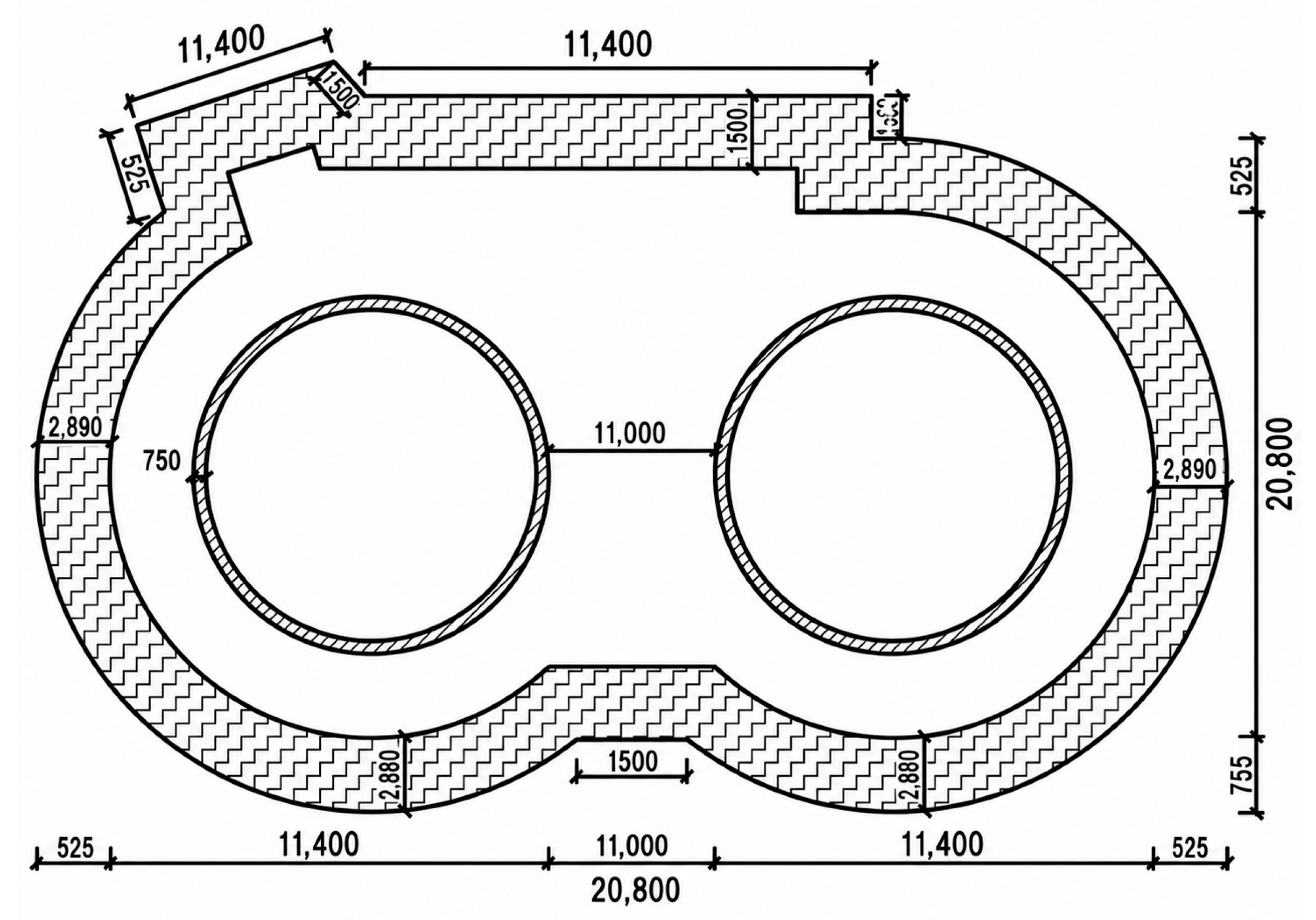
3.2.1. Geometrical Model and Shaft Configuration
3.2.2. Stratigraphy and Soil Properties
3.2.3. Mesh Discretization
3.2.4. Interface Modelling
3.2.5. Water Conditions and Pore Pressure Modeling
3.3. Model Innovations
3.3.1. Advanced Analysis Method Applied to Shaft Simulation
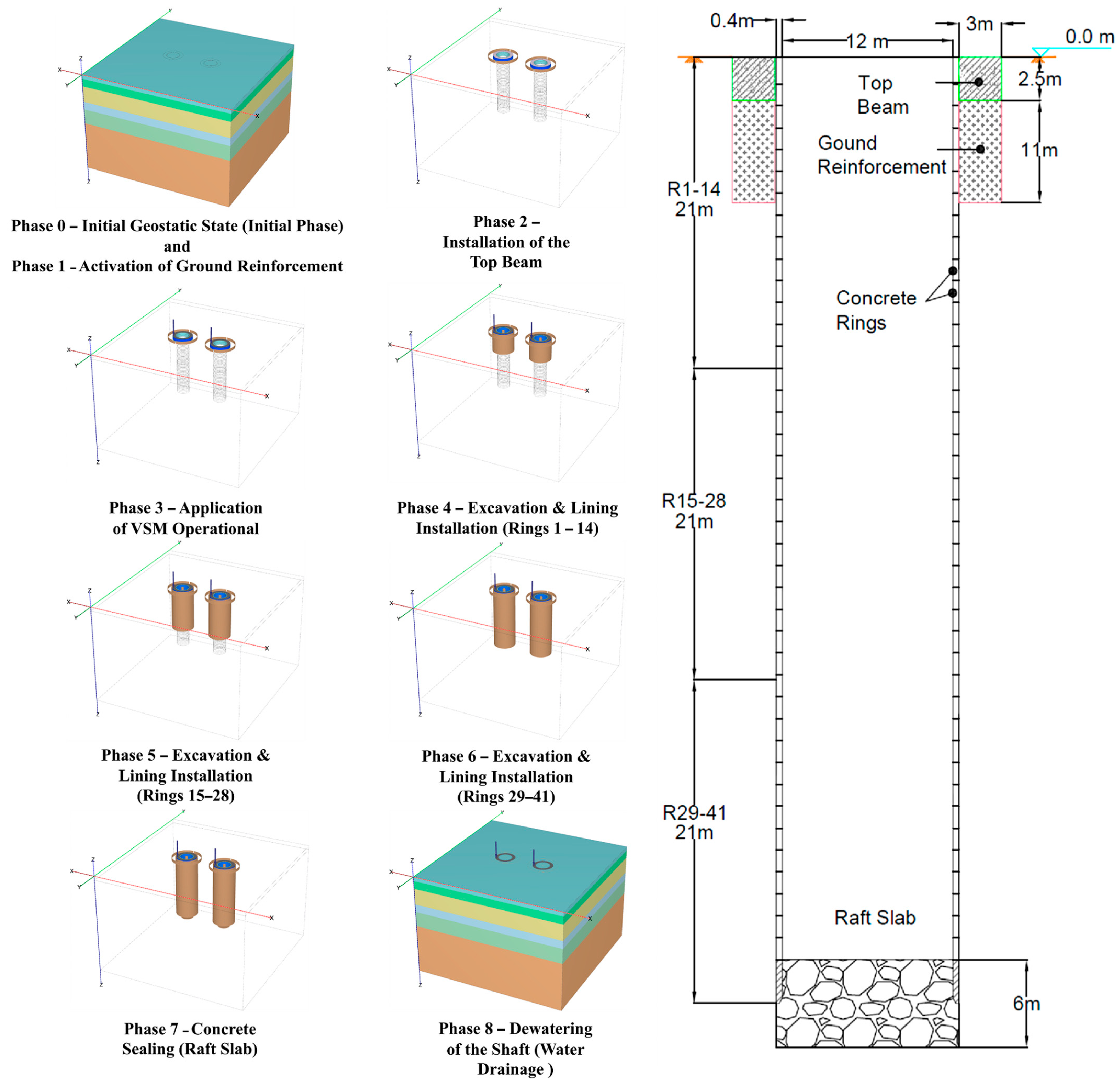
3.3.2. Sequential Analysis Steps for Shaft Excavation
4. Model Validation
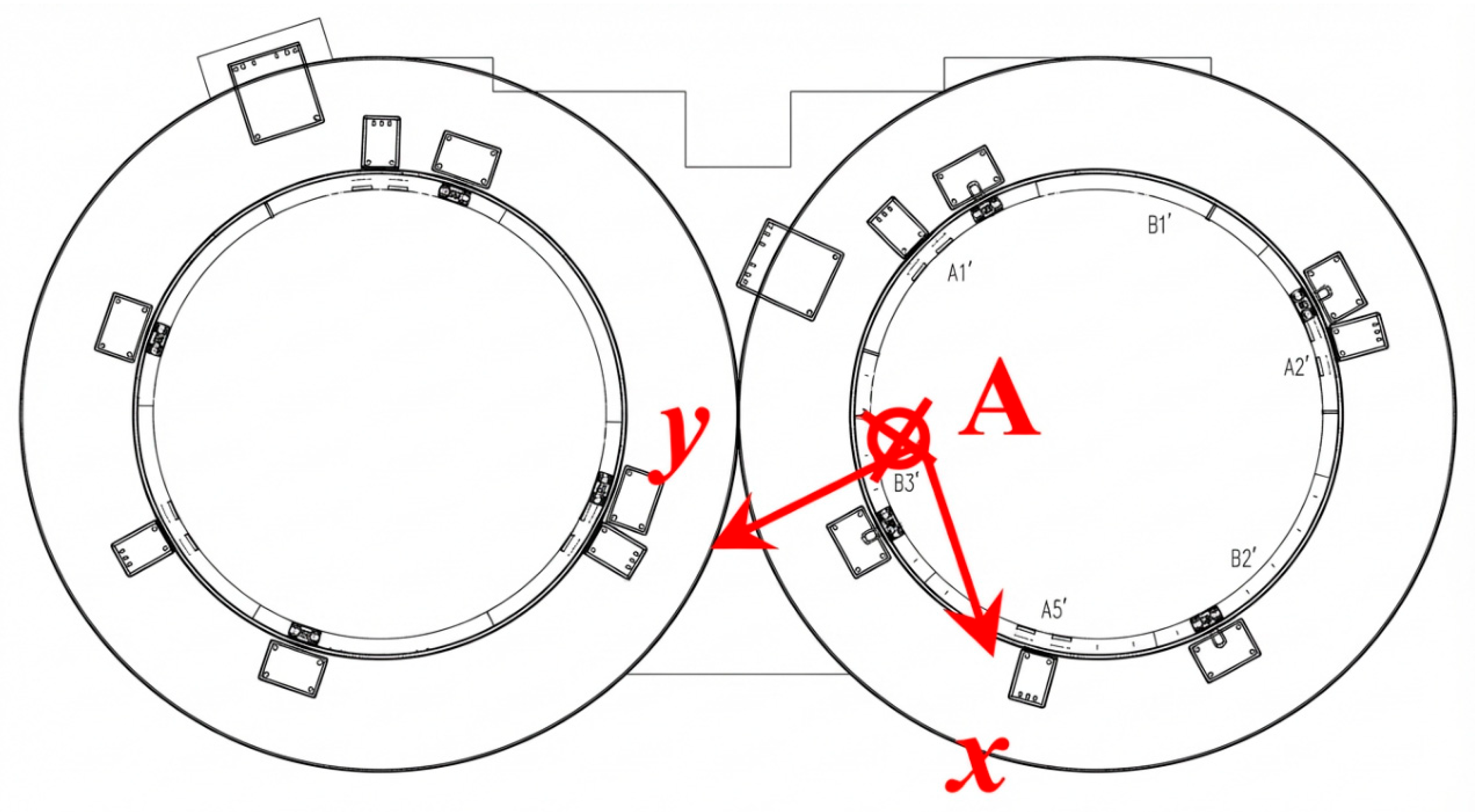
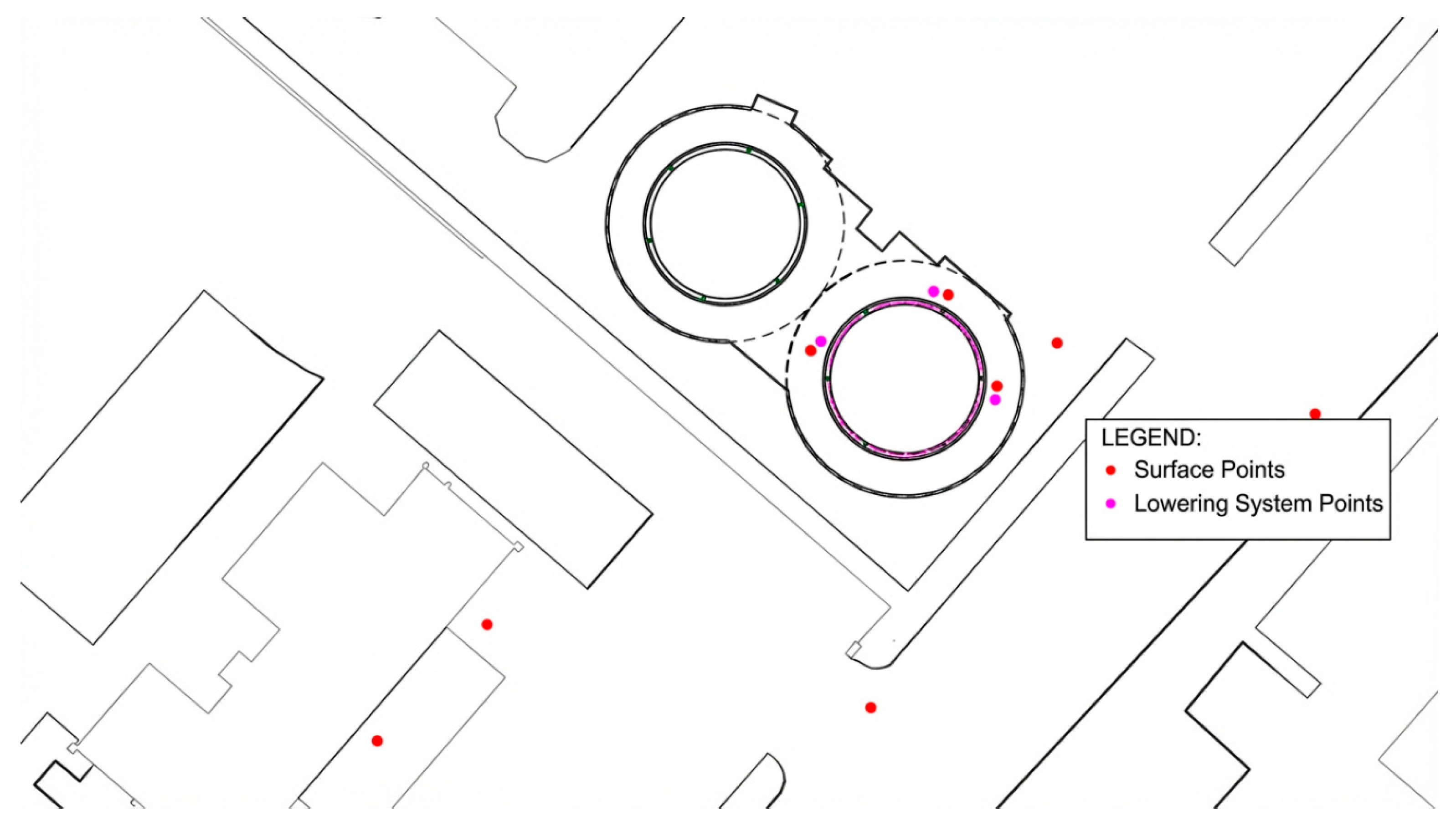
4.1. Description of In Situ Monitoring and Testing Setup
4.2. Predictive Consistency Assessment
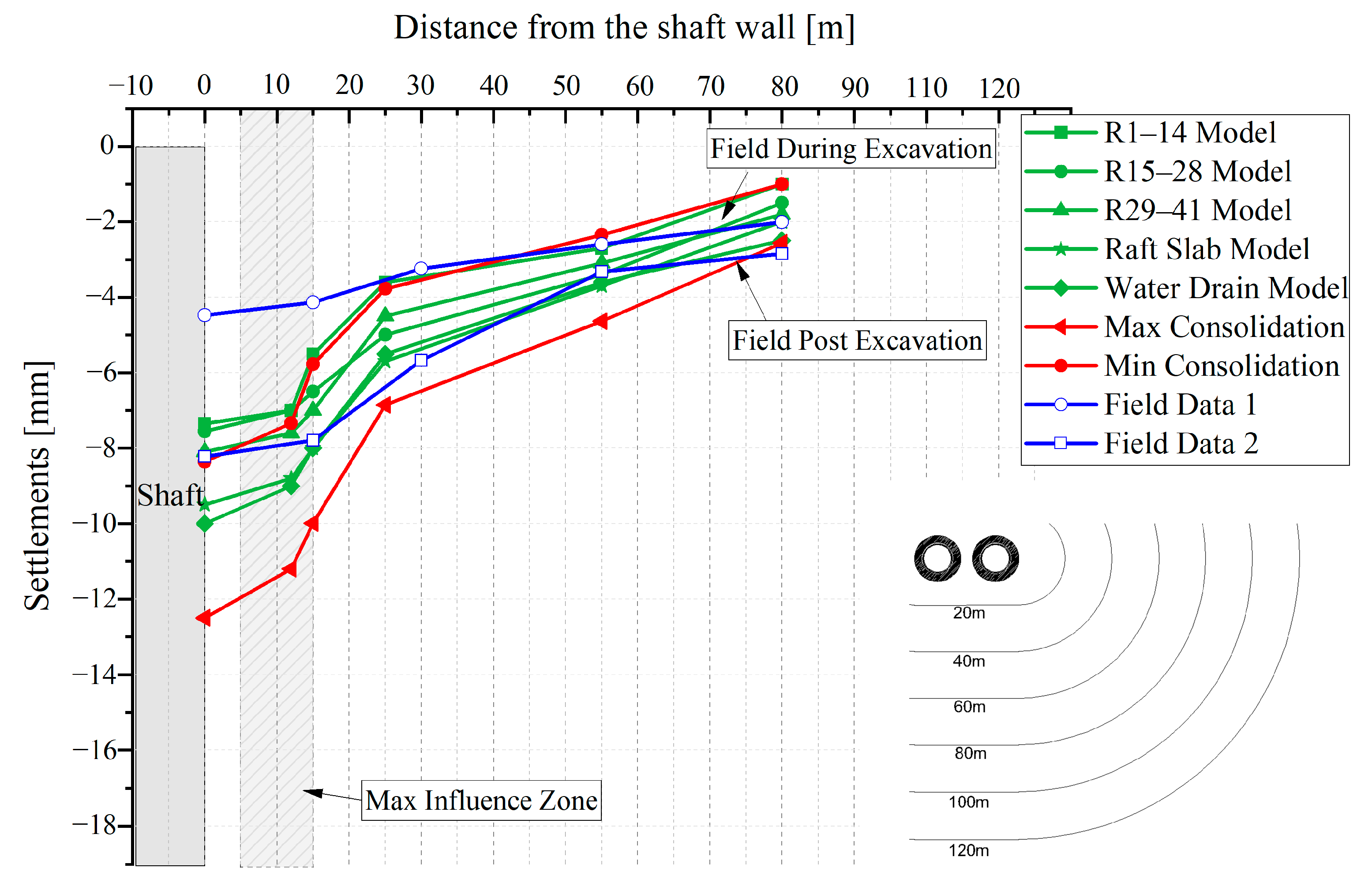
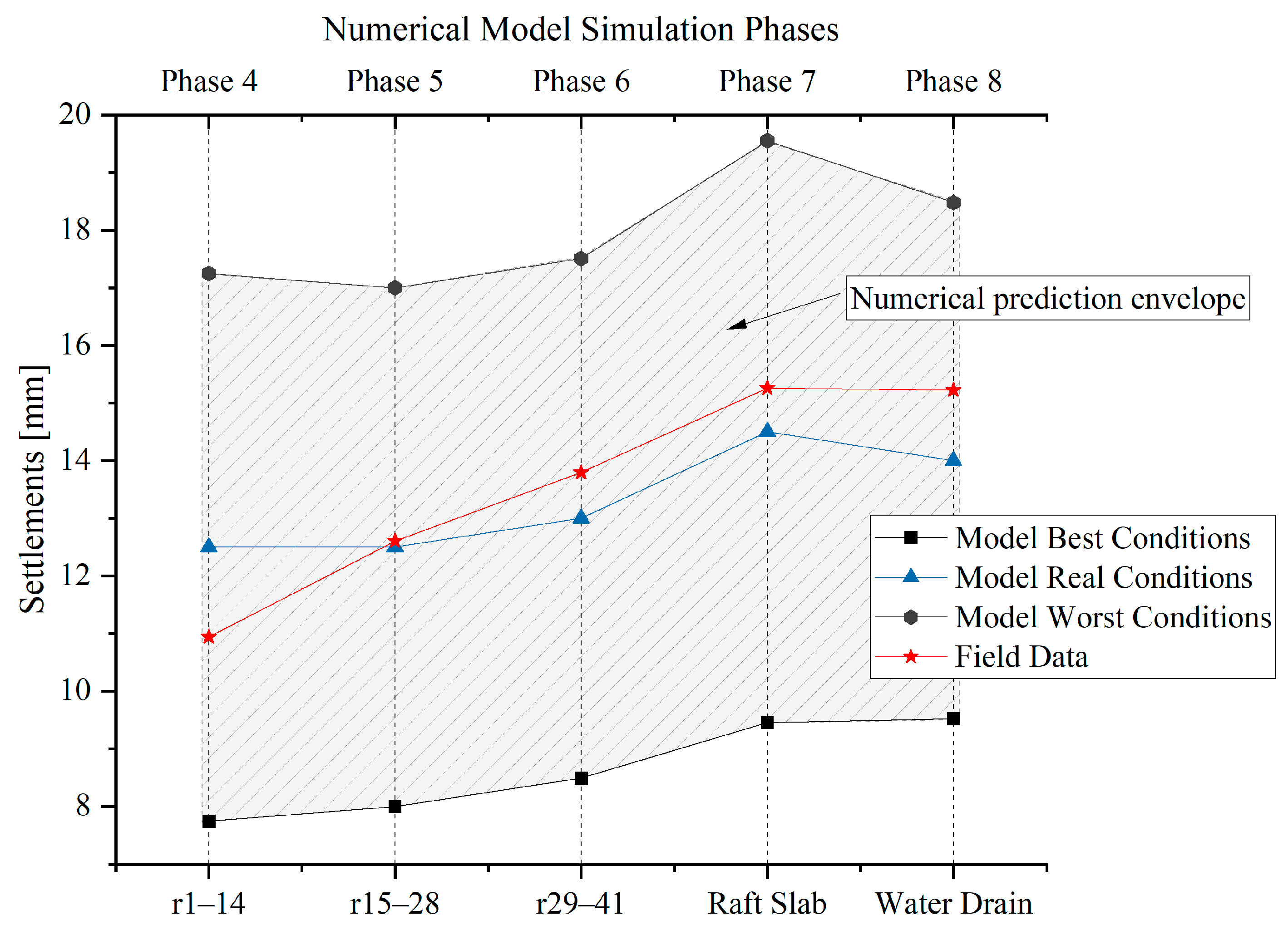
4.2.1. Numerical and Field Settlement Comparison
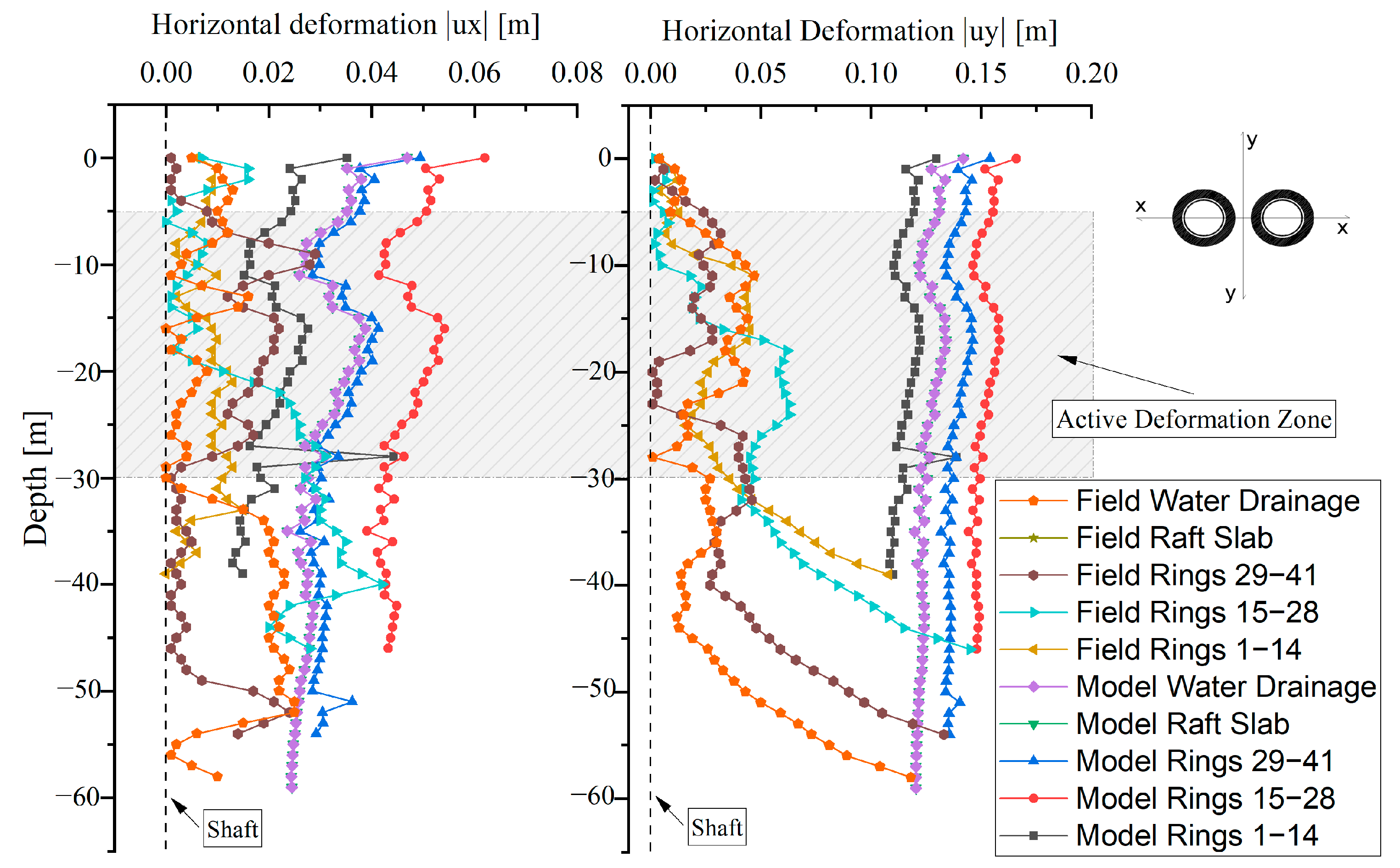
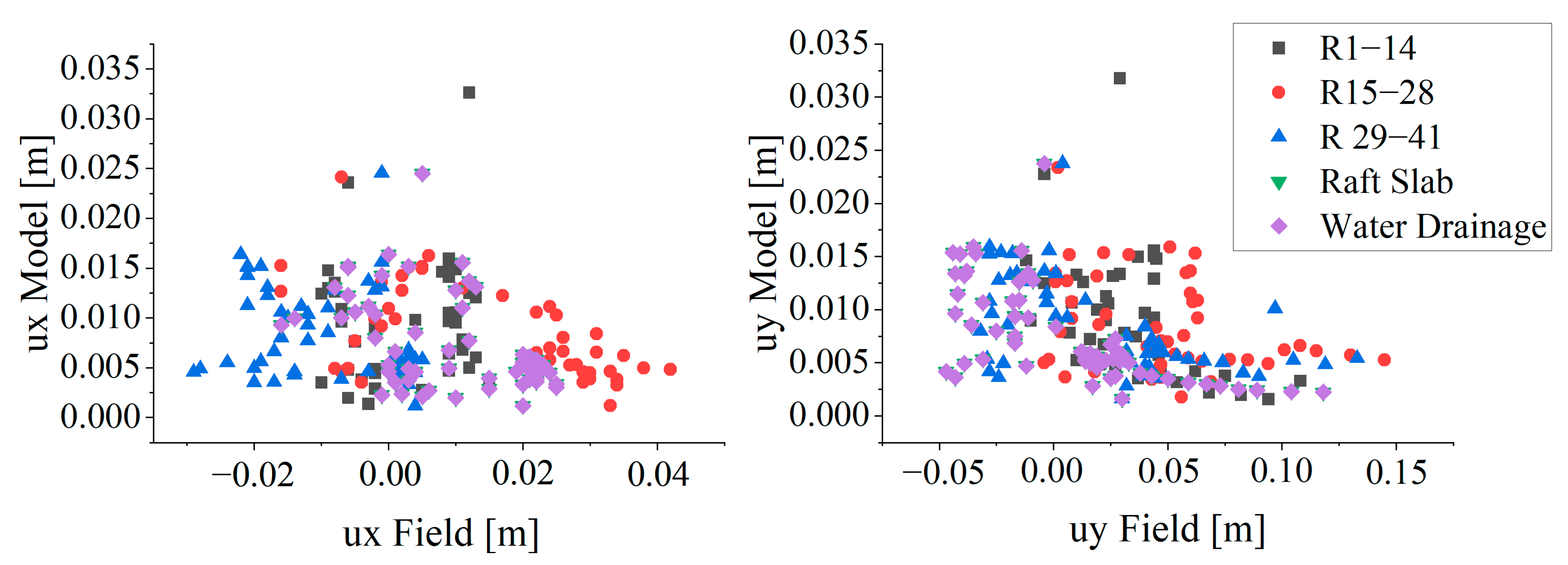
4.2.2. Quantitative Consistency of Horizontal Deformation
4.2.3. Displacement Envelopes and Depth of Influence
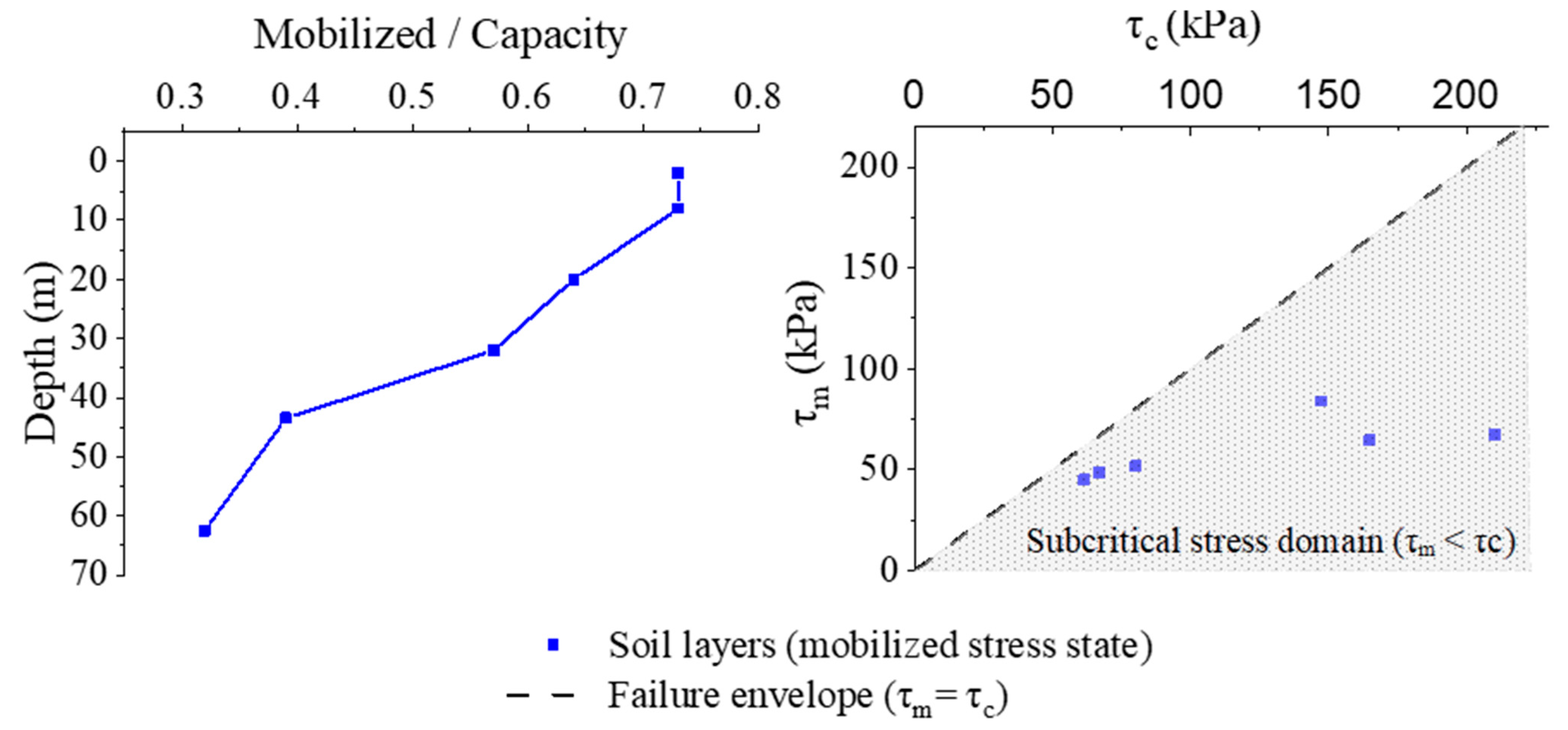
4.2.4. Mechanical Consistency: Mobilized vs. Available Strength
4.2.5. Numerical Results and Comparative Analysis
5. Sensitivity and Robustness Analysis
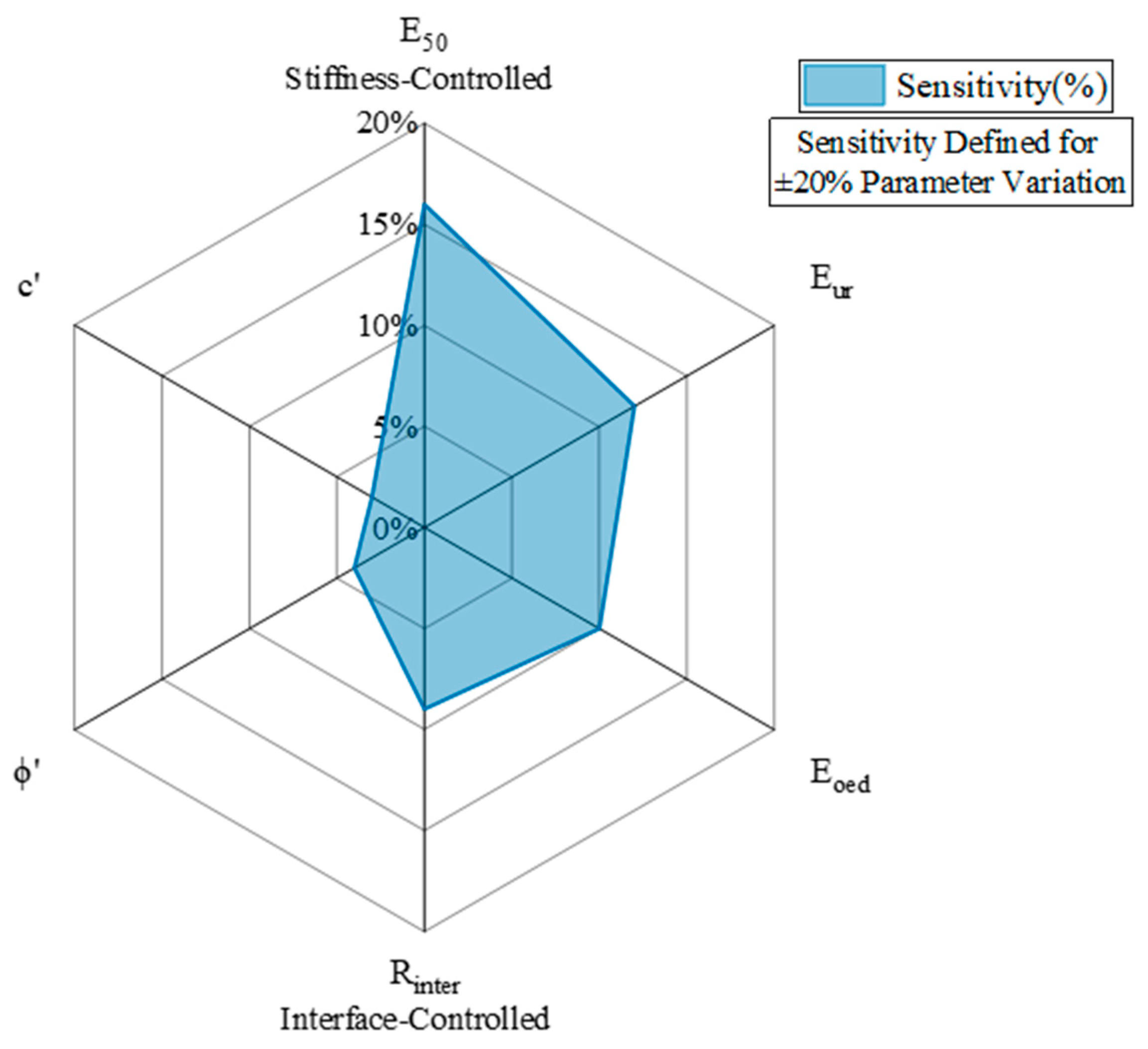
5.1. Sensitivity of Stiffness and Strength Parameters
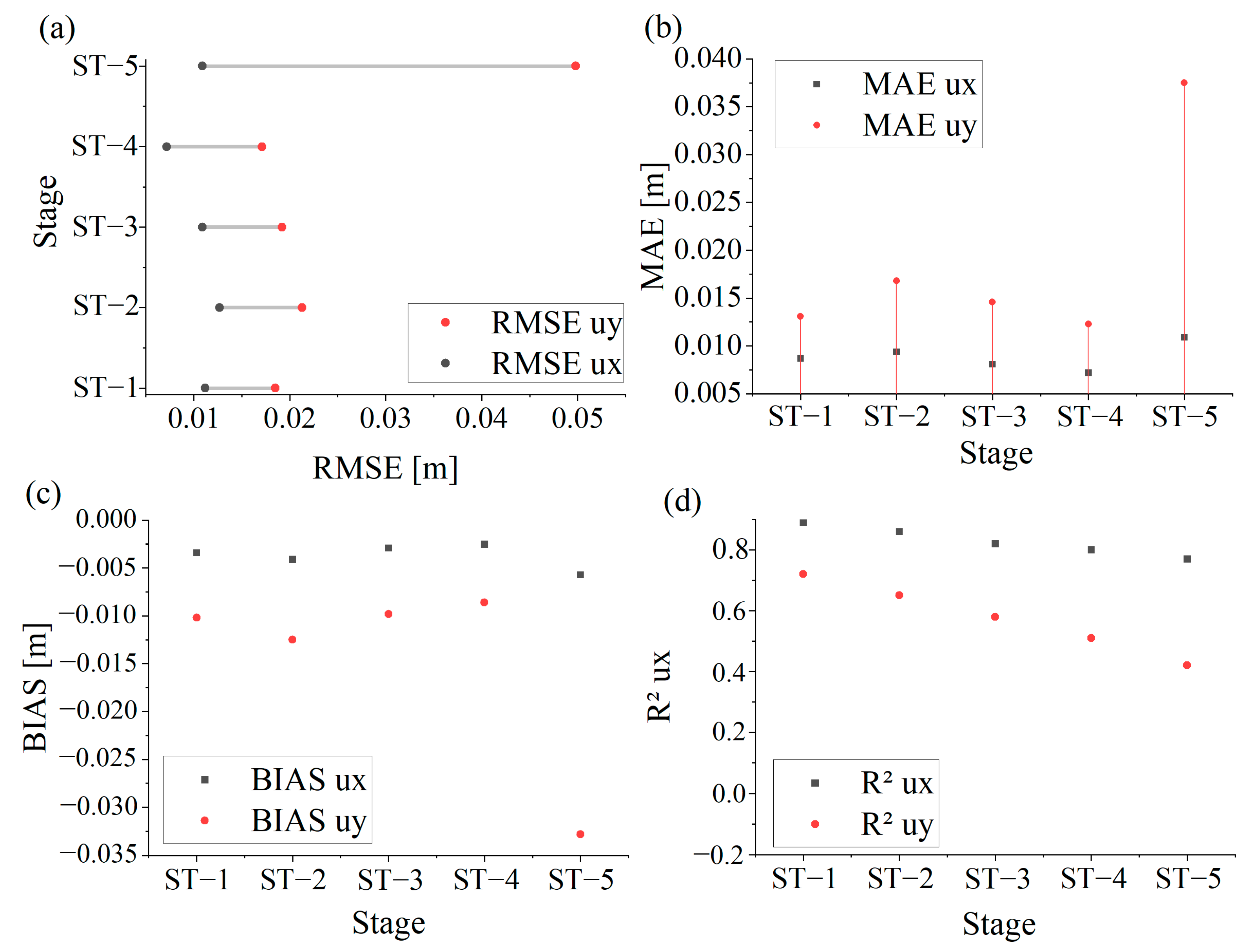
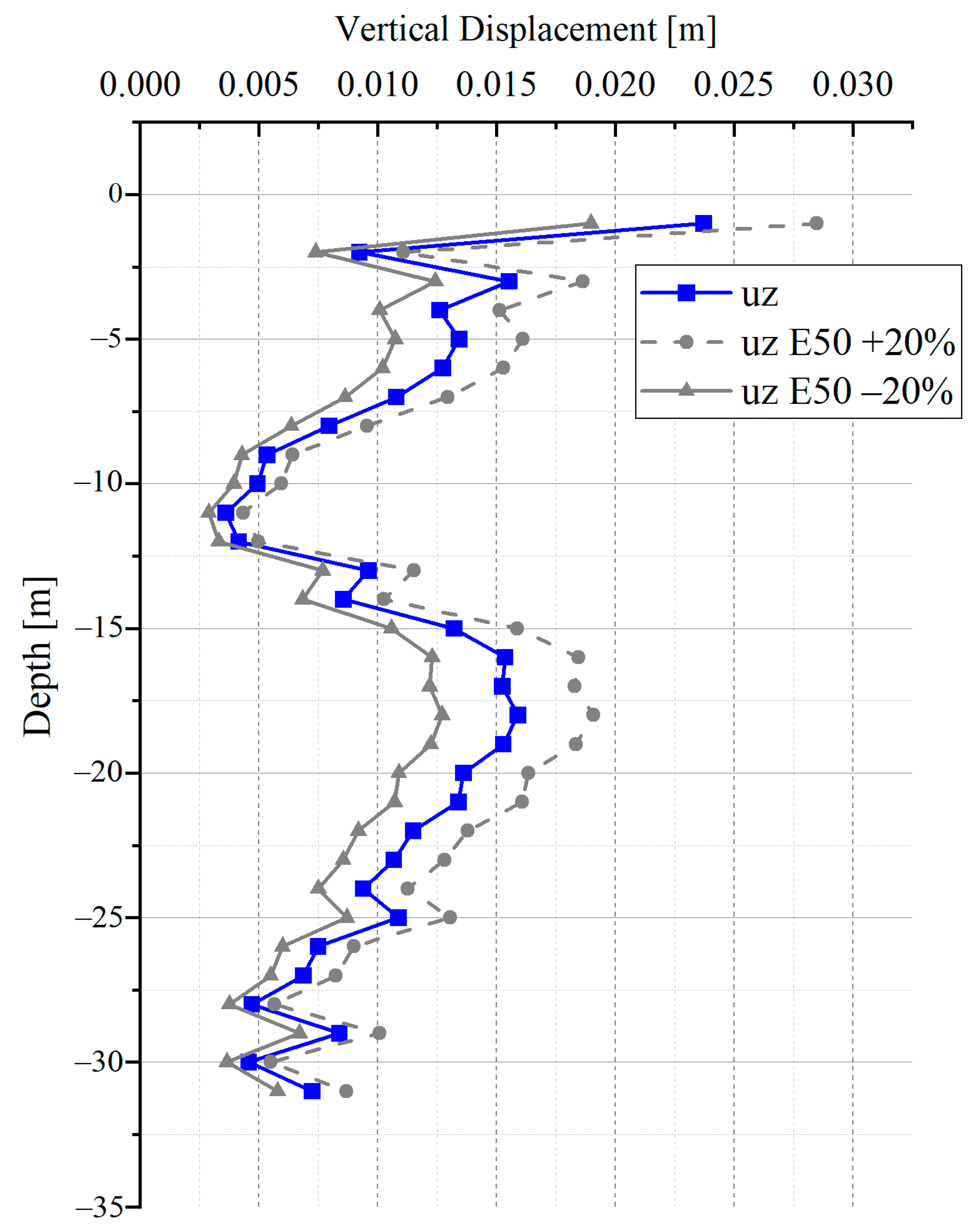
5.2. Robustness Across Construction Stages
5.3. Findings Based on the Sensitivity Analysis
- (a)
- Stiffness parameters (, , ) are dominant and govern settlement magnitude, curvature, and deformation shape.
- (b)
- Interface parameter () has a significant but secondary effect, particularly influencing lateral displacement distribution.
- (c)
- Strength parameters (, ) affect basal stability more than serviceability, with limited effect on deformations.
- (d)
- Robustness is high for horizontal displacements and moderate for vertical displacements during drainage.
6. Discussion
6.1. Advantages of the Proposed Numerical Model
6.2. Influence of Stratigraphic Transitions and Layering Effects
6.3. Implications for Design and Modeling Practice
7. Conclusions
- (1)
- The excavation-induced response of the investigated VSM system appears to be primarily influenced by stiffness-controlled deformation mechanisms rather than by full mobilization of soil shear strength. Throughout the analyzed excavation stages, the mobilized stress states remained below the failure envelope, indicating that the observed deformation developed predominantly under subcritical stress conditions.
- (2)
- The stratigraphic stiffness contrasts strongly influenced the spatial propagation of deformation. Softer silty clay layers concentrated larger displacement magnitudes, while stiffer strata provided partial confinement and reduced the depth-wise transmission of settlement.
- (3)
- The comparative model-field assessment showed satisfactory agreement for the horizontal displacement response across most excavation stages, indicating that the adopted Hardening Soil (HS) framework provides a mechanically consistent approximation of excavation-induced stress redistribution and soil-structure interaction behavior under the investigated conditions.
- (4)
- Larger discrepancies were observed for vertical displacement during the final drainage stage. This behavior suggests that post-drainage settlement becomes increasingly influenced by time-dependent hydro-mechanical processes, including pore-pressure dissipation and volumetric consolidation effects, which are not explicitly captured within the adopted uncoupled constitutive formulation, consistent with the known limitations of the uncoupled HS formulation in capturing small-strain stiffness and time-dependent consolidation effects.
- (5)
- The sensitivity analysis indicated that stiffness-related parameters (E50, Eoed, and Eur) exert the strongest influence on deformation magnitude and displacement evolution. Horizontal displacement components were found to be predominantly controlled by stiffness redistribution and interface behavior, whereas the vertical response during the drainage stage exhibited additional sensitivity to delayed hydro-mechanical effects.
- (6)
- The present study is based on a single monitored VSM excavation case in stratified soft alluvial deposits. The conclusions and framework applicability should therefore be interpreted within the specific geotechnical, hydraulic, and operational conditions of the investigated project. Future work will extend this framework to additional case studies and geological settings to broaden its general applicability.
Author Contributions
Funding
Data Availability Statement
Conflicts of Interest
References
- Schmäh, P.; Berblinger, S. Mechanized Shaft Sinking with the VSM in Different Projects for Subway Ventilation Shafts. In Proceedings of the World Tunnel Congress, Foz do Iguaçu, Brazil, 9–15 May 2014; p. 7. [Google Scholar]
- Baoyin, H.; Xu, Z.; Yu, L.; Zhang, X.; Wang, X.; Liu, Y. Analysis of Structural Internal Forces and Stratum Deformation in Shaft Construction Using Vertical Shaft Sinking Machine. Buildings 2025, 15, 2043. [Google Scholar] [CrossRef]
- Likitlersuang, S.; Teachavorasinskun, S.; Surarak, C.; Oh, E.; Balasubramaniam, A. Small strain stiffness and stiffness degradation curve of Bangkok Clays. Soils Found. 2013, 53, 498–509. [Google Scholar] [CrossRef]
- Xie, Y.; Cao, Z.; Yu, J. Effect of Soil Anisotropy on Ground Motion Characteristics. Buildings 2023, 13, 3017. [Google Scholar] [CrossRef]
- Li, Y.; Long, M.; Zuo, L.; Li, W.; Zhao, W. Brittleness evaluation of coal based on statistical damage and energy evolution theory. J. Pet. Sci. Eng. 2019, 172, 753–763. [Google Scholar] [CrossRef]
- Wang, Y.; Liu, M.; Liao, S.; Yi, Q.; He, J.; Liu, L.; Gong, Z.; Li, K. Investigation on the stratigraphic response and plugging effect induced by press-in open caisson in mucky soil. KSCE J. Civ. Eng. 2023, 27, 1928–1941. [Google Scholar] [CrossRef]
- Kung, G.T.-C.; Ou, C.-Y.; Juang, C.H. Modeling small-strain behavior of Taipei clays for finite element analysis of braced excavations. Comput. Geotech. 2009, 36, 304–319. [Google Scholar] [CrossRef]
- Szepesházi, A.; Mahler, A.; Móczár, B. Three dimensional finite element analysis of deep excavations’ concave corners. Period. Polytech. Civ. Eng. 2016, 60, 371–378. [Google Scholar] [CrossRef][Green Version]
- Peck, R.B. Advantages and limitations of the observational method in applied soil mechanics. Geotechnique 1969, 19, 171–187. [Google Scholar] [CrossRef]
- Clough, G.W. Construction Induced movements of insitu wall, design and performance of earth retaining structure. In Proceedings of the ASCE, San Francisco, CA, USA, 23–27 October 1990; pp. 439–479. [Google Scholar]
- O’reilly, M.P.; New, B. Settlements above tunnels in the United Kingdom—Their magnitude and prediction. In Proceedings of the Tunnelling Conference, London, UK, 7–11 June 1982. [Google Scholar]
- Mair, R. Tunnelling and deep excavations: Ground movements and their effects. In Proceedings of the 15th European Conference on Soil Mechanics and Geotechnical Engineering, Athens, Greece, 12–15 September 2013; pp. 39–70. [Google Scholar]
- Hashash, Y.M.; Hook, J.J.; Schmidt, B.; Yao, J.I.-C. Seismic design and analysis of underground structures. Tunn. Undergr. Space Technol. 2001, 16, 247–293. [Google Scholar] [CrossRef]
- Ng, C.W.; Yan, R.W. Stress transfer and deformation mechanisms around a diaphragm wall panel. J. Geotech. Geoenviron. Eng. 1998, 124, 638–648. [Google Scholar] [CrossRef]
- Cai, C.; Li, J.; Zhai, C.; Wang, B.; Xue, J.; Dong, Z.; Zhu, Z. Crack propagation characteristics in shale under cyclic in situ methane detonation impact fracturing. Energy Fuels 2026, 40, 6064–6082. [Google Scholar] [CrossRef]
- Benz, T. Small-Strain Stiffness of Soils and Its Numerical Consequences. Ph.D. Thesis, University of Stuttgart, Stuttgart, Germany, 2007. [Google Scholar]
- Brinkgreve, R.; Vermeer, P. PLAXIS 2D Reference Manual CONNECT Edition V20; Delft University: Delft, The Netherlands, 2019. [Google Scholar]
- Saleh, S.; Mohd Yunus, N.Z.; Ahmad, K.; Mat Said, K.N. Numerical simulation with hardening soil model parameters of marine clay obtained from conventional tests. SN Appl. Sci. 2021, 3, 156. [Google Scholar] [CrossRef]
- Ng, C.W.W.; Lu, H.; Peng, S. Three-dimensional centrifuge modelling of the effects of twin tunnelling on an existing pile. Tunn. Undergr. Space Technol. 2013, 35, 189–199. [Google Scholar] [CrossRef]
- Zhou, W.-H.; Yin, Z.-Y.; Yuen, K.-V. Practice of Bayesian Probability Theory in Geotechnical Engineering; Springer: Berlin/Heidelberg, Germany, 2021. [Google Scholar]
- Zhou, J.; Liu, C.; Xu, J.; Zhang, Z.; Li, Z. Deformation Mechanism and Control of In-Situ Assembling Caisson Technology in Soft Soil Area Under Field Measurement and Numerical Simulation. Materials 2023, 16, 1125. [Google Scholar] [CrossRef]
- Ma, C.; Hong, H.; Yu, L.; Liu, K.; Huang, J. A numerical study of reinforcement structure in shaft construction using vertical shaft sinking machine (VSM). Buildings 2024, 14, 2402. [Google Scholar] [CrossRef]
- Schanz, T.; Vermeer, P.A.; Bonnier, P.G. The hardening soil model: Formulation and verification. In Beyond 2000 in Computational Geotechnics; Routledge: London, UK, 2019; pp. 281–296. [Google Scholar]
- Plaxis, B. Plaxis 2D Reference Manual. The Netherlands. 2018. Available online: https://files.seequent.com/PLAXIS/Manuals/PLAXIS_2D/English/PLAXIS_2D_2_Reference%20Manual.pdf (accessed on 10 December 2025).
- Houhou, M.N.; Emeriault, F.; Belounar, A. Three-dimensional numerical back-analysis of a monitored deep excavation retained by strutted diaphragm walls. Tunn. Undergr. Space Technol. 2019, 83, 153–164. [Google Scholar] [CrossRef]
- Jin, Y.-F.; Zhu, B.-Q.; Yin, Z.-Y.; Zhang, D.-M. Three-dimensional numerical analysis of the interaction of two crossing tunnels in soft clay. Undergr. Space 2019, 4, 310–327. [Google Scholar] [CrossRef]
- Gaba, A.; Hardy, S.; Doughty, L.; Powrie, W.; Selemetas, D. Guidance on Embedded Retaining Wall Design; CIRIA: London, UK, 2017. [Google Scholar]
- Ou, C.-Y. Deep Excavation: Theory and Practice; CRC Press: Boca Raton, FL, USA, 2014. [Google Scholar]
- Nejjar, K.; Dias, D.; Cuira, F.; Chapron, G.; Le Bissonnais, H. Numerical modelling of a 32 m deep excavation in the suburbs of Paris. Eng. Struct. 2022, 268, 114727. [Google Scholar] [CrossRef]
- Mayne, P.W.; Kulhawy, F.H. Ko-OCR relationships in soil. J. Geotech. Eng. Div. 1982, 108, 851–872. [Google Scholar] [CrossRef]
- Brooker, E.W.; Ireland, H.O. Earth pressures at rest related to stress history. Can. Geotech. J. 1965, 2, 1–15. [Google Scholar] [CrossRef]
- Lewis, R.W.; Schrefler, B.A. The Finite Element Method in the Static and Dynamic Deformation and Consolidation of Porous Media; John Wiley & Sons: Hoboken, NJ, USA, 1999. [Google Scholar]
- Bear, J. Dynamics of Fluids in Porous Media; Courier Corporation: North Chelmsford, MA, USA, 2013. [Google Scholar]
- Kishida, H.l.; Uesugi, M. Tests of the interface between sand and steel in the simple shear apparatus. Géotechnique 1987, 37, 45–52. [Google Scholar] [CrossRef]
- Uesugi, M.; Kishida, H. Frictional resistance at yield between dry sand and mild steel. Soils Found. 1986, 26, 139–149. [Google Scholar] [CrossRef]
- Surarak, C.; Likitlersuang, S.; Wanatowski, D.; Balasubramaniam, A.; Oh, E.; Guan, H. Stiffness and strength parameters for hardening soil model of soft and stiff Bangkok clays. Soils Found. 2012, 52, 682–697. [Google Scholar] [CrossRef]
- Zheng, X.; Wang, X.; Shen, K.; Gu, X. Determination of HSS Model Parameters for Soft Clays in Hangzhou: Statistical Analysis and Engineering Validation. Buildings 2025, 15, 3886. [Google Scholar] [CrossRef]
- Janbu, N. Soil compressibility as determined by oedometer and triaxial tests. In Proceedings of the European Conference SMFE, Wiesbaden, Germany, 15–18 October 1963; pp. 19–25. [Google Scholar]
- Potyondy, J.G. Skin Friction Between Various Soils and Construction Materials. Géotechnique 1961, 11, 339–353. [Google Scholar] [CrossRef]
- Lings, M.; Dietz, M. The peak strength of sand-steel interfaces and the role of dilation. Soils Found. 2005, 45, 1–14. [Google Scholar] [CrossRef]
- Hassan, S.; El Shamy, U. DEM simulations of the seismic response of granular slopes. Comput. Geotech. 2019, 112, 230–244. [Google Scholar] [CrossRef]
- Ren, D.; Kang, C.; Liu, H.; Li, Y.; Wang, J. Characteristics of a Large-Scale Deep Foundation Pit Excavated by the Central-Island Technique in Chengdu Soft Clay. KSCE J. Civ. Eng. 2022, 26, 2610–2623. [Google Scholar] [CrossRef]
- Lu, T.; Wu, K.; Liu, S.; Cai, G. Method for estimating three-dimensional effects on braced excavation in clay. Tunn. Undergr. Space Technol. 2023, 141, 105355. [Google Scholar] [CrossRef]
- Chai, T.; Draxler, R.R. Root mean square error (RMSE) or mean absolute error (MAE)?–Arguments against avoiding RMSE in the literature. Geosci. Model Dev. 2014, 7, 1247–1250. [Google Scholar] [CrossRef]
- Lai, F.; Tschuchnigg, F.; Schweiger, H.F.; Liu, S.; Shiau, J.; Cai, G. A numerical study of deep excavations adjacent to existing tunnels: Integrating CPTU and SDMT to calibrate soil constitutive model. Can. Geotech. J. 2024, 62, 1–23. [Google Scholar] [CrossRef]
- Wang, W.; Yi, W.; Huang, X.; Wang, Y.; Wang, Z. Research on a dynamic early warning model based on refined threshold analysis: Case study of the Tanjiawan Landslide. PLoS ONE 2026, 21, e0339689. [Google Scholar] [CrossRef]
- Phoon, K.-K.; Kulhawy, F.H. Evaluation of geotechnical property variability. Can. Geotech. J. 1999, 36, 625–639. [Google Scholar] [CrossRef]
- Ching, J.; Schweckendiek, T. State-of-the-art review of inherent variability and uncertainty in geotechnical properties and models. ISSMGE Tech. Comm. 2021, 304, 95–129. [Google Scholar]
- Phoon, K.-K.; Cao, Z.-J.; Ji, J.; Leung, Y.F.; Najjar, S.; Shuku, T.; Tang, C.; Yin, Z.-Y.; Ikumasa, Y.; Ching, J. Geotechnical uncertainty, modeling, and decision making. Soils Found. 2022, 62, 101189. [Google Scholar] [CrossRef]
- Phoon, K.-K.; Kulhawy, F.H. Characterization of geotechnical variability. Can. Geotech. J. 1999, 36, 612–624. [Google Scholar] [CrossRef]
- Haigh, S.K.; Vardanega, P.J.; Bolton, M.D. The plastic limit of clays. Géotechnique 2013, 63, 435–440. [Google Scholar] [CrossRef]
- Potts, D.M.; Zdravković, L.; Addenbrooke, T.I.; Higgins, K.G.; Kovačević, N. Finite Element Analysis in Geotechnical Engineering: Application; Thomas Telford: London, UK, 2001; Volume 2. [Google Scholar]
- Gens, A.; Carol, I.; Alonso, E. An interface element formulation for the analysis of soil-reinforcement interaction. Comput. Geotech. 1989, 7, 133–151. [Google Scholar] [CrossRef]
- Sharma, K.; Desai, C. Analysis and implementation of thin-layer element for interfaces and joints. J. Eng. Mech. 1992, 118, 2442–2462. [Google Scholar] [CrossRef]
- Matsui, T.; San, K.-C. Finite element slope stability analysis by shear strength reduction technique. Soils Found. 1992, 32, 59–70. [Google Scholar] [CrossRef]
- Griffiths, D.; Lane, P. Probabilistic Slope Stability Analysis by Finite Elements. Geotechnique 1999, 49, 387–403. [Google Scholar] [CrossRef]
- Qiu, Y.; Wang, J.; Zhang, C.; Hua, L.; Zhou, Z. Numerical Simulation Study on the Impact of Excavation on Existing Subway Stations Based on BIM-FEM Framework. Buildings 2024, 14, 1444. [Google Scholar] [CrossRef]
- Li, M.; Chen, H.; Zhang, Z.; Chen, J.; Yang, Q. Numerical analysis of a deep and oversized group excavation: A case study. Undergr. Space 2025, 21, 178–197. [Google Scholar] [CrossRef]
- Li, Z.; Zhao, G.-F.; Wei, X.; Deng, X. Numerical modelling of multiple excavations in an ultra-deep foundation using an enhanced distinct lattice spring model with modified cam clay model. Tunn. Undergr. Space Technol. 2024, 152, 105875. [Google Scholar] [CrossRef]
- Harrou, F.; Zeroual, A.; Hittawe, M.M.; Sun, Y. Traffic congestion detection: Data-based techniques. In Road Traffic Modeling and Management; Elsevier: Amsterdam, The Netherlands, 2022; pp. 141–195. [Google Scholar] [CrossRef]





| Component | Bulk Modulus K (MPa) | Shear Modulus G (MPa) | Elastic Modulus E(c) (MPa) | Density ρ (kg/m3) | Unit Weight γ (kN/m3) | Cross-Section Area A (m2) | Weight per Unit Length W (kN/m) | Volume V (m3) | Moment of Inertia I2 (m4) | Moment of Inertia I3 (m4) | Axial Stiffness EA (kN/m) |
|---|---|---|---|---|---|---|---|---|---|---|---|
| Rings | 19,200 | 14,400 | 34,560 | 2500 | 24.525 | 15.5823 | 573.2338 | 23.3734 | - | - | 5.385 × 10¹¹ |
| Top Beam | 18,000 | 13,500 | 32,400 | 2500 | 24.525 | 67.3872 | 4958.0148 | 202.1615 | 6.75 | 6.75 | 2.183 × 10¹² |
| Foundation | 18,000 | 13,500 | 30,000 | 2300 | 22.563 | 67.3872 | 16,725.022 | 741.2588 | 332.75 | 24.75 | 2.021 × 10¹² |
| Raft Slab | 17,500 | 14,400 | 33,901.35 | 2350 | 23.0535 | 113.0973 | 7821.8683 | 339.292 | - | - | 3.834 × 10¹² |
| Layer No. | Layer Description | Depth (m) | Thickness (m) | γ (kN/m3) | γd (kN/m3) | K0 | c′ (kPa) | ϕ′ (°) |
|---|---|---|---|---|---|---|---|---|
| 1 | Fill and Soft Organic Clay | 0–4 | 4 | 19.1 | 14.8 | 0.7 | 26 | 18.4 |
| 2 | Soft to Medium Silty Clay | 4–12 | 8 | 18.0 | 13.2 | 0.72 | 17 | 19.0 |
| 3 | Medium-Stiff Silty Clay | 12–28 | 16 | 19.2 | 15.0 | 0.6 | 10 | 30.0 |
| 4 | Silty Sand | 28–36 | 8 | 18.3 | 14.0 | 0.65 | 4 | 30.0 |
| 5 | Stiff Silty Clay | 36–51 | 15 | 19.5 | 16.5 | 0.5 | 12 | 28.0 |
| 6 | Very Stiff Silty Clay | 51–end | 23 | 18.9 | 16.2 | 0.6 | 16 | 28.0 |
| Layer No. | Reference Pressure (kPa) | υ (-) | m | (kPa) | (kPa) | (kPa) |
|---|---|---|---|---|---|---|
| 1 | 100 | 0.4 | 0.9 | 10,800 | 43,200 | 8640 |
| 2 | 100 | 0.35 | 0.85 | 11,340 | 45,360 | 9072 |
| 3 | 100 | 0.3 | 0.8 | 12,000 | 48,000 | 9600 |
| 4 | 100 | 0.3 | 0.55 | 18,000 | 72,000 | 14,400 |
| 5 | 100 | 0.3 | 0.75 | 15,000 | 60,000 | 12,000 |
| 6 | 100 | 0.25 | 0.7 | 15,000 | 60,000 | 12,000 |
| Phase | Description |
|---|---|
| Phase 0 | Generation of in situ stress field using the K0-procedure. Hydrostatic pore pressure initialized based on phreatic level. Establishment of pre-excavation stress conditions matching field data. |
| Phase 1 | Activation of improved soil zones with increased stiffness and strength. Simulation of basal reinforcement to enhance initial stability. |
| Phase 2 | Activation of the top reinforced-concrete beam at the ground surface. Early load transfer and structural confinement prior to excavation. |
| Phase 3 | Application of static operational loads (13.83 kN/m2) representing VSM lowering and segment handling operations. |
| Phase 4 (R1–14) | Excavation in 1.5 m increments down to 21 m depth with immediate activation of each concrete ring after excavation. Simulation of continuous lining sequence during VSM operation. |
| Phase 5 (R15–28) | Excavation extended to 42 m depth (1.5 m steps). Continuous soil-structure interaction evaluation during deepening. |
| Phase 6 (R29–41) | Final excavation to the target depth (~68 m). Activation of remaining lining rings to complete the structural lining of the shaft. |
| Phase 7 (Raft Slab) | Activation of the reinforced concrete raft slab at the shaft base. Provides structural closure, end-bearing load distribution, and enhanced bottom stability against uplift. |
| Phase 8 (Internal shaft dewatering) | Internal dewatering of the shaft after completion of lining and raft slab, with no hydraulic interaction with the surrounding soil. |
| Stage | RMSE ux (m) | RMSE uγ (m) | MAE ux (m) | MAE uγ (m) | Bias ux (m) | Bias uγ (m) | R2 ux | R2 uγ |
|---|---|---|---|---|---|---|---|---|
| ST-1 (R1–14) | 0.01 | 0.015 | 0.008 | 0.012 | −0.004 | −0.006 | 0.89 | 0.72 |
| ST-2 (R15–28) | 0.011 | 0.017 | 0.009 | 0.014 | −0.005 | −0.007 | 0.86 | 0.65 |
| ST-3 (R29–41) | 0.012 | 0.02 | 0.01 | 0.016 | −0.006 | −0.008 | 0.82 | 0.58 |
| ST-4 (Raft) | 0.013 | 0.018 | 0.011 | 0.015 | −0.006 | −0.009 | 0.8 | 0.51 |
| ST-5 (Drain) | 0.014 | 0.028 | 0.012 | 0.02 | −0.007 | −0.015 | 0.77 | 0.42 |
| Layer | z_Mid (m) | G (kPa) | γp Peak_Field (–) | τm Mobilized (kPa) | τc Capacity (kPa) | Mobilized/Capacity |
|---|---|---|---|---|---|---|
| Fill & Soft Organic Clay | 2 | 6667 | 0.0067 | 44.7 | 61.4 | 0.73 |
| Soft to Medium Silty Clay | 8 | 7269 | 0.0067 | 48.7 | 66.9 | 0.73 |
| Medium-Stiff Silty Clay | 20 | 7692 | 0.0067 | 51.5 | 80.1 | 0.64 |
| Silty Sand | 32 | 12,500 | 0.0067 | 83.8 | 147.3 | 0.57 |
| Stiff Silty Clay | 43.5 | 9615 | 0.0067 | 64.3 | 164.9 | 0.39 |
| Very Stiff Silty Clay | 62.5 | 10,000 | 0.0067 | 67 | 210.2 | 0.32 |
Disclaimer/Publisher’s Note: The statements, opinions and data contained in all publications are solely those of the individual author(s) and contributor(s) and not of MDPI and/or the editor(s). MDPI and/or the editor(s) disclaim responsibility for any injury to people or property resulting from any ideas, methods, instructions or products referred to in the content. |
© 2026 by the authors. Licensee MDPI, Basel, Switzerland. This article is an open access article distributed under the terms and conditions of the Creative Commons Attribution (CC BY) license.
Share and Cite
Rivera, S.; Tang, Z.; Ma, C.; Cao, B.T.; Liu, X. Numerical Study and Parametric Insights of Mechanized Shaft Excavation in Soft Clay. Buildings 2026, 16, 2045. https://doi.org/10.3390/buildings16102045
Rivera S, Tang Z, Ma C, Cao BT, Liu X. Numerical Study and Parametric Insights of Mechanized Shaft Excavation in Soft Clay. Buildings. 2026; 16(10):2045. https://doi.org/10.3390/buildings16102045
Chicago/Turabian StyleRivera, Sebastian, Zeren Tang, Chunjing Ma, Ba Trung Cao, and Xian Liu. 2026. "Numerical Study and Parametric Insights of Mechanized Shaft Excavation in Soft Clay" Buildings 16, no. 10: 2045. https://doi.org/10.3390/buildings16102045
APA StyleRivera, S., Tang, Z., Ma, C., Cao, B. T., & Liu, X. (2026). Numerical Study and Parametric Insights of Mechanized Shaft Excavation in Soft Clay. Buildings, 16(10), 2045. https://doi.org/10.3390/buildings16102045