Learning Factories 5.0 for Industry 5.0 Readiness in Sustainable Construction: A Competency-Driven Framework for Human-Centric and Sustainable Workforce Development
Abstract
1. Introduction
- ⮚
- RO1: To identify the core competencies required for Industry 5.0 readiness in sustainable construction, with emphasis on human-centricity, sustainability, digitalisation, resilience, and collaborative problem-solving.
- ⮚
- RO2: To examine how Learning Factories 5.0 can support workforce development in sustainable construction, particularly in enhancing technical, digital, green, and socio-cognitive competencies needed for emerging construction environments.
- ⮚
- RO3: To develop a competency-driven framework for integrating Learning Factories 5.0 into sustainable construction education and training, to strengthen Industry 5.0 readiness among current and future professionals.
2. Background and Theoretical Framing
2.1. Industry 5.0 in the Construction Sector
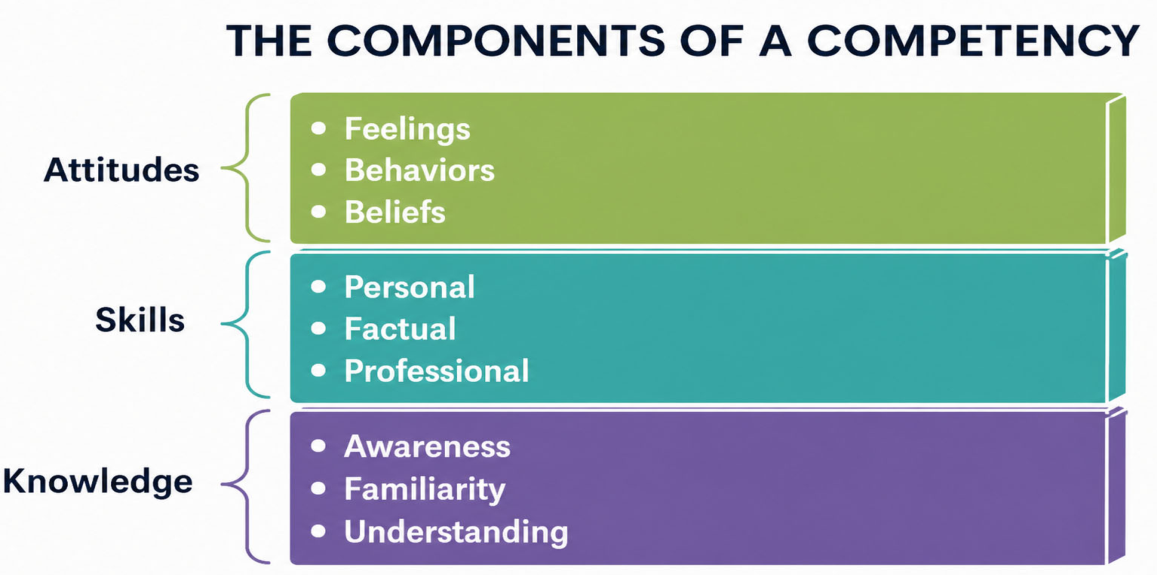
2.2. Competency Development Theory for Sustainable Construction
2.3. Learning Factories as Educational Innovation
3. Methodology
3.1. Research Design
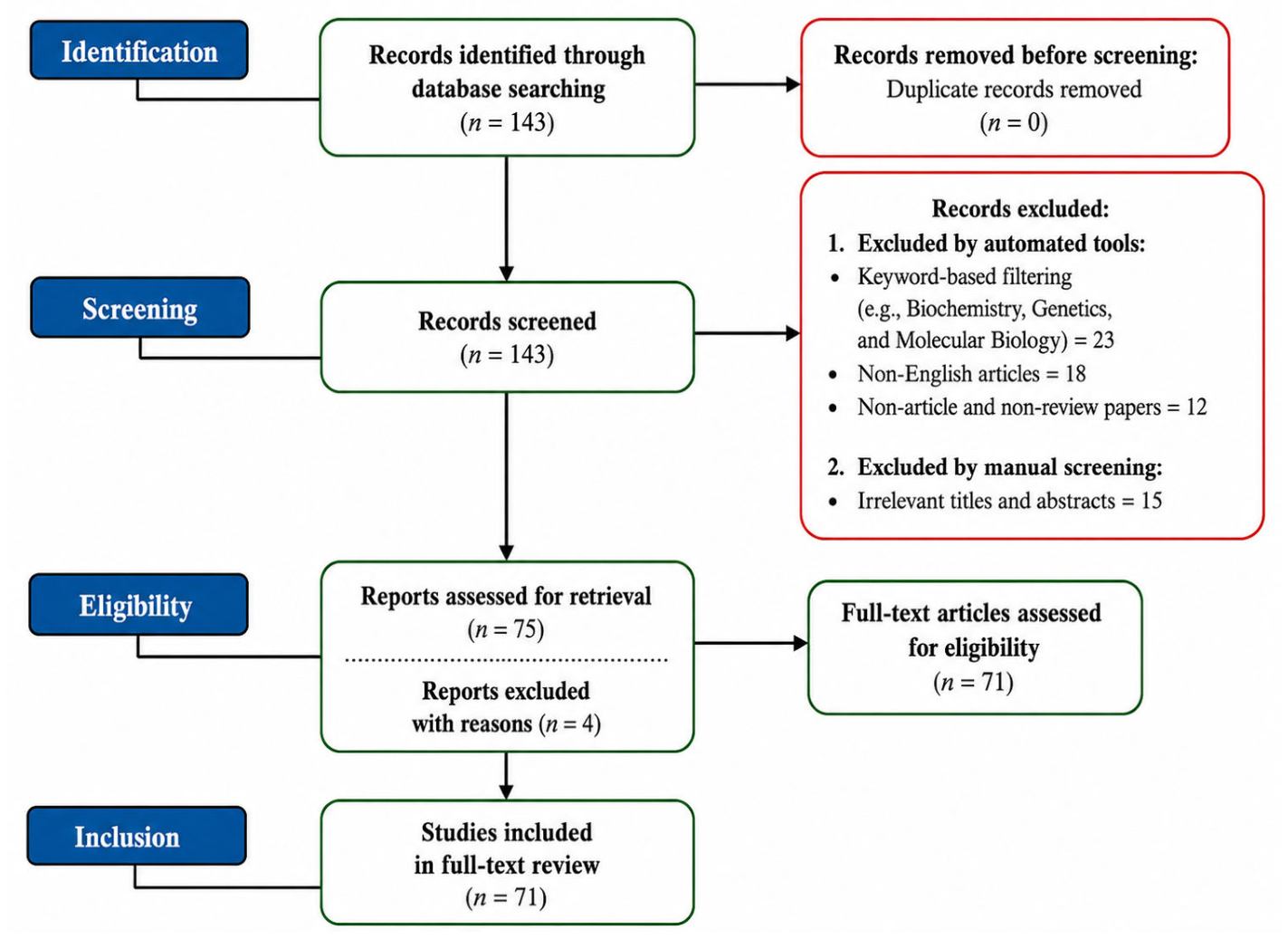
3.2. Search Strategy and Selection Criteria
3.3. Data Extraction
3.4. Contextual Adaptation: From Factory Floor to Construction Site
4. Results
4.1. Primary Research Themes in Learning Factory Literature
4.2. Personnel Competence Development Through Learning Factories 5.0
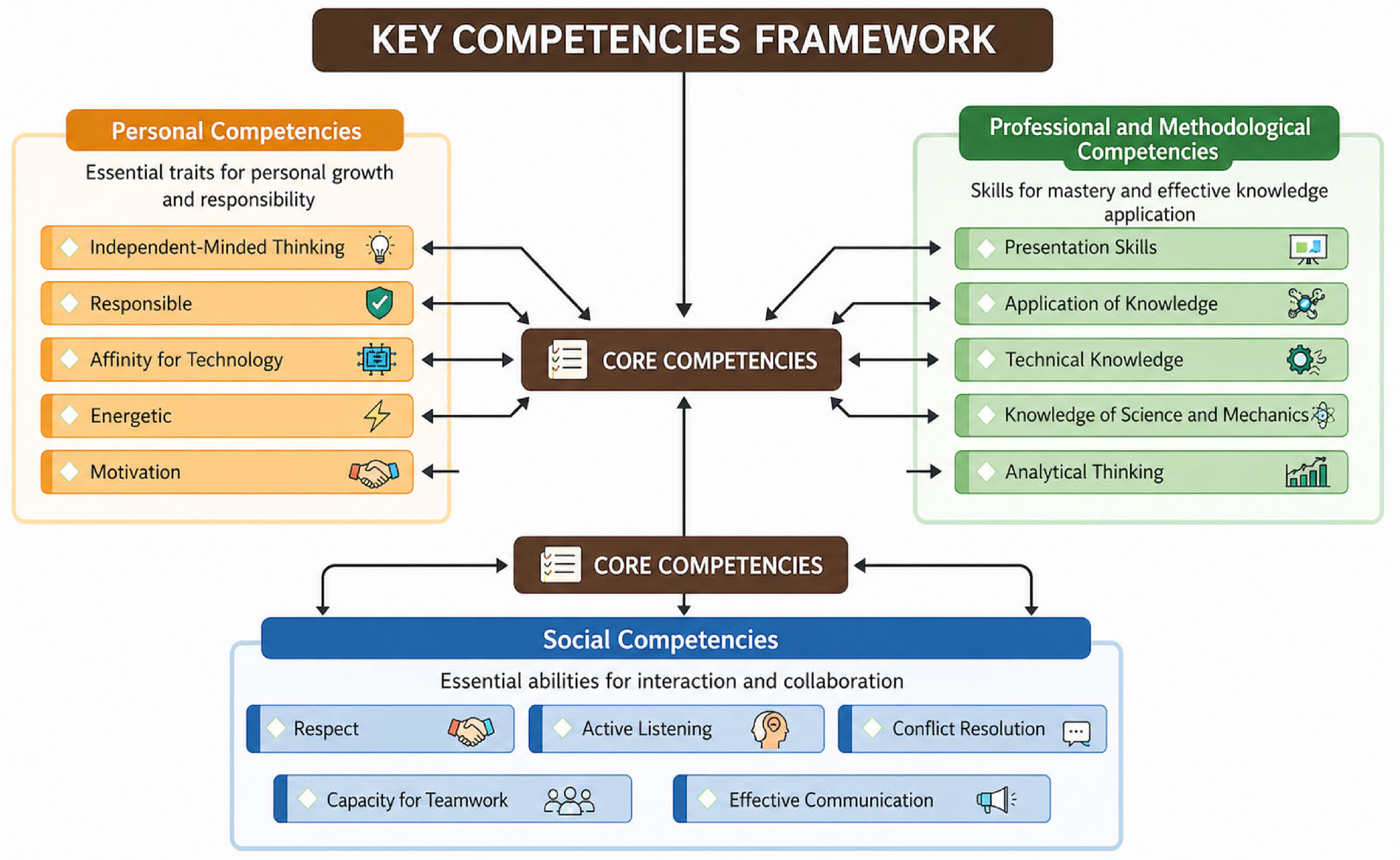
4.3. Core Competencies for Industry 5.0 Readiness in Sustainable Construction

| Competency Cluster | Code | Core Dimensions | Key Sources |
|---|---|---|---|
| Attitude toward Digitalisation | AD | Openness to digital tools; technological confidence; critical digital awareness | [49] |
| Technical–Green Proficiency | TGP | Green building knowledge; low-carbon materials; circular economy; BIM; green certification | [5] |
| Information & Data Literacy | IDL | Data collection and analysis; lifecycle assessment; AI-generated insight interpretation | [28,46] |
| Digital Security & Ethical Governance | DSEG | Cybersecurity; data privacy; AI ethics; responsible information management | [37,47] |
| Collaborative Systems Thinking | CST | Multi-stakeholder collaboration; systems interdependencies; human–machine partnership | [24,48] |
| Adaptive Problem-Solving | APS | Design thinking; regulatory navigation; risk management; innovation under ambiguity | [21,30] |
| Reflective Sustainability Practice | RSP | Metacognition; impact evaluation; continuous learning; sustainability orientation | [49,50] |
4.4. Learning Factories 5.0 in Sustainable Construction Education
4.4.1. Learning Methodologies for Construction Contexts
4.4.2. Technological Infrastructure for Construction Learning Factories 5.0
4.4.3. Industry–Academia Partnerships
4.5. Implementation Factors and Barriers
| Implementation Factor | Sub-Dimensions | Key Challenge for Construction Context | Cited Sources |
|---|---|---|---|
| Technological Infrastructure | BIM/digital twin platforms; smart sensors; VR/AR; carbon tools | High capital cost; rapid technology obsolescence | [57,66,67] |
| Pedagogical Approach | Project-based learning facilitation; competency-based design; reflective practice | Faculty development; shift from lecture-based norms | [32,67] |
| Industry–Academia Partnership | Co-curriculum design; authentic challenges; joint IP governance | Site confidentiality; commercial sensitivity in construction | [47,58] |
| Institutional Factors | Scheduling flexibility; accreditation; assessment reform | Rigid programme structures in professional construction degrees | [39,66] |
| Personnel Development | Faculty capability; student digital readiness; technical upskilling | Variable digital literacy among construction students and staff | [28,68] |
| Economic Considerations | Capital investment; operational costs; ROI demonstration | Budget constraints in resource-limited institutions | [61,63] |
5. The Construction Learning Factory 5.0 (CLF5.0) Framework
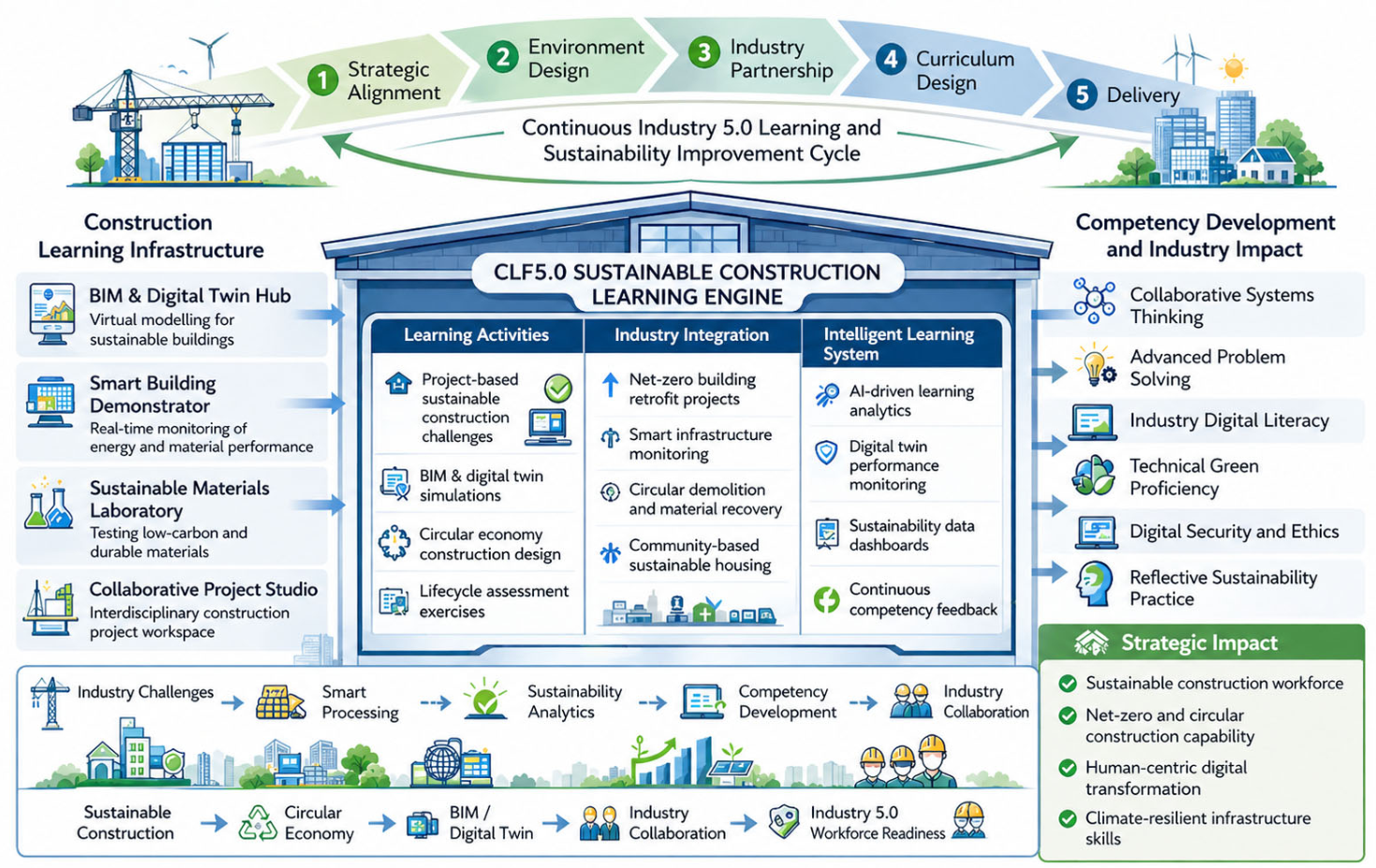
5.1. Framework Overview
5.2. The Eight Phases of the CLF5.0 Framework
- ❖
- Phase 1: Strategic Alignment and Competency Mapping
- ❖
- Phase 2: Environment Design and Technological Integration
- ❖
- Phase 3: Industry Partnership Activation
- ❖
- Phase 4: Curriculum Design and Pedagogical Scaffolding
- ❖
- Phase 5: Delivery and Facilitation
- ❖
- Phase 6: Assessment and Competency Validation
- ❖
- Phase 7: Evaluation and Evidence Generation
- ❖
- Phase 8: Iteration and Systemic Improvement
6. Discussion
6.1. Practical Implications
6.1.1. For Educational Institutions
6.1.2. For Industry Partners
6.1.3. For Policymakers
6.2. Limitations
6.3. Future Research Directions
7. Conclusions
Supplementary Materials
Author Contributions
Funding
Data Availability Statement
Conflicts of Interest
References
- Mostafaei, H.; Rostampour, M.A.; Chamasemani, N.F.; Wu, C. An In-depth exploration of carbon footprint analysis in the construction sector with emphasis on the dam industry. In Carbon Footprint Assessments: Case Studies & Best Practices; Springer: Berlin/Heidelberg, Germany, 2024; pp. 45–80. [Google Scholar] [CrossRef]
- Thanissery, V.V. A Sustainable Approach for the Reduction of Carbon Dioxide Emissions in the Latvian Construction Industry. Master’s Thesis, Riga Technical University, Riga, Latvia, 2023. [Google Scholar]
- Yadav, D.; Yadav, S. Industry 5.0 and Digital Transformation: The Convergence of Humanity and Technology. In Metaverse Dynamics: Exploring the Intersection of Technology, Business Transformation, and User Experience; Emerald Publishing Limited: Leeds, UK, 2026. [Google Scholar]
- Bongomin, O.; Nzila, C.; Mwasiagi, J.I.; Maube, O. Machine Learning for Predictive Modeling of Co-gasification: A Step Toward Industry 4.0 in Biomass Waste Valorization. In Measurement, Automation, and Control in Artificial Intelligence and Machine Learning; Springer: Berlin/Heidelberg, Germany, 2025; pp. 113–141. [Google Scholar]
- Kipper, L.M.; Iepsen, S.; Forno, A.J.D.; Frozza, R.; Furstenau, L.; Agnes, J.; Cossul, D. Scientific mapping to identify competencies required by industry 4.0. Technol. Soc. 2021, 64, 101454. [Google Scholar] [CrossRef]
- Ahmad, M.H.; Moshood, T.D.; Nawanir, G. The influence of Industrial Revolution 4.0 in the implementation of the learning factory at the University of Malaysia Pahang. J. Appl. Res. High. Educ. 2024, 16, 89–103. [Google Scholar] [CrossRef]
- Yang, J. Beyond experience: Reshaping the academic essence of teaching reform in engineering education. Eng. Educ. Rev. 2026, 4, 1–3. [Google Scholar] [CrossRef]
- Carreiro, E.; Maccari, E.A.; Scafuto, I.C.; Serra, F. Bridging theory and practice: An experiential learning framework for project management education and professional development. Educ. Train. 2026, 68, 501–524. [Google Scholar] [CrossRef]
- Wong, K.K.-K. Future Proof Leadership: Human Centered Strategy for the Industry 5.0 Era; ESA Pub: Washington, DC, USA, 2026. [Google Scholar]
- Aida, V.-B.; Antón, V.-P.; Vilar-Martínez, J.; Fernández-Caramés, T.M.; Fraga-Lamas, P. A Mixed Reality Tool with Automatic Speech Recognition for 3D CAD Based Visualization and Automatic Dimension Generation in the Industry 5.0 Shipyard. Multimodal Technol. Interact. 2026, 10, 13. [Google Scholar] [CrossRef]
- Quinn, W.; Ahearn, A.; Buckley, K.; Casotti, A.; Ozturk, C. A Learning Factory Implementation with Industry, Teaching and Research Perspectives. Procedia Comput. Sci. 2025, 253, 1093–1102. [Google Scholar] [CrossRef]
- Breque, M.; De Nul, L.; Petridis, A. Industry 5.0: Towards a Sustainable, Human-Centric and Resilient European Industry; Directorate General for Research and Innovation (DG RTD) of the European Commission: Brussels, Belgium, 2021. [Google Scholar]
- Schröder, A.J.; Cuypers, M.; Götting, A. From Industry 4.0 to Industry 5.0: The triple transition digital, green and social. In Industry 4.0 and the Road to Sustainable Steelmaking in Europe: Recasting the Future; Springer International Publishing: Cham, Switzerland, 2024; pp. 35–51. [Google Scholar]
- Bongomin, O. Positioning Industrial Engineering in the Era of Industry 4.0, 5.0, and Beyond: Pathways to Innovation and Sustainability. 2025. Available online: https://ssrn.com/abstract=5096401 (accessed on 12 November 2025).
- Nguyen, L.H.; Tran, K.D.; Zeng, X.; Tran, K.P. Human-Centered Edge Artificial Intelligence for Smart Factory Applications in Industry 5.0: A Review and Perspective. In Artificial Intelligence for Safety and Reliability Engineering: Methods, Applications, and Challenges; Springer: Cham, Switzerland, 2024; pp. 79–100. [Google Scholar]
- Akhavan, M.; Alivirdi, M.; Jamalpour, A.; Kheradranjbar, M.; Mafi, A.; Jamalpour, R.; Ravanshadnia, M. Impact of industry 5.0 on the construction industry (Construction 5.0): Systematic literature review and bibliometric analysis. Buildings 2025, 15, 1491. [Google Scholar] [CrossRef]
- Nanduri, S.K.; Delhi, V.S.K. Foundations for Construction 5.0: A Review-based Taxonomy for Construction Worker Action Understanding. J. Inf. Technol. Constr. 2025, 30, 924–962. [Google Scholar] [CrossRef]
- Fraga-Lamas, P.; Fernández-Caramés, T.M.; da Cruz, A.M.R.; Lopes, S.I. An overview of blockchain for Industry 5.0: Towards human-centric, sustainable and resilient applications. IEEE Access 2024, 12, 116162–116201. [Google Scholar] [CrossRef]
- Pinto, R.; Žilka, M.; Zanoli, T.; Kolesnikov, M.V.; Gonçalves, G. Enabling professionals for industry 5.0: The self-made programme. Procedia Comput. Sci. 2024, 232, 2911–2920. [Google Scholar] [CrossRef]
- Wahjusaputri, S.; Bunyamin, B. Development of Teaching Factory Competency-Based for Vocational Secondary Education in Central Java, Indonesia. Int. J. Eval. Res. Educ. 2022, 11, 353–360. [Google Scholar] [CrossRef]
- Bauernhansl, T.; Tzempetonidou, M.; Rossmeissl, T.; Groß, E.; Siegert, J. Requirements for designing a cyber-physical system for competence development. Procedia Manuf. 2018, 23, 201–206. [Google Scholar] [CrossRef]
- Oyewo, F.O.; Oyewo, J.F. Enhancing Student-Centred Learning Approaches in the Built Environment: Bridging Theory and Practice. In Proceedings of the Global Forum for Sustainable Built Environment Conference, Johannesburg, South Africa, 4–5 September 2025; pp. 1497–1506. [Google Scholar]
- Shaninah, F.S.E.; Noor, M.H.M. The impact of big five personality trait in predicting student academic performance. J. Appl. Res. High. Educ. 2024, 16, 523–539. [Google Scholar] [CrossRef]
- Mohammed, N.; Kamalanabhan, T. Tacit knowledge sharing and creative performance: A transformative learning perspective. Dev. Learn. Organ. Int. J. 2022, 36, 5–8. [Google Scholar] [CrossRef]
- Yap, J.B.H.; Shavarebi, K. Enhancing project delivery performances in construction through experiential learning and personal constructs: Competency development. Int. J. Constr. Manag. 2022, 22, 436–452. [Google Scholar] [CrossRef]
- Abele, E.; Metternich, J.; Tisch, M.; Kreß, A. Overview on Learning Factory Topics. In Learning Factories: Featuring New Concepts, Guidelines, Worldwide Best-Practice Examples; Springer: Berlin/Heidelberg, Germany, 2024; pp. 287–325. [Google Scholar]
- Abele, E.; Chryssolouris, G.; Sihn, W.; Metternich, J.; ElMaraghy, H.; Seliger, G.; Sivard, G.; ElMaraghy, W.; Hummel, V.; Tisch, M.; et al. Learning factories for future oriented research and education in manufacturing. CIRP Ann. 2017, 66, 803–826. [Google Scholar] [CrossRef]
- Roll, M.; Ifenthaler, D. Learning Factories 4.0 in technical vocational schools: Can they foster competence development? Empir. Res. Vocat. Educ. Train. 2021, 13, 20. [Google Scholar] [CrossRef]
- Cimini, C.; Lagorio, A.; Romero, D.; Gaiardelli, P.; Tortorella, G. On job profiles enlargement and enrichment when lean and industry 4.0 paradigms meet. Int. J. Ind. Eng. Manag. 2024, 15, 338–347. [Google Scholar] [CrossRef]
- Papacharalampopoulos, A.; Stavropoulos, P.; Ziarsolo, U.; Karagianni, O.M. Teaching Learning Factories 5.0: Shaping Training, Skilling and Reskilling for the Future. In Proceedings of the International Association for the Management of Technology Conference, Porto, Portugal, 8–11 July 2024; pp. 159–167. [Google Scholar]
- Taha, M.F.; Mao, H.; Zhang, Z.; Elmasry, G.; Awad, M.A.; Abdalla, A.; Mousa, S.; Elwakeel, A.E.; Elsherbiny, O. Emerging technologies for precision crop management towards agriculture 5.0: A comprehensive overview. Agriculture 2025, 15, 582. [Google Scholar] [CrossRef]
- Pittich, D.; Tenberg, R.; Lensing, K. Learning factories for complex competence acquisition. Eur. J. Eng. Educ. 2020, 45, 196–213. [Google Scholar] [CrossRef]
- Dungus, M.I.A. Industry 5.0: Exploring the Role of Human-Centric Design in Transformative Learning Factories. Master’s Thesis, Politecnico di Milano, Milan, Italy, 2022. [Google Scholar]
- Zarte, M.; Pechmann, A. Implementing an energy management system in a learning factory—A project-based learning approach. Procedia Manuf. 2020, 45, 72–77. [Google Scholar] [CrossRef]
- Belinski, R.; Peixe, A.M.; Frederico, G.F.; Garza-Reyes, J.A. Organizational learning and Industry 4.0: Findings from a systematic literature review and research agenda. Benchmarking Int. J. 2020, 27, 2435–2457. [Google Scholar] [CrossRef]
- Posselt, G.; Böhme, S.; Aymans, S.; Herrmann, C.; Kauffeld, S. Intelligent learning management by means of multi-sensory feedback. Procedia CIRP 2016, 54, 77–82. [Google Scholar] [CrossRef]
- Liboni, L.B.; Cezarino, L.O.; Jabbour, C.J.C.; Oliveira, B.; Stefanelli, N.O. Smart industry and the pathways to HRM 4.0: Implications for SCM. Supply Chain Manag. Int. J. 2019, 24, 124–146. [Google Scholar] [CrossRef]
- Scheid, R. Learning factories in vocational schools: Challenges for designing and implementing learning factories at vocational schools. In Digital Workplace Learning: Bridging Formal and Informal Learning with Digital Technologies; Springer: Berlin/Heidelberg, Germany, 2018; pp. 271–289. [Google Scholar]
- Francalanza, E.; Vella, P.; Rauch, E.; Amza, C.; Lundgren, M.; Putnik, G. An Innovative higher education institution training toolbox to effectively address industry 4.0 skills gap and mismatches. In Proceedings of the International Symposium on Industrial Engineering and Automation, Bozen-Bolzano, Italy, 21–22 June 2022; pp. 298–305. [Google Scholar]
- Cieslak, V.; Valor, C. Moving beyond conventional resistance and resistors: An integrative review of employee resistance to digital transformation. Cogent Bus. Manag. 2025, 12, 2442550. [Google Scholar] [CrossRef]
- Enke, J.; Oberc, H.; Riemann, T.; Schuhmacher, J.; Hummel, V.; Kuhlenkötter, B.; Metternich, J.; Prinz, C. Cooperation between learning factories: Approach and example. Procedia Manuf. 2020, 45, 222–227. [Google Scholar] [CrossRef]
- Löhr-Zeidler, B.; Hörner, R.; Heer, J. Handlungsempfehlungen Industrie 4.0–Umsetzungshilfen für Lehrerinnen und Lehrer der beruflichen Schulen. berufsbildung. Z. Theor. Praxisverknüpfung 2016, 159, 11–14. [Google Scholar]
- Roll, M.J.J.; Ifenthaler, D. The Impact of Learning Factories on Multi-disciplinary Digital Competencies. In Vocational Education and Training in the Age of Digitization: Challenges and Opportunities; Wuttke, E., Seifried, J., Niegemann, H.M., Eds.; Verlag Barbara Budrich: Leverkusen, Germany, 2020; Volume 4, p. 23. [Google Scholar]
- González-Pérez, L.I.; Ramírez-Montoya, M.S. Components of Education 4.0 in 21st century skills frameworks: Systematic review. Sustainability 2022, 14, 1493. [Google Scholar] [CrossRef]
- Fernández-Caramés, T.M.; Fraga-Lamas, P. Forging the industrial metaverse for industry 5.0: Where extended reality, iiot, opportunistic edge computing, and digital twins meet. IEEE Access 2024, 12, 95778–95819. [Google Scholar] [CrossRef]
- Hlihel, F.B.; Chater, Y.; Boumane, A. Developing a competency model for maintenance 4.0 stakeholders. Int. J. Qual. Reliab. Manag. 2024, 41, 1519–1549. [Google Scholar] [CrossRef]
- Enke, J.; Glass, R.; Kreß, A.; Hambach, J.; Tisch, M.; Metternich, J. Industrie 4.0–Competencies for a modern production system: A curriculum for Learning Factories. Procedia Manuf. 2018, 23, 267–272. [Google Scholar] [CrossRef]
- Toncian, V.; Florea, A.; David, A.; Morariu, D.; Cretulescu, R. Leveraging collaboration for industry 5.0: Needs, strategies and future directions. In Proceedings of the Working Conference on Virtual Enterprises, Albi, France, 28–30 October 2024; pp. 319–335. [Google Scholar]
- Stepanenko, V.; Kashevnik, A. Competence management systems in organisations: A literature review. In Proceedings of the 2017 20th Conference of Open Innovations Association (FRUCT), Saint-Petersburg, Russia, 3–7 April 2017; pp. 427–433. [Google Scholar]
- Pittich, D.; Tenberg, R. Development of competences as an integration process that is alternating in the learning venue-current considerations. J. Tech. Educ. 2013, 1, 1–14. [Google Scholar] [CrossRef]
- Narkhede, G.B.; Pasi, B.N.; Rajhans, N.; Kulkarni, A. Industry 5.0 and sustainable manufacturing: A systematic literature review. Benchmarking Int. J. 2025, 32, 608–635. [Google Scholar] [CrossRef]
- Quinn, W.; Cionca, V.; Witheephanich, K.; Ozturk, C. A learning factory framework: Challenges and solutions for an Irish University. IFAC-PapersOnLine 2022, 55, 631–636. [Google Scholar] [CrossRef]
- Lagorio, A.; Cimini, C. Towards 5.0 skills acquisition for students in industrial engineering: The role of learning factories. Procedia Comput. Sci. 2024, 232, 317–326. [Google Scholar] [CrossRef]
- Rosenberg, N.; Stern, S. Why Was Rate and Direction So Important? In The Rate and Direction of Inventive Activity Revisited; University of Chicago Press: Chicago, IL, USA, 2012; pp. 27–34. [Google Scholar]
- Szántó, N.; Monek, G.D.; Fischer, S. Development of an immersive, digital twin-supported smart reconfigurable educational platform for manufacturing training: A proof of concept. J. Eng. Manag. Syst. Eng. 2024, 3, 199–209. [Google Scholar] [CrossRef]
- Gyulai, T.; Viharos, Z.J.; Kása, F.; Wolf, P. Upskilling SME Workforce by Learning Factories. 2023. Available online: https://ssrn.com/abstract=4469802 (accessed on 22 December 2025).
- Siatras, V.; Athanasopoulou, L.; Alexopoulos, K.; Stavropoulos, P.; Mourtzis, D. Applying the Teaching Factory Paradigm and Augmented Reality Technology for Operator Training in Assembly Operations. 2021. Available online: https://ssrn.com/abstract=3859475 (accessed on 12 October 2025).
- Bondinuba, F.K.; Bondinuba, C.K.; Opoku, A.; Owusu-Manu, D.; Mittal, M. Determinants of small and medium construction firms’ financial performance. In Proceedings of the Second International Conference in Mechanical and Energy Technology: ICMET 2021, Greater Noida, India, 28–29 October 2021; pp. 485–502. [Google Scholar]
- Vojtko, T.; Vargová, A.; Gulan, M.; Juhás, M. An IoT Learning Factory Demonstrator of Remote Diagnostics Using Low-Cost Didactic Devices. In Proceedings of the Conference on Learning Factories, Enschede, The Netherlands, 17–19 April 2024; pp. 28–36. [Google Scholar]
- Kumar, R.; Patil, O.; Nath, K.; Sangwan, K.S.; Kumar, R. A machine vision-based cyber-physical production system for energy efficiency and enhanced teaching-learning using a learning factory. Procedia CIRP 2021, 98, 424–429. [Google Scholar] [CrossRef]
- Hentsch, M.; Kuhn, C.; Künster, N.; Dorka, F.; Palm, D. Concept for a low-cost implementation of automatic cycle time measurements in learning factories. In Proceedings of the Conference on Learning Factories, Enschede, The Netherlands, 17–19 April 2024; pp. 329–336. [Google Scholar]
- Wawak, S.; Domingues, J.P.T.; Sampaio, P. Quality 4.0 in higher education: Reinventing academic-industry-government collaboration during disruptive times. TQM J. 2024, 36, 1569–1590. [Google Scholar] [CrossRef]
- Louw, L.; Walker, M. Design and implementation of a low cost RFID track and trace system in a learning factory. Procedia Manuf. 2018, 23, 255–260. [Google Scholar] [CrossRef]
- Caves, K.M.; Baumann, S.; Renold, U. Getting there from here: A literature review on vocational education and training reform implementation. J. Vocat. Educ. Train. 2021, 73, 95–126. [Google Scholar] [CrossRef]
- Tvenge, N.; Ogorodnyk, O. Development of evaluation tools for learning factories in manufacturing education. Procedia Manuf. 2018, 23, 33–38. [Google Scholar] [CrossRef]
- Rosen, R.; von Wichert, G.; Lo, G.; Bettenhausen, K.D. About the importance of autonomy and digital twins for the future of manufacturing. IFAC-PapersOnLine 2015, 48, 567–572. [Google Scholar] [CrossRef]
- Dong, K.; Moshood, T.D. Digital Twins Across the Asset Lifecycle: Technical, Organisational, Economic, and Regulatory Challenges. Buildings 2026, 16, 1084. [Google Scholar] [CrossRef]
- Decius, J.; Schaper, N. The Competence Management Tool (CMT)—A new instrument to manage competences in small and medium-sized manufacturing enterprises. Procedia Manuf. 2017, 9, 376–383. [Google Scholar] [CrossRef]
- Vieira, E.L. Engineering education in industry 5.0: Competency development and learning environment strategies—A systematic review. Asean J. Eng. Educ. 2024, 8, 10–18. [Google Scholar] [CrossRef]
- Stidham, H.; Summers, J.; Shuffler, M. Using the five factor model to study personality convergence on student engineering design teams. In DS 92: Proceedings of the DESIGN 2018 15th International Design Conference; The Design Society: Glasgow, UK, 2018; pp. 2145–2154. [Google Scholar]
- Pinto, R.; Pinheiro, J.; Gonçalves, G.; Ribeiro, A. Towards industry 5.0: A capacitation approach for upskilling and technology transfer. In Proceedings of the International Symposium on Distributed Computing and Artificial Intelligence, Guimarães, Portugal, 12–14 July 2023; pp. 342–351. [Google Scholar]
- Page, M.J.; McKenzie, J.E.; Bossuyt, P.M.; Boutron, I.; Hoffmann, T.C.; Mulrow, C.D.; Tetzlaff, J.M.; Akl, E.A.; Brennan, S.E.; Chou, R.; et al. The PRISMA 2020 statement: An updated guideline for reporting systematic reviews. BMJ 2021, 372, n71. [Google Scholar] [CrossRef]


| Theme | Frequency | Key Focus Areas |
|---|---|---|
| Industry 5.0 Integration | 10 papers | Human-centricity, AI, resilience, sustainability |
| Skill Development | 10 papers | Competency building, workforce preparation, upskilling |
| Educational Methodology | 7 papers | Project-based learning, experiential approaches |
| Digital Technologies | 9 papers | Digital twins, VR, BIM, IoT, simulation platforms |
| Learning Factory Design | 11 papers | Infrastructure, modular systems, layout design |
| Collaboration & Partnership | 8 papers | Industry–academia cooperation, SME support |
| Sustainability | 9 papers | Green manufacturing, energy efficiency, circular economy |
| Assessment & Evaluation | 7 papers | Competency assessment, outcome measurement |
| Learning Methodology | Description | Primary Competencies Developed | Construction Application Example |
|---|---|---|---|
| Hands-on Experiential | Direct engagement with real equipment and materials | TGP, AD | Sustainable material testing; passive design prototyping |
| Project-Based Learning | Team-based authentic construction challenges | CST, APS, RSP | Net-zero building design; circular economy demolition plan |
| Competency-Based Learning | Industry-aligned outcome focus | All clusters | Green certification preparation; digital project delivery |
| Simulation-Based Learning | Digital twin and VR/AR construction environments | AD, IDL, DSEG | BIM-integrated site simulation; safety scenario training |
| Problem-Based Learning | Real industry challenges requiring structured responses | APS, IDL, CST | Green supply chain disruption; retrofit energy modelling |
| Reflective Learning | Journals, peer feedback, post-project debriefs | RSP, CST | Sustainability impact reflection; team performance review |
| Collaborative Learning | Industry–academia partnerships; multi-disciplinary teams | CST, APS | Construction firm partnerships; green building council projects |
| Blended Learning | Online-offline integration for flexible access | AD, IDL | Continuing professional development for practitioners |
| Week | Phase | Learning Activities | Competencies Developed | Assessment Methods |
|---|---|---|---|---|
| 1–2 | Orientation | Industry 5.0 and sustainable construction context; CLF5.0 induction; team formation; competency self-assessment | AD, RSP | Baseline competency survey; team contracts |
| 3–4 | Technical Foundations | BIM platform training; carbon calculation tools; sustainable materials overview; digital twin introduction | TGP, IDL, AD | Skills demonstrations; digital badges |
| 5–7 | Integrated Project Phase 1 | Industry challenge briefing; virtual prototyping in BIM/digital twin; sustainability analysis; stakeholder mapping | CST, APS, IDL | Project proposals, peer evaluations, and a sustainability report |
| 8–9 | Mid-Point Review | Cross-team presentations; industry partner feedback; iterative design refinement; reflective journals | RSP, CST | Formative presentations; industry evaluations |
| 10–12 | Integrated Project Phase 2 | Full-scale implementation; smart building monitoring; lifecycle assessment; circular economy costing | TGP, DSEG, APS | Performance metrics; LCA reports; data analysis |
| 13–14 | Culmination & Reflection | Final project presentations to industry panel; portfolio development; competency self-assessment; sustainability impact statement | RSP, AD, CST | Final presentations, competency portfolios, and impact statement |
Disclaimer/Publisher’s Note: The statements, opinions and data contained in all publications are solely those of the individual author(s) and contributor(s) and not of MDPI and/or the editor(s). MDPI and/or the editor(s) disclaim responsibility for any injury to people or property resulting from any ideas, methods, instructions or products referred to in the content. |
© 2026 by the authors. Licensee MDPI, Basel, Switzerland. This article is an open access article distributed under the terms and conditions of the Creative Commons Attribution (CC BY) license.
Share and Cite
Dong, K.; Moshood, T.D. Learning Factories 5.0 for Industry 5.0 Readiness in Sustainable Construction: A Competency-Driven Framework for Human-Centric and Sustainable Workforce Development. Buildings 2026, 16, 2024. https://doi.org/10.3390/buildings16102024
Dong K, Moshood TD. Learning Factories 5.0 for Industry 5.0 Readiness in Sustainable Construction: A Competency-Driven Framework for Human-Centric and Sustainable Workforce Development. Buildings. 2026; 16(10):2024. https://doi.org/10.3390/buildings16102024
Chicago/Turabian StyleDong, Kangxing, and Taofeeq Durojaye Moshood. 2026. "Learning Factories 5.0 for Industry 5.0 Readiness in Sustainable Construction: A Competency-Driven Framework for Human-Centric and Sustainable Workforce Development" Buildings 16, no. 10: 2024. https://doi.org/10.3390/buildings16102024
APA StyleDong, K., & Moshood, T. D. (2026). Learning Factories 5.0 for Industry 5.0 Readiness in Sustainable Construction: A Competency-Driven Framework for Human-Centric and Sustainable Workforce Development. Buildings, 16(10), 2024. https://doi.org/10.3390/buildings16102024