Article

Effect of a Bacterial Consortium on the Mechanical and Durability Properties of Self-Healing Concrete at Different Water–Cement Ratios


by
Sunantha Balachandran
1,*,
Praveen Nagarajan
1,
Martina Zelenakova
2,*,
Sudhakumar Janardhanan
1,
Blessen Skariah Thomas
1 and
Sudha Das
1
1
Department of Civil Engineering, National Institute of Technology, Calicut 673 601, India
2
Faculty of Civil Engineering, Department of Environmental Engineering, Technical University of Kosice, 042 00 Košice, Slovakia
*
Authors to whom correspondence should be addressed.
Buildings 2026, 16(10), 1997; https://doi.org/10.3390/buildings16101997
Submission received: 21 July 2025 / Revised: 5 May 2026 / Accepted: 15 May 2026 / Published: 19 May 2026
(This article belongs to the Special Issue Constructions in Europe: Current Issues and Future Challenges)

Abstract

Concrete, when used in construction, is prone to internal micro cracks that compromise its strength, flexibility, durability and lifespan. To address this, self-healing concrete technologies using microbial-induced calcium carbonate precipitation (MICP) have gained significant attention. The objective of this study was to focus on the preparation of a bacterial consortium (BV) composed of Bacillus cereus and Vibrio natriegens, selected for their specific characteristics to produce calcium carbonate under alkaline conditions. These bacterial strains with nutrients were added in optimised proportions to the concrete mixes and evaluated their healing potential. The effectiveness of the bacterial consortium on the self-healing potential of concrete was investigated. Similarly, the performance of this consortium was assessed across three different water–cement (w/c) ratios: 0.40, 0.45, and 0.50. These variations were selected to investigate the influence of moisture availability and mixed porosity on bacterial activation and crack healing efficiency. Mechanical tests like flexural strength, split tensile strength and compressive strength were performed to assess the structural recovery. Durability tests such as acid resistance, water absorption, and non-destructive tests like ultrasonic pulse velocity were also performed. Based on these investigations, a 0.40 w/c ratio of bacterial consortia (0.40 BV) showed the best performance. These results indicate that the bacterial consortium can significantly improve the self-healing properties of concrete, particularly at low w/c ratios.

1. Introduction

Concrete is a versatile material widely used in construction projects around the world. By altering its characteristics and components, concrete can be adapted for various applications [1,2,3]. While cement concrete exhibits high compressive strength, it has relatively low tensile strength. Loading conditions, chemical reactions, and environmental stresses can compromise its performance [4,5]. When the tensile stress exceeds the concrete’s tensile capacity, cracks form, leading to a decline in its structural integrity [6]. Cracks are failures that can occur in parts of a structure either before or after being subjected to service loads. In some cases, they lead to sudden structural collapse due to unforeseen circumstances. Certain cracks can be detected and managed in advance [7,8,9,10], while others remain unnoticed until a significant structural issue arises. Once cracking begins, the overall durability and reliability of the concrete structure deteriorate [11,12]. To address this issue, engineers have developed self-healing concrete. One innovative type is bio-concrete, which uses microorganisms to facilitate the self-healing process [13,14,15]. Bio-based concrete is manufactured in the same way as conventional concrete. The treatment involves introducing harmless bacteria that are activated upon contact with water [16,17]. Bacterial plaster is particularly effective for crack repair, as it promotes the microbial-induced precipitation of calcium carbonate (CaCO3), sealing the cracks. One major research challenge is identifying suitable bacterial strains that can survive and remain active in the harsh environment of concrete over long periods [18,19,20]. Concrete is a very dry and inhospitable material, making it difficult for some bacteria to survive in such an environment [21].
Bio mineralization—the process by which microorganisms synthesise minerals—has emerged as a promising approach for concrete repair. This method is known for its long-term, rapid, and active crack healing capabilities on concrete surfaces [22,23,24,25,26]. It offers strong adhesion and compatibility with aged concrete components, while also being environmentally friendly and non-polluting. The bio mineralization technique has shown significant potential due to its positive effects on compressive strength and other mechanical properties, such as tensile and flexural strength. These improvements result from the filling of pores in the concrete with calcium carbonate (CaCO3) deposits [27,28,29]. Self-healing concrete (SHC) is primarily used to mend cracks and enhance the durability of concrete structures. Various types of self-healing processes exist, including natural, chemical, and biological mechanisms. Among these, biological processes involving mineral precipitation have received considerable attention [30,31].
One particularly effective genus of bacteria used in this context is Bacillus, which can thrive in alkaline environments like concrete. These bacteria can survive for years without food or oxygen by remaining dormant until activated by moisture entering the cracks [32,33,34,35,36]. When calcium lactate is added as a nutrient during mixing, it provides a food source for the bacteria, enabling them to initiate healing when cracks occur. The bacteria and nutrients are incorporated into fresh concrete through various techniques [37,38,39,40,41]. Once moisture infiltrates the cracks, the bacteria become active, consume the lactate, and begin to multiply. This process results in the precipitation of limestone or calcite, effectively sealing the cracks [42,43]. This method is highly desirable, as mineral precipitation via microbial activity is natural, sustainable, and non-toxic. Damaged concrete specimens can be reinforced using this technique [44,45,46,47]. The bacterial activity alters the chemical composition of the surrounding solution, leading to super saturation and subsequent mineral precipitation [48,49]. When such biological concepts are applied to construction materials, a new class of material bacterial concrete is created. While cracking does not directly cause infrastructure failure, it allows aggressive environmental agents to penetrate and initiate deterioration [50]. The inability to block such external agents leads to structural damage and the weakening of load-bearing elements. Therefore, developing concrete with self-healing properties is crucial for extending the service life of infrastructure [51,52].
Self-healing concrete has the potential to autonomously cure cracks and reduce the need for costly repairs and inspections, without requiring external intervention. It minimises structural deterioration and reinforcement corrosion, thereby enhancing durability and reducing maintenance costs. Developing an effective method to combine two types of bacteria to address both minor and major concrete and mortar issues could significantly reduce repair expenses, while also being environmentally and economically beneficial [53,54]. In this study, bio mineralization was applied to concrete to enhance its performance. The investigation focused on assessing the impact of bacterial concrete on various mechanical, strength, and microstructural properties.

2. Materials and Methods

2.1. Cement

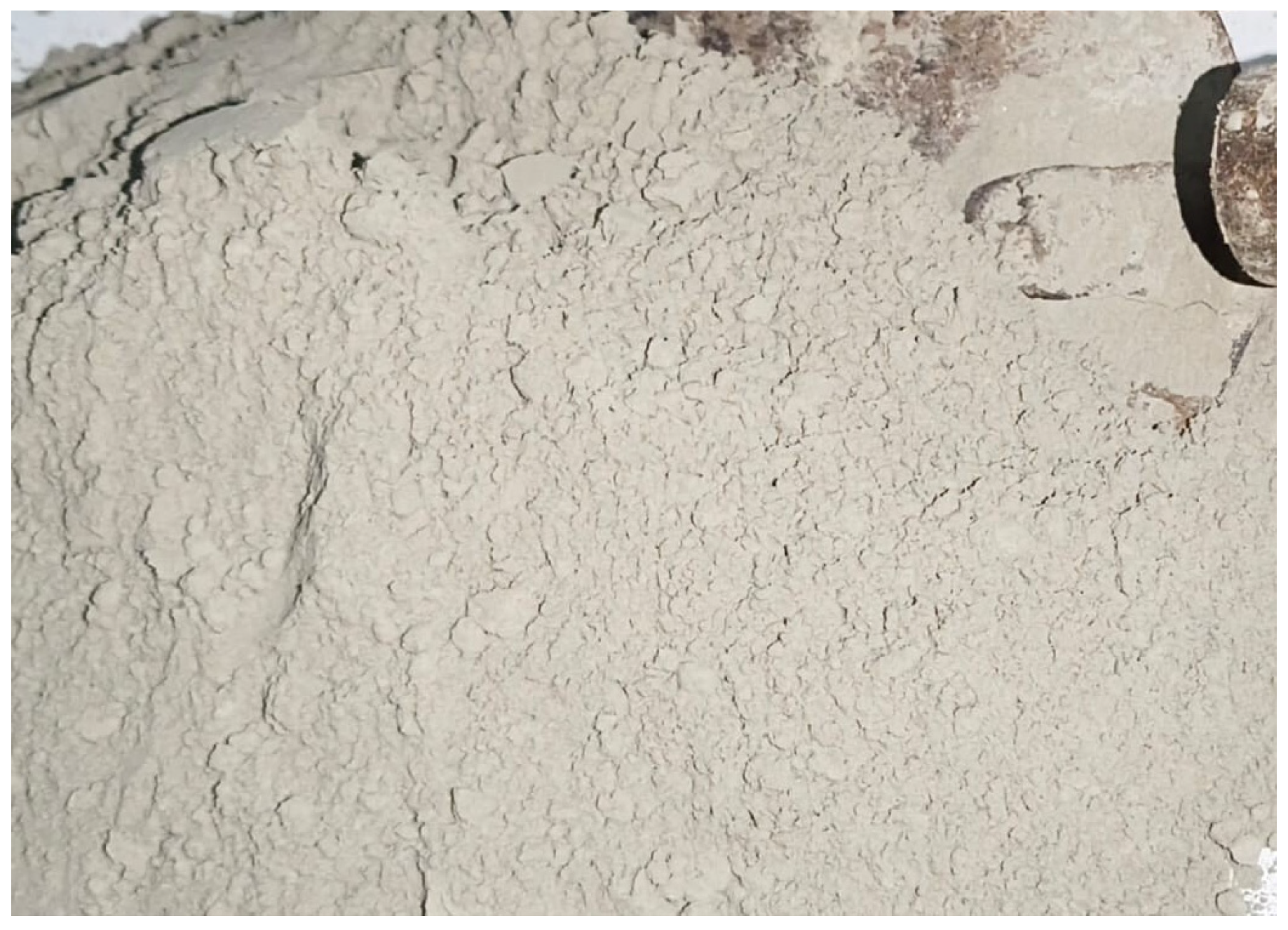
A binder is a construction material that adheres, hardens, and sets to other substances to tight them together. In this study, PPC was purchased from the sreekumar stores, a local merchant (chathamangalam, Kozhikode, India) and the chemical compositions of cement are shown in Table 1 and physical properties of cement in Table 2. Cement, a fine material obtained from lime and clay, is one such binder. It is typically not used on its own but rather to bind fine and coarse aggregates, and the cement is shown in Figure 1. Concrete, which incorporates with cement, is the most widely used construction material in the world, featuring in more than 25% of building projects.

2.2. Fine Aggregate

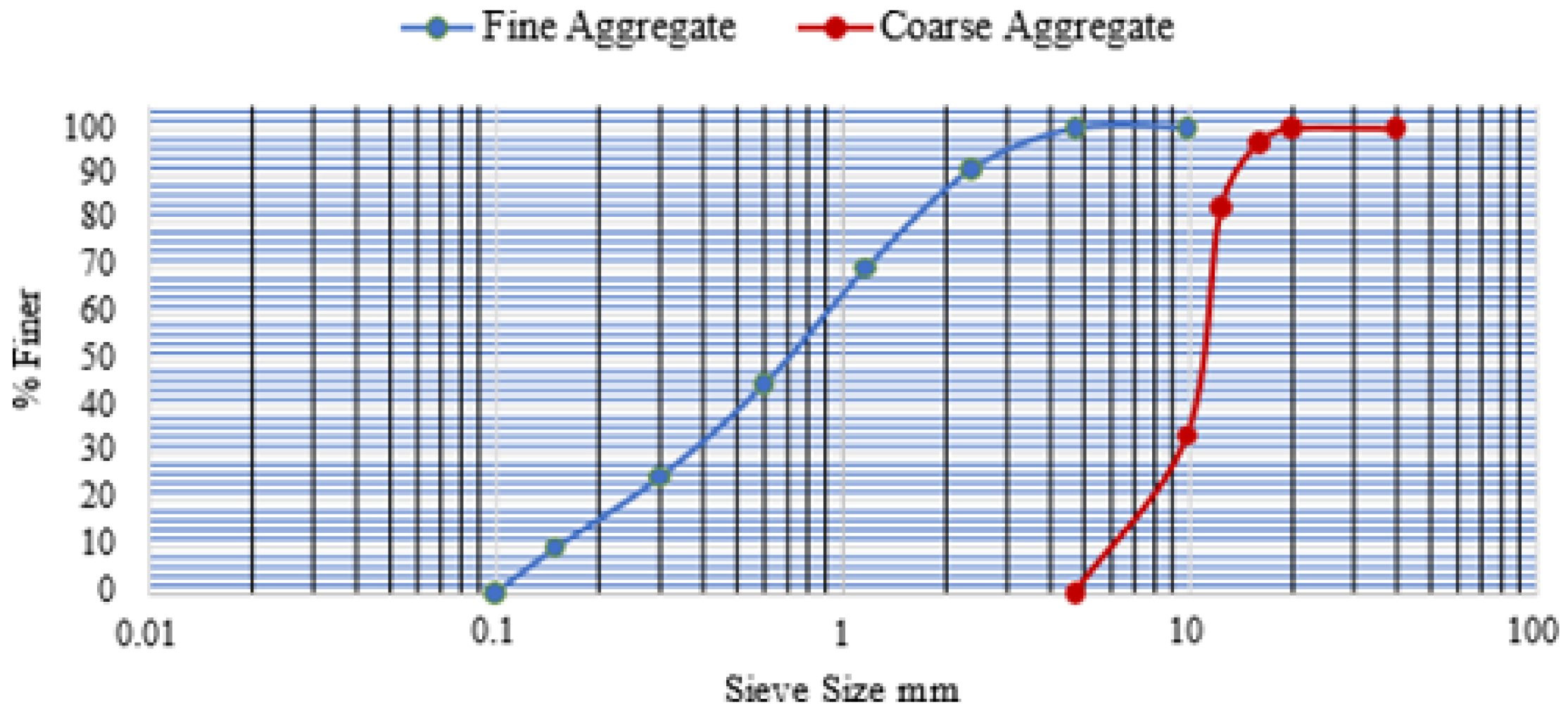
The fine aggregate used in this study composed natural sand, manufactured sand, or a combination of both. The physical property of fine aggregate (Table 3) selection was carried out in accordance with the criteria mentioned in IS 2386-2016 [55]. The fine aggregate should not have more than 45% retained between any two consecutive sieves. The particle size distribution curves were shown in Figure 2.

2.3. Coarse Aggregate

The qualities of coarse aggregate play a significant impact in determining the strength of concrete, with coarse aggregate regarded as a primary component of the mix. In accordance with IS 2386 guidelines and ASTM C33 [56] requirements, coarse aggregate may consist of air-cooled blast furnace slag, gravel, crushed hydraulic cement concrete, crushed stone, or a combination thereof. In this study, 12.5 mm aggregates were selected as the coarse aggregate material for concrete preparation. The physical properties of coarse aggregate are displayed in Table 4.

2.4. Admixture

In this study, Auramix 400 super plasticizer was used. It is a chloride-free super softening additive material based on synthetic polymers. It comes as a brown liquid that dissolves quickly in water, provide significant water reduction, and helps in cement dispersion. This leads to a substantial strength gain while preserving workability, making installation process easier.

2.5. Water

Water is the least expensive yet one of the most critical ingredients in concrete preparation. For this study, we used sterile water (free from harmful contaminants such as acids, alkalis, tar, and other deleterious substances). Potable water is typically used for various construction activities, including mixing and curing. According to IS 456:2000, the pH value of the water must be at least 6.

2.6. Bacterial Agent

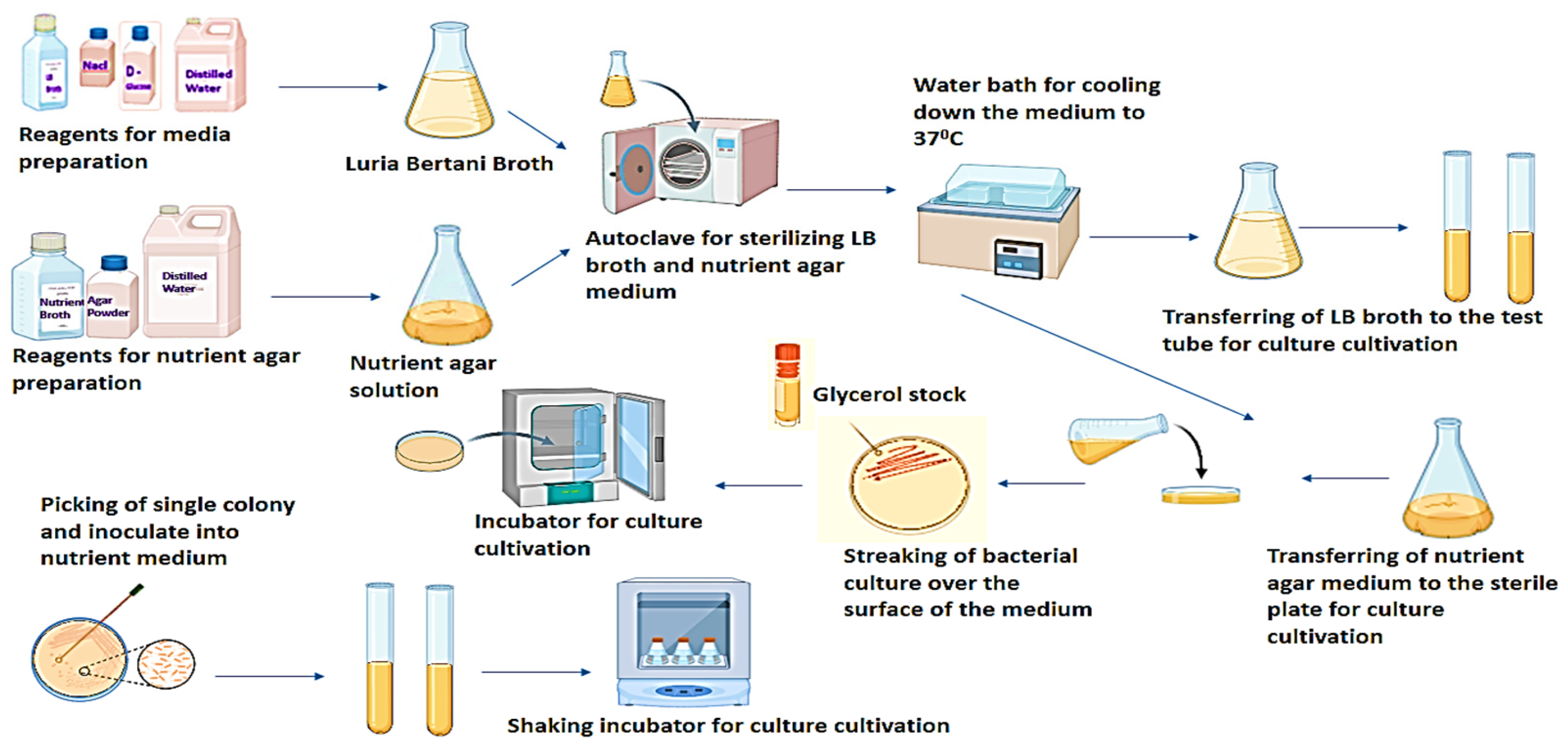
The bacterial strains Bacillus cereus (ATCC-14579) and Vibrio natriegens (ATCC-14048) were used in this study. The cultures were procured as a kind gift from Prof. H. Shakila, Department of Molecular Microbiology, School of Biotechnology, Madurai Kamaraj University, Madurai, Tamilnadu (India). Bacillus cereus, a non-pathogenic bacteria normally present in food, soil, and marine sponges [57], is rod-shaped, spore-producing, Gram-positive, and motile and can be confirmed by the predefined protocol. Vibrio natriegens is a non-toxigenic marine bacterium with a double growth rate within a short duration and can survive in hostile environment to enhance pH tolerance. The growth of V. natriegens requires additional amount of sodium chloride in LB medium. V. natriegens is rod-shaped, Gram-negative, has no spore formation activity and the novel host has no reports available for a self-healing mechanism with cement mortar. Figure 3 represents the cultivation of bacteria strains of Bacillus cereus and Vibrio natriegens.

2.6.1. Cultivation of B. cereus

Bacillus cereus was cultured using Luria-Bertani (LB) broth under aseptic conditions. A single colony of B. cereus was initially isolated from a nutrient agar plate and transferred into 5 mL of sterile LB broth in a 15 mL culture tube. The culture was incubated at 30 ± 2 °C under shaking conditions at 150 rpm for 16–18 h to obtain an actively growing overnight culture. For larger-scale cultivation, 1% (v/v) of the overnight culture was inoculated into fresh LB broth (e.g., 100 mL in a 250 mL Erlenmeyer flask) and incubated under the same conditions. The bacterial growth was monitored by measuring the optical density at 600 nm (OD600) using a spectrophotometer. The culture was harvested at the desired growth phase, typically mid-log phase (OD600 ~ 0.6–0.8), for further experimental use. All procedures were performed under sterile conditions to avoid contamination.

2.6.2. Cultivation of V. natriegens

The cultivation of V. natriegens procedure was done with slight modification [58]. The culture was recovered from the glycerol stock and the bacteria were initially cultivated in the preculture using LB medium. The LB medium consists of 5 g L−1 yeast extract, 20 g L−1 NaCl, and 10 g L−1 tryptone with pH 7.0 and sterilised using autoclave under standard procedures. For this culture preparation, 10 μL of bacterial suspension was collected from glycerol stock and inoculated into 10 mL of sterile LB medium and incubated at 27 °C in a shaking incubator with 160 rpm for 5–6 h. This preculture was used to prepare fresh culture for this study.

2.6.3. Preparation of B. cereus and V. natriegens Consortia Preparation

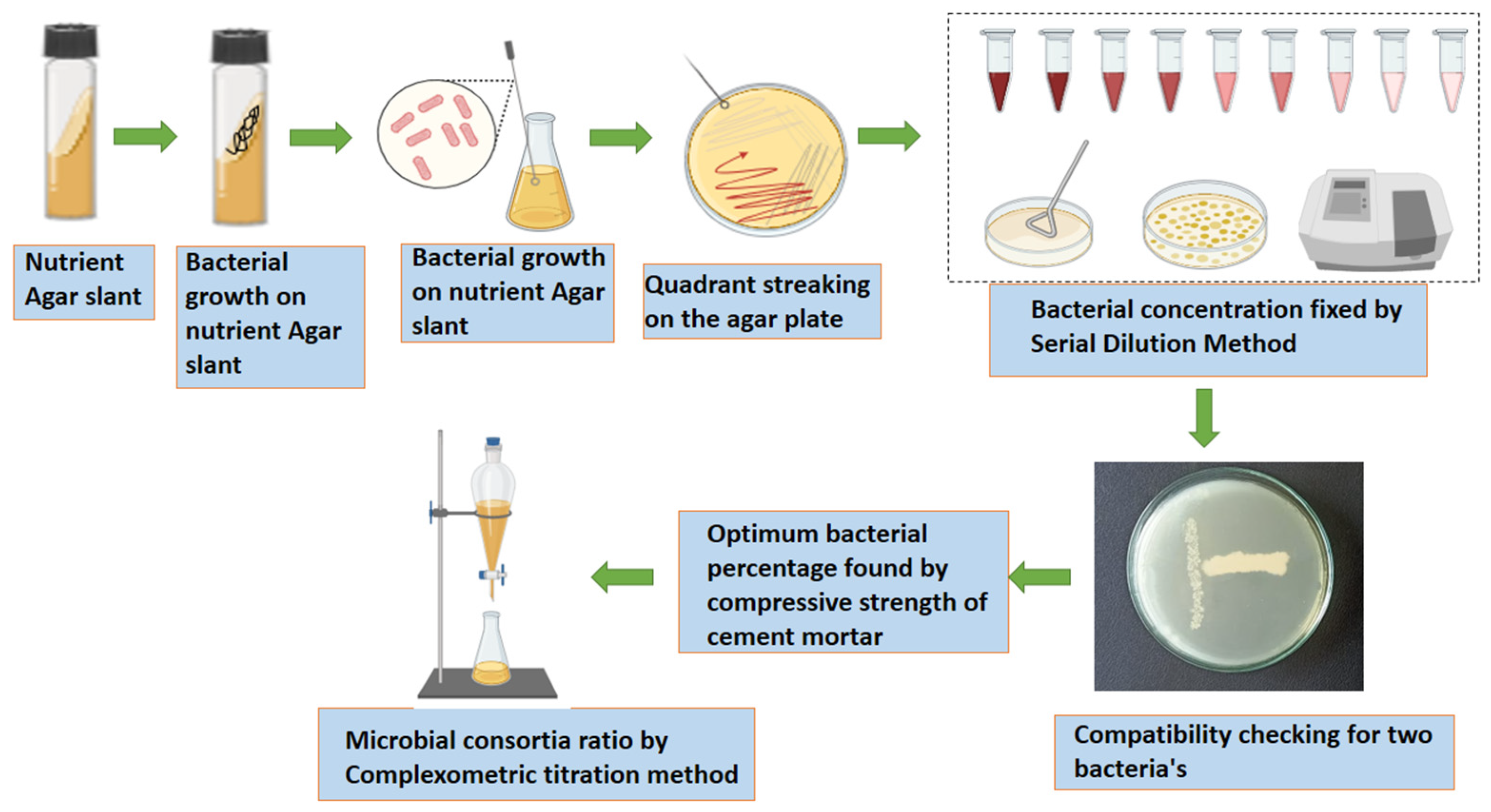
In this study, the bacterial consortia (Figure 4) were prepared using Bacillus cereus and Vibrio natriegens in LB medium for concrete applications. Bacterial cell densities were examined by measuring optical density (OD) and bacterial concentration was determined using the serial dilution method. The concentration of 104 was fixed for V. natriegens and 106 for Bacillus cereus. The compatibility between the two strains were examined by streaking the strains in the LB agar plate, incubated and kept at optimum temperature for 12 h. Based on the Complexometric titration method, the optimal mixing ratio was fixed at 1:1.25 [45]. The most effective bacterial consortia preparation was analysed to be 3% based on bacterial viability assessments and compressive strength.

3. Experimental Investigation

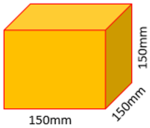
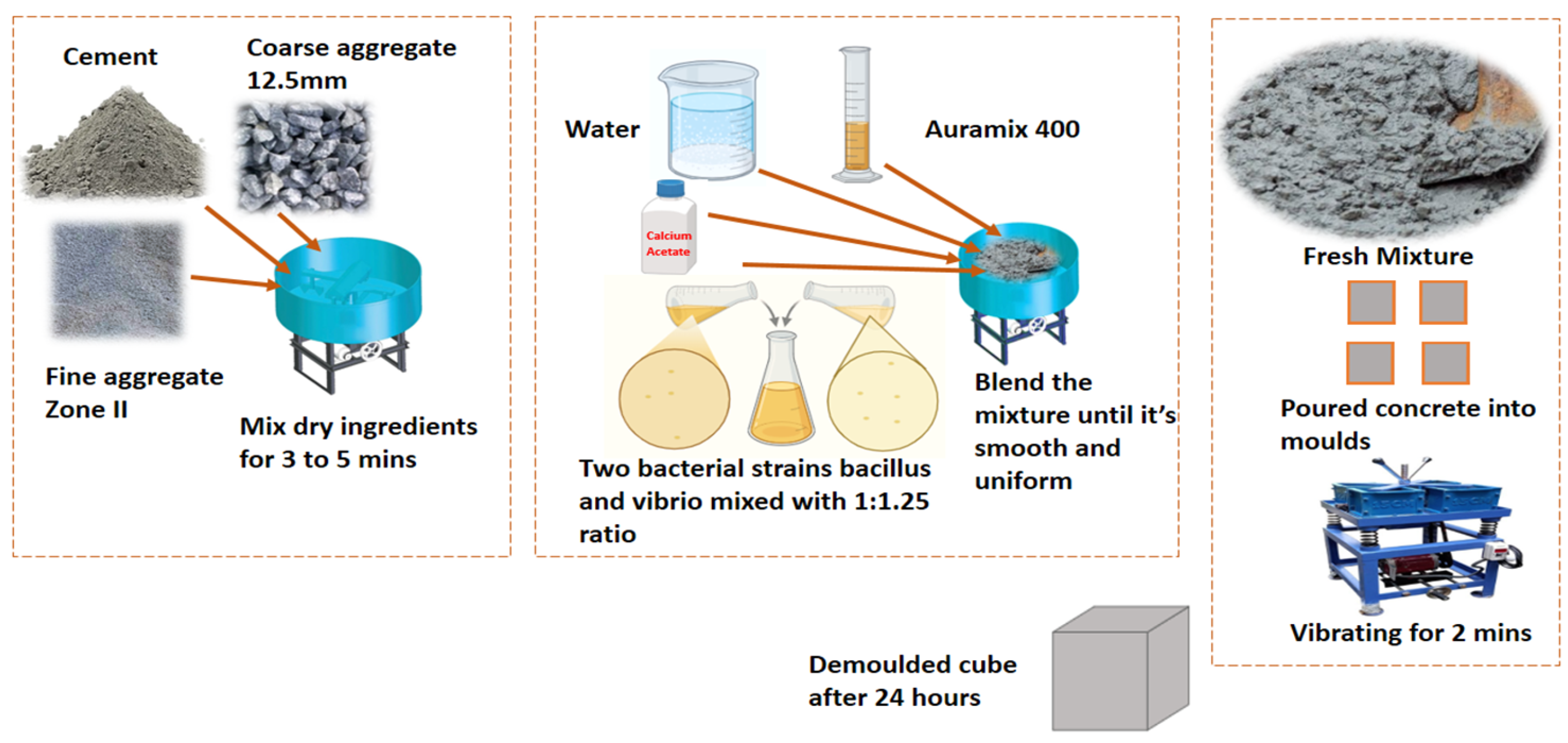
An experimental investigation (Figure 5) was performed to evaluate the effect of incorporating a bacterial consortium into concrete by replacing water content with a bacterial solution. Concrete cubes of M30 grade were prepared using a mix proportion of 1:1.9:3.58 and a water–cement (w/c) ratio of 0.45 as per the mix design. As per IS 10262:2019, the lower and upper limits were set to maintain the assessment of microbial activity and mechanical performance, without introducing excessive variation in hydration or harming bacteria. For this purpose, 150 × 150 × 150 mm concrete cubes were cast using both normal water and a bacterial solution composed of a combination of Bacillus cereus and Vibrio natriegens. The control specimens (denoted as C) were prepared without a bacterial consortium, while the test specimens containing the bacterial consortium were denoted as BV. In this study, the bacterial species were introduced into liquid form, replacing a 3% of bacterial solution with water and, to assess the influence of bacterial incorporation on concrete properties, the experiment maintained a constant bacterial percentage of 3% (BV) [59] and tested three different water–cement ratios (0.4 BV, 0.45 BV, and 0.5 BV) in comparison with corresponding control specimens (0.4 C, 0.45 C, and 0.5 C). The bacteria were mixed in a 1:1.25 ratio to form the consortia fixed by the Complexometric titration method. The specimens were cured using the ponding method for 28 days. The impact of bacterial addition on workability, durability, and microstructural characteristics was analysed as part of the evaluation. Sample details of the concrete mix are illustrated in Table 5.

3.1. Slump Cone

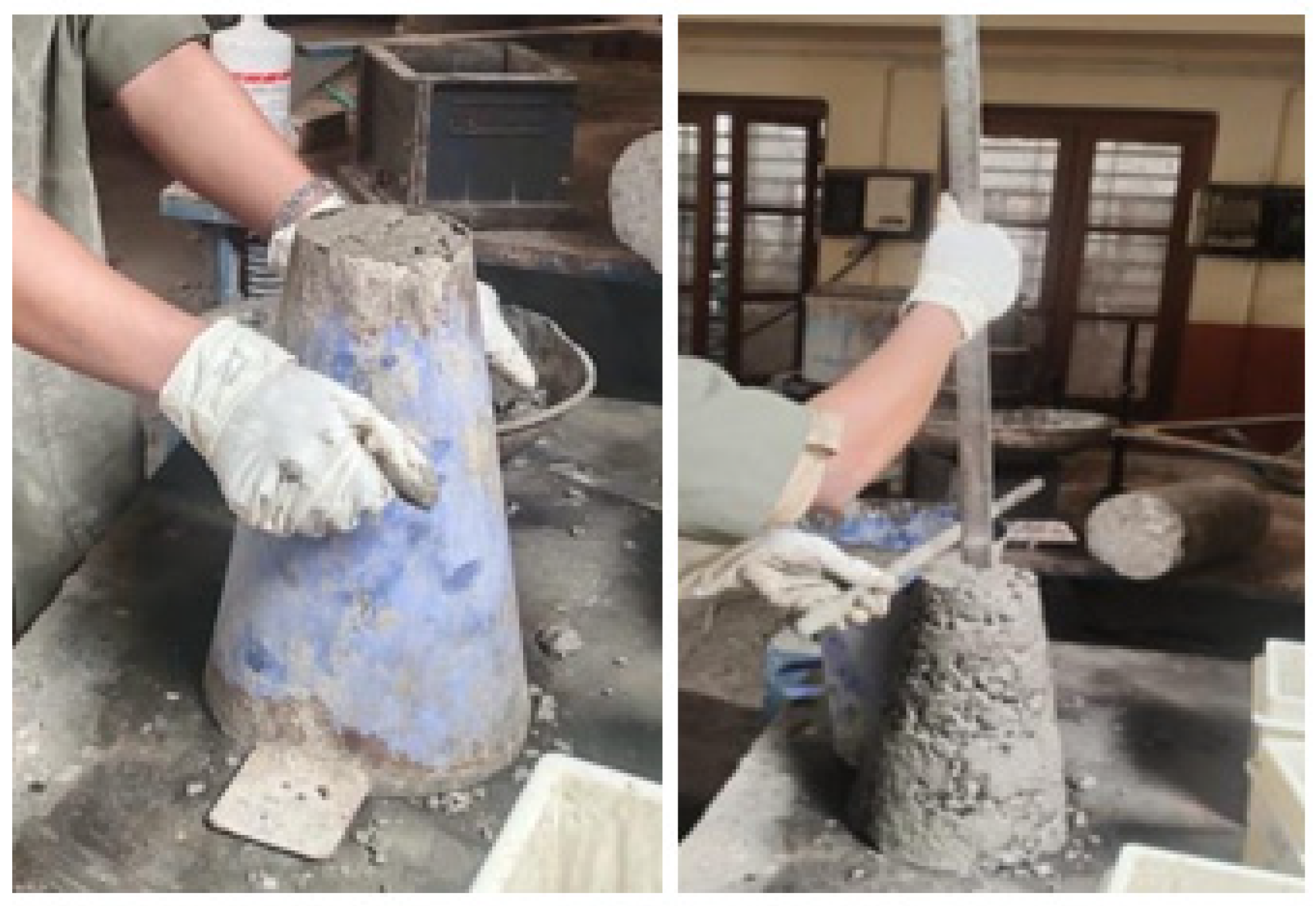
The concrete slump cone test is a widely used method to assess the workability and consistency of freshly mixed concrete. The test utilises a metallic conical mould, commonly known as the slump cone, which is 300 mm in height with a base diameter of 200 mm and a top diameter of 100 mm. For this experiment, three different w/c were performed on both control (0.4, 0.45 and 0.5) and bacterial consortia (0.4, 0.45 and 0.5) concrete. All the six concrete mixes were tested in accordance with ASTM C143 [60]. To perform the test, the slump cone is placed vertically on a rigid, non-absorbent base plate. Concrete was filled in three equal layers, each comprising roughly one-third of the mould’s volume. To prevent the concrete mixture from sticking to the mould, the inner surface of slump cone was uniformly oiled, and the mould was placed on a horizontal, flat surface. Each layer was tapped 25 times with a tamping rod, ensuring equal distribution of strokes across the cross-section. After successful tapping, the surface was levelled off using the tamping rod. Finally, the mould was carefully lifted in a vertical position without damage (Figure 6). Then the slump was measured by determining the vertical distance between the top of the mould and the highest point of the slumped concrete at its original centre.

3.2. Compressive Strength Test

The compressive test was performed as per IS 516-1959 [61]. As per code, 150 mm × 150 mm dimension cubes were used in this study. For this test, the cubes were collected from the curing tank and wiped off the surface moisture completely. Then the cubes were placed centrally on 300-ton capacity UTM (Universal Testing Machine), and applied uniform load distribution to the cube properly. During the load distribution, the maximum load at which each specimen passed and failed were recorded respectively. The compressive strength for each specimen was examined using the formula in Equation (1).

3.3. Split Tensile Strength

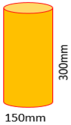
The split tensile strength was done according to the guidelines of IS 5816:1999 [62]. The cylindrical specimens with a length of 300 mm and diameter of 150 mm were cast and kept for curing for 7 and 28 days under standard conditions. Prior to testing, the cylindrical specimens were wiped off clearly and the surface moisture was removed completely. The specimens were placed in a 300-ton capacity Universal Testing Machine (UTM), and ensured the even stress distribution with 3 mm neoprene strips or thick plywood placed along the length of the specimen. The cylinder specimens were then positioned in a horizontal manner between the loading platens so that the compressive load was given diametrically along the vertical plane of the cylinder. The maximum load applied was recorded using the standard formula in Equation (2).

3.4. Flexural Strength Test

The flexural strength test was done according to the standard guidelines IS 516:1959 [61]. The beam specimens with the dimension of 100 mm × 100 mm × 500 mm were used in this study. The specimens were prepared, and cast with appropriate mix proportions, and cured in water at normal room temperature for 7 and 28 days. After curing, the specimens were collected from the curing tank, wiped off completely without surface moisture. Each specimen was placed in a horizontal position on two supports with an appropriate span based on its size. Gradually, the load pressure was increased until the specimen shows visible cracking and the specimen failing and passing test was recorded. The flexural strength is then calculated using the following formula in Equation (3).

3.5. Water Absorption Test

The water absorption test was performed based on ASTM C143 [60] guidelines. This analysis is used to test the amount of water absorbed by the specimen. This test shows the indication of the concrete permeability and porosity, which are important factors in determining the resistance and durability to moisture related issues. High water absorption values indicate higher porosity and permeability, which can lead to problems such as freeze thaw damage, chemical attacks, and reduced durability. For this experiment, concrete cubes were cast and cured for 28 days in normal water at room temperature. After curing process, the cube specimens were collected and completely removed the surface moisture and dried to a constant weight before the test to ensure reliable and accurate measurements. For this test, the specimens were immersed in water for a period of 24 h of incubation. After the immersion period, the specimens were collected from the water and excess water was gently removed by using a damp cloth. The wet specimen was immediately measured in a weighing balance, and the weight was recorded as the saturated weight (Ws). Then the specimen was placed in an oven for drying at a temperature between 100° C and 115° C for 24 h. After the drying period, the specimens were collected and recorded as the dry weight of the specimen (Wd). Equation (4) states that the water absorption of the concrete specimen was calculated.

3.6. Acid Attack

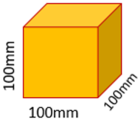
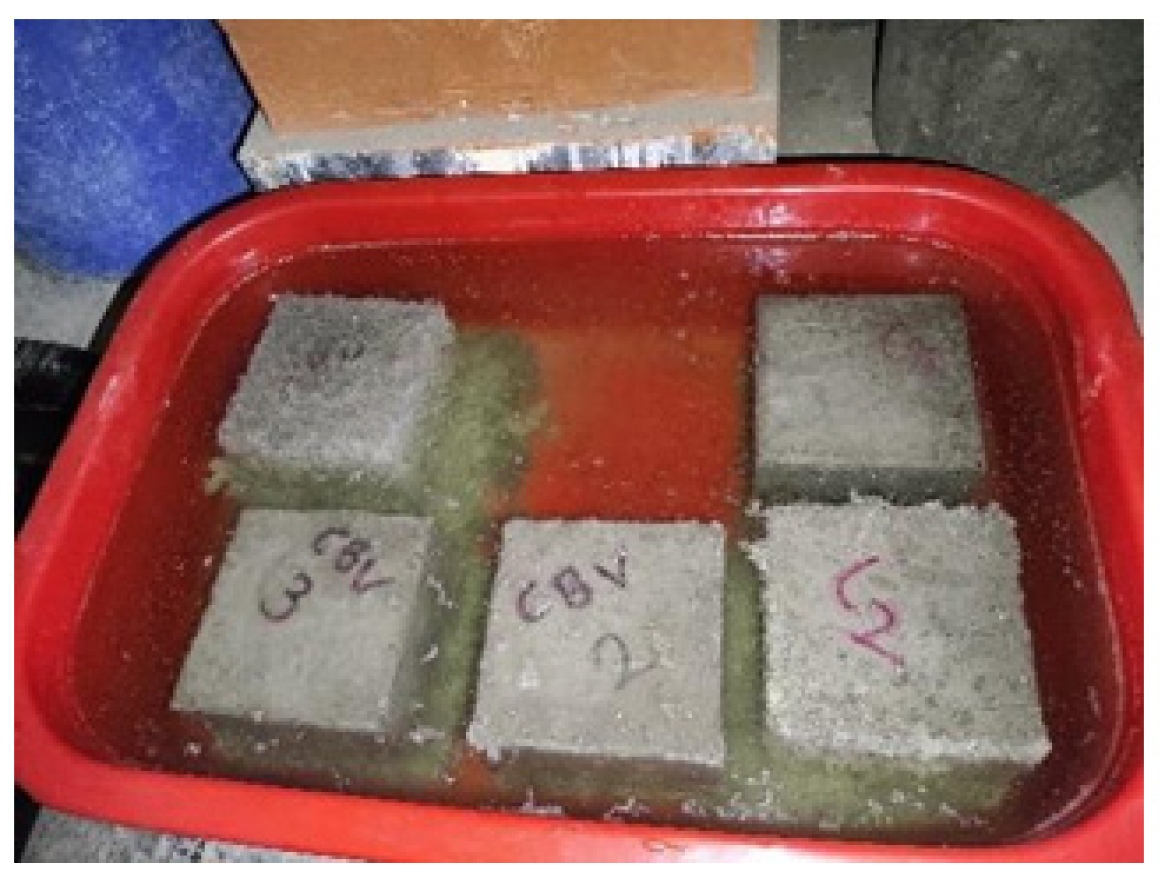
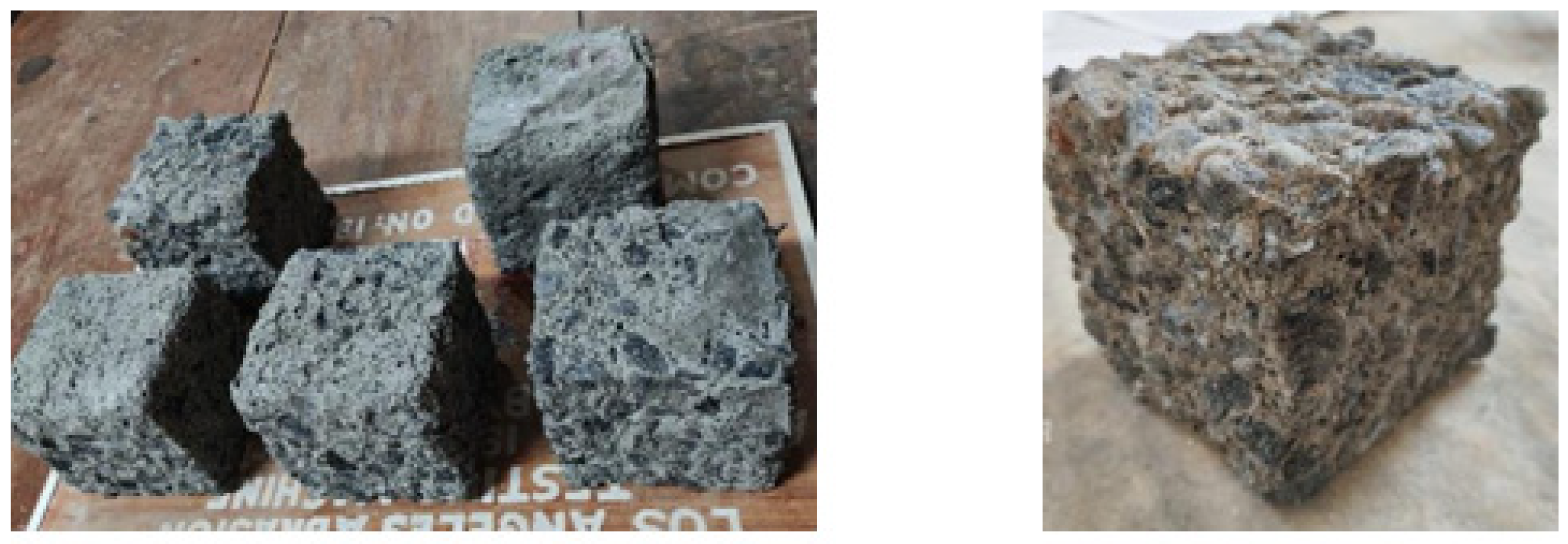
The acid attack test for concrete is conducted to analyse the materials’ resistance and durability in acidic environment. As per recommended standards ASTM C 1898-20, cubical concrete specimens of size 100 mm × 100 mm × 100 mm were prepared and cured for 28 days under stable conditions to conduct the acid test. The specimens were typically dried to a constant weight before the test to ensure accurate measurements and measure the initial dry weight of all the specimens denoted as WI. Dried specimens were completely immersed in the aggressive acidic solution (Figure 7) and were diluted with 5% H2SO4 (prepared using concentrated sulphuric acid) solution for 28 days and kept at room temperature. The experiment was performed in accordance with standard and safety laboratory guidelines. The sulphuric acid solution was recurrently replaced with a freshly prepared solution. During the immersion period, the specimens were inspected at intervals to assess any visible signs of degradation, such as surface deterioration, colour changes, and cracking (Figure 8).
After the specified exposure period, the specimens were removed from the acid solution and carefully rinsed with clean water to remove any residual acid. Then the specimens were weighed to determine the mass loss caused by the acid attack. The mass loss of the concrete specimens was calculated by comparing the initial weight (WI) before immersion with the final weight (WF) after immersion. The percentage of mass loss was calculated using the formula in Equation (5). The mass loss indicates the concrete’s resistance to acid attack. Higher mass loss values indicate greater susceptibility to chemical degradation and reduced durability in acidic environments. Strength loss can be evaluated by the (Equation (6)) variation in compressive strength of the specimens.

3.7. Ultrasonic Pulse Velocity Test

The ultrasonic pulse velocity (UPV) test is a non-destructive testing method used to assess the quality, uniformity, and integrity of concrete. It measures the speed at which ultrasonic pulses travel through the concrete, providing information about its homogeneity and potential defects. The test was performed based on IS 516 (5)-2018 guidelines. Initially, the transmitting transducers are placed on the surface of the specimen, typically opposite to each other. One transducer acts as a sender which emits high-frequency ultrasonic pulses, while the other transducer acts as a receiver that detects the pulse. The sender transducer emits a short pulse of ultrasonic waves into the concrete, which then travel through the material. These waves propagate through the concrete until they reach the receiver transducer. The time taken for the waves to travel between these two transducers was measured.
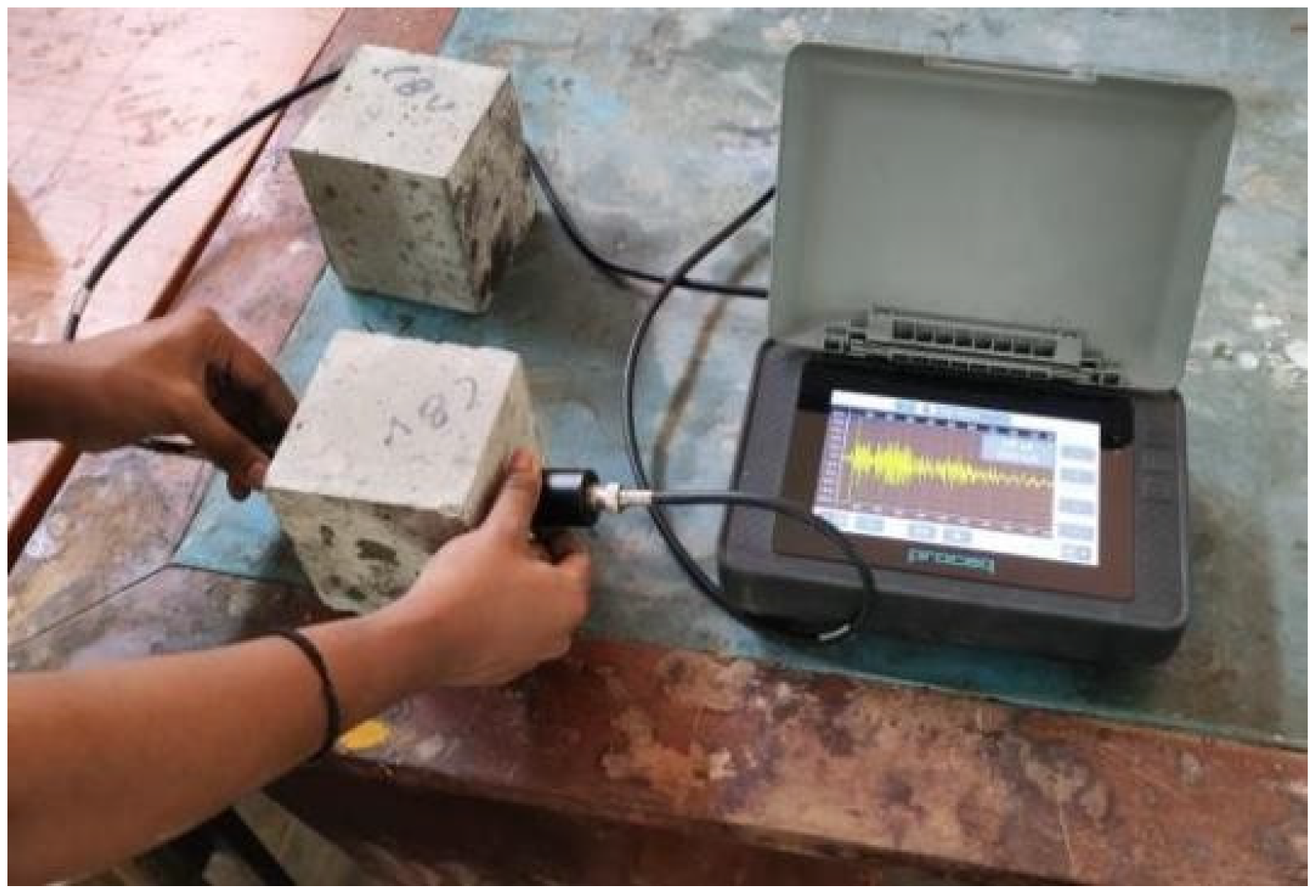
The UPV test was performed on different orientations of the concrete specimen (Figure 9), such as longitudinal, transverse, or diagonal, to assess the anisotropic properties of the concrete. The pulse velocity was typically reported in metres per second (m/s) or kilometres per second (km/s). The test was conducted for each mix with varying water–cement ratios in both bacterial and control specimens. The UPV test was calculated by the formula in Equation (7).

3.8. Self-Healing

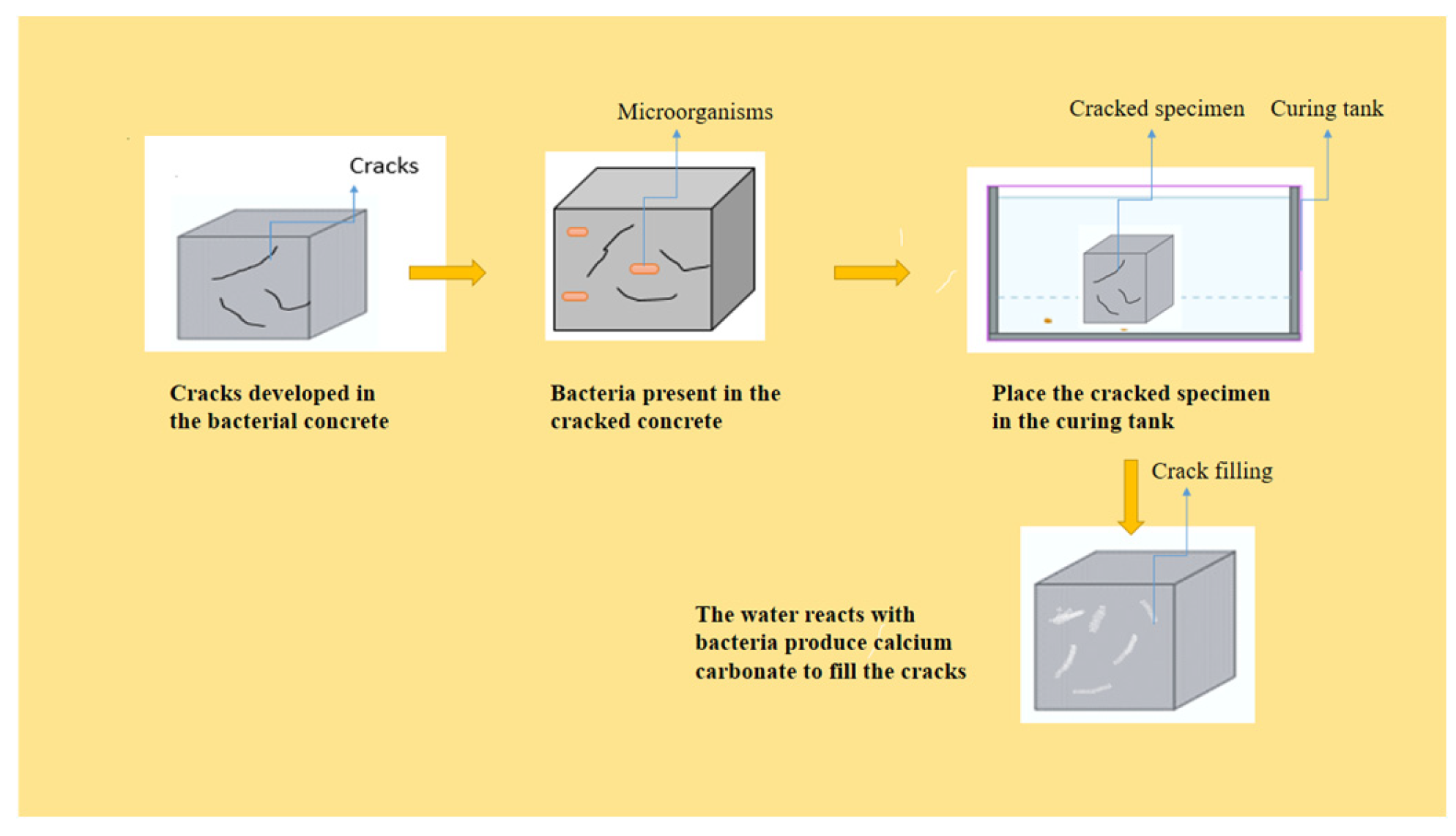
Bacteria-based self-healing concrete is a relatively new technique (Figure 10); therefore, it is important to gather more results in simulated real conditions before applying it on a bigger scale. To assess the quality of concrete, UPV testing was done before and after cubes were kept for self-healing. Concrete cubes of control mix and bacteria mix were prepared. To simulate the real state of a concrete crack, the specimens were loaded on the compression test machine. When the surface appears visibly with micro cracks, the loading is stopped. For the crack healing quantification, the cracked specimens were immersed in tap water in a plastic basin, which was kept open to the atmosphere for 28 days. Progress on the cracked surface for conventional and bacterial concrete was noted frequently at 3,7,14, and 28 days.

3.9. X-Ray Diffraction

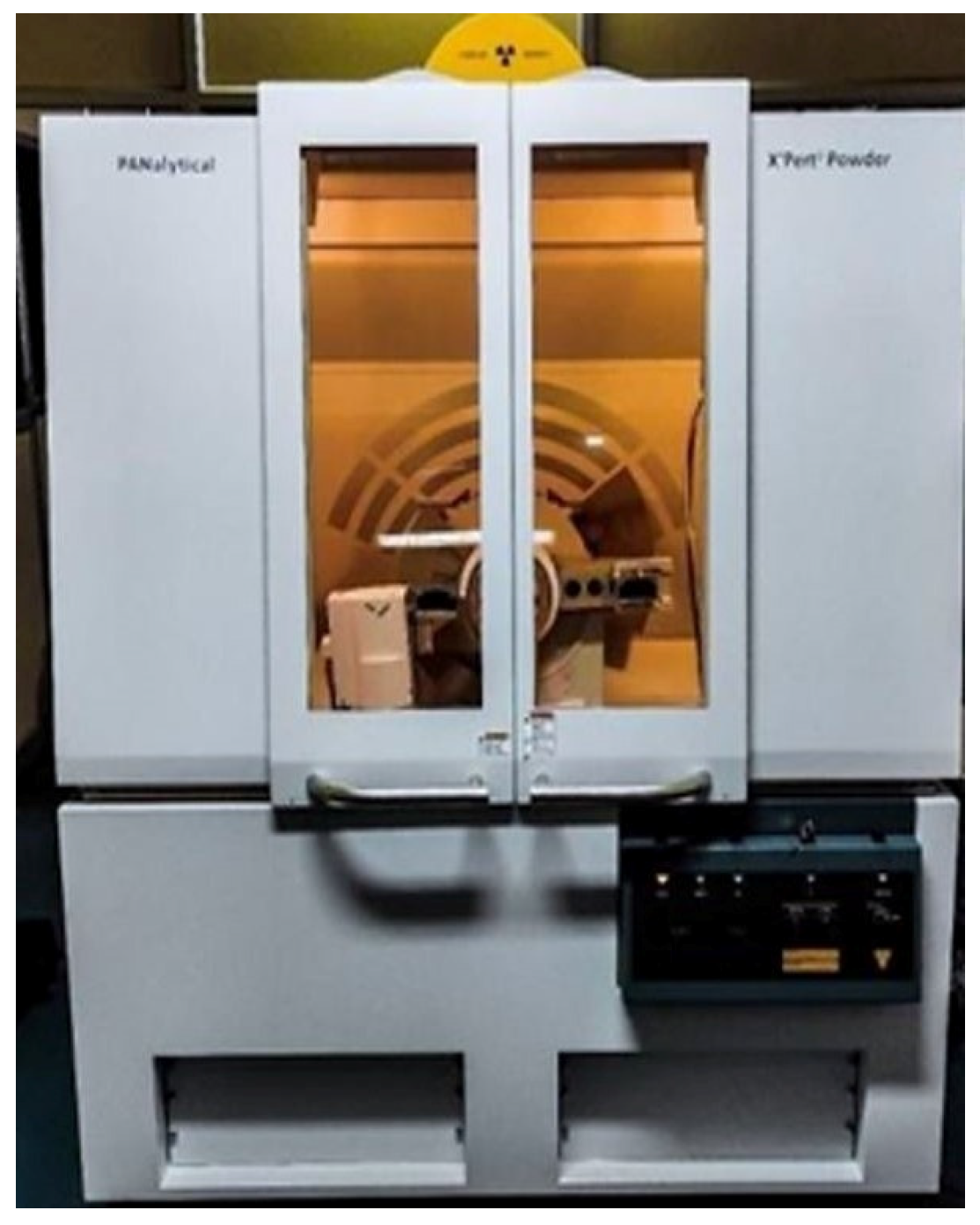
X-ray diffraction (XRD) is a method used in materials research to ascertain a material’s crystal structure. By exposing a material to X-rays, XRD can determine the substance’s X-ray emission intensity and scattering angle (2 theta). Cementitious materials have been characterised in several investigations using XRD methods. The PANalytical X’Pert3 powder X-ray diffractometer was the apparatus (Figure 11) utilised in this investigation. A wide range of solids and powders can be used to analyse the phase. The machine has a PIXel1D scanner and a Bragg–Brentano HD mirror for improved results. Cement hydration outcomes at various hardness levels and material inclusions can be studied to the peak regions and intensity of the XRD pattern. Cementitious materials have been characterised in some investigations using XRD methods. To comprehend the composition, XRD patterns of both bacterial and regular concrete were created for this study. Additionally, the precipitate that was produced during self-healing was examined.

4. Results and Discussion

4.1. Slump Cone Test

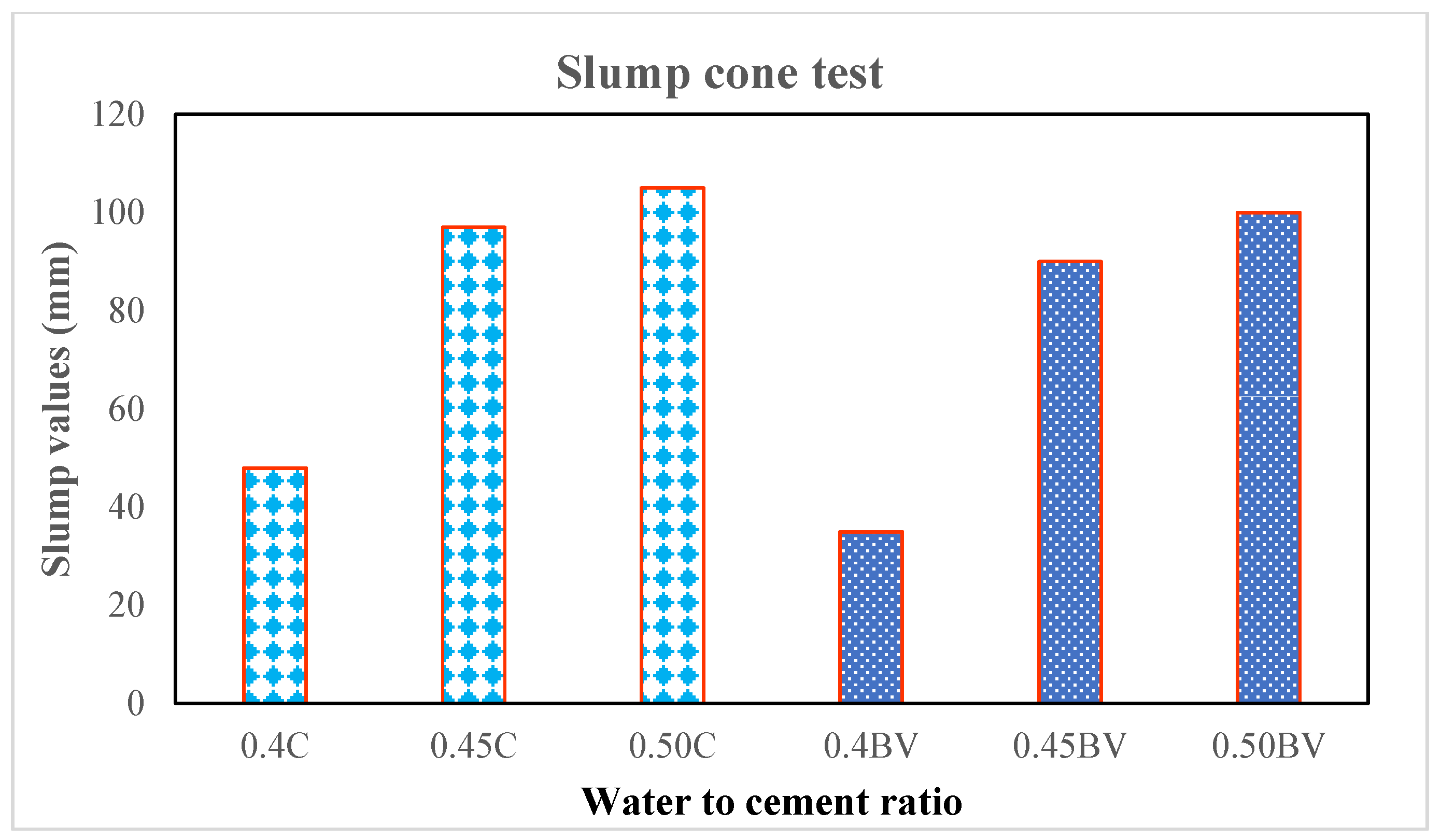
The water-to-cement (w/c) ratio, which impacts the mix’s workability and flowability, has an impact on the slump values of concrete. According to IS 10262, the maximum water-to-cement ratio is 0.45; in this study, 0.40, 0.45 and 0.50 for control and bacterial concrete were chosen to examine the impact on concrete strength and durability parameters. There is no recommended IS code specifying precise slump values for bacterial concrete at different w/c ratios when comparing the slump values of concrete on concrete with different water cement ratios according to ASTM C 143. By forming calcium carbonate precipitates that fill pores and may decrease workability, bacteria can change the characteristics of bacterial concrete. Based on specific mix designs and bacterial strains used, bacterial concrete may have slightly lower slump values due to reduced workability, as illustrated in the graph (Figure 12).

4.2. Compressive Strength Test

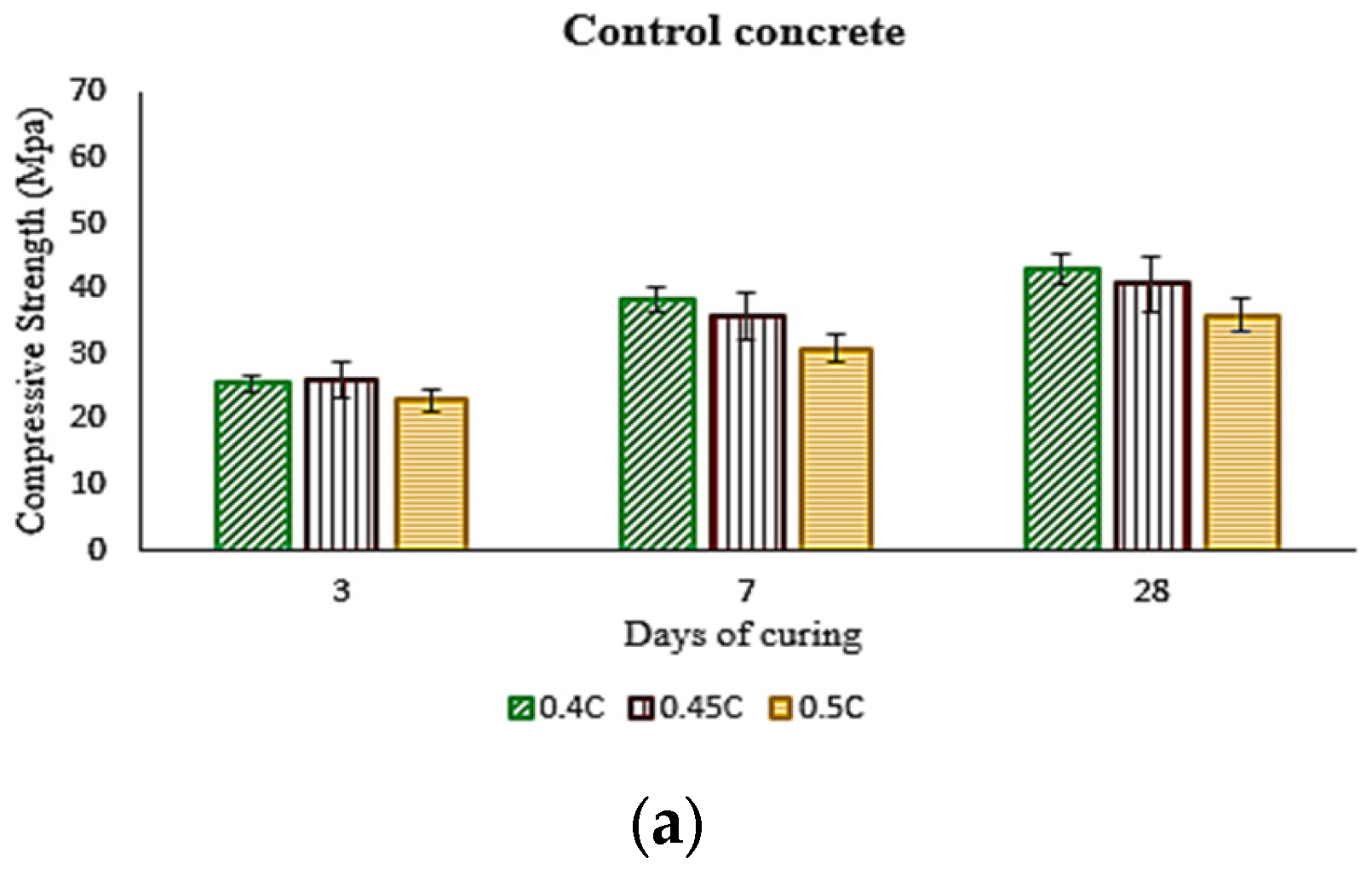
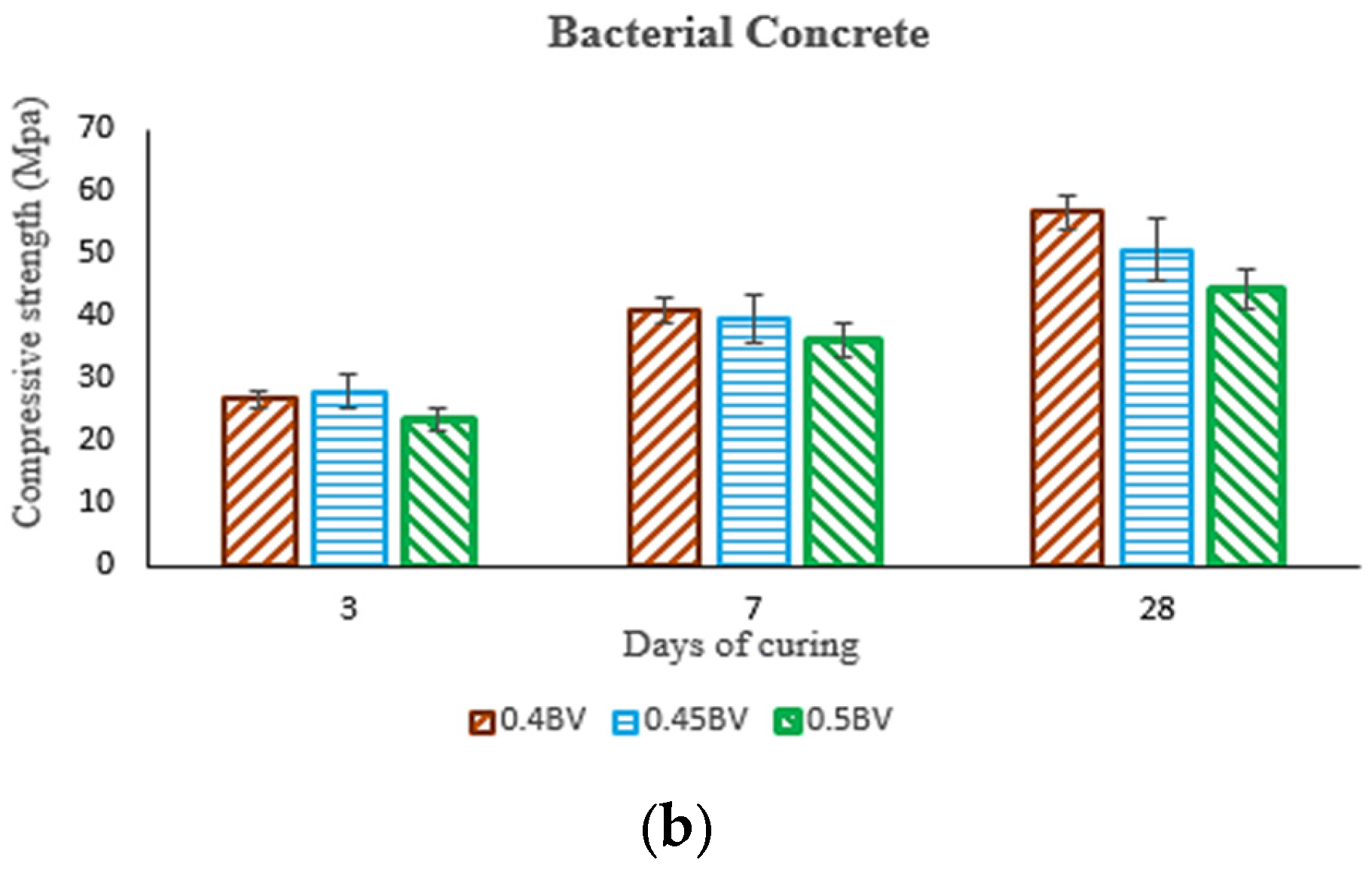
Based on the slump cone test, the concrete specimens were cast into cube moulds of 100 mm and tested for 7, 14, and 28 days of water curing to calculate the compressive strength and the variations are plotted in Figure 13. It is evident from the graph that even though increased water content improves the workability, it reduces the strength of the concrete. Out of three conventional mixes, the 0.4 C mix shows higher strength on the 7th, 14th and 28th day. But it is also noticeable that, while adding bacterial solution, irrespective of the w/c, there is an increment in strength.
The 3rd-day strength of the 0.45 BV mix is more than that of 0.4 BV. When it reaches the 28th day, the compressive strength of the 0.4 BV mix increases. In the conventional mix, the strength of the 0.4 C mix and 0.45 C mix show a significant variation. Also, their workability is extremely different. A 0.4 BV mix at 28th day shows maximum compressive strength of 56.81 MPa with +32.085% than that of 0.4 C mix. A 0.45 BV mix shows +24.61% than 0.45 C with 50.78 MPa. Increased strength with better workability was achieved in the case of 0.40 w/c. So, an average of +4.97% on the 3rd day, +11.47 on the 7th day and +26.85% on the 28th day was estimated when compared to normal control.

4.3. Split Tensile Strength

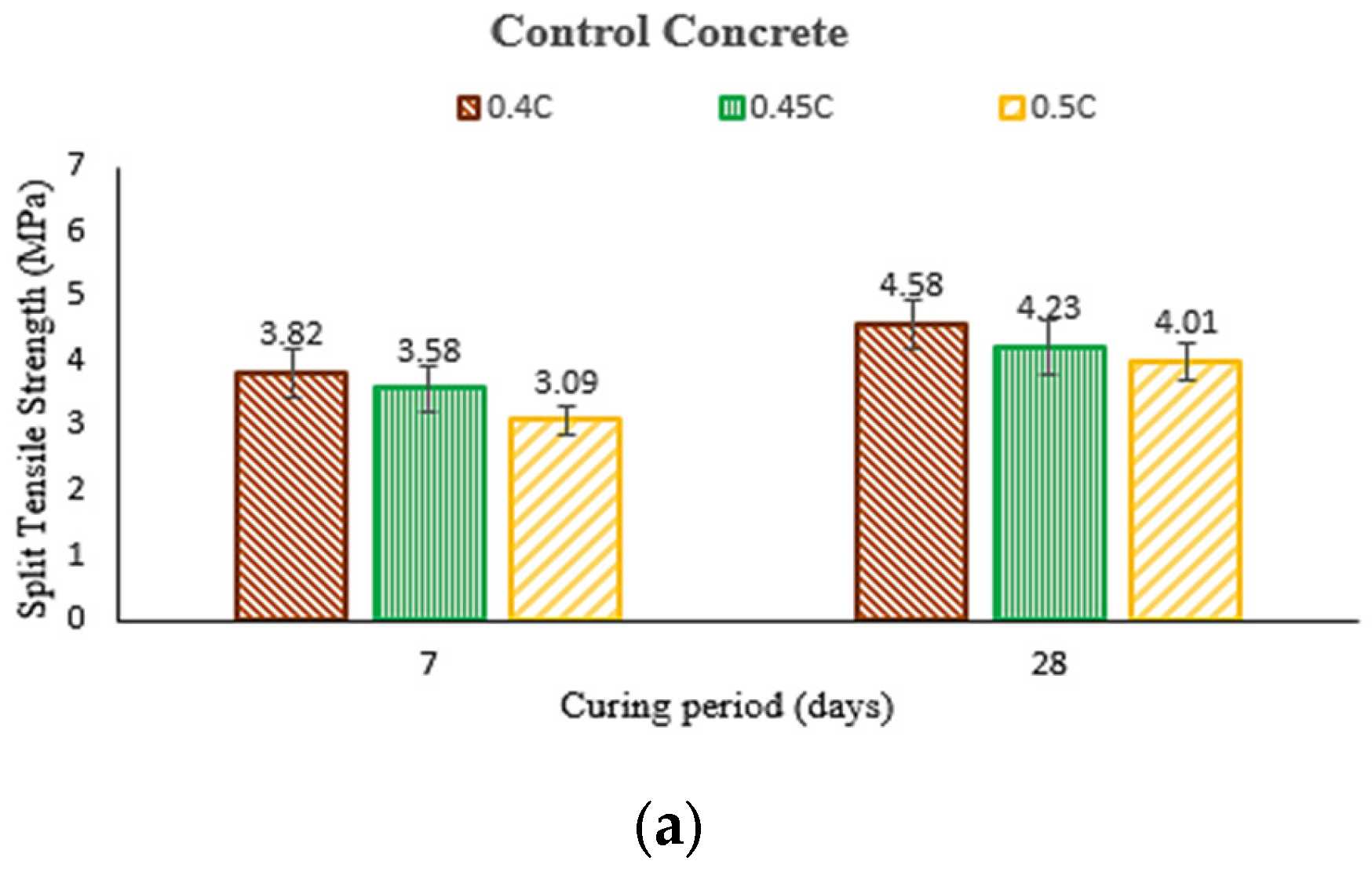
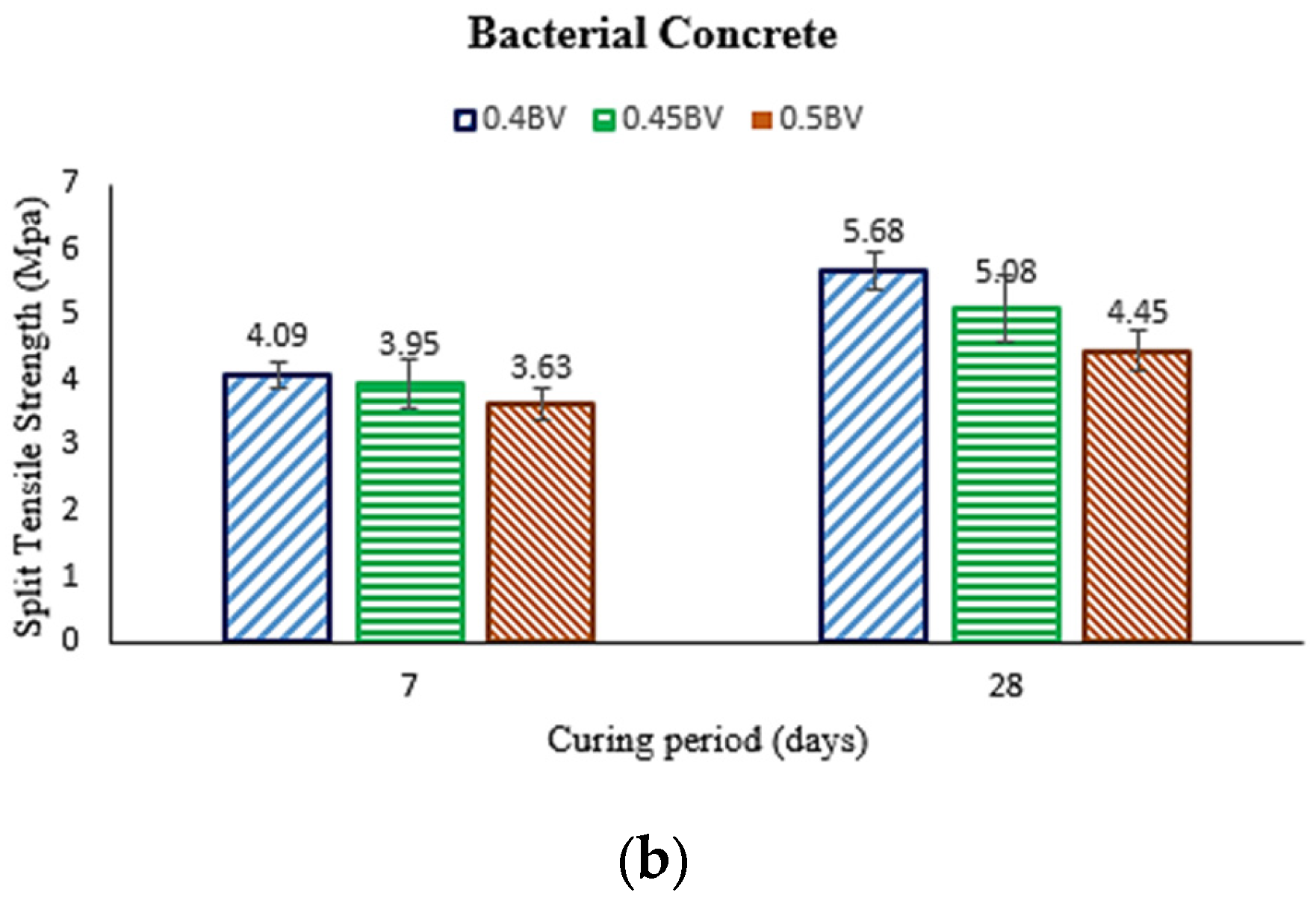
The variation in split tensile strength is shown in Figure 14. Split tensile strength for normal concrete varies by the w/c. The more the w/c, the lesser the split tensile strength was observed. So, 0.4 C has a value of 4.3 MPa at 28 days, while it is 4.08 MPa for 0.45 C. The value obtained for 0.5 C was 3.59 Mpa, even less than both control mixes at the end of 28 days. However, when analysing bacterial concrete, the 0.4 BV mix shows the maximum split tensile strength of 5.68 MPa, which is +24.01%, when compared to the 0.4 C mix. An increment of 20.09% and 10.97% is shown by 0.45 BV and 0.50 BV mixes than corresponding normal concrete mix. The addition of bacterial solution significantly contributes to the improvement in the split tensile strength in the concrete.

4.4. Flexural Strength

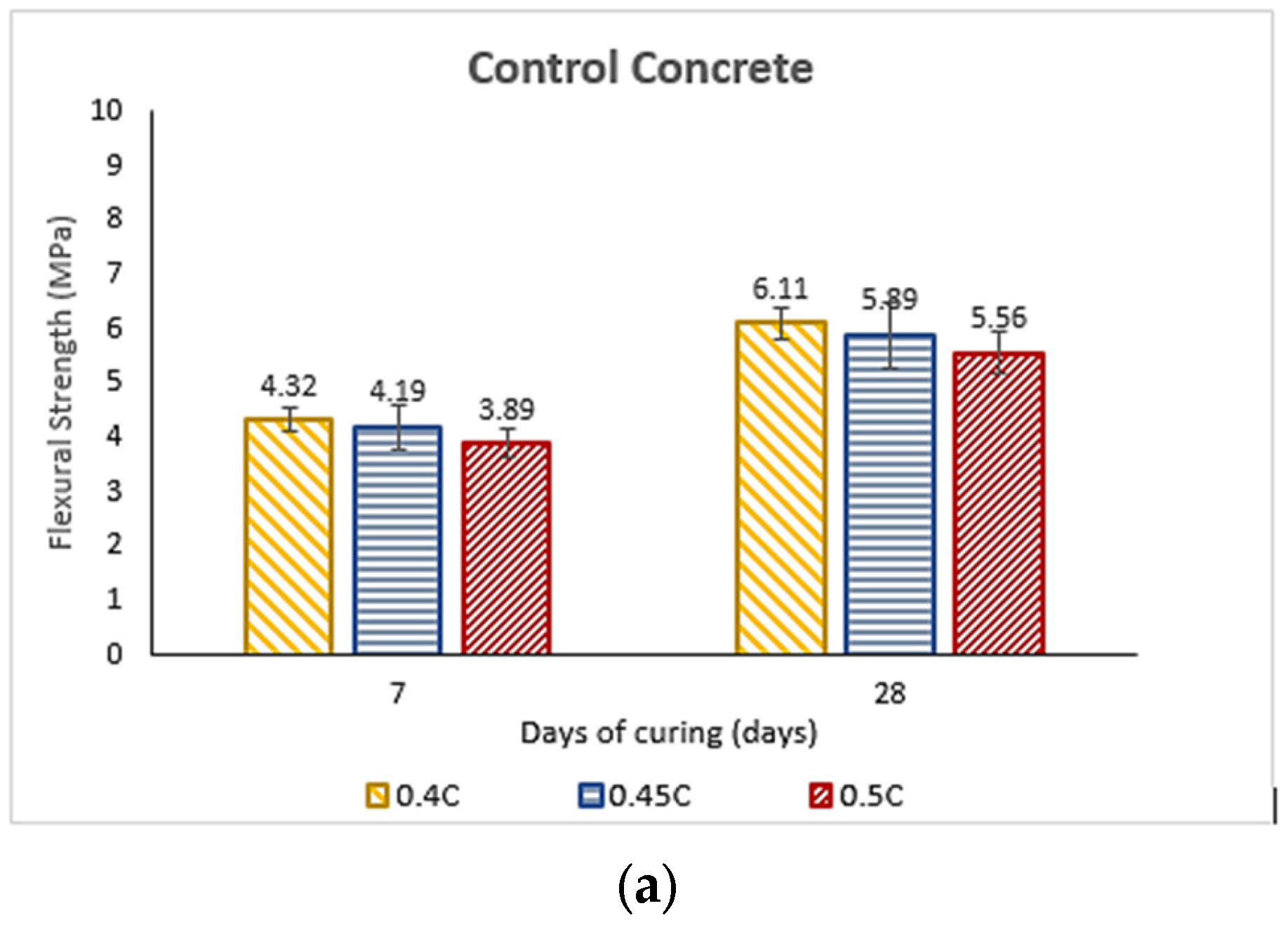
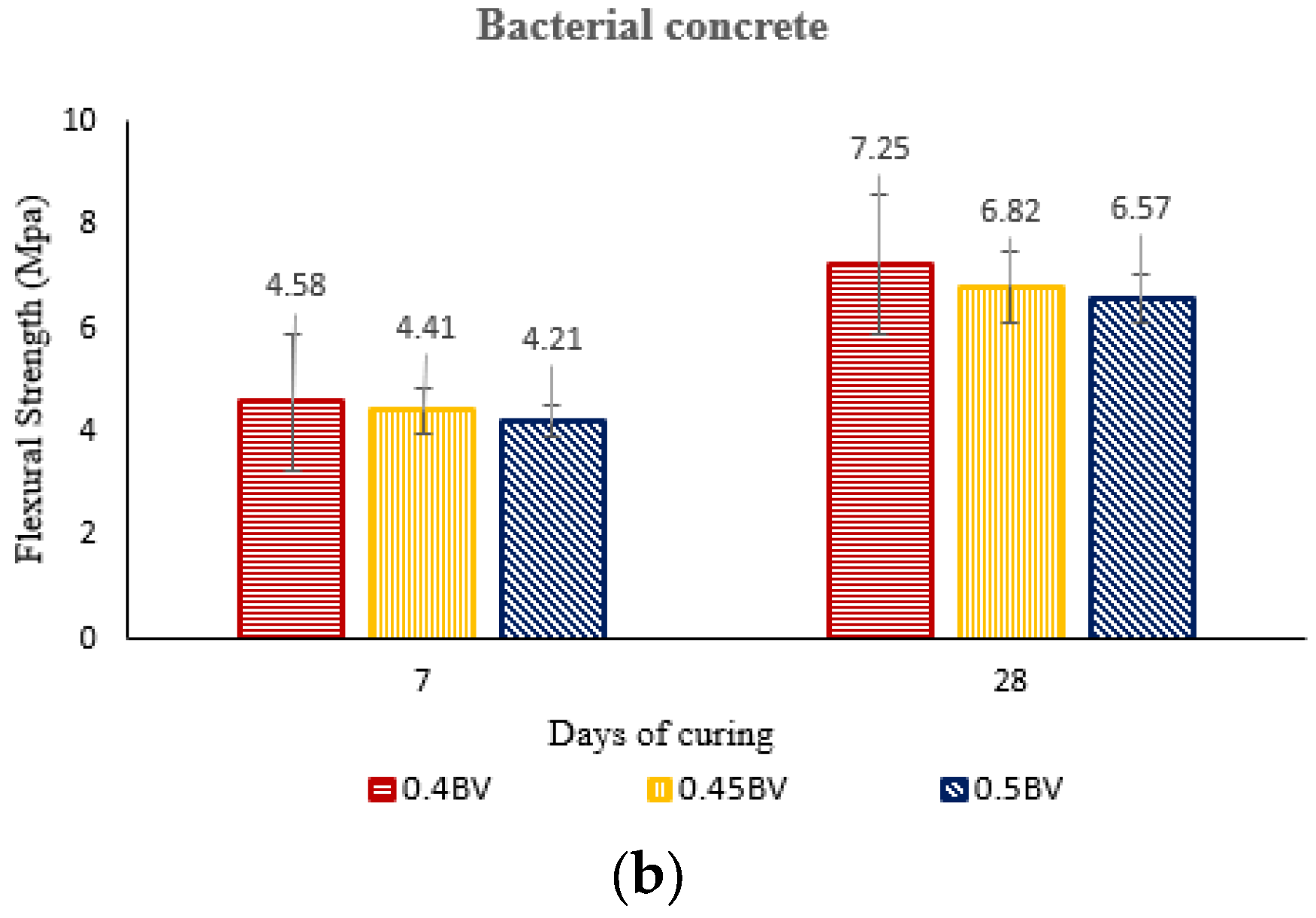
The flexural strength of concrete is plotted in Figure 15. Strength was calculated for 7 and 28 days of curing and it was found that flexure value decreased with increased w/c for normal concrete mix. The minimum w/c of 0.4 C mix for normal concrete exhibits a maximum strength of 6.11 MPa during bending while a 0.5 C mix yielded a strength of 5.89 MPa. It can be seen that bacterial concrete shows an average of +18.65% increment in bending. As the bacteria starts depositing calcite, the voids inside the concrete get filled and reduced which results in improvement in mechanical strength characteristics. From the results, the effect of bacterial growth is more visible in the 0.4 w/c. An adequate amount of water in the 0.4 BV mix enhances the workability, which in turn requires less amount of mechanical strength to mix and place the concrete into moulds. With more mechanical forces, the chances are there that the bacteria could be harmed. This can be the reason for improved strength in 0.4 w/c for bacterial concrete. When compared to 0.45 C, 0.45 BV shows +17.32% strength.
When it comes to 0.5 BV, the water content is way too much, which creates greater space between the aggregate materials, thus the voids will fill with air after the moisture evaporates. Even in this condition, 0.5 BV shows a result similar to that of 0.4 C which is an advantage. Overall, the mechanical properties of bacterial concrete are better and more than that of conventional mix.

4.5. Water Absorption

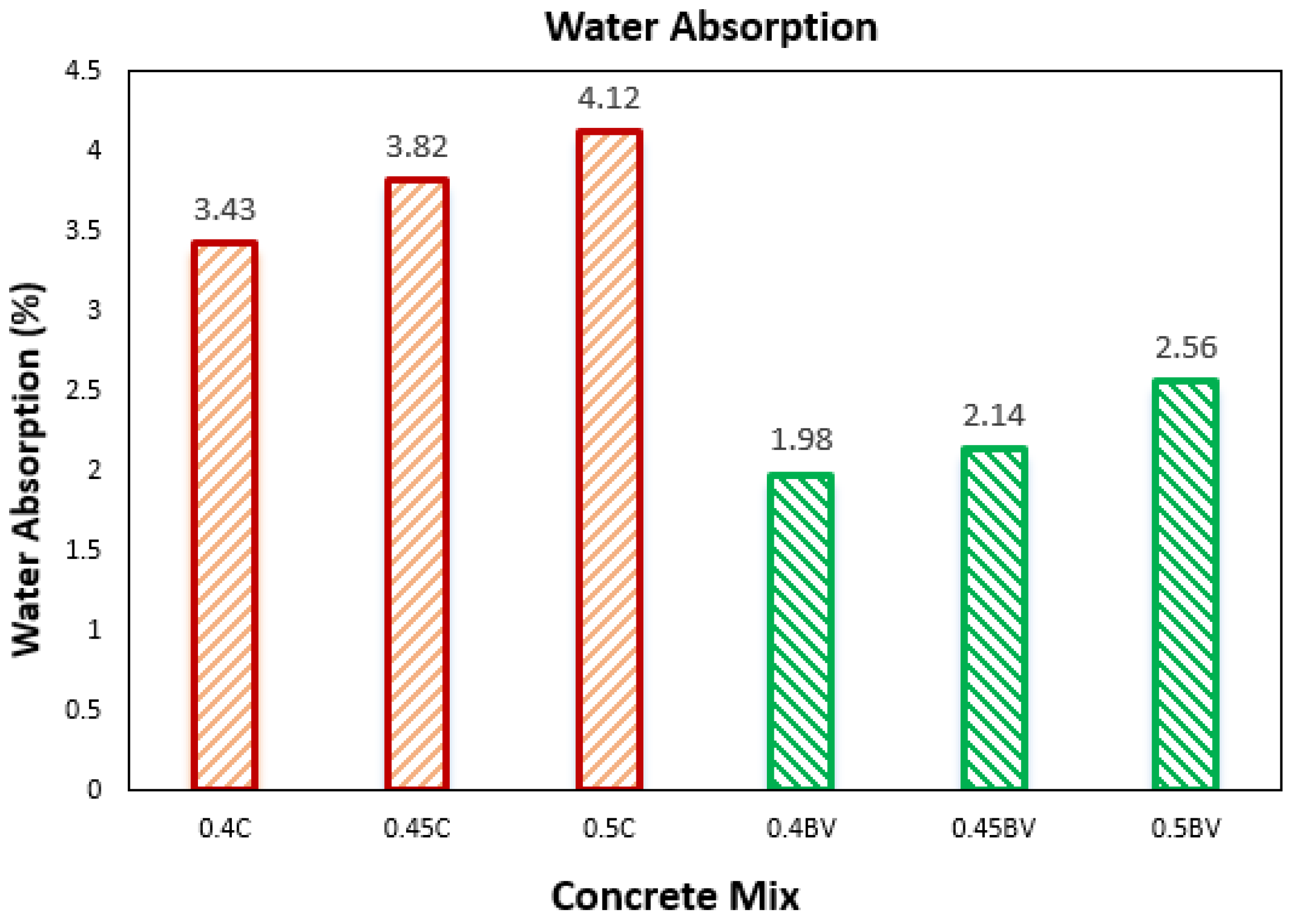
The test results of the water absorption and variation is plotted in Figure 16. It can be observed that the water absorption varies from 3.43% to 4.12% for conventional concrete. For bacterial concrete, maximum water absorption is limited up to 2.56% variation. The maximum water absorption is exhibited by 0.5 C which is due to the porosity in the concrete microstructure and it is mainly affected by w/c. As could be expected, the experimental results show that both the concrete mix and its w/c ratio affect concrete absorption.

4.6. Acid Attack

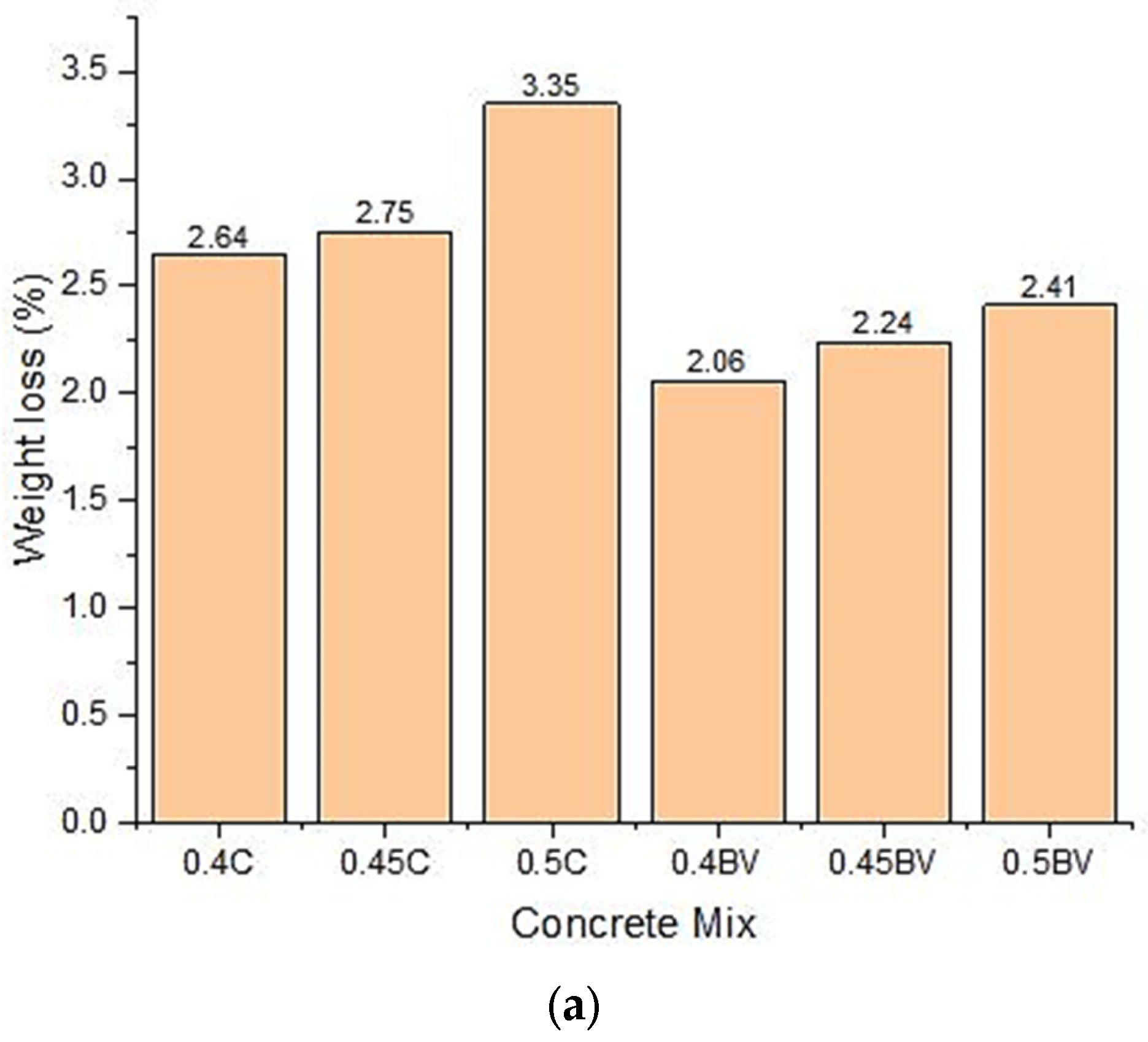
The acid attack test was performed on six mixes of concrete, including three control mixes, 0.4 C, 0.45 C, 0.5 C, and three bacterial mixes, 0.4 BV, 0.45 BV, and 0.5 BV. Based on mass loss and variation in compressive strength, acid resistance can be analysed. It (Table 6) can be noted that the percentage weight loss can be calculated by comparing the weights of the specimens after 28 days of 5% sulphuric acid immersion of all the mixes.
For bacterial concrete, the weight loss percentage (Figure 17a) is minimal, while it is maximum for conventional concrete. Mix 0.4 BV has the minimum weight loss as bacterial concrete with a 0.4 water cement ratio. Lowering the water-to-cement ratio leads to a reduction in the porosity of the concrete specimen, which is potentially resistant more to acid attack. When concrete containing cement, gravel and sand reacts with sulphuric acid it results in the occurrence of gypsum and degradation. Cracking and expansion occur on the concrete due to the formation of gypsum. When introducing bacteria into conventional concrete with different water–cement ratios it reacts with sulphuric acid, reducing the percentage mass loss which increases the stability [13].
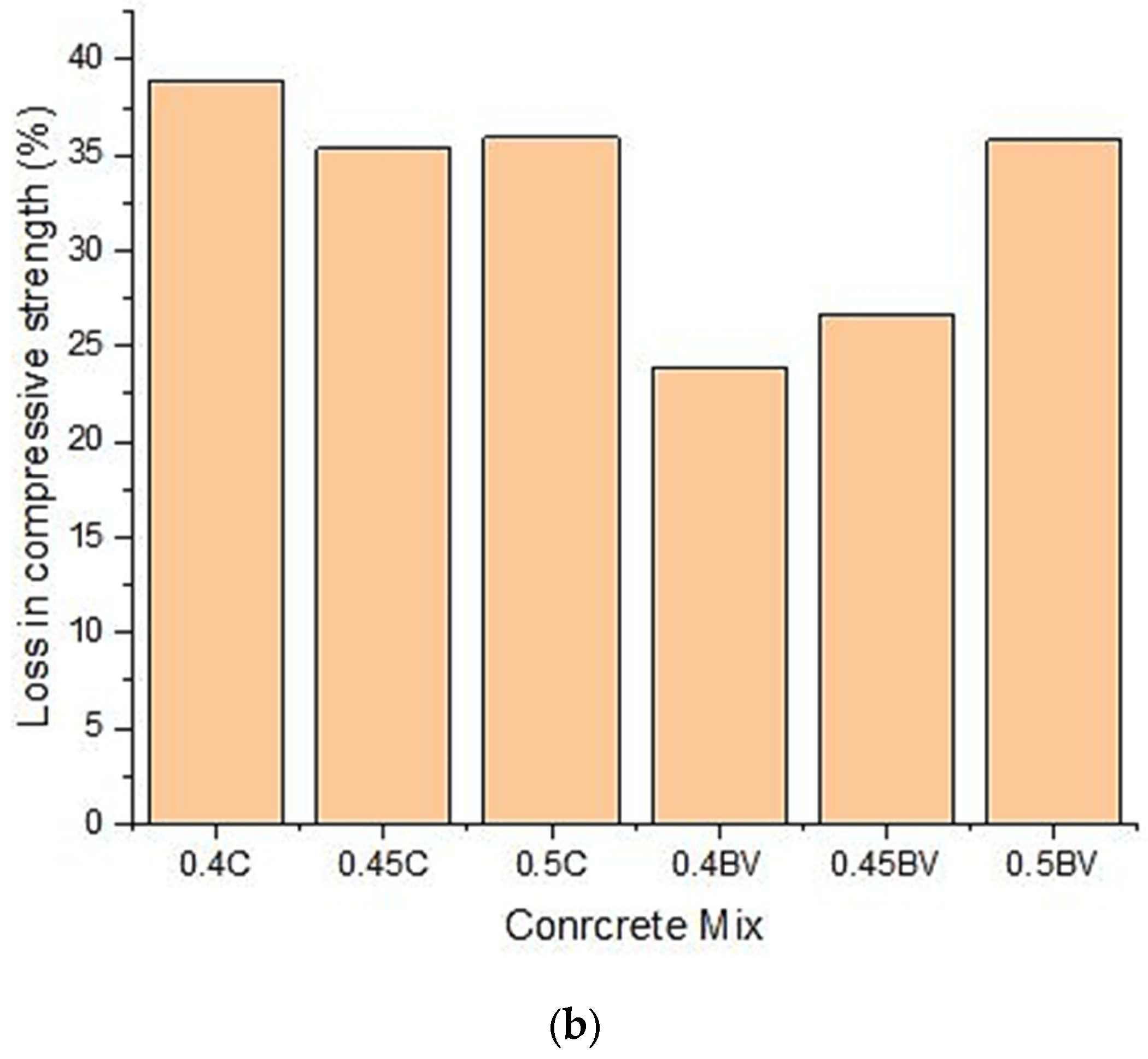
The residual compressive strength (Figure 17b) of the conventional mix is less than that of the bacterial mix. The bacterial concrete with lower water–cement ratio stability was enhanced due to the increased amount of calcite content precipitated by the bacteria inside the pores. The concrete cube strength varies based on the exposure time; after immersing the cubes in an acidic solution for 28 days percentage loss of compressive strength can be noted. In both control and bacterial concrete mix, the water–cement ratio increases then the residual compressive strength decreases. In the bacterial concrete mix w/c ratio increases with the strength loss percentage increases; mix 0.4 BV is the optimal mix that has more resistance in an acidic environment due to the bacterial action.

4.7. Ultrasonic Pulse Velocity Test

Ultrasonic pulse velocity rest results are shown for different mixes in Table 7. After 28 days all the mixes show excellent quality of concrete. The pulse velocity of bacterial concrete is better than normal mix. When the voids inside the concrete fill with calcite precipitation, the quality of concrete also get improved.

4.8. Self-Healing

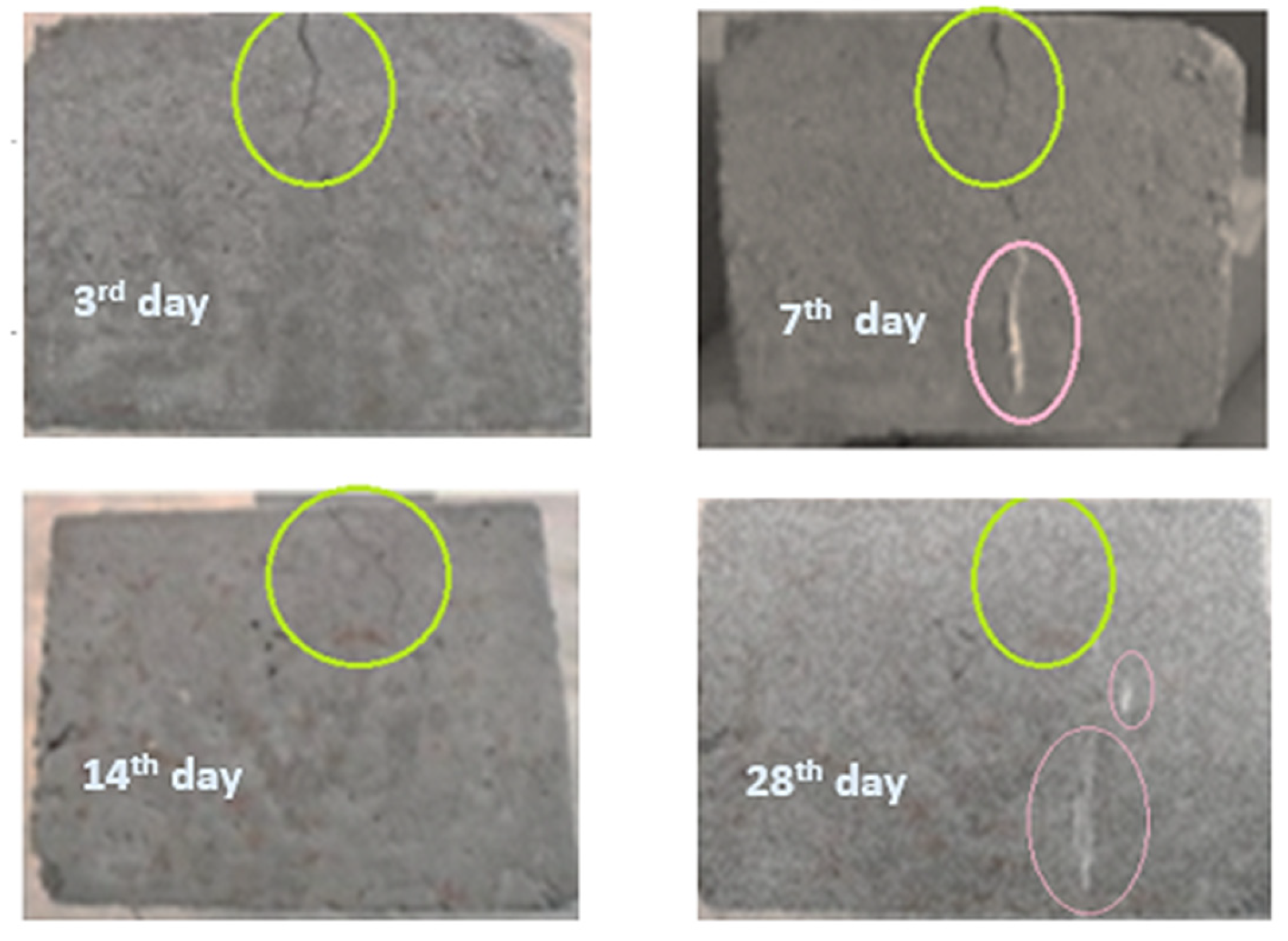
The healing of cracks in the bacterial specimen can be studied. After the 28 days of curing, the load was applied to the concrete specimen to initiate the artificial cracks and measure the residual compressive strength and UPV values. The cracked specimen was placed in a water tank for curing and observed the crack filling activity continuously based on the calcite precipitation by visual examination for 3, 7, 14 and 28 days. While the water curing process was used in the bacterial concrete, bacteria enzymatically start to react with the moisture condition. It precipitates the mineral as calcium carbonate in the pores and cracks to fill them. Mix 0.4 BV chosen for crack healing process and Figure 18 depicts the crack fills at the age of 3, 7, 14 and 28 days.

4.8.1. Compressive Strength Recovery Test

Cubic specimens of triplicates of 150 mm × 150 mm × 150 mm were pre-compressed and measured the compressive strength with cracks, and placed the specimen for incubation. The residual strength of control and bacterial concrete was experimented with after 28 days to calculate the strength regain. The strength regain of the concrete specimen was calculated by the equation. There was an increase of 7.90% for control concrete (Table 8) and a 12.83% increase in the bacterial concrete.

4.8.2. Ultrasonic Pulse Velocity Test

As per IS 13311:1992, the internal crack healing can be studied by the ultrasonic pulse velocity for both the control and conventional mixes. UPV values taken for the conventional and bacterial specimens before and after healing. An increase in the pulse velocity was observed at the 0.4 BV mix of bacterial specimens, which results in bacterial addition enhancing the concrete quality. As the day increased, pores and voids were filled by calcite precipitation, and the pulse velocity increased steadily. An increment in the velocity implied reduced porosity and voids, resistance to water penetration and improvement in concrete properties.

4.9. X-Ray Diffraction Analysis

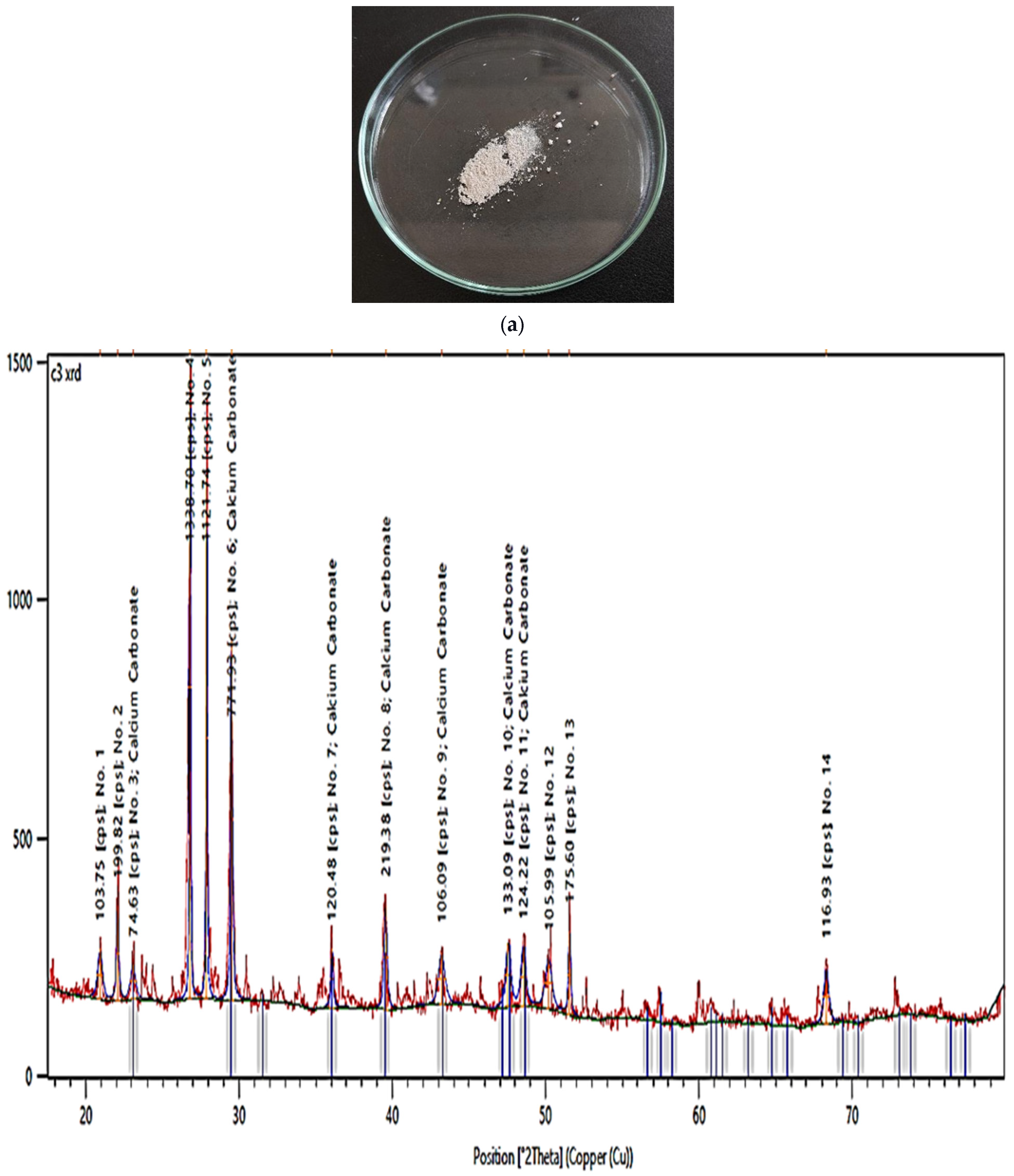
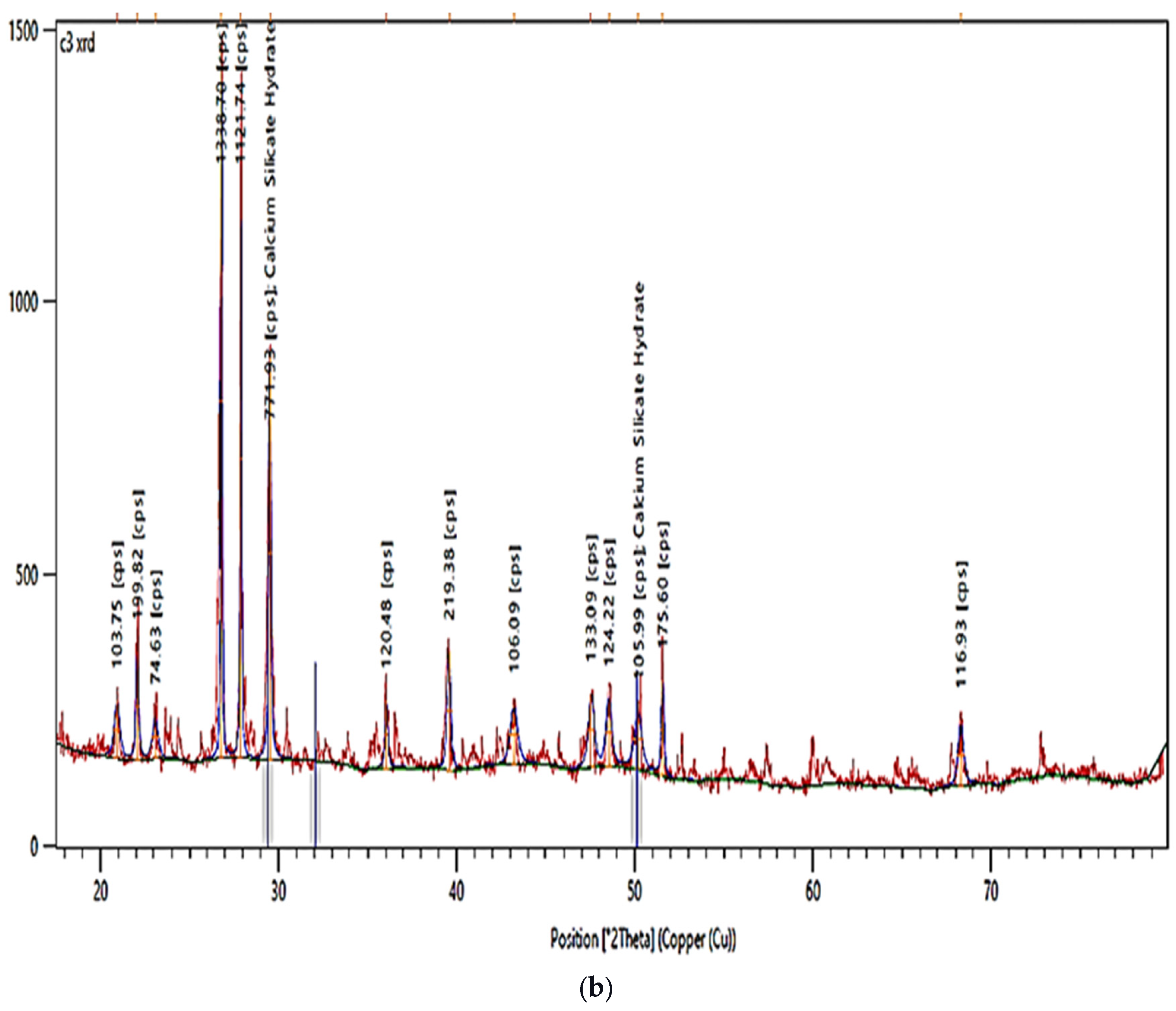
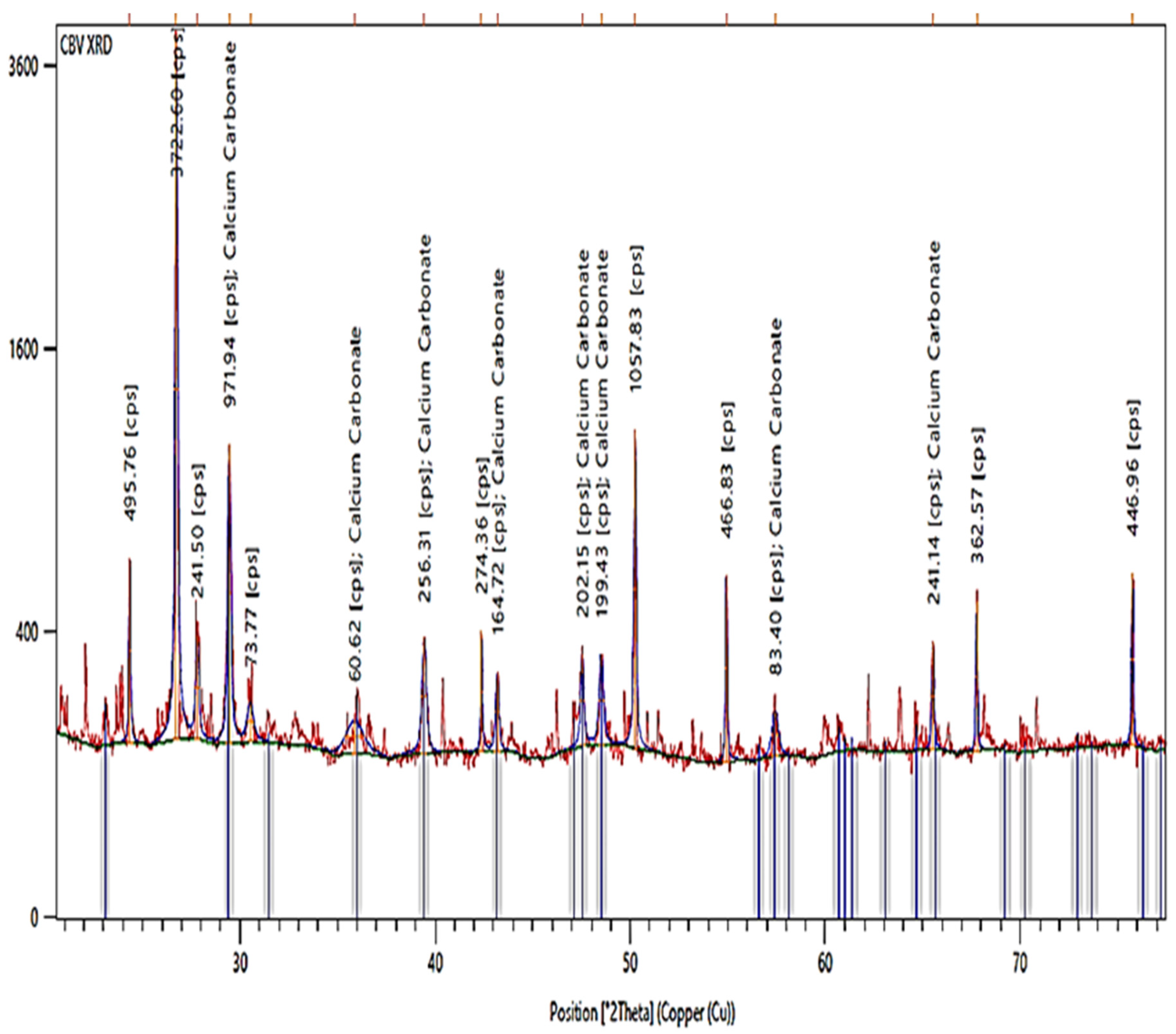
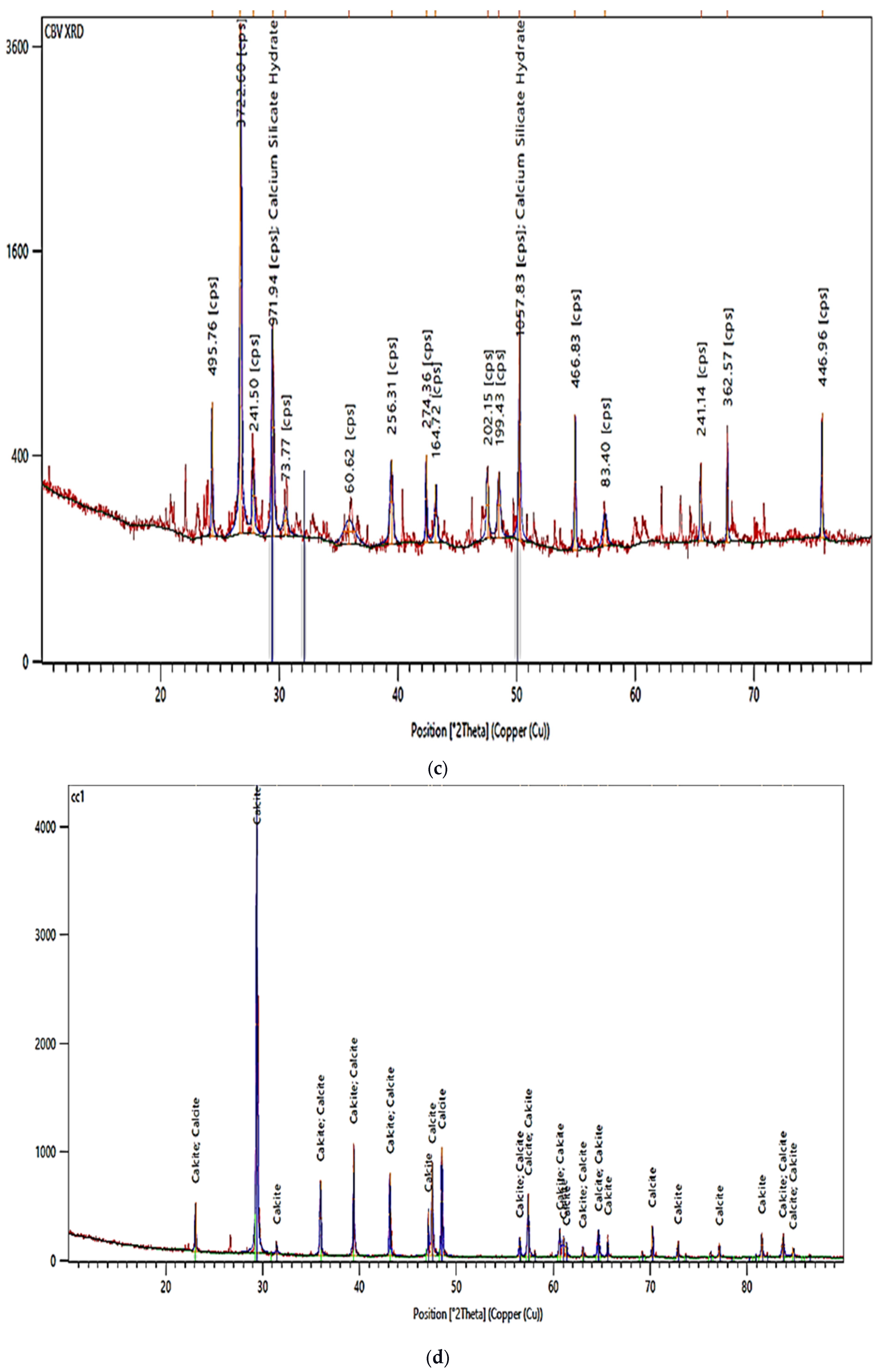
The precipitates that occurred over the bacterial specimens were collected and oven-dried for some time (Figure 19a) and taken for XRD analysis. Powder samples were collected from bacteria and also normal concrete tested for analysing the microstructural variation. Bacterial concrete has more calcite peaks than conventional concrete, proving that it has more calcite precipitation (Figure 19b). The content of calcium silicate gel, which is an important factor in providing concrete strength, is also more in bacterial concrete (Figure 19c). Calcite content is more abundant in the bacterial concrete, which leads to filling the cracks and ensuring more strength, as confirmed by XRD analysis. Calcite precipitation’s highest peak was spotted on the two theta values of 29.8770 shown in (Figure 19d).

5. Conclusions

The fundamental idea behind bacterial concrete is that microorganisms in the cement particle react with water to produce calcium carbonate, which serves as the healing agent. This sets bacterial concrete apart from other self-healing techniques. The following summarises the key findings.
  • The slump cone test yielded workability findings for concrete with varying water-to-cement ratios of 0.40, 0.45, and 0.50. The w/c ratio is correlated to the slump values and workability, but the higher workability affects the durability and porosity. Due to the presence of calcite, bacterial concrete has lower workability values at the water cement ratio of 0.4 than the control.
  • Mechanical strength tests were done for different curing ages. In the case of compressive strength test, an average of +4.97% on the 3rd day, +11.47% on the 7th day and +26.85% at the 28th day was observed when compared to normal control. For the flexural strength test, an average of +17.32% increment was observed at the end of 28 days. When analysing split tensile strength, an average of 8.56% increment was observed after 7 days and +14.04% after 28 days of curing.
  • Water absorption results for bacterial concrete show superior results than normal concrete. This is mainly due to the calcite precipitation by the activity of bacterial culture inside the concrete. Minimum water absorption was shown by 0.4 BV mix, which was 1.98% of weight of concrete.
  • Acid attack tests and water absorption tests conducted for six concrete mixes revealed that the amount of water absorption is less for bacterial specimens. This may be due to calcite-filled voids inside the specimen. In the case of the acid attack test, less weight loss was observed in the bacterial specimen. However, the residual compressive strength was much less for conventional concrete.
  • The self-healing ability of the bacterial specimen is proved by keeping the specimen for 28 days after a crack was initiated. XRD results indicated a high calcite content in bacterial concrete, which may explain the improved mechanical and durability properties. So, it can be concluded that the bacteria B. cereus and V. natriegens can be used simultaneously to improve the self-healing property of concrete as a consortia mix.

Author Contributions

S.B.: Conceptualization, Methodology, Data Curation, Writing—Original draft, Investigation, Experiment work. P.N.: Supervision, Writing—review and editing. S.J.: Supervision, Writing—review and editing. B.S.T.: Investigations, Methodology, Writing—review and editing, Supervision. M.Z.: Supervision, Writing—review and editing, Funding acquisition. S.D.: Writing—review and editing. All authors have read and agreed to the published version of the manuscript.

Funding

This research received no external funding.

Data Availability Statement

The original contributions presented in the study are included in the article, further inquiries can be directed to the corresponding author/s.

Acknowledgments

The authors extend their gratitude for the financial support through DST-SERB Ramanujan Fellowship Project (RJF/2021/000060). This work was by supported European Union under the project HUSK/2302/1.2/063.

Conflicts of Interest

The authors declare that they have no known competing financial interests of personal relationships that could have appeared to influence the work reported in this paper. The authors declare no conflicts of interest.

References

  1. Meraz, M.M.; Mim, N.J.; Mehedi, M.T.; Bhattacharya, B.; Aftab, M.R.; Billah, M.M.; Meraz, M.M. Self-healing concrete: Fabrication, advancement, and effectiveness for long-term integrity of concrete infrastructures. Alex. Eng. J. 2023, 73, 665–694. [Google Scholar] [CrossRef]
  2. Cuenca, E.; D’Ambrosio, L.; Lizunov, D.; Tretjakov, A.; Volobujeva, O.; Ferrara, L. Mechanical properties and self-healing capacity of Ultra High Performance Fibre Reinforced Concrete with alumina nano-fibres: Tailoring Ultra High Durability Concrete for aggressive exposure scenarios. Cem. Concr. Compos. 2021, 118, 103956. [Google Scholar] [CrossRef]
  3. Cuenca, E.; Ferrara, L. Self-healing capacity of fiber reinforced cementitious composites. State of the art and perspectives. KSCE J. Civ. Eng. 2017, 21, 2777–2789. [Google Scholar] [CrossRef]
  4. Khattab, I.M.A.; Shekha, H.; Abdi, M.A. Study on Self-healing Concrete types—A review. Sustain. Struct. Mater. 2019, 2, 76–87. [Google Scholar] [CrossRef]
  5. Molyneux, K. Bacterial Concrete: A Sustainable Building Material with Advantageous Properties. Youth STEM Matters 2020, 1, 1–15. [Google Scholar] [CrossRef]
  6. Chen, H.-J.; Chang, H.-L.; Tang, C.-W.; Yang, T.-Y. Application of Biomineralization Technology to Self-Healing of Fiber-Reinforced Lightweight Concrete after Exposure to High Temperatures. Materials 2022, 15, 7796. [Google Scholar] [CrossRef]
  7. Krishnapriya, S.; Babu, D.V.; G., P.A. Isolation and identification of bacteria to improve the strength of concrete. Microbiol. Res. 2015, 174, 48–55. [Google Scholar] [CrossRef]
  8. Chahal, N.; Siddique, R.; Rajor, A. Influence of bacteria on the compressive strength, water absorption and rapid chloride permeability of fly ash concrete. Constr. Build. Mater. 2011, 28, 351–356. [Google Scholar] [CrossRef]
  9. Seifan, M.; Samani, A.K.; Berenjian, A. Bioconcrete: Next generation of self-healing concrete. Appl. Microb. Biotechnol. 2016, 100, 2591–2602. [Google Scholar] [CrossRef]
  10. Castro-Alonso, M.J.; Montañez-Hernandez, L.E.; Sanchez-Muñoz, M.A.; Franco, M.R.M.; Narayanasamy, R.; Balagurusamy, N. Microbially Induced calcium carbonate precipitation (MICP) and its potential in bioconcrete: Microbiological and Molecular concepts. Front. Mater. 2019, 6, 126. [Google Scholar] [CrossRef]
  11. Sharma, T.; Alazhari, M.; Heath, A.; Paine, K.; Cooper, R. Alkaliphilic Bacillus species show potential application in concrete crack repair by virtue of rapid spore production and germination then extracellular calcite formation. J. Appl. Microbiol. 2017, 122, 1233–1244. [Google Scholar] [CrossRef]
  12. Yamasamit, N. Effect of Bacillus Subtilis on mechanical and self-healing properties in mortar with different crack width during conditions. Sci. Rep. 2023, 13, 7844. [Google Scholar] [CrossRef] [PubMed]
  13. Smitha, M.P.; Suji, D.; Shanthi, M.; Adesina, A. Application of bacterial biomass in biocementation process to enhance the mechanical and durability properties of concrete. Clean. Mater. 2022, 3, 100050. [Google Scholar] [CrossRef]
  14. Abo-El-Enein, S.; Ali, A.; Talkhan, F.N.; Abdel-Gawwad, H. Application of microbial biocementation to improve the physico-mechanical properties of cement mortar. HBRC J. 2013, 9, 36–40. [Google Scholar] [CrossRef]
  15. Shukla, A.; Gupta, N.; Singh, K.R.; Verma, P.K.; Bajaj, M.; Khan, A.A.; Ayalew, F. Performance Evaluation of Bio concrete by Cluster and Regression Analysis for Environmental Protection. Comput. Intell. Neurosci. 2022, 2022, 4411876. [Google Scholar] [CrossRef] [PubMed]
  16. Mondal, S.; Ghosh, A. Review on microbial induced calcite precipitation mechanisms leading to bacterial selection for microbial concrete. Constr. Build. Mater. 2019, 225, 67–75. [Google Scholar] [CrossRef]
  17. Han, R.; Xu, S.; Zhang, J.; Liu, Y.; Zhou, A. Insights into the effects of microbial consortia-enhanced recycled concrete aggregates on crack self-healing in concrete. Constr. Build. Mater. 2022, 343, 128138. [Google Scholar] [CrossRef]
  18. Bagga, M.; Hamley-Bennett, C.; Alex, A.; Freeman, B.L.; Justo-Reinoso, I.; Mihai, I.C.; Gebhard, S.; Paine, K.; Jefferson, A.D.; Masoero, E.; et al. Advancements in bacteria based self-healing concrete and the promise of modelling. Constr. Build. Mater. 2022, 358, 129412. [Google Scholar] [CrossRef]
  19. Benjamin, B.; Zachariah, S.; Sudhakumar, J.; Suchithra, T. Bacterial consortium development and optimization for crack controlling cement mortar. J. Build. Eng. 2023, 77, 107501. [Google Scholar] [CrossRef]
  20. De Medeiros-Junior, R.A.; Da Silva Munhoz, G.; De Medeiros, M.H.F. Correlations between water absorption, electrical resistivity and compressive strength of concrete with different contents of pozzolan. Rev. ALCONPAT 2019, 9, 152–166. [Google Scholar] [CrossRef]
  21. Neeraja, P.; Prasad, E.V. Durability and mechanical characteristics of self healing fiber reinforced concrete. J. Phys. Conf. Ser. 2024, 2779, 012029. [Google Scholar] [CrossRef]
  22. Chernykh, T.N.; Gorbachevskykh, K.A.; Kriushin, M.V.; Orlov, A.A.; Komelkova, M.V.; Platkovskii, P.O. Biomineral additives for self-healing of concrete. Vestn. MGSU 2024, 19, 569–579. [Google Scholar] [CrossRef]
  23. Khaliq, W.; Ehsan, M.B. Crack healing in concrete using various bio influenced self-healing techniques. Constr. Build. Mater. 2015, 102, 349–357. [Google Scholar] [CrossRef]
  24. Zhang, L.; Zheng, M.; Zhao, D.; Feng, Y. A Review of Novel Self-Healing Concrete Technologies. J. Build. Eng. 2024, 89, 109331. [Google Scholar] [CrossRef]
  25. Hanna, J. Self-Healing Concrete Techniques and Technologies and applications. Recent Prog. Mater. 2024, 6, 006. [Google Scholar] [CrossRef]
  26. Ferrara, L.; Van Mullem, T.; Alonso, M.C.; Antonaci, P.; Borg, R.P.; Cuenca, E.; Jefferson, A.; Ng, P.; Peled, A.; Roig-Flores, M.; et al. Experimental characterization of the self-healing capacity of cement based materials and its effects on the material performance: A state of the art report by COST Action SARCOS WG2. Constr. Build. Mater. 2018, 167, 115–142. [Google Scholar] [CrossRef]
  27. Bashaveni, B.; Pannem, R.M.R. Development of Self-Healing Property in Self Compacting Concrete. Case Stud. Constr. Mater. 2024, 20, e02942. [Google Scholar] [CrossRef]
  28. Shetiya, R.K.; Elhadad, S.; Salem, A.; Fülöp, A.; Orban, Z. Investigation into the Effects of Crystalline Admixtures and Coatings on the Properties of Self-Healing Concrete. Materials 2024, 17, 767. [Google Scholar] [CrossRef]
  29. Huang, H.; Ye, G.; Qian, C.; Schlangen, E. Self-healing in cementitious materials: Materials, methods and service conditions. Mater. Des. 2015, 92, 499–511. [Google Scholar] [CrossRef]
  30. Kumar, P.A.; Rengaraju, S.; Al-Tabbaa, A. Self-Waterproofing Performance of Repair Mortars with Inorganic Healing Agents. MATEC Web Conf. 2023, 378, 03001. [Google Scholar] [CrossRef]
  31. Ferrara, L. Self-healing cement-based materials: An asset for sustainable construction industry. IOP Conf. Ser. Mater. Sci. Eng. 2018, 442, 012007. [Google Scholar] [CrossRef]
  32. He, X.; Amin, M.N.; Khan, K.; Ahmad, W.; Althoey, F.; Vatin, N.I. Self-healing concrete: A scientometric analysis-based review of the research development and scientific mapping. Case Stud. Constr. Mater. 2022, 17, e01521. [Google Scholar] [CrossRef]
  33. Jin, C.; Yu, R.; Shui, Z. Fungi: A neglected candidate for the application of Self-Healing concrete. Front. Built Environ. 2018, 4, 62. [Google Scholar] [CrossRef]
  34. Arpitha, D.J.; Chandrashekar, A.R.; Praveen, K. Studies on Performance and Micro Structural Characteristics of Self-healing Concrete. Lect. Notes Civ. Eng. 2024, 440, 187–200. [Google Scholar] [CrossRef]
  35. Balachandran, S.; Sudhakumar, J.; Thomas, B.S.; Sankaranarayanan, P.; Vasu, S.T.; Ravikumar, A.C. Mechanical properties of bacterial cement mortar integrating natural banana fibres. Appl. Sci. Eng. Prog. 2024, 17, 7549. [Google Scholar] [CrossRef]
  36. Sunantha, B.; Patel, J.; Poojalakshmi, E.; Sudhakumar, J.; Ramaswamy, K.; Khan, R.A.; Nair, P.S.; Thomas, B. A comprehensive review on the properties of engineered cementitious composite with a self-healing material. Mater. Today Proc. 2023; in press. [CrossRef]
  37. Fang, Y.; Sun, H.; Song, Q.; Wang, X. Investigating the potential for self-healing aggregates in concrete. Constr. Build. Mater. 2023, 409, 133918. [Google Scholar] [CrossRef]
  38. Radhakumar, L.; Murugan, S.; Sankaralingam, J. Comparative Study on the Strength Behavior of Self-Healing Concrete Using Silica Gel and Bacteria as Healing Agents. J. Mater. Civ. Eng. 2023, 35, 04023483. [Google Scholar] [CrossRef]
  39. Gojević, A.; Grubeša, I.N.; Marković, B.; Juradin, S.; Crnoja, A. Autonomous Self-Healing Methods as a Potential Technique for the Improvement of Concrete’s Durability. Materials 2023, 16, 7391. [Google Scholar] [CrossRef]
  40. Zhang, C.; Wang, M.; Liu, R.; Li, X.; Yan, J.; Du, H. Enhancing self-healing efficiency of concrete using multifunctional granules and PVA fibers. J. Build. Eng. 2023, 76, 107314. [Google Scholar] [CrossRef]
  41. Xue, Y.; Gao, W.; Zhao, Y. A novel method of Self-Healing concrete to improve durability and extend the service life of civil infrastructure. Adv. Civ. Eng. 2023, 2023, 5591853. [Google Scholar] [CrossRef]
  42. Shetiya, R.; Elhadad, S.; Orban, Z.; Dormany, A.; Fulop, A.; Len, A. A Comparative Investigation of Self-Repairing Concrete Incorporating Penetron Admix with Ordinary Concrete. Civ.-Comp Conf. 2023, 6, 1–8. [Google Scholar] [CrossRef]
  43. Singh, A.; Kaur, T. A Review on Self Healing Concrete. Int. J. Res. Appl. Sci. Eng. Technol. 2023, 11, 890–893. [Google Scholar] [CrossRef]
  44. Kordas, G. Self-Healing Cement: A Review. Nanomanufacturing 2023, 3, 326–346. [Google Scholar] [CrossRef]
  45. Sunantha, B.; Nagarajan, P.; Sudhakumar, J.; Thomas, B.S.; Das, S.; Svajlenka, J.; Berhe, M.A. Optimization of natural fibre length in bacterial cement mortar using TOPSIS for enhanced mechanical properties. Sci. Rep. 2026. [Google Scholar] [CrossRef]
  46. Nguyen, M.-T.; Fernandez, C.A.; Haider, M.; Chu, K.-H.; Jian, G.; Nassiri, S.; Zhang, D.; Rousseau, R.; Glezakou, V.-A. Toward Self-Healing Concrete Infrastructure: Review of Experiments and Simulations across Scales. Chem. Rev. 2023, 123, 10838–10876. [Google Scholar] [CrossRef]
  47. Neeraja, P.; Prasad, B. Experimental investigation on self-healing of fibre reinforced concrete. IOP Conf. Ser. Earth Environ. Sci. 2023, 1193, 012010. [Google Scholar] [CrossRef]
  48. Tan, K.; Wu, S.; Ding, S. Carriers of Healing Agents in Biological Self-Healing Concrete. Adv. Mater. Sci. Eng. 2023, 2023, 7179162. [Google Scholar] [CrossRef]
  49. Pandey, S.; Umale, S.; More, S.; Kale, N.K. Study of the Long-Term Durability of Self-Healing Concrete. Int. J. Adv. Res. Sci. Commun. Technol. 2023, 3, 257916772. [Google Scholar] [CrossRef]
  50. Sohail, M.G.; Al Nuaimi, N.; Kahraman, R.; Al Disi, Z.; Zouari, N.; Genturk, B.; Rodrigues, D.F.; Yildirim, Y. Bio-Based Self-Healing Concrete for Sustainable and Durable Concrete Infrastructure. In Proceedings of the International Conference on Civil Infrastructure and Construction (CIC); Qatar University Press: Doha, Qatar, 2023. [Google Scholar] [CrossRef]
  51. Lauch, K.-S.; Desmettre, C.; Charron, J.-P. Self-Healing of Aged Concrete Containing Crystalline Admixture and Expansive Agent under Repeated Loading. J. Mater. Civ. Eng. 2023, 35, 04022396. [Google Scholar] [CrossRef]
  52. Cappellesso, V.G.; di Summa, D.; Pourhaji, P.; Kannikachalam, N.P.; Dabral, K.; Ferrara, L.; Alonso, M.C.; Camacho, E.; Gruyaert, E.; De Belie, N. A review of the efficiency of self-healing concrete technologies for durable and sustainable concrete under realistic conditions. Int. Mater. Rev. 2023, 68, 556–603. [Google Scholar] [CrossRef]
  53. Medeiros, J.; Di Sarno, L. Low carbon bacterial Self-Healing concrete. Buildings 2022, 12, 2226. [Google Scholar] [CrossRef]
  54. Pacheco, F.; Boscaini, C.H.; Gauto, T.N.; Müller, V.; Ehrenbring, H.Z.; Modolo, R.C.E.; Tutikian, B.F. Evaluation of concrete self-healing by encapsulated sodium metasilicate in perlite and expanded clay. Rev. IBRACON Estrut. Mater. 2023, 16, e16201. [Google Scholar] [CrossRef]
  55. Devadass, T. Experimental study on replacement of fine aggregate in concrete with dissimilar curing conditions. Case Stud. Constr. Mater. 2019, 11, e00245. [Google Scholar] [CrossRef]
  56. ASTM C33/C33M-18; Standard Specification for Concrete Aggregates. ASTM International: West Conshohocken, PA, USA, 2023.
  57. Zamba, D.D.; Mohammed, T.A.; Getu, Y.M.; Tufa, D.H.; Demiss, B.A. Experimental Investigation on Self-Healing Efficiency of Mortar with Bacillus subtilis and Bacillus cereus. Adv. Mater. Sci. Eng. 2023, 2023, 9399101. [Google Scholar] [CrossRef]
  58. Biener, R.; Horn, T.; Komitakis, A.; Schendel, I.; König, L.; Hauenstein, A.; Ludl, A.; Speidel, A.; Schmid, S.; Weißer, J.; et al. High-cell-density cultivation of Vibrio natriegens in a low-chloride chemically defined medium. Appl. Microbiol. Biotechnol. 2023, 107, 7043–7054. [Google Scholar] [CrossRef]
  59. Sunantha, B.; Nagarajan, P.; Sudhakumar, J.; Thomas, B.S.; Sankaranarayanan, P.; Pitchaikani, S.; Suchithra, T.V. A comprehensive screening on the effect of Bacillus cereus and Vibrio natriegens bacterial consortia in cement mortar. Sci. Rep. 2025, 15, 20917. [Google Scholar] [CrossRef]
  60. ASTM C143/C143M-12; Standard Test Method for Slump of Hydraulic-Cement Concrete. ASTM International: West Conshohocken, PA, USA, 2015.
  61. IS 516; Indian Standard: Method of Tests for Strength of Concrete. Bureau of Indian Standards: New Delhi, India, 1959.
  62. IS 5816-1999; Method of Test Splitting Tensile Strength of Concrete. Bureau of Indian Standards: New Delhi, India, 1999.
Figure 1. Cement.
Figure 1. Cement.
Buildings 16 01997 g001
Figure 2. Particle size distribution curve.
Buildings 16 01997 g002
Figure 3. Cultivation of bacterial strains.
Buildings 16 01997 g003
Figure 4. Consortia preparation from the individual bacterial strains.
Buildings 16 01997 g004
Figure 5. A Schematic representation of the experimental programme of preparation of concrete.
Buildings 16 01997 g005
Figure 6. Slump cone test.
Buildings 16 01997 g006
Figure 7. Immersion of cubic specimens in an acidic solution.
Buildings 16 01997 g007
Figure 8. After 28 days of acidic curing of sample.
Buildings 16 01997 g008
Figure 9. An experimental setup of UPV.
Buildings 16 01997 g009
Figure 10. Schematic representation of process of self-healing.
Buildings 16 01997 g010
Figure 11. X-ray diffraction apparatus.
Buildings 16 01997 g011
Figure 12. Slump cone values of bacterial and control concrete.
Buildings 16 01997 g012
Figure 13. Compressive strength at the age of 3, 7 and 28 days of curing for (a) control and (b) bacterial concrete.
Buildings 16 01997 g013aBuildings 16 01997 g013b
Figure 14. Split tensile strength at the age of 7 and 28 days of curing for (a) control and (b) bacterial concrete.
Buildings 16 01997 g014aBuildings 16 01997 g014b
Figure 15. Flexural strength at the age of 3, 7 and 28 days of curing for (a) control and (b) bacterial concrete.
Buildings 16 01997 g015aBuildings 16 01997 g015b
Figure 16. Water absorption test results.
Buildings 16 01997 g016
Figure 17. (a) Weight loss in various mixes due to acid attack. (b) Compressive strength loss in various mixes immersed in 5% H2SO4.
Buildings 16 01997 g017aBuildings 16 01997 g017b
Figure 18. Crack healing process of 3, 7, 14 and 28 days.
Buildings 16 01997 g018
Figure 19. (a) Oven-dried precipitate from bacterial concrete. (b) XRD plotting of calcite and C-S-H for conventional concrete. (c) XRD plotting of calcite and C-S-H for bacterial concrete. (d) XRD plotting of precipitate over the cracks.
Buildings 16 01997 g019aBuildings 16 01997 g019bBuildings 16 01997 g019cBuildings 16 01997 g019d
Table 1. Elemental composition of cement.
ComponentsSiO2Al2O3Fe2O3CaOMgOSO3
%21.285.602.8564.181.662.57
Table 2. Physical properties of cement.
PropertiesValues
Specific Gravity2.76
Consistency31%
Fineness0.09%
Initial Setting Time60 min
Final Setting Time220 min
Compressive strength 3rd day18.78
Compressive strength 3rd day25.96
Compressive strength 3rd day35.01
Table 3. (a) Physical properties of fine aggregates. (b) Sieve analysis.
(a)
Physical PropertiesValue
Bulk Density1.69
Specific Gravity2.60
Water Absorption3.85%
Void Ratio0.5
Fineness Modulus2.84
Coefficient of Uniformity 6.43
Grade of Fine AggregateGrade II
(b)
Sieve Size (mm)Percentage (%) Passing (Approx)
4.75100
2.3690
1.1870
0.645
0.325
0.1510
0.0750–5
Table 4. Physical properties of coarse aggregate.
Physical PropertiesValue
Bulk Density1.54
Specific Gravity2.53
Water Absorption1%
Void Ratio0.78
Fineness Modulus6.038
Table 5. Details of the concrete specimen for casting.
S.NoSpecimensTestFormula
1Buildings 16 01997 i001Compressive strength
(Equation (1))
f c k = P a
P—Load
a—Coss sectional area of specimen
2Buildings 16 01997 i002Split tensile strength
(Equation (2))
f c t = 2 P π D L
P—Maximum applied load
D—Specimen’s diameter
L—Specimen’s length
3Buildings 16 01997 i003Flexural strength
(Equation (3))
f b = 3 P L 2 b d 2
P—Maximum applied load
b—Specimen’s width
d—Specimen’s depth
L—Span length between the two supports
4Buildings 16 01997 i004Water absorption
(Equation (4))
W a =   W s     w d W d × 100
Wa—Water absorption
ws—Weight of saturated specimen
wd—Weight of dry specimen
5Buildings 16 01997 i005Acid attack
(Equations (5) and (6))
Mass   loss   =   W I     W F W F × 100
Wi—Initial weight before immersion
Wf—Final weight after immersion Compressive   strength   =   S t r e n g t h   b e f o r e   i m m e r s i o n     S t r e n g t h   a f t e r   i m m e r s i o n   S t r e n g t h   b e f o r e   i m m e r s i o n × 100
6Buildings 16 01997 i006Ultrasonic pulse velocity
(Equation (7))
V = L T
V—Pulse velocity
L—Distance travelled
T—Time taken
7Buildings 16 01997 i007Compressive strength regain f C S R = C b     C n b C b × 100%
fCSR—Compressive strength regain
Cb—Compressive strength of bacterial cube
Cnb—Compressive strength of control cube
Table 6. Percentage weight loss and compressive strength loss for all the mixes.
Mix DesignationControl ConcreteMix DesignationBacterial Concrete
% Weight LossCompressive Strength% Loss in Compressive Strength% Weight LossCompressive Strength% Loss in Compressive Strength
0.4 C2.6426.2538.880.4 BV2.0642.5523.90
0.45 C2.7526.0935.310.45 BV2.2437.2126.71
0.5 C3.3523.0335.930.5 BV2.4128.6135.75
Table 7. UPV test results.
Concrete MixTime (µm/s)Velocity (km/s)Remarks
0.4 C20.74.81Excellent
0.45 C20.54.878Excellent
0.5 C21.74.608Excellent
0.4 BV20.55.135Excellent
0.45 BV19.474.878Excellent
0.5 BV214.878Excellent
Table 8. Compressive strength and UPV values of before and after healing process.
Mix SpecificationBefore Keeping for Self-HealingAfter 28 Days of Healing
UPV
(km/s)
Residual Comp.
Strength (Mpa)
UPV
(km/s)
Residual Comp.
Strength (Mpa)
% Increment
Damaged Control
Concrete
3.04131.253.45233.727.90
Damaged Bacterial
Concrete
4.62138.185.32143.0812.83
Disclaimer/Publisher’s Note: The statements, opinions and data contained in all publications are solely those of the individual author(s) and contributor(s) and not of MDPI and/or the editor(s). MDPI and/or the editor(s) disclaim responsibility for any injury to people or property resulting from any ideas, methods, instructions or products referred to in the content.