Article

Aluminum Pipe Column’s Compressive Strength Reinforced with CFRP Strip

by
Xiangyun Li
1,
Yongping Yu
1,
Peng Zhao
1 and
Weipeng Sun
2,*
1
College of Construction Engineering, Jilin University, Changchun 130021, China
2
School of Mathematics, Jilin University, Changchun 130021, China
*
Author to whom correspondence should be addressed.
Buildings 2026, 16(10), 1970; https://doi.org/10.3390/buildings16101970
Submission received: 9 April 2026 / Revised: 12 May 2026 / Accepted: 14 May 2026 / Published: 16 May 2026

Abstract

Aluminum alloy has been increasingly widely used in the construction field due to its green advantages of light weight, easy processability, high corrosion resistance, and recyclability, which conforms to the concept of green energy conservation and sustainable development in modern architecture. To improve its performance, carbon fiber-reinforced polymer (CFRP) was used to reinforce aluminum alloy pipes. A total of 22 groups of specimens with different lengths, thicknesses, and CFRP configurations were constructed to study their mechanical properties under axial compression. The experimental results show that CFRP reinforcement can effectively inhibit the lateral deformation and delay the global buckling of aluminum alloy pipes, among which the three-segment and full-coverage reinforcement have significant effects; the combination of aluminum and CFRP can transform direct failure into progressive failure and improve bearing capacity. This composite material not only has an excellent high strength-to-weight ratio and durability, but also can reduce structural self-weight.

1. Introduction

The use of aluminum alloys as a structural material in building construction has grown significantly in recent years. Currently, 25% of global aluminum production is dedicated to the construction industry due to aluminum’s inherent qualities, including its ease of machining, lightweight nature, and high corrosion resistance [1]. Compared to traditional structural materials such as concrete or steel, the ease of machining of aluminum alloys allows them to be fabricated into more complex shapes, making them suitable for scenarios with more complex structural shape requirements. In the context of sustainable development and the global push to combat climate change, recent technological advancements have introduced innovative aluminum structural systems that are both environmentally and economically more efficient than conventional materials like steel and concrete [2]. Carbon fiber-reinforced polymer (CFRP) composites, another advanced material, offer high strength, excellent thermal stability, lightweight properties, corrosion resistance, non-magnetic characteristics, fatigue resistance, and durability. A significant amount of research has been dedicated to understanding the compressive behavior of different CFRP structures [3]. For instance, Mamalis et al. [4] conducted experimental studies on the buckling behavior of thin-walled CFRP square tubes subjected to static and dynamic axial compressive loads. Their findings indicate that the compressive behavior of CFRP tubes is brittle, which is attributed to the nature of the material. Liu et al. [5] conducted a set of laboratory investigations on double-hat section pipes made of woven carbon fiber composites, identifying various failure modes and impact characteristics under different loading conditions. Similarly, Israr et al. [6] employed quasi-static testing to assess the mechanical properties of unidirectional and woven fiber composite materials with varying configurations to explore the compressive behavior of single-layer structures under crush loads. In a comprehensive experimental study, Feraboli et al. [7] examined the impact of geometric characteristics on the compressive behavior of CFRP channel sections, finding that components with smaller corner radii were most effective in terms of energy absorption per unit of mass, relative to those with flanges of greater length. In contrast to metallic materials, the failure behavior of carbon fiber composite structural components is predominantly manifested as a fracture phenomenon, interlaminar delamination, and the propagation of micro-cracks. These behaviors can be optimized through structural and material design modifications, such as adjusting fiber orientation, stacking sequence, and the performance of individual layers.
From a cost-effectiveness perspective, hybrid structures combining metals and composite materials offer an efficient alternative solution. CFRP compensates for the low modulus of elasticity and limited toughness of aluminum alloys, while the aluminum alloy enhances ductility. Moreover, utilizing a metal/composite hybrid configuration can shift the unstable local buckling failure mode typically seen in CFRP structures into a more progressive failure mode. In this case, the fracture process in the composite material can be influenced by the plastic deformation of the aluminum components, thereby increasing the overall energy absorption capacity of the structure [8,9,10,11]. From a performance standpoint, the combination of the elastic properties of CFRP with the elastoplastic behavior of aluminum can result in a bilinear mechanical response. Due to these advantages, CFRP-aluminum hybrid components have the potential for wide application in various civil engineering fields, including grid shell structures, space frame structures, long-span bridges, large-span structures such as stadiums, greenhouses, indoor swimming pools, overhead signage structures, and offshore or marine structures [12,13,14]. Consequently, these hybrid materials have significant potential for adoption in civil engineering.
Extensive research has been conducted to examine the mechanical behavior of CFRP-reinforced aluminum alloy tubes. Kalhor [15] studied the effects of different fiber orientations, composite layer configurations, and stacking sequences on fracture modes, fracture load efficiency, and specific energy absorption in metal-composite hybrid square tubes, comparing them with non-hybrid aluminum tubes. The experimental results showed that the number of composite layers significantly influenced energy absorption, which, in some cases, was reduced by adding composite layers to the metal tube. The study introduced a novel triggering mechanism, which transformed the failure mode of hybrid tubes into a symmetric one, thus enhancing fracture load efficiency. Chen [16] conducted experimental studies on the flexural performance of CFRP-reinforced aluminum alloy circular hollow section pipes filled with concrete. The results indicated that reinforcing the aluminum alloy pipe with carbon fiber fabric generally increased the ultimate strength of the specimens but decreased overall ductility. Additionally, the CFRP layers had a minimal effect on ultimate strength, flexural stiffness, and ductility in the CFRP-reinforced aluminum alloy circular hollow section pipes filled with concrete. The study suggested that existing design equations for the flexural stiffness of steel–concrete composite columns, as outlined in current standards, could be applied to both the initial and post-yield flexural stiffness of these hybrid columns, with appropriate reduction factors. Based on the principles of CFRP reinforcement, the study proposed a new design equation considering the flexural stiffness of the CFRP reinforcement. Zhu [17] investigated the energy absorption and failure characteristics of three different aluminum/CFRP composite structures under quasi-static axial loads, and also compared them to empty aluminum pipes and CFRP-only pipes. The study found that hybrid pipes, where an aluminum pipe was internally filled with a CFRP pipe, performed the best in terms of crashworthiness. Using an analytical model, the study further analyzed the advantages of composite pipes from cost and weight-reduction perspectives. Zhang [18] examined the axial crushing performance of CFRP/aluminum hybrid square tubes with both single-angle-ply and antisymmetric-angle-ply configurations. Experimental and numerical results revealed that hybrid square tubes with antisymmetric-angle-ply configurations exhibited stable, symmetric deformation and improved specific energy absorption. The study also explored the influence of tube mass and the effect of replacing aluminum alloy with CFRP in hybrid square tubes with varying CFRP layer counts on energy absorption.

2. Experimental Procedure

2.1. Material Properties

In this paper, 6061-T6 aluminum alloy round pipes (Jixing Aluminum Products, Changchun, China) are adopted. The mechanical properties of the aluminum alloy are characterized by tensile tests in accordance with GB/T 228.1-2021 national testing standards [19]. The CFS-I-300 grade I 300 g CFRP (thickness 0.167 mm) (Yixing Huifeng Carbon Fiber Technology Co., Ltd., Wuxi, China) was selected as the test material. The mechanical properties of the aluminum alloy material are measured as shown in Table 1. Determination of the CFRP mechanical properties was conducted according to the Standard Test Method for Tensile Properties of Polymer Matrix Composite Materials (ASTMD3039/D3039M) [20], as shown in Table 2. The mechanical properties of the epoxy resin used as a CFRP binder are also listed in Table 2, with relevant data supplied by the manufacturer.

2.2. Specimen Preparation and Design

According to GB/T7314-2017—Metallic materials—Compression test method at room temperature [21], compression tests were conducted on aluminum alloy pipes to determine their compressive strength. As specified in the standard, the length-to-diameter ratio L = ( 5 ~ 8 ) d0 classifies the pipes as short-to-medium columns. To observe the failure behavior of longer pipes, aluminum alloy pipes with lengths of 300 mm and 450 mm were tested. The aluminum pipes were reinforced with CFRP, which was bonded to the surface of the aluminum using an epoxy resin adhesive. The epoxy was prepared by mixing resin and curing agent in a 10:3 ratio. After the CFRP reinforcement, all specimens were allowed to cure in a dry, cool environment at 25 °C for 7 days to ensure complete solidification of the epoxy. Once fully cured, the top and bottom surfaces of the specimens were polished smooth, and the outer CFRP surface was cleaned with low-dose acetone wiping and short-time contact after full curing of the epoxy resin, which causes no damage to the cured CFRP matrix and interfacial bonding.
This study was designed with a total of 22 groups of CFRP-wrapped aluminum tubes, with two specimens per group. The primary variables were the specimen length (300 mm or 450 mm), the thickness of the aluminum alloy pipe (3 mm, 6 mm, or 10 mm), and the CFRP reinforcement method. Detailed specimen information is provided in Table 3. The naming convention for the specimens follows the format “AL-300-3-1-2.” In this example, “AL” refers to the aluminum alloy pipe, “300” denotes the pipe length, “3” represents the aluminum alloy pipe thickness, “1” indicates the number of CFRP layers, and the final “2” refers to the reinforcement method.

2.3. Loading Device and Measurement Point Distribution

All axial compression tests in this study were carried out using a 3000 kN electro-hydraulic servo pressure testing machine, model YAW-3000 (Jinan Zhonglu Chang Testing Machine Manufacturing Co., Ltd., Jinan, China) which was shown in Figure 1. The universal testing machine accurately recorded the load during the test, at a sampling interval of 0.05 s. Considering that the axial deformation data directly acquired by the testing machine may produce inevitable measurement errors, two additional displacement meters were used to measure the overall axial deformation of the specimen. The data from these two displacement meters were averaged to determine the actual axial deformation. The displacement gauges and strain gauges were connected to the TST3826E static strain test and analysis system, which captured the required displacement and strain data at a frequency of once every 5 s.
Once the specimen was placed on the test bench, two displacement meters with a range of 100 mm each were positioned around the specimen to measure its total deformation. The layout of the displacement meters is illustrated in Figure 1.
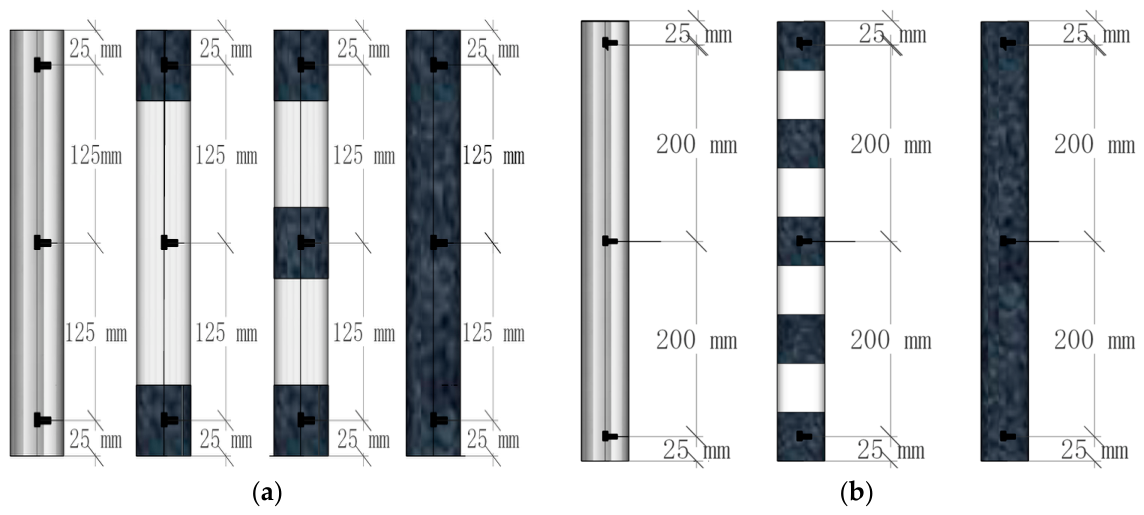
According to GB/T7314-2017 [20], the force-displacement control method was used to conduct tests on the aluminum alloy pipes. A stepwise loading method was adopted, where the initial load increment was set at 10% of the calculated peak load, with each increment maintained for 60 s. After reaching 60% of the peak load, each subsequent increment was 6.67% of the peak load, with a duration of 30 s per increment. Once the specimen’s load-bearing capacity began to decline, a continuous displacement-controlled loading method was applied at a rate of 1 mm/min until the specimen’s load-bearing capacity dropped to 30% of its peak. To acquire the complete stress–strain response of the aluminum alloy pipes, strain gauges were attached at both ends and in the middle of the pipes. The parameters for the strain gauges are listed in Table 4, and their specific attachment positions are shown in Figure 2a,b.

3. Test Results and Discussion

3.1. Failure Mode of Aluminum Alloy Circular Pipe

In the compression tests of CFRP-reinforced aluminum alloy round pipes, the vertical deformation of the specimen initially increases linearly with the load during the early stages of loading. However, as the load approaches approximately 80% of the material’s ultimate capacity, the vertical deformation begins to increase nonlinearly, indicating the onset of yielding. At this point, convex deformation starts to manifest near the ends of the specimen. Although the load continues to rise, the load-bearing capacity of the reinforced aluminum alloy pipe gradually diminishes. Prior to yielding, each specimen exhibits good linearity. As the load approaches the yield point, audible cracking sounds from the breaking CFRP fibers can be detected. After yielding, the CFRP reinforcement effectively restrains the buckling of the aluminum alloy pipe, delaying final failure and allowing the axial load to continue increasing until ultimate failure occurs. The structural constraints of different CFRP-reinforced aluminum alloy pipes lead to variations in axial load capacities and failure modes.
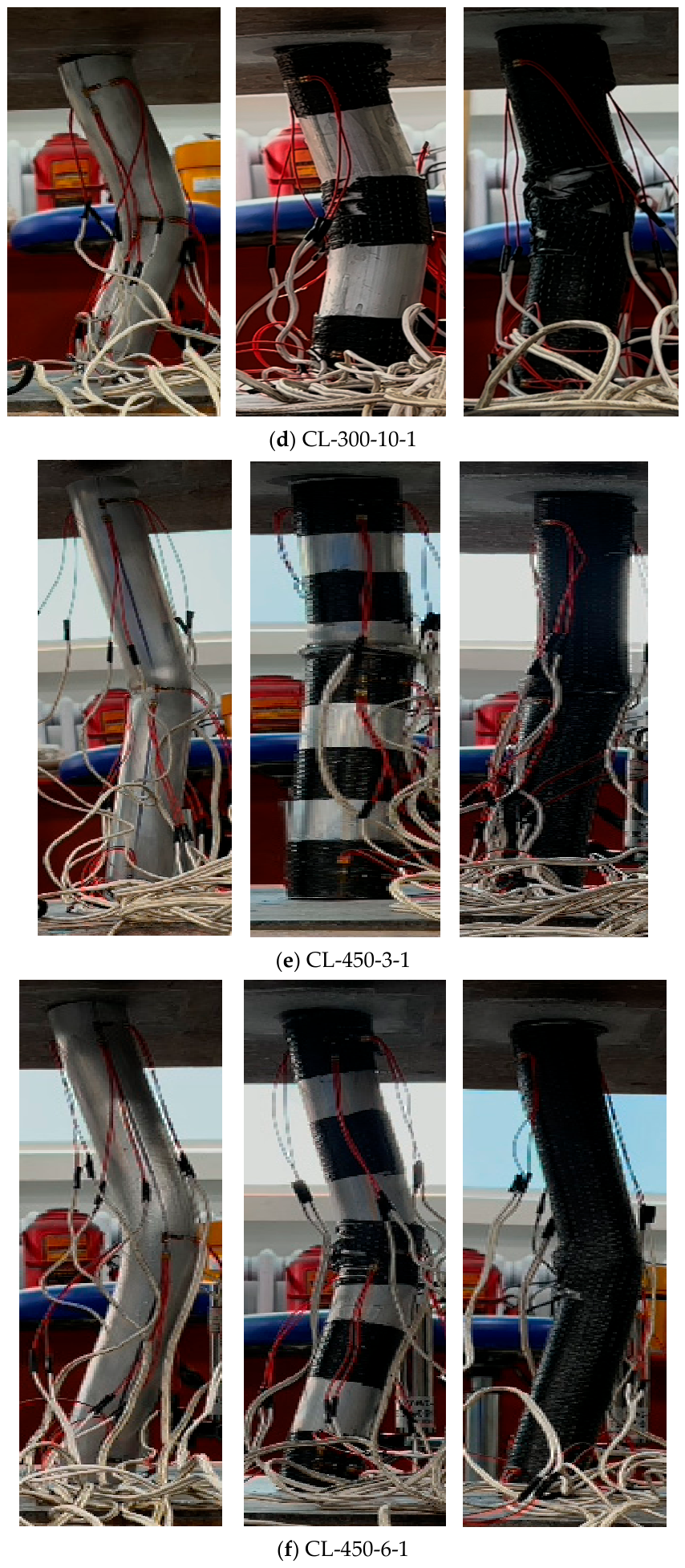
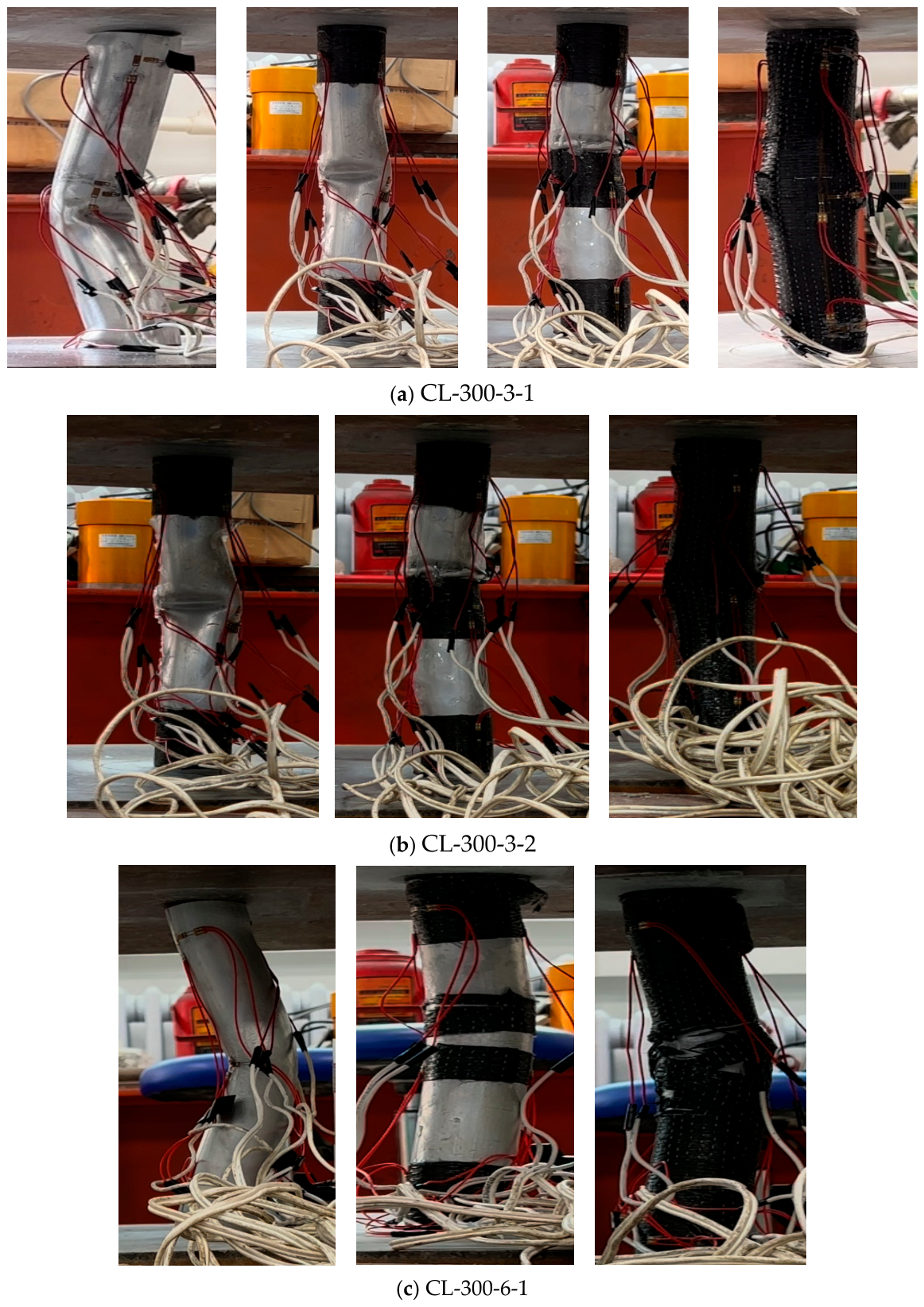
In the CL-300-3-0-0, CL-300-6-0-0, and CL-300-10-0-0 specimens, drumming occurs at both ends and in the middle, forming sharp corners at the ends (Figure 3a,c,d). For the CL-300-3-1-2 and CL-300-3-2-2, intermediate axisymmetric buckling occurs, and elephant-foot buckling manifests at both ends (Figure 3a,b). Elephant-foot buckling refers to the bulging at the ends of the CFRP-reinforced aluminum alloy pipe, particularly in the bonding zone between the CFRP and the aluminum alloy. The CFRP effectively restricts bending in the aluminum alloy pipe. In the CL-300-3-1-3 and CL-300-3-2-3 specimens, failure is localized to either the upper or lower parts (Figure 3a,b). In the CL-300-6-1-3 and CL-300-10-1-3 specimens, failure occurs in the middle, where the bond between the CFRP and aluminum alloy is compromised (Figure 3c,d). The three-section CFRP reinforcement effectively restrains the lateral deformation of the aluminum alloy pipe. The specimens CL-300-3-1-A, CL-300-3-2-A, CL-300-6-1-A, and CL-300-10-1-A exhibit the least lateral deformation, primarily characterized by middle bulging and CFRP fracture (Figure 3a–d). After yielding, the stiffness of the CFRP sleeve remains high, providing additional rigidity to the aluminum alloy circular pipes. Furthermore, the failure of 3 mm thin-walled aluminum alloy tubes is predominantly governed by local buckling, while 6 mm and 10 mm thick-walled specimens are mainly controlled by global buckling under axial compression.
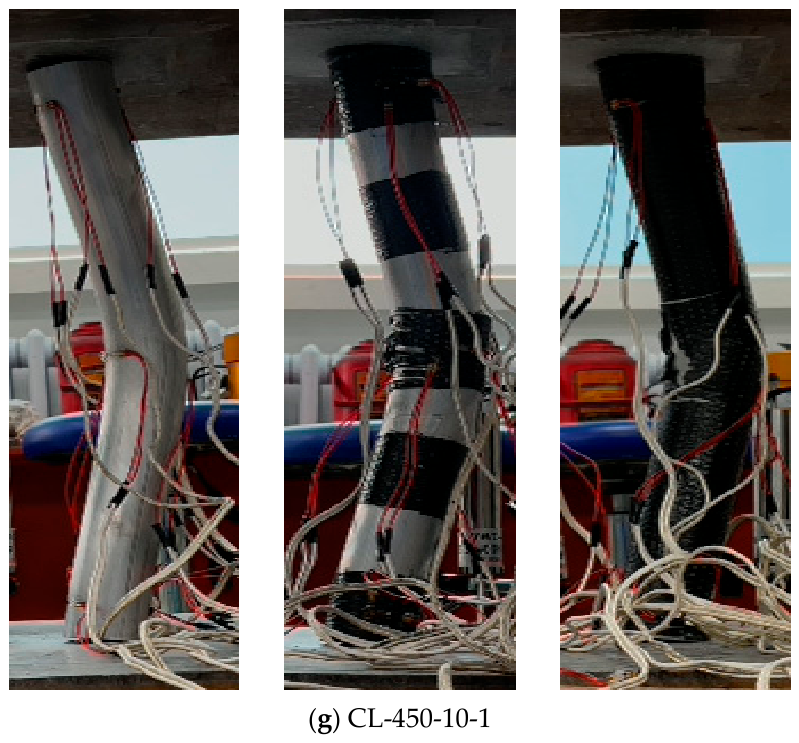
In the tests conducted with 450 mm aluminum alloy pipes, the results for both unreinforced and fully reinforced configurations were comparable to those observed in the 300 mm tests (Figure 3a–d). The specimens CL-450-3-1-5, CL-450-6-1-5, and CL-450-10-1-5 exhibited buckling at the midpoint under load. The CL-450-3-1-5 specimen experienced buckling failure at the non-reinforced end, while the CL-450-6-1-5 and CL-450-10-1-5 specimens demonstrated tearing failure at the bonding zone between the CFRP and the aluminum alloy tube (Figure 3e–g). Five-section reinforced aluminum alloy pipe effectively prevents the deformation of the aluminum alloy pipe. The five-section CFRP reinforcement effectively mitigates deformation in the aluminum alloy pipe, illustrating that CFRP can suppress outward bulging in the yielding areas of aluminum alloy circular pipes, thereby preventing or delaying the onset of elephant-foot buckling.

3.2. Load–Displacement Curve Analysis

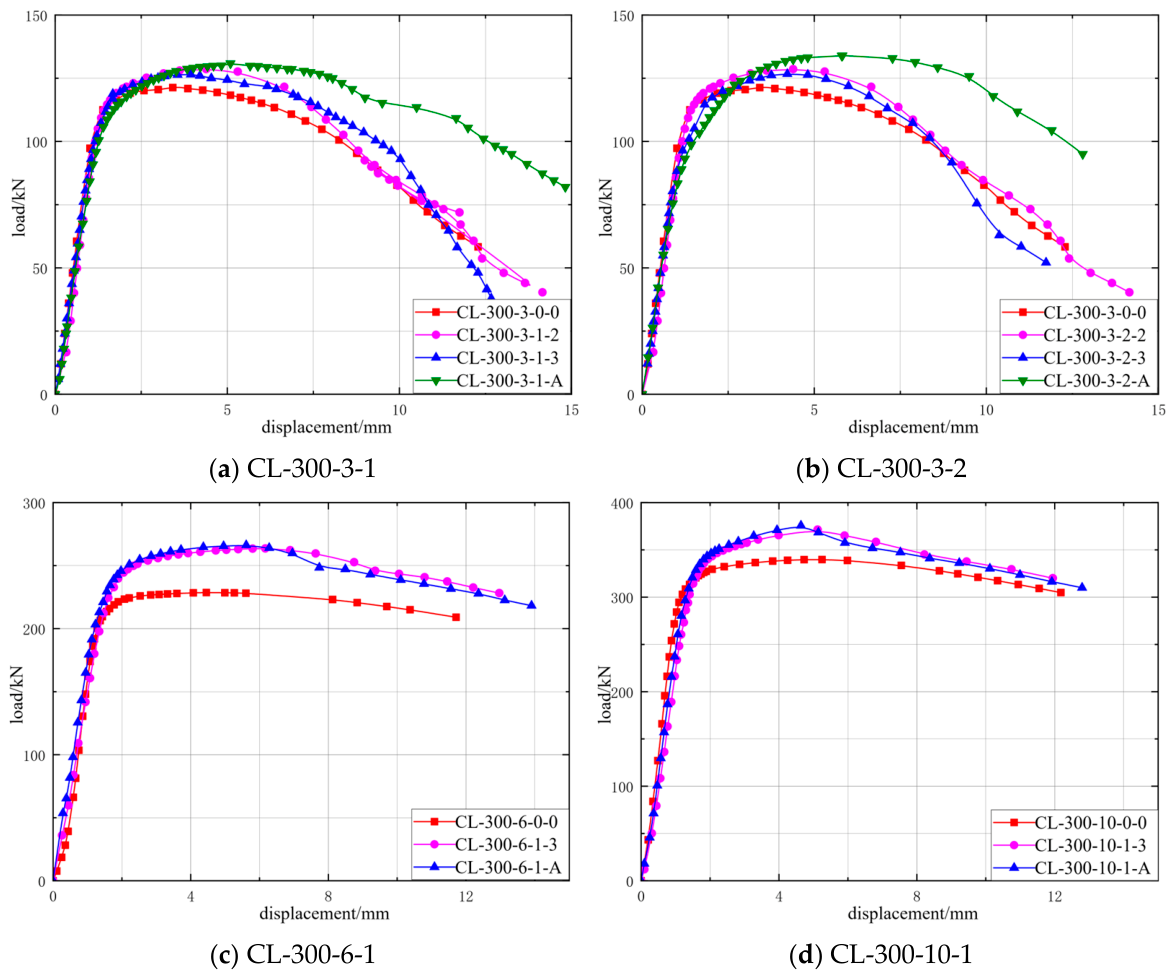
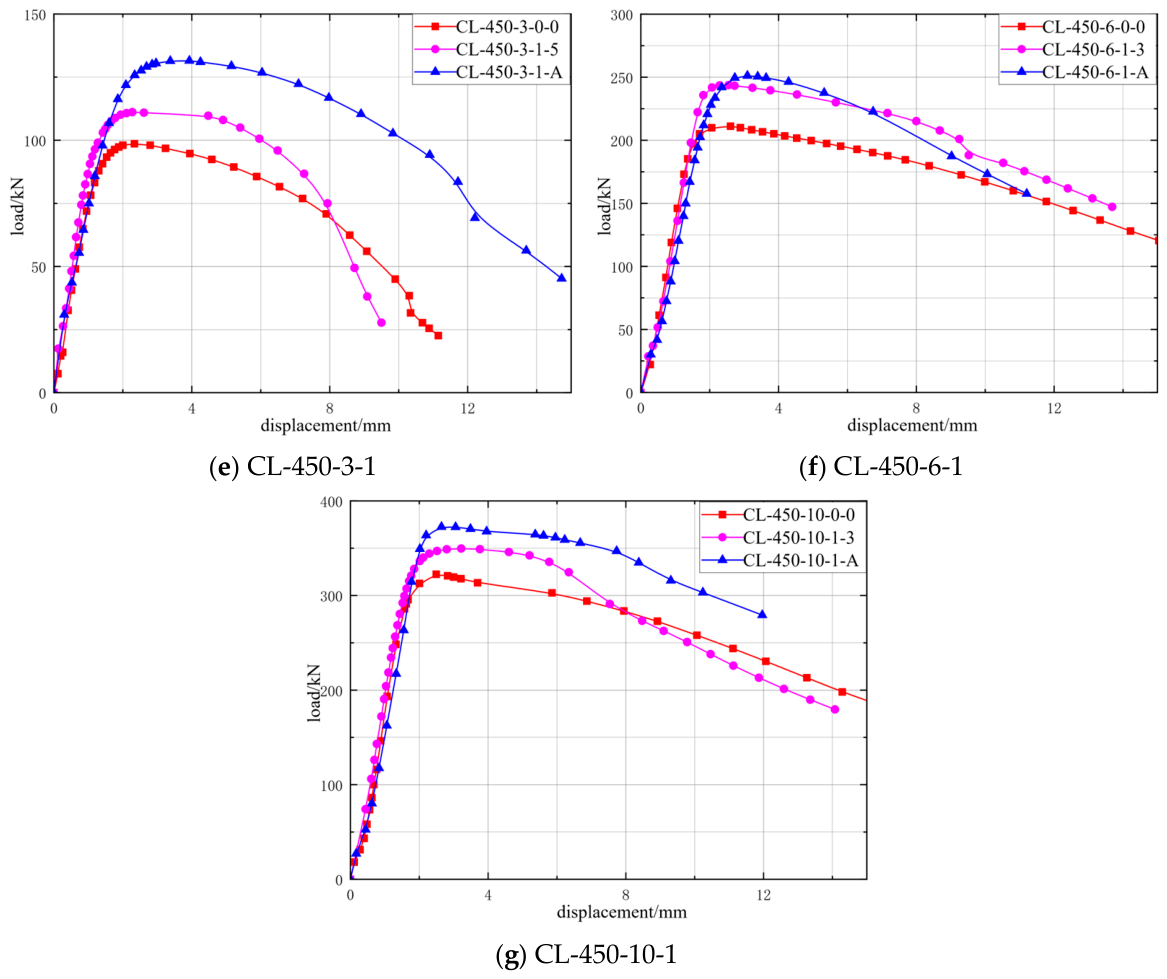
The axial load–displacement curves for the four types of specimens tested in this experiment are presented in Figure 4. From the graph, we can observe that the load–displacement behavior of the aluminum alloy pipes follows three distinct stages: (1) in the elastic stage, the load–displacement relationship exhibits a linear increase; (2) in the plastic stage, the slope of the load–displacement curve gradually decreases until it reaches the ultimate load; (3) in the failure stage, the load–displacement curve declines until failure occurs. Except for the AL-300-3 group, the load–displacement curve of CFRP-reinforced aluminum alloy pipes is significantly less steep compared to unreinforced specimens during the elastic stage. In the CL-300-3-1 and CL-300-3-2 groups, both two-part and three-part CFRP reinforcements exhibit a similar load–displacement trend to unreinforced specimens. Full reinforcement provides only a slight improvement in ductility compared to the unreinforced pipes (Figure 4a,b). For the CL-300-6, CL-300-10, CL-450-3, CL-450-6, and CL-450-10 groups, as the aluminum pipe thickness increases, the load–displacement curves of CFRP-reinforced aluminum pipes begin to closely resemble those of unreinforced aluminum pipes (Figure 4c–g).
In the plastic stage, the yield load, ultimate load, and vertical displacement of the specimens are presented in Table 5. For the CL-300-3 group, there is minimal variation in yield load and displacement among the specimens. However, both the ultimate load and displacement increase as the CFRP coverage area expands. CL-300-1-A and CL-300-2-A show better ductility and enter the plastic stage earlier. For CL-300-3-1-3 and CL-300-3-2-3, one or two layers of CFRP do not significantly enhance the strength of the aluminum pipes. In these instances, failure occurred in the segments not bonded with CFRP, likely due to the lower strength of the aluminum pipe, which caused it to yield before the CFRP-bonded area could fully contribute to reinforcement. For the other groups, particularly the CL-450 group, as the thickness of the aluminum pipe increases, the load–displacement curves for both the wrapped and unwrapped pipes start to converge. This occurs because, with increased thickness, the relative binding effect of the CFRP diminishes. This is evident in the gradual convergence of the curves. Table 5 indicates that segmented reinforcement is more effective for the 300 mm pipes compared to the 450 mm pipes, as the ultimate load of the 300 mm sectionally reinforced pipe is closer to that of the fully reinforced pipe.
In the failure stage for CL-300-3-1-3, CL-300-3-2-3, and CL-450-3-1-5, the failure intensity decreases rapidly, more quickly than that of the unreinforced aluminum pipes. Both the CL-300-3 and CL-450-3 groups demonstrate unstable failure modes. The uncovered aluminum segments between CFRP strips become weak regions, inducing uneven stress distribution and premature local buckling, which further deteriorates the overall structural stability.
Table 5 further illustrates that CFRP reinforcement has a limited impact on the CL-300-3 group, resulting in a maximum load increase of only 8%. In contrast, the CL-300-6 and CL-300-10 groups exhibit more significant reinforcement effects, with ultimate loads increasing by 16% and 10%, respectively. The difference in ultimate load between sectional and full reinforcement is approximately 1%, with CL-300-6 showing the most favorable reinforcement results.
For the 450 mm-thick aluminum pipes, the differences in ultimate load among unwrapped, sectionally wrapped, and fully wrapped pipes are 12%, 33%, 15%, 19%, 14%, and 21%, respectively. The ultimate load is significantly higher for fully wrapped pipes compared to sectionally wrapped pipes, and sectional reinforcement provides no clear advantage.

3.3. Analysis of Load Strain Curve of Specimen

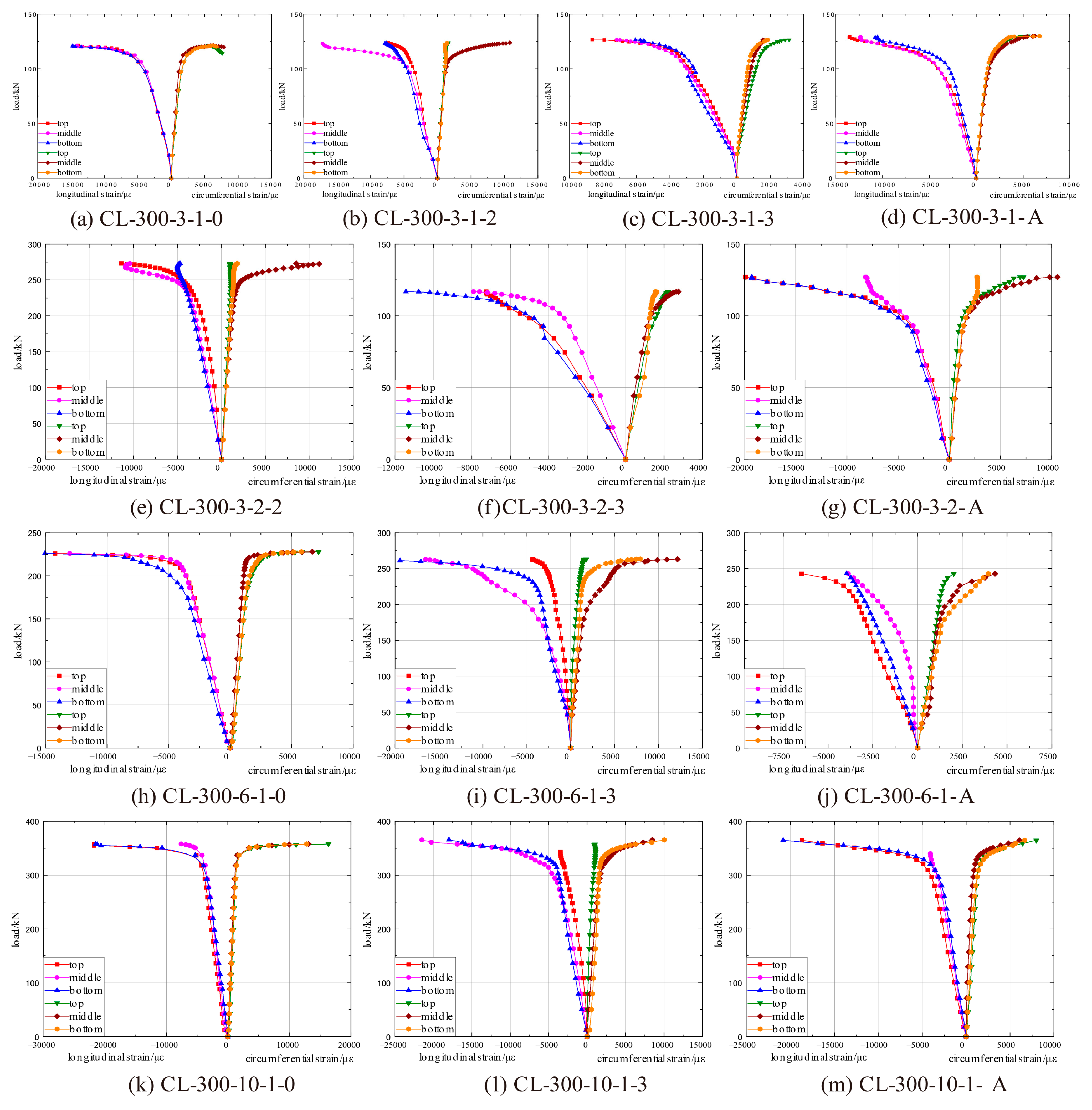
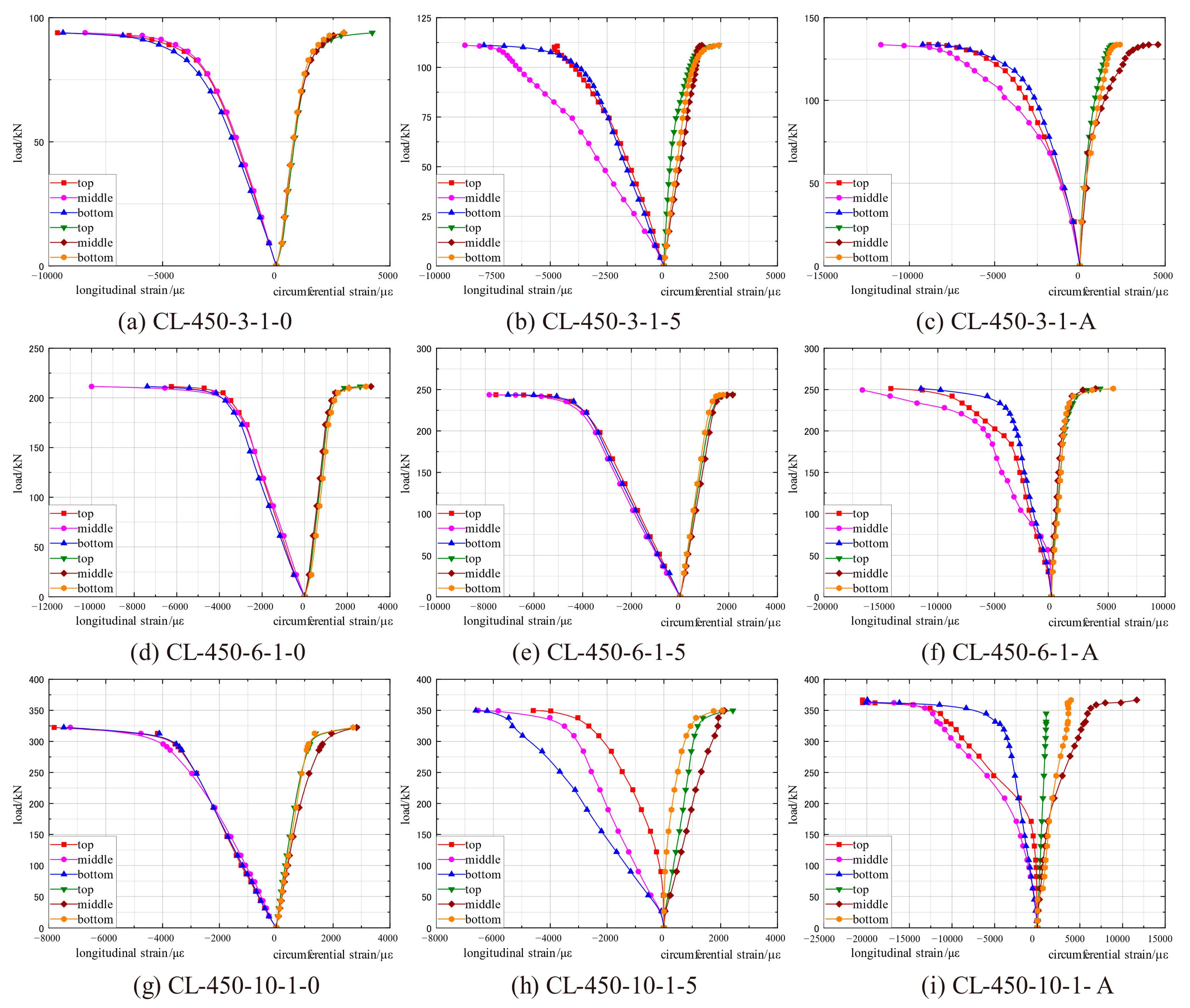
From Figure 5 and Figure 6, it can be observed that the CL-300-3-0-0, CL-300-6-0-0, and CL-300-10-0-0 specimens exhibit linear elastic behavior in the initial stage until the stress reaches the limit strength. The longitudinal and circumferential strains initially increase in the middle section, followed by the sides, which correlates well with their failure modes. Notably, the lower longitudinal strain experiences a significant shift. For the CL-300-3-1-2 and CL-300-3-2-2 specimens, the longitudinal and circumferential strains in the middle section increase rapidly, while the strains at the reinforced ends grow more slowly, consistent with the observed failure pattern. In these specimens, the circumferential and longitudinal strains in the middle section are significantly higher than those in the upper and lower sections.
In the CL-300-3-1-3, CL-300-3-2-3, CL-300-6-1-3, and CL-300-10-1-3 specimens, the longitudinal and circumferential strains at both ends increase rapidly, while the strains in the middle section do not exhibit a significant rise, consistent with their failure modes. The CL-300-3-1-A, CL-300-3-2-A, CL-300-6-1-A, and CL-300-10-1-A specimens display a similar trend, although the effect is less pronounced. During the elastic stage, the load-strain curves show minimal variation among the upper, middle, and lower sections of the specimens. The application of CFRP for reinforcing various parts of the aluminum alloy pipes does not significantly impact longitudinal and circumferential strains in different regions.
Apart from the CL-300-3 group, it is evident that the strain limit load of the segmentally reinforced specimens is higher than that of the unreinforced aluminum alloy pipes. The ultimate strain load for fully wrapped specimens exceeds that of sectionally reinforced ones.
The CL-450 group follows a similar trend to the CL-300 group, but with more pronounced deformation in the middle section.

3.4. Elastic Modulus Analysis

According to the Formula (1) for calculating the elastic modulus Ec in GB/T7314-2017—Metallic materials. Compression test method at room temperature [20]:
E c = ( F k F j ) L 0 ( L k L j ) S 0
F j is the bearing load when controlling the longitudinal displacement L j , F k is the bearing load when controlling the longitudinal displacement L k , L 0 is the specimen length, and S 0 is the cross-sectional area of the specimen.
The elastic modulus of the aluminum alloy tube specimen obtained by calculation is shown in Table 6. For the 30 cm–3 mm layer of CFRP reinforced specimen, E(CL-300-3-0-0)cE(CL-300-3-1-3)cE(CL-300-3-1-A)c > E(CL-300-3-1-2)c. For the 30 cm–3 mm two-layer CFRP reinforced specimen, E(CL-300-3-0-0)cE(CL-300-3-2-3)c > E(CL-300-3-2-A)c > E(CL-300-3-2-2)c. For the 30 cm–6 mm layer of CFRP reinforced specimen, E(CL-300-6-0-0)c > E(CL-300-6-1-A)cE(CL-300-6-1-3)c. For the 30 cm–10 mm layer of CFRP reinforced specimen, E(CL-300-10-0-0)c > E(CL-300-10-1-A)c > E(CL-300-10-1-3)c. For the 45 cm–3 mm one-layer CFRP reinforced specimen, E(CL-450-3-0-0)c > E(CL-450-3-1-A)c > E(CL-450-3-1-5)c. For the 45 cm–6 mm one-layer CFRP reinforced specimen, E(CL-450-6-0-0)c > E(CL-450-6-1-5)c > E(CL-450-6-1-A)c. For the 45 cm–10 mm one-layer CFRP reinforced specimen, E(CL-450-10-0-0)cE(CL-450-10-1-5)c > E(CL-450-10-1-A)c. These results indicate that, except for the 3 mm-thick aluminum tube, the elastic modulus of both the unwrapped and fully CFRP-wrapped aluminum tubes exhibits minimal variation. However, for the 3 mm-thick tubes, the elastic modulus of the sectionally wrapped tubes is lower than that of both the unwrapped and fully wrapped specimens. Unlike full continuous CFRP wrapping, segmented CFRP strips provide discontinuous lateral confinement. Under initial axial compression, the unreinforced aluminum segments between the CFRP strips produce obvious shear deformation and slight lateral micro-displacement, which reduces the overall elastic stiffness and results in a lower elastic slope. This phenomenon is more prominent in thin-walled tubes (3 mm), as thinner sections are more susceptible to shear deformation during the early elastic loading stage.

3.5. Finite Element Analysis

In this section, we establish the finite element numerical model. The aluminum tube is represented as a solid element, while the CFRP is represented as a shell element. The degrees of freedom at the base are constrained to zero, allowing the top of the steel plate to displace freely along the z-direction, while all other degrees of freedom remain fixed.
For the 6061-T6 aluminum alloy used in this study, the Ramberg–Osgood model is employed to characterize its intrinsic material behavior [22]. This model combines a linear and a nonlinear power-law term to describe the stress–strain relationship, requiring three fundamental parameters: elastic modulus E, nominal yield strength σ 0.2 , and the hardening exponent.
ε = σ E + K ( σ σ 0 ) n
To ensure a robust bond between the CFRP and the aluminum tube during the wrapping process, an additional 1/3 width of CFRP was left for bonding. As a result, the CFRP was defined as two independent modeling layers: one with a single layer of CFRP and another with two layers. The two-layer CFRP configuration is adjusted using the formula provided in Section 10.1 of the “Code for Design of Concrete Structural Reinforcement” GB 50367-2013 [23].
k m = 1.16 n f E f t f 308000 0.9
The second phase of the model employs the Hashin failure criteria. We uses Hashin’s theory [24,25] to predict damage initiation in fiber-reinforced composites through four failure mechanisms: fiber tension, fiber compression, matrix tension, and matrix compression. The general forms of these failure criteria are given as follows:
F f t = ( σ 11 X T ) 2 + α ( τ 12 S L ) 2
F f c = ( σ 11 X c ) 2
F m t = ( σ 22 Y T ) 2 + α ( τ 12 S L ) 2
F m c = ( σ 22 2 S T ) 2 + [ ( Y c 2 S T ) 2 1 ] σ 22 Y c + ( τ 12 S L ) 2
X T is the longitudinal tensile strength, X c is the longitudinal compressive strength, Y T is the transverse tensile strength, Y c is the transverse compressive strength, S L is the longitudinal shear strength, and S T is the transverse shear strength. α is used to determine the effect of longitudinal shear stress on fiber tensile failure. The allowable range is 0.0 ≤ α ≤ 1.0. The default value is α = 0.
To simplify the model and enhance computational efficiency, the interface between the CFRP and the aluminum tube is defined using a binding constraint (tie), with surface-to-surface contact set for the CFRP-aluminum interface. The friction coefficient for tangential behavior is set at 0.5, while normal behavior is modeled as hard contact. The initial geometric imperfection of the structure is defined as 1/1000 of the characteristic dimension [26].
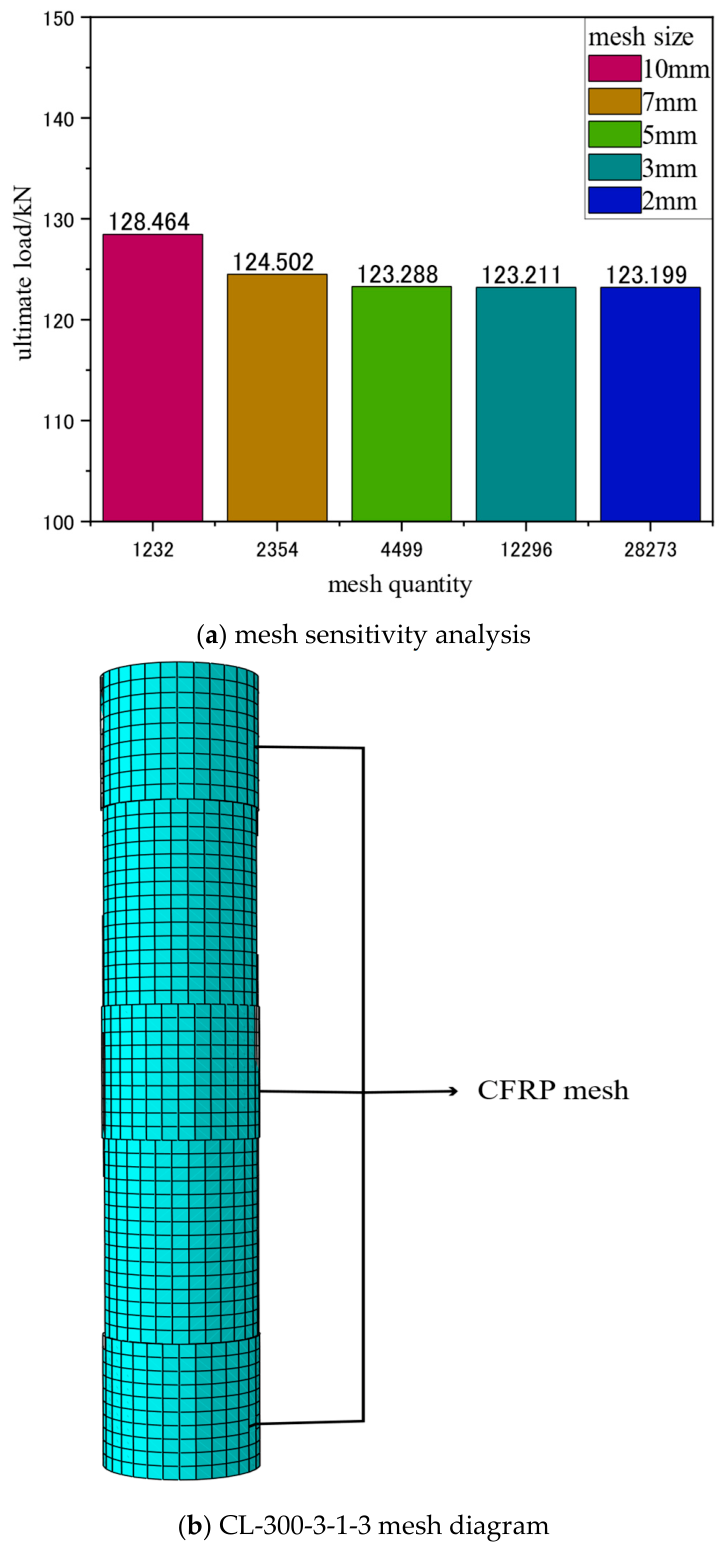
For the aluminum alloy tube (solid element) and the CFRP (shell element), a sweeping partitioning method was adopted for meshing, as it minimally affects the results. A mesh sensitivity analysis was first conducted on the representative specimen CL-300-3-1-3, and the force-displacement curves corresponding to five mesh sizes (2, 3, 5, 7, and 10 mm) are presented in Figure 7a. Additional verification was also carried out on CL-300-6, CL-300-10, and CL-450 models. Consistent convergence trends were observed across all geometric configurations; thus, only the typical results of CL-300-3-1-3 were displayed for brevity, and the optimal mesh size was uniformly applied to all numerical models. The numerical comparison results show that coarse meshes significantly overestimate the ultimate bearing capacity with large relative errors, failing to meet the 2% convergence criterion. Notably, the 5 mm mesh size exhibits excellent numerical accuracy: the relative error of ultimate load for 300 mm-length specimens is less than 0.3%, while that for 450 mm-length specimens is approximately 1.0%, both well within the prescribed 2% convergence threshold. Further refining the mesh to 3 mm and 2 mm only achieves negligible error reduction, yet greatly increases the total number of elements and computational time without providing substantial improvement in the prediction accuracy of ultimate load, structural stiffness, and buckling morphology. To balance between accuracy and efficiency, a mesh size of 5 mm was selected to meet the research requirements (Figure 7b).
The aluminum alloy pipe columns tested exhibit both geometric and material nonlinearity, necessitating the use of nonlinear solution methods when constructing the finite element model. In the experiment, the CL-300-3 and CL-450-3 aluminum tubes experienced instability and significant deformations. Since CFRP behavior follows Hashin’s theory [23], which involves energy dissipation and CFRP failure, a static analysis is unsuitable. Therefore, a dynamic explicit method is applied in this study.
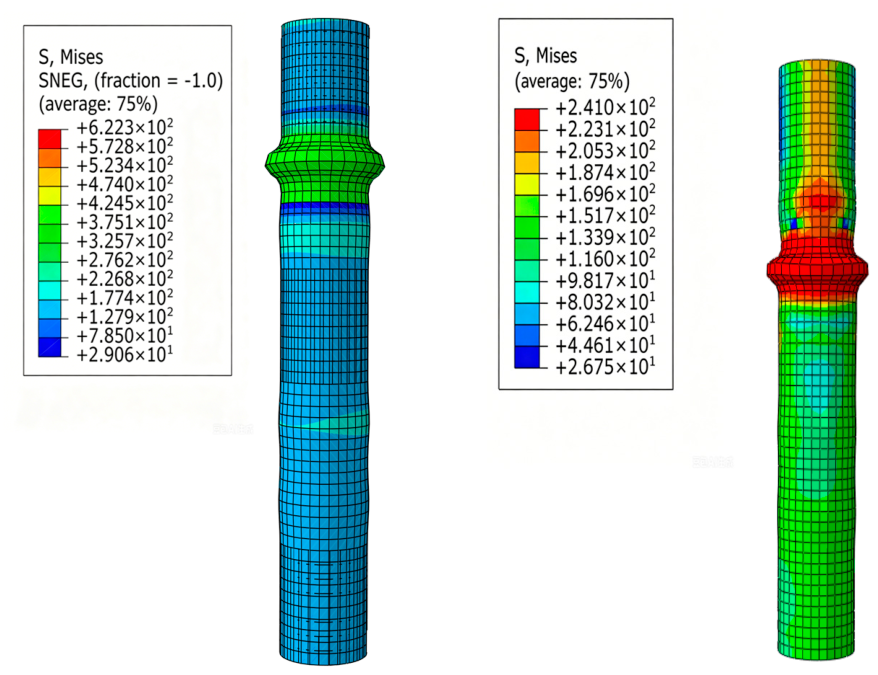
A comparison between the finite element model and the experimental failure modes (Figure 8) demonstrates that the CFRP serves to provide strong circumferential restraint for the internal aluminum alloy tube. The maximum stress in the specimens is concentrated at the upper and lower ends of the aluminum alloy tubes. Benefiting from these ends, which are wrapped with carbon fiber fabric, end failure is significantly mitigated. The CFRP layer redistributes the internal stress within the component, and the stress distribution in the aluminum alloy tubes across different specimens closely aligns with the observed failure modes in the tests.
The finite element comparison diagram (Figure 8), combined with experimental data, illustrates the stress state of the specimens at failure. For the unreinforced specimens (CL-300-3-0-0, CL-300-6-0-0, CL-450-3-0-0, and CL-450-6-0-0), elephant foot buckling occurred at the ends of the specimens, while for CL-300-10-0-0 and CL-450-10-0-0, buckling occurred in the midsection with no foot buckling at the ends. For segmentally reinforced specimens (CL-300-3-1-2 and CL-300-3-2-2), bending was observed at the CFRP ends, and for CL-300-3-1-3 and CL-300-3-2-3, foot buckling occurred at the CFRP ends, consistent with the experimental failure states. Specimens such as CL-300-6-1-3, CL-300-10-1-3, and CL-450-10-1-5 exhibited slight bending at both ends, while CL-450-3-1-5 and CL-450-6-1-5 showed failure akin to short tube buckling. In the fully reinforced specimens (CL-300-3-1-A, CL-300-3-2-A, CL-300-6-1-A, CL-300-10-1-A, CL-450-3-1-A, CL-450-6-1-A, and CL-450-10-1-A), small bending occurred at both ends, followed by midsection bending failure, aligning with the experimental failure patterns.
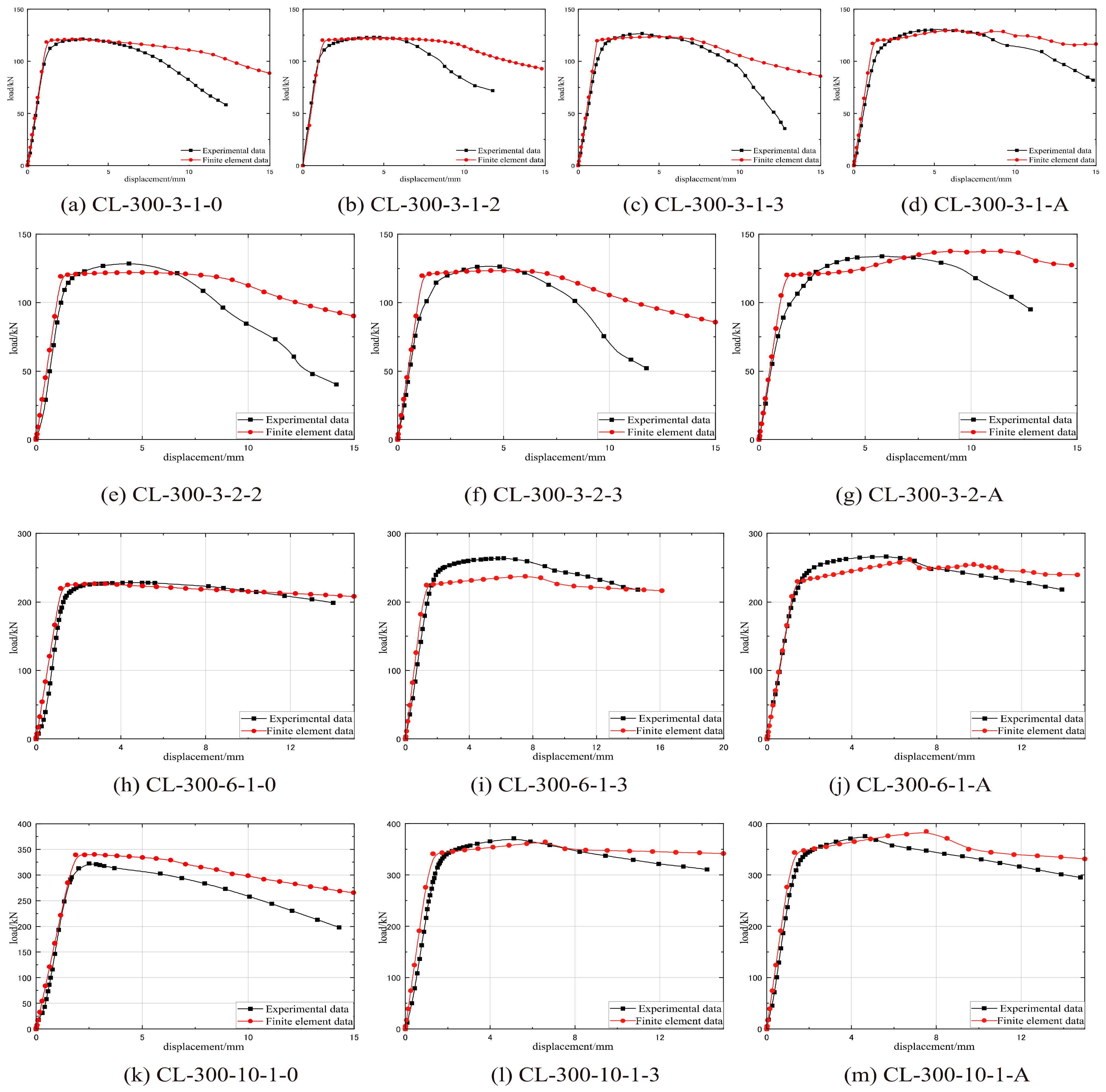
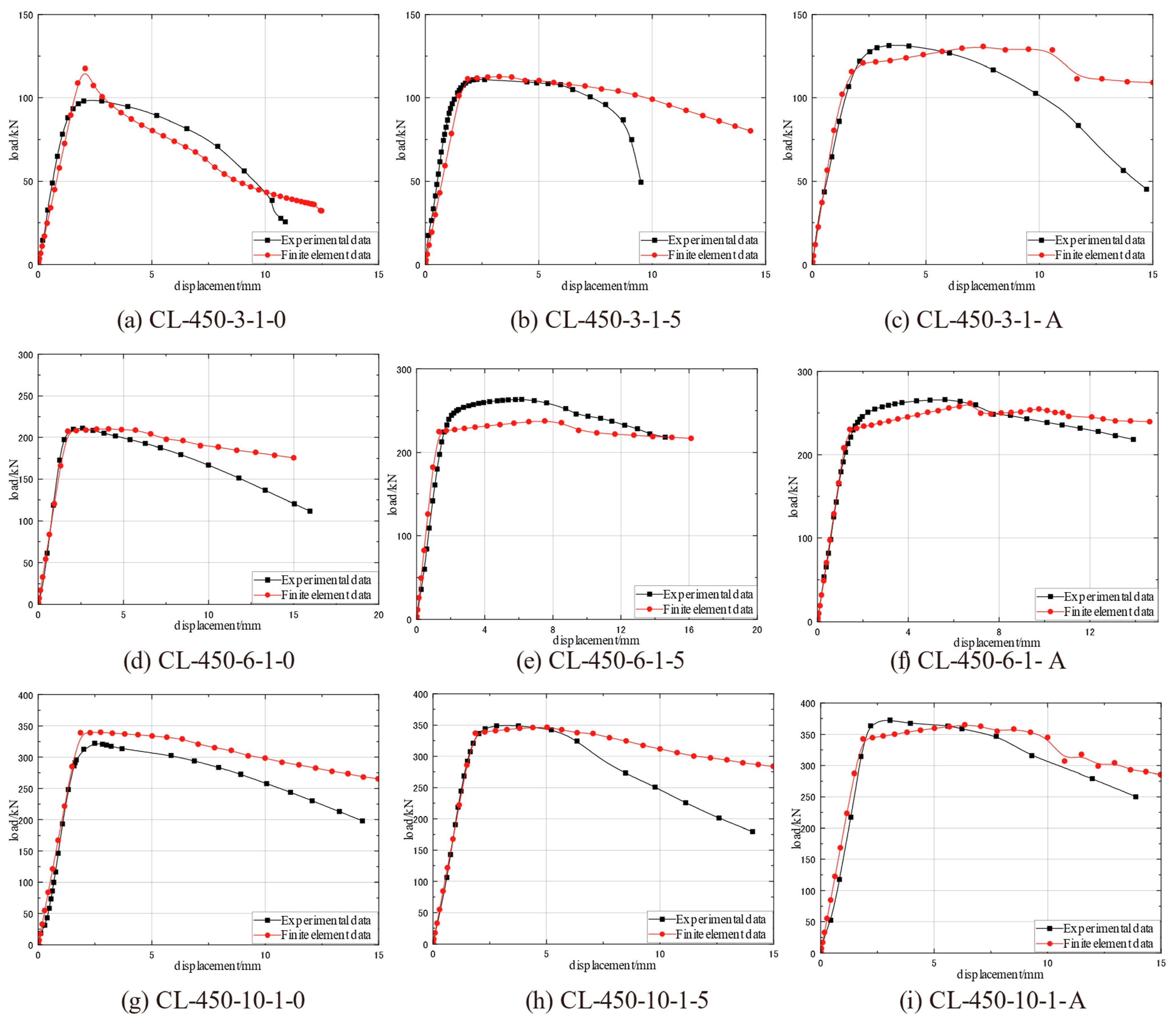
A comparison of the load–displacement curves (Figure 9 and Figure 10) between the finite element model and the experimental results, as presented in Table 5, reveals that the maximum error between the yield load predicted by the finite element model and the yield load measured experimentally is less than 3%. This finding confirms that the finite element model accurately simulates the overall mechanical behavior of the specimens under axial compression. The load–displacement trends and magnitudes observed in the finite element analysis closely align with the experimental data, demonstrating sufficient accuracy for analytical purposes. Considering the potential defects in the specimens, limitations of the loading apparatus, and the precision of the data acquisition system, the results of the finite element simulation meet the research requirements. Consequently, this simulation method can serve as an effective complement to experimental research.
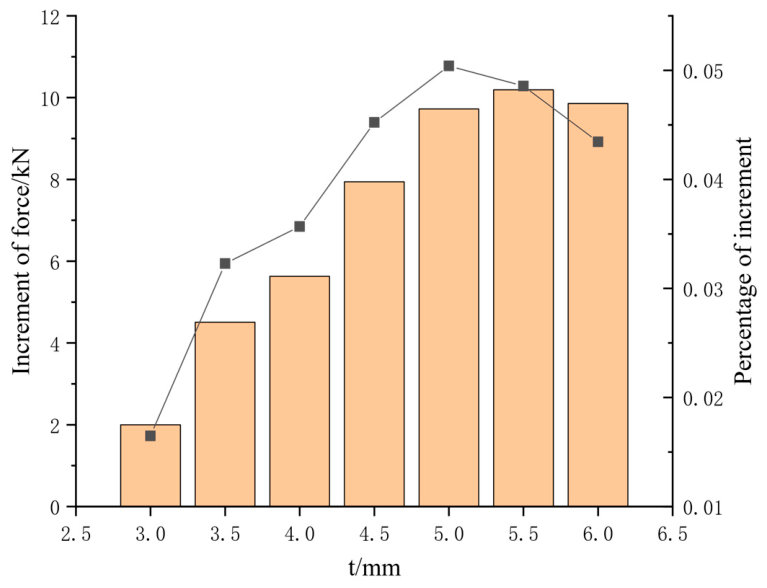
Based on the established finite element model, the optimal strengthening thickness of the three-section wrapped CFRP was further investigated. The designed test parameters are as follows: t = 3–6 mm, set every 0.5 mm as a thickness, L = 300 mm. The peak load of each specimen at the ultimate state is recorded and compared with that of the unreinforced aluminum tube. The increased load after reinforcement is obtained. Divide by the unreinforced load to get the growth rate.
As shown in Figure 11, the strengthening effect is best when the thickness is 5 mm, and it can be seen from the cloud image that the CFRP begins to break when the thickness is 5 mm, which fully plays the performance of CFRP.

4. Conclusions

This paper investigates the axial compressive mechanical properties of CFRP-reinforced aluminum alloy tubes, focusing on key parameters such as the way CFRP wraps aluminum, aluminum tube thickness, and its length. Both experimental research and finite element analysis were conducted to study the compressive strength behavior of aluminum alloy tubes reinforced with segmented CFRP. The main conclusions are as follows:
  • Effect of CFRP reinforcement methods: For the 300 mm aluminum alloy tube, the ultimate load of the segmentally reinforced tube is nearly identical to that of the fully wrapped CFRP-reinforced tube. The most effective reinforcement was observed in the 6 mm-thick aluminum tube, achieving a 16% improvement in ultimate load. However, segmented reinforcement conserves nearly half of the CFRP material. The 3 mm-thick tube exhibited negligible reinforcement effects due to its limited load-bearing capacity, leading to stress concentration in the unreinforced sections. For the 450mm aluminum tubes, the ultimate load of fully wrapped tubes surpassed that of segmentally reinforced tubes by 18%, 3%, and 6%, respectively. Segmental reinforcement enhanced the ultimate load by 12%, 15%, and 14% compared to unreinforced tubes, while also conserving 44% of the CFRP material compared to full wrapping. The 6 mm-thick aluminum tube demonstrated the most effective reinforcement.
  • Effect of tube length on ultimate load: The ultimate load for different tube lengths showed an increase of 2% to 16% in 300 mm tubes with segmental reinforcement, and from 8% to 17% for fully wrapped tubes. In the case of 450 mm tubes, segmental reinforcement enhanced the ultimate load by 12% to 15%, while full wrapping led to increases of 19% to 33%. It is evident that CFRP reinforcement is more effective for longer tubes. However, for shorter tubes, the difference in ultimate load between segmented and fully wrapped reinforcement is smaller.
  • Finite element analysis and failure modes: Based on finite element stress distributions and experimental failure modes, it is evident that segmented CFRP reinforcement can effectively distribute the load along long tubes, thereby reducing the impact of flexibility on the ultimate bearing capacity. The discrepancy between the finite element results obtained from Abaqus and the experimental data ranged from 0.09% to 1.57%, confirming the model’s accuracy in analyzing the mechanical properties of CFRP-reinforced aluminum tubes. Consequently, finite element simulations can serve as a reliable reference for experimental research. Concurrently, parameter extension analysis was conducted to evaluate composite reinforcement performance. The results demonstrate that a 0.167 mm-thick CFRP layer provides optimal reinforcement enhancement for 5 mm-thick aluminum tubing, exhibiting the most effective interfacial stress transfer characteristics among tested configurations.
  • The selection of CFRP strengthening configurations for aluminum alloy tubes should be reasonably determined according to the actual tube length and engineering cost requirements. For short aluminum tubes with a length of 300 mm, the three-segment CFRP wrapping scheme is highly recommended. This reinforcement method can achieve nearly equivalent ultimate anti-buckling mechanical performance compared with full CFRP wrapping, while effectively reducing CFRP material consumption by approximately 50%, realizing an excellent balance between structural mechanical performance and economic benefit. For long and slender aluminum tubes with a length of 450 mm, full CFRP wrapping is prioritized to obtain the best ultimate bearing capacity and buckling restraint effect. Nevertheless, segmented CFRP reinforcement is still a practical and preferable alternative for cost-sensitive engineering projects, which can steadily improve the load-carrying capacity of aluminum tubes on the premise of controlling material cost.

Author Contributions

X.L.: writing—original draft preparation, investigation. Y.Y.: methodology, writing—review and editing, investigation. P.Z.: visualization, resources, writing—review and editing, formal analysis. W.S.: supervision, formal analysis. All authors have read and agreed to the published version of the manuscript.

Funding

This work is supported by the Deep Earth Probe and Mineral Resources Exploration–National Science and Technology Major Project (Grant No. 2024ZD1000806), the National Natural Science Foundation of China (Grant No. 42372356), the Key Project of Education Department of Jilin Province (Grant No. JJKH20261455KJ), and the Graduate Innovation Fund of Jilin University (Grant No. 2025CX253).

Data Availability Statement

The data presented in this study are available on request from the corresponding author due to confidentiality restrictions, as the data are related to ongoing projects.

Conflicts of Interest

The authors declare that they have no known competing financial interests or personal relationships that could have appeared to influence the work reported in this paper.

References

  1. Georgantzia, E.; Gkantou, M.; Kamaris, G.S. Aluminium alloys as structural material: A review of research. Eng. Struct. 2021, 227, 111372. [Google Scholar] [CrossRef]
  2. You, X.; Xing, Z.; Jiang, S.; Zhu, Y.; Lin, Y.; Qiu, H.; Nie, R.; Yang, J.; Hui, D.; Chen, W.; et al. A review of research on aluminum alloy materials in structural engineering. Dev. Built Environ. 2024, 17, 100319. [Google Scholar] [CrossRef]
  3. Zheng, H.; Zhang, W.; Li, B.; Zhu, J.; Wang, C.; Song, G.; Wu, G.; Yang, X.; Huang, Y.; Ma, L. Recent advances of interphases in carbon fiber-reinforced polymer composites: A review. Compos. Part B Eng. 2022, 233, 109639. [Google Scholar] [CrossRef]
  4. Mamalis, A.; Manolakos, D.; Ioannidis, M.; Papapostolou, D. On the response of thin-walled CFRP composite tubular components subjected to static and dynamic axial compressive loading: Experimental. Compos. Struct. 2005, 69, 407–420. [Google Scholar] [CrossRef]
  5. Liu, Q.; Xing, H.; Ju, Y.; Ou, Z.; Li, Q. Quasi-static axial crushing and transverse bending of double hat shaped CFRP tubes. Compos. Struct. 2014, 117, 1–11. [Google Scholar] [CrossRef]
  6. Israr, H.; Rivallant, S.; Barrau, J. Experimental investigation on mean crushing stress characterization of carbon–epoxy plies under compressive crushing mode. Compos. Struct. 2013, 96, 357–364. [Google Scholar] [CrossRef]
  7. Feraboli, P.; Wade, B.; Deleo, F.; Rassaian, M. Crush energy absorption of composite channel section specimens. Compos. Part A Appl. Sci. Manuf. 2009, 40, 1248–1256. [Google Scholar] [CrossRef]
  8. Costas, M.; Díaz, J.; Romera, L.; Hernández, S. A multi-objective surrogate-based optimization of the crashworthiness of a hybrid impact absorber. Int. J. Mech. Sci. 2014, 88, 46–54. [Google Scholar] [CrossRef]
  9. Costas, M.; Díaz, J.; Romera, L.; Hernández, S.; Tielas, A. Static and dynamic axial crushing analysis of car frontal impact hybrid absorbers. Int. J. Impact Eng. 2013, 62, 166–181. [Google Scholar] [CrossRef]
  10. Kim, H.C.; Kil Shin, D.; Lee, J.J. Characteristics of aluminum/CFRP short square hollow section beam under transverse quasi-static loading. Compos. Part B Eng. 2013, 51, 345–358. [Google Scholar] [CrossRef]
  11. Zhao, X.-L.; Zhang, L. State-of-the-art review on FRP strengthened steel structures. Eng. Struct. 2007, 29, 1808–1823. [Google Scholar] [CrossRef]
  12. Baroutaji, A.; Sajjia, M.; Olabi, A.-G. On the crashworthiness performance of thin-walled energy absorbers: Recent advances and future developments. Thin-Walled Struct. 2017, 118, 137–163. [Google Scholar] [CrossRef]
  13. Chen, J.; Xu, S.; Liu, Z.; Tang, A.; Wei, L. Lightweight optimization of aluminum alloy energy absorbing box for crash safety. Automot. Eng. 2021, 43, 241–247. [Google Scholar]
  14. Wang, Y.; Wu, Z.; Liu, F. Crush experiment of composite cargo floor stanchions. Acta Mater. Compos. Sin. 2020, 37, 2200–2206. [Google Scholar]
  15. Kalhor, R.; Case, S.W. The effect of FRP thickness on energy absorption of metal-FRP square tubes subjected to axial compressive loading. Compos. Struct. 2015, 130, 44–50. [Google Scholar] [CrossRef]
  16. Chen, Y.; Feng, R.; Xu, J. Flexural behaviour of CFRP strengthened concrete-filled aluminium alloy CHS tubes. Constr. Build. Mater. 2017, 142, 295–319. [Google Scholar] [CrossRef]
  17. Zhu, G.; Sun, G.; Liu, Q.; Li, G.; Li, Q. On crushing characteristics of different configurations of metal-composites hybrid tubes. Compos. Struct. 2017, 175, 58–69. [Google Scholar] [CrossRef]
  18. Zhang, J.; Lu, B.; Zheng, D.; Li, Z. Experimental and numerical study on energy absorption performance of CFRP/aluminum hybrid square tubes under axial loading. Thin-Walled Struct. 2020, 155, 106948. [Google Scholar] [CrossRef]
  19. GB/T 228.1-2021; Metallic Materials, Tensile Testing at Room Temperature. Standardization Administration of China: Beijing, China, 2021.
  20. Islam, S.Z.; Young, B. Design of CFRP-strengthened aluminium alloy tubular sections subjected to web crippling. Thin-Walled Struct. 2018, 124, 605–621. [Google Scholar] [CrossRef]
  21. GB/T 7314-2017; Metallic Materials, Compression Test Method at Room Temperature. Standardization Administration of China: Bejing, China, 2017.
  22. Szymczak, C.; Kujawa, M. Flexural buckling and post-buckling of columns made of aluminium alloy. Eur. J. Mech.-A Solids 2019, 73, 420–429. [Google Scholar] [CrossRef]
  23. GB 50367-2013; Code for Design of Strengthening Concrete Structure. China Building Industry Press: Beijing, China, 2013.
  24. Gottesman, T.; Hashin, Z. Analysis of viscoelastic behaviour of bones on the basis of microstructure. J. Biomech. 1980, 13, 89–96. [Google Scholar] [CrossRef]
  25. Dong, F.; Ma, Q.H.; Gan, X.H.; Zhou, T.J. Numerical Simulation of Quasi-static Axial Compression of Carbon Fiber Composite Winding Aluminum Alloy Tube. Mater. Mech. Eng. 2021, 45, 66–74. [Google Scholar] [CrossRef]
  26. Peng, Q.; Lieping, Y. Elastoplastic buckling behaviour of CFRP-aluminum alloy composite tubes under axial compression. Eng. Mech. 2006, 23, 210–216. [Google Scholar]
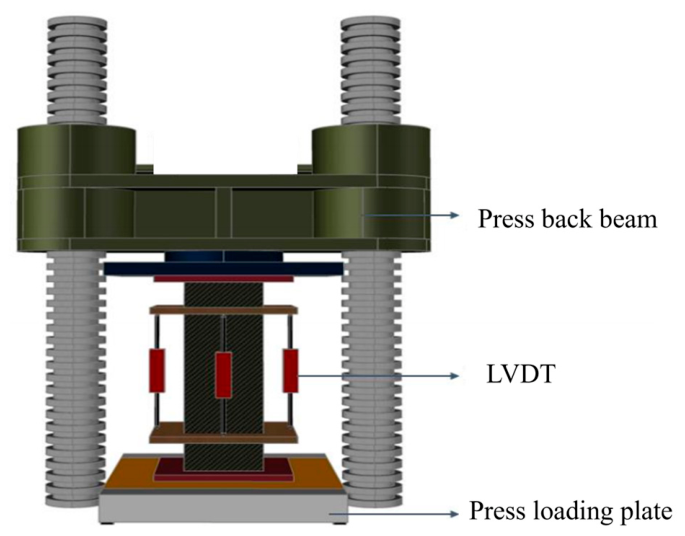
Figure 1. Displacement meter layout.
Buildings 16 01970 g001
Figure 2. Strain gauge bonding positions: (a) 300 mm pipe; (b) 450 mm pipe.
Buildings 16 01970 g002
Figure 3. Failure morphology of aluminum alloy pipes.
Buildings 16 01970 g003aBuildings 16 01970 g003bBuildings 16 01970 g003c
Figure 4. Load–displacement curve.
Buildings 16 01970 g004aBuildings 16 01970 g004b
Figure 5. CL-300 load strain curve.
Buildings 16 01970 g005
Figure 6. CL-450 load strain curve.
Buildings 16 01970 g006
Figure 7. Mesh of the CFRP-wrapped aluminum tube.
Buildings 16 01970 g007
Figure 8. Finite element stress nephogram.
Buildings 16 01970 g008
Figure 9. CL-300 finite element comparison diagram.
Buildings 16 01970 g009
Figure 10. CL-450 finite element comparison diagram.
Buildings 16 01970 g010
Figure 11. CL-300 finite element parameter extension diagram.
Buildings 16 01970 g011
Table 1. Mechanical property parameters of aluminum alloy.
TypeR0.2/MPaRm/MPaEA/MPa
6061-T6272.6293.672.4
Note: R0.2 is the yield strength of the aluminum alloy pipe; Rm is the tensile strength of the aluminum alloy pipe; EA is the elastic modulus of the aluminum alloy pipe.
Table 2. Mechanical properties of carbon fiber and epoxy resin materials.
Materialt/mmfu/MPaEC/MPa
CFRP0.1673532 2.33 × 10 5
Epoxy resin 402800
Note: t is the thickness; f u is the tensile strength; E C is the elastic modulus.
Table 3. Sample reinforcement plan.
Test Piece NumberLength of Aluminum Alloy Pipe/LPipe Wall Thickness/tReinforcement PlanNumber of Reinforcement Layers
CL-300-3-0-0300 mm3 mmUnreinforced0
CL-300-3-1-2300 mm3 mmReinforcement at both ends1
CL-300-3-1-3300 mm3 mmThree-section reinforcement1
CL-300-3-1-A300 mm3 mmAll-inclusive reinforcement1
CL-300-3-2-2300 mm3 mmReinforcement at both ends2
CL-300-3-2-3300 mm3 mmThree-section reinforcement2
CL-300-3-2-A300 mm3 mmAll-inclusive reinforcement2
CL-300-6-0-0300 mm6 mmUnreinforced0
CL-300-6-1-3300 mm6 mmThree-section reinforcement1
CL-300-6-1-A300 mm6 mmAll-inclusive reinforcement1
CL-300-10-0-0300 mm10 mmUnreinforced1
CL-300-10-1-3300 mm10 mmThree-section reinforcement1
CL-300-10-1-A300 mm10 mmAll-inclusive reinforcement1
CL-450-3-0-0450 mm3 mmUnreinforced0
CL-450-3-1-5450 mm3 mmFive-section reinforcement1
CL-450-3-1-A450 mm3 mmAll-inclusive reinforcement1
CL-450-6-0-0450 mm6 mmUnreinforced0
CL-450-6-1-5450 mm6 mmFive-section reinforcement1
CL-450-6-1-A450 mm6 mmAll-inclusive reinforcement1
CL-450-10-0-0450 mm10 mmUnreinforced0
CL-450-10-1-5450 mm10 mmFive-section reinforcement1
CL-450-10-1-A450 mm10 mmAll-inclusive reinforcement1
Table 4. Basic parameters of strain gauges for testing.
ModelResistanceSensitivity CoefficientAccuracy Class
120-5AA-R-D150120 Ω2.0 ± 1%A
Table 5. Specimen yield load, ultimate load, and vertical displacement.
Specimen
Number
Elastic StagePlastic Stage
Yield Load/kNDisplacement/mmUltimate Load/kNDisplacement/mm
CL-300-3-0-0102.31.0120.53.0
CL-300-3-1-2105.71.1120.74.3
CL-300-3-1-398.31.1126.74.5
CL-300-3-1-A101.91.1126.96.1
CL-300-3-2-2102.31.3120.94.1
CL-300-3-2-3102.31.2124.73.8
CL-300-3-2-A100.51.3130.95.1
CL-300-6-0-0215.91.6228.55.0
CL-300-6-1-3232.81.8263.46.6
CL-300-6-1-A2391.8266.25.6
CL-300-10-0-0313.31.43394.3
CL-300-10-1-3314.31.6371.45.3
CL-300-10-1-A237.11.2375.64.6
CL-450-3-0-090.71.498.62.0
CL-450-3-1-51032.1111.13.7
CL-450-3-1-A116.31.9131.53.9
CL-450-6-0-0197.31.4211.41.5
CL-450-6-1-5222.21.7243.72.6
CL-450-6-1-A233.62.4252.23.9
CL-450-10-0-0256.21.2305.52.2
CL-450-10-1-5299.51.6348.82.8
CL-450-10-1-A314.51.8372.52.6
Table 6. Modulus of elasticity.
SpecimenFj/kNLj/mmFk/kNLk/mmL0/mmS0/mm2E/GPa
CL-300-3-0-0180.23106.41.19300442.962.2
CL-300-3-1-2180.2496.71.18300442.956.9
CL-300-3-1-3180.22931.04300442.961.6
CL-300-3-1-A180.2676.50.91300442.960.4
CL-300-3-2-2120.16105.91.24300442.958.8
CL-300-3-2-312.10.1688.31.01300442.960.3
CL-300-3-2-A14.60.1875.50.89300442.957.4
CL-300-6-0-07.70.11186.21.16300829.3861.5
CL-300-6-1-359.80.451801.20300829.3858.0
CL-300-6-1-A65.40.39203.31.23300829.3859.1
CL-300-10-0-043.20.21294.51.103001256.6467.1
CL-300-10-1-312.10.10216.31.023001256.6453.1
CL-300-10-1-A18.10.09215.70.883001256.6459.9
CL-450-3-0-0160.2690.71.41450442.965.6
CL-450-3-1-517.40.1978.11.26450442.958.0
CL-450-3-1-A30.90.3085.81.19450442.962.8
CL-450-6-0-022.10.24205.11.53450829.3877.5
CL-450-6-1-528.60.22136.11.07450829.3868.6
CL-450-6-1-A88.10.78149.91.32450829.3861.7
CL-450-10-0-011.80.11121.20.654501256.6472.9
CL-450-10-1-574.10.44299.51.574501256.6471.7
CL-450-10-1-A52.50.44217.31.334501256.6466.5
Disclaimer/Publisher’s Note: The statements, opinions and data contained in all publications are solely those of the individual author(s) and contributor(s) and not of MDPI and/or the editor(s). MDPI and/or the editor(s) disclaim responsibility for any injury to people or property resulting from any ideas, methods, instructions or products referred to in the content.