1. Introduction
Mixed Reality (MR) technologies are increasingly explored in the construction sector to support visualisation, inspection, and coordination tasks [
1]. The transition from large-scale prototypes to consumer-ready devices has increased interest in practical MR applications on construction sites, with a focus on improving productivity, accuracy, and safety [
2].
In construction, MR is commonly delivered through two dominant device modalities: head-mounted displays (HMDs) and handheld devices (e.g., tablets and smartphones) [
3]. These modalities offer distinct interaction characteristics and practical constraints, making device selection a key consideration for organisations evaluating MR investments. However, construction environments present unique deployment challenges, including dust, moisture, variable lighting, and unreliable connectivity, which can substantially influence usability and the realised benefits of MR technologies on site [
4,
5].
Although MR has demonstrated potential in multiple construction-related applications, evidence comparing HMDs and handheld devices under comparable conditions remains limited [
6]. Existing research is often conducted in controlled or idealised settings and may not sufficiently reflect real-world site variability, which can shape user experience and perceived benefits [
7]. In addition, many studies focus on a single device type or a narrow task context, leaving open the question of how device modality influences professional evaluations in applied settings.
A further issue concerns how “value” is conceptualised in MR assessment. Conventional perceived value approaches often focus primarily on direct financial outcomes, whereas adopting emerging technologies in construction can also yield intangible yet project-critical benefits, such as improved collaboration, reduced errors/rework, and enhanced decision-making [
8,
9]. Consequently, perceived value is determined not solely by purchase and maintenance costs but also by how easily the technology integrates into workflows, the required training, and its reliability under variable site conditions [
10].
Prior literature also suggests that usability and contextual robustness are critical drivers of adoption. Complex systems can increase frustration, raise training burdens, and contribute to abandonment, reducing perceived value [
11]. Similarly, the ability of MR tools to remain functional under on-site conditions is frequently emphasized as central to practical usefulness and adoption potential [
12]. These issues become particularly important when evaluating MR technologies for field activities such as inspection and quality control, where on-site constraints can dominate technology performance and user experience.
In response to these gaps, this study adopts an exploratory, perception-based approach to examine how construction professionals evaluate the value of MR technologies, focusing on device modality (HMDs versus handheld devices), usability, and adaptability to on-site conditions. The study is motivated by the need for empirical insights to support engineering decision-making regarding MR adoption, especially in contexts where direct usage experience may vary, yet professional evaluation still influences technology selection and implementation strategies.
Despite the increasing interest in MR technologies in the construction industry, several important knowledge gaps remain. First, empirical studies comparing different MR device modalities under practical construction conditions are still limited. Many existing studies focus on laboratory experiments or specific case studies, which may not fully capture the complex, dynamic environments encountered on construction sites. Second, previous research has largely emphasised technical performance and application feasibility, while comparatively less attention has been given to how construction professionals themselves evaluate the practical value of MR technologies during early adoption stages. Third, the role of usability and adaptability to site conditions as determinants of perceived value has not been sufficiently investigated using empirical data from industry professionals.
Accordingly, the objectives of this study are to:
Examine construction professionals’ perceived value of MR technologies across HMDs and handheld devices.
Identify whether usability (ease of use/comfort) and adaptability to on-site conditions predict perceived value.
Explore whether professional background and exposure to MR usage relate to perceived value.
This study contributes to scientific literature in several important ways. First, it provides empirical evidence on how construction professionals evaluate the perceived value of Mixed Reality technologies using a structured, perception-based approach. Second, it extends existing research by comparing perceived value across MR device modalities (head-mounted displays and handheld devices), an area that has received limited attention in prior studies. Third, the study conceptualises perceived value as a multi-dimensional construct incorporating usability, adaptability, and performance-related outcomes, thereby offering a more comprehensive evaluation framework. Finally, the findings provide practical insights for the adoption of MR technologies in construction by identifying usability and contextual adaptability as key determinants of perceived value.
2. Literature Review
2.1. Mixed Reality Technologies in Construction
Mixed Reality (MR) has emerged as a promising digital technology in the construction sector, combining elements of augmented reality (AR) and virtual reality (VR) to overlay digital information onto physical environments in real time [
13]. Early conceptual developments of head-mounted displays laid the foundation for immersive visualisation systems [
14]. With advances in mobile computing, sensing technologies, and graphics processing, MR applications have gradually transitioned from experimental laboratory settings to practical construction contexts [
15].
In construction engineering, MR technologies have been explored for a range of applications, including design visualisation, layout verification, quality inspection, safety planning, and remote collaboration [
16]. Integration of MR with Building Information Modelling (BIM) has been shown to enhance spatial understanding and improve information accessibility during site-based tasks [
17,
18]. These applications are particularly relevant in construction projects characterized by complex geometries, coordination-intensive workflows, and dynamic site conditions.
2.2. Device Modalities for MR Delivery
MR technologies in construction are primarily delivered through two device modalities: head-mounted displays (HMDs) and handheld devices such as tablets and smartphones [
19]. HMDs offer immersive, hands-free interaction and enable users to visualise digital content directly within their field of view, thereby supporting complex spatial tasks and real-time guidance [
20]. However, HMD deployment on construction sites may be constrained by factors such as battery life, environmental sensitivity, and user discomfort during prolonged use [
21].
Handheld devices, in contrast, offer familiarity, portability, and relatively low barriers to adoption, making them attractive for early-stage implementation. Their widespread availability and lower cost can facilitate incremental integration into existing workflows, although their interaction style may limit immersion and hands-free operation [
22]. Despite these differences, comparative empirical evidence assessing how these device modalities influence professional evaluations of MR technologies in construction remains limited.
2.3. Assessing Value and Benefits of MR Technologies
Evaluation of MR technologies in construction has often emphasized productivity gains, error reduction, and improved coordination among project stakeholders. Existing studies have shown that immersive and visualization technologies can support inspection accuracy, improve spatial understanding, and reduce rework in site-based applications [
23,
24]. Other research has highlighted the role of immersive systems in improving safety awareness, hazard recognition, and communication across project teams [
25,
26].
At the same time, the value of MR technologies is increasingly recognized as extending beyond measurable technical performance. Recent studies suggest that broader dimensions such as usability, perceived usefulness, ease of integration with existing workflows, and contextual suitability are also central to adoption decisions [
8,
9]. This is particularly important in construction, where emerging technologies are often evaluated by practitioners before large-scale implementation occurs.
Despite these advances, much of the existing literature remains focused on technical feasibility, case-based applications, or specific performance improvements. Comparatively less attention has been given to how construction professionals themselves assess the value of MR technologies across different usage conditions. There is limited empirical work examining how usability and adaptability to site conditions shape perceived value in professional construction settings. This gap provides the basis for the present study.
2.4. Usability and Adaptability as Adoption Drivers
Usability has been widely recognized as a key determinant of technological acceptance across domains [
27]. In the context of MR, complex interfaces and steep learning curves can increase training demands and reduce perceived usefulness, thereby limiting adoption potential [
28]. For construction professionals operating under time pressure and safety constraints, ease of use and intuitive interaction are especially important [
29].
Adaptability to on-site conditions is another critical factor influencing the practical value of MR technologies [
30]. Construction environments are inherently variable, characterized by dust, moisture, changing lighting, and evolving spatial configurations [
31]. MR systems that perform well in controlled environments may be less effective in uncontrolled environments, affecting user confidence and perceived benefits [
32]. Consequently, robustness and contextual reliability are central considerations when professionals evaluate MR technologies for field applications. The main research variables and their measurement approaches used in this study are summarized in
Table 1.
2.5. Gaps in Existing Research
Although prior studies demonstrate the technical feasibility and potential benefits of MR in construction, several gaps remain. First, there is limited empirical evidence directly comparing professional evaluations of MR delivered through different device modalities under comparable conditions. Second, many studies emphasise technical performance or isolated case outcomes, with less attention given to perception-based assessments that influence early adoption decisions. Third, the role of usability and on-site adaptability as predictors of perceived value has not been sufficiently examined using empirical survey data across diverse professional roles.
Addressing these gaps is important for engineering decision-making, as professional perceptions often shape organisational investment strategies before extensive implementation occurs. This study addresses these gaps by adopting an exploratory, perception-based approach to examine how construction professionals evaluate the value of MR technologies, focusing on usability, adaptability, and device modality.
Taken together, prior studies demonstrate the technical feasibility and potential benefits of MR technologies in construction. However, the existing body of research still lacks comprehensive empirical investigations into how construction professionals perceive the value of MR technologies across different device modalities. Limited attention has been given to the role of usability and contextual adaptability in shaping professional evaluations during early adoption stages. Addressing these issues is important because technology investment decisions in construction are often influenced by professional judgment before large-scale deployment occurs. Therefore, this study adopts a perception-based empirical approach to examine how usability, adaptability, and device modality influence perceived value assessments among construction professionals.
Existing studies have demonstrated the technical feasibility of MR technologies in construction; however, traditional methods for inspection, visualisation, and coordination remain limited in their ability to provide real-time, interactive, and spatially integrated information. While MR technologies offer potential improvements over conventional approaches, there remains a lack of empirical evidence on how professionals evaluate their value in practice. Therefore, this study aims to address both scientific and applied research gaps by examining the perceived value of MR technologies in construction environments.
In addition to the technical potential of MR technologies, their adoption in construction should also be evaluated from a user-centered perspective. In this regard, perceived value is not limited to economic or performance outcomes; it also reflects how professionals judge the usability, contextual suitability, and practical relevance of a technology in real work environments. This study, therefore, builds on a theoretically grounded view that technology adoption in construction is shaped not only by technical functionality but also by users’ interpretations of usefulness under site-specific conditions. By linking perceived value to usability and adaptability, the present study extends previous MR research toward a more practice-oriented, evaluation-based perspective.
2.6. Research Hypotheses
Based on the literature review and identified research gaps, several hypotheses were formulated to guide the empirical analysis. Previous studies have suggested that immersive technologies can influence construction performance outcomes such as efficiency, safety, and collaboration [
2,
3,
4,
5,
6,
7,
8,
9,
10,
11,
12,
13,
14,
15,
16,
17,
18,
19,
20,
21,
22,
23,
24]. However, the extent to which device modality influences perceived value remains unclear.
H1: There is a significant difference in perceived value between head-mounted display (HMD) devices and handheld MR devices.
Usability has been widely identified as a critical factor influencing technology adoption and perceived usefulness in digital systems [
33]. Technologies that are easier to operate are more likely to be perceived as beneficial in professional practice.
H2: Ease of use positively influences the perceived value of MR technologies.
In addition to usability, MR technologies’ ability to operate effectively in challenging construction environments may influence professional evaluations of their usefulness.
H3: Adaptability to on-site conditions positively influences the perceived value of MR technologies.
Prior experience with digital technologies may also influence how professionals evaluate new technological tools.
H4: Prior experience with MR devices positively influences perceived value.
Professional experience in the construction industry may also shape perceptions of emerging technologies.
H5: Years of professional experience significantly influenced perceived value evaluations of MR technologies.
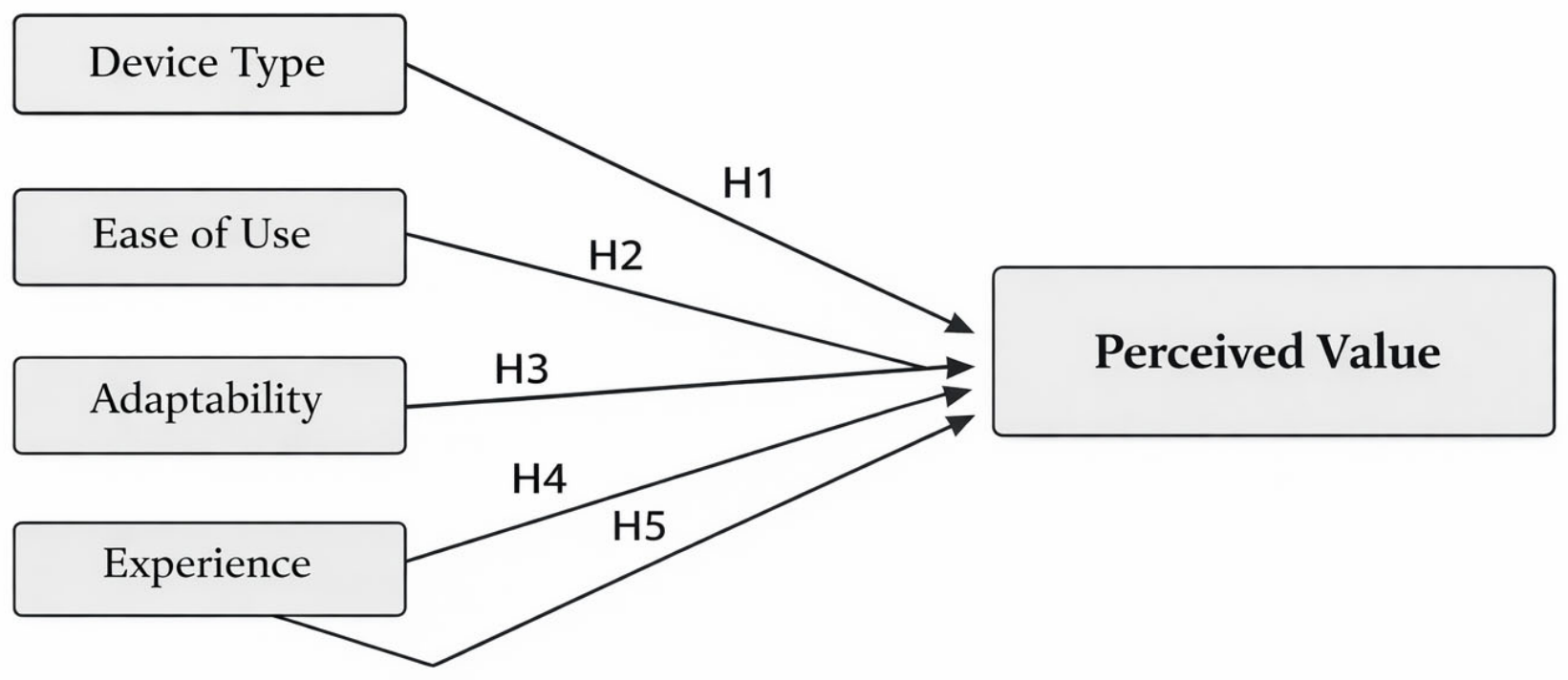
Based on the hypotheses developed from the literature review, a conceptual framework was established to illustrate the relationships among the study variables. The framework proposes that the perceived value of MR technologies is influenced by device modality, usability factors, and professional experience variables.
Figure 1 presents the conceptual model guiding the empirical analysis.
3. Research Methodology
3.1. Research Design
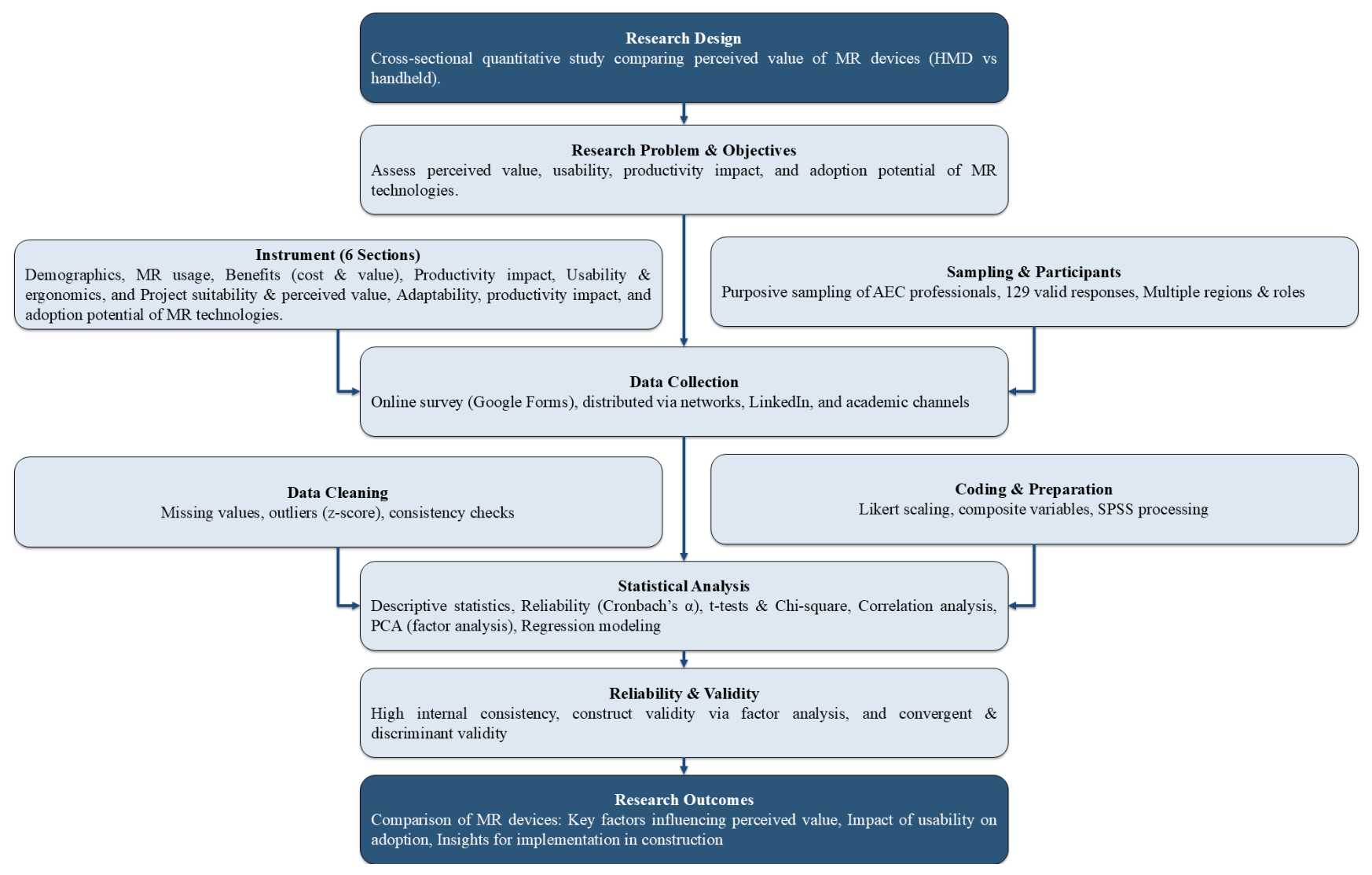
The research methodology is structured into several sub-sections to clearly present the research design, data collection process, and analytical methods. To enhance clarity,
Figure 2 illustrates the overall research framework adopted in this study. This study employed a cross-sectional quantitative research design to examine construction professionals’ perceived value of Mixed Reality (MR) technologies, specifically comparing head-mounted displays (HMDs) and handheld devices. The cross-sectional approach was appropriate because it enabled the collection of empirical data from a broad range of construction professionals at a single point in time, allowing comparative and correlational analyses across different user groups [
34].
Figure 2 presents a simplified overview of the research methodology adopted in this study. The process begins with the identification of the research problem and review of relevant literature, followed by hypothesis development. Data was collected through a structured survey of construction professionals and analysed using statistical techniques, including T-tests, exploratory factor analysis, and regression modelling. The results were then interpreted to evaluate the perceived value of Mixed Reality technologies in construction. The figure is intended to provide a simplified overview of the methodological process and to improve readability across the detailed sub-sections that follow.
Quantitative research methods are widely used in studies of technological adoption and perceived value because they enable systematic hypothesis testing, identification of relationships among variables, and generalisation of findings across populations [
35]. In this study, perceived value was evaluated in the context of construction site activities, such as inspection, coordination, and quality verification, which are often highly complex and error-prone [
23].
Both descriptive and inferential statistical analyses were employed. Descriptive statistics were used to summarise respondent demographics and MR usage patterns, while inferential statistical techniques were applied to examine relationships among research variables. The inferential analyses included independent-samples T-tests, chi-square tests, correlation analyses, exploratory factor analyses, and multiple regression modelling. This multi-method analytical framework enhanced methodological rigor by enabling the examination of relationships between variables from multiple statistical perspectives [
36].
3.2. Demographics and Sampling
The target population for this study consisted of construction professionals with varying levels of experience and exposure to Mixed Reality technologies. Participants represented a range of professional roles within construction projects, including architects, engineers, project managers, planners, and academic researchers [
37,
38]. Including respondents from multiple professional backgrounds enabled the study to capture diverse perspectives on the evaluation and potential adoption of MR technologies in construction practice.
Purposive sampling was employed to recruit respondents who were familiar with digital technologies used in construction environments. Although not all participants had direct hands-on experience with MR technologies, their professional involvement in construction processes allowed them to provide informed evaluations regarding the perceived value and potential applications of MR systems. This approach is commonly used in exploratory studies of emerging technologies where direct experience may vary among professionals [
39].
A total of 129 valid responses were collected and included in the analysis. This sample size exceeds the recommended minimum for multivariate statistical techniques such as factor analysis and regression, which typically recommend a ratio of 5 to 10 observations per variable [
39]. The respondents represented multiple geographic regions, including Asia, Europe, and North America, providing a diverse international sample. Participants also varied in organizational size, job role, and years of professional experience, enabling the examination of potential demographic influences on perceived value.
The inclusion of respondents from Asia, Europe, and North America was intended to capture a broad range of professional perspectives from regions where digital construction practices are increasingly discussed and implemented. However, the purpose of this study was not to compare these regions directly, but rather to explore overall patterns in how construction professionals evaluate MR technologies across an internationally diverse sample. Therefore, the regional categories should be interpreted as broad contextual descriptors rather than as the basis for jurisdiction-specific conclusions.
Although purposive sampling limits statistical representativeness, it was appropriate for this study given its exploratory focus on professional evaluations of emerging technologies. Future studies could improve external validity by employing stratified or probabilistic sampling strategies across broader industry populations.
3.3. Survey Instrument
Data were collected using a structured online questionnaire designed specifically for this study. The survey aimed to capture construction professionals’ perceptions of the value, usability, and applicability of Mixed Reality technologies in construction environments.
In this research, perceived value refers to respondents’ subjective evaluation of the benefits and usefulness of MR technologies for construction-related tasks. The questionnaire consisted of six sections designed to capture demographic information and variables related to MR usage and perceived value.
3.3.1. Demographics and Professional Background
This section collected information on respondents’ job roles, geographic location, educational qualifications, years of professional experience, and organizational size.
3.3.2. Usage of MR Devices
This section examined the frequency and context of MR technology usage, including applications such as design visualization, layout inspection, quality control, and remote collaboration.
3.3.3. Perceived Benefits of HMDs and Handheld Devices
Respondents evaluated cost-related and benefit-related aspects of MR technologies. Cost-related items included hardware, software, training, and maintenance, while benefit-related items addressed safety improvements, productivity enhancements, and design validation.
3.3.4. Impact on Productivity and Task Accuracy
This section assessed respondents’ perceptions of how MR technologies influence construction tasks, including inspection accuracy, collaboration effectiveness, and hazard identification.
3.3.5. User Experience and Ergonomics
Items in this section measured usability-related factors, including ease of use, comfort during prolonged use, and adaptability of MR technologies under real-world construction site conditions.
3.3.6. Project Suitability and Perceived Value
The final section evaluated the overall perceived value of MR technologies across various project characteristics, including project scale, budget constraints, and expected return on investment.
Most survey questions were measured using five-point Likert scales. Perceived benefit items ranged from “Very Low” to “Very High,” while task-related impact items ranged from “No Impact” to “Significant Impact” [
40]. The questionnaire design allowed both relative comparisons between device types and quantitative measurement of perceived value constructs.
To ensure content validity, survey items were derived from established frameworks related to perceived value and technology adoption in construction [
8,
9,
10,
11,
12,
13,
14,
15,
16,
17,
18,
19,
20,
21,
22,
23,
24,
25,
26,
27,
28,
29,
30,
31,
32,
33,
34,
35,
36,
37,
38,
39,
40,
41]. The questionnaire was pre-tested with a small group of industry professionals (n = 10) to evaluate clarity, relevance, and face validity. Minor revisions were made to wording and item ordering prior to the full survey distribution. The measurement constructs, number of items, and corresponding measurement scales used in the questionnaire are summarized in
Table 2.
3.4. Data Collection and Analysis
The survey was administered online using Google Forms (Google LLC, Mountain View, CA, USA). Survey links were distributed through professional networks, academic associations, LinkedIn groups, and industry forums to reach construction professionals from diverse geographic regions and professional backgrounds. Data collection was conducted over a six-week period.
After the survey period concluded, the collected responses were screened to ensure data quality. Incomplete responses and entries containing substantial missing information were removed from the dataset. The final dataset consisted of 129 valid responses.
The data analysis followed a structured multi-step process:
3.4.1. Data Cleaning
Responses were examined for missing values, outliers, and response inconsistencies. Outliers were evaluated using standardized z-scores exceeding ±3. However, no responses were removed because their influence on the overall statistical results was minimal.
3.4.2. Descriptive Analysis
Descriptive statistics, including frequencies, means, and standard deviations, were used to summarize demographic characteristics and MR usage patterns.
3.4.3. Reliability Assessment Method Analysis
Cronbach’s alpha was calculated to evaluate the internal consistency of multi-item measurement scales.
3.4.4. Independent Samples T-Tests
Independent-samples T-tests were conducted to compare perceived value measures between respondents who reported using HMDs and those who used handheld MR devices.
3.4.5. Chi-Square Tests
Chi-square tests were used to examine associations between categorical variables, particularly the relationship between MR usage frequency and professional experience.
3.4.6. Correlation Testing Method
Pearson correlation analysis was conducted to examine relationships among perceived value-related variables such as time savings, rework reduction, safety improvement, and collaboration effectiveness.
3.4.7. Exploratory Factor Analysis
Principal Component Analysis (PCA) with Varimax rotation was applied to identify underlying dimensions of perceived value among the Likert-scale variables.
3.4.8. Multiple Linear Regression Method
Multiple linear regression analysis was conducted using SPSS Statistics 27 (IBM Corp., Armonk, NY, USA) to evaluate whether usability-related factors, such as ease of use, comfort during prolonged use, and adaptability to site conditions, significantly predict perceived value outcomes, while controlling for demographic variables.
Effect sizes were reported alongside significance levels to improve the interpretation of statistical findings. Prior to conducting inferential analyses, statistical assumptions including normality, homoscedasticity, and multicollinearity were examined. This multi-method analytical approach strengthened the reliability of the findings and enabled triangulation across multiple statistical techniques [
36].
3.5. Reliability and Validity
Instrument reliability was evaluated using Cronbach’s alpha to assess the internal consistency of the Likert-scale measurement items. The 35 items measuring cost factors, perceived benefits, and perceived value outcomes produced a Cronbach’s alpha value of 0.952, indicating excellent internal consistency and exceeding the recommended threshold of 0.70. Subscale reliability (cost items, benefit items, and perceived value outcomes) also exceeded 0.90, supporting robustness across dimensions. Validity was addressed in multiple ways. Content validity was ensured by grounding the questionnaire design in established frameworks for perceived value and MR adoption [
34,
35,
36,
37,
38,
39,
40,
41,
42]. Construct validity was assessed via exploratory factor analysis, which yielded a two-factor solution (operational efficiency; safety and decision-making support), consistent with theoretical expectations. Convergent validity was indicated by strong intercorrelations among perceived value-related measures (r > 0.5,
p < 0.01), while discriminant validity was maintained by moderate correlations between perceived value and demographic variables, confirming that constructs were distinct. By combining reliability testing, factor analysis, and theoretical grounding, the study ensured methodological robustness and minimized measurement error.
3.6. Methodological Scope and Study Positioning
This study adopts an exploratory, perception-based research design to capture professional evaluations of mixed reality technologies rather than objective performance measurements. Although not all respondents reported frequent hands-on use of MR technologies, their roles as engineers, project managers, and researchers positioned them as relevant evaluators of technology value and adoption potential within construction organizations. Perception-based survey methods are commonly used in early-stage technology assessment, particularly when technologies are emerging and large-scale deployment remains limited.
It is important to note that not all respondents were frequent users of MR technologies. This reflects the current stage of MR adoption in the construction sector, where familiarity and direct use remain uneven across professional groups. As a result, the study captures professional evaluations of MR value that may be shaped by both practical exposure and informed expectations. This positioning is appropriate for exploratory research on emerging technologies, but it also means that the findings should not be interpreted as direct evidence of measured performance effects.
Accordingly, the findings of this study should be interpreted as indicative of how construction professionals assess the value, usability, and contextual suitability of MR technologies, rather than as direct measures of productivity or financial performance. This positioning aligns with the study’s objective of informing early engineering decision-making and identifying factors that may influence subsequent adoption and implementation. Additional graphical representations have been included in the manuscript to improve the clarity and interpretation of the results.
3.7. Ethical Considerations
Ethical compliance was integral to the study. Participation was entirely voluntary, and the survey introduction clearly stated the research’s academic and non-commercial purposes. Respondents were informed that they could withdraw at any stage without penalty. The survey was conducted anonymously, with no collection of personally identifiable information, such as names, email addresses, or organizational affiliations. All responses were stored securely and used exclusively for research purposes. Results were aggregated during analysis, ensuring that individual responses could not be traced back to participants. The survey design minimizes risk by avoiding sensitive personal questions and focusing exclusively on professional experiences with MR technologies. This approach aligns with established ethical research principles and international standards for academic studies involving human participants.
4. Results
4.1. Demographic Profile of Respondents
The study collected a total of 129 valid responses. The demographic distribution of respondents indicates broad international representation, with the largest proportion of participants located in Asia (51.9%), followed by Europe (13.2%) and North America (10.9%). The educational background of respondents was relatively high, with 45.7% holding a master’s degree and 24.8% holding a doctoral degree. This suggests that the sample largely consisted of professionals with advanced academic training and familiarity with emerging construction technologies.
Most respondents worked in large organisations with more than 500 employees (48.8%), suggesting that many participants work in environments with greater potential for access to technological innovation and digital infrastructure. Participants represented diverse professional roles within the construction industry, including project managers (21.7%), researchers or academics (24.8%), engineers, planners, and other construction professionals. This diversity enabled the study to capture perspectives from both industry practitioners and research-oriented professionals, as described in
Table 3.
Regarding professional experience, more than half of the respondents (50.8%) had over ten years of experience in the construction sector. The largest experience groups were those with 6–10 years (27.1%) and 11–15 years (24.8%) of experience, indicating a relatively mature and experienced respondent population.
Despite this professional experience, respondents’ adoption of Mixed Reality technologies remains limited. Only 4.7% reported using MR technologies regularly, while 38.8% reported rare use and 23.3% reported occasional use. Additionally, 31.8% of respondents indicated that MR technologies were not currently applicable in their project environments. The most frequently reported MR applications included design visualization, layout inspection, quality control, and remote collaboration.
4.2. Independent Samples T-Test
Independent samples T-test was conducted to determine whether perceived value measures differed significantly between respondents who used head-mounted displays (HMDs) and those who used handheld MR devices. Before conducting the T-tests, Levene’s test for equality of variances was used to assess whether the assumption of homogeneity of variances was satisfied.
As shown in
Table 4, Levene’s test indicated that most variables did not differ significantly in variance between the two groups (
p > 0.05). However, two variables, “Reduction in project rework” (F = 9.777,
p = 0.003) and “Time savings and faster task completion” (F = 4.724,
p = 0.034), showed significant differences in variance, suggesting heteroscedasticity. In these cases, the “equal variances not assumed” results were interpreted in the T-test analysis.
The independent samples T-test results are presented in
Table 5. None of the six perceived value indicators showed statistically significant differences between HMD users and handheld device users (
p > 0.05). For example, perceived reductions in project rework (t = −0.285,
p = 0.777), time savings and faster task completion (t = −1.326,
p = 0.190), and improved collaboration and communication (t = 0.108,
p = 0.914) did not differ significantly between the two device groups.
These findings suggest that construction professionals evaluate the value of MR technologies similarly, regardless of whether the technology is delivered via head-mounted displays or handheld devices. The absence of significant differences suggests that device modality alone may not strongly influence perceived value within the present sample. However, this finding should be interpreted with caution, given the exploratory nature of the study and the limitations associated with the sample size and respondents’ experience.
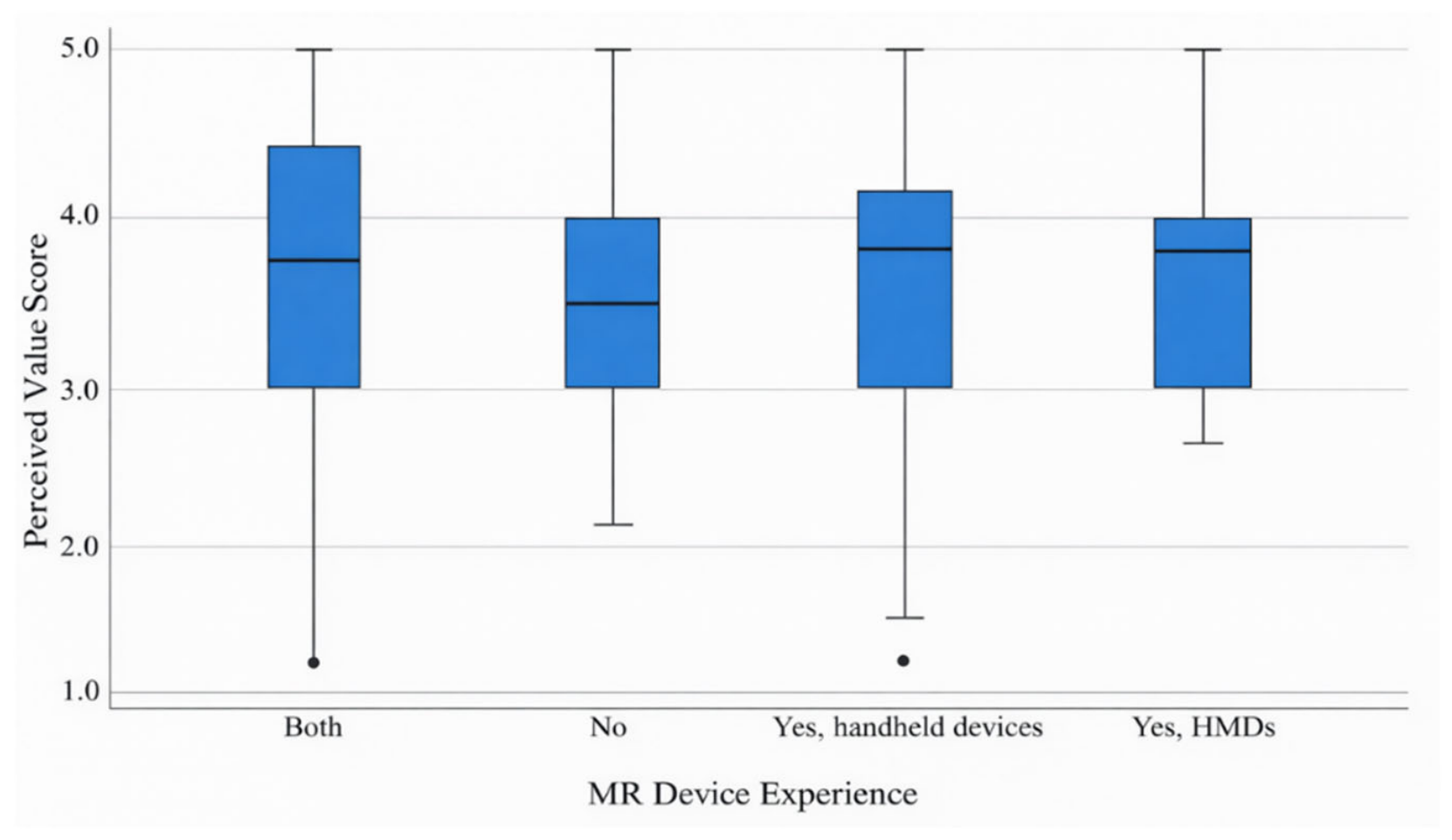
This boxplot, as shown in
Figure 3, illustrates the distribution of Perceived Value Score across different user groups based on their prior use of Mixed Reality (MR) devices: HMDs, handhelds, both, or none. Users who reported using both HMDs and handhelds exhibited slightly higher median perceived value and greater variability, suggesting potential benefits of multi-device exposure. In contrast, non-users and handheld-only users had slightly lower median perceived value. Perceived value appears most favorable among those with experience using both types of devices, suggesting that broader MR exposure may contribute to higher perceived project value.
4.3. Chi-Square Test
A chi-square test of independence was conducted to examine whether the frequency of Mixed Reality technology usage was associated with respondents’ years of professional experience in the construction industry. The results are presented in
Table 6.
The Pearson chi-square statistic was 76.545 with 80 degrees of freedom and a p-value of 0.589. Because the p-value exceeds the conventional significance threshold of 0.05, the results indicate no statistically significant association between MR usage frequency and professional experience levels.
In addition, the use of purposive sampling and the uneven distribution of respondents across regions, roles, and experience levels may introduce sampling bias. Although this approach is appropriate for exploratory research on emerging technologies, it may limit the generalizability of the findings to the broader construction industry. Future research should employ larger and more representative samples, potentially using stratified or random sampling techniques to enhance external validity.
This suggests that MR technology usage patterns do not appear to differ substantially between early-career professionals and more experienced practitioners within the sample. In other words, both less experienced and highly experienced professionals reported similar levels of MR exposure.
However, a large proportion of cells (92.2%) had expected counts below 5, which may affect the reliability of the chi-square test results. This limitation suggests that future studies using larger or more balanced samples may provide clearer insights into the relationship between MR usage and professional experience.
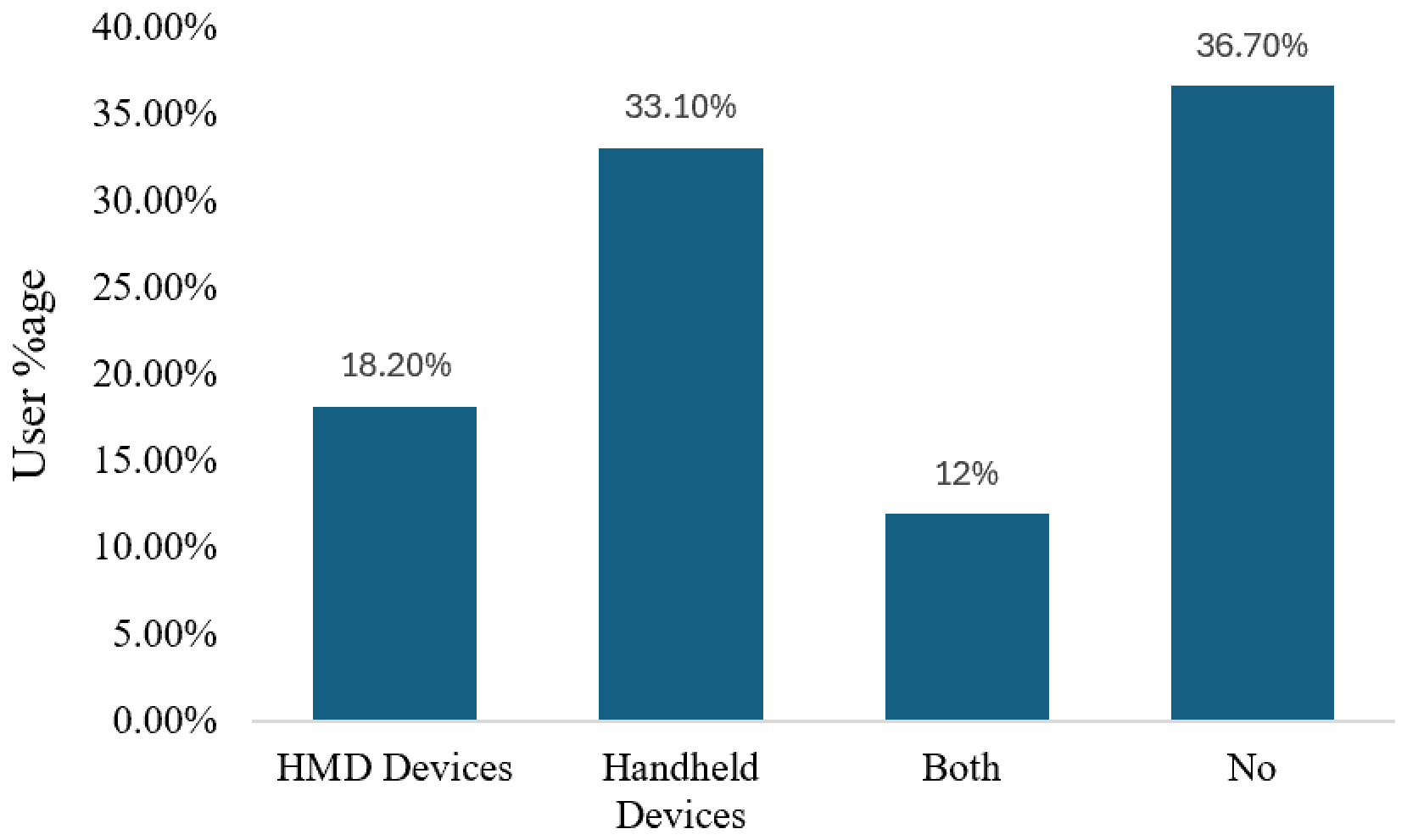
According to
Figure 4, A plurality of users (36.70%) have no experience with MR technology, highlighting a significant familiarity gap that is a critical barrier to adoption. Users who have used handheld AR devices (e.g., tablets and smartphones) have the most experience with them, with 33.10 percent. Most respondents (18.20%) have experience with only Head-Mounted Displays (HMDs), while a small minority (12%) are proficient in both. As indicated by this distribution, overall familiarity with immersive HMD is particularly low, which could negatively impact user acceptance, training requirements, and perceived value.
4.4. Reliability Analysis
Cronbach’s alpha was calculated to assess the internal consistency of the Likert-scale items used in the survey. As shown in
Table 7, the 35 items measuring cost factors, benefit perceptions, and perceived value contributions produced a Cronbach’s alpha value of 0.952. This value substantially exceeds the commonly accepted reliability threshold of 0.70, indicating excellent internal consistency among the survey items.
Such a high reliability score confirms that the questionnaire items are well-aligned and consistently interpreted by respondents. This enhances the credibility of subsequent analyses, such as correlations, factor analysis, and regression, by ensuring that the input data is stable and dependable across responses.
4.5. Correlation Analysis
Pearson correlation analysis was conducted to examine the relationships among the perceived value-related variables included in the study. As presented in
Table 8, all correlations were statistically significant at the 0.01 level.
Several strong positive relationships were observed among the perceived value indicators. For example, a reduction in project rework was strongly positively correlated with time savings and faster task completion (r = 0.700), as well as improved collaboration and communication (r = 0.708). These results suggest that improvements in project efficiency are closely associated with better communication and coordination among construction stakeholders.
Similarly, reductions in on-site errors were positively correlated with improvements in worker safety (r = 0.459) and enhanced real-time decision-making (r = 0.488). These findings indicate that error reduction in construction processes may contribute to both improved safety outcomes and more informed decision-making.
Overall, the correlation results suggest that the perceived benefits of MR technologies in construction are interconnected. Improvements in one performance dimension, such as efficiency, may simultaneously support other aspects of project performance, including collaboration, safety, and decision-making.
4.6. Factor Analysis
Exploratory Factor Analysis (EFA) was conducted using Principal Component Analysis (PCA) with Varimax rotation to identify underlying latent dimensions among the perceived value-related variables. As shown in
Table 9, the Kaiser–Meyer–Olkin (KMO) measure of sampling adequacy was 0.898, indicating that the dataset was highly suitable for factor analysis.
Bartlett’s Test of Sphericity was also statistically significant (χ2 = 953.451, p < 0.001), confirming that the correlation matrix was not an identity matrix and that the variables were sufficiently correlated to justify factor extraction.
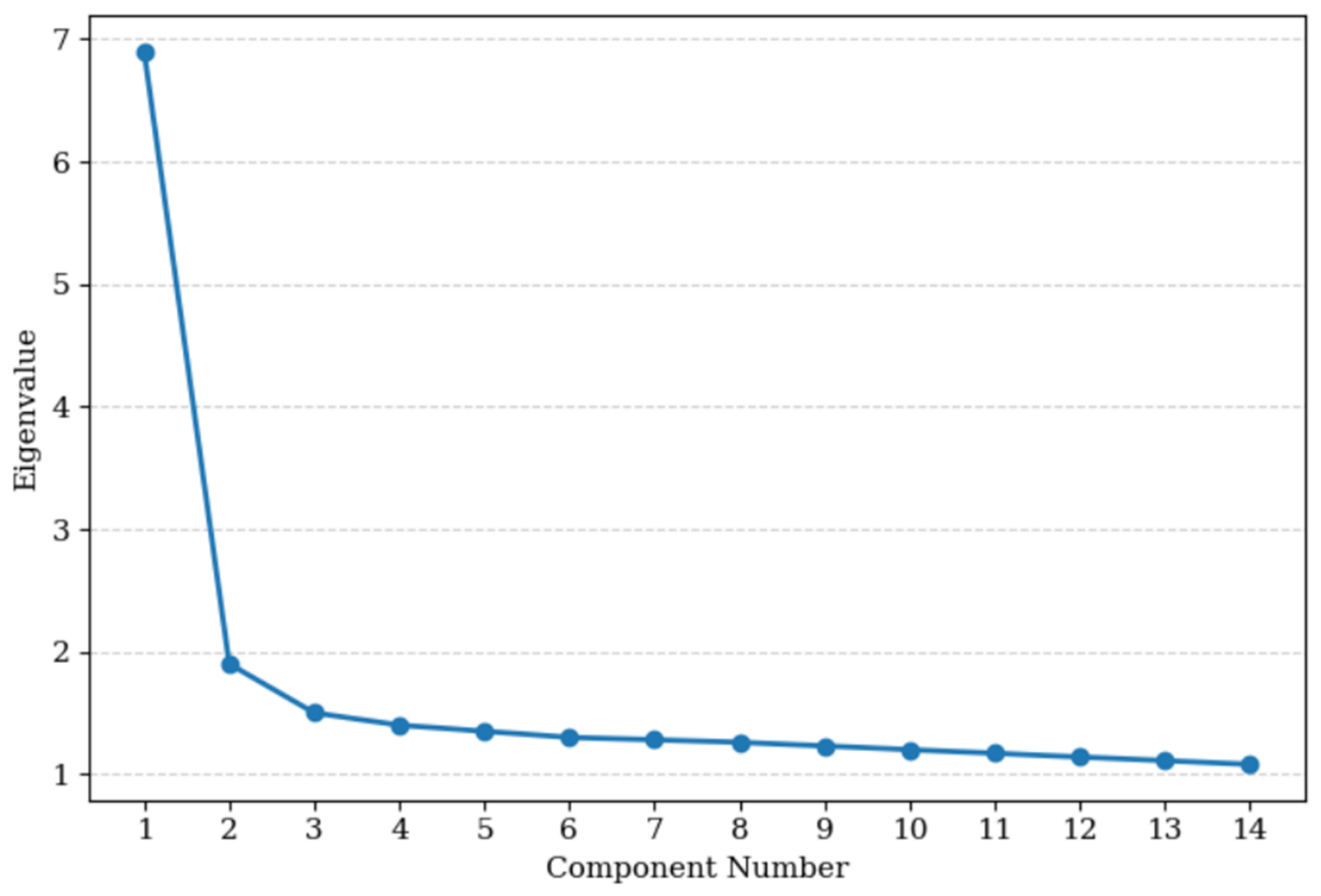
Based on the eigenvalue-greater-than-one criterion and the scree plot presented in
Figure 5, a two-factor solution was identified. These two components explain a substantial portion of the variance in the perceived value measures. Operational Efficiency includes variables related to reduced project rework, time savings, and improved collaboration. This dimension reflects improvements in workflow efficiency and project coordination. The second factor, labelled Safety and Decision-Making Support, includes variables related to worker safety, error reduction, and enhanced real-time decision-making. This dimension reflects the role of MR technologies in supporting risk management and informed decision-making within construction environments.
4.7. Regression Analysis
Multiple linear regression analysis was conducted to examine the extent to which usability-related factors predict the perceived value of MR technologies. The independent variables included prior device usage, years of professional experience, ease of use, comfort during prolonged use, and adaptability to on-site conditions. The dependent variable was the computed perceived value score.
As shown in
Table 10, the regression model demonstrates a moderately strong relationship between the predictor variables and perceived value (R = 0.633). The coefficient of determination (R
2 = 0.400) indicates that approximately 40% of the variance in perceived value can be explained by the variables included in the model. The adjusted R
2 value of 0.376 suggests that the model retains reasonable explanatory power despite the number of predictors.
The ANOVA results presented in
Table 11 indicate that the regression model is statistically significant (F = 16.412,
p < 0.001), demonstrating that the predictor variables collectively explain a significant portion of the variance in perceived value outcomes. The regression coefficients presented in
Table 10 provide insight into the individual influence of each predictor variable. Among the predictors, ease of use (β = 0.330,
p = 0.003) and adaptability to on-site conditions (β = 0.206,
p = 0.029) were statistically significant predictors of perceived value. These results indicate that MR technologies perceived as easier to use and more adaptable to construction site conditions are associated with higher perceived value among construction professionals.
In contrast, comfort during prolonged use (β = 0.175, p = 0.102), years of professional experience (β = −0.061, p = 0.395), and prior MR device usage (β = 0.015, p = 0.834) were not statistically significant predictors. These findings suggest that usability and contextual adaptability may play a more important role in shaping perceived value than prior exposure to MR technologies or professional experience.
Table 12 illustrates that the regression coefficients offer insight into the individual impact of each predictor on the perceived value score. The five predictors are as follows: “Ease of use” (β = 0.330,
p = 0.003) and “Adaptability to various on-site conditions” (β = 0.206,
p = 0.029) are statistically significant. This suggests that users who find MR technology easy to use and adaptable to site conditions perceive it as more valuable. In contrast, “Comfort during prolonged use” (β = 0.175,
p = 0.102) and “Years of experience” (β = −0.061,
p = 0.395) did not significantly influence perceived value. The variable “Previous use of HMDs or handhelds” also lacked significance (
p = 0.834), indicating that prior exposure does not directly affect perceived value. The VIF values are all below 5, confirming no multicollinearity issues. The results indicate that usability and contextual adaptability are strongly associated with higher perceived value from MR tools in construction.
Table 13 summarizes the results of the hypothesis testing based on the statistical analyses conducted in this study. Among the five hypotheses proposed, two hypotheses (H2 and H3) were supported, indicating that usability-related factors significantly influence perceived value. The remaining hypotheses were not supported, suggesting that device modality and professional experience play a less significant role in shaping perceived value perceptions.
5. Discussion
This study aimed to investigate how construction professionals evaluate the perceived value of Mixed Reality (MR) technologies, with particular emphasis on device modality, usability, and adaptability to on-site conditions. The empirical analysis was guided by a set of hypotheses developed from the literature on technology adoption and digital innovation in construction.
Table 14 presents a comparative analysis of previous studies on Mixed Reality technologies across different domains. While prior research has primarily focused on technical capabilities and application areas, this study extends the existing body of knowledge by providing empirical evidence on how usability and contextual adaptability influence perceived value in construction environments. The comparison highlights that this study contributes a user-centered and statistically validated perspective to MR evaluation in construction.
The first hypothesis (H1) proposed that perceived value would differ significantly between head-mounted displays (HMDs) and handheld MR devices. However, the results of the independent-samples T-tests indicate that no statistically significant differences exist between the two device modalities on the examined perceived value measures. Consequently, H1 is not supported. This finding suggests that construction professionals evaluate MR technologies primarily based on their functional contribution to project activities rather than the specific hardware through which MR is delivered. In practical terms, the results suggest that both HMDs and handheld devices may be perceived as offering comparable benefits in areas such as collaboration, efficiency, and safety. However, this interpretation remains exploratory and should be validated through future research with larger, more experience-specific samples. This finding is consistent with prior research suggesting that the successful implementation of digital technologies in construction often depends more on workflow integration and operational usability than on hardware sophistication [
43]. It also aligns with recent studies emphasizing that usability and contextual integration are critical determinants of perceived value and technology adoption [
8,
9].
The second hypothesis (H2) proposed that ease of use would positively influence the perceived value of MR technologies. The regression analysis provides strong support for this hypothesis, as ease of use emerged as a statistically significant predictor of perceived value. Technologies that are perceived as intuitive and straightforward to operate are therefore more likely to be considered valuable by construction professionals. This finding is consistent with technology acceptance literature, which identifies usability as a central determinant of perceived usefulness and technology adoption across digital systems [
44]. In the context of construction projects, where workers operate under time pressure and safety constraints, technologies that minimize cognitive and operational complexity are particularly important.
The third hypothesis (H3) proposed that adaptability to on-site conditions would positively influence perceived value. The results support this hypothesis, as adaptability to site conditions was also a statistically significant predictor of perceived value. Construction environments are characterized by unpredictable conditions, including dust, changing lighting conditions, weather exposure, and spatial constraints. MR technologies that can operate reliably under these conditions are therefore more likely to be perceived as useful. This finding reinforces earlier studies highlighting the importance of contextual robustness and environmental compatibility for digital technologies deployed in construction settings [
45].
The fourth hypothesis (H4) suggested that prior experience with MR devices would positively influence perceived value. However, the regression results indicate that previous MR usage does not significantly affect perceived value perceptions within the sample. Therefore, H4 is not supported. One possible explanation is that MR technologies are still relatively new in many construction contexts, meaning that many professionals evaluate these tools based on anticipated usefulness rather than extensive direct experience. In emerging technology contexts, perceptions of potential benefits can often shape adoption decisions even before widespread practical use occurs [
46].
The fifth hypothesis (H5) proposed that years of professional experience in the construction industry would influence perceived value evaluations of MR technologies. The results do not provide evidence supporting this hypothesis, as professional experience did not significantly predict perceived value. Consequently, H5 is also rejected. This result suggests that professionals across different experience levels tend to evaluate MR technologies similarly. Both early-career professionals and highly experienced practitioners appear to recognize similar potential benefits and limitations of MR technologies.
Beyond the hypothesis-testing results, the correlation and factor analyses provide additional insight into how construction professionals conceptualize the MR value. The strong correlations among perceived value indicators suggest that MR technologies are evaluated as integrated systems that simultaneously influence multiple project outcomes. The factor analysis further reveals two underlying dimensions of perceived value: operational efficiency and safety/decision-making support. These dimensions indicate that MR technologies are perceived not only as productivity-enhancing tools but also as systems that can improve safety awareness and decision-making on construction sites.
Compared to traditional construction methods, which rely on 2D drawings and manual inspection processes, MR technologies provide enhanced spatial visualization and real-time interaction. Traditional methods are often limited in their ability to support dynamic decision-making and coordination across stakeholders. In contrast, MR technologies enable immersive visualization and integrated data access, improving both efficiency and accuracy in construction processes.
Overall, the present findings should be understood as exploratory rather than definitive. The study provides evidence of broad patterns in professional evaluations of MR technologies, but it does not establish universally generalizable conclusions across all jurisdictions, project types, or user groups. Its value lies in identifying key tendencies and highlighting directions for more focused future research.
Practical Implications for Construction Practice
The findings of this study have several practical implications for the implementation of Mixed Reality technologies in construction projects. First, the results indicate that usability plays a critical role in shaping perceived value. Construction organizations considering MR adoption should therefore prioritize technologies with intuitive interfaces and minimal training requirements for field personnel. Second, adaptability to on-site conditions emerged as a key determinant of perceived value. MR systems designed for construction environments should operate reliably under variable lighting conditions, dust exposure, and spatial constraints commonly encountered on construction sites. Finally, the absence of significant differences between device modalities suggests that organizations may focus less on hardware type and more on software functionality and workflow integration when selecting MR solutions.
A further limitation concerns the level of MR experience among respondents. A considerable proportion of participants reported either limited or occasional use of MR technologies, while only a small share indicated regular use. This means that some responses likely reflect professional expectations, conceptual familiarity, or indirect exposure rather than repeated hands-on use in site-based contexts. Although this is consistent with the early-stage diffusion of MR technologies in construction, it also limits the strength of conclusions that can be drawn regarding actual usage-based judgments. Future studies should target samples with greater direct MR experience or combine survey-based perceptions with field-based validation.
Another limitation relates to the geographic and professional composition of the sample. The respondents were grouped at the continental level, and the sample was weighted more heavily toward Asia, large organizations, and academic or research-oriented participants. While this diversity is useful for exploratory analysis, it may also obscure differences across countries, jurisdictions, and types of construction practice. Consequently, the findings should not be interpreted as representing all regional or professional contexts equally. Future research should employ more targeted country-level, project-level, or profession-specific sampling strategies.
Although subgroup analyses by region, profession, or experience level could provide additional insights, the current sample size does not support statistically robust disaggregation across multiple categories. Dividing the sample into smaller groups would substantially reduce analytical reliability and risk of overinterpreting unstable patterns. For this reason, the present study focuses on overall trends and interprets the results as exploratory. Future studies with larger and more balanced datasets should examine subgroup differences more systematically.
From a practical perspective, this study demonstrates that the successful implementation of MR technologies in construction depends on usability and adaptability rather than device type alone. This finding provides actionable insights for engineers and project managers when selecting and deploying MR tools in real-world construction environments.
Despite these contributions, several limitations should be acknowledged. First, the study relies on self-reported perception data rather than direct measurements of project performance or financial outcomes. Second, a cross-sectional design captures professional evaluations at a single point in time and cannot reflect how perceptions may evolve as MR technologies become more widely adopted. Third, the study does not differentiate between specific MR applications or device models, which may influence perceived value in particular construction tasks. Future research could address these limitations through longitudinal studies, field experiments, or mixed-method approaches that combine survey data with direct observations of MR implementation in construction projects.
Another limitation relates to the level of respondents’ experience with MR technologies. A substantial proportion of participants reported having limited or no direct experience with MR tools, which may affect their ability to evaluate the technology through practical use. As a result, some responses may reflect perceived expectations rather than actual performance outcomes. While perception-based evaluation remains valuable in early-adopter contexts, future studies should include participants with more extensive hands-on experience or combine survey data with experimental validation.
In addition, the use of purposive sampling and the uneven distribution of respondents across regions, roles, and experience levels may introduce sampling bias. Although this approach is appropriate for exploratory research on emerging technologies, it may limit the generalizability of the findings to the broader construction industry. Future research should employ larger and more representative samples, potentially using stratified or random sampling techniques to enhance external validity.
Furthermore, the chi-square analysis is limited by low expected cell counts in several categories. To address this issue, the findings were supported by additional statistical analyses, including correlation and regression, which provide more robust insights into the relationships among variables. Future research may consider alternative statistical approaches, such as Fisher’s exact test or logistic regression, where appropriate.
Overall, the results suggest that usability and contextual adaptability play a more significant role in shaping perceived value than device modality or professional experience. These findings highlight the importance of user-centered design and operational reliability when implementing MR technologies in construction environments.
This study addresses a key scientific gap by providing empirical evidence on how the perceived value of MR technologies is shaped by usability and contextual adaptability. While prior studies have focused primarily on technical capabilities, this research advances understanding of user-centered evaluation in the adoption of construction technology. However, further research is needed to explore longitudinal adoption patterns and real-world performance outcomes.
6. Conclusions
This study examined how construction professionals evaluate the perceived value of Mixed Reality technologies, focusing on the roles of device modality, usability, and adaptability to on-site conditions. Using survey data collected from 129 construction professionals across multiple regions and professional roles, the research provides empirical insights into how MR technologies are assessed during early stages of adoption in construction engineering contexts.
The results indicate that device modality alone does not significantly influence perceived value perceptions. No statistically significant differences were identified between head-mounted displays and handheld devices across the examined perceived value indicators. This finding suggests that construction professionals evaluate MR technologies primarily based on their practical usefulness rather than on the specific hardware platform used to deliver them.
The hypothesis testing results further demonstrate that usability-related factors play a critical role in shaping perceived value. Ease of use and adaptability to on-site conditions were both found to significantly influence perceived value perceptions, supporting hypotheses H2 and H3. These findings highlight the importance of intuitive interfaces and environmental compatibility when deploying MR technologies in complex construction environments.
In contrast, prior experience with MR technologies and years of professional experience did not significantly influence perceived value evaluations. As a result, hypotheses H4 and H5 were not supported. These findings suggest that construction professionals across different experience levels tend to evaluate MR technologies similarly, particularly during the early stages of technology adoption.
From a practical perspective, the findings indicate that organizations considering MR adoption should prioritize technologies with strong usability and adaptability to construction-site conditions. Technologies that are intuitive, reliable, and compatible with existing workflows are more likely to generate positive evaluations and support successful implementation in construction projects.
Several limitations should be acknowledged. The study relies on perception-based survey data rather than objective performance measurements, and the cross-sectional design does not capture how perceptions may evolve as MR technologies become more widely used. Future research could extend this work by conducting longitudinal studies, experimental evaluations, or case-based investigations examining the real-world impact of MR technologies on construction project performance.
From a theoretical perspective, this study contributes to the understanding of technology adoption in construction by demonstrating that perceived value is a multidimensional construct shaped primarily by usability and contextual adaptability, rather than by device modality or user experience. From a practical perspective, the findings suggest that organizations should prioritize user-friendly, context-adaptive MR solutions when implementing technology. However, the study is subject to limitations related to perception-based data, sampling strategy, and varying levels of MR experience among respondents. Future research should extend this work through longitudinal studies, country-level investigations, project-type comparisons, and professional-specific analyses. In particular, future studies should examine whether perceptions of MR value differ across jurisdictions with varying levels of digital construction maturity and across user groups with varying degrees of practical MR experience.
This study demonstrates that the perceived value of MR technologies is a multi-dimensional construct influenced primarily by usability and adaptability.
Device modality does not significantly affect perceived value.
MR technologies provide advantages over traditional methods in visualization, coordination, and decision-making.
Practical implementation should focus on user-friendly and adaptable systems.
Future research should explore real-world applications and longitudinal studies.




 ,
,