Review

A Review of Inter-Modular Connections for Volumetric Cross-Laminated Timber Modular Buildings


by
Juan S. Zambrano-Jaramillo
* and
Erica C. Fischer
School of Civil and Construction Engineering, Oregon State University, Corvallis, OR 97331, USA
*
Author to whom correspondence should be addressed.
Buildings 2026, 16(1), 78; https://doi.org/10.3390/buildings16010078
Submission received: 31 October 2025 / Revised: 6 December 2025 / Accepted: 10 December 2025 / Published: 24 December 2025
(This article belongs to the Section Building Structures)

Abstract

The application of volumetric modular construction using Cross-Laminated Timber (CLT) has emerged as a sustainable and efficient alternative to traditional building methods, especially in residential and mid-rise structures. However, the widespread adoption of this technology remains limited due to the lack of standardized inter-modular connection systems. This paper presents a comprehensive state-of-the-art review of inter-modular connections used in volumetric CLT modular buildings. This review aims to evaluate the inter-modular connections by developing performance objectives and identifying gaps in knowledge of volumetric CLT inter-modular connections. It begins with an overview of global CLT modular construction trends, highlighting geographic distribution, structural demands, and environmental hazards such as seismic and wind exposure. Seven representative connection systems were identified from the literature and assessed using a multi-criteria framework comprising structural performance, manufacturing feasibility, on-site construction efficiency, and experimental and numerical evaluation. Each connection was scored according to defined evaluation metrics, and the results were provided to identify key strengths and limitations. The top-performing systems demonstrated superior resilience, modular adaptability, and validation through experimental testing and simulation. The paper identified critical research gaps, including limited performance data available for seismic applications, challenges in disassembly and reuse specifications, and the need for adaptable, damage-tolerant systems to enhance building structural performance. These findings provide a reference evaluation methodology for future development of inter-modular connections, to expand the applicability of volumetric CLT modular construction in moderate and high seismic and wind hazard regions.

1. Introduction

The Architecture, Engineering, and Construction (AEC) industry has multiple efforts underway to improve material efficiency, reduce costs, and reduce greenhouse gas emissions, all while meeting the large housing demands that exist in our urban cores today. Modular construction has shown promising results to meet these performance objectives. The prefabrication process and the capacity to reutilize materials associated with modular construction methods resulted in lower lifecycle emissions of modular construction buildings compared to those of traditional construction [1]. Furthermore, modular construction takes advantage of recent technological development and automation processes within the AEC, which can further support the rapid expansion of the modular construction industry [2].
Modular construction is a broad methodology that is equally applied to multiple accelerated construction concepts, especially for timber structures [3]. The most common definitions describe modular construction as a process where the elements are built off-site, under controlled conditions, and subjected to higher quality control. The products of the production process are transported and assembled at a final location under the exact same specifications as were designed [4,5,6].
Modular buildings can be assembled using different types of elements, linear, planar, or volumetric units [7,8]. For the case of volumetric modular construction, the modular units include internal finishes, ranging between 50% and 90% of the total work completed during the prefabrication process off-site [9]. Independent of the material, but based on the level of prefabrication, some cases of timber modular construction reported up to 95% of completion [10,11,12]. This off-site construction reduces the number of people required on-site, the time required for the building to be occupiable, and delays due to design modifications [6]. All of these benefits can reduce the timeline of projects by 50% [13].
Despite these massive benefits, major gaps in knowledge persist for timber volumetric modular construction. Namely, the need for further testing and analysis of modular building performance, promoting the development of standardized solutions to enhance versatility in designing various floor plan configurations [11]. Specifically, there is a lack of solutions for inter-modular connections for timber modular buildings where units are stacked together and anchored to an exoskeleton or an internal core. These structural solutions require connections with complex demand requirements that have not yet been fully developed.
In moderate and high seismic regions, inter-modular connections represent a critical component for modular buildings. These connections are responsible for transferring loads between the modular units, enabling diaphragm action within the building, and transferring the horizontal loads to the lateral force resisting system. The intra-modular connections enable the assembly of the building and should be designed to enable the components of the modular units to remain in the elastic range or avoid internal damage.
Previous research on steel modular buildings [14,15] exhibited the importance of inter-modular connections in the global response of modular buildings. In the timber industry, a small number of connections were studied, and there is a need for future research on connection systems, including experimental testing and numerical simulations for timber modular buildings.
The timber construction industry has shown interest in developing new methodologies for applying volumetric CLT modular units at various building scales. As a complementary action, technical guidelines have been developed to support the design and evaluation of modular buildings [16,17]. However, the published documentation does not cover the specific structural and connection systems requirements of the modular buildings. This gap in the guidelines has been identified by other researchers as well [18,19] who mention that connections for the CLT modules require additional assessment, and the lack of regulations and design specifications for modular buildings.
Considering the lack of standardized details and design methodologies to support the analysis and design of CLT volumetric modular structures, this paper presents a state-of-the-art review of the existing literature on the published inter-modular connections for volumetric CLT modular buildings. A description of the connections and the experimental and numerical tests performed are presented to help researchers and engineers understand the performance requirements of CLT inter-modular connections. In addition, the authors developed a methodology to evaluate the published inter-modular connections across four key attributes critical for the success of modular buildings: structural, manufacturing, construction, and experimental. The objectives of this research project are to: (1) review and evaluate inter-modular connections developed for volumetric CLT modular building construction; (2) develop performance objectives of inter-modular connections to be used in design of modular buildings; and (3) identify gaps in knowledge of volumetric CLT inter-modular connections that are research priorities to enable modular building design in high seismic regions.
CLT is a structural building material that was developed in the 1980s in Europe. Since then, extensive research has been conducted to enhance its performance. In the 2010s, CLT was used for tall timber buildings with the approval of standards and guidelines developed to satisfy regulatory requirements [20,21,22,23]. Over the last decade, research on CLT has continued in order to gain more knowledge on the fire resistance, acoustics, and sustainability behavior of the material [24]. The use of volumetric CLT modular units has increased worldwide [25,26,27], driven by the growing demand for housing options.

2. Methodology

The authors performed a state-of-the-art review on inter-modular connections for volumetric CLT modular buildings to identify, evaluate, and synthesize the published literature. The applied methodology was founded on previous approaches used to review timber structures and inter-modular connections [11,14,28,29,30]. The review involved two major steps: a literature review with data extraction, and an evaluation of the inter-modular connections’ performance.

2.1. Literature Review and Data Collection

To define the scope of the review process, no specific geographic boundaries were defined for the literature selection. Given the nature of the emerging construction technology, selected references were chosen after 2005, following the findings of [29], which described 2005 as the beginning of an increased utilization of CLT as a prefabricated component in medium- and high-rise buildings. The source selection was performed through a deep search within different sources, including academic databases, published journal articles, conference papers, technical reports, and proprietary design guidelines. The strings used to perform the search were “CLT modular construction connections”, “CLT inter-modular connections”, “CLT intermodular connections”, “CLT volumetric connection”, “volumetric CLT buildings”, “volumetric CLT connectors”, “CLT module connection”, “CLT modular unit”, “CLT modular unit connections”, “volumetric prefabricated modules timber”, “timber prefabricated buildings”, “timber prefabricated buildings CLT”, “connection prefabricated CLT module”, “mass timber inter-module connections”, “volumetric CLT modular building”, “CLT volumetric modules”, “industrialized construction”, “industrialized construction CLT connections”, “volumetric industrialized construction CLT connections”, “volumetric industrialized construction CLT inter-modular connections”, “off-site construction CLT connections”, “off-site construction CLT inter-modular”, “off-site construction CLT intermodule”, “off-site construction CLT intermodular”, and a combination of these words.
The keywords were searched in Google Scholar, Web of Science, and ScienceDirect databases. Additionally, a complementary data search was conducted on professional social media platforms (LinkedIn), online journals, and industry websites. In addition, email requests for data information were sent to architectural firms, structural designers, and modular CLT manufacturers. The resources were mainly in English; however, when resources were in another language, the automatic translation from Google Chrome was used. Only sources that included all parameters and were published were included in the evaluation.
Once the data was collected, the screening process was performed based on the relevance of the resources to volumetric CLT modular buildings. The collected data was classified into information about the published volumetric CLT modular buildings and information related to the details of the inter-modular connections for the description and performance evaluation. With the filtered and classified data, a critical and technical analysis was performed to identify the components and evaluate the performance of the inter-modular connections. A synthesis of the information was provided to highlight the behavior of the connection, primary features, and the main outcomes from published experimental and numerical testing of each connection.

Seismic and Wind Hazard Definition

Based on the geographic location of the modular buildings, the seismic hazard was estimated by obtaining the peak ground acceleration (PGA) from the Global Earthquake Model provided by the Global Seismic Hazard Map [31]. The seismic hazard was classified into low, moderate, and high categories [32]. The regions with low seismic ground motion hazard were associated with places with a PGA less than or equal to 0.1 g. Regions with moderate seismic ground motion hazard were classified between 0.1 g and 0.2 g. Finally, regions with high seismic ground motion hazard were selected for places with PGA equal to or greater than 0.2 g. The PGA used for estimating the seismic hazard has a 2% probability of being exceeded in 50 years.
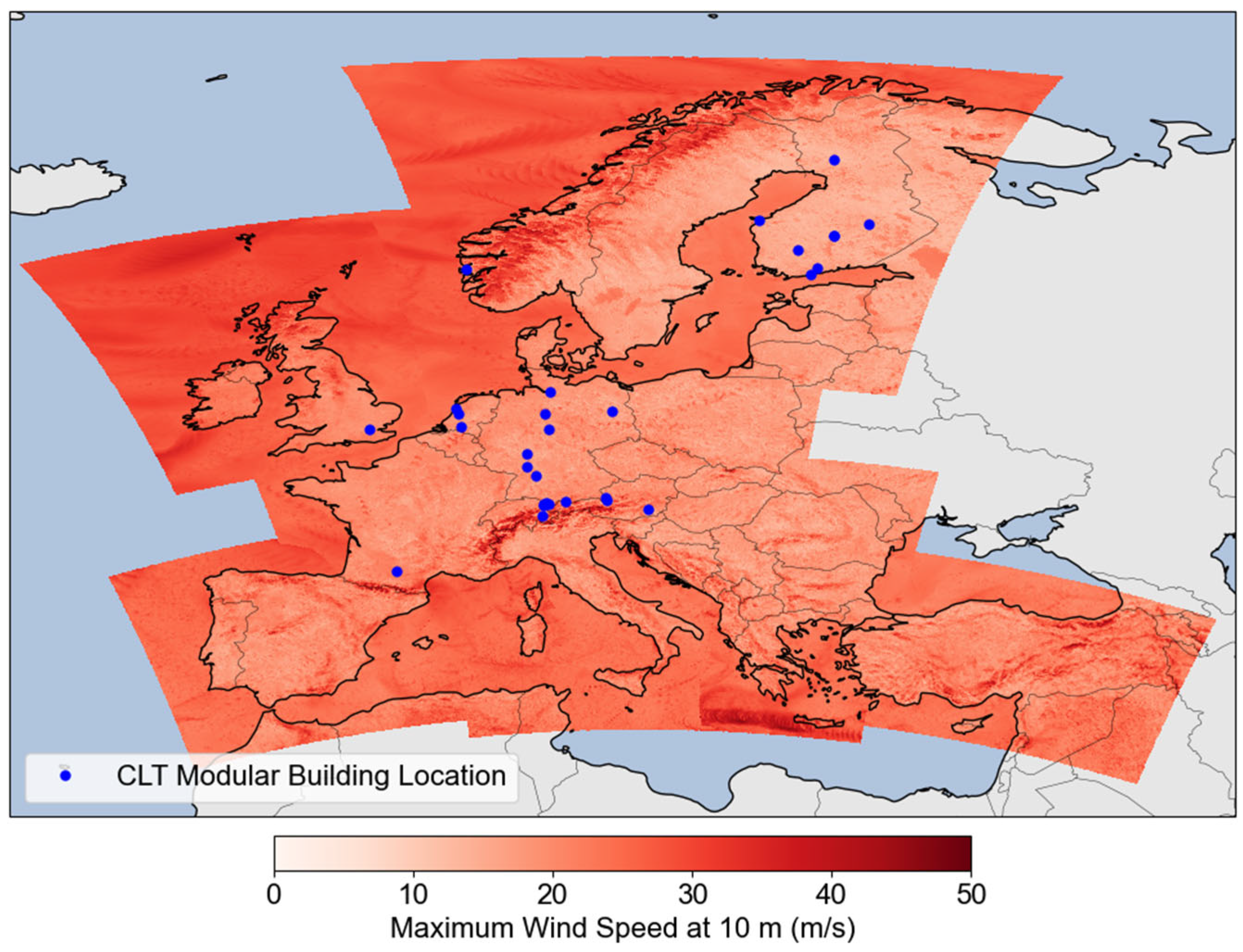
Similarly, the wind hazard was estimated by obtaining the maximum wind speed at 10 m height from the New European Wind Atlas project [33] and the wind speed for a risk category II from the ASCE Hazard Tool [34]. The wind hazard under normal conditions [35] was classified in Table 1, and additional ranges were included to provide the perspective of the wind speeds that could be reached during hurricane conditions [36]. The wind speed from the ASCE Hazard Tool [34] corresponds to a three-second gust wind speed at 10 m above the ground in exposure C. The wind speed corresponds to approximately a 7% exceedance probability in 50 years.

2.2. Evaluation of Inter-Modular Connections for CLT Modular Buildings

An evaluation process for the published inter-modular connections for volumetric CLT modular buildings was proposed following the methodologies developed by [14,28]. The evaluation was performed to compare the features of the connection systems. With the proposed methodology, the connection properties can be highlighted to identify the advantages or disadvantages of each inter-modular connection. Additionally, the evaluation provides a foundation for future designs, identifying areas that could be improved. Each connection was designed or tested under different circumstances to fulfill a similar objective; however, the performance demands for the connections were not the same. Based on this principle, a quantitative comparison is not appropriate; therefore, a qualitative evaluation was conducted for a comparison between the connections.
Four categories were defined to evaluate several aspects of the connection and its conceptual design (Table 2). The authors expanded upon the criterion provided by [14,28], to evaluate the data from the literature. Each feature is described in Table 2 with the corresponding score system. The scoring system considers a grading methodology within a range from zero to one depending on whether the given conditions were met, and a second scale from zero to two to describe the qualitative properties of the connection in terms of quality, efficiency, or advantages. The maximum possible score for a connection system equals 23, while the minimum possible score equals 0. Additional explanation about each performance metric is provided in the following Section 2.2.1, Section 2.2.2, Section 2.2.3 and Section 2.2.4. The authors acknowledge that the scores assigned to each connection system were determined through a subjective process based on the published data of the connections and served as a reference value based on the provided interpretation. Other interpretations of the qualitative parameters might provide slight differences in the connection evaluation.

2.2.1. Structural Evaluation

The structural performance of the inter-modular connections is fundamental to defining the diaphragm behavior and the global structural response of the modular buildings [37,38]. The inter-modular connections were evaluated using four parameters, which consider the connections’ performance, design, and structural concept. To evaluate the performance, the vertical connection (VC), and horizontal connection (HC) were evaluated as individual components to consider an independent response for each direction. Due to seismic and wind demands, the connection should be capable of resisting uplift in the vertical direction. At the same time, the connection should have the capability to resist axial and shear forces in the horizontal direction to develop diaphragm action within the module.
In addition, the connection resilience (CR) was evaluated based on the energy dissipation capacity and the ability to concentrate the damage in the connection to reduce the damage in the timber elements in case of large seismic or wind demands. The last parameter, design flexibility (DF), evaluated the conceptual design of the connection by considering the feasibility of standardizing the connection to facilitate modifications in the modular buildings’ configurations. It evaluated the limitations of the connection related to the location of the connection in the modular unit and the module’s location in the building plan view (corner, border, or central unit).

2.2.2. Manufacturing Evaluation

The manufacturing process for modular construction in off-site industries is the fundamental procedure to improve efficiency. The effective machine operation and adequate sequence of operations are continuously monitored to control and guarantee the best performance [39]. To evaluate the manufacturing process, three parameters were considered. The connection complexity (CC) was based on the number of operations or the difficulty of fabricating the connection components to assess the feasibility of large-scale production of the connection. Components integration (CI) evaluated the assembly process of the connections, including any mechanical process required to assemble the connections. The installation procedure (IP) evaluated the complementary drilling, welding, or any additional machining procedure required for the installation of the connections in modular units. All these procedures were developed off-site, in an industrial environment.

2.2.3. Construction Evaluation

The construction process was evaluated through the design concept of the connection to facilitate on-site operations. The design for assembly (DfA) and design for disassembly (DfD) represented an important quality for modular construction, which could benefit the reusability of the structures with the development of new connections to allow such operations [30]. The DfA evaluated the amount of work that should be completed on-site. This parameter evaluated if the inter-modular connection provided simple methods to assemble the modular units and facilitated a rapid installation to reduce the time required for on-site construction. Complementary, DfD assessed the feasibility of deconstructing the modular building and the accessibility for performing such tasks. It also evaluated the capacity of reusing the modular units without extensive additional work.
In addition, the construction tolerances of modular buildings should be considered during the design stage, defining allowable limits due to the effects of imperfections, and how they should be included during the analysis of the modular buildings [40]. The tolerance control (TC) evaluated if the connection system allowed for a certain tolerance level when fitting the modular units during construction. It considers whether the connection provides sufficient tolerance to accommodate the modular units and prevent the propagation of geometric imperfections to adjacent modular units.

2.2.4. Experimental and Numerical Evaluation

From the reviewed data, the experimental and numerical evaluation of the inter-modular connections provided additional support for the connection design. The published data on these connections within these categories demonstrated systematic and scientific evaluation of the connection behavior that can be used for structural design. The component experimental testing (CET) evaluated whether monotonic or cyclic experimental tests were performed at the component level to validate the expected behavior of the individual components of the inter-modular connection. This includes material strength verifications, fastener testing, or any other individual component to verify its performance. The full-scale experimental testing (FSET) evaluated whether the inter-modular connection was installed and tested in full-scale under monotonic or cyclic loading conditions to assess its structural performance.
Additionally, the numerical model for evaluation (NME) was defined as an additional parameter to determine if a numerical model of the inter-modular connection had been developed to simulate its behavior. Special attention was given to inter-modular connections when nonlinear models were developed to benchmark the experimental results. In addition, the analytical model for design (AMD) was considered as a parameter to evaluate whether an analytical model of the connection had been developed to simplify the analysis and design of modular buildings with inter-modular connections.
This methodology combined different approaches to provide a comprehensive summary of the published data, offering a broader perspective on the research gaps that require attention to support the incorporation of volumetric CLT modular buildings in the construction markets of regions with high wind and seismic hazards.

3. Results

From the published literature and online resources, a set of volumetric CLT modular buildings was identified and listed in Table 3 to evaluate the geographic distribution of the buildings, the year of completion, the number of stories, and the number of modules used to assemble the buildings. Based on the location of the buildings, the PGA and the wind speed at 10 m above the ground in exposure C were obtained from the hazard models [31,33] to identify the seismic and wind hazard for each modular building. The list focuses exclusively on pure volumetric CLT modular buildings, excluding cases where other types of modular systems were used.
From the identified volumetric CLT modular buildings in Table 3, 60% of the cases are in low-seismic regions, 12% of the cases are in moderate seismic regions, and 28% of the cases are in high-seismic regions. In terms of the wind hazard, 26% of the buildings are in a moderate wind hazard region, 72% in a high wind hazard region, and 2% in an extreme wind hazard region. A visual reference of the location of the modular buildings and their seismic hazard is provided in Figure 1a,b. A similar reference for the wind hazard distribution is provided in Figure 2. Most of the CLT volumetric units reported in the literature are distributed across different countries in Europe, especially those with lower seismic and wind demands. According to the reported information in the literature, many of these buildings were intended for residential use. These results demonstrate the importance of having connection details that can resist seismic demands.
Table 4 provides a summary of developed inter-modular connections from literature. These connections were selected based on their capacity to transfer vertical and lateral loads between volumetric modules, having testing data on them under seismic demands, and reported volumetric modular buildings where the connections have been used for their construction. From the identified inter-modular connections, a short description of the connection system was provided, with a schematic figure of the connections to provide a better understanding of the system, and the details of the types of fasteners used for the connection with the CLT modules. The filters applied resulted in seven connections identified from the literature. A unique identifier was assigned to each connection, which was used throughout the analysis.

3.1. Structural Evaluation

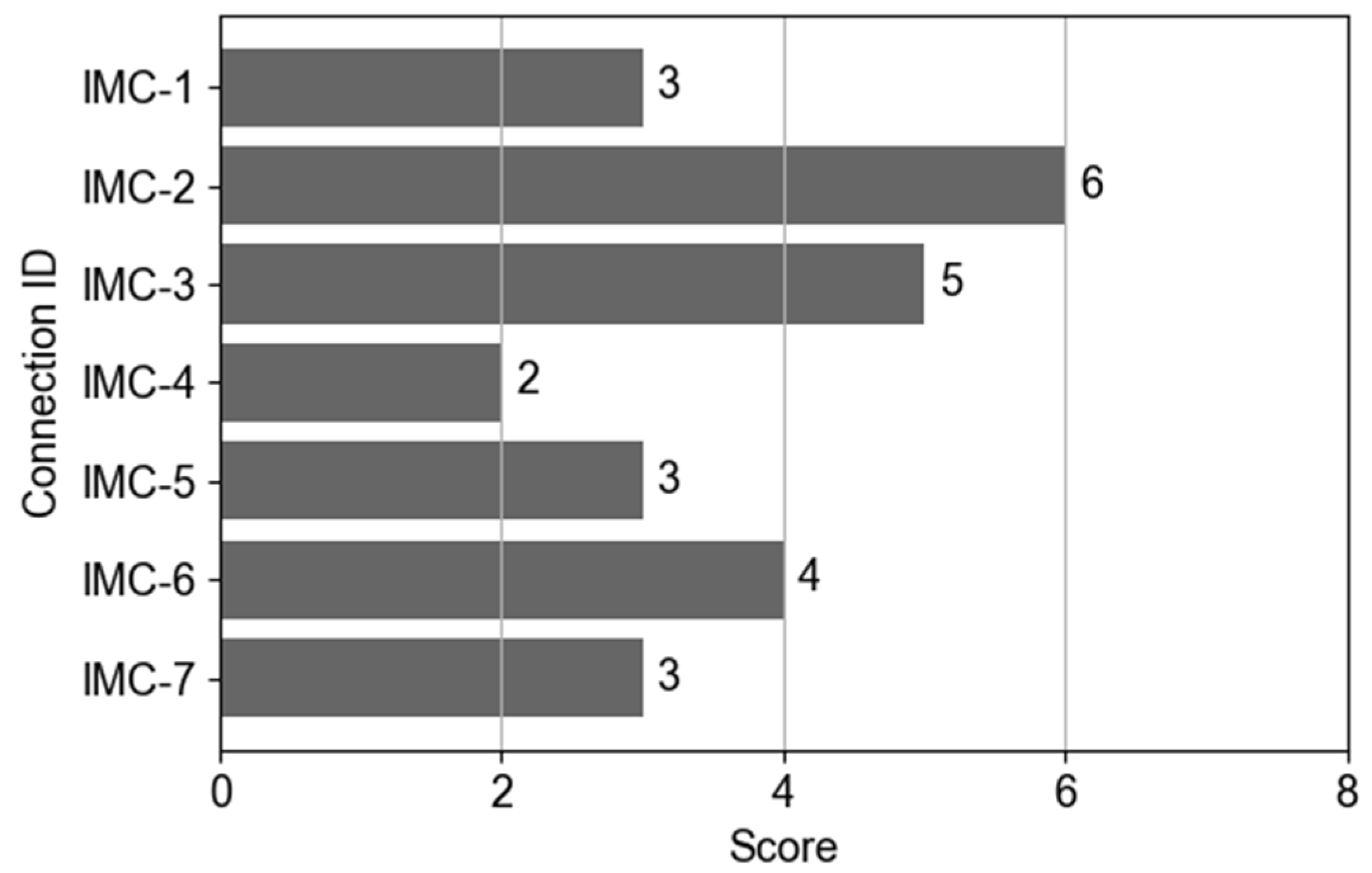
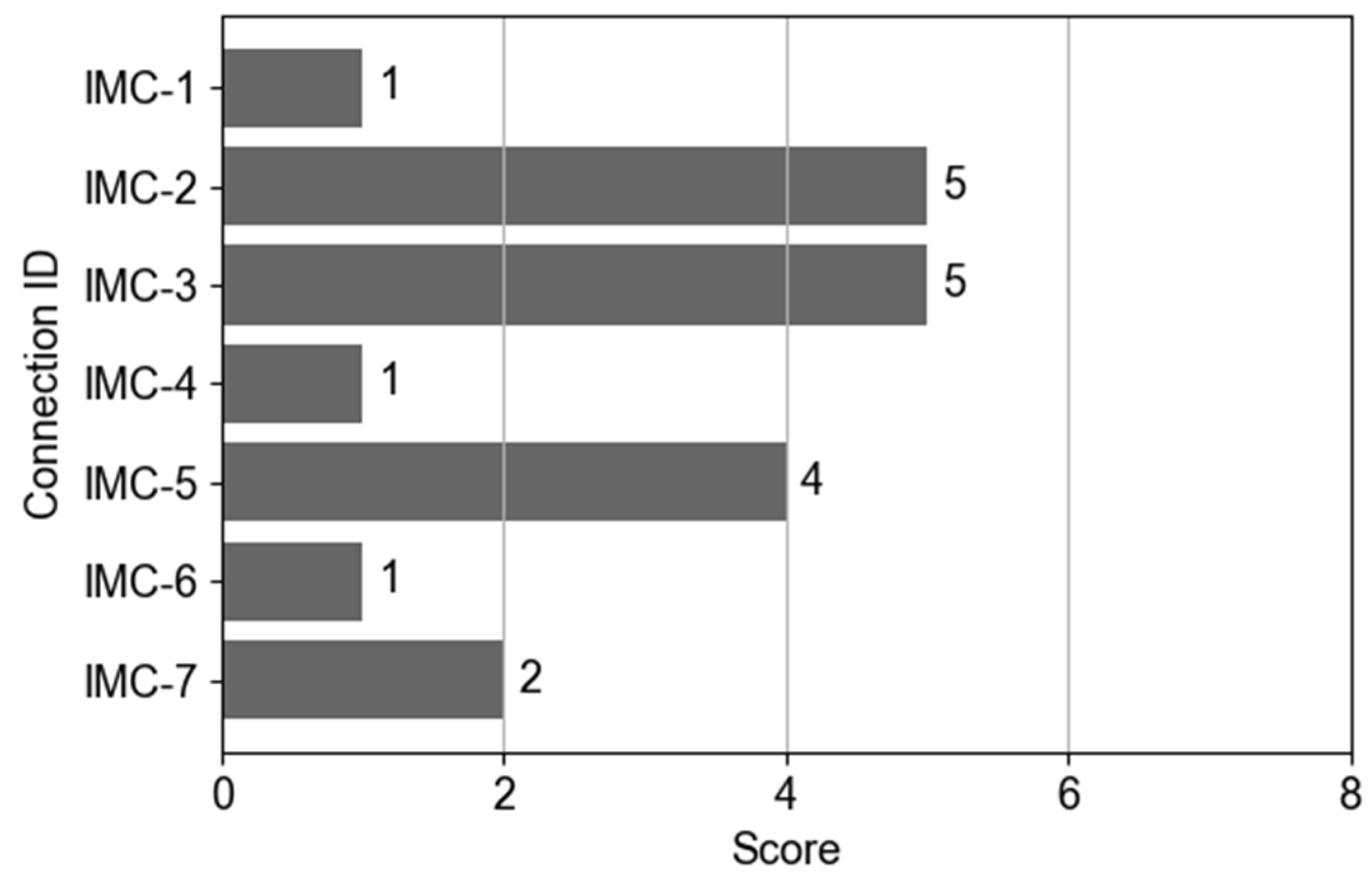
The structural performance of volumetric CLT modular buildings is directly related to the design and response of the inter-modular connections when buildings are subjected to lateral loads from seismic or wind demands [37,38,40]. These components serve as critical load path mechanisms for both vertical and horizontal forces, and their behavior directly affects the global stability of modular structures. Table 5 provides the individual scores assigned to each connection, while Figure 3 illustrates the cumulative scores.
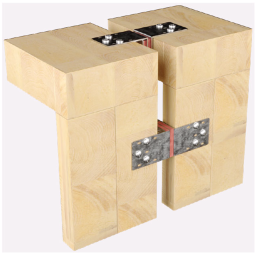
IMC-2 obtained the highest structural score due to its well-integrated design, which addresses all structural criteria. This connection was designed with an interlocking mechanism to resist tensile and shear stresses, thereby restricting movement in both its primary and secondary directions. Based on the concept of strong fasteners and weak metal connections, it was designed to absorb damage within the steel connection components, thus protecting the CLT modular units (CR = 2). Additionally, its design flexibility (DF = 2) ensures its applicability across different modular layouts, making it a robust and adaptable solution for multistory buildings with variable configurations.
IMC-3 is unique in its corner-based configuration and capacity to simultaneously resist shear and uplift due to its 3D screw layout. Its intermediate resilience score (CR = 1) reflects the presence of energy dissipation and controlled damage mechanisms, which, unfortunately, include damage to the timber panels. As a highly standardized solution, it offers design flexibility (DF = 2) and has already been implemented in several experimental and prototypical CLT modular structures [64].
IMC-6 offers both vertical and horizontal connectivity, with intermediate CR and DF. A low-yield steel (LYS) damper was used for energy dissipation in the horizontal component of the connection. This damper was designed to yield under seismic loads and can be replaced in case of damage, providing resilient features to the modular building (CR = 1). The design flexibility was reduced (DF = 1), indicating limitations in modular building configuration and standardization of connections.
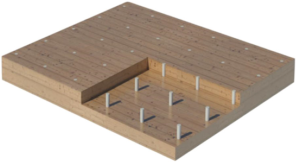
IMC-1 was conceptualized using steel plates for vertical and horizontal connections and continuous tie-down rods to resist uplift. While effective in terms of basic connectivity, its connection resilience (CR = 0) and design flexibility (DF = 1) indicate limited adaptability and minimal energy dissipation, with the damage localized between the fasteners and the CLT panels. IMC-5 offers a practical solution for shear transfer between vertically stacked modules, utilizing hardwood dowels and screws. However, the absence of any tensile or uplift mechanism (VC = 0) limits its use in seismic or wind-exposed regions. IMC-7 offers design flexibility (DF = 2) and effective horizontal connection; however, it lacks vertical connection and connection resilience features. IMC-4 integrates angle plates and pins, but its score reflects minimal design flexibility and an absence of energy dissipation concepts.

3.2. Manufacturing Evaluation

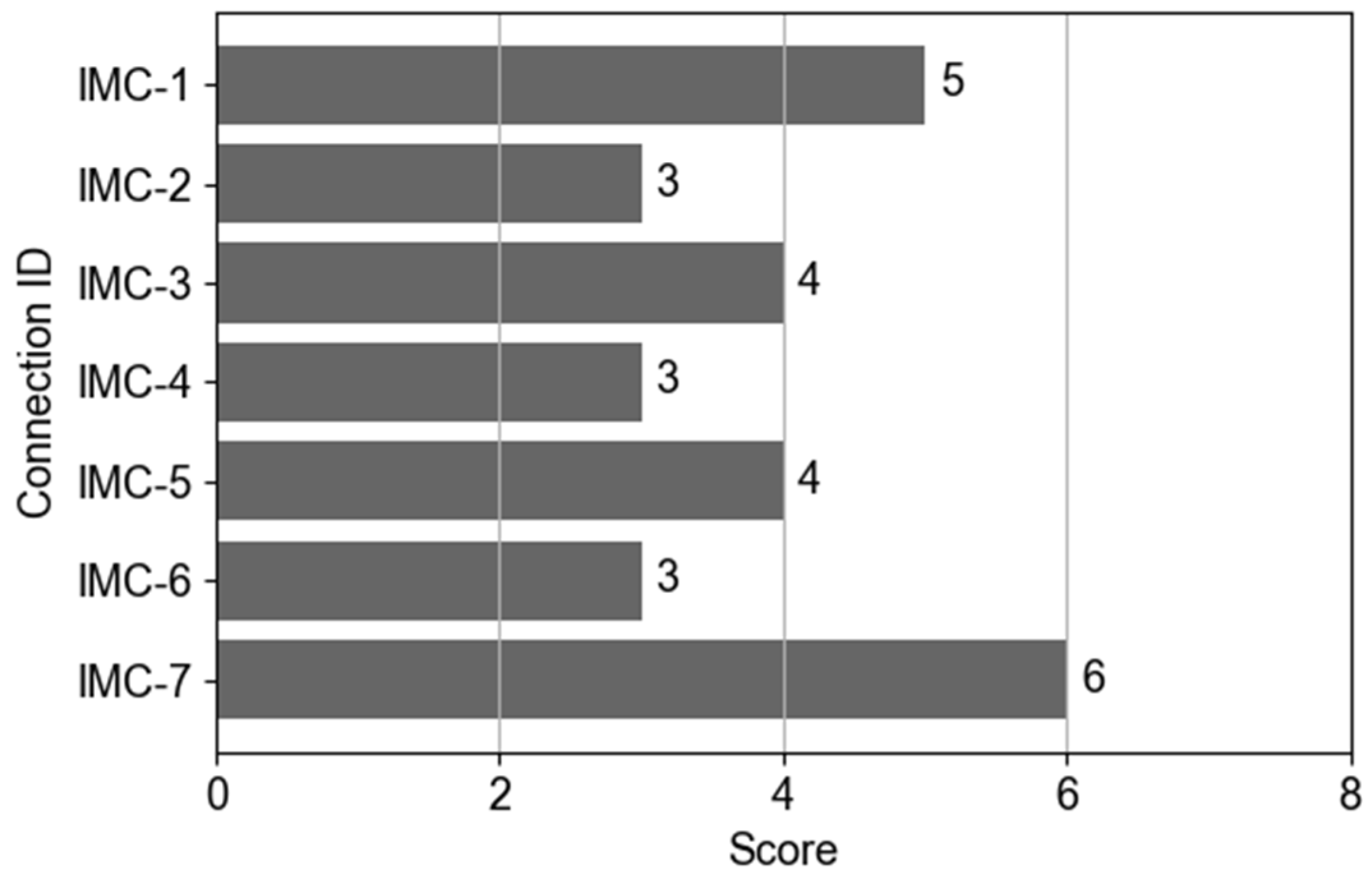
The reviewed connection systems were feasible for off-site production, although some introduced complexities that could challenge scalability for mass production. The results of the manufacturing evaluation are presented in Table 6 and Figure 4.
IMC-7 achieved exceptional performance across all manufacturing parameters. This system relies on pre-engineered brackets installed using simple fasteners, such as flange head screws, with minimal machining or integration complexity [70]. IMC-7 has simple and regular geometry, straightforward component integration, and ease of installation, aligning with the emphasis on productivity and repetition in modular construction. The system’s ability to reduce fabrication time and its compatibility with acoustic isolation strategies further support its use in residential modular buildings. The acoustic isolation property was only offered by IMC-1 and IMC-7.
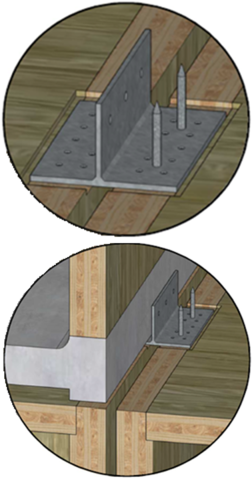
IMC-1 used steel plates and screws, fastened with elastic bearings between the modular units, to achieve a soundproofing effect. To resist the uplift forces, the connection utilized steel rods connected to steel plates that were placed on-site between the modules. These components were relatively easy to fabricate and integrate, enabling the simple and rapid preparation of the connection assembly during the off-site manufacturing process. However, it was considered a moderate number of parts required for the connection manufacturing, which reduced the connection’s performance in terms of CC.
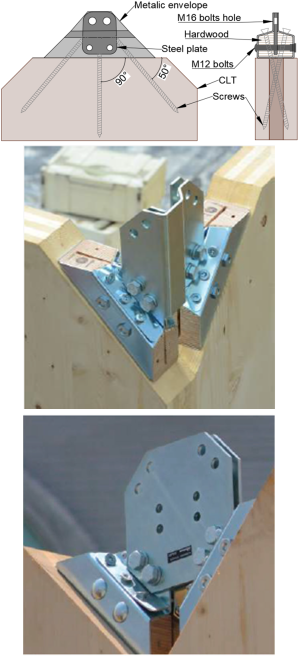
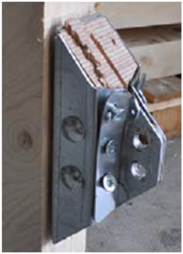
Although the X-RAD system (IMC-3) is well-integrated into plant-level prefabrication workflows, its multipart nature and the need for precise alignment add moderate complexity to the production process. The connection combines a metal envelope and a hardwood insert, both of which must be previously assembled in the proprietary facilities. Later, it is installed in the corners of the CLT panels using self-tapping screws with a specific inclination angle. The CLT panel corners must be chamfered by using a computer numerical control (CNC) cutting machine, which implies a rigorous installation process for the connection.
IMC-5, the dowel-type connection system, used hardwood dowels and standard screws. The materials and methods required to install the dowel-type connections are widely available and compatible with timber workshop tooling. However, the installation of the timber dowels requires predrilled holes to facilitate the assembly process, which increases the complexity of component integration and the time required during the installation procedure. Despite the use of hardwood elements, its simplicity in geometry and traditional fastening techniques make it well-suited for high-volume prefabrication.
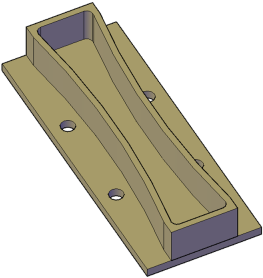
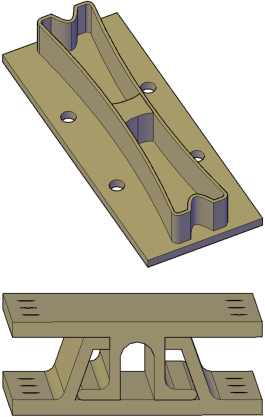
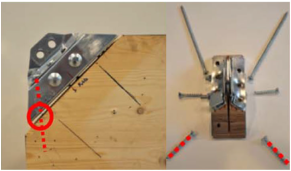
IMC-2, IMC-4, and IMC-6 provided moderate manufacturing complexity. The interlocking 3D-printed connections (IMC-2) required a more complex fabrication procedure for their main components. While the authors noted that the system is compatible with industrialization, its geometric complexity poses challenges for mass production using conventional methods. This connection requires a 3D printing process, which necessitates additional research and quality control testing before it can be industrialized for mass production.
IMC-6 includes both vertical and horizontal connection components. The vertical connection involves welded bolts and nut-secured interfaces, while the horizontal damper component includes custom-fabricated LYS plates. Though not highly complex individually, the combined integration of the curved steel plates for the vertical connection and the energy-dissipating elements makes this system slightly more labor-intensive than others. IMC-4, which uses a steel angle plate and fitted pins, showed a similar level of complexity. The proposed modular units require a precast concrete floor slab. The standardized steel profiles for the slab contain the pin-cone interface, which demands high precision in the prefabricated slab. Additionally, the steel plates with the pin for connection should be perfectly aligned at the roof of the modules to fit with the pin-cones of the adjacent module.

3.3. Construction Evaluation

The construction-phase performance of inter-modular connections, defined by ease of assembly, disassembly, and tolerance control, is a critical factor for evaluating the speed, precision, and cost-effectiveness promised by volumetric CLT modular systems. The results of the construction evaluation are presented in Table 7 and Figure 5.
Both IMC-2 and IMC-3 achieved the highest construction evaluation scores, largely due to their streamlined assembly process and excellent compatibility with modular construction methods. IMC-2, emphasized a sliding and stacking assembly method. This method was based on previous research that studied the interlocking mechanisms for modular construction [74]. The system’s connections are pre-installed off-site, allowing for rapid on-site installation with no need for additional fastening. IMC-2 guarantees self-alignment, simplifies tolerance control, and enables disassembly and module replacement by reversing the stacking sequence [58]. However, its success relies on the availability of specialized lifting systems and scaffolding frames, which could add logistical complexity in some construction contexts.
Similarly, the X-RAD connection (IMC-3) is pre-installed on panel corners in the factory using self-tapping screws, eliminating the need for additional on-site machining or fastening [61,62]. Once delivered, panels are positioned directly onto pre-anchored steel plates, which are developed as part of the same connection system and secured with only a few bolts. This minimizes construction labor and tooling demands. Moreover, IMC-3 enables efficient disassembly, making it a viable solution for relocatable or temporary buildings [30].
IMC-7 (ModuLink) also performed well in the construction evaluation category due to its pre-engineered bracket design, which supports fast on-site screw installation, and minimal alignment adjustments are required. Its modular adaptability and acoustic performance without the installation of additional components contribute to being a strong candidate for high-density residential projects in low seismic regions [52].
IMC-6 comprises a bolted vertical connection and a horizontal damper for energy dissipation, which requires additional steps during the assembly process to connect the components between adjacent modular units. This system involves multiple connections per module, requiring more site coordination than fully integrated solutions. Although the construction stage is slightly more complex than interlocking systems (e.g., IMC-2), its components are accessible for disassembly, and the connections provide sufficient tolerance control during construction.
IMC-4 has a relatively cumbersome installation sequence. Gijzen [67] reported that the construction process with this system involves an initial alignment of the angle plates before screwing them to the top of the side walls. Molds were used to align the pins of the plates to fit the cones of the pre-cast slab before the upper module was placed. To secure the angle plate to the concrete slab, drilled or glued anchors were suggested; after that, the next module can be placed to repeat the process. The use of drilled or glued anchors may cause difficulties during the reverse disassembly procedure and add an additional trade on-site to install the anchors, as well as another required inspection, thereby adding time and cost to the construction. This multi-step process also introduces greater potential for alignment issues and on-site delays.
IMC-1 and IMC-5 have substantial limitations in their construction-phase performance. IMC-1 involves multiple screw types and faces accessibility challenges, especially for vertical connections when modules are stacked next to each other, with only one module vertically connected, while the second module remains disconnected. These issues complicate installation and tolerance control, making the connection less suitable for rapid modular deployment. Similarly, IMC-5 lacks features that would facilitate module positioning, and it does not allow for disassembly. This connection does not incorporate alignment aids or tolerance adjustment methods, which are important for efficient on-site stacking.

3.4. Experimental and Numerical Evaluation

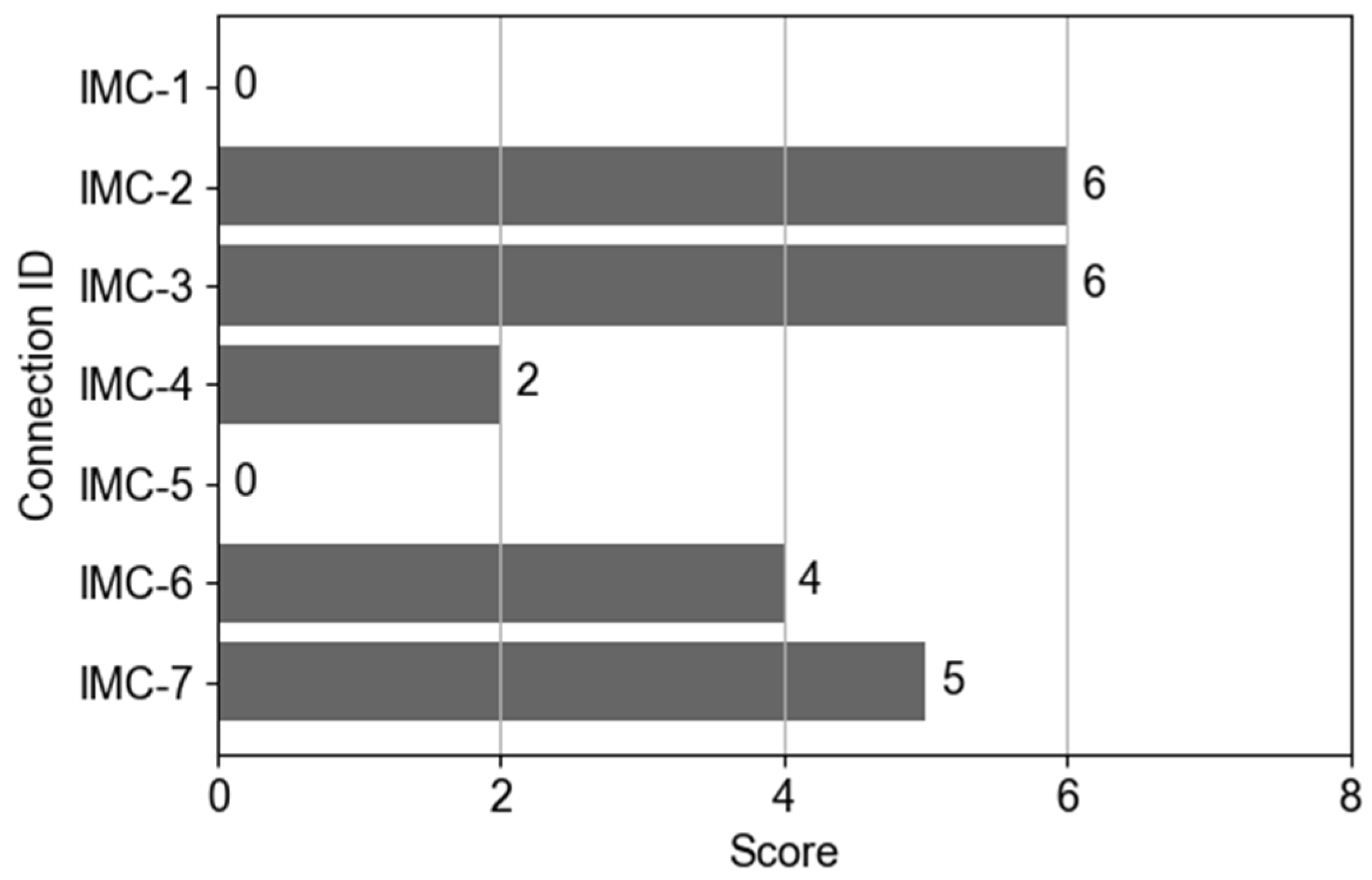
Experimental validation and numerical modeling are crucial for verifying the mechanical behavior, particularly at large deformations, the failure mechanisms, and reliability of inter-modular connection systems in CLT modular construction. These investigations provide an empirical and computational basis for understanding load transfer mechanisms, deformation modes, ductility, and failure sequences. The experimental tests were also used to calculate the strength and stiffness of the inter-modular connections, which defined numerical or analytical models for the design of modular structures. The results of the experimental and numerical evaluation are presented in Table 8 and Figure 6. The assigned scores were relatively low across most systems, suggesting that few of the reviewed connections were experimentally or numerically explored, or that the data and analysis from such investigations was not published.
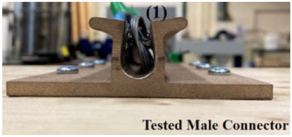
IMC-2 and IMC-3 lead this category with the highest scores, supported by detailed experimental testing and numerical simulations. IMC-2 was tested under both monotonic and cyclic loading of shear and tensile connections. The tests revealed key damage limit states, including buckling of the steel plates and bending of L-shaped male connections. Furthermore, sophisticated finite element models were developed using orthotropic elastoplastic timber and hardening steel models, capturing realistic connection behavior under various loading regimes. An important modeling methodology to capture the screw withdrawal effect [75] was incorporated to simulate the weakening effect of fasteners and verify the existence of localized timber damage.
IMC-3 was extensively explored by Angeli et al. [60], Polastri et al. [61,62], and Bhandari et al. [64,65,66]. This connection has been widely tested through both component-level and full-scale experimental setups. Testing covered various loading angles and panel configurations, revealing detailed performance parameters such as screw withdrawal resistance, ductility factors (ranging from 2.0 to 6.8 depending on direction), and failure modes involving screw fracture and wood cracking. Numerical analyses were conducted using both SAP2000 link elements and more advanced OpenSees two-node link element models to simulate directional stiffness and load-bearing behavior [62,65]. These models were benchmarked against experimental tests of monotonic and cyclic loading performed with different CLT species.
IMC-5 was investigated experimentally through 96 tests on single-shear CLT joints using hardwood dowels and screws. The study systematically examined fastener spacing, grain orientation, and fastener diameter using both monotonic and cyclic loading protocols. While this testing provides substantial insight into material behavior, the evaluation focused on generic CLT-to-CLT joints rather than the behavior of the connections within the volumetric module. Therefore, the application to a volumetric module seems tenuous. Although experimental testing of IMC-7 was performed [73], no numerical validation was reported to support the design process of this connection. The only information provided for this connection system corresponds to the published data sheet, which includes stiffness and strength values for design purposes [70].
The remaining systems, IMC-1, IMC-4, and IMC-6, had minimal or no published experimental or numerical information. For instance, IMC-1, despite being described by Koskimies [55] as structurally viable, lacks experimental test data or simulation results. Similarly, IMC-4 (angle plate design by Gijzen [67]) and IMC-6 (damper-based connection by Zhang et al. [69]) were presented conceptually or with limited experimental evaluation. Zhang et al. [69] performed reverse cyclic tests on wood assemblies that included the connection; however, without quantified performance metrics or accessible modeling details, the validation remains incomplete.
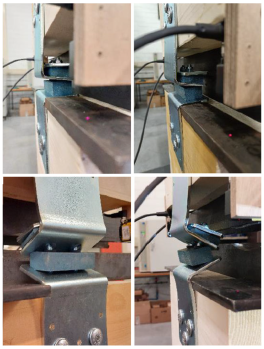
As a complement to the experimental and numerical evaluation, Table 9 summarizes the experimental tests performed by previous researchers on the inter-modular connections. This table includes information related to loading protocols used for their experimental testing, an illustration of the reported damage, and the failure modes detected during the experiments. From the connections described in Table 4, some cases remained as theoretical projects and lacked experimental or numerical tests to support the design.
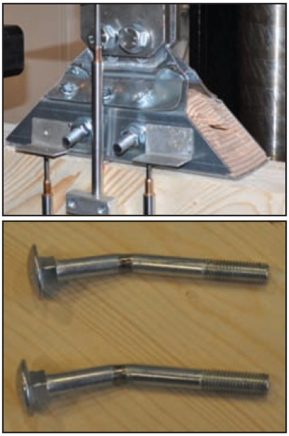
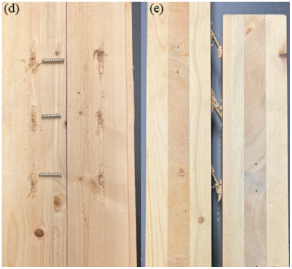
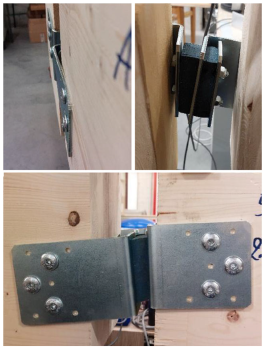
From the reported observed damage to the inter-modular connections from the experimental investigations listed in Table 9, some of the experimental investigations resulted in damage localized in the CLT panels. Tests on IMC-3 and IMC-5 resulted in crushing of the wood in contact with the screws and hardwood dowels, respectively. Testing of IMC-3 resulted in yield and fracture of the screws due to a combination of tensile and shear stresses, while testing of IMC-5 resulted in withdrawal and buckling of the screws during the cycling loading tests.
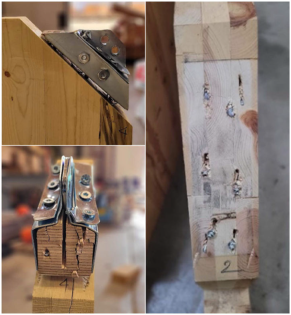
Conversely, no significant damage to timber panels was observed during testing of IMC-2, IMC-6, and IMC-7. The design of IMC-2 ensured damage within the connection and not the timber. This was achieved through bending of the L-shaped elements in tension and buckling of the curved plates in shear. IMC-6 showed yielding of the dampers provided for the horizontal connection. Similarly, testing of IMC-7 exhibited deformation of the elastomeric bearing elements, localized between the L-plates of the connection, in addition to yielding of the L-plates under both tensile and compressive loads. The significance of the location of damage can be in the recovery of the building. For connections where the damage was localized within the timber itself, the entire CLT panel will need to be replaced within the volumetric unit. In addition, energy dissipation can be assumed to be in the timber, which can result in brittle failure modes. However, for connections where the damage is located in the connection itself, in the recovery of the building, only the connection would have to be replaced. In addition, the energy dissipation is from the steel components within the connection, which is ductile and can withstand large deformations prior to fracture.

3.5. Overall Ranking

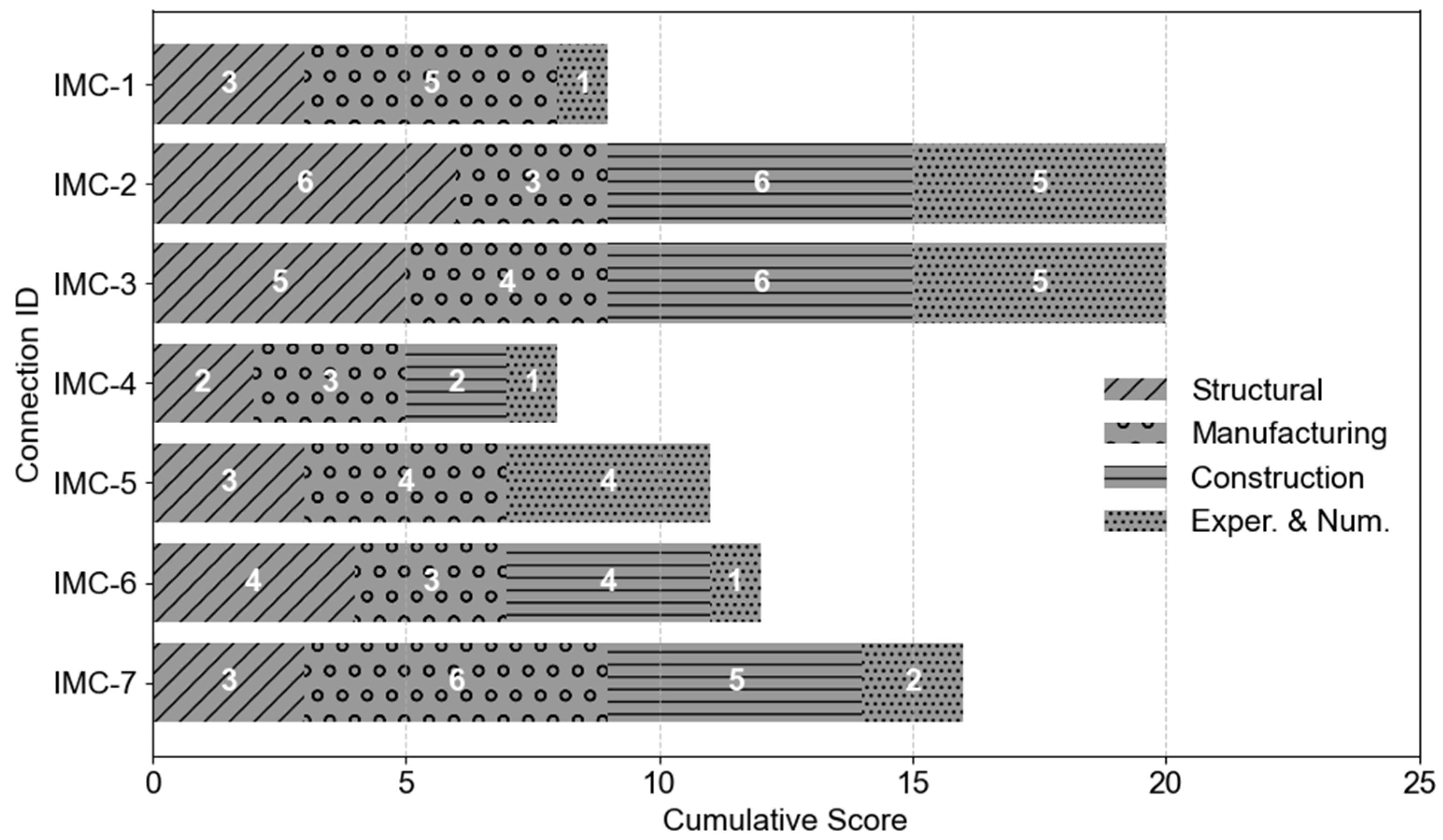
The overall ranking of the evaluated inter-modular connections provides a synthesized performance comparison across all categories: structural, manufacturing, construction, and experimental and numerical investigation. Table 10 provides the individual scores per category for each connection, and Figure 7 shows the cumulative scores for the seven connections described in Table 4. The results span from 8 (IMC-4) to a maximum of 20 (IMC-2 and IMC-3), reflecting variability in the design and implementation of the inter-modular connections.
IMC-2 and IMC-3 had the highest overall scores. IMC-2 performed consistently well across all categories. Its high structural score reflects a well-integrated design with interlocking tension and shear mechanisms, designed to localize damage in the connection rather than the timber panels and provide easy disassembly. Despite its geometrical complexity, the system’s industrial compatibility and factory-preinstalled nature resulted in strong performance in the manufacturing and construction evaluations. The connection’s extensive experimental validation and nonlinear numerical modeling further supported its robustness and reliability.
Similarly, IMC-3 demonstrated good performance across all evaluation categories. Its modular, corner-based configuration and standardized design contributed to high construction scores, particularly due to the ease of lifting, positioning, and anchoring on-site. Experimental programs, ranging from component-level testing to full-scale testing, coupled with analytical and numerical models, provided comprehensive validation of the system’s performance. Although installation requires specialized technology, such as CNC machining for the CLT panels, these are compatible with high-precision prefabrication environments.
IMC-7 had high ranking in manufacturing performance and high construction efficiency, due to its simple design and reduced labor-intensive on-site operations during installation. However, due to the lack of vertical connectivity and the absence of numerical simulations published in the literature, the connection exhibited lower structural and experimental performance. IMC-5 and IMC-6 achieved intermediate scores. IMC-6 integrates vertical and horizontal components with energy dissipation mechanisms in the horizontal direction, showing design objectives for seismic applications. However, its experimental evaluation remains limited, and construction complexity slightly reduces its cumulative score. IMC-5 benefits from straightforward manufacturing using standard fasteners and dowels and includes robust cyclic test data for fastener performance. Still, it lacks the vertical load transfer capacity and features necessary to support modular disassembly or alignment, thereby limiting its applicability as a comprehensive solution for modular construction.
IMC-1 and IMC-4 had the lowest overall scores. Both inter-modular connections were conceptually designed to meet the demands of CLT modular buildings; however, they lack of experimental testing and a suitable construction methodology. IMC-1 presents installation challenges due to its limited accessibility and the intensive use of screws in assembly. IMC-4 showed relatively low performance in all categories. Both connection systems’ reliance on precise alignment and multi-step anchoring procedures, coupled with the absence of energy dissipation mechanisms and supporting test data, constrains their adaptability for current modular construction needs, particularly in regions of high seismicity or wind.

4. Discussion

Volumetric modular buildings are still an emerging construction methodology that lacks a defined design philosophy to ensure a predictable response from all modular structures under lateral loading. The design process usually follows traditional lateral design methods [81,82,83] and includes performance objectives [14] to satisfy the structural demands. The identified volumetric CLT modular buildings (Table 3) and the published data on inter-modular connections revealed limited existing knowledge for design and evaluation of the connections in regions with high seismic and wind demands.
The structural evaluation revealed that all identified inter-modular connections provided horizontal connectivity, fundamental to guarantee the horizontal load transfer between the modules to ensure a diaphragm behavior [14]. However, not all the connections provided vertical connectivity to meet the uplift demands present in intermediate and high seismic regions, creating discontinuities in the load path. On the contrary, other approaches, such as interlocking mechanisms [58,74,84], combined the horizontal and vertical connectivity and improved the stability of multi-story modular buildings by generating additional redundancy and alternative load paths between the modular units. The lack of a continuous load path in modular buildings can introduce stress concentrations, localized damage, or increase the potential for failure [85,86].
Additional objectives for improved structural performance included connections with energy dissipation capacity [58,69] and connections that provided design flexibility to accommodate the modules into different building layout designs. The building configuration and connection design configuration play an important role in defining the failure mechanisms expected, providing structural redundancy and resilient solutions that concentrate damage in specific components or delay global damage of the buildings. Li et al. [87] identified that 64% of modular buildings follow a rectangular-based shape layout, while the remaining 36% included non-rectangular layouts. Therefore, the ability of these connections to be adaptable to various layouts provides a larger market for their use within buildings.
For the design of the connections, traditional strength design of the components is usually performed to satisfy the demand requirements. There are no available standards for modular construction. Based on the current standards for timber structures [80,88,89], there is a gap in standardized requirements for the design of intermodular connections; therefore, the design is based on the strength of the desired connection configuration to satisfy the lateral demands in the modular buildings.
The manufacturing evaluation suggests that most of the connections are still within a theoretical or development stage. The evaluation revealed a lack of reported quality control methodologies, a lack of testing methods needed for the industrialization process, and minimal or no information published about the fabrication procedure of the connections. However, despite the lack of data, IMC-3 and IMC-7 provided installation manuals to facilitate their installation procedure, following the designer specifications [63,71].
Additional information from off-site procedures is required to improve the evaluation performance for the assembly and installation process of the connections. Similarly, to improve the manufacturing processes, Tenório et al. [11] highlighted the necessity for a continuous development of BIM tools in the AEC industry for timber products and their interconnection with machinery software to facilitate in situ production (e.g., including the design of cuts and holes in timber panels).
The construction performance evaluation revealed a lack of building examples where the connection systems had been applied. IMC-7 was the only connection with reported case studies [52]; however, they did not include details from the construction process. IMC-3 provided full-scale prototypes that are recommended to document the assembly and disassembly process with an inter-modular connection system to obtain the required time, equipment, and number of workers needed to complete the task [90]. IMC-2 reported a well-detailed assembly and disassembly process [58], supported by conceptual studies to support the proposed construction methodology [74,84]. These limited cases in the construction methodologies for modular buildings revealed a high degree of uncertainty in selecting a connection system and a lack of study cases to support new designs of modular buildings. The construction performance can be translated into cost and time savings during the modular building’s construction phase. When a connection system provides a clear construction method, on-site delays are minimized.
The performance score of a given connection across each category could be used to identify flaws or weak characteristics of a connection system during the design process. Based on Shan and Pan [91] methodology for the design of modular buildings, the proposed manufacturing and construction evaluation could enhance the modular system schematization and the preliminary design of a modular building. Similarly, structural, experimental, and numerical evaluations could provide additional support before analyzing the global and local performance of the building’s components.
The testing methodologies required to evaluate inter-modular connections subjected to high lateral demands are highly dependent on the connection configuration and the plasticity mechanisms of the connection system. Monotonic and cyclic loading protocols are recommended to evaluate the response [3], focusing on parameters such as stiffness, strength, ductility, and energy dissipation. Based on the identified connections, different testing methods, performance requirements, and loading protocols were used. A consistent testing methodology should be developed for these connections to evaluate them under similar conditions. In addition, full-scale building testing [92] should be performed to benchmark component testing and determine whether it is representative of the building’s overall performance. In parallel, numerical models can be validated against experimental data to generalize the connection response and evaluate the global performance of the entire structure.

5. Future Research

To promote the construction of volumetric CLT modular buildings in regions with high seismic and wind hazards, improvements in the connection systems are required to meet the additional structural demands. Further evaluation with different layout configurations is necessary to predict the response of volumetric CLT modular buildings. To fulfill these requirements, a design methodology is needed to standardize the analysis of modular buildings and identify the structural demands that govern their response.
Extensive experimental campaigns were performed for some of the identified inter-modular connections (Table 9), followed by numerical evaluations with published data from a few of them. Unfortunately, none of the previous studies performed an analysis of the global response of a modular building based on the behavior of the proposed connections. These studies focused their attention solely on the local performance of the connection, developing analytical and numerical models without further development. Evaluation of the global response of the building can be used to assess and verify the performance objectives defined during the design, and include the dynamic response of the buildings up to collapse stages, similar to previous studies on steel modular buildings [93,94]. In addition, numerical simulations of the full building would provide data to develop a design guide for these buildings that could clarify performance objectives and the desired location of energy dissipation. Previous researchers have developed design methodologies and workflows for concrete and steel modular buildings [91,95,96]. To follow a similar approach, a set of performance objectives should be established based on the global performance of CLT modular buildings and complemented with the required local performance of the selected inter-modular connection. These types of design guides can also provide industry-supported standards that can assist Authorities Having Jurisdiction (AHJs) in understanding the quality of designs and thereby enabling more streamlined building reviews.
The scores (Table 10) from the construction performance category presented the largest variability in the evaluation of the connections, followed by the experimental and numerical evaluation category. This variability in performance highlights the absence of detailed construction methodologies developed for modular workflows and cases that demand complex operations, time-intensive processes for installation, or intricate future disassembly operations of the modular buildings. Similarly, it reveals a lack of experimental tests or reported data to provide sufficient support for the application of these connection systems.
The manufacturing of the connections requires off-site evaluations to measure the performance of the fabrication procedures. Zhang et al. [97] proposed a process-oriented framework to improve production methodologies applicable to the modular construction industry. However, it requires an initial collection of data to apply the method. With the execution of experimental tests and fabrication of modular prototypes, statistical data should be collected to identify the components or activities that add higher complexity and increase the time required for connection installation. In addition, further data on off-site construction would provide information on tolerance limits required for the buildings and their influence based on the connection system configuration (e.g., connection spacing, accessibility). The data from these off-site construction methods can provide insight into where new technologies are most beneficial to increase speed of construction. For example, laser scanning methods [98] can incorporate solutions for construction tolerances, reducing initial eccentricities of modular buildings due to inadequate installation alignment.

Author Contributions

Conceptualization, J.S.Z.-J. and E.C.F.; methodology, J.S.Z.-J. and E.C.F.; formal analysis, J.S.Z.-J.; investigation, J.S.Z.-J.; data curation, J.S.Z.-J.; writing—original draft preparation, J.S.Z.-J. and E.C.F.; writing—review and editing, J.S.Z.-J. and E.C.F.; visualization, J.S.Z.-J.; supervision, E.C.F.; project administration, E.C.F.; funding acquisition, E.C.F. All authors have read and agreed to the published version of the manuscript.

Funding

This research was funded by the National Science Foundation, grant number (CMMI 2046001).

Data Availability Statement

Not applicable. No new data were created or analyzed in this study.

Acknowledgments

Test report Straviwood Modulink: “These tests were set up by Robbe Celis for WOOD.BE on behalf of CDM Stravitec. With the support of knowledge disseminated within the Recurwood project, funded by VLAIO.”

Conflicts of Interest

The authors declare no conflicts of interest.

References

  1. Sajid, Z.W.; Ullah, F.; Qayyum, S.; Masood, R. Climate Change Mitigation through Modular Construction. Smart Cities 2024, 7, 566–596. [Google Scholar] [CrossRef]
  2. Association for Advancing Automation. The Effectiveness of Robotic Technologies in Construction and Infrastructure Development. Available online: https://www.automate.org/robotics/news/the-effectiveness-of-robotic-technologies-in-construction-and-infrastructure-development-72 (accessed on 17 April 2025).
  3. Lim, Y.-W.; Ling, P.C.H.; Tan, C.S.; Chong, H.-Y.; Thurairajah, A. Planning and coordination of modular construction. Autom. Constr. 2022, 141, 104455. [Google Scholar] [CrossRef]
  4. Modular Building Institute. What Is Modular Construction? Available online: https://www.modular.org/what-is-modular-construction/#:~:text=Modular%20construction%20is%20a%20process%20in%20which,%E2%80%93%20but%20in%20about%20half%20the%20time.&text=Structurally%2C%20modular%2C%20prefabricated%20buildings%20are%20generally%20stronger,rigors%20of%20transportation%20and%20craning%20onto%20foundations (accessed on 17 April 2025).
  5. Matson, S. Modular Construction Definition: A Look into Building Blocks at Scale. Available online: https://onekeyresources.milwaukeetool.com/en/what-is-modular-construction#:~:text=What%20Is%20Modular%20Construction?,are%20built%20exactly%20to%20spec (accessed on 14 April 2025).
  6. TWI. What Is a Modular Building? A Guide to Modular Construction. Available online: https://www.twi-global.com/technical-knowledge/faqs/what-is-a-modular-building#:~:text=Modular%20construction%20is%20a%20process%20where%20a,of%20different%20building%20types%20and%20floor%20plans (accessed on 17 April 2025).
  7. Carvalho, L.F.; Jorge, L.F.C.; Jerónimo, R. Plug-and-Play Multistory Mass Timber Buildings: Achievements and Potentials. J. Archit. Eng. 2020, 26, 04020011. [Google Scholar] [CrossRef]
  8. Lim, R.Z.C.; Looi, D.T.W.; Tsang, H.; Wilson, J.L. A preliminary design tool for volumetric buildings. Struct. Des. Tall Build 2022, 31, e1946. [Google Scholar] [CrossRef]
  9. Wilson, J. Design for Modular Construction: An Introduction for Architects; Building Green; The American Institute of Architects: Washington, DC, USA, 2019. [Google Scholar]
  10. Whole Building Design Guide. Off-Site and Modular Construction Explained. Available online: https://www.wbdg.org/resources/site-and-modular-construction-explained (accessed on 17 April 2025).
  11. Tenório, M.; Ferreira, R.; Belafonte, V.; Sousa, F.; Meireis, C.; Fontes, M.; Vale, I.; Gomes, A.; Alves, R.; Silva, S.M.; et al. Contemporary Strategies for the Structural Design of Multi-Story Modular Timber Buildings: A Comprehensive Review. Appl. Sci. 2024, 14, 3194. [Google Scholar] [CrossRef]
  12. Duncheva, T.; Bradley, F.F. A comparison between Volumetric Timber Manufacturing Strategies in the UK and mainland Europe. In 2016 MOC Summit: Edmonton, Canada, Proceedings of the 2016 Modular and Offsite Construction (MOC) Summit, Edmonton, AB, Canada, 29 September–1 October 2016; MOC: Montreal, QC, Canada, 2016. [Google Scholar] [CrossRef]
  13. Forum, W.E. How Modular Construction Drives Productivity, Circularity and the Convergence of Industries. Available online: https://www.weforum.org/stories/2025/01/modular-construction-productivity-circularity/ (accessed on 17 April 2025).
  14. Srisangeerthanan, S.; Hashemi, M.J.; Rajeev, P.; Gad, E.; Fernando, S. Review of performance requirements for inter-module connections in multi-story modular buildings. J. Build. Eng. 2020, 28, 101087. [Google Scholar] [CrossRef]
  15. Rajanayagam, H.; Poologanathan, K.; Gatheeshgar, P.; Varelis, G.E.; Sherlock, P.; Nagaratnam, B.; Hackney, P. A-State-Of-The-Art review on modular building connections. Structures 2021, 34, 1903–1922. [Google Scholar] [CrossRef]
  16. University, M. Handbook for the Design of Modular Structures; Monash University: Melbourne, VIC, Australia, 2017. [Google Scholar]
  17. Perkins & Will. Designing for Volumetric Modular—A Framework for Product and System Evaluation. May 2024. Available online: https://issuu.com/perkinswillvan/docs/designing_for_volumetric_modular_a_framework_for_p (accessed on 21 April 2025).
  18. Kavaliauskas, D.S. Modular element system in high-rise wooden buildings: Challenges, advantages and perspective. In Proceedings of the 23rd International Timber Construction Forum (IHF 2017), Garmisch-Partenkirchen, Germany, 6–8 December 2017. [Google Scholar]
  19. Abiri, B. Decision-Making for Cross-Laminated Timber Modular Construction Logistics Using Discrete Event Simulation. 2020. Available online: https://www.journalofindustrializedconstruction.com/index.php/mocs/article/view/117 (accessed on 18 January 2023).
  20. ANSI/APA PRG 320; Standard for Performance-Rated Cross-Laminated Timber. American National Standards Institute: Washington, DC, USA, 2018.
  21. Council, A.W. Manual for Engineered Wood Construction; American Wood Council: Leesburg, VA, USA, 2015; Available online: https://awc.org/wp-content/uploads/2021/12/AWC-2015-Manual-1603.pdf (accessed on 9 December 2025).
  22. 2015 IBC; International Building Code. International Code Council: Washington, DC, USA, 2014.
  23. EN 16351:2015; Timber Structures—Cross Laminated Timber—Requirements. CEN-CENELEC Management Centre: Brussels, Belgium, 2015.
  24. Ilgın, H.E.; Karjalainen, M.; Mikkola, P. Views of Cross-Laminated Timber (CLT) Manufacturer Representatives around the World on CLT Practices and Its Future Outlook. Buildings 2023, 13, 2912. [Google Scholar] [CrossRef]
  25. LSW Architects. PathHouse. 2025. Available online: https://lswarchitects.com/projects/pathhouse/ (accessed on 9 December 2025).
  26. Green Canopy NODE. Green Canopy NODE—Impact Report. 2022. Available online: https://www.greencanopynode.com/impact (accessed on 22 April 2025).
  27. Ryder, Z. Green Canopy NODE. Available online: https://offsitebuilder.com/high-efficiency-clt-modular-homes/ (accessed on 9 December 2025).
  28. Corfar, D.-A.; Tsavdaridis, K.D. A comprehensive review and classification of inter-module connections for hot-rolled steel modular building systems. J. Build. Eng. 2022, 50, 104006. [Google Scholar] [CrossRef]
  29. Gutiérrez, N.; Negrão, J.; Dias, A.; Guindos, P. Bibliometric Review of Prefabricated and Modular Timber Construction from 1990 to 2023: Evolution, Trends, and Current Challenges. Sustainability 2024, 16, 2134. [Google Scholar] [CrossRef]
  30. Bhandari, S.; Riggio, M.; Jahedi, S.; Fischer, E.C.; Muszynski, L.; Luo, Z. A review of modular cross laminated timber construction: Implications for temporary housing in seismic areas. J. Build. Eng. 2023, 63, 105485. [Google Scholar] [CrossRef]
  31. Johnson, K.; Villani, M.; Bayliss, K.; Brooks, C.; Chandrasekhar, S.; Chartier, T.; Chen, Y.-S.; Garcia-Pelaez, J.; Gee, R.; Styron, R. Global Seismic Hazard Map. Zenodo 2023. [Google Scholar] [CrossRef]
  32. ER 1110-2-1806; Engineering and Design Earthquake Analysis, Evaluation, and Design for Civil Works Projects. Department of the Army: Washington, DC, USA, 2024.
  33. Witha, B.; Andrea, H.; Tija, S.; Martin, D.; Yasemin, E.; Elena, G.-B.; Fidel, G.-R.J.; Grégoire, L.; Jorge, N. WRF model sensitivity studies and specifications for the NEWA mesoscale wind atlas production runs. Zenodo 2019. [Google Scholar] [CrossRef]
  34. American Society of Civil Engineers. ASCE Hazard Tool. Available online: https://ascehazardtool.org/#lat=45.258758&lon=-111.31032&z=5&r=2&sc=0&sv=7-22&m=si&l=Wind&v=Wind (accessed on 30 April 2025).
  35. National Weather Service and National Oceanic and Atmospheric Administration. Wind Threat Description. Available online: https://www.weather.gov/mlb/seasonal_wind_threat (accessed on 30 April 2025).
  36. National Weather Service and National Oceanic and Atmospheric Administration. Saffir-Simpson Hurricane Wind Scale. Available online: https://www.nhc.noaa.gov/aboutsshws.php (accessed on 1 May 2025).
  37. Srisangeerthanan, S.; Hashemi, M.J.; Rajeev, P.; Gad, E.; Fernando, S. Numerical study on the effects of diaphragm stiffness and strength on the seismic response of multi-story modular buildings. Eng. Struct. 2018, 163, 25–37. [Google Scholar] [CrossRef]
  38. Lacey, A.W.; Chen, W.; Hao, H.; Bi, K. Structural response of modular buildings—An overview. J. Build. Eng. 2018, 16, 45–56. [Google Scholar] [CrossRef]
  39. Yang, Z.; Lu, W. Facility layout design for modular construction manufacturing: A comparison based on simulation and optimization. Autom. Constr. 2023, 147, 104713. [Google Scholar] [CrossRef]
  40. Thai, H.-T.; Ngo, T.; Uy, B. A review on modular construction for high-rise buildings. Structures 2020, 28, 1265–1290. [Google Scholar] [CrossRef]
  41. Huß, W.; Kaufmann, M.; Merz, K. Building in Timber—Room Modules; DETAIL: Munich, Germany, 2019. [Google Scholar] [CrossRef]
  42. Kaufmann Bausysteme. Available online: https://www.kaufmannbausysteme.at/en/reference-overview-modular/ (accessed on 14 April 2025).
  43. Integrated Design Cubed, Modular Mass Timber by IDCUBED. A Significant Breakthrough. Better Buildings. Faster. Cheaper. Available online: https://www.idcubedmodular.com/ (accessed on 15 April 2025).
  44. Oopeaa, Modular Timber Construction. 2025. Available online: https://oopeaa.com/research/modular-timber-construction/ (accessed on 22 April 2025).
  45. Abrahamsen, M.R.B. World’s tallest timber building—14 storeys in Bergen. In Proceedings of the 21. Internationales Holzbau-Forum IHF 2015, Garmisch-Partenkirchen, Germany, 2–4 December 2015. [Google Scholar]
  46. Council on Tall Buildings and Urban Habitat. Tall Timber Center—The Mass Timber Database of CTBUH. Available online: https://talltimbercenter.com/buildings/all (accessed on 23 April 2025).
  47. WSP. The Art and Science of The Possible. Tall Timber: How High Can CLT Go? Available online: https://www.the-possible.com/clt-high-rise-building-tall-with-engineered-timber/ (accessed on 23 April 2025).
  48. Tuure, A.; Ilgın, H. Space Efficiency in Finnish Mid-Rise Timber Apartment Buildings. Buildings 2023, 13, 2094. [Google Scholar] [CrossRef]
  49. Tuure, A.; Hirvilammi, T.; Ilgın, H.E.; Karjalainen, M. Finnish mid-rise timber apartment buildings: Architectural, structural, and constructional features. Archit. Res. Finl. 2024, 8, 88–119. [Google Scholar] [CrossRef]
  50. Waugh Thistleton Architects. Watts Grove Groundbreaking Modular Housing. Available online: https://www.graphisoft.com/case-studies/waugh-thistleton-architects-watts-grove/ (accessed on 9 December 2025).
  51. Alter, L. The Construction Revolution Continues as Cross-Laminated Timber Goes Modular. Available online: https://www.treehugger.com/construction-revolution-continues-cross-laminated-timber-goes-modular-4858141 (accessed on 11 April 2025).
  52. CDM Stravitec. Straviwood ModuLink Case Studies. Available online: https://cdm-stravitec.com/en-us/case-studies?f%5B0%5D=solution%3A313 (accessed on 14 April 2025).
  53. De Groot Vroomshoop. Wooden Residential Buildings Koelmalaan Alkmaar. Available online: https://degrootvroomshoop.nl/bouwsystemen/houten-woongebouwen-in-alkmaar/ (accessed on 14 April 2025).
  54. BouwendNederland. New Construction Campus Valkenvoortweg Waalwijk. Available online: https://www.bouwendnederland.nl/vereniging/regio-zuid/afdeling-brabant-mid-west/circulair-bouwen-afdeling-brabant-mid-west/nieuwbouw-campus-valkenvoortweg-waalwijk (accessed on 14 April 2025).
  55. Koskimies, J. Inter-Module Connections in Multi-Storey Modular Timber Buildings; Aalto University: Espoo, Finland, 2022. [Google Scholar]
  56. Li, Z.; Tsavdaridis, K.D. A novel limited-damage 3D-printed interlocking inter-module connection system for Cross Laminated Timber (CLT) volumetric structures. In Proceedings of the World Conference on Timber Engineering (WCTE 2023), Oslo, Norway, 19–22 June 2023; pp. 1192–1199. [Google Scholar] [CrossRef]
  57. Li, Z.; Tsavdaridis, K.D. Design for Seismic Resilient Cross Laminated Timber (CLT) Structures: A Review of Research, Novel Connections, Challenges and Opportunities. Buildings 2023, 13, 505. [Google Scholar] [CrossRef]
  58. Li, Z.; Tsavdaridis, K.D. Limited-damage 3D-printed interlocking connection for timber volumetric structures: Experimental validation and computational modelling. J. Build. Eng. 2023, 63, 105373. [Google Scholar] [CrossRef]
  59. Li, Z. Innovative Interlocking Connection System for Medium-Rise Timber Modular Structures; The University of Leeds: Leeds, UK, 2024. [Google Scholar]
  60. Angeli, A.; Polastri, A.; Callegari, E.; Chiodega, M. Mechanical characterization of an innovative connection system for CLT structures. In Proceedings of the WCTE 2016 World Conference on Timber Engineering, Vienna, Austria, 22–25 August 2016. [Google Scholar]
  61. Polastri, A.; Giongo, I.; Piazza, M. An Innovative Connection System for Cross-Laminated Timber Structures. Struct. Eng. Int. 2017, 27, 502–511. [Google Scholar] [CrossRef]
  62. Polastri, A.; Giongo, I.; Angeli, A.; Brandner, R. Mechanical characterization of a pre-fabricated connection system for cross laminated timber structures in seismic regions. Eng. Struct. 2018, 167, 705–715. [Google Scholar] [CrossRef]
  63. Rothoblaas. X-RAD Connection System. Available online: https://www.rothoblaas.com/products/fastening/brackets-and-plates/x-rad/x-rad (accessed on 26 November 2024).
  64. Bhandari, S.; Jahedi, S.; Riggio, M.; Lech, M.; Luo, Z.; Polastri, A. CLT Modular low-rise buildings a DfMA approach for deployable structures. In Proceedings of the WCTE 2021 World Conference on Timber Engineering, Santiago, Chile, 9–12 August 2021. [Google Scholar]
  65. Bhandari, S.; Fischer, E.C.; Riggio, M.; Muszynski, L. Numerical assessment of In-plane behavior of multi-panel CLT shear walls for modular structures. Eng. Struct. 2023, 295, 116846. [Google Scholar] [CrossRef]
  66. Bhandari, S.; Fischer, E.C.; Riggio, M.; Muszynski, L.; Jahedi, S. Mechanical Characterization of Connections for Modular Cross-Laminated Timber Construction Using Underutilized Lumber. J. Struct. Eng. 2024, 150, 04023221. [Google Scholar] [CrossRef]
  67. Gijzen, R. Modular Cross-Laminated Timber Buildings. Delft University of Technology. 2017. Available online: https://repository.tudelft.nl/islandora/object/uuid%3Af687e2cc-86e1-442e-862a-2ceb382f7157 (accessed on 9 December 2025).
  68. Vilguts, A.; Phillips, A.R.; Antonopoulos, C.; Griechen, D. Testing and modeling of CLT-to-CLT joints made using hardwood dowels and screws with varying spacing. Constr. Build. Mater. 2025, 458, 139449. [Google Scholar] [CrossRef]
  69. Zhang, C.; Lee, G.; Lam, F. Connections for Stackable Heavy Timber Modules in Midrise to Tall Wood Buildings; TEAM 2018-08; Timber Engineering Applied Mechanics: Vancouver, BC, Canada, 2018. [Google Scholar]
  70. Stravitec, C.D. Straviwood Modulink Datasheet. Available online: https://cdm-stravitec.com/en-us/media/4374/download?attachment (accessed on 9 December 2025).
  71. Stravitec, C.D. Straviwood ModuLink—Installation Manual. Available online: https://cdm-stravitec.com/en-us/media/4375/download?attachment (accessed on 9 December 2025).
  72. Stravitec, C.D. Timber Construction Acoustical Solutions. Available online: https://cdm-stravitec.com/en-us/media/4180/download?attachment (accessed on 9 December 2025).
  73. WOOD.BE. Test Report 220986—Straviwood Modulink: Mechanical Evaluation; Test Report 220986_EN_CDM_J_230223Rp; Wood.Be: Brussels, Belgium, 2023. [Google Scholar]
  74. Sharafi, P.; Mortazavi, M.; Samali, B.; Ronagh, H. Interlocking system for enhancing the integrity of multi-storey modular buildings. Autom. Constr. 2018, 85, 263–272. [Google Scholar] [CrossRef]
  75. Bedon, C.; Fragiacomo, M. Numerical analysis of timber-to-timber joints and composite beams with inclined self-tapping screws. Compos. Struct. 2019, 207, 13–28. [Google Scholar] [CrossRef]
  76. EN 12512; Timber Structures—Test Methods—Cyclic Testing of Joints Made with Mechanical Fasteners. CEN-CENELEC Management Centre: Brussels, Belgium, 2001.
  77. EN 26891; Timber Structures—Joints Made with Mechanical Fasteners—General Principles for the Determination of Strength and Deformation Characteristics. CEN-CENELEC Management Centre: Brussels, Belgium, 1991.
  78. ASTM D5764; Standard Test Method for Evaluating Dowel-Bearing Strength of Wood and Wood-Based Products. ASTM International: West Conshohocken, PA, USA, 2018.
  79. ASTM E2126; Standard Test Methods for Cyclic (Reversed) Load Test for Shear Resistance of Vertical Elements of the Lateral Force Resisting Systems for Buildings. ASTM International: West Conshohocken, PA, USA, 2019.
  80. American Wood Council. Nds ® 2018 National Design Specification® for Wood Construction 2018. 2018. Available online: www.awc.org (accessed on 9 December 2025).
  81. ASCE/SEI 7-22; Minimum Design Loads and Associated Criteria for Buildings and Other Structures. ASCE: Reston, VA, USA, 2021. [CrossRef]
  82. BS EN 1998-1:2004; CEN. Eurocode 8: Design of Structures for Earthquake Resistance, Part 1: General Rules, Seismic Actions and Rules for Buildings. BSI: London, UK, 2004.
  83. Gunawardena, T.; Ngo, T.; Priyan, M.; Lu, A.; Alfano, J. Structural performance under lateral loads of innovative prefabricated modular structures. In From Materials to Structures: Advancement through Innovation; CRC Press: Boca Raton, FL, USA, 2012. [Google Scholar] [CrossRef]
  84. Di Pasquale, J.; Innella, F.; Bai, Y. Structural Concept and Solution for Hybrid Modular Buildings with Removable Modules. J. Archit. Eng. 2020, 26, 04020032. [Google Scholar] [CrossRef]
  85. Thai, H.-T.; Ho, Q.V.; Li, W.; Ngo, T. Progressive collapse and robustness of modular high-rise buildings. Struct. Infrastruct. Eng. 2023, 19, 302–314. [Google Scholar] [CrossRef]
  86. Miyake, T.; Sato, M.; Nakashima, S.; Matsuda, M.; Isoda, H.; Kawai, N. A study on the collapse limit of clt panel construction based on static lateral loading tests. In Proceedings of the World Conference on Timber Engineering 2025, Brisbane, Australia, 22–26 June 2025; pp. 220–226. [Google Scholar] [CrossRef]
  87. Li, J.; Andersen, L.V.; Hudert, M.M. The Potential Contribution of Modular Volumetric Timber Buildings to Circular Construction: A State-of-the-Art Review Based on Literature and 60 Case Studies. Sustainability 2023, 15, 16203. [Google Scholar] [CrossRef]
  88. Eurocode 1995-1-1 2004 A1; Eurocode 5: Design of Timber Structures–Part 1-1: General-Common Rules and Rules for Buildings. The European Union: Brussels, Belgium, 2004.
  89. AS 1720.1-2010; Timber Structures. Part 1, Design Methods. 3rd ed. Standards Australia: Sydney, NSW, Australia, 2011.
  90. Bhandari, S. Modular Cross Laminated Timber Structures Using Underutilized Ponderosa Pine; Oregon State University: Corvallis, OR, USA, 2022. [Google Scholar]
  91. Shan, S.; Pan, W. Structural design of high-rise buildings using steel-framed modules: A case study in Hong Kong. Struct. Des. Tall Build 2020, 29, e1788. [Google Scholar] [CrossRef]
  92. Pei, S.; Ryan, K.L.; Berman, J.W.; van de Lindt, J.W.; Pryor, S.; Huang, D.; Wichman, S.; Busch, A.; Roser, W.; Wynn, S.L.; et al. Shake-Table Testing of a Full-Scale 10-Story Resilient Mass Timber Building. J. Struct. Eng. 2024, 150, 04024183. [Google Scholar] [CrossRef]
  93. Sanches, R.; Tao, J.; Fathieh, A.; Mercan, O. Investigation of the seismic performance of braced low-, mid- and high-rise modular steel building prototypes. Eng. Struct. 2021, 234, 111986. [Google Scholar] [CrossRef]
  94. Shan, S.; Pan, W. Progressive collapse mechanisms of multi-story steel-framed modular structures under module removal scenarios. Structures 2022, 46, 1119–1133. [Google Scholar] [CrossRef]
  95. Pan, W.; Wang, Z.; Zhang, Y. Module equivalent frame method for structural design of concrete high-rise modular buildings. J. Build. Eng. 2021, 44, 103214. [Google Scholar] [CrossRef]
  96. Shi, F.-W.; Ding, Y.; Zong, L.; Pan, W.; Duan, Y.; Ping, T.-Y. Seismic behavior of high-rise modular buildings with simplified models of inter-module connections. J. Constr. Steel Res. 2024, 221, 108867. [Google Scholar] [CrossRef]
  97. Zhang, Y.; Lei, Z.; Han, S.; Bouferguene, A.; Al-Hussein, M. Process-Oriented Framework to Improve Modular and Offsite Construction Manufacturing Performance. J. Constr. Eng. Manag. 2020, 146, 04020116. [Google Scholar] [CrossRef]
  98. Xu, J.; Pan, W. Millimeter-level position control in modular construction using laser scanning and tolerance chain. Autom. Constr. 2025, 177, 106335. [Google Scholar] [CrossRef]
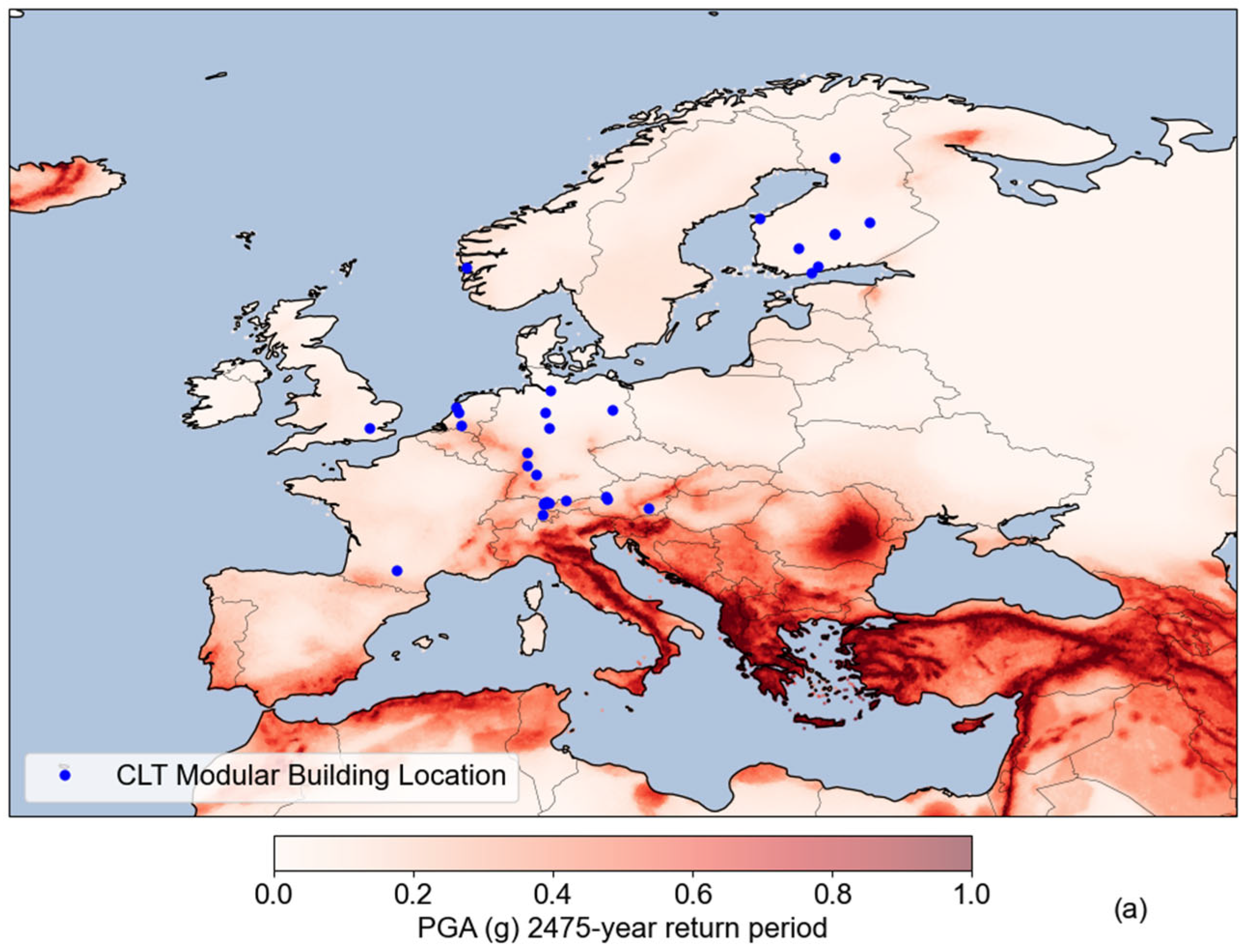
Figure 1. Location of the identified volumetric CLT modular buildings, (a) Europe, and (b) North America, with their seismic hazard.
Buildings 16 00078 g001aBuildings 16 00078 g001b
Figure 2. Location of the identified volumetric CLT modular buildings in Europe with their wind hazard.
Buildings 16 00078 g002
Figure 3. Structural evaluation results. Possible scores between 0 and 6.
Buildings 16 00078 g003
Figure 4. Manufacturing evaluation results. Possible scores between 0 and 6.
Buildings 16 00078 g004
Figure 5. Construction evaluation results. Possible scores between 0 and 6.
Buildings 16 00078 g005
Figure 6. Experimental and numerical results. Possible scores between 0 and 5.
Buildings 16 00078 g006
Figure 7. Cumulative evaluation scores per inter-modular connection. Possible scores between 0 and 23.
Buildings 16 00078 g007
Table 1. Wind speed ranges to define wind hazard.
CaseRangeWind Speed (m/s)
Normal
conditions
Non-threateningminimum
Very low<9
Low9–11
Moderate11–17.5
High17.5–25.5
Extreme>25.5
HurricaneVery dangerous33–42.5
Extremely dangerous42.5–49
Devastating damage49–57.5
Catastrophic damage57.5–70
Total damage>70
Table 2. Evaluation metrics and scoring system for the performance assessment of inter-modular connections.
Structural Metrics
MetricScoreDescription
VC0Does not provide vertical connectivity.
1Provides vertical connectivity to prevent module uplift.
HC0Does not provide horizontal connectivity.
1Provides horizontal connectivity with axial and shear capacity.
CR0Provides low or non-energy dissipation capacity, and the damage is localized in the timber elements.
1Provides a moderate energy dissipation capacity, and an intermediate or low level of damage is identified in the surrounding timber elements.
2Provides good energy dissipation capacity, and limited or no damage is produced to surrounding timber elements. The connection can be replaced.
DF0Limited design flexibility. Designed to be positioned at a specific location within the modular unit.
1Moderate design flexibility. Requires modifications and can be adapted for use in any location within the building.
2Good design flexibility. The connection is standard for any location within the building.
Manufacturing Metrics
MetricScoreDescription
CC0Requires the manufacture of a large number of parts with a complex geometry or a complex manufacturing process. The mass production of components might be time-consuming.
1Moderate number of parts, with a regular geometry that does not require an intensive manufacturing process. The mass production of components requires moderate time operations.
2A small number of parts with simple and regular geometry without complex manufacturing processes. Mass production is simple, with minimal time-consuming operations.
CI0Complex manufacturing processes required to integrate the connection components (e.g., welding).
1Intermediate difficulty for integration of connection components (e.g., drilling, welding of small parts).
2Simple integration of connection components (e.g., fastening, labeling, aligning elements).
IP0Rigorous installation process of the inter-modular connection in the modular units (e.g., welding components into embedded parts, fitting heavy components).
1Intermediate difficulty for the installation of the inter-modular connection (e.g., drilling timber panels, fastening or screwing of components, laser cutting of panels).
2Simple installation of the inter-modular connections (e.g., fastening single elements, aligning components).
Construction Metrics
MetricScoreDescription
DA0Complex construction methods, no self-aligning/self-locating features, a large number of tasks, difficult access, and complex tooling.
1Intermediate difficulty for construction methods, self-aligning/self-locating features, moderate number of tasks, moderate access, and moderate tooling.
2Simple construction methods, efficient self-aligning/self-locating features, a small number of tasks, easy access, and simple tooling.
DD0Difficult process required to disassemble, limited access. Requires additional work before reusing.
1Intermediate difficulty to disassemble, a few parts of the modular unit may need to be replaced before reuse, with minimum access limitations.
2Easy to disassemble, the modular units can be immediately reused or require small adjustments, adequate access.
TC0Limited tolerance control, the construction process requires corrections to fit the modules.
1Intermediate tolerance control, the construction process requires minor adjustments or modular alignment to fit the modular units.
2Adequate tolerance control, the modular connections effectively handle the required adjustments during the construction process.
Experimental and Numerical Metrics
MetricScoreDescription
CET0No experimental tests have been performed on any component of the inter-modular connection.
1Monotonic or cyclic experimental tests have been performed over the components of the inter-modular connection.
FSET0No experimental test at full scale has been performed with the inter-modular connection.
1Monotonic or cyclic tests at full scale have been performed with the inter-modular connection.
NME0The connection has not been numerically simulated.
1An elastic numerical model of the inter-modular connection has been developed to simulate its behavior.
2A nonlinear numerical model of the inter-modular connection has been developed and validated against experimental test results.
AMD0No analytical model has been developed for the inter-modular connection.
1An analytical model has been developed to simplify the design of the modular building.
Table 3. Volumetric CLT modular units reported in the literature.
Building NameCity, CountryCompletion Year#
Stories
#
Modules
Seismic
Hazard
Wind
Hazard
Reference
BMW Alpenhotel AmmerwaldAmmerwald, Austria20095 (concrete first two stories)96ModerateHigh[7,41,42]
Senior Citizens’ Home in HalleinHallein, Austria20135 (concrete ground floor)136ModerateHigh[41]
Student Hostel in HeidelbergHeidelberg, Germany20135265HighModerate[7,41]
Moxy HotelsMultiple countries20147200--[7]
Adoma ApartmentsToulouse, France2015456LowHigh[7,41]
Frankfurt European SchoolFrankfurt Am Main, Germany2015398HighModerate[7,41,43]
Puuokoka House 1Vainonkatu, Finland20158116LowModerate[7,44]
Puuokoka House 2Vainonkatu, Finland2015791LowModerate[7,44]
Puuokoka House 3Vainonkatu, Finland2015671LowModerate[7,44]
Steigart Strasse
Refugee Settlement
Hannover, Germany20152185LowHigh[7,41]
TreetBergen, Norway20151462ModerateHigh[45,46,47]
Integrated
Comprehensive School
Frankfurt am Main, Germany2016390HighModerate[42,43]
Wohnen 500Mäder, Austria2016360HighHigh[41]
Hotel KatharinenhofDornbirn, Austria20174 (concrete ground floor)39HighHigh[41]
Hotel RevierLenzerheide,
Switzerland
20174 (concrete ground floor)96HighHigh[42]
Woodie Student HostelHamburg, Germany20177 (concrete ground floor)371LowHigh[7,41,42]
Hotel JakartaAmsterdam,
Netherlands
20189176LowModerate[7]
DAS KeloRovaniemi, Finland20198-LowModerate[48,49]
Daycare CenterFrankfurt am Main, Germany2019250HighModerate[42,43]
Hotel BergamoLudwigsburg,
Germany
20194440ModerateHigh[42]
Josefhof Health CentreGraz, Austria20192120HighHigh[42]
ToimelaNurmijärvi, Finland20194-LowHigh[48,49]
Kirkkonummen KonsulintorniKirkkonummi,
Finland
20204-LowHigh[48,49]
Lutterterrasse
Student Residence
Göttingen, Germany20205 (concrete ground floor)265LowHigh[42]
Mannisenrinteen Puumanni, Building AJyväskylä, Finland20204-LowModerate[48,49]
Mannisenrinteen Puumanni, Building BJyväskylä, Finland20204-LowModerate[48,49]
Office Kaufmann Building SystemsReuthe, Austria20203 (concrete ground floor)32HighHigh[42,43]
Watts GroveTower Hamlets,
England
20206-LowHigh[50,51]
KaarnaKuopio, Finland20217-LowHigh[49]
Luisenblock WestBerlin, Germany20217460LowHigh[42]
Rautalepänkatu 2 Building ATampere, Finland20214-LowHigh[49]
Rautalepänkatu 2 Building BTampere, Finland20214-LowHigh[49]
Tampereen
Härmälänsydän
Tampere, Finland20214-LowHigh[48,49]
Tampereen Kaupin puukerrostaloTampere, Finland20218-LowHigh[48,49]
Vaasan ViherlehtoVaasa, Finland20216-LowHigh[48,49]
KoelmalaanAlkmaar, Netherlands20225260LowHigh[52,53]
Lumipuu, Building ATampere, Finland20226-LowHigh[48,49]
Lumipuu, Building BTampere, Finland20226-LowHigh[48,49]
NilaKuopio, Finland20227-LowHigh[49]
Pyssysepänkaari 3Kirkkonummi,
Finland
20225-LowHigh[49]
Boarding School Wood Technology CentreKuchl, Austria20237 (concrete ground floor)82ModerateHigh[42]
Vogewosi, Flurgasse—Housing 500Feldkirch, Austria20233-HighHigh[42]
Campus Valkenvoortweg WaalwijkWaalwijk,
Netherlands
20243-HighHigh[52,54]
Housing in Big SkyBig Sky,
United States
20253120HighExtreme[43]
Table 4. Inter-modular connections for volumetric modular buildings.
IDConnection DescriptionFigureFasteners DetailRef.
IMC-1The connection system uses steel plates with screws to fasten adjacent modules. A soundproofing mechanism was proposed by installing elastic bearings between modular units that lack internal connectivity and have no soundproofing for modules within the same occupational unit. Steel plates were proposed for horizontal and vertical inter-modular connections to withstand shear forces, while steel rods were suggested to control uplift forces within the modules.Buildings 16 00078 i001Fastener size
between 6 and
12 mm screws
[55]
IMC-2An interlocking connection system was proposed for modular volumetric construction. It consists of steel 3D-printed tensile and shear connections, composed of male and female components that self-lock, restraining movement in their primary and secondary working directions. The construction process requires a specific order to slide and stack the modules.Buildings 16 00078 i002Buildings 16 00078 i003Screws used for the connections HBSP12120 and LBS7100[56,57,58,59]
IMC-3A connection system named X-RAD, designed for CLT structures that can be applied to both 2D and 3D modular construction. The X-RAD system was designed as a point-to-point mechanical connection located at the corners of the CLT panels. It is composed of an outer metallic envelope, an internal steel plate, an inner core made of hardwood, a pair of horizontal bolts, and a set of six self-tapping screws.Buildings 16 00078 i004M12, M16 bolts, and VGS 11 × 350 screws[60,61,62,63,64,65,66]
IMC-4The inter-modular connection proposed consists of a steel T-shaped angle plate with pins. The steel pins were designed to fit into steel cones that should be cast into the prefabricated floor slab. For the assembly of the modular building, the steel plates are screwed on top of two adjacent side walls prior to stacking the modules of the next story. Once the first module of the next story is placed, the T-shape is secured on one side of the slab of that module.Buildings 16 00078 i005Screws *[67]
IMC-5The proposed dowel-type connection is designed to join the floor panel of an upper CLT volumetric module to the ceiling panel of the module located directly beneath it, enabling effective shear transfer
between vertically adjacent modules in a stacked modular building system.
Buildings 16 00078 i00625.4 mm Read Oak and Yellow Birch dowels, and 8 mm fully threaded screws (SDCF22614 and SDCF22858)[68]
IMC-6Two independent connections were developed as the inter-modular connection for volumetric stackable timber modules. The vertical connection was attached to the walls of the upper and lower modules to connect them through a bolt, preventing the uplift and horizontal sliding of the modules. The horizontal connection was designed as a damper device using low-yield steel to dissipate energy through shear deformation.Buildings 16 00078 i0078 × 160 mm screws[69]
IMC-7Straviwood ModuLink consists of two L-shaped steel brackets, one of which is shorter than the other. They are linked by two bolts M8 × 65 and contain two elastomeric bearing (foam) blocks to provide acoustic-isolation capacity. A locknut secures the plates in place and ensures adequate pre-compression of the foam block. It was developed as a horizontal connection for contiguous modular CLT constructions.
Patent number BE 1030721.
Buildings 16 00078 i0083 HECO-TOPIX-plus 10 × 100, flange head screws per side[70,71,72,73]
* No detail was provided about the fasteners used for the connection.
Table 5. Individual scores assigned for structural evaluation. Structural metrics abbreviations from Table 2; Connection ID from Table 4.
Conn. IDIMC-1IMC-2IMC-3IMC-4IMC-5IMC-6IMC-7
Structural metricsVC1111010
HC1111111
CR0210110
DF1220112
Total3652343
Table 6. Individual scores assigned for manufacturing evaluation. Manufacturing metrics abbreviations from Table 2; Connection ID from Table 4.
Conn. IDIMC-1IMC-2IMC-3IMC-4IMC-5IMC-6IMC-7
Manufacturing metricsCC1012212
CI2220112
IP2111112
Total5343436
Table 7. Individual scores assigned for construction evaluation. Construction metrics abbreviations from Table 2; Connection ID from Table 4.
Conn. IDIMC-1IMC-2IMC-3IMC-4IMC-5IMC-6IMC-7
Construction
metrics
DfA0221012
DfD0220012
TC0221021
Total0662045
Table 8. Individual scores assigned for experimental and numerical evaluation. Experimental and numerical metrics abbreviations from Table 2; Connection ID from Table 4.
Conn. IDIMC-1IMC-2IMC-3IMC-4IMC-5IMC-6IMC-7
Experimental and numerical
metrics
CET0110100
FSET0110011
NME1221200
AMD0110101
Total1551412
Table 9. Comparison of experimental results from inter-modular connections.
IDExperimental TestLoading ProtocolDamageFailure Modes
IMC-2Tensile connection: Three monotonic tests Two cyclic tests

Shear connection:
One monotonic test (two specimens)
One cyclic test
(two specimens)
Monotonic loading (0.05 mm/s)

Cyclic loading (0.02 mm/s)
EN 12512 [76] with estimated yield point of 4 mm in tension and 2 mm in shear
Buildings 16 00078 i009Tension

Buildings 16 00078 i010
Shear
Plastic deformation within the male connection

Tensile connection [58]: Bending of the L-shaped elements in the male connection

Shear connection [58]: There was a sudden drop in the force after reaching 4 mm, followed by another after reaching 6.5 mm, indicating buckling in the shear connection
IMC-3Preliminary tests for screws withdrawal capacity

The connection was tested in five different loading configurations as described in [60,61]
Monotonic loading (0.1 mm/s) EN 26891 [77]

Cyclic loading EN 12512 [76]
Buildings 16 00078 i011Tension

Buildings 16 00078 i012Shear
Tension configuration [61]: Block-shear failure, local failure in the hardwood insert

Shear, Tension-shear, and compression-shear [61]: Tensile failure of screws, cracks and splitting of wood insert
IMC-3Shear-tension and shear compression monotonic tests

Wall systems assembled with X-RAD
Monotonic loading (0.1 mm/s) EN 26891 [77]

Cyclic loading EN 12512 [76]
Buildings 16 00078 i013Tension

Buildings 16 00078 i014
Shear

Buildings 16 00078 i015Tension-shear

Buildings 16 00078 i016Compression-shear
Tension [62]: Block tearing of the metal envelope

Shear [62]: Tensile rupture of screws

Tension-shear and Compression-shear [62]: Tensile rupture of screws
IMC-3Tests using Ponderosa Pine CLT

Monotonic test specimens:
Two specimens in
tension
One in compression One in tension-shear
One in
compression-shear

Cyclic test specimens:
Three in cyclic
tension-compression
Four in cyclic
shear-tension and shear-compression
Monotonic loading EN 26891 [77]

Cyclic loading EN 12512 [76]
Buildings 16 00078 i017Tension/Compression-shear

Buildings 16 00078 i018
Tension
Tension-shear [66]:
Tensile fracture of the screws

Compression-shear [66]:
Shear fracture of the screws
at the connection-CLT interface

Tension-shear and compression-shear [66]: Yielding of the screws in tension loading followed by shear fracture of the screws in compression loading
Vertical cracks in the hardwood insert
IMC-5Monotonic and cyclic single-shear plane CLT-to-CLT joint tests using two species of hardwood dowel (RO, B) [68] and large-diameter screws installed at 90- (S90) and 45-degree angles (S45) (tension and
compression for 45°)
Monotonic loading ASTM D5764 [78]

Cyclic loading ASTM E2126 [79] CUREE basic protocol
Buildings 16 00078 i019Hardwood dowels

Buildings 16 00078 i020
Screws
RO and B [68]: Longitudinal shear crack in the hardwood dowels

S90 [68]: Two hinges in the screw corresponding to Mode IV, according to NDS [80]

S45 [68]: Withdrawal and buckling when loaded in positive and negative phases, respectively
IMC-6Five cyclic tests for the vertical connection

Three cyclic tests for the horizontal connection
Modified CUREE basic loading
protocol
(0.5 mm/min)
Buildings 16 00078 i021Horizontal connectionVertical connection [69]: Permanent deformation of top plate

Horizontal connection [69]: Stress concentration occurred at the corners of the low-yield steel dampers
IMC-7Each test was executed five times: The first test to determine Fmax (Fmax deformation = 15 mm), then four monotonic tests.

Shear tests with four connections each, compression tests with four connections each, and tensile tests with two connections each. [73]
Monotonic
loading EN 26891 [77] (3 mm/min)
Buildings 16 00078 i022Shear

Buildings 16 00078 i023
Compression

Buildings 16 00078 i024
Tension
Shear [73]: Pronounced shearing of the spacing elastomer, rotation of L-plates and slip of the screws.

Compression [73]: Complete compression of the elastomeric bearing. Yielding of L-plates. Contact between bolts and timber, indentation in the timber.

Tension [73]: Compression of the elastomeric bearing, yielding of the L-plates, and pronounced bending of the bolts.
Table 10. Summary of assigned scores per category to each inter-modular connection.
Conn. IDIMC-1IMC-2IMC-3IMC-4IMC-5IMC-6IMC-7
Structural3652343
Manufacturing5343436
Construction0662045
Exper. & Num.1551412
Total920208111216
Disclaimer/Publisher’s Note: The statements, opinions and data contained in all publications are solely those of the individual author(s) and contributor(s) and not of MDPI and/or the editor(s). MDPI and/or the editor(s) disclaim responsibility for any injury to people or property resulting from any ideas, methods, instructions or products referred to in the content.